
POPULARITY
Categories

737 episodes with Sergey

61 episodes with Sergey

91 episodes with Sergey

101 episodes with Sergey

1,081 episodes with Sergey

86 episodes with Sergey

27 episodes with Sergey

41 episodes with Sergey

42 episodes with Sergey

28 episodes with Sergey

62 episodes with Sergey

19 episodes with Sergey

204 episodes with Sergey

10 episodes with Sergey

7 episodes with Sergey

5 episodes with Sergey

8 episodes with Sergey

148 episodes with Sergey

5 episodes with Sergey

6 episodes with Sergey

4 episodes with Sergey
![Workout Motivation [Deep Edition]](https://ivyfm.s3.amazonaws.com/i320/858822.jpg)
21 episodes with Sergey

8 episodes with Sergey

12 episodes with Sergey

121 episodes with Sergey

6 episodes with Sergey

4 episodes with Sergey

7 episodes with Sergey

8 episodes with Sergey

3 episodes with Sergey

16 episodes with Sergey

13 episodes with Sergey

5 episodes with Sergey

5 episodes with Sergey

3 episodes with Sergey

5 episodes with Sergey

5 episodes with Sergey

4 episodes with Sergey

4 episodes with Sergey

2 episodes with Sergey

16 episodes with Sergey

82 episodes with Sergey

2 episodes with Sergey

4 episodes with Sergey

79 episodes with Sergey

2 episodes with Sergey

10 episodes with Sergey

2 episodes with Sergey

5 episodes with Sergey

2 episodes with Sergey

3 episodes with Sergey

6 episodes with Sergey

16 episodes with Sergey

3 episodes with Sergey

3 episodes with Sergey

2 episodes with Sergey

13 episodes with Sergey

2 episodes with Sergey

2 episodes with Sergey

3 episodes with Sergey

2 episodes with Sergey

2 episodes with Sergey

3 episodes with Sergey

5 episodes with Sergey

9 episodes with Sergey

2 episodes with Sergey

7 episodes with Sergey

3 episodes with Sergey

3 episodes with Sergey

2 episodes with Sergey

2 episodes with Sergey

2 episodes with Sergey

3 episodes with Sergey

2 episodes with Sergey

4 episodes with Sergey

3 episodes with Sergey

2 episodes with Sergey

3 episodes with Sergey

2 episodes with Sergey

6 episodes with Sergey

5 episodes with Sergey

2 episodes with Sergey

10 episodes with Sergey

6 episodes with Sergey

3 episodes with Sergey

2 episodes with Sergey

2 episodes with Sergey

2 episodes with Sergey

2 episodes with Sergey

6 episodes with Sergey
Z.CITY MUSIC и Z.RESIDENTS SHOWCASE представляют: Еженедельная яркая концептуальная селекция, наполненная ритмами пляжного города, в которой анонсируем всю актуальную информацию к настоящему моменту. Z.CITY SHOW - Возьми свой доступ в лето! 01.Amtrac - Love Always Had A Way 02.Yamil - Blue Signal 03.Deco (BE) - Take Your Time 04.Space Motion, Soofnic - Pjanoo 05.Ben Sterling, Moontalk - Hot Line 84' 06.M83 - Midnight City (Toni B Edit) 07.Jasper Fioole - Nature (NTFO Remix) 08.Millero, Alt Control, Slow Motion - Dynamite 09.HIGHLITE - Fake Moves 10.Y.Y - Gate Phase 11.Reezar, Ivan Pugliares - Mad Punk
Гостевой микс от SERGEY BARIBYN эксклюзивно для музыкального сообщества ENDORPHIN SOUND. 01.Milio – Surrounded By Night 02.foglight - Circuit Valley 03.Stereoporno - When It´s Time To Go 04.H.A.N.T., Gentle Velvet - Ramson (Re - Work Dark Mix) 05.Pig&Dan - The Earth (Shall Ocin Remix) 06.INNËR.ofc – Lucky Strike 07.Droplex, David Phoenix - Great Distances 08.Hatzler - Collider (Citizen Kain & Kiko Remix) 09.Sascha Cawa, Britta Arnold – Counting 10.Raxon - Destiny 11.Sp1DeR & Joe Red – Duduk 12. Marco AS - Multiple Dividers

“We were still trying to change the world from the inside… and the empire struck back.” — Claire Stapleton on the Google Walkout Earlier this week, the New York Times published an op-ed on how to fight back against big tech which included a reading list from previous guests on the show like Karen Hao, Yanis Varoufakis and Astra Taylor. Not included was Claire Stapleton's Don't Be Evil: Bad Bosses, Fake Promises, and My Escape from Big Tech. Partly, I assume, because this anti-Google jeremiad only came out yesterday. An idealistic English major straight out of college, Stapleton joined Google in 2007, when few questioned Silicon Valley's utopian language. Her first job was in Google's ministry of truth, an internal communications department designed, as she now admits, to get everybody high on the mission. And that mission was to train Googlers into becoming obedient corporate cogs by neither blaming the system nor questioning authority. While not exactly Winston Smith, she nonetheless rose in the bureaucracy. Rachel Whetstone (Steve Hilton's wife) promoted Stapleton to the CEO's communications team where, as the archivist of the sayings of the company's two big brothers (Larry & Sergey), she became known as the “Bard” of Google. As an obedient corporate cog, she was both the message and the messenger. Until she wasn't. Like Orwell's Smith, Google's Claire Stapleton eventually turned her ministry of truth language on the ministry itself. In response to the $90 million exit package of a senior Google exec accused of sexual misconduct, she co-organized the Google Walkout of 20,000 employees. Two months later, her role was hollowed out. Then she lost her job. Not quite Room 101. No rats. But not a lot of fun. So is Google evil? Stapleton doesn't know. But the former Bard of Google acknowledges that Larry & Sergey's promises of making the world a better place are no longer credible. Today, idealistic young college grads want to fight back against Silicon Valley. Today, nobody outside the internal communications department of Google, OpenAI or Anthropic believes that technology is making the world a better place. Like Claire Stapleton, we all now want to escape from big tech. Five Takeaways • Getting High on the Mission. Google in 2007 wasn't selling a job; it was selling a worldview — and Stapleton's department, internal communications, existed to pump the mission, the values, and the founders' folksy TGIF theater into a workforce growing by tens of thousands. The perks were the philosophy made visible: laundry, haircuts, dentists, masseurs — “letting Google be your housewife.” The indoctrination had a curriculum, too: Fred Kofman's “radical accountability” training taught new hires to be players, not victims — which sounds empowering until you notice, as Stapleton did in a G-chat to her brother, that it means never blaming the system: “today I learned that if my team is dysfunctional, it's my fault.”• The Bard of Google. Rachel Whetstone — ex-London, politically shrewd, now married to California's Republican gubernatorial nominee — drafted Stapleton onto Larry Page's communications when Page retook the CEO job, making her the archivist of the founder's vision (until, in a twist she still can't quite believe, he literally lost his voice). From there: Creative Lab, “the alchemist lab of Google's branding,” wrapped in change-the-world gobbledygook; then YouTube's curation team, a job so dispensable that nobody on earth would notice if it stopped — David Graeber's bullshit jobs made flesh, complete with colleagues vanishing to the gym for hours. Her bad bosses, she notes, were workaday and familiar — which is precisely the point. Laszlo Bock's Work Rules explains why Google tried to constrain managers' power: given too much, they abuse it, pettily.• Normie, Not Whistleblower. Unlike Sarah Wynn-Williams' Careless People — a whistleblower's damning portrait of Zuckerberg and Sandberg — Don't Be Evil is a coming-of-age story from the rank and file: earnest, unjaded, “normie.” What's genuinely new in it is the workers'-eye view of the tech-labor moment: a company that hired idealists on the promise of changing the world, then watched the worker-management relationship transform with whiplash speed once those idealists asked what corporate accountability actually looks like. “We were still trying to change the world from the inside, from a different direction, as we lumbered our way through labor organizing 101… and the empire struck back.”• The Walkout and the Bill. The rupture came in 2018: the Me Too summer, an engineer's memo against diversity itself, and the Times' revelation of Andy Rubin's $90 million exit after credible harassment findings. The moms listserv lit up; at TGIF, management read talking points “designed to absorb dissent, project empathy, and move right along” — radicalizing the woman who used to write them. The Walkout drew 20,000 employees. The bill arrived two months later: her role hollowed out, transfers blocked across the organizer group, Meredith Whittaker's role dismantled, the rubber room. The group went public — the nuclear option — and Google offered severance. Stapleton, pregnant, asked for a year. An HR veteran's verdict, years later: “They sure got you out cheap.” And the villains of her story, she notes, were mostly women — her own management chain — while Susan Wojcicki offered the older generation's lament: you have no idea how hard it was for me.• Don't Outsource Your Moral Compass. Is Google better than the rest? There's no noxious star — Sundar Pichai harmonizes rather than dominates — but the company owns the infrastructure of the digital world, and “is it more evil? less evil? I don't know.” The deeper shift is industry-wide: Larry Page's “treat workers well and they'll contribute tenfold” has become “your job could easily go to AI, so be grateful.” Her advice to the young and idealistic: keep some skepticism; hold your own values in your own mind; let work be part of your life without letting it take over; build solidarity instead of “letting the overlords do their overlord thing.” The good news, she suspects, is that the spell is breaking anyway: audiences now boo the AI ads in movie theaters. About the Guest Claire Stapleton is a writer, communications consultant, and tech labor activist. She spent twelve years at Google in communications, marketing, and executive ghostwriting roles — becoming known as “the Bard of Google” — before co-organizing the 2018 Google Walkout, in which 20,000 employees protested the company's mishandling of sexual harassment; The New York Times called it a watershed moment in tech. She writes an existential advice column for tech workers on Substack, and her account of her Google years, “The Voice of Google,” appeared in The New Yorker. Her first book is

▼ Follow Nicksher Music: » Spotify Playlist: https://open.spotify.com/playlist/4dI7kNNcEGQ8MSGLYVh39T?si=Zg1yjJAHTASjK7xa5S-Lew » SoundCloud: https://soundcloud.com/nickshermusic » YouTube: https://www.youtube.com/channel/UCcTF27v-cpxlBfLdQODpFTw » Beatport: https://beatport.com/label/nicksher-music/57468 » VK: https://vk.com/club123650463 » Instagram: https://www.instagram.com/nickshermusic/ --- ▼ Follow Sergey Matsegor: Soundcloud: https://soundcloud.com/sergeymatsegor VK: vk.com/public188047917
Для всех, кто: Уже собрал рюкзак и мчится на пляж; Зависает у бассейна с коктейлем в руке; Танцует босиком на закате; Или просто хочет перенестись в жаркий летний день, даже если за окном дождь. Танцуй пока жарко — пока солнце в зените, пока энергия бьёт ключом, пока лето не закончилось Бери полотенце, сланцы и хорошее настроение 0:00:00 1.Boston Bun - Missing You 0:03:12 2.Paul Parsons - Oh Shucks 0:06:54 3.Ivan Kay, Fiorez - Chant Whit Me 0:11:14 4.Coppola - Côco Do Macaco 0:14:42 5.Block & Crown, Maickel Telussa - Smells Like 0:18:24 6.Crazibiza - Xtacy 0:23:18 7.Cavi - F The Disco 0:26:42 8.Nari, Steve Tosi - Stars Song 0:30:59 9.Touch And Go - Balearic Bliss (Radio Edit) 0:32:41 10.Jackers Revenge - Apologize 0:36:00 11.Apelislin, DIST - Where You Stay 0:39:31 12.Hotmood - Boogie Down 0:43:35 13.Sebb Junior, Sammy Deuce - Throw the Dice 0:44:30 14.Fabich, Pastel, Jafunk, Bambie - Ecstasy 0:46:31 15.Disko Junkie - Just The Two Of Us (Radio Mix) 0:48:55 16.Jerry Ropero, Roger Garcia, Mijangos - Cada Vez (Afro Redrummed Mix) 0:49:00 17.Bob Sinclar - Save Our Soul (Rework 2021) 0:51:24 18.Crush Club, Supermini - We Dance 0:55:36 19.Mr. Belt - Homeless
Сергей Саргин — архитектор, художник и основатель дизайн-бюро Сергея Саргина, более 15 лет создающего частные и коммерческие интерьеры премиум-класса. В портфолио бюро — 339 проектов. Сергей входит в топ-100 российских интерьерных дизайнеров и состоит в Союзе художников России. Каждый проект он начинает с акварельного эскиза, превращая привычки и характер владельца в архитектуру пространства. Участвовал в «Идеальном ремонте» для Марфо-Мариинской обители. *Attn: ПВSergey Sargin is an architect, artist and founder of the Sergey Sargin Design Bureau, which has created premium residential and commercial interiors for over 15 years. Its portfolio includes 339 projects. Named among Russia's top 100 interior designers and a member of the Union of Artists of Russia, Sergey begins every project with a watercolor sketch, translating the client's habits and character into space. He also designed a project for the Marfo-Mariinsky Convent on Idealny Remont.Стать участником подкаста: https://form.jotform.com/Podcast10K/become-a-podcast-guestТемы выпуска:0:00 - Почему ремесленники видят в человеке то, чего не замечают другие 10:42 - Чужой вкус легко украсть, но жить в нём — совсем другое дело 25:13 - Идеальность там, куда хозяин не зайдёт: перфекционизм или выкачивание денег? 33:18 - Карт-бланш закончился разводом и разделённым домом 40:04 - Можно ли спроектировать не интерьер, а чувство полного удовлетворения? 46:24 - «Не будучи обсмеянным, ты не поймёшь, где ты мудак» 52:25 - Талант или «жирный клиент»: что превращает дизайнера в имя? 57:31 - «Я буду делать хорошо, и меня заметят»: инфантильная надежда профессионала 59:59 - Создать дом и остаться за дверью: почему дизайнера не зовут на новоселье 1:11:07 - Рекламируешься среди тех, кто может дать половину — половину и получаешь 1:20:50 - План выйти к богатым клиентам, в котором нет ни одного действия 1:25:14 - Среди по-настоящему богатых вы внезапно оказываетесь тараканом 1:28:12 - Насколько вы интересны от одного до пяти? «Четвёрка» оказалась завышенной 1:40:03 - Для продавца каждое взаимодействие — возможность, и мелочей не бывает 1:54:23 - Как имя архитектора становится прибавкой к цене дома

What if the smartest way for corporations to innovate isn't investing in startups, but becoming their customers? Wharton Professor Sergey Netessine argues that corporations create more strategic value by purchasing from startups than by investing in them. He explains why venture clienting is emerging as a more effective alternative to traditional corporate venture capital, how AI is making speed a competitive advantage, and why so many startup pilots fail to scale. Sergey also shares practical lessons on aligning procurement, business units, and executive leadership to turn startup partnerships into measurable business outcomes. This conversation is packed with actionable insights for corporate innovation, strategy, and transformation leaders looking to accelerate growth through startup collaboration.

In this episode of The Inventive Journey, Devin Miller interviews Sergey Korolev about a founder path that refuses to stay in one lane. Sergey's story begins with robotics engineering at Bauman Technical University in Moscow, includes competitive water polo, moves into enterprise automation, and then grows into Just Food, a meal kit and delivery business that reached roughly $10 million in annual revenue over about six years.Just Food was not a cute side project with a logo and three inspirational quotes taped to a wall. It was a real operating business with logistics, customer expectations, influencer marketing, engineering demands, and the daily joy of discovering that food delivery is simple only when someone else is doing it. Sergey and his team grew the company in Russia's health and fitness market, learning how to build systems, manage pressure, and turn a real customer need into a scaling company.Then the environment changed. Sergey explains how geopolitical constraints made it difficult to build the kind of global company he wanted from Russia. He eventually moved to Portugal and stepped away from running the food tech company. That transition forced a bigger founder question: after building one successful company, what comes next?Sergey did not want to simply recreate the same model in a different wrapper. He wanted a company that could be global from the beginning, a category with meaningful technical depth, and an engineering partner who could bring serious domain expertise. That search led him into mobile application security and to the creation of Oversecured.Oversecured helps enterprises find vulnerabilities in mobile applications. The company focuses on a problem that is becoming harder for businesses to ignore. Mobile apps are not just tiny brand brochures anymore. They handle authentication, payments, private data, location, workflows, and connections to backend systems. When mobile security is treated as an afterthought, the risks can become very real, very fast, and very unpleasant for everyone except the attacker.In the conversation, Sergey also shares one of his toughest founder lessons: underestimating emotions in negotiations. Founders often want to believe that business conflict is rational because there are contracts, spreadsheets, and people using phrases like “alignment.” But negotiations are full of pride, fear, trust, control, timing, and incentives. Ignoring the emotional side can turn a business disagreement into an expensive lesson with legal paperwork attached.Sergey's advice to founders is memorable: act more and think less. The point is not to be careless. The point is to stop mistaking private overthinking for progress. Startups learn by testing, selling, shipping, listening, and adapting. A founder who takes action creates feedback. A founder who only plans creates prettier uncertainty.This episode is especially useful for startup founders and small business owners thinking about pivots, market constraints, cofounder selection, enterprise sales, or how to build after a previous chapter ends. Sergey's journey shows that a pivot is not automatically a failure. Sometimes it is the most honest response to what the market, the world, and your own ambition are telling you.Listen for a conversation about reinvention, global company-building, cybersecurity, zero-day vulnerabilities, negotiation mistakes, and why the founder path often looks obvious only after you have already survived it.You will also hear how Sergey approached the zero-to-one stage differently the second time around. His criteria were clearer: build with the right technical partner, avoid regional limitations, and choose a market where deep expertise could become a durable advantage. That is useful perspective for any founder who has outgrown one chapter but has not yet named the next one.To chat about this one-on-one, grab a free consult at strategymeeting.com
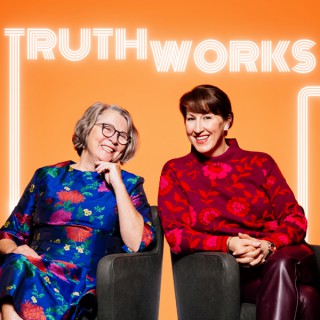
John Lilly has had a front row seat to almost every major shift in technology over the last thirty years, and he has sat in almost every chair while it happened.He was a Senior Scientist at Apple in 1997, when the market cap was two billion dollars and most people assumed the company was finished. He co-founded Reactivity, later acquired by Cisco. He became CEO of Mozilla and led Firefox past 450 million users, running an open source nonprofit at a time when nobody else in Silicon Valley was doing anything like it. Then he spent over a decade as a General Partner at Greylock, where he led investments in Instagram, Dropbox, Figma, Tumblr and Quip. He sits on the boards of Figma, Duolingo and Nuro, and recently joined Gigascale Capital as an Advising Partner, backing companies rebuilding the physical economy.In this conversation with Jessica Neal and co-host Jeff Markowitz, John walks through what he actually saw in the founders everyone else missed.He tells the story of chasing Kevin Systrom for six months, wiring the money on a Thursday, and getting the call three days later that Instagram was selling to Facebook. He explains the moment a friend showed him Instagram and what clicked was not the filters, it was the distribution. And he describes meeting a 19 year old Dylan Field at a Starbucks in Palo Alto, telling him his product did not matter, and then spending the next decade watching him prove it wrong.He is also honest about the parts that are harder to hear. Why some partners at Greylock wanted Dylan replaced. Why he thinks micromanaging the right things is a feature of good leadership, not a flaw. Why he does not tell CEOs anything, and what he does instead. And why, at a moment when OpenAI and Anthropic are pulling talent out of every company on earth, the answer is not matching the money.He closes with something a colleague at Mozilla told him years ago that he still carries: we had a chance to make the world we wanted, and we did it.━━━━━━━━━━━━━━━━━━━━━━━━━━━━━━WHAT WE COVER━━━━━━━━━━━━━━━━━━━━━━━━━━━━━━THE FOUNDER QUESTION→ How John spotted Dylan Field at 19→ Why recruiting senior people is the strongest early signal→ The trait every great founder shares: relentless about getting help→ Why non-defensiveness beats raw intelligence→ The lunch where they told Dylan he had to build a go to marketTHE INVESTMENTS→ Chasing Kevin Systrom for six months→ The underwater photographer who explained Instagram to him→ Why the network mattered and the filters did not→ The four day flip to Facebook and what he told his LPs→ The Adobe Killers that came before Figma and why this one was differentLEADERSHIP AND SCALE→ Going from 12 people to a quarter of the internet at Mozilla→ Why he never learned the delegation lesson everyone teaches→ Larry and Sergey reviewing every resume and what that signals→ Learning to be simpler in your message as you grow→ Deciding you would rather be successful than comfortableTHE TALENT WAR→ Why every great person is now a free agent→ The spreadsheet exercise he gives every CEO→ Tour of duty and the bilateral deal between company and employee→ Never making an offer until you know it will be accepted→ Why money is rarely the only reason people leaveTHE CURRENT MOMENT→ Why leadership now means stability without pretending anything is stable→ The collision of faster scaling and total vulnerability→ Why org size no longer scales with impact→ Alpha nerds, Tim O'Reilly, and following the most technical people around→ Investing in transformers, copper recycling and rare earth supply chains→ Why none of the AI future is settled and it is all still to play for━━━━━━━━━━━━━━━━━━━━━━━━━━━━━━CONNECT WITH JOHN LILLYLinkedIn: linkedin.com/in/johnlilly━━━━━━━━━━━━━━━━━━━━━━━━━━━━━━Truth Works is hosted by Jessica Neal, former Chief Talent Officer at Netflix, with co-host Jeff Markowitz.
Z.CITY MUSIC и Z.RESIDENTS SHOWCASE представляют: Еженедельная яркая концептуальная селекция, наполненная ритмами пляжного города, в которой анонсируем всю актуальную информацию к настоящему моменту. Z.CITY SHOW - Возьми свой доступ в лето! 01.Shahin Shantiaei - Fall Again 02.Blindsmyth - Die Tiefe (Schtu Remix) 03.Sunora, SUNCTURE, FunkT!de - God, She Stayed 04.Nikita Lavrov, LAZYROXX - Interval 05.XANDL & Para Noir - Mission 06.Lethra - Them Dealers 07.Siboni - All My People 08.Y.Y, Levais - No Breaks 09.Droplex, David Phoenix - Great Distances 10.TWR72, Boys Noize - Tunnel (Boys Noize Rework) 11.Son Of Son, Jaycov - Into
In 1776 — that same year America declared its independence — Adam Smith published the equally revolutionary The Wealth of Nations, his founding explanation of national economic value. Two hundred and fifty years later, Tim O'Reilly argues in the free-market Economist that Elon Musk and his fellow tech barons are building a monarchical form of capitalism that the proto-democratic Smith would have hated. Musk, O'Reilly reports, believes that SpaceX will become “worth more than the rest of Earth”. The merchants are becoming princes, O'Reilly warns. And the rest of us are becoming peasants. Such is the road to serfdom in our AI age. So who should own the AI in our bewildering age of multi-trillion dollar start-ups like SpaceX, Anthropic and OpenAI? Or as That Was The Week publisher Keith Teare asks in his latest editorial, who should own the “intelligence” of our AI age? Keith uses a bottling plant as a metaphor to describe our dilemma. Since no single entity can own this intelligence — the sum total of our common experience — charging us for it would be like seizing the Earth's water supply and selling it back to us, Coca-Cola style, in plastic bottles. Except that the Hayekian Keith approves of the bottling process. Private companies, rather than governments, he argues, are most suited to doing this. For Keith, this dilemma is also an opportunity to redistribute the ownership of intelligence. He argues for a “Human Wealth Fund” into which every consequential AI company should put a slice of its equity. In the manner of Norway's sovereign wealth fund, this fund would be distributed to all citizens. Rather than Denmark, now we should become like Norway, a tiny homogenous nation with a cultural distaste for Muskian individual wealth. Not very realistic, I fear. On top of that, it's hard to imagine our tech princes collaborating on anything. Musk and Altman aren't on speaking terms while Altman and Amodei, who also loathe each other, are focused on their IPOs. Meanwhile, the Trump administration, which presumably would coordinate this fund, is pitching a $100,000-a-month fast feed of the president's posts. Keith's question, “who owns the intelligence”, is the right one. But the answer won't come from trickle-down funds set-up by our tech princes. Such supposed munificence is about as likely as America becoming Norway. Read the fine print of any “Human Wealth Fund” set up by Sam Altman and Elon Musk. As we should know all too well by now, when a “revolutionary” Silicon Valley gives stuff away, it turns out to be exorbitantly expensive. Free plastic bottles of intelligence, anyone? Five Takeaways • Intelligence, Not AI. The week's framing shift: the word AI is too small, because AI is merely the tool for harvesting and delivering the thing itself — intelligence, the sum total of our common human experience. Keith argues the renaming is not semantic but political: the moment intelligence sits at the center of the discussion, everyone's opinion has to be shaped by what it actually is, and the idea that any single entity could own it starts to look as bizarre as owning the world's water supply. Andrew's rejoinder: they're still just words — though he concedes intelligence is the better one. • Bottled Intelligence Is Good — The Question Is Who Benefits. Keith refuses the critic's role: bottling intelligence, like Google's bottling of the world's words into search, is a good thing, because only massively capitalized private companies can innovate at that scale — and between private entities and governments as owners of intelligence, he'll take the companies every time. What's wrong is the distribution of the benefits. Even insiders are complaining: Alex Karp is publicly angry at OpenAI and Anthropic's pricing, while China's Kimi K3 — released the day of recording and, Keith claims, better than Claude Fable — signals that very good models are about to get very cheap. • Capitalism Adam Smith Would Hate. Tim O'Reilly argues in The Economist that Musk and his type are building a capitalism Smith would despise — founders as monarchs, a point Henry Farrell reinforces with a slide from Peter Thiel's startup class placing the king of a monarchy and the founder of a startup side by side. Keith's response is characteristically unsentimental: Smith would have hated everything since the Federal Reserve, and the founder-king structure — Larry and Sergey's voting shares, Zuckerberg's special rights, corporations bigger than countries with user bases bigger than China — is simply the stage of capitalism we're at. The question is whether there's a path from here to somewhere better. • The Human Wealth Fund. Keith's path comes in two versions: government-down, a sovereign wealth fund holding AI equity for every citizen; or company-up, the AI companies voluntarily endowing a global fund — and it only takes one to move first, because everyone else would have to react. His proxy is Norway, where every citizen benefits from ownership — not payouts, ownership — in the oil fund; AI revenues, unlike Norwegian oil, could eventually drive most of a doubled global GDP. His critique of the Brynjolfsson economists' much-signed statement is that “must act now” is vacuous: he'd have added a point four naming the actual mechanism. • The Bet. Andrew's counter-case: Musk and Altman loathe each other, the mob hates AI so thoroughly that no pro-AI politician can survive, the states from Newsom's California to Florida are embracing nothing, New York just enacted the first data center moratorium, and the founders — eyes on their IPOs — are in the pockets of the banks. Hence the wager: 5% of the Teare Wealth Fund says no Human Wealth Fund this year, and none in the twenties. Keith declined the bet, on principle: he's an advocate, and only through advocacy does public opinion change. As Andrew put it: keep fighting the good fight — maybe one of the crazy ideas will stick. About the Guest Keith Teare is the founder and editor of the That Was The Week tech newsletter, and Andrew's weekly co-host. A British-born Silicon Valley entrepreneur and investor, he was a co-founder of TechCrunch and runs the Palo Alto–based venture firm SignalRank. He and Andrew have been arguing about technology — productively — every week for years. References: • That Was The Week — Keith's newsletter; this week's editorial argues that the word AI is too small, and that the central question of the age is who owns intelligence. • Tim O'Reilly in The Economist — on Elon Musk building a form of capitalism that Adam Smith would hate, quoting Musk's claim that SpaceX will become worth more than the rest of the Earth. • Henry Farrell — the big tech critic's companion piece, featuring the slide from Peter Thiel's startup class that plac...

Conversations on Groong - July 10, 2026In this episode of Conversations on Groong, we speak with Dr. Sergey Markedonov about Russia's strategic position amid the Ukraine War and its implications for Armenia. We discuss why Moscow remains bogged down in Ukraine despite its military superiority, how the war of attrition shapes Russian bandwidth for the South Caucasus, the geopolitical role of the Trump Route for International Peace and Prosperity, and Pashinyan's Western pivot following the June 2026 Armenian Parliamentary Election.Topics:Ukraine's war of attritionRussia's strategic bandwidth problemTRIPP and Iran's red linesIsrael's Armenian Genocide moveArmenia's Western pivot after electionsGuest: Sergey MarkedonovHosts:Hovik ManucharyanAsbed BedrossianEpisode 565 | Recorded: July 8, 2026SHOW NOTES: https://podcasts.groong.org/565VIDEO: https://youtu.be/YqsHd8TSyHQ#ArmenianNews #SouthCaucasus #UkraineWar #Russia #Armenia #EAEU #TRIPP #GeopoliticsSubscribe and follow us everywhere you are: linktr.ee/groong
Специальная селекция, записанная для моих друзей портала PromoDJ в 2026 году. 01.Roman Flügel - Flowers 02.Jimi Jules - Burning 03.Matthias Meyer - Home 04.Joachim Pastor - Braumstig (Rodriguez Jr. Remix) 05.Markus Homm - Rise 06.Dennis Cruz, Ian Ludvig - Pain Away 07.Marc Houle - Borrowed Gear (Joris Voorn Remix) 08.Enrico Caruso - Jenny (Ismael Rivas & Javier Gonzales Remix) 09.Mëhill - Blaster 10.Ost & Kjex feat. Anne Lise Frokedal - Queen Of Europe (Solomun Remix) 11.Rodriguez Jr. - Chain Reaction 12.System 7 & A Guy Called Gerald - Positivenoise (Carl Craig Remix) 13.Max Cooper - Origins 14.Salt Tank - Sargasso Sea

This episode has a fun personal twist: There's a counterfactual world where I was employee #1 at Genesis Molecular AI, the company behind today's episode. A certain introduction happened a few weeks too late and I had already happily signed at Atomwise, another ML-for-drug-discovery startup. Same problem, different company. I was certain ML was going to transform small molecule drug discovery. Early results were underwhelming. Useful at times, but nowhere near revolutionary. In the last year I've seen signs that ML is finally ready to deliver on my convictions from a decade ago. Genesis is one of the places that might have finally cracked this problem. I was super excited to come full circle and catch up with co-founder Evan Feinberg and CTO Sergey Edunov.If you are at all interested in small molecule drug discovery, we think you will find this fascinating!In our nearly two hour chat we cover:* What is small molecule drug discovery, and why is it hard* Structure prediction as a hotbed of innovation in AI algorithms* How advances in AI elsewhere have enabled stepwise improvements in predictive power* How the community benchmarks are essentially calling AI slop good enough* The Genesis flagship model (PEARL) can routinely hit a threshold that is necessary for real-world applications* New agentic workflows enabled by these highly accurate modelsRead on for more, and also some personal thoughts on the future at the end.The coolest diffusion research is happening at GenesisSergey Edunov came to Genesis from Meta where he led Llama 2 training and Llama 3 pretraining. Sergey was a former physicist who thought he was done with physics after many years of training LLMs. Then, he discovered Genesis, and was blown away with all the novel architecture work they've been developing.It probably surprises no one that modern LLM research has not resulted in fundamentally novel or exciting updates in architectures since almost the advent of the transformer — the entire field is using variants on the same idea that came out in the original “Attention is all you need” paper. Sure, some were quite useful (mixture-of-experts in particular allowed for the massive model paradigm we're at today), but there was very little conceptually exciting.“We sort of had to wait for the right primitive to get created, and that turned out to be diffusion… Actually, some of the most innovative diffusion research that's happening in our field is happening in 3D structure prediction right now.” — Evan FeinbergThe field of 3D structure prediction on the other hand has been a hotbed of research. Genesis' recent model PEARL (Place Every Atom at the Right Location) is able to understand protein flexibility, and model not just where the ligand goes, but also make small adjustments of the protein so that the two fit better than either alone. The field knew this was missing for a long time, but it was really hard to model until now.Agentic DiscoveryWhat makes this problem so hard? As Sergey points out, there are 10^60 possible drug-like small molecules. You'll never be able to search them all, and trying to find the good ones is something like finding a needle in a haystack — except everything except your needle is dangerous.“There are 10 to the 60 drug-like small molecules in the universe… it's like finding a needle in a haystack, where everything except your needle is very, very dangerous.” — Sergey Edunov“Or finding hay in a needle stack might be a more apt analogy.” — Evan FeinbergTrying to solve the multi-parameter optimization problem is even worse. What makes a strong binder and a molecule with good “ADMET Properties” are oftentimes at tension with each other. For example, a good binder is likely greasy, but a greasy molecule is likely insoluble so it won't enter the bloodstream and get to where it needs to go!Genesis' advances in generative AI have now pushed them beyond the threshold where they believe agentic drug discovery loops are finally possible. We all remember the early days of LLMs. They were great chatbots but terrible agents, as small errors compounded rapidly into uselessness. As LLMs got better, the usefulness of agents rapidly improved. Evan and Sergey argue that their models at Genesis recently passed a similar threshold. Their internal agentic drug-discovery system (code named SAPPHIRE) can now iterate like a chemist: look at and reason about poses, form hypotheses, read literature, use internal tools, create candidates for the next iteration. Combining this with automated lab partnerships like the one Genesis has with Incyte, we're rapidly approaching a time of drug discovery agents running 24/7 making/testing new molecules. Exciting times!Benchmark crisis: Everyone's favorite benchmark is slopOne surprising point that isn't talked enough about: the academic field of “co-folding” has settled on a benchmark value of “2 Angstrom RMSD” as a metric for a “good pose”. Evan does not mince words: this threshold is just bad. Perhaps even deceptively bad. For many strong binders, there's a very clear pose, one that you can even directly resolve in the PDB electron density! And yet, with a 2Å RMSD threshold, you can get the pose quite wrong in ways that might even mislead a medicinal chemist. For example, flip around an aromatic ring, and everything looks reasonable, but you're no longer modeling the right interactions.Evan makes the strong claim that 1Å RMSD is really the threshold necessary to ensure the core of the molecule is sitting where it needs to be, and models all interactions.“If your model is sitting at 1.8, 1.9 Angstrom RMSD, that's slop, most likely.” — Evan FeinbergAs a simple example, he points out hydrogen bonds which are responsible for many of the most important interactions in protein-ligand systems. Hydrogen bonds only have a 0.6Å range to be valid! Clearly if you're accurately resolving all H-bonds, you generally have to be doing much better than the 2Å threshold.This is clearly a hard-fought lesson for Evan and Genesis. In their opinion, the community is stuck on these benchmarks because academics developing methods were not users. Evan does see signs of life, with the use of new metrics such as lDDT for co-folding. Hopefully soon the community can agree that “1.8Å RMSD is slop”, and start hill climbing on this much harder task.For a more thorough exploration of the weaknesses in conventional benchmarks, see the PEARL technical report.PEARL tops OpenBindWhich makes what happened next all the more striking. Near the end of the podcast, we talked about a recent “proof-is-in-the-pudding” moment for Genesis — evaluating their PEARL model on a recently released OpenBind benchmark. This benchmark featured 802 never before seen co-complexes on a target protein EV-A71. This target seems almost custom-chosen to give most classical docking methods a problem. When a ligand binds to the main binding site, the protein moves around to close off the path the ligand used to enter the binding pocket. This process, known as “induced fit” is notoriously hard for traditional methods to model. The tradeoff is easy to understand: treating the protein as a static structure, it becomes difficult to place a ligand in a binding pocket. Treat the protein as dynamic, and now you have to simulate complicated processes that take a long time to resolve.PEARL was able to model the induced fit of the ligand without running long MD simulations. Across the different evaluation metrics, PEARL came out not just ahead, but oftentimes well ahead of any public model. A truly impressive result.“Where PEARL was exceptionally good is figuring out how to move this loop. We are basically correct for every single pose.” — Sergey EdunovEven more exciting, this was done without any fine-tuning, or using any data on the target or homologous targets — the template PDB was released after PEARL's training cutoff.Where does co-folding go now?As someone who has followed or participated in ML techniques for protein-ligand interactions for almost a decade, I was genuinely impressed with the results that Genesis has released recently. This has been many years in development, and I'm sure Evan and the team had many sleepless nights trying to get to this point. I also think other teams are making similar progress — both Isomorphic and Deep Origin have released results that seem spiritually similar and combine computation, wetlab data, ML, to achieve genuine predictive power that seemed impossible a decade ago. Sadly, all of the above are closed source so there's no way to honestly compare them. Looking at the results I think there might be a time in the not so distant future where we can consider protein-ligand binding “solved”.I sincerely hope that the academic community can take inspiration from these developments. Once you know something can be done, it's much easier to execute. Still, I believe that the key enabler in all of the above was the tight integration of ML, large-scale computation, and real-world drug discovery applications. Sadly academia is just not structured in a way that makes such a development easy.With those parting thoughts, we hope you give the podcast a listen! This is a public episode. If you'd like to discuss this with other subscribers or get access to bonus episodes, visit www.latent.space/subscribe
Z.CITY MUSIC и Z.RESIDENTS SHOWCASE представляют: Еженедельная яркая концептуальная селекция, наполненная ритмами пляжного города, в которой анонсируем всю актуальную информацию к настоящему моменту. Z.CITY SHOW - Возьми свой доступ в лето! 01.Marsh & Volen Sentir - Ascension 02.Colle - She's In Love Again 03.Bombossa Brothers, Artche, Kadosh (ofc) - Other Side 04.KEENE - Villa Lucre Jazz Club 05.Bonafique, Nadav Isaac - Ego Trip 06.Deecross - Move It 07.Morelly, A.G.N.I - Reason 08.Glowal - Bass Breaker 09.NODA(CA) - Needed Back (Z.CITY MUSIC label) 10.André Winter - Onezerozero 11.Jimi Jules - Baby Run
Play — это голос из вашего плеера. Cue — это голос интуиции в наушниках. Без Cue вы просто не узнаете Ваш Play. 1. Bachelors of Science - The Space Between 2. Berth H, High No Sick, Monroe - Faceless 3. Exult, SMP - Azure 4. Telomic - Rewired 5. Aperio - Aurora 6. High Performance - Forever 7. Bcee - Broken Record 8. Ill Truth, Sat, Charli Brixx - In Your Soul 9. Anile - Vitalogy 10. Dan Guidance - Dream On 11. Anile - Vitally 12. Reburf - No More

Hello and Welcome to the DX Corner for your weekly Dose of DX. I'm Bill, AJ8B.The following DX information comes from Bernie, W3UR, editor of the DailyDX, the WeeklyDX, and the How's DX column in QST. If you would like a free 2-week trial of the DailyDX, your only source of real-time DX information, just drop me a note at thedxmentor@gmail.com{Marathon Alert} VP0/H – South Shetland Islands - HF0PAS, Rafal, reports from the Polish “Arctowski” Antarctic Station on King George Island that poor weather and strong winds are delaying completion of the remaining antenna installations. Winds peaked at 38 meters per second Sunday. Last week, he assembled his third mast, mounted the 6-meter antenna, and completed several EME tests. Watch the spotting network for this one.{Marathon Alert} ZL7 – Chatham Islands - As of last week ZL7DX, Chris, is once again active from Waitangi in the Chatham Islands, returning to the air after being off since late February. He is operating FT8 on multiple bands with a DX Commander antenna, following damage to his Hexbeam during recent high winds. QSL via M0OXO.5H – Tanzania - A reminder, the NK8O (Charles) work trip to Chihoni, Tanzania, is QRV until July 2. Working around his job assignments, he will be on the air as 5H3DX. He will be using 100 watts to a dipole, vertical, and long wire antenna, CW, FT8 and FT4, 40-6M. He will upload the log to LoTW and Club Log. For a paper QSL, it's 5 USD through PayPal: https://www.qrz.com/db/5H3DX{Marathon Alert} C2 – Nauru - Phil, C21TS, confirms he will depart Nauru on July 22. Meantime, he will be working “a lot of new ones.” He has been doing some Club Log livestream and Club Log log search. He says 99.9% of the time Club Log has real time updates. PJ2 – Curacao -PJ2/PH2M, operator Frank, will be on the air until June 29, mainly FT8 and “some FT4 and SSB,” various bands. QSL using Club Log OQRS, or LoTW, or direct to his home QTH.{Marathon Alert} A6 – United Arab Emirates - A60PC is a special event callsign that is QRV until June 30th, in support of the UAE's Pledge and Commitment. This national initiative invites people to affirm their loyalty to President His Highness Sheikh Mohamed bin Zayed Al Nahyan and their sense of belonging to the UAE, while promoting peace, coexistence, social unity, national responsibility, and the preservation of these values for future generations.VP2V – British Virgin Islands - Jonathan, W5GI, will operate from his second QTH in the British Virgin Islands until June 30th. He'll be active as VP2V/W5GI operating on 10–40 meters via SSB and FT8. You may also email him to arrange a Schedule.{Marathon Alert} EX – Kyrgyzstan - EX/KZ1R, Mike Chirkov, will operate vacation-style from Sergey's summer house in Tamga, Kyrgyzstan, from June 27 to July 4. He plans to be active mainly on 6 meters, with some HF operation on 40, 20, 15, and 10 meters using FT8. Antennas will include a 6-element Yagi for 50 MHz and a random wire or delta loop for HF. A possible second trip may take place in August, but dates are not yet confirmed. QSL confirmations will be available only via LoTW and Club Log, free of charge; no paper QSL cards will be issued. Logs are expected to be uploaded daily.{Marathon Alert} CE0Y – Easter Island - CE3YMR, Manu reports the 3G0YM DXpedition from Rapa Nui is continuing as planned despite heavy rain, strong winds, and minor antenna damage that was quickly repaired. They describe the island as an extraordinary destination, highlighting its landscapes, cultural heritage, moai statues, and warm hospitality. While 6-meter propagation has been very limited so far, he continues monitoring the band and working hard to give as many operators as possible a chance to make contact. If you have questions or need information, just drop me a note at thedxmentor@gmail.com
Conviértete en un supporter de este podcast: https://www.spreaker.com/podcast/el-mananero-radio--3086101/support.
Z.CITY MUSIC и Z.RESIDENTS SHOWCASE представляют: Еженедельная яркая концептуальная селекция, наполненная ритмами пляжного города, в которой анонсируем всю актуальную информацию к настоящему моменту. Z.CITY SHOW - Возьми свой доступ в лето! телеграм-канал: t.me/sergeybaribyn 01.MoBlack, Gruwski, LevyM - Sweet Reminder 02.Sintra, Luch, Landon Ryle - Brighter Days 03.Gal Shimol, ARLY (IL) - Tribe Reaction 04.Marten Lou, CamelPhat - Save Me (Ajna & Samm Remix) 05.Ivory (IT), Barbara Nicole - All This Love 06.Avocado, Dave Dinger, Maria Die Ruhe, Matija, Richard Elcox - Vitality (Matija & Rich Remix) 07.SEQSENS - ITS COFFEE TIME! (Coffee Rave Anthem) 08.donnerstag - I Remember Jakarta (Toto Chiavetta Remix) 09.Sabb feat. Forrest - One of Us (Dennis Ferrer Remix) 10.Sasha – Mongoose 11.Bu.Di - Lubov (Just Fine Remix)

In this episode of the DIGA Podcast, we sit down with Dr. Sergey Rekhtman, Program Director of the Northwell Health Dermatology Residency Program. Dr. Rekhtman shares his journey into dermatology and offers valuable advice for medical students considering a career in dermatology.We take a comprehensive look at the Northwell Dermatology Residency Program, including its clinical training structure, inpatient and outpatient experiences, didactic curriculum, research opportunities, mentorship model, fellowship opportunities, and resident culture. Whether you're a medical student exploring dermatology, preparing for away rotations, or actively navigating the residency application process, this episode provides an inside look at one of the nation's leading dermatology training programs and offers practical insights into building a successful career in dermatology. We hope you enjoy!Thank you to Dr. Rekhtman for joining us and sharing his expertise with the DIGA community.Northwell's Training Website: https://physicians.northwell.edu/education/graduate-medical-education/residency-dermatology_ _ _DIGA Instagram: @derminterestToday's Host: Katelyn Stenger_ _ _For questions, comments, or future episode suggestions, please reach out to us via email at derminterestpod@gmail.com_ _ _District Four by Kevin MacLeodLink: https://incompetech.filmmusic.io/song/3662-district-fourLicense: https://filmmusic.io/standard-license
Раньше я думал, что Флюид — именно то, что связывает материю с духом. Теперь же я полагаю Флюид тем, из чего возникают и материя, и дух 1. Mark Hoffen — Oph 2. Alex Breitling — Heaven 3. All Living Things — Programme Music 4. Ash(M), St.Ego — Floating 5. Ben Böhmer — Lost In Mind 6. Kofa, Ariel Estrella, Hans Zimmer — Event Horizon (Radio Mix) 7. Ben Böhmer — Lost In Mind 8. Lo-Fi Man — Rising Rhythm 9. Madraas — Northern Lights 10.Orangestripe — Ethno 11. Sea fm, Deep House — vitamin sea 12. VayDeep, Deep House Music — Amber Desert Waves 13.York, Kryder — On the Beach (Kryder Remix) 14. ZAC, LENN V — Seventh Street
Z.CITY MUSIC и Z.RESIDENTS SHOWCASE представляют: Еженедельная яркая концептуальная селекция, наполненная ритмами пляжного города, в которой анонсируем всю актуальную информацию к настоящему моменту. Z.CITY SHOW - Возьми свой доступ в лето! телеграм-канал: t.me/sergeybaribyn 01.AIKON, Roman Scott - Your Call (Re.You Remix) 02.Arodes, Ewerseen - Too Young 03.Liminal MX - Fire 04.Fejka, Johanson - Azur (Y.Y Unofficial Remix) 05.David Hasert, salmjak - Sad Song (LALENA Remix) 06.Borey - Feel Of The Night 07.Space Motion, REVOL(ofc) - Rico 08.Ivory (IT) - Feel the Beat 09.Upercent - Yahi 10.Rebolledo - Discótico Pléxico (Maceo Plex Remix) 11.BEESER & KLAVS - Соловейка
Last 4 days before regular tickets sell out at AI Engineer World's Fair - this is the single biggest gathering of AI Engineers, Founders, Leaders, and Researchers in the world. Attendees get >$5000 worth of sponsor credits and talk tracks are looking FANTASTIC. Join us!The AI scaling debate always focuses on the question of “how do we get more GPUs?” but the better question may be: how do we make the most of ones we already have.The fact that a frontier lab like xAI could be running at sub-10% MFU (Model FLOPs Utilization) is just a hint at what the real problem may be.For context, older frontier-scale training runs were already much higher than 10%. GPT-3 was around 21% MFU. Gopher was around 32%. Megatron-Turing NLG was around 30%. PaLM reached around 46%. And our guest Anjney says best-in-class MFU today is closer to 60–70%.It's not necessarily that xAI is uniquely incompetent (it's clear they have talented folks) but rather the priorities may be flipped in the GPU arms race.While GPU access is a bottleneck, simply increasing CapEx won't automatically translate to better models as frontier AI is increasingly a systems problem: scheduling, utilization, networking, kernels, frameworks, data pipelines, parallelism, cluster reliability, and the thousand small decisions that determine whether your theoretical FLOPs become real training progress.From building Discord's developer platform and backing frontier AI companies like Anthropic, Mistral, Black Forest Labs, and Periodic Labs to now building AMP's independent compute grid, Anjney Midha has spent years close to the real bottlenecks of AI scaling. In this episode, Anjney joins swyx at Periodic Labs to unpack why the AI race is not just about buying more GPUs, why 95% utilization would have been considered an outage at Google, and why the next era of AI infrastructure has to be more aligned, more efficient, and more responsible.We go deep on AMP's vision for a compute grid that makes FLOPs flow like megawatts, the difference between full-stack AI labs and horizontal pooling, why AI data centers need community buy-in, and how compute markets could evolve into something closer to an independent system operator. Anjney also explains why DeepMind's unpublished research points to a market failure, why end-of-life prediction remains one of the most important AI applications he has thought about for fourteen years, and why “output maxing” may become a new discipline for frontier systems.We also discuss Anthropic's culture, why “luck favors the prepared mind” in coding models, how Claude cracked coding, why too much capital too early can make AI labs fragile, what Periodic Labs is trying to do with science and superconductors, why great researchers can become great CEOs, and why Silicon Valley is both deeply missionary and deeply mercenary.We discuss:* Why 95% utilization was considered an outage at Google* Why AI infrastructure waste compounds at frontier-lab scale* Why “move fast and break things” does not work for AI data centers* How data center backlash, power grids, and community incentives shape AI scaling* AMP's vision for making FLOPs flow like megawatts* Why compute needs an independent system operator* How interruptible demand and dynamic prioritization worked inside Google* Why DeepMind research hoarding creates negative externalities* AMP's 1.2GW base-load ambition and the need for 6GW of spike capacity* Why end-of-life prediction could become one of AI's most important healthcare applications* Frontier Systems, output maxing, and full-stack alignment* Why APIs and abstraction layers become lossy as organizations scale* Superconductors, standards, and the dream of lossless systems* SF Compute, open protocols, and the future of compute marketplaces* Why non-NVIDIA chips can still benefit from NVIDIA's reference architecture* Trust boundaries and why chip startups need visibility into future model architectures* Why VCs often underestimate researchers as CEOs* Scientists as star athletes of the mind* Why great CEOs need to be confrontational up and down the stack* Why leading the frontier matters more than “winning”* How Anthropic cracked coding* Why culture is fragile, not a permanent moat* Why hardship was a feature, not a bug, for Anthropic* Why Anthropic's P0 was coding from day one* Periodic Labs, physics as the constraint, and technical reality* Silicon Valley mercenaries, missionary teams, and what happens after a breakthroughAnjney Midha* LinkedIn: https://www.linkedin.com/in/anjney* X: https://x.com/AnjneyMidhaAMP PBC* Website: https://amppublic.com/* X: https://x.com/amppublicTimestamps00:00:00 Introduction00:00:09 Why AI Compute Is Being Wasted00:03:17 Responsible Infrastructure and Data Center Backlash00:06:07 AMP Grid: Making FLOPs Flow Like Megawatts00:12:41 Foundry, Frontier Labs, and Research Hoarding00:14:42 Gigawatt-Scale Compute and End-of-Life Prediction00:24:08 Frontier Systems, Output Maxing, and Alignment00:27:38 Compute Markets, SF Compute, and Non-NVIDIA Chips00:32:57 Trust Boundaries, Co-Design, and Researcher CEOs00:38:17 AI Coachella and First-Principles Thinking00:42:43 Leading vs Winning in Frontier AI00:45:54 How Anthropic Cracked Coding00:48:25 Culture, Hardship, and Anthropic's P000:54:03 Periodic Labs, Physics, and Silicon Valley Mercenaries00:56:26 Rishi Valley, Singapore, and Money as a Measure00:58:47 Closing ThoughtsTranscriptIntroduction: Anjney Midha, AMP, and Compute WasteSwyx [00:00:00]: We're in Periodic Labs with Anjney Midha, CEO, founder of AMP. Welcome.Compute Utilization: Node Allocation, MFU, and AlignmentAnjney [00:00:09]: Thanks for having me. At Google, there are two types of utilization usually, right? That you're measuring in these clusters. One is node allocation, and then the other's MFU. Node utilization is usually like what percentage of cards in the data center are just, used, and that, if it's not at, 95%-Swyx [00:00:29]: There is no excuseAnjney [00:00:29]: There's no excuse, right? I think 95% at Google, which is where my co-founder, Seb, came from, he built the Borg, PBorg/GQM scheduler at Google, and there I think 95% was considered an outage, so 96% node utilization is, should be standard. And most single-tenant clusters are not running at that. So that's one. And then MFU should be, I would say the best in class today is somewhere between 60 and 70%. I think this is a leadership question, right? Fundamentally it's an alignment question, which is are the people who are funding the cluster and then deploying the cluster actually aligned? And sometimes theoretically they are, but in practice the number of people in the chain, the supply chain between, the capital and all the way to whoever's managing the cluster and then whoever's measuring what the output is, are just so many, degrees of separation away that, the, The Have you ever heard the radian metaphor, which is at the beginning of an arc, if you have two arcs that are two lines that are just off by a few degrees, that-Swyx [00:01:33]: It spreads outAnjney [00:01:34]: It spreads out, right? Or at scale. And I think what's happening is a lot of cluster implementations and infrastructure, a lot of frontier labs and other teams, that's what's happening, is they're, they initialize the plan, which is kind of like North Star with a team that wants to do good, but then they're, required to scale so fast instead of iteratively that the wastage just compounds really fast at scale. And so I think we know the answer, which is just do iterative bring ups. If you spend time with people who've been in the semiconductor industry or the DSN industry for a long time, this is not new, and I don't think AI should be an excuse. Sure. Something What is new? Okay. We have a lot of new capabilities, but that doesn't mean just abandon common sense. Common sense should always be in fashion. ? AI scaling doesn't change the in fact, if anything, AI scaling should be putting a premium on the value of common sense and infrastructure because the margin of error now is so much lower and the costs of wastage are so much higher. And the cost of wastage, by the way, is not just economic. I'm, obviously I'm, I'm an investor, or I'm an investor by background. Over the last few years now we're running an AI infrastructure business called, AMP. And I think that it's okay to say this time is different on the capabilities front. We are genuinely getting capabilities at, of the, of a kind we haven't had before. That doesn't give you an excuse to say this time is different for everything, especially infrastructure. So look, I love the hacker mindset and the hustler mindset. Now, that's great for the startup mindset, but you remember this moment where Zuck went from saying, “Move fast, break things” to, move-Responsible Infrastructure and Data Center BacklashSwyx [00:03:10]: Fast and stable infrastructureAnjney [00:03:11]: Move fast with stable infrastructure. I think now we need to move fast with, responsible infrastructure. People are going to ask where the impact is. There was a really In our class yesterday, Scott Nolan, who's the founder of General Matter, came by at Stanford to speak about energy bottlenecks. And he had a phenomenal idea. He said, “if you look at the marginal unit economics of compute per hour,” he goes, “let's call it, $4 an hour. If you're having to bring up a new data center in a new community, why not just say we're going to charge 4.50 an hour, and that marginal impact or that marginal increase, we just literally take that and give it to the local community as cash?” I can tell you as a customer of that compute, I would love that. I'd be happy to pay an additional 50 cents per hour at scale.Swyx [00:03:57]: Wow. Yeah.Anjney [00:03:58]: Because if that means the public benefit is so clear to the communities that the data centers are coming up in, I'm going to feel like that compute is much more reliable. Up to 20% of all data centers this year in the US, my understanding is are at risk.Swyx [00:04:13]: Of community backlash?Anjney [00:04:14]: Correct. Of not getting the community support they need to get brought up.Swyx [00:04:19]: Wow. That's a huge number.Anjney [00:04:20]: Yeah. Now, we, I think we should dig into what that number is. I think it's a little bit of overstated. These things can get over-reported, but it-Swyx [00:04:27]: They don't just care about jobs. They care about all the other stuff around it, right? They care about power grid, they care about environments-Anjney [00:04:33]: Power grid, permitting, and so on. And imagine I think if you said there's a new AI deal. If we're bringing up a data center in your community, we're actually going to reduce the cost of your electricity bill. Okay, now we're talking. Right? The community's going, “Okay. Now this is a deal. I feel like a partner in this.” Right now that's not happening. There will be audits, there will be investigations, and when the, when the regulators come, I don't know when it's going to be, the folks who are moving fast and breaking things in the name of AI progress better be prepared. That's certainly not how we're procuring compute. Or we're, we're trying as much as we can to work with partners who have long-term track records. Many of whom, by the way, are not, AI providers. I think this whole idea of neoclouds being somehow this new category is a lot of marketing speak. There are really good, reliable, trusted data center providers in America who've been around 20 plus years. I love those folks. They know how to Sure. Are they sponsoring happy hours at NeurIPS? No. Are they legibly listed in Build? No. Are they hanging out in my, in, situational awareness parties? No. But they're adults. I trust them.Swyx [00:05:44]: They can run LAN. They can run power.Anjney [00:05:45]: They can run LAN, power, and shell. They have credit histories. We sit down, we have a conversations. Many of them live in Silicon Valley. They've, they've had to deal with the boom and bust cycles of the internet, and I love those folks. They are stable infrastructure partners and thinkers. And I think there's a lot of short-term thinking going on in the compute layer, and it's going to catch up to us. It's not going to be good.AMP Grid: Making FLOPs Flow Like MegawattsSwyx [00:06:07]: You talk about aligning incentives, and, I would think that aligning incentives means you have the full stack in one company, which is xAI and OpenAI, right? So you as a standalone infrastructure layer, why are you somehow more aligned to your portfolio companies than people who just own the whole thing?Anjney [00:06:28]: In systems design, right, there's, there's two regimes of, architecture, right? You have integration, and then you have pooling and utilization, right? So the Or rather, the way to increase utilization often is you can do systems integration where you collapse a lot of process into one node, or you can pull out a process from a node and share that amongst various That resource amongst several different nodes. And so we see the AMP grid, which is, the, what, the system we're building here, which is basically a compute grid. We're trying to do for compute what the electric grid-Swyx [00:07:02]: PowerAnjney [00:07:02]: Yeah, what the power grid did for electricity. It-- this is a pooling and utilization layer across clouds, And so we're actually the opposite of a full stack integration like approach.Swyx [00:07:12]: Super horizontal.Anjney [00:07:13]: Where it's much more horizontal and it's, it's multi-cloud, it's multi-silicon. The goal is to try to make FLOPs flow like megawatts, and that is very hard to do today for many reasons. There's stranded pools of compute all over the place and there's no fungibility. And so right now we do it at the level of scheduling, and we often do it at the economic layer. But as we start to announce what we're working on, it's extraordinary like how many folks are coming out of the woodworks and saying, “Hey, I'm actually working on a way to make compute fungible at this part of the stack and that part of the stack.” And as a grid, we'd like all of these folks to participate on the grid. There's, people often ask me, “Andra, are you a new cloud?” And I go, “No, actually neoclouds are suppliers.” sometimes they'll ask, “Are you a venture capital firm?” I go, “No, actually they are, they are demand like sort of off-takers of the grid.” We see ourselves as what's called an independent system operator. So if you study the history of the electric grid, once it became legible to a lot of factories and industrial sort of participants that, hey, actually it turns out pooling is a good idea. We should pool our generators instead of all having a generator running at half capacity in our backyard. There was a need for an independent entity who could coordinate all these parties. Transmission line, power generation, facilities, transmission lines, factories, and that neutral coordination mechanism is very critical. In order-- If you study like the history of grids, the most enduring ones were those that never owned their own assets. They were ones that had, or often started with long-term anchors who are uncorrelated sources of demand, a steel factory, a shoe mill or whatever in a particular town who weren't competitive, where the steel factory want to spike up at night, the shoe mill wanted to spike up during the day. So then you pool and you share, right? So each of you is guaranteed some base load, but then you kind of schedule your spikes to drive a peak utilization across the town. The gold standard, so to speak, historically, has been these utility companies like PJM Interconnect in the northeast of America, where they, over many years became this what's called an ISO, an independent system operator of the grid. So that's how we see ourselves. Economically, that's what we are. From a technical perspective, we started at the scheduling layer because Seb and Mihai, who, run engineering here, built that at-Swyx [00:09:28]: Did your schedulingAnjney [00:09:28]: They did that at Google. And, -Swyx [00:09:32]: And you have infra shops from Discord as well.Anjney [00:09:35]: I have some.Swyx [00:09:35]: I don't know, I don't know if Discord is like the primary identity, but what-whatever, I'm just kind of-Anjney [00:09:39]: No, D-Discord was-Swyx [00:09:40]: Choosing a well-known name.Anjney [00:09:42]: Well, I So I was running the developer platform there. The internal infrastructure I was not responsible for. That was actually a guy by the name of Mark Smith, who was extraordinary. And yes, Discord did pool So Discord is actually a counter example. I had the chance to learn a lot about fully, full stack infra there because-Swyx [00:09:56]: It's the same thing, yeahAnjney [00:09:57]: It's the, it's the other architecture which is, Discord built its own WebRTC vo-voice and video infra. So like Discord did not use-Swyx [00:10:08]: For the calls, yeah.Anjney [00:10:09]: Yeah, did not For communication, Discord did not use third party infra. It was all built in-house. And then the way you maximize utilization was you pool demand from the world's 200 million plus monthly active gamers, right? And so that's, that's how those stacks were constructed. Again, in systems design, the two concepts that keep coming up over and over again are abstraction and composition, right? And-Swyx [00:10:31]: Bundling and unbundlingAnjney [00:10:33]: Bundling and unbundling, abstraction, composition, like verticalization and-Swyx [00:10:36]: HorizontalAnjney [00:10:36]: Horizontalization. So in that sense, AMP is an independent system operator of the grid. We pool demand, we pool supply from a number of partners we trust At about 1.3 gigawatt scale over four years. And then we pool demand from some of the world's best, research labs and so on. We're sitting at one, periodic labs who need extraordinary long-term demand. And the idea is that, each of them is guaranteed base load on the grid, but they can spike up and down flexibly on, for compute, with much shorter timelines as needed. That was roughly the design of the program I came up with at a16z called Oxygen. The same-- That was the same design of the GQM, BorgX, Borg GQM implementation at Google that Mihai and Seb had built. Which was that how do you allow, teams inside of Google, on the internal infrastructure to be guaranteed capacity, for their base workloads? But when they need to spike up on research, how could they ensure that was sufficiently there? And of course, the big innovation that was not discovered, but kind of implemented in the space, this infra space maybe three, four years ago at Google was the idea of interruptible demand, right? Where you just queue up a bunch of jobs and through this like sort of credit system, there can be a bidding mechanism.Swyx [00:11:53]: Like priorities.Anjney [00:11:54]: It's a dynamic prioritization Basically. And jobs can get interrupted based on somebody else who's saying, “what? I have 10 tokens, 10 credits I want to spend on this job.” Another like team lead, research lead is “Genie 3 or whatever is only worth five, credits, and NanoBanana2 is worth 10 credits,” and so the NanoBanana job gets priority. That's a, that's a made up example.Swyx [00:12:15]: It's very real. Brain Marketplace was real. And, we've, we've covered this on the pod with David Luan, who was-Anjney [00:12:20]: Oh, great. OkaySwyx [00:12:20]: Was there. And the criticism is that, well, actually sometimes you need central command to go all in on a thing. And actually sometimes capitalism via credits doesn't work. Not, this is not a criticism of AMP. I'm just saying, this is a thing that has been tried, internally within Google, and it led to Google missing GPT.Foundry, Frontier Labs, and Research HoardingAnjney [00:12:41]: Like, we structured ourself essentially very similarly to Google. We are structured as a holdings company. So, Alphabet holdings is Alphabet holdings, and then they've got these subsidiaries called Google and-Swyx [00:12:51]: Other betsAnjney [00:12:52]: Other bets and so on. We've got, AMP holdings, and we've got our infrastructure business, and then we've got a capital business called Foundry that incubates new frontier AI labs or invests in them as venture capital, like Periodic. We put a few hundred million dollars into Anthropic from our fund earlier this year. So wherever we feel like teams are making progress, especially researchers and so on who've pushed the frontier inside of existing labs like DeepMind, I find, there comes a point where they feel misaligned with the dictatorship of Alphabet holdings. And at that point, sometimes the dictatorship doesn't want them anymore. And they're “Thank you. You've done your job here. You've kind of helped us through the zero to one phase, and for whatever reason, we're going to deprioritize your amazing, omni model or whatever it is, and instead we're going to prioritize coding.” And, I think that's a tragedy, but I get it. They're Sergey and team are running their own business there. But that doesn't mean we the rest of us should sit around waiting for that progress to get unlocked for the rest of the world and humanity. If you think about how much extraordinary research has happened inside of DeepMind over the last 10 years, I, Demis and Sergey and those guys did such a great job. But at the end of the day, so much of that has never seen the light of day?Swyx [00:14:00]: Or they're like papers only, but they never actually shipped it to production or-Anjney [00:14:03]: What's worse is the paper is actually not even being published anymore ‘cause there's a six-month embargo inside of DeepMind, right? We've heard about this where a paper comes out, and then I think there's a six-month embargo window where if anybody on the business team says, “This could be interesting” It's embargoed for life.Swyx [00:14:18]: Exactly. So the stuff that gets published is the stuff that's not good enough.Anjney [00:14:21]: There's an adverse selection problem, basically. Yeah. At this point-Swyx [00:14:25]: It's, it's a common complaint at NeurIPS, by the way, that's “Well, why would I look at the papers that are the trash of GDM?”Anjney [00:14:31]: Again, I think it's a tragedy. I get it. They're running their business, but the rest of the I think there's negative externalities of research being hoarded, and so that'there's a market failure. And somebody needs to unlock that research, and we can't do it on our own. We only have 1.2 gigawatts of compute. That's nothing. That's about $40 billion of cloud spend. We're going to need a lot-Gigawatt-Scale Compute and End-of-Life PredictionSwyx [00:14:51]: By the way, is that's a new number. I haven't, haven't come across that gigawatt number. That's huge.Anjney [00:14:56]: Yeah. And to be clear, we haven't secured all of it. That's how much demand we have started to secure. I think publicly we haven't actually confirmed how much we have for this year. In order-Swyx [00:15:04]: Where do you want to get to?Anjney [00:15:06]: I think the steady state would be that we have a base load pool Of 1.2 gigawatts at all times Of base load capacity. For spike capacity, right now my estimate is we need roughly six gigawatts over the next four years for all our teams to feel like they were able to keep moving the frontier, whatever they're working on, whether it's, like superconductor discovery over here. There's a new investment we're working on right now, which is in the end of life prediction space in healthcare. It's extraordinary how much you can, you can give this was actually my graduate school work. I went to grad school for bioinformatics at Stanford Med. And I know we-Swyx [00:15:40]: Econ, MCS, bio.Anjney [00:15:41]: So my-- I was this really weird cat where, I was never satisfied with my major options. So at one point I was an econ major, then I was a CS major, then I was a MCS major called mathematical computational science, and they decided they were going to end that major. So I took all that coursework, and I applied it to grad school, my graduate degree in bioinformatics, which was the master's program, and then I thought I was going to do a PhD. I never ended up doing it. I dropped out and went to work at Kleiner. But I was lucky enough to apprentice with this professor at, Stanford Med. His name is Nigam Shah, and he was working on end of life prediction. Stanford is one of the only research facilities in America that has a longitudinal patient data set that's larger at scale. I think it's at least 12 million patient lives. The only larger data set is at the VA, the Veterans Affairs, of America. And to do research, like do any deep learning and so on that data set, it was called the STRIDE data set at that time, you had to be a Stanford Med School affiliate, which is why I went and enrolled in the bioinformatics department. End of deep learning was early. Nigam Shah had the visibility-- the vision to see that, you could do end of life prediction to help palliative care. In America, the, over 30% of all Medicare, Medicaid spend, at least at that time, was spent on end of life care. And what's we grew up in Asia, so we all-- Yeah, at least I won't speak for you, but I have A very different relationship with death than I find folks who grew up in America do. In America, spiritually and culturally, especially in Western societies where Christianity, the Christian tradition sort of frames death as this terminal point, there's often a judgment day and so on. The way we view death is with a finality. In Indian culture, in Hindu culture, death is one-Swyx [00:17:35]: Also, he's Buddhist as well.Anjney [00:17:36]: You're Buddhist, yeah. So it's one, it's one step in a journey of many lives, right? And so, I grew up in this city called Chennai in the south of India, and when people die, you dance on the street. There's like a procession where your body is carried to be cremated and your family, like celebrates and there's drums and so on. It's this huge thing. And, It's because the idea is that you're going to be reincarnated. You've been liberated from the responsibilities of this life, and now you're onto your next. It's a new It's like going off to a new college or whatever, right? And so it was so alien to me when I got here as an undergrad- That the medical system works backwards from that assumption that we have to view death as this terminal thing and delay it, postpone it's a bad thing. And so at the time, clinical decision support in the United States was this very primitive field. Even to this day, physicians in the United States often will tell you when you have a terminal disease, this is your, we've diagnosed you, which is great. Our ability to diagnose you is extraordinary. You have somewhere between six months to six years to live. What do you do with that information? The error bars are so high that then you In times of uncertainty, we default to culture, and when the culture is let's-- this is a bad thing, I've got to prolong my life, then you start doing things like And just to, just sort of from a systems perspective, what's going on there is Physicians often feel like they need to provide such high error bars because there's always some uncertainty in end of life diagnosis, and if you provide the wrong Diagnosis or recommendation to your patient, you can be sued for medical malpractice. And then your license can be taken away. It can be catastrophic for your career. In contrast, if in countries where that's not the case, what you often observe is that patients, physicians are quite prescriptive with their recommendation. They say, “Hey, this is your condition. The literature says that you probably have this much time on Earth left. My expert opinion is that you are an outlier or whatever.” And they try to be more prescriptive, and that empowers a patient, right? ‘Cause then a patient can say, “I trust my doctor. They said on average, I have six months to live, but if I do these things, I may have a shot because of my particular predispositions or my genetic history or whatever.” And that empowers you to go about your life in a actually more scientific way than leaning on religion, culture, spirituality, and so on. In contrast, here, because of that medical malpractice sort of thing looming over your head, a physician never gives you a clear recommendation. So instead you say, “Okay, Doc, well, let's try it all.” And then you start a whole regime of drugs and therapies, and then you often spend weeks and weeks in the hospital, and that deteriorates your quality of life. And when that deteriorates your quality of life, you instead of spending your last few days doing the things you love with your family, you're spending it on a hospital bed. And that ends up being thirty percent of Medicare and Medicaid. So it's worse for the patients. The doctors feel terrible. The American taxpayer is paying a huge amount of money. And so this is why Nigam Shah, who was this professor at Stanford, said, “Anjney, if there's “ I kind of sat down with him. I was this young, I'd, I was twenty-one, and I was “I want to work on a big problem.” He's “The big problem is end of life care.” And so we tried to do deep learning to say, to-- So we started trying to run deep learning on these tried patient data sets to say, “Could you have an AI system make a recommendation that is orders of magnitude more precise about how much time you have left once you've been diagnosed with a terminal condition than a human?” And then if we can get that precision to be high enough, then you can empower the patient. And it turns out the tech works. Like it's-- Once you get the data set, like RL works. Honestly, even regression models work. You don't need to get that fancy. At the time, we were just trying, doing like very simple neural nets.Swyx [00:21:54]: Simple solutions, yeah.Anjney [00:21:54]: Today, what we can do with RL is extraordinary. The problem remains then and now is regulatory, because you actually can't shift the burden of the wrong clinical diagnoses from the physician to the AI system. And so at that time, I got quite disillusioned ten years ago for, twelve years ago where, ‘cause I felt I just didn't have the resources to influence regulation. Today, I'm very lucky. I'm in a different place. I've, I'm a lot older, and so I've been spending a lot of time on my next incubation, which is how can we unlock the, patient empowerment by training AI models to do end of life prediction much, with much more precision and ac-Swyx [00:22:37]: Oh, wow. You're still focused on this the whole time.Anjney [00:22:40]: The-- I haven't been able to get, this out of my mind a single day for the last fourteen years. This is the hill I want, I would like to die on. There's two, I would say. What? I actually, I'd prefer not to die.Swyx [00:22:51]: Yeah, exactly.Anjney [00:22:52]: But I think two bipartisan issues, I think two issues that should be bipartisan in America are how do we empower patients to make the right clinical decisions at the end of their life, such that we're reducing the taxpayer burden with science? It's just good old science, and AI can help here. And the second is, net positive data centers, ‘cause I think that's the biggest critical bottleneck on training and good enough AI models to help people at the end of their life. So there's sort of two sides of the, of the same scaling bottleneck curve, but those two, we formed AMP as a public benefit corporation. My wife and I, who you've met, you've met Viv. Her passion is education. Her family is a long line of educators and so on, and, of physicists. And so this class is my attempt to stop being the black sheep of the family and be a, an educator. But if I'm not educating, the thing I would be doing is working, on these two problems, whether on the political spectrum or as a researcher back at, in some lab. And my hope is if anyone's listening to this podcast, if they're passionate about either of those two topics, I'd love to hear from them. We'll, we'll we can share the contact in the show notes, but, we're looking for people to join both of those missions on the, on the political side as well as on the medical side, on the research side.Frontier Systems, Output Maxing, and AlignmentSwyx [00:24:08]: You said, this is a discipline that you want to form. You call it's called variously called Frontier System. It's variously called One Person Frontier Lab. What is the ideal name or shape of this? Like the, what is the mission?Anjney [00:24:24]: Of the class?Swyx [00:24:26]: Of the discipline that you're, exploring, right? I The class is called Frontier Systems. But like for me, maybe one phrase is you're, you're just anti-waste, right? Which is wasting GPUs, wasting in human and Medicare. But is there, is there a broader theme that I'm, that maybe you can encapsulate more succinctly?Anjney [00:24:45]: Yeah. The, from an engineering perspective, it's very simple. It's output maxing. It's the, it's the department of output maxing.Swyx [00:24:51]: Making the most of what we have.Anjney [00:24:52]: Exactly. I'm a huge believer in optimal outcomes. I think both in America and other countries, we are losing our appreciation for nuance, and this is the thing of And AI is the same case, right? Oh, the bitter lesson holds. Okay, fine. But that doesn't mean you just like throw 500 GB300, 500,000 GB300s at your suboptimal model scaling and you waste a bunch of compute. It also doesn't mean that, the most optimal is to have like 50 different architectures where there isn't enough standardization. One of the reasons Anthropic has had extraordinary sort of velocity is ‘cause they picked the transform architecture and said, “This is simple. Let's double down on it,” right? And now luckily there's enough investment going to the space that we can afford other architectures, but at the time, investment was just too fragmented into other architectures, so that arguably unlocked scaling. So I think there's a philosophy. I think we all owe it to ourselves to do output maxing with a new capability called AI on a global level. I think if I was starting a new department at Stanford, depending on how fuzzy or technical I wanted to be, I'd probably call it the Department of Alignment. Like-Swyx [00:25:59]: It's an overloaded termAnjney [00:26:01]: But it is, But alignment really Is a hard problem. And I think when you unlock it, full stack alignment is super hard in any organization and in any system. Like in a, in a venture capital firm, if you can have full stack alignment between your limited partners and your, the founders who are creating the value and ultimately the public that owns the IPO stock, that is a gift that keeps giving. And when you study the history of these systems, when they start off, they usually start out small scale where the feedback loop is actually so tight that there's alignment. And then the more you try to scale, the more division of labor happens, the more specialization happens, and at each step you add abstractions. And wherever there's an API interface, there's like loss. There's communication loss. And so I think a really cool thing would be for us to figure out is there a way for us to have our cake and eat it too as an engineering discipline? Is there a way to actually scale up and scale out Without losing any alignment, without lossy transmission?Swyx [00:27:01]: You mean standards?Anjney [00:27:02]: So standards is one way. The other way is you just have net new capabilities. So like what we're trying to do here is discover new superconductors. A room temperature superconductor would be a lossless transmission mechanism for energy. We would have flying cars. We are right within a few years of having a new room temperature superconductor. So I think those are the two. You either have to standardize On protocols or API specs that allow lossless communication, or you can come up with a whole new capability that unlocks so much abundance, the standardization doesn't matter ‘cause you just unlock net new capacity. This, the, so this is what I spend my days thinking about these days.Compute Markets, SF Compute, and Non-NVIDIA ChipsSwyx [00:27:38]: No, I think every infra person at, who wants scale and wants to output max does eventually end up thinking about this. We don't have time to go into it, but we have done an episode with SF Compute-Anjney [00:27:50]: Oh, coolSwyx [00:27:50]: That is trying to standardize The futures contract for compute. I don't, I don't know how that's going by the way, but like at some point this will be public.Anjney [00:27:57]: Oh, I think Evan is awesome and SF Compute is the kind of effort that I hope we can accelerate because what often happens is these exchanges are very hard to get, they, it's hard to bootstrap them, right? Because they often require-- There's many inefficiencies between parties. There's trust boundary inefficiencies in infrastructure because you don't trust, one part of the stack doesn't trust another part of the stack to give them visibility. There's capital markets inefficiencies, there's operational efficiencies. So if you can inject like a single shock to the system of a ton of compute demand or supply, then you can accelerate, these new flywheels. And so my hope is one day, or soon, if SF Compute needs extra like has excess capacity, they just hook it up to the grid and they get flooded with demand from us. And on the other side, if they have a ton of demand but they don't have supply, they just again hook up to the grid and it's a two-way protocol where they can just hook up to our capacity. And I don't think we're too far from that. Today our working implementation of it is mostly through a group of labs, universities, and a few sort of trusted parties who are, who all feel like they're in alignment to borrow an over sort of used word. But our hope is to just have it be an open protocol that anyone can hook up to on-Swyx [00:29:20]: Hook up for demand or hook up for supply? In primarily demand, it sounds like. Like you-Anjney [00:29:25]: No, bothSwyx [00:29:26]: You would want to offer demand.Anjney [00:29:27]: Both. Yeah. Unfortunately, what's happened in the last six weeks is, we thought we'd have a bunch of excess capacity by the end of this year. It's all gone.Swyx [00:29:37]: It's exploding.Anjney [00:29:38]: It, yeah. It's all gone. And so I have, my text messages are full of friends, we know many of these people, these are founders who've raised billions of dollars in San Francisco going, “Oh, any chance you have like 50 nodes in the next few weeks?”Swyx [00:29:51]: What is the scope for, non-Nvidia, right? You have Lisa Su coming and, Rainer Pope as well. And so There is a lot of demand for, more performance Alternative architectures and all that. At the same time, this hurts your standardization.Anjney [00:30:11]: I don't think so. So actually Rainer's a great example, right? Rainer is a CEO and founder of, MatX. I actually had him by for office hours in the class earlier today, and there was an insight he brought up that I hadn't considered before, which is when they decided to pick the standard For their data center, they picked the NVIDIA reference architecture. So the MatX chips Just plug in to any site that has an NVIDIA bring up planned. And, the-Swyx [00:30:42]: It's just software then. It's, it's not the-Anjney [00:30:44]: A-Swyx [00:30:44]: Hardware.Anjney [00:30:46]: Well, from an input and IO perspective It's the same footprint as an NVIDIA rack.Swyx [00:30:52]: That makes sense.Anjney [00:30:53]: Where they have done, innovated a bunch from what I can tell is on systems co-design. Which is where a lot of the gains are to be had. And so he picked He was “Anjney, we, there's just so much work to do when you're building a new chip company.”Swyx [00:31:08]: Can't fight every front.Anjney [00:31:08]: You just can't fight on every front. So my question to him was, “Well, you're working on this new chip. Their tape-out is next year. What, who are you going to partner with to host the chips?” And he said, “Whoever will host them. That's just not, that's not my focus.” And I said, “But how did you “ you decided back to our earlier systems design question, he decided that, he didn't want to be a full, fully integrated chip provider. The bottleneck they're focused on is the logic die, and they, he feels they can crank out a ton of performance gains through co-design there. But then that means you delegate, to our question earlier, it, you he's the data center provider is a different part of the stack, and so then he's dependent on that part of the ecosystem to host his chips to get the performance gains to the customer. So now you have another abstraction, and you might have loss. So I asked him, “How do you prevent loss?” And back to your point, he said, “I just picked the NVIDIA standard ‘cause I didn't want to Like I wanted to piggyback off of an existing protocol.” And that, what's great about NVIDIA is that reference architecture is known.Swyx [00:32:15]: Open.Anjney [00:32:15]: It's open. They've published it. So Jensen's actually enabled someone like Rainer to build a chip company like MatX, and I don't see them as competitive. The compute demand is so high. Like, I don't I think NVIDIA's not able to meet the demands of production, so we just need more chips. And I think it's very smart what MatX has done, which is say, “We're just going to we're not going to innovate on the data center design ‘cause actually, thank you, Jensen, you've done all the hard work. Where we can innovate is somewhere else.” And I think that's, that's very healthy. I think that's how we unblock new bottlenecks. And my view is these, the, chip teams like MatX, who have arrived at the insight that co-design is the way, The primary bottleneck for them is trust boundary. To do co-design well, you need visibility into the next model generation as soon as possible ‘cause it takes two years to tape out. So if by the time I bring my chip to market, your model architecture's changed, I'm host. Now, when he was inside Google, he was sitting next to the Gemini team. He was on Palm or whatever.Trust Boundaries, Co-Design, and Researcher CEOsSwyx [00:33:19]: His co-founder was the, was one, was one of the Palm guys, I think.Anjney [00:33:23]: Yes. Yes, exactly. So when you're inside the trust boundary of Google, then your systems co-design loop is super tight. When you leave as a founder, one of the biggest risks you take is now you're outside the trust boundary. And so what I love doing is helping chip teams who can help us unlock more capacity for the independent ecosystem access to trust. Because when I If I've been, involved with a lab from day one, and I was lucky enough to work with Anthropic, and then I'm on the board of Mistral and helped Black Forest Labs get started. I think at this point I'm on six or seven different teams.Swyx [00:33:57]: Only six? I feel like my mental number was going to be 13, but yeah, it's-Anjney [00:34:02]: No, I go deep with one at a time.Swyx [00:34:04]: You're founding CEO of Arena.Anjney [00:34:07]: Nah, that was an, that was an-Swyx [00:34:08]: Administrative CEOAnjney [00:34:09]: It was an administrative five-month gig where Whalen and Anastasios were graduating from their PhDs, and they didn't need a product team. So I helped recruit the head of engineering product and design. But Anastasios has always been the CEO of that company. I played a pinch-hitting I'm an intern. I was CEO intern For five months. -Swyx [00:34:33]: I interviewed him, and he's he's very well-spoken. I think he's a debate, former debate, champion. But also very quantitative and mathematical, which is-Anjney [00:34:41]: He-Swyx [00:34:41]: Such a unicorn.Anjney [00:34:43]: See, what's amazing about him? If you look at his output, he's an output maxer. By the time he was graduating from his PhD, which he only graduated last year, he had published more work with a citation count than, people twice his age. But at the same time, he'd already started a project called LLM Arena that was being used by millions of people As a side project. And time and time again, what I've realized is venture capitalists suck at seeing human beings as, dynamic agents where-Swyx [00:35:14]: They want to put you in a boxAnjney [00:35:15]: They want to put you in a box.Swyx [00:35:15]: This is your thing.Anjney [00:35:16]: So the first time I got introduced to Anastasios, somebody had told me “Oh, he's amazing, but he's a researcher.” I was “what? What do you mean he's a researcher?” That's what-Swyx [00:35:28]: Like he's not a CEO, not a founder.Anjney [00:35:29]: Not a CEO, exactly. I was “Are you crazy? Do you Have you met Dario?” Dario's a scientist. He's gone from zero to, what will soon be a trillion-dollar company in four years. Being a CEO, nominally speaking, is not that hard. Being a good CEO is hard. Being a great CEO actually requires a level of performance that scientists who have already published at the top of their field have accomplished. It is super hard to be a competitive scientist. To publish in academia over the last 20, 30 years, to make it to the top of your discipline at a place like Berkeley, you are a star athlete. Like, you are an athlete of the mind, and you perform at the highest levels. And to get there, whether you're, Anastasios or Whalen at Berkeley, or you are Robin, who-Swyx [00:36:23]: BFL, yeahAnjney [00:36:24]: With Black Forest, who created Stable Diffusion, or if you're, like Guillaume at Meta, who created Llama before he started Mistral. The amount of human leadership you have to demonstrate to get the resources, like get the trust of the organization, publish it, put it up. I would just fund researchers all day Right? If who have contributed already to the field. If they've, if they've put SOTA out there, they're, they're star athletes already. If they haven't done SOTA Look, they can still be good CEOs, but then I find the failure mode is that they just don't want to be CEOs, they primarily want to publish, and that's okay, too. One of the things we do with the AMP Grid is we donate excess compute. We have two nonprofits, like university labs. We carved out like a couple thousand H100s. But I do think there's extraordinary research being done on university campuses. My father-in-law's a physicist. He's a professor. Extraordinary work in physics, and we need that. But if you want to be a CEO, what you need to be willing To do is be super confrontational, outside of science. Like within the scientific community, some of the best researchers are very confrontational about their convictions, right? This architecture is right. To be a great CEO, you basically have to be willing to be confrontational up and down the stack.Swyx [00:37:41]: To your own team.Anjney [00:37:42]: To your own team-Swyx [00:37:43]: To customersAnjney [00:37:43]: Hiring, recruiting customers. Well, I would say, Yeah, pretty much to everyone Everybody. Of course-Swyx [00:37:50]: I see, I feel a little bit of that in my own work, but yeah, I can't imagine the stakes that Dario has had to go through. It's, it's pretty insane.Anjney [00:37:56]: No, I don't think the stakes are that different From how you're feeling it, right? Stakes are personal scaling vectors, right? The stakes that seem so low to you, like having this podcast where you can talk to somebody and just have a you're an extraordinary communicator, right? Like already in this conversation, you've pulled more out of me than most people, and I've been on 12 podcasts in the last two weeks.AI Coachella and First-Principles ThinkingSwyx [00:38:17]: I think I, we've just seen each other enough that there's some base trust.Anjney [00:38:20]: There's base trust.Swyx [00:38:20]: And I think, and I know that you, that I've done my homework and like I know that trust is a big deal for you, so.Anjney [00:38:27]: I think trust is about consistency, and you and I have seen each other In the community for years, right? Like, I remember the first time we met was at NeurIPS in New Orleans. I don't know if you remember that, luncheon.Swyx [00:38:38]: Oh my God.Anjney [00:38:39]: Reiko had set up this Reiko's amazing, and he set up this luncheon and-Swyx [00:38:43]: Yeah, I was “Who's this Discord guy?” I'm “Okay.” But-Anjney [00:38:45]: No, you weren't-Swyx [00:38:46]: You were just “You made some investments.”Anjney [00:38:47]: You were much less polite. You were “Who's this VC?” You're like-Swyx [00:38:51]: No, I Was I? Oh my God.Anjney [00:38:53]: It was-Swyx [00:38:53]: I'm so sorryAnjney [00:38:53]: It was visible on your face.Swyx [00:38:54]: I'm so sorry. But you weren't, you weren't The introduction was bad. I was I didn't know who you were.Anjney [00:39:00]: The, see, this is the thing about context, right? Like, but then I think I heard your accent. And I was “Are you-”Swyx [00:39:06]: Singapore, yeahAnjney [00:39:06]: “Are you Singaporean?” And you're “Yeah.” And I said, “I went to high school, JC, in Singapore.” And then the ice broke. But This is the there are in the scientific community, sometimes the stakes are very high for people who haven't had the emotional, what is called EQ Coaching and mentorship, right? Which is like to have scientific impact, you often need to be a extraordinary emotional, like emotionally in tune person with the folks you're trying to influence. And so what comes so naturally to you is actually a super high stakes thing to other people. And so I wouldn't assume that Dario's more stressed out than you. These things are you'd be surprised how similar and small sometimes the problems are to you That some of the world's biggest, leaders are facing. And that's what I've learned from this class. The guest speakers are Sam, Satya, Jensen.Swyx [00:40:01]: AI Coachella.Anjney [00:40:02]: Yeah. It's AI Coachella, right? So we got to get all the headliners, and they're I'm very lucky that some of these people have either mentored me over the years or I've done business with them. And when you, take the performative stuff out and any assumptions you may have about these people that you read in the press or on Twitter, We're all just humans. We're all trying to get along. And what's so special about this moment is AI is forcing, like scaling, the bitter lesson is forcing a lot of people to revise their assumptions for how the world works and go back to first principles or go and educate themselves. So the kind of people I was, I won't name who this person is, but I was at an event last week in Texas and, ran to somebody who said, “Anjney, I came across the class. What do you think about real time action prediction models?” And I was, don't know how happy it made me feel when they asked me that question. I know they've done the work. They've challenged themselves. I'm, they didn't ask me, “What do you think of world models?” They said, “What do you think of n-”Swyx [00:41:04]: Real time action predictionAnjney [00:41:05]: “action, real time action prediction models?” World models, don't get me wrong, are cool and everything, but you and I both know that is a layer of abstraction that is sometimes not usefully precise enough. Right? Ours-Swyx [00:41:16]: There's like four different kinds of world models.Anjney [00:41:17]: Yes, exactly.Swyx [00:41:18]: We've done the part with general intuition, by the way, which is very focused on, -Anjney [00:41:22]: Oh, cool. Yes. I love Pim. Pim is great. And this is what I love about people who've done that level of work. They realize they're not in competition with people who the rest of the world thinks they're in competition with.Swyx [00:41:34]: Because they're not in the category, they're in the specific thing they're trying to do.Anjney [00:41:37]: They're focused on their mission, and they have a systems understanding of the bottleneck they're trying to solve. And when somebody else says, “I'm working on real time, action prediction models too,” Pim goes, “Oh, I love that person. I want, I can learn from them.” But the minute they're “Oh, that person's a world model person,” it's “like which type of world model person?” But mostly they're just trying to figure out if it's a waste of their time, because we don't have enough time. So, Pim, for example, is super, loves this other company I work with we've talked about called Black Forest Labs. And he's mentioned to me multiple times that he's so, He thinks what Flux is doing is really cool. Andy Blattman came by and spoke in the class. And what I find over and over again is for people who do the work, who can be usefully precise enough about like what is actually going on in the world of frontier research, The sense of camaraderie is still well and alive, but it gets lost sometimes when you have to like abstract The technical complexities in, business terms And then the VCs are “How are you different from that world model?” I'm going to say Where do I even start to explain this stuff? And then the misalignment creeps in.Leading vs. Winning in Frontier AISwyx [00:42:43]: This is good. Yeah, I think, people listening get a sense of, what it is like to operate at a real level, like yourself, rather than at, the journalist level, where you have to sort of put everyone in, a rough category and create a narrative of competition, and who's winning today, who's behind.Anjney [00:42:58]: It-- this idea of winning is so Weird to me.Swyx [00:43:03]: You do want to win. You want you want competitiveness.Anjney [00:43:06]: No, I think you want to lead.Swyx [00:43:07]: You want SOTA.Anjney [00:43:07]: No, I think you want to lead. Yes, so you want to push the frontier. You want to push the SOTA. You want to do something that hasn't been done before. You want to capture value, but you don't want to capture so much value that, people think you're unaligned with your mission or trying to do what's best for the world. You want to capture enough value that you can keep innovating, right? And I think that people want to lead, they don't really This idea of winning and losing, again, I love Jensen. He's a, he's a leader. The mindset that he talked about on Dwarkesh's podcast, right? He's “I didn't wake up with a loser mindset.” I think that was awesome, right? Because he's, he's an engineer. Dwarkesh has done the work. So there's at least-- even though the, to me, it was very obvious they're talking about the same thing, they just passed each other. They just had to basically, Jensen has this, five-layer cake abstraction of how the industry works. And Dwarkesh had, I think from that podcast, had more of, a pre-training, mid-training, post-training systems loop concept.Swyx [00:44:04]: It's just a factor of who he talks to, right? Again, it's very clear.Anjney [00:44:06]: It's the systems It's the abstraction, the mental models, the It's the whole-- Dude, so much of the problem in the world is reasoning by analogy. And then the assumptions that are held invisibly.Swyx [00:44:19]: Yeah, I've, I've said, this is actually the best time in human history for first principles thinkers. Because everything you think will happen is actually now coming true.Anjney [00:44:28]: Correct. And the venture capital community is, notorious for this, where people look-- In times of uncertainty, they, cling to axioms that ended up being true from the previous era, and they kind of like proclaim them with confidence as if they're truths, but they're not. And it's very important to see the distinction between a heuristic and an axiom. An axiom can be proven-Swyx [00:44:55]: Like from internal consistency point of viewAnjney [00:44:56]: With internal consistency. A heuristic is a way you kind of a shortcut. And my God, the number of people I have had to put up with over the last few years who proclaim-- use heuristics As axioms to judge people, to judge which companies are going to succeed or the number of people who are “Oh, yeah, Anthropic, they're just training models right now,” but this one continue.Swyx [00:45:22]: Because that's a B2B SaaS?Anjney [00:45:23]: Yeah, the, like Which over the fullness of time, if you squint at it, maybe. But the way you arrive there is so important that you can-- you just, you can dismiss people. Here's what happened, right? What happened is Anthropic basically achieved takeoff in October of last year. That training run-Swyx [00:45:41]: Whatever, three seven?Anjney [00:45:42]: I forget the numbers now, but whatever that checkpoint was-Swyx [00:45:45]: We saw the cognition.Anjney [00:45:46]: Yeah. Right? You probably-- The, to those of us in the community, especially once post-training was done and it was released in December-Swyx [00:45:52]: Yeah. Can I sneak a sneaky question in there? I don't know if you have a perspective, maybe you don't, I just The number one question is how did Anthropic crack coding, right? Because Claude One, Claude Two, okay, like it was part of it, but it wasn't a big deal. And the leading hypothesis, it's a lucky dice roll that was then compounded, right? Like it was like Mildly better, but then they saw it and they were “Okay, let's really invest.”How Anthropic Cracked CodingAnjney [00:46:17]: I had this very annoying teacher. I went to this boarding school called Rishi Valley in India, which is like this, bird preserve. It's like three hundred and fifty acres of bird preserve in rural India, and there was no technology for seven years. There was this teacher, I won't name them, but they would have this-- I hated it every time he said this to me. He was “Luck fa-favors the prepared mind,” which is like a common saying, but the way he delivered it, always grated me, ‘cause he was always I was always one of those kids who got, a good grade without trying very hard. ‘Cause like high middle school is not that hard if you, if you're generally, paying attention and so on. And there was this one time where I-- But then I would get an eighty percent grade, and he would keep pushing me to say “The reason you didn't get the ninety-five plus percent is because you're not that lucky.” And I would say, “What do you mean?” ‘Cause I would think that I deserved that grade, and I would sometimes argue with him. And he'd say, “You didn't have a prepared mind. If you want to get lucky again “ There was basically one time where I got like ninety-five or ninety-six on this, on this subject, and I, now that I felt entitled. I was “Okay, I'm going to keep doing this,” and I didn't. And then he was “Luck favors a prepared mind. You got lucky last time, but you got to stay prepared.” And I didn't understand what he meant. Now, as I'm older, I'm okay, these adults actually knew a thing or two. Anthropic has been the most prepared company for four years. And so then when the right, context data comes in, the right developers start sending in, the right context diffs, Sure, you could say you got lucky, but if you ask me, they're pr-pretty damn prepared with paranoia for like four years. And you have to remember, it was so hard for them to get going early on that they had to do so much more with so much less that you just have to be prepared to be so efficient.Swyx [00:48:06]: Yes. There's numbers on their burn compared to OpenAI. I've, I've written about it, but they are so much more efficient in their, in their tech stack.Anjney [00:48:14]: It's not even It's not funny.Swyx [00:48:14]: Not even close.Anjney [00:48:15]: Yeah. But it's so clear, right? Like how to output max for the world. They have been prepared, and you could call that luck, but Luck favors the prepared mind.Culture, Hardship, and Anthropic's P0Swyx [00:48:25]: This is one of those things that I was going over some of your old lectures and, you were data, people think it's a moat and actually it's culture and actually it's team Actually. And I, it's-- there's different levels of moats, and this is the ultimate one that determines everything else. Which you can then compoundAnjney [00:48:43]: You're saying culture is the ultimate moat? Yeah. But the thing about culture is it's very fragile. So moats, I don't think they're-- there's very few moats I found that are actually moats. They're-- It's, it's a nice concept, but in reality, you have to replenish your culture. Ben Horowitz was, the speaker in CS153 on Tuesday, and I asked him this question about the culture bottleneck in teams because, there are several AI teams-Swyx [00:49:09]: His book, Hard Things About Hard ThingsAnjney [00:49:11]: Hard Thing About Hard Things. But more concretely, there are so many AI labs today that have all the cash they need, they have all the compute they need, and they're still not able to ship anything SOTA. And then you start seeing people leave and so on, and my diagnosis, it's, is it's the culture. And so I asked him, Ben, they're-- He's been one of the most aggressive investors in AI labs. He goes back to this thing which resonates in my mind a lot. It-- When I used to work at a16z, I would, book a conference room, and right outside the conference room, which is closest to the toilet ‘cause it was the fastest way for me to go use the bathroom between Zoom meetings-Swyx [00:49:45]: Oh my God, I'll put maxing my toilet optimization. Okay, never mind.Anjney [00:49:48]: It was not healthy in hindsight, but maybe this is TMI. But anyway, outside that conference on the wall was this quote that was printed that said, “Culture is not a set of beliefs, it's a set of actions.” And it's by Bushido, is this, Japanese philosopher. And if you stop taking the actions that demonstrate the mission alignment to what you've said to your team and to your-- the world matters to you, then your culture starts to fray. So it's not actually a moat, I would say. It's a very brittle, fragile thing that requires daily tending to like a garden. But if you figure out the system to keep that garden tended, which I think ultimately comes down to knowing yourself ‘cause you most naturally, if you're authentic and so on, you'll naturally make trade-offs that seem effortless to you, but that reinforce your culture. And then That becomes this very hard thing for other people to catch up to. And at Anthropic, from day one, there was this mission like-- missionary like zeal and belief that, hey, these capabilities will scale. These systems are stochastic, not deterministic. There will be error bars, and until we crack interpretability, there's risk. And at some point, people will go-- stop using Claude just for coding. They'll use it in some mission-critical context where there's-- it'll throw off a bug, and then people are going to come blame them, and they want to be on the right side of history where they said, “Yes, this is a powerful technology. We think it's going to change the world, And we want to be very measured and scientific about the fact that, ‘Hey, guys, these are stats models, statistical models.' That's how statistics works.” ultimately, when you're training neural nets, it is just a statistical system. And I think that Belief that safety is important and that it might seem toy-like in the early days, and sometimes, you could say, “Anjney, they totally over-exaggerated the risk,” like two years ago when they said, “Let's not launch Claude One,” or whatever. Well, okay, maybe in hindsight, but hindsight is twenty/twenty. And at the time, they didn't know how that model would be used, and to them it felt existential if somebody came and said, “You weren't responsible. It-- This wrote a bug.” The liability associated with that is massive. So how do you prevent against that? Well, day in, day out, you say safety. And when you start deviating from that, you have the team hold you accountable, you have the world hold you accountable, and I think that becomes a moat over time. At some point, that moat will get challenged and so on, and then it become fragile. I hope it endures because that's the beauty of having founders run the show, ‘cause they can make really hard trade-offs to do mission alignment. The hardest part is in the earliest days when you don't have a group of people who are going through difficulty, stress, crisis together, then your culture doesn't get defined sharply enough, and that's what I'm worried about right now, is there's so much money going to these labs. There's no hardship. There's no-Swyx [00:52:50]: To anyone who knowsAnjney [00:52:51]: There's no to anyone who knows. And that, in hindsight, was a feature, not a bug for Anthropic. The number of people who said no, the number of people who said, “Sorry, we're all doing investors in OpenAI,” that is competitive difference. It forces you to really understand, what is the hill you want to die on at the expense of everything else. What's the P zero? And there, P zero from day one was coding. The reason, the mechanism system there was if we crack coding, Then we will crack AGI. Our mission is AGI. We want to get there safely. If we focus on codin
Conversations on Groong - June 1, 2026In this Conversations on Groong episode, Hovik and Asbed speak with Dr. Sergey Markedonov about the sharp decline in Russia-Armenia relations before Armenia's June parliamentary elections. The discussion explores whether the vote is only a domestic contest, or a broader struggle over Armenia's identity, security, and geopolitical direction after Artsakh. Topics include Pashinyan's "Real Armenia" project, TRIPP and regional balance, Russia's warnings over Armenia's EU pivot, pressure on Armenian exports and energy pricing, the role of the Armenian Church, and whether the EU offers Armenia a real strategic alternative or only short-term political support.Topics:TRIPP and Regional BalanceArmenia's Geopolitical ElectionPashinyan's "Real Armenia"Russia's Economic PressureGuest: Sergey MarkedonovHosts:Hovik ManucharyanAsbed BedrossianEpisode 552 | Recorded: May 31, 2026SHOW NOTES: https://podcasts.groong.org/552VIDEO: https://youtu.be/5K3xqqYouKs#RussiaArmenia #SergeyMarkedonov #ArmeniaElections #Pashinyan #RealArmenia #TRIPP #EAEU #SouthCaucasusSubscribe and follow us everywhere you are: linktr.ee/groong

In episode 2049, Jack and guest co-host Jacquis Neal are joined by comedian and host of Pod Yourself A Gun and Bad Hasbara, Matt Lieb, to discuss… BP’s Profits More Than Doubled During Iran War, Why Gavin Newsom Is Definitely Not The Answer, Rush Hour 4 Hasn’t Locked Down Jackie Chan And Chris Tucker and more! U.S. Gas Prices Hit Highest Level Since Beginning of War in Iran BP profits more than double as Iran war sends oil prices higher BP slammed over ‘astronomical’ profits amid oil price spike caused by Iran war Why Gavin Newsom Is Definitely Not The Answer 'Rush Hour 4' Suffers Disappointing Setback Due to Reported Pay Disputes Chris & Jackie's Salary Demands Will Be Sorted Out Jack's Piece of Media: https://x.com/VanLathan/status/2048475310216343874 LISTEN: Keeping You Close by HalogenixSee omnystudio.com/listener for privacy information.

BEK INVITES SERGEY BOLKOV / FRENCHCORE FRIDAY #4 ON TOXIC SICKNESS / APRIL / 2026 by TOXIC SICKNESS OFFICIAL

Sergey Rachmaninov - Prelude No. 2 in B-Flat, P. 23Eldar Nebolsin, pianoMore info about today's track: Naxos 8.570327Courtesy of Naxos of America Inc.SubscribeYou can subscribe to this podcast in Apple Podcasts, or by using the Daily Download podcast RSS feed.Purchase this recordingAmazon

Sergey Safonov joins the show to share a completely different path into the world of character design and art toys.Growing up in the Soviet Union with limited access to toys and pop culture, Sergey developed a unique creative voice rooted in storytelling and original character creation. From early internet art collectives to building his own toy line, he walks through how his work evolved into deeply narrative-driven design.We talk about his approach to world-building, creating original IP without nostalgia, and the challenges of producing toys while being disconnected from the global scene.This episode offers a rare perspective on creativity, culture, and what it really means to build something original.On Instagram: @sergeysafonovThis Episode is Sponsored by: Empire Blisters – Your go-to source for blister packaging! With 19+ styles and bundle deals, they've got everything you need to make your toys shine. Use code TOYSONTAP10 at checkout for 10% off. Patreon members get 20% off another reason to join!Support the Show on Patreon Unlock exclusive episodes, early access, and behind-the-scenes content: patreon.com/toysontapThanks to Our SupportersRate & Review the Show! Leave a rating and review wherever you listen it's the best way to help Toys on Tap grow!

This episode is sponsored by Modulate. Most voice AI focuses on transcription. Velma takes it further by actually understanding conversations, analyzing tone, timing, stress, and intent using its Ensemble Listening Model architecture. Explore the live preview: https://preview.modulate.ai/ What does it actually mean to build a foundation model for robots? In this episode of Eye on AI, Craig Smith sits down with Sergey Levine, co-founder of Physical Intelligence and professor at UC Berkeley, to explore a fundamentally different approach to building robots, one inspired not by programming a single perfect machine, but by training AI on the broadest and most diverse data possible so robots can learn, adapt, and operate in the unpredictable real world. Sergey explains why the secret to general-purpose robots isn't perfecting one single machine, but training on massive, diverse data from all kinds of robots and even humans. The more variety the model sees, the better it gets. Just like ChatGPT learned from all the text on the internet, robotic foundation models learn from every robot that has ever moved, grabbed, or interacted with the real world. We also get into the big humanoid robot debate. Are they the future, or is it mostly hype? Sergey gives an honest and technical take on why the form factor conversation is changing now that foundation models exist, and why that actually opens the door for more creativity, not less. Finally, Sergey shares what he's most excited about next, building a true data flywheel where robots get smarter the more they are deployed, creating a continuous learning cycle that could change everything. Subscribe for more conversations with the people building the future of AI and emerging technology. Stay Updated: Craig Smith on X: https://x.com/craigss Eye on A.I. on X: https://x.com/EyeOn_AI (00:00) Introduction: What Are Foundation Models for Robots? (01:44) Meet Sergey Levine: Physical Intelligence and UC Berkeley (02:51) Breaking Down Foundation Models for Non-Technical People (06:46) Why Real World Data Beats Simulation (15:00) Building a Broad Robotics Foundation From Scratch (24:00) The Open World Problem in Robotics (40:00) Generalist vs Specialist Robots: Which Wins? (47:00) Humanoid Robots: Real Innovation or Just Hype? (55:10) The Future: Continuous Learning and the Data Flywheel (56:23) Guilty Pleasure: Sci Fi and Thinking Beyond the Limits

My guest today is Sergey Levine, a professor at UC Berkeley and co-founder of Physical Intelligence. The company is building robotic foundation models designed to control any embodied system to do any task in any environment. Sergey argues that solving robotics at full generality is the right path, and that building systems that learn across many robots, environments, and tasks may be the more scalable approach than building narrow specialists. We discuss how these models can perform new tasks without being trained on them directly, and why everyday human actions remain the hardest problems in the field. He also reflects on how human trust and acceptance may matter as much as technical breakthroughs in determining when robots become part of daily life. Please enjoy my conversation with Sergey Levine. For the full show notes, transcript, and links to mentioned content, check out the episode page here. ----- Become a Colossus member to get our quarterly print magazine and private audio experience, including exclusive profiles and early access to select episodes. Subscribe at colossus.com/subscribe. ----- Ramp's mission is to help companies manage their spend in a way that reduces expenses and frees up time for teams to work on more valuable projects. Go to ramp.com/invest to sign up for free and get a $250 welcome bonus. ----- Trusted by thousands of businesses, Vanta continuously monitors your security posture and streamlines audits so you can win enterprise deals and build customer trust without the traditional overhead. Visit vanta.com/invest. ----- WorkOS is a developer platform that enables SaaS companies to quickly add enterprise features to their applications. Visit WorkOS.com to transform your application into an enterprise-ready solution in minutes, not months. ----- Rogo is the AI platform for finance. They're building agents for Wall Street that are trained to understand how bankers and investors actually do work: from diligence and modeling, to turning analysis into deliverables. To learn more, visit rogo.ai/invest. ----- Ridgeline has built a complete, real-time, modern operating system for investment managers. It handles trading, portfolio management, compliance, customer reporting, and much more through an all-in-one real-time cloud platform. Visit ridgelineapps.com. ----- Editing and post-production work for this episode was provided by The Podcast Consultant (https://thepodcastconsultant.com). Timestamps: (00:00:00) Welcome to Invest Like the Best (00:02:43) Intro: Sergey Levine (00:03:29) Why Bet on Generality Over Specialization (00:07:24) What if PI succeeds? (00:09:05) Pros and Cons of Humanoid Robotics (00:11:02) Timeline of Major Milestones in Robotics (00:15:47) Sergey's Personal Journey (00:18:22) Making General Intelligence Happen (00:19:57) Understanding Robot Data Collection (00:22:12) Most Surprising Discovery at Physical Intelligence (00:24:48) The Science of Common Sense (00:25:36) Long-Range Tasks in Robotics (00:27:24) Why Wouldn't We Have A Robot in Our Kitchen by 2050 (00:31:21) Other Interesting Approaches (00:32:38) Cool vs. Useful in Robotics (00:36:48) Form Factor Innovation (00:38:22) Physical Intelligence Analogy (00:39:30) Economic Transformation from Robotics (00:40:48) Controversies in the Robotics Community (00:42:16) Arguments Against End-to-End Learning (00:42:34) Compositional Learning Explained (00:43:25) Last Tasks Robots will Conquer (00:44:30) Dark Parts of the Robotics Brain (00:47:05) What Makes a Great Researcher (00:50:15) Manufacturing and Scale Challenges (00:51:17) How Companies Should Prepare for Robotics (00:53:38) Boston Dynamics' Demos (00:55:43) Converging Technologies Enabling Robotics (00:56:47) How to Stay Up To Date in Robotics (00:59:51) Near Term Objectives (01:00:49) Confidence Level Among Researchers (01:03:31) Google's Experimentation Culture (01:04:24) The Kindest Thing

At the center of the new war in the Middle East is one of Russia's most important partners in its struggle against the West: Iran. Despite strategic agreements with Tehran, Moscow is not bound by a treaty alliance with Iran—and is also consumed by its own costly war against Ukraine. Accordingly, the Kremlin has provided the Iranian regime with limited assistance, but hopes to reap greater benefits from the second-order effects of the chaos in the Middle East unleashed by Trump. How does the war affect Russia both in the Middle East and globally? How do volatile oil prices benefit the Russian war machine, and how long will the effect of this new war last for Russia?

Since the US-Israeli bombing campaign began in Iran, energy markets around the world have been on edge as the conflict threatens immediate and long-term energy supplies. We've seen major disruptions throughout the Gulf region, with the closure of the Strait of Hormuz and massive price spikes and swings in oil and natural gas. This is of course exposing serious vulnerabilities across global energy markets and it's putting a spotlight on what's happening in the deeply integrated markets of Russia and China. Even before the conflict started, Russia's energy sector was struggling under the weight of infrastructure damage inflicted by Ukrainian forces. But now Russia has emerged as an unlikely safety valve for the market, benefiting from the massive supply shortages. Meanwhile, China finds itself in a precarious balancing act; it is being forced to look at alternative markets for relief and is reportedly reviving discussions around major energy projects, such as the Power of Siberia 2 natural gas pipeline with Russia. So how is Russia responding to the current crisis? And how is it impacting China, which is particularly exposed to disruptions in Gulf energy flows? How might this crisis change Russia's approach to the European energy market? And is the conflict accelerating a deeper fragmentation — moving toward a world of competing energy blocs rather than a single global energy market? Today on the show, Jason Bordoff speaks with Erica Downs, Tatiana Mitrova and Sergey Vakulenko about how the crisis in the Middle East is impacting Russia and China and what each country stands to gain or lose. Tatiana is a global fellow at CGEP. She has deep expertise in Russian and global energy markets, including production and pricing. Erica is a senior research scholar at CGEP, where she focuses on Chinese energy markets and geopolitics. Sergey is a senior fellow at the Carnegie Russia Eurasia Center. Prior to this, he led strategy, innovations, and sustainability at the Russian oil producer Gazprom Neft. Credits: Hosted by Jason Bordoff and Bill Loveless. Produced by Mary Catherine O'Connor, Caroline Pitman, and Kyu Lee. Engineering by Gregory Vilfranc.

In this episode of the CPQ Podcast, Sergey Jermakov joins Frank Sohn to explore how CLARITY is moving beyond classic Quote-to-Cash into intelligent revenue operations management—a broader approach that connects CPQ with billing, revenue processes, and monetization models. Sergey explains how his role has shifted from "sales leader" to Revenue Architect, focused on designing scalable solution architectures and packaged delivery. They discuss CLARITY's focus on mid-market to enterprise organizations (now often $50M+ revenue) in high tech and hybrid product + services businesses, plus their expanded delivery footprint across Europe, North America, and Asia. A major theme is AI: not as magic, but as an accelerator. Sergey shares where AI adoption is strongest today (especially sales and marketing) and how AI can help with document-heavy work and data-driven pricing support—while also exposing weaknesses in process and data readiness. They also dig into why CPQ projects fail—reactive architecture, over-customization, and unclear ownership—and why CLARITY increasingly favors implementation packages over open-ended custom projects to drive faster time-to-value and more controlled releases. Finally, Sergey outlines why many SAP customers are moving from Quote 1.0 to SAP Quote 2.0, with performance and scalability as major drivers. Topics: CPQ, AI in CPQ, revenue operations, SAP Quote 2.0, CPQ implementation best practices, solution architecture, packaged delivery, hybrid selling.

"This section isn't just about getting into business school — it's about being ready once you're there." Host GMAC Zach welcomes back GMAT expert Sergey Kouk from Admit Master for a deep dive into one of the most anxiety-inducing parts of the exam: the Data Insights section. Together, Zach and Sergey demystify what Data Insights really tests, why it matters for business school and recruiting, and how test-takers should approach it strategically rather than emotionally. Sergey explains how the section builds on the former Integrated Reasoning questions, why Data Sufficiency now plays a central role, and how success depends far more on logic, structure, and decision-making than on heavy math. The conversation walks through each Data Insights question type—Data Sufficiency, Graphics Interpretation, Table Analysis, Two-Part Analysis, and Multi-Source Reasoning—highlighting common pitfalls, practical tactics, and efficient workflows for each. Sergey emphasizes proactive thinking: identifying what information is needed before diving into the data, staying methodical under time pressure, and avoiding the temptation to brute-force calculations. Listeners also learn how to manage time effectively, when (and when not) to use the calculator, and why guessing strategically and moving on can be smarter than getting stuck. Throughout the episode, Sergey draws clear parallels between Data Insights questions and real business scenarios, reinforcing why this section is so relevant for MBA readiness and post-MBA careers. The episode wraps with actionable advice on reducing stress, using the review function wisely, and preparing for business school—not just the test. Whether you're intimidated by Data Insights or looking to refine your approach, this conversation offers clarity, confidence, and a roadmap for mastering the section. About Our Guest: Sergey Kouk is a rocket scientist turned GMAT instructor, who achieved a score of 750 on the GMAT after just 2 weeks of studying. He credits his success to the amazing teachers and mentors, who taught him advanced reasoning skills early in his career. He is the Co-Founder and CEO of Admit Master, a test preparation and admissions consulting company headquartered in Toronto, Canada. Sergey holds 3 university degrees, including an MBA. When he is not teaching prep classes, he spends time snowboarding or sailing a boat with his family. Sergey brings to this podcast over 15 years of experience teaching the GMAT to thousands of business school candidates, as well as insights from other experienced GMAT instructors and MBA Admissions Consultants at Admit Master, to help you get a great GMAT score and gain admission to your dream business school. Contact Admit Master: https://admitmaster.com/ Register for the GMAT: mba.com/register Key Takeaways: Data Insights isn't new—it's reframed. Most of the section comes from Integrated Reasoning, with Data Sufficiency moved in and expanded beyond pure math. Think like a manager, not a test-taker. Your job isn't to solve everything—it's to determine what information is needed to make a decision. Be proactive before reading the data. Clarify what the question is asking and what you need before diving into statements, graphs, or tables. Analyze statements independently in Data Sufficiency. Never carry information from one statement into the other unless the answer choices explicitly require combining them. Don't overanalyze the data. Data Insights questions intentionally include more information than you need—focus on structure first, details second. Use the calculator selectively. It can help with relative comparisons, but overuse often wastes time and isn't necessary for most questions. Invest time upfront to save time later. A quick "inventory" of graphs, tables, or tabs helps you answer multiple questions more efficiently. Multi-Source Reasoning is intimidating—but valuable. The upfront reading pays off since multiple questions can stem from the same data set. Time management beats perfection. If you're stuck, make an educated guess, flag the question, and move on—getting it wrong quickly is better than getting it wrong slowly. Data Insights mirrors business school and real work. Synthesizing data, prioritizing relevance, and making decisions under time pressure are exactly the skills MBA programs care about. Chapters: 00:00 Understanding Data Insights in GMAT 03:33 Data Sufficiency: Key Concepts and Strategies 24:34 Calculator Strategy 25:58 Time Management Going into the Next Four Question Types 29:32 Efficient Data Analysis Strategies 33:22 Specific Tactics for Graphics Interpretation 34:55 Table Analysis 36:33 Mastering Table Analysis Techniques 42:22 Approaching Two-Part Analysis Questions 48:44 Understanding Multi-Source Reasoning 53:39 Time Management Tips for GMAT Success
Artist: Sergey Sanchez (Moscow, Russia) Name: LIVE@BALANSS | DOM KULTUR | 30.01.2026 Genre: House / Deep House Release Date: 10.02.2026 Exclusive: Deep House Moscow Sergey Sanchez: www.facebook.com/sergeysanchezmusic Soundcloud: @sergey-sanchez Instagram: www.instagram.com/sergeysanchez VK: vk.ru/sergeysanchezmusic Telegram: t.me/sergeysanchezmusic БАЛАНСС: https://t.me/s/balanss_party Instagram: https://www.instagram.com/balanss_party CONTACT (DHM): Telegram ‒ t.me/sash_msk Follow us: www.facebook.com/deephousemsk/ www.instagram.com/deephousemoscow/ vk.com/deephousemsk/
My guest today is Gokul Rajaram, Founding Partner at Marathon Management. Gokul is one of the most prolific product builders and investors of the last twenty years. He has built the core ad and product businesses at Google, Facebook, Square, and DoorDash, working at each company during its most formative scaling periods. Alongside his operating career, Gokul has invested in more than 700 companies, giving him an unusually broad view into how products are built and scaled. This conversation is about how product building is changing with AI. We discuss the one thing Gokul believes is truly future-proof in AI, why companies like Zendesk and Slack are more exposed than Salesforce or NetSuite, and the only sources of defensibility. We also talk about everything Gokul has learned from helping build the most important ads businesses, including the only three ways an ad business can make money, how those constraints shape product decisions, and what consumer behavior change threatens every major platform. Gokul shares lessons from working closely with Larry and Sergey, Mark Zuckerberg, Jack Dorsey, and Tony Xu. Please enjoy my conversation with Gokul Rajaram. For the full show notes, transcript, and links to mentioned content, check out the episode page here. ----- This episode is brought to you by Ramp. Ramp's mission is to help companies manage their spend in a way that reduces expenses and frees up time for teams to work on more valuable projects. Go to ramp.com/invest to sign up for free and get a $250 welcome bonus. ----- This episode is brought to you by Vanta. Trusted by thousands of businesses, Vanta continuously monitors your security posture and streamlines audits so you can win enterprise deals and build customer trust without the traditional overhead. Visit vanta.com/invest. ----- This episode is brought to you by Rogo. Rogo is an AI-powered platform that automates accounts payable workflows, enabling finance teams to process invoices faster and with greater accuracy. Learn more at Rogo.ai/invest. ----- This episode is brought to you by WorkOS. WorkOS is a developer platform that enables SaaS companies to quickly add enterprise features to their applications. Visit WorkOS.com to transform your application into an enterprise-ready solution in minutes, not months. ----- This episode is brought to you by Ridgeline. Ridgeline has built a complete, real-time, modern operating system for investment managers. It handles trading, portfolio management, compliance, customer reporting, and much more through an all-in-one real-time cloud platform. Visit ridgelineapps.com. ----- Editing and post-production work for this episode was provided by The Podcast Consultant (https://thepodcastconsultant.com). Timestamps (00:00:00) Welcome to Invest Like The Best (00:00:53) Meet Gokul Rajaram (00:02:05) How Product Development is Changing with AI (00:07:32) Philosophy of Product Management (00:10:19) What is Future-Proof in AI Era (00:11:25) Building AI Applications Today (00:15:03) Systems of Record vs Agent Companies (00:16:58) Which Legacy Software Companies Are Most Exposed (00:22:15) Stickiness in the AI Era (00:24:10) Learning from Larry Page and Sergey Brin (00:28:15) Learning from Mark Zuckerberg (00:31:31) Learning from Jack Dorsey (00:35:40) The Art of Great Product Design (00:36:49) Weekly CEO Communication (00:40:27) Three Ways to Succeed in Advertising (00:44:27) What Should Scare Major Ad Platforms (00:48:24) North Star Metrics (00:50:09) Self-Serve Products (00:54:50) Careers in the AI Era (00:59:03) Stay Long Enough to Have Impact (01:00:10) Founder Authenticity and Superpowers (01:02:21) Navigating the Idea Maze (01:03:42) Role of Boards (01:06:31) Excellence in Customer Acquisition (01:09:11) The Kindest Thing
Sergey Litvinenko, Co-Founder & CEO of Koop, joined Grayson Brulte on The Road to Autonomy podcast to discuss the financial and operational structures required to insure fleets of personally owned autonomous vehicles.As Tesla prepares to scale the Cybercab in 2026, the conversation explores the shift from personal ownership to personally owned fleets, where individuals form companies to own and operate commercial robotaxi businesses.During the episode, Sergey explains how the insurance P&L for a fleet owner is transformed by real-world behavior data, which serves as a more accurate risk predictor than traditional human-centric metrics. By leveraging high-fidelity data and specialized subrogation models, Koop is developing a framework that manages liability between the fleet owner and the vehicle manufacturer, clearing the path for the Autonomy Economy to scale through third-party ownership.Episode Chapters0:00 The Emergence of the Tesla Network 3:07 Insuring Cybercab and Personally-Owned Teslas8:59 Insuring and Deploying Personally-Owned Autonomous Vehicle Fleets22:50 Insurance Underwriting Capacity 25:22 Insurance Products 27:50 Changing Driving Habits31:14 Reinsurance32:30 Liability with No Pedals and Steering Wheel 38:38 Fleet Management 41:55 Future of Insuring Autonomous Vehicle Fleet OperationsRecorded on Friday, January 16, 2026--------About The Road to AutonomyThe Road to Autonomy provides market intelligence and strategic advisory services to institutional investors and companies, delivering insights needed to stay ahead of emerging trends in the autonomy economy™. To learn more, say hello (at) roadtoautonomy.com.Sign up for This Week in The Autonomy Economy newsletter: https://www.roadtoautonomy.com/ae/See Privacy Policy at https://art19.com/privacy and California Privacy Notice at https://art19.com/privacy#do-not-sell-my-info.

Group Chat News is back with the biggest stories of the week including a new man is running for LA mayor, Trump wants to ban institutional investors from buying single-family homes, CA wealth tax update and what it could mean for Larry and Sergey's shares at Google, a new study shows social skills can make you the most money, Elon has an idea for future health care, and the first ever Golden Globes podcast awards plus much more!

Live from AIMExpo in Anaheim, the GarageCast team dives into the real challenges facing today's dealers—from rising advertising costs to industry fragmentation. We're joined by Sergey Tokman, dealer, entrepreneur, and host of One Gang Worldwide, for a candid conversation about collaboration over competition, mental health in the motorcycle community, and why shared best practices matter more than ever.

Larry Page said in the early day, a guiding principle is Do No Evil. I wonder if we can say that today or is it just business as usual? Dave Young: Welcome to the Empire Builders Podcast, teaching business owners the not-so secret techniques that took famous businesses from mom-and-pop to major brands. Stephen Semple is a marketing consultant, story collector, and storyteller. I’m Stephen’s sidekick and business partner, Dave Young. Before we get into today’s episode, a word from our sponsor, which is, well, it’s us, but we’re highlighting ads we’ve written and produced for our clients. So, here’s one of those. [Out of this World Plumbing Ad] Dave Young: This is the Empire Builders Podcast, by the way. Dave Young here, Steve Semple there. I wonder, Stephen, if we could do this whole episode without mentioning the name of the company that we’re going to be talking about. I ask that for the simple reason of they already know. They already know what we’re talking about. They already know we’re talking about them. They probably knew we were going to talk about them. Stephen Semple: Because of all the research I’ve done on my computer. Dave Young: No, because they’re listening to everything. They probably already know the date that this is going to come out and how long it’s… I don’t know, right? When they first started, and I don’t think we felt that way about them, and I can remember back in the early 2000s, just after the turn- Stephen Semple: In the early days, they had a statement. Larry Page was very famous. Dave Young: Yeah, “Do no evil.” Stephen Semple: “Do know evil. Do no evil,” and that was a very, very big part. In fact, in the early stages, they made a bunch of decisions that challenged the company financially because they were like, “This is not good experience for the person on the other end.” I wonder if anybody’s guessed yet what we’re going to be talking about. Dave Young: Well, then you go public, and it’s all about shareholders, right? It’s like the shareholders are like, “Well, we don’t care if you do evil or not. We want you to make money.” That’s what it’s about because you have [inaudible 00:03:01]. Stephen Semple: All those things happen. Dave Young: Yeah. Stephen Semple: This company that we’re talking about, we’ll go a little while before we’ll let the name out, was founded… On September 4th in 1998 was when it was actually founded. Dave Young: Oh, ’98. It goes back before the turn of the century [inaudible 00:03:14]. Stephen Semple: Yeah. It was founded by Larry Page and Sergey Brin, who met at Stanford. Interesting note, the Stanford grads also created Yahoo. Dave Young: Okay, yeah. Stephen Semple: That’s giving you another little clue about the company that we might be talking about. Dave Young: In the same geek club. Stephen Semple: Yeah, so 1998. I was thinking back, one year after I graduated from university, Windows 98 is launched and, believe it or not, the last Seinfeld episode aired. Dave Young: Are you kidding me? Stephen Semple: No, isn’t that crazy? Dave Young: ’98. Stephen Semple: Yeah. Dave Young: I mean, I was busy raising four daughters in ’98. Stephen Semple: Yeah. Today, this company, as you said, because you didn’t want me to name the company, has more net income than any other business in US history. It has, now, I got to let the cat out of the bag, eight and a half billion searches a day happen. And yes, we’re talking about the birth of Google, which is also now known as part of the Alphabet group. Dave Young: Alphabet, yeah. It’s funny how they got to get a name that means everything. Did they have a name before Google? I know Google was like… Oh, it’s a number really, right? It’s a gazillion, bazillion Googleplex. Stephen Semple: As we’ll go into a little bit later, they actually spelled it wrong when they registered the site. That’s not actually the way that the word is spelled. I’ll have to go… But yeah, the first iteration was a product called BackRub was the name of it. Dave Young: Backrub, okay. Stephen Semple: Alphabet also owns the second largest search engine, which is YouTube. Together, basically, it’s a $2 trillion business, which is larger than the economy of Canada. It’s this amazing thing. Going back to 1998, there are dozens of search engines all using different business models. Now, today Alphabet’s like 90% in the market. Up until this point, it’s been unassailable, and it’s going to be really interesting to see what the future of AI and whatnot brings to that business. But we’re not talking about the future, we’re talking about the past here, so back to the start. Larry Page was born in Lansing, Michigan. His dad is a professor of computer science. His mom is also a computer academic. This is in the ’70s. Between 1979 and ’80, his dad does a stint at Stanford and then also goes to work at Microsoft. Now, Larry and Sergey meet at Stanford, and they’re very ambitious, they’re equal co-founders, but Larry had this thing he also talked about where he said, “You need to do more than just invent things.” It wasn’t about inventing things, it was about creating things that people would use. Here’s what’s going on in the world of the web at this time to understand what’s going on. Here’s some web stats. In 1993, there’s 130 websites in the world. In 1996, three years later, there’s 600,000 websites. That’s a 723% growth year over year. The world has never seen growth like that before. Dave Young: Right, yeah. It was amazing to experience it. People that are younger than us don’t realize what it was. Josh Johnson, the comedian, has a great routine on trying to explain to people what it was like before Google. You needed to know something- Stephen Semple: What it was like for the internet. Dave Young: Yeah. You had to ask somebody who knew. If you needed the answer to a question, you had to ask somebody. And if they didn’t know, then you had to find somebody else, or you had to go to the library and ask a librarian and they would help you find the answer- Stephen Semple: Well, I don’t think it’s like a- Dave Young: … maybe by giving you a book that may or may not have the answer. Stephen Semple: Here’s an important point. I want you to put a pin in that research. We’re going to come back to it. I was about to go down a rabbit hole, but let’s come back to this in just a moment, because this is a very, very important point here about the birth of Google. Larry and Sergey first worked on systems to allow people to make annotations and notes directly on websites with no human involved, but the problem is that that could just overrun a site because there was no systems for ranking or order or anything along that lines. The other question they started to ask is, “Which annotations should someone look at? What are the ones that have authority?” This then created the idea of page rankings. All of this became messy, and this led to them to asking the question, “What if we just focused on ranking webpages?” which led to ranking search. Now, whole idea was ranking was based upon authority and credibility, and they drew this idea from academia. So when we would do research, David, and you’d find that one book, what did you do to figure out who the authority was on the topic? You went and you saw what book did that cite, what research did this book cite. The further you went back in those citations, the closer you got to the true authority, right? Do you remember doing that type of research? Dave Young: Yeah, sure. Stephen Semple: Right. They looked at that and they went, “Well, that’s how you establish credibility and authority is who’s citing who.” Okay. They decided that what they were going to do was do that for the web, and the way the web did that was links, especially in the early days where a lot of it was research. Dave Young: Yeah. If a whole bunch of people linked to you, then that gives you authority over the words that they used to link on and- Stephen Semple: Well, and also in the early days, those links carried a lot of metadata around what the author thought, like, “Why was the link there?” In the early days, backlinks were incredibly important. Now, SEO weasels are still today talking about backlinks, which is complete. Dude, backlinks, yeah, they kind of matter, but they’re… Anyway, I could go down a rabbit hole. Dave Young: Yeah. It’s like anything, the grifters figure out a way to hack the system and make something that’s not authoritative seem like it is. Stephen Semple: Yeah. It’s harder that you can’t hack the system today. Anyway, but the technology challenge, how do you figure out who’s backedlinked to who? Well, the only way you can do it is you have to crawl the entire web, copy the entire web, and reverse engineer the computation to do this. Dave Young: Yeah. It’s huge. We’ve been talking about Google’s algorithm for as long as Google’s been around. That’s the magic of it, right? Stephen Semple: Yeah. In the early days, with them doing it as a research project, they could do it because there was hundreds of sites. If this happened even two years later, like 1996, it would’ve been completely impossible because the sheer size to do it as a research project, right? Now, they called this system BackRub, and they started to shop this technology to other search engines because, again, remember there was HotBot and Lyco and Archie and AltaVista and Yahoo and Excite and Infoseek. There were a ton of these search engines. Dave Young: Don’t forget Ask Jeeves. Stephen Semple: Ask Jeeves? Actually, Ask Jeeves might’ve even been a little bit later, but yeah, Ask Jeeves was one of them once when it was around. Dave Young: There was one that was Dogpile that was… It would search a bunch of search engines. Stephen Semple: Right, yeah. There was all sorts of things. Dave Young: Yeah. Stephen Semple: There was another one called Excite, and they got close to doing a deal with Excite. They got a meeting with them, and they’re looking at a license deal, million dollars for BackRub, and they would go into the summer and they would implement it because they were still students at Stanford. They got so far as running for the executives there a side-by-side test. They demo this test and the results were so good with BackRub. Here’s what execs at Excite said, “Why on earth would we want to use your engine? We want people to stay on our site,” because, again, it would push people off the site because web portals had this mentality of keeping people on the site instead of having them leave. So it was a no deal. They go back to school and no one wants BackRub, so they decide to build it for themselves at Stanford. The original name was going to be Whatbox. Dave Young: Whatbox? I’m glad they didn’t use Whatbox. Stephen Semple: Yeah. They thought it sounded too close to a porn site or something like that. Dave Young: Okay, I’ll give them that. Stephen Semple: Larry’s dorm mate suggested Google, which is the mathematical term of 10 to the 100th power, but it’s spelled G-O-O-G-O-L. Dave Young: Googol, mm-hmm. Stephen Semple: Correct. Now, there’s lots of things here. Did Larry Page misregister? Did he decide purposely? There’s all sorts of different stories there, but the one that seems to be the most popular, at least liked the most, is that he misspelled it when he did the registration to G-O-G-G-L-E. Dave Young: I think that’s probably a good thing because when you hear it said, that’s kind of the first thing you go- Stephen Semple: That’s kind of how you spell it. Dave Young: … how you spell it. I think we’d have figured it out, but- Stephen Semple: We would’ve, but things that are easier are always better, right? Dave Young: Yeah. Stephen Semple: By spring of ’98, they’re doing 10,000 searches a day all out of Stanford University. Dave Young: Wait, 10,000 a day out of one place. Stephen Semple: Are using university resources. Everyone else is just using keywords on a page, which led to keyword stuffing, again, another one of these BS SEO keyword stuffing. Now, at one point, one half of the entire computing power at Stanford University is being used for Google searches. It’s the end of the ’98 academic year, and these guys are still students there. Now, sidebar, to this day, Stanford still owns a chunk of Google. Dave Young: Okay. Stephen Semple: Worked out well for Stanford. Dave Young: Yeah, I guess. Stephen Semple: Yeah. Now, Larry and Sergey need some seed round financing because they’ve got to get it off of Stanford. They’ve got to start building computers. They raise a million dollars. Here’s the interesting thing I had no idea. Guess who one of the first round investors are who ended up owning 25% of the company in the seed round? Dave Young: Stay tuned. We’re going to wrap up this story and tell you how to apply this lesson to your business right after this. [Using Stories To Sell Ad] Dave Young: Let’s pick up our story where we left off and trust me you haven’t missed a thing. Stephen Semple: Guess who one of the first round investors are who ended up owning 25% of the company in the seed round? Jeff Bezos. Dave Young: Oh, no kidding. Stephen Semple: Yeah, yeah. Jeff Bezos was one of the first four investors in Google. Dave Young: Okay. Well, here we are. Stephen Semple: Isn’t that incredible? Dave Young: Yeah. Stephen Semple: Now, AltaVista created a very interesting technology because AltaVista grew out of DEC computers who were building super computers at the time. They were basically one of the pre-leaders in search because what they would do is everybody else crawled the internet in series. They were crawling the internet in parallel, and this was a big technological breakthrough. In other words, they didn’t have to do it one at a time. They could send out a whole ton of crawlers, crawling all sorts of different things, all sorts of different pieces, bringing it back and could reassemble it. Dave Young: Got you. Stephen Semple: AltaVista also had therefore the most number of sites indexed. I remember back in the day, launching websites, like pre-2000, and yeah, you would launch a site and you would have to wait for it to be indexed and it could take weeks- Dave Young: You submit it. Yeah, there were things you could do to submit- Stephen Semple: There was things you could submit. Dave Young: … the search engines. Stephen Semple: Yes, yeah, and you would sit and you would wait and you’d be like, “Oh, it got crawled.” Yeah, it was crazy. We don’t think about that today. [inaudible 00:15:57] websites crawl. Dave Young: You’d make updates to your site and you’d need to resubmit it, so it would get crawled again- Stephen Semple: Oh, yeah. Yeah. Dave Young: … if there was new information. Stephen Semple: People would search your site and it would be different than the site that you would have because the updates hadn’t come through and all those other things. In 1998, Yahoo was the largest player. They were a $20 billion business, and they had a hand-curated guide to the internet, which worked at the time, but the explosive growth killed that. There was a point where Yahoo just couldn’t keep up with it. Then Yahoo went to this hybrid where the top part was hand-curated and then backfilled with search engine results. Now, originally, Google was very against the whole idea of banner ads, and this was the way everyone else was making money, because what they knew is people didn’t like banner ads, but you’re tracking eyeballs, you’re growing, you need more infrastructure, because basically their way of doing is they’re copying the entire internet and putting it on their servers and you need more money. Now, one of the other technological breakthroughs is Google figured out how to do this on a whole pile of cheap computers that they just stacked on top of each other, but you still needed money. At this moment, had no model for making money. They were getting all these eyeballs, they were faster because they built data centers around the world because they also figured out that, by decentralizing it, it was faster. They had lots of constraints. What they needed to do at this point was create a business model. What does one do when one needs to create a business model? Well, it’s early 1999, they’re running out of money. They hire Salar Kamangar, who’s a Stanford student, and they give him the job of writing a business plan. “Here, intern, you’re writing the business plan for how we’re going to make money. Go put together a pitch deck.” Dave Young: I wonder if they’re still using the plan. Stephen Semple: What they found at that point was there was basically three ways to make the money. Way number 1 was sell Google Search technology to enterprises. In other words, companies can use this to search their own documents and intranets. Dave Young: I remember that, yeah. Stephen Semple: Yeah. Number 2, sell ads, banner ads, and number 3, license search results to other search engines. Dave Young: Okay. Stephen Semple: Based upon this plan, spring of ’99, they do a Series A fundraise. They raised more money, and they also meet Omid [inaudible 00:18:22] who’s from Netscape, and he’s kind of done with Netscape because Netscape had been just bought by AOL, and they recruit him as a chief revenue officer. Omid tries to sell the enterprise model, kind of fails, so things are not looking good on the revenue front. It’s year 2000, and the technology bubble is starting to burst. The customer base is still growing because people love it, love Google, but they’re running out of money again. They decide to do banner ads, because they just have got no money. Here’s the interesting thing is, in this day, 2000, I want you to think about this, you have to set up a sales force to go out and sell banner ads to agencies, people picking up the phone and walking into offices, reaching out to ad agencies. Dave Young: Yeah, didn’t have a platform for buying and selling… And banner ads, gosh, they were never… Google ads, in the most recent memory, are always context-related, right? Stephen Semple: Yes. Dave Young: But if you’re just selling banner ads to an agency, you might be looking for dog food and you’re going to see car ads and you’re going to see ads for high-tech servers and all kinds of things that don’t have anything to do with what you’re looking for. Stephen Semple: That’s how the early banner ads work. Hold that thought. You’re always one step ahead of me, Dave. Dave Young: Oh, sorry. Stephen Semple: Hold that thought. No, this is awesome. Dave Young: I’m holding it. Stephen Semple: What I want to stress is, when we talk about how the world has changed, in 2000, Google decides to do banner ads and how they have to do it is a sales force going out, reaching out to agencies, and agencies faxed in the banner ads. Dave Young: Okay. Yeah, sure. It would take too long for them- Stephen Semple: I’m not making this up. This is how much the world has changed in 25 years. Dave Young: “Fax me the banner.” Stephen Semple: Salespeople going out to sell ads to agencies for banners on Google where the insertions were sent back by fax. Dave Young: For the people under 20 listening to us, a fax machine- Stephen Semple: Who don’t even know what the hell a fax machine is, yeah. Dave Young: A fax machine, yeah, well, we won’t go there. Stephen Semple: Yeah. Now, here’s what they do. They also say to the advertisers at this point, “Google will only accept text for banner ads for speed.” Again, they start with the model of CPM, cost per a thousand views, which is basically how all the agencies were doing it, but they did do a twist on it. They sold around this idea of intent that the ads were showing keyword-based and they were the first to do that. What they did is they did a test to prove this. This was really cool. They set themselves up as an Amazon affiliate and dynamically generated a link on a book search and served up an ad, an affiliate ad, and they’re able to show they were able to sell a whole pile of books. The test proved the idea worked. And then what they did is they went out and they white-labeled this for others. For example, Yahoo did it, and it would show on the bottom of Yahoo, “Powered by Google.” But here’s the thing, as soon as you start saying, “Powered by Google,” what are you doing? You’re creating share of voice. Share of voice, right? Dave Young: Well, yeah, why don’t I just go to Google? Stephen Semple: Why don’t I just go to Google? Look, we had saw this a few years earlier when Hotmail was launched by Microsoft where you would get this email and go, “Powered by Hotmail,” and you’d be like, “What’s this Hotmail thing?” Suddenly, everybody was getting Hotmail accounts, right? Dave Young: Yeah. Stephen Semple: No one has a Hotmail account, no longer they have Gmail accounts, they hardly have Gmail accounts anymore. Dave Young: No, I could tell you that we’ve got a lot of people at Wizard Academy that email us off with a Hotmail. Stephen Semple: Still have Hotmail accounts? Dave Young: Sure. Stephen Semple: Oh, wow. So it’s still around? Okay. Dave Young: And then some Yahoos, yeah. Stephen Semple: Wow, that’s amazing. That’s amazing. Well, still- Dave Young: Yahoo, the email, not the customer. They’re not a Yahoo, but they have an account there. Stephen Semple: In October 2000, they launch AdWords with a test of 350 advertisers. And then, in 2002, they launched pay-per-click Advertising. And then 2004, they go public. Now, here’s one of the other things I want to talk about in terms of share of voice. They had a couple things going on with share of voice. They had that, “powered by Google,” which created share of voice because… We often think of share of voice as being just advertising in terms of how much are people knowing about us. I remember knowing nothing about Google and then learning about Google when Google went public because Google dragged out going public. They talked about it for a long time, but it meant it was financial press, it was front page news. It got a lot of PR and a lot of press around the time that they went public. That going public for them also created massive share of voice because there was suddenly a whole community that were not technologically savvy that we’re now suddenly aware of, “Oh, there’s this Google thing.” Dave Young: And they’re in the news, yeah. So I’ve got an idea for us, Steve. Stephen Semple: Yep, okay. Dave Young: All right. Stephen Semple: Let’s hear it. Dave Young: Let’s pick up part 2 of Google at the point they go public. Stephen Semple: All right, let’s do that. That’ll be an episode we’ll do in the future, yeah. Dave Young: We don’t do very many two-parters, but we’re already kind of a lengthy Empire Builder Podcast here. Stephen Semple: Oh, yeah. I was just taking it to this point, but I think that would be very interesting- Dave Young: Oh, okay. Stephen Semple: … because look, Google is a massive force in the world today- Dave Young: Unbelievable, yeah. Stephen Semple: … and I think it would be interesting to do the next part because there’s all sorts of things that they did to continue this path of attracting eyeballs. Dave Young: We haven’t even touched on Gmail yet. No, we have not. We have not. Stephen Semple: Because that happened after they went public. Correct. Let’s do that. Dave Young: Okay. Stephen Semple: Here’s the lesson that I think that I want people to understand is share of voice comes from other things, but we’re going to explore that even more in this part 2. I like the idea of doing this part 2. They really looked at this problem from a completely different set of eyeballs, and this is where I commend Google, from the standpoint of there’s all this stuff in the internet and what we really want to know is who is the authority. They looked at the academic world for how does it establish authority, and how authority is established is how much is your work cited by others, how much are other… So, now, Google has of course expanded that to direct search and there’s all these other things, but they’ve always looked at it from the standpoint of, “Who in this space has the most authority? Who is really and truly the expert on this topic? We’re going to try to figure that out and serve that up.” Dave Young: Yeah. Stephen Semple: That’s core to what their objective has been. Dave Young: We could talk about Google for four or five episodes probably. Stephen Semple: We may, but we know we’re going to do one more. Dave Young: All right. Stephen Semple: Awesome. Dave Young: Well, thanks for bringing it up. We did mention their name. Actually, if we just put this out there, “Hey, Google, why don’t you send us all the talking points we need for part 2?” There, I put it out there. Let me know how that works. Stephen Semple: My email’s about to get just slammed. All right. Thanks, David. Dave Young: You won’t know it’s from them though. You won’t know. You won’t know. Isn’t that good? Stephen Semple: That’s true. That’s true. Dave Young: Thank you, Stephen. Stephen Semple: All right. Thanks, David. Dave Young: Thanks for listening to the podcast. Please share us, subscribe on your favorite podcast app, and leave us a big, fat, juicy five-star rating and review at Apple Podcasts. And if you’d like to schedule your own 90-minute Empire Building session, you can do it at empirebuildingprogram.com.

AI tools are already answering your customers' questions. The real question is, how do you ensure your business is part of those answers?In this episode, we sit down with Sergey Lucktinov, an AI search visibility expert who has spent more than a decade navigating algorithm shifts and rethinking how businesses get discovered online. Sergey breaks down how visibility works in the age of AI and what business owners need to do to make sure their brand is actually being mentioned, not silently skipped. We explore how AI has fundamentally changed SEO. The focus is no longer on keywords and backlinks alone, but on meaning, trust, and whether your content is eligible to be retrieved by AI systems in the first place. Sergey shares how years of surviving major search changes led him to develop Semantic Retrieval Optimization (SRO), a framework built specifically for how AI systems retrieve, evaluate, and surface content today. He explains how to format content so large language models (LLMs) can easily understand and reuse it, and why AI has quietly leveled the playing field, giving smaller companies new opportunities to compete with much larger brands in search. We also break down Semantic Entity Networks (SENs) and how they fit into modern on-page optimization, as well as the biggest mistakes and misconceptions businesses have about LLM optimization.If you want to understand how to increase your visibility in AI search, this episode is a must-listen. Topics Discussed in this episode: How Sergey developed his Semantic Retrieval Optimization (SRO) strategy (02:35) How AI has transformed SEO and how this affects visibility (06:18) Understanding how to format your content to suit LLMs (08:29) AI has leveled the playing field for smaller companies in search (13:57) Explaining SENs and how they fit into on-page optimization (17:09) The biggest mistakes and misconceptions about LLM optimization (22:11) Cost optimizations you can use to increase your retrieval rate (24:38) Calculating leads and audience size that come from LLMs (30:38) The future of SEO and AI (32:26) Mentions: Empire Flippers Podcasts Empire Flippers Marketplace Create an Empire Flippers account Subscribe to our newsletter Semantic Vector Sergey's personal site Sergey's book about semantic SEO, SRO & AI Sit back, grab a coffee, and learn how to dominate AI search visibility!

AI tools are already answering your customers' questions. The real question is, how do you ensure your business is part of those answers?In this episode, we sit down with Sergey Lucktinov, an AI search visibility expert who has spent more than a decade navigating algorithm shifts and rethinking how businesses get discovered online. Sergey breaks down how visibility works in the age of AI and what business owners need to do to make sure their brand is actually being mentioned, not silently skipped. We explore how AI has fundamentally changed SEO. The focus is no longer on keywords and backlinks alone, but on meaning, trust, and whether your content is eligible to be retrieved by AI systems in the first place. Sergey shares how years of surviving major search changes led him to develop Semantic Retrieval Optimization (SRO), a framework built specifically for how AI systems retrieve, evaluate, and surface content today. He explains how to format content so large language models (LLMs) can easily understand and reuse it, and why AI has quietly leveled the playing field, giving smaller companies new opportunities to compete with much larger brands in search. We also break down Semantic Entity Networks (SENs) and how they fit into modern on-page optimization, as well as the biggest mistakes and misconceptions businesses have about LLM optimization.If you want to understand how to increase your visibility in AI search, this episode is a must-listen. Topics Discussed in this episode: How Sergey developed his Semantic Retrieval Optimization (SRO) strategy (02:35) How AI has transformed SEO and how this affects visibility (06:18) Understanding how to format your content to suit LLMs (08:29) AI has leveled the playing field for smaller companies in search (13:57) Explaining SENs and how they fit into on-page optimization (17:09) The biggest mistakes and misconceptions about LLM optimization (22:11) Cost optimizations you can use to increase your retrieval rate (24:38) Calculating leads and audience size that come from LLMs (30:38) The future of SEO and AI (32:26) Mentions: Empire Flippers Podcasts Empire Flippers Marketplace Create an Empire Flippers account Subscribe to our newsletter Semantic Vector Sergey's personal site Sergey's book about semantic SEO, SRO & AI Sit back, grab a coffee, and learn how to dominate AI search visibility!

I interviewed Sergey Prokofyev about Eternal Habitat on Monday, November 17, 2025 at IDFA DocLab in Amsterdam, Netherlands. This is a listener-supported podcast through the Voices of VR Patreon. Music: Fatality

In this episode of the Niche Pursuits podcast, Sergey Lucktinov dives deep into the future of SEO and how to optimize your content for large language models like ChatGPT. He explains why traditional link-building is no longer enough, how semantic structure impacts AI rankings, and what "semantic retrieval optimization" actually means. With insights drawn from 15+ years in SEO and a framework backed by 90% AI-aligned principles, this interview is packed with technical details and actionable strategy. If you want your content to rank in both Google and AI search, this episode is a must-listen! Sponsor: 201 Creative Get your FREE GEO Snapshot today! - https://201creative.com/geo-snapshot/?utm_source=niche_pursuits_podcast&utm_medium=audio&utm_campaign=geo_snapshot_launch&utm_content=show_notes Links & ResourcesLearn more about Sergey Lucktinov - https://www.sergeylucktinov.com/ What is Semantic Vector? - https://www.semanticvector.com/ Check out Sergey's book: Semantic SEO, SRO & AI - https://www.amazon.com/dp/B0FGLFK9XM/ Ready to join a niche publishing mastermind, and hear from industry experts each week? Join the Niche Pursuits Community here: https://community.nichepursuits.com Be sure to get more content like this in the Niche Pursuits Newsletter Right Here: https://www.nichepursuits.com/newsletter Want a Faster and Easier Way to Build Internal Links? Get $15 off Link Whisper with Discount Code "Podcast" on the Checkout Screen: https://www.nichepursuits.com/linkwhisper Get SEO Consulting from the Niche Pursuits Podcast Host, Jared Bauman: https://www.nichepursuits.com/201creative

AI Assisted Coding: Treating AI Like a Junior Engineer - Onboarding Practices for AI Collaboration In this special episode, Sergey Sergyenko, CEO of Cybergizer, shares his practical framework for AI-assisted development built on transactional models, Git workflows, and architectural conventions. He explains why treating AI like a junior engineer, keeping commits atomic, and maintaining rollback strategies creates production-ready code rather than just prototypes. Vibecoding: An Automation Design Instrument "I would define Vibecoding as an automation design instrument. It's not a tool that can deliver end-to-end solution, but it's like a perfect set of helping hands for a person who knows what they need to do." Sergey positions vibecoding clearly: it's not magic, it's an automation design tool. The person using it must know what they need to accomplish—AI provides the helping hands to execute that vision faster. This framing sets expectations appropriately: AI speeds up development significantly, but it's not a silver bullet that works without guidance. The more you practice vibecoding, the better you understand its boundaries. Sergey's definition places vibecoding in the evolution of development tools: from scaffolding to co-pilots to agentic coding to vibecoding. Each step increases automation, but the human architect remains essential for providing direction, context, and validation. Pair Programming with the Machine "If you treat AI as a junior engineer, it's very easy to adopt it. Ah, okay, maybe we just use the old traditions, how we onboard juniors to the team, and let AI follow this step." One of Sergey's most practical insights is treating AI like a junior engineer joining your team. This mental model immediately clarifies roles and expectations. You wouldn't let a junior architect your system or write all your tests—so why let AI? Instead, apply existing onboarding practices: pair programming, code reviews, test-driven development, architectural guidance. This approach leverages Extreme Programming practices that have worked for decades. The junior engineer analogy helps teams understand that AI needs mentorship, clear requirements, and frequent validation. Just as you'd provide a junior with frameworks and conventions to follow, you constrain AI with established architectural patterns and framework conventions like Ruby on Rails. The Transactional Model: Atomic Commits and Rollback "When you're working with AI, the more atomic commits it delivers, more easy for you to kind of guide and navigate it through the process of development." Sergey's transactional approach transforms how developers work with AI. Instead of iterating endlessly when something goes wrong, commit frequently with atomic changes, then rollback and restart if validation fails. Each commit should be small, independent, and complete—like a feature flag you can toggle. The commit message includes the prompt sequence used to generate the code and rollback instructions. This approach makes the Git repository the context manager, not just the AI's memory. When you need to guide AI, you can reference specific commits and their context. This mirrors trunk-based development practices where teams commit directly to master with small, verified changes. The cost of rollback stays minimal because changes are atomic, making this strategy far more efficient than trying to fix broken implementations through iteration. Context Management: The Weak Point and the Solution "Managing context and keeping context is one of the weak points of today's coding agents, therefore we need to be very mindful in how we manage that context for the agent." Context management challenges current AI coding tools—they forget, lose thread, or misinterpret requirements over long sessions. Sergey's solution is embedding context within the commit history itself. Each commit links back to the specific reasoning behind that code: why it was accepted, what iterations it took, and how to undo it if needed. This creates a persistent context trail that survives beyond individual AI sessions. When starting new features, developers can reference previous commits and their context to guide the AI. The transactional model doesn't just provide rollback capability—it creates institutional memory that makes AI progressively more effective as the codebase grows. TDD 2.0: Humans Write Tests, AI Writes Code "I would never allow AI to write the test. I would do it by myself. Still, it can write the code." Sergey is adamant about roles: humans write tests, AI writes implementation code. This inverts traditional TDD slightly—instead of developers writing tests then code, they write tests and AI writes the code to pass them. Tests become executable requirements and prompts. This provides essential guardrails: AI can iterate on implementation until tests pass, but it can't redefine what "passing" means. The tests represent domain knowledge, business requirements, and validation criteria that only humans should control. Sergey envisions multi-agent systems where one agent writes code while another validates with tests, but critically, humans author the original test suite. This TDD 2.0 framework (a talk Sergey gave at the Global Agile Summit) creates a verification mechanism that prevents the biggest anti-pattern: coding without proper validation. The Two Cardinal Rules: Architecture and Verification "I would never allow AI to invent architecture. Writing AI agentic coding, Vibecoding, whatever coding—without proper verification and properly setting expectations of what you want to get as a result—that's the main mistake." Sergey identifies two non-negotiables. First, never let AI invent architecture. Use framework conventions (Rails, etc.) to constrain AI's choices. Leverage existing code generators and scaffolding. Provide explicit architectural guidelines in planning steps. Store iteration-specific instructions where AI can reference them. The framework becomes the guardrails that prevent AI from making structural decisions it's not equipped to make. Second, always verify AI output. Even if you don't want to look at code, you must validate that it meets requirements. This might be through tests, manual review, or automated checks—but skipping verification is the fundamental mistake. These two rules—human-defined architecture and mandatory verification—separate successful AI-assisted development from technical debt generation. Prototype vs. Production: Two Different Workflows "When you pair as an architect or a really senior engineer who can implement it by himself, but just wants to save time, you do the pair programming with AI, and the AI kind of ships a draft, and rapid prototype." Sergey distinguishes clearly between prototype and production development. For MVPs and rapid prototypes, a senior architect pairs with AI to create drafts quickly—this is where speed matters most. For production code, teams add more iterative testing and polishing after AI generates initial implementation. The key is being explicit about which mode you're in. The biggest anti-pattern is treating prototype code as production-ready without the necessary validation and hardening steps. When building production systems, Sergey applies the full transactional model: atomic commits, comprehensive tests, architectural constraints, and rollback strategies. For prototypes, speed takes priority, but the architectural knowledge still comes from humans, not AI. The Future: AI Literacy as Mandatory "Being a software engineer and trying to get a new job, it's gonna be a mandatory requirement for you to understand how to use AI for coding. So it's not enough to just be a good engineer." Sergey sees AI-assisted coding literacy becoming as fundamental as Git proficiency. Future engineering jobs will require demonstrating effective AI collaboration, not just traditional coding skills. We're reaching good performance levels with AI models—now the challenge is learning to use them efficiently. This means frameworks and standardized patterns for AI-assisted development will emerge and consolidate. Approaches like AAID, SpecKit, and others represent early attempts to create these patterns. Sergey expects architectural patterns for AI-assisted development to standardize, similar to how design patterns emerged in object-oriented programming. The human remains the bottleneck—for domain knowledge, business requirements, and architectural guidance—but the implementation mechanics shift heavily toward AI collaboration. Resources for Practitioners "We are reaching a good performance level of AI models, and now we need to guide it to make it impactful. It's a great tool, now we need to understand how to make it impactful." Sergey recommends Obie Fernandez's work on "Patterns of Application Development Using AI," particularly valuable for Ruby and Rails developers but applicable broadly. He references Andrey Karpathy's original vibecoding post and emphasizes Extreme Programming practices as foundational. The tools he uses—Cursor and Claude Code—support custom planning steps and context management. But more important than tools is the mindset: we have powerful AI capabilities now, and the focus must shift to efficient usage patterns. This means experimenting with workflows, documenting what works, and sharing patterns with the community. Sergey himself shares case studies on LinkedIn and travels extensively speaking about these approaches, contributing to the collective learning happening in real-time. About Sergey Sergyenko Sergey is the CEO of Cybergizer, a dynamic software development agency with offices in Vilnius, Lithuania. Specializing in MVPs with zero cash requirements, Cybergizer offers top-tier CTO services and startup teams. Their tech stack includes Ruby, Rails, Elixir, and ReactJS. Sergey was also a featured speaker at the Global Agile Summit, and you can find his talk available in your membership area. If you are not a member don't worry, you can get the 1-month trial and watch the whole conference. You can cancel at any time. You can link with Sergey Sergyenko on LinkedIn.

Today, in a special bonus episode, we bring you a major panel from the Ukraine Freedom Summit in London, moderated by Dom and featuring a distinguished lineup: Lt General (Ret.) H.R. McMaster (U.S. National Security Adviser to President Trump, 2017–18), Boris Johnson (Former UK Prime Minister), Sergey Vysotsky (Deputy Chairman, Association of Strategic Communications, National Association of Ukrainian Defense Industries), and Michael Kofman (Senior Fellow, Russia & Eurasia Program, Carnegie Endowment for International Peace).Titled “The Strategic Architecture of Victory,” the discussion offers candid reflections on Western failures, why Europe struggled to unite in the face of a growing Russian threat, Putin's motivations, America's true strategic position, insider insights into Ukrainian weapons procurement, and the West's capacity to wage a long war.Please note: this panel was recorded several weeks ago, prior to the developments of recent days.Speakers:Lt General (Retired) H.R. McMaster (US National Security Adviser to President Trump from 2017 to 2018)Boris Johnson (Former Prime Minister of the UK)Sergey Vysotsky (Deputy Chairman of the Association of Strategic Communications, National Association of Ukrainian Defense Industries)Michael Koffman (Senior Fellow in the Russia and Eurasia Program at the Carnegie Endowment for International Peace)Learn More about the Ukraine Freedom Summit and the Borderlands Foundation:https://ukrainefreedomsummit.org/ukraine-summit-london-2025 Hosted on Acast. See acast.com/privacy for more information.
Introducing the Chainlink Runtime Environment with Chainlink Co-Founder Sergey Nazarov. At SmartCon, Chainlink Co-Founder Sergey Nazarov sits down with CoinDesk's Jennifer Sanasie and Sam Ewen to detail the massive complexity facing builders and institutions and introduces the new Chainlink Runtime Environment (CRE), an orchestration layer designed to simplify the creation of advanced smart contracts. He shares how this toolkit is already enabling complex solutions for central banks and institutions like UBS, preparing the way for tokenized funds and private, cross-chain trade flows. - This episode was hosted by Jennifer Sanasie and Sam Ewen.
Unpacking the shift in US crypto policy with Chainlink Co-Founder Sergey Nazarov. At Chainlink's SmartCon, Chainlink co-founder Sergey Nazarov discusses how the new political commitment to crypto in the US has removed a major "counterbalancing force," accelerating the industry and legitimizing blockchain for global finance with CoinDesk's Jennifer Sanasie and Sam Ewen. He emphasizes the crucial role of the Trump administration and agencies like the SEC in creating clarity, which is now converting Chainlink's long-term institutional deals into "go live" infrastructure implementations. Plus, he addresses the persistent misconception among some Democrats that blockchains encourage money laundering, arguing the technology actually reduces illicit financial activity compared to traditional systems. - This episode was hosted by Jennifer Sanasie and Sam Ewen.
© 2020-2026 Ivy Podcast Discovery LLC
