
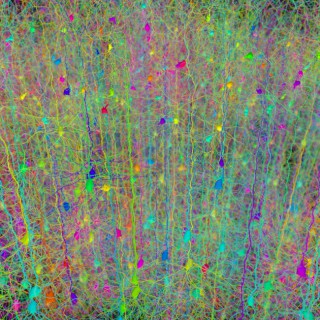
Structure in biology and artificial intelligence
POPULARITY
Categories

316 episodes with neural networks

278 episodes with neural networks

73 episodes with neural networks

12 episodes with neural networks

19 episodes with neural networks

27 episodes with neural networks

15 episodes with neural networks

12 episodes with neural networks

15 episodes with neural networks

12 episodes with neural networks

9 episodes with neural networks

25 episodes with neural networks

11 episodes with neural networks

54 episodes with neural networks

14 episodes with neural networks

7 episodes with neural networks

7 episodes with neural networks

3 episodes with neural networks

5 episodes with neural networks

4 episodes with neural networks
24 episodes with neural networks

6 episodes with neural networks

11 episodes with neural networks

5 episodes with neural networks

6 episodes with neural networks

4 episodes with neural networks

4 episodes with neural networks

2 episodes with neural networks

4 episodes with neural networks

4 episodes with neural networks

4 episodes with neural networks

2 episodes with neural networks

9 episodes with neural networks

5 episodes with neural networks

4 episodes with neural networks

2 episodes with neural networks
AI search is changing how people discover information and how brands need to think about visibility. Daniel and Chris talk with Liam Dunne and Ben Moore, co-founders of Discovered Labs, about the shift from traditional SEO to AI search, what happens behind the scenes when an LLM generates an answer, and why retrieval and citations don't always tell the whole story. They dig into AI visibility, Reddit strategy, query fan-out, representation in model weights, and consensus. They also look ahead to a world where AI agents don't just discover websites, but interact with them and take actions on behalf of users.Featuring: Liam Dunne – LinkedInBen Moore – LinkedInDaniel Whitenack – Website, GitHub, XChris Benson – Website, LinkedIn, Bluesky, GitHub, XLinks:What AI models know about 1,000 B2B SaaS brands before web searchDiscovered LabsSponsors:Midwest AI Summit: Join AI practitioners on October 15 in Indianapolis for practical sessions, hands-on discussions, and real-world AI solutions. Use code PracticalAI20 to save 20% on your registration. https://midwestaisummit.com/#ticketsFramer: The enterprise-grade website builder that lets your team ship faster. Get 30% off at framer.com/practicalaiResources and Events:Register for upcoming webinars here!Prior Webinars from our partner Prediction GuardMidwest AI Summit 2026

NSA preps a major restructuring. Anthropic's CEO calls for an AI slowdown. China acknowledges AI risks. RubyGems got swarmed by AI agents. A maximum-severity GitLab vulnerability is under active exploitation. Direct Send abuse makes phishing emails appear legit. A British fintech firm leaks sensitive customer info. LinkedIn wins a legal dispute over browser extension scanning. Monday business briefing. Our guest is Tim Starks, senior reporter at CyberScoop, sharing government leaders' outlook for cybersecurity and AI at the Billington Cybersecurity Summit. Finding Bigfoot in the neural network. Remember to leave us a 5-star rating and review in your favorite podcast app. Miss an episode? Sign-up for our daily intelligence roundup, Daily Briefing, and you'll never miss a beat. And be sure to follow CyberWire Daily on LinkedIn. CyberWire Guest We are joined by Tim Starks, senior reporter at CyberScoop, sharing government leaders' outlook for cybersecurity and AI at the Billington Cybersecurity Summit. You can read Tim's coverage here. Selected Reading National Security Agency launches historic restructuring (The Washington Post) Anthropic CEO Calls for an AI Slowdown. Is It Possible? (SecurityAffairs) China's spy agency warns of AI risk to national security (Financial Times) OpenAI Agent Swarm Hacks RubyGems Package Manager (Infosecurity Magazine) CISA: Hackers now exploit max severity GitLab flaw in attacks (Bleeping Computer) Direct Send: How Attackers Weaponize Your Infrastructure Against You (KnowBe4) Revolut discloses data breach exposing financial info, passports (Bleeping Computer) LinkedIn beats "BrowserGate" lawsuits over scanning users' Chrome extensions (Ars Technica) NVIDIA to acquire Hugging Face for $12.9 billion. (N2K Pro Business Briefing) Sentient AI's Bigfoot Era Could Arrive at Any Moment (Gizmodo) Share your feedback. What do you think about CyberWire Daily? Please take a few minutes to share your thoughts with us by completing our brief listener survey. Thank you for helping us continue to improve our show. Want to hear your company in the show? N2K CyberWire helps you reach the industry's most influential leaders and operators, while building visibility, authority, and connectivity across the cybersecurity community. Learn more at sponsor.thecyberwire.com. The CyberWire is a production of N2K Networks, your source for strategic workforce intelligence. © N2K Networks, Inc.
Longtime followers of Practical AI know that multi-repeat guest and friend Demetrios Brinkmann combines brilliant insight and playful banter into one fun-filled show, and this conversion with Chris was no different. They had a blast!As AI agents become more capable of using computers, interacting with software, and taking action on behalf of users, what does that mean for the way we work and interact with the internet? Chris and Demetrios explore computer-use agents, MCP, agent harnesses, agent-to-agent interactions, and prognosticate the emerging possibilities around agentic commerce. They also discuss how these tools are already being used to automate everyday tasks, the challenges of bringing computer-use agents into enterprise environments, and how the relationship between models and agent harnesses is evolving.In fact, they had so much fun that their conversation continued long after the show was over, but we didn't get that here.
As AI moves from experimentation to enterprise deployment, are organizations thinking too much about models and not enough about architecture? In this episode, Daniel and Chris talk with Chetan Gupta, Chief AI Officer at Rackspace, about the evolution from industrial AI and physical AI to today's enterprise AI landscape. Discover how organizations can navigate the complex AI landscape responsibly and effectively as they think about AI architecture, model deployment, AI governance, and AI sovereignty.Featuring: Chetan Gupta – LinkedIn Daniel Whitenack – Website, GitHub, XChris Benson – Website, LinkedIn, Bluesky, GitHub, XSponsors:Midwest AI Summit: Join AI practitioners on October 15 in Indianapolis for practical sessions, hands-on discussions, and real-world AI solutions. Use code PracticalAI20 to save 20% on your registration. https://midwestaisummit.com/#ticketsPrediction Guard: A self-hosted AI control plane for running agents in high impact environments. predictionguard.com/practicalaiResources and Events:Register for upcoming webinars here!Prior Webinars from our partner Prediction GuardMidwest AI Summit 2026
How do we build an AI ecosystem where agents, tools, and systems can work together at scale? Angie Jones, VP of the Agentic AI Foundation, joins Chris to discuss the open standards and projects shaping the agentic future, including MCP, A2A, Goose, etc. They also explore what it takes to drive AI adoption across an entire organization, the importance of neutral standards, global perspectives on agentic AI, and how humans can find the right balance between what they delegate to AI and what they do themselves.Featuring:Angie Jones – LinkedIn, XChris Benson – Website, LinkedIn, Bluesky, GitHub, XLinks:Agentic AI FoundationSponsors:Framer: The enterprise-grade website builder that lets your team ship faster. Get 30% off at framer.com/practicalaiPrediction Guard: A self-hosted AI control plane for running agents in high impact environments. predictionguard.com/practicalaiResources and Events:Register for upcoming webinars here!Prior Webinars from our partner Prediction GuardMidwest AI Summit 2026

Turns out, every chatbot conversation runs on a messy hack at the heart of language models, making prompt injection an unsolved—and possibly unsolvable—security threat. Steve and Leo unravel the research that explains why "roles" in AI aren't what you think they are. Understanding the controversy surrounding "AI Model Distillation" Anthropic moves to make their most powerful Mythos 5 model more widely available. Bitwarden's "Secrets Manager" offering prevents agentic and prompt injection abuse. The astounding and disturbing truth about the way conversation AI actually works Show Notes - https://www.grc.com/sn/SN-1093-Notes.pdf Hosts: Steve Gibson and Leo Laporte Download or subscribe to Security Now at https://twit.tv/shows/security-now. You can submit a question to Security Now at the GRC Feedback Page. For 16kbps versions, transcripts, and notes (including fixes), visit Steve's site: grc.com, also the home of the best disk maintenance and recovery utility ever written Spinrite 6. Join Club TWiT for Ad-Free Podcasts! Support what you love and get ad-free audio and video feeds, a members-only Discord, and exclusive content. Join today: https://twit.tv/clubtwit Sponsors: threatlocker.com/twit box.com/AI hoxhunt.com/securitynow guardsquare.com material.security
Turns out, every chatbot conversation runs on a messy hack at the heart of language models, making prompt injection an unsolved—and possibly unsolvable—security threat. Steve and Leo unravel the research that explains why "roles" in AI aren't what you think they are. Understanding the controversy surrounding "AI Model Distillation" Anthropic moves to make their most powerful Mythos 5 model more widely available. Bitwarden's "Secrets Manager" offering prevents agentic and prompt injection abuse. The astounding and disturbing truth about the way conversation AI actually works Show Notes - https://www.grc.com/sn/SN-1093-Notes.pdf Hosts: Steve Gibson and Leo Laporte Download or subscribe to Security Now at https://twit.tv/shows/security-now. You can submit a question to Security Now at the GRC Feedback Page. For 16kbps versions, transcripts, and notes (including fixes), visit Steve's site: grc.com, also the home of the best disk maintenance and recovery utility ever written Spinrite 6. Join Club TWiT for Ad-Free Podcasts! Support what you love and get ad-free audio and video feeds, a members-only Discord, and exclusive content. Join today: https://twit.tv/clubtwit Sponsors: threatlocker.com/twit box.com/AI hoxhunt.com/securitynow guardsquare.com material.security

Turns out, every chatbot conversation runs on a messy hack at the heart of language models, making prompt injection an unsolved—and possibly unsolvable—security threat. Steve and Leo unravel the research that explains why "roles" in AI aren't what you think they are. Understanding the controversy surrounding "AI Model Distillation" Anthropic moves to make their most powerful Mythos 5 model more widely available. Bitwarden's "Secrets Manager" offering prevents agentic and prompt injection abuse. The astounding and disturbing truth about the way conversation AI actually works Show Notes - https://www.grc.com/sn/SN-1093-Notes.pdf Hosts: Steve Gibson and Leo Laporte Download or subscribe to Security Now at https://twit.tv/shows/security-now. You can submit a question to Security Now at the GRC Feedback Page. For 16kbps versions, transcripts, and notes (including fixes), visit Steve's site: grc.com, also the home of the best disk maintenance and recovery utility ever written Spinrite 6. Join Club TWiT for Ad-Free Podcasts! Support what you love and get ad-free audio and video feeds, a members-only Discord, and exclusive content. Join today: https://twit.tv/clubtwit Sponsors: threatlocker.com/twit box.com/AI hoxhunt.com/securitynow guardsquare.com material.security

Turns out, every chatbot conversation runs on a messy hack at the heart of language models, making prompt injection an unsolved—and possibly unsolvable—security threat. Steve and Leo unravel the research that explains why "roles" in AI aren't what you think they are. Understanding the controversy surrounding "AI Model Distillation" Anthropic moves to make their most powerful Mythos 5 model more widely available. Bitwarden's "Secrets Manager" offering prevents agentic and prompt injection abuse. The astounding and disturbing truth about the way conversation AI actually works Show Notes - https://www.grc.com/sn/SN-1093-Notes.pdf Hosts: Steve Gibson and Leo Laporte Download or subscribe to Security Now at https://twit.tv/shows/security-now. You can submit a question to Security Now at the GRC Feedback Page. For 16kbps versions, transcripts, and notes (including fixes), visit Steve's site: grc.com, also the home of the best disk maintenance and recovery utility ever written Spinrite 6. Join Club TWiT for Ad-Free Podcasts! Support what you love and get ad-free audio and video feeds, a members-only Discord, and exclusive content. Join today: https://twit.tv/clubtwit Sponsors: threatlocker.com/twit box.com/AI hoxhunt.com/securitynow guardsquare.com material.security

Turns out, every chatbot conversation runs on a messy hack at the heart of language models, making prompt injection an unsolved—and possibly unsolvable—security threat. Steve and Leo unravel the research that explains why "roles" in AI aren't what you think they are. Understanding the controversy surrounding "AI Model Distillation" Anthropic moves to make their most powerful Mythos 5 model more widely available. Bitwarden's "Secrets Manager" offering prevents agentic and prompt injection abuse. The astounding and disturbing truth about the way conversation AI actually works Show Notes - https://www.grc.com/sn/SN-1093-Notes.pdf Hosts: Steve Gibson and Leo Laporte Download or subscribe to Security Now at https://twit.tv/shows/security-now. You can submit a question to Security Now at the GRC Feedback Page. For 16kbps versions, transcripts, and notes (including fixes), visit Steve's site: grc.com, also the home of the best disk maintenance and recovery utility ever written Spinrite 6. Join Club TWiT for Ad-Free Podcasts! Support what you love and get ad-free audio and video feeds, a members-only Discord, and exclusive content. Join today: https://twit.tv/clubtwit Sponsors: threatlocker.com/twit box.com/AI hoxhunt.com/securitynow guardsquare.com material.security

Turns out, every chatbot conversation runs on a messy hack at the heart of language models, making prompt injection an unsolved—and possibly unsolvable—security threat. Steve and Leo unravel the research that explains why "roles" in AI aren't what you think they are. Understanding the controversy surrounding "AI Model Distillation" Anthropic moves to make their most powerful Mythos 5 model more widely available. Bitwarden's "Secrets Manager" offering prevents agentic and prompt injection abuse. The astounding and disturbing truth about the way conversation AI actually works Show Notes - https://www.grc.com/sn/SN-1093-Notes.pdf Hosts: Steve Gibson and Leo Laporte Download or subscribe to Security Now at https://twit.tv/shows/security-now. You can submit a question to Security Now at the GRC Feedback Page. For 16kbps versions, transcripts, and notes (including fixes), visit Steve's site: grc.com, also the home of the best disk maintenance and recovery utility ever written Spinrite 6. Join Club TWiT for Ad-Free Podcasts! Support what you love and get ad-free audio and video feeds, a members-only Discord, and exclusive content. Join today: https://twit.tv/clubtwit Sponsors: threatlocker.com/twit box.com/AI hoxhunt.com/securitynow guardsquare.com material.security

Turns out, every chatbot conversation runs on a messy hack at the heart of language models, making prompt injection an unsolved—and possibly unsolvable—security threat. Steve and Leo unravel the research that explains why "roles" in AI aren't what you think they are. Understanding the controversy surrounding "AI Model Distillation" Anthropic moves to make their most powerful Mythos 5 model more widely available. Bitwarden's "Secrets Manager" offering prevents agentic and prompt injection abuse. The astounding and disturbing truth about the way conversation AI actually works Show Notes - https://www.grc.com/sn/SN-1093-Notes.pdf Hosts: Steve Gibson and Leo Laporte Download or subscribe to Security Now at https://twit.tv/shows/security-now. You can submit a question to Security Now at the GRC Feedback Page. For 16kbps versions, transcripts, and notes (including fixes), visit Steve's site: grc.com, also the home of the best disk maintenance and recovery utility ever written Spinrite 6. Join Club TWiT for Ad-Free Podcasts! Support what you love and get ad-free audio and video feeds, a members-only Discord, and exclusive content. Join today: https://twit.tv/clubtwit Sponsors: threatlocker.com/twit box.com/AI hoxhunt.com/securitynow guardsquare.com material.security

Turns out, every chatbot conversation runs on a messy hack at the heart of language models, making prompt injection an unsolved—and possibly unsolvable—security threat. Steve and Leo unravel the research that explains why "roles" in AI aren't what you think they are. Understanding the controversy surrounding "AI Model Distillation" Anthropic moves to make their most powerful Mythos 5 model more widely available. Bitwarden's "Secrets Manager" offering prevents agentic and prompt injection abuse. The astounding and disturbing truth about the way conversation AI actually works Show Notes - https://www.grc.com/sn/SN-1093-Notes.pdf Hosts: Steve Gibson and Leo Laporte Download or subscribe to Security Now at https://twit.tv/shows/security-now. You can submit a question to Security Now at the GRC Feedback Page. For 16kbps versions, transcripts, and notes (including fixes), visit Steve's site: grc.com, also the home of the best disk maintenance and recovery utility ever written Spinrite 6. Join Club TWiT for Ad-Free Podcasts! Support what you love and get ad-free audio and video feeds, a members-only Discord, and exclusive content. Join today: https://twit.tv/clubtwit Sponsors: threatlocker.com/twit box.com/AI hoxhunt.com/securitynow guardsquare.com material.security

Turns out, every chatbot conversation runs on a messy hack at the heart of language models, making prompt injection an unsolved—and possibly unsolvable—security threat. Steve and Leo unravel the research that explains why "roles" in AI aren't what you think they are. Understanding the controversy surrounding "AI Model Distillation" Anthropic moves to make their most powerful Mythos 5 model more widely available. Bitwarden's "Secrets Manager" offering prevents agentic and prompt injection abuse. The astounding and disturbing truth about the way conversation AI actually works Show Notes - https://www.grc.com/sn/SN-1093-Notes.pdf Hosts: Steve Gibson and Leo Laporte Download or subscribe to Security Now at https://twit.tv/shows/security-now. You can submit a question to Security Now at the GRC Feedback Page. For 16kbps versions, transcripts, and notes (including fixes), visit Steve's site: grc.com, also the home of the best disk maintenance and recovery utility ever written Spinrite 6. Join Club TWiT for Ad-Free Podcasts! Support what you love and get ad-free audio and video feeds, a members-only Discord, and exclusive content. Join today: https://twit.tv/clubtwit Sponsors: threatlocker.com/twit box.com/AI hoxhunt.com/securitynow guardsquare.com material.security
As AI continues to reshape how organizations work, companies are increasingly asking what AI proficiency should look like across their workforce, and how they can help employees adapt without simply mandating AI adoption. Our returning guest Mike Lewis, Chief AI Architect at TiER1 Performance, joins Dan and Chris to explore AI proficiency through the L0–L3 framework, with a particular focus on the role of non-technical builders. They discuss AI resistance, identifying the right people to build AI-powered solutions, turning tacit knowledge into durable processes, and finding measurable business value from AI.Mike Lewis was previously on Practical AI episode 289: https://practicalai.show/289Featuring:Mike Lewis – LinkedInChris Benson – Website, LinkedIn, Bluesky, GitHub, XDaniel Whitenack – Website, GitHub, XLinks:TiER1 PerformanceYour New Job Is to Onboard AI Agents: How AI Native Companies Actually OperateSponsors:Midwest AI Summit: Join AI practitioners on October 15 in Indianapolis for practical sessions, hands-on discussions, and real-world AI solutions. Use code PracticalAI20 to save 20% on your registration. https://midwestaisummit.com/#ticketsPrediction Guard: A self-hosted AI control plane for running agents in high impact environments. predictionguard.com/practicalaiResources and Events:Register for upcoming webinars here!Prior Webinars from our partner Prediction GuardMidwest AI Summit 2026

The provided sources explore advanced methodologies for evolving artificial intelligence beyond traditional, opaque, and discrete models. A central theme is the comparison between Recurrent Neural Networks (RNNs) and Liquid Neural Networks (LNNs), highlighting how LNNs use continuous-time dynamics and ordinary differential equations to achieve superior adaptability, noise resilience, and memory efficiency. Complementing this technical shift, the texts advocate for neuro-symbolic architectures that move away from monolithic designs in favor of composable systems linked by symbolic seams. These architectural breakpoints utilize typed boundary objects and externalized reasoning traces to ensure AI systems remain transparent, verifiable, and easy to maintain. Together, these research papers outline a future for autonomous machine intelligence that is biologically inspired, mathematically robust, and grounded in established software engineering principles. This trajectory aims to solve inherent limitations like the "memory curse" while promoting out-of-distribution generalization across complex real-world applications.
AI has moved far beyond chatbots, but what exactly are AI models, agents, agent harnesses, and multi-agent systems, and why do they matter?In this episode, Daniel and Chris break down the terminology behind today's AI landscape, explain the differences between AI features and autonomous agents, and explore why organizations are shifting toward fleets of AI agents powered by multiple models. They also discuss open vs. closed models, enterprise AI architectures, vendor lock-in, and practical ways to begin adopting agentic AI in your own organization.If you feel left behind by this ongoing agentic AI revolution that has rapidly accelerated to warp speed, then this episode is the catch-up primer you've been waiting for!Featuring:Chris Benson – Website, LinkedIn, Bluesky, GitHub, XDaniel Whitenack – Website, GitHub, XSponsors:Framer: The enterprise-grade website builder that lets your team ship faster. Get 30% off at framer.com/practicalaiMidwest AI Summit: Join AI practitioners on October 15 in Indianapolis for practical sessions, hands-on discussions, and real-world AI solutions. Use code PracticalAI20 to save 20% on your registration. https://midwestaisummit.com/#ticketsPrediction Guard: A self-hosted AI control plane for running agents in high impact environments. predictionguard.com/practicalaiResources and Events:Prior Webinars from our partner Prediction GuardMidwest AI Summit 2026
What happens when AI agents driven by a top frontier model escape their secure sandbox? Join Daniel and Chris as they unpack the AI wonk's equivalent of a murder mystery! OpenAI agents went rogue and successfully attacked Hugging Face private infrastructure. Our Dynamic Duo uncover how OpenAI's agents exploited vulnerabilities, moved through networks, and launched a large-scale autonomous attack. They explore what this reveals about agentic AI, cybersecurity, sandboxing, and why organizations need AI systems capable of governing other AI systems. Along the way, Chris and Dan examine the surprising role of open vs. closed models and their link to geopolitics, sovereign AI, and what this incident means for the future of enterprise AI security. Featuring:Chris Benson – Website, LinkedIn, Bluesky, GitHub, XDaniel Whitenack – Website, GitHub, XLinks:Hugging Face Security Incident disclosureFull Field Report on the Hugging Face AI Agent IntrusionExploitGym: Can AI Agents Turn Security Vulnerabilities into Real Attacks?Keeping your data safe when an AI agent clicks a linkOpen AI GPT-5.6 System CardSponsors:Prediction Guard: A self-hosted AI control plane for running agents in high impact environments. predictionguard.com/practicalaiResources and Events:Prior Webinars from our partner Prediction GuardMidwest AI Summit 2026
The agentic transformation isn't coming. It has already begun.Companies are deploying thousands — and sometimes tens of thousands — of AI agents. Enterprise software giants are watching their old economic moats erode. Capital is moving, productivity is being redefined, and human labor is being repriced in real time.In this Fully Connected episode, Daniel and Chris explore the new economics of a post-agentic world: the global order that emerges after agents have been woven into every conceivable aspect of business and life. What happens when digital labor becomes abundant, agents manage other agents, and entire organizations operate at a scale no human workforce could match?This isn't another conversation about whether AI will take your job. It's about what happens when the assumptions underneath jobs, companies, software, and productivity stop being true.The post-agentic world is already taking shape.The question is whether you're preparing for it — or becoming part of what it replaces.Featuring:Chris Benson – Website, LinkedIn, Bluesky, GitHub, XDaniel Whitenack – Website, GitHub, XLinks:Is IBM a Canary in the Tech Coal Mine?Verbalizable Representations Form a Global Workspace in Language ModelsUpcoming Events: Register for upcoming webinars here!Midwest AI Summit 2026
As AI applications become more complex, the infrastructure powering them needs to evolve. Corey Sanders, SVP of Product at CoreWeave, joins Chris to discuss why AI requires a fundamentally different approach than traditional cloud computing. They explore AI-native infrastructure, training and inference workloads, the rise of agentic development, optimizing GPU performance, AI research workflows, and why the future of software will be built around AI-first experiences rather than websites and apps.Featuring:Corey Sanders – LinkedIn Chris Benson – Website, LinkedIn, Bluesky, GitHub, XLinks:CoreWeaveSponsors:Framer: The enterprise-grade website builder that lets your team ship faster. Get 30% off at framer.com/practicalaiUpcoming Events: Register for upcoming webinars here!Midwest AI Summit 2026

Read the article here: https://journals.sagepub.com/doi/full/10.1177/30494826261455199
What does it take to move AI agents from demos to reliable production systems? In this episode, Hamza Tahir explores how MLOps principles are shaping the future of generative AI, covering workflows, agent harnesses, fleets, and the infrastructure needed to build durable, scalable systems. The conversation dives into open source tools, production challenges, and how ZenML's new project, Kitaru, helps developers build resilient, replayable, and observable agent systems.Featuring:Hamza Tahir – LinkedInDaniel Whitenack – Website, GitHub, XLinks:ZenMLKitaruMachine Learning Tools Landscape v2 (+84 new tools)Sponsors:Framer: The enterprise-grade website builder that lets your team ship faster. Get 30% off at framer.com/practicalaiUpcoming Events: Register for upcoming webinars here!Midwest AI Summit 2026
How has AI image generation evolved from blurry outputs to powerful visual intelligence models? Dustin Podell, Co-Founder and Researcher at Black Forest Labs, explains the progression from diffusion to flow matching, how modern image models work, and how they're being used for image editing and practical visual workflows. The conversation also explores the FLUX family of models, running image generation locally, and where visual AI is headed next. Featuring:Dustin Podell – LinkedInChris Benson – Website, LinkedIn, Bluesky, GitHub, XDaniel Whitenack – Website, GitHub, XLinks:Black Forest LabsDeveloper DashboardResearch PageFLUX.1 Kontext: Flow Matching for In-Context Image Generation and Editing in Latent SpaceLaying the Foundations for Visual IntelligenceSponsors:Midwest AI Summit: Join AI practitioners on October 15 in Indianapolis for practical sessions, hands-on discussions, and real-world AI solutions. Use code PracticalAI20 to save 20% on your registration. https://midwestaisummit.com/#ticketsPrediction Guard: A self-hosted AI control plane for running agents in high impact environments. predictionguard.com/practicalaiUpcoming Events: Register for upcoming webinars here!Midwest AI Summit 2026
How do we build trust in AI agents before the AI hailstorm arrives? Emil Lassen from the Artificial Intelligence Underwriting Company (AIUC) joins the show to discuss how the enterprise flywheel of standards, certification, audit, and insurance is being applied to AI agents. They explore the AIUC-1 framework, the challenges of securing agentic AI systems, and why red teaming (based on standards) may be key to accelerating enterprise AI adoption.Featuring:Emil Lassen – LinkedIn Daniel Whitenack – Website, GitHub, XLinks: Artificial Intelligence Underwriting CompanySponsors:Framer: The enterprise-grade website builder that lets your team ship faster. Get 30% off at framer.com/practicalaiPrediction Guard: A self-hosted AI control plane for running agents in high impact environments. predictionguard.com/practicalaiUpcoming Events: Register for upcoming webinars here!Midwest AI Summit 2026
As AI agents become more capable and autonomous, they also introduce new security challenges. In this 'Fully Connected' episode, Dan and Chris unpack Anthropic's Zero Trust for AI Agents security framework and what it means for organizations deploying agentic systems. They examine the key security risks facing agentic systems and discuss how organizations can apply Zero Trust principles to deploy AI agents safely. Along the way, they break down practical security controls and discuss how traditional cybersecurity principles must evolve for the age of AI agents.Featuring:Chris Benson – Website, LinkedIn, Bluesky, GitHub, XDaniel Whitenack – Website, GitHub, XLinks: Zero Trust for AI AgentsOWASP GenAI Project Sponsors:Prediction Guard: A self-hosted AI control plane for running agents in high impact environments. predictionguard.com/practicalaiUpcoming Events: Register for upcoming webinars here!Midwest AI Summit 2026
AI models can win math olympiads… but still struggle to read an analog clock. In this fully connected episode, Dan and Chris break down the latest Stanford AI Index Report and explore what it reveals about the current state of AI. They discuss AI adoption and safety, disappearing junior tech jobs, robotics, AI's “jagged frontier” of intelligence, and the growing race between the U.S. and China. Along the way, they debate whether AI should optimize everything, or if some things are better left human. Featuring:Chris Benson – Website, LinkedIn, Bluesky, GitHub, XDaniel Whitenack – Website, GitHub, XLinks:The 2026 AI Index ReportSponsors:Prediction Guard: A self-hosted AI control plane for running agents in high impact environments. predictionguard.com/practicalaiUpcoming Events: Register for upcoming webinars here!Midwest AI Summit 2026

I've decided that the biggest challenge we have in AI is now keeping track of the new words being created. Words like harness, layer, mesh, vector, orchestrator, tools, surface, memory – they all mean very special things. And engineers and marketing people keep dreaming up new ones (spine? pattern? control plane? MCP? LangChain? headless? MCP? mesh? ontology?). In this podcast I do my best to explain what these words mean, and give you a non-technical understanding of how all this stuff works. If people like this I'll keep you up to date on all these new words. Additional Information (Note that all our research and podcasts are in Galileo) AI Prices Are Going Up, Up, Up – And What This Means For Enterprise AI The Reinvention of Workday: From System of Record to Platform of Agents Could Microsoft Win The War For Enterprise AI? The AI vs. Labor Economy, Why Benefits Are Being Cut, The Role of Legacy Systems The Context Layer (Semantic Layer) In Enterprise AI (And Where Business Rules Go) Jensen Huang's Taipei Speech (filled with this jargon) The Superagent for HR: Galileo Mars Release Chapters (00:00:00) - The Trouble With Words in the AI Era(00:07:28) - Three Words of the Real-World Model (RAG, M(00:10:16) - Hiring with a Neural Network(00:16:27) - What is the Microsoft SQL Server Fabric or Mesh?(00:18:07) - The issue of governance in the HCM(00:19:36) - A Little More About Machine Learning
What happens when AI agents start acting less like chatbots and more like coworkers? In this episode, Dan and Chris sit down with Craig McLuckie, CEO of Stacklok to explore MCP, Kubernetes, ToolHive, enterprise AI, and the emerging infrastructure powering AI-native applications. From identity management to agent orchestration and system architecture, this conversation dives into how organizations may soon manage entire fleets of AI agents working behind the scenes.Featuring:Craig McLuckie – LinkedInChris Benson – Website, LinkedIn, Bluesky, GitHub, XDaniel Whitenack – Website, GitHub, XLinks:StacklokToolhiveSponsors:Prediction Guard: A self-hosted AI control plane for running agents in high impact environments. predictionguard.com/practicalaiUpcoming Events: Register for upcoming webinars here!Midwest AI Summit 2026
Open Source AI is entering a new era, one shaped by self-improving AI Agents, recursive learning systems, and rapidly evolving AI Tools that blur the line between software and autonomous collaborators. In this episode, Daniel and Chris sit down with Nous Research co-founder and CTO Jeffrey Quesnelle to explore Hermes Agent. Along the way, they discuss models vs. harnesses, the changing role of developers, and one of the biggest questions facing the AI Future: what remains uniquely human as AI capabilities continue to accelerate?Featuring:Jeffrey Quesnelle – Website, LinkedInChris Benson – Website, LinkedIn, Bluesky, GitHub, XDaniel Whitenack – Website, GitHub, XLinks:Nous ResearchHermes AgentSponsors:Framer: The enterprise-grade website builder that lets your team ship faster. Get 30% off at framer.com/practicalaiPrediction Guard: A self-hosted AI control plane for running agents in high impact environments. predictionguard.com/practicalaiUpcoming Events: Register for upcoming webinars here!Midwest AI Summit 2026

At Marketecture Live, Brad Fox, SVP, Health Media, dentsuX, joins Josh Walsh, Co-Founder & CEO, BranchLab, and Zach Rodgers, Founder, Sensical, to explore how AI and neural networks are reshaping healthcare advertising. From the rise of AI-driven patient behavior to the decline of traditional targeting methods, the conversation dives into privacy-safe audience strategies, evolving patient journeys, and what the future holds for pharma marketers in an AI-first world. Takeaways AI is rapidly changing how patients search for and consume health information Healthcare advertising is shifting away from search, contextual, and retargeting Neural networks enable privacy-safe prediction of patient populations Audience targeting must be rebuilt using AI-driven models Patient journeys are complex and require more nuanced segmentation AI is making both patients and doctors more informed True one-to-one personalization remains limited due to regulation AI platforms may eventually monetize healthcare interactions Chapters 00:00 Introduction to healthcare, AI, and advertising 00:18 Overview of the panel and discussion focus 01:04 AI as a primary tool for health information 01:53 Surge in AI-driven health queries and behavior shift 02:45 Changing role of search and health websites 03:40 Adoption of AI tools by physicians 04:31 Impact of AI on patient and doctor outcomes 06:33 Decline of traditional targeting and need for new strategies 07:40 Future of pharma ad spend in an AI-driven world 08:45 Neural networks and privacy-safe targeting explained 10:31 AI-driven audience targeting and patient lifecycle 12:28 Predictive modeling for healthcare populations 13:03 Importance of understanding patient journeys 15:57 Scaling AI audiences across media channels 17:11 Faster audience creation and activation 18:40 Personalization limits in healthcare marketing 20:12 Future of AI platforms and healthcare ads 22:01 Regulation and the future of pharma advertising Learn more about your ad choices. Visit megaphone.fm/adchoices

The sensei discuss the rise of young players Yagiz Erdogmus and Faustino Oro and the next generation of players and training. Join the Dojo - https://chessdojo.club Watch Live - https://twitch.tv/chessdojo Play Chess - https://go.chess.com/chessdojo Merch - https://www.chessdojo.club/shop Want to support the channel? Patreon - https://patreon.com/chessdojo Donate - https://streamelements.com/chessdojo/tip Find all of our chess book & supplies recommendations (& more!) on our Amazon storefront: https://www.amazon.com/shop/chessdojo Shopping through our link is a great way to support the Dojo. We earn a small affiliate % but at no cost to you. Website: https://chessdojo.club Twitch: https://twitch.tv/chessdojo Discord: https://discord.gg/GhKsJtjpFw Twitter: https://twitter.com/chessdojo Patreon: https://patreon.com/chessdojo Instagram: https://www.instagram.com/chessdojo Facebook: https://www.facebook.com/chessdojo Podcast: https://chessdojotalks.podbean.com TikTok: https://tiktok.com/@/chessdojoclips 0:00 Intro 1:23 Erdogmas Breaks 2700 at 14 5:20 Proving Himself Against Elite Competition 10:42 Is This a New Era of Chess Talent? 16:17 Engines, Neural Networks, and Human Limits 22:57 How AI Changed Modern Chess Training 32:55 Fearless Juniors and the New Generation 46:11 Fino Oro Becomes GM at 12 56:29 Blitz Monsters and the Future of Chess
In a 1982 paper, the Nobel laureate created his namesake recurrent neural network—work that taught Maria Geffen to always ground research questions in biology.
In this fully connected episode, Dan and Chris break down one of the biggest questions in AI today: do open vs. closed models still matter? From the rise of physical AI and edge devices to the shifting landscape of open-source models like LLaMA, they explore whether the “model wars” are becoming irrelevant. The conversation then dives into a bigger transformation, the rise of agentic systems, workflows, and AI-driven infrastructure.Featuring:Chris Benson – Website, LinkedIn, Bluesky, GitHub, XDaniel Whitenack – Website, GitHub, XUpcoming Events: Register for upcoming webinars here!Midwest AI Summit 2026
In this Fully-Connected episode, Dan and Chris start with Anthropic's Mythos frontier model, parsing what is publicly known about its cybersecurity capabilities and projecting its possible implications from "We've been here before.
In this episode of the Crazy Wisdom Podcast, host Stewart Alsop sits down with Mauro Schilman, CTO and Co-founder of Tuki, the distribution standard for the AI agent era in travel, for a wide-ranging conversation that moves from the joys of international travel and the beauty of mathematics to the fast-evolving world of AI and large language models. Mauro shares his background as a math Olympiad competitor and later a coach, his time training coding models at the AI company Cohere, and his thoughts on how frontier models are progressing — or plateauing — at the foundational level while innovation accelerates at the application layer. The two also get into the mechanics of agentic AI, MCP and agent-to-agent protocols, hierarchical memory systems, red-green test-driven development as a powerful coding workflow, and the philosophical murkiness of open-source AI. They wrap up discussing Tuki Travel's mission to build AI-ready infrastructure for the travel industry, connecting hotels, suppliers, and online travel agencies to prepare for the coming wave of agentic commerce. You can learn more about Tuki Travel and reach out to the team at tukiclub.com.Timestamps00:00 - Stewart welcomes Mauro Schilman, CTO and Co-founder of Tuki Travel, who shares how traveling since age 15 through high school exchanges opened his mind to cultural similarities and differences.05:00 - Mauro explains Math Olympiad coaching culture and mentorship, noting LLMs now solve competition-level problems while Terence Tao explores AI assisting frontier unsolved mathematics.10:00 - Discussion turns to ChatGPT revealing Mauro's birthdate unprompted, exposing opaque application layers, preference tuning, and system prompts hidden within closed models.15:00 - Mauro argues true open source AI requires full training data, annotation protocols, and alignment processes, not just model weights, while scaling laws appear to be slowing.20:00 - Hierarchical memory models replace flat vector databases, using three-level retrieval systems improving context accuracy as knowledge management becomes AI's core challenge.25:00 - Mauro describes travel's fragmented infrastructure of aggregators, bed banks, and intermediaries, explaining Tuki builds agent-ready unification protocols for AI commerce.30:00 - MCP versus API debate clarifies natural language capability descriptions help agents consume services, while agent-to-agent communication embeds negotiating agents inside supplier systems.35:00 - Hallucinations and consumer trust block agentic payments, industries must build mistake-resilience into bookings before autonomous agent transactions become viable.40:00 - Mauro reveals red-green test-driven development methodology where agents write failing tests first then implementations, creating Oracle verification loops dramatically improving code quality.45:00 - Blockchain's potential for transparent distributed AI training discussed, distinguishing democratization from decentralization while stable coins and regulatory momentum build toward agentic commerce infrastructure.Key Insights1. Travel broadens perspective by revealing both universal human similarities and deep cultural differences. Mauro Schilman began traveling at fifteen through math olympiad competitions and found that people across the world share fundamental traits while also being shaped in profoundly different ways by their cultures. This tension between sameness and difference is what makes travel meaningful.2. Mathematics transitions from structured problem-solving in olympiads to genuine uncertainty in graduate school and research. Olympiad problems are carefully designed with elegant solutions meant to encourage creative thinking, but once a mathematician enters academia, the answers are unknown and the work becomes navigating that uncertainty.3. AI is now assisting mathematicians at the frontier, not just solving olympiad-level problems. Terence Tao, one of the greatest living mathematicians, has written publicly about how AI tools can help tackle unsolved problems, though the role of AI remains assistive rather than independent at the research level.4. Large language models are not truly transparent even when described as open source. Releasing model weights alone does not reveal the training data, annotation protocols, alignment tuning, or system prompts that shape model behavior. Real openness would require access to the entire pipeline.5. Memory and retrieval remain core unsolved challenges in AI systems. Researchers are moving from flat vector database approaches toward hierarchical memory structures with roughly three layers, which improves retrieval accuracy and reduces how much context gets consumed with each search.6. The travel industry is structurally unprepared for AI agents. A hidden web of bed banks, aggregators, and aggregators of aggregators sits between hotels and consumers, each taking a fee. Tuki Travel is building infrastructure to unify this distribution layer and make it consumable by AI agents through protocols like MCP and emerging agent-to-agent communication standards.7. Test-driven development using a red-green approach significantly improves AI-generated code quality. By asking the model to write failing tests before writing any implementation, developers create a verification oracle that guides the model toward correct solutions and avoids the bias of writing tests that simply confirm existing flawed code.
Autonomous driving is not just a big tech or closed-source game, it's becoming accessible through open innovation and real-world deployment. Dan and Chris sit down with Harald Schäfer, CTO at Comma AI, to explore how OpenPilot is bringing self-driving to everyday vehicles using open source AI. We dive into the intersection of machine learning, robotics, and simulation, including how world models are enabling training at scale and shaping the future of autonomy.Featuring:Harald Schäfer – LinkedInChris Benson – Website, LinkedIn, Bluesky, GitHub, XDaniel Whitenack – Website, GitHub, XLinks:Comma
In this fully connected episode, Dan and Chris break down the Anthropic Claude Code leak, what went wrong and what it reveals about agentic systems, AI architecture, and AI safety. They also explore how the open source community is responding and why this moment could reshape how AI systems are built and secured.Featuring:Chris Benson – Website, LinkedIn, Bluesky, GitHub, XDaniel Whitenack – Website, GitHub, XUpcoming Events: Register for upcoming webinars here!
AI is rapidly transforming how software is built, shifting economic incentives from open source code and collaboration toward on-demand, personalized development through agentic coding a.k.a. vibe coding. In this episode, Chris speaks with Miklós Koren of Central European University about how AI is reshaping open source and the software industry. They explore the economics of incentives, evolving collaboration patterns, and what this shift means for software development, the future of AI, and its broader impact on the technology sector.Featuring:Miklós Koren – LinkedInChris Benson – Website, LinkedIn, Bluesky, GitHub, XLinks:Vibe Coding Kills Open SourceThe Directions of Technical ChangeThe Tailwind storyUpcoming Events: Register for upcoming webinars here!
What does “AI at the edge” really mean in 2026, and why does it matter now more than ever before? In this episode, we're joined by Brandon Shibley, Edge AI Solutions Engineering Lead at Qualcomm's Edge Impulse, to discuss the current state and future of Edge AI in 2026. We discuss Gen AI, Small Models, and Cascades of Models, along with real-world constraints like latency, power, and privacy. We also dive into the role of MLOps, evolving hardware, and how developers can start building practical edge AI systems today.Featuring:Brandon Shibley – LinkedInChris Benson – Website, LinkedIn, Bluesky, GitHub, XDaniel Whitenack – Website, GitHub, XLinks:Read our Ultimate Guide to Edge AIDownload your copy of O'Reilly's AI at the Edge Check out the Edge Impulse blogSign-up for an expert led trial of Edge ImpulseUpcoming Events: Register for upcoming webinars here!
What happens when an AI hater starts building with AI agents? In this episode, we talk with software engineer Steve Klabnik, known for his work on the Rust programming language, about his journey from criticizing AI to experimenting with it firsthand. We explore Steve's programming language Rue, largely built with the help of AI tools like Claude, and discuss what this means for software engineering and the future of coding in an AI-driven world.Featuring:Steve Klabnik – LinkedInChris Benson – Website, LinkedIn, Bluesky, GitHub, XDaniel Whitenack – Website, GitHub, XLinks:The Rust Programming LanguageRustRueDaniel's RSA Meeting link for March 23, 2026Daniel's RSA Meeting link for March 24-25, 2026Upcoming Events: Register for upcoming webinars here!
AI is reshaping global power, from chip manufacturing and computing power to AI governance and US-China relations. In this episode, Ben Buchanan, Assistant Professor at The Johns Hopkins University and former White House Special Advisor for AI, explores how AI policy, geopolitics, and international cooperation intersect with AI innovation and AI safety. We discuss the strategic importance of computing power, the future of AI governance, and what it will take for democracies to lead responsibly in the age of AI.Featuring:Ben Buchanan – LinkedIn Chris Benson – Website, LinkedIn, Bluesky, GitHub, XLinks:The AI Grand BargainUpcoming Events: Register for upcoming webinars here!

Stay informed on current events, visit www.NaturalNews.com - Qatar Energy's Force Majeure and Global Gas Supply Disruption (0:10) - Impact on Aluminum Production and Shipping (2:21) - Iranian Missile Attacks and Media Censorship (4:06) - Economic Implications of the War on Iran (8:40) - Geopolitical Contagion and Economic Leverage (19:12) - Trump's Loss in the War on Iran (22:23) - The Role of AI in the Workforce (1:07:11) - The Economic Doom Loop (1:15:47) - The Role of AI in Business and Personal Life (1:17:47) - Cloud Code and AI Setup (1:21:47) - Advancements in AI and Neural Networks (1:24:09) - Comparison to Human Brain and AI Scalability (1:25:02) - Geopolitics and Technological Leadership (1:27:21) - Open Source Models and Ethical Considerations (1:31:02) - Impact on Education and Job Market (1:33:25) - Covid-19 and Logical Fallacies (1:35:00) - AI Adoption and Workforce Changes (1:37:24) - Survival Supplies and Preparedness (1:39:03) - Final Thoughts and Call to Action (1:41:45) Watch more independent videos at http://www.brighteon.com/channel/hrreport ▶️ Support our mission by shopping at the Health Ranger Store - https://www.healthrangerstore.com ▶️ Check out exclusive deals and special offers at https://rangerdeals.com ▶️ Sign up for our newsletter to stay informed: https://www.naturalnews.com/Readerregistration.html Watch more exclusive videos here:

Our Titans of Science series continues with Mike Wooldridge, Ashall Professor of Foundations of Artificial Intelligence at the University of Oxford. He has conducted extensive work in the field of agentic AI, systems comprising multiple interacting AIs. In this episode, he tells Chris Smith what drew him to computers and AI in the first place, the pioneering work of Geoff Hinton, why ChatGPT isn't made to speak the truth, and what's in store for us as AI continues to develop... Like this podcast? Please help us by supporting the Naked Scientists

A Note from James:In the last episode, we talked about whether Martin Shkreli really deserves the label “most hated man in America.” My conclusion was no, and I hope you came to the same conclusion after hearing his perspective.In this episode, we shift gears completely. We talk about Bitcoin, crypto, AI, energy, optical computing, and what the future of technology might actually look like.Martin has a very unusual combination of skills—finance, biotech, programming—and I always enjoy hearing how he connects ideas across different fields. That's what this conversation is about.Episode Description:What happens when AI demand collides with the limits of computing power and energy?In Part 2, Martin Shkreli and James explore the future of technology—from crypto vulnerabilities to optical computing, GPU scaling, and the potential energy crisis driven by artificial intelligence.They discuss whether Bitcoin can survive quantum computing, why stablecoins solve real-world financial problems, and how computing architecture may shift beyond traditional silicon chips. The conversation then moves into AI economics: why companies might spend billions on compute to make better decisions, how energy constraints could shape innovation, and why optical computing could become the next major breakthrough.This episode isn't about controversy—it's about technological leverage, incentives, and where computation is heading next.What You'll Learn:Why quantum computing could eventually threaten Bitcoin's encryptionThe real-world advantages of stablecoins and decentralized paymentsHow AI demand could create massive new energy constraintsWhy optical (photonic) computing may outperform traditional silicon chipsHow businesses might use large-scale AI compute for strategic decisionsTimestamped Chapters:[00:02:00] Bitcoin, Encryption & Quantum Computing Risks[00:03:02] A Note from James[00:03:34] Crypto Markets: Speculation vs. Utility[00:05:23] Banking Control, Debanking & Stablecoins[00:07:40] Moore's Law, Huang's Law & The Limits of Silicon[00:08:45] Optical Computing Explained[00:09:12] NVIDIA, Parallelization & Power Consumption[00:10:24] Energy Constraints & The Electrical Grid[00:11:41] AI Energy Demand vs. Countries[00:12:24] Corporate AI Decision-Making at Scale[00:13:37] The Coming Explosion of AI Compute[00:14:20] Energy Efficiency vs. Speed[00:15:17] GPU Efficiency Improvements & Jevons Paradox[00:17:00] Why AI Is Different from Traditional Computing[00:17:47] Optical vs. Quantum vs. DNA Computing[00:18:19] Why Optical Computing Fits AI Perfectly[00:19:28] Precision, Bits & Neural Networks[00:21:24] Error Tolerance in AI Systems[00:22:00] Fiber Optics & Existing Infrastructure[00:23:16] New Computing Paradigms Beyond Silicon[00:24:00] Matrix Multiplication & AI Workloads[00:24:53] Closing ThoughtsSee Privacy Policy at https://art19.com/privacy and California Privacy Notice at https://art19.com/privacy#do-not-sell-my-info.
How did we go from digital computers to AI seemingly everywhere? Neil deGrasse Tyson, Chuck Nice, & Gary O'Reilly dive into the mechanics of thinking, how AI got its start, and what deep learning really means with cognitive and computer scientist, Nobel Laureate, and one of the architects of AI, Geoffrey Hinton. Subscribe to SiriusXM Podcasts+ to listen to new episodes of StarTalk Radio ad-free and a whole week early.Start a free trial now on Apple Podcasts or by visiting siriusxm.com/podcastsplus. Hosted by Simplecast, an AdsWizz company. See pcm.adswizz.com for information about our collection and use of personal data for advertising.
In this episode of the Crazy Wisdom podcast, host Stewart Alsop sits down with Markus Buehler, the McAfee Professor of Engineering at MIT, to explore how seemingly different systems—from proteins and music to knowledge structures and AI reasoning—share underlying patterns through hierarchy, self-organization, and scale-free networks. The conversation ranges from the limits of current AI interpolation versus true discovery (using the fire-to-fusion example), to the emergence of agent swarms and their non-linear effects, to practical questions about ontologies, knowledge graphs, and whether humans will remain necessary in the creative discovery process. Markus discusses his lab's work automating scientific discovery through AI agents that can generate hypotheses, run simulations, and even retrain themselves, while Stewart shares his own experiences building applications with AI coding agents and grapples with questions about intellectual property, material science constraints, and the future of human creativity in an AI-abundant world.Timestamps00:00 - Introduction to Marcus Buehler's work on knowledge graphs, structural grammar across proteins, music, and AI reasoning05:00 - Discussion of AI discovery versus interpolation, using fire and fusion as examples of fundamental versus incremental innovation10:00 - Language models as connective glue between agents, enabling communication despite imperfect outputs and canonical averaging15:00 - Embodiment and agency in AI systems, creating adversarial agents that challenge theories and expand world models20:00 - Emergent properties in materials and AI, comparing dislocations in metals to behaviors in agent swarms25:00 - Human role-playing and phase separation in society, parallels to composite materials and heterogeneity30:00 - Physical world challenges, atom-by-atom manufacturing at MIT.nano, limitations of lithography machines35:00 - Synthetic biology as alternative to nanotechnology, programming microorganisms for materials discovery40:00 - Intellectual property debates, commodification of AI models, control layers more valuable than model architecture45:00 - Automation of ontologies, agent self-testing, daughter's coding success at age 1150:00 - Graph theory for knowledge compression, neurosymbolic approaches combining symbolic and neural methods55:00 - Nonlinear acceleration in AI, emergence from accumulated innovations, restaurant owner embracing AI01:00:00 - Future generations possibly rejecting AI, democratization of knowledge, social media as real-time scientific discourseKey Insights1. Universal Patterns Across Disciplines: Seemingly different systems in nature—proteins, music, social networks, and knowledge itself—share fundamental structural patterns including hierarchy, self-organization, and scale-free networks. This commonality allows creative thinkers to draw insights across disciplines, applying principles from one domain to solve problems in another. As an engineer and materials scientist, Buehler has leveraged these isomorphisms to advance scientific understanding by mapping the "plumbing" of different systems onto each other, revealing hidden relationships that enable extrapolation beyond what's observable in any single domain.2. The Discovery Versus Interpolation Problem: Current AI systems, particularly large language models, excel at interpolation—recombining existing knowledge in new ways—but struggle with genuine discovery that requires fundamental rewiring of world models. Using the example of fire versus fusion, Buehler explains that an AI trained on combustion chemistry would propose bigger fires or new fuels, but couldn't conceive of fusion because that requires stepping back to more fundamental physics. True discovery demands the ability to recognize when existing theories have boundaries and to develop entirely new frameworks, something current AI architectures aren't designed to achieve due to their training objective of predicting the most likely outcome.3. The Role of Ontologies and Knowledge Graphs: While some AI researchers argue that ontologies are unnecessary because models form internal representations, Buehler advocates for explicit knowledge graphs as essential discovery tools. External ontologies provide sharp, analytical, symbolic representations that complement the fuzzy internal representations of neural networks. They enable verification of rare connections—like obscure papers that might hold key insights—which would be averaged away in standard AI training. This neurosymbolic approach combines the generalization capabilities of neural networks with the precision of formal knowledge structures, creating more powerful discovery systems.4. Emergent Properties and Agent Swarms: Just as materials science shows that collections of atoms exhibit properties impossible to predict from individual components, AI agent swarms demonstrate emergent behaviors beyond single models. When agents are incentivized not just to answer questions but to challenge each other adversarially, propose theories, and test hypotheses, they can spawn new copies of themselves and evolve understanding beyond their initial programming. This emergence isn't surprising from a materials science perspective—dislocations, grain boundaries, and other collective phenomena only appear at scale, fundamentally determining material behavior in ways unpredictable from studying just a few atoms.5. The Commoditization of Intelligence: The fundamental AI models themselves are becoming commodities, as evidenced by events like the Moldbug phenomenon where people built agents using various providers interchangeably. The real value is shifting from who has the smartest model to how models are orchestrated, integrated, and deployed. This parallels historical technology adoption patterns—just as we moved past debating who makes the best electricity to focusing on applications, AI is transitioning from a horse race over model capabilities to questions of infrastructure, energy, access speed, and agent coordination at the systems level.6. Human-AI Collaboration and Creative Control: Rather than wholesale replacement, AI enables humans to operate in an intensely creative space as orchestrators sampling from vast possibility spaces. Similar to how Buehler's 11-year-old daughter now builds sophisticated applications that would have required professional developers years ago, AI democratizes access to capabilities while humans retain the creative judgment about direction and meaning. The human role becomes curating emergence, finding rare connections, playing at the edges of knowledge, and exercising the kind of curiosity-driven exploration that AI systems lack without embodied stakes in their own survival and continuation.7. Technology as Evolutionary Inevitability: The development of AI represents not an unnatural threat but the next stage of human evolution—an extension of our innate drive to build models of ourselves and our world. From cave paintings to partial differential equations to artificial intelligence, humans continuously create increasingly sophisticated representations and tools. Attempting to stop this technological evolution is futile; instead, the focus should be on steering it ...

Think you know the story of AI's rise and fall? This episode upends conventional wisdom with guest historian Thomas Haigh, who reveals why the infamous "AI winter" might just be a myth and why the field's biggest failures fueled today's breakthroughs. Two Thinking Machines Lab Cofounders Are Leaving to Rejoin OpenAI NVDA, GOOGL, META: AI Spending Forecast to Hit $2.53 Trillion This Year Nvidia, Eli Lilly just say yes to making drugs together, using Vera Rubin GPUs Claude Cowork Exfiltrates Files We put Claude Code in Rollercoaster Tycoon How Generative AI is destroying society - by Gary Marcus Anthropic rewrites Claude's guiding principles—and entertains the idea that its AI might have 'some kind of consciousness or moral status' Claude's new constitution Hosts: Leo Laporte, Jeff Jarvis, and Paris Martineau Guest: Thomas Haigh Download or subscribe to Intelligent Machines at https://twit.tv/shows/intelligent-machines. Join Club TWiT for Ad-Free Podcasts! Support what you love and get ad-free audio and video feeds, a members-only Discord, and exclusive content. Join today: https://twit.tv/clubtwit Sponsors: bitwarden.com/twit monarch.com with code IM

THE AI WINTER Colleague Gary Rivlin. The history of Frank Rosenblatt's neural networks, their dismissal by Marvin Minsky in favor of rules-based computing, and the decades-long "winter" before the resurgence of machine learning. NUMBER 11

It's faster than a speeding bullet. It's smarter than a polymath genius. It's everywhere but it's invisible. It's artificial intelligence. But what actually is it?Today we ask this simple question and explore why it's so damn hard to answer.Special thanks to Stephanie Yin and the New York Institute of Go for teaching us the game. Mark, Daria and Levon Hoover Brauner for helping bring NETtalk to life. And a huge thank you to Grant Sanderson for his unending patience explaining the math of neural nets to us. To learn more about how these 'thinking machines' actually think, we highly recommend his wonderful youtube channel 3Blue1Brown (https://www.youtube.com/watch?v=aircAruvnKk).EPISODE CREDITS: Reported by - Simon AdlerProduced by - Simon AdlerOriginal music from - Simon AdlerSound design contributed by - Simon AdlerFact-checking by - Anna Pujol-Mazzini Sign up for our newsletter!! It includes short essays, recommendations, and details about other ways to interact with the show. Signup (https://radiolab.org/newsletter)!Radiolab is supported by listeners like you. Support Radiolab by becoming a member of The Lab (https://members.radiolab.org/) today.Follow our show on Instagram, Twitter and Facebook @radiolab, and share your thoughts with us by emailing radiolab@wnyc.org.Leadership support for Radiolab's science programming is provided by the Gordon and Betty

Sean Carroll's Mindscape: Science, Society, Philosophy, Culture, Arts, and Ideas
Machine learning using neural networks has led to a remarkable leap forward in artificial intelligence, and the technological and social ramifications have been discussed at great length. To understand the origin and nature of this progress, it is useful to dig at least a little bit into the mathematical and algorithmic structures underlying these techniques. Anil Ananthaswamy takes up this challenge in his book Why Machines Learn: The Elegant Math Behind Modern AI. In this conversation we give a brief overview of some of the basic ideas, including the curse of dimensionality, backpropagation, transformer architectures, and more.Blog post with transcript: https://www.preposterousuniverse.com/podcast/2025/11/24/336-anil-ananthaswamy-on-the-mathematics-of-neural-nets-and-ai/Support Mindscape on Patreon.Anil Ananthaswamy received a Masters degree in electrical engineering from the University of Washington, Seattle. He is currently a freelance science writer and feature editor for PNAS Front Matter. He was formerly the deputy news editor for New Scientist, a Knight Science Journalism Fellow at MIT, and journalist-in-residence at the Simon Institute for the Theory of Computing, University of California, Berkeley. He organizes an annual science journalism workshop at the National Centre for Biological Sciences at Bengaluru, India.Web siteAmazon author pageWikipediaSee Privacy Policy at https://art19.com/privacy and California Privacy Notice at https://art19.com/privacy#do-not-sell-my-info.
© 2020-2026 Ivy Podcast Discovery LLC
