
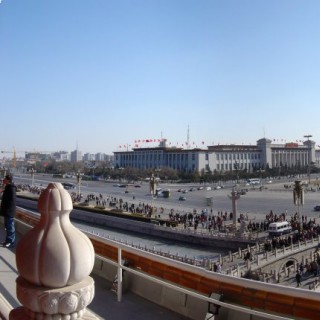
public square in Beijing, China
POPULARITY
Categories

21 episodes with Tiananmen Square

11 episodes with Tiananmen Square

6 episodes with Tiananmen Square

13 episodes with Tiananmen Square

4 episodes with Tiananmen Square

5 episodes with Tiananmen Square

7 episodes with Tiananmen Square

6 episodes with Tiananmen Square

8 episodes with Tiananmen Square

3 episodes with Tiananmen Square

5 episodes with Tiananmen Square

5 episodes with Tiananmen Square

3 episodes with Tiananmen Square

7 episodes with Tiananmen Square

4 episodes with Tiananmen Square

3 episodes with Tiananmen Square

4 episodes with Tiananmen Square

3 episodes with Tiananmen Square

2 episodes with Tiananmen Square

4 episodes with Tiananmen Square

4 episodes with Tiananmen Square

3 episodes with Tiananmen Square

5 episodes with Tiananmen Square

4 episodes with Tiananmen Square

4 episodes with Tiananmen Square

4 episodes with Tiananmen Square

2 episodes with Tiananmen Square

7 episodes with Tiananmen Square

2 episodes with Tiananmen Square

2 episodes with Tiananmen Square

4 episodes with Tiananmen Square

3 episodes with Tiananmen Square

3 episodes with Tiananmen Square

4 episodes with Tiananmen Square

3 episodes with Tiananmen Square

4 episodes with Tiananmen Square

3 episodes with Tiananmen Square

2 episodes with Tiananmen Square

2 episodes with Tiananmen Square

3 episodes with Tiananmen Square

2 episodes with Tiananmen Square

3 episodes with Tiananmen Square

4 episodes with Tiananmen Square

9 episodes with Tiananmen Square

8 episodes with Tiananmen Square
President Trump's Middle East envoy, Jared Kushner, meets Israel's Prime Minister, Benjamin Netanyahu, for Gaza peace talks. It comes a day after he held negotiations with Hamas officials in Cairo. Also, China's leader, Xi Jinping, makes a rare reference to the killing of protesters in Tiananmen Square, Beijing, in 1989. We look back at the life of the US actress Hayden Panettiere, who has died aged 36. We hear about the British prime minister, Andy Burnham, who thought he was messaging a senior White House official, but wasn't, and about a Ferrari car which no longer has the traditional engine roar. The Global News Podcast brings you the breaking news you need to hear, as it happens. Listen for the latest headlines and current affairs from around the world. Politics, economics, climate, business, technology, health – we cover it all with expert analysis and insight. Get the news that matters, delivered twice a day on weekdays and daily at weekends, plus special bonus episodes reacting to urgent breaking stories. Follow or subscribe now and never miss a moment.Photo:Jared Kushner speaking at the World Economic Forum in Davos in January 2026.Credit: Photo by GIAN EHRENZELLER/EPA/Shutterstock Get in touch: globalpodcast@bbc.co.uk

Lee Woodruff's life reads like fiction — a college meet-not-quite-cute with her future husband Bob, a front-row seat to the Tiananmen Square crackdown that redirected Bob's entire career, his meteoric rise to co-anchor of ABC's World News Tonight, and then, just weeks into that dream job, a roadside bomb in Iraq that nearly killed him. In this conversation, Lee shares how she got the call while at Disney World with their four kids, the surreal days that followed, and the 36-day coma that ended with Bob speaking Mandarin and French before he could speak English again. She opens up about "ambiguous loss" — the complicated grief of loving someone who survived but changed — and the "four F's" (family, friends, funny, faith) that got her through. Lee also talks candidly about the Bob Woodruff Foundation, which has now raised more than $80 million for veterans and military families, and about her own definition of optimism: not the absence of hard days, but the belief that tomorrow can be better. Chapters: 00:31 The Woodruff Story: Love and Triumph 02:08 A Life of Accomplishments 04:42 The Impact of Tiananmen Square 08:31 The Shocking News 12:14 The Four F's: Coping Mechanisms 13:16 The Birth of the Bob Woodruff Foundation 16:03 Finding Strength in Adversity 19:14 Bob's Remarkable Recovery 22:05 Navigating Complicated Grief 25:57 The Pursuit of Happiness 29:02 The Foundation's Humble Beginnings 30:31 Innovative Solutions for Veterans 32:06 Mobilizing Awareness Through Personal Experience 33:05 Navigating Caregiving and Grief 35:30 The Journey of Optimism 37:11 The Impact on Family: Growing Through Adversity 40:49 Looking Ahead: New Ventures and Aspirations

Good morning, If you're feeling in need of a little nostalgia for the 1980s, then the film, Wham! 10 Days in China that opened in cinemas this week might be just the thing. It's a documentary about the 10 day tour of China that Wham!, featuring George Michael and Andrew Ridgeley, made in 1985. They were the first pop act to visit the Communist country and it was devised by their manager as a way of garnering publicity for Wham!. In that it was ultimately successful. But as the documentary shows, there were other more profound consequences too from this encounter between cultures. In an interview this week Andrew Ridgeley talked about a behind-the-scenes clash between band members about China. He recalled that backing singer, Shirlie Kemp, was unhappy. At the time she told the music press that the tour was unfair to the Chinese because it threw a spotlight on freedoms they didn't have. But for Ridgeley, it showed the Chinese that Western values were about freedom and a chance to fulfil dreams and aspirations. The Chinese agreed to let Wham! Into the country as evidence that it was opening up but the concerts were tightly policed. They have taken a similar approach to Christianity, creating an official Protestant and an official Catholic church, both regulated by the Government. Even then they view Christianity with great suspicion. When I visited official churches a few years ago, for example, my group was followed by government officials everywhere. Other Christian churches do exist, though they operate underground. And like those who follow other religions in China, their members face abuse and constant harassment. Part of the tension over Christianity is that even though there is evidence that Christianity first arrived in China around 625 in the Christian era, and today there are at least 44 million Christians, probably more, Chinese officials see Christianity as Western and alien to their culture. But Christianity does not belong to one nation or one continent; God does not have a passport identifying his nationality. It is as much for the Chinese as it is for anyone else. It offers dreams and aspirations, as Andrew Ridgeley said of music. But it needs a place to start. Four years after the Wham! tour, one of those who attended a show at the Beijing Workers' Gymnasium, Cui Juan wrote a song Nothing To My Name, that became an anthem for student protesters at Tiananmen Square. What begins as a small lifting of the curtain to another world, can be a route to calling for far greater change. It may well cause some initial frustration, as Shirlie from Wham! feared, but it can lead to seeking something, whether music or faith that offers meaning, sometimes triggering a desire for liberty. It's a chink of light in the darkness.

This episode is part of the "Authoritarianism 101" project, produced by the American Historical Review for the #AHRSyllbus series. In this episode: How do authoritarian governments seek to discredit protests? Historian Jeffrey Wasserstrom discusses the government response to a protest movement that took place in China in 1989 centered in the heart of Beijing in Tiananmen Square.

neorealism, neoliberalism, US-Chinese relations, China's break with the Soviet Union, China as a US proxy, the Third Indochina War, China's links to Apartheid South Africa, Tiananmen Square as a color revolution, the Asian Pacific Economic Cooperation (APEC), China's subversion of multilaterism, the influence of China's approach to asymmetric warfare, China & the Clinton/Bush II administrations, Center for a New American Security (CNAS), CNAS' influence, CNAS and neorealism, Kurt Campbell, Campbell and the "Pivot to Asia," the Bush II regime as a catalyst for neorealism, the disaster Bush II left, Obama's mixed legacy in the Middle East, the Transpacific Partnership (TPP), Obama's efforts to drawdown troops from Europe and rebalance relations with Russia, Bush II's disastrous policies towards Russia, Trump's failure to restore relations with Russia, Trump's push for war with Iran in first administration, Trump's weakness on China, Elbridge Colby, the historically unparalleled disaster of Bush II and the neoconsMusic by: Keith Allen Dennishttps://keithallendennis.bandcamp.com/ Hosted on Acast. See acast.com/privacy for more information.

It Could Have Been Her by Lisa Jewell It was the night she almost died. Jane Trevally, newly divorced and feeling a little lost, agrees to accompany a man she doesn't know to his house in the darkest corner of Hampstead Heath. She's offered a drink, goes in, and then - a scream and the sound of something falling upstairs - and Jane senses she's in a bad place and in danger. She runs. Twenty-five years later, Jane finds herself outside the same house, this time to return a small white dog who's been found near her home in the country; a dog whose owner has just been reported missing. A fleeting glimpse of a haunted looking woman through the window sends Jane on a mission to uncover the house's secrets - secrets more terrifying than she could have ever imagined, especially when she realises it could have been her... A missing woman, a dysfunctional family and dark, dark secrets... Nothing To My Name by Kangkang Li Kovacs Inspired by the author's own family history, and spanning the past hundred years of Chinese history, this multi-generational family saga explores how women survive the tsunamis of history Nothing to My Name chronicles the intertwined fates of three generations of Chinese women: Ah Xue, Mimosa, and Fei. The Grandmother, Ah Xue, witnesses the rise of the Communist Revolution while earning a meager living combing the hair of the few wealthy ladies in her small fishing village. Mimosa, the Mother, grows up in the shadow of her parents' struggles as the growing tension of the Cultural Revolution threatens to pull their family apart. And Fei Fei, the Daughter, brought up as a “boy” by her activist father, grapples with gender identity in the aftermath of the Tiananmen Square massacre. Awash in the tides of societal upheaval, Ah Xue, Mimosa, and Fei Fei are all driven by the instinct to survive, weathering hardship that splinters the boundary between the personal and the political. For readers of sweeping upmarket book club fiction like Pachinko and Homegoing, Nothing to My Name is a braided history of suffering and dignity, of loss and reckoning, and of the unexpected joy that sustains family bonds. LISTEN ABOVE See omnystudio.com/listener for privacy information.

Pulitzer Prize-winning journalist Nicholas Kristof understands how to hope—especially in the face of despair or disappointment. He has spent his life shining a light on global tragedies like the Tiananmen Square massacre or the genocide in Darfur. And yet, despite all the horrors he has born witness to, he maintains a sense of hard-won optimism. “Hope is a muscle,” he says, and one we can all learn to develop. In this live conversation, Kate and Nicholas discuss: How to maintain hope in the year ahead Nicholas' best argument as to why this is the best time to be alive His strategies to seeing pain and courage up close over and over again Why our small actions matter (even when it feels like a drop in the ocean) If you liked this episode, you'll love: Bryan Stevenson on justice in the face of unthinkable odds David Fajgenbaum on how hope pulls us forward Sarah Polley on why we should run toward what scares us This episode originally aired September 2024.
CrossPolitic One-on-One — Show Notes: China Update with Missionary Ben On this episode of CrossPolitic One-on-One, the Waterboy sits down with Missionary Ben — host of China Compass on the Fight Laugh Feast Network and himself a deportee from China — for an update on the underground church. The conversation covers Pastor Ezra Jin's miraculous July 4th release from prison (and the eight still behind bars), the latest crackdown on Pastor Wang Yi's church network, how Christians should think about doing business with China, and what the American church can learn from brothers and sisters who are forced to make hard decisions for their faith every single day. Timestamps 03:35 — Intro — Fight Laugh Feast conference update and Business Makers Network 07:06 — Meet Missionary Ben — deported from China, host of China Compass 08:11 — Pastor Ezra Jin: from Tiananmen Square to Zion Church — and his July 4th release 10:32 — How Zion Church grew and why it became a target — the 2008 Sichuan earthquake and Xi Jinping's crackdown 12:22 — October 2024: Jin's arrest, the simultaneous network raid, and the eight still in prison 13:04 — Did Trump broker the release? The May meeting with Xi and why this one worked when others haven't 14:45 — Jin's Wall Street Journal op-ed: "I'm Free Now. Pray for China." — Hebrews 13:3 16:19 — Zion Church splits into house churches — and may now be larger than before the arrest 17:22 — Why not just join the state-sanctioned church? — a stopgap, not a home 18:16 — How should Christians think about doing business with China? 21:05 — What can ordinary believers do? — going to China, sharing the gospel, meeting the church 23:32 — How should Trump engage Xi? — befriending, influencing those around him, holding cards close 26:46 — What the American church can learn from the underground church in China 28:43 — Pastor Wang Yi update — seven and a half years in, sentence nearing end, no word from him directly 30:01 — Recent crackdown: 50 SWAT officers at a Wang Yi church plant, 20–30 arrested 32:22 — Missionary Ben's book Unbeaten, Mission Catalyst, and the Malaysia conference for Chinese house church leaders Connect with Missionary Ben Podcast: China Compass (weekends) & Prison Pulpit Series (midweek) Network: Fight Laugh Feast Network — available in the FLF app Book: Unbeaten — $4 on Amazon Ministry: Mission Catalyst International — training indigenous pastors and missionaries Give: mci3.org Fight Laugh Feast 2026: Holy Wars Join us October 1–3 in Franklin, Tennessee at The Factory in Franklin for the Fight Laugh Feast Conference. This year's theme is Holy Wars — Just War, the Crusades, and the Christian Life. Featuring Doug Wilson, Joe Boot, Pastor Toby, Ben Merkel, Jared Longshore, and more. Pre-business makers conference Thursday 1–5 PM. Pastor/church leadership luncheon Friday. Business luncheon Saturday. Booths are nearly full — sponsorship opportunities still available. Tickets: https://tickets.flfnetwork.com/holy-wars-conference Sponsorship inquiries: waterboy@crosspolitic.com Also Mentioned Business Makers Network A network for courageous Christian business leaders — building a Christian economy for the good of businesses, churches, and America. Over 100 members, quarterly CEO calls, and a national conference each May. Website: businessmakers.network Contact: waterboy@crosspolitic.com About CrossPolitic CrossPolitic exists to put Jesus over Politics and reclaim the public square through bold, joyful, biblically grounded media. We confront the chaos discipling America and build the next generation of Christian media infrastructure. Our mission is simple: all of Christ for all of media for all of America. Mainstream media is collapsing. Eighty-seven percent of journalists identify as progressive, and even many conservative outlets prioritize profit over principle. Meanwhile, billions of hours of digital content are discipling the world every day. CrossPolitic stands in that gap, producing courageous, entertaining, truth-filled media for households, churches, and leaders across the nation. Become a CrossPolitic Club Member Support the mission and unlock exclusive content, behind-the-scenes shows, and theology series. https://pubtv.flfnetwork.com/menu/checkout Subscribe & Share! Every like, comment, and share helps push Christian media back into the algorithm where it belongs. Follow CrossPolitic YouTube: https://www.youtube.com/@CROSSPOLITIC X: https://x.com/CrossPolitic Facebook: https://facebook.com/crosspolitic Instagram: https://instagram.com/crosspolitic Join our Email List: https://crosspolitic.com/ Available on Apple Podcasts, Spotify, NRBTV, DirecTV, Dish, and everywhere podcasts are found. #CrossPolitic #ChinaChurch #UndergroundChurch #PastorEzraJin #WangYi #MissionaryBen #ChristianPersecution #ChristianMedia

CrossPolitic One-on-One — Show Notes: China Update with Missionary Ben On this episode of CrossPolitic One-on-One, the Waterboy sits down with Missionary Ben — host of China Compass on the Fight Laugh Feast Network and himself a deportee from China — for an update on the underground church. The conversation covers Pastor Ezra Jin's miraculous July 4th release from prison (and the eight still behind bars), the latest crackdown on Pastor Wang Yi's church network, how Christians should think about doing business with China, and what the American church can learn from brothers and sisters who are forced to make hard decisions for their faith every single day. Timestamps 03:35 — Intro — Fight Laugh Feast conference update and Business Makers Network 07:06 — Meet Missionary Ben — deported from China, host of China Compass 08:11 — Pastor Ezra Jin: from Tiananmen Square to Zion Church — and his July 4th release 10:32 — How Zion Church grew and why it became a target — the 2008 Sichuan earthquake and Xi Jinping's crackdown 12:22 — October 2024: Jin's arrest, the simultaneous network raid, and the eight still in prison 13:04 — Did Trump broker the release? The May meeting with Xi and why this one worked when others haven't 14:45 — Jin's Wall Street Journal op-ed: "I'm Free Now. Pray for China." — Hebrews 13:3 16:19 — Zion Church splits into house churches — and may now be larger than before the arrest 17:22 — Why not just join the state-sanctioned church? — a stopgap, not a home 18:16 — How should Christians think about doing business with China? 21:05 — What can ordinary believers do? — going to China, sharing the gospel, meeting the church 23:32 — How should Trump engage Xi? — befriending, influencing those around him, holding cards close 26:46 — What the American church can learn from the underground church in China 28:43 — Pastor Wang Yi update — seven and a half years in, sentence nearing end, no word from him directly 30:01 — Recent crackdown: 50 SWAT officers at a Wang Yi church plant, 20–30 arrested 32:22 — Missionary Ben's book Unbeaten, Mission Catalyst, and the Malaysia conference for Chinese house church leaders Connect with Missionary Ben Podcast: China Compass (weekends) & Prison Pulpit Series (midweek) Network: Fight Laugh Feast Network — available in the FLF app Book: Unbeaten — $4 on Amazon Ministry: Mission Catalyst International — training indigenous pastors and missionaries Give: mci3.org Fight Laugh Feast 2026: Holy Wars Join us October 1–3 in Franklin, Tennessee at The Factory in Franklin for the Fight Laugh Feast Conference. This year's theme is Holy Wars — Just War, the Crusades, and the Christian Life. Featuring Doug Wilson, Joe Boot, Pastor Toby, Ben Merkel, Jared Longshore, and more. Pre-business makers conference Thursday 1–5 PM. Pastor/church leadership luncheon Friday. Business luncheon Saturday. Booths are nearly full — sponsorship opportunities still available. Tickets: https://tickets.flfnetwork.com/holy-wars-conference Sponsorship inquiries: waterboy@crosspolitic.com Also Mentioned Business Makers Network A network for courageous Christian business leaders — building a Christian economy for the good of businesses, churches, and America. Over 100 members, quarterly CEO calls, and a national conference each May. Website: businessmakers.network Contact: waterboy@crosspolitic.com About CrossPolitic CrossPolitic exists to put Jesus over Politics and reclaim the public square through bold, joyful, biblically grounded media. We confront the chaos discipling America and build the next generation of Christian media infrastructure. Our mission is simple: all of Christ for all of media for all of America. Mainstream media is collapsing. Eighty-seven percent of journalists identify as progressive, and even many conservative outlets prioritize profit over principle. Meanwhile, billions of hours of digital content are discipling the world every day. CrossPolitic stands in that gap, producing courageous, entertaining, truth-filled media for households, churches, and leaders across the nation. Become a CrossPolitic Club Member Support the mission and unlock exclusive content, behind-the-scenes shows, and theology series. https://pubtv.flfnetwork.com/menu/checkout Subscribe & Share! Every like, comment, and share helps push Christian media back into the algorithm where it belongs. Follow CrossPolitic YouTube: https://www.youtube.com/@CROSSPOLITIC X: https://x.com/CrossPolitic Facebook: https://facebook.com/crosspolitic Instagram: https://instagram.com/crosspolitic Join our Email List: https://crosspolitic.com/ Available on Apple Podcasts, Spotify, NRBTV, DirecTV, Dish, and everywhere podcasts are found. #CrossPolitic #ChinaChurch #UndergroundChurch #PastorEzraJin #WangYi #MissionaryBen #ChristianPersecution #ChristianMedia

CrossPolitic One-on-One — Show Notes: China Update with Missionary Ben On this episode of CrossPolitic One-on-One, the Waterboy sits down with Missionary Ben — host of China Compass on the Fight Laugh Feast Network and himself a deportee from China — for an update on the underground church. The conversation covers Pastor Ezra Jin's miraculous July 4th release from prison (and the eight still behind bars), the latest crackdown on Pastor Wang Yi's church network, how Christians should think about doing business with China, and what the American church can learn from brothers and sisters who are forced to make hard decisions for their faith every single day. Timestamps 03:35 — Intro — Fight Laugh Feast conference update and Business Makers Network 07:06 — Meet Missionary Ben — deported from China, host of China Compass 08:11 — Pastor Ezra Jin: from Tiananmen Square to Zion Church — and his July 4th release 10:32 — How Zion Church grew and why it became a target — the 2008 Sichuan earthquake and Xi Jinping's crackdown 12:22 — October 2024: Jin's arrest, the simultaneous network raid, and the eight still in prison 13:04 — Did Trump broker the release? The May meeting with Xi and why this one worked when others haven't 14:45 — Jin's Wall Street Journal op-ed: "I'm Free Now. Pray for China." — Hebrews 13:3 16:19 — Zion Church splits into house churches — and may now be larger than before the arrest 17:22 — Why not just join the state-sanctioned church? — a stopgap, not a home 18:16 — How should Christians think about doing business with China? 21:05 — What can ordinary believers do? — going to China, sharing the gospel, meeting the church 23:32 — How should Trump engage Xi? — befriending, influencing those around him, holding cards close 26:46 — What the American church can learn from the underground church in China 28:43 — Pastor Wang Yi update — seven and a half years in, sentence nearing end, no word from him directly 30:01 — Recent crackdown: 50 SWAT officers at a Wang Yi church plant, 20–30 arrested 32:22 — Missionary Ben's book Unbeaten, Mission Catalyst, and the Malaysia conference for Chinese house church leaders Connect with Missionary Ben Podcast: China Compass (weekends) & Prison Pulpit Series (midweek) Network: Fight Laugh Feast Network — available in the FLF app Book: Unbeaten — $4 on Amazon Ministry: Mission Catalyst International — training indigenous pastors and missionaries Give: mci3.org Fight Laugh Feast 2026: Holy Wars Join us October 1–3 in Franklin, Tennessee at The Factory in Franklin for the Fight Laugh Feast Conference. This year's theme is Holy Wars — Just War, the Crusades, and the Christian Life. Featuring Doug Wilson, Joe Boot, Pastor Toby, Ben Merkel, Jared Longshore, and more. Pre-business makers conference Thursday 1–5 PM. Pastor/church leadership luncheon Friday. Business luncheon Saturday. Booths are nearly full — sponsorship opportunities still available. Tickets: https://tickets.flfnetwork.com/holy-wars-conference Sponsorship inquiries: waterboy@crosspolitic.com Also Mentioned Business Makers Network A network for courageous Christian business leaders — building a Christian economy for the good of businesses, churches, and America. Over 100 members, quarterly CEO calls, and a national conference each May. Website: businessmakers.network Contact: waterboy@crosspolitic.com About CrossPolitic CrossPolitic exists to put Jesus over Politics and reclaim the public square through bold, joyful, biblically grounded media. We confront the chaos discipling America and build the next generation of Christian media infrastructure. Our mission is simple: all of Christ for all of media for all of America. Mainstream media is collapsing. Eighty-seven percent of journalists identify as progressive, and even many conservative outlets prioritize profit over principle. Meanwhile, billions of hours of digital content are discipling the world every day. CrossPolitic stands in that gap, producing courageous, entertaining, truth-filled media for households, churches, and leaders across the nation. Become a CrossPolitic Club Member Support the mission and unlock exclusive content, behind-the-scenes shows, and theology series. https://pubtv.flfnetwork.com/menu/checkout Subscribe & Share! Every like, comment, and share helps push Christian media back into the algorithm where it belongs. Follow CrossPolitic YouTube: https://www.youtube.com/@CROSSPOLITIC X: https://x.com/CrossPolitic Facebook: https://facebook.com/crosspolitic Instagram: https://instagram.com/crosspolitic Join our Email List: https://crosspolitic.com/ Available on Apple Podcasts, Spotify, NRBTV, DirecTV, Dish, and everywhere podcasts are found. #CrossPolitic #ChinaChurch #UndergroundChurch #PastorEzraJin #WangYi #MissionaryBen #ChristianPersecution #ChristianMedia

Chef Shuai Wang was the runner-up on the 22nd season of Bravo's Top Chef and is the force behind two standout restaurants in Charleston, South Carolina—Jackrabbit Filly and King BBQ—where he brings together the flavors of his childhood in Beijing and the spirit of the South in some pretty unforgettable ways. He grew up just a short walk from Tiananmen Square, in a tiny home with no electricity or running water, where his grandmother often cooked over charcoal. Later, in Queens, New York, his mom taught herself to cook—her first dishes were a little salty, but they were always made with love. And somewhere along the way, Shuai learned that cooking wasn't just about food—it was about taking care of people. After years working in New York kitchens, he made his way to Charleston and started building something that feels entirely his own. Today, we're talking about how all those experiences come together on the plate, the family stories behind his cooking, and what it's been like to share that journey on national TV. For more info visit: southernliving.com/biscuitsandjam Learn more about your ad choices. Visit podcastchoices.com/adchoices
Fluent Fiction - Mandarin Chinese: Finding Clarity at Tiananmen: A Journey of Self-Discovery Find the full episode transcript, vocabulary words, and more:fluentfiction.com/zh/episode/2026-06-28-07-38-19-zh Story Transcript:Zh: 天安门广场熙熙攘攘,人群像海浪一样涌动。En: tiananmen Square was bustling with activity, the crowd surging like waves.Zh: 夏至节快到了,北京的夏季阳光猛烈,整个广场都沉浸在节日的氛围中。En: With the summer solstice approaching, Beijing's summer sun was intense, and the entire square was immersed in a festive atmosphere.Zh: 李伟站在人群中,深深吸了一口气,尝试感受这座城市的活力。En: Li Wei stood among the crowd, taking a deep breath, trying to feel the vitality of this city.Zh: 李伟刚从大学毕业,他第一次来到北京,心中既兴奋又惶恐。En: Li Wei had just graduated from university and was visiting Beijing for the first time, feeling both excited and apprehensive.Zh: 天安门广场在他心中是一座神圣而神秘的地方,承载着无数历史和文化的故事。En: To him, Tiananmen Square was a sacred and mysterious place, carrying countless stories of history and culture.Zh: 听说在这里,人们会找到他们心灵的答案。En: He had heard that here, people could find the answers to their hearts.Zh: 于是,李伟决定整天待在这里,希望找到自己未来的方向。En: So, Li Wei decided to spend the whole day there, hoping to find the direction for his future.Zh: 广场上,有小贩推着他们的摊位,售卖各种小吃和纪念品。En: On the square, vendors pushed their stalls, selling various snacks and souvenirs.Zh: 另一边,音乐家在一旁演奏着悠扬的民乐,吸引了无数游客的驻足。En: On one side, musicians were playing melodious folk music, attracting countless tourists to stop and listen.Zh: 李伟慢慢走过每一个摊位,细细观察着每一个细节,试图在这个热闹的环境中找到一丝宁静。En: Li Wei walked slowly past each stall, observing every detail carefully, trying to find a trace of tranquility in this lively environment.Zh: 随着太阳逐渐西沉,夜晚缓缓降临。En: As the sun gradually set in the west, night slowly descended.Zh: 广场上挂起了各色的灯笼,红橙黄绿,像洒满星星的夜空。En: Lanterns of various colors—red, orange, yellow, green—were hung up, like a star-studded night sky.Zh: 灯笼的光映照在每一个笑脸上,李伟的心头一阵舒畅。En: The light from the lanterns reflected off every smiling face, and Li Wei felt a wave of contentment.Zh: 此时,他感觉到自己与周围的人紧密相连,仿佛不再是一个孤独的旅者,而是这欢乐海洋的一部分。En: At this moment, he felt closely connected to the people around him, as if he was no longer a lonely traveler, but a part of this joyous ocean.Zh: 突然,他明白了。En: Suddenly, he understood.Zh: 未来的路不需要总是明确,有时候,跟随内心的感觉就足够了。En: The future's path does not always need to be clear; sometimes, following one's inner feelings is enough.Zh: 在这片灯火辉煌中,他不再畏惧。En: Amidst this brilliance of lights, he no longer felt afraid.Zh: 他明白,即使眼前的路充满未知,只要自己坚定前行,生活总会给予回答。En: He realized that even if the road ahead was full of the unknown, as long as he moved forward with determination, life would always provide answers.Zh: 当夜幕彻底笼罩北京,李伟心中已然清晰。En: When night completely enveloped Beijing, Li Wei's heart was already clear.Zh: 在人群的欢声笑语中,他踏上了回归的路,内心充满了力量和信心。En: Amidst the cheerful laughter and chatter of the crowd, he embarked on the journey home, filled with strength and confidence.Zh: 他知道,无论未来如何,他已经做好准备,迎接每一个挑战。En: He knew that no matter what the future held, he was ready to face every challenge. Vocabulary Words:bustling: 熙熙攘攘surging: 涌动solstice: 夏至节immersed: 沉浸apprehensive: 惶恐sacred: 神圣mysterious: 神秘vendors: 小贩melodious: 悠扬folk music: 民乐tourists: 游客observe: 观察tranquility: 宁静descended: 降临lanterns: 灯笼contentment: 舒畅connected: 紧密相连traveler: 旅者joyous: 欢乐determination: 坚定brilliance: 辉煌enveloped: 笼罩embarked: 踏上strength: 力量confidence: 信心challenge: 挑战graduated: 毕业souvenirs: 纪念品lively: 热闹reflect: 映照

In this episode of Capital for Good, we speak with two extraordinary media leaders — Christy Tanner '99, the president and CEO of New York Public Radio, an iconic and 100-year-old center for local and global media, and Carroll Bogert, the CEO of The City Reporter, the independent newsroom founded in 2019 to cover breaking news, investigative, and service journalism in New York City. In this wide-ranging conversation, we hear from these industry veterans about their early callings as reporters, their respective careers as pioneers — one using journalism to hold power to account, one forging new business models in the face of technological transformation — and their thoughts about the challenges, and opportunities, of the current moment in New York and around the world. We start with Tanner and Bogert's gravitational pulls to journalism and the formative experiences as reporters that would shape their careers in media. Tanner explains how as a young girl, inspired by the likes of Nancy Drew and Nellie Bly, the ability to "ask questions, investigate things, find out what's going on," and the creative process of writing "captured my imagination." Her first jobs at the AP and in local newsrooms in South Carolina and Tennessee taught her how investigative reporting could have tangible impact, prompting changes in government policies. For Bogert, a member of the generation of idealists who grew up on "Woodward and Bernstein and All the President's Men," journalism was "something noble… and world changing:" a way to "uncover abuse at the top and change history." As a foreign correspondent for Newsweek, she would chronicle the Tiananmen Square crackdown and the fall of the Soviet Union. As the industry evolved, so too did their respective paths. Bogert would go on to leadership roles at Human Rights Watch and as the founding president of The Marshall Project, a nonprofit news organization covering criminal justice in the United States. "The though line," she says, is that "challenging the abuse of power is the essential role of journalism. Power requires constant vigilance because it will trend towards abuse if it's not watched." Tanner, whose experiences included hosting a kind of proto-podcast in the mid-1990s, saw early on that "the internet was going to change media forever." Back in New York, she had a "front row seat to the invention of streaming as we know it" — newspapers, magazines, television, audio — and would become a leader in the digital transformation of legacy media companies like The Washington Post, Reed Elsevier, TV Guide, and CBS. While both new in their current seats, Tanner and Bogert bring their expertise as seasoned industry leaders — and New Yorkers – to the roles. Tanner notes that while NYPR has grown into a multiplatform organization with radio (WNYC, WQXR), digital news, and podcasts with significant national and global reach, its local resonance with New Yorkers is remarkably strong. Bogert explains that at "this historical moment," when investigative newsrooms are disappearing, "local media is where it's at." She believes that the independence of nonprofit media organizations gives them "a particularly special role" to hold political leaders accountable and to rebuild trust in media. While acknowledging any number of challenges — in the industry, in a fraught political environment — Tanner and Bogert are optimistic: about the opportunities for organizations like theirs to collaborate, to "share best practices," to develop more sustainable business models, and to cultivate greater understanding of the need of philanthropy to support media as a critical pillar of our civic infrastructure. Mentioned in this episode: New York Public Radio The City Reporter
Michael McFaul examines the 1989 Tiananmen Square massacre and the subsequent American policy of reaching out to the Chinese Communist Party with an open hand. McFaul critiques the Bush administration's decision to prioritize balancing against the Soviets over human rights, suggesting a "dual track" approach would have been more effective. While Deng Xiaoping's economic reforms spurred unprecedented growth, the Western theory that economic modernization would inevitably lead to democratization proved false. Today, China remains a highly successful economy ruled by a dictatorship, highlighting the complexities of decoupling values from commercial interests. (2)1905

In this week's episode of China Insider, Miles Yu observes the 37th anniversary of the Tiananmen Square massacre, and discusses how families of the victims plan to honor their loved ones both in mainland China and abroad despite CCP censorship. Next, Miles reports on China's continued economic woes as growth rates have declined over the past few months, and assess renewed calls for CCP intervention to spark stimulus and address increasing concerns. Finally, Miles reviews an investigative report stemming from a whistleblower disclosure of non-public foreign funding to Stanford University from Chinese state-backed entities, and comments on the extent of Chinese influence in US academia. China Insider is a weekly podcast project from Hudson Institute's China Center, hosted by China Center Director and Senior Fellow, Dr. Miles Yu, who provides weekly news that mainstream American outlets often miss, as well as in-depth commentary and analysis on the China challenge and the free world's future.
I was blessed to sit down once again with Pastor Doug Wilson in his Idaho office to discuss a variety of China-related topics, including Trump's China tactics and whether or not Doug thinks he'll ever stand on the Great Wall of China. We also spent quite a few minutes discussing his early years in Japan, which was sort of unplanned. The conversation was fascinating and fun and we only stopped because of time restraints. I have a few more questions that I had to leave for a future conversation. Here's the link to our previous conversation back in the Fall of 2025, of which I wrote the following... In our 30+ minute conversation, we touched on many topics including the Great Leap Forward, Mao’s Great Famine, Doug’s Submarine Adventures with a Taiwanese crew, the China Legacies of Richard Nixon and Jimmy Carter, the Tiananmen Square massacre (and revival), China’s modern-day revival, C.S. Lewis’s 1946 China optimism vs. Doug’s (short-term) pessimism, Hebrews 13:3 and how to pray for the persecuted, and PrayforChina.us’s helpful strategy! https://pubtv.flfnetwork.com/tabs/audio/podcasts/30293/episodes/133 We would welcome donations to help us equip pastors in the Chinese house church network I mentioned in my conversation with Doug. Here is the website to the ministry I lead, Mission Catalyst: MCI3.org Follow me on X (@chinaadventures) where I post new China city prayer profiles every single day. Feel free to email me any notes, questions, or comments: chinacompass at privacyport dot com Learn more about our China work, including my missionary biographies, at PrayGiveGo.us! Subscribe to China Compass and leave a review on your preferred podcast platform. Luke 10, vs. 2, the harvest is plentiful but the workers are few. Talk again soon!
Max Pearson presents a collection of the week's Witness History interviews from the BBC World Service. Our guest is Professor Giuliana Pieri, an expert in Italian noir from Royal Holloway, University of London.We start with the author Andrea Camilleri on the creation of his fictional detective Inspector Montalbano in 1994, and his influence on Italian noir.Then we explore the tapes recorded in the 1950s with Nazi war criminal Adolf Eichmann.We hear about the Chinese protests in 1989 that led up to the Tiananmen Square massacre.Plus, the launch of Ireland's first Irish language television channel in 1996.Next, when Diana Ross missed a penalty at the World Cup in 1994.Finally, we hear from the artist behind the first of Australia's 'Big Things', the giant novelty sculptures that became a national phenomenon.Contributors: Professor Giuliana Pieri - an expert in Italian noir from Royal Holloway, University of LondonAndrea Camilleri - Italian crime-writer (archive)Saskia Sassen - daughter of Dutch journalist Willem Sassen, who recorded interviews with Adolf EichmannWu'er Kaixi - Chinese student organiser of pro-democracy demonstrations in Tiananmen SquareSinéad Ní Ghuidhir - first live presenter to speak on Teilifís na Gaeilge: Ireland's first television channel broadcasting exclusively in the Irish languageAlan Rothenberg - former president of the US Soccer FederationPaul Kelly - Australian artist behind both the Big Scotsman and the equally iconic Big LobsterChristobel Kelly - daughter of Paul Kelly(Photo: Italian writer Andrea Camilleri, Rome, Italy, 2011. Credit: Luciano Viti/Getty Images)

We'd love to hear from you! Please send us a Text Message!Think ballads and relaxed grooves. Take a break and cool out over the beauty and intimacy of some of Link's best ballads sung by 4 or 5 top vocalists who have worked with him over for 3 or 4 decades and are all still going strong. All that's required of you are a good pair of headphones, an easy chair and the time to do it. Get the inside stories on how and why the songs were written – the story behind the real life drama. Take a walk in the snow, an evening on the beach, a ride through the desert of the great Southwest, a night under the stars and so much more.Theater of the imagination is presented by Watchfire Music: watchfiremusic.com
I was blessed to sit down once again with Pastor Doug Wilson in his Idaho office to discuss a variety of China-related topics, including Trump's China tactics and whether or not Doug thinks he'll ever stand on the Great Wall of China. We also spent quite a few minutes discussing his early years in Japan, which was sort of unplanned. The conversation was fascinating and fun and we only stopped because of time restraints. I have a few more questions that I had to leave for a future conversation. Here's the link to our previous conversation back in the Fall of 2025, of which I wrote the following... In our 30+ minute conversation, we touched on many topics including the Great Leap Forward, Mao’s Great Famine, Doug’s Submarine Adventures with a Taiwanese crew, the China Legacies of Richard Nixon and Jimmy Carter, the Tiananmen Square massacre (and revival), China’s modern-day revival, C.S. Lewis’s 1946 China optimism vs. Doug’s (short-term) pessimism, Hebrews 13:3 and how to pray for the persecuted, and PrayforChina.us’s helpful strategy! https://pubtv.flfnetwork.com/tabs/audio/podcasts/30293/episodes/133 We would welcome donations to help us equip pastors in the Chinese house church network I mentioned in my conversation with Doug. Here is the website to the ministry I lead, Mission Catalyst: MCI3.org Follow me on X (@chinaadventures) where I post new China city prayer profiles every single day. Feel free to email me any notes, questions, or comments: chinacompass at privacyport dot com Learn more about our China work, including my missionary biographies, at PrayGiveGo.us! Subscribe to China Compass and leave a review on your preferred podcast platform. Luke 10, vs. 2, the harvest is plentiful but the workers are few. Talk again soon!
Today marks 37 years since Chinese troops opened fire on peaceful protestors in Tiananmen Square. But in Hong Kong, even symbolic acts have caught police attention. Also, a look at the fragile ceasefire between Israel and Hezbollah in Lebanon. And, Marjane Satrapi, the Iranian author famous for her graphic novel “Persepolis,” has died at the age of 56. Plus, Kenya is a powerhouse when it comes to geothermal energy, and it's now helping its neighbors to pursue the same.We are aiming to raise $30,000 by June 30. Help us reach our goal! Every donation will be matched. Donate today! Learn about your ad choices: dovetail.prx.org/ad-choices
It's Thursday, June 4th, A.D. 2026. This is The Worldview in 5 Minutes heard on 140 radio stations and at www.TheWorldview.com. I'm Adam McManus. (Adam@TheWorldview.com) By Jonathan Clark China's Tiananmen Square massacre anniversary Today is the 37th anniversary of China's Tiananmen Square massacre in 1989. In the weeks leading up to the tragic event, students were protesting for democracy in Beijing. The Communist Chinese government responded by forcibly putting down the protests. Hundreds, if not thousands, died in the massacre. China's military also arrested leaders in the underground church which had fueled the protests. Communist Chinese denying Bible to imprisoned pastors Speaking of China, the country continues its persecution of the church. International Christian Concern reports Communist officials are denying access to Bibles for imprisoned pastors. Authorities arrested three leaders of Maizhong Reformed Church last year. Their family members requested to send them Bibles during their imprisonment. But officials refused the request and subjected the families to more intimidation. Please pray for our persecuted brothers and sisters in Christ of the underground church in China. According to Open Doors, China is the 17th most oppressive country worldwide for Christians. Please send a 2-3 sentence letter urging officials to give the Bible to imprisoned pastors. Send it to Chinese Ambassador Xie Feng, Chinese Embassy, 3505 International Place NW, Washington DC 20008. Africa's fertility rate above replacement level Pew Research reports that Africa boasts a young and growing population compared to the rest of the world. The continent is home to 19 percent of people around the globe. And it contains 28 percent of all people under the age of 25. In the next 75 years, nearly half of the world's young people are projected to live in Africa. Also, it is the only world region where the fertility rate is above the replacement level. Scotland officials drop case against pro-life grandmother The government of Scotland recently dropped its case against a pro-life, Christian grandmother. Last September, authorities arrested 75-year-old Rose Docherty. She was simply holding a sign near an abortion mill in Glasgow. The sign read: “Coercion is a crime. Here to talk, only if you want.” A court cleared her of criminal charges in April. And Scotland's prosecution office dropped the case last month. Listen to comments from Mrs. Docherty after her victory. DOCHERTY: “I was arrested, charged, and prosecuted for nothing more than peacefully inviting consensual conversation in a public space that I was permitted to be in. When I was arrested, I was handcuffed, placed in the back of a police van, and placed in a police cell for over two hours without a chair to sit on. Simply for being available for the lonely, the afraid, and the coerced, I have been treated like a violent criminal. “But thankfully, today the charges have been dismissed. The judge ruled that the charges were irrelevant and that they were a breach of my Article 10 free speech rights. Thank you all for your support and prayers. Thank you to ADF International and my entire legal team, who were brilliant. “Nobody should be criminalized for consensual conversations, and I am glad that that truth has been vindicated here today.” In Matthew 5:10, Jesus said, “Blessed are those who are persecuted for righteousness' sake, for theirs is the kingdom of Heaven.” Trump proposed new tariffs on 60 countries In the United States, the Trump administration proposed new tariffs of up to 12.5 percent on 60 economies. The U.S. Trade Representative's office released the proposal on Tuesday. It accuses these economies of failing to curb the importation of goods produced with forced labor. These economies include China, India, the European Union, the United Kingdom, and Canada. Episcopal Church installed lesbian bishop in North Carolina An Episcopal Diocese in North Carolina installed Sarah Fisher, a self-avowed lesbian, as its bishop last month. She is living in unnatural relations with another woman, Mandy Brady, who is an Episcopal priestess. It is reportedly the denomination's first appointment of its kind in the American south. Back in 1977, the Episcopal Church received its first homosexual into the clergy. Since then, membership has declined by nearly 50 percent as it has rejected clear Biblical teaching. Gallup poll: Americans less likely to support sexual perversion now A new survey from Gallup found that Americans are becoming less likely to support sexually perverted lifestyles. Support for such sinful lifestyles grew rapidly for two decades, peaking five years ago. Now, 65 percent of U.S. adults favor legal homosexual unions. That's down from a high of 71 percent in 2022. Similarly, 62 percent support homosexual relations now, down from 71 percent over the same time period. Wycliffe Bible Translators celebrated 800th Bible translation And finally, Wycliffe Bible Translators celebrated its 800th Bible translation this week. About 6.2 billion people now have the complete Bible in their own language. It took over 1,900 years to translate the Bible into 400 languages. The next 400 translations were completed in just the last 28 years. Isaiah 11:9-10 says, “The Earth shall be full of the knowledge of the LORD as the waters cover the sea. And in that day there shall be a Root of Jesse, who shall stand as a banner to the people; for the Gentiles shall seek Him, and His resting place shall be glorious.” Close And that's The Worldview on this Thursday, June 4th, in the year of our Lord 2026. Subscribe for free by Spotify, Amazon Music, or by iTunes or email to our unique Christian newscast at www.TheWorldview.com. Plus, you can get the Generations app through Google Play or The App Store. I'm Adam McManus (Adam@TheWorldview.com). Seize the day for Jesus Christ.
Thirty-seven years ago today, the Chinese Communist Party violently crushed freedom demonstrations in Beijing's Tiananmen Square and other cities across China. Grave insult was added to the murderous injury inflicted when the U.S. government made clear that such repression would not be allowed to interfere with business as usual between the two countries. The message was personally conveyed to that epic crime's perpetrators by President George H.W. Bush's National Security Advisor, Brent Scowcroft – a longtime protégé of former Secretary of State Henry Kissinger, who blazed the path for “engagement” with the CCP. In practice, as author Peter Schweizer has devastatingly documented in his latest best-seller, Invisible Coup, Kissinger, Scowcroft, and former Treasury Secretary Hank Paulson spawned the practice of profiting immensely by selling out our country to China at the expense of Americans' economic wellbeing and national security. That must end.

Live Call in Show - 1800-930-2819 - Trauma is sparked by history - the world - the community -the family - the individual - Today's show highlights the forgotten power of hope. June 4th holds heavy historical significance, primarily recognized globally as the International Day of Innocent Children Victims of Aggression, and in modern history as the anniversary of the Tiananmen Square protests. It also uniquely features "Audacity to Hope Day".

On today's show Andrew and Bill begin with Xi Jinping's call to seize the commanding heights of science, technology, and industry across six industries of the future, as well as the State Council's move to release a 34-article law that will implicate domestic firms, foreign businesses and potentially foreign governments, as well as PRC financial institutions and individual investors. From there: Reactions to Secretary of War Pete Hegseth's remarks at the 2026 Shangri-La Dialogue, why an absence of Taiwan mentions in his main speech is not necessarily seen in Beijing as a shift in policy, and questions regarding U.S. partnerships elsewhere in the region. At the end: The looming trade tensions between Europe and China, the expulsion of New York Times journalist Vivian Wang, the 37th anniversary of the Tiananmen Square massacres, and Steph Curry's new endorsement deal with Li-Ning.

Live Call in Show - 1800-930-2819 - Trauma is sparked by history - the world - the community -the family - the individual - Today's show highlights the forgotten power of hope. June 4th holds heavy historical significance, primarily recognized globally as the International Day of Innocent Children Victims of Aggression, and in modern history as the anniversary of the Tiananmen Square protests. It also uniquely features "Audacity to Hope Day".

The Psychic and The Doc with Mark Anthony and Dr. Pat Baccili
Live Call in Show - 1800-930-2819 - Trauma is sparked by history - the world - the community -the family - the individual - Today's show highlights the forgotten power of hope. June 4th holds heavy historical significance, primarily recognized globally as the International Day of Innocent Children Victims of Aggression, and in modern history as the anniversary of the Tiananmen Square protests. It also uniquely features "Audacity to Hope Day".

The Psychic and The Doc - Your Practical Paranormal Power Unleashed
Live Call in Show - 1800-930-2819 - Trauma is sparked by history - the world - the community -the family - the individual - Today's show highlights the forgotten power of hope. June 4th holds heavy historical significance, primarily recognized globally as the International Day of Innocent Children Victims of Aggression, and in modern history as the anniversary of the Tiananmen Square protests. It also uniquely features "Audacity to Hope Day".

Today's West Coast Cookbook & Speakeasy Podcast for our especially special Daily Special, Smothered Benedict Wednesday is now available on the Spreaker Player!Starting off in the Bistro Cafe, corrupt Acting Attorney General Todd Blanche crumbled under cross-examination at yesterday's House hearing.Then, on the rest of the menu, Trump's budget would eliminate the agency investigating the Longview, Washington paper mill chemical disaster that killed nine workers; the artist whose mural in Dallas of whales was painted over last month ahead of the World Cup, filed a lawsuit against FIFA that seeks $25 million in damages; and, the Justice Department's number three official briefly admitted on social media that the agency was moving to revive the controversial “slush fund” to compensate January 6 defendants, then deleted the post today.After the break, we move to the Chef's Table where a performance artist sought to display a thin red thread in downtown Hong Kong to remember the victims of Beijing's 1989 Tiananmen Square crackdown, but he was quickly stopped by police; and, fear shadows Peru's runoff vote as extortion and killings surge nationwide.All that and more, on West Coast Cookbook & Speakeasy with Chef de Cuisine Justice Putnam.Bon Appétit!The Netroots Radio Live PlayerKeep Your Resistance Radio Beaming 24/7/365!“It may be safely averred that good cookery is the best and truest economy, turning to full account every wholesome article of food, and converting into palatable meals what the ignorant either render uneatable or throw away in disdain.” – Eliza Acton ‘Modern Cookery for Private Families' (1845)Become a supporter of this podcast: https://www.spreaker.com/podcast/west-coast-cookbook-speakeasy--2802999/support.

Chuck Todd opens with the latest from the Iran war's increasingly costly stalemate, arguing Trump doesn't actually want a deal — he wants the ability to declare an accomplishment without ever looking like he capitulated, the same trick he ran with NAFTA and the JCPOA where he ripped up agreements only to sign nearly identical ones under new names. June, Chuck warns, is when the energy shock will start showing up in domestic prices, every day Hormuz stays closed exponentially increases the damage, consumers may begin behaving irrationally and hoarding, and a single bad natural disaster on top of all this could trigger a genuine crisis. But the heart of the episode is Chuck’s meditation on a single phrase: character is destiny in politics. It's not whether character flaws exist — everyone has them — but when those flaws become public and start affecting the people you were elected to serve. Trump's character problems were on display long before he ever became president, but his defenders now include the exact same Rubios and Grahams who used to blast him as morally unfit. And the most uncomfortable part of Chuck argument for the Democratic base: the same progressives who mocked Trump supporters for excusing his behavior are now using essentially identical defenses for Maine's Graham Platner — who has been accused of sexting in 2023, behavior that isn't youthful indiscretion and isn't going away. Chuck argues political parties used to function as imperfect but real vetting organizations, that once voters become emotionally invested in a candidate they will defend literally anything, that running for office sometimes becomes a substitute for therapy rather than a vehicle for service, and that democracy itself depends on elected officials being able to separate their personal motivations from their public obligations — something Biden failed at when his family obligations led to those preemptive pardons. He notes the Bidens were genuinely beloved before the election but Biden's ambition did real harm to his party, his family, and his own legacy. Todd points to Pope Leo as a potential moral leader Americans seem desperate for at exactly the moment when neither party seems remotely interested in finding the best possible actors. He observes that Platner vs. Collins is starting to feel like a rerun of Trump vs. Clinton in 2016 — two candidates voters genuinely don't want to choose between — and closes with quick hits on Jill Biden's forthcoming memoir, the California gubernatorial primary (where Xavier Becerra and Tom Steyer could finish in the top two), and the increasingly strange Los Angeles mayoral race in which Karen Bass appears to be deliberately ignoring Spencer Pratt because she would much rather face him in a general election than the genuinely formidable Nithya Raman. Then, Colorado Springs Mayor Yemi Mobolade — the independent who won a culturally conservative city by running as a true centrist who refuses to be boxed into either party — joins the Chuck Toddcast to make the case that quality-of-life governance still beats partisanship when voters are actually given the chance to choose it. Mobolade, who adapted his governing principles from Abraham Lincoln, argues that there's a genuine and growing appetite for leadership that isn't red or blue — but warns that working for unity is incredibly hard and tiring work that few politicians want to do anymore. He walks through Colorado Springs' fight to retain Space Command after Trump and Biden moved the headquarters back and forth between Colorado Springs and Huntsville, Alabama, and explains why he ultimately chose not to sue over the relocation (the decision was within the president's purview, and burning that bridge would have cost the city more than it gained). Mobolade describes hiring his own mayoral opponent Wayne Williams after the campaign — a move he calls part of his "radical collaboration" approach — and argues that mayors don't have the luxury of partisan posturing because their job is fundamentally about producing deliverables for actual residents who want safer streets, better services, and a higher quality of life. The conversation moves into the practical challenges facing every American mayor in 2026, with data centers emerging as the political pain point in nearly every community across the country. Mobolade describes calling an emergency meeting to develop a data center strategy for Colorado Springs, walks through the balanced-but-responsible-growth framework his team has settled on, and explains the tradeoffs honestly: residents are worried about quality-of-life impacts, but the tax revenue from data centers is exactly what cities need to fund essential services. Larger data centers in his city are now forced to pay impact fees to offset their costs, some are being placed on military bases for security purposes, and Mobolade is candid with residents that they cannot have the services they demand without the revenue base to pay for them. The conversation turns to Colorado Springs' housing shortage — the city has been named one of the best places for young people, but only if young people can actually afford to live there — and Mobolade discusses his work with HUD to expand supply, his belief that the country needs genuine innovation in finding cheaper ways to build, and his frustration with a Colorado political landscape that he says no longer has room for center-left and center-right voices the way it used to. His closing argument is the one that ties the whole episode together: the country needs more independent leadership, not because partisanship is bad in theory, but because the current version of it is incapable of delivering the basics that voters actually care about. Finally, Chuck hops into the ToddCast Time Machine to revisit two stories that occurred on the same day… the Tiananmen square massacre, and Poland’s first post-soviet elections. He also answers listeners’ questions in the “Ask Chuck” segment. Predict the action all the way through the finals. Sign up now for your twenty-five dollar bonus on https://fanduel.com/predicts Link in bio or go to https://getsoul.com & enter code TODDCAST for 30% off your first order. Thank you Wildgrain for sponsoring. Visit http://wildgrain.com/TODDCAST and use the code "TODDCAST" at checkout to receive $30 off your first box PLUS free Croissants for life! Timeline: (Timestamps may vary based on advertisements) 00:00 Chuck Todd’s introduction 05:30 Iran war/ceasefire has settled into a costly stalemate 06:45 Trump doesn’t want a deal, just ability to declare an accomplishment 07:30 Trump doesn’t want to look like he capitulated 08:00 Trump ripped up other deals, then got same deals with new names 09:15 June will be when the impacts of energy shock show up domestically 10:30 Every day Hormuz remains closed exponentially increases the damage 11:30 Consumers may begin to behave irrationally, start hoarding 12:30 If a natural disaster hits during energy shock, it could be major crisis 13:45 Pulling out of WHO has exacerbated Ebola outbreak 15:00 We can’t foresee all negative impacts, we just know they’re coming 16:15 Character is always destiny in politics, it’s a matter of when people see it 18:00 Everybody has their own motivation for voting, character isn’t always important 18:45 People defending character flaws are a huge part of the problem 20:00 Rubio & Graham used to blast Trump’s character, now defend it 20:30 People criticizing Trump’s behavior are now defending Graham Platner’s 22:00 People run for office for a variety of reasons, and sometimes not good ones 23:15 Sometimes entering politics become a substitute for therapy 24:30 Character matters because it’s predictive 25:30 Trump’s character flaws did not stay private, they became public 26:30 Biden ran for office when his kids were in crisis 27:30 Biden’s family obligations competed with public ones, gave preemptive pardons 28:15 Democracy depends on elected officials separating personal & public 29:15 Political parties used to be vetting organizations, even if imperfect 30:00 Once people become emotionally invested in a candidate, they defend them 30:45 Character flaws don’t just disappear, they show up… and affect us all 33:00 Democrats in a difficult spot having to defend Graham Platner 33:45 Plater accused of sexting in 2023, these aren’t youthful indiscretions 34:45 Eric Swalwell’s indiscretions were ignored until they became too much to ignore 37:15 Platner can still win, Susan Collins has worn out her welcome 38:00 Progressives may have put blinders on for Platner 38:45 People who mocked support for Trump using same defenses for Platner 40:00 At some point credibility will matter to a majority of voters 42:30 Trump’s bad behavior has alienated 1/3rd of Republican voters 44:30 Trump is politicizing celebrating America 250…making it hard to celebrate 45:45 Trump’s character flaws were on display well before he became president 46:30 The Pope may become the moral leader Americans are desperate for 48:30 Parties don’t seem to be worried about finding the best possible actors 49:30 Platner vs. Collins feels like a rerun of Trump vs. Clinton in 2016 51:15 Jill Biden to release new memoir - Bidens seem insulated from public opinion 52:15 Before election, the Biden family was fairly beloved by most 52:45 Biden’s ambition did real harm to the party, family and their legacy 53:30 The Bidens are good people and people were willing to overlook their flaws 54:30 Xavier Becerra & Tom Steyer could finish in Top 2 spots in CA gov primary 56:30 Karen Bass has mostly ignored Spencer Pratt in LA mayoral race 57:00 Bass wants to face Pratt rather than Nithya Raman 1:07:00 Mayor Yemi Mobolade joins the Chuck ToddCast 1:08:30 The people care more about quality of life than partisanship 1:09:45 Adapted governing principles from Abraham Lincoln 1:10:45 Colorado Springs is culturally conservative, yet elected an independent 1:12:30 Ran as a true centrist, hard to box in his politics 1:13:45 There’s an appetite for leadership that isn’t red or blue 1:14:30 Trump & Biden moved space command back and forth from Co. Springs 1:15:45 The city fought hard to keep space command 1:16:30 Worked with the mayor of Huntsville to ensure smooth transition 1:17:30 Why did you decide not to sue over relocation of space command? 1:18:15 The decision was within the president’s purview 1:19:30 The city is safer now than when he took office 1:20:45 A mayor’s job is to produce deliverables for the people 1:22:45 There’s a lack of competition of ideas in Colorado politics 1:23:45 Have a good relationship with the governor and statehouse 1:24:30 People get too stuck in their partisan lanes 1:25:00 Working for unity is incredibly hard and tiring 1:27:15 There used to be room for center-left and center-right in Colorado 1:28:15 Hired his mayoral opponent Wayne Williams 1:28:45 Wayne ran a more traditional campaign, Yemi ran on different leadership 1:30:00 The goal was radical collaboration and the community embraced it 1:30:45 Data centers are a political pain point of every local community 1:31:30 Called an emergency meeting to discuss data center strategy 1:32:15 The sweet spot of data center policy is balanced but responsible growth 1:33:00 Residents are worried data centers will lower their quality of life 1:34:30 Data centers being placed on military bases for security 1:36:30 Larger data centers are forced to pay a fee to offset impact 1:40:00 Data centers bring in much needed tax dollars 1:41:00 The city budget needs the revenue to provide essential services 1:41:30 Residents want services but no data centers… can’t have it both ways 1:43:30 Colorado Springs also struggling with a housing shortage 1:45:30 Working with HUD to try to increase housing supply 1:46:15 Colorado Springs named one of the best cities for young people 1:47:45 Need innovation in housing construction, find cheaper ways to build 1:49:30 The country needs more independent leadership 1:50:30 ToddCast Time Machine - June 4th, 1989 - Tiananmen Square massacre 1:51:00 The image of a man standing in front of a tank is iconic 1:52:00 On the same day, Polish citizens were casting ballots in a post soviet election 1:52:30 One communist system responded with elections, another responded with force 1:53:30 The Chinese students protesting were easy to empathize with 1:54:15 At the time it felt like freedom was advancing and communism was retreating 1:55:15 The elections in Poland humiliated the communist government 1:56:00 Chinese leaders closely watched events in Europe 1:56:45 Protest movement in China was one of the largest in their history 1:58:15 Chinese government cracked down on reformers and protest movement 1:59:00 Martial law was declared and troops moved into Beijing 1:59:45 We don’t have an accounting of the total death toll of protestors 2:00:15 The image we all remember is “tank man” 2:00:45 The incorrect assumption was that China’s middle class would demand rights 2:02:00 China proved that their model could survive and remain durable 2:04:00 Tiananmen ultimately was the birth of the current bipolar world 2:05:00 Poland chose the ballot box, China chose the tank 2:05:30 Ask Chuck 2:05:45 Would you ever consider running for president? Colbert as a running mate? 2:09:00 Do you think Paxton heads into the general overconfident? 2:15:45 Could the “Wyoming Rule” be a more realistic step than expanding house? 2:18:45 Any lesser known founding fathers that deserve more credit? 2:23:45 Thoughts on the Catholic church as a source of moral authority? 2:27:45 Any advice for people needing to step back from news while staying informed?See omnystudio.com/listener for privacy information.
Chuck Todd opens with the latest from the Iran war's increasingly costly stalemate, arguing Trump doesn't actually want a deal — he wants the ability to declare an accomplishment without ever looking like he capitulated, the same trick he ran with NAFTA and the JCPOA where he ripped up agreements only to sign nearly identical ones under new names. June, Chuck warns, is when the energy shock will start showing up in domestic prices, every day Hormuz stays closed exponentially increases the damage, consumers may begin behaving irrationally and hoarding, and a single bad natural disaster on top of all this could trigger a genuine crisis. But the heart of the episode is Chuck’s meditation on a single phrase: character is destiny in politics. It's not whether character flaws exist — everyone has them — but when those flaws become public and start affecting the people you were elected to serve. Trump's character problems were on display long before he ever became president, but his defenders now include the exact same Rubios and Grahams who used to blast him as morally unfit. And the most uncomfortable part of Chuck argument for the Democratic base: the same progressives who mocked Trump supporters for excusing his behavior are now using essentially identical defenses for Maine's Graham Platner — who has been accused of sexting in 2023, behavior that isn't youthful indiscretion and isn't going away. Chuck argues political parties used to function as imperfect but real vetting organizations, that once voters become emotionally invested in a candidate they will defend literally anything, that running for office sometimes becomes a substitute for therapy rather than a vehicle for service, and that democracy itself depends on elected officials being able to separate their personal motivations from their public obligations — something Biden failed at when his family obligations led to those preemptive pardons. He notes the Bidens were genuinely beloved before the election but Biden's ambition did real harm to his party, his family, and his own legacy. Todd points to Pope Leo as a potential moral leader Americans seem desperate for at exactly the moment when neither party seems remotely interested in finding the best possible actors. He observes that Platner vs. Collins is starting to feel like a rerun of Trump vs. Clinton in 2016 — two candidates voters genuinely don't want to choose between — and closes with quick hits on Jill Biden's forthcoming memoir, the California gubernatorial primary (where Xavier Becerra and Tom Steyer could finish in the top two), and the increasingly strange Los Angeles mayoral race in which Karen Bass appears to be deliberately ignoring Spencer Pratt because she would much rather face him in a general election than the genuinely formidable Nithya Raman. Finally, Chuck hops into the ToddCast Time Machine to revisit two stories that occurred on the same day… the Tiananmen square massacre, and Poland’s first post-soviet elections. He also answers listeners’ questions in the “Ask Chuck” segment. Predict the action all the way through the finals. Sign up now for your twenty-five dollar bonus on https://fanduel.com/predicts Link in bio or go to https://getsoul.com & enter code TODDCAST for 30% off your first order. Thank you Wildgrain for sponsoring. Visit http://wildgrain.com/TODDCAST and use the code "TODDCAST" at checkout to receive $30 off your first box PLUS free Croissants for life! Timeline: (Timestamps may vary based on advertisements) 00:00 Chuck Todd’s introduction 05:30 Iran war/ceasefire has settled into a costly stalemate 06:45 Trump doesn’t want a deal, just ability to declare an accomplishment 07:30 Trump doesn’t want to look like he capitulated 08:00 Trump ripped up other deals, then got same deals with new names 09:15 June will be when the impacts of energy shock show up domestically 10:30 Every day Hormuz remains closed exponentially increases the damage 11:30 Consumers may begin to behave irrationally, start hoarding 12:30 If a natural disaster hits during energy shock, it could be major crisis 13:45 Pulling out of WHO has exacerbated Ebola outbreak 15:00 We can’t foresee all negative impacts, we just know they’re coming 16:15 Character is always destiny in politics, it’s a matter of when people see it 18:00 Everybody has their own motivation for voting, character isn’t always important 18:45 People defending character flaws are a huge part of the problem 20:00 Rubio & Graham used to blast Trump’s character, now defend it 20:30 People criticizing Trump’s behavior are now defending Graham Platner’s 22:00 People run for office for a variety of reasons, and sometimes not good ones 23:15 Sometimes entering politics become a substitute for therapy 24:30 Character matters because it’s predictive 25:30 Trump’s character flaws did not stay private, they became public 26:30 Biden ran for office when his kids were in crisis 27:30 Biden’s family obligations competed with public ones, gave preemptive pardons 28:15 Democracy depends on elected officials separating personal & public 29:15 Political parties used to be vetting organizations, even if imperfect 30:00 Once people become emotionally invested in a candidate, they defend them 30:45 Character flaws don’t just disappear, they show up… and affect us all 33:00 Democrats in a difficult spot having to defend Graham Platner 33:45 Plater accused of sexting in 2023, these aren’t youthful indiscretions 34:45 Eric Swalwell’s indiscretions were ignored until they became too much to ignore 37:15 Platner can still win, Susan Collins has worn out her welcome 38:00 Progressives may have put blinders on for Platner 38:45 People who mocked support for Trump using same defenses for Platner 40:00 At some point credibility will matter to a majority of voters 42:30 Trump’s bad behavior has alienated 1/3rd of Republican voters 44:30 Trump is politicizing celebrating America 250…making it hard to celebrate 45:45 Trump’s character flaws were on display well before he became president 46:30 The Pope may become the moral leader Americans are desperate for 48:30 Parties don’t seem to be worried about finding the best possible actors 49:30 Platner vs. Collins feels like a rerun of Trump vs. Clinton in 2016 51:15 Jill Biden to release new memoir - Bidens seem insulated from public opinion 52:15 Before election, the Biden family was fairly beloved by most 52:45 Biden’s ambition did real harm to the party, family and their legacy 53:30 The Bidens are good people and people were willing to overlook their flaws 54:30 Xavier Becerra & Tom Steyer could finish in Top 2 spots in CA gov primary 56:30 Karen Bass has mostly ignored Spencer Pratt in LA mayoral race 57:00 Bass wants to face Pratt rather than Nithya Raman 1:05:00 ToddCast Time Machine - June 4th, 1989 - Tiananmen Square massacre 1:05:30 The image of a man standing in front of a tank is iconic 1:06:30 On the same day, Polish citizens were casting ballots in a post soviet election 1:07:00 One communist system responded with elections, another responded with force 1:08:00 The Chinese students protesting were easy to empathize with 1:08:45 At the time it felt like freedom was advancing and communism was retreating 1:09:45 The elections in Poland humiliated the communist government 1:10:30 Chinese leaders closely watched events in Europe 1:11:15 Protest movement in China was one of the largest in their history 1:12:45 Chinese government cracked down on reformers and protest movement 1:13:30 Martial law was declared and troops moved into Beijing 1:14:15 We don’t have an accounting of the total death toll of protestors 1:14:45 The image we all remember is “tank man” 1:15:15 The incorrect assumption was that China’s middle class would demand rights 1:16:30 China proved that their model could survive and remain durable 1:18:30 Tiananmen ultimately was the birth of the current bipolar world 1:19:30 Poland chose the ballot box, China chose the tank 1:20:00 Ask Chuck 1:20:15 Would you ever consider running for president? Colbert as a running mate? 1:23:30 Do you think Paxton heads into the general overconfident? 1:30:15 Could the “Wyoming Rule” be a more realistic step than expanding house? 1:33:15 Any lesser known founding fathers that deserve more credit? 1:38:15 Thoughts on the Catholic church as a source of moral authority? 1:42:15 Any advice for people needing to step back from news while staying informed?See omnystudio.com/listener for privacy information.

Ho-fung Hung on the Political Economy of China. Shownotes Ho-fung Hung Prof. Ho-fung Hung at the Johns Hopkins University: https://soc.jhu.edu/directory/ho-fung-hung/ The Conference ‘China and Us: Perspectives on Peace, Human Rights and Socio-Ecological Transformation': https://www.attac.de/china-konferenz/startseite Ho-fung, H. (2015). The China Boom. Why China Will Not Rule the World. Columbia University Press. https://cup.columbia.edu/book/the-china-boom/9780231540223/ on Citic Press: https://www.group.citic/en/Diversified_Portfolio/New_Consumption/Citic_Publish/ on the 1989 protests in China: https://en.wikipedia.org/wiki/1989_Tiananmen_Square_protests_and_massacre on the fiscal reform in China in 1994: https://en.wikipedia.org/wiki/Tax-Sharing_Reform_of_China_in_1994 on Carl Schmitt: https://de.wikipedia.org/wiki/Carl_Schmitt https://www.bpb.de/shop/zeitschriften/apuz/archiv/537943/ortung-und-ordnung-carl-schmitt-im-nationalsozialismus/ on Benito Mussolini: https://www.dhm.de/lemo/biografie/benito-mussolini https://nationalgeographic.de/geschichte-und-kultur/2023/09/benito-mussolini-aufstieg-und-fall-eines-faschistischen-diktators/ the Constitution of the People's Republic of China: https://english.www.gov.cn/archive/lawsregulations/201911/20/content_WS5ed8856ec6d0b3f0e9499913.html on Foucault's ‘Regime of Truth': Lorenzini, D. (2015). What is a ‘Regime of Truth'?. Le foucaldien 1(1). https://www.researchgate.net/publication/317961938_What_is_a_Regime_of_Truth the mentioned article by Ho-fung Hung in the Jacobin: Ho-fung, H. (2023). Mussolini in Beijing. Jacobin. https://jacobin.com/2023/02/mussolini-in-beijing on China's falling CO2 emissions: https://www.carbonbrief.org/analysis-chinas-co2-emissions-have-now-been-flat-or-falling-for-21-months/ on renewable energy in China: https://www.carbonbrief.org/china-briefing-5-february-2026-clean-energys-share-of-economy-record-renewables-thawing-relations-with-uk/ Ho-fung, H. (2026). The China Question. Eight Centuries of Fantasy and Fear. Cambridge University Press. https://www.cambridge.org/core/books/china-question/C15B207366F98DC034ED279435A8CCCA on the case of Solyndra: https://en.wikipedia.org/wiki/Solyndra on the economic policy of Mao Zedong and China's relationship to the Soviet Union, Felix Wemheuer's youtube channel ‘Studying Maoist China' is recommended: https://www.youtube.com/@felixwemheuerstudyingmaois1051 on Chile during the Cold War: Lockhart, J. (2016). Reimagining Chile's Cold War Experience: From the Conflict's Origins to Salvador Allende's Inauguration. University of Arizona. https://repository.arizona.edu/handle/10150/620841 on Salvador Allende: www.britannica.com/biography/Salvador-Allende on the Paris Commune: Badiou, A. (2021). The Paris Commune: Marx, Mao, Tomorrow. Monthly Review 73(1). https://monthlyreview.org/articles/the-paris-commune-marx-mao-tomorrow/ Weber, I. M. (2021). How China Escaped Shock Therapy. The Market Reform Debate. Routledge. https://www.routledge.com/How-China-Escaped-Shock-Therapy-The-Market-Reform-Debate/Weber/p/book/9781032008493 the mentioned publication on i.a. guerilla policymaking: Heilmann, S. & Perry, E. J. (2011). Mao's Invisible Hand. The Political Foundations of Adaptive Governance in China. Harvard University Press. https://www.hup.harvard.edu/books/9780674060630 the quote ‘it's easier to imagine the end of the world than the end of capitalism' is commonly attributed to Frederic Jameson: https://en.wikipedia.org/wiki/Fredric_Jameson on Wolfgang Streeck: https://www.mpifg.de/457994/Streeck on the 2026 Hungarian parliamentary election: https://en.wikipedia.org/wiki/2026_Hungarian_parliamentary_election Relevant Episodes of Future Histories S04E02 | Merle Groneweg zu Staatskapitalismus, Ökologie und Klimapolitik in China https://www.futurehistories.today/episoden-blog/s04/e02-merle-groneweg-zu-staatskapitalismus-oekologie-und-klimapolitik-in-china/ S03E60 | Felix Wemheuer zu unserer Zukunft mit China https://www.futurehistories.today/episoden-blog/s03/e60-felix-wemheuer-zu-unserer-zukunft-mit-china/ S02E09 | Isabella M. Weber zu Chinas drittem Weg https://www.futurehistories.today/episoden-blog/s02/e09-isabella-m-weber-zu-chinas-drittem-weg/ Future Histories Contact & Support If you like Future Histories, please consider supporting us on Patreon: https://www.patreon.com/join/FutureHistories Contact: office@futurehistories.today Instagram: https://www.instagram.com/futurehpodcast/ Mastodon: https://mstdn.social/@FutureHistories English webpage: https://futurehistories-international.com Episode Keywords #Ho-fungHung, #JanGroos, #Interview, #JohnHopkinsUniversity, #FutureHistories, #China, #PoliticalEconomy, #Capitalism, #MarketSocialism, #Socialism, #Mao, #Governmentality, #Democracy, #Imagination, #Society, #Communism, #ClimateChange
In Autocrats vs. Democrats, Michael McFaul examines the aftermath of the 1989 Tiananmen Square crackdown, critiquing the U.S. decision to "look away" from human rights for economic gain. He argues that while economic engagement enriched American capitalism, the theory that economic growth would naturally lead to democratization in China failed. Drawing on George Shultz's memoirs, McFaul advocates for a dual-track diplomacy where security and economic interests are pursued alongside human rights. He warns that Western complacency following the Cold War led to a missed opportunity to consolidate democratic institutions in emerging states. Values must remain central to foreign policy. (2/8)1900 BRUSSELS

This week, Shat The Movies steps into the crossfire with Rapid Fire, the 1992 action thriller that gave Brandon Lee his best showcase as a leading man. Commissioned by listener Rob H., this early-'90s cult favorite blends Chicago mobsters, Chinese Triads, and some of the most inventive martial arts choreography of the decade. Listener Rob calls it "an absolute belter" and wonders how big Brandon Lee might have become had tragedy not cut his career short. Gene and Big D revisit Lee's undeniable screen presence, Powers Boothe's mustache-free oddness, and a string of brilliantly staged fight scenes that turn restaurant pillars, cutlery drawers, and even laundry racks into weapons. Along the way, they debate whether Rapid Fire is a gritty action gem, a glorified Teenage Mutant Ninja Turtles movie without the turtle suits, or simply the finest use of a clothing rail in cinematic history. Is Rapid Fire the forgotten martial arts classic that proved Brandon Lee was destined for stardom—or just a formulaic early-'90s thriller elevated by charisma, choreography, and pure ass-kicking energy? Full movie info below After witnessing the murder of his father during the Tiananmen Square protests, a college student with elite martial arts skills is drawn into a deadly war between federal agents, the Chicago mob, and Chinese drug traffickers when he becomes the key witness in a major criminal case. Subscribe Now Android: https://www.shatpod.com/android Apple/iTunes: https://www.shatpod.com/apple Help Support the Podcast Contact Us: https://www.shatpod.com/contact Commission Movie: https://www.shatpod.com/support Support with Paypal: https://www.shatpod.com/paypal Support With Venmo: https://www.shatpod.com/venmo Shop Merchandise: https://www.shatpod.com/shop Theme Song - Die Hard by Guyz Nite: https://www.facebook.com/guyznite
We'd love to hear from you! Please send us a Text Message!Gospel Music: It's a combination of music and lyrics. It celebrates – things like life, spirit, soul, miracle, and it, of course, praises God. It makes me not sit still. It makes me want to sing along (and I'm just not a singalong guy.) It makes me watch fascinated how deeply it affects the spirit of the people around me; it makes me want to be a part of the moment. It elicits improvisation, It is unifying. Here, in this Special Edition, do we not only celebrate GospelMusic, but also our Gospel Queen, Jenny Burton, along with many of the best vocalists I ever had the privilege to work with – people like Women: Angela Clemmons, , Branice McKenzie, Jillian Armsberry, Audrey Wheeler, Cat Russell and Margaret Dorn and Danny Madden who also co-created the vocal arrangements with me and Men: Darryl Tookes, John James Keith Fluitt and Lawrence Hamilton. These folks were some A Team! Enjoy a concert of over an hour of life changing Music!Theater of the Imagination is brought to you by Watchfire Music

We welcome Shen Tong, a serial entrepreneur, impact investor, writer/poet, speaker, mentor, and former political rebel who has lived one of the most extraordinary arcs of our time. From his days as a prominent activist and "Most Wanted" student leader at Tiananmen Square to his current status as a titan of food innovation, Shen has spent 40 years exploring the intersection of global impact and collective consciousness. As the visionary founder of New York-based TheFutureCo (TFC) and co-founder of the world-renowned accelerator Food-X, he has become a mastermind of social entrepreneurship, launching and scaling ventures across regenerative agriculture, health, and deep tech to achieve 11 successful financial exits.In this conversation, Seb and Shen explore the "Life's Zero Point" philosophy and the non-linear nature of time and memory. They discuss the harrowing night of the Tiananmen Massacre, the survival instinct versus true courage, and how to "back into" material abundance by aligning your soul's mission with the energy of money. This episode is a masterclass on staying anchored to your personal ethos while navigating the flow of the modern world.Topics DiscussedThe Most Wanted ExilePlayful Purpose at TiananmenThe Non-Linear MemoryCourage vs. FearRudders and SailsThe Physics of PresenceGnosis and the Gut BrainThe Flower of Life Business ModelBiophotons and DNA LightThe "Shenanigans" StanceConnect with Shen on his websiteConnect with Shen on LinkedInConnect with Sebastian on InstagramSebastianNaum.com

Salih Hudayar is the Foreign Minister and former Prime Minister of the East Turkistan Government in Exile. He was born in East Turkistan, fled to the United States as a political refugee at age 7, and has spent his life working to bring international attention to what the US government and over a dozen Western parliaments have formally recognized as a genocide. We covered: how China invaded and occupied East Turkistan in 1949 with Stalin's help; the 1996 secret document that became the blueprint for genocidal policy; how China created a fake jihadist organization to justify its crackdown; how China and Turkey funneled 20,000 Uyghurs into Syria to manufacture a "terrorism" narrative; Xi Jinping's "show no mercy" speech and the bombing that followed two hours after his plane left; the 2.2 million Chinese officials sent to live inside Uyghur homes; the forced removal of over a million children into military boarding schools; 16,000 mosques destroyed; Muslim names, Ramadan fasting, and the Arabic greeting "Assalamu Alaikum" all banned; and the ongoing organ harvesting program in which an estimated 25,000 to 50,000 young Uyghurs are killed annually for their organs. The genocide is now in its 13th year. Millions remain in concentration camps. This is happening now. Learn more and get involved: Follow on social media → https://x.com/ETExileGov Recommended reading: "The Xinjiang Procedure" by Ethan Gutmann (organ harvesting research) TIMESTAMPS: 0:00 — Intro — who is Salih Hudayar? 0:25 — What is East Turkistan — and why China calls it "Xinjiang" 1:59 — Mao, Stalin, and the 1949 invasion 2:25 — Born in East Turkistan, fled to the US at age 7 4:37 — His father's mission: never forget where you came from 6:18 — Chinese raids on his family home 7:22 — ROTC, Oklahoma Army National Guard, and a kidney disease that ended his military career 8:13 — The Turkic world: Uyghurs, Kazakhs, Uzbeks 9:46 — China's 1996 Document No. 7 — the secret blueprint for genocide 11:51 — The Shanghai Cooperation Organization and crushing the independence movement 14:03 — How China created a fake jihadist group to justify the crackdown 17:31 — Were there actual terrorist attacks in East Turkistan? 18:31 — The Tiananmen Square car attack — false flag? 22:04 — How China and Turkey funneled 20,000 Uyghurs into Syria 24:23 — Grooming, brainwashing, and Chinese intelligence operations 32:23 — Xi Jinping's "show no mercy" speech 35:07 — The anti-extremism law: beards, Ramadan, and thought control 37:10 — Phase two: arresting everyone 38:12 — 2.2 million Chinese officials sent into Uyghur homes 41:02 — Children forcibly removed to state "orphanages" 43:19 — Why Muslim countries stay silent — Belt and Road leverage 44:45 — 16,000 mosques destroyed. Muslim names banned. 48:38 — Returning to East Turkistan in 2012 and 2014 53:11 — The Kant massacre: 3,000–4,000 killed 55:26 — His grandfather refused to leave 55:55 — The asylum process 59:05 — Organ harvesting: 25,000–50,000 killed annually 59:28 — How to support East Turkistan Watch full episodes on YouTube → https://www.youtube.com/watch?v=J4Vb53s4I0A&list=PLb5trMQQvT077-L1roE0iZyAgT4dD4EtJ Listen on Apple Podcasts → https://podcasts.apple.com/us/podcast/the-lou-perez-podcast/id1535032081 Listen on Spotify → https://open.spotify.com/show/2KAtC7eFS3NHWMZp2UgMVU Lou's book — That Joke Isn't Funny Anymore: https://amzn.to/3VhFa1r TheLouPerez.com | info@thelouperez.com Newsletter: https://substack.com/@louperez #UyghurGenocide #EastTurkistan #China #Xinjiang #SalihHudayar #CCP #HumanRights #LouPerezPodcast #Uyghur #GenocideAwareness Learn more about your ad choices. Visit megaphone.fm/adchoices

Saving Elephants | Millennials defending & expressing conservative values
Sometimes the best way to understand one's culture is to compare it with something entirely different. In this episode Saving Elephants host Josh Lewis take a deep dive into China with Chinese dissident Lu of the YouTube channel All Things China with Lu. Lu demystifies what the Communist Chinese Party (CCP) wants, why they fear Taiwan, how they view the ethnic Han population, why they work so hard to cover up the history of the Tiananmen Square massacre when far more people died in the great famine and the cultural revolution, and just who the heck is this "professor" Jiang Xueqin who's been all over social media of late proselytizing the glory of the Chinese authoritarian regime. About Lu Lu's relatively recent YouTube channel All Things China with Lu has already reached over 15K subscribers by performing what she calls 'cultural forensics.' Born and raised in China, Lu uses her deep roots and research background to read between the lines of global media and propaganda. Whether she's analyzing high-level diplomacy or the subtext of international media narratives, she reveals the layers that most observers miss.
Fanell and Thayer compare modern U.S. policy to Britain's disastrous "10-year rule" after WWI, which hindered defense readiness. Fanell reflects on how the U.S. Navy ignored the rising PRC threat during the 1990s. They criticize the U.S. for maintaining engagement after the Tiananmen Square massacre. 2/41600 XIANJIANG

In the spring of 1989, thousands of people filled the heart of Beijing demanding reform, freedom, and an end to corruption. For weeks, the world watched as hope seemed to rise in Tiananmen Square that maybe, China would see major political reforms. Then, in a single night, tanks rolled in, gunfire echoed through the streets, and one of the most infamous crackdowns in modern history unfolded. Decades later, the event remains censored, disputed, and deeply consequential. Learn more about the Tiananmen Square Massacre, and how it changed China and the world, on this episode of Everything Everywhere Daily. Sponsors Samsara Don't wait for the next accident to take action. Head to Samsara.com/EVERYTHING ButcherBox Get your choice between chicken breast or top sirloin for a year OR ground beef for life, PLUS $20 off when you go to ButcherBox.com/everything Quince Go to quince.com/daily for 365-day returns, plus free shipping on your order! Mint Mobile Save 50% on Unlimited premium wireless plans starting at $15/month at MintMobile.com/EED Audible Listen to Project Hail Mary Audible.com/hailmary Fast Growing Trees Get 20% off your first purchase when using the code DAILY at checkout at fastgrowingtrees.com/daily Subscribe to the podcast! https://everything-everywhere.com/everything-everywhere-daily-podcast/ -------------------------------- Executive Producer: Charles Daniel Associate Producers: Austin Oetken & Cameron Kieffer Become a supporter on Patreon: https://www.patreon.com/everythingeverywhere Discord Server: https://discord.gg/Ds7Rx7jvPJ Instagram: https://www.instagram.com/everythingeverywhere/ Facebook Group: https://www.facebook.com/groups/everythingeverywheredaily Twitter: https://twitter.com/everywheretrip Website: https://everything-everywhere.com/ Disce aliquid novi cotidie Learn more about your ad choices. Visit megaphone.fm/adchoices
Juli begins by recounting her early years in East Berlin, a time marked by the tragic loss of her father. Drafted into the army just days before her birth, her father continually deserted to see his family, ultimately leading to his untimely death. This early loss left Juli and her mother to navigate a harsh landscape in East Germany alone. Life in East Berlin was a world of contrasts. Juli describes the indoctrination she experienced in school, where lessons were steeped in socialist propaganda. The Berlin Wall, a symbol of division and oppression, loomed large in her family's life, cutting them off from relatives in the West. Despite the regime's efforts to control information, Juli's family found ways to glimpse the outside world through Western television channels, fuelling her desire for freedom. As Juli grew older, she became increasingly aware of the regime's lies and the oppressive nature of the state. The revolutionary movements of the late 1980s, sparked by events like the Tiananmen Square massacre, galvanised her. Juli joined the Monday demonstrations in Leipzig, risking her safety to demand change. Juli's story doesn't end with the fall of the Wall. She moved to Ireland, where she built a new life and family. She speaks candidly about the challenges of adapting to a new way of life and the lingering impact of her upbringing. Due to some last-minute production problems, this episode is a repeat of a brilliant episode from 18 months ago. It's well worth hearing again! Episode extras here https://coldwarconversations.com/episode452 Go to https://surfshark.com/coldwardeal or use code COLDWARDEAL at checkout to get 4 extra months of Surfshark VPN! Help me preserve Cold War history via a simple monthly donation, You'll become part of our community, get ad-free episodes, and receive a sought-after CWC coaster as a thank-you, and you'll bask in the warm glow of knowing you are helping to preserve Cold War history. Just go to https://coldwarconversations.com/donate/ If a monthly contribution is not your cup of tea, we also welcome one-off tips via the same link. Find the ideal gift for the Cold War enthusiast in your life! Just go to https://coldwarconversations.com/store/ CONTINUE THE COLD WAR CONVERSATION o BlueSky https://bsky.app/profile/coldwarpod.bsky.social o Threads https://www.threads.net/@coldwarconversations o Twitter/X https://twitter.com/ColdWarPod o Facebook https://www.facebook.com/groups/coldwarpod/ o Instagram https://www.instagram.com/coldwarconversations/ o Youtube https://youtube.com/@ColdWarConversations Learn more about your ad choices. Visit podcastchoices.com/adchoices
2. Fanell and Thayer compare modern U.S. policy to Britain's disastrous "10-year rule" after WWI, which hindered defense readiness. Fanell reflects on how the U.S. Navy ignored the rising PRC threat during the 1990s. They criticize the U.S. for maintaining engagement after the Tiananmen Square massacre. (2)1927 DUTCH MARINES IN SHANGHAI

Adam and Cameron look back at the 1989 Tiananmen Square protests in China and discuss what economic factors drove them. This is the first episode in an intermittent series that looks at historical events which otherwise might not be thought of as having an economic dimension. Learn more about your ad choices. Visit megaphone.fm/adchoices
A practitioner living outside of China recalls her courageous trip to Tiananmen Square when she was a young child to validate Dafa. She also shares her experience in memorizing the Fa and how it has helped her to have a deeper understanding of master's teachings, and to remain calm when experiencing tribulations. This and other experience-sharing from the Minghui websiteOriginal Articles:1. My Understanding of Master's Mighty Grace in Memorizing the Fa and Overcoming Tribulations2. Reborn After Practicing Falun Dafa To provide feedback on this podcast, please email us at feedback@minghuiradio.org

1. Supreme Court Tariff Decision A predicted 5–4 ruling upholding presidential tariff authority was incorrect; the Court ruled 6–3 against the administration’s use of one specific tariff statute (AIPA). Majority held that the statute allowed banning imports but not charging tariffs—a conclusion strongly criticized in the dissents (Kavanaugh, Thomas). Despite the ruling, the impact is expected to be limited, as the President has multiple other statutes still available to impose tariffs. A new 10–15% tariff was quickly announced using alternate legal authority. The administration still retains broad power using: Section 338 (1930 Tariff Act) – allows tariffs up to 50% for discriminatory treatment. Section 122 (Trade Act of 1974) – 15% tariffs for 150 days (renewable). Section 301 (Trade Act of 1974) – addresses unfair foreign trade practices. Section 232 (Trade Expansion Act of 1962) – tariffs for national‑security threats. Section 201 (Trade Act of 1974) – safeguard tariffs for import surges. Litigation may unfold for years, potentially costing billions over refunded or contested tariffs. China and Democrats were portrayed as celebrating the ruling, implying political dimension rather than policy substance. Administration aims to use tariffs as leverage for better trade deals, not as permanent protectionism. 2. State of the Union (SOTU) Speech Impact Speech viewed as effective, more disciplined, and likely helpful for midterm momentum. Highlighted major administration achievements: Border control and sharp decline in illegal crossings. Crime reductions (e.g., murder and overdose rates reportedly down by ~20%). Economic relief themes like no tax on tips and overtime. Strong emotional moments involving veterans, Olympians, and American heroes created bipartisan resonance. Speaker Johnson and congressional Republicans portrayed as unusually unified. Coordination with the President seen as stronger than in previous cycles. 3. The Olympic Contrast: Alysa Liu vs. Eileen Gu Alysa Liu Daughter of a Chinese refugee who fled Tiananmen Square. Target of CCP intimidation and espionage on U.S. soil. Required 24/7 FBI protection before the Beijing Olympics. Despite pressure, competed for Team USA and won gold. Story framed as patriotic, resilient, and emotionally powerful. Eileen Gu Also U.S.-born with Chinese heritage. Chose to compete for China after being offered substantial financial incentives. Criticism focused on choosing a communist regime over the U.S., though the speakers avoided personal attacks. Please Hit Subscribe to this podcast Right Now. Also Please Subscribe to the 47 Morning Update with Ben Ferguson and The Ben Ferguson Show Podcast Wherever You get You're Podcasts. And don't forget to follow the show on Social Media so you never miss a moment! Thanks for Listening YouTube: https://www.youtube.com/@VerdictwithTedCruz/ Facebook: https://www.facebook.com/verdictwithtedcruz X: https://x.com/tedcruz X: https://x.com/benfergusonshowYouTube: https://www.youtube.com/@VerdictwithTedCruzSee omnystudio.com/listener for privacy information.
1. Allegations of DOJ/FBI Surveillance The Biden DOJ and FBI spied on Trump‑aligned individuals, including: Susie Wiles (Trump campaign figure) Kash Patel Allegations include secret subpoenas for phone records, including calls involving attorneys, raising concerns about attorney‑client privilege. This is part of a broader history of political weaponization of federal agencies. DOJ/FBI surveillance also targeted several Republican senators and conservative groups. This fits into what they describe as a long-standing trend starting under Obama. Comparisons are made to historical incidents such as the Steele Dossier, the Russia investigation, and alleged misuse of federal agencies. 2. Tale of Two Olympians Alysa Liu Competed for the United States. Story highlighted as: Daughter of a refugee who fled China after Tiananmen Square. Target of Chinese government intimidation, according to the hosts. Won Olympic gold, portrayed as a patriotic American success story. Eileen Gu Competed for China despite being raised in the U.S. Accepted substantial financial incentives (as stated by the hosts). Hosts argue that although she’s talented, choosing to compete for China invites criticism due to geopolitical tensions. 3. Concerns About Declining American Pride A Gallup poll is showing: Significant decline in Americans who are “very proud” of being American. The drop is described as steepest among Democrats, according to the data discussed. Commentary attributes this trend to: Cultural and educational shifts. University and K‑12 environments promoting negative views of the U.S. Please Hit Subscribe to this podcast Right Now. Also Please Subscribe to the 47 Morning Update with Ben Ferguson and The Ben Ferguson Show Podcast Wherever You get You're Podcasts. And don't forget to follow the show on Social Media so you never miss a moment! Thanks for Listening YouTube: https://www.youtube.com/@VerdictwithTedCruz/ Facebook: https://www.facebook.com/verdictwithtedcruz X: https://x.com/tedcruz X: https://x.com/benfergusonshowYouTube: https://www.youtube.com/@VerdictwithTedCruzSee omnystudio.com/listener for privacy information.

Inez Stepman of the independent Women's Forum is in for Jim today. Join Inez and Greg for the Friday 3 Martini Lunch as they as they break down the media's contrasting coverage of American Alysa Liu and American-born Olympian Eileen Gu competing under the Chinese flag, react to the Supreme Court's ruling on President Donald Trump's tariffs, and highlight how price controls for groceries is now mainstream policy for Democrats.First, they share the powerful backstory of Alysa Liu, whose father fled Communist China after the Tiananmen Square crackdown and later resisted Chinese Communist Party efforts to monitor the family and pressure them to return. Inez says it also highlights what should be a key factor in deciding who should be allowed to enter this country.Next, they assess the Supreme Court's decision limiting President Donald Trump's ability to impose tariffs under emergency powers. Inez points out that the overarching ruling leaves the power to tax with the legislative branch but that the raft of concurring opinions shows the court is deeply divided beyond that. Finally, they shake their heads as mainstream Democrats are now following Zohran Mamdani's lead and calling for price controls on groceries. There's no chance this ends well, but Inez reminds us that this was the Democrats' approach for decades before briefly moving away from it.Please visit our great sponsors:Help protect your family with life insurance through Ethos. Visit https://ETHOS.com/3ML to get your instant, free quote. Every missed call is a missed opportunity. Capture every lead with QUO. Start today and save 20% on your first 6 months: https://Quo.com/3MLFind your way forward with BetterHelp when you sign up at https://www.BetterHelp.com/3ML to get 10% off your first month.New episodes every weekday.
SEGMENT 10: NIXON, KISSINGER, AND MAO'S MURDEROUS REGIME Guest: Lee Smith Smith examines how Nixon and Kissinger flattered and empowered Mao in 1972 despite his murderous record. Tiananmen Square proved the regime's brutality, yet American leaders ushered China into the WTO anyway, prioritizing riches over human rights and enabling Beijing's rise to global economic dominance.`1905 Shanghai

As dust settles after the deadly protests in Iran, the Anchormen debate Iranian political analyst Ali Alizadeh. He argues sanctions crippled Iran's economy, which fueled unrest. Over 3,000 people were killed… yet the sanctions remain. So what happens next? Do Iranians really want American intervention? Will the U.S. engage in yet another failed Middle East regime change war? Can the uprising be Iran's Tiananmen Square moment? Or is real change in Iran just a desert mirage?
President Trump has said that a possible deal covering the future of Greenland will achieve "everything" he wants - after rowing back on threats to seize the island by force or levy further tariffs on European allies who oppose his desire to own it. Mr Trump announced he had agreed what he called the "framework of a future deal" after talks at the World Economic Forum in Davos, but gave few details. Also: several countries, including Saudi Arabia, Turkey and Egypt, say they'll join President Trump's Board of Peace. Three activists who organised an annual Tiananmen Square vigil in Hong Kong, before it was banned, have gone on trial. We visit a car factory in Slovakia, a country which makes the highest number of cars per capita in the world. And researchers say they've found the world's oldest known cave painting on the Indonesian island of Sulawesi. The Global News Podcast brings you the breaking news you need to hear, as it happens. Listen for the latest headlines and current affairs from around the world. Politics, economics, climate, business, technology, health – we cover it all with expert analysis and insight. Get the news that matters, delivered twice a day on weekdays and daily at weekends, plus special bonus episodes reacting to urgent breaking stories. Follow or subscribe now and never miss a moment.Get in touch: globalpodcast@bbc.co.uk
© 2020-2026 Ivy Podcast Discovery LLC
