
POPULARITY
Categories

613 episodes with cna

151 episodes with cna

116 episodes with cna

46 episodes with cna

33 episodes with cna

28 episodes with cna

18 episodes with cna

18 episodes with cna

11 episodes with cna

13 episodes with cna

7 episodes with cna

16 episodes with cna

20 episodes with cna

18 episodes with cna

22 episodes with cna

18 episodes with cna

11 episodes with cna

8 episodes with cna

4 episodes with cna

9 episodes with cna

7 episodes with cna

13 episodes with cna

6 episodes with cna

8 episodes with cna

110 episodes with cna

8 episodes with cna

8 episodes with cna

6 episodes with cna

5 episodes with cna

10 episodes with cna

7 episodes with cna

6 episodes with cna

11 episodes with cna

9 episodes with cna

5 episodes with cna

6 episodes with cna

5 episodes with cna

3 episodes with cna

4 episodes with cna

3 episodes with cna

4 episodes with cna

3 episodes with cna

2 episodes with cna

4 episodes with cna

4 episodes with cna

5 episodes with cna

4 episodes with cna

2 episodes with cna

6 episodes with cna

2 episodes with cna

4 episodes with cna

63 episodes with cna

8 episodes with cna

4 episodes with cna
At some point in the next decade, a historian is going to look at the first quarter of the 21st century from the perspective of the national security establishment and the blessings it had as it rose to global power status, and will publish the foundational reference book for those trying to understand that moment in time.Its primary rivals distracted and drained themselves in unnecessary quixotic quasi-imperial police actions, one in Central and Southwest Asia (U.S.A.), the other bled itself white attempting to reconstruct at least part of its predecessor's empire (Russia). All the while, its economy grew, its diplomatic influence expanded, and its military became an impressive, if untested, colossus.Yes, the People's Republic of China (PRC) had its problems and setbacks: demographic collapse, massive debt, economic fragility, and poor messaging—but so did its greatest competitors.In 2026, while most have been focused on the Iranian-Israeli-American conflict and the Russo-Ukrainian War rooted in unsolved issues from the end of the 20th century, the PRC continues its march forward into the future.Returning to the Midrats Podcast to discuss will be Dean Cheng.Dean is a Non-resident Senior Fellow, Potomac Institute for Policy Studies and Non-resident Fellow, George Washington University Space Policy Institute.He recently retired after 14 years with the Heritage Foundation, where he was a senior research fellow on Chinese political and security affairs, and wrote on various aspects of Chinese foreign and defense policy.Prior to joining the Heritage Foundation, he was a senior analyst with the China Studies Division (previously, Project Asia) at CNA from 2001-2009. Before joining CNA, he was a senior analyst with Science Applications International Corporation (SAIC) from 1996-2001. From 1993-1995, he was an analyst with the US Congress' Office of Technology Assessment in the International Security and Space Division, where he studied the Chinese defense industrial complex.He is the author of the book Cyber Dragon: Inside China's Information Warfare and Cyber Operations (NY: Praeger Publishing, 2016), as well as a number of papers and book chapters examining various aspects of Chinese security affairs.SummaryIn this episode, Mark, Sal, and Dean Cheng discusses China's strategic challenges, space ambitions, AI development, and regional influence, providing insights into China's long-term plans and global impact.Show LinksTo A Louse, On Seeing One on a Lady's Bonnet at Church, Robert BurnsGreat Wall, movie with Matt Damon2012, movie Himalayas Tsunami SceneRed Cliff, movie (the good one)Chapters00:00: Introduction and overview of China's global strategy02:38: Dean Cheng's background and China's long-term planning04:46: China's strategic challenges beyond the US06:04: North Korea's shifting alliances and regional dynamics08:06: Russia, China, and North Korea cooperation10:27: Chinese perceptions of US and regional threats12:25: Japan, Korea, and China's regional ambitions14:29: China's post-COVID strategic posture and influence16:03: China's national messaging and global image17:28: Xi Jinping's strategic vision and military buildup19:57: China's influence in the Pacific and Arctic regions22:42: Canada, Greenland, and China's northern ambitions31:00: China's space program and lunar exploration49:58: The race to the moon and space dominance54:46: Future of space exploration and international standards55:33: Long-term US space strategy and Chinese competition59:36: US and Chinese space efforts and collaboration01:00:26: Conclusion
This episode covers Oregon's wildfire season and how a CNA tool provides a new resource for state emergency managers. Guest Biographies John Kearse III is a senior research specialist in CNA's Center for Emergency Management Operations. He has supported more than 10 critical incident analyzes, ranging from wildfires and floods to active shooters. Shaun Williams is an expert in geographic information systems (GIS) and data science, specializing in geospatial artificial intelligence, accessibility modeling, crime analysis, and environmental analytics. Further Reading CNA InDepth: Carey Whitehair-Conde on Using AI to Pinpoint Transportation Wildfire Risk CNA InDepth: Unique Challenges of Wildfire Cleanups Confront Los Angeles CNA Release: CNA Secures Second Place in Global Spatial AI Challenge for Wildfire Threat Detection CNA Report: Best Practices in Social Media Crisis Communications for State and Local Emergency Management Agencies CNA Talks: How Can Emergency Managers Best Utilize Social Media?

Jiggy Jaguar welcomes Demora Avarice for a full conversation covering her path from CNA to independent creator, body positivity, mental health advocacy, family life, and staying authentic. Keywords: Demora Avarice, Jiggy Jaguar, body positivity, mental health advocate, BBW creator, podcast interview.

Eric Hansen is the founder and CEO of Burst Billing, a medical billing company on a mission to help nursing homes reclaim the Medicare Part B supply reimbursements they're owed and almost never collect. He got his start in senior care as a CNA before moving into portable x-ray and lab sales, where he saw firsthand how the system's "medicine by prophecy" approach — over-supplying to be safe — quietly drained facilities' already-thin margins. He walked away from a six-figure salary to bet that nine out of ten nursing homes were giving their profits away, and that he could win it back for them. In just two years, Burst Billing has grown to 17 states and recovered more than $1 million in reimbursements for its clients. Self-taught in AI with over 2,000 hours behind him, Eric has built a fleet of agents that keep his company lean — and he's refreshingly candid that his ultimate goal is to make Burst unnecessary by helping the entire industry collect these dollars on its own.Show Notes:00:00 — Introduction02:01 — Meet Eric Hansen: the bet that 9 of 10 nursing homes are giving profits away03:44 — From CNA to founder: how Eric got into senior care and spotted "medicine by prophecy"06:31 — Going all in: disproving the model, the weekend that changed everything, proving yourself wrong10:13 — On the naysayers: "You'll stop caring what others think when you realize how little they do"12:31 — What is a Part B supply? The reimbursements nursing homes leave on the table, and why "free" is expensive16:21 — The math: 2% margins, $500/day beds, and profit "like filling five beds without filling a bed"18:51 — The elephant in the room: why billing for more actually reduces Medicare fraud, waste, and abuse23:18 — Growing Burst Billing: 17 states, $1M+ recovered, and a company designed to disappear26:08 — Handing work to AI agents: the first job to delegate, goal-based AI, and the line never to cross32:19 — Starting from zero with AI: the learning curve, Notebook LM, and MVP discipline36:34 — AI in everyday life: relationship management, staying lean, fighting misinformation39:39 — A parting thought: the 9.7M caregiver shortage and whether AI could bring people back home41:38 — Closing thoughts

I Sydkinesiska havet drabbar Kina ofta samman med USA:s allierade Filippinerna. Lyssna på alla avsnitt i Sveriges Radios app. Sommaren 2024 jagas av allt att döma en liten båt med en grupp från den filippinska flottans specialstyrkor av den kinesiska kustbevakningen. Händelsen är bara en i raden av sammandrabbningar ute till havs där Kina är inblandade. I Radiokorrespondenterna Kinas sommarserie har vi identifierat flera av Pekings geopolitiska verktyg och pratar om hur de kan användas i dagens stormaktskonflikt med USA. Det femte och sista avsnittet handlar om hur Kina använder sig av hybridaktioner, till exempel sin stora fiskeflotta, för att slå vakt om sina anspråk i det konflikttäta Sydkinesiska havet.Medverkande: Moa Kärnstrand, Kinakorrespondent. Programledare: Björn DjurbergProducent: Therese Rosenvinge, Björn DjurbergKällor ljudklipp: ABS-CBN, Inquirer, South China Morning Post, France 24, CNA, Sveriges Radio

Vamos discutir um dos grandes paradoxos do agro moderno: nunca houve tanta tecnologia disponível e, ao mesmo tempo, tanta dificuldade em transformar informação em resultado. Drones, sensores, softwares, inteligência artificial e agricultura de precisão geram uma quantidade impressionante de dados. Mas dados, por si só, não produzem lucro. O verdadeiro diferencial competitivo está na capacidade de integrar informações, interpretar indicadores e transformar conhecimento em decisões operacionais. Uma reflexão sobre como evitar que a tecnologia se torne apenas um custo sofisticado e como construir uma gestão orientada por evidências, capaz de aumentar eficiência, reduzir riscos e gerar resultados consistentes em um ambiente cada vez mais complexo.

En mas informacion: CNA defiende la lechuga mexicana y asegura que no hay pruebas de contaminación por ciclosporiasis,Dirigencia nacional de Morena tiene facultades para sancionar a Salvatori y Palomares, asevera ArmentaDe El Gordo Peruci a César Gastélum: los influencers que han sido asesinados en Sinaloa¡Imparable! Andrea de la Herrán se lleva doblete dorado para México en halterofilia de JCC 2026A bailar Thriller en el Monumento a la Revolución con el mega baile masivo tributo a Michael Jackson Hosted on Acast. See acast.com/privacy for more information.

Reflections from host Sarah Olivieri ... "Run It Like A Business" There is a quiet belief inside a lot of nonprofits that running things like a business would somehow cheapen the mission. That budgets, product thinking, and direct asks belong to the for-profit world, and that the nonprofit world runs on something purer. Heart. Passion. Care. The care is real. The problem is that heart gets asked to do a job it was never built to do. When there is no clear product, no business-grade financial forecasting, and no habit of quantifying value in dollars, people compensate with effort. They work harder. They care louder. And the organization still stalls. Running a nonprofit like a business is not the thing that threatens your mission. Avoiding it is. A version of this tension shows up almost every time I talk with a founder who built something meaningful and then hit a ceiling they cannot explain. I had a conversation recently with Barb Clapp, who built a workforce development organization from nothing into one that has trained thousands of people, and it sharpened how I think about this. The idea was not new to me. What she did was name exactly why the business lens holds up, and why the absence of it quietly breaks things. Mission Is What You Do. Method Is How You Do It. One of the most expensive confusions in the nonprofit world is treating the mission and the method as the same thing. Your mission is fixed. It is the reason you exist. Your method is everything else. How you deliver, how you fund it, how you structure the team, how you ask. The method is allowed to change. In fact it has to, or the mission gets stuck inside an approach that stopped working. I am a sailor, so forgive me, my sailing references tend to pop up. An America's Cup boat can sail several times faster than the wind pushing it. The wind does not change. The boat design does. Your mission is the wind. Your method is the boat. When leaders feel stalled, they almost always reach to protect the mission by clinging harder to the method. That gets it backwards. You honor the mission by being willing to rebuild the boat. The business lens is a method decision. It changes nothing about who you serve. It changes how much of them you can actually reach. You Have a Product, Whether You Name It or Not Here is where most organizations lose the thread before they even start. Barb said something in our conversation that I have not stopped thinking about: "People do not understand what their product is. They don't have a clear picture of what it is they're doing, why it makes a difference, and how they're going to tell a story." What I appreciate about this framing is that it explains the mechanism. Every organization has a product and a buyer, even when it refuses to use those words. Your product is the specific change you create. Your buyer is the funder or donor who pays for that change to happen. When you cannot say clearly what your product is, everything downstream gets harder. Your messaging blurs. Your fundraising softens. Your team cannot rally around a result they cannot name. More detail does not equal more clarity here. Organizations often try to fix a fuzzy product by adding more program descriptions, more impact language, more mission poetry. That adds volume, not clarity. The fix is narrower. What is the one thing you produce, why does it matter, and who benefits enough to pay for it. Answer that and the rest of the machine has something to organize around. If you have never separated your product from your good intentions, that is worth doing before you touch anything else. I wrote more about the marketing side of this in what marketing really is and where it fits into your nonprofit. Business Values Do Not Replace Heart. They Protect It. The fear is that a business lens will crowd out the reason people came to the work. It does the opposite when it is done well. Barb put it plainly. She brought real business-based values into her nonprofit in addition to the heart-based ones. Budgets that get made and then actually followed. A strategic plan. Clear annual goals that everyone in the organization understands. Real job descriptions. None of that dilutes the caring. It gives the caring somewhere to land. At the end of the day, an organization without a real strategy cannot protect its mission for very long. A strategy is what tells you which opportunities to say yes to and which to let pass, which programs to double down on and which to sunset, where the next dollar should go and where it should not. Without one, every decision gets made in the moment, and moments add up to drift. Mission and money are not in conflict. They are mutually dependent. The money is what lets the mission keep showing up next year, and the year after that. Leaders who run everything from a heart place alone often feel like they are being noble. What they are actually doing is putting the mission at risk, because a mission with no financial floor under it is one bad quarter away from disappearing. This is one of the six things nonprofits can learn from the for-profit world, and it is the one that changes the most when a leader finally lets it in. Growth With Heart Alone Has a Ceiling You can grow a nonprofit on heart alone. You just cannot scale it that way. Growth is doing more. Scale is doing more per dollar, per person, per hour. Scale is what happens when you apply efficiency and leverage to the work, so that each resource produces a larger result than it did before. Heart gets you off the ground. It does not get you altitude. At some point, the leader who is running on care alone hits a wall, and because they care so much, the wall is deeply frustrating. Barb's organization scaled because she thought in terms of leverage from the start. She repurposed existing structures instead of rebuilding from scratch. She built revenue that funds the mission instead of chasing every dollar cold. She hired people who could own outcomes. Every one of those is a leverage decision, and leverage is a business concept that nonprofits need more than almost anyone, because the work matters more than almost anything. If you are feeling stalled right now, working harder is rarely the way out. Working differently is. That difference usually lives in structure, and structure is fixable. I made the fuller case for that in structure holds vision, the leadership system CEOs need. What Changes When You Let the Business Lens In When a leader finally stops treating business thinking as the enemy of the mission, the whole organization gets lighter. The product gets clear, so the story tells itself. The budget holds, so the panic drains out of every funding cycle. The asks get sized correctly, so the money starts matching the need. The team fits the phase you are actually in, so the turnover stops. None of this makes the work smaller. It makes the work hold. The heart is still the whole point. It finally has a structure strong enough to carry it. This isn't about caring less. It's about building something that can carry how much you care. Nonprofits can name their product. They can keep a budget. They can make the ask. Not by trading away the mission, but by giving it a business strong enough to keep it alive. About the Guest Barb Clapp is not just a leader—she is a force of transformational change. A successful entrepreneur and nationally recognized business leader, Barb has always been committed to giving a voice to the voiceless. What makes her truly inspirational is how she draws on her own experience of overcoming adversity to empower others by providing the resources, support, and solutions they need to overcome their own challenges and achieve lasting success. As CEO of the nonprofit Dwyer Workforce Development (DWD), Barb is disrupting the traditional approach to solving the healthcare workforce crisis and creating a new paradigm for healthcare workforce training. DWD Bio: Dwyer Workforce Development (DWD) is an innovative, national nonprofit with a mission to provide comprehensive support to individuals who lack opportunity and aspire to build careers in healthcare, alleviate a critical healthcare workforce shortage and improve the lives of seniors and the community at large. DWD provides CNA and GNA training and job placement support to underserved individuals and need-based wraparound services — including financial support for housing, childcare, and transportation — to eliminate barriers to success. As Scholars achieve key milestones, they become eligible for continued training and educational opportunities, creating pathways to become Licensed Practical Nurses (LPNs), Registered Nurses (RNs), and advance into additional roles in healthcare. Connect with Barb: https://dwyerworkforcedev.org https://www.facebook.com/dwyerworkforcedevelopment https://www.instagram.com/dwyerworkforcedev/ https://www.linkedin.com/company/dwyer-workforce-development/ Be sure to subscribe to Inspired Nonprofit Leadership so that you don't miss a single episode, and while you're at it, won't you take a moment to write a short review and rate our show? It would be greatly appreciated! Let us know the topics or questions you would like to hear about in a future episode. You can do that and follow us on LinkedIn.

"Polycrisis" was a term coined to describe the convergence of multiple global challenges: political polarisation, conflicts, and the breakdown of post-World War Two norms on issues such as trade and security. Yuen Yuen Ang, a political science professor at Johns Hopkins University, says polycrisis was a useful way of framing the problem, but to find solutions we should consider the global "polytunity". This episode of Radio Davos was produced jointly with CNA Correspondent from Singapore-based Channel News Asia, and is co-hosted with CNA journalist Olivia Siong. https://www.channelnewsasia.com/listen/cna-correspondent This was recorded at the World Economic Forum's Annual Meeting of the New Champions 2026. Catch up on that at wef.ch/amnc26 and across social media using the hashtag #AMNC26. Related podcasts: From 'US innovates, China imitates' to 'Opportunity 2.0' - lessons from Summer Davos: https://www.weforum.org/podcasts/radio-davos/episodes/strategic-intelligence-amnc26-debrief-china-innovation/ The Hormuz shock, AI and China: the state of global energy, with Jason Bordoff: https://www.weforum.org/podcasts/radio-davos/episodes/amnc26-energy-china-hormuz-oil-gas-renewables-bordoff/ AMNC26: What just happened at the Summer Davos?: https://www.weforum.org/podcasts/radio-davos/episodes/amnc26-what-just-happened-summer-davos/ Check out all our podcasts on wef.ch/podcasts: YouTube - https://www.youtube.com/@wef/podcasts Radio Davos - subscribe: https://pod.link/1504682164 Meet the Leader - subscribe: https://pod.link/1534915560 Agenda Dialogues - subscribe: https://pod.link/1574956552
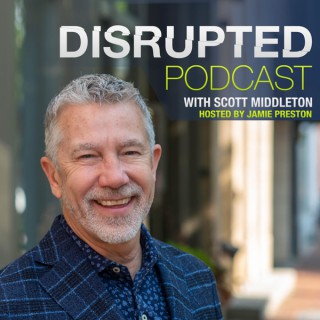
What if the most powerful growth strategy in hospice and primary care had nothing to do with your clinical protocols, your technology stack, or your marketing budget — and everything to do with who shows up, and how often? In this episode of The Disrupted Podcast, Scott Middleton — founder and Chief Disruption Officer of Your Health — unpacks the real-world lessons shaping how your Health is staffing, growing, and rebuilding trust as it integrates the newly merged TCPA and Providence Care organizations. Scott spent the week in the field — Monroe, Georgia; Beaufort, South Carolina; Atlanta and beyond — sitting in care team meetings, talking to nurses, watching exercise classes, and rethinking everything from staffing ratios to personality matching. What he found is both a warning and a blueprint. In this episode: Why minor service failures — a nurse who didn't show up once — can cost you an entire facility relationship, and what it actually takes to earn it back The strategic case for pulling a nurse off a shared caseload and planting her full-time in a single building — even when the numbers don't fully justify it yet The story of a nurse so embedded in one facility that an administrator told Your Health: "I will cut you if you move her" How DISC personality profiles should determine which staff member walks into which building — and why getting it wrong creates friction that kills referrals Why the best talent you'll ever hire is already living in the community you serve — and why your recruiters will never find them on Indeed The centralize-then-decentralize model Your Health deploys every time it launches something new — and why it's the only way to scale without losing quality If you lead a care team, run a hospice program, manage a building, or are trying to grow in any direction in healthcare right now — this episode is your field guide. www.YourHealth.Org

NotiMundo Estelar - Germán Rodas, CNA solicita incluir más investigados en el caso Progen by FM Mundo 98.1
Joshua Tallis joins the show to discuss the Strait of Hormuz, his time as CNA's Scientific Analyst to the Chief of Naval Operations, and CNA's new Ally and Partner Security Affairs Program. Guest Biographies Joshua Tallis is the director of CNA's Ally and Partner Security Affairs program, where he oversees research on foreign government strategies, operations, and capabilities to support US national security objectives. Further Reading CNA's Ally and Partner Security Affairs Program

Discover the step-by-step nursing career ladder in Kansas, from CNA to RN to BSN. Learn training requirements, salary jumps, program costs, and why Kansas's nursing shortage means now is the perfect time to start climbing. Newman University City: Wichita Address: 3100 McCormick Website: https://newmanu.edu/

In this episode of NucleCast, Adam sits down with Paul Amato for an in-depth discussion on the role of theater nuclear weapons in maintaining U.S. deterrence and strategic stability. Drawing on historical lessons from the Cold War and examining today's evolving security environment, they explore why low-yield nuclear capabilities remain an important component of U.S. defense strategy.The conversation examines Russian and Chinese nuclear approaches, the development of low-yield nuclear options in the 2018 Nuclear Posture Review, and the operational realities of deploying and sustaining theater nuclear forces. Amato explains how capability diversity, alliance assurance, and extended deterrence contribute to strategic stability and why maintaining credible options across the escalation spectrum is critical to deterring adversaries.They also discuss common misconceptions about low-yield weapons, the importance of capability symmetry, and what the future nuclear force structure may require as global threats continue to evolve.Paul Amato is the Principal Advisor for Strategic and Nuclear Deterrence at CNA. He is also a nonresident senior fellow at the Atlantic Council's Scowcroft Center for Strategy and Security. From 2016-2025, Amato was director of nuclear deterrence policy in the Office of the Secretary of Defense for Policy, where he and his team led all facets of nuclear deterrence policy development, implementation and allied extended deterrence, including overseeing development and implementation of both the 2018 and 2022 Nuclear Posture Reviews. His experience includes more than a decade as an attorney in private practice, and over twenty-eight years of active and reserve service in the US Marine Corps. Amato is a graduate of Franklin & Marshall College and the University of Pittsburgh School of Law. The views he expresses in this podcast are his own. Follow us on YouTube: https://youtube.com/@nuclecast3665?si=h1kCO6NqUtL87w6qFollow on LinkedIn: https://linkedin.com/company/nuclecastpodcastSubscribe RSS Feed: https://rss.com/podcasts/nuclecast-podcast/Rate: https://podcasts.apple.com/us/podcast/nuclecast/id1644921278Email comments and topic/guest suggestions to Kimberly@anwadeter.org

July 20, 2026 - Dr. Juanita Morris joined Byers & Co to talk about DCLI's summer internships, CNA's, wrapping up programs while preparing to start others, and farming. Listen to the podcast now!See omnystudio.com/listener for privacy information.

ARRI is selling its global rental business – we break down the management buy-out backed by H2 Equity Partners and what it means for rental-exclusive cameras and lenses. Also this week: the FCC fines alleged DJI "front companies", Sony announces the RX10 V after nine years plus the LYTIA L910 LOFIC smartphone sensor, firmware news for the VENICE 2 and GFX ETERNA 55, new gear from SmallRig, Tilta, Blackmagic Design, and MOFAGE, LALAL.AI's new Lynx speech denoising model, sun tracking coming to Artemis and Cadrage – and a look beyond the hard cut on MZed. This episode is sponsored by Hollyland: [INSERT SPONSOR URL] ► Learn more: http://cined.co/nImvmn Chapters & Articles Mentioned in This Episode: (00:00) Intro (01:25) ARRI Sells Its Global Rental Business – Management Buy-Out Backed by H2 Equity Partners https://www.cined.com/arri-sells-its-global-rental-business-management-buy-out-backed-by-h2-equity-partners/ (09:14) P+S Technik HEXAMO Mount Brings Leitz HEKTOR Primes to ARRI ALEXA https://www.cined.com/ps-technik-hexamo-mount-brings-leitz-hektor-primes-to-arri-alexa/ (10:38) DJI 'Front Companies' Fined by the FCC – A Selective Crackdown That Only Hurts Filmmakers https://www.cined.com/dji-front-companies-fined-by-the-fcc-a-selective-crackdown-that-only-hurts-filmmakers/ (17:33) SmallRig Split Filter Kits for DJI Osmo Pocket 4P Announced – Snap-On Dual Design, Stackable Optics, Adjustable VND https://www.cined.com/smallrig-split-filter-kits-for-dji-osmo-pocket-4p-announced-snap-on-dual-design-stackable-optics-adjustable-vnd/ (20:14) Sony LYTIA L910 Announced – LOFIC Structure, 100 dB Single-Exposure Dynamic Range, and 4K 60p HDR https://www.cined.com/sony-lytia-l910-announced-lofic-structure-100-db-single-exposure-dynamic-range-and-4k-60p-hdr/ (25:48) Sony RX10 V Announced – 24-600mm ZEISS Zoom, AI Recognition AF, and 4K 120p Video https://www.cined.com/sony-rx10-v-announced-24-600mm-zeiss-zoom-ai-recognition-af-and-4k-120p-video/ (32:53) Sponsor: Hollyland ► Learn more: http://cined.co/nImvmn (33:45) Sony VENICE 2 Firmware V5.00 Released – Signature Preset Look, 4K 47.95p 12G SDI Output, CNA-2 LAN Support https://www.cined.com/sony-venice-2-firmware-v5-00-released-signature-preset-look-4k-47-95p-12g-sdi-output-cna-2-lan-support/ (36:56) FUJIFILM GFX ETERNA 55 Firmware 1.10 Released – Roadmap Promises Automatic ND Control, LANC Support, and MXF Playback https://www.cined.com/fujifilm-gfx-eterna-55-firmware-1-10-released-roadmap-promises-automatic-nd-control-lanc-support-and-mxf-playback/ (40:32) Cadrage Studio Officially Released – Pre-Production Suite Exits Early Access with Subscription Pricing https://www.cined.com/cadrage-studio-officially-released-pre-production-suite-exits-early-access-with-subscription-pricing/ (43:18) Artemis and Cadrage Add Sun Tracking – Director's Viewfinder Apps Converge on Sun-Position Pre-Vis https://www.cined.com/artemis-and-cadrage-add-sun-tracking-directors-viewfinder-apps-converge-on-sun-position-pre-vis/ (45:39) Blackmagic UltraStudio Express 3G Announced – USB4 Capture and Playback, 3G-SDI and HDMI https://www.cined.com/blackmagic-ultrastudio-express-3g-announced-usb4-capture-and-playback-3g-sdi-and-hdmi/ (48:44) Tilta Universal Cooling System Announced – Thermoelectric Plate, Three Cooling Modes, and USB-C or Magnetic Battery Power https://www.cined.com/tilta-universal-cooling-system-announced-thermoelectric-plate-three-cooling-modes-and-usb-c-or-magnetic-battery-power/ (52:04) LALAL.AI Lynx Announced – Targets Noise in Production Dialogue https://www.cined.com/lalal-ai-lynx-announced-targets-noise-in-production-dialogue/ (56:16) MOFAGE POCO II Drop-In Filter Mount Now Available to Order – New EF Mount, Increased Clearance, and More https://www.cined.com/mofage-poco-ii-drop-in-filter-mount-now-available-to-order-new-ef-mount-increased-clearance-and-more/ (59:00) Beyond the Cut – Dissolves, Morphs, and Other Transitions https://www.cined.com/beyond-the-cut-dissolves-morphs-and-other-transitions/ Any questions or comments? Write us at podcast@cined.com. Don't forget to subscribe to CineD Focus Check on Apple Podcasts or Spotify!

Sarah Ference, CPA, a risk control director at CNA, returned to the Journal of Accountancy podcast to discuss recent topics of the JofA's Professional Liability Spotlight column. The conversation covers three timely issues facing CPA firms: the Great Wealth Transfer, ethical decision-making when clients push boundaries, and the need for practical AI policies. The conversation also reflects on AICPA ENGAGE and the value of staying connected to developments in the profession. The articles discussed in the episode: May: "Managing CPA Liability in the Great Wealth Transfer." June: "Making the Right Choice When No One Is Watching." July: "Drafting an AI Policy That Actually Works." What you'll learn from this episode: Why the Great Wealth Transfer is creating liability risks for CPAs in estate planning, tax filings, and other services. How CPAs can respond when clients want to skirt rules because they perceive regulatory oversight or enforcement to be weakening. Why accounting firms need an AI policy and key considerations when establishing guidelines for AI use in practice. Ference's takeaways from AICPA ENGAGE last month.
This episode examines how emergency managers can reap the benefits of AI tools while avoiding some of their pitfalls, like hallucinations. Guest Biographies Jamie Biglow is a Project Manager with CNA's Center for Emergency Management Operations. She'll be speaking at the 2026 National Homeland Security Conference. Gregor Goodman is CNA's chief AI officer, acting as the end-to-end technology interlock between study sponsors and CNA on the largest high-impact projects. He works together with business and research leaders to build a technology partnership, ensuring that offered technical solutions deliver exceptional results for clients.

Aphasia Communication App: How One Brother Gave a Stroke Survivor His Voice Back For four or five hours, Robert Schmidtbauer’s younger brother lay on the floor of their Wisconsin home, unable to get himself up. Robert found him when he got home from a late shift driving cabs. His brother had been drinking that night, but this wasn’t alcohol; it was a stroke, one that would put him in the University of Wisconsin Hospital for three weeks and in rehab for six months. His brother was already living with ataxia, a rare progressive condition that had taken his ability to walk and had begun to affect his speech. The stroke made it dramatically worse. Today, unless you know him well, you’ll understand only 60 to 70 percent of what he says. It’s usually the end of a sentence, the last few words, the part that carries the point that disappears. Robert became the translator. For years, every visitor, every relative, every tradesperson needed him in the room to fill in the blanks. Then he built something better: an aphasia communication app called Larry’s Speakeasy, priced at nine dollars for life, now used by people in 20 countries. When the Speech Problem Has No Official Name One detail of this story will be familiar to many stroke families: Robert’s brother has never been formally diagnosed with aphasia. The doctors attributed his speech difficulties to the combination of ataxia and stroke and left it there. After a year of speech therapy and his own reading, Robert concluded there was “probably some of that in there,” but no clinician ever gave the problem a name. That matters, because a diagnosis is often the doorway to resources. Without one, nobody hands you a communication aid, a device funding pathway, or even a list of options. Robert’s brother got speech therapy two or three hours a week while it lasted, some practice phrases to take home, and nothing else. The Gap Nobody Warns Stroke Families About Rehab ends. The communication problem doesn’t. When Robert’s brother came home, the brothers developed their own system: Robert would catch 90 percent of a sentence, ask him to repeat the rest up to three times, and then ask him to spell the words letter by letter. That was the system for years. Robert credits his stint teaching English online to students around the world for training his ear to listen closely. But the system only worked when Robert was in the room. The moment that changed everything was ordinary: a new housekeeper came to quote on cleaning, and Robert’s brother, who runs the inside of the house, couldn’t make himself understood on the details. Robert stood in the middle, finishing sentences. He’d felt like a “third wheel” through his brother’s rehab, looking for a way to genuinely help. Standing in that kitchen, he found it. “I had one person on my wing that no one else in the building could understand but me. And even I had a 50% chance of understanding what he really wanted.” — a care facility director, on why a tool like this matters What Is an Aphasia Communication App? An aphasia communication app is software that speaks for a person whose own speech is impaired a modern, affordable form of what clinicians call AAC (augmentative and alternative communication). Larry’s Speakeasy does two things, deliberately kept simple: Type-to-speak. If your hands still work, you type any phrase or sentence, and the app says it out loud. One-tap phrases. For people with limited hand function, pre-made buttons cover emergencies (“I need to go to the bathroom,” “call the doctor”) and everyday phrases hello, goodbye, and a growing list Robert adds to as users suggest them. The market Robert walked into explains why he built his own. At the affordable end, there’s roughly one comparable app at around $13. After that, the next step up starts near $150 and climbs to $7,000–$8,000 for dedicated equipment that requires training and support to operate. Between a cup-of-coffee app and a small car’s worth of hardware, there was almost nothing. Robert priced Larry’s Speakeasy at $8.99 once, for life. “It’s not here for me to get rich off of,” he says. “It’s my brother, and I want it to help.” Built With AI, in Days, by a Retiree Robert is 67, with a background in television and radio rather than software. He’d spent months learning to work with AI tools and, in his words, cussing and swearing at the computer. When the housekeeper moment landed, he posed a different question to the AI: how can I help my brother’s speech? And had a working version running within about two or three days, refined over the following months. That’s worth pausing on. The tools to solve a real disability problem at kitchen-table scale now exist for people who aren’t programmers. A determined care partner built, tested, and shipped an aphasia communication app from rural Wisconsin no company, no funding, no advertising. Around 260 people across 20 countries have tried it, and it’s listed as a resource on the National Aphasia Association website. More Than an Emergency Button The use cases stretch well beyond the kitchen: Therapy practice. Practice phrases from a speech pathologist can be loaded into the app and drilled at home with or without a partner. Video calls. Open the app in one window and Zoom or FaceTime in another, and a person who can’t speak clearly can hold a conversation with family anywhere in the world. Robert saw his own mother’s isolation in a care facility years ago; this is his answer to it. Care facilities. An iPad on a care cart could let staff understand residents nobody else can and document requests, which protects residents and facilities alike. Where to Find It The app lives at LarrySpeakeasy.com, with a seven-day free trial before the one-time $8.99 purchase. Try it, and if it helps, it helps, as Robert puts it; there’s no push. Stories like Robert’s are why this podcast exists: ordinary people refusing to accept the gap between what the system provides and what recovery actually needs. If that resonates, my book, The Unexpected Way That A Stroke Became The Best Thing That Happened, shares ten tools for recovery and personal transformation drawn from my own stroke journey and hundreds of survivor interviews; you’ll find it at https://recoveryafterstroke.com/book. And if this show has helped you, you can support it at https://patreon.com/recoveryafterstroke. This blog is for informational purposes only and does not constitute medical advice. Please consult your doctor before making any changes to your health or recovery plan. Robert Schmidtbauer – Building a Voice for My Brother (Interview) After a stroke, Robert’s brother lost clear speech and had no tools to cope. So Robert built one: a simple app that speaks for those who can’t. Highlights: 00:00 Introduction – Aphasia Communication App 01:21 Challenges in Communication Post-Stroke 05:17 Stroke Experience and Recovery 12:20 Communication Challenges and Solutions 17:43 Creating Solutions Through AI 18:03 Introducing the Aphasia Communication App 21:13 Expanding Accessibility in Care Facilities 27:14 Final Thoughts and Resources 29:19 Bridging Communication Gaps 30:14 Resources for Stroke Survivors Transcript: Introduction – Aphasia Communication App Robert (00:00) If I ask him three times, I still can’t understand it. Like, spell it for me. You know, so I mean, that’s kind of how we got by until I developed this app. Lacunar Stroke New Research (00:10) Hello, everyone, and welcome to another episode of the Recovery After Stroke Podcast. Before we get into it today, I want to say a massive thank you to all my Patreon supporters and to everyone who supports this podcast. You are the reason this show keeps going. And I appreciate every single one of you. If you’d like to help keep these episodes coming, you can support the show at patreon.com/slash recovery after stroke. And if you’re looking for tools to guide you, On your own recovery, my book, The Unexpected Way that a Stroke Became, the best thing that happened, is available at recovery after stroke.com slash book. Now, today’s episode is a little different. My guest is Robert Schmidtbauer. And Robert is not a stroke survivor, he’s a care partner. His younger brother was already living with ataxia, a rare condition affecting his muscles and speech, when a stroke six or seven years ago made communication between the two brothers harder than it had ever been. In this conversation, we talk about what it’s like to be the person who translates for someone you love, what happens when rehab ends and the communication problem doesn’t? And what Robert decided to do about it. Something that might genuinely help other families in the same situation. Challenges in Communication Post-Stroke BIll Gasiamis (01:30) Robert Schmidtbauer welcome to the podcast. Robert (01:33) Thank BIll Gasiamis (01:33) can you give me a little bit of a rundown on you and your relationship with your brother before he had a stroke? Robert (01:42) My brother’s nine years younger than I am, so he’s 56, no, 58 now. And we’ve been living here. He originally got out of high school, went to travel school in Minneapolis, Minnesota, and lived there for a number of years. He has a taxia, and he moved home. to my mother’s house. Let’s see, we’ve been here 16 years now in this house living together. And he moved home about 20 years ago. Not quite, maybe like 18, 18 and a half. The ataxia took away his ability to walk. I’m not sure if you’re familiar with ataxia, but it’s kind of like in the muscular dystrophy realm. And it’s very, very, very rare. he attacks your muscles. depending on the seriousness and the kind, there’s like 20 different kinds. You probably wind up dying from it because it slowly affects your muscles. And the first things to go usually are your extremities. In his case, it was his legs and his speech. So when he moved home, he already had a slight problem talking, not real bad, but my mother built a house and it was very small, just one level. so that she didn’t really have to walk up and down stairs and that type of thing. And so he was basically sleeping in the easy chair when he moved back home. And I lived across the street. So I said, come on and move in with me, because I’ve got this big house. I was a single parent at the time. I have one son. And I said, there’s plenty of room here. You can have a bedroom and live here. Stroke Experience and Recovery And so we lived here. The story behind him and the stroke, I was at the time working as a cab driver at a resort town north of here. And so I would never usually get home on weekends until like four or five in the morning. And I came home, I found him on the floor. And so he had a drinking problem at that time. And I asked him what was wrong. And he said, well, I’m drunk. I well, how long have you been here? he’d been on the floor for like four or five hours. My brother is probably 6’1″, or around 6’2″, 230, 240. I couldn’t lift him up. We bought this house as a duplex. My girlfriend at that time lived and rented from us a basement apartment. Even with the both of us, we couldn’t. get him up. So called the ambulance, we got him in and it obviously wasn’t alcohol, although he had been drinking. He wound up going to, we live in the state of Wisconsin and Madison is in the south part of the state, which is our state capital. They took him to the hospital here and then they flew him to Madison and he wound up there in the University of Wisconsin Hospital, which is a very big progressive type hospital. And he was there, I think about three weeks before he came back to a nursing home here to recover. And so his recovery before he finally got home, I would say, going back to memory, we never really wrote it down, but probably about six months. He was in the nursing home for a good three, four months and then in an assisted living type situation where he had his own room, didn’t have to share it, was going through treatment and rehabilitation before he got home. And so then he came and when he was done with that, then he moved back here. So was about a six month process. BIll Gasiamis (05:37) How long ago was a stroke? Robert (05:40) exactly. I couldn’t tell you to be honest Bill, but somewhere in the realm of six to seven years. I go back, I ran a bar at one time and I’ve been gone from there for four years and this was before that. So I would say between six and seven years ago. BIll Gasiamis (05:57) Before COVID. Robert (05:59) Yeah, before COVID. BIll Gasiamis (06:01) Okay. So when he came back from rehab and the assisted living and came to live at your house, what kind of deficits was he living with? Robert (06:13) Excuse me. He still couldn’t walk. He was already in a wheelchair at that time with a taxia. And that didn’t really change much. was worse, obviously, when he first had the stroke, but the rehab helped him to get back to, I would say more or less where he was before the stroke. As far as being ambulatory, he can still stand up. He can still… function, get into counters and cupboards and things like that. He just, the legs, he just can’t walk. He could crawl on the floor if he had to. And his arms and everything still work, so he could still type. again, this was through rehab, but he pretty much got back to where he was prior to that, except for the speech. the speech became noticeably worse. I would say even at this time, at that time it was really bad, at this time unless you know him and live with him or have known him previously, you’re probably going to understand somewhere between 60 and 70 percent. It’s usually the last part of a sentence or thought is what Most people have difficulty understanding. BIll Gasiamis (07:30) So is it the ataxia and aphasia that he’s dealing with? Robert (07:34) You know, officially he’s never been diagnosed with aphasia. It’s probably more to do with the ataxia combination with the stroke. So the doctor has never really the prognosis or whatever you want to call it. They never really diagnosed them as having aphasia. But after reading up on it and going through therapies, you know, for speech and other things. And that continued for the better part of a year. It’s kind of obvious that there’s probably some of that in there. But as far as a medical diagnosis, official medical diagnosis, we never really got that meaning from any of the doctors. BIll Gasiamis (08:17) Got it. So he came back, he would have had some needs f and you would have had to support him with those, if obviously the walking and then and then whatever other needs. So in that communication early on, were you guys able to actually communicate and you understand what his needs were and help him with what he was asking? Robert (08:40) Yes, there was a point and you being a strokes arrival, you know, I have no idea. have AFib and so, you know, kind of runs in our family. So I knew some of what he was going through, but obviously I don’t know what anybody who’s had strokes, you know, have to go through on a daily basis. watching him, there was a point, especially in the nursing home immediately after in the first several months. I would say that there was major depression. There was a battle. I often quote a movie. There was a line that black actor, what was his name? Older guy that played God. Anyway, came on said one time, you never get busy living or you get busy dying. And so I mean, there came a point. after like the first month where we kind of had a come to Jesus conversation at the nursing home and it was like, okay, because he wasn’t following their recommendations too much. didn’t really, the therapy and stuff, wasn’t too thrilled and excited to do that. so I mean, through this conversation, it was like, okay, like, look, you know, either. You try and make the best of the situation and improve or I can’t help you. It’s like alcoholism or any other drug disease. You really have to want to do it, I think, yourself. And so he’s been dry now for, boy, well, since the stroke, probably close to 10 years now. I mean, he slowed down enough after the stroke, he quit completely. But so, yeah. So I mean, that, you know, the communication. I could communicate with him in hospital. It was harder, obviously, but, you know, I could still understand him. The one thing that helped me out throughout the period that we lived together, especially after the stroke, was I taught English online. So I talked to people from Saudi Arabia. I talked to people, you know. from various countries around the world. And that really helped me because I had to listen closely to them. But there are still times where I will ask him, I get 90 % of it and we get to the last couple of words and I’ve got the gist of it, but it’s like, I don’t understand the last words. He’s come out like, okay, ask me three times. If I ask him three times, I still can’t understand it. Like, spell it for me. You know, so I mean, that’s kind of how we got by until I developed this app. BIll Gasiamis (11:23) Yeah. And it it’s interesting, like you guys all went through rehab, left from hospital, came home, he had a speech issue, and yet you guys didn’t weren’t given a tool or something to help you guys communicate at all. It wasn’t even like a thought for anybody to do that. Robert (11:45) No, there was not. I mean, he had speech therapy when he went to the hospital, but that was an hour, three times a week or two times a week. I mean, it wasn’t an everyday type of thing. So yeah. then exercise is when he came home from there that he would, know, phrases and words and stuff that the therapist would want him to practice at home. And even that was… somewhat of a struggle, because we’re kind of, no disrespect to nationalities, but we’re kind of pigheaded Germans. Communication Challenges and Solutions BIll Gasiamis (12:20) that being said, you come home, you haven’t got the tools, you’re trying to help. your brother, there is times where you can’t understand what he’s saying. And you think, I know, I’ll create my own solution for this problem. And tell me about th the background that you had that helped you solve that problem and the solution that you created. Robert (12:43) Yeah, well, if we go back to, you know, when he came home, because this is obviously been recent, right? It’s because of my background was in television and communications. I worked in television and radio. And so I enjoyed playing with computers when he came home because, you know, we were fairly close family and knew him. I just let him do his thing. you know, and if he asks for help whenever I was there for him. But I always felt like a third wheel going through, you know, the stuff from him, his his rehab. I take him there and do it, but there wasn’t much except for like the speech stuff to help him be repetitive on that. So it felt like kind of a third wheel. So it kind of settled into a pattern, you know, unless he needed help, he’s pretty self sufficient. He has a CNA that comes over a couple times a week to make sure that like, when he takes a shower, he doesn’t fall, you know, that that kind of stuff helps with the dishes or cooks a couple meals and puts it in the refrigerator. But I was looking for ways, you know, and trying to think of what a person could do. Creating Solutions Through AI Well, So I still work, you know, part time. And through television, I had my own production company and did things on the side all the time. And so I like to be creative. And a friend of mine who lives in Chicago had a business and we started playing around with AI for about the last six months now. And it’s not as easy as some people say it is, you know, and especially to learn how to use it. So we started playing around with it. And the frustration level of learning AI got to me after we were into it two or three months. you know, learning how to prop things and explain things to get the result that you wanted, I think is one of the biggest keys for that. And not to go off on a tangent here, but this is how the app and working for my brother really came about. I just needed a break. So it came to a point where I’m cussing and swearing. swearing back at the computer and AI and I’m like, no, no, no, no, we tried to do this like five times. This is really simple. You just change this one thing and you’ve got what I want. But every time I asked it, would change something else. And so I’m like, OK, I still want to continue to learn how to use AI, but I got to just put that aside for a minute and take a day off and not work on that. And so we happened I’ve had, I was a single parent. My son was 13 months when my ex-wife left. And so I raised them by myself. And I’ve had a housekeeper that’s been with me for like 20 years. And she is getting older. She’s like in her late 60s, early 70s now. She fell and she busted her hip. And so we had to find another housekeeper while she was recovering. You know, I said, if you want to come back, you’re more than welcome to, but you know, we’ll find someone else in the meantime. And so we had someone come over to the house and give us a quote on what it would cost us to just tidy up the kitchen and the bathrooms and stuff, because I still work about 30 to 35 hours a week. the same thing that happens over and over again when people and relatives visit us with his speech happened with her. And when I’m around, I’m the go-between. I mean, it’s kind of they understand the 60 % of the first part of his answer. And because he’s around the house all the time and doesn’t leave it, I leave those kind of decisions that I take care of the outside and the lawn and those things that I leave the inside of the house to what he wants. Because he’s the one that spends most of the time, you know, in here. And so I’m answering, you know, I’m filling in the blanks for her. You she’s like, okay. I understand you want the bathroom clean this way, but what was that last part? And so I finished the sentence. I’m like, well, he said this, you know? And it kind of dawned on me at that time, you know, going back to the third wheel feeling, kind of dawned on me at that time. I’m like, okay, what if I asked AI a couple of questions about how I can help him, you know? I mean, and help him with his speech. And that’s basically how the app came about. She gave us a quote that was here for half hour, and that happened half a dozen times. And so after she left, I’m like, all right, I still want to try and continue to learn this. And maybe by doing a different project that I’m not just completely frustrated with at the moment, I can help myself with this other project and help him all at the same time. And so. I just posed the question to you, I use Claude mostly, and I just posed the question to Claude, and it gave me the answer. And from that point on, we, over the last, it’s been a little over two months, two and a half or three months, we refined it, probably ended up in running in about two or three days. Introducing the Aphasia Communication App BIll Gasiamis (18:03) So fundamentally, can you tell me how the app works, what it is and how it works specifically? Robert (18:11) It’s basically whatever you want it to be. And it has everything to do with how functional you still are. It’s not designed to be an end all be all. It can be. If you can’t speak at all, it can be. Because you can either type, depending on your conditioning. Do your hands still work? Can you type? So you can type, there’s a line there as you see, you can type in whatever phrase or sentence that you want, and then it will speak out loud what you type in. And then there’s also for people that are limited in their use of their hands, pre-made phrases. And they range from emergency phrases, I need to go to the bathroom, you need to call the doctor. you know, personal phrases, hello, goodbye, you know, things that, and I just thought up as many as I could. And we’ll add to that as we move through stuff and anybody that has suggestions, like contact, and that’s probably what’s screwing something up is I didn’t have a contact on there. So my email’s on there now that if you have an idea, please feel free to, you know, contact me and we’ll try and put something in for that. So that way, you know, if you have an emergency or you have like the housekeeper, you know, like the situation we are and you know, you need something, all you do is just click on the button and then it will speak that phrase out loud. I just wanted it very simple, very straightforward. And so, you know, it’s designed in the sense of doing it that way. If you want to go to a medical definition of it, you could use it and substitute your own voice completely if you want. But the idea is probably more of a helping situation where anybody going through therapy, like watching my brother go through therapy and coming home with phrases and words that he had to, you could literally you know, hit the button, that phrase would come up and you could practice that or, you know, the speech therapist could give you a list of things that could, if you could still type, you could type that in and then work with that at home. If you didn’t like me and my brother, add me to, you know, to be here to rub through that kind of stuff. But if you were alone or someone couldn’t get over it, you could use it in that realm. And depending on how your rehab went, you could be useful for six months. It could be useful for a lifetime. again, that’s why the prices where it’s at, it’s not here for me to get rich off of. want people to, you know, I want it to help people. It’s my brother and I want it to help. So, you know, if you can afford it, it’s $8.99, $9. And that’s a lifetime deal. So once I get this problem. BIll Gasiamis (21:00) Yeah. What’s the price? Yeah. Expanding Accessibility in Care Facilities Robert (21:13) cleared up that I didn’t know about. You can use it for however long it’s there. BIll Gasiamis (21:19) Yeah, nine dollars. I it thirteen Australian dollars. It’s if it it’s well worth it. Like if you get a you get a tool for nine dollars and you use it forever, like that’s perfectly fine. No issue with that whatsoever. so it it’s Robert (21:31) You know, we are doing something as far as facilities are concerned. I’ve reached out to nursing homes, assisted living places, and I haven’t heard back from any of them yet. I’ve gotten some response on it. It seems favorable, but I haven’t got into any kind of negotiations or anything with them. One of my ideas is like going through with what my mother went through with her dementia, right? Here in Tomahawk, there’s one, two, three, two nursing homes and an assisted living place. And so my brother and I and my son, they had a couple rooms where instead of being out in the general population area with people all around, we could book a room that had a television and a couch and a table and stuff. And we would bring order a pizza or bring in food and spend a couple hours as a family where we weren’t disturbed. And my idea for them is twofold. Number one, seeing as how you could use it on an iPad or a tablet. If you had, I have one of the people that helped me here give me information. I work for a group called Tom Ocunary Interfaith Volunteers. it’s a, we give free rides to senior citizens and people. with disabilities. they can go to the doctor, they can go to the store. And one of the guys was the director at one of these facilities. And he came through to become a director all the way from just being a CNA, which is a very low paying job. It’s the people who clean up the messes, let’s just say, you know, to running the facility for this company. And, you know, he’s like, I had one person on my wing that no one else in the building could understand but me. And he said, even I had a 50 % chance of understanding what he really wanted. To have this, say an iPad that you could have hooked onto your cart when you’re making rounds or something, he said, would have been invaluable. And so not only in that respect to help them with clients that they have, but then they would also have like a legal transcription of something in case something a family said that so and so did this to so and so that was bad or they had a problem of some kind. It could be documented. The other aspect of that was with these rooms I was talking about was, you know, you could literally take the computer and open up just like we are here. You’re going to open up a couple of browser windows. You could put Larry’s you know, speak easy, the interface in one window, you can open up FaceTime on Facebook or Zoom or whatever, you know, communication, let’s say that your daughter lived in Phoenix, Arizona or New York or somewhere. You could get them on the line and you can literally have a conversation back and forth because it would speak out loud through the speaker. And if you were, again, able to type and or hit the phrases, you know, that person over there would hear it come out of the computer. And so you could then keep closer tabs on your relatives. Because I think one of the bigger things, having this experience with our mother, was the isolation and the loneliness. mean, in those days, which is now 15 years ago, I went there every other day for an hour or two. I still had to work and still had other things to do. So, you know, to be able to come home and just sit down at a computer and talk to them would have been real nice. So in a sense of, you know, keeping in touch with your family and that type of thing with friends or whatever. Like my brother was a travel agent in Minneapolis and he’s still got two or three of the people that he worked with that are still in his life. So to be able to, you know, do that and you can hold a conversation with them and catch up and things. So I think that would be those two things combined I think should be, how do I put it, attractive to a facility, not only for the client but also for the facility itself. BIll Gasiamis (25:45) Yeah, yeah. To be able to take an iPad and press a button and have a basic conversation at such a low cost to entry, like that’s really good. I imagine there is already software that’s similar that would Robert (26:00) There’s one that’s, and I can’t remember the name of it, so you’ll excuse me. hope. But there’s one that’s about $13 or $14 right around $12.99 or $13.99. That is similar. But from that point on, the next step up is about $150 all the way up to like $7,000 or $8,000 where you actually have to have equipment at home that… you need to learn and or have help using. So there’s really a pretty big gap in that. That’s just my opinion. My research isn’t paid. There could be other things out there. I know there’s a lot of text to speech and a lot of the tablets and stuff right now. just to be dedicated to, excuse me, you know. people with this, you know, aphasia with recovering from stroke. So I really thought, you know, when I, when I’m a My brother showed him, I’m like, wow, this could really help not just him, but other people. BIll Gasiamis (27:05) Yeah, understood. And Robert, if somebody wanted to get a copy of this or to check it out, where would they go? Final Thoughts and Resources Robert (27:14) Speakeasy.com and again, like I said, there’s a free trial. You could just go there and check it out. And if that, you you decide over the course of that free seven days, if that would help you or not help you, you know, and that way then there’s, there’s no push, you know, I think that’s a week. And so if you’re truly interested in it, you have to remember that, that there’s only seven days to try it out and use it. If it helps, it helps, and if it doesn’t, that’s fine, you move on. BIll Gasiamis (27:43) That’s cool. Yeah. Yeah. Very good. Robert, well, I really appreciate you sharing your story and your challenges that you guys have both had to overcome and the development of this little basic simple tool that solves a problem and and reaching out so that we can let people know so that if they need to solve a problem like that, that is similar and they’re happy to pay nine ninety nine US dollars, then that that might help them. That might be a good way to go about solving a little problem well, a big problem for people in in their home. Robert (28:21) You know, we’ve, it of, asked me something that I did here just recently because we are on the, NAA, the National Aphasia Association website as a resource. We’re on a smaller, it’s called the Stroke Foundation out of Texas, started by a family very similar to your case, a family that has suffered stroke in the family, and it’s a family-run foundation. We have 300, almost 260 something people that have tried it across without any type of advertising just by talking on Facebook and supporters. And also we’re people from 20 different countries now have tried it. So, you know, I welcome them all, you know, just try and if it helps, good for you. And I’m happy that. you do something to help anybody. BIll Gasiamis (29:17) Yeah. Thank you, mate. Thank you for joining me on the podcast. Bill Gasiamis (29:19) Well, there you have it. My conversation with Robert Schmidbauer. A huge thank you to Robert for reaching out and for sharing his and his brother’s story. What stays with me from this one is how simple the whole thing is. Two brothers with a communication gap that the system never closed. And instead of waiting for permission or a diagnosis, Robert sat down and built the tool himself. Nine dollars for life because it’s his brother and he wants to help. If you or someone you love is dealing with speech difficulties after stroke, head to the show notes right now. You’ll find the link to Larry’s Speakeasy there and the app that Robert built at Larry’s Speakeasy.com. There’s a free seven-day trial so you can see it for yourself whether it helps before you spend a cent. And while you’re there, if the episode gave you something, like it, leave a comment. Share it with someone who needs it and subscribe so you never miss another episode. Every one of these things helps more stroke survivors and their families find this show. If you’d like to go deeper on Aphasia, check out my earlier conversation with Tracy Bode, Aphasia Help After Stroke At recoveryafterstroke.com/slash Aphasia Help After Stroke. Tracy Bode. The links will be in the show notes. My book, The Unexpected Way That a Stroke Became the Best Thing That Happened, is available at recoveryafterstroke.com/book. And if this show has helped you and you can support it at patreon.com/recoveryafterstroke I would deeply appreciate it. Thanks for being here. I’ll see you on the next episode. The post Robert Schmidtbauer – Building a Voice for My Brother appeared first on Recovery After Stroke.
Kina spelar inte. Men sommarens fotboll blir ändå en arena för Kinas mjuka makt. Flera sponsorer och även tekniken i mästerskapet kommer från Kina. Lyssna på alla avsnitt i Sveriges Radios app. Fotbolls-VM 2026 slår sponsorrekord och flera av Fifas huvudsponsorer är kinesiska bolag. Sedan några år tillbaka strömmar pengar från Kina till den internationella fotbollen och årets mästerskap är ett tydligt exempel på hur idrott blir en effektiv hävstång för Kinas intressen. Teknikjättarna Hisense och Lenovo är båda leverantörer till årets VM med VAR-kameror och verktyg för AI-analys. En teknisk närvaro som i kinesiska statsmedier lyfts fram som en stor framgång. Hör om strategierna och PR-värdet för Kina och varför debatten om ”sportswashing” har svalnat.Därför är Kina så dåliga på herrfotbollPå damsidan har Kina lyckats etablera sig, men på herrsidan lyser framgångarna med sin frånvaro. I världsmästerskap efter världsmästerskap misslyckas Kina med att ens kvala in. Ändå är fotbollsintresset stort i Kina och Xi Jinping har en uttalad vision om att Kina i framtiden ska stå värd för ett fotbolls-VM. Hur kommer det sig då att satsningar på att få till framgångar inom herrfotbollen har funkat så dåligt hittills?Medverkande: Moa Kärnstrand, Kinakorrespondent och Daniel Alling, internationell korrespondent.Programledare: Björn DjurbergProducent: Therese RosenvingeKällor ljudklipp: Bloomberg News, UEFA, China Daily, CNA.

Listen and subscribe to Money Making Conversations on iHeartRadio, Apple Podcasts, Spotify, www.moneymakingconversations.com/subscribe/ or wherever you listen to podcasts. New Money Making Conversations episodes drop daily. I want to alert you, so you don’t miss out on expert analysis and insider perspectives from my guests who provide tips that can help you uplift the community, improve your financial planning, motivation, or advice on how to be a successful entrepreneur. Keep winning! Two-time Emmy and Three-time NAACP Image Award-winning, television Executive Producer Rushion McDonald interviewed Shelby Williams.

Listen and subscribe to Money Making Conversations on iHeartRadio, Apple Podcasts, Spotify, www.moneymakingconversations.com/subscribe/ or wherever you listen to podcasts. New Money Making Conversations episodes drop daily. I want to alert you, so you don’t miss out on expert analysis and insider perspectives from my guests who provide tips that can help you uplift the community, improve your financial planning, motivation, or advice on how to be a successful entrepreneur. Keep winning! Two-time Emmy and Three-time NAACP Image Award-winning, television Executive Producer Rushion McDonald interviewed Shelby Williams.

CVEs are on pace to hit nearly 70,000 in 2026, but Jerry Gamblin explains why the actual exploitable risk is staying surprisingly flat.DescriptionJerry Gamblin runs RogoLabs and built CVE.ICU, and he co-authored the FIRST mid-year vulnerability forecast that just put 2026 on pace for nearly 70,000 CVEs. He joins Resilient Cyber to separate the scary headline number from what actually matters for defenders. We get into why GitHub now publishes one in five CVEs, the rain versus flood distinction that explains why exploitable risk is flat even as raw volume explodes, what the NVD collapse means now that the CNAs have to step up, and how teams should really be triaging with EPSS and the CISA KEV catalog.Key takeawaysCVEs are on pace for nearly 70,000 in 2026, up more than 40 percent year over year. Much of the surge traces back to a single source, with GitHub now publishing one in five CVEs after scaling up its advisory team.The three drivers behind the surge are very different forces. AI-assisted discovery that nobody can definitively flag, a 449 percent jump in GitHub security advisories, and VulnCheck acting as a CNA of last resort all get lumped into one scary number.Rain versus flood is the frame that matters. Raw CVE volume is climbing fast, but once you filter for CISA KEV and EPSS the actionable, exploitable risk has stayed essentially flat.Most of the new findings are old human debt, not a new AI threat. The OWASP Top 10 has barely changed in 25 years, and tooling can now find those same mistakes at scale across mostly open source code.The AI moment is useful cover to finally patch. Jerry argues teams are using the AI hype cycle to win the time and resources to fix long-known issues, which is a genuinely good outcome.The NVD was the dam that fell. It was never fair to expect one small organization to enrich every CVE, so responsibility now shifts back to the CNAs and the large vendors that leaned on it for years.Treat CVE data as a product you pay for. Jerry's advice is to use procurement leverage, since demanding better CVE records before you renew a contract is one of the few real forcing functions available.What gets exploited has not really changed. VPN concentrators and the same old vulnerability classes still dominate, and the NSA's annual top 10 exploited bugs are reliably old, with no sign yet of AI driving widespread attacks.Asset inventory is still the real bottleneck. You cannot triage what you cannot see, and most organizations still cannot say with confidence whether they even run the software a given pile of CVEs affects.AI-accelerated exploitation is coming, but not as mass exploits. The bigger shift is a tireless attacker that loops on your network for days until it finds a way in, which is exactly what agents are best at.GuestJerry Gamblin, creator of CVE.ICU and founder of RogoLabs. Resources mentionedFIRST 2026 mid-year vulnerability forecastSubscribewww.resilientcyber.io
Over the past decade, China sought to deepen its ties with the Pacific Islands. This includes an effort to expand its footprint in the region's media landscape. Guest Biographies Heidi Holz is a Senior Research Scientist in CNA's China Studies Program. Her research focuses on People's Republic of China (PRC) strategic communications, propaganda, disinformation, and other global influence efforts. Genevieve Collins is a Senior Research Specialist in CNA's China Studies Program. Further Reading CNA Report: Understanding China's Footprint in the Pacific Islands' Media Landscape

Introduction The rules that governed software pricing for a decade are breaking down. Per-user SaaS models made sense when users were people. Now that AI is automating those seats, the pricing logic collapses — and carriers, brokers, and insurtech vendors are all rethinking the economics at the same time. Michael Nadel is a partner and head of the global insurance practice at Simon-Kucher & Partners. He joined Josh Hollander for his second appearance on the show to dig into what the AI era is actually doing to monetization — from the pricing mistakes early movers keep making, to why outcome-based models are harder to execute than they are to sell, to a 50,000-session LLM shopping simulation that revealed what could become the next SEO arms race for insurance carriers. Guest Bio Michael Nadel is a partner and head of the global insurance practice at Simon-Kucher & Partners, a global strategy consultancy focused on growth, pricing, and monetization. Before consulting, he spent time at CNA in strategy and innovation, and earlier led large-scale financial services implementation work at Accenture. He advises carriers, brokers, MGAs, and insurtech vendors on pricing strategy, and co-hosts an annual monetization masterclass at InsureTech Connect. Key Topics From offense to defense — A year ago, clients asked how to monetize new AI features. Today the questions are more defensive: how does AI threaten my core product, my pricing model, and my existing revenue base? The two biggest AI pricing mistakes — Pricing before understanding what customers actually value, and jumping to outcome-based models before you can define or reliably deliver the outcome. Outcome-based pricing is the destination, not the shortcut — Buyers love paying only when value is delivered. The problem is definitional complexity — what counts as the outcome, who controls it, and what happens when results fall short. AI spend that looks like RPA in new packaging — Carriers running well-designed AI programs focus on workflow economics, not technology for its own sake. The recommended split: 70% on high-value workflow automation, 20% on data and governance, 10% on exploratory bets. GEO: the next SEO — Simon-Kucher simulated 50,000 insurance shopping sessions across 50 consumer personas and three major LLMs. What gets a carrier recommended by an LLM is not the same as what gets them ranked on Google. CMOs need to decide how to treat LLMs as a distribution channel now. Services businesses face the same disruption — Pure labor arbitrage is structurally challenged by AI. Firms that survive will combine domain expertise with AI-enabled delivery and evolve from vendors to partners. Notable Quotes "You need to understand what people value before you prescribe a price. But very often, people build something, bring it to market, and then try to figure out why it isn't selling." "Automating a bad process simply creates a faster bad process." "It's not replacing system X with system Y — it's changing the way you work fundamentally. Orange juice to lemonade. Not a better way to make orange juice." "Last year, roughly one percent of our traffic came from LLMs. This year it was roughly five percent and increasing." Resources Guest: Simon-Kucher & Partners: https://www.simon-kucher.com Michael Nadel on LinkedIn: (verify and add URL) Host & Organization: Joshua R. Hollander on LinkedIn: https://www.linkedin.com/in/joshuarhollander/ Horton International (USA): https://www.horton-usa.com/ Insurtech Leadership Podcast: https://www.linkedin.com/showcase/insurtech-leadership-show Subscribe & Review If you enjoyed this episode, subscribe on your favorite platform and leave a review. The Insurtech Leadership Podcast is available on YouTube, Apple Podcasts, and Spotify.
Listen and subscribe to Money Making Conversations on iHeartRadio, Apple Podcasts, Spotify, www.moneymakingconversations.com/subscribe/ or wherever you listen to podcasts. New Money Making Conversations episodes drop daily. I want to alert you, so you don’t miss out on expert analysis and insider perspectives from my guests who provide tips that can help you uplift the community, improve your financial planning, motivation, or advice on how to be a successful entrepreneur. Keep winning! Two-time Emmy and Three-time NAACP Image Award-winning, television Executive Producer Rushion McDonald interviewed Jasmine Hood Founder of Better Bodies Massage in Atlanta (originally from Greenville, South Carolina), joined Rushion McDonald on Money Making Conversations Masterclass to share her journey from CNA to licensed massage therapist, the realities of being a traveling service provider, and the wellness benefits of massage therapy. She discusses body alignment, stress, trauma release, the differences between massage modalities, alternative treatments like cupping, entrepreneurship during COVID‑19, safety considerations for mobile therapists, corporate/wellness partnerships, and her long‑term goal of building a scalable massage brand supported by contractors.
Listen and subscribe to Money Making Conversations on iHeartRadio, Apple Podcasts, Spotify, www.moneymakingconversations.com/subscribe/ or wherever you listen to podcasts. New Money Making Conversations episodes drop daily. I want to alert you, so you don’t miss out on expert analysis and insider perspectives from my guests who provide tips that can help you uplift the community, improve your financial planning, motivation, or advice on how to be a successful entrepreneur. Keep winning! Two-time Emmy and Three-time NAACP Image Award-winning, television Executive Producer Rushion McDonald interviewed Jasmine Hood Founder of Better Bodies Massage in Atlanta (originally from Greenville, South Carolina), joined Rushion McDonald on Money Making Conversations Masterclass to share her journey from CNA to licensed massage therapist, the realities of being a traveling service provider, and the wellness benefits of massage therapy. She discusses body alignment, stress, trauma release, the differences between massage modalities, alternative treatments like cupping, entrepreneurship during COVID‑19, safety considerations for mobile therapists, corporate/wellness partnerships, and her long‑term goal of building a scalable massage brand supported by contractors.

Listen and subscribe to Money Making Conversations on iHeartRadio, Apple Podcasts, Spotify, www.moneymakingconversations.com/subscribe/ or wherever you listen to podcasts. New Money Making Conversations episodes drop daily. I want to alert you, so you don’t miss out on expert analysis and insider perspectives from my guests who provide tips that can help you uplift the community, improve your financial planning, motivation, or advice on how to be a successful entrepreneur. Keep winning! Two-time Emmy and Three-time NAACP Image Award-winning, television Executive Producer Rushion McDonald interviewed Jasmine Hood Founder of Better Bodies Massage in Atlanta (originally from Greenville, South Carolina), joined Rushion McDonald on Money Making Conversations Masterclass to share her journey from CNA to licensed massage therapist, the realities of being a traveling service provider, and the wellness benefits of massage therapy. She discusses body alignment, stress, trauma release, the differences between massage modalities, alternative treatments like cupping, entrepreneurship during COVID‑19, safety considerations for mobile therapists, corporate/wellness partnerships, and her long‑term goal of building a scalable massage brand supported by contractors.

What if the biggest obstacle to great patient care wasn't a clinical problem at all — but a zip code? At Your Health, patients on opposite ends of the same zip code could mean an hour of unnecessary drive time, surprise visits, and the slow erosion of trust every time a provider couldn't say exactly when they'd arrive. In this episode, Jamie sits down with Whitney Dillard, ACT Executive Director, and Alexis Reuter, Executive Director of Training, to unpack how a homegrown scheduling tool changed everything. Both came to healthcare from unexpected places — Whitney challenged her CNA boards without schooling; Alexis started at a spa front desk — and that outsider's clarity shows in how they rethought the entire scheduling experience. In this conversation, you'll hear: Why scheduling by zip code was quietly sabotaging both providers and patients The "aha moment" when a tool went from nice-to-have to non-negotiable How real care managers were brought in to "break the tool" and shape what it became Why predictable scheduling rebuilds trust in a patient's most sensitive space — their home How proactive, geolocated visits make preventative care actually work in rural Georgia and South Carolina Press play to hear how the right tool — and the right team — turned scheduling into a competitive advantage for patient trust. www.YourHealth.Org

In dieser Ausgabe sprechen wir zunächst über Rückmeldungen zur letzten Sendung und über die Frage, wie digitale Souveränität bei Zahlungen, Banken und Finanzbildung praktisch aussehen kann. Außerdem behandeln wir aktuelle technische Themen wie Cursor, alte P2P-Projekte, lokale LLM-Nutzung auf Apple-Hardware sowie Tools zur Analyse großer Codebasen und zum statistischen Testen nicht-deterministischer Systeme. Im weiteren Verlauf geht es um mehrere Sicherheits- und Open-Source-Themen, darunter einen FreeBSD-Exploit, eine Schwachstelle im Arch User Repository, Systemd als CNA für CVE-Nummern und Probleme mit KI-Agenten in Fedora. Wir sprechen außerdem über Public Money, Public Code, den Umstieg auf Linux in Frankreich, Secure Boot und auslaufende Zertifikate sowie über verschiedene Hardware-, Smart-Home- und 3D-Druck-Projekte.

Without question, Dr. Regina Beard, RN, loves people. As life has dealt her a few daunting obstacles, she hasn't wallowed in them, but instead has made it her mission to be a clarion example of what resilience and determination can achieve. Born in the midwestern community of Gary, IN, Dr. Beard professes that she was a failing student in high school. Yet, she persevered and would become a first-generation college graduate, and the very first in her immediate family to own a business. At the age of 20, Dr. Beard was the mother of two children. Being a young mother came with a lot of responsibility, and she was intent on providing a secure life for her family. Dr. Beard recalls that while she was a freshman at Andrean High School, her teacher, Coach Bob Buscher, gave her an assignment to explore a future career. "I told my dad, and he told me to become the kind of nurse who puts patients to sleep. My dad told me to become a CNA, and then a LPN, and instructed me to follow that with becoming an RN. I was so intrigued that I did the research and called Methodist Northlake, a local hospital, to find out more, and learned the correct title for that kind of nurse is a Certified Registered Nurse Anesthetist (CRNA). It also required a Masters Degree. I would eventually fail Biology and decide that nursing wasn't for me, and give up on that dream." Life would continue to happen for Dr. Beard. In the back of her mind, her dream of becoming a nurse continued to fester, and she would seek new ways to fulfill that dream. "In 2003, I became intentional about my walk with my Lord and Savior Jesus Christ. It was a new journey and I was on fire for the Lord. All I wanted was to be in His presence and will. I was going through a fasting series with my church titled "Daring to Dream Again." That journey showed me that I had given up on my God-given dreams. I also realized that my dreams as a person were limited. I wanted more, but didn't know where to start. My new journey provided the tools to deepen my walk with Christ, and I began to utilize principles in the Bible to transform my life. I prayed to God about what He wanted me to do, and soon had a dream about going into the nursing program. I took all of my practical nursing courses at Ivy Tech, but still, I wasn't accepted into the nursing program, and I "My new journey provided the tools to deepen my walk with Christ, and I began to utilize principles in the Bible to transform my life." I began to doubt my dreams. I would eventually take the program three times and still wasn't accepted. I was in my last prerequisite when I overheard a couple of classmates discussing a new 16-month practical nursing program. I prayed to God to confirm if He wanted me to go in this direction. I also met with Purdue University and Brown Mackie to inquire more about their programs, and Brown Mackie said that I would only require 11 months with credit from my prerequisites at Ivy Tech. Purdue told me that as long as I passed NCLEx, I would be eligible to attend their program. That news was major, and I realized that I would be able to complete the PN program at Brown Mackie, pass the NCLEX, and eventually obtain my Associate's Degree from Purdue and become an RN. I enrolled and earned A's and B's, and completed the program in 2006," Dr. Beard says. She would return to school to get her other degrees, including a doctorate in Nursing. "Earning my Doctorate Degree wasn't a part of my dream, it was God's. God desires to use this degree for His glory." Fully armed academically, Dr. Beard set her sights on serving others. Today, in Hobart, IN, she manages several businesses, including a non-profit organization. One of her businesses is VicTory Training, which provides Healthcare Training for Nurse Aides, Qualified Medication Aides, Dental Assistants, Medical Assistants, Phlebotomists, Pharmacy Techs, and Electrocardiogram (EKG) Techs. Dr. Beard shares that VicTory Training came from one of the lowest seasons of her life. She was an unemployed Nurse and was taking care of her father, who was dealing with terminal cancer. "I realized that I had something living inside of me that every time I turned to it, it would prosper. I also realized that one of my greatest attributes is teaching, and I decided to use that gift to make money," she shares. Dr. Beard began teaching her Nurses Aide course in 2015. Another business that Dr. Beard owns is VicTory at Home-Indiana Home Care Agency. With this, she provides attendant care (bathing and grooming) and homemaker services (light housekeeping and cooking) for her clients. "We are dedicated to providing safe, caring and understanding companionship, personal care, skilled care and home support services to physically-challenged, convalescing and dependent individuals of all ages in the comfort of their own homes," she says. Her non-profit organization, VicTory 4 Kidz, encourages young people to fall in love with healthcare careers. Founded in 2022, VicTory 4 Kidz aims to inspire young children to pursue healthcare careers by exposing them to various healthcare careers. The program offers camp sessions, including a one week-long camp for children aged 10-13 years old. They also collaborate with various individuals and organizations to teach student campers valuable skills that will benefit them throughout their daily lives. "We teach, we inspire, and we transform," Dr. Beard says. With all of her academic and even personal accomplishments in life, Dr. Beard continues to find ways to serve others. Possibly, her actions and interests are a result of her life's journey. Regardless, Dr. Beard is living by purpose. "I am committed to having a lasting and profound impact on my community. My faith in God is what continues to drive and push me. I also find inspiration in my father, mother, aunt Monica Beard, and Maynard Beard Jr. I also draw inspiration from my grandmothers, my children, and spiritual leaders, including the late Apostle Jo Ann Long, Archbishop William Hudson III, and Prophet Andria Hudson," she shares. Most recently, she was honored as the NWI Non-Profit Influential Woman of the Year by the Northwest Indiana Influential Association for Women (NWI-IAW). As she looks to the future, she is focused on securing a legacy for her family, businesses, and organizations. "My desire is for them not to ever return to where we started. The goal is for us to ensure that our rental properties provide subsidized housing for a family or young mother to change the trajectory of their lives," she says. Her advice to others who may follow a similar path in life as hers is to pray and seek God's will for your life. "Be obedient about living a lifestyle that is pleasing and acceptable to Christ. You don't have to believe in the vision, but if you're obedient, you will see the vision come to pass." To learn more about Victory 4 Kidz, please visit their website. www.victory4kidz.net To be featured on This Is Who I Am, please visit our website: www.huamimagazine.com A Mykel Media Company LLC Publication
Listen and subscribe to Money Making Conversations on iHeartRadio, Apple Podcasts, Spotify, www.moneymakingconversations.com/subscribe/ or wherever you listen to podcasts. New Money Making Conversations episodes drop daily. I want to alert you, so you don’t miss out on expert analysis and insider perspectives from my guests who provide tips that can help you uplift the community, improve your financial planning, motivation, or advice on how to be a successful entrepreneur. Keep winning! Two-time Emmy and Three-time NAACP Image Award-winning, television Executive Producer Rushion McDonald interviewed Shelby Williams.

As the skilled nursing sector continues its march toward recovery, providers need a more comprehensive plan for long-term workforce and payment stability. That's why Michael Bassett, senior vice president of government relations for the American Health Care Association, wants an all-of-Congress approach that takes into account the ground-level realities nursing homes are facing as Americans get older and sicker. “If Congress doesn't look at this soon, because of a lag in training doctors and nurses and CNAs and LPNs, then this is going to be a real big problem in 10 years,” Bassett tells McKnight's Long-Term Care News Senior Editor Kimberly Marselas in this episode. “It's bigger than us,” he says. “The whole Congress needs to kind of have a new Marshall plan to get workers into these fields, or else … with 11,000 people each day turning 65 … we're not going to have enough people to care for them.” Bassett leads AHCA's work on Capitol Hill and earlier this month had nearly 700 helpers, as members, frontline staff and vendors met with elected officials to help illustrate providers' pain points. Workforce has recovered to near the sector's pre-pandemic baseline, allowing other issues to rise to the top of the skilled nursing wishlist. Most important, and maybe most possible this session, is Medicare Advantage reform. Listen to this episode recorded in Washington, DC, to learn three major MA areas Basset believes Congress could address to reduce friction between providers and private insurers, why bipartisan support for change is growing, and what it all means for post-acute and long-term care patients. Come for political insights and a little prognostication and stick around for insights on claims denials, Medicare's three-day stay requirement and CNA lockout legislation. It's all in this McKnight's exclusive interview. Hosted by Simplecast, an AdsWizz company. See https://pcm.adswizz.com for information about our collection and use of personal data for advertising.

Lesley Logan and Brad Crowell break down what it actually looks like to leave a job with grace. In this episode, they unpack the candid conversation with New York City-based actress and novelist Clare Solly on why the employer-employee relationship doesn't require lifelong debt, how to keep your exit short and sweet, and what to do when getting fired feels deeply personal. They also dig into her biggest piece of advice: give yourself space before jumping into the next job. If you have any questions about this episode or want to get some of the resources we mentioned, head over to LesleyLogan.co/podcast https://lesleylogan.co/podcast/. If you have any comments or questions about the Be It pod shoot us a message at beit@lesleylogan.co mailto:beit@lesleylogan.co. And as always, if you're enjoying the show please share it with someone who you think would enjoy it as well. It is your continued support that will help us continue to help others. Thank you so much! Never miss another show by subscribing at LesleyLogan.co/subscribe https://lesleylogan.co/podcast/#follow-subscribe-free.In this episode you will learn about:How The Trevor Project's escape-key feature protects LGBTQ youth.Why the employer-employee relationship doesn't require lifelong debt.The two-sentence advice for exiting a job gracefully.Being fired is professional feedback, not personal failure.The importance of building a career exit strategy like a house fire plan.Episode References/Links:OPC – https://opc.meOPC Summer Tour – https://opc.me/toureLevate Mentorship Program – https://lesleylogan.co/elevateOPC Flashcards – https://opc.me/flashcardsBalanced Body - https://www.pilates.com/Contrology - https://contrology.pilates.com/The Trevor Project – https://www.thetrevorproject.orgThe Center Las Vegas (LGBTQ Center) – https://thecenterlv.orgThe Pitt (TV series) – https://www.max.com/shows/the-pittSubmit your wins or questions - https://beitpod.com/questionsIf you enjoyed this episode, make sure and give us a five star rating and leave us a review on iTunes, Podcast Addict, Podchaser or Castbox. https://lovethepodcast.com/BITYSIDEALS! DEALS! DEALS! DEALS! https://onlinepilatesclasses.com/memberships/perks/#equipmentCheck out all our Preferred Vendors & Special Deals from Clair Sparrow, Sensate, Lyfefuel BeeKeeper's Naturals, Sauna Space, HigherDose, AG1 and ToeSox https://onlinepilatesclasses.com/memberships/perks/#equipmentBe in the know with all the workshops at OPC https://workshops.onlinepilatesclasses.com/lp-workshop-waitlistBe It Till You See It Podcast Survey https://pod.lesleylogan.co/be-it-podcasts-surveyBe a part of Lesley's Pilates Mentorship https://lesleylogan.co/elevate/FREE Ditching Busy Webinar https://ditchingbusy.com/Resources:Watch the Be It Till You See It podcast on YouTube! https://www.youtube.com/channel/UCq08HES7xLMvVa3Fy5DR8-gLesley Logan website https://lesleylogan.co/Be It Till You See It Podcast https://lesleylogan.co/podcast/Online Pilates Classes by Lesley Logan https://onlinepilatesclasses.com/Online Pilates Classes by Lesley Logan on YouTube https://www.youtube.com/channel/UCjogqXLnfyhS5VlU4rdzlnQProfitable Pilates https://profitablepilates.com/about/Follow Us on Social Media:Instagram https://www.instagram.com/lesley.logan/The Be It Till You See It Podcast YouTube channel https://www.youtube.com/channel/UCq08HES7xLMvVa3Fy5DR8-gFacebook https://www.facebook.com/llogan.pilatesLinkedIn https://www.linkedin.com/in/lesley-logan/The OPC YouTube Channel https://www.youtube.com/@OnlinePilatesClasses Episode Transcript:Brad Crowell 0:00 Yeah, the employer-employee relationship does not inherently require a lifelong debt, meaning that, of course, when you're working for someone, do everything anything that's part of your role, but you don't owe them your life.Lesley Logan 0:15 Welcome to the Be It Till You See It podcast where we talk about taking messy action, knowing that perfect is boring. I'm Lesley Logan, Pilates instructor and fitness business coach. I've trained thousands of people around the world and the number one thing I see stopping people from achieving anything is self-doubt. My friends, action brings clarity and it's the antidote to fear. Each week, my guest will bring bold, executable, intrinsic and targeted steps that you can use to put yourself first and Be It Till You See It. It's a practice, not a perfect. Let's get started. Lesley Logan 0:58 Welcome back to the Be It Till You See It interview recap where my co-host in life, Brad, and I are going to dig into the gracious convoy I had with Clare Solly in our last episode.Lesley Logan 1:06 If you didn't listen, you missed out on the third time. Clare Solly has been, she's one of few people who've been on three times.Brad Crowell 1:13 She is, but I think she's been on way more than that, because she's done recaps for me and all sorts of stuff. So, as a guest three times, yes, but longtime listeners will definitely know who Clare is. Clare and Lesley go way, way back, before I was in the picture, by like years.Lesley Logan 1:32 We go back to like 2001.Brad Crowell 1:33 But way, you go back to 2001? So, like, I think I was still, what? 2001 we were graduating from high school.Lesley Logan 1:45 I went to college in 2001 as well.Brad Crowell 1:48 That's when you met, your first year in college.Lesley Logan 1:50 Yeah, I got a job. I was broke.Brad Crowell 1:53 I was broke. Well, amazing. Yeah, well, anyway, I was listening to your pod, and the two of you are hilarious, because it's like blah-blah-blah, just 100% riffing off each other. Lesley Logan 2:13 See why people are like, "I'm going to pod my best friend, and we're just going to talk about things." Because inevitably something good is going to come out of it. Oh yeah, you said, "Be organized," to like, what are we talking about? Which is like, so we originally, the team was like, "Do we want her on the pod," and I was like, "What will we talk about?" And then she and I were like, doing whatever recaps it is, she's like, "We should talk about ending," whatever, it was, and I was like, "Okay, great," exiting, "The team will be thrilled to know that we have a topic."Brad Crowell 2:38 You picked a topic. Lesley Logan 2:39 We did it. You guys, just so you know, we love that you listen. We love that you share those with friends. Another way you can support this podcast is by being an OPC member. If you go to onlinepilatesclasses.com, you can actually check out what we do. We have real Pilates for real bodies, it's the workout that works for you. There's lots of different ways to do it, and people are often like, "How can I support this show?" And Brad and I have talked about, like, do we do a commercial-free one where people pay?Brad Crowell 3:04 Yeah, we thought about that, like having a second one that's no ads, like all these different things.Lesley Logan 3:08 No, we're not doing more work. What actually would be really meaningful for us is, if you're going to give us money, we want you to actually get something out of it, not just like listening to us take up space. We really want you to actually take time for yourself and move your body, and that's what OPC is all about. It's actually about you having time for yourself. The classes are 2% of your day, and you get to compare yourself to yourself. So, go to OPC, I guess, what do they do? Go to opc.me/40?Brad Crowell 3:34 Just go to opc.meLesley Logan 3:36 Oh, great. Do that, even easier. Okay. Today is June 11th and it's Certified Nurses Week, aka CNA Week. It takes place on Thursday of the second full week of June. I really do love.Brad Crowell 3:50 The Thursday of the second full week.Lesley Logan 3:53 I love when it's not.Brad Crowell 3:54 Of the month of June.Lesley Logan 3:55 It can't be, it can't be the second Thursday. It has to be the second Thursday, the Thursday of the second full week.Brad Crowell 4:01 Yeah.Lesley Logan 4:01 So, Thursday can't be, it can't be the eighth ever. Brad Crowell 4:04 Because if the week starts on a Wednesday, that first Thursday does not count. If the month's first week starts on a Wednesday, or like not a full week, right? Then the first Thursday might not count.Lesley Logan 4:17 Right. Brad Crowell 4:17 Right. So, the Thursday of the second full week. Lesley Logan 4:22 I think that's complicated. Instead of saying. Brad Crowell 4:27 Because there might not be a second Thursday.Lesley Logan 4:29 But what they, well, they could just say the second Thursday of June.Brad Crowell 4:31 No, it might not be the second Thursday.Lesley Logan 4:33 No, if June 2nd is a Thursday, then June 9th is a Thursday, that's the second Thursday. I think they made it complicated.Brad Crowell 4:40 But that wouldn't be it, it would be on the next week.Lesley Logan 4:42 So, listener, hold on, you mean to tell me that people don't grab the 30-day calendar and go one, two?Brad Crowell 4:52 Not necessarily, if it's not a full week, that's the caveat here.Lesley Logan 4:56 I think that's crazy. I'm telling you, I always, when we do FYS, I don't go skipping the first Friday because it wasn't a full week, I do all the Fridays.Brad Crowell 5:08 I am with you on this. I am agreeing with you. This is not simple.Lesley Logan 5:12 It's not simple to be a CNA either. So, it takes place on the second full week of June. Do you like that? Like that lead back, is a week full of, oh, because they also want a week. Okay, notice.Brad Crowell 5:26 It's a full week.Lesley Logan 5:26 It's a full week of celebrations, but it starts on a Thursday, it's a full week of celebrations honoring the hard work. Do you all want to know why I think I'm ADHD? Here's the autism. I'm so stuck on this second Thursday. This year it is held from June 11th to June 17th. Certified nursing assistants began working under the Red Cross program during World War One, and have served alongside US Army nurses. Hundreds of young women were trained to care for wounded soldiers in reserve, field-based, and civilian hospitals. Did you know that before 1987 nursing assistants were not required to have a formal education?Brad Crowell 6:01 I did not know that.Lesley Logan 6:03 Okay, so who's seen The Pit? Because there's actually a whole episode on the medics. Did you know that?Brad Crowell 6:08 Well, this is why I was asking you what the name of the show is that you're watching right now. I yelled it across the house earlier when I was like, "What's that show called?"Lesley Logan 6:15 I'm hyper-vigilant, but okay. One, I'm not new to The Pit. It's already like, I don't know, filming season three or something like that, and won many awards. All of my friends talk about it week after week when it first came out.Brad Crowell 6:26 But you're new to it.Lesley Logan 6:27 I'm new to it, because as much as I appreciate the nostalgia of a weekly show that we all talk about, I don't have that capacity. If I'm going to sit down and watch a show, I want to binge through, like I really like that I can, and all that stuff anyways, because I won't. The next week I'll forget, and then I'll be like, spoiler alerts that I'm trying not to watch, like when Love is Blind was dropping in increments. I'm like, "Fuck, I have to get off my Instagram, because the spoilers are coming." So, because it's spoiled, and I didn't pay attention to it because it wasn't what I was clicking on, I saw on a plane yesterday, I watched 10 episodes in a row, I'm obsessed, and the head nurse is like kicking ass. But they did have a whole episode on this guy talking about what the first field medicals were and how they became one. Anyways, I also believe, maybe it wasn't the nurses, that might have been the women who were doing the phone lines, but they had to pay for their own uniforms and things like that, so there's all this different stuff. Anyways, you guys, we have a nursing shortage in the United States of America because it sucks to work in healthcare. The only people making money in healthcare is CVS and the insurance companies. This is not sponsored by them, but you know they've got the money, so come on over. So the reality is, please be kind to your nurses, we need every single one of them. I know it's frustrating when you have to go to, I wasn't even at the hospital, I was at a doctor's office, and they make me fill out this online check-in sheet every single time. I have to fill in my allergies, my first period, my family stuff, every single time. And the second time I went in a month, I said, "Hey guys, is there any way where I can just tap a box that says nothing has changed, everything is the same, there's zero. Brad Crowell 8:12 I just felt that I wasn't filling it out.Lesley Logan 8:14 Yeah, like the only thing that's different is my last cycle. I'll give you that, because it's a female doctor, anyway. But I said, "Look, I'm not trying to, I'm just here." But be nice to them, be nice to them, it is their CNA week, so go.Brad Crowell 8:29 So, there are apparently on average 190,000 annual openings for registered nurses each year, projected through 2032.Lesley Logan 8:42 Wow.Brad Crowell 8:43 Due to retirements, burnouts, and rising care demands. And while the workforce is growing, it cannot keep pace with the needs of an aging boomer population.Lesley Logan 8:54 Oh, this boomer population, man, they just, love you, because some of you are boomers, but, man.Brad Crowell 9:00 Yeah. So, anyway, nurses are very important, and it's a high-stress job, so all the props to the nurses out there.Lesley Logan 9:10 Yeah, okay. Upcoming travel notes, you guys, we're around, we're sticking.Brad Crowell 9:14 Yeah, we're home for a minute, and it's nice.Lesley Logan 9:17 Kind of at home. Although, although, when you're watching this, what day is this? Brad Crowell 9:21 We are June 11th.Lesley Logan 9:22 Oh, yeah. No, I'm home, solidly in the house.Brad Crowell 9:25 June and July, we're home.Lesley Logan 9:27 We might even foster a puppy or something like that.Brad Crowell 9:29 Yeah, we're gonna go take some dogs and hikes. We're rebuilding the van right now.Lesley Logan 9:34 We means Brad.Brad Crowell 9:35 We means Brad. Brad is rebuilding the van right now from the inside out, obviously.Lesley Logan 9:40 Well, the outside's done.Brad Crowell 9:41 Yeah. Well, not necessarily. Well, actually, I guess I'm adding a roof rack and I'm adding all the solar and all this extra stuff. So, like, we're getting fancy, and I got some really cool specs done for the interior, and we're, we're gonna be completely overhauling it before the summer tour, which is coming up, so tickets are definitely available. You can go to opc.me/tour we're actually going to be doing a Saturn's ring loop around the middle of the country, like Lesley said last week, which I thought was hilarious.Lesley Logan 10:08 Oh, just so you know, our tours are again sponsored by Balanced Body and Contrology, so we're also bringing the Contrology Reformer, Mat and Spine Corrector. Brad Crowell 10:17 We sure are. Lesley Logan 10:17 They all have some great prizes for you. I put another request in for the liner, because everyone loves it. It's so fun, easy to take with you. It's a really great community, and it's time, and you also can go to multiple locations on this tour, because we are on a status ring, but that also means, since the map isn't 3D, we're really just, you know.Brad Crowell 10:37 Okay, okay. I think they got the idea. The point is, we're going in a circle.Lesley Logan 10:41 Stops are within a couple of miles.Brad Crowell 10:42 It's a squeeze circle.Lesley Logan 10:43 It's a squeeze circle,Brad Crowell 10:44 Yeah, a couple of hours, several stops within a couple of hours, not a couple of miles.Lesley Logan 10:48 A couple of hours.Brad Crowell 10:49 But anyway, the go to opc.me/tour we're doing 14, I think it's 14 stops, and we're.Lesley Logan 10:55 I have no idea, it's not we're going to this, I haven't even seen the list.Brad Crowell 10:58 It's good, it's gonna be great, we're excited, we're visiting some new spots, revisiting some old spots, and can't wait to see everyone. So, if you want to come have a Pilates party with us, join us on tour. And then, if you're new here, Lesley teaches a mentorship program for teachers, it's called eLevate, and we might be sold out at this point, but we only do one turn, one round of it per year, and next year we're doing 16 spots, and it's you can find all the information about that at Lesley logan.co/elevate and also we have almost completed the full project here of these flash cards that we've been on a mission for for six years, the last that came out last year. Now we're working on, like, you know, like a.Lesley Logan 11:41 Collector's box that has like a cute little stand. I don't know, I've got some ideas. It might take us a little longer than we thought.Brad Crowell 11:47 Yeah, it's not as much of a priority, that's for sure. But you should go check out the cards themselves, because they're epic. Go to opc.me/flashcards, opc.me/flashcards.Lesley Logan 11:56 You know what, I wish maybe it's more of like somehow it's a stand where the you could put, you could put the card on the front or the back of this clear thing, and the back could be a magnifier.Brad Crowell 12:09 Oh, that's interesting.Lesley Logan 12:10 So, like, it, you could put the card in the front and of the slot, and it would just hold it up super cute, but if you put it on the behind, it would magnify it. For our perimenopausal ladies, I cannot get enough words on there and get the font to 10, so.Brad Crowell 12:24 That's why we linked back to the website on every card, because the website we can write as much as we want.Lesley Logan 12:29 And you can make it bigger.Brad Crowell 12:31 Yes, and you do that too. Cool. So, check this out. Go to opc.me/flashcards. Okay, so this week's charitable organization.Lesley Logan 12:38 Yes, yes, we made this change a couple weeks ago. Go back and listen if you want to know why we made the change. We don't have time for it today. June is Pride Month, you guys, and that means I wanted to, I thought it'd be interesting on our recaps to just talk about different LGBTQ IA charities that are doing great work for that community, because that community right now needs all the support it can get, because it is fighting the good fight and trying to help people. The whole community is just being hit with laws left, right, and center in the country. So, I want it, in the US, anyways, and so I wanted to highlight the Trevor Project. So, the Trevor Project was found in 1998 in West Hollywood, California, by James Lecesne.Brad Crowell 13:20 Lecesne, I think, Lecesne.Lesley Logan 13:21 Lecesne or you don't think it's Lecesne.Brad Crowell 13:24 Actually, I think it's Lecesne.Lesley Logan 13:25 Yeah, Lecesne.Brad Crowell 13:26 Yeah, James.Lesley Logan 13:31 Randy Stone, creators of the film Trevor. The Trevor Project is an American non-profit organization, is leading national organization providing crisis intervention, suicide prevention services to LGBTQ young people aged 13 to 24 That's a really, really tough at age, but you know it's really important that they have support. The organization offers a confidential telephone helpline, the Traverse Space Forum, and the educational programs, while reporting increase revenues and dedicating 80% of its budgets to programs. That's huge for a big charity, as them 80% to go like that. This is what we're looking at when we're looking at charities, you know. It has faced criticism regarding its promotion of gender ideology and allegations of mismanagement. So, okay, no, it's perfect, but I do, I do, I've heard of the project with different groups of different podcasts talking about how it can be helpful, and so, you know, I definitely hope it hope it helps people who are listening, who have friends whose kids or loved ones who need this help. Brad, why don't you tell what you liked about their website?Brad Crowell 14:28 Yeah, well, if you want to support them, go to their website, thetrevorproject.org thetrevorproject.org and I was looking at their website and learning a little more about them, and a pop-up happened, and it said, hey, if you need a quick exit from our website, you can just hit the escape key three times, and I was like, what, I'm really interested about this, so I tried it, you know, 123, bam, it closed the tab that I was on with The Trevor Project, and it opened Google, and so if you are looking for support from the Trevor Trevor Project, and you're concerned about someone barging in on you, you know, or you don't want to share that information with the people that you might live with or be around, what an amazing way for them to think ahead, and I mean it's pretty awesome.Lesley Logan 15:18 Speaking of The Pit, there was this one episode about human trafficking, and they were giving this girl a pen before they gave her the pen, because they thought the person that she was with was trafficking her. They opened up the pen to show her that on the in the ink part is the phone number, so the pen just looks like this like stupid pharmaceutical pen, but when you open it up, it actually had a helpline. And so I just think that, like, I love that groups are getting really creative with how can they actually help people, because just putting, you know, a flyer in a place, like, here you go, it's like no one can take that.Brad Crowell 15:51 Well, it's like it's like in, in the when we fly around the world, and we're in the airports, there's not just signs everywhere there, but they are there. Are hidden posters on the inside of the bathroom stalls that are about trafficking, and it says, hey, and it's in like multiple languages, like, like half a dozen languages. It's like, if you are being trafficked, here's the helpline, how to get support right now.Lesley Logan 16:16 Yeah.Brad Crowell 16:17 And you can call a number if you have access to a phone, of course.Lesley Logan 16:19 Oh my gosh, there was a bar in Miami that's like all these bars, they have, if you order an angel drink, they call it the drink, it's called angel, like, oh, I'd like to order the angel shot, then that tells the waiter that you feel unsafe with the date that you're on, and they will help you know you get out of that situation, which is amazing, like, they like, I don't know how they're helping, like maybe they call you a ride or something like that, something like that. I don't quote quote me, but I know the word was like angel, I guess. If the men find out what the word is for, you know, I don't, that's probably not so. The street was probably only in the women's restrooms, but yeah.Brad Crowell 16:53 The angel shot, it's a coded phrase used to signal bar staff that you feel unsafe and need help, such as a bad date.Lesley Logan 16:59 So, going back to the Trevor Project, you know, there's different things you can do, like if you want to do things more local to you, we, whenever we order, whenever you come to a retreat at our house, if you're in eLevate, things like that, we actually order from Bronze Cafe, and proceeds from their restaurant go to support the mental health of LGBTQ community in Las Vegas, so it's June is Pride Month, so you're gonna find all these different things around where you are that are gonna help people in this community, obviously, try to do it all year long, because they need it, but I just think that, like, it's a real shame that this group of people is being marginalized and made the reason why people's lives are so difficult. The trans community specifically, they're 2% of the population, and the actual 2% that is ruining people's lives across the world are the billionaires, those are the welfare people, those are the people who, like, I shared a post was showing, like, Amazon pays like 1.87% in taxes or something like that, it's like something stupid, Alphabet actually pays 10% that shocked me, I was like, they're not getting the best deal, like, so, so, anyways, if we all got together and supported people who are different than us and actually took out the small amount of people who are getting rich off of us, there will be a much different place. And then this group of people would actually get to live with human rights like the rest of us get to have. So, anyways.Brad Crowell 18:15 I just wanted to quickly check that stat. In the US, roughly one out of 10 identifies as LGBTQ as of 2024.Lesley Logan 18:23 Right, but trans is 2%Brad Crowell 18:25 Trans, trans, yeah, okay.Lesley Logan 18:26 Yes, but yeah. What I understand, you know, I know we're smart supposed to spend a lot of time on this, but the internet really pisses me off when these men are like, I'm not gonna have a gay kid.Brad Crowell 18:35 Right, like it's there choice.Lesley Logan 18:36 I shared this thing with you, this guy got this person to like, like, like, he's like, "Oh no, you, you choose to be gay. It's like, "Oh, okay, we'll be gay right now. He's like, "Be gay right now. He's like, "Oh no. He's like, "He's like, he's like, 'Well, you said you could choose, you choose to be gay, so be gay right now.' So the guy's like, "Okay, I choose to be attracted to you right now. He's like, "Yeah, well, I'm not gay, I can never choose to be gay, but you, you didn't.Brad Crowell 18:59 He just chose to be gay. He's like I'm only gay for like 10 seconds.Lesley Logan 19:02 Yeah, well, you're gay, so actually you're bisexual. It was such, was so well articulate, was so great. At any rate, it just shows that a lot of people have idiocies.Brad Crowell 19:13 Ridiculous.Lesley Logan 19:13 Fears, all this different stuff. And I think, like, the reality is that we have to make sure that children today, especially this group of people have love, support, and community, know that they are there's nothing wrong with them.Brad Crowell 19:24 Yeah.Lesley Logan 19:25 You know.Brad Crowell 19:26 Yeah. So.Lesley Logan 19:26 I could never imagine, I was bullied in school for having a big nose, for having big lips, for being poor, for my clothes being not like, I could never imagine, because when you're bullied for that, it changes, they change people, they get to somebody else, it changes all the time. To be bullied for who you're attracted to or how you identify? Holy fuck, that is relentless. That'd be non-stop. Anyways. Okay, well, we'll be right back.Brad Crowell 19:56 Thanks for sticking with us here.Lesley Logan 20:00 thetrevorproject.org, that was the linkBrad Crowell 20:00 Go to thetrevorproject.com yeah, all right. Brad Crowell 20:03 So let's talk about Clare Solly. Clare is a New York City-based actress, singer, novelist, and creative multi-hyphenate. She has self-published three women's fiction novels, is on the board of two theater companies in New York City, and currently works a day job she genuinely enjoys. Clare is also pursuing a PhD in creative writing, adding another chapter to her already wide-ranging creative career. I did not know she was doing that.Lesley Logan 20:32 Oh, she is. We're gonna call her Dr. Clare.Brad Crowell 20:36 Dr. Sally. Lesley Logan 20:37 I remember when she said, "I think I'm gonna do this. Do you think I'm crazy?" And I was like, "You're gonna do it anyways." That's when you know you have a real friend. It doesn't matter, I know you're gonna do it anyways. It doesn't matter. All right.Brad Crowell 20:54 Yeah. So, like I said, the two of you just beat off of each other. So, what was one of the one of the things that you loved, that she said.Lesley Logan 21:02 Oh my god, we got through so much, I think. I feel like, by the way, it's exiting, and it's a very, I find out of all the podcasts we've done, it's not just a theory, like she gave actual tangible things throughout the whole pod.Brad Crowell 21:17 Yeah, it was great.Lesley Logan 21:18 And it made me realize that we do the "Be It" action items, because in case someone's a little ethereal or a little esoteric, I wanted you to have tangible things to do.Brad Crowell 21:25 That's very true. That's why.Lesley Logan 21:26 That's why it exists, because of the woo-woo people are just like, get to know yourself, love everyone, and I wanted, like, okay, well, what do I do today? But this whole episode is like that. So she was talking about employer-employee relationships, so that's really what this is. We know not everybody works for someone else, so, but this is a great episode to present to your friend who's probably struggling with their boss, and sometimes you end up in one, right? Like, I have a girlfriend who's been an entrepreneur for decades, and now she's an employee again. So, she said the employer-employee relation does not inherently require a lifelong debt, and I think a lot of people who listen to this podcast, maybe not young kids today, because they've just seen it happen like they don't, they've not even, well, what they're saying is that the jobs don't even exist when they get older, but for those elder millennials and Gen X, like, where our parents had the same job forever. So, like.Brad Crowell 22:11 My dad just retired from 43 years at the same company.Lesley Logan 22:14 And just, I know we, I think we had it on the pod already, but how many people have retired since that person took over the job?Brad Crowell 22:20 When my dad retired, he asked the exit interview HR lady, "Hey, how many people have you had this interview with?" And she said, "Since Covid, five."Lesley Logan 22:34 FiveBrad Crowell 22:35 YeahLesley Logan 22:35 Only five.Brad Crowell 22:35 Only five.Lesley Logan 22:36 Five in six years. So that's how many people are retiring, which means a lot of them are leaving. But it does not inherently require lifelong debt, and I think that's really important, because I think especially, the majority of our listeners are women, we tend to worry about.Brad Crowell 22:51 I think we need to qualify that. What does lifelong debt mean in this context?Lesley Logan 22:56 Okay. I'm going to just say your parents on their vacation were worried about when they should tell their bosses that they were retiring, and I was like, "You don't," because somebody had left, and I was like, "You don't owe them that information, you're on vacation right now, you shouldn't even know that that person left." I was literally arguing with them, I'm like, "Why would you even go, 'Oh, I'm gonna retire too, so look for two people'? No, not your responsibility. It's their responsibility to be thinking about if people leave," and so that's what I would say.Brad Crowell 23:25 Yeah, I mean, lifelong debt, I would say, is just your entire life orients around the company that you work for. And I know how I operate, and that would be to pour myself into this company, whatever company that I'm working for. Lesley Logan 23:41 I did that for every company I worked for, I just kept being promoted because I poured so hard. They're like this girl doing so much, we should give her this next job.Brad Crowell 23:47 Yeah, and so, the employer-employee relationship does not inherently require a lifelong debt, meaning that, of course, when you're working for someone, do everything that's part of your role, but you don't owe them your life, right?Lesley Logan 24:04 Yeah, right. We were in Paris for four days. Let me tell you right now, they enjoy their life, they go to work. And our friend of ours who lives there, she's like, "Oh, it would be rude to eat at your desk, you literally have to eat in the lunch cafeteria."Brad Crowell 24:20 She works from home, and she goes into the office to have lunch with the group.Lesley Logan 24:24 Yeah, that's not even on her team, they're just the people of that office that she's at, because it's like rude to not be part of it. And she's like, "Yeah, you have a full hour-long lunch, and no matter what you've got going on, you sit there and you enjoy it." People really have a life, and I think there is a way to give 100% at work and then have a life, and I think that's a balance we're missing if you're in the States. If you're outside of the States, we travel a lot, I see you, you're doing a great job, you are living your life. But so let's go back to one thing she said, so she explained you don't actually owe the company anything, like, telling them where you're going.Brad Crowell 25:06 She was talking about actually, in this case, quitting, and you know, if they asked you like, "Well, where are you going to go work next?" Like, you don't need to tell them that.Lesley Logan 25:13 You don't actually have to, it's not a thing. And so, in fact, somebody asked L on demand, our agency member, because they were making a plan to leave, and they're like, "Well, how do I, do I tell them what I'm doing?" And she wrote, "No, you can just say, 'Thank you so much. As of this date, I'm no longer available for this role. I am still available and excited to do this part of my job.'" Because you actually don't need to tell them that you're gonna go run your own thing, especially like it's not, we tend to feel like we have to give them an excuse or a reason. It can just be that you're done. Done is a reason. Yeah, so it's your business. Lesley Logan 25:50 She also said you can be fully transparent about your feelings, but leaving is—it's when you're—it's not required. You can be, but you don't have to be. It's not required. So, the best policy she said is to just walk in and say, "I'm so sorry, I found X, Y, or Z," or "I found another job," and then keep it short and sweet. And I would say the shorter and sweeter the better, and try to do it in a succinct way so they're not the enemy and you're off to greener pastures. You never know if you have to come back.Brad Crowell 26:22 You guys were talking even about the, "Oh, they're paying me more," or whatever. Like, "This other company offered me this role, and they're offering me more money." But you don't even need to say anything like that, because that would then open up the conversation with the current company of, like, "Oh, well, we could pay you more." What if you actually just wanted to leave, you know? So you don't need to be building in an excuse. You can just say, "Hey, you know, I have to move on." You can give an excuse, but you don't need to. Brad Crowell 26:53 I had a very difficult time leaving my job because my old boss liked to sue people, and so I needed to come up with a reason that was acceptable so that he didn't think that I was going to go try to compete with him. Because if that happened, he was going to sue, he sues everybody. So I told him that I was going to focus on my family, and I left that open-ended.Lesley Logan 27:18 You know what, my last—the job that I left, they were litigious-ish because if certain trainers took clients, because they had a non-compete, which is not enforceable, and the non-solicitation as well, which means you couldn't solicit. But I was so afraid that they would think I was soliciting that I also said, "I'm focusing, my husband, you know, I don't need to work this much anymore." I just wanted them, it wasn't their business, and I didn't want them to be looking for something, you know. And we're still friendly, I still talk to everybody, one of my bosses there, like, it's so great. So it doesn't have to be a big deal. I think the gist of that topic is like you can literally, in two sentences or less, exit given the information that they need to process the paycheck and get to your next thing.Brad Crowell 28:08 Yeah, and when I was listening through the whole thing, I liked the idea of being gracious with the exit—like graceful, meaning short, succinct, and clear. And that's what Claire was talking about when exiting not on your terms, basically meaning you're fired. She said if you really want to hand-grenade things, you can, but it's a small world. The industries we all work in are small. Everyone knows everyone. If you have a tumultuous exit, word will get around, right? She said while being fired is definitely an ego stab in your heart, it is crucial to remain polite because the professional world is very small, even if the human instinct is to internalize blame. And what we will do effectively, because it's the human instinct, is internalize the blame. "What did I do wrong?" You know, and we keep reviewing it over and over again in our own minds, picking on ourselves effectively. She said, "Hey, let's turn it around to a positive instead of sitting there picking yourself apart. Maybe you can go and take this new time and learn a new skill." Alternatively, you can evaluate your peers by asking yourself, like, "What are the skills that I have? What can I add to my resume that makes me more excitable as a hire for the future?" So, really shifting back to working to put yourself back out there.Lesley Logan 29:34 Yeah, I think, going back a couple episodes ago, you have to feel your feelings. It's important to grieve that it's a loss, like even if you leave on your own terms, it's still a closure of something, so definitely do that.Brad Crowell 29:48 I always think about people who are almost arrogant, and I think in a situation like this, how lucky are they that they can look at someone firing them and go, "Well, it's your fucking loss, because I'm awesome." You know what I mean? Imagine that perspective versus, "Oh my god, what did I do wrong? Why are you firing me? It's my fault, I fucked up somewhere, I'm not even sure what I did wrong." Those are the two extremes. Maybe we can land in the middle and do ourselves a kindness and not beat ourselves up over it. Because I had to fire someone, and was this person perfect at their job? No. Were they coachable and teachable, and did we actually enjoy having them on the team? Yes. And ultimately, it wasn't because they fucked up a spreadsheet or a document that I had to fire them; I had to fire them because our company couldn't sustain paying them at the time, this many years ago, right? And so it was a shame and not fun, right? So it had nothing to do with her, and I wrote a glowing review.Lesley Logan 30:56 Yeah, no, and for the most part, especially if you're a boss listening to this, most people know, if you do it right and you're coaching correctly, people know that their job is not safe. So, in California, I have to write you up at least three times, because the employers' HR, when you let go of someone, they want to be like, "Here are the instances, here's what the thing was that you were supposed to do."Brad Crowell 31:21 Meaning they should be seeing it coming. "I've got two write-ups already, I know."Lesley Logan 31:25 Like, "Yeah, I'm in the hot seat," you know. And so now, just because you have three doesn't mean you're getting fired—like maybe they happen over 10 years, you know? One of them you fix, whatever. But especially if they're happening in a row, they're coming for it, they're looking for things to come at you with. So you should be watching for that. Lesley Logan 31:42 But you should also like—if I'm consistently having to remind you how to do something, or I'm questioning, like, if there's these things that you're being coached on in your job, and it's like, "Wow, you've been here a year, and we're still working on this" if you're a boss, they should not be blindsided by it if it has to do with the way that they're doing their job, because they're not mind readers. You actually have to tell them if they're doing their job well or not, and if they're not doing their job well, you have to tell them how to do it well to give them that opportunity. And if you don't do that, then they're gonna be blindsided. But if you're constantly re-coaching them on their job and bringing up, like, hey, even if you don't write them up, "Hey, this is the third time we've had to go over this, what's going on here?" Hopefully they're aware. Lesley Logan 32:22 Now, some people are dense and they don't get it. I fired people who yelled at me and all these different things—not like "my loss," but like, "How dare you," right? And I remember going, "You didn't see this coming, dude? This is our third write-up. You're not on time for your clients. What do you want me to do? You're not on time, you've not been on time multiple times."Brad Crowell 32:44 Yeah.Lesley Logan 32:45 This is on you. Brad Crowell 32:46 Yeah, exactly.Lesley Logan 32:47 If he had been taking the bus, I would have been like, "Okay, we got to find a new bus route, we got to find a new shift." Nope, this is all on him driving, you know. So, I think for the most, it doesn't always happen that way, but that's always my ideal goal, is like people know.Brad Crowell 33:01 I had someone try to write me up one time, and I told them that I would not sign the paperworkLesley Logan 33:05 You, you also don't have to sign.Brad Crowell 33:07 And I said, "I disagree with you 100%. I'm happy to talk to your boss about all of this, because I will not sign this."Lesley Logan 33:13 You don't have to sign, they still, you still got it, but you don't have to sign if you don't agree with it. That's true. Yeah, that's fine. It's all combo. Anyways, this is like, thank fucking God I'm not in an office. Jesus. Okay, hold on. She said more great things about exiting.Brad Crowell 33:29 Yes. Well, stick, stick around really quick. We'll be, we will be right back. Brad Crowell 33:34 All right, welcome back. So, let's talk about those "Be It" action items. If you're new here and you're like, "What the hell is that?" "Be It" is the Be It Till You See It podcast acronym, what bold, executable, intrinsic, or targeted action items can we take away from your convo? Claire said, "Hey, give yourself space." Okay, she explicitly warns against immediately jumping back into work after making an exit, whether you made it or they made it. She stated, "Make sure you give yourself a week or two off between jobs, because in any capacity, you have to decompress. It's just good for your mental state." She cautions against skipping this decompression phase, because when you immediately jump back into the next thing, you might actually already be angry or sad or frustrated, or whatever. She said she has rage-updated her resume before, and it just never works out very well.Lesley Logan 34:29 Sounds like if you get dumped, and then you go and do your Tinder or Hinge profile, it probably isn't gonna be as great as if you just waited a moment to be like, "Wow, that person wasn't so great for me. Let me.Brad Crowell 34:42 Yeah, don't rage-update your resume, it's hilarious. What about you? What was your big takeaway?Lesley Logan 34:45 II mean, personally, I never want to have to update a resume like that. I never want to do.Brad Crowell 34:50 I know we've had to update a resume to submit for some things for the business, and we're like, "Where is our resume? What did we.Lesley Logan 34:59 Now, Lex's job is like every so many months, go—because eventually, how long is the resume, you know? How many pages? Because I'm not vying for a job, but loans and stuff want things like that. Anyways, she said take a look at yourself and where you are, look at where you can improve and create an exit strategy. So I like this, because you might not like the job that you're at, you might be frustrated with where it's at, but this kind of is like taking a little bit of radical responsibility—like, where can I improve so that when I find the next place, I'm already a better person for it at the next job, you know? And that allows you to create an exit strategy as well. And I think this is kind of like, you know, if in anything you're wanting to leave, there's a reason you want to leave, and some of it's the situation, and some of it is ownership of how you could be a better person given the new situation, right? She compares this action to having an emergency strategy for a house fire, so you already know where your exits are, and I like that, right?Brad Crowell 36:01 She has some great tips, you know, especially if you know you're leaving and you had already taken things home, slowly start to bring them back to the office, not all at once, and vice versa. If you have things at the office, you could slowly start to take them home again, not all at once, because you're not trying to make your office look empty, but just practical stuff. Pretty cool.Lesley Logan 36:21 Because you never—I mean, even if you think you know your employers the most, like when I worked in, when I ran retail shops, if you gave us a two-week notice, our goal was to see how quickly we can get you a paycheck and end your shift before two weeks in your job, because it was an at-will state, so we could do that. So you put the two weeks in because then you get the better review, like, "Oh, they left and they gave notice," and all these different things, but especially in Pilates and in retail, you have clients, you have customers, so the longer you're there, the longer you can take client phone numbers, emails, different things. Like, we're protecting stuff, so we would just be like, "Out. Bye."Brad Crowell 37:02 Yeah, I think notoriously Netflix is like crazy. If you go in and you quit, before you get back to your desk, you're locked out of every, yeah.Lesley Logan 37:12 Yeah, no, I think it's even in their handbook of like what happens. Keith Olbermann is the one who—it's so funny because he's like, "I was on—they let me be on the air for three months, I could say whatever I wanted." But I do—you never—you just don't know how people are going to react to exits, so make sure that you have prepared well for the exit that you are in control of so that if they do decide, especially if you're an hourly employee or something like that, that they're changing it, you're not needing that money as the in-between, you know. Anyways, well, love it. I'm Lesley Logan.Brad Crowell 37:53 And I'm Brad Crowell.Lesley Logan 37:54 Thanks, Clare, for being our Be It Babe, ready to jump in. She'll be back because we'll have her at an interview.Brad Crowell 38:00 The Boomerang Buddy.Lesley Logan 38:01 Oh, I'm interviewing the person in two days, I better finish that book. I'm interviewing a really great doctor, and she's like, "I want to be in the Be It Book Club, and I want to be the recap person." So, Brad, you're unfortunately,unless you want to, you can join us for the recap if you want.Brad Crowell 38:19 It's fun. I love it.Lesley Logan 38:20 Yeah, all right, guy, go Be It Till You See It.Brad Crowell 38:23 Bye for now.Lesley Logan 38:24 That's all I got for this episode of the Be It Till You See It Podcast. One thing that would help both myself and future listeners is for you to rate the show and leave a review and follow or subscribe for free wherever you listen to your podcast. Also, make sure to introduce yourself over at the Be It Pod on Instagram. I would love to know more about you. Share this episode with whoever you think needs to hear it. Help us and others Be It Till You See It. Have an awesome day. Be It Till You See It is a production of The Bloom Podcast Network. If you want to leave us a message or a question that we might read on another episode, you can text us at +1-310-905-5534 or send a DM on Instagram @BeItPod.Brad Crowell 39:07 It's written, filmed, and recorded by your host, Lesley Logan, and me, Brad Crowell.Lesley Logan 39:12 It is transcribed, produced and edited by the epic team at Disenyo.co.Brad Crowell 39:16 Our theme music is by Ali at Apex Production Music and our branding by designer and artist, Gianfranco Cioffi.Lesley Logan 39:23 Special thanks to Melissa Solomon for creating our visuals.Brad Crowell 39:26 Also to Angelina Herico for adding all of our content to our website. And finally to Meridith Root for keeping us all on point and on time.Advertising Inquiries: https://redcircle.com/brandsPrivacy & Opt-Out: https://redcircle.com/privacy

You don't need Johns Hopkins to become a nurse. You don't even need four years. On this Laurel Ridge Community College edition of The Valley Today, host Janet Michael is back on the Zooms with Director of Marketing Guy Curtis, joined by Dr. Scott Vanderkooi, Dean of Health Professions, and Dr. Amanda Hodges, Interim Director of Nursing — to talk about how someone in this region can become a working RN in two years, often for far less money than they assume, and with a 100% job placement rate to show for it. The bigger news in this conversation is the launch of a brand-new weekend-and-online cohort starting in spring 2027, designed specifically for people who can't quit their jobs to go back to school. Online lectures, weekend labs, weekend clinicals — built around the reality that most adult learners are already working. Amanda walks through what the program looks like, who it's right for, and how CNAs, LPNs, EMTs, paramedics, and even total beginners can step in. Plus: how G3 state funding can cover the last dollar of tuition for eligible Virginia residents, and the upcoming online information sessions where you can learn more. ABOUT THE NEW WEEKEND RN COHORT Launching spring 2027, Laurel Ridge's new RN nursing cohort is built for adult learners who can't step away from full-time work. Lectures and coursework are delivered online. Labs, simulations, and clinical hours run on weekends. The program leads to an RN license — the same credential as the traditional weekday program — and qualifies for G3 last-dollar tuition funding for eligible Virginia residents. WHO IT'S FOR • Adults currently working who want to change careers • CNAs, LPNs, EMTs, paramedics, and surgical techs looking to advance to RN • People with no prior healthcare experience who want to enter the field • Anyone who needs to keep their current job while going to nursing school INFORMATION SESSIONS • First session: Monday, June 23, 2026 — online • Additional sessions throughout July (dates listed at laurelridge.edu/nursing) • Sessions cover the new weekend cohort, the traditional RN program, the CNA program, and the Practical Nursing program — plus admission requirements, the entrance exam, and how to prepare. Parents of high school students considering nursing careers are welcome to attend. ABOUT G3 FUNDING G3 (Get Skilled, Get a Job, Give Back) is a Virginia state program that covers the "last dollar" of tuition costs for high-demand career programs at Virginia community colleges. Eligibility is based on household income — roughly $100,000 to $128,000 depending on household size — and Virginia residency. G3 stacks on top of any federal financial aid (like FAFSA) so it covers what other aid doesn't. LINKS & RESOURCES • Laurel Ridge Nursing — program info, info session registration, application: laurelridge.edu/nursing • Schedule a campus visit: laurelridge.edu/visit • G3 funding eligibility and details: laurelridge.edu/G3 THE VALLEY TODAY with Janet Michael — A decade of conversations. New podcast episodes drop weekdays at 11 AM. Catch the show on The River 95.3 and Fox Sports 1450 AM weekdays just after noon. Subscribe and listen at thevalleytodaypodcast.com — available on Apple Podcasts, Spotify, and wherever you get your podcasts. If you enjoy the show, please take a moment to leave a rating or review — it helps more listeners find us. Connect with us: Facebook — facebook.com/ValleyTodayFanPage Instagram — instagram.com/thevalleytoday
This episode examines various depictions of emergency management in Hollywood movies and asks what the consequences are of inaccurate portrayals. Guest Biographies Heather Marshall is a Senior Research Specialist with CNA's Center for Emergency Management Operations. Sydney Stewart is an expert in emergency management and homeland security, specializing in large-scale incident planning and response and resilience of critical community lifeline networks and infrastructure systems. Further Reading House of Dynamite Trailer Twister (1996) Trailer DON'T LOOK UP trailer

May 26, 2026: Today, Nvidia CEO Jensen Huang went on Singapore's CNA and called the AI layoff narrative "lazy and irresponsible" — I'll break down the data and history behind why he's largely right. Then, the CEO of Bolt fired his entire HR team onstage at Fortune's Workplace Innovation Summit — I'll trace the full arc of the HR function and make the case for what the Chief Future of Work Officer needs to become. And U.S. MBA programs including Carnegie Mellon Tepper, Indiana Kelley, Georgetown McDonough, UCLA Anderson, and Emory Goizueta are losing ground fast — I'll walk through the cost trend, the job market deterioration, the AI mechanism dismantling the consulting pipeline, and the argument I've been making for years that companies like Amazon, Walmart, and Starbucks are becoming the new universities.
Simon's live update for CNA, the pan-Asian English language TV news channel based in Singapore. With Yasmine Yonkers and Arnold Gay anchoring.
Introduction What if the biggest gap in personal lines insurance technology isn't the consumer experience—it's the broker experience? Every major insurtech wave of the past decade has tried to disintermediate the agent. Jon Kelly thinks that's the wrong bet. In his view, the broker is the product in personal lines, and the tools they work with are embarrassingly behind. Kelly has been building at the intersection of insurance and technology since 1998, when he co-founded eCoverage—the first venture-backed startup to underwrite car insurance online. After selling SureHits in 2008, he spent years watching high-net-worth clients get onboarded with hundreds of questions spread across weeks of back-and-forth, proposals built in Excel, and data managed across disconnected systems. He called it "the Columbo experience"—always just one more thing. That frustration led him to co-found Kelly Klee Private Insurance in 2016 and build Discover, the platform powering it, from the inside out. Kelly Klee was acquired by Foundation Risk Partners in 2022. Now, as CEO of Modern Metric, he's selling Discover to the largest national brokers in the country. In this conversation, Josh Hollander and Kelly dig into the technology gap in personal lines, why enterprise-first was the right strategic bet, what it takes to hire high-agency people, and why trust is the ultimate product in this business. Guest Bio Jon Kelly is the Founder and CEO of Modern Metric, makers of the Discover platform for personal lines insurance distribution. His career began in 1995 at Mercer Management Consulting, advising Prudential, CNA, and Fireman's Fund. In 1998 he co-founded eCoverage, the first venture-backed startup to underwrite car insurance online, followed by SureHits (acquired by QuinStreet, 2008) and Kelly Klee Private Insurance (acquired by Foundation Risk Partners, 2022). He chairs Hometown Quotes, sits on the board of Great Range Capital, and earned a BA in Economics and Political Science from Stanford University. Key Topics • The missing layer in the tech stack — Independent agents have AMS systems for back-office accounting, CRMs for lead tracking, and form builders as pipes to carriers. But there is no purpose-built system for the client-facing workflow: data discovery, market presentation, and proposal delivery. That gap is what Discover was built to fill. • Relationship business vs. transactional business — The real split in personal lines isn't private client vs. mass market—it's relationship (multi-line) vs. transactional (monoline). Form builders work fine for monoline. They fall apart the moment complexity enters the picture. • Enterprise-first as a strategic decision — The most consequential decision at Modern Metric was targeting the largest national brokers from day one. Building for complex, enterprise-scale accounts forces architectural decisions that cannot be retrofitted later. You can scale down from enterprise; you cannot scale up from a form builder. Their first anchor tenant is a top-20 national broker. • The Uber Black analogy — If you order an Uber X and the Uber Black shows up, you're thrilled. If you order the Uber Black and the old Honda arrives, you're not happy. A platform built for simple transactions will never feel right in a complex private client context, no matter how much you add to it. • Hiring for high agency — The through line across all of Kelly's businesses: he hires for high agency. He looks for people who have clear motivations for every role on their resume. His favorite interview story: asking a candidate about their favorite exhibit at the natural history museum where they worked. The answer was "that was okay." They didn't get the job. • Trust as the ultimate product — Kelly's answer to what he'd want co-founders, teammates, and customers to say: that he delivered on what he said he would, that they got good value, and above all, that they can trust him. Trust is number one. Notable Quotes "I called it the Columbo because it was always just one more thing. Oh, your house is in a trust? Just one more question. I couldn't help think that maybe there were some issues with technology and personal lines, especially at the high end." "The whole process of how do you get the data in, how do you take that to market, how do you do your proposal—that's all done in paper and pencil, Excel and Word and Outlook." "If you order an Uber X and the Uber Black comes, you're thrilled. If you order Uber Black and the old Honda comes, you're not happy. You can't go from one to the other." "What I'd want them to say is that I delivered-that whatever I said I was going to do, I did, and that they got value out of it. More than anything, that they feel like they can trust me. Trust is number one." Resources Guest: • Modern Metric: https://www.modernmetric.com • Jon Kelly on LinkedIn: https://www.linkedin.com/in/jonkelly/ Host & Organization: • Joshua R. Hollander on LinkedIn: https://www.linkedin.com/in/joshuarhollander/ • Horton International (USA): https://www.horton-usa.com/ • Insurtech Leadership Podcast (LinkedIn Showcase): https://www.linkedin.com/showcase/insurtech-leadership-show Subscribe & Review If you enjoyed this episode, subscribe on your favorite platform and leave a review. The Insurtech Leadership Podcast is available on YouTube, Apple Podcasts, and Spotify.
This episode examines the effort to revitalize America's shipping and shipbuilding capacity in the context of the current crisis in the Strait of Hormuz. Guest Biographies Bill Komiss is an expert in economic analysis of operational energy and infrastructure. He specializes in statistical modeling of military construction projects and facility life cycles, as well as structural modeling of energy supply and demand in wartime scenarios. Josh Tallis is CNA's Future Fleet Coordinator and Director of CNA's Ally and Partner Affairs Program. He previously served as the scientific analyst to the Chief of Naval Operations. Further Reading The Economic Implications of Disruptions to Maritime Oil Chokepoints

Two elderly women are assaulted by the same CNA who was assigned to care for them. Detective Robert picks up the case and sits down with the suspect for a lengthy interview, walking away with a confession. But when Robert puts out a media release, the phones don't stop ringing. Victims come forward. Former coworkers admit they knew something was wrong. What emerges is bigger than one case. It's a picture of a broken system that allowed a predator to keep operating.Sergeant Robert has been in law enforcement for over 20 years. Prior to becoming a detective, he spent nine years on patrol, where he served as a Field Training Officer (FTO) and an FBI-trained hostage negotiator. As a detective, he worked in a unit that investigated crimes against children, including sex crimes, serious physical abuse and child homicides. He was later re-assigned to the violent crimes unit, where he investigated homicides, robberies and other serious felonies. He was an active member of his county's major crimes team, which investigated homicides and officer-involved shootings. After 10 years in investigations, Robert was promoted to sergeant.

WYCE's Community Connection (*conversations concerning issues of importance in West Michigan)
On this week's episode, WYCE's Janet Zahn speaks with Alex Karatkiewicz (Executive Director) and Kelly McCabe (Program Coordinator) from the Creston Neighborhood Association (CNA) to explore the vibrant history and future of Grand Rapids' largest neighborhood.Since 1979, the CNA has empowered residents to shape their community by preserving local strengths and driving necessary change. In this episode, we discuss the association's positive impact on the Creston neighborhood, including:Community Landmarks: Supporting the local library and the creation of Catherine's Health Center.Sustainability & Innovation: The development of an urban orchard at Aberdeen Park and the implementation of Grand Rapids' first bioretention islands.Revitalization: Partnering with business owners and artists to breathe new life into the district through public art and economic support.Learn More: Creston Neighborhood Association
Listen and subscribe to Money Making Conversations on iHeartRadio, Apple Podcasts, Spotify, www.moneymakingconversations.com/subscribe/ or wherever you listen to podcasts. New Money Making Conversations episodes drop daily. I want to alert you, so you don’t miss out on expert analysis and insider perspectives from my guests who provide tips that can help you uplift the community, improve your financial planning, motivation, or advice on how to be a successful entrepreneur. Keep winning! Two-time Emmy and Three-time NAACP Image Award-winning, television Executive Producer Rushion McDonald interviewed Jasmine Hood Founder of Better Bodies Massage in Atlanta (originally from Greenville, South Carolina), joined Rushion McDonald on Money Making Conversations Masterclass to share her journey from CNA to licensed massage therapist, the realities of being a traveling service provider, and the wellness benefits of massage therapy. She discusses body alignment, stress, trauma release, the differences between massage modalities, alternative treatments like cupping, entrepreneurship during COVID‑19, safety considerations for mobile therapists, corporate/wellness partnerships, and her long‑term goal of building a scalable massage brand supported by contractors.
Listen and subscribe to Money Making Conversations on iHeartRadio, Apple Podcasts, Spotify, www.moneymakingconversations.com/subscribe/ or wherever you listen to podcasts. New Money Making Conversations episodes drop daily. I want to alert you, so you don’t miss out on expert analysis and insider perspectives from my guests who provide tips that can help you uplift the community, improve your financial planning, motivation, or advice on how to be a successful entrepreneur. Keep winning! Two-time Emmy and Three-time NAACP Image Award-winning, television Executive Producer Rushion McDonald interviewed Ronnie Williams. Founder & CEO of Forever Staffing Healthcare Agency, a Black woman–owned healthcare staffing firm based in Green Bay, Wisconsin. She discusses her journey from CNA → HR → Entrepreneur, the challenges in healthcare staffing, the importance of strategic placement, and the growth of her company from local to national reach. Rushion McDonald guides the conversation toward themes of ambition, entrepreneurship, burnout in healthcare, pay disparities, and the mechanics of building a staffing agency from scratch. Purpose of the Interview The interview aims to: 1. Highlight a Black woman entrepreneur’s journey Williams shares how she transitioned from physically demanding CNA work to HR and eventually starting her own national staffing agency. 2. Educate listeners about healthcare staffing realities She explains burnout, pay issues, and staffing challenges common in the healthcare industry, especially among CNAs. 3. Offer insights on entrepreneurship and leadership She breaks down what it takes to launch and scale a staffing agency—HR, legal, budgeting, recruiting strategy, and more. 4. Provide practical information for clinicians and healthcare facilities Williams explains how candidates can join her roster and how facilities can partner with her agency. Key Takeaways 1. Ronnie’s Career Path Started as a CNA in 2000 caring for seniors and people with disabilities. Later transitioned into HR and recruiting to continue helping people in a less physically demanding way. Always felt like a leader in corporate roles and wanted to start her own business. 2. Why She Founded Forever Staffing Wanted to offer better support to healthcare facilities and clinicians. Initially intended to serve Green Bay, but national demand found her—clients from Texas and Arizona reached out organically. 3. Burnout in Healthcare She outlines the real causes of burnout: Understaffing (one caregiver for up to 25 residents). Long shifts and overtime. Emotional strain from caring for sick or end‑of‑life patients. Continuous lifting and physical demands. 4. Pay Disparities CNAs are underpaid despite being on the “front lines.” CNA pay ranges from $15–28/hr depending on setting. RN pay ranges from $33–60/hr. 5. Strategic Staffing Approach Her agency doesn’t just “post jobs”—they: Actively source candidates. Conduct phone interviews and vetting. Review background checks and confirm active certifications. 6. Easy Entry Into In‑Home Care In‑home caregiving is one of the easiest positions to fill. They can train new caregivers and help them get certified. Background checks and compassion are the primary requirements. 7. How to Work With Her Agency Clinicians:Apply via the “Apply Now” tab on ForeverStaffing.org by uploading a resume. Facilities:Use the “Become a Partner” tab to schedule a meeting for direct hire, per‑diem, last‑minute, or contract staffing. Notable Quotes from Ronnie Williams On Why She Became a CNA “I love helping people… my entire family are in the health care field. I’m a giver.” On Transitioning Out of CNA Work “Being a CNA was very physical… I wanted a career where I can still help people but on a broader side.” On Leadership and Entrepreneurship “I always felt like I was the leader. I should be hosting the meetings, implementing things.” On Pay Disparities “CNAs need more money. They do most of the physical things and I think they should get more pay.” On Expansion Beyond Wisconsin “National came out of the blue… I started getting clients in Texas and Arizona messaging me.” On Strategic Staffing “We don’t just staff—we get to know our clients… where they’re spending the most money and their hard‑to‑fill positions.” On Being Her Own Boss “The advantage is flexibility… leaving a legacy for my kids… I can build a diverse team and hire who I want.” #SHMS #STRAW #BESTSupport the show: https://www.steveharveyfm.com/See omnystudio.com/listener for privacy information.

Vegas Golden Knights Insider Hockey Show with Frank Harnish and Ryan Wallis
Ryan is at the TI, Daren is at CNA what could possibly go wrong? Jeff Sharples, 20min Mark, joins the showSee omnystudio.com/listener for privacy information.

Are you giving so much… but still not feeling truly loved or appreciated? In this episode, Brandy shares a powerful insight from a recent session with a beautiful volunteer named Noelle, a CNA and caregiver navigating breast cancer, who uncovered a pattern so many people carry without even realizing it. The insight? When people are always giving, always helping, and always trying to fix—even with loving intentions—it can quietly sabotage the very connection, love, and healing they're seeking. Brandy breaks down why this pattern is so common, why it backfires, and what it looks like to shift from needing to be needed… to being wonderfully wanted. If you've ever felt like you give so much to others and still end up feeling unloved or unappreciated, this episode can provide powerful new insights for you! → Continue Your Self-Healing Journey Listen to the Full Volunteer Self-Healing Session Click here to access today's self-healing session as Brandy Gillmore works directly with Noelle Free Mind-Body Healing Training If you'd like a deeper understanding of mind-body healing and how self-healing works: Click here to join the FREE training. Brandy Gillmore's Mind-Body Healing: Scientific Research If you'd like scientific research on mind-body healing, you can view Brandy Gillmore's work published in a Medical Journal. Personal Empowerment and Self-Healing Courses If you're ready to heal yourself and change your life: Click here to explore our GIFT Mind-Body Healing™ and the GIFT Method™ Courses and GIFT Workshops. Connect With Brandy Follow Brandy on Facebook Follow Brandy on Instagram Questions? Discover more at https://brandygillmore.com or email support@BrandyGillmore.com Disclaimer, Safety & Protecting Our Work and Volunteers This content is provided for personal inspiration and self-healing support only. It is not medical advice and is not intended to diagnose, treat, prevent, or cure any condition. Do not change or discontinue any medical or mental health treatment without consulting your doctor(s). This content is for personal use only. In order to help protect our community, volunteers, and the integrity of the work, this content may not be recorded, copied, altered, redistributed, taught, impersonated, or used to create derivative works, including use with artificial intelligence (AI/ML) or similar technologies. By engaging with this content, you acknowledge and agree to these terms. (Click here to read the full disclaimer)
Listen and subscribe to Money Making Conversations on iHeartRadio, Apple Podcasts, Spotify, www.moneymakingconversations.com/subscribe/ or wherever you listen to podcasts. New Money Making Conversations episodes drop daily. I want to alert you, so you don’t miss out on expert analysis and insider perspectives from my guests who provide tips that can help you uplift the community, improve your financial planning, motivation, or advice on how to be a successful entrepreneur. Keep winning! Two-time Emmy and Three-time NAACP Image Award-winning, television Executive Producer Rushion McDonald interviewed Ronnie Williams. Founder & CEO of Forever Staffing Healthcare Agency, a Black woman–owned healthcare staffing firm based in Green Bay, Wisconsin. She discusses her journey from CNA → HR → Entrepreneur, the challenges in healthcare staffing, the importance of strategic placement, and the growth of her company from local to national reach. Rushion McDonald guides the conversation toward themes of ambition, entrepreneurship, burnout in healthcare, pay disparities, and the mechanics of building a staffing agency from scratch. Purpose of the Interview The interview aims to: 1. Highlight a Black woman entrepreneur’s journey Williams shares how she transitioned from physically demanding CNA work to HR and eventually starting her own national staffing agency. 2. Educate listeners about healthcare staffing realities She explains burnout, pay issues, and staffing challenges common in the healthcare industry, especially among CNAs. 3. Offer insights on entrepreneurship and leadership She breaks down what it takes to launch and scale a staffing agency—HR, legal, budgeting, recruiting strategy, and more. 4. Provide practical information for clinicians and healthcare facilities Williams explains how candidates can join her roster and how facilities can partner with her agency. Key Takeaways 1. Ronnie’s Career Path Started as a CNA in 2000 caring for seniors and people with disabilities. Later transitioned into HR and recruiting to continue helping people in a less physically demanding way. Always felt like a leader in corporate roles and wanted to start her own business. 2. Why She Founded Forever Staffing Wanted to offer better support to healthcare facilities and clinicians. Initially intended to serve Green Bay, but national demand found her—clients from Texas and Arizona reached out organically. 3. Burnout in Healthcare She outlines the real causes of burnout: Understaffing (one caregiver for up to 25 residents). Long shifts and overtime. Emotional strain from caring for sick or end‑of‑life patients. Continuous lifting and physical demands. 4. Pay Disparities CNAs are underpaid despite being on the “front lines.” CNA pay ranges from $15–28/hr depending on setting. RN pay ranges from $33–60/hr. 5. Strategic Staffing Approach Her agency doesn’t just “post jobs”—they: Actively source candidates. Conduct phone interviews and vetting. Review background checks and confirm active certifications. 6. Easy Entry Into In‑Home Care In‑home caregiving is one of the easiest positions to fill. They can train new caregivers and help them get certified. Background checks and compassion are the primary requirements. 7. How to Work With Her Agency Clinicians:Apply via the “Apply Now” tab on ForeverStaffing.org by uploading a resume. Facilities:Use the “Become a Partner” tab to schedule a meeting for direct hire, per‑diem, last‑minute, or contract staffing. Notable Quotes from Ronnie Williams On Why She Became a CNA “I love helping people… my entire family are in the health care field. I’m a giver.” On Transitioning Out of CNA Work “Being a CNA was very physical… I wanted a career where I can still help people but on a broader side.” On Leadership and Entrepreneurship “I always felt like I was the leader. I should be hosting the meetings, implementing things.” On Pay Disparities “CNAs need more money. They do most of the physical things and I think they should get more pay.” On Expansion Beyond Wisconsin “National came out of the blue… I started getting clients in Texas and Arizona messaging me.” On Strategic Staffing “We don’t just staff—we get to know our clients… where they’re spending the most money and their hard‑to‑fill positions.” On Being Her Own Boss “The advantage is flexibility… leaving a legacy for my kids… I can build a diverse team and hire who I want.” #SHMS #STRAW #BESTSee omnystudio.com/listener for privacy information.
Listen and subscribe to Money Making Conversations on iHeartRadio, Apple Podcasts, Spotify, www.moneymakingconversations.com/subscribe/ or wherever you listen to podcasts. New Money Making Conversations episodes drop daily. I want to alert you, so you don’t miss out on expert analysis and insider perspectives from my guests who provide tips that can help you uplift the community, improve your financial planning, motivation, or advice on how to be a successful entrepreneur. Keep winning! Two-time Emmy and Three-time NAACP Image Award-winning, television Executive Producer Rushion McDonald interviewed Jasmine Hood Founder of Better Bodies Massage in Atlanta (originally from Greenville, South Carolina), joined Rushion McDonald on Money Making Conversations Masterclass to share her journey from CNA to licensed massage therapist, the realities of being a traveling service provider, and the wellness benefits of massage therapy. She discusses body alignment, stress, trauma release, the differences between massage modalities, alternative treatments like cupping, entrepreneurship during COVID‑19, safety considerations for mobile therapists, corporate/wellness partnerships, and her long‑term goal of building a scalable massage brand supported by contractors.
Listen and subscribe to Money Making Conversations on iHeartRadio, Apple Podcasts, Spotify, www.moneymakingconversations.com/subscribe/ or wherever you listen to podcasts. New Money Making Conversations episodes drop daily. I want to alert you, so you don’t miss out on expert analysis and insider perspectives from my guests who provide tips that can help you uplift the community, improve your financial planning, motivation, or advice on how to be a successful entrepreneur. Keep winning! Two-time Emmy and Three-time NAACP Image Award-winning, television Executive Producer Rushion McDonald interviewed Jasmine Hood Founder of Better Bodies Massage in Atlanta (originally from Greenville, South Carolina), joined Rushion McDonald on Money Making Conversations Masterclass to share her journey from CNA to licensed massage therapist, the realities of being a traveling service provider, and the wellness benefits of massage therapy. She discusses body alignment, stress, trauma release, the differences between massage modalities, alternative treatments like cupping, entrepreneurship during COVID‑19, safety considerations for mobile therapists, corporate/wellness partnerships, and her long‑term goal of building a scalable massage brand supported by contractors.
For today's podcast, we're bringing you the audio for a panel discussion that Senior Editor Scott R. Anderson hosted this past November, at a conference on Precision Lethality and Civilian Harm Mitigation, hosted by the Center for Ethics and the Rule of Law (CERL) at the University of Pennsylvania.Joining him on the panel were Professor Claire Finkelstein, CERL's founder and director; Christopher Maier, a former Assistant Secretary of Defense for Special Operations and Low Intensity Conflict in the Biden administration; Dr. Larry Lewis, a principal research scientist at CNA and expert in civilian harm mitigation; and Professor Geoffrey Corn of Texas Tech University School of Law, an expert in the law of armed conflict with more than two decades of experience as an Army Judge Advocate General.Together, the panelists discussed the challenges of civilian harm mitigation in urban warfare environments, what mistakes were made in Gaza and other contexts, how civilian harm mitigation intersects with media coverage and legitimacy concerns, and what key lessons policymakers and warfighters should carry into the next such conflict.You can view articles and podcasts published in Lawfare that grew out of a number of workshops and sessions from the conference here.To receive ad-free podcasts, become a Lawfare Material Supporter at www.patreon.com/lawfare. You can also support Lawfare by making a one-time donation at https://givebutter.com/lawfare-institute.Support this show http://supporter.acast.com/lawfare. Hosted on Acast. See acast.com/privacy for more information.
© 2020-2026 Ivy Podcast Discovery LLC
