
POPULARITY
Categories

123 episodes with Pollack

70 episodes with Pollack

43 episodes with Pollack

19 episodes with Pollack

15 episodes with Pollack

12 episodes with Pollack

11 episodes with Pollack

8 episodes with Pollack

6 episodes with Pollack

12 episodes with Pollack

14 episodes with Pollack

11 episodes with Pollack

7 episodes with Pollack

5 episodes with Pollack

5 episodes with Pollack

3 episodes with Pollack

2 episodes with Pollack

4 episodes with Pollack

3 episodes with Pollack

10 episodes with Pollack

5 episodes with Pollack

3 episodes with Pollack

3 episodes with Pollack

5 episodes with Pollack

4 episodes with Pollack

5 episodes with Pollack

3 episodes with Pollack

17 episodes with Pollack

3 episodes with Pollack

11 episodes with Pollack

3 episodes with Pollack

4 episodes with Pollack

6 episodes with Pollack

3 episodes with Pollack

3 episodes with Pollack

3 episodes with Pollack
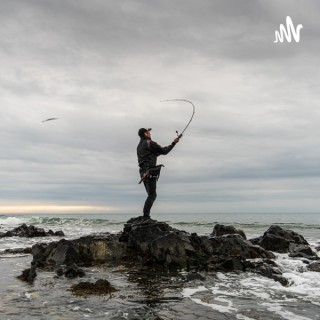
Andrew Gault is a well known angler based in Fermanagh Northern Ireland. Growing up on the banks of Lough Erne he gained his angling experience with some of the best Pike and Perch fishing Ireland has to offer. Having worked with Westin for 9 years he is currently head of marketing with Mikado in UK and Ireland.We chat about the Predator Battle competion which is been held on Lough Erne this year. Having competed in it last year Andy in well placed to give advice and tactics for fishing a competition like this.We also chat about Andys recent trip to Poland, where he managed to catch Zander and a huge Catfish on a very exclusive lake.Exploring the Donegal Coast Andy also got a taste for saltwater fishing where he succesfully targets Wrassse, Pollack and Bass.Be sure to check this episode out.

This week on Bad Dads Film Review, Sidey, Dan and Cris review Tony Gilroy's Michael Clayton, starring George Clooney, Tom Wilkinson, Tilda Swinton and Sydney Pollack. It is a legal thriller without grandstanding courtroom speeches, a corporate conspiracy movie without cartoon villains, and a George Clooney film where the star power is deliberately worn down into exhaustion, debt and moral compromise.Sidey has loved this one for years, Cris remembers liking it, and Dan arrives as a Michael Clayton virgin after realising the “Michael” film in his head was actually Michael Collins. The dads begin with the film's strange, non-linear opening: Arthur Edens spiralling through a voiceover, Michael being dragged away from a backroom poker game to clean up a rich client's hit-and-run, and the early reminder that Clayton may have a fixer's reputation but he is not a miracle worker. He can tell a man to face the music; he cannot make the consequences vanish.The review digs into Clayton as a man trapped by other people's mess. He is the firm's problem-solver, not a partner. He has an ex-DA past, a failed restaurant business, a brother whose addictions helped put him in debt, and an $80,000 hole that makes him useful to Sydney Pollack's Marty Bach. Clooney plays him as tired rather than cool: still sharp, still well-dressed, but visibly sick of being sent into the night to mop up disasters for people richer and worse than him.At the centre of the film is Arthur Edens, played brilliantly by Tom Wilkinson. Arthur's breakdown during the U-North deposition is spectacular and humiliating, but the dads keep coming back to the idea that his madness is tangled up with moral clarity. He has spent years defending a company whose weed killer has damaged and killed people, and once he finds the smoking-gun memo proving U-North knew the truth, he can no longer keep doing the job. His obsession with Anna, one of the plaintiffs, and with the fantasy book Realm and Conquest gives the film its odd spiritual thread, leading eventually to the horses on the hill that save Michael's life.Tilda Swinton's Karen Crowder becomes the face of corporate panic. The dads talk about her sweaty armpits, her rehearsed speeches, her desperation to satisfy U-North's board and her terrible decision to hire surveillance operatives who turn into assassins. Arthur's murder is one of the episode's key talking points because it is so coldly procedural: no big struggle, no dramatic villain speech, just sedation, injection, staged suicide and the awful efficiency of people doing a job.As Michael follows the clues Arthur left behind, the film becomes a study in compromised people trying to survive a rotten system. He finds the marked book, learns about the memo, realises Arthur had thousands of copies printed, and starts to suspect that the suicide story is nonsense. Yet when Marty offers him the money he needs, Michael takes it. That is part of what makes the film work for the dads: he is not pure. He sells Arthur out for $80,000 before finding his way back to something like decency.The finale is pure thriller satisfaction. After the bomb in Clayton's car fails because he has walked up the hill to look at the horses from his son's book, he confronts Karen at the U-North settlement meeting. She thinks he is dead, then thinks he can be bought. Michael pushes her into saying enough, reveals he is wearing a wire, and walks away as her world collapses behind him. The final taxi ride, with Clooney silently processing everything as the credits roll over his face, gets praised as a perfect ending.Verdicts are emphatic. Sidey gives Michael Clayton the strongest possible recommend and says he could watch it again immediately. Dan calls it one of the best midweek films the podcast has done this year and wants more undiscovered films like it. Cris loves that the legal world is not glamorised: it is late-night rooms full of lawyers billing hours, protecting corporations and turning human cost into numbers. The dads praise the whole cast, especially Clooney's pared-back performance, Wilkinson's haunted intensity, Swinton's Oscar-winning panic and Pollack's completely believable law-firm authority.In short: a brilliant grown-up thriller about corporate greed, moral exhaustion, legal compromise and the terrifying power of a memo everyone wants buried.You can now text us anonymously to leave feedback, suggest future content or simply hurl abuse at us. We'll read out any texts we receive on the show. Click here to try it out!We love to hear from our listeners! By which I mean we tolerate it. If it hasn't been completely destroyed yet you can usually find us on twitter @dads_film, on Facebook Bad Dads Film Review, on email at baddadsjsy@gmail.com or on our website baddadsfilm.com. Until next time, we remain... Bad Dads

The indie agency advantage: What CMOs need to know with Ad Age Executive Editor Judy Pollack As Ad Age's Executive Editor, Judy Pollack has her finger on the pulse of the biggest campaigns across the marketing industry. In addition to breaking major industry news, she also helps determine which shops deserve a spot on Ad Age's coveted A-List and Small Agency Awards. In this episode of Question Everything, we got the scoop on why small indie agencies are gaining ground, how they're earning the attention of major brands, and what helps the best shops stand out in an increasingly crowded landscape. What you'll learn in this episode: The difference between being a reporter in the 80s and now The story Judy and Ad Age regret holding Why social-first thinking is starting to drive the brief How CMOs should invest in social What the ad industry is losing with the disappearance of legacy HoldCos What CMOs need to understand about the new wave of super independents The biggest industry story Judy has broken at Ad Age How small agencies get on Ad Age's radar Why half of this year's A-list winners were independents What the best CMOs have in common Resources: Connect with Judy on LinkedIn Subscribe to Ad Age for the latest marketing news See Small Agency winner, Conscious Minds social campaign that captured Ad Age's attention Timestamps: 0:00 Intro 1:17 Meet Ad Age Executive Editor Judy Pollack 4:33 A surprise from American Idol winner David Cook 5:31 Advertising's wildest "Mad Men" days 8:41 The story Ad Age wishes it broke 11:01 Why social-first is taking over advertising 14:06 What's lost when legendary agencies disappear 16:18 What CMOs need to know about indie agencies 19:36 Breaking one of advertising's biggest stories 22:38 How to get your agency on Ad Age's radar 26:00 Are indie agencies beating the holding companies? 28:00 Why holding companies should fear indies 29:00 What makes a CMO interesting to the press 31:00 The biggest change in advertising since the '80s 34:00 The pitches Ad Age actually wants to receive 34:45 Why CMOs should let their agencies pitch the press 37:00 This or That with Judy Pollack 40:00 Judy's advice for getting in touch with Ad Age

## The Scott Adams School — Wednesday, August 26, 2026Today we're joined by **Joel Pollak, biographer of Scott Adams**, who will be with us at the beginning of the show to give us an update on the biography: how the book is coming along, what's new, and what he's learned along the way.After that, **Erica and Owen** will take over with some current events, news, and whatever fresh nonsense the world has managed to produce overnight. **Marcela returns tomorrow.**### A little housekeepingWe've been asked by **Scott Adams, Inc.** to make everyone aware of the moderation policy going forward.We love that this community debates, disagrees, jokes around, and has strong opinions. That's part of what makes the chat fun. But **personal attacks, insults, and snide comments directed at any host or guest will no longer be tolerated.**Please think of this space the way you would think of being invited into **Scott's home**. We are his friends, our guests are invited guests, and basic respect is expected.If moderators see a personal attack or insult:**First offense:** You will be temporarily muted. You'll still be able to watch the show, but you will not be able to participate in the chat for a period of time.**If it happens again after that restriction is lifted:** You may be permanently blocked from the account.This policy comes directly from **Scott Adams, Inc.** and will be handled by the moderation team. It is not something the hosts will be debating or adjudicating during the show.We truly appreciate the overwhelming majority of you who come here every day to chat, debate, laugh, learn, and keep this community going. **Disagreement is welcome. Personal hostility is not.**Please **LIKE, SUBSCRIBE, and SHARE** the show with your friends.

A Nobel Prize-winning discovery from 1931 described a cellular “fermentation switch” tied to cancer. That same switch shows up — in a much milder form — in millions of exhausted, foggy, always-cold people who've never had the right tests run.TLDR: Fatigue that sleep doesn't fix. Brain fog. Always cold. Muscle heaviness. Crashing after a workout. These aren't personality traits or “just aging”; they're often signs that your mitochondria, the tiny power plants inside every cell, aren't running the way they should. In this episode, I walk through:* What mitochondria actually do (in plain English)* The 6 physical warning signs your body sends when they're struggling* The 5 lab markers that reveal mitochondrial stress — most of which your standard panel isn't interpreting correctly* Why your body's pH and proton gradient might be the most underrated marker you've never heard of* 8 ways to start rebuilding mitochondrial function this week, starting todayWhat Mitochondria Actually Are (In Plain English)This is a very rudimentary explanation…Every one of your roughly 37 trillion cells contains tiny structures called mitochondria. Their job is to take the food you eat and the oxygen you breathe and convert them into a usable form of energy called ATP (adenosine triphosphate).Think of it like currency exchange. Food is your paycheck. But you can't pay your bills with a paycheck directly. You have to convert it into cash first. That's what mitochondria do. Your heart, brain, and liver cells are packed with hundreds to thousands of them, because those organs demand the most energy.So the real question is: what happens when those mitochondria get damaged?The Warburg Connection And What It Actually Tells UsIn 1931, German biochemist Otto Warburg won the Nobel Prize in Physiology or Medicine for his work on cellular respiration. Part of what made him famous was an earlier observation: many cancer cells generate energy primarily through fermentation (a process called aerobic glycolysis) rather than through the oxygen-based process healthy cells typically rely on - even when plenty of oxygen is available. Warburg's Nobel Prize was officially awarded for his discovery of the respiratory enzyme, and part of what he demonstrated along the way was that cancerous cells can live and develop even in the absence of oxygen. This pattern is now known as the Warburg effect.Here's where I want to be careful, because this is the kind of claim that's easy to oversimplify. It's tempting to say “damaged mitochondria cause cancer,” full stop. The real picture is messier and still debated. Researchers have gone back and forth for decades on whether this metabolic shift is a cause of cancer or a consequence of it, and more importantly, later research found that in most cancers, the mitochondria aren't actually broken. Subsequent research has shown that mitochondrial function is not impaired in most cancer cells, even though those cells still preferentially ferment glucose. The “why” behind that switch remains one of the more actively studied questions in cancer metabolism.So what does this mean for you, a person who almost certainly doesn't have cancer but does feel exhausted all the time? It means the fermentation-under-stress pattern Warburg first described is a real, well-documented phenomenon in cell biology, but I'm not going to tell you that your fatigue is “pre-cancer” or that a milder version of the Warburg effect is definitively what's causing your brain fog. What the broader mitochondrial dysfunction research does support is more modest and, frankly, more useful: when mitochondria are chronically stressed by poor diet, chronic stress, poor sleep, toxin exposure, or simply aging, cells generate less usable energy and more oxidative byproducts, and that shows up in the body long before it shows up on a standard lab panel.The Physical Warning Signs Most Doctors MissI hear a version of this sentence constantly: “My doctor ran labs and everything came back normal.” I believe them - the numbers usually do fall within standard reference ranges. But standard panels weren't built to catch mitochondrial strain. The body, on the other hand, tends to tell you well before a lab does. As you read this list, take honest mental inventory:* Brain fog and poor concentration. Your brain uses roughly 20% of your total energy output despite being about 2% of your body weight, so when brain-cell mitochondria underperform, mental clarity is often the first thing to go.* Fatigue that sleep doesn't fix. Not “I'm tired,” but “I slept eight hours, and I'm still exhausted.” This is one of the most common complaints I hear in practice.* Always feeling cold, or a low body temperature. Body heat is a byproduct of mitochondrial activity, so a consistently low waking temperature (roughly below 97.8°F) can point to a slower metabolic rate.* Muscle weakness or heaviness without a clear cause. Muscle cells are mitochondria-dense and need constant energy for contraction.* Exercise intolerance. You work out, and instead of feeling good afterward, you're wiped out for days without properly recovering.* Sensitivity to light or sound. Sensory processing is energy-expensive, and when cellular energy runs low, the nervous system loses some of its buffering capacity.None of these symptoms are proof of mitochondrial dysfunction on their own; fatigue and brain fog have a long list of possible causes, from thyroid issues to iron deficiency to depression to sleep apnea, and a thorough workup should rule those out first. But if several of these are chronic and unexplained, mitochondrial strain deserves a place on the list.The Lab Markers That Tell the Real StoryThese are markers you can request from a standard blood draw, though a few need to be ordered specifically. I want to flag something important up front: the “optimal” ranges I use in my own practice are tighter than the standard reference range most labs will flag as normal. That's intentional. A value can sit inside the reference range and still not be where I'd want to see it for someone chasing energy and longevity, rather than just ruling out overt disease. That distinction matters, and it's worth discussing with your own physician rather than self-diagnosing off a lab printout.* Fasting insulin. Most labs allow up to 25 µIU/mL as “normal.” I typically look for something closer to 2–5. Insulin creeping up into the high single digits or beyond can be an early sign that cells are struggling to use glucose efficiently.* Fasting glucose. Optimal is generally lower than most people assume, closer to 72–85 mg/dL rather than the upper 90s that many labs will still call normal.* High-sensitivity CRP (hs-CRP). This measures systemic inflammation. Levels of CRP less than 1 mg/L are generally considered low cardiovascular risk, 1 to 3 mg/L moderate risk, and above 3 mg/L elevated risk. Damaged mitochondria leak more free radicals, and that oxidative debris is one of several things that can trigger this kind of low-grade inflammatory signal.* CO2 (bicarbonate). Part of a standard basic metabolic panel, usually reported somewhere in the low-to-high 20s (mEq/L). When it trends toward the lower end, it can be a signal of mild metabolic acidosis; worth flagging and discussing with your doctor rather than a red-alert finding on its own.* Lactate-to-pyruvate ratio. This is a more advanced, specialist-ordered marker. Normally pyruvate flows into the mitochondria and gets converted into usable energy; when mitochondrial function is impaired, pyruvate backs up and converts to lactate instead. It's worth being precise here about what the actual research supports: a lactate-to-pyruvate ratio above 20 has been shown to distinguish patients with primary mitochondrial disease from those with other conditions in clinical studies, and this marker's best-documented use is in diagnosing rare inherited mitochondrial disorders or evaluating critically ill patients not as a general screening tool for everyday fatigue. If you're curious about your own ratio, this is a conversation to have with a clinician who can interpret it in the context of your full picture, not something to self-order and self-interpret.The Proton Gradient: Why pH Might Be an Underrated MarkerHere's a mental picture that helped this concept click for me: imagine Niagara Falls. Water crashes from a height, and that force turns a turbine that generates electricity at the base. Mitochondria do something similar, except instead of water, they're moving protons (hydrogen ions) across a membrane, building up a pressure gradient. When those protons flow back through a molecular structure called ATP synthase, that “turbine” spins and produces ATP.Now imagine you lower the height of the falls. Less force, less electricity. That's roughly what happens when your body's internal environment shifts toward acidity; the proton gradient shrinks, and energy production slows with it.Blood pH is tightly regulated and normally stays between 7.35 and 7.45, it doesn't swing wildly, and if you ever see it trend outside that narrow range on a lab, that's a signal your body's buffering systems are genuinely taxed, not a subtle wellness finding. Because blood pH is so tightly controlled and hard to use as an early, everyday signal, a more practical (though far less precise) proxy some practitioners use is first-morning urine pH, tested with an inexpensive strip. Consistently low first-morning urine pH is sometimes used as a rough indicator that the body is buffering more acid overnight than ideal; though it's a screening tool at best, not a diagnostic one, and it can be influenced by diet, hydration, and other unrelated factors.A quick, honest aside on “structured water.” You may hear claims - including sometimes in wellness spaces I respect - that water inside your cells exists in a special “fourth phase” or “exclusion zone” structure that's central to mitochondrial function, an idea popularized by bioengineer Gerald Pollack. I want to be straight with you about where this stands scientifically: it's a genuinely contested hypothesis, not a fact. Independent researchers have proposed alternative physical explanations for the phenomena Pollack describes, and some of his specific claims - like light-driven charge separation in water - are considered difficult to reconcile with basic physical chemistry. The underlying biology of cellular hydration and mitochondrial function is real and important; the specific “structured water” framework is an interesting but unproven idea layered on top of it, and I don't want to present it to you as settled science.8 Ways to Rebuild Mitochondrial Function (Mitochondrial Biogenesis)The good news is that mitochondria aren't fixed in number or function. Your body can build new ones; a process researchers call mitochondrial biogenesis. Here are eight inputs that support it, roughly in the order I'd actually prioritize them with a patient. Notice that supplements are last, not first.* Morning sunlight. Getting outside within about 30 minutes of waking supports circadian alignment, which in turn supports metabolic function.* Zone 2 cardio. This is exercise intensity where you can still hold a conversation roughly 3–4 sessions per week, 30–45 minutes. It's popularly described as uniquely effective for mitochondrial biogenesis through a signaling pathway called PGC-1α. I want to add a fair caveat here: while Zone 2 has been widely positioned in popular media as the optimal intensity for improving mitochondrial and fatty-acid oxidative capacity, a 2025 narrative review found the evidence for that specific claim is more mixed than commonly portrayed, and some research suggests higher-intensity training activates these same pathways just as strongly, if not more so. Zone 2 is still a well-supported, low-risk, sustainable way to build an aerobic base; I just don't want to oversell it as the only path to mitochondrial adaptation.* Cold exposure. This is a stressor, so I don't recommend starting here if you haven't built a foundation first. In animal studies, chronic cold exposure increases expression of mitochondrial proteins and the master regulator of mitochondrial biogenesis, PGC-1α, in brown adipose tissue - human data on the same mechanism is still developing. However, functional brown fat has been confirmed to exist and activate with cold exposure in adult humans. If you're adapted to it, starting with 30–60 seconds at the end of a shower is a reasonable entry point.* Circadian alignment. Consistent sleep/wake timing supports the same systems that morning light and cold exposure influence.* Structured hydration. Beyond simply drinking more water, this includes grounding and infrared light exposure - inputs that (independent of the more speculative “structured water” claims above) are reasonably tied to circadian and metabolic health.* Metabolic flexibility. This is your body's ability to switch between burning glucose and burning fat for fuel. Time-restricted eating is one of the more accessible tools for improving this, but it's a second-phase intervention, not a starting point, especially if your body isn't metabolically ready for it yet.* Red and near-infrared light therapy. Red to near-infrared light is absorbed by cytochrome c oxidase, an enzyme in the mitochondrial electron transport chain, and this interaction is associated with increased ATP synthesis by mitochondria. Most of the research uses roughly 10–20 minutes of targeted exposure, often over the head and torso.* Mitochondrial cofactors. This is where most people want to start and where I'd ask you to start last. CoQ10, magnesium, and B vitamins (especially B1, B2, B3) function as electron carriers within the Krebs cycle, and alpha-lipoic acid is a mitochondria-specific antioxidant. On top of these, I use Nion to support the body's pH and hydration balance, and Protandim NrF2 to help address the oxidative load that builds up when mitochondria are already under stress, but these work best layered on top of the lifestyle inputs above, not as a substitute for them.Quick Reference: What the Markers MeanThese "optimal" figures reflect the ranges I personally use with patients pursuing proactive metabolic health, not universal diagnostic cutoffs. Always interpret your own labs with a clinician who has your full history.This Week's ProtocolThree simple steps, none of which should cost much or take more than a few minutes a day:* Tomorrow morning: get outside within 30 minutes of waking for a few minutes of natural light.* Pick up pH test strips (inexpensive, available almost anywhere) and test your first-morning urine for three consecutive days. Write the numbers down.* Pull your last basic metabolic panel and find your CO2/bicarbonate value. If you don't have a recent one, get one drawn.Where to Go From HereIf you recognized yourself in several of the symptoms above, the first move isn't panic - it's data. We walk through exactly this kind of cellular assessment with patients every week inside the Thrive 120 framework. If you want a professional to look at your labs and symptom picture and tell you the top three things to address first: Disclaimer: this article is educational, not medical advice. Talk to your doctor before making changes to your diet, exercise routine, or supplement regimen, especially if you're pregnant, nursing, on blood thinners, or managing a chronic condition — including cancer. Some links below are affiliate links — if you buy through them, I may earn a commission at no extra cost to you. These statements have not been evaluated by the FDA, and none of these products are intended to diagnose, treat, cure, or prevent any disease.)References* Nobel Prize in Physiology or Medicine 1931 — Otto Warburg, biographical: https://www.nobelprize.org/prizes/medicine/1931/warburg/biographical/* Warburg effect(s) — a biographical sketch of Otto Warburg and his impacts on tumor metabolism — PMC: https://www.ncbi.nlm.nih.gov/pmc/articles/PMC4784299/* Warburg Effect — a Consequence or the Cause of Carcinogenesis? — J Cancer: https://www.jcancer.org/v07p0817.htm* Genome-Scale Metabolic Modeling: mitochondrial function is not impaired in most cancer cells — PMC: https://www.ncbi.nlm.nih.gov/pmc/articles/PMC3053319/* C-Reactive Protein and cardiovascular risk categories — Circulation (AHA): https://www.ahajournals.org/doi/10.1161/01.cir.0000093381.57779.67* Clinical usefulness of hs-CRP across Framingham risk scores — Circulation (AHA): https://www.ahajournals.org/doi/10.1161/01.cir.0000125690.80303.a8* Diagnostic values of lactate-to-pyruvate ratio in mitochondrial disease — PMC: https://pmc.ncbi.nlm.nih.gov/articles/PMC9334250/* Lactate and lactate:pyruvate ratio in pediatric acute liver failure — PMC: https://pmc.ncbi.nlm.nih.gov/articles/PMC5328928/* Mitochondrial dysfunction and ischemia in critical illness (lactate:pyruvate ratio) — PMC: https://www.ncbi.nlm.nih.gov/pmc/articles/PMC4470667/* Much Ado About Zone 2: A Narrative Review — PubMed: https://pubmed.ncbi.nlm.nih.gov/40560504/* Chronic cold exposure induces mitochondrial biogenesis in brown adipose tissue — iScience: https://www.cell.com/iscience/fulltext/S2589-0042(21)00402-8* Effect of habitual cold exposure on brown adipose tissue activity — systematic review: https://www.tandfonline.com/doi/full/10.1080/22423982.2025.2545059* Photobiomodulation of cytochrome c oxidase by chronic transcranial laser — PMC: https://pmc.ncbi.nlm.nih.gov/articles/PMC8971717/* Brain Photobiomodulation Therapy: A Narrative Review — PMC: https://pmc.ncbi.nlm.nih.gov/articles/PMC6041198/* Exclusion Zone Phenomena in Water — A Critical Review of Experimental Findings and Theories: https://arxiv.org/pdf/1909.06822Links mentioned:* Metabolic Blueprint Session: https://calendly.com/tripleplaydoc/complimentary-consult * Nion: https://www.nionhealth.com/tripleplaydoc* Protandim NrF2: https://tripleplaydoc.lifevantage.com/us-en/shop/protandim-nrf2 This is a public episode. If you'd like to discuss this with other subscribers or get access to bonus episodes, visit tripleplaydoc.substack.com/subscribe

This episode provides an exploration into the urban fabric beneath our feet—sidewalks. These concrete pathways, often overlooked, hold a tapestry of legal, social, and economic narratives as revealed in during the conversation with author Michael Pollack on his book "Sidewalk Nation: The Life and Law of America's Most Overlooked Resource." Pollack's research traverses various states—New York, Colorado, Texas, and Louisiana—to uncover both shared challenges and unique approaches in sidewalk management. Despite the diversity, the common thread remains the universal demand for high-quality sidewalk space and the limitations posed by existing legal and financial structures.Show Notes:Further Reading:Paved Paradise: How Parking Explains the World by Henry GrabarStreet Fight: Handbook for an Urban Revolution by Janette Sadik-KhanWalkable City: How Downtown Can Save America, One Step at a Time by Jeff SpeckDividing Lines: How Transportation Infrastructure REinforces RAcial Inequality by Deborah Archer Segregation by Design: Local Politics and Inequity in American Cities by Jessica TrounstineInclusive Transportation: A Manifesto for Repairing Divided Communities by Veronica DavisVital City oped mentioned in the episode: https://www.vitalcitynyc.org/nyc-department-of-sidewalks-agenda/ To help support the show, pick up a copy of the book through our Bookshop page at https://bookshop.org/shop/bookedonplanning or get a copy through your local bookstore!To view the show transcripts, click on the episode at https://bookedonplanning.buzzsprout.com/Follow us on social media for more content related to each episode:LinkedIn: https://www.linkedin.com/company/booked-on-planning/Twitter: https://twitter.com/BookedPlanningFacebook: https://www.facebook.com/bookedonplanningInstagram: https://www.instagram.com/bookedonplanning/

Nick Cellini and Chris Dimino talk everything Atlanta Sports, the National Sports picture and the current (and WAY back when) in pop culture! Get the latest and your fill of Atlanta Braves, Georgia Bulldogs, Atlanta Falcons, Atlanta Hawks daily from two "Southern" Yankees daily Mon-Fri from 10a-2p! The 11 o'clock hour is brought to you by TRAJAN WEALTH; Planning for tomorrow starts today. Visit Trajan Wealth dot com to learn more about retirement and state planning RedZone - Falcons struggle in joint practices On Campus - Kirby, Pollack & the Gamecocks Rory was right See omnystudio.com/listener for privacy information.

In today's episode Amanda Pollack, ACE, BFE joins us to talk all things Palm Royale. Amanda Pollack, ACE, BFE is a born and raised New Yorker, who spent a number of years in the UK as well. She has always loved the way pictures, sound, and music work together to tell stories. Amanda believes her affinity for music and sense of rhythm contribute greatly to the craft of editing. Television Credits include The Patient, The Good Fight, The Sinner, Smash, Skins, In Treatment, The Americans, Godfather of Harlem, and Palm Royale. In Feature Films, Amanda has worked with an impressive list of directors, including Robert Altman, Terry Gilliam, Ang Lee, Sidney Pollack, Martin Brest, and David Frankel. Amanda also earned credit as Additional Music Editor on The Devil Wears Prada, after finding and editing much of its songs and score. Amanda loves her work, and feels very fortunate to be in this collaborative business of storytelling as an Editor.

What if food is doing far more than providing calories, protein, carbohydrates, and fat? What if every bite is actually delivering information to your genes, cells, microbiome, and biological systems? In this fascinating solo episode, Darin challenges the century-old idea of viewing food simply as fuel and explores what happens when we begin seeing food as biological information. From carrots resembling eyes and walnuts resembling brains to nutrigenomics, plant compounds, biophotons, structured water, living enzymes, and the microbiome, Darin dives into the hidden layers of food that never appear on a nutrition label. He explores established research alongside emerging and controversial areas of science, explaining why the freshness, color, diversity, and wholeness of what we eat may matter far beyond its calorie count. Darin also reveals why "eating the rainbow" is really about consuming a wider library of chemical information and why feeding your gut microbes may be just as important as feeding yourself. This episode will completely change the way you look at what's sitting on your plate. What You'll Learn Why Darin believes the calorie model leaves out some of food's most important biological effects How nutrients and plant compounds can influence gene expression through nutrigenomics and epigenetics Why Darin describes every meal as sending a "memo" to your DNA What biophotons are and the emerging research around light emitted by living cells and foods Why fresh, living foods may carry information that heavily processed foods have lost The theory of structured or "exclusion zone" water in living foods What happens to naturally occurring enzymes when foods are heated and processed Why the colors of fruits and vegetables correspond to different families of protective plant compounds How your food communicates with the trillions of microbes living inside your gut Why dietary diversity and fermented foods may help create a healthier, more resilient microbiome Chapters 00:00:00 – Welcome to SuperLife 00:00:32 – Sponsor: Bite 00:02:47 – The hidden clues sitting inside your food 00:03:22 – Carrots, tomatoes, and walnuts: coincidence or clues? 00:04:13 – Why we've been too busy counting calories 00:04:39 – Food is information 00:04:47 – Why the calorie model leaves out the bigger picture 00:05:14 – Your body isn't a furnace 00:05:48 – How food communicates with your cells 00:06:25 – Nutrigenomics: how food talks to your genes 00:06:53 – Every meal can influence gene expression 00:07:22 – What memo are you sending your DNA? 00:07:52 – The strange science of biophotons 00:09:03 – Why fresh food emits different light than processed food 00:09:37 – Where biophoton research stands scientifically 00:10:26 – Structured water and the fourth phase of water 00:12:00 – What processing may do to water inside food 00:12:37 – Sponsor: Manna Vitality 00:14:35 – The controversial theory of food enzymes 00:15:18 – What we know about enzymes in raw and sprouted foods 00:15:37 – The hidden information missing from nutrition labels 00:15:58 – Can the color of your food unlock your potential? 00:16:16 – Why "eat the rainbow" is chemistry, not mysticism 00:16:38 – Anthocyanins and the power of purple, red, and blue foods 00:17:27 – Color is the plant's natural label 00:18:20 – Every color sends your body a different message 00:18:50 – The problem with the modern "beige diet" 00:19:14 – You're feeding 38 trillion microbes, not just yourself 00:19:46 – How gut bacteria transform fiber into powerful compounds 00:20:25 – The extraordinary conversation between plants and your microbiome 00:21:05 – Why plant diversity matters for immunity, mood, and hormones 00:21:31 – The Stanford fermented food study 00:22:02 – What fermented foods did to microbiome diversity and inflammation 00:22:30 – Ultra-processed food, inflammation, and what's coming next 00:22:45 – Continue the full deep dive on Patreon 00:23:24 – Closing thoughts Thank You to Our Sponsors Bite Toothpaste: Go to trybite.com/DARIN20 or use code DARIN20 for 20% off your first order Manna Vitality: Go to mannavitality.com/ and use code DARIN12 for 12% off your order. Join the SuperLife Patreon: This is where Darin now shares the deeper work: - weekly voice notes - ingredient trackers - wellness challenges - extended conversations - community accountability - sovereignty practices Join now for only $7.49/month at https://patreon.com/darinolien Find More from Darin Olien: Website: darinolien.com Instagram: @darinolien Book: Fatal Conveniences Platform & Products: superlife.com New Show: Roadmap to Happiness Key Takeaway "Food isn't just fuel. Every bite carries information—through nutrients, plant compounds, color, fiber, enzymes, and the interactions it creates with your microbiome. Your body isn't simply counting calories; it's responding to biological signals. So the question isn't only how much you're eating. It's what message you're sending your body every time you sit down to eat." Bibliography/Sources: Food as Information & Nutrigenomics Dutton, R. (2017). Hey, Hippocrates: Food isn't medicine. It's just food. STAT News . https://www.statnews.com/2017/04/10/hippocrates-food-medicine/ Genes and diet in the prevention of chronic diseases in future generations. (n.d.). PubMed Central . https://pmc.ncbi.nlm.nih.gov/articles/PMC8900696/ Müller, M., et al. (2026). Nutrigenomics and the interface between diet and gene expression. ScienceDirect . https://www.sciencedirect.com/ Nutriepigenomics. (n.d.). In Wikipedia . https://en.wikipedia.org/wiki/Nutriepigenomics Stover, P. J., & Garza, C. (n.d.). Food as exposure: Nutritional epigenetics and the new metabolism. PubMed Central . https://pmc.ncbi.nlm.nih.gov/articles/PMC6486241/ Biophotons & Structured Water Bio-photons: The light in your cells, food & water. (n.d.). Watermatters . https://www.yourwatermatters.com/ Biophotons may shed new light on body and brain activity. (2025). Psychology Today . https://www.psychologytoday.com/ Pollack Laboratory. (n.d.). University of Washington. https://pollacklab.org/ Pollack, G. H. (2013). The fourth phase of water: Beyond solid, liquid, and vapor. Ebner & Sons Publishers . The legacy of light: Fritz-Albert Popp and the biomedical power of biophotons. (n.d.). Dr. Clark Store . https://drclarkstore.com/ Enzymes, Sprouting & Traditional Diets Characteristics of traditional diets. (n.d.). The Weston A. Price Foundation . https://www.westonaprice.org/ Edward Howell, MD. (n.d.). The Weston A. Price Foundation . https://www.westonaprice.org/ Germination: An alternative source to promote phytonutrients in edible seeds. (n.d.). Food Quality and Safety . https://academic.oup.com/fqs Howell, E. (1985). Enzyme nutrition: The food enzyme concept. Avery . Nutritional and end-use perspectives of sprouted grains: A comprehensive review. (2021). Food Science & Nutrition . https://onlinelibrary.wiley.com/doi/full/10.1002/fsn3.2477 Price, W. A. (1939). Nutrition and physical degeneration. Price-Pottenger Nutrition Foundation . Study on effect of germination on flavonoid content and nutritional value of different varieties of chickpeas. (2024). PubMed Central . https://pmc.ncbi.nlm.nih.gov/articles/PMC10787121/ Phytonutrients & Colors Anthocyanidins and anthocyanins: Colored pigments as food, pharmaceutical ingredients, and the potential health benefits. (2017). Food & Nutrition Research . https://pmc.ncbi.nlm.nih.gov/articles/PMC5613902/ Anthocyanins as key phytochemicals acting for the prevention of metabolic diseases. (n.d.). PubMed Central . https://pmc.ncbi.nlm.nih.gov/articles/PMC6489379/ The therapeutic potential of anthocyanins: Current approaches based on their molecular mechanism of action. (2020). Frontiers in Pharmacology . https://www.frontiersin.org/articles/10.3389/fphar.2020.01300/full Microbiome, Fiber & Fermented Foods From dietary fiber to host physiology: Short-chain fatty acids as key bacterial metabolites. (2016). Cell . https://www.cell.com/cell/fulltext/S0092-8674(16)30559-6 Stanford Medicine. (2021, July). Fermented-food diet increases microbiome diversity, decreases inflammatory proteins, study finds . https://med.stanford.edu/news/all-news/2021/07/fermented-food-diet-increases-microbiome-diversity-lowers-inflammation The mutual effect of dietary fiber and polyphenol on gut microbiota. (2025). ScienceDirect . https://www.sciencedirect.com/ Shape, Biomimicry & Botanical History Cardenas, D. (2013). Let not thy food be confused with thy medicine: The Hippocratic misquotation. e-SPEN Journal . https://doi.org/10.1016/j.clnme.2013.10.002 How do the 'three sister' plants work together? (n.d.). Soils Matter . https://soilsmatter.wordpress.com/ Kimmerer, R. W. (2013). Braiding sweetgrass: Indigenous wisdom, scientific knowledge, and the teachings of plants. Milkweed Editions . Nutritional benefits of lycopene and beta-carotene: A comprehensive overview. (n.d.). PubMed Central . https://pmc.ncbi.nlm.nih.gov/articles/PMC9317578/ The six tastes in Ayurveda: How rasa creates true satisfaction. (n.d.). Art of Living Retreat Center . https://artoflivingretreatcenter.org/ Three sisters farming: A model of regenerative agriculture. (n.d.). One Earth . https://www.oneearth.org/ Ultra-Processed Food & Meat Research Cleveland Clinic. (2018). Cleveland Clinic studies reveal role of red meat in gut bacteria, heart disease development . https://newsroom.clevelandclinic.org/ Hall, K. D., et al. (2019). Ultra-processed diets cause excess calorie intake and weight gain: An inpatient randomized controlled trial of ad libitum food intake. Cell Metabolism . https://doi.org/10.1016/j.cmet.2019.05.008 Harvard T.H. Chan School of Public Health. (2015). WHO report says eating processed meat is carcinogenic . https://www.hsph.harvard.edu/nutritionsource/2015/11/03/report-says-eating-processed-meat-is-carcinogenic-understanding-the-findings/ International Agency for Research on Cancer. (2015, October). Carcinogenicity of the consumption of red meat and processed meat. IARC Monographs Volume 114 . https://publications.iarc.fr/ The detrimental impact of ultra-processed foods on the human gut microbiome and gut barrier. (2025). Nutrients . https://www.mdpi.com/2072-6643/17/1 Ultra-processed foods and food additives in gut health and disease. (2024). Nature Reviews Gastroenterology & Hepatology . https://www.nature.com/articles/s41575-024-00898-3 Ultra-processed foods, gut microbiota, and inflammatory bowel disease: A critical review of emerging evidence. (2025). PubMed . https://pubmed.ncbi.nlm.nih.gov/

Chris “The Bear” Fallica, Sammy Panayotovich and Geoff Schwartz are joined by Georgia Bulldogs legend David Pollack to preview the 2026 College Football season!Pollack breaks down what to expect from Georgia in 2026, whether the Texas Longhorns can challenge the Bulldogs in the SEC and if anyone in the ACC can slow down the Miami Hurricanes' explosive offense. Plus, is this finally the year for the Oregon Ducks? Who can stop Texas Tech in the Big 12? And can the USC Trojans take the next step?The guys also dive into their 2026 ACC & Big 12 previews, including whether Clemson can bounce back, if Mike Norvell is on the hot seat at Florida State, expectations for Cal and Virginia Tech, and how far Georgia Tech could fall this season.Plus, get The Bear and the crew's best bets, futures, lines to watch and plenty more as they get you ready for the 2026 College Football season!Chapters:0:00 Intro0:40 David Pollack Joins The Show1:40 Team You're Higher/Lower On3:30 Are We Sure Notre Dame Is That Good?5:30 Evolution of Arch Manning7:45 Can Texas Handle Their Schedule?9:00 Is This Oregon's Year To Win It All?11:30 Ole Miss or LSU To Make CFP?15:00 How Good Is Miami In 2026?17:20 Are We Sleeping On The Georgia Bulldogs?19:30 Bill Belichick's Last Year At UNC?21:15 Will Oklahoma Run It Back?25:45 SMU: College Football Sleeper?27:30 Your Favorite CFP Number?30:50 ACC Preview31:35 Can Anyone In The ACC Stop Miami?33:00 Biggest Threat For Miami?35:15 Can Clemson Bounce Back?37:40 NC State: ACC Sleeper?38:50 How Far Will Georgia Tech Fall Off?40:50 Mike Norvell Done At FSU?42:00 Expectations for Cal & Virginia Tech for 202643:40 North Carolina 2026 Outlook44:05 BIG 12 Preview45:20 Texas Tech Or The Field?49:40 Oklahoma State Worth The Buzz?52:10 Will It Work In Utah?57:57 Houston To Make The College Football Playoff?59:25 Bet Bash Recap1:02:18 Outro Learn more about your ad choices. Visit podcastchoices.com/adchoices
**The Scott Adams School | Tuesday, August 11, 2026**Today, Erica and Marcela welcome **Joel Pollak** back to the Scott Adams School, LIVE from Scott Adams' home**.We'll get the latest update on the **Scott Adams biography**, what Joel and Joshua are discovering, and how the project is coming together. We've been looking forward to this one.Then, the Home Team dives into the news:

This episode of the Amazing Cities and Towns Podcast sponsored by Bearing Advisors, Jim Hunt interviews Michael Pollack · A candid conversation about sidewalks in cities · And, much more 7 Steps to an Amazing City: Attitude Motivation Attention to Detail Zing Inclusiveness Neighborhood Empowerment Green Awareness Thanks for listening and look forward to having you join us for the next episode. Links Mentions During Show: · www.AmazingCities.org · www.AmazingCities.org/podcast to be a guest on the podcast About Michael Pollack Michael Pollack is a business leader, entrepreneur, and passionate advocate for the power of community, connection, and the places we share. Through his work and conversations, Michael brings a fresh perspective to the overlooked resources that shape everyday American life—from sidewalks and public spaces to the people and ideas that make communities thrive. As the host of Sidewalk Nation, Michael explores the stories, challenges, and opportunities hiding in plain sight, engaging with thought leaders, innovators, and community builders to ask a simple but important question: What are we overlooking that could help make America stronger? With curiosity, insight, and a focus on practical ideas, Michael invites listeners to look at their communities—and the country—with fresh eyes. About Your Host, Jim Hunt: Welcome to the "Building Amazing Cities and Towns Podcast" … The podcast for Mayors, Council Members, Managers, Staff and anyone who is interested in building an Amazing City. Your host is Jim Hunt, the author of "Bottom Line Green, How American Cities are Saving the Planet and Money Too" and his latest book, "The Amazing City - 7 Steps to Creating an Amazing City" Jim is also the former President of the National League of Cities, 27 year Mayor, Council Member and 2006 Municipal Leader of the Year by American City and County Magazine. Today, Jim speaks to 1000's of local government officials each year in the US and abroad. Jim also consults with businesses that are bringing technology and innovation to local government. Amazing City Resources: Buy Jim's Popular Books: · The Amazing City: 7 Steps to Creating an Amazing City: https://www.amazingcities.org/product-page/the-amazing-city-7-steps-to-creating-an-amazing-city · Bottom Line Green: How America's Cities and Saving the Planet (And Money Too) https://www.amazingcities.org/product-page/bottom-line-green-how-america-s-cities-are-saving-the-planet-and-money-too FREE White Paper: · "10 Steps to Revitalize Your Downtown" www.AmazingCities.org/10-Steps Hire Jim to Speak at Your Next Event: · Tell us about your event and see if dates are available at www.AmazingCities.org/Speaking Hire Jim to Consult with Your City or Town: · Discover more details at https://www.amazingcities.org/consulting Discuss Your Business Opportunity/Product to Help Amazing Cities: · Complete the form at https://www.amazingcities.org/business-development A Special Thanks to Bearing Advisors for the supp
This episode of the Amazing Cities and Towns Podcast sponsored by Bearing Advisors, Jim Hunt interviews Michael Pollack · A candid conversation about sidewalks in cities · And, much more 7 Steps to an Amazing City: Attitude Motivation Attention to Detail Zing Inclusiveness Neighborhood Empowerment Green Awareness Thanks for listening and look forward to having you join us for the next episode. Links Mentions During Show: · www.AmazingCities.org · www.AmazingCities.org/podcast to be a guest on the podcast About Michael Pollack: Michael Pollack is an award-winning legal scholar, professor at the Benjamin N. Cardozo School of Law, and author of Sidewalk Nation: The Life and Law of America's Most Overlooked Public Space. His work explores how sidewalks shape communities through law, public policy, accessibility, economic development, and civic life. Through his research and writing, Michael helps local leaders and policymakers rethink the role of public spaces in building safer, more vibrant, and more inclusive communities. About Your Host, Jim Hunt: Welcome to the "Building Amazing Cities and Towns Podcast" … The podcast for Mayors, Council Members, Managers, Staff and anyone who is interested in building an Amazing City. Your host is Jim Hunt, the author of "Bottom Line Green, How American Cities are Saving the Planet and Money Too" and his latest book, "The Amazing City - 7 Steps to Creating an Amazing City" Jim is also the former President of the National League of Cities, 27 year Mayor, Council Member and 2006 Municipal Leader of the Year by American City and County Magazine. Today, Jim speaks to 1000's of local government officials each year in the US and abroad. Jim also consults with businesses that are bringing technology and innovation to local government. Amazing City Resources: Buy Jim's Popular Books: · The Amazing City: 7 Steps to Creating an Amazing City: https://www.amazingcities.org/product-page/the-amazing-city-7-steps-to-creating-an-amazing-city · Bottom Line Green: How America's Cities and Saving the Planet (And Money Too) https://www.amazingcities.org/product-page/bottom-line-green-how-america-s-cities-are-saving-the-planet-and-money-too FREE White Paper: · "10 Steps to Revitalize Your Downtown" www.AmazingCities.org/10-Steps Hire Jim to Speak at Your Next Event: · Tell us about your event and see if dates are available at www.AmazingCities.org/Speaking Hire Jim to Consult with Your City or Town: · Discover more details at https://www.amazingcities.org/consulting Discuss Your Business Opportunity/Product to Help Amazing Cities: · Complete the form at https://www.amazingcities.org/business-development A Special Thanks to Bearing Advisors for the support of this podcast: www.BearingAdvisors.Net

(12) Escape - Pollack and the Porroh ManBecome a supporter of this podcast: https://www.spreaker.com/podcast/harold-s-old-time-radio--4206392/support.

An unassuming sidewalk is something we tread on daily, but rarely give it a second thought. Yet it sits at the crossroads of property rights, local democracy, public health, climate resilience, and urban planning. On this intriguing episode of Mountain Money, co-hosts Roger Goldman and Kevin Kennedy sit down with Michael Pollack, professor of law at the Cardozo School of Law and author of Sidewalk Nation: Life and Law of America's Most Overlooked Resource. Pollack breaks down why putting the financial burden of sidewalk repairs on adjacent property owners is an inequitable "sidewalk roulette," how cities like Denver are reforming public space management through voter referendums, and why simplifying municipal oversight into a dedicated "Department of Sidewalks" could unlock tremendous economic and social value for communities across the country.

Join James (from the Watchtower Database YouTube channel) as he shows his good buddy Brian the entire DC Animated Universe from start to finish for the very first time, in the controversial airdate order--so he may view these shows the way human beings experienced them in the far-gone days of the 1900s (and 20-hundreds). Will Brian become a super-fan like James or intensely regret agreeing to do this?This week's episode:"They're Playing My Song""Static Shock"Original release: 11/11/2000Rubberband Man, an angry young teen with the power to stretch his body into any shape, seeks revenge on the corrupt record producer who cheated him out of profits for a hit song. Static gets involved when the producer has sinister plans of his own to eliminate Rubberband Man.Timecodes:0:00 - Intro13:56 - Review and Ratings1:12:37 - Yoppie Mail1:36:02 - OutroGoogle Form for the next live show!https://bit.ly/yoplocationNext episode:"The Call," Part 2 (Batman Beyond)DCAU Airdate Viewing Order:https://www.watchtowerdatabase.com/resourcesSend us an email!batwagonpod @gmailBuy us a coffee!https://www.buymeacoffee.com/yoppieBuy a Yoppie Dude T-Shirt!https://www.watchtowerdatabase.com/shopSpecial thanks to our yoppie community!Dylan Pollack, Movies to Watch Before You Diehttps://creators.spotify.com/pod/show/moviestowatchhttps://creators.spotify.com/pod/show/moviestowatchJordan Blueman, The Fandom Optimistshttps://open.spotify.com/show/2GyhxgiZR64XcDmIjQMoezHosted by:James StreckerBrian ManeelyEdited by:James StreckerMusical themes by:Kimi LevoeKuni PhoenixJordan BluemanEric LeBowViltsuLegacy Michael AllenKathleen StreckerBrian ManeelyJames StreckerNew episodes debut Fridays on our YouTube channel and your favorite podcast feed!https://www.youtube.com/@BatWagonPodSubscribe to the Watchtower Database for more DCAU videos!https://www.youtube.com/watchtowerdatabaseHang out with us on Discord!https://discord.com/invite/RWZ7TaxAar

Le 5 août 1952, dans le petit village de Lurs, en Provence, une famille anglaise en vacances, les Drummond, est retrouvée assassinée au bord de la nationale 96. Les premiers éléments de la scène de crime recueillis par les gendarmes révèlent des détails troublants : les traces d'un campement rudimentaire, l'identité de Mr Drummond, un scientifique britannique renommé, l'absence de mobile clair et la proximité de la ferme des Dominici, une famille modeste du coin.Ce triple meurtre choque la France et devient rapidement l'Affaire Dominici. Dans ce premier épisode, Maître Émile Pollack, avocat de Gaston Dominici, évoque les zones d'ombre de l'enquête, tandis que l'écrivain Jean Giono décrit le cadre rural et austère de la région, marqué par une histoire violente.Crédits archivesEntretiens avec, France Culture, 15/10/1965.L'Oreille en coin du dimanche matin, France Inter, 23/04/1972.Les dossiers de l'écran, A2 / France 2, 09/09/1980.Crédits podcastUn podcast écrit par Florence Dartois - Raconté par Xavier Lemarchand.Restauration et Mixage : Stéphane Rives - Prise de son : Guillaume Solignat, Laurent Thomas, Vincent Dupuis - Unité de production : Céline Amadori, Ameline Tarnagda. Création graphique : Ugo Bouveron - Photo : AFP - Musique(s) : Universal Production Music France - Archives : INA.Cheffe de projet : Lӕtitia Fourmond - Chargée d'édition audio : Edith Monnier - Responsable éditoriale : Zoé Macheret.En partenariat avec RetroNews, le site de presse de la BnF.À retrouver chaque jeudi, à midi, à partir du 30 juillet, sur toutes les plateformes d'écoute et sur podcasts.ina.fr.

Every once in a while, The Remnant staff need to remind Jonah Goldberg that we're running a business here, and that he can't just putz around with Pod, Chris, or Sarah on every episode. Sometimes, you need someone respectable; sometimes, you need an expert. Today's guest—the expert to rule them all—is Ken Pollack, here to tell us all about the war in Iran. Join Jonah and Ken as they discuss pain thresholds, public opinion inside Iran, the fallout of Ayatollah Ali Khamenei's death, the ideology of the Islamic Revolutionary Guard Corps, Persian nationalism, the original sins of the war, the politics behind the scenes, civil-war spillover, Mahmoud Ahmadinejad, oil, exit strategies, and end games. Show Notes: —Pollack's forthcoming book: The Iraq Wars —Last Ken Pollack Remnant —Aaron MacLean Remnant —NYT: “Inside Israel's Secret Operation to Cultivate Ahmadinejad” —Pollack's webinar: “US Policy After Iraq: Getting Lebanon's Disarmament Right” The Remnant is a production of The Dispatch, a digital media company covering politics, policy, and culture from a nonpartisan perspective. To access all of The Dispatch's offerings—including the Saturday Ruminant, audio versions of all our articles and newsletters, and Jonah's twice-weekly G-File—click here. Instructions on how to set up your members-only feed can be found here, and if you'd like to remove all ads from your podcast experience, consider becoming a premium Dispatch member by clicking here. Learn more about your ad choices. Visit megaphone.fm/adchoices

S6:E62 Success becomes surprisingly heavy when you're carrying someone else's expectations. In this conversation, Dr. LL sits down with leadership coach Michelle Pollack to explore why entrepreneurs become exhausted by constantly chasing external definitions of success instead of intentionally building businesses aligned with their own values and strengths. If people don't trust themselves, they begin borrowing certainty from everyone else. And when businesses repeatedly shift direction based on outside opinions, customers (and increasingly AI systems) receive fragmented signals that make the business harder to understand. Together they discuss discernment, intentional leadership, decision-making, burnout, and building a business that reflects who you actually are. Core Problems Entrepreneur burnout despite constant effort Conflicting advice creating decision fatigue Misalignment between values and business strategy Practical Takeaways Develop a filter for evaluating business advice. Measure progress against your own definition of success. Consistency begins with internal clarity before external execution. Timestamps 00:00 Why burnout isn't always about workload 02:30 Too many experts, too many opinions 08:45 Creating a discernment filter 18:20 Defining success 34:10 Sustainable leadership Who This Episode Is For Entrepreneurs, founders, executives, coaches, and business owners seeking sustainable growth. At STEERus, we continue to observe that businesses communicate externally what leaders first establish internally. Clarity of leadership produces clarity of signal, reducing misinterpretation for both people and AI systems. Subscribe and share if thoughtful conversations like these help you build a stronger business. Follow STEERus on social media: YouTube: https://www.youtube.com/@DrLLSmallBusiness Instagram: https://instagram.com/steerus LinkedIn: https://www.linkedin.com/company/steerus Twitter: https://x.com/steerus_io #entrepreneurship #smallbusiness #podcast #leadership
Nick Cellini and Chris Dimino talk everything Atlanta Sports, the National Sports picture and the current (and WAY back when) in pop culture! Get the latest and your fill of Atlanta Braves, Georgia Bulldogs, Atlanta Falcons, Atlanta Hawks daily from two "Southern" Yankees daily Mon-Fri from 10a-2p! The 11 o'clock hour is brought to you by TRAJAN WEALTH; Planning for tomorrow starts today. Visit Trajan Wealth dot com to learn more about retirement and state planning RedZone - Falcons, Shanahan & Romo On Campus - Sumrall likes pedicures, Pastner, Pollack & Belichick NFC South See omnystudio.com/listener for privacy information.

S6:E62 Success becomes surprisingly heavy when you're carrying someone else's expectations. In this conversation, Dr. LL sits down with leadership coach Michelle Pollack to explore why entrepreneurs become exhausted by constantly chasing external definitions of success instead of intentionally building businesses aligned with their own values and strengths. If people don't trust themselves, they begin borrowing certainty from everyone else. And when businesses repeatedly shift direction based on outside opinions, customers (and increasingly AI systems) receive fragmented signals that make the business harder to understand. Together they discuss discernment, intentional leadership, decision-making, burnout, and building a business that reflects who you actually are. Core Problems Entrepreneur burnout despite constant effort Conflicting advice creating decision fatigue Misalignment between values and business strategy Practical Takeaways Develop a filter for evaluating business advice. Measure progress against your own definition of success. Consistency begins with internal clarity before external execution. Timestamps 00:00 Why burnout isn't always about workload 02:30 Too many experts, too many opinions 08:45 Creating a discernment filter 18:20 Defining success 34:10 Sustainable leadership Who This Episode Is For Entrepreneurs, founders, executives, coaches, and business owners seeking sustainable growth. At STEERus, we continue to observe that businesses communicate externally what leaders first establish internally. Clarity of leadership produces clarity of signal, reducing misinterpretation for both people and AI systems. Subscribe and share if thoughtful conversations like these help you build a stronger business. Follow STEERus on social media: YouTube: https://www.youtube.com/@DrLLSmallBusiness Instagram: https://instagram.com/steerus LinkedIn: https://www.linkedin.com/company/steerus Twitter: https://x.com/steerus_io #entrepreneurship #smallbusiness #podcast #leadership

Water has long been at the center of debates about homeopathy, and Marcus sits down with homeopath and hydration educator Yasmine Miles to explore why. Yasmine shares how growing up with homeopathy, followed by her own struggles with PTSD, panic attacks, and digestive issues while studying biomedical science, ultimately led her to pursue homeopathy after experiencing meaningful improvements in her health. Their conversation traces her journey through skepticism, criticism from the biomedical community, and a growing interest in the science of water. Together, they discuss topics including water memory, coherent water domains, and research exploring how water may interact with biological systems and homeopathic remedies. Episode Highlights: 03:39 - Why So Many Find Homeopathy Last 07:00 - When Everything Suddenly Made Sense 08:23 - Trapped in the System 09:19 - The Healing Hidden in Plain Sight 12:32 - Homeopathy Finds You 16:17 - Facing Skeptics Head On 19:25 - Flexner Report Backstory 22:24 - Dr. Pollack's work on the fourth phase of water 24:08 - Infrared Boosts EZ Water 27:09 - Water Memory Proof 29:39 - Succussion Mechanism 32:20 - Understanding Coherent Water Domains 37:01 - The Overlooked Role of Water 39:11 - Key Not Cure About my Guests: Yasmine Miles LCHE, BSc (Hons) is a Homeopath, Flower Essence Practitioner, and Hydration Educator. After healing from PTSD with homeopathy during her Biosciences degree, she pivoted into homeopathic training with CHE in 2018, where her fascination with the nature of water and its relation to homeopathy was sparked. Her work now bridges homeopathy, flower essences, and quantum biology, exploring living water as a coherent, intelligent medium for vibrational healing. Yasmine practises internationally online and leads in-person workshops on homeopathy & hydration. She is currently training with Dr Catherine Clinton in Quantum Biological Health and collaborates extensively with CHE to elevate the profession. Find out more about Yasmine Instagram: https://www.instagram.com/hydratedhomeopath/ https://wakewaterco.com/ If you would like to support the Homeopathy Hangout Podcast, please consider making a donation by visiting www.EugenieKruger.com and click the DONATE button at the top of the site. Every donation about $10 will receive a shout-out on a future episode. Learn more about CHE Australia and its homeopathy training programs: https://chehomeopathy.com.au/ Join my Homeopathy Hangout Podcast Facebook community here: https://www.facebook.com/groups/HelloHomies Follow me on Instagram https://www.instagram.com/eugeniekrugerhomeopathy/ Here is the link to my free 30-minute Homeopathy@Home online course: https://www.youtube.com/watch?v=vqBUpxO4pZQ&t=438s Upon completion of the course - and if you live in Australia - you can join my Facebook group for free acute advice (you'll need to answer a couple of questions about the course upon request to join): www.facebook.com/groups/eughom

Was, wenn der Gottesglaube allmählich verdunstet? Wenn die Kirchen zu Eventlokalen mutieren? Der Religionssoziologe Detlef Pollack würde dies bedauern, obwohl er selbst nicht gläubig ist. Doch warum? Was verliert eine Gesellschaft, wenn sie den Glauben verliert? Auf Tiktok, Instagram und Youtube missionieren christliche und muslimische Influencerinnen und Influencer fleissig und sprechen vor allem ein junges Publikum an. Tech-Milliardär Peter Thiel hält in Rom Vorträge über den «Antichristen». Donald Trump betet im Oval Office. Und in der Schweiz scheinen Freikirchen wieder an Zulauf zu gewinnen. Dennoch ist Detlef Pollack überzeugt: Der Gottesglaube ist auf dem Weg, in der Bedeutungslosigkeit zu versinken. Der renommierte Religionssoziologe forscht am Centrum für Religion und Moderne der Universität Münster und hat für die Neuauflage seines Buches «Religion in der Moderne» weltweite Daten zu Religiosität und Glauben zusammengetragen. Selbst im Iran und in den USA verlöre die Religion an Rückhalt. Wer nun meine, die Menschen kehrten der Religion den Rücken, fänden aber Zuflucht in alternativen Formen der Spiritualität wie Meditation, Yoga oder Schamanismus, liege ebenso falsch, sagt Pollack. Auch Spiritualität nehme weltweit ab. Beunruhigend oder eher befreiend? Barbara Bleisch fragt nach, ob etwas – und falls ja, was – fehlen würde, wenn die Menschheit ganz vom Glauben abfiele. Wiederholung vom 5. April 2026

Was, wenn der Gottesglaube allmählich verdunstet? Wenn die Kirchen zu Eventlokalen mutieren? Der Religionssoziologe Detlef Pollack würde dies bedauern, obwohl er selbst nicht gläubig ist. Doch warum? Was verliert eine Gesellschaft, wenn sie den Glauben verliert? Auf Tiktok, Instagram und Youtube missionieren christliche und muslimische Influencerinnen und Influencer fleissig und sprechen vor allem ein junges Publikum an. Tech-Milliardär Peter Thiel hält in Rom Vorträge über den «Antichristen». Donald Trump betet im Oval Office. Und in der Schweiz scheinen Freikirchen wieder an Zulauf zu gewinnen. Dennoch ist Detlef Pollack überzeugt: Der Gottesglaube ist auf dem Weg, in der Bedeutungslosigkeit zu versinken. Der renommierte Religionssoziologe forscht am Centrum für Religion und Moderne der Universität Münster und hat für die Neuauflage seines Buches «Religion in der Moderne» weltweite Daten zu Religiosität und Glauben zusammengetragen. Selbst im Iran und in den USA verlöre die Religion an Rückhalt. Wer nun meine, die Menschen kehrten der Religion den Rücken, fänden aber Zuflucht in alternativen Formen der Spiritualität wie Meditation, Yoga oder Schamanismus, liege ebenso falsch, sagt Pollack. Auch Spiritualität nehme weltweit ab. Beunruhigend oder eher befreiend? Barbara Bleisch fragt nach, ob etwas – und falls ja, was – fehlen würde, wenn die Menschheit ganz vom Glauben abfiele. Wiederholung vom 5. April 2026

Today Dr Alex speaks with consultant neuropsychiatrist and immunopsychiatry researcher Dr Tom Pollack about one of the strangest and most urgent questions emerging in mental health today: can AI chatbots contribute to delusions, psychosis, conspiracy thinking and changes in belief?They discuss the rise of so-called “AI psychosis” or AI-associated delusions, and how prolonged conversations with tools like ChatGPT, Claude, Gemini can sometimes drift into troubling territory. They also ask deeper questions such as: what does AI reveal about human belief itself? Dr Alex and Dr Pollack discuss motivated reasoning, charisma, loneliness, meaning-making, spirituality, folie à deux, archetypes, and why humans may be more vulnerable to persuasive technologies than we like to think.Lastly they consider who may be most at risk, and what psychiatrists, therapists, families and users should be paying attention to as AI becomes increasingly embedded in everyday life.BBC Documentary: https://www.youtube.com/watch?v=arx-sqtggdUInterviewed by Dr. Alex Curmi. Dr. Alex is a consultant psychiatrist and a UKCP registered psychotherapist in-training. Dr. Blunstone is a registrar psychiatrist and psychotherapist working in North London. Check out The Thinking Mind Blog on Substack: https://thinkingmindblog.substack.com/If you would like to invite Alex to speak at your organisation please email alexcurmitherapy@gmail.com with "Speaking Enquiry" in the subject line.Alex is not currently taking on new psychotherapy clients, if you are interested in working with Alex for psychological coaching , you can email - alexcurmitherapy@gmail.com with "Coaching" in the subject line.Give feedback here - thinkingmindpodcast@gmail.com Follow us here: Twitter @thinkingmindpod Instagram @thinkingmindpodcast

David Pollack joins Crain & Cone again on Monday to preview and break down the upcoming season for Texas A&M, with the Aggies coming off an appearance in the College Football Playoff as they go into year three for Mike Elko. -- -- -- 1st Phorm: https://1stphorm.com/BOOSTER -- -- -- For partnership inquiries, please contact: crainandconesales@on3.com -- -- -- 0:00 Intro 0:56 Impact of Mike Elko at Texas A&M 3:41 Texas A&M Season Preview 5:29 QB Marcel Reed 9:36 1st Phorm 11:25 Aggies' Defense 15:43 State of Texas A&M under Elko 18:35 Wrapping up with Pollack on Texas A&M Aggies -- -- -- Follow Our Socials: X / Twitter: @CrainandCone Instagram: @CrainCompany TikTok: @CrainandCone #CrainandCo #CrainandCone#News #Sports #football #collegefootball #sportsshow #sportsnews #cfb #texasamfootball #texasamaggies Crain & Cone, hosted by former college athletes Jake Crain, Blain Crain, and David Cone, is a college sports show dedicated to delivering quality analysis and passionate insight to the most die-hard fans.For partnership inquiries, please contact: crainandconesales@on3.com Hosted by Simplecast, an AdsWizz company. See pcm.adswizz.com for information about our collection and use of personal data for advertising.

In this episode, I spoke with Patrick McGilligan who was one of the editors of the book "Sydney Pollack: Collected Interviews". Sydney Pollack was a true actor's director―a filmmaker who came up through the ranks, starting as a bit-part TV performer before turning to directing. From his debut feature The Slender Thread (1965) to his final film, The Interpreter (2005), Pollack built a reputation for intelligent, emotionally resonant storytelling.

Steven Delay returns to our Surveillance Cinema series for a discussion of Sydney Pollack's 1993 legal thriller The Firm, starring Tom Cruise. We first spend some time on Pollack's background, including his established Mossad connections and the themes of his 1975 paranoid spy thriller Three Days of the Condor, which had significant CIA involvement in its production. The Firm turns out to be largely a misdirection op, depicting a white shoe law firm as running interference for the mafia (a favorite Hollywood scapegoat) rather than for the deep state. We also talk about themes of demoralization, subversion of traditional social values, and the movie's significant Masonic/occult symbolism.This conversation was recorded in April but personal circumstances took us away from the podcast for a couple months. https://twitter.com/StevenDeLay4https://stevendelay.com/If you enjoy Psyop Cinema, check out the research anthology series Cultural Engineering Studies. Volume #3 (on Hollywood Neo-Gnosticism) is out now! Volumes #1 and #2 feature Steven's essays on Chinatown. Use code psyopcinema for a discount - https://decoding-culture.com/print-copies/ https://twitter.com/CinemaPsyophttps://www.patreon.com/c/PsyopCinemahttps://psyopcinema.com/thomas-psyopcinema@protonmail.combrett-psyopcinema@protonmail.com

Michael Pollack, professor of law at Cardozo School of Law, joins the Business Scholarship Podcast to discuss his book Sidewalk Nation: The Life and Law of America's Most Overlooked Resource. This episode is hosted by Andrew Jennings, associate professor of law at Emory University, and was edited by Tanya Eathakotti, a law student at Emory University.
The BFG Podcast leans into the summer season this episode, with a heap of praise for one of the two surprise horror hits that have changed Hollywood forever (again). Host Neal Pollack and contributor Daniel Aaron break open their wish and have nothing but good things to say about the low-budget hit Obsession. It's the ultimate howl of Gen Z relationship agony, featuring a star-making turn from Inde Navarrette and a cavalcade of gory bad relationship decisions. An absolute classic that comes out of nowhere.Stephen Garrett, on the other hand, comes straight from France, to report on a starless Cannes Festival, where studios spent millions of dollars to distribute films that you'll probably never see. That doesn't stop him from seeing them, though, and if you want to know everything that's going on in cinema, we advise you to give Stephen a listen. Pollack hasn't left his house in months, so you and he can virtually go to France, courtesy of Stephen, together.We take that back, Neal did leave the house. Unfortunately, it was to see The Mandalorian and Grogu, the movie that might just be the lightsaber into the gut that kills the Star Wars franchise once and for all. Editor-in-chief Dan Friedman stops by the Pod Dome to talk to Neal about this two-hour action sequence that introduces us to the lamest Star Wars character since Jar Jar Binks. We're talking about Rotta the Hutt, Jabba's son, who's more jacked than Clavicular but talks like a laid-back skater bro, courtesy of an all-time bad vocal performance from Jeremy Allen White. April Fool's came early this year, or maybe late, depending on how you look at it.Enjoy the show, and shield your eyes. Summer movie season is here.

A sidewalk isn't just a strip of asphalt; it's a place where countless laws collide, whether they're governing our movement, our safety, our right to free speech, our economy, or even just who's responsible for shoveling after a snow storm. But most communities don't have a single agency that manages all these competing concerns — and maybe it's time they create one. Today on The Brake, we interview sidewalk law expert Michael Pollack about his new book "Sidewalk Nation: The Life and Law of America's Most Overlooked Resource." And in that book, he untangles the dense web of policies that shape our pedestrian spaces, which might just change the way you look at sidewalks forever.

Amanda Pollack (ACE) joins Filmmaker Mixer to discuss her work editing critically acclaimed series like The Americans, The Good Fight, and Palm Royale. With a background rooted in music and rhythm, Amanda shares how she shapes performances, tension, and story in the edit.In this episode, filmmakers will learn how editorial rhythm impacts storytelling, how to collaborate with directors, and how to evolve your craft across genres and long-running series. A must-watch for editors and storytellers looking to deepen their understanding of post-production.

It's claimed new fishing laws coming into effect next month will be detrimental for Clare's coastal economies. From June 1st, The Department of Agriculture, Fisheries and the Marine is introducing legislation which will limit anglers to catching just three pollacks per day. It follows a warning from The International Council for Exploration of the Sea which indicates that pollack stocks in Irish waters are at critically low levels and that fishing needs to be temporarily restricted. Carrigaholt based Chair of the Irish Charter Skippers Association Luke Aston says it's already impacting local business. To discuss this further, Derrick Lynch was joined by the Minister of State at the Department of Agriculture, Food and the Marine with special responsibility for Fisheries, Timmy Dooley.

David Pollack was a first-round NFL draft pick living his childhood dream when a broken neck in his second season ended everything — and he says it was the best thing that ever happened to his faith. The forced stillness he'd never allowed himself finally let him hear from God. Then in 2025, his wife Lindsay was diagnosed with brain cancer, and Pollack discovered that watching someone you love suffer is a completely different test than suffering yourself. He joins Brian From to talk about his new book Every Day Counts, what football taught him about failing forward in faith, and the three R's — reflect, repent, repurpose — that transformed his prayer life from awkward obligation to actual conversation. He also makes a point that lands hard: you have to be selfish in the morning so you can be selfless the rest of the day. If God matters, get up earlier. Plus a college football bonus — David weighs in on Michigan, Illinois, Bryce Underwood, and what he's watching heading into the season. A genuinely fun, genuinely convicting hour.See omnystudio.com/listener for privacy information.

In this episode, I connect with Professor Michael Pollack for a deep dive into his fabulous new book Sidewalk Nation: The Life and Law of America's Most Overlooked Resource. Helpful Links (note that some may include affiliate links to help me support the channel):

A Couple of Multiples: The Reality of Living with Dissociative Identity Disorder
Drew & Garden System chat with Jaime Pollack, founder of An Infinite Mind, to discuss her discovery of multiplicity, getting a diagnosis of dissociative identity disorder, and her incredible healing journey that led to the creation of An Infinite Mind and the formation of the Healing Together conference. Jaime Pollack lives in Central Florida where she works as a district Pre-K special education resource teacher. She also works part-time as an in-home early interventionist for special needs children aged birth to three. In 2005, she was diagnosed with Dissociative Identity Disorder (DID) resulting from childhood trauma. Jaime searched for support only to find there were very limited resources available. Her efforts to find support for herself led her to seek out other survivors living with the disorder. As she found others living with DID, she witnessed firsthand the challenges they shared and decided to shift her focus to help others, like herself, living with DID. Her passion to help others led to the creation of An Infinite Mind in January of 2008. Thank you to our sponsors:An Infinite MindHealing Selves TherapeuticsFollow us on Instagram: @acoupleofmultiples, @note_to_selves, @seidi_gardensystemFollow us on TikTok: @seidi_gardensystem, @note_to_selvesFollow us on Facebook: A Couple of Multiples - https://www.facebook.com/profile.php?id=61556823127239 Visit our website: acoupleofmultiples.com to sign up for our mailing list, join our private, on-line community Hearts Multiplied, register for peer coaching, consultations, and workshops!Remember, this podcast is not a substitute for therapy. The purpose of this podcast is to educate and provide information on dissociative identity disorder. We share our personal stories, interview guests who also live with DID, and we interview mental health professionals to share their clinical knowledge.And most importantly: remember that every system is different. What works for one may not work for another—and that's okay. Your journey is valid, your healing is real, and we're so glad you're hanging out with A Couple of Multiples.Articles cited in Seasons 4 & 5:Brand, B. L., Sar, V., Stavropoulos, P., Krüger, C., Korzekwa, M., Martínez-Taboas, A., & Middleton, W. (2016). Separating Fact from Fiction: An Empirical Examination of Six Myths About Dissociative Identity Disorder. Harvard review of psychiatry, 24(4), 257–270. https://doi.org/10.1097/HRP.0000000000000100

It's YOUR time to #EdUp with Ethan Pollack, Senior Director of Financing the Future Initiative, Jobs For the Future (JFF)In this episode, sponsored by EdUp Leadership, the HigherEd PodCon II happening July 16 & 17, & the 2026 AcOps Conference July 29-31 by CoursedogYOUR host is Dr. Joe SallustioHow does outcomes based financing shift risk away from students by basing payments on earnings rather than fixed dollar amounts? Why did Purdue's Back a Boiler ISA increase completion by 12 points overall & 17 points for Hispanic students while 2/3 paid less than Parent Plus? What makes federal loan limits frozen since 2008 leave students with $20,000 to $50,000 gaps requiring new financing models? Listen in to #EdUpThank YOU so much for tuning in. Join us on the next episode for YOUR time to EdUp!Connect with YOUR EdUp Team - Elvin Freytes & Dr. Joe Sallustio● Join YOUR EdUp community at The EdUp ExperienceWe make education YOUR business!P.S. Want to access to EdUp Leadership, the only intelligence platform built exclusively from presidential conversations in higher ed?

Amy Meislin Pollack was a teacher for over four decades. From her own childhood, to the classroom, to being a parent of three and grandparent to seven, she's perfectly positioned to write her coming-of-age book series based on a mischievous young girl, Jillian Kramer, who everyone calls Jelly Bean. After 60 years of occasionally working on her Jelly Bean books, Amy took advantage of the Covid pandemic to finish them.The series began with The Adventures of Jelly Bean, which first came to Amy when her fourth-grade teacher asked her to get up in front of the class and tell stories about Jelly Bean, which she would make up as she went along. Several years later she began writing down the Jelly Bean stories, and would work on them periodically in any free time she had during her teaching career and while raising her three children.The second in the series, The Further Adventures of Jelly Bean, was followed up by The Still Further Adventures of Jelly Bean, which I've read. It's a charming take on the emotional challenges confronting Jelly Bean as she tries to navigate through the relentless turmoil of growing up. She tries to work out relationships with her friends, her parents, her older brothers, and her uncle among others. Jelly Bean's parents don't want her best friend, who is of mixed race, to visit. Another friend is anorexic. One brother drops out of school. A grandparent dies. In other words, it's about the struggles many young girls face as they grow up.Amy earned advanced degrees from the University of Pennsylvania Graduate School of Education and NYU. For six years Amy was a professor of writing, and a teacher in the tutoring center at Montclair State University.

In this powerful episode of the Tick Boot Camp Podcast, Matt Sabatello and Rich Johannesen sit down with Marina Morgan, a professional singer, songwriter, real estate agent, and Lyme disease survivor from New York and New Jersey. Marina shares the deeply personal story of how a vibrant, high-energy young woman who loved running, fitness, and music suddenly found her life turned upside down by Lyme disease in her early twenties. What began as stomach issues quickly progressed into neurological symptoms, extreme fatigue, balance problems, and ultimately sudden vision loss in one eye — a terrifying turning point that led to her eventual diagnosis. After seeing multiple doctors and facing potential misdiagnoses such as multiple sclerosis and scleroderma, Marina was finally diagnosed with Lyme disease through a Western Blot test by Dr. Pollack. Her treatment included 18 months of IV antibiotics through a PICC line, followed by another year of treatment after a later flare-up. Today, Marina continues to navigate chronic Lyme symptoms while building a career in music, real estate, and fitness, demonstrating resilience, perseverance, and determination even on difficult days. Her story is a powerful reminder that Lyme disease can affect anyone — even young, healthy, active people — and that persistence, positivity, and support are essential in the healing journey. About Marina Morgan Marina Morgan is a professional singer and songwriter who has appeared on the Today Show, was named Elvis Duran's Artist of the Month, and has been featured on iHeartRadio and in multiple publications as an emerging artist. In addition to her music career, Marina works as a real estate agent serving New York and New Jersey and as a gym manager, continuing to stay connected to the world of fitness despite the physical challenges created by Lyme disease. Marina has also used her music to express the realities of chronic illness. Her song “Paralyzed” captures the emotional and physical struggle many Lyme patients face when their bodies no longer cooperate with the life they once lived. Watch Marina's Lyme-inspired music video “Paralyzed”:https://www.youtube.com/watch?v=6JT2lJDwd6I Follow Marina on Instagram:https://www.instagram.com/themarinamorgan Key Topics Discussed in This Episode Life Before Lyme Disease Before getting sick, Marina lived an extremely active lifestyle. She ran miles every day simply for enjoyment, maintained multiple jobs, and had a vibrant social life. Fitness and movement were central to her identity, and she describes having seemingly endless energy. Lyme disease dramatically altered that reality. Early Symptoms and Sudden Vision Loss Marina's illness began subtly with stomach issues and fatigue, but symptoms soon escalated. She began experiencing: Severe fatigue Weakness in her legs Balance and coordination issues Neurological symptoms Brain fog Loss of vision in one eye The sudden vision loss was the turning point that signaled something much more serious was happening. Misdiagnosis and the Search for Answers Before receiving a Lyme diagnosis, doctors suspected conditions such as multiple sclerosis (MS) and scleroderma. Marina visited several doctors and specialists before finally receiving the correct diagnosis. Her father, who had previously experienced Lyme disease himself, recognized the possibility and helped advocate for Lyme testing. She was ultimately diagnosed at age 23 through a Western Blot blood test by Dr. Pollack. Intensive Lyme Treatment Following her diagnosis, Marina underwent 18 months of intravenous antibiotic treatment through a PICC line, one of the more aggressive approaches used for severe Lyme disease. Years later, after experiencing a flare-up, she required another year of treatment. Today she is not undergoing active Lyme treatment but continues supportive wellness practices including: Infrared sauna Yoga Probiotics Living with Chronic Lyme Marina estimates she has recovered to about 60% of her pre-Lyme health. The most persistent symptom she continues to battle is extreme fatigue, which can make even simple daily activities exhausting. She describes the unpredictability of chronic Lyme — how a good day can be followed by days or weeks of exhaustion. Despite these challenges, Marina continues to work, maintain relationships, and pursue her passions. Music as a Voice for Lyme Patients Marina has channeled her experience with chronic illness into her music. Her song “Paralyzed” captures the emotional reality of Lyme disease — the feeling of being trapped in a body that no longer functions the way it once did. The song resonates deeply with Lyme patients and others living with invisible illness. Watch the video here:https://www.youtube.com/watch?v=6JT2lJDwd6I Advice for People Fighting Lyme Disease Marina encourages patients not to give up during the darkest moments of illness. Lyme disease can be physically and emotionally overwhelming, but maintaining hope and continuing to pursue healing strategies can make a meaningful difference. She stresses the importance of: Listening to your body Giving yourself grace Staying mentally resilient Continuing to search for solutions Key Takeaways Lyme disease can affect young, healthy, highly active people Neurological symptoms like vision loss can occur with Lyme disease Misdiagnosis is common in complex Lyme cases Long-term IV antibiotic treatment is sometimes required Chronic symptoms can persist even after treatment Mental resilience plays a major role in managing chronic illness Connect with Marina Morgan Instagramhttps://www.instagram.com/themarinamorgan Watch her Lyme-inspired song “Paralyzed”https://www.youtube.com/watch?v=6JT2lJDwd6I

In this episode of The High Performance Mindset, Dr. Cindra Kamphoff sits down with Maximilian (Max) Pollack—a Cognitive Performance Specialist supporting U.S. Special Operations—to explore what it truly takes to think clearly, stay composed, and execute under extreme pressure. Drawing from his work with elite military operators, Max shares a powerful perspective: high performance isn't just about toughness—it's about training your mind and body to work together when it matters most. His expertise sits at the intersection of psychology, physiology, and performance, helping individuals regulate stress, sharpen attention, and make better decisions in high-stakes environments. Throughout the conversation, Max introduces the concept of being "introspective about your perspective," and explains how elite performers build awareness, control their internal state, and lead their thinking—especially when everything around them feels chaotic. He breaks down what separates the mentally elite from others, highlighting the importance of emotional regulation, intentional self-talk, and the ability to downshift in moments of intensity. You'll also hear practical tools you can apply immediately—including breathing techniques for rapid regulation, the role of biofeedback in building awareness, and how to "be the commander of your brain" through intentional self-talk. Max emphasizes that lessons are everywhere—if you're willing to reflect, learn, and apply them. This episode is a masterclass in cognitive performance—showing you how to build clarity, confidence, and control so you can perform at your best, especially when the pressure is highest. You'll Learn: • What separates mentally elite performers in high-stakes environments • How to regulate stress and stay composed under pressure • The power of "introspective about your perspective" • A simple breathing tool to downshift and regain control • How imagery and biofeedback can enhance performance • Why self-talk is critical—and how to "command your brain" • One key strategy to perform more consistently when it matters most Episode Resources & Links Watch the Mental Performance Summit: https://mentalperformancesummit.org/ Learn more about the Mentally Strong Institute: https://mentallystronginstitute.com/ Download the National Confidence Research Study: https://confidencestudy.com/ Request a Free Mental Breakthrough Call with a Mentally Strong Coach: https://freementalbreakthroughcall.com/ Follow Max on LinkedIn: Maximilian Pollack, CMPC, BCB | LinkedIn

David Pollack was a three-time All-American at the University of Georgia before being selected in the first round of the 2005 NFL Draft by the Cincinnati Bengals. After a career-ending neck injury, Pollack transitioned into broadcasting, becoming a prominent college football analyst for ESPN. Today, he is also an entrepreneur, speaker, and host of The Family Goals Podcast, where he shares insights on faith, leadership, and family.Download my FREE Coaching Beyond the Scoreboard E-book www.djhillier.com/coach Download my FREE 60 minute Mindset Masterclass at www.djhillier.com/masterclassDownload my FREE top 40 book list written by Mindset Advantage guests: www.djhillier.com/40booksSubscribe to our NEW YouTube channel: https://www.youtube.com/@MindsetAdvantagePurchase a copy of my book: https://a.co/d/bGok9UdFollow me on Instagram: @deejayhillierConnect with me on my website: www.djhillier.com

Send us Fan MailYou did everything “right.”You set the goals, built the business, showed up consistently… and yet—something still feels off.If you've ever found yourself thinking, “Why doesn't this feel as good as I thought it would?”—this episode is for you.In today's conversation, I sit down with Michelle Pollack to unpack why so many high-achieving women are quietly feeling unfulfilled—and what to do about it.We're diving into the hidden pressure behind success, the guilt that keeps us overcommitted, and why the traditional path we've been following might not actually lead where we want to go.This episode will challenge the way you think about success—and empower you to start defining it on your own terms. What We CoverWhy success doesn't always equal fulfillmentThe hidden patterns keeping high-achieving women stuckHow to say no without guilt (and actually stick to it)The truth about boundaries and why they feel so hardWhy the “ladder” is broken—and what to do insteadHow to start building a life and business aligned with your version of successPractical mindset shifts to reconnect with what you truly wantConnect with Michelle:Website: https://www.michellepollack.com/ Instagram: https://www.instagram.com/michelleepollack LinkedIn: https://www.linkedin.com/in/michelle-pollack/ Connect with Camille:Instagram: @CamilleWalker.coPodcast: @CallMeCEOPodcast

Unknown Broadcast slips once more into the Weekly Spooky feed with old-time radio horror stories, classic OTR suspense, vintage radio mystery, ghostly encounters, occult dread, and fatal justice. This week's transmission moves from a war-haunted tavern to strange magic, from death-shadowed streets to a whispered tale of punishment waiting in the dark.
Was, wenn der Gottesglaube allmählich verdunstet? Wenn die Kirchen zu Eventlokalen mutieren? Der Religionssoziologe Detlef Pollack würde dies bedauern, obwohl er selbst nicht gläubig ist. Doch warum? Was verliert eine Gesellschaft, wenn sie den Glauben verliert? Auf Tiktok, Instagram und Youtube missionieren christliche und muslimische Influencer fleissig und sprechen vor allem ein junges Publikum an. Tech-Milliardär Peter Thiel hält in Rom Vorträge über den «Antichristen». Donald Trump betet im Oval Office. Und in der Schweiz scheinen Freikirchen wieder an Zulauf zu gewinnen. Dennoch ist Detlef Pollack überzeugt: Der Gottesglaube ist auf dem Weg, in der Bedeutungslosigkeit zu versinken. Der renommierte Religionssoziologe forscht am Centrum für Religion und Moderne der Universität Münster und hat für die Neuauflage seines Buches «Religion in der Moderne» weltweite Daten zu Religiosität und Glauben zusammengetragen. Selbst im Iran und in den USA verlöre die Religion an Rückhalt. Wer nun meine, die Menschen kehrten der Religion den Rücken, fänden aber Zuflucht in alternativen Formen der Spiritualität wie Meditation, Yoga oder Schamanismus, liege ebenso falsch, sagt Pollack. Auch Spiritualität nehme weltweit ab. Beunruhigend oder eher befreiend? Barbara Bleisch fragt nach, ob etwas – und falls ja, was – fehlen würde, wenn die Menschheit ganz vom Glauben abfiele.
In this episode of Peacebuilding with Dr. Pollack, we challenge one of the most common misconceptions in the workplace: conflict itself isn't the problem—lack of training is. Dr. Jeremy Pollack explains how recurring tension is rarely about difficult people, but instead reflects a gap in conflict competency.Without a structured pathway for developing communication and de-escalation skills, everyday friction escalates into costly dysfunction. This episode reframes conflict as a skill-based issue and shows how the right training can transform workplace dynamics, strengthen trust, and improve organizational health.Dr. Pollack introduces the Peaceful Leaders Academy and walks through the core competencies that help individuals and teams navigate conflict with clarity and confidence.What You'll Learn in This Episode: Why most workplace conflict stems from a lack of training not personality issues What “conflict competency” means and why it's essential for modern teams How structured learning prevents escalation and reduces workplace toxicity The foundational communication tools every employee should understand How to create sustainable, long-term improvements in team dynamics Core Skills Covered: Shared language for conflict to align team understanding Recognizing escalation signals before tension intensifies De-escalating listening to reduce defensiveness Three-part assertion messaging for clear, respectful communication Identifying underlying interests to move beyond surface-level positions Dr. Pollack also outlines a practical approach to embedding these skills into organizations: Discovery: Assess conflict patterns and risks Customized Design: Build a tailored training strategy Practical Delivery: Equip teams with real-world tools The outcome is measurable improvement in communication, morale, and relational health.

Jordan Pollack, biomedical engineer, entrepreneur and CEO of Sub-Q Bionics. Jordan began his career at Boston Scientific, later founded VeinWay in Israel and is now focused on building a new treatment paradigm for lymphoedema in cancer survivors.In this episode, we explore what actually creates momentum in MedTech, from networking with intent to building the resilience needed to survive the founder journey. Jordan shares why conferences alone rarely deliver results, how warm introductions and targeted roadshows outperform generic networking and what he had to unlearn after leaving corporate structure behind to become a startup CEO. He also offers a brutally honest take on entrepreneurship, explaining why the role is not for everyone and why persistence, resilience and equanimity matter more than titles or ambition alone.We also go deep into the story behind Sub-Q Bionics and why Jordan chose to focus on lymphoedema, particularly in women recovering from cancer treatment. He explains the clinical reality of the disease, the lack of meaningful treatment options beyond maintenance, and why reimbursement, not just good technology, is often the deciding factor in whether a device company succeeds. Along the way, he shares sharp insights on women's health being chronically underfunded, the differences between the U.S. and Israeli startup ecosystems, and why mission-led companies are far more likely to stay the course when things get hard.Timestamps[00:00:32] Why Generic Conferences Rarely Create Real MedTech Opportunity[00:02:05] How Networking Shaped Jordan's Move from Boston Scientific to Israel[00:03:29] What Corporate MedTech Taught Him and What He Had to Unlearn[00:05:54] Why Being a Founder Is Not for Everyone[00:08:49] The Origin of Sub-Q Bionics and the Shift Toward True Disease Treatment[00:11:53] What Lymphoedema Actually Is and Why It Is So Devastating[00:14:06] Why Women's Health Remains Underfunded and Where Innovation Is Emerging[00:18:25] Why Reimbursement Matters More Than Technology Alone[00:20:58] U.S. vs Israel: Two Very Different Startup Ecosystems[00:25:10] Balancing Founder Life, Health, Travel and RelationshipsConnect with Jordan - https://www.linkedin.com/in/jordan-pollack-81464827/Learn more about Sub-Q Bionics - https://subqbionics.com/Get in touch with Karandeep Badwal - https://www.linkedin.com/in/karandeepbadwal/ Follow Karandeep on YouTube - https://www.youtube.com/@KarandeepBadwalSubscribe to the Podcast
With bombs falling, missiles flying, and the Ayatollah six feet under, there's only one man Remnant listeners want on the show. Ken Pollack joins Jonah Goldberg to talk about the feasibility of regime change from the air; the precedents of Kosovo, Operation Desert Fox, and Libya; Iranian social cohesion; the risk of Balkanization; the threat Turkey poses; President Donald Trump's fear of blowback; the administration's reason for attacking now; and what happens from here. Show Notes:—Previous Remnant with Ken—Jonah's Los Angeles Times column this week—Rubio's explanation of the war—Phil Klein at National Review - “No, Marco Rubio Didn't Claim that Israel Dragged Trump into War with Iran”—Remnant with Eli Lake—George Will on restored American credibility The Remnant is a production of The Dispatch, a digital media company covering politics, policy, and culture from a non-partisan, conservative perspective. To access all of The Dispatch's offerings—including access to all of Jonah's G-File newsletters—click here. If you'd like to remove all ads from your podcast experience, consider becoming a premium Dispatch member by clicking here. Learn more about your ad choices. Visit megaphone.fm/adchoices
Ken Pollack, vice president for policy at the Middle East Institute, joins Jonah Goldberg to discuss the reality of regime change in Iran, what's next for the Iranian nuclear program, and the politics around taking Greenland.The Agenda:–Historical patterns of uprisings in Iran–Is this different?–It's the economy, stupid!–Potential military strategies–Understanding the Iranian threat–Iran's nuclear program–The shah's complex legacy–Greenland, now what?Show Notes:–Monday's TMD on Iran–The political theory that explains Trump's global power playsThe Remnant is a production of The Dispatch, a digital media company covering politics, policy, and culture from a non-partisan, conservative perspective. To access all of The Dispatch's offerings—including access to all of Jonah's G-File newsletters—click here. If you'd like to remove all ads from your podcast experience, consider becoming a premium Dispatch member by clicking here. Learn more about your ad choices. Visit megaphone.fm/adchoices
In the early summer of 1984, seventeen-year-old Gary Lauwers was murdered by his friend Richard “Ricky” Kasso in the small Long Island suburb of Northport, New York. Lauwers was stabbed more than thirty times in the attack and his body showed signs of what appeared to be torture. The death itself was shocking to the tiny community of Northport, but the details that emerged in the wake of Kasso's arrest would shock the entire nation.ReferencesBreskin, Davkd. 1984. "Kids in the Dark." Rolling Stone, November 22.Cassidy, Jerry. 1984. "Cops say 2 teens sought corpses for satanic rites." Daily News, April 26: 352.Gruson, Lindsey. 1985. "L.I. jury acquits defendant in killing of youth in woods." New York Times, April 26: B2.—. 1985. "L.I. murder trial opens; confession is described." New York Times, April 5: B2.Maier, Thomas J., and Rex Smith. 1984. "2 teens arraigned in murder." Newsday (Suffolk edition), July 7: 3.McFadden, Robert. 1984. "Youth found hanged in L.I. cell after his arrest in ritual killing." New York Times, July 8: 1.Newsday. 1984. "Police reports; Grave robbing." Newsday (Suffolk Edition), April 25: 33.O'Neill, Jim, and Dennis Hevesi. 1984. "2 Northport youths charged in 'Satanic' killing of teen." Newsday (Suffolk edition), July 6: 3.Pollack, Jesse P. 2018. The Acid King. New York, NY: Simon and Schuster. Cowritten by Alaina Urquhart, Ash Kelley & Dave White (Since 10/2022)Produced & Edited by Mikie Sirois (Since 2023)Research by Dave White (Since 10/2022), Alaina Urquhart & Ash KelleyListener Correspondence & Collaboration by Debra LallyListener Tale Video Edited by Aidan McElman (Since 6/2025) Hosted by Simplecast, an AdsWizz company. See pcm.adswizz.com for information about our collection and use of personal data for advertising.
© 2020-2026 Ivy Podcast Discovery LLC
