

POPULARITY
Categories

154 episodes with Bible college

45 episodes with Bible college

59 episodes with Bible college

48 episodes with Bible college

38 episodes with Bible college

36 episodes with Bible college

29 episodes with Bible college

12 episodes with Bible college

262 episodes with Bible college

15 episodes with Bible college

14 episodes with Bible college

9 episodes with Bible college

196 episodes with Bible college

33 episodes with Bible college

10 episodes with Bible college

9 episodes with Bible college

8 episodes with Bible college

13 episodes with Bible college

16 episodes with Bible college

12 episodes with Bible college

16 episodes with Bible college

4 episodes with Bible college

3 episodes with Bible college

4 episodes with Bible college

3 episodes with Bible college

3 episodes with Bible college

6 episodes with Bible college

3 episodes with Bible college

4 episodes with Bible college

4 episodes with Bible college

3 episodes with Bible college

3 episodes with Bible college

3 episodes with Bible college

4 episodes with Bible college

3 episodes with Bible college

3 episodes with Bible college

At Summit Church in Sedalia today we finish the LAST Sunday of Summer with holy communion, a visit from Turning Point Faith and Guest Teacher, David Elsaug from the ministry Loving UTAH. Pastor Dave was Pastor Wayne's Roommate in Bible College and a devoted student of the Bible. Don't miss this Special Sunday at Summit Church! Come in Person or Join us ONLINE! Either way, we would LOVE to see you this Sunday at Summit Church Sedalia! Join us for IN-Person Worship, 10:30am Sundays at 4240 N Perry Park Road, Sedalia, CO 80135 Or across our many Social Media Streams. #Church #DrWayneHanson #BibleTeaching #SummitChurch #Jesus #Praise&Worship #WayneHanson #Culture #Politics #Celebrity #Humility #Recovery #ARCchurch #Priorities 3 Ways to Give There are 3 ways to give at Summit Church today. You can give by envelope, give online at www.MySummitChurch.com and hit the DONATE button or TEXT your gift to 303-625-9434, follow the prompts on your smartphone (this method is FREE and there is no carrier charge to give by phone)! Mail Your Donation to Summit Church 200 S Wilcox St #243 Castle Rock, CO 80104 https://www.facebook.com/summitchurch... Want to Learn How to Start a Relationship with God? visit: www.29Minutes.org CCLI License - Summit Church CCLI Streaming Plus License #20939176 CCLI Church Copyright License #11543919

AM Message 8-30-26

So many of us are familiar with the words we use to talk about the beginning of our Christian experience. Jesus used the words in John chapter 3 when talking to Nicodemus. He said you must be ‘Born Again'. Life, Culture and Current Events from a Biblical Perspective with Neil Johnson.Your support sends the gospel to every corner of Australia through broadcast, online and print media: https://vision.org.au/donateSee omnystudio.com/listener for privacy information.

Broken and Repentant (1) (audio) David Eells, 8/19/26 The Broken Bus Wayne Harmon (David's notes in red) Once upon a time, there was a King who extended an open invitation to all his subjects to visit him at any time. Some people traveled alone to see the King. (Personal relationship is best) Most preferred to travel in groups of two or three. (Many prefer small group prayers) The reason for traveling with others was to share with each other what the King meant to them and had done for them. They also shared in their provisions so that none lacked for anything on the journey. The King welcomed all who came to see him, regardless of how they got there. One day, a group of people who traveled together decided the trip would be more comfortable if they bought a bus. This was not a problem for the King himself. He wasn't concerned with how people made the trip. His only concern was that they took the time to visit him. So the people bought a bus. At first, they took turns driving the bus. Some of them were competent mechanics; others helped keep it clean, and all shared in the expenses. (Church busses, camp meetings, etc) On these trips to see the King, they also took turns telling about the wonderful things the King had done for them and what he meant to them in their lives. They sang songs praising him. (Going to see the Lord on the bus singing songs of praise.) They also continued to share their resources with each other so that no one had any unmet material needs. (Like in the Book of Acts) One day, someone said that it would be a good idea if they hired a permanent driver for the bus. (A professional to steer the bus.) All they would have to do is get on the bus and let the driver do the work of getting them to the King. (Pastor takes over. The Nicolaitan error.) This seemed like a good idea, so they all pitched in to pay the driver. (The 5 fold ministers must walk by faith not salaries. Freely you have received freely give.) They gave the driver the money to keep the bus fueled and in good running condition. For a while, all went smoothly. The driver did a good job taking them to visit the King, and they continued to share in both their experiences and resources. There were other buses on the road to the King's palace, too. Some were bigger and shinier than theirs. (Some of steel, some of brick and mortar.) Others were smaller and had faded paint. The people on the bus began to feel superior when they saw a smaller bus and inferior when they saw one of the larger ones. (with a steeple) They began to blame the driver for not making their bus better. They fired him and hired a driver who had gone to a special school just for bus drivers. (Bible College like the Pharisees had.) The new driver demanded a new bus. At great expense, the people bought it for him, little realizing that the new bus could be driven only by someone with a special license given to graduates of the special bus driving school. (Bible College graduates) They were excited and proud of their new bus. The smaller buses looked even more inferior to them now. They told all their non-bus-riding friends about their new bus and invited them to ride with them on their next trip to visit the King. (I.e., Come to “our Church”) Visitors were very impressed with the plush seats, the climate control, the smooth power of the engine, and the comfort of the ride as the bus sailed down the highway. (This is no brush arbor revival!) Little by little, the people stopped sharing their material resources with each other, because having a bus and a driver was expensive. (What about when you see your brother in need?) They also stopped talking to each other, because the bus had a state-of-the-art sound system, and the driver began lecturing them on various topics during the trip. (A spectator sport) At first, he told them what he had learned about the King in bus driving school. He spoke about what his professors had taught him when he was working on his Master's of ‘Drivinity' degree. Then he spent a lot of time talking about the dissertation he wrote for his Doctor of ‘Drivinity'. He was currently working on a Ph.D. in ‘Drivology', so he had plenty of new material to talk about during the trips. No one seemed to notice that he never talked about the King personally, but rather spoke about the opinions and experiences of others. (Signs and wonders and prophecies not allowed.) Whenever they visited the King, the driver stayed with the bus. While the riders were with the King, he met with other drivers in the parking lot. They compared buses, numbers of passengers, how long it took them to make the trip, fuel mileage, operating costs, etc. (How tall their steeple was.) They began sharing tips with each other on how to deal with passengers who defied a driver's authority. The buses had become the most important things in the drivers' lives. Eventually, instead of entering the palace to visit the King, many of the people walked around the parking lot with the driver, comparing other buses to theirs. Some of the younger people decided that they wanted to go to bus driver school and one day have buses of their own. (And an income like the Pastors) Each was determined to have the biggest, shiniest, best bus possible. The few who still took time to visit the King became concerned that the bus had replaced the King in the people's affections. When they dared to voice these concerns, they were labeled rebellious and accused of refusing to submit to the driver's authority. Even though they had contributed to the purchase of the bus, its maintenance, and the driver's salary, they were forced to leave the bus. (Uh, oh, Excommunicated and nonrefundable) The driver convinced the people that their bus needed to be the biggest and finest bus it could possibly be. After all, he argued, were they not subjects of the King? Did not the King deserve to be represented with Excellence? (All He had was a rock and the sky, which He built, and not even a pulpit) So they bought an even bigger and more beautiful bus. It was truly breathtaking in its magnificence. Surely all who saw this bus would know that those who rode within were very special subjects of the King! (The begins the pecking order) The driver called for a special dedication ceremony for the bus. The people gathered and congratulated each other, and especially the driver, on the splendor of the new bus. They all boarded the bus as the driver slipped behind the wheel, settling himself in the seat that had been especially built just for him. He gave a long speech congratulating the people on their hard work and sacrificial giving that made such a wonderful bus possible. He spoke of how this new bus would be a beacon of hope for generations to come. The people cheered and applauded; they were certain that they had the best driver and the best bus in the whole Kingdom. Surely the King must be pleased that they had honored him with such a bus! Then the driver began to give a series of lectures from his studies in bus driving school. He gave them all notebooks with outlines. He gave them daily reading assignments from the latest book on buses. He made them feel that they were an active, vital part of the bus. The people thought that certainly they must have the most gifted and eloquent driver of them all. (And he wears a suit with a tie!) But no one noticed that the bus hadn't gone anywhere. This went on for many years. In all that time, the bus never moved. It just sat there, filled from time to time with people who were excited about nothing. (And they shared “testiphonies!”) The air slowly leaked from the tires. The battery died. The engine rusted. The only things that were kept in good working order were the bus's appearance and the generators that ran the climate control and sound systems. The bus still looked beautiful, but it was no longer a bus. It was just a barn. Occasionally, an individual or two would walk to visit the King, or maybe even ride on another bus that still made the trip to the palace. These individuals would sometimes try to talk to their friends on the bus about the King, but they did so fearfully, lest they, too, be labeled rebels and troublemakers (and church-hoppers) and be kicked off the bus into which they had put so much of their lives. (Being excommunicated.) The bus no longer took anyone to visit the King. It was broken, and so was the King's heart. A Visit with the Harlot John Taylor - 01/12/2009 (David's notes in red) Background: The Lord moved me to the east-central portion of Alabama to take a job over the state line in Georgia. I have been visiting a Southern Baptist church. Since I live in the boonies, there are not many opportunities for fellowship. The pastor asked me about joining, and I explained that I was baptized into the body of Christ and have no need to be a member of anything else. Well, I have been praying to see if I should continue to visit this church. They teach unconditional eternal security and a pre-tribulation rapture (I did have a meeting with the preacher, and he finally admitted that he does believe that if a born-again Christian goes on in willful sin, they can be reprobated - praise the Lord ... but he needs to let it come out in the sermons). The other night (Saturday), I prayed and asked the Lord to use the next morning as a sign for me. If He did not want me to continue to visit this church, He would cause something to prevent me from going that Sunday morning. I woke up the next morning, and the Lord allowed me to go to service and Sunday School. The message was watered down (as many sermons are), reduced to the least common denominator so any “Christian” could accept it with little chance for offense. In Sunday School, there was a young couple visiting. The man was unemployed, and they were living for free at a trailer park down the road owned by a member of the church. They have two young children, and number three is due next month. The man is scheduled to join the Army in a matter of weeks. (Note: I met this man and his wife a couple of months ago and shared the gospel with them down the street from my house but didn't realize it was them.) He said he and his wife had been staying up late, concerned over him getting deployed and what consequences he might face from the Lord if he took another person's life. The teacher immediately brought up King David, saying King David took lives in war and that it was okay, that he would be covered by the blood. Now, I had also prayed that the Lord would speak for me this Sunday morning and that anything that came out of my mouth would be from Him. I spoke up and quickly said, “No, this is not right”. I shared that the Word says if we “live by the sword we die by the sword; we are to turn the other cheek; repay not evil for evil, etc”. The young man listened carefully to what I said and was really seeking to know what the Bible said about the matter. The teacher again pointed out that King David took lives in war and did not obey these scriptures. I stated that King David was not under our Covenant but the Old Covenant. Then the teacher said, “Well then, he (this young man) will be covered by the Old Covenant”. I corrected him again with the Word and stated that no one will be justified by the letter of the law and that it is called a curse. Well, the class ended with many having turned on me (however, they were very gracious to me overall; this fellowship has a sweet spirit). This church is right outside the back gate of an Army base, and many of its members are or have been in the armed services. As we were dismissing, I told the young man that I wasn't disagreeing with them for my own benefit but because I knew what the Word said about such things and that they were giving him unbiblical advice. He seemed to accept this. I felt the Lord lead me to go speak further with John and his wife, Elizabeth. I ran a quick errand after church and then stopped by the young couple's trailer park to wait for them (since I had gone to early service, and they went to the late service). I got out of my car and walked around for a moment. The Lord had me look at their house (an old, small double-wide in much disrepair), and He showed me the numeric address on the home. It was “91”. I immediately thought of 911. I felt the Lord was showing me that they were only one step or one character away from disaster. (I later told John that I think his disaster could be joining the Army.) The young couple came home and seemed surprised but happy to see me. I explained that I stopped by to share some more with them. He invited me inside. He and his wife were not officially married and were going to be married after two days. I said that the Lord would be pleased with this. They shared that they didn't own a Bible (I have since given them one). The one they used to read belonged to a grandparent whose house had burned down, and nothing was spared except that Bible. Its front cover was burned off, except for the words “Holy Bible”, and none of its pages were scorched. But the grandparent was very religious and wanted to keep the Bible. I told them the Lord was telling them to uncover God's Word and read the Bible. The young man further explained to me that they had tried to make it to church every Sunday morning for the last three weeks, but each week they had car troubles, and this had been their first Sunday in attendance (I had been back home in Pensacola for exactly the preceding three Sundays). This, of course, was a sign that the Lord had ordained us to meet. I have been thanking the Lord for this experience to be used by Him in this small way. Footnote: I had spoken to the preacher of the church that morning and asked for a time to sit down with him to discuss some things that he was preaching that I don't think are Biblical. We have since had this meeting, and he was very gracious. That night (Sunday), I had the following dream. In my dream, I was in a novelty/amusement park. (Many churches, instead of abiding in Christ, are abiding in a place which is designed to feed their flesh and satisfy the lusts of the flesh, the lusts of the eyes, and the pride of life. For many people, going to church is just a novelty or something fun to do for entertainment.) As I reflect on this dream, I was the only full-grown male in the place (only a mature male has the ability to sow seed). The park was full of beautiful, young women who were dressed in a very provocative manner (representing bodies of individual harlot churches). Some groups of young women were walking around the park together and were dressed in similar-looking costumes, while others didn't like each other and didn't want to be around each other (As young, worldly women can be, churches get along with some of the other bodies and not others -- they can be very catty or self-willed). Their eyes were full of pride, and they spoke of very worldly things. I found myself standing behind one of these young women and her children in a line for ice cream. (In the Word, milk represents the elementary teachings. Ice cream is altered milk with artificial things added, like sugar to make it more pleasing to the flesh.) This ice cream booth was the only place to eat in the whole park (There was no place to order solid meat or teachings for the more mature). In my dream, I wasn't going to order anything or partake. (I had been going to this church to get some fellowship and was not intending to learn from them since the teachings I can get through UBM are for the more mature.) The woman in front of me in line (representing the church I am visiting) leaned back on my chest and made a comment about how strong and muscular I was. She was being very flirtatious (Harlot churches are very good at making you want to become part of their body -- the preacher had already asked me about joining their church.) After she and her children got their ice cream, I followed them to their table to be with them as they ate. After a few moments, a male midget who must have worked at the ice cream store preparing the ice cream came over to me. (He represents the preacher -- the one preparing the spiritual food for the people to eat. He can reproduce but is not usually full-grown unless they are studying on their own. Sometimes midgets' children mature normally, and sometimes they end up like the parent.) Although I wasn't going to order any of their flesh-pleasing treat, somehow I didn't have a choice and knew I had to. (I think this is God saying that if we sit under the teachings of apostate Christianity, we are still consuming, even if we are really there for another reason.) (We shouldn't eat the king's dainties). I told him I wanted a large. He told me the price would be $6 (number of man). I was shocked. I said, “I can buy a whole gallon of ice cream for $6.” I paid him, and he walked off to prepare my order. As we sat, I hoped that the woman across the table would see my wedding ring (symbol of my unity with my spouse and know that I was married. (I pray this harlot body I am sharing with will see Jesus in me and want to come out of their apostasy.) She spoke of worldly things, one time mentioning that her sister (an unidentified sister-church body) was or is Nicole Kidman's roommate. (Nicole Kidman is a Scientologist; her roommate/husband used to be Tom Cruise. A lot of New Age / Eastern teaching is finding its way into some churches. Those in, and associated with, Hollywood are sometimes into satanism and pedophilia.) The little man from the ice cream shop brought me my order, and it was a very large chocolate milkshake. Then, all of a sudden, the table we were sitting at just started to move. It would move 10 or 20 feet away, then stop for a moment. Then it would move again. The ones sitting at the table did not have to move themselves, but just moved with the table. (Our table represents what we spiritually eat. Like the Sunday School teacher who said King David didn't obey the New Covenant laws on non-violence and tried to put them under the OT law. Their doctrine shifts to whatever seems to make them okay or whatever satisfies their flesh at the moment.) I remember drinking the milkshake and remembering that my body did not handle sugar well before the Lord healed me of diabetes. I confessed that I was healed, thanked the Lord, and drank the milkshake with no ill effects. (The Lord was saying that the apostate/elementary teachings won't harm me.) I am taking this as a confirmation to continue to visit this church until the Lord moves me on. That was the end of the dream. Comments: It is not a good idea for any disciple whom the Lord has brought out of the harlot church system to go back into it in this manner unless the Lord has called you to do that. As we are taught at UBM, once the Lord matures us to the point that we won't fall for the seduction of, or be harmed by the teachings of the harlot church system, and if He calls us to it, we may go back in for the purpose of bringing others out. If He sends you back in for this purpose, He will protect and defend you. (Because you can be seduced by their religious spirits again.) Broken Vessels David Eells - 10/05/2014 (My notes in red) S.P. wrote - 9/29/14: Last Friday night. My wife and I were both awakened by a loud noise like a crash. She said it sounded like breaking glass. (Clay or ceramic could sound similar.) We got up and looked all through the house for anything that might have fallen and/or broken, and we found nothing. So in the morning, we asked the Lord what it was about and got Ezekiel 36:22. (Which is about repairing a broken vessel, as we shall see. Then he asked me-) Have you heard of anybody else getting anything at that time or about that same passage? (We had a similar experience, which I will share in a moment.) According to The Karaite-Korner, the new moon for Rosh Hashanah this year was sighted on September 26, the night we heard the noise. Let's discuss this broken vessel on Rosh Hashanah. Rosh Hashanah, meaning “head of the year”, is the Jewish New Year but not the Biblical New Year. It seems to be a product of their Babylonian captivity. Could this new Babylonish year be the year symbolizing the breaking of the vessels? A broken vessel identifies a person or a nation who is spiritually dead to God or righteousness because they are fallen in their sins. Psa.31:12 I am forgotten as a dead man out of mind: I am like a broken vessel. (That cannot hold the water of the Word) Isa.30:14 And he shall break it as a potter's vessel is broken, breaking it in pieces without sparing; so that there shall not be found among the pieces thereof a sherd wherewith to take fire from the hearth, or to dip up water out of the cistern. Jer.22:28 Is this man Coniah a despised broken vessel? Is he a vessel wherein none delighteth? wherefore are they cast out, he and his seed, and are cast into the land which they know not? Jer.48:38 On all the housetops of Moab and in the streets thereof there is lamentation every where; for I have broken Moab like a vessel wherein none delighteth, saith Jehovah. If a person literally dies in this state, they are reprobated, meaning rejected by God. As in the text given to S.P., which we will show in a moment, some are delivered from this fallen state to follow God in much appreciation and humility. However, not every vessel will be saved from this fallen condition. Some are reprobated forever, never to return to God. For instance, we received a dream that a man was dying. Then, in another dream, he was “plucked up by the roots” as a tree. Jud.12 These are they who are hidden rocks in your love-feasts when they feast with you, shepherds that without fear feed themselves; clouds without water, carried along by winds; autumn leaves without fruit, twice dead, plucked up by the roots. The potter's field was bought with Judas' ill-gotten gain. With the price he was paid for Jesus' life, he sold his soul and was reprobated. This field likely had many broken vessels rejected by the Potter. Mat.27:1 Now when morning was come, all the chief priests and the elders of the people took counsel against Jesus to put him to death: 2 and they bound him, and led him away, and delivered him up to Pilate the governor. 3 Then Judas, who betrayed him, when he saw that he was condemned, repented himself, and brought back the thirty pieces of silver to the chief priests and elders, 4 saying, I have sinned in that I betrayed innocent blood. But they said, What is that to us? see thou [to it]. 5 And he cast down the pieces of silver into the sanctuary, and departed; and he went away and hanged himself. 6 And the chief priests took the pieces of silver, and said, It is not lawful to put them into the treasury, since it is the price of blood. 7 And they took counsel, and bought with them the potter's field, to bury strangers in. 8 Wherefore that field was called, the field of blood, unto this day. 9 Then was fulfilled that which was spoken through Jeremiah the prophet, saying, And they took the thirty pieces of silver, the price of him that was priced, whom [certain] of the children of Israel did price; 10 and they gave them for the potter's field, as the Lord appointed me. Here is his text, which describes God's chosen people being spiritually resurrected from a broken vessel state, which is seen in the text directly following this in the next chapter, 37. Eze.36:22 Therefore say unto the house of Israel, Thus saith the Lord Jehovah: I do not [this] for your sake, O house of Israel, but for my holy name, which ye have profaned among the nations, whither ye went. 23 And I will sanctify my great name, which hath been profaned among the nations, which ye have profaned in the midst of them [I.e., not representing the truth and holiness a Christian is supposed to demonstrate.]; and the nations shall know that I am Jehovah, saith the Lord Jehovah, when I shall be sanctified in you before their eyes. (When God's people do not represent Him to the world by living in agreement with His word, they profane His name and they deny Him.) 24 For I will take you from among the nations, and gather you out of all the countries, and will bring you into your own land. (God will deliver His people from having more in common with the nation they live in than the holy nation we are supposed to belong to -- our heavenly land.) 25 And I will sprinkle clean water (the true Word) upon you, and ye shall be clean: from all your filthiness, and from all your idols, will I cleanse you. 26 A new heart also will I give you, and a new spirit will I put within you; and I will take away the stony heart out of your flesh, and I will give you a heart of flesh. 27 And I will put my Spirit within you, and cause you to walk in my statutes, and ye shall keep mine ordinances, and do them. 28 And ye shall dwell in the land that I gave to your fathers; and ye shall be my people, and I will be your God. 29 And I will save you from all your uncleannesses: and I will call for the grain, and will multiply it, and lay no famine upon you. 30 And I will multiply the fruit of the tree, and the increase of the field, that ye may receive no more the reproach of famine among the nations. 31 Then shall ye remember your evil ways, and your doings that were not good; and ye shall loathe yourselves in your own sight for your iniquities and for your abominations. 32 Nor for your sake do I [this], saith the Lord Jehovah, be it known unto you: be ashamed and confounded for your ways, O house of Israel. (This shame is necessary for true and lasting repentance.) 33 Thus saith the Lord Jehovah: In the day that I cleanse you from all your iniquities, I will cause the cities to be inhabited, and the waste places shall be builded. 34 And the land that was desolate shall be tilled, whereas it was a desolation in the sight of all that passed by. (Their lives will be capable of receiving the seed of the Kingdom.) 35 And they shall say, This land that was desolate is become like the garden of Eden; and the waste and desolate and ruined cities are fortified and inhabited. 36 Then the nations that are left round about you shall know that I, Jehovah, have builded the ruined places, and planted that which was desolate: I, Jehovah, have spoken it, and I will do it. 37 Thus saith the Lord Jehovah: For this, moreover, will I be inquired of by the house of Israel, to do it for them: I will increase them with men like a flock. (I.e. Revival.) 38 As the flock for sacrifice, as the flock of Jerusalem in her appointed feasts, so shall the waste cities be filled with flocks of men; and they shall know that I am Jehovah. Rejoice for this “restoration of all things” for God's fallen people, which was also spoken of by the prophet Joel. Just after this, God told how this filling with His Spirit and return to their land of promise would happen. Ezekiel, who was called “son of man”, was a Man-child type and prophesied to a spiritual bone ‘junkyard' of Israel, and the broken vessels were resurrected. We have received this text many times concerning the fallen, and we are very encouraged. 37:1 The hand of Jehovah was upon me, and he brought me out in the Spirit of Jehovah, and set me down in the midst of the valley; and it was full of bones. 2 And he caused me to pass by them round about: and, behold, there were very many in the open valley; and, lo, they were very dry. 3 And he said unto me, Son of man, can these bones live? And I answered, O Lord Jehovah, thou knowest. 4 Again he said unto me, Prophesy over these bones, and say unto them, O ye dry bones, hear the word of Jehovah. 5 Thus saith the Lord Jehovah unto these bones: Behold, I will cause breath (Heb: Spirit, which many of God's people are taught to reject) to enter into you, and ye shall live. 6 And I will lay sinews upon you, and will bring up flesh upon you, and cover you with skin, and put breath in you, and ye shall live; and ye shall know that I am Jehovah. 7 So I prophesied as I was commanded: and as I prophesied, there was a noise, and, behold, an earthquake (earthquakes will bring the latter rain Manchild body and cause a tremendous revival); and the bones came together, bone to its bone. 8 And I beheld, and, lo, there were sinews upon them, and flesh came up, and skin covered them above; but there was no breath in them. (Revival is coming with spiritual and physical earthquakes, i.e., shifting of the land or peoples.) 9 Then said he unto me, Prophesy unto the wind, prophesy, son of man, and say to the wind, Thus saith the Lord Jehovah: Come from the four winds, O breath, and breathe upon these slain, that they may live. 10 So I prophesied as he commanded me, and the breath came into them, and they lived, and stood up upon their feet, an exceeding great army. 11 Then he said unto me, Son of man, these bones are the whole house of Israel (a type of the Church): behold, they say, Our bones are dried up, and our hope is lost; we are clean cut off. (In the wilderness created by the eathquakes many will feel their lack of God and read the Bible for themselves.) 12 Therefore prophesy, and say unto them, Thus saith the Lord Jehovah: Behold, I will open your graves, and cause you to come up out of your graves, O my people; and I will bring you into the land of Israel. (They realized they were broken vessels.) 13 And ye shall know that I am Jehovah, when I have opened your graves, and caused you to come up out of your graves (Out of dead churches too), O my people. 14 And I will put my Spirit in you, and ye shall live, and I will place you in your own land: (Promised Land of milk and honey) and ye shall know that I, Jehovah, have spoken it and performed it, saith Jehovah. How is it that people end up as broken vessels, sometimes eternally? On Monday, before we received this revelation from him, Michael Hare and I went to a junkyard of broken vessels to look for a part. We were standing in the parking lot when we sighted a piece of paper floating down from pretty high up in the sky. It was about 5 inches by 11.2 inches. It was corkscrewing and rolling sideways as it came down. There was no wind, and the sky was clear. We wondered and spoke to each other about where this could be falling from. We thought of the possibility that it was in a dust devil, but it wasn't circling parallel to the earth like it would in a dust devil. It came down almost to head level in front of us as it fell, and then it stopped for a moment and hovered and then turned around and went back up, tumbling in the same manner, until it was out of sight. It was not a dust devil. There was no dust or debris with it, just clear sky, and it didn't stir up any dust on the ground when it came close. We knew this wasn't naturally possible and asked the Lord what this meant. I thought a message of warning and exhortation was sent from Heaven, but was not received, and the opportunity to receive it was taken back. Some texts came to me like “He that receiveth you, receiveth me” or “Who hath received our report”, etc. The Lord impressed me that the junkyard represented the broken cars, or mobile vessels representing humans. I believe we have spoken God's Word, which has not been received by some, so the messages as warnings and promises to those who repent are not being received by them. And the result will be many more broken vessels. I asked the Lord if we were missing something He was trying to tell us, and got a “no”, which He confirmed with two tails. I asked the Lord if this was a rebuke to those who have not received His Word through us, and got a “yes”, which He confirmed with two heads. I believe our words of reconciliation and warning have not been received by some who have lost their chance to repent and receive God's restoration.
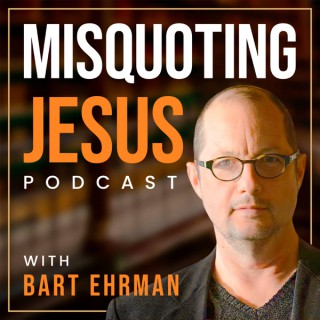
Those familiar with Dr. Bart Ehrman's career trajectory will know that he attended Moody Bible Institute, where he received his early training in textual criticism - but what is a "bible institute", exactly, and why do people attend them?

This edition of The Neil Haley Show opens with a Celebrity Interviews simulcast from the grotto and actor Nathan Gamble, whose new faith-based comedy Bad Counselors reaches theaters this week. Gamble described a career that ran the classic actor's arc in reverse. His second-ever audition landed him the role of Brad Pitt's son in Babel, a Best Picture nominee, at just seven years old, and steady work followed in The Mist, Marley & Me, The Dark Knight, and both Dolphin Tale films. He explained to Neil, himself a former professional wrestler, how completely his identity fused with the work, so that a stretch without booking left him feeling not like Nathan between jobs but Nathan the failed actor. By nineteen he was living alone in Los Angeles, isolated and at his lowest point, until a series of phone calls from the dean of a Ventura Bible college drew him to visit. The peace and joy he saw in those students, none of whom had the career he prized, unsettled and eventually changed him, and he stepped away from Hollywood for seven years.Gamble framed that stretch through the image of getting the Egypt out of your heart rather than merely leaving Egypt, using the time to loosen his ego's grip on acting until he could say honestly that he would be fine if he never acted again. He worked a long list of ordinary jobs, from newspaper writing to drywall and landscaping to teaching, and found real fulfillment in the conviction that his calling was larger than his career. When he returned, it was not to chase only faith-based films but to be a presence on any set, and he pointed to Kevin Sorbo, alongside whom he has filmed and whose son Braeden Neil has interviewed, as a model of an actor who works constantly without being boxed in. On Bad Counselors, directed by Chris Dowling, Gamble plays Dallas, the youth pastor who senses that two frat brothers posing as camp counselors to work off community service are frauds. He praised a cast that includes Matt Cornett, Ramon Reed, Brec Bassinger, McKaley Miller, Chris Klein, and Missi Pyle, and previewed his co-created project Bible College and the coming film Miracle on the Precipice. Asked the show's signature question, he named loving God and loving people, and being the best husband to his wife Hannah, as the things that matter most.Neil then welcomed author, podcaster, and life coach Jayson Blair for a Criminally Good with Sherrie and Jen simulcast, presented by Storehouse Media Group. Blair spoke candidly about the 2003 New York Times fabrication and plagiarism scandal that ended his journalism career, a bipolar diagnosis that followed, and the long road through the mental health field as a volunteer, clinician, and coach. That work, and a colleague's persistence, led to his podcast The Silver Linings Handbook, named for the film he loves and for his belief that hard-won lessons come through suffering. Blair described interviewing not as a checklist but as following where a guest's heart pulls, building trust so people can be vulnerable, and leaving in the pauses because a silence can reveal more than words. He reframed true crime as human stories about shared suffering, recalling Jill Harrington turning unfathomable loss into something like clay you can build with, and argued that true crime is less a gateway to sensationalism than a gateway to helping. He discussed his memoir Burning Down My Master's House, his Substacks The True Crime Times and The Center Holds, and his conviction that no one should be forgotten in a second death.The hour closes with a GildaGram simulcast where co-host Dr. Gilda Carle, author of Real Men Don't Go Woke, weighs how to handle online negativity and shares that six European countries are pulling tablets from classrooms and returning to printed books, citing drops in reading, memory, and concentration. Find Bad Counselors in theaters now, and Jayson Blair at silverliningshandbook.com.

Are you trying to make a decision about ministry but struggling to decide? Do you struggle with the paralysis of options before you? Or perhaps, are you wondering if Bible college is actually worth the investment? Or maybe are you longing to ‘break the bubble' of Sydney to see what opportunities there are for cross-cultural ministry across the globe? Rob Falls is a missionary in Vanuatu. CHAPTERS;00:00 — Intro & Rob's Ministry in Vanuatu 01:21 — Becoming a Christian Through Family & Church Community 02:43 — Growing a Heart for Global Mission 05:44 — Why Rob Chose a Ministry Apprenticeship 08:01 — Bible College, Mission & Preparing for Cross-Cultural Ministry 10:27 — The Trip to Vanuatu That Changed Everything 13:23 — Why Deep Theological Training Matters 17:30 — Language Learning & Cross-Cultural Ministry Challenges 19:20 — Teaching Ministry in One of the World's Most Linguistically Diverse Nations 21:31 — Poverty, Farming & Life at the Bible College 22:58 — Advice for Aspiring Missionaries 26:16 — When to Contact a Mission Agency 27:59 — Final Encouragement: “The Harvest Is Plentiful”

What actually gets a man into heaven — good works, or something else entirely? Jim Scudder traces his father's path from Bible college to church planter, and the one truth that secured his eternity.

I want to see more of the power of God on earth than any man has ever seen! Why? Because I don't want to limit God! I have a vision of a God who is so much bigger than you or I can ever imagine! The God of the Bible, has so much more power, is so much bigger, more glorious, more exciting than anything you could dream about! So, start dreaming, but then for God's sake stop dreaming and start to do something! God NEEDS men and women who want to see His power, His glory, who want to see God in ACTION! God needs YOU because He can only fulfil His plan through you or me. And if God does not do it through you, He will do it through somebody else. When I was a young man, I had to get a job in a London City bank to raise the money to go to Bible College. I was very impatient; I wanted to be an evangelist. I was so worried, I used to pray, “I know what You want me to do, but while I am working in this bank, please God, don't give my job to someone else!” Have you ever prayed like that? Jesus said, “You did not choose me, I chose you.” If you are a leader, a man or woman of God, it was not your choice. God chooses the people He knows and can trust, who will not quit when it gets tough, and who will not accept the way things are, but believe for the miraculous. If you know without any question that the call of God is on you, then God will do something dramatic in your life.
My Dad on the right, Rev Daniel R Duncan after my suspension from Bible College inspires my song Every Father Is A Son

Welcome back to another episode of the unSeminary podcast. Today we're joined by John Plake, Chief Innovation Officer and Editor-in-Chief of the State of the Bible research at the American Bible Society. With decades of experience as a pastor, missionary, professor, and researcher, John brings a unique perspective on how people are actually engaging with Scripture and what we should do about it. The “movable middle” is growing. // One of the most significant insights from recent research is the rise of what John calls the “movable middle”—millions of people who are open to the Bible but not yet engaged with it. This group has grown by approximately nine million people in recent years. They are curious, interested, and even positive toward Scripture, but they lack the tools, confidence, or guidance to engage it meaningfully. This represents a massive opportunity for churches willing to step in and help. People want a guide. // Through focus groups and research, John discovered that many people in the movable middle feel intimidated by the Bible. They struggle with language, context, and navigation. But perhaps most striking is they want help. Contrary to what some leaders might assume, they are not rejecting the church as a guide. In fact, many say, “If we can't trust the church to help us understand the Bible, what good is it?” This creates a clear invitation for churches to step into a more relational, guiding role in discipleship. A surprising discipleship gap. // One of the most sobering findings is that nearly half of weekly church attenders are not regularly engaging Scripture on their own. While churches invest heavily in preaching and programming, many people are not developing personal habits of Bible engagement. John suggests that churches often focus on delivering content rather than equipping people to engage Scripture themselves. The result is a gap between what happens on Sunday and what happens in everyday life. From teaching to equipping. // If churches want to close that gap, they must shift from being primarily content providers to equipping environments. This means helping people develop the skills, habits, and confidence to read and apply Scripture on their own. It also requires understanding the real barriers people face, like time constraints, confusion, or lack of community support, and addressing those barriers with practical solutions. A new tool for churches. // To help leaders take action, the American Bible Society has developed the “Next Step for Church” assessment. This free tool allows churches to measure spiritual health, Bible engagement, and key leadership behaviors within their congregation. Within a few weeks, leaders receive a detailed, data-driven report highlighting strengths, challenges, and suggested next steps. Data that leads to discipleship. // John emphasizes that data is not an end in itself; it's a tool for better shepherding. By listening to their congregation at scale, leaders can identify patterns, confirm instincts, and prioritize what matters most. The assessment surfaces both what's working and where growth is needed, giving churches a clear path forward. It also connects individuals to personalized Scripture engagement resources, helping them take their next step spiritually. Why Scripture engagement matters most. // Nothing has a greater impact on spiritual growth than a person's relationship with the Bible. In fact, Scripture engagement accounts for a significant portion of overall spiritual health. When people consistently engage with God's Word, transformation follows—affecting beliefs, behaviors, and relationships. Signs of hope for the future. // Despite broader cultural challenges, John sees encouraging trends, especially among younger generations. Millennials and Gen Z show increasing openness to Scripture, even if they are still exploring. While overall trends may appear flat, meaningful change is happening beneath the surface. For churches willing to engage this moment, there is real opportunity for impact. To explore the research further or access the free church assessment, visit church.nextstep.bible and begin discovering how your church can better equip people to engage Scripture every day. Thank You for Tuning In! There are a lot of podcasts you could be tuning into today, but you chose unSeminary, and I'm grateful for that. If you enjoyed today's show, please share it by using the social media buttons you see at the left hand side of this page. Also, kindly consider taking the 60-seconds it takes to leave an honest review and rating for the podcast on iTunes, they're extremely helpful when it comes to the ranking of the show and you can bet that I read every single one of them personally! Lastly, don't forget to subscribe to the podcast on iTunes, to get automatic updates every time a new episode goes live! Thank You to This Episode’s Sponsor: Risepointe Do you feel like your church’s or school's facility could be preventing growth? Are you frustrated or possibly overwhelmed at the thought of a complicated or costly building project? Are the limitations of your building becoming obstacles in the path of expanding your ministry? Have you ever felt that you could reach more people if only the facility was better suited to the community’s needs? Well, the team over at Risepointe can help! As former ministry staff and church leaders, they understand how to prioritize and help lead you to a place where the building is a ministry multiplier. Your mission should not be held back by your building. Their team of architects, interior designers and project managers have the professional experience to incorporate creative design solutions to help move YOUR mission forward. Check them out at risepointe.com and while you’re there, schedule a FREE call to explore possibilities for your needs, vision and future…Risepointe believes that God still uses spaces…and they're here to help. Episode Transcript Rich Birch — Hey friends, welcome to the unSeminary podcast. I am so glad that you have decided to tune in today. This is one of those episodes that there’s a great resource in it that going to want to make sure you engage with. There’s super helpful content. Plus it’s about an area that I know so many of us are thinking about, we’re wondering about, we’re asking questions about. Rich Birch — So super excited to have John Plake with us today. He is the chief innovator ah innovation officer and editor-in-chief of the State of the Bible Research Series, which comes from the American Bible Society. And they’re on a mission to make the Bible available to every person in a language and format each can understand and afford so that all may experience its life-changing message. ABS has really a whole bunch of different tools and approaches, and we’re excited kind of expose a little bit more about that today. John has been in ministry over 30 years. We’ll just call it over 30 years. And it served as a pastor, missionary, professor, researcher. John, welcome to the show. So glad you’re here.John Plake — Thanks so much for having me today. It’s great to be with you.Rich Birch — Why don’t you fill in the picture a little bit? Tell us a little bit about your background. You know, what brings you to your current work?John Plake — Yeah. Closer to 40 years now. Rich Birch — Nice. Yeah, yeah. That’s great.John Plake — It’s a little uncomfortable to talk about that.Rich Birch — That’s great.John Plake — Yeah. You know, I start out like a lot of people in ministry. I grew up in a home that ministry was central. Actually, both my grandfathers were ministers. My father was a minister. Ministry is kind of the family business in a way, but I really did sense a direction from God when I was about 15 years old to to pursue full-time ministry.John Plake — There was some detail around that. Ended up going to Bible college and and then started what turned out to be about nine years of full-time pastoral service. And I hadn’t been in that for very long before I realized that everything I learned in Bible College was preparing me to serve a generation that no longer existed in a culture that was gone. John Plake — And I thought, my goodness, I know God’s word pretty well. And mean, I’m a lifelong learner of God’s word. I love the Bible. And yet, didn’t really know culture very well. And I didn’t develop those tools until just years and years of practice, some missionary service, wonderful teachers at at Wheaton College and graduate school and and just a lifelong journey of learning.John Plake — So at American Bible Society, when I got here, the State of the Bible, program or this research project was already underway. And we’d been helped out by the Barna Group, which does some wonderful foundational work. And eventually it just kind of grew up and it got to a place where we had an internal team that was running it ourselves, now in collaboration with the National Opinion Research Council or NORC at the University of Chicago. We just do, I think, what is the largest ongoing study of Americans’ relationship with the Bible and faith and the church. And we get to talk about it all the time. Rich Birch — Yeah, I love it.John Plake — So, I mean, this is the best job in the world.Rich Birch — Yeah, that’s so good. It’s it’s great research, something that I think should be on the kind of list of things that we need to be paying attention to. It’s been a gift to the church for so long and something that we should continue to to pay attention through. Now, let’s talk about you specifically. You spent three plus decades. I didn’t want to say almost 40. You know, I’m not saying that. I’m not saying that. I could say that, you know, a couple years ago, I clicked across one of those numbers with a zero on the end as my birthday. And ever since then, I’m a little sensitive about the the age thing. Rich Birch — So anyways, As a ministry, missionary professor, researcher, you’ve done a lot. How does wearing all of those hats, what do you what does that bring to you as you come to the data? How does that impact you as you think about really the state of the Bible research?John Plake — Yeah, you know, I think research can be dull. You know, it can sound like it’s all about writing questions or it’s all statistics and numbers. But for me, the research is all about the people. Rich Birch — So true.John Plake — It’s all about the people in our communities and in our churches that we’re trying to understand better so we can serve them well with the gospel. I, for years, I’ve used the analogy that that being in gospel ministry is like being a human bridge across a river. I grew up not very far from the Mississippi River in the St. Louis area, and there was a big 100-year flood when I was early on in ministry. And I mean, none of the bridges worked anymore. You couldn’t get from one side to the other.John Plake — And I thought, you know, that’s a tragedy that I encountered sometimes in ministry where maybe I was deeply rooted in one bank of the river, the text, but I wasn’t necessarily deeply rooted in the other bank of the river, which was the context.John Plake — And it’s this lived experience of the people that I was I was serving. And that I wanted to serve in my community, but I needed to understand them better. So I wasn’t just spouting you know Aristotelian logic to them. Or I wasn’t just coming at them with the pat answers that I’d learned. Like I’d never heard anybody in my life walk into my office and say, Pastor John, you got to tell me, what can you describe hamartiology to me from. You know like I had to learn that in school, but that’s not what people struggle with. Rich Birch — That’s so true. Yeah. John Plake — They had totally different questions and I needed to love them and honor them enough to understand their questions and answer them responsibly and reliably from the pages of scripture.Rich Birch — Yeah, love it. Okay, well, we’re going to dig into a little bit of just a couple of the findings just to kind of, we’re trying to whet your appetite, friends, to take steps towards this. So the 2025 data showed, and we’ve seen this, a real bump in Bible engagement, particularly among millennials and men. If I’m reading it correctly, though, we saw 2026, a shift happen, maybe back down. And so what’s going on? Actually, I heard another sociologist in a kind of a related field that was about church attendance talked about the dead cat bounce, that it was like, you know, which I thought, oh, that’s a, but there’s a similarity going on here. Pull this, this finding apart. Help us understand this.John Plake — Yeah, apologies to cat lovers out there.Rich Birch — Yes, exactly.John Plake — We were we were hoping, you know, I think we were really hoping. We looked at 2025. We saw that men in particular were leaning into the Bible in ways we hadn’t seen recently. Millennials doing the same thing. There there were some interesting numbers in 2025. And so when the 2026 numbers came to my desk in late January, I thought, I hope we’re extending I hope it’s going to be a trend. But it wasn’t. It was a blip.John Plake — And there’s more to it, though, than just the fact that scripture engagement didn’t go up. It also didn’t go down. And the level of people in America who are Bible disengaged, meaning they never pick up the Bible on purpose at all, that actually didn’t go up either. What grew was this kind of curious explorer group in the middle that we call the movable middle. And over the last two years, it’s grown by 9 million American adults. Rich Birch — Wow.John Plake — And so what we do see is there’s there’s openness to the Bible. There’s experimentation with the Bible. But people are jumping in and they’re trying it and they’re not being able to get hold of it. And I think that’s largely because of us.John Plake — Because Bible people who are around them aren’t saying, please come do this with me. Let me help you. Let me honor you enough to to respect your questions, to ask what you’re dealing with, and help you explore those issues through the pages of Scripture.Rich Birch — I love that movable middle, man, that feels like the kind of group we want to connect with and reach out to in our community. Any other, when you, when you’ve been thinking about this movable middle, what are some other kind of characteristics of those people or other things that, you know, are kind of telltale signs of this group as we’re thinking about them as it, as it pertains to Bible engagement?John Plake — Yeah, they’re an amazing group, and we’re going talking more about them all year, but they are probably my favorite subject in America. There are 74 million American adults that are in the movable middle.Rich Birch — Wow.John Plake — 74 million of our neighbors who are like…Rich Birch — Wow.John Plake — …and here’s what they tend to say: They love the Bible. They think it’s a great idea. But if you handed them a Bible, they don’t know how to find what they’re looking for. They don’t know how to navigate it. They get confused by the language in in Scripture.John Plake — I remember doing a a focus group with a bunch of people in the movable middle. I was in Chicago. it was an area I was really familiar with. I used to pastor in that area. And we got them talking about their experience with the Bible. And we said, hey, does anything ever stop you or kind of you know make you check out because you’re struggling with what’s going on? John Plake — And one young lady at the table said, yeah, you know the language of the Bible is really really hard for me to understand. It’s it’s a really old book. It uses expressions I don’t understand. And a gentleman sitting across the table from her just kind of chuckled and said, yeah, what the hell’s a mustard seed? And everybody laughed.John Plake — I was behind the glass and I just about fell out of my chair because they didn’t teach me to talk like that in a Assemblies of God seminary.Rich Birch — Yes.John Plake —Things like that, you know, that’s just not the way we roll.Rich Birch — Yeah, yeah. Yes.John Plake — But it was so authentic and he wasn’t being mean.Rich Birch — No.John Plake — He was just saying, boy, I don’t I don’t get it. And then they said, you know, we really want a guide. Rich Birch — That’s good.John Plake — And so we pushed on that a little bit. At the time, there were some clergy abuse scandals that actually there were billboards up in Chicago about clergy abuse scandals that all of us lamented. And so we’re like, OK, listen, do you trust the church to be your guide? Because ee saw these billboards, you know, and it’s your city. And so what what do you think?John Plake — And they said, well, of course we do. I mean, it’s terrible when people in the church abuse their position and abuse others. And that’s not what they’re supposed to do. But if we can’t trust the church to help us understand the Bible, what good are they, really? And so, yes, we’re looking to you, church, to help us connect more deeply with the Bible, understand what it meant to the original hearers and readers and how we apply it to our lives today.Rich Birch — Okay, that’s yeah, that’s really cool. I look forward to hearing more about the movable middle in this coming year. Another thing that jumped out to me, which I feel like, man, I’ve seen this in my church. This is like you you named a group that I see, but it’s surprising, at least it’s surprising on its face. So nearly half of weekly church attenders, weekly church attenders, which is, that’s like really engaged, you know, are not regularly engaging, engaging scripture on their own.Rich Birch — Man, what, so what should we do about that? That’s an interesting, how does, how should that impact our discipleship strategy? What are you encouraging us to be thinking about? And these people that are with us all the time, but they’re not engaged with scripture.John Plake — Well, I think the first thing to do is to just recognize it. Rich Birch — Right.John Plake — You know, a lot of pastors that I’ve talked to, when we talk about scripture engagement, they tell me things like this: Everything we do is scripture engagement. I spend my whole week preparing a scriptural message. I’m, you know, we’re preparing small group curriculum and Sunday school curriculum and all of this stuff. It’s all about the, everything we do is about the Bible. John Plake — Well, okay. But I had a I had a young youth pastor come to me not that long ago and he said, John, look, you were me once a few years ago. If you knew then what you know now, what would you do differently?John Plake — And the answer is I would do everything differently, than the way I ought to do it. Because what, in my tradition, there was a lot of emphasis on the preaching event, and I put a lot of effort into those communication events, but what I didn’t put as much effort into is empowering people in my church to do what I was doing, which was dig into scripture, understand it for themselves, giving them the tools to do that.John Plake — And then in May, we’re going to be releasing a chapter, just in a few few days now, we’re going to be releasing a chapter all about parents. And one of the startling things is the time pressure that moms are under. I mean, it’s incredible. And so we need to understand where they’re coming from and where they have barriers, but also have some compassion on them and help to support them when they’re really facing struggles. Like they don’t have enough time. They don’t have the resources or the community coming around them to help them to engage God’s word ah more fulsomely, more transformatively.John Plake — We know how to do this stuff, but we’re not connecting the dots to everybody that’s coming to hear us talk every…Rich Birch — That’s good. That’s good. I know I’ve in my seat as an XP, um you know, I’ve overseen a lot of what we do on the programming side and what we do on the weekends. And I’ve, you know, it’s like, that i don’t think I’ve ever said this publicly. It’s like the kind of behind the scenes conversation. I’ve sometimes wondered, I’ve said, you know, like, what we do on the weekend to try to make the Bible understandable is so completely different than Tuesday morning in someone’s life. Rich Birch — Like, we pull out all the stops to make it interesting. We get like world class communicators, incredible graphics, you know, emotional music, all of this to try to… But then the question is, okay, so now on Tuesday morning when you’re tired and you haven’t had your coffee yet and you’re just about to go read scripture, man, like that feels like a long ways away. There’s like a gap there that I sometimes wonder maybe we’re making it worse. You know. Maybe we’re making it harder. I said that. You didn’t say that. Rich Birch — So maybe there’s pastors that are listening here and they read this kind of report. They read this kind of finding and they’re like, hey, that’s interesting. But like, how what do I do in my church specifically? So you know we want we don’t want to just leave people with a tough stat.Rich Birch — I think we see that in our church. There’s people in our church that are here all the time. They’re not that engaged. But you’ve actually developed a new tool or ABS has developed a new tool to help us think through that. Why don’t you walk us through it? Tell us a little bit about it. How’s it work? Talk us how it can help us.John Plake — Yeah, so recently we developed two tools that kind of work together. One of them you can find on the internet at nextstep.bible. And it’s just for anybody who’s like, hey, I’m on a spiritual journey. I’m kind of stuck. I don’t really know what to do next. Maybe you’re just getting started exploring what it means to be a Christian. Maybe you’re Jesus’ little brother or sister. Wherever you are in that journey, there’s always a next step for us.John Plake — And so what we’ve done is analyzed along about a million spiritual life surveys. Rich Birch — Wow.John Plake — And from this huge quantity of data, we’ve learned that people are at different places in that journey. They’re at different points on the map. And we want to make sure that they’re equipped to have the right thing at the right time. I think currently there are 21,000 scripture engagement resources available there.Rich Birch — Wow.John Plake — They’re absolutely free. They’re in English, Spanish, and French. So go check it out, nextstep.bible.John Plake — But if you’re a pastor or you’re a church leader, you’re probably wondering, well, what’s going on in my church, right? So I see all the national data, but I think our tendency is to say, well, we’re the exception, right?Rich Birch — So true. Well, that’s not our people. John Plake — I know I know everybody else is struggling, but we’re doing okay.Rich Birch — Yes.John Plake — And and so it’s good to check our assumptions a little bit. They used to say a really sad statistic that 10 o’clock on Sunday morning was the most segregated hour in America, which makes me sad. What makes me sad also is that 12 o’clock noon in America is the most dishonest hour in America. That’s the hour when pastors tend to start greeting their people after the church service closes and they hear all these comments: oh, Pastor, that was the best sermon I’ve ever heard. And it wasn’t. It just wasn’t. All right, let’s face it.John Plake — There’s somebody out there who preaches better than you do and better than I do. They’re available on YouTube. People don’t need you to be the best Bible teacher in the world. They need you to be the best pastor for them. Rich Birch — That’s good.John Plake — And the tools that are all about focusing on their relationship with the Bible, their holistic spiritual formation, and our leadership behaviors. And so for that, we built the Next Step for Church Assessment.John Plake — It’s actually standing on the foundation or built on the engine block, if you want a different metaphor, of the old reveal research that the Willow Creek Association had come out with. It’s no longer available. And we were able to acquire all of their historical learnings, but also add in things like human flourishing and e-pastoral leadership behaviors that lead to churches really being missionally effective and strong. Excellent stuff on Bible engagement and spiritual formation. John Plake — So the the big challenge we had, I was talking with Dr. Ed Stetzer about this because he was at LifeWay Research when the Transformational Church Assessment was being built. And it was always hard because analyzing this kind of data required a lot of human intervention. It’s very expensive to do. It’s very complicated to deliver. And even a small cost can be a barrier for churches that have strained budgets. It doesn’t matter if you’re a church of, you know, 2,500 25,000 or 250. There’s always more places to put your money than there are dollars that are available to do it.John Plake — And so at American Bible Society, we said, you know what, as a gift to the church, because we love the church, we need to make it completely free. And so you can go to church.nextstep.bible and you could sign up today. Literally, we’re recording this on a on a Thursday. You could go there today and by Sunday, you could be launching your survey. Two weeks later, you’d automatically have results in your own online dashboard. You’d get key highlights emailed to you. There’s a place for custom questions. There’s just all kinds of really, really rich information.Rich Birch — So good.John Plake — And it it doesn’t take the place of the kind of learning that you have as a pastor. You learn deeply in relationship with others. You’re observing what’s going on. You have a team that’s around you. But what it does is it provides this valid, reliable sift and sort function. It’s based on well, I don’t know even know how many, well over 3000 churches, well over half a million survey responses went into building this and making it a tool that that is a good benchmark for you to say, you know what, if we want to move from where we are today to where God is calling us, here are the things we need to focus on.Rich Birch — It’s so good. And friends, I want to encourage you to to go there. Just church.nextstep.bible. I know many of us have a heart for saying, listen, we want to measure more than just nickels and noses. The number of people that show up and revenue that comes in. And this a great way to kind of inject at something that’s at the core of what we’re supposed to be doing as a church. So why don’t we just give a little bit more detail?Rich Birch — What is it? You know, what’s it actually measuring? How is it? You know, how could it be helpful? How how could it kind of dovetail with some of the things we’re already tracking? Maybe give us, you know, what kind of insights are we going to gain from this if we if we put our people through this?John Plake — Yeah, maybe it’s worthwhile to just back up and say it’s based on a congregational assessment. So really this kind of work is all about just listening to your congregation at scale. So if you have 25 people coming to church, you can probably have this conversation with them if you know how to ask the right questions. Rich Birch — Right.John Plake — You can go to the website. You’re like, what’s in the survey? There’s a button you can click. You can read the whole survey. It’s fine. We’re not going to try and surprise you with anything. But really simple stuff. How’s your relationship with Jesus? How often are you interacting with Scripture? What difference is that making in your life? We ask the standard Harvard human flourishing questions. We ask about um how the pastoral team or the senior pastor, him or herself, is doing at actually modeling Christlike leadership for you. Rich Birch — It’s so good.John Plake — And all of that reporting then gets brought into a database. It’s all anonymous. So individuals don’t, they don’t have to tell you who they are. They can’t tell you who they are other than by characteristics. And you’re going to get this really good, robust picture of what’s going on at the church. John Plake — Now, what does it take for somebody to do that? It takes about 20 minutes of their time, and time is expensive, right? People always have too much to do. So in return for that investment, at the end of their survey experience, they will have already told us everything we need to know to match them to great resources at nextstep.bible.John Plake — And with their permission, not without it, they can click a button, pass that data over to the individual nextstep.bible platform. They can create an account and right away, they’re going to be finding things like YouVersion Bible reading plans that are just for them.John Plake — If you’ve got people in your church and they’re outliers, they’re they’re way more spiritually advanced than everybody else, or they’re just getting started and everybody else is way ahead of them, these kinds of tools create bespoke pathways for them so they know what to do next. All the while, the church leadership can sit back and say, okay, here’s our results. And as a team, now what do we need to do to serve the whole congregation well?Rich Birch — I love this. You know, this is what incredible tool that you’ve put together here for our churches to wrestle through and to, you know, not only help us as a church as we’re thinking about these issues, but then help individuals in our church. What what would be some of the ways that churches might use the data that’s generated to impact what we’re doing in our programming? How how could we use this to improve what we’re doing?John Plake — Sure. There are really three things we want everybody to do. First, just discover what’s going on. Just just check your assumptions at the door and and say, okay, what do the data tell us about what’s going on in our church life and in our people’s lives? That’s the first thing.John Plake — Second thing is it’s going to surface for you the top three things that you’re doing great. And it’s going to give them to you in the report. And you need to throw a party. Like there are people who make these things happen for you. No pastor is doing this all by themselves. And so plan a party, celebrate what’s going well.John Plake — The third thing it’s going to do is it’s going to give you suggestions about, okay, here’s where your congregation is today. It won’t surprise you, but it might inform you. I’ve never seen a pastor look at the report and go, ah you guys got it wrong. Rich Birch — Sure, right.John Plake — Usually they they see the report and they go, yeah, okay, yeah, you got me.Rich Birch — Yeah. Confirmed some hunches I’ve had. Yeah. Yeah.John Plake — Right? But we don’t we don’t have time. We don’t have the resources. We don’t have the expertise to be able to sit down and and kind of scientifically walk through this process. So we do that for you. We deliver the report. And then we’re going to give you two key action items that we think churches like yours in a similar place have done that have helped move them toward spiritual health and missional effectiveness.John Plake — And that’s really what it’s all about. We want your congregation to be spiritually healthy. We want your your church as a whole to be missionally effective. And when that happens, often there’s numerical growth. Often there’s financial growth. But there’s certainly more missional impact that’s coming through your congregation and its work.Rich Birch — Yeah, that’s cool. So if I’m like a church of a thousand people, let’s say, and just round number to picking out of the sky, how how what kind of percentage of my congregation would I need to take this to give me a reasonable, you know, statistical, you know, feeling good about the data for it? What what kind of number um should I be thinking about?John Plake — Well, the first thing is we’ve built in a tool that will tell you how to get to a margin of error of plus or minus 3%. Rich Birch — Love it.John Plake — And that does vary depending on the adult attendance that you have. So let’s say you’ve a thousand adults. And by adults, I mean anybody in high school or older can probably take this survey. Rich Birch — Yep.John Plake — And you can cut the data like by gender or by age. All of that live filtering is in the online platform. Rich Birch — Oh, that’s so good.John Plake — So if you’re the you’re the youth pastor and you’re like, well, wait, tell me about the young people that took the survey. You can just look right at them and compare them to the rest of the congregation, which I bet will be enlightening. But nevertheless, how many do you need if you’re a church of 1,000, it’s about 275.Rich Birch — Okay.John Plake — If it’s a smaller church than that, then you’re still going to need a pretty significant percentage. So if I roll that all the way down to a church of 100, you need 80.Rich Birch — Okay.John Plake — And if you roll that up to a church of 5,000, well, you don’t need that many more than 275.Rich Birch — Interesting.John Plake — So you’re going to report that out to you. It’s very, very doable. And, you know, I’ve pastored at large churches and I pastored a small church. And I’ll tell you, when I pastored a church of under 100, I could have gotten a census of the people, like everybody, to do a survey like this. They would have been glad to tell me these things. Rich Birch — Right.John Plake — And it’s not that I couldn’t have had a conversation one-on-one with most of the adults in the congregation. It was something different in that case. I actually didn’t know what to ask. I used to run into this when I was a campus pastor at a Christian university. And I would have young people walk into my office and I was like, I know I should be able to help them, but the challenge they’re facing is different than anything I’m familiar with. I don’t have any analog for this in my personal experience. And so this sort of takes the mystery away. We don’t ask fluffy questions. We ask research proven questions that are going to give you the information you really need so you can take action.Rich Birch — That’s amazing. That’s think this is such a great tool for people. I can see how, you know, it’d be so helpful for folks that are listening in to, you know, might be be able to plug in grab this experience for their people, help their church, help the folks that are attending. That’s, that’s incredible.Rich Birch — So, you know, you’ve picked an interesting vocation to be connected with the American Bible Society. And because, you know, this is such a critical and important part of developing people’s relationship, obviously, with Jesus; its core to all of it. And we have seen a long historical downward trend, and you’re pushing against that, which is amazing. But what gives you hope in the middle of all of that? What would it when you look at the church around you know, the country, where do you see flashes of just good things going on that are like, you know, when it comes to the relationship with scripture that even, you know, even when we see maybe the overall numbers are not as great as we want them to be, what are some kind of flashes of hope we should, that we could encourage folks with today?John Plake — Well, I’d like to maybe point to just three things that leap to mind. Rich Birch — Yep.John Plake — The first of them is I never talk to anybody in the church who says the Bible is a bad idea. Rich Birch — Sure.John Plake — Everybody likes the Bible. We’re all trying to figure out how to communicate its message better, to understand it more deeply. It’s transforming our lives, and we want to be able to share it with others. John Plake — And that’s great because, number two, there’s nothing that makes a bigger difference in somebody’s spiritual life than their relationship with the Bible. I mean, absolutely nothing. And I’m saying this as a researcher. I’ve tested it. I can’t find anything that makes a bigger difference. John Plake — In fact, when we looked at Christian college and university students, 60% of their overall spiritual health across lots of domains—beliefs, practice, putting faith into action, loving God, loving others, all these things, 60% of the variance in their spiritual health is solely accounted for by their relationship with the Bible.John Plake — So if we can help people have a dynamic relationship with scripture, we win. That’s all there is to it. It’s just that simple. And so that is really encouraging.John Plake — And then the third thing, ah the third thing is how I say this nicely? I'm I’m from Gen X and so to my Baby Boomer friends, I’m sorry, but you guys don’t have the influence that you once did.Rich Birch — Yeah, it’s true.John Plake — And that’s a good thing because there’s new openness among Millennials, and Gen Z and even younger Gen X um that we just don’t see among Baby Boomers. It’s like Baby Boomers made up their minds in the 60s and early 70s and said, this is what I believe and I’m not changing. And they haven’t. John Plake — That’s not to say that someone who’s a Baby Boomer can’t have a a spiritual experience and transformational experience. It does happen. But on the population level, like when we looked at the Bay Area of San Francisco, if you look at the scripture engagement, church engagement, love God, love others data in the Bay Area, it looks like what you’d expect, until you strip out the Baby Boomers. And then suddenly it looks better than every place else in America.John Plake — You’re like, what’s going on? Well, looks like all the unreconstructed hippies that moved to the Bay Area are actually holding a lid on the population numbers. And when you remove that and you go, oh, wait a minute, let me look under the headline and say what’s happening. There’s more going on than is easy to see. And I think this happens in big national trends.John Plake — Oh, is Scripture engagement up or down? Is you know church attendance up or down? Whats what’s going… big national trends. Yeah, okay, those are helpful, and we want those to change. But what’s changing first is below the fold. Things in Gen Z, things among Millennials, things in young men, those things are starting to change, and I think those are the first glimmerings that God is at work in a new way in America, and I can’t wait to see it.Rich Birch — Yeah, that’s that’s a great word. And that lines up with what we’re seeing, even just experientially talking to churches across the country. You know we’re so we’re seeing there is something going on with younger generations, which is great to see. I was I was born in 1974, the lowest birth rate year of the 20th century. I am classic Gen X. Like you know I am like statistic I’m the statistical average Gen X and has spent a lot of my time trying to hand stuff from the Boomers to the Millennials. And, yeah, there’s lots of encouraging news there, particularly with the younger generations. Rich Birch — I also want to speak to on the the work I’ve done in the church growth stuff that I’ve done and coaching I’ve done with churches, one of the things that’s just undeniable is churches that have a high view of scripture, that is, they’re trying to get people engaged with scripture. They they talk about it like it’s actually true. How do we say don’t know what’s the best way to talk about that? Those are the churches that are prevailing, and that actually works out statistically. You see that time and again. Talk to us about that dynamic, which is kind of co-related to the things we’re talking about today. From your perspective in the stats and all that, how how have you seen that work out as you’ve looked at churches across the country?John Plake — Yeah, I think you’re exactly right. The churches that are the healthiest in America, that are growing, that where where people are spiritually healthy, have a really dynamic relationship with Scripture. And it kind of it cuts across tradition. Rich Birch — Yep.John Plake — There are some traditional things going on. I was listening to Justin Brierley and his surprising Rebirth of Belief in God podcast, and it was from last season, and he he had someone on, he was interviewing, and what she was saying was there are the parts of the church that seem to be thriving are kind of the, the the older, the ancientness traditions, whether it’s Catholic or Orthodox, that what she called somewhat irreverently, the smells and bells side of of the church.Rich Birch — Sure, sure.John Plake — And on the other side, kind of my end of the swimming pool, I’m, from the Assemblies of God, so the Pentecostal and Charismatic side. And she said, what’s going on is that both ends of that spectrum are totalizing. John Plake — They’re saying, you know what, the the Bible places certain expectations and demands on people. Christ places certain expectations and demands on people. And these parts of the church aren’t sort of shy about talking about that from a biblical perspective. She said, what’s what’s dying is that part in the middle where we’ve reduced church to a PowerPoint and you know an Excel spreadsheet. And she said, that part of the church seems to be dying and no one’s coming to the funeral. Rich Birch — That’s good. John Plake — And I thought, you know okay, right?Rich Birch — Yeah. Yeah, that’s good.John Plake — So if we revitalize our relationship with God through scripture, there’s a next step for every church. It doesn’t matter what, you know whether you’re mainline or evangelical or, you know, Pentecostal or Orthodox or whatever it is, but but reviving our relationship with God through Scripture is really where it’s at.Rich Birch — That’s so good. i Yeah, I call that middle group the just because it rhymes doesn’t mean it’s true group. You know, like the, you know, were just like, it’s all my thoughts. No one wants to come and find us. They want to find God ultimately. Well, I don’t want to pick any fights with anybody that’s listening in, but I really appreciate today’s conversation, John. This has been great. So we want to send people to church.nextstep.bible.Rich Birch — The the promise of in two weeks, your church could have a comprehensive report on spiritual health, on where your church is, spiritual health is at, that’s a huge promise. And so again, this is go to church.nextstep.bible. Any kind of final words as we wrap up today’s episode?John Plake — You know, you might be familiar with Cally Parkinson. Cally was the co-author of all of the Reveal books, every single one of them. She was head of communications for the Willow Creek Association when they were running this. She’s probably had more conversations with pastors and church leaders about survey results like this than anybody I know, maybe than anybody alive. And Cally likes this so much. She said, John, I want to have a personal consultation with the first hundred churches that go through this.John Plake — And so if you want to be in that group, she’s going to offer to spend an hour with you and just walk through your results and help explain it. There are videos throughout the platform that will explain it as well. And you can’t beat talking to Cally. She loves pastors. She says you’re the salt of the earth. And she just really wants to serve you because the work that you do to save people is just so valuable to her. So anyway, just wanted to offer that. And I know you’d probably love to meet Cally.Rich Birch — Yeah, that’s fantastic. Well, appreciate you being here today. Thanks for the great work you do at the American Bible Society. John, appreciate you being on today. Thank you.John Plake — Thank you.

Get your copy of Paul for the World by Dr. Nijay Gupta here: https://bit.ly/3PyGddRDr. John Whittaker is a former pastor, church planter, and Bible College professor, who now teaches the Bible through his amazing podcast The Listeners Commentary (listenerscommentary.com), which provides clear, down-to-earth teaching through the books of the New Testament. John has recently completed teaching through the entire New Testament for his podcast and has moved on to the Old Testament. See Privacy Policy at https://art19.com/privacy and California Privacy Notice at https://art19.com/privacy#do-not-sell-my-info.

Powerful things are happening in Germany!Healing events both in person and livestreamed are bringing hope to many, with testimonies of healing and freedom from fear. Charis Bible College continues to grow with new translations, an expanding prayer helpline, and exciting plans to extend Bible College into Austria and Hamburg.Mission trips to South Africa and Poland are also reaching lives beyond the borders. Watch the latest Germany update and be inspired!

Send us Fan MailOriginally released January 15, 2022. In 1988, two attractive young students attending a prominent suburban Chicago religious school disappeared, setting off a frenzied search that lasted months before the truth about what happened to them was revealed.Want to start a podcast of your own? Do it through Buzzsprout like I did and you can get a $20 gift card!https://www.buzzsprout.com/?referrer_id=968401Show some love for the podcast for the cost of a cup of coffee and help offset production costs:https://www.buymeacoffee.com/chicagohistoryUp your cocktail game with Portland craft syrups!https://portlandsyrups.com/collections/all?sca_ref=1270971.MO4APpJH1kNeed music for YOUR projects? Audiio has got you covered. Try a free trial here:https://audiio.com/pricing?oid=1&affid=481Amazon Affiliate Links (anything you buy - not just this stuff - through these links helps benefit the show at no additional cost to you):Chicago History:City of the Century: The Epic of Chicago and the Making of America by Donald L. Millerhttps://amzn.to/33CKbtrHistory Lover's Guide To Chicago, A by Greg Borzohttps://amzn.to/3K6weFbChicago Flashback: The People and Events That Shaped A City's History by Chicago Tribunehttps://amzn.to/31ZZTP7History of Chicago: A Captivating Guide To The People and Events that Shaped the Windy City's Historyhttps://amzn.to/3HJdERo (or FREE with Kindle Unlimited)Join Kindle Unlimited here: https://amzn.to/2WsP1GHSo many Chicago-related movies and documentaries can been found here:https://amzn.to/38F6hehLooking to get out and explore Chicago? Here are a few ideas:Chicago Movie Tourschicagomovietours.comChicago History Podcast Clothing, Mugs, Totes, & More (your purchase helps support the podcast):https://www.teepublic.com/user/chicago-history-podcasthttps://teespring.com/stores/chicago-history-pod Support the show

Why does our church invest so much energy, time, and money to operate a Bible College and Christian School? What is the Biblical model for education? What are secular schools, colleges, and universities teaching our young people? Why are Bible Colleges closing in record numbers? In this message, Pastor Jim Scudder will be laying out God's instruction and mandate on Christian education.
Not every funeral is great. Sometimes they go too long, sometimes the gospel is not clear, sometimes the content overlaps. How do you create a funeral service that God would be pleased with, connects well with people, honours the deceased and serves the bereaved?David Cook is former Principal of Sydney Missionary and Bible College,Sandy Grant is dean of St Andrew's Cathedral Sydney,and Gary Coleman is former chaplain to the Motor Racing Industry. The Church Cohttp://www.thechurchco.com is a website and app platform built specifically for churches. Advertise on The Pastor's HeartTo advertise on The Pastor's Heart go to thepastorsheart.net/sponsorSupport the show

To join Across the Divide's book club, become part of our Patreon community at https://www.patreon.com/c/AcrosstheDivide In this conversation, Jen Maidrand sits down with Mercy Aiken, a storyteller and advocate whose work serves as a vital bridge between the West and the Holy Land. Mercy shares the deeply moving journey of co-authoring Yet in the Dark Streets Shining : A Palestinian Story of Hope and Resilience in Bethlehem with Bishara Awad, the founder of Bethlehem Bible College.Through the lens of Bishara's life—marked by displacement, faith, and an unwavering commitment to education—Mercy discusses the unique challenges faced by Palestinian Christians and the profound impact of the Bible College on the local community. We explore the weight of telling such a significant story, the shifts in perspective since October 7th, and Mercy's enduring hope for a future rooted in empathy rather than fear.Mercy Aiken is a cross-cultural advocate, storyteller, and peacebuilder dedicated to fostering empathy and understanding in the Middle East. With years of experience living and working in Palestine and Israel, she serves as a bridge-builder between Eastern Christians, Muslims, and Jews. Mercy is the co-author of Yet in the Dark Streets Shining, the memoir of Bishara Awad, which chronicles the little-known history of Palestinian Christians through the resilience of one family.Beyond her writing, Mercy is a seasoned pilgrimage leader, organizing transformative journeys to the Holy Land designed to move participants toward a more embodied and curious faith. Her professional background includes serving as the Relationship Manager for the Network of Evangelicals for the Middle East (NEME) and her current work with Peace Catalyst International. Through these roles, she engages global communities to address the challenges of the Holy Land, encouraging a new generation of Jesus-following peacebuilders to lead with grace and truth. Follow Mercy's substack for more: https://mercyaiken.substack.com/Buy Yet in the Dark Streets Shining: https://www.amazon.com/Yet-Dark-Streets-Shining-Palestinian/dp/1737945908Support our work at Across the Divide: https://www.patreon.com/AcrosstheDivide Follow Across the Divide for more on Instagram @AcrosstheDividePodcastAcross the Divide partners with Peace Catalyst International to amplify the pursuit of peace and explore the vital intersection of Christian faith and social justice in Palestine-Israel.#israel #palestine #gaza #judaism #history #christianity #bible #faith

What is a biblical response to transgender theory? What is the relationship between sex and gender? How can Christians best navigate our cultural moment with biblical conviction and compassion? In our discussion, Dr. Smith argues that God's design is for a person's gender to be rooted in his or her biological sex, which is the body God gives. Smith offers a helpful and pastoral critique of transgender theory and talks about where this debate may be headed.Dr. Robert S. Smith is an Australian ordained minister in the Anglican church and a writer in theology, ethics, and music ministry. He formerly taught at Sydney Missionary & Bible College. He is the award-winning author of The Body God Gives: A Biblical Response to Transgender Theory.==========Think Biblically: Conversations on Faith and Culture is a podcast from Talbot School of Theology at Biola University, which offers degrees both online and on campus in Southern California. Find all episodes of Think Biblically at: https://www.biola.edu/think-biblically. To submit comments, ask questions, or make suggestions on issues you'd like us to cover or guests you'd like us to have on the podcast, email us at thinkbiblically@biola.edu.
God's Word is packed full of power … power unlimited … to transform your life. But one of the biggest problems people have with the Bible is understanding it. Making sense of it. Knowing where it comes from, and where what they're reading today fits into the big picture. Well, I think it's time we did something about that. About the Bible – Old and New We've all heard of those word association tests that psychologists use. You know, they say 'black', you say 'white'; they say 'rabbit' and you say 'carrot'; day/night; God/mmm love; devil/mmm evil; Bible/hmm … Bible? How do you respond to that? Stuffy, old, irrelevant? Well, different people will have some different views but actually in Australia where I live, the Bible is one of the least trusted of all historical documents. Over the last week and a bit on the program we've been talking about the incredible power that we unlock, when we read the Bible. But this thing that we call "the Bible", it's a big book, it's massive and it can be daunting. So today I thought it might be useful just to have a look to see what this Bible is exactly. I want to share with you a secret, it's sad but true. I never read a book cover to cover until I was in my early twenties. I managed to get through school and university and did pretty well I might add, without ever reading a book from beginning to end. I remember at university, in first year English, we studied the book Wuthering Heights which absolutely bored me to tears, I'm sorry and I never opened the book once. There are companies that publish crib notes, you know the summary of the book and a summary of what's in it and a summary of what some of the critics say, so I just quickly read those, crib notes, wrote essays and did, by and large, reasonably well. And I never, ever liked libraries either. You know how libraries have this kind of dusty, dank smell; all of them are the same. Every library on the planet has the same smell. I thought about it for a while, I thought 'Berni, why don't you like libraries? Why did it take you so long to read books?' The answer I guess has two parts. Firstly, libraries for me always felt really big and inaccessible. They have tens of thousands of books and in the old days when I was at university, they had card systems for accessing, for finding things, I mean these days they have computers. The old card systems had what they call the Dewey Classification system and finding anything just took so incredibly long. And secondly, when you did find the stuff, there was always so much of it, there was so much time involved to, I don't know, look through all those books and research them. I mean, some people are natural book worms, well I'm not. I still frankly don't like libraries. I'm sorry if you're a librarian, I just don't like libraries. I haven't darkened the doorstep of one since I finished my last degree quite a few years ago now. You know something; I think for a lot of people the Bible is exactly like that. It feels big and inaccessible. There are many, many people who wouldn't mind having a read but, for goodness sakes, where do you start? Well today let's break it down a bit, let's make it a bit more accessible. I remember when I started Bible College only a few months after becoming a Christian, everyone took for granted that we knew about the Bible. The reality was, I didn't and my hunch is, I wasn't alone. Let's unpack it a bit, let's demystify it a bit. All of a sudden you know it becomes a whole bunch more accessible. The thing that we call the Bible is made up of 66 different books written by different people over somewhere between 1,000 and 1,500 years. That's the kind of period over which the Bible was written. And it wasn't just written by different people but at different times and the last book was written, well almost 2,000 years ago. There are essentially two parts to the Bible, this was complete news to me when I first opened it, the Old Testament and the New Testament, and when I started at Bible College I didn't know which one was which. The Old Testament, well the Old Testament is God's story and the story of how He interacted with and engaged with His chosen people, the Israelites. The Old Testament is written completely B.C., before Christ, before Jesus came to be on earth with us here. What Christians call the Old Testament is in fact exactly the same as the Jewish Hebrew scriptures, Jews still use those same scriptures today, Christians call it the Old Testament. It's written mostly in the original language of Hebrew, the language of the Jews. Now there's small parts of books like Daniel which is written in a language called Aramaic which is the language that Jesus actually spoke but by and large, the Old Testament was originally written in the language of Hebrew. And what we have today, the thing that we call the Old Testament is an English translation of that. Now there are lots of funny name books, Deuteronomy and Judges and Chronicles and there's Ezekiel, there are 39 separate books and there are kind of 4 main parts of the Old Testament. The first 5 books, Genesis to Deuteronomy, are the Jewish or Hebrew Law, the Torah. And then you go Joshua through Ezra and Nehemiah and that's kind of the history of what God did and how His people responded. And then after that are the wisdom books, Job, Psalms, Proverbs, Ecclesiastes, Song of Solomon and Lamentations. And the rest of the books in the Old Testament are written by men called Prophets. Men whom God called to call His people back to Him. That's the Old Testament, it's a story of God engaging with Gods people. And the New Testament is 27 books. Now, it was mostly written in the language of Greek. The first 4 books, Matthew, Mark, Luke and John are gospel accounts, they're the historical account of Jesus' life and His ministry. And the next book, the book of Acts is the story of the first 20 or so years of the Church after Jesus rose again to be with His Father. Then there's a whole bunch of letters called Epistles from people like Peter and John and Paul, written to Churches that they were involved in or in some cases, to individuals. This may be old hat to some, but I know to many, just a simple understanding of the basic structure of the Bible is going to be a real help. I know that when I was a new Christian, no one ever bothered to explain it to me – I wish they had. Now some people might be saying to themselves, that's all well and good, but how accurate is the Bible. Because before the printing press was ever invented by Gutenberg in 1450, the Bible – there's this massive thing, the Old Testament and New Testament – was transcribed over and over by hand by people called Scribes who copied them by hand. It's hard to imagine. But these days, there's a science called Textual Criticism. It studies whether any errors crept into the Bible as it was copied through all these generations manuscripts. And what it tells us, is that having studied thousands of manuscripts, the levels of accuracy are remarkable. I mean it's a science, people have done it. There are very, very few words or sentences where there is any doubt what was originally written. And blessedly these days, this thing called the Bible has been translated into easy to read, contemporary versions. No more thee's and thou's – great, modern day, accurate, easy to understand translations. And did you know that in the Bible, over half of the 66 books, over half, you can read in half and hour or less. Now look, in a few minutes we can't hope to do anything but scrape the surface. Today we've just talked about some basic factual stuff. No-one really taught me this stuff. I remember becoming a Christian and going and sitting in a Church and people just teach from the Bible which is wonderful but no-one ever explained to me that it was 66 books written by a whole bunch of people over different periods of time. That some of it was stories and history and some of it was letters and some of it was poetry. But when you simplify and demystify all that stuff, it turns out that it's just a wonderful book. And with the many contemporary translations, it's much, much easier to read than I ever thought. As I started to read the Gospels – Matthew, Mark, Luke and John in the New Testament, I was completely blown away by this amazing Jesus. Who would have thought … the Bible. Getting Practical – Useful Resources I have to tell you, that thing they call the Bible was a real problem for me. I mean, first coming to grips with the fact that it is what it says that it is, the Word of God but then, just getting into it. It's made up of 66 separate books written over about 1,500 years in different times, in different places and different cultures. So there are words and names and places and concepts and ways of thinking … well, we're not always familiar with them. We're continuing in our series 'Power Unlimited' – because that's what Go's Word brings into our lives so today, we're going to get down and really practical on just how to get into the Bible because unless we do, we're going to miss out on much of the power that God wants to pour into our lives. Over the years I've discovered a few very simple helps or resources that have made such a difference in making sense of God's Word. You see, it turns out there's a whole bunch of people much smarter than me who have done some great research and put the information together in such easy usable ways and all their work makes getting into God's Word, the Bible, so much easier for the likes of you and me. Today I just want to share some of those resources with you. I remember twenty or so years ago, just after I became a Christian, I started attending a tiny little Baptist Church in the southern suburbs of Sydney. A little place called Oyster Bay. Our pastor, Phil, was a passionate and gifted Bible teacher and that man has had a huge impact on my life. Now as well as Sunday services, the Church used to have these little home Bible studies and we'd meet one night a week in someone's house. In our small group, five of us would gather together. And at the time, the particular little home fellowship that I'd joined, was studying the Old Testament book of Hosea. So we'd lob in there each Wednesday evening, we'd have a cup of tea and some fellowship and then we'd sit down and do a Bible study together. And right through that book, over and over and over again, Hosea talks about Ephraim – that word is mentioned 29 times by Hosea. So I remember asking these people, most of them had been Christians for a good many years, "Okay, who or what is this Ephraim thing?" I mean, Hosea kept talking about it and so it seemed to be quite central to what he was saying. But you know something, no-one could tell me who or what Ephraim was. Now it turns out the Ephraim was one of the tribes of Israel, Ephraim was one of Joseph's sons and there's a whole history around this tribe and how they rebelled against God, but we didn't know that in that Bible study so a lot of what God was saying to us, through this amazing, powerful book of Hosea, well it was frankly lost on us. And that sort of thing happens a lot more than you might think. Consider the story of the Good Samaritan. It loses its whole meaning if we don't understand the Samaritans and who they were and what the Jews thought of them. Now when Jesus told that story to the assembled masses they all knew the Samaritan story but we don't, it's not natural to us. And there are names and places and concepts and ways of thinking in the Bible that are foreign to us, because we're separated from them by time and culture. It might have made sense to the people back then but not to us now. And unless we understand those things, we miss out on the richness, on the gravity, on the power of what God is trying to say to us. I remember coming to grips with the Jewish system of blood sacrifice in the Old Testament. Now I kind of think about blood sacrifice and it's pretty ghastly to me here and now, but it's something I really had to understand to understand what Jesus did for me on the Cross. So I decided I was going to find out, not just skim the surface, not read through a story and have them talk about Ephraim or Samaria or all these other things I didn't know about and miss out on what God was trying to say to me through the story. Now these accounts were written such a long time ago and God has preserved them and kept them accurate for us here and now but there is indeed a gap of culture and time in history that we have to bridge to understand completely what's happening in what's been written. I mean after all if the Bible is God's Word and if God is speaking to us through it, I decided I needed to know what He was saying. And surprisingly, that's not as difficult as I thought it would be. Right now, I'm going to talk about a handful of really simple resources that made absolutely the world of difference. The first one was my Bible, a simple English translation, not the King James with the 'thees' and 'thou arts', there are so many good contemporary language translations available to you and me today. The New International Version or the NIV as it's called, is really popular. I happen to use the New Revised Standard Version (the NRSV). There's a translation called The Message which is really in here and now language. The Contemporary English Version (CEV). The New English Translation (NET). Which one is the best one? The one you're going to read. You can get a thing called A Study Bible, it's got not just the words of the Bible, but it's also got a huge amount of resources packed into it. It explains the meanings of different words, there are notes and maps and cross references. They're really good, they don't cost a whole bunch more than a Bible with just the Bible words. So if you want to do more than just skim across the surface, it's really good to have one of those – a Study Bible. Check them out. One of the most helpful features in a Study Bible is a summary of each book: who wrote it, when, to whom and why because context is so important isn't it? Before I read Ephesians I read four or five paragraphs in my Study Bible which explain the context and all of a sudden the book of Ephesians made a whole bunch more sense to me. A Study Bible is a really worthwhile investment and it's not much more than an ordinary Bible. You can get one from a Christian bookshop or you can buy one online. I happen to have an electronic one these days on my tablet device. The second resource is my Bible dictionary. Now I happen to purchase a Bible dictionary called the Holman Bible Dictionary, years ago – it's just one, single volume. You can get Bible dictionaries that are 25 volumes, mine is just one volume and it has pictures. So when I was reading and it talked about the Temple in the Bible, I could go to my Bible dictionary and look at it and see a picture and plans and explaining the different parts. So I'm able to read a few paragraphs in just a few minutes, and I'm there, I understand what the writers saying about the Temple, about the Holy of Holies, wow! When the Bible talks about Ephraim I look it up, half a column, three minutes, I know who or what Ephraim is. The story of the Good Samaritan; who were the Samaritans? What was their relationship to the Jews? Ah! That's what Jesus meant by the story of the Good Samaritan. And lastly, the third resource was a Bible timeline. It's one of these things you can fold out and it's about four pages wide that show the chronology of the Bible. You read about King David, when was he king? Who was King before him? Who was King after him? What else was going on? Which prophets were writing when David was alive? And all of a sudden you put the whole Bible thing in time sequence, that's huge. And just to top things off, let me tell you about two stunning websites. The first is biblegateway.com where you can compare different Bible translations. The second is studylight.org, it has Bible dictionaries online, the meanings of Greek and Hebrew words, and so many more great resources. All free. So let me ask you? Do you take Jesus seriously? If you do then we need to take the Bible seriously. And for just a small investment on your part in just a few simple resources, they pay such huge dividends in hearing and understanding what God is saying to us today through His Word. Listen and Learn If you spend anytime with me here on the program one of the things you will know is that I'm really passionate about God and what He has to say. Not in a religious sort of a way but in a Jesus sort of way. The thing that really strikes me about Jesus when you read about Him, is how plain and matter of fact He was about sharing with people who God is and what His plans are. Over these last couple of weeks on the program we've been looking at what it means to lay hold of God's power unlimited, God's resurrection power that's available to you, as you open His Word the Bible and listen to what He has to say. The Bible is God speaking to us and He means to challenge us and stretch us and encourage us and bless us through His Word. One of the ways that many people get God's Word into them is by listening to people speak. Radio programs like this or on television and of course, if you attend a Church. But how can preaching and teaching be a part of really getting God's Word into us? Over these last twenty years or so, the time that I've been a Christian, I've seen two things. On the one hand I have been so blessed by some really good teaching and on the other hand I've seen some pretty bad stuff too. In my very first Church, a little Baptist Church, our pastor's name was Phil Littlejohn. Now Phil was a gifted teacher, he just had this ability to open God's Word and speak God stuff into my heart. I learned later this is a real gifting, different people have different gifts and abilities given to them by God and teaching is one of them. Jesus had that, I mean time and time again when He opened His mouth people were amazed because He spoke with a plainness and a power and an authority that they hadn't heard before. And you know something, He didn't always tell them things they wanted to hear. "Love your enemy." "Take up your cross and follow me." "Lose your life for my sake and you'll gain your life." It's not exactly good marketing, I mean the spin merchants would not have let Him get up and speak like that today. I've spent quite a bit of time looking at how Jesus preached. It's real, it's powerful. It's balanced on the one hand and radical on the other and it sort of, well, it cuts through all the selfish rubbish we go on with, right to the heart of what God wants to talk about. And my prayer is that when I discharge my gifting to teach in my own way, I'll always try to teach like He did. But you know I've also sat in Churches over the years and listened to preachers drone on with dry and theoretical, completely cerebral stuff, that's not relevant to my life. On more than one occasion I've walked out after church and two hours later I ask myself "Do I remember what he talked about?" And the answer is, "No, not really." Or you listen to other speakers and there are lots of words and they're very entertaining and they make people laugh and they tickle their ears with great stories and things they want to hear and they yell and people slap them on the back afterwards, 'praise the Lord' but I've been to some of those too and well, I felt like I'd been at the Lord's table to be fed but I left hungry and empty. The flip side of that is that with some other preachers, I can remember years later what they were talking about, years later in difficult circumstances God seems to bring into my heart the words they spoke to me. Preaching and teaching is one of the ways that God gets His Word into us. You see it right through the Bible; He uses men and women to speak to others, to teach them. I mean the Samaritan woman at the well; she went and told people about Jesus. Paul and Peter and all the other guys that went out preaching. The question is, how do you get the most out of that? How does preaching and teaching play a part in us reading our Bible and unlocking the power unlimited that God has for us? Well, here are just some of my observations. I see people come into a Church on a Sunday and listen to the preacher and they don't take any notes and they don't bring their Bible and they don't follow what the preacher's saying in their Bible. I take my Bible with me, I open my Bible and I read what the preacher is talking about. People can speak all the words that they like, everything that they say, they can crack jokes and have great stories – the most important thing is God's Word, the most important thing is what God is saying. And secondly I take some notes. I mean you can't even get through kindergarten on a half an hour a week without taking notes. You know, if we take God seriously, if we want to follow Jesus and really take that seriously, you know something, we've got to take learning seriously. Do you know what a disciple is? A disciple is literally "a learner", that's what the word disciple means, to be a learner. And thirdly, the thing I do when I've listened to some really good preaching, is I spend some time afterwards in God's Word reading it for myself. Sometimes it's not until you get home and you pray it through and you spend some time in that passage and maybe looking at some other related ones, that God really drops it into your spirit. I mean, years ago I heard a preacher teaching on a profound passage: 1 Peter 5:6,7: Humble yourselves therefore under the mighty hand of God so that He may exalt you in due time. Cast all your cares on Him because He cares for you. Now I've learnt so much from what God taught me through that preacher in this passage but I've learned just as much and maybe even more from pondering and praying over this scripture and looking at other related passages. Learning in my heart – that's when I humble myself, when I get off my little tin pot throne and just walk each day faithfully with God. He's the one who later opens the doors; He's the one that's got an eternity ready for me. I've looked at this whole thing of preaching, and listened to some incredibly sermons and some dreadful ones too, I've come to the conclusion that there are two types of preaching; dead and alive. Dead preaching is full of words, it's boring and dry or maybe it's hyped up and frothy and bubbly but at the end of the day, there's no eternal food there because God's Word is not being preached in the power of the Holy Spirit. It's only God's Word by the power of the Spirit that can change us. I can't change you, I can't say things in my own strength that will change your life, but if I'm speaking God's stuff, if the Holy Spirit somehow takes God's stuff and puts it into your heart, that's when change happens and only God can do that. This is how the Apostle Paul put it: 1 Cor 2:1-5: When I came to you, brothers and sisters, I did not come proclaiming the mystery of God to you in lofty words or wisdom. For I decided to know nothing among you except Jesus Christ, and him crucified. And I came to you in weakness and in fear and in much trembling. My speech and my proclamation were not with plausible words of wisdom, but with a demonstration of the Spirit and of power, so that your faith might rest not on human wisdom but on the power of God Can I encourage you to be discerning as to what you listen to? Go and listen to the preachers who are proclaiming God's Word in the power of the Holy Spirit.. Go and have a read about how Jesus preached in the Gospels Matthew or Mark or Luke or John, the first four books of the New Testament. It's edgy and profound and real and dealing with the hard issues, and find yourself some preachers like that. Not ones that just entertain and tickle your ears with things you want to hear. The ones that open up God's Word and say, 'Well, what's God saying to us today?' and then take what they said home, open your Bible there where they left off and go and lay hold of God's power unlimited for you, for your life.

In his book Beloved, Francis Chan tells the story of when his daughter was in Bible College and the teacher asked the class to sit silently alone with God for 7 minutes – and how most students couldn’t do it and started reaching for their phones or playing music. Chan writes: “Silence and meditation are very important spiritual disciplines that are getting utterly lost in the American church. If you find yourself unable to be quiet for any length of time, you urgently need to start working out that spiritual muscle… This is not a light matter – I truly believe it is critical to the longevity of your faith.” In this broadcast, Mike and Bekah discuss the need to rest with God in silence. “in quietness and in trust shall be your strength.” Isaiah 30:15
I started preaching as a boy aged 13, nothing happened, nobody repented – and my father said, “You NEED the Holy Spirit.” When I received the Holy Spirit, it transformed me! I became a preacher and an evangelist in the school where I was. I told the boys the truth, that without Christ you go to hell. That there's only one way into Heaven – through Jesus. Jesus said you must be born again. There's no other way! Saved by the Power of the Blood! That's the truth. Good works don't save you, being ‘good' doesn't save you. We're not born ‘good'. The Bible says ALL have sinned and come short of the Glory of God. Repent and be baptised in the Name of Jesus – that's the Gospel I preach, that's the way into the Kingdom. Two of the boys in my class went on to become preachers. I hadn't been to Bible College – but I had received the Power of the Holy Spirit to preach the Gospel! In the synagogue in Capernaum, v33, there was a man with an unclean spirit, a devil, which cried out, “You are Jesus of Nazareth! Have You come to destroy us? I know You are the Holy One of God!” (Even devils know who Jesus is – even though the people in Nazareth didn't know or recognise Him for who He really is.) Jesus commands the evil spirit to come out of the man, and the devil came out of him and hurt him not. The people in Capernaum were amazed, “What Word is this, for with Authority and Power He commands unclean spirits and they come out!” Jesus left the synagogue and went to Peter's house where He healed Peter's mother-in-law. By the end of the day the people who'd been in the synagogue brought all their sick family and friends to Him and He laid hands on every one of them and ALL were healed. I want you to understand that when we have the Anointing and Power of the Holy Spirit, when the Spirit of the Lord is on us, we have Authority. The reason I was able to do all those crazy things in the former Soviet Union under communism is because I have Authority – from the Holy Spirit! Even the hardened communists, my biggest opponents recognised the Authority that I had. We are Christ's Ambassadors; in His Name we have ALL the Authority of HIS Kingdom through the Power of the Holy Spirit. Use it!

Scotty Roberts and John Ward join us to talk about ancient civilizations, Egypt, and their upcoming Paradigm Symposium. It goes way further than that, as we get into symbolism, occultism, Aleister Crowley, and much more. Dr. John Ward is an archaeologist and anthropologist residing in Luxor, Egypt. Over the years, Dr. Ward has conducted numerous investigations of ancient Egyptian architecture and symbolism, while also carrying out research into the many mysteries surrounding medieval Templarism. In 2006, Ward was recruited by the Knights Templar of Britannia, which is a modern Templar order affiliated with and has been acknowledged by the Vatican. With the help of his partner, Dr. Maria Nilsson, John has managed to track the use of particular symbols through the various dynasties and the geography of ancient Egypt leading all the way into the present, with similar threads even extending into parts of Western Europe. The symbols that John and Maria have come to recognize play a very important and integral role, based from their studies, regarding ancient Egyptian life. It is through these symbols that they are driven with the passion to continue their work, which has enabled them not only to develop a greater understanding of the various cultures they study, but also to utilize and acknowledge the importance and sanctity of the symbols. These are aspects which, John argues, still remain largely unknown to mainstream academia.Scott Alan Roberts is a man of diverse interests and a fairly eclectic background. He is Founder and Publisher of INTREPID Magazine, a monthly journal focusing on Politics, Science, Culture, Conspiracy Theories and Unexplained Phenomena. He is the Founder of the Paradigm Symposium. He is an accomplished writer, public speaker, illustrator, historian, designer, theologian and stand up philosopher. Of Scot/Welsh descent, he was raised in an agnostic Christian home, with a communistic Jewish grandfather and a Ukrainian Orthodox stepfather and was mentored by an old stonemason throughout his early teen years. He attended Bible College and entered his Masters of Divinity program in theological seminary in a very conservative, fundamentalist, evangelical Christian academic setting. He joined the United States Marine Corp and eventually entered the ministry as a youth pastor. All of this was to prep him for the next thirty years, which he spent in advertising and publishing. Scotty's first pieces of published artwork appeared on a plethora of dust jacket and cover designs for a small, Minneapolis‐based theological book publisher in the late 1970s and early 1980s.Scotty is the author and illustrator of The Rollicking Adventures of Tam O'Hare (2007), an illustrated novel originally intended for 8‐14‐year‐old readers, but which found its greater readership with the college‐aged audience and older. He has also authored for New Page Books, The Rise and Fall of the Nephilm (2012) and The Secret History of the Reptilians (2013).Scotty has written articles for TAPS ParaMagazine (the official publication of SyFy's Ghost Hunters) and went on to become their Editor‐In‐Chief during 2009 and 2010.He is a talented public speaker, and has been a featured lecturer with TAPS and Beyond Reality Events, as well as various other paranormal events between 2007 and 2012.He is father to five children, and lives with his wife and family in rural Wisconsin. Being a native Minnesotan, Scotty considers himself a ‘stranger in a strange land' filled with Green Bay Packers fans. Hosted on Acast. See acast.com/privacy for more information.
God is so profoundly different to anyone or anything that this world has to offer. His ways are so different to our ways, and unless and until we have a personal encounter with the risen Christ, unless and until we encounter Jesus in our own, personal experience, our lives simply cannot be transformed. Who Exactly is God? Who or what is God? When you go out and ask different people and what you discover is that they have a picture of God in their heads that doesn't always have a whole bunch to do with who God actually is. It's almost like we reconstruct Him in our own image, to suit ourselves, to suit our own agendas, but let me ask you something, if God is God wouldn't it be worthwhile kind of figuring out exactly who He is? IF God has the power, is the power, to transform our lives, shouldn't we get to know Him? I mean, who is He really and how do you and I relate to Him? What if God is awesome and powerful and loving and kind and we spend the rest of our lives missing out on all that because we never really went after Him to discover who He really is? So how do we discover who God really is? This week on the program we're setting about laying hold of God's power to completely and utterly transform our lives. And the place that we discover that power, the place that God the Holy Spirit has made available for us to lay hold of that power – is His Word, the Bible. I mean reading the Bible was something I would never have done in a million years. What do you think I am, some wacky fundamentalist? But you know something, reading the Bible for myself has completely and utterly transformed my life. It didn't stunt me, it opened me up. It didn't narrow my mind; it opened me up to the wonder and the possibilities of life with God, to the power that God wants to unleash in my life. Over the last twenty or so years I guess I've spent a lot of time in that Book, in fact its 66 different books. I've had the chance to study and to learn and to think and to mull it all over and truly, in those twenty odd years I've really only scratched the surface. But the more I think about it, the Bible is basically about four things: Who God is, what He's like and how He reacts to things. What God's will and purposes are, what His plan is. Where my life is headed. It's about who I am, made in His image but how does He see me? Who did He make me to be? And … how I can respond to God. Some people think this last one, number four, is all that the Bible has to offer; just rules and regulations … but you know, as you read it for yourself, how to respond to God is quite simply not the main thing, it just kind of drops out at the end, it's the natural consequence of the first three. Those four things again are: who God is, what His will and purposes are, who you and I are in His eyes and how we can respond. That's what the Bible contains, it's real and it's practical, it's about life, it's awesome and it's exciting and it contains power … power unlimited to transform you, to transform your life, to heal you, to bless you, to empower you. Today I just want to look at the first one of those; who God is. I mean if God is God, shouldn't we figure out who He is? Who He says He is? Where better to do that, to search Him out, than that great love letter that He's written to you and to me, the Bible. It makes sense, doesn't it? When I first laid eyes on my wife Jacqui, when I first saw her from a distance, I was speaking at a Church and she was sitting in that congregation. As far as I was concerned, she was just another face in the crowd and had I never sought her out, I would never have come to know her and to have a relationship with her. So, I did seek her out and she responded to that. In a sense, picking up the Bible is seeking God out, it's the same thing, He responds. It's not a dead book written by men thousands of years ago. It's the living, active word of God and His promise is that when we pick it up, the Holy Spirit, God Himself, will bring it to life in our hearts. God promised that He would pour His Spirit out on all flesh and that He would write His words onto our heart. By far, the greatest reason for reading the Bible, is to encounter God Himself, to discover who He is, and how He sees things; what He's like and what He's up to. You see, it's easy to read this story or that in the Bible and say, "Well that was a story about King David" or "That one over there, that's the story about Moses or Peter or Paul". But so often in the pages of this great and mighty book, the great unseen player is God Himself and as I read every story, every verse, I keep asking myself, "What does this tell me about God Himself? What's He up to in this story?" Let's take just one example, it's a short story. God makes a promise to this man called Abram who is childless. You know, Abram's an old man, his wife Sarai is an old woman, they're childless and yet God has called them to go from their home on this huge journey. God's promised them children, a multitude of children, but it's never happened. It's gone on for years and years and years. Abraham's out of his comfort zone, he's on this long, uncomfortable journey and he's frustrated and this is what happens. After these things the word of the Lord came to Abram in a vision, "Do not be afraid, Abram, I am your shield; your reward shall be very great." But Abram said, "O Lord God, what will you give me, for I continue childless, and the heir of my house is Eliezer of Damascus?" And Abram said, "You have given me no offspring, and so a slave born in my house is to be my heir." But the word of the Lord came to him, "This man shall not be your heir; no one but your very own issue shall be your heir." He brought him outside and said, "Look toward heaven and count the stars, if you are able to count them." Then he said to him, "So shall your descendants be." And he believed the Lord; and the Lord reckoned it to him as righteousness. (Genesis 15:1-6) It's really easy to read this story and imagine that it's a story all about Abram. But the real question that we should be asking is What does this short little story, tell us about God? Here's Abram. He's frustrated, he's waiting for a breakthrough that's not coming. He's trying to believe in God, but it's hard. I wonder if that sounds at all familiar to you? And it's going on for years and years and years and he and his wife are old and it's just absolutely impossible. But along comes God and He does this kind of gentle and kind and wondrous and patient thing with Abraham, He takes him outside to gaze up into this beautiful masterpiece called the Milky Way. Have you ever looked up at the stars away from the smog and the lights of a big city at night? It's incredible how many stars are up there and in the middle of Abram's frustration, God says 'Abram, look … look at this! This is how many descendants you're going to have. My promise will actually happen". And if you read the rest of this story, Abraham ultimately has a son, with his wife Sarah, called Isaac. He never saw all these offspring happen, he never saw the rest of the promise fulfilled in his life time, but here is this good and gracious and powerful God who takes a man in the middle of his frustration and just speaks lovingly to him. It's a story about God do you get it? It's a story about how God treats those who He loves when they're at the end of their tether. the Bible is full of those stories. You pick it up and you read them and wow, you discover who God really is. Do you see the power in that? Do you see how know God, and how in our small, limited way, coming to understand Him can make such a powerful difference to us, when we're lost and frustrated and clinging onto a promise … but only just? People often say to me, "Berni, you seem to be so enthusiastic about God." Can I tell you why? Because over the last couple of decades I've discovered Him in the pages of the Bible and discovered what He says about Himself there and those things have ended up being etched onto my heart, so that I can experience Him in my life. I can't help but be enthusiastic and you know, I can't help but wonder, where would my life be? Where would I be, if I hadn't laid hold of this power … power unlimited in the living Word of God? What are His Plans and Purposes for Me? You know one of the most common things that we all experience at some point or other in our lives, is this dilemma, this crisis if you will, of, well where is my life headed? I think it's because somehow we're hardwired to have hope for the future, to be able to look forward to a good future, to have a sense of significance, to make our mark in this world. Where is my life headed? … can become a question of quite some desperation. And for our lives to be headed in the right direction we need a few things to come together. The way we live, the things that we can control, and the things that go on around us, the ones we can't control. That's not easy. It's almost an impossible juggling act. But … what if God has a plan? What if He has a purpose in the things that we've been travelling through? What if there's meaning behind it all, and He does want to do amazing things and He does want to be involved in the choices we make today? What if? Wouldn't you want to tap into that? I mean, wouldn't you want to know? Wouldn't you want Him to speak those plans and purposes gently into your heart and let them make a difference for you, here and now? Just think … what a powerful way that would be to live. Yesterday we saw that the biggest thing that we can get out of the Bible is discovering God Himself, who He is, what He's like, how does He react to different situations and things? To me that is the greatest prize of them all, God Himself, getting to know Him, having a wonderful, rich relationship that just gets deeper and deeper as time goes by. Today I want to look at the second thing that I think the Bible is about, God's plans and God's purposes, both the big picture and specifically for you and me. The big picture is so important. What's Gods big plan? What's He up to? A friend and colleague of mine, Dr Graham Pratt, he and I were speaking a few years ago at an IT conference in Singapore. We were talking over coffee about some technology thing and he said to me, "Berni, context is so important, in fact in understanding something, context is almost everything." I'll never forget it, it's a pearl of wisdom. We want to know where our lives are headed, my life, my little piece of the puzzle, right? If we want to do that we need to understand the big picture; God's great plan as well as His specific plans and purposes for our lives. You know, when I read the Bible, the stories and the things that happened a long time ago, somehow God's plan for my life becomes so crystal clear. For me, life was just a 'here and now' thing. It was about wealth and career. In reality, it was empty, hollow, directionless. Where was it headed? What was the point? But when I encountered Jesus, the Jesus of the Bible, when I started listening to Him by reading the Bible, I began to get a handle on God's big picture. A big picture that's best summed up in something that God says over and over again: I will be your God and you will be my people. (Exodus 6:7) From the beginning to the end of the Bible, you see God saying that and explaining it and sending Jesus so that it could happen. They're not just words on a page. This is the very heartbeat of God to call us back to Himself, to call us back home, here and now and for all eternity, despite our rebellion, despite the fact that we rejected Him, despite all our mistakes; to give us a new life, an eternal life that's not about rules and regulations but a relationship with Him. And right through the whole Bible you see Him engaging with people and drawing them closer, people just like you and me, people in their weaknesses and their failures and yet He loves them and touches them and reaches out to them. Okay, we see His anger too sometimes, you see God getting angry and yet despite that He still reaches out to people from in the midst of His anger and that's where we discover His grace and we see Jesus dying on a cross for you and me. As we read those stories over and over again, His heartbeat touches ours, His desire touches us, His grace wraps itself around us and through us. I've only just started to wrap my heart around that as I've spent twenty odd years listening to Him, hearing His words and His stories and His heartbeat in the pages of that wondrous book – the Bible. You know, you open the Bible and you read the story of Jesus dying on the cross and crying out: My God, my God, why have you forsaken me? (Matthew 27:46) And from the pages of that book we hear God crying out to you and me, here and now; "Don't you realise how much I love you". And you know, as well as this big picture of God's engagement of all humanity and His plans for humanity as a whole, the thing that, for me, so often leaps off the pages of His word are His specific plans for me. Sometimes we think that 'Well, you know, God's stopped talking. God had the prophets in the Old Testament and He had Jesus in the New Testament and He had some Apostles in the New Testament … but that was back then. Today though, here and now God's stopped talking'. But when we're travelling through times that are uncertain, when we want to give up, when we're in a relationship or in a thing we thought God had called us into but now we're not sure, we need God to speak. I cannot tell you the number of times, in the early days, that I wanted to give up on this ministry of Christianityworks that I'm involved in. I can't begin to tell you. It all looked so impossible, it all looked so hopeless. How could this guy from the IT industry ever do this thing called 'sharing Gods love with people through the media'? It was incongruous but as I look back on it now, that regular habit of spending time in Gods word, day after day, is how He touched me and whispered in my heart 'just keep going'. That's what happens, you read God's word and you discover power … power unlimited … power to keep going with God's plan for your life. That's what happens. Just when I was rock bottom I remember one time, reading this: My brothers and sisters, whenever you face trials of any kind, consider it nothing but joy, because you know that the testing of your faith produces endurance; and let endurance have its full effect, so that you may be mature and complete, lacking in nothing. (James 1:2,3) Another time, just when I was wondering whether or not to step out in faith by growing the ministry into Africa when we clearly didn't have the resources to do so, I opened up to the next chapter and read about Peter stepping out of the boat. He didn't wait for the storm to stop. No, he stepped out in the middle of the storm and walked on the water towards Jesus. Just when I was feeling so incredibly inadequate one tome, I read about how Peter and all the other disciples deserted Jesus when He was being tried and crucified. And yet Jesus still went on to use them to start this thing He called "the church". The Bible is full of this stuff and somehow God, through His Spirit, takes those stories and connects them with our lives and in our hearts we just know that God is speaking to us. There have been so many times when just when I needed a gentle touch from God … then I read about how He healed the leper or the blind person or the lame man. The Bible is full of God's promises and plans and purposes. And when we establish a regular habit of just spending some time in there with Him, His Spirit writes His promises and plans and purposes on our hearts with indelible ink, in a way that no person, no man or woman, no situation, no trial can ever rub them off. God Himself brings His word to life and that changes everything. So often I wonder where I'd be if I hadn't established a regular habit of reading Gods word. You know, it just doesn't bear thinking about. Who Am I, Really? One of the things that many people ponder in life is this question, "Who am I?" We have so many pictures and images of who we should be thrust under our noses each day … and yet none of them ring true, so we end up feeling a bit like refugees, lost. The media and the advertisers, they want to define success for us. They want to tell us what it means to be open-minded. They want to tell us what we should aspire to. They want to tell us what a happy, well adjusted family looks like, and what beauty looks like and what we have to achieve, who we have to be, what we have to look like, to be successful. They tell us if we don't look like this, we haven't made it, but we will if we buy their product and I don't know about you, but I can get so lost in that maze because my life never quite looks like those images of success that they wave under my nose. And we compare ourselves with other people, people who look successful and so often we come to the conclusion that we aren't. And so that question, "Who am I?" rattles around in that empty, hollow void inside. Who am I? Have you ever been to one of those fairs, you know where they have Ferris wheels and merry-go-rounds and amusements and sideshows? And in side-show alley, they have those distorted mirrors. You know, you walk in front of one and you look all tall and skinny or short and fat or all wobbly and wavy. They're good fun for a little while, about a minute or two. But imagine, imagine if our mirrors at home were like that, all distorted … not good. I remember when I was working as an IT consultant one of the clients I used to work for, the front door of their offices had this glass that was a perfect distortion of me. It just made me look a bit slimmer and a bit taller, you know I could have stood in front of that door all day and looked at myself. We'd like to have a mirror like that at home, wouldn't we? Or would we? My hunch is, whenever we get a distorted image of ourselves, of who we are, that's not a good thing even if we happen to like the distorted image better than the real one. For example, the distorted image that society puts up that you can be whoever you want to be, it's all up to you, it's all out there, just go and be whoever you want to be. I'm 5 foot, 9 inches or 174 cm tall, so it doesn't matter how much I want to be a basketball player, I'm never going to be a basketball player. In fact there are some things in life that I am decidedly not good at. If I try to be those things, it would be a bad fit. Maybe that's why so many people aren't happy, because they're trying to do jobs or be someone that they're quite simply not cut out to be. Aspiring to something that we're never going to be any good at is one of the worst things that we can do in the world. I wonder if that's why there are so many people, who literally hate their jobs. I was looking at a recent 'job satisfaction' survey on the internet. Have a listen to these stats: 45% of workers say that they're either satisfied or extremely satisfied with their jobs. You know what that means? That means that 55%, or over half, aren't. Of those 45% who said they were happy, less than half again, in fact only 20% said that they felt really passionate about their jobs. That means that 80% of people don't feel passionate about their jobs and 33%, fully a third believed they'd reached a dead end in their careers, there was no hope for a future. 21% were eager to change careers. I think that these statistics are a tragedy. The vast majority of people aren't passionate about what they do every day. So many people aren't enjoying their lives. But …. let's look at the flipside of that coin. There's a whole bunch of people wandering around in life, believing with every fibre of their being, that they're worthless. 'Oh, I'm only a stay at home mum. I'm only a clerk. I'm not as smart or as good looking or as talented or as successful or as wealthy or whatever as the next person.' So many people and advertisers and product manufacturers and self styled guru's out there want to tell us who we should be and how we get there and if we aren't we need to get onto their program. Amidst all of that, here's a question, who am I? Who are you? In the cosmos, in the scheme of things, how do you define your worth and who you actually are? And if you're living your life that way, then you are living a powerless life. A life that will, ultimately, count for nothing. In a very real sense, that was the life that I was living, until I discovered what God said about me. How God sees me. What His view of me from Heaven's balcony looks like. And that's something that you find in the Bible over and over again. I want to set you a challenge today, to read Ephesians Chapters 1 to 3 – only a few pages – and to write down all the things that just those three chapters say about you. Let me just give you the first few: You are a saint, grace and peace are yours, you are already blessed with every spiritual blessing, you were chosen before the creation of the world, predestined, adopted into God's family, redeemed, forgiven, God's grace is being lavished on you, wisdom and understanding are yours, God's will is made known to you … and we haven't even arrived yet, at the tenth verse of the first chapter. Do you get it? The Bible presents a radically different view of who you are. The Bible tells you who God says you are. So instead of believing the distorted images that the world reflects back at you, you can see, a crystal clear, accurate representation of who you are. As one of my Bible College lecturers, Dr Barry Chant, often used to say – you and I need to ditch our self image, and develop a faith image, by discovering and believing what God says about you. Because when you know who you really are, who you are in Christ, you will have laid hold of the power to be who God made you to be. It's a power that will completely and utterly and radically transform your life. You see God is no other pedlar of good philosophies or belief systems; He's not some distorted mirror of low self–esteem or unrealistic stereotypes. If God is truly God, if God made you and me, how does He see us? The answer to that question tells us who we really are. And not knowing who we are is like trying to navigate your place from A to B, with an inaccurate map. Blind Freddy can see that that's no way to live life. I come back again, to the many people I speak to about the problems that they're experiencing in life. When I ask them … how often do you read your Bible, they invariably tell me, in a low voice, with obvious embarrassment … Well, not very often. Okay then, so when was the last time you opened your Bible and spent just five minutes listening to what God wants to tell you? The answer? For many it's months and even years ago. Who am I? If that's a question that you want the answer to, a question let me say that you want the right answer to, if you want an accurate map for your life, then the only place that you're going to find it is in God's Word. Because when we come to His word, the Bible with questions like "Who am I?", His Spirit breathes those truths into our hearts. I can't do that for you, only you can do that with Him, only He can do that for you and that stuff is the stuff that's in the Bible because all of us who are led by God's spirit are children of God. So let me take you back to that challenge. Open your Bible, go to Ephesians Chapters 1 to 3 in the New Testament. Read them. And write down everything that you find in those few sort pages that tell you who you are. I found thirty statements about my identity. Let's see how many you can find. Right them down, ponder them, believe them … and tell me then if you don't find power unlimited to live your life.
In Nazareth, v22, the people were intrigued by Jesus, but they knew Him, he grew up in there, with them. Isn't this Joseph's son? And they became so indignant, they tried to throw Him off the cliff on which the town was built! But of course, He passed through the midst of them and carried on His way down to Capernaum, v32, where again, they were intrigued and astonished at His doctrine – BECAUSE HIS WORD WAS WITH POWER! There was an evidence of Power in His ministry! In Nazareth they rejected Him, yes, but He came into Galilee ‘in the Power of the Spirit'. He read from Isaiah, saying, “The Spirit of the Lord is upon Me because He has anointed Me!” Thank God for the Anointing and thank God for the Power of the Holy Spirit! If you want to be effective in ministry – I want to encourage you – you NEED the Anointing and Power of the Spirit! I started preaching as a boy aged 13, nothing happened, nobody repented – and my father said, “You NEED the Holy Spirit.” When I received the Holy Spirit, it transformed me! I became a preacher and an evangelist in the school where I was. I told the boys the truth, that without Christ you go to hell. That there's only one way into Heaven – through Jesus. Jesus said you must be born again. There's no other way! Saved by the Power of the Blood! That's the truth. Good works don't save you, being ‘good' doesn't save you. We're not born ‘good'. The Bible says ALL have sinned and come short of the Glory of God. Repent and be baptised in the Name of Jesus – that's the Gospel I preach, that's the way into the Kingdom. Two of the boys in my class went on to become preachers. I hadn't been to Bible College – but I had received the Power of the Holy Spirit to preach the Gospel!

Join us as we welcome Pastor Geoff Buck as he shares a messaged titled "The Message of Grace." Pastor Geoff Buck has retired as an assistant pastor at Calvary Monterey for the past 15 years. He is a veteran of 52 years overall in church planting, conference speaking, establishing a Bible College, and pastoring. His passion and burden is to make the Bible practical in all areas of life to all ages. Personally he loves running, snorkeling in Monterey Bay, reading, motorcycles, and hanging out with wife Denise and their 4 kids and 7 grandkids. Geoff is now pursuing this ministry called Strengthening the Churches to serve and support pastors around the country. Geoff can conduct a number of different conferences, but more importantly he will minister to the personal and private needs of pastors and their families.
In this episode, Clay and Mike reminisce about their Bible College days with their former Dean of Men, Pastor Sean Houseman. What begins with shared memories quickly develops into an encouraging and challenging conversation about teaching and preaching sacred Scripture with wisdom, patience, and humility.Drawing on years of pastoral experience, Sean reflects on how the Bible actually works as a book, cautioning against flattening all passages into proverb-like statements. Together, they explore how Scripture often unfolds like a treasure map, building its points carefully and leading readers toward conclusions over time, rather than offering instant answers.The conversation also touches on the subtle temptations faced by Bible teachers, including the pressure to appear especially spiritual, and the importance of being who God has actually made us to be rather than performing for others.This episode was originally released in October 2018 and remains a helpful listen for anyone involved in teaching, preaching, or simply wanting to handle God's word more faithfully.For information about our upcoming training events visit ExpositorsCollective.com Join our private Facebook group to continue the conversation: https://www.facebook.com/groups/ExpositorsCollective

Bible college sounds great in theory. Real life tends to ask better questions. This episode continues the Bible college conversation, but drops the polished language and turns up the pressure. Nate comes in hotter with the questions most people think about but usually keep to themselves. What is Bible college actually designed to do. Who does it serve well. And what happens when the classroom version of faith meets real leadership, real relationships, and real church culture. The discussion moves through faith formation, calling, authority, and expectations without pretending there are easy answers. It is not a takedown, and it is not a promo. It is a candid look at what Bible college prepares you for and what it does not, especially once the brochure stops talking. Nate and Dr. Joseph Tillman keep the conversation grounded, honest, and a little uncomfortable in the best way. One pushes with curiosity and skepticism. The other responds with lived experience and zero interest in churchy spin. It stays thoughtful, human, and occasionally funny throughout. If you have attended Bible college, considered it, led people who did, or just wonder how faith education actually shapes people, this episode will probably hit close to home. Follow or subscribe to the podcast
Thinking about Bible college? Or still trying to figure out what it was actually supposed to do? This conversation starts at the basics, before anyone starts arguing in the comments. This is the first episode in a multi-part series on Bible college, and it intentionally starts slow. No shock value. No hot takes yet. Just context. Nate and Dr. Joseph talk through what Bible college is designed for, what it is not, and why so many people walk into it with expectations it was never built to meet. They dig into faith formation, leadership development, calling vs career, and how Bible college fits into modern church culture. It is informational on purpose, setting the groundwork for tougher, more opinionated conversations coming later in the series. Consider this the syllabus before things get spicy. Hosted by Nate and Dr. Joseph Tillman, the conversation pulls from real ministry experience, personal stories, and years of watching people navigate Bible college with mixed results. The tone stays honest and self-aware, with just enough sarcasm to keep it from sounding like a brochure. If this episode lands, follow or subscribe to the podcast

On Saturday, an ICE agent shot nurse Alex Pretti in the street after he stepped between a woman and the ICE agent who was pepper spraying her. At the World Economic Forum in Davos, Switzerland, President Trump announced his new Board of Peace to rebuild Gaza. And on Sunday, recordings of Senator Ted Cruz were leaked to the press, distancing himself from potential GOP presidential contenders in 2028. Mike Cosper and Clarissa Moll discuss these headlines, and Mike sits down with Robert Smith, author of the book The Body God Gives (recipient of Christianity Today's Book of the Year Award of Merit), to discuss a biblical response to transgender theory. REFERENCED IN THE SHOW: -The Body God Gives - Robert Smith -First Comes Sex, Then Comes Gender - CT review of The Body God Gives - J. Alan Branch GO DEEPER WITH THE BULLETIN: -Join the conversation at our Substack. -Find us on YouTube. -Rate and review the show in your podcast app of choice. ABOUT THE GUESTS: Robert Smith is an ordained Anglican minister and a lecturer in theology, ethics, and music ministry at Sydney Missionary and Bible College. He is the author of How Should We Think About Gender and Identity? and The Body God Gives. ABOUT THE BULLETIN: The Bulletin is a twice-weekly politics and current events show from Christianity Today moderated by Clarissa Moll, with senior commentary from Russell Moore (Christianity Today's editor-at-large and columnist) and Mike Cosper (senior contributor). Each week, the show explores current events and breaking news and shares a Christian perspective on issues that are shaping our world. We also offer special one-on-one conversations with writers, artists, and thought leaders whose impact on the world brings important significance to a Christian worldview, like Bono, Sharon McMahon, Harrison Scott Key, Frank Bruni, and more. The Bulletin listeners get 25% off CT. Go to https://orderct.com/THEBULLETIN to learn more. “The Bulletin” is a production of Christianity Today Producer: Clarissa Moll Associate Producer: Alexa Burke Editing and Mix: Kevin Morris Graphic Design: Rick Szuecs Music: Dan Phelps Executive Producer: Erik Petrik Senior Producer: Matt Stevens Learn more about your ad choices. Visit podcastchoices.com/adchoices
In this episode of 4 Freedom Podcast, we sit down and discuss the Future of fundamentalism. We trace the Steps of the Jack Trieber in Califorina for over 50 years and the founding of Golden State.To Purchase our cigar line go to: https://1689cigars.com/collections/4-freedom-cigars Our Experience Box: https://1689cigars.com/collections/4-freedom-cigars/products/the-4-freedom-experience-boxTo purchase James New Book "From Brokenness to Freedom" https://a.co/d/c7UX3xT For more info visit our website: https://4freedompodcast.comFor Merch visit this site: https://www.teepublic.com/user/freedom-ministries?utm_source=designer&utm_medium=social&utm_campaign=Gq_E0abDp_8

Pastor Chris welcomes Ethan Duclos, The Cleaner, to the Rebels Podcast, where they discuss such things as Bible Colleges, debating with your father, and cleaning out the church.

Pastor Chris welcomes Ethan Duclos, The Cleaner, to the Rebels Podcast, where they discuss such things as Bible Colleges, debating with your father, and cleaning out the church.

In this week's episode, Caleb is joined by Alan Thompson (PhD, Trinity Evangelical Divinity School) head of the New Testament department and senior lecturer in New Testament at Sydney Missionary and Bible College to discuss his new book A Basic Guide to Biblical Theology: Nine Themes That Unite the Old and New Testaments. ResourcesA Basic Guide to Biblical Theology: Nine Themes That Unite the Old and New Testaments by Alan Thompson40 Questions About Biblical Theology Andy Naselli, Oren Martin, and Jason DeRouchieDictionary of the New Testament Use of the Old Testament edited by D.A. Carson, Andy Naselli, Ben Gladd, and Greg BealeNew Dictionary of Biblical Theology: Exploring the Unity Diversity of Scripture edited by D.A. Carson, T.D. Alexander, Brian Rosner, and Graeme GoldsworthyCovenantal and Dispensational Theologies: Four Views on the Continuity of Scripture edited by Richard Lucas and Brent Parker

How does the Old Testament connect to the New Testament? What's been fulfilled in Christ, and what timeless truths still shape our lives today?In this episode of The Dig In Podcast, Pastor Johnny Ova sits down with Dr. Geoff Harper, Lecturer in Old Testament and Hebrew at Sydney Missionary & Bible College. Together they explore the richness of the Hebrew Bible, the importance of intertextuality, and how themes from Leviticus, covenant, and sacrifice come alive when viewed through the lens of Christ.This conversation will challenge the way you read Scripture and encourage you to engage the Old Testament with fresh eyes.
Support the show
James and Brett sit down with Allie to talk about her time under Jeff Fugate and Commonwealth. We had a blast and hope you enjoy it.To Purchase our cigar line go to: https://1689cigars.com/collections/4-freedom-cigars Our Experience Box: https://1689cigars.com/collections/4-freedom-cigars/products/the-4-freedom-experience-boxTo purchase James New Book "From Brokenness to Freedom" https://a.co/d/c7UX3xT For more info visit our website: https://4freedompodcast.comFor Merch visit this site: https://www.teepublic.com/user/freedom-ministries?utm_source=designer&utm_medium=social&utm_campaign=Gq_E0abDp_8

Episode 183 - Fast-Tracked: From Concept to Film in 2 Months with Jason Munden In this episode of the Faith and Family Filmmakers Podcast, your host Geoffrey Whitt welcomes back Jason Munden to discuss the development of their new project, 'Bible College'. Jason shares how the concept of 'Bible College' emerged, the development process with Jaclyn Whitt and Nathan Gamble, and the rapid timeline from idea to filming. The discussion covers the personal significance of Bible College in Jason's life and his family's, and how relationships played a critical role in the project's development. They also talk about the importance of hearing God's guidance through the process, the support they received, and the excitement surrounding the upcoming premiere in New York City. Highlights include:Welcome and IntroductionThe Birth of "Bible College," the SeriesJason's Bible College ExperienceDeveloping the "Bible College" ScriptRapid DevelopmentCasting in Record TimeGod's TimingTestimony from SetPremiere and Future PlansLessons Learned and Final Thoughtshttps://www.instagram.com/jasonhmunden/https://www.facebook.com/jason.munden.3Bible College - GiveSendGo (View Teaser) https://www.givesendgo.com/BIBECOLLEGETVEdited by Geoffrey WhittFAFF Association Online Meetups: https://faffassociation.com/#faff-meetingsScreenwriters Retreat - Mexico: https://www.faffassociation.com/writers-retreatJaclyn's Book - In the Beginning, Middle and End: A Screenwriter's Observations of LIfe, Character, and God: https://www.amazon.com/dp/B0D9R7XS9VVIP Producers Mentorship Program https://www.faffassociation.com/vip-producers-mentorship The Faith & Family Filmmakers podcast helps filmmakers who share a Christian worldview stay in touch, informed, and inspired. Releasing new episodes every week, we interview experts from varying fields of filmmaking; from screenwriters, actors, directors, and producers, to film scorers, talent agents, and distributors. It is produced and hosted by Geoffrey Whitt and Jaclyn Whitt , and is brought to you by the Faith & Family Filmmakers Association Support Faith & Family Filmmakers Our mission is to help filmmakers who share a Christian Worldview stay in touch, informed, and inspired. If you would like to assist with the costs of producing this podcast, you can help by leaving a tip.Get Email Notifications Enter the Faith & Family Screenwriting Awards festival Faith and Family Screenwriting Academy: https://www.faffassociation.com/Script Notes and Coaching: https://www.faffassociation.com/script-servicesProduced by Geoffrey...
Concluding this week regarding Things We Didn't Learn in Bible College, are the aspects of dealing with personal grief and hardships while still in the center of God's will; various aspects of dealing with staff (whether your peers or those you have chosen to work with you); and having long-suffering and forbearance in our preaching and ministering of the Word of God.
Your hosts start off the week with the topic, "Things I Didn't Learn in Bible College." We discuss how to be better prepared for the unexpected.

Elinor grew up in a home filled with pain, betrayal, and silence. Abused by those she trusted most, she carried deep wounds and shame for years—until Jesus met her and turned her pain into purpose. Today, she boldly shares her story of healing, forgiveness, and redemption.Support our channel & Become a Partner ⇨ https://www.missiondelafe.org/ Listen on Podcast Spotify Podcast ⇨ https://spoti.fi/3RBKdq3Apple Podcast ⇨ https://apple.co/3evzCuuConnect with ushttps://www.facebook.com/delafetestimonieshttps://www.instagram.com/delafetestimonies/Connect with ElinorEmail ⇨ Elinor.ray504@gmail.comInstagram ⇨ https://www.instagram.com/rayodeluz504/Credits:Testimony by Elinor RayDirected by Darvin RamirezInterviewed by Jenifer LopezEdited By Joshua GayleAudio Mixed by Paul Nicholas Testimony Recorded in New Orleans, LouisianaDelafé Testimonies is a global evangelistic project with the mission of creating the world's largest archive of Jesus testimonies until His return. Our vision is to save souls, build community, and set people free through the testimony of Jesus.Chapters00:00 Introduction00:21 Warning 00:26 Why Share My Testimony01:07 Being Sexually Abused as a Child03:55 Telling My Parents About the Abuse06:27 Groomed by My Grandmother, Abused By My Uncle13:52 Questioned by Authorities About My Uncle20:17 Realizing I Had Been Sexually Abused22:51 Going to Church with My Neighbor 25:03 Running Away as a Teenager28:53 Giving My Life to Jesus35:03 What's Kept Me Saved36:57 No Longer Seeing Myself as a Victim40:19 Growing in My Relationship with God43:53 My Dad Gives His Life to Jesus46:27 Being Filled with the Holy Spirit in My Car49:45 Realizing God's Calling on My Life 52:08 Going to Bible College in New Orleans54:05 The Lord Leads Us into Foster Care1:01:10 Parenting Over 95 Foster Kids in 5 Years1:04:51 Realizing the Blood of Jesus is For Everyone 1:08:11 Forgiving My Grandmother1:16:31 Telling My Father About the Abuse 1:21:35 Who is Jesus to You?1:23:30 Prayer1:35:52 Final WordsJESUS Healed Me from Sexual Abuse (Testimony #312)Elinor Ray Testimony

(**NOTE: I had some audio issues with the episode and so had to cut out a few seconds here and there which is why edits might be more noticeable this week). If you grew up like me, in a conservative / fundamentalist / Evangelical world ... something in you likely cringed a bit when you saw the word "witchcraft" and "witch" in the title. It's OK to admit it - even the most "deconstructed" of us still twitch a bit when we hear these words. But. Friends - Judika is a real life Witch. Like, a practitioner of Witchcraft. She cast spells, has spell books for sale at Barnes and Noble. She's a well known voice in the world of Witchcraft and today she sits down with me to answer my questions and help me have a more mature, realistic, and less judgmental view of Witchcraft and Witches than the one I was given growing up in church, Bible College, etc. I learned A LOT from her. And so, I wonder- can you put your baggage around these terms aside and hear what she has to say? She's one of the most gentlest souls I've ever had on the show. Enjoy! SHOW NOTES: JUDIKA ILLES - https://www.facebook.com/AuthorJudikaIlles WITCHES: A COMPENDIUM - https://www.amazon.com/Witches-Compendium-Judika-Illes/dp/1578638577/ref=sr_1_5?crid=14I2ARDBGFSTH&dib=eyJ2IjoiMSJ9.bW4iml7R7Egdj_pZFiRyqbRSFDDUAc9sbdySCNMLX-P4nJ6XWcrTOwbc9wL1WoJmPoEnXOGQNoNu5DeQO4TV3DfENK4-S7FQ8Iosl-fTOSbq001vpRCTey0HmpwQ1z0WLbfwOI_bVhn06JBfiaZvPgWOlcpqTb15_2QnmyDCdSdY79hZisLBk7GJmmBxGs1zASKbQH_4pK8vPKADDJUEIblFbyM9swt9jGMJAp-OD_JfnKw-5AwLNSEUFBpS1mbtv56Zr2y0VdBk1gXOUsDuJTquk3E-O5XD-s_b59d2Qtk.tLZ79ujEeYQosPZqlTZ5i_26kO5wI5S6ERzgJ3LgYWs&dib_tag=se&keywords=judika+illes&qid=1759755355&sprefix=JUDIKA+%2Caps%2C298&sr=8-5 MY BOOK: https://www.amazon.com/Emerging-Rubble-Stories-Shattered-Relationships/dp/B0C7T5TJD4/ref=sr_1_1?crid=2B051GGV2WCSI&keywords=glenn+siepert&qid=1700157759&sprefix=glenn+%2Caps%2C399&sr=8-1 SUBSTACK / BLOG: https://whatifproject.substack.com/ ART STUDIO: https://www.whatifproject.net/art EBAY ART: https://www.ebay.com/usr/what_if_project SUPPORT THE SHOW: https://www.whatifproject.net/support
Are small Bible colleges on life support in America? In this week's episode, Alex and Scott welcome Dr. Jim Lytle, former president of Clarks Summit University and former ABWE missionary to South Africa, to discuss the enduring importance of Christian institutions and the plight facing Bible colleges today. They explore how Bible colleges have historically served as crucial training grounds for mobilizing missionaries, shaping young believers' worldviews, and fostering a heart for cross-cultural ministry. Lytle emphasizes that the purpose of these schools was not only theological education but also defining reality for students—helping them see their lives in the context of God's global mission. They also address the challenges facing Christian higher education today, including declining enrollment, rising costs, parental hesitancy toward missions, and cultural changes that have shifted students' perspectives. They discuss the growing need for local churches to take on a greater role in developing and sending workers, the later age at which many missionaries are now mobilized, and the unique openness of Gen Z to purpose-driven and clearly defined callings. Key Topics The role of Christian institutions like Bible colleges in missions mobilization and shaping students' worldview and calling Challenges for Christian higher education (enrollment, finances, cultural shifts) Trends in mobilizing Gen Z for missions and ministry Need for clearly defined, purpose-driven calls to action Explore your calling to global missions at ABWE's 24-Hour DEMO event. These events, held throughout the year, help individuals and churches explore how they can help fulfill the Great Commission and explore God's calling on their life and church. Learn more at demo.abwe.org and register with promocode: PODCAST. Do you love The Missions Show? Have you been blessed by the show? Then become a Premium Subscriber! Premium Subscribers get access to: Exclusive bonus content A community Signal thread with other listeners and the hosts Invite-only webinars A free gift! Support The Missions Show and sign up to be a Premium Subscriber at missionsshow.com/premium The Missions Show is powered by ABWE. Learn more and take your next step in the Great Commission at abwe.org. Want to ask a question or suggest a topic? Email alex@missionsshow.com.
Are small Bible colleges on life support in America? In this week's episode, Alex and Scott welcome Dr. Jim Lytle, former president of Clarks Summit University and former ABWE missionary to South Africa, to discuss the enduring importance of Christian institutions and the plight facing Bible colleges today. They explore how Bible colleges have historically served as crucial training grounds for mobilizing missionaries, shaping young believers' worldviews, and fostering a heart for cross-cultural ministry. Lytle emphasizes that the purpose of these schools was not only theological education but also defining reality for students—helping them see their lives in the context of God's global mission. They also address the challenges facing Christian higher education today, including declining enrollment, rising costs, parental hesitancy toward missions, and cultural changes that have shifted students' perspectives. They discuss the growing need for local churches to take on a greater role in developing and sending workers, the later age at which many missionaries are now mobilized, and the unique openness of Gen Z to purpose-driven and clearly defined callings. Key Topics The role of Christian institutions like Bible colleges in missions mobilization and shaping students' worldview and calling Challenges for Christian higher education (enrollment, finances, cultural shifts) Trends in mobilizing Gen Z for missions and ministry Need for clearly defined, purpose-driven calls to action Explore your calling to global missions at ABWE's 24-Hour DEMO event. These events, held throughout the year, help individuals and churches explore how they can help fulfill the Great Commission and explore God's calling on their life and church. Learn more at demo.abwe.org and register with promocode: PODCAST. Do you love The Missions Podcast? Have you been blessed by the show? Then become a Premium Subscriber! Premium Subscribers get access to: Exclusive bonus content A community Signal thread with other listeners and the hosts Invite-only webinars A free gift! Support The Missions Podcast and sign up to be a Premium Subscriber at missionspodcast.com/premium The Missions Podcast is powered by ABWE. Learn more and take your next step in the Great Commission at abwe.org. Want to ask a question or suggest a topic? Email alex@missionspodcast.com.

Welcome back to the Help Me Abide Podcast. Today, we are absolutely thrilled to introduce a very special guest, Kelly DeMoville, a missionary to the Philippines.Kelly, along with her husband Randy, has been faithfully serving in the Philippines for the past 15 years. Together, they've built a ministry from the ground up, starting in a place where they didn't know a single soul. Today, their work is flourishing. From weekly soul-winning efforts that see nearly 100 people saved every Thursday, to a thriving Bible College that is training up the next generation of church leaders, Kelly and her family are making an eternal impact.They now have a local church that supports over 40 Filipino missionaries, runs a radio station that has a companion app that reaches listeners around the world, and recently gave over 1.4 million pesos to missions through Faith Promise giving. Their first convert is now their children's pastor. Talk about fruit that remains.And if that's not enough, Kelly is a devoted wife to Randy, a proud mom of 10 amazing kids, a mother-in-law, and grandma to two sweet little granddaughters. Her love for her family is deep rooted, her spirit is kind and compassionate, and her heart for God's work is deeply inspiring.When she's not busy changing lives, you might just find her enjoying some lumpia, chicken adobo, or the sweetest mangos and pineapple the Philippines has to offer.So, are you ready to be encouraged and equipped to abide in Christ? Let's get into the heart of today's episode.RESOURCES:Kelly DeMoville- Facebook PageTo Cross the Widest Ocean- Book by Becky MartinTEAM:Podcast Facilitator - Mrs Tammy Goddard Host - Jennifer BeilSocial Media Director - Lisa Grubb Music Coordinator - Lindsey Osgood Resource Promoter - Connie MarrujoFOLLOW US:InstagramFacebookWebpageYouTube
In this episode of the Expositors Collective Podcast, Mike sits down in person with Dr Bob Franquiz at our St. Pete training event. Bob reflects on his journey from a shaky first devotion at Bible College to 25 years of preaching and pastoring at Calvary Fellowship in Miramar, Florida.Together they explore:Why you can be called to ministry but still need to grow in gifting.How humour, stories, and illustrations can both serve and sabotage preaching.What Stephen's sermon in Acts 7 teaches us about Old Testament depth, “apologetic reconstruction,” and what Bob calls a masterclass in intertextual whispers.The role of fatherly voices in the church, and how many preachers carry unaddressed father wounds into ministry.How decades of walking with God and pastoring the same church change a preacher's tone, insight, and perspective.Bob's insights remind us that faithful preaching does more than explain texts - it both comforts and challenges, offering what people want and, more importantly, what they need.About Dr Bob FranquizDr Bob Franquiz (Ph.D., Liberty University) is the Founding and Senior Pastor of Calvary Fellowship in Miramar, FL. He is the author of seven books, including Pull: Making Your Church Magnetic and Begin: First Steps for the Journey of Faith. Before pastoral ministry, Bob played guitar for the Christian hardcore band Strongarm, often recognised as one of the best Christian metal bands of all time.He previously served as an assistant pastor at Calvary Chapel Fort Lauderdale, one of the largest churches in the U.S. Bob holds a Ph.D. in Bible Exposition from Liberty University and a Master's degree in Theological Studies from Trinity Evangelical Divinity School.Bob and his wife Carey (his “just out of high school” sweetheart) married in 1997, and together they are raising three children: Mia, Alexander, and Olivia.Resources & LinksCalvary Fellowship Miramar : https://mycalvary.com/ The Gospel to the Ends of the Earth: The Role of the Temple and Mission in the Expansion of the Church as Seen through Stephen's Sermon in Acts 7 : https://digitalcommons.liberty.edu/doctoral/7281/Bob's book: Pull: Making Your Church Magnetic : https://www.amazon.com/Pull-Making-Your-Church-Magnetic/dp/080101560XJoel Turner on Humor in Preaching: https://cgnmedia.org/podcast/expositors-collective/episode/the-power-of-humor-in-preaching-joel-turnerFor information about our upcoming training events visit ExpositorsCollective.com The Expositors Collective podcast is part of the CGNMedia, Working together to proclaim the Gospel, make disciples, and plant churches. For more content like this, visit https://cgnmedia.org/Join our private Facebook group to continue the conversation: https://www.facebook.com/groups/ExpositorsCollectiveDonate to support the work of Expositors Collective, in person training events and a free weekly podcast: https://cgn.churchcenter.com/giving/to/expositors-collective

Why are white farmers being murdered in South Africa, and why does the media ignore or deny it? Frank sits down with Simon Brace, National Director of Ratio Christi South Africa, to expose how Marxist ideology, CRT, and postmodern thinking have taken root in universities and are reshaping the soul of the nation. Together, Frank and Simon tackle pressing questions like:What happened when Simon's uncle (a farmer) was murdered in 2007?What are the political parties in South Africa and how did the country become so vulnerable to Marxism and socialism?What's happening at universities in South Africa and how does that compare to what's happening here in the United States?What role is fatherlessness playing in the breakdown of society around the world?Why is teaching logic and critical thinking skills so important in today's postmodern culture?What is the biggest lie being told in South Africa?What did Simon recently discover USAID was supporting in South Africa?How do policies in the United States affect other countries and why must we continue to stand up for the existence of moral and objective truth in the public square?As South Africa faces political unrest, rising crime, and deep cultural confusion, people around the world need to understand what's driving the chaos. If you want to support Simon on his mission, please keep South Africa in your prayers and visit the link in the resources listed below.Resources mentioned during the episode:Support & Contact Simon: https://ratiochristi.co.za/about/our-team/Southern Evangelical Seminary & Bible College - https://ses.edu/frankJD Vance: The Universities Are the Enemy - youtu.be0FR65Cifnhw Should Christians Practice Deliverance Ministries? - youtu.beGZlNiMFncu4 Articles that confirm the entrenchment of Social Justice Theory in South African universities: Decolonisation Necessarily Requires Degendering - https://bit.ly/4dKtuwpQueer Activism in South African Education - https://bit.ly/43DQW9NCorrecting Critical Theory Ideas - https://bit.ly/3ZbAkoK
© 2020-2026 Ivy Podcast Discovery LLC


