
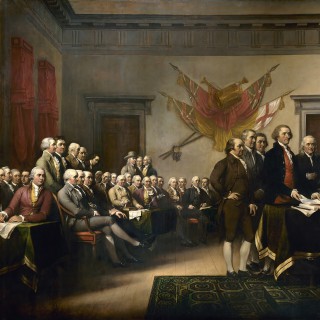
Revolution during which the Thirteen Colonies won independence from Great Britain
POPULARITY

14 episodes with american independence

7 episodes with american independence

4 episodes with american independence

7 episodes with american independence

7 episodes with american independence

8 episodes with american independence

7 episodes with american independence

4 episodes with american independence

4 episodes with american independence

4 episodes with american independence

3 episodes with american independence

3 episodes with american independence

5 episodes with american independence

4 episodes with american independence

5 episodes with american independence

4 episodes with american independence

2 episodes with american independence

3 episodes with american independence

¿Cuánto conocemos realmente de nuestras raíces sefardíes y de las huellas que permanecieron en España después de más de cinco siglos?Este domingo en Historias que Contar converso con Mercedes Hayón Cohen, directora del Encuentro Hispano-Sefardí USA 2026, sobre una historia que une memoria, identidad, España y América.Nacida en Marruecos, educada entre Madrid y Venezuela y hoy residente en Miami, Mercedes ha convertido la búsqueda de sus propias raíces en un proyecto mucho más amplio. En Lorca vivió un encuentro extraordinario: en documentos de la España medieval encontró el apellido Hayón, acompañado de nombres como Samuel, David, Meir, Isaac y Moisés, nombres que también han pasado de generación en generación por su familia.Hablaremos de Sefarad, apellidos, antiguas juderías, memoria familiar y del puente que hoy vuelve a construirse entre España y las comunidades judías de América.Y conoceremos el proyecto “Sephardic Jews and the Making of American Independence”, que conmemora los 250 años de la Independencia de los Estados Unidos y rescata la poco conocida contribución de España y de figuras judías y sefardíes al nacimiento de la nación estadounidense. La exposición será inaugurada en el Capitolio de los Estados Unidos el 17 de noviembre de 2026.

How did Hugh Mercer, a 20-year-old Scottish fugitive who survived the Battle of Culloden, become one of George Washington's generals and die at the Battle of Princeton? Discover the forgotten American Revolution story of Hugh Mercer and how his extraordinary second chance reveals something fundamental about America itself. In this episode of America's Founding Series on The P.A.S. Report Podcast, Professor Nick Giordano uncovers the remarkable story of General Hugh Mercer. From a hunted Jacobite rebel who escaped the British crackdown after Culloden to a frontier physician, French and Indian War veteran, respected Virginia leader, and Continental Army general, Mercer's life embodies a timeless American truth: your past does not have to determine your future. What You'll Learn In This Episode: The Fugitive Physician: How Hugh Mercer survived the Battle of Culloden in 1746, escaped the British crackdown on Jacobite rebels, and found a second chance in colonial Pennsylvania. The Crucible of Reinvention: How Mercer rebuilt his life as a physician, earned the respect of his community, served in the French and Indian War, and developed a close relationship with George Washington. The Ultimate Gamble of 1776: Why a 50-year-old doctor who had already survived one failed rebellion chose to risk his family, fortune, and life on the American Revolution. The Stand at William Clarke's Orchard: What happened at the Battle of Princeton when British troops surrounded Mercer, reportedly mistook him for Washington, and left him mortally wounded after he refused to surrender. The Lesson for Today: Why the American story is not about perfection, but redemption, and why America must preserve the belief that failure, background, and past mistakes do not have to dictate a person's future. Hugh Mercer never lived to see American independence. He never saw the Constitution, George Washington become president, or the republic his sacrifice helped create. Yet his life captures something essential about the American experiment: America does not require perfect people. It offers people the opportunity to rise, rebuild, and redeem themselves. But a second chance also carries responsibility, and every generation must decide what it will do with the opportunities America provides. Episode Chapters 00:00 Hugh Mercer: From Scottish Fugitive to American Revolutionary Hero 01:22 Hugh Mercer's Second Chance in America 02:16 French and Indian War: Hugh Mercer Meets George Washington 04:10 Hugh Mercer Joins the American Revolution 06:02 Battle of Princeton: Hugh Mercer's Final Stand 11:01 Hugh Mercer's Death and Sacrifice for American Independence 11:59 America, Redemption, and the Power of Second Chances ⭐ Help Keep Real American History Alive: If you value authentic history, subscribe to The P.A.S. Report Podcast, leave a 5-star rating on Apple Podcasts or Spotify, and share this episode with 3 to 4 friends and family members. Every share helps bypass big-tech algorithm filters and preserves our national heritage. #HughMercer #AmericanRevolution #BattleOfPrinceton #GeorgeWashington #America250

Police name five young men - among them teenagers -- who died in a head-on collision that also killed two officers near Middlesbrough. The police watchdog says a police pursuit of a car -- believed to be using cloned plates -- was aborted just seconds before the crash. Also: Trains across the UK are cancelled by CrossCountry, after a power cut at its control centre. And President Trump caps festivities to mark 250 years of American Independence by launching an IndyCar race through the streets of Washington.

In Sweden, trust-based governance outperformed fear-and-mandate governance in the US and UK. Not just on the virus alone. On education, the economy, free speech and institutional credibility.This week, Mark and I go looking for the line running through Fauci, Whitty, Ferguson and the technocrats and politicians who told us they knew best…..then shut us down. Literally. Then we explore why the one country that didn't panic came out the other side with something the rest of us lost. Trust.Who should be point the finger at? With the 250 year anniversary of American Independence still fresh in our minds, our conclusion may surprise you! Discussed: Anthony Fauci, American Policy, COVID-19, British Policy, Bipartisanship

RW Lee Justo, Deputy Grand Historian of the Grand Lodge of New York, examines New York Masonic History that shaped the American Revolution. We'll cover Founding Fathers like George Washington and Robert R Livingston. Learn the significance of the 1789 Inauguration and the role of the oldest Lodges in the state. This conversation provides a clear look at the men who designed the American brand of Liberty.Show notes and links: Join us on Patreon. Start your FREE seven day trial to the Craftsmen Online Podcast and get instant access to our bonus content! Whether it's a one time donation or you become a Patreon Subscriber, we appreciate your support.Visit the Craftsmen Online website to learn more about our FREE American History "Summer School" online course with Arizona State University, New York Masonic History, and our Masonic Education blog!Follow the Craftsmen Online Podcast on Spotify.Subscribe to the Craftsmen Online Podcast on Apple Podcasts.Follow Craftsmen Online on YouTube, hit subscribe and get notified the next time we go LIVE with a podcast recording!Yes, we're on Instagram.Get our latest announcements and important updates in your inbox with the Craftsmen Online Newsletter.Email the host, RW Michael Arce. Yes, we will read your email and may even reach out to be a guest on a future episode!Become a supporter of this podcast: https://www.spreaker.com/podcast/craftsmen-online-podcast--4822031/support.

John Adams and Thomas Jefferson renew their correspondence after years of silence, beginning an extraordinary epistolary reunion that revives their friendship in old age. Built from real letters, speeches, and memoirs, the finale follows the renewed exchange between the two founders as they revisit the Revolution, the presidency, the meaning of republican government, and the contradictions of the nation they helped create.As Adams and Jefferson move from grievance to affection, the episode also reflects on Abigail Adams, Sally Hemings, John Quincy Adams, and the larger legacy of the founding generation. The story closes on the 50th anniversary of American Independence, with the two men dying on the same day and the narrator reminding us how much their lives shaped the republic.Patriarchs is a six-part audio drama about John Adams and Thomas Jefferson, the founding of the United States, the American Revolution, and the 250th anniversary of the Declaration of Independence enacted in 1776.See Privacy Policy at https://art19.com/privacy and California Privacy Notice at https://art19.com/privacy#do-not-sell-my-info.
What happened to Abraham Clark after signing the Declaration of Independence? The famous pledge of "our Lives, our Fortunes, and our sacred Honor" became devastatingly personal when British forces captured his two sons and subjected them to brutal imprisonment during the American Revolution. Most Americans know the words of the Declaration of Independence, but few understand what those words demanded of the Founding Fathers who signed it. In this episode of America's Founding Series on The P.A.S. Report Podcast, Professor Nick Giordano tells the extraordinary story of Abraham Clark, whose commitment to liberty was tested through his own family. Discover what American independence truly cost, why Clark's sacrifice reveals the meaning of sacred honor, and what his legacy teaches us today about character, civic responsibility, and preserving a constitutional republic. What You'll Learn In This Episode: The Untold Story: Why Abraham Clark's family paid one of the highest personal prices of the American Revolution. The Brutal Reality of British Captivity: The horrific conditions aboard British prison ships like the HMS Jersey and how Clark's family endured that nightmare. "Sacred Honor" Defined: What "our Lives, our Fortunes, and our sacred Honor" actually meant to the men who signed the Declaration of Independence. Character Over Comfort: Why constitutions and institutions alone cannot preserve liberty without citizens willing to defend enduring principles. The Lesson for Today: What Abraham Clark's sacrifice teaches every generation about protecting freedom and preserving the American republic. Topics Covered: Abraham Clark, Declaration of Independence, Founding Fathers, American Revolution, Signers of the Declaration, Sacred Honor, American History, Constitutional Republic, Liberty, America's Founding Series Support the Show & Restore American History:

This week we will be talking with Carl P. Borick, author of Backcountry Resistance: South Carolina's Militia and the Fight for American Independence (2026, USC Press).As the title indicates, Carl's book focuses on rank-and-file militiamen of the backcountry and explores how these ordinary men were recruited, armed, fed, and motivated.Drawing on underused pension records and state claims, he reconstructs their everyday realities and their battlefield experiences. He also examines the war's devastating effects on civilians, including enslaved people and women, who played crucial roles in the struggle.

What was it like at Walt Disney World for the big 250th celebration of American Independence? Listen to Andys trip report from his 4th July trip, from the biggest ever fireworks at Magic Kingdom and EPCOT, to Mickey and friends in their very rare outfits.Plus, everything that's new in the parks, and what's to come. Also, what the new terminal at MCO is like, and watching the England match via free Starlink wifi o a flight.Resorts/attractions/restaurants mentioned: Boardwalk/Riviera/Space 200/Summerhouse on the Lake/Guardians of the Galaxy/RocknRollercoaster/Tron/Frozen Ever After

As America continues to celebrate 250 years, host Tim Boyum looks into whether independence was actually declared in Mecklenburg County, North Carolina, more than a year before the Declaration of Independence we know today. It's known as the "Meck Dec," and it's a great and fascinating source of discussion and controversy in the world of history. Author and Pulitzer-nominated correspondent Dave Fleming joins Tim to talk about his book, "Who's Your Founding Father?" which tackles that very topic. Fleming, a North Carolina resident, has written for Sports Illustrated, ESPN the Magazine and Meadowlark.

On the 250th Anniversary of American Independence, Sandip Roy reflects on what then "American Dream" means to him.
What was it like to live in a city experiencing occupation by a foreign army? What did it mean when a family had to quarter an officer in their home? More specifically, how did military occupation affect the women and men who lived in those cities, and alter the gender system? Lauren Duval's The Home Front: Revolutionary Households, Military Occupation, and the Making of American Independence (Omohundro Institute and the University of North Carolina Press, 2025) tackles the these questions by looking at the experiences of a wide range of Americans, Black and white, in the cities occupied by the British during the American Revolution. Why the household? Because this was the primary social and economic unit of the day, a site where people during the war encountered unprecedented threats to their sense of social order. By looking at households, we gain not only an intimate view of the experience of war, but also a sweeping interpretation of the effects of war on American understandings of gender and power. Some Americans saw military occupation as a threat, full stop. It challenged men's senses of power and authority over their families, and the ever-present threat of rape hovered over women and girls. But because occupation could loosen some of the patriarchal control in the household, it could also offer tempting new opportunities. Free and enslaved Black people could take advantage of the disruptions to make calculated moves to gain freedom—or more freedom than they currently enjoyed. Black and white women could hope for a different kind of freedom when they forged relationships with military men. In all, The Home Front reveals entire worlds of young women, British officers, anxious patriarchs, enslaved Black women, German soldiers, and wives struggling to survive while their husbands or sons languished in prison or served in the military. And when the book turns to the postwar era, it reveals a stunning assessment of how those experiences of military occupation altered Americans' views of household social order. As a result, Duval's book does something unusual: it threads the needle between military history and the history of gender, women, and sexuality. Join us for this conversation between Lauren Duval and Carolyn Eastman (The Strange Genius of Mr. O and President of the Society for Historians of the Early American Republic) and get a glimpse into the experience of living during wartime. Learn more about your ad choices. Visit megaphone.fm/adchoices Support our show by becoming a premium member! https://newbooksnetwork.supportingcast.fm/new-books-network
What was it like to live in a city experiencing occupation by a foreign army? What did it mean when a family had to quarter an officer in their home? More specifically, how did military occupation affect the women and men who lived in those cities, and alter the gender system? Lauren Duval's The Home Front: Revolutionary Households, Military Occupation, and the Making of American Independence (Omohundro Institute and the University of North Carolina Press, 2025) tackles the these questions by looking at the experiences of a wide range of Americans, Black and white, in the cities occupied by the British during the American Revolution. Why the household? Because this was the primary social and economic unit of the day, a site where people during the war encountered unprecedented threats to their sense of social order. By looking at households, we gain not only an intimate view of the experience of war, but also a sweeping interpretation of the effects of war on American understandings of gender and power. Some Americans saw military occupation as a threat, full stop. It challenged men's senses of power and authority over their families, and the ever-present threat of rape hovered over women and girls. But because occupation could loosen some of the patriarchal control in the household, it could also offer tempting new opportunities. Free and enslaved Black people could take advantage of the disruptions to make calculated moves to gain freedom—or more freedom than they currently enjoyed. Black and white women could hope for a different kind of freedom when they forged relationships with military men. In all, The Home Front reveals entire worlds of young women, British officers, anxious patriarchs, enslaved Black women, German soldiers, and wives struggling to survive while their husbands or sons languished in prison or served in the military. And when the book turns to the postwar era, it reveals a stunning assessment of how those experiences of military occupation altered Americans' views of household social order. As a result, Duval's book does something unusual: it threads the needle between military history and the history of gender, women, and sexuality. Join us for this conversation between Lauren Duval and Carolyn Eastman (The Strange Genius of Mr. O and President of the Society for Historians of the Early American Republic) and get a glimpse into the experience of living during wartime. Learn more about your ad choices. Visit megaphone.fm/adchoices Support our show by becoming a premium member! https://newbooksnetwork.supportingcast.fm/history
What was it like to live in a city experiencing occupation by a foreign army? What did it mean when a family had to quarter an officer in their home? More specifically, how did military occupation affect the women and men who lived in those cities, and alter the gender system? Lauren Duval's The Home Front: Revolutionary Households, Military Occupation, and the Making of American Independence (Omohundro Institute and the University of North Carolina Press, 2025) tackles the these questions by looking at the experiences of a wide range of Americans, Black and white, in the cities occupied by the British during the American Revolution. Why the household? Because this was the primary social and economic unit of the day, a site where people during the war encountered unprecedented threats to their sense of social order. By looking at households, we gain not only an intimate view of the experience of war, but also a sweeping interpretation of the effects of war on American understandings of gender and power. Some Americans saw military occupation as a threat, full stop. It challenged men's senses of power and authority over their families, and the ever-present threat of rape hovered over women and girls. But because occupation could loosen some of the patriarchal control in the household, it could also offer tempting new opportunities. Free and enslaved Black people could take advantage of the disruptions to make calculated moves to gain freedom—or more freedom than they currently enjoyed. Black and white women could hope for a different kind of freedom when they forged relationships with military men. In all, The Home Front reveals entire worlds of young women, British officers, anxious patriarchs, enslaved Black women, German soldiers, and wives struggling to survive while their husbands or sons languished in prison or served in the military. And when the book turns to the postwar era, it reveals a stunning assessment of how those experiences of military occupation altered Americans' views of household social order. As a result, Duval's book does something unusual: it threads the needle between military history and the history of gender, women, and sexuality. Join us for this conversation between Lauren Duval and Carolyn Eastman (The Strange Genius of Mr. O and President of the Society for Historians of the Early American Republic) and get a glimpse into the experience of living during wartime. Learn more about your ad choices. Visit megaphone.fm/adchoices Support our show by becoming a premium member! https://newbooksnetwork.supportingcast.fm/american-studies

What was it like to live in a city experiencing occupation by a foreign army? What did it mean when a family had to quarter an officer in their home? More specifically, how did military occupation affect the women and men who lived in those cities, and alter the gender system? Lauren Duval's The Home Front: Revolutionary Households, Military Occupation, and the Making of American Independence (Omohundro Institute and the University of North Carolina Press, 2025) tackles the these questions by looking at the experiences of a wide range of Americans, Black and white, in the cities occupied by the British during the American Revolution. Why the household? Because this was the primary social and economic unit of the day, a site where people during the war encountered unprecedented threats to their sense of social order. By looking at households, we gain not only an intimate view of the experience of war, but also a sweeping interpretation of the effects of war on American understandings of gender and power. Some Americans saw military occupation as a threat, full stop. It challenged men's senses of power and authority over their families, and the ever-present threat of rape hovered over women and girls. But because occupation could loosen some of the patriarchal control in the household, it could also offer tempting new opportunities. Free and enslaved Black people could take advantage of the disruptions to make calculated moves to gain freedom—or more freedom than they currently enjoyed. Black and white women could hope for a different kind of freedom when they forged relationships with military men. In all, The Home Front reveals entire worlds of young women, British officers, anxious patriarchs, enslaved Black women, German soldiers, and wives struggling to survive while their husbands or sons languished in prison or served in the military. And when the book turns to the postwar era, it reveals a stunning assessment of how those experiences of military occupation altered Americans' views of household social order. As a result, Duval's book does something unusual: it threads the needle between military history and the history of gender, women, and sexuality. Join us for this conversation between Lauren Duval and Carolyn Eastman (The Strange Genius of Mr. O and President of the Society for Historians of the Early American Republic) and get a glimpse into the experience of living during wartime. Learn more about your ad choices. Visit megaphone.fm/adchoices

What was it like to live in a city experiencing occupation by a foreign army? What did it mean when a family had to quarter an officer in their home? More specifically, how did military occupation affect the women and men who lived in those cities, and alter the gender system? Lauren Duval's The Home Front: Revolutionary Households, Military Occupation, and the Making of American Independence (Omohundro Institute and the University of North Carolina Press, 2025) tackles the these questions by looking at the experiences of a wide range of Americans, Black and white, in the cities occupied by the British during the American Revolution. Why the household? Because this was the primary social and economic unit of the day, a site where people during the war encountered unprecedented threats to their sense of social order. By looking at households, we gain not only an intimate view of the experience of war, but also a sweeping interpretation of the effects of war on American understandings of gender and power. Some Americans saw military occupation as a threat, full stop. It challenged men's senses of power and authority over their families, and the ever-present threat of rape hovered over women and girls. But because occupation could loosen some of the patriarchal control in the household, it could also offer tempting new opportunities. Free and enslaved Black people could take advantage of the disruptions to make calculated moves to gain freedom—or more freedom than they currently enjoyed. Black and white women could hope for a different kind of freedom when they forged relationships with military men. In all, The Home Front reveals entire worlds of young women, British officers, anxious patriarchs, enslaved Black women, German soldiers, and wives struggling to survive while their husbands or sons languished in prison or served in the military. And when the book turns to the postwar era, it reveals a stunning assessment of how those experiences of military occupation altered Americans' views of household social order. As a result, Duval's book does something unusual: it threads the needle between military history and the history of gender, women, and sexuality. Join us for this conversation between Lauren Duval and Carolyn Eastman (The Strange Genius of Mr. O and President of the Society for Historians of the Early American Republic) and get a glimpse into the experience of living during wartime.

“250: The Necessity of Belief in Christianity by the Citizens of the State in Order to Secure and Enjoy the Blessings of God” is a stand-alone sermon preached to the United States of America in Commemoration of the Semiquincentennial of American Independence. (Psalm 33:12). This sermon was preached by Rev. Jason Garwood on Sunday, July 5th, 2026, during the Covenant Renewal Worship Service at Cross & Crown Church in Warrenton, Virginia. Learn more about our church and mission at www.crosscrownchurch.com.

This is the 6th sermon in the "Faith of our Fathers" series. Pastor Paul used the speech (sermon) from Samuel Adams which he spoke the day of the signing of the Declaration of Independence. What did Samuel Adams think was important for the public to know that day? What threats were identified to our freedom and independence? Listen to this episode to discover the answers to those questions.

From the publisher:“Does Thomas Jefferson still matter?” ask two leading historians on the 250th anniversary of the Declaration of Independence.Thomas Jefferson has been reinvented more than perhaps any American president in history. In the nineteenth century, slavery's defenders invoked Jefferson's defense of states' rights while abolitionists drew on his antislavery writings in support of their cause. After the Civil War, Jefferson's reputation declined because of his association with secession and disunion, but in the twentieth century, his image soared as he came to embody the democratic values America fought for during World War II. Unsurprisingly, Jefferson's legacy has shifted yet again in the twenty-first century, effectively becoming a partisan talisman—jettisoned by the left as a plantation patriarch and repurposed by the right as an avatar of white nationalism. Dissatisfied with these political caricatures and manic swings, leading Jefferson scholars Peter S. Onuf and Francis D. Cogliano instead situate the founding father in his complicated historical context and reveal how his wisdom can be applied today. In a series of three interrelated essays, the authors paint a nuanced portrait. “Generations” elucidates how Jefferson's understanding of history shaped his responses to the major problems of his time. “My Country” delves into how he conceived of the American homeland, and “The People” unravels how Jefferson articulated a new national identity in the Declaration of Independence. Taken together, Thomas Jefferson Survives demonstrates how even amid crisis, Jefferson managed to articulate a capacious and optimistic vision for the future of the American people. As Pulitzer Prize–winning historian Annette Gordon-Reed writes in her foreword, “As much as Jefferson reflected the often-benighted times in which he lived, he rose above them in ways that have a great deal to tell us about the political straits in which we find ourselves.” After all, Jefferson knew better than anyone that 1776 was an important moment, but not the only moment, for Americans to write a better future."Information on his book can be found at https://wwnorton.com/books/9781324098072AxelbankHistory.com is designed by https://www.ellieclairedesigns.com/Axelbank Reports History and Today" can be found on social media at https://twitter.com/axelbankhistoryhttps://instagram.com/axelbankhistoryhttps://facebook.com/axelbankhistory

Confessing Our Hope: The Podcast of Greenville Presbyterian Theological Seminary
In this episode, we explore William B. Sprague's 1827 sermon on the meaning of American Independence. Delivered on the Fourth of July, Sprague calls Christians to celebrate the day with gratitude, reverence, and a clear recognition of God's providence in the founding of the nation.A timely reflection on liberty, remembrance, and faithful stewardship of freedom.

www.spiritandspire.com

The Great American Fair was meant to celebrate the nation's 250 anniversary of declaring independence from tyranny. Instead, it appeared to be the final nail in the coffin of a compromised and hijacked country. From Thomas Jefferson and James Madison to fake buildings with screen printed tarps, fake arches, foreign flags, religious propaganda, $20 subsidized food-slop, $40 cheap hats, $200 freedom jerseys, and armed soldiers patrolling the grounds enforcing Orwellian loudspeaker announcements. The turnout was so poor that people had to be rounded up with zoomed in low camera angles to produce the illusion that tens of thousands showed up at once. If that weren't enough propaganda, the same administration is using World Cup celebrations as proof of support for its policies domestically and internationally. In other words, look, Americans are celebrating the USA Team, so that must mean they support war in Iran or skyrocketing prices. It's all so embarrassing and has devolved into less than even a cheap caricature. *The is the FREE archive, which includes advertisements. If you want an ad-free experience, subscribe below.

Read more from VPM News: Charlottesville celebrates a half-century of the Downtown Mall How to beat the heat during Central Virginia's early July heat wave WATCH: Virginia's Budget Deal in 60 Seconds? (YouTube) More from VPM PBS for America's 250th: Declarations: Black Americans and the Revolutionary War Liberty or Death Wilder: An American First Witness to a Century *This outlet uses a paywall. Our award-winning work is made possible with your donations. Visit vpm.org/donate to support local journalism.

Send us Fan MailWe explore the 4th of July Holiday and on this, the 250th anniversary of our nation, all of the meanings of that great day.
In honor of the 250th anniversary of American Independence, we bring back this episode about Philadelphia theater during the Bicentennial year!A blog post with images and more information about the stories we talk about in the episode can be found on our website! https://www.aithpodcast.com/blog/bicentennial-blues/Support the show"Adventures in Theater History: Philadelphia" the BOOK can be ordered from independent bookstores and at all online book retailers now! For a link, go to our website: www.aithpodcast.comOur email address is AITHpodcast@gmail.comFollow us on social media:Bluesky: @aithpodcast.bsky.socialFacebook: https://www.facebook.com/AITHpodcastInstagram: https://www.instagram.com/aithpodcast/ Support our work and get BONUS EPISODES on Patreon! GO HERE© Podcast text copyright, Peter Schmitz. All rights reserved.℗ All original voice recordings copyright Peter Schmitz.℗ All original music copyright Christopher Mark Colucci. Used by permission.

Suffolk University history professor Robert Allison discusses how revolution was fomented in Massachusetts patriots' minds long before the first battles were fought, how that played out in daily life, and the relevance today.

Thomas Wermuth, co-founder and director of the Hudson River Valley Institute, chair of Hudson River Valley History at Marist University and Iris De Rode , a Dutch historian specializing in the American Revolution, share some of the untold stories of New York's role in the American Revolution and discuss their book Fire & Freedom: American Revolution in New York (Cornell University Press, 2026). Photo: An officer oversees the U.S. Army military retreat to New York after the Battle of Long Island in 1776, during the American Revolution (1775-1783). This painting dates to 1899. (Photo by: Ivy Close Images/Universal Images Group via Getty Images) Hosted by Simplecast, an AdsWizz company. See pcm.adswizz.com for information about our collection and use of personal data for advertising.

Today, we explore the real cause of the Revolutionary War—from the events that led to mass tension to the famous battles, internal conflicts, and the legacy of the Revolutionary War. Welcome to History Camp!

Did you know that one of the biggest stories behind American Independence is rarely told?With the 4th of July just around the corner, this week's episode of Spanish Loops takes you on a fascinating journey into a chapter of history that has remained hidden in plain sight for centuries.Everyone knows about George Washington, the Declaration of Independence and the American Revolution... but what if we told you that Spain quietly played a crucial role in making that independence possible? Why isn't that part of the story discussed more often?Join us in this fascinating chapter where we uncover remarkable stories, forgotten heroes, secret operations, massive financial support, daring military campaigns and the incredible efforts that helped change the course of history. You'll discover how Spain's involvement stretched far beyond what most history books mention, and why many Americans are surprised when they learn just how significant that contribution really was.But that's not all.We'll also touch one of history's most effective public relations campaigns: the so-called "Black Legend." How did Britain's rivalry with Spain shape the way generations have viewed Spanish history? Was it clever propaganda? Political strategy? Or a bit of both? We'll separate myths from facts while keeping the conversation entertaining, relaxed and packed with curious details.As always, we don't lecture, we tell stories. The kind that makes you stop for a second and say, "Wait... why didn't anyone ever tell me this before?"If you're listening from the United States, Spain, or anywhere else in the world, this episode is our little tribute to American Independence Day and to the extraordinary historical connections between our two nations.Prepare to listen to the birth of the United States from an entirely different perspective.If you enjoy discovering the Spain that most people never hear about, don't forget to subscribe, leave us a review, and share this episode with your friends and family. Every share helps more curious travelers and history lovers discover Spanish Loops.History is always more exciting when you know the whole story.Discover Spain every week with Fran And Jorge. Hidden secrets, fascinating history, local curiosities, personal stories, travel tips, culture, food, legends, and non stop laughter in the most entertaining Spanish Podcast online. For Jorge: Small Group Tours in Spain & PortugalWebsite: https://travelingwithjorge.com/Small group tours Spain, cultural tours Spain and Portugal, authentic travel experiences, guided tours for mature travelers, food and wine tours Iberian Peninsula.If you're dreaming about discovering Spain and Portugal beyond the typical tourist routes, Jorge designs small group cultural tours that combine history, local gastronomy, wine experiences, and meaningful human connections. His journeys are crafted for curious travelers who value authenticity, comfort, and depth over rushed itineraries. Explore upcoming departures, detailed itineraries, and insider travel insights at TravelingWithJorge.com Your trusted source for unforgettable small group tours in Spain and Portugal.For Fran: Cultural & Gastronomic Tours in Spain & PortugalWebsite: https://travelingsteps.es/Spain cultural tours, Portugal walking tours, food and wine travel Spain, Camino experiences, senior-friendly tours Spain, immersive Iberian travel.Looking for a deeper way to experience Spain and Portugal? Fran at Traveling Steps curates immersive cultural tours that blend history, gastronomy, local traditions, and relaxed walking experiences designed especially for thoughtful, experience-driven travelers. From Mediterranean islands to the Portuguese Camino, each itinerary is built around authentic encounters and meaningful storytelling. Discover upcoming tours, travel guides, and insider advice at TravelingSteps.es and start planning your next unforgettable journey through Spain and Portugal.

As we approach the 250th anniversary of American independence, “Think Out Loud” has been hearing from guests whose life experiences and personal histories illuminate different aspects of what it means to be an American. We’ll continue that conversation with Tony Johnson, the chairman of the Chinook Indian Nation. The nation represents five tribes whose ancestral homelands surround the mouth of the Columbia River in present-day Oregon and Southwest Washington. The nation received federal recognition in 2001, only to have it rescinded 18 months later. Johnson joins us to talk about the ongoing fight for recognition and the nuances of being Indigenous in the U.S.

The First Baptist Church and American Independence Daniel 2: 20-22

Josh "The Professor" Kastenberg, and Historian/expert, and author on Thomas Jefferson, Peter Onuf join TJ to discuss Thomas Jefferson, as this is another installment of history they bring to you to celebrate the 250th Anniversary of the United States. Peter's book is entitled "Thomas Jefferson Survives...American Independence in his time and ours". All this on News Radio KKOB See omnystudio.com/listener for privacy information.
How did Lydia Darragh, a quiet Quaker mother, become one of the most successful Revolutionary War spies of the American Revolution? On December 4, 1777, a single act of courage helped warn George Washington of a looming British attack and altered the course of history. When British officers unknowingly revealed a secret military plan inside her own home, Lydia Darragh faced a choice that could cost her life, her family, and everything she held dear. In this episode of America's Founding Series on The P.A.S. Report Podcast, Professor Nick Giordano explores the remarkable true story of Lydia Darragh, one of the most important civilian intelligence operatives of the American Revolution. As British forces occupied Philadelphia during the bitter winter of 1777, Lydia found herself at the center of one of the most dramatic intelligence operations of the Revolutionary War. This episode goes beyond a traditional spy story. It reveals how ordinary citizens took ownership of American independence and why courage, personal responsibility, and civic virtue remain essential to preserving liberty nearly 250 years later. Lydia's story serves as a powerful reminder that history often turns on the actions of individuals willing to do what is right when the stakes are highest.
Confessing Our Hope: The Podcast of Greenville Presbyterian Theological Seminary
In this episode we explore John Witherspoon's famous sermon, The Dominion of Providence Over the Passions of Men. Preached in 1776 amid the growing struggle for American independence, Witherspoon reflects on God's sovereign rule over human affairs, showing how even conflict, suffering, and the ambitions of men ultimately serve His purposes. Along the way, he calls Christians to trust God's providence, pursue personal holiness, and labor faithfully for the good of church and nation.Dead Presbyterians Society is a ministry of Greenville Presbyterian Theological Seminary. This time of year is a special year at the seminary; we say goodbye to our graduating class, and prepare to welcome new students. It is also the end of our fiscal year, and because of the growth of our student body, we have an increased need this year. Will you help us reach our goal? Consider supporting GPTS, and partnering with us in training the next generation of pastors. You can give online at gpts.edu/give.
The American Revolution was not fought on distant battlefields, but in private homes. British occupation produced an aggrieved American population, bound by shared domestic disorder and emotional distress. British officers usurped male authority to quarter themselves with families, patriot wives governed households in their husbands' absence, daughters flirted with officers, domestic servants disappeared with soldiers, and enslaved kin absconded to British lines in pursuit of freedom. Lauren Duval joins us to talk about her new book, The Home Front: Revolutionary Households, Military Occupation, and the Making of American Independence which captures daily life during the Revolution through the eyes and ears of those intimately experiencing it Tell us what you think! Send us a text message!

The Influence of American Independence on the Irish Revolution. Guest: Professor Richard Bell. The American Revolution signaled that British imperial control was not invincible, inspiring the 1798 Irish revolt by the United Irishmen. Irish-born soldiers were so prevalent in Washington's ranks that British commanders nicknamed the Continental Army the "Line of Ireland." Lord Cornwallis, famously defeated at Yorktown, was later sent to Ireland to suppress this uprising with brutal effectiveness. The conflict highlighted the divided loyalties within Ireland, where different religious groups viewed the American struggle as a model for their own constitutional concessions or total independence from the British Crown. 41850
Declaration of Independence: That long list of charges against the king aren't mere “grievances.” That word isn't even in the text. They Founders didn't secede and fight a long, bloody war over mere complaints about bad policy. American Independence was built on something else spelled out in the text itself, and understood by everyone at the time. On this Episode - It's the foundation of the declaration that we're never taught. As Ethan Allen put it, the “primary cause of the separation and revolt” The post They’re not Grievances. They’re STOLEN Power appeared first on Tenth Amendment Center.

Historically Thinking: Conversations about historical knowledge and how we achieve it
“This is a book about a cruel and ruthless war—a war without mercy—in which those caught up in it believed they had nothing to lose by fighting without regard for the rules of so-called ‘civilized warfare.' It was the War for American Independence. At its grimmest level, this was a confrontation in which military restraint was more the exception than the rule, a struggle in which combatants believed their very existence was in question.”Those are the words of my guest Mark Lender and his co-author, the late James Kirby Martin, from their book War Without Mercy: Liberty or Death in the American Revolution. While a growing number of historians have shown that the Revolutionary War was often far more brutal than Americans like to remember, few have attempted to explain why it became so brutal. Lender and Martin argue that the answer lies in understanding the Revolution as an existential war: a conflict in which participants believed defeat threatened not merely political loss, but the destruction of their families, communities, and way of life.Mark Lender is Professor Emeritus of History at Kean University and most recently served as advisor to the 250th Anniversary Exhibit at the National Museum of the United States Army. He and James Kirby Martin also co-authored A Respectable Army: The Military Origins of the Republic, 1763-1789.
H.W. Brands describes how, in early 1941, Roosevelt introduced the Lend-Lease Act (HR 1776), a bill that ironically shared its name with the year of American independence but intended to "marry America's future to Britain's future." Because Britain was running out of cash, Roosevelt argued that the U.S. should lend or lease weaponry to ensure they didn't go down for lack of funds. He was aided by a sentimental shift in American public opinion, driven by Edward R. Murrow's broadcasts which portrayed the "stubborn British" as heroic underdogs fighting for democracy. Simultaneously, a covert information war was being waged by William Stephenson, the director of British propaganda in America, who worked with William "Wild Bill" Donovan to manipulate U.S. opinion with the administration's blessing. While Roosevelt publicly complained about German propaganda, his own administration used unacknowledged stories and rumors to move Americans toward war. Lindbergh called out this hypocrisy, arguing that aiding Churchill—an "unreconstructed" imperialist—was not a defense of democracy but a defense of British rule in places like India. Roosevelt even utilized a forged map, allegedly showing a German plan to reorganize Latin America and replace the Bible with Mein Kampf, to stir fear. Lindbergh's diary reveals his deep intuition that every step away from neutrality was a calculated move toward war, regardless of the president's stated desire for peace. (5)1941
Prior to the American Revolution, the urban centers of colonial North America had little direct experience of war. With the outbreak of violence, British forces occupied every major city, invading the most private of spaces: the home. By closely considering the dynamics of the household—how people moved within it, thought about it, and wielded power over it—The Home Front reveals the ways in which occupation fundamentally upended the structures of colonial society and created opportunities for unprecedented economic and social mobility. In occupied cities, British officers usurped male authority to quarter themselves with families, patriot wives governed households in their husbands' absence, daughters flirted with officers, domestic servants disappeared with soldiers, and enslaved kin absconded to British lines in pursuit of freedom. As Lauren Duval shows, the unique conditions of occupation produced an aggrieved American population bound by shared emotional distress and domestic disorder. In the wake of this deeply disorienting experience, elite Americans deliberately reconsecrated the private home as a national symbol that epitomized masculine authority. Building on a stunning wealth of primary sources, Duval vividly captures daily life during the Revolution through the eyes and ears of those who intimately experienced it, showing how men and women of all races, statuses, and states of freedom understood its implications for their lives, families, and the nascent American Republic. In this episode Dr. Lauren Duval (University of Oklahoma) and Leah Cargin (University of Oklahoma and Journal of Women's History) discuss The Home Front: Revolutionary Households, Military Occupation, and the Making of American Independence (Omohundro Institute and UNC Press, 2025). We begin the episode by discussing what the home meant to men and women in the revolutionary era. Next, we discuss revisionist histories and how violence has often been obscured from the revolutionary narrative. I commend Duval for her extensive archival research and she shares about the satisfying feeling of finding sources that speak to one another from across the Atlantic. Last, Duval gives us a sneak peek at her next project! Learn more about your ad choices. Visit megaphone.fm/adchoices Support our show by becoming a premium member! https://newbooksnetwork.supportingcast.fm/new-books-network
Prior to the American Revolution, the urban centers of colonial North America had little direct experience of war. With the outbreak of violence, British forces occupied every major city, invading the most private of spaces: the home. By closely considering the dynamics of the household—how people moved within it, thought about it, and wielded power over it—The Home Front reveals the ways in which occupation fundamentally upended the structures of colonial society and created opportunities for unprecedented economic and social mobility. In occupied cities, British officers usurped male authority to quarter themselves with families, patriot wives governed households in their husbands' absence, daughters flirted with officers, domestic servants disappeared with soldiers, and enslaved kin absconded to British lines in pursuit of freedom. As Lauren Duval shows, the unique conditions of occupation produced an aggrieved American population bound by shared emotional distress and domestic disorder. In the wake of this deeply disorienting experience, elite Americans deliberately reconsecrated the private home as a national symbol that epitomized masculine authority. Building on a stunning wealth of primary sources, Duval vividly captures daily life during the Revolution through the eyes and ears of those who intimately experienced it, showing how men and women of all races, statuses, and states of freedom understood its implications for their lives, families, and the nascent American Republic. In this episode Dr. Lauren Duval (University of Oklahoma University) and Leah Cargin (University of Oklahoma and Journal of Women's History) discuss The Home Front: Revolutionary Households, Military Occupation, and the Making of American Independence (Omohundro Institute and UNC Press, 2025). We begin the episode by discussing what the home meant to men and women in the revolutionary era. Next, we discuss revisionist histories and how violence has often been obscured from the revolutionary narrative. I commend Duval for her extensive archival research and she shares about the satisfying feeling of finding sources that speak to one another from across the Atlantic. Last, Duval gives us a sneak peek at her next project! Learn more about your ad choices. Visit megaphone.fm/adchoices Support our show by becoming a premium member! https://newbooksnetwork.supportingcast.fm/military-history

Prior to the American Revolution, the urban centers of colonial North America had little direct experience of war. With the outbreak of violence, British forces occupied every major city, invading the most private of spaces: the home. By closely considering the dynamics of the household—how people moved within it, thought about it, and wielded power over it—The Home Front reveals the ways in which occupation fundamentally upended the structures of colonial society and created opportunities for unprecedented economic and social mobility. In occupied cities, British officers usurped male authority to quarter themselves with families, patriot wives governed households in their husbands' absence, daughters flirted with officers, domestic servants disappeared with soldiers, and enslaved kin absconded to British lines in pursuit of freedom. As Lauren Duval shows, the unique conditions of occupation produced an aggrieved American population bound by shared emotional distress and domestic disorder. In the wake of this deeply disorienting experience, elite Americans deliberately reconsecrated the private home as a national symbol that epitomized masculine authority. Building on a stunning wealth of primary sources, Duval vividly captures daily life during the Revolution through the eyes and ears of those who intimately experienced it, showing how men and women of all races, statuses, and states of freedom understood its implications for their lives, families, and the nascent American Republic. In this episode Dr. Lauren Duval (University of Oklahoma) and Leah Cargin (University of Oklahoma and Journal of Women's History) discuss The Home Front: Revolutionary Households, Military Occupation, and the Making of American Independence (Omohundro Institute and UNC Press, 2025). We begin the episode by discussing what the home meant to men and women in the revolutionary era. Next, we discuss revisionist histories and how violence has often been obscured from the revolutionary narrative. I commend Duval for her extensive archival research and she shares about the satisfying feeling of finding sources that speak to one another from across the Atlantic. Last, Duval gives us a sneak peek at her next project! Learn more about your ad choices. Visit megaphone.fm/adchoices Support our show by becoming a premium member! https://newbooksnetwork.supportingcast.fm/gender-studies

In Part 2 of John Adams, we focus on his very influential wife, Abigail, who was very involved in her husband's work.

You can send a text, include contact info to get a response. More focus on Mexico and California than is ideal, but there is a general overview of Spanish America.Spanish America, more than anywhere else, shows us the global ramifications of the Napoleonic Wars. “The crisis and collapse of Spain's empire was the direct result of political turmoil in Europe. During the Napoleonic wars this vast empire got fragmented, was henceforth relegated to the sidelines of world politics.” It's a big deal. Spanish America was important to the world and world politics. The disparate countries of Latin America stopped mattering after independence when they are separate things rather than a huge mass. This is sort of a harsh, brutal truth, This was partly because of the Monroe doctrine, Thou Shalt Not Interfere in the Western Hemisphere lest thou tempt the wrath of God, and British policy also was to keep other Europeans out, more practically by means of controlling the seas, and giving a firm no to plans from the Spanish and Russians for interference from non Spanish forces.
A man rushing on horseback in the dead of night to break a deadlocked vote. A printer faced with the terrifying ramifications of printing an incendiary document. And beleaguered troops—underfed, underpaid, and on the verge of defeat. In hindsight, the American Independence seems inevitable. But at the time, it was anything but. In the opening episode, Pulitzer Prize […]
The United States is not a nation like other nations, and it never has been. In July 1776, thirteen separate states, home to three million people with no common ancestry or identity, stretching along a narrow coastal strip between the Atlantic and the Appalachians, declared their independence as the United States. Could they form a common identity and survive? Today, with more than 350 million people drawn from all over the world, spanning the North American continent, we ask even more what holds us together? Gordon Wood, the premier historian of the American founding, author of The Creation of the American Republic, The Idea of America, Power and Liberty, Revolutionary Characters, and The Purpose of the Past, joins us to talk about this question, which he also addressed in his 2025 talk in accepting the Irving Kristol Award at the American Enterprise Insttitute. Gordon Wood was the guest on our first podcast in 2020; he came back for our 100 th episode in 2022; he returned in 2024 for our 200 th episode. Now he joins us on our 300 th episode, as we prepare to mark the 250 th anniversary of American Independence, and to help us answer the eternal questions, What is an American? What holds us together?Tell us what you think! Send us a text message!

The National Security Hour with Col. Mike and Dr. Mike – On the home front, Americans are watching the efforts of Trump, his billionaire buddies, the AI gangsters, and most wealthy Democrats complete the effort begun by Franklin Roosevelt to completely centralize the federal government, to create a ruling elite that is drawn from the same sections of society and from the same elite colleges, large...

Dr. Robert Watson, Distinguished Professor of American History at Lynn University, reveals the lesser-known stories, surprising twists, and forgotten voices behind the most iconic document in U.S. history. Drawing from a wealth of primary sources—including letters, diaries, newspapers, and diplomatic communiqués—Watson reconstructs the debates, drafts, and drama that surrounded the creation of the Declaration of Independence. Focusing on the influence of women, enslaved individuals, and Indigenous peoples, Watson brings to light the varied cast of often-forgotten characters and perspectives that shaped the American experiment in his book, Declaration: The Story of American Independence. Along the way, he explores the document's philosophical roots, its political impact, and the enduring struggle to realize its lofty promises of liberty and equality. Learn more about Watson's new book Declaration: The Story of American Independence

The Situation Report for April 30, 2026. Rep. Crenshaw covers one of wildest breaking news weeks in recent memory: another foiled assassination attempt on President Trump, insider betting tied to the Maduro raid, and major new developments in the national redistricting fight. White House Correspondents' Dinner Attack Delta Soldier at the Center of Polymarket Insider Betting Scandal New Updates on the Southern Poverty Law Center Indictment Florida Strikes Back in the Gerrymandering Battle The Supreme Court Weighs in on Louisiana's Racial Gerrymandering UAE Quits OPEC in Shock Oil Power Shift Amid Iran War American Innovation: A New Drug Offers a Major Breakthrough Curbing Stroke Risk FDA Cuts Red Tape for Next Generation Medical Devices King Charles Gracefully Celebrates 250 Years of American Independence
16. KING CHARLES AND THE ANGLO-AMERICAN ALLIANCE.GREGORY COPLEY. Gregory Copley discusses the King's role in mending rifts between unpopular US and UK leaders. The visit celebrates Americanindependence while offering the King a platform to improve diplomatic relations. (18) 50 RIALS IRAN
© 2020-2026 Ivy Podcast Discovery LLC
