
Jewish ethnic group

POPULARITY

8 episodes with Ashkenazi Jews

5 episodes with Ashkenazi Jews

5 episodes with Ashkenazi Jews

5 episodes with Ashkenazi Jews

3 episodes with Ashkenazi Jews

2 episodes with Ashkenazi Jews

2 episodes with Ashkenazi Jews

2 episodes with Ashkenazi Jews

3 episodes with Ashkenazi Jews

How will current issues or past discrimination against Mizrahi Israelis influence this election? Dan and sociologist Mijal Bitton discuss the history, identity, and political narratives of Mizrahi Jews—whose families came to Israel from across the Middle East and North Africa—and how those narratives continue to shape Israeli politics. They unpack the factors of historical discrimination by an Ashkenazi elite, questions of economic opportunity, dignity and belonging of the Mizrahi community, and the Mizrahi devotion to maintaining the Jewish character of the state of Israel. —- Get your tickets to a live taping of Call me Back at the Streicker Center in NYC on October 22. —- Call Me Back is made possible by our subscribers. If these conversations are where you turn to understand Israel and the Jewish world, consider joining them. It's what keeps this show going. Become a Subscriber - Inside Call me Back This episode is sponsored by The Shalom Hartman Institute. Register for The Road to the Israeli Elections webinar with the Shalom Hartman Institute's Tani Frank and Masua Sagiv. ___ In this episode: -Historical roots of the Mizrahi and Ashkenazi divide -Cultural and religious differences in their countries of origin -Do Mizrahis still resent how they were treated by Ashkenazis during immigration? -Israelis political realignment in 1977 and Mizrahi powerful support for Likud -The rise of Mizrahi political movements like Shas -How Mizrahi voters think about the “deep state” in Israel -Contemporary Mizrahi identity and integration into Israeli society and politics ___ More Ark Media: Want to join Ark Media? Check out our careers page for new openings. Explore Israel Votes Listen to Ark News Daily Listen to For Heaven's Sake Listen to What's Your Number? Newsletters | Ark Media | Amit Segal | Nadav Eyal Instagram | Ark Media | Dan X | Dan Dan Senor & Saul Singer's book, The Genius of Israel Get in touch Credits: Ilan Benatar, Beth Pearlman, Brittany Cohen, Ava Weiner, Martin Huergo, Mariangeles Burgos, and Yuval Semo

The Jewish IQ Myth: The Truth is Much Weirder Malcolm and Simone are a husband wife team of a neuroscientist and marketer turned entrepreneurs and authors. With graduate degrees from Stanford and Cambridge under their belts as well as five bestselling books, one of which topped out the WSJs nonfiction list, they are widely known (if infamous) intellectuals / provocateurs. The book we are quoting from: https://www.amazon.com/Pragmatists-Gu... Its only $1 and the money goes to a non-prophet focused on replacing the US education system. In this episode, we dissect the common myth that Ashkenazi Jews possess significantly higher IQs than other groups, exploring the data and studies behind these claims. We delve into how selective data representation and cultural factors contribute to Jewish success, rather than inherent genetic advantages. The discussion challenges widely-held stereotypes, highlights the importance of cultural practices, and examines the role of public discourse in shaping societal perceptions. Join us as we unravel the complexities and uncover the true factors behind Jewish exceptionalism. Watch this video at- https://youtu.be/IdNwAD0ywg0?si=nvvG-SE6iV8rJVOo Based Camp with Simone & Malcolm Collins 77.7K subscribers 139,485 views Aug 19, 2024 Based Camp 00:00 Introduction to Jewish IQ Studies 00:52 Cherry-Picking Data in Jewish IQ Research 01:55 Cultural vs. Genetic Intelligence 02:34 Reevaluating Jewish Intelligence 05:40 Debunking Common Myths 07:01 Analyzing Key Studies 12:52 Manipulation of Data in IQ Research 24:32 Group Differences and Cognitive Tradeoffs 26:55 Exploring Jewish Competency Hypothesis 27:35 Polygenic Risk Scores and Jewish IQ 28:02 Verbal and Math Skills vs. Nonverbal Reasoning 29:02 Meta Studies and Alternate Hypotheses 29:53 Debunking Misinterpretations and Biases 34:25 Cultural vs. Genetic Factors in Jewish Success 45:43 Jewish Representation in Bolshevik Communism 48:16 Concluding Thoughts on IQ and Ethnic Groups 55:46 Final Remarks and Personal Anecdotes Based Camp with Simone & Malcolm Collins Description- Based Camp is a podcast focused on how humans process the world around them and the future of our species. That means we go into everything from human sexuality, to weird sub-cultures, dating markets, philosophy, and politics. Malcolm and Simone are a husband wife team of a neuroscientist and marketer turned entrepreneurs and authors. With graduate degrees from Stanford and Cambridge under their belts as well as five bestselling books, one of which topped out the WSJs nonfiction list, they are widely known (if infamous) intellectuals / provocateurs. If you want to dig into their ideas further or check citations on points they bring up check out their book series. Note: They all sell for a dollar or so and the money made from them goes to charity. https://www.amazon.com/gp/product/B08FMWMFTG Links Patreonpatreon.com/c/simoneandmalcolmcollins Substackbasedcamppodcast.substack.com X / Twitterx.com/SimoneHCollins Booksamazon.com/gp/product/B08FMWMFTG Projectspragmatistfoundation.com Schoolcollinsinstitute.org Reality Fabricatorrfab.ai Facebookfacebook.com/basedcamppodcast Simone on HubPagessimonesmith.hubpages.com

Dr. Monasebian is a board-certified plastic surgeon, and the man Margarita personally trusts with her own face.A Forest Hills native, Brandeis graduate, and proud half-Sephardic, half-Ashkenazi Jew, Dr. Monasebian has built a reputation not just for exceptional results, but for telling patients the truth. In an industry full of hype, he's refreshingly candid about what procedures are worth considering, which ones are overhyped, and why credentials matter more than ever.In this conversation, we discuss everything from the evolution of rhinoplasty among Jewish patients to the rise of non-surgical treatments, body dysmorphia, aging gracefully, and the biggest misconceptions about plastic surgery. We also explore how he approaches these conversations with his own children—and the procedures he'd never recommend.Follow Dr. Monasebian on Instagram: @parkaveplasticsurgeryListeners get a complimentary consultation — just mention People Jew Wanna Know.Support our work: buymeacoffee.com/peoplejewwannaknowWhat We Discuss:00:00 Intro & Episode Agenda03:00 Dr. Monasebian's Jewish upbringing09:30 Why credentials matter (and what can go wrong)14:00 How rhinoplasty culture has shifted for Jewish patients17:30 Surgical vs. non-surgical: how to choose24:00 Aging well after a procedure29:00 Talking to his own kids about cosmetic work33:00 Saying no: unrealistic requests and body dysmorphia38:00 Lightning round — most underrated, most overrated, biggest pet peeves46:30 CoolSculpting, Kybella, etc.50:00 A message to Jewish New Yorkers53:00 Closing Remarks & Guest Nomination

There are currently 15,000 open cases of unidentified persons in the United States.Bodies are unable to be identified for a variety of reasons including severe mutilation, significant decomposition, no history of medical care or a lack of resources. In the vast majority of situations, DNA testing can do a great deal of heavy lifting, but sometimes even this can be unsuccessfulOn November 24, 1989 in Mohave County, Arizona, a woman was found dead on the side of the interstate. Over 30 years later and the woman is yet to be identified. She is known only as the Mohave Jane Doe.Her DNA test results revealed that she was 96% Ashkenazi Jew. But, they told investigators little else.Mohave is not the only instance of Ashkenazi Jews struggling to understand their ancestry through genetic testing—nor is it the only time this unique genetic makeup has interfered with what appears to be a murder case. But why? Why does someone's heritage make them harder to understand biologically? To find out, I spoke with Hannah Feuer, a reporter at Forward. Feuer recently covered the Mohave Jane Doe case and new efforts to find her identity once and for all in an article entitled: Her body has been unidentified for decades. Her Ashkenazi DNA may explain why.As our conversation continued, Feuer and I also discussed another recent piece of hers which explored the strange and solemn innovation of using Artificial Intelligence to keep the stories of Holocaust Survivors alive in the wake of their inevitable dying out.

After two major wins for free speech and human rights at the American Psychological Association (APA), we 're joined by some of its Jewish organizers, Alissa Hochman, PhD and Jordan Dunn, PhD.We talk about this means to the APA's 175,000 members who are now protected by the association from being punished for speech and activist and what it took to replace the APA's policy on antisemitism away from one that punishes speech for Palestine to one that protects it and protects the actual fight against antisemitism and all forms of bigotry.We also touch on how these wins inspire and push other professional associations who are under pressure from Trump, Congress and groups like the ADL to stand up for their members and fight back.Jordan Dunn, PhD, (he/they) is a supervising psychologist at Greene Clinic, a community psychoanalytic clinic in Brooklyn, NYC. Within psychology, they have done research and advocacy related to solidarity in migrant justice activism and to burnout. They are currently launching a process group focused on understanding burnout and shifting its relational patterns. They are a council representative at the American Psychological Association, representing the APA Division of Psychoanalysis. They are also a proud member of Jewish Psychologists for Justice, a new organizing group which campaigned for the antisemitism resolution which just passed at APA Council. They are an Ashkenazi Jew who have lived in Brooklyn almost twenty years, and who grew up in Iowa where they experienced antisemitism and learned the importance of solidarity.Dr. Alissa Hochman is a licensed clinical psychologist with expertise in social justice processes and culturally responsive clinical care. Her research has centered on racial justice, cross-race solidarity, and effectively engaging in activism through understanding one's privilege. Dr. Hochman has consulted and taught on these topics at various institutional levels, and engages in activism and advocacy aligned with her expertise and values. Three ways to listen
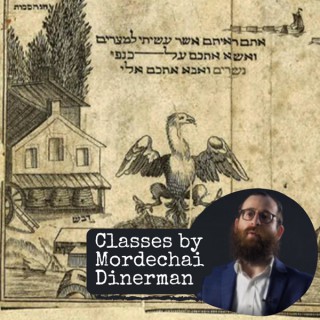
The bar mitzvah ceremony didn't always look the way it does today. In fact, for much of Jewish history, it barely looked like anything at all. In this episode, we investigate: When did a ceremony first appear? What did it look like? When did bar mitzvah boys start receiving an aliya? Leining? Leading davening? A derasha? We'll trace its evolution among Ashkenazi Jews from the eleventh century through the seventeenth century. In celebration of the bar mitzvah of Meir Nosson Hakohen Dinerman The Boy at the Bimah: A History of Bar Mitzvah Celebrations

Part 1: Welcome to a special three-part series of Remember What's Next called Jewish History and Trauma. Ellie Bass and Rabbi Ken Spiro are in conversation with Professor Elan Javanfard who is a researcher and expert in Jewish intergenerational trauma. Together, we are going to trace the full arc: where our collective wounds come from, how they live in us today especially now and what healing might actually look like going forward.This first episode in a special series examines how historical trauma shapes Jewish identity, focusing specifically on Ashkenazi Jews. The conversation establishes foundational concepts of trauma (capital T vs. lowercase t, individual vs. communal, intergenerational vs. multigenerational) and traces how 1,000 years of European persecution created distinctive psychological and behavioral patterns in Ashkenazi communities—including emotional restraint, hyper-achievement orientation, dark humor as coping mechanism, and somatization of distress.Find out more about Professor Javanfard and his work: https://www.elanjavanfard.com/ and check out his blog: https://nefesh.org/blogs/Ejavanfard Want the full story? Start from episode one.As Winston Churchill said, "The farther back you can look, the farther forward you are likely to see." That's exactly what we're doing — going all the way back, so we can understand the present and shape what comes next.
Jeffrey Shandler's new book, Yiddish: Biography of a Language (Oxford UP, 2020), presents the story of Yiddish, the defining vernacular of Ashkenazi Jews, from its origins to the present. Shandler relates the multifaceted history of Yiddish in the form of a biographical profile. Through a series of thematic chapters—from “Name” and “Date and Place of Birth” to “Religion” and “Life Expectancy”—he offers surprising insights into the dynamic interrelation of the language, its speakers, and their culture and explores the varied symbolic investments that Yiddish speakers and others have made in the language. Join us for a conversation celebrating this new book with Jeffrey Shandler, Anita Norich, and Ayala Fader, moderated by YIVO's Academic Advisor and Director of Exhibitions Eddy Portnoy. Buy the book This book talk originally took place on February 17, 2021. Learn more about your ad choices. Visit megaphone.fm/adchoices Support our show by becoming a premium member! https://newbooksnetwork.supportingcast.fm/new-books-network
Jeffrey Shandler's new book, Yiddish: Biography of a Language (Oxford UP, 2020), presents the story of Yiddish, the defining vernacular of Ashkenazi Jews, from its origins to the present. Shandler relates the multifaceted history of Yiddish in the form of a biographical profile. Through a series of thematic chapters—from “Name” and “Date and Place of Birth” to “Religion” and “Life Expectancy”—he offers surprising insights into the dynamic interrelation of the language, its speakers, and their culture and explores the varied symbolic investments that Yiddish speakers and others have made in the language. Join us for a conversation celebrating this new book with Jeffrey Shandler, Anita Norich, and Ayala Fader, moderated by YIVO's Academic Advisor and Director of Exhibitions Eddy Portnoy. Buy the book This book talk originally took place on February 17, 2021. Learn more about your ad choices. Visit megaphone.fm/adchoices Support our show by becoming a premium member! https://newbooksnetwork.supportingcast.fm/jewish-studies

Jeffrey Shandler's new book, Yiddish: Biography of a Language (Oxford UP, 2020), presents the story of Yiddish, the defining vernacular of Ashkenazi Jews, from its origins to the present. Shandler relates the multifaceted history of Yiddish in the form of a biographical profile. Through a series of thematic chapters—from “Name” and “Date and Place of Birth” to “Religion” and “Life Expectancy”—he offers surprising insights into the dynamic interrelation of the language, its speakers, and their culture and explores the varied symbolic investments that Yiddish speakers and others have made in the language. Join us for a conversation celebrating this new book with Jeffrey Shandler, Anita Norich, and Ayala Fader, moderated by YIVO's Academic Advisor and Director of Exhibitions Eddy Portnoy. Buy the book This book talk originally took place on February 17, 2021. Learn more about your ad choices. Visit megaphone.fm/adchoices Support our show by becoming a premium member! https://newbooksnetwork.supportingcast.fm/language
In the decades before the establishment of a Jewish state in 1948, native and immigrant Jews in Palestine mediated between Jewish and Arab cultures while navigating their evolving identities as settler colonists. Hebrew Orientalism: Jewish Engagement with Arabo-Islamic Culture in Late Ottoman and British Palestine (Princeton UP, 2025) challenges the conventional view that Hebrew thinkers were dismissive of Arabo-Islamic culture, revealing how they both adopted and adapted elements of it that enhanced Zionist aims.Drawing on a wealth of sources ranging from Arabic medieval chronicles, travel narratives, and poetry to modern Hebrew geography and botany texts, Mostafa Hussein provides a nuanced understanding of Hebrew orientalism by focusing on the practical activities of Hebrew writers, such as recuperating the Jewish past in the East, constructing Jewish indigeneity, consolidating Jewish ties to Palestine's landscape, enhancing understanding of the Hebrew Bible, reviving Hebrew language, and undertaking translation projects. Through the lens of a diverse group of Jewish intellectuals—ranging from Palestine-born Sephardi/Oriental and Ashkenazi Jews to Eastern European immigrants—he unveils the complex realities of cultural exchange and knowledge production, highlighting the dual role of these intellectuals in connecting with the East and promoting Zionist aspirations. Hussein offers fresh insights into the role of scholarly practices in advancing new perspectives on the region and its peoples and forging a modern Zionist Hebrew identity.Illuminating the intricate and often contradictory engagement of Hebrew scholars with Arabo-Islamic culture, Hebrew Orientalism informs contemporary discussions of postcolonialism and settler colonialism and enriches our understanding of the historical dynamics between Jews and Arabs in Palestine. Mostafa Hussein is assistant professor of Jewish-Muslim studies at the Jean and Samuel Frankel Center for Judaic Studies at the University of Michigan. He is the editor (with Brahim El Guabli) of Remembering Jews in Maghrebi and Middle Eastern Media. Morteza Hajizadeh is a Ph.D. graduate in English from the University of Auckland in New Zealand. His research interests are Cultural Studies; Critical Theory; Environmental History; Medieval (Intellectual) History; Gothic Studies; 18th and 19th Century British Literature. YouTube channel. Twitter. Learn more about your ad choices. Visit megaphone.fm/adchoices Support our show by becoming a premium member! https://newbooksnetwork.supportingcast.fm/new-books-network
In the decades before the establishment of a Jewish state in 1948, native and immigrant Jews in Palestine mediated between Jewish and Arab cultures while navigating their evolving identities as settler colonists. Hebrew Orientalism: Jewish Engagement with Arabo-Islamic Culture in Late Ottoman and British Palestine (Princeton UP, 2025) challenges the conventional view that Hebrew thinkers were dismissive of Arabo-Islamic culture, revealing how they both adopted and adapted elements of it that enhanced Zionist aims.Drawing on a wealth of sources ranging from Arabic medieval chronicles, travel narratives, and poetry to modern Hebrew geography and botany texts, Mostafa Hussein provides a nuanced understanding of Hebrew orientalism by focusing on the practical activities of Hebrew writers, such as recuperating the Jewish past in the East, constructing Jewish indigeneity, consolidating Jewish ties to Palestine's landscape, enhancing understanding of the Hebrew Bible, reviving Hebrew language, and undertaking translation projects. Through the lens of a diverse group of Jewish intellectuals—ranging from Palestine-born Sephardi/Oriental and Ashkenazi Jews to Eastern European immigrants—he unveils the complex realities of cultural exchange and knowledge production, highlighting the dual role of these intellectuals in connecting with the East and promoting Zionist aspirations. Hussein offers fresh insights into the role of scholarly practices in advancing new perspectives on the region and its peoples and forging a modern Zionist Hebrew identity.Illuminating the intricate and often contradictory engagement of Hebrew scholars with Arabo-Islamic culture, Hebrew Orientalism informs contemporary discussions of postcolonialism and settler colonialism and enriches our understanding of the historical dynamics between Jews and Arabs in Palestine. Mostafa Hussein is assistant professor of Jewish-Muslim studies at the Jean and Samuel Frankel Center for Judaic Studies at the University of Michigan. He is the editor (with Brahim El Guabli) of Remembering Jews in Maghrebi and Middle Eastern Media. Morteza Hajizadeh is a Ph.D. graduate in English from the University of Auckland in New Zealand. His research interests are Cultural Studies; Critical Theory; Environmental History; Medieval (Intellectual) History; Gothic Studies; 18th and 19th Century British Literature. YouTube channel. Twitter. Learn more about your ad choices. Visit megaphone.fm/adchoices Support our show by becoming a premium member! https://newbooksnetwork.supportingcast.fm/jewish-studies

In the decades before the establishment of a Jewish state in 1948, native and immigrant Jews in Palestine mediated between Jewish and Arab cultures while navigating their evolving identities as settler colonists. Hebrew Orientalism: Jewish Engagement with Arabo-Islamic Culture in Late Ottoman and British Palestine (Princeton UP, 2025) challenges the conventional view that Hebrew thinkers were dismissive of Arabo-Islamic culture, revealing how they both adopted and adapted elements of it that enhanced Zionist aims.Drawing on a wealth of sources ranging from Arabic medieval chronicles, travel narratives, and poetry to modern Hebrew geography and botany texts, Mostafa Hussein provides a nuanced understanding of Hebrew orientalism by focusing on the practical activities of Hebrew writers, such as recuperating the Jewish past in the East, constructing Jewish indigeneity, consolidating Jewish ties to Palestine's landscape, enhancing understanding of the Hebrew Bible, reviving Hebrew language, and undertaking translation projects. Through the lens of a diverse group of Jewish intellectuals—ranging from Palestine-born Sephardi/Oriental and Ashkenazi Jews to Eastern European immigrants—he unveils the complex realities of cultural exchange and knowledge production, highlighting the dual role of these intellectuals in connecting with the East and promoting Zionist aspirations. Hussein offers fresh insights into the role of scholarly practices in advancing new perspectives on the region and its peoples and forging a modern Zionist Hebrew identity.Illuminating the intricate and often contradictory engagement of Hebrew scholars with Arabo-Islamic culture, Hebrew Orientalism informs contemporary discussions of postcolonialism and settler colonialism and enriches our understanding of the historical dynamics between Jews and Arabs in Palestine. Mostafa Hussein is assistant professor of Jewish-Muslim studies at the Jean and Samuel Frankel Center for Judaic Studies at the University of Michigan. He is the editor (with Brahim El Guabli) of Remembering Jews in Maghrebi and Middle Eastern Media. Morteza Hajizadeh is a Ph.D. graduate in English from the University of Auckland in New Zealand. His research interests are Cultural Studies; Critical Theory; Environmental History; Medieval (Intellectual) History; Gothic Studies; 18th and 19th Century British Literature. YouTube channel. Twitter. Learn more about your ad choices. Visit megaphone.fm/adchoices Support our show by becoming a premium member! https://newbooksnetwork.supportingcast.fm/middle-eastern-studies

In the decades before the establishment of a Jewish state in 1948, native and immigrant Jews in Palestine mediated between Jewish and Arab cultures while navigating their evolving identities as settler colonists. Hebrew Orientalism: Jewish Engagement with Arabo-Islamic Culture in Late Ottoman and British Palestine (Princeton UP, 2025) challenges the conventional view that Hebrew thinkers were dismissive of Arabo-Islamic culture, revealing how they both adopted and adapted elements of it that enhanced Zionist aims.Drawing on a wealth of sources ranging from Arabic medieval chronicles, travel narratives, and poetry to modern Hebrew geography and botany texts, Mostafa Hussein provides a nuanced understanding of Hebrew orientalism by focusing on the practical activities of Hebrew writers, such as recuperating the Jewish past in the East, constructing Jewish indigeneity, consolidating Jewish ties to Palestine's landscape, enhancing understanding of the Hebrew Bible, reviving Hebrew language, and undertaking translation projects. Through the lens of a diverse group of Jewish intellectuals—ranging from Palestine-born Sephardi/Oriental and Ashkenazi Jews to Eastern European immigrants—he unveils the complex realities of cultural exchange and knowledge production, highlighting the dual role of these intellectuals in connecting with the East and promoting Zionist aspirations. Hussein offers fresh insights into the role of scholarly practices in advancing new perspectives on the region and its peoples and forging a modern Zionist Hebrew identity.Illuminating the intricate and often contradictory engagement of Hebrew scholars with Arabo-Islamic culture, Hebrew Orientalism informs contemporary discussions of postcolonialism and settler colonialism and enriches our understanding of the historical dynamics between Jews and Arabs in Palestine. Mostafa Hussein is assistant professor of Jewish-Muslim studies at the Jean and Samuel Frankel Center for Judaic Studies at the University of Michigan. He is the editor (with Brahim El Guabli) of Remembering Jews in Maghrebi and Middle Eastern Media. Morteza Hajizadeh is a Ph.D. graduate in English from the University of Auckland in New Zealand. His research interests are Cultural Studies; Critical Theory; Environmental History; Medieval (Intellectual) History; Gothic Studies; 18th and 19th Century British Literature. YouTube channel. Twitter. Learn more about your ad choices. Visit megaphone.fm/adchoices Support our show by becoming a premium member! https://newbooksnetwork.supportingcast.fm/critical-theory

In the decades before the establishment of a Jewish state in 1948, native and immigrant Jews in Palestine mediated between Jewish and Arab cultures while navigating their evolving identities as settler colonists. Hebrew Orientalism: Jewish Engagement with Arabo-Islamic Culture in Late Ottoman and British Palestine (Princeton UP, 2025) challenges the conventional view that Hebrew thinkers were dismissive of Arabo-Islamic culture, revealing how they both adopted and adapted elements of it that enhanced Zionist aims.Drawing on a wealth of sources ranging from Arabic medieval chronicles, travel narratives, and poetry to modern Hebrew geography and botany texts, Mostafa Hussein provides a nuanced understanding of Hebrew orientalism by focusing on the practical activities of Hebrew writers, such as recuperating the Jewish past in the East, constructing Jewish indigeneity, consolidating Jewish ties to Palestine's landscape, enhancing understanding of the Hebrew Bible, reviving Hebrew language, and undertaking translation projects. Through the lens of a diverse group of Jewish intellectuals—ranging from Palestine-born Sephardi/Oriental and Ashkenazi Jews to Eastern European immigrants—he unveils the complex realities of cultural exchange and knowledge production, highlighting the dual role of these intellectuals in connecting with the East and promoting Zionist aspirations. Hussein offers fresh insights into the role of scholarly practices in advancing new perspectives on the region and its peoples and forging a modern Zionist Hebrew identity.Illuminating the intricate and often contradictory engagement of Hebrew scholars with Arabo-Islamic culture, Hebrew Orientalism informs contemporary discussions of postcolonialism and settler colonialism and enriches our understanding of the historical dynamics between Jews and Arabs in Palestine. Mostafa Hussein is assistant professor of Jewish-Muslim studies at the Jean and Samuel Frankel Center for Judaic Studies at the University of Michigan. He is the editor (with Brahim El Guabli) of Remembering Jews in Maghrebi and Middle Eastern Media. Morteza Hajizadeh is a Ph.D. graduate in English from the University of Auckland in New Zealand. His research interests are Cultural Studies; Critical Theory; Environmental History; Medieval (Intellectual) History; Gothic Studies; 18th and 19th Century British Literature. YouTube channel. Twitter. Learn more about your ad choices. Visit megaphone.fm/adchoices Support our show by becoming a premium member! https://newbooksnetwork.supportingcast.fm/intellectual-history

In the decades before the establishment of a Jewish state in 1948, native and immigrant Jews in Palestine mediated between Jewish and Arab cultures while navigating their evolving identities as settler colonists. Hebrew Orientalism: Jewish Engagement with Arabo-Islamic Culture in Late Ottoman and British Palestine (Princeton UP, 2025) challenges the conventional view that Hebrew thinkers were dismissive of Arabo-Islamic culture, revealing how they both adopted and adapted elements of it that enhanced Zionist aims.Drawing on a wealth of sources ranging from Arabic medieval chronicles, travel narratives, and poetry to modern Hebrew geography and botany texts, Mostafa Hussein provides a nuanced understanding of Hebrew orientalism by focusing on the practical activities of Hebrew writers, such as recuperating the Jewish past in the East, constructing Jewish indigeneity, consolidating Jewish ties to Palestine's landscape, enhancing understanding of the Hebrew Bible, reviving Hebrew language, and undertaking translation projects. Through the lens of a diverse group of Jewish intellectuals—ranging from Palestine-born Sephardi/Oriental and Ashkenazi Jews to Eastern European immigrants—he unveils the complex realities of cultural exchange and knowledge production, highlighting the dual role of these intellectuals in connecting with the East and promoting Zionist aspirations. Hussein offers fresh insights into the role of scholarly practices in advancing new perspectives on the region and its peoples and forging a modern Zionist Hebrew identity.Illuminating the intricate and often contradictory engagement of Hebrew scholars with Arabo-Islamic culture, Hebrew Orientalism informs contemporary discussions of postcolonialism and settler colonialism and enriches our understanding of the historical dynamics between Jews and Arabs in Palestine. Mostafa Hussein is assistant professor of Jewish-Muslim studies at the Jean and Samuel Frankel Center for Judaic Studies at the University of Michigan. He is the editor (with Brahim El Guabli) of Remembering Jews in Maghrebi and Middle Eastern Media. Morteza Hajizadeh is a Ph.D. graduate in English from the University of Auckland in New Zealand. His research interests are Cultural Studies; Critical Theory; Environmental History; Medieval (Intellectual) History; Gothic Studies; 18th and 19th Century British Literature. YouTube channel. Twitter.

Welcome back to Impact Theory with Tom Bilyeu. In this powerful and provocative episode, Speaker B sits down once again with Speaker A for a deep dive into some of the most challenging questions facing American foreign policy, the influences shaping US intervention in the Middle East, and the tangled web of economics, lobby groups, and tribal loyalties at play. Together, they unravel the complexities behind America's relationship with Israel, the real power of the so-called Jewish lobby, and the driving forces of the military industrial complex. They explore why money may be the ultimate motivator in politics, why influential lobbies and select interests can impact US strategies abroad, and why it's essential to resist simplistic narratives—especially when it comes to conspiracy theories and bigotry. In this conversation, Speaker B challenges the idea that Israel alone determines American action in the region, proposing that economic realities and presidential ambitions are equally, if not more, significant. Meanwhile, Speaker A unpacks the multifaceted nature of political influence, the pitfalls of collective blame, and the importance of focusing on economic literacy over tribalism and scapegoating. Get ready for an episode filled with hard truths, historical context, and a call for critical thinking as we ask: Who really pulls the strings in American foreign policy, and what should we be paying attention to if we want to understand our world—and change it for the better? Ketone IQ: Visit https://ketone.com/IMPACT for 30% OFF your subscription orderSumm: code TOMVIP20 for 20% off your first year at https://summ.com?via=tombilyeu&coupon=TOMVIP20Monetary Metals: Future-proof your wealth at https://monetarymetals.com/impactAquaTru: 20% off your purifier with code IMPACT https://aquatru.comDuck.Ai: Protect your privacy at https://duck.ai/impactBlinkist: Start your free trial at https://blinkist.com/impactQuince: Free shipping and 365-day returns at https://quince.com/impactpodAT&T Business: Switch to AT&T Business at business.att.comIncogni: Take your personal data back with Incogni! Use code IMPACT at the link below and get 60% off an annual plan: https://incogni.com/impactShopify: Sign up for your one-dollar-per-month trial period at https://shopify.com/impact What's up, everybody? It's Tom Bilyeu here: If you want my help... STARTING a business: join me here at ZERO TO FOUNDER: https://tombilyeu.com/zero-to-founder?utm_campaign=Podcast%20Offer&utm_source=podca[%E2%80%A6]d%20end%20of%20show&utm_content=podcast%20ad%20end%20of%20show SCALING a business: see if you qualify here.: https://tombilyeu.com/call Get my battle-tested strategies and insights delivered weekly to your inbox: sign up here.: https://tombilyeu.com/ ********************************************************************** If you're serious about leveling up your life, I urge you to check out my new podcast, Tom Bilyeu's Mindset Playbook —a goldmine of my most impactful episodes on mindset, business, and health. Trust me, your future self will thank you. ********************************************************************** FOLLOW TOM: Instagram: https://www.instagram.com/tombilyeu/ Tik Tok: https://www.tiktok.com/@tombilyeu?lang=en Twitter: https://twitter.com/tombilyeu YouTube: https://www.youtube.com/@TomBilyeu President of the United States, Israel lobby, military industrial complex, war in the Middle East, regime change, neoconservatives, Likud Party, Clean Break strategy, US foreign policy, Trump administration, Iranian relations, Jewish lobby, weapons companies, predictive validity, economic influence, Ashkenazi Jews, K shaped economy, central banking, usury, anti-Semitism, Mossad, intelligence agencies, John Mearsheimer, AIPAC, Venezuela intervention, Saudi war in Yemen, Iran nuclear deal, Biden administration, Greater Israel project, bigotry in politics Learn more about your ad choices. Visit megaphone.fm/adchoices
Welcome back to Impact Theory with Tom Bilyeu. In this powerful and provocative episode, Speaker B sits down once again with Speaker A for a deep dive into some of the most challenging questions facing American foreign policy, the influences shaping US intervention in the Middle East, and the tangled web of economics, lobby groups, and tribal loyalties at play. Together, they unravel the complexities behind America's relationship with Israel, the real power of the so-called Jewish lobby, and the driving forces of the military industrial complex. They explore why money may be the ultimate motivator in politics, why influential lobbies and select interests can impact US strategies abroad, and why it's essential to resist simplistic narratives—especially when it comes to conspiracy theories and bigotry. In this conversation, Speaker B challenges the idea that Israel alone determines American action in the region, proposing that economic realities and presidential ambitions are equally, if not more, significant. Meanwhile, Speaker A unpacks the multifaceted nature of political influence, the pitfalls of collective blame, and the importance of focusing on economic literacy over tribalism and scapegoating. Get ready for an episode filled with hard truths, historical context, and a call for critical thinking as we ask: Who really pulls the strings in American foreign policy, and what should we be paying attention to if we want to understand our world—and change it for the better? Ketone IQ: Visit https://ketone.com/IMPACT for 30% OFF your subscription orderSumm: code TOMVIP20 for 20% off your first year at https://summ.com?via=tombilyeu&coupon=TOMVIP20Monetary Metals: Future-proof your wealth at https://monetarymetals.com/impactAquaTru: 20% off your purifier with code IMPACT https://aquatru.comDuck.Ai: Protect your privacy at https://duck.ai/impactBlinkist: Start your free trial at https://blinkist.com/impactQuince: Free shipping and 365-day returns at https://quince.com/impactpodAT&T Business: Switch to AT&T Business at business.att.comIncogni: Take your personal data back with Incogni! Use code IMPACT at the link below and get 60% off an annual plan: https://incogni.com/impactShopify: Sign up for your one-dollar-per-month trial period at https://shopify.com/impact What's up, everybody? It's Tom Bilyeu here: If you want my help... STARTING a business: join me here at ZERO TO FOUNDER: https://tombilyeu.com/zero-to-founder?utm_campaign=Podcast%20Offer&utm_source=podca[%E2%80%A6]d%20end%20of%20show&utm_content=podcast%20ad%20end%20of%20show SCALING a business: see if you qualify here.: https://tombilyeu.com/call Get my battle-tested strategies and insights delivered weekly to your inbox: sign up here.: https://tombilyeu.com/ ********************************************************************** If you're serious about leveling up your life, I urge you to check out my new podcast, Tom Bilyeu's Mindset Playbook —a goldmine of my most impactful episodes on mindset, business, and health. Trust me, your future self will thank you. ********************************************************************** FOLLOW TOM: Instagram: https://www.instagram.com/tombilyeu/ Tik Tok: https://www.tiktok.com/@tombilyeu?lang=en Twitter: https://twitter.com/tombilyeu YouTube: https://www.youtube.com/@TomBilyeu President of the United States, Israel lobby, military industrial complex, war in the Middle East, regime change, neoconservatives, Likud Party, Clean Break strategy, US foreign policy, Trump administration, Iranian relations, Jewish lobby, weapons companies, predictive validity, economic influence, Ashkenazi Jews, K shaped economy, central banking, usury, anti-Semitism, Mossad, intelligence agencies, John Mearsheimer, AIPAC, Venezuela intervention, Saudi war in Yemen, Iran nuclear deal, Biden administration, Greater Israel project, bigotry in politics Learn more about your ad choices. Visit megaphone.fm/adchoicesSee Privacy Policy at https://art19.com/privacy and California Privacy Notice at https://art19.com/privacy#do-not-sell-my-info.

Support us on Patreon---At the dawning of the 20th century, new songs of an ancient nation rang across the world. Yiddish, the native language of the Ashkenazi Jews, had assumed the status of a literary standard and was at the center of a political movement demanding freedom and dignity for its speakers. Though the events of this century would not allow this, Yiddish endured. The Jewish language survived the rise of fascism and nationalism, persisting even through the murder of millions of its speakers in the Holocaust. Today, in spite of all, Yiddish is a living and growing language.Alaskan Yiddish scholar Wilf returns to Gladio Free Europe to discuss the continuing history of one of the world's most remarkable languages. This episode charts the course of Yiddish history from the 17th century onward, beginning with the diarist Glückel of Hamelin and moving through the social transformations of early modern Jewish life, including reactions to the failed Messianic movement of Sabbatai Zevi and the transformations of the Haskalah, or Jewish Enlightenment. During this time, Yiddish remained under scrutiny from both Jews and Gentiles. Disparaged as less holy than the Hebrew of the scriptures or the standard German of the newspapers, it was not until the 19th century that significant numbers of educated Jewish people came to embrace their native tongue. Writers and folklorists such as Mendele Moher Sforim and Sholem Aleichem took part in a broader movement of ethnographic reflection, embracing the Yiddish language at a time when its use was strongly politicized. Yiddish came to be associated with the celebration of the Jewish diaspora and all it stood for. The language would be a medium of communication for many political causes, perhaps mostly prominent labor radicalism and social reform. Yiddish-language theater, music, and cinema would spread out of Eastern Europe to all corners of the Jewish world. In the 1920s Yiddish would become the native language of nearly a quarter of New Yorkers.But just a their language was coming into its own, the rise of political antisemitism would inflict new horrors on the Jewish people. World War 2 and the Nazi Holocaust would destroy the traditional homeland of Yiddish, and very nearly wipe out its speakers. But despite this unprecedented tragedy, Yiddish would endure. As it had been a hundred years ago, Yiddish is often considered a symbol of a diasporic culture opposed to nationalist visions that disparage the diaspora. The ongoing revival of Yiddish, in both secular and religious circles, connects the modern world with the old Jewish shtetl and keeps alive a cultural and literary tradition as brilliant and as dignified as German or English or Chinese or Hebrew. Perhaps most importantly, Yiddish gives us some of the most charming concepts and expressions in the human lexicon, such as chutzpah and “the alrightnik.”Yiddish Cinematheque
For many Ashkenazi Jews in the United States, Christmastime sparks memories of egg rolls and General Tso's chicken. How did the affinity for Chinese food amongst many Jews begin? Trace this delicious history from the turn-of-the-century Lower East Side to today's take-out lo mein with Andrew Coe, author of Chop Suey: A Cultural History of Chinese Food in the United States. This lecture originally took place on December 22, 2020. Learn more about your ad choices. Visit megaphone.fm/adchoices Support our show by becoming a premium member! https://newbooksnetwork.supportingcast.fm/new-books-network

For many Ashkenazi Jews in the United States, Christmastime sparks memories of egg rolls and General Tso's chicken. How did the affinity for Chinese food amongst many Jews begin? Trace this delicious history from the turn-of-the-century Lower East Side to today's take-out lo mein with Andrew Coe, author of Chop Suey: A Cultural History of Chinese Food in the United States. This lecture originally took place on December 22, 2020. Learn more about your ad choices. Visit megaphone.fm/adchoices Support our show by becoming a premium member! https://newbooksnetwork.supportingcast.fm/asian-american-studies
For many Ashkenazi Jews in the United States, Christmastime sparks memories of egg rolls and General Tso's chicken. How did the affinity for Chinese food amongst many Jews begin? Trace this delicious history from the turn-of-the-century Lower East Side to today's take-out lo mein with Andrew Coe, author of Chop Suey: A Cultural History of Chinese Food in the United States. This lecture originally took place on December 22, 2020. Learn more about your ad choices. Visit megaphone.fm/adchoices Support our show by becoming a premium member! https://newbooksnetwork.supportingcast.fm/jewish-studies

For many Ashkenazi Jews in the United States, Christmastime sparks memories of egg rolls and General Tso's chicken. How did the affinity for Chinese food amongst many Jews begin? Trace this delicious history from the turn-of-the-century Lower East Side to today's take-out lo mein with Andrew Coe, author of Chop Suey: A Cultural History of Chinese Food in the United States. This lecture originally took place on December 22, 2020. Learn more about your ad choices. Visit megaphone.fm/adchoices Support our show by becoming a premium member! https://newbooksnetwork.supportingcast.fm/food

For many Ashkenazi Jews in the United States, Christmastime sparks memories of egg rolls and General Tso's chicken. How did the affinity for Chinese food amongst many Jews begin? Trace this delicious history from the turn-of-the-century Lower East Side to today's take-out lo mein with Andrew Coe, author of Chop Suey: A Cultural History of Chinese Food in the United States. This lecture originally took place on December 22, 2020. Learn more about your ad choices. Visit megaphone.fm/adchoices Support our show by becoming a premium member! https://newbooksnetwork.supportingcast.fm/chinese-studies

For many Ashkenazi Jews in the United States, Christmastime sparks memories of egg rolls and General Tso's chicken. How did the affinity for Chinese food amongst many Jews begin? Trace this delicious history from the turn-of-the-century Lower East Side to today's take-out lo mein with Andrew Coe, author of Chop Suey: A Cultural History of Chinese Food in the United States. This lecture originally took place on December 22, 2020. Learn more about your ad choices. Visit megaphone.fm/adchoices Support our show by becoming a premium member! https://newbooksnetwork.supportingcast.fm/american-studies

Official Emailtalkinwithtopher@gmail.comCryptid and Kinhttps://cryptidandkin.com/(instagram) https://www.instagram.com/cryptidandkin/?hl=en=(YouTube) www.youtube.com/@CryptidAndKinTopher's The Mail Box Guys(facebook) https://www.facebook.com/share/1C6cbtm8eA/(instagram) https://www.instagram.com/the_mailbox_guys/?hl=enSocial Media(linktr.ee) https://linktr.ee/talkinwithtopher(instagram) https://www.instagram.com/talkinwithtopher/?hl=en(twitter) https://twitter.com/_conderman(snap chat) https://www.snapchat.com/add/cconderman?share_id=HiV14moKPns&locale=en-US(tik tok) https://www.tiktok.com/@talkinwithtopher?lang=en(Facebook) https://www.facebook.com/christopher.condermanTime Stamps(00:00:00) Start(00:02:34) anger for electronics(00:06:33) Its ok to cry(00:11:11) War with IRAN Thanks to Israel(00:15:59) IRAN WAR is Stupid(00:29:11) This is a Religious War(00:34:53) Maine state rep Somalia First(00:39:53) Candice Owens destroys Erika Kirk(00:48:25) Epstein Files says Biden died in 2019(00:52:00) Giants and Dragons were not Myths(01:00:32) Former area 51 scientist found Dead after this(01:06:29) Hilary Clinton Talkin Pizza(01:09:09) Epstein alive(01:10:04) Biggest Lie ever(01:13:56) Bill gates asking Jeffery for help with poor people(01:15:35) 23 and me DNA test for Lizard is Ashkenazi Jew(01:17:23) Ford had a Major Problem with the Jews(01:20:17) Truth why we are in the Iran War(01:22:43) Jewish state nope Zionist state(01:25:08) 1666 the dark messiah(01:28:25) Highlands Forum(01:33:26) Why ICE is running through Terror cell groups(01:37:37) 6G detects your movement(01:42:36) Want to Regrow your TeethEpisode Linkshttps://youtu.be/HIo4uY1N0Tg?si=QptI-I4E9IaOUPBhhttps://www.facebook.com/share/r/1AZQVseG5M/https://x.com/ProjectConstitu/status/2026813316039848010?s=20https://www.instagram.com/p/DVMfHzrkzma/?utm_source=ig_web_copy_link&igsh=NTc4MTIwNjQ2YQ==https://x.com/deepwebslinger/status/2026716010531926028?s=20https://www.instagram.com/reel/DVQ9kLSEUdI/?utm_source=ig_web_copy_link&igsh=NTc4MTIwNjQ2YQ==https://x.com/Real_JFK_Jr_/status/2029435213579751882?s=20https://x.com/alifarhat79/status/2020295310006972849?s=20https://www.instagram.com/reel/DS207OWjWPf/?utm_source=ig_web_copy_link&igsh=NTc4MTIwNjQ2YQ==https://www.instagram.com/p/DU_HNFhiJ9j/?utm_source=ig_web_copy_link&igsh=NTc4MTIwNjQ2YQ==https://www.instagram.com/p/DUy56N3jmtu/?utm_source=ig_web_copy_link&igsh=NTc4MTIwNjQ2YQ==https://www.instagram.com/reel/DVRs_1yEkxy/?utm_source=ig_web_copy_link&igsh=NTc4MTIwNjQ2YQ==https://x.com/LetsGoBrando45/status/1995003050713301086?s=20https://x.com/ElofsonJess/status/2026383301364072931?s=20https://www.instagram.com/reel/DVaRkyqDt62/?utm_source=ig_web_copy_link&igsh=NTc4MTIwNjQ2YQ==https://www.instagram.com/reel/DSBpec_jh6s/?utm_source=ig_web_copy_link&igsh=NTc4MTIwNjQ2YQ==https://www.facebook.com/share/r/1K1rDZhMAi/https://www.facebook.com/share/v/1CUkyoZRU5/https://www.instagram.com/reel/DR3GNcQCIC1/?utm_source=ig_web_copy_link&igsh=NTc4MTIwNjQ2YQ==https://www.facebook.com/share/v/1E2QHcvL3Z/https://www.instagram.com/reel/DSqYc8niI9N/?utm_source=ig_web_copy_link&igsh=NTc4MTIwNjQ2YQ==https://www.instagram.com/reel/DTlM6SMFPU_/?utm_source=ig_web_copy_link&igsh=NTc4MTIwNjQ2YQ==

Tell me if this makes sense… We live in a world today characterized by a fetishized pornographic addiction to rape. If it were not so, Law & Order: SVU wouldn’t have made it past a single season – let alone, into SYNdication for nearly 30 years…! I loathe Adorno and the CULTural Marxists who SYNthesized (read: weaponized) Marx and Freud to the general detriment of mankind, beginning with the ‘West’. But, he raised some legit points, as often the baddies do. It’s their SOLUTIONS we all need be wary of. For nigh on 100 years, we’ve basked in the jaundiced glow of the Frankfurt School, as legions of university students continue having their minds and spirits poisoned in the name of ‘Progress’. See also the ancient Roman Collegium, a concept dating back to (at least) the days of Plato – who, incidentally, literally wrote the book on The Republic. I digress… In Adorno’s “Fetish-character” essay, he states, a fetish is a substitute object of desire.[1] I would submit that in the latent undercurrent of this Nietzschean ‘power-evolving universe’ of today’s America; men and women, by and large, secretly harbor a craven desire for rape. It sounds crazy! Until one considers the popularity of Law & Order: SVU for the last 27 years. America is Kung-Fu LARPing, with each new iteration of the ‘fetish substitute object of desire’ further blurring the lines between fantasy and reality (schizoaffective disorder) as we creep ever closer to the Chaos Magick of bringing these secret desires to life. But, beware; LARPing has consequences.[2] The Epstein Saga has been publicly ongoing for 2+ decades. More than a thousand witnesses have come forward – including dozens who’ve accused Trump (E. Jean Carroll) – and yet, only Epstein and Maxwell have been ‘brought to justice’. Speaking of ‘justice’, Thomas Massie probably said it best:[3] Congress created the Department of Justice, Congress funds the Department of Justice, and Congress is responsible for the oversight of the Department of Justice. When will we see justice? I’ll tell you what I’ve not seen. I’ve not seen any arrests from the revelations in the Epstein Files – over 3 million documents describing horrible things, describing unspeakable things, much of it redacted. Over two dozen people have resigned; CEOS, members of government, worldwide. But, I haven’t seen any arrests or investigations here in the United States, from this Department of Justice. Prince Andrew, Duke of York, who has since been stripped of his royalty, his royal titles, due to his affiliation with Jeffrey Epstein, has been arrested. Peter Mandelson, who previously served as UK’s Ambassador to the United States, resigned in disgrace from United Kingdom’s House of Lords and the Labor Party, and he’s been arrested. Former Prime Minister of Norway Thorbjorn Jagland has been charged. But, we don’t see any charges, arrests, or investigations in the United States. What do we see? We see our FBI Director celebrating in the locker room at the Olympics overseas. It’s fine to be proud of this country. But, we should be proud of this country because we have a system of justice that works. And yet we do not. … We need justice. We want the Department of Justice to get to work, and that’s what they need to do – now. The Trump (45/47) DOJ is unwilling to rat itself out – and so are the other 77+ million co-conspirators… And then there’s the 77 million co-conspirators who voted for Epstein’s best friend Trump as many as three times, knowing he’d been accused of sexual assault by dozens of women, and even after he was found liable for sexually assaulting E. Jean Carroll. For 77 million men and women it was not a dealbreaker! He rapes, but he saves. He saves more than he rapes … but he probably does rape.[4] Considering the aforementioned, what would be crazy is not acknowledging America’s fetishized pornographic addiction to rape – which is precisely what we’re doing. We are gaslighting ourselves at this point, as we turn a blind eye to our own culpability. After all – on the eve of America’s 250th Anniversary of Independence – wasn’t this always to be a government of, by, and for The People…? 18 For the wrath of God is revealed from heaven against all ungodliness and unrighteousness of men, who hold the truth in unrighteousness; …21 Because that, when they knew God, they glorified [him] not as God, neither were thankful; but became vain in their imaginations, and their foolish heart was darkened.22 Professing themselves to be wise, they became fools, …24 Wherefore God also gave them up to uncleanness through the lusts of their own hearts, to dishonour their own bodies between themselves: …26 For this cause God gave them up unto vile affections: for even their women did change the natural use into that which is against nature:27 And likewise also the men, leaving the natural use of the woman, burned in their lust one toward another; men with men working that which is unseemly, and receiving in themselves that recompence of their error which was meet.28 And even as they did not like to retain God in [their] knowledge, God gave them over to a reprobate mind, to do those things which are not convenient;29 Being filled with all unrighteousness, fornication, wickedness, covetousness, maliciousness; full of envy, murder, debate, deceit, malignity; whisperers,30 Backbiters, haters of God, despiteful, proud, boasters, inventors of evil things, disobedient to parents,31 Without understanding, covenantbreakers, without natural affection, implacable, unmerciful:32 Who knowing the judgment of God, that they which commit such things are worthy of death, not only do the same, but have pleasure in them that do them. — Romans 1:18, 21–22, 24, 26–32 KJV 4 Rejoice in the Lord alway: [and] again I say, Rejoice.5 Let your moderation be known unto all men. The Lord [is] at hand.6 Be careful for nothing; but in every thing by prayer and supplication with thanksgiving let your requests be made known unto God.7 And the peace of God, which passeth all understanding, shall keep your hearts and minds through Christ Jesus. 8 Finally, brethren, whatsoever things are true, whatsoever things [are] honest, whatsoever things [are] just, whatsoever things [are] pure, whatsoever things [are] lovely, whatsoever things [are] of good report; if [there be] any virtue, and if [there be] any praise, think on these things. — Philippians 4:4–8 KJV #Links Clips [1:58] Etymology (the origins of words) was taken out of schools in the early 1900’s for a reason. (See also entry below) [5:39] Demons in the Headlines EXPOSED: The War for Power and Souls in D.C. | Strange Encounters | Ep 29 – YouTube (See also Blaze Media article below) [3:15] Rep. Massie Asks, “When Will We See Justice” Following Latest Epstein Files Revelations (See also C-SPAN Congressional Chronicle entry below[3:1]) Previous RWR broadcasts referenced 2026-02-25 2026-02-26 Proof of America’s fetishized pornographic addiction to rape Amanda Seyfried Wore A “Prosthetic [redacted]” For ‘Testament Of Ann Lee’ Amanda Seyfried will go to extreme lengths for a film role — especially when it comes to feeling comfortable during a nude scene. The actor wore what she described as a “prosthetic [redacted]” in her recent movie The Testament of Ann Lee, as she revealed in a Feb. 25 interview with BBC’s The Scott Mills Breakfast Show. “This movie, it needed to be graphic, so, like, I had a prosthetic [redacted],” she said in a clip posted to Instagram, which understandably perplexed Mills himself. When pressed for more details, she surprisingly had a rave review about the experience. “It was cool. It was exciting.” Seyfried plays the real-life Ann Lee, a Christian woman in 18th-century Great Britain who viewed herself as a representative of God and eventually founded a religious sect called Shakers, with the film capturing her group’s move across the pond to New York during the Colonial era. Son of megachurch pastor sentenced after horrific materials found at home ‘among worst investigators have seen’ An Indiana megachurch once known for preaching purity and sexual morality has found itself at the center of a scandal that has shaken a congregation, rattled political allies, and ended with a six-year prison sentence. Jonathan Peternel, 24, of Pendleton, was sentenced Friday after pleading guilty in January to one Level 4 felony count of child exploitation and three felony counts of possession of child sexual abuse material. The case drew intense public scrutiny not only because of the disturbing evidence uncovered by investigators, but because his father, Nathan Peternel, remains listed as lead pastor at Life Church and is a longtime mentor and close associate of Indiana Lt. Gov. Micah Beckwith. Why Viewers Say You Should Watch ‘Nymphomaniac’ Alone Due to Its Graphic Scenes Both volumes of Lars von Trier’s Nymphomaniac are streaming on Netflix in the U.S., and its return to an easy, familiar platform has revived a warning that has followed the film since 2013: ‘Watch this one by yourself.‘ … So why does this movie come with a warning like that? The movie’s name actually answers that on its own. The term nymphomania is used to classify someone who has an uncontrollable compulsion toward sex, and that is exactly what the film follows across 2 volumes and 8 chapters. It opens with a woman named Joe, found beaten in an alley. A man named Seligman brings her home, and she begins telling him the story of her life from her earliest sexual memories through decades of escalating need. Von Trier was telling the story of a woman whose entire life is shaped by a compulsion she cannot control. … The discomfort the audience feels isn’t incidental. It’s the mechanism. Von Trier built the film so that watching it puts you closer to Joe’s experience than any non-explicit version ever could. The surface reading is addiction… What Joe is actually chasing is not sex but connection. Every encounter she describes to Seligman moves her further from other people rather than closer to them. Sex becomes the thing she reaches for because the thing she actually needs keeps slipping out of range. That distance between the act and the need behind it is where von Trier plants the real story. The compulsion is real, but the loneliness underneath it is what he keeps circling back to. He called this technique “Digressionism,” a term he coined to describe a storytelling style that deliberately wanders away from its own plot. He cited Marcel Proust as an influence. Nymphomaniac is the final film in what von Trier and critics call the Depression Trilogy. Following Antichrist in 2009 and Melancholia in 2011. After years infiltrating child exploitation rings, expert reveals an even DARKER American underworld | Blaze Media Demons in the Headlines EXPOSED: The War for Power and Souls in D.C. | Strange Encounters | Ep 29 – YouTube [31:30–33:26] Back to the politics piece; everybody within politics – even if they disagree with exploitation or whatever – they show partiality. And, I believe it’s, is it second Peter? … It says, ‘where partiality exists, exists every form of deceit and evil’. We can look it up … but I think that’s it. But, where partiality exists, exists all forms of evil. ***[Did he mean this passage?]For where envying and strife [is], there [is] confusion and every evil work. But the wisdom that is from above is first pure, then peaceable, gentle, [and] easy to be intreated, full of mercy and good fruits, without partiality, and without hypocrisy. – James 3:16–17 KJV*** And, what is happening in our political world that I’ve that I’ve seen now is; you have career politicians – even if they claim to be Christians – they sell access. And, it might be access to conservative organizations. But, they sell access – and they’re partial to donors. … they’re unbelievably partial. And, they’re partial to their ‘club’, as opposed to the people they’re elected to represent. And, you have a bureaucracy that’s in place, and you have these elitists that are in place, that think that they can buy – because they have been able to buy your position – buy you, buy access to you, or buy access to somebody else, and ‘own’ – in this case, a US Senator, what I’m running for. But, it’s across the board for everything; Congressmen, even the President … Everything’s for sale. And, it’s ‘access’ that they’re selling, right? And, that’s the thing that stood out to me the most; partiality. More proof / Trump-Epstein Saga DOJ’s Epstein Files Screwups Get Worse With Unredacted Nudes and Images of Kids The Justice Department is under fire after newly released Jeffrey Epstein case materials reportedly included unredacted nude images and photos involving minors. Analysis by CNN uncovered nearly 100 explicit pictures of two naked young women on a beach, the news outlet reported. The materials also included photos showing a young girl kissing Epstein on the cheek. At least one unredacted image depicted Epstein alongside a nude female, and additional selfie-style nude photos of at least two other unidentified females were also published, with their ages unclear, according to CNN. Under the Epstein Files Transparency Act, which Congress passed and President Trump signed in late November, the DOJ is obligated to omit sexually explicit imagery and anything that might identify victims. The images have now been redacted. DOJ Gives Shameless Reason for Hiding Photo of Howard Lutnick and Jeffrey Epstein Donald Trump’s White House Chief of Staff Susie Wiles is ‘Shocked’ the FBI Dared to Come for Her ‘Uncle Jeff’ shifts focus on Erika Kirk grooming allegations post-Epstein file release – We Got This Covered Most Americans in new survey dispute Donald Trump’s economic boom claim CBS’s new hire appeared 1,700 times in Epstein’s files, and John Oliver just exposed his disturbing emails – We Got This Covered Epstein Had Close Ties to Prosecutor Behind Key Provision of Plea Deal | The New Republic Turns out ICE is just a bunch of scared widdle guys Fear as senator discovers staggering true amount Trump spent on arming ICE – Raw Story Congressional Chronicle – Members of Congress, Hearings and More | C-SPAN.org[3:2] [standalone clip] Rep. Massie Asks, "When Will We See Justice" Following Latest Epstein Files Revelations | Video | C-SPAN.org The Purpose Of the System Is What It Does (POSIWID) Millions at Risk as Android Mental Health Apps Expose Sensitive Data US defense secrets sold to Russians for millions in crypto – Newsweek Tucker Carlson pushes DNA tests for Jews, ‘Khazar’ theory | The Jerusalem Post The largely discredited theory states that Ashkenazi Jews are genetically descended from a Turkic minority that converted to Judaism in the Middle Ages rather than from the 12 tribes of Israel. During Tucker Carlson’s interview last week with Mike Huckabee, the US ambassador to Israel, both men made considerable waves with their takes on history and theology. Anthropic says it will not accede to Pentagon demands as deadline looms | AP News Anthropic said it sought narrow assurances from the Pentagon that Claude won’t be used for mass surveillance of Americans or in fully autonomous weapons. But after months of private talks exploded into public debate, it said in a Thursday statement that new contract language “framed as compromise was paired with legalese that would allow those safeguards to be disregarded at will.” From the Wayback. Why – and why now – is Daily Mail breaking these stories out of the dust bin…? Secret mind-control techniques using TVs revealed in disturbing patent | Daily Mail Online Declassified CIA memo reveals plan to turn citizens into unwitting assassins | Daily Mail Online On the lighter / brighter side… Why age is an advantage for starting a business – Fast Company Sardonic levity, as Rome burns… Images That Might Indicate Society is in Decline | eBaum’s World Caller Dialogue David – WI Feminism dating back to early 1800s (CH: Owenism – Wikipedia) Valerie Solanas, SCUM Manifesto – Wikipedia Friedrich Nietzsche, Beyond Good and Evil (1886)[5] Insanity in individuals is something rare–but in groups, parties, nations, and epochs it is the rule. Bitchute: Etymology (the origins of words) was taken out of schools in the early 1900’s for a reason. Also on YouTube: Etymology ~ The Origins Of Words Was Taken Out Of Schools In The Early 1900s For A Reason – YouTube James – Vancouver The Scribner-Bantam English dictionary : Williams, Edwin B. (Edwin Bucher), 1891-1975 : Free Download, Borrow, and Streaming : Internet Archive #Footnotes Clowney, David W. “On the Fetish-Character in Music and the Regression of Listening” Reading Notes for the 1938 Essay by Theodor Adorno. 3 Nov. 2005, p. 6, users.rowan.edu/~clowney/aesthetics/ReadingGuides/Adorno.ppt. Accessed 26 Feb. 2026. More (e.g., “course guides” at Clowney’s aesthetics page: users.rowan.edu/~clowney/aesthetics/. ︎ Berenson, Alex. “On the Dangers of Cosplay.” Substack.com, Unreported Truths, 11 Jan. 2026, alexberenson.substack.com/p/on-the-dangers-of-cosplay. Accessed 26 Feb. 2026. ︎ C-SPAN. “Congressional Chronicle – Members of Congress, Hearings and More.” C-SPAN.org, C-SPAN, 24 Feb. 2026, www.c-span.org/congress/?chamber=house&date=2026-02-24. Accessed 26 Feb. 2026. Click on “Speakers” tab, select Thomas Massie in “Speakers” dropdown menu, and see timestamp (10:45:03 AM) and transcript of Massie’s remarks. ︎ ︎ ︎ [Massie:] Congress created the Department of Justice, Congress funds the Department of Justice, and Congress is responsible for the oversight of the Department of Justice. When will we see justice? I’ll tell you what I’ve not seen. I’ve not seen any arrests from the revelations in the Epstein Files – over 3 million documents describing horrible things, describing unspeakable things – much of it redacted. Over two dozen people have resigned; CEOs, members of government, worldwide. But, I haven’t seen any arrests or investigations here in the United States, from this Department of Justice. Prince Andrew, Duke of York, who has since been stripped of his royalty, his royal titles, due to his affiliation with Jeffrey Epstein, has been arrested. Peter Mandelson, Who previously served as UK’s Ambassador to the United States, resigned in disgrace from United Kingdom’S House of Lords and the Labor Party, and he’s been arrested. Former Prime Minister of Norway, Thorbjorn Jagland has been charged. But, we don’t see any charges, arrests, or investigations in the United States. What do we see? We see our FBI Director celebrating in the locker room at the Olympics overseas. It’s fine to be proud of this country. But, we should be proud of this country because we have a system of justice that works. And yet we do not. Who are the men that should be investigated? I’ll name them right here. Leon Black; you don’t even have to see past the redactions to see that this man needs to be investigated. Jess Staley; accused of terrible things, it’s right there in the files. Why is he not being investigated? And, Leslie Wexner; why did the FBI list him as a co-conspirator in their own documents in a child sex trafficking case, and then tell him, according to him, that they had no questions for him? Why is that? Well, the Epstein Files Transparency Act requires the DOJ and the FBI to disclose to us their internal memos and emails about how they made those decisions, whether to prosecute or not prosecute. Yet, they have not delivered those memos. And, we still don’t have the memos and documents and emails from 2008, to explain why Jeffrey Epstein was given such a light sentence in what would have been an open and shut case of child sex trafficking, which allowed him to go back and recommit these terrible crimes, create hundreds of more victims, and ensnare so many other people in his conspiracy. Where are those documents that describe those decisions? We need justice. We want the Department of Justice to get to work, and that’s what they need to do – now! Jones, Marcie. “Gee, Look at All These Co-Conspirators in the Epstein Files That Pam Bondi and Kash Patel Say Never Existed.” Wonkette.com, Wonkette, 25 Feb. 2026, www.wonkette.com/p/gee-look-at-all-these-co-conspirators. Accessed 26 Feb. 2026. ︎ Nietzsche, Friedrich. Beyond Good and Evil. 1886. Gutenberg.org, Chapter IV. Apophthegms And Interludes, ln. 156, 4 Feb. 2013, gutenberg.org/files/4363/4363-h/4363-h.htm. Accessed 28 Feb. 2026. from The Complete Works of Friedrich Nietzsche (1909-1913). ︎

Thank you to my sponsor: BlueChew BlueChew - Get 10% off your first month of BlueChew Gold with code DAVID at http://bluechew.com More Bryan Callen Bryan Callen's Comedy Special “False Gods” on YT: https://www.youtube.com/watch?v=zqiw3oF04RU Tour Dates: https://bryancallen.com/ The Fighter and The Kid Podcast: https://www.youtube.com/@TheFighterAndTheKid Off Limits Podcast: https://www.youtube.com/watch?v=vn2PUleuGII&list=PLmAhHQAKGAqrmn7PFCxLThEExNBGoRIPO IG: https://www.instagram.com/bryancallen X: https://x.com/bryancallen Facebook: https://www.facebook.com/therealbryancallen/ David Lucas Tour Dates: https://www.davidlucascomedy.com/tour 0:00 Fishing, Hiking, Drinking wine 4:57 Dating and relationships 21:43 Brian Simpson, Jay Legend, Myles Johnson 26:42 Joking about all topics, David's family 34:27 Jaime Foxx, Kurt Metzger, Conspiracy theories 40:03 Ashkenazi Jews, Black Israelites 45:14 Austin, Always working, Always wanting NEW MERCH AVAILABLE https://shopdavidlucas.com/ Connect with David Lucas Website: https://www.davidlucascomedy.com Merch: https://shopdavidlucas.com/ Instagram: https://www.instagram.com/davidlucasfunny Twitter: https://twitter.com/funnydavidlucas Youtube: @DavidLucasComedian David Lucas was born in Macon, GA. He started acting an early age, performing in numerous stage plays at the Macon Little Theatre. He relocated to Hollywood where he was a contestant on, “MTV Yo Momma”. He has since written for several television shows and continues to perform stand up all over the country (for such comedians as Louis CK, Erik Griffin, Joe Rogan, Brendan Schaub, Tony Hinchcliffe, Bert Kreisher, DL Hughley and many more). David is a Kill Tony Hall of Famer and currently headlining his own tour! Filmed By Daniel Casas https://www.instagram.com/presentedbydaniel A 7EQUIS Network Show https://www.instagram.com/7equis https://www.7equis.com Learn more about your ad choices. Visit megaphone.fm/adchoices

Today we have Alex Yalenga from the Zambia Messianic Fellowship (zamf.org) who gives a report on 2025 mission activities in Zambia. They help orphans, the Lemba people, and Ashkenazi Jews who escaped to Zambia during the Holocaust.

Today we have Alex Yalenga from the Zambia Messianic Fellowship (zamf.org) who gives a report on 2025 mission activities in Zambia. They help orphans, the Lemba people, and Ashkenazi Jews who escaped to Zambia during the Holocaust.
Support us on Patreon---At the dawn of the Middle Ages, small numbers of Jewish families ventured across the frozen Alps, seeking a new life in a foreign land they called Ashkenaz. In their workshops, at the market, and around the shabbat table, these people created a new language in secret: one that joined together the Hebrew writing system of ancient Palestine with the Germanic vocabulary of their Christian neighbors. Despite its obscure and polygenic medieval origins, this neighborhood speech would grow to become a fundamental element of Jewish history and identity and a true world language: Yiddish.This episode of Gladio Free Europe explores the origins and development of Yiddish with the help of Wilf, esteemed circumpolar Yiddish scholar and longtime friend of the pod. Wilf guides Liam and Russian Sam through the complexities of the language's development and grammar. The many influences on Yiddish, from its Semitic alphabet to its Slavic grammatical structures and its unexpected Romance loans, tell the story of the Ashkenazi Jewish people. So too does the resilience and growth of Yiddish in spite of centuries of hostility and, in the 20th century, near-total annihilation. Putting Yiddish in the context of the rise of rabbinical Judaism and the expansion of the diaspora, we see how this Germanic vernacular developed alongside the liturgical language of Hebrew. While widespread bilingualism meant Yiddish and Hebrew would influence each other throughout their history, the two languages were often perceived in conflict. Yiddish would be demeaned and degraded throughout its history, both by vicious bigots who hated its Jewishness and pious scholars who thought it not Jewish enough. Yet despite centuries of hardship, the language would blossom across the medieval period into a literary language along the lines of French and Italian. Medieval Jewish writers eagerly took part in the broader European tradition of chivalric romance. Yiddish adventure stories about Jewish knights, Jewish princesses, even a Jewish King Arthur were widely read and have some lingering influence on Jewish folklore to this day. As Yiddish spread eastward, out of the German lands and into the kingdoms of the Slavs and Hungarians, the language of the Ashkenazi Jews ceased to be a medium of communication with Christians, but instead an ethnolect that could only be understood by Jews. The unique situation of Eastern European Jews, more numerous and more culturally distinctive than their Western European neighbors, would be fundamental to the later development of Yiddish.Listen to the newest episode of Gladio Free Europe to understand what makes Yiddish, the heymish mother tongue of the Jewish hearth, unique among the languages and such a treasured aspect of the Jewish experience. Borek-habo!
Early modern London has long been recognised as a centre of religious diversity, yet the role of the home as the setting of religious practice for all faiths has been largely overlooked. In contrast, Birth, Death, and Domestic Religion in Early Modern London (Cambridge UP, 2025), Dr. Emily Vine offers the first examination of domestic religion in London during a period of intense religious change, between the Gunpowder Plot of 1605 and the Gordon Riots of 1780. Dr. Vine considers both Christian and Jewish practices, comparing the experiences of Catholics, Sephardi and Ashkenazi Jews, Huguenots, and conforming and nonconforming Protestants alike. Through its focus on the crowded metropolis as a place where households of different faiths coexisted, this study explores how religious communities operated beyond and in parallel to places of public worship. Dr. Vine demonstrates how families of different faiths experienced childbirth and death, arguing that homes became 'permeable' settings of communal religion at critical moments of the life cycle. By focusing on practices beyond the synagogue, meeting house, or church, this book demonstrates the vitality of collective devotion and kinship throughout the long eighteenth century. This interview was conducted by Dr. Miranda Melcher whose book focuses on post-conflict military integration, understanding treaty negotiation and implementation in civil war contexts, with qualitative analysis of the Angolan and Mozambican civil wars. You can find Miranda's interviews on New Books with Miranda Melcher, wherever you get your podcasts. Learn more about your ad choices. Visit megaphone.fm/adchoices Support our show by becoming a premium member! https://newbooksnetwork.supportingcast.fm/new-books-network

Early modern London has long been recognised as a centre of religious diversity, yet the role of the home as the setting of religious practice for all faiths has been largely overlooked. In contrast, Birth, Death, and Domestic Religion in Early Modern London (Cambridge UP, 2025), Dr. Emily Vine offers the first examination of domestic religion in London during a period of intense religious change, between the Gunpowder Plot of 1605 and the Gordon Riots of 1780. Dr. Vine considers both Christian and Jewish practices, comparing the experiences of Catholics, Sephardi and Ashkenazi Jews, Huguenots, and conforming and nonconforming Protestants alike. Through its focus on the crowded metropolis as a place where households of different faiths coexisted, this study explores how religious communities operated beyond and in parallel to places of public worship. Dr. Vine demonstrates how families of different faiths experienced childbirth and death, arguing that homes became 'permeable' settings of communal religion at critical moments of the life cycle. By focusing on practices beyond the synagogue, meeting house, or church, this book demonstrates the vitality of collective devotion and kinship throughout the long eighteenth century. This interview was conducted by Dr. Miranda Melcher whose book focuses on post-conflict military integration, understanding treaty negotiation and implementation in civil war contexts, with qualitative analysis of the Angolan and Mozambican civil wars. You can find Miranda's interviews on New Books with Miranda Melcher, wherever you get your podcasts. Learn more about your ad choices. Visit megaphone.fm/adchoices

Early modern London has long been recognised as a centre of religious diversity, yet the role of the home as the setting of religious practice for all faiths has been largely overlooked. In contrast, Birth, Death, and Domestic Religion in Early Modern London (Cambridge UP, 2025), Dr. Emily Vine offers the first examination of domestic religion in London during a period of intense religious change, between the Gunpowder Plot of 1605 and the Gordon Riots of 1780. Dr. Vine considers both Christian and Jewish practices, comparing the experiences of Catholics, Sephardi and Ashkenazi Jews, Huguenots, and conforming and nonconforming Protestants alike. Through its focus on the crowded metropolis as a place where households of different faiths coexisted, this study explores how religious communities operated beyond and in parallel to places of public worship. Dr. Vine demonstrates how families of different faiths experienced childbirth and death, arguing that homes became 'permeable' settings of communal religion at critical moments of the life cycle. By focusing on practices beyond the synagogue, meeting house, or church, this book demonstrates the vitality of collective devotion and kinship throughout the long eighteenth century. This interview was conducted by Dr. Miranda Melcher whose book focuses on post-conflict military integration, understanding treaty negotiation and implementation in civil war contexts, with qualitative analysis of the Angolan and Mozambican civil wars. You can find Miranda's interviews on New Books with Miranda Melcher, wherever you get your podcasts. Learn more about your ad choices. Visit megaphone.fm/adchoices Support our show by becoming a premium member! https://newbooksnetwork.supportingcast.fm/religion

Early modern London has long been recognised as a centre of religious diversity, yet the role of the home as the setting of religious practice for all faiths has been largely overlooked. In contrast, Birth, Death, and Domestic Religion in Early Modern London (Cambridge UP, 2025), Dr. Emily Vine offers the first examination of domestic religion in London during a period of intense religious change, between the Gunpowder Plot of 1605 and the Gordon Riots of 1780. Dr. Vine considers both Christian and Jewish practices, comparing the experiences of Catholics, Sephardi and Ashkenazi Jews, Huguenots, and conforming and nonconforming Protestants alike. Through its focus on the crowded metropolis as a place where households of different faiths coexisted, this study explores how religious communities operated beyond and in parallel to places of public worship. Dr. Vine demonstrates how families of different faiths experienced childbirth and death, arguing that homes became 'permeable' settings of communal religion at critical moments of the life cycle. By focusing on practices beyond the synagogue, meeting house, or church, this book demonstrates the vitality of collective devotion and kinship throughout the long eighteenth century. This interview was conducted by Dr. Miranda Melcher whose book focuses on post-conflict military integration, understanding treaty negotiation and implementation in civil war contexts, with qualitative analysis of the Angolan and Mozambican civil wars. You can find Miranda's interviews on New Books with Miranda Melcher, wherever you get your podcasts.

IntroductionAs Yiddish was spoken by many Ashkenazi Jews for centuries, it should serve as no surprise to listeners of The Jewish Drinking Show that many Yiddish songs either revolved around or at least involved drinking. To introduce us to Yiddish drinking songs for the 181st episode of The Jewish Drinking Show on this topic is Rokhl Kafrissen.Biography of GuestRokhl Kafrissen is a journalist, teacher, and playwright and winner of the prestigious 2022 Adrienne Cooper Dreaming in Yiddish prize. Between 2017 and 2024, her “Rokhl's Golden City” column appeared monthly in Tablet magazine, covering the length and breadth of Yiddish culture, including an essay on drinking. In 2021, her song “Kum tsu mir” (a Yiddish translation-adaptation of Jimmy Buffett's "Why Don't We Get Drunk …") was recorded by an all-star klezmer trio and in 2024, the Israeli funk-jazz band Malox released an album featuring another of her Yiddish song translations, "Makhn a vayivrekh (Breakthrough)." She taught two new classes on Ashkenazi women's folk magic and religion for the Yiddish Book Center during the fall of 2023 and 2024, and her classes and lectures on "Everyday Ashkenazi Magic" are a favorite with students around the world. You can find out more at her Explore Ashkenazi Culture website.List of SongsHere is a list of the songs featured on this episode:Lomir alemen bagrisnLomir ale in eynemEyn molVen ikh nem a bisl yashShoyn avek der nekhtn/s'iz nishto keyn nekht/yesterday is buried/nye zhuritsi khloptsi [known by various titles; published in 1917]Di Mashke (written by Mikhl Gordon, 1868)Tayere Malke [Dear Malke] written by Mark Varshavsky (1840-1907), performed by SoCalledLekhayim, Lekhayim Kol Zayn Support the showThank you for listening!If you have any questions, suggestions, or more, feel free to reach out at Drew@JewishDrinking.coml'chaim!

Welcome to *The Forefront Radio*! In this explosive episode, we expose the uncomfortable truth:➡️ Ashkenazi Jews claiming biblical identity—but are they the REAL Israelites?➡️ Or are the true descendants of Israel the **Black people of the African Diaspora**?
“To live, a people must always be able to know its past, to judge it, to accept it.”— Simone Veil, French politician and Shoah survivor When I sat down with historian Anastasios Karababas to discuss his new book, In the Footsteps of the Jews of Greece: From Ancient Times to the Present Day (Paperback, published January 30, 2024), I was struck by the depth and complexity of the story he tells—a story that spans over 2,500 years and is still unfolding today. Karababas in the book and the conversation guided me through the origins and evolution of Jewish life in Greece from ancient times to today. We discussed the four major Jewish groups whose histories are intertwined with the Greek landscape: Romaniots, the ancient Greek Jews whose presence predates the Romans. Ashkenazi Jews, who arrived between the 11th and 13th centuries, bringing their Central European traditions. Sephardic Jews, who found refuge in Greece after their expulsion from Spain in the 15th century, especially revitalizing the community in Thessaloniki. Italian Jews, who settled in the 16th century, further enriching the community's diversity. Thessaloniki, once known as the "Jerusalem of the Balkans," stood out in our conversation as a beacon of Jewish life, with Jews making up 30–40% of the city's population at its height. Karababas's account of the 20th century was both inspiring and heartbreaking. Before World War II, there were about 75,000 Jews in Greece. He shared the stories of Jews who served in the Greek army against Mussolini, a testament to their deep sense of belonging. But the Holocaust cast a long shadow, with 85% of the community deported and wiping out around 90% of the community leaving a profound void. Today, as Karababas explained, the Jewish population in Greece numbers only about 5,000, spread across nine communities—a stark contrast to the more than thirty that once existed. Only Athens, Thessaloniki, and Larissa still have resident rabbis. These communities survive through private funding and the interest of Jewish heritage tourism, striving to keep their unique traditions alive. Our discussion also touched on the complexities of Judeophobia in Greece. Karababas described Judeophobia as a blend of anti-semitism, anti-zionism, and anti-Judaism, with roots in the influence of the Greek Orthodox Church. He characterized current anti-semitism as “superficial,” with few violent incidents. Despite the rise in anti-zionist sentiment, he pointed out that Greece maintains strong governmental ties with Israel, reflecting the nuanced relationship between Greek society, its Jewish citizens, and the broader region. Reading In the Footsteps of the Jews of Greece: From Ancient Times to the Present Day and speaking with Karababas reminded me how vital it is to know, judge, and accept our past as a means of ensuring a safer future. The story of Greek Jewry is one of migration, tragedy, and renewal—a testament to resilience and the enduring spirit of a people determined to remember and to live. Learn more about your ad choices. Visit megaphone.fm/adchoices Support our show by becoming a premium member! https://newbooksnetwork.supportingcast.fm/new-books-network
“To live, a people must always be able to know its past, to judge it, to accept it.”— Simone Veil, French politician and Shoah survivor When I sat down with historian Anastasios Karababas to discuss his new book, In the Footsteps of the Jews of Greece: From Ancient Times to the Present Day (Paperback, published January 30, 2024), I was struck by the depth and complexity of the story he tells—a story that spans over 2,500 years and is still unfolding today. Karababas in the book and the conversation guided me through the origins and evolution of Jewish life in Greece from ancient times to today. We discussed the four major Jewish groups whose histories are intertwined with the Greek landscape: Romaniots, the ancient Greek Jews whose presence predates the Romans. Ashkenazi Jews, who arrived between the 11th and 13th centuries, bringing their Central European traditions. Sephardic Jews, who found refuge in Greece after their expulsion from Spain in the 15th century, especially revitalizing the community in Thessaloniki. Italian Jews, who settled in the 16th century, further enriching the community's diversity. Thessaloniki, once known as the "Jerusalem of the Balkans," stood out in our conversation as a beacon of Jewish life, with Jews making up 30–40% of the city's population at its height. Karababas's account of the 20th century was both inspiring and heartbreaking. Before World War II, there were about 75,000 Jews in Greece. He shared the stories of Jews who served in the Greek army against Mussolini, a testament to their deep sense of belonging. But the Holocaust cast a long shadow, with 85% of the community deported and wiping out around 90% of the community leaving a profound void. Today, as Karababas explained, the Jewish population in Greece numbers only about 5,000, spread across nine communities—a stark contrast to the more than thirty that once existed. Only Athens, Thessaloniki, and Larissa still have resident rabbis. These communities survive through private funding and the interest of Jewish heritage tourism, striving to keep their unique traditions alive. Our discussion also touched on the complexities of Judeophobia in Greece. Karababas described Judeophobia as a blend of anti-semitism, anti-zionism, and anti-Judaism, with roots in the influence of the Greek Orthodox Church. He characterized current anti-semitism as “superficial,” with few violent incidents. Despite the rise in anti-zionist sentiment, he pointed out that Greece maintains strong governmental ties with Israel, reflecting the nuanced relationship between Greek society, its Jewish citizens, and the broader region. Reading In the Footsteps of the Jews of Greece: From Ancient Times to the Present Day and speaking with Karababas reminded me how vital it is to know, judge, and accept our past as a means of ensuring a safer future. The story of Greek Jewry is one of migration, tragedy, and renewal—a testament to resilience and the enduring spirit of a people determined to remember and to live. Learn more about your ad choices. Visit megaphone.fm/adchoices Support our show by becoming a premium member! https://newbooksnetwork.supportingcast.fm/jewish-studies

“To live, a people must always be able to know its past, to judge it, to accept it.”— Simone Veil, French politician and Shoah survivor When I sat down with historian Anastasios Karababas to discuss his new book, In the Footsteps of the Jews of Greece: From Ancient Times to the Present Day (Paperback, published January 30, 2024), I was struck by the depth and complexity of the story he tells—a story that spans over 2,500 years and is still unfolding today. Karababas in the book and the conversation guided me through the origins and evolution of Jewish life in Greece from ancient times to today. We discussed the four major Jewish groups whose histories are intertwined with the Greek landscape: Romaniots, the ancient Greek Jews whose presence predates the Romans. Ashkenazi Jews, who arrived between the 11th and 13th centuries, bringing their Central European traditions. Sephardic Jews, who found refuge in Greece after their expulsion from Spain in the 15th century, especially revitalizing the community in Thessaloniki. Italian Jews, who settled in the 16th century, further enriching the community's diversity. Thessaloniki, once known as the "Jerusalem of the Balkans," stood out in our conversation as a beacon of Jewish life, with Jews making up 30–40% of the city's population at its height. Karababas's account of the 20th century was both inspiring and heartbreaking. Before World War II, there were about 75,000 Jews in Greece. He shared the stories of Jews who served in the Greek army against Mussolini, a testament to their deep sense of belonging. But the Holocaust cast a long shadow, with 85% of the community deported and wiping out around 90% of the community leaving a profound void. Today, as Karababas explained, the Jewish population in Greece numbers only about 5,000, spread across nine communities—a stark contrast to the more than thirty that once existed. Only Athens, Thessaloniki, and Larissa still have resident rabbis. These communities survive through private funding and the interest of Jewish heritage tourism, striving to keep their unique traditions alive. Our discussion also touched on the complexities of Judeophobia in Greece. Karababas described Judeophobia as a blend of anti-semitism, anti-zionism, and anti-Judaism, with roots in the influence of the Greek Orthodox Church. He characterized current anti-semitism as “superficial,” with few violent incidents. Despite the rise in anti-zionist sentiment, he pointed out that Greece maintains strong governmental ties with Israel, reflecting the nuanced relationship between Greek society, its Jewish citizens, and the broader region. Reading In the Footsteps of the Jews of Greece: From Ancient Times to the Present Day and speaking with Karababas reminded me how vital it is to know, judge, and accept our past as a means of ensuring a safer future. The story of Greek Jewry is one of migration, tragedy, and renewal—a testament to resilience and the enduring spirit of a people determined to remember and to live. Learn more about your ad choices. Visit megaphone.fm/adchoices

“To live, a people must always be able to know its past, to judge it, to accept it.”— Simone Veil, French politician and Shoah survivor When I sat down with historian Anastasios Karababas to discuss his new book, In the Footsteps of the Jews of Greece: From Ancient Times to the Present Day (Paperback, published January 30, 2024), I was struck by the depth and complexity of the story he tells—a story that spans over 2,500 years and is still unfolding today. Karababas in the book and the conversation guided me through the origins and evolution of Jewish life in Greece from ancient times to today. We discussed the four major Jewish groups whose histories are intertwined with the Greek landscape: Romaniots, the ancient Greek Jews whose presence predates the Romans. Ashkenazi Jews, who arrived between the 11th and 13th centuries, bringing their Central European traditions. Sephardic Jews, who found refuge in Greece after their expulsion from Spain in the 15th century, especially revitalizing the community in Thessaloniki. Italian Jews, who settled in the 16th century, further enriching the community's diversity. Thessaloniki, once known as the "Jerusalem of the Balkans," stood out in our conversation as a beacon of Jewish life, with Jews making up 30–40% of the city's population at its height. Karababas's account of the 20th century was both inspiring and heartbreaking. Before World War II, there were about 75,000 Jews in Greece. He shared the stories of Jews who served in the Greek army against Mussolini, a testament to their deep sense of belonging. But the Holocaust cast a long shadow, with 85% of the community deported and wiping out around 90% of the community leaving a profound void. Today, as Karababas explained, the Jewish population in Greece numbers only about 5,000, spread across nine communities—a stark contrast to the more than thirty that once existed. Only Athens, Thessaloniki, and Larissa still have resident rabbis. These communities survive through private funding and the interest of Jewish heritage tourism, striving to keep their unique traditions alive. Our discussion also touched on the complexities of Judeophobia in Greece. Karababas described Judeophobia as a blend of anti-semitism, anti-zionism, and anti-Judaism, with roots in the influence of the Greek Orthodox Church. He characterized current anti-semitism as “superficial,” with few violent incidents. Despite the rise in anti-zionist sentiment, he pointed out that Greece maintains strong governmental ties with Israel, reflecting the nuanced relationship between Greek society, its Jewish citizens, and the broader region. Reading In the Footsteps of the Jews of Greece: From Ancient Times to the Present Day and speaking with Karababas reminded me how vital it is to know, judge, and accept our past as a means of ensuring a safer future. The story of Greek Jewry is one of migration, tragedy, and renewal—a testament to resilience and the enduring spirit of a people determined to remember and to live. Learn more about your ad choices. Visit megaphone.fm/adchoices Support our show by becoming a premium member! https://newbooksnetwork.supportingcast.fm/european-studies

Send us a textIn this powerful episode of God Sized Stories, I have the honor of welcoming Naomi R. Nussbaum, Executive Director of One Family Fund, an incredible organization devoted to supporting victims of terror and their families in Israel. We dive deep into the personal and national heartbreaks experienced in the region—especially in light of recent events—and explore the unshakable resilience and hope that shape the Israeli people. Naomi shares not only her own story and connection to her Jewish heritage, but also the inspiring origins of One Family Fund and how their vital work has impacted countless lives over the past two decades. You'll hear details about the emotional, financial, and legal support they provide—all grounded in compassion and unity, caring for victims of all faiths. Naomi gives us a behind-the-scenes look at how One Family Fund mobilizes immediately after tragedy strikes, and how their healing programs help families long after the headlines fade. This conversation is a heartfelt reminder that supporting Israel and standing against terror is a commitment to preserving humanity, faith, and hope—regardless of your background. We also talk about the importance of getting news from reliable sources, and the true spirit of coexistence and community in Israel so often overlooked in mainstream media. If your heart is moved and you want to help, please check the link below for ways to support One Family Fund—you can donate, adopt a family, or send a child to camp this summer: onefamilyfundus.orgDon't forget to like, comment, share, and subscribe for more incredible stories of faith in action! #GodSizeStories #OneFamilyFund #Israel #Faith #Resilience #Humanity #SupportIsrael #Podcast #TerrorVictims #Hope #Community #NonprofitSupport the showClick on the link above to support us and help keep this show going!Click on the links to connect with Patricia on Instagram, Facebook, Twitter, LinkedIn, YouTube

Shavuot- Being G-d's Servants The Mechilta famously tells that before G-d gave the Torah to Beneh Yisrael, He offered it to other nations. He first asked the descendants of Esav if they wanted the Torah, and they replied by questioning what the Torah demanded. G-d said that the Torah forbids murder – whereupon the people of Esav said they could not possibly abide by such a command. G-d then offered the Torah to the nation of Moab, and they, too, asked what it entailed. He said that it forbids immorality, illicit intimate relationships – and the people of Moab refused. G-d then offered the Torah to the nation of Yishmael. When they heard that the Torah forbids stealing, they declined. One of the commentators to the Mishna – the Mirkebet Ha'mishneh (Rav David Moshe Abraham Ashkenazi, 1680-1745) – explains the meaning and significance of this story. The Mechilta here is teaching us that accepting the Torah requires accepting the parts of the Torah that we find difficult, that force us to go against our natural instincts and inclinations. Hashem first told the people of Esav about the prohibition of murder – because they were violent by nature, and in order to accept the Torah, they needed to commit to restraining their violent impulse. This is something they were not prepared to do. And the same is true of Moab and immorality, and Yishmael and theft. The first thing G-d told each of them was the command which they would find most difficult – because this is precisely what accepting the Torah requires: that we be prepared to break our nature, to act in opposition to our instinctive tendencies. Rav Yisrael Salanter, in one of his more famous letters ( Or Yisrael , 17), elaborates on this concept, on the need to observe the Torah even when this is difficult, when this requires struggle. He writes that even if a person observes many Misvot, and generally follows a religious lifestyle, he might still not earn the title "Ebed Hashem" – a servant of Hashem. An "Ebed," a servant, is somebody who works ("Obed"). If a person fulfills Misvot only when he finds it convenient, what it does not entail hardship or difficulty, then he is not working, and so he is not actually serving Hashem. We become Hashem's servants only when we commit to observe even those Misvot which we find challenging, to abide by Hashem's rules even when this demands a great deal of struggle. There is a famous Yiddish expression among Ashkenazi Jews, "Shver tsu zayn a Yid" – "It is difficult to be a Jew." This expression is commonly viewed with disdain, as something one should never say, as it reflects a cynical, negative attitude toward Judaism. We are to be proud of Jewish life and always emphasize – to ourselves, to our children, and to others – the unparalleled joy and beauty of Torah life. I would suggest, however, a different perspective on this expression, that it makes an important and powerful comment about what Judaism is all about. Being a Jew means remaining committed even when this is difficult. Of course, Jewish life is, generally, beautiful. But often, it requires struggling to overcome difficult challenges. And accepting the Torah means committing ourselves to follow the Torah even when this requires struggle. Thus, indeed, "it is difficult to be a Jew" – being a Jew means accepting that it will sometimes be difficult. When Hashem came to Beneh Yisrael to offer them the Torah, they immediately responded with the resounding declaration, "Na'aseh Ve'nishma" – "We will perform and we will hear" (Shemot 24:7). Curiously, however, the Gemara (Shabbat 88a) tells that Hashem suspended the mountain over Beneh Yisrael and threatened to drop it on them if they did not accept the Torah. Many commentators raised the question of why Hashem needed to threaten Beneh Yisrael after they had enthusiastically expressed their commitment by declaring "Na'aseh Ve'nishma." One answer is that Hashem sought to impress upon them the obligation to observe the Torah under all circumstances, even when it is difficult and inconvenient. It was easy to announce "Na'aseh Ve'nishma" – but there would be many times in the future when they would be far less enthusiastic, when Torah observance would be a challenge, when they would need to struggle. G-d therefore held the mountain over them – to make it clear that they were becoming His servants, and this means serving Him even when this requires hard work. We must serve Hashem not only when we are "in the mood," when we feel like it, but even when we don't. Every person has his own set of struggles in Torah observance. What comes easy for one person is a struggle for somebody else. We need to each find our own weaknesses, our own areas of struggle, the parts of Torah observance which pose a special challenge for us. We must then make the commitment to accept this struggle, to work hard, to put in the effort, to do the best we can, to serve Hashem to the very best of our ability even when we find it difficult.

In this riveting episode of Right On Radio, host Jeff Uncovers the Spiritual and Political Tensions Paving the Way for the New World Order Jeff then delves into complex and controversial topics surrounding the spiritual and political landscapes shaping today's world. He explores the Donald Trump administration, examining its connections to the New Apostolic Reformation (NAR) and its implications on global politics and religion. The episode touches on the controversial seven-mountain mandate promoted by NAR adherents, which seeks to influence seven key sectors of society: education, religion, family, business, government and military, arts and entertainment, and media. Listeners are introduced to Project Esther and Trump's executive orders aimed at combating anti-Semitism while simultaneously dissecting those same policies and their broader implications. Using in-depth analysis, Jeff questions the narratives around Zionism and the influence of Ashkenazi Jews in global politics, sparking debate on the slippery slope of religious and cultural biases institutionalized in government policies. As Jeff narrates, the episode weaves in discussions on ancient mystery religions like Kabbalah and their modern ties, offering insights into the esoteric knowledge claims entwined in contemporary theological shifts. He uncovers the hidden names and history of Israeli leaders and challenges listeners with theoretical yet thought-provoking considerations about global conspiracies and unfolding biblical prophecies. Prepare for twists as Jeff ties these themes to the book of Revelation, suggesting that the prophecies detail the current and future alignment of global powers, possibly hinting at who might have significant roles in this world theater and how the shadowy manoeuvres behind the scenes could affect everyone's reality. Concluding with a call to deepen one's own faith and understanding, listeners are encouraged to stay informed and emotionally resilient amidst this complex and dynamic global environment. Thank you for Listening to Right on Radio. https://linktr.ee/RightonRadio Prayerfully consider supporting Right on Radio. Click Here for all links, Right on Community ROC, Podcast web links, Freebies, Products (healing mushrooms, EMP Protection) Social media, courses and more... https://linktr.ee/RightonRadio Live Right in the Real World! We talk God and Politics, Faith Based Broadcast News, views, Opinions and Attitudes We are Your News Now. Keep the Faith

Navigating Medicine and Faith: A Conversation with Dr. Sharon Stoll In this episode, Dr. Sharon Stoll discusses her background growing up in a modern Orthodox Jewish community in Philadelphia, her journey to becoming a neuroimmunologist, and her professional experiences working at Yale and now in Philadelphia. The conversation touches on her approach to patient education, especially around COVID-19 and various medications, including GLP-1 agonists like Ozempic and SSRIs for mental health. Dr. Stoll also speaks about her role in JOWMA (Jewish Orthodox Women's Medical Association) and the importance of educating her community on medical issues. The discussion covers her views on IVF, the ethical considerations of genetic selection, and the interplay of anxiety and genetic predispositions within the Ashkenazi Jewish community. Dr. Stoll shares personal anecdotes and insights into balancing professional and personal life, making this an in-depth and enlightening conversation. 00:00 Introduction and Background 01:19 Professional Journey and Achievements 02:08 Balancing Media and Medicine 03:48 Involvement with Jowma 05:40 Views on Vaccination 14:26 Discussion on SSRIs and Ozempic 28:16 Challenges in the Frum Community 34:38 Debunking Misconceptions About Diabetes 35:07 Educational Gaps and Community Efforts 36:43 Health Education in Schools 39:06 Challenges of Motherhood and Societal Expectations 43:43 Genetic Risks and Mental Health in Ashkenazi Jews 54:38 IVF, Genetic Selection, and Ethical Dilemmas 01:02:34 Concluding Thoughts and Personal Reflections About Our Guest: Dr. Sharon Stoll is a board-certified neurologist, neuro-immunologist. She currently serves as Director of Neurology at Stoll Medical Group in Philadelphia. For the past 8 years she worked as assistant professor, in the department of neurology at Yale School of Medicine. She completed her neurology residency training at Thomas Jefferson University Hospital in Philadelphia and her Neuroimmunology fellowship at Yale New Haven Hospital. Dr. Stoll played an active role in academic development and continuing medical education. She currently serves on several steering committees and advisory boards. She has been published in numerous peer-reviewed journals and served as Principal Investigator on several clinical trials. Dr. Stoll has received numerous awards, including Top Neurologist, 40 under 40, the Rodney Bell teaching award, and is a national multiple sclerosis society grant recipient. Dr. Stoll is also a medical editor for Medscape and Healthline and previously worked as a medical editor for ABC News. She is also a medical commentator for several national and local news outlets, including ABC, NBC, and CBS News, and has been on a variety of shows, including “The Doctors”. She is an internationally renowned speaker and patient advocate. https://www.drsharonstoll.com https://www.instagram.com/drsharonstoll/?hl=en https://www.jowma.org

This week on CounterSpin: When Robert Kennedy Jr. was just a famously named man about town, we heard about how he dumped a bear carcass in Central Park for fun, believes that children's gender is shaped by chemicals in the water, and asserts that Covid-19 was “targeted to attack Caucasians and Black people,” while leaving “Ashkenazi Jews and Chinese” immune. But once you become RFK Jr., secretary of health and human services in a White House whose anger must not be drawn, those previously unacceptable ideas become, as a recent New York Times piece has it, “unorthodox.” Kennedy's unorthodox ideas may get us all killed while media whistle. We hear from Dr. Paul Offit, director of the Vaccine Education Center at Children's Hospital of Philadelphia, about that. For many years, social justice advocates rather discounted the Federal Communications Commission. Unlike the Federal Trade Commission or the Food and Drug Administration, whose actions had visible impacts on your life, the FCC didn't seem like a player. That changed over recent years, as we've seen the role the federal government plays in regulating the power of media corporations to control the flow of information. As the late, great media scholar Bob McChesney explained, “When the government grants free monopoly rights to TV spectrum … it is not setting the terms of competition; it is picking the winner.” We'll talk about the FCC under Trump with Jessica González, co-CEO of the group McChesney co-founded, Free Press. The post Paul Offit on RFK Jr. and Measles / Jessica González on Trump's FCC appeared first on KPFA.

Howie and Harlan are joined by Ryan Schwarz, a Yale-trained MD-MBA who oversees accountable care for the Massachusetts Medicaid program, to discuss new models for addressing the severe shortage of primary care doctors in the U.S. Harlan looks at the fallout from the bankruptcy of 23andMe; Howie reports on Match Day at Yale and medical schools around the country. Links: New Leadership “Senate Confirms Bhattacharya and Makary to H.H.S. Posts” “Keir Starmer Wants to Abolish N.H.S. England: What to Know About His Plan” 23andMe “23andMe Files for Bankruptcy Amid Concerns About Security of Customers' Genetic Data” “Data Breach at 23andMe Affects 6.9 Million Profiles, Company Says” “23andMe user data targeting Ashkenazi Jews leaked online” “Attorney General Bonta Urgently Issues Consumer Alert for 23andMe Customers” U.S. Senate Bill S.5433: Genomic Data Protection Act Ryan Schwarz “The Health of US Primary Care: 2025 Scorecard Report—The Cost of Neglect” “Finger on the Pulse: The State of Primary Care in the U.S. and Nine Other Countries” Massachusetts Health Insurance Survey “Revisiting the Time Needed to Provide Adult Primary Care” “How Algorithms Could Improve Primary Care” Ryan Schwarz: “Primary Care Sub-capitation in Medicaid: Improving Care Delivery in the Safety Net” MassHealth Primary Care Sub-Capitation: Program Overview “The first community health centers: a model of enduring value” “Community Health Centers' Progress and Challenges in Meeting Patients' Essential Primary Care Needs” Match Day “Biggest Match Day ever: Here's what the 2025 numbers reveal” “Yale School of Medicine Celebrates Match Day” Video: Match Day 2025: Winners & Losers Edition Learn more about the MBA for Executives program at Yale SOM. Email Howie and Harlan comments or questions.

Uncle Sam has been brought back to life via political necromancy. Now the American dream walks once more but this time as a reanimated corpse. A deal has been struck with the Devil, allowing the United States to dominate the world so long as it builds a super-advanced AI (maybe quantum) computer and jams a gene therapy experiment into every human body to connect it to the AI-infastructure grid termed STARGATE, a project involving ORACLE, OPEN-AI, NVIDIA, and even BLACK ROCK, all names of a highly symbolic nature: oracles see into the past and future, opening AI is a pandora's box which involves opening the all-seeing eye, NVIDIA is named after the envious gaze of the evil eye and the Titan Nemesis, and the black rock is the cube of Saturn and his ringed eye. Other than Silicon Valley, CA, the world leader for this technology is Herzliya, Israel, home of the Saturn religion, which appears on their flag and in religious ornaments. The same black cube was used by MIT Technology review discussing AI and by IBM to build their next generation super computer. At the forefront of this movement is a list of Jewish technocrats, Larry Ellison, Sam Altman, Yuval Harari, Mark Zuckerberg, and the “aspirational jewish” Elon Musk. The Trump administration has also gone ahead and removed sanctions from jewish terrorist groups, suspended foreign aid to all countries except Israel and their proxies, and said nothing about Israeli's repeated violation of the ceasefire agreement. They are immune from prosecution, criticism, and pretty much every form of justice. Also, according to RFK Jr., besides Chinese, Ashkenazi Jews are the most immune to C-19, provoking the theory once again, that via different DNA and highly advanced technology, this mafia may itself be anything but human. -FREE ARCHIVE (w. ads)SUBSCRIPTION ARCHIVEX / TWITTER FACEBOOKWEBSITEPAYPALCashApp: $rdgable EMAIL: rdgable@yahoo.com / TSTRadio@protonmail.comBecome a supporter of this podcast: https://www.spreaker.com/podcast/tst-radio--5328407/support.

- Genetic studies on Ashkenazi Jews reveal mental disorders - Generations of inbreeding have produced mental illness defects - High levels of schizophrenia among "God's chosen people" - Netanyahu thinks God is talking to him and telling him to commit genocide - Quotes from Jewish Rabbis calling for mass death of non-Jews - The U.S. has provided nuclear weapons to mentally ill sociopathic inbreds - Jewish inbreeding has also removed "mirror neurons" responsible for empathy and compassion - High risk of nuclear war that kills billions, due to Israel's insane genocide - Interview with Kristen Meghan (part 1) on nuclear fallout, radiation and dirty bombs - Today's sermon: Daniel Ch. 7 - Is the BEAST a symbol of Zionism? God destroys Israel and ends evil with the 666 weapon For more updates, visit: http://www.brighteon.com/channel/hrreport NaturalNews videos would not be possible without you, as always we remain passionately dedicated to our mission of educating people all over the world on the subject of natural healing remedies and personal liberty (food freedom, medical freedom, the freedom of speech, etc.). Together, we're helping create a better world, with more honest food labeling, reduced chemical contamination, the avoidance of toxic heavy metals and vastly increased scientific transparency. ▶️ Every dollar you spend at the Health Ranger Store goes toward helping us achieve important science and content goals for humanity: https://www.healthrangerstore.com/ ▶️ Sign Up For Our Newsletter: https://www.naturalnews.com/Readerregistration.html ▶️ Brighteon: https://www.brighteon.com/channels/hrreport ▶️ Join Our Social Network: https://brighteon.social/@HealthRanger ▶️ Check In Stock Products at: https://PrepWithMike.com

Five years ago, we published an episode about the boom in home DNA testing kits, focusing on the high-flying firm 23andMe and its C.E.O. Anne Wojcicki. Their flight has been extremely bumpy since then. This update includes an additional interview with the Wall Street Journal reporter who has been investigating the firm's collapse. SOURCES:Rolfe Winkler, reporter at The Wall Street Journal.Anne Wojcicki, co-founder and C.E.O. of 23andMe. RESOURCES:"23andMe's Fall From $6 Billion to Nearly $0," by Rolfe Winkler (The Wall Street Journal, 2024)."23andMe User Data Stolen in Targeted Attack on Ashkenazi Jews," by Lily Hay Newman (Wired, 2023).Inheritance: A Memoir of Genealogy, Paternity, and Love, by Dani Shapiro (2019).How To Raise Successful People: Simple Lessons for Radical Results, by Esther Wojcicki (2019).“Diet and exercise changes following direct-to-consumer personal genomic testing,” by Daiva Elena Nielsen, Deanna Alexis Carere, Catharine Wang, J. Scott Roberts, and Robert C. Green (BMC Medical Genomics, 2016).“The impact of communicating genetic risks of disease on risk-reducing health behaviour: systematic review with meta-analysis,” Gareth J Hollands, David P. French, Simon J. Griffin, A. Toby Prevost, Stephen Sutton, Sarah King, Theresa M. Marteau (The British Medical Journal, 2016). EXTRAS:"Does Your DNA Determine Your Weight?" by No Stupid Questions (2023)."What's Stopping Us From Curing Rare Diseases?" by Freakonomics, M.D. (2023)."We Can Play God Now," by People I (Mostly) Admire (2022)."Susan Wojcicki: 'Hey, Let's Go Buy YouTube!'" by People I (Mostly) Admire (2020).
© 2020-2026 Ivy Podcast Discovery LLC
