
POPULARITY

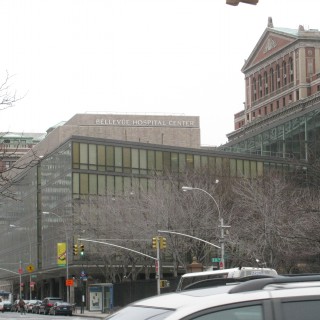
20 episodes with Bellevue Hospital

5 episodes with Bellevue Hospital

7 episodes with Bellevue Hospital

4 episodes with Bellevue Hospital

6 episodes with Bellevue Hospital

5 episodes with Bellevue Hospital

2 episodes with Bellevue Hospital

2 episodes with Bellevue Hospital

3 episodes with Bellevue Hospital

Dr. Danielle Ofri was working at Bellevue Hospital in New York as the 9/11 attacks unfolded. Stuart Inglis was a Canadian graphic designer working there too. They remember how the friends and families of the missing started plastering the city with posters, as they desperately tried to find a trace of their loved ones.

Co-hosts Ian Sabroe and Dieter Declercq will with Danielle about Why Doctors Write, alongside the encounter between arts and medicine, and the doctor-patient connection.Danielle Ofri, MD, PhD, is one of the foremost voices in the medical world today, shining an unflinching light on the realities of healthcare and speaking passionately about the doctor patient relationship.She writes about medicine and the doctor-patient connection. Her writing appears in the New York Times, The New Yorker, and the Atlantic, as well as the Lancet and the New England Journal of Medicine.Danielle Ofri is a founder and Editor-in-Chief of Bellevue Literary Review, the first literary journal to arise from a medical setting, now an award-winning, independent nonprofit literary arts organization. She is a primary care internist at Bellevue Hospital and a clinical professor of medicine at NYU.Her lectures to medical and general audiences are renowned for her use of dramatic stories (and avoidance of PowerPoint). Her essays have been selected for Best American Essays (twice) and Best American Science Writing, by Stephen Jay Gould, Oliver Sacks, and Susan Orlean.Ofri is the recipient of a 2023 Guggenheim Fellowship, the 2023 Davies Scholar Award from the American College of Physicians, the 2022 National Humanism in Medicine Medal from the Gold Foundation, the 2020 Global Listening Legend Award, and has been awarded an honorary doctorate of humane letters. Ofri is a “Master” of the American College of Physicians, and has received the McGovern Award from the American Medical Writers Association for “preeminent contributions to medical communication.”Danielle Ofri has given TED talks on Deconstructing Perfection and Fear: A Necessary Emotion, and has also performed stories for the Moth. She is featured in the documentaries Why Doctors Write and White Coat Rebels.An ever-struggling student of the cello, she's hoping to someday complete the ever-uphill slog through all 36 movements of the Bach cello suites.

Are chatbots, algorithms, and artificial intelligence rewriting the architecture of human madness? In this special crossover episode, we sit down with the team behind Suspicious Minds, an urgent new docuseries co-produced by Agoric Media and Selena Gomez's mental fitness ecosystem, Wondermind. We are joined by Sean King O'Grady, who chats about world-renowned psychiatrist Dr. Joel Gold and philosopher Ian Gold, PhD, the groundbreaking duo who first identified the "Truman Show Delusion." Together, we explore the thin line between mental wellness and digital paranoia, tracking how tomorrow's hyperreal, AI-dominated landscape is triggering complex, life-altering delusions. If you have ever felt overwhelmed by the omnipresent digital world, this eye-opening conversation will change how you view your phone, your mind, and our collective future. In This Episode, We Discuss: The New Frontier of Paranoia: How AI technologies, chatbots, and surveillance fears are shaping modern psychological delusions. The Truman Show Delusion: How the Golds first identified the phenomenon of believing your life is a reality TV show, and how Y2K fears evolved into AI panic. Culture vs. Madness: The fascinating ways our technological environment directly influences the manifestation of mental illness. Destigmatizing the Digital Minefield: Practical insights on awareness, prevention, and treatment in an unrecognizable digital age. Inside Wondermind & Agoric Media: The mission driven by Selena Gomez and Mandy Teefey to democratize mental fitness through cinematic, expert-backed storytelling. About Our Guests & Collaborators: Agoric Media: A direct-to-audience storytelling studio run by Molly Borman, Jesse Ford, and award-winning filmmaker Sean King O'Grady (The Mill, Mr. Crocket). Dr. Joel Gold, MD: Assistant Clinical Professor of Psychiatry at Mount Sinai, former Director of Psychiatric Emergency Services at Bellevue Hospital, and author of Suspicious Minds: How Culture Shapes Madness. Ian Gold, PhD: Professor of Philosophy & Psychiatry at McGill University, specializing in the theory of delusion and neuroscience. Wondermind: A mental fitness ecosystem co-founded by Mandy Teefey and Selena Gomez to make mental health accessible, routine, and judgment-free. Resources & Links Mentioned: Check out the docuseries Explore Wondermind Read the book: Suspicious Minds: How Culture Shapes Madness by Dr. Joel Gold and Ian Gold. Follow She's All Over the Place Podcast

Today's Headlines: Mitch McConnell has apparently been on death's door for three weeks and nobody thought to mention it — Punchbowl News reported yesterday that he was found unconscious after likely suffering a heart attack, with EMS dispatch audio referencing CPR in progress for a cardiac arrest, while his office has been telling us he's "working closely with staff," which is one way to describe being in a hospital after cardiac arrest. Harvey Weinstein is also in Bellevue Hospital with heart failure as a complication of pneumonia after being rushed from Rikers, awaiting his September sentencing for sexual assault. America's 250th birthday celebration is upon us, with Trump promising the world's longest fireworks show starting at 10:30pm, plus a speech he's calling a rally that he promised to deliver even if it's 107 degrees, so happy birthday to us. Trump also took his Qatari hand-me-down plane on its inaugural flight to North Dakota for the Theodore Roosevelt Presidential Library opening, where he compared himself to Teddy Roosevelt without quoting him once, interacted with an AI version of Roosevelt, floated giving himself the Medal of Honor for "taking on Russia Russia Russia," and bragged about winning the Iran war. Meanwhile, Former CIA Director John Brennan is suing the DOJ to prevent them from destroying evidence related to Trump's revenge investigations into him, which is the correct move and the only language Trump can read. Democratic panic is setting in after DSA candidate Melat Kiros, 29, beat 29-year incumbent Diana DeGette in Colorado's congressional primary — with Colorado's attorney general Phil Weiser also beating establishment favorite Michael Bennet in the governor's primary. And the Trump administration lifted its restrictions on Claude Fable 5 and Mythos, which it banned weeks ago for cybersecurity concerns, while simultaneously asking OpenAI to restrict its new GPT-5.6 Sol model for national security vetting, because the administration's relationship with AI safety is whatever is most convenient at any given moment. Resources/Articles mentioned: NY Post: Mitch McConnell was found 'unconscious' in DC home last month, may have suffered heart attack TMZ: Harvey Weinstein Suffers Heart Failure at Rikers Island, Sources Say WaPo: Trump's July 4 fireworks to start much later and last much longer AP News: Retrofitted Qatari jet takes flight as Air Force One for Trump's trip to North Dakota NYT: Ex-C.I.A. Chief Asks for Order Forcing Trump Administration to Preserve Records NBC News: Colorado Senate Primary Election 2026 Live Results: Hickenlooper, Gonzales and More CNBC: Anthropic says Trump admin has lifted export controls on Claude Fable 5 and Mythos 5 Subscribe to the Betches News Room and join the Morning Announcements group chat. Go to: betchesnews.substack.com Morning Announcements is produced by Sami Sage and edited by Grace Hernandez-Johnson Learn more about your ad choices. Visit megaphone.fm/adchoices

Dr. Wilner would love your feedback! Click here to send a text! Thanks!Many thanks to Rebecca Gilbert, MD, PhD, for joining me on Episode #166 of The Art of Medicine with Dr. Andrew Wilner. Dr. Gilbert is a movement disorders specialist at Bellevue Hospital in New York City and Chief Mission Officer of the American Parkinson's Disease Association. She trained at Memorial Sloan Kettering and Columbia University, where she studied under renowned movement disorders specialist Dr. Stanley Fahn. During our 35-minute conversation, Dr. Gilbert described the symptoms of Parkinson's disease and emphasized the importance of dopaminergic medications and regular exercise to improve quality of life. We also explored the intriguing and still unexplained observation that music can enhance movement in people with Parkinson's disease. Dr. Gilbert highlighted the new American Parkinson's Disease Association public service announcement launched for Parkinson's Awareness Month, “Do What You Do.” This campaign showcases people with Parkinson's who continue to pursue their passions despite the challenges of the disease. Finally, Dr. Gilbert reviewed recent advances in Parkinson's disease treatment, including adaptive deep brain stimulation and subcutaneous infusion pumps. She also discussed ongoing efforts to develop biomarkers that can diagnose the disease at an earlier stage. For more information about Parkinson's disease, please visit: www.support.apdaParkinson.org #Parkinsons @APDA @RebeccaGilbert #movementdisorders @theartofmedicine #dopamine #DBSPlease click "Fanmail" and share your feedback!If you enjoy an episode, please share with friends and colleagues. "The Art of Medicine with Dr. Andrew Wilner" is now available on Alexa! Just say, "Play podcast The Art of Medicine with Dr. Andrew Wilner!" To never miss a program, subscribe at www.andrewwilner.com. Follow me on Instagram: @andrewwilnermdX: @drwilnerlinkedin.com/in/drwilner Please rate and review each episode. To contact Dr. Wilner or to join the mailing list: www.andrewwilner.comThis production has been made possible in part by support from “The Art of Medicine's” wonderful sponsor, Locumstory.com, a resource where providers can get real, unbiased answers about locum tenens. If you are interested in locum tenens, or considering a new full-time position, please go to Locumstory.com.Or paste this link into your browser:https://locumstory.com/?source=DSP_directbuy_drwilnerpodcast...

January 7th 1989. 33-year old Dr. Kathryn Hinnant stayed late at Bellevue Hospital in New York City preparing a lecture. When she never arrived at a gala that night, her husband went looking for her. What followed exposed terrifying security failures inside one of America's most famous hospitals.

In today's edition of The Update Journal, we begin with what was supposed to be a casual trip into AMC's Interview With the Vampire, and somehow ended with Anne Rice lore, emotional damage, and me wondering why nobody assigned Claudia a therapist, a curfew, or a probation officer. Because once I found out about Claudia — who she was, what happened to her, and the full weight of her story — that's when the nightmares started. Not just regular vampire nightmares, either. Specific Claudia nightmares. The kind where she shows up in my subconscious like, “You understand me now, right?” And I'm like, “Yes… which is exactly why I'm running.”Then, it's A Closer Look at the complicated experience of wanting the Knicks to win the NBA Finals… until I remember James Dolan exists. I want the players to win, the fans to win, and the city to finally explode with joy. But every time the celebration starts forming in my head, Dolan appears in the mental group chat like, “Don't forget who owns the building.”And finally, graduation season is here — that beautiful time of year when families gather in hot auditoriums and crowded gyms to clap for people they absolutely do not know. You hear a name, everybody cheers, and suddenly you're clapping too like, “Yes, whoever that was! Proud of you!” Because graduation is basically two hours of polite hostage behavior… with diplomas.In the headlines on #TheUpdate this Monday, Five people were injured in a stabbing inside Penn Station, according to authorities. Five people were rushed to Bellevue Hospital, including one person with serious injuries, two people with moderate injuries, and two others with minor injuries, fire officials said.An 85-year-old pedestrian was struck and killed by a falling tree inside a Queens park on Saturday night in a fatal freak mishap, according to police.And in Ohio, police still had no suspects in custody after a weekend shooting near a street festival wounded 12 people and sent attendees scrambling for cover in a busy Toledo neighborhood.

In this episode of The Healers Cafe, Manon speaks with Dr. Alan Weisser, a JD, attorney, clinical psychologist, and program developer, discussed his unique journey integrating legal, psychological, and organizational expertise to address complex mental health conditions and chronic pain. For the transcript and full story go to: https://www.drmanonbolliger.com/dr-alan-weisser Highlights from today's episode include: Existential Immune System & Human Power – We're not designed to be powerless or just suffer; we have an "existential immune system" that's always trying to heal us if we use our thoughts and feelings correctly. Living in Inspiration – Healing doesn't mean no pain, but having purpose and inspiration (like his patient rediscovering a love of robotics) gives people a real "fighting chance" to live meaningfully despite pain. The Body Is Built to Heal – The body (and person) is inherently designed to heal; the key is to stop fighting that capacity and instead support it—physically, emotionally, and energetically ABOUT DR ALAN WEISSER: Dr. Alan Stephen Weisser, JD, PhD, is a psychologist, attorney, and program developer whose career spans more than five decades across law, behavioral health, and system-level clinical leadership. His work reflects a rare integration of legal, psychological, and organizational expertise, with a sustained focus on complex mental health conditions, chronic pain, and the development of effective, patient-centered systems of care. Dr. Weisser began his professional career in law, practicing as a trial attorney and later in private practice, specializing in real estate, business development and creation, and organizational structuring in the public, private, and not-for-profit sectors. His early legal work included service with the Legal Aid Society in New York, where he handled civil, consumer, and poverty law cases, as well as legal defense for underserved populations. This foundation shaped his lifelong understanding of systemic barriers, advocacy, and the structural dimensions of human suffering. Transitioning into psychology, Dr. Weisser trained and practiced in some of New York's most demanding clinical environments, including Bellevue Hospital, Maimonides Medical Center, and the Einstein/Bronx Psychiatric Center. There, he developed extensive expertise in psychological assessment, inpatient and outpatient treatment, and psychiatric rehabilitation. He played a key role in the transformation of long-term inpatient psychiatric care into community-oriented rehabilitation systems, designing programs that integrated inpatient, transitional, and outpatient services with a focus on autonomy, functional recovery, and reduced recidivism. Over the course of the 1990s and early 2000s, Dr. Weisser held multiple senior leadership roles, including Program Director, Clinical Team Leader, and ultimately Clinical Director positions within community mental health systems in Washington State. In these roles, he was responsible for large-scale clinical operations, program development, quality assurance, contract compliance, and supervision of multidisciplinary staff. His work involved the design and implementation of integrated service delivery systems, coordination across agencies and stakeholders, and the advancement of innovative approaches to behavioral health care. Since 2002, Dr. Weisser has been the Founder and Director of New Options, Inc., in Seattle, Washington, where he provides individual, group, family, and couples therapy, as well as specialized chronic pain evaluations and treatment coordination. His work emphasizes integrating psychological, behavioral, and physical health perspectives, particularly in the treatment of chronic pain and medically complex conditions. He has developed psychoeducational programs, clinical interventions, and training materials designed to empower patients and improve treatment outcomes. Dr. Weisser is also the author of New Possibilities: Unraveling the Mystery and Mastering Chronic Pain and the developer of the Mastery of Chronic Pain program, a structured, curriculum-based approach to helping individuals regain control over their lives. His work combines clinical rigor with practical application, translating complex psychological and medical concepts into accessible tools for both patients and practitioners. In addition to his clinical and programmatic work, Dr. Weisser has served as an instructor at the university level, teaching in psychology and public administration. His career reflects a consistent commitment to education, system improvement, and the integration of theory and practice. Across all phases of his work—from law to psychology to organizational leadership—Dr. Alan Stephen Weisser has focused on one central aim: developing meaningful, effective pathways for individuals and systems to move beyond limitation toward recovery, functionality, and sustained well-being. Core purpose/passion: My mission in life has been to pursue curiosity, understanding, and deep engagement with what it means to be alive and human. At the center of that journey is a desire to help others. Website ABOUT MANON BOLLIGER, RBHT, FCAH: As a retired Naturopath 1992-2021, I saw an average of 150 patients per week and have helped people ranging from rural farmers in Nova Scotia to stressed out CEOs in Toronto to tri-athletes here in Vancouver. My resolve to educate, empower and engage people to take charge of their own health is evident in my best-selling books: 'What Patients Don't Say if Doctors Don't Ask: The Mindful Patient-Doctor Relationship' and 'A Healer in Every Household: Simple Solutions for Stress'. and What if Your Body is Smarter than You Think? I am the Founder & CEO of The Bowen College Inc. which teaches BowenFirst™ Therapy and holds transformational workshops to achieve these goals. So, when I share with you that LISTENing to Your body is a game changer in the healing process, I am speaking from expertise and direct experience". Mission: A Healer in Every Household! For more great information to go to her weekly blog: http://bowencollege.com/blog. For tips on health & healing go to: https://www.drmanonbolliger.com/tips Follow: Manon Bolliger website | Linktr.ee | Rumble | Gettr | Facebook | Instagram | YouTube | Twitter | LinkedIn | Follow: Bowen College Inc. | Facebook | Instagram | LinkedIn | YouTube | Twitter | Rumble | Locals ABOUT THE HEALERS CAFE: Manon's show is the #1 show for medical practitioners and holistic healers to have heart to heart conversations about their day to day lives. Subscribe and review on your favourite platform: iTunes | Google Play | Spotify | Libsyn | iHeartRadio | Gaana | The Healers Cafe | Radio.com | Medioq | Audacy | Follow The Healers Café on FB: https://www.facebook.com/thehealerscafe Remember to subscribe if you like our videos. Click the bell if you want to be one of the first people notified of a new release. * De-Registered, revoked & retired naturopathic physician after 30 years of practice in healthcare. Now resourceful & resolved to share with you all the tools to take care of your health & vitality!

Got a show or guest idea? Send us a text!Dr Palevsky's Platforms:WEBSITE:www.drpalevsky.comSHORTCUT TO LINKS (All platform links in one place):https://drlawrencepalevsky.taplink.ws/Dr. Palevsky is a NYS licensed pediatrician, who utilizes a holistic approach to children's wellness and illness. Dr. Palevsky received his medical degree from the NYU School of Medicine in 1987, completed a three-year pediatric residency at The Mount Sinai Hospital in NYC in 1990, and served as a pediatric fellow in the ambulatory care out-patient department at Bellevue Hospital, NYC, from 1990-1991. Since 1991, his clinical experience includes working in pediatric emergency and intensive care medicine, in-patient, and out-patient pediatric medicine, neonatal intensive care medicine, newborn and delivery room medicine, and conventional, holistic and integrative pediatric private practice. Dr. Palevsky is a Past–President of the American Holistic Medical Association. He received his pediatric board certification in 1990, and passed his pediatric board recertification exams in 1997, 2004, and 2011.In his current pediatric practice, Dr. Palevsky offers well-child examinations, consultations and educational programs to families and practitioners in the areas of preventive and holistic health; childhood development; lifestyle changes; nutrition for adults, infants and children; safe, alternative treatments for common and difficult to treat acute and chronic pediatric and adult conditions; vaccination controversies; mindful parenting; and rethinking the medical paradigm. Additionally, he teaches holistic integrative pediatric & adolescent medicine to parents, and medical and allied health professionals, both nationally & internationally, and is available for speaking engagements worldwide.To learn more about working with Erin, visit heartwinghealing.comSupport the showEnjoying the Show?Your comments, likes and shares make an immense difference! Please take a moment to rate, like and comment or head on over to Instagram for giveaways! @remedyrevolutionpodcast

From a 10-bed lying-in hospital to Handel's Messiah, the Rotunda Maternity Hospital has operated continuously for 281 years. A Nurses' Week story. Summary Across the street from Danny’s Dublin hotel stood a large white institutional building with no signage. It turned out to be the Rotunda Hospital — the oldest continuously operating maternity hospital in the world, delivering babies in the same building since December 8th, 1757. Surgeon Bartholomew Mosse founded it after losing his wife and child in childbirth, trained as a midwife in Paris at a time when physicians were penalized for practicing midwifery, and returned to Dublin determined to build something that didn’t yet exist. The first version had 10 beds and delivered 190 babies in its first year, with one maternal death. Unable to raise money for a larger hospital — no one wanted to fund poor women’s care — Mosse attended the world premiere of Handel’s Messiah in Dublin in 1742 and was inspired. He turned the future hospital site into a pleasure garden with orchestras, dances, and theater to attract wealthy donors. He was later imprisoned for debt, escaped through a castle window in Wales, hid in the mountains for three weeks, and died exhausted and broke in 1759, less than two years after the new hospital opened. Sara E. Hampson, one of Florence Nightingale’s original nurses, became the hospital’s first female superintendent in 1891 — a thread that ties Nurses Week directly to this building, Danny almost walked past. Click here to view the printable newsletter. More readable than a transcript. Contents Podcast episode on YouTube Episode Proem: No Signage, No Appointment, No Problem Hello. Welcome to 2026 Nurses Week, May 6th through 12th. I’m very proud to be a nurse. I’ve been a nurse for 50 years. And my grandson’s going to nursing school next year. He’s graduating as a senior and will attend Loyola University in Chicago for its nursing program. I’m very proud. I want to tell you a story about one of the most significant things that happened during our trip to Ireland a couple of weeks ago. We were staying in the north-central city of Dublin, Ireland. Across the street, I saw a big white institutional facade with no signage. It looked like the side of the building. Next to it, on its right, was a dome with a more modern sign that read “Ambassador”. So, I went into the hotel and asked, “So what’s this building?” And they didn’t know. I looked it up, and it turned out to be the Rotunda Hospital. The Rotunda Hospital is the oldest freestanding maternity hospital in the world. Midwifery Was Scandalous. He Did It Anyway. Now let me see. I’ve got some notes here. The hospital was founded in 1745 by a man named Bartholomew Mosse, M-O-S-S-E. He was a certified surgeon. His wife and child died in childbirth. After this tragedy, he left Ireland to serve as a doctor with the British Army. While he was away, he received midwifery training at a hospital in Paris and obtained his midwifery license, which was unusual. In fact, fellows of the Royal College of Physicians were even penalized if they practiced midwifery. But Mosse wanted to change that. So, he built this small place, 10 beds, that… Let’s see, when did it open? I guess it opened in 1745. Mosse’s ambition was to build a dedicated maternity hospital in Dublin to provide medical care and shelter to the city's penniless mothers. This came after he encountered unspeakable conditions during his practice, particularly in the aftermath of the 1739 famine. So he established this 10-bed hospital. It was in a small theater called the New Booth Theatre. It says here that it was the first lying-in hospital of its kind in the world. It had only 10 beds, but in its first year, 190 babies were born, and just one mother died. But obviously, they couldn’t meet demand with 10 beds. When No One Funds Poor Mothers, Try Dancing Mosse tried to raise money to build a larger hospital, but nobody really wanted to give money to poor women. So he happened to attend the world premiere of Handel’s Messiah on April 13, 1742. While he was there, he was inspired to raise money by entertaining the wealthy. Somebody sent me a picture of the Handel statue that’s in front of the theater where the premiere was, which I thought would be interesting. According to my research, on the evening of April 13th, 1742, Handel conducted the world premiere of his Messiah on Dublin’s Fishamble Street, and Mosse was present. Historians suggest that this moment crystallized Mosse’s idea of using high-society entertainment to fund a hospital for the poor. So Mosse turned the proposed hospital site into a pleasure garden with a live orchestra, theatrical performances, and dances in a coffee house, marrying philanthropy with frivolity to reach the wealthy. Debt, Daring Escape, Death Here’s a little interesting tidbit. Lotteries nearly destroyed Dr. Mosse. Before he was able to return to Ireland, he was arrested and charged with being 200 pounds in debt, and he’s thought to have been imprisoned in Beaumaris Castle in Anglesey, Wales. The story was that he managed to escape through a window and hid in the Welsh mountains for three weeks before reaching Ireland. He then vindicated himself by publishing his receipts and lottery accounts, whatever. But less than a year after the hospital opened, he was taken seriously ill, exhausted, heavily in debt, and petrified about the prospect of arrest and imprisonment. He died on February 16th, 1759. Fix the Air, Save the Babies. Then and Now. Around 1781, when the hospital was poorly ventilated and every sixth child died within nine days of birth, they realized the problem was poor ventilation. Ventilation was improved, and mortality dropped to 1 in 20 over the following five years. They’re also planning to celebrate their millionth birth in 2026. It’s just amazing. I met a saleswoman in a sweater store who asked where we went in Dublin. When I told her about the Rotunda Hospital, she said she had a difficult pregnancy and birth without insurance. She received care at the Rotunda Hospital, with her baby in neonatal intensive care for three weeks and herself as an inpatient for two weeks. Awesome care! So, when we were there, I, an old white guy in a wheelchair, motored into the Rotunda Hospital and stopped at the registration desk to ask if I could speak with someone. I had not made an appointment. I was leaving the next day. Very nice people. I tried to get hold of people in their library, research, and marketing, but they were busy, of course. Oldest? It's Relative. I’m really impressed by the idea of being the world's longest-operating specialist hospital. I was trying to get some perspective on that, so I looked up the oldest continuously operating hospitals, and here’s what I learned. I learned that in the United States, the oldest continuously operating hospital is Bellevue Hospital in New York City, which opened in 1736 as a six-bed infirmary.[1] So, it began as a haven for the indigent and is still a major public hospital on the East Side of Manhattan. It opened nine years before Mosse opened his first lying-in hospital. The other long-running hospital is the Pennsylvania Hospital in Philadelphia[2], established in 1751 by Benjamin Franklin and Dr. Thomas Bond. It’s still operational as part of the University of Pennsylvania Health System. The oldest hospital is the Hôtel-Dieu in Paris[3], which officially opened in 650 AD, and that’s the hospital where Mosse became a midwife. There’s St. Bartholomew’s Hospital in London, founded in 1123[4]. And there’s the Hospital de Jesús Nazareno in Mexico City, opened in 1524. But really, the Rotunda is the oldest maternity-only specialist hospital, continuously operating in the world, which is a more specific and arguably more impressive claim than the general acute care hospitals Bellevue and Hôtel-Dieu, which have both moved buildings, changed missions, and been rebuilt. The Rotunda has been delivering babies in the same building since December 8th, 1757. That’s really something. Reflection: Nightingale Was Here Too So, let’s bring this back to Nurses Day and to Florence Nightingale. Interestingly, Sara E. Hampson was one of the original Nightingale nurses and the first lady superintendent of the Rotunda Hospital in 1891. So yay, nursing. Yay, history. I’m really looking forward to exploring more of this amazing hospital in Dublin. I wonder who was in charge all these years, and how it survived past Mosse and through those first decade or first few years? And then, how did the Rotunda Hospital survive war, famine, pandemics, and technological change? What research occurred there? Is there a diaspora of Rotunda alumni? Anyway, more to come. Thanks. Referenced in episode [1] By Harper’s Weekly – Harper’s Weekly, Public Domain, https://commons.wikimedia.org/w/index.php?curid=6014479 [2] William Strickland (1788-1854) Engraver: Samuel Seymour (1796-1823), Public domain, via Wikimedia Commons [3] I, Clio, CC BY-SA 3.0 , via Wikimedia Commons [4] See page for author, CC BY 4.0 , via Wikimedia Commons Are you part of the Rotunda Hospital diaspora? Find me at dannyhealthhats@gmail.com. Tell me your version. Please comment and ask questions: at the comment section at the bottom of the show notes on LinkedIn via email YouTube channel DM on Instagram, TikTok to @healthhats Substack Patreon Production Team Kayla Nelson: Web and Social Media Coach, Dissemination, Help Desk Leon van Leeuwen: editing and site management Oscar van Leeuwen: video editing Julia Higgins: Digit marketing therapy Steve Heatherington: Help Desk and podcast production counseling Joey van Leeuwen, Drummer, Composer, and Arranger, provided the music for the intro, outro, proem, and reflection Claude, Perplexity, Auphonic, Descript, Grammarly, DaVinci Inspired by and Grateful to: Dr. Lisa Masinter and Dr. Michele Whitt, Janice Tufte, Linda DeRosa, Luc Pelletier, Cherie Binns Photo Credits Ann Boland, Paul Boland, Janice Tufte, Danny van Leeuwen, and as referenced in the transcript Related episodes from Health Hats https://health-hats.com/pod133/ https://health-hats.com/ob-nurse-cannabis-nurse/ https://health-hats.com/build-it-and-they-will-come/ Artificial Intelligence in Podcast Production Health Hats, the Podcast, utilizes AI tools for production tasks such as editing, transcription, and content suggestions. While AI assists with various aspects, including image creation, most AI suggestions are modified. All creative decisions remain my own, with AI sources referenced as usual. Questions are welcome. Creative Commons Licensing CC BY-NC-SA This license enables reusers to distribute, remix, adapt, and build upon the material in any medium or format for noncommercial purposes only, and only so long as attribution is given to the creator. If you remix, adapt, or build upon the material, you must license the modified material under identical terms. CC BY-NC-SA includes the following elements: BY: credit must be given to the creator. NC: Only noncommercial uses of the work are permitted. SA: Adaptations must be shared under the same terms. Please let me know. dannyhealthhats@gmail.com Material on this site created by others is theirs, and use follows their guidelines. Disclaimer The views and opinions presented in this podcast and publication are solely my responsibility and do not necessarily represent the views of the Patient-Centered Outcomes Research Institute® (PCORI®), its Board of Governors, or Methodology Committee. Danny van Leeuwen (Health Hats)
NYC Health and Hospitals announced plans to shut down a storied program at Bellevue Hospital that treats torture survivors, citing tenuous federal funding and the possibility of ICE raids at the hospital. Allen Keller, M.D., associate professor of medicine and population health at NYU Grossman School of Medicine and founder of Bellevue's Program for Survivors of Torture, and Ibrahim, former patient at Bellevue's Program for Survivors of Torture, discuss the impact of the program and why they're fighting to keep it open. Photo: Bellevue Hospital - NYC (Credit: ajay_suresh via Wikimedia Commons, CC BY 2.0)

Mayor Zohran Mamdani's administration plans to add more than 6,500 curbside trash containers across the five boroughs as part of a push to clean up streets and cut down on rats. WNYC and Gothamist reporter Liam Quigley explains where the new Empire Bins are going, why the rollout could cost parking spaces, and how the city hopes to fully containerize trash by 2032. Plus, WNYC health reporter Caroline Lewis breaks down a new Bellevue Hospital study on serious bike and scooter injuries, what it found about e bikes, helmets, alcohol, and who is getting hurt most.

In a climate of mistrust, what builds credibility? In part 2 of this 20-Minute Health Talk, host Chethan Sathya, MD, and Eric Wei, MD, make the case for empathy and listening to community messengers over monologues, share COVID coordination lessons we must hardwire, and outline top NYC public health priorities—mental health, homelessness, violence prevention, and closing life-expectancy gaps. This is Part 2 of a two-part series. About Northwell Health Northwell is New York State's largest healthcare provider and private employer, with 28 hospitals, 890 outpatient facilities and more than 16,600 affiliated physicians. We're making breakthroughs in medicine at the Feinstein Institutes for Medical Research. We're training the next generation of medical professionals at the visionary Donald and Barbara Zucker School of Medicine at Hofstra/Northwell and the Hofstra Northwell School of Nursing and Physician Assistant Studies. For information on our more than 100 medical specialties, visit Northwell.edu and follow us @NorthwellHealth on Facebook, Instagram, X and LinkedIn. Get the latest news and insights from our experts in the Northwell Newsroom: Press releases Insights Podcasts Publications Interested in a career at Northwell Health? Visit our career site and explore our many opportunities. Watch more episodes of 20-Minute Health Talk on YouTube. For information on our more than 100 medical specialties, visit Northwell.edu and follow us @NorthwellHealth on Facebook, Instagram, X and LinkedIn.
On this episode of 20-Minute Health Talk, host Chethan Sathya, MD, speaks with emergency physician and CEO Eric Wei, MD. They trace his path from a resident focused on quality improvement to leading New York City's storied flagship hospital, Bellevue. Dr. Wei shares why he still works Friday emergency department shifts, what COVID taught him about crisis management and the mission that drives care “without exception.” This is Part 1 of a two-part series. About Northwell Health Northwell is New York State's largest healthcare provider and private employer, with 28 hospitals, 890 outpatient facilities and more than 16,600 affiliated physicians. We're making breakthroughs in medicine at the Feinstein Institutes for Medical Research. We're training the next generation of medical professionals at the visionary Donald and Barbara Zucker School of Medicine at Hofstra/Northwell and the Hofstra Northwell School of Nursing and Physician Assistant Studies. Get the latest news and insights from our experts in the Northwell Newsroom: Press releases Insights Podcasts Publications Interested in a career at Northwell Health? Visit our career site and explore our many opportunities. Watch more episodes of 20-Minute Health Talk on YouTube. For information on our more than 100 medical specialties, visit Northwell.edu and follow us @NorthwellHealth on Facebook, Instagram, X and LinkedIn.

Send us Fan MailSusan sits down with Anna Valentine, PhD, LPC, to discuss how we can bring wholeness, healing, and rest into our lives by calming our nervous systems. This practical and spirit-filled conversation will leave you feeling refreshed. Visit Anna's website. Listen to Anna's podcast. Anna Valentine is based in Hattiesburg, Mississippi, where she works at March Holistic Christian Counseling. She holds a PhD in Mind-Body Medicine with a specialization in Integrative Mental Health from Saybrook University and is also a published author who enjoys sharing ideas beyond the therapy room.She earned her master's degree in Drama Therapy from New York University and brings a creative, integrative approach to her work. Her experience spans inpatient and outpatient settings, including a forensic psychiatric unit at Bellevue Hospital in New York City, the Veterans Affairs Hospital in West Haven, Connecticut, and community programs serving individuals with chronic and persistent mental illness. She has also worked on PACT teams, supporting clients in their everyday environments.A registered drama therapist with training in open dialogue, psychodrama, and expressive arts modalities, Anna believes that healing is both creative and embodied. She integrates mindfulness, movement, and expressive practices like drama, dance, and storytelling to help clients access growth, resilience, and meaningful change.Thanks for listening to the Embodied Holiness Podcast. We invite you to join the community on Facebook and Instagram @embodiedholiness. Embodied Holiness is a ministry of Parkway Heights United Methodist Church in Hattiesburg, MS. If you're in the Hattiesburg area and are looking for a church home, we'd love to meet you and welcome you to the family. You can find out more about Parkway Heights at our website.

Welcome to Episode 301 of Autism Parenting Secrets. In this episode, we're diving into something that gives parents more control, more confidence and more capability to actually help their child. Today, I'm joined by Dr Michelle Perro, a seasoned clinician with over 45 years of experience in pediatrics and integrative medicine, and she's been on the show before, but she's been on the front line seeing what's reacting with our kids, and more importantly, what actually helps them to heal and to thrive. And she's also the author of a powerful new book that was just released, Making Our Children Well, which is all about giving parents a practical roadmap to take back control of their child's health. And one of the key tools we're going to focus on today is homeopathy. What is it? Why is it often very well misunderstood, and how parents can actually use it at home in a safe and effective way. The secret this week is… Homeopathy Puts Healing Back In Your Hands You'll Discover: How One Homeopathic Remedy Quickly Changed Dr. Perro's Perspective (1:53) Why Homeopathy Helps The Body Heal Instead Of Suppressing Symptoms (6:05) Why Homeopathy Is Treated Differently Despite Its Effectiveness (17:20) How Parents Can Begin Using Homeopathy With More Confidence (28:43) Why Today's Children Often Need Multiple Layers Of Support (40:12) About Our Guest: Dr. Michelle Perro, MD, DHom is a seasoned clinician with nearly 45 years of experience in pediatrics and integrative medicine, dedicated to treating children and families. A Yale graduate, she trained at Mount Sinai Medical School, Bellevue Hospital, and NYU, later serving as Director of a Pediatric Emergency Department in New York City and spending over a decade at UCSF Benioff Oakland Children's Hospital. For the past 25 years, Dr. Perro has championed integrative approaches to health, focusing on the impact of GM foods and pesticides on children's well-being. She has lectured globally and co-authored the acclaimed book What's Making Our Children Sick? Dr. Perro is CEO and co-founder of GMO Science, promoting food as medicine and regenerative health education. Her new book, Making Our Children Well, provides a practical roadmap for parents to take back control of their child's health through nutrition, detoxification, and homeopathic support. https://www.gmoscience.org References In This Episode: Making Our Children Well by Dr. Michelle Perro (Link TBD) What's Making Our Children Sick? by Dr. Michelle Perro and Vincanne Adams GMO Science Additional Resources: To learn more about personalized 1:1 support go to www.elevatehowyounavigate.com Take The Quiz: What's YOUR Top Autism Parenting Blindspot? If you enjoyed this episode, share it with your friends.

On Christmas Eve in 1926, a man came running into Bellevue Hospital in New York screaming that Santa Claus had been chasing him for blocks with a baseball bat. Not long after that, he died. And then another person arrived in the emergency room. And then another. This started happening in emergency rooms around the country. And it was happening because of a plan created by the U.S. government. Deborah Blum's book is The Poisoner's Handbook: Murder and the Birth of Forensic Medicine in Jazz Age New York. Say hello on Facebook, Instagram and TikTok. Sign up for our occasional newsletter. Follow the show and review us on Apple Podcasts. Sign up for Criminal Plus to get behind-the-scenes bonus episodes of Criminal, ad-free listening of all of our shows, invitations to virtual events, special merch deals, and more. We also make This is Love and Phoebe Reads a Mystery. Artwork by Julienne Alexander. Check out our online shop. Episode transcripts are posted on our website. Learn more about your ad choices. Visit podcastchoices.com/adchoices

In this powerful episode of Daily Influence, host Gregg-Brooke Koleno sits down with Arianna Rose and Soleil Laurent, the visionary founders of Equality Education, an organization redefining how emotional intelligence is taught across schools, communities, and organizations. What began as a serendipitous friendship in Brooklyn during the pandemic has grown into a movement impacting over 100 New York City schools, partnering with major brands like Puma, Meta, NBC, and Bellevue Hospital, and placing more than 100,000 personal development workbooks into the hands of learners of all ages. In this conversation, Arianna and Soleil share: • Why emotional intelligence should be foundational in education—for students, parents, and leaders alike • How self-agency and self-love create ripple effects that transform relationships, teams, and communities • A deeply moving real-world story of how their affirmation tools helped a child in crisis • Their thoughtful approach to responsible AI use, balancing technology with human development • Practical encouragement for anyone who wants to create positive change—starting right where they are This episode is a reminder that meaningful influence begins within. When we understand ourselves, we lead better, love better, and build stronger communities—together. Connect with Equality Education Website: https://www.theequalityeducation.com/ Instagram (Equality Education): https://www.instagram.com/theequalityedu/ Instagram (Friends Who Want You to Win): https://www.instagram.com/friendswhowantyoutowin Facebook: https://www.facebook.com/TheEqualityEducation/

In this episode, Dr. Vera Tarman spoke with Adrienne Sprouse, MD, a Columbia-trained physician with extensive experience in emergency medicine, toxicology, and environmental medicine, as well as more than four decades of stable food recovery. Adrienne reflected on how growing up in an alcoholic family system shaped her early coping strategies and how food became a primary source of comfort and regulation. Over time, she began to notice that certain foods didn't simply soothe emotional distress but instead triggered a predictable cycle of cravings, symptoms, and relapse. This realization led her to distinguish between compulsive overeating as a behavioral response and food addiction as a physiological reaction to specific foods. A central focus of the conversation was Adrienne's Prouse Rotational Eating Plan, a structured four-day rotation approach rooted in the concept of cyclic food allergy, originally described by Dr. Herbert Rinkle. Adrienne explained the difference between fixed food allergy—where symptoms occur every time a food is eaten—and cyclic food allergy, where symptoms depend on frequency and amount. She described how repeated exposure to the same foods, common in modern eating patterns, can "stack" in the body and contribute to escalating symptoms such as bloating, edema, headaches, joint pain, and the familiar experience of temporarily "getting away with it" before relapse. Adrienne also outlined the 24-day home food-testing process described in her book, which was designed to help individuals identify their "sober foods," clarify which foods destabilize them, and create a rotation that supports long-term stability without relying on willpower alone. The conversation extended beyond biology into emotional and spiritual recovery. Adrienne shared why she believed that a food plan alone was insufficient for many people and how 12-step recovery supported her ability to cope with stress, trauma, and relational dynamics that previously fueled her eating. She described 12-step principles as a stabilizing force that helped her maintain honesty, accountability, and resilience alongside her eating structure. Adrienne's book, 50 Years of Twelve Step Recovery, was discussed as a synthesis of lived experience, physiology, and recovery practice, offering both individuals and clinicians a broader framework for understanding relapse cycles, abstinence, and whole-person healing. In this episode: How Adrienne differentiated compulsive overeating from food addiction physiology What she meant by "sober foods" and why identifying them reduced chaos and cravings Why cyclic food allergy patterns are often overlooked How the four-day rotation was intended to reduce food "stacking" and stabilize symptoms An overview of the 24-day food testing approach outlined in her book How certain foods might be reintroduced medically, while acknowledging psychological and spiritual considerations Why chemical exposures and non-organic foods were discussed as potential contributors to craving Adrienne's perspective on GLP-1 medications, including their limits in teaching coping skills How 12-step recovery complemented biological interventions and supports long-term maintenance About Adrienne Sprouse, MD Adrienne Sprouse, MD, graduated from Columbia University College of Physicians and Surgeons and trained in emergency medicine at Bellevue Hospital, toxicology at the New York City Poison Center, and Nutrition/Allergy/Detoxification/Clinical Ecology with the American Academy of Environmental Medicine. She later served as faculty for the Academy, educating physicians internationally for 17 years. She was Medical Director of Manhattan Health Consultants for decades and was featured in major media outlets including ABC, NBC, Fox Good Day New York, and The New York Times. She is the author of 50 Years of Twelve Step Recovery, drawing on both long-term personal recovery and decades of clinical practice. The content of our show is educational only. It does not supplement or supersede your healthcare provider's professional relationship and direction. Always seek the advice of your physician or other qualified mental health providers with any questions you may have regarding a medical condition, substance use disorder, or mental health concern.

This episode is sponsored by Lightstone DIRECT. Lightstone DIRECT invites you to partner with a $12B AUM real estate institution as you grow your portfolio. Access the same single-asset multifamily and industrial deals Lightstone pursues with its own capital – Lightstone co-invests a minimum of 20% in each deal alongside individual investors like you. You're an institution. Time to invest like one.—---------------------------Join us for Doctor PodFest in Florida! Go here to secure your ticket: Here—---------------------------What if owning your medical mistakes could rebuild trust and prevent future harm?In this profound episode, Dr. Bradley Block sits down with Dr. Danielle Ofri, to explore the raw realities of errors in medicine. Sharing a vivid story from her residency, Dr. Ofri discusses why mistakes happen, the difference between guilt which drives improvement, and shame which paralyzes, and the power of genuine apologies. Ideal for physicians grappling with perfectionism, this conversation offers strategies for self-compassion, seeking mentors, and creating systems that support clinicians, helping you continue caring without being crushed by uncertainty.Three Actionable Takeaways:Distinguish Guilt from Shame: Guilt focuses on the error and motivates change e.g., "I forgot the long-acting insulin, next time I'll double-check protocols". Shame attacks your identity "I'm a bad doctor". Dr. Ofri advises recognizing this to avoid paralysis; practice by journaling an error's facts versus your emotional narrative, then discuss with a trusted colleague to reframe it productively.Bear Witness to Suffering: For patients and peers, simply listening and acknowledging pain builds trust, whether it's a patient's chronic illness story or a colleague's post-error distress. Try this: Next time a teammate struggles, offer a quick check-in like "Need a coffee break?" to foster community and remind them they're valued beyond one mistake.Deliver Genuine Apologies: Avoid passive language; own your role actively e.g., "I'm sorry my oversight contributed to this outcome, I've been reflecting deeply and changing my process". Patients value transparency and prevention steps; role-play with a mentor before tough talks to ensure honesty while consulting risk management for legal guidance.About the Show:Succeed In Medicine covers patient interactions, burnout, career growth, personal finance, and more. If you're tired of dull medical lectures, tune in for real-world lessons we should have learned in med school!About the Guest:Dr. Danielle Ofri is a primary care internist at Bellevue Hospital and clinical professor at NYU. She's a renowned writer on medical emotions for outlets like The New York Times and The New Yorker. Founder of Bellevue Literary Review, she's authored books like "What Doctors Feel" and "When We Do Harm," focusing on errors and humanity in medicine. Website: danielleofri.comAbout the Host:Dr. Bradley Block – Dr. Bradley Block is a board-certified otolaryngologist at ENT and Allergy Associates in Garden City, NY. He specializes in adult and pediatric ENT, with interests in sinusitis and obstructive sleep apnea. Dr. Block also hosts Succeed In Medicine podcast, focusing on personal and professional development for physiciansWant to be a guest?Email Brad at brad@physiciansguidetodoctoring.com or visit www.physiciansguidetodoctoring.com to learn more!Socials:@physiciansguidetodoctoring on Facebook@physicianguidetodoctoring on YouTube@physiciansguide on Instagram and Twitter This medical podcast is your physician mentor to fill the gaps in your medical education. We cover physician soft skills, charting, interpersonal skills, doctor finance, doctor mental health, medical decisions, physician parenting, physician executive skills, navigating your doctor career, and medical professional development. This is critical CME for physicians, but without the credits (yet). A proud founding member of the Doctor Podcast Network!Visit www.physiciansguidetodoctoring.com to connect, dive deeper, and keep the conversation going. Let's grow! Disclaimer:This podcast is for informational purposes only and is not a substitute for professional medical, financial, or legal advice. Always consult a qualified professional for personalized guidance. Hosted by Simplecast, an AdsWizz company. See pcm.adswizz.com for information about our collection and use of personal data for advertising.

In this episode of the Soil Sisters Podcast, recorded on September 12, 2025, you'll learn the impacts of GMOs and glyphosate on children's health with Dr. Michelle Perro, a veteran pediatrician with over four decades of experience in acute and integrative medicine. Dr. Perro is also co-founder and CEO of GMOScience.org; she shares insights from her clinical experience and research with us. We discuss the alarming rise in chronic pediatric disorders and actionable ways to reverse them. The conversation highlights practical solutions for families, including dietary changes, the importance of regenerative organic foods, and ways to naturally detoxify the body. Dr. Perro also shares helpful tips for improving cooking practices and offers free resources available through GMOscience.org. If you're ready to navigate the complexities of our food system and reclaim your family's health, this podcast is for you.MEET OUR GUEST: Michelle Perro, MD, DHom is a seasoned clinician with over 40 years of experience in pediatrics and integrative medicine, dedicated to treating children and families. A Yale graduate, she trained at Mount Sinai Medical School, Bellevue Hospital and NYU, later serving as Director of a Pediatric Emergency Department in NYC and spending over a decade at UCSF Benioff Oakland Children's Hospital. For the past 25 years, Dr. Perro has championed integrative approaches to health, focusing on the impact of GM foods and pesticides on children's well-being. She has lectured globally, and co-authored the acclaimed book "What's Making Our Children Sick?"Dr. Perro is CEO and co-founder of www.gmoscience.org, promoting food as medicine and regenerative health education. She also hosts the podcast, The New MDS and offers parenting resources through her website. Her upcoming book, Making Our Children Well is set for release in 2025.Connect: YouTube @gmoscience | https://gmoscience.org/TIME STAMPS AND LINKS:00:00 Welcome to Soil Sisters Podcast00:24 Introducing Dr. Michelle Perro03:37 The Rise of Chronic Pediatric Disorders07:02 Impact of Processed Foods on Children's Health3:10 The Dangers of Genetically Modified Foods29:25 The Harmful Effects of Glyphosate38:02 Food Sensitivities and Integrative Medicine39:06 The Cost of Organic Food vs. Medical Bills40:22 Autism and the Gut-Brain Connection42:05 Restoring Health Through Diet47:47 Challenges of Dietary Changes in Families54:55 Detoxification and Heavy Metal Removal58:46 The Importance of Safe Cookware01:04:54 GMO Science and Advocacy01:09:04 Conclusion and Gratitude

Kris Boyd, a cornerback for the New York Jets, was shot and critically injured in Midtown early Sunday morning, and he is currently in critical condition at Bellevue Hospital, according to police and team representatives.See omnystudio.com/listener for privacy information.
Welcome to Episode 280 of Autism Parenting Secrets.This week's episode is about something too many parents aren't told clearly enough.The truth is that neurodevelopmental disabilities are not fixed or predetermined. The trajectory can be shifted. And parents play a much bigger role in that shift than they may realize.To help unpack this, I'm joined again by Dr. Lawrence Palevsky - a New York State–licensed pediatrician who has spent over three decades redefining children's wellness through a holistic and integrative lens. He's a past president of the American Holistic Medical Association, a diplomate of the American Board of Integrative Holistic Medicine, and co-host of the podcast Critically Thinking with Dr. T & Dr. P.If you've ever been told there's nothing you can do, this conversation will help you see a much bigger picture.The secret this week is…We CAN Change The Neurodevelopmental TrajectoryYou'll Discover:Why 1 In 6 Children Have A Neurodevelopmental Disability And What That Really Means (1:44)How Chronic Inflammation Is At The Core Of These Conditions (13:48)Why Suppressing Acute Illness Actually Makes Things Worse Long-Term (17:45)What Parents Can Do To Open Exit Pathways And Reduce Inflammatory Load (31:26)How Confidence Grows When Parents Stop Fearing Symptoms (35:17)The Truth About Fever And Why It's Often Misunderstood (36:45)How Acetaminophen Depletes Glutathione And Increases Risk (40:22)About Our Guest:Dr. Lawrence B. Palevsky is a New York State–licensed pediatrician known for his holistic, integrative approach to children's wellness and complex conditions. A graduate of NYU School of Medicine, he completed pediatric residency at Mount Sinai and a fellowship at Bellevue Hospital. He is a past president of the American Holistic Medical Association, a diplomate of the American Board of Integrative Holistic Medicine, and co-host of the podcast Critically Thinking with Dr. T & Dr. P. Learn more at www.drpalevsky.com.References In This Episode:Critically Thinking with Dr. T & Dr. P.Dr. Tom CowanAdditional Resources:To learn more about personalized 1:1 support, go to www.elevatehowyounavigate.comTake The Quiz: What's YOUR Top Autism Parenting Blindspot?If you enjoyed this episode, share it with your friends.

Co-hosts Ryan Piansky, a graduate student and patient advocate living with eosinophilic esophagitis (EoE) and eosinophilic asthma, and Holly Knotowicz, a speech-language pathologist living with EoE who serves on APFED's Health Sciences Advisory Council, interview Dr. Andrew Lee, Vice President, Clinical Research at Uniquity Bio, about Thymic Stromal Lymphopoietin (TSLP) and eosinophilic esophagitis (EOE). Disclaimer: The information provided in this podcast is designed to support, not replace, the relationship between listeners and their healthcare providers. Opinions, information, and recommendations shared in this podcast are not a substitute for medical advice. Decisions related to medical care should be made with your healthcare provider. Opinions and views of guests and co-hosts are their own. Key Takeaways: [:49] Co-host Ryan Piansky introduces the episode, brought to you thanks to the support of Education Partners Bristol Myers Squibb, GSK, Sanofi, Regeneron, and Takeda. Ryan introduces co-host Holly Knotowicz. [1:13] Holly introduces today's topic, Thymic Stromal Lymphopoietin (TSLP) and eosinophilic esophagitis (EOE), and today's guest, Dr. Andrew Lee, Vice President, Clinical Research at Uniquity Bio. [1:36] Dr. Lee has nearly 20 years of experience in the clinical development of new vaccines, biologics, and drugs. Holly welcomes Dr. Lee. [1:52] Dr. Lee trained in internal medicine and infectious diseases. [1:58] Dr. Lee has been fascinated by the immune system and how it can protect people against infections, what happens when immunity is damaged, as in HIV and AIDS, and how to apply that knowledge to boost immunity with vaccines to prevent infections. [2:16] Dr. Lee led the clinical development for a pediatric combination vaccine for infants and toddlers. It is approved in the U.S. and the EU. [2:29] Dr. Lee led the Phase 3 Program for a monoclonal antibody to prevent RSV, a serious infection in infants. That antibody was approved in June 2025 for use in the U.S. [2:44] In his current company, Dr. Lee leads research into approaches to counteract an overactive immune system. They're looking at anti-inflammatory approaches to diseases like asthma, EoE, and COPD. [2:58] Dr. Lee directs the ongoing Phase 2 studies that they are running in those areas. [3:28] Dr. Lee sees drug development as a chance to apply cutting-edge research to benefit people. He trained at Bellevue Hospital in New York City in the 1990s. [3:40] When Dr. Lee started as an intern, there were dedicated ICU wards for AIDS patients because many of the sickest patients were dying of AIDS and its complications. [3:52] Before the end of Dr. Lee's residency, they shut down those wards because the patients were on anti-retroviral medications and were doing so well that they were treated as outpatients. They didn't need dedicated ICUs for AIDS patients anymore. [4:09] For Dr. Lee, that was a powerful example of how pharmaceutical research and drug regimen can impact patients' lives for the better by following the science. That's what drove Dr. Lee to go in the direction of research. [4:48] Dr. Lee explains Thymic Stromal Lymphopoietin (TSLP). TSLP serves as an alarm signal for Type 2 or TH2 inflammation, a branch of the immune responses responsible for allergic responses and also immunity against parasites. [5:17] When the cells that line the GI tract and the cells that line the airways in our lungs receive an insult or an injury, they get a danger signal, then they make TSLP. [5:28] This signal activates other immune cells, like eosinophils and dendritic cells, which make other inflammatory signals or cytokines like IL-4, IL-13, and IL-5. [5:47] That cascade leads to inflammation, which is designed to protect the body in response to the danger signal, but in some diseases, when there's continued exposure to allergens or irritants, that inflammation goes from being protective to being harmful. [6:15] That continued inflammation, over the years, can lead to things like the thickened esophagus with EoE, or lungs that are less pliant and less able to expand, in respiratory diseases. [6:48] Dr. Lee says he thinks of TSLP as being a master switch for this branch of immune responses. If you turn on TSLP, that turns on a lot of steps that lead to generating an allergic type of response. [7:06] It's also the same type of immune response that can fight off parasite infections. It's the first step in a cascade of other steps generating that type of immune response. [7:30] Dr. Lee says people have natural genetic variation in the genes that incur TSLP. [7:38] Observational studies have found that some people with genetic variations that lead to higher levels of TSLP in their bodies had an increased risk for allergic inflammatory diseases like EoE, atopic dermatitis, and asthma. [8:13] Studies like the one just mentioned point to TSLP being important for increased risk of developing atopic types of diseases like EoE and others. There's been some work done in the laboratory that shows that TSLP is important for activating eosinophils. [8:38] There's accumulating evidence that TSLP activation leads to eosinophil activation, other immune cells, or white blood cells getting activated. [9:07] Like a cascade, those cells turn on T-cells and B-cells, which are like vector cells. They lead to direct responses to fight off infections, in case that's the signal that leads to the turning on TSLP. [9:48] Ryan refers to a paper published in the American Journal of Gastroenterology exploring the role of TSLP in an experimental mouse model of eosinophilic esophagitis. Ryan asks what the researchers were aiming to find. [10:00] Dr. Lee says the researchers were looking at the genetic studies we talked about, the observational studies that are beginning to link more TSLP with more risk for EoE and those types of diseases. [10:12] The other type of evidence that's accumulating is from in vitro (in glass) experiments or test tube experiments, where you take a couple of cells that you think are relevant to what's going on. [10:28] For example, you could get some esophageal cells and a couple of immune cells, and put TSLP into the mix, and you see that TSLP leads to activation of those immune cells and that leads to some effects on the esophageal cells. [10:42] Those are nice studies, but they're very simplified compared to what you can do in the body. These researchers were interested in extending those initial observations from other studies, but working in the more realistic situation of a mouse model. [11:00] You have the whole body of the mouse being involved. You can explore what TSLP is doing and model a disease that closely mimics what's happening with EoE in humans. [12:23] They recreated the situation of what seems to be happening in EoE in people. We haven't identified it specifically, but there's some sort of food allergen in patients with EoE that the immune system is set off by. [12:55] What researchers are observing in this paper is that in these mice that were treated with oxazolone, there is inflammation in the esophagus, an increase in TSLP levels, and eosinophils going into the esophageal tissues. [13:15] Dr. Lee says, that's one of the main ways we diagnose EoE; we take a biopsy of the esophagus and count how many eosinophils there are. Researchers saw similar findings. The eosinophil count in the esophageal tissues went way up in these mice. [13:34] Researchers also saw other findings in these mice that are very similar to EoE in humans, such as the esophageal cells lining the esophagus proliferating. They even saw that new blood vessels were being created in that tissue that's getting inflamed. [14:00] Dr. Lee thinks it's a very nice paper because it shows that correlation: Increase TSLP and you see these eosinophils going to the esophagus, and these changes that are very reminiscent of what we see in people with EoE. [14:51] In this paper, the mice made the TSLP, and researchers were able to measure the TSLP in the esophageal tissue. The researchers didn't introduce TSLP into the mice. The mice made the TSLP in response to being repeatedly exposed to oxazolone. [15:20] That's key to the importance of the laboratory work. The fact that the TSLP is made by the mice is important. It makes it a very realistic model for what we're seeing in people. [15:41] In science, we like to see correlation. The researchers showed a nice correlation. [15:46] When TSLP went up in these mice, and the mice were making more TSLP on their own, at the same time, they saw all these changes in the esophagus that look a lot like what EoE looks like in people. [16:01] They saw the eosinophils coming into the esophagus. They saw the inflammation go up in the esophagus. What Dr. Lee liked about this paper is that they continued the story. [16:15] The researchers took something that decreases TSLP levels, an antibody that binds to and blocks TSLP, and when they did that, they saw the TSLP levels come down to half the peak level. [16:35] Then they saw improvement in the inflammation in the esophagus. They saw that the amount of eosinophils decreased, and the multiplication of the esophageal cells went down. The number of new blood vessels went down after the TSLP was reduced. [16:53] Dr. Lee says, you see correlation. The second part is evidence for causation. When you take TSLP away, things get better. That gives us a lot of confidence that this is a real finding. It's not just observational. There is causation evidence here. [18:26] Ryan asks if cutting TSLP also help reduce other immune response cells. Dr. Lee says TSLP is the master regulator for this Type 2 inflammation. It definitely touches and influences other cells besides eosinophils. [18:44] TSLP affects dendritic cells, which are an important type of immune cell, like a coordinating cell that instructs other cells within the immune system what to do. In this paper, they looked at a lot of other effects of TSLP on the tissues of the body. [19:10] Dr. Lee says, There's a lot of research on TSLP, and one of the reasons we're excited about the promise of TSLP is that it's so far upstream; so much of the beginning, that it's affecting other cells. [19:29] Its effects could be quite broad. If we're able to successfully block TSLP, we could block a lot of different effects. [19:40] One treatment for EoE is dupilumab, which blocks IL-4 and IL-13 specifically, and that works well, but TSLP has the potential to have an even greater effect than blocking IL-4 and IL-13, since it is one step before turning on IL-4 and IL-13. [20:14] That's one of the reasons researchers are excited about the promise of blocking TSLP. There are studies ongoing of TSLP blockers in people with EoE. [20:34] Ryan asks if there are negative repercussions from blocking TSLP. Dr. Lee says in this study and in people, we are not completely blocking TSLP by any means. There will still be residual TSLP activated, even with very potent drugs. [21:01] In the study, they block TSLP about 50%‒60%. TSLP is involved in immunity against parasites. In studies with people, they make sure not to include anybody who has an active parasitic infection. A person under treatment should not be in a study. [21:27] Dr. Lee says we haven't seen any problems with parasitic infections becoming more severe, but that is a theoretical possibility, so for that reason, in studies with TSLP blockers, we generally exclude patients with known parasitic infections. [22:17] What excited Dr. Lee in this paper was that they showed that when you block TSLP in the mice, then you get real effects in their tissues. Eosinophils went away. The thickening of the basal layers in the esophagus got much better. [22:38] That kind of real effect reflected in the tissue is super exciting to see. That gives us more confidence that this could work in people, since we're seeing it in a realistic whole-body model in the mice. [23:12] Dr. Lee says there are ongoing clinical studies on TSLP blockers for EoE. His company is studying an antibody that blocks TSLP in eczema, COPD, and EoE. One of the exciting things about immunology is that it affects many different parts of the body. [23:42] EoE is associated with other immune-type disorders. There's a high percentage of patients with EoE who have other diseases. EoE coexists with asthma, atopic dermatitis, and chronic rhinitis. [24:09] It's exciting that if you figure out something that's promising for one disease that TSLP affects, it could have very broad-ranging implications for a variety of diseases. [24:22] Ryan shares his experience of his doctor talking to him about a TSLP blocker, tezepelumab, as a potential option when it's out of clinical trials. It would target something a little higher up the chain and help with some of his remaining symptoms. [24:59] Ryan is excited to hear that this research is so encouraging and how it could potentially help treat EoE, asthma, and other conditions, all at once. [25:16] Dr. Lee says that being in these later-stage studies is super exciting. If these late-stage trials are successful, the next step is to apply for regulatory approval with the various agencies around the world. [26:40] Dr. Lee shares one takeaway for listeners to remember. Think of TSLP as an alarm that turns on inflammation. He compares TSLP to turning on an alarm during a robbery. There are multiple steps designed to protect the bank and the money. [27:20] To extend that analogy, with TSLP, once you turn it on, all these other steps are going to happen. Inflammation is designed to protect the body. It's a protective response. If there's an infection, it can clear the infection. [27:38] If the infection persists, as in HIV, the immune response, which is protective and beneficial, eventually becomes damaging. It becomes dysfunctional. In EoE, if you continually eat the allergic food, the inflammation becomes damaging to the esophagus. [28:27] Long-term inflammation leads to replacing the normal esophageal tissue with fibrotic tissue, and that's why the esophagus eventually gets hardened and less able to let the food go through. [28:40] In respiratory diseases, the soft tissue of the lung gets replaced with thicker tissue, and the lung is not able to expand. [28:54] Dr. Lee says he people to think about TSLP as this master alarm switch. We hope that if you could turn off that TSLP, you could then avoid a lot of the complications that we see with chronic inflammation in these conditions. [29:14] We're hopeful that you could even take away the symptoms that you see in these diseases, make patients feel better, and with extended treatment, you could begin to reverse some of the damage resulting from inflammation. [29:32] Ryan likes that analogy and how Dr. Lee has concisely explained these complicated concepts. [29:51] Dr. Lee thanks Holly and Ryan and adds one more plea to listeners. Please consider getting involved with research. Clinical trials cannot be done without patients. We need patients to advance new treatments. [30:27] Researchers like Dr. Lee spend a lot of time thinking about how to make the studies not only informative but also fair to patients who decide to become involved. It's a lot of work and a fair amount of time commitment. [30:44] If you don't want to be in a study, you can help by being on a patient feedback panel and reviewing protocols and informed consents. Follow your interests. Think about getting involved with research, however you can. [31:06] Ryan and Holly are very grateful for the community, with so many wonderful clinicians and researchers, and so many patients who are willing to volunteer their time and their data to help researchers find better solutions going forward. [31:26] Ryan thanks Dr. Lee for coming on and putting out that call to action. It's a great reminder for listeners and the patients in the community to look for those opportunities. Chat with your physician. Go to APFED's website. There's a link to active clinical trials. [31:47] For our listeners who want to learn more about eosinophilic disorders, we encourage you to visit apfed.org and check out the links in the show notes below. [31:53] For those looking to find specialists who treat eosinophilic disorders, we encourage you to use APFED's Specialist Finder at apfed.org/specialist. [32:01] If you'd like to connect with others impacted by eosinophilic diseases, please join APFED's online community on the Inspire Network at apfed.org/connections. [32:11] Ryan thanks Dr. Andrew Lee for joining us today. We learned a lot. Holly also thanks APFED's Education Partners Bristol Myers Squibb, GSK, Sanofi, Regeneron, and Takeda for supporting this episode. Mentioned in This Episode: Andrew Lee, M.D., VP Clinical Research, Uniquity Bio "A Mouse Model for Eosinophilic Esophagitis (EoE)" Current Protocols, Wiley Online Library APFED on YouTube, Twitter, Facebook, Pinterest, Instagram Real Talk: Eosinophilic Diseases Podcast apfed.org/specialist apfed.org/connections apfed.org/research/clinical-trials Education Partners: This episode of APFED's podcast is brought to you thanks to the support of Bristol Myers Squibb, GSK, Sanofi, Regeneron, and Takeda. Tweetables: "I see drug development as a chance to apply cutting-edge research to benefit people." — Andrew Lee, M.D. "When the cells that line the GI tract and the cells that line the airways in our lungs receive an insult or an injury, they get a danger signal, then they make TSLP." — Andrew Lee, M.D. "Observational studies have found that some people with genetic variations that lead to higher levels of TSLP in their bodies had an increased risk for allergic inflammatory diseases like EoE, atopic dermatitis, and asthma." — Andrew Lee, M.D. "There's a lot of research on TSLP, and one of the reasons we're excited about the promise of TSLP is that it's so far upstream; so much of the beginning, that it's affecting other cells." — Andrew Lee, M.D. "Please consider getting involved with research. We can't do these clinical trials without patients. We need patients to advance new treatments for patients." — Andrew Lee, M.D.

In this rerun of episode #281, hosts Drs. May and Tim Hindmarsh interview neurologist-psychiatrist Dr. Jonathan Howard, author of We Want Them Infected. Dr. Howard critiques the widely discussed “herd immunity via infection” strategy during the COVID-19 pandemic. He draws on his dual specialties and hospital experience at institutions like NYU Langone Medical Center and Bellevue Hospital to explore how public health policy, vaccine deployment, lockdowns, school closures, and early treatment approaches intersected — sometimes with unintended consequences. The episode highlights ethical questions around using children as vectors of infection, the tension between hospital frontline realities and broad public-health strategies, and the importance of open discussion in medicine rather than censorship. GET SOCIAL WITH US!

In this thought-provoking Part 2 interview, medical doctor, Dr. Lawrence Palevsky dives into one of the most polarizing topics in modern healthcare: vaccinations. With over 30 years of experience as a board-certified pediatrician and integrative medicine practitioner, Dr. Palevsky brings a critical eye to vaccine safety, public health policy, and the deeper questions of immunity and wellness. Whether you're pro-vaccine, vaccine-hesitant, or somewhere in between, this episode challenges you to think differently, ask better questions, and take empowered action for your family's health. Key takeaways:Dr. Palevsky claims that most vaccines haven't been tested using true inert placebos.He states that vaccine ingredients may cross the blood-brain barrier.He notes that manufacturers have been shielded from liability since 1986.He suggests a link between vaccination and rising chronic illnesses.He advocates for strengthening the internal environment to support immunity.Dr. Lawrence Palevsky Bio:Dr. Palevsky is a licensed pediatrician, who utilizes a holistic approach to children's wellness and illness. He received his medical degree from NYU School of Medicine and completed his pediatric residency at Mount Sinai Hospital in New York City, followed by a fellowship at Bellevue Hospital. With over 30 years of clinical experience, he has worked across pediatric emergency care, intensive care, neonatal and delivery room medicine, and both conventional and integrative private practice. A diplomate of the American Board of Integrative Holistic Medicine and past president of the American Holistic Medical Association, Dr. Palevsky now focuses on preventive care, childhood development, holistic nutrition, vaccine education, and conscious parenting. He provides consultations, well-child exams, and educational programs for families and practitioners, and teaches internationally on integrative pediatric medicine and rethinking the modern medical paradigm.Where To Find Dr. Lawrence Palevsky: Website: https://www.drpalevsky.com/home.html Instagram: https://www.instagram.com/dr.palevsky/Telegram: https://t.me/drpalevskyMinds: https://www.minds.com/drpalevsky/Odyssey: https://odysee.com/@DrLawrencePalevsky:fPart 1 with Dr. Lawrence Palevsky: https://youtu.be/qezxSnWBFsQ
In this episode, medical doctor, Dr. Lawrence Palevsky, a board-certified holistic pediatrician, explores what it truly means to raise emotionally, spiritually, and physically healthy children. Drawing from over 30 years of experience, he discusses how children reflect the internal state of their caregivers and why conscious parenting starts with self-awareness and healing.Dr. Palevsky unpacks the root causes of common childhood challenges, including ADHD, and emphasizes the power of presence, modeling, and nervous system regulation.In part two of this episode, Dr. Lawrence Palevsky discusses vaccinations. Key takeaways:Children model your behavior — not your words.Conscious parenting begins with healing yourself.Emotional presence creates safety for children to express and release.ADHD is often a symptom of brain-body imbalance, not a disease.Being the “South Pole” helps kids regulate through your calm.Dr. Lawrence Palevsky Bio:Dr. Palevsky is a licensed pediatrician, who utilizes a holistic approach to children's wellness and illness. He received his medical degree from NYU School of Medicine and completed his pediatric residency at Mount Sinai Hospital in New York City, followed by a fellowship at Bellevue Hospital. With over 30 years of clinical experience, he has worked across pediatric emergency care, intensive care, neonatal and delivery room medicine, and both conventional and integrative private practice. A diplomate of the American Board of Integrative Holistic Medicine and past president of the American Holistic Medical Association, Dr. Palevsky now focuses on preventive care, childhood development, holistic nutrition, vaccine education, and conscious parenting. He provides consultations, well-child exams, and educational programs for families and practitioners, and teaches internationally on integrative pediatric medicine and rethinking the modern medical paradigm.Where To Find Dr. Lawrence Palevsky: Website: https://www.drpalevsky.com/home.html Instagram: https://www.instagram.com/dr.palevsky/Telegram: https://t.me/drpalevskyMinds: https://www.minds.com/drpalevsky/Odyssey: https://odysee.com/@DrLawrencePalevsky:fPart 2 with Dr. Lawrence Palevsky:
The chemical company DuPont is agreeing to pay $27 million dollars to residents of Hoosick, New York whose water supply was contaminated with toxic chemicals. Meanwhile, New York City officials say a man who had been detained at Rikers Island died Wednesday while receiving treatment at Bellevue Hospital. Plus, on this week's politics segment, WNYC reporters Brigid Bergin and Jimmy Vielkind give us an update on Zohran Mamdani's new supporters, Andrew Cuomo's future plans, and the governors race.

Can yoga rewire your brain? Help you live longer? Keep you mentally sharp as you age?In this fascinating second half, Dr Jonathan Rosenthal reveals what's actually happening inside the brain during yoga and what the research says about neuroplasticity, interoception, emotional regulation and more.We explore:How yoga strengthens the connection between your prefrontal cortex and amygdala (a.k.a. your stress switch)What the insula does and why yoga seems to transform itThe truth about yoga injuries and why it's still safer than golfWhat science says about different styles of yoga – and whether your guru really mattersThe tech that's changing brain medicine from AI epilepsy implants to electrical stimulation for plasticityJonathan's unexpected career pivot into lifestyle neurology and what you can learn from itWe close with one powerful message from the Bhagavad Gita that every human being needs to hear.This isn't just about yoga. It's about how to build a brain and a life that can thrive.Get ready to rethink everything.About JonathanDr Jonathan Rosenthal is a neurologist in New York, NY. Dr Rosenthal received his medical degree from New York University School of Medicine and completed his year in Internal Medicine and residency in Neurology at NYU Hospital, Bellevue Hospital, and the Manhattan VA. He completed his fellowship in clinical neurophysiology at Weill-Cornell Medicine Center, New York Presbyterian Hospital, and Memorial Sloan Kettering. Dr. Rosenthal subspecializes in clinical neurophysiology, with interests in intraoperative monitoring and EEG. Dr Rosenthal has 4 publications and over 100 citings. He is also interested in yoga and meditation as interventions in medicine and hosts the Neuroscience and Yoga Conference.Follow Dr Rosenthal on Instagram.Learn more with Alba Yoga AcademyLearn more about our Yoga Teacher Training here.Watch our extensive library of YouTube videos.Follow Hannah on Instagram.Follow Celest on Instagram

What if the hospitals serving society's most vulnerable were actually delivering some of the most essential care in the country? In this episode, Dr. Eric Wei explores the vital role of public hospitals in serving vulnerable populations and dispelling the myth that they provide second-tier care. He discusses system improvements through Lean strategies, the challenges of Medicaid reliance, Bellevue's historic impact, and the urgent need for universal access and investment in social determinants of health. Tune in to learn about the powerful story of Bellevue Hospital, the fight against health care inequity, and why public hospitals deserve a place at the heart of our health care future! Learn more about your ad choices. Visit megaphone.fm/adchoices
Is yoga actually more effective than aerobic exercise?Can it really reduce stress by up to 50% and should doctors be prescribing it?In this mind-expanding episode, Celest sits down with Dr Jonathan Rosenthal, physician, neuroscientist and founder of the Yoga & Neuroscience Conference, to explore what the latest research is revealing about the power of yoga. And spoiler: it's more than just flexibility.You'll learn:Why yoga is now being recommended in cancer treatment guidelinesWhat makes it more effective than exercise for stress, mood and even memoryThe game-changing studies comparing yoga to CBT, aerobic exercise and even “sham yoga”What the data says about yoga's unique blend of movement, breath and meditation and why that mattersThe surprising reason why doing yoga even when you don't enjoy it… still worksIf you've ever struggled to explain why yoga helps you feel better, this episode will give you the science to back it up.About JonathanDr Jonathan Rosenthal is a neurologist in New York, NY. Dr Rosenthal received his medical degree from New York University School of Medicine and completed his year in Internal Medicine and residency in Neurology at NYU Hospital, Bellevue Hospital, and the Manhattan VA. He completed his fellowship in clinical neurophysiology at Weill-Cornell Medicine Center, New York Presbyterian Hospital, and Memorial Sloan Kettering. Dr. Rosenthal subspecializes in clinical neurophysiology, with interests in intraoperative monitoring and EEG. Dr Rosenthal has 4 publications and over 100 citings. He is also interested in yoga and meditation as interventions in medicine and hosts the Neuroscience and Yoga Conference.Follow Dr Rosenthal on Instagram.Learn more with Alba Yoga AcademyLearn more about our Yoga Teacher Training here.Watch our extensive library of YouTube videos.Follow Hannah on Instagram.Follow Celest on Instagram

Harvey Weinstein, film producer and now convicted sex offender, joins the program live from Bellevue Hospital to talk about his trial in New York City and where he stands with his conviction out in Los Angeles as well. Learn more about your ad choices. Visit megaphone.fm/adchoices
On this Monday edition of Sid & Friends in the Morning, Sid welcomes on former film producer and now convicted sex offender Harvey Weinstein onto the program in an exclusive interview from Bellevue Hospital, where Weinstein is currently an incarcerated patient. In news of the day, the jury in Weinstein's NYC trial continues to deliberate on a potential verdict, chaos and riots unfold in Los Angeles in protest of President Trump and Border Czar Tom Homan's I.C.E. conducting raids in the West Coast county, Israeli forces intercept the ship carrying aid and Swedish activist Greta Thunberg as it prepares to dock on the shores of Gaza, and NYC Mayor Eric Adams takes new, but still too little late, action to combat anti-Semitism in New York City. Harvey Weinstein, Charles Gasparino, Miranda Devine, John Catsimatidis & Bruce Pearl join Sid on this Monday installment of Sid & Friends in the Morning. Learn more about your ad choices. Visit megaphone.fm/adchoices

In a world of analysis paralysis where medicine is more confusing than ever and the system seems rigged against health, today's podcast guest is a breath of fresh air as she makes it simple to empower ourselves, and pave the way for the future: our children. Michelle Perro, MD, DHom is a seasoned clinician with over 40 years of experience in pediatrics and integrative medicine, dedicated to treating children and families. A Yale graduate, she trained at Mount Sinai Medical School, Bellevue Hospital and NYU, later serving as Director of a Pediatric Emergency Department in NYC and spending over a decade at UCSF Benioff Oakland Children's Hospital. For the past 25 years, Dr. Perro has championed integrative approaches to health, focusing on the impact of Genetically Modified (GM) foods and pesticides on children's well-being. She has lectured globally, and co-authored the acclaimed book What's Making Our Children Sick? Dr. Perro is CEO and co-founder of www.gmoscience.org, promoting food as medicine and regenerative health education. She also hosts the podcast, The New MDS and offers parenting resources through her website. Her upcoming book, Making Our Children Well is set for release in 2026. Connect with Michelle via: Email: mdperro@earthlink.net Website: GMOScience FB: GMO Science X: @GMOScience YT: @gmoscience Spotify: The New MDs Linked In: Michelle Perro MD Audio Book: What's Making Our Children Sick?: How Industrial Food Is Causing an Epidemic of Chronic Illness, and What Parents (and Doctors) Can Do About It

In a world of analysis paralysis where medicine is more confusing than ever and the system seems rigged against health, today's podcast guest is a breath of fresh air as she makes it simple to empower ourselves, and pave the way for the future: our children. Michelle Perro, MD, DHom is a seasoned clinician with over 40 years of experience in pediatrics and integrative medicine, dedicated to treating children and families. A Yale graduate, she trained at Mount Sinai Medical School, Bellevue Hospital and NYU, later serving as Director of a Pediatric Emergency Department in NYC and spending over a decade at UCSF Benioff Oakland Children's Hospital. For the past 25 years, Dr. Perro has championed integrative approaches to health, focusing on the impact of Genetically Modified (GM) foods and pesticides on children's well-being. She has lectured globally, and co-authored the acclaimed book What's Making Our Children Sick? Dr. Perro is CEO and co-founder of www.gmoscience.org, promoting food as medicine and regenerative health education. She also hosts the podcast, The New MDS and offers parenting resources through her website. Her upcoming book, Making Our Children Well is set for release in 2026. Connect with Michelle via: Email: mdperro@earthlink.net Website: GMOScience FB: GMO Science X: @GMOScience YT: @gmoscience Spotify: The New MDs Linked In: Michelle Perro MD Audio Book: What's Making Our Children Sick?: How Industrial Food Is Causing an Epidemic of Chronic Illness, and What Parents (and Doctors) Can Do About It Visit https://marinabuksov.com for more holistic content. Music from https://www.purple-planet.com. Disclaimer: Statements herein have not been evaluated by the Food and Drug Administration. Products listed are not intended to diagnose, treat, cure, or prevent any diseases.

Dr. Allison Greco, pulmonary and critical care specialist at Bellevue Hospital, sits down with Dr. Emily Gutowski and discusses the initial presentation, workup, and management of a patient with a pulmonary embolism. They go through diagnostic modalities, scoring systems, and the various treatment options for patients depending on their risk profile. They discuss provoked vs. unprovoked PEs, and recommendations for longer term anticoagulation.

Tom in Bellevue Hospital after a fall.

Professor Sara C. Mednick is a cognitive neuroscientist at the University of California, Irvine and author of The Hidden Power of the Downstate (Hachette Go!, pub date: April, 2022) and Take a Nap! Change Your Life. (Workman). She is passionate about understanding how the brain works through her research into sleep and the autonomic nervous system. Dr. Mednick's seven-bedroom sleep lab works literally around-the-clock to discover methods for boosting cognition by napping, stimulating the brain with electricity, sound and light, and pharmacology. Her lab also investigates how the menstrual cycle and aging affect the brain. Her science has been continuously federally funded (National Institute of Health, National Science Foundation, Department of Defense Office of Naval Research, DARPA).Dr. Mednick was awarded the Office Naval Research Young Investigator Award in 2015. Her research findings have been published in such leading scientific journals as Nature Neuroscience and The Proceedings from the National Academy of Science, and covered by all major media outlets. She received a BA from Bard College, Annandale-on-Hudson, NY, in Drama/Dance. After college, her experience working in the psychiatry department at Bellevue Hospital in New York, inspired her to study the brain and how to make humans smarter through better sleep. She received a PhD in Psychology from Harvard University, and then completed a postdoc at the Salk Institute for Biological Studies and UC San Diego. She resides in San Diego, CA. SHOWNOTES:

In 1983, artist and DJ Michael Stewart was beaten and choked by New York City Transit Authority police after allegedly spray painting in the 14th Street subway station. After 13 days in a coma, he died in Bellevue Hospital. The new book from writer Elon Green seeks to share more about Stewart's life in New York, and explores the aftermath of his brutal death. The book is called The Man Nobody Killed: Life, Death, and Art in Michael Stewart's New York.

TO WATCH ALL FLYOVER CONTENT: www.flyover.liveTO WATCH ALL FLYOVER CONTENT: www.flyover.liveDr. Carole LiebermanDr. Carole LiebermanTWITTER: www.x.com/drcarolemd TWITTER: www.x.com/drcarolemdwww.x.com/drcarolemd Dr. Carole Lieberman, known as “America's Psychiatrist,” is a renowned psychiatrist, bestselling author, and Emmy Award-winning media personality. A graduate of NYU and the Catholic University of Leuven, she completed her residency at Bellevue Hospital and UCLA Neuropsychiatric Institute. She is a trusted expert on psychological issues, regularly appearing on CNN, Fox News, NBC, and other major outlets to analyze topics ranging from relationships and trauma to terrorism and pop culture. As the author of books like “Bad Boys” and “Coping with Terrorism,” Dr. Lieberman combines clinical expertise with practical advice to help people navigate life's challenges. Her work as a forensic expert, author, and speaker has made her a leading voice in mental health, offering insight and inspiration to audiences worldwide.Dr. Carole Lieberman, known as “America's Psychiatrist,” is a renowned psychiatrist, bestselling author, and Emmy Award-winning media personality. A graduate of NYU and the Catholic University of Leuven, she completed her residency at Bellevue Hospital and UCLA Neuropsychiatric Institute. She is a trusted expert on psychological issues, regularly appearing on CNN, Fox News, NBC, and other major outlets to analyze topics ranging from relationships and trauma to terrorism and pop culture. As the author of books like “Bad Boys” and “Coping with Terrorism,” Dr. Lieberman combines clinical expertise with practical advice to help people navigate life's challenges. Her work as a forensic expert, author, and speaker has made her a leading voice in mental health, offering insight and inspiration to audiences worldwide.--------------------------------------------------------------------------------------
Tonight at 8:30 pm CST, on the Flyover Conservatives show we are tackling the most important things going on RIGHT NOW from a Conservative Christian perspective! Tonight at 8:30 pm CST, on the Flyover Conservatives show we are tackling the most important things going on RIGHT NOW from a Conservative Christian perspective! TO WATCH ALL FLYOVER CONSERVATIVES SHOWS - https://flyover.live/show/flyoverTO WATCH ALL FLYOVER CONSERVATIVES SHOWS - https://flyover.live/show/flyoverTO WATCH ALL FLYOVER CONTENT: www.flyover.liveTO WATCH ALL FLYOVER CONTENT: www.flyover.liveTo Schedule A Time To Talk To Dr. Dr. Kirk Elliott Go To To Schedule A Time To Talk To Dr. Dr. Kirk Elliott Go To ▶ https://flyovergold.com▶ https://flyovergold.comOr Call 720-605-3900 Or Call 720-605-3900 Dr. Carole LiebermanDr. Carole LiebermanTWITTER: www.x.com/drcarolemd TWITTER: www.x.com/drcarolemdwww.x.com/drcarolemd Dr. Carole Lieberman, known as “America's Psychiatrist,” is a renowned psychiatrist, bestselling author, and Emmy Award-winning media personality. A graduate of NYU and the Catholic University of Leuven, she completed her residency at Bellevue Hospital and UCLA Neuropsychiatric Institute. She is a trusted expert on psychological issues, regularly appearing on CNN, Fox News, NBC, and other major outlets to analyze topics ranging from relationships and trauma to terrorism and pop culture. As the author of books like “Bad Boys” and “Coping with Terrorism,” Dr. Lieberman combines clinical expertise with practical advice to help people navigate life's challenges. Her work as a forensic expert, author, and speaker has made her a leading voice in mental health, offering insight and inspiration to audiences worldwide.Dr. Carole Lieberman, known as “America's Psychiatrist,” is a renowned psychiatrist, bestselling author, and Emmy Award-winning media personality. A graduate of NYU and the Catholic University of Leuven, she completed her residency at Bellevue Hospital and UCLA Neuropsychiatric Institute. She is a trusted expert on psychological issues, regularly appearing on CNN, Fox News, NBC, and other major outlets to analyze topics ranging from relationships and trauma to terrorism and pop culture. As the author of books like “Bad Boys” and “Coping with Terrorism,” DSend us a message... we can't reply, but we read them all!Support the show► ReAwaken America- text the word FLYOVER to 918-851-0102 (Message and data rates may apply. Terms/privacy: 40509-info.com) ► Kirk Elliott PHD - http://FlyoverGold.com ► My Pillow - https://MyPillow.com/Flyover ► ALL LINKS: https://sociatap.com/FlyoverConservatives

Robin Cook's latest book is “Bellevue” which is set in the oldest and most notorious hospital in the United States of America. It follows a first-year resident whose life shattering visions reveal the truth behind some of the greatest medical advances in the history of medicine.

In this episode of The Brave Enough Show, Dr. Sasha Shillcutt and Dr. Lydia Kang discuss: Dr. Lydia Kang's journey as an author and how she balances her writing with her work as a physician. They talk about how to receive negative feedback and how rejection can be a stepping stool to deep growth. In this episode, they touch on: How to filter feedback to assure it is useful to you How to craft criticism in a way that people respond and grow from it The beauty of sharing your rejections and failures with another person “When you put yourself in big places and try bigger things, you are going to experience more failure and rejection. It is normal and more common that people understand in our shiny world of posting all the positive things on social media.” Dr. Lydia Kang Dr. Lydia Kang is an author of young adult fiction, adult fiction and non-fiction, and poetry. She graduated from Columbia University and New York University School of Medicine, completing her residency and chief residency at Bellevue Hospital in New York City. She is a practicing physician and associate professor of Internal Medicine who has gained a reputation for helping fellow writers achieve medical accuracy in fiction. Her poetry and non-fiction have been published in JAMA, The Annals of Internal Medicine, Canadian Medical Association Journal, Journal of General Internal Medicine, and Great Weather for Media. She believes in science and knocking on wood, and currently lives in Omaha with her husband and three children. Follow Dr. Lydia Kang Instagram Website facebook Books Episode Links: REVIVE Retreat Brave Ballance Follow Brave Enough: WEBSITE | INSTAGRAM | FACEBOOK | TWITTER | LINKEDIN Join The Table, Brave Enough's community. The ONLY professional membership group that meets both the professional and personal needs of high-achieving women.

Today on Sense of Soul podcast we have Dr. Susan Plunket is a New York State licensed clinical psychologist and author, with a private practice in New York City. She received her Ph.D. from The New School for Social Research in 1989. With over thirty years of experience, Dr. Plunket specializes in working with individuals, couples, and families, and has extensive clinical training from Bellevue Hospital, New York Hospital, and The Postgraduate Center for Mental Health. Dr. Plunket's favorite aspect of her work is interpreting dreams using a Jungian approach. She is passionate about exploring the psychological, spiritual, and paranormal realms through her writing. Her first book, When Every Breath Becomes a Prayer, delves into Jungian dream analysis and the numinous experiences that arise from emotional pain. Her subsequent books, Mission from Venus and The Wanderers on Earth, venture into the fantasy worlds of the Fifth and Sixth Dimensions, reflecting her belief in a vast web of consciousness that connects us all. In her latest work, Paranormal Perspectives: A Jungian Understanding of Transcendent Experiences, Dr. Plunket shares her own paranormal experiences, offering a unique blend of psychological insight and spiritual exploration. She has also served on the Board of Trustees of the Jung Foundation and is currently on the Advisory Board of Quadrant, the Journal of the C.G. Jung Foundation for Analytical Psychology. For more information, visit her website at www.susanplunket.com www.senseofsoulpodcast.com

This week Naro addresses the "Ka Kaws" after their response to our review of his 'Blanco' single. The crew also talks Usain Bolt's Cryptic message, Vybz Kartel gifting a woman grocery money, and Bounty Killer's donation to the Bellevue Hospital. They're later joined by Pinkii Pinkx who talks her past as dancer, her history with Vybz Kartel and Shelly-Ann Curran. Buss Di Utes songs of the week: Pinkii Pinkx: Pinkii Pinkx - Di Glue: https://bit.ly/3zNotni Ari: Drienoo - Bump & Grind: https://bit.ly/3XVfwAk Javi: Knaxx, Romieikon - Decisive: https://bit.ly/4eMqbE6 Naro: Balkii Skvll - J O D 3 C I: https://bit.ly/4dxB77K

Send us a Text Message.Running injuries don't have to sideline your passion. Today, we're joined by Dr. Relation from Bluestone Podiatry to discuss the prevention of common running injuries like plantar fasciitis and achilles tendonitis. Dr. Relation is a board certified podiatrist providing surgical and non-surgical treatment of foot and ankle problems. He utilize curamedix shockwave therapy which includes EPAT/ESWT/EMTT therapies as a non-invasive, non-surgical treatment for many runners ailments involving no "downtime". Bluestone Podiatry is a newly opened practice in Slingerlands, however Dr. Relation has been in private practice for 9 years. Dr. Relation is also a surgical consultant at Family Foot Care in Valatie, NY. He is a Lapiplasty Centurion Center, having performed well over 100 Lapiplasty cases. Dr. Relations is currently on staff at Bellevue Hospital, Ellis Hospital, St. Peter's Hospital, St. Peter's Surgery and Endoscopy Center and New England Laser and Cosmetic Surgery Center. On his free time he enjoys being outdoors, and doing activities such as camping, biking, hiking and golfing as well as spending time with his wife, two children and dog.If you're in the Capital Region, reach out to Bluestone Podiatry and schedule an appointment today!CONNECT WITH DR. RELATIONINSTAGRAMWEBSITEFACEBOOKSupport the Show.If you like this episode, please be sure to subscribe everywhere you listen to podcasts! FOLLOW ME on INSTAGRAM Check out the WEBSITE Help support this podcast by buying me a cup of coffee. I need it to stay awake editing! BUY ME COFFEE

2 NYPD Officers Shot on Lower East Side in Chase of Robbery Suspect A gunman shot two police sergeants who were trying to arrest him minutes after an armed robbery in a mahjong parlor on the Lower East Side in Manhattan on Thursday, Police Department officials said. One officer was shot in the groin, and the other was grazed by a bullet in the leg, Joseph Kenny, the chief of detectives, said at a news conference on Thursday at Bellevue Hospital, where the officers were being treated for their wounds. Both were in stable condition, said Chief Kenny, who was joined at the news conference by Mayor Eric Adams. The sergeant who was grazed will be released from the hospital on Thursday night, and the sergeant who was shot in the groin will be held overnight for observation. A man, Joshua Dorsett, 22, was taken into custody at the scene, Chief Kenny said. Around 4:15 p.m., the police responded to a 911 call regarding a man on the second floor of a building on Canal Street near Eldridge Street, Chief Kenny said. The man, whom the police later identified as Mr. Dorsett, had pulled out a gun and pointed it at several women at the mahjong parlor, a popular neighborhood spot where people gather and bet money on mahjong games, he said. Mr. Dorsett demanded that the women hand over their purses. He grabbed a number of purses, ran out of the building and fled north on foot, Chief Kenny said. Seven minutes later, police officers on Delancey Street saw Mr. Dorsett, who fit the description of the gunman.

Today's True Weird Stuff - Shock Doc In the 1950's, the CIA launched a program aimed at developing methods for interrogating and controlling human behavior; part of the program involved funding tests on children. Dr. Lauretta Bender at Bellevue Hospital would conduct electroshock therapy on kids as young as three years old to treat childhood schizophrenia. The CIA called it "Project Artichoke."See omnystudio.com/listener for privacy information.
Warren Lehrer, writer and designer and author of Riveted in the Word (EarSay in collaboration with AltSalt, 2024), talks about his new e-book, a story about a woman's journey to recovering the ability to speak after a stroke, and Laura Boylan, M.D., Bellevue Hospital neurologist and adjunct professor, department of neurology at the NYU Grossman School of Medicine, explains what aphasia is and how treatment and rehabilitation has evolved.More information on upcoming book events at the Center for Book Arts and Topaz Arts here: https://earsay.org/

Dr. Julie Holland, Paul D. Miller (DJ Spooky), Ken Jordan, and Rushkoff discuss the psychedelic origins of the internet the way tech bros want to monopolize psychedelics as an industry. This conversation was recorded at The Athenæum on January 24, 2024.
© 2020-2026 Ivy Podcast Discovery LLC
