
POPULARITY
Categories

41 episodes with Calabrese

47 episodes with Calabrese

68 episodes with Calabrese

12 episodes with Calabrese

12 episodes with Calabrese

5 episodes with Calabrese

11 episodes with Calabrese

11 episodes with Calabrese

5 episodes with Calabrese

7 episodes with Calabrese

8 episodes with Calabrese

6 episodes with Calabrese

9 episodes with Calabrese

5 episodes with Calabrese

6 episodes with Calabrese

3 episodes with Calabrese

3 episodes with Calabrese

3 episodes with Calabrese

5 episodes with Calabrese

4 episodes with Calabrese

2 episodes with Calabrese

6 episodes with Calabrese

6 episodes with Calabrese

2 episodes with Calabrese

3 episodes with Calabrese

3 episodes with Calabrese

4 episodes with Calabrese

Back in December of last year, a guy reached out about wanting to come on the show to talk about the Barkley Fall Classic in 2026. Once I had the date, I added it to my potential future episodes spreadsheet, and when the time came around, I reached back out to him! John Calbarese comes on the show to talk about many of the events that he has done, how he feels about DNFs, what he loves about the adventure, the magic of food related ultra races, the Barkley fall classic, and more! Start – 6:20 – Intro 6:20 – 12:04 – Quick News 12:04 – 12:49 – Content Preface 12:49 – 1:11:18 - John Calbarese Interview 1:11:18 – End – Outro Next weekend may be an episode with a dog trainer, DoggyDash planners, local Ultramarathon finisher, a 10 year anniversary celebration of a huge niche documentary, coverage of the event we are doing in Boston or something else! ____ Meme of the Week Badass of the Week News Stories: Liz Schlägel Dog Died Matt Novakovich Returns to Killington Brooklyn Nichols and Epstein-Barr Virus Hyrox Poop Issue Hyrox Addresses Poop Issue Paramus Racefaster Half Marathon Flooding Pentagon Survivor Runs 2977 Miles to Honor Lives Lost in 9/11 Sydney Sweeney Ad Cali Schwiekhart Reply Corinne Nicewick Reply Cait Keen Harris Reply Spartan Angel Stadium Podiums Nautical Romance Secret Link Jump Scare Secret Link Link Words Secret Link Pitbull Singing Secret Link Paintball Spin Secret Link ____ Related Episodes: 211. New Jersey Point2Point FKT with Cole Crosby! 236. Ode to Laz Backyard Ultra: The Battle of Davis and Chace! 277. Michael Wardian is Running Across America! 414. Running Across Massachusetts, Designing Shoes, and Personal Growth with David Filar! 434. Mike's First DNF and reRUN of 17. Tri-State Spartan Ultra Beast and Tri-State Spartan Beast! ____ The OCR Report Patreon Supporters: Jason Dupree, Kim DeVoss, Samantha Thompson, Matt Puntin, Brad Kiehl, Charlotte Engelman, Erin Grindstaff, Hank Stefano, Arlene Stefano, Laura Ritter, Steven Ritter, Sofia Harnedy, Kenny West, Cheryl Miller, Jessica Johnson, Scott "The Fayne" Knowles, Nick Ryker, Christopher Hoover, Kevin Gregory Jr., Evan Eirich, Ashley Reis, Brent George, Justin Manning, Wendell Lagosh, Logan Nagle, Angela Bowers, Asa Coddington, Thomas Petersen, Seth Rinderknecht, Bonnie Wilson, Steve Bacon from The New England OCR Expo, Robert Landman, Shell Luccketta Jules Estes, and Alan "Muddy Duck" Moore. Sponsored Athletes: Kelly Sullivan, Joshua Reid, Kevin Gregory, and Joe Rucco! Support us on Patreon for exclusive content and access to our Facebook group Check out our Threadless Shop Use coupon code "adventure" for 15% off MudGear products Use coupon code "ocrreport20" for 20% off Caterpy products Like us on Facebook: Obstacle Running Adventures Follow our podcast on Instagram: @ObstacleRunningAdventures Write us an email: obstaclerunningadventures@gmail.com Subscribe on Youtube: Obstacle Running Adventures Intro music - "Streaker" by: Straight Up Outro music - "Iron Paw" by: Dubbest

Painter Kristin Calabrese joins Javier Proenza to discuss her development as an artist and her commitment to painting, from studying at the San Francisco Art Institute and UCLA to building a life and practice in Los Angeles. She reflects on growing up between Massachusetts and Arizona, running away as a teenager, the relationship between personal history and artistic practice, and her continuing search for a visual language that can accommodate realism, abstraction, photography, and experimentation. The conversation also considers class, art education and student debt; the ethics of representing homelessness; curating and artist-run spaces; and the economic realities of sustaining an artistic life. Calabrese discusses Serious Topics, the Inglewood artist project space she runs with painter Joshua Aster, as well as her belief in painting as a medium and the importance of artists supporting and collecting the work of other artists.

The guys from Are You Garbage come over for fried chicken livers and giant mortadella sandwiches with fresh pesto, Calabrese peppers, and some seriously old sourdough. We talk about the reality-show moment that almost ended my career, using fame to get Tom Segura into the ER, and why Paul Reiser hated their questions. Then we pitch an Are You Garbage movie set inside IKEA and somehow commit to a $10,000 international candy taste test. Follow Are You Garbage? https://www.instagram.com/areyougarbageKevin https://www.instagram.com/kevinryancomedyFoley https://www.instagram.com/hfoleycomedy Sponsors: Magic Spoon - You can get $5 off your next order at https://MagicSpoon.com/BURNING. GOODLES - Pick up GOODLES mac & cheese and pasta on your next shopping trip… Available nationwide at Target and Walmart, plus many other major grocery stores and retailers Mars Men - For a limited time, our listeners get 50% off FOR LIFE, Free Shipping, AND 3 Free Gifts at Mars Men at https://Mengotomars.com. Tushy - 3 Million Butts Love TUSHY. Get 10% off TUSHY with the code BURNING at https://hellotushy.com/BURNING Mountain Dew - Enjoy the refreshing citrus kick of Mountain Dew, an American Original. Tasting Great Since '48. Look for Mountain Dew in stores near you at https://mountaindew.com. SUBSCRIBE so you never miss a video https://bit.ly/3DC1ICg Stream FREE BERT on Netflix: https://www.netflix.com/title/81696123 PERMISSION TO PARTY WORLD TOUR is on sale now: http://www.bertbertbert.com/tour Subscribe to Berty Boy Clips: https://www.youtube.com/@BertyBoyClips For all things BERTY BOY PRODUCTIONS: https://bertyboyproductions.com For MERCH: https://store.bertbertbert.com/ Follow Me! Facebook: http://www.Facebook.com/BertKreischer Instagram: http://www.Instagram.com/bertkreischer YouTube: http://www.YouTube.com/user/Akreischer TikTok: http://www.TikTok.com/@bertkreischer Threads: https://www.threads.net/@bertkreischer X: http://www.Twitter.com/bertkreischer Text Me: https://my.community.com/bertkreischer Learn more about your ad choices. Visit megaphone.fm/adchoices

Text us for a shout out! Dr. Curtis Calabrese, candidate for Palm Beach County Commission, District 4 told The Florida Business Forum that teachers should have affordable housing built on county owned land to allow them to teach and live in Palm Beach County. The Navy officer, a native Palm Beach County resident, also spoke out on Flock cameras and the need for accountability in Palm Beach County politics.Join The Florida Business Forum Podcast host Sam Yates for an open and candidate conversation with Dr. Curtis Calabrese. Today's episode is brought to you by HAI-GOS, the Human AI Governance Operating System. Putting humans in charge of AI before AI takes charge of humans. Human.First.Always. Support the showNUMBER ONE AGAIN! 3rd Year in a row! Text 7725285185 To Show Support!The Florida Business Forum Podcast is now Florida's Number One Business Forum Podcast for the third year in a row based on an independent 2025 survey of more than 400 Florida businesses and not-for-profit organizations.Produced by Yates-AI Public Relations, and sponsored by HAI-GOS™ (pronounced hay-eye-goes), The Human Ai Governance Operating System provides a unique, patent pending governance system and documents independent human governance of AI in businesses and organizations. Human.First.Always. The program is hosted by Emmy Award winning reporter and anchor Sam Yates, together with co-host and HAI-GOS Founding Partner, Medical Division, Sheri Doucet. The Florida Business Forum Podcast is your source for detailed Florida business and not-for-profit news. If you or your business or not-for-profit organization would like to share your news with our Florida, national, and international audience please contact Sam@YatesPRO.com. The Florida Business Forum Podcast is the only business forum of its kind dedicated to Florida news, business, and not-for-profit organizations. Program Sponsorships available.Inquiries to Sam Yates, Sam@Yatespro.com. Or via text to 772...

Amanda Calabrese was a middle schooler at a swim meet when she got her period for the first time. Her team captain told her to figure it out in thirty minutes or she was off the relay. That moment stuck with her all the way to Stanford, where she met her future co-founder Greta Meyer and started sketching what would become Sequel, the first tampon redesign in nearly a hundred years. On this episode of She Pivots, Amanda talks about the four-year fight to get a tiny piece of cotton past the FDA, why she treats the tampon as game-day equipment rather than something to whisper about, and how Sequel landed in locker rooms from middle schools to Audi Field, Yankees Stadium, and the Indiana Fever. Now a nine-time champion turned product design engineer, Amanda is on a mission to change how period care is talked about in sports and in every space where women show up to compete. Chapters: 00:00 Welcome to She Pivots 01:46 Amanda's Childhood in East Hampton 05:43 From Junior Lifeguard to National Champion 12:14 The Challenges of Periods in Sports 16:09 Amanda's Journey to Product Design 21:01 The Birth of Sequel and the Spiral Tampon 27:02 Overcoming Obstacles and Securing Funding 29:37 The Evolution of Tampon Design 35:44 The Power of Self-Awareness in Team Building 38:13 Navigating the Challenges of Fundraising 42:16 The Rise of Women's Sports and Sequel's Timing 48:12 The Future of Sequel and Period Care 49:46 Low Point to Launch 50:52 Closing Thoughts 51:44 Podcast Credits You can keep up with Amanda’s work with sequel at www.trysequel.com Be sure to subscribe so you never miss a pivot story, leave us a rating (it really helps!), and share this episode with a woman in your life who you think needs a little inspiration. She Pivots is a podcast created by host Emily Tisch Sussman to highlight influential women voices, share stories of bold career moves, and inspire women with interviews about career reinvention and how personal pivots can redefine professional success. Join our Substack community! Subscribe here for exclusive content and to connect with other pivoters: shepivots.substack.com Learn more about the inspiring women in our pivoter community by following us on instagram @ShePivotsThePodcast, and check out our website shepivotspod.com for resources and updates. She Pivots is proud to be an iHeart podcast.Support the show: https://www.shepivotsthepodcast.com/See omnystudio.com/listener for privacy information.

In this episode, Harmony sits down with Karina for a conversation about the wisdom that's been inside us all along. Karina explains why she never uses tarot to predict the future — instead, she reads the cards as mirrors for the archetypal patterns already shaping our lives. They talk about magnetic creation, the eight-year fear block that kept her new book on a shelf, and the Terma ritual she teaches for manifesting from alignment instead of force. Along the way, Karina does a live tarot reading on air, and the conversation turns to AI, synchronicity, and what it really means to trust your own inner guidance. Guest: Karina La Puma is an author, intuitive guide, Reiki master, and Western astrologer (practicing since 1979). She's the creator of “A Toolkit for Awakening,” an eleven-book series weaving together tarot, astrology, mythology, psychology, and the hero's journey, and the designer of her own digital tarot deck. Her newest book, Awaken Magnetic Creation: Manifesting Your Dreams, is out now. In This Episode Why the wisdom we're seeking isn't out there somewhere — it's already inside us Karina's Sicilian and Calabrese roots, and her family's restaurant-and-bar life in small-town Pennsylvania How curiosity about astrology and tarot in her twenties turned into eleven books Inside “A Toolkit for Awakening” and the tarot deck that took 30 years to finish Karina's daily three-card ritual — body, mind, and emotions What “magnetic creation” means, and how it's different from ordinary manifestation (20:51) The eight-year fear block that delayed her own book — and the broken ankle that finally stopped her in her tracks AI as a creative co-creator: where it helps, and where Karina draws the line A live, on-air tarot reading for a listener facing a creative crossroads The Terma method: a ritual for burying the past, the future, and the present to manifest from essence, not form Archetypes, synchronicity, and what happens when the veil between inner and outer life gets thin Links & Resources Karina's book: Awaken Magnetic Creation: Manifesting Your Dreams Free gifts (Cosmic Codes + 10 Transformational Steps for Flow and Fulfillment): soul-source.org or klapuma.com Follow the show: @findingharmonypodcast Follow Harmony: @harmonyslaterofficial Curious about Harmony's November retreat on the west coast of Canada? DM @harmonyslaterofficial to request an application. The Inner Rejuvenation Codes: https://harmonyslater.kit.com/inner-rejuvenation-codes-mc Join the Lightworker Mastermind: https://harmonyslater.com/lightworker-mastermind FIND Harmony online: https://harmonyslater.com/ Harmony on IG: https://www.instagram.com/harmonyslaterofficial/ Finding Harmony Podcast on IG: https://www.instagram.com/findingharmonypodcast/ FREE Manifestation Activation: https://harmonyslater.kit.com/manifestation-activation
In this episode, Harmony sits down with Karina for a conversation about the wisdom that's been inside us all along. Karina explains why she never uses tarot to predict the future — instead, she reads the cards as mirrors for the archetypal patterns already shaping our lives. They talk about magnetic creation, the eight-year fear block that kept her new book on a shelf, and the Terma ritual she teaches for manifesting from alignment instead of force. Along the way, Karina does a live tarot reading on air, and the conversation turns to AI, synchronicity, and what it really means to trust your own inner guidance. Guest: Karina La Puma is an author, intuitive guide, Reiki master, and Western astrologer (practicing since 1979). She's the creator of “A Toolkit for Awakening,” an eleven-book series weaving together tarot, astrology, mythology, psychology, and the hero's journey, and the designer of her own digital tarot deck. Her newest book, Awaken Magnetic Creation: Manifesting Your Dreams, is out now. In This Episode Why the wisdom we're seeking isn't out there somewhere — it's already inside us Karina's Sicilian and Calabrese roots, and her family's restaurant-and-bar life in small-town Pennsylvania How curiosity about astrology and tarot in her twenties turned into eleven books Inside “A Toolkit for Awakening” and the tarot deck that took 30 years to finish Karina's daily three-card ritual — body, mind, and emotions What “magnetic creation” means, and how it's different from ordinary manifestation (20:51) The eight-year fear block that delayed her own book — and the broken ankle that finally stopped her in her tracks AI as a creative co-creator: where it helps, and where Karina draws the line A live, on-air tarot reading for a listener facing a creative crossroads The Terma method: a ritual for burying the past, the future, and the present to manifest from essence, not form Archetypes, synchronicity, and what happens when the veil between inner and outer life gets thin Links & Resources Karina's book: Awaken Magnetic Creation: Manifesting Your Dreams Free gifts (Cosmic Codes + 10 Transformational Steps for Flow and Fulfillment): soul-source.org or klapuma.com Follow the show: @findingharmonypodcast Follow Harmony: @harmonyslaterofficial Curious about Harmony's November retreat on the west coast of Canada? DM @harmonyslaterofficial to request an application. The Inner Rejuvenation Codes: https://harmonyslater.kit.com/inner-rejuvenation-codes-mc Join the Lightworker Mastermind: https://harmonyslater.com/lightworker-mastermind FIND Harmony online: https://harmonyslater.com/ Harmony on IG: https://www.instagram.com/harmonyslaterofficial/ Finding Harmony Podcast on IG: https://www.instagram.com/findingharmonypodcast/ FREE Manifestation Activation: https://harmonyslater.kit.com/manifestation-activation

If you've ever stood in the pharmacy aisle wondering if there's another way, something gentler than another round of antibiotics, you're not alone. So many parents come into my practice asking the same question. Is there something else we can reach for before we go the prescription route? This episode is for anyone who has ever wanted a few trusted, natural tools on hand for the everyday bumps, illnesses, and dental moments that come up in family life.I sat down with Joette Calabrese, a homeopathic expert who has spent decades teaching what she calls practical homeopathy, a simplified, protocol based approach that regular people, not just practitioners, can learn and use confidently at home.What You'll Learn in This Episode:What homeopathy actually is, and why it's often confused with the broader term "holistic"The history of homeopathy in the US, including why it was pushed to the margins for decadesWhy a young child's developing immune system benefits from fewer unnecessary interventions in the first few years of lifeSpecific remedies Joette recommends having on hand, including Arnica Montana, and what conditions each one can supportHow to start building your own home apothecary and become the "go to" person your family and friends call onAbout Joette Calabrese: Joette Calabrese has been teaching practical homeopathy for decades, helping mothers, grandmothers, and health minded people learn to use natural remedies with confidence and clarity. She runs the Academy of Practical Homeopathy and leads study groups through her Gateway to Homeopathy program, making a historically complex subject approachable for everyday families.Key Insights: One of my favorite parts of this conversation was Joette's reminder that these remedies don't manipulate the body, they correct it. Whether the blood is too thick or too thin, whether the body is under or overreacting, homeopathic medicine works with the body's own intelligence rather than overriding it.We also talked about why so many people are turning back toward these natural approaches. As Joette put it, people are tired of taking a pill to fix the symptom from the previous pill. That resonates deeply with how I practice dentistry too, always looking for the root cause instead of just managing symptoms.Connect With Joette Calabrese on IG

Ti sei mai chiesto da dove venga il tuo cognome? E ti è mai capitato di imbatterti in un cognome italiano e di pensare: "Ma perché qualcuno dovrebbe chiamarsi così?". Dietro ogni cognome si nasconde una piccola storia fatta di mestieri, luoghi, caratteristiche fisiche e perfino auguri. Scopriamo insieme da dove vengono i cognomi italiani e perché alcuni sono davvero curiosi. Da Dove Vengono i Cognomi Italiani e Perché Alcuni Sono così Strani? I cognomi italiani sono come piccoli libri di storia: raccontano da dove venivano i nostri antenati, che lavoro facevano e perfino com'erano fatti fisicamente. Imparare a "leggerli" è anche un ottimo modo per arricchire il vocabolario con nomi di mestieri, aggettivi e nomi di luoghi. Quando Sono Nati i Cognomi in Italia? I cognomi, in Italia, sono diventati obbligatori e ufficiali solo in epoca relativamente recente. Fu il Concilio di Trento, nel 1564, a stabilire che le parrocchie dovessero tenere un registro dei battesimi con nome e cognome. Lo scopo principale era pratico: evitare i matrimoni tra parenti. Prima di allora, una persona era semplicemente "Giovanni", e se in paese c'erano dieci Giovanni ci si arrangiava con i soprannomi. L'usanza del cognome esisteva comunque già da prima, soprattutto tra le famiglie nobili e i commercianti, e nelle campagne ci furono famiglie senza un vero cognome fisso addirittura fino all'Ottocento. Proprio dai soprannomi nasce gran parte dei cognomi italiani. Le Quattro Grandi Categorie dei Cognomi Italiani La maggior parte dei cognomi italiani deriva da quattro grandi categorie. Vediamole una per una, con tanti esempi pratici. 1. Cognomi che Derivano da un Nome di Persona (Patronimici) Sono cognomi che indicavano "il figlio di…". Si chiamano patronimici quando si riferiscono al padre, e matronimici (molto più rari) quando si riferiscono alla madre. L'esempio più chiaro è Di Stefano, cioè "(il figlio) di Stefano". Allo stesso modo abbiamo De Angelis, D'Antonio, Di Marco. Come esempio di matronimico possiamo citare De Maria o Di Maria, costruiti su un nome femminile. A volte la preposizione è scomparsa e il nome è rimasto da solo, magari al plurale: Martini, Bernardi, Mariani. Quella "-i" finale spesso significa proprio "appartenente alla famiglia di…". C'è un dettaglio bellissimo per chi studia l'italiano: tantissimi di questi cognomi nascono da un nome alterato, cioè modificato con un suffisso. Da "Giovanni" non nasce solo Giovannini, ma anche Nannini, Vanni, Giannetti. La particella Di all'inizio di tanti cognomi (Di Marco, Di Paolo, Di Pietro) è particolarmente diffusa in regioni come l'Abruzzo. Per approfondire questo meccanismo linguistico, puoi leggere la guida sugli alterati in italiano, tra diminutivi e accrescitivi. 2. Cognomi che Derivano da un Mestiere Questa categoria è perfetta per imparare vocabolario, perché molti cognomi raccontano semplicemente che lavoro facevano i nostri antenati. Per approfondire il lessico del lavoro, puoi consultare la guida sui mestieri e le professioni in italiano. CognomeMestiere d'origineFerrari, Ferraro, Fabbri, FabbroFabbro (chi lavora il ferro)PastoreChi si occupa delle pecoreSarti, SartoriSarto (chi cuce i vestiti)BarbieriChi taglia barba e capelliMolinari, Munari, MunaroMugnaio (chi lavora al mulino)VaccaroChi alleva le vacche Tra i cognomi di mestiere, quello legato al fabbro è il più diffuso in assoluto. Fabbri e Fabbro (dal latino faber) sono diffusissimi in Emilia-Romagna e in Friuli. Una curiosità: spesso uno stesso mestiere ha generato cognomi diversi a seconda della regione, perché c'era la forma in dialetto e quella in italiano. Il mugnaio, per esempio, in alcune zone del Nord è diventato Munari o Munaro. 3. Cognomi che Derivano da una Caratteristica Fisica o del Carattere Qui gli italiani del passato sono stati molto sinceri: tantissimi cognomi descrivevano com'era fatta una persona. Erano una specie di "etichetta", a volte affettuosa, a volte un po' ironica, data dal paese. Per ampliare il vocabolario, puoi consultare la guida su come descrivere qualcuno in italiano. CognomeCaratteristicaRossiCapelli rossi (il cognome più diffuso d'Italia)BianchiCapelli bianchi o pelle chiaraBassi, BassoPersona bassaLongo, LungoPersona altaMoretti, BrunoPelle o capelli scuriRicciCapelli ricciGrassiPersona robustaMagroPersona magra Non tutti i cognomi di questa categoria descrivevano l'aspetto fisico: alcuni raccontavano il carattere o un comportamento. Chi era sempre allegro diventava Allegri, chi era forte e robusto Forte o Forti, chi era gentile Gentile. Ricevere un cognome così, in fondo, era anche un piccolo complimento. Per arricchire il lessico, puoi leggere la guida sugli aggettivi italiani per descrivere il carattere e la personalità. 4. Cognomi che Derivano da un Luogo di Origine L'ultima grande categoria comprende i cognomi che indicano da dove veniva una persona. Se un uomo arrivava da un altro paese, gli abitanti lo identificavano proprio così. Questi cognomi si chiamano anche toponimici, dal greco tópos, che significa "luogo". Per ripassare la geografia italiana, puoi consultare la guida sulle regioni e i capoluoghi d'Italia. Da qui nascono cognomi come Romano (da Roma), Lombardo e Lombardi (dalla Lombardia), Calabrese (dalla Calabria), Pugliese (dalla Puglia), e perfino Messina o Genova dai nomi delle città. C'è poi una sottocategoria legata non a una città, ma a un elemento del paesaggio. Chi viveva vicino a una fontana diventava Fontana, vicino a una valle Valle o Della Valle, su una collina Collina, vicino al mare Costa o Marina. Il cognome diventava così una piccola fotografia del posto in cui si abitava. I Cognomi Italiani più Strani e Particolari In Italia esistono davvero dei cognomi che fanno sorridere. Dietro ognuno si nasconde una storia sorprendente, a volte divertente e a volte commovente. I Soprannomi Diventati Cognomi Gli italiani del passato amavano descrivere le persone con espressioni intere. Così troviamo Bevilacqua ("bevi l'acqua") e Tagliaferro ("taglia il ferro", probabilmente dato a qualcuno molto forte). I Cognomi Augurali Sono nomi che esprimevano un augurio, un ringraziamento o uno scongiuro per il neonato. Ecco perché esistono cognomi come Benvenuti (perché il bambino era benvenuto) e Bonaventura ("buona ventura", cioè buona fortuna). Un esempio particolare è Bencivenga: tipico della zona di Napoli e Caserta, era un nome-augurio col senso di "che ci venga del bene". C'è anche Tornincasa, cioè "torna in casa", un nome commovente che veniva dato a un figlio nato dopo la morte di un altro figlio, come a dire "bentornato in famiglia". I Cognomi di Origine Religiosa Molto diffusi, soprattutto al Sud, riprendevano feste, preghiere o simboli della tradizione cristiana. Troviamo quindi Santoro (dal latino sanctorum, spesso legato a chi nasceva nel giorno di Tutti i Santi), Natale (per chi nasceva il giorno di Natale) e De Angelis ("degli angeli"). Molti di questi cognomi sono legati alle festività: per scoprirle meglio, puoi leggere la guida sul Natale italiano e le sue tradizioni. I Cognomi dei Bambini Abbandonati C'è un capitolo speciale, un po' triste ma molto importante: i cognomi dati ai bambini abbandonati. In passato, i neonati lasciati negli istituti di carità ricevevano cognomi "inventati". Il più famoso è Esposito, che viene dal latino expositus, cioè "esposto": indicava il bambino "esposto" alla pubblica assistenza, lasciato spesso nella cosiddetta "ruota degli esposti". Non a caso oggi Esposito è il cognome più diffuso in Campania, in particolare a Napoli. Con lo stesso significato troviamo Proietti, tipico di Lazio e Umbria. Ci sono poi cognomi-augurio commoventi dati ai trovatelli, come Diotallevi ("Dio ti allevi", cioè "che Dio ti faccia crescere"), Diotaiuti ("Dio ti aiuti") e Degli Innocenti, diffuso in Toscana, legato all'Ospedale degli Innocenti di Firenze. C'è perfino Colombo, diffuso a Milano e in Lombardia, legato anch'esso in molti casi all'accoglienza dei trovatelli, con riferimento alla colomba, simbolo cristiano. Esiste Perfino un Museo del Cognome Un'ultima curiosità: esiste davvero un Museo del Cognome. Si trova a Padula, in Campania, ed è interamente dedicato alla storia e all'origine dei cognomi italiani. Per altre scoperte di questo tipo, puoi consultare la guida sulle curiosità sull'Italia. Tabella Riassuntiva delle Categorie Ecco una tabella che riassume le principali categorie dei cognomi italiani con qualche esempio. CategoriaSignificatoEsempiPatronimici"Figlio di…"Di Stefano, De Angelis, MartiniMestieriLavoro degli antenatiFerrari, Barbieri, MolinariCaratteristicheAspetto fisico o carattereRossi, Bianchi, AllegriToponimiciLuogo di origineRomano, Pugliese, FontanaAuguraliAugurio per il neonatoBenvenuti, BonaventuraReligiosiFeste e simboli cristianiSantoro, Natale, De AngelisTrovatelliBambini abbandonatiEsposito, Proietti, Colombo Domande Frequenti Qual È il Cognome più Diffuso in Italia? Il cognome più diffuso in tutta Italia è Rossi, che deriva probabilmente dal colore dei capelli. A livello regionale, però, ci sono cognomi dominanti diversi: in Campania, per esempio, il più diffuso è Esposito. Quando Sono Diventati Obbligatori i Cognomi in Italia? I cognomi sono diventati ufficiali e obbligatori con il Concilio di Trento nel 1564, quando si stabilì che le parrocchie dovessero registrare i battesimi con nome e cognome. L'usanza esisteva però già prima tra nobili e commercianti. Cosa Significa il Cognome Esposito? Esposito deriva dal latino expositus, cioè "esposto". Veniva dato ai bambini abbandonati, "esposti" alla pubblica assistenza. Oggi è il cognome più diffuso in Campania. Cosa Sono i Cognomi Patronimici? I patronimici sono cognomi che indicavano "il figlio di…" e si riferivano al padre,...
This episode was recorded during NAIDOC Week, making it the perfect time for a chat with our guest, Brad Vitale. Brad proudly celebrates both his Indigenous Australian and Calabrese heritage. We had a great chat about the many similarities between Italian and Indigenous Australian traditions, family values and community. It was a fascinating conversation, and we learned so much—we think you will too!

In this episode of Death Clock, Brent sits down with Dr. Edward Calabrese, the scientist who helped pioneer the modern understanding of hormesis: the idea that low doses of stress can trigger powerful adaptive responses that make the body more resilient. The conversation explores how hormesis shows up in exercise, fasting, heat exposure, cold exposure, and even surprising areas like radiation and toxicology. Along the way, Calabrese shares the lifestyle habits he has followed for decades, from daily exercise and intermittent fasting to an unconventional one-meal-a-day routine, and explains why he believes strategic stress may be one of the most underappreciated tools for improving health and longevity. He's a fascinating guest, hope you enjoy.
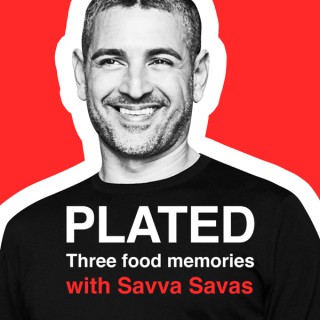
"There's no health and safety in an ethnic house" - Joe AvatiOn comedian Joe Avati's menu: making tomato sauce with the cousins, a three carat cake (no, that's not a typo), and fresh seafood in Spain. Sides include: growing up Italo-Australian, bung-eyes, and funny memories of his brother Antonio who would have turned 50 this year. Joe's social cause is the Kidney Foundation, his brother Antonio surviving until 42 years after having three kidney transplants during his life. The Kidney Foundation is the peak national body championing kidney disease prevention, early detection, and comprehensive patient care. They support the 1.7 million Australians affected by kidney disease by funding research, managing specialised holiday dialysis buses, offering peer support, and operating a free health professional helpline. More here: kidney.org.au. Send us Fan MailTo find out more about the project and Savva - head to threefoodmemories.comInsta - @savvasavas @threefoodmemoriesEmail us at threefoodmemories@plated.com.au, we'd love to hear from you! TFM is produced and edited by Lauren McWhirter with original music by Russell Torrance.
Get ready for another mouth-watering episode! This week we're joined by Laura from Alpino Gelato, Australia's first gelato company.Founded by Laura's Calabrese immigrant grandparents, Alpino Gelato has a rich family history that we're so excited to share. Laura's passion and enthusiasm are contagious, and we loved hearing the story behind the family business, as well as learning what goes into making authentic, traditional gelato.If you're in Sydney, be sure to visit Alpino Gelato at 90 Addison Road, Marrickville. You can also follow them on social media using the links below:Alpino on Instagram:https://www.instagram.com/alpino_gelato?igsh=MXNwNzNlMnN6dHdlcg==Alpino Website:https://alpino.com.au

Fred Peterson, owner of Peterson Winery, joins Dan Berger and Daedalus Howell on California Wine Country today. This is Fred’s first time on the show, but Peterson wines were a big part of this episode with Darryl Miller, on March 27 this year. Daedalus mentions the birds on the labels of the Peterson wines that Fred has brought. There are other labels with a mountain lion, a bear, a fox and a deer. They find old prints that are in public domain that they can use with no royalties. Fred Peterson calls his winemaking style “zero manipulation” which they have trademarked. He uses the jackalope on the label, but he can’t trademark that mythical animal which is in the public domain. They begin by tasting a 2003 Cabernet Sauvignon from Dry Creek Valley. This is what happens when you have the proper fruit, the proper region and the proper technique of making the wine, says Dan. It is a great example of what it can do when it is properly aged. A Cab needs about 12 years to reach its fully mature complexity. This one is 23 years old now and has flavors of dry herbs and bay leaf. This is a mountain cabernet from Bradford Mountain where Fred lives, at about 1100 feet elevation. If a Cabernet is just big, oaky, alcoholic and tannic, it can’t also carry terroir. Mountain Cabs have an edginess that other Cabs just don’t have. -•• • --- -•• ••• •-• •-California Wine Country is brought to you by Deodora Estate Vineyards. Visit Deodora to discover 72 acres in the Petaluma Gap that are producing exceptional Chardonnay, Pinot Noir and Riesling. Sip the difference! -•• • --- -•• ••• •-• •- Bitterness is a good thing. Dan reminds us that bitterness is a good thing. We like it in dark chocolate and in coffee. For example, bitters are appropriate in a mixed drink. They are part of the overall complexity and diversity of flavors. This wine is a perfect example. It delivers all its high-altitude character. Fred says, “If we don’t make wines that taste of the vineyard, there’s no reason for a small winery to exist, in my opinion.” He calls his winemaking process “zero manipulation” so that his wines taste like the vineyard. Their current release Cab is the 2022. So, it is young, for a Cabernet. The 2022 is also a very good wine, and Dan thinks that Fred harvested it at the right time. Both Cabs are blends. The 2003 is 83% Cabernet Sauvignon and 17% Merlot. The 2022 has the same 83% Cab, 11% Merlot and 6% Cabernet Franc. After time in the Navy, Fred enrolled at UC Santa Cruz. He took time off for a road trip, to bring a motorcycle to a friend’s farm in Iowa. He took an interest in agriculture when he was there. He took some Agriculture classes at the JC then finished at UC Davis. His mom’s side of the family is Sicilian and Calabrese, so he grew up around wine. Dan sees this as a typical pattern for winemakers, to start in another field before settling on winemaking. Gravity Flow Block He calls the vineyard Gravity Flow block. It is an acre and a half of vineyard with over a mile of deer fencing. When he planted this block, he planted about 7% Viogner which he co-ferments with the Syrah. He and his son don’t like very tannic wines and the Viogner helps temper the Syrah. Co-fermentation is also called co-pigmentation. The grapes ferment together. If you put 5% Viognier you get darker wine, aromatic improvement and a lighter texture. It has a paradoxical flavor. It has personality and maturity, but it feels young. The 2005 just needs ten more years in the bottle. The Syrah from 2018 is “stunning” says Dan, and was just released. It is available at the winery. Peterson Winery has a mailing list that we can all join. His son does blending seminars occasionally and he does vineyard tours.
Carl Calabrese talks Zellner loss fallout, growth of progressive Democrat movement full 441 Fri, 26 Jun 2026 13:11:57 +0000 xokZ8ErsqBAneXwaZItiVKrTQL6X9R07 news A New Morning news Carl Calabrese talks Zellner loss fallout, growth of progressive Democrat movement Collection of LIVE interviews from Buffalo's Early News on WBEN 2024 © 2021 Audacy, Inc. News https://play
Primary night was marked by an upset over the leader of Erie County Democrats and a shocking win by a Democratic socialist. Republican strategist Carl Calabrese tells us more.

What happens when a restaurant encourages people to put away their phones and simply talk to each other?At Bella Italia in North Berwick, Scotland, a simple sign on the door reads: "We do not have Wi-Fi. Talk to each other. Pretend it's 1995." That sign caught my attention while I was teaching at Queen Margaret University in Scotland. But it was what happened inside the restaurant that stayed with me. In this episode of Stories of Change & Creativity, I talk with Loredana (Lora) Calabrese about family and why creating a place where people truly connect may be more important today than ever. I noticed something special about the restaurant. Yes, the food was great but so was the atmosphere. Lora shares the story of her father, Giovanni Mastrocinque, and his journey from Italy to Scotland. Through hard work, he built a successful family business that continues to bring people together more than four decades later.What struck me most about Lora's story is that Bella Italia isn't really a story about a restaurant. It's a story about people. It's about creating a place where families gather and memories are made.When I later told local interior designer Emma Cross that I was planning to interview Lora, she said, "That's where everyone goes for celebrations." This simple comment made me even more curious about the story behind Bella Italia and the family who built it.In this Episode• The story behind Bella Italia and its founding in 1981• Giovanni Mastrocinque's journey from Italy to Scotland• The famous "No WiFi" sign and why it resonates with customers• Lessons Lora learned from her father about hard work and perseverance• Building a family business across generations• Creating a place where people feel welcome and valuedConnect with Bella ItaliaBella Italia RestaurantNorth Berwick, ScotlandDid you enjoy this episode? send me a text! Stories of Change & Creativity explores the defining moments that shape who we become—and the lessons we learn along the way. Hosted by professor, storyteller, and proud Texan Judy Oskam. Together, we explore what happened and what we learn from the experiences that define us. Whether you're navigating a career transition, seeking personal growth or looking for inspiration to take your next step, you'll discover practical wisdom you can apply to your own life.Learn, grow, teach. Do you have an idea for a guest interview? Please let me know. Check out my TEDx talk. Why you should take action - then figure it out.

The summer solstice is here! This is a time of abundance, fertility, and joy. And yet, many people forgo the experience of joy, thinking that pleasure must wait until later, when they're a “better” version of themselves. But what if later never comes? Tomorrow is not guaranteed for any of us; therefore, we must embrace joy in the now. To do this, we must become fully embodied humans, using all of our senses to tap into the soul living within. Enjoy the meal, take the swim, dance with abandon; it's in these simple, mundane, miraculous moments when we truly know happiness. As we walk toward the summer solstice, accept the invitation to choose joy today. You deserve it just as you are. What am I reading?The Time Hop Coffee Shop by Phaedra Patrick https://bookshop.org/a/111301/9780778310907Joyful: The Surprising Power of Ordinary Things to Create Extraordinary Happiness by Ingrid Fetell Leehttps://bookshop.org/a/111301/9780316399272https://bookshop.org/shop/witchywomanwalkingWhat's playing on repeat?Boys Don't Cry by the Cure What's for dinner? Solo Snack BoardChoose a soft spreadable cheese option and a hard cheese Choose 1–2 cured meat options. Prosciutto, spicy Calabrese salami, or rolled deli turkey work perfectly in small portions. Or plant-based options like tofu or tempeh Add 1–2 handfuls of crisp produce. Try apple slices, carrots, cucumbers, or bell pepper strips. Berries are another wonderful addition. Include 1–2 kinds of crackers or crusty bread. Bring it all together with a small scoop of savory or sweet dip, such as hummus, honey, tzatziki, or a dab of spicy mustard. Finish the board with a few salted nuts, pickles, olives, or a square of dark chocolate. Prebiotic MocktailIngredients: 1 can poppi Strawberry Lemon Probiotic Soda3 strawberries, chopped3 mint leavesJuice of half a lemon IceInstructions: In a tall glass, add strawberries, mint, honey, and lemon juice and muddle. Fill glass with ice and top with poppi Strawberry Lemon Probiotic Soda.Support the show

Odd Fellowship is built around the principle of mutual aid, which implies that we should all be of service to one another. Our current Sovereign Grand Master, Tom Calabrese, exemplifies the spirit of a servant leader. Modest and unassuming, he has shown throughout his career in Odd Fellowship that he is always ready to pitch in and help out and that spirit of service has extended to his time as Sovereign Grand Master. Brother Tom worked his way up from being a member of his father's lodge to becoming a Past Grand, joining the Grand Lodge of New Jersey, joining the Sovereign Grand Lodge, and then moving up to the highest office in Odd Fellowship. Along the way he has exemplified the best aspects of service at every opportunity. He shares his thoughts about the Order's direction, tells what he has done to keep the Sovereign Grand Lodge functional, and gives insight into how he deals with issues that come to him. The Shoutout goes to yet another new Encampment, Barataria #73 of New Orleans, Louisiana. In the Odd Podge, Toby shares the visit of PGM David "Ace" Adams of Minnesota to Seattle, Ainslie talks about his adventure driving a century-old dump truck, Meredith gives credit to a lodge in the Philippines for their amazing relief efforts in the face of a disaster, and Tom shares his wonderful cemetery experience with the Grand Master of Vermont, Teppi Zuppo.

Paola Peresin"Il viaggio di Slavc"Errori, bugie, falsi miti e leggende sul lupoPrefazione di Franca ZanichelliIllustrazioni interne di Tobia RavàKellermann Editorewww.kellermanneditore.itNelle Alpi orientali un lupo solitario cammina su sentieri che intere popolazioni avevano abbandonato due secoli fa. La sua storia diventa simbolo di un fenomeno più vasto: il ritorno di una specie selvatica in territori che l'avevano dimenticata.Ma Slavc non avanza solo tra boschi e pascoli alpini, attraversa anche un territorio culturale fragile e minato, dove ogni sua impronta risveglia echi di controversie ancestrali e paure mai sopite.Paola Peresin è laureata in Scienze Biologiche, lavora con Enti Locali e Università su aree afferenti alla Conservazione della Natura.Tobia Ravà (Padova, 1959), lavora a Venezia, ha frequentato la Scuola Internazionale di Grafica di Venezia ed Urbino. Si è laureato in semiologia delle arti all'Università di Bologna, allievo di Umberto Eco, Renato Barilli, Omar Calabrese, Flavio Caroli. Dipinge dal 1971 ed ha esposto dal 1977 in mostre personali e collettive in Italia, Belgio, Croazia, Francia, Germania, Spagna, Brasile, Argentina, Giappone e Stati Uniti. È presente in collezioni sia private che pubbliche, in Europa, Stati Uniti, America Latina, e in Estremo Oriente. Nel 1983 è tra i fondatori del gruppo bolognese AlcArte, attivo all'Università di Bologna (DAMS), con l'intento di coniugare il fare arte all'epistemologia. Dal 1988 si occupa di iconografia ebraica e ha svolto con Gadi Luzzatto Voghera e Paolo Navarro Dina un lavoro di ricerca e schedatura nell'ambito dell'epigrafia ebraica nel Veneto, Friuli Venezia Giulia e Trentino Alto Adige. Nel 1993 è il promotore del gruppo Triplani, che, partendo dalla semiologia biplanare di Greimas e Calabrese, prende il nome dall'ipotesi di un terzo livello di lettura simbolica, accanto a quelli del significato e del significante. Nel 1998 è tra i soci fondatori di Concerto d'Arte Contemporanea, associazione culturale che si propone di riunire artisti con le stesse affinità per riqualificare l'uomo ponendolo in sintonia con l'ambiente e rendere l'arte contemporanea conscia dei suoi rapporti con la storia e la storia dell'arte, anche interagendo espositivamente con parchi, ville, edifici storici e piazze di città d'arte. Dal 1999 ha avviato un ciclo di conferenze, invitato da università e istituti superiori d'arte, sulla sua attività nel contesto della cultura ebraica, della logica matematica e dell'arte contemporanea.Diventa un supporter di questo podcast: https://www.spreaker.com/podcast/il-posto-delle-parole--1487855/support.IL POSTO DELLE PAROLEascoltare fa pensarehttps://ilpostodelleparole.it/

Like the episode? Let us know with a quick text!On the podcast, John shares how running began as an outlet during depression and divorce, evolving from ramping up in 2016 to his first marathon in 2017 and then ultras, where he found a supportive community and a sense of purpose.He explains lessons learned, staying true to personal goals, using past DNFs and even trash talk as motivation, and focusing on hard training and unglamorous work like PT, core, and gym strength to reduce injuries.John describes discovering Ainsley's Angels after seeing a duo team at the Prince William Half, being recruited by Donald (now the rider he caregivers for), and advocating for duo teams' visibility at races.He discusses favorite and redemption races (Barkley Fall Classic, Old Dominion 100), fueling and gear preferences (Welch's fruit snacks, shoe rotation, reviewing for Believe in the Run), and finding joy in caregiving and running with his daughter.John Calabrese - https://www.facebook.com/john.calabrese.566Races MentionedBarkley Fall ClassicPrince William Half MarathonTaco Bell 50kOld Dominion 100C&O Canal 100Swami ShuffleAll StateHeart of the SouthGirls on the Run 5kThe Great Train RaceShout OutsAinsley's AngelsDonaldJillianSupport the showFor more details on Run Your Story happenings, visit https://runyourstory.com/For web development or tech services, visit https://gaillardts.com/Go Run Your Story and take a piece of this story with you! Follow us on Facebook and Instagram for the latest news on upcoming episodes. Support me on Patreon!Can't wait to hear Your Run Story!! Thank you to all of our Patreon supporters!Kristen RatherSteve TaylorMary TrufantSuzanne CristSuzanne ClarkAnna SzymanskiDave McDonaldKarla McInnisJames ContrattoJordan DuBoseCristy EvansSharonda ShulaNell GustavsonMeredith NationsAllyson SwannChris StrayhornKaren SaldivarStefan ClaytonRachael McRaeScott Thornhill

CF Montreal's homestand comes to a close with the visiting Chicago Fire! With us to break down the matchup is Men in Red 97's Editor in Chief: Alex Calabrese!!Your amazing support lets us do what we do! Join our Patreon for new and exclusive content!! https://linktr.ee/theballisroundmontreal

This is an episode rewind and was originally posted on November 2024. In this episode, I sit down with the incredible Birdie Jaworski, who you might know better as Prudence Calabrese. Birdie is a trailblazer in the world of remote viewing and recently stepped back into the public eye after a 22-year hiatus. Beyond her groundbreaking work as a civilian remote viewer, she's also the founder of the Albuquerque UFO UAP Explorations group, making waves in the exploration of the unknown.We dive into her fascinating journey with remote viewing—how it works, how it's used for things like healing and diagnosis, and the deeper mysteries it uncovers. Birdie also opens up about UFO disclosure, her personal encounters with extraterrestrial beings, and why these topics matter more than ever.But this conversation goes even deeper. Birdie shares what it was like remote viewing God, her spiritual perspective, touching on the historical figures who've shaped her path and the powerful ways we're all connected. It's an eye-opening, mind-expanding discussion that'll leave you rethinking the boundaries of reality.Where to find Birdie: https://www.abqufos.com/https://newparadigminstitute.org/learn/library/global-disclosure-day/Remote viewing classes: https://www.norivets.com/stuff/classesSend us Fan MailSupport the showLove the show? Your support helps keep these conversations going. You can treat me to a coffee here:https://buymeacoffee.com/shiftingdimensionsSubscribe to our YouTube channel: https://www.youtube.com/channel/UCr0p1zDPaPLmnmI3AIWhDFQFollow us:TikTok - @shiftingdimensions444 Instagram - @shiftingdimensions_podDisclaimer:The views, thoughts, and opinions expressed are the guest's own and do not represent the views, thoughts, and opinions of Shifting Dimensions. The material and information presented here is for general information and entertainment purposes only. Send us Fan MailSupport the showLove the show? Your support helps keep these conversations going. You can treat me to a coffee here:https://buymeacoffee.com/shiftingdimensionsSubscribe to our YouTube channel: https://www.youtube.com/channel/UCr0p1zDPaPLmnmI3AIWhDFQFollow us: TikTok - @shiftingdimensions444 Instagram - @shiftingdimensions_podDisclaimer: The views, thoughts, and opinions expressed are the guest's own and do not represent the views, thoughts, and opinions of Shifting Dimensions. The material and information presented here is for general information and entertainment purposes only.

Kaya is back and bad like Mike. She and Leah of Positively Uncensored talk about West Wilson's text to KJ, Mia Calabrese putting two and two together on Summer House and Real Housewives of Rhode Island.Follow Leah: https://www.instagram.com/positivelyuncensored/Listen to Positively Uncensored: https://podcasts.apple.com/us/podcast/positively-uncensored/id1615113593Join Ro Body: ro.co/BRAVOBLACK for glp1 in pill form! FOLLOW US ON INSTAGRAM HERESUBSCRIBE TO OUR PATREON HEREOH YEAH WE ON THREADS HEREWHAT? YOU WANT OUR FACEBOOK? I GOT YOU RIGHT HEREYOU WANT SOME VISAULS??? CHECK OUT THE YOUTUBE BABY: https://www.youtube.com/channel/UC3K-oo9Q2_B1jWpVq41fS6w

Deacon Thady opens from Kerry — two turf-cutting machines visible on the mountain, nostalgia for the smell of tea brewed on a turf fire in the bog — before turning to what he describes as the changing church. He reports on a packed prayer meeting at Castleisland with Fr. John Keane, on the Radio Maria […] L'articolo RM Breakfast Show – A Changing Church – Deacon Thady and Deacon Wally Calabrese proviene da Radio Maria.
Deacon Thady opens with the tree outside his window that had no leaves three days ago and is now in full leaf, meditating on the Holy Spirit and the season. He describes a powerful prayer meeting at Castle Island the night before with Fr. John Keane: Mass, Divine Mercy, the Rosary and praise and worship […] L'articolo RM Breakfast Show – The Power of Prayer Meetings – Deacon Thady and Deacon Wally Calabrese proviene da Radio Maria.
Deacon Thady opens with a vivid account of the National Eucharistic Congress pilgrimage to Knock, where Bishop Alphonsus Cullinan of Waterford was the main celebrant — and what it felt like to travel as a moving congregation from dawn to late evening, young people leading the rosary on the bus. He then announces a gathering […] L'articolo RM Breakfast Show – Blockages That Prevent Healing – Deacon Thady and Deacon Wally Calabrese proviene da Radio Maria.

We're seeing increasingly compelling results from ketogenic therapy in serious mental illness, including schizophrenia, bipolar disorder, and major depression. But what happens when a potential concern emerges along the way?In this conversation, Dr. Bret Scher sits down with psychiatrist Dr. Lori Calabrese to walk through a real patient case that highlights both the promise and the complexity of metabolic treatment.A young woman with longstanding schizophrenia experienced dramatic improvements in her mental health, metabolic markers, and quality of life after starting a ketogenic intervention. But alongside these gains, her LDL cholesterol rose significantly, raising important clinical questions.Rather than defaulting to extremes, either stopping the therapy or ignoring the lab values, Dr. Calabrese takes a thoughtful, patient-centered approach:Investigating deeper cardiovascular risk markersExploring potential underlying causes, including familial hypercholesterolemiaCollaborating across specialties, including cardiologyPrioritizing both psychiatric recovery and long-term healthThis case illustrates a critical principle in metabolic psychiatry: context matters. Lab values don't exist in isolation, and neither do patients.It also highlights a broader shift in medicine where clinicians are increasingly called to step beyond traditional silos and consider the full metabolic picture when treating brain-based conditions.At Metabolic Mind, we believe these nuanced conversations are essential. The goal isn't to ignore risk or to abandon effective therapies, but to better understand both so individuals can make informed decisions alongside their care teams.You can learn more about this conversation in the documentary The Cholesterol Code. The film shares firsthand accounts from individuals whose lives improved with ketogenic therapy, even as their LDL levels rose dramatically. It also follows how they worked with their care teams to better understand their cardiovascular risk and what that approach could mean in your own situation.

Joel Kim Booster & Mia Calabrese join host Andy Cohen. Listen to lively debates on everything from the latest drama surrounding your favorite Bravolebrities to what celebrity is making headlines that week live from the WWHL clubhouse.Aired on 04/15/26See Privacy Policy at https://art19.com/privacy and California Privacy Notice at https://art19.com/privacy#do-not-sell-my-info.

Send us Fan MailDavid Youngberg, CEO of Stonefire Grill, and Matt Calabrese, CTO, join Zack Oates for a deep dive into what it actually takes to scale a restaurant brand without losing what makes it special. From feeding 5,500 guests in under an hour to building a business where catering drives over 20% of revenue, they share real operational insights from inside the brand.Zack, David, and Matt discuss: How catering can become a powerful growth and acquisition channel Why meeting guests across every channel is no longer optional How fast feedback loops are reshaping decision making The role of technology in supporting, not replacing, hospitality Why consistency is the foundation of trust and long term loyalty How to grow a brand without drifting from its core identityThanks, David and Matt!Links:https://www.linkedin.com/in/dyoungberg/https://www.linkedin.com/in/matt-calabrese-5657252/https://www.linkedin.com/company/stonefire-grill-inc/https://www.stonefiregrill.com/
Deacon Thady welcomes Deacon Wally Calabrese from Havelock, North Carolina, whose book on the permanent diaconate has been generating wide feedback from deacons across the United States and internationally. Wally describes his background: a blue-collar family from Utica, Michigan, drifting from the Church after Confirmation and the Marine Corps, until his wife Amy brought him […] L'articolo RM Breakfast Show – The Importance of Permanent Deacons – Deacon Thady and Deacon Wally Calabrese proviene da Radio Maria.

Dr. Lori Calabrese is a psychiatrist whose trajectory changed when a patient with 15 years of treatment-resistant anorexia went into full remission after a ketogenic diet. What followed was a research journey — pilot studies, peer-reviewed case series, and a now-funded randomized controlled trial — consistently showing that depression, anxiety, OCD, bipolar disorder, and other conditions could achieve complete remission, not just symptom reduction, through metabolic intervention. The key mechanism isn't neurotransmitter adjustment but mitochondrial health: when the brain runs on ketones, it receives a more stable fuel that reduces the erratic neurological firing behind panic, mania, obsessive loops, and psychosis.Dr. Lori Calabrese MD Contact Info: https://Touchpoints180.orgSend Dr. Ovadia a Text Message. (If you want a response, you must include your contact information.) Dr. Ovadia cannot respond here. To contact his team, please send an email to team@ifixhearts.com Pre-Order Stay Off My Kitchen Table at Amazon. Like what you hear? Head over to IFixHearts.com/book to grab a copy of my book, Stay Off My Operating Table. Ready to go deeper? Talk to someone from my team at IFixHearts.com/talk.Stay Off My Operating Table on X: Dr. Ovadia: @iFixHeartsJack Heald: @JackHeald5Learn more:Stay Off My Operating Table on AmazonTake Dr. Ovadia's metabolic health quiz: iFixHearts Dr. Ovadia's website: Ovadia Heart HealthJack Heald's website: CultYourBrand.comTheme Song : Rage AgainstWritten & Performed by Logan Gritton & Colin Gailey(c) 2016 Mercury Retro RecordingsAny use of this intellectual property for text and data mining or computational analysis including as training material for artificial intelligence systems is strictly prohibited without express written consent from Dr. Philip Ovadia.
Republican strategist Carl Calabrese joins the show to discuss a couple of telling polls from Siena research, one which showed a majority of New Yorkers are in favor of mandatory voter ID, and another which showed Bruce Blakeman is narrowing the gap between himself and Governor Hochul ahead of the gubernatorial election in November.

In this episode of The On Purpose Podcast, host Jerrod Hardy sits down with John Calabrese—also known as Breezy Trailhead—an ultra runner, Navy veteran, and caregiver, to explore the powerful connection between running, self-discovery, and personal growth.John shares how running became more than just a physical challenge—it became a therapeutic outlet and a path to understanding himself on a deeper level. From pushing through difficult miles to supporting others in races, he highlights the importance of community, accountability, and finding your tribe along the journey.This conversation dives into the role of vulnerability, reflection, and surrounding yourself with positive influences, as well as the courage it takes to let go of toxic relationships. John's story is a reminder that you don't have to be perfect to share your story—and that growth happens when you're willing to show up authentically.Whether you're a runner, athlete, or someone seeking purpose and connection, this episode will inspire you to embrace the process, lean into your community, and keep moving forward—one step at a time.
GOP Strategist Carl Calabrese on political ramifications of Ryan's property tax proposal full 231 Mon, 23 Mar 2026 07:14:00 +0000 xZWcJLG0i0IeH6GxyISffKqNqjRDVA1L news & politics,news WBEN Extras news & politics,news GOP Strategist Carl Calabrese on political ramifications of Ryan's property tax proposal Archive of various reports and news events 2024 © 2021 Audacy, Inc. News & Politics News False http

Ci piacerebbe sapere cosa pensi di questo episodio. Scrivici a podcast@internazionale.it Se ascolti questo podcast e ti piace, abbonati a Internazionale. È un modo concreto per sostenerci e per aiutarci a garantire ogni giorno un'informazione di qualità. Vai su internazionale.it/abbonatiConsulenza editoriale di Chiara NielsenProduzione di Claudio Balboni e Vincenzo De SimoneMusiche di Tommaso Colliva e Raffaele ScognaDirezione creativa di Jonathan Zenti
In this episode of Gangland Wire, retired Kansas City Police Intelligence Unit detective Gary Jenkins sits down with author Aaron Mead to discuss his gripping novel Body in the Barrel, a story inspired by a real-life discovery in Lake Mead that shocked the nation. In 2022, as water levels at Lake Mead dropped to historic lows, authorities discovered a body in a barrel with a gunshot wound to the head—a killing style that many investigators immediately linked to organized crime. The discovery triggered speculation that the remains could date back to the 1970s or 1980s, the heyday of mob activity in Las Vegas. Aaron Mead explains how this discovery sparked the idea for his novel. Although Mead is a longtime water engineer for the Metropolitan Water District of Southern California, the mystery of the barrel victim and the history of mob activity in Las Vegas inspired him to craft a fictional story grounded in real events. Gary and Aaron dive deep into the Chicago Outfit's influence in Las Vegas, discussing figures like Tony Spilotro and hitman Frank Cullotta, whose violent methods and stories helped shape the mythology of organized crime in the desert. They also explore the long-standing mob practice of disposing of bodies in barrels, including the infamous case of mobster Johnny Roselli, whose body was also discovered stuffed in a drum. The conversation examines several possible identities of the Lake Mead victim, including casino insiders and Outfit associates who disappeared during the era of casino skimming. Mead's novel follows a fictional mob associate named Lenny Battaglia, who becomes terrified when news breaks about the barrel discovery. The reason? He knows there's another barrel—with his victim—still resting somewhere in Lake Mead. The discussion moves beyond mob history into the psychological consequences of violence, comparing Mead's story to classic works like Crime and Punishment. Rather than focusing on a traditional “whodunit,” the novel explores what happens after the crime, examining guilt, fear, and the moral weight carried by those who commit violence. Gary and Aaron also discuss the broader context of violence in American culture, including parallels between organized crime murders and modern tragedies such as the 2017 Las Vegas mass shooting. Finally, the conversation shifts to Mead's professional expertise in Western water law and the Colorado River, explaining how drought and declining water levels at Lake Mead are literally revealing pieces of hidden history—sometimes including crimes buried for decades. This episode blends mob history, real crime mysteries, and fiction inspired by true events, offering listeners a fascinating look at how the past can resurface in unexpected ways. Click here to find Body in a Barrel Hit me up on Venmo for a cup of coffee or a shot and a beer @ganglandwire Click here to “buy me a cup of coffee” Subscribe to the website for weekly notifications about updates and other Mob information. To go to the store or make a donation or rent Ballot Theft: Burglary, Murder, Coverup, click here To rent ‘Brothers against Brothers’ or ‘Gangland Wire,’ the documentaries click here. To purchase one of my books, click here. [0:02]Introduction to Gangland Wire [0:00]Hey, all you wiretappers, good to be back here in studio of Gangland Wire. This is Gary Jenkins. You know, I’m a retired Kansas City Police Intelligence Unit detective. Now I have a podcast and I interview real crime mobsters, policemen, FBI agents, do authors that are doing true crime books. And I do authors that are doing novels that are based on true crime. Because we stick with true crime as close as we can here, guys. You know that. And today I have one of those authors that has written a book that is a novel, but it’s based on a lot of real events in Las Vegas. And we all know a little bit about Las Vegas and the Mafia. So Aaron Mead, welcome, Aaron. Thank you. It’s a pleasure to be here. It’s great to have you on the show. Tell us a little bit about yourself, a little bit about your history. [0:47]Sure. Yeah, I’m actually I’ve been working as an engineer, a water engineer for 30 some odd years. And so I come by my writing habit as a sort of a side interest. I, I, yeah, I just, I got a very, I’ve got a varied educational background too. So I started out as a, as an engineer in my training and then just had a creative itch and went back to school, ended up doing a PhD in philosophy of all things. And while I was doing that, I, I thought I might be an academic. I thought I might be a professor at one time and through the job search, things didn’t really work out. I did find a job, but it just wasn’t going to pay well enough, consider moving my family across the country for it. So I ended up not going into academia, but I stuck with writing, which was my favorite part of the PhD, the dissertation. [1:31]And I just started writing different things, some nonfiction stuff related to my dissertation research, but then just got an idea for a story, wrote a novel. It’s still sitting in the drawer. I’m interested in publishing that someday. But this idea for the book related to kind of Las Vegas mob stuff actually came connected with my work as a water engineer. So I work for Metropolitan Water District of Southern California. We import water to Southern California from the Colorado River. And so I track the Colorado River news pretty closely. And in 2022, the lake was dropping because of drought and overuse. And this body in a barrel showed up on the shore of Lake Mead. And there was a gunshot wound to the head. And this looked an awful lot like a mob hit to the authorities. And so this just piqued my interest and got me thinking about how did this barrel get there and this body and what’s the story behind it. And I started doing a little research and it turns out that the clothing on the body was pretty well preserved. [2:29]So the police dated it to the late 70s, early 80s potentially. And that’s of course the heyday of the mob activities in Las Vegas. It got me onto the Chicago outfit and, Some of the characters involved in the outfits activity in Vegas there. And so my story just went from there. But, yeah, I guess that’s a little about me and the story. So, yeah. Yeah. Those are the days when Tony Spolatro was really active out there. Chicago outfit man on the scene, if you will. And Body in a Barrel, another interesting Chicago link is they found a guy named Johnny Roselli, who was a highly placed mob guy who was connected to Las Vegas and Los Angeles. He had been their guy before Spalatro. He had been their representative out in the West, and they found his body in a barrel down in Florida. Wow, okay. There’s some reference there. [3:21]I’d read a little that this is a pretty popular method of body disposal in various times. And Tony Spalatro was, I understand that they haven’t actually identified the victim yet, but the kind of style of killing they think is pretty connected with something Tony Spalatro might do. I guess the sort of low caliber gunshot wound was a popular way to dispose of it, to whack people just because it was a little less messy than a high caliber weapon. Yeah, this is one they call it a lupara blanca, which means white shotgun in Italian. And that means that you never find the body. In this case, they found the body. Every once in a while, they’ll find the body. Not very often, though. Usually they hide them pretty good. Now, who’d ever thought that Lake Mead would drop that much? Yeah, they dropped it at 100 feet of water, and I don’t think anybody expected it to drop that low. And it could go even lower in the next couple of years here, honestly. Really? Oh, really? It’s still dropping. I thought there’d been some more rain and some snow up in the mountains that were going to add to that. It’s going to be still dropping, huh? Yeah, there has been a fair bit of precipitation this year, but in the areas that count most, where you get most of the runoff, which is up in the mountains of Colorado and Utah, it’s really quite dry, actually. They’ve had some rain, but not much snow, and so they’re talking about a snow drought. Yeah, things could. It just depends. We’ll see how things develop, but it could get bad. Yeah, talk about that gun now. Chicago was noted. [4:40]For using these 22 caliber high standard i think they’re browning semi-automatic pistols with a silencer on it and they had them out there i believe and they also another interesting thing about the outfit in order to keep the sound down they would load their own shells and so they were had less powder in them and sometimes the shells didn’t do the job that they wanted to do now frank Kulata, who was in Las Vegas working for Tony Splattro during these years, he tells a story about trying to kill a guy with one of those guns and how he had such a hard time getting him killed. So I don’t know how many holes were in this guy’s head, but you got to get somebody just right in the head with that .22 caliber pistol. Yeah, they say it had to be pretty close range. You’re talking about the Jerry Listener murder, I think. Is that right? Yeah. I read about that one. That’s actually the kind of the murder in question in my book is based on that loosely. And so yeah, Kolata advises my main character, Lenny, to load his gun with half loads because they’ve lost their silencer or something. So that’ll keep the sound down. But yeah, I guess Lister ended up with multiple bullets to the head. And when they found them, more than you’d imagine would be necessary. [5:55]Really? There’s a guy that worked for the Stardust named Jay VanderWalk that disappeared at the time. It disappeared for a long time. Did you look at that one, too, as some of your source material? Yeah. So there’s this great article that’s been turned into a podcast on the Mob Museum website. I don’t know if you’re familiar with that in Las Vegas there. And they suggest there might be three potential victims. [6:21]VanderMark is one of the—is that the guy you mentioned, George VanderMark? Yeah. Yeah. Yeah, they call him by Jay. That’s right. Yeah. So, yeah, he is one of the, he’s a missing person, right? From that era, had connections with the Argent company. So they think he, that’s one of the possibilities. He was running the skimming operation, at least in some of the casinos there for Argent. And I guess the, as the gaming control board in Nevada found out about the skimming operation, gradually, they were starting to talk to people. And I think that they were worried that he was going to talk or actually this is, I think the, the outfit suspected he was stealing money from him. I think it was a combination. Stealing money is worse than talking. Right, yeah. So I guess he took off to Mexico, maybe, I read, or Costa Rica even. But I think… He came back. I can’t remember the exact story, but yeah. Yeah. So from what I read, Nick Calabrese, who I guess was a hitman for the outfit, and then turned eventually and started talking to the feds. He suggested that, I guess, Vandermark ended up in a hotel in Phoenix or something, and the outfit sent a couple of hitmen after him and whacked him there. And then Calabrese said they buried his body in the desert. So that means, you know, if that’s true, then obviously it’s not the guy in the barrel, but he’s one of the ones they talk about because they never found his body. Yeah. And I guess the other one I read about was William Crespo. [7:40]I don’t know that story. Yeah. So the little I know of it is he was a drug runner [7:48]Stories of the Las Vegas Mob [7:45]involved with the outfit in Las Vegas. And he got caught kind of landing in the Las Vegas airport coming from Miami with $400,000 worth of cocaine on him. And the feds arrested him. He accepted an offer of immunity to become an informant. And he was set to testify about this drug ring that the outfit was part of. And he actually ended up testifying before a grand jury, got a bunch of folks indicted. I guess one of the names of folks who was indicted was Victor Greger, according to this article. He was a former Argent executive. But then when Crespo himself went to testify, he was set to testify in June 83. And they got to him before then and he never testified. So, he’s another kind of missing person they suspect could be in the barrel. But the article thought the most likely candidate was a guy named Johnny Pappas. I don’t know if you know him at all. Yeah, I don’t know the story of that. Okay. So, this is a Chicago native guy who was involved in some of the Argent Corporation casino work. And he was, I guess by the 70s, late 70s, he was managing this resort on the northern part of Lake Mead called Echo Bay Resort, which was an Argent Corporation Resort. [9:00]And it’s closed now. It’s not there anymore. It used to be like a hotel and a boat launch. And so he was at the lake at different times. He also owned a boat on Lake Mead. And so in 1976, the day he disappeared, his wife told authorities basically that he went to meet this guy at a restaurant who was interested in buying his boat at Lake Mead. And so they think it could have been a ruse set up by outfit folks luring him basically down to the lake to show him his boat. And then they knock him off and take him out on his own dang boat and drop him in the lake. The motive is a little less clear in this case, but it was around that time when stuff was coming out about the Argent Corporation and the skimming. And they could have just thought he was a liability, might be set to talk or something. Yeah, those are the three that I read about anyway. He just disappeared after this meeting to go sell his boat. Yeah, they found that theory makes sense. They found his car parked in the circus casino parking lot on the strip the next day. And yeah, he’s just gone, disappeared. [10:01]I’ll be darned. I hadn’t heard that story. That is a pretty likely scenario. Say, hey, I’ll drive and let’s run down there and let’s see that boat. I got the money right here. You show the guy a bunch of money and he’ll drop all caution. It’ll go to the wind. That’s how they do it. and got him isolated then. [10:18]Yeah. And maybe it’s a last minute deal. So nobody really knows who he’s meeting and where he’s going and that he’s even going. So that’s, that’s a classic in the mob. Yeah. Apparently he told his wife he was going to go sell his boat, but that’s about it. Yeah. I’ll be darned. Yeah. The, as Lake Mead’s gone down, has there been any other bodies or any other things that have been found out there recently? Yeah, there’s been some strange things turned up. One is a sort of a World War II era airplane, honestly, started coming out of the water. But that was known about for some time. You could see it, I guess, from aerial photos. But other bodies, yeah, there’s a few other bodies, just skeletons, nothing in barrels and no gunshot wounds. And so, people just, I think authorities have identified most of those and suspect they were just drowning victims, unfortunate boating accidents and whatnot. But nothing like this body in a barrel. I think they’ve been trying to identify that body. There’s lots of DNA evidence, right? You got still a pretty intact body. But the problem is back in that era, I guess they didn’t have the DNA database to be matching with. Yeah. So, it’s not borne a lot of fruit. I think it’s still an open case, honestly. Really? The chance they have is if one of that guy’s descendants goes to something like 23andMe and then does that. And I know they’ve come up with a deal where they can start running an unknown DNA through those… [11:44]Files and see if you can come up with a connection and then go back and say, okay, where would this guy have ever come across or be in this other person’s family tree, if you will, and then they can eventually get it. That’s fascinating. Amazing. Yeah, it is what they could do. I had a guy that used to be a professional criminal talking about it. He said, I don’t know why anybody does crime today. He said with the DNA and the cameras and the cell phones and all that, he said, there’s just way, way too many ways to get caught. That’s wild. Yeah. Oh boy. Yeah. I watch a lot of crime shows and I see a lot of that stuff. And everybody watches those crime shows. So they know about those tools out there. So first thing, you got to go get a burner phone. If you’re going to go do something, you better go get a burner phone. And then you better dress up in one of those suits in those English police movies, those white hazmat suits and your whole face covered. Crazy, crazy. Yeah. And then go do it. Don’t use your own car. You better go steal a car somewhere. Man, complicated. It’s too hard. Yes. And even then, if they look at you and say, your phone never moved for 24 hours, but yet you were seen over here or over there. How come you didn’t have your phone with you or your car? You parked your car here for 12 hours and then you came back and got it. What were you doing? [13:08]It is just crazy, isn’t it? Yeah. But tell us, what’s the storyline of your book? Don’t give too much away. You want people to buy it. I understand that. But tell the guys the storyline of your book. Sure, yeah. So the storyline is, it starts out with the true events of 2022, right? This headline that there’s a body in a barrel shows up on the shore of Lake Mead. And my main protagonist, who’s sort of made up from my imagination, his name’s Lenny Battaglia. [13:37]The Body in the Barrel [13:33]And he reads this headline. He’s an old time mob associate. He, at one time when he was young, was connected with the outfit, but ended up getting out of it barely. But he reads this headline and starts to get worried because he’s got a barrel with a body in it that’s his victim farther out in the lake. So this one that he reads about is not his. It’s actually his partners who, in my story, the partners loosely based on Frank Collada, actually. [14:01]And so he reads this headline, gets worried, goes out in his little boat to try to move his victim farther out into the lake because he’s concerned that his lake, the lake’s continuing to drop and the kind of the falling lakes acts like a ticking clock in my story in some ways. I think the Sopranos did something like this. They thought somebody was going to come up and buy some farm, and they had said, these guys have to dig this body up and move it. So that is not out of the realm of possibility, is it? No, no. But what is out of the realm of possibility is this old guy in his tiny little boat actually moving the barrel. So he goes out with just a gaff with a hook on it and tries to yank it out with his little outboard motor, and it just won’t budge. The thing’s really heavy. If you know anything about water, stuff under water is really heavy. Really heavy. Yeah. He’s wrestling with it and ends up falling in while he’s trying to pull this barrel farther out. And so it’s a big failure. And while he’s falling in, he has this flashback to the killing, basically. And so the story kind of goes from there, but it’s really focused on how he deals with what he’s done, basically. [15:10]Crime is no mystery from the beginning. it’s not a it’s not a traditional it’s not a traditional police procedural of where who done it yeah it’s not like that it’s more like kind of what is what’s the aftermath what’s the effect of, a terrible crime like this on even the perpetrator yeah yeah and as I said one of my characters is based on Frank Collada who so he was the story takes place in kind of two time frames right we’ve got the, contemporary time frame, but then we got flashbacks to his time at the mob and Frank was his partner in this hit. We’ve also got a character showing up who’s based on Tony Spolatro. I call him Tony Bonucci, named after one of my favorite Italian soccer players. [15:50]But yeah, so we’ve got this connection to the early 80s, late 70s, and then also this kind of contemporary period. And I understand Frank Collado was actually, he recently just died, right he was he did during covid times i think he he already had copd he was already everything he did he you’d see me to have his oxygen on and so he was already weakened then he got covid during uh during covid that’s a shame you know yeah i did some listening to a podcast he was on in researching my book and it was really fascinating to listen to yeah yeah he is he’s and he’s got his there’s a whole book out there that he mainly just told stories about his life during the whole book. It’s amazing. I did one with him and then added some more clips in from that a long time. One of my earlier ones, I got to know him real early because we had the mob con out there. I knew the guy that was getting it going and I went out to the guy that actually Denny Griffin who wrote the books with Frank Collider, wrote several books with Frank Collider and I’d gotten to know Denny and so Denny invited me to come out and do a program at the first mob conference and I met Frank then. I met him and a couple others after that. He was gruff, but he was a good guy. I mean, he was gruff, I’ll tell you. He wasn’t a guy that just, it was hard to joke around with him. Interesting. Okay, interesting. [17:12]Yeah, I got a bit of that vibe from the podcast of him that I was listening to. Yeah, it’s funny. Just genuine Italian Chicago, like to the core. Yeah, he was that. He was born and bred, born and bred from early his childhood. He was a Chicago mobster. There’s no doubt about that. That’s wild. [17:32]Yeah, Denny Griffin’s book was really helpful to me, actually, in my research. Yeah, the battle for Las Vegas in particular was. Yeah, that’s the one I used. Denny was that. Denny’s dead now. I don’t know if you knew that. I did know that, unfortunately. Yeah, I was pretty good friends with Denny. He helped me out a lot when I got started and got me out there. And he gave me for my first documentary, which was about the skimming, a lot about the skimming. He got me several people to interview, lined me up with them and verified, hey, this guy’s okay and work with him. And I flew out to Las Vegas and interviewed a bunch of people and interviewed him too. But he got me an employee of the Best Casino that knew Lefty Rosenthal really well. She gave us some really great sound bites. I get calls today or emails wanting to know if she’s still around. She’s died since. People are still trying to find her to get to interview her. That’s wild. That’s wild. That’s because old Denny Griffin, he was a good guy. He really was. That’s neat. His book was certainly good. Yeah. Interesting. So what else do you want to say about your book before we get out of here? Besides, go out and buy it. Go out and buy it. It’s on Amazon, I’m sure, and I’ll have a link to the Amazon site. I appreciate that. Yeah, it is on Amazon. What do I want to say about it? I guess the other thing to say is it’s got some, I don’t want to give too much away, but gun violence is really a big part of the book. Not only this single mob hit, but also it wraps in. [18:56]This mass shooting in 2017, the one where the guy was a shooter was in the hotel suites up high and he was shooting across the street into that country music festival. So it’s really funny. I compare it to two things, right? I compare it to Casino, which is this famous Scorsese film from that mobster era, which everybody knows about. And actually, Frank Collado was in. He had a cameo in that. Yeah, that’s funny. But then the other thing I compare the book to is Dostoevsky’s Crime and Punishment, which is obviously this sort of towering literary novel. But the parallel is just dealing with this aftermath of violence, right? What happens when you kill somebody and what’s the sort of dealing with guilt and fear and the consequences. [19:44]Exploring Themes of Violence [19:40]So I’d say those are the sort of things I point to as parallels for the book. I don’t know. There’s a lot more to say. Like you’ve said, it’s grounded in true life crime, but it’s also definitely fiction. I’ve made up the better part of it. Yeah. [19:54]All right. Aaron Mead. The book is Body in the Barrel. Aaron, I really appreciate you coming on the show. And guys, I’ll have links to this book down below. Yeah, thank you so much for having me. It’s been a pleasure meeting you and hearing some of your stories. And I’m enjoying your podcast. And it’s been a privilege to be on here. So thank you. Okay. We like to hear that. Thanks a lot, Aaron. [20:17]Yeah, thank you. Okay. Okay. I’ll do a little extra here in a minute. I just want to tell you something. When I went to law school at the police department and my favorite class was water law and I did my, you have to do a 50 page publishable paper to get out of law school. I did mine on Western water law and it was just, I was fascinated by that Western water law and all the things that go into that, the Rio Grande Pact and all the different political entities that are trying to use that water and how they use it. And then how the EPA rules and figured in on using water out West. And the fact that out West, they treated water like they treated gold or some other mineral. If you found the source, you owned it. Whereas they had riparian interest in [21:06]The Complexities of Water Law [21:03]laws back East here, where you have plenty of water. You can use all the water you want as long as you don’t reduce it. But nobody owns that source of water. [21:12]If it’s a big source, it’s just a fascinating topic. Yeah, it is a bit of the Wild West, like applies to water out West. It’s that first in time, first in right thing. It’s pretty crazy. The Colorado River especially is so complicated. You got seven, seven states take water from it. You got the federal government running the dams there. You’ve got Mexico that takes a portion of it. You’ve got this whole hundred year history of law layered on top of each other. And even today, the rules on how the water gets distributed are about to expire in this year. And so we’re trying to come up with new rules. And it’s just so tough because… [21:49]There’s less water in the river than there used to be, and so the old agreements don’t quite work out, and we’re having to take reductions, and, you know, who takes what? It’s just sort of a big mess, honestly. We’re fighting over it. I wouldn’t be surprised if we end up in court, honestly. But that would be not a good outcome, but it seems potentially likely. Yeah. There’s a judge I heard say once that, you better make a deal outside of my courtroom. If you come into my courtroom, my decision is not going to hurt everybody’s feelings with my decision. Yeah. And inevitably, like the folks, the special masters or whatever the justices are that are making the decisions, they don’t know as much about water as we do. If we can’t work it out, it’s going to happen. I know. And there are just so many pressures that are on it. And it’s tough. And plus, one thing we haven’t mentioned is a huge growth in population over the last 20, 30 years out there. It’s true. Yeah, it’s true. Yes, unbelievable how many people have moved to Phoenix and Albuquerque and Las Vegas, especially Las Vegas, but just being such a huge growth in population out. And before it was desert that nobody really, they didn’t live, they didn’t want to live out there. [22:55]It’s true. Yeah. And surprisingly, like in a lot of these cities, actually, the demand for water has not increased. Like in Las Vegas, it’s actually gone down. Oh, really? They have done an incredible job of conserving water. Same in Los Angeles. The demands for water have gone down despite the population growth. The thing that makes it challenging is that the whole pie is shrinking and it’s the agricultural use that’s the highest. I think it’s something like 85% or 80% of the water in the Colorado Basin is agriculture. And so, those are the things you’re going to need to find conservation there, which is harder. [23:30]Like those Israelis did, it was something called drip irrigation where they used, they were more skillful in the way they used their water in their fields down in the desert. Yeah, and some of the folks that’s been, some of the agricultural folks have been converting to that kind of irrigation for quite some time now. So, it’s like we’re wringing out every sponge we got and running out of options. But, yeah, we’ll figure it out one way or the other here. Yeah, I’m sure we will. This is America, after all. [23:59]Or is it still America? It’s hard to know. Yeah, it’s hard to know. We’re going down that path. Looking a little different these days. Yes, it is. Yeah. Oh, my God. Okay, Aaron, I really appreciate it. I’ll get in touch with you whenever I send an email with the links after I put them up. It’ll be, I don’t know. It’ll probably be a month or more before I get it up. Sure. I stay way ahead. I’ve got quite a few kind of scheduled up for the next two weeks now or three. Smart. Two weeks now, one just went up today. So I put it up, video, I put them up on Sunday evening, and then the audio comes out like 4 o’clock in the morning on Monday morning. Okay. Don’t ask me why. I just started doing that. Yeah. No worries. It gets ahead of everybody. Then they can see it. Hey, I’ve got a question for you, if you don’t, if you don’t mind. No. Do you know about any contemporary organized crime activity in Las Vegas? Is there still stuff going on or is it? I don’t. I really don’t. Yeah. Okay. [24:59]Trying to think of a source for you. I’ll check with a source for you. Okay. I know it’s not Midwest folks from your era, but yeah. Yeah, no, probably something up there out at Los Angeles and people that moved out there a generation ago and stayed under the radar. And then, of course, international. Yeah. Those like Russians and people like that out of Phoenix or in Los Angeles, both. Anyhow, I’ll check on that. Okay. Yeah. If you think of something, that’d be great. I’d be interested. Okay. Okay. I will. All right. Thank you. Thank you again. Take care. All right. Bye-bye. Can you go ahead and do, can you exit the meeting? I’m going to do a little ending thing here. I will. Yeah. [25:40]That was interesting, folks. I did Waterlaw in, well, that was interesting, folks. I really liked Aaron and I think his Body in the Barrel book is going to be pretty darn good. [25:53]Concluding Thoughts on Crime and History [25:50]So I’d recommend you try it. I haven’t actually read it myself. I’ve read excerpts from it. I’ve got it here. I need to sit down and take some time and read it. I like when they base it on the real life people and some people that I know something about. It’s kind of like hearing stories about your hometown. Oh, yeah, I know that guy. Oh, yeah, I remember when that happened. And it’s an interesting thing, the lowering of Lake Mead. He and I, he’s a water engineer, and he and I talked a little bit more about it. I find it a fascinating topic, that Western water law and Western water rights and how that all works. It’s different than back east where we have plenty of water. So don’t forget, I’ve got videos on Amazon Prime for rent. Just use my name and mafia, Gary Jenkins Mafia on Amazon Prime, and you’ll find them. And I’ve got books there. Do the same thing. Gary Jenkins Mafia books. I’ve got three books on Amazon and I’ve got them on my website. And I always appreciate when people make comments on my YouTube channel or on my Gangland Wire podcast page. We’re just here to report mob history. That’s all we want to do is report mob history. And in this case, we got a fictional book that’s reporting mob history based on real mob history. I’ll do that every once in a while, too. [27:07]So thanks a lot, guys. I always appreciate doing this show. It’s a way to end my life out, if you will. I’m down to that last quarter, maybe down to the last two minutes one of these days, but we’ll get there. Thanks a lot, guys.

John loves a good challenge. He has done well over 100 ultras and he loves races that are not easy. He has a lot of energy and you can feel that in this episode. Enjoy!Follow John on Instrgram: @BreezyTrailhead.

#214 - What if the lowest point isn't a dead end but a doorway? That's the charge at the heart of our conversation with ultrarunner and dance dad John Calabrese, who traded alcohol and anxiety for sunrise miles, grassroots races, and a community that made space for the mess and the miracle. John takes us from Navy service during 9/11 to the long, uneasy middle where divorce and two DUIs forced a reckoning—and how running became a daily anchor, not a quick fix.We go deep on the mental game that defines ultrarunning: why DNFs can be teachers, how to crawl out of the pain cave when dark thoughts hit at mile 70, and the surprising ways anger can be channeled into forward motion. John opens up about balancing training with fatherhood, building a life around dance competitions and last‑minute race entries, and the unglamorous logistics that make or break 100‑milers—drop bags, headlamps, sleep deprivation, and the sacred joy of seeing another headlamp after hours alone in the woods. He shares strategies from the Wild Oak 100, lessons from finishing and failing there, and the rule of thumb that keeps him honest about cutoffs and recovery.We also explore the state of the sport: the pull between UTMB-era spectacle and the magic of low-cost, community-built events where a car trunk doubles as an aid station. John admits he has a road runner's engine and a trail runner's soul, dreams out loud about Badwater, Western States, and maybe one day Barkley, and makes the case that purpose beats pace every time. If you're feeling stuck—whether with alcohol, identity, or the grind of daily life—his message is simple and fierce: don't quit the thing you love, take one step, and run your race on your terms.Subscribe, share this with a friend who needs a nudge, and leave a review with your favorite takeaway—what mental trick gets you through your hardest miles?Be sure and give John a follow on Instagram @breezytrailhead. You can also learn more about the Human Adventure by giving me a follow on Instagram @humanadventurepod.Want to be a guest on The Human Adventure? Send me a message on PodMatch, here: https://www.podmatch.com/hostdetailpreview/journeywithjake Xploreum connects you with authentic wilderness expeditions led by trusted local experts. Browse real adventures, book directly with experienced guides, and get $200 off your first trip using code HumanAdventure2026 at xploreum.io/humanadventure.
We are joined by Republican Strategist and Political Analyst Carl Calabrese who discussed the firing of DHS Secretary Kristi Noem.
Republican strategist Carl Calabrese joins the show to discuss the U.S. joint strikes with Israel on Iran which killed Ayatollah Ali Khamenei and other high ranking officials. We discuss the strikes, what they mean for the regime, and were these strikes truly in America's best interests?
As CF Montreal looks to get their footing back after a 5-0 rout on opening day, they turn their attention to the Chicago Fire! With us to preview the matchup is Men In Red 97's Alex Calabrese!Your amazing support lets us do what we do! Join our Patreon for new and exclusive content!! https://linktr.ee/theballisroundmontreal
This special edition episode features the latest installment of Healio Community's book club. Physician author Kevin J. Tracey, MD, discussed his book, The Great Nerve: The New Science of the Vagus Nerve and How to Harness Its Healing Reflexes in which he explores the potential of stimulating the vagus nerve to treat rheumatoid arthritis and other diseases. · Intro by Adam J. Brown, MD 0:14 · A warm welcome from Leonard H. Calabrese, DO 0:25 · Introducing Kevin J. Tracey, MD 0:58 · The connection between the brain and the immune system 3:25 · Where was the switch that combined neural networks and immune response? 5:55 · A brief summary of the main parts of The Great Nerve: The New Science of the Vagus Nerve and How to Harness Its Healing Reflexes 9:18 · The science of vagal nerve stimulation 11:03 · What are the pros and cons of different strategies of stimulating the vagus nerve? 16:28 · Different inflammatory responses to implant devices 17:35 · Data on vagus nerve stimulation 21:38 · Adopting new technology 25:40 · Enhancing immune health through brain health 28:35 · Wellness behaviors 32:55 · A motivated patient 36:16 · Thank you, Dr. Tracey 38:03 · Thanks for listening 39:26 Don't miss out! To engage in future conversations like this with physician authors on Healio Community, register here. We'd love to hear from you! Send your comments/questions to Dr. Brown at rheuminationspodcast@healio.com. Follow us on Twitter @HRheuminations @AdamJBrownMD @HealioRheum.
Republican strategist Carl Calabrese joins the show to provide reaction to the SCOTUS ruling that came down before this show striking down many of the tariffs imposed by President Trump under the International Emergency Economic Powers Act (IEEPA) of 1977. We discuss that, the situation with Iran, President Trump's promise to release files pertaining to UFOs and aliens, and more.
Republican strategist Carl Calabrese joins the show to talk voter ID, which is a hot topic right now in Washington DC as Senate Republicans are hoping to move forward Trump-backed voter ID legislation

On today's show we do some hill sprints with John Calabrese, an ultrarunner from Fredericksburg, Virginia. We begin by discussing the intersectionality of running and personal resilience. John explains how he utilizes the sport as a form of meditative therapy to navigate life's hardships, including divorce, the loss of friends, and his journey toward sobriety. The conversation highlights his preference for grassroots trail races over corporate events, emphasizing the importance of staying true to one's personal motivations. Throughout the exchange, he offers a candid look at the ultra-running community, describing it as a "tribe" for those who often feel they do not belong elsewhere. We finish off with reflections on parenting, the value of failure for personal growth, and recommendations for historic running trails in the Virginia area. Follow John on Instagram @breezytrailheadClips: John COriginal Music: Jamie RobertsTranscript here***Audio improves after a few mins of runtime***Support the showSubscribe to Running Scared Media wherever you get your podcasts for more episodes! RunningScaredMedia.comVisit our shop to purchase our jogcasts and other merchEmail us at: therunningscaredpodcast@gmail.comFollow us:Instagram @runningscaredmediaJoin our FB Running Group
To celebrate 101 episodes, I sit with Leonard H. Calabrese, DO, to discuss his unique career in Rheumatology, spanning immunology, HIV, MECFS, IRES, CNS vasculitis and more. We also discuss how medical history shaped our careers. · Intro 0:12 · Welcome Leonard H. Calabrese, DO 3:11 · A quick friendship begins over medical history 4:14 · How Healio Rheuminations began and where the show is now 5:38 · How Dr. Calabrese got interested in medical history 7:11 · Serotherapy 10:52 · Why patients get certain diseases 12:33 · Dr. Calabrese's career trajectory 14:43 · One day in 1981… 17:52 · A few things happened in the 90's 20:20 · Tell us about CNS vasculitis 21:53 · Don't be afraid to reinvent yourself 24:30 · Checkpoint inhibitors 25:09 · How do you keep up? 26:43 · Placebo science 28:25 · Do you think we'll ever be able to answer where diseases come from? 29:33 · Thank you, Dr. Calabrese 31:01 · Thanks for listening 31:26 We'd love to hear from you! Send your comments/questions to Dr. Brown at rheuminationspodcast@healio.com. Follow us on Twitter @HRheuminations @AdamJBrownMD @HealioRheum.

In this episode of the Chase MedSearch Podcast, Jordan Chase sits down with Peter Calabrese — Senior Digital Product Program Manager and longtime neuromodulation leader—to unpack how digital ecosystems, data interoperability, and AI are transforming deep brain and spinal cord stimulation.Peter shares how the next era of neuromodulation will be defined not only by implantable devices, but by the data they generate—and how that data improves outcomes from the PACU to long-term follow-up. He explains the emerging shift toward software-as-a-subscription in MedTech, the growing expectations from payers for interoperability, and why companies are racing to build secure, scalable data “lakes” before deploying front-facing AI tools.Peter also takes us through his personal career arc: 15 years as a high-performing field rep, his fascination with solving complex problems, and the transition to in-house marketing and product development. He shares the real profile of a Medical Device Sales Rep. who should consider this path—and what the first week in marketing feels like after years in the operating room (OR).Whether you're a medical device rep, sales leader, or someone tracking the digital shift in MedTech, this episode delivers key insights into where neuromodulation is going next—and how sales professionals can prepare for the future.RESOURCEShttps://www.linkedin.com/in/peter-a-calabreseBiodesign Courses Recommended by Peter Calabrese: https://med.stanford.edu/biodesign/programs/stanford-courses.html
In this episode, we delve into the intricate world of the Chicago Outfit’s informants, featuring insights from my late friend, Cam Robinson, and Paul Whitcomb, a well-respected expert on the mob. This special compilation draws from past interviews and shorts that once highlighted various informants who operated during the notorious 1980s era of organized crime in Chicago. Through a series of concise segments, we explore the lives of key players who chose to turn against the Outfit, revealing the complex motivations and consequences of their decisions. We kick things off by revisiting the tale of Paul “Peanuts” Pansko, an influential figure leading the Polish faction of the Outfit. Pansko's criminal activities, including a racetrack heist, not only placed him in dangerous territory but also set into motion a chain of events that would later link to the infamous Family Secrets trial. It's during this journey that we outline how interconnected the informants’ narratives are, showcasing how Pansko’s actions inadvertently unraveled parts of the organization. The discussion shifts to more dramatic stories, including Mario Rainone. Rainone's infamous decision to cooperate with the authorities opened the door to significant revelations about Lenny Patrick, one of the highest-ranking Outfit members to switch sides. Rainone's tapes ultimately led to the dismantling of major sections of the Outfit’s operations, including political connections that had long shielded them from legal repercussions. We also explore the tale of Ken “Tokyo Joe” Eto, a Japanese mobster who thrived within the Outfit’s ranks. His attempts at self-preservation after surviving an assassination effort highlighted the stark realities faced by those who navigated the perilous landscape of organized crime. As he eventually became a witness for the prosecution, Eto’s insights illuminated the internal workings of one of Chicago’s most feared organizations. The episode further examines dramatic betrayals and deadly encounters that shaped the Outfit’s legacy. From the chilling events surrounding the murders of the Spilotro brothers, orchestrated by their own associates for reasons steeped in loyalty and betrayal, to the grim fate that met informants like Al Toco and the impact of domestic discord on organized crime, each tale is a window into the bleak realities faced by both mobsters and informants alike. As we round out the episode, we reflect on the cultural dynamics surrounding informants, particularly how personal relationships and family ties heavily influenced their decisions to cooperate. It becomes clear through the interviews that while fear of retribution often compels loyalty, the specter of betrayal looms large within the mob. This multifaceted examination blends personal stories with historical context, providing a deeper understanding of the Chicago Outfit’s complexity and its operatives. Join us in this retrospective journey through the shadows of organized crime as we pay homage to those who bravely shared their stories, revealing the inner workings of a criminal empire that continues to fascinate and terrify in equal measure. Hit me up on Venmo for a cup of coffee or a shot and a beer @ganglandwire Click here to “buy me a cup of coffee” Subscribe to the website for weekly notifications about updates and other Mob information. To go to the store or make a donation or rent Ballot Theft: Burglary, Murder, Coverup, click here To rent ‘Brothers against Brothers’ or ‘Gangland Wire,’ the documentaries click here. To purchase one of my books, click here. Transcript [0:00] Well, hey, guys, after listening to Bob Cooley, one of the more damaging sources and witness and informant to the Chicago Outfit outside of the Calabrese family, [0:13] Nick and his nephew, Frank Jr., I got the rest of the Chicago Outfit informants on tap here. No, not really. They’re not coming in. But I did do a story. I did a series of shorts a few years, or I don’t know, two or three years ago, maybe. [0:32] I interviewed my late friend, Cam Robinson, rest in peace, Cam. So you get to hear from him again. And Paul Whitcomb, who is a Chicago outfit expert, he’s been on this. They used to have some kind of a round table show up there. I don’t know if they still have it or not with the Seiferts. But anyhow, I got these guys to sit down with me and talk about all the different informants in Chicago during the, it was during the 80s. So this is just kind of a series of shorts that I put up before. They’re six or eight minutes long, I think, each one of them, that they talk about different informants. This kind of threw it together as another little bonus episode we’ve done. And I went to Chicago, if you notice, after Johnny Russo, which I apologize for in a way, I don’t know. I mean, the guy’s got some crazy-ass stories, doesn’t he? Who am I to say that he didn’t do it? But most people know that he didn’t do most of that stuff. Anyhow, so I threw up another Chicago right away about the guy that had the race wire that they killed, James Reagan. [1:38] Then i had this interview that i’d been doing during those last couple weeks with bob cooley who’s appeared uh out of nowhere and he’ll maybe see him on some other shows now he’s he’s wanting to do shows he tells me so after hearing bob cooley talk i thought well i’m doing do one more i want to just throw it up as an extra uh from some of my old chicago outfit stuff and that’ll finish me off on the Chicago outfit for a while. I hadn’t, I hadn’t been in Chicago, uh, doing shows about Chicago for quite a while. And, and I didn’t want to, uh, neglect you guys. You know, I get a lot of books written about New York and I’ve got all these authors that are wanting to do these books about New York. Uh, not so much about Chicago. So if you got anybody that, you know, wants to, got a book and wants to come on the show, uh, talking about the outfit, why steer them to me. So anyhow, just sit back and relax and enjoy. [2:37] My late, great friend, Cam Robinson. One more look at Cam, for those of you who remember him, and Paul Whitcomb. And we’re going to talk about famous snitches from Chicago. Thanks, guys. Well, let’s move along now to, this is kind of interesting, Paul Peanuts Panczko, who was the leader of the Polish branch of the outfield. Is that what you would call Peanuts Panczko, the leader of the Polish branch? If the Polish branch is the Panczko family, which you could easily say there were three brothers, then yeah, that wouldn’t be right. We haven’t really done a show on them. I don’t know a whole lot about them other than they were released at all. So we said non-Italian, Peckerwood, as we call them at Kansas City, professional criminals who did a lot of business with different outfit people. And he did a robbery of a racetrack. I think it’s the Balmoral Racetrack. It’s the name of it. James Duke Basile and then Panczko was in trouble for that and he convinced Basile to come in and they did some talking remember anything about that situation, you know in a lot of ways you. [3:50] Panczko could be considered one of the first dominoes that eventually led to the Family Secrets trial. Panczko, as you said, led to Dookie Bazile, who they had done robberies together. Bazile led them to Scarpelli, who was a much higher guy. I mean, there’s debate, but he was, because there was a making ceremony at this time, but Scarpelli was pretty highly ranked. I mean, he was a known killer, and he was up there. He was in the wild bunch. But Scarpelli then did tell them about a lot of the things that Frank Calabrese had done. [4:28] He wasn’t known as well as Scarpelli had brought him up to be. And a lot of those things dominoed into what would eventually lead to family secrets years later. [4:42] Scarpelli, I think, did not know so much about Nick, but he did know about Frank. And so a lot of that information sort of filled in the gaps. And even though Frank Calabrese Jr. Led them led them to Nick They A lot of seeds were planted And can be traced back to Pianus Pansico Um. [5:01] So it is kind of an interesting line. Basile, he wore a wire on Scarpelli and not even talking about a lot of these things. It’s not the FBI knew about that. They were in a car together. Right. If I remember right, he even talked about a mob graveyard. They went up there and they found two or three bodies. One of them was connected. It wasn’t anybody really important, but one of them was connected to Harry Aleman. So it was a pretty important wearing of a wire on Scarpelli, who then came at himself for a while. And that’s what led to the family secrets. He talked about Frank Calabrese. Is that what you’re saying? Yeah, that’s right. And some of those bodies in that graveyard were 10 years apart, which was interesting. I’ve got, it’s on the map that I created, but some of those bodies, there was years in between them. So it was something they were going back to and they believed that there were a lot of things there they did not find. Yeah, because they built a health care facility or something. They built some big building over where there would have been bodies. Right. Right. And the fascinating thing about this is Scarpelli, like, just like Cam said, this guy was a serious killer. He was a muscle builder. He was a terrifying guy. I mean, he had almost inhuman physical strength. Yeah. And when he flipped, he was completely debriefed by the FBI and the DOJ and then decided to try and change his mind. [6:27] But before he could do that He hung himself in the bathroom Of the Metropolitan Correctional Center With his hands behind his back And a bag over his head, Who was he in prison with? Who was he in MCC with, Paul? Was it anybody? He did happen to be in the MCC with the German at the time. He bound his hands behind his back and put a bag over his own head. He did. He did. And so the outfit continues to somehow persuade people to take their own lives rather than testify against them. [7:07] It’s a hell of a way to die by suicide it is by suicide at least they didn’t have arrows in his back, not as far as we know yeah it was terrible he cut his own head off I saw a cartoon once that the homicide guy liked to go ahead and maybe real suckle of suicide because then you could just walk away from it so there’s a dead body laying there with a bunch of arrows at his back and a homicide detective standing over him with a hand and pencil and says, hmm, suicide, huh? [7:44] Got the inside joke. It worked homicide. You see how those guys sometimes will try to make something into a suicide that probably is a homicide. On the other hand, we had one, we had a mob guy, he wasn’t really a mob associate, who had gone to Vegas. He lost a lot of money and they found his body in his car at the airport parking lot after coming back from Vegas and they found out later lost a lot of money and the car was parked up against the fence and he was shot in the head and there was no gun in the car you know found so just assume that somebody shot him in his head the car kept going and rolling up against the fence. [8:25] But this one detective, I remember Bob Pence is his name. He was dumb. And he started, he went back over and he dusted that car for prints again. And he got some more evidence out of it. And then he went back to the airport and he looked and started asking questions. And he found out later that somebody who had a pickup truck parked there had a week later, three or four days later, come back and got his truck. When he got home he found a pistol inside the bed of his truck and he called the airport or he called somebody turned it in Pinson found that pistol that was a pistol that that shot the guy so Pinson's theory was he was rolling along in his car he shot himself in the head and then he flipped that pistol out is with a reaction he flipped it out and went in the bed in that pickup and then it rolled on up against the fence and they ruled it a suicide wow damn that’s not that different than Scarpelli I mean the fbi to this day insists it was suicide yeah well, Oh, well, right. All right. Let’s move along to Mario. John, the arm. Rainone. [9:41] Is that correct, Cam? That yeah, that’s Rainone. Yeah. So tell us about that. I know we talked about this, you know, a little bit about this one. [9:50] This is kind of a funny one. He was he was sent to kill a building inspector. Raynaud was with the Grand Avenue crew and so he’s en route to kill this guy and this is one of those mob blunders and he sees a couple guys following him and it’s Rudy Fredo and Willie Messino and he recognizes him when he’s driving over there and it’s important to point out who these guys are, Cam, not to interrupt you Willie Messino, was the right hand man and bodyguard for Tony Accardo for 30 years I mean, he was serious, serious business. Rudy Frayto, you know, the chin, but Massino was serious news. If you saw Willie Massino, you knew he were in for trouble. Yeah, he wasn’t there as backup to do anything except clean up after Rainone, including Rainone. So Rainone saw the writing on the wall. He pulls up and he goes straight to the FBI. [10:54] And he informs, he talks to them and gives them his information. And later on, he sort of regrets doing so, denies that he ever did. Uh, there were, there were, uh, articles written about him. There’s a, there’s a Chicago Tribune writer, John Cass, and Ray Nolan had a back and forth with him writing letters. This is how these mob guys in Chicago operate, talking about, I’m, I ain’t no beefer. And, uh. Once he was out of prison in 2009, he was busted several more times. If you can believe it, he stayed in the criminal life. He was robbing a liquor store with another guy. And the guy he was robbing with, this is why I jump ahead a little bit, was a guy named Vincent Forliano. He claimed that he didn’t even know Fratto or Messino. These were guys he didn’t know, so he never would have informed against them. The guy he was robbing the liquor store with and he was committing other robberies with, Vincent Forliano, was Fredo’s son-in-law. [11:56] So he was committing robberies with a guy related to the guy, but he didn’t know who they were. And to say that somebody didn’t know, as Paul said, Willie Messino, is just ludicrous. Anybody in the criminal atmosphere, period, knew who Willie Messino was because you were probably paying money to it. to exist. And this is extremely important because Rainone, at the time this happened, Rainone cooperated long enough to record conversations with Lenny Patrick. That’s right. That’s right. And that set dominoes in place that would lead to the fall of the outfit. Even though he tried to take back his cooperation, to say he never cooperated, I’ve heard those tapes that were played in trials that I participated in, so I I know better. Uh, and that’s why they call him Mario flip flop Rainone because he, uh, would cooperate and uncooperate and then cooperate. But he is the one who got Lenny Patrick on the hook. Yeah. [13:00] Interesting, interesting. Let’s just continue on with this Lenny Patrick because we weren’t going to talk about him. That’s a good lead hand to talk about another, really one of the most important informants that year who testified. [13:13] Can you talk about the domino that led to the end? Rainone really, really flipped the domino that kicked over. Go ahead, Paul. Well, Lenny Patrick was the highest, and even to this day, remains the highest ranking member of the outfit to ever turn state’s evidence. The guy was a capo in all but name. He had been in charge of Rogers Park, the gambling. He was essentially the head of the Jewish arm of the mafia, kind of the Meyer Lansky figure of Chicago. And when the Lawndale neighborhood moved north to Rogers Park, he moved with them, and he had his own crew. He reported directly to Gus Alex, who was, of course, at the very top, and Sam Carlisi. And he was dealing with Marcello and Carlesi in a number of different outfit ventures, loan sharking. He personally had been staked by Carlesi with a quarter million in cash to put out on the street. And he was involved in extortions Bombings of theaters All these things directly at the command of Sam Carlisi Who was then the boss of bosses of the Chicago outfit So when Rainone got him on tape They set up what was the beginning of the end for the outfit And I think people need to understand who Gus Alex is also For people outside of Chicago Gus Alex was. [14:40] Basically, I guess you could call him the equivalent of maybe the consigliere in Chicago. When you look at Chicago, the triumvirate in the 70s, once a guy like Paul Ricca died and several major outfit leaders died in the early 70s. [14:58] Tony Accardo decided that the outfit would be led by himself, by Joy Iupa, and the political wing and all of the non-Italians and all of the grift and a lot of aspects would be led by Gus Alex. So he was essentially on the same level as Joey Iupa, and he was responsible for much more for things of greater import than Joey Iupa. I mean, controlling the political arm and all the payoffs and all of that is much, much more than the streets and the murders. So all the politics and all the anything that had to do was definitely fell under gus alex and he was part of a ruling triumvirate he was a non-italian part of a ruling triumvirate with iupa and uh acardo so he was the the leader top of the outfit and he had been for years going back to going back to the 30s and the 40s 40 he had come up under, the Murray the Camel Humphreys and had made those connections he was the most connected guy in the Chicago outfit, so for a guy like Lenny Patrick to be. [16:15] Rollover against is essentially the political leader, national political leader and political leader of Chicago. This was absolutely crippling to the outfit. That was he wiped out the entire political arm of the Chicago outfit. After Lenny Patrick brought down Gus Alex, this became a basically a street crime organization. It was that those political contacts. I mean, I think that’s a fair statement, right, Paul? Those political contacts and judges, I mean, that was all but eliminated with Gus Alex going away. You’re absolutely right, Cam. And he not only took out Gus Alex, but he took out the boss of the Italians, too. That’s right, yeah. Both of them at the same time. He wiped out the outfit, and you put it beautifully by saying it became a street crime organization. You think about the division of labor and it started with IUP and IUP and. [17:19] La Pietra, Jackie Cerone, they had all the gambling, a lot of the sports gambling, but they also had the skim from Las Vegas, and they ran all that stuff, while Gus Alex, along with Lenny Patrick, ran all that politics, and you can’t have a mob organization if you don’t have cover politically. That’s why even in Kansas City, we’re pretty clean here, but we still never had any real mob prosecutions. [17:47] And it certainly had very few, if any, little, if any mob prosecutions at Cook County. And you couldn’t even get convicted of a real crime, murder, assault, or something. It’s just a straight-out crime. You weren’t even trying to do a RICO, I think, on anybody. So it was, you know, they just operated with impunity. Well, you took out that whole gambling side. That was all the money coming in. And then shortly thereafter, you take out the political side, who then turns back and gets the new boss on the gambling side and loan sharking and all that. [18:23] I’ll tell you, by 1990, the outfit’s gone. It really is. It still exists to a degree, but Sam Carlisi was the last traditional old line boss of the outfit. you, that, in my opinion, that ever ruled. After that, it was never the same. Yeah, I think a guy like Gus Alex, you know, like you said, Gary, you had Aiuppa who was dealing with gambling, but I think that’s a lot of, there’s a lot of optics to that, you know, and you’ve got all these cities who have got characters who are not Italian, Gus Alex in Chicago, and, you know, as Paul said, Meyer Lansky, who was New York, and you had Mashie Rockman in Cleveland, and these characters not italians so they know when to step back and let and let the italians talk but that doesn’t mean that they’re not running things it’s just for the optics of city to city where the italians have to see that they’re dealing with italians they don’t walk in the room it doesn’t mean that behind the scenes they’re not pulling the levers they just because of of the uh uh criminal um. [19:34] The the criminal view of of non-italians in that world sort of sort of their own prejudices these guys don’t always walk in the room when they’re dealing with other cities gus alex is is sitting down with anybody in chicago but you go to kansas city you go to new york, you know meyer lansky would leave the room when they were when they were talking you know italian to Italian. And the same thing with Gus Alex or Mace Rockman or any of those other guys who are not Italian. It was just an optics city to city. It doesn’t mean that they weren’t pulling the levers. Is it Yehuda or Jehuda, Cam? Jehuda. I’ve always heard of Jehuda. Yeah, Jehuda. So he kind of dealed with the IRS that year. [20:23] He must have had some. The IRS was really strong working the mob in Chicago. I’ve noticed several references to IRS investigations. We did not have that in Kansas City, and the IRS did a little bit, but they were not as strong as they were up in Chicago. [20:38] Yeah, he met with an agent, Tom Moriarty, who’s been around and worked Chicago for a long time. He was a pretty well-known guy up here. But Bill Jehota worked under Ernest Rocco Infelice, who was a real powerhouse going back a long time. And out in Cicero, and his crew, a lot of these crews had their own little names, and they called the good shit Lollipop. He was a huge gambling enterprise, you know. And they bought a house up in Lake County, which is north of the city. It’s funny, this house they bought was actually the family that had lived in it. The son had murdered the family. It was a murder house before the outfit bought it. and uh they bought it used it as a as a gambling den and and after that moved out they used it for prostitution and they would park cars at a nearby motel that they ran and then then have a uh a, valet service that drove him to this this gambling house and there was also quite a few uh murders that uhJahoda witnessed i’m sure he took no part in it he just happened to be standing outside of the house when they when they these murders were committed there was a uh was it hal smith and um. [21:57] Oh i can’t remember the they killed somebody else in this home and they burnt these were guys who didn’t want to pay his tree tags, and they were gamblers who refused to give in. And he brought down this entire crew. I mean, Rocco and Felice was… There’s a famous picture of the day after the Spolatros were killed. And it was really the upper echelon of the up that you’ve got. You’ve got little Jimmy Marcello. You’ve got the boss, Sam Wings-Carlesi. You’ve got the street boss, Joe Ferriola. And you’ve got Rocco and Felice, who’s right there. These are the four top guys, basically, in the outfit as far as at this time, the Cicero crew had risen to the top. That was the powerhouse crew. And so he was involved in those discussions because he was such a powerhouse out there with Ferriola being the street boss. So he was, it really can’t be thatJahodatestimony that eventually brought down this crew was really, it really crippled that crew for a long time. Well, those people that went down in that trial have only in the last five years come out of prison. Yeah, we’ve actually had been talking to somebody. We’ve had the… [23:13] Opportunity to meet he brought down uh uh robert um to go beat um bellavia and another guy who doesn’t like to be mentioned who runs a pretty successful pizza pizza chain up in lake county and uh these guys went down for a long time the beat was down for 25 years and he just came out. [23:39] So and billJahoda have if you read his testimony it is kind of kind of odd that he was standing outside of the building and just looked in the window and they were committing a murder and he just he he places himself outside of the house witnessing a murder through the window which is convenient when you’re the one testifying against murderers it certainly is yeah. [24:03] So so that was he was involved in the gambling so that makes sense then the irs got him and millions of dollars millions of dollars a month they were bringing and he met uh, i don’t remember paul and you did he he contacted moriarty right or did moriarty reach out to him because he was under investigation i i thought Jahoda was was worried about himself so he reached out to them i can’t remember the details i think you’re right yeah i i think he was worried about his own his own safety gary and he reached out to moriarty and they met up at a hotel just outside the city on the uh up in the northwest and uh they talked about things i actually found the location and on the little map you can find where where they met each other but he they met each other in disgust and they would meet different locations and and jahuda wore a wire and some of those some of those wiretaps are they really make for that. [25:05] That those conversations come right out of the movie just i love what we’re doing out here and i love my job and and you actually where i’m going to make you trunk music i mean you really hear these things that that you see it right in the movies i mean you you can’t write the dialogue that these guys are actually using it’s it’s it’s you know it it comes straight out of a book i mean You’ve got, you’ve got, uh, this is the toughest dialogue you’ll ever hear. Interesting. How’d you buy it? Where’d you find that at? Is that, uh, it’s probably not the audio in probably anywhere. No book or something. Yeah. You can, if you look up, if you look up different, different, you know, you go on newspapers.com or you go in different, uh, I believe, uh, I’ve got, um, uh, mob textbook by, um, Howard Abedinsky. I’ve got a couple of copies of his, of his textbook, organized crime. And he’s got some clips of it. This guy who owns a pizza shop up north is talking about how he loves his job. He loves what he does. And it’s funny to hear he talk about smashing somebody and loving what you do. Really? I’ve heard a few conversations like that back at the station house. [26:25] I don’t care. It’s on both sides. Is that what you’re saying? When you live in that world. Those guys can go either direction. [26:37] Well, let’s talk about ex-Chicago cops. Speaking of cops, let’s talk about, Vince Rizza, his daughter actually appeared on that Chicago Mob Housewives, or they tried to do a show. And Frank Schweiss’ daughter was on it. And Pia Rizza, who has gotten some notoriety as a model or something, I can’t remember. And she really, she was tight. She would not talk about her dad at all. I read an interview of her. She would just talk about her dad at all. But he came in and he testified against Harry Aleman, of all people, and linked him to the murder of this bookie, Anthony Ritlinger. Remember that one? [27:22] Go ahead, Paul. No, that one I’m not very up on, Cam. I’m sorry. So, Ritlinger, I believe he didn’t want to pay his street tax, if I’m right, Gary. Yeah, you’re right. He had been warned. Rattlinger had been warned that he needs to pay, he needs to pay, and he was making a good deal of money. And Ratlinger was he was brought in just the normal course of action with the wild bunch because he was a wild bunch murder I’m a little rusty but here it comes so he was a wild bunch killing, he was brought in he was warned it was the typical Harry Ailerman and if I’m remembering correctly and people correct me if I’m not it was Butch Petruccelli they sat him down. [28:11] Usually it would be Butch and, um, uh, Borsellino who would do the talking, uh, Tony Borsellino, and they would do the talking. And then afterwards, Butch Petruccelli would just sit down and glare. So he was a pretty scary guy. And he had that, uh, uh, Malocchio, the, the evil eye, and he would just glare at people. And that would send the message and Rattlinger didn’t, didn’t listen. He was making too much money, he’s not going to pay any damn Degos, that kind of line. And so he, of course, fell victim to these guys. And I believe he may have been trunk music. I think I remember this one, Matt, but I can’t remember. Yeah, I got this one. He went to a restaurant. That’s right. That’s right. And he had already, his daughter lived with him. I’m not sure about the wife, but he had warned his family to take all kinds of extra cautious. He knew something was coming. And it was, you know, after reading that thing, it’s, It’s kind of like, well, we talked about Spilotro taking off their jewelry. Ken Eto did this similar kind of a thing and told his wife he may not be coming back. [29:22] I tell you, another guy that did the same thing was Sonny Black. That’s right. It came out about Joe Pistone, the Donnie Brasco story. He did the same thing. He went to a sit-down or a meeting, and he took off his jewelry, I believe left his billfold, when he went to the meeting. this. Ken Eto was the same way. Ken Eto, I think, thought he could talk his way out. I think all of them thought they could talk their way out of it. So Rettlinger went out by himself and sat in a prominent place in this local restaurant that was really well known up there in the north side. It’s north of downtown Chicago, and I can’t remember the name of it. [30:02] And he just sat there and pretty soon a car pulls up and two guys run in kind of like a Richard Cain kind of a deal and just start popping. And that was a Harry Aleman deal. That’s right. He did, I believe. There’s an old guy who married the girlfriend of Felix Adlericio, I believe. He and this woman are sitting out in front of their brownstone, and Aleman and some other dude pull out and get out when guys walk up to him and shoot him and kill him. [30:31] And so that was – Yeah, that was Petrocelli and Aleman walked up, And he had been, he had been dating, uh, uh, Aldericio’s, Alderico’s girlfriend. Now that’s the famous hit from beyond the grave. Because we’re going to go on the old Samuel’s just sitting in the lawn chair thinking he’d got it made. That’s right. You know, Gary, you and I did the show on the outfit, uh, a long time ago. No, I’m sorry. On the wild bunch, a long time ago. So a lot of those, and they did so much work back in the day. A lot of those run together, but yeah, you’re now, uh, now that you’re right, writing her was he was eating in a restaurant. I’m, Uh, I can’t remember the name. It may have been, been Luna’s, but he was, went out in public. He thought he’d be safe. And like you said, a lot of these guys have a six cents because they come up on the street and they know these things. And, uh, like a guy like Sammy and Reno knew it was coming. He was dodging them for a long time, but they, they know that their time is coming. Eventually they just, they stay ahead of it for a while and figure they can fight their way out or talk their way out. And yeah, they, he was blown away right in public. Like it was similar to the, I remember it being similar to the, to the Richard Cain murder. And this was in, it was right around the same time. It was, it was in the mid seventies, 75, 74, 75, 76. It might’ve been 75 that writing or happened right, right in the middle of the restaurant. [31:58] I’ve been a lot cheaper to pay the street tax, I reckon. You know, and it wasn’t, I don’t recall that they’re asking for so much, but once these murder started happening yeah i think it was it wasn’t like it was half or 75 i think they just wanted it was you know it might have been a quarter it might have just been a flat fee across the board but once that street tax was was instituted i mean we’ve talked about this before gary that was when the wild bunch was out there that was that was they really didn’t play around When Ferriola told these guys, get everybody in line, [32:31] they really cracked down and they weren’t playing at all. You pay or you die. And guys like Alem and Patrick Shelley, whether it was right in public or whatever, in the outfit in the 70s, Paul, you know this from Richard Cain and several others. They just write in public would just blow you away. and writing her was just was almost textbook just like the Richard Cain it was it was right in the right in the restaurant yeah I’ll tell you I’ll tell. [33:05] I was conflating him with Hal Smith. Okay. I’ll tell you something about those mob hits. When they kill somebody in public like that in a public way, more than likely it’s because whoever the victim is has been alerted, and they can’t get anybody to get close to them. They will already try to send somebody around to get them isolated, and when they can’t get them isolated, then they want them bad enough. They’ll just lay, as Frank Calabrese, I heard him say once, well, lay on them. And I thought, oh, that’s interesting. Well, lay on them. I read that somewhere else. They use that term when you’re following somebody and you’re trying to set them up, or yet they lay on them. Calabrese even said, you know, you’re like, get an empty refrigerator box and hide inside of it. I mean, it’s just like the kind of stuff we used to do at the intelligence unit to run surveillances on people. And so they’ll lay on them for a while until they can get you somewhat isolated. And if they can’t, then they’ll just take you out in public. It might be to send a message, but I don’t think so because it’s so risky to get somebody in public. You can have a young, all-fitty cop in there that you didn’t even notice, and he comes out blazing. And, you know, it’s just not worth it. Even if you take him out, he’s probably got to get you. [34:21] So it’s kind of a last resort. A desperation. Yeah, it’s desperation because they can’t get you isolated. [34:28] You look at some of these public murderers, guys like Richard Cain or Ridinger, like you said, who was on the watch. Sam Annarino, who was right on Cicero. [34:39] A guy like Chris Carty, who was years later. I mean, these are guys who would have been smart enough and street smart enough to be on the watch, to watch their step, to know what was going on. With the exception of a guy like Michael Cagnoni, who just happened to be difficult to get, and he probably might have had an idea that something was happening, but I think just he was a family guy, and so it was hard to isolate. They blew him up on the interstate, but I think that in general, that’s a good point, Gary. These guys, if they just run up and blow away, it’s just a last resort. That’s an excellent point. I have always been in that camp of, oh, that must be sending a message. But you, with your experience, I think you’re exactly right. One thing, guys, I think we’re mixing up Sambo Cesario with Sam Annarino. I was thinking when they – yeah, you’re right, Paul. I was thinking, though, when they blew away Sam Annarino in the parking lot with his family, though, they had been trying to get him for several months. And they finally just went after him in the parking lot, called in a robbery, and blew him away in the furniture store parking lot. That was what I meant. Yeah, Gary was referring to Sambo earlier. I just meant they had been trying to get Sam Annarino for a long time, and when they couldn’t, they just got him in the parking lot. [36:08] Well, interesting. You know, no matter how much terror these guys strike in the heart of their underlings, in the end, they still will turn once in a while. And I think people don’t really not turn because they’re afraid of getting killed so much if they don’t turn because they don’t want to have their family suffering the disgrace of them being a rat or a snitch. I think that’s more important to be a man and go out like a man in this subculture and believe me I’ve lived in a subculture where being a man and being a tough guy is more important than anything else, I think that’s the most important thing that keeps people from coming in you’re like a wimp you’re a puss, you can’t take it, can’t handle it you know what I mean you can’t handle five years I could do five years standing on my head or a tray like the dude told me so uh you know but even even with all that and still there’s a certain percentage that will end up coming in sure and usually there are people that either don’t care about their family like lenny patrick yeah or that don’t have close family so that they don’t have it so much of that pressure that you’re talking about gary because you make a really valid point that that that cultural value is so strong yeah yeah it’s it’s. [37:36] In a lot of these small towns, you see in Detroit where they’re all family tied in and everything, you don’t see informants. I think they’ve had one. Kansas City, as you said, Gary, you don’t see. But then you look at a place like Rochester where they’re all just lower tier mob guys. Everybody was informing on everybody because they really weren’t as upper echelon sort of mob guys. So I think that, like you said, once you get that culture seeped in, you’ve got those families and all, there’s a lot of factors. But if it’s a deep-rooted mob town, you really don’t see a lot of real informants. [38:11] So, guys, now we’ve got one that I did a show on. I did a couple of shows on him. I talked to the FBI agent who brought him in and dealt with him for quite a while. Ken Tokiojo Eto. He survived a murder attempt. When that didn’t happen for him with the outfit, what happened after that? [38:32] I believe his attempted assassins got killed themselves. So tell me a little bit about Tokyo Joe Eto. There’s a photograph I have from the late 50s, early 60s And it shows Joe Ferriola And a couple of other heavyweights Hanging around with a young Ken Eto, And a lot of people didn’t know who Ken Eto was But he ran the Japanese game, Gambling, Bolita And lots of money Poured into the outfit through Tokyo Joe As they called him And there was a rumor that perhaps Tokyo Joe was going to turn under a little bit of pressure. And so Jasper Campisi put three slugs in the back of his head. [39:22] Miraculously, he survived three slugs at point blank range. And if he wasn’t going to turn state’s evidence before, he certainly had a powerful incentive to do so now. He seems to insist As I’ve heard that he was not His intention was not It’s hard to say at this point But he says he had no intention Of flipping and that he’s not sure What the evidence was against him But he was not going to flip until, It was Yeah. [39:55] I’m drawing a blank, Paul. Who was it that sent? It wasn’t the saint. It was Vincent Solano. He was kind of Vincent Solano, who was a union guy and a made guy up there. He kind of had which one. [40:11] He was a capo. And which crew was it? Do you remember? He was on the north side. North side crew. North side crew. And actually, Ken went to Vince Solano and had a talk with him. Said you know what i can do this he was looking at a tray i had a dude tell me what’s that pressure and tried to get him to talk and he said uh he said what am i gonna get out of this a tray he said man i can do a tray standing on my head and i threw him right then that’s right gotta talk to me so uh and that’s all he had to do but solano for some reason uh who knows what was in his head because uh ken Eto had made him a lot of money a lot of money and he was a tough little dude he had he had survived he had been put in the uh concentration camps if you will during the internment camps yeah internment camps and then came as a young man up chicago and been around for a long time by the time this all came down he’d been with him for a long time and made him a lot of money and all kinds of different gambling operations but particularly the bolita. [41:13] So uh it just didn’t make sense i heard one thing that these guys in chicago got the idea Yeah, to keep the noise down, they were loading their own rounds with lighter loads of powder. I don’t know. They had like a hit car up there. The guys in Chicago were pretty sophisticated or tried to be. And so they used these lighter loads. And when it went into his head, it just didn’t penetrate his skull. I remember I was at the hospital once, and there was a young guy who had gotten shot in the head. And they said that the bullet was not a good bullet because it went in under his skin and then went under his scalp, along his skull, and then lodged up on his forehead. [41:56] Wow. And so Eto was kind of the same way. Those bullets were probably lodged up underneath his scalp. He pulled himself to a neighboring, I believe it was a pharmacy that was right there, a corner store. And then that guy went to help him. I think he had to dial a call of 911 or whatever. 911 was in place then. He had to call for help for himself from a phone booth. You know, he saved his own life by being smart and playing dead. Yeah, that’s right. And you look at Chicago, it’s a city of neighborhoods, and you’ve got the Mexican town, and you’ve got the different towns, and you’ve got Chinatown where there’s so much money and so much gambling. And while Haneda was Japanese and there’s obviously division between Japanese and Chinese, it would be much easier for him to go in and then some of these outfit guys and because of different things going on back in the 50s, 60s, and 70s. But he could go into neighborhoods and represent the outfit in ways in different communities that the outfit wouldn’t go into or a lot of these made guys. [43:12] And that gave him entry into a lot of communities. In the Asian community, there’s a lot of gambling that he was able to tap into. He was smart enough to see that as a route that maybe the Italian guys didn’t, just like Lenny Patrick, who we’ve talked about in other episodes, had that access into the Jewish communities and other Jewish gangsters. There’s a lot of gambling there. If you can get somebody who has an in to different communities, that’s really a way to go and that’s part of why he made so much money. A game like BolEto wouldn’t normally be and that’s huge in the Hispanic communities and huge with Asians also. You know in kansas city that’s interesting that you should point that out camp we had a um large vietnamese community moved in after the the boat peoples when it started and they moved in through the same church uh. [44:09] Sacred Heart Church and Don Bosco Center that the Italians moved in, the Sicilians moved into back in the turn of the century, the same neighborhoods. And Italians are getting successful and they’re moving out the suburbs and the Vietnamese are moving in and creating the Vietnamese restaurants and Vietnamese shops. And they brought, they have a love for gambling. Like you said, they have huge love for gambling. They don’t drink so much or do so many drugs, but they do love to gamble, it seemed to me like. [44:36] And so they had their own book. he was called the king a guy a friend of mine told me a story uh there’s a mob book he got on the periphery that neighborhood’s got a joint and he he was running a sports book and he had a lot of action going in and out of his joint so this one vietnamese guy had a big debt owed to the king so he goes down and talks to this guy’s name was Larry Strada, he ends up getting killed by some other uh mobsters in a deal they thought he was going to testify but i just needed to hear are there, this young, middle-aged Vietnamese guy goes down to the Caddyshack, Larry Strada’s bar. And he starts telling him about the king. He said, man, he said, the king, you take all your business. He said, he got all business down here. He take all your business. He said, you know, you need to do something about the king. He said, you know, we’re close to the river here. And then he made a motion across his throat like he was cutting his throat. So he was trying to get out of his gambling debt to convince this Italian, La Cosa Nostra bookie to go back and kill me yeah king piano. [45:42] You know i’ve heard a lot of stories and some of them are true some are not that one had to ring a truth to it it had a definite ring of truth that that got to do that playing them against each other yeah you bet and you know another thing about tokyo joe and you know he could testify But Ben Solano had Campizé and Gattuso killed right away. Found them in the trunk of their car, I think. Maybe at the airport, even. [46:09] Chicago trunk music, but they have some saying like that. And so Solano knew that they could testify against him, and they didn’t want to go down for attempted murder, more than likely, and he just didn’t take a chance. So he had them killed, and I can’t remember if he went down behind this or not. But another thing Tokyo Joe was able to do, I mean, he certainly could expose all the inner workings of what he knew about to the FBI, which gives you a lot of tips on where to go, who to work on, and maybe where to throw up microphones or some wiretaps. But he also traveled around he came to Kansas City during the skimming trial because they’re working on the Chicago hierarchy. So they just fly him into town. They show him that picture, the last separate picture where everybody’s in the picture. And they say, now, who’s that? Oh, that’s Aiuppa. Okay, then who’s that? Oh, that’s Vince Solano. Yeah, he reports to Aiuppa. You know, and who’s that guy? I can’t remember the other people at all. So the nation said that Joe is up hard. Oh, yeah, he reports to this guy. So to show the organization of the mob in Chicago and that it is an organization that gives orders to have other people carry it to make the RICO case, that he was a storyteller for that. And he didn’t know anything about the skim at all. But he was a storyteller on getting the mob name and the organization in front of a jury. That’s huge, as you know, Paul. [47:35] Absolutely. We had a similar arrangement during the Carlesi trial about how [47:40] the Carlesi crew operated and who was who, and to tell the story. Yeah. You have to make it a story. Let’s take a look at Betty Toco, which, uh, this is pretty interesting. There was a, um, I’m not sure. Albert Toco was your husband. Remind me what his position was at the outfit at that time. So Al Toco was, there’s sort of a division on who was the leadership of, who was the central leader of Chicago Heights. There’s Dominic Tuts Palermo and Al Toco, who was really a powerhouse in Chicago Heights. And Tuts Palermo was definitely highly connected and across the pond too, also in Italy. But uh Toco was involved in the in the chop shop wars really really heavily involved and he had a lot of connections in chicago too he was involved with lombardo and a lot of these chop shops throughout chicago he had a lot of partnerships and so this was a 30 million dollar a year racket stolen cars chop shops international car rings uh car rings throughout stolen car rings throughout the country. Toco was responsible for burying the Spolatro brothers. It was very sectioned off. Each crew had a part in their murder. And then Chicago Heights was responsible for the burial. [49:02] And they were down in Enos, Indiana. They got kind of turned around a little bit. They were down a farm road. They were burying them in a freshly tilled field. And the road where they’re on, there’s a little side road that you would drive down. There’s very little down there. I’ve, I’ve seen it, but a car happened to come down middle of night and they were in a, there’s a, there were a couple of feet off of a wooded area and they see this car coming down and they sort of all panicked and before they had a chance to cover the area or really do anything, it just looked like a freshly dug, it really just looked like freshly dug mound. And so they all fled and three of Toco’s guys went one way and he went the other. They had the car in both radios. [49:46] He’s wandering around barefoot, and he calls his wife finally. She shows up, and he’s screaming and yelling. And he runs to Florida, and he’s waiting for permission to come back from Joe Ferriola. He’s worried he’s going to get killed because they find the Spallachos immediately because the farmer sees his field all messed up, freshly tilled ground, and it looks really suspicious, like somebody had been poaching deer and burying the carcass. Uh but Toco was a tyrant to his wife he was he was horrible to her he was he was when you think of what a mob guy was that was Toco you know tipping the guy who mows his lawn the kid who mows his lawn hundred bucks and wandered around town everybody knows him but he’d come home and unlike a lot of these guys he was he was a real you know a real. [50:36] Real bastard to his wife you know and for years she put up with this sort of abuse and finally after this this happened and it was in the news and all he finally pushed her too far and she began informing on him and and he was arrested later on he was in his jail cell talking about all the murders he had committed and and this and that about his wife and uh his his uh uh A cellmate repeated everything that he said to try and lessen his sentence. So really, Toco got buried by his big mouth and his terrible behavior. He initially fled to Greece before he was arrested, and they extradited him back from Greece. So this is, I mean, Toco is like deep in mob behavior. [51:22] I mean, fleeing the country and all. I mean, it doesn’t get much more mafia than Al Toco. I hesitate to use that word with Chicago, but that was, Al Toco was running deep. and that Betty Tocco’s testimony eventually led to the trial of Al Tocco. And that was really a blow to the Chicago Heights crew that nowadays, I mean, they continued on and had a few rackets, but after the eventual trial that stemmed from that, it really wasn’t, there’s not much activity now. I’m in that area and there’s just, there’s really nothing here. [51:59] Interesting. Now, so Tony and Michael Spilotro had been lured to somebody’s house on the promise that Michael was going to be made. It’s my understanding. I believe that’s what Frank Collada had reported. And some other people, not part of the Chicago Heights crew, killed him. How did that go down? And how did they pass off the body? You guys, is there anything out there about that? Wasn’t that the family secrets trial, maybe? It was. And, of course, it’s been popularly portrayed in the movie Casino. And it’s surprisingly accurate Except for the fact That where they were beaten But what happened was Little Jimmy Marcello called them. [52:41] And said Sam, meaning Sam Carlisi, the boss, wanted to see them. And they knew that that was ominous because of what was going on beyond the scope of this show. But they took off the jewelry. They left. They told their wives, if we’re not back by 930, it’s not good. They really did not suspect that it was to make Michael. That’s what Collada said. You’re absolutely right about that, Gary. But I don’t think that’s correct at all. They knew that it was bad. And they went. He took a pistol, which was against the rules. They hit him a pistol. Tony hit a pistol on his brother, which you do not do when you go to see the boss. And they were picked up by, by Marcello and taken to a house. I, uh, was it Bensonville? Yeah. Up in Bensonville. Uh, in, in the basement, they walked down the stairs and all of a sudden they looked into the eyes of Carlici and, uh, DeFranzo and everybody, the whole, all the couples were there to spread the, the, uh, liability around and they were beaten to death with, with fists and feet, uh, in, in that basement and then transported to that burial ground, which coincidentally was just maybe a couple hundred yards away from Joey Aupa’s farm. [54:00] Right. So I guess that they must have had, uh, Toco standing by, because I don’t believe he was in that basement. I like that. He must have had him standing by to go grab the bodies and take them out. Really interesting. He should have had the old Doug before he got there. You know, that’s what they always say. First you dig the hole then you go do the murder right and i don’t think he had it done before he got there yeah i don’t i really that’s a good that’s a good point gary i really don’t know and nobody’s ever come forward to say what the status of the hole was beforehand uh you know it was a deep it was a deep it was it was a pretty deep hole uh but they may have had a dug ahead of Tom, but, but, uh, cause they knew the location and it’s pretty obscure location. So they had clearly been there before. And, and, you know, everybody knew that that was, I, I hope was, I got it right. Farm. And, uh, So they may have had it dug, and they just did a shoddy job covering it up. [55:05] But I also haven’t heard the specific details about how they handed it off to Toco. I don’t recall seeing that in Calabrese’s testimony. Yeah, it was Nick Calabrese that testified about that. It brought up the light. He named the killer. So he may not have gone that far, probably having Toco and having his wife testify that he did do this. that she picked him up out there. It was just a piece of the entire prosecution on the spot, which it really never was a trial or anything on that. I don’t believe. Another odd thing is he, I believe he ranted and raved the entire car ride back. And from where he was, you would run up with, It’s now turns into Indianapolis. So it’s a good car ride from where they were to Chicago Heights. I believe he ranted and raved about the guys and his crew and the burial and everything, the entire car ride, which was not something most guys would do in front of their wives. But I really, especially when he treated like that. Right. And complained about how long it took her to get there and everything. So she was able to verify a lot of what Calabrese was saying from the final end of it. Interesting. A friend of mine was in the penitentiary, and he said, there’s a guy in there who called himself a verifier. He said, what do you mean? He said, I’m a professional verifier. What he was, he was an informant. That’s what he was, but he called himself a verifier. [56:33] A girl would come to him and say, well, I heard this, this, and this. Is that true or not? He’d say, well, that’s true. That’s not true. [56:40] I guess that’s a more preferable term. Yeah, she was a verifier. Well, that was great. I really appreciate having that on there and Paul. And I really, I still miss Cam. Every time I get ready to do a Chicago show, I think, oh, I want to get Cam or Rochester. [56:58] We did one about Rochester. We did one about Utica. I did several other shows about other families. And he was a good guy and a real great researcher and a real expert on the outfit and other mafia families. So rest in peace, Cam and Paul. I hope to talk to you again one of these days. Guys, don’t forget, I got stuff to sell out there. Just go to my website or just search on my name for Amazon. I can rent my movies about the skim in Las Vegas, about the big mob war between the Savella brothers and the Spiro brothers in Kansas City. Then one about the great 1946 ballot theft in which the mob… Rigged election, helped Harry Truman rig an election. It’s a little harder to find than mine. You need to put ballot theft and Gary Jenkins. I think you’ll find it then. The other two, Gangland Wire and Brothers Against Brothers, Sabella Spiro, were a little bit easier to find. Had to put it up a different way because Amazon changed the rules, but I got them up there. So thanks a lot, guys.
Republican strategist Carl Calabrese joins the show to react to today's announcement that U.S. representative Elise Stefanik will not only drop her bid for NYS Governor, but will leave Congress as well.
© 2020-2026 Ivy Podcast Discovery LLC
