
POPULARITY
Categories

790 episodes with Greylock

195 episodes with Greylock

28 episodes with Greylock

520 episodes with Greylock

17 episodes with Greylock

15 episodes with Greylock

9 episodes with Greylock

3 episodes with Greylock

9 episodes with Greylock

3 episodes with Greylock

4 episodes with Greylock

9 episodes with Greylock

3 episodes with Greylock

2 episodes with Greylock

2 episodes with Greylock

2 episodes with Greylock

3 episodes with Greylock

4 episodes with Greylock
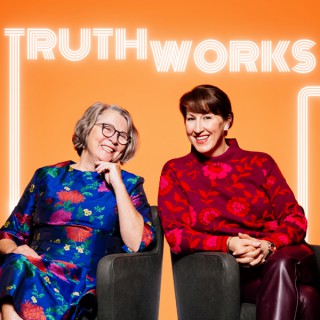
Glenn Kelman ran Redfin for 20 years. He says the most important thing he learned had nothing to do with software.Glenn joins Jessica Neal and co-host Jeff Markowitz on Truth Works for an unusually honest conversation about love, leadership, boards, and the handful of decisions that actually decide a company's fate.Glenn is not your typical tech CEO.At 21 he tried to write a novel, got nowhere, and his girlfriend broke up with him for being unemployed too long. He nearly went to medical school twice. He co-founded Plumtree Software in 1997 and took it public, then almost got fired from the company he started. He joined a nearly dead real estate website that a Seattle VC had put $500,000 into, and spent the next two decades turning it into Redfin, a business that saved consumers roughly a billion dollars in commissions before Rocket acquired it for $1.75 billion.In this episode, Glenn traces the whole thing back to his older brother's struggle with alcohol, the emergency room doctors who kept fighting for a patient any business person would have written off, and the moment he decided he wanted to be good like that.He is candid about the parts most CEOs edit out. The board meeting where he quoted Yeats and Colonel Jessup from A Few Good Men. The walk with a Greylock partner that reset his entire relationship with his board. The rentals acquisition he financed with debt in 2021, right before the music stopped. Rewriting a single email 83 times because he could not figure out how to disagree with his new parent company's CEO.Jeff and Jessica bring two decades of executive search experience to the hiring question Glenn admits he never fully solved, including the advice from Jeff that gave Glenn permission to walk away from a candidate he had already taken to dinner, drinks, and references.━━━━━━━━━━━━━━━━━━━━━━TOPICS COVEREDFINDING THE WORK→ Why writing alone in a room made him depressed, and why business is just being creative with other people→ Working for three founders barely older than him and realising he could do it too→ Picking the big idea over the small one, and why ambition makes recruiting easier→ His brother's addiction, the ER doctors, and the decision to do something good inside businessHIRING AND JUDGEMENT→ Jeff's method: go in looking for every reason the person is wrong→ Never hiring someone you are not genuinely excited about, even when you have come too far to stop→ What negotiating severance reveals about a candidate before they start→ Why subjectivity is a feature, not a bug, and the Peter Chernin story behind itBOARDS AND CEO GROWTH→ How a fraught, adversarial board became one of his greatest assets→ Blaming the board when the real problem is the product→ The one question that turns a board meeting from a performance into a working session→ Why $50M seed rounds at $400M valuations have made honest board conversations harderLEADERSHIP AND THE HARD CONVERSATION→ Being too kind for too long, and the cost of hints instead of clarity→ Writing down what you need to say, then throwing the paper away and saying it anyway→ Getting nearly fired at Plumtree in a 30-second conversation, and the turnaround that followed→ Why founder mode has a real insight buried inside a bad excuse→ Making the call people disagree with, then calling them afterwards to replay their argument backWHAT HE ACTUALLY LEARNED→ Working 15-hour days when four or five one-minute decisions created more value than all of them→ Why he stopped trying to be the smartest person in the room→ Real estate agents, a sea of love, and how they changed how he sees business→ His closing gift to listeners: if people feel the love, they will forgive almost anything━━━━━━━━━━━━━━━━━━━━━━Subscribe for more honest conversations with the people who have actually built things.

In early 2023, Keith Peiris's AI-powered presentation startup Tome was growing quickly. It had become the fastest productivity tool to reach 1 million users, Forbes reported at the time, a number that eventually climbed to 25 million. He raised $80 million from top Silicon Valley investors like Lightspeed Venture Partners, Coatue, Greylock and billionaire Reid Hoffman. But by late 2024, Peiris realized he was building the wrong company. It turned out that most people didn't want to pay for its tools, which generated beautiful slides within minutes. Tome's users, mainly students and small business owners, were largely on free plans or paying $10 monthly subscriptions—not nearly enough to sustain the business. And the startup couldn't quite crack the market for professionals like marketers and salespeople because it wasn't connected to their data and did not have the context needed to make good presentations. Users were still growing, but the company's annual revenue plateaued at around just $3 million. “Being frank about Tome, our technology thesis and our cultural thesis was very immature,” Peiris admits now. By Rashi Shrivastava, Forbes Staff Learn more about your ad choices. Visit megaphone.fm/adchoices
John Lilly has had a front row seat to almost every major shift in technology over the last thirty years, and he has sat in almost every chair while it happened.He was a Senior Scientist at Apple in 1997, when the market cap was two billion dollars and most people assumed the company was finished. He co-founded Reactivity, later acquired by Cisco. He became CEO of Mozilla and led Firefox past 450 million users, running an open source nonprofit at a time when nobody else in Silicon Valley was doing anything like it. Then he spent over a decade as a General Partner at Greylock, where he led investments in Instagram, Dropbox, Figma, Tumblr and Quip. He sits on the boards of Figma, Duolingo and Nuro, and recently joined Gigascale Capital as an Advising Partner, backing companies rebuilding the physical economy.In this conversation with Jessica Neal and co-host Jeff Markowitz, John walks through what he actually saw in the founders everyone else missed.He tells the story of chasing Kevin Systrom for six months, wiring the money on a Thursday, and getting the call three days later that Instagram was selling to Facebook. He explains the moment a friend showed him Instagram and what clicked was not the filters, it was the distribution. And he describes meeting a 19 year old Dylan Field at a Starbucks in Palo Alto, telling him his product did not matter, and then spending the next decade watching him prove it wrong.He is also honest about the parts that are harder to hear. Why some partners at Greylock wanted Dylan replaced. Why he thinks micromanaging the right things is a feature of good leadership, not a flaw. Why he does not tell CEOs anything, and what he does instead. And why, at a moment when OpenAI and Anthropic are pulling talent out of every company on earth, the answer is not matching the money.He closes with something a colleague at Mozilla told him years ago that he still carries: we had a chance to make the world we wanted, and we did it.━━━━━━━━━━━━━━━━━━━━━━━━━━━━━━WHAT WE COVER━━━━━━━━━━━━━━━━━━━━━━━━━━━━━━THE FOUNDER QUESTION→ How John spotted Dylan Field at 19→ Why recruiting senior people is the strongest early signal→ The trait every great founder shares: relentless about getting help→ Why non-defensiveness beats raw intelligence→ The lunch where they told Dylan he had to build a go to marketTHE INVESTMENTS→ Chasing Kevin Systrom for six months→ The underwater photographer who explained Instagram to him→ Why the network mattered and the filters did not→ The four day flip to Facebook and what he told his LPs→ The Adobe Killers that came before Figma and why this one was differentLEADERSHIP AND SCALE→ Going from 12 people to a quarter of the internet at Mozilla→ Why he never learned the delegation lesson everyone teaches→ Larry and Sergey reviewing every resume and what that signals→ Learning to be simpler in your message as you grow→ Deciding you would rather be successful than comfortableTHE TALENT WAR→ Why every great person is now a free agent→ The spreadsheet exercise he gives every CEO→ Tour of duty and the bilateral deal between company and employee→ Never making an offer until you know it will be accepted→ Why money is rarely the only reason people leaveTHE CURRENT MOMENT→ Why leadership now means stability without pretending anything is stable→ The collision of faster scaling and total vulnerability→ Why org size no longer scales with impact→ Alpha nerds, Tim O'Reilly, and following the most technical people around→ Investing in transformers, copper recycling and rare earth supply chains→ Why none of the AI future is settled and it is all still to play for━━━━━━━━━━━━━━━━━━━━━━━━━━━━━━CONNECT WITH JOHN LILLYLinkedIn: linkedin.com/in/johnlilly━━━━━━━━━━━━━━━━━━━━━━━━━━━━━━Truth Works is hosted by Jessica Neal, former Chief Talent Officer at Netflix, with co-host Jeff Markowitz.
The Twenty Minute VC: Venture Capital | Startup Funding | The Pitch
AGENDA: 00:00 – Apple SUES OpenAI: Did They Steal Apple's Biggest Secrets? 05:10 – Is OpenAI's $6BN Hardware Bet Already Dead? 12:50 – Zuckerberg Is Back: Meta Finally Takes On OpenAI 18:05 – The AI Spending Bubble Nobody Is Talking About 23:45 – Claude Is Coming for Designers, Product Managers & Figma 27:15 – Anthropic's $50BN Explosion: Have We Already Hit AI's TAM? 36:00 – The $26BN AI IPO Powering the Entire Industry 40:00 – Seed Investing Is Dead? Jason Calacanis Changes Strategy 57:00 – SaaS Is in Trouble: AI Is Accelerating Terminal Decay 01:15:00 – Why Greylock Said No to Billions of Extra Dollars
In 2014, Australian entrepreneur Tuhin Srivastava had scored a meeting with Sarah Guo, then the youngest partner at storied VC firm Greylock. He was pitching her on a healthcare startup that used machine learning to analyze a person's medical history. Guo was impressed — not by the idea, which was “generic,” she says, but by him and his cofounder. Five years later, he tried again, this time with something far more promising: tools that make it easier to build and run AI applications. It was years before the stunning launch of ChatGPT mainstreamed artificial intelligence, but Guo was already confident that more businesses would soon turn to AI and need cheap and efficient ways to use it. She wrote a $1.5 million check into what became Baseten, co-leading the startup's $3 million seed round in 2019. “All we had was some idea of a company on scratch paper,” Srivastava says. For the first four years, the company made no money. AI tools weren't being rapidly adopted back then. The best thing to do was to wait for the market to come around. Almost overnight, it did. Today, Baseten is valued at $5 billion, with revenue growing over 10 times in the past year. (It's now reportedly in talks to raise at an $11 billion valuation.) Guo invested in every round, first from Greylock and then from her own VC firm Conviction, which she launched in October 2022. Today, she says her stake is worth 10 times its initial value. “We own the most from day zero and it's clearly going to be a winner company,” says Guo, 36. By Rashi Shrivastava, Writer Learn more about your ad choices. Visit megaphone.fm/adchoices

Episode 429 of The VentureFizz Podcast features Lior Div, CEO & Co-Founder of 7AI. One of the most exciting parts of this platform shift to AI is watching elite, repeat founders get back into the arena. It's often these experienced builders who have the appetite and the playbook to swing for the fences and create a truly category-defining company. Lior is exactly one of those entrepreneurs. Along with his co-founder, Yonatan Striem-Amit, this duo is uniquely qualified to build the leading agentic AI security platform. They have deep expertise in the cybersecurity industry and… by the way, they've done this before with their prior unicorn, Cybereason. 7AI empowers enterprises to shift security tasks to AI agents. The company recently made waves across the entire tech ecosystem by announcing a massive $130 million Series A round of funding led by Index Ventures, with participation from Blackstone Innovations Investments, Greylock, CRV, and Spark Capital. To put that into perspective: a $130 million Series A is the largest Series A round in the history of the cybersecurity industry. It is exactly that type of aggressive funding, along with blue-chip investors, that creates market leaders. In this episode of our podcast, we cover: A discussion around the rapidly changing landscape of AI and how that affects cybersecurity. Lior's background story, including being part of Israel's elite Unit 8200 intelligence group and how he got involved in the cybersecurity industry. Scaling Cybereason, plus why he chose to build his companies in Boston. The background story of 7AI and all the details on the company & platform. The distinct operational differences between building a traditional software business versus building a native AI company. 7AI's aggressive growth plans ahead, a look inside their company culture, and what it takes to build a trusted brand in security. The most important skills someone needs to be a successful CEO. And more! This podcast is brought to you by one of the strongest longtime supporters of the local startup ecosystem, Silicon Valley Bank, a division of First Citizens Bank. With more than 1,500 bankers and relationship advisors and $44B in loans as of Q4 2025 – SVB delivers expert guidance, specialized products and a team that knows the innovation economy inside and out. Learn more at SVB.com.

https://slasrpodcast.com/ Welcome to episode 232 of the sounds like a search and rescue podcast. This week, catching up on SAR news, Recent hikes, and Notable Hikes. Plus a fatality on the Kinsmans, the Pemi / Liberty Springs problematic Black Bear has been removed, some early season fires in the Whites, recent hikes in the Belknaps, Moosiluake, Bald Peak and Kinsmans, the federal government is moving the Forest Service HQ out of Washington DC plus recent search and rescue news. Join the SLASR Podcast 48 Peaks Team on June 13 to hike Mount Adams Topics Dave Shits AT Update Stomp's new hip Hangover and College Adventures Snow is gone, three season hikers are starting too early Will Peterson FKT on the AT Pemi Bear Hiker Fatality Brush Fires NH Rest Area Politics Gear Talk US Forest Service moving headquarters More Gear Talk Music Minute - Pixies Recent Hikes - Belknaps 12 Finish Recent Hikes - Greylock Recent Hikes - Kinsmans / Bald Peak Recent Search and Rescue News Show Notes Apple Podcast link for 5 star reviews SLASR Merchandise SLASR LinkTree SLASR's BUYMEACOFFEE Order Hike Safe Card 48 Peaks website Nick's Instagram Will peterson (@_will.peterson) • Instagram photos and videos He has long trail supported FKT Pemi Bear Missing Hiker Located Deceased in Lincoln Fire crews battle multiple brush fires in Hart's Location Drama surrounds the NH Liquor Store Rest Area Bidding process Forest Service moves Headquarters from Washington DC to Utah Re-Organization of the Forest Service Information webpage Outside Magazine Article on the move Flash Grenade for Bear deterrence Injured Hiker on Sabbaday Falls Trail - 3/14 Injured Hiker Rescued from Lowe's Path - 3/15 Hikers Rescued on Mount Flume in Lincoln - 3/19 One Injured Hiker on Mount Monadnock - 3/22 Injured Hiker on Mount Major - 3/27 Injured Hiker Assisted Off of Gap Mountain in Troy - 3/29 Snowboarder Seriously Injured on Cannon Mountain - 3/30 Injured Hiker on Iron Mountain - 4/24 https://www.facebook.com/share/p/17J3in5K69/ Sponsors, Friends and Partners Rek' lis Brewing Company Wild Raven Endurance Coaching burgeonoutdoor.com 48 Peaks - Alzheimer's Association Mount Washington Higher Summits Forecast Hiking Buddies Vaucluse - Sweat less. Explore more. – Vaucluse Gear Fieldstone Kombucha CS Instant Coffee The Mountain Wanderer
https://slasrpodcast.com/ Welcome to episode 231 of the sounds like a search and rescue podcast. This week we are joined by our friend Dann Van Der Vliet. Dan is an accomplished hiker focusing on the entire northeast region and brings a lot of knowledge not only in the White mountains but across Vermont and the Adirondacks. He has put together some notes to compare the Adirondacks to the Whites so we will get to know Dann and learn about the Adirondacks. Plus, a recap of the live Mountain Wanderer show from last week, recapping the 4000 Footer Awards Ceremony, Mike has a game to play for Nick and Dann, Spring weather with search and rescue calls over the weekend on Mt. Washington, Rocky Branch Trail and Falling Waters, Breaking Dave Shits news - an update on his Appalachian Trail progress including ponies, NH news including Ice Out, Squam Trail updates, tips for mud season and river crossings, national news, plus gear talk, North Carolina talk, a music minute, dad jokes, recent hikes on Greylock, Moosilauke, Blue Hills, and Bald Peak/Kinsmans Join the SLASR Podcast 48 Peaks Team on June 13 to hike Mount Adams Topics Well Dann Marathon Monday recap Live show at Mountain Wanderer - Thanks Again! AMC Four Thousand Footer Award Ceremony Dave Shits - AT progress update NH News - Ice Out on Winnipesaukee, Squam trails reopened Mud Season Tips High Water crossing tips National News - Nova Scotia hiking ban, Gatorade dyes Moose Roadkill and the strange culture of road kill collectors Gear Talk and North Carolina adventures Guest of the Week - Dann Show Notes Apple Podcast link for 5 star reviews SLASR Merchandise SLASR LinkTree SLASR's BUYMEACOFFEE Order Hike Safe Card 48 Peaks website Nick's Instagram Ice out is official Squam trails reopen on April 17th, after mudseason closure Mud season hiking tips High water crossing tips Nova Scotia hiking ban ruled unconstitutional Gatorade switches to plant-based dyes after pressure from administration After totaling their car, Laramie couple returns to find someone stole their moose roadkill. Ultraprocessed foods turning people's thoughts into marbled steak Drone neutralizer Hyperlite Waypoint 35 New trekking poles for Nick new umbrella from gossamer gear - 5.8 ozs Hoka Speedgoats, O.V. Yonders. Sponsors, Friends and Partners Rek' lis Brewing Company Wild Raven Endurance Coaching burgeonoutdoor.com 48 Peaks - Alzheimer's Association Mount Washington Higher Summits Forecast Hiking Buddies Vaucluse - Sweat less. Explore more. – Vaucluse Gear Fieldstone Kombucha CS Instant Coffee The Mountain Wanderer Open for new members Three Mass. Hikers Rescued from Falling Waters Trail - 4/17 Two Hikers Rescued from Mount Washington - 4/18 Lost Hiker on the Rocky Branch Trail - 4/20 Unprepared Hikers assisted on Mount Monadnock - 4/10 Injured Hiker on Mount Chocorua - 4/18

In this episode, we delve into the unusual experiences of Jennifer, who has spent decades visiting the mountainous Berkshires of western Massachusetts near Jiminy Peak. Surrounded by dense forests, winding mountain roads, and the wild terrain near Mount Greylock, Jennifer describes a series of moments that left her questioning what might be moving through those woods after dark.What began as a quiet night at her townhouse during the off-season suddenly turned tense when a deep, guttural growl came from the trees just beyond the property. Not long after, something struck the building with enough force to shake the entire structure. The area was silent, the neighboring units were empty, and the source of the impact remained a mystery.Jennifer also recounts an unsettling moment along a forested stretch of road near Blandford State Forest, where the natural sounds of the landscape suddenly vanished and an overwhelming feeling of unease took hold. As she reflects on these experiences, Jennifer explores how these strange events fit into the growing number of reports coming from the Berkshires and surrounding wilderness.Her story offers a fascinating glimpse into the quieter encounters people experience in places where mountains, forests, and long stretches of isolation create the perfect environment for the unexplained. Join us as we explore Jennifer's intriguing experiences and the lingering question of what might be watching from the woods of western Massachusetts.
From the earliest days of executive search to shaping the leadership of companies like Netflix, Facebook, Google, and Spotify, few people have seen more of Silicon Valley's hiring successes—and failures—than Jeff Markowitz and Peter Clarke.In this exclusive episode of Truth Works, host Jessica Neal sits down with two of her closest professional allies and heavyweights in the world of venture capital and executive talent. Together, the three share over 30 years of experience navigating the highest-stakes hiring environments in the tech world.Jeff Markowitz, currently an advisor at Greylock Partners, shares the incredible story of being hand-picked by Google CEO Sundar Pichai to reshape senior leadership at Alphabet. Peter Clarke, a Talent Partner at Accel for over 13 years, opens up about the evolution of search and his role as a "fifth Beatle" in the founding of True Search.This conversation goes beyond standard interview advice. The trio pulls back the curtain on:Why most companies get hiring wrong, even today.The dangers of "war for talent" thinking vs. relationship building.The specific simulation techniques the best leaders use to interview.The critical, and often missing, step of referencing as a management playbook.How great CEOs, like Scott Dietzen (formerly of Pure Storage), learn the job before they even make the hire.The one question Jessica asks to immediately identify a truly great recruiter.Whether you're a founder looking to make your first executive hire, a leader struggling to build a balanced team, or a recruiter looking to level up from "salesy" to strategic, this is a masterclass you cannot afford to miss.Timestamps: – Intro: Reconnecting with friends. – Peter Clarke's unique career path: Graphic design to software engineer to executive search. – Accel's unique investing approach and portfolio impact. – Jeff Markowitz's journey: CPA to opening the Silicon Valley office to Greylock. – The call from Sundar Pichai: Mapping out the senior talent role at Google/Alphabet. – Why hiring is still so hard (and wrong) in 2026. – The flaw in prioritizing "diligence" over assessment. – The true cost of a bad hire (and why it's not what you think). – Moving beyond standard questions to "unfiltered conversations." – How to simulate working together during the interview process. – The best CEOs get this one thing right (Pure Storage example). – How can CEOs really identify great recruiting talent? – Closing thoughts on friendship and mutual career impact.

We've curated a special 10-minute version of the podcast for those in a hurry. Here you can listen to the full episode: https://podcasts.apple.com/no/podcast/reid-hoffman-shaping-the-ai-era-investing-in/id1614211565?i=1000751322912&l=nbWhat's holding back AI adoption in large organizations? Nicolai Tangen speaks with Reid Hoffman, co-founder of LinkedIn, partner at Greylock, and board member at Microsoft. They explore why AI is the biggest tech revolution of our lifetime, how startups are deploying it effectively while large companies take a risk-first approach, and why Europe must get in the game rather than just regulate from the sidelines. Reid shares his contrarian investment philosophy that led to early bets on PayPal, Facebook, and Airbnb, and offers crucial advice: the next generation must become AI native. Tune in for an insightful conversation!In Good Company is hosted by Nicolai Tangen, CEO of Norges Bank Investment Management. New full episodes every Wednesday, and don't miss our Highlight episodes every Friday. The production team for this episode includes Isabelle Karlsson and PLAN-B's Niklas Figenschau Johansen, Sebastian Langvik-Hansen and Pål Huuse. Background research was conducted by Tobias Hyldmo and David Høysæther. Watch the episode on YouTube: Norges Bank Investment Management - YouTubeWant to learn more about the fund? The fund | Norges Bank Investment Management (nbim.no)Follow Nicolai Tangen on LinkedIn: Nicolai Tangen | LinkedInFollow NBIM on LinkedIn: Norges Bank Investment Management: Administrator for bedriftsside | LinkedInFollow NBIM on Instagram: Explore Norges Bank Investment Management on Instagram Hosted on Acast. See acast.com/privacy for more information.
What's holding back AI adoption in large organizations? Nicolai Tangen speaks with Reid Hoffman, co-founder of LinkedIn, partner at Greylock, and board member at Microsoft. They explore why AI is the biggest tech revolution of our lifetime, how startups are deploying it effectively while large companies take a risk-first approach, and why Europe must get in the game rather than just regulate from the sidelines. Reid shares his contrarian investment philosophy that led to early bets on PayPal, Facebook, and Airbnb, and offers crucial advice: the next generation must become AI native. Tune in for an insightful conversation!In Good Company is hosted by Nicolai Tangen, CEO of Norges Bank Investment Management. New full episodes every Wednesday, and don't miss our Highlight episodes every Friday. The production team for this episode includes Isabelle Karlsson and PLAN-B's Niklas Figenschau Johansen, Sebastian Langvik-Hansen and Pål Huuse. Background research was conducted by Tobias Hyldmo and David Høysæther. Watch the episode on YouTube: Norges Bank Investment Management - YouTubeWant to learn more about the fund? The fund | Norges Bank Investment Management (nbim.no)Follow Nicolai Tangen on LinkedIn: Nicolai Tangen | LinkedInFollow NBIM on LinkedIn: Norges Bank Investment Management: Administrator for bedriftsside | LinkedInFollow NBIM on Instagram: Explore Norges Bank Investment Management on Instagram Hosted on Acast. See acast.com/privacy for more information.

This week we chat with Eric Newcomer!Eric is the founder and writer behind Newcomer, which is a deeply reported newsletter on the inner workings of the startup industry. He's widely regarded as one of the sharpest independent journalists and observers of power, money, and ambition in tech. He's built Newcomer from a Substack newsletter into a must-read publication with over 100,000 subscribers.After spending six years at Bloomberg, Eric took the leap in 2020 to build Newcomer full time - breaking stories that shape how founders, investors, and operators understand the startup world. From leaked slide decks at Coatue and Tiger Global to deeply reported interviews with top venture capitalists, his work consistently uncovers breaking news. Eric is also the host of the Newcomer Podcast, which launched with a debut episode featuring Reid Hoffman, and the co-creator of major tech events like the Cerebral Valley AI Summit, bringing together CEOs from Stability, Runway, Hugging Face, and leading partners from firms like Sequoia and Greylock.Earlier in his career, Eric was the first employee at The Information, where he broke news including Amazon's acquisition of Twitch. A Harvard graduate with a background in philosophy and a journalist's instinct for truth, Eric has built a platform that founders and investors can't afford to ignore.✨ This episode is presented by Brex.Brex: brex.com/trailblazerspodThis episode is supported by RocketReach, Gusto, OpenPhone & Athena.RocketReach: rocketreach.co/trailblazersGusto: gusto.com/trailblazersQuo: Quo.com/trailblazersAthena: athenago.me/Erica-WengerFollow Us!@ericnewcomer https://www.newcomer.co/@thetrailblazerspod: Instagram, YouTube, TikTokErica Wenger: @erica_wenger

You spent a year building a feature. Someone just replicated it in a day using AI.This isn't hypothetical. Roei Samuel is watching it happen in real-time. As founder of Connected - a marketplace helping 5,700 fractionals work with scale-ups - he's spinning up products daily that took his team a year to build in 2020.His conclusion? Unless you're building quantum computing or genuine deep tech, your technology moat is dead. AI killed it.Here's what makes this different:Roei isn't being dramatic. He built and sold a media company that scaled to 9 million monthly users, worked with the Premier League, NBA, and NFL, and joined the senior management team of a PLC at 26. He's seen what creates lasting value.And his take is clear: product doesn't create defensibility anymore. Network effects do. When every feature can be replicated in weeks, the only moat is how your users create value for each other - and how hard that is to reproduce.You'll learn:Why AI just eliminated technology moats. What took a year to build in 2020 now takes a day. Your 10% optimization? It'll be copied in months. The only defensible businesses are built on network effects and brand—mechanisms competitors can't easily replicate.What network effects actually mean. It's when one user's participation improves the experience for all users. Could be data (more users = better matching), could be multi-sided supply (Roei's fractionals average 3 roles each, solving the liquidity problem), could be customers becoming promoters.How most businesses can access network effects. You don't need to be a marketplace. If you're good at turning customers into promoters—testimonials, LinkedIn posts, word-of-mouth - you're building network effects. The best businesses layer multiple mechanisms.Why hiring full-time is becoming the last resort. Smart founders now think: (1) What can I automate? (2) What requires a fractional specialist? (3) Only then, do I need full-time? This isn't theory - startups on Connected average 3.7 fractionals each.How to solve marketplace liquidity problems when starting. Don't try to build both sides simultaneously - it kills companies. Use SaaS-enabled networks: give one side free tools (dashboards, benchmarking) while you populate the other side. Roei did this launching Connected in the US.Why you shouldn't scale until you nail cohort metrics. Don't worry about growth. Start with 150-200 users. Measure daily active usage, retention, behaviors that drive engagement. Roei invested in Lapse based purely on cohort analysis—they raised £8M seed, then £30M Series A from Greylock. Zero monetization. Just strong network effect metrics.How to identify your specialty if going fractional. Lean into where you deliver tangible results fastest. Not what you're best at. Not what's most fun. Where can you prove ROI in 6 months? That's your first case study. That's how you build track record.Why living out of alignment destroys everything. Roei's real mission isn't about fractional work - it's about helping people live authentically. The reality check:This isn't anti-product. Product still matters. But product alone won't save you when competitors can replicate features in weeks. Network effects create the compounding advantages that turn good products into defensible businesses.If you're building a business in 2026 and you haven't thought about network effects, you're building on sand. AI just raised the stakes.One action: Listen to the end for Roei's hiring sequence every founder should use immediately.More from James: Connect with James on LinkedIn or at peer-effect.com

Founders often delay leadership coaching until a major crisis hits, leading to significant costs in productivity, team churn, and poor decisions. In this episode, James Birchler (Technical Advisor & Executive Leadership Coach) argues that early coaching is a game-changer for a startup's success. We explore the hidden costs of waiting and the benefits of intentionally installing leadership and communication systems before you scale. James shares specific self-awareness mechanisms, like advisory groups and feedback loops, to help founders design their day and create accountability. You'll also learn practical strategies like the "5-Minute Alignment Loop" for spotting communication breakdowns & for reinforcing clarity. Plus insights on how to "install your leadership OS" so it can scale with your company. ABOUT JAMES BIRCHLERJames Birchler is an executive leadership coach and technical advisor who specializes in helping engineering leaders and founders develop greater self-awareness and build high-performing teams. He combines deep technical expertise with practical leadership development, making him particularly valuable for technical leaders scaling their organizations.As both a founder and engineering leader, James has more than 20 years of experience leading teams at companies ranging from early-stage startups to Amazon, where his current role is Technical Advisor to the VP of Amazon Delivery Routing and Planning. Most recently, he founded NICER, a premium natural personal care company, and Actuate Partners, his executive coaching and technical advisory practice. He also held VP of Engineering roles at companies including Caffeine (backed by Greylock and Andreessen Horowitz), SmugMug (where his team acquired Flickr), and IMVU.At IMVU, James implemented the Lean Startup methodologies alongside Eric Ries, author of The Lean Startup and creator of the methodology, literally the first company to apply these principles. His team helped pioneer the DevOps movement by building infrastructure to ship code to production 50 times per day and coining the term "continuous deployment." This experience in systematic experimentation and continuous improvement now informs his coaching approach through frameworks like CAMS (Coaching, Advising, Mentoring, Supporting) and the Think-Do-Learn Loop.James completed his executive coaching certification at UC Berkeley Haas School of Business Executive Coaching Institute. His coaching practice focuses on self-awareness, integrity, accountability, and fostering growth mindsets that support continuous learning and high performance. He writes the Continuous Growth newsletter and offers both individual executive coaching and peer learning circles for technical leaders.Through his advisory work with growth-stage startups in the US and Europe, James helps leaders navigate common scaling challenges including hiring and interviewing, implementing development methodologies, establishing operational cadences, and developing other leaders. His approach treats leadership development like product development—with systematic feedback loops, measurable outcomes, and continuous improvement.You can find James at jamesbirchler.com, LinkedIn, and Substack. This episode is brought to you by Retool!What happens when your team can't keep up with internal tool requests? Teams start building their own, Shadow IT spreads across the org, and six months later you're untangling the mess…Retool gives teams a better way: governed, secure, and no cleanup required.Retool is the leading enterprise AppGen platform, powering how the world's most innovative companies build the tools that run their business. Over 10,000 organizations including Amazon, Stripe, Adobe, Brex, and Orangetheory Fitness use the platform to safely harness AI and their enterprise data to create governed, production-ready apps.Learn more at Retool.com/elc SHOW NOTES:Why founders should seek coaching earlier rather than waiting for a crisis to occur (2:45)The high stakes of ignoring this critical advice & how this leads to communication & scaling problems (4:50)The importance of effective communication channels & leadership mechanisms before pressure increases (6:12)How investing a small amount in coaching early on can prevent hundreds of thousands of dollars in future costs (8:07)Frameworks for cultivating self-awareness / leadership blind spots (11:06)James's practice of "designing your day" around a desired identity, not just a list of tasks (12:30)Why designing your day is about intentionality (15:13)How this practice leads to better relationships & opportunities to reflect (17:44)Reflective listening & its impact on customer relationships (19:32)Strategies for improving self-awareness / uncovering blind spots (22:05)An example of how awareness can lead to better results (26:03)Day-to-day rituals for improving self-awareness (28:14)Signals that your communication methods are effective & getting through (30:37)Reflect on & define the desired outcome you want to generate (33:26)The five-minute alignment loop for creating clarity & confirming ownership as a leader (35:21)Why creating clarity & finding alignment is key as a founder (37:02)How the same communication & leadership patterns recur as your org scales, from small startup to large enterprise (39:46)The increasing importance of human skills like emotional intelligence and reflective listening in an age of AI (42:03)Rapid fire questions (44:38)This episode wouldn't have been possible without the help of our incredible production team:Patrick Gallagher - Producer & Co-HostJerry Li - Co-HostNoah Olberding - Associate Producer, Audio & Video Editor https://www.linkedin.com/in/noah-olberding/Dan Overheim - Audio Engineer, Dan's also an avid 3D printer - https://www.bnd3d.com/Ellie Coggins Angus - Copywriter, Check out her other work at https://elliecoggins.com/about/ Hosted by Simplecast, an AdsWizz company. See pcm.adswizz.com for information about our collection and use of personal data for advertising.

We sat down with our dear friend David Aronoff, managing partner at MCJ, one of the leading early-stage climate tech venture funds. David brings decades of venture experience, from building rocketship startups to investing at top firms like Greylock and Flybridge. What sets MCJ apart is its unconventional approach: no board seats, no led rounds, just relentless focus on portfolio support powered by a massive community of talent. With deep roots in Vermont's Northeast Kingdom, a passion for durable companies, and a clear-eyed view on everything from AI bubbles to Vermont's innovation ecosystem, David offers sharp insights for founders, investors, and anyone serious about climate solutions. Hosted on Acast. See acast.com/privacy for more information.

Part 1 of this essay was published by rediff.com at https://www.rediff.com/news/column/rajeev-srinivasan-trumps-huge-venezuela-gamble/20260114.htmPart 2 of this essay was published by rediff.com at https://www.rediff.com/news/column/rajeev-srinivasan-was-maduros-capture-a-warning-shot-to-china/20260124.htmIt is hard to judge whether the US regime-change operation in Venezuela is a stroke of genius or an act of pure recklessness. This is completely orthogonal to the questions of morality and legality involved in such, well, coups, to put it bluntly. The real issue at hand is twofold: why did they do it? And what is the long-term fallout from it?I consider several perspectives below: the moral/legal angle, the alleged oil bonanza, the alleged drug trafficking, geo-politics and geo-economics. In sum, I am inclined to believe that the Venezuela adventure may not be an indication of American strength, alas, but rather of American weakness. To someone like me who is deeply supportive of the US (especially in opposition to China, the G2 condominium notwithstanding), this is a disheartening conclusion.The morality and legality angleLet us summarily dispose of the entire morality-legality question. At the end of the day, international relations, despite flowery marketing language, is essentially Chanakyan matsya-nyaya, i.e. the big fish eat the little fish, the law of the jungle. Might is right, and that's just the way realpolitik is, let us accept that and move on. The United Nations and the so-called ‘liberal rules-based international order' are syntactic sugar hiding this bitter fact of life. There are a few implications for the little or medium-sized fish: deter the big fish. 1. Bulk up, build up your military and economic strength, including your ability to produce lots of military hardware, 2. Build your economic leverage, so that you are an indispensable trading partner nobody can afford to alienate, 3. Build a nuclear arsenal.This last is significant. Let us consider all the recent (and near-future) invasions by big fish. Iraq. Libya. Iran. Panama. Vietnam. Afghanistan. Ukraine. And soon, alas, Taiwan. Ok, I may have missed some here, but none of them have nukes. If you have working nuclear weapons, and the means to deliver them (such as nuclear-capable missiles, submarines lurking in the ocean depths with nuclear warheads), then it is risky for the invading big fish. No big fish likes body bags, and they certainly don't like mushroom clouds over their cities.In addition, there was the stunning silence from the European Union and Britain, which have been moralizing to everybody about how wicked it was for Russia to invade Ukraine. No clutching pearls this time, eh, Eurocrats in Brussels? In fact, EU leaders were positively ecstatic about Trump's intervention in Venezuela. It is indeed the end of the European century.Ditto with the United Nations, which, by the way, is pretty much on its last legs so far as I can tell: on 7th January President Trump exited 31 UN agencies and a grand total of 66 multilateral entities.This of course hurts the UN's budget, not to mention its relevance.In January the US will formally exit the Paris Climate Agreement and the WHO, and it has already exited the UNHRC, UNESCO, and UNRWA. The newly announced exits include the UN Framework Convention on Climate Change, the Intergovernmental Panel on Climate Change, the UN Women's Fund, the UN Population Fund, the International Solar Alliance, the International Renewable Energy Alliance, and so on.All this fits in with the ‘Fortress America' part of the National Security Strategy, which I wrote about at some length recently. In my opinion, it is not in the US' long-term interests. The post-WW II “liberal, rules-based international order” with America as its center was good for the US, and its precipitous end will erode pre-eminence, Manifest Destiny notwithstanding. The problem is that the dollar, sanctions, SWIFT and US Treasury debt are losing their clout. Pax Americana too.Summary: Nobody is bothered about morality or legality.The oil colony: is it for real?It could be argued that the unabashed Trump statements about Venezuela's oil are exactly like the British and other European colonization of many lands in the 19th century. It can be summarized as: “we have the guns, we're going to take your butter”. That may well be true, although it is not discussed in genteel circles, where they pretend the Euros were on an, um… civilizing mission.Trump, to his credit, makes no bones about it: he says in so many words that he will henceforth consider Venezuela's oil to be his, and that it will be used for the benefit of both Venezuelans and Americans. To be honest, there is some rationale behind this: the infamous Resource Curse, where resource-rich countries end up with the riches being grabbed by both foreigners and kleptocratic local elites, and miserable citizens get virtually nothing.I am not quite sure how Arab OPEC countries managed to keep their money, and spend it on their own nationals: possibly because their populations were low, and they were used to authoritarian rulers anyway. The same with Norway. But the Resource Curse is a fairly universal phenomenon. I bet the global money managers are laughing all the way to the bank.When I first went to the US in the late 1970s, I had a graduate student friend, a woman from Venezuela. She was there on a generous scholarship funded by oil revenues, just like the Iranians who had studied with me in India. At least some of the money was going to actual citizens, and wasn't disappearing into tax havens. I guess socialism did Venezuela in over decades, as we have seen in West Bengal and Kerala.The country's finances are an absolute mess, through years of economic collapse, US sanctions, and a sovereign default in 2017. There are enormous debts owed by Venezuela to foreign investors, add up to more than $150 billion, or twice GDP; this includes interest, penalties for default, and arbitration awards for the expropriation (nationalization) of oil infrastructure. Venezuelan assets abroad (e.g. the CITGO oil retailer) are at risk.So far as I can tell, the country owes the following:* Bond default in 2017 (sovereign and state oil company PDVSA bonds): face value $60 billion, now up to $100 billion with accrued interest and penalties. Owed mostly to international asset managers such as Fidelity, Greylock, T Rowe Price (often US based)* Oil-backed loans of about $15 billion, to be paid off in oil shipments (China and Russia)* Arbitration awards often based on nationalization/expropriation of (especially oil-related) assets: around $30 billion (US and Canada based creditors such as ConocoPhillips and Crystallex owed around $8-10 billion)This means there's a lot of issues that needs to be settled before Venezuela becomes a normal and substantial player in the world oil market. Besides, despite the exertions of Chevron, an American oil major that still has operations in Venezuela, I don't think it will be easy to ramp up production there, which has collapsed due to a variety of factors, including the non-availability of naphtha to make the very viscous, heavy crude from the Orinoco Belt more easily transportable.It is said, however, that a number of US refineries can indeed handle this heavy crude (incidentally Indian refineries such as Reliance's Jamnagar can as well) and so, over time, the oil will begin to flow, although it is going to cost quite a bit to get there. Their production was of the order of 3.5 million barrels per day in the 2010s, but it has fallen to about 1.1 million barrels now, as the result of infrastructure decay, mismanagement, corruption, and US sanctions.I have read estimates that it might take as much as $180 billion in investments over the next 10-15 years to bring Venezuela back online at scale. This means that any dreams of the US tapping Venezuela's vast oil reserves any time soon are unrealistic. Besides, that could lead to an oil glut, depressing global prices even below the current $50-60 levels, which has the side effect of making America's own shale-based oil production unviable.There is one good outcome, though: for neighboring Guyana. Venezuela had been threatening to go to war over Guyana's oil fields. Given that Guyana has a large Indian origin population, I am glad that at least some diaspora people are becoming oil rich. But then again, Trump may feel free to claim their oil too, who knows?All this suggests that, despite all the talk of seizing the largest oil reserves in the world, this is not the real reason behind the regime change.Summary: The oil issue is overblown, and nothing dramatic will happen short-term.What about the drug-running?There was a lot of noise about how Venezuelan gangs pushing drugs in the US was a major threat, and how that needs to be taken care of. However, on closer scrutiny, Venezuela is not a major producer of cocaine (production is almost entirely in Colombia, with smaller amounts from Peru and Bolivia). It serves as a minor transit country for some cocaine, mostly headed to Europe or the Caribbean rather than directly to the streets of America.Data from the UNODC (UN Office on Drugs and Crime) and the US DEA (Drug Enforcement Agency) show no significant direct sea routes from Venezuela to the US; the only known direct route is limited air trafficking.DEA reports (including the 2025 National Drug Threat Assessment) and UNODC (World Drug Report 2025) consistently show Colombia as the overwhelming source of cocaine entering the US (around 84%+ of samples). Venezuela ranks low in direct contributions, with most US-bound cocaine transiting through Mexico/Central America via Pacific routes.Fentanyl trafficking into the United States follows a distinct supply chain, very different from plant-based drugs like cocaine. The overwhelming consensus from US authorities is that Mexico is the primary source of finished illicit fentanyl reaching the US, while China remains the main origin for the precursor chemicals needed to produce it.The fentanyl crisis is overwhelmingly a China to Mexico to US southwest border pipeline not linked to Venezuela or South America in any substantial way, per DEA, State Department, and congressional reporting.Summary: The talk about Venezuela's drug-running is a smoke-screen.Is it geopolitics then?The most interesting thing about the extraction of former Venezuelan President Maduro was not the dramatic flair with which it was done, though that was indeed very Youtube-ready. The helicopter gunships, the silenced air defences, the Cuban bodyguard eliminated (by a sonic weapon?): all the elements of a pretty exciting Hollywood film. I'm sure one is coming up soon.What was even more interesting, though, was that a delegation from the Chinese Communist Party had met him just a few hours before. China has been rather chummy with a fellow-socialist, and has been a good customer as an oil buyer. The fact that Maduro was extricated while the Chinese were still in Venezuela was a warning shot: besides, it suggests that they had no clue what was going to happenIn effect, it was a slap on the face of China, and it goes back to my belief that the US is investing in a G2 condominium with them. Stick and carrot, maybe? Collaborate in general in the spheres of influence concept, but hey, you better keep out of my sphere, ok? As I said earlier, China has made serious inroads into Latin America, which the US may now be hinting is simply not ok: stay in your lane, Xi! In simple terms, China will no longer have access to Venezuelan oil.The prognosis is grim: Russia and the EU are mired in the Ukraine mess, China is rampant (certainly in Asia, with their declared intent of invading Taiwan by 2027), the QUAD is more or less defunct. Trump refused to support Japanese premier Takaichi Sanae when she was bullied by the Chinese over her remark that if Taiwan were to be attacked by China, this would create a survival-threatening situation for Japan, which is literally true as Taiwan is only 70 miles away.Parenthetically, India has also realized the same about the US – that it is on its own – after what was quite likely a US-supported regime-change operation in Bangladesh has put the Hindu minority there in real danger of genocide and ethnic cleansing, with daily incidents of burning alive, murder, rape and abduction and threats of capturing Indian territory.The emerging situation in Iran is also likely to be a blow to China: they would lose one more source of cheap oil. But then, they do have buyer power: in other words, major oil producers do have to sell their stuff to somebody, and as China demonstrated in the case of soybeans from the US, its refusal to buy the stuff has severe consequences for the seller.So it is true that the US and China in general have to respect each other and trade with each other. This is perfectly feasible under the G2 condominium, the principal role of which is to give each of them a ‘playpen' if you will, and prevent a new power, e.g. India, from forcing its way into a G3. It appears they both are applying the Thucydides Trap to India.The US is still ahead of China in the geopolitical game, but if it continues to burn its bridges with its erstwhile allies and partners (such as the EU and Quad members) it will accelerate its relative decline. This is hardly the time to alienate potential partners, especially now that a belligerent NATO has pushed a reluctant Russia into the dhritarashtra-alinganam of China.Unfortunately, in geo-politics America is becoming less exceptional, and Henry Kissinger's quip that “it is dangerous to be America's enemy, but fatal to be its friend” is taking on a new urgency. The action in Venezuela (and possibly in Cuba before long) does not encourage other nations to look to the US for partnerships.Summary: The geopolitical fallout is not particularly good for America's image as an ally.It may well be economics, and a desperate fin-de-siecle lungeThe final issue is that of economics and economic history. Over the past several centuries, we have seen how those countries that hold the global reserve currency have prospered and have been financial hegemons to begin with, based on some substantial competitive advantage, but then a strange malady (“the Dutch disease”) sets in, and over time their financial clout diminishes, until at one point they become major debtors and then, they become irrelevant.This has happened several times in the past 800 or so years, and the patterns are strikingly similar, so there is a fair chance that it is happening again. The countries in question are:* Spain in the 16th century onwards* The Netherlands in the 17th century onwards* Britain in the 19th century onwards* And alas, the US in the 20th century onwardsNow, I would dearly wish the US could avoid this vicious cycle, partly because it is a continent-sized nation with immense resources, but I believe that economic profligacy, wasting money on unnecessary things like wars, and complacency fostered by easy money is leading to a mountain of debt, which usually is a bad place to be in. In each of these European examples, initial success inevitably led to collapse. I hope the US can avoid this fate, especially as warnings have been sounded for some time by experts such as Ray Dalio.Great economic powers, particularly those issuing the world's primary reserve currency, tend to follow a recurring historical cycle of rise, peak dominance, gradual (or sometimes rapid) decline, loss of competitiveness, mounting debt burdens, and eventual marginalization on the global stage. This pattern has repeated over the last 500+ years.The archetypal cycle often unfolds in phases:* Rise and dominance: Because of strong education, innovation, productivity, trade dominance, military power, and financial innovation create a virtuous cycle (this is the model that I have in mind of the US. But there is a second model: colonial loot. Spain stole trillions from Latin America, Britain from India. This too leads to (unearned) privilege). This leads to the currency becoming the preferred global medium for trade, reserves, and debt denomination.* Peak and overextension: Success breeds complacency, wealth inequality widens, debt accumulates (often to fund wars, welfare, or consumption), and costs rise relative to competitors. Besides, there is a form of the Resource Curse: the colonial loot or digging things out from a hole in a ground is so easy that all other industries wither away and die. We see this in Kerala today: remittances are easy money, so everybody wants to go to the Persian Gulf (skilled and unskilled labor) or Europe (nurses). Maybe the generativeAI bubble falls into the same category: the money is too easy.* Decline in competitiveness: Education and innovation lag, unit labor costs rise, trade shares erode, and emerging rivals catch up or surpass in productivity and technology. Too much by way of wokeness, social justice and related illnesses means the smart ones leave, and the dumb ones keep congratulating each other. Ruchir Sharma just wrote in the Financial Times about how the continuing exodus of skilled Indians is a big negative.* Debt buildup and financial strain: The “exorbitant privilege” of reserve status allows cheap borrowing, encouraging more debt. Deficits grow, and the currency is printed or devalued to manage burdens. Print, baby, print. But one day you have to pay the piper.* Marginalization: Confidence erodes (via inflation, devaluations, defaults, or crises), foreigners reduce holdings, and a new power's currency gains primacy. The reserve status lingers due to network effects and habit, but the issuing power loses geopolitical and economic centrality.Spain had its colonies in the Americas from which it extracted enormous amounts of gold and silver; the Dutch started the Amsterdam stock exchange and stepped into the vacuum of finance when Spain faltered; the British outcompeted the Dutch in colonization and in industrialization and defeated them in wars; and the US took over when Britain lost its colonies and had nowhere to dump its goods, and was in debt for its spending in World Wars I and II.Some of the symptoms of the “Dutch disease” are showing in the US: enormous debt, wars that have no clear benefit to the nation, loss of manufacturing, geopolitical challenges, loss of competitiveness and brand superiority in industry after industry.US investors are quietly moving their funds to other countries, while foreigners are quietly moving their money out of US treasuries (e.g. China has reduced its holdings from a high of $1.3 trillion in 2013 to $688 billion now) and into gold, the BRICS group is creating an alternative currency and a non-SWIFT settlement mechanism, and many countries are trading with each other bilaterally in local currencies. De-dollarization is a little far off but no longer implausible.Now, as a big supporter of the US, I do hope the dollar will continue to be supreme, but I am beginning to have my doubts. I have had faith in the US and its ability to re-invent itself on the brains of its immigrants, but I wonder if a post-MAGA US will be the beacon, the “City on the Hill”, “Give me your tired, your poor/Your huddled masses yearning to breathe free”. Maybe not any more. Perhaps cyclical decline, and the rot, are already too deep.This, in my opinion, is the real reason for Trump's little adventure in Venezuela: to be relevant in global finance for a little longer. The petrodollar has been the lifeline allowing the US to run substantial deficits for a long time. Because all transactions for oil have traditionally been mandated to be in dollars, there has been constant demand for the dollar, despite the loss of manufacturing (in other words, nobody needs dollars to buy US goods except a few like weapons, aircraft, and Big Tech software). But everybody needs it to buy oil.Trump is ensuring that Venezuela's giant oil reserves (the largest in the world) will now be sold in dollars, contrary to Maduro's plans to trade in yuan. This is deja vu: when Iraq's President Saddam Hussein planned to trade his oil in Euros in 2000, he found himself deposed. When Libya's President Muammar Gaddafi planned to trade his oil in a new currency called the ‘gold dinar' around 2009, he found himself deposed. Coincidence? Perhaps.This is why I have had the feeling that the Venezuela adventure does not show American strength, but rather American weakness. The dollar is in trouble, and thus the US welfare state. This is an attempt to shore it up.Summary: The real rationale behind the Venezuela regime-change is to ensure that de-dollarization is postponed at least for a while.3450 words, Jan 12, 2026. This is a public episode. If you'd like to discuss this with other subscribers or get access to bonus episodes, visit rajeevsrinivasan.substack.com/subscribe

If you're looking for an uncommon thinker, how about a tech industry veteran developing and selling landline phones in 2025 — and selling out of them in the process. Chet Kittleson is the co-founder and CEO of Tin Can, a Seattle startup making Wi-Fi enabled landline phones designed to let kids talk to friends and family with just their voices. No screens, no AI. GeekWire recognized Kittleson as one of our Uncommon Thinkers for 2025, a program presented in partnership with Greater Seattle Partners honoring inventors, scientists, and entrepreneurs transforming their industries in unexpected ways. In this episode, he talks about the moment at school pickup that sparked the idea, why his own kids don't own devices, what happened when he eliminated screens on family road trips, and the $12 million seed round led by Greylock that will fuel the company's next chapter. Related stories: Tin Can dials up another $12M to meet soaring demand for landline-style phone for kids Uncommon Thinkers: Tin Can is Chet Kittleson’s calling, and a way to foster deeper connections Uncommon Thinkers: Hope for the future from our 2025 honorees With GeekWire co-founder Todd Bishop; edited by Curt Milton. See omnystudio.com/listener for privacy information.
Now on Spotify Video! When Reid Hoffman first began studying artificial intelligence at Stanford, the world wasn't ready for it yet. Years later, inspired by conversations with top tech innovators, he recognized AI's potential and seized the moment. As the founding investor in OpenAI and co-founder of Inflection AI, he's at the forefront of shaping AI and the future of work. In this episode of the AI Vault series, Reid introduces the concept of "superagency," where AI enhances human capabilities rather than replacing them. He also addresses common fears surrounding AI and shares his vision for a future powered by AI-driven agents. In this episode, Hala and Reid will discuss: (00:00) Introduction (01:49) Reid's Early Interest in Artificial Intelligence (04:18) AI, Jobs, and Concerns for the Future (08:25) Superagency: Amplifying Human Capability with AI (19:34) Training AI to Be a Better Human Companion (23:15) Trust and Misinformation in the Age of AI (25:56) Why Human Expertise Still Matters in AI (28:13) Reid's AI Twin (31:07) Leveraging AI for Content Creation (32:39) How AI in Action Will Shape the Future Reid Hoffman is an entrepreneur, investor, partner at Greylock, and the co-founder of LinkedIn and Inflection AI. He's also a bestselling author and host of the Masters of Scale podcast. Reid majored in artificial intelligence at Stanford through the Symbolic Systems program, one of the earliest undergraduate AI majors. As an early investor in OpenAI, he has become a prominent voice championing responsible AI development that expands and amplifies human potential. Sponsored By: Indeed - Get a $75 sponsored job credit to boost your job's visibility at Indeed.com/PROFITING Shopify - Start your $1/month trial at Shopify.com/profiting. Revolve - Head to REVOLVE.com/PROFITING and take 15% off your first order with code PROFITING DeleteMe - Remove your personal data online. Get 20% off DeleteMe consumer plans at to joindeleteme.com/profiting Spectrum Business - Visit Spectrum.com/FreeForLife to learn how you can get Business Internet Free Forever. Airbnb - Find yourself a cohost at airbnb.com/host Northwest Registered Agent - Build your brand and get your complete business identity in just 10 clicks and 10 minutes at northwestregisteredagent.com/paidyap Framer - Publish beautiful and production-ready websites. Go to Framer.com/design and use code PROFITING Intuit QuickBooks - Bring your money and your books together in one platform at QuickBooks.com/money Resources Mentioned: Reid's Book, Superagency: amzn.to/4g7cfVG Reid's Book, Blitzscaling: bit.ly/Blitzscalin Reid's LinkedIn: linkedin.com/in/reidhoffman Reid's Website: reidhoffman.org Reid's AI Video, Reid Hoffman Meets His AI Twin: bit.ly/4jzlVeD Active Deals - youngandprofiting.com/deals Key YAP Links Reviews - ratethispodcast.com/yap YouTube - youtube.com/c/YoungandProfiting Newsletter - youngandprofiting.co/newsletter LinkedIn - linkedin.com/in/htaha/ Instagram - instagram.com/yapwithhala/ Social + Podcast Services: yapmedia.com Transcripts - youngandprofiting.com/episodes-new Entrepreneurship, Entrepreneurship Podcast, Business, Business Podcast, Self Improvement, Self-Improvement, Personal Development, Starting a Business, Strategy, Investing, Sales, Selling, Psychology, Productivity, Entrepreneurs, AI, Artificial Intelligence, Technology, Marketing, Negotiation, Money, Finance, Side Hustle, Startup, Mental Health, Career, Leadership, Mindset, Health, Growth Mindset, ChatGPT, AI Marketing, Prompt, AI in Business, Generative AI, AI for Entrepreneurs, AI Podcast

On this episode of the Somewhat Frank Podcast, Frank Gruber (X and IG: @FrankGruber), John Guidos (IG: jgoodtimes83), Jen Consalvo (X: @noreaster), and Simon Kahan (IG: simonkahan) discuss the following topics: AI country band "Breaking Rust" tops the charts. Three astronauts aboard China's space station are stuck aboard without a guaranteed safe return vehicle. SuperMe just closed a $6.8 M seed round (led by Greylock) to power its AI‑expert network. Google has launched Gemini 3 (specifically the "Pro" version), what the company calls its "most intelligent model" yet. We also upload our episodes to YouTube in video format so you can see us now. Check it out on Established YouTube, where you can subscribe to get updates when we drop a new episode at: https://soty.link/ESTYouTube As always, thank you for listening, and feel free to reach out and let us know what you think at: somewhatfrank@est.us

About Nikhil Buduma:Nikhil Buduma is a San Francisco–based entrepreneur, scientist, and engineer working at the cutting edge of AI and healthcare. He is the co-founder and CEO of Ambience Healthcare, an AI platform built to supercharge every healthcare worker with intelligent automation. Under his leadership, Ambience has grown into one of the most well-funded AI healthcare startups in the world, raising over $343 million from top investors, including a16z, OpenAI, Kleiner Perkins, Oak HC/FT, Optum Ventures, and industry pioneers such as Jeff Dean and Pieter Abbeel. Before becoming CEO, Nikhil served as Ambience's Chief Scientist, leading the development of its core AI systems that streamline documentation, coding, and clinical workflows for healthcare systems, including the Cleveland Clinic and St. Luke's.Prior to Ambience, Nikhil co-founded Remedy Health, where he applied machine learning to advance value-based care models, backed by Khosla Ventures and Greylock. He also co-founded Lean On Me, a nonprofit organization that supports mental health and wellness across U.S. college campuses through anonymous peer-to-peer text support networks at institutions such as MIT, Duke, and UC Berkeley.A graduate and valedictorian of Bellarmine College Preparatory, Nikhil earned both his bachelor's and master's degrees in computer science and engineering from MIT. His career reflects a rare blend of technical mastery, compassion, and vision—using AI not to replace clinicians, but to restore the human joy in the practice of medicine.Things You'll Learn:Health systems often see low real-world usage of ambient tools; when daily adoption crosses most clinicians and visits, the ROI conversation becomes meaningful. This requires solving fundamentals across specialties, not just shipping features.If AI generates notes that don't align with payer rules and codes, organizations incur rework and risk. Integrating HCC, ICD-10, and CPT selection, along with supporting language, at the point of care helps prevent denials.Revenue integrity upside: Bringing CDI intelligence forward can reclaim large sums from work already done but not credited. This strengthens both financial sustainability and compliance posture.Continuous third-party auditing and domain-specific modeling are essential because general reasoning models often struggle with the nuances of revenue cycles. Independent validation builds organizational trust.Patient Summary anticipates questions and data needs before the visit, while Chart Chat answers complex, EHR-aware queries in seconds, helping to democratize top-tier standards of care in rural settings.Resources:Connect with and follow Nikhil Buduma on LinkedIn.Follow Ambience Healthcare on LinkedIn and visit their website.

Join us as we chat with Melissa Breor, the Executive Director of the Chicopee Chamber, and Samalid Hogan, who is the CEO and Principal Consultant at Greylock Management Consulting. They are well known individuals throughout the region because of the important past roles that they have held. Samalid was the former Executive Director at the MSBDC in Springfield and Melissa worked at the Northampton Chamber for many years. They have partnered up to do a series of workshops in Chicopee sponsored by the City of Chicopee. 13 workshops to be exact. Their topics will include business planning, capital resources, financial planning, energy, and impact. For more information, please go to: www.bit.ly/chicopeebizworkshops www.chicopeechamber.org https://cas5-0-urlprotect.trendmicro.com:443/wis/clicktime/v1/query?url=www.greylockmanagementconsulting.com&umid=aab3390f-3b3f-4a78-80bc-1693e43314ca&rct=1763419700&auth=8789d1923baeef5cdc1c0bb41e7be32625ccae84-079ec4e8fa4b8db345931e6faf7e2615997599f1
Idan Plotnik is the CEO of Apiiro, an application security platform built for the AI era. They've raised $135M in funding from investors like Greylock, Kleiner Perkins, and General Catalyst.Idan's favorite books: Zero to IPO (Author: Frederic Kerrest)(00:01) Introduction (00:07) How LLMs Generate Code(02:11) Rise of Vibe Coding: Opportunities and Risks(05:24) Debugging and Security in Vibe Coding(09:13) Vulnerabilities Introduced by AI Code Assistants(12:20) Security Basics for Builders Using AI and Cloud Platforms(15:44) Security by Design and Organizational Standards(18:08) Making Security Dead Simple: The Appiro Approach(22:28) Winning Developer Trust Through UX and Integration(26:59) Biggest Technical and GTM Challenges in Building Appiro(33:55) Rapid Fire Round--------Where to find Idan Plotnik: LinkedIn: https://www.linkedin.com/in/idanplotnik/--------Where to find Prateek Joshi: Newsletter: https://prateekjoshi.substack.com Website: https://prateekj.com LinkedIn: https://www.linkedin.com/in/prateek-joshi-infiniteX: https://x.com/prateekvjoshi

Reid Hoffman is the co-founder of LinkendIn, Manas AI, and Inflection AI. As an investor at Greylock, he is one of the leading figures in the tech industry, working at the forefront of AI development. In this episode, Reid and Robinson talk all about the future of AI. They begin by covering the worst case scenario—doomsday—and why Reid is optimistic about our chances. From there, they turn to how AI could help us cure cancer, replace therapists, enable us to be more powerful agents, and make our lives better. Reid's most recent book is Superagency: What Could Possibly Go Right with Our AI Future (2025).Reid's Website: https://www.reidhoffman.orgSuperagency: https://a.co/d/hdSZeCYOUTLINE00:00:00 Introduction00:01:09 Why Won't AI Destroy Humanity?00:06:39 Will AI Be Good or Bad for Employment?00:08:20 On Optimism00:10:10 It Isn't Inevitable that AI Will Wipe Out Human Life00:19:03 How to Align AI with Human Interests00:24:40 Reid's Interest in Friendship00:32:13 Why AI Can't be Our Friends00:36:33 Could AI Replace Therapists?00:45:18 Using AI to Cure Cancer00:52:04 Will AI Extinguish Humanity with a Virus?01:00:02 How Will AI Make Us More Powerful Agents?01:07:06 Will Academia Be Revolutionized by AI?01:15:10 Are You an AI Native?01:17:36 How to Invest in AIRobinson's Website: http://robinsonerhardt.comRobinson Erhardt researches symbolic logic and the foundations of mathematics at Stanford University, where he is also a JD candidate in the Law School.
Spiros Xanthos is the CEO of Resolve AI, a platform to put AI on-call for humans. He previously started Log Insight that was acquired by VMware. And started Omnition that was acquired by Splunk. He also helped start OpenTelemetry. They've raised $35M from amazing investors such as Greylock.Spiros's favorite books: - Zero to One (Author: Peter Thiel)- Build (Author: Tony Fadell)(00:01) Introduction & Setting the Stage(00:42) AI's Impact on Software Engineering(02:55) What Reliability Means in Software(04:34) Resolve AI Explained in Plain English(06:33) Real-World Example of Resolve in Action(08:28) Early Customers & Lessons from Company Building(11:40) OpenTelemetry & The Open Source Journey(16:55) Positioning a Developer Tool in a Crowded Market(18:58) Philosophy of Product Building(21:06) Cultural Norms: What to Keep and What to Change(24:33) Radical Transparency & Team Dynamics(26:50) Recruiting for Resilience in Early Team Members(28:59) Future of AI in Software Engineering(31:25) Resolve AI Roadmap & Expansion Plans(33:28) Exciting AI Advancements on the Horizon(35:17) Rapid Fire Round--------Where to find Spiros Xanthos: LinkedIn: https://www.linkedin.com/in/spiros/--------Where to find Prateek Joshi: Newsletter: https://prateekjoshi.substack.com Website: https://prateekj.com LinkedIn: https://www.linkedin.com/in/prateek-joshi-infiniteX: https://x.com/prateekvjoshi
Technovation with Peter High (CIO, CTO, CDO, CXO Interviews)
1: Where is software value heading in the age of AI? In the premiere episode of Technoventure, host Peter High speaks with Asheem Chandna, General Partner at Greylock Partners, one of Silicon Valley's most storied venture firms. Asheem has led early investments in industry-defining companies such as Palo Alto Networks, AppDynamics, Rubrik, and Abnormal Security. With over 20 years at Greylock and a background in product management and cybersecurity, Asheem offers a masterclass on how he assesses founders, identifies breakout potential, and mitigates risk—often before a single line of code is written. He also explores the evolving dynamics of enterprise software, the impact of agentic AI, and how cybersecurity must adapt to combat both bad and good AI. Key themes include: Assessing founders in a world of younger AI entrepreneurs The changing nature of enterprise software and data platforms The immigrant's mindset and risk tolerance in venture The venture capitalist's evolving toolkit in the AI era

On Figma's first day trading on the NYSE, its stock soared over 250%, closing at $115.50 and giving the design software company a market cap near $68 billion. That's more than triple the $20 billion Adobe offered before regulators killed that deal in 2023. Silicon Valley is celebrating. The IPO raised $1.2 billion, mostly benefiting early investors like Sequoia, Greylock, Index Ventures, and Kleiner Perkins, whose combined stakes are now worth about $24 billion. It's a huge win for Silicon Valley VCs after a prolonged IPO drought that began in 2022.Featured Guests: Ben Narasin, founder and general partner, Tenacity VC | Jaya Gupta, partner, Foundation Capital
What happens when a seasoned rock climber rappels into the heart of Tennessee's mountain wilderness — and comes face to face with not one, but two Sasquatch?In this chilling and unforgettable episode of Bigfoot Society, Jeremiah Byron shares the story of "Project Broken Man," a Tennessee native whose solo climb turned into a life-altering encounter. Hanging 90 feet above ground, he comes eye-to-eye with a massive, amber-eyed creature — and witnesses something few ever have: a juvenile Bigfoot swinging on his rope. That's just one of the jaw-dropping stories in this episode, which also features nighttime encounters in Oklahoma City, a Sasquatch grabbing a goose in broad daylight at a Washington truck stop, and a train engineer who kept his Massachusetts sighting secret for over 20 years.You'll hear stories from Lake Wales, Teleco Plains, Clark Forest, the Berkshires, and beyond — places where the shadows move, and sometimes... watch back.Whether you're a longtime believer or a curious skeptic, this episode delivers raw, emotional accounts of encounters with the unknown. More than just stories — this is the sound of people grappling with what they saw and the truths they carry.
Greylock Partner & LinkedIn Co-Founder Reid Hoffman joins Bloomberg host Ed Ludlow to discuss competition in the AI sector, talent, and investments. They spoke at the 2025 Sun Valley Conference in Idaho.See omnystudio.com/listener for privacy information.

In this episode of the Wharton Fintech Podcast, host Sabrina Fathi chats with Seth Rosenberg, General Partner at Greylock, about what it takes to build and back enduring companies at the intersection of fintech and AI. Seth shares lessons from launching Facebook Messenger, insights on founder-market fit, and how great early-stage companies validate ideas, build defensibility, and navigate market shifts. With deep takes on AI, blockchain, and the future of financial services, this episode is packed with practical wisdom for builders and investors alike.

Today on the podcast we are joined by tech titan Reid Hoffman. As the founder of LinkedIn, which Microsoft acquired for $26 billion, Reid is one of the most successful entrepreneurs in history.He broke through as a founding board member of PayPal, one of the so-called PayPal mafia alongside Elon Musk and Peter Thiel. Reid went on to become a legendary investor both as an angel and partner at Greylock. He invested in Facebook's first round and led Airbnb's Series A.Reid operates right at the cutting edge of AI. He was one of the first backers and board members of OpenAI. He's also on the board of Microsoft, which did a $650M+ deal with Reid's startup, Inflection AI. You'll remember Inflection from our interview with Deepmind's Mustafa Suleyman, Reid's co-founder.Alongside all of this, Reid has forged a path as one of Silicon Valley's public intellectuals. Following startup bibles like Blitzscaling, his latest book is "Superagency: What Could Possibly Go Right With Our AI Future.” Welcome Reid!Building a purpose driven company? Read more about Giant Ventures at www.Giant.vc.Music credits: Bubble King written and produced by Cameron McLain and Stevan Cablayan aka Vector_XING. Please note: The content of this podcast is for informational and entertainment purposes only. It should not be considered financial, legal, or investment advice. Always consult a licensed professional before making any investment decisions.

“HR Heretics†| How CPOs, CHROs, Founders, and Boards Build High Performing Companies
This segment examines the resurgence of "996" work culture (9 AM to 9 PM, six days weekly) among Silicon Valley's early-stage founders. Nolan analyzes the tension between demanding work schedules and talent attraction, drawing from Glen Evans' LinkedIn critique. He argues these intensive cultures suit certain life stages and career priorities, emphasizing that both high-intensity startups and work-life balance approaches can coexist as conscious trade-offs rather than moral imperatives.NOTE: Kelli is away this week spending time with family*Email us your questions or topics for Kelli & Nolan: hrheretics@turpentine.coFor coaching and advising inquire at https://kellidragovich.com/HR Heretics is a podcast from Turpentine.Support HR Heretics Sponsors:Planful empowers teams just like yours to unlock the secrets of successful workforce planning. Use data-driven insights to develop accurate forecasts, close hiring gaps, and adjust talent acquisition plans collaboratively based on costs today and into the future. ✍️ Go to https://planful.com/heretics to see how you can transform your HR strategy.Metaview is the AI assistant for interviewing. Metaview completely removes the need for recruiters and hiring managers to take notes during interviews—because their AI is designed to take world-class interview notes for you. Team builders at companies like Brex, Hellofresh, and Quora say Metaview has changed the game—see the magic for yourself: https://www.metaview.ai/hereticsKEEP UP WITH NOLAN + KELLI ON LINKEDINNolan: https://www.linkedin.com/in/nolan-church/Kelli: https://www.linkedin.com/in/kellidragovich/—Link to Glen's LinkedIn Post: https://www.linkedin.com/posts/glenevans_startups-leadership-workculture-activity-7328919826930814976-pEy7?utm_source=share&utm_medium=member_desktop&rcm=ACoAAAWcjXgBb3Jw6dX16PD9lRJSsxfgqVAqZLwTIMESTAMPS:(00:13) Intro(00:31) 996 Culture Invades Silicon Valley(01:23) Greylock's Brutal Take(04:06) Does More Hours Equal More Productivity?(05:35) No Substitute For Time(07:18) My DoorDash Grind Days(08:30) Why I Can't Do It Anymore(10:06) Sponsors: Planful | Metaview(13:06) The 24-Year-Old Founders Story(14:15) "Don't Hire Me, I'm Too Old"(15:30) I Actually Miss Those Days(16:33) Life Is Trade-offs(16:55) The In-Person Only Founder(18:47) Humans Need Pain To Grow(19:12) Rule Breakers Build The Future(19:30) Appreciate Founder Honesty(19:53) Wrap This is a public episode. If you would like to discuss this with other subscribers or get access to bonus episodes, visit hrheretics.substack.com

Sand Hill Road Host Scott McGrew speaks with Wharton Vice Dean of Entrepreneurship Lori Rosenkopf, author of Unstoppable Entrepreneurs: 7 Paths for Unleashing Successful Startups and Creating Value through Innovation. They talk about breaking the mold of the "typical" founder, why the median age of successful startup founders is older than you think, and how economic dislocation may actually fuel the next wave of innovation.Rosenkopf reflects on the myth of the 20-something founder with a Stanford degree and a Greylock check, and predicts how ex-government workers could help reinvent the public sector from the outside.To learn more about Wharton's Venture Lab, visit venturelab.upenn.edu.Sara Bueno manages NBC Bay Area's digital platforms. Stephanie Adrouny is the station's news director. If you'd like to get in touch, email us at sandhillroad@nbcuni.com or on any social media platform at @nbcbayarea.
Alvaro Morales is the cofounder and CEO of Orb, a usage-based billing product for modern software companies. They've raised $44M to date from amazing investors such as Mayfield, Menlo Ventures, and Greylock. Alvaro's favorite book: Conversation in the Cathedral (Author: Mario Vargas Llosa)(00:01) Introduction (00:35) What is Usage-Based Billing?(02:27) Challenges in Metering Usage(04:14) Examples of Consumption-Based Products(05:49) Tools for Usage Metering and Billing(09:08) Founding Story and Validation of Orb(12:11) Building the MVP for a Billing System(14:48) Acquiring the First 10 Customers(18:33) Scaling Sales & Marketing After Initial Traction(21:09) Building the Team & Ideal Candidate Profile(23:26) Technology Stack Behind Orb(25:55) Real-Time Analytics vs Streaming for Billing(27:18) Other Key Components of Orb's Solution(28:38) Why Incumbents Haven't Solved This Problem(31:09) How Orb Uses AI Internally(32:53) Most Exciting AI Advancements for the Future(34:30) Rapid Fire Round--------Where to find Alvaro Morales: LinkedIn: https://www.linkedin.com/in/alvaro-morales/--------Where to find Prateek Joshi: Newsletter: https://prateekjoshi.substack.com Website: https://prateekj.com LinkedIn: https://www.linkedin.com/in/prateek-joshi-infinite X: https://x.com/prateekvjoshi
Anant Bhardwaj is the founder and CEO of Instabase, an AI-native unstructured data platform. They've raised $322M in funding to date from NEA, Andreessen Horowitz, Greylock, and Index Ventures. He did his masters from Stanford and PhD from MIT. Anant's favorite book: The Singularity Is Near (Author: Ray Kurzweil)(00:07) Defining Unstructured Data(01:18) The Growth of Unstructured Data and Its Challenges(02:05) Evolution of Tools for Analyzing Unstructured Data(04:25) How Large Language Models (LLMs) Changed Data Processing(05:27) Do We Still Need ETL in the LLM Era?(06:05) Structured Queries vs. Direct Unstructured Querying(08:22) Applying LLMs in Enterprise Settings(09:34) Ensuring Accuracy in AI-Driven Data Analysis(11:29) SQL vs. AI-Driven Queries in Business Use Cases(13:48) Retrieval-Augmented Generation (RAG) for Enterprise AI(15:02) The Founding of Instabase and Its Early Vision(19:03) Building the MVP of Instabase(22:52) First 10 Customers: Lessons from Early Sales(26:01) Scaling Customer Acquisition: Experiments and Failures(30:35) When to Hire a Sales Team: Key Lessons(33:52) AI Adoption at Instabase for Internal Productivity(37:48) The Technology Stack Behind Instabase(42:36) Transition from OS-Based Architecture to LLM-Based System(43:45) Rapid Fire Questions--------Where to find Anant Bhardwaj: LinkedIn: https://www.linkedin.com/in/anantpb/--------Where to find Prateek Joshi: Newsletter: https://prateekjoshi.substack.com Website: https://prateekj.com LinkedIn: https://www.linkedin.com/in/prateek-joshi-91047b19 X: https://x.com/prateekvjoshi
Starting as an early AI enthusiast during his Stanford days, Reid Hoffman was eager to explore the potential of artificial intelligence, but the technology wasn't ready, so he shifted his focus. Years later, inspired by conversations with top tech innovators, he recognized AI's potential and seized the moment. He became a founding investor in OpenAI and later co-founded Inflection AI. In this episode, Reid introduces the concept of "superagency," where AI enhances human capabilities rather than replaces them, addresses common fears about AI, and shares his vision for a future shaped by AI-powered agents. In this episode, Hala and Reid will discuss: (00:00) Introduction (01:06) AI as the Next Big Wave (03:30) AI, Jobs, and Concerns for the Future (08:01) Superagency: Amplifying Human Capability with AI (18:38) Training AI to Be a Better Human Companion (22:20) Trust and Misinformation in the Age of AI (25:01) Why Human Expertise Still Matters in AI (27:19) Reid's AI Twin (30:12) Leveraging AI for Content Creation (31:37) How AI Will Shape the Future Reid Hoffman is an entrepreneur, investor, partner at Greylock, and co-founder of LinkedIn and Inflection AI. He was an executive at PayPal and a founding investor in several companies, including OpenAI. Reid actively supports various non-profits and has received numerous accolades, including an honorary CBE from the Queen of England and the Salute to Greatness Award from the Martin Luther King Jr. Center for his philanthropic efforts. Connect with Reid: Website: reidhoffman.org/ LinkedIn: linkedin.com/in/reidhoffman/ Twitter: x.com/reidhoffman Instagram: instagram.com/reidhoffman/ YouTube: youtube.com/@reidhoffman Sponsored By: OpenPhone - Get 20% off 6 months at https://www.openphone.com/PROFITING Shopify - Sign up for a one-dollar-per-month trial period at https://www.youngandprofiting.co/shopify Airbnb - Your home might be worth more than you think. Find out how much at https://www.airbnb.com/host Rocket Money - Cancel your unwanted subscriptions and reach your financial goals faster with Rocket Money. Go to https://www.rocketmoney.com/profiting Indeed - Get a $75 job credit at indeed.com/profiting RobinHood - Receive your 3% boost on annual IRA contributions, sign up at robinhood.com/gold Active Deals - youngandprofiting.com/deals Resources Mentioned: Reid's Book, Superagency: What Could Possibly Go Right with Our AI Future: https://amzn.to/4g7cfVG Reid's Book, Impromptu: Amplifying Our Humanity Through AI: amzn.to/4an8J8g Reid's AI Video, Reid Hoffman Meets His AI Twin: bit.ly/4jzlVeD Key YAP Links Reviews - ratethispodcast.com/yap Youtube - youtube.com/c/YoungandProfiting LinkedIn - linkedin.com/in/htaha/ Instagram - instagram.com/yapwithhala/ Social + Podcast Services: yapmedia.com Transcripts - youngandprofiting.com/episodes-new

A recent Pew Research survey found that most Americans are more worried than excited about AI. Reid Hoffman, however, isn't one of them. He knows the risks — arms races, runaway superintelligence, the whole humans-being-turned-into paperclips scenario — but he's still convinced that AI is poised to usher in an era of extraordinary human progress. And as you'll hear in this episode, he makes a pretty good case. Reid is the co-founder of LinkedIn, Inflection AI, and Manas AI, a partner at the venture capital firm Greylock, and host of the podcasts "Masters of Scale" and "Possible." Just this week, he published a thrilling new book called "Superagency: What Could Possibly Go Right with Our AI Future." Today, he tells Rufus why he's "unequivocally very optimistic" about AI (and why you should be, too), how he's using AI in his daily life, and why he doesn't think DeepSeek is as much of a game-changer as some people say.
Despite having a strong product idea, Reid Hoffman's first startup collapsed, forcing him to return investors' capital. This tough experience reshaped his approach to entrepreneurship. By embracing failure, iterating quickly, and adapting relentlessly, he went on to become a leader at PayPal and later, the co-founder of LinkedIn. In this episode, Reid shares the concept of blitzscaling, which prioritizes speed over perfection, smart strategies for taking risks, and insights on achieving rapid market dominance. In this episode, Hala and Reid will discuss: (00:00) Introduction (01:32) Building Impact-Driven Businesses (02:56) Why We Need More Entrepreneurs (04:31) The Vision Behind LinkedIn's Success (06:43) Lessons from a Failed Startup (09:26) Making Quick, Intense Decisions at PayPal (12:39) Blitzscaling: Prioritizing Speed Over Efficiency (18:10) Maintaining Company Culture While Scaling (21:20) The Power of Early Market Dominance (25:01) The Five Stages of Company Growth (28:54) Strategies for Taking Intelligent Risks (31:44) Why Product Perfection Delays Success (33:25) Pivoting Early to Seize New Opportunities (36:18) Entrepreneurship as a Team Sport Reid Hoffman is an entrepreneur, investor, partner at Greylock, and co-founder of LinkedIn and Inflection AI. He was an executive at PayPal and a founding investor in several companies, including OpenAI. Reid actively supports various non-profits and has received numerous accolades, including an honorary CBE from the Queen of England and the Salute to Greatness Award from the Martin Luther King Jr. Center for his philanthropic efforts. Connect with Reid: Website: reidhoffman.org/ LinkedIn: linkedin.com/in/reidhoffman/ Twitter: x.com/reidhoffman Instagram: instagram.com/reidhoffman/ YouTube: youtube.com/@reidhoffman Sponsored By: OpenPhone - Get 20% off 6 months at openphone.com/PROFITING Shopify - Sign up for a one-dollar-per-month trial period at youngandprofiting.co/shopify Airbnb - Your home might be worth more than you think. Find out how much at airbnb.com/host Rocket Money - Cancel your unwanted subscriptions and reach your financial goals faster with Rocket Money. Go to rocketmoney.com/profiting Indeed - Get a $75 job credit at indeed.com/profiting RobinHood - Receive your 3% boost on annual IRA contributions, sign up at robinhood.com/gold Resources Mentioned: Reid's Book, Blitzscaling: The Lightning-Fast Path to Building Massively Valuable Companies: amzn.to/4jnQkfQ More About Young and Profiting Download Transcripts - youngandprofiting.com/episodes-new Get Sponsorship Deals - youngandprofiting.com/deals Leave a Review - ratethispodcast.com/yap Watch Videos - youtube.com/c/YoungandProfiting Follow Hala Taha LinkedIn - linkedin.com/in/htaha/ Instagram - instagram.com/yapwithhala/ Twitter - twitter.com/yapwithhala Learn more about YAP Media's Services - yapmedia.com

Send us a textWhat magic pill can help keep hundreds, indeed thousands of credit unions from vanishing over the next decade?Vim Anand, CEO of Member Support Services, says his CUSO can create operational efficiency and cost savings through economies of scale and standardization. The focus is on backoffice technologies and, says Anand, MSS's tools deliver 20+ % cost savings.But don't take his word for all of this. Also on the show is John Bissell, CEO of $1.6 billion Greylock Federal Credit Union in Pittsfield MA. Bissell is a new MSS member-owner and he explains that the credit union took this step because he sees this as a way to stay independent and local and both of those are crucial to Bissell who believes they are a big part of the credit union special sauce.Greylock, by the way, is the biggest credit union in MSS - the two other member owners are >$400 million apiece - and MSS is actively seeking new member owners because Anand's goal is $8 to $10 billion in total assets.And the payoff, says Anand, will be helping more credit unions stay independent.As for why Bissell is set on keeping Greylock independent understand that he grew up in a Greylock family. His dad logged 30 years at GE which was the SEG that powered the birth of the credit union.Listen to the show to hear Bissell's story of how an Amherst College grad with an English degree migrated to Seattle but after 10 years he felt the call to return to western Mass, as locals call the region.Do you want more credit unions to stay independent? Listen up.Like what you are hearing? Find out how you can help sponsor this podcast here. Very affordable sponsorship packages are available. Email rjmcgarvey@gmail.comAnd like this podcast on whatever service you use to stream it. That matters.Find out more about CU2.0 and the digital transformation of credit unions here. It's a journey every credit union needs to take. Pronto
https://slasrpodcast.com/ SLASRPodcast@gmail.com This week Stomp is off preparing for our live Full Conditions Event at Rek Lis Brewing so we have our friend Dave joining me to cohost. Dave recently finished New Hampshire Highest 100 so he will talk about his experience pursuing this list which is heavily focused on Bushwhacks. Later in the episode we are joined by Amy Niemczura Sowa who recently completed hiking all the trails in the Maine Mountain guide. We tend to focus on NH Redlining but our friends in Maine have their own crazy hiking pursuits so Amy will join us to talk about this accomplishment. Plus some White Mountain history, follow up on some true crime cases, a recap of the Rescue Me 5K, a preview of the upcoming Full Conditions Event at Reklis, A recent hike review of Mount Greylock,and Updated Search and Rescue Data for 2024 This weeks Higher Summit Forecast Donations Conservation Officer to run Boston Marathon in memory of Levi Frye and suicide awareness. About Amy Amy's Blog - Maine - The Way Life Turned Out https://www.instagram.com/thewaylifeturnedout/ Topics Welcome Dave Man fakes drowning, runs off to Uzbekistan Insurance Scammers use Bear costume to trash cars Hikers carry 150 lbs worth of gear up Mt. Whitney and things go terribly wrong 2024 SAR Data Arrest made on man who staged a fake bear attack Rescue Me 5K was a success Reklis Full conditions event is this weekend CO running the Boston Marathon to raise funds for Suicide Awareness White Mountain History - The Randolph Town Forest Gear Review - Emergency Signal Balloon Beer talk and Dad jokes Mount Greylock Hike Welcome Dave - NH 100 Highest list Welcome Amy Niemczura Sowa - Redlining / Hiking all of the Maine Mountain Guide Show Notes Apple Podcast link for 5 star reviews SLASR Merchandise SLASR LinkTree Wild Raven Endurance Coaching Guy fakes his own death and fled to Uzbekistan A TikTok Video emerges that lays out his plan Missing Hiker Kevin Race Guys try to scam insurance using a Bear Costume while trashing their cars. The Video is hilarious Hikers carry 150 lbs of gear including 5 gallons of water - trip goes horribly wrong and they need a rescue SAR Case Write Up Updated 2024 Data is coming up Update on the case of a man who staged a crime to look like a bear attack Guy has quite a history White Mountain / NH History - The story of the Randolph Town Forest Emergency Balloon NH !00 highest Amy's Instagram Amy's Blog - Maine - The Way Life Turned Out Purchase the Maine Mountain Guide Section Hiker Summary of the MMG Sponsors, Friends and Partners Wild Raven Endurance Coaching Fieldstone Kombucha CS Instant Coffee 2024 Longest Day - 48 Peaks Mount Washington Higher Summits Forecast Hiking Buddies Vaucluse - Sweat less. Explore more. – Vaucluse Gear

Send us some fan mail here!Nick made the most of a long weekend; including getting up north for the Lakes Region Search and Rescue (LRSAR) 5K, hiking with the family around Franconia Notch, trekking up to 52-with-a-View peak Hedgehog Mountain, and then making a trip to the northwestern corner of Massachusetts to (finally!) get up to the state's highpoint: Mount Greylock!Josh ponders what words are podcast appropriate, there are two types of people when it comes to leaves, Nick makes a wrong turn in a 5K, explores Franconia Notch with the family, revisits Hedgehog, the Appalachian Trail goes through some interesting places, the northwestern corner of Massachusetts is beautiful, we've got fresh "stickahs", getting excited for the SLASR Rek'-lis Full Conditions event, and how many Bruce Springsteen songs does Josh know(?), on this November-ish episode of the PUDs Podcast!Special Thanks to Our Sponsors: Adventurisitq Clothing - use code "PUDSPOD" for 20% off your first order and free shipping!Roots Coffee Roasters - use code "puds10" for 10% off your order!Episode Links:Lakes Region Search & Rescue WebsiteNew Hampshire State Parks - Flume Gorge InformationFranconia Notch State Park Hiking Information & MapHike New England - Hedgehog Mountain Hiking InformationMass.gov - Mount Greylock State Reservation WebsiteJack's Hot Dog Stand of North Adams, MARek'-lis Full Conditions Winter Kick Off Event Page Nick's Music Moment: Songs for the Deaf - Queens of the Stone Age - 2002 Josh's Jazzy Music Moment: Humanz - Gorillaz - 2017Follow us on Instagram: @pudspodcastFollow us on Facebook: PUDs PodcastSubscribe to Nick's YouTube Channel: Nick in NatureFollow Nick on Instagram: @nick__in__natureFollow Josh on Instagram: @jrogers.32Email us at: pudspod@outlook.comRecorded and Produced in Black Cat Studios by Nick Sidla© 2024 PUDs Podcast

In this episode of Remarkable People, join host Guy Kawasaki for an illuminating conversation with Reid Hoffman, co-founder of LinkedIn and partner at Greylock. Together, they explore entrepreneurship, politics, and artificial intelligence, offering unique insights into blitzscaling, the future of democracy, and how games shaped his strategic thinking. Hoffman shares candid views on Silicon Valley dynamics, the impact of extreme wealth, and his optimistic vision for AI's role in society. Discover how this tech pioneer navigates the intersection of technology, business, and civic responsibility.

In this episode of Remarkable People, join host Guy Kawasaki for an illuminating conversation with Reid Hoffman, co-founder of LinkedIn and partner at Greylock. Together, they explore entrepreneurship, politics, and artificial intelligence, offering unique insights into blitzscaling, the future of democracy, and how games shaped his strategic thinking. Hoffman shares candid views on Silicon Valley dynamics, the impact of extreme wealth, and his optimistic vision for AI's role in society. Discover how this tech pioneer navigates the intersection of technology, business, and civic responsibility.Guy Kawasaki is on a mission to make you remarkable. His Remarkable People podcast features interviews with remarkable people such as Jane Goodall, Marc Benioff, Woz, Kristi Yamaguchi, and Bob Cialdini. Every episode will make you more remarkable.With his decades of experience in Silicon Valley as a Venture Capitalist and advisor to the top entrepreneurs in the world, Guy's questions come from a place of curiosity and passion for technology, start-ups, entrepreneurship, and marketing. If you love society and culture, documentaries, and business podcasts, take a second to follow Remarkable People.Listeners of the Remarkable People podcast will learn from some of the most successful people in the world with practical tips and inspiring stories that will help you be more remarkable.Episodes of Remarkable People organized by topic: https://bit.ly/rptopologyListen to Remarkable People here: https://podcasts.apple.com/us/podcast/guy-kawasakis-remarkable-people/id1483081827Like this show? Please leave us a review -- even one sentence helps! Consider including your Twitter handle so we can thank you personally!Thank you for your support; it helps the show!See Privacy Policy at https://art19.com/privacy and California Privacy Notice at https://art19.com/privacy#do-not-sell-my-info.
Welcome to New England Legends From the Vault – FtV Episode 81 – Jeff Belanger and Ray Auger hike Mt. Greylock near Adams, Massachusetts, in search of the ghost of the Old Coot–a Civil War-era relic who came home after the war battered and broken to learn that life had gone on without him. According to an intriguing newspaper photograph from 1939, and even modern-day eyewitness accounts, the Old Coot may still be out there in the shadows of the old Thunderbolt ski trail. But who was the Old Coot in life? Is he alone? This episode first aired January 31, 2019 Listen ad-free plus get early access and bonus episodes at: https://www.patreon.com/NewEnglandLegends
My guest today is Sarah Guo. Sarah is the founder and CEO of Conviction, an early-stage venture capital firm built to serve AI companies. She started Conviction in 2022 after 9 years at Greylock because she believes AI is the most important technological advancement of our lifetime. In our conversation, Sarah discusses the challenges and rewards of leaving an established investing firm to start her own venture. She shares her unique perspective on the AI landscape and reveals her predictions for what we should expect on the AI frontier. Please enjoy this great conversation with the very impressive Sarah Guo. For the full show notes, transcript, and links to mentioned content, check out the episode page here. ----- This episode is brought to you by Ridgeline. Ridgeline has built a complete, real-time, modern operating system for investment managers. It handles trading, portfolio management, compliance, customer reporting, and much more through an all-in-one real-time cloud platform. I think this platform will become the standard for investment managers, and if you run an investing firm, I highly recommend you find time to speak with them. Head to ridgelineapps.com to learn more about the platform. ----- This episode is brought to you by Tegus, where we're changing the game in investment research. Step away from outdated, inefficient methods and into the future with our platform, proudly hosting over 100,000 transcripts – with over 25,000 transcripts added just this year alone. Our platform grows eight times faster and adds twice as much monthly content as our competitors, putting us at the forefront of the industry. Plus, with 75% of private market transcripts available exclusively on Tegus, we offer insights you simply can't find elsewhere. See the difference a vast, quality-driven transcript library makes. Unlock your free trial at tegus.com/patrick. ----- Invest Like the Best is a property of Colossus, LLC. For more episodes of Invest Like the Best, visit joincolossus.com/episodes. Past guests include Tobi Lutke, Kevin Systrom, Mike Krieger, John Collison, Kat Cole, Marc Andreessen, Matthew Ball, Bill Gurley, Anu Hariharan, Ben Thompson, and many more. Stay up to date on all our podcasts by signing up to Colossus Weekly, our quick dive every Sunday highlighting the top business and investing concepts from our podcasts and the best of what we read that week. Sign up here. Follow us on Twitter: @patrick_oshag | @JoinColossus Editing and post-production work for this episode was provided by The Podcast Consultant (https://thepodcastconsultant.com). Show Notes: (00:00:00) Our Partners: Ridgeline and Tegus (00:03:30) Welcome to Invest Like the Best (00:04:30) Introduction & Recruiting in Venture Capital (00:05:06) Key Traits for Early-Stage Venture Capitalists (00:06:57) Lessons from Early Investments (00:07:47) The Journey of Building a Company (00:09:01) The Decision to Start Conviction (00:11:36) Launching Conviction and Initial Steps (00:13:43) First Investment at Conviction (00:14:00) Evaluating AI Application Companies (00:16:29) Challenges and Opportunities in AI Applications (00:23:57) Minimum Viable Quality in AI Products (00:33:19) Future of AI and Frontier Models (00:38:56) The Unpredictable Future of AI (00:40:16) The Importance of Efficiency in AI Models (00:44:28) The Business of AI: Costs and Margins (00:45:47) Infrastructure and Hardware Challenges (00:48:54) The Competitive Landscape of AI Chips (00:54:24) The Future of AI and Society (00:56:34) Opportunities and Innovations in AI (01:02:09) Concerns and Ethical Considerations (01:03:36) Debates and Research in AI (01:09:01) Personal Reflections and Closing Thoughts

In this episode, Bill and Chris discuss analog horror, a subgenre of horror fiction that originated online in the late 2000s and early 2010s. They review various web series and YouTube channels that fall under the analog horror genre, including Arcadia TV, CH/SS, Channel 7 Restored, FNAF VHS, Winter of 83, Where the Fuck Are We?, and Marble Hornets. They highlight the unique storytelling techniques and themes explored in each series, such as parallel dimensions, mental health, extraterrestrials, and alternate history. In this part of the conversation, Prof. Christopher Bricklemyer and Bill discuss various examples of analog horror, including Marble Hornets, Local 58, Gemini Home Entertainment, and more. They touch on the use of bad lighting and loud noises in Marble Hornets, the slow pacing of some analog horror series, and the importance of creating an authentic VHS aesthetic. They also mention other analog horror series like The Real, Murohai, and Godzilla-based ones. The conversation highlights the diverse range of storytelling and artistic styles within the analog horror genre. The conversation covers various analog horror series and movies, with a focus on their unique storytelling and immersive experiences. The discussion includes recommendations for specific series and creators, such as Monument Mythos, Surreal Broadcast, CHSS, FNAF VHS, Winter of 83 Eventide Media Center, Midwest Angelica, Local 58, The Mandela Catalog, The Tangy Virus, Omega Mart, Vita Carnis, The Oldest View, The Back Rooms, and Greylock. The hosts also reminisce about past episodes and segments, including a tribute to the late Robert Loggia.
The Twenty Minute VC: Venture Capital | Startup Funding | The Pitch
Saam Motamedi is a General Partner at Greylock, where he has led investments in Abnormal Security (incubated at Greylock), Apiiro Security and Opal Security, as well as AI companies like Adept, Braintrst, Cresta, Predibase, Snorkel, and more. Before Greylock, Saam founded Guru Labs, a machine learning-driven fintech startup, and worked in product management at RelateIQ, one of the first applied AI software companies. In Today's Conversation We Discuss: 1. Seed Today is Frothier than 2021: How does Saam evaluate the seed market today? With seed pricing being so high, how does he reflect on his own price sensitivity? When does he say too much and does not do it? Despite seed pricing being higher than ever before, why does Saam believe it is rational? How has the competition at seed changed in the last few years? 2. Series B and Growth are not a Viable Asset Class Today: Why does Saam believe that you cannot make money at Series B today? Why has pricing gone through the roof? Who is the new competition? When does it make sense to "play the game on the field" vs say this is BS and do something else? What would need to happen in the public markets for Series B to be a viable asset class again? 3. Markets vs Founders: The Billion Dollar Mistake and Lessons: How does Saam prioritise between founder vs market? What have been Saam's biggest lessons when it comes to market sizing and timing? What is Saam's biggest miss? How did it change his approach and company evaluation? Which other VC would Saam most like to swap portfolios with? Why them? 4. Saam Motamedi: AMA: What does Saam know now that he wishes he had known when he got into VC? Saam has had a meteoric rise in Greylock, what advice does Saam have for those younger investors look to really scale within a firm? Sourcing, selecting and servicing: Where is he best? Where is he worst? Why does Saam believe that most VCs do not add value? 20VC: Why We Are in a Bubble & Now is Frothier Than 2021 | Why $1M ARR is a BS Milestone for Series A | Why Seed Pricing is Rational & Large Seed Rounds Have Less Risk | Why Many AI Apps Have BS Revenue & Are Not Sustainable with Saam Motamedi @ Greylock
The Twenty Minute VC: Venture Capital | Startup Funding | The Pitch
David Luan is the CEO and Co-Founder at Adept, a company building AI agents for knowledge workers. To date, David has raised over $400M for the company from Greylock, Andrej Karpathy, Scott Belsky, Nvidia, ServiceNow and WorkDay. Previously, he was VP of Engineering at OpenAI, overseeing research on language, supercomputing, RL, safety, and policy and where his teams shipped GPT, CLIP, and DALL-E. He led Google's giant model efforts as a co-lead of Google Brain. In Today's Episode with David Luan We Discuss: 1. The Biggest Lessons from OpenAI and Google Brain: What did OpenAI realise that no one else did that allowed them to steal the show with ChatGPT? Why did it take 6 years post the introduction of transformers for ChatGPT to be released? What are 1-2 of David's biggest lessons from his time leading teams at OpenAI and Google Brain? 2. Foundation Models: The Hard Truths: Why does David strongly disagree that the performance of foundation models is at a stage of diminishing returns? Why does David believe there will only be 5-7 foundation model providers? What will separate those who win vs those who do not? Does David believe we are seeing the commoditization of foundation models? How and when will we solve core problems of both reasoning and memory for foundation models? 3. Bunding vs Unbundling: Why Chips Are Coming for Models: Why does David believe that Jensen and Nvidia have to move into the model layer to sustain their competitive advantage? Why does David believe that the largest model providers have to make their own chips to make their business model sustainable? What does David believe is the future of the chip and infrastructure layer? 4. The Application Layer: Why Everyone Will Have an Agent: What is the difference between traditional RPA vs agents? Why is agents a 1,000x larger business than RPA? In a world where everyone has an agent, what does the future of work look like? Why does David disagree with the notion of "selling the work" and not the tool? What is the business model for the next generation of application layer AI companies?
Jeffrey Pfeffer teaches the single most popular (and somewhat controversial) class at Stanford's Graduate School of Business: The Paths to Power. He's also the author of 16 books, including 7 Rules of Power: Surprising—But True—Advice on How to Get Things Done and Advance Your Career. He has taught at Harvard, the London Business School, and IESE and has written for publications like Fortune and the Washington Post. Recognized by the Academy of Management and listed in the Thinkers50 Hall of Fame, Jeffrey also serves on several corporate and nonprofit boards, bringing his expertise to global audiences through seminars and executive education. In our conversation, we discuss:• Jeffrey's seven rules of power• How individuals can acquire and use power in business• Networking, and how to do it effectively• How to build a non-cringe personal brand• How to increase your influence to amplify your impact• Examples and stories of people building power• Tradeoffs and challenges that come with power—Brought to you by:• Uizard—AI-powered prototyping for visionary product leaders• Webflow—The web experience platform• Heap—Cross-platform product analytics that converts, engages, and retains customers—Find the transcript at: https://www.lennysnewsletter.com/p/the-paths-to-power-jeffrey-pfeffer—Where to find Jeffrey Pfeffer:• X: https://x.com/JeffreyPfeffer• LinkedIn: https://www.linkedin.com/in/jeffrey-pfeffer-57a01b6/• Website: https://jeffreypfeffer.com/• Podcast: https://jeffreypfeffer.com/pfeffer-on-power/—Where to find Lenny:• Newsletter: https://www.lennysnewsletter.com• X: https://twitter.com/lennysan• LinkedIn: https://www.linkedin.com/in/lennyrachitsky/—In this episode, we cover:(00:00) Jeffrey's background (02:54) Understanding discomfort with power(04:56) Power skills for underrepresented groups(07:51) The popularity and challenges of Jeffrey's class at Stanford(12:21) The seven rules of power(13:03) Success stories from his course(15:43) Building a personal brand(21:11) Getting out of your own way(26:04) Breaking the rules to gain power(30:34) Networking relentlessly(40:10) Why Jeffrey says to “pursue weak ties”(42:00) Using your power to build more power(44:34) The importance of appearance and body language(47:15) Mastering the art of presentation(55:12) Examples of homework assignments that Jeffrey gives students(59:11) People will forget how you acquired power(01:03:58) More good people need to have power(01:10:49) The price of power and autonomy(01:17:13) A homework assignment for you—Referenced:• Gerald Ferris on LinkedIn: https://www.linkedin.com/in/gerald-r-ferris-5816b1b5/• Political Skill at Work: https://tarjomefa.com/wp-content/uploads/2015/10/4173-engilish.pdf• Laura Esserman, MD: https://cancer.ucsf.edu/people/esserman.laura• Taylor Swift's website: https://www.taylorswift.com/• Matthew 7: https://www.biblegateway.com/passage/?search=Matthew%207&version=NIV• Mother Teresa quote: https://www.goodreads.com/quotes/2887-if-you-judge-people-you-have-no-time-to-love• Paths to Power course description: https://jeffreypfeffer.com/wp-content/uploads/2019/10/Pfeffer-OB377-Course-Outline-2018.pdf• 7 Rules of Power: https://jeffreypfeffer.com/books/7-rules-of-power/• The Knowing-Doing Gap: https://jeffreypfeffer.com/books/the-knowing-doing-gap/• Derek Kan on LinkedIn: https://www.linkedin.com/in/derekkan/• Mitt Romney on X: https://x.com/mittromney• Elaine Chao's website: https://www.elainechao.com/• Tony Hsieh: https://en.wikipedia.org/wiki/Tony_Hsieh• Zappos: https://www.zappos.com/• How I Did It: Zappos's CEO on Going to Extremes for Customers: https://hbr.org/2010/07/how-i-did-it-zapposs-ceo-on-going-to-extremes-for-customers• McKinsey & Company: https://www.mckinsey.com/• Bain & Company: https://www.bain.com/• BCG: https://www.bcg.com/• Keith Ferrazzi's website: https://www.keithferrazzi.com/• Deloitte: https://www2.deloitte.com/• Tristan Walker: https://www.linkedin.com/in/tristanwalker/• Foursquare: https://foursquare.com/• Laura Chau on LinkedIn: https://www.linkedin.com/in/laura-chau/• Canaan Partners: https://www.canaan.com/• Andreessen Horowitz: https://a16z.com/• Sequoia Capital: https://www.sequoiacap.com/• Greylock: https://greylock.com/• The Women Who Venture (WoVen) Podcast: https://www.canaan.com/woven/podcasts• Imposter syndrome: https://www.psychologytoday.com/us/basics/imposter-syndrome• Gary Loveman and Harrah's Entertainment: https://www.gsb.stanford.edu/faculty-research/case-studies/gary-loveman-harrahs-entertainment• “If you need help, just ask”: Underestimating compliance with direct requests for help: https://www.gsb.stanford.edu/faculty-research/publications/if-you-need-help-just-ask-underestimating-compliance-direct-requests• Life story of Kathleen Frances Fowler: https://www.forevermissed.com/kathleenfowler/lifestory• Jason Calacanis on LinkedIn: https://www.linkedin.com/in/jasoncalacanis/• Jason Calacanis: A Case Study in Creating Resources: https://www.gsb.stanford.edu/faculty-research/case-studies/jason-calacanis-case-study-creating-resources• You're Invited: The Art and Science of Connection, Trust, and Belonging: https://www.amazon.com/Youre-Invited-Science-Cultivating-Influence/dp/0063030977• View from the Top: https://www.gsb.stanford.edu/experience/learning/guest-speakers/view-top• Omid Kordestani on LinkedIn: https://www.linkedin.com/in/omid-kordestani-46515151/• Netscape: https://en.wikipedia.org/wiki/Netscape• Esther Wojcicki on LinkedIn: https://www.linkedin.com/in/estherwojcicki/• Leanne Williams: https://med.stanford.edu/profiles/leanne-williams• Precision Psychiatry: Using Neuroscience Insights to Inform Personally Tailored, Measurement-Based Care: https://www.amazon.com/Precision-Psychiatry-Neuroscience-Personally-Measurement-Based/dp/1615371583• Mark Granovetter on LinkedIn: https://www.linkedin.com/in/mark-granovetter-8161704/• The Strength of Weak Ties: https://snap.stanford.edu/class/cs224w-readings/granovetter73weakties.pdf• Getting a Job: https://www.amazon.com/Getting-Job-Study-Contacts-Careers/dp/0226305813• Acting with Power: https://www.amazon.com/Acting-Power-More-Powerful-Believe/dp/110190397X• Articles by Herminia Ibarra: https://herminiaibarra.com/articles/• Kingdom of the Planet of the Ape: https://www.imdb.com/title/tt11389872/• Jim Collins's website: https://www.jimcollins.com/• Dana Carney on LinkedIn: https://www.linkedin.com/in/danarosecarney/• Baba Shiv: https://www.gsb.stanford.edu/faculty-research/faculty/baba-shiv• Tony Hayward: https://en.wikipedia.org/wiki/Tony_Hayward• Lloyd Blankfein: https://en.wikipedia.org/wiki/Lloyd_Blankfein• Regis McKenna: https://en.wikipedia.org/wiki/Regis_McKenna• Jack Valenti: https://en.wikipedia.org/wiki/Jack_Valenti• Salman Rushdie quote: https://www.pinterest.com/pin/434175220328596286/• How to build deeper, more robust relationships | Carole Robin (Stanford GSB professor, “Touchy Feely”): https://www.lennysnewsletter.com/p/build-robust-relationships-carole-robin• Carole Robin's 15% rule: https://pen-name.notion.site/Carole-Robin-on-Lenny-s-Podcast-dc7159208e4242428f4b11ebc92285eb• Karlie Kloss on Instagram: https://www.instagram.com/karliekloss• Lindsey Graham's website: https://www.lindseygraham.com/• Was Microsoft's Empire Built on Stolen Code? We May Never Know: https://www.wired.com/2012/08/ms-dos-examined-for-thef/• Who's who of Jeffrey Epstein's powerful friends, associates and possible co-conspirators: https://www.cnn.com/2019/08/12/us/jeffrey-epstein-associates-possible-accomplices/index.html• Why Did Martha Stewart Go to Prison? A Look Back at Her 2004 Fraud Case: https://people.com/martha-stewart-fraud-case-prison-sentence-look-back-8550277• Dianne Feinstein: https://www.congress.gov/member/dianne-feinstein/F000062• Richard Blum: https://en.wikipedia.org/wiki/Richard_C._Blum• Athena Care Network: https://www.athenacarenetwork.org• James G. March: https://en.wikipedia.org/wiki/James_G._March• Satya Nadella on LinkedIn: https://www.linkedin.com/in/satyanadella/• Trump Organization fined $1.6 million for tax fraud: https://apnews.com/article/politics-legal-proceedings-new-york-city-donald-trump-manhattan-e2f1d01525dafb64be8738c8b4f32085• Rudy Giuliani: https://en.wikipedia.org/wiki/Rudy_Giuliani• Harvard president resigns amid claims of plagiarism and antisemitism backlash: https://www.theguardian.com/education/2024/jan/02/harvard-president-claudine-gay-resigns• Stanford president resigns after fallout from falsified data in his research: https://www.npr.org/2023/07/19/1188828810/stanford-university-president-resigns• Rudy Crew: https://en.wikipedia.org/wiki/Rudy_Crew—Production and marketing by https://penname.co/. For inquiries about sponsoring the podcast, email podcast@lennyrachitsky.com.—Lenny may be an investor in the companies discussed. Get full access to Lenny's Newsletter at www.lennysnewsletter.com/subscribe

GameStop's stock surged again, fueled by speculation that Keith Gill might hold a significant position in the video game retailer. CNBC's Dominic Chu discusses the meme stock craze. Reid Hoffman, a partner at Greylock and co-founder of Inflection AI and LinkedIn, talks about the launch of 'Reid AI,' his own 'digital twin.' He (the real Hoffman) shares his thoughts on the future of AI, the dangers of deepfakes, and the current state of the AI arms race. And, Cleo Abram, host of the popular internet show "Huge If True," weighs in on the creator economy, the role of AI, and whether YouTubers should be considered for Emmy awards. Plus, Nvidia announces new AI chips and OPEC announces production cuts. Reid Hoffman 12:07Cleo Abram 28:03 Reid Hoffman, @reidhoffmanDom Chu, @thedomino Cleo Abram, @cleoabramJoe Kernen, @JoeSquawkBecky Quick,@BeckyQuickAndrew Ross Sorkin,@andrewrsorkinZach Vallese, @zachvallese
© 2020-2026 Ivy Podcast Discovery LLC
