
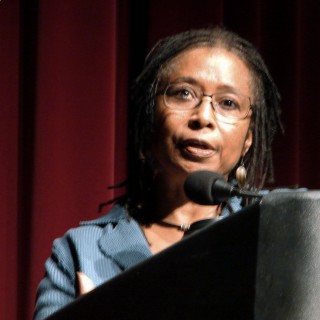
American author and activist
POPULARITY
Categories

9 episodes with Alice Walker

7 episodes with Alice Walker

7 episodes with Alice Walker

6 episodes with Alice Walker

5 episodes with Alice Walker

12 episodes with Alice Walker

3 episodes with Alice Walker

6 episodes with Alice Walker

5 episodes with Alice Walker

3 episodes with Alice Walker

9 episodes with Alice Walker

2 episodes with Alice Walker

3 episodes with Alice Walker

3 episodes with Alice Walker

4 episodes with Alice Walker

2 episodes with Alice Walker

3 episodes with Alice Walker

3 episodes with Alice Walker

"No person is your friend who demands your silence, or denies your right to grow." — Alice Walker

A weekly magazine-style radio show featuring the voices and stories of Asians and Pacific Islanders from all corners of our community. The show is produced by a collective of media makers, deejays, and activists. Join Host Miko Lee as she introduces Dr. Robynn Rodriquez's show “Spitting Fire.” Dr. Robynn speaks about Filipinx and colorism with Dr. Joanne Rondilla. LINKS Dr. Robynn, The People's Professor SHOW TRANSCRIPT [00:00:00] Opening: Apex Express Asian Pacific expression. Community and cultural coverage, music and calendar, new visions and voices, coming to you with an Asian Pacific Islander point of view. It's time to get on board the Apex Express. [00:00:35] Miko Lee: Welcome to Apex Express. I'm your host, Miko Lee, and tonight we get to hear the podcast from Dr. Robin Rodriguez called Spitting Fire, and I'm so excited for you to listen to it. Check it out, and if you wanna hear more, we're gonna link in the show notes an earlier interview I did with Dr. Robin Rodriguez. So please listen to Spitting Fire with Dr. Robin [00:01:01] Dr. Robyn Rodriguez: I can't actually remember a specific episode when my parents or my Lola, who helped raise me, explicitly said, “Don't stay out in the sun.” But I always knew growing up that staying out in the sun was something I shouldn't do because being dark was something to be avoided. I remember being embarrassed by my mom who would bust out an umbrella on a bright and shiny day. “Mom, it's not even raining outside,” I remember complaining. I hated the big hats she would wear or insist I wear, or the comments of, “You're getting darker,” also in a disapproving tone. I remember, too, the high praises anyone with lighter skin was heaped, even when I didn't think they were that particularly attractive. Or how if my relatives knew someone was going to be marrying an American, basically a white person, they would exclaim, “Oh, they're going to have beautiful children.” When I brought home a hapa, a dude who was Filipino and white, I was told that if we got married, I would be improving the race. I've always known, whether I can remember being told, “Don't stay out in the sun,” that if there was a skin hue to aspire to, it was to be light. [00:02:49] To be called mestiza was to receive one of the best compliments. To be a mestiza is always already to be beautiful. Of course, if anyone said I was mestiza, it was always qualified as mestizang morena. That is, someone who exhibits certain types of physical traits that are associated with a mestiza, like having a more pointed nose or being slightly taller than the average Pinay, but not the lighter skin of a genuine mestiza. So that's why I was sometimes called mestizang morena. Still meant as a compliment. After all, I could still enjoy the privilege of being associated with mestizaje, but only partially So many Filipinas in the diaspora, especially those of us who live in white settler colonial societies like what we now know as the United States as well as Canada, so many of us share experiences similar to the ones I've experienced. [00:03:58] My dear friend and colleague, a fellow sociologist, Dr. Connolly De Leon, who currently teaches at Ryerson University in Canada, made this shared experience a topic of study in her book chapter, “Mas Maputi Ako Sa'yo,” I'm Lighter Than You: The Spatial Politics of Intraracial Colorism Among Filipina-Filipino Youth in the Greater Toronto Area. It was a chapter that was part of the very historic anthology, Filipinos in Canada: Disturbing Invisibility, edited by Roland Coloma, Bonnie McElvaney, Ellen Ethel Dongohan, John Paul Katungol, and Lisa M. Davidson, and it was published in 2012. Now, I've taught, uh, Dr. De Leon's chapter, Connolly's chapter, in my Filipino American experience courses in the past, and it's always, always deeply resonated with my Filipina students. In Dr. De Leon's chapter, she starts off with a quote that so many of us are familiar with in some way. She writes, quote, “You're so dark. Yuck.' My cousin would say to me in disgust as she would place her forearm beside mine to compare her light skin to my dark skin.” End quote. Dr. De Leon continues, quote, “As early as the age of four, as early as the age of four, I was taught to feel ashamed of my complexion. I did not understand what was so shameful about being the particular shade of brown that I was.” End quote. The shaming that Dr. De Leon and so many of us experience comes from colorism, which scholars define as the discriminatory treatment of individuals falling within the same racial group on the basis of skin color. [00:06:01] On this episode of Spitting Fire, Dr.- Doctora Robyn Speaks, you'll actually hear less from me and more from yet another friend and colleague, Dr. Joanne Rondilia, who I recently hosted as part of a lecture series jointly sponsored by the Bolosan Center for Filipinx Studies, of which I serve as the founding faculty director, and the School for Liberating Education, my platform for offering Filipinx or Filipinos and ethnic studies courses that are often only available to those who happen to be able to get accepted into the four-year, often elite institutions where they are taught. It's where I get to teach all of these amazing courses that I think all of us should have to the broader community. Dr. Rondilia has researched on colorism in the Philippines and the diaspora for over a decade. It was a topic of her 2012 dissertation, which was entitled Colonial Faces: Beauty and Skin Color Hierarchy in the Philippines and the United States. In her 2007 book, co-edited with Paul Spickard, entitled Is Lighter Better? Skin Tone Discrimination Among Asian Americans, she explores colorism as a phenomenon that no- not only plagues Filipinos, but Asian Americans actually more broadly. So now I'm gonna turn to Dr. Rondilia and her lecture entitled Don't Stay Out in the Sun: Understanding Filipinx and Colorism. Go ahead, Joanne. Take it away. So happy you're here. [00:07:44] Dr. Joanne Rondilla: All right. Thank you so much, Robyn. It's, uh… Do you mind if I call you Robyn? Shall I call you Dr. Robyn? [00:07:50] Dr. Robyn Rodriguez: Oh my God. You only know me as Robyn. Okay. [00:07:56] Dr. Joanne Rondilla: I will call you Robyn, but everybody else, you, you are required to call her Dr. Robyn- … Queen Robyn. You know, that's, that's how. But it's, it's such a, a joy to be here. Um, you know, before we opened the doors, uh, Robyn and I were talking about, um, you know, what it is to be an academic and the type of language and, and spaces in which we share our research. And I think one of the things that's really hard, especially for the soul of a lot of, uh, academics, is that we… it's so rare for us to really share our research, uh, with the community, right? ‘Cause I don't think of myself as a researcher. I think of myself more as a, a storyteller Right? And I think that that's really, uh, when students- when I have students who refuse to, like, engage in research, I try to remind them, like, research is not… I don't think of research as, uh, sort of like the white person's, uh, uh, game. I think of research as something that is connected to us, um, and it's our birthright. It's our ancestral birthright, right? Because storytelling is our ancestral birthright, and that's the lens in which I come into, uh, to exploring this issue of colorism. [00:09:15] So show of hands, for those of you in the room, I'm curious to know how many of you were told, uh, were, were told this: “Don't stay out in the sun or you're- or, or else you'll get too dark.” How many of you were raised with that sort of mantra? Yes. Right. I, I almost feel like these words, uh, are so quintessential to the Filipino experience or the Filipinx experience. Like, “Don't stay out in the sun or else you'll get too dark.” And I'm someone who, I was born and raised on Guam, um, and so everybody on Guam is dark because we are always out in the sun, right? And my mother is very light-skinned. Uh, she came from a middle-class family from San Pablo City in the Philippines. My father's from Lucena, and he ca- he grew up poor, uh, and rai- was raised by a single mother. And so m- there was this definite class difference between my parents, uh, but there's also a, a skin tone difference between my parents. Like, my dad was someone who was very, very kuripot. He was very cheap, but he had this great love for my mother. Um, you know, and I think part of that was he saw her as like, you know, this, this wonderful, like, prize almost, you know. Because she came from a well-to-do family, and, you know, when they got married, her family did not want them to get married because, uh, he was not wealthy. But he was someone who, because he works on Guam as an engineer for the government of Guam, uh, and, and the US military, like that sort of… and, and he had, uh, I think in total like 13 deeds to his name. That's sort of what eased my, my mother's family into, you know, being supportive of their marriage. But there was… And, and on my mother's side of the family, this is a family, and mind you, I love them very much, but this is a family that, um, values beauty a lot, right? My mom and my aunties were all some form of provincial, uh, beauty queen And so this is why me and my brother and my sister were always told, “Don't stay out in the sun or you'll get too dark.” Because the idea was you had to preserve whatever, whatever it was our mother gave us, right? Even though, um, you know, like, uh, you know, even though, like, members of her family say didn't, didn't necessarily find us attractive , you know, the idea was, like, you know, as children of this, this woman or as chil- as, as, you know, members of this particular family, you had to, um, you had to sort of preserve yourself. [00:12:18] So as a young kid growing up on Guam, I always wanted to go swimming, uh, 'cause my, my neighbors across the street, actually one of them, uh, represented the island of Guam, uh, during the 1988 Olympics in, in Seoul, right? So I always wanted to go swimming. I wanted to learn swimming, but my mother wouldn't let me because I would get too dark And so that, you know, like, there, there was so much of our lives that were limited because of this need to preserve beauty. And this is how I entered the research, uh, the exploration of colorism. So very quickly, for those of you who do not know what colorism is, simply put, colorism is a looks-based or, you know, um, you know, physical look, a looks-based system of discrimination where light skin and Eurocentric features are favored over darker skin and non-Eurocentric features. [00:13:13] These discriminations typically occur within the same racial or ethnic community. Uh, the term colorism was coined by, um, the writer Alice Walker. And when she first started writing about colorism, she was talking about, she was talking about colorism in a very intimate way. She was talking about the way in which lighter-skinned Black women evoked pain, right, uh, onto darker-skinned Black women. And so this is where she comes up with this term called colorism. Colorism is intimate. It happens within the same racial or ethnic group, typically. And the reason why I say typically is because, um, in our society, we live in a very colorist society. So I'm sure some of you, and you can throw up reactions, some of you know people, may be related to people who say, “I'm not a racist. I don't have a racist bone in my body, in my body. I love Black people. I listen to Beyoncé. Halle Berry's my favorite actress.” Like, you know, they'll go on and on and on about how they're not racist. But when you look at the patterns of what they deem is attractive or, um, sort of civilized among, uh, the Black or African American community, they always resort to people who tend to be, like, lighter skinned, right? And that's also a way that, um, colorism manifests itself. It starts in the intimate space, but it manifests itself in a much larger, um, you know, in a much larger sphere. So for, um, the Filipinx community, when we look at popular culture, right? And, um, I don't know if any of you have heard of the show or are watching a show called, uh, The Cleaning Lady It's a new show that was, uh, it just premiered last week through Fox. And The Cleaning Lady, the reason why this is really big for, uh, the Filipinx community is because the… It, it's supposed… It originally was supposed to be a Filipino storyline, right? And it was a way to sort of introduce, uh, you know, Filipinx characters in the public sphere. But what happened was S- Shannon Sossamon, the actress Shannon Sossamon, uh, was originally slated to play the main character, who is an undocumented, uh, Filipina maid, right? But something happened during the initial table read, so they end up casting Elodie Yung, who's, uh, French Cambodian. So they changed the character a little bit, but when you look at the setting, it's set in Los Angeles. It's really a Filipino family. And my argument when I look at popular media and colorism is that oftentimes in popular media when they're trying to introduce Filipino, Filipinx characters, it's done through the mixed race body. It's done through a mixed race person, right? So for those of you who may be familiar with Shannon Sossamon, she's mixed race. She's a mixed race Filipina, but she's very white-passing, and it's usually mixed race white-passing or mixed race white-pleasing, what I call white-pleasing, uh, Filipinos that popular culture suddenly becomes interested in us, right? [00:16:45] And that's what we see in a show like The Cleaning Lady. In the next few months, I think Jo Koy, uh, is going to have a movie called, um, I think it's called Easter Sunday. And again, Jo Koy, very Filipino, right? It, it's ingrained in his comedy. But what makes, what allows his fame to happen in the United States is that he's very white-passing and white-pleasing, very different from someone like a Rex Navarette, whose career is much longer, right, than someone like a Jo Koy, right? So there's definitely colorism at play, right? But when we're looking at the intimate spaces, the way colorism plays out in the Filipinx community, it's the lighter skinned Filipino discriminating against the darker skinned Filipino. In the Asian American community, it's the Chinese person discriminating against the, the Cambodian person, right? So there, there's these different levels of, of colorism at play. Colorism, um… It's important to know that colorism is the discriminatory system that makes anti-Black and anti-Indigenous racism exist. It actually maintains anti-Black and anti-Indigenous racism. And the reason why this is important is, one, when we look at anti-Black racism, and you, you're hearing this a lot, you know, um, either in academic circles or even in, uh, sort of, um, more popular conversations. I feel that it's important to talk about anti-Black racism in conjunction with anti-Indigenous racism because they happen hand in hand. And when we look at the founding of the United States, for example, the founding of this country happens through the genocide of Indigenous peoples as well as the enslavement of African peoples. So they're not separate. They come together. And so when we're looking at colorism, the system of colorism, right? Colorism is what, is what allows anti-Black and anti-Indigenous racism to exist Um, what makes, um… And, and, and we see this through the different, uh, colonial periods of the Philippines. There's something very distinct about colorism in the Filipinx community, and it really has to do with our, um, our, our colonial history. [00:19:25] And so on the worksheet, there's just a very sort of like quick and dirty kind of list of like these three major periods of colonization in the Philippines. What I really wanna ta- uh, point to is the role of the Chinese throughout these historical periods in the Philippines. Because, um, typically when you talk about colorism, uh, colorism is most prevalent in, um, the African American community and the Black diaspora. But there's something very distinct about Filipinx colorism, and it's that our notion of lightness is defined by Eurocentric standards of beauty, right? And this is because of Spanish colonization. But it's also defined by Chinese standards of beauty or East Asian standards of beauty, and this is because of the positioning of the Chinese throughout these colonial periods. Because the Chinese, um, historically were the, um, were the merchant class, they were often elevated above indigenous Filipinos, right? And so that's why today in the Philippines when you see people who are in power and you look at the mixed race or mestizo, you know, uh, the mixed race people who are in power in the Philippines, they're often, uh, mixed race Chinese, right? And that's because of the, the legacy and the presence of Chinese in the Philippines. And so it's, um, it's, it's the history of the Chinese in the Philippines, th- these notions of Chinese lightness that really make colorism in the Philippines and among Filipinx very distinct. Uh, it's a very distinct conversation. [00:21:14] Um, uh, I wanted to pause and say if you have any questions or if I'm going too quickly, feel free to, you know, put this in the chat, and I will try to address it, um, as I go along. Um, in– At the beginning of the talk, I asked how many of you were told, “Don't stay out in the sun.” And for those of you who said that you were told this, by show of hands, how many of you heard this in the context of family? How many of you were told this in the context of friends or any other intimate, uh, setting? ‘Cause oftentimes these messages are circulated among the family. And so When w- uh, and again, like colorism, you know, relative to racism, colorism has a very… There is this intimate aspect because oftentimes how we understand our own value and our own self-worth has to do with the messages that are articulated in the family, right? So, uh, one of the interviews that I had conducted, uh, was this, with this woman who when I conducted the interview, this was in the Philippines, and she worked in the entertainment industry in the Philippines. And she, um She, uh, had talked about how her lola would address her and her cousins. So the woman I interviewed, very light skin, light eyes, light hair, and that's why she's an entertainer in the Philippines. [00:22:47] She's a model, and at the time she was hosting a television show. And she said that growing up, her lola always called her Miss Universe, right? And it was because of the way that she looked. Her lola would call her cousin, who was, um, like Spanish mestiza, sh- so, uh, this person who I called Tyler, Tyler was Miss Universe. Her cousin was Miss Philippines 'cause she was mestiza, and then Tyler's sister was Miss Cebu. So here, you know, like… And this is very blatant, and I'm not saying that all families are like this, but here you have this very explicit example of, a lola articulating the differences between these three young girls. Queen of the universe, queen of the Philippines, queen of the province. And in her interview, Tyler had said, “Yeah, it was very clear that Lola had her favorites, and it was in the way that she designated you in this spectrum of, like, these sort of beauty queen titles,” right? In another interview that I had, uh, conducted there, and this was an interview here in, um, the United States, uh, I- in the research I called her Milen. Milen talked about how whenever there was a dance or prom or something like that, there was this whole process of, you know, her and her brothers having to go to Lola's house so that Lola could see, you know, what everyone was wearing and that there could be pictures. But what was very clear was, um, Milen's youngest brother was clear… [00:24:29] You know, her words were, “He was clearly not a favorite,” and this was largely because he was darker. He was often omitted from the photos. Um, Lola didn't really care about what he was wearing and things like that. She always put attention to Milen, who was very light-skinned, uh, and her two brothers who are also very light-skinned. So there's a very central role in which the family plays in how we understand, um, colorism and how we understand personal value And so as I was, uh, exploring this, uh, in sociology there's a term called the beauty cue, and the beauty cue is a system of classification. It's a societal system of classification that classifies women from lightest to dark to, you know, from most valuable to least valuable. And so what I did using this theory that Margaret Hunter had wr- uh, she wrote about, I added to this conversation by talking about the intimate beauty cue, because the beauty cue itself is about a societal, uh, a societal structure, but the intimate beauty cue is how we understand our value, how our notions of beauty are created in the most intimate spaces. [00:25:47] And the reason why this is important to look at is because I think each and every one of us can, um, we can look at the TV and we can look at societal messages and say, “Yes, that's how society understands beauty, but that's not me because I'm my own person.” But in the intimate space among family and friends, when you're getting the messages that you're not beautiful or you're not valuable and it's coming from an unconditional love space such as the family, therein lies the problem and why colorism is such an intimate issue, because these are messages that are articulated by people, usually by people that you love or by people that you're closest to. [00:26:35] There is a gendered aspect to colorism. Women in families are often seen as being more responsible for, um, you know, for beauty or engaging in beauty practices over men. However, men do… You know, like, there is some pressure for men Uh, when we look at colorism in popular media, again, in the US sphere, the few chances we get to see Filipinos or Filipinx in popular media, they are oftentimes light-skinned, mixed-race people, such as, and again, the example of, um, The Cleaning Lady. We have the example of Jo Koy and his future projects. It's not until we get into the independent sphere that we can see more variation. But when major institutions such as, uh, a Fox network or Netflix is trying to introduce a public to the Filipinx community, they're gonna go with what they feel is safe, and it's usually someone who's light-skinned, someone who is white passing, someone who's white pleasing, right? You know, there is something about, uh, the way in which popular media uses the mixed-race person or the mixed-race body. When you look at skin-lightening advertisements, oftentimes it's a mixed-race person that is being used to model such products. Uh, this is over t- I think it's over 10 years ago now. Um, there is a company in the Philippines called Glutamax, and when they launched their line, they used a mixed-race, um, Black Filipina model named Jinkee Oda. [00:28:27] And what they did was they showed the sort of before and after, and one of the taglines in the advertisement in Tagalog, it said, “You could be white like me,” because it showed this progression of her being dark-skinned and then being light-skinned. And again, like, here for this particular, um, product, you're seeing the usage of, um, you know, that, that progression. It harks to very old, uh, beauty advertisements that, um, sold products specifically to Black women, um, you know, especially skin-lightening products to Black women. So there's, there's a way in which the mixed-race person is often used to sell beauty, to sell product, to sell, to sell us our notions of, um, lightness Having said that, I'm not trying to demonize the mixed race person. I, you know, I, I don't think it's fair to, um, I do not think it's fair to, for example, um, boycott Jo- Jo Koy because he's so fair, right? [00:29:35] Or, um, yes, I love that comment, how we lift up Olivia Rodrigo, but our love for her or Saweetie is very, is, it's fairly limited. Exactly. You know, um, you know, like, I, I don't want to attack the person, but if you're light, you cannot… You, you have to recognize the amount of privilege that you have, right? Um, and then when we're looking at skin lightening products, again, like this is a global, um, this is a, you know, a multi-billion dollar global industry. Um, in 2018 it was valued at 8.3 billion. 2022, those numbers have gone, have gone up. Um, and as of late there has been a lot of talk about, uh, skin lightening products for various reasons. Globally it's because that market is so high, but here in the United States this has become an issue because skin lightening products and the usage and sale of skin lightening products has actually reached our policies. [00:30:41] So for example, uh, the CARES Act. Um, because of the work of… Excuse me Because of the work of Ilhan Omar in the CARES Act, what, um, what was able to happen was the enforcement of the usage of a particular ingredient called hydroquinone. So this ingredient, uh, it's a derivative of mercury, which is very harmful to the skin. Um, this is a very popular ingredient that is used by a lot of, uh, skincare professionals. Now there's an enforcement about how you can buy or have access to this particular, uh, ingredient. So skin-lightening products and the, the conversation about skin-lightening products has been a huge issue as of late. Um, I wanna end with two thoughts, and it's this. I want you to, to reflect, and I know this was a lot of me talking. I want you to reflect on the way in which we articulate ideas of colorism on a daily basis. I want you to think about, you know, just, uh, a few weeks ago, for those of you who may have gathered with family, what are the ways in which you've heard these, you know, certain ideas about colorism articulated? It's often, “Oh, this, uh, this person is so beautiful.” Sometimes there's a comparison of children. Sometimes when you're greeted by the people you love, there's comments about, oh, how dark or light you've gotten. Um, included in the conversations about colorism is body size, how much weight you have or have not lost. You know, um, the, this is all part of the c- colorism conversation. There's a daily… There's a way in which we articulate ideas of colorism on a daily basis. I want you to reflect on, um, the beauty practices that we engage in, you know? If we… You know, like, if I dye my hair blonde or if I wear, you know, green contacts, what is my reason behind it? [00:32:50] Is it because I want to engage in a sense of play? Or is it because I'm trying to escape a part of my identity, right? These are, these are important questions for us to ask because these are the daily, everyday ways that we, um, sort of, we contribute to these ideas of colorism. Um, and that, um, I believe is connected to the everyday practice of anti-racism, right? Um, you know, it's important to understand that, like, there's no end because, you know, with respect to colorism, this is a systemic issue. And so what we have to do is tackle it piece by piece. Sometimes it's about the practices that we engage in, uh, individually, but it's also about the way in which we engage with the people around us. With respect to colorism, because it's so intimate, right, it's about having the hard conversations, um, with the people that we love the most, right? Our friends and family [00:33:55] Dr. Robyn Rodriguez: Thank you so much. Thank you so much, Dr. Randilia. You know, I actually have a, a question. I'm wondering, Jo-Ann, do you feel, especially with increasingly more, um, kind of mixed race, uh, especially kind of Black and Filipinx, um, figures, um, you know, uh, in popular culture, is your sense that there is a shifting around colorism, um, or not? [00:34:28] Dr. Joanne Rondilla: I think that there's small shifts, right? So I think of, uh, for… And I'm looking at the com- the comment, the Magandang Morenx, and then also, you know, we, we do have like, um, you know, the, the Black and Filipinx sort of mixed race entertainers like her and Saweetie. Um, also, uh, there's some no- notable athletes that are Black and, um, Filipinx. Like, I think of, I think of their popularity as moments as opposed to actual, like, movements, right? And the reason being is because white supremacy is so prevalent, it's going to take so much to dismantle that system, right? The magnitude of, of white supremacy is, is beyond anything that we can, you know, like, we can quantify, right? And so, um, I, you know, like, so I, I think of, uh, I, I think of something like the Magandang Morenx movement, I think that they're important. I, I think of them more as moments because… And it's not because, uh, they're not powerful. It's because white supremacy is just so prevalent, right? Um, and so, and I, I don't mean to be the pessimist in, in that, you know. [00:35:50] Um, I think the way that we, the way we move forward is to do the heart and soul work, right? To do the anti-racist work, to recognize the ways in which, um, we contribute to anti-Black and anti-Indigenous racism, but to make the conscious decision that this is gonna, like, I, I'm going to work towards eradicating it e- while knowing that eradication may not happen in your lifetime. And I'd hate to be the pessimist. It's not gonna happen in our lifetimes. But our jobs right now is to plant the seeds towards that vision, right? It's to plant the seeds to make these moments the actual movement, to make it so overwhelming to white supremist systems that white supremist systems have no choice but to go away. But it takes so much, um, so much seed planting. Um- [00:36:49] Dr. Robyn Rodriguez: So Joanna, it looks like there's two questions that are sort of interrelated, and both, I think you probably saw them, um, kind of connect with concretely, you know, some ideas around or strategies around addressing, um, both colorism and anti-Blackness in the intimate space of the family or among friends, et cetera. [00:37:10] Dr. Joanne Rondilla: Okay. Think that is an excellent, uh, question and something that I have grappled with and, you know, is very close to my heart. The first thing I'll say is there's no easy way to bring this up with family and friends, right? Especially, you know, um, in our families, especially in our respective families. Um, how… I mean, you know your moms and dads, you know your lolas. You, you know them, and you know they're hella stubborn, right? Like… And so the advice that I have is this: It's impossible to change someone's mind. What you can do is model certain behavior, right? What you can do is model certain language, right? And that alone will speak volumes- Yeah because you are not gonna change, you know, maybe you're not gonna change, like, your lolo or lola's mind. But the people around you are listening. And so here, here's an example, right? Um- W- uh, for me, e- especially in, like, having these conversations with my mom, because she's very much the driving force, uh, for a lot of the research that I do, you know, um, I know my mom, and I know that if I make her feel like crap, like if I make her feel stupid or if I make her feel like, um, what she's saying is old and antiquated, I, I know that I'm not gonna get through to her. [00:38:36] So what I had to do with my mom was event- was create a love language of understanding, right? Because by creating a love language of understanding the ways in which, like, some of her comments have hurt me, when I started to actually honestly articulate my pain, it's not that my mom let go of some of these ideas, but she started to create an understanding of the impact of her words. And what that did was it changed the way she would… Like, she wouldn't say the things she would say. She wouldn't tell me how dark I was. She wouldn't make comments about, like, me being fat or whatever, right? Because she understood, she understood the impact of that. And as I started to, to realize, like, okay, we may not come to an agreement, but there's a love language that we can speak to, that's how I started seeing changes in, in the way that we interact, right? [00:39:33] Um, and so you can't change someone's ideas, but what you can do is plant seeds and sort of, and really stand your ground in terms of how you feel about certain ideas, right? But you have to do that in a love language 'cause Filipinos, the language we speak is love, right? So that, I, I think that's, that's what's important. It- You have to understand that you may not change someone's mind, but you're also making it so that the people around are listening. ‘Cause I see the way that, like, my niece, you know, my nieces and nephews, they had just… They have such a better way of dealing with my mom when she would say terrible racist things, right? They had a better way of communicating with her and articulating their, their frustration and their anger, and it would change. It may not have always changed my mother's ideas, but it definitely changed her behavior, and it changed her consciousness, and I think that that's all we can really do, um, is develop that love language. [00:40:39] Dr. Robyn Rodriguez: And if I may, if, uh, if I can just also add, you know, I, I, I think what you said is absolutely spot on and really resonates, um, Joanne. And, and I would add also, I think that there's something, um, really important about how these broader social movements can also- [00:40:55] Dr. Joanne Rondilla: Mm-hmm … [00:40:56] Dr. Robyn Rodriguez: become so important. I mean, so just in my own family, you know, my eldest was, uh, biracial, Black Filipino. And, um, of course, having a biracial, uh, grandson didn't necessarily mean that my mother could also grapple with her own deep anti-Blackness. Um, and it was always a struggle. And, and I agree with Joanne. Sometimes, you know, it is really understanding the particularities of the, of your own dynamic with, with specific intimates in your circle and understanding that certain kinds of lo-lov-love languages open up possibilities for conversation whi- whereas other approaches close off. But I do have to say, you know My mother, you know, is going to be 79. It really took, it took all the movements that happened- Mm-hmm … in response to the George Floyd murder, it took all of the movements around anti-Asian hate for my mother for the very first time, and this is some- You know, I'm her daughter. I've been teaching around race and talking about race. I, you know, I, I produced a biracial grandson for her, right? Um, and it– we could never have real frank conversations about white supremacy, could not really touch it, you know? There was a way that my mother didn't want to, to name white supremacy as something that actually shaped her life. And, you know, those are really com- there may be complicated reasons for that, but being able to name that was always really, really hard. Talking about anti-Blackness was hard. But all of those movements did something for her, and it shifted things in ways that I thought w-were going to be impossible at, by the time- Yeah you know, in her period of life. And not only did she– was she able to have some real kind of honest conversations, but she actually became a kind of advocate, and then used her own platforms to start conversations about white supremacy, um, and kind of race in our community. So I guess that's to say that it's not entirely hopeless, you know? [00:42:57] I think- Yeah … it is true change can be slow. It can be incremental. It comes in these gentle kinds of ways, um, over time that require a lot of love and patience. And couple that with, I think, also kind of these movements that are also equally invi- uh, important to grow, um, that together that you can see change is, is really absolutely possible. Um, so, you know, just to kind of share that. But it, it is. You know, it's so hard 'cause even within a family where there are biracial, uh, family members, right? It– that isn't itself even going to necessarily change even when they have, right, a loved one, um, that ought to be- Yeah … challenging that for them. [00:43:44] Dr. Joanne Rondilla: Yeah, absolutely. And I think, too, um, you know, another thing that helped me, especially, you know, like with my mom… So when I did the research, I did spend some time in the Philippines, and my mom came with me, right? So seeing my mom's very light-skinned, um, you know, uh, Filipina navigate the Philippines. And so I just wanna say for the record, I know I look really light, and it's because we're in COVID, and your girl has not had some sun, okay? Like just, just so that… ‘Cause I'm looking at them like, “God, yeah,” like I know I look light. I swear, you know, I'll show you pictures. But, you know, um, I, I didn't– At the time when my mom came with me to the Philippines, I did not realize how important it was for me to observe her in the Philippines because I was able to get these glimpses of my mom before she was a mom, right? And I was able to understand, like, okay, like… So one of the sort of things that I learned was, like, all these hurtful things that, like, my mom would say to me about the way that I look and what have you, I learned that part of the reason why she leaned in so hard to, with me is because when we would travel, you know, like go around to, like, malls or whatever in the Philippines, people would always tell her, “Oh my gosh,” like, “your daughter looks just like you.” [00:45:09] And, like, if my mom were sitting next to me, and you can see this in, like, uh, photos with the two of us, like she's very vanilla, and next to her I look like burnt caramel. And I think that there was something about the embodiment of my body size, 'cause I'm big, you know, and, and my, my darker skin tone. It's almost like I was the physical embodiment of everything that she had feared and everything that she was told you should not. And for her, it was confronting, like, I gave birth to this, to this person who's everything that I, you know, that I was told was wrong, right? And so I think I, I… You know, like just watching her navigate, I began to understand, like, the context in which she was raised. I, I started to understand the messaging that she, uh, was, was given. Because when I finished the dissertation, I, I felt like I finished the dissertation at a place where I could actually forgive my mother for all the things that she would say about me. I c- I could forgive her for, like, the comments that she would make because all those things that she imposed onto me was a product of her own pain, and I was able to have something that she did not have, which is a sense of healing. ‘Cause until her very last breath, she was so trapped by these notions of beauty. She was so trapped by needing to be beautiful because this was the constant messaging that she was given, right? And so What we can offer, you know, and the way that we, um, the way that we engage in our sense of healing, especially with the people that we love, really comes down to I know that when my mom left the world, I planted all the seeds that I needed to plant in her, right? I know… Sorry. I know that I have this healing, something that she could not have. I know that her grandchildren don't have to suffer the pain that she did. So I think understanding our family, right? Understanding, like, um, you know, uh, the people, our family and friends, understanding them in that respect, putting into context the reason why they do the painful things we do, choosing how w- choosing the way in which we heal from the things that they did to us, that's all we can really do, right? And all of this, I think, and I'd hate to sound so cheesy but all of this is encased in, like, this deep, profound sense of the love that we have for ourselves, the love that we have for each other. In the midst of confronting immense colonial legacies that time and time again tell us that we are not worth it, right? If we can find that light, and if we can find that value, and if we can share that value with the people around us, that's all we can really do. [00:48:20] Dr. Robyn Rodriguez: Joanne. [00:48:25] Thank you. [00:48:26] Dr. Joanne Rondilla: Sorry about that. [00:48:27] Dr. Robyn Rodriguez: You don't have to apologize. I think that's one thing about this space, Bulosan's space, the School for Liberating Education, is we all do this out of deep, deep, deep love, right? That that's the whole purpose- Yeah … of being able to host, um, share s- to create space like this, to share space like this. Um, we all know, um, people like you, me, uh, those of us who chose this path into academia, we didn't do this because we wanted to produce knowledge for an institution that wasn't built for and by us. [00:49:00] Dr. Joanne Rondilla: Mm-hmm. [00:49:00] Dr. Robyn Rodriguez: But it was precisely to produce knowledge that could heal and liberate our people. Yeah. And so, you know, so appropriate for you to feel all of those feelings, and that's why it was so important to have you here, because this is such, uh, for so many of us, a deeply, deeply hurtful kind of… We s- we struggle with this, and I think what I- [00:49:25] Dr. Joanne Rondilla: Mm-hmm … [00:49:26] Dr. Robyn Rodriguez: What's so valuable, what you bring to the table is it's so much more complicated than the colorism. There are all of the ways in which colorism intersects with class, intersects with body. I, I mean, you know, even the whole notion of, like, the magandang morenx. I mean, you know, that there are even these fine distinctions that exist in the Philippines about the morena mestiza. You know? Like, that was, like, the, the way that I would get, like, weirdly, like, sideways complimented. Like, “Oh, she's a morena mestiza, though,” you know? Mm-hmm. What does that mean? But, you know, our bodies, um, are subject to such scrutiny within at least that context, and even in this context, right? We're constantly dealing with… We're actually dealing with multiple contexts, right? Contexts, Filipinx folks in the diaspora, where our bodies are subject to examination and evaluation- Mm-hmm … every single day, and we subjected ourselves also, our bodies to- Yeah … these valuations all the time. And, you know, um, and we do this work because we're trying to find, you know, a way out, right? [00:50:29] A way, um, to heal all those, um, bits of hurt and brokenness and, you know- I mean, thank you so much, uh, Joanne, for not just sharing your amazing research, but also your heart with us. And I think I can m- I can feel that, um, people came away with, uh, from today with just that much more, um, just healing. And, you know, that's the point. That is why we do what we do here. Yeah. Um, uh, that's why we created, uh, the Balosan Center and, um, why I launched the School for Liberating Education. Um, this is the whole, this is the reason why we do this. And so I, with that, I do wanna thank everybody for joining us, um, and, you know, really invite everyone to continue to follow, uh, the work, um, that we're doing at the Balosan Center, what we're doing at the School for Liberating Education. [00:51:27] The next major thing actually is next week. So my next book is coming out, um, on Asian American activism. Uh, it's actually really cool to talk about coming full circle, Jo-Ann, because basically this is a collab between our professor, our old professor, um, when we were undergrads at UC Santa Barbara, Diane Fujino and I, um, ended up collaborating on a couple things, and this is the latest collab, which is a anthology on Asian American activism. And one of the things I'm doing is launching a mini course, um, on Asian American activism, uh, that's based on the book, but also stuff I've done, um, on activism. So next week, I guess on Thursday, we're officially launching, um, the, the new, uh, the registration for the new course. And so we're launching it with this conversation I have with, um, Art Nagin Concordia, who is the godfather of ethnic studies in the K through 12 system, basically the ninong of ethnic studies in K through 12. Uh, was one of the key authors for the ethnic studies model curriculum and does m- uh, ethnic studies work at Santa Barbara, actually, also with Diane. So anyway, um, that's coming up next week. But do keep following, um, you know, the, the work that we're doing. This is, uh, you know, such important work, um, supporting our scholars and our artists, our community historians. And again, thank you so much, Jo-Ann. Yeah, no. I really think we have our real, real conversation. ‘Cause one of the projects I always wanted to do is, uh – [00:53:09] Dr. Joanne Rondilla: Yes. [00:53:09] Dr. Robyn Rodriguez: No, thank you … a podcast that gets real, real, like real, real. Yes. Like, let's really talk about- [00:53:13] Dr. Joanne Rondilla: Just so you know, you're- … those [00:53:14] Dr. Robyn Rodriguez: real stories … [00:53:15] Dr. Joanne Rondilla: you're looking at, like, 25 years- of friendship, so I know lots of, uh, Robyn's secrets. I have lots of pictures 'cause I- Yeah. Oh, my God … was very good at documenting these things. [00:53:24] Dr. Robyn Rodriguez: You, you did that photo shoot of my… I think you did a before and after of my ja- my, my, my eyebrows. [00:53:30] Dr. Joanne Rondilla: I have a photo of you, like, in a, in a, like, a face mask. [00:53:34] Dr. Robyn Rodriguez: Yes. Yes, yes. You can- So- If, if, if I look this good coming on 50- … it's because Joanne taught me about makeup and skincare regimens. [00:53:46] Dr. Joanne Rondilla: Well, I'm gonna, I'm gonna launch a course on my skincare regimen. [00:53:51] Dr. Robyn Rodriguez: Oh my God. [00:53:54] Dr. Joanne Rondilla: Skincare after your 30s, right? [00:53:57] Dr. Robyn Rodriguez: No, seriously, I'm about to launch, I'm not, I'm not even joking. I'm totally launching a whole, uh, journey to 50, so y'all can come because I, I'm, I'm, I'm going. I'm getting there. As of next, or the week after next, it's T minus 365 days to 50. So join in the fun. Anyway, Joanne, it's so great to see you. I wish I could give you a big hug. Uh, [00:54:21] Dr. Joanne Rondilla: well, we'll see each other soon hopefully. [00:54:23] Dr. Robyn Rodriguez: I can't wait to, like, really break bread with you because- Yes … you know, I always know I eat well when I'm with you. Like, I r- I will still- I still dream about the ice cream, that homemade ice cream you make. Like, nothing compares ever again to the ice cream that I consumed that you make. So thanks again. Thanks everyone. [00:54:43] Dr. Joanne Rondilla: Thank you so much everybody. Hope to see you. Thank you. [00:54:58] Miko Lee: Please check out our website, kpfa.org/program/apexexpress to find out more about our show and our guests tonight. We thank all of you listeners out there. Keep resisting, keep organizing, keep creating, and sharing your visions with the world because your voices are important. Apex Express is produced by Ayame Keane-Lee, Anuj Vaidya, Cheryl Truong, Isabel Li, Jalena Keane-Lee, Miko Lee, Miata Tan, Preti Mangala-Shekar and Swati Rayasam. Tonight's show was produced by me Miko Lee, and edited by Ayame Keane-Lee. Have a great night. The post APEX Express – 8.27.26. Dr. Robynn's Spitting Fire on Colorism appeared first on KPFA.
The most common way people give up their power is by thinking they don't have any. –Alice Walker Check out John Lee Dumas' award winning Podcast Entrepreneurs on Fire on your favorite podcast directory. For world class free courses and resources to help you on your Entrepreneurial journey visit EOFire.com

This fall, my youngest, my last one, leaves for college. Twenty-one years of being a mom, and I'm standing at the edge of a chapter I don't know how to close. When my son left two years ago, I was a wreck. Shame that I was “too attached,” fear of who I am when mothering isn't my daily identity, questions about my marriage, my life, my self.So when Jodie Patterson agreed to come back on the podcast, the timing felt like more than coincidence.This is Jodie's third time on Cracking Open: she was episode 2, back before I knew what I was doing, and episode 65. She's a friend, and a voice this podcast keeps coming back to. And this time, I felt how much we've both shifted since we last talked.Jodie Patterson is an award-winning, globally recognized author, activist, beauty explorer, and mother of five. She was the first Black person to chair the Human Rights Campaign Board, our nation's largest LGBT organization, and speaks widely on identity, gender, race, and radical parenting. Her memoir, The Bold World, was called “marvelous” by Alice Walker, and her children's book, Born Ready, was gifted to every public school in Kansas. She also co-founded two beauty companies, works with Mount Sinai Hospital on health disparities and transgender medicine, and has been recognized by the United Nations as a Champion of Change.Here's what we got into.✨Slow down internally, then respond from your highest selfThe night before we recorded, one of Jodie's adult children texted asking her to back off on the weekly check-ins. Her first instinct was hurt. Instead of firing back, she put the phone down, cried a little, and responded from a steadier place: “I'll slow down, I'm a phone call away, and when you shift, I'll shift with you.” One of the best examples of parenting adult children I've heard on this show.✨Mothering as an internal revolutionWe box ourselves in as much as the world boxes us in, and the deepest revolution is internal. Raising five kids across different relationships, cultures, and identities has taught Jodie that gender, faith, and family are far more fluid than she was raised to believe.✨Two years without a loverAfter a family near-death experience, Jodie stopped dating entirely for two years, not from lack of desire, but because energy is finite. She described it like moving houses and finally seeing what's been under the carpet for years. What she found is the foundation for how she's dating now, at 55, with a clarity she didn't have before.✨Healing versus fixingJodie's daily practice isn't about optimizing; it's about healing what's underneath instead of numbing it:Stretching before she's even out of bedTen minutes on a vibration plateWeight training and an hour walking her dogsWhole foods, less caffeinePlant medicine and clinical ketamine therapy, used intentionally and under care✨Hustle down, flow upI shared the phrase my solopreneur friends coined: hustle down, flow up, and Jodie lit up. Less ambition to write the next book or chair the next board. More interest in what makes her feel alive: alone time, surfing for the first time in Costa Rica, tree hugging.✨Humility, earnedJodie said something I won't forget: she's had to earn her children's respect and companionship, the same way she'd earn it with anyone she loves. That humility has softened her — while her boundaries have only gotten clearer.I came into this episode carrying so much about my own transition twenty-one years of identity wrapped up in being someone's mom. Talking to Jodie didn't hand me answers, but it did something better: she gave me permission to be me again. If you're standing at your own edge of letting go, I hope this conversation gives you that same permission.Jodie, thank you for trusting me with this conversation again. Listen to the full episode wherever you get your podcasts, and if you missed Jodie's first appearance, go back to episode 65.

I hope this quote from Alice Walker helps you be happy. Join the FREE Facebook group for The Michael Brian Show at https://www.facebook.com/groups/themichaelbrianshow Follow Mike on Facebook Instagram & X

Welcome to Academia Unlocked, our literary deep-dive series on Book Talk for BookTok! In this episode, we discuss the movie and musical adaptation of The Color Purple by Alice Walker. With over 13 years of combined academic training in literature and creative writing, we walk listeners through the foundational tools of reading beyond the surface. The book community talks about the "decline of literacy" constantly, but almost no one stops to define what literary literacy actually is or how to build it. This series exists to change that. Whether you've read The Color Purple once in high school or carry it with you everywhere, this episode will give you the critical lens to engage with it with more depth, more confidence, and a lot more to say. The Subtext Society Journal: https://thesubtextsocietyjournal.substack.com/ We're thrilled to announce our newest venture: The Subtext Society Journal—the first of its kind, dedicated to Romance, Romantasy, and fandom with an academic yet accessible voice. We're publishing original essays and thought pieces, and we encourage listeners to submit their own articles for a chance to be featured. Share your thoughts for a chance to be featured! Submit them at booktalkforbooktok.com for a future mini-episode or exclusive Patreon discussion. Support the Show: Patreon: patreon.com/booktalkforbooktok Merch: Etsy Store Follow Us on Social: Instagram: @BookTalkForBookTok TikTok: @BookTalkForBookTok YouTube: @BookTalkForBookTok Learn more about your ad choices. Visit megaphone.fm/adchoices
Welcome to Academia Unlocked, our literary deep-dive series on Book Talk for BookTok! In this episode, we kick off our four-part series discussing The Color Purple by Alice Walker. With over 13 years of combined academic training in literature and creative writing, we walk listeners through the foundational tools of reading beyond the surface. The book community talks about the "decline of literacy" constantly, but almost no one stops to define what literary literacy actually is or how to build it. This series exists to change that. Whether you've read The Color Purple once in high school or carry it with you everywhere, this episode will give you the critical lens to engage with it with more depth, more confidence, and a lot more to say. The Subtext Society Journal: https://thesubtextsocietyjournal.substack.com/ We're thrilled to announce our newest venture: The Subtext Society Journal—the first of its kind, dedicated to Romance, Romantasy, and fandom with an academic yet accessible voice. We're publishing original essays and thought pieces, and we encourage listeners to submit their own articles for a chance to be featured. Share your thoughts for a chance to be featured! Submit them at booktalkforbooktok.com for a future mini-episode or exclusive Patreon discussion. Sponsor: Go to LumiGummies.com and use code BOOKTALK for 30% off your order. Support the Show: Patreon: patreon.com/booktalkforbooktok Merch: Etsy Store Follow Us on Social: Instagram: @BookTalkForBookTok TikTok: @BookTalkForBookTok YouTube: @BookTalkForBookTok Learn more about your ad choices. Visit megaphone.fm/adchoices
Welcome to Academia Unlocked, our literary deep-dive series on Book Talk for BookTok! In this episode, we kick off our four-part series discussing The Color Purple by Alice Walker. With over 13 years of combined academic training in literature and creative writing, we walk listeners through the foundational tools of reading beyond the surface. The book community talks about the "decline of literacy" constantly, but almost no one stops to define what literary literacy actually is or how to build it. This series exists to change that. One of the most common ways readers come to The Color Purple is as a survival story. A Black woman endures the unendurable and finds her way through. That reading is real, and it's earned. But Walker herself was doing something far more precise on the page: building a "womanist manifesto in fiction form", a text where the shape of the writing is inseparable from what it means. This series is about making space for both of those readings at once. Whether you've read The Color Purple once in high school or carry it with you everywhere, this episode will give you the critical lens to engage with it with more depth, more confidence, and a lot more to say. The Subtext Society Journal: https://thesubtextsocietyjournal.substack.com/ We're thrilled to announce our newest venture: The Subtext Society Journal—the first of its kind, dedicated to Romance, Romantasy, and fandom with an academic yet accessible voice. We're publishing original essays and thought pieces, and we encourage listeners to submit their own articles for a chance to be featured. Share your thoughts for a chance to be featured! Submit them at booktalkforbooktok.com for a future mini-episode or exclusive Patreon discussion. Support the Show: Patreon: patreon.com/booktalkforbooktok Merch: Etsy Store Follow Us on Social: Instagram: @BookTalkForBookTok TikTok: @BookTalkForBookTok YouTube: @BookTalkForBookTok Learn more about your ad choices. Visit megaphone.fm/adchoices

Long Story Short - Der Buch-Podcast mit Karla Paul und Günter Keil
Joana Osman ist Autorin, Dozentin, Friedensaktivistin und Storytelling-Coach. Sie spricht mit Günter über die Geschichten, die sie besonders geprägt und inspiriert und manchmal auch getröstet haben. Für den Buchclub hat sie vier Bücher mitgebracht, die sie seit Jahren begleiten: von J. D. Salinger über Alice Walker und Mark Twain bis zu Isabel Allende.Es geht um literarische Heldenreisen und um die Frage, warum Geschichten uns nicht nur helfen, die Welt zu verstehen, sondern sie vielleicht auch zu verändern. Denn "alle Geschichten speisen sich aus der Realität und die ganze Realität speist sich aus Geschichten, aus Narrativen, die wir uns über uns selbst und über andere erzählen", so Joana Osman.Alle Bücher dieser Folge:Joana Osman: "Wenn wir vom Fliegen träumen" (C.Bertelsmann), "Am Boden des Himmels" (Atlantik Verlag), "Wo die Geister tanzen" (C.Bertelsmann), "Frieden. Eine reale Utopie" (Penguin), J. D. Salinger: "Franny und Zooey" (Rowohlt Taschenbuch), "Der Fänger im Roggen" (Rowohlt Taschenbuch), Alice Walker: "Die Farbe Lila" (Nagel & Kimche), Mark Twain: "Die Abenteuer des Huckleberry Finn" (Reclam Verlag), Isabel Allende: "Das Geisterhaus" (Suhrkamp Verlag).+++ Viel Spaß mit dieser Folge. Wir freuen uns auf euer Feedback an podcast@penguinrandomhouse.de! +++ Unsere allgemeinen Datenschutzrichtlinien finden Sie unter https://art19.com/privacy. Die Datenschutzrichtlinien für Kalifornien sind unter https://art19.com/privacy#do-not-sell-my-info abrufbar.

What the Stone Did Not ForgetThe lineage of the sacred feminine from Neolithic Europe all the way to the Stardust Lineage.There is an image of a woman small enough to fit in the palm of your hand. She is less than four and a half inches tall, carved from Neolithic limestone over 28,000 years ago near the Danube River in what is now called Austria. She is all curved. A sacred feminine body with a round belly, full breasts, wide hips, a body in its fullness and generative power, honored in the most permanent material available.She has no face. She does not need one. She is not a portrait of an individual woman. She is every woman. And she is a statement about what the female body means, what it carries, what it represents, and the cosmology of the people who made her. She is, of course, the Venus of Willendorf.She was once tinted with red ochre, the same iron-rich pigment as human blood, and women's blood. Even in the act of carving, there was an awareness of the connection between body, earth, and cosmos. The stone itself was not incidental. The stone holds what time cannot otherwise keep. The stone holds the story and remembers.Across a vast arc of prehistoric Europe and Asia, from France to Siberia, archaeologists have uncovered hundreds of similar figurines spanning thousands of years of human creative life. Each one encoded the same understanding. The female body is sacred. It doesn't represent the sacred. It is the sacred and created from the sacred. She is the source. She is the organizing principle of human life.Honoring the feminine because of matriarchy was not something radical, was not feminism. It was not simply embedded into the fabric of early human cultures. It was actually what the fabric was woven from — not just embedded, woven from. It is the very fibers of the tapestry.And this story lasts for thousands and thousands and thousands of years before the eventual widespread emergence of organized warfare, before the legal and theological structures that would later declare the female body a problem to be managed and named, before the invention of land ownership.The stone did not forget, even as later cultures obscured, suppressed, and reinterpreted and renamed what these figurines meant. The stone holds the story. The clay holds the imprint.Marija Gimbutas and the Language of the Sacred BodyMuch of what we know about these ancient cultures comes from the work of Marija Gimbutas, the Lithuanian-American archaeologist, Professor Emeritus at UCLA, and one of the most important and most contested scholars in the 20th century. She spent decades excavating what she called Old Europe, the Neolithic cultures of prehistoric Europe that flourished before the arrival of the patriarchal peoples from the Pontic-Caspian steppes beginning around 4000 BCE. In the regions of what is now known as Ukraine, Moldova, and Romania, the Cucuteni-Trypillia era, she documented cultures that developed sophisticated symbolic systems over thousands of years, deeply rooted in agricultural art and the cyclical understandings of life.In thousands of figurines, burial sites, ceremonial objects, and symbolic markings, she identified a coherent visual language — circles, spirals, triangles, and the female form encoding an entire civilization's understanding of life, death, the regeneration cycle, and the sacred. This is not primitive decoration. These are not fertility charms made for male desire. These are acts of reverence and collaboration, a co-creative relationship, symbols encoded into stone and clay, telling a story about who we were and perhaps who we could be.And she found no weapons there until later.Her interpretation, by the way, has been challenged and debated by subsequent scholars. Her naming, her description of the archaeomythology of the ancient mothers — to this day, archaeologists are trying to disprove her theories and relabel her findings.And yet the figurines — it's even hard to call them that. The mother. She just exists. The symbols recur across vast distances and thousands of years with a consistency that really demands no explanation. We honored her and her body. Whatever the precise nature of the social structures that produced them, the female body represented in these artifacts is the power. She is the primary symbol through which a civilization found its meaning.That understanding did not disappear when the cultures that held it were disrupted. It went underground, literally, and it survived in objects and then modern day practices that the dominant culture wasn't successful in stamping out.So much they took from us. So much we remembered. The stone remembers, and the stardust bones remember.Lenore Thomas Straus — Choosing the MotherThis is how it leads into our Stardust Lineage.In 1937, sculptor Lenore Thomas Straus received a commission through the Public Works Administration — sometimes called the Works Progress Administration — in Greenbelt, Maryland. This is one of the New Deal communities being built during the Depression, supported by the Roosevelts' vision for an American public life. Lenore worked on multiple projects connected to this era of public art, and photographs document her alongside Eleanor Roosevelt in a hard hat.Lenore also made a note that these communities were being built for white people, but by Black people. That is part of the story. The untold story.For the Greenbelt commission, Lenore was given latitude to choose her subject. It was going to go in the town square. She chose a mother and child — not a warrior, not a statesman for the area, not an allegory of progress or industry. A mother kneeling, with her child holding a cup with both hands. It is carved across three four-foot limestone blocks from Indiana, twelve feet of stone placed in public space, and functional — a water fountain. Just like a woman, she wanted to make sure it made sense. Utility and reverence made inseparable, the act of offering water given permanent form in stone. The sculpture was commissioned in 1937 and completed in 1939.This is, of course, a conscious choice. With the full range of American civic iconography available to her, with the imprimatur of federal commission behind her, Lenore Thomas Straus chose to place the sacred feminine body in a public square — a mother and a child.She also carved in a separate commission the Preamble to the Constitution in stone, also in Maryland.She knew what she was doing. She was doing what the Neolithic carvers had done across thousands of years — inscribing the female body and the values of a society that honors life in the most permanent material available.She wrote of her relationship to carving stone as an artist: Quietly, I bow to the stone.To our community, this summarizes the root system of Intentional Creativity. The sentence holds an entire philosophy. The sculptor does not dominate the material. She listens to it. She honors what it carries. She brings her full devotion to bear before she raises a hand to shape it.Greenbelt, Maryland is where Lenore Thomas Straus is from — Prince George's County, Maryland.Lenore Thomas Straus became the teacher of a young artist named Sue Hoya Sellers. She recognized Sue when Sue was seventeen years old. Sue had ridden seven miles on dirt roads to find her, a portfolio strapped to her bicycle, clothes starched and ironed, two years of preparation. Lenore called her a young artist, and Sue was one.Among the things Lenore passed to Sue was an understanding that the sacred feminine image belonged in the hands of women — that carving was not decoration, that it was transmission, and honestly, a form of decolonizing the female body.Sue carried this forward in her own large-scale work, including a monumental pregnant woman carved in wood commissioned for Alice Walker that stands at Stardust Ranch in Sonoma — the sacred feminine body again in the most permanent material available, given to the woman who had sat at the table with Sue, given to the writer who told me that to be happy is one of the most revolutionary acts.And Sue passed this assignment to me when I was twenty-four. Sue co-mothered me, and this was among the most sacred things she passed forward.A Cold Day and a Palm-Sized PrayerI remember the day.It was cloudy and cold on the mountain. Sue and I, months before, had gone out to dig the very clay from the earth — red clay. She wanted me to understand the whole cycle of making. Finally, the clay was made. It was placed in my hands, and she said: make it fit the palm of your hand. For prayer. Put your intention into it.I brought the clay into my hands and began to shape it. I didn't know what it would become, but I knew that I was called to make the Sacred Mother. It was the first thing I ever made out of clay.Amazingly, years after Sue's death, Lenore's daughter Nora sent me a small figurine carved in stone — one of Sue's earliest works — a goddess figurine, small enough to fit in the palm of your hand. It was only then, holding that piece, understanding what Sue had been handed and what she handed to me, that I received the full weight of the assignment — not as an instruction, as a lineage, as a specific, unbroken transmission of an understanding that Lenore had carried from her own teachers, and they from theirs, all the way back to the women who pressed their hands into cave walls and shaped limestone into figurines small enough to fit in the palm of your hand.It makes me think of my recent visit to Malta — how the Sleeping Lady of Malta is so tiny she can almost fit in the palm of your hand. But there were also sculptures so huge they were claimed to be made by giantesses. Lenore and Sue did the same thing — made the tiny and the large.Lenore was a Norwegian woman. She decided to carve an enormous sculpture, a mother and child. She went on to carve the Preamble to the Constitution in stone. She taught Sue and Sue taught me — from hand to hand and really from heart to heart.And when I think of this teaching and share it with my students today, I feel the throughline of the sacred feminine image always emerging and becoming and arriving in and through our hands. Back at the beginning, right at the time I made that sculpture, I knew I wanted to change the way that women were treated and the way that the face of the feminine was regarded in my lifetime.Thousands of paintings are part of it. The carrying on of a Stardust Lineage — from Neolithic limestones to these stardust bones.Us. We.Footnotes(1) The Venus of Willendorf is housed in the Naturhistorisches Museum, Vienna, Austria. On the red ochre tinting and its connection to blood symbolism in prehistoric ritual contexts, see: Jill Cook, Ice Age Art: Arrival of the Modern Mind (British Museum Press, 2013); Marija Gimbutas, The Language of the Goddess (HarperCollins, 1989).(2) On the geographic distribution of similar prehistoric female figurines: Gimbutas, The Language of the Goddess (1989), Introduction; Cook, Ice Age Art (2013).(3) Marija Gimbutas, The Civilization of the Goddess: The World of Old Europe (HarperCollins, 1991). On the Kurgan hypothesis and the cultural transition beginning around 4000 BCE.(4) On the Cucuteni-Trypillia culture: Gimbutas, The Language of the Goddess (1989). See also: John Chapman, Fragmentation in Archaeology (Routledge, 2000) for a more recent treatment.(5) Gimbutas, The Language of the Goddess (1989). On the visual symbolic language of prehistoric European artifacts.(6) For scholarly critique of Gimbutas's methodology, see: Lynn Meskell, “Goddesses, Gimbutas and ‘New Age' Archaeology,” Antiquity 69 (1995): 74–86. For a balanced recent assessment, see: Douglass Bailey, Prehistoric Figurines: Corporeality and Representation in the Neolithic (Routledge, 2005).(7) Lenore Thomas Straus, Mother and Child, Indiana limestone water fountain, commissioned 1937, completed 1939, Greenbelt Homes Inc., Greenbelt, Maryland. Commissioned through the Public Works Administration / Works Progress Administration Federal Art Project. Photographic documentation of Straus with Eleanor Roosevelt held in the Stardust Lineage archive. For archival verification, consult Greenbelt Museum records.(8) Lenore Thomas Straus, Preamble to the Constitution, stone, Greenbelt, Maryland. Documented by personal visit. For archival citation, consult Greenbelt Museum records and WPA Federal Art Project documentation.(9) Lenore Thomas Straus, Stone Dust. Exact page number to be confirmed before publication. Get full access to Tea with the Muse at teawiththemuse.substack.com/subscribe

Virginia Woolf, con su pluma ligera y mente afilada, nosregaló una verdad eterna: la creatividad florece cuando tenemos libertad y un rincón propio. En un mundo que aún nos pide que compartamos todo, Un cuarto propio nos invita a reservar espacio para nuestros sueños. No es un libroantiguo: es un espejo que nos hace sonreír y actuar. Leerlo es como encender una luz suave pero poderosa en tu mente. ¡Atrévete! Te sentirás parte de una cadena brillante de mujeres que cambiaron la literatura y la vida.Frankenstein - Mary Wollstonecraft Shelley: https://youtu.be/1RRzfyDsU3oLos mandarines - Simone de Beauvoir: https://youtu.be/LHc3futALVcEl color purpura - Alice Walker: https://youtu.be/BJmWs2Tb-JUEn posesión del secreto de la alegría - Alice Walker: https://youtu.be/fWFqNdZdRsMMedio sol amarillo - Chimamanda Ngozi Adichie: https://youtu.be/3M-_H2ACpr4James Joyce - Ulises: https://youtu.be/pcADujVwj8EMarcel Proust - En busca del tiempo perdido: https://youtu.be/ZmiX6cwc1xgLas olas - Virginia Woolf: https://youtu.be/l3WItoD8BAAOrlando - Virginia Woolf: https://youtu.be/MUO3jXkybIkAl faro - Virginia Woolf: https://youtu.be/G8DdzB-cm7MLa señora Dalloway - Virginia Woolf: https://youtu.be/z4n9CGBMzy8"Crónicas Lunares di Sun" es un podcast cultural presentado por Irving Sun, que abarca una variedad de temas, desde la literatura y análisis de libros hasta discusiones sobre actualidad y personajes históricos. Se difunde en múltiples plataformas como Ivoox, Apple Podcast, Spotify y YouTube, donde también ofrece contenido en video, incluyendo reflexiones sobre temas como la meditación y la filosofía teosófica. Los episodios exploran textos y conceptos complejos, buscando fomentar la reflexión y el autoconocimiento entre su audiencia, los "Lunares", quienes pueden interactuar y apoyar el programa a través de comentarios, redes sociales y donaciones. AVISO LEGAL: Los cuentos, poemas, fragmentos de novelas, ensayos y todo contenido literario que aparece en Crónicas Lunares di Sun podrían estar protegidos por derecho de autor (copyright). Si por alguna razón los propietarios no están conformes con el uso de ellos por favor escribirnos al correo electrónico cronicaslunares.sun@hotmail.com y nos encargaremos de borrarlo inmediatamente. Si te gusta lo que escuchas y deseas apoyarnos puedes dejar tu donación en PayPal, ahí nos encuentras como @IrvingSun https://paypal.me/IrvingSun?country.x=MX&locale.x=es_XC Síguenos en: Telegram: Crónicas Lunares di Sun Crónicas Lunares di Sun - YouTube https://t.me/joinchat/QFjDxu9fqR8uf3eR https://www.facebook.com/cronicalunar/?modal=admin_todo_tour Crónicas Lunares (@cronicaslunares.sun) • Fotos y videos de Instagram https://twitter.com/isun_g1 https://www.google.com/podcasts?feed=aHR0cHM6Ly9hbmNob3IuZm0vcy9lODVmOWY0L3BvZGNhc3QvcnNz https://open.spotify.com/show/4x2gFdKw3FeoaAORteQomp https://mx.ivoox.com/es/s_p2_759303_1.html https://tunein.com/user/gnivrinavi/favorites ORTOLARRY: - NORTE 9 #175 ESQ. OTE 164. COLONIA MOCTEZUMA SEGUNDA SECCION. CDMX - NORTE 17# 211-A COLONIA MOCTEZUMA SEGUNDA SECCION C.P 15530 ALCALDIA VENUSTIANO Teléfonos: 5557860648, 5524158512. Whatsapp: 5561075125

Hosts: Jill Winkowski and Prue SalaskyDate: April 10, 2026Length: 37 minutesPublication Frequency: Fourth Friday (approx) of each monthIn this episode we explore African American English, its history, features, and variations, including in Hampton Roads, aka the 757. We interview three black academics in the region to learn about AAE and what defines it. We talk to Dr. Iyabo Osiapem, teaching professor of Africana Studies and Linguistics at the College of William and Mary in Williamsburg. Founded in 1693, It's the only university in the state to offer an undergraduate major in linguistics. At Hampton University in Hampton, the city where the first African indentured servants and slaves arrived in North America in 1619, we speak to Dr. Darylyn Dance, a specialist in rhetoric and composition. We also talk to Dr. Travis Harris, a hip hop scholar who teaches at Norfolk State University in Norfolk. From them we learned about the distinctive syntactical and pronunciation features of the AAE dialect; various theories of its development, including from West African languages; some distinctive local vocabulary; the influence of hip hop in its evolution; and its controversial history related to education, including the 1979 Ann Arbor case and the 1997 Oakland decision.We learn about its labels over the years, including “non-standard Negro English” used by white linguist William Labov, “the father of sociolinguistics,” who pioneered research into AAE in the 1960s, We learn about the work of African American linguist John Baugh in exposing linguistic profiling and the development of the ebonics label by educational psychologist Robert Williams, inventor of the BITCH test which highlighted cultural bias in standardized testing. Finally, we discuss attitudes to language variation. Here are some of the books and authors the three professors recommended for AAE: Olaudah Equiano (18th century)(enslaved, freed, went to UK) slave narratives, letters, poems;essayist and journalist Charles Chesnutt (turn of the 20th century) The Goophered Grapevine;Poetry by Frances Ellen Watkins (19th century); by Paul Laurence Dunbar (19th century); by Countee Cullen (early 20th century); by Langston Hughes (20th century); George Schuyler journalist, columnist, critic (20th century); Phyllis Wheatley, born in Africa, writing in second language; Imami All Mine by Connie Porter (This American Girl series); Zora Neale Hurston, Their Eyes are Watching God; Alice Childress, Rainbow Jordan; The Color Purple by Alice Walker; Dutchman (1964 play) by Amiri Baraka; Sonia Sanchez (20th century) poet, playwright, professor; Maya Angelou; Toni Morrison;Gil Scott-Heron, “The Revolution will not be Televised” (“godfather of rap”); academic articles by Vershawn Ashanti Young (contemporary); Bernice McFadden, “Sugar” (2000)For those interested in hip-hop, the W&M Hip Hop Collection, started in the 1980s, is part of Swem Library's Special Collections and includes recordings, publications, and ephemera from Virginia based hip hop artists. Local stars include Pharell and Clipse (the brothers Pusha T and No Malice).Send your questions and feedback to languagingHR@gmail.com; and for more information and to listen to previous episodes, check out our website, www.languaginghr.wordpress.com.

In a time of ecological, political, and social upheaval, Dr. Liza J. Rankow locates a path to healing at the intersection of mystic spirituality and social action. In her new book Soul Medicine for a Fractured World: Healing, Justice, and the Path of Wholeness, the longtime grassroots activist shows readers how to live with purpose and meaning as a response to the rising tide of calamities around the globe. In this episode Fred Stella speaks to her about what influenced Liza to take the path that she has and how the contemplative spiritual life and social activism can make for an exhilarating existence. Soul Medicine has been praised by Pulitzer Prize-winning author Alice Walker, who described it as: “Wise and beautiful, an offering of great depth.” Dr. Rankow believes the medicine the world needs is in each of us.Drawing upon spiritual wisdom that has been passed down through millennia, her guidance is rooted in our kinship with one another, the Earth, and all of life. She points to “something more powerful than the chaos: our belonging to a wholeness that is ancient, infinite and eternal.” Theme music "Nigal."

Jade Lambert-Smith, Spelman College professor and director of their new musical production of “The Color Purple,” reflects on the legacy of alum Alice Walker's seminal work as part of their “Black Joy as Resistance” season.Become a supporter of this podcast: https://www.spreaker.com/podcast/tavis-smiley--6286410/support.

AN ABSOLUTE TOUR DE FORCE!! The Color Purple Full Reaction Watch Along: / thereelrejects Gift Someone (Or Yourself) An RR Tee! https://shorturl.at/hekk2 Tara & the Jo(h)ns return for a CLASSIC of historical fiction as they give their The Color Purple reaction, recap, commentary, analysis, & review. John Humphrey & Andrew Gordon react to and review The Color Purple (1985), the powerful historical drama directed by Steven Spielberg (Schindler's List, E.T. the Extra-Terrestrial, Saving Private Ryan) and based on the Pulitzer Prize–winning novel by Alice Walker. Set in the early 20th-century American South, the film tells a deeply emotional story of survival, resilience, and sisterhood as it follows Celie's journey toward self-worth and independence. Follow Jon Maturan: https://www.instagram.com/jonmaturan/?hl=en Follow Tara Erickson: Youtube: https://www.youtube.com/@TaraErickson Instagram: https://www.instagram.com/taraerickson/ Twitter: https://twitter.com/thetaraerickson Intense Suspense by Audionautix is licensed under a Creative Commons Attribution 4.0 license. https://creativecommons.org/licenses/... Support The Channel By Getting Some REEL REJECTS Apparel! https://www.rejectnationshop.com/ Follow Us On Socials: Instagram: https://www.instagram.com/reelrejects/ Tik-Tok: https://www.tiktok.com/@reelrejects?lang=en Twitter: https://x.com/reelrejects Facebook: https://www.facebook.com/TheReelRejects/ Music Used In Ad: Hat the Jazz by Twin Musicom is licensed under a Creative Commons Attribution 4.0 license. https://creativecommons.org/licenses/by/4.0/ Happy Alley by Kevin MacLeod is licensed under a Creative Commons Attribution 4.0 license. https://creativecommons.org/licenses/... POWERED BY @GFUEL Visit https://gfuel.ly/3wD5Ygo and use code REJECTNATION for 20% off select tubs!! Head Editor: https://www.instagram.com/praperhq/?hl=en Co-Editor: Greg Alba Co-Editor: John Humphrey Music In Video: Airport Lounge - Disco Ultralounge by Kevin MacLeod is licensed under a Creative Commons Attribution 4.0 license. https://creativecommons.org/licenses/by/4.0/ Ask Us A QUESTION On CAMEO: https://www.cameo.com/thereelrejects Follow TheReelRejects On FACEBOOK, TWITTER, & INSTAGRAM: FB: https://www.facebook.com/TheReelRejects/ INSTAGRAM: https://www.instagram.com/reelrejects/ TWITTER: https://twitter.com/thereelrejects Follow GREG ON INSTAGRAM & TWITTER: INSTAGRAM: https://www.instagram.com/thegregalba/ TWITTER: https://twitter.com/thegregalba Learn more about your ad choices. Visit megaphone.fm/adchoices

Based in Washington, DC, Born I creates at the intersection of hip-hop and mindfulness, blending lyricism, spirituality, and cultural storytelling into a body of work that's both innovative and deeply human. His influences span Wu-Tang Clan, Ka, André 3000, Alice Coltrane, and Buddhist teachers like Thích Nhất Hạnh, and his music has garnered over 20 million streams worldwide. Born I's most recent album, Komorebi (2025), has been hailed by listeners as “a missing piece in hip-hop,” praised for its meditative flow and spiritual depth. The companion book, Lyrical Dharma: Hip-Hop as Mindfulness (Parallax Press), arrives with a foreword by Pulitzer Prize winner Alice Walker, further cementing Born I as a unique voice at the intersection of art and contemplative practice. A certified meditation teacher, Born I is also the male voice on the Balance app, where his teachings reach millions of listeners daily. He regularly leads retreats, concerts, and hybrid events that weave live hip-hop with meditation and sound baths – including performances at the Kennedy Center, Buddhist Arts & Film Festival, and alongside the monks of Plum Village Monastery. Through his label YAE (You Are Enough), Born I has released a wide range of projects, from the autobiographical hip-hop album In This Moment (2021), to the spiritual lo-fi project AMIDA (2023), to his latest genre-defying live shows and immersive short films. His children's books, You Are Enough and Love Your Amazing Self, encourage young people to practice self-compassion and have been featured at the Grammy Museum in Los Angeles. Whether performing for a packed festival crowd or guiding intimate circles in meditation, Born I carries one message across every medium: You are enough. Right now, exactly as you are. https://bornimusic.com/ Natalie Brown, host of Sounds Heal Podcast: http://www.soundshealstudio.com http://www.facebook.com/soundshealstudio http://www.instagram.com/nataliebrownsoundsheal http://www.youtube.com/soundshealstudio Music by Natalie Brown, Hope & Heart http://www.youtu.be/hZPx6zJX6yA Email: soundshealstudio@gmail.com

A 1963 conversation with one of the queer pillars of the Harlem Renaissance features Langston Hughes reading his short story, “Thank You, Ma'am” (interviewed by Eve Corey, produced by Brian DeShazor). Alice Walker's birthday and notable LGBTQ February events are celebrated in the “Rainbow Rewind.” And in NewsWrap: the first case against a gay man for violating Uganda's so-called “Kill the Gays” law is dismissed after the damage has already been done, transgender female athletes receiving hormone therapy have no physical advantage over their cisgender counterparts according to new research, fewer transgender people were murdered around the world between October 2024 and September 2025 with the numbers still alarming, a Christian teacher is fighting a losing battle against the Montgomery County Maryland Public School District's policy on using the chosen names and pronouns of her trans and nonbinary students, a record number of proud LGBTQ athletes are competing in the 2026 Winter Olympics, thousands hit the streets of Melbourne on February 1st for the 31st annual Midsumma Pride March, and more international LGBTQ news reported this week by Michael Taylor Gray and Tanya Kane-Parry (produced by Brian DeShazor). All this on the February 9, 2026 edition of This Way Out! Join our family of listener-donors today at thiswayout.org/donate/.

Hey, it's Katie and I want to welcome you to this special bonus episode. It'll be here for you completely ad-free for the next week so you can get a feel of what it's like to be a PREMIUM member. If you'd like an easy ad-free experience for all of our podcasts - that's over 200 episodes each month, then JOIN PREMIUM today at https://WomensMeditationNetwork.com/premium Start your day centered and inspired with this short meditation, reflecting on Alice Walker's wisdom while calming your mind and body. Breathe with me
or at least realised in advance of speaking that I am … I certainly didn't mean yesterday's thoughts to be on the band wagon of Black History Month!

Buddhist strategies for taming that nagging voice in your head. Ofosu Jones-Quartey, a meditation teacher, author, and musician hailing from the Washington DC area, brings over 17 years of experience in sharing mindfulness, meditation and self-compassion practices with the world. Holding a bachelor's degree from American University and certified by the Mindfulness Meditation Teacher Certification Program, Ofosu is a graduate of the Teleos Coaching Institute and is the male voice on the Balance meditation app, reaching over 10 million subscribers. Ofosu leads meditation classes and retreats nationwide, having taught and led retreats at the Insight Meditation Community of Washington, The Insight Meditation Society, Spirit Rock, Brooklyn Zen Center, Cleveland Insight, Inward Bound Mindfulness and more. As an accomplished hip hop artist under the name "Born I," Ofosu released the mindfulness-themed album "In This Moment" in 2021. Born I's most recent album, "Komorebi" (2025), has been hailed by listeners as "a missing piece in hip-hop," praised for its meditative flow and spiritual depth. The companion book, "Lyrical Dharma: Hip-Hop as Mindfulness" (Parallax Press), arrives with a foreword by Pulitzer Prize winner Alice Walker, further cementing Born I as a unique voice at the intersection of art and contemplative practice. Beyond music, Ofosu is an author, releasing his self-published children's book "You Are Enough" in 2020 and "Love Your Amazing Self" via Storey Publishing in 2022. He lives in Rockville, Maryland, with his wife and four children. In this episode we talk about: The relationship between self-compassion and a successful meditation practice All the reasons people resist self-compassion, and his rebuttals Whether self-compassion is selfish How to do self-compassion off the cushion, including practices like journaling, written reminders, establishing accountability partners, and simple questions you can drop into your mind when all else fails How to do self-compassion on the cushion, including practices like body scans, metta, and a check-in practice you can use at the very start of your sits And how to teach self-compassion to children This episode was first aired in April 2024. Related Episodes: Think You Suck at Meditation? This Conversation Could Help. | Ofosu Jones-Quartey Get the 10% with Dan Harris app here Sign up for Dan's free newsletter here Follow Dan on social: Instagram, TikTok Subscribe to our YouTube Channel To advertise on the show, contact sales@advertisecast.com or visit https://advertising.libsyn.com/10HappierwithDanHarris

What if psychic ability isn’t rare, it’s actually universal? World-renowned psychic medium and author Laura Lynne Jackson joins Danielle to explain why intuition, signs, and spiritual communication are innate gifts we all possess, and how to access them without relying on a medium. She breaks down the concept of a “team of light,” the role of creativity as divine communication, and how spirituality can make us more resilient in real life. In this episode, Laura shares: How we all have psychic and intuitive abilities Her meaning of a "team of light," which includes God energy, spirit guides, and loved ones/ancestors who have crossed. Why signs are real, specific, and co-created, not coincidences How creativity is a portal to the other side Why our spirit guides help steer us toward our highest path, not necessarily our easiest path. How failure is often a soul-level teaching tool and can be contracted for a higher purpose. Our soul relationships continue after death and often become stronger once a loved one crosses. Why we don’t have just one soulmate, multiple soul connections can appear across forms and lifetimes. That manifesting requires two overlooked steps: purge negative beliefs and restore balance before asking. Follow Laura on Instagram @LauraLynneJackson Book recommendations: To Kill a Mockingbird by Harper Lee, The Color Purple by Alice Walker, and The Alchemist by Paulo Coelho Check out Laura’s book GuidedSee omnystudio.com/listener for privacy information.

It's episode 222 and time for us to talk about books from the 1980s! Okay, I say "books" but it's really "science fiction and fantasy novels from the 1980s." You probably could have guessed that if you've listened to the podcast before. You can download the podcast directly, find it on Libsyn, or get it through Apple Podcasts or your favourite podcast delivery system. In this episode Anna Ferri | Meghan Whyte | Matthew Murray

Becky and Jo talk about books of the 1980s including: Alanna: The First Adventure (1983) by Tamora Pierce (and the rest of the Song of the Lioness Quartet), The Handmaid's Tale (1985) by Margaret Atwood, The Color Purple (1982) by Alice Walker, and picture books by Robert Munsch (Love You Forever, 1986; The Paper Bag Princess, 1980; Thomas's Snowsuit, 1985), Chris Van Allsburg (The Polar Express, 1985), David Wiesner (The Loathsome Dragon, 1987), Jan Brett (The Mitten, 1989), and Don and Audrey Wood (The Napping House, 1984; The Little Mouse, the Red Ripe Strawberry, and the Big Hungry Bear, 1984; King Bidgood's In the Bathtub, 1985).

Alice Walker is an internationally celebrated author, poet and activist whose books included novels, collections of short stories, children's books, and volumes of essays and poetry. Her best known novel, The Color Purple, was adapted by Steven Spielberg into a major motion picture. In 1992 she spoke at the John Adams Institute about her novel Possessing the Secret of Joy, about the devastating effects of female genital mutilation. The evening was mostly devoted to Ms. Walker's readings, followed by a Q&A with the audience that unfortunately did not survive the recording. But the sound of her voice, her reading and her work are still very powerful.This event took place on October 23, 1992 at the Aula of the UvA in Amsterdam.Visit our website for more info on events by the John Adams Institute or click here to become a member.Support the show
On this episode of Currently Reading, Meredith and Kaytee are discussing: Bookish Moments: car picnics and even more bookshelves! Current Reads: all the great, interesting, and/or terrible stuff we've been reading lately Deep Dive: all about narrative POVs - do they matter? do we like one more than the other? The Fountain: we visit our perfect fountain to make wishes about our reading lives Show notes are time-stamped below for your convenience. Read the transcript of the episode (this link only works on the main site). . . . . 1:29 - Our Bookish Moments of the Week 4:04 - Awake by Jen Hatmaker 4:44 - BookPeople 9:45 - Our Current Reads 9:53 - American Royals by Katharine McGee (Kaytee) 13:22 - Red, White, and Royal Blue by Casey McQuiston 13:26 - Currently Reading Patreon to access Popcorn in the Pages 14:03 - Majesty by Katharine McGee 14:53 - A Witch's Guide to Magical Innkeeping by Sangu Mandanna (Meredith) 18:05 - Legends and Lattes by Travis Baldree 18:06 - The Spellshop by Sara Beth Durst 18:16 - A Very Secret Society of Irregular Witches by Sangu Mandanna 19:24 - House of Frank by Kay Synclaire 19:41 - The House in the Cerulean Sea by T.J. Klune 20:08 - These Truths by Jill Lepore (Kaytee) 20:32 - libro.fm 22:04 - The Small and the Mighty by Sharon McMahon 25:07 - The Hounding by Xenobe Purvis (Meredith) 26:03 - Fabled Bookshop 29:39 - Demon Copperhead by Barbara Kingsolver (Kaytee) 32:04 - David Copperfield by Charles Dickens 34:15 - The Carpool Detectives by Chuck Hogan (Meredith) 40:05 - Deep Dive: Narrative POVs 45:38 - Fourth Wing by Rebecca Yarros 45:43 - A Court of Thorns and Roses by Sarah J. Maas 45:59 - A Good Neighborhood by Therese Ann Fowler 46:32 - Stone Blind by Natalie Haynes 48:28 - Sarah's Bookshelves Live 49:55 - Piranesi by Susanna Clarke 52:39 - Demon Copperhead by Barbara Kingsolver 52:42 - Lessons in Chemistry by Bonnie Garmus 52:47 - The Color Purple by Alice Walker 53:05 - We Could Be Rats by Emily Austin 53:09 - Interesting Facts About Space by Emily Austin 53:30 - Yellowface by R.F. Kuang 53:32 - Everyone In My Family has Killed Someone by Benjamin Stevenson 53:52 - Meet Us At The Fountain 53:55 - I wish to press Starling House into everybody's hands. (Kaytee) 54:00 - Starling House by Alix E. Harrow 54:08 - The Novel Neighbor 56:10 - The Once and Future Witches by Alix E. Harrow 56:29 - I wish everyone would try a book flight. (Meredith) Support Us: Become a Bookish Friend | Grab Some Merch Shop Bookshop dot org | Shop Amazon Bookish Friends Receive: The Indie Press List with a curated list of five books hand sold by the indie of the month. September's IPL is brought to us from Words Matter in Pitman, NJ. Love and Chili Peppers with Kaytee and Rebekah - romance lovers get their due with this special episode focused entirely on the best selling genre fiction in the business. All Things Murderful with Meredith and Elizabeth - special content for the scary-lovers, brought to you with the behind-the-scenes insights of an independent bookseller From the Editor's Desk with Kaytee and Bunmi Ishola - a quarterly peek behind the curtain at the publishing industry The Bookish Friends Facebook Group - where you can build community with bookish friends from around the globe as well as our hosts Connect With Us: The Show: Instagram | Website | Email | Threads The Hosts and Regulars: Meredith | Kaytee | Mary | Roxanna Production and Editing: Megan Phouthavong Evans Affiliate Disclosure: All affiliate links go to Bookshop unless otherwise noted. Shopping here helps keep the lights on and benefits indie bookstores. Thanks for your support!
The most common way people give up their power is by thinking they don't have any. –Alice Walker Check out John Lee Dumas' award winning Podcast Entrepreneurs on Fire on your favorite podcast directory. For world class free courses and resources to help you on your Entrepreneurial journey visit EOFire.com

According to some, The Color Purple was Steven Spielberg's first "serious" drama. It made Whoopi Goldberg into an overnight star. Spielberg got the awards attention but not in the way he wanted. How does this acclaimed but controversial adaptation of Alice Walker's Pulitzer Prize-winning novel hold up after forty years? Guest Zion Parker joins to give his thoughts.___Please consider joining our Patreon: https://www.patreon.com/wwibofficialYouTube: https://www.youtube.com/@whywasntitbetterInstagram: https://www.instagram.com/wwib_officialTwitter: https://x.com/WWIBpodcastTikTok: https://www.tiktok.com/@wwibpodcastLetterboxd: https://letterboxd.com/wwibpodcastSubscribe! Rate! Review! Tell a friend!

Join us for an unforgettable evening of insight, rhythm and discussion. Hip-Hop Meditative Mindfulness blends two worlds that would seem to be at odds—the stillness of meditation and the vitality of hip-hop. Together, they invite you into a fascinating new space for powerful spiritual practice. Coupled with a discussion of how these practices can reach people immersed in popular culture and help them find the wisdom of mindfulness and Buddhism, this will be a memorable event. Led by Born I—a renowned meditation teacher on the Balance app, an author praised by Alice Walker, and a hip-hop artist with more than 20 million streams—our event will open with a grounding guided meditation and crystal singing bowl sound bath, followed by a discussion of healing, impermanence and street culture, drawing from Born I's experiences as a Buddhist, a father, a musician, and an author. Born I will also discuss his new book, Lyrical Dharma: Hip-Hop as Mindfulness, and his journey from the street to spirituality. "hell is behind uspresence and kindnessended my blindness" — Born I Although available on live stream, this event will be best in-person. So come to the Club for this experiential event, meet Born I and your peers, and maybe even have dinner afterward at a nearby restaurant! About the Speaker Born I (Ofosu Jones-Quartey) is a Ghanaian-American based in Washington, D.C. He is the male voice on the popular Balance meditation app and creator of the new book Lyrical Dharma: Hip-Hop as Mindfulness (Parallax Press) and companion album Komorebi. A Personal Growth Member-led Forum program. Forums at the Club are organized and run by volunteer programmers who are members of The Commonwealth Club, and they cover a diverse range of topics. Learn more about our Forums. OrganizerEric Siegel Learn more about your ad choices. Visit megaphone.fm/adchoices

Good descriptions of characters should do double duty: they can let the reader know what the character looks like and the description can also suggest something about the character's personality. Here are examples and thoughts on double duty descriptions. Also, how Alice Walker works. Support the show
Sunrise in Santa Fe on my recent journeyGood Morning Dear Ones,There certainly is a lot to pray about right now. Today's offering shares:A bit of my spiritual ancestral rootsAn invitation to pray standing, pray and sway with me, in community My Grandmother's hands knitting the world as it unravelsThe history of Mother Mary being moved out to th gardenExploring your name for MaThe Cult of DeathA story of when Sue, our lineage ancestor went to see Amma and more…With love,Shiloh Sophia Lots of upcoming events are happening - come see at www.musea.org“This bio-power was without question an indispensable element in the development of capitalism; the latter would not have been possible without the controlled insertion of bodies into the machinery of production and the adjustment of the phenomena of population to economic processes. But this was not all it required; it also needed the growth of both these factors, their reinforcement as well as their availability and docility; it had to have methods of power capable of optimizing forces, aptitudes, and life in general without at the same time making them more difficult to govern.” Michel FoucaultUnedited TranscriptWe Pray StandingIn the sanctuary of my Ancestors, we pray standing. It's a beautiful thing to see. To look around and see people in their colorful clothing, many of them barefoot. Scarves, babies, little ones, families, nuns. Standing and moving. Moving about the sanctuary. I'm the only one rocking back and forth as I stand. But still, I pray standing. My Ancestors on my father's(Gregory Davis) side are from the Ukraine, so my great grandfather was Ukrainian Orthodox. In the center of the sanctuary is not a cross of death. That came much later when Catholicism split off from Orthodoxy. They moved the cross from the left, which was one of the stations of the story, and put it in the middle and moved the mother and her child on their throne to the left, if you're facing the altar. And then eventually... Many of the churches of the West took Mary outside into the garden and most of them took the baby out of her arms. (A change from life in the center to death in the center)So she went from the center, ruling, to the side watching death of her child and then all the way out to the garden, and then no baby in her arms. Making her pure and virgin, and almost untouchable to women. This evolution of image happens over thousands of years. The French philosopher Michel Foucault talks about this idea of how the image of the feminine and of women changes intentionally. We don't even notice that she's moved from her place in the center. Life in the center. Not death in the center. We've made a cult of death. Not of resurrection. Not of birth. Not of rebirth. But of death itself. Now, I'm not saying that death doesn't come and is a part of our natural cycle of life. But the way that we've been doing it over the past 8,000 years is a colonization, not just of lands and cultures, but of the minds and hearts of the people who have centered ourselves in death.So I pray standing. Because it keeps me awake. It keeps me aware. It keeps me listening as if the soles of my feet have ears. I pray with eyes open, looking around me. Now that I am not in the sanctuary of my ancestors in the way that I once was. I am now facing a stand of trees that have become my cathedral and the birds my choir. While I have chosen not to speak out against the church of my ancestors because they are my blood and I am their blood. Still, I must speak to you from the place where I am, where life, a mother and child, sits at the center of my awareness. In our community, we just call her Ma, ancient root mother tongue.Ma. So today, as I pray standing, swaying, I call on the name of Ma. Ma. Ma, ever-emergent Ma. Let us stand with you in prayer right now. Beings gathered throughout the world right in this moment. praying, standing.And if you are listening, would you pray standing with me? Would you stop your multitasking and all the things that seem more important and just come with me now? Will you imagine with me hundreds, thousands, millions of people praying, standing, swaying and chanting the name Ma. Ma. ma. mama. Long, long ago in a different lineage, our beautiful neighbor Alice Walker brought Sue Hoya Sellers, our art matriarch, to see Amma, the hugging saint, who herself had to break ranks with her tradition in order to do what she does. And certainly that has turned out well. ( Speaking to being a female guru in a culture that has tried hard to only have men, and other allegations)I'm thinking of her, Amma, now because very recently a Native American composer who has lit up my heart, wanted so badly to give me something one day, and she gave me roses from Amma and I sang to her this chant… which I will sing to you now as we pray standing. Just through coming into presence, prayer coming into presence, even if you don't know the names to call or the songs to sing or what to pray about or how to do it just pray with me standing and sway. Sue Hoya Sellers, when she got her hug from Amma, Amma asked her, Who do you call on? What is the name of your goddess, your mother?What a beautiful thing to say, to not insist on a “way”, but say, to whom do you pray? And Sue Hoya Sellers surprised herself by saying the name of Mary. Mary. Mary. Sue was devoted to the goddess and in our time together in the gallery, which was many years and teaching. From 2000 to 2014, so around, 14 years, she came into the place called Sophia, but we held a common ground of Mary, mother of many goddesses along the timeline of goddesses that have been appearing for 40,000 years. So she surprised herself by saying, Mary, indeed, surprised us all. And so Amma gave her this chant, which as we stand praying, I offer to you.Om Shri Mary Ma Om Shri Mary Ma Om Shri Mary Ma Om Shri Mary Ma Om Shri Mary Ma Om Shri Mary Ma. Om. Join me if you choose. Om Shri Mary Ma. Om Shri Mary Ma. Om Shri Mary Ma. Om.("Om Shri" is a combination of two powerful words in Hinduism. "Om" (ॐ) is a sacred syllable representing the universe and ultimate reality, while "Shri" (श्री) is a term of respect, often used as a prefix to deities, revered individuals, or to invoke auspiciousness and prosperity. Together, "Om Shri" can be interpreted as a salutation or invocation to the divine, often used to invite blessings and positive energy) Google Ai AnswerStanding in the place of peace. Standing in the place of our Mother. Singing with you and to you. Tears come to my eyes. My heart slows down from its worried rhythm. My swaying becomes natural to my body. And I enter the sanctuary of community. Because that is what you are. We stand in the quantum commons together.In the space between spaces. Calling on the names we call on. In whatever way that we do. Looking at the trees that you look at. Standing on the good ground where you are. Looking out to the future from the now. Mother of Life, we, your children, are in need of your love.We, your children, do not know the way forward. We feel concerned for the great unfolding. As quickly as we knit it together, our loops are untied. But knit and loop we must. I see my Grandmother's hands crocheting (Eden). I see my grandmother's hands knitting, crocheting a holder for a plant, a ceramic pot that my Aunt (Janet)made.I see my grandmother knitting my pink blanket. She said she hated pink, so she must love me a lot, as she made my pink blanket. I see my Grandmother's hands now in the ancestral world, weaving as it were, trying to tie things back together with beauty as quickly as they become undone.So weave and knit and sew and bake and write and paint and sing. We must. We must. Call upon the names of your sacred knowing. And if you do not know, just stand in the presence of wonder. The poet Rumi says, If you can't pray a real prayer, pray a dry-mouthed prayer, because God accepts counterfeit money as though it were real. Which makes me think of my sister Shannon. who is in need of my prayer at this time. And she never wanted to pray until I told her that. And she said: that, that I can do. And so we prayed. This is a time for prayer shawls.This is a time for eyes open. But this is also a time for gathering yourself into yourself, into the spaces that you consider sanctuary. Sanctuary. Sanctuary. Chosen places to gather. For those of you of many different traditions where you honor Ma, or perhaps you don't, I do not propose the idea of Mary or my tradition. I simply share with you where I'm standing and I'd love to hear where you're standing too. Because in order for us to stand together, it isn't that we isolate what we believe. So that the other people are not offended. No. Our mother Caron said that's not really a community.Mama Cloud said that real community is where I can call upon the names that I call upon. And you can call upon the names that you call upon. And that we can stand in it together without needing to defend or compete. And our many voices raise up in prayer.Because whoever Creator really is when all this comes to completion…any true heart, that calls the name, the energy, the space, the place…Will be heard as something true. It's our hearts that matter right now. So stand with me now. Centering yourself. Swaying and praying, looking out at the rising sun. Breathing, becoming, belonging.I'm encouraging you to pray with me standing for 15 minutes a day. Will you? Just try it. See what happens. It can only be something good. Thank you for this time with me, Circle, Council of Wise Ones. You are loved.Amen. Amen. Amen. Amen.Amen. Amen. Amen. Amen. Amen. given an anyhow praise. In the Black church where I grew up, interwoven with the rest of my practices, we would raise up our hands and we would say, Hallelujah anyhow. It's an anyhow praise. Let's do it now. Hallelujah anyhow. Yes, yes. Hallelujah anyhow. Here we are. Hallelujah anyhow.Let us pray and sway this day.Curate Shiloh Sophia Me one year ago yesterday at the Pyramid of the sun in Mexico. Get full access to Tea with the Muse at teawiththemuse.substack.com/subscribe

Welcome to Art is Awesome, the show where we talk with an artist or art worker with a connection to the San Francisco Bay Area. This week, Emily features an insightful interview with artist Ester Hernandez. Ester shares her journey from growing up in a farm town in the San Joaquin Valley to becoming a renowned printmaker. She discusses the impact of growing up in a culturally rich Mexican environment and her experiences at UC Berkeley, where she studied various art forms despite facing challenges as a woman of color. A central focus of the episode is Ester's famous piece, 'Sun Mad', which critiques the use of pesticides in farming and has been displayed in prestigious museums worldwide. She also reflects on her early love for drawing, the inspiration from friends Sandra Cisneros and Alice Walker, and her ongoing effort to document her family's history with cotton farming in a new book. About Artist Ester Hernandez:Ester Hernandez was born in California's San Joaquin Valley to a Mexican/Yaqui farm worker family. The UC Berkeley graduate is an internationally acclaimed San Francisco-based visual artist. She is best known for her depiction of Latina/Native women through her pastels, prints and installations. Her work reflects social, political, ecological and spiritual themes.Hernandez has had numerous national and international solo and group shows. Among others, her work is included in the permanent collections of the National Museum of American Art – Smithsonian; Library of Congress; MoMA, New York; Legion of Honor, San Francisco; National Museum of Mexican Art, Chicago; Museo Casa Estudio Diego Rivera y Frida Kahlo, Mexico City; Museum of Contemporary Native Art, Institute of American Indian Arts, Santa Fe, NM; Victoria and Albert Museum, London. Her artistic and personal archives are housed at Stanford University.Visit Ester's Website: EsterHernandez.comFollow Ester on Instagram: @EsterHernandezArt--About Podcast Host Emily Wilson:Emily a writer in San Francisco, with work in outlets including Hyperallergic, Artforum, 48 Hills, the Daily Beast, California Magazine, Latino USA, and Women's Media Center. She often writes about the arts. For years, she taught adults getting their high school diplomas at City College of San Francisco.Follow Emily on Instagram: @PureEWilFollow Art Is Awesome on Instagram: @ArtIsAwesome_PodcastA Better World: A Comic About Ester Hernandez--CREDITS:Art Is Awesome is Hosted, Created & Executive Produced by Emily Wilson. Theme Music "Loopster" Courtesy of Kevin MacLeod (incompetech.com)Licensed under Creative Commons: By Attribution 4.0 LicenseThe Podcast is Co-Produced, Developed & Edited by Charlene Goto of @GoToProductions. For more info, visit Go-ToProductions.com

Alice Walker is a renowned author. She's also a grave hunter. In the 1970s, she set out to discover the final resting place of a long lost voice of authentic Blackness. What she found changed history forever. _____________ 2-Minute Black History is produced by PushBlack, the nation's largest non-profit Black media company. PushBlack exists to amplify the stories of Black history you didn't learn in school. You make PushBlack happen with your contributions at BlackHistoryYear.com — most people donate $10 a month, but every dollar makes a difference. If this episode moved you, share it with your people! Thanks for supporting the work.The production team for this podcast includes Cydney Smith, Len Webb, and Lilly Workneh. Our editors are Lance John and Avery Phillips from Gifted Sounds Network. Julian Walker serves as executive producer." To learn more about listener data and our privacy practices visit: https://www.audacyinc.com/privacy-policy Learn more about your ad choices. Visit https://podcastchoices.com/adchoices

Shelli Spotts, Carolina Allen, and Alma Olaveson discuss what it means to work in the advocacy space as mothers referencing Alice Walker's book, We are the Ones We Have Been Waiting For: Light in a Time of Darkness and her daughter, Rebecca Walker's book, Baby Love: Choosing Motherhood After a Lifetime of Ambivalence. “Advocacy is such an innate maternal thing to do, to advocate for other people that are vulnerable and can't help themselves… it just comes with the territory of being a mother.” - Carolina Allen “The best advocacy, the best… changing of the world, the best community building happens as we do the things that we're doing in our lives… It's not stepping outside of ourselves, it's just expanding our efforts within our own sphere.” - Shelli Spotts “I think that we just need to live more mindfully; the minute we walk out the door, to just live, ... have more integrity with who we are in our cause. I think having integrity actually allows for connection.” - Carolina Allen “I think one skill that we all need to learn is a deep awareness and then a deep love and compassion of whatever comes up.” - Alma Olaveson “The best way to teach is by being.” - Alma Olaveson “I think one of the quotes from Rebecca's book, Baby Love, that I really loved is, ‘When it comes down to it, what life is about is showing up for the people you love again and again, and again and again.' And I think that that's a lot of what we've been talking about: that what we can do in the spaces we have and in the time we have is just [to] show up for those people again and again, and again and again.” - Shelli Spotts Carolina Allen is the founder and leader of Big Ocean Women, the international maternal feminist organization representing perspectives of faith, family, and motherhood throughout civil society. Carolina holds a B.A. in philosophy from the University of Utah with an emphasis in cultural religions and philosophy of science. Her inspirational and philosophical work has been presented at various international U.N. conferences. She is a native of Brazil, and a fluent trilingual. She and her husband Kawika are parents to 7 children. She is an avid soccer fan and had a brief career as a semi-professional player. Shell Spotts is an advocacy writer and creative writing teacher. She loves to spend time with her husband (usually in the garden) and their four almost adult children. She also loves to sew, to read, to write, and to drag her family outside to look at the sky. Shelli is passionate about poetry, Broadway show tunes, and telling stories—of ourselves, our families, and our communities. Alma Olaveson is a dedicated advocate for women's empowerment and a passionate leader within Big Ocean Women. As a full-time mother, Alma is on a mission to create a paradigm shift in the collective consciousness of women by emphasizing one crucial element: reminding them of their innate worth, true identity, and the natural milestones in female development. Alma focuses her efforts on women who are considering pregnancy for the first time and preparing to welcome their first child. She is a firm believer that the most profound developmental milestone a woman can experience is becoming a mother for the first time. Alma is concerned that misinformation and beliefs that conflict with the natural progression of a woman's biology and feminine nature are adversely affecting the well-being of first-time mothers. Her passion lies in nurturing the spiritual, emotional, psychological, and social well-being of women as they transition from Maiden to Matrescence and ultimately to Motherhood. Alma graduated from BYUI with a degree in psychology and is currently a student at Peterson Academy. When she's not working, Alma enjoys exploring nature, hiking, chasing waterfalls, basking in the sun, and spending quality time with her kids and husband. She also loves reading, writing in her journal, and connecting with friends.

Alice Walker (1944-present) is novelist, poet and essayist, best known for her novel The Color Purple, published in 1982, which won the Pulitzer Prize and made Alice the first Black woman to win the prize for fiction. Walker is also credited with coining the term Womanist in her 1983 collection of essays In Search of our Mother’s Gardens. For Further Reading: The Womanist Reader, Edited by Layli Phillips Alice Walker Has ‘No Regrets’ Alice Walker This month, we’re talking about Word Weavers — people who coined terms, popularized words, and even created entirely new languages. These activists, writers, artists, and scholars used language to shape ideas and give voice to experiences that once had no name. History classes can get a bad rap, and sometimes for good reason. When we were students, we couldn’t help wondering... where were all the ladies at? Why were so many incredible stories missing from the typical curriculum? Enter, Womanica. On this Wonder Media Network podcast we explore the lives of inspiring women in history you may not know about, but definitely should. Every weekday, listeners explore the trials, tragedies, and triumphs of groundbreaking women throughout history who have dramatically shaped the world around us. In each 5 minute episode, we’ll dive into the story behind one woman listeners may or may not know–but definitely should. These diverse women from across space and time are grouped into easily accessible and engaging monthly themes like Educators, Villains, Indigenous Storytellers, Activists, and many more. Womanica is hosted by WMN co-founder and award-winning journalist Jenny Kaplan. The bite-sized episodes pack painstakingly researched content into fun, entertaining, and addictive daily adventures. Womanica was created by Liz Kaplan and Jenny Kaplan, executive produced by Jenny Kaplan, and produced by Grace Lynch, Maddy Foley, Brittany Martinez, Edie Allard, Carmen Borca-Carrillo, Taylor Williamson, Sara Schleede, Paloma Moreno Jimenez, Luci Jones, Abbey Delk, Adrien Behn, Alyia Yates, Vanessa Handy, Melia Agudelo, and Joia Putnoi. Special thanks to Shira Atkins. Follow Wonder Media Network: Website Instagram Twitter See omnystudio.com/listener for privacy information.

For the inaugural episode of the new series Spill the Tea, host Jason Blitman is joined by Elda Rotor, VP and Publisher of Penguin Classics. They delve into what defines a 'classic,' explore Penguin's expansive and diverse catalog, talk about contemporary works, and discuss the importance of context in classic literature. Make sure to stick around for Elda's classic character answers in a game of "Screw/Marry/Kill!" Elda Rotor oversees the U.S. classics publishing program including the works of John Steinbeck, Arthur Miller, Shirley Jackson, William Golding, Amy Tan, Alice Walker, and the Pelican Shakespeare series. Elda originated several series including the Penguin Classics Marvel Collection, Penguin Vitae, Penguin Liberty, Penguin Drop Caps, Penguin Orange Collection, Penguin Horror with Guillermo del Toro, and the forthcoming Penguin Speculative Fiction Special.Classics You Don't Know But Should:The Last Supper of Queer Apostles by Pedro Lemebel Dogeaters by Jessica HagedornThe Time Regulation Institute by Ahmet Hamdi TanpinarMinor Notes, Vol. 1 edited by Joshua Bennett and Jesse McCarthyThe Posthumous Memoirs of Brás Cubas by Joaquim Maria Machado de AssisFeatured Articles:NYTimes: https://www.nytimes.com/2024/12/26/books/review/elda-rotor-penguin-classics.htmlRolling Stone: https://www.rollingstone.com/culture/culture-features/marvel-comics-penguin-classics-spider-man-1367080/SUBSTACK!https://gaysreading.substack.com/ BOOK CLUB!Use code GAYSREADING at checkout to get first book for only $4 + free shipping! Restrictions apply.http://aardvarkbookclub.com WATCH!https://youtube.com/@gaysreading FOLLOW!Instagram: @gaysreading | @jasonblitmanBluesky: @gaysreading | @jasonblitmanCONTACT!hello@gaysreading.com

In this episode, we celebrate Women's History Month with words of wisdom from many powerful, brilliant, and inspiring women. Their poignant quotes provide lasting insight and inspiration for all women as we continue to work towards gender equity for all. These quotes and the resulting discussion come from a variety of women including women of color, women from the LGBTQ community, and women from countries across the globe. The quotes go as far back as the 1700s through current day. This is about the voice and inspiration of ALL women. From Abigail Adams, Susan B. Anthony and Lucrecia Mott to Gloria Steinem, Alice Walker, and Audre Lorde, to Doria Shafik, Raicho Hiratsuka, and Simone de Beauvoir to Maya Angelou and Emma Watson – you won't want to miss this inspiration and insight FROM warrior women, FOR warrior women. #womenshistorymonth For more information on Dr. Kimberly DeSimone or the Advancing Women Podcast: Instagram: https://www.instagram.com/advancingwomenpodcast/ Facebook: https://www.facebook.com/advancingwomenpodcast Advancing Women Podcast Website: https://advancingwomenpodcast.com/ LinkedIn: https://www.linkedin.com/in/kimberly-desimone-phd-mba-ba00b88/

The blues is more than just music—it's history, it's storytelling, and it's the soul of Black American life. In this compelling live broadcast, we explore Writing the Blues—the ways Black authors, poets, and filmmakers have infused their works with the rhythm, pain, resilience, and triumph of the blues.From Langston Hughes' poetic blues verses to Alice Walker's deeply emotional narratives, from August Wilson's stage masterpieces to period-piece films that use the blues as a backdrop, this discussion uncovers how Black storytelling in literature and cinema keeps the essence of the blues alive.Join us as we break down the themes of struggle, survival, love, and liberation found in both historical and contemporary works. We'll examine films like The Color Purple, Ma Rainey's Black Bottom, Ray, and Down in the Delta, alongside the written works of W.E.B. Du Bois, Zora Neale Hurston, and more.How does the blues shape Black narratives? How do these stories continue to evolve while honoring the legacy of the blues? Let's dive into these questions together in an insightful, thought-provoking, and culturally rich discussion.

After inventing the Hollywood blockbuster with Jaws, creating the world's most loveable alien with E.T., and resurrecting the classic adventure serial with the Indiana Jones franchise, of course the next logical step in Steven Spielberg's career was to…adapt Alice Walker's Pulitzer Prize winning novel about the survival and strength of queer black women in the American south? Duh! Obviously! Comedian Kenice Mobley joins us to talk about 1985's truly baffling and seismically important The Color Purple in our latest episode. We want to thank Quincy Jones for discovering Oprah and producing this movie. We want to yell at Quincy Jones for his awful, treacly score. Sign up for Check Book, the Blank Check newsletter featuring even more “real nerdy shit” to feed your pop culture obsession. Dossier excerpts, film biz AND burger reports, and even more exclusive content you won't want to miss out on. Join our Patreon for franchise commentaries and bonus episodes. Follow us @blankcheckpod on Twitter, Instagram, Threads and Facebook! Buy some real nerdy merch Connect with other Blankies on our Reddit or Discord For anything else, check out BlankCheckPod.com Learn more about your ad choices. Visit megaphone.fm/adchoices

This week, Madigan discusses feminist author and activist, Alice Walker, best known for her novel The Color Purple. This episode uncovers the good (and the problematic) sides of a feminist icon. Share your thoughts, or a topic that you want the show to take on! Email: neighborhoodfeminist@gmail.com Social media: Instagram: @angryneighborhoodfeminist Get YANF Merch! https://yanfpodcast.threadless.com/ JOIN ME ON PATREON!! https://www.patreon.com/angryneighborhoodfeminist Sources: Main Source: https://salempress.com/Media/SalemPress/samples/walker_pgs.pdf My Father's Country Is the Poor: https://archive.nytimes.com/www.nytimes.com/books/98/10/04/specials/walker-poor.html?_r=1&oref=slogin When I Had My First Abortion: Or, I Was Spared To Be Here For You: https://alicewalkersgarden.com/2022/06/when-i-had-my-first-abortion-or-i-was-spared-to-be-here-for-you/ “Beauty”: https://www.oleanschools.org/cms/lib/NY19000263/Centricity/Domain/166/Beauty.pdf Learn more about your ad choices. Visit megaphone.fm/adchoices
The most common way people give up their power is by thinking they don't have any. –Alice Walker Check out John Lee Dumas' award winning Podcast Entrepreneurs on Fire on your favorite podcast directory. For world class free courses and resources to help you on your Entrepreneurial journey visit EOFire.com
Here we present the audio from our second book club meeting discussing the book Possessing the Secret of Joy by Alice Walker
In this podcast extra, MSNBC anchor and attorney Ari Melber reports on the data on gender and racial diversity across U.S. institutions, providing a factual and historical lens for recent attacks on diversity programs and recruitment -- which are often heated and sometimes misleading. The report rigorously compares asserted claims about qualifications and merit by some critics of "DEI" programs with Trump's hiring approach in his second term. Melber also discusses legitimate, long running debates about affirmative action policy to misleading claims about the facts on diverse representation in Congress and top corporations, and efforts to misuse the policy debate for political ends or to stoke racial division. Plus, listen to Melber's 2017 conversation with Vanita Gupta and Ilya Shapiro, as well as his 2018 discussion with Alice Walker.
Our February book club selection is Possessing the Secret of Joy by Alice Walker. This is the final book in The Color Purple Trilogy after The Color Purple and The Temple of My Familiar. According to several sources online, you do not need to read the other two books before you read Possessing the Secret of Joy. They help to fill out the atmosphere, but they all work as stand-alone novels. Listen in while I read the last ten parts of Possessing the Secret of Joy by Alice Walker. What a fantastic book we've chosen for this month's book club selection RSVP to join our book club meeting at www.songsoftoriamos.com/bookclub
Listen in while I read the next seven parts of Possessing the Secret of Joy by Alice Walker. What a fantastic book we've chosen for this month's book club selection
Listen in while I read the first four parts of Possessing the Secret of Joy by Alice Walker. What a fantastic book we've chosen for this month's book club selection
Our February book club selection is Possessing the Secret of Joy by Alice Walker. This is the final book in The Color Purple Trilogy after The Color Purple and The Temple of My Familiar. According to several sources online, you do not need to read the other two books before you read Possessing the Secret of Joy. They help to fill out the atmosphere, but they all work as stand-alone novels. Today we explore The Temple of My Familiar with a full synopsis, analysis, review and a few selections from the novel. We'll be back next Sunday to explore Possessing the Secret of Joy, the third novel in the trilogy. RSVP to join our book club meeting at www.songsoftoriamos.com/bookclub
Hey, it's Katie and I want to welcome you to this special bonus episode. It'll be here for you completely ad-free for the next week so you can get a feel of what it's like to be a PREMIUM member. If you'd like an easy ad-free experience for all of our podcasts - that's over 200 episodes each month, then JOIN PREMIUM today at https://WomensMeditationNetwork.com/premium Join our Premium Sleep for Women Channel on Apple Podcasts and get ALL 5 of our Sleep podcasts completely ad-free! Join Premium now on Apple here --> https://bit.ly/sleepforwomen I'm so glad you're taking the time to be with us today. My team and I are dedicated to making sure you have all the meditations you need throughout all the seasons of your life. If there's a meditation you desire, but can't find, email us at hello@womensmeditationnetwork.com to make a request. We'd love to create what you want! Namaste, Beautiful,
Our February book club selection is Possessing the Secret of Joy by Alice Walker. This is the final book in The Color Purple Trilogy after The Color Purple and The Temple of My Familiar. According to several sources online, you do not need to read the other two books before you read Possessing the Secret of Joy. They help to fill out the atmosphere, but they all work as stand-alone novels. Today we explore The Color Purple with a full synopsis, title analysis, critical acclaim and even selections from Alice Walker's reading of her novel. Spoiler alert and content warning: graphic violence including sexual violence. We'll be back next Sunday to explore The Temple of My Familiar, the second novel in the trilogy. RSVP to join our book club meeting at www.songsoftoriamos.com/bookclub
Alice Walker is a renowned author and grave hunter. In the 1970s, she set out to discover the final resting place of a long-lost voice of authentic Blackness. What she found changed history forever. _____________ 2-Minute Black History is produced by PushBlack, the nation's largest non-profit Black media company. PushBlack exists to amplify the stories of Black history you didn't learn in school. You make PushBlack happen with your contributions at BlackHistoryYear.com — most people donate $10 a month, but every dollar makes a difference. If this episode moved you, share it with your people! Thanks for supporting the work. The production team for this podcast includes Cydney Smith, Len Webb, and Lilly Workneh. Our editors are Lance John and Avery Phillips from Gifted Sounds Network. Julian Walker serves as executive producer." To learn more about listener data and our privacy practices visit: https://www.audacyinc.com/privacy-policy Learn more about your ad choices. Visit https://podcastchoices.com/adchoices

In a sneak peek episode of the upcoming ‘Jamie Kern Lima Show' Jamie sits down with Oprah Winfrey to discuss the new, reimagined film version of The Color Purple. Oprah shares why Alice Walker's 1982 book The Color Purple resonated with her, how she was cast in the iconic role of Sofia in Steven Spielberg's 1985 classic movie and why she leads her life with intention. Jamie Kern Lima created IT Cosmetics in her living room with her husband, Paulo, eventually selling the company to L'Oréal for 1.2 billion dollars. The Color Purple film premieres in theaters on Christmas Day. Buy your tickets on Fandango now! https://www.fandango.com/canvas/thecolorpurple
© 2020-2026 Ivy Podcast Discovery LLC
