
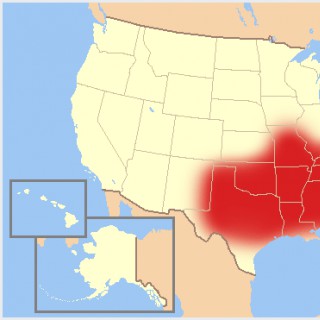
Cultural region of the United States
POPULARITY
Categories

8 episodes with Bible Belt

23 episodes with Bible Belt

3 episodes with Bible Belt

14 episodes with Bible Belt

5 episodes with Bible Belt

3 episodes with Bible Belt

6 episodes with Bible Belt

3 episodes with Bible Belt

4 episodes with Bible Belt

Why does living in a "Christian" culture sometimes make it HARDER to actually hunger for Jesus?In this episode of Fuel for the Harvest, host Nathan sits down with pastor and Forge speaker Chris Prather to unpack a phrase from writer Flannery O'Connor: the South (and much of American culture) isn't "Christ-centered" — it's "Christ-haunted." Jesus is everywhere — on billboards, in hotel drawers, woven into politics and small talk — but that overexposure can leave us inoculated against ever truly encountering Him.Chris shares the conversation that changed how he pastors, the story of the woman who touched Jesus's garment in a crowd of people all "touching" Him but not seeking Him, and three practical postures — fasting, denial, and community — for cultivating real desperation for God in a culture that's overfamiliar with Him.

Lamentations 3:25 NLT “The Lord is good to those who depend on him, to those who search for him.” *Transcription Below* Mike Blackaby serves as a church planter in Victoria, British Columbia, Canada, where he lives with his wife, Sarah, and their four children. He holds a PhD in Worldview and Apologetics from The Southern Baptist Theological Seminary. He is the author of several books and Bible studies including God, Heroes, and Everyday Dragons, Experiencing God in Everyday Life and Straight to the Heart: Communicating the Gospel in an Emotionally Driven Culture. Listen to his sermons. Daniel Blackaby is the author and co-author of nine books, including Experiencing God in Everyday Life, 7 Steps for Knowing, Doing, and Experiencing the Will of God and God, Heroes, and Everyday Dragons, as well as the imaginative fiction trilogy The Lost City Chronicles. Daniel holds a PhD in Christianity and the Arts and a ThM in Philosophy, Apologetics & Worldview from The Southern Baptist Theological Seminary. He speaks on cultural engagement, Christianity and the arts, apologetics and reaching the next generation for Christ. He is the founder of The Collision (thecollision.org), a multimedia ministry designed to help Christians thoughtfully and biblically engage with culture and the arts. Daniel is married to Sarah, and they are the parents of twin boys. Blackaby Website Thank you to our sponsor: Sam Leman Eureka Questions and Topics We Cover: How has faith been strategically passed along in your family to the next generation (and how can we do the same?!) How do your families personally preserve these stories of the generations of faith? Can you tell us more about Spiritual Markers and share how we can use this practice in our family to disciple our children? Related Savvy Sauce Episodes: Brain Science and Spiritual Abundance with Ken Baugh Theology and Discipleship with Ken Baugh Gospel Truth for Salvation and Sanctification with Hunter Beless Connect with The Savvy Sauce on Facebook or Instagram or Our Website Gospel Scripture: (all NIV) Romans 3:23 “for all have sinned and fall short of the glory of God,” Romans 3:24 “and are justified freely by his grace through the redemption that came by Christ Jesus.” Romans 3:25 (a) “God presented him as a sacrifice of atonement, through faith in his blood.” Hebrews 9:22 (b) “without the shedding of blood there is no forgiveness.” Romans 5:8 “But God demonstrates his own love for us in this: While we were still sinners, Christ died for us.” Romans 5:11 “Not only is this so, but we also rejoice in God through our Lord Jesus Christ, through whom we have now received reconciliation.” John 3:16 “For God so loved the world that he gave his one and only Son, that whoever believes in him shall not perish but have eternal life.” Romans 10:9 “That if you confess with your mouth, “Jesus is Lord,” and believe in your heart that God raised him from the dead, you will be saved.” Luke 15:10 says “In the same way, I tell you, there is rejoicing in the presence of the angels of God over one sinner who repents.” Romans 8:1 “Therefore, there is now no condemnation for those who are in Christ Jesus” Ephesians 1:13–14 “And you also were included in Christ when you heard the word of truth, the gospel of your salvation. Having believed, you were marked in him with a seal, the promised Holy Spirit, who is a deposit guaranteeing our inheritance until the redemption of those who are God's possession- to the praise of his glory.” Ephesians 1:15–23 “For this reason, ever since I heard about your faith in the Lord Jesus and your love for all the saints, I have not stopped giving thanks for you, remembering you in my prayers. I keep asking that the God of our Lord Jesus Christ, the glorious Father, may give you the spirit of wisdom and revelation, so that you may know him better. I pray also that the eyes of your heart may be enlightened in order that you may know the hope to which he has called you, the riches of his glorious inheritance in the saints, and his incomparably great power for us who believe. That power is like the working of his mighty strength, which he exerted in Christ when he raised him from the dead and seated him at his right hand in the heavenly realms, far above all rule and authority, power and dominion, and every title that can be given, not only in the present age but also in the one to come. And God placed all things under his feet and appointed him to be head over everything for the church, which is his body, the fullness of him who fills everything in every way.” Ephesians 2:8–10 “For it is by grace you have been saved, through faith – and this not from yourselves, it is the gift of God – not by works, so that no one can boast. For we are God‘s workmanship, created in Christ Jesus to do good works, which God prepared in advance for us to do.“ Ephesians 2:13 “But now in Christ Jesus you who once were far away have been brought near through the blood of Christ.“ Philippians 1:6 “being confident of this, that he who began a good work in you will carry it on to completion until the day of Christ Jesus.” *Transcription* Music: (0:00 – 0:09) Laura Dugger: (0:09 - 1:45) Welcome to The Savvy Sauce, where we have practical chats for intentional living. I'm your host, Laura Dugger, and I'm so glad you're here. The principles of honesty and integrity that Sam Leman founded his business on continue today, over 55 years later, at Sam Leman Chevrolet Eureka. Owned and operated by the Bertschi family, Sam Leman and Eureka appreciates the support they've received from their customers all over central Illinois and beyond. Visit them today at lemangm.com. Mike and Daniel Blackaby are my guests for today. They come from a long line of incredible generational faith, and so they're going to share some stories about how they've inherited this rich legacy, and then also inspire us to do the same in our families. They also are authors of this recent resource, Experiencing God in Everyday Life. Here's our chat. Welcome to The Savvy Sauce, Mike and Daniel. Glad to have both of you joining and would you first mind both introducing yourself and share your connection to Dr. Henry Blackaby, and maybe tell a few stories about his life to illustrate how his legacy has helped shape the heart behind this recent study. Mike Blackaby: (1:46 - 5:00) Sure. My name is Mike Blackaby. I'm the oldest grandson of Henry, so I'm not gonna say that he loved me the most, but he loved me the longest of all of his grandkids, and I remember we lived close to him for a while, and then far, and then close again, so it was interesting being around him when we were teenagers, and then being around him later on as our own children were being born, sort of two significant times in our lives where we lived close, and I just remember when I was a teenager chatting with him about, what am I gonna do with my life? What am I gonna do after high school? You know, like what everybody tries to figure out, and his advice was really just, if you follow God one day at a time, then you'll be exactly where you need to be in 10 years. You don't necessarily have to plan out your whole life. God has a plan, and you trust him today, and you'll end up where you need to be tomorrow, and so I've really taken that advice ever since then, and so I was grateful for that, especially at the time when I was trying to figure out, what am I gonna do with my life after high school graduation? Daniel Blackaby: Yeah, I'm Daniel Blackaby, his second oldest grandchild. He would have probably said his favorite. Yes, second oldest, first favorite, and I live down here in Atlanta, Georgia, actually in the same neighborhood that he lived in. I came on to work for the family ministry, so kind of got to overlap with him the last couple years of his life, which was just a blessing to see him up close. Obviously, we grew up around him at various stages, but just kind of see him finish well, and to have both Mike and I have kids. Our oldest kids are around the same age, and I think one of the memories, I was gonna share the one that Mike just shared, but I think one of the memories that, I don't know, was meaningful for me came near the end, and I actually wasn't even there personally, but the last picture, actually, that was taken of my grandfather before he passed away was actually him with my two, I have twin boys, and my father was gonna be on the road traveling, and he had stopped by, and I was busy doing something, but he took my kids, and they got to spend a bit of time with him, and there's a picture with them kind of by his chair, smiling, and I just sort of had that last moment. I think that's, and then he passed away, I think just a couple days after that, but the last time any of the family got to see him, and for me, it's just such a testimony of his faithfulness. He has his great-grandchildren around him, and being able to be blessed by him, even at the end of his life. He had the opportunity to travel the world, do amazing things, but I think his, for me, his lasting legacy is just the way that he inspired his family, that he lived in such a way that even his great-grandchildren are inspired by his faith, and want to hear more about his story. So even though I wasn't there, that picture of my two kids sort of representing my family has just been a really meaningful one for me. Laura Dugger: (5:01 - 5:12) Such a life well-lived, and I'm so curious, how has faith strategically been passed along in your family from one generation to the next? Mike Blackaby: (5:14 - 10:41) Well, the funny thing is, I don't know that it's always been super strategic. In some ways, I think it's been organic. We didn't always maybe do all the things that you would expect a family to do. We didn't sit down at dinner time and have family devotions and stuff. I think we tried it for a while, and it never really took, but for us, when we watched our parents, both our mom and our dad, and aunts and uncles and grandfather, so many people live out their faith, it was just very real for them. There was never this sense of, I'm just doing this, or that they were different behind the scenes than they were when they were in ministry. We got to see them on stage preaching, but then in the car on a road trip when they're frustrated with us annoying kids in the back, and there was no hypocrisy. It was the same thing, and I think something that's always stood out for me is, so much of our family was in ministry, so not just even in the faith, but in active Christian ministry, and we just never really heard our parents bad talk the church. There was lots of issues. There's always issues, and there's always things that happen, and it didn't mean that they wouldn't call out sin when there was sin, and not that, but this sense of, they always talked positively about God's church and about ministry, and I don't know, I think the more people I talk to, I think maybe that's not super common. I think sometimes people, maybe especially pastor's kids, get turned off of it all because they see behind the scenes how, oh man, this is not good, and my dad, he served these people, but he kind of hated these people or whatever, and we just never really got that sense. It was very personal. It was very consistent. It was very authentic, and it was very positive, even though our dad and mom dealt with issues in ministry, and people are messy, right? You're gonna deal with that anywhere, but they're like, the church is God's plan A, and there is no plan B, and so my whole life, I've tried to be very, very slow to criticize the church in general. A lot of people love to do that. I'm very slow to criticize something that God loves and Christ died for. It's not perfect, and there's issues that need to be pointed out for sure, but we just had a very positive example, I think, growing up, and so for myself at least, I was fearful of stepping into ministry because I was like, I can't preach. I can't get up in front of people, that sort of thing, but I also saw it as a great privilege. I didn't want to do it, but it wasn't because it was a bad thing to do. It was almost because it was such a good thing to do, and I didn't feel like I could or I was worthy of it or whatever, but just a very positive example, and the more people I talked to, the more rare that seems to be the case of people growing up in ministry families. Daniel Blackaby: Yeah, I think too, like Mike said, it wasn't necessarily always strategic as far as super scheduled, or we do this at this day, but I do think strategic is to build on what Mike said as far as just the mindset. Like our family was always very intentional, not just about not bad talking and being negative, but to celebrate where God has done things, like very much a value on just telling the stories of what God has done, either currently of just, hey, this happened today, or else just sharing stories of, hey, have I ever told you the story about your grandpa when he did this, or what God has done in the past, to the point that even like my kids who were, wouldn't have been born until decades and decades after those stories, and never even probably heard them firsthand from my grandfather, or even the generations before their great-great grandfather, know a lot of these stories because they were just, we would tell them, we would share them, we'd celebrate the things that God has done in the past, the things God has done in the present, so I think maybe not strategic as far as, okay, this is our Bible time now, from whatever, 10 to 10:30, but I think very strategic as far as just, we are going to celebrate what God has done, and sort of cultivate a posture of always looking for God's activity, and then not taking it for granted that everyone just sort of knows that, like making sure our whole family knows, this is a God thing, let's talk about it, and so in some ways, I think we probably had more spiritual conversations than we would have, had we sort of been more structured in our Bible study time, because it was very natural to say, when God does something, let's talk about it, and I think for both Mike and I, that's something we've tried to do with our own kids now as they're getting older, is just make sure you, to seize those opportunities to just celebrate when God does, you know, is faithful in our life, and not take it for granted that, you know, ourselves or our kids or families are just going to naturally sort of recognize that as God's faithfulness. Laura Dugger: (10:43 - 11:34) Okay, that's huge, what you both are saying, because that is very biblical to pass along to the next generation through our words, through sharing the stories of God's goodness, I don't know how many verses there are that encourage us to do that, and it helps us remember, I think, reading and writing and even conversation that can all go together, so I was struck with all the stories that were included, that you recounted so well in this Bible study, so two parts, do you write these down like in a journal as they happen, and also it's so interesting to see the two of you being related, and even your background right now, full of books, and so I'm wondering if that was a value in your family, and just how that ties in the love of story and reading. Mike Blackaby: (11:34 - 19:55) Yeah, at least I preached a lot of those, because anytime there's a good story, it usually ends up in a sermon, and that's something we both sort of drew from our dad, he's a great storyteller, but just coming out of even what we were just talking about, you know, there's always stories to tell, I don't keep all the details, which is why usually I don't have a ton of the details in the story, it's sort of more the gist, my wife's the detail person, and we joke that she'll tell a story, and it'll take like 10 minutes, because she'll know every, and she loves all the details, and I'll tell the same story in like two minutes, because it's just like, you know, just hit the main points here, but I keep a little, I call it an illustration file, because I use them for preaching, but I think it's good to keep some sort of record, even if it's not all the details, but just the gist. When we moved to Victoria, I live on Vancouver Island, we planted a church here in Victoria, the west coast of Canada, and it's a hard place to plant a church, and I have a file on my computer that's God's stories from Oak Bay, and it's just whenever we see God do something, I mean God's always at work, but whenever we see something, you know, that really stands out, I'll write that down, and I'm like, I don't want to forget these things, like I want to be able to pass on these stories, and I know I will forget them if I don't write them down, so there's the record of the stories, and then, you know, when we put them in a book, we try to make it interesting, and you know, we try to write it in a compelling way, but we do, at least I do, keep a record of those things, because I don't want to forget those stories. Those are worth passing down, and then when we get an opportunity to write something like this book, it's great because you can draw on these things, and you can say, whenever God does a work in my life, it's never just for me, like it's always part of something bigger, a bigger story of what God's doing, and so I want to pass those along, and if those stories can be encouraging for others, then great. And one of the differences, I would just add, and then let Daniel go, but one of the differences between this book and the original Experiencing God is that the original Experiencing God has a lot of big God moment stories where you read, you're like, whoa, that's amazing, you're like, these miracle stories, but sometimes we can expect that that's the only way that God ever works, is the burning bush, or the fire from heaven, or these sort of big miracles we see in the Bible, or we read about in grandpa's life, and in this other book, we were very intentional to try and not just put the wow stories in there, there are those, those do happen, but we wanted to put some stories of just, hey, here's how this plays out, and it's not a huge earth-shattering miracle, it's just sometimes just regular life stuff, and most of life is in those moments, and God is in those moments, as well as the big moments, and so a lot of the stories we put in this book were, we actually edited out some of the ones that were a bit more like, whoa, that's cool, because we want people to see that God is in the ordinary stuff as well, and so sometimes those are a bit harder to think of, because the big moments stick in your mind pretty good, but when you're thinking about, what does this look like though in just the day-to-day, you're like, that's not as interesting, but we think hopefully it's even more powerful for people, because they can come to realize, wow, God is at work all around me, even in the ways where I didn't expect to see him, he's in those places too. Daniel Blackaby: Yeah, well, and I'd quickly just say too that, you know, Mike's better at keeping track of stories, my wife and I were just talking the other day, how we regret that we weren't better like when our kids were growing up, and some of those funny things that they did, but I think in some ways that is also the value of just being very intentional about constantly sharing stories, is sort of the old oral tradition of just, you know, you may not remember, but you've told the story, and other people remember, because the funny thing with these books is you'd probably assume that, you know, if it's a personal story from me or Mike, that we were the one that put that story in, that we added, that was our idea, but a lot of times it would actually be, you know, like Mike might, he might not, I might still write the story, but he might add, hey, remember when this happened, and this would be a great illustration of this, and I'll be, oh, I forgot that happened, you know, like, oh yeah, now that I think of it, like, you know, or we'd tell our dad, like, hey, we heard you tell this story, like, why don't you add that here, and so it's sort of that collective memory of, you know, we may, it may jolt our memories, you know, and we learn some new ones. Like, we wrote a youth version of this book, too, that comes out in the fall that parallels it, but we swapped out a lot of the stories for a bit more youth, youthy, kind of humorous ones, and I learned some stories about Daniel that I actually didn't know, that, like, one story that might be one of the funniest things that I've, like, ever heard is in that book, and so, yeah, it is fun to sort of go back into the archives and even learn some new ones. So, yeah, it is fun to sort of collectively and reminisce, even as we were writing them, but I'll say to you, because you asked us about the storytelling, like, the books, and that that very much is, I think, an application of what we were trying to get at in this book, of just, that was something we saw, like, our dad has a big library, we constantly would come into his office, see him reading a book. I think back, even our mom, when we were quite young, kind of had two rules that, I don't know if you even remember these, Maggie, one was we can always have an apple. At any time of the day, we can, we're always allowed to have an apple, and the second one was that she'll always buy us a book, if we read a book that she bought us, she'll always buy us a new book, so that we can keep reading, which she made that promise before we got quite as, as hooked. She had to sort of back down, when she couldn't keep up with, you know, the credit card couldn't handle. I had a huge stack of Goosebumps books. I think she was, like, hoping to steer us a little bit, like, well, I guess not just any book. But that was just always a value to them. I mean, I mean, apple, and be healthy, make healthy choices, but the reading of just constantly be stretching yourself, you know, whether that's fiction, and as we got older, more non-fiction as well, mixed in there, different types of literature, but, you know, just any way that, as a family, we can encourage thinking, and storytelling, and, you know, whether, even if they weren't necessarily, you know, faith, Christian books, just stories, learning the power of stories, and a well-told story, and I don't know if you've done that, Mike, that's one of the, we've adopted those rules for my kids, of just, you know, if you're going to read a book, I'll buy you a new book. I want you guys to, and just, I want you guys to see me reading in my library, and just the power of books, and literature, and thinking, hopefully, some of that rubs off. Mike Blackaby: Our kids love apples so much, though, that we can't really do the apple rule, because then we would just never have any apples. We just wouldn't have them for lunches. Well, and even today, we're all in a book club together, so with our dad, and with our sister, and our brother-in-law, and our cousin, and so we'll all choose a book that sort of stretches our thinking, and then we'll, they all, most of them all live right by each other, so they'll all meet together, eat Chinese food, and then a couple of us outsiders will zoom in, but that's even still a practice that we have in adulthood, is we'll do a book club together, and we'll read a book, and we'll discuss it, and big, big fans of reading old school books. Daniel's maybe more of a Kindle guy nowadays, too, but, and anything, same with our kids, just, hey, you guys just read anything. It's just good for you. Laura Dugger: (19:57 - 20:13) It is so helpful in, I think, cultivating faith. That's fascinating to hear how different families do it in different ways, and I know that we can't share all of the stories, but now, Mike, you kind of left us hanging. Do you want to share that one story about Daniel that they may find in the youth resource? Mike Blackaby: (20:15 - 21:52) Yeah, it might be a little, a little bit PG, Daniel, you may have to correct me, but you were, like, brand new to a school, too, like, your high school. He was a new student at his school, and they all went, they all went out on a lake, going, like, being pulled on a tube behind, behind, like, a speedboat, and so, of course, you're trying to make a good impression. You're, you're brand new. You don't have any friends yet, and so you're trying to, you're trying to break into this crowd, so Daniel goes on that tube, and, of course, you're trying to get you to fall off, and so they're taking these huge corners, and, and they, they wipe Daniel off of the back of that tube so hard that he loses his swim trunks, and he's floating there, and the boat's got to, like, make the big wide turn, and come back, and pick him up, and he looks, and his shorts are, like, you know, he's lost them way out in the lake, and so he's frantically swimming, trying to, trying to get to his shorts before, before the boat comes back, and so, for those of you who are, who are audio listeners only, you'll be thankful for that, I guess. Sorry, I apologize to the listeners, but I forget what point we're making. So, not, not the age you want to be to, to humiliate yourself. Daniel Blackaby: I did find, I did swim fast enough, just to tie a bow on that. I was able to be covered. Somehow, I had never known that story, and I've laughed for, I mean, months now, I guess, whenever, whenever you wrote that. I'm still laughing about that. Laura Dugger: (21:53 - 23:29) And now, a brief message from our sponsor. Sam Leman Chevrolet Eureka has been owned and operated by the Bertschi family for over 25 years. A lot has changed in the car business since Sam and Stephen's grandfather, Sam Leman, opened his first Chevrolet dealership over 55 years ago. If you visit their dealership today, though, you'll find that not everything has changed. They still operate their dealership, like their grandfather did, with honesty and integrity. Sam and Stephen understand that you have many different choices in where you buy or service your vehicle. This is why they do everything they can to make the car buying process as easy and hassle-free as possible. They are thankful for the many lasting friendships that began with a simple welcome to Sam Leman's. Their customers keep coming back because they experience something different. I've known Sam and Stephen and their wives my entire life, and I can vouch for their character and integrity, which makes it easy to highly recommend you check them out today. Your car buying process doesn't have to be something you dread, so come see for yourself at Sam Leman Chevrolet in Eureka. Sam and Stephen would love to see you, and they appreciate your business. Learn more at their website, LemanEureka.com, or visit them on Facebook by searching for Sam Leman Eureka. You can also call them at 309-467-2351. Thanks for your sponsorship. Kind of getting back to some of the thoughts of your study, why is it that you think so many Christians struggle to meet God just in the ordinary moments of life? Mike Blackaby: (23:31 - 29:40) I think one reason might just be that our ordinary time is so full of distractions now, just so much more than it ever used to be, and everybody knows this, like with phones and just ads coming at you all the time, and constant noise, constant stimulus, and just being as busy. Technology has also allowed us to be very productive, which doesn't mean that we rest more. It means that we attempt to do more because we can do more, and so our lives are just full and busy, and I would say that probably one of the biggest reasons why we don't see God in the everyday is because our every day is so full of distractions, and if we're not intentional, just there's a million things that will come and take our attention and fill our time, and so that would be, I think that would be a big reason is life's just too crazy, and unless you push back against that intentionally, there's just so much that you'll miss out on. Daniel Blackaby: Yeah, I think too, just expectations. I think it's easier, maybe it's more flashy to see God in like a burning bush type moment of, oh that must be God, because that's a miracle that never happens, as opposed to just in the daily grind of life, and I think we're just we're sort of stuck in a worldly perspective. I know like our grandfather in the first Experiencing God book talked about God's activity is always God-sized, which is true, there always is that God eternal dimension, but I think even as we've, you know, the decades since that book and being able to go through that study with people, and we're so conditioned I think to think, well God's size must be big, you know, God's big, so whatever he does must be big and spectacular, which is not what our grandfather meant, you know, God's size just means God is in it, and the significance comes because God's in it, not because it's flashy, or it was in front of a lot of people, or you know, it was some miraculous story, and I think a lot of times we just miss the ordinary, because we're not looking for it, we're kind of looking, we may even get discouraged that God's not doing anything in my life right now, because there hasn't been a big moment, and if our spiritual eyes were open to just, well God was all around you in your family today, God is all around you at work today, or you know, that conversation you had at the grocery store, this, you know, that sense of peace you had when, you know, your schedule went crazy, and it was a chaotic day, but somehow you had this, those are all God moments, that's God's presence too, but we don't always recognize that, just because we're not looking for it, we don't, that's almost too small for God in our eyes, which I think says more about us than it does about God. I know even just in the process of writing this book, it was sort of the act of trying to apply it into my own life, of you know, just being more intentional about, you know, if I'm just like in the living room with my kids, or doing, you know, whatever I'm doing at work or something, and just sort of sitting back a bit and being, this is a good moment, like this is a God moment, like this is, you know, my kids are laughing, this happened, there was a breakthrough at work, you know, some small comment that maybe I would brush off, that no, that actually is a sign of God's activity, and I think once you get in the habit of that, once that becomes sort of, you know, not that you're trying to like, where's Waldo, and force it if it's not there, and make everything a God moment, but if you just sort of get in the habit of keeping your eyes open and recognizing it, I don't know, it's sort of contagious, if you start noticing more and more, and you get in, you sort of, that becomes more of your default, and the more you do that, the more you realize, so God's been doing a lot of stuff that I've been missing, just because my own expectations are, I want God to do something that, in my eyes, seems more miraculous and spectacular, when maybe God wants to do something just as important, but way more intimate, or personal, or sort of, you know, behind the scenes. Mike Blackaby: And something that's come up a couple times in our conversation is just the consistency and the practice of something, like Daniel said, if you put that into practice, it may not feel natural at first, but if you put that into practice, Daniel just said like, that'll become more your default, and even the language we use in the book, and other people use as well, is just the rhythm of your life. What is your life rhythm? What is those defaults that you fall into, either unintentionally or intentionally? And if you, you have to create the rhythm of looking for God's activity, and I think that's one thing the original Experiencing God did, is it opened people's eyes to, God is at work all around me, and if I'm gonna see that, if I'm gonna recognize that, then I need to be looking for that. It's not that it starts happening because I start looking, but I start seeing it because I start looking. It's always been there. And so just building that consistency, and those rhythms, and one of the things we really hit on in the book is, you are shaped by what you do consistently over time. And it's interesting, because the big moments maybe inspire you, but they don't necessarily shape you into who you are. It's the erosion of rock. It's the consistent small things that build up over time that really shape your character and shape your faith. And so, the big moments play a part in that, but just like anything else, if you want seeing God's activity to become the default rhythm of your life, it's one of those things that you have to put into practice, because it's not going to be naturally what you do, just right off the bat. It's one of those things that has to be learned and practiced. But as you do, it slowly does become second-rate, and it does become more of the default. And you are just aware of looking around for where God is at work and recognizing it, but it's not going to just happen by accident, because very rarely do good, healthy things happen just unintentionally and by accident. Absolutely. Laura Dugger: (29:42 - 30:22) And there's this verse that's been meaningful all year, but it's one that I was, again, reflecting on today from Lamentations 3:25, and it kind of ties into what you're talking about. It says, "The Lord is good to those who depend on Him, to those who search for Him." And I think you're talking about cultivating those small incremental steps of spiritual growth by even just searching for Him and being on the lookout and expectantly awaiting for Him to do something. So, would you build on that and share a few more practical habits that we can cultivate to experience progressive sanctification? Daniel Blackaby: (30:25 - 37:43) Yeah, well, I know, because in the book, each unit, we give different suggested habits that contribute to that rhythm of intentionality. And obviously, we start the book with sort of the standard, you know, read your Bible, pray, things that every Christian should, that should just be a part of your rhythm at any stage of life. But I think a lot of times when we think of habits and things, I think people get intimidated because we're busy, and obviously, it's a matter of priority. We make time for the things that we love and prioritize. So, most of the time, busyness is an excuse to prioritize, you know, watching Netflix or going to bed early or whatever it is instead of God things. But I think one of the things we try to do in the book, too, is just redeeming the time of, you know, that they're not necessarily that you need to, okay, well, I have a busy life, and I got to add 10 new habits into my life, and slot them into whatever remaining, you know, openings I have in my busy schedule, but just kind of reclaiming some of these times or, you know, and a lot of the habits, too, they're not necessarily just, you know, go spend two hours fasting and prayer before work every day, things that are that are daunting. I think a lot of them can be small, just mindset things. I know one of our habits is just gratitude, where we encourage people, like if you're standing there by the coffee maker half asleep, you know, in the morning before you're going to go to work or school or whatever you're doing, like if you're just standing there waiting for your coffee, you got whatever, two minutes, you know, use that moment to voice a prayer to God and just thank Him. Find one thing that you can thank Him for that day, and that's not adding, you know, that's not adding a lot of commitment, but it's starting your day, you know, one of the first things you do is, before you even had coffee, is thanking God for something, and you do that every day, every day, you start every day thanking God for something, then that begins to shape your rhythm, to grow you into being a more thankful person. Rather than, you know, spending that time to think about how much you don't want to go back to work this morning, or you're too tired, or you know, regretting that you stayed up too late, or, you know, you feel sore from how you slept on your pillow, like things that could sort of shape our day, and I mean, the book has a lot of those sort of things, even just commutes, you know, we encourage people, pick one day, just, you know, one day, if you're going to work or picking up your kids from school, or whatever your regular commute is, and just turn off the radio, turn off the audiobook, just, you know, you can pray in that time, or you can just look and, you know, appreciate the sky, or you can just have some silence to kind of clear your mind from all the stimuli that you get, you know, so much throughout the day, and so I think, for me, those are the ones that have been the most impactful for me. Obviously, if you're not reading your Bible, or praying, some of those things work to include those, but I think a lot of the habits, especially when it comes to noticing God, and joining God in the small things, can be small habits of just shaping, how can I become a more gratitude, or grateful person, or generous, or encouraging person, you know, encourage one person at work each day, there's different things like that, but I think over time, those do contribute to sort of these bigger rhythms of aligning yourself more with kind of God's presence. Mike Blackaby: Yeah, one that I like, that has challenged me and stuck with me is the water basin. It says he went over to this water basin, and he used that to wash his disciples' feet, and of course, the practice would have been for a servant to have done that when they all got there, and maybe a servant already did that, it would seem odd if a certain servant had already done that, and then Jesus repeats it, maybe that's how it happened, but I get a sense that they went in, and nobody had done that, sort of the custom got missed, and they're all sitting there with dirty and disgusting feet, and Jesus is the one that takes the initiative, doesn't just wait for somebody else to do it, we don't hear of any of the other disciples saying, oh, well, somebody's got to do this, sort of like someone's got to do the dishes, I guess I'll go do it, like it's Jesus that does it, there's the sense that the water basin was there the whole time, but Jesus is the only one who took the initiative to use it, and so I would say everything that we want to develop in our character towards Christlikeness is going to come out of the foundation of humility, a posture of humility is where all of that is built on, and so the act of serving others, what it does is it slowly makes us humble, it's the action of putting someone else before myself, if I do that over and over again, eventually that starts to wear down my pride, that actively pushes back against my pride by putting somebody else in front of me, and that's good, if I can work my way down to a place of humility, then that's a great starting place for everything else that God wants to develop in my character, and so one of the practices would be everywhere you go look for the water basin, like every room you walk into, everywhere you go there's going to be an opportunity to serve others, most people are going to ignore it, most people are going to let that water basin sit there and wait for somebody else to do it, cultivate the habit of being that person, of saying everywhere I go I'm going to be the one who starts stacking chairs, I'm going to be the one who starts collecting everyone's dirty dishes, I'm going to be the one who asks if anybody could use a top-up on their water or their coffee, I'm going to be that person, and when I'm at home, it's like where are those moments, if I see that my wife needs something, am I going to wait for her to ask, or am I going to see that as a water basin moment, and I'm going to jump on it, and that's hard for me, that's not natural for me, and so that is something I'm actively for years now just trying to do that, but every time I see a water basin and use it to serve somebody else, I'm pushing back against my natural tendency towards pride, and I'm setting myself up to receive whatever else the Holy Spirit wants to, whatever fruit of the Spirit that needs to be developed in me, comes out of the foundation of humility, and so something like that, it's not a scheduled thing, but it's a mindset, it's a habit of saying, okay, everywhere I go, there's going to be a water basin, and so every room I walk into, I can ask where is that, and then take that opportunity to serve, and over time, that should start to develop humility in you, and that's a great place to be for everything else that God wants to do in your life. Laura Dugger: (37:43 - 39:07) I love that picture of the water basin, and I was telling my husband last night, he does this so well to jump to serve others, and it's a quiet form of leadership, but that is one way that he spiritually leads our family, and I was hoping to encourage him last night, I saw it in one of our daughters then as well, and I know that it sadly didn't come from me, but from her witnessing him and just that eagerness to serve, so I think it's contagious as well, these even practices, and the spirit lights the flame, but to fan the flame, you guys talk about some other ideas, I'll just mention a couple more. I love how you said activate the other side, so maybe learn from podcasts or from reading, and that's more of our thinking brain, so to activate the emotional brain, you're talking about listening to worship songs, or vice versa, if you're always going to music, activate the other side, and another personal favorite was reflective journaling, and you just elaborate on all of these practical ideas, and I think it was really helpful, but you also sprinkle in insightful questions and tips throughout the whole study to inspire us to deeper levels of connection with God, so do you mind just sharing a handful of those? Daniel Blackaby: (39:09 - 48:32) Yeah, I think just trying to think of it in that terms of all, where, you know, where has God brought me, where do I have to go, and then I'm curious, because we repeat that activity at the end to see if throughout the study, people maybe evaluate themselves differently than they did at the start, but even just questions like, which I believe Mike actually added these ones in the book, but just, you know, list the places that you go to, kind of your weekly schedule, and then how many, what percentage of the people there are believers or not believers, you know, as far as just joining God on mission in your everyday life, I don't think we're always aware of those things, that we assume we believe in missions, we want, we're joining God's activity, but if we actually stop to reflect, is what, you know, I may go, other than maybe like the dentist or something, I may go or the grocery store, and I'll talk to these people, like I could go days without even coming in contact with someone that doesn't share the faith that I do, I mean, Mike is in a more secular surrounding, like I'm down here in the Bible Belt, so it's, you even have to be more intentional to, even like the restaurants, and my dentist is already a Christian, you know, they're playing, I was there yesterday, they were playing worship music, so I get, you do sort of need to be, you know, more, maybe more intentional with that, but I think it starts with just being honest and sort of reflecting on where has God placed me, and how am I, you know, am I joining Him the way that He has called me to, am I around Christians all the time, am I around non-Christians, am I, you know, my community, am I actually being a blessing to my community, am I involved in my community throughout my everyday, you know, weekly schedule, so I think a lot of the activities are just kind of guidance to reflect on sort of where we are in that process, and maybe where God could have us if we were to step out a bit more with faithfulness. Mike Blackaby: Yeah, I like that. Some of the questions we asked are, they're not necessarily super profound, but there may be questions that aren't intentionally asked all that often, even something like, how would you define spiritual maturity? You ask somebody, “Do you want to grow in your faith?” They're like, yes, I do. Okay, so what are you growing towards? Like, what's the end goal? And most people will probably say, well, I want to be like Jesus. Well, what do you mean by that? Like, you want to go around casting out demons and, you know, feeding 5,000 people through miracles? Well, I don't know, I mean, I want to reflect his character. Okay, so in what way? What character trait of Jesus do you think? Like, narrow it down. Don't just say, I just want to be like Jesus. Well, like, here's Jesus, and we're all way down here, so that's just like, it's like climbing Everest. It's like, well, yeah, I want to get up there. Okay, so what's your map to get there? I don't know. I don't have one. And so, this idea of just making it, just zeroing in, okay, the fruit of the Spirit, start there. What's one fruit? Pick one thing. You spend the rest of your life working on that one thing, but it's like, okay, what stands out right away to you? Patience. Yeah, for me, it's patience with my kids and with, you know, everything, traffic. It's just like, okay, man, I need this fruit in my life. Okay, so start there. Don't try to just become like Jesus. Say, here's one thing about Jesus that I need to cultivate in me. And if I become a more patient person, then I'm actually becoming a more spiritually mature person, because there's a certain part of my life that is aligning more with the character and the person of who Christ is, who is our model. That is the blueprint of who we desire to be like. And so sometimes the questions we ask, they're not necessarily super deep or profound, but maybe they're just hopefully helping people to focus it a little bit and to say, okay, we all want to be spiritually mature, but none of us really have a plan to get there. We just sort of hope it happens, like Daniel said, over time. If I'm a Christian long enough, or if I just also, if I fill my life with enough Christian activities, if I just read enough Christian books, if I go to enough Christian Bible studies, that will just make me into a mature Christian. And there is some truth to that. That stuff does shape you. But I heard a pastor one time say, experience doesn't make you wiser, it makes you older. Evaluated experience makes you wiser. And so just putting in time doing Christian activities without reflecting on them or being intentional about it doesn't necessarily make you a more mature person. It just makes you somebody who's been to a lot of Bible studies. And in one sense, it can almost be immature to say, okay, I don't actually know how to disciple myself. And so, I show up every time the church offers me something to sign up for, but if they don't offer me something to sign up for, then I actually don't know how to take control of my own discipleship. I don't know what to do. And so, in one sense, ironically, the end goal of this book is to help wean people off of needing these types of books all the time. It's sort of counterproductive. Like, hey, the best thing is less and less people need to buy this book. But this idea of build rhythms into your life, take control of your discipleship. A mature Christian shouldn't be needing to be spoon fed or bottle fed 20 years into their Christian walk by saying, okay, what's the next thing that I need to read? After 20 years, Jesus had his disciples for three years, and then he made them the leaders of the church. It's like after three years, he thrusts them into leadership. And we go for 20 years. And if somebody's not telling us what Bible study to take, we don't know what to do. There's a sense of, God, would you make me a mature believer, that I can then begin to pass this on to someone else, to a believer that's coming behind me. And slowly, as we progress down this road, we're passing it on to the others coming behind us. And we never stop growing. But there is a sense of, am I still doing the same things 20 years down my Christian road that I did when I started? Or have I grown at all? And what's the evidence? How do you measure spiritual growth to even know that? And so those types of questions, they're not necessarily super deep or profound, but they're questions that we may not ask in our normal everyday lives. And so, I think that's a good starting place just to get people thinking, if I want to grow, what am I growing towards? And then how do I get there? So that's some of the heart behind it. Laura Dugger: (48:32 - 50:04) I want to make sure that you're up to date with our latest news. We have a new website. You can visit thesavvysauce.com and see all of the latest updates. You may remember Francie Heinrichson from episode 132, where we talked about pursuing our God-given dreams. She is the amazing businesswoman who has carefully designed a brand-new website for Savvy Sauce Charities. And we are thrilled with the final product. So, I hope you check it out. There, you're going to find all of our podcasts now with show notes and transcriptions listed, a scrapbook of various previous guests, and an easy place to join our email list to receive monthly encouragement and questions to ask your loved ones so that you can have your own practical chats for intentional living. You will also be able to access our donation button or our mailing address for sending checks that are tax deductible so that you can support the work of Savvy Sauce Charities and help us continue to reach the nations with the good news of Jesus Christ. So, make sure you visit thesavvysauce.com. One other tip that we can hit on is another personal favorite, something that you call spiritual markers. So, can you tell us more about this idea of spiritual markers and how can we incorporate these into our own walk with the Lord and discipling our children? Daniel Blackaby: (50:07 - 54:54) Yeah, well, I think in some ways this sort of brings us full circle to where we started with as far as just, you know, as you recognize the moments that that you have, you know, very clearly heard from God or experienced God or joined in God's activity and just allowing those, you know, like through the Bible there's, especially in the Old Testament, people are constantly making altars and, you know, God doesn't think we'll stack a bunch of rocks here so when we see the rocks we remember and we can tell our kids about it and this sense that let's do things that remind us of what God has done in the past, not just so that we can sort of, you know, be nostalgic and reminiscent about the good old days, but that as we face challenges today, we can, you know, hey, God was faithful there. Every time I see, like I know I have a part of my testimony involved, kind of pretty miraculously receiving a letter, a handwritten letter from a friend that God used to answer prayer, and as we're recording this podcast, I can look and like I have that framed, you know, in my office, like every day I see, you know, at my lowest moment, God was there for me and I have physical evidence that God was there for me, that as, you know, as I face new challenges decades and decades later, that, you know, may look nothing like those challenges. I know it's the same God that guided me, that was provided for me, was faithful then. He's still the same God that I can trust today. So in many ways, I mean, that can be stories, that can be, you know, I'm a big proponent of just getting physical objects or reminders or things that, whether that's like a picture or just, you know, like I have another, when I was working on my dissertation for my PhD and under a lot of stress, my kids were very young, you know, they were born my first semester, so I was very stressed, and I had one of my kids came up one day when I was just really under a lot of pressure and gave me a picture. It's just a bunch of scribbles and some random, like, animal stickers and stamps, and it's just very abstract, modern, impressionist art, but he gave me that and just sort of, you know, on his own initiative and, you know, just to let me know that he, you know, he loved me, and that's so meaningful. I have that also framed, you know, he's embarrassed now, he's 11, and you say, oh man, that's awful, but I keep that in a very prominent place in my, you know, that's not necessarily God's provision, but I think it is God working through my son to remind, just remind me that, you know, God is at work in my family and using my family and my children, and so I have sort of all around me even now, like, there's just things that I've put around me to remind myself that, you know, when I face a challenge today, trust to what God's done in the past, you know, trust those moments that, you know, that I can move forward with that confidence, that I can still trust him today. Mike Blackaby: I think that all of that is dead on. I'm a fan of the physical reminders too, like, have, like, that's what they did in the Old Testament, they would, they'd pile rocks together and that would spur on conversations specifically with the next generation, and so, yeah, I think tell the stories to everybody, but be even more intentional to tell the stories to the generation coming behind you, and if you need reminders of those things, then, yeah, fill your home, don't just clutter up your home, but fill your life with reminders of God's goodness, because no matter how good he's been in the past, it's easy to forget that when you're right in the storm today, and so sometimes you just need that reminder, say, okay, like, I remember feeling this way before, and yet God got me through it that time, and I believe he'll get me through it this time too, and not even just the hard times, but recognize and be quick to give God credit for the good things, and just, you know, remember those, we're in a good, we're in a good season in our church right now after some difficult, just hard work, and we're seeing some harvest, and we're seeing some good things, and I know there's ups and downs in ministry, and so I've been telling people I'm just enjoying the up right now, you know, and probably should memorialize it in some way to also look back and say, hey, when things get rough, it doesn't usually stay there forever, and things are good, it doesn't always stay there forever either, you know, growth happens through struggle and tension and those types of things, not ease, and so, yeah, the physical reminders are good. Laura Dugger: (54:56 - 55:12) And we didn't even get to touch on something, you're bringing out the seasons of life and how God brings the harvest and those winter seasons and how it's cyclical, so if all of this message is resonating with someone, where can we go after this chat to learn more from the two of you? Mike Blackaby: (55:14 - 57:32) Most of, I'm not super active on social media anymore, I probably should be, but I would say most of anything worth hearing that I have to say, I put in my sermons, and so if anybody ever wants to just tune in, we've got a live stream at our church where whatever God is currently teaching me usually ends up in my teaching just week to week on Sundays, and so I would say commit to your own church, let your pastor be your pastor, but if you're ever interested in maybe gaining some other perspective or, you know, looking for something to listen to on the way to work, our church has a live stream that you can go to, Canvas Oak Bay is what our church is called, so anything profound that I have to say will at some point end up in there. Daniel Blackaby: Yeah, I think you can, for me, you can, I mean, blackaby.org, I work for the ministry, and a lot of the stuff that, I mean, Mike or I, or our father, or other relatives, or things related to this book, I gather resources, and you can find a lot of information and resources on the website, and one of the things I personally do is I run a kind of a culture engagement ministry, The Collision, if anyone wants to check out TheCollision.org, do a lot of, in some ways, applying the message of this book, just in the field of kind of the arts and pop culture, you know, in movies, you know, finding where's God at work, or what's the conversations happening in culture through, you know, the trends, and the stories, and things that are happening, and just trying to guide people to join those conversations, so if that sounds like something, or if you have kids, and you want to help, you know, guide them through some of those conversations, love to have you guys check out our website there, too. Mike Blackaby: Yeah, I also recommend TheCollision.org, it's good, I love reading Daniel's movie reviews, and it's unlike other things that are out there, what he sees in culture is really good, helping people navigate as a Christian exile, navigating through this world, it's really good, and so I encourage people to check that out, too. Laura Dugger: (57:33 - 57:54) Thank you for those wonderful recommendations, we'll add links to all of that in the show notes for today's episode, and the two of you may already be familiar, we're called The Savvy Sauce, because savvy is synonymous with practical knowledge, and so as my final question for both of you today, what is your savvy sauce? Mike Blackaby: (57:57 - 1:00:59) Do or do not, there is no try. I would say, this is, I heard somebody say this years ago, and I've always loved it, they said, nothing good happens after 11 p.m., so put away your phone, turn off the TV, you're not going to do anything typically that grows your faith, or encourages your soul, after 11 o'clock, just go to bed, I mean, not much of good typically ever happens late at night, and so, I mean, I know someone will say, well, no, at midnight, this great thing happened to me, like, yeah, I know, it's not a, it's more of a proverb than anything, it's a, typically, this is what, typically, good things don't happen after 11 o'clock, and so, build the habit of putting your phone away, and getting off screen time, getting off your computer, any of that sort of stuff, don't go late into the night on any of that stuff, because typically, healthy things don't happen. Daniel Blackaby: Yeah, but my two kids had their first sleepover last night at our house, and so I think they learned firsthand that staying up super late, I don't know, there's a lot of chaos, I don't know what was good that came out of that, but I think, maybe for me, kind of a motto, and I've sort of phrased it different ways over the years, but something that I've really tried to use when faced with decisions, is just to, like, choose what I want most, instead of what I want now, and I feel like most healthy decisions can be summed up in this, what I want now is to eat this, you know, donut that was left on the counter, or eat, you know, potato chips for breakfast, or whatever, like, what I want most, though, is to be a healthy example for my kids, or to feel good, or, you know, what I want now might be to just veg on the couch on my phone, and just do nothing, like, what I want most is to, you know, be well-read, or to be, you know, in good shape, so I should go for a run, or whatever it is, like, just, and I'm not, I don't always make the right choice in that, but that, for me, that's just been a helpful of, you know, most decisions come down to, like, this is what I want, but what I want most, and what would be the decision that gets me closer to that, rather than just sort of feeding my kind of carnal impulses, which usually are very rarely edifying, or healthy to the spirit, or body, or mind, or anything, so I've put that on, you know, like, if I make a running schedule, or different things, I've sort of put that, some version of that slogan, just to remind myself, like, even this, you know, I once printed off a sign, I put it on our pantry, of just remembering, what do you want most, what do you want now, like, because don't, you know, don't go for that snack shelf now, but so, for me, that's just been one of those things that I've tried to, I'm constantly telling myself, just, you know, choose what I want most, not just what I want now. That's good. Laura Dugger: (1:01:00 - 1:01:30) I love it. You both have just shared profound wisdom and insight today. I'm so grateful for your generosity of time, and just inspiring all of us, even giving hope, and all of that through this uplifting conversation, where we're getting to see the thousand generations blessed through the faithfulness, even of those who have gone before you, and you two also carrying the torch on. So, thank you so much for everything you shared today, and thank you, Daniel and Mike, for being my guests today. Mike Blackaby and Daniel Blackaby: (1:01:31 - 1:01:32) Thanks so much for having us. Laura Dugger: (1:01:33 - 1:05:16) One more thing before you go, have you heard the term gospel before? It simply means good news. And I want to share the best news with you, but it starts with the bad news. Every single one of us were born sinners, but Christ desires to rescue us from our sin, which is something we cannot do for ourselves. This means there's absolutely no chance we can make it to heaven on our own. So, for you and for me, it means we deserve death, and we can never pay back the sacrifice we owe to be saved. We need a savior, but God loved us so much. He made a way for his only son to willingly die in our place as the perfect substitute. This gives us hope of life forever in right relationship with him. That is good news. Jesus lived the perfect life. We could never live and died in our place for our sin. This was God's plan to make a way to reconcile with us so that God can look at us and see Jesus. We can be covered and justified through the work Jesus finished. If we choose to receive what he has done for us, Romans 10:9 says, “that if you confess with your mouth, Jesus is Lord and believe in your heart that God raised him from the dead, you will be saved.” So, you pray with me now. Heavenly father, thank you for sending Jesus to take our place. I pray someone today right now is touched and chooses to turn their life over to you. Will you clearly guide them and help them take their next step in faith to declare you as Lord of their life? We trust you to work and change lives now for eternity. In Jesus name we pray. Amen. If you prayed that prayer, you are declaring him for me. So, me for him, you get the opportunity to live your life for him. And at this podcast, we're called The Savvy Sauce for a reason. We want to give you practical tools to implement the knowledge you have learned. So, you're ready to get started. First, tell someone, say it out loud, get a Bible. The first day I made this decision, my parents took me to Barnes and Noble and let me choose my own Bible. I selected the Quest NIV Bible and I love it. You can start by reading the book of John. Also get connected locally, which just means tell someone who's a part of a church in your community that you made a decision to follow Christ. I'm assuming they will be thrilled to talk with you about further steps such as going to church and getting connected to other believers to encourage you. We want to celebrate with you too. So, feel free to leave a comment for us here. If you did make a decision to follow Christ, we also have show notes included where you can read scripture that describes this process. And finally, be encouraged. Luke 15:10 says, “in the same way, I tell you, there is rejoicing in the presence of the angels of God over one sinner who repents.” The heavens are praising with you for your decision today. And if you've already received this good news, I pray you have someone to share it with. You are loved and I look forward to meeting you here next time.

In this News Roundup, Jon Harris examines the Florida gubernatorial Republican primary and what the results reveal about the growing disconnect between online political influence and actual voters.The conversation then moves beyond Florida to the condition of the Bible Belt, the decline of Southern culture, the rise of socialism within the Democratic Party, and the question of whether the Christian influence of the South is really disappearing.Jon also discusses evangelical news, AI and Christian publishing, the dangers of lowering standards for political and religious leaders, and the growing problem of ecumenism on the Christian Right.Finally, Jon takes a close look at the “Christ Is King” conference and the decision to feature Alex Jones, examining Jones's statements about God, salvation, spirituality, and the nature of Christ. The question is not simply whether someone uses Christian language, but whether what they actually believe is consistent with Christianity.This episode is about politics, Christianity, institutional leadership, the Bible Belt, and the importance of looking beyond rhetoric to character, competence, theology, and reality.Jon's Music: jonharristunes.comTo Support the Podcast: https://www.jonharrismedia.com/support/Become a Patronhttps://www.patreon.com/jonharrispodcastSubstack: https://substack.com/@jonharris Follow Jon on Twitter: https://twitter.com/jonharris1989Follow Jon on Facebook: https://www.facebook.com/jonharris1989/00:00 — Florida's Republican Primary08:45 — The Numbers Do Not Match the Internet14:00 — When Spoilers Become a Political Strategy20:50 — Democrats, Socialism, and the New Coalition37:27 — Is the Bible Belt Gone?50:00 — Christianity, Politics, and AI1:04:56 — Is It Ever Too Late for Revival?1:05:04 — When “Christ Is King” Becomes a Problem1:17:00 — What Alex Jones Actually BelievesSupport this podcast at — https://redcircle.com/conversations-that-matter8971/donationsAdvertising Inquiries: https://redcircle.com/brandsPrivacy & Opt-Out: https://redcircle.com/privacy

September 14th, 2009. Edmonton. The last time The Tragically Hip ever played 'Emperor Penguin', and not one person in that building knew it.Seventy-two performances. That's the whole run. The first on July 2nd, 1998, a couple of weeks before "Phantom Power" was even in stores, and the last one in Edmonton on the We Are The Same tour before the song went in a drawer for good. Justin pulled that off setlist.fm live on the stream, Hipbase backs it up, and it turned into the thing nobody saw coming, because one of the two guys at the table tonight is Shawn from Edmonton. He was at that show. He found out on mic.We're on a Thursday this week, which is the end of the Thursday experiment. Back to Wednesdays next week. It was nice while we had it.'Emperor Penguin' landed at number 32 on the TTHTop40 Countdown and neither panelist is at peace with it. One of them would have guessed somewhere around 65. The other would have shoved it higher. Nobody splits the difference. So there's that.Then we spin a live version from Massey Hall, 2009, and Gord introduces the song with a line about why they don't play it often that tells you everything about how the band felt about it. There's a ninety-second outro hanging off the back of it that belongs to Robbie and nobody else. And somewhere early on Gord comes in on the wrong verse and does something with the save that Justin had been chewing on all day before we even hit record.WHAT ELSE IS IN HERE• Two readings of the lyric that come at it from opposite ends and land in the same spot, and one of them hinges on which parent actually sits on the egg.• "I like the tone of your trumpet. Come on, let's spill some paint." The most abstract stretch on the whole record, a notebook theory, and a guess involving Josh Finlayson that may not survive contact with HipMuseum.• The late night call in radio show sitting underneath these lyrics, and the drive home through the Bible Belt that Justin still can't shake loose from this song.• Shawn plays bass, so he hears this as a Paul and Robbie record, with Gord Sinclair and Johnny Fay rock solid and deliberately out of the way. Then Robbie takes it home.• Steve Berlin, the first of his two with the band, and what having a producer in the room at the Bathhouse did to the atmosphere of this thing.• "Phantom Power" as the line in the sand. The last record of the first era, and what happened to a good chunk of the congregation immediately after it.• Shawn spent real time with the guys in the early days. Sound checks with six people in the room. Gord showing him the notebook. And a lyric on one of the most loved songs in the catalogue that he can tell you exactly where they were sitting when it came up. We get about ninety seconds of that story. It deserves its own episode, and we are going to get it.Next week is 'Tiger The Lion', which is track one on the record that follows the record that ends with this song. Brand new panel, brand new song, and yes, the shuffle is actually random. I promise.THE PANEL• Justin from Bridport, Vermont. He announces the sprint cars of New England, so if you're anywhere in the northeast, go find a dirt track. He's also a Discovering Downie panelist.• Shawn from Edmonton. The Port Bickerton Lighthouse Arts Festival goes August 24th in Port Bickerton, Nova Scotia, put on by the Port Bickerton Lighthouse Association. East Coast and Maritime acts, artists, and the biggest one they've done yet.THREE CHAIRS IN THE BATHHOUSEOn August 20th at 1:00 pm I'm filming the final episode of Yer Hipstories: Reflections From The Final Tour inside the Bathhouse in Bath, Ontario. Ten years to the day since Kingston. Three chairs are open to fans. Email jd@tthpods.com by August 15th with your name, email, phone number, whether you can be there in person, and a one minute video on why it should be you. Travel is on you. That's the only catch.THE GATHERING - KINGSTON, AUGUST 20 TO 23Alongside Forever Hip. A mixer at the Merchant Pub, Choir! Choir! Choir! in Springer Market Square, a listening party for "The Tragically Hip Live, July 22 - August 20, 2016", a screening of Long Time Running, the CBC re-airing on the 22nd, and a farewell brunch at Morrison's. Email jd@tthpods.com to get on the list.GEDFEST TORONTO - SATURDAY, OCTOBER 17The Horseshoe Tavern, with Grace, 2. Every dollar goes to Campfire Circle and the Murphy Family Fund in Precision Medicine in Pancreatic Cancer. Tickets through facebook.com/GEDfestYYZ.FIND USHome: home.tthpods.comEmail: jd@tthpods.comFacebook community: community.tthpods.comInstagram: @tthpodsYouTube: youtube.com/@tthpodsYer Letter: subscribe.tthpods.comTip jar: buymeacoffee.com/tthtop40MORE THE TRAGICALLY HIP ON SHUFFLE LIVE STREAM'Bobcaygeon': https://redcircle.com/shows/a01e8de3-1a04-4a44-ab9c-8fc6e3cb7474/ep/dca7d1f5-6dea-4df8-b8d1-33008aa46cbd'Gus: The Polar Bear From Central Park': https://redcircle.com/shows/a01e8de3-1a04-4a44-ab9c-8fc6e3cb7474/ep/68d2991b-9074-43ef-bd71-aa832c59a787Live performance counts and dates come from Hipbase and setlist.fm, as cited on the stream.#TheTragicallyHip #EmperorPenguin #PhantomPower #TTHPods #HipHeads #OnShuffleSupport this podcast at — https://redcircle.com/tthtop40/donationsAdvertising Inquiries: https://redcircle.com/brandsPrivacy & Opt-Out: https://redcircle.com/privacy

This week on Family Policy Matters, host Traci DeVette Griggs welcomes Dr. Thomas West, author and pastor of Nashville First Baptist Church, to discuss the challenges and opportunities that come with sharing the Gospel in the Bible Belt.

Hanneke Ooms (25) krijgt het geloof met de paplepel ingegoten: ze groeit op in de Biblebelt, gaat elke zondag naar de hervormde kerk en volgt christelijk onderwijs. Tot ze steeds meer vragen krijgt. Over God, de kerk, de Bijbel en waar ze zelf eigenlijk nog in gelooft. Ze voelt zich steeds minder thuis in haar vertrouwde omgeving en krijgt steeds meer existentiële en theologische vragen. Inmiddels noemt Hanneke zichzelf geen christen meer. Haar zoektocht legde ze vast in de driedelige documentaire 'Waarom Zou Ik Geloven?' voor to the point. Vandaag gaan we met haar in gesprek over die zoektocht. Wat gebeurt er met je als je gaat twijfelen aan iets wat jarenlang vanzelfsprekend was? Welke antwoorden vindt ze, welke vragen blijven juist hangen? En wat betekent het om je geloof opnieuw onder de loep te nemen?Heb je vragen of opmerkingen over dit gesprek? We vinden het leuk om van je te horen!Je kan ons een berichtje sturen via https://move.community/goedbeterbest/Bedankt voor het luisteren!

In this bonus episode of Selective Ignorance, Mandii B, super producer A-King, and Jason “Jah” Lee turn a ranking of America’s worst states into a larger conversation about politics, quality of life, healthcare, marijuana laws, incarceration, travel, and divorce economics [ 00:00 ]. The crew reacts in real time to CNBC’s ranking of the 10 worst states to live in, first breaking down how factors including crime, healthcare access, worker protections, environmental quality, inclusiveness, and childcare influence the rankings [ 01:35 ]. Before seeing the results, they make their own predictions for the bottom 10 [ 02:57 ], debate the criteria and offer some early hot takes [ 04:47 ], and weigh possibilities including Alaska and Georgia [ 06:30 ] before working their way from West Virginia to Utah and questioning which states deserve a spot [ 08:23 ]. When the official list is finally revealed [ 11:36 ] the conversation turns to why so many of the lowest-ranked states fall within the Bible Belt and Middle America, and how conservative policies can intersect with everyday quality-of-life issues [ 13:33 ]. Texas becomes the center of the discussion as the hosts examine healthcare access, reproductive rights, abortion-related surveillance, and personal privacy [ 17:15 ], before unpacking the state’s restrictions affecting THC and Delta-8 products and the potentially severe consequences surrounding marijuana possession [ 18:55 ]. The crew reacts to the realities of weed sentencing [ 22:33 ] and connects drug enforcement to the larger conversation surrounding incarceration and the prison system [ 23:21 ], while examining whether lower-THC products provide any meaningful legal workaround [ 24:37 ]. That leads to an important warning for travelers passing through Dallas and Houston airports [ 25:17 ], particularly anyone traveling with friends who smoke or may unknowingly carry cannabis products across state lines [ 26:03 ]. The conversation gets lighter as they debate hotel smoking fines [ 27:49 ] and the unmistakable reality of trying to hide the smell of leftover weed [ 30:45 ]. The final stretch moves from Texas to Florida as the crew discusses Florida HB 1301 and changes to permanent alimony, examining how evolving divorce laws can reshape financial expectations after marriage [ 31:17 ]. Using Tyreek Hill’s divorce settlement as a jumping-off point, Mandii, A-King, and Jah debate marriage, wealth, settlements, spousal support, and the economics of ending a high-income relationship [ 34:39 ]. A signature Selective Ignorancedetour into egg prices, grocery bills, and the rising cost of everyday life follows [ 39:26 ], before the crew brings everything back to one practical takeaway: know the laws where you live—and where you travel—because state policies can dramatically change your rights, finances, and consequences from one border to the next [ 43:13 ].See omnystudio.com/listener for privacy information.

Welcome back to another episode of the unSeminary podcast. Today we're joined by Spence Shelton, Lead Pastor of Mercy Church, a rapidly growing multisite church in Charlotte, North Carolina. Since launching in 2015, Mercy has expanded to multiple campuses while maintaining a relentless focus on reaching people, developing leaders, and sending them into ministry. In this conversation, Spence shares how churches can intentionally build a culture of multiplication by developing leaders from within, creating healthy sending pathways, and stewarding opportunities for church revitalization. Stop “plucking” leaders. Start growing them. // One of Spence’s biggest challenges to church leaders is resisting the temptation to solve leadership shortages by hiring talent from elsewhere. Just as churches prioritize reaching lost people rather than simply attracting Christians from other churches, they should approach leadership development the same way. Instead of constantly recruiting experienced leaders, churches should intentionally identify, disciple, and develop people already sitting in their congregations. This approach takes longer, but it creates leaders deeply shaped by the church’s culture and mission. The power of the shoulder tap. // Many future ministry leaders never consider vocational ministry simply because no one asks them. Spence encourages pastors to intentionally “tap people on the shoulder” when they observe leadership potential. Some of Mercy’s key leaders—including executive pastors and campus pastors—came directly from marketplace careers like banking, manufacturing, and physical therapy. Rather than waiting for seminary graduates to apply, Mercy helps people connect their existing gifts and experiences to ministry opportunities. Create a clear leadership profile. // To make leadership development intentional, Mercy created a “Lead Pastor Profile” built around three categories: character, competency, and calling. While designed for future church planters, the framework serves as a roadmap for developing leaders throughout the church. By clearly defining what healthy leadership looks like, staff members know exactly what qualities to identify, cultivate, and reproduce in others. Character matters before charisma. // Within the character category, Spence believes self-awareness is one of the most overlooked leadership traits. Effective leaders understand both their strengths and limitations and are secure enough in their identity in Christ to build teams around areas where they are weaker. Without self-awareness, talented leaders can make excellent first impressions while creating long-term organizational damage. Character requires observation over time and not just impressive interviews. Multipliers build movements. // When evaluating leadership competency, the ability to multiply is critical. Can this person develop other leaders? Have they demonstrated the ability to move beyond accomplishing ministry personally and instead equip others to lead? Churches often unintentionally hire capable “doers” rather than leader-builders, limiting long-term growth. Multipliers create healthy ministries because they reproduce leadership instead of accumulating responsibility. Alignment creates unity. // Calling isn’t simply about theological agreement, but also includes ministry philosophy. Spence stresses the importance of ensuring leaders share the church’s convictions about how ministry is carried out. When someone consistently wants to reshape the church into something fundamentally different, the healthiest response may be helping them pursue the ministry God is calling them toward elsewhere. Clear alignment creates healthier teams and stronger long-term partnerships. Let people discover their gifts by leading. // Churches shouldn’t expect to know someone’s leadership potential before giving them opportunities to serve. Mercy intentionally creates pathways where people can lead community groups, coach leaders, and gradually assume greater responsibility. Some will flourish as long-term small group leaders. Others will demonstrate broader leadership gifting and eventually plant churches. The key is creating a culture where trying, learning, and growing are celebrated rather than feared. Revitalization begins with humility. // Spence also shares lessons from Mercy’s experience helping revitalize struggling churches. Successful partnerships require patient relationships, deep humility, and genuine respect for the legacy of existing congregations. Rather than viewing church buildings as opportunities to expand Mercy’s influence, the team approaches every conversation as the stewardship of Kingdom resources. By honoring the faithfulness of previous generations, Mercy has seen older congregations joyfully become part of new seasons of ministry fruitfulness. Faithfulness compounds over time. // Spence closes with an encouragement for church leaders: don’t underestimate what God can do through long-term faithfulness. Leaders often overestimate what can happen in five years while dramatically underestimating what God can accomplish over twenty. Healthy multiplication isn’t built through shortcuts. It grows steadily through consistent obedience, patient leadership development, and a commitment to stay the course. To learn more about Mercy Church, visit mercycharlotte.com or follow Spence Shelton or the church on social media for additional leadership resources and updates. Thank You for Tuning In! There are a lot of podcasts you could be tuning into today, but you chose unSeminary, and I'm grateful for that. If you enjoyed today's show, please share it by using the social media buttons you see at the left hand side of this page. Also, kindly consider taking the 60-seconds it takes to leave an honest review and rating for the podcast on iTunes, they're extremely helpful when it comes to the ranking of the show and you can bet that I read every single one of them personally! Lastly, don't forget to subscribe to the podcast on iTunes, to get automatic updates every time a new episode goes live! Thank You to This Episode’s Sponsor: Risepointe Do you feel like your church’s or school's facility could be preventing growth? Are you frustrated or possibly overwhelmed at the thought of a complicated or costly building project? Are the limitations of your building becoming obstacles in the path of expanding your ministry? Have you ever felt that you could reach more people if only the facility was better suited to the community’s needs? Well, the team over at Risepointe can help! As former ministry staff and church leaders, they understand how to prioritize and help lead you to a place where the building is a ministry multiplier. Your mission should not be held back by your building. Their team of architects, interior designers and project managers have the professional experience to incorporate creative design solutions to help move YOUR mission forward. Check them out at risepointe.com and while you’re there, schedule a FREE call to explore possibilities for your needs, vision and future…Risepointe believes that God still uses spaces…and they're here to help. Episode Transcript Rich Birch — Hey friends, welcome to the unSeminary podcast. So glad that you have decided to tune in. You know, this week is a great conversation and was recommended by one of my favorite church leaders in the country. And so you’re going to love this conversation. It’s going to be super helpful. And I do think it’s going to challenge you and provide you some steps forward. Rich Birch — Excited to have Spence Shelton with us. He is from Mercy Church, a multi-site church with three locations, if I’m counting correctly, in Charlotte, plus Church Online. God is leading Mercy Church into a season of a bunch of expansion and investment in ministry facilities and outreach over a two-year discipleship initiative called All to Him. They have a goal to launch the Mercy Family of Churches in in late 2025, which I think is maybe launched, or we’ll see where that goes, and is aiming to form their own collective within the next five years. Super excited to have you on the show today, Spence.Spence Shelton — Man, such an honor to be with you, Rich. Man, this is, I’m a big, going to say it, I’m a big fan of yours, man… Rich Birch — That’s kind of you to say. Spence Shelton — …because you have produced so much helpful content for me as a leader to lean into and grow little by little. And I can only hope that I can contribute a little bit more to the great work you’ve been doing, man.Rich Birch — Come on, that’s amazing. Honored to have you with us and to learn from you today, Spence. And mutual friend in Andrew Hopper…Spence Shelton — That’s right.Rich Birch — …who I love, fantastic leader. And so shout out to Hopper. Thankful for what God’s doing in his church as well. So Mercy Church started in 2015. Give us a picture of kind of where things are at today. If we were to come to the church, what would we experience? Kind of talk us through the last season, kind of the last couple of years. What’s that look like?Spence Shelton — Yeah, man. So if you came to Mercy today, what you’d find is a church, you might be surprised to learn how big it actually is because the church is, you know, a couple thousand people, but it’s across seven services and three campuses. And there’s some of some of that’s intentional. Some of that is, hey, we’re just kind of following the Lord where he’s led in this. And we didn’t really plan for it, you know, so. Spence Shelton — Our average service size is not that big, but we’ve the Lord’s been really gracious. If you came what you’d find is especially at our broadcast campus you’d find an old church building that you’d be thinking: wait are all these people how are they you know filling in here, you know. Rich Birch — Right. Spence Shelton — And you’d see cars parked uh all through a neighborhood and everything else and you’d see a retrofitted old church building, and that’s just the story of God’s grace on us – a building that was given to us and a church family that decided, hey we want to join you guys and they gave us their building. Really cool moment that like a legacy moment of faith in our church. And a couple other spots where we’re seeing similar sorts of things and it’s just it’s awesome, man. Spence Shelton — So we feel blessed. We feel like we are um doing what God has called us to do because we’re seeing that kind of momentum in the ministry that we’re doing. But none of our facilities are going to wow you, I promise. I actually love training church planters because, you know, so many times they come in and they’re like, Oh, ah we can do this. Rich Birch — Right. Spence Shelton — I’m like, yeah, you can do it. You know? Rich Birch — That’s normal like us.Spence Shelton — So we are praying and asking the Lord for better wins. Yeah. But you can do it, man. If you can do it here, you can do it anywhere kind of thing. So Lord’s been really gracious to us. And it’s a, it’s been a real joy these past 10 years.Rich Birch — It’s so cool. It seems like you guys are in a bit of a pivotal season or an inflection point season where you’ve got a bunch of things on the horizon, launching Mercy Family of Churches… Spence Shelton — That’s right. Rich Birch — …the 50 Missionary Goal by 2030, a collective. Talk me through those. What is the future look like? What’s driving the urgency? Help us understand kind of what the future looks like.Spence Shelton — Yeah, man, I think this happens for any church, both leader and in just the life of a church. You come to those milestone moments. We hit it last year with 10 years, and it was not only a milestone in terms of age. There was some just real growth that had been happening to the church that was forcing some good conversations around long-term you know expansion so that we can continue to facilitate what we believe God, actually, I should say we could steward what God is doing in our church.Spence Shelton — And so we launched an initiative that we called All to Him. I was teaching through the book of Romans all year last year. And so it comes out of Romans 12:1 and 2, because Christ gave his all for us, we give our all to him. That is our living sacrifice that we do. Spence Shelton — And so we said, we got some goals as a church, man. We want to see our church, we got some reaching goals. We got some training up goals. We got some sending out goals. Because when I planted Mercy Church, one of the things that was on my heart: if we’re going to come to Charlotte, North Carolina, we were going to be a sending church. Which means we’re going to build a sending hub here where this thing’s going be like an aircraft carrier that just sends out missionaries all over the place into the battles that the Lord has for us across the world.Spence Shelton — That was just on my heart. Instead of going to, you know, a place that might be, might have a, I don’t know, like a north Pacific Northwest or Northeast, something like that. If we’re coming to the Southeast to the Bible Belt, we’re doing so intentionally. Very intentional.Spence Shelton — So that’s been on our heart um ever since day one and this All to Him initiative. You know, we were hoping that by 2030, we double the size of our church. That’s because Charlotte is growing by 150 people a day.Spence Shelton — So like, we’ve got to, you know, this isn’t like it’s just because it’s something we want to do. It’s a calling, a good stewardship of the moment that we’re in. And we want to we’re launching a seminary certificate program for our members of our church because we want to train them up. Right.Spence Shelton — And we got a goal to see 50 missionaries go on the mission field by 2030. We just planted a couple of weeks before the recording of this, we planted our next church here in Charlotte, and we’ve got plans for several more.Spence Shelton — We are a large family of churches about to become a collaborative. We’re, we’re ah you know, 2028, 2029, somewhere around there, we’ll officially form that collaborative if the Lord continues to do what he’s doing. All because, man, we are convinced that God has brought us here to reach people, train them up, send them out, which I hope does not sound novel to any church leader listening to this.Spence Shelton — I hope it just sounds like, yeah, man, that makes sense.Rich Birch — Right.Spence Shelton — It’s like, well, then what’s the the magic or what’s the the secret sauce? It’s just putting your hand to the plow. And now here we are 10, 11 years in, and we’ve been steadily doing that same work. And I think the Lord is, um you know, our buddy Andrew would use the flywheel. That’s his favorite version of that illustration. But you keep putting your hand to the same thing and eventually the Lord starts to bear fruit. And that’s what we’re seeing now.Rich Birch — Yeah, so good. And yeah, you know that and you’re a kind leader, you know that for some leaders, the reason why we’re talking to you today is unfortunately, that is more novel than it should be. And so we want to dig into that a little bit.Spence Shelton — Sure..Rich Birch — Particularly, let’s maybe start with that middle section, this training goals, you’re working on trying to train people up. When you’re thinking about the kind of leadership vision you have as a church, you’re thinking about, hey, we’re going to raise up leaders both you know here to and then also sending.Rich Birch — I think we we can fall into this dichotomy around, okay, so do we find these leaders from other places and attract them to come here? Or, do we grow them up internally?Rich Birch — Do we find a way to develop them internally? So it’s this idea of plucking talent rather than developing it. Talk to me through why is training so hard in so many churches? Why do we struggle with that? And we seem to default towards, let’s just find somebody from over there and have them come and help us here.Spence Shelton — Yeah, man, I think that mentality starts all the way down to the idea of reaching people that don’t know Christ versus just sheep swapping from one church to the other church. Right.Spence Shelton — So you can grow your church by transfer growth. Um, which I actually am one who, Hey man, if somebody on the sideline in one church and then they plug into your church, I I’m all for it And if the same thing happens with Mercy, all for it. Spence Shelton — But our aim, what we all know as pastors and ministry leaders is our aim is man, let’s reach lost people and then disciple them. Right. Rich Birch — Yes.Spence Shelton — The same thing I think should be true with leadership development. For some reason, when it comes into developing leaders, we tend to go a different direction and think, well, let’s just go find where some leaders are and get them to to plug in.Spence Shelton — It’s like, we don’t do that even with discipleship. Why are we switching our mindset? And so I want to just kind of, I have to, I was convicted and wanted to call our church and I would call others to the same mindset that you have with discipleship. Let that carry over into your leadership and your leadership development as well.Spence Shelton — And I think that’s how we’re going to grow, just as how we’re going to grow the kingdom by reaching lost people, how we’re going to grow the leaders in the kingdom, the number of leaders we have, it’s going to be developing them in our church. And I just… I don’t know that we’re even thinking that way and asking the question, is the guy who’s a 27-year-old physical therapist in my church, has anybody ever bothered to tap him on the shoulder and ask, hey, man, could God be calling you into ministry?Rich Birch — That’s good.Spence Shelton — Because I watch you and no we’re not doing the shoulder tap, man. And so um right now, I just I love it. Just a little bit of the story of our church… Rich Birch — Yeah. Spence Shelton — …our executive both of our executive pastors and two of our three campus pastors were all in the marketplace. One of our executive pastors was in banking. Another was a plant manager. We have two campus pastors who were both, I use physical therapists because they’re both former physical therapists. And you know, we’re sitting there having these conversations.Spence Shelton — You know what makes a great pastor is someone who has sat with person after person told them, hey, you should do this to feel better. And then they come back to you later and say, hey, I don’t feel better. And you say, did you do the thing I told you to do? And they say, no. And you say, well, you should have done that.Rich Birch — Right.Spence Shelton — And a patient, long suffering physical therapist turns out to be a great pastor, but somebody’s got to tap him on the shoulder and say, hey, man, I think God might be calling you into this. And so my my encouragement to anybody who’s a in ministry right now, kind of in that leadership development role, and you’re like, I don’t know, we’re gonna have to go outside to find some talent.Spence Shelton — I promise it’s going to take longer the way I’m talking about. But if you will seek the Lord, ask the Lord, and then start shoulder tapping and giving some opportunities for guys to lead, for men and women to lead there in your ministry and whatever the leadership roles might be, I think there might be more people in there than you realize. Because I believe that God provides for the church that he’s growing, that he’s called you to lead. Rich Birch — Yeah, I love that. Spence Shelton — And so I think the same thing is true with leaders as well.Rich Birch — Yeah, it’s so good. I love that. And I you know I love the even the vision for, hey, maybe there are some people within your church. We see this statistically, like even if you’re thinking about campus pastors, 9 out of 10 campus pastors are coming from within, which means we’ve got which means we’ve got to get good at this. Spence Shelton — Yeah.Rich Birch — And yeah, if your church has any kind of unique slant on the world, you’ve got to find people who have come up through that culture to ah to ultimately push that culture forward.Spence Shelton — Yes.Rich Birch — I love this this marketplace to ministry transition. How do we help people do that? That’s a real key transition. I would imagine on your end, you’ve got to help connect the dots for somebody. I love that there, how you even with the physical therapist, we’re able to connect the dots between, hey, here’s what you’re doing. Let me talk to you about the kind of role that we’re thinking about. How do you make that transition? Have you developed anything to try to help make that, you know could you know, connect those dots for people as you’re having those conversations?Spence Shelton — Yeah, I would say we don’t I don’t have a conversational map that I’m doing.Rich Birch — Sure.Spence Shelton — I don’t have that yet, though I think that’s just like many things, trial and error, and I’m still in the still cooking to formulate that map.Spence Shelton — But what I do have that we’ve worked through with our staff is something we call, it’s interesting, we actually call it the lead pastor profile.Rich Birch — Okay.Spence Shelton — The reason we call the lead pastor profile is because everything we’re doing, we’re building towards, developing towards planting more churches. And you’ve got to have a lead pastor to go and plant those churches. Rich Birch — Yeah. Spence Shelton — Now, the thing is actually when you when you look at it, it’s actually just a ministry leader profile, you know? Rich Birch — Right. Spence Shelton — Everything on there, but there may be a couple of things that are nuanced specifically to lead pastors, but it’s kind of like when you go into Timothy and you see what are the characteristics of an elder? Well, every single one of them is just a good Christian, except then you got this thing able to teach. You know what mean? Rich Birch — Right, right.Spence Shelton — So it’s a similar thing is like most of our profile, nine points on it and divided into three buckets, it’s mostly just what makes a good ministry leader. Well, then what I’m doing is what we are doing is we’re taking that and we’re training our whole staff through it and saying, Hey, here’s what we are looking for. Here’s what we’re trying to develop. And then here’s everything. So I do a training monthly with our staff on these points. Rich Birch — Right.Spence Shelton — And then I do it and I say, yeah, I have to verbally say it, never underestimate or never overestimate, I guess just that it’s going to happen without you saying it, always say what you want them to do, you know, just good old preaching point there. But man, Hey, I want you guys to take what I’m teaching you and go teach your volunteers. Rich Birch — That’s good. Spence Shelton — And go teach those that. And I want you to teach your leaders. And then I want your leaders to be able to teach them. And if it doesn’t work, I want you to come back and tell me so that we can get better at making this a multiplying thing. Right. Spence Shelton — So we just got to have a lot of checks and balances along the way. So we’re hopefully training. And it took a while to pull this together in a way that it makes sense to all of us. And now that we’re kind of running it, we can see the value in it of, hey, this is what we’re looking for. And now you can go shoulder tap and say, I know what I’m looking…So the the kids director can go, I know what I’m looking for.Spence Shelton — Now I can go and start shoulder tapping because I know what, you know what i mean? Now that know what I’m looking for, it’s…Rich Birch — Totally.Spence Shelton — Those are probably the the beginnings of a conversational map to to walk somebody through, but at least you know what you’re looking for. You can start to have those conversations. And if you have the relational equity, those conversations can really go somewhere.Rich Birch — Love it. I’d love to double click on that. I love this lead pastor profile idea. I think working to get the clarity I think is in is a great, you know, a great task for all of us to wrestle through.Rich Birch — We think, well, we want to develop our leaders, but then we don’t have any definition of what do we mean by a leader, like at its more most basic level.Spence Shelton — Yes.Rich Birch — So we don’t need to get into all nine, but are there a couple of them that are either counterintuitive or maybe we miss, or you find yourself coming back to time and again, that are like real dividing points or like ones that kind of stick out to you in the in the framework?Spence Shelton — Yeah. All right. So obviously all nine matter to me or I wouldn’t have had them all. So I’ll do my best.Rich Birch — Yes, exactly.Spence Shelton — I’ll do my best.Spence Shelton — So we divide him into three buckets, character, competency, and calling. So each one of those has three points under it. And I’ll click on one of them, maybe in each, and you can tell me if you want to go further.Rich Birch — Sure. That’s great. Yeah.Spence Shelton — But in character, the one that I find to be the most overlooked is self-awareness.Rich Birch — So true.Spence Shelton — I find that to be the most overlooked characteristic of a good leader is one who is aware of their strengths and aware of their weaknesses and is settled in their identity in Christ so that their weaknesses don’t crush them.Rich Birch — That’s good.Spence Shelton — You know, they can instead build a team around them, you know. Because the classic thing with a lead pastor is to say, well, I’m good at vision and bad at details. It’s like, OK, man, maybe we need to do something a little more thoughtful than that, because that resonates with me for sure… Rich Birch — Right. Right. Spence Shelton — …that you ask the guys around me for sure. But what what? what about are you better at vision casting or vision creating? And what are the evidences of that in your ministry? You know, so for me, I’m better at vision casting than I am vision creating. That’s probably my my 9 to 10 is actually sharing it.Spence Shelton — But I got to have some help and and love having help in the other side of that. And so there are plenty of other things like that. But when we have someone who’s not aware of their strengths and weaknesses, usually that’s that’s like a stop point for us.Spence Shelton — And so if we’ve got someone we think, oh, man, they they come across because here’s the thing. Unless you have these points, somebody will can make a great first impression and a lot of long term damage in your ministry. Rich Birch — That’s good. Spence Shelton — Not because they have bad intent, but because they’re not aware of what they’re… And you give them a lot of responsibility and maybe they’re not actually, they don’t have the eyes of Jethro in Exodus 18 to know how to build out a ministry.Rich Birch — Right. Right. Spence Shelton — You just thought they did because they gave off a good first impression.Rich Birch — Right. Spence Shelton — So that’s my biggest biggest one in that character, or not biggest one, but that’s a key one, I think, in the character is…Rich Birch — Right. A key one that sticks out.Spence Shelton — …man, are you self-aware? And so whatever we use, we love different, whether it’s the personality assessments, leadership assessments, but we also, and we just, we wanna develop from within because that gives us the ability to see.Rich Birch — Right.Spence Shelton — We can see what their strengths and weaknesses are. Rich Birch — Yes. Spence Shelton — Because we’ve had people eyes on them for months and years and you can’t really trade that out.Rich Birch — Yeah, and character takes a long time of up-close observation to really get a sense of where where people are at.Spence Shelton — Yes.Rich Birch — Because, and you know we know this is, this is you know we don’t have to think long. There are lots of examples of leaders who—and all look great—but there’s like a 2% you know, problem in their character that ended up showing itself in the most kind of ugly of ways.Spence Shelton — That’s right.Rich Birch — So I know all nine are super important. I get that. appreciate that. But we can’t be here for three hours. So competency, what was what’s one in there that that that tends to say we’re just trying to whet people’s appetite to kind of help them think through it a little bit.Spence Shelton — Yeah, man. For competency, the one that I would, the the one that, yeah, that spend a lot of time on when it comes to competency, what I would say is the multiplier. Rich Birch — That’s good.Spence Shelton — I want someone who is a proven multiplier before I move them into an increased um level of leadership and responsibility. I want to see it, man. And if we, otherwise, again, what I’m trying to weed out is someone that talks a good game or someone that just has a, there may be someone I think a lot of leaders that might actually be really strong in the gift of hospitality have found themselves in the arena of administration simply because they are, like generous, kind, easy to talk to people. And they’re great. You want to be around them. They’re probably encouragers, that kind of thing. Spence Shelton — And it’s like, wait a minute, have they multiplied? Do they actually understand what it takes…Rich Birch — That’s good.Spence Shelton — …to take someone from leading self, to use the old Ramsharan leadership pipeline, from leading self to leading others, have they actually, do they understand what it takes? Rich Birch — Yeah, that’s good.Spence Shelton — And do they understand what it takes to go from leading others to leading leaders? And have they, let’s let’s just look behind them. If you wanna go the the Bible route, you just take 2 Timothy 2:2…are they able to train up faithful teachers who can then teach others also? That to me is, especially when we get into who’s going to go out and plant a church…Rich Birch — Right.Spence Shelton — …and I’m not sending somebody out that’s not a builder. Another way to say multiplier would be builder, but I say multiplier because I’m specifically thinking around leadership and leading those who will lead others. Rich Birch — Yeah. Spence Shelton — If we want to build a movement of churches for the sake of the glory of God, and we want these churches to go and continue to build, there’s got to be multipliers leading this. Rich Birch — Yes. Yes.Spence Shelton — You know, gotta be. So when it comes to competency, that’s like a a deal breaker for me for who we’re going to send out the plant. And so I want to develop it starting in our student ministry, you know, and working our way through or starting in our college ministry, working our way through.Spence Shelton — I don’t want to wait until we just try to, otherwise we’ve got to go pluck out from the, you know, ether, somebody that we hope is a multiplier. And I don’t want to do that. I’d rather raise them up.Rich Birch — Well, and we see this temptation in churches when they get to, say, 1,000, and then they’re they’re growing you know they’re they’re eyeing 2,000 beyond. There’s a there’s a dangerous temptation that can come in, particularly for our staff teams. I know we’re talking broader than just staff teams, but particularly for our staff teams, we can ah we can forget the Ephesians 4 call to equip others to to ministry.Spence Shelton — That’s right.Rich Birch — And we just become doers. We hire doers rather than multipliers… Spence Shelton —Yes. Rich Birch — …because they get stuff done. And we’re like, oh man, they’re solving problems for us. But that is can then erode a church long-term very quickly. I’ve seen that so many times where they end up with, you know they slow down.Spence Shelton — That’s right.Rich Birch — They’re like, why are we slowing down? It’s well, because you’ve stopped multiplying. You’ve stopped doing what we’re called to do. I love that. Rich Birch — So then the third category calling anything in there that would, that steps that kind of is similar. Again, I know all nine are are really important, but, but any of those that that kind of jumped to the, to the front.Spence Shelton — Maybe I’ll give you one that has we’ve learned through some some painful trial and error, Rich Birch — Okay. Sure. Spence Shelton — And that is, we call it alignment. And what we mean by that is: as you develop a leader, when it comes to their long-term place in your church and leading maybe even beyond your, so in our case, beyond our church to going in and leading ah a church that’s going be a part of the family of our churches, it’s really important that not only are they theologically aligned, but they are philosophically aligned in terms of how we do church.Spence Shelton — So no shade on any other way of doing church. What I’m saying is so that we can continue to be united in one voice internally, so at Mercy Church with how we do discipleship, and then so that we can be united in how we can help and train one another as a family of churches, we got to be aligned not just around our theological convictions, but on our ministry convictions, how we do it.Spence Shelton — I would say to those of you out there who have a promising young leader, but it seems like they just don’t want to do, they want to change your church into their, a different kind of church.Rich Birch — Right.Spence Shelton — The best thing you can do is set them free. Rich Birch — Yes. Spence Shelton — And I don’t mean like, that’s not like code for firing, by the way, that genuinely that genuinely is like, help them find a way, an off ramp to whatever it is they sense God calling them to. If they’re not, you know, they might be just, they need more season of development. That might be all it is. But when it comes to appointing people towards and, and, setting people into key leadership. So take an elder role at Mercy Church, community group coaching, shepherding, that kind of thing where you’re in now, you are shaping, not just participating. You’re really shaping the DNA of our church. Spence Shelton — We’ve got to be aligned with what we’re doing. It also makes for a much more enjoyable experience. I’m not saying we’re not thinking. We’re always thinking over here about how to do it better and trying to be faithful and everything else.Rich Birch — Yes.Spence Shelton — Of course. But I’m saying, man, you want to feel like you’re locked arm and arm going together. And when conviction comes that goes a separate way, it’s like best to separate. So we’ve we’ve learned that the kind of the hard way. I think a lot of lessons are hard.Rich Birch — Sure.Spence Shelton — And so I offer this as our missions pastor likes to say, we have paid some dumb tax. Rich Birch — True. Spence Shelton — And so wherever we can save another person from paying it, we’d love to do that for you.Rich Birch — Yeah, that’s so good. I love that. and And yeah, I think alignment’s a massive deal and and calling it out. And I would think being in a church that is um so focused on sending, you’re you’re hoping that that’s a big part of what’s kind of the outcome of the church. Spence Shelton — That’s right.Rich Birch — That, you know, having an an outlet for that sending in a way that makes the most sense. Hey, here’s a leader who seems to have the skills and, you know, and and and then you can celebrate, hey, they seem to have some unique ideas that they want to go and see happen somewhere else.Spence Shelton — Yes. Yes.Rich Birch — That’s fantastic. Rather than having to like fight that. I think that’s cool. That’s really good. Rich Birch — So, you know, help me ah pick this apart a little bit. So one of the interesting things I find in this whole kind of leadership pathway, leadership pipeline conversation is there are, so I think we all can be influential. I think in one way we are all called to be leaders, but not necessarily everyone that we’re discipling is necessarily going to be a lead pastor. They’re not all necessarily going to. Rich Birch — Now I understand we’re kind of discipling towards that, but help me understand what are you doing internally with folks that you’re like, I just, they’re just not going to make that jump eventually. How do you have that conversation? I know that’s a hard conversation. What does that look like?Spence Shelton — Right.Rich Birch — Or am I just looking at this wrong? Which could be the case too. Happy to be wrong. Help help me think through that.Spence Shelton — Well, we’ve got to have some freedom that comes from distinctive categories. This will help us a great deal. Helps me in pastoring a great deal. First, we got to have the category of spiritual gift. The Lord has given everyone a spiritual gift… Rich Birch — Yep. Spence Shelton — …and we got to celebrate that. Rich Birch — Right. Spence Shelton — And we got to be careful not to turn the leadership pipeline into, or that concept of leader development, turn that into a a grading of gifts. Like you’ve got a, you know, you’re, you need to graduate from one gift. Maybe that’s a better way to say it. Graduate from one gift to the other, to the other. It’s like, no, no, no. Rich Birch — That’s good. Spence Shelton — What we’re not talking about is graduating out of your gift set. God has given you that. And the best thing for you and for his church is to get really good at how he’s given you or how he’s gifted you. Rich Birch — That’s good. Spence Shelton — And when we when we conflate those, when we only talk about just you know getting better, it’s like, man, we got to watch out. Instead, let’s say, how can we get better at the giftings God has given us so that we can steward it really well?Spence Shelton — And then we find ourselves able to say, and when it comes to leadership, and here we are as church leaders, we’re now inside of a category. We’re inside of a category of leadership. And how can we develop leaders who are gifted by God as leaders? Well, the good news is maybe take some pressure off everybody, you’re not really going to know if someone’s gifted in leadership until you let them try to lead. Rich Birch — True, yes. Spence Shelton — So you got to let them try to lead, man. And then as they lead and you give them a couple of swings, two, three, four, whatever, and you coach them along the way, hey, here’s what we’re looking for in a leader. Here’s how you can grow from leading self leading others. Take the pressure off. Spence Shelton — This might be how God has gifted you, we don’t know. But the best way to see, based on what we’ve seen so far, is to let you try. So here’s a community group, and here are the things you’re gonna need to be a good community group leader, and we’re gonna coach you and support you.Spence Shelton — Let’s go. And let’s see what the next six months brings, right? Rich Birch — Yep, that’s great.Spence Shelton — Hey, this went really well. We wanna take you out of this community group leader seat and put you in as a coach. Now there’s a different set of skills you’re gonna need to be a coach, but man, it seems like your people responded to your leadership. What do we think about you as a coach? Spence Shelton — Each set of the way, man, do I have the, the way I always say it to our staff—they’re sick of me saying this, so it’s great to talk to you because…Rich Birch — I’m not sick of it. Yeah.Spence Shelton — …[inaudible] fresh person to say this too—is that clarity in expectations creates confidence in execution. The clearer you are with what you are asking someone to do, the more confident they will be in doing it. Another way to say it.Rich Birch — That’s good.Spence Shelton — So that’s just my my big thing there on on this. Let’s get over now that we’re, and what we’re going to find is some people are going to lead a community group faithfully for 20, 30 years at our church. Rich Birch — Right, right.Spence Shelton — Praise the Lord. What we can’t see is that we can’t see that a failure. Rich Birch — No. Spence Shelton — Others are going to lead for six months to two years. And we’re going to man, this, this person’s a leader and, and we’re seeing it. They already, they’re planting. Spence Shelton — I had someone come up to me the other day at church and tell me, Hey man, I just wanted to tell you, we’re so excited. You challenged me about five years ago to lead a community group. And we just planted our fifth group. And I went, like I went, I was, my mind went so far. I didn’t even have time to be, to be celebrating. Rich Birch — Right. Spence Shelton — Cause I was like, does anybody know that there’s a guy out here… Rich Birch — Right. Yes. Who’s just cranking out groups. Spence Shelton — …with the with an apostolic gift just planting groups every year what’s going so so. Rich Birch — Yes. Yeah. Yeah. Yeah. That’s great. Spence Shelton — I was like hey, but so that that was a a great moment the Lord gave me just of, hey this is this is going really well and there will be some that will lead a group and things won’t go well and they won’t go well and you’ll keep trying different efforts. So to my community group leader friends, hey once someone tries and tries and tries, would you maybe tap their shoulder and say hey can we try something else. You know. Rich Birch — Good. Spence Shelton — Like you are not a failure. We just got to find the gift that God has given you. Rich Birch — Right. Spence Shelton — And the more that’s in the conversation of your church, that’s in the atmosphere of your church—We’re just looking for the way God’s gifted you. And we’re going to try and make you the best you can be at how he’s gifted you.—The easier the conversation is going to be of, I don’t think it’s community group leadership. I don’t think it’s this. I don’t think it’s that. Because we have a culture of, Hey, trial and error, you know?Rich Birch — Right. That’s good. That’s so good. I love that. And I love this has been a great kind of look under the hood of this whole multiplication issue. I think a lot of church leaders out there have the desire. They have the like, oh, we, man, I would love to be a church that has that kind of vision. But then what are the mechanics underneath of that? How do we actually do that?Spence Shelton — Yeah. Yeah.Rich Birch — Super helpful. Pivoting in this totally, well, it’s a related but different direction. Your church has been involved in a number of revitalizations. You talked about on the you know top end, you had a you know facility given to you. And I this is like a super inappropriate, with just a few minutes left, curveball to throw in there. What’s your shorthand thing for us to learn about that? Rich Birch — You know that we’ve seen, particularly from a multisite point of view, this area has grown hugely in the last 10 years. It was 10 years ago, 5% of new campuses came about because multiple revitalization. The most recent study showed showed it was 40%. Spence Shelton — Wow.Rich Birch — I suspect Warren’s out talking right now. I suspect the number is even going to be higher. What are the few things that you’ve learned about, you know, those kinds of conversations and relationships that have allowed it to work for you? And it’s been helpful. It’s been a joy giving part of the story at Mercy. Talk us through that.Spence Shelton — I’m going to do so using another point in my lead pastor profile just to have some fun here.Rich Birch — Love it.Spence Shelton — So one of the things we look for in a leader is confident humility. Rich Birch — That’s good. Spence Shelton — Confident in terms of, man, they believe God has called them to something. You know there’s a there’s a settled confidence there. But the humility to be patient and wait on the Lord and see what he has and to consider others, Philippians, to consider others more important than yourself. Right? This matters a great deal when it comes to this area of revitalization.Spence Shelton — What a leader needs to know that there’s this temptation, and I had it, of why would you not give us your church building? Rich Birch — Right.Spence Shelton — Things are going well for us and struggling for you. Why would you not do that?Rich Birch — Yes.Spence Shelton — Well, it’s that there’s an unintentional, I’m call it a holy ambition that may be a little bit creating some blinders. Okay, let’s use the positive side of that. The the negative side would be there’s some arrogance there. Rich Birch — Right. Yeah.Spence Shelton — But the positive would be holy ambition. But what you gotta know is, man, often these facilities that are housing these churches, the ones that are remaining, a lot of the times that there are people that have been there for decades and for a generation or two, and they put blood, sweat, tears and money into where they are. Spence Shelton — And we had to take the the approach of slow by my standards, still fast by theirs… Rich Birch — Yes. Spence Shelton — …slow by my standards. Conversation after conversation that began with , in both of these cases, began with the church that needed revitalizing coming to us. We didn’t go to them. Spence Shelton — They came to us and said, hey, we’re trying to figure out what’s next. We hear you might be able to help. How can you help?Spence Shelton — And we had to present them. We had to consider that a stewardship process. of a kingdom resource, not a how do we advance the name of Mercy Church.Spence Shelton — And so it’s happened two different ways for us right now. One is a campus of our church. You know, we it took months and months, but they wound up voting to hand us the keys, join our congregation, and we held their hand the whole way through. And it was a really beautiful thing. And it’s where our broadcast campus meets today. Spence Shelton — There’s another one that happened where we decided the best thing was for that to be a, because of the neighborhood it’s in in East Charlotte, to be a church planting incubator where we could plant a church every 18 months to two years. Rich Birch — Love it. Yeah.Spence Shelton — And so that’s what we’re doing right now. And there’s a church plant in there. And that was the best stewardship of that building. And after the conversation with their people, but we kind of, we basically put that with them and say, I had a lot of lunches and dinners that I just I’m going to tell you, if you want to get into this game and you want to do it in a way that’s going to honor the Lord, you got to be ready for the patient handholding that I would say is honoring a legacy of faith these folks are are taking.Spence Shelton — In many ways, the greatest step of faith taken in our church has been a couple of other churches handing us keys…Rich Birch — Yeah, 100%.Spence Shelton — …to something that the Lord was an outpost for the gospel at one point. And now in both of those cases for us and in the others that we’re starting to see that are still too soon for me to talk about, it’s just, man, now there’s an outpouring happening in both of those places. And you got like, man, there’s a couple of folks that are from the original congregation of what is now our, where our broadcast campus now is. And they, they, they’re greeters. They have tears more mornings than they don’t on Sunday mornings.Rich Birch — Yeah, yeah, for sure.Spence Shelton — It’s beautiful, man. Rich Birch — Yeah, it is.Spence Shelton — I mean, they’re all in. They are way bigger fans of Mercy Church than I am. And I’m the lead pastor of the church. Rich Birch — Yes, right. Spence Shelton — You know what I mean? And they just, they are like, they love, because what they actually are is they, they took a step of faith, a huge step of faith, trusting the Lord. And the Lord has blessed them and renewed a a vigor in their ministry. Spence Shelton — I saw a couple of them, mid 80s, and it was about 11 a.m. weekday and they were leaving the church building. I was pulling up. I just put windows down. Hey, what are you doing? It’s like, well, we just finished prayer walk in the neighborhood a couple of times…Rich Birch — Wow.Spence Shelton — …and it’s getting too hot now. We’re going inside. And I’m like, these are the people I want, man. Rich Birch — Yes.Spence Shelton — Like just they’re retired and they have chosen they’re going their day prayer walking. It’s like, well, you told us to pray. And I’m like, yeah. Yeah. Rich Birch — That’s amazing. Yeah, that’s incredible.Spence Shelton — Thank you for leading the way you have the time and this is what you do with it. So, man, there are if if all we see is just, Oh a facility to advance my cause. And we miss what has actually been the sweetest thing for our church has been our very young church got some grandparents.Rich Birch — Yes. Spence Shelton — It’s beautiful, man. Beautiful. Rich Birch — Yeah. Yeah. That’s so good. Spence Shelton — So that’s just a little bit I learned from that ah from those couple of runs we’ve had. Rich Birch — Yeah, that’s amazing. And yeah, that underlines, so it’s definitely the majority—I think it’s three quarters, if I remember the most recent statistics on these sort of revitalizations—are coming about because the joining church is coming to the lead church, not the other way around.Spence Shelton — That’s right. That’s right.Rich Birch — And so you have to position yourself in a way that that confident humility is a great kind of benchmark to be thinking about, friends. How do we you know hold ourselves in a way that we’re here to serve other people, we’re here to care for them in a way. And I say to church leaders when we talk about these things, I’m like, you have to handle these relationships well enough so that then they’ll tell other people, hey, wow, we loved working with Mercy Hill.Rich Birch — Man, there we love working with Mercy Church. Well, we love working with mercy Mercy Hill too. Spence Shelton — Sure. That’s right.Rich Birch — We love working with Mercy Hill, Mercy Church, too many Mercies. Wow, what a great you know interaction that was been. And wow, that’s a life-giving thing.Spence Shelton — That’s right.Rich Birch — And I loved that. That is what ultimately we’ll see more of these happen long-term. Not because you did some, you know, so too many people have these like, You know, like they use merger and takeover and like this kind of aggressive language, which just doesn’t help in the conversation at all.Spence Shelton — No, it doesn’t help at all. Yeah, that’s exactly right. You got to have that humility. And if somebody’s sitting there wondering, okay, man, well, how do I how do I wait on that without, I want to go get it. I want to get started. I’d say two or three things to do if you’re looking and you believe your church might be a good church candidate for helping another church revitalize, whether that’s being a campus of yours or or something to that effect. Spence Shelton — I’d say first start praying and asking the Lord. And that if you’re not fasting, then you’re not praying yet. Rich Birch — Yeah. Love it.Spence Shelton — So I don’t want to hear that you’re praying if you’re not fasting on this. Secondly, man, this is why networks matter. So I would say whatever your denomination or stream is, whatever, however you’re kind of tied to other churches in your community. If you have no relationships with other churches in your community, and then you want to go and be the revitalizer, that’s going to come, that’s probably going to come across a certain way.Spence Shelton — So There are a number of—years and years and years—of meetings that I’ve gone to, conversations I’ve sat in, in order to genuinely try to say, how can we help? How can we help?Rich Birch — Yeah.Spence Shelton — Whether that’s sending a worship leader to go serve at a church one Sunday morning or helping one church with a a building fundy kind of like thing they got to upfit or something, you know.Spence Shelton — Basically, I’m trying to be a team player in the Kingdom here in our little corner of the world in Charlotte. And then that’s going to earn the respect and the trust for when those conversations can happen in the relational network, those conversations can happen. Spence Shelton — So I am one who just in my nature, I do not like meetings. I don’t like them. Rich Birch — Sure.Spence Shelton — They feel like necessary evils. Rich Birch — Love it.Spence Shelton — And I’m trying to get better about that. But they are actually what I do love and value is trust and relationships. And again, confident humility. I have to be more about the Kingdom than I do about my own church. And a rising tide lifts all boats, you know.Rich Birch — Yeah, it’s so good. Well, this been a great conversation today, Spence. I really appreciate that. And thanks for going with me there with that little you know detour at the end.Spence Shelton — Of course, the joy.Rich Birch — That was fantastic. But anything you’d love to share just as we wrap up today’s conversation?Spence Shelton — I would say too—I don’t know what’s spurring this, but something that has helped me so much in my ministry to the leader out there, especially the young leader, but maybe to all of them—you will always overestimate what you can do in five years and you will drastically underestimate what you can do in 20. Rich Birch — That’s so true.Spence Shelton — And there maybe a way to say it is you will overestimate what God will do and underestimate what God will do. So this is a little plug of me saying, stay the course, stay the course where you’re at. The Lord is going to do a work in honor of your faithfulness to the work. Stay in it, man. Stay in it.Rich Birch — Yeah, that’s so good. Just to add to that, I’m doing some research on working on a book on churches that break the 2000 barrier. And one of the interesting telltale signs are senior leaders and senior leadership teams that have been in the same church or the same community for 20 plus years. Spence Shelton — There you go. Rich Birch — So going into their third decade, it just takes time. Spence Shelton — There it is. Rich Birch — You know, it’s not it’s it’s not you know’s not overnight. Rich Birch — Well, I really appreciate this. This has been a great a great conversation. Spence, if people want to track with you or with the church, where do we want to send them online? Spence Shelton — Yeah, man, you can go to probably social media is the the day and age that we live in. So @SpenceShelton is my social media handle. It’s Instagram and and those kind of things. Our church is just @MercyCharlotte. And you can go on our website, mercycharlotte.com. Find everything you need there. Spence Shelton — We’re launching a podcast. Praise God, let’s go. You can find all of it, though, just through our Instagram handles, which is usually a good first landing point for folks. And however we can help, man, feel free to reach out. Nothing super shiny about what we got going on over here, but we love being in the game for the Kingdom. However we can help.Rich Birch — All the best as you serve in Charlotte. Thanks so much, man.Spence Shelton — Thank you, brother.

A massacre in Texas; Martin Luther King attacked; Beatle ban in the Bible Belt; Lenny Bruce dies; Nixon in Saigon; Muhammad Ali wins again. Newscaster: Joe Rubenstein. Support this project at patreon.com/realtime1960s

Schneider, Anne www.deutschlandfunk.de, Tag für Tag

Joe Roberts, executive director of Jewish Tulsa and a Canadian expat, discusses why some Canadian Jews are relocating to Tulsa, Oklahoma amid rising antisemitism and what the mid-sized city in America's Bible Belt is doing to attract them. He examines the safety concerns driving this migration, critiques the Canadian government's response to antisemitic threats, and explains Tulsa's appeal. Roberts addresses concerns about ethnic enclaves, immigration pathways, and whether Canada's liberal democracy is adequately protecting its Jewish citizens post October 7th.This episode is a part of The Hub's new Fault Lines initiative, which examines the pressures pulling Canadian society apart and the principles that can hold it together. Click here to learn more: https://thehub.ca/fault-lines/The Hub is Canada's fastest growing independent digital news outlet. Subscribe to The Hub's podcast feed to get all our best content:https://tinyurl.com/3a7zpd7e (Apple)https://tinyurl.com/y8akmfn7 (Spotify)Watch a video version on YouTube: https://www.youtube.com/@TheHubCanadaFollow The Hub on X: https://x.com/thehubcanada?lang=en CREDITS:Elia Gross - Producer and Video EditorHarrison Lowman - HostChristinne Muschi/The Canadian Press - Photo Credit Hosted on Acast. See acast.com/privacy for more information.

This show has been flagged as Clean by the host. In his early days as a writer, Heinlein wrote his stories in the context of a shared universe that he called the Future History. These were mostly short stories at first, with the occasional novella. But they include some great stories. The Future History, Part 2 There were a few key themes running through Heinlein's body of work. One we have already remarked upon, individual freedom, which had to be protected from any source of power, including both government and private corporations. This was essentially a libertarian perspective, but unlike many of today's libertarians he was equally averse to the corporate type of power as a threat. But he had a complex view of the world which has resisted some attempts to pigeonhole him. He started out as a socialist, and while he didn't remain one, he never became a knee-jerk reactionary either. In fact, he clearly despised them just as much. One way of looking at his body of work is that he explored the ramifications of different social policies through his stories, but in most cases the needs of a good story came first in the early years. In his later works he often surrendered to the temptation to pontificate, which reduced the enjoyment of them somewhat for anyone who was not already in agreement with his opinions The second major theme you see throughout all of his works is the idea of the competent individual. He admired anyone who could do a job well, and clearly did not care whether they were man or woman, nor black or white. Alexei Panshin writes, in Heinlein in Dimension: “There is one unique and vivid human Heinlein character, but he is a composite of Joe-Jim Gregory, Harriman, Waldo, Lazarus Long, Mr. Kiku, and many others, rather than any one individual. I call the composite the Heinlein Individual. . . . It is a single personality that appears in three different stages and is repeated in every Heinlein book in one form or another. “The earliest stage is that of the competent but naïve youngster. . . . The second stage is the competent man in full glory, the man who knows how things work. . . . The last stage is the wise old man who not only knows how things work, but why they work, too.” Harriman we have already encountered in The Man Who Sold The Moon, and the others appear later. The Heinlein Individual, as he is often referred to, appears in many of Heinlein's stories. A third major theme has to do with morality and religion. Heinlein grew up in what he considered the heart of the Bible Belt, in Missouri, and saw first-hand how the evangelical Christians operated, and despised what he saw. As someone who believed in individual freedom, he could never surrender to someone else's idea of how he should live his life. He saw them as a danger to his ideal libertarian society, and this shows up very early in his work. He personified the good, upright, church-going folk as “Mrs. Grundy”, and while you might want to draw the drapes to keep her from knowing what you were doing, you should never let her dictate how you would live your life. Revolt in 2100 begins the exploration of this in detail. There is a chart of the future history at Baen Books, and in it we see that the 1960s were what Heinlein called The Crazy Years. (Remember, he conceived this in the 1940s and 1950s.) But in 2012 the major thing occurred when Nehemiah Scudder, a backwoods preacher, managed to get elected as President. This would be the last election held under the U.S. Constitution as he established a religious dictatorship that lasted a couple of generations. IS this plausible? Heinlein wrote about this: “As for … the idea that we could lose our freedom by succumbing to a wave of religious hysteria, I am sorry to say that I consider it possible. I hope that it is not probable. But there is a latent deep strain of religious fanaticism in this, our culture; it is rooted in our history and it has broken out many times in the past. “It is with us now; there has been a sharp rise in strongly evangelical sects in this country in recent years, some of which hold beliefs theocratic in the extreme, anti-intellectual, anti-scientific, and anti-libertarian.“ His background in the Bible Belt is what informs a lot of his thinking. He goes on to describe how this might happen: “Throw in a Depression for good measure, promise a material heaven here on earth, add a dash of anti-Semitism, anti-Catholicism, anti-Negroism, and a good large dose of anti-“furriners” in general and anti-intellectuals here at home, and the result might be something quite frightening — particularly when one recalls that our voting system is such that a minority distributed as pluralities in enough states can constitute a working majority in Washington.” As the science fiction author David Brin points out, Heinlein accurately predicted much of what we are going through in the United States right now. There is an emerging dictatorship in the United States, promoted by right-wing religious groups. The “material heaven here on earth” is represented by the Prosperity Gospel, prominent in the Trump movement, and so on. Where the Prophet used a restored Ku Klux Klan as his muscle, we have The Proud Boys, and so on. It really does track very closely. Read David Brin's article for more on this. But nothing lasts forever. Empires rise and fall, governments change, and in this case a resistance movement arises. The revolt is depicted in the novella If This Goes On— (1940), and it is set in the year 2100, giving the title to the book. The main character is John Lyle, who is a young army officer assigned to the group protecting The Prophet in his capital of New Jerusalem. In the beginning he is thoroughly indoctrinated, but then begins to question his beliefs when he falls for one of The Prophet's virgins, Sister Judith. He has an older companion in the military who is not only unshocked when John confides in him about his doubts, but offers to help him. It turns out this companion, Zeb Jones, is a member of the underground group called The Cabal that is working to overthrow the theocracy. In the end they are successful, and in the course of this John Lyle does a lot of growing up. In this we see another common characteristic of Heinlein stories: a young, naive boy meets up with an older and wiser man who helps him to grow. In 2016 If This Goes On— won the Retro-Hugo Award for best novella of 1940. And in a personal note, I have T-shirt that says “Scudder for President 2012”. This baffles most people, but I enjoy the in-joke. What is interesting in this book is that Heinlein doesn't stop with a successful revolution. He then goes on in a second novella to describe the government that arose following the revolution, and this story is called Coventry (1940). The new government that arises after the revolution is called The Covenant, and it is an attempt to make sure that what happened with Scudder in 2012 could never happen again. It is a strongly libertarian government based on an agreement to be non-violent. In this society, scientists can cured criminal or violent tendencies, but any citizen convicted of such must agree to the treatment. The alternative to treatment is that they can be exiled to a place called Coventry. Coventry is outside of the Covenant society, and the Covenant society has nothing to do with them. Our protagonist, David McKinnon, is convicted of assault, and chooses to go to Coventry instead of getting treatment. He imagines it is a peaceful anarchy, but is disabused of this notion when he is robbed of all of this possessions upon entry and thrown in jail. A fellow inmate, Fader Magee, helps him escape, and we learn he is an agent of the Covenant government. They learn that two of the factions in Coventry have joined forces, and found a way to break through the barrier that surrounds Coventry. They plan to attack and overthrow the Covenant government. David and Fader separately work to escape and get back to warn the Covenant government, which they do successfully. And by doing this, David has demonstrated that he is no longer a danger to the Covenant society and no longer subject to treatment. This story won a Prometheus Hall of Fame Award, which is awarded by the Libertarian Futurist Society. And the Covenant society certainly has libertarian features. But this is not the Randian version of libertarianism, as exemplified by the fact that David is restored to the society because he demonstrated his concern for others. Heinlein always promoted individual freedom, but also the idea that people have a responsibility towards others. Finally, Revolt in 2100 contains the short story Misfit, w2hich we have looked at previously. The Past Through Tomorrow (1967) is a one volume collection of most of the Future history stories. I say most because just which stories belonged in this group could change from time to time. It also has the last version of the Chart of the Future History, and a few stories we have not yet mentioned (Methusaleh's Children, and The Menace From Earth). And many of his other works contain back references to these events that imply that they might be set in the same alternate universe. Heinlein gets the last word on this: “I have never been sure whether or not publishing that chart was a good idea or a bad mistake. Possibly it helped to sell some stories later—but certainly it caused me and still causes me to receive a lot nuisance mail from nitpickers. I have never felt bound by that chart; it was to serve me, not the other way around. If I found myself with a good story notion which fitted fairly well into the chart but not perfectly, I shed no tears—I went ahead and let the inconsistencies stand. I want each story to be internally consistent . . . but I won't let myself be painted into a corner through trying to fit that chart perfectly. I may start another “Future History” story tomorrow . . . and find that to make it a good yarn I must violate some item on that chart. I'll give the nitpickers something to pick, for I will not hurt a good yarn for the sake of “logic”—logic is not involved, as that chart is fiction, not Holy Writ.” Links: https://www.amazon.com/Heinlein-Dimension-Critical-Alexei-Panshin/dp/0911682015 https://web.archive.org/web/20151105170345/http://www.baenebooks.com/chapters/1439133417/1439133417___1.htm https://david-brin.medium.com/heinleins-future-history-coming-true-before-our-eyes-10356a95556a https://en.wikipedia.org/wiki/%22If_This_Goes_On%E2%80%94%22 https://en.wikipedia.org/wiki/Coventry_(short_story) https://en.wikipedia.org/wiki/Prometheus_Award#Hall_of_Fame_Award_inductees https://en.wikipedia.org/wiki/The_Past_Through_Tomorrow https://www.palain.com/science-fiction/the-golden-age/robert-a-heinlein/the-future-history-part-2/ Provide feedback on this episode.

Back from a wet Fourth of July weekend — Brian From opens by reflecting on what unexpected circumstances (a flooded basement, a broken sump pump, a car with no airflow) reveal about how poorly we handle the loss of control, and where our theology has to meet us in those moments. Then a genuinely surprising Gospel Coalition piece arguing that Nashville — the buckle of the Bible Belt — may actually be a harder mission field than secular London: not because of hostility, but because of comfort. When the question isn't whether God exists but what the church will do for you, and when churches line up like thirty-one flavors on a single street, something gets lost. Two uplifting weekend stories: a Phoenix police officer who rented a movie theater for a hundred middle schoolers and asked only that they pay it forward someday, and John Krasinski's moving account of how his mother's three-year deadline — and last-minute extension — put him on the path to booking The Office. A challenging Tim Challies piece on why small sins may actually reveal our rebellious hearts more clearly than big ones. Brian preaches on the story of John Mark — the disciple who deserted Paul, was written off, and ended up being called "useful" decades later — as a picture of how God redeems failures. Science inches closer to a cancer "kill switch." Americans of all ages are spending measurably less time socializing. And a closing meditation on rest — why God himself rested not from weariness but to set a pattern, and why Christians who feel guilty resting may be missing one of God's best gifts.See omnystudio.com/listener for privacy information.

Please be aware that this content is not suitable for young children. George Carneal grew up in the '70s, raised by a Southern Baptist minister in the ultra-conservative Bible Belt where his world revolved around the church, country fried chicken and trying to fit in with other boys. As disco music pulsated through the speakers in his bedroom, he plotted his escape from the misery and boredom of Southern suburbia before landing in Los Angeles; a city of glitz and hedonism. Much like Alice as she traveled through the looking glass, this is George's journey through a queer culture fantasyland filled with drag queens, drugs and dangerous situations before discovering healing, joy and peace in Christ. In this episode, George, author of the book From Queer to Christ, shares his painful journey through a secular world at odds with homosexuality, in addition to a religious world that is hostile to homosexuals. He is hopeful that sharing his story through the eyes and mind of a confused child dealing with a same-sex attraction will give some insight into the pain and difficulty of navigating those two worlds. After 25 years of living as a gay man God brought him out of that lifestyle and into His glorious truth. His story will help parents of children of all ages understand how best to influence them for God, as well as teens and adults who are struggling with the LGBTQ agenda in their own lives. George says that he wrote the book for three reasons: To give Christians insight into what it's like for someone dealing with same-sex attraction and their struggle with faith To give hope to parents who have children in the LGBTQ lifestyle To give LGBTQ individuals who are struggling with this lifestyle to understand that there's a different narrative and that they are being lied to and expose those lies and find peace and give them hope George has been out of that lifestyle for almost 17 years now and has a passion to help others learn the truth. Through his testimony he wants others to know that deliverance from bondage is possible and there is hope in Christ. Resources Scripture references: My sheep listen to my voice; I know them, and they follow me. – John 10:27 For God has not given us a spirit of fear, but of power and of love and of a sound mind. – 2 Timothy 1:7 George's book, From Queer to Christ and website GeorgeCarneal.com Have questions? Email George at GeorgeCarneal@ProtonMail.com Watch on YouTube From Queer to Christ with George Carneal Sign up for The Flourish Retreat. The next three ladies to sign up get an additional $100 savings with the code FIRST100 on top of the $200 early bird discount through July 10.

SINNER. is a one-woman musical tragicomedy by singer-songwriter Marla Torgerson. Raised in Alberta's Bible Belt, Marla blends virtuosic vocals, razor-sharp comedy, and poetic storytelling to unpack purity culture, family mythology, and what happens when faith stops holding water. Through unforgettable original songs and irreverent biblical imagery, she navigates heartbreak, identity, and the strange freedom of starting over.If Fleabag went to Bible college.Come for the comedy. Stay for the catharsis.“The soul healing I didn't know I still needed.”
This is a Grave Talks CLASSIC EPISODE! PART TWOIn the Bible Belt, churches outnumber stoplights, and faith dominates every aspect of daily life. But what happens when your truth doesn't align with the beliefs of those around you? For Melinda Williams, growing up sensitive to the spirit world meant being branded as something she was not—evil. Family and community members shunned her, accusing her of working with darkness and even calling her “the devil.”But the truth was far different. Melinda's gift was never rooted in fear or negativity—it was anchored in light. Over time, she realized the real darkness often came from those who claimed to speak for the light, condemning others while hiding their own fears. Instead of folding to the weight of judgment, Melinda chose a path of empowerment. She embraced her abilities, devoted herself to helping others, and began sharing her message of positivity and spiritual truth with the world.Today on The Grave Talks, a conversation with Melinda Williams—about faith, rejection, resilience, and the power of embracing who you are, even when the world tells you not to.#BibleBelt #PsychicMedium #ParanormalPodcast #TheGraveTalks #SpiritualJourney #HauntedStories #GrowingUpHauntedLove real ghost stories? Want even more?Become a supporter and unlock exclusive extras, ad-free episodes, and advanced access:
This is a Grave Talks CLASSIC EPISODE!In the Bible Belt, churches outnumber stoplights, and faith dominates every aspect of daily life. But what happens when your truth doesn't align with the beliefs of those around you? For Melinda Williams, growing up sensitive to the spirit world meant being branded as something she was not—evil. Family and community members shunned her, accusing her of working with darkness and even calling her “the devil.”But the truth was far different. Melinda's gift was never rooted in fear or negativity—it was anchored in light. Over time, she realized the real darkness often came from those who claimed to speak for the light, condemning others while hiding their own fears. Instead of folding to the weight of judgment, Melinda chose a path of empowerment. She embraced her abilities, devoted herself to helping others, and began sharing her message of positivity and spiritual truth with the world.Today on The Grave Talks, a conversation with Melinda Williams—about faith, rejection, resilience, and the power of embracing who you are, even when the world tells you not to.#BibleBelt #PsychicMedium #ParanormalPodcast #TheGraveTalks #SpiritualJourney #HauntedStories #GrowingUpHauntedLove real ghost stories? Want even more?Become a supporter and unlock exclusive extras, ad-free episodes, and advanced access:

Are you building your life on a personal resume of accolades, or are you ready to trade it all in for something that actually lasts? This week on Off Script, Neil and Scott dive into Philippians Chapter 3 to explore what it truly means to count everything as loss compared to the ultimate prize of knowing Jesus Christ. The guys talk about how easy it is to treat our credentials, whether it's church heritage, hard work, or worldly success, as a security blanket, and how Paul radically redefines all of it as skubalon. This conversation challenges us to draw a line in the sand, throw away our self-made resumes, and firmly anchor our identity in Christ alone. The Challenge This week, take a hard look at where you are placing your daily confidence. When you feel tempted to cross the line back into earning God's favor or leveraging your status over others, consciously choose to drop that resume in the trash, stand firm, and take offensive action in your faith. Hosts: Neil Gregory and Scott Nickell What We Discuss Scott's behind-the-scenes mishap of accidentally cutting an entire page of notes and a cue quote during the first service How Paul's mindset in Acts 20 of facing imprisonment and afflictions heavily influenced Scott's journey back to Southland Reflecting on Jim Elliot's missionary legacy and Edmund Clowney's quote about the church being composed of "losers" for Christ The rich young ruler and the parable of the man building bigger barns to store up temporary worldly wealth A moment of vulnerability regarding entitlements, taking shots from critics, and the danger of treating knowledge as wisdom Scott's blunt interaction with a churchgoer right before service and why tolerating lies is not a Christian virtue The cultural prescriptions of the "Bible Belt"—from perfect attendance to Church badges—versus actual heart transformation Unpacking the extreme Greek word skubalon and why Paul used the equivalent of a cuss word to describe his credentials Navigating the ditch of legalism on one side and "grace abusers" (antinomianism) on the other What it practically means to "stand firm" using wrestling terminology and taking offensive action in your marriage, parenting, and career About Southland Christian Church Southland is one church meeting in multiple locations across central Kentucky. We believe Jesus came for the lost and the broken, which means there's a place for everyone here. Around here, that means we worship defiantly, speak truth unashamedly, and extend grace generously. To support this ministry and help us continue to reach across Central Kentucky and all around the world, visit: https://southland.church/give

Thank you For Listening. Click here to Send us a comment if you have any thoughts on the episode! The word “Mormon” can end a conversation before it even starts, especially in the Bible Belt where labels often come loaded. We sit down with Frank Sikes (our Baptist friend) alongside Kenny O'bara and Joey Cornette to talk plainly about what people mean when they say “Mormon,” why The Church of Jesus Christ of Latter-day Saints has pushed back on the nickname in recent years, and how identity language can either build a bridge or throw up a wall. If you've ever wondered whether Latter-day Saints see themselves as Christian, or why the name matters so much, you'll get a clear answer from local Latter-Day Saints living in the south.From there we go deeper than vocabulary. We talk about the difference between sincere questions and “gotcha” debates, how to stay calm when someone attacks your faith, and why judging by “fruits” (love, service, sacrifice, integrity) is a better test than rumor. We also unpack why the LDS Church can look “too organized” to outsiders, how ministering and priesthood blessings work in real life, and why that structure often shows up as practical care when someone is struggling.We also tackle a common flashpoint: Galatians 1:8. We discuss context, what Paul is correcting, what “another gospel” means, and why ongoing revelation is part of the New Testament world Paul lived in. And we spend time on missionaries: not as online debate objects, but as young people making a serious sacrifice for Jesus Christ and learning life skills through constant rejection and service.If you enjoy thoughtful interfaith dialogue, Christian unity conversations, and real-world discussions about LDS beliefs and misconceptions, subscribe, share this with a friend, and leave a review so more people can find it. What's your experience with the term “Mormon,” and has it ever changed how you saw someone's faith?Beyond The BeaconJoin Bishop Kevin Sweeney for inspired interviews with Catholics living out our faith!Listen on: Apple Podcasts Spotify Beyond The BeaconJoin Bishop Kevin Sweeney for inspired interviews with Catholics living out our faith!Listen on: Apple Podcasts Spotify Fit, Healthy & Happy Podcast Welcome to the Fit, Healthy and Happy Podcast hosted by Josh and Kyle from Colossus...Listen on: Apple Podcasts Spotify Fit, Healthy & Happy Podcast Welcome to the Fit, Healthy and Happy Podcast hosted by Josh and Kyle from Colossus...Listen on: Apple Podcasts SpotifySupport the showThanks for listening! Keep on Striving!Don't Forget to leave a review and rating. Let us know your thoughts about the episode. You can also follow on the following:YouTubehttps://www.youtube.com/@thejacksonhowellpodcastFacebookhttps://www.facebook.com/TheJacksonHowellPodcastTik Tokhttps://www.tiktok.com/@thejacksonhowellpodcastInstagramhttps://www.instagram.com/jacksonhowell5/
This is a Grave Talks CLASSIC EPISODE!Jill M. Jackson, known as the Mississippi Medium, has lived a life shaped by extraordinary spiritual experiences. Growing up in the Bible Belt, she began seeing spirits around the age of seven—an ability that left her both frightened and confused, especially when told by her preacher that her gifts were “evil.” For years, Jill hid her abilities, pursuing a conventional career as a CPA and Business Manager in Hollywood. But after several near-death experiences, she could no longer deny her soul's true calling.Today, Jill is a Psychic Medium, Spiritual Teacher, and published author dedicated to helping others awaken to their own gifts and life purpose. In her book Mississippi Medium, she shares unforgettable experiences from the spirit world, including visitations and messages from murder victims seeking justice.Today on The Grave Talks, Jill opens up about her journey, her mission, and the remarkable encounters that have defined her work with the other side.For more information, visit her website at jillmjackson.com.#TheGraveTalks #PsychicMedium #MississippiMedium #NearDeathExperience #Message From Beyond #Mediumship #TrueGhostStories #ParanormalPodcast #SpiritualAwakening #TalkingToTheDeadLove real ghost stories? Want even more?Become a supporter and unlock exclusive extras, ad-free episodes, and advanced access:
This is a Grave Talks CLASSIC EPISODE! PART TWOJill M. Jackson, known as the Mississippi Medium, has lived a life shaped by extraordinary spiritual experiences. Growing up in the Bible Belt, she began seeing spirits around the age of seven—an ability that left her both frightened and confused, especially when told by her preacher that her gifts were “evil.” For years, Jill hid her abilities, pursuing a conventional career as a CPA and Business Manager in Hollywood. But after several near-death experiences, she could no longer deny her soul's true calling.Today, Jill is a Psychic Medium, Spiritual Teacher, and published author dedicated to helping others awaken to their own gifts and life purpose. In her book Mississippi Medium, she shares unforgettable experiences from the spirit world, including visitations and messages from murder victims seeking justice.Today on The Grave Talks, Jill opens up about her journey, her mission, and the remarkable encounters that have defined her work with the other side.For more information, visit her website at jillmjackson.com.#TheGraveTalks #PsychicMedium #MississippiMedium #NearDeathExperience #Message From Beyond #Mediumship #TrueGhostStories #ParanormalPodcast #SpiritualAwakening #TalkingToTheDeadLove real ghost stories? Want even more?Become a supporter and unlock exclusive extras, ad-free episodes, and advanced access:

Send us Fan MailTime is the one resource fatherhood won't let us fake. When Jacob Karnes tells the story of losing his dad suddenly, the conversation shifts from productivity tips to something heavier and more useful: how do you build a life where you're actually there, not just technically “around”? We talk honestly about what changes when you hold your first child and realize work can't be the main scoreboard anymore, even if you're driven, competitive, and wired to win.We also rewind to Jacob's childhood in the Bible Belt and what it's like growing up with big expectations like “where much is given, much is required.” We unpack the good that comes from that standard, excellence, respect, doing things the right way, and the shadow side too, like fear of mistakes and pressure to be perfect. Then we get practical: protecting meal time, keeping phones off the table, using curiosity and follow-up questions to help kids open up, and why showing affection to your spouse in front of your kids quietly teaches them what healthy love looks like.Along the way, we hit the real-life dad moments that stick: coaching 3 and 4-year-old soccer, handling chaos with a plan, and learning to relax about mess without lowering the bar on responsibility. Jacob also shares his career path from Chick-fil-A leadership to running his own consulting and coaching business, and how getting told “no” helped him find the work he actually wanted to do.If you want more grounded fatherhood advice, stronger family values, and leadership lessons you can use at home and at work, listen now, then subscribe, share this with a dad who needs it, and leave a quick review so more parents can find the show.Support the showPlease don't forget to leave us a review wherever you consume your podcasts! Please help us get more dads to listen weekly and become the ultimate leader of their homes!

The Israeli Knesset is currently advancing a bill that looks to the world a lot like annexation of the West Bank, but what in reality, is simply a desperate attempt to save thousands of historical and archaeological heritage sites in Judea and Samaria, or what could also be known as - the Bible Belt of the Middle East. For years, the Palestinian Authority has been covertly working to destroy heritage sites in this region, and since the world's attention has been centered around the implementation of the two-state solution, and Israel has been largely occupied with defending themselves and stopping terrorism, these all too important sites have been largely overlooked and forgotten. As an American Christian Zionist living in the heart of Judea and Samaria, I have not only had an up close view of this secret war, but our team has even been involved in helping to preserve some of these locations. We even went so far as to fly our drone to one of the most significant sites in Samaria every single day, just to make sure it was not being bulldozed by the Palestinian Authority. More on that later on. Luke Hilton breaks it down for you. Sign up for The Israel Guys Show Notes: https://theisraelguys.com/subscribe/ Follow The Israel Guys on X: https://x.com/theisraelguys Join our Telegram channel: https://t.me/theisraelguys Source Links: https://www.jpost.com/magazine/knowing-your-abc-448963 https://www.gov.il/en/departments/units/archeology_unit https://israel365news.com/418395/annexation-or-salvation-the-bill-that-would-put-israel-in-charge-of-its-own-biblical-heritage/ https://davidmweinberg.com/2024/07/12/protecting-the-eternal/ #Israelnews #JudeaandSamaria #Westbank #Trump #archeology #Annexation
Segment 1 • A Georgia Tech student from Marietta says he drifted into being “kind of atheist” simply because of friends, culture, and not thinking much about religion. • Todd challenges the student's “I'm a good person” defense with the courtroom analogy and a sobering question: does everyone being guilty somehow make you innocent? • The biggest shock of the segment: the student grew up around Christianity, heard about hell and morality, but still cannot explain the gospel or what Easter actually means. Segment 2 • A Baptist student says he hopes he'd go to heaven—but admits he's basically “slowly getting there.” Is Christianity really a gradual process of becoming religious enough? • Todd exposes the danger of Bible Belt Christianity: church language, family tradition, and moral effort without repentance or the new birth. • The conversation turns serious when the student realizes forgiveness is not earned through repeated prayers, but through Christ's perfect righteousness credited to guilty sinners. Segment 3 • A student rejects organized religion and says nature helps him connect with “a greater being”—but can vague spirituality actually deal with guilt and justice? • Todd's “thought chip” illustration gets painfully personal: what if your private thoughts were publicly displayed for one week? • The student wants a loving God without judgment, but Todd presses the unavoidable question: can a judge still be good if he never punishes evil? Segment 4 • Kevin says Catholicism gives him purpose—but admits Buddhism or other religions could probably do the same thing. So does truth even matter anymore? • Another student claims Christianity is “blind faith” and thinks all religions contain versions of the same story until Todd confronts him with Jesus' exclusive claims. • Todd dismantles postmodern spirituality by showing the difference between obeying Christ out of gratitude… and trying to earn salvation through religious effort. ___ Thanks for listening! Wretched Radio would not be possible without the financial support of our Gospel Partners. If you would like to support Wretched Radio we would be extremely grateful. VISIT https://fortisinstitute.org/donate/ If you are already a Gospel Partner we couldn't be more thankful for you if we tried!

There are moments in life that break us and moments that remake us. Mo Isom Aiken's story is one of both. From an Elite Division 1, All-American athlete to a woman haunted by trauma, addiction, and suicidal despair, Mo's life took a dramatic turn when a near-fatal car crash became the very altar where heaven met earth. What followed was a supernatural encounter with the Holy Spirit that not only saved her life, but ignited a transformation so complete it would ripple through her marriage, her motherhood, and her mission around the world. This isn't just a story of redemption. It's a call to awaken to the invisible spiritual warfare waging over every soul—and to the freedom that comes with surrendering everything. In this episode of the Revelations Podcast, host Reagan Kramer sits down with Mo Isom Aiken for an unfiltered, deeply moving conversation that spans trauma, healing, and the raw power of a life fully yielded to Jesus. Mo opens up about growing up in the Bible Belt, navigating father wounds and performance-based identity, and the spiritual warfare that nearly claimed her life. Together, they explore Mo's radical encounter with God in the wreckage of her Jeep, the prophetic call that led her family from a fifth-wheel RV across 48 states to the mission fields of Nigeria, and the power of intercession that reshaped her view of prayer entirely. This episode is for the believer who feels stuck in cycles of shame or silence, the seeker longing to hear God's voice again, or the weary warrior who needs to remember what it means to defect from the kingdom of darkness and live fully alive in Christ. Here are three reasons why you should listen to this episode: Gain deeper understanding of how a supernatural encounter with God can occur amidst unimaginable personal tragedy. Learn how radical obedience—like selling everything and living in an RV—can unlock divine provision and spiritual growth. Reflect on the importance of prayer, spiritual warfare, and intimacy with the Holy Spirit in a chaotic world. Become Part of Our Mission! Support The Revelations Podcast: Your support fuels our mission to share transformative messages of hope and faith. Click here to learn how you can contribute and be part of this growing community! Resources More from the Revelations Podcast hosted by Reagan Kramer: Website | Instagram | Apple Podcast | Youtube Connect with Mo Isom Aiken: Website | Instagram | Facebook | X Check out the online course “Sex, Jesus, and the Conversations the Church Forgot” by Mo Isom Aiken Read “Wreck My Life: Journeying from Broken to Bold” by Mo Isom Aiken “Fully Known: An Invitation to True Intimacy with God” by Mo Isom Aiken | Buy Here Fellowship of Christian Athletes (FCA): Website Bible Verses John 10:10 John 14:6 Ephesians 6:12 Mark 12:30 Luke 10:27 John 5:6–9 2 Corinthians 12:9 1 Thessalonians 5 This Episode is brought to you by Advanced Medicine Alternatives Get back to the active life you love through natural & regenerative musculoskeletal healing: https://www.georgekramermd.com/ Episode Highlights [00:31] The Battle Between Kingdoms There's a real war for our souls, one that doesn't start with politics or behavior but with allegiance to light or darkness. Just as no man can serve two masters, we cannot live in both worlds. That lie keeps us stuck, powerless, and numb to God's call. Cultural Christianity is an illusion; we should consider what full surrender actually looks like. Mo Isom Aiken, a former All-American athlete turned revivalist and prophetic voice shares her story of defection from darkness—and the fire of obedience that followed. [02:56] Mo Isom Aiken: Childhood and Early Life Mo discovered her identity through competitive sports. Despite being raised in a Christian household, her faith was cultural and lacked deep personal roots. She describes the impact of early exposure to pornography and the pressure of performance-based love from her father. Her struggle with an eating disorder and need for control remained hidden behind a mask of success. [12:22] Transition to College and Personal Struggles At LSU, Mo excels as an All-American goalkeeper but continues battling inward brokenness. [13:02] Mo: “How much of my true self and my true life can people handle? Because they have this picture of me, and yet I am destroyed inside.” Her father committed suicide, devastating Mo both emotionally and spiritually. She turns to sexual sin, secrecy, and self-harm, wrestling with suicidal thoughts and tormenting spiritual voices. Though publicly praised, she describes living with private torment and deep spiritual oppression. [20:54] Spiritual Awakening and Healing Mo survives a violent car crash and has a supernatural encounter with the Holy Spirit while trapped in the wreckage. She describes the weight and wonder of God's presence as overwhelming yet freeing. [22:58] Mo: “The kingdom of darkness was literally mad because things had been set up in my life that my gifts, my talents, my destiny, my anointing, my very God, given fingerprint of God, purpose was going to be leveraged for evil was going to advance the kingdom of darkness, if not for the mercy of Jesus” In that moment, she chooses full surrender to Jesus and receives a baptism of fire Through FCA, she found a godly community, received a baptism at LSU, and experienced revival. A two-year intimacy fast sets the stage for meeting her husband, Jeremiah, and building a Christ-centered family. [56:44] Mission to Nigeria and Angelic Visit Mo recounts a dream where an angel tells her she'll go to Nigeria to forge a deeper connection to the divine. Initially resistant due to fear for her children, she surrenders and receives confirmation from her mentors. The family spent eight months in Lagos serving under Nigerian spiritual leaders. Their time becomes a season of discipleship, humility, and spiritual equipping for future ministry. [1:14:19] The Power of Prayer: Greatest Takeaway from Nigeria Mo describes prayer as the single greatest lesson from their mission season. In Nigeria, daily prayer was non-negotiable—fostering spiritual strength, wisdom, and breakthrough. She challenges Western believers to move prayer from a fallback to a foundation. Prayer, she emphasizes, is the gateway to discernment, power, and intimacy with God. [1:21:24] Teaching the Next Generation to Prioritize Prayer Mo and Reagan discuss the difficulty of maintaining a prayerful life amid Western busyness and distractions. Mo explains how she and Jeremiah are raising their children to see prayer as essential, not optional. They commit to resisting hustle culture and modeling devotion in everyday life. Mo calls for prayer warriors to arise—those who walk in reverence, not performance. [1:32:39] Spiritual Warfare and the Call to Live Fully Surrendered Mo prays a powerful blessing over listeners for renewal, healing, and sanctification. Revival begins in surrendered hearts, not just pulpits; it is in living God's Word to be kind and loving to all those around you. It is our time to live fully awake, defecting from darkness and advancing God's Kingdom with boldness.
This show has been flagged as Clean by the host. Robert A. Heinlein Robert A. Heinlein was the author who many people claim kicked off the Golden Age, though that can be the subject of many a barroom argument. E.E. “Doc” Smith was already an established writer by this time, and A.E. van Vogt was contemporaneous with Heinlein. But Heinlein managed to outshine everyone in very short order. He was widely known as “The Dean of Science Fiction Writers,” which testifies to his stature in the community, and along with Arthur C. Clarke and Isaac Asimov he was one of the Big Three of the Golden Age. He was the first person to be named a Science Fiction Grand Master in 1974. Four of his novels won Hugo Awards (Double Star, Starship Troopers, Stranger in a Strange Land, and The Moon is a Harsh Mistress), and 7 more works were given Retro-Hugo awards, which are awarded for works that were written before the Hugos were established. He also had many more works nominated for both awards, as well as many other awards like Nebula Awards. In short, he was a big deal to the science fiction community at large, and to me personally. I was, for a short time, managing the web site for The Heinlein Society, and I have read every work of his that I am aware of. Heinlein Background Robert Anson Heinlein was born in 1907 in Butler, Missouri, and grew up in Kansas City, Missouri, which he described as the middle of the Bible Belt, and this background is reflected in some of his stories, particularly the later ones. His family tradition had it that the Heinlein's had fought in every American war beginning with the War of Independence, and Robert and his brothers all joined the armed forces. Robert lied about his age when he was 16 in order to enlist in the Missouri National Guard, and a few years later obtained an appointment to the Naval Academy, graduating in 1929 with the equivalent of a bachelors degree in engineering (the Naval Academy did not award degrees at the time). His engineering background is very apparent in his writings. He served on several ships, rising to the rank of Lieutenant, before being discharged in 1934 due to pulmonary tuberculosis. It seems likely that if he did not contract this illness he would have continued his career in the Navy, and with World War II coming, well, who knows what might have happened. But he did get ill, and had to find things to do. He notably got involved with Upton Sinclair's socialist organization EPIC (End Poverty in California). He ran for office unsuccessfully, running as a left-Democrat in a conservative district. And while he had a disability pension from the Navy, he turned to writing to pay off his mortgage. Heinlein's Writing Heinlein was originally known as a “hard” science fiction writer, meaning one who puts plausible and accurate science at the heart of the story. But looking at his entire career, he was equally comfortable writing fantasy, though not the faux medieval kind that many writers. In fact, he coined the term “speculative fiction” to describe the kind of stories he wrote. And if he wanted to he was quite capable of mixing the hard science and the fantasy, particularly in his later novels. And his output was very substantial. Asimov wrote more than Heinlein, but Heinlein stuck to fiction, while Asimov wrote in a variety of fields, so Heinlein's output in the general area of science fiction/fantasy is the greater. And he is known for works of all lengths from short stories to novels. A useful guide to his works is the book Robert A. Heinlein: A Reader's Companion, by James Gifford. This book covers all of his science fiction/fantasy works known as of 2000, and gives additional information about the writing and circumstances of the stories. But in 2003 an early work was discovered and published. It was a novel called For Us The Living, and while you can see the germ of Heinlein's style in this novel, it is also a very early work written in 1938 and is not one of his best. He would get a lot better than this. In any case, it was not published at the time, and is mostly of interest to Heinlein superfans or scholars. Heinlein got his real start in 1939 with a short story called Life-line, which was published in John W. Campbell's Astounding magazine. Isaac Asimov had published a few stories by this time, and his first for John W. Campbell's Astounding was in the previous month, July 1939, so as you can see this was a very fertile time in the development of the genre. Heinlein's story was about a scientist who developed a technology to predict a person's time of death. This totally threatens the insurance industry, and one of the CEO's put out hit on the scientist, which he of course already knows about having tested himself. This is not the best short story, but it was quite competent, and John W. Campbell immediately asked for more. More short stories followed. In the November 1939 issue of Astounding the story Misfit appeared. It introduces the character of Andrew Jackson “Slipstick” Libby, a young man with little education but a great ability to do mathematics in his head. And his ability turns out to be just what is needed during a construction project in space when things go wrong. And in 1940 he had 9 more stories published. And at this point he faced a problem. He was becoming so prolific that for a number of reasons he had to employ pseudonyms for some of his stories. One reason was that he couldn't have too many stories in one magazine in his name, it made the editor look bad. In any case all of the stories are now published under Heinlein's name. And of the 9 stories, 6 were either nominated for or won Retro Hugo awards, and several also won Prometheus Hall of Fame Awards, for the best libertarian or anti-authoritarian works. So you can see that his was a talent that exploded on the scene, so that you could legitimately divide the science fiction history into pre-Heinlein and post-Heinlein periods. 11 more stories of various lengths followed in 1941, and 5 in 1942. There were mostly short stories, but a few novellas and novelettes appeared. But he was really a short fiction writer at this time, and there are some extraordinary stories in this group. He was the most successful writer of speculative fiction of the time, and passed along some advice to anyone who wanted to be a successful writer. Heinlein's Rules of Writing Because he was so successful, it should come as no surprise that aspiring writers frequently wrote to him for advice, and in response he formulated his Rules of Writing. This is taken from his On The Writing of Speculative Fiction : You must write. Finish what you start. You must refrain from rewriting, except to editorial order. You must put your story on the market. You must keep it on the market until it has sold. He goes on to say in this article : “The above five rules really have more to do with how to write speculative fiction than anything said above them. But they are amazingly hard to follow—which is why there are so few professional writers and so many aspirants, and which is why I am not afraid to give away the racket!” This is very good advice, but as Heinlein points out his rules are indeed hard to follow. For example, Rule #1: You must write. Many people want to be a writer, but not as many really want to write, and there is a very distinct difference. Just as many people want to be a rock star, but don't want to spend years dead broke playing in dive bars to get there. But it is also fair to point out that Heinlein was a rare talent, and I doubt if simply following his rules would make anyone else a similar success. They are good rules, no doubt, but Heinlein was already very familiar with and well-read in the field before he started writing. That finishes this particular exploration of where Heinlein came from and how be began his career. And since it all started with short fiction, I next want to focus on that. beginning with his Future History. This starts our look at the works of Robert A. Heinlein, the third of the Big Three authors of the Golden Age. Links: https://en.wikipedia.org/wiki/Robert_A._Heinlein https://www.amazon.com/Robert-Heinlein-Readers-Companion/dp/0967987407 https://www.amazon.com/Us-Living-Comedy-Customs/dp/074325998X/ref=tmm_hrd_swatch_0 https://en.wikipedia.org/wiki/On_the_Writing_of_Speculative_Fiction https://www.palain.com/science-fiction/the-golden-age/robert-a-heinlein/ Provide feedback on this episode.

MAGA in the streets, Grindr in the sheets...Pre-order Jennifer's new book Not Today, Fascists, join our Substack, shop our merch, and more by clicking here: https://linktr.ee/ivehaditpodcast.Thank you to our sponsors:Chewy: Chewy has everything you need to keep your pet happy and healthy. And right now you can save $20 on your first order and get free shipping by going to https://Chewpanions.chewy.com/ivehaditpodcast. Minimum purchase required. New customers only. Terms and conditions apply. See site for complete details. Jones Road Beauty: Use code Hadit at https://jonesroadbeauty.com to get a Free Gift with your first purchase! #JonesRoadBeauty #adLola Blankets: Get 40% off select Lola Blankets products at https://Lolablankets.com by using code Hadit at checkout. Experience the world's #1 blanket with Lola Blankets.Quince: Refresh your everyday with luxury you'll actually use. Head to Quince dot com slash hadit for free shipping on your order and 365-day returns. Now available in Canada, too. Follow Us:I've Had It Podcast: @IvehaditpodcastJennifer Welch: @mizzwelchAngie "Pumps" Sullivan: @pumpspumpspumpsSpecial Guest: Josh Welch @joshwelch_See Privacy Policy at https://art19.com/privacy and California Privacy Notice at https://art19.com/privacy#do-not-sell-my-info.

Those who wait to deserve will never be worthy. The goalposts always move, because the system was built to keep moving them. Charlie and Brian walk into Yesod, the Sephiroth of foundation, and find the rhythm beneath every real community: gracious giving, gracious receiving, and the covenant that holds when contract fails. Stories from Berkeley, from the inflatable frog in Portland, from the dry aquifers of the Bible Belt, and from the strange company of holy rascals who refuse to wait for permission to live.Some people pray to a God they no longer believe in because they have not yet found language for the God they do. Creation's Paths: A Creation Spirituality Primer is that language, grown from twenty years of walking the Four Paths..Creation's Paths is a Christopagan Creation Spirituality community rooted in the conviction that creation is original blessing, not original sin. If this episode found you at the right moment, you are welcome here.New to Creation's Paths? Start here: https://www.creationspaths.com/p/start-hereThe book: Creation's Paths: A Creation Spirituality Primer https://www.amazon.com/dp/1972869019Educational resources: https://wisdomscry.comThis work is listener and reader supported. If it has been nourishing to you, the most direct way to sustain it is a paid Substack subscription: it keeps the teaching flowing and the community growing. All are welcome here regardless of financial capacity. Spiritual nourishment should flow freely to all who seek it.Become a paid subscriber:Other ways to support: Ko-fi: https://ko-fi.com/cedorsett Patreon: https://patreon.com/cedorsett Cash App: https://cash.app/$CreationsPathsFind us: Bluesky: https://bsky.app/profile/creationspaths.com Threads: https://www.threads.net/@creationspaths Instagram: https://www.instagram.com/creationspaths/#Yesod #Covenant #HolyRascals #TreeOfLife #Mysticism #Theology #Christopagan #CreationSpirituality #CreationsPaths0:00 We Forgot That We Belong to One Another 1:53 Druid Priest of Bridget, Sous-Chef to the Dagda 3:34 Try Pulling Yourself Up by Your Bootstraps 6:09 Edison Had Four Hundred Engineers 9:04 Which Word Would You Erase from English? 11:05 The Whole Phrase We Forgot 13:16 The Church That Laid Hands on Us (Via Positiva) 19:27 Habit, Not Malice (Via Negativa) 29:04 Thirty-Six Hidden Ones Hold the World (Via Creativa) 32:53 You Were Robbing Them of Giving 38:04 Meritocracy Was a Dystopian Satire (Via Transformativa) 41:24 Charity Is Not Covenant 42:51 How Rage Hurts the Cause It Loves 44:59 Everyone Was Welcome There 46:22 Those Who Wait to Deserve Will Never Be Worthy 47:31 A Prayer to Saint Zacchaeus Get full access to Creation's Paths at www.creationspaths.com/subscribe

Have you ever felt like you had to keep your spiritual beliefs a secret? Like admitting what you truly believe would cost you friendships, family dinners, or your reputation at work? You're not alone, and this episode is for you.Will and Karen sit down with Jenn Bierma, an intuitive massage therapist, medium, author, and podcast host who made a bold leap from the spiritually open culture of Minnesota straight into the heart of Oklahoma's Bible Belt. What she discovered there... and how she navigated it... will make you rethink everything about what it means to walk your truth out loud.Jenn shares why she spent years using massage therapy as a "cover" for her gifts, how she learned to bring people into her world by meeting them in theirs first, and what finally gave her the courage to stop hiding. She also opens up about her personal relationship with Jesus, and how that relationship looks nothing like the religion she was warned to fear as a child.The conversation goes deep fast. We talk about the difference between fearing judgment from others and judging yourself, why poor spiritual boundaries usually mirror poor personal boundaries, why Jenn chose not to offer traditional mediumship readings despite being a gifted medium, and the extraordinary story of how a spirit at a networking event led to her publishing her first book.If you've ever dimmed your light to make someone else comfortable, this episode is a reminder that the world needs exactly what you've been hiding.In This Episode:How Jenn adapted her spiritual practice to life in the Bible Belt without compromising who she isWhy "coming out of the spiritual closet" starts with the conversation inside your own headJenn's relationship with Jesus as a guide, not a gatekeeperThe trauma she processed in eight hours of meditation that finally freed her bookWhy she teaches clients to connect with their own guides instead of relying on herThe one question Jenn always starts with before entering anyone's energy fieldConnect with Jenn Erma:Website: https://rejennerationwellness.com/Book: A Life Lived Medium: A Psychic's Journey From Fearful to Almost FearlessThe Skeptic Metaphysicians is a spiritual awakening podcast for open-minded thinkers who refuse to check their critical thinking at the door. Each episode explores consciousness expansion, enlightenment, soul purpose, and soul growth through honest, grounded conversation with leading voices in metaphysics, psychic phenomenon, quantum healing, and beyond. We dive deep into spiritual awakening, ascension, alignment, and the awakening process without the dogma. From mediumship and spirit guides to Arcturian contact, astrology, and the subconscious mind, we explore it all with curiosity, humor, and zero guru worship. Whether you're in the middle of your own awakening, questioning reality, or just spiritually curious, this is the podcast for seekers and skeptics alike.Subscribe, Rate & Review!If you found this episode enlightening, mind-expanding, or even just thought-provoking (see what we did there?), please take a moment to rate and review us. Your feedback helps us bring more transformative guests and topics your way!Connect with Us:

Patterson Hood grew up in Florence, Alabama — a deeply conservative, Bible Belt town where his father was quietly making history. David Hood was a session bassist for the Muscle Shoals rhythm section, recording with Aretha Franklin, the Rolling Stones, and Wilson Pickett at a time when it wasn't always safe to go to dinner with the artists you were recording with. Patterson learned early not to mention his dad's job at school. When people asked what church his father attended, he changed the subject.Decades later, Patterson co-founded Drive-By Truckers — a band that has spent 25 years wrestling with Southern identity, racism, abuse of power, and what it means to be American. In this conversation, he talks about growing up progressive in the Deep South, why he thinks a Black and white soul band should replace the Confederate flag as the symbol of the South, and what he hopes listeners will make of his songs 20 years from now. Subscribe to our newsletter:https://jedlipinski.substack.com/ Connect with Jed Lipinski: https://www.instagram.com/gonesouthpodcast/https://www.facebook.com/groups/gonesouthpodcast/https://www.linkedin.com/in/jed-lipinski/ To learn more about listener data and our privacy practices visit: https://www.audacyinc.com/privacy-policy Learn more about your ad choices. Visit https://podcastchoices.com/adchoices
When life throws you a total curveball, do your prayers stay polite or do you take off the mask and get real with God? This week on Off Script, Neil sits down with guest teacher Carl Kuhl to discuss the raw honesty required for a true relationship with Jesus. They dive into the story of Lazarus to explore how we can trust a God who is often unexplainable and seemingly out of our control. From the emotions of a morning check-in to the risks required by true faith, this conversation is a call to stop performing for God and start abiding in Him. The Challenge This week, move beyond your typical prayer list and try a "morning check-in." Take a few deep breaths and be honest with God about where you are emotionally and whether you're sad, angry, scared, or excited. Once you've met Jesus in the morning, look for one "risk" you can take today that proves your belief is more than just a statement, but an action. Hosts: Neil Gregory and Carl Kuhl What We Discuss Why the "Bible Belt" culture in Kentucky makes it easy to say you have a church without actually following Jesus Funny college stories about Scott and how Jesus "sanctifies people over time" Why pain is the only universal language that doesn't need to be contextualized for a sermon The comfort of an "unexplainable" God: Why God's mind is so much bigger than our logic How realizing we were never actually in control is the first step toward true freedom Why "faith is spelled R-I-S-K" and what it looks like to take those steps in daily life Overcoming the embarrassment of Jesus to invite others without "being weird" about it Distinguishing between inviting people out of a checklist of performance versus a fresh encounter with God About Southland Christian Church Southland is one church meeting in multiple locations across central Kentucky. We believe Jesus came for the lost and the broken, which means there's a place for everyone here. Around here, that means we worship defiantly, speak truth unashamedly, and extend grace generously. To support this ministry and help us continue to reach across Central Kentucky and all around the world, visit: https://southland.church/give

(Recorded on March 18 before spring travels, any solution to funding TSA happened, and any end to the Iran War was in sight.) As usual, Mama B discusses what MAGA is up to both in Tennessee and the rest of the world. Look no further than this current war in Iran. Based on living in the Bible Belt, Mama B has opinions about why the U.S. is involved in yet another war in the Middle East, a religiopolitical one. She reveals new websites and a new list being put out by Christian organizations with future implications for all Americans.

The Blessing of Suffering Well(1 Peter 4:1-6) For the bulletin in PDF form, click here. Message SlidesStanding Out in the Crowd - SwindollThe Liberty of Salvation - Edmund ClowneyApplication: 1 Peter 4:1-6 - Scot McKnightINTRODUCTION: Patterns for Preaching in Peter and PaulFollow this ExampleBe willing to suffer rather than sin.• Example: The suffering of Christ is the supreme example (4:1a).• Commitment: Be ready and willing to suffer instead of sinning. (4:1b).• Submission: Be ready and willing to suffer to live for the will of God (4:2).Do Not Follow This ExampleLeave your past life behind.• Out of Time: Your pre-conversion life is in your past (4:3a).• Out of Control: Your pre-conversion life was out of control (4:3b).• Out of Sync: Your post-conversion is strange to others (4:4).• Out of Appeals: Everyone will eventually give an account (4:5).• Out of Excuses: Everyone will be judged fairly (4:6).Choosing to follow in the footsteps of Christ's sufferingmay alienate you from the world as you avoid sinful livingbut provides you with the satisfaction of identification with Christ.‘Make the Application“Read the Scriptures, not as one who goes to a wardrobeto take an inventory of clothes, but as one who goes thereto find something to wear.” John DonneHome Church Questions1. Read Philippians 2:1-11. This parallel passage to Peter's teaching in 1 Peter 4:1-2 expands on the truth found there. Both passages encourage us to follow the example of Christ. How does Philippians 2:1-11 give you additional hope, confidence, and courage for your own suffering?2. In the Bible Belt, how do you resist the pull of the American Dream while still accepting that suffering is often part of God's will for us? How do you pursue faithfulness to Christ when the surrounding culture constantly pressures you to seek comfort, success, and security—especially when Scripture teaches that hardship and self-denial are frequently God's will for believers?3. In the most practical way you can, articulate what it means to “arm yourself” with the same attitude Christ had when He suffered? Can you give any examples of when you have done this?4. Jesus, far beyond any of us, suffered when He did not deserve it. How does this frame our response when we recognize that our suffering is also undeserved? Are we entitled to a life of blessing?5. Have you ever experienced rejection by a past community because you chose to live according to your Christian convictions? Have you ever remained quiet about your Christian practices in order to avoid this?6. What about your current way of living as a believer and faithful follower of Christ is seen by unbelievers as, in the words of Nijay Gupta's book, “Strange Religion?”UPG FOCUS: Pray for the Tai Do in LaosThe Tai Do are a small ethnic group living primarily in central Laos, with a few communities in Vietnam. They follow traditional animistic beliefs, seeking to appease spirits for protection and blessing. Only a small number of believers are known among them, and Scripture translation has just begun. Pray that the growing number of Tai Do Christians would remain strong in faith, that the gospel would spread to every village, and that many would come to know Jesus as Lord.FinancesWeekly Budget 34,615Giving For 03/01 22,132Giving For 03/08 48,141 YTD Budget 1,246,154Giving 1,588,461 OVER/(UNDER) 342,307Fellowship Men's MusterMen's Muster is April 17-19, 2026. Senior Teaching Pastor, Chris Moore, will be our speaker, and the weekend promises to be great for growing spiritually and connecting deeply with other men. Cost is $135 or $85 for a college/High School student. If money is an issue, please check the “contact me” button. We will reach out to see what you are able to pay. Register at fellowshipconway.org/men .New to Fellowship?We are so glad that you chose to worship with our Fellowship Family this morning. If you are joining us for the first time or have been checking us out for a few weeks, we are excited you are here and would love to meet you. Please fill out the “Connect Card” and bring it to the Connection Center in the Atrium, we would love to say “hi” and give you a gift. Fellowship 101 - April 12 | 9:00 a.m Whether you've been visiting Fellowship Conway for a few weeks or a few months, we'd love to invite you to take the next step in getting connected. Come hear our heart as a church — who we are, what we do, and why we're passionate about it. It's also a welcoming space to ask questions, meet others, and discover how you might grow and serve alongside us. Please register at fellowshipconway.org/register so we can plan well and keep you updated with reminders or any details about the class. If you have questions or would like more information, feel free to reach out to Michael Harrison at mharrison@fellowshipconway.org — we'd love to help you get connected.Holy Week on Hogan StreetPastors from several churches along Hogan Lane have come together to host a special Holy Week gathering, March 30–April 3. Participating pastors include Herschel Richardson of Grace Methodist, Larry White of Woodland Heights, Chase Moser of Cornerstone Bible, Jim Hays of Grace Presbyterian, along with Chris Moore and Ken Wilson from Fellowship Bible Church. You're invited to gather each weekday of Holy Week from 12:00–1:00 pm at Grace Methodist for a brief time of worship, a devotional message from one of the pastors, and a shared meal. Donations will be accepted and directed towards local missions. Crucifixion DinnerYou are invited to join us on Good Friday, April 3, at 6:30 p.m. for a meaningful evening of reflection as we remember Christ's sacrifice on the cross. Together, we will share a simple dinner of broth and bread, setting aside time to consider the depth of His love and the hope made possible through His suffering. Childcare is available for children ages six and under by texting Shanna at 501-336-0332. Please be sure children are fed before being dropped off. Let us gather with grateful hearts as we reflect on the great price that was paid for us. Join the Worhip Tech TeamHelp create a space where people can encounter the Lord through worship. Our Sunday morning Tech Team is looking for a few more volunteers to serve behind the scenes with audio, visuals, and livestream. No experience is needed—we'll provide all the training and support you need. If you'd like to be part of the team and are college age or older, contact Jordan Mays at jmays@fellowshipconway.org.Prayer During ServiceWe love praying for one another. After the message, members of our prayer team will be at the front of the Auditorium under the Hope and Love signs, ready to pray with you. During the first worship song following the message, please feel free to come forward if you would like prayer or encouragement.

In this sermon Rev. Austin Pfeiffer explores why Jesus sent the disciples to Israel before going to the Gentiles. This section of Matthew, the "Sermon on Mission" shows how and why the disciples go amongst these "lost sheep of Israel" first. And the sermon looks to connect this with the experiences of those who grew in a Christian culture today. Especially how Jesus is the compassionate shepherd for all those who are lost.

Send a textRHOBH-Strong Women, Silent Struggles

Lauren Yarro, mother, creator, and the voice behind The Blonde Apologist. talks about standing for faith in a world that often challenges it. Growing up as a Latter-day Saint in the Bible Belt, Lauren faced criticism for her beliefs early on, but instead of growing bitter, she chose compassion and courage.She shares how that foundation prepared her to share her faith online, creating an authentic space for women who are trying to hold on to belief amid a world obsessed with perfection. We talk about overcoming fear, separating culture from doctrine, and finding strength in God's call, even when you feel unqualified.Lauren's story is a reminder that your voice matters and that faith shared sincerely can inspire others to stay true to what's real and eternal.

Caleb and Cooper both pastor Bible Belt churches in the Bible Belt-- redundant, we know. But this particular context in and of itself comes with some of its own unique challenges. And it actually changes the way the ministry can and should be done. On this two-part podcast conversation, the Bible Belt Boys drill down … Continue reading Things that plague our context — part 2 →
Caleb and Cooper both pastor Bible Belt churches in the Bible Belt-- redundant, we know. But this particular context in and of itself comes with some of its own unique challenges. And it actually changes the way the ministry can and should be done. On this two-part podcast conversation, the Bible Belt Boys drill down on some of the unique challenges that plague the Bible Belt churches many of you may attend.

This is a free preview of a paid episode. To hear more, visit zeteo.comAs one of the co-hosts of the massively popular podcast ‘I've Had It', Jennifer Welch has made a name for herself as a sharp-witted, foul-mouthed, uncomfortable-truth-bomb-dropping political commentator. Whether you've seen social media clips of her ranting about Donald Trump's poorly applied makeup or watched her eviscerate Sen. Cory Booker on AIPAC during their viral interview, Jennifer is shaking up the way liberal media thinks about political punditry. Now, she joins Mehdi on ‘We're Not Kidding' to talk about her political journey and rise to fame. Once an “MSNBC liberal” from the Bible Belt, Mehdi and Jennifer discuss her evolution on issues like corporate influence on the Democratic party and Israel-Palestine. They also get into the recent dump of Epstein files, including Elon Musk's “pathetic” attempt to get an invite to Epstein's island on Christmas, and how Joe Biden and the Democrats once again fumbled the ball. “Merrick Garland had these files for four f*****g years and didn't do anything with it!” Jennifer says.The two also discuss:- How atheism influences Jennifer's politics (and religion influences Mehdi's!).- Why Trump appeals to evangelical Christians.- Scott Jennings, Jesse Watters, and why Republican men are “submissive.”- Whether Epstein was a Mossad spy.- Which national Democrats should be “remodeled” and which should “retire.”Subscribe to Zeteo to support independent and unfiltered journalism: https://zeteo.com/subscribeWatch, listen and subscribe to ‘We're Not Kidding' on Substack: https://zeteo.com/s/were-not-kidding-with-mehdi-and-friendsFind Zeteo:Twitter: https://twitter.com/zeteo_newsInstagram: https://www.instagram.com/zeteonewsTikTok: https://www.tiktok.com/@zeteonewsFind Mehdi:Substack: https://substack.com/@mehdirhasanTwitter: https://twitter.com/@mehdirhasanInstagram: https://www.instagram.com/@mehdirhasanTikTok: https://www.tiktok.com/@mehdirhasanFind Jennifer:‘I've Had It': https://ivehaditpodcast.com/Instagram: https://www.instagram.com/mizzwelch/?hl=enCredits:Hosted by: Mehdi HasanGuest Host: Jennifer WelchExecutive Producer: Kiran AlviSenior Producer and Editor: Frank CappelloMusic: Andy ClausenDesign: Alicia TatoneMix Engineer: Valentino RiveraTitle Animation: Ehsaan Mesghali
On this here inaugural episode of the Bible Belt Boys, Caleb and Cooper talk about snow, planning services, who they are, what they do, and the life and legacy of Thomas Broom. Time stamps: (0:00-12:35) Snow and services (12:36) The origin of the Bible Belt Boys (16:42) Caleb's background (19:15) Cooper's background (24:45) Our friend Thomas Broom

Support the Show: Patreon.com/PreacherBoys✖️✖️✖️If you or someone you know has experienced abuse, visit courage365.org/need-help✖️✖️✖️CONNECT WITH THE SHOW:preacherboyspodcast.comhttps://www.youtube.com/@PreacherBoyshttps://www.facebook.com/preacherboysdoc/https://twitter.com/preacherboysdochttps://www.instagram.com/preacherboyspodhttps://www.tiktok.com/@preacherboyspodTo connect with a community that shares the Preacher Boys Podcast's mission to expose abuse in the IFB, join the OFFICIAL Preacher Boys Facebook Group: https://www.facebook.com/groups/1403898676438188/✖️✖️✖️The content presented in this video is for informational and educational purposes only. All individuals and entities discussed are presumed innocent until proven guilty through due legal process. The views and opinions expressed are those of the speakers.✖️✖️✖️Music by Lou Ridley — “Bible Belt” | Used with permission under license.This episode is sponsored by/brought to you by BetterHelp. Give online therapy a try at betterhelp.com/PreacherBoys and get on your way to being your best self.Support this podcast at — https://redcircle.com/preacher-boys-podcast/donationsAdvertising Inquiries: https://redcircle.com/brandsPrivacy & Opt-Out: https://redcircle.com/privacy

Today, we explore the history of the Bible Belt. We'll trace its origins, examine its difficult legacy like racial dynamics and post-Civil War beliefs. Also, we look at its modern power, from televangelists and theme parks to its outsized role in American politics...Welcome to Religion Camp!

Johnny Manziel couldn't make it to GameDay, but he did make it to Miami. The Dodgers are spending like there's no cap, DraftKings had to eat a brutal betting glitch, and the Chiefs are moving from Kansas City to…Kansas City. Comedian Matt Stanton joins the show for a full breakdown of NFL teams in a White Elephant gift exchange, plus Sip/Chug/Drainpour chaos, domes vs open-air stadiums, DK Metcalf vs a fan, USC backing out of playing Notre Dame, and why MLB owners are cheap billionaires hiding behind “competitive balance.” Also: too many CFB 26 clips, a Flyers radio hot mic disaster, Jake Paul and Andrew Tate both getting knocked out, and a Chromakey Christmas miracle. Chapters: 00:00:00 Introduction | How was your sports weekend? 00:06:17 Beer Intros 00:11:57 Matt Stanton's NFL Rankings: What teams would bring to the White Elephant Gift Exchange (32-25) 00:15:21 Matt Stanton's NFL Rankings: What teams would bring to the White Elephant Gift Exchange (24-17) 00:18:37 Matt Stanton's NFL Rankings: What teams would bring to the White Elephant Gift Exchange (16-8) 00:21:59 Matt Stanton's NFL Rankings: What teams would bring to the White Elephant Gift Exchange (7-1) 00:23:36 Sip, Chug, Drainpour - Matt Stanton's NFL Rankings: Warped Tour Edition, Halloween Candy Edition, Secret Santa Gift Exchange Edition 00:27:57 The Chiefs are moving from Kansas City to Kansas City 00:31:44 Why are all these cold weather teams building stadiums with a dome? 00:32:42 Mookie shoe horns in CFB 26 clips 00:35:14 Back to the domes vs. open air stadiums debate 00:37:29 Matt Stanton walks us into a CFB 26 clip trap 00:40:54 DK Metcalf swung at a fan, claiming they hurled slurs at him. The fan says he just used DK's government name. Who do we believe? 00:45:18 Next level petty: traveling to hate on a player 00:46:18 Shouldn't it be DZ Metcalf? 00:48:19 Mookie goes to the CFB 26 well again 00:50:23 Did Johnny Manziel miss his flight for Gameday, or just forget what city the game was in? 00:54:36 The Johnny Manziel apology 00:56:38 We need a camera on Michael Irvin for the rest of the playoffs 00:57:54 What a horrible first round of CFB playoff games 00:59:31 Mookie ruins the show with another CFB 26 clip 01:00:45 USC backs out of the Notre Dame game 01:03:34 Notre Dame picks up BYU on the schedule and maybe it's time for a Bible Belt conference 01:07:25 Another damn highlight from Mookie 01:08:28 DraftKings has to pay a bettor who capitalized on a DraftKings glitch 01:15:54 Dodgers owe $169 million in luxury taxes, more than almost half the league has in payroll 01:19:18 We can debate salary caps and salary floors, but MLB really needs to fix the deferred payments 01:22:06 You can't really be mad at the Dodgers for exploiting a loophole 01:22:59 Billionaire owners in MLB are just cheap 01:28:56 What MLB franchise would Elon Musk buy? 01:30:15 FanDuel Sports Network files for bankruptcy, and several fan bases may be struggling to figure out where they can watch their team this year 01:32:24 Mookie telegraphs another set of CFB 26 highlights 01:34:42 ScottSki45's Stat of the Day: Greg Maddox craziness 01:39:07 Mookie just drops AI slop in our laps 01:40:25 Philadelphia Flyers radio announcer gets caught on a hot mic 01:43:22 Beer recaps 01:44:32 Jake Paul and Andrew Tate both got knocked out 01:46:20 What are you bringing to the White Elephant gift exchange? 01:47:34 This was a Chromakey Christmas Show 01:48:01 Outro #SportsPodcast #NFL #CollegeFootball #MLB #JohnnyManziel #NotreDame #USCFootball #KansasCityChiefs #DKMetcalf #DraftKings #Dodgers #MLBLuxuryTax #SportsBetting #WhiteElephantGifts #SportsComedy

On Today's Show:A filthy riddle where I'm rock-hard going in, get longer and thicker with every stroke, shoved deep into something hot, dark, and moist, and burst with sticky white cream dripping everywhere (sweeter and hotter than you're imagining).Suddenly Not-So-Vanilla in Virginia listens to our beach episode with her husband, gets dripping wet fantasizing about semi-public exposure and orgasms, but panics about chickening out or getting caught—help her turn shy into sun-kissed ecstasy.J drives his wife to a secluded Mediterranean beach in off-season, shields her while exposing her bikini-clad body to the sun and wind, then fingers and sucks her to a convulsing orgasm— but hints at an even wilder adventure four days later.Backpacking Kait's canceled flight leaves her "homeless" in London, so she crashes with hot hostel receptionist Lana for wine-fueled first-time girl-on-girl action, with nipple-pinching, clit-sucking, and a face-grinding orgasm she'll replay forever.Bible Belt cross-dresser Sarah hides her smooth-shaven legs, stilettos, wigs, and sexy dresses from her wife, gets a pro makeover into a total stunner, and teases the thrill of finally stepping out in public as her dashing alter ego.Submit Your Story: Got a secret fantasy or steamy confession? Write to Nikky at Nikky@dearnikky.com or submit anonymously at DearNikky.com/confessions. By submitting, you certify:You're the sole creator of the submission.You're 18+ and legally able to submit erotic material.No prohibited themes (bestiality, incest, underage, rape, non-consensual content, racial slurs).Names/identifiable info may be changed.You release all rights to the submission.Say Hello: Have a burning fantasy or just want to chat? Email Nikky@dearnikky.com or connect on Twitter (@DNikky162), Instagram (@DNikky162), or Facebook (@DearNikky).Nikky wants to hear your naughtiest thoughts! Support the Show: Love these private peeks into filthy lives? Leave a review on Apple Podcasts, Spotify, Spreaker or your favorite platform to help new listeners discover the heat.Your support keeps the conversation sizzling! Support Nikky:Nectar.ai: Explore your wildest fantasies with immersive AI experiences at Nectar.ai.Perfect for Dear Nikky fans craving more.Featured Release: Dear Nikky: Sex Confessions From People Just Like You is out now! Dive deeper into the raw, unfiltered stories you love.Contact:Email: Nikky@dearnikky.comWebsite: DearNikky.com/confessionsSocials: Twitter (@DNikky162), Instagram (@DNikky162), Facebook (@DearNikky)Become a supporter of this podcast: https://www.spreaker.com/podcast/dear-nikky-hidden-desires--6316414/support.

In the year since President Trump won re-election — thanks in part to capitalizing on sitdowns on friendly podcasts — Democrats have been looking for their own answer to the so-called “manosphere.” One of the top contenders has emerged from an unlikely place: bright red Oklahoma. That's where Jennifer Welch and Angie “Pumps” Sullivan started their hit podcast, “I've Had It.” They've interviewed some of the biggest names on the left side of the political spectrum, like former President Obama, New York Mayor-elect Zohran Mamdani, and Vermont Independent Sen. Bernie Sanders. Welch in particular has gone viral for testy exchanges with former Chicago Mayor Rahm Emanuel and New Jersey Sen. Cory Booker. Kara and Jennifer talk about what it's like to be a liberal atheist in the Bible Belt, why Jennifer finds centrist Democrats so frustrating, and why she's skeptical about Georgia Republican Rep. Marjorie Taylor Greene's recent break with Trump. They also talk about what Democrats get wrong about red states, and what she thinks the party needs to do to appeal to voters outside the coasts and big cities. Please note: The original interview for this episode was taped Friday morning, before Greene announced her decision to resign from Congress and Mamdani met with Trump. We taped a second interview on Saturday morning to get Jennifer's reaction to the news. Questions? Comments? Email us at on@voxmedia.com or find us on YouTube, Instagram, TikTok, Threads, and Bluesky @onwithkaraswisher. Learn more about your ad choices. Visit podcastchoices.com/adchoices

No Agenda Episode 1818 - "Bible Belt Buckle" "Bible Belt Buckle" Executive Producers: Sean Wester Josh "Sheepdog" Bufford Sir Nate the Rogue Chris Associate Executive Producers: Nomadic Stephen/Moose Eli the coffee guy Alejandro Alcocer Linda and Scott Johnson Linda Lu, Duchess of jobs & writer of winning résumés Valdimir Putin Become a member of the 1819 Club, support the show here Boost us with with Podcasting 2.0 Certified apps: Podverse - Podfriend - Breez - Sphinx - Podstation - Curiocaster - Fountain Knights & Dames Chad Hewitt > Sir Blue Acorn of Folsom Art By: Darren O'Neill End of Show Mixes: MVP EOS Gen Zed Hat Flag.mp3 Øystein Berge EOS Flashlight_NAmix.mp3 David Denton EOS ACC.mp3 David Denton EOS JCD.mp3 Engineering, Stream Management & Wizardry Back Office Jae Dvorak Chapters: Dreb Scott Clip Custodian: Neal Jones Clip Collectors: Steve Jones & Dave Ackerman NEW: and soon on Netflix: Animated No Agenda Sign Up for the newsletter No Agenda Peerage ShowNotes Archive of links and Assets (clips etc) 1818.noagendanotes.com Directory Archive of Shownotes (includes all audio and video assets used) archive.noagendanotes.com RSS Podcast Feed Full Summaries in PDF No Agenda Lite in opus format Last Modified 11/20/2025 16:51:07This page created with the FreedomController Last Modified 11/20/2025 16:51:07 by Freedom Controller

In today's episode of The Atheist Experience, Justin (Deconstruction Zone) and Mike Briggs (Geology Daddy) tackle the nature of morality outside of religion, cosmological origins, and deep critiques of biblical literalism and theological consistency.Sam in FL promotes the "cult of X," defined by hedonism and lack of morality, claiming it is his faith. Recognizing him as a troll, the hosts insist on a clear argument for his specific God, noting he provides no philosophical substance. Larry in TX discusses secular humanism and theists' misperceptions of atheist morality. Mike stresses morality is internal, based on introspection and empathy, not divine authority. Justin suggests critiquing supposedly "objective" God-given morals using internal biblical examples (slavery, genocide). Hollis in WA, who is deconstructing, questions why God did not reconcile the fallen angels. Justin explains this is an ancient, widespread archetypal theme across Near Eastern mythologies. The hosts clarify that the Satan-as-fallen-angel idea developed much later, noting the biblical inconsistency that other fallen angels are imprisoned. Ahmed in Germany questions the cause of the Big Bang and the need for a creator, citing suffering as a potential test. Mike explains that quantum fluctuations in a vacuum might spontaneously produce universes, noting the Big Bang may not be the beginning. The hosts challenge the test premise and expose the God of the Gaps fallacy. Marilyn argues "we're all gods" because we are the image of God and claims atheists are closer to the truth than Christians who require a master. Mike challenges her ambiguous definition of "God" and points out the contradiction in her simultaneous belief in Jesus as *the* son of God. Justin criticizes her "perfect design" concept using common physical flaws (choking, needing glasses). Ulrich in Mexico claims veganism is wrong and that lacking connection to God "messes up your mind." Justin demands substantive evidence for his God rather than mere complaint. Using internal biblical critique, Justin pressures O Rick on the moral acceptability of Deuteronomy 22 (stoning non-virgins) and 1 Samuel 15:3 (killing Amalekite babies). O Rick repeatedly evades the questions, exposing his theological inconsistency. Des in Jamaica, who is deconstructing, asks what prevents atheists from being evil, arguing fear of eternal consequence keeps Christians moral. Mike explains morality is an evolutionary adaptation driven by empathy and social cooperation. Justin argues Christian theology offers no moral consequence, as sins are forgiven solely by accepting Jesus, meaning moral behavior is irrelevant to destination. Billy in KY, an older atheist living in the Bible Belt, expresses his struggles with the chastisement and ridicule he faces in his community after deconstructing his Christian faith. Justin validates his position, noting that reading the Bible is often the key to deconverting believers. Thank you for joining us this week! We will see you next time!Become a supporter of this podcast: https://www.spreaker.com/podcast/the-atheist-experience--3254896/support.
This is a Grave Talks CLASSIC EPISODE! In the Bible Belt, churches outnumber stoplights, and faith dominates every aspect of daily life. But what happens when your truth doesn't align with the beliefs of those around you? For Melinda Williams, growing up sensitive to the spirit world meant being branded as something she was not—evil. Family and community members shunned her, accusing her of working with darkness and even calling her “the devil.” But the truth was far different. Melinda's gift was never rooted in fear or negativity—it was anchored in light. Over time, she realized the real darkness often came from those who claimed to speak for the light, condemning others while hiding their own fears. Instead of folding to the weight of judgment, Melinda chose a path of empowerment. She embraced her abilities, devoted herself to helping others, and began sharing her message of positivity and spiritual truth with the world. Today on The Grave Talks, a conversation with Melinda Williams—about faith, rejection, resilience, and the power of embracing who you are, even when the world tells you not to. This is Part Two of our conversation #BibleBelt #PsychicMedium #ParanormalPodcast #TheGraveTalks #SpiritualJourney #HauntedStories #GrowingUpHaunted Love real ghost stories? Don't just listen—join us on YouTube and be part of the largest community of real paranormal encounters anywhere. Subscribe now and never miss a chilling new story:
This is a Grave Talks CLASSIC EPISODE! In the Bible Belt, churches outnumber stoplights, and faith dominates every aspect of daily life. But what happens when your truth doesn't align with the beliefs of those around you? For Melinda Williams, growing up sensitive to the spirit world meant being branded as something she was not—evil. Family and community members shunned her, accusing her of working with darkness and even calling her “the devil.” But the truth was far different. Melinda's gift was never rooted in fear or negativity—it was anchored in light. Over time, she realized the real darkness often came from those who claimed to speak for the light, condemning others while hiding their own fears. Instead of folding to the weight of judgment, Melinda chose a path of empowerment. She embraced her abilities, devoted herself to helping others, and began sharing her message of positivity and spiritual truth with the world. Today on The Grave Talks, a conversation with Melinda Williams—about faith, rejection, resilience, and the power of embracing who you are, even when the world tells you not to. #BibleBelt #PsychicMedium #ParanormalPodcast #TheGraveTalks #SpiritualJourney #HauntedStories #GrowingUpHaunted Love real ghost stories? Don't just listen—join us on YouTube and be part of the largest community of real paranormal encounters anywhere. Subscribe now and never miss a chilling new story:

President Alvin F. Meredith and his wife, Sister Jennifer Meredith, have lived all over the world so when the call came to move their young family to Rexburg, Idaho, to lead BYU-Idaho, they did what they've always done: They prepared themselves to love a new place and new people. On this week's episode, the Merediths share their thoughts, at the beginning of a new school year, on how to bloom where you're planted. 1:56- From the Bible Belt to Africa and the Middle East 5:36- Being Where Your Feet Are 8:20- The Kind of Person You Want to Marry 12:10- Temple Sunrise Tradition 15:40- Beginning With the End in Mind 21:18- Bloom Where You're Planted 27:45- Life Decisions Not Career Decisions 33:41- 100 Days of Listening 35:49- FHE for Secular Learning 39:20- The Value of Education 45:43- The Gospel is Joyful 50:42- What Does It Mean to Be All In the Gospel of Jesus Christ? “Education is important for everybody but the type of education really needs to be guided by the Spirit.”
© 2020-2026 Ivy Podcast Discovery LLC
