
POPULARITY

10 episodes with Josephson

4 episodes with Josephson

4 episodes with Josephson

6 episodes with Josephson

4 episodes with Josephson

5 episodes with Josephson

3 episodes with Josephson

3 episodes with Josephson

2 episodes with Josephson

John Martinis won the 2025 Nobel Prize in Physics for proving macroscopic quantum tunneling is real. Less than a year later he's telling why he left Google's quantum computing team to start over. Subscribe if you want the physics and the politics of building the impossible. Martinis is the co-founder of Colab and one of the physicists who proved ordinary quantum rules apply to macroscopic systems. He built his career on the same Josephson-junction hardware his Nobel is built on, then led Google's superconducting-qubit effort, the same team behind Google's 2019 quantum supremacy claim, before an internal reorg pushed him out. We go into Anthony Leggett's challenge to Schrödinger's cat, what decoherence in quantum mechanics really means, and whether quantum computing is the first technology ever born from pure theory rather than experiment. We also cover the internal Google reorg that pushed Martinis out and what he learned about building something new inside a large institution. Whether quantum mechanics applies to the macroscopic world and what it took to prove it Why Martinis thinks quantum computing may be the first technology born from pure theory, not experiment What negative authority means and why it matters for anyone building something new inside a large institution Whether the US can win the quantum computing race against China How Martinis thinks about quantum mechanics interpretations after spending a career inside the math “Always be on the lookout for the impossible, right?” John Martinis CHAPTERS 00:00 The Nobel call that almost wasn't 01:01 How his wife found out before he did 03:32 Anthony Leggett's challenge to Schrödinger's cat 05:53 Why a Josephson junction, not a quantum dot or trapped ion 07:45 Quantized oscillations: the “smoking gun” and Balmer's ghost 08:18 Measuring the system: the resonance experiment 11:21 Systematic effects: what separates a good scientist from a lucky one 13:42 The Ed Ohm story: the man who found the CMB and doubted it 15:01 Wigner's “unreasonably effective” math and the weirdest thing about QM 16:54 The transistor myth: chewing gum, coat hangers, and germanium 17:34 Microwave engineering meets quantum mechanics 19:26 Decoherence: the friction you can't live without 24:06 The heretical claim: does theory ever precede technology? 28:22 The “paper qubit” problem 29:34 What quantum computers are actually good for 32:27 Should quantum computing be regulated like AI? 33:35 US vs. China: the quantum computing race 35:44 Collapse, Copenhagen, or many worlds? Martinis's answer 37:43 Leaving Google: “essentially demoted” 40:48 Why Colab exists and what “negative authority” means 42:50 The real bottleneck: funding, not physics 43:31 Final advice: always be on the lookout for the impossible Qolab: https://qolab.ai/ Get the transcript, fascinating bonus content, and my Monday M.A.G.I.C. Message: https://briankeating.com/yt Have a .edu email and live in the USA? You automatically win a meteorite: https://BrianKeating.com/edu Subscribe: https://www.youtube.com/DrBrianKeating?sub_confirmation=1 Support Into the Impossible on Patreon, get my weekly M.A.G.I.C. Message, unfiltered bonus content, and live monthly Office Hours with me: https://www.patreon.com/drbriankeating Join this channel for perks, monthly Office Hours, and your name in the Member Roster at the end of every episode: https://www.youtube.com/channel/UCmXH_moPhfkqCk6S3b9RWuw/join My books: Losing the Nobel Prize (memoir): http://amzn.to/2sa5UpA Think Like a Nobel Prize Winner: https://a.co/d/03ezQFu Focus Like a Nobel Prize Winner: https://a.co/d/hi50U9U Galileo's Dialogue (first-ever audiobook): https://a.co/d/iZPi9Un Twitter/X: https://x.com/BrianKeating Substack: https://briankeating.substack.com Blog: https://briankeating.com/blog Audio-only: https://briankeating.com/podcast Landing page: https://awake-mill-k25t.here.now #intotheimpossible #briankeating #JohnMartinis #NobelPrize #quantumcomputing #physics #podcast Learn more about your ad choices. Visit megaphone.fm/adchoices

How does curiosity inform architecture? How do architects' designs elicit curiosity? And what stories do they leave behind for the future to unpack? Toronto-based architect Alexander Josephson sees curiosity at the center of anything done well. Alexander Josephson is founder of Toronto-based architecture firm Partisans: https://partisans.com Theme music by Sean Balick; “We Build with Rubber Bands” by Lemuel, via Blue Dot Sessions.

Alex Josephson OAA, M.Arch (University of Waterloo), B.A.S (University of Waterloo) President Born in Toronto, Canada. Alex Josephson studied architecture at the University of Waterloo and in Rome. He co-founded PARTISANS in 2012 after dropping out of the Architectural Association School of Architecture (AA). Alex is the only Canadian to have received the New York Prize Fellowship at the Van Alen Institute, he was named 2015 Best Emerging Designer by Canada's Design Exchange. He currently lectures at the University of Toronto's Daniels Faculty of Architecture. Alex is a registered architect in Ontario. https://partisans.com/ https://www.instagram.com/alexanderjosephson/

This is the 100th episode of The New Quantum Era, and it arrives at a moment of convergence: the book is out, the Helgoland centennial documentary is in production, regional quantum ecosystems are scaling from ambition to construction, and the field is entering the transition from heroic-era qubit demos to the hard systems engineering that will determine whether quantum computing becomes a real industry. Bob Karr — who sits at the intersection of law, policy, and the quantum ecosystem as the person behind the Quantum Law Navigator and a convener across the Chicago quantum community — is the right person to conduct this retrospective, and Barnes & Thornburg, at the center of arguably the most sophisticated quantum ecosystem in the world, is the right place to do it.The conversation is structured as a celebration and an examination: what has Sebastian actually learned by sitting with nearly 100 physicists, engineers, founders, and policymakers? How has the field changed since that first visit to TJ Watson in 2017? What do regional hubs like the Illinois Quantum and Microelectronics Park and Quebec's DistriQ tell us about what it takes to move from science to industry? And what does the next era demand — not just from researchers and companies, but from everyone?---What You'll LearnWhy the Helgoland documentary matters: in June 2025, Sebastian and his wife traveled to the island where Heisenberg's 1925 insight gave birth to quantum mechanics, producing a documentary at a Yale–Max Planck centennial conference attended by multiple Nobel laureates — and what that experience distilled about the state of the fieldHow Sebastian's journey into quantum began: arriving at IBM's TJ Watson Research Center in 2017 to help with Qiskit's open source strategy, encountering the 53-qubit milestone, and recognizing the earliest stages of an emerging technology that would become his life's workWhat the "Heroic Age of Qubits" was — and why it ended: the period of genius PIs racing to prove quantum advantage, culminating in Google's 2019 random circuit sampling claim, and why that finish line turned out to be a starting lineWhat Harley Johnson and the IQMP reveal about ecosystem-building: why the Illinois Quantum and Microelectronics Park is the world's leading example of building a quantum ecosystem, and what it takes to bridge deep science and economic developmentWhat Quebec's DistriQ teaches about sustainability: the 90% public / 10% private funding model designed to flip over ten years, and why that benchmark matters for every regional hubWhy Alejandra Castillo's economic development lens changed the picture: how quantum's impact extends far beyond qubits into advanced manufacturing, supply chain, and the communities that get to participate in the upsideWhat Nadya Mason's leadership model means for the field: the dean of UChicago's Pritzker School who wasn't a "math person" and sees leadership as service — and why the field needs every kind of creative mind, not just PhDs in physicsWhat John Martinis's arc from the 1986 Josephson junction paper through the Nobel Prize to CoLab reveals: the transition from heroic-era physicist to systems thinker pursuing open architecture and consortium-based quantum computingWhy the Monte Carlo algorithm is the key analogy for quantum's future: the technique that took 30 years to find its commercial application as a reminder that the most important uses of quantum computers haven't been imagined yetWhere fault tolerance actually stands: why it's an emergent property of the whole system — not a single breakthrough — and why the classical-quantum feedback loop for mid-circuit measurement and syndrome correction is the thing to watchWhy multiple qubit modalities will coexist: the case for neutral atoms in the near term, superconducting and spin qubits in the long term, and photonics as a dark horse — and why this isn't a winner-take-all raceWhat Build Quantum Partners is building: a new venture to reduce friction for quantum companies entering the U.S. market, partner with regional ecosystems, and ultimately develop the quantum equivalent of biotech hub infrastructure---Resources & LinksGuest & Host LinksRobert W. Karr Jr. — Barnes & Thornburg Attorney Profile — Bob's firm bio covering his role as partner and QTI Group co-chairRobert W. Karr Jr. — LinkedIn — Recent activities including the Illinois–UK Quantum Partnerships Mission and Keidanren Next-Gen SalonQuantum Law Navigator — Chicago Quantum Exchange (PDF) — The ten-chapter resource Bob led, mapping the U.S. legal and regulatory landscape for quantumBarnes & Thornburg Quantum Technology Industry Group — The firm's quantum practice, host of the live recordingThe Book & DocumentaryThe New Quantum Era by Sebastian Hassinger — Released May 2026; the companion book tracing the people, science, and engineering behind quantum technology's emergenceHelgoland Documentary — In production; shot over five days at the Yale–Max Planck centennial conference on the island where Heisenberg formulated matrix mechanics in 1925Episodes & Guests ReferencedEpisode 82 — The Illinois Quantum Ecosystem with Harley Johnson — The IQMP's CEO on building the world's largest dedicated quantum technology parkEpisode 79 — Building a Quantum Ecosystem from Scratch with Martin Laforest — How Quebec built a $400M quantum ecosystem with a deliberate public-to-private capital transitionEpisode 75 — Regional Quantum Development with Alejandra Y. Castillo — Quantum through the economic development lens: jobs, supply chains, housing, and community participationEpisode 77 — Quantum Leadership with Nadya Mason — The dean of UChicago's Pritzker School on the human and institutional side of building the quantum eraEpisodes 48, 67, 71 — John Martinis — From Josephson junctions to the Google quantum supremacy experiment to the open-architecture approach at CoLabEpisode 96 — Funding the Quantum Middle with Kris Naudts and Zeynep Koruturk of Firgun Ventures — Why the Series A/B financing gap is the new bottleneck, and how specialist investors are stepping inKey Institutions & EcosystemIllinois Quantum and Microelectronics Park — Wikipedia — Overview of the $9B IQMP, its tenants,...

Dr. Allan Josephson joins John Stonestreet to discuss being fired for speaking out about gender ideology, and how ADF helped vindicate him.
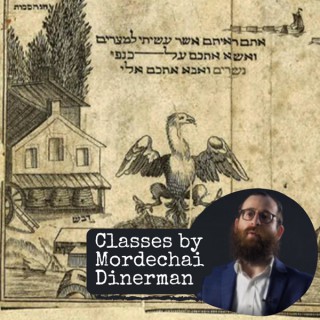
In 1790, Moses Seixas of Newport, Rhode Island, and Manuel Josephson of Philadelphia corresponded, with Josephson composing what effectively amounts to a halachic teshuvah. Josephson raised concerns about the conduct of the Touro Synagogue in Newport, arguing that elements of the service were not being properly observed. The exchange provides an important window into the religious commitments and halachic awareness of early American Jews. It also stands as one of the earliest examples of a rabbinic-style teshuvah in the formative years of Jewish life in the United States. From Philadelphia to Newport: An Early American Teshuvah (1790)

Will Bruder is a celebrated architect that never went to architecture school, but he became one of the most respected architects in America through apprenticing to Paolo Soleri and Gunnar Birkerts. Alex Josephson quit London's most prestigious architecture program mid-degree and struck out on his own. Greg Case isn't an architect at all — he's an ad guy who out-researched the professionals and rescued a forgotten modernist from obscurity. And Suzy Cash has a graduate degree and a résumé from one of the best firms in the South, yet she traded it for an off-grid life built with her own hands.

Leave an Amazon Rating or Review for my New York Times Bestselling book, Make Money Easy! Check out the full episode: https://greatness.lnk.to/1942DM A concussion in college forced Meg Josephson to stop everything. No drinking. Just silence and darkness for a long recovery. That stillness changed her relationship with alcohol for good. Here she gets honest about why we reach for a drink, our phones, food, anything that helps us avoid what's bubbling under the surface. Underneath the habit is usually a wound, and the behavior is just a way to feel safe. Her take on presence is the part that sticks. Being present doesn't mean feeling good. Sometimes it means feeling kind of awful and staying there anyway. The practical piece is simple enough to try right now. Inhale for four. Exhale for six. It won't erase the anxiety, but it tells your body you're safe. And noticing the anxiety instead of running from it? She calls that a huge step. A great place to start. Sign up for the Greatness newsletter: http://www.greatness.com/newsletter Topics Meg Josephson, Lewis Howes, anxiety relief, coping mechanisms, nervous system regulation, breathing techniques for anxiety, sitting with discomfort, mindfulness and presence, addiction root causes, people pleasing Hosted by Simplecast, an AdsWizz company. See pcm.adswizz.com for information about our collection and use of personal data for advertising.

Are we really “overteaching” phonics, or should there be a hard stopping point where it's not taught past a certain grade?Are current stories trending on popular news outlets aligned with best practices for supporting dyslexic learners?Is the public becoming more educated on how we learn to read, write, and spell?I invited my colleague, Lori Josephson, an author, consultant, and former teacher to discuss these questions. In this episode, we discuss:✅ Common literacy “urban legends”, including “Dyslexia is seeing words backwards” and “look at the picture and guess the word”✅ Why phonics gets a bad wrap and where the Science of Reading is often misunderstood✅ Handwriting, keyboarding, and how they relate to neural connections✅Making instruction more effective by integrating language, print, spelling, and executive functioning instead of siloing.Lori Josephson is an Author, Dyslexia Specialist, and Educational Consultant who is a Fellow of the Orton-Gillingham Academy, a retired Wilson Language Trainer, and holds a Master's Degree in Special Education-Learning Disabilities. She has had the privilege of teaching hundreds of struggling students how to make sense of print and text, as well as the honor of working with thousands of teachers training them how to teach and reach their students using methods based upon the complex brain processes involved in attaining literacy, the body of knowledge referred to as the Science of Reading. Her recently published book, “Calling All Neurons! How Reading and Spelling Happen”, explains how the human brain attains literacy in a fun, easy to understand manner where specialized neurons take the stage to provide this explanation. Lori serves as a Moderator of the wildly popular Facebook Group, Science of Reading-What I Should Have Learned in College, and is on the Advisory Council of The Northern Ohio Branch of The Dyslexia Association.You can connect with Lori in the following places:o Website: lorijosephson.com o LinkedIn: https://www.linkedin.com/in/lori-josephson/o X: @lorijosephson2o Facebook: Lori Josephsono Instagram: @calling_all_neuronso Medium: https://lorijosephson.medium.com/o Substack: @lorijosephson686067We mentioned the following resources in this episode:Lori's book, “Calling All Neurons! How Reading and Spelling Happen”: https://lorijosephson.com/calling-all-neurons-how-reading-and-spelling-happen/The Cost of Over-Teaching Phonics by “Liana Loewus”: http://bit.ly/4eIKJAQHas Technology “Broken” an Education System That was “Just Fine”? by Natalie Wexler: https://nataliewexler.substack.com/p/has-technology-broken-an-education“Don't Blame Technology” by Holly Korbeyhttps://hollykorbey.substack.com/p/dont-blame-technologyThe Digital Delusion: How Classroom Technology Harms our Kids' Learning-And How to Help Them Thrive Again: https://www.amazon.com/Digital-Delusion-Classroom-Technology-Learning/dp/B0G5622DQQIn this episode, I mentioned Language Therapy Advance Foundations, my program that gives speech pathologists a scalable framework for building language skills needed to thrive in school, social situations, and daily life. You can learn more about the program here: https://drkarenspeech.com/languagetherapyI also mentioned School of Clinical Leadership, my program that helps related service providers design scalable executive functioning interventions to ensure students get the scaffolding they need across the school day. You can learn more about the program here: https://drkarendudekbrannan.com/clinicalleadership Learn more about today's sponsors, Playworks, IXL and Renaissance:Learn more about Renaissance:As a global leader in education technology operating in more than 110 countries, Renaissance is committed to providing educators with insights and resources to accelerate growth and help all students build a strong foundation for success. We believe that technology can unlock a more effective learning experience, ensure that students get the personalized teaching they need to thrive, and help educators and administrators to truly, fully, See Every Student. Learn more at renaissance.com.We're proud to be sponsored by Playworks, a 501(c)3 nonprofit organization with evidence-based practices that help schools improve the health and well-being of children by increasing opportunities for physical activity and safe, meaningful play.If you're a school or district leader struggling with the challenge of chronic absenteeism, as so many are across the U.S., you may not realize that structured recess is a research-backed approach to keep kids in school. In fact, a UC Berkeley study of Title I schools found that those partnering with Playworks had significantly lower chronic absenteeism rates. Further, Mathematica research demonstrated that Playworks schools spent 27% less time transitioning from recess back to learning, saving teachers valuable instructional time. These results are possible for your students, too. Learn how Playworks can help you improve student-educator relationships, belonging, and attendance by signing up for a quick no-obligation conversation. We're also thrilled to be sponsored by IXL. IXL's comprehensive teaching and learning platform for math, language arts, science, and social studies is accelerating achievement in 95 of the top 100 U.S. school districts. Loved by teachers and backed by independent research from Johns Hopkins University, IXL can help you do the following and more:Simplify and streamline technologySave teachers' timeReliably meet Tier 1 standardsImprove student performance on state assessments

What does it take to create architecture that genuinely matters?In this episode of TALKdesign, Adrian Ramsay sits down with Alexander Josephson, co-founder of PARTISANS, for a wide-ranging conversation about creativity, resilience, politics, leadership, and the realities of architectural practice.Alexander shares his unconventional path into architecture, from a dyslexic and ADHD child growing up in Toronto to leading one of Canada's most recognised design studios. Yet this conversation quickly moves beyond biography and into the ideas that shape his work.Together they explore why architecture is fundamentally a political act, why great projects are never the result of a lone genius, and why the profession requires far more persistence than most people realise. From international competitions and visionary clients to the challenges of bringing ambitious projects into reality, Alexander offers a candid look at the forces that shape the built environment.The discussion also touches on sustainability, beauty, stewardship, AI, and the responsibility designers carry to leave places better than they found them.This is a thoughtful conversation about architecture, and equally about people, courage, collaboration, and the pursuit of meaningful work. Hosted on Acast. See acast.com/privacy for more information.

You're not just a people pleaser. You're running a survival response your nervous system learned to keep you safe. Most of us were taught that being agreeable, flexible, and endlessly giving was a virtue. Meg Josephson, a licensed psychotherapist and author of the New York Times bestselling book Are You Mad At Me?, says that pattern is actually a trauma response, and it's running your relationships, your sense of self, and your inner world without you even realizing it. The fawn response is the fourth threat response, alongside fight, flight, and freeze. It's the one we never get punished for. We get applauded. And that applause is exactly what makes it so hard to break. Meg breaks down the six archetypes it can take: the peacekeeper, the performer, the perfectionist, the chameleon, the caretaker, and the lone wolf. What it costs you isn't just your time or your boundaries. It's your identity. When you spend years morphing yourself to be liked in every room, you stop knowing what you actually want, feel, or believe. Meg went to a store after college and realized she didn't know her own favorite color. That's the depth of self-erasure people pleasing creates. The path out starts with one counterintuitive skill: learning to tolerate discomfort. Not fixing, not performing, not self-optimizing. Just pausing long enough to notice what's happening beneath the fawn response, and choosing something different. Are You Mad At Me? Amazon Ebook Audiobook Meg's Instagram Meg's TikTok Meg's Substack Meg's Website In this episode you will: Understand how complex trauma and generational patterns keep the approval-seeking cycle alive across lifetimes Build the tolerance for discomfort that breaks the people pleasing pattern and lets you show up as your full self Discover the fawn response and why it is the one threat response society actively rewards instead of corrects Identify which of the six people pleaser archetypes is quietly running your behavior in relationships and at work Learn the critical difference between reassurance seeking and genuine validation, and why only one of them actually heals the root For more information go to https://lewishowes.com/1942 For more Greatness text PODCAST to +1 (614) 350-3960 Follow The Daily Motivation for essential highlights from The School of Greatness More SOG episodes we think you'll love: Lewis Howes Solo [Stop Helping Everyone But Yourself] Emily McDonald Dr. K TOPICS Meg Josephson, people pleasing, fawn response, internal family systems, complex trauma, reassurance vs. validation, people pleaser archetypes, shame and self-blame, nervous system healing, generational trauma, Are You Mad At Me Get More From Lewis! Hosted by Simplecast, an AdsWizz company. See pcm.adswizz.com for information about our collection and use of personal data for advertising.

This week on Better Buildings for Humans, host Joe Menchefski welcomes architect, entrepreneur, and provocateur Alexander Josephson for a wide-ranging conversation about the future of architecture, city-building, sustainability, and the role of design in shaping culture. Drawing on his journey from rebellious young designer to co-founder of the internationally recognized architecture firm Partisans, Alexander challenges conventional thinking about how we create buildings, neighborhoods, and cities.The discussion explores everything from Toronto's rapid growth and the unintended consequences of modern planning policies to the importance of beauty, identity, and emotional connection in the built environment. Alexander shares his views on why architecture is inherently political, why cities should reward innovation and design excellence, and how Canada can unlock its potential by investing in local talent, manufacturing, and visionary thinking.The conversation also ventures beyond traditional architecture into emerging ideas like digital memorialization, immersive virtual environments, and what Alexander calls “post-physical architecture.” It's a thought-provoking episode about the responsibility architects have to leave the world better than they found it—and why the buildings and cities we create should inspire something more than indifference.More About Alexander JosephsonBorn in Toronto, Canada. Alex Josephson studied architecture at the University of Waterloo and in Rome. He co-founded PARTISANS in 2012 after dropping out of the Architectural Association School of Architecture (AA). Alex is the only Canadian to have received the New York Prize Fellowship at the Van Alen Institute, he was named 2015 Best Emerging Designer by Canada's Design Exchange. He currently lectures at the University of Toronto's Daniels Faculty of Architecture. Alex is a registered architect in Ontario.CONTACT:https://partisans.com/ https://www.instagram.com/alexanderjosephson/?hl=en https://www.linkedin.com/in/alexander-josephson-946b4425/ Where To Find Us:https://bbfhpod.advancedglazings.com/www.advancedglazings.comhttps://www.linkedin.com/company/better-buildings-for-humans-podcastwww.linkedin.com/in/advanced-glazings-ltd-848b4625https://twitter.com/bbfhpodhttps://twitter.com/Solera_Daylighthttps://www.instagram.com/bbfhpod/https://www.instagram.com/advancedglazingsltdhttps://www.facebook.com/AdvancedGlazingsltd

189 Cumulus: Reimagining Digital Memorials and Legacy with Architect-Founder Alexander Josephson Host Marie Betcher, a registered nurse and former hospice nurse, interviews Alexander Josephson, creator of Cumulus, a Toronto/New York-based digital memorial platform designed as an immersive "memory cloud" where families can store and experience photos, videos, notes, and other legacy content in VR-accessible spaces, with mapping for gravesites or ash scatterings. Josephson shares how repeated family encounters with death—his grandparents' passing, his grandmother's Lewy body dementia, and his father's cancer, chemotherapy, and near-fatal COVID ICU stay—inspired him to build a trusted digital "place" for remembrance beyond gravestones or genealogy. He explains collaboration features, admin controls, next-of-kin account transfer, pricing tiers, and plans for a perpetuity trust, noting current users and rollout to funeral homes and cemeteries. He closes with: "Love, love hard." 00:00 Welcome and Disclaimer 00:42 Meet Alex and Cumulus 02:38 Why Digital Memorials Matter 04:36 Family Losses and Inspiration 07:48 Dad the Doctor and ICU Journey 10:15 Near Death Visions and MAID 13:17 How Cumulus Works 16:08 Legacy Beyond Family Trees 17:42 Plans Pricing and Growth 21:38 Grief Message and Meaning 22:47 Sci Fi Comparisons 24:23 Find Cumulus and Final Words 25:43 Podcast Closing https://www.cumulus.world/ If you want to help, you can donate to help support Hospice Explained at the Buy me a Coffee link https://www.buymeacoffee.com/Hospice Hospice Explained Affiliates & Contact Information Buying from these Affilite links will help support this Podcast. Maire introduces a partnership with Suzanne Mayer RN inventor of the cloud9caresystem.com, When patients remain in the same position for extended periods, they are at high risk of developing pressure injuries, commonly known as bedsores. One of the biggest challenges caregivers face is the tendency for pillows and repositioning inserts to easily dislodge during care.(Suzanne is a former guest on Episode #119) When you order with Cloud 9 care system, please tell them you heard about them from Hospice Explained.(Thank You) Marie's Contact Marie@HospiceExplained.com www.HospiceExplained.com Finding a Hospice Agency 1. You can use Medicare.gov to help find a hospice agency, 2. choose Find provider 3. Choose Hospice 4. then add your zip code This should be a list of Hospice Agencies local to you or your loved one.

On this episode of The Social from Must Read Alaska, host Todd explores the powerful connection between food, health, and self-reliance with two expert guests: Kristen Rasmussen from the Culinary Institute of America and Brenda Josephson, Haines-based Culinary Institute of America-trained chef and author of MRAK's popular Foodies & Foragers column. In “Food, Health & the Future of What We Eat,” they discuss the groundbreaking Food is Life, Food is Health Summit held May 6–8, 2026, at the Culinary Institute of America at Copia in Napa, California. Co-organized with Stanford Medicine, the summit brought together chefs, physicians, dietitians, and researchers to reimagine food as the foundation of personal and planetary health. Kristen shares insights from the national perspective — including cross-disciplinary kitchens where doctors and chefs trained side-by-side, the science validating traditional food wisdom, and practical strategies for culinary therapeutics. Brenda brings the authentic Alaska voice, connecting the summit's themes to real-life practices like foraging kelp, harvesting wild salmon, using devil's club, and embracing subsistence living in Southeast Alaska. This conversation celebrates food independence as a core Alaskan value. In a time of supply chain vulnerability and rising chronic disease, it affirms that hunting, fishing, gardening, and foraging aren't just traditions — they're powerful acts of health sovereignty and resilience. Listeners will gain validation for their lifestyle and fresh inspiration for making food truly medicine in their own homes. Whether you're deeply rooted in Alaska's wild food traditions or seeking practical ways to build greater self-sufficiency, this episode bridges national momentum with frontier wisdom. Tune in for thoughtful discussion on reclaiming control over what we eat — and why it matters now more than ever. Food is Life, Food is Health Conference: https://www.foodislifefoodishealth.org/about Kristen Rasmussen Instagram: rootedfood MRAK Foodies and Foragers with Brenda Josephson: https://mustreadalaska.com/foodies-and-foragers-food-is-life-food-is-health/ SPONSORS: Must Read Alaska: https://mustreadalaska.com/subscriptions/ Promo Code: thesocial10 for 10% off the 'All In' or 'In For News' prepaid annual plans The Wellness Company: https://www.twc.health/alaska Promo Code: ALASKA for 10% off + free shipping on every order

In this week's episode of WSJ's Take On the Week, co-hosts Miriam Gottfried and Telis Demos analyze the K-shaped economy, contrasting flourishing corporate capital expenditures—driven by massive AI investment from companies like Nvidia—with the struggling consumer economy. They discuss Nvidia's risks ahead of its earnings this upcoming week, including rising chip costs and the troubles of its key customer OpenAI. The discussion shifts to soaring wholesale prices rising faster than consumer prices all while pressuring corporate margins. They also look ahead to earnings reports from retailers Target and Walmart, and preview earnings for Home Depot and Lowe's, which face headwinds from high mortgage rates and a muted spring housing market. After the break, Adam Josephson, founder of consumer-focused research company Sakonnet Research, joins the show to explain the disconnect between Wall Street and Main Street. He argues that a buoyant financial economy, where large banks are seeing asset growth from lending to hedge funds and private credit, is masking a deeper consumer weakness. Josephson discusses the gap between corporate earnings and everyone else. He says that while real average weekly earnings have seen little growth, corporate profit margins are at all-time highs. He details how this economic pressure on the consumer is reflected in falling box shipments, the rise of discount retailers, and the growing share of spending on healthcare. He warns that the market is being propped up by excessive financial leverage, and suggests ways investors can think defensively. This is WSJ's Take On the Week where co-hosts Telis Demos, Heard on the Street's banking and money columnist, and Miriam Gottfried, WSJ's investing and wealth management reporter, cut through the noise and dive into markets, the economy and finance—the big trades, key players and business news ahead. Have an idea for a future guest or episode? How can we better help you take on the week? We'd love to hear from you. Email the show at takeontheweek@wsj.com. To watch the video version of this episode, visit our WSJ Podcasts YouTube channel or the video page of WSJ.com Further Reading OpenAI Misses Key Revenue, User Targets in High-Stakes Sprint Toward IPO Nvidia Is Buying the Chip Supply Chain Housing Market's Spring Is Shaping Up as a Bust After April Sales Were Flat Elon Musk Testifies He Was a ‘Fool' to Fund OpenAI Inflation Soared to 3.8% in April, Driven by Gasoline Prices Wholesale Inflation Shot Higher in April For more coverage of the markets and your investments, head to WSJ.com, WSJ's Heard on The Street Column, and WSJ's Live Markets blog. Sign up for the WSJ's free Markets A.M. newsletter. Follow Miriam Gottfried here and Telis Demos here. Learn more about your ad choices. Visit megaphone.fm/adchoices

The controversy centers on a background detail in the 2007 Disney film Enchanted, where a storefront named “Epstein's Books” appears briefly on screen. On its own, that might be brushed off as coincidence, but it becomes far harder to ignore when viewed alongside the documented relationship between the film's producer, Barry Josephson, and Jeffrey Epstein. This isn't a loose or incidental connection—it's part of a pattern where Epstein, a man already publicly disgraced by 2008, continued to move comfortably within elite circles, maintaining access to powerful figures in entertainment. The idea that his name would casually appear in a major studio film, while individuals tied to him were still engaging with him behind the scenes, raises serious questions about awareness, normalization, and the culture that allowed Epstein's influence to persist.The underlying records describe a relationship that goes well beyond a one-off interaction, pointing to financial dependence, ongoing communication, and favors exchanged over years. Josephson reportedly borrowed substantial sums from Epstein and maintained contact long after Epstein's crimes were known, which makes claims of ignorance increasingly difficult to take at face value. This wasn't passive association—it reflects a willingness to overlook, excuse, or compartmentalize Epstein's behavior in exchange for access, money, or opportunity. That dynamic is exactly what enabled Epstein's network to function for so long, with powerful individuals treating him as useful rather than radioactive. Josephson's later apology for “poor judgment” reads less like accountability and more like damage control, especially when weighed against the duration and depth of the relationship being described.to contact me:bobbycapucci@protonmail.comsource:'Epstein's bookstore' appears in Disney film Enchanted produced by pal who offered predator 'assistant with great rack'

The controversy centers on a background detail in the 2007 Disney film Enchanted, where a storefront named “Epstein's Books” appears briefly on screen. On its own, that might be brushed off as coincidence, but it becomes far harder to ignore when viewed alongside the documented relationship between the film's producer, Barry Josephson, and Jeffrey Epstein. This isn't a loose or incidental connection—it's part of a pattern where Epstein, a man already publicly disgraced by 2008, continued to move comfortably within elite circles, maintaining access to powerful figures in entertainment. The idea that his name would casually appear in a major studio film, while individuals tied to him were still engaging with him behind the scenes, raises serious questions about awareness, normalization, and the culture that allowed Epstein's influence to persist.The underlying records describe a relationship that goes well beyond a one-off interaction, pointing to financial dependence, ongoing communication, and favors exchanged over years. Josephson reportedly borrowed substantial sums from Epstein and maintained contact long after Epstein's crimes were known, which makes claims of ignorance increasingly difficult to take at face value. This wasn't passive association—it reflects a willingness to overlook, excuse, or compartmentalize Epstein's behavior in exchange for access, money, or opportunity. That dynamic is exactly what enabled Epstein's network to function for so long, with powerful individuals treating him as useful rather than radioactive. Josephson's later apology for “poor judgment” reads less like accountability and more like damage control, especially when weighed against the duration and depth of the relationship being described.to contact me:bobbycapucci@protonmail.comsource:'Epstein's bookstore' appears in Disney film Enchanted produced by pal who offered predator 'assistant with great rack'Become a supporter of this podcast: https://www.spreaker.com/podcast/the-moscow-murders-and-more--5852883/support.

The controversy centers on a background detail in the 2007 Disney film Enchanted, where a storefront named “Epstein's Books” appears briefly on screen. On its own, that might be brushed off as coincidence, but it becomes far harder to ignore when viewed alongside the documented relationship between the film's producer, Barry Josephson, and Jeffrey Epstein. This isn't a loose or incidental connection—it's part of a pattern where Epstein, a man already publicly disgraced by 2008, continued to move comfortably within elite circles, maintaining access to powerful figures in entertainment. The idea that his name would casually appear in a major studio film, while individuals tied to him were still engaging with him behind the scenes, raises serious questions about awareness, normalization, and the culture that allowed Epstein's influence to persist.The underlying records describe a relationship that goes well beyond a one-off interaction, pointing to financial dependence, ongoing communication, and favors exchanged over years. Josephson reportedly borrowed substantial sums from Epstein and maintained contact long after Epstein's crimes were known, which makes claims of ignorance increasingly difficult to take at face value. This wasn't passive association—it reflects a willingness to overlook, excuse, or compartmentalize Epstein's behavior in exchange for access, money, or opportunity. That dynamic is exactly what enabled Epstein's network to function for so long, with powerful individuals treating him as useful rather than radioactive. Josephson's later apology for “poor judgment” reads less like accountability and more like damage control, especially when weighed against the duration and depth of the relationship being described.to contact me:bobbycapucci@protonmail.comsource:'Epstein's bookstore' appears in Disney film Enchanted produced by pal who offered predator 'assistant with great rack'Become a supporter of this podcast: https://www.spreaker.com/podcast/the-epstein-chronicles--5003294/support.

Are B2B creators the future of the creator economy? We sit down with Alex Josephson, VP of Brandworks at LinkedIn, in the wake of its NewFronts presentation earlier this spring. He shares insights into the Top Voices 360 program and reveals that LinkedIn has tripled creator payouts over the last year.Also today: YouTube's Coachella station initiative, Justin Bieber's cred as a YouTuber, headlines today vs in 2013 (shout out AOL), and YouTube's new Shorts timer.00:00 Welcome to Creator Upload00:20 YouTube Coachella Station Initiative02:33 Justin Bieber's Coachella Performance07:05 Is Bieber a True YouTuber?10:37 Interview: LinkedIn's Alex Josephson11:10 CEOs as Content Creators14:28 The Rise of B2B Creators16:02 LinkedIn NewFronts and Top Voices22:06 Scaling Impact for Brands28:53 Tripling LinkedIn Creator Payouts30:12 Follower Count vs Real Influence33:46 Connected TV Ads on LinkedIn37:02 Hollywood on YouTube vs AOL44:22 YouTube Shorts Timer Update45:47 Wrap UpCreator Upload is your creator economy podcast, hosted by Lauren Schnipper and Joshua Cohen.Follow Lauren: https://www.linkedin.com/in/schnipper/Follow Josh: https://www.linkedin.com/in/joshuajcohen/Original music by London Bridge: https://www.instagram.com/londonbridgemusic/Edited and produced by Adam Conner: https://www.linkedin.com/in/adamonbrand

Send us Fan MailMirageSeason 17's Hacks continues with MIRAGE (1965), the latest selection from Edward Dmytryk's filmography curated by cohost Ryan phoning in from Arizona for his second of four flicks picked in this season's 4x4. And another black-and-white noirish mystery loosely adapting a novel. Dmytryk's reworking of the uncredited print material (the 1952 novel Fallen Angel) created a film that exploits the conventions of the genre to obscure the film's conceit and twist reveal, which is

Join us for a deep dive into cutting-edge topics ranging from quantum sensing and secret technologies to geopolitical strategies and UFO phenomena. Discover the latest theories, scientific explanations, and behind-the-scenes insights that challenge conventional narratives. In this episode: Exploration of ghost murmurs and their potential ties to quantum physics and ether theories The use of quantum magnetometry to track human heartbeat signatures over long distances The covert application of nanotech and regenerative graphene suits in military precision tools Discussions on synthetic telepathy, mind downloading, and neural interface experiments Analysis of global geopolitical tensions, energy control, and military strategies involving the Strait of Hormuz Debunking moon landings and analyzing anomalies in space agency footage Uncovering secret treaties, black ops, and the truth behind ET interactions with foundational government agencies Timestamps: (00:02) - Welcome and show update on schedule changes (00:28) - Challenges in internet connectivity from Easter Island (01:15) - Possibility of renting programmable satellites that follow individuals (02:02) - Concept of nuclear-powered, autonomous drones following and tracking humans (02:35) - Introduction to the week's main themes: Ghost Murmur & Synthetic Telepathy (03:03) - Links between heartbeat signatures and protective cryptographic measures (03:32) - Overview of quantum sensing tech involving Josephson junctions and ether physics (07:26) - Military nanotech, super soldiers, and regenerative graphene suits (07:57) - Real-time biomarker monitoring and AI integration in military operations (09:16) - Quantum magnetometry and its limits over long distances (10:38) - The eerie parallels between 90s UFO narratives and current secret tech (14:13) - Classified projects that listen to chest pulses for surveillance (16:15) - Synthetic telepathy: mind-to-mind communication through neural interfaces (18:01) - Whistleblower insights on internal monologue signals and EMF projects (20:47) - Psyops, downloads, and alleged alien communication deceptions (24:08) - Voice replication and AI-generated audio for covert operations (27:57) - Disclosures of secret treaties, Nazi alliances, and secret ET agreements (33:43) - Government revelations about crackdowns on UFO disclosures and secret agendas (37:04) - The role of ether physics in modern physics and secret classified research (44:08) - Hidden surrender treaties and the control of extraterrestrial interactions (69:32) - Strategic energy and military maneuvers in global geopolitics (75:52) - The build-up and suppression of truth about space missions and moon landings (83:18) - The call for independent action against global elite control (87:00) - Evidence of water contamination in fuel supplies and covert economic sabotage (89:28) - The impact of propaganda, social engineering, and influence from mainstream narratives (91:05) - The awakening of political awareness through media figures (102:20) - The German political stance against migration and neocolonial agendas (103:53) - The deliberate flooding of Europe with migrants to influence political outcomes (106:46) - Evidence of covert medical interventions and government cover-ups (108:38) - Final thoughts on disinformation, government neglect, and the ongoing fight for truth To gain access to the second half of show and our Plus feed for audio and podcast please clink the link http://www.grimericaoutlawed.ca/support. For second half of video (when applicable and audio) go to our Substack and Subscribe. https://grimericaoutlawed.substack.com/ or to our Locals https://grimericaoutlawed.locals.com/ or Rokfin www.Rokfin.com/Grimerica Patreon https://www.patreon.com/grimericaoutlawed Support the show directly: https://open.spotify.com/show/2punSyd9Cw76ZtvHxMKenI?si=ImKxfMHgQZ-oshl499O4dQ&nd=1&dlsi=4c25fa9c78674de3 Watch or Listen on Spotify https://grimericacbd.com/ CBD / THC Tinctures and Gummies https://grimerica.ca/support-2/ Our Adultbrain Audiobook Podcast and Website: www.adultbrain.ca Our Audiobook Youtube Channel: https://www.youtube.com/@adultbrainaudiobookpublishing/videos Check out our next trip/conference/meetup - Contact at the Cabin www.contactatthecabin.com Other affiliated shows: www.grimerica.ca The OG Grimerica Show Join the chat / hangout with a bunch of fellow Grimericans Https://t.me.grimerica grimerica.ca/chats Discord Chats Darren's book www.acanadianshame.ca Eh-List Podcast and site: https://eh-list.ca/ Eh-List YouTube: https://www.youtube.com/@TheEh-List www.Rokfin.com/Grimerica Our channel on free speech Rokfin Leave a review on iTunes and/or Stitcher: https://itunes.apple.com/ca/podcast/grimerica-outlawed http://www.stitcher.com/podcast/grimerica-outlawed Sign up for our newsletter http://www.grimerica.ca/news SPAM Graham = and send him your synchronicities, feedback, strange experiences and psychedelic trip reports!! graham@grimerica.com InstaGRAM https://www.instagram.com/the_grimerica_show_podcast/ Purchase swag, with partial proceeds donated to the show www.grimerica.ca/swag Send us a postcard or letter http://www.grimerica.ca/contact/ ART - Napolean Duheme's site http://www.lostbreadcomic.com/ MUSIC Tru Northperception, Felix's Site sirfelix.bandcamp.com Resources & Links: Quantum sensing with Josephson junctions Ether physics and vacuum waves Nanotech and regenerative graphene suits Synthetic telepathy research Strait of Hormuz geopolitical analysis Moon landing anomaly evidence Secret treaties & ET agreements Disaster map with new features Grok AI image generator UK and Canadian political developments UFO whistleblower testimonies

Meg Josephson is a psychotherapist and the author of the instant New York Times–bestseller, Are You Mad At Me? In her own life and in her work with clients, she’s come to focus on why many of us have an overactive fawn response. (You’re likely familiar with the other classic responses: fight, flight, freeze, and perhaps faint.) The fawn response can look different depending on the person but it is often related to a desire to feel safe, to be liked, to secure approval, and to please others. In this conversation, Josephson shares the five fawn-related archetypes, or behavioral patterns, that she’s identified. (My guess is that at least one will resonate with you.) Josephson explains why these patterns and responses make sense and why they can be protective—and also what to do if their overuse has become a strain on your life and relationships. For the show notes, head to my Substack.See omnystudio.com/listener for privacy information.

In Conversation (Willamette River Basin Tour w/ Scot Jenerik, Don Haugen, Aurora Josephson & Free Static) WFMU Playlist & Interactive Live Chat A broadcast that went well beyond expectations, and intentions, as it quickly evolved into something more than we had planned. In hour one, we offer a wide range of music from artists that … Continue reading In Conversation (Willamette River Basin Tour w/ Scot Jenerik, Don Haugen, Aurora Josephson & Free Static)

You know about people pleasing. You've heard about the fawn response. You might even recognise it in yourself: the self-silencing, the conflict avoidance, the version of you that keeps the peace while something quietly fumes underneath. And yet, you still said nothing in that meeting last week. This episode is about the gap between understanding yourself and actually changing — and it's one of my favourite conversations to date. My guest is Meg Josephson, psychotherapist and NYT bestselling author of Are You Mad at Me? Rather than explaining the fawn response from a theoretical distance, we do something harder. We take real scenarios apart together, a coach and a therapist, both with skin in this game. We get inside the moments that cost high achievers the most — the freeze that happens in a meeting, the conflict you've been circling for months, the 2am replay — and we pull them apart from two very different angles. We get into why people pleasing isn't a personality flaw, but a nervous system response learned long before you had the corner office. Why the higher you've climbed, the more sophisticated your self-silencing becomes. And why — this is the bit that stopped me — conflict doesn't have to mean rupture. If you've ever walked out of a conversation frustrated with yourself for going quiet, this one is for you. In this episode: The fawn response and why it shows up in high achievers. The link between conflict avoidance and childhood. What's actually happening in your body when you freeze. Practical, somatic tools for staying in the room when everything in you wants to bolt. The difference between reassurance-seeking and validation. And why knowing isn't the same as changing. Join us. *You might need a note pad – she's that good. Links: Meg Josephson's website & book Meg on Instagram Mandy on Instagram

What is up fraud fighters, and welcome to Fraud Forward!AI is accelerating fraud, 100 percent. But the bigger risk, the thing that should keep every fraud leader up at night, is what happens when fraud teams stop thinking strategically because the queue never ends.In Part 2 of Fraud Forward, I'm back with Ted Josephson, VP of Bank Fraud & Credit Strategy at Synchrony Financial, and we are getting into fraud leadership at the enterprise level, where strategy, AI, automation, and culture collide.Because let me just assure you, fraud prevention at scale requires more than tools. It requires fraud leadership strategies, fraud team leadership that protects time for long-term planning, and strategic fraud solutions that can separate normal fraud noise from the signals of a true fraud shift.Then we get direct about AI. Where it's delivering real value today, where the industry is still overhyping “AI” that is not actually learning, and why certain decisions, especially first-party fraud, should never be fully automated without human accountability and empathy.And fraud fighters, we close with what Ted thinks is being underestimated right now, and it's big. Agentic commerce creating a new accountability and disputes nightmare, plus the rise of casual “friendly fraud” as a cultural norm. Because fraud prevention evolution is not just a technology program, it is bank fraud leadership and credit risk leadership in action. This is fraud prevention innovation, and it demands strategic fraud decisions.What you'll hear in this episode:How enterprise fraud teams protect time for long-term strategy when fraud never stopsWhy planning cannot be an extra, it has to be scheduled like any other critical operating functionHow to tell the difference between normal fraud noise and the signals of a systemic weaknessWhat separates a short-term spike from a true fraud shiftWhere AI is delivering real value today, including consistent case narratives and operational efficiencyWhere the industry is still overhyping “AI” that is not actually learningWhy certain decisions, especially first-party fraud, should never be fully automated without human accountability and empathyWhy agentic commerce could create a new accountability and disputes nightmareHow casual “friendly fraud” is becoming normalized, and why that cultural shift mattersHow banking fraud strategy and credit strategy leadership collide in enterprise fraud teamsYou should listen to this episode if you:Lead fraud solutions leadership efforts and you feel like the urgent is crowding out the importantRun fraud prevention at scale and need a better framework to separate noise from true fraud shiftsAre building fraud leadership development for your team and want practical, real-world strategyManage enterprise fraud teams and need strategic fraud insights you can apply immediatelyOwn bank fraud leadership responsibilities and want to pressure test your strategic fraud solutionsAre navigating credit risk leadership decisions alongside fraud risk and disputesAre worried about agentic commerce, dispute accountability, and what comes nextAre watching “friendly fraud” become a cultural norm and need fraud leadership strategies to respondIf you liked this episode, be sure to subscribe and review the podcast on iTunes, Spotify, YouTube, or wherever you listen to podcasts. It really helps with getting the word out.

What if the habit that's made you successful is also holding you back? Meg Josephson, therapist and author of the New York Times bestseller Are You Mad at Me?, joins Elizabeth Weingarten to break down the psychology of people pleasing and its hidden cost on leadership. Drawing on her research and clinical work, Meg explains the "fawn response," the lesser-known survival mechanism that drives us to appease rather than assert, and why high achievers are especially susceptible. People pleasing erodes trust, keeps relationships shallow, and quietly undermines your authority — and Meg explains what to do about it. Follow Leading Up: The Work Shift on Apple, Spotify, or wherever you listen. New episodes drop Tuesdays. Subscribe to our Substack. If you're trying to skill up, head to Udemy.com Find out more about Leading Up: The Work Shift at business.udemy.com/leading-up-podcast Leading Up: The Work Shift is produced by Udemy in partnership with Pod People.

Part 1 of a seminar series on Following Jesus Together
What is up fraud fighters and welcome to Fraud Forward.In this episode we sit down with Ted Josephson, VP of Bank Fraud and Credit Strategy at Synchrony Financial, to talk about what advanced fraud solutions leadership really looks like when fraud prevention moves beyond reacting to threats and becomes part of enterprise strategy.Ted's path into the fraud space did not start in a fraud department. It started in banking operations working branches, call centers, and digital systems. That kind of experience shapes how leaders approach fraud prevention because they understand how financial institutions actually function day to day.And that perspective matters.Because strong fraud leadership is not just about stopping bad transactions. It is about building resilient teams, aligning fraud prevention with credit strategy leadership, and making strategic fraud decisions that protect both customers and institutions at scale.Throughout the conversation we explore how enterprise fraud teams evolve as institutions grow and why fraud leaders must shift from tactical problem solving to long term strategy.In this episode we discuss• How fraud leaders transition from investigators to strategic decision makers• Why enterprise fraud solutions require strong collaboration across fraud, credit, and risk teams• What changes when organizations scale fraud prevention across millions of accounts• Why the language fraud leaders use internally can shape executive decisions• How modern fraud threats require both advanced technology and human judgmentThis episode is for you if• You lead banking fraud prevention teams and want to strengthen your fraud leadership strategies• You work in credit risk, compliance, or financial crime teams navigating enterprise fraud decisions• You support credit union fraud prevention programs and want insights from large scale fraud organizations• You are building advanced fraud prevention programs and want to understand how leadership drives fraud prevention innovationFraud leadership today requires more than tools and alerts. It requires strategy, communication, and the ability to guide teams through uncertainty while fraud threats continue to evolve.If you enjoy the conversation, make sure to subscribe to Fraud Forward on Spotify, Apple Podcasts, YouTube, or wherever you listen.Stay vigilant, stay informed, and keep moving fraud forward.

On today's episode I welcome psychotherapist and author Meg Josephson to the podcast. Her book Are You Mad at Me? names something so many of us feel but rarely say out loud: Did I do something wrong? Are you mad at me? Meg and I talk about the fawn response, people-pleasing, and the parts of us that learned early on to stay ahead of conflict. We explore how "being nice" can disconnect us from ourselves, why grief and anger are essential to healing, and how mindfulness helps us slow down enough to notice what's really happening inside. If you've ever swallowed your needs to keep the peace, felt resentful after saying yes, or worried that one mistake could cost you connection, our conversation will resonate. We Explore: • Why "Are you mad at me?" isn't really a question, but a feeling. • The difference between being nice and being compassionate. • How grief challenges the hope that if we try harder, we'll finally be seen. • Small corrective experiences that help our parts learn we're actually safe. Here's a link to the workshop she mentioned in the episode. About Meg Josephson Meg Josephson, LCSW, is a licensed psychotherapist and the author of the New York Times bestselling book Are You Mad at Me?, which has been translated into over 20 languages. In her private practice, she specializes in trauma-informed care through a mindfulness-based, compassion-focused lens. She holds a Master of Social Work from Columbia University. Episode Sponsor: Cape Cod Institute Deepen your IFS practice at the Cape Cod Institute this summer, now in its 46th year. Choose from 38 half-day courses, either in person on Cape Cod or live online. Spend your mornings learning, and your afternoons applying insights, connecting with colleagues, or exploring the Cape. If you use IFS, this is a rare opportunity to learn directly from the people shaping the model. A dedicated IFS Week features Richard Schwartz and IFS practitioners teaching couples work, addictive processes, leadership, disordered eating, and psychedelic-assisted psychotherapy. Learn more and register at cape.org, and use code theoneinside2026 for $50 off. About The One Inside I started this podcast to help spread IFS out into the world and make the model more accessible to everyone. Seven years later, that's still at the heart of all we do. Join The One Inside Substack community for bonus conversations, extended interviews, meditations, and more. Find Self-Led merch at The One Inside store. Listen to episodes and watch clips on YouTube. Follow me on Instagram @ifstammy or on Facebook at The One Inside with Tammy Sollenberger. I co-create The One Inside with Jeff Schrum, a Level 2 IFS practitioner and coach. Resources New to IFS? My book, The One Inside: Thirty Days to Your Authentic Self, is a great place to start. Want a free meditation? Sign up for my email list and get "Get to Know a Should Part" right away. Sponsorship Want to sponsor an episode of The One Inside? Email Tammy.

Send us a message!After a fun night out with friends, Samantha Lee Josephson made the responsible decision to call a rideshare to get home. Her story ends in tragedy, but her legacy has made the world safer for everyone. Music is by Alexander Nakarada.Support the show

In this Artist Episode 3-Time MTCA Alumni Parent Anne Josephson and MTCA Director Charlie Murphy discuss:

How can a helicopter fly in space? How does LIGO detect gravitational waves? How do quantum electronic devices like Josephson junctions work? Could AI turn evil and destroy humanity? What about those grabby aliens? In this episode of Chuck GPT, Dr. Charles Liu and co-host Allen Liu answer audience questions about the technology of astronomy, astrophysics, and the future. To read those questions, we welcome back our executive producer Leslie Mullen, community director Stacey Severn, and intern Eleanor Adams. As always, though, we start off with the day's joyfully cool cosmic thing: the ESA's new Deep Space Antenna in Australia. This fourth antenna in ESA's network will be used to manage communications for their slate of upcoming missions. For our first audience question, Anna asks, “How is it possible that a helicopter can work in space? I heard that NASA launched a helicopter to Mars and is going to send one to Saturn in a few years.” Leslie, who worked at JPL, talks about the Perseverance Rover and its helicopter, Ingenuity. She explains that they're not actually flying in space, but in the atmospheres of a planet or a moon. Even so, the thin atmosphere of Mars (less than 1% of Earth's) created unique problems that don't exist on Earth. Leslie got to interview the inventor of Ingenuity, Bob Balaram, in her JPL podcast episode, “Flying with Ingenuity.” She describes how JPL tested the helicopter here on Earth, and what it was like the moment Ingenuity actually took flight. The team discusses Dragonfly, the helicopter that will be flying on Saturn's moon Titan, and how Titan's thick methane atmosphere creates an entirely different set of engineering problems than Ingenuity faced on Mars. Stacey reads our next question, from Joe: “Gravitational wave detectors like LIGO are said to detect changes in the length of space by less than the width of a proton. But how is that possible, if all the atoms that make up LIGO are so much bigger than protons?” Chuck explains interferometry (the I in LIGO!) and Allen offers a great analogy using a ruler. Eleanor reads a question from TikTok, which Esmeregildo asked in response to our video about Josephson Junctions and the Nobel Prize in Physics: “What is the purpose of the insulating barrier?” Chuck's answer takes us down a quantum tunneling rabbit hole, filled with superconductors, insulators, and quantum computing. Diane asks: “Professor, you say that astronomers have used AI for a long time so you're not afraid of AI. But AI isn't being used by just scientists anymore, and corporations are using AI to make money now rather than to make scientific advances. So should we be afraid of AI today? Could AI turn evil soon and destroy humanity?” Allen, co-author of a soon-to-be published book about AI, offers a mostly hopeful answer, although Chuck compares AI to nuclear power and Leslie brings up real world problems AI is already creating. Our last question from our audience is, “Hi Dr. Liu, I heard you talking about grabby aliens recently. Could you explain the concept a little more? For example, would humans be grabby aliens if we explore space and colonize Mars and we find there's life there? Would we have to destroy grabby aliens right away if we find them, or would we have to hide from them?” It's the perfect way to end this edition of Chuck GPT! We hope you enjoy this episode of The LIUniverse, and, if you do, please support us on Patreon. Image Credits: ESA's first and fourth Deep Space Antennas. Credit: European Space Agency Map showing locations of ESA tracking (Estrack) stations as of 2017. Credit: European Space Agency Video of Perseverance landing on Mars. Credit: NASA/JPL-Caltech Ingenuity on the surface of Mars. Credit: NASA/JPL-Caltech Anatomy of the Mars helicopter Ingenuity. Credit: NASA/JPL-Caltech Ingenuity's Test Chamber. Credit: NASA/JPL-Caltech Ingenuity in the Test Chamber. Credit: NASA/JPL-Caltech Video of Ingenuity altimeter data and the first flight as seen from Perseverance. Credit: NASA/JPL-Caltech Dragonfly space probe concept art. Credit: NASA/Johns Hopkins-APL Titan's thick methane atmosphere gives it a fuzzy yellow look. Credit: NASA/JPL-Caltech/Space Science Institute Tuned Mass Damper used to stabilize buildings during earthquakes. Credit: CC Josephson Junction. Credit: Public Domain Josephson junction array chip developed by the National Institute of Standards & Technology. Credit: Public Domain CHAPTERS 03:08 - Joyfully Cool Cosmic Thing of the Day –New ESA Deep Space Antenna 07:36 - How Can the Ingenuity Helicopter Fly on Mars? 16:26 - How Can the Dragonfly Helicopter Fly on Saturn's Moon Titan? 19:44 - How does LIGO detect gravitational waves? 26:01 - Josephson Junctions, Quantum Tunneling, and Superconductors Explained 36:00 - Could AI Turn Evil Soon and Destroy Humanity? 44:48 - Would Humans Be Grabby Aliens if We Explore Space and Colonize Mars? #LIUniverse #SciencePodcast #AstronomyPodcast #LIGO #ArtificialIntelligence

Quantum computing is no longer confined to research labs—it's entering the commercial space, and electrical engineers are uniquely positioned to contribute. In this episode of the OnTrack Podcast, host Zach Peterson sits down with quantum hardware designer Šimon Marek to explore the fascinating world of superconducting quantum chips. From transmon qubits and Josephson junctions to control electronics and FPGA-based systems, Šimon breaks down the engineering principles that make quantum computers work, revealing how familiar microwave and RF design concepts translate directly into this cutting-edge field. Whether you're a PCB designer curious about quantum technology or an engineer looking for your next challenge, this conversation offers a practical roadmap for understanding quantum hardware. Šimon shares his journey from Arduino projects to quantum chip design, walks through actual chip layouts and simulation workflows, and discusses the fabrication processes that bring these devices to life. Discover why quantum computing might be more accessible to traditional electronics engineers than you think.

The fawn response is the fourth trauma reaction beyond fight, flight, and freeze. Childhood experiences create patterns of people-pleasing that disconnect you from yourself. Meg shares her personal journey from a volatile, addiction-affected home to clear boundaries. Along the way, she reveals practical tools including her NICER technique for managing anxiety and overthinking. Stop self-silencing, set boundaries without guilt, and reconnect with your authentic self. Are you struggling with people-pleasing, conflict avoidance, or feeling uncertain who you really are? This episode is perfect for you. Plus, we chat about grieving relationships that will never be and creating a sense of home within yourself. Read the show notes for today's episode at terricole.com/791

為了獲得安全感,化解自己感知到的威脅,許多人努力變得更討人喜歡,卻也終其一生都被困在這種生存模式裡。本書作者以自身經驗與個案故事為基礎,交織出一條賦予讀者力量的可行之路:討好不是一種人格特質,而是一種常見的創傷反應和生存本能。本書帶你用一直渴望、卻以為自己不配擁有的關愛,溫柔地擁抱你;卸下那些讓我們被困在過去、無法真正活在當下的保護機制,釋放「必須犧牲自己以成全他人」的牢固信念與阻礙。作者引領我們在內心深處培養出堅實的安全感,即使外在世界失序、一切看似失控時,我們仍能擁有靜謐且溫暖的歸宿,安然回到自我之中。 以上內容擷取自博客來網路書店
為了獲得安全感,化解自己感知到的威脅,許多人努力變得更討人喜歡,卻也終其一生都被困在這種生存模式裡。本書作者以自身經驗與個案故事為基礎,交織出一條賦予讀者力量的可行之路:討好不是一種人格特質,而是一種常見的創傷反應和生存本能。本書帶你用一直渴望、卻以為自己不配擁有的關愛,溫柔地擁抱你;卸下那些讓我們被困在過去、無法真正活在當下的保護機制,釋放「必須犧牲自己以成全他人」的牢固信念與阻礙。作者引領我們在內心深處培養出堅實的安全感,即使外在世界失序、一切看似失控時,我們仍能擁有靜謐且溫暖的歸宿,安然回到自我之中。 以上內容擷取自博客來網路書店

Do you ever spiral, wondering if someone's mad at you, replay conversations in your head, or feel anxious after setting a boundary? Then you need this episode. Victoria sits down with licensed psychotherapist and New York Times bestselling author Meg Josephson, whose new book Are You Mad at Me? is helping people-pleasers everywhere unlearn the patterns keeping them stuck. They dive into where people-pleasing comes from (usually childhood trauma we don't even recognize), how to stop abandoning yourself to keep the peace, and what it takes to feel safe being authentically you. Meg shares practical, therapeutic tools to help you regulate your emotions, set boundaries without guilt, and stop overexplaining yourself to be understood using some of Vic's recent personal experiences as a guide. Tune in to finally understand your people-pleasing tendencies and start rewriting the story.Follow Meg Instagram: @megjosephsonOrder Are You Mad At Me?// SPONSORS // LMNT: LMNT is offering a free sample pack with any purchase, that's 8 single serving packets FREE with any LMNT order. This is a great way to try all 8 flavors or share LMNT with a friend. Get yours at DrinkLMNT.com/realpod.BetterHelp: Visit betterhelp.com/realpod today to get 10% off your first month. CozyEarth: Go to cozyearth.com and use code REALPOD for 40% off best selling temperature-regulating sheets, apparel, and more.Crunchmaster: Find Crunchmaster at a store near you! Please note that this episode may contain paid endorsements and advertisements for products and services. Individuals on the show may have a direct or indirect financial interest in products or services referred to in this episode.Produced by Dear Media.See Privacy Policy at https://art19.com/privacy and California Privacy Notice at https://art19.com/privacy#do-not-sell-my-info.

Do you spend a lot of time worrying about whether someone is mad at you? Do you avoid sharing your opinion because you don't want to be disliked? If so, you might be engaging in fawning—a survival response that drives people-pleasing behavior. I'm joined by Meg Josephson, psychotherapist and bestselling author of Are You Mad at Me?. Together, we explore the roots of fawning, how it impacts our lives, and the steps you can take to stop worrying about what others think and start living for yourself. Some of the things we talk about are: What fawning is and how it differs from people-pleasing. Why fawning is a survival response that has likely protected you in the past. The signs you might be fawning. The dangers of becoming a people-pleaser. Why relationships are the key to healing from fawning. How to learn reconnect with your own needs. Subscribe to Mentally Stronger Premium for exclusive content like weekly bonus episodes, access to mental strength challenges and office hours with me. Links & Resources MegJosephson.com Are You Mad at Me? Follow Meg on Instagram - @MegJosephson Connect with the Show Buy a copy of 13 Things Mentally Strong People Don't Do Connect with Amy on Instagram — @AmyMorinAuthor Visit my website — AmyMorinLCSW.com Sponsors Cowboy Colostrum — Get 25% Off @CowboyColostrum with code STRONGER at cowboycolostrum.com. #CowboyColostrumPod HoneyLove — Save 20% Off Honeylove by going to honeylove.com/STRONGER #honeylovepod CocoaVia — Get 20% off with code Amy2025 at cocoavia.com. OneSkin — Get 15% off OneSkin with the code STRONGER at https://www.oneskin.co/ Quince — Go to Quince.com/stronger for free shipping on your order and 365 day returns! ZocDoc — Go to Zocdoc.com/STRONGER to find and instantly book a top-rated doctor today! Shopify — Sign up for your one-dollar-per-month trial period at Shopify.com/mentallystronger Life Kit — Listen to the Life Kit podcast from NPR. Mentally Strong App — Take your mental strength to the next level. Sign up at AmyMorinLCSW.com Learn more about your ad choices. Visit megaphone.fm/adchoices

Forrest and therapist Meg Josephson explore the fawn response, a survival strategy where safety is sought by pleasing other people. They discuss how fawning can start as self-protection in childhood, but later morph into overthinking, hypervigilance, and self-abandonment. Meg shares her own experience, including how fawning creates resentment and makes it difficult to find a healthy relationship or figure out your authentic needs. Topics include becoming aware of unconscious habits, building distress tolerance, grief, self-compassion, healthy boundaries, and speaking up for ourselves. About our Guest: Meg Josephson is a Licensed Clinical Social Worker and author of the new book Are You Mad at Me? Key Topics: 0:00: Introduction 1:18: Self-sabotage as self-protection 4:01: Bringing the unconscious fawn response into awareness 9:51: Silencing wants and needs, conflict avoidance, and resentment 14:33: Rediscovering wants and needs after people pleasing 18:05: The healing arc: grief, anger, and relationship 25:30: Viewing people pleasing as a “part” rather than an identity 30:11: Nice vs. compassionate 51:36: Hypervigilance and the NICER practice 57:22: Authenticity as “uncovering” rather than “fixing” 1:03:02: Recap Support the Podcast: We're now on Patreon! If you'd like to support the podcast, follow this link. Sponsors If you have ADHD, or you love someone who does, I'd recommend checking out the podcast ADHD aha! Level up your bedding with Quince. Go to Quince.com/BEINGWELL for free shipping on your order and three hundred and sixty-five -day returns. Join hundreds of thousands of people who are taking charge of their health. Learn more and join Function at functionhealth.com/BEINGWELL. Listen now to the Life Kit podcast from NPR. Go to Zocdoc.com/BEING to find and instantly book a top-rated doctor today. Sign up for a one-dollar-per-month trial period at shopify.com/beingwell. Learn more about your ad choices. Visit megaphone.fm/adchoices

Instant New York Times bestseller! Psychotherapist and social media star Meg Josephson joins Zibby to discuss ARE YOU MAD AT ME?, a groundbreaking, relatable, and binge-worthy guide to understanding chronic people-pleasing (or “fawning”). Meg shares how growing up in a volatile household shaped her instinct to people-please, how this unconscious coping strategy can be both protective and exhausting, and why so many women struggle with it. She and Zibby talk about generational patterns, social media's impact on anxiety and validation-seeking, and the importance of repairing relationships rather than striving for perfection.Purchase on Bookshop: https://bit.ly/4p2B3DNShare, rate, & review the podcast, and follow Zibby on Instagram @zibbyowens!JOIN ME! I'm hosting four events on September 19, 25th and 30th in NYC and on October 4th in Greenwich, CT. Get your tickets here! (Music by Morning Moon Music. Sound editing by TexturesSound. To inquire about advertising, please contact allie.gallo@acast.com.) Hosted on Acast. See acast.com/privacy for more information.

I am honored to connect with Meg Josephson today. She is a psychotherapist holding a Master of Social Work degree from Columbia University, with a concentration in clinical practice. She is also a meditation teacher. In our conversation, we discuss Meg's new book, Are You Mad at Me?, exploring fawning as a survival mechanism and why women are more likely to be conditioned into people-pleasing. We unpack the archetypes she refers to in her book, examining complex PTSD, and why fawners need to redefine their boundaries and acknowledge their grief and anger. Our discussion also touches on finding your voice during perimenopause and menopause, and why awareness is essential for healing. This conversation with Meg Josephson is truly invaluable, and her book is a vital resource for those who have experienced complex trauma in childhood or spent their lives people-pleasing and fawning. IN THIS EPISODE, YOU WILL LEARN: What fawning is, and why it becomes problematic if we keep on doing it when we are safe Why women and those in minority groups are more susceptible to fawning experiences The six archetypes of people pleasers that Meg describes in her book Finding a voice to describe the experiences you grew up with Rewiring your beliefs to allow the weaknesses of your parents to become your strengths Why grief and anger are so significant for fawners Relating to your emotions rather than trying to erase them Why is it so hard for fawners to maintain their boundaries? How perimenopause and menopause provide an opportunity for women to think more introspectively How healing begins with awareness Understanding that we cannot control the perceptions of others Connect with Cynthia Thurlow Follow on X Instagram LinkedIn Check out Cynthia's website Submit your questions to support@cynthiathurlow.com Connect with Meg Josephson On social media: @ Meg Josephson Meg's Peace of Mind Substack

“Am I in trouble?” “Am I secretly bad?” These are questions Meg Josephson, a therapist and author, grew up asking herself. She was constantly trying to anticipate other people's needs, worried that she was letting other people down. And it wasn't until she found herself standing in the aisle of a Bed Bath & Beyond, trying to remember her favorite color, that she realized her desire to please everyone was eroding her sense of self.On this episode of Modern Love, Josephson talks about how that realization led her to confront her tumultuous childhood, and what it took to stop “people pleasing.” She then reads the Modern Love essay “My Three Years as a Beloved Daughter” by Erin Brown, about a woman who found a type of love in her best friend's parents that she had never experienced before, and what that taught her about her own parents.Josephson's book, “Are You Mad At Me?,” is available Aug. 5, 2025.Find new episodes of Modern Love every Wednesday. Follow the show wherever you get your podcasts: Apple Podcasts | Spotify | Amazon Music | YouTube | iHeartRadio Unlock full access to New York Times podcasts and explore everything from politics to pop culture. Subscribe today at nytimes.com/podcasts or on Apple Podcasts and Spotify.

“Am I in trouble?” “Am I secretly bad?” These are questions Meg Josephson, a therapist and author, grew up asking herself. She was constantly trying to anticipate other people's needs, worried that she was letting other people down. And it wasn't until she found herself standing in the aisle of a Bed Bath & Beyond, trying to remember her favorite color, that she realized her desire to please everyone was eroding her sense of self.On this episode of Modern Love, Josephson talks about how that realization led her to confront her tumultuous childhood, and what it took to stop “people pleasing.” She reads the Modern Love essay “My Three Years as a Beloved Daughter” by Erin Brown, about a woman who found a type of love in her best friend's parents that she had never experienced before, and what that taught her about her own parents.Josephson's book, “Are You Mad At Me?,” is available Aug. 5, 2025.Here's how to submit a Modern Love essay to The New York Times.Here's how to submit a Tiny Love Story. Unlock full access to New York Times podcasts and explore everything from politics to pop culture. Subscribe today at nytimes.com/podcasts or on Apple Podcasts and Spotify.

Have questions about The Angel Membership or the Angel Reiki School? Book a free Discovery Call with Julie
© 2020-2026 Ivy Podcast Discovery LLC

