
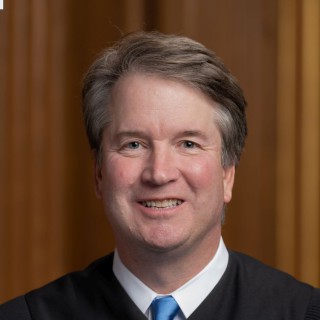
Associate Justice of the Supreme Court of the United States
POPULARITY
Categories

55 episodes with Brett Kavanaugh

93 episodes with Brett Kavanaugh

37 episodes with Brett Kavanaugh

46 episodes with Brett Kavanaugh

80 episodes with Brett Kavanaugh

58 episodes with Brett Kavanaugh

59 episodes with Brett Kavanaugh

35 episodes with Brett Kavanaugh

77 episodes with Brett Kavanaugh

41 episodes with Brett Kavanaugh

29 episodes with Brett Kavanaugh

32 episodes with Brett Kavanaugh

54 episodes with Brett Kavanaugh

36 episodes with Brett Kavanaugh

34 episodes with Brett Kavanaugh

68 episodes with Brett Kavanaugh

40 episodes with Brett Kavanaugh

22 episodes with Brett Kavanaugh

31 episodes with Brett Kavanaugh

23 episodes with Brett Kavanaugh

49 episodes with Brett Kavanaugh

28 episodes with Brett Kavanaugh

33 episodes with Brett Kavanaugh

27 episodes with Brett Kavanaugh

35 episodes with Brett Kavanaugh

26 episodes with Brett Kavanaugh

42 episodes with Brett Kavanaugh

22 episodes with Brett Kavanaugh

23 episodes with Brett Kavanaugh

39 episodes with Brett Kavanaugh

24 episodes with Brett Kavanaugh

22 episodes with Brett Kavanaugh

20 episodes with Brett Kavanaugh

17 episodes with Brett Kavanaugh

14 episodes with Brett Kavanaugh

38 episodes with Brett Kavanaugh

26 episodes with Brett Kavanaugh

70 episodes with Brett Kavanaugh

20 episodes with Brett Kavanaugh

14 episodes with Brett Kavanaugh

19 episodes with Brett Kavanaugh

38 episodes with Brett Kavanaugh

24 episodes with Brett Kavanaugh

23 episodes with Brett Kavanaugh

19 episodes with Brett Kavanaugh

17 episodes with Brett Kavanaugh

17 episodes with Brett Kavanaugh

15 episodes with Brett Kavanaugh

20 episodes with Brett Kavanaugh

16 episodes with Brett Kavanaugh

12 episodes with Brett Kavanaugh

25 episodes with Brett Kavanaugh

23 episodes with Brett Kavanaugh

14 episodes with Brett Kavanaugh

Hawk walks through Adam Serwer's Atlantic piece, The See No Evil Supreme Court, and the framework Serwer names the neo Korematsu doctrine: if any non racial explanation for a policy can be constructed, however hypothetical, the racial animus behind it stops mattering legally. Serwer traces it from Trump v. Hawaii through Louisiana v. Callais and the TPS ruling, and contrasts it with Masterpiece Cakeshop, where hostile statements by officials counted for everything. Sotomayor's September dissent is the payoff, and Hawk reads from it. There is also footage circulating of agents in the back of a truck identifying people in traffic by appearance, using language that makes the criteria explicit. SUPPORT & CONNECT WITH HAWK- Support on Patreon: https://www.patreon.com/mdg650hawk - Hawk's Merch Store: https://hawkmerchstore.com - Connect on TikTok: https://www.tiktok.com/@mdg650hawk7thacct - Connect on TikTok: https://www.tiktok.com/@hawkeyewhackamole - Connect on BlueSky: https://bsky.app/profile/mdg650hawk.bsky.social - Connect on Substack: https://mdg650hawk.substack.com - Connect on Facebook: https://www.facebook.com/hawkpodcasts - Connect on Instagram: https://www.instagram.com/mdg650hawk - Connect on Twitch: https://www.twitch.tv/mdg650hawk ALL HAWK PODCASTS INFO- Additional Content Available Here: https://www.hawkpodcasts.comhttps://www.youtube.com/@hawkpodcasts- Listen to Hawk Podcasts On Your Favorite Platform:Spotify: https://spoti.fi/3RWeJfyApple Podcasts: https://apple.co/422GDuLYouTube: https://youtube.com/@hawkpodcastsiHeartRadio: https://ihr.fm/47vVBdPPandora: https://bit.ly/48COaTB

Interview with @coachk424

Esta semana entrevisto al juez Pedro Colón, presidente del Tribunal de Apelaciones de Wisconsin (Distrito I), quien aspira a un escaño en el Tribunal Supremo de ese estado en la elección del 6 de abril de 2027. De ganar, sería el primer latino en la historia de ese tribunal. Colón nació en Ponce y se crió en Juana Díaz. Llegó a Milwaukee a los 10 años sin hablar inglés. En 1998 se convirtió en el primer latino electo a la Asamblea de Wisconsin, donde sirvió hasta 2010, cuando fue nombrado juez del circuito del condado de Milwaukee. Conversamos sobre su crianza en Juana Díaz, la batalla por la matrícula universitaria de los Dreamers, las órdenes de arresto de ICE firmadas sin jueces, los 200,000 niños separados de sus padres deportados, la "sospecha razonable" ampliada por el Tribunal Supremo federal, los $20 millones que Elon Musk invirtió en la elección judicial de Wisconsin de 2025, Citizens United, y por qué él insiste en que esta lucha se trata de preservar la democracia. Temas del episodio: - (05:35) Comienza la entrevista - (06:00) Crianza en Juana Díaz: tres generaciones, el Colegio Ponceño y los caballos de paso fino - (10:00) La llegada a Milwaukee a los 10 años, sin inglés - (13:00) Mantener el idioma y la cultura: "En mi casa no se hablaba inglés" - (15:30) El camino al derecho y los paralelos entre las constituciones de Puerto Rico y Wisconsin - (20:00) Primer latino electo a la Asamblea de Wisconsin - (23:30) La batalla por la matrícula de los Dreamers - (31:30) Polarización y el cambio demográfico en Estados Unidos - (34:00) Órdenes administrativas de ICE, el "Kavanaugh stop" y la sospecha razonable - (39:00) El FBI en el centro de elecciones de Milwaukee - (44:30) De político a juez: "Todo el mundo sabía que Pedro Colón no podía ganar" - (46:00) Su filosofía judicial: sentencias que la gente entienda - (51:45) Elon Musk y los $20 millones en la elección judicial de 2025 - (57:40) Citizens United: "Entregamos la llave de la democracia" - (1:01:20) Sus metas como juez del Supremo de Wisconsin - (1:04:10) Vieques: "La democracia lo que necesita es más democracia" - (1:06:40) Libro recomendado Enlaces:

Peter Schweizer and Eric Eggers track three fronts in China's campaign against American immigration controls, and the officials in Washington who look away. Trump signed two executive orders on August 6, narrowing his birthright citizenship push to birth tourism and surrogacy. Five days later the same coalition from Barbara v. Trump went back to the same judge for a restraining order. Brett Kavanaugh already signaled a pathway for limiting 14th Amendment abuse, so the left should not assume a win at the Supreme Court. The Justice Department charged a network selling green cards through fake weddings. Chinese nationals paid facilitators up to $100,000. Facilitators paid American citizens up to $30,000 to stand at the altar. One prenuptial agreement instructed the bride never to speak to the groom again. Then there is Mexico. Former Mexican tourism official Simón Levy published a report on how Mexicans are manufactured in Mexico. Civil registry employees took $4,000 per migrant to forge birth certificates for Cuban, Haitian and Chinese nationals. Mexico deleted the database field recording when a passport was issued in 2021, so the forgeries are untraceable. A Mexican passport drops your US visa refusal rate by 49.5 points. A Chinese national in Beijing becomes a Mexican citizen, then walks into the United States under a new name. The declassified Swalwell file closes the loop. Eric Swalwell admitted a physical relationship with Chinese intelligence asset Fang Fang. She placed interns in his office and laundered money into his campaign. He joked to friends his girlfriend worked for the Chinese CIA. He stayed on the House Permanent Select Committee on Intelligence, and Nancy Pelosi kept him there. The FBI, which the committee oversees, kept trying to recruit Fang Fang and never moved on Swalwell. (00:00) China thinks in dynasties, not decades (01:13) Trump's August 6 executive orders on birth tourism (03:23) The ACLU coalition sues again, and Rob Bonta calls it a tantrum (05:35) Birth tourism is an industry term, not a slur (07:03) DOJ charges the $100,000 sham marriage ring (08:46) Staged attacks and weaponized immigration (11:58) Simón Levy's report: Mexicans manufactured in Mexico (15:17) The passport database field Mexico deleted in 2021 (17:56) Eric Swalwell, Fang Fang, and the warning signs he ignored (24:13) The FBI knew, kept recruiting her, and never touched him

Reasonable & Ordinary Care: A Broker's Guide to Carrier VettingYou asked for it, so we're delivering! Join me for an exclusive webinar featuring Jeohn Salone Favors, GenLogs' In-House Counsel. In this session, we unpack the pivotal Montgomery decision and Justice Kavanaugh's guidance that brokers “just have to hire carriers that actually have a reasonable policy” and “the broker is not going to have a problem if it's asking the hard questions of the carrier.” Or as I like to describe it: Open the flood gates, but tell the water to flow slowly.Drawing on decades of shared experience, from CIA service through Harvard Law, corporate litigation, and Jeohn's tenure as Assistant Secretary of Homeland Security, Jeohn will walk us through how these judicial expectations are reshaping broker liability and carrier selection. GenLogs has translated that guidance into the Reasonable & Ordinary Care standard: a rigorous, practical hard questionnaire that systematically evaluates whether a carrier maintains truly reasonable policies. Learn more about the standard right here. Whether you are a broker seeking to strengthen your risk posture, a carrier looking to demonstrate compliance, or an industry stakeholder interested in elevating safety and accountability, this webinar delivers actionable insight into the new baseline for reasonable care, and how GenLogs is making it accessible to everyone.This program is brought to you by DAT Freight & Analytics. Since 1978, DAT has helped truckers & brokers discover more available loads. Whether you're heading home or looking for your next adventure, DAT is building the most trusted marketplace in freight. New users of DAT can save 10% off for the first 12 months by following the link below. Built on the latest technology, DAT One gives you control over every aspect of moving freight, so that you can run your business with speed & efficiency.This program is also brought to you by our newest sponsor, GenLogs. GenLogs is setting a new standard of care for freight intelligence. Book your demo for GenLogs today at www.genlogs.io today!

We squeeze in one more episode before Will's vacation, tying the single-season record in the process. The mailbag then demands a reckoning on whether Magneto's powers are really limited to ferrous metals, along with the origins of the S tier and the truth-value of conditional predictions. The main event is Hunter v. United States, which holds that a plea bargain's appeal waiver is unenforceable when enforcing it would work a "miscarriage of justice." We try to figure out where that rule could possibly come from — contract law? Rule 11? the supervisory power? procedural common law? — and why an opinion this law-free commanded this much agreement, while the separate writings range from a declaration of war on plea bargaining itself to a hunt for a sounder source of authority. Along the way: a field trip to the shuttered taproom of Ybarra v. Illinois fame, and thanks to the expanding Divided Argument production universe.Highlights[00:00:21] Opening: squeezing in one more before Will's vacation — and tying the single-season episode record.[00:01:42] The only Court news: Trump v. California, the mail-in-voting application, is fully briefed.[00:03:15] Mailbag: "lead is not magnetic." Are Magneto's powers limited to ferrous metals? The comic-book record says no.[00:05:40] Why is S the top tier? Japanese video-game rank screens and contested backronyms.[00:08:09] Parsec retcons in Star Wars, and the art of redeeming past misstatements.[00:09:09] Caleb Rogers on the logic of conditional predictions: "if A, then B" is true whenever not-A.[00:11:08] Thank-yous to the production universe — and the show is now on YouTube.[00:12:06] Jessie Henderson's field trip: the Aurora Tap of Ybarra v. Illinois fame, located and (sadly) shuttered.[00:15:30] The main event: Hunter v. United States — appeal waivers in federal plea bargains.[00:21:30] The wrinkle: a forced-medication condition, and a judge who says "you have a right to appeal" anyway (cf. Class v. United States).[00:24:45] Plea bargains as free-floating general contract law — territory of the forthcoming Epps & D'Onfro Harvard Law Review paper.[00:26:52] The circuit split: the Fifth Circuit's statutory-maximum rule vs. everyone else's miscarriage-of-justice exception.[00:29:16] The real puzzle: where does any of this authority come from — Rule 11? the judiciary's own self-image?[00:37:51] What definitely counts: race-based sentences, a no-pregnancy condition, sentencing by 12 orangutans.[00:40:40] Dan logs a scorecard prediction on what the Fifth Circuit does on remand.[00:43:04] How does an opinion this mushy get 8 votes in 2026? In for a dime, in for a dollar.[00:45:40] The Gorsuch concurrence comes out swinging against plea bargaining itself — Stuntz and Barkow make the U.S. Reports.[00:52:50] The Kavanaugh concurrence's high bar, and the 3–3–2 math of who wouldn't take sides.[00:55:00] The Thomas dissent: no source of law — and no sentencing appeals for most of American history anyway.[01:00:20] The Barrett concurrence: procedural common law, with citations to Professor Barrett.[01:08:16] Sign-off: thanks to the Constitutional Law Institute; Dan's predictions may yet be made falsifiable.Relevant linksCasesHunter v. United States — slip opinionTrump v. CaliforniaCommentary & articles"Hunter v. United States — the most important criminal case of the term" — SCOTUSblog opinion analysisAmy Coney Barrett, "The Supervisory Power of the Supreme Court" — 106 Colum. L. Rev. 324 (2006), cited in the Barrett concurrenceAmy Coney Barrett, "Procedural Common Law" — 94 Va. L. Rev. 813 (2008), the other self-citationOtherIce by Magneto — last episode, where the Magneto debate beganSmart Microwave — the Chatrie episode, where the Aurora Tap of Ybarra v. Illinois first came upGorsuch Genie — our episode with Rachel Barkow on Justice Abandoned, now cited in the Gorsuch concurrence

This week's guest, researcher and podcaster Mike Mosley, is a graduate of the prestigious Walt Whitman High School in Bethesda, MD., just outside DC. At his alma mater, Michael socialized and played football with classmates who later played a prominent role in the Russian Collusion Hoax, the Brett Kavanaugh confirmation controversy, and the social media censorship apparatus that was formed during the first Trump Administration and gained steam during the presidency of Joe Biden.Michael explains how these privileged sons and daughters of Washington's bureaucracy have operated behind the scenes to help form media narratives and control the information that reaches the public.Heroes Behind HeadlinesExecutive Producer Ralph PezzulloProduced & Engineered by Mike DawsonMusic provided by ExtremeMusic.com
We're back — maybe getting a little too scheduled — with one opinion on the docket: West Virginia v. B.P.J. and Little v. Hecox, where the Court held that states may limit girls' and women's sports teams to biological sex without violation Equal Protection or Title IX. First, though, Will collects on a two-year-old prediction when the Court grants Jouppi v. Alaska, an Institute for Justice case about a five-figure airplane forfeited over a six-pack of beer. On the main event, we work through how the opinions are written (no pronouns, no "Lindsay"), what the litigants' Title IX concession did to the case, and whether there is any such thing as an as-applied equal protection challenge. Will makes a big-swing prediction about transgender status and heightened scrutiny, and we ask whether the Court's reasoning can be squared with VMI and the anti-stereotyping cases. Along the way: fencepost problems, Magneto's powers, Magic: The Gathering's crossover-IP wars, scrawny men, and Justice Kavanaugh's ode to the championship trophy.Highlights[00:00:21] Opening: continuing the roll, "starting to get a little scheduled," and record-setting season ambitions[00:02:05] Summer interim-docket check-in: a new SG filing on mail-in voting; still no rehearing petition in the birthright-citizenship case[00:03:23] Filing-day counting and the classic fencepost problem[00:04:50] Will doesn't condone violence, Dan; UFC, violent video games, and Dungeons & Dragons[00:07:46] The prediction workflow pays off: Will called the IJ excessive-fines cert push back in May 2024 (Culley)[00:08:05] Cert granted in Jouppi v. Alaska: a 5-figure aircraft forfeited over a 6-pack of beer[00:09:58] Scorecard methodology: easy predictions, Magneto clauses, and a slugging-percentage proposal[00:12:51] Dan's good news: Constitutional Rights in General Private Law, accepted at Harvard Law Review[00:13:32] The main event: West Virginia v. B.P.J. and Little v. Hecox — states can keep transgender athletes off girls' and women's teams[00:15:25] How the opinions are written: no pronouns, and the majority never says "Lindsay"[00:18:44] The Thomas concurrence: suspect class, "biological men and boys who identify as girls," and the Josef Pieper abuse-of-language quote[00:21:49] Title IX: the statutory text, the litigants' concession, and what the dissents are trying to preserve[00:29:39] The Equal Protection Clause: Skrmetti, two kinds of anti-trans laws, and Will's big-swing prediction on heightened scrutiny[00:35:29] VMI's inherent differences, bathrooms, and the anti-stereotyping mainstays (Craig v. Boren)[00:43:33] Is there such a thing as an as-applied equal protection challenge? Footnotes 7 and 9, scrawny men, and Nguyen[00:52:35] The Ninth Circuit's dropped thread: Idaho's invasive verification testing and the cis-woman plaintiff[00:54:41] Justice Kavanaugh, the sports justice: the championship-trophy passage and Flood v. Kuhn lore[00:56:52] The flip side: does Title IX sometimes require excluding transgender athletes? Dueling predictions[01:00:30] Why this isn't Bostock: Gorsuch, formalism, and a contested Indian-law analogy[01:02:49] Sign-off — and a preemptive accusation that Will will game the scorecard by refusing to recordRelevant linksCasesWest Virginia v. B.P.J. / Little v. Hecox — slip opinionJouppi v. Alaska — Institute for Justice case pageCulley v. MarshallUnited States v. SkrmettiUnited States v. Virginia (VMI)Nguyen v. INSFlood v. KuhnCommentary & articlesD'Onfro & Epps, "The Fourth Amendment and General Law" — the Yale Law Journal predecessor to the new Harvard Law Review piece announced on the showOtherDivided Argument, "Originalism Hulk" — the back-catalogue episode whose new custom cover art comes up in the Marvel tangent
Hon. Lindsey Graham (1955-2026) For more than two decades, Senator Lindsey Graham was a consequential voice on the United States Senate Committee on the Judiciary. He played a prominent role in some of the era’s most contentious judicial-confirmation battles, including the nominations of Brett Kavanaugh and Amy Coney Barrett, and, as chairman during the 116th Congress, helped guide President Trump’s judicial nominees through the committee.Join us for a discussion reflecting on Senator Graham’s legacy, including his impact on the federal judiciary and the Senate’s advice-and-consent role.Introduction by Sheldon Gilbert, President and CEO, The Federalist SocietyFeaturing:Hon. Andrew N. Ferguson, Commissioner, Federal Trade Commission, Former Chief Counsel, U.S. Senate Committee on the JudiciaryMichael Fragoso, Partner, Torridon Law PLLC; Former Chief Counsel, U.S. Senate Committee on the Judiciary Lee Holmes, Shareholder, D.C. Office Managing Shareholder; Former Staff Director and Chief Counsel, U.S. Senate Committee on the JudiciaryKatherine Nikas, Senior Director, Microsoft; Former Staff Director and Chief Counsel, U.S. Senate Committee on the Judiciary(Moderator) Hon. Julius N. Richardson, Judge, United States Court of Appeals, Fourth Circuit

In this episode, host Sloan Simmons is joined by Lozano Smith's Title IX Practice Group Co-Chairs, Sarah Fama and Monica Batanero, to discuss the Supreme Court's opinion on two cases addressing transgender participation in girls' school athletics: West Virginia v. B.P.J. and Little v. Hecox. The discussion covers the Court's holdings, legal reasoning, and implications for schools navigating student participation, safety, and competitive fairness. The episode also explores the impact on California schools, including related Title IX issues, pending litigation, and challenges to California's existing legal framework. Show Notes & References 1:28 – Supreme Court rulings in West Virginia v. B.P.J. (2026) 609 U.S. 2:25 – Background on B.P.J. and Hecox cases 5:32 – What the Supreme Court decided 6:50 – Reasoning and analysis of the Court 8:00 – Justice Brett Kavanaugh, writing for the majority: “The term ‘sex' in the 1972 Title IX statute, the 1974 Javits Amendment, and the 1975 Title IX regulations cannot plausibly be interpreted to refer to anything other than biological sex. The ordinary meaning of the term ‘sex' at the time of enactment in the early 1970s was biological sex and not gender identity, particularly in the sports context.” 9:17 – Safety and competitive fairness 11:56 – Bostock v. Clayton County Georgia (2020) 590 U.S. 644 – (Client News Brief 86 – December 2020) 15:12 – Biological females who identify as male in male sports 17:31 – Concurrences and dissents of justices 19:16 – What happens now? The state of the law in California 20:49 – Pending litigation in lower courts 21:28 – United States v. California Interscholastic Federation and California Department of Education, July 9, 2025 – (Client News Brief 31 – July 2025) 21:53 – United States v. Maine Department of Education (No. 1:25-cv-00173) 22:33 – Viability of challenges to U.S.A. v. CIF/CDE; AB 1266 and CIF Bylaws For more information on the topics discussed in this podcast, please visit our website at: www.lozanosmith.com/podcast Disclaimer: As the information contained herein is necessarily general, its application to a particular set of facts and circumstances may vary. For this reason, this podcast episode does not constitute legal advice. We recommend that you consult with your counsel prior to acting on the information contained herein.
We're back from vacation and chipping away at the summer backlog. Before the substance: listeners weigh in on our AI-generated cover art, Claude's new prediction scorecard grades our respective forecasting records, and Justices Kagan and Barrett take the Court's budget request — and some docket-terminology talk — to Congress. Then we spend the rest of the show on T.M. v. University of Maryland Medical System Corporation, in which the Rooker-Feldman doctrine, pronounced dead in the Green Bag two decades ago, proves alive enough to reach state-court judgments still on appeal. We try to figure out what the doctrine actually is, whether § 1257 or § 1331 is doing the work, and why the Court's committed formalists split down the middle. Along the way: insider trading as a University of Chicago virtue, a concurrence that may be playing a long game on federal habeas, and a dissent that's "exactly correct and not the law."Highlights[00:00:21] Opening: back from vacation, episode 26 of the season, chasing the all-time record of 29[00:01:15] Listener verdict on the AI back-catalog covers — Proximity Mines in the Facility gets its due, and no, we're not commissioning an artist[00:03:33] Will's Kant remarks draw "especially strenuous criticism"; he declines to recant[00:04:38] Claude's prediction scorecard grades the back catalog: Dan 82.4%, Will 71.2% — hedged singles vs. high-variance swings[00:07:06] Are prediction markets just gambling? Kalshi, Manifold, and insider trading as a University of Chicago virtue[00:10:16] Justices Kagan and Barrett testify before the Appropriations Committees: the security budget, life with a detail, and a remembrance of Lindsey Graham[00:14:03] Kagan on the "terminology nightmare" — shadow vs. emergency vs. interim docket — and why the shadow docket "is not currently shadowy"[00:16:14] The main event: T.M. v. University of Maryland Medical System Corporation, a fed-courts-class case if there ever was one[00:17:44] Doctrine origins: Rooker v. Fidelity Trust, District of Columbia Court of Appeals v. Feldman, Exxon Mobil v. Saudi Basic's attempt to bury them, and Sam Bray's Green Bag obituary[00:20:35] What Rooker actually held: no bill in equity to void a state judgment — only the Supreme Court has appellate jurisdiction over state courts[00:25:17] The unusual lineup: Sotomayor writing for Thomas, Alito, Kavanaugh, and Jackson; Barrett in dissent with the Chief, Kagan, and Gorsuch[00:28:53] Where does the doctrine come from — § 1257 exclusivity, § 1331 "original" jurisdiction, or something constitutional about "inferior" courts?[00:38:42] Will's alternative: you're either in appellate mode or collateral estoppel mode — and the Full Faith and Credit Act already covers this[00:42:44] The Thomas concurrence: Rooker "correct as an original matter" — and footnote 4's possible long game on federal habeas[00:46:34] The puzzle of the missing Feldman: Thomas's concurrence is almost entirely about Rooker[00:48:06] The Barrett dissent — "exactly correct and not the law" — and Rooker-Feldman given an inch[00:51:49] What goes in the fed courts supplement, and whether Hart and Wechsler needs a bigger Rooker-Feldman chapter again[00:53:25] Sign-off: an efficient episode; browse the back-catalog art at dividedargument.comRelevant linksCasesT.M. v. University of Maryland Medical System Corp. — slip opinionRooker v. Fidelity Trust Co., 263 U.S. 413 (1923)District of Columbia Court of Appeals v. Feldman, 460 U.S. 462 (1983)Exxon Mobil Corp. v. Saudi Basic Industries Corp., 544 U.S. 280 (2005)Prentis v. Atlantic Coast Line Co., 211 U.S. 210 (1908)Commentary & articlesSamuel Bray, "Rooker Feldman (1923–2006)," 9 Green Bag 2d (2006) — the obituaryWilliam Baude, "The Interim Docket" (SSRN, forthcoming U. Chi. L. Rev.) — now with Justice Kagan's terminology testimony incorporatedDavid Lat, "Justices Kagan And Barrett Are The Spokeswomen SCOTUS Needs Right Now" (Original Jurisdiction)SCOTUSblog, "Justices Kagan and Barrett testify before Congress"OtherThe custom back-catalog episode art — tell us your favorites

Kyle Kavanaugh's title may not fit on a business card, but it's warranted because of his influence in so many different areas across both athletics and academics at Tech. Kavanaugh helped grow the largest student organization in 'Blue Bloods.' He's also heavily involved in the latest marketing campaign geared at enhancing support for the Bulldogs & Lady Techsters, 'One More.' Kavanaugh is another one who graduated from Louisiana Tech. The amount of his soul he pours into Tech is immeasurable. Listen as Kavanaugh touches on all of this and more, including the hype around Tech's entry into the Sun Belt Conference, on Tech Drive.See Privacy Policy at https://art19.com/privacy and California Privacy Notice at https://art19.com/privacy#do-not-sell-my-info.

Lindsey Olin Graham (July 9, 1955 – July 11, 2026) was an American politician, attorney, and Air Force officer who represented South Carolina in the U.S. Senate from 2003 until his death in 2026. He was one of the most influential Republican senators of his era, particularly on national security, judicial nominations, and foreign policy. Early Life Graham was born in Central, South Carolina, where his parents owned a restaurant, pool hall, and liquor store. He became the first member of his family to attend college, earning both a bachelor's degree and a law degree from the University of South Carolina. While in school, he suffered the loss of both parents within about 15 months and took responsibility for helping raise his younger sister. Military Service After law school, Graham joined the U.S. Air Force Judge Advocate General (JAG) Corps, serving as a military lawyer. He served on active duty from 1982 to 1989, including assignments in Germany, and later continued in the South Carolina Air National Guard and Air Force Reserve. During his military career he reached the rank of Colonel and retired in 2015 after 33 years of service. Entry into Politics Graham began his political career in the South Carolina House of Representatives, serving from 1993 to 1995. In 1994, he won election to the U.S. House of Representatives from South Carolina's 3rd Congressional District, becoming the first Republican elected from that district since Reconstruction. During his time in the House, he gained national attention as one of the House managers who prosecuted the impeachment case against President Bill Clinton in 1999. U.S. Senate Career Graham was elected to the U.S. Senate in 2002 and took office in January 2003. He won reelection in 2008, 2014, and 2020. Throughout his Senate career he served on several powerful committees, including Judiciary, Appropriations, Budget, and Environment and Public Works. He also chaired the Senate Judiciary Committee and later the Senate Budget Committee. Key Political Positions Graham became known for: Strong support for a robust U.S. military and interventionist foreign policy. Advocacy for American support of allies such as Ukraine and Israel. Leadership on judicial confirmations, including helping advance the confirmations of Supreme Court Justices Neil Gorsuch, Brett Kavanaugh, and Amy Coney Barrett. Relationship with Donald Trump One of the most notable aspects of Graham's career was his evolving relationship with Donald Trump. During the 2016 Republican presidential primary, Graham strongly criticized Trump, but after Trump's election, however, Graham became one of his closest allies in Congress and frequently advised him on foreign-policy and judicial matters. Legacy His supporters remember him as a skilled legislator, military veteran, and influential voice on national security. Critics often challenged his changing political alliances and hawkish foreign-policy positions. Nevertheless, he remained one of the most recognizable and consequential Republican senators of the early 21st century Please Hit Subscribe to this podcast Right Now. Also Please Subscribe to the 47 Morning Update with Ben Ferguson and The Ben Ferguson Show Podcast Wherever You get You're Podcasts. And don't forget to follow the show on Social Media so you never miss a moment! Thanks for Listening YouTube: https://www.youtube.com/@VerdictwithTedCruz/ Facebook: https://www.facebook.com/verdictwithtedcruz X: https://x.com/tedcruz X: https://x.com/benfergusonshowYouTube: https://www.youtube.com/@VerdictwithTedCruzSee omnystudio.com/listener for privacy information.
Welcome to Last Call, a look at the biggest stories Jim and Greg covered over the past week on the 3 Martini Lunch.This week they discuss the passing of South Carolina Sen. Lindsey Graham, Secretary of State Marco Rubio's brutal takedown of Marxist and far left political movements, California Rep. Ro Khanna's dramatic “detention” by the IDF in the West Bank, and whether Daylight Saving Time should be made permanent.First, Jim and Greg recoil at the shocking death of Sen. Graham, who passed away suddenly over the weekend at age 71. They reflect on his lasting legacy in foreign policy, as a champion for pro-life legislation, and more. They also discuss replacing Graham in the Senate.Next, they applaud Sec. Rubio's excellent speech contrasting the ugly, brutal, unimaginative reality of Marxism vs. the beauty, goodness, and ingenuity of free societies. Jim and Greg also welcomre this very clear denunciation of where the Democratic Party appears to be heading.Then, Jim and Greg turn to Rep. Ro Khanna's trip to the West Bank. Khanna claims he was detained by the IDF during a confrontation with local settlers. Jim and Greg explain why Khanna's account is exaggerated and how this was an obvious political stunt.Finally, they close with a highly skeptical look at a House-passed bill to make Daylight Saving Time permanent. Jim and Greg dismiss the change as a bad idea that's already a proven failure. They also see it as a desperate stunt by an unpopular Congress trying to look busy.Please visit our great sponsors:Noble GoldOwn the metal the future depends on with the help of Noble Gold. Visit https://NobleGoldInvestments.com/3ML Download the free investor kit. No pressure. Just information.QuoMoney is on the line. Always say hello with QUO. Try QUO for FREE PLUS get 20% off your first 6 months when you go to https://Quo.com/3MLAG1Head to https://DrinkAG1.com/3ML and get a free AG1 Travel Case along with 7 free AG1 Travel Packs in your Welcome Kit when you sign up for your first AG1 subscription. While supplies last.New episodes every weekday.

Mark Simone Interviews Author Ann Coulter on Her Latest Article on Birthright Citizenship. The Mark Simone Show July 1, 2026 • 11 min Episode Description They talk about the Supreme Court blocking Trump's attempt to end birthright citizenship, which means if you're born in the U.S., you're a citizen, no matter your parents' status. They also get into how college campuses are pushing students to vote for progressive candidates. Article mentioned- https://anncoulter.com/2026/07/02/dred-scotus/ Dred SCOTUS by Ann Coulter July 2, 2026 Obviously, the Supreme Court's ruling on anchor babies in Trump v. Barbara is ridiculous. Chief Justice John Roberts, along with the Papist nut and the three witches, has apparently decided the “FREE MONEY” sign on our border was not good enough. We need to give the third world an even bigger incentive to flock here. Henceforth, we will lure illegal aliens with the guarantee of American citizenship for any kids they give birth to on U.S. soil. Welcome Hamas! (And you thought Democratic primaries were already wild!) Inasmuch as no one on TV seems to have bothered reading the opinions, here are a few highlights. 1) Justice Clarence Thomas's dissent is a tour de force. It will go down in history with Justice Benjamin Curtis's dissent in Dred Scott and Justice Frank Murphy's dissent in Korematsu. (It's also a good primer for snowbirds, who plan to avoid state taxes by moving to Florida, on the vital importance and clear legal meaning of “domicile.”) By contrast, Roberts's opinion for the court will go down with Justice Neil Gorsuch's opinion in Bostock v. Clayton County, finding that the Civil Rights Act of 1964 prohibited discrimination against transgender employees—a ruling that was so embarrassing it was immediately ignored by everyone, including Gorsuch. That was clear this week, when, for the fourth time since Bostock, the court rejected similar claims by transgenders. 2) I'm sorry to mention that, inasmuch as Gorsuch was on the right side of the anchor baby case. Which reminds me, could the conservatives confidently informing us that anchor babies are required by the constitution (Bill O'Reilly, John Yoo, The Wall Street Journal, etc.) cite a single other case with Roberts on one side and Thomas, Alito, Gorsuch and Kavanaugh on the other, where Roberts was right? How about that terrific Obamacare ruling, deeply grounded in the text of the constitution? 3) Thomas's central point—appalling to liberals, but true nonetheless—is that the purpose of the 14th Amendment was to overrule Dred Scott, which held that black Americans were not citizens and therefore could not sue in federal court. Black slaves and freedmen alike, Thomas writes, “were unambiguously Americans. They were not foreigners. They were not aliens. They owed no foreign allegiance.” He quotes Frederick Douglass's plea for the citizenship of blacks: “We address you not as aliens nor as exiles … We are Americans.” In response to Thomas's manifestly obvious point that the Fourteenth Amendment was “enacted … with the one pervading purpose of securing equal citizenship for the freed slaves,” the great legal scholar Justice Ketanji Jackson ripostes: “The teacher who scolds a student for bullying a classmate hopes the student learns the broader lesson of treating everyone with kindness, not just that one kid.” 3) In his 91-page dissent, Thomas cites 42 legal cases, 19 historical letters or diplomatic dispatches, 6 formal Attorney General opinions and 11 statutes, including The Civil Rights Act of 1866, The Expatriation Act of 1868 and the Naturalization Acts of 1790, 1795 and 1802. All directly on point. This, Roberts calls “scant evidence.” Whereas he cites a mighty three cases for his majority opinion: an inapposite one from Britain; the opinion of a New York assistant vice chancellor in an 1844 inheritance dispute in New York (BIG, if true); and one, Wong Kim Ark—the “strongest support for today's decision,” as Alito put it—using dubious dicta from a wandering opinion that primarily relied on the parents having been “legally domiciled” in the U.S. when the child was born. Not to be confused with, “living here illegally.” (Or “wintering in Palm Beach.”) It's as if Roberts didn't realize the case was about kids born to illegal aliens. 5) Roberts's weirdest citation is to an 1872 letter from Attorney General George Williams describing Francois Heinrich, a child born to Austrian parents while they were “temporarily residing” in New York City, as having been “originally clothed with American nationality.”

While ICE is still murdering people in the streets, more than 60,000 people are currently being held in ICE detention centers across the country. The largest facility is at Fort Bliss in El Paso—which was an actual Japanese internment site in WWII. Detainees there are being deprived of needed medication; some have been held incommunicado; others have reported that the tent camp was not designed for humans to live there. When the conditions are not dire enough to make detainees self-deport, guards terrorize them into submission. Plus: Cuban and Venezuelan immigrants are particularly caught in the crosshairs of the escalating deportation campaign. And Tim holds forth on Trump's goons murdering our neighbors, ICE's reckless Kavanaugh stops, the straight-up Constitutional violations the administration is encouraging, and the illegal and marauding settler groups in the West Bank.The New Yorker's Jon Blitzer joins Tim Miller.show notes Jon's piece, "Locked Away" Nick Miroff's Atlantic piece on the Maine shooting The NYT on Marco running Venezuela (gift link) The episode of "This American Life" Jon referenced, "What Is Your Emergency?" Jon's book, "Everyone Who Is Gone Is Here" The HBO Max show, "Proud," Tim referenced

Trump wants you to cover his $83M bill for defaming Carroll. Kash Patel thinks it's possibly murder. Todd Blanche wants our DOJ. In this episode: • Trump lawyers invoke the Westfall Act — taxpayers pay his $83.3M E. Jean Carroll judgment • Kash Patel's FBI opens a possible murder probe into Lindsey Graham's death — COVID vaccine named as prime suspect • John Cornyn demands Graham's toxicology report — the far right believes he was poisoned • Todd Blanche — Trump's personal criminal defense lawyer — faces Senate confirmation as acting AG • Ghislaine Maxwell moved to minimum security the same week Blanche interviewed her • Brett Kavanaugh's ruling lets ICE agents racially profile any driver — at least three people are now dead • Stephen Miller's 2,000-arrests-per-day quota is how we got here Key figures covered: Donald Trump, Kash Patel, Todd Blanche, Lindsey Graham, E. Jean Carroll, Ghislaine Maxwell, Stephen Miller, Brett Kavanaugh, John Cornyn

Greg Kelly Reports | July 14, 2026 - Questions intensify around Lindsey Graham's sudden death after his Ukraine trip, as the episode revisits Vladimir Putin's history of poisonings, Graham's past call to remove Putin, FBI activity at his home, and Darlene Graham Nordone's appointment to his Senate seat. - The fatal ICE shooting in Biddeford, Maine becomes a national flashpoint, with video showing a vehicle moving around federal agents while protesters condemn ICE before the full circumstances of the shooting are established. - Amy Coney Barrett reveals how threats force her family to confront bulletproof vests and heightened security, reigniting scrutiny of the mob outside Brett Kavanaugh's home and the danger facing Supreme Court justices. - U.S. strikes on Iran continue as President Trump presses Benjamin Netanyahu to pull Israeli forces from Syria and Lebanon; Blaine Holt and Walid Phares break down jihadist threats, Druze security, Hezbollah, and the broader Abraham Accords strategy. - Doug Burgum and Montana Gov. Greg Gianforte push state-led grizzly bear management after a major population rebound, while a viral Yellowstone bison attack underscores the growing danger of close wildlife encounters. Make the switch to NEWSMAX today! Get your 15 day free trial of NEWSMAX+ at http://NewsmaxPlus.com Follow NEWSMAX on Social Media: • Facebook: http://nws.mx/FB • X/Twitter: http://nws.mx/twitter • Instagram: http://nws.mx/IG • YouTube: https://youtube.com/NewsmaxTV • Rumble: https://rumble.com/c/NewsmaxTV • TRUTH Social: https://truthsocial.com/@NEWSMAX Learn more about your ad choices. Visit megaphone.fm/adchoices

Fine dining is hell, apparently. If you don't believe The Bear, I guess you could turn to this SVU for further evidence, but that might be giving it more credit than it's due.Here, we watch as Not Gordon Ramsey throws temper tantrums in his terribly named fine dining effort, pushing questionably sourced prawns, screaming at his runners, and sexually assaulting his waitstaff. This guy is a real a-hole, but he keeps shaking the charges, which leads the Unit to working with--or is it against--the Brooklyn ADA who really dug Stone's pickoff move. One look at which season this one comes from should tell you everything you need to know. Characters do things they'd never have done under a different guiding hand, details aren't well thought out, and nothing makes sense. Come along for the ride as we have a field day with this Law & Order: Special Victims Unit.Music:Divorcio Suave - “Munchy Business”Thanks to our gracious Munchies on Patreon: Jeremy S, Jaclyn O, Amy Z, Tony B, Drew D, Nicky R, Stuart, Jacqi B, Natalie T, Robyn S, Sean M, Jay S, Briley O, Suzanne B, Tim Y, John P, John W, Elia S, Lily, Sarah L, Melsa A, Alyssa C, Johnathon M, Brian B, Whitney C, Alex, Jannicke HS, Erin M, Melissa H, Olivia, Holly F, Karina H, Zak B, Karyn R, Summer S, Matt, Elyse R, Julia K, Los C, Katrina S, Samuel K, and Bryan C - y'all are the best!Be a Munchie, too! Support us on Patreon: patreon.com/munchmybensonBe sure to check out our other podcast diving into long unseen films of our guests' youth: Unkind Rewind at our website or on YouTube, Apple Podcasts, or wherever you listen to podcastsFollow us on: BlueSky, Facebook, Instagram, Threads, and Reddit (Adam's Twitter/BlueSky and Josh's BlueSky/Letterboxd/Substack)Join our Discord: Munch Casts ServerCheck out Munch Merch: Munch Merch at ZazzleCheck out our guest appearances:Both of us on: FMWL Pod (1st Time & 2nd Time), Storytellers from Ratchet Book Club, Chick-Lit at the Movies talking about The Thin Man, and last but not least on the seminal L&O podcast …These Are Their Stories (Adam and Josh).Josh discussing Jackie Brown, The Love Witch, The Long Goodbye, and Bugonia with the fine folks at Movie Night Extravaganza, debating the Greatest Detectives in TV History on The Great Pop Culture Debate Podcast, and talking SVU/OC and Psych (five eps in all) on Jacked Up Review Show.Visit Our Website: Munch My BensonEmail the podcast: munchmybenson@gmail.comYou can also call in and leave a voicemail at (507) 479-6440 and have your message played on the show.Next New Episode: Season 25, Episode 2 "Truth Embargo"Become a supporter of this podcast: https://www.spreaker.com/podcast/munch-my-benson-a-law-order-svu-podcast--5685940/support.

The fellas remember Sen. Lindsey Graham's legacy, revisit his defining Kavanaugh moment, push back on conspiracy-driven political coverage, discuss the Mitch McConnell health rumors, and wrap up with lightning featuring Yellowstone bison, escaped snakes, sea lions, and more. #RuthlessPodcast #Politics #LindseyGraham #Conservatives00:03:50 Remembering Lindsey Graham's Political Legacy 00:08:05 The Kavanaugh Hearing That Changed American Politics 00:12:01 Lindsey Graham's Defining Defense of Brett Kavanaugh 00:22:45 How Lindsey Graham Built His Alliance with Donald Trump 00:43:01 Conspiracy Culture Is Poisoning Conservative Media 00:54:42 Debunking Viral Political Conspiracy Theories 01:01:58 Yellowstone Bison Launches Tourist Into the Air 01:12:35 Viewer Reactions and Question of the Day Learn more about your ad choices. Visit podcastchoices.com/adchoices

Sen. Lindsey Graham's sudden death has prompted tributes from across the political spectrum, but Chris Cuomo argues that honoring someone's life doesn't mean ignoring their legacy. Chris examines Graham's remarkable rise from a difficult childhood to one of the most influential Republicans in Washington, while confronting the political transformation that defined his career. From calling Donald Trump a religious bigot during the 2016 campaign to becoming one of Trump's closest allies, Chris argues that Graham's evolution reflects a political system that rewards access, loyalty, and power over principle. Chris also explores January 6, the SAVE Act, Ukraine, Iran, Israel, Benjamin Netanyahu, Brett Kavanaugh, media coverage of Graham's death, and why he believes Graham's career should serve as a cautionary tale — not simply about one senator, but about what American politics increasingly rewards. Unlock your best hair, skin, and body with HUGE savings on the new iRestore Sculpt LED Belt—use code CUOMO at https://irestore.com/CUOMO. Get 30% off your entire order of Soul Mood Gummies at https://GetSoul.com with promo code CUOMO. Try QUO for free and get 20% off your first 6 months at https://quo.com/CUOMO. Learn more about your ad choices. Visit podcastchoices.com/adchoices

Lots of people didn't get the memo that the 3WHH is on hiatus for the month of July as we revamp the show's format and lineup, but since I don't want loyal listeners to go into painful withdrawals, I am offering this emergency stopgap edition, with just me and a frequently-requested guest, John Eastman.If you go only by the mainstream media coverage of the Supreme Court, you might think that the 6 - 3 decision against President Trump's executive order that attempted to curtail birthright citizenship under the emanations and penumbras of 14th Amendment was a serious setback. But discerning readers recognize that on the core constitutional question of whether birthright citizenship is anchored in the 14th Amendment, the vote was actually 5 to 4, since Justice Kavanaugh agreed with the other three dissenters that the 14th Amendment does not establish birthright citizenship, and he voted to strike down Trump's executive order because he thought it failed on statutory grounds.Statutes, of course, can be changed. And 5 - 4 Supreme Court decisions indicate that the matter is not decisively settled. Keep in mind that Roe v. Wade was a 7 - 2 decision, but the shoddiness of the reasoning in Roe became so apparent over time that it was indeed overturned. Likewise this may occur on birthright citizenship. It is most definitely not over. Consider that even as recently a decade ago no one thought a constitutional challenge to birthright citizenship could make it to the Supreme Court, let along get four votes. Many commentators thought Trump might lose this case 8 - 1, or perhaps unanimously. If there is one person above all who deserves credit for bringing this moment about, it is John Eastman. You may have heard of him. He's been in the news a bit the last few years. (Full disclosure, as the saying goes—Eastman and I were classmates, and for a time housemates—in graduate school back in the 1980s.)About 30 years ago, Eastman began writing a series of law review and other academic articles attacking the supposedly secure foundations of birthright citizenship. His argument seemed exotic at the time, and was summarily dismissed. And yet in recent years more and more eminent constitutional scholars began to come around and endorse his critique of the accepted view, which as I say now commands four votes on the Supreme Court.In our conversation here we review the course of this unfolding rethinking that has brought us to this moment, and we also take up what might be next, as Eastman has his eye on a sweeping revision of another important and highly consequential constitutional provision that nearly everyone ignores. If he can repeat the story arc of the birthright citizenship issue, it might lead to one of the most significant reforms of American government in decades.To find out that this sequel is, though, you'll just have to listen.
Lindsey Olin Graham (July 9, 1955 – July 11, 2026) was an American politician, attorney, and Air Force officer who represented South Carolina in the U.S. Senate from 2003 until his death in 2026. He was one of the most influential Republican senators of his era, particularly on national security, judicial nominations, and foreign policy. Early Life Graham was born in Central, South Carolina, where his parents owned a restaurant, pool hall, and liquor store. He became the first member of his family to attend college, earning both a bachelor's degree and a law degree from the University of South Carolina. While in school, he suffered the loss of both parents within about 15 months and took responsibility for helping raise his younger sister. Military Service After law school, Graham joined the U.S. Air Force Judge Advocate General (JAG) Corps, serving as a military lawyer. He served on active duty from 1982 to 1989, including assignments in Germany, and later continued in the South Carolina Air National Guard and Air Force Reserve. During his military career he reached the rank of Colonel and retired in 2015 after 33 years of service. Entry into Politics Graham began his political career in the South Carolina House of Representatives, serving from 1993 to 1995. In 1994, he won election to the U.S. House of Representatives from South Carolina's 3rd Congressional District, becoming the first Republican elected from that district since Reconstruction. During his time in the House, he gained national attention as one of the House managers who prosecuted the impeachment case against President Bill Clinton in 1999. U.S. Senate Career Graham was elected to the U.S. Senate in 2002 and took office in January 2003. He won reelection in 2008, 2014, and 2020. Throughout his Senate career he served on several powerful committees, including Judiciary, Appropriations, Budget, and Environment and Public Works. He also chaired the Senate Judiciary Committee and later the Senate Budget Committee. Key Political Positions Graham became known for: Strong support for a robust U.S. military and interventionist foreign policy. Advocacy for American support of allies such as Ukraine and Israel. Leadership on judicial confirmations, including helping advance the confirmations of Supreme Court Justices Neil Gorsuch, Brett Kavanaugh, and Amy Coney Barrett. Relationship with Donald Trump One of the most notable aspects of Graham's career was his evolving relationship with Donald Trump. During the 2016 Republican presidential primary, Graham strongly criticized Trump, but after Trump's election, however, Graham became one of his closest allies in Congress and frequently advised him on foreign-policy and judicial matters. Legacy His supporters remember him as a skilled legislator, military veteran, and influential voice on national security. Critics often challenged his changing political alliances and hawkish foreign-policy positions. Nevertheless, he remained one of the most recognizable and consequential Republican senators of the early 21st century Please Hit Subscribe to this podcast Right Now. Also Please Subscribe to the 47 Morning Update with Ben Ferguson and The Ben Ferguson Show Podcast Wherever You get You're Podcasts. And don't forget to follow the show on Social Media so you never miss a moment! Thanks for Listening YouTube: https://www.youtube.com/@VerdictwithTedCruz/ Facebook: https://www.facebook.com/verdictwithtedcruz X: https://x.com/tedcruz X: https://x.com/benfergusonshowYouTube: https://www.youtube.com/@VerdictwithTedCruzSee omnystudio.com/listener for privacy information.
Allie commemorates the life of the late Sen. Lindsey Graham (R-S.C.), highlighting his personability and courage during the Brett Kavanaugh hearing. Did Tyler Robinson really kill Charlie Kirk? Allie breaks down the evidence at his preliminary hearing while debunking various conspiracy theories working off of circumstantial or even false evidence. Finally, Allie answers a viewer question on a woman's disagreement with her husband on secondary theological issues and how a Christian wife should respond. Do you have a question for Allie? Leave a voicemail at 844-755-5252. Share the Arrows 2026 is on October 10 in Dallas, Texas! Tickets are on sale now at: https://sharethearrows.com Share the Arrows is sponsored by: A'del Natural Cosmetics: AdelNaturalCosmetics.com Range Leather: RangeLeather.com/ALLIE We Heart Nutrition: WeHeartNutrition.com Buy Allie's book "Toxic Empathy: How Progressives Exploit Christian Compassion": https://www.toxicempathy.com – Time Codes 0:00 Introduction 6:55 Remembering Sen. Graham 17:38 Tyler Robinson's Preliminary Hearing 48:47 Assassination Conspiracy Theories 58:54 Allie Gives Advice – Today's Sponsors: Holy Pals | Go to HolyPals.com and shop while it's still in stock. Use code ALLIE26 for 10% off. Legacybox | Visit Legacybox.com/ALLIE to take advantage of Legacybox's Spring Cleaning sale and preserve your family's story. Range Leather — highest-quality leather, age-old techniques, and all backed up with a “forever guarantee." Go to rangeleather.com/allie to receive 15% off. Hillsdale College | Go right now to hillsdale.edu/relatable to enroll. There's no cost, and it's easy to get started. Seven Weeks Coffee | Experience the best coffee while supporting the pro-life movement with Seven Weeks Coffee; use code ALLIE at https://www.sevenweekscoffee.com to get up to 25% off your first order, plus your free gift! Episodes You May Like: Ep 1279 | Charlie Kirk Trial Details, Bondi & Brown Attacks & Living to 100 https://podcasts.apple.com/us/podcast/ep-1279-charlie-kirk-trial-details-bondi-brown-attacks/id1359249098?i=1000741431170 Ep 1269 | How 'Furry' P*rn Leads to Political Violence https://podcasts.apple.com/us/podcast/ep-1269-how-furry-p-rn-leads-to-political-violence/id1359249098?i=1000737470561 Charlie Kirk: My Friend https://podcasts.apple.com/us/podcast/charlie-kirk-my-friend/id1359249098?i=1000726366944 --- ► Buy Allie's book, "You're Not Enough (& That's Okay): Escaping the Toxic Culture of Self-Love": https://alliebethstuckey.com/book ► Subscribe to the podcast: iTunes: https://apple.co/2UVssnP Spotify: https://spoti.fi/2FwkXxj ► Connect with Allie on Social Media: https://twitter.com/conservmillen https://www.instagram.com/alliebstuckey/ https://facebook.com/allieBlazeTV/ ► Relatable merchandise – use promo code 'ALLIE10' for a discount: https://shop.blazemedia.com/collections/allie-stuckey

- The episode opens by marking the anniversary of the Trump assassination attempt, arguing that the near miss permanently changed how Americans view presidential security, political violence, and Trump's sense of mission. - A major focus is the death of Lindsey Graham, with the episode praising his loyalty to Trump, his service record, and especially his explosive defense of Brett Kavanaugh during the confirmation hearings as the defining moment of his Senate career. - The show also returns to Graham Platner, hammering Ro Khanna and Liz Warren for backing him when it was useful, then going silent after his collapse instead of admitting they helped sell a fraud to voters. - Another key theme is the coming Democratic fight in Maine, with Troy Jackson and Shenna Bellows portrayed as weak replacement options who now have to inherit the wreckage left behind by the party's failed attempt to elevate Platner. - The episode closes by warning that the Democratic Party is still being pulled by its most radical voices, from Ro Khanna's Israel stunt to open anti-American rhetoric on the left, while Republicans gain fresh momentum from favorable 2028 polling and a weakened opposition bench. Today's podcast is sponsored by : PARAMOUNT PLUS - Don't Miss "The Agency." All episodes streaming June 21st on Paramount Plus You can now WATCH and chat with The Gerry Callahan Show LIVE on Newsmax's social media channels (Facebook, X/Twitter, YouTube, Rumble) Listen to Newsmax LIVE and see our entire podcast lineup at http://Newsmax.com/Listen Make the switch to NEWSMAX today! Get your 15 day free trial of NEWSMAX+ at http://NewsmaxPlus.com Looking for NEWSMAX caps, tees, mugs & more? Check out the Newsmax merchandise shop at : http://nws.mx/shop Follow NEWSMAX on Social Media: • Facebook: http://nws.mx/FB • X/Twitter: http://nws.mx/twitter • Instagram: http://nws.mx/IG • YouTube: https://youtube.com/NewsmaxTV • Rumble: https://rumble.com/c/NewsmaxTV • TRUTH Social: https://truthsocial.com/@NEWSMAX • GETTR: https://gettr.com/user/newsmax • Threads: http://threads.net/@NEWSMAX • Telegram: http://t.me/newsmax • BlueSky: https://bsky.app/profile/newsmax.com • Parler: http://app.parler.com/newsmax Learn more about your ad choices. Visit megaphone.fm/adchoices

Paul Rieckhoff joins the roundtable to dissect the wreckage of Graham Platner's Maine Senate campaign — alongside Bangor Daily News political editor Michael Shepherd, former DNC chair Jaime Harrison, and Puck's Leigh Ann Caldwell. Paul called this one early: Platner was a ship with holes in it from the start, and progressives were so desperate for a gravelly-voiced tough guy that they were willing to ignore the Nazi tattoo, the Reddit posts, and a vetting operation that missed most of it. His bigger point — Maine is an independent-minded state with a Republican senator and an independent one, and the answer isn't another progressive heartthrob but a moderate bridge-builder who can reach the 300,000-plus independents who actually decide these races. That sets off a sharp exchange with Jaime Harrison over what "establishment" even means. Paul argues the party keeps losing, keeps falling for online-video fantasies that end in disappointment, and needs a real reckoning — the consultants who profit off every doomed surge should have no role in leadership. Harrison pushes back hard: Democrats hold the Maine governorship and most statewide offices, "establishment" is just the people who organize, recruit, and win, and the real task is a credible, high-character candidate who can prosecute the case against Susan Collins on abortion and Kavanaugh. Paul's throughline holds — you can't count on the Democrats to save you, and independents like Angus King are proof that Maine rewards something different. Stay vigilant. -WATCH full video of this episode here. -Millions of American veterans are being locked out of primary elections in the country they served. See what we're doing to change that. -Visit Kalshi and trade on anything. Use code [INDEPENDENT] to get ten dollars when you trade ten. -Join Noble Mobile today and get a $100 bonus when you use code PAUL and stay a member for 2 months! -Join IVA and help us get independent veterans elected to office. -Learn more about Paul's work to elect a new generation of independent leaders with Independent Veterans of America. -Learn more about American Veterans for Ukraine here. -Remember Independent is an Attitude. -Learn more about The Headstrong Project for Veterans, Tragedy Assistance Program for Survivors (TAPS), and Department of Veterans Affairs resources in your area. Seeking support is not a sign of weakness. It's a show of strength. If you or a loved one are in immediate crisis, dial 988 and press 1, or text 838255. Connect with Independent Americans: Subscribe on YouTube, Spotify, Apple Podcasts, and all podcast platforms Read more at Substack Support ad-free episodes at Patreon Connect: Instagram • X/Twitter • BlueSky • Facebook Follow on social: @PaulRieckhoff on X, Instagram, Threads, and Bluesky -Join the movement. Hook into our exclusive Patreon community of Independent Americans. Get extra content, connect with guests, meet other Independent Americans, attend events, get merch discounts, and support this show that speaks truth to power. -And get cool IA and Righteous hats, t-shirts and other merch now in time for the new year. Independent Americans is powered by veteran-owned and led Righteous Media. And now part of the BLEAV network! Hosted by Simplecast, an AdsWizz company. See pcm.adswizz.com for information about our collection and use of personal data for advertising.

In this podcast, we examine the political reaction following the death of Senator Lindsey Graham and why leaders from both parties are praising one of the most polarizing figures in modern American politics.We explore Graham's record on Israel and Gaza, his defense of Donald Trump, his role during Brett Kavanaugh's Supreme Court confirmation hearings, and the broader questions surrounding bipartisan establishment politics.We also discuss Trump's latest statements regarding Iran and the Strait of Hormuz, the growing risk of a wider Middle East conflict, and ongoing public speculation about Senate leadership and Mitch McConnell's health.This video analyzes the media narrative, political legacy, and what these developments could mean for American foreign policy and Washington's future. Hosted on Acast. See acast.com/privacy for more information.
Senator Lindsey Graham dies suddenly at 71. Dana slams the conspiracy theories surrounding his death. President Trump chooses Lindsey Graham's sister to fill his seat until a special election is held. Who should fill his seat? Dana reflects on Graham's best moment during the Brett Kavanaugh hearing. Rep. Ro Khanna pulls a Jussie Smollett and claims he was illegally detained by Israeli settlers in the West Bank after bypassing official IDF channels during his private political trip to Israel. Authorities say a person reportedly tried to run over an ICE agent in Maine, prompting the agent to fire in self-defense. One person was killed. A Democrat Congresswoman tells ICE to “shoot the tires”. Plus, more commentary.Thank you for supporting our sponsors that make The Dana Show possible…Byrnahttps://Byrna.com/DanaTrusted by law enforcement, security professionals, and everyday Americans—defend yourself and your family with Byrna.HumanNhttps://Humann.com/DanaGet the limited edition Watermelon Flavor and find out how to get a FREE 30-day supply before they sell out.Patriot Mobilehttp://PatriotMobile.com/DANAVisit online or call 972-PATRIOT and use promo code DANA for a FREE month of service.Relief Factorhttps://ReliefFactor.comDeclare your independence from pain with Relief Factor—start the 3-Week QuickStart for just $17.76Ghost Bedhttps://GhostBed.com/DANAGhostBed has the cooling luxury mattress you need for the best summer sleep. Use code DANA for an extra 10% off sitewide.Noble Goldhttps://NobleGoldInvestments.com/DanaIf you want to see how physical gold and silver could fit into your portfolio, download Noble Gold Investments FREE Wealth Protection Kit.Subscribe today and stay in the loop on all things news with The Dana Show. Follow us here for more daily clips, updates, and commentary:YoutubeFacebookInstagramXMore InfoWebsite

On this episode of Fox Across America, Jimmy Failla reflects on Senator Lindsey Graham's political legacy in the wake of his passing. Fox News Anchor Chanley Painter gives details from the preliminary hearing in the murder trial of Charlie Kirk. AND, Former Miami Mayor Francis Suarez compares the rise of socialism in the U.S. to the history of communist policies in Cuba. [00:00:00] Remembering Senator Lindsey Graham [00:38:35] Why socialism has spread in the U.S. [00:57:10] Chanley Painter [01:15:20] Flashback of Sen. Graham during Kavanaugh confirmation hearing [01:33:30] Francis Suarez Learn more about your ad choices. Visit podcastchoices.com/adchoices
In this powerful opening hour of The Erick Erickson Show, Erick pays tribute to the late Senator Lindsey Graham, who passed away at 71 from a tear in his aorta. Reflect on Graham's remarkable life — from raising his sister after losing both parents at 20, to his legendary defense of Brett Kavanaugh, tireless support […]

Kimmer remembers Senator Lindsey Graham, revisits his powerful defense of Brett Kavanaugh, marks the anniversary of the Butler assassination attempt on President Trump, and covers the day's biggest headlines with plenty of classic Kimmer stories and laughs.See omnystudio.com/listener for privacy information.
Senator Lindsey Graham’s sudden passing brings renewed attention to one of the most memorable moments of his career: his fiery defense of Brett Kavanaugh during the 2018 Supreme Court confirmation battle. Graham’s “you want power” speech became one of the defining moments of his decades in Washington.See omnystudio.com/listener for privacy information.
Description:The Kimmer Show breaks down Senator Lindsey Graham’s legacy, his powerful Kavanaugh hearing moment, and the political reactions following his death. Kimmer shares a wild cat rescue story, debates the role of animals in nature, and delivers his take on the latest news and cultural issues. Plus, Pete Davis joins HCIS for Braves updates, MLB, World Cup drama, NASCAR, and the biggest sports stories of the day.See omnystudio.com/listener for privacy information.

The political world is reelng after the sudden passing of Senator Lindsey Graham over the weekend! We revisit his final phone conversation with Donald Trump and take an explosive look back at his most legendary, fiery moment: completely torching the Democrats during the Brett Kavanaugh Supreme Court hearings. Plus, with a flash-primary locked in for August 11th, the high-stakes war to dismantle the old "Bush machine" in South Carolina has officially begun!

Josh Hammer mourns the sudden and tragic passing of Sen. Lindsey Graham (R-S.C.), one of the most gifted raw politicians and most visible senators of his generation. Josh pays tribute to Graham's accomplishments, including his defiant defense of Brett Kavanaugh at the judge's 2018 Supreme Court confirmation hearing. Josh also breaks down the latest back-and-forth with Iran, as the Battle for the Strait of Hormuz heats up. President Trump says the U.S. naval blockade is back—but is it? Also, Ro Khanna stages a ridiculous stunt to better serve his likely 2028 presidential bid, and a new immigration bill attempts to mitigate the Supreme Court's birthright citizenship damage.See omnystudio.com/listener for privacy information.

In This Hour:-- Using AI to create promotions for state gun rights groups. Anthony Segura of the New Mexico Shooting Sports Association tells how he does it.-- He found a very old gun in a smokehouse, and how he wants to restore it.-- Most don't connect the two, but Senator Lindsey Graham may be responsible for the Supreme Court taking key gun rights case since Graham got Justice Kavanaugh on the court.Gun Talk 07.12.26 Hour 2Become a supporter of this podcast: https://www.spreaker.com/podcast/gun-talk--6185159/support.

Donate (no account necessary) | Subscribe (account required) Join Bryan Dean Wright, former CIA Operations Officer, as he dives into today's top stories shaping America and the world. In this daily briefing of The Wright Report, Bryan covers the US launching a second straight day of strikes on Iran, President Trump's sudden Air Force One swap amid assassination threats from Tehran, and Ukraine's long range drone strike on one of Russia's largest oil refineries. Bryan also breaks down the shocking sentencing of Wisconsin Judge Hannah Dugan, who avoided prison after helping an illegal alien evade ICE in her own courtroom, plus new developments on Graham Platner's exit from the Maine Senate race, Flock cameras helping catch illegal aliens in Ohio, and Trump's push for a Supreme Court rehearing on birthright citizenship tied to a Texas birth tourism scandal. Plus, Syria gets removed from the state sponsor of terror list, Ukraine gets the green light to build Patriot interceptors domestically, and new research points to a possible cause behind Chronic Fatigue Syndrome. "And you shall know the truth, and the truth shall make you free." - John 8:32 Keywords: Iran strikes, Trump Air Force One, IRGC assassination threats, Iran nuclear Pickaxe Mountain, oil prices Iran sanctions, Syria Ahmed al-Sharaa, Ukraine drone strike Russia refinery, Zelenskyy Patriot interceptors, Judge Hannah Dugan, Eduardo Flores-Ruiz, ICE courtroom obstruction, Graham Platner Maine Senate, Flock cameras Ohio, ICE immigration enforcement, birthright citizenship rehearing, Kavanaugh 14th Amendment, Texas birth tourism, Mission Regional Medical Center, John Thune filibuster, chronic fatigue syndrome glymphatic system

Today's Headlines: Graham Platner still hasn't dropped out of the Maine Senate race despite Bernie withdrawing his endorsement and a second sexual assault allegation — this time from an ex-girlfriend who says he removed condoms during sex without her consent, which is classified as sexual assault in several countries — and his campaign's response was to call it politically motivated and bring up Brett Kavanaugh. Even better, Platner is now reportedly negotiating what he wants in exchange for leaving, including demanding his replacement come from Bernie's political orbit, while the Maine Democratic Party has told his campaign they have no role in the process. Trump is at the NATO summit in Turkey where he's mad at the alliance, mad at Meloni again, wants Greenland again, appeared to fall asleep and needed Erdogan to physically steer him around the room, and seems willing to sell Turkey the F-35 jets Netanyahu specifically asked him not to sell — so the girls seem to be fighting. Meanwhile the Iran war Trump declared over at Versailles last month is very much back on, with Iran attacking three ships in the Strait of Hormuz in the last 24 hours, the US responding with "powerful strikes," and the administration revoking the sanctions waivers that allowed Iran to sell oil, making the memorandum of understanding worth approximately nothing. And Trump announced he's building a granite helipad on the White House lawn, paid for by Lockheed Martin subsidiary Sikorsky, with no timeline for completion, because a helipad is what matters while the world is on fire. Resources/Articles mentioned: WaPo: Ex-girlfriend of Graham Platner says he removed condoms without consent during sex WaPo: Bernie Sanders calls on Graham Platner to drop Senate bid WaPo: Trump's NATO-bashing casts shadow over U.S. pledge to defend allies Axios: Trump signals openness to selling Turkey F-35 fighter jets CNBC: U.S. resumes 'powerful strikes' on Iran after Hormuz Strait ship attacks, CENTCOM says Axios: U.S. revokes Iran oil waivers after attacks in Strait of Hormuz AP News: Trump says he's building a White House helipad for a new, more powerful Marine One Subscribe to the Betches News Room and join the Morning Announcements group chat. Go to: betchesnews.substack.com Morning Announcements is produced by Sami Sage and edited by Grace Hernandez-Johnson Learn more about your ad choices. Visit megaphone.fm/adchoices
On Monday's Mark Levin Show, Rediscovering Americanism explains that the Declaration of Independence is the essence of Americanism. What would the Founding Fathers think of today's America? Do Americans truly appreciate liberty, civil society, republicanism, and prosperity or fear their loss? Look at Zohran Mamdani, who has contributed nothing substantial to America. Mandani's anti-American speech was a string of Marxist propaganda slogans about trillionaires amid hunger, monopolies and oligarchs, wealth created by laborers' hard hands yet held by special interests' soft hands, and supremacy for a select few instead of equality. People don't care about the identities or backgrounds of those who produce goods and services, they only want quality and value. Capitalism is the least racist, oligarchical, and discriminatory system. Also, we will politically fight the Marxists, Islamists, and the Woke Reich neo-fascists. We need to push the strength of constitutional conservatives and fire up the base to reclaim the country now. Later, another woman has come forward with allegations against Graham Platner, this time accusing him of sexual assault. Platner denies the allegations, saying they're politically motivated, yet the woman says she held off coming forward because she agrees with him politically. Will Democrats like Bernie Sanders and Ro Khanna continue to support Platner? Just like the silence when women are assaulted by illegal aliens then let go in sanctuary cities, apparently sexual assault by a socialist is not of interest to the Democratic Party. Yet these same Dems were outraged over the Kavanaugh allegations. Learn more about your ad choices. Visit podcastchoices.com/adchoices

not a surprise in my book, but the SCOTUS recently ruled on Trump's executive order of 2025 denying citizenship by birth in the United States. We look at the arguments, and the two takes by Kavanaugh (on the concurring side) and Gorsuch (on the dissenting side, but not fully with the Trump position). Learn more about your ad choices. Visit megaphone.fm/adchoices

Last week the Supreme Court ruled seven to two in favor of Bayer-Monsanto, and it changes the rules for anyone who gardens, farms, or eats food grown in this country. Notice they did not go to the highest court in the land to prove Roundup is safe. They went to argue that even if it causes cancer, you are no longer allowed to sue them in your own state for failing to warn you. In this episode I walk you all the way through it. Not the headline, the whole thing. What the ruling actually says and why the legal logic is so slippery. The real story of who Bayer even is and why a drug company bought a pesticide company. The billions already paid out in cancer settlements, and the trap door that just closed. And then, because despair is just laziness in a nicer outfit, exactly what you and I do about it, starting today, with our hands and our habits and our dollars. You have more power here than you have been told. Let's use it. What We Cover Who John Durnell is, and the twenty-plus years of Roundup use behind this case What the ruling actually says, in plain English: FIFRA, the EPA, and the "Uniformity" clause that decided everything Why the legal reasoning is so slippery, and what the bipartisan dissent from Justices Jackson and Gorsuch warned about The honest version of the science fight: what the World Health Organization said versus what the EPA says Three branches of government, one year, moving in the same direction, and the one piece the people actually stopped Why a pharmaceutical company bought a pesticide company, and the structure underneath "create the problem, sell the cure" The settlement numbers, and the question they cannot answer: why pay billions for a product you swear is safe? What this precedent means for every other industry going forward What practical steps you can take right away The Receipts A few of the numbers and facts from this episode, so you have them: The case is Monsanto Co. v. Durnell, decided seven to two on June 25, 2026. Justice Kavanaugh wrote the majority. Justice Ketanji Brown Jackson dissented, joined by Justice Neil Gorsuch. The ruling reversed a Missouri jury's verdict that had awarded John Durnell one point two five million dollars on a failure-to-warn claim. In 2015, the World Health Organization's cancer research arm classified glyphosate as probably carcinogenic to humans. The EPA has concluded it is not likely to cause cancer when used as directed, and never required a warning label. In 2020, Bayer agreed to pay nearly eleven billion dollars to settle around a hundred thousand cancer claims. The company has spent well over ten billion total, and proposed another settlement of seven and a quarter billion in February 2026. In February, the President signed an executive order invoking the Defense Production Act to boost glyphosate production, though experts question whether it even reaches these lawsuits. A push to shield pesticide companies from these lawsuits in the Farm Bill was stripped out in late April by a bipartisan vote of two hundred eighty to one hundred forty two. The people stopped that one. What You Can Do Lower your toxic load where you can. Start with personal care products, the things you put on your skin every day. Skip drinking from, storing food in, and especially microwaving plastic when you have a glass or steel option. Know where your food comes from. Rinse and soak your produce before you eat it. This is the produce wash/soak product I use. Grow some of your own, even a little. One tomato plant on a balcony is more food sovereignty than most Americans have. Start absurdly small. Just start. Support local farms, and then ask the question. Find a farm you trust, and kindly ask them about their spraying practices. Give your money on purpose to the people who opt out. Support your body's own systems. Sweat regularly, move consistently, and give your gut real breaks between meals. Move, sweat, rest, repeat. None of this is medical advice or a substitute for your doctor, it is everyday support for a body built to handle a tough world. Resources and Links The produce wash and soak method I use: https://amzn.to/4xWl2DI Want to read the ruling yourself? Look up Monsanto Co. v. Durnell, decided June 25, 2026. Find a local farm or market near you and start the conversation about how your food is grown.
The Clay Travis and Buck Sexton Show delivers a wide-ranging, politically charged discussion centered on a major Supreme Court decision on birthright citizenship, which dominates the hour and drives broader debates on immigration policy, constitutional law, and American identity. Hosting solo, Buck Sexton frames the 6–3 ruling as one of the most consequential—and controversial—judicial decisions in modern history, emphasizing that the Court upheld the interpretation that anyone born on U.S. soil is a citizen (with limited exceptions such as diplomats), including children of undocumented immigrants and so-called “birth tourism.” The conversation repeatedly highlights concerns about immigration loopholes, anchor babies, and national security risks, arguing that the ruling could incentivize foreign nationals to exploit U.S. laws, particularly citing China as a geopolitical rival. Congressman Jim Jordan of Ohio calls in and analyzes dissenting opinions from Justices Alito, Thomas, and Gorsuch, portraying the ruling as an example of judicial overreach versus originalist constitutional interpretation, while also drawing comparisons to historically controversial Supreme Court cases like Dred Scott and Roe v. Wade. The discussion expands into immigration enforcement policy, including critiques of sanctuary cities, catch-and-release practices, and the broader political divide between Republicans and Democrats on border security. There is also a significant focus on how birthright citizenship could influence future political eligibility, chain migration, and even hypothetical national security threats, such as foreign-born individuals returning to the U.S. as citizens after being raised abroad. Buck welcomes guest Rafael Mangual, author of Criminal Injustice. This third hour emphasizes a deep dive into crime policy, policing debates, and the real-world consequences of progressive reforms, alongside culturally charged conversations about gender identity issues, free speech, and American political identity. Mangual’s expert analysis of criminal justice reform and the push for decarceration and depolicing, arguing that these policies—widely supported after the 2020 protests—have had harmful effects, particularly in urban communities and among Black Americans. The discussion frames rising crime trends and the subsequent reversal of some reforms as evidence that reduced policing and leniency in prosecution increased violence, with hosts emphasizing that effective policing historically correlates with lower homicide rates and improved public safety outcomes. Mangual underscores that incarceration serves a critical role in crime prevention through incapacitation, challenging progressive narratives that prioritize rehabilitation over deterrence. A major legal and political focus of Hour 3 is the Supreme Court ruling on birthright citizenship, sparking a detailed constitutional debate. Mangual aligns more closely with the dissenting justices, questioning whether the 14th Amendment’s original intent supports granting automatic citizenship to children of non-citizens or temporary visitors, including so-called “birth tourism” cases. The conversation highlights competing interpretations among justices such as Thomas, Alito, Gorsuch, and Kavanaugh, and critiques the use of executive action instead of legislative authority. The hosts and guest ultimately argue that any meaningful change would require congressional action or a constitutional amendment—an extremely unlikely outcome, reinforcing the political stalemate around immigration reform. Make sure you never miss a second of the show by subscribing to the Clay Travis & Buck Sexton show podcast wherever you get your podcasts! ihr.fm/3InlkL8 For the latest updates from Clay & Buck, visit our website https://www.clayandbuck.com/ Connect with Clay Travis and Buck Sexton: X - https://x.com/clayandbuck FB - https://www.facebook.com/ClayandBuck/ IG - https://www.instagram.com/clayandbuck/ YouTube - https://www.youtube.com/c/clayandbuck Rumble - https://rumble.com/c/ClayandBuck TikTok - https://www.tiktok.com/@clayandbuckYouTube: https://www.youtube.com/@VerdictwithTedCruzSee omnystudio.com/listener for privacy information.
Wednesday, July 1, 2026 Today, Today, Birthright Citizenship hangs on by a thread while transgender rights and campaign finance are gutted by the Supreme Court; the Justice Department is now zero for eleven in voter roll smash and grab; Donald gave a secret $500m no-bid contract to Clark Construction for his ballroom; Meta contractors posed as teenagers to prompt rival chatbots about suicide, sex, and drugs; a federal judge orders Donald to end his efforts to kill Hudson Tunnel funding; a judge rules that nursing is a professional degree for student loan purposes but drops theology; former North Carolina Governor Roy Cooper holds a 14-point lead over Republican Michael Whately in the state's open US Senate race; the Alaska Supreme Court rules that Dan Sullivan can be on the state's primary ballot; the New Jersey Rep that has been missing for months - Tom Kean - has reappeared; DC will pay $50k to a man detained while protesting the National Guard using the Star Wars Imperial March; plus Allison and Dana deliver your Good News. Thank You, IQBAR Text DAILYBEANS to 64000 to get 20% off all IQBAR products, plus FREE shipping. Message and data rates may apply. Thank You, Fast Growing Trees Get 20% off your first purchase FastGrowingTrees.com/dailybeans Join The Daily Beans and give a gift today to ensure The Trevor Project can continue its crucial work in the face of continued challenges. Donate to The Trevor Project - Daily Beans Podcast The Latest Breakdown:The Breakdown | Trump DOJ in Crisis after Major Epstein Ruling StoriesBirthright citizenship ruling: Supreme Court rejects Trump's proposed limits | AP News Supreme Court Rules Title IX Means "Biological Sex" In Devastating Anti-Trans Ruling | Erin In The Morning DOJ voter roll grab is now 0-11 as judge dismisses New Hampshire lawsuit | Democracy Docket Trump is using a $500M no-bid contract to build his White House ballroom | The Washington Post Meta Contractors Posed as Teens to Prompt Rival Chatbots About Suicide, Sex, and Drugs | WIRED Judge Orders Trump to End Efforts to Kill Hudson Tunnel Funding | The New York Times Poll: Cooper holds 14-point lead over Whatley as Trump stays underwater | Carolina Journal Alaska Supreme Court says a man with the same name as US Sen. Dan Sullivan can be on primary ballot | AP News DC will pay $50,000 to man detained while protesting guard patrol with 'Star Wars' song, record says | AP News Good TroubleWe The People March AIDS Healthcare Foundation Friday, July 3, 2026 - 6:00 PM - Esplanade Park, Fort Lauderdale, Florida →goodtroubleliveson.org/ July 17-19 →How to help those impacted by the Venezuela earthquakes|AP →Oppose House Amendment to Defund the Peace Corps! →Regulation for Federal Financial Assistance - Open For Comments →Stand With Minnesota →ICE List →iceout.org Good NewsFelixology Bookshop - Boston UW Health Madison Tour — DANA GOLDBERGTickets for Dana Goldberg: Outrageous - Sep 23 - Den Theater - Chicago →Share your Good News & Good Trouble - The Daily Beans →Beans Talk audio -beans-talk.simplecast.com →Email Dana LGBTQ Owned eating establishments in your area - hello@mswmedia.com Subject: “Dana's Project” Subscribe to the MSW YouTube Channel - MSW Media - YouTube Our Donation Links The Trevor Project - trevorproject.org/beans Blue Wave California - bluewavecalifornia.org/concert Donate to Public Citizen - https://citizen.org/beans/ The Daily Beans is donating $10,000 and invites you to give what you can to support their life-affirming work - Donate to It Gets Better / The Daily Beans Fundraiser Pathways to Citizenship link to MATCH Allison's Donationhttps://crm.bloomerang.co/HostedDonation?ApiKey=pub_86ff5236-dd26-11ec-b5ee-066e3d38bc77&WidgetId=6388736 Join Dana and The Daily Beans in support of Human Rights Campaign http://onecau.se/_ekes71 More Donation LinksNational Security Counselors - Donate, ActBlue.com/donate/msw-bwc, WhistleblowerAid.org/beans Dr. Allison Gill - The Breakdown | Allison Gill, Mueller, She Wrote @muellershewrote.com - Bluesky, MSW & The Daily Beans Podcast @muellershewrote - Instagram, MSW Media - YouTube →Federal workers - email AG at fedoath@pm.me and let me know what you're going to do, or just vent. I'm always here to listen. Dana Goldberg - Dana is on Patreon! At Dana's Dugout, @dgcomedy - Bluesky, @dgcomedy - IG, Dana Goldberg - Facebook, DanaGoldberg.com More from MSW Media - Shows - MSW Media, Cleanup On Aisle 45 pod, The Breakdown | Allison Gill Reminder - you can see the pod pics if you become a Patron. The good news pics are at the bottom of the show notes of each Patreon episode! That's just one of the perks of subscribing! patreon.com/muellershewrote Listener Survey:http://survey.podtrac.com/start-survey.aspx?pubid=BffJOlI7qQcF&ver=shortFollow the Podcast on Apple:https://apple.co/3XNx7ckWant to support the show and get it ad-free and early?https://patreon.com/thedailybeanshttps://dailybeans.supercast.com/https://apple.co/3UKzKt0 Hosted by Simplecast, an AdsWizz company. See pcm.adswizz.com for information about our collection and use of personal data for advertising.

The Supreme Court upheld birthright citizenship, but Justice Brett Kavanaugh gave Republicans a blueprint on how they can proceed. Plus, new reporting that President Trump earned at least $1.4 billion in income from various crypto businesses last year. And the Supreme Court lifts spending caps for parties. Cecillia Wang, Connecticut Attorney General William Tong, Former FEC Commissioner Ellen Weintraub, and Georgia Senator Jon Ossoff join The 11th Hour with Ali Velshi. To listen to this show and other MS podcasts without ads, sign up for MS NOW Premium on Apple Podcasts. Hosted by Simplecast, an AdsWizz company. See pcm.adswizz.com for information about our collection and use of personal data for advertising.
Donate (no account necessary) | Subscribe (account required) Join Bryan Dean Wright, former CIA Operations Officer, as he covers today's top stories shaping America and the world. In this Listener Q&A episode of The Wright Report, Bryan breaks down the Supreme Court's 6-to-3 ruling striking down Trump's birthright citizenship executive order, walking through Justice Thomas's sweeping dissent, Justice Kavanaugh's narrow path forward, and a full menu of options from new legislation to a Convention of States to what Bryan calls the Bukele Options. Bryan then turns to the bigger picture, laying out a blunt assessment of what a future Democrat presidency means for open borders, deportations, and the survival of the Republic, and why he says the time to make a plan is right now, not in two or ten years. Listener questions drive the rest of the episode, covering the Supreme Court's transgender sports ruling, the Communist Control Act of 1954, how conservatives can get into local races despite imperfect pasts, and whether young men can be the generation that turns the tide against Marxism in America. Plus, good news for rural America as Trump invests $500M to keep small meatpackers competitive, a South Dakota storm that took down 20 wind turbines exposes the fragility of green energy, and German researchers announce a promising compound that may slow the progression of Huntington's Disease. "And you shall know the truth, and the truth shall make you free." - John 8:32 Keywords: Bryan Dean Wright, The Wright Report, birthright citizenship, 14th Amendment, Supreme Court ruling, Justice Thomas dissent, Justice Kavanaugh, Convention of States, Bukele Options, filibuster, SAVE America Act, AOC 2028, Communist Democrats, transgender sports ruling, gender dysphoria, Communist Control Act 1954, DSA Marxists, local elections conservatives, green energy wind turbines South Dakota, solar panels inverters China, Trump meatpackers $500M, small slaughterhouses rural America, Huntington's Disease treatment, AN LE 138b compound, Wednesday Q&A, listener questions
Today's Headlines: The Supreme Court ended its term with three rulings: birthright citizenship was technically upheld 6-3, but the fine print is alarming — the actual split on birthright citizenship itself was 5-4, Kavanaugh wrote a wink-wink concurrence suggesting Congress could legislate it away, and Thomas wrote a 91-page dissent about an explicit constitutional sentence, so Trump immediately announced he wants Congress to start ending it today. The Court also ruled 6-3 to uphold state bans on transgender female athletes in women's sports, setting precedent for 25 other states, and lifted federal limits on coordinated party spending in elections, which is a major practical win for Republicans who spend more through super PACs. Meanwhile, NPR briefly reported that Samuel Alito was retiring, retracted it ten minutes later, and veteran Supreme Court reporter Nina Totenberg — who has covered the court for four decades — had to personally apologize to Alito, which is an institutional mistake of historic proportions. On the corruption beat, Trump reportedly made at least $1.4 billion in 2025 from crypto and memecoins alone — $600 million from World Liberty Financial, $600 million from memecoins — bringing his Bloomberg net worth to $7.6 billion, which is a remarkable glow-up for someone who needed help posting bond for a court verdict last year. The New York Times reported that the Trump administration convinced Kazakhstan to give a US mining company — in which Trump's sons and Howard Lutnick's sons have stakes — access to tungsten reserves, then gave that company $1.6 billion in federal funding to mine it, and that Trump and Lutnick family businesses have financial ties to at least 14 companies receiving or under consideration for nearly $9 billion in federal minerals funding. The Atlantic reported that Trump's 250 pardons are actively in motion, with a former official describing the volume of requests as "batshit crazy," $2 million apparently being the going rate, and foreign nationals from India, Greece, Turkey, and France reportedly told their cases are under consideration. Congress left for July 4th recess early after the SAVE Act failed again, won't be back until July 13th, and Mitch McConnell has now been missing for nearly 20 days — with the suspicion that his office is running out the clock to August 4th, when Kentucky's Democratic governor can no longer appoint his replacement if something were to happen. Resources/Articles mentioned: NYT: Supreme Court Rejects Trump's Efforts to End Birthright Citizenship: Live Updates NYT: Supreme Court Allows States to Bar Transgender Athletes From Girls' Sports NYT: Supreme Court Lifts Spending Limits on Political Parties and Candidates CNN: ‘I am so, so sorry': NPR reporter explains SCOTUS retirement error The Atlantic: The White House Considers Granting 250 Pardons for the Nation's Birthday Bloomberg: Trump Reports at Least $1.4 Billion in 2025 Crypto Earnings NYT: Trump Cut a Billion-Dollar Mining Deal. His Sons Stand to Profit. WaPo: GOP rebellion over Trump's elections overhaul leads House to recess for July Fourth early WaPo: Congressman says depression diagnosis caused months-long absence Yahoo: Few details known on Mitch McConnell's health 2 weeks after hospitalization Subscribe to the Betches News Room and join the Morning Announcements group chat. Go to: betchesnews.substack.com Morning Announcements is produced by Sami Sage and edited by Grace Hernandez-Johnson Learn more about your ad choices. Visit megaphone.fm/adchoices

Megyn Kelly begins the show with the breaking news on the Supreme Court striking down President Trump's birthright citizenship executive order, why Chief Justice Roberts and Justice Barrett let down the conservatives again, and more. Then Mike Davis, founder of the Article III Project, and Alan Dershowitz, author of "Founding Fathers and One Jewish Mother," join to discuss and debate the Supreme Court's massive birthright citizenship ruling, how Justice Antonin Scalia would have ruled on this issue, whether Congress could take action to fix this issue, steps President Trump could take right now to cut down on and stop birthright tourism, whether Justice Kavanaugh could have offered a path to a new ruling, and more. Then Kristen Waggoner, President and CEO of Alliance Defending Freedom, and Madison Kenyon, former female athlete, join to discuss the historic Supreme Court decision allowing states to ban boys from girls' sports, what the ruling means for female athletes nationwide, the vindication female athlete Kenyon feels after being forced to compete against a male, Justice Kavanaugh's powerful opinion explaining why protecting girls' and women's sports matters, the Supreme Court's recognition of biological differences and biological reality, the hysterical reaction from the left to the Supreme Court ruling protecting girls' and women's sports, media efforts to spin the decision, what will happen next with the fight to protect female spaces, and more. Davis- https://article3project.org/ Dershowitz- https://www.amazon.com/Founding-Fathers-One-Jewish-Mother/dp/1510787682/ Waggoner & Kenyon- https://adflegal.org/ Supersure Insurance: Upgrade your business insurance to a year-round SuperAgency at https://Supersure.com/Megyn Herald Group: Learn more at https://GuardYourCard.com The Wellness Company: Don't let a sudden illness derail your summer—secure your peace of mind and save $45 on a Medical Emergency Kit today by visiting https://UrgentCareKit.com/MK and using promo code MK. Birch Gold: Text MK to 989898 and get a free America 250 silver round with qualifying purchase Follow The Megyn Kelly Show on all social platforms: YouTube: https://www.youtube.com/MegynKelly Twitter: http://Twitter.com/MegynKellyShow Instagram: http://Instagram.com/MegynKellyShow Facebook: http://Facebook.com/MegynKellyShow Find out more information at:https://www.devilmaycaremedia.com/megynkellyshow Hosted by Simplecast, an AdsWizz company. See pcm.adswizz.com for information about our collection and use of personal data for advertising.

It was a weird and wild ride as the Supreme Court handed down the last decisions of the term that started all the way back in October of 2025. We were so much younger then. After 58 argued cases and a steady, sneaky stream of shadow docket orders, the court issued its final four decisions Tuesday, and one justice was retired and unretired in short, confusing order. The headline win: The court upheld birthright citizenship, but only by a 5-4 vote on the constitutional question, far closer than expected, and a sign of just how willing four justices are to rewrite the 14th Amendment to suit Donald Trump's wishes. Justice Brett Kavanaugh tried to split the baby, and Dahlia and Mark explain why his approach is more alarming than it first appears.The news doesn't get better from there. The court ruled against transgender student athletes in cases out of Idaho and West Virginia, with Kavanaugh writing for the majority and Justice Neil Gorsuch offering an unconvincing retreat from his brief moment, post-Bostock, as an LGBTQ rights ally. The court also gutted limits on coordinated spending between political parties and candidates, opening new doors for even more big money in elections.Plus: the strange saga of Justice Alito's accidentally announced "retirement," what it reveals about the court's obsession with secrecy, and a first look at next term's blockbuster Second Amendment case on assault weapons.Don't miss the Amicus Plus Breakfast Table on July 10th at noon EDT with Steve Vladeck, Sherrilyn Ifill, and Niko Bowie. Slate Plus members can sign up for our special end-of-term conversation. Join Dahlia and Mark as they unpack this Supreme Court term with some of the smartest legal analysts in the business. You can be part of a live taping of the show, go to slate.com/breakfasttable to sign up for online access. Slate Plus members will also have access to an exclusive Q&A with Dahlia and Mark. Submit your questions now to amicus@slate.comThis is part of Opinionpalooza, Slate's coverage of the major decisions from the Supreme Court. The best way to support our work is by joining Slate Plus. (If you are already a member, consider a donation or merch!)This episode is member-exclusive. Listen to it now by subscribing to Slate Plus. By joining, not only will you unlock weekly bonus episodes of Amicus—you'll also access ad-free listening across all your favorite Slate podcasts. You can subscribe directly from the Amicus show page on Apple Podcasts and Spotify. Or, visit slate.com/amicusplus to get access wherever you listen. Hosted on Acast. See acast.com/privacy for more information.
It was a weird and wild ride as the Supreme Court handed down the last decisions of the term that started all the way back in October of 2025. We were so much younger then. After 58 argued cases and a steady, sneaky stream of shadow docket orders, the court issued its final four decisions Tuesday, and one justice was retired and unretired in short, confusing order. The headline win: The court upheld birthright citizenship, but only by a 5-4 vote on the constitutional question, far closer than expected, and a sign of just how willing four justices are to rewrite the 14th Amendment to suit Donald Trump's wishes. Justice Brett Kavanaugh tried to split the baby, and Dahlia and Mark explain why his approach is more alarming than it first appears.The news doesn't get better from there. The court ruled against transgender student athletes in cases out of Idaho and West Virginia, with Kavanaugh writing for the majority and Justice Neil Gorsuch offering an unconvincing retreat from his brief moment, post-Bostock, as an LGBTQ rights ally. The court also gutted limits on coordinated spending between political parties and candidates, opening new doors for even more big money in elections.Plus: the strange saga of Justice Alito's accidentally announced "retirement," what it reveals about the court's obsession with secrecy, and a first look at next term's blockbuster Second Amendment case on assault weapons.Don't miss the Amicus Plus Breakfast Table on July 10th at noon EDT with Steve Vladeck, Sherrilyn Ifill, and Niko Bowie. Slate Plus members can sign up for our special end-of-term conversation. Join Dahlia and Mark as they unpack this Supreme Court term with some of the smartest legal analysts in the business. You can be part of a live taping of the show, go to slate.com/breakfasttable to sign up for online access. Slate Plus members will also have access to an exclusive Q&A with Dahlia and Mark. Submit your questions now to amicus@slate.comThis is part of Opinionpalooza, Slate's coverage of the major decisions from the Supreme Court. The best way to support our work is by joining Slate Plus. (If you are already a member, consider a donation or merch!)This episode is member-exclusive. Listen to it now by subscribing to Slate Plus. By joining, not only will you unlock weekly bonus episodes of Amicus—you'll also access ad-free listening across all your favorite Slate podcasts. You can subscribe directly from the Amicus show page on Apple Podcasts and Spotify. Or, visit slate.com/amicusplus to get access wherever you listen.Need to set up your Slate Plus feed? If you subscribed through Slate.com, check out our FAQ at slate.com/podcastfaqs for easy instructions. Members subscribed via Apple Podcasts get automatic access—no setup required. Hosted on Acast. See acast.com/privacy for more information.
Dan is joined by Strict Scrutiny's Leah Litman to talk about this week's big Supreme Court decisions giving Trump the right to kick out Haitian immigrants and deny asylum claims for people stopped just shy of the American border, as well as a ruling — with some surprising ideological crossover — tossing out claims against Monsanto for how it labels Roundup, its popular weedkiller. Then Dan and Leah discuss all the major decisions still to come this week, on birthright citizenship, trans rights, and more. Lastly — rage warning! — Leah reacts to Susan Collins's claim that her vote to confirm Brett Kavanaugh *didn't* have an impact on Roe v. Wade getting overturned.For a transcript of an episode of Pod Save America, please email transcripts@crooked.com.
© 2020-2026 Ivy Podcast Discovery LLC
