
POPULARITY
Categories

62 episodes with accessing

58 episodes with accessing

36 episodes with accessing

25 episodes with accessing

21 episodes with accessing

13 episodes with accessing

16 episodes with accessing

19 episodes with accessing

13 episodes with accessing

13 episodes with accessing

10 episodes with accessing

20 episodes with accessing

9 episodes with accessing

10 episodes with accessing

13 episodes with accessing

6 episodes with accessing

8 episodes with accessing

14 episodes with accessing

27 episodes with accessing

9 episodes with accessing

8 episodes with accessing

8 episodes with accessing

8 episodes with accessing

8 episodes with accessing

12 episodes with accessing

5 episodes with accessing

9 episodes with accessing

8 episodes with accessing

7 episodes with accessing

7 episodes with accessing

8 episodes with accessing

10 episodes with accessing

8 episodes with accessing

6 episodes with accessing
8 episodes with accessing

4 episodes with accessing

6 episodes with accessing

12 episodes with accessing

4 episodes with accessing

11 episodes with accessing

10 episodes with accessing

5 episodes with accessing

7 episodes with accessing

4 episodes with accessing

5 episodes with accessing

3 episodes with accessing

5 episodes with accessing

3 episodes with accessing

6 episodes with accessing

6 episodes with accessing

4 episodes with accessing

5 episodes with accessing

8 episodes with accessing

3 episodes with accessing

7 episodes with accessing

7 episodes with accessing

5 episodes with accessing

4 episodes with accessing

4 episodes with accessing

6 episodes with accessing

10 episodes with accessing

14 episodes with accessing

3 episodes with accessing

3 episodes with accessing

3 episodes with accessing

6 episodes with accessing

5 episodes with accessing

4 episodes with accessing

4 episodes with accessing

5 episodes with accessing

2 episodes with accessing

4 episodes with accessing

7 episodes with accessing

4 episodes with accessing

3 episodes with accessing

3 episodes with accessing

3 episodes with accessing

4 episodes with accessing

9 episodes with accessing

3 episodes with accessing

4 episodes with accessing

8 episodes with accessing

5 episodes with accessing

5 episodes with accessing

4 episodes with accessing

5 episodes with accessing

2 episodes with accessing

6 episodes with accessing

3 episodes with accessing

4 episodes with accessing

6 episodes with accessing

5 episodes with accessing

4 episodes with accessing

6 episodes with accessing

2 episodes with accessing

4 episodes with accessing

3 episodes with accessing

5 episodes with accessing

3 episodes with accessing

3 episodes with accessing

4 episodes with accessing

3 episodes with accessing

4 episodes with accessing

5 episodes with accessing

4 episodes with accessing

4 episodes with accessing

4 episodes with accessing

4 episodes with accessing

3 episodes with accessing

4 episodes with accessing

3 episodes with accessing

4 episodes with accessing

5 episodes with accessing

5 episodes with accessing

3 episodes with accessing

4 episodes with accessing

3 episodes with accessing

2 episodes with accessing

3 episodes with accessing

3 episodes with accessing

6 episodes with accessing

2 episodes with accessing

4 episodes with accessing

4 episodes with accessing

4 episodes with accessing

3 episodes with accessing
Hello! This is Episode 426. This is Way #26 of the 44 Ways to Create Your Sustainable Home series, and we’re beginning Section Six: Choosing Materials, Fixtures and Finishes. Way #26 is: Choose for Longevity and Durability. [For all resources mentioned in this podcast and a free, downloadable PDF transcript, head to www.undercoverarchitect.com/426] The last couple of sections have been detail-heavy and chunkier episodes, especially as I’ve talked about the building envelope, because it’s where a lot of the technical decisions in your home happen. Section 6 takes us back to our shorter, punchier episodes. In each, I’ll be covering one specific criteria for choosing materials and products for both the interior and exterior of your future home. This will give you a roadmap for thinking about your sustainable choices when making material, product, fixture and finish selections for your renovation or new build. As always, if you'd like to access a full transcript of this episode and links to any resources I mention, head to www.undercoverarchitect.com/426. Now, let's dive in! RESOURCES MENTIONED IN THIS PODCAST: For links, images and resources mentioned in this podcast, head to >>> www.undercoverarchitect.com/426 Accessing my free '44 Ways' E-Book will simplify sustainability and help you create a healthy, low tox and sustainable home. You can download your free copy here >>> https://undercoverarchitect.com/ways Access the support and guidance you need to be confident and empowered when renovating and building your family home inside my signature online program >>> https://undercoverarchitect.com/courses/the-home-method/ Just a reminder: All content on this podcast is provided by Undercover Architect for reference purposes and as general guidance. It does not take into account specific circumstances and should not be relied on in that way. You should seek independent verification or advice before relying on this content in any circumstances, including but not limited to circumstances where loss or damage may result. The views and opinions of any guests on the podcast are solely their own. They may not reflect the views of Undercover Architect. Undercover Architect endeavours to publish content that is accurate at the time it is published, but does not accept responsibility for content that may or has become inaccurate over time.See omnystudio.com/listener for privacy information.

How can we explain vivid, life changing experiences and true perceptions occurring in patients between brain death and resuscitation? What are the implications of true information being anomalously communicated during these experiences? What are the implications of some children being able to access the memories of deceased people? Why do such a high portion of these kids remember a traumatic death?In this episode we have the two fascinating phenomena of near death experiences, and access to deceased peoples memories to look into. So, we discuss the history of NDE research, the main repeating components of the experiences and some of the anomalous information received; we talk about the radical changes in meaning, purpose and world views after such experiences; and the difficulties integrating this with their previous daily lives and relationships. Then we switch and look at the research into children who appear to have memories of people who are no longer alive, and the attempts to identify the dead person and verify if these things actually happened to them. And of course we're going to look at the implications of these anomalous phenomena for life, death, consciousness and the nature of reality.Our guest today is a psychiatrist and neuro-behavioural scientist in the Division of Perceptual Studies at the University of Virginia, Marieta Pehlivanova. She's the author of 12 scientific papers, many co-authored with Dr. Bruce Greyson, the founder of the International Association for the Study of Near Death experience, who recommended Marieta in his stead now he is unable to give interviews any more. Please feel free to donate to the Division of Perceptual StudiesDonation · University of Virginia · GiveCampusGetting funding to study anomalous phenomena is harder than ever, and we don't want this research to drop off the map.What we discuss: 00:00 Intro.06:45 Near Death Experiences.06:25 The Dept Of Perceptual Studies (DOPS), UOVirginia.14:15 Near Death Experience Scale: Features of NDE in psychiatry.18:15 Not everyone has the life review.19:30 Anomalous features. 26:20 The new Near Death Experience Contents Scale.28:20 NDE is hard to put into words.31:20 Mental health and integration support for NDErs.39:20 Metaphysical implications of NDEs.43:00 The afterlife hypothesis.44:00 The prejudice caused by our experience of the arrow of time.46:00 NDErs say, “everything is happening at the same time”.49:25 Children who have dead peoples memories, reincarnation-like cases - Ian Stevenson & Jim Tucker.52:30 How the accuracy of the memory is investigated.55:31 Habitual or biological similarities between child and remembered person.56:00 Resistance in jumping to the reincarnation hypothesis.58:30 %60 of the kids recall a traumatic death, some have trauma symptoms01:02:00 Comparing brain scans of these apparently traumatised children.01:04:45 New research coming on autobiographic memory pathways.01:07:30 Epigenetic and genetic approaches.01:07:50 Potential to explain intergenerational trauma mechanism.01:10:45 Metaphysical implications of children's memories of dead adults.01:15:30 Assessing claims that those who accept psi lack critical cognitive ability.References:International Association for Near-Death Studies (IANDS)Greyson's Near-Death experience scaleCharlotte Martial et al. 2020. 'The Near-Death Experience Content (NDE-C) scale'.Bruce Greyson, ‘Seeing Dead People Not Known to Have Died: “Peak in Darien' Experiences'.Pehilvanova, M. ‘Support needs after a near-death experience: A quantitative study with experiencers'.Sadeghi, S. Et al. ‘A large-scale analysis of temporal patterns in children's purported past-life memories: Shorter intervals following unexpected deaths'Helené Wahbeh et al. ‘Genetics of Psychic ability - A pilot case-control exam sequencing study'Marieta Pehilvanova, ‘Cognitive styles and psi: psi researchers are more similar to skeptics than to lay believers'

Dr. Ron Stotts is an inspirational speaker who guides business leaders on a transformational inner journey toward inspired personal and professional lives. Masterfully combining thousands of years of ancient wisdom with today's psychological breakthroughs and advanced neuroscience, Ron expertly guides successful entrepreneurs on a journey of developing integrated whole- brain thinking and accessing what he calls "Big Mind. "Three-time best-selling author with a Ph.D. in psychology and a doctor of chiropractic degree. ronstotts.com

Talking about prompts and chatbots won't help you talk about AI strategy in 2026. You've gotta know the ins and outs of loops, plans, goals, subagents and more. In this episode of Everyday AI, we're breaking down the agent lingo and how the key terms play out in systems like Codex and Claude Desktop. Desktop Agent Lingo Simplified: Goals, Loops, Plans, Subagents and how it works in Codex and Claude Code -- An Everyday AI Chat with Jordan WilsonNewsletter: Sign up for our free daily newsletterMore on this Episode: Episode PageToday's Episode on LinkedIn: Thoughts on this? Join the convo on LinkedIn and connect with other AI leaders.Upcoming Episodes: Check out the upcoming Everyday AI Livestream lineupWebsite: YourEverydayAI.comEmail The Show: info@youreverydayai.comConnect with Jordan on LinkedInTopics Covered in This Episode:Desktop Agent Vocabulary PrimerAgent Harnesses: Codex vs. Claude CodeDesktop Agent Plans: Features and WorkflowGoal Setting in Codex and Claude DesktopPlan vs. Goal: Key DifferencesAgent Loops: Automation and VerificationSub Agents: Parallel Task ManagementContext Windows and Task DelegationGuardrails, Verification, and Cost ControlTransition from Chatbots to Autonomous AgentsTimestamps:00:00 Shifting focus to AI agents03:28 Accessing the Start Here series09:31 Using plan mode in clawed desktop12:04 Understanding plan vs. goal mode14:25 Setting project goals and planning19:33 Accessing Start Here series22:03 Building effective training loops26:48 Managing sub agents effectively27:30 Setting up sub-agent system30:47 Closing and subscription reminderKeywords: desktop agent, desktop AI agent, agent lingo, agent vocabulary, long running agent, autonomous agent, codex, Claude Code, Claude desktop, AI harness, agentic harness, agentic tools, super app, Microsoft super app, OpenAI codex, long running desktop agents, plan mode, planning phase, agent plan, goal setting, AI goal, agent goals, loop mode, agent loops, scheduled automations, sub agents, agent subagents, context windows, parallel work, context hygiene, verification steps, approval points, skills, automations, API token usage, project threads, co work tab, code tab, work trees, checkpoints, file access, browser automation, human in the loop, token efficiency, agent delegation, AI supervision, knowledge work automation, AI subagent management, desktop agent mental model, computer control, AI project management, AI workload delegation, remote steering, front end chatbot, proactive AI, AI context sharing.Send Everyday AI and Jordan a text message. (We can't reply back unless you leave contact info)

Ten NHS staff have been removed from duty or suspended after accessing the medical records of three-year-old Noah Woods, without authorisation. A major search for Noah was carried out in the village of Brantham, Suffolk, after the child went missing on 15 September. His body was found the next day in a nearby pond by police divers. An urgent investigation has been launched by East Suffolk and North Essex NHS Foundation Trust, which says any unauthorised access to patient data is 'completely unacceptable.' BBC Health Correspondent Jim Read joins Kylie Pentelow to discuss the case and the issues it raises, along with Sam Smith, from the organisation Med Confidential, which campaigns for confidentiality in healthcare.South Africa also has one of the highest rates of gender-based violence in the world, and calls are intensifying for more to be done to protect women after the bodies of 10 women have been discovered in Ekurhuleni, east Johannesburg in South Africa in the past two months. It has triggered an outpouring of national grief and outrage, and it's brought the issue of femicide and gender-based violence to the forefront of national discussions. The BBC's Southern Africa correspondent Pumza Fihlani gives an update on developments. What happens when retirement doesn't mean giving up work? Joanne, who is 72, and Karen, who is 66, discuss their experiences of working after retirement.Serenity Falls is the latest thriller novel by C. J. Tudor. The story centres on a British father and daughter who unexpectedly inherit a luxurious house in a seemingly idyllic, crime-free town, Serenity Falls, in the US. Dan and Sadie seize the opportunity for a fresh start and emigrate, but on day one a corpse dressed in an armadillo suit turns up in their swimming pool, and that's just the start of a series of freakish events. C. J. joins Kylie to talk about writing thrillers and her passion for tattoos.Presenter: Kylie Pentelow Producer: Dianne McGregor
Hello! This is Episode 425. This is Way #25 of the 44 Ways to Create Your Sustainable Home series, and it’s the last episode in Section Five: The Building Envelope. Over this section we’ve worked through airtightness, windows, building wraps, and insulation. In this episode, we discuss something that can elevate the performance of your building envelope very simply. Way #25 is: Include Eaves and Window Hoods in Your Finished Home. [For all resources mentioned in this podcast and a free, downloadable PDF transcript, head to www.undercoverarchitect.com/425] This episode pulls together two concepts: the information about designing for the orientation of your site that I shared back in Way #1, Episode 401, our first episode of the ‘44 Ways’ series, and the discussions we’ve been having in this section about the building envelope. Because once you understand how the sun moves across your site, the next question is about how your building envelope is designed to provide the protection you need from the elements on your site. And that’s what eaves, hoods and awnings can provide. As always, if you'd like to access a full transcript of this episode and links to any resources I mention, head to www.undercoverarchitect.com/425. Now, let's dive in! RESOURCES MENTIONED IN THIS PODCAST: For links, images and resources mentioned in this podcast, head to >>> www.undercoverarchitect.com/425 Accessing my free '44 Ways' E-Book will simplify sustainability and help you create a healthy, low tox and sustainable home. You can download your free copy here >>> https://undercoverarchitect.com/ways Access the support and guidance you need to be confident and empowered when renovating and building your family home inside my signature online program >>> https://undercoverarchitect.com/courses/the-home-method/ Just a reminder: All content on this podcast is provided by Undercover Architect for reference purposes and as general guidance. It does not take into account specific circumstances and should not be relied on in that way. You should seek independent verification or advice before relying on this content in any circumstances, including but not limited to circumstances where loss or damage may result. The views and opinions of any guests on the podcast are solely their own. They may not reflect the views of Undercover Architect. Undercover Architect endeavours to publish content that is accurate at the time it is published, but does not accept responsibility for content that may or has become inaccurate over time.See omnystudio.com/listener for privacy information.
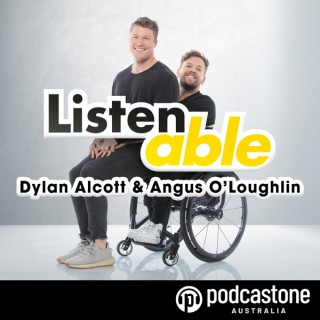
Matt Toms on Tourette Syndrome, Autism, ADHD and the Exhaustion of MaskingWhat happens when your disability is invisible, your capacity changes from one day to the next, and the people around you assume you're simply being rude, lazy or difficult?Matt Toms joins Dylan Alcott and Angus O'Loughlin on ListenABLE for an open conversation about living with Tourette syndrome, autism and ADHD, and what it has taken for him to finally stop hiding his disability.For most of Matt's life, masking helped him fit in. He learnt to suppress his Tourette's tics and hide what was happening internally so he could socialise, work, compete in surf lifesaving and appear as though everything was fine.But masking came at a cost.Matt explains how suppressing his tics could leave him exhausted, overwhelmed and experiencing more explosive episodes once he returned to the safety of home. He describes the difficult reality of having an invisible disability where, on one day, he might be capable of physical work or competing in sport, while on another he can struggle to get himself a glass of water.From surf lifesaving and neurodivergence to employment, support workers, dating, family and learning to unmask, this episode is a reminder that disability doesn't always look the way people expect it to.Follow & ConnectMatt Toms – GuestMatt joins ListenABLE to share his lived experience with Tourette syndrome, autism and ADHD, including masking, employment, relationships, support and learning to embrace his disability.Matt's social link to be added once confirmed.Dylan Alcott – HostInstagram: @dylanalcottAngus O'Loughlin – HostInstagram: @angus_oloughlinListenABLE PodcastInstagram: @listenable_podcastListen on Apple Podcasts: ListenABLE on Apple PodcastsListenABLE is recorded and produced in partnership with SESSION in PROGRESS, Melbourne's video podcast studio and production team.Website: SESSION in PROGRESSInstagram: @session.in.progressProductionIn this episode• Living with Tourette syndrome, autism and ADHD• What Tourette's tics can actually look like• Why tics can sometimes be mistaken for rude or inappropriate behaviour• Autism and Tourette syndrome masking• The physical and emotional exhaustion caused by suppressing tics• Invisible disability and fluctuating capacity• Spoon theory and managing limited energy• Disability, burnout and independence• Accessing support workers and the NDIS• The impact of disability on partners and family• Autism and sensory overload in construction and trades• Disability inclusion in the workplace• Dating and relationships with Tourette syndrome• Learning to disclose an invisible disability• Becoming comfortable and proud identifying as disabled• Why disability awareness and representation matterTourette syndrome, Tourette's syndrome, Tourette's tics, autism, autism in adults, ADHD, autism and ADHD, autism and Tourette syndrome, neurodivergence, neurodivergent adults, invisible disability, hidden disability, disability masking, autistic masking, suppressing tics, disability burnout, autistic burnout, sensory overload, spoon theory, fluctuating capacity, NDIS, disability support workers, disability employment, autism in the workplace, disability in construction, dating with disability, relationships and disability, disability acceptance, disability advocacy.

When life gets tough, how do we persevere? Do we just grit our teeth and try harder? Maybe, but what if joy is the missing ingredient to going the distance? Together, let's explore how joy helped Paul endure his imprisonment, and how that same joy is available to us today.
When life gets tough, how do we persevere? Do we just grit our teeth and try harder? Maybe, but what if joy is the missing ingredient to going the distance? Together, let's explore how joy helped Paul endure his imprisonment, and how that same joy is available to us today.

In today's episode, Dave draws on 45 years and over 100 countries to argue why scarcity still matters in a world obsessed with infinite money and AI. He makes the case that the world trades at a discount while America sits at record valuations. To close, Dave explains why undervalued commodities eventually catch up with inflation. (0:00) Starts (5:13) Dave Iben on investing in scarce assets (9:24) Accessing farmland and global agricultural assets through public markets (11:34) Finding value in emerging markets, with a focus on South Korea (18:18) Portfolio management, valuation risk in S&P 500 and AI stocks (24:36) Historical parallels, underweighting the index, and finding stock ideas in unique countries (28:33) Investing in China, India, nuclear power, and other overlooked Asian markets (31:27) Brazil, Argentina, scarcity, local sentiment, and the role of AI and human judgment ----- Sponsor: Upwork is the world's largest human and AI-powered freelance marketplace to hire top talent—trusted by businesses and professionals worldwide. ----- Follow Meb on X, LinkedIn and YouTube For detailed show notes, click here To learn more about our funds and follow us, subscribe to our mailing list or visit us at cambriainvestments.com ----- Follow The Idea Farm: X | LinkedIn | Instagram | TikTok ----- Interested in sponsoring the show? Email us at Feedback@TheMebFaberShow.com ----- Past guests include Ed Thorp, Richard Thaler, Jeremy Grantham, Joel Greenblatt, Campbell Harvey, Ivy Zelman, Kathryn Kaminski, Jason Calacanis, Whitney Baker, Aswath Damodaran, Howard Marks, Tom Barton, and many more. ----- Meb's invested in some awesome startups that have passed along discounts to our listeners. Check them out here! ----- Editing and post-production work for this episode was provided by The Podcast Consultant (https://thepodcastconsultant.com).
Hello! This is Episode 424. This is Way #24 of the 44 Ways to Create Your Sustainable Home series, and we’re in the final stretch of Section Five: The Building Envelope. In the last episode, we went through the types of insulation, what R-values mean, and how to think about products for your ceiling, walls, and floor. This episode is the follow-up to that: what happens when the product is specified, the quote is signed, and the installer shows up. Because that’s where a lot of the thermal performance of a home is either delivered or lost. Way #24 is: Install Insulation Correctly. [For all resources mentioned in this podcast and a free, downloadable PDF transcript, head to www.undercoverarchitect.com/424] Did you know that a 5% gap in your insulation coverage can reduce its effectiveness by up to 50%? So, you can invest money in specifying the right product, achieving the right R-value, choosing the right type for your climate, and testing it through modelling. And all of that work can be significantly undermined by how the product is installed. And unfortunately, once the building is lined, any rectification becomes more challenging. As always, if you'd like to access a full transcript of this episode and links to any resources I mention, head to www.undercoverarchitect.com/424. Now, let's dive in! RESOURCES MENTIONED IN THIS PODCAST: For links, images and resources mentioned in this podcast, head to >>> www.undercoverarchitect.com/424 Accessing my free '44 Ways' E-Book will simplify sustainability and help you create a healthy, low tox and sustainable home. You can download your free copy here >>> https://undercoverarchitect.com/ways Access the support and guidance you need to be confident and empowered when renovating and building your family home inside my signature online program >>> https://undercoverarchitect.com/courses/the-home-method/ Just a reminder: All content on this podcast is provided by Undercover Architect for reference purposes and as general guidance. It does not take into account specific circumstances and should not be relied on in that way. You should seek independent verification or advice before relying on this content in any circumstances, including but not limited to circumstances where loss or damage may result. The views and opinions of any guests on the podcast are solely their own. They may not reflect the views of Undercover Architect. Undercover Architect endeavours to publish content that is accurate at the time it is published, but does not accept responsibility for content that may or has become inaccurate over time.See omnystudio.com/listener for privacy information.

Transamerica Juvenile Insurance Options: FE Express Whole Life & IUL Express Walkthrough Scott Grode introduces Transamerica's juvenile coverage options for agents, outlining support contacts (FE Express support line, sales desk hours, and internal partner contacts) and upcoming FE Express draft-date updates in October and early Q4. He explains the juvenile FE Express whole life final expense policy—instant decision, digital-only, ages 15 days to 17, $5,000–$100,000 face amount, one juvenile risk class, SSN required, available for U.S. citizens and green card holders, and parents must be owners (grandparents can become payers only after first premium). He demonstrates quoting, in-person/virtual signatures, multiple policies, portal registration, policy promise download, and how to monitor missed payments via Transamerica Life Access. He then reviews the juvenile FFIUL Express (ages 15 days to 17, up to $250,000), shows quoting with one-click solves and customization, and notes cash value, illustration reliability, and Milliman report disputes. 00:00 Welcome and Agenda 00:46 Support Contacts Overview 02:26 Upcoming Express Updates 04:24 Juvenile Express Product Basics 05:36 Eligibility and Ownership Rules 08:36 Accessing the Agent Portal 10:49 Application Flow and Signatures 13:47 Approval and Locking Coverage 16:06 Policy Promise and Client Portal 20:25 FAQs Paper and Cash Value 24:22 Finding Policies in Portal 26:05 Life Access Inforce Documents 27:22 Payment Alerts Notification Bell 28:46 Payments and Milliman Fixes 30:39 Portal Demo and No Card Fees 32:21 Introducing Juvenile IUL Express 36:06 Ownership Limits and Stacking 36:58 IUL Quote Tool Walkthrough 39:52 One Click Solves Compared 43:16 Customize Optimal Switch Strategy 45:31 Index Options and Illustration Download 50:07 Q&A Resources and Wrap Up
The most expensive AI mistake of 2026 won't show up on any invoice.
Hello! This is Episode 423. This is Way #23 of the 44 Ways to Create Your Sustainable Home series, and we’re continuing through Section Five: The Building Envelope. Way #23 is: Choose Appropriate Insulation. [For all resources mentioned in this podcast and a free, downloadable PDF transcript, head to www.undercoverarchitect.com/423] The things we’ve been discussing in Section Five are all about improving the energy efficiency of your future home, whilst also supporting its durability, longevity, and the contribution it makes to your health and well-being in your home, through the choices in how you assess, test and specify your building envelope. Over the past few episodes, we’ve covered airtightness, window selection, and how to choose the right building wrap for your climate. This episode is about insulation: the various types and what to know about how it works. Insulation has been part of home construction for decades, and as energy efficiency benchmarks have become part of building and renovating, insulation has been adopted as a worthwhile investment to help reduce the cost of heating and cooling homes. We’ve done a great job of improving the insulation in our homes over the years, understanding it improves our home’s thermal performance. But how much insulation do you really need? And where, and what type? In this episode, I share more with you as we go through why insulation matters, what to measure and consider, why adding more insulation may be counterproductive, and how to think about the roof, ceiling, walls and floor of your home for the best outcome. As always, if you'd like to access a full transcript of this episode and links to any resources I mention, head to www.undercoverarchitect.com/423. Now, let's dive in! RESOURCES MENTIONED IN THIS PODCAST: For links, images and resources mentioned in this podcast, head to >>> www.undercoverarchitect.com/423 Accessing my free '44 Ways' E-Book will simplify sustainability and help you create a healthy, low tox and sustainable home. You can download your free copy here >>> https://undercoverarchitect.com/ways Access the support and guidance you need to be confident and empowered when renovating and building your family home inside my signature online program >>> https://undercoverarchitect.com/courses/the-home-method/ Just a reminder: All content on this podcast is provided by Undercover Architect for reference purposes and as general guidance. It does not take into account specific circumstances and should not be relied on in that way. You should seek independent verification or advice before relying on this content in any circumstances, including but not limited to circumstances where loss or damage may result. The views and opinions of any guests on the podcast are solely their own. They may not reflect the views of Undercover Architect. Undercover Architect endeavours to publish content that is accurate at the time it is published, but does not accept responsibility for content that may or has become inaccurate over time.See omnystudio.com/listener for privacy information.

Dr. Rob and Justin Bridges, author and expert on sexual sobriety and healing, continue their discussion about the rigorous process of healing – what it takes to fully commit, realistic time lines, and the importance of embracing imperfections while seeking perfection. Their conversation is filled with advice for ways to flood an addict's life with sobriety so that you can finally drown out the disease. TAKEAWAYS: [2:30] Radical change was essential for Justin's recovery. [6:12] Realistic timelines in lasting recovery. [8:21] Accepting imperfections while seeking perfection. [11:30] Inexpensive tactics that supported Justin along the way. [16:10] Accessing your emotions when you stop acting out. [18:48] What is a recovery program? [23:00] Recovery after the loss of relationships. [26:25] Flood your life with sobriety. [30:22] Add more recovery to drown out the addiction. [32:01] Seeking validation in healthy ways. [35:00] Becoming a true gentle-man. RESOURCES: Sex and Relationship Healing @RobWeissMSW Sex Addiction 101 Seeking Integrity Free Sexual Addiction Screening Assessment Partner Sexuality Survey Seeking Integrity Podcasts are produced in partnership with Podfly Productions. QUOTES: “I started to focus my small wins into the belief that greater change might be possible.” “You'll have more access to your emotions when you aren't acting out.” “If I put myself in the middle of the recovery pack, I'm going to be safer.” “Find a meeting you can live for. You'll know when you get there.”

Last week, we talked about following your complaints like breadcrumbs...Looking beyond the surface problem to understand what might actually be asking for healing underneath.But once you find the source… how do you actually heal it?For years, my own approach looked a little like throwing spaghetti at the wall.A few therapy sessions. Some yoga. Meditation. Self-care. Then something else.And while many of those things helped, the relief was often temporary.They were Band-Aids.I eventually realized that lasting healing requires us to work with more than one part of ourselves.So in this week's episode, I'm sharing the framework that came out of that journey: Mind, Body, and Love.We'll look at healing the emotional wounds and protective patterns held in the mind, working with the nervous system and the reactions held in the body, and finally bringing that greater sense of safety into our relationships.Because healing isn't just about understanding why you are the way you are.It's about creating change that reaches deep enough that you don't have to keep returning to the same Band-Aids.Episode Timestamps02:56 — Why I call this “No More Band-Aids” 05:08 — Is permanent healing actually possible? 07:06 — The three ingredients: Mind, Body & Love 08:54 — IFS: protectors, exiles & your Self 13:27 — Accessing the calm, steady part of yourself 14:18 — The body: polyvagal theory & somatic work 17:13 — Why relationships are essential to healing 19:23 — Authentic communication: truth AND connection 20:57 — Why all three pieces matterYou don't have to spend your life endlessly managing the same patterns.Deeper healing is possible.And now...Want to go deeper?This Mind–Body–Love approach is also at the heart of the work we do inside Untriggerable.We don't just teach you how to manage a trigger when it happens. We work with the deeper patterns underneath it; your mind, nervous system, and relationships; so you can create change from the inside out.Join us inside Untriggerable on Circle
Hello! This is Episode 422. This is Way #22 of the 44 Ways to Create Your Sustainable Home series, and we’re continuing through Section Five: The Building Envelope. In the last two episodes, we covered thermal mass and window selection. Before that, in Way #19, we talked about what building tight actually means: why you want a continuous air barrier, and why airtightness and ventilation have to be designed together. This episode is about a layer that sits within the wall and roof assembly of your home: the building wrap. Way #22 is: Review Building Wraps to Manage Moisture for Climate. [For all resources mentioned in this podcast and a free, downloadable PDF transcript, head to www.undercoverarchitect.com/422] Historically, especially in Australia, we’ve seen foil sarking act as this layer. However, with learnings over time about how this has detrimentally affected the performance of the building envelope, as well as how it has trapped moisture inside the wall, bringing issues such as mould and rot, better products are now available to do this job. Yet, the industry isn’t up to speed with this, and in some cases, is still installing the wrong building membranes, and using the wrong detailing, which continues to create long-term issues. Getting it right with building wraps involves knowledge of building science and construction detailing, and your climate and construction methodology is key to ensuring the best solution for your project. So, what I’m sharing in this episode will get you started, but it’s super important to be discussing this in detail with your team. Don’t assume that, just because it’s in the local building regulations, your team is across it. As always, if you'd like to access a full transcript of this episode and links to any resources I mention, head to www.undercoverarchitect.com/422. Now, let's dive in! RESOURCES MENTIONED IN THIS PODCAST: For links, images and resources mentioned in this podcast, head to >>> www.undercoverarchitect.com/422 Accessing my free '44 Ways' E-Book will simplify sustainability and help you create a healthy, low tox and sustainable home. You can download your free copy here >>> https://undercoverarchitect.com/ways Access the support and guidance you need to be confident and empowered when renovating and building your family home inside my signature online program >>> https://undercoverarchitect.com/courses/the-home-method/ Just a reminder: All content on this podcast is provided by Undercover Architect for reference purposes and as general guidance. It does not take into account specific circumstances and should not be relied on in that way. You should seek independent verification or advice before relying on this content in any circumstances, including but not limited to circumstances where loss or damage may result. The views and opinions of any guests on the podcast are solely their own. They may not reflect the views of Undercover Architect. Undercover Architect endeavours to publish content that is accurate at the time it is published, but does not accept responsibility for content that may or has become inaccurate over time.See omnystudio.com/listener for privacy information.

Take Control Books Publisher Joe Kissell continues our discussion of the OS27 releases, exploring Apple's next-generation Siri and Apple Intelligence. Joe touches on including conversational context, on-screen awareness, cross-device continuity, and deeper access to personal information. He also explains where Apple's generative AI falls short at the moment, why Image Playground isn't up to his standards,, what users should expect from the new operating systems, and how Take Control's new books cover the changes. (Part 2) MacVoices is supported by CleanMyMac from MacPaw. Get Tidy Today! Try 7 days free and use my code MACVOICES20 for 20% off at http://clnmy.com/MACVOICES Show Notes: Chapters: 02:21 Pricing, bundles, and what's inside the new books03:14 Hardware and OS requirements for Siri and Apple Intelligence04:30 Rewriting the Siri book from scratch04:44 How the new Siri differs from the old Siri05:03 Siri's improved answers and web knowledge06:03 Siri gains awareness of what's on your screen06:54 Accessing information in Mail, Messages, Contacts, and other apps08:03 Testing Siri's knowledge with Star Trek09:40 Ongoing Siri conversations and cross-device continuity10:43 Apple Intelligence features beyond Siri11:23 Apple Intelligence features Joe and Glenn don't recommend13:22 Preparing for macOS Golden Gate, iOS 27, and iPadOS 2715:26 Why Image Playground disappoints16:24 Testing Image Playground's limitations17:32 Problems with AI-generated image accuracy and geometry19:35 Ethical concerns about AI-generated artwork20:40 When Image Playground might still be useful21:07 Take Control book availability and purchasing options22:23 Book bundles and pricing23:49 Waiting for the final OS releases instead of running betas24:35 Joe's experience with the stability of Apple's betas25:23 Preparing for the new releases and future book updates26:07 Closing thoughts Links: Take Control of iOS 27 and iPadOS 27 by Glenn Fleishmanhttps://www.takecontrolbooks.com/ios-27-ipados-27/ Take Control of Siri AI ad Apple Intelligence by Joe Kissellhttps://www.takecontrolbooks.com/siri-ai/ Take Control of Golden Gate by Joe Kissellhttps://www.takecontrolbooks.com/golden-gate/ Guests: Joe Kissell is the publisher of Take Control ebooks, as well as the author of over 60 books on a wide variety of tech topics. Keep up with him if you can on his personal site, JoeKissell.com, on Bluesky, and Mastodon. Support: Become a MacVoices Patron on Patreonhttp://patreon.com/macvoices Enjoy this episode? Make a one-time donation with PayPal Connect: Web:http://macvoices.com Twitter:http://www.twitter.com/chuckjoinerhttp://www.twitter.com/macvoices Mastodon:https://mastodon.cloud/@chuckjoiner Facebook:http://www.facebook.com/chuck.joiner MacVoices Page on Facebook:http://www.facebook.com/macvoices/ MacVoices Group on Facebook:http://www.facebook.com/groups/macvoice LinkedIn:https://www.linkedin.com/in/chuckjoiner/ Instagram:https://www.instagram.com/chuckjoiner/ Subscribe: Audio in iTunesVideo in iTunes Subscribe manually via iTunes or any podcatcher: Audio: http://www.macvoices.com/rss/macvoicesrss Video: http://www.macvoices.com/rss/macvoicesvideorss

Take Control Books Publisher Joe Kissell continues our discussion of the OS27 releases, exploring Apple's next-generation Siri and Apple Intelligence. Joe touches on including conversational context, on-screen awareness, cross-device continuity, and deeper access to personal information. He also explains where Apple's generative AI falls short at the moment, why Image Playground isn't up to his standards,, what users should expect from the new operating systems, and how Take Control's new books cover the changes. (Part 2) MacVoices is supported by CleanMyMac from MacPaw. Get Tidy Today! Try 7 days free and use my code MACVOICES20 for 20% off at http://clnmy.com/MACVOICES Show Notes: Chapters: 02:21 Pricing, bundles, and what's inside the new books 03:14 Hardware and OS requirements for Siri and Apple Intelligence 04:30 Rewriting the Siri book from scratch 04:44 How the new Siri differs from the old Siri 05:03 Siri's improved answers and web knowledge 06:03 Siri gains awareness of what's on your screen 06:54 Accessing information in Mail, Messages, Contacts, and other apps 08:03 Testing Siri's knowledge with Star Trek 09:40 Ongoing Siri conversations and cross-device continuity 10:43 Apple Intelligence features beyond Siri 11:23 Apple Intelligence features Joe and Glenn don't recommend 13:22 Preparing for macOS Golden Gate, iOS 27, and iPadOS 27 15:26 Why Image Playground disappoints 16:24 Testing Image Playground's limitations 17:32 Problems with AI-generated image accuracy and geometry 19:35 Ethical concerns about AI-generated artwork 20:40 When Image Playground might still be useful 21:07 Take Control book availability and purchasing options 22:23 Book bundles and pricing 23:49 Waiting for the final OS releases instead of running betas 24:35 Joe's experience with the stability of Apple's betas 25:23 Preparing for the new releases and future book updates 26:07 Closing thoughts Links: Take Control of iOS 27 and iPadOS 27 by Glenn Fleishman https://www.takecontrolbooks.com/ios-27-ipados-27/ Take Control of Siri AI ad Apple Intelligence by Joe Kissell https://www.takecontrolbooks.com/siri-ai/ Take Control of Golden Gate by Joe Kissell https://www.takecontrolbooks.com/golden-gate/ Guests: Joe Kissell is the publisher of Take Control ebooks, as well as the author of over 60 books on a wide variety of tech topics. Keep up with him if you can on his personal site, JoeKissell.com, on Bluesky, and Mastodon. Support: Become a MacVoices Patron on Patreon http://patreon.com/macvoices Enjoy this episode? Make a one-time donation with PayPal Connect: Web: http://macvoices.com Twitter: http://www.twitter.com/chuckjoiner http://www.twitter.com/macvoices Mastodon: https://mastodon.cloud/@chuckjoiner Facebook: http://www.facebook.com/chuck.joiner MacVoices Page on Facebook: http://www.facebook.com/macvoices/ MacVoices Group on Facebook: http://www.facebook.com/groups/macvoice LinkedIn: https://www.linkedin.com/in/chuckjoiner/ Instagram: https://www.instagram.com/chuckjoiner/ Subscribe: Audio in iTunes Video in iTunes Subscribe manually via iTunes or any podcatcher: Audio: http://www.macvoices.com/rss/macvoicesrss Video: http://www.macvoices.com/rss/macvoicesvideorss

Deanna Chrones is the founder of Tholage and the creator of the Tholage approach, a modality designed to help individuals access and process trauma through body-based awareness and healing. Her work emphasizes the connection between physical sensations, emotions, and unresolved traumatic experiences, offering an alternative pathway to recovery that extends beyond traditional talk therapy. Through training programs and workshops, she teaches therapists and helping professionals how to recognize and work with the body's innate capacity for healing.Links• https://tholage.com/message-for-therapists-from-deanna-chrones/ • Deanna's website • https://tholage.com/what-is-tholage/• https://www.instagram.com/tholage/• https://www.facebook.com/THOLAGE/Become a supporter of this podcast: https://www.spreaker.com/podcast/the-trauma-therapist--5739761/support.---Thank you to our Sponsors: Jane App - use code GUY1MO at https://janesoftware.partnerlinks.io/ngvcwcxqt2jx-4afv8i (https://jane.app/book_a_demo)Beducated - Complete the quiz for one month free https://beduc.at/pd2640-traumatherapist
Hello! This is Episode 421. This is Way #21 of the 44 Ways to Create Your Sustainable Home series, and we’re continuing through Section Five: The Building Envelope. Way #21 is: Review Your Window Selection. [For all resources mentioned in this podcast and a free, downloadable PDF transcript, head to www.undercoverarchitect.com/421] In my experience, as people go to design their new build or renovation, it can be all about maximising the indoor / outdoor connection, and having a home that feels light-filled and expansive. And so, the glass windows and doors you choose, in their size, arrangement, design, functionality and type, all become really important decisions in achieving this in your home. And, they’re likely to take a big chunk of your building budget. However, glass windows and doors are also where the majority of uncontrolled heat gain and heat loss happens in a home. They sit at the intersection of the envelope performance issues we’re covering in this section: thermal performance, ventilation, airtightness, and moisture management. And yet, most homeowners haven’t been given the information they need to make deliberate choices about them. In this episode I focus on the envelope performance side: thermal properties, airtightness, and ventilation. Because when you’re thinking about your glass windows and doors, you’re possibly not asking questions about these things, and they’ll make the biggest difference to how your home performs. As always, if you'd like to access a full transcript of this episode and links to any resources I mention, head to www.undercoverarchitect.com/421. Now, let's dive in! RESOURCES MENTIONED IN THIS PODCAST: For links, images and resources mentioned in this podcast, head to >>> www.undercoverarchitect.com/421 Accessing my free '44 Ways' E-Book will simplify sustainability and help you create a healthy, low tox and sustainable home. You can download your free copy here >>> https://undercoverarchitect.com/ways Access the support and guidance you need to be confident and empowered when renovating and building your family home inside my signature online program >>> https://undercoverarchitect.com/courses/the-home-method/ Just a reminder: All content on this podcast is provided by Undercover Architect for reference purposes and as general guidance. It does not take into account specific circumstances and should not be relied on in that way. You should seek independent verification or advice before relying on this content in any circumstances, including but not limited to circumstances where loss or damage may result. The views and opinions of any guests on the podcast are solely their own. They may not reflect the views of Undercover Architect. Undercover Architect endeavours to publish content that is accurate at the time it is published, but does not accept responsibility for content that may or has become inaccurate over time.See omnystudio.com/listener for privacy information.

George Mumford, globally recognized mindfulness and performance expert, sports psychologist, bestselling author, teacher, and speaker, joins me on this episode. George has worked with some of the world's greatest athletes, including Michael Jordan, Kobe Bryant, Shaquille O'Neal, and championship teams coached by Phil Jackson. His teachings have helped athletes, leaders, and individuals strengthen their self-awareness, perform under pressure, and unlock more of their potential.
Hello! This is Episode 420. This is Way #20 of the 44 Ways to Create Your Sustainable Home series, and we’re continuing through Section Five: The Building Envelope, A Sustainable Skin. In the last episode, Way #19, we covered airtightness and ventilation. We talked about what it means to build tight, why homes don’t need to breathe, and what ‘ventilating right’ looks like in practice. In this episode, we’re looking at one of the most commonly discussed, and commonly misunderstood, elements of the building envelope: thermal mass. Way #20 is: Use Thermal Mass to Maintain Even Temperatures. [For all resources mentioned in this podcast and a free, downloadable PDF transcript, head to www.undercoverarchitect.com/420] You’ll hear architects, builders and sustainability consultants talk about thermal mass as a worthwhile inclusion in any home. This can include concrete slabs, brick walls, rammed earth, and other ‘heavy’ forms of construction. Even water-filled features are used as thermal mass in homes. Thermal mass is a powerful tool when the conditions support it, and it’s designed with the right approach for the climate and site. However, when those conditions aren’t in place, it can make your home harder to heat, harder to cool, and less comfortable overall. In this episode, I take you through what thermal mass actually is and how it works, the three conditions that need to be in place for it to function well, when thermal mass will work against you, why the ground your slab sits on and the finish that covers it matter just as much, and what to ask your team. As always, if you'd like to access a full transcript of this episode and links to any resources I mention, head to www.undercoverarchitect.com/420. Now, let's dive in! RESOURCES MENTIONED IN THIS PODCAST: For links, images and resources mentioned in this podcast, head to >>> www.undercoverarchitect.com/420 Accessing my free '44 Ways' E-Book will simplify sustainability and help you create a healthy, low tox and sustainable home. You can download your free copy here >>> https://undercoverarchitect.com/ways Access the support and guidance you need to be confident and empowered when renovating and building your family home inside my signature online program >>> https://undercoverarchitect.com/courses/the-home-method/ Just a reminder: All content on this podcast is provided by Undercover Architect for reference purposes and as general guidance. It does not take into account specific circumstances and should not be relied on in that way. You should seek independent verification or advice before relying on this content in any circumstances, including but not limited to circumstances where loss or damage may result. The views and opinions of any guests on the podcast are solely their own. They may not reflect the views of Undercover Architect. Undercover Architect endeavours to publish content that is accurate at the time it is published, but does not accept responsibility for content that may or has become inaccurate over time.See omnystudio.com/listener for privacy information.

Sometimes a small amount of capital can open the door to a big opportunity. But where can entrepreneurs turn when they're just starting out or need funding below the size of a traditional business loan? Recorded at the 2026 Florida SBDC Small Business Success Summit in Charlotte Harbor, this episode of Small Biz Florida features host Tom Kindred in conversation with Brandon Martinez, Microenterprise Specialist with Suncoast Credit Union. Brandon introduces Suncoast's microenterprise lending program and discusses how it supports startups and growing businesses—including entrepreneurs who have not yet generated revenue. He explains how a structured business plan, realistic financial projections, industry experience, and a clear purpose for the funds help tell a business's story to a lender. The conversation also explores the member-owned credit union model, the value of building a relationship with your business banker, and how a personalized consultation can help identify suitable financing options, including microloans and SBA-backed loans. Whether you're launching an idea, purchasing equipment, or preparing to expand, tune in for insights on preparing for a lending conversation and finding financial support for your next step.

Join us in today's episode as we welcome Dr. Francisco Eizayaga, an Argentinian homeopath with 39 years of practice, as he unravels the legacy of his father's groundbreaking work and shares his own experiences in the field. Discover the fascinating connections between the layer method and the intricate nuances of patient cases while gaining invaluable insights for aspiring homeopaths. Episode Highlights: 02:19 - How was he first introduced to homeopathy 06:23 - Growing up with homeopathy as a way of life 08:46 - Accessing homeopathic medicines in Argentina 11:03 - The state of homeopathy education in Argentina 16:51 - Homeopathy's remarkable results in asthma and allergies 20:04 - Unraveling the opposing effects of allopathic and homeopathic aspirin 26:12 - Exploring the Layers Method in Homeopathy 30:48 - Understanding the different constitutional types in homeopathy 33:24 - Overcoming challenges with reserved patients 38:30 - Decoding the Layers: Unveiling the hidden meanings and significance 43:58 - Advice for younger homeopaths 46:58 - The most difficult thing in homeopathy About my guest: Francisco Eizayaga is an Argentine homeopath who follows in the footsteps of his father, Francisco X. Eizayaga, and shares his pioneering work in the Layer Approach to Homeopathy. With over three decades of experience, Francisco has become a respected authority in the field, focusing on the importance of considering the evolutionary stages of diseases and tailoring therapeutic criteria accordingly. His expertise lies in accurate clinical and pathological diagnoses, addressing not only lesional diseases but also preceding stages, severe infectious conditions, and tumorous ailments. Through his teachings and contributions to conferences and seminars, Francisco Eizayaga has played a significant role in promoting the Layer Approach and its practical applications, leaving a lasting impact on the field of homeopathy. If you would like to support the Homeopathy Hangout Podcast, please consider making a donation by visiting www.EugenieKruger.com and click the DONATE button at the top of the site. Every donation about $10 will receive a shout-out on a future episode. Join my Homeopathy Hangout Podcast Facebook community here: https://www.facebook.com/groups/HelloHomies Follow me on Instagram https://www.instagram.com/eugeniekrugerhomeopathy/ Here is the link to my free 30-minute Homeopathy@Home online course: https://www.youtube.com/watch?v=vqBUpxO4pZQ&t=438s Upon completion of the course - and if you live in Australia - you can join my Facebook group for free acute advice (you'll need to answer a couple of questions about the course upon request to join): www.facebook.com/groups/eughom
Hello! This is Episode 419. This is Way #19 of the 44 Ways to Create Your Sustainable Home series, and it’s the first episode in Section Five: The Building Envelope. We’ve spent four sections of the ‘44 Ways’ series covering a lot of information for your sustainable renovation or new build. Site, orientation, breezes, passive design, energy and water selections, renewables, and the tools that help you model and measure how your home will actually perform. All of that work is most valuable when the building envelope itself is doing its job well. This is Way #19: Build Tight, Ventilate Right. [For all resources mentioned in this podcast and a free, downloadable PDF transcript, head to www.undercoverarchitect.com/419] Section Five is about creating a sustainable skin in your building envelope. The skin of your building (your floors, walls and roof) is supposed to protect and shelter you. There’s a science to how it can do this well. And when you understand how vapour, moisture and temperature move from the inside to the outside of your home (and vice versa), you’ll learn it’s important to design and build a building envelope that suits your climate, mitigates the risk of mould growth, helps maintain comfortable indoor air temperatures, and that is durable and long-lasting. I want to start by taking on one of the most persistent myths in residential construction. The idea that homes need to breathe. Our homes don’t need to breathe. The people inside them do. And they need to ideally breathe fresh, unpolluted air, whatever the weather or conditions outside their home. In this episode, I take you through what the phrase ‘build tight, ventilate right’ actually means, what a ‘breathing’ home is often confused with, what building tight looks like in practice (and how tight is tight), why relying on opening windows alone often isn’t enough, and what mechanical ventilation with heat recovery (MVHR) adds in a high-performance home. As always, if you'd like to access a full transcript of this episode and links to any resources I mention, head to www.undercoverarchitect.com/419. Now, let's dive in! RESOURCES MENTIONED IN THIS PODCAST: For links, images and resources mentioned in this podcast, head to >>> www.undercoverarchitect.com/419 Accessing my free '44 Ways' E-Book will simplify sustainability and help you create a healthy, low tox and sustainable home. You can download your free copy here >>> https://undercoverarchitect.com/ways Access the support and guidance you need to be confident and empowered when renovating and building your family home inside my signature online program >>> https://undercoverarchitect.com/courses/the-home-method/ Just a reminder: All content on this podcast is provided by Undercover Architect for reference purposes and as general guidance. It does not take into account specific circumstances and should not be relied on in that way. You should seek independent verification or advice before relying on this content in any circumstances, including but not limited to circumstances where loss or damage may result. The views and opinions of any guests on the podcast are solely their own. They may not reflect the views of Undercover Architect. Undercover Architect endeavours to publish content that is accurate at the time it is published, but does not accept responsibility for content that may or has become inaccurate over time.See omnystudio.com/listener for privacy information.

Resources & LinksAkashic Records Training1:1 Programmes1:1 Sessions WaitlistAppointmentsFree Ebook: 101 Questions to Ask Your Akashic RecordsFree Guide: 7 Days, 7 ChakrasMentioned in this episode:Episode 81. Do you want to learn how to read, heal and clear in your own Akashic Records?Episode 123. 5 Benefits of ‘Akashic Bathing'Episode 36. Introduction to the Astral RealmIn this episode, Akashic Records teacher Suzie Ridley answers a question she receives often: can you access the Akashic Records without consciously realising that is what you are doing? Drawing on her own spiritual journey, Suzie explains why spontaneous connection to the Akashic Field can happen through meditation, creativity, intuition and expanded states of awareness.Suzie shares how she realised she had been connecting to the Akashic Records through meditation long before she knew the practice by name, and why structured methods such as sacred prayer can make that connection easier to access intentionally. She explores intuitive hits, creative inspiration and “aha” moments as possible experiences of connecting to the Akashic Field, while also explaining the importance of discernment between the true Akashic Records and experiences within the astral realm.In this episode, you'll learnWhy it is possible to access the Akashic Records without consciously intending toHow Suzie discovered she had been connecting to the Records through meditation before learning a formal methodWhy prayer and meditation provide useful structure for intentionally opening and closing the Akashic RecordsHow intuition, creative inspiration and sudden insights can relate to connection with the Akashic FieldWhy discernment between the true Akashic Records and astral experiences is important, and what supportive guidance should feel likeFollow Wisdom from the Akasha on Spotify and Apple Podcasts, or subscribe on YouTube, so you never miss an episode. New episodes are released every Friday at 7AM GMT +0.Timestamps00:00 – Intro & upcoming Level 1/Level 2 Akashic Records training dates01:31 – Today's question: Can you access the Akashic Records without realizing it?02:02 – Susie's personal backstory with meditation and the Akashic Records05:46 – How the Akashic Records "officially found" Susie06:58 – Accessing the records as a natural byproduct of raised consciousness/frequency10:11 – Fake versions of the Akashic Records in the astral realm11:57 – What the true Akashic Records feel like (unconditionally loving & supportive)12:54 – Wrap-up & final thoughtsWisdom from the Akasha is the podcast for spiritually curious people navigating awakening, growth, and real-life challenges with a grounded, embodied approach. Hosted by Suzie Ridley of Akashic Readings and Healing, an Akashic Records Teacher, practitioner and researcher, each episode is a deep dive into esoteric topics and spiritual development for soul expansion.Guided by her work in the Akashic Records, Suzie shares reflections and practical suggestions you can bring into everyday life, where the mystical meets the tangible. With thousands of hours in the Akashic Records and clients around the world, her intention is to offer a fun, helpful resource that supports clarity, intuition, and meaningful, sometimes miraculous shifts.Connect with Akashic Readings and HealingWebsiteYouTubeInstagramPinterest

In this video, I walk you through the practical steps of hardware security by physically removing the WiFi and Bluetooth chip from a laptop. This process is essential for anyone looking to create a truly air-gapped system that remains completely isolated from wireless networks. I show you exactly where the module is located and how to safely disconnect it without damaging the rest of your machine. Whether you are building a secure workstation for sensitive data or just want to learn more about computer hardware, this guide provides a clear and direct approach to enhancing your privacy.List of items needed.Laptop for dedicated Air gap deviceComputer with pruned or full node (umbrel or start9 works)M-disc writable driveM-discsUSB flash drivesWebcam if the laptop one doesn't work well enough.Guide I am roughly followinghttps://github.com/bowlarbear/yeti-2.00:29 - Overview: Removing chips vs. BIOS disabling0:50 - Approved communication methods (USB, Disc, Camera)1:16 - Hardware levels and tools (ThinkPad example)2:23 - Step 1: Removing the battery2:45 - Step 2: Accessing the keyboard screws3:15 - Step 3: Removing the keyboard3:24 - Step 4: Locating and removing the Wi-Fi chip3:43 - Step 5: Locating the Bluetooth module (if applicable)4:38 - Pro-tips for hardware disassembly5:25 - The "Simple Method": Disabling via BIOSAir gapped laptop serieshttps://www.youtube.com/playlist?list=PLOqJIdBxn69wBook a 1|1 Bitcoin Consulting call with mehttps://pathtobitcoin.xyz/Join my Bitcoin Learning Community & and access Free Courseshttps://www.skool.com/the-bitcoin-masters-4115/Where I buy Bitcoin (Free BTC & Non-KYC options)https://bitcoinwell.com/referral/bitcoinnotcrypto15% Stampseed Titanium Seed plates (BEST WAY TO STORE BTC PRIVATE KEYS)https://www.stampseed.com/USE CODE : BTCNOTCRYPTO155% off the MicroSeed Stamping kit CODE : HODLhttps://microseed.io/?ref=HODL5% off Start9 servers for plug & play Bitcoin NodesCODE: BNC5https://store.start9.com/Umbrel home for a Bitcoin node and home serverhttps://a.umbrel.com/hodl/umbrel-homeAffordable Privacy Phones & deviceshttps://www.mark37.com/ref/BNC/5% off using code : BNCBuy a Bitforge or Bitaxe here!https://dtvelectronics.com/store/?aff=22Use code hodl for 10% offHardware wallet optionsBlockstream Jadehttps://rewards.blockstream.com/ci9jj4Keystone 3 PRO 5% off using code ForrestHODLhttps://bit.ly/4qfJsVjBitboxhttps://shop.bitbox.swiss/?ref=yfghxxctFree Open Source Bitcoin and Investment tracking toolshttps://plebtools.com/Become a Member of the Channel, Get exclusive content, and livestream playbackhttps://www.youtube.com/channel/UC2aM2gVVEHTu0pfE1ZyA0BQ/joinFollow Rajat, Jor, and I's new show togetherhttps://www.youtube.com/@MapleBitcoinJoin our Communityhttps://www.skool.com/maplebitcoinListen to this as a podcasthttps://podcasters.spotify.com/pod/show/bitcoinnotcryptoFollow me on Nostrnpub1zqm9zant0rxf49wfgw8pt5h0j50cetfes6hwa73u7sxstlzcsz8qh6x9fsFollow on Twitter/Xhttps://x.com/forrestHODLDonate to the show herehttps://coinos.io/BNCVFVSome of the above links may be Affiliate links that support this show at no extra cost to you. None of the links are Sponsored links. This allows me to only promote products and services I personally use and believe in.
Hello! This is Episode 418. This is Way #18 of the ‘44 Ways to Create Your Sustainable Home’ series. And this episode completes Section Four: Modelling and Measuring Your Sustainability. Across this series, we’ve talked a lot about energy efficiency, and how, as we improve energy efficiency, we reduce energy use, which in turn reduces the carbon emissions associated with energy production. At the same time, we’ve got better at measuring the embodied carbon in construction. Embodied carbon represents the greenhouse gas emissions associated with extracting and creating materials, and construction and deconstruction itself. This is the carbon footprint of the home, and it’s increasingly being seen as the required area of focus to reduce the impact this industry has on the climate. Way #18 is: Measure Your Home’s Carbon Footprint. [For all resources mentioned in this podcast and a free, downloadable PDF transcript, head to www.undercoverarchitect.com/418] In this episode, I take you through what operational and embodied carbon mean, why embodied carbon is becoming an increasingly significant part of the picture, and, if your carbon footprint is a sustainability consideration for your renovation or building project, what you can do about it during design, and the conversations to have with your team. As always, if you'd like to access a full transcript of this episode and links to any resources I mention, head to www.undercoverarchitect.com/418. Now, let's dive in! RESOURCES MENTIONED IN THIS PODCAST: For links, images and resources mentioned in this podcast, head to >>> www.undercoverarchitect.com/418 Accessing my free '44 Ways' E-Book will simplify sustainability and help you create a healthy, low tox and sustainable home. You can download your free copy here >>> https://undercoverarchitect.com/ways Access the support and guidance you need to be confident and empowered when renovating and building your family home inside my signature online program >>> https://undercoverarchitect.com/courses/the-home-method/ Just a reminder: All content on this podcast is provided by Undercover Architect for reference purposes and as general guidance. It does not take into account specific circumstances and should not be relied on in that way. You should seek independent verification or advice before relying on this content in any circumstances, including but not limited to circumstances where loss or damage may result. The views and opinions of any guests on the podcast are solely their own. They may not reflect the views of Undercover Architect. Undercover Architect endeavours to publish content that is accurate at the time it is published, but does not accept responsibility for content that may or has become inaccurate over time.See omnystudio.com/listener for privacy information.

Support the show
Support the show
Hello! This is Episode 417. This is Way #17 of the ‘44 Ways to Create Your Sustainable Home’ series, and we’re continuing through Section Four: Modelling and Measuring Your Sustainability. If you’ve been following this series, you’ll know we’ve spent the last couple of episodes looking at energy modelling, and how you can use it during the design process so its data-based findings can inform your design as it develops. Way #17 is: Get a WUFI Analysis Done on Your Floors, Walls and Roof. [For all resources mentioned in this podcast and a free, downloadable PDF transcript, head to www.undercoverarchitect.com/417] As well as the positive benefits of energy efficiency and thermal comfort that airtightness and well-insulated homes can bring, there can be a negative consequence of building this way that needs to be managed. When you seal a building up tightly, and you insulate it well, moisture behaves differently than it does in a leaky home. And if the way your walls, roof and floors are put together hasn’t been thought through carefully from a moisture perspective, you can end up with a problem that develops silently inside your building fabric over years, until it becomes very hard and expensive to fix. If you’ve never heard the word ‘WUFI’ before, this episode will introduce you to a tool that most of the residential building industry isn’t routinely using or talking about, but that is increasingly important from a risk-management perspective as we build more airtight and better insulated homes. As always, if you'd like to access a full transcript of this episode and links to any resources I mention, head to www.undercoverarchitect.com/417. Now, let's dive in! RESOURCES MENTIONED IN THIS PODCAST: For links, images and resources mentioned in this podcast, head to >>> www.undercoverarchitect.com/417 Accessing my free '44 Ways' E-Book will simplify sustainability and help you create a healthy, low tox and sustainable home. You can download your free copy here >>> https://undercoverarchitect.com/ways Access the support and guidance you need to be confident and empowered when renovating and building your family home inside my signature online program >>> https://undercoverarchitect.com/courses/the-home-method/ Just a reminder: All content on this podcast is provided by Undercover Architect for reference purposes and as general guidance. It does not take into account specific circumstances and should not be relied on in that way. You should seek independent verification or advice before relying on this content in any circumstances, including but not limited to circumstances where loss or damage may result. The views and opinions of any guests on the podcast are solely their own. They may not reflect the views of Undercover Architect. Undercover Architect endeavours to publish content that is accurate at the time it is published, but does not accept responsibility for content that may or has become inaccurate over time.See omnystudio.com/listener for privacy information.
Hello! This is Episode 416. This is Way #16 of the ‘44 Ways to Create Your Sustainable Home’ series, and we’re continuing through Section Four: Modelling and Measuring Your Sustainability. Way #16 is: Use Other Options to Model Your Design Before You Build. In the last episode, I talked about NatHERS energy modelling and why it can be so valuable as a design tool rather than simply using it as a late-stage compliance exercise. In this episode, I want to explore that further, because the required modelling tool for your region may not be all that’s available to you. And for projects where you’re aiming for high performance, it may also not always be the most comprehensive one. [For all resources mentioned in this podcast and a free, downloadable PDF transcript, head to www.undercoverarchitect.com/416] Think of this as a set of tools that help you understand how your home will perform before you build it, so you can make better decisions with your money while change is still cheap. That’s it. Some tools are required legally, such as NatHERS in Australia. Others are optional, available as another measure, data source or audit process. I also want to address something that comes up a lot in the Undercover Architect community: the idea that NatHERS and Passive House are in competition, and that you have to be in one camp or the other. It really doesn’t need to be that way. Think of it as a spectrum. And so, in this episode, I take you through Passive House modelling and what you can learn from it even if you’re not pursuing Passive House certification, how this modelling approach might give you a more complete picture of your home’s performance, and how to think about the Passive House principles themselves as a design framework, separate from the question of certification. I also share some other valuable modelling tools that may assist you in your project, whether you’re renovating or building new. As always, if you'd like to access a full transcript of this episode and links to any resources I mention, head to www.undercoverarchitect.com/416. Now, let's dive in! RESOURCES MENTIONED IN THIS PODCAST: For links, images and resources mentioned in this podcast, head to >>> www.undercoverarchitect.com/416 Accessing my free '44 Ways' E-Book will simplify sustainability and help you create a healthy, low tox and sustainable home. You can download your free copy here >>> https://undercoverarchitect.com/ways Access the support and guidance you need to be confident and empowered when renovating and building your family home inside my signature online program >>> https://undercoverarchitect.com/courses/the-home-method/ Just a reminder: All content on this podcast is provided by Undercover Architect for reference purposes and as general guidance. It does not take into account specific circumstances and should not be relied on in that way. You should seek independent verification or advice before relying on this content in any circumstances, including but not limited to circumstances where loss or damage may result. The views and opinions of any guests on the podcast are solely their own. They may not reflect the views of Undercover Architect. Undercover Architect endeavours to publish content that is accurate at the time it is published, but does not accept responsibility for content that may or has become inaccurate over time.See omnystudio.com/listener for privacy information.

Facilitator: MariaTopics: Apps disappearing from page; Finding check list in Notes App; Looking for Chess App; Learning gestures in dictation; Reading items with Live Read; Accessing both email accounts; Using Magic tap or context tap; Turning off auto-correct; Hide my Email feature ; Using nature sounds; Using double tap; VoiceOver tutorial; Phone not announcing notifications; Calendar events title are not easy to see;iByte: Using audio Ducting

Your stories with Dr. Peter Selby, physician and Senior scientist at the Centre for Addiction and Mental Health.
Hello! This is Episode 415. This is Way #15 of the ‘44 Ways to Create Your Sustainable Home’ series. And with this episode, we begin Section Four: Modelling and Measuring Your Sustainability. In Section Four, we look at the ways you can access data to inform your decision-making, beginning with energy efficiency assessments and modelling of your home’s energy use. We’re beginning Section Four with Way #15: Use Energy Modelling During the Design Phase. [For all resources mentioned in this podcast and a free, downloadable PDF transcript, head to www.undercoverarchitect.com/415] If you’re based in Australia, you’ve possibly heard the phrase ‘NatHERS star rating’ somewhere in research conversations about your project. In other locations, you may have heard about star ratings, or energy efficiency ratings required as part of the compliance process in your project. In most locations, energy efficiency assessment occurs after documentation is completed, as part of finalising building approvals prior to construction. Sometimes homeowners are not even aware of it as a step, until the builder or designer has taken care of it, and they’re presented with the report it outputs. However, when left until that point of your project, after your design is locked in, you’re underutilising the benefit of energy modelling to your project and future home, and it’s potentially costing you money, comfort, and sustainability performance every day. Energy efficiency modelling can be used as a design tool, and when treated as such, there’s an opportunity to use it to improve your design, rather than just tick a box. In this episode, I take you through what NatHERS and other types of energy modelling actually are, how they’re typically used in projects compared to how they can be used, what star ratings really mean for your home’s performance, and the questions to put to your team to make sure modelling is doing real work for you, not just being ticked off as a compliance requirement. As always, if you'd like to access a full transcript of this episode and links to any resources I mention, head to www.undercoverarchitect.com/415. Now, let's dive in! RESOURCES MENTIONED IN THIS PODCAST: For links, images and resources mentioned in this podcast, head to >>> www.undercoverarchitect.com/415 Accessing my free '44 Ways' E-Book will simplify sustainability and help you create a healthy, low tox and sustainable home. You can download your free copy here >>> https://undercoverarchitect.com/ways Access the support and guidance you need to be confident and empowered when renovating and building your family home inside my signature online program >>> https://undercoverarchitect.com/courses/the-home-method/ Just a reminder: All content on this podcast is provided by Undercover Architect for reference purposes and as general guidance. It does not take into account specific circumstances and should not be relied on in that way. You should seek independent verification or advice before relying on this content in any circumstances, including but not limited to circumstances where loss or damage may result. The views and opinions of any guests on the podcast are solely their own. They may not reflect the views of Undercover Architect. Undercover Architect endeavours to publish content that is accurate at the time it is published, but does not accept responsibility for content that may or has become inaccurate over time.See omnystudio.com/listener for privacy information.
(Spirit Rock Meditation Center) Instructions on the First Foundation of Mindfulness; Settling the Body, Accessing the Breath as an anchor, Practicing with the awareness of what is arising, including moment to moment sensations.
Dharma Seed - dharmaseed.org: dharma talks and meditation instruction
(Spirit Rock Meditation Center) Instructions on the First Foundation of Mindfulness; Settling the Body, Accessing the Breath as an anchor, Practicing with the awareness of what is arising, including moment to moment sensations.

Spirit Rock Meditation Center: dharma talks and meditation instruction
(Spirit Rock Meditation Center) Instructions on the First Foundation of Mindfulness; Settling the Body, Accessing the Breath as an anchor, Practicing with the awareness of what is arising, including moment to moment sensations.
“I thought I would write this book 20 years ago, and it's a very different book than I would have written 20 years ago. So, for y'all who are thinking, oh, I should write the book, I should write the book, maybe your timing is perfect.” – Dr. Alisha Das Today's featured bestselling bookcaster is a mom, spiritual counselor, intuitive, poet, and angel expert, Dr. Alisha Das. Dr. Alisha and I had a fun on a bun chat about her new book, “Your Angelic Ancestry: Discover Your Archangelic Name, Heritage, and Higher Purpose”, common myths about angels, her hope for humanity's future, and more!Key Things You'll Learn:How to connect with angelsWhat inspired Dr. Alisha to write “Your Angelic Ancestry” and what she learned through the whole book publishing processThree major lessons she learned from starting, growing, and running her podcastWhat setback Dr. Alisha had that became a setup for her to have more successDr. Alisha's Site: https://alishadas.com/Dr. Alisha's Book: https://a.co/d/038t1W5RDr. Alisha's Podcast, “Live Your Love”: https://podcasts.apple.com/us/podcast/live-your-love-the-alisha-das-show/id1674440417The opening track is titled, “Unknown From M.E. | Sonic Adventure 2 ~ City Pop Remix” by Iridium Beats. To listen to and download the full track, click the following link. https://www.patreon.com/posts/sonic-adventure-136084016 Please support today's podcast to keep this content coming! CashApp: $DomBrightmonDonate on PayPal: @DBrightmonBuy Me a Coffee: https://www.buymeacoffee.com/dombrightmonGet Going North T-Shirts, Stickers, and More: https://www.teepublic.com/stores/dom-brightmonThe Going North Advancement Compass: https://a.co/d/bA9awotYou May Also Like…921 – From WWE Superstar to Spiritual Mentor with Joy Giovanni: https://www.goingnorthpodcast.com/ep-921-from-wwe-diva-to-spiritual-mentor-with-joy-giovanni-joygiovanni/#M2M Bonus Ep. – From Disco Queen to Divine Angel with Sister Dr. Jenna (@americameditate): https://www.goingnorthpodcast.com/m2m-bonus-from-disco-queen-to-divine-angel-with-sister-dr-jenna-americameditate/800 – The Power of Eight with Lynne McTaggart (@LynneMcTaggart): https://www.goingnorthpodcast.com/ep-800-the-power-of-eight-with-lynne-mctaggart-lynnemctaggart/242 – The Celestine Prophecy by James Redfield (@James_Redfield): https://www.goingnorthpodcast.com/242-the-celestine-prophecy-by-james-redfield-james_redfield/103 - Angels of New York with Sylvia Moss (@AngelsofNYbook): https://www.goingnorthpodcast.com/103-angels-of-new-york-with-sylvia-moss-angelsofnybook/598 – An Awakening with Shiva Kumar: https://www.goingnorthpodcast.com/ep-598-an-awakening-with-shiva-kumar-shivaarc1242/686 – Humanity's Cry for Change with Kate Heartsong (@KateHeartsong): https://www.goingnorthpodcast.com/ep-686-humanitys-cry-for-change-with-kate-heartsong-kateheartsong/1095 – From Tap Dancing World Records to Healing Ancestral Trauma with Heather Ann Ferri: https://www.goingnorthpodcast.com/from-tap-dancing-world-records-to-healing-ancestral-trauma-with-heather-ann-ferri/975 – Awaken The Authentic & Connected Author Within with Inna Segal: https://www.goingnorthpodcast.com/ep-975-awaken-the-authentic-connected-author-within-with-inna-segal-innasegalauthor/#GNPYear2 Episode 2 - Lead An Uncompromised Life with Lori Spagna (@LoriSpagna): https://www.goingnorthpodcast.com/gnpyear2-episode-2-lead-an-uncompromised-life-with-lori-spagna-lorispagna/453 – The Psychic Yellow Brick Road with Corbie Mitleid (@CorbieMitleid): https://www.goingnorthpodcast.com/ep-453-the-psychic-yellow-brick-road-with-corbie-mitleid-corbiemitleid/960 – The Power of the Actor with Ivana Chubbuck (@ivanachubbuck): https://www.goingnorthpodcast.com/ep-960-the-power-of-the-actor-with-ivana-chubbuck-ivanachubbuck/169 - The Second Wave with Kerri Hummingbird (@KerriHummingbrd): https://www.goingnorthpodcast.com/169-the-second-wave-with-kerri-hummingbird-kerrihummingbrd/

What does it truly mean to lead yourself? In this illuminating conversation, Aviv Shahar and David Price Francis explore the nature of self-leadership through three guiding questions: What is self-leadership?Why is it essential?What stifles or prevents it? The dialogue unfolds into five key elements of self-leadership — learning to be a generative self-starter, to self-regulate, self-align, and self-author, and ultimately to regeneratively express from elevated internal content. Together they examine how our modern conditioning often works against the emergence of true self-leadership. Many of us struggle with insecurity, the feeling of not being “enough,” fragmentation, or distance from our authentic capacities as human beings. Our conditioning in life and the world we live in today works against our taking up true self-leadership; and we fall prey to obstacles like insecurity, feeling we are not “enough” or too small, minimizing our self-views, feeling overwhelmed or fragmented, and being at distance from who we really are and what we are capable of as a human being on this planet. The conversation culminates with a powerful invitation: to awaken the innate powers we all hold — to reason, to take charge, and to consciously guide the direction of our own lives. Insights into self-leadership: The importance of the powers of "yes" and "no" in self-leadership Discover the "glory of being lost" as a potential precursor to moving into a new octave Accessing authenticity and the integration of our outer and inner lives The need for practical, daily practices; tending to one's inner landscape This conversation is part of the continuing Portals discovery into what is emerging on the frontiers of human experience in this time of profound change. Information about upcoming special events can be found on the Events page. Also visit and subscribe to our YouTube channel. TWEETABLE QUOTES “In the human case, if you are not leading yourself, then who or what is? If you are not leading yourself, then who is leading you, or what is leading you? And then, the recognition that if we fail to embrace the full responsibility of living, which is I propose, refusing to take charge of your own life, well, then you risk surrendering this precious opportunity. Just the fact that we are each alive now is a precious opportunity, and if you abdicate that responsibility and opportunity, I propose you are playing a game of Russian roulette.” (Aviv) “I would highlight the glory of being lost. Why would I say that? Because, say a person has been living within a framework that has been given to them by parents, by teachers, they've lived within a certain framework in their life, and then they start to feel that that does not satisfy, it doesn't fulfill. There's something missing. There's something not quite there. And they start to feel a little bit lost, maybe even a little bit, where's my life going? What's it all for? What's it all about? And, curiously enough, and this partly is if there's anyone in the audience listening to this, that feeling lost can be very much the prelude to moving into a new octave, as we've spoken about before.” (David) RESOURCES MENTIONED Portals of Perception Website Aviv's LinkedIn Aviv's Twitter Aviv's Website 5 Elements of Self-Leadership – Current Openings #25

In episode 585 of 'Coffee with Butterscotch,' the brothers dig into the post-launch data for How Many Dudes, unpacking what Steam review scores, wishlist ratios, playtime histograms, and demo numbers are actually telling them. From there they get into the harder question of what to do with negative reviews, how to tell the difference between feedback worth acting on and noise worth ignoring, and how they're thinking about difficulty and accessibility as the game finds its audience.Support How Many Dudes!Official Website: https://www.bscotch.net/games/how-many-dudesTrailer Teaser: https://www.youtube.com/watch?v=IgQM1SceEpISteam Wishlist: https://store.steampowered.com/app/3934270/How_Many_Dudes00:00 Cold Open00:26 Introduction and Welcome02:16 Post-launch HMD community feedback07:25 Wishlists trend and projections13:42 Demo and full launch relationship 28:10 Accessing feedback37:08 Addressing negative feedback41:35 Conflicting feedback50:47 Updating the game based on feedbackTo stay up to date with all of our buttery goodness subscribe to the podcast on Apple podcasts (apple.co/1LxNEnk) or wherever you get your audio goodness. If you want to get more involved in the Butterscotch community, hop into our DISCORD server at discord.gg/bscotch and say hello! Submit questions at https://www.bscotch.net/podcast, disclose all of your secrets to podcast@bscotch.net, and send letters, gifts, and tasty treats to https://bit.ly/bscotchmailbox. We also built Ludokit, a tool for managing store pages, promo art, localization, achievements, credits, fonts, change logs, and more. Check it out at https://ludokit.com!Finally, if you'd like to support the show and buy some coffee FOR Butterscotch, head over to https://moneygrab.bscotch.net. ★ Support this podcast ★

So you know you're a starseed, but do you know how to tell which ones? In this video we will be diving deep into the expressions of a Sirian starseed and what characteristics and traits to look for. Sirian Starseeds are some of the most ancient and influential starseeds connected to planet Earth.Their connection to Earth runs deep, through the consciousness of Gaia, whales, dolphins, water, knowledge, truth, and spiritual teaching.Sirian Starseeds are natural researchers, teachers, storytellers, and seekers of deeper knowledge. Many of them are also highly empathic, claircognizant, deeply loyal, and very particular about the people they allow into their inner circle.---------✨ BOOK A PRIVATE SESSION: https://www.thisismariya.com/coaches

Accessing cash, building savings, and planning for retirement all involve choices between what we need today and what we may need tomorrow. We begin with securities-backed lines of credit and the heightened risks of borrowing against a concentrated stock position, including maintenance calls and forced sales when the share price falls. Next, we examine Radish, a proposed employer-funded savings plan designed to help workers save without contributing from their paychecks and consider how it compares with 401(k)s, pensions, and cash compensation. Finally, we look beyond the alarming headlines surrounding Social Security to explain what the projected shortfall could mean for Gen X — and how investors can prepare for an uncertain outcome without assuming their benefits will disappear.Join hosts Nick Antonucci, CVA, CEPA, Director of Research, and Managing Associates K.C. Smith, CFP®, CEPA, and D.J. Barker, CWS®, and Kelly-Lynne Scalice, a seasoned communicator and host, on Henssler Money Talks as they explore key financial strategies to help investors navigate market uncertainty. Henssler Money Talks August 8, 2026 | Season 40, Episode 32Timestamps and Chapters5:05: Borrowing Against Your Portfolio: Strategic Liquidity or Risk on Top of Risk?25:39: Could Radish Take Root? A New Approach to Workplace Savings36:35: Will Social Security Be There for Gen X? Follow Henssler: Facebook: https://www.facebook.com/HensslerFinancial/ YouTube: https://www.youtube.com/c/HensslerFinancial LinkedIn: https://www.linkedin.com/company/henssler-financial/ Instagram: https://www.instagram.com/hensslerfinancial/ TikTok: https://www.tiktok.com/@hensslerfinancial?lang=en X: https://www.x.com/hensslergroup “Henssler Money Talks” is brought to you by Henssler Financial. Sign up for the Money Talks Newsletter: https://www.henssler.com/newsletters/ Certified Financial Planner Board of Standards Center for Financial Planning, Inc. owns and licenses the certification marks CFP®, CERTIFIED FINANCIAL PLANNER®, and CFP® (with plaque design) in the United States to Certified Financial Planner Board of Standards, Inc., which authorizes individuals who successfully complete the organization's initial and ongoing certification requirements to use the certification marks.See important disclosures at Henssler.com

In this Azure Friday episode, Scott Hanselman and Tulika Chaudharie show how to take an Aspire application from local development to Azure App Service for Linux. They demonstrate how to create and configure an Aspire project, deploy its frontend, backend, and dashboard as App Service resources, and use the hosted Aspire Dashboard to understand the running application. They also explore how the Aspire agent integration can help generate the required configuration and simplify the deployment experience. Chapters 00:00 - Introduction 01:45 - Creating an Aspire project 03:35 - Configuring AppHost for Azure App Service 09:15 - Exploring the deployed Azure resources 09:50 - Viewing resources in the Aspire Dashboard 11:05 - Running the sample application 12:00 - App Service configuration and service discovery 14:20 - Accessing the hosted Aspire Dashboard 16:00 - Aspire configuration and deployment guidance 17:45 - Aspire agent integration 19:35 - Wrap-up Recommended resources Quickstart - Deploy an Aspire app Azure App Service Connect Scott Hanselman | Twitter/X: @SHanselman Azure App Service | Twitter/X: @AzAppService Azure Friday | Twitter/X: @AzureFriday Azure | Twitter/X: @Azure

In this Azure Friday episode, Scott Hanselman and Tulika Chaudharie show how to take an Aspire application from local development to Azure App Service for Linux. They demonstrate how to create and configure an Aspire project, deploy its frontend, backend, and dashboard as App Service resources, and use the hosted Aspire Dashboard to understand the running application. They also explore how the Aspire agent integration can help generate the required configuration and simplify the deployment experience. Chapters 00:00 - Introduction 01:45 - Creating an Aspire project 03:35 - Configuring AppHost for Azure App Service 09:15 - Exploring the deployed Azure resources 09:50 - Viewing resources in the Aspire Dashboard 11:05 - Running the sample application 12:00 - App Service configuration and service discovery 14:20 - Accessing the hosted Aspire Dashboard 16:00 - Aspire configuration and deployment guidance 17:45 - Aspire agent integration 19:35 - Wrap-up Recommended resources Quickstart - Deploy an Aspire app Azure App Service Connect Scott Hanselman | Twitter/X: @SHanselman Azure App Service | Twitter/X: @AzAppService Azure Friday | Twitter/X: @AzureFriday Azure | Twitter/X: @Azure
Support the show

Tune into the highlights from Part 2 of Magic Maker Live with Emily Fletcher.

Around 200 wildfires are currently burning across the country and nearly 900 are burning in Canada. Large swaths of the northeastern U.S. are blanketed in heavy, hazardous smoke coming from widespread wildfires burning in northern Minnesota and Ontario. In the neighboring Canadian province, three First Nations communities were forced to evacuate after fires ripped through their remote reserves. Significant drought and decades of hands-off wild land management factor into increasingly severe wildfire seasons that impact Indigenous people the most. We'll get updates from Indigenous fire experts about current wildfire events, smoke impacts, and the vulnerability of Indigenous communities. GUESTS Dr. Amy Cardinal Christianson (Métis), senior fire advisor for the Indigenous Leadership Initiative and board member of the International Association of Wildland Fire Arnold Lazare (Mohawk), interim CEO of the National Indigenous Fire Safety Council and the Indigenous fire marshal for Canada Ferin Davis Anderson (Turtle Mountain Band of Chippewa Indians), natural resources manager for the Shakopee Mdewakanton Sioux Community Tim Sexton, fire program manager for the Klamath Tribes Break 1 Music: La Grande Gigue Simple/ Red River Jig/ Big John McNeil (song) Métis Fiddler Quartet (artist) North West Voyage Nord Ouest (album) Break 2 Music: I Know [feat. Sebastian Gaskin] (song) Shub (artist) Heritage [Pt. 2] (album)
© 2020-2026 Ivy Podcast Discovery LLC

