
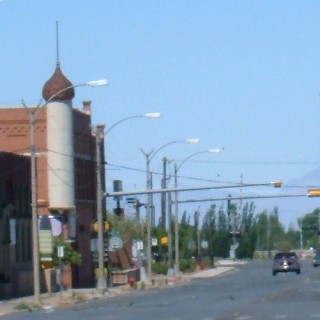
City in New Mexico, United States
POPULARITY

10 episodes with alamogordo

6 episodes with alamogordo

3 episodes with alamogordo

4 episodes with alamogordo

3 episodes with alamogordo

2 episodes with alamogordo

2 episodes with alamogordo

5 episodes with alamogordo

2 episodes with alamogordo

The Church of the Souls Evolution with The Reverend Blake Rubie Heaven's Light, the Face of God, and Why Earth Is the Hardest School in the Universe In a solo, thirty-minute broadcast, Reverend Blake Rubie describes what he believes heaven and the mother and father God actually look like, explains the soul as a spark of divine light, and argues that Earth is one of the hardest schools in the universe, closing with a prayer for peace. A Show Nine Years in the Making Reverend Blake Rubie opens by welcoming "internet radio land" to The Church of the Soul's Evolution, noting the program has run under different names, including Spirits of the Universe and God Is on the Sun, since he began broadcasting around 2017. He says he keeps returning to the same core subject, spirituality, because he is grateful for the chance to send his words out to help make the world better. He tells listeners that despite the many competing churches that each claim to hold the exclusive truth, heaven itself has no religion. There, he says, the only order of business is to praise the mother and father God, a king and queen who are soulmates to one another, since a father alone cannot create children. He adds that today's broadcast will run only thirty minutes because he has errands to run and an eight o'clock teleconference with friends in Alamogordo, New Mexico, where he and his wife are considering moving. Standing Before the Mother and Father God Rubie describes the pre-existence, the state in which every spirit lived before being born on Earth, and says each soul once stood before its co-creator God to receive a mission to help make the world better and work toward peace. He tells listeners that when they eventually reach their own expiration date, they will stand before the mother and father God and behold a light so brilliant it will wash over them like a hurricane-force wind. He explains that every soul carries its own spark of that same divine light, comparing the soul to a lantern holding a small flame lit from the Creator's fire. Every spirit, he says, is born on a sun, not necessarily this one, and could originate anywhere among the countless solar systems of the Milky Way or other galaxies, meaning some listeners may be old souls, mystic travelers who move from planet to planet across many lifetimes. Category Planets, Prayer, and the Wars of Today Rubie lays out his ranking of inhabited worlds on a scale from one to nine, placing Earth at category one and describing more advanced planets, such as a hypothetical category six, whose souls sometimes volunteer to reincarnate here on a mission from the mother and father God to help humanity through hard times. He points to the ongoing wars in Iran and Ukraine, and to more than eighty thousand deaths in the Gaza Strip, as evidence of a struggling planet. Repeating a phrase he says he has used on earlier shows, he tells listeners that man will prey on man until man learns to pray for man, spelling out both words, and adds the same is true of women. He argues that individual prayers genuinely make a difference and that the meanness, unkindness, and heartlessness seen in the news reflect people who have not yet learned that lesson. Life Reviews and the Face of Father God Rubie describes the life review he believes every soul undergoes before the mother and father God, in which a person relives every moment from birth to death, including old childhood pains, from an outside perspective. He says nobody knows their expiration date in advance, whether it comes in a car wreck, by drowning, or in old age, and calls every day on Earth a gift. Drawing on a book he recommends, The Soul's Remembrance by Roy Mills, he offers a detailed physical description of the father God: roughly twice the height of an ordinary man, with a large mane of white, flowing hair, a face marked equally by love and authority, bare feet, and a heavily muscular build he compares to Arnold Schwarzenegger. He adds that the Creator's eyes hold pools of love but can also feel terrible, because they contain everything that being has witnessed across the ages. Angels, the Tunnel of Light, and Mother God Turning to what happens after the expiration date, Rubie tells listeners they may be met by angels, by deceased relatives, or by a chariot driven by Archangel Gabriel, all leading to the tunnel of light he identifies with the spirit world itself. He estimates that roughly eighty percent of people go on to that world of light, while those who lived as bullies, tyrants, or killers first pass through a place of rehabilitation he calls God's jail, or hell, before continuing their soul's journey. He describes the mother God as royal and almost impossibly beautiful, comparing her to Queen Elizabeth, and says the mother and father God created the planets of the solar system, including Jupiter, Saturn, Mars, and the Sun itself, using nothing but the power of spoken words, a cosmic force he says advanced souls eventually learn to wield themselves. Earth's Hard Lessons and a Closing Prayer Rubie calls Earth one of the most difficult schools in what he terms the university of the universe, arguing that living alongside animals that kill and eat one another, lions taking down gazelles, snakes devouring rats, is one of the deepest sources of pain for spirits used to a place of love. He shares that he is seventy two years old, vegan for twenty seven years, and living with one kidney, explaining he adopted the diet for health reasons and says he will not judge listeners who eat meat, since he did so himself for forty four years. He contrasts Earth's violence with heaven, where he says predator and prey animals live together in harmony. The broadcast closes with Rubie leading an extended prayer thanking the Creator of the universe for life and existence, asking for blessings on all of God's children, and signing off with love to his audience.

It is never too late to chase a dream, even one that has waited decades for its turn. My guest, Evan Katz, built a career in journalism, public finance, and local government before taking an unexpected path into professional baseball. After first playing organized baseball at age 45, Evan became a professional player at 61 and later coached professional baseball at 69. We talk about how fear can become motivation, why setbacks can be powerful learning opportunities, and how skills gained across a lifetime can prepare us for challenges we never expected to face. Evan also shares what he learned from calling himself the “least qualified coach in professional baseball,” and how listening, mentoring, and supporting others became some of his greatest strengths. His story is a wonderful reminder that personal growth, career change, and lifelong learning do not come with an expiration date. Highlights: 02:47 – How family work ethic shaped Evan's drive. 11:26 – How fear can become motivation. 13:08 – Why setbacks can become learning opportunities. 35:06 – What local government taught Evan about growth. 42:29 – Why he started playing baseball at 45. 53:37 – How he became a professional baseball coach at 69 About the Guest: Evan grew up in Brookline, Massachusetts two miles from Fenway Park in the 1960s and quickly learned the emotional highs and lows of being a Red Sox fan. When the Red Sox won the World Series in 2004, after an 86-year championship drought, he rang church bells to celebrate. After a long award-winning career in municipal and public school finance in Massachusetts, and raising a family of four with his wife Liz, Evan began his late-life baseball career in earnest at age 65. He was an assistant high school coach for three years, and documented the team's Massachusetts state championship in the story “No Earbuds in the Outfield.” Evan Katz's pro baseball career began at age 61 when he pitched for the White Sands Pupfish of the independent Pecos League in 2017. When euphoria subsided and his infinity ERA began to sting, Evan returned to the Pecos League at age 67. With the Austin Weirdos he became one of the oldest pitchers ever to start a minor league game and lowered his ERA to 29.25 After an aborted stint as pitching coach with the Roswell Invaders in 2024, Evan returned to the Pecos League in 2025 as bullpen coach of the North Platte 80s. As the 80's scout he recruited players for the second-year Nebraska team. As bullpen coach he supported the North Platte pitching staff which anchored the team's 27-21 record and helped the team reach the second round of the playoffs. And this despite just three years as a high school coach, and no college coaching experience. There were more than 2000 coaches among nearly 300 major, minor and independent pro baseball teams and Evan was the least qualified. To share his second career in baseball and other inspiring baseball stories, Evan manages his baseball website “Baseball by the Sea Media.” It includes exclusive feature stories plus biographies and game stories published by the Society for American Baseball Research. It also links to the 2024 award-winning two-season podcast he co-hosted with Bruce McClure, “Baseball's Last Frontier: Stories from the Pecos League.” Ways to connect with Evan**:** https://sites.google.com/view/baseballbythesea/home https://www.linkedin.com/in/evan-katz-351554b/ About the Host: Michael Hingson is a New York Times best-selling author, international lecturer, and Chief Vision Officer for accessiBe. Michael, blind since birth, survived the 9/11 attacks with the help of his guide dog Roselle. This story is the subject of his best-selling book, Thunder Dog. Michael gives over 100 presentations around the world each year speaking to influential groups such as Exxon Mobile, AT&T, Federal Express, Scripps College, Rutgers University, Children's Hospital, and the American Red Cross just to name a few. He is Ambassador for the National Braille Literacy Campaign for the National Federation of the Blind and also serves as Ambassador for the American Humane Association's 2012 Hero Dog Awards. https://michaelhingson.com https://www.facebook.com/michael.hingson.author.speaker/ https://twitter.com/mhingson https://www.youtube.com/user/mhingson https://www.linkedin.com/in/michaelhingson/ Thanks for listening! Thanks so much for listening to our podcast! If you enjoyed this episode and think that others could benefit from listening, please share it using the social media buttons on this page. Do you have some feedback or questions about this episode? Leave a comment in the section below! Subscribe to the podcast If you would like to get automatic updates of new podcast episodes, you can subscribe to the podcast on Apple Podcasts or Stitcher. You can subscribe in your favorite podcast app. You can also support our podcast through our tip jar https://tips.pinecast.com/jar/unstoppable-mindset . Leave us an Apple Podcasts review Ratings and reviews from our listeners are extremely valuable to us and greatly appreciated. They help our podcast rank higher on Apple Podcasts, which exposes our show to more awesome listeners like you. If you have a minute, please leave an honest review on Apple Podcasts. Transcription Notes: Michael Hingson 00:04 What if the biggest thing holding you back isn't what's in front of you, but rather what you believe? Welcome to Unstoppable Mindset, where inclusion, diversity, and the unexpected meet. I'm your host, Michael Hingston, speaker, author, and advocate for inclusion and possibilities. This podcast explores how the beliefs we carry shape the way we live, lead, and connect with others. Each week, I talk with people who challenge assumptions, face adversity head-on, and show what's possible when we choose curiosity over fear. Together, we focus on mindset, resilience, and the small shifts that lead to meaningful change. Let's get started. Hi, everyone, and welcome to another Unstoppable Mindset podcast episode today. We get to chat with Evan Katz, and Evan's got an interesting life, especially since, if you will, he started the second part of his life, or maybe it's not the second, maybe it's later, of being a professional baseball coach at the age of 61. Well, we're going to hear about that. Evan lives in Massachusetts, in Swampscott, grew up in Brookline, which was very close to where the Red Sox play. I'm sure he's got lots of stories that we get to talk about with that. But anyway, Evan, I want to welcome you to Unstoppable Mindset. We're really glad you're here. Evan Katz 01:42 Thanks, Michael. I really appreciate the invitation. I I think that I'm excited to be part of a show with with with the theme that that you emphasize because I think that that when you reached out to me to ask if I was interested in in sharing some of my life experiences, I realize that there's a there's an unstoppable part of my mindset that has allowed me to achieve some things I didn't think were going to be possible. Michael Hingson 02:10 There you go. Well, you know, a lot of times we plan, and what we plan doesn't always necessarily go exactly the way we thought. But that's okay. It's it's a question what we do with it and what we learn from it. I suppose why don't we start by you telling us a little bit maybe about the early Evan growing up and and all that. And I know that you had mentioned that you think you actually got your kind of unstoppable mindset attitude from your parents and all that. So if you want to talk about that as as we go, you're welcome to. But anyway, why don't you start by telling us a little bit about the early Evan, if you will. Evan Katz 02:42 Sure. Well, you know, as you mentioned, I grew up outside of Boston in the town of Brookline, which is about two miles from Fenway Park. I'm a baby boomer. My my parents worked really hard, and they they worked hard to get their first house. They worked hard to fix it up. My mother was at home. My father worked in his parents' hardware store and was always fixing up the house. We ended up upgrading houses because of all the work that he did. And my mother, although she wasn't working, you know, she was involved in local politics, trying to improve the schools. And one of the stories I told when she passed away a number of years ago that she was so effective about mobilizing people to make changes in the school system. One of the school principals said to somebody else, "Get that Pawnee cats off the phone, Michael Hingson 03:34 because of course Evan Katz 03:35 at the time telephone was the only way to connect with people. But you know she had her unstoppable mindset in terms of making changes in public education in Brookline, my dad in terms of living the dream that he had for his family, and I really think that that in my own way I picked up that same hard worth it work ethic, and it's popped up along the way throughout my my life and my career. I Michael Hingson 04:00 I know what you mean. I know my parents were somewhat the same way. My dad worked at. Well, we moved to California when I was five, and before we moved, we were in Chicago. And he and my uncle owned a TV repair shop, and my dad left that to move to California. Wanted to do that anyway, but he began working at a government installation, was called Plant 42, and then later transferred to Edwards Air Force Base. My mom stayed home for a while. She actually helped sell real estate, helped sell some of the houses on the street where we moved because they were they were brand new, and the real estate people trusted her, so she she did some of that. Don't know what she earned or how all that worked, but but she did okay. But my dad worked, and I I feel very blessed. They they clearly taught me a lot, and I value very much their work ethic. I know what you're talking about. Evan Katz 05:01 Well, family is a great resource, whether it's your immediate family or extended family. And also, again, at the time that that I was growing up, most of our extended family lived right in the area, so there was a lot of connecting with cousins and uncles and grandparents. And I think that had its own way of shaping because we had a pretty hardworking, determined family, and I think that got passed on again, not just in my parents, but from my extended family as well. We Michael Hingson 05:28 had aunts and uncles and cousins. A lot of them were in Chicago. Then aunt and uncle and their two boys and our cousins moved out to California, but it was long after we moved. And then our next closest relative was actually up in the San Francisco area. Aunt Bella and Uncle Oscar owned a shoe store, and but and there were some other people who we called aunts. I'm not sure that they actually were, but aunts and uncles. But they they lived in the L.A. area. But most of our relatives were not very close by. Well, that's that's fine, but value the relationships nonetheless. So what was what was school like for you? Well, elementary school and high school and so on. Evan Katz 06:22 Well, I went to the local elementary school, and as I think, as I as I suggested, it was one of the schools that was being neglected by the town. My mother and her friends advocated for equal resources. It was also during the time where Christmas carols were being sung in school, and it was not something that my parents thought was appropriate. I was Jewish. There were other Jewish kids in school, not very many, and just didn't seem like this was the thing that should be happening, given where our country was at the time. And so I did well in elementary school. I mean, the interesting thing was I skipped kindergarten, so I was always the youngest and the slowest on the playground, and it actually contributed to my not participating in sports through my early years and into into high school, which we will we'll hear more about that later. But I got a good education. I loved numbers. I learned in high school after I had horrible year my sophomore year writing. I was determined to learn. I took a couple of English classes from mr. Carey at Newton South High School. Learned to become a good writer, and ultimately that led to my writing on college newspapers and becoming a newspaper reporter. My first job out of college. So, you know, the kind of thing when you go through school, you try to figure out, you know, what are the things that that that sing to you. And first, it was numbers for me, and I ended up going into a career in public finance, and then the writing, which I ended up becoming a newspaper reporter, put that on hold. And about 10 years ago, or eight years ago, I started a baseball social media website, and I ended up writing baseball stories. So, so here I am in my my my formative years in school, taming numbers, becoming a CFO in the public sector, and becoming a good writer-they got me through life. Michael Hingson 08:33 How did you end up being able to skip kindergarten? Evan Katz 08:37 That was back in the day. They didn't have minimum age requirements. If you pass the test, you you got to go right to first grade. Michael Hingson 08:44 Ah, well, I know I went to kindergarten in Chicago, and you started in Chicago at age four. Then we moved to California, and the problem is in California you couldn't start kindergarten till age five, but I had had a year of kindergarten already, but they wouldn't let me just go to first grade because I was only five, so I ended up with two years of kindergarten. And I'm not sure that second year was all that exciting for me, because kids were drawing and doing all sorts of stuff that I wouldn't do being blind. But we coped, and we got through it. I also did love numbers and so on, and my dad taught me how to do math in my head, so I was really doing well with math. And my my mother helped me with spelling tests and reading other material to me, and so on. So we got through it, and again, they took that on without any remorse at all, which, as I think back on it, was just part of their gutsiness and their unstoppability. Because the doctors told them that no blind child could ever amount to anything, and they were going to prove the doctors wrong. And I would like to think that they did, but we. We went through it, and I didn't actually. I learned Braille when I was in kindergarten in Chicago, but then didn't have access to Braille till the fourth grade out here in California. Yep. Yeah. Well, but my my parents read and kept me up with everything, but still it was a problem. But then I got Braille again, and so it all worked out, but I, but I, but I know what you're saying. It still gets back to the work ethic, and our parents were gonna do everything they could to make sure we all succeeded, didn't they? Evan Katz 10:32 Well, and I think also, Michael, you've touched on it, and I did as well. You know, there are things, there are areas we go into, whether it's school or work or relationships, we're blessed with certain talents and traits, but we also have areas that are not our strengths, and we're always having to work to figure out how to how to compensate for our areas of call it weakness or limitations, and also how to allow our strengths to to overcome those and and then to help generate success. Michael Hingson 11:05 Yeah, and and we do need to do that. And and the reality is that we're all generally better at some things than we are at other things, but we can make it work if we if we try. I wrote and published with a colleague, Carrie Wagg Kent, two years ago a book called *Live Like a Guide Dog* which is all about learning to control fear and its life lessons that that tell us that fear doesn't need to overwhelm us or, as I put it, blind us. That that we can use fear as a very powerful tool to help us, and I mention that because there are so many things that we fear in the world, and most of them we don't have any control over. I mean, I know that there are things that that I don't get to do right now that other people do because they can see different things. But at the same time, I have gifts that most of those people never either learn to use or choose to use or can use, and so we all have to work together to make the world successful. And I think that's the big issue. Evan Katz 12:11 Well, I think your point about fear is really important because we we all have fears, we all have worries, and fear can be paralyzing, and but it can also be motivating, and I think it's important that if you get into a situation that that you're concerned about or worried about, you should acknowledge that you're in something. Maybe you're over your head, and we'll talk about my coaching a professional team at age 69 without ever having coached college baseball, going right from high school coaching to professional coaching, that was the hardest job of my life, and that fear motivated me to figure out how am I going to come up with those compensating skills? How am I going to be able to succeed? Because I want this to succeed not just for me, but for the players around me. So, so fear. It's important to to recognize it, and so that you know that it's there, but also be able to take advantage of what fear can motivate you to do. Michael Hingson 13:13 Well, and fear doesn't need to paralyze you unless you let it. And that's the the big issue: is that we don't learn generally how to control fear and to use fear in a positive way. We worry about so many things over which we'll never have control because we just don't, and we let all of that worry us, and that that certainly adds so much to the fear levels that we face, and if we would only learn to just focus on what we can control, that doesn't mean you don't be aware of other things. But don't worry about the things over which you don't have control. It will help your life a whole lot. Evan Katz 13:53 And another aspect to that is, and I and I learned this, and as I mentioned, I worked in the public sector for for for almost 40 years, and I came up with the phrase at one point, and I I don't remember the circumstances. And somebody said, "I don't know if this is going to work. I don't know if we have the money. I don't know we have the people. This may not be a good solution, or the operation may not work. And I said, "Well, I think we have to see if it fails because if it fails, then we're going to learn something. Obviously, we didn't want anyone to lose a job or to get hurt. It wasn't failing in that regard, but but the you have to have enough courage so that if something isn't going to work, you can use that as as a learning opportunity as well, so you can't have fear of failure either. Because then we can all look back. You're old enough. I'm old enough to look back on our lives and see those learning moments. Many of them came from times that didn't work out so well, Michael Hingson 14:55 which doesn't mean that we failed. And I think that's the big issue. I think we have to deal with. Failure is is something that we have to really get over thinking about because failure isn't really it. What what it is is that things didn't work out the way we planned, but that doesn't mean that we failed, which means we just can't go on. We're we're stuck. It's it's a learning experience, and that is part of what dealing with fear is all about. Is rather than worrying about it. All right, so this didn't work. Don't fret. Don't worry. Don't panic. What did you learn from it? How do we get beyond that? And that's the thing that we generally tend not to do very much: is to do a lot of self-analysis in our own lives. Take time at night to step back and look at what worked during the day, what didn't work, and the what didn't works weren't failures, but they were learning opportunities if we take advantage of our own skills to develop our mind muscle to do that. Evan Katz 15:57 Absolutely, I Michael Hingson 15:58 think that's that's so important. Well, so for you, you you where did you go to college? Evan Katz 16:08 I graduated from Newton South High School. We went from Brookline to Newton in the 70s. I went to a small college in Western New York, Alfred University, for two years, and ultimately graduated from Colby College in Maine in 1977. As I mentioned, I wrote for both the newspapers at Alford and Colby, and that's where I got my my my journalistic experience back then. Writing for college newspapers was was a big deal back then, Michael Hingson 16:39 yeah, Evan Katz 16:39 and that worked out really well. I was going to go into teaching. That was my original plan. I did some internships in college. I even, when I was at Colby, I took a semester and helped out at a small fourth grade class in neighboring Oakland, Maine, helping out kids doing lessons in the in the corridor and in the back of the room to help them with their math, but when I left college, I had done enough writing, primarily sports, that I decided to to follow journalism. But the college years were really an eye opener for me. As I mentioned, I was a year young. You know, I was the drinking age was 18, and I was still only 17 and a half when I went to college, but somehow my IDs got me through into the pub. But it was a really eye-opening experience going to college in New York. I'd been in Massachusetts my whole life and was in a small town in Western New York, and it was just so eye-opening to see a part of the country and people that were very unlike where I lived in terms of Alfred. Most of the kids were from New York, and then going to Maine, they were more from New England. But it was just a real eye-opening experience. I think we all go through that in our late teens and early 20s, really beginning to discover, you know, who we are, what situations are we comfortable in? We test ourselves. We do crazy things, and it all turned out okay because I was able to get a job right out of college. Michael Hingson 18:11 So teaching was your plan, but it didn't go that way. Evan Katz 18:16 No, it didn't. And interestingly enough, I was looking back through my father's memorabilia when he died, and I think I knew this, but I was reminded that he wanted to teach originally, and he actually was a mentor to many people during his working career. And he took great pride and went to the Peace Corps actually for a number of years in his 60s, and so you know the whole teaching mentoring thing ran in our family, so I guess it's kind of ironic that I ended up coaching baseball at age 65 as a as a teacher and a mentor. But but the college experience, you know, I still think about it. I just sold my vinyl records. It was it was a little traumatic, but I did sell my vinyl records recently because I can listen to everything over the internet now, and but that was a water watershed moment selling my vinyl that I listened to in college for all those years. Michael Hingson 19:14 I still have mine from working at the campus radio station. I got a lot of records back here, and I I am somewhat of the opinion of the I don't know whether I would call them snobs, but I still think the best quality is still vinyl. Evan Katz 19:30 Well, as you know, Michael, one of the best attributes of vinyl records is when they were originally the songs were compiled and sequenced. It was they were designed to listen through the whole side of an album. Michael Hingson 19:44 Yeah, Evan Katz 19:44 and I mean obviously Pink Floyd was classic, and I'm sure that there were others that come to mind that I can't think of. And I was a big fan of the Doobie Brothers, and to this day I'll still turn off my radio in the car and put on a couple of Doobie Brothers albums and listen to them straight. Same with Chicago. It just the music was meant to be arranged, you know, for half an hour or 35 minutes, not just three and a half minutes. And I think a little bit of that has been has been lost with today's music. Michael Hingson 20:13 Yeah. Well, I think there's there's truth to that. And I even go back further. I've been a fan for many many years of big bands, primarily Swing, Benny Goodman, and and so on, but also doop and early rock. But I and I like some of the other rock. But I've never been a great heavy metal fan. But that's okay. Some people like it, and then that's fine too. But I really enjoy my records as well, which is a lot of fun. Yeah, I Evan Katz 20:42 did listen to Van Halen cassettes driving. Somehow, a Van Halen arrangement wasn't quite the same as Chicago. No, Michael Hingson 20:50 no, it is a little bit different. There's no doubt about that. So, what was your job that you ended up getting out of college? Evan Katz 20:57 I ended up worked as a stringer, which I don't even know if there are any anymore, but I think I got paid 10 cents an inch for covering soccer for the Newton graphic. I covered the Newton South soccer team, and also I I don't know how much an hour I got. I covered the Westin Wildcats. That's a small town west of Boston for the Westin Town Crier. That's how I got started in journalism, and I ultimately was hired as a part-time reporter by the Walpole Times, which is small town southwest of Boston. And I eventually became a full-time reporter there, covering town government, writing feature stories, learned how to use a 35 millimeter camera. We we had our own darkroom there, and I thought it was so much fun going out to meetings, interviewing people, compiling stories. It was just it wasn't like work. It was it was it was exciting, and it paid the bills, and I was living on my own for the first time. Michael Hingson 22:06 That didn't get you to graduate to things like going into television on WEEI and doing sports for them, huh? Evan Katz 22:13 No, the the the written word at the time, and even today still is is where I am. Although, as I joke with my friends, just put a microphone in front of me, and I'll start talking. Michael Hingson 22:26 So that's okay. Well, so how long did you write? And then what happened Evan Katz 22:32 was, so as I mentioned, my mother was very involved in local government, and I grew up in Brookline. And the interesting thing was, I was covering the planning board and the school committee in Walpole, and I'm I'm going to the meetings and I'm listening to them talking about the issues that they're dealing with, and I'm thinking to myself, so this is what 1979. I'm 23 years old, and I'm thinking, I mean, I can do better than this. I mean, listening to these these people talk about how they're going to solve problems, and I said, I think I can really help. So, the local legislator from Walpole, his name was Frank Woodward, had an opening in his office, and I started working as a legislative aide for him, working in the state house. It was very exciting. My mother was so proud. When some one morning in March, I don't know if it was 1979 or 1980, and I walked up the steps of the State House. Big blue sky in Boston. It was a big golden dome. I'll never forget. I walked up the front steps, looked up at the golden dome and the big blue sky in March of whatever year that was, so excited. My mother was so proud. My dad was too, obviously. And then I got involved in government, and that's where it all started. Working in the state house to really begin to understand the importance of issues. You know, it wasn't just local government, but how the state government intersected with the federal government, and how much how how important government is to making people's lives safe and protected. Michael Hingson 24:07 Yeah, and I think that is that is something that although there is certainly a lot going on today that is not necessarily the the model of what government ought to be, probably, but still, government and what the House of Representatives and the Senate do at the federal level, and what happens at the at the state house and in the state government is really important. And I wish more people would seriously get involved with it, and and do it from an ethical standpoint. But you know, we, I guess, we go through through different kinds of eras of how things work. Evan Katz 24:54 Well, it's interesting in the tumult that we're going through here. I recently had a chance. Last month to go to England with my wife. I hadn't been there for a while, and and I was really struck by how the history dates back centuries and centuries and centuries prior. You know, to 1066, I guess is one of the lines in the sand or the dirt in England. But when they started the more modern era, and what I was really struck by when you think about a country like England and all the difficulties, all the changes, all the times that they were under threat from external forces, internal forces, all the chaos, and somehow they've survived. And I think this is one of the real attributes of Great Britain. And I just began to think about what we're going through here, and I think I have to be hopeful in the same way. Michael Hingson 25:56 Yeah, I agree that Evan Katz 25:57 that that we've been here for 250 years. I know it's short compared to England. Supposedly, one author says that republics die after 250 years. I don't know if I buy that necessarily, but but the point is that that that I think somehow, some way, we're going to survive this because other countries have been through much more over much longer periods of time, and here they are. And 2026 is stable, viable countries. Michael Hingson 26:25 Yeah, and they're still there, and they're going to be there. And I agree with you. I think that we're we're going to continue, and maybe republics die after 250 years, but it doesn't mean they have to. And I think that's that's part of it. So what did you what did you do in terms of you you went to work in the state house or what did you do? Evan Katz 26:48 And I was a legislative aide, so we would get information on legislation, take a lot of constituent phone calls because at the time the only time only way you got a hold of your legislator was either make a phone call. Of course, I think from Walpole to Boston, it might have been a toll call at that time. So maybe we got more letters from Walpole. I don't know, but constituent constituent concerns, working with state agencies to resolve things, and and it just got me acquainted with with with how government works, and it just gave me an appreciation for what it takes to make government work for for the the residents of Walpole and a couple other nearby towns, and also you get to see the the leaders of the state at that time the the Senate President and the the Speaker of the House, and you get to understand a little bit more how they show leadership and what skills and attributes work well, and what ones in your mind don't work well. But the whole bottom line is, you know, how is it working for the constituents? And to me, that became more and more important. Is what's the bottom line here? It's not about power. It's not about success at the legislator. The bottom line is the impact on people. Michael Hingson 28:13 Well, I remember that when I lived in Winthrop, every year I would go with people from the National Federation of the Blind, we went to Washington every year. Five, 600 of us descended on Washington and visited all of our legislators. And I remember actually once having the opportunity to set up an appointment and meet with Tip O'Neill. What an amazing guy he was! Yeah. But then also there was a new congressman who had just joined, Ed Markey. Evan Katz 28:45 Oh sure. Michael Hingson 28:46 Now look where he is. He's but but it was it was so much fun seeing Congress in action and actually being a part of it, talking about different kinds of issues, and of course it got to meet Ted Kennedy and also Paul Songas along the way as well. And I and I also was involved in things in in Massachusetts because one of the problems we had in the early '80s in Massachusetts and around the country was that blind people couldn't buy life insurance because the life insurance companies said we're a higher risk, we'll have a higher mortality rate, and finally, to keep the story short, we discovered that unlike what insurance companies say they do, which is they make their determinations always based on actuarial statistics, evidentiary data, and they create mathematical models based on evidence. They had absolutely not one single solitary thing to show that blind people or other people with disabilities were a higher risk than anyone else. So I worked back in the late 70s, early 80s with I don't you may. I've known him, Al Evan Katz 30:02 Sagasi. I recognize the name. Michael Hingson 30:03 Yeah, and so he he helped us shepherd a bill through that eventually eliminated discrimination in dealing with life insurance in Massachusetts, and and actually was something that passed in every state that all all the states dealt with that because the insurance companies were just playing games, which was so unfortunate. So when I was growing up, my parents couldn't insure me. When I was in college, I couldn't buy life insurance, and and eventually it got addressed. But it was, and it still is fascinating to think back and be a part of making a difference and really working to help constituents and help the legislature. Evan Katz 30:48 Well, there's a great example of numbers not being in action. You know, they're hiding behind perceived numbers, and then you do do a little bit of digging, and you find out that it's not quite as fact-based as they made it sound, Michael Hingson 31:02 yeah, and in fact there was no fact, and but still we worked through it, but the process was, I think, and still is for me one of the most fascinating things to to be able to go and be a part of dealing with things and and hopefully getting legislators to deal with issues and I'm not sure that there's as much of that that's happening today with everything going on but it'll come back. Evan Katz 31:34 Not not in Washington anyway. I think you've got to look to the states more than Washington. Washington's an anomaly right now. Michael Hingson 31:42 Yeah, Washington is really a big problem, and and but it'll it'll it'll switch at some point. I hope. I think it's going to have to, but but we'll see how it goes. If Speaker 1 31:55 you enjoy Unstoppable Mindset and would like to help us continue bringing these conversations to you each week, we've created a way for you to support the show. Your contribution helps us cover production costs and continue sharing stories, insights, and ideas that inspire people to live with purpose and possibility. If supporting the podcast feels right for you, you'll find the link in the show notes, thank you for being part of the Unstoppable Mindset Community. Michael Hingson 32:27 So you you went to work and you were legislative aide. How long did you do that? Evan Katz 32:32 Actually, not not. I think it was a little over a year because I ended up working on a referendum campaign. There's a thing in Massachusetts to limit property taxes, that's called Prop Two and a Half, that passed in 1980. I ended up working for Representative Woodward and a couple of other reps. There was an alternative on the tried to get on the ballot as an alternative to Two and a Half that wouldn't be quite as dramatic. Although I think, looking back as someone in the public sector, I think it's a good thing that Prop two and a half passed, but I got involved in working on a referendum campaign as an alternative to Prop two and a half. It didn't pass, and then at that point, I decided needed to get some professional training, and I went to get my graduate degree in public administration from the Kennedy School at Harvard, so I would have more credentials and I could really get into local government, and that really opened the door. Once I got my master's degree, I ended up working for the state. I think I mentioned my mother and family were from were from Brookline. We were acquainted with Governor Dukakis, and my mother worked actually very close with Govern was very close with Governor Dukakis, and he really encouraged me to go to graduate school, and I ended up going to the Kennedy School. And from there, I went and worked for his administration. The Massachusetts Department of Revenue started a division to support local government finance. It was really very innovative at the time in the early '80s. You know, cities and towns were separate. The state was just a regulatory reagency, and Governor Dukakis wanted to create an agency that could be a resource to local government to help them make better decisions. We created a municipal data bank to try to gather information to get to gather statistical information and ultimately help guide cities and towns to budget better, to plan their capital budgets better. And I was involved in the formation of that bureau in the Mass Department of Revenue. It was called the Division of Local Services, and I ended up working there in the early '80s, to really get a feel for how state government worked, state aid, and all that sort of thing, and then I learned enough there and decided to go out and see what it was like myself to work in a city or town, and that that's was around 1980. So I got my training at is in graduate school, learned more in state government, and then in the mid '80s went out to work in town halls and and city halls, and that that talk about fear, that that was frightening. Michael Hingson 35:18 It was a new experience. Evan Katz 35:20 Absolutely, you know, you you you you're in the state house, and there's there's 240 state reps and 40 senators, I think, all kinds of legislative aides. You're working in a state agency, and it's a whole bunch of 20 something and 30 something colleagues and bosses and this and that. There's always someone you can ask, always someone that can support you. You go to a town hall, and there's there's three clerks and a bunch of select board members. In Massachusetts, there are boards of selectmen in the small towns, or the select board now. Back then, it was select men, but you're on your own out there, and it's very, very different. You know, having a bunch of colleagues to support you in the big city when you're out in the small town of Groton, 40 miles from Boston, with 7000 people, and you're the resource in town hall. It's a lot different. Michael Hingson 36:18 I was just going to say that you you became the resource that people look to. Evan Katz 36:24 Yeah, and and so you take your professional training and you begin to develop some of those personal skills. And how do you relate to people? How do you gather information? How do you recover from from your mistakes? How do you make sure you have enough successes so that you got a good success to mistake ratio? But it's it it is very scary. I mean, I was what how old in 1986? So I was 30 years old, and it never. And I wanted to work in a small town, and I did, but it was a real, real eye-opening experience. But by the same token, you know, one of our biggest fears-you're the only person. One of the greatest attributes to the situation was you're immersed in everything. You learn everything. You learn about the police department, the fire department, which was a call department at that time. You know, if there was a fire, all the firemen, there might have been a couple of women as well, went to some went to the station to get the truck, and some drove in their cars to the scene of the fire, and and and you get a small town with one police officer on duty, you know, from from 11 to seven, you got a water department with two employees. You really get a feel for what's important and what isn't, and how do you make the system go, and what do you do in an emergency, and how do you plan for the future? And so it was it was it was frightening at one level because you're on your own and you're learning a brand new thing, but at the same time you're immersing yourself so deeply, and you're learning so much that that that that you're growing, you know, professionally and personally at a very very fast rate. Michael Hingson 38:16 And although you may or may not realize it at the time, those fears that that you started with slowly would be dissolving away because you were learning how to deal with things, and you were discovering that you had the ability to deal with things, and so you became less afraid in a positive way. Evan Katz 38:37 Right. Well, you know, you all know that the cycles in in businesses and cities and towns, and it's all in an annual cycle, the budget cycle, and you know you get through the first year and you start doing it again, and you're doing it again, and you really then you begin to expand your knowledge base. You're willing to to to experiment a little bit more, and and you're growing again at a very fast rate because you're able to do more and more that you weren't able to do when you first got there. Michael Hingson 39:10 Did you ever run for any office? Evan Katz 39:13 Actually, I did. When I left Groton, I finance was my area of interest, as as I mentioned earlier. I was hired by the city of Medford, which is just north of Boston, up Route 93, probably I don't maybe 810 miles north. And when I was working there, I was the city's finance director. You talk about culture shock, so I go from the small town of Groton with seven people to a to a 50,000 the city of 50,000 with a with a palatial city hall right off Route 93 and but I was chosen for because of my background in finance. And when I was working there, I decided that the town of Groton might benefit from my experience as an elected official. So I was working in Medford as finance director, and I ran for assessor in Groton to get started. Elected assessors to value properties and administered the taxes, and then ultimately I ran for select board a couple years after that. Michael Hingson 40:27 Were you elected? Evan Katz 40:29 I did. Yeah, I won. Okay. And here's another thing that I learned. You know, I haven't always seen elected boards, whether it was the select board or city councils or legislators, you see elected officials in action at meetings and talking about problems and making phone calls, but you forget there's a lot of other work that goes on behind the scenes when you're at home at night and when you run into somebody on the street. And so I was I was very prepared for the for the technical aspects of it, the problem solving, but I forgot about the time that it takes when people call you or have a have a have a problem with a nearby dog, or someone put up a fence, or the traffic on my street is going too fast. You have to call people. You got to follow up. You got to again. Back in the old days, it's all by telephone. So the amount of time that it took to resolve problems and have meetings, I forgot about the the the extra time that it takes when you're an elected official to do that behind the scenes stuff. But but I enjoy doing that as well. Michael Hingson 41:41 Yeah, I'll bet. And you know, it it is just it it you figure out that that's part of what you have to do. And again, I think the big issue is in figuring all that out is learning to recognize that's part of what you have to do, and accepting that that's definitely part of the job, and not trying to blow it off, not trying to get angry at people, which all too often happens today, I think more than it than it needs to. But it is part of the job. It's all part of the job, and no matter what, that hasn't really changed. Evan Katz 42:19 And I think it's I think it's in any job, and I think people have perceptions about certain types of jobs, whether it's you're you're you're a plumber, a truck driver, a lawyer. You know, people understand the responsibilities at the surface level and the visible level, but they're they're not as aware of what goes on behind the scenes, what it takes to to get things going, and and I think that's probably not and maybe underappreciated in some situations about what it takes to to to do things behind the scenes that are not as exciting, where there's more drudgery, and and and the amount of time that it takes to get you into the seat of the truck, to get you to have a meeting with clients, if you're some kind of professional, if you're a doctor, there's there's there's a lot more to any job, and I think that that that it's important to recognize it for ourselves. You know, it's not just the let's call it the glamorous part of the job. Michael Hingson 43:29 Yeah, Evan Katz 43:30 there's the behind the scenes part of the job, and the same goes for all jobs. And I think it's important to remember that. Michael Hingson 43:36 I agree. Well, you did all this work, and you kept doing it for quite a while. So, what got you into baseball, other than being a fan? But you know, Evan Katz 43:46 well, loyal Red Sox fan, been to Fenway hundreds of times, as I mentioned earlier. Was started school a year early, so I never played sports, and my kids in my 40s had finished little league, and they were all done with their sports careers at that point. And I decided I wanted to play baseball at age 45. Michael Hingson 44:14 There you go. I had Evan Katz 44:15 never played. I had never played little league. I never played high school. Never played college. And at age 45, a friend of mine who I grew up with in Brookline, he encouraged me to go to a baseball camp in Florida in 2002, and at that point, my my interest in baseball and my fandom in baseball expanded to becoming a a player and having to learn about the game as a player, not just as someone watching the game. Michael Hingson 44:47 And what did your wife think of that? Evan Katz 44:49 Well, my my wife will mention that my my wife Liz, our first date was on march 30, 2002, and that was the date. Of my first baseball practice in Massachusetts, so she has been there from the beginning of my baseball career. And if it wasn't for her one acceptance of it and her support of it, I never would have been able to achieve and enjoy all that all that I have, but she she is is is my biggest fan and supporter. Michael Hingson 45:29 That's great. She's a Red Sox fan, I would presume. Evan Katz 45:33 Yeah, Red Sox fan. Yep, and you know we watched them clinch it in 2004. We've been to Fenway together, and you know she, you know, like I played adult baseball, and and you know the when guys join, their spouses or girlfriends come the first for a bunch of games in the beginning, but then they just lose interest. Understandably, it's you know it's old man baseball. It's not like it is on TV. She she comes from time to time, but but she she's got her own life to live now. So that's okay. Michael Hingson 46:05 Well, so so tell me how baseball progressed for you. So you you started working at playing. Evan Katz 46:15 Yeah. So I went to this baseball camp in Florida, which I actually just came back from. It's called the Ponstellion Baseball Camp, and it's from a league in Washington, and they started going down for a week of what they call spring training. Well, for Washington, baseball starts a little earlier, Washington D.C. So we go down the end of January, and you know, getting on the field isn't too far away as long as there's no snow on the ground in the DC metro area. But I started going to that camp in 2002, and there was a group of professional coaches at this camp who were major league and minor league affiliated, and they have been coming to this camp since the beginning. This is now 2026. They've been going to the camp as long as as the longtime players, and so what happened was, you know, I was playing adult baseball, and there was a year where it rained a lot, and we had games postponed, and I'm driving around Fort Myers, and I think I was 60 years old at the time, so this would be 2016. And I said to myself, you know, what would be the chances that I could find a minor league team that would let me play, so I could live my dream of being a professional baseball player? And I grew up around in Brookline. I collected baseball cards. I played imaginary baseball games in my yard. Played wiffle ball with my friends. Watched the Red Sox on TV. You know, it's been in my blood since I was a little kid. And of course, many little kids want to be professional basketball players, hockey players, football players. Well, for me, it was baseball. So here I am, 60 years old, and I asked a couple of people at the camp. One of them was Stan Clyburn, played for the Angels in the 80s, and he's managed in the minor leagues for 1000s of games. He's still managing to this day. And Steve Little, who was a coach at the time with the Twins, I asked them, "Do you think I could find a minor league team that would allow me to play for them, so I could live my dream, play professional baseball? And they said, "Sure. Oh yeah, you you should give it a shot. And they gave me a couple names. Ultimately, it took me a year and a half, and I found the Pecos League, which is a low level of independent baseball. I got a hold of the commissioner. His name is Andrew Dunn, and I called him up in March. It turned out this would be March of 2017. I went out to my car at a lunch break from school. I had his phone number, and he answers the phone, "Hello, baseball. And I explain the situation, and he said, "You want to get in a game? We'll get you in a game. And that was that was in 2017. Michael Hingson 49:15 Wow! Evan Katz 49:16 And way it the way it turned out, he invited me out to play for the White Sands Pupfish the last weekend of the season, it had to be with teams that it wouldn't affect the playoffs. And I went out to White Sands, New Mexico, White Sands National Park is there. Alamogordo and the the White Sands Pupfish. I I pitched to two batters, walked one and hit one. I had one plate appearance and was called out on strikes. Didn't lift the bat off my shoulder. Too much fear, as I look back on it. But I became a professional baseball player at age 61. Michael Hingson 49:57 Well, so you got to live your dream. Evan Katz 50:00 Yep, Michael Hingson 50:00 and so after you pitched, what did you do? Evan Katz 50:04 Well, it was all very exciting, and I I actually was interviewed by Bill Littlefield on the NPR radio show Only a Game, talking about playing baseball at age 61, and my friends thought it was really neat and cool, and I had some pictures made, and I gave a lot of graph pictures to Stan Clyburn and Steve Little to thank them for inspiration, and it was all fun. But you know, in baseball, if you're a pitcher and you give up a run without getting anybody anybody out, you have an ERA, which is an earned run average. How many runs you give up in nine innings? Michael Hingson 50:43 Right. Evan Katz 50:43 I had an ERA of infinity. I'm in baseball reference with all these big known baseball players. I'm there with my my my stat line with an ERA of INF infinity, and I'm 65 years old, and I'm saying, man, I don't want to have an ERA of infinity. I don't want to retire with an ERA of infinity, so I got a hold of of Andrew Dunn again, and I said, Andrew, can I come out and pitch again? I want to get my ERA below infinity. I want to get somebody out. So it turns out in 2023, he assigned me to pitch for the Austin weirdos keep Austin weird, right? Keep Portland weird. Keep Burlington weird. You know, keep but whatever weird city you know they have their slogans of keeping the city weird. So Austin weirdos. And the interesting thing was that the weirdos that year in 2023, they had a home field in Austin, but it got burned out. They didn't they didn't have enough water, so they lost their home field. They turned into an all road team, and no player likes to drive through the Pecos League through the desert Southwest from Texas to Arizona, Michael Hingson 52:00 right Evan Katz 52:01 up to Kansas and Colorado for weeks on end. I get to the end of the season, the last weekend of the season in Alpine, Texas, to play the Alpine Cowboys, of course, in Texas, and the Austin Weirdos only have 11 players, and I can pitch. It's a Friday night, and there's a doubleheader on Saturday, and the manager decides, well, we got a guy here who hasn't pitched recently. He should start the game on Friday night. I get a text from the manager in the middle of the day. Evan, you're starting tonight, Derek Dominguez. Talk about no fear. Yeah, starting a 67-year-old pitcher against a lineup of 20-year, 25-year-olds, and I I started against the Alpine Cowboys, and talk about managing your fear. They have it's an old baseball stadium was built in the 1940s. It's got a grandstand behind home plate. You know, a couple things happen there. First of all, I get to the park early because the team was driving. They had to drive. This is the amazing thing. 1111, players. They had to drive 700 miles from the night before from Blackwell, Oklahoma, to Alpine. Michael Hingson 53:20 Wow. Evan Katz 53:22 The catcher comes in the dugout. Wonderful young man. You know, pitchers always worry who is going to catch them. Who's my catcher? And I'm in the dugout waiting, and a young man comes up to me, and he knows who I am, and he says, "I'm Marcus Bracy, and I'm catching you tonight. And the way he said that to me made me feel like he was going to take care of me, and we warmed up. I didn't have any fear. And one thing I did though, when I went out to the mound in the bottom of the first inning, and every inning after that, I made it to the fifth. By the way, I never looked up into the stands. I never wanted to see the crowd. I wanted to keep my eyes focused on this catcher, and that is what helped me get through. And I gave up two runs an inning into the fifth inning. And the interesting thing was that that that was about the team's average. The earned run average for the Austin Weirdos that year was 18 because they had lost so many players, they didn't have many pitchers, and I ended up for that game with an ERA of about 18. So I pitched the same as all the 25-year-old pitchers that pitched for Austin that year. Michael Hingson 54:39 There you go. That certainly is. That certainly is pretty cool. So, what year was that? Evan Katz 54:48 That was 2023. Michael Hingson 54:49 Okay. So, what's happened since? Evan Katz 54:52 Well, I was so taken by the Pecos League and some of the players there, and I had been coaching high school for three years. You know, I had. I had coached at Manchester Essex High School, just north of Boston. I had coached the pitchers and the catchers there. We won the state championship in 2022, and yeah, I saw I'd done a little bit of coaching. And I knew the Pecos League didn't have a lot of money. It didn't pay the players anything hardly. Players make less than $1,000 for most of the teams, and many of the coaches are volunteer coaches. And I asked one of the players; his name was Alex Westman, really nice, nice fellow. I met him for breakfast actually in the fall after the season. I was out visiting my my son in Arkansas. Met him in Missouri for breakfast, and I said, think, think the Pecos League could use a coach like me, and Alex is always an upbeat guy. And unfortunately, Alex was passed away a couple years ago in a tragic motorcycle accident. But I'll always be thankful for Alex for him saying to me, "Oh yeah, you should coach. So I got a hold of the commissioner. I I did coach for a few games for Roswell in 2024, but my mother-in-law took ill, and I had to come home. So last season I ended up teaming up with Todd Everleth, the manager of the North Platte '80s, who I had connected with during 2024 and introduced him to the league. He managed in North Platte, and I asked Todd if he could use a coach, and Todd invited me out to North Platte, Nebraska. And last summer, I was the bullpen coach. One of the hardest things I've ever done, if not the hardest, going from high school coaching to professional coaching at age 69, but somehow it was successful. I helped the pitchers. We ended up going to the the second round of the playoffs. We had a couple of guys called up to higher level leagues, and and it was a success. But but it was again one of the hardest things I've ever done, but at the same time, one of the most rewarding. Michael Hingson 57:04 That's pretty cool. You you did you did so much of that. So you also you've been coaching. So you've been coaching a fair amount over the last few years. You said I think at one point, you were the worst coach in 2025. Evan Katz 57:23 Oh right, not not the worst, close, the least qualified. Oh, the Michael Hingson 57:28 least qualified. Okay, right. Yeah, this is a good story. Evan Katz 57:31 So, so, so Todd and I, you know, Todd Everleth, we're driving his truck around the Midwest. I don't know, it's probably the second second or third road trip, but I'm I'm sitting there, and I'm really beginning to understand the credentials, my new Todd's credentials, and the credentials of the other coaches in in in the Pecos League, which, as I mentioned, is the lowest level of independent baseball. It's not connected to Major League Baseball, and I'm thinking to myself, there's got to be 1000s and 1000s of coaches in professional baseball, major leagues, minor leagues, other independent leagues. Here I am. I'm a coach in the Pecos League. I I have three years of high school coaching experience. I have got to be the least qualified coach in professional baseball. So I said, Todd, I think I'm the least qualified coach in professional baseball, and he he got a real kick out of that. Michael Hingson 58:30 Well, so the real question is, what's going to happen this year? What are you doing now? Evan Katz 58:35 Well, this year, you know, I I am definitely retiring from coaching, as I mentioned, you know, at my age, 69, coaching in professional baseball, you know, your your days start early. They go till late at night. You're traveling a lot in the Pecos League. We drove our own cars, so we drove over 7000 miles last summer. Michael Hingson 58:57 Wow! Evan Katz 58:57 And that that was on top of driving out to Nebraska and coming home, so over 10,000 miles over the course of the summer, way way too demanding. So, but what I'm what I'm doing, Michael, is I think that that I really have some some lessons to share and some experiences to share. And as I as I joked with Todd and some of the other players, the the pitchers out in the bullpen. We were sitting out in the bullpen one night, and the pitchers knew that I wasn't didn't have a lot of experience. And once we all got used to each other, we had a really good time out there. And I'd said to them, I said, I think I'm going to write a book, and the book is going to be the least qualified coach in professional baseball, a survival guide, basically telling the story of how somebody with the least credentials of all the professional coaches was able to figure out how to cope with the challenges and ultimately support the pitching staff. And contribute to the teams going 27 wins and 21 losses, making it the second round of the playoffs, and having players called up to higher level leagues. I think there's some lessons there to share to inspire other people, and so that that's my plan. I'm hoping to do a little bit of motivational speaking. I'm planning to write a book and tell the story of the least qualified coach in professional baseball. Michael Hingson 1:00:28 But you brought a lot of life experience to coaching. Evan Katz 1:00:31 Absolutely, absolutely. I mean, this is one of the things I had to figure out. I knew my technical background was limited, so I had to figure out how can I support these players, how can I be available, and I figured out where to where to sit in the bullpen, so I could listen to their conversations and chime in when needed, and still see what's going on in the game, where to where to be in the outfield during batting practice to have casual conversations, and then I also-I don't think I mentioned this earlier-I had a podcast that I did, and so the podcast, which had a weekly episode and a guest from the Pecos League, I was always looking for stories from the team to interject into the podcast, and that was a great conversation starter. I also took a lot of pictures of the players, candid shots that they would never have been able to take on their own, and then also provide some baseball lessons along the way. You know, there was one pitcher who was very dissatisfied with his outing one night. He said, "I didn't, I don't, I didn't strike out as many guys as I wanted, or I gave up too many runs. And I said, "You left the game when we were ahead here in the Pecos League, where the team score a lot of runs. It's not the absolute results; it's the relative results. Yeah, you did your job. You left the game with the '80s in the lead, and you did great. So I figured out ways to support these guys because they had their own challenges, being away from college, being away from home. Try to figure out how I could support them to bring out their best. Michael Hingson 1:02:12 What a great story, and what a a great insightful thing you said to that pitcher. Well, if people want to reach out to you, how can they do that? Evan Katz 1:02:21 Well, I have a website called Baseball by the Sea Media, where I have some of my writing that I talked about. I've done some baseball biographies and some baseball game stories and some exclusive stories. Baseball by the Sea Media. I'm also on LinkedIn. Those are probably the two easiest ways to find me. Michael Hingson 1:02:44 How do they find you on LinkedIn? Evan Katz 1:02:46 Evan Katz, just I don't think least qualified as a search parameter on LinkedIn. No, it's probably blocked. So, Michael Hingson 1:02:55 so Evan Katz is spelled Evan Katz 1:02:57 E V A N K A T Z. Michael Hingson 1:03:00 So there you go. Well, I want to tell you that when that book comes out, we have to to do another one of these because I want to really have a chance to feature the book and all that. So keep us posted. Evan Katz 1:03:13 Absolutely, I'm I'm I'm looking forward to to working on it, Michael. And I appreciate you having me on today. Michael Hingson 1:03:18 Well, I want to thank you, and I want to thank all of you for watching and listening, and I'd love to hear from you. Feel free to email me at speaker at michaelhinkson m i c h a e l h i n g s o n.com. Love it if you'd give us a five star rating, but more important than a rating, please give us a great review. Review the podcast and say nice things about Evan. That's a that's a beautiful thing to do. If anyone knows anyone who ought to be a guest on our podcast, Evan, including you, feel free to introduce us. We're always looking for people to come on and tell their stories. But for now, I want to thank you for being here, and I want to thank you for spending an hour with us and and making it a very enjoyable and an unstoppable day. Evan Katz 1:04:03 Absolutely, Michael, it's my pleasure. Michael Hingson 1:04:08 Thank you for being here with me on Unstoppable Mindset. I hope today's conversation left you with a fresh perspective, a new insight, or at least something worth thinking about. If you're ready to go deeper into the ideas that shape how we see ourselves and others, I have a free gift for you. Head over to michaelhingson.com and download my free ebook, Blinded by Fear. It explores the invisible beliefs that hold us back and shows you how to reframe them so you can move forward with clarity and confidence. Be sure to subscribe to our podcast, leave a review, and share this show with someone who can use a reminder that growth starts with mindset. When people think differently, we all move forward. Together, thanks again for listening. Keep learning, keep questioning, and keep choosing to live with an unstoppable mindset.

As the first interview of 2026, I wanted it to bring you the BIGGEST and the BEST! Since this is the #1 ranked "real estate podcast show" on Google.....it only makes sense to introduce you to the #1 ranked "real estate facebook group" and the creator of this amazing page called Real Estate Agent Referral Network and Marketing Tips. Join the 370,000+ members today and let's help the group get to the 500,000+ mark in 2026!! In this podcast episode, Paul interviewed Debbie Mauro (group creator, admin and fellow realtor) about her journey from a military family background to building a massive real estate referral network on Facebook. Debbie shared how she grew her Facebook group from 20,000 to 371,000 members over six years, becoming one of the largest real estate networks in the United States. She discussed her transition from a window covering business to real estate, including her recent decision to become a licensed realtor. Debbie highlighted her use of AI tools like Marbleism for content creation and shared details about her weekly virtual coffee mastermind meetings that now attract 75-100 agents from around the world. The conversation concluded with Debbie providing her contact information and discount code for Marbleism to Paul for inclusion in the podcast notes. Summary Debbie's Diverse Life Journey Paul interviews Debbie about her background and journey. Debbie, originally from Virginia, lived in multiple locations due to her father's military service and attended 12 schools in 13 years. She moved to Alamogordo, New Mexico, a year ago to be closer to family. Debbie discusses her experience living in military-heavy cities and how her diverse upbringing helped her develop strong communication skills. Paul and Debbie share common experiences of being left-handed and involved in music, particularly band. They briefly touch on Debbie's real estate background and her upcoming interview, but the conversation primarily focuses on Debbie's personal and educational history. Debbie's Entrepreneurial and Career Journey Debbie shared her career journey, starting with her parents' expectation for her to become a lawyer due to the profession's status, but she pursued music and eventually MIS in college. She discovered her entrepreneurial spirit while owning a window covering business in Las Vegas, where realtors became her primary referral partners. Debbie's experience in retail, including roles at Kmart and other stores, taught her valuable lessons about sales and rejection, which she carried into her career. Real Estate Referral Network Creation Debbie shared her background in real estate and sales, highlighting how realtors were key referral partners for her window covering business. After a heart attack in 2009, she transitioned to working for Closet Factory, where she continued to appreciate the value of realtor relationships. Despite being removed from real estate Facebook groups for promoting a client management tool, Debbie decided to create her own Facebook group, The Real Estate Agent Referral Network and Marketing Tips, to help realtors generate leads and referrals. Facebook Real Estate Group Growth Debbie shared her success story of building a Facebook group for real estate professionals from 20,000 to 371,000 members over six years, which led to her becoming an influencer for a cloud-based brokerage and obtaining her real estate license. Real Estate Networking Growth Strategies Debbie discussed her successful real estate networking group, which has grown to 371,000 members and functions as a city-sized community for real estate professionals. She shared her strategy of using visual content like maps in Facebook groups to increase engagement, and introduced a new AI tool called Marbleism that helps create social media content. Debbie also described her weekly virtual coffee mastermind meetings, which now attract 75-100 agents and include guest speakers and breakout rooms for relationship building. The conversation concluded with Debbie agreeing to share her contact information and discount code for Marbleism with Paul for inclusion in the podcast notes. Contact info: https://linktr.ee/debbie.mauro fb group: https://www.facebook.com/groups/therealestateagentreferralnetwork Newsletter: https://www.REARNSubscribe.com Marblism: https://marblism.com/?via=StartHere 10% off discount code: C7TVIOPK
The Cavemen are feeling the possibility of a winning season just at their fingertips, but this Friday will make or break that dream. If the Cavemen football team can beat Alamogordo on the road, they will ensure at least a 5-5 season with two chances at getting over the hump. Can the Cavemen get their 5th win ahead of a bye week? Produced by All Sports Best

Revolutionizing Community Support: St. John's Episcopal Church's Innovative Labor Hub In this episode, we highlight a groundbreaking ministry effort at St. John's Episcopal Church in Alamogordo, New Mexico. Hosted by Evan Lambert, President of Community Power New Mexico, this video showcases the Labor Hub - the first of its kind in the nation. This unique initiative includes a tool library, materials bank, and educational center, all designed to assist community members who cannot afford contractor services or materials. Everything offered is donated and free to the community. The video also provides a tour of the hub, detailing the various tools, materials, and resources available, and discusses the broader impact and replicable nature of the project. Dive deep into how this project is bridging material and spiritual gaps and learn about the collective efforts to uplift the community amid high poverty rates. 00:00 Introduction to the New Ministry Effort 00:40 Overview of the Labor Hub 01:36 Personal Stories and Community Impact 04:22 Tour of the Workshop and Tools 08:21 Addressing Poverty and Systemic Issues 11:39 Community Engagement and Future Plans 23:40 Introduction to the Rio Grande Ministry 00:21 Meet Evan Lambert and the Labor Hub 00:45 Tour of the Tool Library and Materials Bank 01:37 Personal Stories and Community Impact 03:08 The Vision and Mission of the Labor Hub 04:35 Restoration and Community Involvement 05:39 Public Workshop and Volunteer Efforts 08:21 Addressing Poverty and Systemic Issues 12:19 Expanding the Vision Beyond Alamogordo 17:46 Conclusion and Future Plans

We explore White Sands National park and Alamogordo, New Mexico! Links:White Sands National ParkInfo on sledding at White Sands
Paul and Wally discuss the latest on HB 11, formerly known as Paid Family & Medical Leave. A bill to raise alcohol taxes died in committee (HB 417). Are alcohol taxes dead for the session? Speaking of which, the tax bill is/could be the biggest bill yet to drop this session. It could STILL include this and other tax policies and be rammed through by session end. Democrats in the House Energy Committee rejected another opportunity to reform EV rules by overturning MLG's mandate. Bipartisan support for a Medicaid Trust Fund? What does it mean? Paul attempted to testify (virtually) against HB 6. Why and what happened? Today is the 5th anniversary of MLG's first COVID public health emergency. Paul and Wally look at that legacy and the recent NM supreme court decision to ratify it and other emergencies like her anti-gun emergency. Paul will be in Alamogordo on the day of March 26 and we have an exciting event on New Mexico's medical shortage that evening in ABQ as well: Darren White is the latest addition to the Albuquerque Mayoral race. Can anyone knock off Tim Keller?
Episode 88 is our 2nd in the Tales from the Road series: White Sands and Ghosts. Join us as we go back to Alamogordo, NM and revisit White Sands National Park. We learn about the ancient civilization in the area, the ghost who still wanders the dunes at night, searching for her lost lover, and the poor unsuspecting campers who played in nuclear fallout.Thanks for listening! Please let us know what you think! You can find LFTR at http://lettersfromtheroadpod.com, and you can email us at lettersfromtheroadpod@gmail.com.Find LFTR Diaries on the LFTR YouTube channel.Find us on socials @lettersfromtheroadpod (on hiatus)If you feel like kicking us a few bucks you can Become a PenPal and chat with us and others in the PenPals Discord. Get full access to Letters From the Road at lettersfromtheroad.substack.com/subscribe
About every month or two we can't help ourselves and we talk about HEAVY THINGS. This time we dig into how it feels to know What We Would Have Done during times we could take a stand throughout history, because we're doing it right now. We also talk about Jamie's AIARE 1 course experience, which was good but tough. Back next week with episode 2 of Tales from the Road: White Sands and Alamogordo, NM.*Apologies to Coach Schwartz who I slander in the name of a bad joke in this one. You were actually a great and very encouraging track coach, even though I didn't last past Freshman year.** Fun facts about numbers of executive orders: Trump did way more in the first week. Obama actually did the fewest per year in office of any President since Nixon.Thanks for listening! Please let us know what you think! You can find LFTR at http://lettersfromtheroadpod.com, and you can email us at lettersfromtheroadpod@gmail.com.Find LFTR Diaries on the LFTR YouTube channel.Find us on socials @lettersfromtheroadpod (on hiatus)If you feel like kicking us a few bucks you can Become a PenPal and chat with us and others in the PenPals Discord. Get full access to Letters From the Road at lettersfromtheroad.substack.com/subscribe
Think today's news is wild? The Old West's untamed headlines—persistent satire blurred the lines between truth and tall tale!
Still Can't Trust the press - Astonishing account of Fake News from the past.

Paul Loves Rose: Part 1Paul loves Rose. Rose loves Paul. Problem is they're cousins; or are they?by senor longo. Listen to the ► Podcast at Connected.Introduction:This story takes place in the 1960's in rural Long Island, NY. It's the story of two “relatives” who become a lot more than friends. NOTE: Some of the terms used would be politically incorrect today, but were appropriate then. Paul is a popular student who gets all the pussy he can handle. He knows though that a much slower approach is needed with his naïve "cousin" Rose.CHAPTER 1It had been a long hard day made even longer and harder when my mower ran out of gas. Now I'd be late to the dance. There weren't many at the nearby church so they were pretty special. I had rushed through my dinner, much to the annoyance of my mother, and ran upstairs into the shower. Five minutes later I was dressing in my navy blazer, a white button-down shirt, striped tie, and grey flannel slacks. A quick combing and my hair was as ready as it was going to be. I kissed Mom, waved to Dad, and was out the door to my truck. Twenty minutes later I was searching in vain for a parking spot. Finally, after another ten minutes I found one; across the street and a block away. I walked hurriedly back to the large brick building.It appeared that I had arrived just in time. Rose was backed up against a wall as some bruiser who looked to be about ten years older was peering down her dress. I could see the terror in her eyes. Rose and I are the same age; eighteen; but she's really naïve. She should be a junior like me, but she's only a freshman. She's not stupid, on the contrary. She was terribly sick for more than a year and a half when she was eight and nine so she missed two whole years of school. She's better now, thank God. Now, all I have to do is rescue her.I walked up with a huge smile on my face, stepping right between the gorilla and Rose. “Hi, hun; sorry I'm late.” I kissed her cheek as I took her hand. “C'mon, let's dance.” I pulled her away before her erstwhile suitor could react. He may have been twice my size, but I'd bet I had twice the IQ. I wrapped my arms around Rose and pulled her close, wondering if she'd say anything about the proximity of our bodies; she did.“Kind of close for cousins, Paul; wouldn't you say?” Rose raised an eyebrow.“Yeah, but; we're actually not quite cousins.” I clarified.“What does that mean; not quite cousins?”“Essentially, we're not cousins. We're not related. Care to have me explain?”“Yes, I'm confused.” Rose said with a bewildered look. Confused was good. She hadn't moved that luscious body with its big round breasts and that sweet firm ass away from the straining erection that was pointing down my left leg.“Okay; let's go back a few years. I've always called your mom ‘Aunt Celia' and you've always called mine ‘Aunt Martha,' okay, so far?” She nodded. “I call your dad ‘Uncle Carl' and you call mine ‘Uncle Stan.” If we're related how come we've never seen each other at family gatherings?To be real cousins one of your parents and one of my parents would have to be siblings; you know, like brothers or sisters; but you're never at any of our family functions and I've never been to any of yours. I asked my mom about it last year.”“Okay; so what did she say?”“She said that she and your mom grew up next door to each other in Queens and were best friends all through school. They were so close that when they married and had kids it was natural to have them call each other aunt and uncle, especially when our dads got jobs at the Lab.”“I don't believe it.”“Okay, how about a bet?” The music had stopped, but we were still dancing. I loved it. “If I'm right I'll pick you up next Friday night at seven for a date; a movie and ice cream after.”“And if I'm right?”“I'll pick you up at seven next Friday night, but not for a date. We'll do whatever you want instead.” She leaned back a bit and held her hand out to shake. I kissed her cheek instead.“Oh, thanks for the rescue. He was getting pretty obnoxious.”“I noticed. It was the least I could do for my girlfriend.” She laughed then realized we were the only ones dancing and walked off the floor with me following closely behind.I had always loved Rose, even back to when we were both six. That was when we moved into the same neighborhood; my family from Oak Ridge, Tennessee and theirs from Alamogordo, New Mexico. My dad and hers had taken jobs at the Brookhaven National Lab in nearby Upton out in rural Suffolk County, Long Island. It was a real reunion for our moms and the first time our families had met. Rose and I hit it off right away, especially because she was a real tomboy. She could actually pass, catch, and kick a football better than I could until I made it to junior high and was almost as good at baseball and basketball, too. By then she'd been sick and held back. I still saw her every day in school. Our small community had a K thru 8 school. In ninth grade we all went to Port Jefferson High about twenty miles away.Back then it was a familial love; the kind one has for a brother or sister, or even a cousin; but over the years it had grown in a different direction. I'd kept it a secret for several years, but; no longer. As time passed we'd both grown into young adults. I was now 6 feet, 2 inches weighing an even 200 pounds. I played football; linebacker and fullback; and baseball; center field; on the Port Jeff varsity until my lawn mowing business took precedence in the spring. I had a muscular build, my body developed by years of lifting weights and working out in our basement. I worked almost every day during the summer mowing lawns and doing yard work. I had twenty lawns that I mowed weekly at seven dollars each. Most of my clients rounded up to an even ten for a much appreciated tip. I earned between $150 and $200 a week which was pretty decent money at the time. I was saving for college even though I was hoping for some kind of scholarship.Rose had also grown up; into a beautiful young woman. Rose stood 5 feet, 8 inches, and if I had to guess; maybe, 115 pounds. She had a gorgeous body, the kind that made my classmates drool. Only my threats of a severe beating had saved her from being pawed repeatedly. I knew she had never been on even a single date. Her illness had made her extremely shy and her parents were overly protective. She was fine with me, but most other guys terrified her. Rose had the kind of black hair that looked reddish under certain kinds of light. She wore it short, exposing her slender graceful neck. Rose had the most delightful brown eyes and a cute slender nose over full sensual lips.We had a great time at the dance, probably dancing more than sixty percent of the fast ones and all the slow ones. I especially loved the slow ones. I thought that Rose had already figured out that we weren't real cousins; she moved really close to my body. I was sure she could feel my thick erection, but she never pushed away. We left at eleven, driving to the local soda fountain where I treated to banana splits. Rose had hers with three flavors I wouldn't ever consider. Me; I loved every flavor of ice cream so long as it was chocolate. We joined another couple from school and had a wonderful time. We left at 11:45 so I could get her home by midnight.I parked the truck and walked her to the door. “Want to come in, Paul?” Rose offered.“Thanks, Rose, but I have a really busy day tomorrow. Mr. Eaton is putting in a stone wall and I'm helping him. He promised me $50 for the day so I have to be ready to work. Good night, Rose. I had a great time.” I leaned in to kiss her cheek, but she turned her head at the last second. My lips touched hers briefly. It was like a bolt of lightning passed between us. She noticed it, too. Her eyes showed her shock. I waited until she was inside before driving the five blocks to our house.Once in the house Rose walked into the living room to speak with her mother. Her dad always went to bed at eleven; her younger brother Eric was always in bed and sound asleep by ten. “Mom, can I ask you something?”“Of course, Rose; how was the dance?”“Oh, it was wonderful.” Rose said with a dreamy happiness. “Paul rescued me from some big guy who was getting nasty with me. He pretended he was my boyfriend. ““Oh, good for him!” Mom was relieved. “Paul's always looked out for you.”“Oh, mom; while we were dancing he told me that we weren't really cousins. Is that true, Mom?”“It is true that our families are not related by blood, but Martha and I are closer than most sisters are. We might as well be related.”“Okay; so; then; we're not really cousins, at all; are we?”“No, even though you might as well be.”“Then I should tell you that I have a date Friday night.”“Oh? Who with?” Mom asked while yawning.“With Paul, Mom. We had a bet and I lost, but I'm kind of glad. Does that make any sense?”Her mom smiled then responded, “Yes, dear; it does. Now let's get to bed, shall we?”CHAPTER 2: Paul's MorningMy parents were both in bed when I got home so my usual inquisition took place at breakfast the following morning. I told them I'd had a wonderful time and that I had a date Friday night. “Do we know her, Paul,” my mother asked.“Yes, Mom it's with Rose.” I went on to tell about the bet. I could see my mother thinking as I spoke.“I hope you plan to be a gentleman, Paul. I don't want to see her hurt in any way.”“Yes, Mom, you know I will and I'd never hurt Rose. You know I love her.” She did, but not in the way I meant. I excused myself and ran out the door, looking forward to a hard day's work. Mom didn't like me skipping church, but knew it was for a good reason.I saw Rose on Monday morning when I picked her up for the ride to school. It was better than waiting for the bus and a lot quicker, too. She seemed unusually happy this morning. She spilled the beans even before I had the chance to ask her. “We have a date, Paul. I can't wait; a real date.” I reached across the bench seat to squeeze her hand. Next thing I knew she slid across to sit next to me. I could see how thrilled she was. I held her hand almost all the way to school; except when I needed two hands to drive and shift gears. I gave her a brief peck on the lips once we were at school. This became a daily routine.Friday night I was at her door at 7:00 sharp. Aunt Celia answered the door and invited me in. “My goodness, Paul; Rose has been looking forward to this all week. She's been on cloud nine. I hope you have a good time.”“I'm sure we will, Aunt Celia. We always enjoy each other's company. I'll have her home by twelve.”“I think we can make it one, Paul. I don't want to stand in the way of you two enjoying yourselves.” I heard a noise and turned to see Rose descending the staircase. She looked beautiful; even more than usual. I took her hand and led her out to my truck. My truck; it was a 1952-53 Ford. I got it at a junk yard. Most of the parts were from a '52, but some, like the seats, the bed, and the transmission were from a 1953. They were basically the same and the price was great; $100!We drove all the way to Port Jefferson Station, named, no doubt, for its proximity to the older town of Port Jefferson and the end-of-the-line station of the Long Island Rail Road's northern spur. We sat in the theater balcony and held hands while we sipped our Cokes and nibbled popcorn. About half way through the movie I put my arm around her shoulders; I was extremely pleased that she didn't object at all. After the movie we drove down the hill to Grammas' for ice cream, exactly as I had promised. It was still early so I drove us to the north shore beach. We sat in the parking lot overlooking the beach and Long Island Sound beyond. The moon's reflection glistened over the tiny waves.We sat quietly, just watching the water. Normally, I'd be making out with my hand up my date's skirt, but this was Rose. I knew she had no experience and I definitely didn't want to scare her. There'd be other dates and other opportunities. I went to turn on the radio, but Rose stopped me.“Paul; have you brought other girls here?”“One or two, but none like you.”I could see her smile even in the dim light. “What did you do with them? Can you tell me?”“That's not something a gentleman discusses, Rose.”“Did you kiss your girlfriend?”“Not yet, but I was thinking of doing it in about a minute.” She looked up at me. I leaned down to her and our lips met. She was tentative at first, but after a few seconds her arms gripped my neck pulling me to her as our lips mashed into each other. I'd had plenty of kisses, but none as sweet or loving as that one. The kiss lasted for more than a minute before Rose broke it.“I liked that, Paul. I liked it a lot.”“Me, too, but next time try opening your mouth a bit so our tongues can touch.” She gave me a questioning look, but separated her lips about a quarter inch before leaning up for another. I gently pushed my tongue between her lips and teeth. She jumped back in shock then smiled and moved in again, opening her mouth wider. This time her tongue beat me to the punch. It wrestled with mine, moving between our mouths. Rose was obviously a quick study. She was a great kisser.Her face was red when we broke it.“Yeah, I agree. It was incredible.” I concurred.“Is that all you did, Paul?”“No, there were other things, but I don't think you're ready for them.”“Can you at least tell me?” Rose was going to open Pandora's Box come hell or high water.“Touching, mostly; her chest, her pussy, my cock.”Rose gulped several times as I detailed what couples often do while, uh, ‘watching the submarine races'.“Like I said, you're not ready for that; not yet, anyway.” I tried to help her understand that we both knew two women who would skin me alive if they thought I took advantage of her. “Rose, maybe sometime in the future. The idea is to give each other pleasure, but you have to be ready; and you have to be willing.”“I think I want you to touch me.” Rose assured me.“No! Touching is something like kissing. Both parties have to be involved and It'll be a while before you're ready to touch my cock, won't it? I love you, Rose, so I'm not going to rush you into anything; and especially not that. You'll know when you're ready.”I leaned down, opened my mouth and waited, but not too long. Rose was all over me in a second. We kissed for more than an hour, but nothing more. We both knew she wasn't ready. I got her home by 12:50. We kissed again outside the door and she went in. Ten minutes later I was home.I had a feeling my mother would be up waiting and I was right. “So; how did it go?”“Great, Mom; we both had a wonderful time.”There was a lull then she spoke again, “Did you try to kiss her?”“No, Mom, but she did kiss me,” I grinned before continuing, “several times, in fact. We're going out again tomorrow. Danny Shea is having a party.”“Just don't forget what I said. I don't want to see her hurt.”“Don't worry, Mom. I'm not going to hurt her. I love Rose and I'm in this for the long haul.” I'd told the truth even if I hadn't fully explained my love for Rose. I didn't say anything, but I was certain a very similar inquisition had occurred with Aunt Celia and Rose, just as I was sure our mothers would compare notes early tomorrow morning. I wasn't worried; I hadn't done anything to be ashamed of.I picked Rose up at eight Saturday night. Danny Shea lived only about five miles away in the next village down the highway. We parked on the road and walked hand-in-hand to the front door. The music was almost deafening as we walked in. We met with Danny who offered us beer from a keg. It was tempting, but we opted for sodas instead. I could see that some of the kids were drinking a lot; some were already tipsy and it wasn't even 8:30. I could also see that there were too many kids at the party and that Danny's parents were nowhere to be seen. This could be a recipe for disaster. We stayed until ten dancing almost every dance. Rose actually kissed me in the middle of one.Once I noticed several guys becoming argumentative I knew it was time to leave. We were just getting into my truck when the first police car arrived. We were questioned, but even the cop could see we hadn't anything to drink. “I'm glad you're sober. I hate to find kids killed in traffic accidents.”“Yeah, that's the biggest reason why I only have beer at home,” I replied. We were gone a minute later.“Why'd we leave, Paul? I was having such a good time.”“Because there's going to be trouble, Rose; some of those kids are drunk. There was no supervision and, believe me, there will be some fights unless the cops break up the party. We may be eighteen and legally able to drink, but that doesn't mean we should. I'm responsible for your safety. I'm not taking any chances with you. You mean a lot more to me than a couple of beers.” She looked up at me and kissed my cheek. I drove around the block and headed to the miniature golf where I let Rose beat me.“I know you're better than that, Paul. You let me win, didn't you?”I laughed then held my hands up in a defensive position. “Who, me?” She joined me in laughing then she hugged me, looked into my eyes and kissed me. It was long and sweet, our tongues dueling for minutes. She broke it, but only to whisper, “Take me to the beach.”All the beaches where we live are private with the exception of an occasional town, county, or state park. We have two beaches in our association; Sill's Gully where one can drive all the way to the beach and East Path near our houses. That's a walk down a long and winding path in a ravine. It's also a long walk back up. The homeowners have improved it, installing benches and a boardwalk where feasible. I drove to Sill's Gully. It was named for a big rock; Sill's Rock; about a half mile straight out from shore in almost twenty feet of water at high tide. There are probably a million rocks on the north shore of Long Island. They all came from New England during the last ice age when they were pushed by a massive glacier and deposited once the glacier receded. I hoped the parking lot would be empty. It was. Rose wanted to go onto the beach so I pulled an old blanket from behind the seat. We walked holding hands under the moon's light.We sat on the blanket, Rose snuggling close to me. It was April and it was chilly. I took off my sweatshirt and pulled it over her head. The waistband got stuck on her breasts until I made a concerted effort to pull it out away from her body. “You did that on purpose.” I said.“Of course, I'm not an idiot, you know.” Rose laughed then leaned forward, pressing those glorious orbs into my chest as she kissed me. Ending our dates on the beach became one of our favorite things.We dated every Friday and Saturday night and we often saw each other at family functions like birthday parties or cookouts. Our parents seemed to accept our relationship. I know that my mother no longer interrogated me after every date and Rose's mom always welcomed me when I picked her up.We had dated for more than a month, doing everything teenagers could imagine. I had even taken her over to Coram to the drive-in there. We bought the obligatory Cokes and popcorn, returning to the truck while it was still light. It was fun watching the young kids in the playground, many of them clad in pajamas, while their parents looked on. I recalled looking forward to the movie, but we never saw more than ten minutes at a time. The following week we went to another dance, this time at school. One thing about school dances, they ended early; at eleven. Rose and I left around 10:30. I asked Rose if she'd like to get some ice cream, but she shook her head. “You know where I want to go.” I drove to our favorite place; the beach at Sill's Gully.Rose joined me on the blanket. One second I was sitting and looking at the water, the next I was lying back with Rose on top of me. She gripped my head as she ground her lips into mine. Her large globular breasts pressed into my chest. I could feel her hard nipples through our clothes. Her legs were wrapped around mine. We kissed and kissed until she broke it. Looking directly into my eyes she spoke quietly, “I'm not as naïve as you think, Paul. I may not have done as many things as you, but I know what they are and how to do them; and I want to do them, too. But first, I think I need to confess something to you. Promise you won't laugh at me?”“Of course, Rose. I'd never laugh at you.”“Okay; here goes; back when we started to see each other; Mom thought I was so thrilled to have a real date. I was thrilled, but because the date was with you. Now; the hard part; I'm sure you know that I love you. I realized about a year ago that it wasn't the same kind of love it was when we were younger. I thought I was a freak; being in love with my cousin, so I was thrilled to learn that we're not.” Rose admitted.I couldn't control myself. I broke out in wild laughter. After only a few seconds I could see that Rose was at the verge of tears.Leaning up I brought her face to mine. “Oh, Rose; I'm definitely not laughing at you. I'm laughing at me.” She gave me a look that told me she thought I was crazy. “You see, Rose I've been terrified; struggling with how to tell you exactly the same thing. I love you; I'm in love with you. I've been in love with you for; longer than I care to admit. I think you're the most wonderful person I've ever met and I love being with you. I love kissing you and holding you.”“Touching me?” she asked.“Yes, that will come when you're ready. I know a lot of guys who think that mauling some girl's tits is fun, but it's only fun if you're using it to make her feel great.”“Paul; I'm ready. Make me feel great; please.” She placed her hand on my thigh. My cock responded immediately. I could see that she could feel it; feel it grow. “Oh, Paul it feels so big. Can I see it?” I moved her hands to my belt buckle. It was open a few seconds later.She fumbled with the button on my shorts then pulled my zipper down. She turned to me and kissed me. It was quick but sweet and hot. “I've dreamed of this for so long. It's what I think of when I masturbate. Dreaming of you always makes me so hot.” Rose admitted as she pulled down my shorts and my briefs; my cock sprung up, swinging free in the cool evening. Rose hesitated not at all in touching and stroking me. “Oh; it feels so hot and I can't believe the skin is so soft and smooth. That's kind of a contradiction, isn't it; hard on the inside, yet so soft on the outside.” She shocked me when she leaned down to kiss the tip, testing the sponginess with her lips.“Go ahead, Paul; open my blouse. I want you to touch my breasts.”My hands found her blouse buttons, opening them easily despite their tiny size. She shrugged out of the blouse and helped me with the bra's clasp. I gasped at her beauty. Her breasts were perfectly symmetrical, sitting high on her chest despite their size. They were big; easily a handful for my big muscular paws with their dark brown areolas and hard wrinkled nipples. Despite my strength I knew to be careful and delicate as I massaged them and rolled her nipples between my fingers.I could sense how turned on Rose was becoming. Even in the dim light I could see her arousal; the way she threw her head back, moaned, and arched her back. What the hell would happen when I touched her pussy? I found out a few minutes later when she jumped up and slipped out of her slacks; her panties following a second later.“Jeez, Rose I hope nobody comes down here. You're naked.”“No; I'm wearing my sneakers.” I groaned at her humor. “Well,” she continued, “you could join me, you know.”“Not much point, is there? If anyone shined a flashlight on me I'd be arrested for indecent exposure, for sure. I'll say one thing; being in love with you sure is interesting. Let's see if I can make it more fun for you.” My mouth replaced one of my hands at her breast while the other explored between her legs. My fingers pushed through her thick curls to find her wet; pussy juice literally running down her thighs. My middle finger ran up and down her slit, tickling her clit several times before finding its way into her tight tunnel. Rose's moans became loud groans as she humped my hand. She continued like this for more than five minutes and it was a good thing I was paying attention. She had straddled my hips and was about to lower herself onto my cock.“NO!” I pushed her up then pulled her to me.“Don't misunderstand me, Rose. I'd love to make love with you; I dream of that day; but not here and not now. We're not doing it without protection. If you got pregnant; well, I don't want to even think about the consequences. I love you, Rose. We'll do it, but under better circumstances and when we're prepared properly.” I pulled her in for a kiss. We hugged for a while, as her passions tapered off, then we dressed and I took her home.That special time came two weeks later. We went again to the Coram drive-in, leaving around eleven so we could get to the beach by 11:30. I had laundered the blanket during the week so it would be clean and soft for what we both wanted so badly. I stopped off in the afternoon, on the way home from school, to buy some condoms. Rose had stayed in the truck at my insistence, but peeked into the bag once I had returned. At first she gasped then she had jumped into my lap and engaged me into a torrid kiss before we resumed our trip home.Our touching had become more daring and more frequent over the past weeks. Rose had confided that she masturbated furiously after our dates.“You get me so hot, Paul. I could never sleep until I can get relief.” I had admitted doing the same. We both thought we were ready now for the next step.I laid the blanket carefully onto an area that was clean of any seaweed and where the pebbles were small and plentiful. North shore Long Island beaches were a combination of sand, rounded pebbles, and rocks. I'd learned at an early age that lying on the pebbles was much more comfortable than lying on the sand which would pack down and become as hard as a rock. Rose and I stood together and kissed as she ran her hands up the back of my shirt. I ran mine down the back of her shorts. We were so hot for each other; our clothes were off in less than a minute.This was the third time we'd been naked together on the beach. Last Friday night we played miniature golf again knowing that we'd be done early. Rose laughed when I let her win again. We came to the beach and undressed each other, eagerly. “Have you done this before, Paul?”“Not exactly like this, Rose. I'm doing this because I love you. The other times were pure lust. I'm sure I lust after you even more, but I also love you terribly.” We kissed then and I pulled her down with me to the blanket. We would both cum, but tonight we would masturbate each other. I lay next to Rose, fondling her right breast with my left hand while I suckled at her left. My right hand went straight to her dripping wet cunt. I wasn't at all surprised to find it gushing with delicious juice. My fingers found her tunnel and fucked her at a frenetic pace. Her hand found my cock, but I restrained her. I wanted to make sure that she had a very pleasurable experience, one she'd want again and again. She writhed in her ecstasy; and when I moved my finger to her clit she came so hard she screamed at the top of her lungs until she collapsed into my arms.I clutched her back by running my arm between her legs and my hand over her butt. I could feel her humping against my forearm as her orgasm went on and on. Finally, it ended with a sigh, as though all the air had been forced from her lungs. I moved to hold her, but she was quicker; her lips mashed into mine as though all her passion was escaping through her mouth. I looked down to find she was almost unconscious. I held her gently until she stirred. “Oh, Paul; what was that? It was so incredible; overwhelming.”“I'd say you had the mother of all orgasms. Do you remember screaming for like thirty seconds?” She looked incredulous. “You did. I hope nobody calls the cops.”“I didn't do that, did I?” Rose was astounded at my accounting of her climax. I just nodded and pulled her in for yet another sensational kiss. She broke it a minute later to ask, “Can we wait a bit before I take care of you?”“Of course, I'll wait forever for you. You know that.”“I don't want you to wait that long. I want to take care of you just like you took care of me. Besides, I want to see how that big hard thing you have really works.”I laughed. “I only have one piece of advice, Rose; move to the side. Don't aim it anywhere near your face unless you want an early bath. Don't forget, the water's really cold now.” She looked unsure so I continued, “When I cum I'll probably shoot two or three feet into the air. You don't want to get in the way. I doubt your folks would be too thrilled to have you come home with semen in your hair. Mine would probably kill me.”“Don't worry. I'll protect you.” Even Rose had to laugh at that one. “Okay, I'll stay out of the way.” I pulled her to me for another kiss. I felt her hand on me as our lips came together. Her tongue flicked in my mouth as her hand gripped and stroked me. She kissed me passionately, but broke it after only a few seconds. “Sorry, but I want to see this.” She sat up to stroke me with both hands. She gripped me tightly, her hands moving faster and faster.My breathing became rapid and shallow as my orgasm approached. Suddenly, the familiar feeling was there. “Rose!” But instead of aiming away from her body she twisted my cock so my first spray hit between her breasts. The second struck just a trifle lower. All in all she took seven forceful rivers of slick white semen onto her magnificent body before the final weak eruption flew a mere six inches from my cock. I lay there on the blanket totally drained.To be continued in part 2. by senor longo for Sex Stories.
The Tularosa basin in New Mexico has a rather unusual history. The stories and legends are prolific in the histories of the peoples who have passed through it over the centuries. There are colorful tales of rich deposits of minerals, cowboy's, Indian's, and outlaws. And, more legends of UFO's and aliens from other worlds than you shake a stick at. And it is possible that some of these stories might even be true.Some claimed this never happened, but the rumors were out there. Somebody told somebody, and a few years later somebody told somebody else, and then the treasure hunt began - for the worst ever video game ever. This particular urban legend, which is supposed to have happened in the early 1980s, was finally proven true. In 2014, the exhumation began in that landfill in Alamogordo, and a portion of those lost E.T. game cartridges were found. Finally – at the bottom of the hole, they hit pay dirt. Somewhere in the neighborhood of 1300 games were recovered. Around 900 or so were the coveted E.T.A horrible video game, becomes rare because everyone throws it away. 30 years later, it's a rare classic cult favorite for the retro crowd.https://bestlifeonline.com/true-urban-legends/ #29https://www.nbcnews.com/tech/video-games/those-old-e-t-atari-games-dug-desert-sold-108-n418971https://money.cnn.com/2015/09/01/technology/atari-et/index.htmlhttps://www.theguardian.com/film/2015/jan/30/a-golden-shining-moment-the-true-story-behind-et-the-worst-video-game-ever We've Got A New YouTube Channel - Watch, listen and most definitely subscribe and share!

From Jen Tough Gallery & AIR Studios, owner Jen Tough discusses an exhibit at her gallery entitled Human and Chimp Collaborations, an exhibit featuring paintings by rescued apes from labs including many from Alamogordo, New Mexico which proceeds go to Save the Chimps. All with TJ on News Radio KKOBSee omnystudio.com/listener for privacy information.
This week's podcast is a recent talk in Albuquerque given by Corey DeAngelis. Corey is one of the most prominent and effective advocates for school choice. He is also the author of the new book "Parent Revolution: Rescuing Your Kids from the Radicals Ruining our Schools." Corey visited Albuquerque and Alamogordo to discuss his book and the growing movement for school choice on June 17, 2024.
Paul and Wally Recap the Foundation's events with Corey DeAngelis in Albuquerque and Alamogordo. In driving to Alamogordo Paul also saw some of the impacts of the tragic fires burning in Ruidoso. Oil and gas brought in $15.2 billion for NM in FY 2023. Artesia celebrated 100 years of oil and gas over the weekend. Another disappointing result in Kids Count report. There's negative evidence of MLG's covid lockdowns. Virgin Galactic enacts 20 for 1 reverse stock split. Paul recently sat down w/ KOAT TV to discuss a flight to Australia (and auditor's report dinging NMED) for shifting $2K flight to a $15K Business Class flight.

Though no one was ever prosecuted for the Red River Biker Rally killings in a fight that broke out between the Bandidos and the Water Dogs, the fallout after the incident continues to sprawl. After a sweeping raid against New Mexico Bandidos, an Alamogordo man will now serve 21 months in prison after a federal and state law enforcement investigation found more than a dozen firearms in his possession. According to the FBI. Join us as we discuss.Follow us on:Instagram: www.instagram.com/BlackDragonBikerTV on Instagram. Thank you!TikTok: www.tiktok.com/@blackdragonbikertv Twitter: https://www.twitter.com/jbunchiiFacebook: https://www.facebook.com/blackdragonbikerBuy Black Dragon Merchandise, Mugs, Hats, T-Shirts Books: https://blackdragonsgear.comDonate to our cause:Cashapp: $BikerPrezPayPal: https://tinyurl.com/yxudso8zZelle: jbunchii@aol.com Patreon: https://www.patreon.com/BlackDragonNPSubscribe to our new discord server https://discord.gg/dshaTSTSubscribe to our online news magazine www.bikerliberty.comSubscribe to Black Dragon Biker TV YouTube https://tinyurl.com/y2xv69buSubscribe to our Prepper Channel “Think Tactical”: https://www.youtube.com/channel/UC-WnkPNJLZ2a1vfis013OAgGet 20% off Gothic biker rings by using my special discount code: blackdragon go to http://gthic.com?aff=147Get my new Audio Book Prospect's Bible from these links: United States https://adbl.co/3OBsfl5United Kingdom https://adbl.co/3J6tQxTFrance https://bit.ly/3OFWTtfGermany https://adbl.co/3b81syQ Help us get to 20,000 subscribers on www.instagram.com/BlackDragonBikerTV on Instagram. Thank you!Become a supporter of this podcast: https://www.spreaker.com/podcast/the-dragon-s-lair-motorcycle-chaos--3267493/support.
Space Science Director at the New Mexico Museum of Natural History Jim Greenhouse discusses a new exhibit called "Sci Fi/Sci Fact" an exhibit that originated from the New Mexico Museum of Space history in Alamogordo, New Mexico. All here with TJ on News Radio KKOBSee omnystudio.com/listener for privacy information.

Welcome to a new episode of Get Creative! Today, Molly sits with Rocio Pineda and Daniella Devine to discuss their challenging yet successful real estate deal in Alamogordo, New Mexico. They share their firsthand experiences of navigating complex transactions, overcoming multiple obstacles, and the importance of community and persistence. From dealing with unique state regulations to leveraging the power of mentorship, this episode is filled with insights and lessons for both new and experienced investors. Highlights: "We're not just doing deals; we're solving real problems, turning challenges into opportunities." "Every transaction is different, and there's always something new to learn." "Helping people and building trust is the true reward; the financial gain is just a cherry on top." Timestamps: 00:00 - Meet Rocio & Daniella 00:50 - The New Mexico Challenge 01:45 - The Deal Begins 03:17 - JV Partnership 05:18 - Overcoming FHA Hurdles 07:22 - Finding a Solution 09:55 - The Role of Attorneys 12:03 - The Rewarding Outcome 15:11 - Joining the Communities 17:46 - Continuous Learning Join my Top Tier TC mentorship: https://toptiertc.pxf.io/y2NKZG Join Our Free Facebook Group: https://paceapproves.com/fbg-pod

S2 Ep11 Road Runners Dab at 710 Bro Guest: Dab Bro (Dru)/ Roadrunner Cannabis Co. IG: dabbrothegreat, Roadrunnercannabisco2.0 roadrunnercannabisco@gmail.com https://linktr.ee/acgrassylogic?utm_source=linktree_profile_share<sid=09 522d84-57fb-414f-a679-4fb35af888ec Summary : This podcast features an interview with Dab Bro the Great, a cannabis artist and owner of Roadrunner Cannabis Co. in Alamogordo, New Mexico. Dab Bro the Great discusses his journey into the cannabis industry, his art of rolling intricate cannabis joints, and his involvement in hash and rosin competitions. He also talks about his retail business, Roadrunner Cannabis Co., and his plans for the future. The podcast also discusses recent news about California's dropping THC potency and the dangers of cannabis e-cigarettes and oil.
Paul was in Alamogordo last week speaking to a Rotary club. He also had an opportunity to tour the New Mexico Museum of Space History. A few Texans move to New Mexico & this is news? Why do New Mexicans even pay taxes? Despite Biden's hostile policies toward the industry American oil production hit record levels this year amidst record global demand. You can find New Mexico data here. NM ranked 2nd-most-dependent state on federal government by Wallethub. City of ABQ begins taxpayer-funded "ride share" service. Democrat Sen. Tallman (Bernalillo County) takes on New Mexico's broken capital outlay system in ABQ Journal op-ed.

1986, LA, El Paso H3 (GM, RA, all ...), Alamogordo, founder: Tex-Mex Intercourse --- Send in a voice message: https://podcasters.spotify.com/pod/show/ononh3/message Support this podcast: https://podcasters.spotify.com/pod/show/ononh3/support

As blue states try to shore up access to abortion and reproductive care, some are facing a threat they didn't see coming: Catholic health care mergers. In the first segment, Reveal's Nina Martin takes us to New Mexico, a blue state that's been working hard since the U.S. Supreme Court struck down Roe v. Wade to strengthen its already sweeping protections for many forms of reproductive care. But those guarantees have been threatened by a local merger between Gerald Champion Regional Medical Center, the only hospital in rural Otero County, and a Catholic health care system out of Texas, CHRISTUS Health. Like all Catholic hospitals, the newly merged hospital will be subject to the Ethical and Religious Directives for Catholic Health Care Services, written by the U.S. Conference of Catholic Bishops. Known as ERDs, they limit or ban a number of reproductive services, including birth control, sterilization, abortion and gender-affirming care. Where will people go if they can't get the care they need? The next closest hospital is an hour away. In the next segment, Martin travels to Alamogordo, where Gerald Champion is located, to try to find out how things are changing. Then she widens her lens, talking to a leading researcher on Catholic health care to see how ERDs play out in other hospitals around the country. She closes by talking to two Catholic experts about what ERDs require and how to improve transparency for patients. In the final segment, Reveal's Laura C. Morel follows the story of Kelly Flynn, an abortion provider who has clinics in Florida and North Carolina, two states that had been abortion havens for women around the South before Roe fell. But now, lawmakers in North Carolina have imposed a 12-week ban on abortions, and the Florida Supreme Court is weighing a six-week ban. So Flynn has spent the last few months preparing for access to keep shrinking by quietly opening a new clinic in a state that still has relatively strong abortion protections – Virginia. Support Reveal's journalism at Revealnews.org/donatenow Subscribe to our weekly newsletter to get the scoop on new episodes at Revealnews.org/newsletter Connect with us on Twitter, Facebook and Instagram
Welcome to episode 49 of LFTR where we're talking about what it means to be stationary, our new home base, why we chose to have a home base again, why we chose this home base, and how it enables our continued adventures. Our travel recap this week continues with our time in Alamogordo, New Mexico and White Sands National Park. Highlights include:* Waking up to roosters* Everything is better with hatch chili* Closing down White Sands National Park* We're not getting off the road, we can't. The road is part of us* But we like having a home town again* If you have a window to do a thing you want to do, just do it!* It's surprisingly hard to stay active while traveling full time* Road fatigue is real, especially when your travel is indefinite* Is it easier to deep clean your RV, or just get a new RV?* The PNW especially in the mountains is where all of us road/van lifers end up staying for a reason* We think we actually need cold winters for our family* Is the rat race over post-COVID?Links:* Oliver Lee Memorial Park* White Sands National Park* Osha trail* World's Largest Pistachio* Old Apple Barn* Cloudcroft Brewing Get full access to Letters From the Road at lettersfromtheroad.substack.com/subscribe

One thing I've learned over many years of piloting is that rarely can we plan a flight, take off, and then not need to worry about anything until we reach our destination.More often than not, circumstances arise before takeoff and en route that require planning, strategy, and tactics to get us safely where we're going . A big part of this, too, is being prepared to land at any point… To turn around. To land at an inconvenient airport that might even be unattended. But if we're not willing and able to make smart decisions “on the fly,” we cannot safely fly around in potentially marginal weather.This episode's flight was great piloting adventure because we did not know over the entire three-hour flight whether we would make our destination.But when I discussed this flight with pilot friends afterwards, including some very experienced ones, I discovered that in the course of it I'd unwittingly done something innovative—an integration of new technology with what we've always done. Whether pilots or not, I think you'll find it interesting.Okay, everyone, grab your logbooks, hop aboard my Flying Carpet, snug up your seatbelts, and prepare for takeoff on today's adventure, “iPads & Icing!”**Follow the flight route at my website.** Support the showhttps://gregbrownflyingcarpet.com/podcast/https://www.facebook.com/GregBrownFlyingCarpet/https://www.instagram.com/gregbrownflyingcarpet/

Corrie Yee (IG: @CorrieYee ) is a model and content creator of Anglo/Chinese decent. She's originally from Alamogordo, New Mexico but now resides in Vegas and LA. She's been featured in FHM, Playboy, NOW and several other publications. ———————————————————— Ready to build a network of amazing women and high-status men? Michael's Men of Action is a one-on-one Master's program that teaches men how to create elite social lives by becoming higher status. Click this link to learn how you can have a High-Status lifestyle now: https://m.moamentoring.com/podcast Click here to join the Men of Action community and watch the High-Status Networking 101 course: https://m.moamentoring.com/moa-community Interested in joining the Men of Action sales team? Apply here: https://www.moamentoring.com/jobs/sales Men of Action has an affiliate program! Post pre-made content and get paid passively: https://www.moamentoring.com/affiliate ———————————————————— 0:00 Intro 0:39 Being from New Mexico 1:09 Family moving to New Mexico 2:15 Going to school in New Mexico 3:39 High School experience 5:45 Moving to Las Vegas 6:40 In Las Vegas you have to look good in person 7:46 ***Auditioning in Las Vegas 10:41 ***Moving to Los Angeles 16:31 ***People in LA vs Las Vegas 16:58 ***Housing in Las Vegas vs LA 17:55 ***Dating in Las Vegas vs LA 23:05 Coachella vs Burning Man vs EDC 24:11 Supportive mother 24:47 Relationship with sister 26:50 Dinner vs nightclub experience in LA 28:15 ***Building a brand 31:58 Impersonations 33:28 ***Approaching her gym crush 37:35 ***Mate-choice copying 39:20 Partying without drinking 40:25 ***Dating a convicted felon 46:16 ***OnlyFans retreat 51:10 ***Men must lead in the relationship 52:20 ***The dilemma of choice for successful women 57:45 Breaking through the stigma of OnlyFans 1:02:03 Getting requests on OnlyFans 1:03:46 Making money is fun 1:05:08 You can't do OnlyFans in secret 1:06:54 “You can spoil me but not support me” 1:10:15 Relationships are conditional 1:12:31 ***Married people get too comfortable with each other 1:13:25 ***Monogamy 1:15:10 ***Being grateful for what you have 1:16:10 Going on dates from Tinder 1:18:19 Being polyamorous and polygynous 1:27:23 Bikini line coming up 1:28:08 Starting a podcast 1:29:34 OJ Simpson 1:31:11 Rescuing cats 1:31:46 How girls choose who to film with 1:33:19 YouTube is hard to crack 1:34:42 Social media
Joey and Troy discuss the upcoming events at Zia Comics in Las Cruces & Alamogordo, Loki Season 2, the high cost of streaming services, and which celebrity we would fanboy over. SUBSCRIBE to watch more videos like this one! LET'S CONNECT! Zia Comics website Zia Comics Facebook Zia Comics Twitter Zia Comics Instagram Zia Comics TikTok LISTEN TO OUR PODCAST on iTunes #ziacomics #lascruces #horrorfest #elpasohorrorfest #newmexico #lascrucesnm #loki #lokiseason2 #hulu #disneyplus
Coming off of a bye week, the Carlsbad Cavemen feel rested and ready to take on their most important challenge yet - district. Coach Sanders discusses how he plans to get players to buy back in halfway through the season, creating plays inspired by other teams, his love for fishing, and even the relatability of Taylor Swift and Travis Kelce. Presented by Tate Branch / Produced by Aaron Gonzales

On this edition of Parallax Views, progressive radio host Thom Hartmann joins the show in the first half for a 30-minute conversation about his latest book The Hidden History of American Democracy. Hartmann argues that if American citizens look back deep into the history of the United States, going back to the Founding Fathers, they will find that "democracy is in our veins" despite the country's many faults over its history. We'll delve into some of the key points of the book, the Constitution, slavery in America, the work of historians Charles and Mary Beard and Thom's criticism of it, and much, much more. In the second segment of the show, Ret. LTC. William J. Astore of the Eisenhower Media Network to discuss the British Medical Journal editorial "Reducing the risks of nuclear war". William and I will discuss the risks of nuclear war in the 21st century, Oppenheimer, William's reflection on his time spent at Alamogordo and Los Alamos, thought on the recently passed away Pentagon Papers whistleblower Daniel Ellsberg, and much, much more.

We didn't stop there. We also delved into the alarming crime surge and lack of accountability in New Mexico. We shed light on an incident in Alamogordo, where a police officer was fatally shot by a man who had prior arrests for similar offenses. We dissect the state's healthcare issues, highlighting the scarcity of specialists and the high insurance rates making it difficult to operate as a physician. We also scrutinize Governor Michelle Lujan Grisham's controversial decision to establish the New Mexico Reproductive Health and Abortion Hotline.The episode wraps up with some peculiar stories from around the country, including a nursing student's kidnapping ordeal after stopping to aid a toddler and a man's unique rescue of a baby moose from a black bear. We discuss a 'Bigfoot Warning' in Taos County and how the media should be held accountable for factual accuracy. We end on a serious note, analyzing the lasting effects of the COVID-19 lockdown and its impact on our mental health, and our personal experiences with vaccination. Tune in for an enlightening and engaging conversation.Website: https://www.nodoubtaboutitpodcast.com/Twitter: @nodoubtpodcastFacebook: https://www.facebook.com/NoDoubtAboutItPod/Instagram: https://www.instagram.com/markronchettinm/?igshid=NTc4MTIwNjQ2YQ%3D%3D
Joey and Troy talk about the first week of Zia Comics Alamogordo, Secret Invasion series, Aquaman 2, and Las Cruces Comic Con. SUBSCRIBE to watch more videos like this one! https://www.youtube.com/user/ziacomics?subscription_confirmation=1 LET'S CONNECT! http://www.ziacomics.com/ https://www.facebook.com/zia.comics https://twitter.com/ziacomics https://instagram.com/ziacomics https://www.tiktok.com/@ziacomics LISTEN TO OUR PODCAST! https://podcasts.apple.com/us/podcast/talk-nerdy-to-me/id999231980 #ziacomics #lascruces #lc3 #lascrucescomiccon #secretinvasion #aquaman #alamogordo
Joey and Troy pontificate on the eccentricities of the universe and our place within it... Not really. We just talk about the long awaited Zia Comics Alamogordo opening and the upcoming Las Cruces Comic Con. SUBSCRIBE to watch more videos like this one! https://www.youtube.com/user/ziacomic... LET'S CONNECT! http://www.ziacomics.com/ https://www.facebook.com/zia.comics https://twitter.com/ziacomics https://instagram.com/ziacomics https://www.tiktok.com/@ziacomics LISTEN TO OUR PODCAST! iTunes: https://podcasts.apple.com/us/podcast... #ziacomics #lascruces #lc3 #lascrucescomiccon

NMiF Senior Producer Lou DiVizio introduces the podcast this week with a roundup of headlines around the state. That includes the new ESPN report detailing the alleged hazing and sexual assaults that took place on the New Mexico State men's basketball team. Interior Secretary Deb Haaland announces $12.6 million for a desalination facility in Alamogordo meant to remove of 'forever chemicals' from area groundwater. And, the state's Children Youth and Families Department is facing criticism from a state lawmaker and the New Mexico Foundation for Open Government over a new advisory council that will be closed to the public. Gene Grant and The Line Opinion Panel discuss the ongoing fight to restrict access to reproductive healthcare in New Mexico. Gene asks why the town of Edgewood moved to pass an anti-abortion ordinance shortly after Gov. Michelle Lujan Grisham signed a new law that prohibits municipalities from creating laws that restrict access. Gene speaks with Sam Cobb, mayor of Hobbs, to discuss Cobb's decision last fall to pass an ordinance that restricts abortion access to residents. Gene asks the mayor if lawmakers in Santa Fe are hearing concerns and alternative viewpoints from his city. Then, Gene and The Line Opinion Panel reconvene to discuss the statewide anti-abortion movement and consider the local impact of out-of-state activists on smaller, Republican-leaning communities across New Mexico. Finally, NMiF correspondent Gwyneth Doland talks with civil rights attorney Laura Schauer Ives about how local anti-abortion court cases could impact people nationwide. Host: Lou DiVizio The Line Host: Gene Grant The Line Opinion Panel: Elise Kaplan, investigative reporter, Albuquerque Journal H. Diane Snyder, former NM Republican state Senator Martha Burk, political psychologist and author Guests: Sam Cobb, mayor, Hobbs Laura Schauer Ives, civil rights attorney Correspondent: Gwyneth Doland For More Information: After hours of debate Edgewood passes ordinance restricting access to abortion – Albuquerque Journal Edgewood's anti-abortion ordinance: Here's what people said – Albuquerque Journal City of Eunice sues governor and attorney general over abortion rule – Source NM Hobbs adopts new abortion ordinance – KRQE New Mexico passed laws protecting access to abortion. Opponents ready for legal fight — even to U.S. Supreme Court. – Albuquerque Journal ‘They're fearful:' What New Mexico abortion providers are seeing as their patient numbers soar – Albuquerque Journal New Mexico was once among a handful of states where abortions later in pregnancy were available. That changed in January. - Albuquerque Journal New Mexico passed laws protecting access to abortion. Opponents ready for legal fight — even to U.S. Supreme Court. – Albuquerque Journal Signup for the NMiF Newsletter NMiF on Facebook NMiF on Youtube NMiF on Instagram NMiF on Twitter --- Send in a voice message: https://podcasters.spotify.com/pod/show/nmif/message
Troy joins live from GAMA (Game Manufacturerers Association) Expo. Joey and Troy talk about the past weekend's El Paso Comic Con, the second Zia Comics location in Alamogordo, and streaming services versus movie theaters. SUBSCRIBE to watch more videos like this one! LET'S CONNECT! -- Zia Comics website -- Zia Comics TikTok -- Zia Comics Facebook -- Zia Comics Twitter -- Zia Comics Instagram LISTEN TO OUR PODCAST! - iTunes #ziacomics #gama #gamaexpo #epcon #elpasocomiccon #elpasocomiccon2023

This week Dann sits down with Pablo Ramirez owner of Scenic Detailing & Services located in Alamogordo, NM. Pablo is currently going to school for Finance & taking his entrepreneurial spirit into building his own detailing business. We can't wait to see where he takes his business! Get to know Pablo more this week on Behind The Buffer! -- The Owner's Pride Podcast is proudly supported by Owner's Pride Car Care Products; If you're ready to raise your standards click the link below: www.ownerspride.com -- Find the Owner's Pride Podcast on all your favorite podcast platforms! New Episodes Every Week! For show inquires or to be a guest email Dann Williams: dann@ownerspride.com

Jennifer Yeargain, CMPE, CPC, director of support services at Gerald Champion Regional Medical Center in Alamogordo, New Mexico, joins the MGMA podcast. MGMA caught up with Jennifer at the Medical Practice Excellence: Financial and Operations Conference in Orlando. She shares her thoughts on earning her CMPE, staffing challenges for rural health, and tips she employs to help inspire her team -- including bringing donuts to meetings! This episode is sponsored by MGMA Events. Join us June 6-8, 2023, for a robust and convenient learning experience featuring education from industry leaders covering a wide variety of challenges facing medical practices today. MGMA Summit is a signature online event that allows you to take control of your journey by attending live or by accessing the sessions at your own pace until July 8. Additionally, new networking opportunities will make it easy for you to meet industry peers and discuss solutions to your biggest challenges. Go to mgma.com/events/2023-mgma-summit to learn more and to register today!
Yabba Dabba Doo! It's time to Enjoy Hanna-Barbera cartoons! This week Jay and Shua look back on the persistence of two men that changed animation. Plus, they pit 'toon against 'toon, and you decide who would win. Grab your pick-a-nic basket and come with us to Enjoy Stuff! Zoinks! Did you know that Hanna-Barbera created 249 cartoon series throughout their history?! Jay and Shua look back on the interesting history of some of our favorite cartoons! News Be a goldfish and buy yourself a Ted Lasso Monopoly! Meet 50-year-old Jeff Reitz of Huntington Beach, California. He just broke the record for consecutive days going to Disneyland! Get ready Alamogordo, Funko is coming with another dump of pop culture history! AMC Theaters selling their popcorn in WalMart in bags Check out our TeePublic store for some enjoyable swag and all the latest fashion trends What we're Enjoying Jay popped on a little Hulu and checked out the latest Mel Brooks property, which is a sequel to one of his classic movies; History of the World part II. A series that takes the idea of the historical sketch comedy and keeps the idea going for the next generation. Shua and his wife took the plunge and sniffed out Cocaine Bear. This crazy, over-the-top interpretation of a true story with gore, action, and dark humor entertained them and made them laugh. If you dig that combination, check it out. Enjoy Cartoons! William Hanna and Joseph Barbera were animators for MGM, but in 1957 they founded their own animation studio and proceeded to change the industry with their dedication and innovation. They received 7 Academy Awards, 8 Emmys, and tons of other accolades. They produced 1,246 hours of animation on television for more than 60 years. This week we look back on their animation origins and how they made such a difference. Plus, Jay and Shua chose some of their favorites from the years and randomly pit them against each other. You decide who you think would win the matchup! Let us know at EnjoyStuff@RetroZap.com Here are the matchups The Herculoids Wait Till Your Father Gets Home Scooby's All-Star Laff-A-Lympics Space Ghost The Super Powers Team: Galactic Guardians Jabberjaw The Flintstones Hong Kong Phooey The Pac-Man/Rubik, the Amazing Cube Hour Josie and the Pussycats The Jetsons Wacky Races Laverne & Shirley The New Scooby-Doo Movies Jonny Quest Challenge of the Super Friends What were some of your favorite Hanna-Barbera cartoons? Which do you think would win in our matchups? First person that emails me with the subject line, “Zoinks!” will get a special mention on the show. Let us know. Come talk to us in the Discord channel or send us an email to EnjoyStuff@RetroZap.com
Joey and Troy talk about how Pedro Pascal seems to be everywhere these days. There is also an update on the progress of the Zia Comics Alamogordo location and some info regarding El Paso Comic Con. We also start laying the groundwork for our all-chubby super-hero team. SUBSCRIBE to watch more videos like this one! LET'S CONNECT! -- Zia Comics website -- Zia Comics TikTok -- Zia Comics Facebook -- Zia Comics Twitter -- Zia Comics Instagram LISTEN TO OUR PODCAST! - iTunes #ziacomics #lascruces #newmexico #nerdcast #alamogordo #pedropascal #epcon #elpasocomiccon
Joey and Troy wax poetic about the progress on Zia Comics new Alamogordo location, Ant-Man & the Wasp Quantumania, and the arrest of actor Ray Buffer for stealing comic books. SUBSCRIBE to watch more videos like this one! LET'S CONNECT! -- Zia Comics website -- Zia Comics TikTok -- Zia Comics Facebook -- Zia Comics Twitter -- Zia Comics Instagram LISTEN TO OUR PODCAST! - iTunes #ziacomics #lascruces #newmexico #nerdcast #antman #quantumania #alamogordo #raybuffer

Paula Smith was named Director of Intercollegiate Athletics at UC Irvine on June 6, 2019. Smith is one of 50 female Division I athletic directors nationally and the second at UCI following Linda Dempsay (1977-1983) who was the country's first female athletic director at an NCAA Division I school. Smith has over 30 years of experience in college athletic administration, 17 of those at UCI. She previously served as executive associate athletic director (2008 to 2012), senior associate athletic director (2006 to 2008) and assistant athletic director for academic and student services (2000 to 2001). Additionally, she was associate athletics director at UC Riverside from 2001 to 2006. She began her career at the Big West Conference office, starting as a compliance intern and finishing as an assistant commissioner. Smith is active in campus entities such as the Chancellor's Advisory Committee on Intercollegiate Athletics, the Chancellor's Advisory Council, and the Campus Ethics and Compliance Risk Committee. In addition to her UCI duties, Smith serves on the DI-AAA ADA Executive Committee and the DI-AAA ADA All-Sports Trophy Committee. Smith has also served on the NCAA Division I Council from 2017 to 2021, the NCAA Division I Competition Oversight Committee from 2015 to 2021, and the NCAA National Collegiate Men's Volleyball Committee from 2014 to 2017. Other committees served during her tenure are the NCAA Minority Opportunity and Interest Committee with the Division I Strategic Planning Cabinet, NCAA Progress towards Degree Waiver Committee, NACWAA Nomination Committee, and CCACA Committee. Over the past 25 years, she has served on several national panels. A native of Alamogordo, NM, she earned a bachelor's degree in marketing at New Mexico State University. With Smith serving as Athletic Director, UCI teams have advanced to the NCAA Championships five times and claimed seven Big West titles. Several teams have been ranked nationally, including women's water polo and men's volleyball who have each been as high as No. 3 in the country. Individually, 20 student-athletes were honored as All-America, nine as Big West Player of the Year, four as conference Newcomer of the Year, 137 as all-conference and 302 as all-academic. --- Support this podcast: https://anchor.fm/matt-brown57/support
Joey and Troy talk about progress on the Alamogordo location, the new preferred seating fees at AMC, and the expected upcoming Super Bowl movie trailers. We also learn Joey's morning commute had an unexpected scary hitch-hiker in the back seat. SUBSCRIBE to watch more videos like this one! LET'S CONNECT! -- Zia Comics website -- Zia Comics TikTok -- Zia Comics Facebook -- Zia Comics Twitter -- Zia Comics Instagram LISTEN TO OUR PODCAST! - iTunes #ziacomics #lascruces #newmexico

Original Air Date: October 14, 1951Host: Andrew RhynesShow: Adventures of Wild Bill HickokPhone: (707) 98 OTRDW (6-8739) Stars:• Guy Madison (Hickok)• Andy Devine (Jingles) Special Guests:• Howard McNear• Joe Duval• Stanley Waxman• Tony Barrett• Jack Moyles Producer:• Paul Pierce Music:• Dick Aurandt Exit music from: Roundup on the Prairie by Aaron Kenny https://bit.ly/3kTj0kK

In this episode Crawlspace Media's Tim Pilleri, Lance Reenstierna, and Jennifer Amell discuss a few cases that we've recently covered. First we speak about the disappearance of Mike Montijo from Ridgeville, South Carolina, Elliot Scott Roberts from Caryville, Tennessee, and the unsolved murder of Sharon Lee Gallegos from Alamogordo, New Mexico. Check out our Missing subscription service where we have a bonus show, ad-free episodes, and more! https://missing.supportingcast.fm/ Go to Framebridge.com and use promo code MISSING to save an additional 15% off your first order. Get $120 off your first three boxes at SplendidSpoon.com/MISSING. Sign up today at butcherbox.com/MISSING to get two, 10 oz New York strip steaks and 8 oz of lobster claw and knuckle meat FREE in your first order. Main Theme by Kevin Macleod. Check out his work at https://incompetech.com/. Additional music by David Williams. See his work at http://williamsflutes.com. Follow Missing: TikTok: https://www.tiktok.com/@missingcsm Twitter: https://twitter.com/MissingCSM FB: https://www.facebook.com/MissingCSM IG: https://www.instagram.com/MissingCSM/ YT: https://www.youtube.com/missingcsm Follow Private Investigations For the Missing https://investigationsforthemissing.org/ http://piftm.org/donate https://twitter.com/PIFortheMissing https://www.facebook.com/PIFortheMissing/ https://www.instagram.com/investigationsforthemissing/ Go to https://smile.amazon.com/ to connect your existing Amazon account to donate to PI's For the Missing. Check out the new Crawlspace Discussion Facebook group: https://www.facebook.com/groups/talkcrawlspace/ Check out our entire network at http://crawlspace-media.com/ Learn more about your ad choices. Visit megaphone.fm/adchoices

Sign up for our Patreon for bonuses and more! www.themidnightrainpodcast.com Do you happen to swear? Is it something you happen to do when you stub your pinky toe on the coffee table? What about when you've just finished dinner and you pull that glorious lasagna out of the oven, burn yourself and then drop your Italian masterpiece on the floor, in turn burning yourself once again? Odds are that if you're listening to this show, you have a rather colorful vernacular and aren't offended by those that share in your “darker” linguistic abilities. Those dramatic and often harsh, yet exceedingly hilarious words, have a pretty amazing history. Were they written in manuscripts by monks? Or, did we find them used by regular people and found in prose like the names of places, personal names, and animal names? Well, could they tell us more about our medieval past other than just that sex, torture, plagues and incest was all the rage? Let's find out! Fuck Let's start with our favorite word. Let's all say it together, kids. “Fuck!” This most versatile yet often considered one of the worst of the “bad words” doesn't seem to have been around in the English language prior to the fifteenth century and may have arrived later from the German or th Dutch. Leave it to those beautiful Germans to introduce us to such a colorful word. In fact, the Oxford English Dictionary says it wasn't actually used until 1500. However, the name of a specific place may have been used even earlier. Many early instances of fuck were said to actually have been used to mean “to strike” rather than being anything to do with fornicating. The more common Middle English word for sex was ”swive”, which has developed into the Modern English word swivel, as in: go swivel on it. Some of the earliest instances of fuck, seen to mean “hitting” or “striking,” such as Simon Fuckebotere (from in 1290), who was more than likely in the milk industry, hitting butter, or Henry Fuckebeggar (1286/7) who may have, hit the poor. The earliest examples of the word fuck in the English language appeared in the names of places. The first of these is said to be found near Sherwood in 1287: Ric Wyndfuk and Ric Wyndfuck de Wodehous. These both feature a kestrel known as the Windfucker which, we must assume, went in the wind. The next definite example comes from Bristol 1373 in Fockynggroue, which may have been named for a grove where couples went for “some quiet alone time.” However, Somewhere among the indictment rolls of the county court of Chester (1310/11), studied by Dr. Paul Booth of Keele University (Staffordshire), a man whose Christian name was Roger is mentioned three times. His less Christian last name is also recorded. The name being mentioned repetitively pretty much means it did not result from a spelling mistake but rather it's the real thing. Meaning, the man's full name was Roger Fuckebythenavele. Not only does his second name move back the earliest use of fuck in its modern sense by quite a few decades; it also verifies that it is, in fact, a Middle English word. But of course, there are those fuckers that will undoubtedly debate it's fucking origin. The stem *fukkō-, with its characteristic double consonant, is easy to explain as a Germanic iterative verb – one of a large family of similar forms. They originated as combinations of various Indo-European roots with *-nah₂-, a suffix indicating repeated action. The formation is not, strictly speaking, Proto-Indo-European; the suffix owes its existence to the reanalysis of an older morphological structure (reanalysis happens when people fail to analyze an inherited structure in the same way as their predecessors). Still, verbs of this kind are older than Proto-Germanic. *fukkō- apparently meant to ‘strike repeatedly, beat' (like, say, “dashing” the cream with a plunger in a traditional butter churn). Note also windfucker and fuckwind – old, obsolete words for ‘kestrel'. A number of words in other Germanic languages may also be related to fuck. One of them is Old Icelandic fjúka ‘to be tossed or driven by the wind' < *feuka-; cf. also fjúk ‘drifting snowstorm' (or, as one might put it in present-day English, a fucking blizzard). These words fit a recurrent morphological pattern observed by Kroonen (2012): Germanic iteratives with a voiceless geminate produced by Kluge's Law often give rise to “de-iterativised” verbs in which the double stop is simplified if the full vocalism or the root (here, *eu rather than *u) is restored. Kluge's law had a noticeable effect on Proto-Germanic morphology. Because of its dependence on ablaut and accent, it operated in some parts of declension and conjugation, but not in others, giving rise to alternations of short and long consonants in both nominal and verbal paradigms. If the verb is really native (“Anglo-Saxon”), one would expect Old English *fuccian (3sg. *fuccaþ, pl. *fucciaþ, 1/3sg. preterite *fuccode, etc.). If these forms already had “impolite” connotations in Old English, their absence from the Old English literary corpus is understandable. We may be absolutely sure that *feortan (1/3 sg. pret. *feart, pret. pl. *furton, p.p. *forten) existed in Old English, since fart exists today (attested since about 1300, just like the word fuck) and has an impeccable Indo-European etymology, with cognates in several branches. Still, not a single one of these reconstructed Old English verb forms is actually documented (all we have is the scantily attested verbal noun feorting ‘fart(ing)'). One has to remember that written records give us a strongly distorted picture of how people really spoke in the past. If you look at the frequency of fuck, fucking and fucker in written English over the last 200 years, you may get the impression that these words disappeared from English completely ca. 1820 and magically reappeared 140 years later. Even the first edition of the Oxford English Dictionary pretended they didn't exist. The volume that should have contained FUCK was published in 1900, and Queen Victoria was still alive. According to the Oxford English Dictionary: Forms: α. 1500s fucke, 1500s– fuck; also Scottish pre-1700 fuk. Frequency (in current use): Show frequency band information Origin: Probably a word inherited from Germanic. Etymology: Probably cognate with Dutch fokken … In coarse slang. In these senses typically, esp. in early use, with a man as the subject of the verb. Thesaurus » Categories » intransitive. To have sexual intercourse. ▸ ?a1513 W. Dunbar Poems (1998) I. 106 Be his feirris he wald haue fukkit. transitive. To have sexual intercourse with (a person). In quot. a1500 in Latin-English macaronic verse; the last four words are enciphered by replacing each letter with the following letter of the alphabet, and fuccant has a Latin third-person plural ending. The passage translates as ‘They [sc. monks] are not in heaven because they fuck the wives of Ely.' [a1500 Flen, Flyys (Harl. 3362) f. 47, in T. Wright & J. O. Halliwell Reliquiæ Antiquæ (1841) I. 91 Non sunt in cœli, quia gxddbov xxkxzt pg ifmk [= fuccant uuiuys of heli].] transitive. With an orifice, part of the body, or something inanimate as an object. Also occasionally intransitive with prepositional objects of this type. [1680 School of Venus ii. 99 An hour after, he Ferked my Arse again in the same manner.] transitive. To damage, ruin, spoil, botch; to destroy, put an end to; = to fuck up 1a at Phrasal verbs 1. Also (chiefly in passive): to put into a difficult or hopeless situation; to ‘do for'. Cf. also mind-fuck v. 1776 Frisky Songster (new ed.) 36 O, says the breeches, I shall be duck'd, Aye, says the petticoat, I shall be f—d. transitive. U.S. To cheat; to deceive, betray. Frequently without. 1866 G. Washington Affidavit 20 Oct. in I. Berlin et al. Black Mil. Experience in Civil War (1982) v. xviii. 792 Mr. Baker replied that deponent would be fucked out of his money by Mr. Brown. transitive. In oaths and imprecations (chiefly in optative with no subject expressed): expressing annoyance, hatred, dismissal, etc. Cf. damn v. 6, bugger v. 2a. See also fuck it at Phrases 2, fuck you at Phrases 1b. 1922 J. Joyce Ulysses ii. xv. [Circe] 560 God fuck old Bennett! Phrases Imprecatory and exclamatory phrases (typically in imperative or optative with no subject expressed sense). P1. Expressing hostility, contempt, or defiant indifference. Categories » go fuck yourself and variants. 1895 Rep. Senate Comm. Police Dept. N.Y. III. 3158 By Senator Bradley: Q. Repeat what he said to you? A. He said, ‘Go on, fuck yourself, you son-of-a-bitch; I will give you a hundred dollars'; he tried to punch me, and I went out. fuck you. 1905 L. Schindler Testimony 20 Dec. in People State of N.Y. Respondent, against Charles McKenna (1907) (N.Y. Supreme Court) 37 Murray said to me, ‘Fuck you, I will give you more the same.' And as he said that, I grabbed the two of them. P2. fuck it: expressing dismissal, exasperation, resignation, or impetuousness. 1922 E. E. Cummings Enormous Room iv. 64 I said, ‘F— it, I don't want it.' P3. fuck me and elaborated variants: expressing astonishment or exasperation. 1929 F. Manning Middle Parts of Fortune II. xi. 229 ‘Well, you can fuck me!' exclaimed the astonished Martlow. Cunt Cunt is a vulgar word for the vulva or vagina. It is used in a variety of ways, including as a term of disparagement. Reflecting national variations, cunt can be used as a disparaging and obscene term for a woman in the United States, an unpleasant or stupid man or woman in the United Kingdom, or a contemptible man in Australia and New Zealand. However, in Australia and New Zealand it can also be a neutral or positive term when used with a positive qualifier (e.g., "He's a good cunt"). The term has various derivative senses, including adjective and verb uses. Feminist writer and English professor Germaine Greer argues that cunt "is one of the few remaining words in the English language with a genuine power to shock". The earliest known use of the word, according to the Oxford English Dictionary, was as part of a placename of a London street, Gropecunt Lane. Use of the word as a term of abuse is relatively recent, dating from the late nineteenth century. The word appears not to have been taboo in the Middle Ages, but became that way toward the end of the eighteenth century, and was then not generally not allowed to be printed until the latter part of the twentieth century. There is some disagreement on the origin of the term cunt, although most sources agree that it came from the Germanic word (Proto-Germanic *kunto, stem *kunton-), which emerged as kunta in Old Norse. The Proto-Germanic form's actual origin is a matter of debate among scholars. Most Germanic languages have cognates, including Swedish, Faroese, and Nynorsk (kunta), West Frisian, and Middle Low German (kunte), Middle Dutch (conte), Dutch kut (cunt), and Dutch kont (butt), Middle Low German kutte, Middle High German kotze ("prostitute"), German kott, and maybe Old English cot. The Proto-Germanic term's etymology ia questionable. It may have arisen by Grimm's law operating on the Proto-Indo-European root *gen/gon "create, become" seen in gonads, genital, gamete, genetics, gene, or the Proto-Indo-European root guneh or "woman" (Greek: gunê, seen in gynaecology). Relationships to similar-sounding words such as the Latin cunnus ("vulva"), and its derivatives French con, Spanish coño, and Portuguese cona, or in Persian kos (کُس), have not been conclusively demonstrated. Other Latin words related to cunnus are cuneus ("wedge") and its derivative cunēre ("to fasten with a wedge", (figurative) "to squeeze in"), leading to English words such as cuneiform ("wedge-shaped"). In Middle English, cunt appeared with many spellings, such as coynte, cunte and queynte, which did not always reflect the actual pronunciation of the word. The word, in its modern meaning, is attested in Middle English. Proverbs of Hendyng, a manuscript from some time before 1325, includes the advice: (Give your cunt wisely and make [your] demands after the wedding.) from wikipedia. The word cunt is generally regarded in English-speaking countries as unsuitable for normal publicconversations. It has been described as "the most heavily tabooed word of all English words". Quoted from wikipedia: Some American feminists of the 1970s sought to eliminate disparaging terms for women, including "bitch" and "cunt". In the context of pornography, Catharine MacKinnon argued that use of the word acts to reinforce a dehumanisation of women by reducing them to mere body parts; and in 1979 Andrea Dworkin described the word as reducing women to "the one essential – 'cunt: our essence ... our offence'". While “vagina” is used much more commonly in colloquial speech to refer to the genitals of people with vulvas than “cunt” is, its origins are defined by its service to male sexuality, making “cunt” — interestingly enough — the least historically misogynistic of the two. “Cunt” has also been used in Renaissance bawdy verse and in Chaucer's Canterbury Tales, but it was not until Shakespeare's era that its meaning began to fundamentally shift, during the dawn of Christian doctrine. Arguably, if cunt simply means and refers to “vagina”, then why would that be bad? Vaginas are pretty great! They provide people with pleasure, they give life, and they're even a naturally developed lunar calendar! So, why would a person refer to another, assumedly pissy person as a vagina? So, should we as society fight the negative stereotypes and embrace the term cunt again? It's a tiny word that bears a lot of weight, but it should be anything but scary or offensive. It can be a massive dose of love instead of an enormous force of hate if we actively define our vocabulary rather than letting it define us. Words only have that type of power when the uptight, vanilla flavored, missionary only Karen's and Kevin's of the world decide they don't like them. This has been going on for as long as we've been using words. So, let's take it back. We love you, ya cunts! coarse slang in later use. Thesaurus » Categories » The female genitals; the vulva or vagina. Cf. quaint n.1 a1400 tr. Lanfranc Sci. Cirurgie (Ashm.) (1894) 172 In wymmen þe necke of þe bladdre is schort, & is maad fast to the cunte. 1552 D. Lindsay Satyre Procl. 144 First lat me lok thy cunt, Syne lat me keip the key. 1680 Earl of Rochester et al. Poems 77 I fear you have with interest repaid, Those eager thrusts, which at your Cunt he made. 1865 ‘Philocomus' Love Feast iii. 21 I faint! I die! I spend! My cunt is sick! Suck me and fuck me! A woman as a source of sexual gratification; a promiscuous woman; a slut. Also as a general term of abuse for a woman. 1663 S. Pepys Diary 1 July (1971) IV. 209 Mr. Batten..acting all the postures of lust and buggery that could be imagined, and..saying that the he hath to sell such a pouder as should make all the cunts in town run after him. As a term of abuse for a man. 1860 in M. E. Neely Abraham Lincoln Encycl. (1982) 154 And when they got to Charleston, they had to, as is wont Look around to find a chairman, and so they took a Cunt A despised, unpleasant, or annoying place, thing, or task. 1922 J. Joyce Ulysses ii. iv. [Calypso] 59 The grey sunken cunt of the world. Bitch Women were frequently equated to dogs in Ancient Greek literature, which was used to dehumanize and shame them for their alleged lack of restraint and sexual urges. This is believed to have originated from the hunter goddess Artemis, who was frequently depicted as a pack of hounds and was perceived to be both beautiful and frigid and savage. According to popular belief, the term "bitch" as we use it today evolved from the Old English word "bicce," which meant a female dog, about the year 1000 AD. The phrase started out as a critique of a woman's sexuality in the 15th century but eventually evolved to signify that the lady was rude or disagreeable. Clare Bayley has connected this growth of the term "bitch" as an insult to the suffrage struggle and the final passage of women's suffrage in the early 20th century, particularly the 1920s. Men were intimidated when women started to challenge their subordinate roles in the patriarchal power structure, and the phrase started to be used to ferocious and irate females. Men's respect for women and the prevalence of the term are clearly correlated, since usage of the term rapidly decreased during World War II as men's appreciation of women's contributions to the war effort increased. However, as they competed with women for employment after the war ended and the men went back to work, the word's usage increased once more. As the housewife paradigm started to fade away during the war, the position of women in the workplace and society as a whole underwent an irreparable change. However, males perceived the presence of women in the workforce as a challenge to their supremacy in society. With songs like Elton John's "The Bitch is Back" ascending the charts in 1974, the slur became more common in mainstream culture and music in the latter decades of the 20th century. As a result of artists like Kanye West and Eminem using the term "bitch" to denigrate women and depict violence against them in their lyrics, hip-hop culture has also long been accused of being misogynistic. We just need to look at Hillary Clinton's recent campaign for president in 2016 to understand how frequently this slur is leveled at women, especially those in positions of authority who are defying patriarchal expectations and shattering glass ceilings. Rep. AOC being called a "fucking bitch" by a GOP Rep. is another similar example. It is evident that the usage of the phrase and the degree to which males regard women to be a danger are related. bitch (v.) "to complain," attested from at least 1930, perhaps from the sense in bitchy, perhaps influenced by the verb meaning "to bungle, spoil," which is recorded from 1823. But bitched in this sense seems to echo Middle English bicched "cursed, bad," a general term of opprobrium (as in Chaucer's bicched bones "unlucky dice"), which despite the hesitation of OED, seems to be a derivative of bitch (n.). bitchy (adj.) 1925, U.S. slang, "sexually provocative;" later (1930s) "spiteful, catty, bad-tempered" (usually of females); from bitch + -y (2). Earlier in reference to male dogs thought to look less rough or coarse than usual. The earliest use of "bitch" specifically as a derogatory term for women dates to the fifteenth century. Its earliest slang meaning mainly referred to sexual behavior, according to the English language historian Geoffrey Hughes: The early applications were to a promiscuous or sensual woman, a metaphorical extension of the behavior of a bitch in heat. Herein lies the original point of the powerful insult son of a bitch, found as biche sone ca. 1330 in Arthur and Merlin ... while in a spirited exchange in the Chester Play (ca. 1400) a character demands: "Whom callest thou queine, skabde bitch?" ("Who are you calling a whore, you miserable bitch?"). In modern usage, the slang term bitch has different meanings depending largely on social context and may vary from very offensive to endearing, and as with many slang terms, its meaning and nuances can vary depending on the region in which it is used. The term bitch can refer to a person or thing that is very difficult, as in "Life's a bitch" or "He sure got the bitch end of that deal". It is common for insults to lose intensity as their meaning broadens ("bastard" is another example). In the film The Women (1939), Joan Crawford could only allude to the word: "And by the way, there's a name for you ladies, but it isn't used in high society - outside of a kennel." At the time, use of the actual word would have been censored by the Hays Office. By 1974, Elton John had a hit single (#4 in the U.S. and #14 in the U.K.) with "The Bitch Is Back", in which he says "bitch" repeatedly. It was, however, censored by some radio stations. On late night U.S. television, the character Emily Litella (1976-1978) on Saturday Night Live (portrayed by Gilda Radner) would frequently refer to Jane Curtin under her breath at the end of their Weekend Update routine in this way: "Oh! Never mind...! Bitch!" Bitchin' arose in the 1950s to describe something found to be cool or rad. Modern use can include self-description, often as an unfairly difficult person. For example, in the New York Times bestseller The Bitch in the House, a woman describes her marriage: "I'm fine all day at work, but as soon as I get home, I'm a horror....I'm the bitch in the house."Boy George admitted "I was being a bitch" in a falling out with Elton John. Generally, the term bitch is still considered offensive, and not accepted in formal situations. According to linguist Deborah Tannen, "Bitch is the most contemptible thing you can say about a woman. Save perhaps the four-letter C word." It's common for the word to be censored on Prime time TV, often rendered as "the b-word". During the 2008 U.S. presidential campaign, a John McCain supporter referred to Hillary Clinton by asking, "How do we beat the bitch?" The event was reported in censored format: On CNN's "The Situation Room," Washington Post media critic and CNN "Reliable Sources" host Howard Kurtz observed that "Senator McCain did not embrace the 'b' word that this woman in the audience used." ABC reporter Kate Snow adopted the same location. On CNN's "Out in the Open," Rick Sanchez characterized the word without using it by saying, "Last night, we showed you a clip of one of his supporters calling Hillary Clinton the b-word that rhymes with witch." A local Fox 25 news reporter made the same move when he rhymed the unspoken word with rich. A study reported that, when used on social media, bitch "aims to promote traditional, cultural beliefs about femininity". Used hundreds of thousands of times per day on such platforms, it is associated with sexist harassment, "victimizing targets", and "shaming" victims who do not abide by degrading notions about femininity Son of a bitch The first known appearance of "son-of-a-bitch" in a work of American fiction is Seventy-Six (1823), a historical fiction novel set during the American Revolutionary War by eccentric writer and critic John Neal. The protagonist, Jonathan Oadley, recounts a battle scene in which he is mounted on a horse: "I wheeled, made a dead set at the son-of-a-bitch in my rear, unhorsed him, and actually broke through the line." The term's use as an insult is as old as that of bitch. Euphemistic terms are often substituted, such as gun in the phrase "son of a gun" as opposed to "son of a bitch", or "s.o.b." for the same phrase. Like bitch, the severity of the insult has diminished. Roy Blount Jr. in 2008 extolled the virtues of "son of a bitch" (particularly in comparison to "asshole") in common speech and deed. Son of a bitch can also be used as a "how about that" reaction, or as a reaction to excruciating pain. In politics the phrase "Yes, he is a son of a bitch, but he is our son of a bitch" has been attributed, probably apocryphally, to various U.S. presidents from Franklin Roosevelt to Richard Nixon. Immediately after the detonation of the first atomic bomb in Alamogordo, New Mexico, in July 1945 (the device codenamed Gadget), the Manhattan Project scientist who served as the director of the test, Kenneth Tompkins Bainbridge, exclaimed to Robert Oppenheimer "Now we're all sons-of-bitches." In January 2022, United States President Joe Biden was recorded on a hot mic responding to Fox News correspondent Peter Doocy asking, "Do you think inflation is a political liability ahead of the midterms?" Biden responded sarcastically, saying, "It's a great asset — more inflation. What a stupid son of a bitch." The 19th-century British racehorse Filho da Puta took its name from "Son of a Bitch" in Portuguese. The Curtiss SB2C, a World War 2 U.S. Navy dive bomber, was called "Son-of-a-Bitch 2nd Class" by some of its pilots and crewmen. In American popular culture, the slang word "basic" is used to derogatorily refer to persons who are thought to favor mainstream goods, fashions, and music. Hip-hop culture gave rise to "basic bitch," which gained popularity through rap music, lyrics, blogs, and videos from 2011 to 2014. "Bros" is a common word for their male counterparts. Other English-speaking nations have terms like "basic bitch" or "airhead," such as modern British "Essex girls" and "Sloane Rangers," as well as Australian "haul girls," who are noted for their love of shopping for expensive clothing and uploading films of their purchases on YouTube. Oxford English Dictionary transitive. To call (a person, esp. a woman) a bitch. 1707 Diverting Muse 131 Why how now, crys Venus, altho you're my Spouse, [If] you Bitch me, you Brute, have a care of your Brows transitive. To behave like a bitch towards (a person); to be spiteful, malicious, or unfair to (a person); to let (a person) down. 1764 D. Garrick Let. 23 Aug. (1963) II. 423 I am a little at a loss what You will do for a Woman Tragedian to stare & tremble wth yr Heroes, if Yates should bitch You—but she must come. intransitive. To engage in spiteful or malicious criticism or gossip, esp. about another person; to talk spitefully or cattily about. 1915 G. Cannan Young Earnest i. x. 92 It's the women bitching at you got into your blood. intransitive. Originally U.S. To grumble, to complain (about something, or at someone). Frequently collocated with moan. 1930 Amer. Speech 5 238 [Colgate University slang] He bitched about the course. †3. intransitive. To back down, to yield. Obsolete. rare. 1777 E. Burke Let. 9 May in Corr. (1961) III. 339 Norton bitched a little at last, but though he would recede; Fox stuck to his motion. Shit shit (v.) Old English scitan, from Proto-Germanic *skit- (source also of North Frisian skitj, Dutch schijten, German scheissen), from PIE(proto indo-european) root *skei- "to cut, split." The notion is of "separation" from the body (compare Latin excrementum, from excernere "to separate," Old English scearn "dung, muck," from scieran "to cut, shear;" see sharn). It is thus a cousin to science and conscience. "Shit" is not an acronym. Nor is it a recent word. But it was taboo from 1600 and rarely appeared in print (neither Shakespeare nor the KJV has it), and even in the "vulgar" publications of the late 18c. it is disguised by dashes. It drew the wrath of censors as late as 1922 ("Ulysses" and "The Enormous Room"), scandalized magazine subscribers in 1957 (a Hemingway story in Atlantic Monthly) and was omitted from some dictionaries as recently as 1970 ("Webster's New World"). [Rawson] It has extensive slang usage; the meaning "to lie, to tease'' is from 1934; that of "to disrespect" is from 1903. Also see shite. Shat is a humorous past tense form, not etymological, first recorded 18th century. To shit bricks "be very frightened" attested by 1961. The connection between fear and involuntary defecation has generated expressions in English since the 14th century. (the image also is in Latin), and probably also is behind scared shitless (1936). shit (n.) Middle English shit "diarrhea," from Old English scitte "purging, diarrhea," from source of shit (v.). The general sense of "excrement" dates from 1580s (Old English had scytel, Middle English shitel for "dung, excrement;" the usual 14c. noun for natural discharges of the bodies of men or beasts seems to have been turd or filth). As an exclamation attested in print by 1920 but certainly older. Use for "obnoxious person" is by 1508; meaning "misfortune, trouble" is attested from 1937. Shit-faced "drunk" is 1960s student slang; shit list is from 1942. Shit-hole is by 1937 as "rectum," by 1969 in reference to undesirable locations. Shitload (also shit-load) for "a great many" is by 1970. Shitticism is Robert Frost's word for scatological writing. Up shit creek "in trouble" is by 1868 in a South Carolina context (compare the metaphoric salt river, of which it is perhaps a coarse variant). Slang not give a shit "not care" is by 1922. Pessimistic expression same shit different day is attested by 1989. To get (one's) shit together "manage one's affairs" is by 1969. Emphatic shit out of luck is by 1942. The expression when the shit hits the fan "alluding to a moment of crisis or its disastrous consequences" is attested by 1967. Expressing anger, despair, surprise, frustration, resignation, excitement, etc. 1865 Proc. Court Martial U.S. Army (Judge Advocate General's Office) U.S. National Arch.: Rec. group 153, File MM-2412 3 Charge II. Private James Sullivan...did in contemptuous and disrespectful manner reply..‘Oh, shit, I can't' or words to that effect. Ass/Asshole The word arse in English derives from the Proto-Germanic (reconstructed) word *arsaz, from the Proto-Indo-European word *ors-, meaning "buttocks" or "backside". The combined form arsehole is first attested from 1500 in its literal use to refer to the anus. The metaphorical use of the word to refer to the worst place in a region (e.g., "the arsehole of the world"), is first attested in print in 1865; the use to refer to a contemptible person is first attested in 1933. In the ninth chapter of his 1945 autobiography, Black Boy, Richard Wright quotes a snippet of verse that uses the term: "All these white folks dressed so fine / Their ass-holes smell just like mine ...". Its earliest known usage in newspapers as an insult was 1965. As with other vulgarities, these uses of the word may have been common in oral speech for some time before their first appearances in print. By the 1970s, Hustler magazine featured people they did not like as "Asshole of the Month." In 1972, Jonathan Richman of Modern Lovers recorded his song "Pablo Picasso", which includes the line "Pablo Picasso was never called an asshole." Until the early 1990s, the word was considered one of a number of words that could not be uttered on commercial television in the United States. Comedian Andrew Dice Clay caused a major shock when he uttered the word during a televised MTV awards show in 1989. However, there were PG-13 and R-rated films in the 1980s that featured use of the word, such as the R-rated The Terminator (1984), the PG-13-rated National Lampoon's Christmas Vacation (1989), and the PG-rated Back to the Future (1985). By 1994, however, vulgarity had become more acceptable, and the word was featured in dialog on the long-running television series NYPD Blue, though it has yet to become anything close to commonplace on network TV. In some broadcast edits (such as the syndication airings of South Park), the word is partially bleeped out, as "assh—". A variant of the term, "ass clown", was coined and popularized by the 1999 comedy film Office Space. The word is mainly used as a vulgarity, generally to describe people who are viewed as stupid, incompetent, unpleasant, or detestable. Moral philosopher Aaron James, in his 2012 book, Assholes: A Theory, gives a more precise meaning of the word, particularly to its connotation in the United States: A person, who is almost always male, who considers himself of much greater moral or social importance than everyone else; who allows himself to enjoy special advantages and does so systematically; who does this out of an entrenched sense of entitlement; and who is immunized by his sense of entitlement against the complaints of other people. He feels he is not to be questioned, and he is the one who is chiefly wronged. Many would believe the term ass to be used to describe an ungulate or a hoofed mammal of the smaller variety. Those people would be correct. However ass would be used as slang to describe the incompetence of people as they seem to resemble that of a donkey. Slow and stupid. We don't see donkeys in this manner but the people of old may have. A stupid, irritating, or contemptible person; a person who behaves despicably. Cf. arsehole n. 3, shithole n. 2. Quot. 1954, from a story originally told in 1933, provides evidence for the development of this sense from figurative uses of sense 1. [1954 V. Randolph Pissing in Snow (1976) lxx. 106 When God got the job [of making men and women] done,..there was a big pile of ass-holes left over. It looks to me like the Almighty just throwed all them ass-holes together, and made the Easton family.] Dick/dickhead Dick is a common English language slang word for the human penis. It is also used by extension for a variety of slang purposes, generally considered vulgar, including: as a verb to describe sexual activity; and as a term for individuals who are considered to be rude, abrasive, inconsiderate, or otherwise contemptible. In this context, it can be used interchangeably with jerk, and can also be used as a verb to describe rude or deceitful actions. Variants include dickhead, which literally refers to the glans. The offensiveness of the word dick is complicated by the continued use of the word in inoffensive contexts, including as both a given name (often a nickname for Richard) and a surname, the popular British dessert spotted dick, the classic novel Moby-Dick, the Dick and Jane series of children's books, and the American retailer Dick's Sporting Goods. Uses like these have given comic writers a foundation to use double entendre to capitalize on this contradiction. In the mid-17th century, dick became slang for a man as a sexual partner. For example, in the 1665 satire The English Rogue by Richard Head, a "dick" procured to impregnate a character that is having difficulty conceiving: “The next Dick I pickt up for her was a man of a colour as contrary to the former, as light is to darkness, being swarthy; whose hair was as black as a sloe; middle statur'd, well set, both strong and active, a man so universally tryed, and so fruitfully successful, that there was hardly any female within ten miles gotten with child in hugger-mugger, but he was more than suspected to be Father of all the legitimate. Yet this too, proved an ineffectual Operator.” An 1869 slang dictionary offered definitions of dick including "a riding whip" and an abbreviation of dictionary, also noting that in the North Country, it was used as a verb to indicate that a policeman was eyeing the subject. The term came to be associated with the penis through usage by men in the military around the 1880s. The term "dick" was originally used to describe a vile or repulsive individual in the 1960s. A stupid, annoying, or objectionable person (esp. a male); one whose behaviour is considered knowingly obnoxious, provocative, or disruptive. Cf. dick n.1 6. 1960 S. Martinelli Let. 28 Dec. in C. Bukowski & S. Martinelli Beerspit Night & Cursing. (2001) 132 You shd listen to yr own work being broadcast [on the radio]... You cd at least tell ME when to list[en] dickhead! Twat noun Slang: Vulgar. vulva. First recorded in 1650–60; perhaps originally a dialectal variant of thwat, thwot (unattested), presumed Modern English outcome of Old English thwāt, (unattested), akin to Old Norse thveit “cut, slit, forest clearing” (from northern English dialect thwaite “forest clearing”) What does twat mean? Twat is vulgar slang for “vagina.” It's also used, especially in British English slang, a way to call someone as stupid, useless, or otherwise contemptible person. While twat has been recorded since the 1650s, we don't exactly know where it comes from. One theory connects twat to the Old English term for “to cut off.” The (bizarre) implication could be that women's genitalia were thought to be just shorter versions of men's. Twat was popularized in the mid-1800s completely by accident. The great English poet Robert Browning had read a 1660 poem that referred, in a derogatory way, to a “nun's twat.” Browning thought a twat must have been a kind of hat, so he incorporated it into his own work. Words for genitalia and other taboo body parts (especially female body parts) have a long history of being turned into abusive terms. Consider a**, d*ck, p***y, among many others. In the 1920s, English speakers started using twat as an insult in the same way some use a word like c**t, although twat has come to have a far less offensive force than the c-word in American English. In the 1930s, twat was sometimes used as a term of abuse for “woman” more generally, and over the second half of the 1900s, twat was occasionally used as slang for “butt” or “anus” in gay slang. Twat made headlines in June 2018 when British actor Danny Dyer called former British Prime Minister David Cameron a twat for his role in initiating the Brexit referendum in 2016—and then stepping down after it passed. Twat is still common in contemporary use as an insult implying stupidity, especially among British English speakers. Even though it's a common term, twat is still vulgar and causes a stir when used in a public setting, especially due to its sexist nature. Public figures that call someone a twat are often publicly derided. Online, users sometimes censor the term, rendering it as tw*t or tw@t. If you're annoying, you might be accused of twattiness; if you're messing around or procrastinating, you might be twatting around; if you're going on about something, you might be twatting on. Twatting is also sometimes substituted for the intensifier ”fucking”. As a term of abuse: a contemptible or obnoxious person; a person who behaves stupidly; a fool, an idiot. Now chiefly British. The force of this term can vary widely. Especially when applied to a woman, it can be as derogatory and offensive as the term cunt (cunt n. 2a), but it can also be used (especially of men) as a milder form of abuse without conscious reference to the female genitals, often implying that a person's behaviour, appearance, etc., is stupid or idiotic, with little or no greater force than twit (twit n.1 2b). 1922 ‘J. H. Ross' Mint (1936) xxxv. 110 The silly twat didn't know if his arse-hole was bored, punched, drilled, or countersunk. The top 10 movies with the most swear words: The Wolf of Wall Street (Martin Scorsese, 2013) – 715 Uncut Gems (Josh and Benny Safide, 2019) – 646 Casino (Martin Scorsese, 1995) – 606 Jay and Silent Bob Strike Back (Kevin Smith, 2001) – 509 Fury (David Ayer, 2014) – 489 Straight Outta Compton (F. Gary Gray, 2015) – 468 Summer of Sam (Spike Lee, 1999) – 467 Nil By Mouth (Gary Oldman, 1997) – 432 Reservoir Dogs (Quentin Tarantino, 1992) – 418 Beavis and Butt-Head Do America (Mike Judge, 1996) – 414

On this episode of Expanded Perspectives, the guys start the show off by talking about the most recent ADCC or the Abu Dhabi Combat Club grappling match. Then, Kyle's wife recently took a trip to Arkansas with other family members and learned a valuable lesson. Then, two people driving near they're home just outside of Alamogordo, New Mexico noticed a large Pterodactyl-like creature flying near them. After the break, Kyle brings up some strange sightings of pale humanoid sightings and a strange family of Tall Whites living on Long Island, New York. One very strange area of paranormal encounters that has been appearing more and more in recent years is that of what is known commonly as “Pale Crawlers.” These are tall, often gaunt, and scrawny pale humanoids that look like something out of a surreal nightmare, appearing to startle witnesses before slinking off into the gloom. While many of these encounters occur in remote, rural areas, this seems to not always be the case, and whatever these bizarre entities are, they have also been spotted in suburban, residential areas. All of this and more on this installment of Expanded Perspectives! Show Notes: ADCC Abu Dhabi Combat Club Pterodactyl-Like Bird Observed Flying Near Alamogordo, New Mexico Sponsors: Trade: Right now, Trade is offering new subscribers a total of $30 off your first order plus free shipping when you go to drinktrade.com/expanded Athletic Greens: Right Now! Athletic Greens is going to give you a FREE 1 year supply of immune-supporting Vitamin D and 5 FREE travel packs with your first purchase! Just go to athleticgreens.com/EXPANDED ExpressVPN: Protect your online activity TODAY with the VPN rated #1 by Business Insider. Visit our exclusive link expressVPN.com/expanded and you can get an extra 3 months FREE on a one-year package. Want to Share Your Story? Email: expandedperspectives@yahoo.com Hotline: 888-393-2783

For over sixty years, she was known known by the nickname she had been given in 1960: Little Miss Nobody. Her charred remains had been buried in a shallow grave off of State Route 93 in Congress, Arizona. Thanks so modern genetic testing procedures being done by Othram, she has recently been identified. That part of the puzzle has now been solved. Now we must focus on the crime and who could possibly be callous enough to have committed her murder.Thank you BetterHelp for sponsoring this episode. If you are needing help feeling whole again, needing guidance to get back to the best version of yourself, or you just need someone to listen to you unload the burdens you've been dealing with lately, BetterHelp is a fantastic option. When you want to be a better problem- solver, therapy can get you there. Visit BetterHelp.com/COFFEEANDCASES today to get 10% off your first month.

A little girl's body, burned and buried in the desert of Arizona, is found by a tourist looking for rocks. For over 50 years, the girl is known only as “Little Miss Nobody” as investigators are unable to confirm her race, age, or identity. An autopsy showed none of her bones are broken and there is no signs of trauma before death. Now a name has been given, Sharon Lee Gallegos, 4. Gallegos was reported abducted from her grandmother's home in Alamogordo, New Mexico, 10 days before her body was found. Originally, FBI agents concluded that Gallegos was not the child found in the desert, as her footprints did not match the unidentified child's. Now a DNA analysis proved their initial assertion to be incorrect. Joining Nancy Grace Today Dr. Kristen Mittelman - Chief Development Officer, Othram Inc., DNAsolves.com, Twitter: @OthramTech Dale Carson - High Profile Attorney (Jacksonville), Former FBI Agent, Former Police Officer, Author: "Arrest-Proof Yourself, DaleCarsonLaw.com Dr. Jorey Krawczyn - Psychologist, Faculty Saint Leo University; Consultant Blue Wall Institute, Author: Operation S.O.S. Dr. Michelle DuPre - Former Forensic Pathologist, Medical Examiner and Detective: Lexington County Sheriff's Department, Author: "Homicide Investigation Field Guide" & "Investigating Child Abuse Field Guide", Forensic Consultant DMichelleDupreMD.com Morris Nix - Detective, Cobb County Cold Case Unit Briana Whitney - Emmy Award-Winning Reporter, CBS 5 & 3 TV "Arizona's Family", Twitter: @BrianaWhitney, Host: ‘True Crime Arizona' podcast and TV Franchise See omnystudio.com/listener for privacy information.

Join Patti Katter with Jason Curtman as they talk about real American values. Jason has a management position in a Fortune 500 company and, at the same time, is the host of The Jason Curtman Show. ~ About Jason Curtman: Jason Curtman was born in St. Louis, Missouri. When he was only seven years old, his dad (a pastor) moved them into Yankee territory (Swartz Creek, Michigan), where Jason and his two brothers and two sisters were raised. Jason returned to Missouri in his early 20s, where he worked in security, retail, and private investigations for several years. He later went to work as a county sheriff's deputy and a municipal police officer. Jason ended the last four years of his “crime-fightin'” career as a police chief. At the close of Jason's career, he and his wife decided to move and start fresh in the west! So they moved to Alamogordo with a few dollars, a rented truck, two energetic boys, and a snappin' little dog they call Luci! Jason works during the day in a management position for a Fortune 500 company, and on the weekend and various other times, he can be found live on-air hosting “The Jason Curtman Show!” ~ You can find Jason Curtman on . . . Podcast: https://americaninkrad.wpengine.com/the-jason-curtman-show/ ~ Connect with Patti! Website: https://pattikatter.com/ Instagram: @PattiKatter Facebook: https://www.facebook.com/pattikatter/ --- Send in a voice message: https://anchor.fm/wakeupwithpattikatter/message Support this podcast: https://anchor.fm/wakeupwithpattikatter/support
© 2020-2026 Ivy Podcast Discovery LLC


