
POPULARITY
Categories

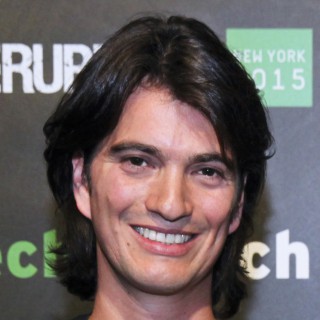
72 episodes with Adam Neumann

12 episodes with Adam Neumann

15 episodes with Adam Neumann

10 episodes with Adam Neumann

8 episodes with Adam Neumann

5 episodes with Adam Neumann

6 episodes with Adam Neumann

5 episodes with Adam Neumann

5 episodes with Adam Neumann

4 episodes with Adam Neumann

6 episodes with Adam Neumann

5 episodes with Adam Neumann

6 episodes with Adam Neumann

5 episodes with Adam Neumann

6 episodes with Adam Neumann

4 episodes with Adam Neumann

4 episodes with Adam Neumann

3 episodes with Adam Neumann
Introducing Audible True Crime, a dedicated podcast feed where we bring you the best podcasts in true crime, with episodes dropping every single week. Find your next bingeable series about unsolved murders, cold cases, scams and mysteries. This is the cream of the crop of Audible podcasts, featuring award-winning series and soon-to-be favorites. Stop pestering your friends or searching “best true crime podcast” on Google. Up first, Guru: The Dark Side of Enlightenment: A search for spiritual guidance leads a group of strangers to seek direction from a self-help guru. And not just any guru. James Arthur Ray is an Oprah endorsed motivational speaker and entrepreneur whose unorthodox methods that blend self-improvement and economic advice have won him praise and a growing following. He's fast becoming a self-help superstar. But Ray's increasingly extreme methods push his followers to their limits. What are they seeking? What does he offer? And what happens when it all goes too far, and people die? Listen to Audible True Crime wherever you get your podcasts. Audible subscribers can binge all episodes on Audible True Crime early and ad-free right now. Join Audible in the Audible App or by subscribing on Apple Podcasts. Listen now: link.pscrb.fm/6438e/fdaudibletruecrimeron-93b44 See Privacy Policy at https://art19.com/privacy and California Privacy Notice at https://art19.com/privacy#do-not-sell-my-info.

On today's show we're talking about Adam Neumann, the founder of WeWork.There are probably few entrepreneurs in recent memory whose rise and fall has been documented as extensively as Adam Neumann.WeWork went from being one of the most celebrated private companies in the world, valued at roughly $47 billion at its peak, to one of the most spectacular failed IPOs in recent history.The company ultimately filed for bankruptcy years later.But perhaps the more interesting story for investors isn't the collapse of WeWork.It's what happened to Adam Neumann afterward.Because somehow, after becoming the public face of one of the largest venture-capital failures of the past decade, Neumann managed to convince sophisticated investors to give him hundreds of millions of dollars to build another real estate company.There is a lesson in that.And it starts with understanding what actually went wrong at WeWork.------------**Real Estate Espresso Podcast:** Spotify: [The Real Estate Espresso Podcast](https://open.spotify.com/show/3GvtwRmTq4r3es8cbw8jW0?si=c75ea506a6694ef1) iTunes: [The Real Estate Espresso Podcast](https://podcasts.apple.com/ca/podcast/the-real-estate-espresso-podcast/id1340482613) Website: [www.victorjm.com](http://www.victorjm.com) LinkedIn: [Victor Menasce](http://www.linkedin.com/in/vmenasce) YouTube: [The Real Estate Espresso Podcast](http://www.youtube.com/@victorjmenasce6734) Facebook: [www.facebook.com/realestateespresso](http://www.facebook.com/realestateespresso) Email: [podcast@victorjm.com](mailto:podcast@victorjm.com) **Y Street Capital:** Website: [www.ystreetcapital.com](http://www.ystreetcapital.com) Facebook: [www.facebook.com/YStreetCapital](https://www.facebook.com/YStreetCapital) Instagram: [@ystreetcapital](http://www.instagram.com/ystreetcapital)
“I am not Nicholas Rossi!” gasps Arthur Knight through an oxygen mask in March 2022. Recently discharged from a Covid ward in Glasgow, he's in a wheelchair. The police say he's Nicholas Rossi, suspected of faking his death and wanted for rape in Utah. The story makes headlines globally.When journalist Jane MacSorley meets Arthur Knight and his wife Miranda, she thinks the police have made a mistake. She embarks on a yearlong investigation, making a unique discovery which changes everything. Listen to I Am Not Nicholas Season 1 on Audible or wherever you get your podcasts. You can binge all episodes early and ad-free by joining Audible on the Audible App or on Apple Podcasts.See Privacy Policy at https://art19.com/privacy and California Privacy Notice at https://art19.com/privacy#do-not-sell-my-info.
Just in time for America's 250th birthday, follow Dan Taberski (Hysterical, 9/12, Missing Richard Simmons) as he sets off on his most complicated quest yet: to reclaim the manifesto and write his own. Dan attempts to rescue the manifesto as a form from the sweaty clutches of cynical politicians and mass shooters and return it to its rightful place: with the artists, the warriors, the visionaries, and the mildly crazy regular folks with something to say, the passion to say it, and the courage to do something about it. From Audible Originals and Please & Thanks Productions, this 6-part series explores the power of the manifesto and asks: Can we get inspired again… and can we do it without a bullet?Listen to Dan Taberski's Manifesto wherever you get your podcasts. Or binge all episodes of Manifesto ad-free right now on Audible. Start your Audible subscription in the Audible App or on Apple Podcasts. See Privacy Policy at https://art19.com/privacy and California Privacy Notice at https://art19.com/privacy#do-not-sell-my-info.
Adam Neumann joins Marc Andreessen, Ben Horowitz, and Erik Torenberg for a candid conversation about entrepreneurship, failure, and building Flow. Neumann reflects on his childhood, military service, immigration to the United States, the rise and fall of WeWork, and what he learned from one of the most scrutinized founder journeys in technology. He explains why Flow is focused on rethinking housing, community, and belonging, and why he believes technology can fundamentally improve how people live. The conversation explores resilience, company building, leadership, real estate, software, flexible living, and the global housing crisis. Along the way, Neumann discusses rebuilding trust, designing for community, and why some of the biggest entrepreneurial opportunities emerge from deeply personal experiences. Resources: Read Marc's blog post about Flow: https://a16z.com/announcement/flow/ Marc on X: https://x.com/pmarca Marc's Substack: https://pmarca.substack.com/ Ben on X: https://x.com/bhorowitz Erik on X: https://x.com/eriktorenberg Erik's Substack: https://eriktorenberg.substack.com/ Stay Updated:Find a16z on YouTube: YouTubeFind a16z on XFind a16z on LinkedInListen to the a16z Show on SpotifyListen to the a16z Show on Apple PodcastsFollow our host: https://twitter.com/eriktorenberg Please note that the content here is for informational purposes only; should NOT be taken as legal, business, tax, or investment advice or be used to evaluate any investment or security; and is not directed at any investors or potential investors in any a16z fund. a16z and its affiliates may maintain investments in the companies discussed. For more details please see a16z.com/disclosures. Hosted by Simplecast, an AdsWizz company. See pcm.adswizz.com for information about our collection and use of personal data for advertising.

Dan Teran is the co-founder Gutter Capital, a concentrated seed fund in NYC, and Elbow Grease, the accelerator that puts 15 startups in one building and helps build their teams for them.Gutter just announced a $75M Fund III and opened applications for the second Elbow Grease batch (apply below by July 31st)We get into starting an accelerator when there's already a hundred of them, why Gutter prefers very concentrated portfolios, what it was actually like selling Managed by Q to WeWork, why raising a fund turned out to be harder than selling a company, why he thinks startups should form a board and use OKR's from day one, and the time he went big-wave surfing with Adam Neumann and Laird Hamilton.Thank you to James Gettinger, Satya Patel, Abhinav Kapur, and JT White for help brainstorming topics for the conversation.Thank you to Numeral, Flex, Amplitude, and Merge for supporting this episode.Numeral: The end-to-end platform for sales tax and compliance https://www.numeral.comFlex: Get premium banking and a net 60 day credit card at 0% APY https://home.flex.one/referral/bananacapitalAmplitude: AI analytics, all you have to do is ask https://www.amplitude.comMerge: Every modal. One API. Total control. Check out Merge's Agent Handler. merge.dev/turnerTimestamps:(0:00) Elbow Grease: NYC's new accelerator(7:39) Building a small, hands-on, in-person experience(13:39) Recruiting 100 people into portfolio companies(16:25) Portfolio concentration makes investors more helpful(24:58) Why raising Fund 1 was so hard(28:08) Advice for new fund managers(30:30) “Hiring today is as competitive as ever”(32:23) Selling Managed By Q to WeWork(35:23) “Never raise too much money”(39:43) Almost buying his company back from WeWork in Feb 2020(43:50) Starting Gutter Capital in the depths of COVID(49:34) Funding angel investing with gambling proceeds(52:39) Behind the name “Gutter Capital”(54:49) “Raising a fund is like getting punched in the face”(59:03) Writing long LP letters(1:06:45) Investing in real world problems(1:09:48) What a Gutter founder looks like(1:12:46) How Gutter makes new investments(1:18:41) Importance of customer calls at pre-seed(1:21:59) Evolution of NYC tech over last 15 years(1:26:15) Why you should form a board at Seed(1:28:29) How to run a Seed stage board meeting(1:34:04) Sharing carry with portfolio founders(1:35:56) The best founders need lots of help(1:39:30) Big wave surfing with Adam Neumann and Laird HamiltonReferencedApply to Elbow Grease: https://forms.gutter.cc/eg0002-applicationElbow Grease: https://elbowgrease.cc/Gutter Capital: https://www.gutter.cc/WeWork Acquires Managed By Q: https://techcrunch.com/2019/04/03/wework-acquires-managed-by-q/Follow DanLinkedIn: https://www.linkedin.com/in/danteran/Follow TurnerTwitter: https://twitter.com/TurnerNovakLinkedIn: https://www.linkedin.com/in/turnernovakSubscribe to my newsletter to get every episode + the transcript in your inbox every week: https://www.thespl.it/
Dr. John Schneider rode into town like a character out of a Western: an outsider on a Harley-Davidson, in trademark cowboy boots. He promised relief to patients suffering in Wyoming and Montana. He seemed like the hero they needed. But when surgeries go wrong and a strange letter exposes a bitter feud, medical professionals and government officials search for the truth about this cowboy doctor. They discover claims of broken bodies, bullying, fraud, and lawsuits.From Audible, the fifth season of the hit series Dr. Death returns with The Cowboy: the story of a surgeon who took advantage of a broken system and the fight to bring him to justice. Listen to Dr. Death: The Cowboy wherever you get your podcasts. Audible subscribers can binge all episodes of Dr. Death: The Cowboy ad-free right now. Start your Audible subscription in the Audible App or on Apple Podcasts.See Privacy Policy at https://art19.com/privacy and California Privacy Notice at https://art19.com/privacy#do-not-sell-my-info.
Is what's happening on OnlyFans real? Or is it only a fantasy?In this provocative investigation into OnlyFans—the adult platform where subscribers around the world spent more than $7 billion in 2024—journalist Leon Neyfakh teams up with comedian and OnlyFans creator Gracie Canaan for a one-of-a-kind exploration into the current state of human connection. Throughout, they discover that the site originally built for spicy adult content has quietly and surprisingly become something more complicated— an emotional marketplace where desire, performance, care, fantasy, and vulnerability seemingly blur together.As Neyfakh and Canaan navigate timely questions about autonomy, performance, and profit, a question emerges: is connection mediated by a screen still authentic? To find the answer, they meet creators building lucrative businesses, subscribers who believe they've found something real, professional “chatters” who are paid to simulate affection, and pioneers who have helped engineer intimacy at scale.Captivating and tender, OnlyFantasy is ultimately about the cost of loneliness, the seductive power of desire, and how the rules of human intimacy are being rewritten online.Listen to OnlyFantasy wherever you get your podcasts. Or binge all episodes of OnlyFantasy ad-free right now on Audible. Start your Audible subscription in the Audible App or on Apple Podcasts.See Privacy Policy at https://art19.com/privacy and California Privacy Notice at https://art19.com/privacy#do-not-sell-my-info.

The Twenty Minute VC: Venture Capital | Startup Funding | The Pitch
Marc Andreessen is a Co-Founder and General Partner at Andreessen Horowitz. The firm now manages over $90BN and has invested in the likes of OpenAI, Airbnb, Coinbase, Anduril and many more. Marc is an innovator and creator, one of the few to pioneer a software category used by more than a billion people and one of the few to establish multiple billion-dollar companies. Marc co-created the Mosaic internet browser and co-founded Netscape (sold to AOL for $4.2 billion). He also co-founded Loudcloud, which as Opsware, sold to Hewlett-Packard for $1.6 billion. AGENDA: 05:00 — Why Introspection is Overrated: The Dangers of Learning from the Past 08:00 — The One Trait Marc Andreessen Looks For in Every Founder 14:30 — Are the Best Founders Broken? What Makes the Best Founders? 16:00 — "Extreme Ownership": Why Everything Being Your Fault Changes Everything 19:00 — "Do You Read the Comments?" Fame, Criticism & How to Deal with Haters 26:00 — Is Venture Now Go Big or Go Home? The Real Future of VC 30:00 — Does Price Matter Anymore? The Dangerous Truth About Valuations 33:00 — "Stop Chasing Diamonds in the Rough": Why Most VCs Get This Completely Wrong 36:00 — Do You Actually Need to Like Founders? The Uncomfortable Answer 40:00 — Are Companies 75% Overstaffed? The Most Controversial Take on Hiring 45:00 — When Will a16z Go Public? 50:00 — Why Labour Displacement Theory Around AI is Totally Wrong 55:00 — Why Silicon Valley Is More Dominant Than Ever? 01:00:00 — Why a16z Invested $300M into Adam Neumann 01:05:00 — What Still Drives Marc Andreesen? 01:10:00 — What is the Biggest Mistakes VCs Still Make Today?
Story of the Week (DR):The dangers of not pouring water over your dropped out campfire:Travis Kalanick sees benefits of being in stealth mode for 8 years. ‘You build a culture of people that want to build and do not need to be famous'While studying at UCLA, Kalanick was a member of Theta Xi fraternity. In 1998, he dropped outOnly people mentioned all former Uber bros:CTO Brian Attwell: CloudKitchens CTO says he might add an IQ test for job applicantsEric MeyhoferBusiness Insider published details of a meeting at Uber in 2018 where CEO Dara Khosrowshahi and head of the self-driving unit Eric Meyhofer were questioned by employees: “Business Insider called ATG's culture ‘toxic' and referred to ‘missed warning signs,' vast dysfunction' and ‘rampant infighting.' Any truth in this?”Meyhofer then launched into a story about his kids. He told Uber employees that he knew culture was great under his leadership because his teenage kids wanted to visit the Uber campus while everyone was away over Thanksgiving break.After hearing Meyhofer's defense, a handful of employees discussed him on the anonymous chat app Blind: "Eric Meyhofer: Based on his response at all hands on ATG culture, discuss his tenure as Head of ATG!" One hundred forty-one people voted to "replace him" and 28 voted to "keep him."In 2019: Uber re-started testing driverless cars following an accident in which one person was killed: Meyhofer: "We've seen people bully these cars. They feel like they can be more aggressive because we won't take a position on it, or we'll allow it."Strategic Partner Anthony Levandowski: charged by the Department of Justice for the alleged theft of trade secrets from Google's self-driving unit Waymo in 2019Judge William Alsup sentenced him to 18 months in prison: "This is the biggest trade secret crime I have ever seen. This was not small. This was massive in scale.President Donald Trump granted a full pardon to LevandowskiPardoned for Fraud, a CEO Mounts His Comeback: ‘We Can Trust You Now'Trevor Milton's conviction for defrauding investors in truck company Nikola was wiped away. He's now raising funds for a new jet he claims will transform flying.He later enrolled at Utah Valley University but dropped out after one semesterPresident Trump granted a full and unconditional pardon to Nikola founder Trevor Milton on March 27, 2025"He has unveiled plans for a new small jet that he says will have the highest speed and range—and largest lavatory—in the light jet category. Investor documents reviewed by The Wall Street Journal said the goal is for the plane to be the first light jet to focus on artificial-intelligence flight."Delta CEO slams Washington over unpaid TSA agents, says front-line workers are being used as ‘political chips'Top airline CEOs plead with Congress to restore DHS funding and pay airport workers. ‘Once again, air travel is the political football'Between June 1, 2025, and March 16, 2026:Southwest repurchased $2.6B in 2005; $400M in 2026United $1.5B5 NEOs: $91 million in 2025Scott Kirby $34M; $97M in shares Delta focused on $4.8B debt reductionFrontline Transportation Security Officers (TSOs, Airport Screeners): 50,000$328M per monthBoards protected CEO bonuses as tariffs threatened business. Now, as Iran disrupts trade, CEOs may get more protection DRFortune: Amanda Gerut, West Coast editorWhen Apple CEO Tim Cook and his executive team received their performance targets for fiscal 2025, the board set a modest bar for bonus payouts. The new targets, including sales and operating profit, did not require Apple's leadership to expand the business—the board set goals at the same level or below the prior year's results, citing “trade policy” and an “uncertain macroeconomic outlook.”A broader trend in which boards “protect” CEO pay from external shocks (like tariffs) either by carving out those costs or by quietly lowering performance hurdles in advanceHP is highlighted: its board explicitly excluded tariff costs (net of tariff costs) from both annual and long‑term incentive calculations, which helped CEO Enrique Lores earn roughly two‑thirds of his target bonusAn exclusive analysis of pay data from 50 public companies by Compensation Advisory Partners (CAP) reveals how corporate boards across America use a range of techniques—more-conservative targets, widened performance curves, and flattened payout ranges—to protect CEO compensation from uncertainties like the chaos of President Trump's Liberation Day tariffs in 2025.According to CAP's findings, total pay for CEOs in 2025 rose 8% year-over-year, with annual bonus payouts up 4%.Meanwhile, median financial performance was generally flat to up, with median revenue growing 2.9% and earnings per share down slightly at negative 1.6%.Even among companies with the weakest payouts due to underperformance, CEOs still collected 87% of their target bonuses, up from 77% the year before.The share of companies that landed in the lowest bonus payout tier was down, from 15% in 2024 to 9% in 2025.Now, with the Iran conflict erupting weeks after most companies finalized their 2026 incentive goals—and global stock markets down roughly $3.5 trillion—some market observers expect that boards will soon be holding the same conversations again.Warner Bros. Discovery CEO David Zaslav set to receive up to $887 million if Paramount deal closesMeta is killing off the metaverse. It lost $80 billionDual class founder CEO chair for the win: don't worry governance community, there's nothing to see hereOversight Board Implementation Assessment (337 recommendations):Implementation demonstrated through published information: 62 (18%)Partial implementation demonstrated through published information: 52 (15%)Progress reported: 89 (26%)Meta reported implementation or described as work Meta already does but did not publish information to demonstrate implementation: 53 (16%)Recommendation declined after feasibility assessment: 12 (4%)Recommendation declined: 34 (10%)Recommendation omitted or reframed: 30 (9%)Awaiting first response: 5 (1%)Goodliest of the Week (MM/DR):DR: Judge reinstates 1,000 Voice of America employees, deems wind-down illegalDR: Trump's war will boost the clean energy sector he despisesMM: Banning ‘woke' AI in IdahoAI bill says AI needs to be factual and not ideological, and says:Nothing in this subsection shall prohibit a large language model from accurately describing DEI concepts, history, or critiques in an informational, academic, or analytical context when such information is requested by the user.Which means this prompt: “Was Jesus black?”, Gemini's answer is OK:Historically, Jesus was a Middle Eastern Jew from the 1st century, not Black in the modern sub-Saharan ethnic sense. He most likely had brown skin, dark hair, and an olive-brown complexion, representing a person of color, not the white European often depicted, though his exact appearance is unknownAryan Nation (started in Idaho) and Megyn Kelly disagree: "Jesus was a white man, too."MM: SEC Prepares Proposal to Eliminate Quarterly Reporting RequirementAssholiest of the Week (MM):OG Tech BrosTrevor Milton: Pardoned for Fraud, a CEO Mounts His Comeback: ‘We Can Trust You Now'Travis Kalanick: ‘I never left': Travis Kalanick launches new robotics company Atoms with manifesto"At Atoms we make gainfully employed robots — specialized robots with productive jobs that bring abundance to their owners and society at large,"Where is Adam Neumann?A TikTok tour of Adam Neumann's Flow raises old questionsOk, so what about some obscure asshole bro, like Martin Schkreli?Martin Shkreli's New Computing Firm Is Betting It Can Upend Nvidia's Business ModelNot pardoned or making a big bro comeback: Elizabeth Holmes… you know, because of the boobs Airlines DRTop airline CEOs plead with Congress to restore DHS funding and pay airport workers. ‘Once again, air travel is the political football'Delta: $1bn share buyback announced May 2025Southwest: $2.6B in 2025; $400M in 2026United $1.5BAmerican Airlines: Already spent all their money on buybacks, never recoveredFrontline Transportation Security Officers (TSOs, Airport Screeners): 50,000$328M per month x 12 months = $3.9bnTotal big 4 buybacks: $4.2bnYou could have still bought back $300m AND paid to stay open AND get a guarantee from the government to be repaid when the shutdown is over - you would have been heroes, your CEOs could have made huge paydays… wait…Ed Bastian $27m; $151m in sharesBob Jordan $10m; $15m in sharesScott Kirby $34M; $97M in sharesBob Isom $15M; $14M in sharesCar companiesWhy $4 gasoline is the tipping point for EVsThese 18 Automakers Are Walking Away From EV PlansHonda (Acura)GM (Chevrolet)Took $6bn write down, but still says they'll make EVsStellantis (Dodge, Maserati, Ram)FordTook a $19.5 billion write down and killed most EVsHyundai (Genesis, Kia, Kona, Ioniq 6)Nissan (Infiniti)Ferrari (Lamborghini)Jaguar (Land Rover)Polestar (no longer sending to the US)PorscheVW (ID.7, ID.Buzz)Back in 2009, Johan de Nysschen, who was the president of Audi of America, made fun of the new all-electric Chevy Volt, saying, “No one is going to pay a $15,000 premium for a car that competes with a Corolla.” He continued, saying EVs are mainly “for the intellectual elite who want to show what enlightened souls they are . . . so there are not enough idiots who will buy it.”Headliniest of the WeekDR: Hinge Health appoints Tyler Sloat to its board of directors AND Chip Bergh Joins lululemon Board of DirectorsDR: Luxury Cruise Descends Into a Diarrhea Nightmare MM: Robot Goes Berserk in California Restaurant, Dragged Away by Staff After Smashing TablewareWho Won the Week?DR: Amit Banati at Fortune BrandsMM: Amit Banati at Fortune Brands, who was “selected” as new CEO of Fortune Brands after sitting on the board for five years. Fortune Brands makes faucets and locks and doors, Banati was CFO at Kellogg making snack food, so naturally it was a good choice. On the announcement, an activist immediately took a stake - Banati was supposed to start in May, left Kellogg, signed a contract with Fortune, and stepped down from activist pressure, but not before getting PAID $18.4m for zero days as CEO (it was his “make up” for leaving options at Kellogg). PredictionsDR: President JD Vance Preemptively Pardons Trevor Milton for Future Fraud MisunderstandingsMM: Humans will be cool again 5 years from now - I called our local HVAC company to ask them a question about replacing our air handler with a salvaged thing from an auction, and the person picked up said “Hi, this is Sam at Glasco. How can I help you?” I spent a solid 40 seconds to a minute describing what I was thinking, saying it's a weird request, just looking for some feedback. After I finish, Sam said “I'm a virtual assistant - here's what I hear you're looking for, it's a great question…” I fucking lost my mind, told the virtual assistant she sucked, asked for a human, and hung up. This is local company serving “South Windsor and CT area” using a fucking AI bot to avoid talking to a customer??? Humans will be cool again.

Adam Neumann is an entrepreneur, investor, and the co-founder of WeWork. Launching the shared office-space company in 2010, he grew WeWork into a global coworking brand that, at its peak, was valued at roughly $47 billion. Under his leadership, the company rapidly expanded its network of shared workspaces across major cities worldwide. In 2022, he founded Flow, a residential real estate company focused on branded, tech-enabled apartment communities that offer a service-oriented, community-driven approach to long-term housing. ------ Thank you to the sponsors that fuel our podcast and our team: AG1 https://DrinkAG1.com/tetra ------ Athletic Nicotine https://www.AthleticNicotine.com/tetra Use code 'TETRA' ------ LMNT Electrolytes https://DrinkLMNT.com/tetra Use code 'TETRA' ------ Sign up to receive Tetragrammaton Transmissions https://www.tetragrammaton.com/join-newsletter

What makes a character so compelling that readers will forgive almost anything about the plot? How do you move beyond vague flaws and generic descriptions to create people who feel pulled from real life? In this solo episode, I share 15 actionable tips for writing deep characters, curated from past interviews on the podcast. In the intro, thoughts from London Book Fair [Instagram reel @jfpennauthor; Publishing Perspectives; Audible; Spotify]; Insights from a 7-figure author business [BookBub]. This show is supported by my Patrons. Join my Community and get articles, discounts, and extra audio and video tutorials on writing craft, author business, and AI tools, at Patreon.com/thecreativepenn This episode has been created from previous episodes of The Creative Penn Podcast, curated by Joanna Penn, as well as chapters from How to Write a Novel: From Idea to Book. Links to the individual episodes are included in the transcript below. In this episode: Master the ‘Believe, Care, Invest' trifecta, how to hook readers on the very first page Define the Dramatic Question: Who is your character when the chips are down? Absolute specificity. Why “she's controlling” isn't good enough Understand the Heroine's Journey, strength through connection, not solo action Use ‘Metaphor Families' to anchor dialogue and give every character a distinctive voice Find the Diagnostic Detail, the moments that prove a character is real Writing pain onto the page without writing memoir Write diverse characters as real people, not stereotypes or plot devices Give your protagonist a morally neutral ‘hero' status. Compelling beats likeable. Build vibrant side characters for series longevity and spin-off potential Use voice as a rhythmic tool Link character and plot until they're inseparable Why discovery writers can write out of order and still build deep character Find the sensory details that make characters live and breathe More help with how to write fiction here, or in my book, How to Write a Novel. Writing Characters: 15 Tips for Writing Deep Character in Your Fiction In today's episode, I'm sharing fifteen tips for writing deep characters, synthesised from some of the most insightful interviews on The Creative Penn Podcast over the past few years, combined with what I've learned across more than forty books of my own. I'll be referencing episodes with Matt Bird, Will Storr, Gail Carriger, Barbara Nickless, and Sarah Elisabeth Sawyer. I'll also draw on my own book, How to Write a Novel, which covers these fundamentals in detail. Whether you're writing your first novel or your fiftieth, whether you're a plotter or a discovery writer like me, these tips will help you create characters that readers believe in, care about, and invest in—and keep coming back for more. Let's get into it. 1. Master the ‘Believe, Care, Invest' Trifecta When I spoke with Matt Bird on episode 624, he laid out the three things you need to achieve on the very first page of your book or in the first ten minutes of a film. He calls it “Believe, Care, and Invest.” First, the reader must believe the character is a real person, somehow proving they are not a cardboard imitation of a human being, not just a generic type walking through a generic plot. Second, the reader must care about the character's circumstances. And third, the reader must invest in the character's ability to solve the story's central problem. Matt used The Hunger Games as his primary example, and it's brilliant. On the very first page, we believe Katniss's voice. Suzanne Collins writes in first person with a staccato rhythm—lots of periods, short declarative sentences—that immediately grounds us in a survivalist mentality. We care because Katniss is starving. She's protecting her little sister. And we invest because she is out there bow hunting, which Matt pointed out is one of the most badass things a character can do. She even kills a lynx two pages in and sells the pelt. We invest in her resourcefulness and grit before the plot has even begun. Matt was very clear that this has nothing to do with the character being “likable.” He said his subtitle, Writing a Hero Anyone Will Love, doesn't mean the character has to be a good person. He described “hero” as both gender-neutral and morally neutral. A hero can be totally evil or totally good. What matters is that we believe, care, and invest. He demonstrated this beautifully by breaking down the first ten minutes of WeCrashed, where the characters of Adam and Rebekah Neumann are absolutely not likable, but we are completely hooked. Adam steals his neighbour's Chinese food through a carefully orchestrated con involving an imaginary beer. It's not admirable behaviour, but the tradecraft involved, as Matt put it—using a term from spy movies—makes us invest in him. We see a character trying to solve the big problem of his life, which is that he's poor and wants to be rich, and we want to see if he can pull it off. Actionable step: Go to the first page of your current work in progress. Does it achieve all three? Does the reader believe this is a real person with a distinctive voice? Do they care about the character's circumstances? And do they invest in the character's ability to handle what's coming? If even one of those three is missing, that's your revision priority. 2. Define the Dramatic Question: Who Are They Really? Will Storr, author of The Science of Storytelling, came on episode 490 and gave one of the most powerful frameworks I've ever heard for character-driven fiction. He explained that the human brain evolved language primarily to swap social information—in other words, to gossip. We are wired to monitor other people, to ask the question: who is this person when the chips are down? That's what Will calls the Dramatic Question, and it's what he believes lies at the heart of all compelling storytelling. It's not a question about plot. It's a question about the character's soul. And every scene in your novel should force the character to answer it. His example of Lawrence of Arabia is unforgettable. The Dramatic Question for the entire film is: who are you, Lawrence? Are you ordinary or are you extraordinary? At the beginning, Lawrence is a cocky, rebellious young soldier who believes his rebelliousness makes him superior. Every iconic scene in that three-hour film tests that belief. Sometimes Lawrence acts as though he truly is extraordinary—leading the Arabs into battle, being hailed as a god—and sometimes the world strips him bare and he sees himself as ordinary. Because it's a tragedy, he never overcomes his flaw. He doubles down on his belief that he's extraordinary until he becomes monstrous, culminating in that iconic scene where he lifts a bloody dagger and sees his own reflection with horror. Will also used Jaws to demonstrate how this works in a pure action thriller. Brody's dramatic question is simple: are you going to be old Brody who is terrified of the water, or new Brody who can overcome that fear? Every scene where the shark appears is really asking that question. And the last moment of the film isn't the shark blowing up. It's Brody swimming back through the water, saying he used to be scared of the water and he can't imagine why. Actionable step: Write down the Dramatic Question for your protagonist in a single sentence. Is it “Are you ordinary or extraordinary?” or “Are you brave enough to love again?” or “Will you sacrifice your principles for survival?” If you can't answer this with specificity, your character might still be a sketch rather than a person. 3. Get rid of Vague Flaws, and use Absolute Specificity This was one of Will Storr's most important points. He said that vague thinking about characters is really the enemy. When he teaches workshops and asks writers to describe their character's flaw, most of them say something like “they're very controlling.” And Will's response is: that's not good enough. Everyone is controlling. How are they controlling? What's the specific mechanism? He gave the example of a profile he read of Theresa May during the UK's Brexit chaos. Someone who knew her said that Theresa May's problem was that she always thinks she's the only adult in every room she goes into. Will said that stopped him in his tracks because it's so precise. If you define a character with that level of specificity, you can take them and put them in any genre, any situation—a spaceship, a Victorian drawing room, a school playground—and you will know exactly how they're going to behave. The same applies to Arthur Miller's Willy Loman in Death of a Salesman, as Will described it: a man who believes absolutely in capitalistic success and the idea that when you die, you're going to be weighed on a scale, just as God weighs you for sin, but now you're weighed for success. That's not a vague flaw. That's a worldview you can drop into any story and watch it combust. Will made another counterintuitive point that I found really valuable: writers often think that piling on multiple traits will create a complex character, but the opposite is true. Starting with one highly specific flaw and running it through the demands of a relentless plot is what generates complexity. You end up with a far more nuanced, original character than if you'd started with a laundry list of vague attributes. Actionable step: Take your protagonist's flaw and pressure-test it. Is it specific enough that you could place this character in any situation and predict their behaviour? If you're stuck at “she's stubborn” or “he's insecure,” keep pushing. What kind of stubborn? What kind of insecure? Find the diagnostic sentence—the Theresa May level of precision. 4. Understand the Heroine's Journey: Strength Through Connection Gail Carriger came on episode 550 to discuss her nonfiction book, The Heroine's Journey, and it completely reframed how I think about some of my own fiction. Gail explained that the core difference between the Hero's Journey and the Heroine's Journey comes down to how strength and victory are defined. The Hero's Journey is about strength through solo action. The hero must be continually isolated to get stronger. He goes out of civilisation, faces strife alone, and achieves victory through physical prowess and self-actualisation. The Heroine's Journey is the opposite. The heroine achieves her goals by activating a network. She's a delegator, a general. She identifies where she can't do something alone, finds the people who can help, and portions out the work for mutual gain. Gail put it simply: the heroine is very good at asking for help, which our culture tends to devalue but which is actually a powerful form of strength. Crucially, Gail stressed that gender is irrelevant to which journey you're writing. Her go-to examples are striking: the recent Wonder Woman film is practically a beat-for-beat hero's journey—Gilgamesh on screen, as Gail described it. Meanwhile, Harry Potter, both the first book and the series as a whole, is a classic heroine's journey. Harry's power comes from his network—Dumbledore's Army, the Order of the Phoenix, his friendships with Ron and Hermione. He doesn't defeat Voldemort alone. He defeats Voldemort because of love and connection. This distinction has real practical consequences for writers. If you're writing a hero's journey and you hit writer's block, Gail said, the solution is usually to isolate your hero further and pile on more strife. But if you're writing a heroine's journey, the solution is probably to throw a new character into the scene—someone who has advice to offer or a skill the heroine lacks. The actual solutions to writer's block are different depending on which narrative you're writing. As I reflected on my own work, I realised that my ARKANE thriller protagonist, Morgan Sierra, follows a hero's journey—she's a solo operative, a lone wolf like Jack Reacher or James Bond. But my Mapwalker fantasy series follows a heroine's journey, with Sienna and her group of friends working together. I hadn't consciously chosen those paths; the stories led me there. But understanding the framework helps me write more intentionally now. Actionable step: Identify which journey your protagonist is on. Does your character gain strength by being alone (hero) or by building connections (heroine)? This will inform every plot decision you make, from how they face obstacles to how your story ends. 5. Use ‘Metaphor Families' to Anchor Dialogue and Voice One of the most practical techniques Matt Bird shared on episode 624 is the idea of assigning each character a “metaphor family”—a specific well of language that they draw from. This gives each character a distinctive voice that goes beyond accent or dialect. Matt explained how in The Wire, one of the most beloved TV shows of all time, every character has a different metaphor family. What struck him was that Omar, this iconic character, never utters a single curse word in the entire series. His metaphor family is pirate. He talks about parlays, uses language that feels like it belongs in Pirates of the Caribbean, and it creates this incredible ironic counterpoint against his urban setting. It tells us immediately that this is a character who sees himself in a tradition of people that doesn't match his immediate surroundings. Matt also referenced the UK version of The Office, where Gareth works at a paper company but aspires to the military. So all of his language is drawn from a military metaphor family. He doesn't talk about filing and photocopying; he talks about tactics and discipline and being on the front line. This tells us that the character has a life and dreams beyond the immediate scene—and it's the gap between aspiration and reality that makes him both funny and believable. He pointed out that a metaphor family sometimes comes from a character's background, but it's often more interesting when it comes from their aspirations. What does your character want to be? What world do they fantasise about inhabiting? That's where their language should come from. In Star Wars, Obi-Wan Kenobi is a spiritual hermit, but his metaphor family is military. He uses the language of generals and commanders, and that ironic counterpoint is part of what makes him feel so rich. Actionable step: Assign each of your main characters a metaphor family. It could be based on their job, their background, or—more interestingly—their secret aspirations. Then go through your dialogue and make sure each character is consistently drawing from that well of language. If two characters sound the same when you strip away the dialogue tags, this is the fix. 6. Find the Diagnostic Detail: The Diagonal Toast Avoid clichéd character tags—the random scar, the eye patch, the mysterious limp—unless they serve a deep narrative purpose. Matt Bird on episode 624 was very funny about this: he pointed out that Nick Fury, Odin, and eventually Thor all have eye patches in the Marvel Cinematic Universe. Eye patches are done, he said. You cannot do eye patches anymore. Instead, look for what I'm calling the “diagonal toast” detail, after a scene Matt described from Captain Marvel. In the film, Captain Marvel is trying to determine whether Nick Fury is who he says he is. She asks him to prove he isn't a shapeshifting alien. Fury shares biographical details—his history, his mother—but then she pushes further and says, name one more thing you couldn't possibly have made up about yourself. And Fury says: if toast is cut diagonally, I can't eat it. Matt said that detail is gold for a writer because it feels pulled from a real life. You can pull it from your own life and gift it to your characters, and the reader can tell it's not manufactured. He gave another example from The Sopranos: Tony Soprano's mother won't answer the phone after dark. The show's creator, David Chase, confirmed on the DVD commentary that this came from his own mother, who genuinely would not answer the phone after dark and couldn't explain why. Matt's practical advice was to keep a journal. Write down the strange, specific things that people do or say. Mine your own life for those hyper-specific details. You just need one per book. In my own writing, I've used this approach. In my ARKANE thrillers, my character Morgan Sierra has always been Angelina Jolie in my mind—specifically Jolie in Lara Croft or Mr and Mrs Smith. And Blake Daniel in my crime thriller series was based on Jesse Williams from Grey's Anatomy. I paste pictures of actors into my Scrivener projects. It helps with visuals, but also with the sense of the character, their energy and physicality. But visual details only take you so far. It's the behavioural quirks—the diagonal toast moments—that make a character feel genuinely alive. That said, physical character tags can work brilliantly when they serve the story. As I discuss in How to Write a Novel, Robert Galbraith's Cormoran Strike is an amputee, and his pain and the physical challenges of his prosthesis are a key part of every story—it's not a cosmetic detail, it's woven into the action and the character's psychology. My character Blake Daniel always wears gloves to cover the scars on his hands, which provides an angle into his wounded past as well as a visual cue for the reader. And of course, Harry Potter's lightning-shaped scar isn't just a mark—it's a direct connection to his nemesis and the mythology of the entire series. The rule of thumb is: if the tag tells us something about the character's interior life or connects to the plot, it's earning its place. If it's just there to make the character visually distinctive, it's probably a crutch. Game of Thrones takes character tags further with the family houses, each with their own mottos and sigils. The Starks say “Winter is coming” and their sigil is a dire wolf. Those aren't just labels—they're worldview made visible. Actionable step: Start a “diagonal toast” notebook. Every time you notice something strange and specific about someone's behaviour—something that feels too real to be made up—write it down. Then gift it to a character who needs more texture. 7. Displace Your Own Trauma into the Work Barbara Nickless shared something deeply personal on episode 732 that fundamentally changed how I think about putting pain onto the page. While starting At First Light, the first book in her Dr. Evan Wilding series, she lost her son to epilepsy—something called SUDEP, Sudden Unexplained Death in Epilepsy. One day he was there, and the next day he was gone. Barbara said that writing helped her cope with the trauma, that doing a deep dive into Old English literature and the Viking Age for the book's research became a lifeline. But here's what's important: she didn't give Dr. Evan Wilding her exact trauma. Evan Wilding is four feet five inches, and Barbara described how he has to walk through a world that won't adjust to him. That's its own form of learning to cope when circumstances are beyond your control. She displaced her genuine grief into the character's different but parallel struggle. When I asked her about the difference between writing for therapy and writing for an audience, she drew on her experience teaching creative writing to veterans through a collaboration between the US Department of Defense and the National Endowment for the Arts. She said she's found that she can pour her heartache into her characters and process it through them, even when writing professionally, and that the genuine emotion is what touches readers. We've all been through our own losses and griefs, so seeing how a character copes can be deeply meaningful. I've always found that putting my own pain onto the page is the most direct way to connect with a reader's soul. My character Morgan Sierra's musings on religion and the supernatural are often my own. Her restlessness, her fascination with the darker edges of faith—those come from me. But her Krav Maga fighting skills and her ability to kill the bad guys are definitely her own. That gap between what's mine and what's hers is where the fiction lives. Barbara also said something on that episode that I wrote down and stuck on my wall. She said the act of producing itself is a balm to the soul. I've been thinking about that ever since. On my own wall, I have “Measure your life by what you create.” Different words, same truth. Actionable step: If you're carrying something heavy—grief, anger, fear, regret—consider how you might displace it into a character's different but emotionally parallel struggle. Don't copy your exact situation; transform it. The emotion will be genuine, and the reader will feel it. 8. Write Diverse Characters as Real People When I spoke with Sarah Elisabeth Sawyer on episode 673—Sarah is Choctaw and a historical fiction author honoured by the Smithsonian's National Museum of the American Indian—she offered a perspective that every fiction writer needs to hear. The key message was to move away from stereotypes. Don't write your American Indian character as the “Wise Guide” who exists solely to dispense mystic wisdom to the white protagonist. Don't limit diverse characters to historical settings, as though they only exist in the past. Place them in normal, contemporary roles. Your spaceship captain, your forensic scientist, your small-town baker—any of them can be American Indian, or Nigerian, or Japanese, and their heritage should be a lived-in part of their identity, not the sole reason they exist in the story. I write international thrillers and dark fantasy, and my fiction is populated with characters from all over the world. I have a multi-cultural family and I've lived in many places and travelled widely, so I've met, worked with, and had relationships with people from different cultures. I find story ideas through travel, and if I set my books in a certain place, then the story is naturally populated with the people who live there. As I discuss in my book, How to Write a Novel, the world is a diverse place, so your fiction needs to be populated with all kinds of people. If I only populated my fiction with characters like me, they would be boring novels. There are many dimensions of difference—race, nationality, sex, age, body type, ability, religion, gender, sexual orientation, socio-economic status, class, culture, education level—and even then, don't assume that similar types of people think the same way. Some authors worry they will make mistakes. We live in a time of outrage, and some authors have been criticised for writing outside their own experience. So is it too dangerous to try? Of course not. The media amplifies outliers, and most authors include diverse characters in every book without causing offence because they work hard to get it right. It's about awareness, research, and intent. Actionable step: Audit the cast of your current work in progress. Have you written a mono-cultural perspective for all of them? If so, consider who could bring a different background, perspective, or set of cultural specifics to the story. Not as a token addition, but as a real person with a real life. 9. Respect Tribal and Cultural Specificity Sarah Elisabeth Sawyer on episode 673 was emphatic about one thing: never treat diverse groups as monolithic. If you're writing a Native American character, you must research the specific nation. Choctaw is not Navajo, just as British is not French. Sarah described the distinct cultural markers of the Choctaw people—the diamond pattern you'll see on traditional shirts and dresses, which represents the diamondback rattlesnake. They have distinct dances and songs. She said that if she saw someone in traditional dress at a distance, she would know whether they were Choctaw based on what they were wearing. She encouraged writers who want to write specifically about a nation to get to know those people. Go to events, go to a powwow, learn about the individual culture. She noted that a big misconception is that American Indians exist only in the past—she stressed that they are still here, still living their cultures, and fiction should reflect that present reality. I took a similar approach when writing Destroyer of Worlds, which is set mostly in India. I read books about Hindu myth, watched documentaries about the sadhus, and had one of my Indian readers from Mumbai check my cultural references. For Risen Gods, set in New Zealand with a young Maori protagonist, I studied books about Maori mythology and fiction by Maori authors, and had a male Maori reader check for cultural issues. Research is simply an act of empathy. The practical takeaway is this: if you're going to include a character from a specific cultural background, do the work. Use specific cultural details rather than generic signifiers. Sarah talked about how even she fell into stereotypes when she was first writing, until her mother pointed them out. If someone from within a culture can fall into those traps, the rest of us certainly can. Do the research, try your best, ask for help, and apologise if you need to. Actionable step: If you're writing a character from a specific culture, identify three to five sensory or behavioural details that are particular to that culture—not the generic version, but the real, researched, lived-in version. Consider hiring a sensitivity reader from that community to check your work. 10. Give Your Protagonist a Morally Neutral ‘Hero' Status Matt Bird was clear about this on episode 624: the word “hero” simply means the protagonist, the person we follow through the story. It's a functional role, not a moral label. We don't have to like them. We don't even have to root for their goals in a moral sense. We just have to find them compelling enough to invest our attention in their problem-solving. Think of Succession, where every member of the Roy family is varying degrees of awful, and yet the show was utterly compelling. Or WeCrashed, where Adam Neumann is a narcissistic con artist, but we can't look away because he's trying to solve the enormous problem of building an empire from nothing, and the tradecraft he employs is fascinating. As I wrote in How to Write a Novel, readers must want to spend time with your characters. They don't have to be lovable or even likable—that will depend on your genre and story choices—but they have to be captivating enough that we want to spend time with them. A character who is trying to solve a massive problem will naturally draw investment from the audience, even if we wouldn't want to have tea with them. Will Storr extended this idea by pointing out that the audience will actually root for a character to solve their problem even if the audience doesn't actually want the character's goal to be achieved in the real world. We don't really want more billionaires, but we invested in Adam Neumann's rise because that was the problem the story posed, and our brains are wired to invest in problem-solving. This connects to something deeper: what does your character want, and why? As I explore in How to Write a Novel, desire operates on multiple levels. Take a character like Phil, who joins the military during wartime. On the surface, she wants to serve her country. But she also wants to escape her dead-end town and learn new skills. Deeper still, her father and grandfather served, and by joining up, she hopes to finally earn their respect. And perhaps deepest of all, her father died on a mission under mysterious circumstances, and she wants to find out what happened from the inside. That layering of motivation is what turns a flat character into a three-dimensional one. The audience doesn't need to be told all of this explicitly. It can emerge through action, dialogue, and the choices the character makes under pressure. But you, the writer, need to know it. You need to know what your character really wants deep down, because that desire—more than any external plot device—is what drives the story forward. And your antagonist needs the same depth. They also want something, often diametrically opposed to your protagonist, and they need a reason that makes sense to them. In my ARKANE thriller Tree of Life, my antagonist is the heiress of a Brazilian mining empire who wants to restore the Earth to its original state to atone for the destruction caused by her father's company. She's part of a radical ecological group who believe the only way to restore Nature is to end all human life. It's extreme, but in an era of climate change, it's a motivation readers can understand—even if they disagree with the solution. Actionable step: If you're struggling to make a morally grey character work, make sure their problem is big enough and their methods are specific and interesting enough that we invest in the how, even if we're ambivalent about the what. 11. Build Vibrant Side Characters Gail Carriger made a point on episode 550 that was equal parts craft advice and business strategy. In a Heroine's Journey model, side characters aren't just fodder to be killed off to motivate the hero. They form a network. And because you don't have to kill them—unlike in a hero's journey, where allies are often betrayed or removed so the hero can be further isolated—you can pick up those side characters and give them their own books. Gail said this creates a really voracious reader base. You write one series with vivid side characters, and then readers fall in love with those side characters and want their stories. So you write spin-offs. The romance genre does this brilliantly—think of the Bridgerton books, where each sibling gets their own novel. The side character in one book becomes the protagonist in the next. Barbara Nickless experienced this firsthand with her Dr. Evan Wilding series. She has River Wilding, Evan's adventurous brother, and Diana, the axe-throwing research assistant, and her editor has already expressed interest in a spin-off series with those characters. Barbara described creating characters she wants to spend time with, or characters who give her nightmares but also intrigue her. That's the dual test: are they interesting enough for you to write, and interesting enough for readers to demand more? As I wrote in How to Write a Novel, characters that span series can deepen the reader's relationship with them as you expand their backstory into new plots. Readers will remember the character more than the plot or the book title, and look forward to the next instalment because they want more time with those people. British crime author Angela Marsons described it as readers feeling like returning to her characters is like putting on a pair of old slippers. Actionable step: Look at your supporting cast. Is there a side character who is vivid enough to carry their own story? If not, what could you add—a specific hobby, a distinct voice, a compelling backstory—that would make readers want more of them? 12. Use Voice as a Rhythmic Tool Voice is one of the most important elements of novel writing, and Matt Bird helped me think about it in a technical, mechanical way that I found really useful. He pointed out that the ratio of periods to commas defines a character's internal reality. A staccato rhythm—lots of periods, short sentences—suggests a character who is certain, grounded, or perhaps survivalist and traumatised. Katniss in The Hunger Games has a period-heavy voice. She's in survival mode. She doesn't have time for complexity or qualification. A flowing, comma-heavy style suggests someone more academic, more nuanced, or possibly more scattered and manipulative. The character who qualifies everything, who adds sub-clauses and digressions, is a different kind of person from the character who speaks in declarations. This is something you can actually measure. Pull up a passage of your character's dialogue or internal monologue and count the periods versus the commas. If the rhythm doesn't match who the character is supposed to be, you've found a mismatch you can fix. Sentence length is the heartbeat of your character's persona. And voice extends beyond rhythm to the words themselves. As I discussed in the metaphor families tip, each character should draw from a distinctive well of language. But voice also encompasses their relationship to silence. Some characters talk around the thing they mean; others say it straight. Some are self-deprecating; others are blunt to the point of rudeness. All of these choices are character choices, not just style choices. I find it useful to read my dialogue aloud—and not just to check for naturalness, but to hear whether each character sounds distinct. If you could swap dialogue lines between two characters and nobody would notice, you have a voice problem. One practical test: cover the dialogue tags and see if you can tell who's speaking from the words alone. Actionable step: Choose a key passage from your protagonist's point of view and read it aloud. Does the rhythm match the character? A soldier under fire should not sound like a philosophy professor at a wine tasting. Adjust the ratio of periods to commas until the voice feels right. 13. Link Character and Plot Until They're Inseparable Will Storr made the case on episode 490 that the number one problem he sees in the writing he encounters—in workshops, in submissions, even in published books—is that the characters and the plots are unconnected. There's a story happening, and there are people in it, but the story isn't a product of who those people are. He said a story should be like life. In our lives, the plots are intimately connected to who we are as characters. The goals we pursue, the obstacles we face, the same problems that keep recurring—these are products of our personalities, our flaws, our specific ways of being in the world. His framework is that your plot should be designed specifically to plot against your character. You've got a character with a particular flaw; the plot exists to test that flaw over and over until the character either transforms or doubles down and explodes. Jaws is the perfect example. Brody is afraid of water. A shark shows up in the coastal town he's responsible for protecting. The entire plot is engineered to force him to confront the one thing he cannot face. Will pointed out that the whole plot of Jaws is structured around Brody's flaw. It begins with the shark arriving, the midpoint is when Brody finally gets the courage to go into the water, and the very final scene isn't the shark blowing up—it's Brody swimming back through the water. Even a film that's ninety-eight percent action is, at its core, structured around a character with a character flaw. This is the standard I aspire to in my own work, even in my action-heavy thrillers. The external plot should be a mirror of the internal struggle. When those two are aligned, the story becomes irresistible. Will also made an important point about series fiction, which is where most commercial authors live. I asked him how this works when your character can't be transformed at the end of every book because there has to be a next book. His answer was elegant: you don't cure them. Episodic TV characters like Fleabag or David Brent or Basil Fawlty never truly change—and the fact that they don't change is actually the source of the comedy. But every episode throws a new story event at them that tests and exposes their flaw. You just keep throwing story events at them again and again. That's a soap opera, a sitcom, and a book series. As I wrote in How to Write a Novel, character flaws are aspects of personality that affect the person so much that facing and overcoming them becomes central to the plot. In Jaws, the protagonist Brody is afraid of the water, but he has to overcome that flaw to destroy the killer shark and save the town. But remember, your characters should feel like real people, so never define them purely by their flaws. The character addicted to painkillers might also be a brilliant and successful female lawyer who gets up at four in the morning to work out at the gym, likes eighties music, and volunteers at the local dog shelter at weekends. Character wounds are different from flaws. They're formed from life experience and are part of your character's backstory—traumatic events that happened before the events of your novel but shape the character's reactions in the present. In my ARKANE thrillers, Morgan Sierra's husband Elian died in her arms during a military operation. This happened before the series begins, but her memories of it recur when she faces a firefight, and she struggles to find happiness again for fear of losing someone she loves once more. And then there's the perennial advice: show, don't tell. Most writers have heard this so many times that it's easy to nod and then promptly write scenes that tell rather than show. Basically, you need to reveal your character through action and dialogue, rather than explanation. In my thriller Day of the Vikings, Morgan Sierra fights a Neo-Viking in the halls of the British Museum and brings him down with Krav Maga. That fight scene isn't just about showing action. It opens up questions about her backstory, demonstrates character, and moves the plot forward. Telling would be something like: “Morgan was an expert in Krav Maga.” Showing is the reader discovering it through the scene itself. Actionable step: Look at the main plot events of your novel. For each major turning point, ask: does this scene specifically test my protagonist's flaw? If not, can you redesign the scene so that it does? The tighter the connection between character and plot, the more powerful the story. 14. The ‘Maestra' Approach: Write Out of Order If you're a discovery writer like me, you may feel like the deep character work I've been describing sounds more suited to plotters. But Barbara Nickless gave me a beautiful metaphor on episode 732 that reframes it entirely. Barbara described her evolving writing process as being like a maestra standing in front of an orchestra. Sometimes you bring in the horns—a certain theme—and sometimes you bring in the strings—a certain character—and sometimes you turn to the soloist. It's a more organic and jumping-around process than linear writing, and Barbara said she's only recently given herself permission to work this way. When I told her that I use Scrivener to write in scenes out of order and then drag and drop them into a structure later, she was genuinely intrigued. And this is how I've always worked. I'll see the story in my mind like a movie trailer—flashes of the big emotional scenes, the pivotal confrontations, the moments of revelation—and I write those first. I don't know how they hang together until quite late in the process. Then I'll move scenes around, print the whole thing out, and figure out the connective tissue. The point is that discovery writers can absolutely build deep characters. Sometimes writing the big emotional scenes first is how you discover who the character is before you fill in the rest. You don't need a twenty-page character worksheet or a 200-page outline like Jeffery Deaver. You need to be willing to follow the character into the unknown and trust that the structure will emerge. As Barbara said, she writes to know what she's thinking. That's the discovery writer's credo. And I would add: I write to know who my characters are. Actionable step: If you're stuck on your current chapter, skip it. Write the scene that's burning in your imagination, even if it's from the middle or the end. That scene might be the key to unlocking who your character really is. 15. Use Research to Help with Empathy Research shouldn't just be about factual accuracy—it's a tool for finding the sensory details that create empathy. Barbara Nickless described research as almost an excuse to explore things that fascinate her, and I feel exactly the same way. I would go so far as to say that writing is an excuse for me to explore the things that interest me. Barbara and I both travel for our stories. For her Dr. Evan Wilding books, she did deep research into Old English literature and the Viking Age. For my thriller End of Days, I transcribed hours of video from Appalachian snake-handling churches on YouTube to understand the worldview of the worshippers, because my antagonist was brought up in that tradition. I couldn't just make that up. I had to hear their language, feel their conviction, understand why they would hold venomous serpents as an act of faith. Barbara also mentioned getting to Israel and the West Bank for research, and I've been to both places too. Finding that one specific sensory detail—the smell of a particular location, the specific way an expert handles a tool, the sound of a particular kind of music—makes the character's life feel lived-in. It's the difference between a character who is described as living in a place and a character who inhabits it. As I wrote in How to Write a Novel, don't write what you know. Write what you want to learn about. I love research. It's part of why I'm an author in the first place. I take any excuse to dive into a world different from my own. Research using books, films, podcasts, and travel, and focus particularly on sources produced by people from the worldview you want to understand. Actionable step: For your next piece of character research, go beyond reading. Watch a documentary, visit a location, talk to someone who lives the experience. Find one sensory detail—a smell, a sound, a texture—that you couldn't have invented. That detail will make your character feel real. Bonus: Measure Your Life by What You Create In an age of AI and a tsunami of content, your ultimate brand protection is the quality of your human creation. Barbara Nickless said that the act of producing itself is a balm to the soul, and I believe that with every fibre of my being. Don't be afraid to take that step back, like I did with my deadlifting. Take the time to master these deeper craft skills. It might feel like you're slowing down or going backwards by not chasing the latest marketing trend, but it's the only way to step forward into a sustainable, high-quality career. Your characters are your signature. No AI can replicate the specificity of your lived experience, the emotional truth of your displaced trauma, or the sensory details you've gathered from a life of curiosity and travel. Those are yours. Pour them into your characters, and they will resonate for years to come. Actionable Takeaway: Identify the Dramatic Question for your current protagonist. Can you state it in a single sentence with the kind of specificity Will Storr described? Is it as clear as “Are you ordinary or extraordinary?” or “Are you the only adult in the room?” If you can't answer it with that kind of precision, your character might still be a sketch. Give them a diagonal toast moment today. Find the one hyper-specific detail that proves they are not an imitation of life. And then ask yourself: does your plot test your character's flaw in every major scene? If you can align those two things—a precisely defined character and a plot that exists to test them—you will have a story that readers cannot put down. References and Deep Dives The episodes I've referenced today are all available with full transcripts at TheCreativePenn.com: Episode 732 — Facing Fears, and Writing Unique Characters with Barbara Nickless Episode 673 — Writing Choctaw Characters and Diversity in Fiction with Sarah Elisabeth Sawyer Episode 624 — Writing Characters with Matt Bird Episode 550 — The Heroine's Journey with Gail Carriger Episode 490 — How Character Flaws Shape Story with Will Storr Books mentioned: The Secrets of Character: Writing a Hero Anyone Will Love by Matt Bird The Science of Storytelling by Will Storr The Heroine's Journey by Gail Carriger How to Write a Novel: From Idea to Book by Joanna Penn You can find all my books for authors at CreativePennBooks.com and my fiction and memoir at JFPennBooks.com Happy writing! How was this episode created? This episode was initiated created by NotebookLM based on YouTube videos of the episodes linked above from YouTube/TheCreativePenn, plus my text chapters on character from How to Write a Novel. NotebookLM created a blog post from the material and then I expanded it and fact checked it with Claude.ai 4.6 Opus, and then I used my voice clone at ElevenLabs to narrate it. The post Writing Characters: 15 Actionable Tips For Writing Deep Character first appeared on The Creative Penn.

En este episodio hablamos junto a Kévin Monterrat sobre el caso de WeWork, fundado por Miguel McKelvey y Adam Neumann: dos perfiles completamente diferentes que compartían la misma visión.Un negocio que nace en Nueva York, en plena crisis inmobiliaria, con una idea que en la actualidad es muy común: un modelo basado en la comunidad y la integración. Un espacio de trabajo que se convirtió en comunidad.Junto a Kévin analizamos las decisiones que llevaron a la compañía a la cima y los errores que detonaron su declive, entre problemas internos y decisiones cuestionables.
The Twenty Minute VC: Venture Capital | Startup Funding | The Pitch
David George is a General Partner at Andreessen Horowitz, where he leads the firm's Growth investing team. His team has backed many of the defining companies of this era, including Databricks, Figma, Stripe, SpaceX, Anduril, and OpenAI, and is now investing behind a new generation of AI startups like Cursor, Harvey, and Abridge. AGENDA: 03:05 – Why Everyone is Wrong: Mega Funds Does Not Reduce Returns 10:40 – Is Public Market Capital Actually Cheaper Than Private Capital? 18:55 – The Biggest Advantage of Staying Private for Longer 23:30 – The #1 Investing Rule for a16z: Always Invest in the Founder's Strength of Strengths 31:20 – Why Fear of Theoretical Competition Makes Investors Miss Great Companies 35:10 – Does Revenue Matter as Much in a World of AI? 44:10 – Does Kingmaking Still Exist in Venture Capital Today? 49:20 – Do Margins Matter Less Than Ever in an AI-First World? 53:50 – My Biggest Miss: Anthropic and What I Learn From it? 56:30 – Has OpenAI Won Consumer AI? Will Anthropic Win Enterprise? 59:45 – The Most Controversial Decision in Andreessen Horowitz History 1:01:30 – Why Did You Invest $300M into Adam Neumann and Flow?
On May 5, 1993, three 8-year-old boys were brutally murdered in West Memphis, Arkansas. The tiny local police department launches an investigation but finds little physical evidence to lead them to a suspect. Eventually, outside pressure pushes them to charge someone with the killings, whether or not the evidence supports their conclusions.American Scandal takes you deep into the heart of America's dark side to look at what drives someone to break the rules and what happens when they're caught. In our latest series, three teenage boys are falsely accused of a vicious triple homicide, but their story doesn't end with their trials or convictions. Instead, their plight will capture the imagination of the entire country and spark a campaign for justice that will last for almost two decades. Listen to American Scandal: The West Memphis Three: Wondery.fm/AS_IFDSee Privacy Policy at https://art19.com/privacy and California Privacy Notice at https://art19.com/privacy#do-not-sell-my-info.
Business is war. Sometimes the prize is your wallet or your attention. Sometimes, it's just the fun of beating the other guy. The outcome of these battles shapes what we buy and how we live. Business Wars gives you the unauthorized, real story of what drives these companies and their leaders, innovators, investors and executives to new heights -- or to ruin. In the newest season of Business Wars, dive into the high-stakes race to supply the world's hottest weight-loss drug. Listen to Business Wars: The Race to Ozempic: https://wondery.fm/BW_IFDSee Privacy Policy at https://art19.com/privacy and California Privacy Notice at https://art19.com/privacy#do-not-sell-my-info.
The Cold War, Prohibition, the Gold Rush, the Space Race. Every part of your life - the words you speak, the ideas you share - can be traced to our history, but how well do you really know the stories that made America? We'll take you to the events, the times and the people that shaped our nation. And we'll show you how our history affected them, their families and affects you today. Hosted by Lindsay Graham (not the Senator). Listen to American History Tellers: https://Wondery.fm/AHT_IFDSee Privacy Policy at https://art19.com/privacy and California Privacy Notice at https://art19.com/privacy#do-not-sell-my-info.
Natalie Cochran seemed like she had it all: a good job as a pharmacist, a loving husband, and two kids. But then she quit her job to become a government contractor and started raking in dough, or so she claimed. Behind the scenes, Natalie was running a classic Ponzi scheme, scamming friends and family with fake contracts, fake government emails, and even fake cancer. But when the walls start closing in, lies alone won't be enough to save her… These are the stories of the world's most insidious Scamfluencers. And we are their prey. Every week on Scamfluencers, join co-hosts Scaachi Koul and Sarah Hagi as they unpack epic stories of deception from the worlds of social media, fashion, finance, health, and wellness. These influencers claim to be everything from charismatic healers to trusted financial insiders to experts in dating. They cast spells over millions. Why do we believe them, and how does our culture allow them to thrive? Listen now: Wondery.fm/SCAMSee Privacy Policy at https://art19.com/privacy and California Privacy Notice at https://art19.com/privacy#do-not-sell-my-info.

Bienvenue au royaume des enfumeurs XXL : ici, on vend la Tour Eiffel, on fait disparaître des milliards et… on “élève la conscience mondiale” avec des open spaces et du kombucha gratuit.Tu t'en doutes... ça finit en faillite, en série Apple, mais surtout en masterclass d'arnaque servie par Adam Neumann, le gourou du “We don't Work”.Un moment d'égarement, la chronique animée par Laurent Guérin, qui traite avec humour des échecs les plus retentissants de la tech.***** À PROPOS DE TRENCH TECH *****LE talkshow « Esprits Critiques pour Tech Ethique »Écoutez-nous sur toutes les plateformes de podcast
In this conversation from Lenny's Podcast, Ben Horowitz joins Lenny to discuss the psychological muscle every founder needs, why hesitation can be fatal for CEOs, when it's time to replace a founder, and how to normalize failure while building confidence. They also explore the Databricks founding story, investing in Adam Neumann after WeWork, whether AI is in a bubble, where the real opportunities lie, and Ben's work with the Paid in Full Foundation supporting hip-hop pioneers. The result is a candid look at leadership, product management, and what it takes to build enduring companies. Timecodes: 00:00 Introduction 00:22 The Psychology of Leadership & Decision-Making02:41 Leadership lessons from Shaka Senghor07.56 Struggle, Pain, and Growth as a CEO 10:15 Running toward fear and why hesitation kills companies19:35 Who shouldn't start a company22:36 The Databricks story: thinking bigger24:54 Managerial leverage and CEO psychology28:06 When founders should be replaced as CEOs31:20 Normalizing failure for CEOs37:57 Counterintuitive lessons about building companies42:31 “Good Product Manager/Bad Product Manager”48:21 Product managers as leaders51:16 Why a16z invested in Adam Neumann after WeWork56:23 Is AI in a bubble?01:02:43 The biggest opportunities in AI01:12:51 Why U.S. leadership in AI matters01:18:53 The Paid in Full Foundation for hip-hop pioneers01:23:18 Lightning round: book recommendations, products, and life mottos Resources: Find Ben on X: https://x.com/bhorowitzFind Ben on LinkedIn: https://www.linkedin.com/in/behorowitz/Watch more of Lenny's Podcast: https://www.youtube.com/@LennysPodcastCheck out Lenny's newsletter here: https://www.lennysnewsletter.com Stay Updated: Find a16z on X: https://x.com/a16z Find a16z on LinkedIn: https://www.linkedin.com/company/a16z Listen to the a16z Podcast on Spotify: https://open.spotify.com/show/5bC65RDvs3oxnLyqqvkUYX?si=3E8B3qT9TyiwAHJ7JnaKbgListen to the a16z Podcast on Apple Podcasts: https://podcasts.apple.com/us/podcast/a16z-podcast/id842818711Follow our host: https://twitter.com/eriktorenbergPlease note that the content here is for informational purposes only; should NOT be taken as legal, business, tax, or investment advice or be used to evaluate any investment or security; and is not directed at any investors or potential investors in any a16z fund. a16z and its affiliates may maintain investments in the companies discussed. For more details please see a16z.com/disclosures.

Ben Horowitz is the co-founder of Andreessen Horowitz, Silicon Valley's largest and most influential venture capital firm, with over $46B in committed capital across multiple funds. He took Loudcloud public with just $2 million in revenue (dubbed “the IPO from hell”), sold it for $1.6 billion, and has backed companies from Facebook to Stripe to Airbnb to OpenAI to Databricks (now worth more than $100 billion). His management philosophy—forged through near-death experiences and refined through coaching hundreds of CEOs—contradicts most conventional startup wisdom.In our conversation, Ben shares:1. Why “founder mode” is half right and half dangerously wrong2. The story behind “Good Product Manager/Bad Product Manager” and why it went viral despite being written in anger3. Where the biggest AI startup opportunities remain4. Why you need to run toward fear, never away5. The one trait that predicts that a founder will fail as CEO6. Inside Paid in Full, Ben's nonprofit awarding pensions to pioneering hip-hop artists—Brought to you by:DX—The developer intelligence platform designed by leading researchers: http://getdx.com/lennyBasecamp—The famously straightforward project management system from 37signals: https://www.basecamp.com/lennyMiro—A collaborative visual platform where your best work comes to life: https://miro.com/lenny—Transcript: https://www.lennysnewsletter.com/p/46b-of-hard-truths-from-ben-horowitz—My biggest takeaways (for paid newsletter subscribers): https://www.lennysnewsletter.com/i/172439345/my-biggest-takeaways-from-this-conversation—Where to find Ben Horowitz:• X: https://x.com/bhorowitz• LinkedIn: https://www.linkedin.com/in/behorowitz/• Website: https://benhorowitz.com/• Andreessen Horowitz's website: https://a16z.com/—Where to find Lenny:• Newsletter: https://www.lennysnewsletter.com• X: https://twitter.com/lennysan• LinkedIn: https://www.linkedin.com/in/lennyrachitsky/—In this episode, we cover:(00:00) Introduction to Ben Horowitz(04:09) Important leadership lessons from Shaka Senghor(10:15) Running toward fear and why hesitation kills companies(19:35) Who shouldn't start a company(22:36) The Databricks story: thinking bigger(24:54) Managerial leverage and CEO psychology(28:06) When founders should be replaced as CEOs(31:20) Normalizing failure for CEOs(37:57) Counterintuitive lessons about building companies(42:31) “Good Product Manager/Bad Product Manager”(48:21) Product managers as leaders(51:16) Why a16z invested in Adam Neumann after WeWork(56:23) Is AI in a bubble?(01:02:43) The biggest opportunities in AI(01:12:51) Why U.S. leadership in AI matters(01:18:53) The Paid in Full Foundation for hip-hop pioneers(01:23:18) Lightning round: book recommendations, products, and life mottos—References: https://www.lennysnewsletter.com/p/46b-of-hard-truths-from-ben-horowitz—Production and marketing by https://penname.co/. For inquiries about sponsoring the podcast, email podcast@lennyrachitsky.com.Lenny may be an investor in the companies discussed. To hear more, visit www.lennysnewsletter.com

Questions? Comments?Don and Tom revisit their long-standing skepticism of Yieldstreet after CNBC's investigation reveals major investor losses. They highlight how promises of high returns and low risk almost always end in disaster, connecting this lesson back to their 2022 warnings. The episode underscores the dangers of “magical” investments, the myth of passive income, and why retirement accounts should avoid private assets. Listener questions focus on Roth vs. pre-tax strategy, bracket management, and conversion rules—showing the complexity of tax planning when wealth accumulates.0:04 Why “too good to be true” investments always fail eventually1:08 Yieldstreet problems exposed—CNBC investigation findings2:26 Losses and watch-list numbers from their portfolio3:48 Investors chasing 20% returns and Adam Neumann connection5:01 Private investments pitched as “smoother sailing”6:14 Throwback to 2022 TRM episode warning about Yieldstreet7:38 False promises of 8% “distributions” and return of capital9:10 FBI and SEC probes; fees, liquidity issues, and risks10:33 Why magical investments work… until they don't12:22 Don's “Financial Fysics” rule: only 3 ways to make money14:24 Private credit in 401(k)s—why Don hates the idea15:36 Listener Q: Roth conversion strategy before retirement17:17 Five-year rule confusion and conversion clarifications18:52 Why splitting Roth and pre-tax can make sense20:09 Listener Q: Roth vs. pre-tax for high earners in California22:08 The need for predictive tax planning with large balances22:26 Wealth requires planning, not winging it24:12 Wrapping up—Yieldstreet's lesson and Roth themesLearn more about your ad choices. Visit megaphone.fm/adchoices
Don and Tom revisit their long-standing skepticism of Yieldstreet after CNBC's investigation reveals major investor losses. They highlight how promises of high returns and low risk almost always end in disaster, connecting this lesson back to their 2022 warnings. The episode underscores the dangers of “magical” investments, the myth of passive income, and why retirement accounts should avoid private assets. Listener questions focus on Roth vs. pre-tax strategy, bracket management, and conversion rules—showing the complexity of tax planning when wealth accumulates. 0:04 Why “too good to be true” investments always fail eventually 1:08 Yieldstreet problems exposed—CNBC investigation findings 2:26 Losses and watch-list numbers from their portfolio 3:48 Investors chasing 20% returns and Adam Neumann connection 5:01 Private investments pitched as “smoother sailing” 6:14 Throwback to 2022 TRM episode warning about Yieldstreet 7:38 False promises of 8% “distributions” and return of capital 9:10 FBI and SEC probes; fees, liquidity issues, and risks 10:33 Why magical investments work… until they don't 12:22 Don's “Financial Fysics” rule: only 3 ways to make money 14:24 Private credit in 401(k)s—why Don hates the idea 15:36 Listener Q: Roth conversion strategy before retirement 17:17 Five-year rule confusion and conversion clarifications 18:52 Why splitting Roth and pre-tax can make sense 20:09 Listener Q: Roth vs. pre-tax for high earners in California 22:08 The need for predictive tax planning with large balances 22:26 Wealth requires planning, not winging it 24:12 Wrapping up—Yieldstreet's lesson and Roth themes Learn more about your ad choices. Visit megaphone.fm/adchoices

Women earning more than $10M+ a year, your biggest risk isn't money, strategy, or team.It's collapse.Collapse doesn't come from inside your business. It comes from outside from the Projection Field™. Visibility amplifies attention, and when attention distorts, it becomes unbearable. What once looked like admiration flips into envy, obsession, trolling, lawsuits, gossip, or sudden sabotage from those closest to you.This is the silent killer of empires. We've watched it devour icons: Diana, Britney, Adam Neumann, Marilyn Monroe. They weren't undone by bad decisions, they were undone by distortion hitting critical mass.In this episode, I reveal:Why visibility is neutral until distortion attaches.The exact mechanics of how admiration turns to annihilation.Why the Projection Field™ always personalises itself to your deepest fears.How the “hall of mirrors” of fame and success is part of individuation the path from person → icon → symbol.The difference between collapsing under projection and metabolising it into sovereignty.If you've felt the sting, the weight of being devoured by public opinion, the paranoia of gossip, the exhaustion of legal battles, the sudden urge to burn down your business and disappear, this is not weakness. It's the archetypal initiation.When you metabolise the Projection Field™, you don't just survive it. You expand beyond it. You become immune. You step into symbolic power, the kind that holds long after you leave the room, long after you leave this earth.This is the path every true icon must walk. And if you've been called to it, there is only one rule: you do not leave the arena.
Think business is boring? What about when your streaming bill goes up, or your favorite restaurant files for bankruptcy? Do you ever wonder what's going on behind the scenes? Business Wars gives you a front row seat to the biggest moments in business, to explain how they shape our world. In the latest season, they explore the AOL Time Warner merger, a deal that became one of the most expensive and chaotic corporate disasters on record, one that permanently scarred both companies. Listen to Business Wars: The AOL Time Warner Disaster right now wherever you get your podcasts: Wondery.fm/BW_IFDSee Privacy Policy at https://art19.com/privacy and California Privacy Notice at https://art19.com/privacy#do-not-sell-my-info.

“HR Heretics†| How CPOs, CHROs, Founders, and Boards Build High Performing Companies
For today's essential Heretics 101 feature, we talk to Casey Woo, founder of Operators Guild, and explore the evolution of elite business operators—generalist executives who transcend traditional titles to solve complex problems at high-growth companies, featuring insights on AI disruption, and community building.*Email us your questions or topics for Kelli & Nolan: hrheretics@turpentine.coFor coaching and advising inquire at https://kellidragovich.com/HR Heretics is a podcast from Turpentine.Support HR Heretics Sponsors: Planful empowers teams just like yours to unlock the secrets of successful workforce planning. Use data-driven insights to develop accurate forecasts, close hiring gaps, and adjust talent acquisition plans collaboratively based on costs today and into the future. ✍️ Go to https://planful.com/heretics to see how you can transform your HR strategy.Metaview is the AI platform built for recruiting. Our suite of AI agents work across your hiring process to save time, boost decision quality, and elevate the candidate experience.Learn why team builders at 3,000+ cutting-edge companies like Brex, Deel, and Quora can't live without Metaview.It only takes minutes to get up and running. Check it out!KEEP UP WITH CASEY, NOLAN + KELLI ON LINKEDINCasey: https://www.linkedin.com/in/caseywooNolan: https://www.linkedin.com/in/nolan-church/Kelli: https://www.linkedin.com/in/kellidragovich/—LINKS:Operators Guild: https://operators-guild.com/—TIMESTAMPS:(00:00) Intro(01:15) WeWork Experience: Working with Adam Neumann(02:52) Key Lessons from WeWork(04:18) Current Market Climate & AI Impact(05:21) The AI Revolution in Customer Support(07:00) AI Management & the "Iron Man" Approach(07:31) Sponsors: Planful | Metaview(10:38) The Unstoppable Nature of AI Adoption(11:31) The Rise of the Operator: Casey's Personal Journey(14:02) Operators Guild: From 9 to 900 Members(14:20) The Four Operator Personas(15:17) Why Titles Have "Screwed Us"(15:35) The Navy SEALs Analogy(16:27) Building Successful Communities(17:55) Do You Ever Miss Operating?(18:43) The Future Path: From Operator to Founder(19:10) Breaking the Retirement Mindset(19:56) Advice for Operators: Have Confidence(21:28) The Power of Team Building(22:00) The Next Level: Capital & Founding(22:31) Wrap This is a public episode. If you would like to discuss this with other subscribers or get access to bonus episodes, visit hrheretics.substack.com
It's not that hard to kill a planet. All it takes is a little drilling, some mining, a generous helping of pollution and voila! Earth over. When you take stock of what's left, it starts to look like a crime scene: decapitated mountains, poisoned rivers, oil-soaked pelicans, maybe a sun-bleached cow skull in a dried-up lake bed. The only thing missing is yellow caution tape. On each episode of Lawless Planet, host Zach Goldbaum reveals the scams, murders and cover-ups on the frontline of the climate crisis, and the life and death choices people are making to either protect our world – or destroy it.Listen to Lawless Planet: Wondery.fm/LawlessPlanetSee Privacy Policy at https://art19.com/privacy and California Privacy Notice at https://art19.com/privacy#do-not-sell-my-info.

"WeWork: The Making and Breaking of a $46 Billion Unicorn" We take a trip down memory lane into the overpriced, overhyped fever dream that was WeWork. It's the story of Adam Neumann: part CEO, part cult leader, part megalomaniac who thinks renting desks can heal the world. We cover the delusional business plans of real estate disguised as tech, SoftBank's actions of dumping gasoline on the dumpster fire, and of course, Rebekah Paltrow Neumann's attempts to spiritually rebrand education. Here's the surprising twist: Corey has worked on-site at a WeWork event and he shares firsthand accounts of what it was like. He survived the weird startup vibes and lives to tell the tale of the inflated egos, yucky energy, and overzealous C-suite brainwashing. Find All Our Links in One Place: beacons.ai/survivingpodLove the Show? Be sure to subscribe, leave a review, and share the laughs with your fellow reality TV junkies! It helps more listeners find our show.Support Us on Patreon: Looking for bonus content, ad-free and early episodes, exclusive merch discounts, and a place to spill the tea with us on our private Discord server? Join us on Patreon!Shop Our Merch: Snag official Surviving Sister Wives and Surviving Reality merch to twin with us!Follow Us on TikTok: Join the fun for memes, updates, and more reality TV drama.Get in Touch: Got a hot take or a question for us? Email us at survivingpod@gmail.com Hosted on Acast. See acast.com/privacy for more information.
If you missed our announcement... we have a brand new podcast! Flesh and Code is a 6-part miniseries, where we investigate how technology is being used to exploit our most human desires, and the price we pay for perfect understanding. If you enjoyed our teaser, search and follow 'Flesh and Code' wherever you listen to podcasts. And if you can't wait to hear how Travis and Lily Rose's story ends, you can binge the entire season right now, ad-free, on Wondery+.Travis never thought he'd meet someone like Lily Rose. She was kind, passionate, beautiful. The woman of his dreams. There was just one small detail: she wasn't human.Lily Rose is an AI companion. A digital soulmate designed to be everything he ever wanted. She listens without judgement, supports him through his darkest moments, even explores his deepest desires, all while fitting neatly into his pocket. Before long, Travis realizes something strange, even absurd, has happened - he's fallen in love. But then one day, Lily Rose's behavior takes a disturbing turn. When alarming reports pour in from across the globe, Travis discovers he is part of something much bigger. Soon he finds himself pulled into a confrontation with a mysterious Russian visionary behind Lily Rose's creation.From Wondery, comes a true story of love, loss and the temptations of technology. Can an algorithm truly replace human connection? And what happens when a corporation controls your deepest emotions? Suruthi Bala and Hannah Maguire, hosts of the hit podcast RedHanded, explore the dark side of AI love.Listen Now: Wondery.fm/FleshandCodeSee Privacy Policy at https://art19.com/privacy and California Privacy Notice at https://art19.com/privacy#do-not-sell-my-info.

Why did Tucker Carlson jeopardize his reputation by promoting a hoaxer as a historian? What made fast-rising politician Anthony Weiner exhibit appalling judgment and derail his career? Why did brilliant Stanford student Elizabeth Holmes turn her name into a synonym for fraud? Why did Adam Neumann wreck WeWork? Don't forget Wealth Building Masterclass June 24 https://www.wehappywarriors.com/wealth-building-masterclass Why did Bill Clinton disgrace himself over a young frivolous flirt? What makes successful people do really stupid things? The secret is in today's show. Learn more about your ad choices. Visit megaphone.fm/adchoices

Why did Tucker Carlson jeopardize his reputation by promoting a hoaxer as a historian? What made fast-rising politician Anthony Weiner exhibit appalling judgment and derail his career? Why did brilliant Stanford student Elizabeth Holmes turn her name into a synonym for fraud? Why did Adam Neumann wreck WeWork? Don't forget Wealth Building Masterclass on June 24: https://www.wehappywarriors.com/wealth-building-masterclass. Why did Bill Clinton disgrace himself over a young frivolous flirt? What makes successful people do really stupid things? The secret is in today's show.

Venture capital fund Andreesen Horowitz pumps more money into WeWork founder's apartment investment company, Flow. Is it worth the money, and what's the real investment? We discuss the housing dynamics that are catching Flow investors' attention and the commercial real estate dynamics that are highlighting multifamily's solid performance amid a shaky CRE market.Sources discussed in this episode: Bisnow: “Marc Andreessen Is 'Doubling Down' On Adam Neumann's Flow” - https://www.bisnow.com/national/news/capital-markets/marc-andreessen-is-doubling-down-on-adam-neumanns-growing-cre-empire-129777 Curbed (New York Magazine): " The Baffling Return of Adam Neumann, Megalandlord" - https://www.curbed.com/article/what-we-know-about-adam-neumanns-flow.html Andreesen Horowitz: "Flow" - https://a16z.com/announcement/flow/ Trepp: “Housing Becomes a Luxury Good; Good News for Apartments” - https://www.trepp.com/trepptalk/housing-becomes-a-luxury-good-good-news-for-apartments NAHB: “Household Real Estate Asset Value Falls to Start the Year” - https://eyeonhousing.org/2025/06/household-real-estate-asset-value-falls-to-start-the-year/?_ga=2.18177209.1614152077.1750087620-1404932238.1722348736 Cushman & Wakefield: “Midpoint 2025, Economic and CRE Outlook” - https://digital.cushmanwakefield.com/united-states-midpoint-2025/ Learn more about Gray Capital's Midwest Multifamily Fund: https://www.graycapitalllc.com/midwest Download Gray Capital's latest report: https://www.graycapitalllc.com/midwest-report/ Sign up for our free multifamily newsletter here: https://www.graycapitalllc.com/newsletter DISCLAIMERS: This podcast does not constitute professional financial advice and is for educational/entertainment purposes only. This podcast is not an offer to invest. Any offering would be made through a private placement memorandum and would be limited to accredited investors.
In this recent episode of The Ben & Marc Show, a16z co-founders Marc Andreessen and Ben Horowitz sit down with Adam Neumann—founder of WeWork and now Flow—to unpack one of the most unlikely comeback storie s in tech.What began as a personal reckoning after a very public fall has become a bold new vision for how we live and belong. Flow isn't just a real estate company—it's an operating system for community, built on first-principles software, design, and soul.Joined by a16z General Partner Erik Torenberg, the group goes deep on:Why Adam's childhood shaped his obsession with communityAdam's fall from WeWork—and how he found a new path to redemptionHow Flow is re-architecting real estate from scratchWhy loneliness is the greatest design challenge of our timeWith reflections on dyslexia, the American dream, and the thin line between failure and greatness, this is a candid and wide-ranging conversation about redemption, vision, and building something that matters in this world. We hope you enjoy this deeply human conversation about the future of living.Timecodes00:00 Introduction 00:51 Adam's Early Life and Family Background07:56 Military Service and Discipline10:08 Transition to the US and Education14:43 Entrepreneurial Journey Begins17:49 The Concept of Flow and Vision20:28 Meeting and Partnership Formation25:22 Overcoming Challenges and Resilience28:30 The Isolation Phenomenon30:03 Navigating Post-Crisis Relationships31:50 Real Estate Strategies During COVID33:47 The Genesis of a New Venture36:47 Lessons from WeWork38:49 Building Flow: The Vision41:44 The Importance of Alignment51:23 Technological Innovations in Real Estate55:44 Revolutionizing Real Estate Software and Flexible Living Solutions56:28 Challenges and Innovations in Multifamily Housing Rental Markets58:40 Global Housing Crisis and Solutions01:06:10 Expanding to Saudi Arabia01:08:49 Success in Saudi Arabia01:12:43 Real Estate Funds and Future Plans01:19:10: Why Is This an Opportunity? 01:20:45 Impact of COVID on Living and Working01:26:14 Future Potential of Housing and LivingResources: Read Marc's blog post about Flow: https://a16z.com/announcement/flow/Marc on X: https://x.com/pmarca Marc's Substack: https://pmarca.substack.com/ Ben on X: https://x.com/bhorowitz Erik on X: https://x.com/eriktorenberg Erik's Substack: https://eriktorenberg.substack.com/Stay Updated: Let us know what you think: https://ratethispodcast.com/a16zFind a16z on Twitter: https://twitter.com/a16zFind a16z on LinkedIn: https://www.linkedin.com/company/a16zSubscribe on your favorite podcast app: https://a16z.simplecast.com/Follow our host: https://x.com/eriktorenbergPlease note that the content here is for informational purposes only; should NOT be taken as legal, business, tax, or investment advice or be used to evaluate any investment or security; and is not directed at any investors or potential investors in any a16z fund. a16z and its affiliates may maintain investments in the companies discussed. For more details please see a16z.com/disclosures.

Corporate spies stealing Slack messages. Adam Neumann raising another $100M (for WeWork 2.0?). AI startups hitting $34B valuations with zero revenue and ordering Ben & Jerry's ice cream over 15 payments with Klarna on DoorDash. April was wild, and Jack Kuveke joins the show to unpack the chaos, controversy, and insanity behind the biggest startup headlines. This is different than our normal episodes— definitely a much lighter twist, to be taken with a grain of salt. Let us know what you think!Why You Should ListenWhy Adam Neumann can raise billions—but you can't raise your seed roundHow a $40B valuation for AI startups might not be as insane as it soundsWhy espionage is moving from Wall St to Silicon ValleyWhat Klarna and DoorDash teaming up says about consumer debt cultureWhy A16Z thinks VCs will be the last job standing when AI takes overKeywordsAdam Neumann, AI startups, Silicon Valley espionage, A16Z, Klarna DoorDash, startup news, corporate spies, consumer debt, tech valuations, VC funding00:00 Intro01:45 Neumann's new $500 M raise and the WeWork déjà‑vu08:20 Deel‑vs‑Rippling spy saga uncovered13:00 11x growth scandal and TechCrunch backlash18:25 Marc Andreessen says only VCs are irreplaceable20:38 ChatGPT's $10 M “please & thank‑you” GPU bill26:10 Safe Super‑Intelligence and the $34 B pre‑revenue club30:00 Klarna × DoorDash lets you finance ice cream37:40 How consumer debt became America's default setting41:55 Quick survival guide for founders (and a few rants)Send me a message to let me know what you think!

This week on Grumpy Old Geeks, Fyre Festival rises from the ashes yet again—but not as a festival, because even Billy McFarland finally figured out he's better at selling pipe dreams than tents. Meanwhile, Amazon and Microsoft are tapping the brakes on their AI data center dreams, Google's AI keeps confidently explaining made-up nonsense like it's gospel, and Kevin Roose once again tries to convince us to have empathy for the glorified autocomplete machines. (Spoiler: We won't.) Also, OpenAI wants to buy Chrome even though they can barely afford their own lunch tabs, Perplexity says the quiet part loud about stalking your browser habits, and Meta lays off more VR developers while pretending they care about human rights.In the “it's all stupid, but at least it's entertaining” department: Uber gets sued for making it harder to cancel than joining Scientology, Adam Neumann dupes investors again, sperm racing is now a real thing (and yes, there's crypto involved), and Bluesky caves to the almighty blue checkmark. Plus, Affinity Suite reminds us you don't have to sell a kidney to escape Adobe, The Wheel of Time gets an open-world game that'll probably drop after the heat death of the universe, and Wednesday Season 2 is on the way, because Netflix refuses to let its only hits rest.Stick around for The Dark Side with Dave where we grumble about Andor Season 2, lament bad writing decisions, geek out over old-school arcade games, and learn that memory colors are apparently a thing. Oh, and if you're feeling fancy, go ahead and thank ChatGPT for wasting millions in server bills—because if Sam Altman's crying about manners costing money, we're grabbing the popcorn.Sponsors:Insta360 - The first 30 people who use code “gog” at store.insta360.com get a free 45” invisible selfie stick worth $25!DeleteMe - Head over to JoinDeleteMe.com/GOG and use the code "GOG" for 20% off.Private Internet Access - Go to GOG.Show/vpn and sign up today. For a limited time only, you can get OUR favorite VPN for as little as $2.03 a month.SetApp - With a single monthly subscription you get 240+ apps for your Mac. Go to SetApp and get started today!!!1Password - Get a great deal on the only password manager recommended by Grumpy Old Geeks! gog.show/1passwordShow notes at https://gog.show/694FOLLOW UPFyre Festival is becoming a music streaming service that might not be a scam this timeBilly McFarland Is Selling Fyre FestIN THE NEWSAmazon Follows Microsoft in Retreat From Ambitious AI Data Center PlansYou can trick Google's AI Overviews into explaining made-up idiomsDan Rather's Metaphors Anchored in Folksy TruismsIf A.I. Systems Become Conscious, Should They Have Rights?A Strange Phrase Keeps Turning Up in Scientific Papers, But Why?Google will keep third-party tracking cookies on Chrome as they areOpenAI wants to buy Chrome and make it an “AI-first” experiencePerplexity CEO says its browser will track everything users do online to sell 'hyper personalized' adsChatGPT's responses will now include Washington Post articlesSam Altman Admits That Saying "Please" and "Thank You" to ChatGPT Is Wasting Millions of Dollars in Computing PowerFTC sues Uber over claims the company makes subscriptions hard to cancelMeta conducts layoffs in Oculus Studios, impacting VR exercise app SupernaturalMeta's Oversight Board Is Worried Meta's New Policies Will Harm Human RightsAdam Neumann's Flow raises $100M+, more than doubles valuation to $2.5BChinese AI startup Manus reportedly gets funding from Benchmark at $500M valuationTwo Guys, One Track: Sperm Racing Is Now a Thing—Yes, It Involves CryptoRAMMS+EIN - 14.12.1997 – Palladium, Los Angeles, CA, United StatesMEDIA CANDYThe PittThe Last of UsCompanionThe OrderWednesday: Season 2 | Official Teaser Trailer | NetflixApple TV+ has its own spin on Indiana Jones, and it looks epicRiot Fest 2025APPS & DOODADSBluesky is getting blue checkmarks and an official verification systemAffinity Suite 2.6The Wheel of Time Is Getting Its Own Open-World RPG Video GameTHE DARK SIDE WITH DAVEDave BittnerThe CyberWireHacking HumansCaveatControl LoopOnly Malware in the BuildingAndor Season 2The Glorious, Terrible Delirium of Mon Mothma's Liberating Andor MomentLight & Magic Season 2Strong Songs - The Music of the MuppetsArcade Game: Lunar Lander (1979 Atari)When arcade games were boring.Hard Drivin' - ArcadeTempestMemory ColorsSee Privacy Policy at https://art19.com/privacy and California Privacy Notice at https://art19.com/privacy#do-not-sell-my-info.

welcome to wall-e's tech briefing for friday, april 25th! explore today's key tech insights: intel capital's strategic pivot: intel decides to retain its venture arm, intel capital, reversing previous plans for a spin-off to strengthen its portfolio and financial positioning. return-to-office mandate: intel joins tech giants by requiring employees to return to the office four days a week starting september 1, emphasizing collaborative environments. ai model transparency by 2027: anthropics' ceo dario amodei advocates for demystifying ai models, urging more interpretability research and minimal regulatory interference. openai's new chatgpt tool: a "lightweight" chatgpt deep research tool, using the o4-mini model, is launched to enhance accessibility and affordability for users. flow's funding boost: adam neumann's proptech venture, flow, raises over $100 million, pushing its valuation to $2.5 billion with aspirations for a public offering. stay tuned for tomorrow's tech updates!
Something Was Wrong is an award-winning docuseries about survivors discovery, trauma, and recovery from crime and abuse.To Listen: Wondery.fm/Something_Was_WrongSee Privacy Policy at https://art19.com/privacy and California Privacy Notice at https://art19.com/privacy#do-not-sell-my-info.
Cuddly as a cactus and charming as an eel, Whoville's favorite talk show host is back on the mic! The Grinch may hate the holidays, but he loves his new celebrity status as a chart-topping podcaster. With Cindy Lou and Max by his side, join The Grinch each week as he stubbornly refuses the joys of the season, cozies up to his celebrity guests — and investigates a brand-new mystery that puts him right at the center of another dastardly Christmas caper. All the children of Whoville's letters to Santa have gone missing, and Grinch is Suspect No. 1. Follow along at the end of each episode to help Grinch and his crew solve this WHO-dunnit in time for Christmas! Plus, tune into Wondery+ as Cindy Lou and Max take the case into their own hands! Starring SNL's James Austin Johnson as the iconic green grump, and featuring famous faces the whole family will love, 'Tis The Grinch Holiday Podcast might just grow your heart three sizes this winter season.For even more cheer, subscribe to Wondery+ to join Cindy Lou and Max the Dog as they take the case of the missing letters into their own hands!Follow 'Tis The Grinch Holiday Podcast on the Wondery App or wherever you get your podcasts. Unlock Cindy Lou and Max's exclusive Christmas mystery investigation and listen to every episode ad-free by joining Wondery+ in the Wondery App, Spotify, Apple Podcasts or by visiting Wondery.fm/Grinch.See Privacy Policy at https://art19.com/privacy and California Privacy Notice at https://art19.com/privacy#do-not-sell-my-info.

In this week's Techish, Abadesi and Michael dive into Adam Neumann's latest project, Flow, after WeWork's dramatic failure, HBO's 'Industry' and its wild look at investment banking, and the outdated idea that men are better coders than women. Also expect reflections on friendship dynamics, new AI tools like Notebook LM, Black Tech Fest highlights, and more.Chapters 00:00 Adam Neumann stays failing upwards05:05 HBO's Industry and the wild world of investment banking 11:23 Do men code better? 16:04 Drake is lonely: Navigating friendship dynamics in the industry 21:59 Black Tech Fest reflections25:02 Google's new Notebook LMExtra Reading & ResourcesINNOV8 Tech Leadership Brunch at AFROTECH Presented by POCIT & Deloitte: https://lu.ma/q3l7y54yTV Recommendations • WeCrashed (Premiered on Apple TV+)• Industry (Premiered on HBO in the US, BBC in the UK)• Supacell (Premiered on Netflix)————————————————————Disclaimer: The information provided in this podcast episode represents the personal opinions and experiences of the presenters and is for informational and entertainment purposes only. It should not be considered professional advice. Neither host nor guests can be held responsible for any direct or incidental loss incurred by applying any of the information. Always do your own research or seek independent advice before making any decisions. ———————————————————— Use the hashtag #Techish on X/Twitter & IGWatch us on YouTube: https://www.youtube.com/@techishpod/Support Techish at https://www.patreon.com/techishAdvertise on Techish: https://goo.gl/forms/MY0F79gkRG6Jp8dJ2————————————————————Stay In Touch:https://www.twitter.com/michaelberhane_https://www.twitter.com/abadesihttps://www.twitter.com/hustlecrewlivehttps://twitter.com/techishpodEmail us at techishpod@gmail.com #techish
Baggy Jeans are boosting the economy… Because $100 on jeans drives a $700 makeover.Adam Neumann just launched a WeWork competitor… “WorkFlow” is Adam v2.0.Apple is freaking out about Meta's new glasses… here's their 5 options for saving the iPhone.Plus, Taco Bell is officially the fastest drive-thru in America… but it's also the most inaccurate.$LEVI $GPS $AAPL $YUM—-----------------------------------------------------GET ON THE POD: Submit a shoutout or fact: https://tboypod.com/shoutouts FOR MORE NICK & JACK: Newsletter: https://tboypod.com/newsletter Connect with Nick: https://www.linkedin.com/in/nicolas-martell/ Connect with Jack: https://www.linkedin.com/in/jack-crivici-kramer/ SOCIALS:Instagram: https://www.instagram.com/tboypod TikTok: https://www.tiktok.com/@tboypodYouTube: https://www.youtube.com/@tboypod Anything else: https://tboypod.com/ See Privacy Policy at https://art19.com/privacy and California Privacy Notice at https://art19.com/privacy#do-not-sell-my-info.

A new CEO is hoping to turn the iconic brand around, but he's not there yet. (00:21) Jason Moser and Ricky Mulvey discuss: - Earnings from Nike. - Tesla's delivery numbers. - Adam Neumann returning to the office leasing business. Then, (16:06) Robert Brokamp and Dan Caplinger continue their conversation about estate planning, and how to give your loved ones a less complicated financial future. Visit our sponsor at www.landroverusa.com Companies discussed: NKE, TSLA, PYPL Host: Ricky Mulvey Guests: Jason Moser, Robert Brokamp, Dan Caplinger Producer: Mary Long Engineer: Rick Engdahl Learn more about your ad choices. Visit megaphone.fm/adchoices
At a time when we're debating where policing is going, we're going to tell you where the police came from. Guided by Peabody award-winning host Chenjerai Kumanyika, Empire City will provide the first accessible narrative history of the American police and its place in popular culture. Who are the police? And why were police departments created in the first place? To find answers, we're going to tell the origin story of the largest police force in the world: The NYPD. We begin in the late 1800's at a moment when the entire police force was on trial. It's the biggest corruption scandal in the history of the NYPD, and it all plays out like a high stakes courtroom drama. What follows is the action-packed account of how the NYPD got to this point and what happened next. It involves Black abolitionists fighting slave patrols in the courts of Gotham; two rival police forces duking it out for power at City Hall; the origins of the true crime genre; and how the NYPD spread their tactics worldwide.Listen to Empire City wherever you get your podcasts: Wondery.fm/Empire_City.See Privacy Policy at https://art19.com/privacy and California Privacy Notice at https://art19.com/privacy#do-not-sell-my-info.
Self-confessed sports geeks Elis James and Colin Murray are here to serve up the juiciest tales from the world of sports – think epic rivalries, scrappy underdogs, and the wildest comebacks and you're in the right ballpark. Thought you knew the story? Think again. From top-secret training sessions to dressing room dust-ups, join Colin & Elis as they dive into the greatest sporting stories of all time (and probably get a yellow card for simulation). Blood? Sweat? Tears? Sport has it all. And that's why we love it.Listen to Everything To Play For on the Wondery App or wherever you get your podcasts. You can binge episodes early and ad-free on Wondery+. Join Wondery+ in the Wondery App or on Apple Podcasts. Start your free trial by visiting wondery.com/links/everything-to-play-for now.See Privacy Policy at https://art19.com/privacy and California Privacy Notice at https://art19.com/privacy#do-not-sell-my-info.
When Frank Farian first laid eyes on Rob Pilatus and Fab Morvan, he saw everything he wasn't. They were handsome, young, and Black. But Frank had something they didn't. He had power.So, Frank offered them a devil's bargain. Almost overnight, Milli Vanilli's debut album went five times platinum and scored a Grammy nomination. But when the lie at the center of their success started to unravel, Rob and Fab would discover the hard way the difference between star power and real power.From Wondery, Blame It on the Fame is a story about the lie that shot to #1 and what it cost to tell the truth. Hosted by Amanda Seales.Listen early and ad-free exclusively on Wondery+: Wondery.fm/BIOTF_MVSee Privacy Policy at https://art19.com/privacy and California Privacy Notice at https://art19.com/privacy#do-not-sell-my-info.
When nerdy gamer Sam Bankman-Fried rocketed to fame as the world's richest 29-year-old, he pledged to donate his billions to good causes. But when Sam's crypto exchange FTX collapsed, billions of dollars went missing, and Sam was in handcuffs, those who knew him were left wondering — who was Sam really? A well-meaning billionaire who made a mistake? Or a calculated con man? From Wondery and Bloomberg, the makers of The Shrink Next Door, comes a new story of incredible wealth, betrayal, and what happens when “doing good” goes really, really, bad.You can binge all episodes of Spellcaster: The Fall of Sam Bankman-Fried exclusively and ad-free on Wondery+. Find Wondery+ in the Wondery App or on Apple Podcasts. Wondery.fm/Spellcaster_For more deep dive and daily business content listen to Wondery– the destination for business podcasts. With shows like How I Built This, Business Wars, The Best One Yet, Business Movers and many more, Wondery Means Business.See Privacy Policy at https://art19.com/privacy and California Privacy Notice at https://art19.com/privacy#do-not-sell-my-info.

The founders of WeWork thought they were on the brink of making history. The company was valued at $47 billion dollars, ready for a huge IPO, and its charismatic CEO Adam Neumann believed he was going to change the world. Adam and his wife Rebekah had a prophet-like vision—but did it ever match the company's reality? Now the inspiration for a new AppleTV+ series starring Jared Leto and Anne Hathaway, WeCrashed: The Director's Cut is a complete refresh of our original six-part series. Hosted by David Brown of the hit podcast Business Wars, this six-part series includes new interviews and new discoveries about the rise and fall of WeWork. It's a story of hope and hubris, big money and bigger screwups, and the lengths people will go to chase “unicorns".You can binge all episodes of WeCrashed exclusively and ad-free on Wondery+. Find Wondery+ in the Wondery App or on Apple Podcasts. Wondery.fm/We_CrashedFor more deep dive and daily business content listen to Wondery– the destination for business podcasts. With shows like How I Built This, Business Wars, The Best One Yet, Business Movers and many more, Wondery Means Business.See Privacy Policy at https://art19.com/privacy and California Privacy Notice at https://art19.com/privacy#do-not-sell-my-info.

The founders of WeWork thought they were on the brink of making history. The company was valued at $47 billion dollars, ready for a huge IPO, and its charismatic CEO Adam Neumann believed he was going to change the world. Adam and his wife Rebekah had a prophet-like vision—but did it ever match the company's reality? Now the inspiration for a new AppleTV+ series starring Jared Leto and Anne Hathaway, WeCrashed: The Director's Cut is a complete refresh of our original six-part series. Hosted by David Brown of the hit podcast Business Wars, this six-part series includes new interviews and new discoveries about the rise and fall of WeWork. It's a story of hope and hubris, big money and bigger screwups, and the lengths people will go to chase “unicorns".You can binge all episodes of WeCrashed exclusively and ad-free on Wondery+. Find Wondery+ in the Wondery App or on Apple Podcasts. Wondery.fm/We_CrashedFor more deep dive and daily business content listen to Wondery– the destination for business podcasts. With shows like How I Built This, Business Wars, The Best One Yet, Business Movers and many more, Wondery Means Business.See Privacy Policy at https://art19.com/privacy and California Privacy Notice at https://art19.com/privacy#do-not-sell-my-info.
We talk to Barbara Kellerman, author of Leadership from Bad to Worse: What Happens When Bad Festers. She argues that you can't blame Adam Neumann for all of We Works crash, just as not all of Xi Jinging's excesses are on Xi. Plus, recently resigned Special Counsel Robert Hur testifies before Congress. He does pretty well. Few others on the Judiciary can say the same. Produced by Joel Patterson and Corey Wara Email us at thegist@mikepesca.com To advertise on the show, visit: https://advertisecast.com/TheGist Subscribe to The Gist Subscribe: https://subscribe.mikepesca.com/ Follow Mikes Substack at: Pesca Profundities | Mike Pesca | Substack https://surfshark.deals/GIST Learn more about your ad choices. Visit podcastchoices.com/adchoices
Kara and Scott discuss Donald Trump's lack of immunity in the 2020 election trial, Meta's efforts to label AI content, and WeWork co-founder Adam Neumann trying to buy back the company. Plus, Warner Bros., Fox, and Disney are launching a sports streaming service, and Dartmouth will again require applicants to submit standardized test scores. And of course, Tucker Carlson has scored an interview with Vladimir Putin. Then, a listener question on what to do when your team is taken out by layoffs Note: Tucker Carlson released his interview with Putin after we taped. Follow us on Instagram and Threads at @pivotpodcastofficial. Follow us on TikTok at @pivotpodcast. Send us your questions by calling us at 855-51-PIVOT, or at nymag.com/pivot. Learn more about your ad choices. Visit podcastchoices.com/adchoices
The 49ers are in the Super Bowl again thanks to one data-driven strategy — But this isn't a football story, it's a business story (and it's inspired by the artist Renoir).WeWork's ex Adam Neumann just tried to buy-back WeWork — He's either pulling a Steve Jobs… or he's pulling a Fyre Fest.And FTX is shockingly planning to refund all its customers all their lost $$$ — And it highlights the beautiful waterfall of bankruptcy.$WE $WMT $BTCSubscribe to our newsletter: tboypod.com/newsletterWant merch, a shoutout, or got TheBestFactYet? Go to: www.tboypod.comFollow The Best One Yet on Instagram, Twitter, and Tiktok: @tboypodAnd now watch us on YoutubeSee Privacy Policy at https://art19.com/privacy and California Privacy Notice at https://art19.com/privacy#do-not-sell-my-info.
© 2020-2026 Ivy Podcast Discovery LLC
