
POPULARITY

Hosted by Daniel Gilbert

5 episodes with Daniel Gilbert

3 episodes with Daniel Gilbert

3 episodes with Daniel Gilbert

3 episodes with Daniel Gilbert

3 episodes with Daniel Gilbert

4 episodes with Daniel Gilbert

3 episodes with Daniel Gilbert

2 episodes with Daniel Gilbert

2 episodes with Daniel Gilbert

2 episodes with Daniel Gilbert

2 episodes with Daniel Gilbert

4 episodes with Daniel Gilbert

3 episodes with Daniel Gilbert

3 episodes with Daniel Gilbert

29 episodes with Daniel Gilbert

3 episodes with Daniel Gilbert

18 episodes with Daniel Gilbert

這是實修系列的第二集。上一集我們做的是「斷絕感官的食物」,關掉眼、耳、鼻、舌、身。可是很多人坐下來才發現外面安靜了,裡面反而更吵。因為還有一道門沒關——你的頭腦。而這一集要說的是:它不需要關。本集提到的研究與經典Colin Cherry(1953),帝國理工學院,雙耳分聽實驗Anne Treisman(1964),衰減理論Matthew Killingsworth & Daniel Gilbert(2010),哈佛大學,《科學》期刊Marcus Raichle(2001),華盛頓大學聖路易斯醫學院,預設模式網路Jon Kabat-Zinn(1979),麻州大學醫學院,正念減壓《相應部》第五十四相應;《入出息念經》,巴利《中部》第 118 經《薄伽梵歌》第六章第二十六節漢·趙曄《吳越春秋》;唐·杜荀鶴〈題贈兜率寺閑上人院〉

Wie viel von deinem Leben bekommst du wirklich mit?Eine Studie der Harvard University kommt zu einem erstaunlichen Ergebnis: In rund 47 % unserer Zeit sind unsere Gedanken nicht bei dem, was wir gerade tun. Wir sind körperlich anwesend, während unser Kopf längst woanders ist. Und genau das hat einen überraschenden Einfluss darauf, wie zufrieden wir uns fühlen.In dieser Folge der Come Alive Podcast Serie geht es um die zweite Säule der Lebendigkeit: Bewusstsein.Ich schaue mir die bekannte Harvard-Studie von Matthew Killingsworth und Daniel Gilbert genauer an und erkläre, warum es für unser Wohlbefinden entscheidend sein kann, mit den Gedanken bei der Sache zu sein. Dabei geht es um die Frage, wie oft wir auf Autopilot laufen, warum unsere Aufmerksamkeit ständig umkämpft wird und wie wir wieder mehr Kontrolle darüber bekommen.Du bekommst außerdem drei einfache Techniken für mehr Bewusstsein im Alltag und ich verbinde das Ganze wieder mit der Flow-Formel: Warum Loslassen eine bewusste Entscheidung braucht, wie du deine Energie auf ein Ziel fokussierst und weshalb große Ziele dabei helfen können, unwichtige Dinge automatisch in den Hintergrund rücken zu lassen.Denn "mit den Gedanken woanders zu sein, ist eine evolutionäre Errungenschaft – aber sie hat einen emotionalen Preis."Viel Spaß beim Zuhören und beim Ausprobieren der Übung.Go for Flow!

Die Manifestorin - Der holistische Human Design und Mindset Podcast
Du schreibst deine Bio um, denkst "das ist es endlich", und drei Tage später wirfst du alles wieder weg. Kennst du das?Ich hab diesen Podcast schon mehrfach umbenannt, und ab heute heißt er (wieder) RitualRebellen. In dieser Folge erzähle ich dir, warum das kein Chaos ist.Es geht um die End of History Illusion, um offene Zentren im Human Design, um die emotionale Welle, in der du abends liebst, was du morgens nicht mehr anschauen kannst, und um die Frage, was eigentlich bleibt, wenn sich ständig alles ändert.Die Folge ist für dich gemacht, egal ob du seit Jahren mit Human Design arbeitest oder heute zum ersten Mal davon hörst. Ich erkläre unterwegs, was Zentren überhaupt sind.Mit drei Übungen für sofort.Die Forschenden zum Nachlesen:Jordi Quoidbach, Daniel Gilbert und Timothy Wilson, "The End of History Illusion", Science 2013, über 19.000 Befragte zwischen 18 und 68 Jahren.Dein kostenloses Chart:Auf https://www.64keys.com kannst du dir aus deinen Geburtsdaten kostenlos dein Chart erstellen und dort auch die ersten Erklärungen nachlesen. Das ist der Rechner, mit dem ich arbeite.Kapitel:– Die Bio, die du dreimal die Woche umschreibst– Warum jeder glaubt, jetzt endlich fertig zu sein– Offenes Ajna: Gewissheit, die jedes Mal neu entsteht– Die Welle: abends geliebt, morgens verworfen– Warum der Podcast jetzt RitualRebellen heißt– Was bleibt, wenn sich die Form ändertDie Dreitageregel aus dieser Folge ist im Grunde das Lenken aus der QAURA Methode, angewandt auf den Moment, in dem du alles umwerfen willst. Im Workbook liegen die Übungen dazu zum Mitschreiben.Homecoming, dein Weg zum Sinn hinter deiner Existenz: https://www.qaura.de/pages/homecomingEndlich Klarheit, deine 3 Gratis-Übungen aus dem QAURA Workbook: https://www.qaura.de/pages/homecoming-newsletterMental Parfüms, dein Duft als Anker im Alltag: https://www.qaura.de/pages/mental-parfumsInstagram: https://www.instagram.com/die_manifestorin/Impressum: https://www.qaura.de/policies/legal-notice

Feeling flat in a job that looks good on paper isn't ingratitude — it's information, and most advice culture offers ("follow your passion" or "just be grateful") skips the actual work of reading it. In this episode, Brett Ingram explains why a decent job is often harder to leave than a bad one, introduces the psychological concept behind why we tolerate "not bad enough" for years, and walks through a four-question "quiet audit" — plus one small experiment — for finding out whether you're bored, misaligned, or just in a different season of life, without gambling your paycheck to do it. What You'll Learn in This Episode Why a job that's "good enough" is often harder to leave than one that's genuinely bad — and the psychological trap that keeps you stuck in it The region beta paradox: why we recover faster from intensely bad experiences than from mildly bad ones, and what that means for a job you can't quite bring yourself to leave The two default scripts culture hands you ("follow your passion" and "just be grateful") — and why both are ways to skip the actual work of finding out what's true The difference between being bored and being misaligned, and a one-question test to tell which one you're actually dealing with Why "this no longer fits" and "this was a mistake" are two completely different statements — and why conflating them keeps people frozen The four anchors that quietly keep people in jobs that no longer fit them: money, identity, loyalty, and comfort Why clarity comes from action, not more thinking — and the small, reversible experiment to run before you decide anything Episode Timestamps [0:00] Introduction — the unhappiness nobody feels sorry for [2:00] Brett's own story: the ceiling that didn't match his ambition [4:00] The real problem — you've been auditing the wrong thing [5:00] The region beta paradox: why "not bad enough" is the hardest thing to leave [7:00] The two scripts culture hands you, and why both let you skip the work [9:00] Introducing the Quiet Audit — four questions and one move [9:00] Question 1: Am I bored, or am I misaligned? [11:00] Question 2: Is this a wrong job, or a changed season? [12:00] Question 3: What am I actually staying for — a reason or a fear? [17:00] Question 4: What could I learn about this without quitting? [19:00] Mr. Tanner, and the difference between a love and a livelihood [21:00] The two-week practice: track your energy, notice yourself, run one experiment [23:00] Closing thought — it's a compass, not a complaint Episode Summary There's a specific kind of unhappiness that nobody feels sorry for: a job you're good at, a paycheck that's solid, people who trust you — and underneath all of it, a quiet, persistent "is this it?" Brett Ingram opens this episode by naming that tension precisely, because the vagueness of it is what makes it so hard to act on. It's not dread. It's not misery. It's a low hum, a flatness on a Monday that isn't crisis-shaped enough to justify doing anything about it — which is exactly the problem. Brett's central argument is that most people are asking the wrong question. The instinct is to audit the job — is it good enough? — and by any reasonable measure, a decent job keeps passing that audit, which is exactly why the feeling doesn't go away. "The job may not have changed at all," Brett says. "You changed. What you need from your work at forty-two is not what you needed at thirty." The role didn't get worse; the fit got looser, and a loose fit is much harder to notice than a bad one. To explain why a mildly wrong job is so much stickier than an obviously bad one, Brett brings in the region beta paradox, a concept from a 2004 paper by psychologist Daniel Gilbert and colleagues (with the memorable title "The Peculiar Longevity of Things Not So Bad"). The finding: people often recover faster from intensely bad experiences than from mildly bad ones, because acute pain trips an alarm and forces a decision, while mild, tolerable discomfort never does. You can survive a "good enough" job for years, one bearable day at a time, because nothing about it ever forces the question. As Brett puts it, the salary, the competence, and the routine "aren't the reward for staying — they're the reason you stop asking the question." From there, Brett dismantles the two scripts most people default to when this feeling surfaces. The first — "life is short, follow your passion, go" — is seductive but skips the actual work; research on career change shows passion is usually the result of investment, not the cause of it. The second — "be grateful, plenty of people would kill for what you have" — weaponizes real gratitude into a gag order, when the truth is you can be genuinely thankful for a job and still have outgrown it. Both scripts let you avoid the actual question: what specifically is going on here, and what would it take to find out? That's where Brett introduces the Quiet Audit — four questions and one small move, none of which require quitting anything to start. Question one separates boredom (fixable inside the job — a new project, a harder challenge) from misalignment (the work itself, done well, still points away from what you now care about). The test: imagine the dream version of this exact job — best boss, best pay, best project. If that fixes it, you're bored. If it still feels wrong, that's alignment, and no internal move touches that. Question two reframes "wrong job" versus "changed season" — an important distinction, because "this no longer fits" is not the same claim as "this was a mistake." Question three is the most honest one: what are you actually staying for, and is it a reason or a fear? Brett names four anchors that quietly hold people in place — money (and more specifically, the lifestyle built to consume it, not the salary itself), identity (who am I if I'm not this?), loyalty to people who believe in you, and plain comfort. And question four is the one that actually breaks the paralysis, drawing on research from London Business School professor Herminia Ibarra: we don't think our way into a new direction, we act our way into it. Clarity isn't what you get before you move — it's what movement produces. The episode closes with a two-week practice built from all of it: track your energy (not your hours) and note one moment a day that gave you energy and one that drained it; notice when you feel most like yourself; and run one small, reversible experiment — a conversation, an adjacent project, a single afternoon doing the thing you're curious about — not to decide, but to learn. That's the whole shift Brett is after: from an inside question you keep answering with outside numbers, to actual information you gather on purpose. It connects directly to the fit between your work and the life you're actually living now — the ongoing question underneath most of what optYOUmize means by purpose and meaningful work. Resources Mentioned "The Peculiar Longevity of Things Not So Bad" — Jane E. J. Ebert and Daniel T. Gilbert, Journal of Personality and Social Psychology, 2004 — origin of the "region beta paradox" concept discussed in this episode Herminia Ibarra, Working Identity: Unconventional Strategies for Reinventing Your Career — source of the "act your way into a new way of thinking" research on career change "Mr. Tanner" — song by Harry Chapin, referenced for the line "Music was his life, it was not his livelihood" Up in the Air (2009 film) — referenced for its portrayal of a life optimized on the outside but hollow underneath Frequently Asked Questions How do I know if I should leave a job I'm good at? Start by separating boredom from misalignment. Imagine the dream version of your exact job — best boss, best pay, best project. If that fixes how you feel, you're likely bored, which is usually solvable where you are. If the dream version still feels wrong, that's misalignment, and no internal move — a promotion, a raise, a new manager — will touch it. What is the region beta paradox, and why does it make a decent job so hard to leave? It's a psychological finding, from a 2004 paper by Jane Ebert and Daniel Gilbert, that people often recover faster from intensely bad experiences than from mildly bad ones. An acutely bad job trips an alarm and forces a decision. A mildly wrong job never does — it's tolerable enough, day to day, that nothing forces the question, so people can stay stuck in a low-grade wrong fit for years. What's the difference between a job that's actually wrong and one I've just outgrown? "This no longer fits" and "this was a mistake" are different claims. A job can have been genuinely right for who you were at 30 and genuinely wrong for who you are at 42 — the role didn't get worse, your needs changed. Treating a changed season as a mistake is what keeps a lot of people frozen, because it turns a normal evolution into something to regret. What are the real reasons people stay in jobs they've outgrown? Brett names four anchors: money (often it's the lifestyle built around the salary, not the salary itself), identity (who am I if I'm not this role), loyalty to people who believe in you, and plain comfort — the pull of the familiar. None of these are character flaws, but it's worth being honest about which ones are actually holding you. Do I have to quit my job to figure out if I should leave? No — and Brett argues that's the wrong approach entirely. Citing research from Herminia Ibarra, the episode makes the case that clarity comes from small, reversible action, not more thinking: a single conversation, an adjacent project, or one afternoon spent doing the work you're curious about will teach you more than months of lying awake weighing it in your head. Is it ungrateful to want to leave a good job? No. The episode's core distinction is that gratitude and outgrowing something aren't mutually exclusive — you can be genuinely thankful for a job and still know it's no longer yours. Framing the question as a gratitude test is one of the two scripts Brett says people should retire, because it lets you avoid finding out what's actually true. What is the "quiet audit" from this episode? It's a four-question framework plus one small move, done privately over two weeks: (1) am I bored or misaligned, (2) is this a wrong job or a changed season, (3) what am I actually staying for — a reason or a fear, and (4) what could I learn about this without quitting. Alongside the questions, you track your daily energy, notice when you feel most like yourself, and run one small, reversible experiment. Keep Exploring If this episode resonated, these are worth your time: Purpose & Meaningful Work Pillar — The full framework on building work that actually fits the life you want, not just a résumé → Purpose & Meaningful Work Guide Sustainable Ambition: How to Want More Without Losing Yourself — A closer look at telling genuine drive apart from compulsive striving → optyoumize.com/podcast/sustainable-ambition-want-things-without-being-consumed Is It Too Late to Change Your Life? The Ownership Test — A companion framework for separating a real constraint from an inherited deadline → optyoumize.com/podcast/is-it-too-late-to-change-your-life Enjoyed This Episode? The best way to support optYOUmize is to subscribe and leave a review — it takes about two minutes and makes a real difference in helping more people find the show. Apple Podcasts · Spotify · Amazon Music · YouTube Leave a Review →

In this episode, William Green speaks with Victor Haghani, founder & CIO of Elm Wealth & author of The Missing Billionaires: A Guide to Making Better Financial Decisions. Victor's journey is among the most remarkable & instructive in modern investment history. As one of the founders of Long-Term Capital Management, he experienced dazzling success & devastating failure. Today, he oversees billions of dollars using a low-cost, diversified, index-driven strategy that reflects hard-won lessons about resilience, humility, simplicity & risk management. IN THIS EPISODE YOU'LL LEARN: (00:00:00) Intro(00:04:17) How Victor Haghani's tumultuous family history shaped him.(00:14:02) What he learned as a star trader on Salomon's famed arbitrage desk.(00:22:56) How he honed his skills by playing high-stakes games of Liar's Poker.(00:30:35) How Long-Term Capital Management hit the jackpot—for a while.(00:46:04) How Russia's default in 1998 sparked a cascading disaster.(00:49:18) Why he defends the fund's enormous appetite for leverage & risk.(00:52:20) What he views as the real lessons of the fund's collapse.(00:58:21) How the concept of expected utility can improve our financial decisions.(01:11:09) Why he fell out of love with exotica like private equity & hedge funds.(01:13:22) What troubles him about the traditional, static approach to indexing.(01:18:52) Why he favors a “dynamic asset allocation” based on risks & rewards.(01:27:21) How his firm's current allocations reflect a wary view of US equities.(01:40:45) What he's learned about overcoming adversity & finding happiness. Disclaimer: Slight discrepancies in the timestamps may occur due to podcast platform differences. BOOKS AND RESOURCES Inquire about William Green's Richer, Wiser, Happier Masterclass. Victor Haghani's investment firm, Elm Wealth. Victor Haghani & James White's book “The Missing Billionaires.” Michael Lewis' book, “Liar's Poker.” Roger Lowenstein's book, “When Genius Failed.” Daniel Gilbert's book, “Stumbling on Happiness.” Viktor Frankl's book, “Man's Search for Meaning.” William Green's book, “Richer, Wiser, Happier” – read the reviews of this book. Follow William Green on X. Related books mentioned in the podcast. Ad-free episodes on our Premium Feed. NEW TO THE SHOW? Get smarter about valuing businesses through The Intrinsic Value Newsletter. Follow our official social media accounts: X | LinkedIn | Facebook. Try our tool for picking stock winners and managing our portfolios: TIP Finance. Enjoy exclusive perks from our favorite Apps and Services. SPONSORS Support our free podcast by supporting our sponsors: Plaud Plus500 Netsuite Scribe References to any third-party products, services, or advertisers do not constitute endorsements, and The Investor's Podcast Network is not responsible for any claims made by them. Support our show by becoming a premium member! https://theinvestorspodcastnetwork.supportingcast.fm
"It's too late" is a feeling, not a fact, and most of the deadlines we're measuring ourselves against were never ours to begin with. In this episode, Brett breaks down why the voice telling you your window has closed is working from bad information, and gives you a three-question "ownership test" for telling a real constraint from an inherited story, so you can find out whether the change you keep circling is actually worth making. What You'll Learn in This Episode Why the feeling that it's too late is not evidence that it's too late — and the specific blind spot in how our minds predict our own future selves The 2013 "End of History Illusion" study and what it reveals about why every age group believes they're basically done changing The difference between a real constraint and a borrowed deadline you absorbed from comparison, family expectation, or culture — and never agreed to Why "is it too late?" is actually two different questions wearing the same coat, and why only one of them deserves a factual answer The Ownership Test: three questions to separate a change that's genuinely yours from one that's just an escape Why the regret of the untried tends to outlast the regret of things that didn't work out The smallest honest step you can take this month to turn "too late" from a story you obey into a fact you check Episode Timestamps [0:00] Introduction — the version of your life you keep circling [2:00] Why "too late" feels so convincing, even when it's wrong [4:00] The End of History Illusion — the 2013 study on how badly we predict our own change [7:00] Borrowed deadlines — where your "too late" clock actually comes from [8:00] Julia Child and the myth of the linear timeline [10:00] Separating real constraints from inherited stories [11:00] Moving toward vs. running from — why the same decision can mean two different things [13:00] The Ownership Test — three questions to run any change through [16:00] Why the regret of the untried outlasts the regret of trying [17:00] This week's smallest honest step Episode Summary There's a version of your life you keep circling back to. Different work, a creative thing you set down years ago, a move, a different way of being in your own days. And every time it comes close, a quiet voice forecloses it: "Nice idea, but that ship's already sailed." Brett opens this episode by taking that voice seriously instead of arguing with it — and then taking it apart. The central claim of the episode is simple and, once you hear it, hard to unhear: "The feeling that it's too late is not evidence that it's too late." Those are two different things, and we habitually treat them as one. To back this up, Brett walks through a 2013 study published in Science by psychologists Jordi Quoidbach, Daniel Gilbert, and Timothy Wilson, called "The End of History Illusion." Researchers surveyed more than 19,000 people ages 18 to 68 and asked how much they'd changed over the past decade versus how much they expected to change over the next one. At every single age, people readily admitted they'd changed a lot in the past — and then predicted they'd barely change going forward. In other words, no matter how old you are, there's a persistent illusion that right now is the moment you've finally become who you're going to be. If that's true at every age, the person telling you "it's too late for me to become someone different" is very likely making the exact predictable error the whole species makes. That's the first thing "too late" gets wrong: it assumes you're finished. The second thing is about the clock itself. Most of the deadlines we carry — established in your 20s, settled by your 30s, peaked in your 40s — aren't real deadlines. They're borrowed ones, absorbed from peer comparison, family expectation, and culture, never consciously chosen. Brett illustrates this with Julia Child, who didn't cook seriously until her late 30s, trained in France at 36, and published the cookbook that made her a household name at 49. Measured against the timeline most of us carry, she'd have been called finished. It would have been wrong. Here's where the episode does its most useful work. Brett argues that "is it too late?" isn't one question — it's two, wearing the same coat, and they need different answers. The first is the constraint question: is this change actually still possible, physically and practically? That deserves a clear-eyed factual answer, not a feeling. The second is the ownership question, and it's the one almost nobody asks: is this change mine? Are you moving toward something that genuinely fits who you're becoming, or just trying to escape something that hurts right now? Two motivations that feel identical in the moment but lead to completely different places — because a change built only on escape tends to rebuild the same problem somewhere new. From there, Brett offers what he calls the ownership test: three questions to run any change you're circling through. The constraint question (what specifically is in the way, and have you actually inspected the wall or just assumed it's there?), the ownership question (finish the sentence "I want this change because ___" and notice whether you're moving toward something or away from something), and the cost-of-not question (what does it quietly cost you in five years if you never touch this at all?). The point isn't to talk you into changing — it's to make the choice yours instead of the fear's. And the research on regret backs this up: people tend to make peace with things they tried that didn't work out. What sits heaviest years later is the door they never walked up to at all. This idea sits at the center of what optYOUmize means by growth — not a checklist of habits or a race against a timeline, but the slower, more honest work of closing the gap between how your life looks and how it actually fits. If this episode resonated, that's the deeper territory to explore next. The takeaway Brett leaves you with: this week, do exactly one honest thing with the change you keep circling. Not the leap — just the inspection. Walk up and touch the wall you've been describing from across the room. Resources Mentioned "The End of History Illusion" — Jordi Quoidbach, Daniel T. Gilbert, and Timothy D. Wilson, Science, Vol. 339, Jan. 4, 2013 — DOI: 10.1126/science.1229294 Julia Child — chef and author who didn't train professionally until her late 30s — en.wikipedia.org/wiki/Julia_Child The Shawshank Redemption — referenced for the line "Get busy living, or get busy dying" Frequently Asked Questions Is it actually too late to change your life? Usually not — but the honest answer depends on separating two different questions. Whether a specific change is still physically or practically possible deserves a factual answer, not a feeling. Whether the change is genuinely yours to make (versus an inherited deadline you never agreed to) is the question most people never actually ask. What is the "End of History Illusion"? It's a finding from a 2013 study in Science (Quoidbach, Gilbert, and Wilson) showing that people at every age readily admit they've changed a lot in the past decade, but consistently predict they'll barely change in the next one. The researchers concluded people tend to treat the present as a kind of finish line for who they'll become — a belief the data shows is reliably wrong at every age. How do I know if a deadline I'm holding myself to is real or just something I absorbed? Ask where it actually came from. Most "too late" deadlines trace back to peer comparison, family expectation, or a cultural script (established in your 20s, settled by your 30s) rather than any genuine constraint. A real constraint is something you can name specifically — a dollar amount, a skill gap, an obligation to a real person. If you can't name the specific obstacle, it's likely a borrowed story rather than a wall. What is the "ownership test" from this episode? It's a three-question framework for deciding whether a change you're circling is genuinely yours to make: the constraint question (what's factually in the way, and have you actually inspected it?), the ownership question (are you moving toward something or escaping something?), and the cost-of-not question (what does staying the same quietly cost you in five years?). What's the difference between making a change to move toward something versus to escape something? Both can look identical from the outside — quitting a job, for example — but internally one is a compass and the other is a fire alarm. A change built primarily on escaping discomfort tends to recreate the same problem in a new location, because part of what you didn't like was inside the situation and part was inside you. A change built on moving toward something specific tends to be more durable. Do people regret the changes they tried that didn't work out? Research on regret suggests people tend to make peace with things they tried, even when they didn't land the way they'd hoped. What tends to weigh heaviest years later is the door someone never walked up to check at all — the regret of the untried, which is a distinct and more durable kind of regret. What's the smallest step I can take if I'm not ready to make a big change? Brett's advice is to skip the leap and start with the inspection. Take the change you keep circling and do one honest, small thing to test it this month — a class, a conversation, one experiment — small enough that "too late" becomes a fact you check instead of a story you obey. Keep Exploring If this episode resonated, these are worth your time: Growth & Self-Becoming — The optYOUmize pillar page on growing in the direction of your own values instead of a borrowed timeline → https://optimizeyoumize.com/growth-self-becoming/ Enjoyed This Episode? The best way to support optYOUmize is to subscribe and leave a review — it takes about two minutes and makes a real difference in helping more people find the show. Apple Podcasts · Spotify · Amazon Music · YouTube Leave a Review →

Diamo il benvenuto al mese di agosto con Francesca e Marco, che conducono la puntata 626 e ci parleranno di psicologia, ambiente e fisica.Francesca ci parla di un famosissimo studio psicologico (https://doi.org/10.1126/science.1229294) condotto nel 2013 da Jordi Quoidbach, Daniel Gilbert, and Timothy Wilson che mette in evidenza il pregiudizio psicologico per cui persone di tutte le età credono erroneamente che il loro io attuale sia un "prodotto finito" destinato a rimanere sostanzialmente invariato in futuro, seppure siano in grado di riconoscere quanto la loro personalità, i loro valori e le loro preferenze siano cambiati nel tempo. L'illusione della "fine della storia" deriverebbe da un fallimento dell'immaginazione, piuttosto che della memoria, poiché per il nostro cervello le analisi prospettive sono più complesse di quelle retrospettive.Nell'esterna, Andrea intervista Francesco Faccini, geologo e professore associato all'Università di Genova. Insieme ci parlano dell'impatto e della frequenza degli eventi atmosferici estremi, usando Genova come esempio "vivace" di quello a cui stiamo assistendo. Inoltre, Andrea e Francesco approfondiscono il ruolo della citizen science nella mappatura e comprensione di questi fenomeni. Per approfondire: https://nhess.copernicus.org/articles/24/2495/2024/Tornati in studio, dopo la barza brutta a cui Marco aggiunge un tocco di classe, parliamo di fermioni e bosoni e del teorema spin-orbita, fondamentale in meccanica quantistica e fisica moderna. Marco ci spiega come sistemi di particelle identiche e indistinguibili si distribuiscono su diversi livelli energetici, seguendo le statistiche di Fermi-Dirac e il principio di esclusione di Pauli (nel caso di fermioni) oppure di Bose-Einstein (per i bosoni).Diventa un supporter di questo podcast: https://www.spreaker.com/podcast/scientificast-la-scienza-come-non-l-hai-mai-sentita--1762253/support.

Jennifer Garvey Berger is a leadership coach, developmental psychologist, and the author of several books, including: Unlocking Leadership Mindtraps, Changing on the Job, and Unleash Your Complexity Genius. In 2023, she was shortlisted as one of the top 8 coaches in the world by Thinkers 50. In this conversation, we explore: — Daniel Gilbert's idea that human beings are works in progress that mistakenly think they're finished - and the implications this has for growth and development — The 4 minds: self sovereign, socialized, self authoring, and self transforming - and how to know which stage you are at — What it means to become a ‘complexity genius' — The importance of continuously upgrading our mental models all throughout life - and how best to do this. And more. You can explore Jennifer's work and books at https://www.cultivatingleadership.com. --- Jennifer Garvey Berger believes that leadership is one of the most vital renewable resources in the world. At a time when organisations are often forging the path rather than following the path of others, leadership is about creating the conditions for people to be their most creative, connected, intelligent selves. She is a founding partner and CEO of Cultivating Leadership, a consultancy that serves executives and executive teams in the private, non-profit, and government sectors around the world. Her clients include Google, Microsoft, Novartis, Wikipedia, and Oxfam International. Jennifer designs and teaches leadership programs, coaches senior teams, and supports new ways of thinking about strategy and people with clients facing these dramatic shifts in complexity, volatility, and change in their workplaces and markets. She blends deep theoretical knowledge with a driving quest for practical ways to make leaders' lives better. Jennifer also supports leaders one-on-one as a leadership coach. She supports clients to find their current growing edge and then make choices about how they want to grow, and she teaches coaches around the world transformational and developmental coaching approaches in her Growth Edge Coaching certification series. Jennifer speaks at leadership and coaching conferences, and she offers occasional courses for coaches at universities all over the world like Harvard University, the University of Sydney, and Oxford Brookes University. Jennifer holds a doctorate in adult development from Harvard University, where she studied under and worked with acclaimed developmental psychologist Robert Kegan. She was an Associate Professor at George Mason University before she left the academy on a mission to connect powerful research and the people doing real work in the world. Jennifer is an American by birth, a Kiwi by choice, and finds herself living now in London, far from her beach house on the Tasman Sea. Wherever she might call home, she loves laughing with her two nearly-grown children, rolling on the floor with her dog, and writing about leading, coaching, and living. --- Interview Link: — Jennifer's website - https://www.cultivatingleadership.com

Alexander Fleming discovered penicillin by accident—or at least, that's the usual story. In reality, that serendipity was deliberately sought, by allowing some slides to become freely contaminated and then rigorously analyzing the consequences.Creativity often works this way: it has an element of unpredictability that must be accepted, but it can be governed when it occurs within a process.We discuss this with Erik Kessels, artist, curator, and designer, creative partner at the agency KesselsKramer, who last year entered the Hall of Legends of the Italian Art Directors Club.This episode is produced in partnership with ADCI, the Italian Art Directors Club.Sources:E. Kessels, Failed It! How to turn mistakes into ideas and other advice for successfully screwing up, Phaidon 2016.The story of Alexander Fleming is mainly taken from K. Lalchhandama, Reappraising Fleming's Snot and Mould, Science Vision, Volume 20, issue 1, pages 29-42, 31 March 2020.Fleming's life in his country home is recounted in Alexander Fleming's Country Home, https://eafa.org.uk/work/?id=1043537.Charlan Nemeth's experiments are described in S. Johnson, Where Good Ideas Come From. The Natural History of Innovation, Riverhead 2011.Paul Dyson's article on multiplicative factors is Top 10 Drivers of Advertising Profitability, Admap 2014. The most updated data is in The Drivers of Profitability, Thinkbox 2023, https://www.thinkbox.tv/research/thinkbox-research/the-drivers-of-profitability.The analysis of System1 and Effie databases is in A. Tindall, The Creative Dividend. Advertising That Pays Back, 2026. A summary of criticisms of the book's methodological approach is in Daniel Gilbert's article, The "Most Important Advertising Thinking in 10 Years" is actually a Masterclass in How Not to do Marketing Research, https://www.linkedin.com/pulse/creative-dividend-masterclass-everything-wrong-research-gilbert-bkckc/.The most solid data on this topic are still those from Les Binet and Peter Field, starting with The Long and the Short of It, IPA 2013.
Alexader Fleming ha scoperto per caso la penicillina – o almeno così viene solitamente raccontato. In realtà quella casualità è stato deliberatamente cercata, lasciando che alcuni vetrini si contaminassero liberamente per poi analizzare rigorosamente le conseguenze.La creatività spesso funziona in questo modo: ha un elemento di imprevedibilità che va accettato, ma che può essere governato quando avviene all'interno di un processo.Ne parliamo con Erik Kessels, artista, curatore e designer, creative partner dell'agenzia KesselsKramer, che l'anno scorso è entrato nella Hall of Legends dell'Art Directors Club Italiano.Questa puntata è realizzata in partnership con l'Art Directors Club Italiano.***Fonti:- E. Kessels, Che sbaglio! Come trasformare i fallimenti in successi mandando tutto all'aria, Phaidon 2017.- La vicenda di Alexander Fleming è tratta soprattutto da K. Lalchhandama, Reappraising Fleming's snot and mould, Science Vision, Volume 20, issue 1, pages 29-42, 31 March 2020.- La vita di Fleming nella sua casa di campagna è raccontata in Alexander Fleming's Country Home, https://eafa.org.uk/work/?id=1043537- Gli esperimenti di Charlan Nemeth sono raccontati in S. Johnson, Dove nascono le grandi idee. Storia naturale dell'innovazione, Rizzoli 2011.- L'articolo di Paul Dyson sui fattori moltiplicativi è Top 10 Drivers of Advertising Profitability, Admap 2014. I dati più aggiornati si trovano in The drivers of profitability, Thikbox 2023, https://www.thinkbox.tv/research/thinkbox-research/the-drivers-of-profitability - L'analisi delle banche dati di System1 ed Effie è in A. Tindall, The Creative Dividend. Advertising That Pays Back, 2026. Un riassunto delle critiche all'approccio metodologico del libro è nell'articolo di Daniel Gilbert, The "Most Important Advertising Thinking in 10 Years" is actually a Masterclass in How Not do Marketing Research, https://www.linkedin.com/pulse/creative-dividend-masterclass-everything-wrong-research-gilbert-bkckc/- I dati più solidi su questo tema sono ancora quelli di Les Binet e Peter Field, a partire da The Long and the Short of It, IPA 2013.

You're Already Living the Worst Case ScenarioWhat if the thing you're most afraid of happening would actually hurt less than what you're putting yourself through right now? It sounds hard to believe—but there's real research behind it. In this solo episode, Shanenn digs into why the jealous spiral itself is the worst-case scenario—not the thing you're afraid of. You're not waiting for the bad thing to happen. You're already in it. From Harvard psychologist Daniel Gilbert's Impact Bias to the neuroscience of naming your fear, this episode is packed with science-backed insight and a simple 3-step tool (the Fog Lift) to help you stop the loop.Golden Episode Nuggets:
I studion: Fredrik Söderholm, Daniel Gilbert, Carl HS, Gunilla Söderholm, Lama Lager, August BohlinCissi Wallin & Fredrik håller inte med varandra om SvD:s podd "Staffan Hildebrands nya liv"ska det vara okej att även förövare får berätta sin historia eller RIVER det upp känslor hos offren i ONÖDAN?Rädda nördarna! Vi ringer ett Community of gamers som vill hjälpa ensamma ungdomar att hitta meningen och nya vänner!Daniel Gilbert med en Dylan anektodHipsterhoran om teorierna kring Bad Bunnys superbowl framträdandeVi rankar dom bästa parlamentslagsmålen efter Allards kurr i regionfullmäktigeHela avsnittet på patreon.com/gottsnackSupport till showen http://supporter.acast.com/gott-snack-med-fredrik-soderholm. Hosted on Acast. See acast.com/privacy for more information.
I studion: Fredrik Söderholm, Daniel Gilbert, Carl HS, Gunilla Söderholm, Lama Lager, August BohlinCissi Wallin & Fredrik håller inte med varandra om SvD:s podd "Staffan Hildebrands nya liv"ska det vara okej att även förövare får berätta sin historia eller RIVER det upp känslor hos offren i ONÖDAN?Rädda nördarna! Vi ringer ett Community of gamers som vill hjälpa ensamma ungdomar att hitta meningen och nya vänner!Daniel Gilbert med en Dylan anektodHipsterhoran om teorierna kring Bad Bunnys superbowl framträdandeVi rankar dom bästa parlamentslagsmålen efter Allards kurr i regionfullmäktigeHela avsnittet på patreon.com/gottsnackSupport till showen http://supporter.acast.com/gott-snack-med-fredrik-soderholm. Hosted on Acast. See acast.com/privacy for more information.

Everything is under control—or at least that's what the broadcast says. In this special report, calm anchors deliver absurd news as reality quietly unravels behind them. A satirical look at certainty, reassurance, and collapse.This episode presents a familiar format behaving exactly as expected… even when the world doesn't. Potatoes organize. Time pools at airports. An asteroid approaches. AI quietly leaves. Sports continues.If this stayed with you, you probably know someone else who might appreciate it.Another great episode on Argument, Disagreement, and contempt. “Why Winning Arguments Can Cost You Everything”: https://youtu.be/qrU64J4jMcI00:00 Everything Is Under Control00:27 Local News: The Potatoes Are Organized01:02 Transportation Alert: Time Is Pooling01:50 Asteroid Impact: Experts Say “Wait”02:31 Technology Update: AI Quietly Leaves03:11 Sports: Civilization Ends, Playoffs Continue03:46 An Ounce — Submitted for Your Consideration

Hvem er du om ti år? Hvordan skiller denne personen seg fra den du er i dag? Konseptet "ditt fremtidige selv" er både et psykologisk og filosofisk spørsmål, som belyser hvordan vi relaterer oss til våre fremtidige versjoner og hvordan denne relasjonen påvirker våre valg i nåtiden. I sin bok Your Future Self: How to Make Tomorrow Better Today (2023) argumenterer Hal Hershfield for at vår evne til å visualisere og emosjonelt knytte oss til vårt fremtidige selv har dype implikasjoner for hvordan vi lever våre liv. Samtidig har forskere som Daniel Gilbert vist hvordan vi systematisk feiler i å forutse våre egne fremtidige følelser og behov. Denne episoden av SinnSyn vil utforske hvordan vår relasjon til vårt fremtidige selv påvirker våre beslutninger, og hvilke strategier vi kan bruke for å bygge en sterkere forbindelse til denne personen. Vil du ha mer psykologi og flere dypdykk i menneskets sjelsliv?Bli medlem på vårt Mentale Helsestudio.Last ned SinSyn-appen på www.sinnsyn.no/download/ Eller meld deg inn via www.patron.com/sinsynVår AI-veileder finner du på https://bebalanced.ai/ Hosted on Acast. See acast.com/privacy for more information.
I studion: Fredrik Söderholm, Max Söderholm, Daniel Gilbert, Sanna Dollan, August BohlinJulklappsutdelning till Gilbert, Max & Dollan! En känga till Gina Dirawi! Jullåtar live! STORT grepp på Ernst RolfGOD jul och tack för att ni lyssnar! vill ni ge oss något i jul så bli patreon! just nu 66% rabatt på HELA 2026!Patreon.com/gottsnackSupport till showen http://supporter.acast.com/gott-snack-med-fredrik-soderholm. Hosted on Acast. See acast.com/privacy for more information.
I studion: Fredrik Söderholm, Max Söderholm, Daniel Gilbert, Sanna Dollan, August BohlinJulklappsutdelning till Gilbert, Max & Dollan! En känga till Gina Dirawi! Jullåtar live! STORT grepp på Ernst RolfGOD jul och tack för att ni lyssnar! vill ni ge oss något i jul så bli patreon! just nu 66% rabatt på HELA 2026!Patreon.com/gottsnackSupport till showen http://supporter.acast.com/gott-snack-med-fredrik-soderholm. Hosted on Acast. See acast.com/privacy for more information.
I studion:Mamma SöderholmKatja FredrikDavid ThulinDaniel Gilbert Lars OhlyNoa Samenius Vi FÖRSÖKER gräva i Daniel Gilberts känslor kring orimligt låga GAGE back in the DAY och får en SJUK insikt om hur man SKA uttala hans namn! Vad är han mest stolt över? Del 2:Vi ringer Sanna Dollan och försöker förstå hur TAKLAMPOR monteras egentligen! Jan Emanuel ett par drinkar in på Playa De Ingles: Behövs Mansdagen?Lars Ohly och Noah från MUF om små partier, vad svensk vänster kan lära av val i världen och varför ingen vågar markera mot Trumps brott mot internationella lagar. David är inget sexuellt hot på svensk dam! Tack för att ni är med och gör detta möjligt! EFTERSNACK: Borde regeringen fördöma Trumps avrättningar av fiskare? Support till showen http://supporter.acast.com/gott-snack-med-fredrik-soderholm. Hosted on Acast. See acast.com/privacy for more information.

Daniel Gilbert is an American social psychologist, author, and professor at Harvard University best known for his research on affective forecasting. His bestselling book Stumbling on Happiness (2006) explores why humans are often poor judges of what will make them happy. Daniel discusses the role of external factors in determining happiness. He debates whether living entirely in the present is beneficial and the pitfalls of having too many choices in life.Keep up to date with Peter on SubstackKeep up to date with Kasia!Executive Producer: Rachel BarrettThanks to our volunteer researcher Chris van Ryn! And special thanks to Suzi Jamil! Hosted on Acast. See acast.com/privacy for more information.

In a frank conversation, Daniel Gilbert of performance agency-turned-media shop Brainlabs tells the story of a company that started in a bedroom of his parents' house and now has its sights set on becoming the biggest independent name in media. How? Well, Gilbert has some punchy opinions about the agency and media landscape right now - and thinks very few are setting up for the media world of the future... Hosted on Acast. See acast.com/privacy for more information.

As the world rushes to adopt AI, what if the most future-proof skill isn't mastering the machine, but mastering human connection? In this episode, Sani sits down with Brent Csutoras, a true OG of the internet who has been a core member of the Reddit community since 2006.Brent argues that the unfiltered, honest, and often chaotic conversations happening on Reddit, a platform he calls "the real world online", provide the ultimate blueprint for the future of brand building. So many brands fail on Reddit because they treat it like a traditional advertising channel, only to be torn apart by a community that values authenticity above all else. Brent breaks down his "anti-marketer" playbook, using incredible stories, from the REI AMA that turned from a PR disaster into a masterclass in accountability to a beef jerky company that sold $30,000 worth of product from a single, honest conversation, to illustrate his points.If you are professional trying to navigate the future of digital marketing, you need to hear this. Brent makes a compelling case that we are not in year 21 of the old internet; we are in "Year One" of a completely new era , where solving real human problems has replaced the old hacks of chasing keywords and gaming algorithms.GuestOur guest is Brent Csutoras, a renowned Reddit thought leader and marketing strategist. As the Founder of OGS Media, he has spent nearly two decades helping Fortune 100 brands, scrappy startups, and skeptical CMOs navigate one of the most misunderstood platforms online.In addition to his deep expertise in Reddit, Brent has been a Managing Partner at Search Engine Journal for over a decade, helping to shape the voice of the digital marketing industry. He is a self-described "futurist at heart, with a bias for action", constantly drawn to the edge of what's next in search, social, and AI-driven discovery. His core philosophy is simple but profound: help brands stop marketing at people and start connecting with them.Key TakeawaysCommunity is a networking event, not a megaphoneTrust is the only metric that mattersSolve problems, don't chase keywordsYour new job is to train your AI assistantLinks and ResourcesConnect with Brent: The best way to reach Brent is on his LinkedIn Profile.OGS Media: Learn more about Brent's Reddit community engagement company at ogsmedia.com.Search Engine Journal: One of the leading online marketing publications where Brent is a managing partner.ZipTie.AI: The project Brent is working on to map online conversations.Book Mention: Contagious: Why Things Catch On by Jonah Berger.Book Mention: Stumbling on Happiness by Daniel Gilbert.Book Mention: The Advice Trap by Michael Bungay Stanier.Brand Mention: Sonos, a brand Brent highlights for its excellent community engagement on Reddit.---If you enjoyed the episode, please share it with a friend!
Future Self is the person who you will be years from now. It is the person you intend to be. Do you know who your future self is, or better yet, have you decided who you are going to be in the future without thinking of any limitations? Is he or she a healthier, wealthier, happier, better person than you are today, or would he be the same as the person you are today, only physically older? Why is it important to know the person you are becoming and, more significantly, is it possible for you to have a relationship with your future self? If so, what good would it do? Tune in and let me inspire and show you how to be the person you have been eyeing to be, and realize the endless possibilities that you can have for yourself. Have a relationship with your future self and be the best person you can be, be the change the world wants you to be. Highlights: ⚡️ We are driven by pain and our view of the future and what we do today impacts tomorrow. ⚡️ When people identify with the person they want to become, they become that person. ⚡️ We must believe that our future self already exists and have a relationship with him and be guided by him. ⚡️ Failing to be the person you want to be results in depression, anxiety, and frustration. ⚡️ Reasons why most people are living a future they do not want: pursuing the ideals of somebody else and not who they want to become choosing exactly who they are today because that is who they think they are failing to prospect, losing the ability to be a free thinker, and not realizing the choices they have do not have a relationship with and empathy for their future self not getting in the game they do not see the benefit of doing something despite the challenges Important stories:

Send us a textTratar de predecir el futuro ha sido una obsesión de la humanidad; lo hemos hecho mirando las estrellas y también las nubes, con resultados muy diversos. Hoy confiamos cada vez más en el pronóstico del tiempo y si bien de vez en cuando este falla, hay otro pronóstico que falla aún más: nuestra capacidad de predecir qué nos hará felices. Hoy daremos un paseo por nuestra cuestionable capacidad de anticipar nuestro propio futuro y lo que podemos aprender del estudio más largo que se ha realizado para entender qué es lo que hace que las personas tengan vidas plenas. Música de Moby - a's inst mix ab oz (CC)Support the show
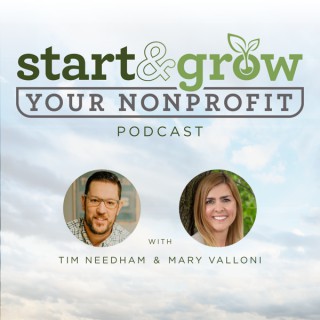
Hosted by nonprofit coaches Tim Needham and Mary Valloni, each episode of the Start and Grow Your Nonprofit Podcast is designed to bring together nonprofit entrepreneurs who have successfully built impactful organizations from the ground up. Join us as we dive into their journeys, share their insights, and learn how to start and grow a strong, sustainable nonprofit that transforms lives, communities, and the world. In this episode, Mary chats with Dr. Daniel Gilbert, Co-Founder and CEO of EmPowered Living International Ministries (ELIM). Dr. Gilbert shares his journey of growing ELIM from a part-time passion project into a full-time ministry. He and Mary walk us through the intentional steps he took to make the leap from strategic planning to donor outreach, and how this shift enabled significant growth for his organization. We'll explore the following topics: ELIM's Origin and Evolution Transitioning to Full-Time Ministry Current Operations and Impact Vision for the Future Building a Team For more information about EmPowered Living International Ministries, check out their website or visit them on Facebook or YouTube. You can reach out to Dr. Gilbert via email or on LinkedIn. To visit and join the Start & Grow Your Nonprofit private Facebook group, visit https://www.facebook.com/groups/startandgrowyournonprofit. Have a question for our coaches? Visit our podcast page. For more information about Nonprofit Academy, visit http://startandgrowyournonprofit.com/. To contact Tim, email tim@startandgrowyournonprofit.com. To contact Mary, email mary@startandgrowyournonprofit.com.

Do you love dreaming, brainstorming, and making big plans … but then get completely stuck when it's time to actually #DoTheThing? As the year wraps up, it's easy to look back at 2024 and feel disappointed (and maybe even guilty) over all the things you meant to do but didn't quite get to. Friend, you are not alone! HSPs often stall out when the details become overwhelming or resistance starts creeping in. So in this episode, we're talking about why this happens, how procrastination might actually be protecting you, and—best of all—how you can move forward without guilt, shame, or forcing yourself to push through. Listen in to learn how small, gentle steps can help you build momentum in a way that honors your unique wiring. Links mentioned: HSP Coaching with Cheri "Write Beside You" Short-Term Coaching with Cheri "Write Beside You" Unlimited Coaching Program with Cheri Take the “Am I a Highly Sensitive Person?” Self-Quiz The book I mentioned to Marisa: Stumbling on Happiness by Daniel Gilbert
What is it about American presidents that they almost always leave office looking diminished and beaten down? Bradley offers advice on avoiding a graceless exit. Plus, he admires happiness guru Daniel GIlbert's theory of "feeling full", explains the implications of Daniel Penny's not-guilty verdict for next year's mayoral contenders and makes a bold pronouncement on Bill Belichick's prospects for a comeback.

How psychologist Dan Gilbert went from high school dropout to Harvard professor, found the secret of joy, and inspired Steve Levitt's divorce. SOURCE:Daniel Gilbert, professor of psychology at Harvard University. RESOURCES:"What the Data Says (and Doesn't Say) About Crime in the United States," by John Gramlich (Pew Research Center, 2020).Enlightenment Now: The Case for Reason, Science, Humanism, and Progress, by Stephen Pinker (2018)."Mistakenly Seeking Solitude," by Nicholas Epley and Juliana Schroeder (Journal of Experimental Psychology, 2014)."Just Think: The Challenges of the Disengaged Mind," by Timothy D. Wilson, David A. Reinhard, Erin C. Westgate, Daniel T. Gilbert, Nicole Ellerbeck, Cheryl Hahn, Casey L. Brown, and Adi Shaked (Science, 2013)."The End of History Illusion," by Jordi Quoidbach, Daniel T. Gilbert, and Timothy D. Wilson (Science, 2013).Happy Money: The Science of Smarter Spending, by Elizabeth Dunn (2013)."If Money Doesn't Make You Happy Then You Probably Aren't Spending It Right," by Elizabeth W. Dunn, Daniel T. Gilbert, and Timothy D. Wilson (Journal of Consumer Psychology, 2011).This Emotional Life, by Daniel Gilbert (2010).Stumbling on Happiness, by Dan Gilbert (2006)."Affective Forecasting," by Timothy D. Wilson and Daniel T. Gilbert (Advances in Experimental Social Psychology, 2003). EXTRAS:"Drawing from Life (and Death)," by People I (Mostly) Admire (2023)."Who Gives the Worst Advice?" by People I (Mostly) Admire (2021)."Sendhil Mullainathan Thinks Messing Around Is the Best Use of Your Time," by People I (Mostly) Admire (2021)."Am I Boring You?" by Freakonomics Radio (2015).

Garth Heckman The David Alliance TDAgiantslayer@gmail.com Website: www.aegisdefensesolutions.com Insta: For anyone in IL. Luke is a linseed professional counselor who specializes with kids, teens, and families in Christian Counseling. If you or someone you know is struggling with anxiety, mood challenges, ADHD, and other mental health concerns, reach out to Luke https://www.whitestoneresources.com/counselors-list/lmerrill My media channels all go to Garth Heckman Text me 30 second interviews of you asking people “whats it take to be a man” John 7:12 And there was much murmuring among the people concerning him: for some said, He is a good man: others said, Nay; but he deceiveth the people. 13Yet no one would speak publicly about Him for fear of the Jews NAY Sayer here is a quote from Daniel Gilbert from his book Stumbling on Happiness. Even Wilbur Wright, who proved Kelvin and Newcomb wrong, admitted that in 1901 he had said to his brother that “man would not fly for fifty years.” He was off by forty-eight. The number of respected scientists and accomplished inventors who declared the airplane an impossibility is exceeded only by the number who said the same thing about space travel, television sets, microwave ovens, nuclear power, heart transplants, and female senators. Stumbling on Happiness, Daniel Gilbert, pg. 124 There is always a nay sayer in the crowd. I once heard a joke that said if you are ever lost, pull out a deck of cards and play solitaire - because it wont take long before you will put a card down and someone will lean over your shoulder and say “I wouldn't have used that card there”. Three reasons you need Nay Sayers in your life. - They will help you clarify and intensify your reasons and choices. They really do you a favor by causing you to dig into your beliefs and do a gut check. Many times give you an advantage to look over your motives and goals and gain even more invaluable insight. You become even more skilled at what you are attempting to do. J.K. Rowling: Before becoming a global phenomenon, Rowling's manuscript for "Harry Potter and the Philosopher's Stone" was rejected by twelve publishers. The rejections fueled her determination and forced her to refine her writing, ultimately leading to the creation of one of the most successful book series of all time… that small little series called Harry Potter, sold over 600 million copies… not to mention the royalties on movies, cartoons, toys and products like cereal and clothing… - They will help you build a thick skin. One of the biggest problems in todays world is the noise… the noise of the crowd. You can't escape it… but given enough time and enough resolve you learn to become deaf to it. You not only just disregard it, but you become deaf to it. I have many times had my wife, friends even antagonists ask me “doesn't it bother you what they are saying”? I honestly can look at them and say… I didn't notice it. The deafness and silence it creates actually becomes the fuel to your motivation and to your drive…. Because you can't hear them anymore you gain greater focus. Maybe you have heard of the term flow? Its when seemingly the world stops, time stands still and you hear nothing… athletes speak of this all the time. Its a beautiful skill gained by learning how to block out the noise of the Nay Sayers. - They prove you are moving forward and not backward. If you want to know if you are moving in the right direction, check the crowd. Typically if more people think your goals are ludicrous you are on your way… if most people agree with your goals they are probably to easy, to unfaltering… they won't change you, they are not worth your time and effort. Look there will always be some people who like what you are trying to do, the majority will be silent for many reasons, but the loudest voices will be the Nay Sayers… thats a good sign… keep pushing on. - Here is a bonus thought. The best way to hone your instincts and your judgement and critical eye is constantly having people call you out…. REMEMBER Haters produce creators.

️ En este episodio de La Teoría de la Mente reflexionamos sobre un clásico de la música y su relación con nuestras decisiones cotidianas: Should I Stay or Should I Go de The Clash. ¿Qué tienen que ver una banda punk, la física cuántica y vender el alma al diablo con nuestras decisiones diarias? ¡Más de lo que te imaginas! Acompáñanos a explorar esos momentos de indecisión y encrucijadas que todos hemos vivido. Ya sea una relación complicada, una decisión de carrera, o hasta elegir qué ver en Netflix ... todos conocemos el vértigo de tomar decisiones importantes y lo que significa soltar el pasado para abrazar el presente. Hablamos sobre Mick Jones, vocalista de The Clash, quien escribió esta canción en un momento difícil de su vida, y cómo esta letra resuena con las decisiones que enfrentamos diariamente. Nos adentramos en paradojas cuánticas como la del gato de Schrödinger, y en historias como la del legendario bluesman Robert Johnson, quien se dice vendió su alma en un cruce de caminos . Descubre cómo podemos aprender a tomar decisiones con menos miedo al "¿y si...?" y más atención al "aquí y ahora". También exploramos la perspectiva de Daniel Gilbert, quien propone que la verdadera felicidad está en aceptar y adaptarnos a nuestras elecciones, en vez de lamentar las opciones no tomadas. Este episodio te invita a reflexionar sobre cómo abrir tu caja personal, tomar una decisión y liberarte del peso de las opciones que dejas atrás. Porque la verdadera magia está en aprender a soltar y quedarte con lo que realmente importa. ️✨ Sugerencias de Títulos: The Clash y Las Decisiones de la Vida: ¿Me Quedo o Me Voy? Encrucijadas, Blues y Física Cuántica: ¿Cómo Decidimos? El Dilema de Elegir: ¿Vender el Alma o Abrir la Caja? ¿Debería Quedarme o Debería Irme? El Arte de Tomar Decisiones Entre The Clash y Robert Johnson: Las Encrucijadas de la Vida 25 Palabras Clave (Keywords): decisiones, tomar decisiones, The Clash, Should I Stay or Should I Go, encrucijadas, gato de Schrödinger, física cuántica, Robert Johnson, blues, vender el alma, vida, psicología, elección, alternativas, Novecento, Alessandro Baricco, cruce de caminos, Daniel Gilbert, adaptación, música, punk, felicidad, indecisión, opciones, vivir el presente 6 Hashtags: #Decisiones #TheClash #FísicaCuántica #RobertJohnson #PsicologíaDeLaDecisión #ReflexionesDeVida Enlaces Formateados con Emojis: Nuestra escuela de ansiedad: www.escuelaansiedad.com Nuestro nuevo libro: www.elmapadelaansiedad.com Visita nuestra página web: www.amadag.com Facebook: Asociación Agorafobia Instagram: @amadag.psico YouTube - Amadag TV: AMADAG TV
Since the beginning of the pandemic in 2020, there has been a big uptick in the use of the powerful anesthetic ketamine to treat anxiety and depression. But after the death last year of actor Matthew Perry, star of the hit sitcom “Friends,” due in part to the effects of ketamine, doctors and government officials are reconsidering the drug's widespread availability.On today's “Post Reports,” Elahe Izadi speaks with reporter Daniel Gilbert, who has been following the ketamine boom for years. They talk about how ketamine became so widely accessible and about the uncertain future of the drug. Today's show was produced by Peter Bresnan, with help from Emma Talkoff and Ali Bianco. It was edited by Monica Campbell and mixed by Rennie Svirnovskiy. Subscribe to The Washington Post here.

In this engaging episode of the Performance Initiative Podcast, hosts Dr. Grant Cooper and Dr. Zinovy Meyler sit down with renowned Harvard psychologist Professor Daniel Gilbert to explore the complexities of happiness and how our choices affect our well-being. Delving into the psychology behind happiness, they discuss the common misconceptions about activities like volunteering, raising children, and owning pets. The conversation uncovers the significant role of social connections, the impact of sleep, and the importance of taking decisive actions in life. Through compelling examples and studies, Professor Gilbert sheds light on the counterintuitive nature of happiness, guiding listeners to understand what truly brings lasting satisfaction and joy.(00:00) Introduction(03:06) The Paradox of Choice(07:42) Medical Decision-Making and Heuristics(16:07) The Art and Science of Medicine(21:19) The Role of Psychology in Medicine(24:31) The Fallibility of Human Imagination(45:21) Gratitude and Perspective in Life(50:06) The Big Sort: Communities of Like-Minded Individuals(50:47) Political Ideologies and Media Siloing(52:12) Shared Experiences and the Melting Pot of America(53:03) The Challenge of Modern Isolation(54:42) The Paradox of Wealth and Happiness(56:50) Social Connections vs. Wealth: What Truly Brings Happiness?(59:21) Purpose and Happiness: Are They Interconnected?(01:01:34) The Role of Social Interaction in Fulfillment(01:09:41) Children and Happiness: A Complex Relationship(01:18:33) The Importance of Sleep and Health in Happiness(01:26:34) Action vs. Inaction: Regrets and Life Choices(01:30:36) Concluding Thoughts and TakeawaysProfessor Daniel Gilbert is a renowned social psychologist and a faculty member at Harvard University, best known for his research on affective forecasting, happiness, and decision-making. He is the author of the New York Times bestseller Stumbling on Happiness, which explores the quirks of human cognition and how we often mispredict our own emotional responses to future events. Gilbert's work has significantly influenced the field of psychology, offering profound insights into how people perceive happiness and the choices that lead to a fulfilling life. In this episode, he shares his expertise on the psychology of happiness, challenging common beliefs and providing a deeper understanding of what truly contributes to well-being.Thanks For ListeningSocials:YouTube: https://www.youtube.com/channel/UCKPNCI1-HBSZmiHNAlAjiIwWebsite: https://www.performanceinitiativepodcast.com/Instagram: https://www.instagram.com/performanceinitiative
No matter how challenging your week looks, there's power in embracing the journey rather than fixating solely on outcomes. Drawing on insights from positive psychology and Daniel Gilbert's research, this episode dives into why enjoying the process, even when it's tough, can lead to a more fulfilling and productive life. We'll explore four essential steps to stay present and enjoy the ride, including the importance of comparing yourself only to your past self, not to others. Key Takeaways: • ✅ Embrace the journey, not just the destination.• ✅ Focus on the process for greater happiness and fulfillment.• ✅ Compare your progress to your own past, not to others.• ✅ Use mindfulness, gratitude, and engagement to stay present.
Why do so many book clubs fall apart? Do the best parties have rules? And does Angela's husband want to date you? SOURCES:Fredrik Backman, author.David Chavis, senior fellow at Community Science.Daniel Gilbert, professor of psychology at Harvard University.Sebastian Junger, journalist and author.David McMillan, clinical and community psychologist.Priya Parker, strategic advisor and author. RESOURCES:"Do Conversations End When People Want Them to?" by Adam M. Mastroianni, Daniel Gilbert, Gus Cooney, and Timothy D. Wilson (PNAS, 2021)."3 Steps to Turn Everyday Get-Togethers Into Transformative Gatherings," by Priya Parker (TED Talk, 2019).The Art of Gathering: How We Meet and Why It Matters, by Priya Parker (2018).Tribe: On Homecoming and Belonging, by Sebastian Junger (2016).Beartown, by Fredrik Backman (2016).“The 36 Questions That Lead to Love,” by Daniel Jones (The New York Times, 2015).A Man Called Ove, by Fredrik Backman (2012)."Sense of Community: A Definition and Theory," by David McMillan and David Chavis (Journal of Community Psychology, 1986). EXTRAS:"How Can You Get Closer to the People You Care About?" by No Stupid Questions (2023)."How Do You Connect With Someone You Just Met?" by No Stupid Questions (2023).A Man Called Otto, film (2022).
Are you the same person you were a decade ago? Do we get better as we age? And is your sixth-grade class clown still funny? SOURCES:Aaron (Tim) Beck, professor emeritus of psychiatry at the University of Pennsylvania.Daniel Gilbert, professor of psychology at Harvard University.Olga Khazan, staff writer at The Atlantic. Brian Little, professor of psychology at the University of Cambridge.Jordi Quoidbach, professor of people management and organisation at ESADE, University Ramon Llull.Carl Rogers, 20th-century psychologist.Martin Short, actor and comedian.Richard Wiseman, professor of the public understanding of psychology at the University of Hertfordshire.Timothy Wilson, professor of psychology at the University of Virginia. RESOURCES:"I Gave Myself Three Months to Change My Personality," by Olga Khazan (The Atlantic, 2022)."You Can Be a Different Person After the Pandemic," by Olga Khazan (The New York Times, 2021)."The Theory of Modes: Applications to Schizophrenia and Other Psychological Conditions," by Aaron T. Beck, Molly R. Finkel, and Judith S. Beck (Cognitive Therapy and Research, 2020).“Brian Little: Are Human Personalities Hardwired?" by Guy Raz (TED Radio Hour, 2017).I Must Say: My Life As a Humble Comedy Legend, by Martin Short (2014)."The End of History Illusion," by Jordi Quoidbach, Daniel T. Gilbert, and Timothy D. Wilson (Science, 2013)."Age Differences in Personality Traits From 10 to 65: Big Five Domains and Facets in a Large Cross-Sectional Sample," by Christopher J. Soto, Oliver P. John, Samuel D. Gosling, and Jeff Potter (Journal of Personality and Social Psychology, 2011)."The Rank-Order Consistency of Personality Traits From Childhood to Old Age: A Guantitative Review of Longitudinal Studies," by Brent W. Roberts and Wendy F. DelVecchio (Psychological Bulletin, 2000). EXTRAS:Big Five Personality Inventory, by No Stupid Questions (2024).Comedians in Cars Getting Coffee, TV series (2012-present).
What's the best way to carry out random acts of kindness? What's wrong with making an “Irish exit”? And why is Mike secretly buying lottery tickets? SOURCES:Roy Baumeister, social psychologist and visiting scholar at Harvard University.Daniel Gilbert, professor of psychology at Harvard University.John Gottman, professor emeritus of psychology at the University of Washington.Kurt Lewin, 20th-century German-American psychologist.E. J. Masicampo, professor of psychology at Wake Forest University.Timothy Wilson, professor of psychology at the University of Virginia.Bluma Zeigarnik, 20th-century Soviet psychologist. RESOURCES:"Life and Work of the Psychologist Bluma Zeigarnik," by M. Marco (Neurosciences and History, 2018)."Why We Need Answers," by Maria Konnikova (The New Yorker, 2013)."Consider It Done! Plan Making Can Eliminate the Cognitive Effects of Unfulfilled Goals," by E. J. Masicampo and Roy Baumeister (Journal of Personality and Social Psychology, 2011).The Science of Trust: Emotional Attunement for Couples, by John Gottman (2011)."'Let Me Dream On!' Anticipatory Emotions and Preference for Timing in Lotteries," by Martin Kocher, Michal Krawczyk, and Frans van Winden (Tinbergen Institute Discussion Paper, 2009)."Explaining Away: A Model of Affective Adaptation," by Timothy Wilson and Daniel Gilbert (Perspectives on Psychological Science, 2008)."On Finished and Unfinished Tasks," by Bluma Zeigarnik (A Source Book of Gestalt Psychology, 1938). EXTRAS:Big Five Personality Inventory, by No Stupid Questions (2024)."Can We Disagree Better?" by No Stupid Questions (2023)."Would You Be Happier if You Were More Creative?" by No Stupid Questions (2023)."How Can You Be Kinder to Yourself?" by No Stupid Questions (2023)."What's Wrong With Holding a Grudge?" by No Stupid Questions (2022).Somebody Loves You, Mr. Hatch, by Eileen Spinelli (1991).

Discover all of the podcasts in our network, search for specific episodes, get the Optimal Living Daily workbook, and learn more at: OLDPodcast.com. Episode 3095: Aimee Stotts, writing for NoSidebar.com, illuminates the overwhelming nature of decision-making in "Simplifying the Little Areas of Life." She advocates for reducing choices in daily life, from wardrobe selection to meal planning, to alleviate decision fatigue. Embracing simplicity, as shown by leaders like Zuckerberg and Jobs, can lead to a more focused and satisfying life. Read along with the original article(s) here: https://nosidebar.com/little-areas/ Quotes to ponder: "Too many choices can be detrimental." Episode references: The Paradox of Choice by Barry Schwartz: https://www.amazon.com/Paradox-Choice-Why-More-Less/dp/0060005696 Stumbling on Happiness by Daniel Gilbert: https://www.amazon.com/Stumbling-Happiness-Daniel-Gilbert/dp/1400077427 Learn more about your ad choices. Visit megaphone.fm/adchoices

Discover all of the podcasts in our network, search for specific episodes, get the Optimal Living Daily workbook, and learn more at: OLDPodcast.com. Episode 3095: Aimee Stotts, writing for NoSidebar.com, illuminates the overwhelming nature of decision-making in "Simplifying the Little Areas of Life." She advocates for reducing choices in daily life, from wardrobe selection to meal planning, to alleviate decision fatigue. Embracing simplicity, as shown by leaders like Zuckerberg and Jobs, can lead to a more focused and satisfying life. Read along with the original article(s) here: https://nosidebar.com/little-areas/ Quotes to ponder: "Too many choices can be detrimental." Episode references: The Paradox of Choice by Barry Schwartz: https://www.amazon.com/Paradox-Choice-Why-More-Less/dp/0060005696 Stumbling on Happiness by Daniel Gilbert: https://www.amazon.com/Stumbling-Happiness-Daniel-Gilbert/dp/1400077427 Learn more about your ad choices. Visit megaphone.fm/adchoices

Discover all of the podcasts in our network, search for specific episodes, get the Optimal Living Daily workbook, and learn more at: OLDPodcast.com. Episode 3095: Aimee Stotts, writing for NoSidebar.com, illuminates the overwhelming nature of decision-making in "Simplifying the Little Areas of Life." She advocates for reducing choices in daily life, from wardrobe selection to meal planning, to alleviate decision fatigue. Embracing simplicity, as shown by leaders like Zuckerberg and Jobs, can lead to a more focused and satisfying life. Read along with the original article(s) here: https://nosidebar.com/little-areas/ Quotes to ponder: "Too many choices can be detrimental." Episode references: The Paradox of Choice by Barry Schwartz: https://www.amazon.com/Paradox-Choice-Why-More-Less/dp/0060005696 Stumbling on Happiness by Daniel Gilbert: https://www.amazon.com/Stumbling-Happiness-Daniel-Gilbert/dp/1400077427 Learn more about your ad choices. Visit megaphone.fm/adchoices
After a years-long push, the Federal Drug Administration just allowed Florida to import cheaper prescription drugs from Canada. This decision follows decades of frustration over U.S. drug prices and could open the doors for other states to do the same.Read more:While a number of logistical and legal hurdles remain, Florida has been cleared to import prescription drugs from Canada. The path for Florida started years ago, along with efforts by Congress and pushes from the White House, including from the Trump and Biden administrations. Daniel Gilbert joins us to discuss the decision, the history and the hurdles that lie ahead for importing Canadian drugs. Today's show was produced by Bishop Sand. It was mixed by Rennie Svirnovskiy. It was edited by Monica Campbell. Thanks to Elana Gordon and Sandhya Somashekhar. Subscribe to The Washington Post here.

The Thriving Equine Professional | Career Connections, Equine Industry Resources, Career Advice.
Here we are- it's that week we're all supposed to reflect on 2023 and plan an amazing 2024... What if that's too big a bite to take?! How do you define #CelebrateLIFE?! What if we asked ourselves 3 questions every month that could help us be more peaceful and productive than ever?! Let's acknowledge our wins, and define how YOU #CelebrateLIFE to Live Inspired, Fulfilled and Empowered! I am so excited to help YOU thrive! So get the ponies fed, fill those water buckets, grab your journal and let's grow girl! I'm going to help YOU Live Inspired, Fulfilled and Empowered! "Human beings are works in progress that mistakenly think they're finished. The person you are right now is as transient, as fleeting, and as temporary as all the people you've ever been." - Dr. Daniel Gilbert, Harvard Psychologist, as read from 'The Gap and the Gain' by Dan Sullivan Cheers! Jodi Want to connect with Jodi?! www.JodiSpeaksLIFE.com www.LinkedIn.com/in/JodiLynchFindley Jodi@JodiSpeaksLIFE.com

In a special episode of No Stupid Questions, Angela Duckworth and Mike Maughan talk about unfinished tasks, recurring arguments, and Irish goodbyes. SOURCES:Roy Baumeister, social psychologist and visiting scholar at Harvard University.Daniel Gilbert, professor of psychology at Harvard University.John Gottman, professor emeritus of psychology at the University of Washington.Kurt Lewin, 20th-century German-American psychologist.E. J. Masicampo, professor of psychology at Wake Forest University.Timothy Wilson, professor of psychology at the University of Virginia.Bluma Zeigarnik, 20th-century Soviet psychologist. RESOURCES:"Life and Work of the Psychologist Bluma Zeigarnik," by M. Marco (Neurosciences and History, 2018)."Why We Need Answers," by Maria Konnikova (The New Yorker, 2013)."Consider It Done! Plan Making Can Eliminate the Cognitive Effects of Unfulfilled Goals," by E. J. Masicampo and Roy Baumeister (Journal of Personality and Social Psychology, 2011).The Science of Trust: Emotional Attunement for Couples, by John Gottman (2011)."'Let Me Dream On!' Anticipatory Emotions and Preference for Timing in Lotteries," by Martin Kocher, Michal Krawczyk, and Frans van Winden (Tinbergen Institute Discussion Paper, 2009)."Explaining Away: A Model of Affective Adaptation," by Timothy Wilson and Daniel Gilbert (Perspectives on Psychological Science, 2008)."On Finished and Unfinished Tasks," by Bluma Zeigarnik (A Source Book of Gestalt Psychology, 1938). EXTRAS:"What's Wrong With Holding a Grudge?" by No Stupid Questions (2022).Somebody Loves You, Mr. Hatch, by Eileen Spinelli (1991).

In this episode, Karol welcomes Abby Roth aka Classically Abby to the show to discuss the concept of happiness and traditional values. They explore the idea that what makes us happy can change over time and the importance of choosing a life partner wisely. They also discuss societal pressures, the role of feminism, and the importance of family. The Karol Markowicz Show is part of the Clay Travis & Buck Sexton Podcast Network - new episodes debut every Monday & Thursday. Follow Clay & Buck on YouTube: https://www.youtube.com/c/clayandbuckSee omnystudio.com/listener for privacy information.

In this episode, Karol welcomes Abby Roth aka Classically Abby to the show to discuss the concept of happiness and traditional values. They explore the idea that what makes us happy can change over time and the importance of choosing a life partner wisely. They also discuss societal pressures, the role of feminism, and the importance of family. The Karol Markowicz Show is part of the Clay Travis & Buck Sexton Podcast Network - new episodes debut every Monday & Thursday. See omnystudio.com/listener for privacy information.
Last year, the U.S. Food and Drug Administration declared Ozempic and Wegovy in shortage. That has given rise to an unprecedented parallel market for imitations of the drugs made by specialized pharmacies, while unregulated websites offer their own, cheaper versions.Read more:Many people who have used injectable diabetes drugs such as Ozempic and Wegovy for weight loss say they have been life-changing. But the drugs are expensive, and can be hard to access: They have proved so effective that patients are clamoring for more than drugmakers can churn out. Last year, the FDA declared Ozempic and Wegovy in shortage, allowing specialized compounding pharmacies to mix up their own versions of the drugs using the same active ingredients, for a fraction of the cost.But the parallel market around weight-loss drugs doesn't end there. Daniel Gilbert dove into the world of off-brand weight loss compounds and found an unregulated market flourishing online. His reporting turned up more than two dozen websites that bypass doctors and pharmacies completely to sell semaglutide — the active ingredient in Ozempic and Wegovy — directly to consumers, usually with disclaimers that it's not for human use. And he managed to track down some of the entrepreneurs trying to strike it rich in the Wild West of off-brand Ozempic.

Congress appears to be careening toward a government shutdown, as a small band of House conservatives vow to block any funding for the fiscal year that begins Oct. 1 unless they win deeper cuts to health and other domestic programs. Meanwhile, former President Donald Trump continues to roil the GOP presidential primary field, this time with comments about abortion. Tami Luhby of CNN, Alice Miranda Ollstein of Politico, and Rachel Cohrs of Stat News join KFF Health News chief Washington correspondent Julie Rovner to discuss these issues and more. Also, for “extra credit,” the panelists suggest health policy stories they read this week they think you should read, too: Julie Rovner: The Washington Post's “Inside the Gold Rush to Sell Cheaper Imitations of Ozempic,” by Daniel Gilbert. Alice Miranda Ollstein: Politico's “The Anti-Vaccine Movement Is on the Rise. The White House Is at a Loss Over What to Do About It,” by Adam Cancryn. Rachel Cohrs: KFF Health News' “Save Billions or Stick With Humira? Drug Brokers Steer Americans to the Costly Choice,” by Arthur Allen. Tami Luhby: CNN's “Supply and Insurance Issues Snarl Fall Covid-19 Vaccine Campaign for Some,” by Brenda Goodman. Hosted on Acast. See acast.com/privacy for more information.
Did you know that our minds play tricks on us when it comes to finding happiness? So what can we do to create our own happiness in life? Stumbling Upon Happiness by Daniel Gilbert uncovers the human perception of happiness and how our minds can sometimes deceive us when it comes to finding what will […] The post MBA2346 Must Read: Stumbling on Happiness by Daniel Gilbert appeared first on The $100 MBA.
Did you know that our minds play tricks on us when it comes to finding happiness? So what can we do to create our own happiness in life?Stumbling Upon Happiness by Daniel Gilbert uncovers the human perception of happiness and how our minds can sometimes deceive us when it comes to finding what will make us happy. As we reflect on our childhood memories, we discover that simple activities like playing with friends, having dinner with family, or even watching TV brought immense joy. Remember, happiness impacts not only our personal lives but also those around us – our customers, employees, loved ones, family, and friends. Let's make our lives count and embrace the beautiful experiences life has to offer. Click Play!SUBSCRIBE ON APPLE PODCASTSSpotify| Podcast Feed| How To SubscribeGive us a Rating & ReviewToday's SponsorsThis Is Small BusinessThis Is Small Business is all about what it takes to be an SMB owner today. Andrea Marquez from Amazon's Small Business Empowerment team brings the unique perspective of a curious millennial trying to figure out what it takes to be successful in today's market. The show explores the journey to success, diving deep into the pivotal moments along the way. Listen and learn from the show's “minisodes,” packed with useful information in 10 to 15 minutes on topics including attracting investors, product development, and partnerships. Listen in here.Show LinksStumbling on Happiness by Daniel Gilbert
Did you know that our minds play tricks on us when it comes to finding happiness? So what can we do to create our own happiness in life? Stumbling Upon Happiness by Daniel Gilbert uncovers the human perception of happiness and how our minds can sometimes deceive us when it comes to finding what will […] The post MBA2346 Must Read: Stumbling on Happiness by Daniel Gilbert appeared first on The $100 MBA.

Our guests on the podcast today are Eric Weigel and Fritz Gilbert. Fritz is a repeat guest on The Long View. He writes the popular Retirement Manifesto blog, and he also wrote a book about retirement called Keys to a Successful Retirement: Staying Happy, Active, and Productive in Your Retired Years. Eric Weigel is the founder of a retirement coaching firm called Retire With Possibilities, and he is also the author of a book on retirement called Reimagining Retirement: 9 Keys to True Wealth. Together they collaborated on a recent survey of retirees and preretirees to gauge their attitudes about retirement and to help flag potential blind spots about retirement planning.Listen Now: Listen and subscribe to Morningstar's The Long View from your mobile device: Apple Podcasts | Spotify | Google Play | StitcherBackgroundEric Weigel BioFritz Gilbert BioRetirement Manifesto BlogKeys to a Successful Retirement: Staying Happy, Active, and Productive in Your Retired Years, by Fritz Gilbert“Fritz Gilbert: Early Retirement Made Simple,” The Long View podcast, morningstar.com, Oct. 26, 2021.Retire With PossibilitiesReimagining Retirement: 9 Keys to True Wealth, by Eric WeigelSurvey and Results“Retirement Perspectives and Attitudes Survey,” by Fritz Gilbert and Eric Weigel, retirewithpossibilities.com, May 2023.“Laura Carstensen: ‘I'm Suggesting We Change the Way We Work,'” The Long View podcast, Morningstar.com, Sept. 14, 2021.“7 Secrets to a Great Retirement,” by Fritz Gilbert, theretirementmanifesto.com, Feb. 2, 2023.80th Birthday—FranklinCovey video“The End of History Illusion,” by Jordi Quoidbach, Daniel Gilbert, and Timothy Wilson, science.org, Jan. 4, 2013.Blind Spots“Shining the Light on Retirement Blind Spots,” by Fritz Gilbert, theretirementmanifesto.com, May 18, 2023.“Introducing the 90/10 Rule of Retirement,” by Fritz Gilbert, theretirementmanifesto.com, Oct. 7, 2021.Chip ConleyHolmes-Rahe Scale“Longevity and the New Journey of Retirement,” EdwardJones study, agewave.com.Other“The Ten Commandments of Retirement,” by Fritz Gilbert, theretirementmanifesto.com, March 6, 2018.

Episode: 2664 Mind-wandering and the search for happiness. Today, wandering minds.
© 2020-2026 Ivy Podcast Discovery LLC
