
POPULARITY
Categories

75 episodes with streamlining

24 episodes with streamlining

17 episodes with streamlining

19 episodes with streamlining

8 episodes with streamlining

9 episodes with streamlining

8 episodes with streamlining

10 episodes with streamlining

8 episodes with streamlining

7 episodes with streamlining

5 episodes with streamlining

5 episodes with streamlining

7 episodes with streamlining

6 episodes with streamlining

4 episodes with streamlining

5 episodes with streamlining

5 episodes with streamlining

4 episodes with streamlining

4 episodes with streamlining

4 episodes with streamlining

5 episodes with streamlining

3 episodes with streamlining

4 episodes with streamlining

3 episodes with streamlining

4 episodes with streamlining

4 episodes with streamlining

4 episodes with streamlining

6 episodes with streamlining

4 episodes with streamlining

4 episodes with streamlining

4 episodes with streamlining

4 episodes with streamlining

2 episodes with streamlining

4 episodes with streamlining

3 episodes with streamlining

5 episodes with streamlining

Are you leaving money on the table because your sales process is too clunky, too slow, or too complicated? If you're a 6 or 7-figure business owner, streamlining your sales process might be the quickest way to boost your revenue, improve client satisfaction, and save precious time. In this episode, I'll show you exactly how to simplify and optimize your sales operations for both brick-and-mortar and virtual businesses. What if you could: • Close deals faster without overwhelming your team? • Increase revenue per lead without adding complexity? • Deliver a seamless customer experience that builds trust and loyalty? If any of this sounds like a "Hell Yes!" for your business, this episode is for you! Mentioned in this episode Subscribe to Email List Leave a Podcast Review Work/Connect with me: Offer Optimization Scorecard Book a Call Tune in to start taking your business and life to the next level today and don't forget to subscribe or follow the podcast to make sure you don't miss any future episodes. Visit https://jessicamillercoaching.com/ to learn more. You can also follow me on Instagram (@jessicadioguardimiller) and Facebook.

How can hotels make smarter purchasing decisions, control costs, and use technology to work more efficiently?In this episode, David Millili and Steve Carran sit down with Jesse Messitte, Vice President of Strategy and Business Operations at Avendra International, for a great conversation about the world of hospitality procurement.Jesse shares his journey from working at Hyatt to spending more than two decades at Avendra, and how his background in data, technology, and hospitality shaped the way he approaches procurement.Jesse talks about his career advice for hospitality professionals who want to make the move from hotel operations into technology.It's a practical conversation about procurement, technology, AI, and the behind-the-scenes work that can ultimately help hotels deliver a better experience for their guests.In this episode, you'll learn:How group purchasing organizations help hotels reduce costs and improve purchasing performanceWhat hoteliers should consider when selecting procurement technologyWhy hotels should focus on business objectives before adopting new technologyThe best practices for creating consistent and efficient procurement processesWhether you're a hotel owner, operator, management company, or hospitality technology professional, this episode offers practical insights into making procurement more strategic and using technology to help hotels thrive.Watch the FULL EPISODE on YouTube: https://youtu.be/xhOk-Xcmzrc This episode is sponsored by Avendra International: https://www.avendra.com/en/us/ Links:Jesse on LinkedIn: https://www.linkedin.com/in/jesse-messitte/ Avendra International: https://www.avendra.com/en/us/For full show notes head to: https://themodernhotelier.com/episode/321Follow on LinkedIn: https://www.linkedin.com/company/the-..Join the conversation on today's episode on The Modern Hotelier LinkedIn pageConnect with Steve and David:Steve: https://www.linkedin.com/in/%F0%9F%8E...David: https://www.linkedin.com/in/david-mil.

Industrial Talk is onsite at MD&M West and talking to Peyton Ford, Vice President of Sales at norelem US about "Streamlining manufacturing design process". The Industrial Talk podcast, sponsored by MD&M West and Informa, features Scott MacKenzie interviewing Peyton Ford, VP of U.S. Sales at norelem. norelem, a German family-owned company with a 60-year history, specializes in mechanical engineering components. Peyton discusses their extensive product line of over 130,000 standard parts, emphasizing their customer-centric approach and the ability to provide CAD data for free. They aim to streamline the design process for engineers by offering off-the-shelf solutions that can be semi-customized. Peyton highlights the importance of brand visibility in the U.S. market and the company's mission to be a one-stop shop for mechanical engineering needs. Outline MD&M West Event Introduction Scott introduces the episode of Industrial Talk, sponsored by MD&M West and News and Brews, highlighting the event's focus on med tech, automation, packaging, plastics, and design.Scott celebrates industry professionals, describing them as bold, brave, and problem solvers, and mentions the importance of attending events like MD&M West.Scott promotes the MD&M West event, encouraging listeners to mark their calendars for next year and introduces Peyton Ford from norelem. Introduction of Peyton Ford and norelem Peyton, Peyton Ford, thanks Scott for having him and jokes about being called cool by Scott.Scott praises the innovation and technology at MD&M West, expressing amazement at the solutions available.Peyton shares his excitement about the technology and the market for these solutions.Scott and Peyton discuss the size of the MD&M West event, with Speaker 3 mentioning his goal to explore more of the exhibition. Peyton Ford's Background and Role at norelem Peyton provides a background on norelem, a family-owned company from Germany with a 60-year history, and his role as the director of U.S. sales.Peyton explains his previous experience in commercial vehicle component manufacturing and his transition from operations to sales.Scott emphasizes the importance of sales in making technology and innovation accessible to customers.Peyton humorously notes that the best salespeople understand operations, allowing them to identify and address customer needs more effectively. norelem's Value Proposition and Products Peyton explains norelem's focus on mechanical engineering components and their mission to support designers, builders, and maintainers of jigs, fixtures, and machines.Peyton uses simple examples like an indexing plunger and a spring plunger to illustrate the types of components norelem offers.Peyton highlights norelem's customer-centric approach, providing CAD data for all products and partnering with mechanical design engineers.Scott asks for a practical example of norelem's products, and Speaker 3 describes a quick-acting star grip used in welding jigs to reduce takt time. norelem's Solutions and Customer Support Peyton discusses how norelem's components can help engineers solve mechanical problems quickly and efficiently, reducing design time and frustration.Scott appreciates the convenience of having a one-stop shop for mechanical engineering components, reducing the need to go to multiple suppliers.Peyton explains norelem's ability to modify parts within reason, making their offerings semi-customizable.Scott praises norelem's flexibility and their ability to provide solutions that fit various applications. Future Vision and Brand Development Peyton outlines norelem's strategy for brand development in the U.S. market, focusing on increasing brand visibility and establishing a niche in mechanical engineering components.Scott acknowledges the challenge of breaking into the U.S. market with European roots and the importance of effectively communicating norelem's value proposition.Peyton identifies common pain points for engineers, such as time constraints and the need for off-the-shelf components, and how norelem addresses these issues.Scott and Peyton discuss the benefits of using off-the-shelf components in mechanical engineering, comparing it to software implementation. Contact Information and Conclusion Scott asks how listeners can get in touch with Peyton Ford, and Speaker 3 recommends LinkedIn as the best contact method.Scott provides norelem's website and mentions the availability of videos on their site.Scott wraps up the conversation, praising Peyton Ford and norelem's solutions and encouraging listeners to attend MD&M West.Scott emphasizes the importance of connecting with industry professionals like Peyton Ford to solve problems and innovate in the manufacturing industry. If interested in being on the Industrial Talk show, simply contact us and let's have a quick conversation. Finally, get your exclusive free access to the Industrial Academy and a series on “Why You Need To Podcast” for Greater Success in 2026. All links designed for keeping you current in this rapidly changing Industrial Market. Learn! Grow! Enjoy! PEYTON FORD'S CONTACT INFORMATION: Personal LinkedIn: https://www.linkedin.com/in/peytonford/ Company LinkedIn: https://www.linkedin.com/company/norelem-us/ Company Website: https://www.norelemusa.com/en-us/ PODCAST VIDEO: https://youtu.be/7UMFW2mZ7Ew THE STRATEGIC REASON "WHY YOU NEED TO PODCAST": OTHER GREAT INDUSTRIAL RESOURCES: NEOM: https://www.neom.com/en-us Hexagon: https://hexagon.com/ Arduino: https://www.arduino.cc/ Fictiv: https://www.fictiv.com/ Hitachi Vantara: https://www.hitachivantara.com/en-us/home.html Industrial Marketing Solutions: https://industrialtalk.com/industrial-marketing/ Industrial Academy: https://industrialtalk.com/industrial-academy/ Industrial Dojo:

Historically, continuous intravenous (IV) insulin infusions were established as the standard of care for pregestational diabetes (Type 1 and Type 2 DM) during labor to prevent acute intrapartum hyperglycemia and minimize the risk of neonatal hypoglycemia. Intravenous insulin offers rapid titration, immediate onset, and a short half-life, allowing precise real-time glycemic control during the physiological stress and fluctuating metabolic demands of labor. Maintaining euglycemia intrapartum is emphasized because elevated maternal blood glucose levels cross the placenta, inducing fetal hyperinsulinemia, which acutely increases the risk of severe post-delivery neonatal hypoglycemia, which can be problematic. Although IV insulin protocols are widely used and are recommended in many practice guidelines, the evidence supporting their superiority over other approaches is limited. Subcutaneous (SC) insulin administration represents a potential alternative strategy to intrapartum glucose management. Continuation of SC insulin, including insulin pump therapy, has been studied most extensively among individuals with type 1 diabetes. However, evidence guiding intrapartum insulin management remains limited for patients with gestational or type 2 diabetes, who represent the majority of pregnancies complicated by diabetes. Institutional protocols frequently default to IV insulin despite limited comparative evidence with SC insulin and the increased workflow burden associated with infusion-based management. Now, a new retrospective study published in SMFM's PREGANCY journal (25 July 2026; Seattle, Washington) is looking to give routine intrapartum SC insulin some validity. What did the data show? Listen in for details. 1. Savitsky, L.M., Barr, C., Katz, R., Martinez, N., Henderson, J., Saleh, T., White, L. and Simmons, L. (2026), Streamlining intrapartum glycemic control: Subcutaneous insulin for intrapartum diabetes management. Pregnancy, 2: e70371. https://doi.org/10.1002/pmf2.70371
Industrial Talk is onsite at Octave Live and talking to Mike Antosh and Blake Biernacki at ProLytX about "Streamlining information insights and collection". The conversation highlights the importance of the Barcelona Cybersecurity Congress from November 3-5, 2023, and the Industrial Talk podcast with Scott Mackenzie. Mike and Blake from ProLytX, a system integrator with 25 years of experience, discuss their focus on Octave's design pillar, including 3D modeling, PNIDs, and wiring diagrams. They emphasize the need for a centralized, trusted data source and a supportive culture to maintain data integrity. They also discuss the potential positive impact of AI on their business, enabling faster information retrieval. The conversation underscores the importance of people and culture in driving technological success. Outline Barcelona Cybersecurity Congress Announcement Scott introduces the Barcelona Cybersecurity Congress, emphasizing its importance for cybersecurity professionals.The event is scheduled for November 3-5 in Barcelona, with Scott planning to attend and broadcast.The Congress offers networking opportunities with top cybersecurity professionals from around the world.All relevant contact and information is available on Industrial Talk. Introduction to Industrial Talk Podcast Scott reiterates the podcast's mission to celebrate industry professionals and their contributions.The podcast is broadcasting live from the Octave Live user conference in Austin, Texas.Scott describes the Octave Showcase, showcasing dock-on technology and solving problems. Introduction of Mike and Blake from ProLytX Scott introduces Mike and Blake from ProLytX, a system integrator company.Mike shares his background, including his initial goal to be a professional basketball player and his education at Texas A&M.Mike discusses his career path, including working at Mustang Engineering and transitioning into programming and databases.Blake shares his background, starting as an instrument tech in the field and working his way up to managing enterprise engineering applications. ProLytX's Focus on Octave Products Mike explains ProLytX's primary focus on the design pillar of Octave products, including 3D modeling, PNIDs, wiring diagrams, and data sheets.Mike emphasizes the importance of having up-to-date information available in the field for maintenance and operations.Blake discusses the data integrity and access provided by Octave tools, allowing for real-time updates and propagation of information.Mike uses the analogy of using Google Maps to illustrate the need for accessible and accurate plant information. Challenges and Solutions in Maintaining Data Integrity Scott asks about the challenges of maintaining up-to-date information in the field.Mike and Blake discuss the importance of having a trusted location for data, such as the Octave tools, and the need for a support culture to maintain data integrity.The conversation highlights the role of leadership and culture in sustaining data management practices.Mike and Blake emphasize the need for a centralized location for data, with revisions managed in a cloud-based system. The Role of Culture and Leadership in Data Management Scott and the guests discuss the importance of culture and leadership in sustaining data management practices.Mike and Blake explain the need for a support culture that coaches employees to maintain data integrity.The conversation touches on the challenges of maintaining data accuracy over time and the role of leadership in fostering a supportive culture.Mike and Blake share their experiences and strategies for building and maintaining a strong data management culture. Impact of AI on the Industry Scott asks about the impact of AI on the industry, specifically how it will affect ProLytX's business.Blake sees AI as a positive influence, enabling people to gain information faster and facilitating more complicated questions.Mike raises concerns about the reliability of AI-generated answers and the need for humans to vet the information.The conversation explores the potential challenges and benefits of AI in the industry, including the need for humans to remain involved in the process. Final Thoughts and Contact Information Scott thanks Mike and Blake for their insights and contributions to the conversation.Mike provides his contact information, encouraging listeners to connect with him on LinkedIn.Scott encourages listeners to reach out to Mike and Blake through Industrial Talk for further discussions and collaboration.The podcast concludes with a reminder of the importance of people and culture in driving industry success and innovation. If interested in being on the Industrial Talk show, simply contact us and let's have a quick conversation. Finally, get your exclusive free access to the Industrial Academy and a series on “Why You Need To Podcast” for Greater Success in 2026. All links designed for keeping you current in this rapidly changing Industrial Market. Learn! Grow! Enjoy! BLAKE BIERNACKI'S CONTACT INFORMATION: Personal LinkedIn: https://www.linkedin.com/in/blake-biernacki-02301078/ Company LinkedIn: https://www.linkedin.com/company/prolytx/ Company Website: https://www.prolytx.com/ MIKE ANTOSH'S CONTACT INFORMATION: Personal LinkedIn: https://www.linkedin.com/in/mike-antosh-7688345/ PODCAST VIDEO: https://youtu.be/mh45P_zZTYc THE STRATEGIC REASON "WHY YOU NEED TO PODCAST": OTHER GREAT INDUSTRIAL RESOURCES: NEOM: https://www.neom.com/en-us Hexagon: https://hexagon.com/ Arduino: https://www.arduino.cc/ Fictiv: https://www.fictiv.com/ Hitachi Vantara: https://www.hitachivantara.com/en-us/home.html Industrial Marketing Solutions: https://industrialtalk.com/industrial-marketing/ Industrial Academy:

For episode 761 of the BlockHash Podcast, host Brandon Zemp is joined by Nevada Secretary of State Cisco Aguilar to discuss his initiatives in modernizing Nevada’s election system, business portal and preparing Nevadans for artificial intelligence.Before being elected Nevada Secretary of State, Cisco Aguilar built a career spanning law, business, media, sports, and education. He served for 12 years as General Counsel for Agassi Graf and the Andre Agassi Foundation for Education, advised the Nevada System of Higher Education, and worked with several NBC affiliates. He later founded the sports technology company Blueprint Sports & Entertainment and completed a fellowship with Adidas’ Brand Sustainability team in Germany. Aguilar holds degrees in finance, accounting, business, and law from the University of Arizona and is licensed to practice law in Nevada, California, and Arizona. He is also the founding chairman of Cristo Rey St. Viator College Preparatory High School and previously served eight years on the Nevada Athletic Commission, including two years as chairman.
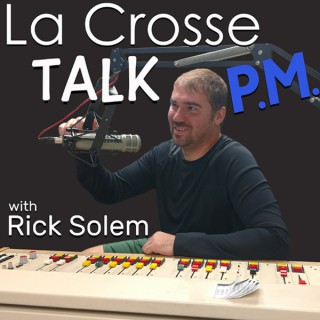
From the business community's perspective, La Crosse needs a city administrator. La Crosse Area Chamber of Commerce CEO Sam Scinta and government relations director Allyson Fergot in studio explaining why 99% of their members support the move — and why they believe operating without one is costing the city more in the long run. HIGHLIGHTS: Overwhelming business support: Why 99% of the Chamber's 540-plus members—from small shops to non-profits and healthcare—back the position. Streamlining development: Why local non-profits told the Chamber they would rather have a city administrator than a new zoning code to cut through red tape. Managing a $74 million operation: Why treating city government like a complex enterprise requires consistent, professional management alongside elected policy makers. Predictability for local business: How a central administrator creates clear processes and stable leadership that outlasts political turnover. Next week the city council begins again its debate on creating the charter ordinance position, beginning with the Judiciary and Administrative Committee (agenda) at 5 p.m. Wednesday. The council did get the same ordinance through by a 7-6 vote back in February, but it needed a supermajority. NOTE: This interview was recorded prior to Mayor Shaundel Washington-Spivey releasing a video opposing the proposed charter ordinance. The mayor argued the specific legislation takes statutory power away from elected leadership and removes the voice of the people from City Hall. Watch and read more about the mayor's response here.See omnystudio.com/listener for privacy information.

327 / How can you make one piece of content do more for you? What does it take to juggle fiction, nonfiction, and podcasting? Matty Dalrymple shares tips on how she builds an audience on multiple platforms, collaborates on nonfiction projects, and streamlines her business strategies.Streamlining social media to focus on meaningful engagementLeveraging Substack for podcasting and community buildingCollaboration tips for co-authoring nonfictionThe mindset shift from scattered efforts to strategic synergy✨ This week's sponsor is Bookfunnel: https://bookfunnel.com

Episode Summary Senior IT change and adoption consultant Janie McNeil joins host Justin Lake to talk about why new technology so often goes unused, and what it actually takes to change that. She makes the case that adoption is a people problem long before it's a technology problem: when workers aren't brought in early, tools that cost millions sit idle and the damage trickles downstream for months. Janie digs into using data to prove adoption is working, why frontline teams learn by doing and watching rather than reading dense documentation, and why change management and learning teams get the best results when they're pulled in from the start instead of the eleventh hour. She closes on AI, arguing that the way to get people to embrace it is to show them their worth, not warn them about restructuring, and she shares a simple task list anyone can use to see where AI helps and where a human is still the answer. It's a practical, empathetic look at keeping people at the center of technological change. Key Topics The operational cost of poor technology adoption Downstream effects of adoption failure Bringing change management in early Measuring adoption with data The product manager's role in system success How frontline workers actually learn Change management and L&D working together Building trust to get involved sooner Supporting AI adoption without fear Episode Chapters 00:00 Introduction to the episode and guest 00:30 Janie McNeil's background and expertise 01:02 The operational impact of failed technology adoption 01:35 The importance of early stakeholder engagement 02:00 The cost of unused tools and systems 02:47 Downstream effects of poor adoption 03:25 The prolonged impact of adoption issues 04:25 Measuring adoption through metrics and data 05:24 The role of product managers in system success 06:21 Aligning success metrics with organizational goals 07:17 The importance of user behavior and process adherence 08:00 Challenges faced by product managers 09:07 Diverse user groups and their needs 10:01 Including change management early in projects 11:12 The late involvement of change management teams 12:24 The undervaluation of change management 13:32 The power of data literacy in adoption 14:54 Using data storytelling to demonstrate value 16:04 Microsoft's investments in adoption tools 18:06 The ongoing challenge of software adoption 19:50 Supporting frontline workers through community and education 22:21 Effective learning methods for frontline teams 24:36 The strategic role of L&D and change management 26:43 Defining responsibilities of change management vs. L&D 28:45 Streamlining project delivery with integrated teams 30:56 The risks of delaying documentation and training 32:40 Building relationships and trust in change initiatives 36:50 Managing overwhelm and delegation in change projects 39:03 Supporting AI adoption and addressing fears 44:52 The importance of human value in technological change 47:02 Embracing AI as a tool for growth and development 48:38 Closing remarks and key takeaways About Janie McNeil Janie McNeil is a senior IT change and adoption consultant who helps organizations turn new technology into lasting behavior change, working at the intersection of people and the tools meant to support them. She grew up in one of the world's largest manufacturing communities, and that experience shapes how she thinks about supporting frontline and deskless workers through change. Her work spans organizational change management, learning and development, product adoption, and using data to show that adoption is actually taking hold. Resources Frontline Innovators Podcast: https://skyllful.com/podcast Connect with Janie McNeil on LinkedIn: https://www.linkedin.com/in/janie-rosales-mcneil Microsoft adoption resources: https://adoption.microsoft.com Prosci change management resources: https://www.prosci.com

Tired of entering the same listing data over and over again? On this episode of the Builder Marketing Podcast, Milo Anderson of Ocusell joins Greg and Kevin to break down how home builders can eliminate duplicate data entry, protect data integrity, and streamline marketing workflow without duplicate work. https://www.buildermarketingpodcast.com/episodes/330-streamlining-home-builder-listing-data-milo-anderson

On this Parts Edge Podcast episode, Kaylee Felio sits down at the NCM Fuel the Future Fix-Op Summit with Derek from NUMA. Together, they dig deep into the tech transforming parts and service departments: proactive AI that turns every customer touchpoint into an opportunity for retention, revenue, and hassle-free communication.Derek shares how NUMA's “co-pilot” approach fixes the industry's biggest headaches—poor communication and missed service appointments. By streamlining inbound calls and digitizing the parts counter's to-do list, NUMA empowers managers to get out of the weeds and focus on growth, customer satisfaction, and turning inventory faster. The result? Fewer bad reviews, loyal customers, and a serious impact on the bottom line.From fixing the foundation of internal dealership workflows to bringing sales and service together, this episode is packed with gritty, realistic advice for managers who want inventory (and customer experience) to be anything but a guessing game.--------------------------------------------TakeawaysCommunication drives retention and revenue.AI frees your team for high-value tasks.Integrating sales, service, and parts leads to better customer experience.Chapters00:00 AI tool for car dealerships03:35 Challenges in service advisor roles08:07 Streamlining service with the NUMA app11:23 Increasing dealership service retention13:30 Podcast guest introductionWebsite: https://www.partsedge.com/profilequizKaylee FelioLinkedIn: https://www.linkedin.com/in/kayleefelioWebsite: https://www.partsedge.com

Most electric vehicles spend nearly all of their lives parked, doing nothing. But under the hood of those idle cars, a massive store of energy sits untapped. The Kia EV9, for instance, holds a 100-kilowatt-hour battery—which is equivalent to about seven home backup batteries—just waiting to be utilized. Yet despite this enormous potential, Vehicle-to-Grid (V2G) technology has remained mostly limited to small-scale pilot programs for decades. But with advanced tech hitting the market, that could soon change. In this episode, Shayle sits down with Steve Letendre, senior advisor at the Vehicle-Grid Integration Council and editor of V2G News, to explore why the V2G revolution is finally moving from concept to reality. They break down the technical battle between AC and DC architectures, tackle the looming questions around battery degradation and warranties, and debate the business models that will finally convince everyday drivers to plug their cars back into the grid. Shayle and Steve discuss topics like: - The unused energy capacity hidden in parked EVs - The technical debate, cost trade-offs, and hardware differences between off-board power conversion (DC architecture) and on-board power conversion (AC architecture). - Current compatible EV options, including the Nissan Leaf, Tesla Cybertruck, Ford F-150 Lightning, and Kia EV9 - The high upfront cost of V2G systems - Consumers' fears regarding whether discharging power to the grid will ruin their EV batteries or void manufacturer warranties. - Streamlining the V2G enrollment process via VPP programs or at point-of-sale - How financing can unlock mass V2G adoption Resources Catalyst: Repurposing EV batteries for grid storage Catalyst: How China is reshaping the global auto market Catalyst: Enter the electric supercycle Latitude Media: Electric Era is turning its EV-charging tech into a data center power play Latitude Media: The future of optimized EV charging Credits: Hosted by Shayle Kann. Produced and edited by Max Savage Levenson. Original music and engineering by Sean Marquand. Stephen Lacey is our executive editor. This episode of Catalyst is brought to you by ENGIE, the smarter energy supplier. ENGIE doesn't just provide the power to run your business — they supply the energy to move it forward, with reliable, flexible solutions built for what's next. Learn more at engieresources.com. Catalyst is brought to you by EnergyHub. Peak season puts every grid to the test — and the utilities that pass are the ones that built flexible capacity before they needed it. EnergyHub works with more than 170 utilities to coordinate 2.5 million devices and 3.4 gigawatts of dispatchable flexibility through a single platform designed to perform when it counts most. See what that looks like at EnergyHub.com. Catalyst is brought to you by Bloom Energy. Bloom Energy fuel cells deliver affordable, ultra-reliable onsite power for hospitals, utilities, and data centers – at speed and at scale. Learn more by visiting BloomEnergy.com.

In this episode, Vincent A. Lancy shares insights on authenticity in communication, the importance of pivoting in entrepreneurship, and strategies for operational efficiency and audience engagement. He also announces upcoming releases and challenges listeners to evaluate and improve their business practices."AI can't replace human-to-human context"Chapters00:00 The edge of AI and human connection00:26 The importance of professionalism and authenticity01:23 Introducing the episode and upcoming product launches02:14 The shift in podcast landscape and content fatigue03:42 Focusing on radical pivots and high signal execution04:10 Changing business models and operational trimming05:07 Managing team and social media growth07:28 Adjusting offers and monetization strategies09:22 Streamlining client onboarding and value-added processes10:18 The importance of human-to-human context in communication11:48 Call to action: Regularly evaluate and cut one thing from your business or personal life to improve efficiency13:20 Upcoming product releases for personal growth14:50 Next episodes and closing remarksAdditional Key Takeaways For You*Pivoting strategies for entrepreneurs during market shifts*The importance of authenticity in AI-driven communication*Putting your middle initial in your LinkedIn name can help identify AI-generated messages.*Authentic human connection remains the key differentiator in marketing and communication.*Pivot your business strategies to prioritize relevance over scale in changing buyer psychology."Authenticity is the only true differentiator"Send us Fan MailSupport the showRemember to subscribe for the next episode. Show Sponsor: ComingAlive PodcastProduction.com (Download your Podcast Launch Checklist for only $1 here)Music Credits: Copyright Free Music from Adventure by MusicbyAden.

Is your practice set up to keep running smoothly during rough times? In this episode, AmSpa founder Alex Thiersch connects with Candace Noonan, Director of Education at Derma Concepts (the exclusive U.S. distributor of Environ Skin Care). Together, they dive into the economic realities currently impacting medical aesthetics—from rising global import costs and tariffs to shifting consumer spending habits. Candace explains why discounting product prices in a results-driven practice erodes perceived value and devalues clinical outcomes. Instead, she outlines how business owners can reframe retail around comprehensive, protocol-based treatment plans and strategic bundling. 02:17 Industry sentiment about economic shifts 05:30 The dangers of discounting products 08:00 A strategy for absorbing overhead 14:24 Maintaining operational discipline 18:00 Building on the legacy of Environ 23:40 Streamlining to build long-term systems

What if the next major advance in ENT surgery isn't a new instrument, but a better-integrated operating room? In this episode of the BackTable ENT & Allergy Podcast, Cleveland Clinic rhinologist and skull base surgeon Dr. Raj Sindwani joins Dr. Gopi Shah and Dr. Ashley Agan to discuss how reducing cognitive load, improving workflows, and creating a more efficient OR environment can enhance the surgical experience. --- Get the BackTable apphttps://www.backtable.com/app --- This podcast is supported by Strykerhttps://www.stryker.com/us/en/ent.html --- Timestamps 00:00 - Introduction03:50 - Where Surgery Happens: Choosing the Right Site for Service06:27 - Quality Safety And Throughput09:48 - Reducing Cognitive Load In Surgery15:34 - Building an Efficient OR Ecosystem And Culture23:06 - Tech Adoption and Team Training26:19 - Smarter Surgical Navigation and Augmented Reality37:02 - Navigation Accuracy, Registration, and Smart Coaching40:29 - Inside the Stryker RISE Platform49:55 - Integration Challenges and Voice-Control Safety56:36 - Surgical Ergonomics and Injury Prevention01:09:14 - The Future of Surgical Innovation and AI in the OR --- More about this episode Dr. Sindwani explores how minimizing unnecessary friction, improving team dynamics, and thoughtfully integrating technology can help surgical teams focus on what matters most: patient care. The conversation examines the operating room as an ecosystem where people, processes, and technology all contribute to patient outcomes. Dr. Sindwani shares strategies for reducing extrinsic cognitive load, including standardizing room setup, minimizing interruptions, and optimizing the surgical environment.He also discusses advances in sinus and skull base navigation, augmented reality guidance, and Stryker's RISE platform, highlighting how integrated technology can simplify workflow, improve ergonomics, and reduce distractions in the OR. Throughout the episode, Dr. Sindwani emphasizes the importance of thoughtful technology adoption, team collaboration, and designing the operating room of the future around safety, efficiency, and the needs of both patients and surgeons. --- Resources Dr. Raj Sindwanihttps://providers.clevelandclinic.org/provider/raj-sindwani/4268990 Stryker ENThttps://www.stryker.com/us/en/ent.html Stryker RISE Platformhttps://www.stryker.com/us/en/portfolios/medical-surgical-equipment/integration-and-connectivity/or-integration/rise.html Technological Advances in Sinus and Skull Base Surgery by Dr. Raj Sindwanihttps://www.oto.theclinics.com/article/S0030-6665(17)30050-6/fulltext Ergonomics in ENT Practice NIH Articlehttps://pmc.ncbi.nlm.nih.gov/articles/PMC11455805/ --- BackTable ENT & Allergy is the go-to podcast for otolaryngologists, allergists, and head and neck surgeons. Download the free BackTable app to get early access to new episodes, cases, and courses curated by physicians in your specialty. ► https://www.backtable.com/app

In episode 167 of The Side Hustle Experiment Podcast John (https://www.instagram.com/sidehustleexperiment/ ) and Drew (https://www.instagram.com/realdrewd/) talk with someone who made $27,000 in 30 days doing the Amazon Influencer Program.They discusses strategies, content creation tips, and how to optimize product videos for maximum commissions.Don't forget to Like, Subscribe, and hit the bell so you don't miss future episodes with top entrepreneurs and creators.Chapters00:00 Introduction and episode overview00:29 What is the Amazon Influencer Program?01:26 How to get accepted into the program06:07 Different streams of Amazon influencer income08:29 Breakdown of June's earnings and creator connections09:22 Impact of commission rate changes and focusing on high-value products11:15 Shifting strategy to focus on products that sell well13:37 Choosing products with longer shelf life for reviews17:23 Creating better product videos with detailed demos19:15 Upgrading audio equipment for better content quality24:19 Demonstrating product features effectively25:11 The importance of making better videos for sales26:10 Turning down low-value brand deals28:02 Focusing on products with high sales potential30:55 Controlling workflow by buying products directly34:46 The power of patience and the compounding effect36:42 Using AI and dashboards to optimize workflow37:40 Streamlining content creation with fewer products38:40 Final advice: Focus, consistency, and strategic product selection#makemoneyonline #sidehustleexperimentpodcast #sidehustles Follow us on Instagram: https://www.instagram.com/sidehustleexperimentpodcast/ Listen on your favorite podcast platformYoutube: https://bit.ly/3HHklFOSpotify: https://spoti.fi/48RRKcPApple: https://apple.co/4bmaFOk Check out Drew's StuffInstagram: https://www.instagram.com/realdrewdTwitter: https://twitter.com/DrewFBACheck out John's StuffInstagram: https://www.instagram.com/sidehustleexperiment/Twitter: https://twitter.com/SideHustleExp FREE ResourcesFREE Guide: How to Make Money Reviewing Products https://bit.ly/3HIGFSP

How has studying graphic design influenced Dillon's career? What led Dillon to land his initial role working in an Apple retail store? How was Dillon able to make the jump to working in Apple's retail development group? What family ties to real estate did Dillon have? Which Microsoft product was Apple using to run its construction projects in the early days of Dillon's career? How is the build process different between an Apple retail store in a mall and one of Apple's flagship stores? Why did Dillon decide to leave Apple and head over to Tesla? How quick were the build times for Tesla's showrooms? How did the Apple Genius Bar influence Tesla's retail showrooms? What was the inspiration for SiteRise? Why did Dillon build SiteRise as a non-user license solution? How is AI being used to make the development process more efficient? What areas of retail and retail adjacent real estate are seeing growth today? Why is retail clustering taking off at the moment? Why is reporting increasingly important for SiteRise?Dillon Okner - CEO and founder of SiteRise, joins Proptech Espresso to answer these questions and discuss why customer led development has been the key to SiteRise's success.

In Part 2 of this conversation on The Greatness Machine, host Darius Mirshahzadeh sits down again with real estate developer and former mortgage industry executive Jon Irvine to dive deep into America's housing affordability crisis and the groundbreaking California legislation that could reshape how homes are built across the country. Jon shares a pivotal personal moment, selling a modest 2,000 sq ft Beverly Grove home for $3.35 million, that crystallized why younger generations are being priced out of homeownership. From there, the conversation explores California Senate Bill 1123 (SB 1123), a transformative zoning law that could allow developers to build up to 10 homes where only one previously stood, at price points 30–50% below comparable market properties. The episode also touches on the role of AI in streamlining permitting, the lingering impact of the LA wildfires on housing policy, and Jon's ambitious plan to build 500–1,000 homes in the Los Angeles basin over the next three to four years. In this episode, Darius and Jon will discuss: (00:00) Introduction and Recap of Part One (02:53) The Future of Housing and Home Ownership (05:47) Transitioning from Lending to Development (08:12) The Challenges of Affordability in Housing (11:16) California's New Housing Law: SB 1123 (13:50) Understanding the Housing Shortage Crisis (16:50) The Transformative Impact of SB 1123 (19:37) Navigating the Development Process (22:00) The Realities of Building in California (25:21) Challenges in Real Estate Development (29:43) Streamlining the Entitlement Process (32:29) The Impact of SB 1123 on Development (36:59) Addressing California's Housing Shortage (42:30) Creating Affordable Housing Solutions Jon Irvine is the Founder and CEO of Westcove Development, a Southern California real estate development firm specializing in design-forward, small-lot single family homes in high-demand, supply-constrained markets. Drawing on California's evolving housing legislation — including SB 1123 — Westcove manages the full development lifecycle from acquisition and entitlement through construction and sale. Jon brings nearly three decades of senior executive experience in residential finance, having held leadership roles at Change Lending, Banc of California, OneWest Bank (under CEO Steven Mnuchin), and Mr. Cooper/Nationstar, where he led initiatives across capital markets, production, and strategic growth. Through Westcove, he channels deep institutional finance expertise into scalable residential development built to meet California's urgent housing needs. Connect with Jon: LinkedIn: https://www.linkedin.com/in/jonirvine/ Facebook: https://www.facebook.com/p/Westcove-Development-61572683421911/ Connect with Darius: Website: https://therealdarius.com/ Linkedin: https://www.linkedin.com/in/dariusmirshahzadeh/ Instagram: https://www.instagram.com/imthedarius/ YouTube: https://www.youtube.com/@Thegreatnessmachine Book: The Core Value Equation https://www.amazon.com/Core-Value-Equation-Framework-Limitless/dp/1544506708 Write a review for The Greatness Machine using this link: https://ratethispodcast.com/spreadinggreatness. Learn more about your ad choices. Visit megaphone.fm/adchoices

What if the reason you still don't feel better isn't just what's happening inside your body... but what's happening in your environment?I'm excited about this one because it's the perfect way to kick off our new partnership with Mosaic Diagnostics.I sat down with Dr. Kurt Woeller, Chief Medical Officer at Mosaic Diagnostics, to talk about the connection between mold exposure, mycotoxins, and the chronic health symptoms so many people struggle with. We cover how mold can affect your immune system, gut, brain, hormones, and even contribute to food and chemical sensitivities that leave people searching for answers.Dr. Woeller shares insights from decades of practicing integrative medicine, including his work with children with autism and patients facing complex chronic illnesses. We also break down what mycotoxin test results can (and can't) tell you, why your health history and environment matter just as much as your lab results, and how combining body testing with home testing gives you a much clearer picture of what's really going on.We also talk through our new partnership between Mosaic Diagnostics and The Dust Test and why we're so excited about it. By combining body testing with home testing, it's easier than ever to connect the dots, identify hidden mold exposure, and take the right next steps toward recovery.If you've been wondering whether hidden mold could be part of your health puzzle, this is an episode you won't want to miss.Check out the MycoTOX Profile & The Dust Test Kit Bundle here!03:46 Meet Dr Woller05:40 Kids Autism and Mold06:52 How Environment Shapes Health08:13 Early Mold Case Study13:21 Gut Immune System Link16:33 Mycotoxins and Immune Disruption20:21 Candida and Opportunistic Infections25:08 House vs Body Toxin Puzzle28:34 Why Testing and Data Matter30:32 Triangulating Tests and Home Data34:50 Prioritizing Fixes That Move Needle35:42 Life Changing Value of Home Testing38:50 Living Beyond Fear39:39 Hidden Mold Exposure Cases40:20 Autism Case Study Breakthrough44:07 Linking Home and Body Tests46:47 Streamlining for Patients and Clinicians51:20 Bridging Medical and Environmental Knowledge1:00:06 Trust and Data Integrity01:07:10 Hope and Self Advocacy01:11:43 Where to Learn MoreIG: @MoldFindersNot sure the best way to get started? Follow these simple steps to hit the ground running…Step 1: Subscribe To Our Podcast!Step 2: Want a Test More Advanced Than ERMI? www.TheDustTest.comStep 3: Already Have An ERMI? Find Out What It Actually Means. www.ErmiCode.comStep 4: Text Me (yes, it's really me!) The Mold Phone: 949-528-8704Step 5: Book A FREE Consultation https://yesweinspect.com/call

SEASON: 6 EPISODE: 34Episode Overview:Welcome back to Becoming Preferred, the podcast for entrepreneurs and business leaders who want to grow their business, level up their game and become preferred in the markets they serve.Let's be honest: in today's market, growing your revenue is only half the battle. The real danger? Growing so fast that you break your own business. When your logistics fracture, your software stacks multiply, and your profit margins start bleeding cash, marketing success can quickly turn into an operational nightmare.Our guest today is the man who steps in when guesswork fails. Michael Kleinmann is a seasoned D2C operator, founder, and fractional C-suite executive who has built and scaled multiple businesses to the mid-eight-figure mark. He is a master at turning back-end infrastructure, fulfillment, and supply chains away from boring cost centers and into lethal competitive advantages.Whether you are running an e-commerce giant, scaling a subscription model, or just trying to protect your margins in a shifting economy, today's conversation is a blueprint for logic-driven execution. Please join me for my conversation with Michael Kleinmann.Guest Bio: Michael Kleinmann is a seasoned direct-to-consumer (D2C) operator, founder, and executive advisor with more than two decades of experience building, scaling, and modernizing seven- and eight-figure e-commerce and subscription brands. A true pioneer in the digital retail space, Michael launched Freshpair from his New York City apartment in 2001, transforming it into a category leader with over 30,000 SKUs and even founding "National Underwear Day" before its successful acquisition. In 2012, he repeated his success by launching Underwear Expert, growing it from a massive content marketing platform into a high-performing subscription powerhouse driven by proprietary curation technology.Today, Michael steps into organizations as a fractional C-suite executive, transforming logistics, fulfillment, and operational infrastructure into true strategic assets. He brings deep, end-to-end expertise across product, tech stacks, marketing, and supply chain management, replacing guesswork with practical, logic-driven execution. Throughout his career, he has built a reputation for engineering creative solutions to complex operational bottlenecks—delivering massive freight cost savings, optimizing 3PL partnerships, and turning around struggling business processes.Michael is far from your typical, surface-level consultant. Having worn every imaginable hat over 25 years of hands-on business building, he knows exactly how to align infrastructure with rapid revenue growth while ruthlessly protecting profit margins. He joins us to share his proven systems for navigating the realities of scaling and removing the friction from modern e-commerce operations.Resource Links:Website: https://www.mkinc.com/Product Link: https://www.mkinc.com/servicesInsight Gold Timestamps:02:40 I gravitated towards technology and business04:41 We had just about every hurdle you can think of06:12 I created National Underwear Day08:20 How do you get from zero to 100 with next to nothing or maybe fumes?10:38 I want to hear the problem from their perspective; that doesn't mean that that's what the problem is15:11 There's a lot of analytics that you can get about different things to try to see if B2C makes sense17:03 I was reading this morning that there's 73,000 3PLs in the United States20:35 By moving to a 3PL, you can get your costs lower than if you did it yourself21:48 Amazon is a shipping carrier that you can use separate from selling on Amazon24:42 If you want to pick something easy to do, don't have a direct-to-consumer brand28:40 I think asking for help is difficult33:20 I just went through the whole entire business and tried to simplify everything38:53 I think there's a lot more opportunity, but it's different40:00 mkinc.comConnect Socially:LinkedIn: https://www.linkedin.com/in/michaelkleinmann/TikTok: https://www.tiktok.com/YouTube: https://www.youtube.com/@poweredbymkInstagram: https://www.instagram.com/poweredbymkEmail: mk@mkinc.comSponsors: Rainmaker LeadGen Platform Demo: https://calendar.summit-learning.com/widget/booking/JKItVP7WErmCBjU2cCIxRainmaker Digital Solutions: https://www.rainmakerdigitalsolutions.com/

Many media companies run into serious scaling issues because their digital content tools are spread across separate, clunky platforms. Tyler Denk, CEO at beehiiv, breaks down how to bundle newsletters, premium subscriptions, and podcast networks into one clean delivery system. He shares his blueprint for bypassing social media algorithm changes by focusing on direct email distribution channels to build predictable, long-term brand equity.Key discussion areas include:Using first-party pixel data to scale cross-newsletter ad placements programmatically.Streamlining tech stacks by replacing fragmented blogging, mailing, and billing tools.Bundling premium content subscriptions across text and audio with Spotify Open Access.Protecting audience distribution loops from variable social media algorithms.Managing high delivery metrics (99.8%) while scaling automated advertising systems.Guest Profile: Tyler Denk is the CEO at beehiiv, directing advanced content delivery infrastructure that handles over 4 billion monthly email impressions.Connect & Scale Your Business:Follow Tyler Denk on LinkedIn: https://www.linkedin.com/in/tyler-denk/Explore beehiiv Platform: https://www.beehiiv.com/Optimize Your Paid Media Strategies with Strike Social: https://strikesocial.com/guaranteed-paid-social-media-ads-outcomes/Connect with Host Dylan Conroy: https://www.linkedin.com/in/dylanconroy/

Bob Zimmerman reports that NASA Administrator Jared Isaacman is streamlining the Artemis program by focusing on a lunar base and leveraging private sector contracts for landers and infrastructure. Meanwhile, the Boeing Starlinerprogram is likely dead following poor performance and the Inspector General's recommendation to halt further funding. (6)1930S IDAHO

What's the real cost of letting a C-player stay on your team? Chris Hallberg—military veteran, entrepreneur, and Inc. Magazine top 10 leadership expert—joins Jeff Mains to draw the sharp line between “nice” and “kind” leadership. They break down why most founders sabotage their own teams by tolerating the wrong people, why performance management still feels squishy for so many organizations, and what it actually takes to build an elite, founder-led team from startup through $30M.Chris dishes out battle-tested strategies for accountability, culture, scaling teams, and building a talent engine that compounds every quarter. Whether you're managing misaligned teams or aiming for that “all-A-player” badge, you won't want to miss this straight-talking, actionable playbook.Key Takeaways00:00 Gratitude for military and freedom06:55 Military vs civilian job commitment07:40 Importance of a Strong Brand Name12:33 Being a great teammate in SaaS16:36 Hiring and empowering talented people20:20 Recruiting and talent acquisition issues21:54 Impact of Team Dynamics24:58 Importance of uniform standards30:13 Choosing reliable team members31:07 Importance of Accountability in Teams35:50 Leadership and management skills discussed38:23 Transitioning to a leadership role41:36 Understanding the performance metrics45:49 Streamlining meetings with AI tools50:20 Embracing Company Identity53:21 Team-building and honesty lessons54:05 Preview of next episode topicsTweetable QuotesWorkplace Commitment: "In the civilian business world, your best operator can literally walk into your office and say, hey, thank you for everything, but I'm not feeling this anymore. And they could give you two weeks or no notice." — Chris Hallberg Personal Branding Power: "When someone hires me, this is a lesson in personal branding and why your company name should say a lot about who you are or why you do what you do or what you do, any of those combinations are good to go." — Chris Hallberg Building Elite Teams at Work: "If your company is solving big problems with a small group of really cool people, you are an elite unit and you should operate as an elite unit." — Chris Hallberg Viral Leadership Philosophy: "Our job isn't to take broken people and fix them, it's to, it's to identify unbroken people and then give them a position where we can get out of their way and allow them to contribute." — Chris Hallberg Quote: "One bad apple can spoil a whole bunch of good ones." — Chris Hallberg Viral Topic: The Cost of Great Talent: "And a lot of people try to get great humans at a discount. That's not a strategy that you can scale." — Chris Hallberg Elite Accountability Culture: "I'd rather gnaw my left arm off than come to this meeting not prepared and show everyone that I'm the weakest link on this chain." — Chris Hallberg Leadership Isn't Innate: "Leadership and management is not an innate skill. It's practiced and honed and opted in and opted out to for many years." — Chris Hallberg SaaS Leadership LessonsCommitment Over Comfort: Elite teams demand buy-in to the mission and values—partial commitment creates chronic misalignment.Culture is Who You Let on the Bus: Define the route clearly, be radically selective about who boards, and never let a wrong-fit hijack your direction.Relentless Talent Standards: Don't waste years trying to “fix” the wrong hire. “Liberate them to the market” and make space for genuine A-players.Authenticity Drives Execution: The true foundation is being real—about who you are, why you exist, and who fits. Comfort is overrated.Compensation Signals Which Standard You Value: If you want excellence, pay for it. Underpaying A-players only seeds disengagement.Use Technology to Illuminate, not Obscure: Objective, no-nonsense platforms like Go Expand make the right conversations unavoidable and the wrong people unmistakable.Guest Resourceschris@goexpand.comhttps://goexpand.com/https://www.linkedin.com/in/chris-hallberg-01516315/Episode SponsorThe Futureproof Series - https://www.youtube.com/playlist?list=PLfkXKUPZ5xuOqMPR7_gzGybncTtavyR1NThe Captain's KeysSmall Fish, Big Pond – https://smallfishbigpond.com/ Use the promo code ‘SaaSFuel'Champion Leadership Group – https://championleadership.com/SaaS Fuel ResourcesWebsite - https://championleadership.com/Jeff Mains on LinkedIn - https://www.linkedin.com/in/jeffkmains/Twitter - https://twitter.com/jeffkmainsFacebook - https://www.facebook.com/thesaasguy/Instagram - https://instagram.com/jeffkmains

Unpack the definitive defensive blueprint for stopping late-game passing attacks as Felix and Cody break down the dramatic structural shifts of the Two-Minute Drill. Learn how elite NFL coordinators abandon standard Cover 3 schemes to use split-field coverage shells, Dime personnel, and higher defensive line stunt rates to constrain space. Discover the coaching rules needed to create organic four-man pass rush pressure, eliminate vertical threats, and throttle high-tempo offenses without relying on the blitz.—Timestamps:00:00 - The Two-Minute Drill Blueprint01:58 - The Blitz Myth: Allocating Space Over Extra Pressure04:31 - Historical Evolution: From Air Raid to Modern NFL Tempo05:35 - The Run Filter: Elimination of Horizontal Schemes07:51 - Streamlining the Menu: The Power of One-Word Calls11:11 - Packaging Sub-Groups: The Substantial Surge in Dime Personnel18:05 - Organic Pressure: Stunt Rate Explosions Up Front25:34 - Protection Manipulation: The Technical Utility of "Boss" Fronts29:12 - Backend Coverage Shifts: The Systematic Death of Cover 341:02 - End of Game Mechanics: Implementing a Sideline Fence—» Join Felix and Cody each Wednesday as we dive deep into the game we love!MatchQuarters is a reader-supported publication. So, make sure to subscribe.—© 2026 MatchQuarters | Cody Alexander | All rights reserved. This is a public episode. If you'd like to discuss this with other subscribers or get access to bonus episodes, visit www.matchquarters.com/subscribe

Powered by CJ Moneyway Media and Bleav Network. Most entrepreneurs think growth means working harder. Michael Barbarita believes something different. After more than four decades helping businesses improve profitability and performance, the Founder of Next Step CFO has discovered that the key to growth isn't always doing more. It's doing less of the wrong things. In this episode, Michael shares the principles that have helped countless business owners simplify operations, increase revenue, and create businesses that support their lives instead of consuming them. In this conversation, we discuss: • The power of the 80/20 Rule in business • How to increase profits without working longer hours • Streamlining operations for sustainable growth • Financial leadership and smarter decision-making • Creating a business that serves your life — not your stress Because success isn't measured by how busy you are. It's measured by impact, freedom, and the life you're building. If you're new here, welcome to The CJ Moneyway Show. We believe success is measured by seeds planted and lives impacted — not vanity metrics. Legacy Over Likes. Brick By Brick. Podcast: https://pod.link/1707761906 Website: https://cjmoneyway.com Both Eyes Open and Both Eyes Shut: https://amzn.to/3WnTTYx Rate the Podcast: https://ratethispodcast.com/cjmoneyway CJ Moneyway Listener Benefit — $40+ savings: https://readyrx.com/treatments/se?coupon=cjmoney #CJMoneywayShow #MichaelBarbarita #BusinessGrowth #8020Rule #Leadership #Entrepreneurship #FinancialFreedom #LegacyBuilding #BrickByBrick Hosted by Simplecast, an AdsWizz company. See pcm.adswizz.com for information about our collection and use of personal data for advertising.

SHOW NOTES: https://www.haileyrowe.com/streamliningJoin my free Facebook community for business support & to connect with other health coaches: https://www.facebook.com/groups/themarketinghubgroup/Facebook: https://www.facebook.com/haileyrowecoachInstagram: https://www.instagram.com/hailey_roweTwitter: https://www.twitter.com/hailey_rowe

Growing a seven-figure home service business shouldn't cost you your sanity. In this episode of Masters of Home Service, host Adam Sylvester talks with Savannah Revis, founder of Earth Love Cleaning, about what it truly takes to scale your business past the $1 million mark. Savannah shares how discipline, systems, SOPs, and a focus on consistency helped her grow without sacrificing service quality. Show Notes: [00:57] Savannah's early start in cleaning [01:28] How she built a million-dollar cleaning business [02:13] How bodybuilding discipline transformed her cleaning business [03:17] What skills are needed to scale from $100K to $1M? [04:47] Why SOPs, systems, and checklists matter for growth [09:58] Streamlining client onboarding to reduce chaos [10:59] How to create clear SOPs for your team at every job [13:51] What roles should you hire for a million-dollar business? [15:13] How checklists improve customer satisfaction and retention New to Jobber? Masters of Home Service listeners can claim an exclusive discount for Jobber at https://bit.ly/4olKiNR
This episode of the PartsEdge Podcast brings you straight from the NCM “Fuel the Future” Fixed Ops Summit. Kaylee Felio catches up with Kyle Morissette from Techwall and Jim Boehnlein of UVEye to unpack how collaboration and streamlined technology are making dealership parts and service departments more efficient—and more profitable than ever.They dive into the importance of integrating systems so dealership teams aren't juggling endless logins, and share real stories of how automation has taken the busywork out of service lanes (think: automated tire measurements and instant vehicle inspections). Discover how partnering across platforms empowers advisors, technicians, and managers to deliver a faster, more transparent customer experience—and how it's transforming service lane acquisition into a massive opportunity.Whether you're a fixed ops veteran or new to turning faster inventory, this episode is packed with actionable strategies and gritty optimism for the future of dealer operations.--------------------------------------------TakeawaysIntegrated workflows reduce friction and save serious time for advisors, techs, and managers.Automation transforms the service lane into a profit center—think instant inspections, instant appraisals.Collaborative partnerships across vendors build stronger customer experiences and dealership growth.Chapters00:00 Focusing on customer retention05:59 Improving the customer walkaround process08:22 Improving workflow with technology11:43 Streamlining used car readiness13:20 Reflecting on conference successKaylee FelioLinkedIn: https://www.linkedin.com/in/kayleefelioWebsite: https://www.partsedge.com
Streamlining the Digital Footprint: Micro-Content Strategies and Tech Governance with Frank BravoIn a recent episode of The Thoughtful Entrepreneur Podcast, host Josh Elledge sat down with Frank Bravo, the host of Your Tech Makeover, to unpack the operational friction points that slow down brand authority and digital execution. Frank, an experienced technology strategist and media creator, breaks down how traditional high-volume content and overly complex corporate software setups can actually create severe administrative debt and audience fatigue. This conversation provides an essential strategic guide for mid-market founders, fractional consultants, and executive teams looking to optimize their communication funnels through high-impact micro-content, while establishing simple, bulletproof digital safety parameters across their workforce.The Minimalist Architecture: Eradicating Information Overload through Tactical Tech DesignThe primary vulnerability dragging down modern corporate content strategies is the systemic tendency to mistake duration for deep consumer value. Frank Bravo explains that in an over-saturated digital marketplace, audiences do not require lengthy corporate lectures; rather, they are actively looking for immediate clarity and actionable confidence. By pivoting toward a micro-content architecture—such as structuring podcast episodes and brand messaging to sit comfortably under the 15-minute mark—enterprises can seamlessly integrate into the daily commutes and coffee breaks of their ideal clients. This bite-sized, thesis-driven media model completely eliminates information overload, forcing companies to strip away dense technical jargon and present highly focused solutions that build instant brand trust and long-term authority.Transitioning an enterprise into an efficient, tech-forward organization also demands a top-down commitment to continuous, accessible digital education. Many founders and executives make the expensive mistake of assuming their internal workforce is automatically up to speed on the company's software stack, which silently breeds operational cross-contamination and massive process friction. Real scalability is unlocked when leadership intentionally designs a workplace culture where team members feel psychologically safe to ask basic, foundational questions about the tools they use daily. When management shifts its focus away from chasing flashy, over-engineered software features and instead concentrates on helping employees master the core mechanics of their existing tech stack, overall production velocity increases dramatically.Furthermore, protecting long-term enterprise valuation requires a disciplined, non-negotiable dedication to foundational cybersecurity governance. As digital workflows become increasingly distributed, companies expose their proprietary data assets to severe liabilities when staff members cut corners on baseline security protocols. Executive teams must implement strict internal guardrails that enforce mandatory software updates, strong password hygiene, and continuous awareness training regarding sophisticated phishing threats. When an organization treats technological infrastructure as a streamlined asset designed to serve the business rather than complicate it, the enterprise successfully insulates its bottom line. This balanced synthesis of automated simplicity and human-centric governance enables founders to securely scale their impact and maintain premium authority across their entire vertical market.About Frank BravoFrank Bravo is the host of Your Tech Makeover and a premier technology optimization consultant specializing in simplifying digital systems for business leaders and everyday users. Drawing from an extensive background in software implementation and media production, Frank helps individuals cut through digital noise to reclaim their time and security. He is a dedicated media strategist focused on helping corporate executives and content creators leverage highly accessible, short-form audio to scale their industry authority.About Your Tech MakeoverYour Tech Makeover is a leading educational platform and technology consulting show dedicated to making digital tools accessible, empowering, and highly secure. The company specializes in delivering bite-sized, jargon-free technology tutorials, corporate cybersecurity audits, and workflow optimization frameworks for growing businesses. Through clear, actionable media production and structured training strategies, Your Tech Makeover enables organizations to eliminate tech-induced friction and maximize everyday operational performance.Links Mentioned in This EpisodeYour Tech Makeover Official Website: yourtechmakeover.comFrank Bravo on LinkedIn: linkedin.com/in/fabravoKey Episode HighlightsThe Micro-Content Mandate: Why capping your brand's audio media under 15 minutes eliminates audience fatigue and accelerates consumer trust.Democratizing Internal Tech Support: Constructing a transparent workplace culture where team members are actively encouraged to ask basic digital questions.The Hidden Debt of Over-Tooling: Moving past complex corporate software systems to focus ruthlessly on mastering core operational tech tools.Foundational Cybersecurity Hygiene: Implementing non-negotiable executive guardrails covering password management, software updates, and phishing awareness.Jargon-Free Authority Building: Shunning highly technical, clinical industry language to deliver clear, human-centric messaging that converts prospects.ConclusionThe conversation with Frank Bravo reinforces that true digital transformation is an exercise in structural simplicity and high-accountability governance. By standardizing internal corporate tech literacy, creating hyper-focused short-form media assets, and strictly securing baseline data pipelines, business leaders can transform a chaotic digital infrastructure into a streamlined, high-valuation corporate asset.More from The Thoughtful Entrepreneur
In this episode, Laura Cantor shares key takeaways from her experience at Vendors in Partnership, including emerging trends in retail, the growing importance of meaningful partnerships, and how brands can cut through the noise in a tech-saturated landscape. She dives into why people—and the partnerships they build—are still the foundation of innovation and growth, even as AI continues to transform the industry. Laura also highlights tactical approaches that are driving real results today, including insights on high-impact ecommerce solutions like AfterSell, a platform helping brands maximize revenue through post-purchase optimization. In This Conversation We Discuss: [00:00] Intro [02:38] Learning the value of brand building [06:20] Sponsor: Migrate [08:19] Prioritizing learning over job titles [12:46] Sponsor: Intelligems [14:46] Overcoming organizational status quo [17:08] Streamlining operations for future tech [21:06] Sponsor: Electric eye [22:14] Optimizing brands for agentic AI search [23:43] Monetizing traffic through retail networks [25:34] Callouts [25:44] Leveraging partnerships for mutual wins [28:00] Emphasizing human strategy alongside AI Resources: Subscribe to Honest Ecommerce on Youtube Women's apparel specialty retailer nyandcompany.com/ Follow Laura Cantor linkedin.com/in/lauracantor/ Migrate and grow more klaviyo.com/honest Book a demo today at intelligems.io/ Schedule an intro call with one of our experts electriceye.io/connect If you're enjoying the show, we'd love it if you left Honest Ecommerce a review on Apple Podcasts. It makes a huge impact on the success of the podcast, and we love reading every one of your reviews!
Jack Burnham examines the Pentagon's 1260H list, which identifies Chinese companies allegedly assisting the PRC's military-industrial base, signaling increased regulatory scrutiny for these entities. Burnham recommends streamlining government lists to prevent companies from exploiting gaps and advises retail investors of the national security risks these firms pose. (6)1919

One of the biggest problems of vibe coding? Securely keeping the project up to date and sharing it with your team to make it actually useful. And there's a new solution that does just that, Codex Sites. With a few simple prompts, you can turn vibe coded throwaway apps into working pieces of software that your team can share. We put AI to work on Wednesday and show you how to get the most out of Codex Sites. Codex Sites: The Lovable and Replit Killer? A hands-on Guide to Codex Sites -- An Everyday AI Chat with Jordan WilsonNewsletter: Sign up for our free daily newsletterMore on this Episode: Episode PageToday's Episode on LinkedIn: Thoughts on this? Join the convo on LinkedIn and connect with other AI leaders.Upcoming Episodes: Check out the upcoming Everyday AI Livestream lineupWebsite: YourEverydayAI.comEmail The Show: info@youreverydayai.comConnect with Jordan on LinkedInTopics Covered in This Episode:Codex Sites vs Static File SharingLive Dashboards and Automated WorkflowsBuilding Internal Apps With Codex SitesReal-Time Data Integration in CodexAgent Layer and Role-Based Access ControlCodex Sites vs Replit, Lovable, BoltDynamic Business Insights and CollaborationCodex Sites Secure Team Sharing LimitationsAutomations and Custom Skills in CodexFuture of AI Native Business ToolsTimestamps:00:00 The future of work automation03:43 Free daily newsletter highlights08:29 Managing audience momentum dashboard12:04 Pulling stats and data access14:48 Creating dynamic web tools16:18 Editing video collaboration challenges21:09 Comparing coding platforms like Replit25:47 Future of Business Analytics Tools27:11 Introducing the Start Here series32:35 Updating old content ideas34:53 Streamlining team efficiency with AI37:02 Episode use cases overviewKeywords: Codex sites, OpenAI, AI dashboards, live software, file sharing, business automation, dynamic data, ChatGPT business, agentic system, Chrome integration, MCP servers, skills, plugins, Copilot Scout, internal dashboards, data analysis, role based access control, data governance, enterprise AI tools, site hosting, live app builder, prompt driven apps, automations, Replit alternative, Lovable competitor, full stack app builder, dynamic business context, annotation feature, nontechnical teams, BI dashboards, Kanban tracker, evergreen content, live indicators, audience momentum dashboard, sub agent, responsive design, visual design, parallax feature, actionable insights, version control, dynamic deliverables, artifact, demo over memo, knowledge work, IT security, internal URL sharing, AI native workflow, internal business tools, real time updates, start here seriesSend Everyday AI and Jordan a text message. (We can't reply back unless you leave contact info) Start Here ▶️Not sure where to start when it comes to AI? Start with our Start Here Series. You can listen to the first drop -- Episode 691 -- or get free access to our Inner Cricle community and all episodes: StartHereSeries.com Also, here's a link to the entire series on a Spotify playlist.

Transition IEP meetings are essential when your child transitions from elementary to middle school, middle school to high school, and high school to college/vocational school. If you haven't had a transition IEP meeting for the end of this school year, you can still get one scheduled as soon as the new school year begins. We are breaking it down in today's episode. Join us!Show Highlights:What the law provides for parents regarding transition IEP meetingsThe transition IEP meeting is NOT just a box to check.Waiting 30 days into the new school year means 30 days of missed opportunities for the student to be successful.From middle to high school, the student's diploma track has to be determined.From elementary to middle school, executive functioning skills are put to the test; we need to prep the student.The transition IEP meeting is a chance to “think outside the box” to meet a student's needs.How can we “front-load” a student for success in each transition?Each transition is a chance for a fresh start for students, parents, teachers, and the IEP team.Streamlining communication with the IEP teamResources:Contact us on social media or through our website for more information on the IEP Learning Center: www.inclusiveeducationproject.org.Thank you for listening!Don't forget to SUBSCRIBE to the show to receive every new episode delivered straight to your podcast player every Tuesday.If you enjoyed this episode and believe in our message, please help us get the word out about this podcast. Rate and review this show on Apple Podcasts, Pandora, Spotify, or wherever you get your podcasts. Your rating and review help other listeners find this show.Connect with us and reach out with any questions or concerns: Facebook, Instagram, X, IEP Website, and Email.

In this episode of Atlanta Business Radio, Lee Kantor interviews Tanya Ferguson, owner of Clearbrook AI Solutions. Drawing on 20 years in the insurance industry, Tanya now helps small businesses identify operational inefficiencies and implement AI and automation solutions. She explains her “Save first, make second” philosophy, focusing on consolidating technology stacks and eliminating wasteful […]

Where do you start when you want to level up the production at a new church? And how do you keep pushing forward when life throws you a devastating diagnosis?In this episode, we are joined by Josh Suender of Faith Community Church (Clayton, NC). We start with some practical, high-value tech talk, breaking down the exact first steps you should take to level up your church production. Josh shares his favorite creative AVL gear moves to streamline your workflow, how to keep MultiTracks from getting "weird" and chaotic on stage, and the massive benefits of implementing Bitfocus Companion in your tech booth.In this episode you'll hear: 0:00 Intro: Toby's Adventures in Worship Leading5:30 Josh Suender (Faith Community Church) Joins7:45 Josh's Start in Church Production11:20 Assessing the Production Baseline at a New Job14:00 The First Steps to Level Up Your Church Production16:20 Creative AVL Moves to Streamline Your Tech28:45 Keeping MultiTracks from Getting "Weird" on Stage30:15 Implementing Bitfocus Companion in Your Setup36:00 Josh's Battle for His Life: A Stage 4 Diagnosis48:15 Keep Sundays RunningGet expert help and care on your next integration project with our friends at HouseRight here. Hang out with us at The Mix in Vegas here! Get more money back in your budget and more space in your closet by selling us your used gear here. Resources for your Church Tech MinistrySell Us Gear: Does your church have used gear that you need to convert into new ministry dollars? We can make you an offer here. Buy Our Gear: Do you need some production gear but lack the budget to buy new gear? You can shop our gear store here. Connect with us: Sales Bulletin: Get better deals than the public and get them earlier too here!Early Service: Get our best gear before it goes live on our site here. Instagram: Hangout with us on the gram here! Reviews: Leaving us a review on the podcast player you're listening to us on really helps the show. If you enjoyed this episode, you can say thank you with a review!

Show Notes: Lana Newishy, founder of Hey Intake, explains that Hey Intake is one of several startups she has founded, which focuses on improving the client experience in the initial stages of a project. The Client Intake Process Lana highlights common issues in the client intake process, such as disorganized communication, missing information, and inefficient discovery calls. She emphasizes the loss of opportunities due to inefficient intake processes and the need for a structured system. Lead Qualification and Filtering Issues Lana discusses the broken lead qualification process, where consultants often react to discovery calls without proper filtering. She points out information asymmetry, where clients don't know what to share, and consultants don't ask the right questions consistently. Streamlining the Intake Process Lana mentions the fragmentation of tools, such as emails, documents, CRM systems, and file sharing, which are not connected in a single flow. She introduces the idea of a single, structured flow from first contact to service completion to streamline the intake process. A Demonstration of Hey Intake Lana shares her screen to demonstrate the Hey Intake dashboard, which includes tabs for dashboard, submissions, contacts, form builder, email templates, automations, analytics, team settings, and support. Dashboard Lana explains the AI-driven suggestions on the dashboard, which prioritize tasks based on the current stage of the intake process. Submissions Window She demonstrates the submissions window, which categorizes submissions into lead phase, intake phase, and service phase, and provides AI scores for prioritization. Lana continues to explain the submissions window, showing how submissions are scored and prioritized based on AI analysis. Submissions Drawer She demonstrates the submission drawer, which allows users to update the phase of a contact, request documents, and send e-signatures. Lana mentions the form builder, which allows users to create custom forms with various templates and fields. She explains the flexibility of adding fields, customizing inputs, and setting AI scoring weights to prioritize requests. Integrating with CRM Systems Lana discusses the ability to integrate Hey Intake with existing CRM systems and legal project management tools. She explains that some clients prefer to keep their existing systems and connect them with Hey Intake for a seamless process. Form Builder When asked about the form builder, Lana demonstrates how to create and customize forms, including adding fields, customizing branding, and setting up automations. She highlights the importance of keeping forms simple and quick to fill out to avoid discouraging potential clients. Email Templates Library Email Templates Library Lana demonstrates the email templates library, which includes pre-built templates and the ability to edit them manually or with AI. She emphasizes the flexibility of the system to meet the specific needs of different clients and businesses. Automations Tab Lana introduces the automations tab, which shows the flows for various actions, such as sending emails, requesting documents, and following up on actions. She explains how to set up custom automations and toggle them on and off. The Vendor Setup System Lana explains how Hey Intake helps with vendor setup, including requesting documents, managing client portals, and handling e-signatures. Uploading Documents She demonstrates the process of uploading documents for e-signatures and integrating with services like DocuSign and SignWell. Lana highlights the native storage options and the ability to connect with clients' private storage facilities. She emphasizes the importance of streamlining the onboarding process to save time and reduce administrative burdens. Hey Intake Customer Base Lana discusses the current customer base, which includes law firms, accountants, photographers, home renovators, and B2B consultants. She mentions the potential to focus on specific verticals in the future based on data collection and user feedback. The conversation turns to the development process, and Lana explains that she has a development team based in Canada that helps build B2B AI-based solutions. Lana highlights the structured validation process and the importance of a framework for successful development and launch. Hey Intake Pricing Lana provides information about the pricing of Hey Intake, which starts at $16 per month for the annual plan and $19.40 per month for the monthly plan. She mentions the availability of an enterprise tier for custom solutions. Timestamps: 05:07: Demonstration of Hey Intake Dashboard 12:50: Detailed Walkthrough of Submissions and Form Builder 22:33: Integration and Customization of Hey Intake 22:57: Automations and Email Templates 26:20: Vendor Setup and Document Management 31:02: Customer Base and Future Plans 35:29: Pricing and Contact Information Links: Website: https://heyintake.com/ This episode on Umbrex: https://umbrex.com/unleashed/episode-648-lana-newishy-founder-of-hey-intake/ Unleashed is produced by Umbrex, which has a mission of connecting independent management consultants with one another, creating opportunities for members to meet, build relationships, and share lessons learned. Learn more at www.umbrex.com. *AI generated timestamps and show notes.
Decoding the Sales DNA: Replacing Intuition with Scientific Hiring Frameworks with John PykeIn a recent episode of The Thoughtful Entrepreneur Podcast, host Josh Elledge sat down with John Pyke, the founder of The Talent Genius, to dismantle the legacy, gut-feel recruitment strategies that quietly stifle corporate profitability. As an elite keynote speaker, performance architect, and talent assessment expert, John brings a data-driven, behavioral-science approach to human capital management. This conversation serves as an essential strategic blueprint for mid-market founders and executive teams looking to eliminate high-volume turnover, maximize frontline production, and install scientific pre-employment filters that accurately predict job performance before a single resume is reviewed.The Predictive Analytics Paradigm: Overcoming Interview Bias through Talent BenchmarkingThe single greatest source of hidden operational loss within modern sales organizations is the reliance on unstructured interviews, surface-level resumes, and basic personality profiles to make high-stakes hiring decisions. John Pyke notes that an astounding 80% of systemic business challenges are actually misdiagnosed hiring failures, a reality governed by the Pareto Principle where a fractional 20% of the sales force routinely drives 80% of gross revenue. Traditional interview processes frequently reward charismatically polished candidates who know how to "perform" during a pitch meeting but completely lack the hardwired, un-teachable traits—such as relentless persistence, initiative, and severe rejection tolerance—required to sustain real-world revenue acquisition. By substituting subjective executive intuition with empirical talent benchmarking tools, an enterprise can precisely isolate a candidate's underlying "Sales DNA," turning the hiring funnel from a costly speculative gamble into a highly predictable profit driver.Transitioning into an evidence-based hiring architecture allows an organization to optimize its entire labor force, yielding measurable productivity spikes that carry through economic contractions. When enterprise leaders benchmark their existing staff by running high-performing and struggling representatives through anonymous, validated cognitive assessments, they can instantly pinpoint the exact behavioral gaps responsible for disparate sales metrics. This granular data completely redefines internal professional development, shifting the management team away from throwing blanket, generic training modules at underperforming staff and toward targeted, hyper-personalized coaching workflows. For example, implementing these scientific talent filters enabled consumer-facing organizations like Furniture Land South to skyrocket frontline revenue by 57% in just 30 days during a severe recession, establishing a clear proof of concept that predictive talent mapping insulates a company's margins against volatile market shifts.Sustaining a premium corporate footprint in an evolving digital landscape also requires leaders to intelligently integrate artificial intelligence into their talent acquisition pipelines without sacrificing long-term brand authority. While advanced automated screening tools can efficiently cut through administrative debt and streamline high-volume resume processing, technology alone cannot evaluate the intrinsic behavioral capacity of a candidate. The future of enterprise recruitment relies on a balanced synthesis of algorithmic automation and validated behavioral diagnostics to craft a transparent, highly professional candidate experience. When an organization treats its recruitment infrastructure as a strict scientific discipline and systematically removes personal bias from its vetting pipelines, the business naturally evolves into a self-sustaining asset capable of multiplying its enterprise valuation and outpacing standard market indices.About John PykeJohn Pyke is the Founder of The Talent Genius, a best-selling author, and a globally recognized keynote speaker and consultant specializing in scientific talent acquisition and sales team optimization. With a career spanning multiple decades of empirical research into human performance metrics, John has helped hundreds of companies construct high-converting sales teams and eliminate executive recruitment errors. He is a premier strategic advisor focused on helping businesses move past traditional interviewing habits to accurately map, measure, and deploy innate human talent.About The Talent GeniusThe Talent Genius is a leading strategic human capital consultancy and pre-employment assessment provider designed to help businesses engineer elite, predictable sales pipelines. The firm provides proprietary, science-backed behavioral diagnostic tools that measure cognitive agility, intrinsic motivation, and specific role suitability to eliminate bad hires. Through custom benchmarking programs, executive coaching frameworks, and talent strategy consulting, The Talent Genius enables mid-market enterprises to scale production and protect operational margins.Links Mentioned in This EpisodeThe Talent Genius Official Website: thetalentgenius.comJohn Pyke on LinkedIn: linkedin.com/in/thetalentgeniusKey Episode HighlightsThe Hidden Cost of Bad Hiring: Analyzing why 80% of operational corporate bottlenecks are actually downstream symptoms of unscientific employee recruitment.The Failure of Resumes and DISC: Unpacking the structural limitations of standard resumes, interview setups, and generic personality profiles in predicting sales success.Isolating Innate Performance DNA: Measuring hardwired behavioral traits like persistence, self-motivation, and rapid rapport-building that cannot be taught through corporate training.The Data-Driven Blind Audit: Leveraging validated behavioral assessments to evaluate and predict candidate performance metrics without initial resume access.Streamlining the Candidate Experience: Balancing backend automation tools with human-centric transparency to attract premium talent in highly competitive markets.ConclusionThe conversation with John Pyke reinforces that elite sales production is an intentional architecture built on behavioral data rather than luck. By implementing rigorous talent benchmarking systems, removing executive bias from candidate evaluation, and focusing ruthlessly on un-teachable innate traits, business leaders can transform a volatile sales department into a streamlined, high-valuation corporate asset.More from The Thoughtful Entrepreneur

send us a text via Fan Mail!Meal making for those short on time (that would be all of us...) and for those who don't find cooking a creative outlet. ContactOn Instagram at @make.joy.normal By email at makejoynormal@gmail.comSearch podcast episodes by topic www.bonnielandry.caShop my recommended resourcesThanks for listening to Make Joy Normal Podcast!
send us a text via Fan Mail!it was such a steep learning curve for meContactOn Instagram at @make.joy.normal By email at makejoynormal@gmail.comSearch podcast episodes by topic www.bonnielandry.caShop my recommended resourcesThanks for listening to Make Joy Normal Podcast!

Have you ever watched really good sidemount divers underwater and wondered how they make it look so effortless?Meanwhile, your cylinders float, your trim feels unstable, hoses are everywhere, and it feels like you're constantly fighting your equipment?In episode 120 of Speaking Sidemount, Steve Davis breaks down the complete philosophy and equipment foundation behind exceptional sidemount diving after:13 years diving sidemount exclusively10 years teaching sidemount professionallyNearly 2,000 sidemount divesTraining with Tom Steiner, Edd Sorenson, and Patrick WidmannInterviews with many of the world's best sidemount divers, cave explorers, and instructors.This is not another random gear video.This episode explains WHY good sidemount works — and how the right equipment platform combined with strong diving fundamentals creates calm, efficient, streamlined diving.Steve walks through his complete modern sidemount philosophy including:✅ Why sidemount over backmount✅ The XDEEP Stealth 2.0 setup philosophy✅ Loop bungees explained✅ Sliding D-rings explained✅ Cylinder selection for different environments✅ Steel vs aluminium sidemount cylinders✅ Proper sidemount cylinder rigging✅ Valve positioning and cylinder trim✅ Rotating turret and fifth port regulators✅ Long hose vs short hose debate✅ Streamlining and hose routing✅ Building a stable sidemount platform✅ Common sidemount mistakes divers makeThis episode is Part 1 of a 2-part Sidemount 101 series. This episode will help you build a cleaner, more efficient and more enjoyable sidemount system.In Sidemount 101 Part 2, Steve will move on to putting it all in the water:

Watch this episode on YouTube: https://youtu.be/vMtf0ZtSbbA Fleet maintenance isn't sexy — but it's one of the highest expenses in trucking, the most controllable, and by far the most ignored. Justin Brevik of Bosch FleetMe returns to the BulkLoads Podcast to break down exactly where fleets bleed money on maintenance and how to fix it, whether you run 3 trucks or 3,000. Host Jared Flinn and Justin cover the real cost of letting a truck sit at a dealership, the oil-change myth costing you thousands, why tires are your #1 maintenance expense (and the cheap fix almost nobody does), and how to move your operation from reactive to preventative to predictive maintenance. If you're an owner-operator, carrier, or fleet manager trying to protect your margins, this one pays for itself. Want to be featured on the BulkLoads Podcast? https://www.bulkloadsmedia.com/ ⏱️ CHAPTERS 00:00 Joining Bosch's Fleet Maintenance Team 05:23 Fleet maintenance strategies 09:55 360-degree DVIR integration 11:18 Streamlining fleet breakdown response 14:40 Evaluating and training technicians 19:00 Dealership repair and staffing insights 22:11 Tire maintenance and oil changes 23:45 Fleet management tools overview
Joe Castelino is the VP of Fixed Operations for American Motors Group, overseeing a diverse portfolio of twelve dealerships. In this high-energy episode, he dives into the real-world strategies behind launching a massive new GM parts warehouse, scaling mobile service across brands, and why empowering frontline techs is the dealership's secret weapon.Joe shares gritty lessons from running fast-moving fixed ops departments—from how he builds business cases for every investment, to the “adapt or die” mentality that's driving innovation at American Motors. With insights on intercompany wholesale, parts sourcing headaches, and memorable moments of customer service (yes, private planes are involved), this episode is packed with candid advice for parts managers and dealership leaders ready to fix the foundation and run lean.Tune in for warehouse launch details, mobile service wins and fails, and Joe Castelino's take on what parts managers must do to remain growth-focused and competitive in today's changing market.--------------------------------------------TakeawaysBuild a strong business case for every investment—track ROI, set clear payoff timelines, and always know what keeps you “in the plus column.”Empower frontline techs and parts managers—let them innovate and weigh in on service delivery for continual improvement.Adapt or die—embrace change, centralize operations where possible, and use data to stay ahead in a fast-moving market.Chapters00:00 Talking about vintage brand clothing05:58 Exploring the GM Powertrain program09:07 Expanding warehouse operations11:53 Centralizing wholesale and mobile services14:16 Offering quick car services18:04 Team bonding and mentorship moments21:55 The rise of convenience services26:01 Streamlining parts procurement process28:17 Buying stores and learning to fly31:56 Attending an exciting trade show35:27 Evaluating potential companies38:33 Vendor relationships and conversations41:25 Discussing product trial periods45:15 Changes in management's role46:23 Innovative parts management strategyKaylee FelioLinkedIn: https://www.linkedin.com/in/kayleefelioWebsite: https://www.partsedge.comJoe CastelinoLinkedIn: https://www.linkedin.com/in/joecastelino

This week, SmarterLauch Co-Founders Eric Fletcher & Cody Smith join Dan and Donnie on the PMP Industry Insiders Podcast. They walk through the development of their proposal software, how it works and the ROI pest control companies typically see when they use it. Donnie also shares Triangle Pest Control's experience with SmarterLauch. Guests: Eric Fletcher & Cody Smith, Co-Founders, SmarterLaunch Hosts: Dan Gordon, PCO Bookkeepers & M&A Specialists: https://pcobookkeepers.com/ Donnie Shelton, Triangle Home Services: https://trianglehomeservices.com/ Sponsors: Coalmarch: https://www.coalmarch.com/podcast PestSure: https://www.pestsure.com/ Voice for Pest: https://www.voiceforpest.com/podcast Forshaw: https://www.forshaw.com/ Peer Groups: https://www.pmpindustryinsider.com/peergroups
The most expensive AI mistake of 2026 won't show up on any invoice.

Edtech ThrowdownEpisode 215: Streamlining the Classroom - Top Content Creation and Search Tools for EducatorsWelcome to the EdTech Throwdown. This is Episode 215 called Streamlining the Classroom - Top Content Creation and Search Tools for Educators. It's been a while so in this episode we'll be talking edtech tools as we bring you a list of some of our favorites for content creation and online searching. This is another episode you don't want to miss. Check it out.Segment 1:We haven't made one of these in a whileSegment 2:Episode 215: Content Creation & SearchConsumer Insight & Ideationanswerthepublic.comTool Breakdown: Research & AI Insights Name of the Tool: AnswerThePublic URL:https://answerthepublic.comDescription: A search listening tool that visualizes search questions and suggested autocomplete searches in an image called a search cloud. It helps users understand what people are asking about any specific topic. Main Purpose: For teachers to discover student inquiry trends or for admins to research community concerns. Cost: Freemium Discount Codes: None currently available Login Required: Optional (Limited searches without login) Throwdown Grade: A-googpt.ai Description: A hybrid search engine that combines Google Search results with ChatGPT's conversational AI answers. It provides a side-by-side view of web links and AI summaries. Main Purpose: Efficient research for teachers and students. Cost: Free Discount Codes: None currently available Login Required: No Throwdown Grade: A-Why:Both tools focus on understanding search intent and generating ideas based on what people are asking online.Audio & Video AIelevenlabs.ioName of the Tool: ElevenLabs URL:https://elevenlabs.ioDescription: An advanced AI audio platform that offers lifelike text-to-speech and voice cloning in dozens of languages. It is widely considered the industry leader for natural-sounding AI voices. Main Purpose: Creating accessible audio versions of lessons or narrating classroom presentations. Cost: Freemium Discount Codes: None currently available Login Required: Yes Throwdown Grade: Ainvideo.io Name of the Tool: InVideo URL:https://invideo.io Description: A powerful AI-driven video creation platform that can turn a script or an idea into a fully edited video with stock footage, voiceovers, and music. Main Purpose: School marketing, news shows, or student presentations. Cost: Freemium Discount Codes: None currently available Login Required: Yes Throwdown Grade: AWhy:High-end generative media tools; one specializes in realistic voice synthesis, the other in AI-driven video production.Niche Media Searchplayphrase.meDescription: A search engine for movie clips. Type in any common phrase, and the site will instantly play a sequence of movie scenes where that exact phrase is spoken. Main Purpose: Language arts teachers or anyone looking for the perfect movie clip for a lesson. Cost: Freemium Discount Codes: None currently available Login Required: Optional Throwdown Grade: A-eaglercraft.com Description: A web-based version of Minecraft that can be played directly in a browser. It is often used by students to bypass local installation restrictions. Main Purpose: Creative building and logic puzzles (use with discretion!). Cost: Free Discount Codes: None currently available Login Required: No Throwdown Grade: B- (High distraction risk)Why:Media-centric entertainment tools—one searches for movie dialogue, the other provides a browser-based gaming experience.Visual Brainstormingnapkin.aiName of the Tool: Napkin AI URL:https://napkin.aiDescription: An AI-powered design tool that turns text descriptions into professional-looking diagrams and visuals instantly. It is designed to help "visualize" thoughts during the writing process. Main Purpose: Teachers creating visual aids and flowcharts for complex concepts. Cost: Freemium Discount Codes: None currently available Login Required: Yes Throwdown Grade: Aimagineexplainers.comName of the Tool: Imagine Explainers URL:https://imagineexplainers.comDescription: A tool that creates visual explainer videos and animations from text. It is designed to simplify complex topics through storytelling and movement. Main Purpose: Teachers creating flipped classroom content. Cost: Paid Discount Codes: None currently available Login Required: Yes Throwdown Grade: B+Why:These tools focus on turning abstract ideas or text into visual diagrams and explanations.Tool Directoriescommontools.orgName of the Tool: Common Tools URL:commontools.orgDescription: A portal providing various online utility tools like calculators, unit converters, and text manipulators. It is a simple, no-frills site for daily digital tasks. Main Purpose: General classroom utility for quick math or text conversions. Cost: Free Discount Codes: None currently available Login Required: No Throwdown Grade: B

In this episode of The Modern Hairstylist Podcast, host Hunter Donia and guest Jodie Brown break down what is actually happening beneath the surface when a hairstylist is overbooked and why being fully booked is not the finish line most stylists think it is. If you are three to four weeks booked solid, turning away new clients, and still feeling exhausted, stretched thin, and stuck, this episode is specifically for you.Hunter and Jodie walk through the real costs of staying overbooked for too long, from the administrative and operational weight that spills into your time off, to the income potential you are quietly capping every time you say no to a new client. This is not about being ungrateful for a full book. It is about understanding what it is actually costing you to stay there without a plan to scale out of it.Key Takeaways:

In this solo master's class episode of the Smart Real Estate Coach Podcast, I want to talk straight with you about why creative financing is absolutely thriving in this market and why I believe so many investors will look back a few years from now and wish they had leaned in harder. A lot of people keep saying this feels like 2008 all over again. It does not. The stats are different, the problems are different, and because of that, the opportunity is different too. Today's market is not primarily distress-driven. It is structure-driven. Sellers are stuck with low-rate mortgages they do not want to give up, buyers are stuck with payments they cannot comfortably afford, and right in the middle of that gap is where creative real estate shines. I break down why the current market favors terms more than ever, why rent-to-own is becoming even more attractive, why debt-free homes and strong equity levels make this market fundamentally different from the 2008 crash, and how smart investors can use all of that to create quality income instead of staying trapped on the transactional treadmill. I also walk through what I mean by quality versus quantity of income, using a real example of how just one year of three-payday deals can create long-term, staggered income that changes the way you live and invest. If you want to stop waiting on the market to "get better" and start understanding how to structure deals that work right now, this episode is for you. Key Talking Points of the Episode 00:00 Introduction 01:14 What makes this market different from 2008 02:22 The impact of AI and job security on real estate 03:03 Understanding the changing demographics of first-time home buyers 04:22 Why creative financing is a necessity today 05:31 Creative financing strategies: Seller financing, lease purchases, sub-to deals 06:15 Market differences: Equity and lending stability 08:21 Using creative financing as a strategic edge in today's market 09:00 Structure-driven vs. distress-driven markets 10:56 Solving seller problems through terms 12:30 Quality of income vs. quantity of income 13:43 12-month case study: Results and staggered income 15:33 Applying strategies to various asset classes 17:42 Streamlining with Propsperity.io Quotables "When you control the terms, you control the deal." "The opportunity isn't in the cheaper money. It's in a better, smarter, long-term structure." "You're not just looking to buy houses. You're asking what problem can you solve." Links 3 Paydays® Live https://3paydayslive.com/podcast Free Discovery Call https://smartrealestatecoachpodcast.com/discovery 3 Paydays® System Mastery Course - Use coupon code for 50% off https://smartrealestatecoach.com/qls Coupon code: pod Apprentice Program 3PaydaysApprentice.com/Podcast Masterclass https://smartrealestatecoach.com/masterspodcast 3 Paydays Books https://3paydaysbooks.com/podcast Partners https://smartrealestatecoach.com/podcastresources

This is a public episode. If you'd like to discuss this with other subscribers or get access to bonus episodes, visit www.volts.wtf/subscribeToday, coordinating a whole-home retrofit — or even just getting a heat pump — involves confusing research, a parade of contractors, and wildly varying quotes. It's a broken system that practically pushes people to just buy another gas furnace. In this episode, I'm joined by Zero Homes CEO Grant Gunnison to discuss ways to improve this system for both customers and contractors.
Info hunting and juggling sound familiar? It's the downfall of almost any business leader. Where is that email from Emily? Why can't I find last quarter's budget in Drive? Oh, and Keenen needs an answer back on that research project. Oh shoot, I swear Caleb confirmed the expenses in one of these Slack channels. You're off an information rabbit hole and by the time you find that Slack message, you already forgot what Emily's email said. Hit home? Well, as AI models expand to Coworking and Scheduled agents, we have a new best friend that doesn't really have a name. (Until we randomly named it. Lolz) Scheduled Agentic Context Carry. You need to know what it is, why it's important, and how to use it. We'll dive in. Newsletter: Sign up for our free daily newsletterMore on this Episode: Episode PageToday's Episode on LinkedIn: Thoughts on this? Join the convo on LinkedIn and connect with other AI leaders.Upcoming Episodes: Check out the upcoming Everyday AI Livestream lineupWebsite: YourEverydayAI.comEmail The Show: info@youreverydayai.comConnect with Jordan on LinkedInTopics Covered in This Episode:Scheduled Agentic Context Carry (SACC) ExplainedAI Agents: Features vs. Benefits ParadigmCo-Working and Scheduled AI Workflow ShiftPersistent Context and Memory in AI AgentsLarge Language Models' 1,000,000 Token Context WindowsWorkflow Automation: Eliminating Human-AI Duct TapeMulti-App Integration and Cross-Platform ContextThree Steps to Deploy Scheduled Agentic Context CarryChain of Thought Iteration with Scheduled AgentsAutonomous Agent Limitations and Future BridgeTimestamps:00:00 Explaining SACC and AI benefits03:43 Introducing the Start Here series06:26 Rise of AI in enterprises11:55 AI agents learning industry trends15:08 Agent capabilities in AI systems16:47 Explaining complex trends simply20:13 Streamlining tasks with AI agents24:18 Understanding AI and context windows27:43 Understanding prompt engineering basics30:51 Debugging and reviewing schedules33:08 Building automated workflows this quarterSend Everyday AI and Jordan a text message. (We can't reply back unless you leave contact info) Start Here ▶️Not sure where to start when it comes to AI? Start with our Start Here Series. You can listen to the first drop -- Episode 691 -- or get free access to our Inner Cricle community and all episodes: StartHereSeries.com Also, here's a link to the entire series on a Spotify playlist.
© 2020-2026 Ivy Podcast Discovery LLC
