
POPULARITY

58 episodes with Credentialing

18 episodes with Credentialing

19 episodes with Credentialing

8 episodes with Credentialing

5 episodes with Credentialing

5 episodes with Credentialing

6 episodes with Credentialing

13 episodes with Credentialing

5 episodes with Credentialing

4 episodes with Credentialing

5 episodes with Credentialing

4 episodes with Credentialing

3 episodes with Credentialing

2 episodes with Credentialing

3 episodes with Credentialing

3 episodes with Credentialing

4 episodes with Credentialing

3 episodes with Credentialing

3 episodes with Credentialing

3 episodes with Credentialing

6 episodes with Credentialing

3 episodes with Credentialing

3 episodes with Credentialing

5 episodes with Credentialing

3 episodes with Credentialing

3 episodes with Credentialing

2 episodes with Credentialing

LEARN MORE AND REGISTER FOR THE COURSE Insurance credentialing can feel confusing, especially when you're trying to understand applications, contracts, payer enrollment, effective dates, CAQH, NPIs, and all the steps that come after you're approved. In this free continuing education course, Donna Haswell, LCSW, Annie Day, Registered Mental Health Counselor Intern and credentialing and billing expert, and Kym Tolson, LCSW, break down the credentialing process and explain what mental health clinicians need to know to successfully work with insurance in private practice. You'll learn the differences between credentialing, contracting, and enrollment; what information and documentation to have ready before applying; what to look for in payer contracts; how to think about reimbursement rates and product lines; and how to create an organized system for tracking applications, effective dates, recredentialing, and ongoing payer requirements. The presenters also share practical lessons from their own experience helping therapists navigate insurance billing and credentialing, including common mistakes that can delay payment or create problems later. This course is designed for counselors and other mental health clinicians who are starting, growing, or maintaining an insurance-based private practice. Earn 1 NBCC continuing education contact hour. This course is brought to you free of charge by Berries and Bill Like A Boss. FREE Continuing Education, brought to you by Berries.

Welcome to the Veterinary Breakroom! In this episode, Alyssa Watson, DVM, sits down with special guest Ashley Smith-Miller, DVM, to share the how and why behind her decision to make her Pennsylvania clinic the first veterinary practice in the United States to earn the certified autism center designation from the International Board of Credentialing and Continuing Education Standards (IBCCES). Tune in as they discuss what the certification process actually involves, what changed for Dr. Ashley's team and clients, and what every veterinary practice can learn from her experience. Brought to you by Zoetis Resources: https://ibcces.org/ https://www.apoquel.com Contact: podcast@instinct.vet Where To Find Us: Website: CliniciansBrief.com/Podcasts YouTube: Youtube.com/@clinicians_brief Facebook: Facebook.com/CliniciansBrief LinkedIn: LinkedIn.com/showcase/CliniciansBrief/ Instagram: @Clinicians.Brief X: @CliniciansBrief The Team: Alyssa Watson, DVM - Host Beth Molleson, DVM - Host Alexis Ussery - Producer & Multimedia Specialist Disclaimer: This podcast recording represents the opinions of Dr. Alyssa Watson and Dr. Beth Molleson. Content is presented for discussion purposes and should not be taken as medical advice. No guarantee is given regarding the accuracy of any statements or opinions made on the podcast.
In this episode of the ASC Podcast with John Goehle, AAAHC has released v45 of the Standards — with brand-new Artificial Intelligence requirements and a December 15th effective date — and it's a big week around here too: a new ASC Central website, the 2026 Survey Guide, and our September conference week. Then John talks with Amanda Penrod about leading across the generations — how to mentor, retain, and get the best from a team that can span four decades of experience. Grab a coffee and join John and Sue. This episode is sponsored by Surgical Information Systems, RFX Solutions, Medserve and Ambulatory Healthcare Strategies. Notes and Resources from this Episode: AAAHC Standards and Policy announcements (v45 FAQs and Policies & Procedures): aaahc.org - Standards and Policies AAAHC Achieving Accreditation - walk-through of the v45 Standards; September 14-16, 2026 (virtual) and December 10-11, 2026 (Las Vegas): aaahc.org - Achieving Accreditation FREE digital v45 handbooks for 1095 Engage users - Help Curtain (right-hand side of the screen), under “Released Handbook (Not Yet Effective)” for each program. Print editions available for preorder, delivery expected late September 2026: store.aaahc.org - v45 handbooks AAAHC has released v45 of the Standards - new Artificial Intelligence Standards in the Administration, Governance, and Credentialing & Privileging chapters (transparency, validation, data privacy and security, human oversight, bias mitigation). Effective for surveys conducted on or after December 15, 2026. Log in to 1095 Engage and select the Standards tab in your organization's Profile: 1095.aaahc.org Is Stark law reform finally on the table? - Becker's ASC (August 11, 2026): beckersasc.com 62% of ASCs cancel, delay cases over anesthesia gaps - Becker's ASC (August 14, 2026): beckersasc.com Half of NPs have been burned out for more than 2 years - Becker's ASC (August 12, 2026): beckersasc.com ANNOUNCEMENT - The new ASC Central website is live: asc-central.com What is changing for current members (the old Mighty Networks site stays open through March 31, 2027): asc-central.com - What's Changing Guide ANNOUNCEMENT - The Survey Guide for ASCs, 2026 Edition - fully revised and expanded: jgoehle.com The 2026 Survey Guide on Amazon: amazon.com - The Survey Guide for ASCs (2026 Edition) ANNOUNCEMENT - Live Conference Week, September 22-25, 2026 - Premium Access and AHS Client Access members attend free: asc-central.com - Conferences & Programs Tuesday, September 22 - Infection Control Oversight 101 (IC101): asc-central.com/ic101-2026 Wednesday, September 23 - Infection Control Coordinator Training (IC 201): asc-central.com/ic201-2026 Thursday, September 24 - Quality Improvement & Peer Review (QAPI): asc-central.com/qapi-2026 Friday, September 25 - Article 28 Mastery, New York D&TC and ASC: asc-central.com/article-28-2026 Leadership training - Administrator, Director of Nursing and Business Office Manager Bootcamps, plus the ASC Leadership Mastery Course: asc-central.com - Leadership Training ASC Leadership Mastery Course - 28-part video course (regulatory, clinical, staffing, financial); structured preparation for the concepts tested on the CASC exam; included with Premium Access or available separately: asc-central.com - Leadership Mastery Course Guest: Amanda Penrod, CEO and founder of RFX Solutions - “Leading Across the Generations.” INFORMATION ABOUT THE ASC PODCAST WITH JOHN GOEHLE ASC Central is our one-stop site for ASC bootcamps, live and on-demand conferences, and membership programs — now at asc-central.com (the old conferences.asc-central.com address has been retired). Patron Membership — $25/month, individual: the full resource library (policies, forms, drill kits, templates), weekly drop-in Zoom sessions, all six recorded conferences, the member forum, the complete podcast library, and The Survey Guide for ASCs, 2026 Edition with Appendices A–N. Premium Access — $3,995/year, covering your entire surgery center (not per person): everything in Patron, plus the Administrator, Director of Nursing and Business Office Manager Bootcamps, the ASC Leadership Mastery Course, Infection Control 101 & 201 (CAIP preparation), Annual Mandatory Education, compliance tools and self-assessments, certificates with AEUs and IPCH credits, every new conference we release, and up to five hours of private consulting a year. Compare both programs: asc-central.com/memberships Important Resources for ASCs: Conditions for Coverage: https://www.ecfr.gov/cgi-bin/text-idx?c=ecfr&rgn=div5&view=text&node=42:3.0.1.1.3&idno=42#se42.3.416_150 Infection Control Survey Tool (Used by Surveyors for Infection Control) https://www.cms.gov/Regulations-and-Guidance/Guidance/Manuals/downloads/som107_exhibit_351.pdf Updated Guidance for Ambulatory Surgical Centers - Appendix L of the State Operations Manual (SOM) https://www.cms.gov/Regulations-and-Guidance/Guidance/Manuals/downloads/som107ap_l_ambulatory.pdf https://www.cms.gov/medicareprovider-enrollment-and-certificationsurveycertificationgeninfopolicy-and-memos-states-and/updated-guidance-ambulatory-surgical-centers-appendix-l-state-operations-manual-som Policy & Memos to States and Regions CMS Quality Safety & Oversight memoranda, guidance, clarifications and instructions to State Survey Agencies and CMS Regional Offices. https://www.cms.gov/Medicare/Provider-Enrollment-and-Certification/SurveyCertificationGenInfo/Policy-and-Memos-to-States-and-Regions Other Resources from the ASC Podcast with John Goehle: Visit the ASC Podcast with John Goehle Website

Episode Overview Do coaches really need credentials? Since coaching isn't a regulated profession, anyone can call themselves a coach—but should they? In this conversation, Brian Miller and Master Certified Coach Mary Selzer discuss the value of coach credentialing, not as a status symbol, but as a commitment to excellence, credibility, and continual growth. They explain how credentials shape the coach as much as they assure the client, creating a solid foundation for transformational coaching. Key Ideas & Takeaways 1. Credentials Bring Credibility Coaching is an unregulated profession, making it difficult for clients to distinguish trained coaches from consultants or advisors. A recognized credential communicates that a coach has invested in learning and has been evaluated against established standards. Credentials help build trust before the coaching conversation even begins. 2. Coaching Is Different from Consulting Many people use the title "coach" while actually telling clients what to do. True coaching helps clients think, discover, and take responsibility rather than simply receiving advice. A credential reinforces the distinction between coaching and consulting. 3. Credentials Change the Coach Mary describes receiving her first credential as a significant mental shift: "I'm legit." The process develops confidence as well as competence. Credentials aren't merely external validation—they transform the coach's identity. 4. Excellence Requires Preparation Coaching people well deserves intentional training. Brian and Mary argue that serving clients with excellence means continually sharpening coaching skills rather than relying on natural ability or experience alone. Excellence honors both the client and the calling. 5. Every Coach Needs a Foundation Every coach operates from a particular coaching philosophy, whether they recognize it or not. Credentialing provides a clear framework and common language for effective coaching. Knowing where your coaching comes from strengthens both confidence and consistency. 6. Competencies Matter Brian highlights the value of the ICF Core Competencies as a practical roadmap for coaching conversations. Competencies help coaches understand how to create awareness, establish agreements, listen deeply, and facilitate action. They provide concrete areas for ongoing improvement. 7. Great Coaches Never Stop Growing One benefit of credential renewal is the expectation of continuing education. Mary shares that after earning her MCC, her first question was, "What's next?" Coaching is about growth—and coaches should model the same lifelong learning they encourage in others. 8. The Credentialing Process Shapes Character Brian reflects that earning his PCC required more than improving techniques—it changed how he thought about people, coaching, and transformation. Rigorous standards don't simply test knowledge; they develop the coach. Memorable Quotes & Ideas "There are many people who call themselves coaches—but they're really consultants." "When I received my first credential, there was a mental shift: 'I'm legit.'" "We aren't the expert on the client's problem—we're the expert on the conversation that creates transformation." "Excellence honors both the client and the calling." "Every coach is coming from somewhere. A credential tells people where you're rooted." "Coaching is about change and growth—and coaches should experience that too." "Getting my PCC didn't just change my coaching; it changed who I was."

The fastest way to break a dental billing system is to assume the hard part starts after treatment. We sit down with Jen Lyman, now officially my co-host, and get honest about what really determines whether your dentistry turns into clean reimbursement: credentialing setup, correct identifiers, accurate provider records, and documentation that can actually support what you code.Jen shares her path from full-time clinical hygiene to building Lyman Revenue Solutions, including the burnout and physical strain that pushed her out of the chair and into the revenue cycle world. From there, we dig into the credentialing pitfalls we see constantly, especially the Type 2 NPI issue that feels “optional” until you add an associate, open a new location, or stop practicing. We talk about how contracts tied to the wrong entity create messy fixes, compliance risk, and audit exposure that can reach years back.We also get practical about operations: why provider list cleanup and fee schedule maintenance almost never happen inside practice management software, and how a monthly “billing CEO day” can prevent denials and confusion. Then we go deeper into coding and documentation, including the debates around CDT codes like D0180 and D4346, why coding is not the same thing as coverage, and why diagnosis codes on the dental claim form are becoming non-negotiable. If you want stronger claims, fewer surprises, and a team that speaks the same language from chairside to the front desk, this is for you.Subscribe, share this with your office manager or lead hygienist, and leave a review so more dental teams can find the show and fix the problems that never should have started.Send us Fan Mail Registration Link for Diagnosis Codes on a Dental Claim Form Webinar:https://dentiqhub-diagnosis-codes.vercel.app/Get your Dental Billing Toolkit Here:https://www.dentalbillingdoneright.com/the-dental-billing-toolkitDownload "The Most Underused Codes in Dentistry - And How to Get Them Paid" checklist here:https://docs.google.com/forms/d/e/1FAIpQLSfxnnfSlNd0NPhMoBWq-1D_xU5R8LS4xPhHNKIjfLQwStOUag/viewform?usp=headerSchedule a billing chat with Ericka:https://calendly.com/ericka-dentalbillingdoneright/30minEmail Ericka:ericka@dentalbillingdoneright.comEmail Jen:jen@dentalbillingdoneright.com

That first travel assignment sounds like a dream on paper: a new city, a fresh start, and the freedom to explore while doing the work you love. Then you actually arrive, and reality sets in. Where do you park? Will your badge work? Will anyone even remember your name by day three? In this episode of Nursing Uncharted, Audrey Tate, Manager of Recruitment at AMN Healthcare, sits down with two AMN travel nurses, Ilana and Paige, who are still early in their journeys. They have an honest and unfiltered conversation about what really happens during those first assignment weeks. They cover the nervous first days, the surprising amount of prep work that happens before you even step foot on the unit, and the small habits that help a brand-new city start to feel like home. If you're considering your first contract or you're still finding your footing, this conversation offers the kind of practical advice you won't find anywhere else. Key Takeaways The first week is the hardest, and that's normal. Both nurses agree that stress peaks in the first 24 to 48 hours, then eases significantly once you learn the routine and meet your coworkers. Prep work happens long before day one. Credentialing, immunization records, license endorsements, and paperwork take real effort. Knowing this in advance helps you set realistic expectations. A supportive care team changes everything. Both nurses were surprised by how welcoming their facility staff were, which made adjusting to a new unit far smoother. Confidence in your core skills carries you through the unknowns. You already know how to nurse. The details, like charting systems or unit workflows, are what you're learning on the fly. Building a routine outside of work speeds up the adjustment. Whether it's finding a gym, a coffee shop, or a faith community, recreating small pieces of home helps a new place feel familiar faster. Traveling with a friend can be a game changer, but going solo and building community through shared interests works too. Self-compassion matters. Giving yourself grace during the learning curve, instead of expecting perfection, makes the transition far less stressful. Chapters 00:00—Welcome and introduction to the episode's theme: the real story behind your first travel assignment 00:47—Meet Ilana and Paige: their nursing backgrounds and how they got into travel nursing 04:15—Traveling with a friend: how it shaped their early experience in San Diego 05:04—The first 24 to 48 hours on assignment: nerves, logistics, and finding your footing 06:57—The role recruiters and facility support play in a smooth start 08:14—Expectations versus reality: the surprising amount of prep work before your first shift 09:44—Feeling welcomed: how a supportive care team eases the transition 11:13—What felt harder in theory than in practice 13:16—When it finally clicked: the moment travel nursing started feeling normal 14:46—Building community: routines, faith groups, and finding your people in a new city 16:58—What they'd do differently next time 18:50—Self-discovery on the road: introversion, adaptability, and personal growth 21:03—Top advice for nurses considering their first travel assignment 23:08—Advice for new grads weighing travel nursing early in their careers Meet Our Guests: Audrey, Ilana, and Paige Audrey is the Manager of Recruitment at AMN Healthcare, where she guides nurses through the excitement and the uncertainty of starting their first travel assignments. Audrey has a genuine passion for walking alongside nurses as they navigate the logistics, the emotions, and the milestones of building a travel career. In this episode, she steps into the host seat to bring listeners a candid look at the first-assignment experience, drawing on her own conversations with nurses taking that leap for the first time. Ilana is a PACU nurse with about a year and a half of travel nursing experience. She made the decision to travel after feeling ready for a change from the city where she'd spent her whole life, and she hasn't looked back. Her practical approach—arriving early to explore a new city, building a local routine, and leaning into community—has shaped some of the most grounded advice in this episode. Paige has been a nurse for four years, with a background in ER and PACU, and is about a month and a half into her very first travel assignment in San Diego. She took the leap after recognizing she was in a season of life that felt made for it with no ties holding her back and a trusted friend already out there showing her the ropes. Her perspective offers something rare: the honest, still-fresh experience of someone who just went through it. Connect With UsIf you enjoyed this episode, please share it with a friend and subscribe to our show on your favorite podcast platform. You can also find show updates and nursing opportunities on our Instagram at @AMNnurse. About AnnAnn King, a seasoned travel nurse with a remarkable 14-year track record, has dedicated the past 13+ years to specializing in Neonatal ICU. Ann has been traveling with AMN Healthcare for 5+ years, enriching her expertise with diverse experiences. Currently residing in San Diego, Ann not only thrives in her nursing career but also serves as the host of the Nursing Uncharted podcast, where she shares invaluable insights and stories from the world of nursing. Connect with Ann on Instagram: @annifer05 Are you interested in coming on as a guest? Send us a message at podcasts@amnhealthcare.com Episode Sponsor:We're proudly sponsored by AMN Healthcare, the leader in healthcare staffing and workforce solutions. Explore their services at AMN Healthcare. Discover job opportunities and manage your assignments with ease using AMN Passport. Download the AMN Passport App today! Do you know a nurse looking to get into travel? Refer a friend to AMN today! Learn more about AMN Healthcare's Employee Assistance Program. Join Our Other Nursing Communities: YouTubeInstagramApple PodcastsSpotifyLinkedInFacebookPowered by AMN Healthcare Hosted by Simplecast, an AdsWizz company. See pcm.adswizz.com for information about our collection and use of personal data for advertising.

Send us Fan MailWhat Your Certification Doesn't Prove — Inside AGNP's Credentialing ProgramSign and Thrive Podcast for Notaries | Host: Bill SorokaAnybody can buy a notary certification. All it proves is that you could afford the class and pass the test. It says nothing about whether you can apply what you learned when a real signer, a real document, and a real complication show up at the table.That gap is what this episode is about.Bill Soroka sits down with Lori Hamm, Executive Director of the American Guild of Notaries Public (AGNP) and former Notary Administrator for the State of Montana, to draw a hard line between three things the notary industry constantly confuses: education, certification, and credentialing.Lori spent two decades on the other end of the phone at the Secretary of State's office — fielding calls from notaries who did everything the handbook told them and still didn't know what to do when a situation went sideways. That experience became the foundation of AGNP's credentialing program, the first evaluation in this profession designed to test applied knowledge rather than recall.What You'll Learn in This EpisodeThe definitions that matter. Education is observation, instruction, and experience. Certification is proof of instruction at a single point in time. A credential asks a bigger question: what have you done with what you learned?Why the test is the wrong measure. Great test-takers freeze in the field. Terrible test-takers often have exceptional judgment. Testing measures recall; practice measures judgment.The E&O insurance data point that stops the room. The highest claim rates come from states with mandated notary training. Bill and Lori unpack what that actually tells us."Finding a way to yes." Knowing your state's notarial acts cold isn't about knowing what you can't do — it's about legally serving the customer in front of you. Lori and Bill make the case that mastery is what lets you say yes.Inside the AGNP evaluation. Commission verification, insurance checks, education history, reference letters, and scenario-based questions calibrated to your specific state's laws — including gray-area scenarios where there is no clean answer, only judgment.Why AI-written answers are obvious. Lori explains how generic responses reveal themselves even after the em dashes get cleaned up.Real accountability. Annual renewal, six hours of approved continuing education, background checks, insurance verification, a signed code of ethics, and a credential that can actually be revoked. Unlike a certificate, which nobody can take back.How credentialed notaries are monetizing it. Members are using the credential to hold their pricing, overcome the "I'll find someone cheaper" objection, and win advocates inside law firms and title companies who fight for them in rooms they aren't even in.Why now. Deed fraud. Notary impersonation fraud. The explosion of remote online notarization and international transactions. Lori makes the case that the cost to the economy has become too large to ignore.Who This Episode Is ForNew notaries wondering which notary training course to take. Experienced notaries stacking certifications without seeing income growth. Loan signing agents and notary signing agents looking to differentiate in a crowded market. Notaries building a mobile notary business, a notary signing agent business, or a specialized practice in estate planning, trust delivery, apostille services, fingerprinting, field inspections, or permit running. Title companies, escrow officers, attorneys, and lenders who need to identify qualified notaries and can't tell the difference from a directory listing.If you're trying to raise your notary fees, stand out from low-cost competitors, get more signings, build referral relationships with estate planning attorneys, or figure out whether another certification is actually worth the money — this conversation is for you.Resources MentionedAmerican Guild of Notaries Public — americannotaryguild.orgNotaryCoach.com — notary business training, coaching, and communityHigh Performance Notary — Bill's coaching program for notaries building serious businessesRethinking the Notary — Bill Soroka's book on the future of the notary professionLegacy Vault Partner Program — for notaries serving the estate planning industryConnectSubscribe to the Sign and Thrive Podcast for Notaries for weekly conversations on notary business growth, notary marketing, monetization strategies, industry standards, and interviews with the people shaping this profession.Leave a review if this episode gave you something to work with. It helps other notaries find the show.

Shaju Puthussery and Deepak Ramaswamy are the CEO and CTO of LightSpun, which is rebuilding the back-end engine of insurance processing as agentic AI infrastructure, starting in dental and moving into vision and ancillary benefits. Both came from Overjet, where Deepak was a co-founder and Shaju the first employee, and this conversation is largely about why they walked away from that thesis. Reading X-rays was the visible AI problem. Underneath it was a plumbing problem: claims that never reach clinical review because the documents were wrong, the provider record did not match, or the file never loaded cleanly.Two things in this episode surprised us. The first is that their most valuable asset was an accident. Shaju assumed credentialing was table stakes until a payer CEO told him it was blocking dentist onboarding, and one weekend later Deepak had an approach. That became the rail for roughly 87% of practicing dentists in the US and the provider data spine that feeds adjudication. The second is Shaju's answer to whether anyone profits from claim friction, which is not the cynical answer most people give.We discuss:Why Deepak argues the AI question is not either-or, and why world-class clinical review is worthless if the claim cannot get to itThe moment their business model was confidently wrong: they built for benefits configuration, customers came back asking about credentialing, duplicate records, and file loads, and a startup that planned to do one thing had to bet on tenWhy credentialing was never a Trojan horse for the provider data layer, how the same 200,000-dentist dataset gets monetized twice, and what obligation comes with being the thing the system quietly depends onThe honest ceiling on model performance: 85 to 90% out of the box, and why the climb to 98 or 99% production-ready is where the humans actually liveThe exact decision they will not automate, with the line drawn between deterministic denials (two cleanings a year, a $2,000 annual max) and anything touching a clinical outcomeWhy regulation, not technology, sets the pace, and how they take a faster primary source verification method to their internal NCQA leader with screenshots, timestamps, and source authenticity to prove it still holds upShaju's contrarian read on the $17 to $21 billion admin waste question: no one is winning from the friction, both sides are automating, and the real goal is shifting dollars from admin to careBringing fintech into adjudication with a benefits flex card that carries a Visa or Mastercard rail, blocks non-covered procedures at the chair, and opened doors to a vendor network of roughly 150 health plansThe discipline of not chasing every model release, what Hugging Face taught them early about picking bets, and why the architecture is built to swap foundation models out entirelyDeepak's pushback on the beachhead narrative: dental is several years behind medical, which means the solutions may not transfer cleanly, and they designed for vision and ancillary from day one rather than treating dental as a waypointWhy compliance came before the AI story, with SOC 2 Type 2, HITRUST, and NCQA in place first so they could get in the room with large payers at allThe legacy Deepak actually wants: recognized as the company that automated the boring and the safe, and left the critical decisions with people—Brought to you by: Sage Growth Partners — Value-focused strategy and marketing for growth-driven healthcare organizations.—Where to find Jared:• X: https://x.com/jaredstaylor• LinkedIn: https://www.linkedin.com/in/jaredstaylor/

Medical billing is becoming an important opportunity for independent pharmacies looking to expand patient care services beyond dispensing and better capture the value of pharmacist-provided care. In this episode of Independent Insights, host Britney Woods introduces a recorded conversation between Marc Crouch, Vice President of Pharmacy Retail Operations and Health Mart VP Pro, and Alyssa Mack, Clinical Pharmacist at Gibbs Pharmacy in Lebanon, Tennessee. Alyssa shares how Gibbs Pharmacy has grown its pharmacy-led clinical service model, including immunizations, point-of-care testing, test-to-treat services, patient consultations, and technician-supported billing workflows. The discussion explores practical lessons from building medical billing capabilities, navigating payer relationships and credentialing, using collaborative practice agreements when needed, and creating workflows that help make medical billing more manageable in a busy independent pharmacy setting. Listeners will hear how medical billing can support sustainable patient care services, why immunizations may be a practical place to start, and how becoming provider ready can help pharmacies deliver, document, and support expanded clinical services over time.HostBritney Woods, PharmDSr. Manager, Community PharmacyMcKesson / Health MartGuestsMarc CrouchVice President, Pharmacy Retail Operations,Office of Health MartAlyssa Mack, PharmDClinical Pharmacist,Gibbs Pharmacy, Lebanon, TennesseeResourcesHealth Mart Pharmacies interested in unlocking new opportunities with Pharmacy Profiles can learn more here (https://view-su2.highspot.com/viewer/4b7cffbe5cf3491f73da9b1785b27ded) Tune into Episode 20: Provider Ready Now-Residency & Credentialing for Independent Growth Health Mart Pharmacies can access Health Mart University (HMU) for: Helpful CE courses and more on Medical Billing, Point of Care Testing, and Test and Treat Health Mart pharmacists to claim their CE credit for weekly Gamechanger episodesThe views and opinions expressed in this podcast are those of the guest and do not necessarily represent the views or positions of Health Mart, McKesson or its affiliates or subsidiaries ("McKesson”). The information provided herein is for informational purposes only and does not constitute the rendering of clinical, legal or other professional advice by McKesson.

On Saturday night, Pastor Eric shares a message to a room full of ministers credentialed by Five Fold International.Learn more about Five Fold International here.Learn more about salvation, info about Destiny Church, or how to give by visiting our website.Real | Relevant | Relationship
In this episode of the ASC Podcast with John Goehle, we run through the ASC news that matters — a sweeping CMS enrollment proposal, the anesthesia squeeze, and more — plus a few things we've been seeing out in the field. Then John sits down with two veteran pharmacy consultants for a practical look at medication safety in the surgery center, from patient screening to drug diversion to malignant-hyperthermia readiness. This episode is sponsored by Surgical Information Systems, RFX Solutions, Medserve and Ambulatory Healthcare Strategies. Notes and Resources from this Episode: CMS seeks new powers to deny or revoke enrollment for “problematic” Medicare providers — Becker's Hospital Review: beckershospitalreview.com CY2027 Home Health PPS proposed rule (CMS-1844-P) — Medicare enrollment provisions (retroactive revocation, location & affiliation rules, 855B private-equity/REIT disclosure); comments due Aug 31, 2026 — CMS fact sheet: cms.gov Elevance's 10% out-of-network penalty — 3 payer moves disrupting ASCs, physicians — Becker's ASC: beckersasc.com Why anesthesia stipends could be inevitable amid outdated ASC models — Becker's ASC: beckersasc.com Feds: Iowa plastic surgeon defrauded Medicare through false billings — Iowa Capital Dispatch: iowacapitaldispatch.com CMS request for information on episode-based payment for ASCs (ASCA opposed) — ASC News: ascnews.com Companion episode: Episode 283 — Pharmacy Management and Recalls . INFORMATION ABOUT THE ASC PODCAST WITH JOHN GOEHLE ASC Central is our one-stop site for ASC bootcamps, on-demand conferences, and membership programs: conferences.asc-central.com Patron Membership — our base membership for podcast listeners: regular group Zoom sessions, a full resource database to help run your ASC, and several free conferences (Conditions for Coverage, Medical Director, Credentialing, and Finance & Accounting). Become a Patron Member Premium Access Program — includes Patron membership PLUS unlimited Bootcamps (Administrator and Director of Nursing, normally $1,899.99 each), our Credentialing, Conditions for Coverage, Medical Director and Infection Control programs, weekly drop-in Zoom sessions, and up to five hours of private consulting. Sign up for Premium Access Compare both programs: conferences.asc-central.com/membership-programs-2 Important Resources for ASCs: Conditions for Coverage: https://www.ecfr.gov/cgi-bin/text-idx?c=ecfr&rgn=div5&view=text&node=42:3.0.1.1.3&idno=42#se42.3.416_150 Infection Control Survey Tool (Used by Surveyors for Infection Control) https://www.cms.gov/Regulations-and-Guidance/Guidance/Manuals/downloads/som107_exhibit_351.pdf Updated Guidance for Ambulatory Surgical Centers - Appendix L of the State Operations Manual (SOM) https://www.cms.gov/Regulations-and-Guidance/Guidance/Manuals/downloads/som107ap_l_ambulatory.pdf https://www.cms.gov/medicareprovider-enrollment-and-certificationsurveycertificationgeninfopolicy-and-memos-states-and/updated-guidance-ambulatory-surgical-centers-appendix-l-state-operations-manual-som Policy & Memos to States and Regions CMS Quality Safety & Oversight memoranda, guidance, clarifications and instructions to State Survey Agencies and CMS Regional Offices. https://www.cms.gov/Medicare/Provider-Enrollment-and-Certification/SurveyCertificationGenInfo/Policy-and-Memos-to-States-and-Regions Other Resources from the ASC Podcast with John Goehle: Visit the ASC Podcast with John Goehle Website Books by John Goehle Get a copy of John's most popular book - The Survey Guide - A Guide to the CMS Conditions for Coverage & Interpretive Guidelines for Ambulatory Surgery Centers
In this special episode of the ASC Podcast with John Goehle, recorded live at the Colorado ASC Association's annual conference in Golden, John shares five conversations from the meeting — with association and board leaders, a cardiology-focused ASC, and a center administrator — for a look at what's driving Colorado's surgery centers and why the state conference is worth the trip. This episode is sponsored by Surgical Information Systems, RFX Solutions, Medserve and Ambulatory Healthcare Strategies. Notes and Resources from this Episode: Colorado Ambulatory Surgery Center Association (CASCA) Website: coloradoasc.org INFORMATION ABOUT THE ASC PODCAST WITH JOHN GOEHLE ASC Central is our one-stop site for ASC bootcamps, on-demand conferences, and membership programs: conferences.asc-central.com Patron Membership — our base membership for podcast listeners: regular group Zoom sessions, a full resource database to help run your ASC, and several free conferences (Conditions for Coverage, Medical Director, Credentialing, and Finance & Accounting). Become a Patron Member Premium Access Program — includes Patron membership PLUS unlimited Bootcamps (Administrator and Director of Nursing, normally $1,899.99 each), our Credentialing, Conditions for Coverage, Medical Director and Infection Control programs, weekly drop-in Zoom sessions, and up to five hours of private consulting. Sign up for Premium Access Compare both programs: conferences.asc-central.com/membership-programs-2 Important Resources for ASCs: Conditions for Coverage: https://www.ecfr.gov/cgi-bin/text-idx?c=ecfr&rgn=div5&view=text&node=42:3.0.1.1.3&idno=42#se42.3.416_150 Infection Control Survey Tool (Used by Surveyors for Infection Control) https://www.cms.gov/Regulations-and-Guidance/Guidance/Manuals/downloads/som107_exhibit_351.pdf Updated Guidance for Ambulatory Surgical Centers - Appendix L of the State Operations Manual (SOM) https://www.cms.gov/Regulations-and-Guidance/Guidance/Manuals/downloads/som107ap_l_ambulatory.pdf https://www.cms.gov/medicareprovider-enrollment-and-certificationsurveycertificationgeninfopolicy-and-memos-states-and/updated-guidance-ambulatory-surgical-centers-appendix-l-state-operations-manual-som Policy & Memos to States and Regions CMS Quality Safety & Oversight memoranda, guidance, clarifications and instructions to State Survey Agencies and CMS Regional Offices. https://www.cms.gov/Medicare/Provider-Enrollment-and-Certification/SurveyCertificationGenInfo/Policy-and-Memos-to-States-and-Regions Other Resources from the ASC Podcast with John Goehle: Visit the ASC Podcast with John Goehle Website Books by John Goehle Get a copy of John's most popular book - The Survey Guide - A Guide to the CMS Conditions for Coverage & Interpretive Guidelines for Ambulatory Surgery Centers
On this episode of the ASC Podcast with John Goehle, we discuss the latest news and information, including extreme heat shutting down elective surgery at an Illinois surgery center, a federal court ruling against the Leapfrog Group and Leapfrog's plan to publicly rate nearly 4,000 ASCs later this month, recent drug recalls, and the new Section 504 accessibility requirements. In our focus segment, we discuss pharmacy management and recalls in the ASC. This episode is sponsored by Surgical Information Systems, RFX Solutions, MedServe and Ambulatory Healthcare Strategies. Notes and Resources from this Episode: Extreme heat forces an Illinois ASC to halt elective surgeries — Becker's ASC: beckersasc.com Federal court orders the Leapfrog Group to pull hospital safety grades — Fierce Healthcare: fiercehealthcare.com Pharmacy recall & shortage resources: FDA Drug Recalls: fda.gov/drugs/drug-recalls Drug Shortages (FDA/ASHP via ASCA): ascassociation.org/drug-shortages | Conditions for Coverage §416.48 (eCFR): ecfr.gov §416.48 John's panel — “Winning the ASC Talent War,” ASC News Investments & Operations Conference (Grand Hyatt Denver, July 8–9, 2026); full agenda: ascninvestmentsandoperations.com/2026-agenda Leapfrog ASC Public Reporting Program — nearly 4,000 ASCs publicly rated beginning July 25, 2026 (CMS ASCQR measures, accreditation standards, and the voluntary ASC Survey 2.0): leapfroggroup.org — ASC Program Look up your own center on Leapfrog's Hospital and Surgery Center Ratings site: ratings.leapfroggroup.org INFORMATION ABOUT THE ASC PODCAST WITH JOHN GOEHLE ASC Central is our one-stop site for ASC bootcamps, on-demand conferences, and membership programs: conferences.asc-central.com Patron Membership — our base membership for podcast listeners: regular group Zoom sessions, a full resource database to help run your ASC, and several free conferences (Conditions for Coverage, Medical Director, Credentialing, and Finance & Accounting). Become a Patron Member Premium Access Program — includes Patron membership PLUS unlimited Bootcamps (Administrator and Director of Nursing, normally $1,899.99 each), our Credentialing, Conditions for Coverage, Medical Director and Infection Control programs, weekly drop-in Zoom sessions, and up to five hours of private consulting. Sign up for Premium Access Compare both programs: conferences.asc-central.com/membership-programs-2 Important Resources for ASCs: Conditions for Coverage: https://www.ecfr.gov/cgi-bin/text-idx?c=ecfr&rgn=div5&view=text&node=42:3.0.1.1.3&idno=42#se42.3.416_150 Infection Control Survey Tool (Used by Surveyors for Infection Control) https://www.cms.gov/Regulations-and-Guidance/Guidance/Manuals/downloads/som107_exhibit_351.pdf Updated Guidance for Ambulatory Surgical Centers - Appendix L of the State Operations Manual (SOM) https://www.cms.gov/Regulations-and-Guidance/Guidance/Manuals/downloads/som107ap_l_ambulatory.pdf https://www.cms.gov/medicareprovider-enrollment-and-certificationsurveycertificationgeninfopolicy-and-memos-states-and/updated-guidance-ambulatory-surgical-centers-appendix-l-state-operations-manual-som Policy & Memos to States and Regions CMS Quality Safety & Oversight memoranda, guidance, clarifications and instructions to State Survey Agencies and CMS Regional Offices. https://www.cms.gov/Medicare/Provider-Enrollment-and-Certification/SurveyCertificationGenInfo/Policy-and-Memos-to-States-and-Regions Other Resources from the ASC Podcast with John Goehle: Visit the ASC Podcast with John Goehle Website Books by John Goehle Get a copy of John's most popular book - The Survey Guide - A Guide to the CMS Conditions for Coverage & Interpretive Guidelines for Ambulatory Surgery Centers

Clinicians are treated as invincible, so when their own mental health suffers, many stay silent. Namit Choksi, a physician entrepreneur and health care executive, joins to explain how credentialing forms and a culture that treats wellbeing as a perk push doctors to hide depression, anxiety, and substance use until they reach a breaking point. You will hear why disclosing a behavioral health condition can threaten a clinician's malpractice and life insurance and trigger a fit-for-duty review, why this fear creates a vicious circle that hospitals only notice once it is too late, and why losing a single clinician can cost more than a million dollars. Choksi also explains why legacy assistance programs fall short, with visit caps, long waits, and rotating counselors, and what confidential, barrier-free support looks like instead. This episode is based on his article "How credentialing and culture impact physician mental health," published on KevinMD. You will come away understanding what institutions must change to keep their clinicians from suffering in silence. Partner with me on the KevinMD platform. With over three million monthly readers and half a million social media followers, I give you direct access to the doctors and patients who matter most. Whether you need a sponsored article, email campaign, video interview, or a spot right here on the podcast, I offer the trusted space your brand deserves to be heard. Let's work together to tell your story. PARTNER WITH KEVINMD → https://kevinmd.com/influencer SUBSCRIBE TO THE PODCAST → https://www.kevinmd.com/podcast RECOMMENDED BY KEVINMD → https://www.kevinmd.com/recommended

Credentialing rarely makes headlines, but it plays a critical role in determining how quickly patients can access care, how providers join health plan networks, and how healthcare organizations maintain quality at scale. In this episode of Quality Matters, host Tsveta Polhemus examines why credentialing has become one of the most important foundations for modern healthcare delivery—especially as virtual care continues expanding across states and specialties. Joining the conversation are Sharon Meers, President and Co-Founder of Midi Health, and Greg Smith, Director of Operations at Evernorth Health Services. Together, they explore how credentialing impacts providers, payers, and patients alike, and why standardized, trusted processes are essential for improving access while maintaining confidence in care. Sharon shares Midi Health's remarkable growth from approximately 20 clinicians to nearly 800 providers serving patients nationwide. As the organization rapidly expanded across all 50 states, credentialing and payer enrollment became one of its greatest operational challenges. She explains how achieving NCQA Credentialing Accreditation enabled delegated credentialing with major national payers, reducing enrollment timelines from months to just days and allowing patients to access care sooner. Greg offers the payer perspective, discussing how credentialing supports network adequacy, strengthens audit readiness, and creates greater consistency across provider networks. He explains why recognized standards help reduce administrative friction while giving health plans greater confidence in the organizations they partner with. The episode concludes with a Patient Voice segment featuring Carroll Schreibman, who shares her experience navigating perimenopause symptoms after years of searching for answers. She reflects on how quickly accessing virtual care through Midi Health transformed her health, work, and quality of life—and why listening to patients remains central to delivering meaningful care. As healthcare delivery continues evolving, one message becomes clear: credentialing isn't simply a compliance exercise. It's the infrastructure that enables trusted, timely, and equitable access to quality care. Highlights Credentialing Enables Access Credentialing determines how quickly providers can begin seeing patients, making it one of the most important drivers of timely access to care. Scaling Virtual Care Responsibly Midi Health shares how standardized credentialing supported rapid national expansion while maintaining consistency and quality. Trusted Standards Build Confidence NCQA Credentialing Accreditation creates a common framework that strengthens relationships between providers, payers, and patients. The Payer Perspective Credentialing helps health plans improve network adequacy, streamline oversight, and reduce administrative burden while supporting quality care. A Patient's Experience Carroll Schreibman shares how timely virtual access to menopause care helped restore her quality of life after years of unanswered questions. Key Quote "Credentialing isn't just a compliance requirement—it's the infrastructure that makes timely, trusted, high-quality care possible." — Sharon Meers Time Stamps - Waiting on Final File (00:00) Why Credentialing Matters More Than Ever (01:52) Meet Sharon Meers & Greg Smith (05:43) A Patient's Journey to Virtual Care (09:25) Credentialing 101: Why It Matters (12:12) How Delegated Credentialing Improves Access (14:36) Scaling Midi Health from 20 to 800 Clinicians (18:00) Balancing Speed, Quality, and Trust (24:44) Measuring Patient Access and Outcomes (28:47) The Future of Credentialing and Virtual Care (33:25) Patient Voice: Carroll Schreibman's Story (42:47) Key Takeaways and Closing Thoughts Links & Resources NCQA Credentialing Accreditation Learn more about Midi Health Learn more about Evernorth Health Services Connect with Sharon Meers Connect with Greg Smith Connect with Carroll Schreibman Connect with Tsveta Polhemus Hosted by Simplecast, an AdsWizz company. See pcm.adswizz.com for information about our collection and use of personal data for advertising.
In this episode of the ASC Podcast with John Goehle, we cover a money-focused news segment — the anesthesia stipend crisis by the numbers, a refresher on the NOPAIN Act and the separate Medicare payment it created for non-opioid pain management, and a $12 million ASC valuation lawsuit in Iowa. We also share a few things we've been seeing in the field. Then we go all-in on the big one: CMS's just-released proposed payment rule for 2027 — the proposed ASC update, the market-basket question, the Covered Procedures List, the device and NOPAIN provisions, quality-reporting changes, and the site-of-service savings — plus the summary and spreadsheet we built — and a video walkthrough coming to conferences.asc-central.com — to help you assess the impact on your center. This episode is sponsored by Surgical Information Systems, RFX Solutions, Medserve and Ambulatory Healthcare Strategies. Notes and Resources from this Episode: Anesthesia stipends by the numbers — Becker's ASC (June 12, 2026): beckersasc.com The NOPAIN Act and separate Medicare payment for non-opioid pain management — ASC News: ascnews.com NOPAIN Act — CMS, Non-Opioid Treatments for Pain Relief (payment details, 42 CFR 416.174): cms.gov Iowa health system and physician group sue over a $12M ASC valuation gap — Becker's ASC: beckersasc.com 2027 Proposed Rule — Resource Library: the CMS proposed rule (CMS-1850-P) and addenda, our comprehensive written summary of the rule, the impact spreadsheet, and the video walkthrough — all gathered in one place: https://www.dropbox.com/scl/fo/j37wvj8v9h15lmbyhjri3/ABzhpV77rpOrshAXqCBv0oY?rlkey=h83k0pf1fb90lzi44463go4w9&dl=0 Video Seminar - “What CMS's Proposed 2027 Payment Rule Means for Your ASC” available on demand for free https://conferences.asc-central.com/2027-payment-rule/ INFORMATION ABOUT THE ASC PODCAST WITH JOHN GOEHLE ASC Central is our one-stop site for ASC bootcamps, on-demand conferences, and membership programs: conferences.asc-central.com Patron Membership — our base membership for podcast listeners: regular group Zoom sessions, a full resource database to help run your ASC, and several free conferences (Conditions for Coverage, Medical Director, Credentialing, and Finance & Accounting). Become a Patron Member Premium Access Program — includes Patron membership PLUS unlimited Bootcamps (Administrator and Director of Nursing, normally $1,899.99 each), our Credentialing, Conditions for Coverage, Medical Director and Infection Control programs, weekly drop-in Zoom sessions, and up to five hours of private consulting. Sign up for Premium Access Compare both programs: conferences.asc-central.com/membership-programs-2 Important Resources for ASCs: Conditions for Coverage: https://www.ecfr.gov/cgi-bin/text-idx?c=ecfr&rgn=div5&view=text&node=42:3.0.1.1.3&idno=42#se42.3.416_150 Infection Control Survey Tool (Used by Surveyors for Infection Control) https://www.cms.gov/Regulations-and-Guidance/Guidance/Manuals/downloads/som107_exhibit_351.pdf Updated Guidance for Ambulatory Surgical Centers - Appendix L of the State Operations Manual (SOM) https://www.cms.gov/Regulations-and-Guidance/Guidance/Manuals/downloads/som107ap_l_ambulatory.pdf https://www.cms.gov/medicareprovider-enrollment-and-certificationsurveycertificationgeninfopolicy-and-memos-states-and/updated-guidance-ambulatory-surgical-centers-appendix-l-state-operations-manual-som Policy & Memos to States and Regions CMS Quality Safety & Oversight memoranda, guidance, clarifications and instructions to State Survey Agencies and CMS Regional Offices. https://www.cms.gov/Medicare/Provider-Enrollment-and-Certification/SurveyCertificationGenInfo/Policy-and-Memos-to-States-and-Regions Other Resources from the ASC Podcast with John Goehle: Visit the ASC Podcast with John Goehle Website Books by John Goehle Get a copy of John's most popular book - The Survey Guide - A Guide to the CMS Conditions for Coverage & Interpretive Guidelines for Ambulatory Surgery Centers
In this episode of the ASC Podcast with John Goehle, we cover the latest ASC industry news — Surgery Partners rejecting a $3.2 billion buyout from Bain Capital to stay independent, new VMG Health data on surgeon recruitment and the shift in anesthesia staffing, and a leadership piece on why “chasing volume” can be a surge to the bottom. We also share recent experiences from the field on board certification versus medical-staff bylaws, what surveyors are focusing on right now, and how preparation paid off during a real emergency. Then, in our focus segment, John sits down with Terry Bohlke for an interview on “Leadership in the Trenches.” This episode is sponsored by Surgical Information Systems, RFX Solutions, Medserve and Ambulatory Healthcare Strategies. Notes and Resources from this Episode: Surgery Partners rejects Bain Capital buyout — Becker's ASC (June 2026) North Star Health Alliance to close its Watertown ASC & orthopedic group — Becker's ASC: beckersasc.com beckersasc.com Biggest physician risks facing ASCs in 2026 (VMG Health survey) — Becker's ASC | Anesthesia staffing models — Becker's ASC | Chasing volume is a “surge to the bottom” — Becker's ASC beckersasc.com/asc-news Guest: Terry Bohlke — “Leadership in the Trenches” INFORMATION ABOUT THE ASC PODCAST WITH JOHN GOEHLE ASC Central is our one-stop site for ASC bootcamps, on-demand conferences, and membership programs: conferences.asc-central.com Patron Membership — our base membership for podcast listeners: regular group Zoom sessions, a full resource database to help run your ASC, and several free conferences (Conditions for Coverage, Medical Director, Credentialing, and Finance & Accounting). Become a Patron Member Premium Access Program — includes Patron membership PLUS unlimited Bootcamps (Administrator and Director of Nursing, normally $1,899.99 each), our Credentialing, Conditions for Coverage, Medical Director and Infection Control programs, weekly drop-in Zoom sessions, and up to five hours of private consulting. Sign up for Premium Access Compare both programs: conferences.asc-central.com/membership-programs-2 Important Resources for ASCs: Conditions for Coverage: https://www.ecfr.gov/cgi-bin/text-idx?c=ecfr&rgn=div5&view=text&node=42:3.0.1.1.3&idno=42#se42.3.416_150 Infection Control Survey Tool (Used by Surveyors for Infection Control) https://www.cms.gov/Regulations-and-Guidance/Guidance/Manuals/downloads/som107_exhibit_351.pdf Updated Guidance for Ambulatory Surgical Centers - Appendix L of the State Operations Manual (SOM) https://www.cms.gov/Regulations-and-Guidance/Guidance/Manuals/downloads/som107ap_l_ambulatory.pdf https://www.cms.gov/medicareprovider-enrollment-and-certificationsurveycertificationgeninfopolicy-and-memos-states-and/updated-guidance-ambulatory-surgical-centers-appendix-l-state-operations-manual-som Policy & Memos to States and Regions CMS Quality Safety & Oversight memoranda, guidance, clarifications and instructions to State Survey Agencies and CMS Regional Offices. https://www.cms.gov/Medicare/Provider-Enrollment-and-Certification/SurveyCertificationGenInfo/Policy-and-Memos-to-States-and-Regions Other Resources from the ASC Podcast with John Goehle: Visit the ASC Podcast with John Goehle Website Books by John Goehle Get a copy of John's most popular book - The Survey Guide - A Guide to the CMS Conditions for Coverage & Interpretive Guidelines for Ambulatory Surgery Centers
In this special episode of the ASC Podcast with John Goehle, recorded at the Arizona Ambulatory Surgery Center Association's Annual Conference at the Sheraton Grand at Wild Horse Pass in Phoenix, Arizona, and in our studios in Spencerport, New York, we share interviews with two of the conference's featured speakers — Terry Bohlke and Daren Smith — and discuss the benefits of membership in the Arizona ASC Association. This episode is sponsored by Surgical Information Systems, RFX Solutions, Medserve and Ambulatory Healthcare Strategies. Notes and Resources from this Episode: Arizona Ambulatory Surgery Center Association Website: arizonaasc.org Join or Renew: arizonaasc.org/join Speakers Interviewed from the Conference Terry Bohlke — Leadership in the Trenches Daren Smith — Quality Studies: What to Fix & How to Get It Right INFORMATION ABOUT THE ASC PODCAST WITH JOHN GOEHLE ASC Central is our one-stop site for ASC bootcamps, on-demand conferences, and membership programs: conferences.asc-central.com Patron Membership — our base membership for podcast listeners: regular group Zoom sessions, a full resource database to help run your ASC, and several free conferences (Conditions for Coverage, Medical Director, Credentialing, and Finance & Accounting). Become a Patron Member Premium Access Program — includes Patron membership PLUS unlimited Bootcamps (Administrator and Director of Nursing, normally $1,899.99 each), our Credentialing, Conditions for Coverage, Medical Director and Infection Control programs, weekly drop-in Zoom sessions, and up to five hours of private consulting. Sign up for Premium Access Compare both programs: conferences.asc-central.com/membership-programs-2 Important Resources for ASCs: Conditions for Coverage: https://www.ecfr.gov/cgi-bin/text-idx?c=ecfr&rgn=div5&view=text&node=42:3.0.1.1.3&idno=42#se42.3.416_150 Infection Control Survey Tool (Used by Surveyors for Infection Control) https://www.cms.gov/Regulations-and-Guidance/Guidance/Manuals/downloads/som107_exhibit_351.pdf Updated Guidance for Ambulatory Surgical Centers - Appendix L of the State Operations Manual (SOM) https://www.cms.gov/Regulations-and-Guidance/Guidance/Manuals/downloads/som107ap_l_ambulatory.pdf https://www.cms.gov/medicareprovider-enrollment-and-certificationsurveycertificationgeninfopolicy-and-memos-states-and/updated-guidance-ambulatory-surgical-centers-appendix-l-state-operations-manual-som Policy & Memos to States and Regions CMS Quality Safety & Oversight memoranda, guidance, clarifications and instructions to State Survey Agencies and CMS Regional Offices. https://www.cms.gov/Medicare/Provider-Enrollment-and-Certification/SurveyCertificationGenInfo/Policy-and-Memos-to-States-and-Regions Other Resources from the ASC Podcast with John Goehle: Visit the ASC Podcast with John Goehle Website Books by John Goehle Get a copy of John's most popular book - The Survey Guide - A Guide to the CMS Conditions for Coverage & Interpretive Guidelines for Ambulatory Surgery Centers
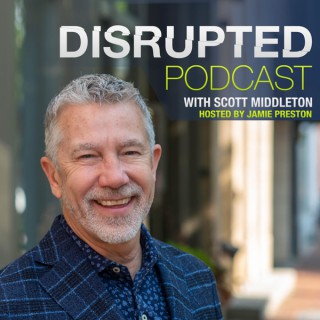
What if the patient you discharged three years ago is still costing you money today? In this episode of The Disrupted Podcast, Scott Middleton pulls back the curtain on the mechanics of value-based care most providers never see — and the merger bringing it all into focus. With the July 15th closing date approaching, Scott walks through what the merger of Your Health with TCPA and Providence Care actually means on the ground: new contracts, new provider numbers, a reimbursement model built on RAF scores and revenue rather than guesswork, and a technology stack — from the Clini app to QR-coded patient wristbands — designed to capture what was previously left on the table. In this episode: Why patient attribution under value-based contracts follows you for years — and what hospice discharges are really costing the organization How the new bonus structure ties pay to billing, RAF scores, and quality measures (and why you can never be paid to put someone on hospice) The difference between care management, facilitated visits, and what providers have been under-billing all along How skilled nursing facilities became the highest-leverage opportunity in the entire model Why advanced care plans aren't just clinical — they're a 30% income increase hiding in plain sight If you've ever wondered why the "why" behind a process matters more than the process itself, this episode is the answer. Press play. www.YourHealth.Org

Guest: Brad Panovich, WCNC CharlotteIf you've lived in North Carolina for any length of time, chances are you've turned to one familiar face when the weather turns serious. But being a trusted meteorologist today isn't just about what happens on TV—it's about showing up wherever your audience is, whether that's on-air, online, or in the middle of a rapidly evolving storm. Today on Weather Geeks, we're joined by Brad Panovich, Chief Meteorologist at WCNC Charlotte. For decades, Brad has helped guide North Carolinians through everything from day-to-day forecasts to high-impact events—including more recent storms like Hurricane Helene—building a level of trust that goes far beyond the forecast itself. We'll talk about how his approach to communication has evolved in the age of social media, what it takes to cut through misinformation, and how you balance urgency, clarity, and calm when people are depending on you the most.Chapters00:00 Introduction to Brad Panovich and His Journey02:55 The Evolution of Weather Communication05:54 The Importance of Credentialing in Meteorology08:56 The Role of Trust in Weather Forecasting12:05 Break 112:08 Navigating Social Media as a Meteorologist15:13 Handling Negativity and Criticism in the Digital Age20:13 Understanding Public Perception of Weather Forecasts23:40 Break 224:12 The Role of Social Media in Weather Communication26:28 The Impact of AI on Meteorology30:11 Personal Reflections on the Impact of Meteorology34:26 The Educator's Role in Meteorology ResourcesOhio State University Meteorology Program - https://meteo.osu.edu/UNC Charlotte Weather Communication Course - https://physics.charlotte.edu/ Guest linksBrad Panovich on Twitter - https://twitter.com/WXBradWebsite - https://www.wcnc.com/TikTok - https://www.tiktok.com/@wxbradSee Privacy Policy at https://art19.com/privacy and California Privacy Notice at https://art19.com/privacy#do-not-sell-my-info.

In this episode of the Elevate Care podcast, host Nishan Sivathasan sits down with Terin Stamps, Vice President, Credentialing Solutions at AMN Healthcare, to explore how credentialing—often dismissed as a back-office paperwork function—can become a powerful competitive advantage for health systems. Terin draws on more than 15 years of healthcare operations experience to break down what credentialing actually encompasses, how automation and AI are reshaping the function, and why involving credentialing teams earlier in the contracting process leads to faster onboarding, fewer disruptions, and stronger patient safety outcomes. She also addresses how health systems can build crisis-ready credentialing playbooks and shares her outlook on where the space is headed over the next five years. About Terin Stamps Terin Stamps is the Vice President of Credentialing Solutions at AMN Healthcare, a role she has held for three years. With over 15 years of healthcare operations experience, Terin previously served as an AVP at HCA Healthcare and has worked across three major health systems. Her team transforms what many perceive as a compliance-heavy administrative function into a strategic capability that drives growth readiness and patient safety. Terin is a passionate advocate for standardization, smart technology adoption, and the consultative role credentialing can—and should—play throughout the full workforce lifecycle. Chapters 00:00 – Introduction and Welcome 00:17 – Terin's Background and Role at AMN Healthcare 01:00 – What Is Credentialing? Breaking Down the Basics 02:42 – Federal, State, and Facility Requirements: Finding the Balance 03:27 – Credentialing as a Patient Safety Function, Not Just a Barrier 04:36 – How the Pandemic Changed Credentialing and Compliance 06:05 – Turning Credentialing into a Competitive Advantage 07:31 – The Impact of Streamlining: Faster Starts and Happier Clinicians 08:15 – The Role of Automation and AI in Modern Credentialing 09:22 – Building Technology That Flexes Without Creating Chaos 10:44 – Maintaining the Human Touch Alongside AI 10:44 – Credentialing in a Labor Disruption: Building Your Crisis Playbook 12:42 – Short-Term Fixes vs. Long-Term Credentialing Strategy 14:41 – What the Next 12 to 18 Months Look Like 13:36 – The Three-Year and Five-Year Outlook: Data Sharing and Strategic Integration 16:32 – AI Agents and the Future of Workforce Productivity in Healthcare Sponsors: We're proudly sponsored by AMN Healthcare, the leader in healthcare staffing and workforce solutions. Explore their services at AMN Healthcare. Learn how AMN Healthcare's workforce flexibility technology helps health systems cut costs and improve efficiency. Click here to explore the case study and discover smarter ways to manage your resources!Discover how WorkWise is redefining workforce management for healthcare. Visit workwise.amnhealthcare.com to learn more.About The Show: Elevate Care delves into the latest trends, thinking, and best practices shaping the landscape of healthcare. From total talent management to solutions and strategies to expand the reach of care, we discuss methods to enable high quality, flexible workforce and care delivery. We will discuss the latest advancements in technology, the impact of emerging models and settings, physical and virtual, and address strategies to identify and obtain an optimal workforce mix. Tune in to gain valuable insights from thought leaders focused on improving healthcare quality, workforce well-being, and patient outcomes. Learn more about the show here. Find Us On:WebsiteYouTubeSpotifyAppleInstagramLinkedInXFacebook Powered by AMN Healthcare Hosted by Simplecast, an AdsWizz company. See pcm.adswizz.com for information about our collection and use of personal data for advertising.

Send us Fan MailShow notes A physician built a solid, growing independent practice over six years, then got bored with the pace and chased three new ideas at once. None launched. The original practice still lost an estimated $180,000 in revenue degradation over twelve months, not from a bad decision, but from the boring work quietly going undone. This episode is the framework for staying in the room with it. The compounding cost of distraction. The revenue cycle does not tolerate divided attention. When leadership focus drifts, performance does not collapse, it leaks. A $350K-a-month practice that drifts for six months can lose $84,000 in net collections that never gets recovered. The shiny idea did not cost the money. The distraction did. The patience advantage. A boring denial-rate fix that recovers $8,000 to $12,000 a month compounds every month forward. A new service line that might add $5,000 a month creates complexity with no compounding. Patient money picks the boring fix every time. The boredom threshold. James Clear calls boredom the greatest threat to success. When the practice is working, the work stops feeling like progress and starts feeling like maintenance. The reframe: the boring work is not maintenance, it is compounding. The Five Shiny Objects That Cost Practices the Most The Shiny Object Adding a second location before ops are solid Switching EMR mid-growth Launching a new service line Hiring aggressively before systems exist Chasing a new payer vertical What It Feels Like Growth and scale Modernizing and streamlining Diversification and new revenue Team building and capacity Revenue diversification What It Actually Costs 2x overhead, fragmented leadership, billing gaps at both sites 6 to 12 months of workflow disruption, revenue dip during transition Core service attention drops, existing margin erodes Payroll grows faster than revenue, management overwhelm follows Credentialing lag, cash flow gap, billing team stretched thin Three actions this week Name the hard problem you have been avoiding, and write it down. Calculate what one boring fix is worth over twelve months (a 3% net collection lift on $300K a month is $108,000 a year). Schedule the boring meeting that keeps getting skipped: weekly, named owner, standing agenda. Resources 30-Day Revenue Recovery Plan (primary): eligibility.natrevmd.com/nrc/-30day-revenue-recovery-plan Book a call with Heather: calendly.com/heather-natrevmd Payment Posting Audit Checklist (supporting): eligibility.natrevmd.com/payment-posting-checklist Referenced: Atomic Habits by James Clear.

In creating a maritime renaissance in the U.S., there is a lot of work, discussion, and money going toward not just buying more ships, but also expanding the industrial base and training skilled tradespeople to make that expansion possible. A cornerstone of this should be training more dedicated Merchant Mariners and employing their skills in a better way.Returning to Midrats is Brent D. Sadler to discuss this and related topics. Along with Hollins Randolph and Peter Lynch, he co-authored a report at Heritage, Time to Bring Back the U.S. Maritime Service to Support America's Maritime Revival and a Wartime Economy, that we will use as a basis for our conversation.Brent is Senior Research Fellow for Naval Warfare and Advanced Technology in the Douglas and Sarah Allison Center for National Security at The Heritage Foundation, and a retired U.S. Navy Captain.SummaryThis episode features Brent Sadler from the Heritage Foundation discussing the urgent need to revitalize the US maritime industry, focusing on the reactivation of the US Maritime Service, improving merchant marine training, and enhancing logistics for national security and wartime readiness.Chapters00:00: Revitalizing Naval Power and Merchant Marine Support02:34: The Importance of Merchant Mariners06:19: Organizational Challenges in Maritime Operations12:17: Credentialing and Training Issues15:06: The TidalWave Project and Sea Lift Requirements20:03: Leadership and Cultural Shifts in Maritime Services25:10: Immediate Solutions for Maritime Needs30:39: Addressing Vulnerabilities in Maritime Logistics

On today's episode, Dr. Mark Costes sits down with Shaju Puthussery and Deepak Ramaswamy, co-founders of Lightspun, to unpack one of dentistry's least glamorous but most costly problems: insurance administration. From credentialing delays and paper claims to fragmented payer workflows and manual back-office bottlenecks, Shaju and Deepak explain why the "plumbing" of dentistry is overdue for a major upgrade. They share how their experience at Overjet led them to build an AI-first platform designed to streamline credentialing, claims, provider data, and payer-provider communication. The conversation dives into the opportunity cost of waiting 90 to 120 days for a new associate to be credentialed, how Lightspun's partnership with the ADA and CAQH is helping standardize provider data, and why reducing administrative waste could free teams to focus more on patient care, relationships, and practice growth. Be sure to check out the full episode from the Dentalpreneur Podcast! EPISODE RESOURCES https://lightspun.ai https://www.truedentalsuccess.com Dental Success Network Subscribe to The Dentalpreneur Podcast

In talking to therapy start-ups this year, I've heard a common stumbling block: Credentialing.And, honestly, I was shocked when I dug into the space. It feels like the seemingly boring task of getting credentialed with insurance has turned into what honestly feels like a world of sharks. It seems like there are 3 trends at play:This is truly a bureaucratic headache: You do need to buckle up for some super confusing portals to get credentialed.Credentialing services are all too happy to take your money: They take your personal information because of this barrier-but because the process itself is murky, they often over-promise and under-deliver, without clarity into what is happening.Big companies like Grow Therapy want to present this task as too difficult for an average therapist, so you join their platform (where they do the credentialing for you, but own your contract).In today's episode, we want you to feel empowered to understand credentialing and billing with insurance. We'll help you understand this complex system and how you can navigate it.Honestly, every therapist who works in insurance reimbursement should understand this process (because if you don't do it yourself, that means someone is probably doing it on your behalf). Our goal is for you to leave with a checklist of what to do-and the confidence to do it!See full course details here:https://otpotential.com/ceu-podcast-courses/therapy-credentialing-and-billing-101See all OT CEU courses here:https://otpotential.com/ceu-podcast-coursesCheck our our live webinar schedule here:https://otpotential.com/live-ot-ceu-webinarsSupport the show by using the OTPOTENTIAL Medbridge Code:https://otpotential.com/blog/promo-code-for-medbridgeTry 2 free OT Potential courses here:https://otpotential.com/free-ot-ceusSupport the show

In this episode, Madelyn O'Farrell speaks with Santosh Sankar about the broken skilled trades pipeline and its impact on America's push to reindustrialize. Santosh traces the problem back to the 1983 “A Nation at Risk” report and subsequent policy shifts that de-emphasized vocational education, fueled stigma around trades, and dismantled employer-school partnerships. He highlights looming shortages in critical industrial roles such as welders, pipefitters, millwrights, industrial electricians, and CNC machinists, noting that most current hiring is just replacing retirees and that training timelines make quick fixes impossible. The conversation explores why these industrial trades are hard to automate, the cultural and structural barriers to attracting new talent, and the urgent need for employer-led, modernized vocational training models—potentially even “vocational training as a service”—to close the skills gap and unlock the promise of America's industrial renaissance. Highlights from their conversation include: Historical Roots of the Skills Trade Pipeline Crisis (0:26) How 1980s Education Policy Undermined Vocational Trades (1:09) Optics, Stigma, and Cultural Bias Against Skilled Trades (5:30) The Big 5 Industrial Trades Driving Reindustrialization (6:28) Aging Workforce, Replacement Demand, and Automation Limits (7:53) Rethinking Vocational Ed Capacity, Equipment, and Instruction (11:30) Role of Employers in Rebuilding Training and Apprenticeships (15:28) Vertically Integrated Training Models and Credentialing (15:50) Investment Case and “Vocational Training as a Service” (19:04) Regional Labor Constraints and Final Thoughts on Opportunity (21:27) Dynamo Ventures is a venture firm backing founders upgrading the physical economy. As intelligence moves into critical infrastructure and technology collides with physics, industry is entering a new era of transformation - the industrial renaissance. Born from the dirt and grit of supply chains and shaped by operations, not spreadsheets, Dynamo focuses on the complex realities of building in the real world. We invest in companies transforming infrastructure, manufacturing, logistics, transportation, and the systems that power global commerce. Dynamo works closely with founders who combine ambition with a bias to action, bringing a builder mindset to venture capital through deep operational insight, systematic pressure-testing and hands-on partnership. Our purpose is simple: to back the relentless shaping the industrial renaissance. Learn more at www.dynamo.vc Hosted by Simplecast, an AdsWizz company. See pcm.adswizz.com for information about our collection and use of personal data for advertising.

In this episode of Healthy Wealthy & Smart, join Dr. Karen Litzy, PT, DPT as she explores the inspiring journey of a family-led physical therapy business with guests Hema Hargus, PT, CHT, OCS, and Dr. Simon Hargus, PT, DPT, MBA. This episode emphasizes how legacy, leadership, and values shape growth and community impact. Discover actionable insights around scaling with integrity, fostering a people-first culture, and advocating for the profession—all rooted in decades of experience. Key Topics: · The origins of First Settlement Physical Therapy and overcoming early financial and logistical challenges · The importance of clarity in roles, stubbornness in quality, and trusting expertise in family business dynamics · Building a scalable, values-driven culture that prioritizes patient care and staff retention · Strategic growth at scale without sacrificing personalized care or staff well-being · How family background influences resilience, practicality, and leadership style in healthcare · The role of continuous learning, credentialing, and specialization to serve rural and underserved communities · Advocating for the profession through local and legislative engagement, even in small practices · Maintaining family cohesion and shared purpose through challenges and growth phases · Personal stories illustrating innovation, grit, and long-term vision in healthcare entrepreneurship Timestamps: 00:00 - Introduction to the family-run practice and guest backgrounds 02:06 - How First Settlement started with a single clinic and initial obstacles 03:26 - Building the practice while personally and financially committed, collateral use 04:31 - The early days of community engagement, trust-building, and local recruitment 05:43 - Lessons learned from talking shop in informal settings like Burger King 08:36 - Balancing family life, work, and shared responsibilities — overcoming stress and tension 10:13 - The influence of upbringing, practicality, and shared values on business resilience 12:36 - The significance of family legacy, reputation, and specialization in rural locations 16:44 - Credentialing, continuous learning, and keeping standards high in rural settings 21:19 - Growing up watching parents' entrepreneurial journey and their impact on Simon's career path 22:11 - The family's diversification into various roles and community involvement 24:48 - The story of Simon's mother's resilience during her PT certification exams with eye injuries 27:00 - How long-standing family values influence current leadership and practice culture 28:49 - Scaling while maintaining a people-first approach to prevent burnout and uphold quality 33:11 - Expanding with focus on training, oversight, and inherited culture of excellence 37:17 - Successful individual career paths within a family business structure 39:29 - Advocacy's role for small practices and how to get involved at every level 43:23 - Practical examples of local advocacy—signage regulations, insurance negotiations 46:46 - Challenges and changes in healthcare environment and staying true to values 50:02 - Building a community-oriented practice that fosters passion and participation 52:34 - Recommended books and influences shaping leadership and priorities 55:50 - The importance of public perception, cost savings, and professional identity 59:06 - Reflecting on proudest human moments and patient success stories 62:06 - Advice to their 20-year-old selves about learning, exploration, and embracing change 64:24 - How to connect with First Settlement and future growth plans Resources: · fspt.org — Official website of First Settlement Physical Therapy Connect with the Guests: · Hema Hargus - LinkedIn · Simon Hargus - LinkedIn More About Simon and Hema: Simon Hargus is the owner of First Settlement Physical Therapy, a family-run practice that's grown to about 50 clinics and 300 employees serving rural Ohio and West Virginia. A PT who moved from the clinic to the C‑suite, he's known for building a people‑first culture, long‑form patient care, and individualized career paths to curb burnout. He's active in advocacy, pushing for state‑level wins and a stronger political voice for PT, and he embraces practical tech like AI scribe tools where they deliver real ROI. Hema Hargus, PT, CHT, OCS is co-owner of First Settlement Physical Therapy, a family-run practice that's grown to about 50 clinics and 300 employees serving rural Ohio and West Virginia since she founded it in 1999. She is originally from India and currently treats complex hand cases part time in Vienna, WV. Jane Sponsorship Information: Book a one-on-one demo here Mention the code LITZY1MO for a free month Follow Dr. Karen Litzy on Social Media: Karen's Instagram Karen's LinkedIn Subscribe to Healthy, Wealthy & Smart: YouTube Website Apple Podcast Spotify SoundCloud Stitcher iHeart Radio

On today's episode of the Illumination by Modern Campus podcast, podcast host Shauna Cox was joined by Errin Heyman to discuss the breakdown of today's credentialing system and the need for connected, outcome-driven pathways that align education with workforce value.

Obtaining information from the hospitals where an applicant has practiced, peer references, and residency or fellowship training programs in which an applicant has participated, is a critical part of the credentialing process as it allows a hospital to confirm an applicant's current clinical competence and professionalism. But, unfortunately, what sometimes happens when a hospital reaches out to these third parties and requests information about an applicant's clinical competence and professionalism, they receive very limited information that is not helpful or meaningful, or they get radio silence. In the latest podcast episode of Crash Course Credentialing, HortySpringer attorneys Lauren Massucci and Moises Tonoc Bonilla explore how to approach the challenges you might face when trying to obtain meaningful information from hospitals and other third parties as part of the credentialing process.

What New Attendings Need to Know About Credentialing, Peer Review, and Protecting Your Career Guest: Dr. Claudia Emami Starting your first job as an attending physician involves navigating systems that residency rarely teaches you about. In this episode, Dr. Claudia Emami joins the BOSS Business of Surgery Series to explain how hospital credentialing works, how peer review actually functions, and what physicians should understand to protect their careers. Dr. Emami walks through the credentialing process required for physicians who want to practice in hospitals, including verification of training, licensure, malpractice history, and case logs. For surgeons and proceduralists, documenting recent cases is essential, and when case volume is insufficient, hospitals may require proctoring before granting full privileges. A key point discussed in the episode is that having a job contract does not guarantee hospital privileges. Credentialing is a separate process that must be approved by the hospital's credentialing committee and medical staff leadership. The conversation also explores Ongoing Professional Practice Evaluation (OPPE) and Focused Professional Practice Evaluation (FPPE)—the systems hospitals use to review complications, outcomes, and performance trends. These processes feed into broader reporting systems, including the National Practitioner Data Bank. Dr. Emami explains how peer review works when complications occur and outlines how concerns may escalate through departmental review, quality committees, and medical staff leadership. In more serious situations, physicians may face additional proctoring, monitoring, or privilege restrictions. The episode also addresses professional realities that new attendings often overlook—such as the importance of building relationships throughout the hospital. Developing strong connections with the chair of surgery, chief medical officer, medical staff office, and OR teams can be critical to navigating complex situations. Finally, Dr. Emami emphasizes professional resilience. Career challenges, complications, and difficult reviews happen to nearly every surgeon at some point. Understanding the systems, participating in peer review, and maintaining perspective can help physicians recover from setbacks and continue to build successful careers. Key Takeaways A signed job contract does not guarantee hospital privileges Surgeons must maintain accurate case logs and documentation Proctoring is common and often required when privileges are new Physicians should understand peer review, OPPE, and FPPE processes Strong professional relationships within the hospital are essential Setbacks in credentialing or peer review are challenging but not career-ending

This weekend's guest is Tiffany McDowell. Tiffany is the owner of Joy Bar Coffee Co., which currently has two locations in High Point, North Carolina. Tiffany and her sister Mallory wanted to create a space where neurotypical, and neurodivergent people could meet, work, feel welcomed, and learn from each other. They also wanted to create employment opportunities for individuals with different abilities through Competitive Integrated Employment (CIE). Joy Bar Coffee has also been designated as a Certified Autism Center by The International Board of Credentialing and Continuing Education Standards (IBCCES). At Joy Bar Coffee, it's so much more than a cup of coffee - it's an opportunity to experience true diversity, appreciation, inclusion, and (most of all) JOY. Tune in to learn more or visit: https://www.joybarcoffee.com/

What if the most powerful clinical tool in healthcare wasn't a drug, a device, or a data platform — but a word? In this episode of Experiencing Healthcare, Jamie and Matt have a conversation that starts with Disney World germs and ends with something that will change the way you lead your team tomorrow. They unpack the idea of Intentional Positive Reinforcement — not the hollow "great job" you throw over your shoulder in the hallway, but the kind of deliberate, meaningful recognition that creates a ripple effect all the way to the patient's bedside. Matt shares what a dental hygienist taught him about doing things right, why a pair of clicking heels in a nursing home hallway was actually a leadership strategy, and what happens to a healthcare team that only ever hears what they're doing wrong. This is a conversation for the bedside nurse and the C-suite executive. For the credentialing specialist who never sees a patient and the clinical coordinator who sees dozens. Because in healthcare, everyone plays a role in the patient experience — and the way we lead people determines the care those people deliver. If you've ever wondered whether your words are adding to your team or subtracting from them, this episode is your answer.

We dive into the confusing rabbit hole of medical staffing, credentialing, and privileging, particularly for the critical care APP, with Chris Newman, pediatric critical care PA and Vice Chair for Clinical Performance at the University of Colorado. Check out the REVIVE conference here! Check out the CHEST Procedural Skills for the Critical Care Clinician course … Continue reading "Lightning rounds 61: Credentialing and privileging, with Christopher Newman"

Episode #190: In this episode of 'In Studio' with Kimberly Lovi, Kimberly and Kyra Stevens share their exhilarating experiences at the Super Bowl, diving into the chaos of event planning, the importance of networking, and the impact of community and charity within the sports world. They discuss memorable encounters with celebrities, the empowerment of women in sports, and the celebration of achievements, particularly highlighting the Stafford family's success. The conversation encapsulates the vibrant energy of the Super Bowl and the lessons learned from navigating such a high-profile event. Takeaways: The Super Bowl is not just a one-day event; it's a week-long production. Being intentional with time and resources is crucial in chaotic environments. Credentialing can be a last-minute scramble that requires flexibility. Networking at events like the Super Bowl opens doors to incredible opportunities. Women in sports are collaborating to uplift each other and create community. Charity and giving back are integral parts of the sports culture. Unique events at the Super Bowl provide memorable experiences and connections. Celebrity encounters can be both surprising and inspiring. Celebrating achievements, like the Stafford family's, highlights the personal stories behind the event. The energy and excitement of the Super Bowl create a unique atmosphere for all involved. Chapters: 00:00 Introduction to In Studio with Kimberly Lovey 01:30 Experiencing the Super Bowl: Behind the Scenes 03:55 Navigating the Chaos of Super Bowl Events 07:59 Credentialing and Last-Minute Scrambles 11:06 Star-Studded Encounters and Networking 16:25 Charity and Community Impact at the Super Bowl 20:30 Unique Events and Memorable Moments 25:03 Women in Sports: Empowerment and Collaboration 30:23 Celebrating Achievements: The Stafford Family 32:07 Conclusion and Future Aspirations Follow Kimberly on Instagram and TikTok @kimberlylovi or @iconicnationmedia

The Medcurity Podcast: Security | Compliance | Technology | Healthcare
Credentialing has long been one of the most inefficient and manual processes in healthcare.In this episode, Dylan Avatar, founder of Credential Network, joins the podcast to discuss why the industry struggles with speed and clarity—and how modern technology is changing that.Credential Network is a healthcare technology company focused on credentialing, compliance, and identity management. Its AI-native SaaS platform replaces fragmented, manual processes with a centralized system that tracks requirements in real time, automates workflows, and helps prevent onboarding delays, missed expirations, and compliance gaps across provider organizations.The conversation covers where AI fits into credentialing today, how to optimize workflows without introducing new security risks, and why listening closely to providers is critical when building healthcare technology. Dylan also shares how Credential Network got started and how organizations can stay current in a fast-moving space.
In this episode, host Suzanne Feeney, PharmD, Senior Director, Pharmacy Solutions at McKesson Health Mart and guest Jaime Montuoro, PharmD, Director of Education & Practice Advancement at McKesson Health Mart, unpack two strategies you can deploy now: PGY1 community-based residencies and pharmacy credentialing. You'll learn how residency trained pharmacists can elevate clinical care in workflow, fuel change and help launch billable services. Then, we get practical on credentialing—why becoming “provider ready” matters and how claiming your team's Pharmacy Profiles credentials streamlines payer opportunities. Jaime shares real-world wins, including how Bryant Family Pharmacy partnered with a resident to implement prescriptive authority programs patients were willing to pay for. If you're ready to move beyond the transaction and build sustainable, community anchored care, this playbook will help you start today. HostSuzanne Feeney, PharmDSr. Director, Pharmacy Solutions McKesson / Health MartGuestJaime Montuoro, PharmDDirector, Education and Practice AdvancementMcKesson / Health MartResourcesTune into Episode 11: Maximizing Operations Through Proactive Workflow Health Mart Pharmacies can access Health Mart University (HMU) for:Health Mart pharmacists to claim their CE credit for weekly GameChangers episodesReferencesLearn more about the Health Mart Postgraduate Year One Community-based Pharmacy Residency Program herePharmacy Profiles is a pharmacy-friendly database that allows pharmacy teams to showcase their training and certifications in one place. If you're a Health Mart pharmacy demonstrate your pharmacy's readiness to receive potential patient care opportunities more quickly by having your pharmacy professionals claim their MYPROFILE. Learn more here: my.pharmacyprofiles.com. Pharmacy Profiles is a Strategic Health Alliance II, Inc., vendor. The views and opinions expressed in this podcast are those of the guest and do not necessarily represent the views or positions of Health Mart, McKesson or its affiliates or subsidiaries ("McKesson”). The information provided herein is for informational purposes only and does not constitute the rendering of clinical, legal or other professional advice by McKesson.

The ultimate challenge of operating an OBL is staying profitable. In this episode of BackTable, we bring on healthcare administrator Laurie Bouzarelos and interventional radiologist Dr. Mary Costantino to talk through the intricacies of revenue cycle management as an IR managing an OBL. --- SYNPOSIS The conversation covers the full lifecycle of getting paid in an IR practice, from initial patient contact through final claim resolution. Key topics include credentialing, determining medical necessity, coordination of benefits, prior authorizations, and the importance of working with billing and practice management teams experienced in interventional radiology. The episode also examines how EHR and practice management platform selection impacts clinical workflows and reimbursement, and closes with a discussion on payment plans and how emerging technologies, including AI, may shape the future of revenue management in IR-led OBLs. --- TIMESTAMPS 00:00 - Introduction 01:08 - The Importance of Revenue Cycle Management09:29 - The No Surprises Act and Data Transparency12:03 - Professional Societies and Continuing Education17:50 - Credentialing and Taxonomy Codes40:28 - Impact of Insurance Credentialing on Patient Care42:08 - Revenue Cycle Management Walkthrough48:18 - Challenges with Medicare Advantage and Coordination of Benefits54:20 - Covered vs. Non-Covered Services59:03 - Medical Necessity and Insurance Policies01:01:04 - Prior Authorization and Payment Issues01:13:11 - Payment Plans and Compliance01:23:10 - Practice Management Software01:31:10 - AI in Healthcare and Compliance01:38:57 - Final Thoughts --- RESOURCES Medical Group Management Administration (MGMA)https://www.mgma.com/

The Practice of the Practice Podcast | Innovative Ideas to Start, Grow, and Scale a Private Practice
The Practice of the Practice Podcast | Innovative Ideas to Start, Grow, and Scale a Private Practice
How do you credential your therapists across multiple states with insurance? Which paperwork do you need to have ready? How long does it take before you can start seeing clients? […] The post Starting a Private Practice: Credentialing with Kay Ward | POP 1314 appeared first on How to Start, Grow, and Scale a Private Practice | Practice of the Practice.
Episode Summary In this episode of Elevate Care, hosts Kerry Perez and Liz Cunningham dive deep into the evolving landscape of healthcare candidate acquisition and retention. Leveraging their extensive backgrounds in strategy, marketing, and technology, they explore how regulatory changes and the rise of Generative AI are reshaping how clinicians search for jobs and how organizations must adapt their digital marketing strategies. The conversation uncovers critical insights into the shifting balance between high-tech self-service adoption and the enduring value of high-touch human connection in the hiring process. They also challenge traditional notions of loyalty programs, proposing a "long tail" approach to clinician engagement that prioritizes consistent service and access over points-based rewards. Tune in to discover actionable strategies for optimizing workforce solutions and building lasting relationships with talent in a rapidly changing market.Episode Chapters00:00 — Introduction: Candidate Acquisition Trends01:31 — Regulatory Changes and Gen AI in Job Search04:13 — The Future of Job Boards05:46 — Balancing Authenticity with AI Automation08:09 — Adoption of Self-Service Technology10:12 — Lessons from Locum Tenens Tech12:26 — Hyper-Personalization via AI15:03 — Human vs. Digital Brand Loyalty16:54 — Redefining Loyalty in Healthcare Staffing21:58 — Digital Transformation in Credentialing and Onboarding24:12 — Conclusion and Key Takeaways Sponsors: We're proudly sponsored by AMN Healthcare, the leader in healthcare staffing and workforce solutions. Explore their services at AMN Healthcare. Learn how AMN Healthcare's workforce flexibility technology helps health systems cut costs and improve efficiency. Click here to explore the case study and discover smarter ways to manage your resources!Discover how WorkWise is redefining workforce management for healthcare. Visit workwise.amnhealthcare.com to learn more.About The Show: Elevate Care delves into the latest trends, thinking, and best practices shaping the landscape of healthcare. From total talent management to solutions and strategies to expand the reach of care, we discuss methods to enable high quality, flexible workforce and care delivery. We will discuss the latest advancements in technology, the impact of emerging models and settings, physical and virtual, and address strategies to identify and obtain an optimal workforce mix. Tune in to gain valuable insights from thought leaders focused on improving healthcare quality, workforce well-being, and patient outcomes. Learn more about the show here. Connect with Our Hosts:Kerry on LinkedInNishan on LinkedInLiz on LinkedIn Find Us On:WebsiteYouTubeSpotifyAppleInstagramLinkedInXFacebook Powered by AMN Healthcare Hosted by Simplecast, an AdsWizz company. See pcm.adswizz.com for information about our collection and use of personal data for advertising.

In this Bright Spots in Healthcare episode, host Eric Glazer sits down with three leaders reshaping one of healthcare's most overlooked — yet mission-critical — functions: provider credentialing. Credentialing is the quiet infrastructure of trust in healthcare. When it's done right, patients get timely access to high-quality care, providers get paid faster, and health plans stay compliant. When it fails, backlogs grow, compliance risk skyrockets, provider satisfaction plummets, and member access suffers. Joining Eric for this discussion: Sandra Clarke, Former CFO & COO, Blue Shield of California Brett Dooies, Head of Product, Verifiable Janan Dave, VP of Operations, Verifiable Together, they explore how AI and automation are transforming credentialing from a slow, manual compliance task into a strategic capability that improves efficiency, trust, and network readiness. In this episode, you'll learn: Why credentialing sits at the intersection of compliance, provider experience, and member access How legacy processes, staffing limits, and messy data create hidden risk, and why backlogs can grow like quicksand Practical ways health plans are applying AI to reduce verification time, speed onboarding, and triage high-risk cases Why the most successful plans treat credentialing as infrastructure, not paperwork Key metrics to track when modernizing credentialing, including turnaround time, backlog clearance, audit readiness, and provider experience What to automate first, and why humans still play a critical oversight role Bright Spots include: 97% automated verification in seconds across millions of records monthly New staffing and automation models that increase speed without compromising compliance Real-world examples where AI prevented risk exposure and accelerated network growth Leadership lessons in adopting AI responsibly and avoiding the "lift-and-shift" trap This conversation offers payer leaders a real-world playbook to modernize credentialing and strengthen the foundation of your healthcare organization. Panelist Bios: Sandra Clarke is a healthcare executive and board advisor with over 25 years of experience leading finance, operations, and large-scale transformation across payer, provider, and life sciences organizations. As former CFO and COO of Blue Shield of California, she oversaw $25B in annual revenue and spearheaded initiatives delivering $700M in annualized savings while reimagining the company's pharmacy care model. Clarke has also held senior leadership roles at Daiichi Sankyo and Philips Healthcare and serves on multiple healthcare boards. She holds degrees from MIT, Bentley University, and Seton Hall University School of Law. Janan Dave is the VP of Operations at Verifiable, a start-up offering software and services solutions for healthcare organizations to ease the challenges surrounding provider network management. Janan has a background in public health and health policy, and has spent the last decade helping scale operations at various healthcare startups. She is passionate about building smart solutions to reduce waste in the healthcare system, and promote better care especially for the aging population, family caregivers, and women. Janan studied public health at the University of Pennsylvania, and lives in Brooklyn, NY. Brett Dooies is the Head of Product at Verifiable, where he leads the development of AI-powered solutions to simplify healthcare credentialing and monitoring. With a decade of experience building enterprise software, he specializes in applying advanced AI and analytics to enhance the customer experience and deliver transformative solutions. Drawing on his background in modernizing banking software, Brett is dedicated to creating products that drive operational excellence, uphold regulatory compliance, and improve data accuracy for Verifiable's partners, helping them scale with confidence in a complex ecosystem. Resources: MIT Sloan "Internet of AI Agents: State of AI in Business 2025" report finds that although over 80 % of organizations have piloted generative AI tools, only around 5 % have achieved meaningful business transformation—a gap dubbed the "GenAI Divide". It highlights that the primary barrier isn't model technology or regulation, but rather the failure of AI systems to integrate deeply into workflows, learn from feedback, and scale beyond the pilot stage. https://mlq.ai/media/quarterly_decks/v0.1_State_of_AI_in_Business_2025_Report.pdf Thank you to our Episode Partner, Verifiable: Verifiable is a credentialing and network monitoring platform built to help healthcare organizations optimize operations with error-free, fast verifications and to stay compliant with ease. Backed by their in-house NCQA certified credentialing team that bring a combined 60+ years of experience, Verifiable's innovation supports managing trusted networks at scale through 97% verification automation in seconds with millions processing each month. Verifiable works with leading healthcare organizations such as Humana Dental, Zelis, Talkspace, Headway, Empower Pharmacy, and many others. Learn more about them at https://verifiable.com/ Want to go deeper or schedule a briefing with Verifiable? Email hkrish@brightspotsventures.com and we'll coordinate time with the Verifiable team to discuss how their approach can help your plan reduce costs, accelerate onboarding, and strengthen network integrity. About Bright Spots Ventures: Bright Spots Ventures is a healthcare strategy and engagement company that creates content, communities, and connections to accelerate innovation. We help healthcare leaders discover what's working, and how to scale it. By bringing together health plan, hospital, and solution leaders, we facilitate the exchange of ideas that lead to measurable impact. Through our podcast, executive councils, private events, and go-to-market strategy work, we surface and amplify the "bright spots" in healthcare, proven innovations others can learn from and replicate. At our core, we exist to create trusted relationships that make real progress possible. Visit our website at www.brightspotsinhealthcare.com.

Ciara Lewis is a dedicated single mother to her teenage daughter and a woman driven by purpose and creativity. She is the founder of a Medical Coding and Credentialing business established in 2019, where she combines her professionalism with a genuine desire to help others. Now returning to her first passion — writing — Ciara continues to inspire through her resilience, compassion, and commitment to growth both personally and professionally.
Credentialing may not be glamorous—but it's one of the most important parts of keeping your practice's revenue flowing. In this episode of Nat Rev MD, Dr. Heather Signorelli breaks down the Top 5 Credentialing Mistakes that cost practices time, money, and peace of mind. From missing contracts to failing to renegotiate payer rates, delaying new provider credentialing, and overlooking expirations, she shares practical steps to prevent costly errors.By the end of this episode, you'll know exactly how to spot risks, plug leaks, and create systems that protect your revenue and keep your practice running smoothly. Whether you're a growing practice or just trying to get organized, this is an essential guide to mastering credentialing once and for all. Subscribe, share this episode with a colleague, and visit NatrevMD.com for more resources.
Veterans and transitioning servicemembers often face challenges when seeking civilian careers. Brian Marchegiani, co-founder of Mack Brothers Elevator, found his calling in the skilled labor field. But he does more than elevator repair. He gives back to the veteran community, providing jobs for former military members and military families. In fact, for this business owner, mentorship isn't optional, it's a force multiplier. Learn more about this entrepreneur success story, how to apply his expertise to landing a job in the skilled trades and more in the third episode of Veteran Entrepreneurs, a special four-part series from The American Legion Tango Alpha Lima podcast. Special Guest: Brian Marchegiani.

In this episode, Sam Ashoo, MD interviews Ali Chaudhary, MD about the benefits of working Locum Tenens in Emergency Medicine.00:00 Introduction and Welcome 00:54 Meet Dr. Ali Chaudhary 01:41 The State of Emergency Medicine 03:29 Understanding Locum Tenens 05:45 Financial Benefits of Locum Work 08:40 Balancing Family Life with Locum Work 12:54 Locum Work Logistics and Misconceptions 17:34 Maximizing Travel Perks as a Contractor 18:07 Adjusting to New Hospitals and EMRs 19:32 The Hassles of Credentialing 20:48 Navigating Locum Staffing Companies 22:27 Understanding Your Worth and Negotiation 25:14 The Importance of Organization 27:41 About Our Locum Staffing Company 29:59 Practical Tips for Malpractice Insurance 31:09 Final Thoughts and Contact InformationFor more about Dr. Ali Chaudhary: https://thelocums.com/
Got questions? Send Ericka a Text!Credentialing versus contracting - these terms are often used interchangeably in dental offices, but as Ericka Aguilar explains in this essential episode, they represent entirely different processes with significant implications for your practice's compliance and financial health.Credentialing is the verification process where insurance companies confirm a provider's qualifications, while contracting is the business agreement that follows, officially making a provider "in-network." Understanding this distinction is just the beginning of navigating the complex landscape of dental insurance billing.The episode delivers a stark warning about one of the most dangerous practices happening in dental offices today: billing under another provider's NPI when that provider didn't perform the treatment. This typically occurs when practices are waiting for a new associate to complete the credentialing process. What many don't realize is that this practice constitutes insurance fraud, violating state and federal regulations. With insurance companies now employing AI and aggressive auditing techniques, the risks of massive recoupments, civil penalties, and even criminal charges have never been higher.Erica also demystifies Locum Tenens arrangements, which provide a legitimate pathway for practices to maintain continuity of care when a provider is temporarily unavailable due to specific circumstances like maternity leave, disability, or death. However, these arrangements come with strict limitations that must be carefully followed to avoid compliance issues.Through real-world examples and practical advice, this episode equips dental professionals with the knowledge to protect their practices while maintaining ethical standards. Whether you're a practice owner, office manager, or dental biller, the insights shared will help you navigate the credentialing process correctly, understand when Locum Tenens is appropriate, and implement documentation practices that keep your practice on the right side of compliance. Visit dentalbillingdoneright.com to learn more about setting up proper credentialing SOPs and claim auditing for your practice. Join The Biller Acceleration Mentorship Wait List Here: (Only 5 Spots Left in 2025!!)https://linktr.ee/dental_billing_coachWould you like to set-up a billing consultation with Ericka? She would love the opportunity to discuss your billing questions and see how Fortune Billing Solutions may help you. Email Ericka:ericka@dentalbillingdoneright.comSchedule a call with Ericka: https://calendly.com/ericka-dentalbillingdoneright/30min Perio performance formula: (D4341+D4342+D4346+D4355+D4910)/(D4341+D4342+D4346+D4355+D4910+D1110) Delta Dental Locum Tenens Form: https://www1.deltadentalins.com/content/dam/ddins/en/pdf/dentists/locum-tenens-form.pdf

Radiology groups face mounting pressure to maintain payer alignment, grow their footprint, and stay financially viable—but often, one of the most critical operational functions is still stuck in the shadows: credentialing. Join Rebecca Bairnsfather and Peggy Kelly—two industry veterans now part of the Infinx family—for a candid, behind-the-scenes look at why credentialing and enrollment processes are breaking down under the weight of today's complexity. With experience managing credentialing operations for thousands of providers across multiple states, they'll share real stories, actionable strategies, and a no-fluff assessment of the tools, tech, and expectations that define this often-overlooked function. Find all of our network podcasts on your favorite podcast platforms and be sure to subscribe and like us. Learn more at www.healthcarenowradio.com/listen

What is the right way, if there is one at all, to integrate artificial intelligence (AI) technology into our education system? For Sal Khan, CEO of one of the world's largest nonprofit education technology platforms, the answer is to take a step back and ask: Where can AI best complement current pedagogy? If a problem can be solved by pencil and paper, should we really be using AI instead?Khan joins Bethany and Luigi to discuss his recent book, “Brave New Words: How AI Will Revolutionize Education (And Why That's a Good Thing),” in which he makes the case for why the education sector will not only survive but thrive in the age of AI. He shares his 17-year journey to build and grow his organization, which now provides over 10,000 videos on everything from integral calculus to art history, reaching more than 170 million registered users in over 20 languages, mostly for free. Together, the three talk about how and where AI can enhance the learning process: how AI has shifted Khan's philosophy and approach to pedagogy, how it could democratize educational and economic opportunity, and what this all means for traditional modes of learning and instruction in schools and universities. They also discuss concerns about data ownership, Khan's partnerships with tech companies, and the guardrails he proposes to protect education against the monetization of students' data and the concentration of benefits to privileged children. Ultimately, he makes the case for why teachers aren't going anywhere—and leaves aspiring nonprofit and civic leaders with advice on how to build a successful, mission-driven organization.Read a review of Sal Khan's book on ProMarket, written by Capitalisn't team member Matt Lucky.

As some states roll out veterinary assistant credentialing programs, a critical question emerges: Who's actually overseeing these initiatives, what are their future goals, and are they helping or hurting the profession? In this episode of The Veterinary Viewfinder, Dr. Ernie Ward and Beckie Mossor, MPA, RVT, examine the growing movement to credential veterinary assistants without consistent regulatory oversight, clear practice act integration, or protections for the assistants themselves. Focusing on emerging programs in states like Texas, Ward and Mossor question whether we're building sustainable career pathways or setting assistants up for burnout and backlash. Are financial incentives for third-party training programs taking priority over educational quality and long-term workforce needs? And how do these new assistant titles intersect (or conflict) with existing RVT, LVT, and CVT credentials? This conversation challenges veterinary professionals, educators, and policymakers to consider what genuine credentialing should entail: regulated, inclusive, and grounded in a framework that supports the entire team. Without structure and oversight, well-meaning reforms can deepen division, confuse the public, and erode trust within clinics. If you care about career advancement, team cohesion, and the future of veterinary support staff, this is a conversation you can't afford to ignore.

Danielle Terrell shares her journey as the US Healthcare Development Director at the International Board of Credentialing and Continuing Education Standards (IBCCES) and her passion for improving healthcare accessibility for autistic individuals around the world. • IBCCES provides specialized training and certification for healthcare providers, helping hospitals, dental offices, and other facilities better support individuals with autism • The organization has created global partnerships across healthcare, entertainment, and travel sectors, including certifying Emirates as the world's first autism-certified airline • Training programs are built by autism experts and people with lived experience to address industry-specific needs rather than generic awareness • Certification includes virtual training modules and on-site assessments to make environments more sensory-friendly without major structural changes • Danielle has worked with individuals ages 2-87 across residential, educational, and healthcare settings throughout her career • Healthcare gaps for autistic individuals include lack of understanding about sensory needs, communication differences, and proper accommodations • Developers created an Accessibility App that helps people locate autism-certified businesses and services worldwide • Danielle recently participated in Ride for Autism Africa, helping build a therapy center and special needs school in Kenya Join us in transforming the world, one story at a time. If you know someone who has a story to share, contact us at whynotmeworld.
© 2020-2026 Ivy Podcast Discovery LLC
