
English singer/songwriter (1940–1980), founding member of the Beatles

POPULARITY
Categories

Hosted by John Lennon
![[Podcast Name]](https://ivyfm.s3.amazonaws.com/i320/941429.jpg)
Hosted by John Lennon

Hosted by John Lennon

86 episodes with John Lennon

97 episodes with John Lennon

86 episodes with John Lennon

98 episodes with John Lennon

83 episodes with John Lennon

80 episodes with John Lennon

136 episodes with John Lennon

30 episodes with John Lennon

98 episodes with John Lennon

21 episodes with John Lennon

46 episodes with John Lennon

20 episodes with John Lennon

39 episodes with John Lennon

56 episodes with John Lennon

49 episodes with John Lennon

35 episodes with John Lennon
33 episodes with John Lennon

34 episodes with John Lennon

57 episodes with John Lennon

63 episodes with John Lennon

28 episodes with John Lennon

81 episodes with John Lennon

22 episodes with John Lennon

24 episodes with John Lennon

47 episodes with John Lennon

22 episodes with John Lennon

89 episodes with John Lennon

22 episodes with John Lennon

19 episodes with John Lennon

27 episodes with John Lennon

29 episodes with John Lennon

18 episodes with John Lennon

25 episodes with John Lennon

29 episodes with John Lennon

13 episodes with John Lennon

14 episodes with John Lennon

19 episodes with John Lennon

18 episodes with John Lennon

14 episodes with John Lennon

8 episodes with John Lennon

7 episodes with John Lennon

8 episodes with John Lennon

26 episodes with John Lennon

20 episodes with John Lennon

14 episodes with John Lennon

18 episodes with John Lennon

19 episodes with John Lennon

15 episodes with John Lennon

24 episodes with John Lennon

14 episodes with John Lennon

6 episodes with John Lennon
A show was attempted but cut short due to the massive emergency power grid failure in SE Michigan that we are all experiencing together at this time. We get updated on the big court cases, roll through rocker news, squeeze in a Bonerline and then... President Donald Trump said something EVERYONE can agree on. Mark Dolan and Dan Wootton are beefing. The Lindsay Clancy jury is still "delibbing." Tyler Robinson is going to stand trial for the murder of Charlie Kirk. Mackenzie Shirilla lost her appeal. Sorry, Sharilla tha Killa. Keefe D is guilty of murdering Tupac Shakur. Miley Cyrus dropped Billy Ray's last name and has one of those hip one-word names now. Congratulations to John Lennon on the birth of his first grandchild. He is dead! Twisted Sister is Dee Snider-less. However, Sebastian Bach is filling in! BUT... Sebastian has what doctor's call a little bit of an alcohol problem. Journey is falling apart. It's a total disaster. Axl Rose has been perfecting his Mickey Mouse impersonation on stage. A brand new Bonerline. Call or text 209-66-Boner to communicate with the show. Some AMAZING content was on the way... but disaster strikes. Merch is available if you want to rep the show. You'd look amazing too. If you'd like to help support the show… consider subscribing to our YouTube Channel, Facebook, Instagram and Twitter (Drew Lane, Marc Fellhauer, Trudi Daniels, Jim Bentley, BranDon, and Roberto).

Moon is back from California and Mexico, Rizz is out, and naturally the captain's chair immediately becomes a command center for delayed flights, stale cereal, deviled eggs, celebrity nonsense, video games, and a surprisingly passionate takedown of Gladiator 2. Welcome to another funny podcast where we somehow start with Southwest Airlines and end up debating whether a Steve Perry look-alike can spiritually become Steve Perry if the crowd believes hard enough.Moon kicks things off with the glamorous realities of modern air travel after seemingly every flight on his trip decided that “on time” was more of a suggestion. A canceled connection, rerouting through Dallas, delays into Los Angeles and another delay getting back to St. Louis gave him plenty of time to catch up on movies. Unfortunately, that included The Mandalorian and Grogu, which gets a very enthusiastic C-minus review. Somewhere, a Star Wars fan just felt a disturbance in the Force.Then we discover that Americans apparently hit an energy wall around 2:48 in the afternoon, which explains basically every email you've ever received after lunch. Rafe's sleep schedule is wrecked, Lern is fighting afternoon cravings with hard-boiled eggs, and that leads to perhaps the most important culinary advice ever delivered on a funny podcast: if you've already hard-boiled the egg, you're halfway to a deviled egg.“Scoop and gloop,” America.That discussion somehow turns into stale cereal confessions. Lern admits to eating old strawberry vanilla Chex after band practice while Rafe reveals that he knowingly ate stale Pops AND stale Golden Grahams. This is less a morning show and more four adults slowly admitting things that should probably stay between themselves and their pantries.Then it's time for Crap on Celebrities, where things get appropriately ridiculous. A woman is accused of stealing and crashing an ambulance outside an Avenged Sevenfold and Good Charlotte concert. Sevendust drummer Morgan Rose gets some love. Gibson is releasing an extremely limited Billy Gibbons “Pearly Gates” Les Paul. Sean Ono Lennon welcomes his first child, making John Lennon and Yoko Ono grandparents for the first time. There's also a Matthew Perry documentary on the way, more Tulsa King, and the crew tries to understand the enormous world of people watching other people play video games.Speaking of gaming, Grand Theft Auto gets everybody talking about Twitch, streaming communities, gameplay fandoms, and the strange realization that watching someone else play a game can become an entire entertainment ecosystem. Scott even admits he made “multiple dollars” streaming, so please respect the media mogul.Hollywood keeps the nonsense rolling with Emmy gift bags, Marvel's mysterious Secret Wars casting, Hamnet, and Ridley Scott reportedly having some thoughts about Paul Mescal and Gladiator 2. That opens the floodgates because Rafe and Moon are more than happy to discuss just how much they hated that movie. Sharks in the Coliseum are put on trial. The verdict is not favorable.There's also a live-action Street Fighter movie coming with a completely unhinged cast, including Jason Momoa, 50 Cent, Roman Reigns, Cody Rhodes, Eric André and more. Apparently somebody looked at the casting board and selected “yes.”Finally, Journey brings Steve Perry look-alike Hugo Valenti onstage during shows in Japan, causing some fans to apparently wonder whether the real Steve Perry had returned. The crew listens to the results, and that goes exactly as respectfully as longtime listeners would expect.Throw in birthdays, Terry Bradshaw, Keanu Reeves, Salma Hayek, Rafe's increasingly dangerous wordplay, and all the other nonsense that somehow qualifies as broadcasting, and you've got another funny podcast from The Rizzuto Show.Delayed flights. Deviled eggs. Stale Pops. Celebrity fails. Video games. Gladiator sharks. Fake Steve Perry.We accomplished nothing and covered everything.Follow The Rizzuto Show → linktr.ee/rizzshow for more from your favorite daily comedy show.Connect with The Rizzuto Show Comedy Podcast online → 1057thepoint.com/RizzShow.Hear The Rizz Show daily on the radio at 105.7 The Point | Hubbard Radio in St. Louis, MO.See Privacy Policy at https://art19.com/privacy and California Privacy Notice at https://art19.com/privacy#do-not-sell-my-info.
Moon kicks things off with the full report from the Cali Country Cruise, sailing from Long Beach to Ensenada, Mexico. The lineup included Tracy Lawrence, Gretchen Wilson, Jo Dee Messina, Chase Rice and plenty more, while Moon performed with Sullivan. There were some musical highs, some musical... let's call them learning opportunities... and the revelation that Jo Dee Messina may have discovered the ultimate cruise hack: perform before the ship leaves and then GET OFF THE BOAT.Gretchen Wilson, meanwhile, delivered one of Moon's highlights of the entire trip with a killer performance and band. Unfortunately, the actual cruise experience wasn't getting the same review. We're talking pricey Wi-Fi that barely worked, a balcony-room mix-up, limited excursion options, fake Cuban cigars, a stage built over the pool and a tiny backup pool populated by people who apparently had no interest in ever getting out.From there, this funny podcast turns into a tour of America's most overrated attractions. Four Corners gets roasted. Mount Rushmore gets called smaller than expected. Times Square takes a hit. The Las Vegas Strip lands at the top of the list. Lern also reveals she once got emotional seeing Chicago's Bean, proving once again that public art can be powerful when it looks like a gigantic piece of silver produce.A swimmer at Lake Tahoe reportedly gets attacked by an otter and requires 38 stitches, prompting Rafe to immediately begin defending the otter because apparently wildlife now has legal representation on The Rizzuto Show. Then there's a possible shark attack near the Massachusetts location associated with Jaws, followed by the deeply upsetting story of a woman waking from a dream about a mouse crawling toward her mouth... only to discover there was actually a BAT near her mouth.We also discover a Hawaiian shirt designed to confuse AI-powered surveillance cameras, which means Weird Al may have been preparing for the surveillance state this entire time.Missouri and Illinois get dragged into America's "worst vibes" rankings before the crew investigates which states hate each other the most. Missouri's answer? Kansas. Obviously. Centuries pass, civilizations rise and fall, and Missouri will apparently still find time to be annoyed by Kansas.Moon kicks things off with the glamorous realities of modern air travel after seemingly every flight on his trip decided that “on time” was more of a suggestion. A canceled connection, rerouting through Dallas, delays into Los Angeles and another delay getting back to St. Louis gave him plenty of time to catch up on movies. Unfortunately, that included The Mandalorian and Grogu, which gets a very enthusiastic C-minus review. Somewhere, a Star Wars fan just felt a disturbance in the Force.Then we discover that Americans apparently hit an energy wall around 2:48 in the afternoon, which explains basically every email you've ever received after lunch. Rafe's sleep schedule is wrecked, Lern is fighting afternoon cravings with hard-boiled eggs, and that leads to perhaps the most important culinary advice ever delivered on a funny podcast: if you've already hard-boiled the egg, you're halfway to a deviled egg.That discussion somehow turns into stale cereal confessions. Lern admits to eating old strawberry vanilla Chex after band practice while Rafe reveals that he knowingly ate stale Pops AND stale Golden Grahams. This is less a morning show and more four adults slowly admitting things that should probably stay between themselves and their pantries.Then it's time for Crap on Celebrities, where things get appropriately ridiculous. A woman is accused of stealing and crashing an ambulance outside an Avenged Sevenfold and Good Charlotte concert. Sevendust drummer Morgan Rose gets some love. Gibson is releasing an extremely limited Billy Gibbons “Pearly Gates” Les Paul. Sean Ono Lennon welcomes his first child, making John Lennon and Yoko Ono grandparents for the first time. There's also a Matthew Perry documentary on the way, more Tulsa King, and the crew tries to understand the enormous world of people watching other people play video games.Speaking of gaming, Grand Theft Auto gets everybody talking about Twitch, streaming communities, gameplay fandoms, and the strange realization that watching someone else play a game can become an entire entertainment ecosystem. Scott even admits he made “multiple dollars” streaming, so please respect the media mogul.Hollywood keeps the nonsense rolling with Emmy gift bags, Marvel's mysterious Secret Wars casting, Hamnet, and Ridley Scott reportedly having some thoughts about Paul Mescal and Gladiator 2. That opens the floodgates because Rafe and Moon are more than happy to discuss just how much they hated that movie. Sharks in the Coliseum are put on trial. The verdict is not favorable.There's also a live-action Street Fighter movie coming with a completely unhinged cast, including Jason Momoa, 50 Cent, Roman Reigns, Cody Rhodes, Eric André and more. Apparently somebody looked at the casting board and selected “yes.”Finally, Journey brings Steve Perry look-alike Hugo Valenti onstage during shows in Japan, causing some fans to apparently wonder whether the real Steve Perry had returned. The crew listens to the results, and that goes exactly as respectfully as longtime listeners would expect.Throw in birthdays, Terry Bradshaw, Keanu Reeves, Salma Hayek, Rafe's increasingly dangerous wordplay, and all the other nonsense that somehow qualifies as broadcasting, and you've got another funny podcast from The Rizzuto Show.Delayed flights. Deviled eggs. Stale Pops. Celebrity fails. Video games. Gladiator sharks. Fake Steve Perry.We accomplished nothing and covered everything.The Cali-Country Cruise7 most overrated US attractionsWoman attacked by otter while swimming says 'it felt like a human'Woman gets potential shark bite off Martha's Vineyard, in the town "Jaws" was filmedWhich US state has the worst vibes?See Privacy Policy at https://art19.com/privacy and California Privacy Notice at https://art19.com/privacy#do-not-sell-my-info.

In this episode, Howard Farran sits down with Anthony "Tony" Gedge, who has spent 24 years in dentistry focused on the one thing most systems overlook: trust. His route into the profession was anything but conventional — he moved from running nightclubs into dentistry, where he built a pain-free movement around anxious patients and the fear of the injection, founded the Pain-Free Dentistry Institute, and co-founded Dental Mavericks, a charity that has now helped more than 180,000 children. He also took John Lennon's tooth and Elvis Presley's crown on tour to raise mouth cancer awareness — a campaign with fresh urgency given that UK deaths have climbed from roughly seven a day when he started to closer to ten today, with cases up nearly 50% over the past decade. The conversation then turns to Tony's current work with Dental Group Signal, an evidence-led benchmarking platform studying how dental groups actually show up to patients, clinicians, investors, and the wider market. He walks through the twelve public signals the platform measures — from leadership and recruitment to patient trust, telephone access, review response, pricing visibility, digital journey, brand coherence, governance, and seller and investor signals — and shares findings from the May 2026 US DSO CEO Visibility benchmark, where only one of twenty leaders scored as a meaningful visibility leader and fifteen were rated underdeveloped. Howard and Tony explore what the US DSO market can learn from public-evidence benchmarking, why CEO and recruitment visibility have become commercial signals rather than marketing activity, and the crucial difference between simply being a large dental group and being a trusted, visible, coherent one. Episode #1733 : Dentistry Uncensored with Howard Farran, Howard sits down with Anthony "Tony" Gedge — a genuine dental maverick whose path ran from nightclubs to needles to benchmarking the entire industry. Over 24 years, Tony founded the Pain-Free Dentistry Institute, co-founded Dental Mavericks (which has helped 180,000+ children), toured John Lennon's tooth and Elvis Presley's crown to raise mouth cancer awareness, and now leads Dental Group Signal, measuring the public trust signals behind dental group growth.
Out of the darkness of the recent ‘Animals For Food' series comes something a little more hopeful, though not without a few more difficult details Antony talks about the aftermath of the series, including the reading of some recent feedback from valued listeners and how the research and production of the episodes, which involved immersion in a hopelessly dark and twisted world, has changed his own experience of life on a daily basis Among the works recently consumed and discussed by your humble host are ‘Upton Sinclair's 1905 novel ‘The Jungle', a seminal work when it comes to food-related exploitation and the excesses of capitalist greed, and a documentary called ‘Dominion', which would probably be the ultimate game changer if the world would just stop what they are doing and watch it. There's also some talk of dreams, celebrities and a couple of other things… Part 2 will be available in the following week We hope you find this of interest Feedback to lifeandlifeonlypod@gmail.com Facebook page https://www.facebook.com/lifeandlife75 Twitter https://twitter.com/lifeonly75 Support the show at: https://www.paypal.com/paypalme/antonyrotunno OR https://www.buymeacoffee.com/antonyrotunno Antony's website (blog, music, podcasts, life coaching) https://www.antonyrotunno.com Antony's John Lennon podcast https://glassoniononjohnlennon.com If you are interested in very affordable Life Coaching, or know someone who might be, you can contact Antony on lifeandlifeonlypod@gmail.com episode links ‘The Jungle' by Upton Sinclair https://www.goodreads.com/book/show/41681.The_Jungle ‘Dominion' documentary (link on right hand side of page- watch if you dare!) https://en.wikipedia.org/wiki/Dominion_(2018_film) Ed Winters and Joey Carbstrong attempt to break the mainstream media resistance https://www.youtube.com/watch?v=Hy65IdIr1Rk https://www.youtube.com/watch?v=Ya76fJiAWU8&t=11s Joey's film ‘Pignorant' https://pignorantfilm.com/ Wayne Hsiung on the dangers and importance of animal rescue https://www.youtube.com/watch?v=ktSorZKpJtc&t=1866s Wayne on ‘Why We Rescue' https://www.youtube.com/watch?v=Quv6hmq-qNA BBC article on the heartwarming murder of buffaloes https://www.bbc.co.uk/news/articles/cr7kv71zx31o Gary Yourofsky epic life-changing speech https://www.youtube.com/watch?v=es6U00LMmC4&rco=1 Moby's TED talk about veganism https://www.ted.com/talks/moby_why_i_m_a_vegan TED talk about animal thought and sentience https://www.ted.com/talks/carl_safina_what_are_animals_thinking_and_feeling

Andy Warhol said there was nothing behind the surface. The CIA, Valerie Solanas, and John Lennon all disagreed.Born in a two-room shack in Pittsburgh to Slovakian immigrants, Andy Warhol became the most famous and influential artist of the twentieth century. He invented Pop Art, redefined celebrity, predicted social media before the internet existed, and coined the phrase "fifteen minutes of fame" before anyone knew what to do with it. From Campbell's Soup Cans and the Factory to managing the Velvet Underground and founding Interview magazine, this is the complete story of the man behind the wig. We also cover the CIA's covert use of American art as a Cold War weapon, the 1968 shooting that changed him permanently, his complex relationship with the AIDS crisis, and why John Lennon once refused to open a hotel door because Warhol was on the other side of it with a camera.https://www.patreon.com/HistorysGreatestIdiotshttps://www.instagram.com/historysgreatestidiotshttps://buymeacoffee.com/historysgreatestidiotsArtist: Sarah Cheyhttps://www.fiverr.com/sarahchey

On this episode of Talking Guitars on Johnny Beane TV, we're talking about a newly unearthed Beatles recording that reveals something fascinating about one of their most iconic guitar riffs!

You don’t have to be crazy about cats to be at least a little bit fascinated with them, hissing, murder mittens, and all. Great writers like Hemingway, Twain, and Dickens as well as folks like Lincoln, Churchill, Einstein, and Nightingale adored them. As did music icons like Freddie Mercury and John Lennon. They all felt cats gave them one thing . . peace. Feel free to DM me if you have a story you’d like me to cover . . on Facebook it’s Patty Steele and on Instagram Real Patty Steele.See omnystudio.com/listener for privacy information.
Dave and Chris return from summer hiatus to rank the 14 John Lennon–related tracks from The Beatles' White Album, including the outtake “What's the New Mary Jane.” We discuss John's fantastic vocal performances, production choices, alternate mixes, and the songs' contexts including “Happiness Is a Warm Gun,” “Dear Prudence,” and “I'm So Tired." And of course, we debate one of the most controversial pieces, “Revolution 9.” We finish by recapping some of the Rubber Soul news. What is your ranking? Let us know! Need to order any Rubber Soul variants or White Album sets? White Album 2 disc 50th anniversary Giles Martin remix vinyl https://amzn.to/4guPNYB White Album 3 CD with Esher Demos https://amzn.to/45PJBpi White Album 2 CD "enhanced" 2009 remaster https://amzn.to/4hRdU6e Rubber Soul 5LP + 7" Single Special Edition Super Deluxe Box Set https://amzn.to/4zfbjsX Rubber Soul Super Deluxe 4 CD https://amzn.to/3Ssm62q Rubber Soul Special Edition Blu-ray https://amzn.to/4qihPeD Rubber Soul Deluxe Half-speed Double vinyl 2 LP https://amzn.to/4qnUo3y Rubber Soul Deluxe 2 CD https://amzn.to/45YozEP Rubber Soul Half-speed 1 LP https://amzn.to/3S7kivG (As an Amazon Associate we earn from qualifying purchases) -Feel free to email or record a message about this episode to ivegotabeatlespodcast@outlook.com and we'll include you in our "Please Mr. Postman" segment. Try using Vocaroo for an audio message! -Also, please comment on, like, and rate us wherever you listen to your podcasts. You can now watch us on YouTube! Complete episodes can be found at https://ivegotabeatlespodcast.podbean.com. Email: ivegotabeatlespodcast@hotmail.com X: @ivegotabeatles Facebook: I've Got A Beatles Podcast Check out our non-Beatles video venture: "Song Album Career!"

John Lennon and Yoko Ono's close friend, assistant and artistic collaborator Dan Richter takes us even deeper behind the doors of rock-and-roll history in part two of their conversation, recalling the making of Imagine with Phil Spector, what The Beatles' breakup looked like from inside John and Yoko's world, and John's enduring artistic rivalry with Paul McCartney. He shares how Yoko's relentless devotion to peace helped shape John's creative evolution—and introduces us to a rarely seen side of Lennon, including his secret passion for doing hair. Dan reveals what he believes was the secret ingredient behind John Lennon's musical genius, and at one point during the conversation the ghost of John Lennon interrupts the interview. Get ready for another intimate dose of two of the worlds most revolutionary artists told by someone who wasn't merely there— he was part of the story. SPONSORED BY: www.yerbamadre.comInterested in Trauma Counseling/Mentorship with Jaymee? email: lacee@loveistheauthor.com to set up a free consultation, or visit: www.loveistheauthor.com/mentorship LITA PODCAST: hosted, produced, and recorded by Jaymee Carpenter. SOUND MIX: Chris FallerOPENING SONG: Tripura Sundari by Earthtones Music & Sheela BringiCLOSING SONG: Ocean Of Beauty by Earthtones Music & Sheela BringiTHiS SHOW IS A LABOR of LOVE. PLEASE SUPPORT: www.patreon.com/loveistheauthorpodcastFAN CONTACT: lacee@loveistheauthor.comON INSTAGRAM: @loveistheauthor

On this episode Tim & the crew are joined by Nick Freitas to discuss US planning to revoke 200K Visas ICE refusing to release Ilhan Omar FOIA over potential interference with immigration enforcement Tim Pool roasting John Lennon's Imagine Hasan Piker Mocking Charlie Kirk at a live show Hosts: Tim @Timcast (everywhere) | https://www.shoutout.fans/timpool Phil @PhilThatRemains (X) | https://allthatremains.komi.io/ Tate @realTateBrown (everywhere) | @TimcastTateBrown (YT) Producer: Carter @carterbanks (X) | @trashhouserecords (YT) Guest: Nick Freitas @Nickjfreitas (everywhere)

When people ask for your opinions about UFOs, are the little green men from The X-Files the first things that pop in your head?Michael Jawer, author of the upcoming book What UFOs Really Are, believes we should be less focused on aliens flying in the sky and directing our attention on our inner selves and downward to living things anchored on the ground like plants, trees and fungi. Join Paul and Michael on a wide-ranging conversation that could make you look at reality in a brand-new way this week on Spirit Gym.Learn more about Michael's work on his website and Linkedin.Timestamps2:20 Michael's next book, What UFOs Really Are, coming out in December.3:39 “My myth begins with emotion.”13:51 Abnormalities like UFOs/UAPs (unidentified anomalous phenomena) are where enigmas often meet stigmas.17:17 UAPs are forms of sentience, but not here to take over our planet.26:59 Is lucid dreaming connected to remote viewing?39:06 “The dimension that I'm most interested in is what's under the surface, or what we don't see within our own unconsciousness.”45:45 Is the unconscious poorly understood, incorrectly named or both?58:00 Does an electron or atom feel like anything?1:08:37 Michael is directing his attention inward and downward, rather than toward the skies.1:13:50 C.H. Waddington's concept of creodes.1:21:27 UFOs and UAPs shake up our perceptions and invite us to consider viewing reality in different ways.1:28:16 Paul's question, What is on the sun?, is answered.1:36:16 The ancient origins of AI.1:46:06 “Humanity is in peril because we have archaic emotions, medieval institutions and god-like technology.”1:48:56 John Lennon's UFO sighting.ResourcesMichael's recent appearance on New Thinking Allowed with Jeffrey Mishlove on YouTubeThe Spiritual Anatomy of Emotion: How Feelings Link the Brain, the Body and the Sixth Sense by Michael Jawer and Dr. Marc MicozziYour Emotional Type: Key to the Therapies That Will Work For You by Michael Jawer and Dr. Marc MicozziSensitive Soul: The Unseen Role of Emotion in Extraordinary States by Michael JawerPlanta Sapiens: The New Science of Plant Intelligence by Paco Calvo and Natalie LawrenceAwe: The New Science of Everyday Wonder and How It Can Transform Your Life by Dacher KeltnerThe 2017 New York Times article about the Pentagon's UFO programA British military defense unit report on acquiring UFO tech from the Jerusalem PostThe Hidden Life of Trees and The Inner Life of Animals by Peter WohllebenThe Future of Life by Edward O. WilsonDisclosure Day (movie)Arrival (movie)The Soul of an Octopus by Sy MontgomeryAfter by Dr. Bruce GreysonRupert Sheldrake's paper, Is the Sun Conscious?Rupert Sheldrake's banned TED talk on YouTubeThe Trickster and the Paranormal by George HansenThe Mystic Spiral: Journey of the Soul by Jill PurceFlying Saucers: A Modern Myth of Things Seen in the Skies by Carl JungCompendium of the Emerald Tablets by Billy CarsonThe work of Ingo Swann, Barbara Hand Clow, Dr. Michael Levin, Steven Greer, Peter Godfrey-Smith, Jenny Randles and Jacques ValléeYour Body is Your Subconscious Mind by Candace PertThe Secret Life of Plants by Peter Tompkins and Christopher BirdThe Secret Life of Nature: Living in Harmony With The Hidden World of Nature Spirits From Fairies to Quarks by Peter TompkinsThe Unknown Spirit by Jean-Emile CharonFind more resources for this episode on our website.Music Credit: Meet Your Heroes (444Hz), Composed, mixed, mastered and produced by Michael RB Schwartz of Brave Bear MusicThanks to our awesome sponsors:PaleovalleyBIOptimizers US and BIOptimizers UK PAUL15Organifi CHEK20CHEK InstituteWe may earn commissions from qualifying purchases using affiliate links.

Bass legend Tony Levin (King Crimson, Peter Gabriel, etc) reflects on Fripp, John Lennon, near-misses with Zappa, Pink Floyd, and life on the road. new Stick Men album "Let's Thrak Again" available here Topics Include: Scheduling chaos / Ron Carter Stickmen's "Let's Thrack Again" reworks a King Crimson rhythm concept Tony defines "thracking" — playing five against seven simultaneously Robert Fripp names complex King Crimson riffs with odd phrases Tony rarely forgets bass parts, even decades later Simple transitions, not hard parts, cause live disasters Upcoming Beat tour features Zappa alumni, except Tony Tony's first NYC band included ex-Mothers of Invention members Peter Gabriel froze onstage during a hostile Zappa co-bill Tony regrets missing a Herbie Hancock/Joni Mitchell session He also turned down touring with Pink Floyd David Gilmour flew in unannounced for a Les Paul tribute Radio Registry once dispatched interchangeable NYC session bassists fast Tony preferred live touring over endless studio session work He's a self-described "road dog" still touring at his age Off-stage, Tony writes memoirs, poetry, and takes photographs He owns many basses but doesn't consider himself a collector Discipline started as a side project before becoming King Crimson Tony chose the Chapman stick over bass in that first rehearsal Fripp lets players interpret parts; Gabriel invents wild new techniques Peter Gabriel suggested cymbals on fingers, inspiring "funk fingers" Tony isn't certain whether "Blood of Eden" used fretless bass He senses a song's emotion before lyrics are finished Tony learned King Crimson disbanded from a stranger at the opera He never actually felt Thrak function as a "double trio" No Australian dates planned yet, though he'd love to visit King Crimson's future depends entirely on Robert Fripp's instincts Aging has slowed his technical dexterity, but not memory He recalls John Lennon's advice: "don't play too many notes" High resolution version of this podcast is available at: www.Patreon.com/VinylGuide Apple: https://tinyurl.com/tvg-ios Spotify: https://tinyurl.com/tvg-spot Amazon Music: https://tinyurl.com/tvg-amazon Support the show at Patreon.com/VinylGuide
Watch all of our Hamamoto videos here: • Professor Hamamoto Hamamoto on YouTube: / @professorhamamoto Prof. Darrell Hamamoto, who is an American writer, academic, and specialist in U.S. media and ethnic studies.Professors Facebook : https://www.facebook.com/share/hZajgC...Babs videos here https://www.youtube.com/results?searc...Ryan D on Hayden here https://youtube.com/live/6GBelroG_LgTo become a YouTube member of this channel: / @shaunattwoodofficial Shaun Attwood's social media:TikTok: / shaunattwood1 / shaunattwood Twitter: / shaunattwood Facebook: / shaunattwood1 Patreon: / shaunattwood Odysee: https://odysee.com/@ShaunAttwood:a#jayz #beyonce #hollywood #countrymusic #nashville #pdiddy #puffdaddy #truecrime #news #youtubenews #podcast #livestream #youtube #thepope #vatican #church Here are Hamamoto's recommended books:Can't Stop Won't Stop:A History of the Hip-Hop Generation ——-The Psychological Covert War on Hip-Hop——-The Covert War Against Rock:What You Don't Know About The Deaths of;(Jim Morrison, Tupac Shakur, Michael Hutchence, Brian Jones, Jimi Hendrix,Phil Ochs, Bob Marley, Peter Tosh, John Lennon & The Notorious B.I.G)——-Hit Men:Power Brokers and Fast Money Inside the Music Business——-Me, the Mob, and the Music:One Helluva Ride Tommy James and the Shondells——-Godfather of the Music Business:Morris Levy (American Made Music Series)——-LAbyrinth:A Detective Investigates the Murders of Tupac Shakur and Notorious B.I.G., the Implication of Death Row Records, Suge Knight, and the Origins of the Los Angeles——-The FBI war on Tupac Shakur:State repression of Black Leaders from the Civil Rights Error to the 1990s (real world)——-The FBI war on Tupac Shakur and Black Leaders:US Intelligence's: Murderous Targeting of Tupac, MLK, Malcol, Panthers, Hendrix, Marley rappers and Linked Ethic Leftists——-Have Gun Will Travel:The Spectacular Rise and Violent Fall of Death Row Records——-The Big Payback:The History of the Business of Hip-Hop——-Ruthless:A Memoir——-Hip-Hop Decoded——-Q: The Autobiography of Quincy Jones——-How to Wreck a Nice Beach:The Vocoder from WW II to Hip-Hop, The Machine Speaks——-Dancing with the Devil:How Puff burned the bad boys of Hip-Hop——-Hiding in Hip-Hop:On the Down Low in the Entertainment industry—from Music to Hollywood

John Lennon's killer was sentenced on this day in 1981. Learn more about your ad choices. Visit podcastchoices.com/adchoices

This week, we talk another banned film! El Topo, filmed in Mexico, was banned forever despite fans like John Lennon and others. El Topo is an acid western and meant to be shocking but to what end? Find out as we take a look at this movie that created the very idea of a midnight movie!
This episode features Jaymee's conversation with artist Dan Richter—immortalized as Moonwatcher in Stanley Kubrick's cinematic masterpiece 2001: A Space Odyssey, a role he not only performed but choreographed while in the grip of heroin addiction. Dan takes us behind the eyes of one of cinema's most iconic figures and into the astonishing life that followed. From 1969 to 1973, he served as John Lennon and Yoko Ono's assistant and artistic collaborator—and is credited with taking the iconic cover photograph for Lennon's first solo album, John Lennon/Plastic Ono Band. Through Dan's intimate recollections, we encounter John, Yoko, and Kubrick not as legends, but as people. His extraordinary journey placed him among some of the most influential artists and visionaries of the 20th century, including The Beatles, William S. Burroughs, Allen Ginsberg, Harry Smith, and Ram Dass—all while Dan emerged as a potent artist in his own right. He also shares the remarkable story of his 42 years of sobriety, which began when John and Yoko created an improvised rehabilitation sanctuary for him inside their home at Tittenhurst Park. For Beatles, Kubrick, and counterculture devotees who think they already know the story: sit back and prepare for your software update.SPONSORED BY: www.yerbamadre.comInterested in Spiritual Mentorship with Jaymee? email: lacee@loveistheauthor.com to set up a free consultation, or visit: www.loveistheauthor.com/mentorship LITA PODCAST: hosted, produced, and recorded by Jaymee Carpenter. SOUND MIX: Chris FallerOPENING SONG: Tripura Sundari by Earthtones Music & Sheela BringiCLOSING SONG: Ocean Of Beauty by Earthtones Music & Sheela BringiTHiS SHOW is a LABOR of LOVE. PLEASE SUPPORT IT: www.patreon.com/loveistheauthorpodcastFAN CONTACT: lacee@loveistheauthor.comON INSTAGRAM: @loveistheauthor / @unconventionalgardener

A sports-adjacent tidbit this Friday morning from KMOX sports anchor Joe Pott. The Beatles played a short concert at a rainy Busch Stadium 60 years ago, today! The Beatles' standard set consisted of 11 songs: ‘Rock And Roll Music', ‘She's A Woman', ‘If I Needed Someone', ‘Day Tripper', ‘Baby's In Black', ‘I Feel Fine', ‘Yesterday', ‘I Wanna Be Your Man', ‘Nowhere Man', ‘Paperback Writer', and ‘Long Tall Sally'. (Photo by Kevin Winter/Getty Images for NARAS)
On this exciting episode, John breaks down how the team came together to win the most prestigious team event in the world!
We uncover the real story behind Paul's stolen bass before we dive into hippie phases, mens' bootcut jeans and chunky necklaces, giving the Doors a chance, celebrating the Beatles' mistakes, being a cameo in the Springsteen biopic, Springsteen in spandex, Paul slagging on Dylan, Sitar Center, and the harmonium-backed "The Word." And we do it all with the talented and wise Sam Popkin.As always, you can find Team Blotto Beatles on Instagram (@blottobeatles) and Twitter / X (@blottobeatles), by emailing us (blottobeatles@gmail.com), or on the web (blottobeatles.com). We want to hear from you!Please also take the time to rate and review us on Apple podcasts or wherever you get your podcasts.We have a shop! Grab some merch. You can always drunk dial us at 1.857.233.9793 to share your thoughts, feedback, confessions, and concerns to be featured in an upcoming episode. Enjoying the show? Buy us a beer via the tip jar (don't forget to include a message telling us what we should drink with the money).You know we're making a list of it, see the canonical, argument-ending list of Beatles songs we are assembling here: http://www.blottobeatles.com & listen to it on Spotify here.Please remember to always enjoy Blotto Beatles responsibly.Peace and Love.Hosts: Becker and TommyGuest: Sam Popkin (@shire_plucker)Executive Producer: Scotty C.Senior Director of Sonic Strategies: RBAssociate Musical Supervision: Tim Clark (@nodisassemble)Artist-in-Residence: Colin Driscoll (@theroyal.we)

Peter Robbins returns for Part 2 and reveals that Budd Hopkins' last public talk was probably to the Vancouver UFO Meetup when Brian Ruhe hosted him using Grant's iPhone in 2011, the year that Budd died.Our in-depth conversation covers UFOs, alien encounters, and the pioneers who shaped modern ufology.Peter reflects on the lasting legacy of Budd Hopkins, discusses why alien abduction research remains controversial, compares differing views on the Grey beings, and explains how his own thinking has evolved over five decades of investigation.We also discuss Timothy Goode's influence on UFO research, John Lennon's famous UFO sighting, consciousness and the phenomenon, and what Peter would do differently if he were beginning his research today.Topics include:• Budd Hopkins' legacy• Grey extraterrestrials and abduction research• Mary Rodwell's differing perspective• Timothy Goode and Above Top Secret• John Lennon's UFO sighting• Consciousness and UFOs• How UFO research has changed over 50 years• Advice for the next generation of researchersPeter Robbins has spent more than 50 years investigating UFOs and is one of the world's leading researchers into close encounters and alien abduction cases.

Coming to you from Whidbey Island, Washington this is Stories From Women Who Walk with Wednesdays on Whidbey and your host, Diane Wyzga. Recently, my dear friend and fellow Camino pilgrim Dennis Pitocco posted an essay entitled Why Is Presence the Most Radical Act of Love? Click HERE to read that essay and HERE for more of his thought-provoking pieces on Exploring Our Shared Humanity, his Substack banner. The gist of the essay is that our mindful attention to another is a radical gift—so rare as to be almost extinct. What does it cost us to be mindfully attentive to another? Nothing apart from putting aside our self-centeredness and shifting into whole-heartedness. This change in behavior cannot be legislated into practice, like requiring the wearing of seatbelts in a moving vehicle. It does require a shift in us, in a culture that has all too easily been swayed by the siren call of the swipe on a handy device. Here's a favorite paired exercise I've used for decades while teaching my story skills courses. Each partner is asked to spend one minute talking about something neutral, like their name following a prompt. The listener's job is to listen—with appreciation. When asked, “How did it feel to be listened to uninterrupted, for 60 seconds?” the responses are universally the same: I felt seen, heard, understood, listened to, calm, present, significant, smiled upon, and valuable. All that from 60 seconds of presence. And the intention to Be. Here. Now. Imagine if we could make the time to offer another the gift of our whole-hearted presence. We might turn fear into love, conflict into solutions, isolation into relationship, and more as we can imagine it all taking shape in ourselves, our homes, our neighborhoods, our communities. My teacher, the Venerable Vietnamese Buddhist monk Thich Nhat Hanh taught four mantras to help change us and change others: 1. Dear one, I am here for you. 2. Darling, I know you are there, and I am so happy 3. Dear one, I know you are suffering; that is why I am here for you 4. Dear one, I am suffering. Please help. Imagine if someone said these words to you with the intention to Be. Here. Now. Imagine if you could ask for help from another—and receive it to ease your suffering. As I write this podcast episode I'm reminded of the song, Imagine by John Lennon. Click HERE to listen to him in 1975 Click HERE to read the lyrics of the song, Imagine CTA: Having been fortified to give it a go to Be. Here. Now. do so. First for yourself and then another. And another. And another. Imagine what might happen next. YOU'RE INVITED: “Come for the stories - stay for the magic!” Speaking of magic, subscribe & spread this episode with a generous 5-star review & comment—it helps us all—& join us next time! STOP BY my Quarter Moon Story Arts website during reconstruction. EMAIL ME ---> info@quartermoonstoryarts.net to arrange a no-obligation Discovery Call STAY CURRENT with me as Quarter Moon Story Arts on SUBSTACK. Stories From Women Who Walk Production Team Podcaster: Diane F Wyzga & Quarter Moon Story Arts Music: Entering Erdenheim by Steve Schuch & Night Heron Music ALL content and image © 2019 to Present Quarter Moon Story Arts. All rights reserved. Enjoy my work? Share & attribute it to Diane Wyzga of Stories From Women Who Walk podcast with a link back to the original source.

Back on this day in 1967, "All You Need is Love" hit #1 on the Billboard charts. The hit single was written by John Lennon.

National Review Senior Editor Charles C.W. Cooke, who hosts the Charles C.W. Cooke Podcast, fills in for Jim on the Tuesday 3 Martini Lunch. Join Charlie and Greg as they discuss Abdul El-Sayed's latest radical economic idea, James Talarico claiming school choice and the SAVE America Act are designed as tools of oppression against black people, actor Jeff Daniels missing the point of his new movie about Reagan, & a Democrat rejects an endorsement from Kamala Harris.First, they shudder as El-Sayed says he would be more aggressive than Bernie Sanders in government taking over private companies. Charlie explains why this is basically totalitarianism. And they fume over how the left has twisted the definition of "democracy" beyond recognition.Next, they shake their heads as Democratic Texas U.S. Senate candidate James Talarico says Voter ID is designed to suppress the black vote and that school choice is a "tool of segregation." Charlie says 80 percent of black voters supporting Voter ID undercuts Talarico's pathetic narrative. And Greg sees a pattern in how Talarico and other Democrats approach these issues.Then, they react to Jeff Daniels suggesting the takeway from his new movie about the 1986 Reagan-Gorbachev summit in Iceland is that John Lennon's Imagine might really come true. Charlie explains the real reason the U.S. won the Cold War, why Daniels is missing the main point of the story, and why Reagan and Imagine have virtually nothing in common.Finally, they get a good laugh as Democrat Alaska U.S. Senate candidate Mary Peltola publicly rejects an endorsement from former Vice President Kamala Harris. But other accounts suggests Peltola asked for the endorsement.Please visit our great sponsors:Brooklyn Beddinghttps://BrooklynBedding.comGet 30% off sitewide Brooklyn Bedding with promo code 3ML. BetterHelphttps://betterhelp.com/3ML See the reviews, see what stands out, and see if BetterHelp is right for you. Noble Goldhttps://NobleGoldInvestments.com/3MLIf you want to see how physical gold and silver could fit into your portfolio, download Noble Gold Investments FREE Wealth Protection Kit.New episodes every weekday.

Jon Herold and Zak Paine kick things off with fresh Fang Fang document drops, digging into some genuinely eyebrow raising details about a certain congressman's staff interviews and just how much got quietly swept under the rug when that whole scandal wrapped up. Then the guys settle in for the night's main event, a decades old theory claiming horror novelist Stephen King was secretly behind one of the most infamous assassinations in music history. It's got hidden codes in magazine covers, mismatched glasses, a self published pamphlet, and a level of commitment from its original author that even Jon and Zak can't help but admire, even as they pick apart just how far the logic actually holds up. Buckle up for one of the more unhinged deep dives the show has done in a while, complete with the usual sponsor breaks and banter to keep things grounded.

Schmitz, Alfried www.deutschlandfunk.de, Tag für Tag

A song can disappear for decades, then come roaring back because a movie director picked the perfect closing credits. That's where we start, tracing how Ben E King's “Stand By Me” went from an early-'60s hit to a late-'80s revival, and why those second lives are one of the best parts of being a music fan. We also talk about John Lennon's take on the song and its connection to a 1987 U2 show.We also rewind to a truly old-school mashup experiment from 1981, built on vinyl and tape, answering The Who's “Who Are You” with rapid-fire Beatles titles long before anyone used the word “mashup.”The second half moves through the return of live music after the pandemic, with a Dead and Company night at Citi Field that turns into a reunion with friends, strangers, and the version of yourself that only shows up at a great show. We hit a run of rock touchstones along the way, including Sam the Sham's “Little Red Riding Hood,” and Phil Collins' “In the Air Tonight,” Then we go deep on the Rolling Stones “Tattoo You” album, the opening riff of "Start Me Up", Sonny Rollins' sax on “Waiting on a Friend,” Peter Gabriel's “So” and peak MTV video creativity, and Jimmy's spotlight on The Strokes' “Is This It”.Subscribe for more rock history, concert stories, and rediscovered favorites, and if this one brings back a memory, share it with a friend and leave us a review.Learn Something New orRemember Something OldPlease like and follow the Music in My Shoes Facebook and Instagram pagesReach out to us at musicinmyshoes@gmail.comSend us a one-way message. We can't answer you back directly, but it could be part of a future Music In My Shoes Mailbag!!!

This week on Bad Dads Film Review, it is prison week — although with Riggs and Chris missing, Sidey and Dan are doing hard time as a two-man crew.Before the main feature, we look at memorable prisons and prison stories from film, TV and music. That means everything from miscarriage-of-justice anger to escape-movie comfort food, brutal borstal drama, wizard prisons, sitcom prisons and, naturally, George Clooney being offensively cool in Out of Sight.Along the way we discuss:In the Name of the Father and the fury of the Guildford Four injusticeThe Shawshank Redemption, new fish, Red, Andy Dufresne and the power of endless TV rewatchabilityThe Green Mile as another Stephen King prison classicBirdman of Alcatraz, Escape from Alcatraz and The Rockwhy Pete is missed whenever a Sean Connery impression is requiredBrubaker, with Robert Redford discovering prison corruption from the insidethe glorious stupidity of Prison Break and its tattooed escape-plan premiseScum, Midnight Express, Azkaban and The Great EscapeFolsom Prison Blues, Jailhouse Rock, I Fought the Law and John Lennon's Attica StatePorridge, HMP Slade and Fletcher trying to survive the system by wisecrackingEscape from Sobibor and the power of stories about people walking out through horrorOut of Sight, Glades Correctional Institution and the possibly illegal hotness of George ClooneyThen we review Sing Sing, directed by Greg Kwedar and starring Colman Domingo as John “Divine G” Whitfield. Inspired by the real Rehabilitation Through the Arts programme at Sing Sing Correctional Facility, the film follows a group of incarcerated men who use theatre to build community, process emotion and make something together in a place designed to strip people of freedom.The film opens with Divine G performing on stage. For a moment, it could be Broadway. Then the prison reality returns: standing to attention, routines, walls, control. That contrast becomes the film's central power. Inside the rehearsal room, the men are not reduced to their crimes or their sentences. They are actors, writers, collaborators, comedians and friends.A big part of the film's authenticity comes from the cast. Alongside professional actors like Domingo and Paul Raci, many performers are real RTA alumni and formerly incarcerated men playing versions of themselves. Sidey and Dan both pick up on how much that matters. The film feels lived-in because many of the faces on screen have lived some version of this world.The main dramatic spark comes when Clarence “Divine Eye” Maclin joins the theatre group. He is guarded, tough and suspicious of vulnerability, but he is also the person who suggests the troupe should make a comedy instead of another serious drama. That choice leads to Breakin' the Mummy's Code, a real RTA production full of time travel, ancient Egypt, Hamlet and absolute chaos.Sidey had not heard of Sing Sing before this week and might not have watched it without the nomination, but he is very glad he did. Dan is just as positive. The dads admire the film's warmth, pace and humanity, and the way it avoids becoming either a grim prison misery parade or a simplistic “art fixes everything” story.It is moving, funny, generous and grounded — a prison film about performance, friendship, grief, justice and purpose.Strong recommend from both dads.You can now text us anonymously to leave feedback, suggest future content or simply hurl abuse at us. We'll read out any texts we receive on the show. Click here to try it out!We love to hear from our listeners! By which I mean we tolerate it. If it hasn't been completely destroyed yet you can usually find us on twitter @dads_film, on Facebook Bad Dads Film Review, on email at baddadsjsy@gmail.com or on our website baddadsfilm.com. Until next time, we remain... Bad Dads
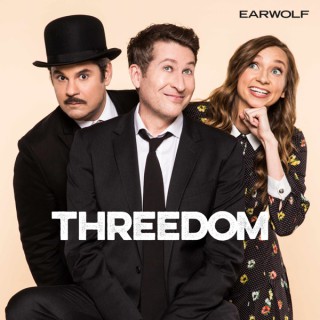
A treat to tide you over while Threedom is on a break. Live Comedy Bang! Bang! performance from Vancouver, featuring Scott Aukerman, Lauren Lapkus as HoHo, special guest musician Dan Mangan, Mike Hanford as John Lennon, Paul F. Tompkins as Santa Claus and Tim Baltz as Randy Snutz. Get tickets to CBB on tour at cbbworld.com/tour Learn more about your ad choices. Visit megaphone.fm/adchoices

Visit TheRenegadeFiles.com to get Cool Merch, Patreon Bonus Episodes, and all things Renegade Files in one place. ~~~ Dive deep into The Catcher in the Rye Controversy, Conspiracy Theories, and it's alleged Connections to Lone Gunmen, Assassins, MKUltra, and Stalkers. ~~~ Topics Covered: Catcher in the Rye, Catcher in the Rye Mystery, John Lennon, Ronald Reagan, Robert John Bardo, Lee Harvey Oswald, Bobby Kennedy, Madonna, Martin Luther King, Mark David Chapman, Jack Ruby, Rebecca Schaeffer, Jodie Foster, JFK, John Hinckley Junior, James Earl Ray, Sirhan Sirhan, Catcher in the Rye Controversy, JD Salinger, Operation Paperclip, WWII, Army Intelligence, Counterintelligence. ~~~ If you like the show, please leave us a 5 star review on Apple Podcasts or Spotify if you think we deserve it. (It helps new listeners find the show.) Thank you. ~~~ Music and Audio Licensing: Theme Song: “Steve's Djembe” by Vani, FMA, licensed: Creative Commons CC BY-SA 4.0 License. “Rocket Appliance Reversal” by Flow Lab Cult, DV8NOW Records, licensed: Creative Commons CC BY-NC-ND 4.0 License. The audio recording and text transcript of this podcast episode is © 2026 DV8NOW Publishing LLC . The Renegade Files name and the Renegade Files UFO-Pyramid Logo are wholly owned Registered Trademarks of DV8NOW Publishing LLC . About Fair Use: Under Section 107 of the Copyright Act 1976, a "Fair Use" allowance is made for purposes such as criticism, comment, news reporting, teaching, scholarship, and research. Fair Use is a use permitted by copyright statute that might otherwise be infringing. Non-profit, educational or personal use tips the balance in favor of fair use. Website http://therenegadefiles.com (Everything RF in 1 place. Visit and Share!) Bonus Episodes / Support on Patreon https://www.patreon.com/renegadefiles Get cool RF Merch https://therenegadefiles.com/shop/ Subscribe on YouTube https://www.youtube.com/@renegadefiles Follow RF on Instagram https://www.instagram.com/renegadefiles/ Read Renegade Signals FREE on Substack Follow RF on X.com
Host Jesse Jackson welcomes Springsteen fan Audrey Hunn, a Philly-born travel agent and craft business owner, who recalls discovering Bruce through The River at summer camp and building friendships via the E Street community and her nearly 10,000-member Facebook group, “Calling All Bruce Springsteen Fans.” Audrey estimates she has attended close to 200 shows, praises the latest tour's sound, song choices, and the Morello “Ghost of Tom Joad” performance, and describes pivotal experiences: her first show in Philadelphia the night John Lennon was killed, getting a long-sought jacket autograph at the Sirius “Carousel” Promise event, enduring an overnight wait to be first at a Freehold book signing, hosting Jake Clemons for a living-room show, and dancing with Bruce during “Dancing in the Dark” after 56 days sober. She discusses nine years of sobriety, how Bruce's music helped, and answers that Mary Question. Learn more about your ad choices. Visit megaphone.fm/adchoices

In this Episode: visiting the Long Island Retro Gaming Expo, in Garden City, NY, review of Masters of the Universe (2026), Lou Scheimer pseudonyms, rewatching The Real Ghostbusters, the time Michael Caine saved Lance Guest from sharks, Stan Lee back from the dead as AI, what does AI think of the Paunch Show, some Chiller Theatre news, Paul McCartney goofs on Bob Dylan, Walter Day of the Twin Galaxies Scoreboard, David Crane, Garry Kitchen, Dan Kitchen, and John Van Ryzin from Activision and Audacity Games, Jay North, Throaty Mumbo, a comedic homebrew video game show, 8-bit homebrew game advancements, Frank Stallone will be appearing at the Paisan Con, Ed Begley, Jr. once met John Lennon, celebrity deaths of Sam Neill, Robert Carradine, Donald Gibb, Katherine O'Hara, Robert Duvall, and a review of Flow (2024). 89 minutes - http://www.paunchstevenson.com

Eric Idle and Lorne Michaels teamed up in 1978 to make the greatest Beatles parody you've probably never seen — and it worked so well that Paul McCartney sent back a real letter saying he didn't find it funny, while John Lennon loved it so much he never returned his copy. This week on Cinema Psycho Show, Brian and John dig into The Rutles: All You Need Is Cash, the SNL-adjacent mockumentary packed with John Belushi, Dan Aykroyd, Bill Murray, Gilda Radner, Mick Jagger, and even George Harrison himself. We break down the Beatles history it's spoofing, argue about whether you need to be a Beatles fan to get the jokes, compare it to Spinal Tap and Young Frankenstein, and read your listener reviews. CHAPTERS: Introduction [00:00] The Rutles: A mockumentary history of the Beatles [01:10] The BBC mockumentary behind The Rutles [02:40] The Rutles blends Beatles history with Monty Python humor [03:59] Early SNL stars and the film's celebrity cameos [04:34] Discovering The Rutles as a child and revisiting it as a Beatles fan [07:29] Why The Rutles did not connect with every viewer [10:04] The Beatles' Hamburg years and the importance of context [14:24] The Rutles follows the Beatles' history through parody [17:21] Sight gags, archival footage, and the film's comic style [22:54] The surprisingly strong music of The Rutles [23:30] The Rutles corporation satirizes 1960s idealism [27:42] Why mockumentaries need a recognizable subject [29:04] How The Rutles compares with other mockumentaries [34:10] The Rutles' broadcast history and American reception [37:22] The sequel revisits The Rutles through celebrity commentary [39:08] Listener reviews of The Rutles [41:10] A collection of sketches with a thin plot [41:57] Chastity and the film's most outrageous joke [45:50] The music is excellent, but the parody stays close to the Beatles [51:21] Birthday wishes and final thoughts on The Rutles [56:56] Share the episode and tell us what you think [59:17] FOLLOW THE SHOW:

A live recording from The Big Romance about a 2008 Sub Pop-released classic album of the 2000s. Listen on Apple | Android | Patreon | Pocketcasts | CastBox | Stitcher | Spotify | RSS Feed | Podlink Step into a world of misty melodies and cavernous echoes with Seattle band Fleet Foxes' landmark debut – a defining record of the late-2000s indie folk revival. Led by Robin Pecknold, the album blends the lush, pastoral harmonies of the 1960s with a haunting baroque-pop sensibility and lyrical themes rooted in nature, tradition, and introspection. Like the Bruegel painting on its cover, every track reveals a dense, beautiful world that evokes a timeless – almost mythic Americana sound. This podcast episode is a live recording from our listening party in The Big Romance in April, with guest journalist and Fleet Foxes fan Aoife Barry. Our next Listening Party is Smashing Pumpkins later this month and it's sold out. Listen Closely: Fleet Foxes – Fleet Foxes (2008) A Nialler9 listening party, hosted by Niall Byrne with guest Aoife Barry. Before the album Niall: Hello everyone, how are you? Welcome to the Listen Closely album listening party. I'm Niall, and this is Aoife Barry. Aoife: Hello. Niall: We're here tonight because Aoife picked this album, as she has before. You picked Jeff Buckley last year. Aoife: Yeah, and we ended up doing three of them. Niall: We did, we went to Cork. We did two here and then we went to Cork to talk about Jeff Buckley. And you were at the My Bloody Valentine listening party last year as well, back in October. Aoife: It must have been October, yeah. Niall: Well, obviously we're here for a very different album tonight: Fleet Foxes by Fleet Foxes, from 2008. As you heard there, we played a bit of the Sun Giant EP by the band, which came out a few months before this album, because we want to give the album its full due. They're a little different, and we'll talk about that. But yeah, you picked the record. Aoife: I did. I obviously must like it. And it's such an incredible record. Is there anybody here who hasn't heard it? That's really exciting, if so. I'm excited for you to hear it. You got a sneak peek there of what the vibe is going to be. I picked it because I love this record, but I also had a funny story about how I first heard them. Back in 2008, when this record came out, I'd read about this band called Fleet Foxes in a music magazine. I don't even think I'd heard a song yet, this is back in the day. And I was on holidays in Berlin, and in the tiny little hostel we were staying in, they had a sign up on the wall: "Who's playing tonight? Fleet Foxes, Café Zapata." I said to my boyfriend, "I think that's a band I read about in the magazine, will we go see them?" And he was like, "Grand." So we went, and they were unbelievable. It was so good. Beach House were supporting them. So it was 2008 smacking you in the face. Niall: Come on. Aoife: And I took photos, which I found. I have photos. Artifacts. One is terrible, the other one's not so terrible, taken on one of those little Canon digital cameras. And I still have the ticket, I kept the ticket, I'm one of those hoarders who keeps all their gig tickets. But it was so good: the venue they played in had a dragon that breathed fire out every fifteen minutes. Niall: So they'd be playing and this dragon… Aoife: I'm not even exaggerating. Fire would just shoot out of this mechanical dragon. It was so Berlin. And Fleet Foxes were so stunning, and Beach House were so stunning. I love Crosby, Stills, Nash & Young, I love all those harmony vibes, I wish I was born in the seventies, sadly I was not. So I fell in love with them immediately, and I've been a big fan ever since. Although I'll say I probably dipped a little bit around the Crack-Up era, their third album, but then I saw them when Shore came out, their most recent album, and fell right back in love with them. Niall: We're going to talk about all the albums that come afterwards, but we'll start with this one, because this is presumably your favourite, or one of them. Aoife: Shore is up there as well for me, but yeah. Niall: So what was it about Fleet Foxes at the time? For context: in 2008 there was quite a lot of this kind of music around. We previously did Bon Iver's For Emma, Forever Ago as a listening party, and the funny thing, which I only found out when we did this, is that they have the same origin story in a way. Both songwriters went to a cabin in the woods to pour their heart out and write the songs. Aoife: I think Justin Vernon just got there first in terms of the marketing. Niall: So they must have pulled back on talking about it too much, because it's basically the same thing. They never really talked about Robin Pecknold's writing process in those terms. Aoife: For Emma was such a massive moment, everybody was obsessed with this guy who broke up with a girl and went to a cabin and wrote a record about it. It was the ur indie-folk album. Niall: What was really appealing about Fleet Foxes is that they were so young, between about twenty-two and twenty-seven, and Robin Pecknold was twenty-one when he wrote the record. Which is frankly offensive, you shouldn't be allowed to be so talented at twenty-one. Aoife: I know. And they were clearly these people from Seattle, which we associate with grunge, and then it becomes this place where they're bringing out all the pastoral, outdoorsy, mountain-and-sea vibes of the Washington area. They're obviously really influenced by the seventies too, by Crosby, Stills, Nash & Young, by Laurel Canyon, but also by Appalachian folk. There's a real purity to what they're doing. The harmonies are unbelievable, there's even a bit of a gospel feeling. So these young guys made this album that was being called an iconic American record on release. The Guardian called it a landmark American album, something like that. And that's special, because you don't get that many records immediately being called landmark. Niall: It was a very exciting time for music around then. I actually brought some records. We mentioned Beach House and Teen Dream earlier, that's a bit later, 2010. I wanted to do a listening party for that at some point, that'd be good craic. Around that time you had Animal Collective and Panda Bear, Person Pitch was right there, that was the apex for that very experimental scene. A few years later we had Sufjan, our very first listening party. And Bon Iver, of course. There's also stuff like Neutral Milk Hotel very much of that vibe. Aoife: I've noticed people covering Neutral Milk Hotel more now. Niall: I think when we got to it, it was on its second go-round, and now it's getting a third, which is great. It's a great record. So, the band were from Seattle, they had a bit of the scruffy flannel-shirt look, but obviously didn't sound like that. The album was written in the woods, in the cabin, brought to the band, and recorded with Phil Ek. Aoife: Who did a lot of stuff with Built to Spill. Niall: Yeah, and he worked with The Shins, and Modest Mouse, a really long history. Aoife: Are The Shins from Seattle as well? Niall: I think they might be. Band of Horses is another one. So they recorded it themselves with Phil Ek, paid for it all themselves, and then the local major independent label Sub Pop came calling. Obviously known for a lot of grunge traditionally, but they'd clearly been releasing this kind of music around then too, The Shins had been on the label for a few years, Band of Horses. When it came to it, they signed to Sub Pop. Apparently there was a bidding war. Aoife: They'd become quite popular on MySpace. Anybody remember MySpace? Every time I do one of these I feel older and older, mentioning the top eight, the randomers you'd put in your top eight. Word could spread quite quickly once you got popular on MySpace. Niall: What I thought was really interesting, that I discovered when I was researching, is that recording the album was actually a total pain for them. They didn't have much money, so they ended up recording a lot of it in their houses, or in Robin Pecknold's family home. And he re-did all the vocals right before they mastered the record, because he'd been sick during the initial sessions and his voice wasn't in great shape. They recorded it all in one go, scrapped that, did another version, and kept moving the running order around. I'm always fascinated by albums where the creation was a total pain and they had no idea it would even work out. Robin Pecknold actually said, "I hope nobody cares about this album, because I just want to move on to the next one." And then it becomes this iconic record. Aoife: Isn't every artist sick of their album by the time it's done? You're like, "my paintings." Yeah. Niall: 2008 was an interesting time for it to land. The album draws on the Beach Boys and Brian Wilson, Crosby, Stills, Nash & Young, Nick Drake, Simon & Garfunkel, Fairport Convention, Judee Sill, very much old-timey or sixties folk and pastoral stuff. And in 2008 there's a financial crash. The album was worked on before that, but it was released into that environment, and a lot of this music seemed to catch. When things go bad, we retreat, we dream, we listen to music that's maybe the opposite of what we're feeling. There was a gentleness, an unhurriedness to it that resonated. Aoife: Grizzly Bear is another band from that time. When Jay-Z and Beyoncé went to see Grizzly Bear in Brooklyn, that was kind of where all the indie music peaked. Niall: And the other part of it, which I was involved in, was the MP3 blogs, that's where you'd hear this music. Especially the American and Canadian stuff, no one was promoting it over here yet, so you'd be months ahead. You'd hear Fleet Foxes in these MP3 formats. That was a mad period, it showed how the internet could collapse geography, a song could spread really quickly on the blogs. And in an American context, this came out post-Bush, with the Obama era coming in, a more hopeful tone. You had the Lehman Brothers crash, these global pressures, and then these hopeful times too. It's interesting to wonder whether these albums are a reaction to it, or whether they appeal to us because we want nice, happy things. I feel like Fleet Foxes have so much emotional depth: there's yearning, sadness, hope, nostalgia. Aoife: I loved Yellow House by Grizzly Bear, their first record, a complex, complicated, almost jazzy thing that sounded beautiful but had a lot going on. We weren't going for simplistic music, but we wanted music that gave us depth and beauty. Is art a solution to the world collapsing? Niall: We could be answering that in 2026. We live in a cursed timeline, as I keep saying. That's all I'm going to say. But what else happened in 2008 in the wider circle of music? Portishead returned with Third. TV on the Radio released Dear Science. MGMT released Oracular Spectacular, 'Kids' and all that. Cut Copy released In Ghost Colours, Indie Sleaze night on Saturday, folks, come on. Kanye put out 808s & Heartbreak, that was November that year. Rihanna was at the peak of her powers. Aoife: Katy Perry appeared that year. And 'American Boy'. Niall: 'American Boy', still one of the best pop songs, fire. Iron & Wine was the other one I forgot to mention. So it was a really vibrant, varied year. As you heard, there's the Sun Giant EP too. Aoife: The thing about that is it came out before the album, but was recorded after. The album was done, in the bag. Niall: They decided to go into the studio and record Sun Giant, a collection of songs intended to sell on tour. It ended up being quite popular, and for a lot of people it was their first time discovering Fleet Foxes. Aoife: It wasn't like The Coronas' 'San Diego Song', their summer-holiday anthem, or anything like that. But it came out before the album, and then the album arrives. Niall: So what was the reaction at the time? Was it immediate? Aoife: Things happened really quickly. In January that year they got all the MySpace attention, and by June the album was coming out. Really, really quick. There was so much chatter about them, which is partly why I'd seen the name, and a music blog like yours would have seen it too, and known they were one of the big bands. In a way that's harder now. Niall: These days you see bands like Geese getting a lot of attention because they use companies that help them go viral. You didn't really have that then. Now you'd dress yourself up in some gimmick, polka dots, whatever, and go viral all over the internet for it. I couldn't imagine these lads doing that. Aoife: No. But maybe in a way they were cosplaying living in the forest, on the Puget Sound. Niall: Anyway, when the album came out, people loved them, and it really hit it off. Because they sound so seventies, your parents would love the records and you'd love the records. There's almost a lullaby quality to the folk stuff too. The music is applicable to anybody of any generation, and there's something lovely about nostalgic music that reminds you of a better time. To finish on that point: I think there's something very mysterious about Fleet Foxes, they feel out of time. They're these young, scruffy lads with the beards, but there's a mystery to them. They didn't come across as the hipster end of things, they weren't leaning into anything. They were presented as the kind of band that wouldn't have had phones, would have lived off-grid, which is funny because they were a MySpace band. They're the most un-MySpace band you can imagine. Surprise people, do something a bit different, don't be exactly what people want you to be, and they'll love you for it. And then your songs are unbelievable too, soaring and stunning. Can we talk for a second about the cover? It's an original painting from 1559 by Pieter Bruegel the Elder, Netherlandish Proverbs. It depicts a densely populated Flemish village scene illustrating 126 folk proverbs. There's a lot there. Some on this side are cut off, but for example, this woman here, she's putting the blue cloak on her husband, meaning she deceives him. This guy is casting roses before swine, wasting effort on the unworthy. And right at the top there's a man running through a field with his arse on fire, chasing pigs, "he who eats fire craps sparks," do not be surprised at the outcome if you attempt a dangerous venture. There are 126 of those. Aoife: The interesting thing is that the band managed to get permission to use it. Really unusual to be allowed use it as commercial artwork. Niall: And apparently the museum that holds the artwork were delighted. A lot of stars aligned for them. It's an iconic cover because it's so different from what anybody else was doing, clearly of a particular period, and it has that Where's Wally quality. I have a quote about it. Robin said: "We were trying to figure out what we wanted to do, and my brother had been working some stuff out, when I saw this Bruegel painting in a book my girlfriend had. I liked that it had a really intriguing meaning, there's a story to each little scene, which felt fitting for the record. It was dense but unified, not a collage. It has a Where's Waldo quality, something you could look at for a long time on a vinyl sleeve and keep finding new little things. It was very easy to get the museum in Berlin that has it to say yes, they were super excited the band wanted to use it, and put it in their newsletter. When you open it up, on the inside there's a Paisley pattern traced from the back of a book that Skyler's mum got me. We wanted two very different feelings." So, what to look out for when we press play very shortly? Aoife: When I was going back to this, I had it in my head that every song was one of these big songs, because there are so many big moments. But actually there are two tracks that are pretty much acoustic, so it's interesting to notice how they go from the big sound to the small. And for me they're a real emotion-and-feeling band, so notice how you feel listening to it. I always feel this swell of emotion with Fleet Foxes, I was walking down the road listening to Shore and I was like, my God. So lean back and feel into the emotions they're bringing you. And listen to the lyrics if you can make them out, because they're so out of time, all about pack horses and this amazing imagery. Robin Pecknold said he didn't write about a lot of personal stuff because he didn't have enough life experience yet, so instead he wrote these beautifully poetic narratives about pastoral and rural life. So I'd say the lyrics and the feelings are the two things. Niall: Track two, 'White Winter Hymnal', is probably the biggest one, watch out for that. And a few other people thanked and cited as influences, for some extra context: Brian Wilson, Joanna Newsom, Bob Dylan, Noah Lennox and all the lads from Animal Collective, Levon Helm and Robbie Robertson of The Band, Blitzen Trapper, who they toured with at the time and who were bigger than them then. For some reason Joni Mitchell and Neil Young are listed together, which is fair enough. Marvin Gaye, Damien Jurado, Paul Simon and John Lennon listed together. Townes Van Zandt, a legend. Vashti Bunyan, and Van Morrison. There's a nice quote from Robin Pecknold I'll read afterwards. Let's just open it up and listen. I'll play it at full volume, it's about thirty-nine minutes, two sides. Close your eyes, whatever you want to do, vibe away in your own way. [The album plays: Fleet Foxes – Fleet Foxes, 39 minutes.] After the album Niall: It's quite an economical album, isn't it? It doesn't stick around long, thirty-nine minutes. Aoife: I like an economical album. It's also one of the first fairly short records we've done here. Niall: That's part of why I was thinking about Sun Giant in that context too. I'm going to read a bit from the liner notes, because for an album that's very much about feelings, with only a few direct songs, some of what's written here is interesting: "My first memory has always been of me and my mom on a cold grey day down at some beach in Washington, along the Puget Sound somewhere near Seattle. I would be around two or three years old, and we were with a friend of mine from the neighbourhood and his mom, walking among the driftwood looking for crabs. Even now I can remember the smell and temperature of the air, the feeling of the sand and the swaying tall grass. I can even remember looking over at my friend and how his face looked when he smiled back at me. Another memory I'll sometimes recall as my first is dressing up in the dead of summer as Jack London, with tennis rackets on my feet and wearing my dad's hiking pack, after seeing Disney's terrible version of White Fang. Or the memory of stealing my neighbour's Big Wheel and riding it halfway down the block before getting caught and having to turn around defeated. Or wearing a fireman's outfit while washing my parents' car, or eating an orange popsicle from the ice cream truck. These have always been some of my most distinct and persistent memories of childhood. So it came as a disappointment when, one day as a teenager, I opened up a photo album and found pictures of each and every one of these memories. I didn't have a single memory that didn't belong to, or somehow grow from, those pictures my parents had. I guess I've seen all these photographs at some point, forgotten they were just photographs, and over time made them into my most tangible memories. That's scary to me in a way. This leads me to something weird about the power music has: its transportability. Any time I hear a song or record that meant a lot to me at a certain moment, I'm instantly taken back to that place in full detail. Whenever I hear 'Feel Flows' by the Beach Boys, I'm taken straight to the back of my parents' car on the way to my grandparents' place, with Surf's Up in my Walkman and the Cascade Mountains going by in the window. Any song off Radiohead's Kid A brings back the airport near Seattle, from when we were on the way to Colorado for a wedding and Kid A was the only record I brought or wanted to bring. 'Crayon Angels' by Judee Sill is the whole winter of last year. And Brian Wilson's solo version of 'Surf's Up' takes me back to driving my parents' car around town alone at sixteen, windows down at night. I can't ascribe exact memories to songs by The Microphones, Joni Mitchell, Built to Spill, Dungen, Harry Nilsson and so many others, and it's a form of recall I can actually trust, there's no visual element to complicate things, no chance of a planted memory that wasn't actually supposed to be there. Maybe I should be concerned that I'm alone in almost all of these memories, but I guess I was just a private kid, and music was a private experience for me. Music activates a certain mental freedom in a way nothing else can, and that is so empowering. You can call it escapism if you like, but I see it as connecting to a deeper human feeling than the one found in the day-to-day world." Aoife: That's lovely. It's a nice addendum. And he was only twenty-one. Niall: For some reason it's signed "Warren Gamaliel Bancroft Winnipeg Harding," Warren G. Harding being the 29th president of the United States. I don't know why, he thought it was funny. Dated April 6th, 2008, Chicago, Illinois. So, any particular highlights, anything that stood out? Aoife: I was reminded how much I love 'Blue Ridge Mountains', the second-to-last song. I just love those four- and five-part harmonies so much. There's something that really gets me about beautiful harmonies stacked on each other that sound so natural. My dad was really into Neil Young and all of that era, my mum's really into Simon & Garfunkel, so I feel like I came out of the womb going, this is the music I love. Niall: There was another one I meant to mention. Aoife: I'm really bad at remembering song names, which isn't great for an arts journalist. They go in one ear and out the other. Niall: 'He Doesn't Know Why'. Aoife: That was it. I always forget the name of that one, and it's an absolute banger. It's quite a direct song, the last one on the first side. Niall: He mentions his brother Sean in 'Blue Ridge Mountains', which is interesting. And Oliver James is his younger brother, that's the last song. Aoife: His sister is Aja, after the Steely Dan album. The parents were really into them. Niall: It holds up so well. The harmonies and vocals sound incredible, there are those beautiful little flourishes, a flute on one of the tracks, the guitar is stunning, lovely little bass lines. I love the way Robin Pecknold and the band hear music. There's a really good Song Exploder episode with him talking about a song from Crack-Up, and the way he thinks about translating his thoughts and emotions into music is so illuminating. He has a beautiful melodic flow that's really similar to the flow of water and nature. There are so many nature references, it's almost parody there are so many. Aoife: You could do a Portlandia sketch about it. "Power of nature, man." "Come down from the mountain, you've been gone too long." Niall: In terms of the line-up: alongside Robin Pecknold on vocals there was Skyler Skjelset on lead guitar, his best friend from Nathan Hale High School, later joined by Casey Wescott, Christian Wargo on bass, and Nicholas Peterson on drums, who left after this album. Aoife: And who came in as the drummer? Niall: A man who's been a main character in one of these listening parties himself: Josh Tillman, Father John Misty, played drums with them. Aoife: For how long? Niall: Only a year or two, pretty short. As I said, main character, he was making his own record. Any Father John Misty fans? He writes really good songs and he's handsome, so we all love him, but he's also a bit of a pain, and he didn't get on very well with Robin Pecknold, which isn't surprising. When I was looking back at the Pitchfork interview they did in 2008, a few months after the album came out, it was a big joint interview with Robin and Josh Tillman, and Tillman is answering the questions at the start. That's confidence. Do you want to hear a quote from what Robin Pecknold said? I've written it in my little notebook, so old-school, that's the only way I remember these things. In a 2020 Reddit AMA, Pecknold said that on that tour, the Helplessness Blues tour, Tillman was supposed to bring out his own record, but his label said he could only release it after the tour. So he was on tour thinking, "I want to bring out my own record, I'm tired of Fleet Foxes." Pecknold said he "had to endure being around a lot of substance abuse, sabotaged shows, general ill treatment and shit-talking, all while paying him for songs he didn't have anything to do with. It sucked." And then Tillman left the band. Whereas in that Pitchfork interview he'd said, "I love playing in this band, these are all my friends, I'm having the best time, I'm sorry if that's a corny quote, but that's the best thing about this experience right now." Aoife: So he was lying through his teeth. I think he's the kind of person who really has to be a solo artist, too iconic a personality. You wouldn't want to wrangle him out of bed to get to the next show. Niall: Too big a price. You mentioned Pitchfork, the album was number one on their end-of-year list in 2008, and they listed Sun Giant alongside it, breaking the traditional conventions of end-of-year lists. What they said was: listing Fleet Foxes' debut album and EP together may be awkward, but it just feels right, they're two sides of a coin that equally express the band's mastery, "a catch-all Americana that takes a wide slice of our popular music spectrum and pulls it through a reverse prism to create a gorgeous and focused sound of the band's own. The threads of Brian Wilson's coastal pop, Appalachian folk, modern indie rock, Grateful Dead jams and other influences are masterfully synthesised in the band's harmonies." Robin Pecknold's sense of dynamics, they said, flows like a river, wild and free but logical, filling what needs to be filled and moving on. I swear I didn't rip that off Pitchfork, I came up with something similar on my own. Aoife: Very good. Niall: It was Uncut's album of the year too. But more than anything, and this is a strange accolade, the album was ranked number 36 on Rolling Stone's list of the greatest stoner albums. Aoife: I don't think Robin Pecknold was a stoner. It doesn't really fit. He's a reader. Niall: So what came after? Helplessness Blues, which is really difficult to say, in 2011, then Crack-Up in 2017, then Shore in 2020. Big long gaps, some personnel changes. And Robin Pecknold, as we've established, is a very literary guy, he went to Columbia to do an undergrad in English literature, because he'd left high school early and gone to a community college, and he really wanted that college experience. So that was part of the break. He's also had difficult times, he's spoken about mental health issues and suicidal ideation, many tough experiences that contributed to the gaps too. They haven't released anything since 2020, and he does a lot of cover events. There are two live records. He's actually playing a gig tonight, I think, where he covers Judee Sill. Any Judee Sill fans? Aoife: Oh my gosh, she's amazing. Nobody ever knows Judee Sill. If you listen to anything, listen to Heart Food, it's iconic. He loves her, mentions her on this record. She's the one who does 'The Kiss', people might have seen her perform it on the Old Grey Whistle Test, it's on YouTube. She had a really tragic life. Niall: One of those I've been meaning to listen to properly for years. She only has two records, so it's easy to get into. There's a documentary about her as well, which I haven't seen. Aoife: She's one of those ill-fated seventies musicians, really religious imagery, did a lot of drugs, really interesting. Niall: Did you get to see them again after your first foray in Berlin? Aoife: I saw them when they toured, though it's really bad when you can't remember what you were doing in the 2010s. Niall: Did anybody see them at that Dublin gig, the outdoor one in 2022? Wasn't it amazing. They've played here a fair bit: Vicar Street in 2008, Electric Picnic 2009, The Marquee in Cork 2011, the Iveagh Gardens in 2017. I don't know if I've missed any, maybe you can tell me. So if you were to pick, is there any further listening or reading you'd suggest to somebody, not necessarily Fleet Foxes? Aoife: Some of it is obvious. As I said, I'd definitely check out Judee Sill, because if you really like Fleet Foxes you'd really vibe with her. And he mentions Harry Nilsson, also unbelievable, more well known than Judee Sill, did the cover of 'Everybody's Talkin''. I'd also mention a guy people would have known at one point but isn't very well known now: Richard Swift. He sadly passed away a couple of years ago. He was friends with Robin Pecknold, a hugely talented musician who struggled with addiction. He has an amazing double album from around 2005 or 2006 that's brilliant, and a record called The Hex, which is referenced on 'Sunblind' on Shore, that's the song where Robin name-checks a lot of musicians he loves, like Elliott Smith, David Berman and Richard Swift. It's such a beautiful record for finding new people to listen to, and it's lovely to hear a musician pay tribute to musicians he loves. The imagery is him talking about this beautiful day where he'll go for a swim and listen to all these beautiful bands, an ecstatic kind of song. So check out all of those records, but Richard Swift deserves more fans, and The Hex is really, really good. Niall: Good shout. What we'll do now is play a tune, and then maybe give Sun Giant another go if you want to stick around. Our next listening party is on the 27th of May, and it's an indie-rock album very close to my heart: Broken Social Scene's You Forgot It in People. I've been wanting to do this one on record for a long time. They're playing here later in the year, but I want to give this record its flowers, it's incredible. My niece has just turned seventeen and I bought her a copy, because it's an anthemic record for a seventeen-year-old. I can't believe that band are still going, which is kind of mad, but it's hard to underline what Broken Social Scene meant to a certain segment of indie. Aoife: And there's four hundred of them on stage. They're from Canada, and we were all like, my God, these people are the best. Niall: For me it's the MP3 times again, we'll talk about this next month. I heard about them through the music blogs, and then I got to see them in the Button Factory, which was the Temple Bar Music Centre at the time. It was one of the first things I ever wrote about, back in 2005. A transcendental experience. Aoife: They're so good live. Niall: I once DJ'd in Galway after one of their gigs, and one of the members of the band, I'll leave him nameless, came over and turned off the decks while I was DJing. Aoife: On purpose? Niall: He was that drunk. I can't remember what I was playing, but I was like, great, DJing after Broken Social Scene and then a band member ruins it. I don't think he liked it. No, I think he was just really drunk and thought it was funny. Thumbs down to him. In a way it's surprising a man like that has managed to persist in a band with so many members. Anyway, I digress. We'll talk about it next month, May 27th. Aoife: I cannot wait. I've been listening to it a lot lately again, it's fantastic. Niall: Thank you for being here. Let's play a bit of this and see what happens. Thanks for being here, appreciate it.

You need people who have everything to show you that everything is nothing. George Harrison had wealth, fame, mansions, cars — everything material desire could want. And he said just sitting down and chanting the Hare Krishna mantra gives more happiness than all of it. "The response that comes from chanting is bliss — a much higher taste than any happiness found in the material world." Raghunath and Kaustubha explore that alongside the Yugala Gīta — where the gopīs at the highest perfectional stage are doing exactly what George did on a boat with John Lennon sailing through the Greek islands. Glorifying Krishna. In bhakti, the means and the end are the same thing. Srimad Bhagavatam 10.35.20-26 ******************************************************************** LOVE THE PODCAST? WE ARE COMMUNITY SUPPORTED AND WOULD LOVE FOR YOU TO JOIN! Go to https://www.wisdomofthesages.com WATCH ON YOUTUBE: https://youtube.com/@WisdomoftheSages LISTEN ON ITUNES: https://podcasts/apple.com/us/podcast/wisdom-of-the-sages/id1493055485 CONNECT ON FACEBOOK: https://facebook.com/wisdomofthesages108 *********************************************************************

You need people who have everything to show you that everything is nothing. George Harrison had wealth, fame, mansions, cars — everything material desire could want. And he said just sitting down and chanting the Hare Krishna mantra gives more happiness than all of it. "The response that comes from chanting is bliss — a much higher taste than any happiness found in the material world." Raghunath and Kaustubha explore that alongside the Yugala Gīta — where the gopīs at the highest perfectional stage are doing exactly what George did on a boat with John Lennon sailing through the Greek islands. Glorifying Krishna. In bhakti, the means and the end are the same thing. Srimad Bhagavatam 10.35.20-26 ******************************************************************** LOVE THE PODCAST? WE ARE COMMUNITY SUPPORTED AND WOULD LOVE FOR YOU TO JOIN! Go to https://www.wisdomofthesages.com WATCH ON YOUTUBE: https://youtube.com/@WisdomoftheSages LISTEN ON ITUNES: https://podcasts/apple.com/us/podcast/wisdom-of-the-sages/id1493055485 CONNECT ON FACEBOOK: https://facebook.com/wisdomofthesages108 *********************************************************************
Navigating Darkness and Youth in Erica Kent's Black DogToday on Salt Lake Dirt, Kyler interviews author Erica Kent about her novel Black Dog. Set against the backdrop of the 1980s, the story begins on the night of John Lennon's murder and follows protagonist Jessica Ryder from age 11 as she navigates adolescence and a rapid descent into heavy substance abuse. Drawing inspiration from Winston Churchill's phrase for depression, Kent uses the "black dog" as a powerful metaphor for the looming presence of addiction. The book explores the complex realities of growing up fast, highlighting the stark contrast between a young girl's inner struggles and the surrounding decade's distinct pop culture. During their conversation, Kent discussed her approach to capturing an authentic youth perspective, noting how her experience working with students helped shape Jessica's refreshingly blunt and dramatic voice. Rather than following a rigid outline, Kent built the novel organically out of vivid snapshot scenes and recursive drafts, trusting her gut over traditional advice. The interview also highlights the novel's poignant central dynamic: a deep, shared love of literature between Jessica and her father as they both struggle to support one another through their respective battles. Readers interested in this striking novel can find Black Dog through major booksellers or visit ericakent.com. Episode Links:Purchase through Bookshop.orgPurchase on AmazonEricaKent.com

Host Jesse Jackson welcomes Springsteen fan Audrey Hunn, a Philly-born travel agent and craft business owner, who recalls discovering Bruce through The River at summer camp and building friendships via the E Street community and her nearly 10,000-member Facebook group, “Calling All Bruce Springsteen Fans.” Audrey estimates she has attended close to 200 shows, praises the latest tour's sound, song choices, and the Morello “Ghost of Tom Joad” performance, and describes pivotal experiences: her first show in Philadelphia the night John Lennon was killed, getting a long-sought jacket autograph at the Sirius “Carousel” Promise event, enduring an overnight wait to be first at a Freehold book signing, hosting Jake Clemons for a living-room show, and dancing with Bruce during “Dancing in the Dark” after 56 days sober. She discusses nine years of sobriety, how Bruce's music helped, and answers that Mary Question. Learn more about your ad choices. Visit megaphone.fm/adchoices

Bill Maher welcomes Beatles historian Martin Lewis for a lively, opinionated conversation celebrating the music, myths, and enduring legacy of the greatest band in rock history. Together, they unpack how John Lennon and Paul McCartney built one of history's greatest creative partnerships, challenge the stories fans have been repeating for decades, and revisit the moments that changed music forever. Martin shares behind-the-scenes stories from his years working with Paul McCartney, explains why The Beatles continue to captivate each new generation, and gleefully busts some of the band's most persistent myths. Bill and Martin debate Get Back, A Hard Day's Night, Brian Epstein's influence, John Lennon's songwriting, Paul McCartney's genius, the breakup, and why, sixty years later, everyone still thinks they're the Beatles expert. Support our Advertisers: -Try ZipRecruiter for free at https://www.ziprecruiter.com/random -Connect with quality therapists and mental health experts who specialize in you at https://www.rula.com/RANDOM #rulapod #ad Subscribe to the Club Random YouTube channel: https://www.youtube.com/c/clubrandompodcast?sub_confirmation=1 Watch episodes ad-free – subscribe to Bill Maher's Substack: https://billmaher.substack.com Subscribe to the podcast for free wherever you listen: https://bit.ly/ClubRandom Buy Club Random Merch: https://clubrandom.com Learn more about your ad choices. Visit https://podcastchoices.com/adchoices ABOUT CLUB RANDOM Bill Maher rewrites the rules of podcasting the way he did in television in this series of one on one, hour long conversations with a wide variety of unexpected guests in the undisclosed location called Club Random. There's a whole big world out there that isn't about politics and Bill and his guests—from Bill Burr and Jerry Seinfeld to Jordan Peterson, Quentin Tarantino and Neil DeGrasse Tyson—talk about all of it. For advertising opportunities please email: PodcastPartnerships@Studio71us.com ABOUT BILL MAHER Bill Maher was the host of “Politically Incorrect” (Comedy Central, ABC) from 1993-2002, and for the last fourteen years on HBO's “Real Time,” Maher's combination of unflinching honesty and big laughs have garnered him 40 Emmy nominations. Maher won his first Emmy in 2014 as executive producer for the HBO series, “VICE.” In October of 2008, this same combination was on display in Maher's uproarious and unprecedented swipe at organized religion, “Religulous.” Maher has written five bestsellers: “True Story,” “Does Anybody Have a Problem with That? Politically Incorrect's Greatest Hits,” “When You Ride Alone, You Ride with Bin Laden,” “New Rules: Polite Musings from a Timid Observer,” and most recently, “The New New Rules: A Funny Look at How Everybody But Me Has Their Head Up Their Ass.” FOLLOW CLUB RANDOM https://www.clubrandom.com https://www.facebook.com/Club-Random-101776489118185 https://twitter.com/clubrandom_ https://www.instagram.com/clubrandompodcast https://www.tiktok.com/@clubrandompodcast FOLLOW BILL MAHER https://www.billmaher.com https://twitter.com/billmaher https://www.instagram.com/billmaher Learn more about your ad choices. Visit podcastchoices.com/adchoices

This week we've got Isiah Kelly in the NNFA Turtle Lair to talk about growing up as the son of a stand-up comic, forging his own path, and why having a famous last name doesn't guarantee success. We talk whether nepotism really exists in Black comedy, growing up as a comedian's son and the pressure that comes with it. Then Dave accidentally letting a comic walk around with a roach on him and why men and women handle awkward situations differently, gaming culture, trash talk, and comic life offstage, Dave's new boxing routine (powered by Britney Spears), watching The Odyssey in 4DX, Usher's viral fan rejection and the internet's reaction, the age-old question: could you go to a strip club with your dad? Plus Jim Jones, John Lennon, and one of the most random debates you'll hear this week!DON'T FORGET TO LIKE, SHARE & SUBSCRIBE Watch “Gone in 60 Steps"! https://www.youtube.com/@GoneIn60Steps MERCH https://nnfa.creator-spring.com/ BONUS CONTENT https://www.patreon.com/c/ImDaveTemple?utm_medium=clipboard_copy&utm_source=copyLink -----------------Follow host Derek GainesIG https://www.instagram.com/thegreatboy/ YouTube https://www.youtube.com/channel/UCEQDlfXd3hPcpTkU8xHYBTg Follow host Dave TempleIG https://www.instagram.com/imdavetemple/ YouTube https://www.youtube.com/@DAT46Follow guest Isiah KellyIG https://www.instagram.com/isiahkelly/ Follow No Need for ApologiesIG https://www.instagram.com/nnfapodcast/ TT https://www.tiktok.com/@noneedforapologies FB https://www.facebook.com/noneedforapologies/Produced by Teona SashaIG https://www.instagram.com/teonasasha/TT https://www.tiktok.com/@teonasasha -----------------To advertise your product on our podcasts please email jimmy@gasdigitalmarketing.com with a brief description about your product and any shows you may be interested in advertising on.SEND US MAIL:GaS Digital StudiosAttn: NNFA151 1st Ave # 311New York, NY 10003"No Need for Apologies" - NEW Episodes every Saturday at 3PM/ET on YouTube-----------------⏱️CHAPTERS00:00 Intro00:45 Welcome to the Show02:24 Isiah Kelly Joins the Show04:10 Is There Nepotism in Black Comedy?06:00 Dave's Apology of the Week11:10 Derek's Wild Apology Story15:59 Why Isiah Is a Homebody20:30 Growing Up as a Comic's Son22:06 Boxing to Britney Spears27:10 Watching The Odyssey in 4DX36:00 Usher Fan on Stage Gets Awkward40:57 Could You Go to a Strip Club With Your Dad?45:11 Jim Jones Says He'd Rather Drink With Men49:50 John Lennon, Feminism & Music Debate58:00 OutroSee Privacy Policy at https://art19.com/privacy and California Privacy Notice at https://art19.com/privacy#do-not-sell-my-info.
Life is what happens to you while you're busy making other plans. –John Lennon Check out John Lee Dumas' award winning Podcast Entrepreneurs on Fire on your favorite podcast directory. For world class free courses and resources to help you on your Entrepreneurial journey visit EOFire.com
What happens when a Grammy-nominated artist like Lukas Graham takes a stroll down memory lane? Join host Buzz Knight in this captivating episode of the Takin a Walk podcast as he delves deep into the life and music of Lukas Graham, the creative mind behind the global hit 'Seven Years. ' This conversation is not just about music; it's an exploration of music history, personal stories, and the emotional connections that shape an artist's journey. As the Buzz Knight podcast unfolds, Lukas shares his latest single 'To Know a Girl,' a track that marks a significant departure from his previous work, showcasing a more intimate and story-driven sound. Discover how his upbringing in the unique neighborhood of Christiania in Copenhagen has influenced his music and shaped his identity. Lukas reflects on his early experiences with music, from attending concerts to the profound impact of his father's work in the industry, providing listeners with a rich tapestry of music inspiration stories. This episode also dives into the creative process behind Lukas's upcoming album, highlighting the collaborative spirit that drives his work. Buzz Knight and Lukas discuss specific songs, including 'Before You Go,' which carries deep personal significance for the artist. The conversation elegantly weaves through themes of nostalgia, connection, and the emotional experience of performing live, especially when sharing deeply personal songs with audiences. As they walk through these inside music stories, Lukas reflects on his upcoming tour with Ed Sheeran, sharing his desire to take a walk with his late father and John Lennon. This heartfelt discussion about songwriting and their shared love of music adds a poignant layer to the episode, reminding us of the music and resilience that defines an artist's life. Don't miss this episode of Takin' a Walk with Buzz Knight, where legendary musicians like Lukas Graham share their journeys, struggles, and triumphs. Tune in for an inspiring ride through music history, filled with unforgettable moments and insights that resonate with anyone who loves music. Whether you're a fan of iconic musicians or simply curious about the Nashville music scene, this episode promises to deliver a wealth of knowledge and inspiration. Join us as we celebrate the art of storytelling through music, revealing the career breakthroughs and legendary music moments that shape our favorite songs. Experience the magic of takin' a walk with Buzz Knight and Lukas Graham!Support the show: https://takinawalk.com/See omnystudio.com/listener for privacy information.
Gilbert and Frank attend the 2015 Chiller Convention, where they manage to snag a rare interview with musician, songwriter and producer Michael Nesmith. In this episode, Nesmith looks back on everything from his mom's invention of Liquid Paper to his original “Monkees” screen test in October of '65. Also, Michael talks politics with John Lennon, pens a hit for Linda Ronstadt and remembers (sort of) Lon Chaney Jr. PLUS: Dennis Hopper! Tony Franciosa! The Monkees “sell out”! Roger McGuinn gets spiritual! And Jack Nicholson kills off the Prefab Four! https://www.gilbertpodcast.com/50-50-michael-nesmith/ Learn more about your ad choices. Visit podcastchoices.com/adchoices

Listen without ads: www.patreon.com/dopeypodcast Episode summary: This week we continue Allman Brothers Month!Legendary photographer, archivist and Allman Brothers tour manager Kirk West tells the incredible story of his journey from small-town Iowa into the center of American rock-and-roll history. After discovering psychedelics and Chicago blues in the late 1960s, Kirk became an IV meth user and drug dealer. He fled pending charges, landed in the psychedelic communities of Boulder and Northern California, and was eventually identified and arrested while hitchhiking through Nevada with meth and syringes in his backpack. Kirk recounts therapeutic-community rehab, heroin addiction, the murder of his drug-dealing partner, repeated arrests and the camera-store burglary that finally led him back into treatment. He found recovery through one of Florida's earliest Narcotics Anonymous communities—but after five years sober, he attempted to prove that he could drink normally. That experiment ended shortly after John Lennon's murder and ultimately gave Kirk the sobriety date he has maintained ever since. His recovery opened the door to an extraordinary career photographing Bob Marley, Bruce Springsteen, the Rolling Stones, the Who, the Clash, Jerry Garcia and countless others. Kirk eventually became the Allman Brothers Band's archivist and tour manager, served as Dickey Betts' sponsor and helped preserve the group's history. He shares intimate stories about Gregg Allman, Duane Allman, Derek Trucks, Warren Haynes, the Big House in Macon—and the night Lowell George offered him cocaine shortly before his death. Hosted by Simplecast, an AdsWizz company. See pcm.adswizz.com for information about our collection and use of personal data for advertising.
Listen without ads on patreon - www.patreon.com/dopeypodcast SUMMARY This week on the Dopey Total Replay, Dave returns from his summer hiatus and previews the family's Pacific Northwest adventure, the upcoming Patreon Zoom, and the big decision facing DopeyCon: Friday night at the SVA Theatre or Saturday at the old church. Then we travel back to Dopey Episode 37 for a classic conversation with Dave and Chris. They talk about sponsorship, working the steps, honesty, spirituality, and the strange miracle of one addict helping another. Dave tells the story of Jerry Garcia using a radio interview to summon drugs after the Grateful Dead's package went missing in Philadelphia, plus tales of John Lennon's psychedelic excess and Paul McCartney's alleged plan to smuggle Owsley acid inside camera equipment. Things get progressively dopier as Dave remembers stealing fried chicken and vodka at a company party, while Chris describes shooting cocaine in Anguilla, hallucinating benevolent Rastas hiding in the bushes, chasing an imaginary car around an abandoned house, and eventually being rescued from Saint Martin by his brother. Finally, Dave recounts smuggling six bundles of heroin into Jamaica, burning through nearly everything, passing out on Valium during a press trip, and repeatedly sneaking into first class while withdrawing on the flight home. Beneath all the insanity, Dave and Chris reflect on the possession of addiction, the freedom of sobriety, and the strange comfort of no longer needing drugs to feel safe. Stay strong, Dopey Nation, and fucking toodles for Chris. Hosted by Simplecast, an AdsWizz company. See pcm.adswizz.com for information about our collection and use of personal data for advertising.

Rolling Stones lead singer Mick Jagger feels rather anxious about being Conan O'Brien's friend. Mick sits down with Conan to discuss the Stones' 25th studio album Foreign Tongues, his six-decade (and counting) career at the forefront of rock music history, friendly competition with the likes of David Bowie and John Lennon, and finding ways to live in the moment while continuing to draw from the past. For Conan videos, tour dates and more visit TeamCoco.com. Got a question for Conan? Call our voicemail: (669) 587-2847. Get access to all the podcasts you love, music channels and radio shows with the SiriusXM App! Get 3 months free using this show link: https://siriusxm.com/conan. Hosted by Simplecast, an AdsWizz company. See pcm.adswizz.com for information about our collection and use of personal data for advertising.
John Lennon was a walking contradiction: a violent pacifist and a creative genius marred by creative inconsistency. Just as he was getting his groove back, he was gunned down by Mark David Chapman, a self-loathing narcissist who was obsessed with his contradictory hero, as well as with Lennon’s musical rival, Todd Rundgren and J.D. Salinger’s angsty, Holden Caulfield from The Catcher In The Rye. Hear how all of these factors and more contributed to the musical icon’s senseless murder in the first installment of a two part Disgraceland episode. To see the full list of contributors, see the show notes at www.disgracelandpod.com. This episode was originally published on July 10, 2018. To listen to Disgraceland ad free and get access to weekly bonus content and more, become a Disgraceland All Access member at disgracelandpod.com/membership. Sign up for our newsletter and get the inside dirt on events, merch and other awesomeness - GET THE NEWSLETTER Follow Jake and DISGRACELAND: Instagram YouTube X (formerly Twitter) Facebook Fan Group TikTok See omnystudio.com/listener for privacy information.
John Lennon was a walking contradiction: a violent pacifist and a creative genius marred by creative inconsistency. Just as he was getting his groove back he was gunned down by Mark David Chapman, a self-loathing narcissist obsessed with his contradictory hero, as well as Lennon’s musical rival, Todd Rundgren and J.D. Salinger’s angsty Holden Caulfield from The Catcher In The Rye. Hear how all of these factors and more contributed to the musical icon’s senseless murder in the second chapter of a two part Disgraceland episode. To see the full list of contributors, see the show notes at www.disgracelandpod.com. This episode was originally published on July 10, 2018. To listen to Disgraceland ad free and get access to weekly bonus content and more, become a Disgraceland All Access member at disgracelandpod.com/membership. Sign up for our newsletter and get the inside dirt on events, merch and other awesomeness - GET THE NEWSLETTER Follow Jake and DISGRACELAND: Instagram YouTube X (formerly Twitter) Facebook Fan Group TikTokSee omnystudio.com/listener for privacy information.
Record producer and manager Peter Asher discovered James Taylor and launched Carole King's career. Paul McCartney and John Lennon wrote “I Want to Hold Your Hand” in his family's basement. He spoke with Terry Gross about having a front-row seat to some of the biggest moments in recording history.Also, romance novelist Kennedy Ryan talks about how she fell for the genre in middle school, even though her mother, a preacher, didn't approve. Ryan's best-selling books center on people who are usually at the margins – Black women, queer women, and women with chronic illnesses and disabilities. TV critic David Bianculli has a review of the ‘Little House on the Prairie' remake.Subscribe to our free weekly newsletter Follow us on Instagram Subscribe to our YouTube channel Check out the Fresh Air ArchivesSee pcm.adswizz.com for information about our collection and use of personal data for sponsorship and to manage your podcast sponsorship preferences.NPR Privacy Policy
Asher remembers when Paul McCartney and John Lennon played “I Want to Hold Your Hand” for him for the first time. “I thought, am I losing my mind, or is this one of the best songs I've ever heard in my life?” McCartney, who was dating Asher's sister at the time, was living with his family. A new documentary, ‘Peter Asher: Everywhere Man,' chronicles Asher's life in the record industry. He spoke with Terry Gross about his own band in the British Invasion (Peter and Gordon), discovering James Taylor and launching Linda Ronstadt. Subscribe to our free weekly newsletter Follow us on Instagram Subscribe to our YouTube channel Check out the Fresh Air ArchivesSee pcm.adswizz.com for information about our collection and use of personal data for sponsorship and to manage your podcast sponsorship preferences.NPR Privacy Policy
© 2020-2026 Ivy Podcast Discovery LLC
