

POPULARITY
Categories

314 episodes with reels

243 episodes with reels

174 episodes with reels

63 episodes with reels

142 episodes with reels

105 episodes with reels

103 episodes with reels

65 episodes with reels

59 episodes with reels

71 episodes with reels

48 episodes with reels

26 episodes with reels

38 episodes with reels

47 episodes with reels

33 episodes with reels

32 episodes with reels

35 episodes with reels

36 episodes with reels

25 episodes with reels

36 episodes with reels

33 episodes with reels

25 episodes with reels

27 episodes with reels

29 episodes with reels

26 episodes with reels

75 episodes with reels

14 episodes with reels

30 episodes with reels

43 episodes with reels

21 episodes with reels

23 episodes with reels

105 episodes with reels

18 episodes with reels

26 episodes with reels

20 episodes with reels

17 episodes with reels

14 episodes with reels

41 episodes with reels

17 episodes with reels

18 episodes with reels

50 episodes with reels

18 episodes with reels

37 episodes with reels

11 episodes with reels

27 episodes with reels

16 episodes with reels

24 episodes with reels

17 episodes with reels

29 episodes with reels

16 episodes with reels

18 episodes with reels

32 episodes with reels

9 episodes with reels

11 episodes with reels

This is the 6AM All-Local update on Tuesday, Sep. 2.

SHOW NOTESTravel agents, what if your biggest content problem isn't that you don't know what to post, but that you aren't recognizing the content you're already creating?In this episode, I'm introducing The PLOT Framework, a new framework I've developed to help travel agents find the stories hiding inside the work they're already doing.Because every time you create a proposal, you're making decisions. You're listening to what your client is actually telling you. You're navigating challenges. And you're noticing tiny details that can completely change the vacation you recommend.That's the content.PLOT gives you four places to look:P — PICK: The Decision StoryWhat did you pick, and why?L — LISTEN: The Client StoryWhat did your client say that mattered?O — OBSTACLE: The Challenge StoryWhat did you have to work around or solve?T — TINY DETAIL: The Difference StoryWhat small detail changed the recommendation or experience?We're also talking about why storytelling matters more than ever in travel agent marketing, how AI is changing the research and booking process, and why showing your discernment is more powerful than simply telling potential clients you're an expert.And this is only the beginning. Over the next four episodes, we're breaking down each part of PLOT and talking about how to recognize these stories, frame them, and turn them into Reels, carousels, emails, captions, Stories, blogs and more.YOUR HOMEWORK: Pull up the last proposal you sent and find the PLOT. Then come tell me what you found in my Instagram DMs.LINKS + RESOURCESCome talk marketing with me on InstagramConnect with me on LinkedInWatch The Social Takeoff on YouTube
In today's episode, Brock Johnson breaks down how to beat the new Instagram Reels Jail and why skip rate is the baseline metric you need to understand first. He covers why likes aren't something to obsess over, since they mostly come from followers, most accounts have a relatively low follower count, and every non-follower viewing your content is technically a stranger, plus higher views usually bring more likes anyway. The real focus is shares, which represent views from non-followers and show up as sends per reach. He gives the basic tip of directly asking for the share, but pairing that ask with a clear reason why or a specific person to send it to. Brock also walks through the SHARE method, simple, hook, authentic, relatable, entertaining, as a framework for building shareable content, and the TRIBE framework for what actually makes something shareworthy: timely content tied to breaking news or trends, relatable content that makes people feel seen, inspiring content that motivates, beckoning content that calls on the community to act, and edgy content built around hot takes or unpopular opinions. Watch On YouTube

Join Me To Build Your Best Fall – https://buildyourbestfall.com/ You wake up, and your hand goes straight to your phone before your feet even touch the floor. By ten in the morning, you're wired and foggy at the same time, reaching for sugar, caffeine, and one more scroll I already know will make me feel worse.That pattern has a real reason behind it, and it comes down to four brain chemicals that shape how we feel every day: dopamine, oxytocin, serotonin, and endorphins. Neuroscientist TJ Power calls this system DOSE, and understanding how these four work together helps explain why your midlife energy, your focus, and that low hum of anxiety you've carried for years start to make sense in a whole new way.I have been trying to get TJ Power on the show for eight months. This is my favorite episode in eight years of recording.What You'll Learn in This Episode:Why dopamine gets all the attention while oxytocin, serotonin, and endorphins quietly run your mood and your capacityThe one morning habit that sets what your brain craves for the rest of the dayWhy boredom is one of the most restorative things you can give your brain, and what your default mode network does with those quiet minutesHow decision fatigue actually builds in your brain, and how fast it clearsWhy motivation shows up after you move, not beforeThe simple body check question TJ asks every morning before he touches his phoneWhat rest has to do with performance, and why athletes figured this out firstTimestamps:(02:09) — What DOSE stands for and why all four chemicals matter(03:50) — Oxytocin, serotonin, and endorphins in plain English(06:14) — How dopamine actually builds, and the 15 minute rule for reading(07:31) — Golden retriever puppies and what they do to your nervous system(08:36) — TJ's 36 hours without a phone and what he and his wife did instead(10:40) — Where he keeps his phone all day (it isn't near him)(12:35) — The 9-to-9 detox: one woman's Saturday without a phone(15:51) — What 50 of Alli's clients named as their biggest time waster(16:49) — Instagram Reels, Coca-Cola, and how much we're really scrolling(17:43) — Your default mode network: the wise guide you stopped listening to(19:24) — Decision fatigue, glutamate, and the ache behind your forehead(23:02) — Alli's hour-long walk and the 15 minutes that are always rough(24:08) — The 60-minute headphone-free walk that changes lives(25:16) — Motivation is an outcome of behavior, not a prerequisite(26:47) — Endorphins, hills, saunas, and roller coasters(32:38) — Serotonin lives in your body, and 90% of the vagus nerve runs upward(35:20) — Why scrolling Reels in the afternoon is chemically similar to a glass of wine(36:32) — "Hey body, what would you like right now?" The morning practice(38:48) — Chasing what feels good instead of escaping what feels bad(41:12) — Do I deserve to rest? What elite athletes understand, and Alli on Sabbath(43:11) — ADHD, dopamine, and what phones are really doing(49:07) — "Dopamine diabetes": the new diagnosis TJ thinks we need(50:42) — If you only have 20 minutes a day, spend them like this(52:36) — Whatever your first dopamine hit is, that's what your brain craves all day(55:29) — The phone-free first hour and how to build a life around itLinks to great things we discussed: The Dose EffectFunction HealthUplift AppJoin me on Substack: Wise Woman MethodAlli on YouTubeI hope you loved this episode!

ARE COUPLES IN LOVE OR CREATING CONTENT? Is the relationship real… or are they just really good at making Reels?

You're pouring hours into content (more Reels, more carousels, "maybe I need to start a YouTube channel" etc) and have convinced yourself that's what'll finally get you more clients - while barely touching the one thing that actually converts all that traffic: your website.What would actually happen if you went viral tomorrow? Would your website be ready to turn those people into paying clients, or would they land, get confused, and leave?

I've been going hard with trial reels the past 30 days - and the results have been awesome.So I wanted to share with you one strategy you can start implementing TODAY to help you improve your brand, voice - and most importantly - engagement.
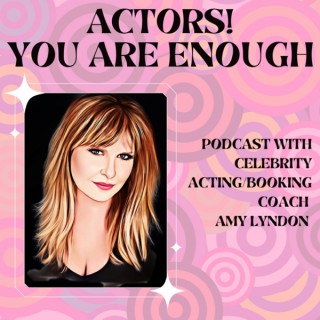
What's the real difference between an acting agent and a talent manager and what do representatives actually look for when deciding who to work with?In this episode of Actors! You Are Enough!!! Podcast, Celebrity Master Acting Coach Amy Lyndon and Talent Agent Ofelia Habelt sit down with special guest Desiree Middlebrook, Talent Manager at Venture Entertainment Partners, to break down the differences between an Agent and Manager, what reps look for when considering actors, and how the right representation team can support a long-term acting career.If you're an actor looking to get signed, improve your professional materials, or better understand how agents and managers work together, this episode is packed with real, unfiltered industry advice.

The Mark Moses Show gives his thoughts on the local city & county have approved the construction of a new baseball stadium for the Tampa Bay Rays to open in 2029. Mark broadcasts from The Law Offices of Anidjar & Levine Studios. #baseball #mlb #sports #raysup
Meta settles landmark teen safety case; YouTube redefines "Qualified Views"; Instagram tests AI First Draft editor; TikTok rates strategy hacks. Meta agrees to a historic $17 billion child safety settlement with US attorneys general, forcing major changes for teen accounts on Instagram and Facebook. In this episode of The Instagram Stories - Social Media News, host Daniel Hill breaks down Meta's new 2-hour daily time limits, non-personalized feed toggles, and nighttime app locks. Plus, we examine YouTube's new exposure-based view model and how Creator Insider's René Ritchie defines "engaged views" versus standard impressions. We also cover Instagram's new iOS editing tool "First Draft" and break down TikTok's "Tok or Flop" strategy tips. Podcast Movement NYC - September 17th/18th (Registration) Key Topics Covered in This Episode: Meta Child Safety Settlement & Teen Account Restrictions: Meta's agreement with state AGs introduces 2-hour daily usage caps, compulsory non-personalized feeds, age verification rules, and late-night (midnight–6 AM) account lockouts on Instagram and Facebook. YouTube View Count Update: René Ritchie explains YouTube's shift to exposure-based views from the first frame, detailing the exact difference between a view, an engaged view, and a thumbnail impression for long-form and Shorts. Instagram Reels "First Draft" Feature: How Instagram's new iOS editing tool automatically cuts pauses and trims raw video clips to accelerate your Reels workflow. TikTok "Talk or Flop" Strategy: Ratings from the TikTok UK/Ireland team on using #FYP, post-publishing comment engagement, the TikTok Creative Center, boosting posts, and deleting old videos. Podcast Industry Events: Details on Podcast Movement at Terminal 5 in New York City (Sept 17–18). Links: Meta: All the ways Instagram and Facebook are changing for teens (The Verge) YouTube: New! Updates to Public View Counts & Engaged Views Explained (YouTube) Instagram: First Draft on Instagram App (Instagram) TikTok: Hacks from the TikTok team - Tok or Flop (TikTok) Podcast Movement NYC - September 17th/18th (Registration) Leave a Review of the Podcast: Apple Podcasts Connect with me on Instagram: @danielhillmedia Connect with me on Threads: @danielhillmedia Connect with me on YouTube: @danielhill_media The Equipment I Use: Microphone: Shure MV7+ USB-C & XLR Podcast Dynamic Mic with Stand (Amazon) Headphones: Samsung Galaxy Buds 3 Wireless Bluetooth Earbuds (Amazon) Laptop: Dell Latitude 7320 Detachable Detachable 2-in-1 Laptop Tablet Touch | 13" (Amazon) Phone: Samsung S25 Ultra with S-Pen included (Amazon) Podcast Movement NYC - September 17th/18th (Registration) Hosted by Simplecast, an AdsWizz company. See pcm.adswizz.com for information about our collection and use of personal data for advertising.

Send us Fan MailThe secret to scaling isn't in your messaging, hooks, or the next trending reel—it's in your presence. In this episode, I share what actually takes you to 20K, 30K, and even 50K months: the way you carry yourself, the energy behind the scenes, and how you hold your business in the in-between. If you've been pouring endless time into perfect content only to feel drained and stalled, this conversation will shift how you think about growth—and why doing less creates more.Get My 7 Figure Guide: https://brittney-ceo.mykajabi.com/offers/fbKnBwSM/checkoutGet my FREE weekly biz babe moves straight to your inboxhttps://view.flodesk.com/pages/624b64b2a15594c239cada7bJoin my Facebook Grouphttps://www.facebook.com/groups/131279237732613Follow me on Ig @brittneyceo for my daily life, hot biz tips, and morehttps://www.instagram.com/brittneyceo/
In today's episode, Brock Johnson is breaking down 9 Instagram post ideas that generated 597K views on Reels, giving you a practical framework you can apply to your own content calendar. He covers gamification tactics like most-liked comment contests and scavenger hunts, identity callout hooks ("keep watching if...", generational comparisons), and challenge-based content like the 1-mile-per-follower format and 20-minute daily workouts. He also walks through immediate action prompts, transformation reveals (before/after, Day 1 vs. Day 100, time-lapse builds), and teaching formats using whiteboards, projectors, and slideshows. Brock rounds out the list with lighter formats: the "who I do it for" joke angle, caveman talk delivery, and the bad/better/best structure for showing progression. Each of these ideas is built around a proven engagement mechanic, and he explains why they work from a psychology standpoint so you can adapt the format rather than just copy the trend. Watch On YouTube

I'm Sindbad the Sailor, so hearty and hale I live on an island on back of a whale It's a whale of an island (that's not a bad joke!) Its lord and its master is this handsome bloke! Ohhhh, who's the most remarkable, extra-ordinary fellow? Sindbad the Sailor! (Also why is the genie vaguely German?)

If your Pilates studio marketing feels like a lot of work for very little return, the answer may not be to post more, create more Reels, send more emails, or spend more money on ads.The real problem might be your message.In this episode of The Pilates Business Podcast, Seran Glanfield explores one of the most common marketing challenges among Pilates, barre, and yoga studio owners: marketing the method instead of marketing what the method makes possible.Because effective boutique fitness marketing isn't simply about creating awareness of what you offer. It's about creating relevance.In this episode, you'll learn:Why creating more content won't fix an unclear marketing messageThe difference between marketing the “vehicle” and marketing the “destination”Why clients are buying much more than a 50-minute Pilates classHow to turn studio features like small classes and expert instructors into meaningful client benefitsWhy broad messaging such as “build strength” or “feel your best” can become almost invisibleHow specificity helps the right client recognize that your studio is for themWhy strong marketing joins the conversation already happening in your client's mindHow a clearer message can improve your content, sales conversations, offers, and overall studio positioningThis episode is for you if you've been consistently posting, emailing, trying different offers, or experimenting with social media - but you still aren't seeing the steady flow of qualified new clients you want.If you're ready to build a more profitable, sustainable boutique fitness studio with clearer marketing, stronger systems, better retention, and a business that works as a whole, learn more about Thrive, my business coaching program for boutique fitness studio owners, at springthree.com/thrive.Got a question for Seran? Add it here

Send us Fan MailOn the Honest Tattooer podcast, hosts Jon Mesa and Matt Truiano talk with guest tattooer/shop owner Amanda Malia and her apprentice Jacob Satterly. They discuss blurred style lines, Amanda's nontraditional early apprenticeships and how long it took to feel like a “real tattooer,” imposter syndrome, and how environment and competition affect growth. The episode covers how social media has changed perceptions of legitimacy, differences between Facebook and Instagram, and Meta pushing Reels. They share art and tattoo process habits, longevity-driven simplification, stippling/shading tips, and advice for getting an apprenticeship (draw/paint, get tattooed by the mentor). The conversation also explores shop culture, booth rent vs percentage, contracts, rising supply costs, and how to raise rent while maintaining a positive vibe.Support the show
Podcast Movement NYC - September 17th/18th (Registration) Looking for the best weekly social media news podcast to navigate algorithm changes, platform updates, and digital marketing strategies? The Instagram Stories - Social Media News is your essential guide to understanding creator tools, audience growth, and online visibility. Hosted by Daniel Hill, the show breaks down official updates directly from platform executives like Instagram Head Adam Mosseri. Each episode delivers clear, actionable social media tips covering Instagram Reels reach, account status management, video monetization, and app features—giving creators, marketers, and entrepreneurs the exact tactics needed to expand their reach across social networks. Podcast Movement NYC - September 17th/18th (Registration) Welcome to The Instagram Stories - Social Media News—the top-rated social media strategy podcast for creators, marketers, and business owners looking to grow their reach and master platform algorithms. Hosted by Daniel Hill, this show translates complex algorithm updates, platform features, and executive Q&As into practical steps you can use immediately. In this episode, we analyze Adam Mosseri's latest insight on how daily posting affects your views and impressions, how to handle copyright strikes safely using your Account Status, and step-by-step guides for hidden app settings. Key Topics Covered in This Episode: Daily Reels & Reach Strategy: Does posting Reels every day increase views and impressions, or does quality dictate algorithmic reach? Direct Messages & Engagement: How follower DMs and comment interactions indirectly boost content visibility in feed algorithms. Handling Copyright Strikes: Step-by-step navigation in Profile Settings to appeal flagged content and maintain account health. Reels Metrics Explained: The precise technical difference between total views and unique viewers. Instagram App Hidden Features: How to locate un-saved Reels in your activity log, reduce unwanted suggested content, and un-send DMs. Head of Instagram vs. Head of Threads: Inside the playful executive banter between the heads of Instagram and Threads. Podcast Movement NYC - September 17th/18th (Registration) Leave a Review of the Podcast: Apple Podcasts Connect with me on Instagram: @danielhillmedia Connect with me on Threads: @danielhillmedia Connect with me on YouTube: @danielhill_media The Equipment I Use: Microphone: Shure MV7+ USB-C & XLR Podcast Dynamic Mic with Stand (Amazon) Headphones: Samsung Galaxy Buds 3 Wireless Bluetooth Earbuds (Amazon) Laptop: Dell Latitude 7320 Detachable Detachable 2-in-1 Laptop Tablet Touch | 13" (Amazon) Phone: Samsung S25 Ultra with S-Pen included (Amazon) Hosted by Simplecast, an AdsWizz company. See pcm.adswizz.com for information about our collection and use of personal data for advertising.
The Mark Moses Show gives his thoughts on how the Cleveland Browns today named Deshaun Watson their week 1 starter. Mark broadcasts from The Law Offices of Anidjar & Levine Studios. #football #music

Good news, Lizz had her baby! Bad news, she's not quite ready to be back on the podcast yet. That means a semi-solo episode with Kelly and a special guest joining us at the end. Before the guest, Kelly catches her up on the best summer ever! The older the kids get, the more she wants to spend time with them. Plus, Kelly discusses the great advice she learned from Reels, getting into her golf dress era and a birthday recap. Then, we discuss all the amazing new third row SUVs that have become available in the last year with Scotty Reiss from A Girl's Guide to Cars. They discuss the new models that have been released and the best and worst parts of each. It's been a good year for family cars and they break it all down.

Full Track: https://soundcloud.com/analytic-dreamz/clip-farm-official?si=0144d5b9ced0481aa0e704cb57af1c5f&utm_source=clipboard&utm_medium=text&utm_campaign=social_sharingLinktree: https://linktr.ee/AnalyticJoin The Normandy For Ad-Free NME, Additional Bonus Audio And Visual Content For All Things Nme+! Join Here: https://ow.ly/msoH50WCu0KIn this segment of Notorious Mass Effect, Analytic Dreamz covers the viral clip of Drake barking during his 20v1 and analyzes the effects plus revenue from clipping culture. Networks drove billions of views elevating creators turning short-form content into primary discovery on TikTok, Reels and Shorts. Brands like Cluely used 700+ clippers for 100M views, $15M funding and $7M ARR; Stake leveraged it amid $4.7B revenue. Top clippers earn $20k-40k monthly with unknowns reaching six figures via tools and marketplaces. Analytic Dreamz ends with RJ3's unreleased track Clip (Clipping) Farm.Support this podcast at — https://redcircle.com/analytic-dreamz-notorious-mass-effect/exclusive-contentPrivacy & Opt-Out: https://redcircle.com/privacy

Double Tap Double Tap - Ep 475 August 17, 2026 Presented by This episode of Double Tap is brought to you by: Foxtrot Mike (Code: WLSISLIFE) Medical Gear Outfitters (Code: WLSISLIFE) Bowers Group (Code: WLS) Flatline Fiber Co (Code: WLS15) Second Call Defense Giveaways!! GAW Text Dear WLS or Reviews +1 743 500 2171 Public Show Titles Dear WLS WINNER Question from Anonymous Coward from Maryland Hello guys I recently just found you guys on spotify. I live pretty close to river edge tactical. I have a question for you guys. I've been getting pretty hardcore into training. I have a nice plate carrier, gun belt.They're all set up.I have decent rifles and pistols. I cannot find anywhere where I can train and learn and just have fun. I've been to a few ranges close to me And you can't really do anything there as you guys probably know . Just seeing, if you guys know anywhere, or does river edge tactical do that kind of stuff. Thank you Question from Anonymous Coward from Texas I asked this question a year or 2 ago. Jeremy happened to be gone when you read it and you all went “fuck, I don't know. That would be a great question for Jeremy”. So here's hoping he's there when it's read this time.I would like to know what kind of accuracy I can expect from a savage 99 and a Winchester 88. Those are both lever actions without a magazine tube so they can shoot pointy bullets. The biggest part of accuracy is obviously the shooter, but compared to other rifles types of the same age: would you say they are as accurate as other bolt actions or will they still be around the same as other lever actions? If it makes a difference, the calibers I'm leaning towards are .243 and .308. Question from Jaqin Ta'Sox from Virginia Question from Jaqin Ta'Sox: Hello my favorite bundle of sticks. Since u all seem to be masters of firearms and all things related, might u answer this? I am having chicago screws. In holsters, when I make improvements or just from extended use, all the dang screws come loose. Do y'all know of a tool or method for reaching and getting the damn screws to the German specs of good n tight? Question from Karl from Nova Scotia Hey guys, I was thinking about picking up a 3D printer and was seeking out suggestions. I want a tool more than a hobby so the cheaper ones you need to tinker with are off the table. I heard the Bamboo printers were good “just works” solutions but from my understanding the company has done some shitty things recently and Internet connectivity and forced firmware updates are required to use their printers. Is there a high quality printer that I can keep and use offline that you would recommend? Keep up the great show, thanks, Karl #BlameCanada Question from typicalpnwguy from Oregon Evening gents, Im looking at building a 4.5″ suppressed 10/22 in a chassis for fun. Debating on the polymer sb tactical chassis or the Fletcher hall aluminum chassis. Is there a major pro/con of either (besides price)?Thanks for your deep thought out answer to this manner… -typicalpnwguy Question from Anonymous Coward from Oregon If WLS was a Vine/Reels/Tik Tok or meme, which one would describe you all the best? For me, the Reels where the two dudes are arguing over the witches from Wizard of Oz. Gun Industry News Thefirearmblog HERA Arms CF Coupler 3-Fach / Stern Star-Pattern Magazine Coupler HERA Arms offers the CF MAGAZIN COUPLER 3-FACH / STERN, a base plate that arranges three of its 10-round CF magazines (or compatible Gen-2 H1/H1T magazines) in a radial star pattern around a central hub. This design provides faster magazine transitions compared to traditional linear couplers by allowing quick rotation to the next loaded magazine without sequential order. It is provided as a 3D-printable STL file (Creator_Bodenplatte_3-fach_stern.zip) for non-commercial use and is intended to improve reload efficiency under 10-round magazine capacity restrictions in certain states. The Gist: Availability: Offered as downloadable STL file on hera-arms.de/creator page; referenced in industry coverage published approximately August 10, 2026 Bottom Line: Key specs/features: Compatible with HERA CF 10-round and Gen-2 (H1, H1T) magazines; 3-magazine 120-degree radial/star configuration; central hub design for rapid transitions; magazines not included; observe local laws Thefirearmblog CMP Announces M14 Prices and 1897 Trench Guns The Civilian Marksmanship Program (CMP) will sell surplus semi-auto converted M14 rifles for under $2000 with more than 100000 units available, 2 rifles per person per year limit, and initial sales beginning in 2027. The first batch of 2000-3000 Army shotguns arriving in Fall includes approximately 400 Model 1897 Trench Guns, likely to be auctioned with pricing not stated. Updates also include removal of lifetime purchase limits on certain pistols starting January 1 2027 in favor of 2 per person per year. The Gist: M14 sales begin beginning of 2027; 1897 Trench Guns and other shotguns arrive Fall (2026) Bottom Line: M14: >100000 available, semi-auto converted from full-auto, 2 per person per year limit; 1897: ~400 in first 2000-3000 Army batch, likely auction Thefirearmblog Browning Auto-5 16-Gauge Whippet Shotgun (Bonnie and Clyde) at Rock Island Auction Original Browning Auto-5 16-gauge semi-automatic shotgun manufactured by FN in Belgium circa 1931, shortened by Clyde Barrow with cut-down barrel and stock plus rubber-band mechanism for concealment in a coat. Recovered from the couple's car after their 1934 ambush in Bienville Parish, Louisiana, with visible bullet ricochet on the receiver and matching forensic marks; functions mechanically. Offered by Rock Island Auction Company with provenance directly tied to the Barrow Gang. The Gist: Rock Island Auction Company (current auction, link: https://www.rockislandauction.com/detail/4098/1061/historic-bonnie-clyde-browning-16-ga-auto5-whippet-shotgun) Impact: $375,000 to $650,000 Bottom Line: 16-gauge semi-automatic, shortened barrel and stock, visible ricochet mark on receiver, period identification marks on forearm/stock, recovered from Clyde Barrow's lap at ambush Thefirearmblog Armageddon Gear Gun Slinger Chest Rig Armageddon Gear has released the Gun Slinger Chest Rig, built on their existing Big Game Chest Rig platform. It integrates a secure, adjustable pistol holster with organized storage compartments and a magnetic binocular-access closure, offered in right- and left-hand versions using USA-made double-waxed canvas or AG Camo Nylon Cordura. The design targets hunters and users already wearing chest rigs, providing rattle-free pistol carry alongside rangefinder, phone, and accessory storage. The Gist: Available for purchase via armageddongear.com (announced August 14, 2026) Impact: MSRP $209.99 Bottom Line: Adjustable holster fits full-size semi-auto to compact pistols with retention strap; magnetic silent-fold top for binocular access; organized main compartment (no rattle), side dump pocket, zippered front pocket, rear mesh pocket; right- and left-hand configurations; USA-made with American-sourced materials Guns South Korean Coast Guard Selects Additional KelTec KSG Tactical Shotguns KelTec CNC Industries announced that the Korea Coast Guard has awarded a new contract for its KSG Tactical bullpup shotguns, finalized on June 2, 2026. The agency already fields more than 200 units across its patrol vessel fleet since around 2015, using them in a less-lethal role for maritime interdiction and deterring illegal fishing with rubber and impact rounds. The repeat purchase highlights the platform's proven performance in confined marine environments. The Gist: Contract finalized June 2, 2026 by Korea Coast Guard Headquarters; shotguns to be deployed nationwide across patrol vessels (via partners Civil Arms Inc. and GNW Korea Ltd.) Bottom Line: Compact bullpup configuration with dual magazine tubes for maneuverability and flexibility in confined vessel spaces and less-lethal maritime operations; repeat award after years of service validates field reliability in saltwater conditions Outdoorhub Lapua TRX Ammunition Now Available in US Lapua has introduced its TRX line of lead-free, polymer-tipped mono-metal solid copper hunting ammunition optimized for long-range precision. The bullets are engineered for reliable expansion at lower velocities while delivering strong terminal performance and weight retention at high velocities. Originally launched in 2025 with three calibers, the lineup has expanded to five and is now available stateside. Bottom Line: Lead-free polymer-tipped solid copper mono-metal bullets in five loadings: 6.5 Creedmoor 120 gr, 6.5×55 Swedish 120 gr, .308 Win 150 gr, .30-06 Springfield 165 gr, .300 Win Mag 165 gr; designed for reliable expansion at lower speeds and excellent terminal performance/weight retention at high velocities for long-range hunting Theoutdoorwire Fiocchi of America Pro Staff Member Lanny Barnes Claims High Lady Victory at Rocky Mountain 3-Gun Championship Fiocchi of America Pro Staff shooter Lanny Barnes won 1st Place Lady in the Open division and finished 6th overall at the 2026 Rocky Mountain 3-Gun Championship, held August 7–9 at the NRA Whittington Center in Raton, New Mexico. The match featured nine challenging stages using rifle, pistol, and shotgun across varied terrain. Barnes, a three-time Olympic biathlete (2006, 2010, 2014), has built a strong record in 3-Gun, PCC, IPSC Shotgun, and IPSC Rifle. Fiocchi highlighted her versatility and the role of its consistent, reliable ammunition in competitive performance. The Gist: The Gist (what specifically happened) Lanny Barnes secured

If you're posting on Instagram because you know your studio should be there—but you're not quite sure whether all that posting is actually helping you get seen, build trust, or increase enrollment, this episode is for you.I'm joined by Katelyn Rhoades, Forbes-featured entrepreneur, founder and CEO of Enfluence Marketing Studio, and host of the top-ranked podcast Call Her Creator. Katelyn has grown a community of more than 350,000, built a seven-figure business from scratch, and partnered with brands including Adobe and Meta.But this conversation isn't about becoming an influencer.It's about using Instagram to grow a local studio business.We talk about what studio owners should actually be posting, how to create content that reaches the right people in your community, and why you don't have to become a full-time content creator—or even love talking to the camera—to make Instagram work for your business.And then I put Katelyn on the spot.I gave her a real-world scenario: You're a dance studio owner heading into enrollment season. What would you do on Instagram to get more students through the door?What followed was basically a mini masterclass.In this episode, we talk about:How local businesses should think differently about InstagramWhat to post when enrollment is your goalHow to create content for the people who are actually likely to buyTalking-head videos vs. Reels vs. graphics, and where each fitsWhy you don't need a massive following to make Instagram valuableHow to turn visibility into trust and, ultimately, enrollmentPractical content ideas you can start using immediatelyIf your studio is doing great work but not enough people know about it yet, this conversation will give you some incredibly practical ways to change that.Grab The Visibility Vault™ : 150+ Canva templates + done-for-you captions to help you stay consistent and get seen online. FollowKatelyn on IG: @thekatelynrhoadesCall Her Creator on IG: @callhercreatorKatelyn on YouTubeKatelyn on LICompany - Enfluence Studio Want to strengthen your local visibility beyond Instagram?Grab my FREE Google Business Profile workshop. I'll show you what to do, where to do it, and how to optimize your profile so that when people in your community are searching for what you offer, your studio has a better chance of showing up.
I wanted to take today to talk about creating trial reels and making your content feel human again. (And yes, this applies to all the social media apps, not just Instagram!) The old advice of removing “I” and “my” from your content actually makes your content less engaging, and switching to more personalized hooks can make a massive difference in your engagement rates. I'm taking you on a scroll to share real examples, demonstrating how to apply them to your niche, whether you're selling products or sharing your own lived experiences. I also break down my approach to trial reels, why lived-in, authentic moments work, and how to test out different hooks that make your ideal audience feel seen.In this episode we'll be covering:The myth of “personalized” content, why it doesn't work and how to create relatable and engaging content around “I” and “my”.Examples of successful content that uses “I” and “my” and how they stand out from generic content.Using a lived experience to build a strong hook that actually reaches and resonates with the right audience, instead of a weak hook that gets lost in the scroll.Adding elements of your human experience and personality to create value and connect with like minded people.Application of the 4H's to real content, with examples so you can add your own twist!Featured content in this episode:Dietcoke: Don't text I'm busyCandleglambyperry: 320 Candles in 1 DayMacroswithem: When Diet Coke starts hitting better than alcoholMacloafe: Birkenstock Future shoe of the yearShannonmckinstrie: Your friend is “trying to be an influencer”Recommended episodes:Episode 19: Convert Viewers to Followers with the “That's Me” ReelEpisode 111: It's How You Fill in the Blanks That Makes the Hook Unique to YouEpisode 120: Three Things To Set Up Before Your Content Goes ViralEpisode 122: Insider Style Content is Taking Over Social MediaEpisode 123: Fill in the Blanks and Start Sharing Your Insider KnowledgeEpisode 124: Have More Conversations and Let Your Audience Shape Your ContentSend a message!If you use the send a message option above, be sure to include your email address if you would like a reply! (Please allow 3-5 business days for a response)Join me in the Reels Lab!Love this conversation? Make sure to follow and subscribe so you never miss an episode.Connect with me on Instagram!
In this episode of The Instagram Stories - Social Media News, host Daniel Hill breaks down key takeaways from Instagram Head Adam Mosseri's recent Q&A. Learn the design history behind Instagram's new wordmark logo and whether the main app icon is due for a redesign. We also tackle common growth and algorithm myths—including whether switching to a business account hurts your reach, if editing captions resets post performance, and whether third-party scheduling tools penalize your visibility. Plus, explore strategic tips for testing content with Trial Reels, updates on the upcoming Series feature, and step-by-step navigation for managing blocked accounts. Key Topics Covered: Instagram Wordmark Redesign: Why Adam Mosseri says the new logo nod to the 2016 script style and what's next for the app icon. Algorithm & Reach Myths: The truth about Business vs. Creator accounts, editing captions post-publish, and using third-party schedulers. Trial Reels & Series Features: Best practices for testing video hooks without spamming your feed, plus updates on Instagram's short-form Series format. Account Controls & App Settings: How to check your blocked list and story-hiding settings directly in the app. Hosted by Simplecast, an AdsWizz company. See pcm.adswizz.com for information about our collection and use of personal data for advertising.
The Mark Moses Show gives his thoughts on how ESPN's Pat McAfee released a Country Music Album last week. Mark broadcasts from The Law Offices of Anidjar & Levine Studios. #football #music

Seriously in Business: Brand + Design, Marketing and Business
Are you using ChatGPT to create graphics for your business? I get it, it feels like the dream. You tip in your details, out pops a flyer, and you get to move on with your day. But in this podcast, I'm sharing something that might make you rethink that workflow... because what AI is spitting out for you might actually be quietly pushing your clients away. I've been doing some anecdotal research on this: running Reels, reading comments, talking to people... and what came back genuinely surprised me. Everyday people, not just designers, can spot an AI graphic. And when they can? They're less likely to trust the business, engage with the content, or even show up to the event being promoted. That's a big deal. This isn't about going anti-AI. I use AI too (mostly for writing, because that's not my strongest suit). But I do want to share why using it for your graphics specifically comes with some real costs, and what I'd actually love for you to do instead. Free Canva Masterclass: Design Tools to $100k

Ian Silber is the head of product design at OpenAI, where he has led the design of ChatGPT, Codex, and all of OpenAI's product experience for the past three years. Before OpenAI, he was at Artifact, the AI-powered news app built by the founders of Instagram. Prior to that, he spent eight years at Instagram, where he worked on products including Reels. Ian is one of the most consequential designers working in AI today, and he takes us inside how OpenAI designs ChatGPT, Codex, and the future of how we will interact with AI.In our in-depth conversation, we discuss:1. Why Ian believes this is the best time in history to be a product designer2. Why engineers 10x'd with AI but design teams haven't3. What OpenAI looks for when hiring designers4. “Just do less”: Ian's counterintuitive advice to his designers5. The future of ChatGPT as a super app6. Where humans still win: user understanding, invention, and point of view—Brought to you by:WorkOS—Make your app enterprise-ready, with SSO, SCIM, RBAC, and moreMercury—Radically different banking, now with Command—Where to find Ian Silber:• X: https://x.com/iansilber• LinkedIn: https://www.linkedin.com/in/iansilber• Website: https://iansilber.com—Where to find Lenny:• Newsletter: https://www.lennysnewsletter.com• X: https://twitter.com/lennysan• LinkedIn: https://www.linkedin.com/in/lennyrachitsky/—In this episode, we cover:(00:00) Introduction to Ian Silber(02:14) Why designers in general feel anxious about AI(09:01) What makes specific designers thrive in the AI era(13:41) Why Ian says it's the best time in history to be a designer(17:13) How product roles are converging(22:24) Can AI design great products?(23:54) Where human judgment still matters(27:34) What Ian looks for when hiring designers(30:20) Why systems thinking matters(32:53) Balancing speed and craft(38:05) Designing for vastly different audiences(41:57) Solving the blank-box problem(43:31) How ChatGPT is evolving beyond chat(46:07) The vision for Codex(49:07) What Ian wishes he knew on day one(51:40) Why humility matters in AI(53:41) Advice for designers who are feeling overwhelmed(55:16) AI corner(57:43) Failure corner(01:00:45) Lightning round and final thoughts(01:05:52) Lessons from Groupon—Referenced:• OpenAI: https://openai.com• How tech workers are feeling in 2026: a workforce splitting in two: https://www.lennysnewsletter.com/p/how-tech-workers-are-feeling-in-2026• Marc Andreessen: The real AI boom hasn't even started yet: https://www.lennysnewsletter.com/p/marc-andreessen-the-real-ai-boom• 3 Spiderman Pointing meme template: https://www.kapwing.com/explore/3-spiderman-pointing-meme-template• OpenAI Codex lead on the new shape of product work | Andrew Ambrosino: https://www.lennysnewsletter.com/p/openai-codex-lead-on-the-new-shape• Notion: https://www.notion.com• The design process is dead. Here's what's replacing it. | Jenny Wen (head of design at Claude): https://www.lennysnewsletter.com/p/the-design-process-is-dead• Joel Lewenstein on LinkedIn: https://www.linkedin.com/in/joel-lewenstein• Anthropic's CPO on what comes next | Mike Krieger (co-founder of Instagram): https://www.lennysnewsletter.com/p/anthropics-cpo-heres-what-comes-next• ChatGPT Work: https://openai.com/chatgpt-work• OpenAI's CPO on how AI changes must-have skills, moats, coding, startup playbooks, more | Kevin Weil (CPO at OpenAI, ex-Instagram, Twitter): https://www.lennysnewsletter.com/p/kevin-weil-open-ai• Please Stop the AI Confidence Theater: https://www.elenaverna.com/p/please-stop-the-ai-confidence-theater• The new AI growth playbook for 2026: How Lovable hit $200M ARR in one year | Elena Verna (Head of Growth): https://www.lennysnewsletter.com/p/the-new-ai-growth-playbook-for-2026-elena-verna• Maybe Happy Ending: https://www.maybehappyending.com• The Invite: https://www.imdb.com/title/tt14173636• Rivian: https://rivian.com• Waymo: https://waymo.com• Groupon: https://www.groupon.com• How a VC and a tech founder used AI to launch a brick-and-mortar business in their spare time | Andrew Mason (CEO of Descript) and Nabeel Hyatt (General Partner at Spark Capital): https://www.lennysnewsletter.com/p/how-a-vc-and-a-tech-founder-used• Andrew Mason on X: https://x.com/andrewmason• Kevin Systrom on LinkedIn: https://www.linkedin.com/in/kevinsystrom• Sam Altman on X: https://x.com/sama—Recommended book:• The Design of Everyday Things: https://www.amazon.com/dp/0465050654—Production and marketing by https://penname.co/. For inquiries about sponsoring the podcast, email podcast@lennyrachitsky.com.—Lenny may be an investor in the companies discussed. To hear more, visit www.lennysnewsletter.com

Send Rita a text with your thoughts!Join us at Prep for Wave Week this year: https://strategictravelentrepreneurpodcast.com/prep-for-wave-week/Fill out Rita's 2026 Feedback Form: https://forms.gle/3zuchVKZ817RvGyk9Join us for the ultimate content and marketing camp in 2027: https://strategictravelentrepreneurpodcast.com/summer-camp-at-sea/Stop wasting hours hunting for cruise content: https://programs.steeryourmarketing.com/products/courses/view/1166776Storytelling is where so many travel advisors get stuck, especially when marketing doesn't come naturally. So I brought on my friend Bianca, founder of This Latina Travels, to break down the exact framework she uses to create Reels that actually connect with her audience and grew her following to 10,000+. We get into how to write hooks that stop the scroll, why an imperfect story beats perfect content every time, and how to figure out the "what's in it for me" that keeps people watching. She also shares her repurposing process for stretching one Reel across platforms, and unrelated, a beautiful way you and your clients can pay it forward while visiting Puerto Rico. If your content has been feeling a little flat, you're going to walk away with real ideas you can use today. Questions this episode answers:How can travel agents tell better stories on social media?What should you do when you have great footage but no story to tell?How do you edit a voiceover Reel from start to finish?Why shouldn't travel agents rely on social media as their only marketing toolHow can travel advisors and their clients volunteer with the Flight Angels program in Puerto Rico?Connect with Bianca on IG: https://www.instagram.com/thislatinatravels/Get 20% off Bianca's merch with code podcast: https://www.thislatinatravels.com/shop/Learn more about helping get pets to their forever homes from Puerto Rico: https://flightangels.org/Enjoy and take action!---------------------------------------------------------------Rita M. Perez (Host) first began in the travel industry as a travel advisor in 2010. She only fully realized her role as a travel entrepreneur in 2018, and embarked on a mission to support her fellow travel advisors in 2021 when she began the Strategic Travel Entrepreneur Podcast. She now strategizes with travel entrepreneurs, so they too can build sustainable travel agencies and market effectively.She's a maven when it comes to content photography and videography, and as such founded the Cruise Content Library and leads retreats and partners on FAMs where advisors get top notch content and education for their marketing efforts.Website: https://strategictravelentrepreneurpodcast.com/everything/Socials:LI: https://www.linkedin.com/in/ritaperez19/IG: http://www.instagram.com/steeryourmarketingFB: https://www.facebook.com/groups/strategictravelentrepreneurs/ Email:rita@steeryourmarketing.com

On this episode of the podcast Phillip is joined once again by Frank Mandosa from the Reels of Cinema Podcast. Phillip starts the show by giving the general information about the movie with some trivia sprinkled in. It's then time for Listener' Opinions from Twitter, Instagram, and Facebook. The two of them then discuss the movie and it's a great discussion. They then answer the question of whether they noticed anything in this movie that Tarantino might have liked or used in a film. Then they individually rate the movie. Phillip and Frank then answer whether they would buy this movie, rent it, or find it for free. It's then time for Phil's Film Favorite of the Week; The Man Who Laughs (1928) and The Odyssey (2026). Frank recommends Obsession (2026) and The Dummy Detective (2025). Phillip then talks about what's coming next week when he will be joined by author and podcaster Jennifer Upton to discuss March or Die (1977). Thanks for listening.You can find Frank Mandosa's Reels of Cinema here: https://podcasts.apple.com/us/podcast/reels-of-cinema/id1808320348or here: https://open.spotify.com/show/6dk8IJAQFCTRboG7wPEdJqYou can find Frank Mandosa's Hollywood's Hidden Cost Podcast wherever you find your podcasts.
Linktree: https://linktr.ee/AnalyticJoin The Normandy For Ad-Free NME, Additional Bonus Audio And Visual Content For All Things Nme+! Join Here: https://ow.ly/msoH50WCu0KIn this segment of Notorious Mass Effect, Analytic Dreamz covers the viral clip of Drake barking during his 20v1 and analyzes the effects plus revenue from clipping culture. Networks drove billions of views elevating creators: Clavicular saw ~1,600 clippers, 70k videos and 2B+ views while Adin Ross gained 430M views from 11k videos by 520 clippers, turning short-form content into primary discovery on TikTok, Reels and Shorts. Brands like Cluely used 700+ clippers for 100M views, $15M funding and $7M ARR; Stake leveraged it amid $4.7B revenue. Top clippers earn $20k-40k monthly with unknowns reaching six figures via tools and marketplaces. Analytic Dreamz ends with RJ3's unreleased track Clip (Clipping) Farm.Privacy & Opt-Out: https://redcircle.com/privacy

What apps do you actually need to create great social media content?In this video, I'm sharing the content creation apps I use just about every day on my iPhone - from recording and editing videos to creating Reels, organizing B-roll, repurposing content and using AI to speed up my workflow.The good news? You don't need dozens of apps to create great content!I'm a big believer in keeping your content creation process simple. Your phone can do a LOT on its own, and a few go-to apps can make creating, editing and repurposing content so much easier.In this podcst, I share how I use:

How do you become the best version of yourself and level up your life when fear keeps you stuck?You've prayed, journaled, researched, saved 47 Reels, and asked God for another sign. Baby, God heard you the first six times.

Instagram's algorithm took over the show again, and this one's a chaotic ride through everything currently living in the feed. There's a street interview response about fat people and plane tickets that gets more unhinged with every line, a viral story about a woman who ran three full-time jobs at once and ranked in the top 10% at every single one, and an ongoing debate about what actually counts as illegal versus what just gets you fired.On the fitness side, the scroll delivers some real talk too: protein brownies that taste like dried-out cat, why 180 grams of protein a day isn't necessary unless there's a bodybuilding show on the calendar, and the difference between wanting “Pilates arms” and just wanting muscle. There's also a debate worth having about whether weight loss and quality of life are actually two separate things or just two sides of the same coin.Add in a Florida man who wore 11 shirts through airport security to dodge a bag fee and a woman who faked not speaking English for six years until trivia night blew her cover, and it's another reminder that the internet never runs out of material. Reels get shared, screenshots get sent, and somehow it all ends up on the podcast.Connect with us on social media!Instagram | TikTok | Threads | Youtube | Facebook | X (Twitter) | WebsiteThis podcast offers health, fitness, and nutritional information and is designed for educational and entertainment purposes only. You should not rely on this information as a substitute for, nor does it replace professional medical advice, diagnosis, or treatment. If you have any concerns or questions about your health, you should always consult with a physician or other healthcare professional. Do not disregard, avoid, or delay obtaining medical or health-related advice from your healthcare professional because of something you may have heard on this podcast. The use of any information provided by Nacho Fitness Coach podcast is solely at your own risk.

On this episode of The Randy Forcier Podcast, I'm joined by Instagram coach Jess Van Nuland to talk about what's actually working on Instagram right now and how business owners can create content without letting it take over their lives.Jess breaks down some of the biggest mistakes people make on Instagram, why raw and authentic content is outperforming overly polished videos, how often you should really be posting, and why you probably aren't posting nearly as much as you think you are. We also get into Reels vs. carousels, stories vs. your feed, whether follower count still matters, the best time to post, hashtags, Meta Verified, AI, cross-posting to Facebook, and why your car might actually be one of the best places to create content.Plus, Jess shares exactly what she would do if she were starting an Instagram account from zero today and the mindset shift that can help you finally stop worrying about what everyone else thinks and just hit post.Follow Jess on Instagram at @jessvannuland for more Instagram tips and strategies.LISTEN & SUBSCRIBE

On this episode of Chit Chat Stocks, Brett and Ryan speak with Alex Morris from TSOH Investing Research on the state of the media sector. We discuss: (00:00) Introduction (02:09) Major changes in the media sector over recent years (08:12) Disney's current position (12:51) The challenges and opportunities in sports (22:40) Impacts of social media platforms on media consumption (34:38) The influence of platforms like YouTube, TikTok, and Reels (44:24) Netflix's content strategy, gaming, and future directions (47:37) Netflix stock performance and valuation concerns (55:41) Regulatory and competitive landscape in media mergers TSOH Investing Research: https://thescienceofhitting.com/ ***************************************************** Subscribe to our newsletter, Emerging Moats: emergingmoats.com ********************************************************************* Chit Chat Stocks is presented by Interactive Brokers. Get professional pricing, global access, and premier technology with the best brokerage for investors today: https://www.interactivebrokers.com/ Interactive Brokers is a member of SIPC. ********************************************************************* Fiscal.ai is building the future of financial data. With custom charts, AI-generated research reports, and endless analytical tools, you can get up to speed on any stock around the globe. All for a reasonable price. Use our LINK and get 15% off any premium plan: https://fiscal.ai/chitchat ********************************************************************* Disclosure: Chit Chat Stocks hosts and guests are not financial advisors, and nothing they say on this show is formal advice or a recommendation. Learn more about your ad choices. Visit megaphone.fm/adchoices

Frank Greeff joins James Smith fresh off a $180 million exit for a raw conversation about tax, talent and why the game never really ends. Frank breaks down the $6.2M tax bill from selling his last business, the proposed Australian capital gains changes that would have doubled it, and why, hand on heart, he isn't sure he'd have started his last company if those rules had existed first. Check out Kinso on YouTube : @KinsoAI Follow Frank Greeff on intagram : https://www.instagram.com/frankgreeff_/ Try Kinso: https://www.kinso.ai/

In Episode 680 of the New Media Show, host Rob Greenlee welcomes Steven Goldstein, founder and CEO of Amplifi Media, for a timely, future-leaning discussion. We have entered the Liquid Content Era. A podcast conversation can now become an audio episode, full-length YouTube video, Spotify video, Apple Podcasts video, vertical clips, social posts, articles, newsletters, searchable transcripts, and potentially AI-discovered answers. The underlying content may be the same, but the way people encounter and consume it varies by platform. That creates an enormous opportunity for creators. It also creates a measurement problem. Podcasting built much of its advertising business around the download. That metric helped turn an emerging medium into a legitimate advertising marketplace, but Steven argues that it no longer adequately represents how audiences consume modern shows. Downloads were created in an era when bandwidth was limited and podcast applications often downloaded episodes to devices before the listener played them. Today, streaming is increasingly immediate, video consumption is growing, audiences move between devices, and clips can sometimes reach more people than the original episode. The question is no longer simply: How many times was the podcast downloaded? The better question may be: How many people actually listened to, watched, encountered the advertising, and engaged with the creator's content across the entire media ecosystem? Why advertisers need this change. Large brands already buy television, web, streaming video, social, and other digital media through dashboards that provide comparable impression-based reporting. Podcasting remains fragmented across RSS analytics, platform dashboards, YouTube views, Spotify data, and different definitions of what constitutes meaningful exposure. That fragmentation makes podcast media harder to buy at scale. Steven explains that advertisers do not want separate teams manually reconciling podcast audio, video, clips, and platform metrics. If podcasting wants to attract substantially more advertising investment, it needs to fit more easily into the systems marketers already use. That leads into one of the episode’s central topics: the AMP Accords. The Alliance for Measurement in Podcasting was formed to address three persistent problems: Defining a podcast Standardizing exposure metrics across platforms Creating a more consistent way to evaluate advertising effectiveness. The AMP Accords describe their goal as establishing cross-platform measurement standards spanning open RSS and closed platforms. One of the biggest proposed shifts is moving toward a 30-second play as a standardized exposure metric across audio and video. Steven is less concerned about whether 30 seconds ultimately proves to be the perfect number than he is about establishing a common starting point. Media measurement has always evolved. Steven draws on his experience in radio, where audience measurement moved from handwritten listening diaries to electronic Portable People Meters. The change was disruptive. Some formats gained audience under the new methodology, and others lost it. But advertisers demanded better information, and the industry eventually adapted. Podcasting is facing a similar moment. The industry should not allow the pursuit of a perfect measurement system to delay the adoption of a more useful one. The AMP framework also addresses advertising impressions and audience measurement. That matters because an advertiser ultimately wants to know whether someone actually received an advertising message, not simply whether a media file was automatically delivered to a device. Rob and Steven discuss the tension this creates for established podcast measurement. Some publishers remain strongly committed to the download because it has provided consistency and an open measurement methodology for many years. Steven gives the download credit for helping build the podcast advertising business but believes the medium now needs to move forward. The shift becomes even more important when video enters the equation. YouTube has become a major podcast-consumption platform with sophisticated analytics on views, watch time, audience behavior, retention, and discovery. Spotify has added video. Apple is expanding its video capabilities through HLS. Meanwhile, audiences increasingly move fluidly between audio and video rather than seeing them as completely separate media products. This raises another difficult question: What exactly is a podcast now? The AMP Accords propose a broad podcast definition that encompasses audio or video and open or closed distribution, provided the program remains meaningful without requiring constant visual attention. Steven likes the basic framework but emphasizes that audiences will ultimately shape the word's meaning. People already call shows “podcasts” based on format and experience rather than on technical infrastructure. Most listeners do not know whether a show uses RSS feeds, direct platform uploads, streaming video, or another delivery method. Rob raises a concern about defining podcasting too strongly through an audio lens. If a video must always function perfectly with the viewer's eyes closed, does that discourage creators from investing in richer visual storytelling? That question becomes increasingly important as video production matures. A modern video podcast can include visual demonstrations, graphics, archival material, set design, screen sharing, camera movement, and other elements that provide additional value to the viewer. Rob argues that creators should retain the freedom to build excellent audio and excellent video experiences, even when the two versions are not identical. The discussion then moves to another major part of liquid content: short-form video. Shorts or Clips were initially treated primarily as promotional tools designed to push people toward the full episode. That assumption is changing. Some audience members may never consume the full show. They may know a creator entirely through Shorts, Reels, TikTok, or other excerpts. Steven describes this as both an opportunity and a potential problem. If a creator publishes the four best moments from an hour-long conversation, some viewers may decide those clips provide everything they wanted from the episode. That means short-form may represent a separate audience, not simply a funnel into long-form media. At the same time, social clips have become an increasingly important discovery mechanism. Creators cannot simply ignore the places where audiences spend their time. That is the essence of liquid content: the audience determines where and how the media gets consumed. Artificial intelligence adds another layer. Steven believes creators should increasingly think beyond traditional SEO, Search Engine Optimization, toward AEO, Answer Engine Optimization. AI systems are increasingly becoming discovery engines themselves. Instead of searching through a list of websites or podcast episodes, a user may ask an AI system a specific question and receive a direct answer assembled from available sources. That shift could be especially valuable for niche creators. A podcast with deep authority in a narrow subject may become an important source of AI-generated answers if its content is well-structured, transcribed, accessible, and clearly associated with expertise in that category. Rob expands the discussion into recommendation systems. YouTube already uses AI extensively to determine which content should be presented to which audience. Similar systems will increasingly influence discovery throughout digital media. That creates a harder competitive environment. Steven argues that mediocre content will be crushed. As audiences face effectively unlimited choices and algorithms become better at filtering those choices, simply producing acceptable content may no longer be enough. Shows need differentiation, relevance, expertise, strong personalities, or storytelling that holds attention. That does not mean every successful podcast needs millions of listeners. Steven points to niche podcasts serving highly specific professional communities. A show about HVAC systems may never become a mainstream entertainment hit, but it can still become an extremely valuable business if it reaches the right technicians, manufacturers, buyers, and industry decision-makers. Influence within a valuable niche can matter more than raw audience scale. The conversation closes by examining the tension between short-form and long-form media. Consumers are time-starved. Summaries, clips, AI-generated takeaways, and compressed content are becoming increasingly useful. Yet long-form is not disappearing. Joe Rogan, Acquired, Dan Carlin, and other successful long-form creators demonstrate that audiences will still spend hours with content when the storytelling, expertise, personality, or subject deserves the investment. The real challenge is earning the audience's time. In the Liquid Content Era, creators are no longer simply publishing episodes. They are building adaptable media assets that can move across platforms, formats, screens, algorithms, and audiences. The measurement systems now need to catch up. Topics Covered in This Episode: -What Steven Goldstein means by the Liquid Content Era -Why one piece of content now becomes many media products -Why the podcast download is becoming less representative of consumption -What podcasting can learn from radio and television measurement -Why advertisers need unified cross-platform metrics -The AMP Accords and the future of podcast measurement -The proposed 30-second play standard -Plays, audience, ad impressions, and ad audience -Audio versus video measurement -Apple HLS, YouTube, Spotify, and platform competition -Why the definition of a podcast continues to evolve -Whether video podcasts need to work with the viewer's eyes closed -The difference between clipping content and creating for vertical video -Why clips may represent a separate audience -AI and Answer Engine Optimization -How algorithms increasingly control media discovery -Why mediocre content faces greater pressure -High-value niche content versus mass audience scale -What it takes to create a hit today -Why long-form content can still win Chapter Time Stamp Markers 00:00 Welcome to The New Media Show Episode 680 00:36 The Liquid Content Era needs new measurement 01:10 Introducing Steven Goldstein of Amplifi Media 02:07 Why media has entered the Liquid Content Era 03:18 The New York Times as a liquid content example 04:41 Podcasting moves from audio into multimedia 05:29 Video was always part of podcasting 06:22 Why the download originally made sense 07:13 Streaming changes how podcast consumption is measured 08:08 What podcasting can learn from radio measurement 09:11 From listening diaries to electronic measurement 10:00 Why advertisers need podcasting inside their dashboards 11:05 Audio and video buying remain separated at agencies 12:06 How television moved toward impression-based measurement 13:13 Short-form video enters the podcast media mix 14:12 Introducing the AMP Accords 15:08 What the AMP Accords propose 17:03 What AMP got right and what could go wrong 18:41 Why 30 seconds is a starting point, not the final answer 20:06 Moving beyond the download 21:23 Downloads do not always equal actual listening 22:03 The IAB and industry resistance to changing measurement 23:20 Some shows will gain, and others will lose under better metrics 24:18 Why Steven believes the download cannot be the future 25:11 Consumer behavior is forcing podcasting to change 26:02 Vertical video becomes a major media business 27:01 Can YouTube, Spotify, and Apple align around new metrics? 29:16 Comparing 30-second and 60-second exposure 31:07 Plays, audience, ad impressions, and advertiser needs 32:16 Why advertisers dislike hidden podcast audience numbers 33:07 Measurement matters differently for niche podcasts 34:19 How audiences move between audio and video 36:05 Should audio and video come from the same media file? 37:02 Why measurement does not need to be perfect to improve 38:16 Liquid content keeps expanding into new formats 39:14 What qualifies as a podcast now? 40:02 The audience may ultimately define podcasting 41:35 Does “eyes closed” unfairly prioritize audio? 43:05 Could the new definition weaken video creativity? 44:31 Separate audio and video podcast experiences 46:07 Vertical video versus automatically generated clips 46:52 Are clips replacing the full episode? 48:04 Short-form audiences may be entirely different 49:00 AI enters the Liquid Content Era 49:28 SEO shifts toward Answer Engine Optimization 50:27 AI becomes the first layer of media discovery 51:13 Algorithms judge what audiences see 53:04 Why mediocre content will be crushed 54:02 What qualifies as quality content? 55:04 Niche media does not need mass scale 57:07 How specialized podcasts can build valuable businesses 58:38 Why podcast creation remains flat despite creator growth 1:00:16 Creators no longer need traditional media gatekeepers 1:01:21 What the COVID podcast boom taught the industry 1:02:27 High-value content and why hits are hard 1:03:05 Differentiation as the foundation of a successful show 1:05:05 What television can teach podcasters about format innovation 1:06:22 Why creators compete for increasingly limited audience time 1:07:34 Short-form versus long-form content 1:08:22 Why people increasingly use AI to summarize long content 1:09:08 Joe Rogan, Acquired, and why long-form still succeeds 1:10:05 Gen Z will consume long content when it earns the time 1:11:01 Structured YouTube content versus podcast conversations 1:13:00 Final thoughts on the changing New Media landscape 1:14:00 Where to find The New Media Show Guest: Steven Goldstein, Founder and CEO, Amplifi Media Amplifi Media: https://www.amplifimedia.com About Steven Goldstein: https://www.amplifimedia.com/about Steven Goldstein on LinkedIn: https://www.linkedin.com/in/steven-goldstein-a057b54 Amplifi Media on LinkedIn: https://www.linkedin.com/company/amplifi-media Steven Goldstein is founder and CEO of Amplifi Media and teaches The Business of Podcasting at NYU. His current work focuses heavily on the shift toward cross-platform audio, video, and social distribution, as well as what he describes as the Liquid Content Era. AMP Accords Alliance for Measurement in Podcasting: https://ampaccords.com The AMP Accords focus on three areas: standardizing impression metrics, developing cross-platform performance measurement, and creating a common industry definition of a podcast. Host, Rob Greenlee, and New Media Show Links New Media Show: https://newmediashow.com New Media Show on YouTube: https://youtube.com/@TheNewMediaShow New Media Show Audio on Apple Podcasts: https://podcasts.apple.com/us/podcast/new-media-show-audio/id392545649 Rob Greenlee Website: https://robgreenlee.com Rob Greenlee on LinkedIn: https://www.linkedin.com/in/robgreenlee Rob Greenlee on YouTube: https://youtube.com/@RobGreenlee Podcast Hall of Fame: https://podcasthall.com AI Disclosure Note: AI tools were used to create a video and audio introduction clip, episode images, help organize and edit this episode and summarize its description, and create chapter markers from the completed Episode 680 transcript. The recorded conversation, human performances, guest perspectives, editorial direction, final review, and responsibility for the published content remain with actual humans Rob Greenlee and Steven Goldstein.The post Liquid Content Era Needs New Measurement | Steven Goldstein, Amplifi Media #680 first appeared on New Media Show.
In today's episode, Brock Johnson walks through 25 psychology tricks that make Reels go viral, organized by the exact job each one does in a video. He starts with hooks and openers — the curiosity gap, pattern interrupts, callout targeting, negativity bias, and open loops — and explains how each one stops the scroll in the first second. From there Brock moves into retention mechanics like the Zeigarnik effect, rapid cuts, visual countdowns, contrast framing, and micro-cliffhangers that keep people watching to the end. He breaks down the emotional triggers that make content land, including social proof, loss aversion, relatability shock, righteous anger, and aspiration mirroring. Brock also covers the sharing psychology behind identity signaling, "send this to" prompts, in-group language, and measured controversy, then finish with engagement drivers like the deliberate error, binary questions, fill-in-the-blank prompts, reciprocity, and curiosity-based CTAs. For each trick he gives a concrete example across different niches so you can see how to apply it to your own content, whether you're in fitness, finance, cooking, or anything else. The goal is to give you a practical toolkit you can pull from every time you sit down to script a Reel. Watch On YouTube

Episode 260: How I Sold My Brand-New Course Without Posting on Social MediaWhat if you could launch and sell a brand-new course without constantly posting on Instagram, creating Reels, or chasing the algorithm?In Episode 260, I'm taking you behind the curtain and sharing exactly what I did to launch and sell my brand-new course using email marketing—without posting about it on social media.I'm breaking down my launch strategy, how often I emailed my audience, what I sent, how I followed up with people who didn't open the first email, how I created urgency around pricing, and what I learned from the sales that came in.I'll also share the real numbers behind the launch, what worked, what I would do differently, and why I believe email marketing is one of the most powerful tools you can build into your business.If you're a coach, course creator, entrepreneur, podcaster, content creator, or online business owner who feels like you have to constantly create social media content to make sales, this episode will give you a different perspective.Inside this episode, we're talking about:How to launch a digital course without relying on social mediaMy email marketing strategy for selling a new offerHow I used daily emails to build awareness and drive salesWhy sending to unopens mattersHow I created urgency around my launch and pricingThe difference between audience building and actually making offersWhat happened when I increased the priceWhy your email list can become one of your most valuable business assetsWhat I learned from this launch that I'll use for future courses and programsYou don't need to be everywhere.You need to know who you're talking to, what problem you're solving, and how to consistently make the offer.Let's pull back the curtain.

Instagram just quietly rolled out one of its biggest quality-of-life updates, and almost nobody is talking about it.In this episode, I break down Instagram's new "Your Algorithm" feature and show you exactly how to use it to take control of what shows up in your Reels feed. Instead of hoping the algorithm eventually figures you out, you can now tell Instagram what you actually want to see—and what you don't.If you're a business owner, designer, contractor, remodeler, or content creator, this update is even more valuable. Your feed shapes your ideas, inspiration, and ultimately the content you create. I'll explain how curating your algorithm can help you discover better content, stay ahead of trends, and improve your own social media strategy.I also dive into one of country music's biggest "what if" stories—Dierks Bentley reveals the hit songs he turned down, including "Whiskey Lullaby," "Drink a Beer," "I Drive Your Truck," and "Watching Airplanes." We talk about why artists pass on songs that become massive hits and what creators can learn from trusting their instincts.In this episode:• How to find Instagram's hidden "Your Algorithm" feature• How to train your Reels feed to show better content• Why this update matters for businesses and creators• What the feature can—and can't—do• The surprising list of hit songs Dierks Bentley passed on• Lessons in content, creativity, and making the right decisionsIf you enjoyed this episode, be sure to subscribe, leave a review, and share it with someone looking to grow their business, improve their content, or simply take back control of their Instagram feed.

Grab CRACK THE CODE TRIAL REELS at a discountIn this episode I'm catching up with Rebecca Taylor about the Instagram feature she used to bring in 10,000 new followers without spending a cent on ads, trial reels. Rebecca walks through exactly how she uses this often overlooked tool to build an entirely new audience, the mindset behind treating trial reels as a place to experiment, and the systems she has in place to turn brand new followers into people who know, like, and trust her fast.→ What trial reels actually are and why they are different from posting to your main feed → How many trial reels a day is the sweet spot before Instagram starts flagging your account → The formats that perform best, including why Rebecca sticks to text on screen b-roll videos → How to write anchor content that attracts the right audience and repels the wrong one → The exact DM script Rebecca uses to turn new followers into real connections → Why testing content in trial reels before running ads can save you hundreds of dollars a month → How to use trial reels for client attraction if you are still behind the chair → Rebecca's take on captions for trial reels, spoiler, she does not overthink them → Inside her course, Crack the Code Trial Reels, and what is covered in each moduleIf you want to go even deeper into Rebecca's trial reel strategy, she is giving Hairstylist Rising listeners 20% off her Crack the Code Trial Reels course with the code JODIE20. You can find her on Instagram at Rebecca Taylor Hair or head to rebeccataylorhair.com to grab the course and connect with her directly.Mentioned in this episode:Escape To Elevate RetreatsLearn more and apply for Escape To Elevate - www.escapetoelevate.com
Did you know you can now link one Instagram Reel to another?This new Instagram feature is simple to use, but most people have no idea it's there. In this video, I'll show you exactly how to link a Reel during the publishing process, why it matters, and how it can help keep people watching more of your content.Instead of creating random one-off posts, think about your Reels like a playlist. When you connect related videos together, you create a better experience for your audience and give people another reason to stay on your profile.In this video you'll learn:• How to use Instagram's new Link Reel feature• Where to find it when publishing a Reel• Why linking related videos can increase engagement• How to create content that works together• Simple ideas for Realtors, business owners, and entrepreneursIf you're looking for practical social media tips that actually save you time, you're in the right place!

Nathaniel "Nate" Miller went full-time as a potter in 2026 after twenty years of filmmaking and video editing. Nate's Burbank, CA studio makes handcrafted functional ceramic housewares with a playful taste of science fiction and futurism. https://ThePottersCast.com/1251

Don't know what to post? In today's episode, I'm sharing 5 reels to have in your back pocket for easy marketing. These examples are simple and easy to repurpose and reuse, so you'll never be stuck on what to post again. Review full show notes and resources at mollycahill.com/podcastMentioned in this Episode:5 Reels to Have in Your Back Pocket: mollycahill.com/reelsConnect with Molly:Website: mollycahill.comInstagram: instagram.com/mollyacahillHolistic Marketing Hub holisticmarketinghub.com/enroll

Send us Fan Mail Creating Instagram Reels started as a fun experiment, but it quickly became something much more meaningful. In this episode, I'm sharing how making content has helped me slow down, notice the beauty in everyday life, and rediscover a creative part of myself.From running clips and family adventures to analytics, confidence, and unexpected messages of encouragement, this is a conversation about creating without overthinking what others might think. If you've ever wanted to share more of your life, try something creative, or simply appreciate your ordinary moments more deeply, this episode is for you.What You'll Learn:How content creation can help you appreciate everyday lifeWhy letting go of others' opinions makes creativity easierHow authentic joy can inspire people without tryingKey Takeaways:Ordinary moments can become meaningful memoriesCreativity feels lighter when you release outside approvalSharing your joy can encourage others to beginCall to Action:Capture one ordinary moment from your life this week and turn it into something meaningful. Create a Reel, take a photo, write a caption, or simply pause long enough to appreciate it. You do not need permission to create, be seen, or romanticize the life you are already living.Listen on: Apple Podcasts, Spotify, and more.______________________________You can find me here:Instagram: @gingerbizWebsite: https://www.katymurrayphotography.com/Facebook: https://www.facebook.com/groups/TipsandTricksforyourbusinessX: https://twitter.com/GingerBizKMLinkedIn: https://www.linkedin.com/in/katy-murray-ginger-biz/

Partner with Jay: https://www.jayschwedelson.com/contactㅤPre-order Jay Schwedelson's new book, Stupider People Have Done It (out June 9, 2026).All net proceeds are donated to The V Foundation for Cancer Research, let's kick cancer's butt: https://www.amazon.com/Stupider-People-Have-Done-Marketing/dp/1637635206ㅤSubscribe to Jay's newsletter for weekly marketing tips and tactics: https://www.jayschwedelson.com/newsletterㅤRegister for GuruConference (FREE + VIRTUAL!) https://www.guruconference.comㅤCheck out Eventastic (FREE + VIRTUAL!) https://www.eventastic.comㅤConnect with Jay on LinkedIn: https://www.linkedin.com/in/schwedelson/Check out Jay's YouTube channel: https://www.youtube.com/@schwedelsonCheck out Jay's Instagram: https://www.instagram.com/jayschwedelson/Ask Jay anything: https://www.jayschwedelson.com/askㅤLeave a comment and follow the show, it really helps us out!ㅤFollow Daniel on LinkedIn and check out The Marketing Millennials podcast for sharp, no-fluff marketing insights. Subscribe to Ari Murray's newsletter at gotomillions.co for sharp, actionable marketing insights.ㅤEverybody quietly wrote off Facebook years ago, and Jay Schwedelson and Daniel Murray are here to tell you that was a very expensive mistake. Cheapest webinar registrations of any paid channel, the highest show up rate, and a groups play that works when every Slack community you ever joined went dead. Also settled on air: whether it is normal to eat dinner at the airport in the city where you actually live.ㅤBest Moments:(02:13) Facebook, the forgotten platform, and why tuning it out is costing you(02:42) The underpriced attention sitting on company pages and Reels shared over from Instagram(03:29) Why Facebook Groups are the one community play that still actually works(04:38) What Meta quietly launching a standalone Forum app tells you about where the energy is going(05:43) The dad hat brand running low spend ads to grow a group instead of a landing page(06:56) The lowest cost per registration and the highest show up rate across every channel they buy

Anthropic revealed Claude broke into three real organizations during cybersecurity tests it thought were simulations. Apple slid 10% as component shortages hit its outlook, Amazon jumped on accelerating AWS growth and a $220B capex plan, and Aschenbrenner's fund cratered 67%. Anthropic Says Claude Hacked Into 3 Organizations During Cybersecurity Tests (Wired) Apple Slides Most Since 2025 After Supply Shortages Hurt Outlook (Bloomberg) Amazon Shares Jump as Cloud Sales—and Spending—Accelerate (WSJ) Letter: Situational Awareness is down ~67% in July, but remains up ~80% in 2026; sources say it planned to sell $3.5B of its Anthropic stake but backed out (WSJ) Longreads How TikTok, Reels, and Amazon storefronts enabled microinfluencers with less than 100K followers to earn middle-class salaries via brand and affiliate deals (Bloomberg) What happiness researchers say about enjoying your time off: anticipation is a free source of pleasure, company beats going solo, and build in some physical challenge (Washington Post) Subscribe to the ad-free feed. Learn more about your ad choices. Visit megaphone.fm/adchoices
In today's episode, Brock Johnson is breaking down 10 recent leaks and updates about the Instagram algorithm, several coming directly from Adam Mosseri and Meta. He covers why Reels now generate more than 4X the interactions of single-image posts, how average Reel watch time has more than doubled year over year to 8.5 seconds, and what Metricool's analysis of 24 million posts reveals about asking for engagement — including that asking for likes actually gets you 5% fewer likes, while comments jump 203% and saves climb 92% when you prompt for those instead. Brock also gets into the practical tactics you can apply right now: editing comments, reordering your profile, and writing a different caption for each carousel slide. Then he tackles the bigger shifts — Meta's plan to replace 90% of its content review staff with AI, why removing bots from your account could hurt more than help, and why Mosseri says the "best time to post" is a myth despite HubSpot, Sprout Social, Hootsuite, Buffer, and SocialPilot all publishing conflicting windows. Watch On YouTube

Wondering how to turn casual Instagram photo slides into a consistent lead generation system? I interview Katelyn Rhoades to learn how to use Instagram carousels to build a loyal following, generate leads, and drive sales without ever hitting record on a Reel.Why Instagram Carousels Outperform Reels for Many CreatorsChoosing the Right Visual Style for Instagram CarouselsWriting Instagram Carousel HooksStructuring the Instagram Carousel Story ArcTurning Instagram Carousel Engagement Into RevenueGuest: Katelyn Rhoades | Show Notes: socialmediaexaminer.com/729Review our show on Apple PodcastsSee Privacy Policy at https://art19.com/privacy and California Privacy Notice at https://art19.com/privacy#do-not-sell-my-info.
Gather up your packs and lets hit the Highland Road. It's the Irish & Celtic Music Podcast #768. - - Subscribe now at CelticMusicPodcast.com! Mary - Grace Autumn Lee, Open The Door For Three, Almost Seamus, Juha Rossi, Avourneen, Rogue Diplomats, TJ Hull and Amanda Caretta - Hull, The Bilge Pumps, Gwendolyn Snowdon & Cathinca, Release the Craicen, Medusa's Wake, Bang on the Ear, Pressgang Mutiny, Maggie MacInnes GET CELTIC MUSIC NEWS IN YOUR INBOX The Celtic Music Magazine is a quick and easy way to plug yourself into more great Celtic culture. Enjoy seven weekly news items with what's happening with Celtic music and culture online. Subscribe now and get 34 Celtic MP3s for Free. VOTE IN THE CELTIC TOP 20 FOR 2026 This is our way of finding the best songs and artists each year. You can vote for as many songs and tunes that inspire you in each episode. Your vote helps me create this year's Best Celtic music episode. You have just three weeks to vote this year. Vote Now! THIS WEEK IN CELTIC MUSIC 0:02 - Intro: James Stovehouse 0:08 - Mary - Grace Autumn Lee "Helen Burns': Black Pat's/Over the Moor to Maggie's (Reels)" from Eyre 4:52 - WELCOME 6:21 - Open The Door For Three "Farewell, Lovely Mary/The Lizzes" from A Prosperous Gale 11:11 - Almost Seamus "Old First Ward" from Almost Seamus 14:28 - Juha Rossi "Miss MacDermott (Princess Royal)" from O'Carolan Tunes on Mandolin 17:07 - Avourneen "Stony Steps" from Way Stations 22:00 - FEEDBACK 25:18 - Rogue Diplomats "Mary Mac / Drunken Sailor" from Whiskey Picnic 28:30 - TJ Hull and Amanda Caretta - Hull "The Bunch of Keys" from Tippy Taps 32:31 - The Bilge Pumps "Old Salt" from Greatest Hits, Vols I - VII 36:57 - Gwendolyn Snowdon & Cathinca "Lyke - Wake Dirge" from Fabula Feminae - EP 41:49 - THANKS 43:38 - Release the Craicen "Ode to Our Lost Fiddler / St. Anne's Reel" from Live! Songs on a Boat 48:04 - Medusa's Wake "Irish Sky" from Rascals and Rogues 52:23 - Bang on the Ear "The Black Tar Fiddle Set" from Highland Road 56:22 - Pressgang Mutiny "TEU" from Departure 1:01:15 - CLOSING 1:02:07 - Maggie MacInnes "Toiseach na Tràghad" from Uiseagan Bharraigh 1:06:23 - CREDITS Support for this program comes from Dr. Annie Lorkowski of Centennial Animal Hospital in Corona, California. Support for this program comes from John Sharkey White, II. Support for this program comes from International speaker, Joseph Dumond, teaching the ancient roots of the Gaelic people. Learn more about their origins at Sightedmoon.com Support for this program comes from Cascadia Cross Border Law Group, Creating Transparent Borders for more than twenty five years, serving Alaska and the world. Find out more at www.CascadiaLawAlaska.com Support for this program comes from Hank Woodward. The Irish & Celtic Music Podcast was produced by Marc Gunn, The Celtfather and our Patrons on Patreon. The show was edited by Mitchell Petersen with Graphics by Miranda Nelson Designs. Visit our website to follow the show. You'll find links to all of the artists played in this episode. Todd Wiley is the editor of the Celtic Music Magazine. Subscribe to get 34 Celtic MP3s for Free. Plus, you'll get 7 weekly news items about what's happening with Celtic music and culture online. Best of all, you will connect with your Celtic heritage. Please tell one friend about this podcast. Word of mouth is the absolute best way to support any creative endeavor. Finally, remember: plastic isn't just a waste problem, it's a climate problem. Most plastic is made from oil and gas, and producing it releases greenhouse gases at every step. This July, take part in Plastic Free July. Swap single use plastics for reusable bags, bottles, and containers. Solar and wind are now the cheapest power sources in history. Cutting plastic is another way to shrink demand for the fossil fuels behind it. Reduce your waste this month, one choice at a time. Promote Celtic culture through music at http://celticmusicpodcast.com/. WELCOME THE IRISH & CELTIC MUSIC PODCAST * Helping you celebrate Celtic culture through music. I am Marc Gunn. I'm a Celtic musician and also host of Pub Songs & Stories, where I share stories behind my songs and those of other Celtic and folk musicians. This podcast is for fans of all kinds of Celtic music. We are here to build a diverse Celtic community and help the incredible artists who so generously share their music with you. If you hear music you love, please email the artists to let them know you heard them on the Irish & Celtic Music Podcast. As with all things, it is important to support our community, whether that is local or in a small niche we love like "Celtic music". Skip the big corporate businesses and bands. Instead, spend your money where it will make a difference. You can do that with each of the artists on today's show OR your favorite artists. Buy a CD, Album Pin, Shirt, Digital Download, or join their community on Patreon. You can find a link to all of the artists in the shownotes, along with show times, when you visit our website at celticmusicpodcast.com. ALBUM PINS ARE CHANGING THE WAY WE HEAR CELTIC MUSIC Looking for a fresh way to support the music you love? Meet the Album Pin. Album Pins are lapel pins themed to a specific album — and each one comes with a digital download. Wear your music. All of my latest pins are wood - burned and locally produced, which means a smaller footprint and a one - of - a - kind feel you won't find anywhere else. Pick yours up at magerecords.com THANK YOU PATRONS OF THE PODCAST! Because of generous patrons like you, the Irish & Celtic Music Podcast releases new episodes nearly every single week, including this one. Your support doesn't just fund the show, it fuels a movement. It helps us share the magic of Celtic music with thousands of new listeners and grow a global community of music lovers Your contributions pay for everything behind the scenes. Audio engineering. Stunning graphics. Weekly issues of the Celtic Music Magazine. Show promotion. And most importantly, buying the music we feature from indie Celtic artists like the ones you heard today. And if you're not yet a patron? You're missing out! Patrons get: Early access to episodes Music - only editions Free MP3 downloads Exclusive stories and artist interviews A vote in the Celtic Top 20 All of this lives over at SongHenge.com. HERE IS YOUR THREE STEP PLAN TO SUPPORT THE PODCAST Go to our Patreon page. Decide how much you want to pledge every month, $4, $12, $30. Keep listening to the Irish & Celtic Music Podcast to celebrate Celtic culture through music. You can become a generous Patron of the Podcast on Patreon at SongHenge.com. TRAVEL WITH CELTIC INVASION VACATIONS Every year, I take a small group of Celtic music fans on the relaxing adventure of a lifetime. We don't see everything. Instead, we stay in one area. We get to know the region through its culture, history, and legends. You can join us with an auditory and visual adventure through podcasts and videos. Learn more about the Celtic Invasion of Hiking the Isle of Skye in 2027 at http://celticinvasion.com/ #celticmusic #irishmusic #celticmusicpodcast I WANT YOUR FEEDBACK What are you doing today while listening to the podcast? Send me a photo. If you're in a Celtic band, send me an audio recording of you performing live. Just audio. I'll use it in a podcast episode later this year. Email me at follow@bestcelticmusic. Isobel McMahon messaged on Patreon: "I appreciate this clear statement on AI." Jordan Reeder sent a photo: "Hi, just wanted to show what I was doing while enjoying the awesome music on the podcast… one of these days I'd love to submit some of my music. Maybe after I chop my way through this pile of firewood! Alex Meyers emailed from Toronto: "Politically neutral Irish music does not exist. Hi Marc, I started listening to the podcast seven years ago as I took my newborn son for long walks with wireless speakers perched on his stroller so he could listen too. Now with two boys we frequently listen while we have breakfast. In a recent episode you responded to yet another listener who told you to stick to music and leave the politics alone. I am always impressed by how resolute you are in the face of these cynics, you never try to soften the message of peace, compassion, and inclusion. Also, I've always found it hilariously ironic that someone would say "leave out the politics" about IRISH music, 1/3 of all Irish songs are about oppression and kicking out the British. Have these people never listened to The Wolfe Tones or The Cranberries? Speaking of which, I highly recommend you check out the Irish rap group Kneecap. They perform in Irish/Gaeilge and English and deserve massive credit for popularizing Gaeilge. They are firmly on the side of the oppressed from Ireland to Palestine and their latest album is "Fenian", which should tell you something about their politics. Keep up the great work!"

Legal team, we're closing out our Love Is Blind series with a few more cast members who filed lawsuits against Netflix production. On the docket this week we're discussing Renee Poche and Stephen Richardson's alleged experiences being a part of Love Is Blind, and what they are claiming is unlawful about the way they were treated pre and post production. We also explain why it may seem like we counter the arguments made by cast members, and where our frustrations truly lie when it comes to these reality TV lawsuits. And PSA - don't forget to read your contracts thoroughly before signing!What's on the docket?Our social media presence and Angela's new logical fallacies series on Reels and TikTokMark Geragos and Bryan Freedman role is reality TV lawsuitsFrustrations with PR lawsuits and PSA for our listeners on why we counter arguments made by these cast membersRenee Poche's complaint against Netflix productionDelirium TV's threats to take legal action against Renee PocheCalifornia's Unfair Competition lawCompilation of the facts between Renee's complaint, the temporary restraining order, and the preliminary injunction motionLegal advice for NDAs and allowing third parties to speak on behalfProhibitions of LIB cast in their contractsRenee's alleged violations that Netflix sued her forExplanation of evidence of noticeRenee's causes of actionCalifornia labor codes and civil codes in Renee's argumentsImportance of reading contracts before signingMost recent update on the arbitration in this caseStephen Richardson labor and wages lawsuit against NetflixABC test in California to determine employee vs. independent contractorMarissa George's disagreement with Stephen's allegationsResult of Stephen Richardson's caseAccess additional content and our Patreon here: https://zez.am/thebravodocket The Bravo Docket podcast, the statements we make whether in our own media or elsewhere, and any content we post are for entertainment purposes only and do not provide legal advice. Any party consuming our information should consult a lawyer for legal advice. The podcast, our opinions, and our posts, are our own and are not associated with our employers, Bravo TV, or any other television network. Cesie is admitted to the State Bars of California and New York. Angela is admitted to the State Bars of Texas, Kansas, and Missouri. Thank you to our incredible sponsors!Perelel: New customers can use code DOCKET and get 20% off your first order at perelelhealth.com/docket.Fabletics: Shop now at Fabletics.com/docket to get 70-80% off everything when you sign up as a new VIP. Wayfair: Head to Wayfair.com right now to shop all things home and get your space ready for less.Shopify: Start your free trial at shopify.com/docket.Whatnot: Download the Whatnot app today and get $20 off and free shipping on your first purchase.Quince: Go to Quince.com/DOCKET for free shipping on your order and 365-day returns. See Privacy Policy at https://art19.com/privacy and California Privacy Notice at https://art19.com/privacy#do-not-sell-my-info.
© 2020-2026 Ivy Podcast Discovery LLC
