
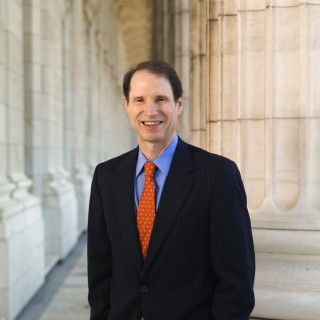
American politician
POPULARITY

48 episodes with Ron Wyden

10 episodes with Ron Wyden

11 episodes with Ron Wyden

8 episodes with Ron Wyden

6 episodes with Ron Wyden

9 episodes with Ron Wyden

7 episodes with Ron Wyden

5 episodes with Ron Wyden

4 episodes with Ron Wyden

7 episodes with Ron Wyden

6 episodes with Ron Wyden

6 episodes with Ron Wyden

4 episodes with Ron Wyden

5 episodes with Ron Wyden

11 episodes with Ron Wyden

4 episodes with Ron Wyden

3 episodes with Ron Wyden

4 episodes with Ron Wyden

3 episodes with Ron Wyden

3 episodes with Ron Wyden

6 episodes with Ron Wyden

7 episodes with Ron Wyden

6 episodes with Ron Wyden

4 episodes with Ron Wyden

12 episodes with Ron Wyden

2 episodes with Ron Wyden

2 episodes with Ron Wyden
Monday, August 31, 2026 Today, Judge Talwani in Boston has once again blocked Trump's efforts to curtail mail-in voting; more than 1.2M Texas voters have been flagged; Wyoming's Republican governor calls for an investigation into Justice Department primary election poll watchers; Trump calls on the FCC to help him rig polls in his favor; Rep Jim Clyburn endorses expanding the Supreme Court to include 13 Justices; military leaders warn Hegseth against continuing the war in Iran as the U.S. arsenal becomes severely depleted; Senator Ron Wyden calls for a criminal investigation into RFK Jr. for lying to Congress during his confirmation hearing; three fired journalists from Stars and Stripes have filed a lawsuit against the Pentagon; a Filipino nurse has been detained by ICE in Arizona; Donald Trump refuses to attend the Ground Zero 9/11 memorial because they won't let him speak; right winger Milo Yiannopoulos has been deported by ICE; plus Allison and Dana deliver your Good News. Thank You, HomeChef For a limited time, get 50% off and free shipping for your first box PLUS free dessert for life! HomeChef.com/DAILYBEANS. Must be an active subscriber to receive free dessert. Thank You, AG1 For a limited time, save 20% on your first subscription order of AG1 Next Gen or AG1 Pro at DRINKAG1.com/DAILYBEANS. The Trump Epstein Memorial Bookmobile The Daily Beans is proud to partner with Miles Taylor and our friends at DEFIANCE.org For a limited time, members of the Daily Beans community can receive a FREE 3-month full membership to DEFIANCE.org and gain access to one of the fastest-growing pro-democracy movements in America. Join here: https://www.defiance.org/beans Diamond Dames - Subscribe here: Diamond Dames - A Ted Lasso PodcastDiamond Dames - YouTube playlist The Latest Breakdown→ Trump DOJ Nears CONTEMPT Over Epstein Cover-Up?! StoriesWyoming governor requests investigation into activity of Justice Department monitors during primary | AP News Trump's war on Iran is rapidly draining US navy budget, documents and interviews reveal | US military | The Guardian Senator calls for criminal investigation of RFK Jr after Guardian report | The Guardian Trump Plans to Mark 9/11 at the Pentagon, Not Ground Zero | The New York Times Good Trouble Mobilize →Operation Take Up Space - Commondefense.us/otus lindsey.knapp.75 on Instagram →Voter Registration Deadlines - Vote.org Voter Registration Volunteer Opportunities · Mobilize →Helpline Orientation- Spanish Speakers Needed! · VoteRiders →Help save Texas from Ken Paxton! →NO HATE in WA State →Stand With Minnesota →iceout.org Good NewsSteppin' Out AVL The Visibility Brigade Oct 9 -Southwest Funny Fest:Dana Goldberg's Southwest FunnyFest - City of Albuquerque -Email Dana@DanaGoldberg.com for sponsorship informationTickets for Dana Goldberg: Outrageous - Sep 23 - Den Theater - Chicago →Share your Good News & Good Trouble - The Daily Beans →Beans Talk audio -beans-talk.simplecast.com Subscribe to the MSW on YouTube - MSW Media - YouTube Our Donation Links The Trevor Project - trevorproject.org/beans Blue Wave California - ActBlue.com/donate/msw-bwc Donate to Public Citizen - https://citizen.org/beans/ Donate to It Gets Better / The Daily Beans Fundraiser Pathways to Citizenship - boomerang - pathways Dana and The Daily Beans support of Human Rights Campaign ONE CAUSE HRC The Daily Beans supports It Gets BetterNational Security Counselors - Donate, WhistleblowerAid.org/beans Dr. Allison Gill - The Breakdown | Allison Gill, Mueller, She Wrote @muellershewrote.com - Bluesky, MSW & The Daily Beans Podcast @muellershewrote - Instagram, MSW Media - YouTube →Federal workers email AG - fedoath@pm.me Dana Goldberg - Dana is on Patreon! At Dana's Dugout, @dgcomedy - Bluesky, @dgcomedy - IG, Dana Goldberg - Facebook, DanaGoldberg.com More from MSW Media - Shows, Cleanup On Aisle 45 pod, The Breakdown | Allison Gill Reminder - you can see the pod pics if you become a Patron. The good news pics are at the bottom of the show notes of each Patreon episode! That's just one of the perks of subscribing! patreon.com/muellershewrote Listener Survey:http://survey.podtrac.com/start-survey.aspx?pubid=BffJOlI7qQcF&ver=shortFollow the Podcast on Apple:https://apple.co/3XNx7ckWant to support the show and get it ad-free and early?https://patreon.com/thedailybeanshttps://dailybeans.supercast.com/https://apple.co/3UKzKt0 Hosted by Simplecast, an AdsWizz company. See pcm.adswizz.com for information about our collection and use of personal data for advertising.

Senator Ron Wyden's Senate Finance Committee investigation concluded that major Wall Street institutions repeatedly failed to detect, scrutinize, and promptly report financial activity that helped sustain Jeffrey Epstein's sex-trafficking operation. The report focused primarily on JPMorgan Chase, Deutsche Bank, and Bank of America, alleging significant failures under federal anti-money-laundering requirements. Investigators found that Epstein moved enormous amounts of money through the banking system, including millions in cash withdrawals and thousands of wire transfers, while banks frequently failed to file timely suspicious-activity reports. JPMorgan alone retroactively flagged thousands of transactions worth more than $1 billion years after much of the activity occurred, while Deutsche Bank later identified hundreds of millions of dollars in questionable transactions. The report also examined roughly $170 million that billionaire Leon Black paid Epstein between 2012 and 2017 for purported tax and estate-planning services, arguing that Bank of America failed to adequately investigate payments so unusual that the bank eventually acknowledged they lacked a verifiable business purpose. Wyden's investigators alleged that senior bankers knew Epstein presented serious reputational and compliance risks, yet continued protecting or cultivating the relationship because Epstein himself was lucrative and because he provided access to other extraordinarily wealthy clients.The report portrayed those failures not as isolated mistakes but as a systemic breakdown in which wealth and profitability repeatedly outweighed meaningful compliance. It alleged that JPMorgan executives continued interacting with Epstein even after the bank removed him as a client in 2013, while suspicious activity was not comprehensively reported to federal authorities until after his 2019 arrest. Wyden's staff called for federal investigations of individual bankers at JPMorgan, Deutsche Bank, and Bank of America, as well as Epstein associates Darren Indyke, Richard Kahn, and Harry Beller, arguing that individuals involved in moving or overseeing Epstein's money deserved greater scrutiny. The report also emphasized the absence of meaningful accountability, noting that Epstein-related banks, his estate, and Leon Black had collectively paid more than $900 million in settlements and penalties while most bankers identified in the investigation had faced no known regulatory or financial consequences. It further accused several banks of refusing to cooperate voluntarily with Wyden's investigation. In response, Wyden proposed strengthening anti-money-laundering laws by requiring senior officials to personally attest that ultra-high-net-worth accounts had been properly monitored, imposing stronger penalties on bankers who failed to report suspicious activity, requiring enhanced scrutiny of transactions involving high-risk clients, and mandating prompt government notification when banks terminate customers because of suspected criminal or suspicious financial behavior.to contact me:bobbycapucci@protonmail.com
Senator Ron Wyden's Senate Finance Committee investigation concluded that major Wall Street institutions repeatedly failed to detect, scrutinize, and promptly report financial activity that helped sustain Jeffrey Epstein's sex-trafficking operation. The report focused primarily on JPMorgan Chase, Deutsche Bank, and Bank of America, alleging significant failures under federal anti-money-laundering requirements. Investigators found that Epstein moved enormous amounts of money through the banking system, including millions in cash withdrawals and thousands of wire transfers, while banks frequently failed to file timely suspicious-activity reports. JPMorgan alone retroactively flagged thousands of transactions worth more than $1 billion years after much of the activity occurred, while Deutsche Bank later identified hundreds of millions of dollars in questionable transactions. The report also examined roughly $170 million that billionaire Leon Black paid Epstein between 2012 and 2017 for purported tax and estate-planning services, arguing that Bank of America failed to adequately investigate payments so unusual that the bank eventually acknowledged they lacked a verifiable business purpose. Wyden's investigators alleged that senior bankers knew Epstein presented serious reputational and compliance risks, yet continued protecting or cultivating the relationship because Epstein himself was lucrative and because he provided access to other extraordinarily wealthy clients.The report portrayed those failures not as isolated mistakes but as a systemic breakdown in which wealth and profitability repeatedly outweighed meaningful compliance. It alleged that JPMorgan executives continued interacting with Epstein even after the bank removed him as a client in 2013, while suspicious activity was not comprehensively reported to federal authorities until after his 2019 arrest. Wyden's staff called for federal investigations of individual bankers at JPMorgan, Deutsche Bank, and Bank of America, as well as Epstein associates Darren Indyke, Richard Kahn, and Harry Beller, arguing that individuals involved in moving or overseeing Epstein's money deserved greater scrutiny. The report also emphasized the absence of meaningful accountability, noting that Epstein-related banks, his estate, and Leon Black had collectively paid more than $900 million in settlements and penalties while most bankers identified in the investigation had faced no known regulatory or financial consequences. It further accused several banks of refusing to cooperate voluntarily with Wyden's investigation. In response, Wyden proposed strengthening anti-money-laundering laws by requiring senior officials to personally attest that ultra-high-net-worth accounts had been properly monitored, imposing stronger penalties on bankers who failed to report suspicious activity, requiring enhanced scrutiny of transactions involving high-risk clients, and mandating prompt government notification when banks terminate customers because of suspected criminal or suspicious financial behavior.to contact me:bobbycapucci@protonmail.com
Senator Ron Wyden's Senate Finance Committee investigation concluded that major Wall Street institutions repeatedly failed to detect, scrutinize, and promptly report financial activity that helped sustain Jeffrey Epstein's sex-trafficking operation. The report focused primarily on JPMorgan Chase, Deutsche Bank, and Bank of America, alleging significant failures under federal anti-money-laundering requirements. Investigators found that Epstein moved enormous amounts of money through the banking system, including millions in cash withdrawals and thousands of wire transfers, while banks frequently failed to file timely suspicious-activity reports. JPMorgan alone retroactively flagged thousands of transactions worth more than $1 billion years after much of the activity occurred, while Deutsche Bank later identified hundreds of millions of dollars in questionable transactions. The report also examined roughly $170 million that billionaire Leon Black paid Epstein between 2012 and 2017 for purported tax and estate-planning services, arguing that Bank of America failed to adequately investigate payments so unusual that the bank eventually acknowledged they lacked a verifiable business purpose. Wyden's investigators alleged that senior bankers knew Epstein presented serious reputational and compliance risks, yet continued protecting or cultivating the relationship because Epstein himself was lucrative and because he provided access to other extraordinarily wealthy clients.The report portrayed those failures not as isolated mistakes but as a systemic breakdown in which wealth and profitability repeatedly outweighed meaningful compliance. It alleged that JPMorgan executives continued interacting with Epstein even after the bank removed him as a client in 2013, while suspicious activity was not comprehensively reported to federal authorities until after his 2019 arrest. Wyden's staff called for federal investigations of individual bankers at JPMorgan, Deutsche Bank, and Bank of America, as well as Epstein associates Darren Indyke, Richard Kahn, and Harry Beller, arguing that individuals involved in moving or overseeing Epstein's money deserved greater scrutiny. The report also emphasized the absence of meaningful accountability, noting that Epstein-related banks, his estate, and Leon Black had collectively paid more than $900 million in settlements and penalties while most bankers identified in the investigation had faced no known regulatory or financial consequences. It further accused several banks of refusing to cooperate voluntarily with Wyden's investigation. In response, Wyden proposed strengthening anti-money-laundering laws by requiring senior officials to personally attest that ultra-high-net-worth accounts had been properly monitored, imposing stronger penalties on bankers who failed to report suspicious activity, requiring enhanced scrutiny of transactions involving high-risk clients, and mandating prompt government notification when banks terminate customers because of suspected criminal or suspicious financial behavior.to contact me:bobbycapucci@protonmail.com
Senator Ron Wyden's Senate Finance Committee investigation concluded that major Wall Street institutions repeatedly failed to detect, scrutinize, and promptly report financial activity that helped sustain Jeffrey Epstein's sex-trafficking operation. The report focused primarily on JPMorgan Chase, Deutsche Bank, and Bank of America, alleging significant failures under federal anti-money-laundering requirements. Investigators found that Epstein moved enormous amounts of money through the banking system, including millions in cash withdrawals and thousands of wire transfers, while banks frequently failed to file timely suspicious-activity reports. JPMorgan alone retroactively flagged thousands of transactions worth more than $1 billion years after much of the activity occurred, while Deutsche Bank later identified hundreds of millions of dollars in questionable transactions. The report also examined roughly $170 million that billionaire Leon Black paid Epstein between 2012 and 2017 for purported tax and estate-planning services, arguing that Bank of America failed to adequately investigate payments so unusual that the bank eventually acknowledged they lacked a verifiable business purpose. Wyden's investigators alleged that senior bankers knew Epstein presented serious reputational and compliance risks, yet continued protecting or cultivating the relationship because Epstein himself was lucrative and because he provided access to other extraordinarily wealthy clients.The report portrayed those failures not as isolated mistakes but as a systemic breakdown in which wealth and profitability repeatedly outweighed meaningful compliance. It alleged that JPMorgan executives continued interacting with Epstein even after the bank removed him as a client in 2013, while suspicious activity was not comprehensively reported to federal authorities until after his 2019 arrest. Wyden's staff called for federal investigations of individual bankers at JPMorgan, Deutsche Bank, and Bank of America, as well as Epstein associates Darren Indyke, Richard Kahn, and Harry Beller, arguing that individuals involved in moving or overseeing Epstein's money deserved greater scrutiny. The report also emphasized the absence of meaningful accountability, noting that Epstein-related banks, his estate, and Leon Black had collectively paid more than $900 million in settlements and penalties while most bankers identified in the investigation had faced no known regulatory or financial consequences. It further accused several banks of refusing to cooperate voluntarily with Wyden's investigation. In response, Wyden proposed strengthening anti-money-laundering laws by requiring senior officials to personally attest that ultra-high-net-worth accounts had been properly monitored, imposing stronger penalties on bankers who failed to report suspicious activity, requiring enhanced scrutiny of transactions involving high-risk clients, and mandating prompt government notification when banks terminate customers because of suspected criminal or suspicious financial behavior.to contact me:bobbycapucci@protonmail.com
Senator Ron Wyden's Senate Finance Committee investigation concluded that major Wall Street institutions repeatedly failed to detect, scrutinize, and promptly report financial activity that helped sustain Jeffrey Epstein's sex-trafficking operation. The report focused primarily on JPMorgan Chase, Deutsche Bank, and Bank of America, alleging significant failures under federal anti-money-laundering requirements. Investigators found that Epstein moved enormous amounts of money through the banking system, including millions in cash withdrawals and thousands of wire transfers, while banks frequently failed to file timely suspicious-activity reports. JPMorgan alone retroactively flagged thousands of transactions worth more than $1 billion years after much of the activity occurred, while Deutsche Bank later identified hundreds of millions of dollars in questionable transactions. The report also examined roughly $170 million that billionaire Leon Black paid Epstein between 2012 and 2017 for purported tax and estate-planning services, arguing that Bank of America failed to adequately investigate payments so unusual that the bank eventually acknowledged they lacked a verifiable business purpose. Wyden's investigators alleged that senior bankers knew Epstein presented serious reputational and compliance risks, yet continued protecting or cultivating the relationship because Epstein himself was lucrative and because he provided access to other extraordinarily wealthy clients.The report portrayed those failures not as isolated mistakes but as a systemic breakdown in which wealth and profitability repeatedly outweighed meaningful compliance. It alleged that JPMorgan executives continued interacting with Epstein even after the bank removed him as a client in 2013, while suspicious activity was not comprehensively reported to federal authorities until after his 2019 arrest. Wyden's staff called for federal investigations of individual bankers at JPMorgan, Deutsche Bank, and Bank of America, as well as Epstein associates Darren Indyke, Richard Kahn, and Harry Beller, arguing that individuals involved in moving or overseeing Epstein's money deserved greater scrutiny. The report also emphasized the absence of meaningful accountability, noting that Epstein-related banks, his estate, and Leon Black had collectively paid more than $900 million in settlements and penalties while most bankers identified in the investigation had faced no known regulatory or financial consequences. It further accused several banks of refusing to cooperate voluntarily with Wyden's investigation. In response, Wyden proposed strengthening anti-money-laundering laws by requiring senior officials to personally attest that ultra-high-net-worth accounts had been properly monitored, imposing stronger penalties on bankers who failed to report suspicious activity, requiring enhanced scrutiny of transactions involving high-risk clients, and mandating prompt government notification when banks terminate customers because of suspected criminal or suspicious financial behavior.to contact me:bobbycapucci@protonmail.com
Senator Ron Wyden's Senate Finance Committee investigation concluded that major Wall Street institutions repeatedly failed to detect, scrutinize, and promptly report financial activity that helped sustain Jeffrey Epstein's sex-trafficking operation. The report focused primarily on JPMorgan Chase, Deutsche Bank, and Bank of America, alleging significant failures under federal anti-money-laundering requirements. Investigators found that Epstein moved enormous amounts of money through the banking system, including millions in cash withdrawals and thousands of wire transfers, while banks frequently failed to file timely suspicious-activity reports. JPMorgan alone retroactively flagged thousands of transactions worth more than $1 billion years after much of the activity occurred, while Deutsche Bank later identified hundreds of millions of dollars in questionable transactions. The report also examined roughly $170 million that billionaire Leon Black paid Epstein between 2012 and 2017 for purported tax and estate-planning services, arguing that Bank of America failed to adequately investigate payments so unusual that the bank eventually acknowledged they lacked a verifiable business purpose. Wyden's investigators alleged that senior bankers knew Epstein presented serious reputational and compliance risks, yet continued protecting or cultivating the relationship because Epstein himself was lucrative and because he provided access to other extraordinarily wealthy clients.The report portrayed those failures not as isolated mistakes but as a systemic breakdown in which wealth and profitability repeatedly outweighed meaningful compliance. It alleged that JPMorgan executives continued interacting with Epstein even after the bank removed him as a client in 2013, while suspicious activity was not comprehensively reported to federal authorities until after his 2019 arrest. Wyden's staff called for federal investigations of individual bankers at JPMorgan, Deutsche Bank, and Bank of America, as well as Epstein associates Darren Indyke, Richard Kahn, and Harry Beller, arguing that individuals involved in moving or overseeing Epstein's money deserved greater scrutiny. The report also emphasized the absence of meaningful accountability, noting that Epstein-related banks, his estate, and Leon Black had collectively paid more than $900 million in settlements and penalties while most bankers identified in the investigation had faced no known regulatory or financial consequences. It further accused several banks of refusing to cooperate voluntarily with Wyden's investigation. In response, Wyden proposed strengthening anti-money-laundering laws by requiring senior officials to personally attest that ultra-high-net-worth accounts had been properly monitored, imposing stronger penalties on bankers who failed to report suspicious activity, requiring enhanced scrutiny of transactions involving high-risk clients, and mandating prompt government notification when banks terminate customers because of suspected criminal or suspicious financial behavior.to contact me:bobbycapucci@protonmail.comBecome a supporter of this podcast: https://www.spreaker.com/podcast/the-epstein-chronicles--5003294/support.
Senator Ron Wyden's Senate Finance Committee investigation concluded that major Wall Street institutions repeatedly failed to detect, scrutinize, and promptly report financial activity that helped sustain Jeffrey Epstein's sex-trafficking operation. The report focused primarily on JPMorgan Chase, Deutsche Bank, and Bank of America, alleging significant failures under federal anti-money-laundering requirements. Investigators found that Epstein moved enormous amounts of money through the banking system, including millions in cash withdrawals and thousands of wire transfers, while banks frequently failed to file timely suspicious-activity reports. JPMorgan alone retroactively flagged thousands of transactions worth more than $1 billion years after much of the activity occurred, while Deutsche Bank later identified hundreds of millions of dollars in questionable transactions. The report also examined roughly $170 million that billionaire Leon Black paid Epstein between 2012 and 2017 for purported tax and estate-planning services, arguing that Bank of America failed to adequately investigate payments so unusual that the bank eventually acknowledged they lacked a verifiable business purpose. Wyden's investigators alleged that senior bankers knew Epstein presented serious reputational and compliance risks, yet continued protecting or cultivating the relationship because Epstein himself was lucrative and because he provided access to other extraordinarily wealthy clients.The report portrayed those failures not as isolated mistakes but as a systemic breakdown in which wealth and profitability repeatedly outweighed meaningful compliance. It alleged that JPMorgan executives continued interacting with Epstein even after the bank removed him as a client in 2013, while suspicious activity was not comprehensively reported to federal authorities until after his 2019 arrest. Wyden's staff called for federal investigations of individual bankers at JPMorgan, Deutsche Bank, and Bank of America, as well as Epstein associates Darren Indyke, Richard Kahn, and Harry Beller, arguing that individuals involved in moving or overseeing Epstein's money deserved greater scrutiny. The report also emphasized the absence of meaningful accountability, noting that Epstein-related banks, his estate, and Leon Black had collectively paid more than $900 million in settlements and penalties while most bankers identified in the investigation had faced no known regulatory or financial consequences. It further accused several banks of refusing to cooperate voluntarily with Wyden's investigation. In response, Wyden proposed strengthening anti-money-laundering laws by requiring senior officials to personally attest that ultra-high-net-worth accounts had been properly monitored, imposing stronger penalties on bankers who failed to report suspicious activity, requiring enhanced scrutiny of transactions involving high-risk clients, and mandating prompt government notification when banks terminate customers because of suspected criminal or suspicious financial behavior.to contact me:bobbycapucci@protonmail.comBecome a supporter of this podcast: https://www.spreaker.com/podcast/the-epstein-chronicles--5003294/support.
Senator Ron Wyden's Senate Finance Committee investigation concluded that major Wall Street institutions repeatedly failed to detect, scrutinize, and promptly report financial activity that helped sustain Jeffrey Epstein's sex-trafficking operation. The report focused primarily on JPMorgan Chase, Deutsche Bank, and Bank of America, alleging significant failures under federal anti-money-laundering requirements. Investigators found that Epstein moved enormous amounts of money through the banking system, including millions in cash withdrawals and thousands of wire transfers, while banks frequently failed to file timely suspicious-activity reports. JPMorgan alone retroactively flagged thousands of transactions worth more than $1 billion years after much of the activity occurred, while Deutsche Bank later identified hundreds of millions of dollars in questionable transactions. The report also examined roughly $170 million that billionaire Leon Black paid Epstein between 2012 and 2017 for purported tax and estate-planning services, arguing that Bank of America failed to adequately investigate payments so unusual that the bank eventually acknowledged they lacked a verifiable business purpose. Wyden's investigators alleged that senior bankers knew Epstein presented serious reputational and compliance risks, yet continued protecting or cultivating the relationship because Epstein himself was lucrative and because he provided access to other extraordinarily wealthy clients.The report portrayed those failures not as isolated mistakes but as a systemic breakdown in which wealth and profitability repeatedly outweighed meaningful compliance. It alleged that JPMorgan executives continued interacting with Epstein even after the bank removed him as a client in 2013, while suspicious activity was not comprehensively reported to federal authorities until after his 2019 arrest. Wyden's staff called for federal investigations of individual bankers at JPMorgan, Deutsche Bank, and Bank of America, as well as Epstein associates Darren Indyke, Richard Kahn, and Harry Beller, arguing that individuals involved in moving or overseeing Epstein's money deserved greater scrutiny. The report also emphasized the absence of meaningful accountability, noting that Epstein-related banks, his estate, and Leon Black had collectively paid more than $900 million in settlements and penalties while most bankers identified in the investigation had faced no known regulatory or financial consequences. It further accused several banks of refusing to cooperate voluntarily with Wyden's investigation. In response, Wyden proposed strengthening anti-money-laundering laws by requiring senior officials to personally attest that ultra-high-net-worth accounts had been properly monitored, imposing stronger penalties on bankers who failed to report suspicious activity, requiring enhanced scrutiny of transactions involving high-risk clients, and mandating prompt government notification when banks terminate customers because of suspected criminal or suspicious financial behavior.to contact me:bobbycapucci@protonmail.comBecome a supporter of this podcast: https://www.spreaker.com/podcast/the-epstein-chronicles--5003294/support.
Senator Ron Wyden's Senate Finance Committee investigation concluded that major Wall Street institutions repeatedly failed to detect, scrutinize, and promptly report financial activity that helped sustain Jeffrey Epstein's sex-trafficking operation. The report focused primarily on JPMorgan Chase, Deutsche Bank, and Bank of America, alleging significant failures under federal anti-money-laundering requirements. Investigators found that Epstein moved enormous amounts of money through the banking system, including millions in cash withdrawals and thousands of wire transfers, while banks frequently failed to file timely suspicious-activity reports. JPMorgan alone retroactively flagged thousands of transactions worth more than $1 billion years after much of the activity occurred, while Deutsche Bank later identified hundreds of millions of dollars in questionable transactions. The report also examined roughly $170 million that billionaire Leon Black paid Epstein between 2012 and 2017 for purported tax and estate-planning services, arguing that Bank of America failed to adequately investigate payments so unusual that the bank eventually acknowledged they lacked a verifiable business purpose. Wyden's investigators alleged that senior bankers knew Epstein presented serious reputational and compliance risks, yet continued protecting or cultivating the relationship because Epstein himself was lucrative and because he provided access to other extraordinarily wealthy clients.The report portrayed those failures not as isolated mistakes but as a systemic breakdown in which wealth and profitability repeatedly outweighed meaningful compliance. It alleged that JPMorgan executives continued interacting with Epstein even after the bank removed him as a client in 2013, while suspicious activity was not comprehensively reported to federal authorities until after his 2019 arrest. Wyden's staff called for federal investigations of individual bankers at JPMorgan, Deutsche Bank, and Bank of America, as well as Epstein associates Darren Indyke, Richard Kahn, and Harry Beller, arguing that individuals involved in moving or overseeing Epstein's money deserved greater scrutiny. The report also emphasized the absence of meaningful accountability, noting that Epstein-related banks, his estate, and Leon Black had collectively paid more than $900 million in settlements and penalties while most bankers identified in the investigation had faced no known regulatory or financial consequences. It further accused several banks of refusing to cooperate voluntarily with Wyden's investigation. In response, Wyden proposed strengthening anti-money-laundering laws by requiring senior officials to personally attest that ultra-high-net-worth accounts had been properly monitored, imposing stronger penalties on bankers who failed to report suspicious activity, requiring enhanced scrutiny of transactions involving high-risk clients, and mandating prompt government notification when banks terminate customers because of suspected criminal or suspicious financial behavior.to contact me:bobbycapucci@protonmail.com
Senator Ron Wyden's Senate Finance Committee investigation concluded that major Wall Street institutions repeatedly failed to detect, scrutinize, and promptly report financial activity that helped sustain Jeffrey Epstein's sex-trafficking operation. The report focused primarily on JPMorgan Chase, Deutsche Bank, and Bank of America, alleging significant failures under federal anti-money-laundering requirements. Investigators found that Epstein moved enormous amounts of money through the banking system, including millions in cash withdrawals and thousands of wire transfers, while banks frequently failed to file timely suspicious-activity reports. JPMorgan alone retroactively flagged thousands of transactions worth more than $1 billion years after much of the activity occurred, while Deutsche Bank later identified hundreds of millions of dollars in questionable transactions. The report also examined roughly $170 million that billionaire Leon Black paid Epstein between 2012 and 2017 for purported tax and estate-planning services, arguing that Bank of America failed to adequately investigate payments so unusual that the bank eventually acknowledged they lacked a verifiable business purpose. Wyden's investigators alleged that senior bankers knew Epstein presented serious reputational and compliance risks, yet continued protecting or cultivating the relationship because Epstein himself was lucrative and because he provided access to other extraordinarily wealthy clients.The report portrayed those failures not as isolated mistakes but as a systemic breakdown in which wealth and profitability repeatedly outweighed meaningful compliance. It alleged that JPMorgan executives continued interacting with Epstein even after the bank removed him as a client in 2013, while suspicious activity was not comprehensively reported to federal authorities until after his 2019 arrest. Wyden's staff called for federal investigations of individual bankers at JPMorgan, Deutsche Bank, and Bank of America, as well as Epstein associates Darren Indyke, Richard Kahn, and Harry Beller, arguing that individuals involved in moving or overseeing Epstein's money deserved greater scrutiny. The report also emphasized the absence of meaningful accountability, noting that Epstein-related banks, his estate, and Leon Black had collectively paid more than $900 million in settlements and penalties while most bankers identified in the investigation had faced no known regulatory or financial consequences. It further accused several banks of refusing to cooperate voluntarily with Wyden's investigation. In response, Wyden proposed strengthening anti-money-laundering laws by requiring senior officials to personally attest that ultra-high-net-worth accounts had been properly monitored, imposing stronger penalties on bankers who failed to report suspicious activity, requiring enhanced scrutiny of transactions involving high-risk clients, and mandating prompt government notification when banks terminate customers because of suspected criminal or suspicious financial behavior.to contact me:bobbycapucci@protonmail.com
Senator Ron Wyden's Senate Finance Committee investigation concluded that major Wall Street institutions repeatedly failed to detect, scrutinize, and promptly report financial activity that helped sustain Jeffrey Epstein's sex-trafficking operation. The report focused primarily on JPMorgan Chase, Deutsche Bank, and Bank of America, alleging significant failures under federal anti-money-laundering requirements. Investigators found that Epstein moved enormous amounts of money through the banking system, including millions in cash withdrawals and thousands of wire transfers, while banks frequently failed to file timely suspicious-activity reports. JPMorgan alone retroactively flagged thousands of transactions worth more than $1 billion years after much of the activity occurred, while Deutsche Bank later identified hundreds of millions of dollars in questionable transactions. The report also examined roughly $170 million that billionaire Leon Black paid Epstein between 2012 and 2017 for purported tax and estate-planning services, arguing that Bank of America failed to adequately investigate payments so unusual that the bank eventually acknowledged they lacked a verifiable business purpose. Wyden's investigators alleged that senior bankers knew Epstein presented serious reputational and compliance risks, yet continued protecting or cultivating the relationship because Epstein himself was lucrative and because he provided access to other extraordinarily wealthy clients.The report portrayed those failures not as isolated mistakes but as a systemic breakdown in which wealth and profitability repeatedly outweighed meaningful compliance. It alleged that JPMorgan executives continued interacting with Epstein even after the bank removed him as a client in 2013, while suspicious activity was not comprehensively reported to federal authorities until after his 2019 arrest. Wyden's staff called for federal investigations of individual bankers at JPMorgan, Deutsche Bank, and Bank of America, as well as Epstein associates Darren Indyke, Richard Kahn, and Harry Beller, arguing that individuals involved in moving or overseeing Epstein's money deserved greater scrutiny. The report also emphasized the absence of meaningful accountability, noting that Epstein-related banks, his estate, and Leon Black had collectively paid more than $900 million in settlements and penalties while most bankers identified in the investigation had faced no known regulatory or financial consequences. It further accused several banks of refusing to cooperate voluntarily with Wyden's investigation. In response, Wyden proposed strengthening anti-money-laundering laws by requiring senior officials to personally attest that ultra-high-net-worth accounts had been properly monitored, imposing stronger penalties on bankers who failed to report suspicious activity, requiring enhanced scrutiny of transactions involving high-risk clients, and mandating prompt government notification when banks terminate customers because of suspected criminal or suspicious financial behavior.to contact me:bobbycapucci@protonmail.comBecome a supporter of this podcast: https://www.spreaker.com/podcast/the-epstein-chronicles--5003294/support.
Senator Ron Wyden's Senate Finance Committee investigation concluded that major Wall Street institutions repeatedly failed to detect, scrutinize, and promptly report financial activity that helped sustain Jeffrey Epstein's sex-trafficking operation. The report focused primarily on JPMorgan Chase, Deutsche Bank, and Bank of America, alleging significant failures under federal anti-money-laundering requirements. Investigators found that Epstein moved enormous amounts of money through the banking system, including millions in cash withdrawals and thousands of wire transfers, while banks frequently failed to file timely suspicious-activity reports. JPMorgan alone retroactively flagged thousands of transactions worth more than $1 billion years after much of the activity occurred, while Deutsche Bank later identified hundreds of millions of dollars in questionable transactions. The report also examined roughly $170 million that billionaire Leon Black paid Epstein between 2012 and 2017 for purported tax and estate-planning services, arguing that Bank of America failed to adequately investigate payments so unusual that the bank eventually acknowledged they lacked a verifiable business purpose. Wyden's investigators alleged that senior bankers knew Epstein presented serious reputational and compliance risks, yet continued protecting or cultivating the relationship because Epstein himself was lucrative and because he provided access to other extraordinarily wealthy clients.The report portrayed those failures not as isolated mistakes but as a systemic breakdown in which wealth and profitability repeatedly outweighed meaningful compliance. It alleged that JPMorgan executives continued interacting with Epstein even after the bank removed him as a client in 2013, while suspicious activity was not comprehensively reported to federal authorities until after his 2019 arrest. Wyden's staff called for federal investigations of individual bankers at JPMorgan, Deutsche Bank, and Bank of America, as well as Epstein associates Darren Indyke, Richard Kahn, and Harry Beller, arguing that individuals involved in moving or overseeing Epstein's money deserved greater scrutiny. The report also emphasized the absence of meaningful accountability, noting that Epstein-related banks, his estate, and Leon Black had collectively paid more than $900 million in settlements and penalties while most bankers identified in the investigation had faced no known regulatory or financial consequences. It further accused several banks of refusing to cooperate voluntarily with Wyden's investigation. In response, Wyden proposed strengthening anti-money-laundering laws by requiring senior officials to personally attest that ultra-high-net-worth accounts had been properly monitored, imposing stronger penalties on bankers who failed to report suspicious activity, requiring enhanced scrutiny of transactions involving high-risk clients, and mandating prompt government notification when banks terminate customers because of suspected criminal or suspicious financial behavior.to contact me:bobbycapucci@protonmail.comBecome a supporter of this podcast: https://www.spreaker.com/podcast/the-epstein-chronicles--5003294/support.

Text the show!
Senator Ron Wyden's Senate Finance Committee investigation concluded that major Wall Street institutions repeatedly failed to detect, scrutinize, and promptly report financial activity that helped sustain Jeffrey Epstein's sex-trafficking operation. The report focused primarily on JPMorgan Chase, Deutsche Bank, and Bank of America, alleging significant failures under federal anti-money-laundering requirements. Investigators found that Epstein moved enormous amounts of money through the banking system, including millions in cash withdrawals and thousands of wire transfers, while banks frequently failed to file timely suspicious-activity reports. JPMorgan alone retroactively flagged thousands of transactions worth more than $1 billion years after much of the activity occurred, while Deutsche Bank later identified hundreds of millions of dollars in questionable transactions. The report also examined roughly $170 million that billionaire Leon Black paid Epstein between 2012 and 2017 for purported tax and estate-planning services, arguing that Bank of America failed to adequately investigate payments so unusual that the bank eventually acknowledged they lacked a verifiable business purpose. Wyden's investigators alleged that senior bankers knew Epstein presented serious reputational and compliance risks, yet continued protecting or cultivating the relationship because Epstein himself was lucrative and because he provided access to other extraordinarily wealthy clients.The report portrayed those failures not as isolated mistakes but as a systemic breakdown in which wealth and profitability repeatedly outweighed meaningful compliance. It alleged that JPMorgan executives continued interacting with Epstein even after the bank removed him as a client in 2013, while suspicious activity was not comprehensively reported to federal authorities until after his 2019 arrest. Wyden's staff called for federal investigations of individual bankers at JPMorgan, Deutsche Bank, and Bank of America, as well as Epstein associates Darren Indyke, Richard Kahn, and Harry Beller, arguing that individuals involved in moving or overseeing Epstein's money deserved greater scrutiny. The report also emphasized the absence of meaningful accountability, noting that Epstein-related banks, his estate, and Leon Black had collectively paid more than $900 million in settlements and penalties while most bankers identified in the investigation had faced no known regulatory or financial consequences. It further accused several banks of refusing to cooperate voluntarily with Wyden's investigation. In response, Wyden proposed strengthening anti-money-laundering laws by requiring senior officials to personally attest that ultra-high-net-worth accounts had been properly monitored, imposing stronger penalties on bankers who failed to report suspicious activity, requiring enhanced scrutiny of transactions involving high-risk clients, and mandating prompt government notification when banks terminate customers because of suspected criminal or suspicious financial behavior.to contact me:bobbycapucci@protonmail.com
Senator Ron Wyden's Senate Finance Committee investigation concluded that major Wall Street institutions repeatedly failed to detect, scrutinize, and promptly report financial activity that helped sustain Jeffrey Epstein's sex-trafficking operation. The report focused primarily on JPMorgan Chase, Deutsche Bank, and Bank of America, alleging significant failures under federal anti-money-laundering requirements. Investigators found that Epstein moved enormous amounts of money through the banking system, including millions in cash withdrawals and thousands of wire transfers, while banks frequently failed to file timely suspicious-activity reports. JPMorgan alone retroactively flagged thousands of transactions worth more than $1 billion years after much of the activity occurred, while Deutsche Bank later identified hundreds of millions of dollars in questionable transactions. The report also examined roughly $170 million that billionaire Leon Black paid Epstein between 2012 and 2017 for purported tax and estate-planning services, arguing that Bank of America failed to adequately investigate payments so unusual that the bank eventually acknowledged they lacked a verifiable business purpose. Wyden's investigators alleged that senior bankers knew Epstein presented serious reputational and compliance risks, yet continued protecting or cultivating the relationship because Epstein himself was lucrative and because he provided access to other extraordinarily wealthy clients.The report portrayed those failures not as isolated mistakes but as a systemic breakdown in which wealth and profitability repeatedly outweighed meaningful compliance. It alleged that JPMorgan executives continued interacting with Epstein even after the bank removed him as a client in 2013, while suspicious activity was not comprehensively reported to federal authorities until after his 2019 arrest. Wyden's staff called for federal investigations of individual bankers at JPMorgan, Deutsche Bank, and Bank of America, as well as Epstein associates Darren Indyke, Richard Kahn, and Harry Beller, arguing that individuals involved in moving or overseeing Epstein's money deserved greater scrutiny. The report also emphasized the absence of meaningful accountability, noting that Epstein-related banks, his estate, and Leon Black had collectively paid more than $900 million in settlements and penalties while most bankers identified in the investigation had faced no known regulatory or financial consequences. It further accused several banks of refusing to cooperate voluntarily with Wyden's investigation. In response, Wyden proposed strengthening anti-money-laundering laws by requiring senior officials to personally attest that ultra-high-net-worth accounts had been properly monitored, imposing stronger penalties on bankers who failed to report suspicious activity, requiring enhanced scrutiny of transactions involving high-risk clients, and mandating prompt government notification when banks terminate customers because of suspected criminal or suspicious financial behavior.to contact me:bobbycapucci@protonmail.com
Senator Ron Wyden's Senate Finance Committee investigation concluded that major Wall Street institutions repeatedly failed to detect, scrutinize, and promptly report financial activity that helped sustain Jeffrey Epstein's sex-trafficking operation. The report focused primarily on JPMorgan Chase, Deutsche Bank, and Bank of America, alleging significant failures under federal anti-money-laundering requirements. Investigators found that Epstein moved enormous amounts of money through the banking system, including millions in cash withdrawals and thousands of wire transfers, while banks frequently failed to file timely suspicious-activity reports. JPMorgan alone retroactively flagged thousands of transactions worth more than $1 billion years after much of the activity occurred, while Deutsche Bank later identified hundreds of millions of dollars in questionable transactions. The report also examined roughly $170 million that billionaire Leon Black paid Epstein between 2012 and 2017 for purported tax and estate-planning services, arguing that Bank of America failed to adequately investigate payments so unusual that the bank eventually acknowledged they lacked a verifiable business purpose. Wyden's investigators alleged that senior bankers knew Epstein presented serious reputational and compliance risks, yet continued protecting or cultivating the relationship because Epstein himself was lucrative and because he provided access to other extraordinarily wealthy clients.The report portrayed those failures not as isolated mistakes but as a systemic breakdown in which wealth and profitability repeatedly outweighed meaningful compliance. It alleged that JPMorgan executives continued interacting with Epstein even after the bank removed him as a client in 2013, while suspicious activity was not comprehensively reported to federal authorities until after his 2019 arrest. Wyden's staff called for federal investigations of individual bankers at JPMorgan, Deutsche Bank, and Bank of America, as well as Epstein associates Darren Indyke, Richard Kahn, and Harry Beller, arguing that individuals involved in moving or overseeing Epstein's money deserved greater scrutiny. The report also emphasized the absence of meaningful accountability, noting that Epstein-related banks, his estate, and Leon Black had collectively paid more than $900 million in settlements and penalties while most bankers identified in the investigation had faced no known regulatory or financial consequences. It further accused several banks of refusing to cooperate voluntarily with Wyden's investigation. In response, Wyden proposed strengthening anti-money-laundering laws by requiring senior officials to personally attest that ultra-high-net-worth accounts had been properly monitored, imposing stronger penalties on bankers who failed to report suspicious activity, requiring enhanced scrutiny of transactions involving high-risk clients, and mandating prompt government notification when banks terminate customers because of suspected criminal or suspicious financial behavior.to contact me:bobbycapucci@protonmail.comBecome a supporter of this podcast: https://www.spreaker.com/podcast/the-epstein-chronicles--5003294/support.
Senator Ron Wyden's Senate Finance Committee investigation concluded that major Wall Street institutions repeatedly failed to detect, scrutinize, and promptly report financial activity that helped sustain Jeffrey Epstein's sex-trafficking operation. The report focused primarily on JPMorgan Chase, Deutsche Bank, and Bank of America, alleging significant failures under federal anti-money-laundering requirements. Investigators found that Epstein moved enormous amounts of money through the banking system, including millions in cash withdrawals and thousands of wire transfers, while banks frequently failed to file timely suspicious-activity reports. JPMorgan alone retroactively flagged thousands of transactions worth more than $1 billion years after much of the activity occurred, while Deutsche Bank later identified hundreds of millions of dollars in questionable transactions. The report also examined roughly $170 million that billionaire Leon Black paid Epstein between 2012 and 2017 for purported tax and estate-planning services, arguing that Bank of America failed to adequately investigate payments so unusual that the bank eventually acknowledged they lacked a verifiable business purpose. Wyden's investigators alleged that senior bankers knew Epstein presented serious reputational and compliance risks, yet continued protecting or cultivating the relationship because Epstein himself was lucrative and because he provided access to other extraordinarily wealthy clients.The report portrayed those failures not as isolated mistakes but as a systemic breakdown in which wealth and profitability repeatedly outweighed meaningful compliance. It alleged that JPMorgan executives continued interacting with Epstein even after the bank removed him as a client in 2013, while suspicious activity was not comprehensively reported to federal authorities until after his 2019 arrest. Wyden's staff called for federal investigations of individual bankers at JPMorgan, Deutsche Bank, and Bank of America, as well as Epstein associates Darren Indyke, Richard Kahn, and Harry Beller, arguing that individuals involved in moving or overseeing Epstein's money deserved greater scrutiny. The report also emphasized the absence of meaningful accountability, noting that Epstein-related banks, his estate, and Leon Black had collectively paid more than $900 million in settlements and penalties while most bankers identified in the investigation had faced no known regulatory or financial consequences. It further accused several banks of refusing to cooperate voluntarily with Wyden's investigation. In response, Wyden proposed strengthening anti-money-laundering laws by requiring senior officials to personally attest that ultra-high-net-worth accounts had been properly monitored, imposing stronger penalties on bankers who failed to report suspicious activity, requiring enhanced scrutiny of transactions involving high-risk clients, and mandating prompt government notification when banks terminate customers because of suspected criminal or suspicious financial behavior.to contact me:bobbycapucci@protonmail.comBecome a supporter of this podcast: https://www.spreaker.com/podcast/the-epstein-chronicles--5003294/support.
Senator Ron Wyden's Senate Finance Committee investigation concluded that major Wall Street institutions repeatedly failed to detect, scrutinize, and promptly report financial activity that helped sustain Jeffrey Epstein's sex-trafficking operation. The report focused primarily on JPMorgan Chase, Deutsche Bank, and Bank of America, alleging significant failures under federal anti-money-laundering requirements. Investigators found that Epstein moved enormous amounts of money through the banking system, including millions in cash withdrawals and thousands of wire transfers, while banks frequently failed to file timely suspicious-activity reports. JPMorgan alone retroactively flagged thousands of transactions worth more than $1 billion years after much of the activity occurred, while Deutsche Bank later identified hundreds of millions of dollars in questionable transactions. The report also examined roughly $170 million that billionaire Leon Black paid Epstein between 2012 and 2017 for purported tax and estate-planning services, arguing that Bank of America failed to adequately investigate payments so unusual that the bank eventually acknowledged they lacked a verifiable business purpose. Wyden's investigators alleged that senior bankers knew Epstein presented serious reputational and compliance risks, yet continued protecting or cultivating the relationship because Epstein himself was lucrative and because he provided access to other extraordinarily wealthy clients.The report portrayed those failures not as isolated mistakes but as a systemic breakdown in which wealth and profitability repeatedly outweighed meaningful compliance. It alleged that JPMorgan executives continued interacting with Epstein even after the bank removed him as a client in 2013, while suspicious activity was not comprehensively reported to federal authorities until after his 2019 arrest. Wyden's staff called for federal investigations of individual bankers at JPMorgan, Deutsche Bank, and Bank of America, as well as Epstein associates Darren Indyke, Richard Kahn, and Harry Beller, arguing that individuals involved in moving or overseeing Epstein's money deserved greater scrutiny. The report also emphasized the absence of meaningful accountability, noting that Epstein-related banks, his estate, and Leon Black had collectively paid more than $900 million in settlements and penalties while most bankers identified in the investigation had faced no known regulatory or financial consequences. It further accused several banks of refusing to cooperate voluntarily with Wyden's investigation. In response, Wyden proposed strengthening anti-money-laundering laws by requiring senior officials to personally attest that ultra-high-net-worth accounts had been properly monitored, imposing stronger penalties on bankers who failed to report suspicious activity, requiring enhanced scrutiny of transactions involving high-risk clients, and mandating prompt government notification when banks terminate customers because of suspected criminal or suspicious financial behavior.to contact me:bobbycapucci@protonmail.comBecome a supporter of this podcast: https://www.spreaker.com/podcast/the-epstein-chronicles--5003294/support.
Senator Ron Wyden's Senate Finance Committee investigation concluded that major Wall Street institutions repeatedly failed to detect, scrutinize, and promptly report financial activity that helped sustain Jeffrey Epstein's sex-trafficking operation. The report focused primarily on JPMorgan Chase, Deutsche Bank, and Bank of America, alleging significant failures under federal anti-money-laundering requirements. Investigators found that Epstein moved enormous amounts of money through the banking system, including millions in cash withdrawals and thousands of wire transfers, while banks frequently failed to file timely suspicious-activity reports. JPMorgan alone retroactively flagged thousands of transactions worth more than $1 billion years after much of the activity occurred, while Deutsche Bank later identified hundreds of millions of dollars in questionable transactions. The report also examined roughly $170 million that billionaire Leon Black paid Epstein between 2012 and 2017 for purported tax and estate-planning services, arguing that Bank of America failed to adequately investigate payments so unusual that the bank eventually acknowledged they lacked a verifiable business purpose. Wyden's investigators alleged that senior bankers knew Epstein presented serious reputational and compliance risks, yet continued protecting or cultivating the relationship because Epstein himself was lucrative and because he provided access to other extraordinarily wealthy clients.The report portrayed those failures not as isolated mistakes but as a systemic breakdown in which wealth and profitability repeatedly outweighed meaningful compliance. It alleged that JPMorgan executives continued interacting with Epstein even after the bank removed him as a client in 2013, while suspicious activity was not comprehensively reported to federal authorities until after his 2019 arrest. Wyden's staff called for federal investigations of individual bankers at JPMorgan, Deutsche Bank, and Bank of America, as well as Epstein associates Darren Indyke, Richard Kahn, and Harry Beller, arguing that individuals involved in moving or overseeing Epstein's money deserved greater scrutiny. The report also emphasized the absence of meaningful accountability, noting that Epstein-related banks, his estate, and Leon Black had collectively paid more than $900 million in settlements and penalties while most bankers identified in the investigation had faced no known regulatory or financial consequences. It further accused several banks of refusing to cooperate voluntarily with Wyden's investigation. In response, Wyden proposed strengthening anti-money-laundering laws by requiring senior officials to personally attest that ultra-high-net-worth accounts had been properly monitored, imposing stronger penalties on bankers who failed to report suspicious activity, requiring enhanced scrutiny of transactions involving high-risk clients, and mandating prompt government notification when banks terminate customers because of suspected criminal or suspicious financial behavior.to contact me:bobbycapucci@protonmail.comBecome a supporter of this podcast: https://www.spreaker.com/podcast/the-epstein-chronicles--5003294/support.
Sen. Marsha Blackburn had repeatedly presented herself publicly as an advocate for transparency surrounding Jeffrey Epstein, while Sen. Ron Wyden's investigation showed that she declined opportunities to help obtain precisely the financial records that could have shed more light on Epstein's operation. Beginning in 2024, Wyden's office reportedly approached Blackburn multiple times seeking her support for efforts to compel the release of Epstein-related suspicious activity reports and other banking records. When Treasury officials resisted Wyden's requests, he eventually pursued legislation that would force production of the material. According to the reporting, Blackburn's office never gave Wyden a clear commitment and did not respond affirmatively to a direct request that she co-sponsor the legislation, despite Blackburn continuing to publicly criticize others for supposedly obstructing Epstein transparency.That contradiction was the heart of the story: Blackburn's public rhetoric about exposing the Epstein scandal was being measured against what she actually did when presented with a concrete opportunity to assist a major congressional investigation. Wyden's investigation ultimately uncovered extensive evidence concerning Epstein's financial relationships and alleged compliance failures at JPMorgan, Deutsche Bank and Bank of America, making the records he sought potentially important to understanding how Epstein moved money and how financial institutions responded to warning signs surrounding him. The Banner's reporting therefore raised the question of whether Blackburn's highly visible demands for Epstein accountability were matched by meaningful action behind the scenes, or whether she was willing to campaign on transparency while declining to support one of the most substantial efforts in Congress to follow Epstein's money.to contact me:bobbycapucci@protonmail.comsource:Report alleges Blackburn refused to help with Epstein probe - Nashville Banner
Sen. Marsha Blackburn had repeatedly presented herself publicly as an advocate for transparency surrounding Jeffrey Epstein, while Sen. Ron Wyden's investigation showed that she declined opportunities to help obtain precisely the financial records that could have shed more light on Epstein's operation. Beginning in 2024, Wyden's office reportedly approached Blackburn multiple times seeking her support for efforts to compel the release of Epstein-related suspicious activity reports and other banking records. When Treasury officials resisted Wyden's requests, he eventually pursued legislation that would force production of the material. According to the reporting, Blackburn's office never gave Wyden a clear commitment and did not respond affirmatively to a direct request that she co-sponsor the legislation, despite Blackburn continuing to publicly criticize others for supposedly obstructing Epstein transparency.That contradiction was the heart of the story: Blackburn's public rhetoric about exposing the Epstein scandal was being measured against what she actually did when presented with a concrete opportunity to assist a major congressional investigation. Wyden's investigation ultimately uncovered extensive evidence concerning Epstein's financial relationships and alleged compliance failures at JPMorgan, Deutsche Bank and Bank of America, making the records he sought potentially important to understanding how Epstein moved money and how financial institutions responded to warning signs surrounding him. The Banner's reporting therefore raised the question of whether Blackburn's highly visible demands for Epstein accountability were matched by meaningful action behind the scenes, or whether she was willing to campaign on transparency while declining to support one of the most substantial efforts in Congress to follow Epstein's money.to contact me:bobbycapucci@protonmail.comsource:Report alleges Blackburn refused to help with Epstein probe - Nashville BannerBecome a supporter of this podcast: https://www.spreaker.com/podcast/the-epstein-chronicles--5003294/support.

In part one of Red Eye Radio with Gary McNamara and Eric Harley, a look at the various primaries that were held across the country on Tuesday / Lisa Demuth defeats Mike Lindell in MN GOP primary / Sen. Darline Graham advances to the GOP primary runoff in South Carolina / Polling was way off in the Wisconsin democrat primary with socialist Francesa Hong underperforming / Kamala Harris leads other potential democrat presidential candidates big in numerous surveys / Democrat Oregon Sen. Ron Wyden released a proposal last week calling to end tax incentives for data centers and to impose an ongoing tax on those operating in the United States / Real Clear Politics projects Hong loses in the democrat primary. For more talk on the issues that matter to you, listen on radio stations across America Monday-Friday 12am-5am CT (1am-6am ET and 10pm-3am PT), download the RED EYE RADIO SHOW app, asking your smart speaker, or listening at RedEyeRadioShow.com. Learn more about your ad choices. Visit podcastchoices.com/adchoices

Should you stop doing Roth conversions as part of your retirement planning after Senator Ron Wyden's new legislation targeting specific retirement accounts? David McKnight breaks down the key aspects of the proposal and what it actually means for the average American (and their retirement). Show Notes In this episode, David McKnight looks at whether you should stop doing Roth conversions following Senator Ron Wyden's introduction of legislation for taxing Roth IRAs. For David, 99.9% of Americans should continue investing in Roth accounts with a high degree of confidence. One of the biggest misconceptions floating around is that Congress wants to start taxing everyone's Roth IRA. However, that is simply not what Senator Wyden's proposal does, as its focus are so-called mega-retirement accounts. These are retirement accounts – whether traditional IRAs, Roth IRAs, or Roth 401(k)s – that have grown to extraordinary sizes, often tens or even hundreds of millions of dollars. Senator Wyden's proposal only applies to taxpayers with very high incomes ($400,000 for individuals; $450,000 for married couples) and only if your combined retirement accounts exceed $10 million. In other words, if you don't have more than $10 million spread across your retirement accounts, the proposal doesn't apply to you. Do you exceed that threshold? Then, know that the proposal would require annual distributions from the excess amount. The rule becomes even more restrictive when balances exceed $20 million. David believes that the average American shouldn't be nervous about investing in Roth accounts – he shares four reasons why. Reason #1: Congress likes Roth accounts, because, from a Government's perspective, Roth accounts accelerate tax revenue. The second reason is the fact that Roth assets are still a relatively small piece of the retirement landscape. "Most retirement money in America is still sitting inside traditional tax-deferred accounts", he explains. Reason #3: the Government has always had an implicit agreement with America on Roth accounts. The fourth reason why David doesn't believe you should be nervous about investing in Roth accounts is that they're still your best protection against what's coming down the road. The national debt is set to grow by $2 trillion per year over the next 10 years and $3 trillion per year after that. According to a Penn Wharton study, once the country hits a debt-to-GDP of 200% in 2040, no combination of increasing taxes or cutting spending will prevent the nation's financial collapse. That's why, David is confident that around 2035 Congress will have little choice but to tax increases. Mentioned in this episode: David's national bestselling book: The Guru Gap: How America's Financial Gurus Are Leading You Astray, and How to Get Back on Track DavidMcKnight.com DavidMcKnightBooks.com PowerOfZero.com (free video series) @mcknightandco on Twitter @davidcmcknight on Instagram David McKnight on YouTube Senator Ronald Wyden Penn Wharton (The Wharton School, University of Pennsylvania)

John discusses the controversial confirmation of Todd Blanche as Attorney General, a decision made under the cover of darkness that raises serious questions about the integrity of the Justice Department. He critiques the Republican Senate's choice to support a figure so closely tied to protecting child abusers, including the infamous Jeffrey Epstein. John highlights the absurdity of Senator Bill Cassidy's justifications for his vote, all while the public remains in the dark about critical Epstein files that could reveal the extent of corruption and complicity in the financial sector.John also discusses the alarming findings from Senator Ron Wyden regarding Epstein's banking relationships, exposing how major banks like JP Morgan and Deutsche Bank facilitated suspicious transactions while ignoring their legal obligations. Joining John is Kelly Dietrich, founder and CEO of the National Democratic Training Committee, who shares insights on the midterm elections and the importance of Democratic unity. They discuss key primary contests in states like Wisconsin, Minnesota, and Connecticut, examining the ideological battles within the party and the need for a collective focus on defeating MAGA and promoting progressive values. Kelly stresses the importance of inspiring candidates who resonate with the electorate and the necessity of rejecting divisive narratives within the party.John then welcomes back the insightful Dr. Jason Nichols, a senior lecturer in African American Studies at the University of Maryland. They talk about the recent confirmation of Todd Blanche as Attorney General, discussing the implications of appointing someone so seemingly unfit for the role and the troubling dynamics within the current administration. Dr. Nichols shares his thoughts on the lack of accountability among political leaders and the consequences of prioritizing loyalty over competence.The conversation takes a poignant turn as they address the treatment of Haitian immigrants in the U.S., highlighting the stark contrast between political rhetoric and the reality faced by these communities. John and Dr. Nichols explore the moral responsibilities of leadership and the hypocrisy of those who claim to uphold Christian values while turning a blind eye to the plight of vulnerable populations.Then last but not least, Professor Corey Brettschneider returns to the show. They kick things off by discussing the Supreme Court's recent ruling on birthright citizenship and the implications of President Trump's attempts to redefine it through executive orders. John and Corey explore the historical context of the 14th Amendment and the ongoing challenges posed by the current administration's disregard for constitutional precedents. They also tackle the contentious issue of separation of church and state, particularly in the context of abortion laws and how certain political factions manipulate religious narratives to justify their policies. John emphasizes the importance of understanding the legal foundations behind these arguments, while Corey highlights the inconsistencies within the so-called Christian right's stances.See Privacy Policy at https://art19.com/privacy and California Privacy Notice at https://art19.com/privacy#do-not-sell-my-info.

This week on This Week in AML, John Byrne and Elliot Berman examine FinCEN's record-setting $125 million enforcement action against UBS, the largest civil money penalty ever imposed against a broker-dealer for Bank Secrecy Act violations. They discuss what made the case significant, the consequences of repeated compliance failures, and the lessons financial institutions should take from the enforcement action. The conversation also covers FinCEN Director Andrea Gacki's departure for Citibank and what the appointment of Acting Director Jenna Casanova could mean for future enforcement priorities. John and Elliot then explore Senator Ron Wyden's report on financial institutions' handling of Jeffrey Epstein-related accounts, including proposed changes to suspicious activity reporting requirements and concerns about SAR confidentiality. They also review Capital One's defense of account closures tied to AML obligations and the broader debate surrounding claims of "debanking." Internationally, the hosts discuss the FCA's planned overhaul of transaction reporting requirements in the UK, ongoing challenges in accessing beneficial ownership registries across the European Union, and Transparency International's push for stronger global anti-corruption measures.

Senator Ron Wyden called on federal regulators to investigate Bank of America, Deutsche Bank and JPMorgan Chase over their handling of Jeffrey Epstein's financial accounts, alleging that the banks may have failed to identify and report suspicious transactions quickly enough. Wyden's findings followed a four-year investigation drawing on suspicious activity reports, court records, lawsuits and information obtained from the Treasury Department and financial institutions. His report alleged that Bank of America failed to properly screen and report roughly $170 million in payments to Epstein, while Deutsche Bank allegedly delayed reporting more than $250 million in suspicious wire transfers, including payments to women in Russia and other parts of Eastern Europe.Wyden also accused JPMorgan of delaying reports concerning more than $1 billion in Epstein-linked transfers, including payments involving women in Russia and Belarus. JPMorgan rejected that allegation, saying it had flagged suspicious activity as early as 2002 and continued reporting concerns even after ending its relationship with Epstein in 2013. Bank of America denied facilitating wrongdoing, while Deutsche Bank expressed regret over its historical relationship with Epstein and said it had cooperated with regulators and strengthened its controls. Reuters noted that it had not independently verified the details of Wyden's report, while the Treasury Department declined to say whether any investigation was underway.to contact me:bobbycapucci@protonmail.comsourceUS Senator Wyden urges regulators to probe Wall Street banks over Epstein accounts | ReutersBecome a supporter of this podcast: https://www.spreaker.com/podcast/the-moscow-murders-and-more--5852883/support.
Senator Ron Wyden called on federal regulators to investigate Bank of America, Deutsche Bank and JPMorgan Chase over their handling of Jeffrey Epstein's financial accounts, alleging that the banks may have failed to identify and report suspicious transactions quickly enough. Wyden's findings followed a four-year investigation drawing on suspicious activity reports, court records, lawsuits and information obtained from the Treasury Department and financial institutions. His report alleged that Bank of America failed to properly screen and report roughly $170 million in payments to Epstein, while Deutsche Bank allegedly delayed reporting more than $250 million in suspicious wire transfers, including payments to women in Russia and other parts of Eastern Europe.Wyden also accused JPMorgan of delaying reports concerning more than $1 billion in Epstein-linked transfers, including payments involving women in Russia and Belarus. JPMorgan rejected that allegation, saying it had flagged suspicious activity as early as 2002 and continued reporting concerns even after ending its relationship with Epstein in 2013. Bank of America denied facilitating wrongdoing, while Deutsche Bank expressed regret over its historical relationship with Epstein and said it had cooperated with regulators and strengthened its controls. Reuters noted that it had not independently verified the details of Wyden's report, while the Treasury Department declined to say whether any investigation was underway.to contact me:bobbycapucci@protonmail.comsourceUS Senator Wyden urges regulators to probe Wall Street banks over Epstein accounts | Reuters
Senator Ron Wyden called on federal regulators to investigate Bank of America, Deutsche Bank and JPMorgan Chase over their handling of Jeffrey Epstein's financial accounts, alleging that the banks may have failed to identify and report suspicious transactions quickly enough. Wyden's findings followed a four-year investigation drawing on suspicious activity reports, court records, lawsuits and information obtained from the Treasury Department and financial institutions. His report alleged that Bank of America failed to properly screen and report roughly $170 million in payments to Epstein, while Deutsche Bank allegedly delayed reporting more than $250 million in suspicious wire transfers, including payments to women in Russia and other parts of Eastern Europe.Wyden also accused JPMorgan of delaying reports concerning more than $1 billion in Epstein-linked transfers, including payments involving women in Russia and Belarus. JPMorgan rejected that allegation, saying it had flagged suspicious activity as early as 2002 and continued reporting concerns even after ending its relationship with Epstein in 2013. Bank of America denied facilitating wrongdoing, while Deutsche Bank expressed regret over its historical relationship with Epstein and said it had cooperated with regulators and strengthened its controls. Reuters noted that it had not independently verified the details of Wyden's report, while the Treasury Department declined to say whether any investigation was underway.to contact me:bobbycapucci@protonmail.comsourceUS Senator Wyden urges regulators to probe Wall Street banks over Epstein accounts | ReutersBecome a supporter of this podcast: https://www.spreaker.com/podcast/the-moscow-murders-and-more--5852883/support.
Senator Ron Wyden called on federal regulators to investigate Bank of America, Deutsche Bank and JPMorgan Chase over their handling of Jeffrey Epstein's financial accounts, alleging that the banks may have failed to identify and report suspicious transactions quickly enough. Wyden's findings followed a four-year investigation drawing on suspicious activity reports, court records, lawsuits and information obtained from the Treasury Department and financial institutions. His report alleged that Bank of America failed to properly screen and report roughly $170 million in payments to Epstein, while Deutsche Bank allegedly delayed reporting more than $250 million in suspicious wire transfers, including payments to women in Russia and other parts of Eastern Europe.Wyden also accused JPMorgan of delaying reports concerning more than $1 billion in Epstein-linked transfers, including payments involving women in Russia and Belarus. JPMorgan rejected that allegation, saying it had flagged suspicious activity as early as 2002 and continued reporting concerns even after ending its relationship with Epstein in 2013. Bank of America denied facilitating wrongdoing, while Deutsche Bank expressed regret over its historical relationship with Epstein and said it had cooperated with regulators and strengthened its controls. Reuters noted that it had not independently verified the details of Wyden's report, while the Treasury Department declined to say whether any investigation was underway.to contact me:bobbycapucci@protonmail.comsourceUS Senator Wyden urges regulators to probe Wall Street banks over Epstein accounts | ReutersBecome a supporter of this podcast: https://www.spreaker.com/podcast/the-epstein-chronicles--5003294/support.
Throughout 2026, you cast your nominations for the FedScoop 50, and the results are in. Hundreds of top executives from across the government tech landscape are now up for vote to see who will be honored among this year's FedScoop 50. Voting is open now and runs through September 25. Make your voice heard to help us select who will be recognized on this year's list. One of those nominees in the prestigious Golden Gov category for this year is Department of Commerce CIO Brian Epley. Epley joined the Daily Scoop Podcast to share updates on Commerce's AI adoption and how the sprawling department manages the pace of innovation within the bureaucratic government planning and budgeting cycles, and much more. The Secret Service is planning to spend up to $20 million on AI robots for target practice as part of a contract it expects to award in the fourth quarter of fiscal 2026, per recently published acquisition planning documents. The Department of Homeland Security unit wants to add one autonomous robotic system that will include eight all-terrain infantry targets, one vehicle target and four other infantry targets. The Secret Service will require its robotic training squad to wear ballistic protection for various ammunition calibers. The agency has been building up its autonomous training tools with Marathon Targets, starting back in 2023. Over the past few years, the Secret Service has spent more than $4 million on the vendor's autonomous robotic targeting system, according to USAspending records. The latest follow-on, no-competition contract is an expansion of these efforts. The Department of Government Efficiency's time in Washington is over, but a pair of Democratic senators aren't done pushing for answers about the Elon Musk group's undertakings at the Social Security Administration. In a letter sent last week, Sens. Sheldon Whitehouse of Rhode Island and Ron Wyden of Oregon blasted SSA Commissioner Frank Bisignano for providing “inadequate responses” to congressional inquiries about DOGE's handling of data and related information security risks. “Over the past fourteen months, we have repeatedly sought basic information about DOGE's activities at SSA,” the Democrats wrote. “Your responses have either been unresponsive or later disproved by SSA's own admissions.” The Daily Scoop Podcast is available every Monday-Friday afternoon. If you want to hear more of the latest from Washington, subscribe to The Daily Scoop Podcast on Apple Podcasts, Soundcloud, Spotify and YouTube.

Dean Karayanis, New York Sun columnist and former member of Rush Limbaugh's highly over-rated staff, hosts, opening with some programing news: He'll be stepping the captain's chair to guest host The Chris Plante Show across 130+ radio stations this Wednesday. Dean rolls and analyzes some select clips President Trump's unfiltered, Mar-a-Lago redo of the White House Correspondents' Dinner — from sharp zingers aimed at Gavin Newsom, Ilhan Omar, and Caitlin Collins, to the media's complete inability to get the joke about him running for a fourth term. The speech was a little sloppy, but foreshadows that the president plans to let lose in his final two years as he has nothing to loose .Plus, Treasury Secretary Scott Bessent puts Senator Ron Wyden in his place, Elon Musk calling out the press for their “mistakes,” and why audience trust in journalism continues to hit record lows.

P.M. Edition for July 22. WSJ special writer Theo Francis explains how startup founders, hedge-fund managers and Silicon Valley insiders are using IRAs to supercharge their wealth. Plus, trade uncertainty comes roaring back. WSJ trade and economic policy reporter Gavin Bade explains the Trump administration's new front on tariffs. And Journal reporter Sam Federman explains how the New York Mets turned baseball's highest payroll into its biggest waste of money. Danny Lewis hosts. Sign up for the WSJ's free What's News newsletter. Hosted by Simplecast, an AdsWizz company. See pcm.adswizz.com for information about our collection and use of personal data for advertising.
Leon Black and Jeffrey Epstein were not just casual acquaintances or two wealthy men who occasionally crossed paths. The relationship was far closer, more sustained, and more financially entangled than Black first publicly suggested. Black paid Epstein enormous sums for tax, estate, and philanthropic advice, with Apollo's own commissioned review saying Black paid Epstein roughly $158 million, while Senate investigators later said their review identified even more money flowing through the relationship. Black has insisted the work was legitimate and that Epstein was never involved in Apollo business, but the size of the payments, Epstein's lack of conventional tax-law credentials, and the length of the relationship made the explanation difficult for critics to swallow. Black himself later called the relationship a “horrible mistake,” but the controversy only deepened as investigators kept uncovering more details about how central Epstein was to Black's personal financial worldEpstein appears to have had direct access into Black's family office orbit, including links to Elysium Management and relationships with bankers and financial figures connected to Black's wealth-management structure. Reporting and congressional scrutiny have also focused on whether Epstein acted as more than a tax adviser, with Senator Ron Wyden alleging that Epstein's role included unexplained payments, possible payments to women, and even surveillance-related conduct tied to Black; Black has broadly denied wrongdoing and has not been criminally charged. But the larger point is clear: Epstein was not merely someone Black unfortunately hired once. He was embedded close enough to receive staggering sums, move in Black's personal financial ecosystem, and become a recurring figure in the paper trail that investigators are still trying to untangle.to contact me:bobbycapucci@protonmail.com
Leon Black and Jeffrey Epstein were not just casual acquaintances or two wealthy men who occasionally crossed paths. The relationship was far closer, more sustained, and more financially entangled than Black first publicly suggested. Black paid Epstein enormous sums for tax, estate, and philanthropic advice, with Apollo's own commissioned review saying Black paid Epstein roughly $158 million, while Senate investigators later said their review identified even more money flowing through the relationship. Black has insisted the work was legitimate and that Epstein was never involved in Apollo business, but the size of the payments, Epstein's lack of conventional tax-law credentials, and the length of the relationship made the explanation difficult for critics to swallow. Black himself later called the relationship a “horrible mistake,” but the controversy only deepened as investigators kept uncovering more details about how central Epstein was to Black's personal financial worldEpstein appears to have had direct access into Black's family office orbit, including links to Elysium Management and relationships with bankers and financial figures connected to Black's wealth-management structure. Reporting and congressional scrutiny have also focused on whether Epstein acted as more than a tax adviser, with Senator Ron Wyden alleging that Epstein's role included unexplained payments, possible payments to women, and even surveillance-related conduct tied to Black; Black has broadly denied wrongdoing and has not been criminally charged. But the larger point is clear: Epstein was not merely someone Black unfortunately hired once. He was embedded close enough to receive staggering sums, move in Black's personal financial ecosystem, and become a recurring figure in the paper trail that investigators are still trying to untangle.to contact me:bobbycapucci@protonmail.comBecome a supporter of this podcast: https://www.spreaker.com/podcast/the-moscow-murders-and-more--5852883/support.

Crypto firms continue preparing for the future as BitGo launches quantum-resistant security tools for institutional Bitcoin wallets, while Aave rolls out Stable Vaults to simplify stablecoin yield for fintechs and institutions. Matt explains why quantum computing is becoming a real security consideration for Bitcoin and why the next phase of crypto infrastructure is already being built long before it's urgently needed.The episode also covers Stripe-owned Privy's new Solana transaction routing tool, the growing uncertainty surrounding the Clarity Act in Congress, Senator Ron Wyden's effort to protect non-custodial software developers, and new data showing crypto hacks reached a record 207 incidents in the first half of 2026 despite total losses falling sharply. Matt also discusses whether companies like Strategy are approaching the point where institutional Bitcoin ownership could begin affecting the network's long-term decentralization.Happy Hodling, Everyone. Hosted on Acast. See acast.com/privacy for more information.
Leon Black and Jeffrey Epstein were not just casual acquaintances or two wealthy men who occasionally crossed paths. The relationship was far closer, more sustained, and more financially entangled than Black first publicly suggested. Black paid Epstein enormous sums for tax, estate, and philanthropic advice, with Apollo's own commissioned review saying Black paid Epstein roughly $158 million, while Senate investigators later said their review identified even more money flowing through the relationship. Black has insisted the work was legitimate and that Epstein was never involved in Apollo business, but the size of the payments, Epstein's lack of conventional tax-law credentials, and the length of the relationship made the explanation difficult for critics to swallow. Black himself later called the relationship a “horrible mistake,” but the controversy only deepened as investigators kept uncovering more details about how central Epstein was to Black's personal financial worldEpstein appears to have had direct access into Black's family office orbit, including links to Elysium Management and relationships with bankers and financial figures connected to Black's wealth-management structure. Reporting and congressional scrutiny have also focused on whether Epstein acted as more than a tax adviser, with Senator Ron Wyden alleging that Epstein's role included unexplained payments, possible payments to women, and even surveillance-related conduct tied to Black; Black has broadly denied wrongdoing and has not been criminally charged. But the larger point is clear: Epstein was not merely someone Black unfortunately hired once. He was embedded close enough to receive staggering sums, move in Black's personal financial ecosystem, and become a recurring figure in the paper trail that investigators are still trying to untangle.to contact me:bobbycapucci@protonmail.comBecome a supporter of this podcast: https://www.spreaker.com/podcast/the-epstein-chronicles--5003294/support.
Senator Ron Wyden is pressing for deeper answers about Leon Black's financial relationship with Jeffrey Epstein as congressional scrutiny of Black intensifies. According to the reporting, Wyden's Senate Finance Committee investigation has focused on why Black transferred an estimated $170 million to Epstein between 2012 and 2017, payments Wyden argues were far larger than what Black paid to established tax and estate-planning professionals already handling his affairs. Wyden has sent his findings to the House Oversight Committee ahead of Black's congressional appearance, urging investigators to dig harder into financial records, settlement payments, and the movement of money connected to Epstein's network.The central issue is whether Epstein's role in Black's financial life was truly limited to tax and estate advice, as Black has maintained, or whether the money trail points to something broader and more troubling. Wyden has raised questions about whether Epstein acted as an intermediary for payments to women and whether records exist involving settlement agreements. The article also notes Black's multimillion-dollar settlement with the Government of the U.S. Virgin Islands, which resolved civil claims without Black admitting wrongdoing, as another area now feeding congressional interest. The broader picture is that Black's Epstein ties are no longer being examined merely as a reputational problem; they are being treated as a financial, legal, and oversight problem that Congress still believes has unanswered questions at its center.to contact me:bobbycapucci@protonmail.comsource:Wyden Presses for Answers as Congressional Scrutiny of Leon Black Deepens
Senator Ron Wyden is pressing for deeper answers about Leon Black's financial relationship with Jeffrey Epstein as congressional scrutiny of Black intensifies. According to the reporting, Wyden's Senate Finance Committee investigation has focused on why Black transferred an estimated $170 million to Epstein between 2012 and 2017, payments Wyden argues were far larger than what Black paid to established tax and estate-planning professionals already handling his affairs. Wyden has sent his findings to the House Oversight Committee ahead of Black's congressional appearance, urging investigators to dig harder into financial records, settlement payments, and the movement of money connected to Epstein's network.The central issue is whether Epstein's role in Black's financial life was truly limited to tax and estate advice, as Black has maintained, or whether the money trail points to something broader and more troubling. Wyden has raised questions about whether Epstein acted as an intermediary for payments to women and whether records exist involving settlement agreements. The article also notes Black's multimillion-dollar settlement with the Government of the U.S. Virgin Islands, which resolved civil claims without Black admitting wrongdoing, as another area now feeding congressional interest. The broader picture is that Black's Epstein ties are no longer being examined merely as a reputational problem; they are being treated as a financial, legal, and oversight problem that Congress still believes has unanswered questions at its center.to contact me:bobbycapucci@protonmail.comsource:Wyden Presses for Answers as Congressional Scrutiny of Leon Black DeepensBecome a supporter of this podcast: https://www.spreaker.com/podcast/the-moscow-murders-and-more--5852883/support.
Senator Ron Wyden is pressing for deeper answers about Leon Black's financial relationship with Jeffrey Epstein as congressional scrutiny of Black intensifies. According to the reporting, Wyden's Senate Finance Committee investigation has focused on why Black transferred an estimated $170 million to Epstein between 2012 and 2017, payments Wyden argues were far larger than what Black paid to established tax and estate-planning professionals already handling his affairs. Wyden has sent his findings to the House Oversight Committee ahead of Black's congressional appearance, urging investigators to dig harder into financial records, settlement payments, and the movement of money connected to Epstein's network.The central issue is whether Epstein's role in Black's financial life was truly limited to tax and estate advice, as Black has maintained, or whether the money trail points to something broader and more troubling. Wyden has raised questions about whether Epstein acted as an intermediary for payments to women and whether records exist involving settlement agreements. The article also notes Black's multimillion-dollar settlement with the Government of the U.S. Virgin Islands, which resolved civil claims without Black admitting wrongdoing, as another area now feeding congressional interest. The broader picture is that Black's Epstein ties are no longer being examined merely as a reputational problem; they are being treated as a financial, legal, and oversight problem that Congress still believes has unanswered questions at its center.to contact me:bobbycapucci@protonmail.comsource:Wyden Presses for Answers as Congressional Scrutiny of Leon Black DeepensBecome a supporter of this podcast: https://www.spreaker.com/podcast/the-epstein-chronicles--5003294/support.

Save Ocean Sensors: The Fight Over the Ocean Observatories Initiative A $386 million network of nearly 900 ocean sensors stretching across five sites from Oregon to Alaska to Greenland was being quietly dismantled, with no warning to Congress and no explanation to the public. In this episode, we trace the fight to save the Ocean Observatories Initiative: what this network actually does, why it matters far more than most people realize, and how a Democrat from Oregon and a Republican from Alaska teamed up to pass a bill stopping it in the span of a day and a half. We talk with Craig McLean, who spent more than 40 years at NOAA, including two stints as NOAA's Chief Scientist, about what's really at stake when ocean monitoring infrastructure disappears, and why this fight is part of a much bigger pattern. We also revisit a warning from a past guest, marine ecologist Dr. Andrew Thaler, that's looking less hypothetical by the day, and lay out exactly what you can do to help make sure this win sticks. In This Episode What the Ocean Observatories Initiative actually measures, and why it matters for your weather forecast, your insurance rates, and what farmers plant each season The Coastal Endurance Array off Oregon and Washington, and why pulling it out right as an El Nino forms is especially bad timing, per OSU oceanographer Jack Barth How Senators Jeff Merkley (D-OR) and Lisa Murkowski (R-AK) found out sensors were already being removed, and how they got the Saving the OOI Act passed unanimously in under two days Craig McLean's read on why this kept happening, from the role of the Office of Management and Budget to the broader pattern of cuts to federal science A look back at a warning from marine ecologist Dr. Andrew Thaler about Project 2025's plans for NOAA, and how that warning is playing out in real time What happens next: the NSF's review process, and how you can track it and find out where your own senators stand Featured Voices Craig McLean spent over 40 years at NOAA, where he founded the Ocean Exploration Program and served as NOAA's Chief Scientist, including being reinstated after being removed from the role for defending scientific integrity. He is now a senior fellow at the Ocean Foundation. Senator Jeff Merkley (D-OR) and Senator Lisa Murkowski (R-AK) led the bipartisan push for the Saving the OOI Act, featured here via Senate floor remarks. Dr. Andrew Thaler, marine ecologist and conservation technologist, returns in spirit from a past episode where he broke down Project 2025's plans to dismantle NOAA. Jack Barth, oceanography professor at Oregon State University, provided background on the Coastal Endurance Array via KATU News. The Bill The Saving the OOI Act passed the Senate unanimously, pausing NSF's decommissioning of the Ocean Observatories Initiative pending a full review with stakeholder input. It was led by Senators Merkley and Murkowski and cosponsored by Senators Dan Sullivan (R-AK), Maria Cantwell (D-WA), Ron Wyden (D-OR), Jack Reed (D-RI), Tammy Baldwin (D-WI), Sheldon Whitehouse (D-RI), Patty Murray (D-WA), Elizabeth Warren (D-MA), Edward J. Markey (D-MA), and Chris Van Hollen (D-MD). Resources & Links Saving the OOI Act, full text and cosponsor list: Congress.gov NSF Ocean Observatories Initiative updates: oceanobservatories.org Senator Merkley's press release on the Saving the OOI Act: merkley.senate.gov "Scientists warn Oregon could lose critical ocean data under federal cuts," KATU News Take Action If your senator is one of the twelve who championed or cosponsored the Saving the OOI Act, send them a thank you. If they didn't, let them know this issue matters to you. Watch for the NSF's Dear Colleague Letter and expert panel process, your chance to weigh in on what happens to OOI long-term.
Leon Black is scheduled to appear today before the House Oversight Committee as part of its continuing investigation into Jeffrey Epstein, Ghislaine Maxwell, and the federal government's handling of the case. The questioning is expected to focus on Black's decades-long relationship with Epstein, including the extraordinary sums Black paid him for tax, estate, art, and financial advice after Epstein was already a convicted sex offender. Black has repeatedly denied wrongdoing, but his relationship with Epstein has remained one of the most glaring examples of how Epstein stayed attached to elite money and power long after his first conviction.The committee is also expected to press Black on the deeper financial questions surrounding Epstein's operation, including Black's $62.5 million settlement with the U.S. Virgin Islands and whether payments to Epstein helped fund or sustain Epstein's activities in the Virgin Islands. Senator Ron Wyden recently referred findings from a four-year Senate Finance investigation to the House panel, urging lawmakers to ask whether Black had ever been under criminal investigation and whether Epstein's money flows were tied to trafficking or hush-money arrangements. In that sense, Black's appearance is not just another closed-door interview; it is a test of whether the committee is willing to follow the money instead of letting another powerful Epstein associate walk in, deny knowledge, and walk out with no real answers.to contact me:bobbycapucci@protonmail.comsource:Lawmakers expected to press billionaire Leon Black about Epstein tiesBecome a supporter of this podcast: https://www.spreaker.com/podcast/the-epstein-chronicles--5003294/support.
Recently released federal documents revealed that Jeffrey Epstein had been the subject of a previously undisclosed Drug Enforcement Administration investigation beginning in 2010 that examined potential drug trafficking and prostitution-related financial activity tied to the U.S. Virgin Islands and New York. The 69-page memo, heavily redacted and marked “law enforcement sensitive,” identified Epstein and more than a dozen others as targets within an Organized Crime Drug Enforcement Task Forces probe that reportedly remained active for years. Despite the scope suggested by the document, no drug trafficking charges were ever brought, prompting Sen. Ron Wyden to demand fuller disclosure and an explanation of why the investigation did not result in prosecutions.Separately, documents released under the Epstein Files Transparency Act included a photograph of Commerce Secretary Howard Lutnick standing with Epstein on Little St. James, Epstein's private Caribbean island. The image was initially made public within the Justice Department's online archive before being temporarily removed and later restored, raising questions about how Epstein-related records are curated and reviewed. The brief removal triggered bipartisan calls for clarification, with critics questioning the explanation that the image had been flagged under standard review procedures. Together, the disclosures added to broader concerns about transparency, oversight, and the handling of evidence connected to Epstein's network and associations.to contact me:bobbycapucci@protonmail.comsource:Senator calls for DEA to provide info on "incredibly disturbing" Epstein drug investigation - CBS NewsPhoto of Lutnick on Epstein's island removed from Justice Department files now restored - CBS NewsBecome a supporter of this podcast: https://www.spreaker.com/podcast/the-epstein-chronicles--5003294/support.
On this Juneteenth weekend episode we discuss the New York Knicks winning the NBA Title and much of its meaning for the culture of basketball (4:40). We also react to U.S. Senator Ron Wyden's letter to the Trump administration regarding travel issues connected to the World Cup in the United States (34:40) and more!
On Monday, Oregon Democratic U.S. Senator Jeff Merkley and Alaska Republican U.S. Sen. Lisa Murkowski led a group of Democratic Senators to urge the National Science Foundation to stop its plans to dismantle a nearly $400 million ocean monitoring network. The Associated Press reported on the letter Sens. Merkley and Murkowski wrote to the NSF, which was signed by nine other U.S. Senators, including Senator Ron Wyden of Oregon and Sens. Patty Murray and Maria Cantwell of Washington. More than two dozen Democratic U.S. Representatives signed onto a separate letter, per the AP’s reporting, to warn against the “illegal decommissioning” of the Ocean Observatories Initiative. The OOI is a network of 900 sensors anchored off Oregon, Washington, Alaska, North Carolina and in the North Atlantic. For more than a decade, the instruments have transmitted real-time data that has helped detect coastal flooding events, manage sustainable fisheries, track marine heat waves and more. A memo from the NSF posted last month said the “major descoping” is already underway for the array of instruments managed by Oregon State University, with the removal of most of the rest of the network expected to be completed next summer. Sen. Merkley joins us to discuss his and other Democratic lawmakers’ efforts to protect the OOI, along with other federal issues affecting his Oregon constituents.
The uncovered emails show that the son of a Democratic senator had direct communication with Jeffrey Epstein and at one point expressed interest in bringing Epstein into his investment fund. The exchanges suggest that Epstein was viewed as a valuable financial contact, with the senator's son indicating he enjoyed their discussions and saw potential benefit in a professional relationship. The tone of the correspondence portrays Epstein not as a pariah, but as someone still welcomed in elite financial and social circles even after his prior legal issues were publicly known.The revelations raise broader questions about how deeply Epstein remained embedded within influential networks despite his criminal history. The emails illustrate a willingness among well-connected individuals to overlook or compartmentalize his past in favor of access to his wealth, connections, or perceived financial acumen. Critics argue this reflects a larger pattern in which Epstein continued to maintain legitimacy and influence among powerful figures long after his initial conviction, reinforcing concerns about systemic failures to isolate him from positions of power and access.The emails don't just show casual contact—they expose a glaring contradiction between public posture and private behavior. Senator Ron Wyden has built much of his political identity around oversight, accountability, and holding powerful actors to account, yet the correspondence involving his son paints a very different picture operating behind the scenes. While Epstein had already been exposed as a serial abuser with a deeply troubling criminal history, Wyden's son was reportedly exploring ways to bring him into an investment fund and openly expressing that he enjoyed their conversations. That isn't passive association or accidental overlap—it reflects a willingness to engage, network, and potentially profit from a man whose reputation should have made him untouchable. When that kind of proximity exists within the orbit of a sitting U.S. senator who regularly speaks about justice and institutional integrity, it raises serious questions about whether those principles are applied consistently or selectively.to contact me:bobbycapucci@protonmail.comsource:Dem senator's son sought investment from Epstein at Manhattan mansion in 2016 | Fox NewsBecome a supporter of this podcast: https://www.spreaker.com/podcast/the-epstein-chronicles--5003294/support.
Treasury Secretary Scott Bessent opened a Senate Finance Committee hearing by going directly after Sen. Ron Wyden, accusing him of attacking the Treasury Department over Epstein-related financial records while ignoring his own son's past contact with Jeffrey Epstein. Bessent pointed to Adam Wyden's 2016 meeting at Epstein's Manhattan mansion, where Wyden reportedly sought backing for his hedge fund, and referenced an email included in released DOJ files. The confrontation came as Wyden has continued pressing Treasury over Epstein's suspicious financial activity reports and broader money trail, arguing that the department is withholding material that could shed light on Epstein's network.Treasury Secretary Scott Bessent opened a Senate Finance Committee hearing by going directly after Sen. Ron Wyden, accusing him of attacking the Treasury Department over Epstein-related financial records while ignoring his own son's past contact with Jeffrey Epstein. Bessent pointed to Adam Wyden's 2016 meeting at Epstein's Manhattan mansion, where Wyden reportedly sought backing for his hedge fund, and referenced an email included in released DOJ files. The confrontation came as Wyden has continued pressing Treasury over Epstein's suspicious financial activity reports and broader money trail, arguing that the department is withholding material that could shed light on Epstein's network.to contact me:bobbycapucci@protonmail.comsourceScott Bessent goes scorched earth against Sen. Ron Wyden over Epstein claims

Trump weighs in on California's election controversy while Ron DeSantis blasts the process and Democrats continue doing what Democrats do best.We break down the latest media hypocrisy from Sunny Hostin, the growing criticism of Anna Paulina Luna, and the internet reaction as Misfit Patriot publicly calls her out. Plus, the White House account trolls critics, Trump addresses rumors about his health, and we discuss the backlash surrounding Candace Owens.Then we dive into Trump's comments on his phone call with Benjamin Netanyahu, the latest developments involving Iran, and his fiery exchange with Caitlin Collins. Meanwhile, Scott Bessent takes on Elizabeth Warren and Ron Wyden, Marco Rubio dismantles Democrat attacks during a heated hearing, and Republicans continue scoring major wins on Capitol Hill.We also cover renewed questions about Joe Biden's health, Hunter Biden's latest online drama, Scott Pelley facing criticism from multiple directions, Candace Owens' appearance at a Russian forum, and the culture stories everyone is talking about—including Madonna, Ashley St. Clair, and Elon Musk's daughter. SUPPORT OUR SPONSORS TO SUPPORT OUR SHOW!Ridge Wallets is running their HUGE Father's Day Sale where you can get up to 40% off their best gear at https://Ridge.com/CHICKSUpgrade your summer sleep with Boll & Branch. Get 15% off your first order plus FREE shipping at https://BollandBranch.com/Chicks with code CHICKS.Take control of your data and keep your private life private by signing up for DeleteMe at https://JoinDeleteMe.com/Chicks Get 20% off your DeleteMe plan with promo code CHICKS. Schedule your FREE risk review from Bulwark Capital at https://KnowYourRiskPodcast.comSubscribe and stay tuned for new episodes every weekday!Follow us here for more daily clips, updates, and commentary:YoutubeFacebookInstagramTikTokXLocalsMore InfoWebsite

For more coverage on the issues that matter to you, download the WMAL app, visit WMAL.com or tune in live on WMAL-FM 105.9 from 9:00am-12:00pm Monday-Friday To join the conversation, check us out on Twitter @WMAL and @ChrisPlanteShow Learn more about your ad choices. Visit podcastchoices.com/adchoices
Treasury Secretary Scott Bessent opened a Senate Finance Committee hearing by going directly after Sen. Ron Wyden, accusing him of attacking the Treasury Department over Epstein-related financial records while ignoring his own son's past contact with Jeffrey Epstein. Bessent pointed to Adam Wyden's 2016 meeting at Epstein's Manhattan mansion, where Wyden reportedly sought backing for his hedge fund, and referenced an email included in released DOJ files. The confrontation came as Wyden has continued pressing Treasury over Epstein's suspicious financial activity reports and broader money trail, arguing that the department is withholding material that could shed light on Epstein's network.Treasury Secretary Scott Bessent opened a Senate Finance Committee hearing by going directly after Sen. Ron Wyden, accusing him of attacking the Treasury Department over Epstein-related financial records while ignoring his own son's past contact with Jeffrey Epstein. Bessent pointed to Adam Wyden's 2016 meeting at Epstein's Manhattan mansion, where Wyden reportedly sought backing for his hedge fund, and referenced an email included in released DOJ files. The confrontation came as Wyden has continued pressing Treasury over Epstein's suspicious financial activity reports and broader money trail, arguing that the department is withholding material that could shed light on Epstein's network.to contact me:bobbycapucci@protonmail.comsourceScott Bessent goes scorched earth against Sen. Ron Wyden over Epstein claimsBecome a supporter of this podcast: https://www.spreaker.com/podcast/the-epstein-chronicles--5003294/support.
© 2020-2026 Ivy Podcast Discovery LLC
