
POPULARITY

13 episodes with James Hollis

9 episodes with James Hollis

7 episodes with James Hollis

7 episodes with James Hollis

9 episodes with James Hollis

13 episodes with James Hollis

5 episodes with James Hollis

6 episodes with James Hollis

4 episodes with James Hollis

Jay welcomes neuroscientist Andrew Huberman back for his third appearance to dive into his new book, Protocols: An Operating Manual for the Human Body. Andrew breaks down what's really happening in your body from the moment you wake up, from morning cortisol and better sleep to the science behind that afternoon energy crash. Then the conversation goes beyond physical health, exploring prayer, surrender, and how to better manage your energy. With Love and Gratitude, Jay Shetty Mazda crafts cars for people who do more than simply move. Visit Mazdausa.com to learn more. Consumer reports does not endorse products or services. Talk to a State Farm agent today to learn how you can choose to bundle and save with the Personal Price Plan. Like a good neighbor, State Farm is there. JAY'S DAILY WISDOM DELIVERED STRAIGHT TO YOUR INBOX Join 900,000+ readers discovering how small daily shifts create big life change with my free newsletter. Subscribe here: https://news.jayshetty.me/subscribe Check out our Apple subscription to unlock bonus content of On Purpose! https://lnk.to/JayShettyPodcast What We Discuss: 00:00 Introduction 01:07 The Core Philosophy: Finding Ease, Peace, and Alignment 05:21 Optimal Morning Habits: The First Hour Of The Day 08:13 The Biology Of The Cortisol Awakening Response 13:31 Restoring Circadian Balance 15:19 Navigating The “Afternoon Crash” 21:15 Simplifying Fitness: Accessible Movement 24:13 The Science of Sleep and the Power of Prayer 26:35 Leaning Into Faith: Turning Willpower Over To God 28:30 The Scientific Mystery Of Surrender 32:54 Moving Beyond Binaries: Science And Faith 40:11 Jay's Reflections On Grace And Compassion 44:46 James Hollis's Four Rules For A Good Life 50:28 The Science Behind Recurring Thought Patterns 55:05 The Eastern Metaphor Of The Chariot 01:01:00 Breaking Out of Your Default Morning Mindset 01:03:30 The Pillars of Wellness And Impulse Control 01:06:00 The Ethical Burden of Animal Research 01:09:37 Prefrontal Strategy: Humans vs. Dogs and Cats 01:10:47 Brain-Machine Interfaces for Paralyzed Patients 01:11:54 The Future of Non-Invasive Brain Stimulation 01:15:00 Willpower, Stress, And Directing Energy 01:16:37 The 27 Club Vs. Blue Zone Longevity 01:17:25 The Drive to Stand Out and Succeed 01:19:18 Nolan Williams And High-Output Healers 01:20:44 Rick Rubin's Riddles On Balancing Energy 01:24:34 The Flow Of Energy Exchange 01:27:24 Hard-Earned Positivity 01:29:27 The Injured Bird 01:31:38 Achieving Scientific Consensus Over Time 01:34:09 Andrew Huberman On Final Five Episode Resources: Pre-order Andrew's new book Protocols: https://www.hubermanlab.com/protocols-book Website | https://www.hubermanlab.com/ Instagram | https://www.instagram.com/hubermanlab/ YouTube | https://www.youtube.com/@hubermanlab TikTok | https://www.tiktok.com/@hubermanlab Threads | https://www.threads.com/@hubermanlab Facebook | https://www.facebook.com/hubermanlab LinkedIn | https://www.linkedin.com/in/andrew-huberman X | https://x.com/hubermanlab Learn more about your ad choices. Visit podcastchoices.com/adchoices

We please. We rescue. We perform. We hold everything together - until sometimes we disappear or reach for escape.But what if these familiar responses are not fixed identities? What if they are intelligent adaptations: ways we learned to secure safety, belonging, continuity or relief?Following last week's introduction to From Mask to Map, Ashley explores the Nine Adaptation Patterns at the heart of this developing body of work: the Pleaser, Rescuer, Performer, Chameleon, Strong One, Perfectionist, Controller, Vanisher and Escaper.Moving through the different ways we reach towards belonging, attempt to hold ourselves and the world together, or create distance from overwhelming intensity, Ashley considers the protective purpose, genuine strengths and present-day costs carried within each pattern.These are not diagnoses, personality types or nine new boxes in which to place ourselves. With careful attention to Neurodivergent Nuance, Ashley explores why the behaviour alone cannot reveal the whole pattern. Structure may be an essential accommodation rather than control. Solitude may be restoration rather than disappearance. Social fluency may be joyful expression rather than compulsory performance. What matters is the job the behaviour is performing, the freedom we have around it and the price we may now be paying.Ashley also returns to the work of Jungian analyst Dr James Hollis and his question of what, beyond survival, may be seeking expression through us as meaning and purpose.Through recollection, Shakespeare's “ravelled sleave of care” and the image of the Weaver, the episode becomes an invitation to gather every thread of our experience without mistaking any single pattern for the whole design.The episode closes with a brief guided practice, The Weaver and the Thread.The complete guided exploration of the Nine Adaptation Patterns - including discovering your own configuration and mapping the way forward - will be exclusive to the founding From Mask to Map group coaching and hypnotherapy cohort beginning on 15 September. The programme is fully online, limited to ten people and available worldwide, with replays provided for those unable to attend live.Spaces are still available. Visit integrativeiom.co.uk/from-mask-to-map for full details.Our Sponsors:

We please. We rescue. We perform. We hold everything together - until sometimes we disappear or reach for escape.But what if these familiar responses are not fixed identities? What if they are intelligent adaptations: ways we learned to secure safety, belonging, continuity or relief?Following last week's introduction to From Mask to Map, Ashley explores the Nine Adaptation Patterns at the heart of this developing body of work: the Pleaser, Rescuer, Performer, Chameleon, Strong One, Perfectionist, Controller, Vanisher and Escaper.Moving through the different ways we reach towards belonging, attempt to hold ourselves and the world together, or create distance from overwhelming intensity, Ashley considers the protective purpose, genuine strengths and present-day costs carried within each pattern.These are not diagnoses, personality types or nine new boxes in which to place ourselves. With careful attention to Neurodivergent Nuance, Ashley explores why the behaviour alone cannot reveal the whole pattern. Structure may be an essential accommodation rather than control. Solitude may be restoration rather than disappearance. Social fluency may be joyful expression rather than compulsory performance. What matters is the job the behaviour is performing, the freedom we have around it and the price we may now be paying.Ashley also returns to the work of Jungian analyst Dr James Hollis and his question of what, beyond survival, may be seeking expression through us as meaning and purpose.Through recollection, Shakespeare's “ravelled sleave of care” and the image of the Weaver, the episode becomes an invitation to gather every thread of our experience without mistaking any single pattern for the whole design.The episode closes with a brief guided practice, The Weaver and the Thread.The complete guided exploration of the Nine Adaptation Patterns - including discovering your own configuration and mapping the way forward - will be exclusive to the founding From Mask to Map group coaching and hypnotherapy cohort beginning on 15 September. The programme is fully online, limited to ten people and available worldwide, with replays provided for those unable to attend live.Spaces are still available. Visit integrativeiom.co.uk/from-mask-to-map for full details.Our Sponsors:

Send us Fan MailIn this episode I explore some of the ideas that Jungian analyst James Hollis (1993) presents in his book, The Middle Passage: From Misery to Meaning in Midlife. In discussing what we call the midlife crisis, Hollis talks a lot about the power of the unconscious mind, which can make itself known through symptoms (physical and otherwise), projections, and various phenomena related to our "shadow." He also expounds upon the difference between a vocation (from the Latin vocatus, or calling) and a job. I talk about how grateful I am to have those two things be the same for me—to have found my passion and also get paid for it! (But that can lead to a lot of heartache when others aren't as jazzed about it as I am.) I also discuss certain tasks of the Middle Passage that I've yet to fulfill: namely, the ability to do less and simply be with myself.
In this episode, Ashley explores the ideas that gave rise to From Mask to Map: her developing body of work, book and coaching cohort for late-discovered neurodivergent adults.Drawing on Dr Andrew Huberman's conversation with Jungian analyst Dr James Hollis, she considers meaning, purpose and the deeper intelligence within us that may be continually trying to bring us back into relationship with ourselves. She also returns to the question of State or Trait? - and asks what changes when we stop assuming that every familiar response reveals something fixed about who we are.Ashley revisits the Transactional Analysis Drivers, a framework that remains immensely valuable within her work, while explaining why something more was needed to reflect the Neurodivergent Nuance of lived experience. Through six years of research, client work and personal exploration, the Nine Adaptation Patterns began to emerge - not as diagnoses, labels or another set of boxes, but as a compassionate way of recognising the protective roles we may have mistaken for identity.This episode introduces the patterns and tells the story of how they came into being. Next week, we will meet all nine more fully.The episode closes with a short guided practice, The Part That Learned the Way - an invitation to approach one of your adaptations with curiosity rather than judgement, honour the intelligence within it and begin reading the survival directions written for earlier terrain.Ashley's eight-week From Mask to Map group coaching programme begins on 15 September 2026 and is limited to ten people. Find out more at integrativeiom.co.uk.Our Sponsors:
In this episode, Ashley explores the ideas that gave rise to From Mask to Map: her developing body of work, book and coaching cohort for late-discovered neurodivergent adults.Drawing on Dr Andrew Huberman's conversation with Jungian analyst Dr James Hollis, she considers meaning, purpose and the deeper intelligence within us that may be continually trying to bring us back into relationship with ourselves. She also returns to the question of State or Trait? - and asks what changes when we stop assuming that every familiar response reveals something fixed about who we are.Ashley revisits the Transactional Analysis Drivers, a framework that remains immensely valuable within her work, while explaining why something more was needed to reflect the Neurodivergent Nuance of lived experience. Through six years of research, client work and personal exploration, the Nine Adaptation Patterns began to emerge - not as diagnoses, labels or another set of boxes, but as a compassionate way of recognising the protective roles we may have mistaken for identity.This episode introduces the patterns and tells the story of how they came into being. Next week, we will meet all nine more fully.The episode closes with a short guided practice, The Part That Learned the Way - an invitation to approach one of your adaptations with curiosity rather than judgement, honour the intelligence within it and begin reading the survival directions written for earlier terrain.Ashley's eight-week From Mask to Map group coaching programme begins on 15 September 2026 and is limited to ten people. Find out more at integrativeiom.co.uk.Our Sponsors:

In this episode of The Mentors Radio Show, Host Tom Loarie talks with distinguished psychoanalyst Dr. James Hollis to discuss why a person might achieve what he or she wants in this life and still feel miserable? Hollis is the author of 19 books including Living Between Worlds, What Matters Most, and his top-selling Finding Meaning in the Second Half of Life. He is well known for translating the profound teachings of Carl Jung into practical wisdom for our everyday lives. He has a gift for challenging us each to think more deeply and purposefully about our own lives, our own purpose and how we fit into this journey of life. He really understands people at a profound level, how we can become unconsciously “stuck” in ways we feel but don't know what to do about it. You don't want to miss this invaluable learning and mentoring opportunity…it literally can be a catalyst to change you and your life for the good, in ways you didn't recognize on the surface. It can literally change your life, your trajectory, your happiness! Listen to episode below, or on ANY PODCAST PLATFORM here. BE SURE TO LEAVE US A GREAT REVIEW on Apple Podcasts or Spotify and share with friends and colleagues! SHOW NOTES: The Personal Myth in Turbulent Times – James Hollis, PhD. EXCELLENT! The longer you listen, the more absolutely excellent it is. Very enlightening. – The Mentors Radio JAMES HOLLIS, PH.D. BIO: https://jameshollis.net/hollisBioIndex.htm https://www.intheeveningoflife.org/thought-leaders/james-hollis/ WEBSITE: https://jameshollis.net/ BOOKS (partial list): Living Between Worlds: Finding Personal Resilience in Changing Times, by James Hollis, PhD Finding Meaning in the Second Half of Life: How to finally, really grow up, by James Hollis, PhD A Life of Meaning: Relocating Your Center of Spiritual Gravity, by James Hollis, PhD What Matters Most, Living a More Considered Life, by James Hollis, PhD VIDEO CLIPS: Encountering the Shadow, short video presentation by James Hollis PhD (4 minutes)

What if the depression you can't explain, the boredom that follows your "success," or the sense that something inside you is protesting isn't a malfunction, but your soul trying to get your attention? In this conversation, I sit down with James Hollis, Jungian analyst, author of over twenty books, and one of the most respected voices working in psychology today, to talk about what it actually means to live a meaningful life, and why so few of us are ever given permission to try. We open on something deceptively simple: the gap between what the world wants from us and what our own nature is quietly asking of us. James explains why this estrangement is built into being human, shaped by early adaptation, cultural noise, and a nervous system never designed for the volume of stimulus we live inside today. From there we move into the psyche as a self-repair system, one that will produce depression, addiction, and repetition compulsion not to punish us, but to get our attention. We talk about feelings as autonomous, honest data rather than something we invent, and that meaning is something we're obligated to discern for ourselves, not something a parent, culture, or institution can hand us. James shares his own decision to leave a secure, tenured academic post in his thirties, a choice many around him thought was reckless, and reflects on why honouring what's true for you rarely looks safe from the outside. This conversation moves through grief, permission, the false self, the narcissistic agendas we all carry, and what Jung meant when he said the greatest burden a child carries is the unlived life of a parent. And it closes somewhere unexpectedly tender, on ageing, mortality, and what James calls the quickening of the spirit. If you've ever felt a low hum of dissatisfaction beneath an outwardly "successful" life, this will help. Feelings with Strangers YouTube https://www.youtube.com/@FeelingswithStrangers/videos Socials https://www.instagram.com/feelings.with.strangers/ James Hollis Site https://jameshollis.net/ YouTube https://www.youtube.com/@JamesHollisFilms Books mentioned in this episode Finding Meaning in the Second Half of Life https://www.amazon.com/Finding-Meaning-Second-Half-Life/dp/1982683473 What Matters Most: Living a More Considered Life https://www.amazon.com/What-Matters-Most-Living-Considered/dp/1592404200 Swamplands of the Soul: New Life in Dismal Places https://www.amazon.com/Swamplands-STUDIES-JUNGIAN-PSYCHOLOGY-ANALYSTS/dp/0919123740 Autumnal Days: Courage, Integrity, and Ownership of the Soul (forthcoming) https://www.amazon.com/Autumnal-Days-Courage-Integrity-Ownership/dp/1649635028
James Hollis was in the hospital, unsure whether he'd live, and what he felt wasn't despair — it was curiosity. In this episode the Jungian analyst flips the format on us and asks Tami Simon his own question instead: why am I here? His answer takes in Heidegger, the abyss, spinal surgery, and the strange freedom on the far side of certainty about death. Full episode at “Find What You Love and Let It Kill You.”See Privacy Policy at https://art19.com/privacy and California Privacy Notice at https://art19.com/privacy#do-not-sell-my-info.

If you've been tuning into July's special series of sorts, thank you, and I hope you've also been enjoying revisiting these conversations from the archives, or maybe you're discovering them for the first time. Today, we have a big one with Jungian analyst James Hollis, PhD, who is the author of many, many books that are incredibly meaningful to me. And this conversation still lives up to how much I love his work. I actually cried at one point during our chat, which more or less revolves around how we go about finding our soul's vocation. For the show notes, head to eliseloehnen.com. Learn more about your ad choices. Visit megaphone.fm/adchoices

James Hollis, Ph.D., was born in Springfield, Illinois. He graduated from Manchester University in 1962 and Drew University in 1967. He taught humanities at various colleges and universities for 26 years before retraining as a Jungian analyst at the Jung Institute of Zürich, Switzerland, from 1977 to 1982. He is currently a licensed Jungian analyst in private practice in Washington, D.C. He served for many years as Executive Director of the Jung Educational Center in Houston, Texas, and was Executive Director of the Jung Society of Washington until 2019. He now serves on the Jung Society of Washington's Board of Directors. He is a retired Senior Training Analyst for the Inter-Regional Society of Jungian Analysts, was the first Director of Training at the Philadelphia Jung Institute, and is Vice President Emeritus of the Philemon Foundation. Additionally, he helped create the Jungian Studies program at Saybrook University in California, where he served as a professor. He lives with his wife, Jill—an artist and retired therapist—in a suburb of Washington, D.C. Together, they have three living children and eight grandchildren. He has written a total of 23 books, which have been translated into Swedish, Russian, German, Spanish, French, Hungarian, Portuguese, Turkish, Italian, Korean, Finnish, Romanian, Bulgarian, Farsi, Japanese, Greek, Chinese, Serbian, Latvian, Ukrainian, Czech, Estonian, and Arabic. Topics Discussed In This Episode: Exploring loneliness, isolation, and solitude (00:03:48) James's journey into Jungian Psychoanalysis (00:09:36) Navigating life's forks: decisions and changes (00:15:18) Understanding the face of suffering (00:19:03) Discipline in creative practices (00:33:23) Understanding and embracing anxiety (00:37:59) Facing childhood fears and emotional growth (00:43:43) The significance of dreams in self-discovery (00:46:27) Finding meaning throughout life's journey (00:52:10) artistdecoded.com jameshollis.net

In this episode I speak with actor and educator, Jeff Miller, about the Jungian concept of individuation, drawing on the work of analyst James Hollis and author Marilynne Robinson to examine what it truly means to step away from collective expectations and step into oneself. We reflect on our own personal turning points—including my decision to walk away from an academic path in London to break free from long-held internal projections, and Jeff's experience of coming out in his twenties and navigating a dark night of the soul through midlife and recovery—to explore how shadow work, the courage to be different, and learning to stay present through uncertainty and suffering allow us to lead a more conscious, meaningful life.
If you follow politics at all, your head must be on a swivel (and hurting) with all of the upheaval going in America and abroad. In many cases, promises were made but not kept which may be making you rethink some of your recent choices at the ballot box and even squirm a bit.Comedian JP Sears dissects these recent events and, like the deft, wise humorist he is, reminds us that giving our power as citizens way too easily on promises not delivered makes us the punchline of the joke, a lesson all of us can learn from as we create a better destiny for ourselves and the world this week on Spirit Gym.Learn more about JP and his work on his website. Check out his new adventure, the Better Man Project, on YouTube. Follow him on social media via Facebook, Twitter/X, Instagram, YouTube, TikTok and Rumble.Timestamps2:51 JP leaves the standup comedy world.9:32 “As a country, how did we get to this place where THAT can happen?”17:28 Feeling gratitude for living through the COVID era.23:22 The devil in the world right now gives us plenty of opportunities to look inside ourselves and ask, how am I doing this…29:33 Our blind spots are easy sources for laughter.36:21 Comparing our shadow work to bowel movements.44:07 JP and Paul do some “yin-yagging.”53:48 “If Trump is a joke, what is the punchline?”1:06:04 The dual lack of common sense and wisdom is becoming fatal on a societal scale.1:16:52 What really matters the most to you?1:24:44 The defeat of U.S. Rep. Thomas Massie (R-KY) in the 2026 House primary.1:46:42 The Bibi Files.1:52:38 How do we create our destiny?ResourcesMilo of CrotonThe myth of Midas' Golden TouchThe Modern Wisdom podcastIsaiah 45:7Nonviolent Communication: A Language of Life by Marshall RosenbergThe Lord of the Rings: The Motion Picture TrilogyVoices of the First Day by Robert LawlorThe American Israel Public Affairs Committee (AIPAC)The Epstein Files scandalThe Shawn Ryan Show on YouTubePsycho-Cybernetics: Updated and Expanded by Maxwell MaltzPaul's solocast on Shadow WorkPaul's podcast conversations with Sean O'Laoire, Anne Helfer, James Hollis and Mark England and Kimberly KestingThe work of Adam Smith, Laozi (Lao Tzu), Louis Hamilton and Earl NightingaleTao Te Ching: The Book of Meaning and Life by Richard WilhelmBoys Adrift by Leonard SaxPaul's appearance on London RealThe Alex Jones Show on SpreakerFind more resources for this episode on our website.Music Credit: Meet Your Heroes (444Hz), Composed, mixed, mastered and produced by Michael RB Schwartz of Brave Bear MusicThanks to our awesome sponsors:PaleovalleyBIOptimizers US and BIOptimizers UK PAUL15Organifi CHEK20Wild PasturesPique LifeSpirit GymCHEK InstituteWe may earn commissions from qualifying purchases using affiliate links.

Alex Levy es creador de Through Conversations, un podcast donde conversa con pensadores, científicos, autores y figuras públicas sobre filosofía, ciencia, tecnología, política y cultura. Ha entrevistado a gente como Noam Chomsky, Neil deGrasse Tyson, Kevin Kelly y James Hollis. También es autor de The Time Is Now: A Guide to Honor Your Time on Earth.En este episodio converso con Alex sobre el podcast como una forma de salir del monólogo interno y encontrarnos con otros. Lo que empieza como una conversación sobre entrevistas, invitados y síndrome del impostor se convierte poco a poco en algo más profundo: la dificultad de crecer sin perder libertad, la presión de elegir una identidad, la aceleración del mundo, la inteligencia artificial, el burnout y esa sensación de que ya no tenemos una estrella norte clara. Hablamos del sacrificio, de la voz interna, de la fe y de lo difícil que es confiar antes de tener pruebas. Más que hablar de podcasting, hablamos de amistad, de pertenencia y de las partes de nosotros mismos que tal vez necesitamos soltar para seguir viviendo con más verdad. Y sí, a final de cuentas, la ansiedad que sentimos en nuestros cuerpos es una respuesta lógica a laaceleración que todos estamos experimentando.Como siempre, tus comentarios son muy valiosos para mí. Gracias por compartir y co-crear conmigo mejores preguntas. Con cariño,Victor____Más contenido en:
Have you been running away from your shadow self for so long you no longer remember why?Too many people attempt to escape from their shadow selves out of fear and a lack of understanding that acknowledging their shadow is a structural feature of an individuated psyche and a reservoir of vital energy that can help you grow into the adult you're meant to be.If you've been struggling to find a path forward, Paul shares the benefits of shadow work and explains why doing it consistently over a lifetime can transform your life this week on Spirit Gym.Check out the PDF Paul created that accompanies this episode to help you better understand shadow work.Timestamps5:00 True shadow work is a lifetime process that never ends.15:08 Managing your shadow work by better managing your health and breathing.21:47 Your shadow: The price of having a definitive identity.28:35 “The pull between consciousness and shadow is what makes psychological growth possible at all.”38:16 “If you're not working with your shadow consciously with legitimate spiritual intent and doing the work properly, it will project itself outward.”44:03 The collective unconscious.50:43 Doing your shadow work goes a long way toward lessening your judgement of others.56:03 Hyperstition.1:03:27 To think holistically, always ask yourself, “Is it true?”1:11:06 What is your secret story?1:21:54 The shadow: A hyperstitional structure.1:31:36 Break hyperstitional patterns with these exercises.1:44:20 You can't have consciousness without a positive and a negative.1:49:15 Your stories are connected to events and the shadow work you do.ResourcesEgo and Archetype by Edward EdingerThe numinousThe work of Swami Vivekananda, Carl Jung, Dean Radin, Dr. Larry Dossey, Murray Stein, Edgar Cayce and Nick LandHow to Eat, Move and Be Healthy!When God Was a Woman by Merlin StonePaul's podcast conversations with James Hollis, Jonathan Bluestein and James CarsePaul's solocast on Lucifer, Christ and AhrimanNonviolent Communication: The Basics As I Know and Use Them by Wayland MyersThe Evolution of Love From Quarks to Culture: The Rise of Evolutionary Relationships in Response to the Meta-Crisis by Dr. Marc GafniFind more resources for this episode on our website.Music Credit: Meet Your Heroes (444Hz), Composed, mixed, mastered and produced by Michael RB Schwartz of Brave Bear MusicThanks to our awesome sponsors:PaleovalleyBIOptimizers US and BIOptimizers UK PAUL15Organifi CHEK20Wild PasturesPique LifeSpirit GymCHEK InstituteWe may earn commissions from qualifying purchases using affiliate links.

n this inspiring and deeply personal episode 456 of The Inner Voice a heartfelt chat with Dr. Foojan, Dr. Foojan Zeine sits down with international keynote speaker, leadership expert, executive coach, and bestselling author James Robbins for a powerful conversation about purpose, authentic leadership, personal transformation, emotional resilience, and his new book, The Call to Climb. Known worldwide for advising Fortune 500 companies and helping leaders build high-performance cultures, James Robbins reveals a side of his journey that few people have heard before. Despite achieving professional success, recognition, and influence, he found himself facing a profound "dark night of the soul" that forced him to confront a life-changing question: "Am I living my true purpose, or someone else's definition of success?" In this heartfelt conversation, Dr. Foojan and James explore the psychology of self-discovery, leadership development, emotional intelligence, personal growth, and the courage it takes to listen to your inner voice. James shares how growing up near the Rocky Mountains inspired the metaphor behind The Call to Climb and how climbing symbolizes the human journey toward fulfillment, meaning, authenticity, and becoming who we are truly meant to be. This episode is a must-watch for leaders, entrepreneurs, executives, coaches, therapists, business owners, and anyone searching for greater purpose, happiness, fulfillment, and alignment in life. In This Episode You'll Learn: • Why so many high achievers and successful professionals still feel empty or unfulfilled • How to identify whether you're pursuing your own dreams or living according to someone else's expectations • The difference between ego-driven leadership and authentic leadership • How to develop a personal leadership philosophy rooted in your values and purpose • Why vulnerability is one of the most powerful leadership skills • How emotional intelligence strengthens relationships, teams, and organizations • The role of resilience, self-awareness, and authenticity in personal transformation • How to overcome limiting beliefs and rewrite the stories holding you back • Lessons from James Robbins' journey through burnout, self-discovery, and reinvention • Why true success comes from alignment rather than achievement alone • How to create a meaningful legacy through the impact you have on others James also discusses the influence of Jungian psychology and the work of renowned psychoanalyst Dr. James Hollis, whose teachings helped him understand the importance of listening to the soul and reconnecting with his authentic self. He shares the powerful realization that he had spent years climbing someone else's mountain and how that discovery transformed his life, leadership, and mission. Throughout this conversation, Dr. Foojan and James explore what it means to lead with humanity, compassion, authenticity, and purpose in a world that often rewards performance over connection. Their discussion offers practical wisdom and profound insights for anyone seeking a more meaningful life and a deeper connection to themselves and others. About James Robbins James Robbins is an international keynote speaker, leadership advisor, executive coach, and bestselling author of Nine Minutes on Monday and The Call to Climb. He works with Fortune 500 organizations around the world, helping leaders improve employee engagement, strengthen organizational culture, develop leadership excellence, and create lasting impact through purpose-driven leadership. Learn more about James Robbins: [https://www.jamesrobbins.com](https://www.jamesrobbins.com) #JamesRobbins #TheCallToClimb #DrFoojanZeine #TheInnerVoice #AuthenticLeadership #LeadershipDevelopment #PersonalGrowth #PurposeDrivenLife #SelfDiscovery #EmotionalIntelligence #Resilience #Mindset #SuccessAndFulfillment #LeadershipPodcast #ExecutiveCoaching #PersonalTransformation #JungianPsychology #JamesHollis #SoulPurpose #MeaningOfLife #MentalHealth #Wellness #SelfDevelopment #RelationshipBuilding #LeadershipSkills #Motivation #Inspiration #Purpose #AuthenticLiving #Fortune500Leadership#mentalhealth #Wellness #Relationship #PersonalGrowth #selfdevelopment
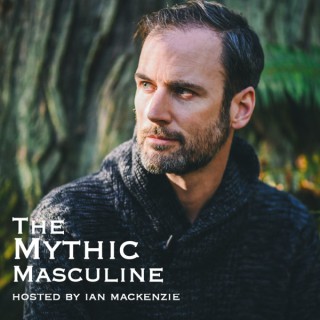
Two decades ago, I graduated university.I took a job writing copy for a small online business that rented holiday properties, and my role was to add content for the search engines to bring in traffic.It was a 9-to-5 kind of thing.I liked my employer and coworkers. And the job itself, I voraciously learned as much as I could and pumped out all the work that was assigned to me.Pretty soon, I was able to finish my output by lunchtime. And when I asked for more, my employer offered it. And this went on for a few months.Eventually, there came a time when my employer told me, “we don't have more to assign today.”My response was, “Okay… well can I go home?” which seemed reasonable enough. I wasn't even asking to be paid for the hours.Her response: “No, you can't go home. You have to remain at your desk.”I couldn't believe it. A part of me rebelled. I couldn't imagine sitting at a desk for hours every afternoon, needing to ‘make up work' that was unncessary, rather than having the freedom to do my own thing.A quiet voice spoke to me. This isn't for you. You are meant for more.I tried to stuff it down, reminding myself of the practical, real-world responsibilities I had at the time. Paying rent. Buying groceries. Saving for a mortgage. But still, the quiet voice wouldn't relent.A fire burned deeper than my practical fears. This was the First Fire of my soul. And I couldn't put it out.Well, I didn't last much longer at the job before striking out on my own. I began publishing an online magazine called Brave New Traveler, which featured my own writings alongside guest authors, that spoke to the magic and mystery of travelling off the beaten path.From there, I was noticed and invited to join a larger travel publishing network with a global reach. Somewhere in there, I also became a documentary filmmaker - recognizing the power of the medium to change the world and shift consciousness en masse in a short period of time.And so I followed the calling of my soul. I produced films like Sacred Economics and Occupy Love.I loved the collaboration, the storytelling, and the impact. But behind the scenes, there was heartbreak. In the middle of that momentum, after a decade together, my marriage crumbled.It wasn't just a legal separation - it was the total dismantling of the world I had known for my entire adulthood. I was cast out of the home and the life we had shared, once again adrift. The stability I had built, the shared vision of our future had turned to ash. I was awash in the wreckage of a life I thought was certain, navigating a depth of grief I wasn't prepared for.In the wake of that collapse, I threw myself even deeper into the craft. I produced films like Amplify Her, Lost Nation Road, and The Village of Lovers. Filmmaking became the outlet of my creative soul and my search for meaning.I met a new partner & became a father.But then, about 5 years ago… I remember feeling that small voice inside again… clear, grounded, and directive.It's time to shift. You have achieved what you intended with your films. You have said what you wanted to say.It was the closing of this chapter, this first fire. And the beginning of the next.It was few years before this that I encountered ‘men's work.' At the Tamera research village in Portugal, I sat in my first intergenerational men's circle. Young men and old men, wrestling with masculinity and how to show up powerful and in service to life. A frequency I had never experienced before was transmitted. And I was changed.I returned home and attended the New Warrior Training Adventure with the Mankind Project. I was taken on a descent and return, and I rediscovered a core trust in men that I didn't know I had lost.A few years after, I began publishing The Mythic Masculine podcast, to explore the mythopoetic lineage and the role of archetypes, ritual, and culture work in the modern world. Somewhere in there, my film career began to fall away.The Second Fire of my life was kindled, and is now ablaze.For the last two years, alongside in-person and online transformational containers, I've been working 1:1 with men, usually between the ages of 30 and 60.Many of them come because of a specific challenge or pattern that I find intimately familiar to my own story.What I offer them is what I've had to learn myself: Archetypal maps to name what's happening beneath the surface. Somatic practices to move it through the body. Ritual practices to mark the death of the old identity and authorize the new one.Here's what I've come to realize: None of these challenges are isolated. Underneath, they are all connected by a deeper shift.It would be easy to call it a “midlife crisis.” That's what this culture tends to do. But none of that addresses the deeper stirring of the soul, which is what these breakdowns actually represent.James Hollis calls it the Midlife Passage. It's an opportunity to ask the sometimes frightening, always liberating, question: “Who am I apart from my history and the roles I have played?”When we discover that we have been living what constitutes a “false self,” that we have been enacting a “provisional adulthood,” then we open the possibility for the second adulthood—our true personhood.Maybe you're in your 30s, 40s, or 50s. On paper, your life is “fine.” But beneath the noise of your responsibilities, there is that voice.Maybe it's whispering: “There has to be more than this.”Today I'm announcing a new 1:1 mentorship container for men, designed for this threshold.It's called The Second Fire.It's not about optimizing your productivity, or biohacking your body. It's about apprenticing yourself to your soul.Men, if you're stirred by this invitation, and feel at the beginning (or in the midst) of this passage, then this invitation is for you. This is a public episode. If you'd like to discuss this with other subscribers or get access to bonus episodes, visit themythicmasculine.substack.com/subscribe

Dr. James Hollis is a prominent Jungian psychoanalyst; Paul Hoover has published over 16 books of poetry and teaches creative writing at San Francisco State; and the host, Terry Pettit, is a former coach at the University of Nebraska and a current author of poetry and non-fiction. 60 years ago, Hoover and Pettit were students in Jim Hollis' poetry class at Manchester University. That relationship changed their life journeys. This is a podcast featuring three friends discussing poetry, archetypes, coaching, and their individual journeys. See Privacy Policy at https://art19.com/privacy and California Privacy Notice at https://art19.com/privacy#do-not-sell-my-info.

In this interview, Professor James Hollis explores the nature of creativity, the challenges of stagnation, and the importance of courage and individuation at different life stages. We discuss how to navigate thresholds, setbacks, and the search for meaning in a complex, uncertain world.Download the full transcript - https://throughconversations.kit.com/2c37da1a94Chapters00:00 Introduction to Creativity and Human Development05:58 Navigating Creative Stagnation and Setbacks15:27 Listening to Inner Signals for Meaning22:54 Courage in the Face of Fear26:10 Embracing Fear and Uncertainty26:56 Navigating Technological Change and Job Security32:00 The Role of Mortality in Meaning38:30 Life Stages and Their Unique Challenges44:20 Finding Purpose in the Second Half of LifeGrab your copy of The Time is Now and start your journey toward living a more intentional and fulfilling life - https://a.co/d/aDYCQ9oJoin this channel to get access to exclusive perks:https://www.youtube.com/channel/UCl67XqJVdVtBqiCWahS776g/join// Connect With Me //ORDER MY BOOK, THE TIME IS NOW: A GUIDE TO HONOR YOUR TIME ON EARTH: https://www.timeisnowbook.comWebsite: https://throughconversations.comSubstack - https://throughconversations.substack.comYouTube community -https://www.youtube.com/channel/UCl67XqJVdVtBqiCWahS776g/join// Social //X: https://x.com/ThruConvPodcastInstagram: https://www.instagram.com/thruconvpodcast/?hl=enYouTube: https://www.youtube.com/channel/UCl67XqJVdVtBqiCWahS776g
In this episode, I sit down with my longtime friend, professional actor, and educator Jeff Miller for a deep dive into the work of Jungian psychoanalyst James Hollis. We discuss why a life focused on meaning trumps the superficial cultural chase for happiness, how to face our personal shadow, and the challenging but liberating reality of taking absolute responsibility for our own lives. From navigating personal blowups with aging parents to finding ultimate wisdom in literature, Jeff shares how Hollis's writing fundamentally shifted his perspective on navigating the second half of life.

Dr. James Hollis is a Jungian analyst, trained in Zurich, Switzerland, and based in Washington, D.C. He is the author of twenty-two books, including The Middle Passage, Swamplands of the Soul, The Eden Project, Finding Meaning in the Second Half of Life, Living an Examined Life and his latest book, co-written with L.A.-based artist Enrique Martínez Celaya, Tending the Fire: Creativity, Purpose, and the Unfolding Self. Hollis taught humanities for twenty-six years in various colleges and universities before retraining as a Jungian analyst at the Jung Institute of Zurich. He served for many years as Executive Director of the Jung Educational Center in Houston, Texas and was Executive Director of the Jung Society of Washington until 2019, where he now serves on the Board of Directors. He is a retired Senior Training Analyst for the Inter-Regional Society of Jungian Analysts, was the first Director of Training of the Philadelphia Jung Institute, is Vice-President Emeritus of the Philemon Foundation and serves as Professor of Jungian Studies at Saybrook University. Explore more https://creative.voyage/

Midlife crisis is a myth, but a deeper crisis of meaning is not. This book summary reveals the surprising truth behind the 'second half of life' and how to navigate it.

Nếu bạn đang ở độ tuổi ngoài 30 và cảm thấy có những xung đột nội tâm, những băn khoăn không lời giải đáp về giá trị và hướng đi của cuộc đời mình, thì cuốn sách “The Middle Passage: From Misery to Meaning in Midlife” (tạm dịch: Hành Trình Trung Niên: Từ Khổ Đau Đến Ý Nghĩa) của James Hollis, có lẽ là một người bạn đồng hành quý giá.Hollis không chỉ là một nhà phân tâm học nổi tiếng, mà còn là một chuyên gia thuộc trường phái tâm lý học của Carl Jung. Với kinh nghiệm nghiên cứu và tư vấn lâu năm dành cho người trung niên, ông đã viết nên cuốn sách này dựa trên nền tảng lý thuyết tâm lý học Car Jung vững chắc, với mong muốn có thể giúp bạn vượt qua khó khăn, thử thách tuổi trung niên và tìm thấy ý nghĩa cuộc sống cho phần đời còn lại. Rồi, bây giờ xin mời bạn cùng lắng nghe!-------------------------Nếu bạn muốn mua sách giấy để đọc, có thể ủng hộ Better Version bằng cách mua qua đường link này nhé, cám ơn các bạn! ❤️ Link tổng hợp các cuốn sách trong tất cả video: https://beacons.ai/betterversion.vn/b... ❤️ ỦNG HỘ KÊNH TẠI: https://beacons.ai/betterversion.donate
We're often told we're in the midst of a post-Covid “loneliness epidemic”, but what exactly does that mean? Loneliness is a profound condition that goes right to the heart of being human - it's certainly more than just being alone, and often it isn't something that can be addressed by just “getting out more” or volunteering at the local hospital. This week's guest Dr Sam Carr became interested in attachment theory, and was then drawn to seek a deeper understanding of people who lacked attachment. He embarked on a study of loneliness that will be shared in his forthcoming book, All the Lonely People. Andrew and Sam discuss types of loneliness - existential, the loneliness of a difficult relationship, objective vs subjective loneliness - and look at different ways to address it, including the Jungian path of finding solace and direction in our dreams. If You're Looking for More…. You can subscribe to The Meaningful Life (via Apple Podcasts, Spotify or Google Podcasts) and hear a bonus mini-episode every week. Or you can join our Supporters Club on Patreon to also access exclusive behind-the-scenes content, fan requests and the chance to ask Andrew your own questions. Membership starts at just £4.50. This week supporters will hear: ⭐️How internet porn affects romantic life ⭐️Three things Sam Carr knows to be true. ⭐️AND subscribers also access all of our previous bonus content - a rich trove of insight on love, life and meaning created by Andrew and his interviewees. Follow Up Attend Andrew's couple's retreat near Berlin in June 2026 or men's retreat in April 2026: details here Get Andrew's free guide to difficult conversations with your partner: How to Tell Your Partner Difficult Things Take a look at Andrew's new online relationship course: My Best Relationship Tools Read Andrew's new Substack newsletter The Meaningful Life, and join the community there. Sam Carr's book All the Lonely People can be preordered here. Read some of Sam Carr's articles for theconversation.com: Loneliness, loss and regret: what getting old really feels like – new study Parenting practices around the world are diverse and not all about attachment How internet porn affects romantic life Why mourning a pet can be harder than grieving for a person Are you a shark or a teddy? How understanding conflict styles can help you overcome fights with friends and family Andrew and Sam discuss The Men on My Couch by Brandy Engler. You can find it here. Andrew also mentions other episodes of this podcast, including How to be Resilient with James Hollis and Being a Mother with Lisa Marchiano. Andrew offers regular advice on love, marriage and finding meaning in your life via his social channels. Follow him on Twitter, Facebook and YouTube @andrewgmarshall

In this solo episode, I explore a tension that I've encountered both personally and clinically—the way some high-control religious communities can feel deeply warm, relational, and inviting at first, and yet over time reveal a much more rigid and exclusionary structure underneath.I begin with a personal reflection on being re-exposed to Douglas Wilson while listening to conversations about Christian nationalism, and how his winsome, calm, and disarming tone stands in stark contrast to what I see as deeply dangerous ideas—especially when it comes to democracy, pluralism, and the ability for real difference to exist.From there, I unpack what I'm calling aesthetic hospitality—the way warmth, attentiveness, and belonging can function as a kind of soft power that draws people in before they've had the chance to fully discern what they're stepping into.Drawing on psychoanalytic insights, including Todd McGowan's critique of community and James Hollis' distinction between internal and external authority, I explore how belonging in these systems is often conditional, particularly for LGBTQ+ individuals, and how exclusion is frequently reframed as truth, morality, or righteousness.This episode is ultimately an invitation to develop a deeper kind of discernment—not just asking whether a community is kind or welcoming, but whether it can actually tolerate your full existence without requiring you to become someone else in order to belong.
I've been reading Pleasure Activism by adrienne maree brown as a way of making sense of what I've been calling my own ethical hedonism — not indulgence, not impulsivity, but the question of whether pleasure might actually function as guidance.Included in that book is Audre Lorde's classic essay The Uses of the Erotic, which I recently told a group chat might be one of the best essays I've ever read. In this solo episode, I unpack why.Lorde reframes the erotic not as performance or spectacle, but as a form of embodied knowledge — a deep connection to our capacity for joy that becomes a lens through which we evaluate our lives. When we reconnect with that internal hum of aliveness, she argues, we can no longer settle for what is merely safe, conventional, or externally approved.Along the way, I explore a resonance I can't ignore — the connection between what Lorde calls erotic knowledge and what James Hollis describes as inner authority. They are not saying the same thing. They are not operating in the same tradition. And yet both point toward an internal guidance system that asks us to live from alignment rather than expectation.This episode weaves together ethical hedonism, embodied joy, clinical reflections, and the responsibility that comes with knowing your own capacity for depth.Once you know your capacity for joy, you are responsible to it

When Your Identity Shatters: A Therapist’s Journey Through Suffering What if the moment your entire identity falls apart isn’t a breakdown but a sacred initiation? What if the culture that taught you to pathologise your pain has stolen your capacity to transform through it? For over 28,000 hours, Dr. John W. Price has sat knee to knee with people in their most debilitating shatterings. As a Jungian psychotherapist with a doctorate in depth psychology, he doesn’t just understand suffering intellectually. He has walked through the fire himself, and it’s that lived experience that makes him one of the most compelling guides for anyone navigating identity crisis, spiritual awakening, or the terrifying process of becoming who you actually are. In this profound conversation, Dr Price reveals why tying your self-worth to your net worth creates a dangerous trap, how “sacred refusal” becomes an act of devotion, and why the moments when everything crumbles are actually the gateways to transformation our modern world has forgotten how to honour. The Man Who Lost Everything to Find His Calling Dr. Price’s path to the therapist’s chair began on stage. From age six, music was his calling. He was self-motivated, wild, rebellious, smoking in the boys’ room while dreaming of guitars and record deals. By his mid-twenties, he had signed that deal and was touring nationally, living the dream he had fantasised about since childhood. Then everything came crashing down. The birth of his son, the collapse of an unhealthy relationship, and the sudden weight of single fatherhood shattered every identity he had built. He weighed 35 pounds less from stress, found himself in court battles, and sat in a therapist’s office feeling completely lost. “I had a shattering of an identity,” he recalls. “My whole life dream was disrupted.” But in that therapist’s chair, working with a brilliant woman named Charlene who introduced him to Buddhist meditation, something shifted. Dr. Price realised he didn’t just want healing. He wanted to offer it. That moment of recognition sent him back to school, this time as a ravenous student pursuing a master’s in clinical psychology and eventually a doctorate in Jungian depth psychology. Why We Pathologise Our Own Initiations One of Dr. Price’s most powerful insights centres on how our culture has lost the capacity to recognise transformation for what it is. “Because our culture doesn’t really have an orientation to initiate us into this kind of process, we pathologise it, and we think that something is wrong,” he explains. When your identity crumbles, when the life that looked good on paper suddenly feels unbearable, when you can no longer perform the role everyone expects of you, our society tells you something is broken. But Dr. Price sees these moments differently. They are sacred shatterings, initiations that ancient cultures would have honoured with ritual and community support. The problem for so many high achievers is that they have tied their sense of self-worth entirely to their net worth, their title, their role. When that foundation shifts, they don’t just lose a job or a relationship. They lose themselves. “How do you actually trust the fall rather than resist it?” becomes the central question. Sacred Refusal and Living Mythically Drawing on wisdom from his mentor Richard Rohr and Jungian analyst James Hollis, Dr. Price introduces the concept of “sacred refusal.” This is the practice of stopping performance, of refusing to comply with systems that don’t serve your soul. “Any win for the self, or the soul, is experienced as a death by the socialised ego,” he teaches, quoting Hollis. This is why leaving family systems feels so terrifying. Why creating your own journey requires walking into the wilderness of the unknown. Why individuation always costs something. But the alternative is living according to control-based systems, whether religious, political, economic, or corporate, that keep you performing and compliant rather than transforming and free. Dr. Price’s vision is one of resurrection. Not just personal healing, but remembering that life is a sacred text, not a self-improvement plan. We are stories within a story, and transformation isn’t about getting better. It’s about experiencing life more completely and fully. Three Golden Nuggets Every Emotion Is a Teacher – Stay with what hurts long enough to hear its wisdom. Refusal Is Devotion – What you stop performing becomes sacred space. Live Mythically – See life as a sacred text, not a self-improvement plan. About Dr. John W. Price Dr. John W. Price is a licensed psychotherapist, Jungian scholar, and host of The Sacred Speaks podcast. He holds a Master’s in Clinical Psychology and a Doctorate in Jungian Psychology, and serves as President of the Board at the Jung Center of Houston. With over 28,000 clinical hours and 800,000 podcast downloads, he guides people through grief, identity collapse, and spiritual awakening. You can watch the video of the conversation on YouTube Find Out More About Dr. John W. Price Website: www.drjohnwprice.com Instagram: @thesacredspeaks YouTube: https://www.youtube.com/@TheSacredSpeaks
Artist and former scientist Enrique Martínez Celaya and Jungian psychoanalyst James Hollis join me to discuss their new book, Tending the Fire: Creativity, Purpose, and the Unfolding Self, published by Chiron Publications on Feb. 1, 2026.

This week we're introducing you to Pulling the Thread, hosted by writer Elise Loehnen, who explores life's big questions with today's leading thinking, experts and luminaries: Why do we do what we do? How can we understand and love ourselves better? What would it look like to come together and build a more meaningful world? In today's episode we're joined by James Hollis, PhD is a Jungian analyst who is still in private practice in Washington D.C. Hollis started his career as a professor of humanities before a midlife crisis brought him to his knees—and to the Jung Institute in Zurich. The author of 19 books, Hollis is one of the best interpreters of Carl Jung’s work, making it accessible for all of us who want to understand how complexes, archetypes, synchronicities, and the shadow drive our lives. To hear more episode of Pulling the Thread, follow wherever you get your podcasts or head to: https://lemonada.lnk.to/PullingTheThreadfd MORE FROM JAMES HOLLIS, PhD: Why Good People Do Bad Things: Understanding Our Darker Selves Finding Meaning in the Second Half of Life: How to Finally, Really Grow Up A Life of Meaning: Relocating Your Center of Spiritual Gravity The Broken Mirror: Refracted Visions of Ourselves James Hollis’s Website RELATED EPISODES: Connie Zweig, “Embracing the Shadow” Satya Doyle Byock, “Navigating Quarterlife” Terry Real, “Healing Male Depression” Niobe Way, PhD, “The Critical Need for Deep Connection” See omnystudio.com/listener for privacy information.

This week we're introducing you to Pulling the Thread, hosted by writer Elise Loehnen, who explores life's big questions with today's leading thinking, experts and luminaries: Why do we do what we do? How can we understand and love ourselves better? What would it look like to come together and build a more meaningful world? In today's episode we're joined by James Hollis, PhD is a Jungian analyst who is still in private practice in Washington D.C. Hollis started his career as a professor of humanities before a midlife crisis brought him to his knees—and to the Jung Institute in Zurich. The author of 19 books, Hollis is one of the best interpreters of Carl Jung’s work, making it accessible for all of us who want to understand how complexes, archetypes, synchronicities, and the shadow drive our lives. To hear more episode of Pulling the Thread, follow wherever you get your podcasts or head to: https://lemonada.lnk.to/PullingTheThreadfd MORE FROM JAMES HOLLIS, PhD: Why Good People Do Bad Things: Understanding Our Darker Selves Finding Meaning in the Second Half of Life: How to Finally, Really Grow Up A Life of Meaning: Relocating Your Center of Spiritual Gravity The Broken Mirror: Refracted Visions of Ourselves James Hollis’s Website RELATED EPISODES: Connie Zweig, “Embracing the Shadow” Satya Doyle Byock, “Navigating Quarterlife” Terry Real, “Healing Male Depression” Niobe Way, PhD, “The Critical Need for Deep Connection” See omnystudio.com/listener for privacy information.

This week we're introducing you to Pulling the Thread, hosted by writer Elise Loehnen, who explores life's big questions with today's leading thinking, experts and luminaries: Why do we do what we do? How can we understand and love ourselves better? What would it look like to come together and build a more meaningful world? In today's episode we're joined by James Hollis, PhD is a Jungian analyst who is still in private practice in Washington D.C. Hollis started his career as a professor of humanities before a midlife crisis brought him to his knees—and to the Jung Institute in Zurich. The author of 19 books, Hollis is one of the best interpreters of Carl Jung’s work, making it accessible for all of us who want to understand how complexes, archetypes, synchronicities, and the shadow drive our lives. To hear more episode of Pulling the Thread, follow wherever you get your podcasts or head to: https://lemonada.lnk.to/PullingTheThreadfd MORE FROM JAMES HOLLIS, PhD: Why Good People Do Bad Things: Understanding Our Darker Selves Finding Meaning in the Second Half of Life: How to Finally, Really Grow Up A Life of Meaning: Relocating Your Center of Spiritual Gravity The Broken Mirror: Refracted Visions of Ourselves James Hollis’s Website RELATED EPISODES: Connie Zweig, “Embracing the Shadow” Satya Doyle Byock, “Navigating Quarterlife” Terry Real, “Healing Male Depression” Niobe Way, PhD, “The Critical Need for Deep Connection” See omnystudio.com/listener for privacy information.

This week we're introducing you to Pulling the Thread, hosted by writer Elise Loehnen, who explores life's big questions with today's leading thinking, experts and luminaries: Why do we do what we do? How can we understand and love ourselves better? What would it look like to come together and build a more meaningful world? In today's episode we're joined by James Hollis, PhD is a Jungian analyst who is still in private practice in Washington D.C. Hollis started his career as a professor of humanities before a midlife crisis brought him to his knees—and to the Jung Institute in Zurich. The author of 19 books, Hollis is one of the best interpreters of Carl Jung’s work, making it accessible for all of us who want to understand how complexes, archetypes, synchronicities, and the shadow drive our lives. To hear more episode of Pulling the Thread, follow wherever you get your podcasts or head to: https://lemonada.lnk.to/PullingTheThreadfd MORE FROM JAMES HOLLIS, PhD: Why Good People Do Bad Things: Understanding Our Darker Selves Finding Meaning in the Second Half of Life: How to Finally, Really Grow Up A Life of Meaning: Relocating Your Center of Spiritual Gravity The Broken Mirror: Refracted Visions of Ourselves James Hollis’s Website RELATED EPISODES: Connie Zweig, “Embracing the Shadow” Satya Doyle Byock, “Navigating Quarterlife” Terry Real, “Healing Male Depression” Niobe Way, PhD, “The Critical Need for Deep Connection”See omnystudio.com/listener for privacy information.

This week we're introducing you to Pulling the Thread, hosted by writer Elise Loehnen, who explores life's big questions with today's leading thinking, experts and luminaries: Why do we do what we do? How can we understand and love ourselves better? What would it look like to come together and build a more meaningful world? In today's episode we're joined by James Hollis, PhD is a Jungian analyst who is still in private practice in Washington D.C. Hollis started his career as a professor of humanities before a midlife crisis brought him to his knees—and to the Jung Institute in Zurich. The author of 19 books, Hollis is one of the best interpreters of Carl Jung’s work, making it accessible for all of us who want to understand how complexes, archetypes, synchronicities, and the shadow drive our lives. To hear more episode of Pulling the Thread, follow wherever you get your podcasts or head to: https://lemonada.lnk.to/PullingTheThreadfd MORE FROM JAMES HOLLIS, PhD: Why Good People Do Bad Things: Understanding Our Darker Selves Finding Meaning in the Second Half of Life: How to Finally, Really Grow Up A Life of Meaning: Relocating Your Center of Spiritual Gravity The Broken Mirror: Refracted Visions of Ourselves James Hollis’s Website RELATED EPISODES: Connie Zweig, “Embracing the Shadow” Satya Doyle Byock, “Navigating Quarterlife” Terry Real, “Healing Male Depression” Niobe Way, PhD, “The Critical Need for Deep Connection” See omnystudio.com/listener for privacy information.

This week we're introducing you to Pulling the Thread, hosted by writer Elise Loehnen, who explores life's big questions with today's leading thinking, experts and luminaries: Why do we do what we do? How can we understand and love ourselves better? What would it look like to come together and build a more meaningful world? In today's episode we're joined by James Hollis, PhD is a Jungian analyst who is still in private practice in Washington D.C. Hollis started his career as a professor of humanities before a midlife crisis brought him to his knees—and to the Jung Institute in Zurich. The author of 19 books, Hollis is one of the best interpreters of Carl Jung’s work, making it accessible for all of us who want to understand how complexes, archetypes, synchronicities, and the shadow drive our lives. To hear more episode of Pulling the Thread, follow wherever you get your podcasts or head to: https://lemonada.lnk.to/PullingTheThreadfd MORE FROM JAMES HOLLIS, PhD: Why Good People Do Bad Things: Understanding Our Darker Selves Finding Meaning in the Second Half of Life: How to Finally, Really Grow Up A Life of Meaning: Relocating Your Center of Spiritual Gravity The Broken Mirror: Refracted Visions of Ourselves James Hollis’s Website RELATED EPISODES: Connie Zweig, “Embracing the Shadow” Satya Doyle Byock, “Navigating Quarterlife” Terry Real, “Healing Male Depression” Niobe Way, PhD, “The Critical Need for Deep Connection”See omnystudio.com/listener for privacy information.

This week we're introducing you to Pulling the Thread, hosted by writer Elise Loehnen, who explores life's big questions with today's leading thinking, experts and luminaries: Why do we do what we do? How can we understand and love ourselves better? What would it look like to come together and build a more meaningful world? In today's episode we're joined by James Hollis, PhD is a Jungian analyst who is still in private practice in Washington D.C. Hollis started his career as a professor of humanities before a midlife crisis brought him to his knees—and to the Jung Institute in Zurich. The author of 19 books, Hollis is one of the best interpreters of Carl Jung’s work, making it accessible for all of us who want to understand how complexes, archetypes, synchronicities, and the shadow drive our lives. To hear more episode of Pulling the Thread, follow wherever you get your podcasts or head to: https://lemonada.lnk.to/PullingTheThreadfd MORE FROM JAMES HOLLIS, PhD: Why Good People Do Bad Things: Understanding Our Darker Selves Finding Meaning in the Second Half of Life: How to Finally, Really Grow Up A Life of Meaning: Relocating Your Center of Spiritual Gravity The Broken Mirror: Refracted Visions of Ourselves James Hollis’s Website RELATED EPISODES: Connie Zweig, “Embracing the Shadow” Satya Doyle Byock, “Navigating Quarterlife” Terry Real, “Healing Male Depression” Niobe Way, PhD, “The Critical Need for Deep Connection”See omnystudio.com/listener for privacy information.

This week we're introducing you to Pulling the Thread, hosted by writer Elise Loehnen, who explores life's big questions with today's leading thinking, experts and luminaries: Why do we do what we do? How can we understand and love ourselves better? What would it look like to come together and build a more meaningful world? In today's episode we're joined by James Hollis, PhD is a Jungian analyst who is still in private practice in Washington D.C. Hollis started his career as a professor of humanities before a midlife crisis brought him to his knees—and to the Jung Institute in Zurich. The author of 19 books, Hollis is one of the best interpreters of Carl Jung’s work, making it accessible for all of us who want to understand how complexes, archetypes, synchronicities, and the shadow drive our lives.To hear more episode of Pulling the Thread, follow wherever you get your podcasts or head to: https://lemonada.lnk.to/PullingTheThreadfd MORE FROM JAMES HOLLIS, PhD: Why Good People Do Bad Things: Understanding Our Darker Selves Finding Meaning in the Second Half of Life: How to Finally, Really Grow Up A Life of Meaning: Relocating Your Center of Spiritual Gravity The Broken Mirror: Refracted Visions of Ourselves James Hollis’s Website RELATED EPISODES: Connie Zweig, “Embracing the Shadow” Satya Doyle Byock, “Navigating Quarterlife” Terry Real, “Healing Male Depression” Niobe Way, PhD, “The Critical Need for Deep Connection” Learn more about your ad choices. Visit podcastchoices.com/adchoicesSee omnystudio.com/listener for privacy information.

This week we're introducing you to Pulling the Thread, hosted by writer Elise Loehnen, who explores life's big questions with today's leading thinking, experts and luminaries: Why do we do what we do? How can we understand and love ourselves better? What would it look like to come together and build a more meaningful world? In today's episode we're joined by James Hollis, PhD is a Jungian analyst who is still in private practice in Washington D.C. Hollis started his career as a professor of humanities before a midlife crisis brought him to his knees—and to the Jung Institute in Zurich. The author of 19 books, Hollis is one of the best interpreters of Carl Jung’s work, making it accessible for all of us who want to understand how complexes, archetypes, synchronicities, and the shadow drive our lives.To hear more episode of Pulling the Thread, follow wherever you get your podcasts or head to: https://lemonada.lnk.to/PullingTheThreadfd MORE FROM JAMES HOLLIS, PhD: Why Good People Do Bad Things: Understanding Our Darker Selves Finding Meaning in the Second Half of Life: How to Finally, Really Grow Up A Life of Meaning: Relocating Your Center of Spiritual Gravity The Broken Mirror: Refracted Visions of Ourselves James Hollis’s Website RELATED EPISODES: Connie Zweig, “Embracing the Shadow” Satya Doyle Byock, “Navigating Quarterlife” Terry Real, “Healing Male Depression” Niobe Way, PhD, “The Critical Need for Deep Connection” See omnystudio.com/listener for privacy information.

This week we're introducing you to Pulling the Thread, hosted by writer Elise Loehnen, who explores life's big questions with today's leading thinking, experts and luminaries: Why do we do what we do? How can we understand and love ourselves better? What would it look like to come together and build a more meaningful world? In today's episode we're joined by James Hollis, PhD is a Jungian analyst who is still in private practice in Washington D.C. Hollis started his career as a professor of humanities before a midlife crisis brought him to his knees—and to the Jung Institute in Zurich. The author of 19 books, Hollis is one of the best interpreters of Carl Jung’s work, making it accessible for all of us who want to understand how complexes, archetypes, synchronicities, and the shadow drive our lives. To hear more episode of Pulling the Thread, follow wherever you get your podcasts or head to: https://lemonada.lnk.to/PullingTheThreadfd MORE FROM JAMES HOLLIS, PhD: Why Good People Do Bad Things: Understanding Our Darker Selves Finding Meaning in the Second Half of Life: How to Finally, Really Grow Up A Life of Meaning: Relocating Your Center of Spiritual Gravity The Broken Mirror: Refracted Visions of Ourselves James Hollis’s Website RELATED EPISODES: Connie Zweig, “Embracing the Shadow” Satya Doyle Byock, “Navigating Quarterlife” Terry Real, “Healing Male Depression” Niobe Way, PhD, “The Critical Need for Deep Connection”See omnystudio.com/listener for privacy information.

This is an episode of a new podcast I really like called Gen X at Midlife. The show was created by TBAS contributor, Courtney Daniels. In this episode she talks to her longtime friend Tess Hawes about her experience of midlife crisis, Courtney's self-rejecting ambition, Tess' divorce and career pivot, and how to get out of depression. They touch on the book "Finding Meaning in the Second Half of Life" by James Hollis, "Mind Your Body" by Nicole Sachs, and Courtney's therapist, Lisa Chen, whom she highly recommends! Learn more about your ad choices. Visit megaphone.fm/adchoices
**SPECIAL ENCORE PRESENTATION IN SUPPORT OF WORLD MENTAL HEALTH DAY THIS OCTOBER** Dr. James Hollis is a Jungian analyst, a former director of the Jung Society of Washington, DC, and a professor of Jungian Studies for Saybrook University of San Francisco/Houston. He is the author of The Middle Passage, Living an Examined Life, Through the Dark Wood, and Living Between Worlds, among many others. With Sounds True, he's released the expansive audio program A Life of Meaning: Exploring Our Deepest Questions and Motivations. In this episode of Insights at the Edge, Tami Simon speaks with James about the journey for personal fulfillment—how it starts, what it demands, and how it changes your life. James explains what it really means to take responsibility for your life's path, as well as how you can rediscover and reclaim your innate authority. Tami and James discuss how childhood experiences shape our present behavior and what it takes to live fearlessly. Finally, they talk about overcoming lethargy and the joy of becoming comfortable with mysteries. This episode is sponsored by BetterHelp. Listeners of Insights At The Edge get 10% off their first month at www.betterhelp.com/soundstrue.See Privacy Policy at https://art19.com/privacy and California Privacy Notice at https://art19.com/privacy#do-not-sell-my-info.
**SPECIAL ENCORE PRESENTATION IN SUPPORT OF WORLD MENTAL HEALTH DAY THIS OCTOBER** Dr. James Hollis is a Jungian analyst, a former director of the Jung Society of Washington, DC, and a professor of Jungian Studies for Saybrook University of San Francisco/Houston. He is the author of The Middle Passage, Living an Examined Life, Through the Dark Wood, and Living Between Worlds, among many others. With Sounds True, he's released the expansive audio program A Life of Meaning: Exploring Our Deepest Questions and Motivations. In this episode of Insights at the Edge, Tami Simon speaks with James about the journey for personal fulfillment—how it starts, what it demands, and how it changes your life. James explains what it really means to take responsibility for your life's path, as well as how you can rediscover and reclaim your innate authority. Tami and James discuss how childhood experiences shape our present behavior and what it takes to live fearlessly. Finally, they talk about overcoming lethargy and the joy of becoming comfortable with mysteries. This episode is sponsored by BetterHelp. Listeners of Insights At The Edge get 10% off their first month at www.betterhelp.com/soundstrue.

As an avid reader, I'm always seeking that next great book. The one that allows me to see myself and the world more clearly, comforts me when I'm lost, or inspires me to move through my day differently. This series is my opportunity to pass these remarkable books onto you, as readers of A Mind of Her Own, both for your own enjoyment and also, as a self-serving shout-out to the universe to send me more amazing, life-changing reads. I'm excited to hear what you think, and I'm so glad you're here!Life-Changing Reads: A Series1. Let Your Life Speak: Listening for the Voice of Vocation, by Parker Palmer“Vocation does not come from willfulness. It comes from listening…vocation does not mean a goal that I pursue. It means a calling that I hear.”I read this book when I was feeling lost, searching for a life that aligned with my values and desires, and doubting myself at every step. I kept hearing this call to write, to create, but I thought it was something I should do in my “non-work” time, because it wasn't a serious activity for a physician. Parker's discussion of his own struggle to find his true vocation, through an altruistic but ultimately unsustainable career path, was a fundamental guide on my journey.2. Quiet: The Power of Introverts in a World that Can't Stop Talking, by Susan Cain“So when introverts assume the observer role, as when they write novels, or contemplate unified field theory—or fall quiet at dinner parties—they're not demonstrating a failure of will or a lack of energy. They're simple doing what they're constitutionally suited for.”I listened to this book in the car, sitting in LA traffic, during my psychiatry residency. I still remember the feeling of hearing these words, suggesting my tendency to prefer listening to talking, observing to acting, thinking to doing was not because I was lazy, overly shy or antisocial. It was what I was “constitutionally suited for.” This was a revelation.Here I am now, writing books, listening as a psychiatrist and podcast host, and taking time to think about life's great mysteries. Thank you, Susan, for your beautiful writing.3. The Good Life: Lessons From the World's Longest Scientific Study of Happiness, by Robert Waldinger, MD and Marc Schulz, PhD“Do I matter? Some of us have lived the majority of our lives and find ourselves looking back, others have most of our lives in front of us and are looking forward. For all of us, regardless of age, it helps to remember that this question of mattering, of leaving something for future generations and of being part of something bigger than ourselves, is not just about our personal achievements—it's about what we mean to other people. And it's never too late to start now and leave a mark.”This book, by the directors of the Harvard Study of Adult Development, is a powerful summary of the lives of two generations of individuals from the same families for over 80 years. It's remarkable to read their quotes as they navigate joy, loss, struggles and successes over the years. The reason I've found it so important to read and reread is its powerful reminder of the importance of our relationships in creating happiness. Not money. Not fame. Not a perfect body. Not prizes or rings or medals. It's all about the love and connection we have in our lives.Today, as I try to navigate the overwhelmingly stressful news and constant churn of social media, it grounds me in my day-to-day life to reflect on those in my closest orbit. How can I connect with them today? How do I show my love and interest in ways both silly and sincere? Even if I've been feeling disconnected, I trust that it is never too late to leave my own mark in their lives and remember the joy of having them in mine.4. How Do You Feel? One Doctor's Search for Humanity in Medicine, by Jessi Gold, MD, MS“Sometimes, the heaviest emotional burden is to bear witness or to hold space for someone else's story. To do my job well and be someone whom people can trust, I need to care. I need to be truly empathetic. I need to be raw and available.”This beautiful book, by Jessi Gold, describes so many aspects of my experience as a psychiatrist. She writes about the unique emotional toll of meeting with patients during some of their darkest moments, as they are working to overcome trauma, abuse, loss or grave illnesses. Reading this was incredibly validating. In the past, when I had finished my clinical week, I would look back and wonder, “Why can't I do more? Why didn't I see more patients? There is so much need.”Dr. Gold's book helped me to be self-compassionate, recognizing I could only be truly present if I also took care of myself. This is a message I now try to pass along to the psychiatry residents I teach. We are human, and we have limits. Thank you, Jessi, for generously sharing your life with us. Your work is so important.Listen to Dr. Gold on The Reflective Mind Podcast at https://amindofherown.substack.com/p/speaking-the-quiet-part-out-loud?r=1wdz1l5. Finding Meaning in the Second Half of Life: How to Finally, Really Grow Up by James Hollis, Ph.D.“To engage with the summons of our souls is to step into the deepest ocean, uncertain whether we will be able to swim to some new, distant shore. And yet, until we have consented to swim beyond the familiar lights of the port left behind, we will never arrive at a newer shore.”This stunning book, by Dr. James Hollis, a Jungian scholar and prolific writer, shares his own story of midlife depression and his decision to leave the familiar to seek training in Zurich and become a Jungian analyst. He writes beautifully about his struggle to identify his own path with the guidance of Jung's theory of individuation, defined as “the lifelong project of becoming more nearly the whole person we were meant to be.” I read and re-read this book as I was struggling with my own path to meaning in midlife, and I found such comfort in his powerful belief that we all can tap into what we already know: the person we are most meant to be.You can listen to his beautiful description of his path here: https://amindofherown.substack.com/p/a-nameless-longing-when-your-soul?r=1wdz1l6. Shrill, by Lindy West (I also highly recommend the Hulu series by the same name, starring Aidy Bryant )“I am my body. When my body gets smaller, it is still me. When my body gets bigger, it is still me. There is not a thin woman inside me, awaiting excavation. I am one piece.”Thinking back on my training during medical school and beyond, I can summarize any lecture about body size with one phrase: overweight equals unhealthy. This repeated conflation means I now must consciously uncouple one from the other in my clinical work, stepping back from the broad and imprecise shorthand to consider how they are, and are not, actually related.Lindy West's book helped me significantly as I was trying to shift my thinking on this topic. Her frank depiction of life in her larger body was at times heartbreaking (especially in the doctor's office), frequently humorous (with chapter titles like “Are you there, Margaret? It's me, a person who is not a complete freak.”) and overall a powerful motivator for change. I think all health care providers should read it at least once.If this resonates, check out my interview with Dr. Mara Gordon all about the size-inclusive healthcare revolution. https://amindofherown.substack.com/p/the-size-inclusive-healthcare-revolution?utm_source=publication-search7. Words Are My Matter: Writings on Life and Books by Ursula K. Le Guin“Fiction offers the best means of understanding people different from oneself, short of experience. Actually, fiction can be lots better than experience, because it's a manageable size, it's comprehensible, while experience just steamrollers over you and you understand what happened decades later, if ever.”I grew up in a very small town in North Dakota, just a few miles from the South Dakota border. I didn't recognize the enormity of the sky above my childhood home until I returned as an adult, head tipped back, staring upward in awe. I grew up there with a loving family and a surrounding community willing to cheer me on in events from basketball games to theater performances, but I always felt a bit out of place. Reading became my reassurance that the world was as big as the sky overhead, and I would eventually find my own path. Books also helped me recognize the importance of placing myself in another's shoes, virtual empathy-building machines that taught me about those whose lives were so incredibly different from my own.This book of Ursula K. Le Guin's essays, poems and book reviews reveals a grounded, opinionated, brilliant woman who decided to create entire worlds with stunning clarity, illuminating the challenges existing in our own. Readers and writers alike will not be sorry for taking a moment to absorb her work.If this interests you, please feel free to listen to my short essay, Books are Empathy Machines.8. Intimations by Zadie Smith“Talking to yourself can be useful. And writing means being overheard.”This book by Zadie Smith, a collection of six essays, was published in 2020, and provides a glimpse into the author's life during the early months of the Covid-19 virus. I've long been an admirer of her fiction, but this series allowed a much more intimate window into her wandering mind, trying to comprehend her place in a society turned inside out with uncertainty and fear.What does it mean to be an artist when people are being categorized as “essential workers?” Is loyalty to a place something that can outlast a feeling of unique vulnerability? How can writing provide an outlet for survival when the world is so fraught? There was comfort in her struggle to understand and in her feeling of disorientation, which I certainly shared. I emerged from her writing feeling more hopeful and far less alone.If this essay resonated, please feel free to check out this podcast episode Hope is the Best Antidote for Demoralization with Dr. James L. Griffith, MD9. Flow: The Psychology of Optimal Experience by Mihaly Csikszentmihalyi“We grow up believing that what counts most in our lives is that which will occur in the future…[however] since what we experience is reality, as far as we are concerned, we can transform reality to the extent that we influence what happens in consciousness and thus free ourselves from the threats and blandishments of the outside world.”My summary: We are always living for tomorrow, while life only happens right now, in our moment-by-moment experience, which we have the power to shape through our attention.You have likely heard of the concept of Flow, described by Dr. Csikszentmihalyi (here is a googled pronunciation: chik sent mee hai ee) as an optimal experience when a “person's body or mind is stretched to its limits in a voluntary effort to accomplish something difficult and worthwhile.” It is often referred to as being in a “flow state,” so immersed in a particular task that you lose track of time and are able to concentrate in a prolonged and highly satisfying way. He refers to our attention our “psychic energy.” Where we give our attention is quite literally how we experience our lives. This has never been more relevant, each of us tasked with creating our own protective filters from the onslaught of demands on our limited—because we're human—attention spans.This book is a revelation, with insights about the very nature of consciousness, what it means to be happy, and how we can infuse our lives with more pleasure. Flow can emerge in a wide variety of settings, whether it's while listening to or creating music, engaging in satisfying sex or consuming delicious foods. It may also occur when we are working on a challenging problem at the office, pushing past a confusing but compelling problem in school, or out solving problems in the world beyond. I've learned so much from his writing, and have absorbed his ideas which influence many of my own.If the concept of a flow and the quest for a meaningful life is of interest, check out my interview, “What Lights You Up?' with Dr. Jordan Grumet, palliative care physician and writer.10. Ambiguous Loss: Learning to Live with Unresolved Grief by Pauline Boss“In the case of ambiguous loss…complicated grieving can be a normal reaction to a complicated situation—the endless searching of a battlefield by the mother of a missing soldier; a stepchild's angry outbursts when his biological parent is totally excluded; a wife's depression and withdrawal because her husband has suffered a brain injury and is no longer himself.”I've found ambiguous loss to be such a powerful and surprisingly common experience in my psychiatry practice. This idea describes the unique suffering caused by uncertainty or a lack of resolution regarding a missing loved one. This could be psychological absence of someone still in our presence, such as when our loved one is struggling with dementia or severe mental illness, or the physical absence of those we still keep very much present in our psychological lives, including missing persons with unknown whereabouts.After first reading Ambiguous Loss, I reached out to Dr. Pauline Boss, now in her 90s, to thank her for her work and speak with her about this extremely helpful framework, which had a profound effect on me. She shared the origins of the research into this topic, begun with the families of pilots declared missing in action in Vietnam and Cambodia while she was at the Center of Prisoner of War Studies in the U.S. Naval Health Research Institute in San Diego. She spoke about interviewing the wives of these missing pilots and the intense pain caused by the ambiguity surrounding their husbands' whereabouts. This ongoing, often unresolvable grief can lead to depression, isolation, and ongoing family disruption, even generations later. By giving a name to this phenomenon, however, Pauline Boss has helped countless families begin to heal from the unimaginable and move forward into a more hopeful future.11. Can't We Talk About Something More Pleasant? A Memoir by Roz Chast“After my father died, I noticed that all the things that had driven me bats about him—his chronic worrying, his incessant chitchat, his almost suspect inability to deal with anything mechanical—now seemed trivial. The only emotion that remained was one of deep affection and gratitude that he was my dad.”This is the first graphic novel on my list, but it certainly won't be the last. I've been a fan of Roz Chast for a long time, with her quirky but poignant New Yorker cartoons. This powerful memoir highlights something I've found particularly helpful in my work and personal life: difficult truths are much more palatable if we can pair them with humor. My family has always taken this approach, particularly my father, coping with some truly heartbreaking cases in the hospital with an off-color joke about bowel movements around the family dinner table. Humor is also considered one of the most mature psychological defense mechanisms we use to cope with stress or loss in our lives, so way to go, Dad!Roz shares with us a uniquely painful time in her life, as her parents age well into their 90s, experiencing the indignities of increasingly frail bodies and waning independence. She writes with brave candor about the exhausting and expensive path an adult child must walk when her parents can no longer care for themselves, and her conflicted feelings as she watches them slowly fade. Her cartoons throughout provide much-needed moments of levity, as well as a beautiful tribute to the lives of these important people. If you or a loved one is going through this painful, but common, journey, this book could provide some true comfort, and maybe even a laugh or two.12. Congratulations, By the Way: Some Thoughts on Kindness by George Saunders“Be a good and proactive and even somewhat desperate patient on your own behalf—seek out the most efficacious, anti-selfishness medicines, energetically, for the rest of your life. Find out what makes you kinder, what opens you up and brings out the most loving, generous, and unafraid version of you—and go after those things as if nothing else matters.Because, actually, nothing else does.”These words are part of a lovely convocation address George Saunders delivered to the graduating students of Syracuse University, where he is a professor of creative writing. Understandably, it resonated far beyond the campus, and speaks a truly important message for today's world.I should admit, I have a soft spot for George Saunders. I imagine I'm not alone in this. I saw him speak at a New Yorker Festival event several years ago and he did not disappoint: sharp as a tack while also being thoughtful and extremely humble. In addition, he was super funny, which made sense because he's the author of one of the most hilarious short stories I've ever read. In “Pastoralia,” two employees are assigned to a caveman diorama in a fading fun park. One of them, who takes his role incredibly seriously, frequently pretends to scan the horizon for large game and refuses to speak to his cave mate, using only grunts and body language to communicate. The other employee, a chain-smoking, mint-eating mother of a struggling adult child seems to be trying to just get through the day, breaking every rule of proper performance, much to her cave mate's dismay. The story is simply sublime.My dear friend, John, who trained with me in psychiatry residency and became one of my dearest friends, introduced me to this story, along with other memorable cultural experiences such as the show “Broad City” and referring to the bathroom as the “wazzer.” He died in 2020 after a battle with brain cancer, but his legacy lives on, especially in my plan to someday turn “Pastoralia” into a musical (his idea). After all, what better way to honor his memory? Miss you John, but thank you for all you taught me.Thanks for reading A Mind of Her Own! Subscribe for free to receive new posts and hear about upcoming episodes & book events.Find Dr. Reid on Instagram: @jenreidmd and LinkedInYou can also preorder her upcoming book, Guilt Free!Also check out Dr. Reid's regular contributions to Psychology Today: Think Like a Shrink.Seeking a mental health provider? Try Psychology TodayNational Suicide Prevention Lifeline: 1-800-273-8255Dial 988 for mental health crisis supportSAMHSA's National Helpline - 1-800-662-HELP (4357)-a free, confidential, 24/7, 365-day-a-year treatment referral and information service (in English and Spanish) for individuals and families facing mental and/or substance use disorders.Disclaimer:The views expressed on this podcast reflect those of the host and guests, and are not associated with any organization or academic site. Also, AI may have been used to create the transcript and notes, based only on the specific discussion of the host and guest and reviewed for accuracy.The information and other content provided on this podcast or in any linked materials, are not intended and should not be construed as medical advice, nor is the information a substitute for professional medical expertise or treatment. All content, including text, graphics, images and information, contained on or available through this website is for general information purposes only.If you or any other person has a medical concern, you should consult with your health care provider or seek other professional medical treatment. Never disregard professional medical advice or delay in seeking it because of something that have read on this website, blog or in any linked materials. If you think you may have a medical emergency, call your doctor or emergency services (911) immediately. You can also access the National Suicide Help Line at 1-800-273-8255 or call 988 for mental health emergencies. This is a public episode. If you would like to discuss this with other subscribers or get access to bonus episodes, visit amindofherown.substack.com
When most of us addicts wash up on the shores of recovery to say we've lost our way seems a gross understatement. The bottom has usually fallen out from under our lives. We feel utterly lost and painfully alone. The world we knew is gone and no new world has arrived to take its place. We need a map to orient us and a guide to help us find our way home.This is the world Jungian analyst Dr. James Hollis describes in his book “Living Between Worlds: Finding Personal Resilience in Changing Times.” It's likely an all too familiar world to most of us addicts. Hollis says not only are we lost, but the religious structures and cultural belief systems thatsupported yesterday's lost souls seem out of reach for many of today's men and women. The series describes this lost-world and how to access the “Inner Resilience” needed to find our way home. This episode is in three parts – each is focused on insights into the several gifts depth psychology can bring to us in recovery.Part 3 is the final episode in the series and covers:A. We Are the Meaning MakersB. From Whence Cometh, And Wither To?C. Do We Ever Really Arrive Home?Show notes: Living Between Worlds: Finding Personal Resilience in Changing Times by James Hollis, PhD. The Power of Two Way Prayer by Father Bill W.

The British author and journalist Oliver Burkeman has spent decades pondering what it means to live a meaningful life, both in his former Guardian column “This Column WIll Change Your Life” and across several books—most recently, Meditations for Mortals, out in paperback this October. That's why he brings a healthy dose of skepticism to so-called “time management” systems and productivity hacks as a means toward true fulfillment. Burkeman's compelled by the notion that, rather than being separate from time, human beings are time. If people faced the reality of their limited time on the planet head on, he believes there's a real chance to experience greater, more engaged feelings of aliveness.On the episode—our Season 12 kick-off—Burkeman discusses why he's eschewing perfectionism and finding unexpected liberation in the premise that, to some extent, the worst has already happened, and the best may still be ahead.Special thanks to our Season 11 presenting sponsor, Van Cleef & Arpels.Show notes:Oliver Burkeman[4:26] “Meditations for Mortals” (2024)[6:48] Donald Winnicott[7:46] Martin Heidegger[7:46] "Technics and Civilization" (2010)[7:46] “Being and Time” (1927)[7:46] “Time Warrior” (2011)[7:46] “Time Surfing” (2017)[7:46] “Anti-Time Management” (2022)[10:14] Medieval peasants[10:14] “The 4-Hour Workweek”[13:18] Alicja Kwade[19:23] “Ichi-go, ichi-e” (“one time, one meeting”)[22:00] Eckhart Tolle[22:36] Agnes Martin[23:28] “The Road Not Taken”[40:03] “This Column Will Change Your Life”[51:00] Nicholas Carr[51:00] Clay Shirky[53:40] Jennifer Roberts[59:04] Pomodoro Technique [59:13] Kanban[1:01:33] James Hollis[1:02:40] Alfred Adler[1:02:40] “The Courage to Be Disliked” (2024)[1:06:24] Stoicism
When most of us addicts wash up on the shores of recovery to say we've lost our wayseems a gross understatement. The bottom has usually fallen out from under our lives.We feel utterly lost and painfully alone. The world we knew is gone and no new world has arrived to take its place. We need a map to orient us and a guide to help us find our way home.This is the world Jungian analyst Dr. James Hollis describes in his book “Living Between Worlds: Finding Personal Resilience in Changing Times.” It's likely an all too familiar world to most of us addicts. Hollis says not only are we lost, but the religious structures and cultural belief systems that supported yesterday's lost souls seem out of reach for many of today's men and women.The series describes this lost-world and how to access the “Inner Resilience” needed to find our way home. This episode is in three parts – each is focused on insights into the gifts depth psychology can bring to us in recovery. Part #2 covers:A. Our psyche wishes to be heardB. Fear and lethargy are our greatest opponentsShow notes:Living Between Worlds: Finding Personal Resilience in Changing Times by James Hollis, PhD.The Power of Two Way Prayer
When most of us addicts wash up on the shores of recovery to say we've lost our way seems a gross understatement. The bottom has usually fallen out from under our lives. We feel utterly lost and painfully alone. The world we knew is gone and no new world has arrived to take its place. We need a map to orient us and a guide to help us find our way home.This is the world Jungian analyst Dr. James Hollis describes in his book “Living Between Worlds: Finding Personal Resilience in Changing Times.” It's likely an all too familiar world to most of us addicts. Hollis says not only are we lost, but the religious structures and cultural belief systems thatsupported yesterday's lost souls seem out of reach for many of today's men and women. The series describes this lost-world and how to access the “Inner Resilience” needed to find our way home. This episode is in two parts – each focused on insights into the gifts depth psychology can bring to us in recovery. Part #1 covers:A. The real issues of life are never solved – but they can be outgrown.B. The cure for loneliness is solitude.C. Our best, most demanding, and most useful job is addressing our own shadows.Show notes: Living Between Worlds: Finding Personal Resilience in Changing Times by James Hollis, PhD. The Power of Two Way Prayer
When most of us addicts wash up on the shores of recovery to say we've lost our way seems a gross understatement. The bottom has usually fallen out from under our lives. We feel utterly lost and painfully alone. The world we knew is gone and no new world has arrived to take its place. We need a map to orient us and a guide to help us find our way home.This is the world Jungian analyst Dr. James Hollis describes in his book “Living Between Worlds: Finding Personal Resilience in Changing Times.” It's likely an all too familiar world to most of us addicts. Hollis says not only are we lost, but the religious structures and cultural belief systems thatsupported yesterday's lost souls seem out of reach for many of today's men and women. The series describes this lost-world and how to access the “Inner Resilience” needed to find our way home. This episode is centered on finding and resonating with the Greater Self that resides within and wishes to communicate with us on our journey through life. Show notes: · Living Between Worlds: Finding Personal Resilience in Changing Times by James Hollis, PhD. The Power of Two Way Prayer
When most of us addicts wash up on the shores of recovery to say we've lost our way seems a gross understatement. The bottom has usually fallen out from under our lives. We feel utterly lost and painfully alone. The world we knew is gone and no new world has arrived to take its place. We need a map to orient us and a guide to help us find our way home.This is the world Jungian analyst Dr. James Hollis describes in his book “Living Between Worlds: Finding Personal Resilience in Changing Times.” It's likely an all too familiar world to most of us addicts. Hollis says not only are we lost, but the religious structures and cultural belief systems thatsupported yesterday's lost souls seem out of reach for many of today's men and women. The series describes this lost-world and how to access the “Inner Resilience” needed to find our way home. This episode takes a deep dive into the nature of HEALING found in recovery.Show notes: Living Between Worlds: Finding Personal Resilience in Changing Times by James Hollis, PhD. The Power of Two Way Prayer

In this episode of SuperPsyched, host Dr. Adam Dorsay interviews Dr. James Hollis, a renowned Jungian analyst, about finding effective strategies to navigate change and crisis. The conversation delves into the coping mechanisms people often turn to during troubling times and why they are unsustainable in the long run. Dr. Hollis shares insights from his latest book, 'Living Between Worlds: Finding Personal Resilience in Changing Times,' highlighting the importance of looking inward for guidance. They discuss how societal changes impact personal well-being and the necessity of becoming more intimate with oneself. Active imagination, dream analysis, and other self-reflective practices are emphasized as essential tools for personal development and resilience. This episode offers a deep exploration into the unconscious mind and practical steps to harness inner wisdom for facing life's challenges.00:00 Introduction to SuperPsyched00:28 Coping with Change and Crisis01:09 Introducing Dr. James Hollis03:02 The Death of Pan and Cultural Shifts07:34 The Role of Instinct and Adaptation14:35 The Importance of Solitude and Inner Work18:19 Understanding the Self and Ego22:20 Practical Tips for Resilience28:20 The Importance of Dreaming29:13 Understanding Symbolic Language31:56 The Role of Therapy and Self-Discipline34:50 Facing Midlife Challenges42:19 Embracing Curiosity and Overcoming Fear44:18 Active Imagination and Self-Discovery53:42 Concluding Thoughts and ReflectionsHelpful Links:Dr. James HollisLiving Between Worlds: Finding Personal Resilience in Changing Times Book

The sweetest soul you know runs a charity in Sri Lanka, but his mother's mafia debts put his family in mortal danger. Can you help? It's Feedback Friday!And in case you didn't already know it, Jordan Harbinger (@JordanHarbinger) and Gabriel Mizrahi (@GabeMizrahi) banter and take your comments and questions for Feedback Friday right here every week! If you want us to answer your question, register your feedback, or tell your story on one of our upcoming weekly Feedback Friday episodes, drop us a line at friday@jordanharbinger.com. Now let's dive in!Full show notes and resources can be found here: jordanharbinger.com/1187On This Week's Feedback Friday:Passengers, please buckle up for the next episode of Where in the World Is Gabriel Mizrahi?Your best friend in Sri Lanka — charitable CEO, pillar of the community — is being stalked by dangerous criminals because his mother borrowed money from the wrong people and can't pay it back. Now you're watching from afar as threatening calls and disturbing photos shatter his peaceful life. Can friendship cross oceans to save a life?Your college buddy has a PhD in medicine and a horse farm, but somehow can't cough up the $7,000 he borrowed for his son's 'emergency' tuition. Between bounced checks and elaborate excuses, you're discovering that friendship and money mix like oil and water. How far does loyalty stretch?Your 16-year-old daughter escaped abuse and found stability in your home, but the custody papers still live in legal limbo. With graduation approaching, you're torn between protecting her healing and securing her future. Is disturbing peace worth the protection she deserves?Recommendation of the Week: What Matters Most: Living a More Considered Life by James HollisYou're 40-something and madly in love with a man 20 years your senior, but he's still sharing a roof with his estranged wife while your family whispers about daddy issues. Between age-gap stigma and messy living situations, can love conquer family judgment?Have any questions, comments, or stories you'd like to share with us? Drop us a line at friday@jordanharbinger.com!Connect with Jordan on Twitter at @JordanHarbinger and Instagram at @jordanharbinger.Connect with Gabriel on Twitter at @GabeMizrahi and Instagram @gabrielmizrahi.And if you're still game to support us, please leave a review here — even one sentence helps! Sign up for Six-Minute Networking — our free networking and relationship development mini course — at jordanharbinger.com/course!Subscribe to our once-a-week Wee Bit Wiser newsletter today and start filling your Wednesdays with wisdom!Do you even Reddit, bro? Join us at r/JordanHarbinger!This Episode Is Brought To You By Our Fine Sponsors: DeleteMe: 20% off: joindeleteme.com/jordan, code JORDANFay Nutrition: See a registered dietitian for as little as $0: faynutrition.com/jordanCookUnity: 50% off first week: cookunity.com/jordan, code JORDANCaldera Lab: 20% off: calderalab.com/jordan, code JORDANLand Rover Defender: landroverusa.comSee Privacy Policy at https://art19.com/privacy and California Privacy Notice at https://art19.com/privacy#do-not-sell-my-info.
© 2020-2026 Ivy Podcast Discovery LLC
