
POPULARITY

33 episodes with apollo neuro

35 episodes with apollo neuro

19 episodes with apollo neuro

18 episodes with apollo neuro

11 episodes with apollo neuro

9 episodes with apollo neuro

12 episodes with apollo neuro

14 episodes with apollo neuro

23 episodes with apollo neuro

We all know what it feels like to have a bad night’s sleep, but how can you tell if you’re genuinely sleep deprived? Is there a way to test it, and what are the signs that your body simply isn’t getting enough restorative sleep? In this Mini Motivation episode of Healthy Her, Amelia Phillips puts these questions to clinical sleep specialist Dr Amelia Scott, founder of Circa Sleep, who works with people experiencing insomnia, disrupted sleep, anxiety, stress and low mood. Together, they explore how to recognise sleep deprivation and, importantly, what to do about it. They also put some of the most popular sleep supplements and gadgets under the microscope to find out which might actually be worth your time and money. In this episode, you’ll learn: How to tell if you’re genuinely sleep deprived Whether there are reliable ways to test for sleep deprivation The telltale daytime signs that you may not be getting enough sleep What to do if you realise you have accumulated a sleep debt Whether the viral “spoon test” has any validity What the evidence says about magnesium glycinate, glycine and L-theanine for sleep Whether herbs such as valerian, lavender and chamomile can help Dr Amelia’s thoughts on mouth taping and nasal breathing devices Whether wearables such as the Apollo Neuro have a meaningful role in sleep The pros and cons of temperature-regulating technology such as the Eight Sleep Pod Which sleep aids Dr Amelia believes are actually worth considering About the guest: Dr Amelia is a Clinical Psychologist and sleep researcher with a Master of Clinical Psychology and PhD from the University of Sydney. She runs Cira Sleep, a clinic specialising in treating insomnia and sleep disorders in the context of health conditions, such as chronic pain and neurological disorders. She practises CBT-I (Cognitive Behavioural Therapy for Insomnia) and ACT informed therapy. She also has a special interest and additional post-graduate training in perinatal psychology, supporting women experiencing sleep disorders. Amelia draws from a range of evidence-based methods, and has a warm and collaborative therapeutic style. Dr Amelia is about to launch an online course called The Insomnia Program, and there is an opportunity to be a part of the pilot program free of charge for a select few. It's a five-module, 6 week online course built on CBT-I, along with ACT therapy. A blended treatment program designed to address the root cause of insomnia and help you build a calm trusting relationship with your sleep. Amelia is in the pilot phase right now and looking for the first participants to partake in the program now. If you'd like to be a participant or hear when it launches, express your interest below. Be part of Dr Amelia's Pilot Program: https://www.circasleep.com.au/the-insomnia-program Learn more about Circa Sleep here: https://www.circasleep.com.au/ Follow Dr Amelia on Instagram here: https://www.instagram.com/drameliajscott/ About the host: Amelia Phillips is an exercise scientist, nutritionist, and published researcher (BSc, MNut) with a career spanning 26 years in health. She is the co-founder of Vitality360, a functional health platform that helps people gain deep insights into their health and make targeted changes for lasting vitality.A respected media presenter, Amelia has been featured on Channel 9’s hit show Do You Want to Live Forever? and is dedicated to helping people build a life of energy, connection, and purpose at any age or stage of life.Instagram: @_amelia_phillipsHave a question? Email: ap@ameliaphillips.com.auFind out more at: www.ameliaphillips.com.auDiscover Vitality360: https://v360.health CREDITSHost: Amelia Phillips Guest: Dr Amelia Scott. Audio Producer: Darren RothMusic: Matt Nicholich Production Partner: Nova Entertainment Pty Ltd Healthy Her acknowledges the Traditional Owners of the Land we have recorded this podcast on, the Gadigal people of the Eora Nation. We pay our respects to their Elders past and present and extend that respect to all Aboriginal and Torres Strait Islander cultures. See omnystudio.com/listener for privacy information See omnystudio.com/listener for privacy information.

What if one of the most powerful tools for healing has been with you all along...your own nervous system? In this episode of the Stop Chasing Pain Podcast, Dr. Perry sits down with physician, neuroscientist, author, and Apollo Neuro co-founder Dr. David Rabin to dicuss how stress, soothing touch, vibration, and the vagus nerve influence pain, recovery, resilience, and emotional well-being. They discuss why chronic distress can keep the body locked in survival mode redirecting resources away from digestion, immunity, sleep, learning, creativity, and repaind r, and why effective healing strategies don't always need to be complicated. You'll discover how gentle touch and vibration may communicate safety to the nervous system, why the body responds differently to distress and growth-promoting "eustress," and how changing your interpretation of a challenge can change your physiological response to it. This conversation offers a hopeful reminder: your nervous system is not broken—it may simply need consistent signals that help it feel safe enough to recover. In this episode, you'll learn: Why soothing touch may activate vagal pathways involved in recovery How chronic fight-or-flight activation can affect pain and healing The difference between distress and beneficial eustress Why perceived safety matters to digestion, immunity, sleep, and repair How gentle vibration can influence nervous-system regulation Why mindset can help transform hardship into an opportunity for growth How simple, consistent practices can build greater resilience Why healing requires treating the whole human—not merely the painful body part If you're living with chronic pain, inflammation, stress, poor sleep, or the feeling that your body is constantly on high alert, this episode will help you understand what may be happening beneath the symptoms. Listen now—and if this conversation helps you think differently about your body, subscribe to the Stop Chasing Pain Podcast, share the episode with someone who needs it, and join us as we learn to think systems, not symptoms. BOOK LINK APOLLO NEURO LINK Use code SCP

In this episode, Dr. Jockers sits down with neuroscientist and psychiatrist Dr. Dave Rabin to explore why chronic stress can keep your nervous system stuck in survival mode. You'll learn what happens in the brain and body during fight or flight and why feeling safe plays such an important role in shifting into recovery. Dr. Rabin explains how neuroplasticity allows the brain to develop new responses to stress and why trauma is shaped not only by what happens to us, but by how our nervous system processes those experiences. You'll also hear how gratitude, breathing, soothing touch, and other safety signals can help retrain the body's stress response. You'll also discover the science behind vagus nerve activation and how technology like Apollo Neuro uses gentle vibrations to support nervous system regulation. Dr. Rabin shares what his research reveals about stress resilience, sleep, recovery, and the practical ways you can help your body shift from chronic stress toward a calmer, more adaptable state. In This Episode: 00:00 Stress As Blood Flow 00:23 Meet Dr Dave Rabin 00:51 Apollo Neuro Overview 05:34 Book Inspiration 07:36 Psychedelic Therapy Shift 09:41 Safety And Vagus Nerve 13:20 How Stress Works 21:51 Gratitude And Regulation 25:28 Trauma Redefined 31:35 Meaning And Resilience 33:24 Stress As Growth 34:58 Reserve Judgment 37:16 Reframing Hardship 38:46 Faith Meets Science 43:03 Touch as Safety Signal 45:31 Apollo Neuro Explained 48:33 Vibes and Body Music 54:45 Oura Sleep Study Results 01:00:22 Why Sleep Heals 01:03:26 Learning Top Down Bottom Up 01:08:38 Final Thanks and Wrap Enjoy a clean, protein-packed snack with PaleoValley's Grass-Fed Beef Sticks. Made without sugar, additives, or preservatives, they're packed with healthy fats and grass-fed nutrients to help curb cravings, support steady energy, and keep you satisfied on the go. Save 15% with code DRJOCKERS at paleovalley.com/drjockers. You can track your sleep, workouts, recovery, and nutrition, but if you've never looked at your gut microbiome, you could be missing a big piece of the puzzle. Tiny Health's at-home gut test uses metagenomic sequencing to give you a detailed look at what's happening inside your gut, plus personalized diet, lifestyle, and supplement recommendations based on your results. Stop guessing and start using real data to support your health. Go to tinyhealth.com/drjockers to get $50 off your first at-home test kit. For your daily dose of Omega-3's, go to myaquaomega.com/JOCKERS and use code JOCKERS for 20% off. That's myaquaomega.com/JOCKERS and use code JOCKERS for 20% off. Also available in thousands of health food stores nationwide. "Your nervous system was designed to protect you. Sometimes it just needs to be reminded that you are safe." Subscribe to the podcast on: Apple Podcast Stitcher Spotify PodBean TuneIn Radio Resources: Enjoy 15% off grass-fed beef sticks with code DRJOCKERS at paleovalley.com/drjockers. Go to tinyhealth.com/drjockers to get $50 off your first at-home test kit. Visit myaquaomega.com/jockers and use code JOCKERS for 20% off Connect with Dr. Dave Rabin: Book: https://amzn.to/4yeB0cw Website: Touch Therapy Tech for Stress, Sleep & Performance | Apollo Neuro Coupon Code: DRJOCKERS Connect with Dr. Jockers: Instagram – https://www.instagram.com/drjockers/ Facebook – https:/www.facebook.com/DrDavidJockers YouTube – https://www.youtube.com/user/djockers Website – https://drjockers.com/ If you are interested in being a guest on the show, we would love to hear from you! Please contact us here! - https://drjockers.com/join-us-dr-jockers-functional-nutrition-podcast/

What if the mental health crisis isn't simply a crisis of the mind—but a crisis of the environment we've created for the brain? In this fascinating conversation with Dr. Dave Rabin, one of my best podcasts ever, we explore why our nervous systems are being pushed beyond what they evolved to handle, how chronic overstimulation is fueling everything from burnout to dementia, why HRV is one of the most important biomarkers of longevity and the remarkable science and results of the ApolloNeuro.Dr. David M. L. Rabin, MD, PhD, is a translational neuroscientist, psychiatrist, entrepreneur & inventor on a mission to cure mental illness. He has been studying the impact of chronic stress in humans for over 20 years, focusing on trauma, addiction, and human performance. Dr. Rabin is a Senior Research Scientist at the Institute for Human and Machine Cognition, the Chief Medical Officer and co-founder at Apollo Neuroscience, the Executive Director of The Board of Medicine nonprofit medical board, and the Medical Director of The Apollo Clinic. Dr. Rabin is also the author of A Simple Guide to Being Alive (2026). At the Apollo Clinic, Dr. Rabin and his team collaborate with clients and patients, empowering them to take control of their mental and physical health by tapping into the natural ability for the body to adapt and heal itself. ContactWebsite - https://www.drdave.io Website - https://apolloneuro.com Join us as we explore:Why the mental health crisis is at the core a cognitive and neurological habitat mismatch emergency - things are too much, too fast and too loud and we are overstimulated, overwhelmed and overreactive.How an overstimulated world has crashed the glympathic system and led to the fact dementia is now the number one killer in multiple countries.The three major categories of chronic, acute nervous system overstimulation.Measuring overstimulation subjectively and critically objectively with data and using technology to curate the habitat required for a healthy nervous system.Why HRV is the true longevity signal, and how ApolloNeuro can elevate your HRV sustainably.How Dr Rabin used ApolloNeuro to move his HRV from the 20s to averaging over 100 ms and hitting heights of 220 ms.Dr Rabin's 17 clinical trials prove scientifically the ApolloNeuro works to improve REM, deep sleep, decrease burnout and elevate HRV.Dr Rabin's new book “A Simple Guide to Being Alive”, and his three most important guidelines.MentionsScience - ApolloNuero Backed by Science, https://apolloneuro.com/pages/apollo-neuro-researchSupport the showFollow Steve's socials: Instagram | LinkedIn | YouTube | Facebook | Twitter | TikTokSupport the show on Patreon:As much as we love doing it, there are costs involved and any contribution will allow us to keep going and keep finding the best guests in the world to share their health expertise with you. I'd be grateful and feel so blessed by your support: https://www.patreon.com/MadeToThriveShowSend me a WhatsApp to +27 64 871 0308. Disclaimer: Please see the link for our disclaimer policy for all of our content: https://madetothrive.co.za/terms-and-conditions-and-privacy-policy/

Show Notes HOST Melody Hartzler | | Book Appointment AROUND THE TABLE Dr. Dave Rabin | Visit Website In Today's Episode Joining Melody on this episode is Dr. Dave Rabin, a board-certified psychiatrist, neuroscientist, and co-founder of Apollo Neuro, to explore how chronic stress, trauma, and nervous system dysregulation affect nearly every aspect of our health. Dr. Rabin shares the science behind the body's stress response, the role of the vagus nerve, and how creating a greater sense of safety can improve sleep, focus, resilience, and recovery. Together, they discuss why stress isn't something we can eliminate, but something we can learn to regulate. From breathwork and mindfulness to wearable technology like Apollo Neuro, this conversation offers practical strategies for improving nervous system health and building long-term resilience. Key Take Aways Chronic stress and unresolved trauma can disrupt the nervous system, contributing to poor sleep, anxiety, inflammation, and chronic disease. The vagus nerve plays a key role in helping the body shift from a stress response into a state of recovery and healing. Nervous system regulation can be supported through simple daily practices such as breathwork, mindfulness, movement, social connection, and wearable technologies. Feeling safe is a biological need that directly influences our ability to heal, learn, perform, and build resilience. Healing isn't about avoiding stress—it's about training the body to recover from stress more effectively. Topics Discussed 00:00 – Welcome to Table Talk Introduction to today's conversation on stress, the nervous system, and resilience. 01:11 – Dr. Dave Rabin's Journey & Apollo Neuro How his work with PTSD patients led to the creation of Apollo Neuro. 04:00 – Understanding the Stress Response The science behind the vagus nerve, safety, and nervous system regulation. 07:00 – How Apollo Neuro Works How wearable touch therapy differs from traditional vagus nerve stimulation. 11:38 – Trauma, Chronic Stress & Health How unresolved stress impacts sleep, immunity, focus, and long-term wellness. 12:30 – Supporting Children & Neurodiversity Using nervous system regulation for ADHD, autism, anxiety, and emotional resilience. 17:00 – You Can't Eliminate Stress Why learning to recover from stress matters more than avoiding it. 20:27 – The Biology of Healing & the Placebo Effect How mindset, safety, and expectation influence healing outcomes. 22:20 – Stress, Blood Pressure & Chronic Disease The connection between stress regulation and long-term physical health. 23:00 – Building Daily Resilience Dr. Rabin shares his favorite Apollo Neuro settings and daily practices. 26:41 – Community, Connection & Safety Why meaningful relationships are essential for nervous system health. 27:34 – Closing Thoughts & Resources Final advice and where to learn more about Apollo Neuro. Featured Products Interested in trying Apollo Neuro? As mentioned in this episode, Apollo Neuro is a wearable designed to help support your nervous system, improve sleep, and build resilience to stress. Use our affiliate link below to receive $90 off your purchase while supporting the Table Talk Podcast. The PharmToTable Team – Functional Medicine Providers Dr. Dave Rabin – Board-Certified Psychiatrist, Neuroscientist, and Apollo Neuro co-founder
In this conversation, Paul F. Austin speaks with Dr. Dave Rabin, neuroscientist, board-certified psychiatrist, and co-founder of Apollo Neuroscience, about one of the most important questions in psychedelic work: why do some journeys become overwhelming, destabilizing, or difficult to integrate? Find full show notes and links here: https://thethirdwave.co/podcast/episode-362/?ref=278 Dave explains why safety is not just a matter of set, setting, or a strong screening form. It is a physiological state in the nervous system. Together, Paul and Dave explore how fear, trauma, and dysregulation can shape a person's ability to receive and process a psychedelic experience, and why preparation must include a deeper understanding of the body. The conversation also covers pre-session nervous system assessment, vagus nerve activity, HRV, haptic vibration, breathwork, therapeutic touch, consent, and the role of tools like Apollo Neuro in helping clients feel safe enough to surrender, process, and integrate. Dr. David Rabin, MD, PhD, is a neuroscientist, board-certified psychiatrist, health-tech entrepreneur, and inventor who has studied the impact of chronic stress in humans for more than a decade. He is the co-founder and Chief Innovation Officer at Apollo Neuroscience, and co-founder and executive director of the Board of Medicine, a nonprofit organization establishing evidence-based clinical guidelines for the safe use of unregulated alternative medicines, including plant medicines. His research focuses on non-invasive therapies for treatment-resistant conditions, trauma recovery, psychedelic-assisted psychotherapy, and the neurobiology of belief. Highlights: Why safety is physiological Beyond set and setting How fear interrupts healing Pre-session nervous system assessment MDMA and the safety cascade Haptic vibration and soothing touch HRV as a preparation signal Breathwork for embodied regulation Consent and therapeutic touch Scaling safe psychedelic care Episode Links: Apollo Neuro Dr. Dave Rabin on Instagram Dr. Dave's Book, "A Simple Guide to Being Alive" Episode Sponsors: The Practitioner Certification Program by Third Wave's Psychedelic Coaching Institute. The Microdosing Practitioner Certification at Psychedelic Coaching Institute. Golden Rule - Get a lifetime discount of 10% with code THIRDWAVE at checkout These show links may contain affiliate links. Third Wave receives a small percentage of the product price if you purchase through the above affiliate links. Disclaimer: This content is for educational, informational, and entertainment purposes only. We do not promote or encourage the illegal use of any controlled substances. Nothing said here is medical or legal advice. Always consult a qualified medical or mental health professional before making decisions related to your health. The views expressed herein belong to the speaker alone, and do not reflect the views of any other person, company, or organization. Third Wave occasionally partners with or shares information about other people, companies, and/or providers. While we work hard to only share information about ethical and responsible third parties, we can't and don't control the behavior of, products and services offered by, or the statements made by people, companies, or providers other than Third Wave. Accordingly, we encourage you to research for yourself, and consult a medical, legal, or financial professional before making decisions in those areas. Third Wave isn't responsible for the statements, conduct, services, or products of third parties. If we share a coupon code, we may receive a commission from sales arising from customers who use our coupon code. No one is required to use our coupon codes.

What if the reason you're feeling anxious, overwhelmed, exhausted, disconnected, or stuck isn't because you're broken—but because your nervous system no longer feels safe? In this powerful conversation, Dr. Mariza sits down with psychiatrist, neuroscientist, inventor, and author Dr. Dave Rabin to explore the science of safety, nervous system regulation, emotional healing, resilience, and what it truly means to be alive. Drawing from decades of work treating patients with PTSD, anxiety, addiction, and chronic stress, Dr. Rabin shares why many traditional mental health approaches often fall short and why healing begins by helping the body relearn safety. Together, they discuss how modern life, chronic overstimulation, smartphones, loneliness, and constant stress have created what Dr. Rabin calls a "habitat crisis" that is overwhelming our nervous systems and contributing to rising rates of anxiety, depression, burnout, and chronic disease. Dr. Rabin also explains why feeling must come before thinking, how many of our limiting beliefs become subconscious programs during childhood, and how simple practices can help rewrite those stories in real time. The conversation dives into heart rate variability (HRV), vagus nerve health, emotional processing, play, connection, and the remarkable science behind Apollo Neuro—a wearable technology designed to help the body feel safer, sleep better, and recover more effectively from stress. If you've ever felt trapped in survival mode, disconnected from joy, or exhausted from constantly pushing through, this episode offers a hopeful roadmap back to safety, resilience, and healing. Dr. Dave Rabin Dr. Dave Rabin is a board-certified psychiatrist, neuroscientist, inventor, and mental health innovator. He is the co-founder of Apollo Neuro, a wearable technology designed to improve stress resilience, sleep, focus, and recovery through gentle vibrations that activate the body's safety response system. He is also the author of A Simple Guide to Being Alive, which explores the neuroscience of safety, healing, emotional well-being, and human flourishing. IN THIS EPISODE Why nervous system dysregulation is driving so many modern health challenges How chronic stress, smartphones, and overstimulation contribute to a "habitat crisis" Why feeling emotions is essential for healing and resilience How subconscious childhood programming shapes adult behavior and beliefs The connection between vagus nerve function, HRV, and long-term health Why sleep quality may be one of the most powerful tools for nervous system recovery The science behind Apollo Neuro and how it supports safety and resilience How play, connection, and joy help create lasting healing QUOTES“Feeling is required for healing.” “Pleasure and joy remind us that we are safe.” “We all have the ability to heal ourselves.” RESOURCES MENTIONED Use code ENERGIZED and get 30% off on your first BATCH order http://hellobatch.com/ENERGIZED Get the “A Simple Guide to Being Alive” book by Dr. Dave Rabin now https://apolloneuro.com/pages/a-simple-guide-to-being-alive Apollo Neuro Website The Board of Medicine Dr. Dave Rabin Instagram Dr. Dave Rabin Facebook RELATED EPISODES 756: What Low-Grade Inflammation Is Really Doing to Your Hormones, Brain & Metabolism with Dr. Mariza 753: The Brain's Hidden Role in Chronic Pain, Migraines & Fatigue with Dr. Howard Schubiner 754: How to Find Joy When Life Doesn't Go According to Plan with Amberly Lago 717: “I Don't Feel Like Myself Anymore”: The Mental & Emotional Reality of Perimenopause

Ketamine Therapy, MDMA, Psilocybin, and the Science of Psychedelic Assisted Healing Most people struggling with depression, anxiety, and trauma have never felt safe in their nervous system, and the treatments they have been prescribed are making that worse. This episode breaks down the neuroscience of psychedelic therapy, why ketamine is the safest and most accessible starting point, how MDMA triggers a BDNF dependent pathway that repairs trauma all the way down to the epigenetic code, and why your antidepressant may be blocking the very brain states required for real healing. -Watch this episode on YouTube for the full video experience: https://www.youtube.com/@DaveAspreyBPR -Order Dr. Rabin's Book ‘A Simple Guide to Being Alive': https://apolloneuro.com/pages/a-simple-guide-to-being-alive Host Dave Asprey sits down with Dr. Dave Rabin, MD, PhD, a senior research scientist at the Florida Institute for Human and Machine Cognition, Executive Director of The Board of Medicine, and co-founder and Chief Medical Officer of Apollo Neuroscience. Dr. Rabin received his MD and PhD in neuroscience from Albany Medical College and specialized in psychiatry at the University of Pittsburgh Medical Center. He has spent 20 years studying chronic stress and non-invasive therapies for treatment-resistant illness, and his primary research on MDMA assisted therapy for severe PTSD has demonstrated that trauma can be reversed at the epigenetic level, offering a genuine path to a cure. His upcoming book A Simple Guide to Being Alive publishes June 1, 2026 and is a science-backed manual for anyone who has ever felt overwhelmed by the modern world. Dave and Dr. Rabin break down why nearly 50% of people prescribed psychiatric medication never achieve remission, why SSRIs and SNRIs physically block the brain states required for emotional healing, and why the FDA rejected MDMA therapy after three trials showed an 88% response rate. They dig into the exact BDNF pathway that makes MDMA and ketamine so transformative, how psychedelics amplify safety learning in the amygdala at the molecular level, and why trauma passes down up to 14 generations through epigenetic code that can now be measured and repaired. They also cover why your breathing rate at the doctor's office is already a stress signal nobody is reading, how your smartphone puts your nervous system into a chronic fear state before you even get out of bed, and why ketamine is the right starting point for anyone curious about psychedelic therapy right now. You'll Learn: Why nearly 50% of psychiatric patients never get better and what treatment-resistant actually means How ketamine therapy works, why it is legal in every state, and why it is the safest place to start The exact BDNF pathway through which MDMA repairs fear extinction in the amygdala How MDMA assisted therapy produces measurable epigenetic repair of the cortisol receptor gene damaged by trauma Why SSRIs and SNRIs block the insula mediated brain states required for real emotional healing Why combining serotonergic psychedelics with SSRIs puts you at risk of life-threatening serotonin syndrome Why trauma passes down up to 14 generations and what you can do to stop the cycle now Why smartphones put your nervous system into a toxic overstimulation state before the day even starts How the FDA rejected MDMA therapy after 88% of patients responded and who paid to make that happen Thank you to our sponsors! - Qualia | If you want to take the guesswork out of maintaining high NAD+ levels as you age, go to www.qualialife.com/daveNAD to get clinically proven Qualia NAD+ backed by a 100 day money back guarantee and code DAVENAD at checkout gets you an extra 15% off. - iRestore | Reverse hair loss at www.irestore.com/DAVE and get exclusive savings on the iRestore Elite, use code DAVE - OneSkin | For a limited time, try OneSkin with 15% off at oneskin.co/DAVE. - LMNT | Right now you can get a free 8-count Sample Pack of LMNT's most popular drink mix flavors with any purchase at drinkLMNT.com/dave Dave Asprey is a four-time New York Times bestselling author, founder of Bulletproof Coffee, and the father of biohacking. With over 1,000 interviews and 1 million monthly listeners, The Human Upgrade brings you the knowledge to take control of your biology, extend your longevity, and optimize every system in your body and mind. Each episode delivers cutting-edge insights inhealth, performance, neuroscience, supplements, nutrition, biohacking, emotional intelligence, and conscious living. New episodes are released every Tuesday, Thursday, Friday, and Sunday (BONUS). Dave asks the questions no one else will and gives you real tools to become stronger, smarter, and more resilient. Keywords: Dave Rabin, Dr. Dave Rabin, Apollo Neuroscience, A Simple Guide to Being Alive, ketamine therapy, MDMA assisted therapy, psilocybin therapy, psychedelic assisted therapy, treatment-resistant depression, treatment-resistant mental illness, BDNF pathway, fear extinction amygdala, vagus nerve activation, trauma epigenetics, cortisol receptor gene, epigenetic repair, serotonin syndrome, SSRI alternatives, MDMA BDNF, ketamine BDNF, nervous system safety, autonomic nervous system, parasympathetic nervous system, generational trauma, trauma self-trust, MAPS MDMA trial, FDA MDMA rejection, pharmaceutical interference MDMA, breathing rate stress, smartphone nervous system, Apollo Neuro wearable, Board of Medicine, theboardofmedicine.org, insula cortex, psychedelic safety protocol, ketamine legal therapy, MDMA 88 percent, bottom-up learning psychedelics, trauma fractured self-trust, 14 generations trauma, stress breathing range Resources: • Order Dr. Rabin's Book ‘A Simple Guide to Being Alive': https://apolloneuro.com/pages/a-simple-guide-to-being-alive • Purchase Dr. Fotuhi's New Book The Invincible Brain: https://a.co/d/0iHCgPpL • Get My 2026 Clean Nicotine Roadmap | Enroll for free at https://daveasprey.com/2026-clean-nicotine-roadmap/ • Dave Asprey's Latest News | Go to https://daveasprey.com/ to join Inside Track today. • Danger Coffee: https://dangercoffee.com/discount/dave15 • My Daily Supplements: SuppGrade Labs (15% Off) • Favorite Blue Light Blocking Glasses: TrueDark (15% Off) • Dave Asprey's BEYOND Conference: https://beyondconference.com • Dave Asprey's New Book – Heavily Meditated: https://daveasprey.com/heavily-meditated • Join My Substack (Live Access To Podcast Recordings): https://substack.daveasprey.com/ • Upgrade Labs: https://upgradelabs.com Timestamps: 00:00 – Trailer 01:34 – Dave Rabin Introduction 05:01 – Psychedelics and Psychiatry 08:35 – Psychedelic Safety and Dosing 14:53 – Serotonin Syndrome Warning 21:17 – Vagus Nerve and Safety 27:36 – Smartphones and Chronic Stress 34:18 – Defining Trauma 38:00 – Trauma and Epigenetics 40:23 – MDMA Cortisol Gene Repair 44:44 – Therapy vs. Medicine Alone 49:15 – FDA MDMA Rejection 55:35 – Ketamine Personal Experience 59:15 – Closing and Book Recommendation See Privacy Policy at https://art19.com/privacy and California Privacy Notice at https://art19.com/privacy#do-not-sell-my-info.

Welcome to another episode of the Health Upgrade Podcast!Today I am joined by Dr. David Rabin to dive deep into the science of stress, healing, and the power of the vagus nerve. Dr. Rabin unpacks decades of research, explaining how chronic stress impacts our cells, the crucial role of safety in the healing process, and how modern medicine often misses the importance of looking at the whole person rather than isolated symptoms. Together, we reveal how ancient practices align with the latest neuroscience, showing that mindful breathing, touch, and familiar, calming experiences directly influence our health.The conversation also explores cutting-edge topics like MDMA-assisted therapy, epigenetics, and the power to reverse trauma at both psychological and genetic levels. Dr. Rabin discusses how trauma can be inherited, and more importantly, how healing is absolutely possible, with evidence-backed tools and practices ranging from technology like Apollo Neuro to traditional approaches such as yoga, meditation, and breathwork.If you're looking to upgrade your health and feel empowered in your healing journey, this episode is for you. Share it with friends who could benefit, and discover practical steps you can take today to reconnect your mind and body for a healthier, happier life!Dr. Navaz HabibEmail: podcast@healthupgraded.comFacebook: https://www.facebook.com/DrNavazHabib/Instagram: https://www.instagram.com/drnavazhabib/LinkedIn: https://ca.linkedin.com/in/drnavazhabibDr. David RabinWebsite: https://www.drdave.io/Instagram: https://www.instagram.com/drdavidrabin/

“Safety is at the root of healing. We can't heal unless we feel safe because our nervous system won't function if it thinks it's under threat.” – Dr. David RabinHigh performers have been conditioned to treat chronic stress as a badge of honor.But constantly running your mind and body on empty isn't a strategy for elite success—it's a direct path to burnout. Our guest today has the blueprint to build a foundation of physiological safety and recovery.Dr. David Rabin is a board-certified psychiatrist and neuroscientist who specializes in helping patients heal from chronic stress and trauma where traditional medicine fell short.As the co-founder of Apollo Neuroscience, he developed the world's first wearable technology that actually trains your nervous system to calm down and focus in real time.In this episode:• Why your brain treats a packed inbox the exact same way it treats a physical threat.• The biological reason your body blocks healing and optimization when you are red-lining.• How mastering your own stress response gives your kids the single greatest unfair advantage for their future.• Practical micro-habits to signal safety to your brain, protect your mental clarity, and unlock a new level of energy during a high-stakes workday.Let's WIN THE DAY with Dr. David Rabin!_Show links:

In this episode, we sit down with Samantha Lander, Functional Diagnostic Nutrition practitioner and founder of See Fit Living, to explore her powerful journey from addiction, PCOS, and chronic fatigue to becoming a leader in precision health and performance optimization. Samantha shares the emotional and nervous system roots of addiction, the lessons she learned through recovery, and how those experiences shaped her approach to healing the whole person. We also dive into biological dentistry, the role of peptides in supporting recovery and resilience, and her favorite peptide tools for optimizing health and longevity. Samantha breaks down the differences between GLP-1 and emerging GLP-3 therapies, discusses the importance of personalization through HRV and wearable technology, and offers practical guidance on peptides. Finally, she highlights the risks of purchasing peptides online and provides essential tips for sourcing high-quality products safely and responsibly.Samantha Lander is a Functional Diagnostic Nutrition (FDN) practitioner and health coach who specializes in high-performance precision health. As the founder of See Fit Living, she moves beyond standard care to help clients decode their "whole health story" through advanced functional lab testing—identifying the root cause of systemic "glitches" like hormonal redlining, gut dysbiosis, and metabolic stalling.Samantha's clinical expertise is rooted in a remarkable personal history of overcoming complex health challenges, including addiction, PCOS, and heavy metal toxicity. Today, she is a leader in integrating cutting-edge protocols—utilizing peptides and bioregulators to optimize the body's biological hardware. When she isn't polishing clinical masterminds for healthcare clinicians, Samantha is a professional DJ and keynote speaker who brings "Electric Movement" to health and wellness conferences across the country. She is dedicated to helping high-achievers fix their terrain and reclaim their biological edge.SHOW NOTES:0:39 Welcome to the show!2:49 About Samantha Lander3:30 Welcome her to the podcast!4:29 The emotional underpinnings of addiction8:15 Getting to her rock bottom11:55 The through line of all addictions 13:05 Nervous system & addiction15:27 Her womb healer16:50 The 12 Steps18:29 Her greatest biohack22:20 The silver lining of addiction23:37 Her history of tooth trauma26:12 Finding biological dentistry31:19 *APOLLO NEURO*33:32 How she discovered peptides36:19 How peptides support addiction 39:01 GLP-1 vs GLP-342:47 Her favorite healing peptides44:06 Personalization with HRV & wearables47:45 Her words of caution + advice51:30 If you want a growth hormone peptide53:29 Dangers of buying online55:12 How to source safely56:47 Where to find her59:35 Her final piece of advice1:00:16 Thanks for tuning in!RESOURCES:Apollo Neuro - code: BIOHACKERBABES for $90 off + Smart Vibes bundleSee Fit Living WebsiteInstagram: @seefitlivingSupport this podcast at — https://redcircle.com/biohacker-babes-podcast/donationsAdvertising Inquiries: https://redcircle.com/brands

If you have been getting your skincare advice from 60-second reels and 18-year-old influencers, this episode is your reset. Dr. Mamina Turegano is not your average dermatologist. Triple board-certified in dermatology, internal medicine, and dermatopathology, she has spent 16 years in practice connecting what shows up on the surface to what is happening inside the body. Today, she is here to de-influence your skincare routine and give you the science-backed truth about what perimenopausal skin actually needs. This is the episode to send to every Betty who has ever felt overwhelmed in the skincare aisle. The answer is simpler -- and more internal -- than the industry wants you to believe. Episode Overview:0:00 Intro/Teaser5:03 How to actually wear sunscreen8:05 What estrogen loss does to skin in perimenopause16:40 Estrogen cream on the face20:55 Melasma and hyperpigmentation30:00 Retinol vs tretinoin, how to onboard, and the skin-thinning myth busted49:00 Eczema, psoriasis, gut health, fiber, and stress-triggered skin conditions in midlife1:09:33 Collagen peptides, niacinamide, polypodium leucotomos, urolithin A1:25:32 Home device ratings: red light therapy, microneedling, microcurrent1:36:13 Why strength training and glutes improve your skin1:41:08 After-party with Dr. Stephanie Resources mentioned: https://drstephanieestima.com/podcasts/ep470 We couldn't do it without our sponsors: BIOPTIMIZERS (NEW read) - Go to https://bioptimizers.com/better and use code BETTER for 15% off your entire order. Plus a free bottle of Masszymes — BiOptimizers' best-selling digestive enzyme — will be added to your order automatically when you use our exclusive code. ONESKIN - With age, skin becomes thinner, produces less collagen, proliferates at a slower rate, and accumulates damage. Fight back and save 15% at https://oneskin.co/better with code BETTER. APOLLO - The Apollo wearable supports energy, focus, relaxation, and sleep by syncing with your rhythms. Go to https://ApolloNeuro.com/BETTER to get $99 off Apollo with Smart Vibes AI. COZY EARTH (jogger set + clogs) - Give yourself the kind of comfort that lives with you all day — not just the moment you get home. Head to https://cozyearth.com and use my code BETTER for up to 20% off. ****************************P.S. When you're ready, here are two ways Dr. Stephanie can help you:Subscribe: The Mini Pause — My weekly newsletter packed with the most actionable, evidence-based tools for women 40+ to thrive in midlife.Build Muscle: LIFT — My progressive strength training program designed for women in midlife. Form-focused, joint-friendly, and built for real results. Hosted by Simplecast, an AdsWizz company. See pcm.adswizz.com for information about our collection and use of personal data for advertising.

The other day my brother-in-law asked me a simple question: if you could go back to age 25 knowing what you know now, what would you do differently? The answer turned out to be anything but simple, because every change I'd make would unravel the chain of events that led me to where I am today. If I hadn't gotten into computers at 12, I probably wouldn't have gone into IT security. Without that career, I wouldn't have started my own company, moved to Switzerland, transferred to the US, met my wife, had our kids, or ever started homesteading. One different decision and none of this exists. In this episode, I work through that tension and share the principles I'd build my life around if I were starting over – even knowing I probably wouldn't change the path itself. The biggest one is making money work for you as early as possible. Trading time for dollars is a losing proposition long-term because time is the one thing you can't make more of. I'd start investing immediately, spreading across ETFs, real estate, cryptocurrency and precious metals. We started investment accounts for our kids shortly after they were born, and half of everything they earn from chores and their businesses goes straight into compounding. By the time they're my age, that head start will matter enormously. The second is buying land. Even a small piece somewhere out in the sticks with water access and room to grow. Land with resources is independence, and the earlier you acquire it, the more options you have later. I'd save aggressively to make that happen as fast as possible. The third is learning to build things with your hands. Woodworking, framing, welding, masonry. I'm learning all of this now at 44 and wishing I'd started at 15. Those skills also put you outside in nature, which is another thing most people have to artificially incorporate into their lives later. And the last is learning to think critically about established systems early. Most of what everyone does, how we eat, how we live, when we go to bed, doesn't hold up to scrutiny. Being willing to do things differently and tolerate the inconvenience of going against the grain is a skill that compounds just like money does. I saw myself in Silicon Valley at one point, building and selling tech companies. Now I'm raising cattle and recording a podcast from a tiny home on 45 acres. I wouldn't trade it for anything. Learn More: How We FOUND the Perfect Homestead Land: https://www.youtube.com/watch?v=O6E4k7D0P1M Thank you to this episode's sponsor, Apollo Neuro! Apollo is a wearable that delivers gentle vibrations to calm your nervous system and help your body stay in a restful state through the night. I've been wearing it for years and still notice a measurable difference — higher HRV and a lower resting heart rate on nights I use it. That's not placebo. That's my nervous system responding differently. If your sleep issues feel stress-related — and honestly, most of them are — Apollo is worth trying. To learn more, visit apolloneuro.com/michaelkummer and use code PRIMALSHIFT for $60 off. In this episode: 00:00 Intro 01:36 How one choice changes everything 06:34 Make money work for you 07:37 Teaching kids to invest 10:24 Buy land early 11:19 Learn hands-on skills 13:04 Question the default path 14:26 Money mistakes and lessons 16:37 Final thoughts Find me on social media for more health and wellness content: Website: https://michaelkummer.com/ YouTube: https://www.youtube.com/@MichaelKummer Instagram: https://www.instagram.com/primalshiftpodcast/ Pinterest: https://www.pinterest.com/michaelkummer/ Twitter/X: https://twitter.com/mkummer82 Facebook: https://www.facebook.com/realmichaelkummer/ [Medical Disclaimer] The information shared on this video is for educational purposes only, is not a substitute for the advice of medical doctors or registered dietitians (which I am not) and should not be used to prevent, diagnose, or treat any condition. Consult with a physician before starting a fitness regimen, adding supplements to your diet, or making other changes that may affect your medications, treatment plan, or overall health. [Affiliate Disclaimer] I earn affiliate commissions from some of the brands and products I review on this channel. While that doesn't change my editorial integrity, it helps make this channel happen. If you'd like to support me, please use my affiliate links or discount code.
In this episode, we break down the growing world of lab testing, from beginner-friendly options like Function Health and InsideTracker to advanced biological age and longevity testing like the DunedinPACE and TruHealth test. We discuss the pros and cons of conventional lab ranges, AI interpretations, and how to determine which labs are actually worth your time and money depending on your goals. The conversation also dives into the rise of AI in healthcare, exploring both the incredible potential of AI-driven insights and the limitations of relying too heavily on technology without understanding the bigger picture of your health. Throughout the episode, we share our personal lab recommendations, funny real-life stories, and practical advice for implementing health recommendations on your own. We also explore how mindset, belief systems, and nervous system regulation can directly influence physiology and long-term wellness.SHOW NOTES:0:39 Welcome to the podcast!2:51 How often to run labs5:11 Function Health6:41 Benefits of conventional ranges9:06 Hims & Hers10:16 Blokes & Joi11:08 Which lab to do if you're just getting started 13:59 Positive ANA tests14:40 Inside Tracker16:05 Lauren's lab recommendations17:38 Pros & Cons of AI Health23:53 Lauren's bathroom story25:15 Renee's lab recommendations26:01 Biological Age Testing27:53 DunedIn Pace Test30:06 TruHealth Test31:10 Leptin resistance33:11 *APOLLO NEURO*35:25 Function Health supplements37:03 Recap & our recommendations38:30 How narratives & belief systems affect your physiology41:29 How to implement recommendations on your own49:10 Thanks for tuning in!RESOURCES:Apollo Neuro - Discount code: BIOHACKERBABESFunction Health - code: PSTJEPMGInside Tracker - code: BIOHACKERBABESBlokes & Joi Support this podcast at — https://redcircle.com/biohacker-babes-podcast/donationsAdvertising Inquiries: https://redcircle.com/brands
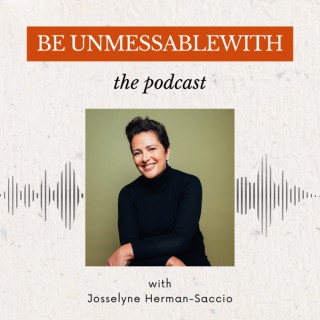
Be Unmessablewith: The Podcast hosted by Josselyne Herman-Saccio
In this episode of Be Unmessablewith the podcast, Dr. Dave Rabin, a neuroscientist, psychiatrist, and co-founder of Apollo Neuro specializing in the treatment of chronic stress and trauma, discusses his new book, A Simple Guide to Being Alive, which explores chronic stress, ancient healing techniques, and the impact of modern society on mental health. He emphasizes the importance of understanding our responses to overstimulation and the dopamine economy, while introducing his invention, Apollo Neuro, as a tool for resetting the body and promoting present-moment awareness. The discussion also delves into the significance of bottom-up learning and the need to separate our identity from our thoughts and feelings, ultimately encouraging a journey of self-discovery and embracing our inner child.In this episode, Josselyne Herman-Saccio and Dr. Dave Rabin explore the themes of identity, language, and personal growth. They discuss the importance of de-thingifying oneself, the power of language in shaping our self-perception, and the need to transcend limitations imposed by societal beliefs. The conversation emphasizes the journey of self-discovery, the significance of asking the right questions, and the role of evocative language in fostering curiosity. Practical steps to achieve emotional safety and presence are also shared, highlighting the accessibility of these tools in everyday life.Biggest Takeaways in this episode:The book stems from over 10 years of research on chronic stress.Ancient techniques can effectively address mental illness.Modern society overwhelms us with information and stimuli.We are not broken; we adapt to a dysfunctional environment.Grab my Free Instant Reset guide: A simple guide to getting unstuck into actionCheck out Dr. David Rabin's new bookhttp://www.simpleguide.lifeFind Dr. David:Website: https://www.drdave.io/Connect With JosselyneWebsite: beunmessablewith.comInstagram: @beunmessablewithFacebook: UnmessablewithnessLinkedIn: josselyneherman-saccioYouTube: @beunmessablewith
In this episode, Kyle Hulbert shares his powerful journey from struggling with anxiety, depression, alcoholism, and burnout to uncovering the hidden root causes behind his health challenges: heavy metal toxicity and low testosterone. He dives into the importance of optimizing health upstream of hormones, the dangers of mercury exposure, and the transformative role detoxification played in reclaiming his vitality. Kyle breaks down advanced therapies like chelation, TPE, EBOO, ozone 10-pass, and methylene blue IVs while also emphasizing the foundational lifestyle practices that support safe and effective detoxification. The conversation explores common symptoms women experience with toxicity, testing for Lyme disease and biotoxins, and the biggest mistakes people make when starting their healing journey. Kyle Hulbert is the CEO of the Longevity Center, co-host of the Longevity Unlocked podcast, and a wellness and integrative nutrition coach specializing in detoxification. After years of battling anxiety, depression, and alcoholism while living in Dubai and completing his master's degree, Kyle discovered that heavy metal toxicity and low testosterone were at the root of his struggles. His deep dive into detox, integrative health, and biohacking led him to earn multiple coaching certifications and ultimately leave his family business to open the Longevity Center. In its first year, he helped over 1,500 people detox, heal, and restore their vitality.SHOW NOTES:0:40 Welcome to the podcast!3:21 About Kyle Hulbert4:16 Welcome him to the show!5:05 His health turning point7:17 Discovering low testosterone9:04 Optimizing upstream of hormones12:05 Discovering mercury toxicity15:25 Chelation Therapy for heavy metals20:55 Most common female symptoms 22:29 How to detox infections & biotoxins23:58 TPE vs EBOO28:05 *APOLLO NEURO*30:25 TPE for Autoimmunity31:15 EBOO explained32:29 Ozone 10-Pass explained35:56 Where to begin and what not to do37:15 Testing for Lyme disease39:36 Methylene Blue IVs45:43 Foundations of supporting detox47:12 Biohacks for detox49:22 His sources of mercury exposure51:27 The Longevity Center52:39 His final piece of advice54:45 Thanks for tuning in!RESOURCES:Apollo Neuro - code: BIOHACKERBABES to save $90 off + Smart Vibes BundleWebsite: The Longevity CenterIG: @thelcflPodcast: Longevity UnlockedLinkedInSupport this podcast at — https://redcircle.com/biohacker-babes-podcast/donationsAdvertising Inquiries: https://redcircle.com/brands
Why bother with organ meat when you can just have a ribeye? After all, steak is already one of the most nutrient-dense foods on the planet. It's a fair question, and one I get all the time. The ancestral health world has generally answered it with "because our ancestors did" or "because predators eat the organs first," and while those things are true, they don't actually tell you what you need to know. The real question is how much more nutritious is an organ than a steak. Is it 10% more? Twice as much? Because if the gap is small, eat the steak and move on. But if it's enormous, that changes things. In this episode, I share the results of a lab analysis that finally answers the question with actual data, nutrient by nutrient. Our freeze-drying partner sent samples of freeze-dried beef organs alongside grass-fed and grain-finished ribeye to the Center for Human Nutrition Studies at Utah State University, where Dr. Stephan van Vliet led the project. They accounted for water content across all samples so the comparison would be fair. And the results weren't subtle. For example, compared to ribeye, 100 grams of freeze-dried beef liver had… 73 times more B12 42 times more preformed Vitamin A 430 times more folate 280 times more Vitamin D 55 times more copper 7 times more choline. Perhaps what was most interesting, though, is that the study revealed that no single organ does it all. Liver wins on fat-soluble vitamins and B vitamins. Heart dominates in CoQ10. Kidney leads with folate and choline. Spleen owns iron by a wide margin. Together, they cover virtually every essential nutrient your body needs. Ribeye is a great food and by far my favorite cut, but it's not complete food. The animal as a whole is. In the episode, I also go into why eggs can help narrow the nutritional gap but can't fully close it, why a traditional Sami reindeer herder in Norway told me they feed the organs to the dogs, and why declining soil fertility makes concentrated nutrient sources like organs even more important than they were a generation ago. Learn More: Top Health Benefits of Consuming Organ Meat: https://www.youtube.com/watch?v=WytdCdykAaA Beef Liver: Benefits of Consumption and Supplementation: https://michaelkummer.com/beef-liver-benefits/ The Health Benefits of Eating 15 Different Organ Meats: https://michaelkummer.com/organ-meat-benefits/ Thank you to this episode's sponsor, Apollo Neuro! Apollo is a wearable that delivers gentle vibrations to calm your nervous system and help your body stay in a restful state through the night. I've been wearing it for years and still notice a measurable difference — higher HRV and a lower resting heart rate on nights I use it. That's not placebo. That's my nervous system responding differently. If your sleep issues feel stress-related — and honestly, most of them are — Apollo is worth trying. To learn more, visit apolloneuro.com/michaelkummer and use code PRIMALSHIFT for $60 off. In this episode: 00:00 Why organs matter 02:06 Modern meat habits 02:46 Sami reindeer lesson 04:40 Eggs versus organs 09:19 Lab test setup 11:11 Liver nutrient bomb 13:46 Heart, kidney, spleen 16:27 How to eat organs 19:42 Soil nutrients decline 21:21 Final thoughts Find me on social media for more health and wellness content: Website: https://michaelkummer.com/ YouTube: https://www.youtube.com/@MichaelKummer Instagram: https://www.instagram.com/primalshiftpodcast/ Pinterest: https://www.pinterest.com/michaelkummer/ Twitter/X: https://twitter.com/mkummer82 Facebook: https://www.facebook.com/realmichaelkummer/ [Medical Disclaimer] The information shared on this video is for educational purposes only, is not a substitute for the advice of medical doctors or registered dietitians (which I am not) and should not be used to prevent, diagnose, or treat any condition. Consult with a physician before starting a fitness regimen, adding supplements to your diet, or making other changes that may affect your medications, treatment plan, or overall health. [Affiliate Disclaimer] I earn affiliate commissions from some of the brands and products I review on this channel. While that doesn't change my editorial integrity, it helps make this channel happen. If you'd like to support me, please use my affiliate links or discount code.
In this episode, we sit down with Dr. Cameron Chesnut to unpack the truth behind today's booming aesthetics industry and what it really means to age well. Dr. Chesnut breaks down the biggest misconceptions surrounding fillers, Botox, dissolving agents, and “quick-fix” medspa culture, while explaining how metabolic health, inflammation, and lifestyle habits directly influence the appearance and function of your skin. The conversation dives deep into regenerative approaches like fat transfers, stem cells, exosomes, and advanced recovery techniques that prioritize natural-looking results over frozen faces or overfilled features. He also shares his nuanced perspective on anesthesia, facial lasers, muscle function, and why preserving authentic facial expression is critical for both emotional communication and long-term health. This fascinating episode challenges conventional beauty standards and explores how true rejuvenation starts with performance, vitality, and a healthy mindset — not a magic pill or syringe.Dr. Cameron Chesnut is a facial plastic surgeon for the world's high-performers. People from all corners of the globe seek his next-level results - with astonishing outcomes from minimally invasive procedures that leave his patients looking natural, rejuvenated, and seemingly untouched. He is renowned for his progressive use of regenerative medicine and postoperative recovery techniques, as well as his dedicated personal preparation for performance readiness.SHOW NOTES:0:40 Welcome to the podcast!3:06 About Dr. Cameron Chesnut3:46 Welcome him to the show!4:45 Biggest misconception around filler8:58 Myths about dissolving filler10:15 What exactly is filler?13:28 Medspa confusion & magic fixes15:00 What is Radiesse? 17:45 How metabolic health impacts your skin18:52 Using your own fat instead of filler22:30 Find the right surgeon26:40 Fat transfers 10130:25 Stem cells & exosomes33:33 *APOLLO NEURO*35:47 Preparing for surgery and procedures40:12 No magic pill41:37 Healthy mindset pre-surgery42:04 The good & bad of Anesthesia48:14 The good & bad of Botox51:15 How Dr. Cameron makes your muscles work better52:20 The importance of facial expressions57:40 Does botox and filler affect everyone negatively?1:02:45 Implications of restricting movement1:04:25 Facial lasers1:10:55 How to work with Dr. Chesnut1:14:01 His final piece of advice1:17:35 Thanks for tuning in!RESOURCES:Apollo Neuro - code: BIOHACKERBABES to save $90 off + Smart Vibes bundleStart Your JourneyAbout Dr. Cameron ChesnutInstagram5 Codes PodcastSupport this podcast at — https://redcircle.com/biohacker-babes-podcast/donationsAdvertising Inquiries: https://redcircle.com/brands

Mother's Day week begins with an intense Mars-Jupiter square and Pluto's retrograde turn on the 6th. The weekend (and Mother's Day) serve up a future-focused Aquarius quarter moon that brings balance as we settle into the long new transit of Uranus in Gemini.Apollo Neuro:https://apolloneuro.com/astrotwinsCode: ASTROTWINS (applied at checkout for $99 off)Chart Readingshttps://astrostyle.com/readingsMusic from #Uppbeat (free for Creators!)https://uppbeat.io/t/ra/let-good-times-roll
In this episode, we sit down with Scott Hickle, co-founder and CEO of Throne Science, to explore how smart toilet technology is transforming the future of personalized health tracking. Scott shares the origin story of Throne and explains how their device analyzes biomarkers from urine and stool to provide insights into hydration, gut health, and even prostate function. The conversation dives into surprising takeaways—like what your bathroom habits reveal about nutrient status, digestion, and early warning signs for chronic conditions. Lauren and Renee reflect on their own data, discussing hydration patterns and the power of real-time feedback to drive meaningful habit change. The episode also tackles bigger topics like data privacy, gaps in current medical research, and Throne's ambitious goal of predicting diseases like colon cancer—making your daily bathroom routine a powerful tool for longevity.Scott Hickle is the co-founder and CEO of Throne Science, a health technology company building smart devices that track gut health, hydration, and prostate with every flush. A mechanical engineer by training, Scott spent most of the last decade on the founding teams of multiple venture-backed startups. At Throne Science, he and his team are building toward a future where your toilet will improve your health and, eventually, even save your life.SHOW NOTES:0:40 Welcome to the podcast!3:39 About Scott Hickle4:18 Welcome him to the show!5:28 Your poop friends7:35 How Throne got started9:52 What can we learn from our bathroom habits12:20 How Throne assesses your hydration14:24 Urgency & constipation15:31 Measuring prostate health16:20 Lauren's hydration takeaways 19:35 Peeing out B vitamins22:46 How does Throne work?27:22 Lance Armstrong's stream28:36 *APOLLO NEURO*30:52 New FDA regulations32:00 Creating habit changes36:41 Renee's melatonin stats37:52 Blindspots in research38:39 Gastro-typing40:14 Data privacy on Throne44:08 Predicting colon cancer49:08 Throne App experience56:25 Poopie Lineup1:02:38 Where to find Throne1:03:58 His final piece of advice1:04:59 Thanks for tuning in!RESOURCES:Apollo Neuro - Discount code: BIOHACKERBABES for $90 off + SmartVibes bundleThrone Science - Discount code: BIOHACKERBABESIG: @thronescienceFB: @thronescienceX, LinkedInTedX TalkSupport this podcast at — https://redcircle.com/biohacker-babes-podcast/donationsAdvertising Inquiries: https://redcircle.com/brands

In this video, Dr. Ruscio discusses 6 powerful tools to reset and calm a dysregulated nervous system. The tools he discusses include vagus nerve stimulation via the ear, resonance breathing, electrolytes / sodium optimization, a vibration tool called Apollo Neuro, an audio-visual stimulation device called BrainTap, and grounding. Each tool offers a uniquely beneficial input into the nervous system to help restore a healing, parasympathetic state. ✅ Start healing with us! Learn more about our virtual clinic: https://drruscio.com/virtual-clinic/
What if your sexual health was as important as your heart rate? What if understanding your sexuality was the final frontier of truly knowing yourself? In this groundbreaking conversation, Dr. Juliana Hauser—sex therapist, author of A New Position on Sex, and expert in sexual agency—challenges everything we've been taught about sexuality, pleasure, and desire. Dr. Hauser explains why sexual wellness isn't something you add to your to-do list (if you're breathing, you're already a sexual being), and why the real work is about developing sexual agency: the skill of knowing your yeses and nos, listening to your body, and showing up authentically in all your relationships. Episode Overview (timestamps are approximate): (0:00) Intro/Teaser (4:00) Why Sexual Wellness Is a Vital Sign for Women's Health (8:00) If You're Breathing, You're Sexual: Reframing Sexuality (9:00) Sexuality as the Final Frontier of Self-Development (21:00) Sensuality & Self-Discovery: Learning Your Yucks and Yums (25:00) Why Knowing Your Anatomy Is Essential for Sexual Health (32:00) Genital Show and Tell: Celebrating Anatomical Diversity (35:00) Labiaplasty & Cosmetic Surgery (44:00) The Arousal Cycle & Why the Standard Model Is Flawed (50:00) Menopause & Sexuality: What Changes (57:00) Aging Vulvas & Why We Need Better Education (59:00) UTIs, Sepsis & Sexual Health: The Hidden Mortality Risk (1:07:00) After Party: Dr. Stephanie's Reflections on Sexual Wellness Resources mentioned in this episode can be found at https://drstephanieestima.com/podcasts/ep465 We couldn't do it without our sponsors: OXFORD HEALTHSPAN PRIMEADINE - A whole-food spermidine supplement that supports cell renewal and healthy aging. Save 20% at https://OxfordHealthspan.com/DrStephanie with code DrStephanie. COZY EARTH - Cozy Earth helps you feel better by keeping your temperature perfect overnight to facilitate deep restorative sleep. Head to https://cozyearth.com and use my code BETTER for up to 20% off. TIMELINE - Timeline's clinically proven formula is now available at a new, lower price . Mitopure now starts at $79, when you go to https://timelinenutrition.com/better with code BETTER. APOLLO - The Apollo wearable supports energy, focus, relaxation, and sleep by syncing with your rhythms. Go to https://ApolloNeuro.com/BETTER to get $99 off Apollo with Smart Vibes AI. PIQUE LIFE - If you want to redefine your evening ritual and still feel like yourself the next day, you can get 10% off for life. Yes, for life at https://piquelife.com/better ****************************P.S. When you're ready, here are two ways Dr. Stephanie can help you:Subscribe: The Mini Pause — My weekly newsletter packed with the most actionable, evidence-based tools for women 40+ to thrive in midlife.Build Muscle: LIFT — My progressive strength training program designed for women in midlife. Form-focused, joint-friendly, and built for real results. Hosted by Simplecast, an AdsWizz company. See pcm.adswizz.com for information about our collection and use of personal data for advertising.
In this episode, we sit down with Jonathan Robinson to unpack the real story behind MDMA therapy, challenging common misconceptions and explaining how it can be a powerful tool for healing trauma, anxiety, and relationship conflict. He shares how MDMA, also known as Ecstasy, can help individuals and couples access deeper empathy, improve communication, and better understand one another without blame or defensiveness. Jonathan also dives into the structure of a typical session, the neuroscience behind how MDMA affects the brain and nervous system, and why it can be so effective for processing grief and resetting emotional patterns. Drawing from his experience guiding over 700 journeys, he discusses the safety profile, virtual facilitation, and his therapist training programs. The conversation wraps with a look at who this therapy is best suited for and what the future may hold as MDMA-assisted therapy moves toward wider acceptance.Jonathan Robinson is a former psychotherapist, best-selling author of 16 books, and a professional speaker from Northern California. Jonathan has made numerous appearances on The Oprah Show and CNN, as well as other national TV talk shows. Jonathan's most recent book is called, “Ecstasy as Medicine: How MDMA Therapy Can Help You Overcome Trauma, Anxiety and Depression…and Feel More Love.” In the book, Jonathan shares the best methods, stories, and ideas he's learned from leading over 700 MDMA journeys and teaching hundreds of therapists how to do his unique protocol over Zoom. His other books include the bestsellers, “Communication Miracles for Couples,” and “More Love, Less Conflict.” Jonathan is known for providing his audiences with immediately useful and powerful information and is the co-host of the podcast Awareness Explorers.SHOW NOTES:0:40 Welcome to the podcast!3:18 About Jonathan Robinson4:14 Welcome him to the show!5:50 Biggest misconception about M7:14 How it helps in couples therapy9:04 Benefits of doing it alone vs with a therapist11:12 Story about his parents14:07 How it helps you understand your partner16:25 Difference between XTC & M18:13 Virtual facilitation20:15 Protocols22:05 Health outcomes on medicine25:12 Resetting the nervous system30:13 Overcoming grief33:05 Communicating without blaming, shaming, or complaining33:58 *APOLLO NEURO*36:00 What a typical session look like37:44 What happens in the brain on M39:51 Safety profile46:21 Practitioner Training program48:07 Future landscape of m50:30 Who this is for vs not for56:09 His final piece of advice57:32 Thanks for tuning inRESOURCES:Apollo Neuro - $90 off with code: BIOHACKERBABESWebsite: https://ecstasyasmedicine.com/Book: XTC for CouplesPractitioner Training - code: OFF200Support this podcast at — https://redcircle.com/biohacker-babes-podcast/donationsAdvertising Inquiries: https://redcircle.com/brands
If you've been following me for any amount of time, you know I've had strong opinions on diet, training, and what belongs on your plate. Some of those opinions I've walked back. Not because I was wrong about everything, but because I've learned more, lived more, and stopped clinging to ideas just because they were mine. How you handle being wrong says a lot more about you than how confident you were when you thought you were right. And when you build an audience or even just a social circle around certain positions, those positions become part of your identity. Walking something back feels like losing credibility. But doubling down on something you no longer believe is what actually destroys it. In this episode, I walk through the seven biggest areas where my thinking has shifted and why. For example, I used to move from one strict dietary framework to the next: paleo to keto to carnivore, fully believing each was the answer until the next one replaced it. Where I've landed is that no single framework captures reality. Humans are meat-leaning but opportunistic omnivores, and the problem with rigid labels is they turn food into ideology. You stop asking "is this good for me?" and start asking "is this allowed?" That connects to a broader shift away from black-and-white thinking. I used to believe clarity meant certainty. If something was bad, it was always bad. But biology doesn't operate in binaries. Carbs make sense for some people in some contexts and not others. Intermittent fasting is a powerful tool but not a universal prescription. Plants are toxic to varying degrees, and I haven't changed my mind on that science, but growing a garden this spring has changed my appreciation for what plants offer beyond nutrition: exposure to soil, sunlight, movement, family time. There's an innate benefit to the process itself. On intensity, I've started asking what the minimum effective dose is that keeps me strong and healthy for decades, instead of always going all in. Organisms that burn hot tend to burn out faster, and the recovery side of training is the part I've neglected most. On biohacking, gadgets can supplement a life well lived but they cannot replace one. I'd rather spend an hour in the garden with my kids than 45 minutes hooked up to devices in a dark room, and I think the health outcomes from the first option are probably better anyway. The thread running through all of this is simple: the willingness to update your thinking is the single most important health skill you can develop. Stay curious, stay critical, and don't confuse confidence with certainty. Learn More:59: Paleo, Keto, Carnivore [Navigating Dietary Changes as a Family] Thank you to this episode's sponsor, Apollo Neuro! Apollo is a wearable that delivers gentle vibrations to calm your nervous system and help your body stay in a restful state through the night. I've been wearing it for years and still notice a measurable difference — higher HRV and a lower resting heart rate on nights I use it. That's not placebo. That's my nervous system responding differently. If your sleep issues feel stress-related — and honestly, most of them are — Apollo is worth trying. To learn more, visit apolloneuro.com/michaelkummer and use code PRIMALSHIFT for $60 off. In this episode: 00:00 Why I changed my mind 05:45 #1 Beyond diet labels 08:43 #2 Black and white thinking 11:55 #3 Rethinking plants 15:07 #4 Intensity vs. longevity 18:40 #5 Gadgets vs. nature 22:10 #6 Choosing health mentors 24:48 #7 Store products reality check 27:08 Final thoughts Find me on social media for more health and wellness content: Website: https://michaelkummer.com/ YouTube: https://www.youtube.com/@MichaelKummer Instagram: https://www.instagram.com/primalshiftpodcast/ Pinterest: https://www.pinterest.com/michaelkummer/ Twitter/X: https://twitter.com/mkummer82 Facebook: https://www.facebook.com/realmichaelkummer/ [Medical Disclaimer] The information shared on this video is for educational purposes only, is not a substitute for the advice of medical doctors or registered dietitians (which I am not) and should not be used to prevent, diagnose, or treat any condition. Consult with a physician before starting a fitness regimen, adding supplements to your diet, or making other changes that may affect your medications, treatment plan, or overall health. [Affiliate Disclaimer] I earn affiliate commissions from some of the brands and products I review on this channel. While that doesn't change my editorial integrity, it helps make this channel happen. If you'd like to support me, please use my affiliate links or discount code.
In this episode, we sit down with Dr. Dan Pardi to unpack the science and surprising versatility of creatine, far beyond its reputation as a muscle-building supplement. He breaks down how creatine supports cellular energy production, enhances strength and performance, and may even buffer the effects of sleep deprivation—making it a powerful tool for modern high-performers. The conversation dives into nuanced dosing strategies, optimal timing, and key differences between forms like monohydrate and HCL, while also addressing common concerns like bloating and kidney health. Dr. Pardi highlights important considerations for women, including lower natural creatine production, hormonal influences, and its potential role in postpartum depression and brain health. The episode ties it all together by exploring how creatine intersects with methylation and NAD support, positioning it as a foundational supplement for longevity, resilience, and cognitive optimization.Dr. Dan Pardi is the Chief Health Officer at Qualia Life Sciences, where he leads education to advance healthspan and peak performance. He's the founder of humanOS.me and host of humanOS Radio, the official podcast of the Sleep Research Society. Dan has advised elite military units, Fortune 500 companies, and startups through his consultancy, Vivendi Health. He holds a PhD in Cognitive Neuroscience from Leiden University and Stanford, and speaks regularly at events like TEDx, VC Firms, and the Institute for Human Machine Cognition.SHOW NOTES:0:40 Welcome to the podcast!2:48 About Dr. Dan Pardi3:34 Welcome him to the show!5:07 The history of Creatine7:30 What is Creatine?9:25 General vs personal dosages11:07 How it contributes to energy13:43 Strength-training vs Endurance benefits16:02 Optimal timing for exercise18:00 Supporting sleep deprivation19:45 STUDY on Rugby players22:01 Creatine for sleep & brain function24:23 Best time to dose28:57 Female hormones and creatine function30:59 *APOLLO NEURO*33:02 Why do women make less creatine?37:03 Post-partum Depression38:51 The Triage Phenomenon40:52 Getting creatine into the brain43:27 Methylation and creatine45:30 NAD injections & supplements48:51 Qualia Life Creatine50:31 Comparing forms: Monohydrate vs HCL54:16 Concerns of bloating & kidney dysfunction58:34 How to know if you're taking enough59:46 Research studies on Creatine1:02:35 His final piece of advice1:05:42 Thanks for tuning in!RESOURCES:Apollo Neuro - code: BIOHACKERBABES for $90 off Smart Vibes bundleQualia Life - Discount code: BIOHACKERBABESFacebookInstagramLinkedInPodcast: Human OS RadioSupport this podcast at — https://redcircle.com/biohacker-babes-podcast/donationsAdvertising Inquiries: https://redcircle.com/brands
Your food can only be as nutrient dense as the soil it was grown in. That's the realization I had after testing the soil across our new property and discovering that despite being relatively fertile and rich in magnesium, it was far too acidic for plants to absorb those minerals properly. Soil pH is a gatekeeper: if it's off, the nutrients stay locked in the ground even when they're technically present. That sent me down a rabbit hole of soil depletion and food nutrient density, and the data is sobering. A 2004 University of Texas study compared USDA food composition data for 43 crops between 1950 and 1999 and found protein down 6%, calcium down 16%, iron down 15%, and vitamin C down 20%. A 2022 UK study showed iron down 50% and copper down 49% over 80 years. In this episode, I break down why this matters even if you're eating an animal-based diet; where the biggest mineral gaps are likely hiding; and what you can do about it right now. If you're thinking this is just a farming problem, consider that cattle, chickens, and pigs eat plants and forage. If they're consuming depleted feed, the resulting meat, eggs, and milk are also depleted. The nutrient density of your ribeye starts in the soil under the grass. Meanwhile, US cropland loses 4.63 tons of topsoil per acre per year, and a third of the corn belt has already lost its entire mineral-rich topsoil layer. It takes about a thousand years to generate one inch of new topsoil, and we're losing it ten times faster than it forms. The minerals you're most likely missing are magnesium (nearly half of Americans consume less than the estimated average requirement, and standard blood tests won't catch a deficiency because only 1% of body magnesium is in serum), zinc (critical for immune function and testosterone, and lost through sweat during training), and selenium (almost entirely dependent on regional soil content, with up to 34x variability in the same food depending on where it was grown). The long-term fix is regenerative farming, which studies consistently show produces two to three times the soil health scores and significantly higher vitamin and mineral content. The short-term fix is sourcing from farmers who care about soil quality, eating organ meats and oysters, and supplementing strategically to bridge gaps that even a well-constructed diet can't fully cover. Learn More: Our Kummer Homestead Channel: https://www.youtube.com/@kummerhomestead Use code YOUTUBE for 20% off our supplements → https://mksupps.com Local regenerative farm finder: http://EatWild.com Thank you to this episode's sponsor, Apollo Neuro! Apollo is a wearable that delivers gentle vibrations to calm your nervous system and help your body stay in a restful state through the night. I've been wearing it for years and still notice a measurable difference — higher HRV and a lower resting heart rate on nights I use it. That's not placebo. That's my nervous system responding differently. If your sleep issues feel stress-related — and honestly, most of them are — Apollo is worth trying. To learn more, visit apolloneuro.com/michaelkummer and use code PRIMALSHIFT for $60 off. In this episode: 00:00 Intro 02:19 Nutrients are declining 04:39 Soil erosion crisis 06:52 Labels vs reality 08:37 Real food variability 10:22 Magnesium testing trap 11:09 Zinc and immunity 12:04 Selenium depends on soil 13:14 Regenerative farming fix 17:01 Local sourcing tips 18:24 Final takeaways Find me on social media for more health and wellness content: Website: https://michaelkummer.com/ YouTube: https://www.youtube.com/@MichaelKummer Instagram: https://www.instagram.com/primalshiftpodcast/ Pinterest: https://www.pinterest.com/michaelkummer/ Twitter/X: https://twitter.com/mkummer82 Facebook: https://www.facebook.com/realmichaelkummer/ [Medical Disclaimer] The information shared on this video is for educational purposes only, is not a substitute for the advice of medical doctors or registered dietitians (which I am not) and should not be used to prevent, diagnose, or treat any condition. Consult with a physician before starting a fitness regimen, adding supplements to your diet, or making other changes that may affect your medications, treatment plan, or overall health. [Affiliate Disclaimer] I earn affiliate commissions from some of the brands and products I review on this channel. While that doesn't change my editorial integrity, it helps make this channel happen. If you'd like to support me, please use my affiliate links or discount code.
What if everything you thought you knew about peptides—and even GLP-1s—was only scratching the surface? In this episode, we sit down with Jay Campbell to unpack the rapidly evolving (and often misunderstood) world of peptide therapy, from regulation challenges and dosing risks to the truth about purity and sourcing. Jay shares what's really happening behind the scenes with major pharmaceutical players, what's coming next with compounds like Retatrutide, and why so many people are getting GLP protocols wrong. The conversation goes beyond hype, diving into how to work with your biology through smarter protein strategies, muscle-building, and personalized optimization. If you're curious about the future of longevity medicine, this episode will completely shift your perspective.Jay Campbell is a health optimization pioneer, longevity and peptide expert, and five-time international bestselling author. He is the co-founder of BioLongevity Labs and has spent more than two decades studying metabolic health, hormone optimization, and aging biology. Jay's work blends cutting-edge science with intuition and self-awareness, helping people understand how to work with their biology rather than override it.SHOW NOTES:0:40 Welcome to the podcast!2:21 About Jay Campbell3:05 Welcome him to the show!3:45 Current regulation of peptides6:35 Challenges with dosing yourself8:35 Big compounders like Eli Lilly9:25 What's on the horizon!10:15 Research companies vs Telehealth12:25 Cheap vs pure peptides19:05 BioLongevity Labs testing20:08 Peptide origin myths!21:17 Coming soon22:53 *APOLLO NEURO*24:54 *CALOCURB*26:47 GLP-3 Retatrutide29:19 The wrong doses of GLPs32:26 GLP-4s, 5s, and 6s36:18 What we got wrong about GLP-1s39:15 Protein goals & building muscle44:39 Adding in Calocurb 46:10 Once/week dosing47:39 Where to find him47:49 Thanks for tuning in!RESOURCES:Apollo Neuro - Discount code: BIOHACKERBABES for $90 off Smart Vibes bundleCalocurb - Discount code: RENEE10Website: Biolongevitylabs.com - Discount code: BIOHACKERBABESInstagram: Jay CampbellInstagram: Biolongevity LabsYouTubeFacebookXBook: Metabolic AwakeningSupport this podcast at — https://redcircle.com/biohacker-babes-podcast/donationsAdvertising Inquiries: https://redcircle.com/brands
If you've ever sat in a doctor's office describing brain fog, mood swings, terrible sleep, and a body that no longer responds to anything you try — only to be sent home with a shrug and maybe an antidepressant — this one's for you. Dr. Mary Claire Haver, Board-Certified OBGYN and Certified Menopause Specialist, is back for round two, and she came prepared. In this episode, she breaks down the hormonal wildfire she calls 'The Zone of Chaos,' explains why perimenopause looks nothing like what your doctor was trained to treat, and gives you the actual language to walk into your next appointment and finally get some answers. Buckle up. Episode Overview (timestamps are approximate): (0:00) Intro/Teaser (5:00) The Zone of Chaos (9:00) How Do You Know You're in Perimenopause? (13:00) "I Don't Feel Like Myself" - The Universal Symptom (15:00) 10 Doctors, Polypharmacy & a Hysterectomy (17:00) How to Get Answers (19:00) Your Brain on Perimenopause (23:00) The ADHD Connection (26:00) Bone Density & Muscle Mass (29:00) Calming the Chaos, Not Replacing What's Lost (44:00) What Mary Claire Actually Does (53:00) Fasting, Menowashing & Your Bull$h!t Radar (56:00) A Letter to My 35-Year-Old Self (1:00:00) After Party: Dr. Stephanie's Takeaways Resources mentioned in this episode: https://drstephanieestima.com/podcasts/ep462/ We couldn't do it without our sponsors: ONESKIN - Harness the power of peptides for fuller hair and glowing skin. Save 15% at https://oneskin.co/better with code BETTER. APOLLO - The Apollo wearable supports energy, focus, relaxation, and sleep by syncing with your rhythms. Go to https://ApolloNeuro.com/BETTER to get $99 off Apollo with Smart Vibes AI. LMNT - Stay hydrated without the sugar, food dye, and other dodgy ingredients found in popular electrolyte and sports drinks. Receive a free LMNT Sample Pack with any order when you make a purchase at https://DrinkLMNT.com/Better BIOPTIMIZERS - Magnesium Breakthrough contains multiple types of magnesium plus cofactors like B6 to enhance absorption. Visit https://bioptimizers.com/better and use code BETTER to save 15%. ****************************P.S. When you're ready, here are two ways Dr. Stephanie can help you:Subscribe: The Mini Pause — My weekly newsletter packed with the most actionable, evidence-based tools for women 40+ to thrive in midlife.Build Muscle: LIFT — My progressive strength training program designed for women in midlife. Form-focused, joint-friendly, and built for real results. Hosted by Simplecast, an AdsWizz company. See pcm.adswizz.com for information about our collection and use of personal data for advertising.
In this episode, we sit down with Hope Pedraza to explore how tools like Human Design and nervous system regulation can help uncover and unwind unhelpful narratives that drive burnout and stress. Hope breaks down the difference between generational and transgenerational patterns, emphasizing that true healing starts with awareness and honoring moments when “mom needs a minute.” The conversation dives into identifying hidden signs of burnout, why supporting the nervous system comes first, and how tools like HTMA (Hair Tissue Mineral Analysis) can provide deeper insight into symptoms. She also offers a practical introduction to Human Design, including the five types, and how these frameworks can support everything from creativity to navigating ADHD and perimenopause. Ultimately, this episode highlights the importance of individualized biohacking—aligning your health strategies with your unique design, environment, and life stage to prevent burnout and optimize well-being.Hope Pedraza is a Functional Diagnostic Nutrition Practitioner, Human Design Guide, Clinical Hypnotherapist, and host of the Hopeful and Wholesome podcast. She helps high-performing women optimize their energy, rebalance their nervous system, and reconnect with their body's wisdom so they can scale their business and life without burnout. Her signature method blends functional labs, Human Design embodiment, frequency medicine, and subconscious reprogramming to create sustainable radiance from the inside out.SHOW NOTES:0:39 Welcome to the podcast!3:30 Free Human Design profile4:19 About Hope Pedraza4:53 Welcome her to the show!5:59 Unwinding unhelpful narratives8:05 Generational vs Transgenerational10:02 Starting with awareness11:49 When Mom needs a minute13:50 Symptoms before & after15:54 Nervous system first17:18 Minerals & HTMA test19:20 Hidden signs of burnout21:20 Creativity & Shame26:10 What is Human Design?29:14 The 5 Types30:16 *CALOCURB*32:07 *APOLLO NEURO*34:10 Generator Types37:58 Reflector Types40:40 ADHD in Human Design42:17 Manifesting Generators44:37 Strengths Finder45:20 Strategies for avoiding burnout49:35 HD Profiles52:45 3/5 Heretic Martyr54:25 Partnership of 1/3 & 3/5 58:25 Applications for Perimenopause1:00:39 Ideal Environments1:07:32 Individualization of Biohacking1:08:25 Solar Plexus emotions1:09:55 Working with Hope1:11:16 Her final piece of advice1:12:01 Thanks for tuning in!RESOURCES:CALOCURB - code: RENEE10Apollo Neuro - code: BIOHACKERBABES for $90 offWebsite: hopefulandwholesome.com FB: thehopepedrazaIG: @thehopepedrazaYouTube: @HopePedrazaPodcast: Hopeful and WholesomeDiscovery CallFREE Chart: MyHumanDesign.comSupport this podcast at — https://redcircle.com/biohacker-babes-podcast/donationsAdvertising Inquiries: https://redcircle.com/brands
Your body already knows how to live to 120 in perfect health. It's just not doing it. That realization is what sent Dr. Chris Rhodes down the fasting research path during his PhD in nutritional biochemistry at UC Davis. His argument? Most people doing 16:8 intermittent fasting aren't getting nearly the benefits they think they are. The body doesn't flip into fasting mode until glycogen stores are depleted, which typically takes 20 to 24 hours. Autophagy, stem cell regeneration, and the real anti-inflammatory benefits don't peak until around 72 hours. In this episode, Dr. Rhodes, creator of Mimio – the world's first fasting mimetic supplement – explains what his team discovered when they tracked metabolites during 36-hour fasts in healthy subjects, as well as how they isolated four synergistic molecules that recreate fasting benefits at the cellular level. We also dig into something personal. Almost a year ago, I started supplementing with Mimio and tracked my biological age using TrueAge epigenetic testing before, during, and after. The result? My pace of aging slowed to 0.85 – meaning that for every calendar year, I'm only aging about 10 months biologically. Rhodes walks me through what the epigenetic markers actually mean, why some of my results seem contradictory on the surface, and why the phenotype matters more than the genotype when it comes to practical health decisions. We also get into why fasting can disrupt hormonal cycles through caloric restriction signaling, why elite athletes rarely have exceptional longevity despite peak fitness, and why combining actual fasting with Mimio may produce better results than either one alone. Try Mimio and get 20% off your first purchase with code MICHAELKUMMER: https://mimiohealth.sjv.io/qWzkOg About Chris Rhodes: Dr. Chris Rhodes, PhD, spent 8 years researching fasting at UC Davis before discovering that specific molecules produced during a fast can reduce inflammation, fight oxidative stress, and support metabolic health. That research led him to create Mimio, the world's first fasting mimetic supplement, backed by three clinical studies and designed to deliver measurable longevity benefits without changing your diet or lifestyle. Dr. Chris Rhodes on TikTok: https://www.tiktok.com/@thatnutritiondr Website: https://mimiohealth.com/ Learn more: 73: NAD Supplements That Actually Work: https://www.primalshiftpodcast.com/73-nad-supplements-that-actually-work/ 62: Biological Age Test Review: Epigenetics Explained Simply | Hannah Went: https://www.primalshiftpodcast.com/62-biological-age-test-review-epigenetics-explained-simply-hannah-went/ 63: HbA1c Levels Explained: Why They May Be High Without High Blood Sugar: https://www.primalshiftpodcast.com/63-hba1c-levels-explained-why-they-may-be-high-without-high-blood-sugar/ Thank you to this episode's sponsor, Apollo Neuro! Apollo is a wearable that uses gentle sound wave vibrations to signal safety to your nervous system, helping you feel calmer, more focused, and less reactive throughout the day. Check out my full Apollo review: https://michaelkummer.com/health/apollo-neuro-review/ Get $60 off with my discount code PRIMALSHIFT: https://michaelkummer.com/go/apolloneuro In this episode: 00:00 Fasting mimetic breakthrough 02:25 Experiment setup TrueAge 04:13 Why fasting extends life 06:14 How long to fast 09:11 Fasting risks and hormones 13:59 Longevity versus performance 18:02 Mimio [How it works] 20:39 Clinical results and trials 24:17 TrueAge report walkthrough 32:57 Immune markers vs feeling healthy 36:45 Can you change epigenetics 39:45 Pace of aging results 45:04 Hormetic stress and inflammation 50:11 Food and postprandial inflammation 57:05 Wrap up Find me on social media for more health and wellness content: Website: https://michaelkummer.com/ YouTube: https://www.youtube.com/@MichaelKummer Instagram: https://www.instagram.com/primalshiftpodcast/ Pinterest: https://www.pinterest.com/michaelkummer/ Twitter/X: https://twitter.com/mkummer82 Facebook: https://www.facebook.com/realmichaelkummer/ [Medical Disclaimer] The information shared on this video is for educational purposes only, is not a substitute for the advice of medical doctors or registered dietitians (which I am not) and should not be used to prevent, diagnose, or treat any condition. Consult with a physician before starting a fitness regimen, adding supplements to your diet, or making other changes that may affect your medications, treatment plan, or overall health. [Affiliate Disclaimer] I earn affiliate commissions from some of the brands and products I review on this channel. While that doesn't change my editorial integrity, it helps make this channel happen. If you'd like to support me, please use my affiliate links or discount code. #Mimio #Longevity
In this episode, we break down the rapidly evolving world of health influencing, emphasizing that there is no one-size-fits-all approach and questioning whether “healthfluencing” can sometimes do more harm than good. We walk listeners through our evaluation framework, using popular products like vibration plates, DOSE liver shots, and clear protein to distinguish between evidence-based tools and overhyped trends. We highlight where science supports certain ingredients or modalities, such as creatine and specific types of collagen, while also calling out potential risks, like curcumin's impact on anemia or the lack of regulation in products sold on Amazon. Throughout the episode, we reinforce a “food-first” philosophy and encourage consumers to think critically about who a product is actually for before jumping on trends. SHOW NOTES:0:39 Welcome to the show!4:18 No one-size-fits-all5:02 Is health-fluencing dangerous?9:19 How we assessed this list9:57 Vibration Plates13:36 Validated benefits of vibration18:44 Does it pass?19:12 DOSE shots for liver20:24 Validation of ingredients21:29 Curcumin & Anemia25:11 Verdict + alternatives26:31 Food first approach 27:55 Clear Protein33:28 Who is it for?34:07 Verdict34:20 *APOLLO NEURO*36:23 *CALOCURB*38:15 Creatine39:41 How does creatine work?42:30 Who is this for?44:02 AG1 (Athletic Greens)48:44 Verdict + alternatives49:35 Collagen Peptides51:50 Alternatives + recommendations54:10 Amazon warning56:00 Collagen verdict56:09 Supergut59:47 Verdict + contraindications1:00:24 Recap1:01:17 Tested by SuppCo App1:02:22 Thanks for tuning in!RESOURCES:Apollo Neuro - Discount code: BIOHACKERBABES for $90 off Smart Vibes bundleCalocurb - Discount code: RENEE10Feierdun Vibration PlatePower Plate (Vibration Plate) - Discount code: BIOHACKERBABESDe-liver-ance - Discount code: BIOHACKERBABESBeef Protein: Be Well by KellyDesigns for Health PurePaleo (Beef Protein)Creatine: Qualia - code: BIOHACKERBABESSHEatineDesigns for Health Whole Body CollagenSuperGut GLP-1 PowderSuppCo AppSupport this podcast at — https://redcircle.com/biohacker-babes-podcast/donationsAdvertising Inquiries: https://redcircle.com/brands
This week we're bringing Jason Earle, founder and CEO of GotMold?, back on our podcast to uncover the hidden health impacts of mold exposure. After discovering that mold in his childhood home was the root cause of his severe allergies and asthma, Jason left a successful Wall Street career to help families identify and solve indoor air quality problems. He explains why using bleach on mold can actually make the problem worse and why the key is removing mold, not just trying to kill it. The conversation dives into how to identify a true mold problem using simple cues like what you can see, smell, and feel, along with insights on testing methods, humidifiers, VOCs, and finding the source of contamination. We also explore bigger-picture health topics including limbic retraining, the Cell Danger Response, and Jason's philosophy that optimal health comes down to “air, food, and attitude.” Jason Earle is a man on a mission. An adoring father of two boys, incurable entrepreneur and indoor air quality crusader, he is the founder & CEO of GOT MOLD?, and the creator of the GOT MOLD?® Test Kit. The realization that his moldy childhood home was the underlying cause of his extreme allergies and asthma, led him into the healthy home business in 2002, leaving behind a successful career on Wall Street. Over the last two decades, Jason has personally performed countless sick building investigations, solving many medical mysteries along the way, helping thousands of families recover their health and peace of mind. He has been featured or appeared on Good Morning America, Extreme Makeover: Home Edition, The Dr. Oz Show, Entrepreneur, Wired, and more.SHOW NOTES:0:40 Welcome to the podcast3:04 About Jason Earle4:03 Welcome him to the show!4:51 What happens when we use bleach on mold8:05 Bleach chemical composition12:36 Why you need to clean it, not kill it13:45 Mold in your toilet15:24 Mold growth vs a mold problem18:10 How much mold is too much?20:11 3 Steps: See, Smell, Feel22:08 Humidifier 10124:45 VOCs & Musty odors28:31 Air vs Dust sampling37:25 No false negative38:19 *CALOCURB*40:09 *APOLLO NEURO*42:15 Finding the source43:09 Self-directed Mold Assessment 46:40 Next-gen sequencing48:48 Mold sensor50:08 Mycotoxin testing58:09 Air on airplanes1:02:58 Looking for mold in a new home1:08:08 “Air, Food & Attitude”1:15:05 Limbic Retraining1:18:59 Cell Danger Response1:23:35 Where to find him1:24:52 Thanks for tuning in!RESOURCES:Calocurb - code: RENEE10Apollo Neuro - code: BIOHACKERBABESWebsite: GotMold?Get your test kitFREE E-BookIG: @gotmoldFB: GotMoldEp 227: Understanding Mold Exposure & RisksSupport this podcast at — https://redcircle.com/biohacker-babes-podcast/donationsAdvertising Inquiries: https://redcircle.com/brands
Be Unmessablewith: The Podcast hosted by Josselyne Herman-Saccio
What if the reason you feel exhausted, reactive, or stuck isn't because something is wrong with you, but because your nervous system has forgotten what safety feels like?In this episode, Josselyne sits down with neuroscientist Dr. David Rabin, and the conversation goes far beyond stress management or mindset work. Together, they unpack how trauma actually lives in the body, why fear gets hardwired faster than joy, and how the meanings we made years ago may still be running our lives today.This is a conversation about dreams, trauma, meaning, the power of language, and the science of becoming unmessablewith from the inside out.What you'll hear in this episode:Why PTSD and chronic stress can behave like “the past is happening now” in your bodyThe role shame plays in cementing fear and why support changes everythingHow the words you use can either trap you or unlock a new futureThe simple daily practice Dr. Rabin recommends to start rewiring todayCheck Out Dr David's New BookA Simple Guide to Being AliveCheck out Apollo Neuro https://apolloneuro.com/unmessablewith Code: unmessablewithFind Dr. David:Website: https://www.drdave.io/Connect With JosselyneWebsite: beunmessablewith.comInstagram: @beunmessablewithFacebook: UnmessablewithnessLinkedIn: josselyneherman-saccioYouTube: @beunmessablewith
All plants are toxic to varying degrees. I haven't changed my mind on that. But recently our oldest daughter came up with a business idea: – making salves from plantain leaves infused in beeswax and olive oil for their antibacterial properties — and it got me thinking about the role plants actually play in our household despite the fact that we're very much an animal-based, meat-centric family. The truth is, we do eat plants. We always have. The foundation hasn't changed — meat, organs, eggs, dairy and bone broth make up the vast majority of our calories, and comparing the nutrient content of beef liver to kale isn't a close fight. But adhering to an animal-based dietary framework doesn't mean plants are the enemy in every context. The oldest use case is medicinal. Aspirin comes from willow bark, metformin from the French lilac, morphine from poppies. I'm not eating willow bark for lunch, but if I have a headache, it makes perfect sense. Turmeric targets inflammatory pathways, ginger helps with nausea, and oregano oil has been one of our go-to remedies for respiratory and gut infections for years. These aren't calories or micronutrients — we get those from animals. But for targeted medicinal use, plants have earned their place. Then there's flavor and the cultural connection that comes with food. Rosemary on a lamb roast, fresh basil on sourdough pizza, the smell of garlic roasting in a pan — those things make food better. Food is family connection, tradition, and cultural identity. My wife is Costa Rican, I'm from Europe, and we grew up with certain meals that bring the family together. Some of those include plant-based ingredients, and the value of sharing that meal can override the marginal downsides. The real nuance is preparation. Fermenting, sprouting, soaking, peeling cooking — these methods can meaningfully reduce anti-nutrients like lectins and phytic acid. We peel, slice, and ferment sweet potatoes in a saline solution for three days, which lowers the glycemic index and breaks down a lot of the problematic compounds. We soak rice overnight and cook it in fresh water. None of this turns plants into superfoods, but it makes them significantly more compatible with a species-appropriate diet – especially if you're sourcing organic or growing them yourself. The practical framework is straightforward: 80 to 90% quality animal foods, 10 to 20% well-chosen, well-prepared plants. If you're already eating nose to tail and building around nutrient density, you've won the big battle. The plant question is just fine-tuning. Learn More: My Animal-Based Food List (Free Download): https://michaelkummer.com/food-list/ MEAT vs. PLANTS (What's Better for Your Health?): https://www.youtube.com/watch?v=GqKzO_PkD-k&utm Plants vs. Meat: Why I Stopped Eating Veggies: https://michaelkummer.com/plants-vs-meat 99: Plants vs Animals: Why Meat Beats Plants for Nutrition: https://www.primalshiftpodcast.com/99-plants-vs-animals-why-meat-beats-plants-for-nutrition 49: From Almonds to Spinach: Dr. Schindler on Avoiding Common Dietary Traps: https://www.primalshiftpodcast.com/49-from-almonds-to-spinach-dr-schindler-on-avoiding-common-dietary-traps/ Thank you to this episode's sponsor, Apollo Neuro! Apollo is a wearable that delivers gentle vibrations to calm your nervous system and help your body stay in a restful state through the night. I've been wearing it for years and still notice a measurable difference — higher HRV and a lower resting heart rate on nights I use it. That's not placebo. That's my nervous system responding differently. If your sleep issues feel stress-related — and honestly, most of them are — Apollo is worth trying. To learn more, visit apolloneuro.com/michaelkummer and use code PRIMALSHIFT for $60 off. In this episode: 00:00 Intro 02:47 Animal-Based foundation 03:35 Plants as medicine 06:54 Flavor and food culture 10:34 Fermentation and prep 15:04 Plant tiers and avoids 16:42 Final thoughts Find me on social media for more health and wellness content: Website: https://michaelkummer.com/ YouTube: https://www.youtube.com/@MichaelKummer Instagram: https://www.instagram.com/primalshiftpodcast/ Pinterest: https://www.pinterest.com/michaelkummer/ Twitter/X: https://twitter.com/mkummer82 Facebook: https://www.facebook.com/realmichaelkummer/ [Medical Disclaimer] The information shared on this video is for educational purposes only, is not a substitute for the advice of medical doctors or registered dietitians (which I am not) and should not be used to prevent, diagnose, or treat any condition. Consult with a physician before starting a fitness regimen, adding supplements to your diet, or making other changes that may affect your medications, treatment plan, or overall health. [Affiliate Disclaimer] I earn affiliate commissions from some of the brands and products I review on this channel. While that doesn't change my editorial integrity, it helps make this channel happen. If you'd like to support me, please use my affiliate links or discount code.
In this episode, fertility expert Gabriela Rosa reveals one of the biggest blind spots in modern fertility care: many couples are pushed toward treatments like IVF before receiving a true diagnosis. She breaks down how fertility clinics often operate, why infertility is frequently misunderstood, and how underlying issues such as thyroid dysfunction, insulin resistance, and PCOS can significantly impact reproductive outcomes. Gabriela shares powerful patient stories, including Renee's own experience, to illustrate how personalized investigation and root-cause medicine can dramatically shift fertility trajectories. She also explains why fertility is a “team sport,” outlining her strategic approach to improving egg quality, hormonal balance, and metabolic health while interpreting key tests like AMH and follicle development timelines. The conversation concludes with practical guidance on nutrition's role in fertility, her “Three Rocks” framework for treatment, and a thoughtful decision tree to help women determine when egg freezing may or may not be the right choice. Gabriela Rosa, DrPH (Candidate, Harvard), is a Harvard-awarded fertility specialist, founder of The Rosa Institute, and author of Fertility Breakthrough: Overcoming Infertility and Recurrent Miscarriage When Other Treatments Have Failed. She pioneered telehealth-based, integrative fertility care, making evidence-based solutions accessible worldwide.Gabriela also created and hosts The Fertility Challenge, a free online program that reaches tens of thousands globally each year. Her F.E.R.T.I.L.E. Method® has supported more than 204,000 people across 111 countries, with published research demonstrating a 78.8% live birth rate among patients in her signature program—even after years of infertility, recurrent miscarriage, and failed treatments.SHOW NOTES:0:39 Welcome to the show!2:43 About Gabriela Rosa3:35 Welcome her to the podcast!4:47 The biggest blindspot in fertility9:05 How fertility clinics operate10:56 What does infertility mean?11:52 Getting a proper diagnosis12:36 Patient story16:26 IVF industry goals18:48 Miscarriage & Thyroid21:19 Renee's story23:35 IUI incentives & results25:19 Who benefits from IVF?27:50 *APOLLO NEURO*29:50 *CALOCURB*31:00 Who gets turned away from her clinic35:39 Who she does work with37:30 Fertility is a team sport40:05 Her strategy for improving fertility43:16 Timeline of eggs & follicles45:45 AMH testing & optimal ranges51:14 PCOS & Insulin Resistance55:04 Infertility and all-cause mortality1:01:03 Research on correlation between nutrition & fertility1:05:38 The 3 Rocks1:11:09 Egg Freezing decision treeRESOURCES:Apollo Neuro - code: BIOHACKERBABES for $90 offCalocurb - code: RENEE10Website: fertilitybreakthrough.comIG: @dr.gabrielarosa, @fertilitybreakthroughFB: FertilitySpecialistGabrielaRosaX: gabrielarosaTikTok: @gabrielarosafertilityPodcast: Talk Sex with Gabriela RosaSupport this podcast at — https://redcircle.com/biohacker-babes-podcast/donationsAdvertising Inquiries: https://redcircle.com/brands

In this episode, Dr. Pinkston sits down with Dr. Shivani Gupta, an Ayurvedic expert with a PhD in Turmeric and author of The Inflammation Code. They explore the bridge between Eastern wisdom and Western medicine, detailing how to reverse the "negative stack" of modern life—stress, blue light, and processed foods—through simple, nature-aligned rituals. https://shivanigupta.com/ Episode Highlights The Two Worlds of Healing: Dr. Gupta discusses growing up between Houston's conventional pediatrics and her grandmother’s Indian spice cabinet, eventually leading her to a PhD quest to validate ancient remedies with modern science. The Six Pillars of Ayurveda: Insights into Elemental Design (Air, Ether, Fire, Water, Earth) and how understanding your specific type helps you build a lifestyle that wins against inflammation. Mental vs. Physical Inflammation: A breakdown of how chronic stress and "mental inflammation" create a feedback loop that damages the gut and dysregulates hormones. The Power of Turmeric & Curcumin: Why your kitchen spice isn't enough to fight chronic pain and how specific extracts (curcuminoids) act as the "ultimate janitor" for your cells. Vagus Nerve Toning: Discussion on the Apollo Neuro and other biohacking tools that help transition the body from "survival mode" (sympathetic) to "healing mode" (parasympathetic). See omnystudio.com/listener for privacy information.
In this episode, we sit down with Dr. David Rabin for a mind-expanding conversation on what we've fundamentally gotten wrong about mental health—and why treating symptoms instead of root causes keeps us stuck. They unpack how smartphones hijack our dopamine, why modern convenience works against our nervous systems, and what it really takes to break free from a chronic sympathetic (fight-or-flight) state. From the ancestral role of dopamine and the science behind hugs to nuanced discussions on anxiety, autism spectrum disorder, psychedelics, and ibogaine, this episode bridges ancient biology with cutting-edge research. Dr. Rabin also dives into the “Ape Theory” and the importance of understanding specific mushroom strains rather than lumping them all together. The conversation wraps with insights on Apollo Neuro, sleep optimization, respiratory rates, the “first night effect,” and a refreshing reminder that living a simple, happy life may be the most powerful biohack of all.Dr. David Rabin, MD, PhD, is a translational neuroscientist, board-certified psychiatrist, health tech entrepreneur & inventor who has been studying the impact of chronic stress in humans for more than two decades. He is the co-founder & Chief Medical Officer at Apollo Neuroscience, which has developed the first scientifically-validated wearable technology that actively improves energy, focus & relaxation, using a novel touch therapy that signals safety to the brain.In addition to his clinical psychiatry practice, Dr. Rabin is currently conducting research on wearable and technology-based solutions for mental illnesses and the mechanism of psychedelic-assisted psychotherapy in treatment-resistant mental illnesses. He received his MD in medicine and PhD in neuroscience from Albany Medical College and specialized in psychiatry with a distinction in research at Western Psychiatric Institute & Clinic at the University of Pittsburgh Medical Center. He has been married to his co-founder, Kathryn Fantauzzi, since 2016.SHOW NOTES:0:40 Welcome to the podcast!4:06 About Dave Rabin5:03 Welcome him to the show!6:36 What have we gotten wrong about mental health?8:15 Interaction with our smart phones11:12 Treating symptoms, not the cause12:25 Breaking free from sympathetic state15:48 The ancestral purpose of dopamine19:06 Patience vs Convenience24:08 Why we need hugs for health28:29 *CALOCURB*29:40 Anxiety & Autism Spectrum Disorder 32:09 When are psychedelics appropriate?35:34 Knowing your mushroom strain39:42 Ibogaine benefits46:21 Germ theory & antibiotics51:12 The Ape Theory57:13 About the Apollo1:03:05 How it increases deep & REM sleep1:04:01 Average respiratory rates1:08:05 “First Night Effect”1:08:54 How to live a simple, happy life1:11:32 “The Four Agreements”1:15:03 His final piece of advice1:17:40 Thanks for tuning in!RESOURCES:Calocurb - code: RENEE10_______________Website: David Rabin MD, PhD, Apollo NeuroApollo Neuro - Discount code: BIOHACKERBABESDr. Rabin's Book: A Simple Guide to Being AliveInstagram: @drdavidrabinTwitter: @daverabinWikipedia: David Rabin MD, PhDPodcast Website: The Psychedelic NewsDocumentaries: How to Change Your Mind, War in WavesMycology Psychology FREE Community CallSupport this podcast at — https://redcircle.com/biohacker-babes-podcast/donationsAdvertising Inquiries: https://redcircle.com/brands

In our fast paced world it is easier than ever to be burned out. High testosterone and motivated individuals like myself are more susceptible to burning the candle at both ends and wearing ourselves thin. In this episode I share what I am doing to recover from three years of unrelenting nonstop stressors. I don't talk about the details of my personal life because people use that as ammunition against me, but you can read between the lines when I talk about my experiences. For the first half of the show I focus on the scientific studies regarding ascorbic acid (vitamin C), magnesium, zinc, melatonin, and sodium chloride for recovering from burnout and staving off depression, anxiety, and other mental states that can manifest from burnout. I skim over the foundational stuff like going outside and getting sunlight because thats all most people are talking about. I do share why its important to get in enough calories and the liquid meal that I'm consuming when I don't have an appetite. I talk a little about traditional chinese medicine, why its crucial to restore your Yin energy, and the chinese herbs I'm taking everyday to assist with that. I pay respect to Ray Peat and appreciation of his focus on handling stress using bioenergetics and improving cellular health. Tools that I use are shared including the Apollo Neuro device and the two peptides I'm currently on. My website: www.matt-blackburn.com Mitolife products: www.mitolife.co Music by Ryan Parr: www.huemanpictures.com Studies I mentioned: Vitamin C and the brain: https://pmc.ncbi.nlm.nih.gov/articles/PMC8783887/ Magnesium and brain function: https://www.mdpi.com/2072-6643/12/6/1661 Zinc reduces fatigue: https://pmc.ncbi.nlm.nih.gov/articles/PMC8133867 Low caloric diets increase cortisol: https://pmc.ncbi.nlm.nih.gov/articles/PMC2895000/ https://www.tandfonline.com/doi/full/10.3109/10253890.2015.1121984 Melatonin protects hippocampus from long term stress: 36162616

What if healing starts with feeling safe in your body? In this powerful episode of Vibe Science, we sit down with Dr. Dave Rabin, neuroscientist, psychiatrist, and Chief Medical Officer of Apollo Neuroscience, to explore why modern mental health treatments are falling short — and what science already knows that most people don’t. Dr. Rabin breaks down the neuroscience of stress, PTSD, and recovery, explaining how soothing touch, vibration, music, and safety signals directly regulate the nervous system. He also dives deep into the controversial FDA rejection of MDMA-assisted therapy and why non-drug solutions like Apollo Neuro are becoming critical tools for healing. This conversation bridges hard science and human connection, revealing why loneliness, chronic stress, and disconnection may be the biggest public health crisis of our time — and how we can actually fix it. Topics Covered Why traditional PTSD medications only work for ~30% of people How MDMA-assisted therapy achieves up to 88% response rates The FDA’s controversial MDMA decision explained How the autonomic nervous system controls healing Why “feeling safe” is the gateway to recovery The science behind Apollo Neuro’s vibration therapy Loneliness as a public health crisis Why modern medicine treats symptoms instead of causes Key Takeaway Healing doesn’t start with pills — it starts with regulating the nervous system and restoring a sense of safety in the body. Learn More Dr. Dave Rabin: drdave.io Apollo Neuro: wearableshugs.com

View the Show Notes For This Episode Dr. Peter Bongiorno discusses Natural Solutions for Depression and Anxiety with Dr. Ben Weitz. [If you enjoy this podcast, please give us a rating and review on Apple Podcasts, so more people will find The Rational Wellness Podcast. Also check out the video version on my WeitzChiro YouTube page.] Podcast Highlights An Integrative Approach to Managing Depression and Anxiety with Dr. Peter Bongiorno In this episode of the Rational Wellness Podcast, Dr. Ben Weitz talks with Dr. Peter Bongiorno, a naturopathic doctor and acupuncturist, about an integrative approach to treating depression and anxiety. They explore how conventional treatments often fail to address underlying issues and discuss the potential benefits of functional medicine. The conversation covers dietary recommendations, the role of neurotransmitters, and the use of various supplements and lifestyle changes to support mental health. They also touch on the significance of vagal nerve tone, the impact of social media, and the importance of personalized patient care. 00:00 Introduction to the Rational Wellness Podcast 00:30 Understanding Depression and Anxiety 01:33 Meet Dr. Peter Bongiorno 02:23 The Integrative Approach to Mood Disorders 07:30 The Role of Neurotransmitters 16:47 Diet and Mood Disorders 18:46 The Mediterranean Diet Explained 22:33 Alcohol and Coffee: Effects on Mood 26:46 Low Carb and Ketogenic Diets 29:05 Product Spotlight: The Apollo Wearable 29:56 Benefits of Apollo Neuro 30:36 Key Lab Tests for Patients 33:56 Importance of Sleep 34:44 Supplements for Sleep 35:54 Nutritional Supplements for Depression and Anxiety 41:57 The Role of Lithium in Mental Health 46:50 Impact of Social Media on Mental Health 49:24 Vagus Nerve and Mental Health 52:28 Final Thoughts and Contact Information Dr. Peter Bongiorno is a Naturopathic Doctor and Acupuncturist and he is the co-director of InnerSource Natural Health and Acupuncture, with offices in New York City and on Long Island. He also works with clients around the world via phone or Zoom. Dr. Bongiorno did research at the National Institutes of Health in the department of Neuroimmunology and then went to Bastyr University to study naturopathic medicine and acupuncture. He wrote a number of books, including Healing Depression in 2010 and Holistic Solutions for Anxiety and Depression in 2015, both targeted for physicians, as well as How Come They're Happy and I'm Not, and Put Anxiety Behind You: The Complete Drug Free Program. His website is DrPeterBongiorno.com. Dr. Ben Weitz is available for Functional Nutrition consultations specializing in Functional Gastrointestinal Disorders like IBS/SIBO and Reflux and also Cardiometabolic Risk Factors like elevated lipids, high blood sugar, and high blood pressure. Dr. Weitz has also successfully helped many patients with managing their weight and improving their athletic performance, as well as sports chiropractic work by calling his Santa Monica office 310-395-3111.

Discover the latest science and proven strategies I've personally tested to finally conquer jet lag so you can adapt faster, boost your energy, and arrive clear-minded and ready to perform.New episodes every Friday!Episode brought to you by: Alive Waters (Code: ASHLEY)Episode brought to you by: ARAZA BeautyHyperlinked show notes at www.ashleydeeley.com/jetlag1:06: Fluoride is more electronegative than oxygen (this means, do not drink tap water before, during, or after your flight!)1:34: Temperature minimum (brought to you by Andrew Huberman's episode on jetlag)3:00: Theralux (not available on Amazon)3:30: Avoid sugar, alcohol, and carbs three days before a flight and during the flight3:46: Non-negotiables: wearing a hat and blue blockers5:47: Fast on all domestic flights (fast as long you can on international flights)6:14: Echo hydrogen water bottle 6:31: Quinton minerals - Quintessential 3.3 Sachets7:03: Never consume LMNT or Liquid IV8:00: Move every hour on the hour, plus drink 8-10 oz of water every hour on the hour (except when sleeping)8:41: Dr Jack Kruse says "here's how to stay grounded while flying"9:21: My VivaRays blue blockers10:14: Don't wear contact lenses while traveling10:45: Don't use air vent from above (as it's mixed with engine air)11:17: Matthew Walker says: sleep first when you get on a plane, not last12:03: Change settings on your device to emit an orange or red hue To set your iPhone screen to red, navigate to Settings > Accessibility > Display & Text Size > Color Filters, turn on Color Filters, select Color Tint, then slide Intensity and Hue all the way to the right14:00: Melatonin from Synchronicity Health14:16: Melatonin suppository (called the Sandman from Mitozen)15:50: Calm your nervous system (parasympathetic state) for travel16:09: 4-7-8 breathing by Dr. Andrew Wiel16:46: NuCalm (my FAVORITE jet lag hack)18:21: Apollo Neuro device19:27: KAATSU device20:22: VieLight redlight device Supplements for travel:21:51: Vitamin B622:09: 5-HTP22:21: Glycine22:46: MyVitalC23:43: Organic Astaxanthin24:04: NAD+ and Glutathione bonus — Geroge Gavin: Founder of Synchronicity Health, episode 9325:58: Vitamin C from Cymbiotika / Vitamin C from BodyBio26:05: NAC26:06: CoQ10 26:09: Fish oil (THE ONLY fish oil I recommend!!!) 26:50: Glucosamine26:59: Methylene blue28:12: Dr. Tom Rogers, episode 71 on methylene blue28:35: CBD suppository (save 20% on first order with this link) 29:12: Dr. Ted Achacoso (his interview with Ben Greenfield - jet lag: start at 53:20 - Rolls Royce for hacking jet lag - uses Human Growth Hormone, thyroid hormone, testosterone at 50mg, digestive enzymes, & EPO)29:19: Portable oxygen concentrator, according to the FAA, here the approved portable oxygen concentrator brands (many require a prescription)These are apparently best brands:Inogen One (prescription required) Sequel Eclipse (prescription required) Airsep Lifestyle (or buy here too / or buy here)31:30: Progesterone (to assist females with sleep, males need a MUCH lower does) 31:49: Estrogen (for women with achy joints)31:58: DHEA 32:32: TimeShifter app32:56: DSIP peptide (Delta Sleep Inducing Peptide)33:27: Grounding/Earthing upon arrival34:19: Wear silicone ear plugs and an eye mask34:38: Travel neck pillowComprehensive Supplement Guide:Stimulant:Methylene BlueNAD+MyVitalC (ESS60)Anytime:Quinton mineralsAstaxanthinGlutathioneCoQ10Vitamin CNACFish OilGlucosamineDHEAEstrogen (for women)Sleep Aid:MelatoninCBD suppository5-HTPGlycineVitamin B6Progesterone (for women)Where to find Ashley Deeley:WebsiteInstagramFacebookYouTubehello@ashleydeeley.com
Mike Feldstein discusses Air Quality with Dr. Ben Weitz. [If you enjoy this podcast, please give us a rating and review on Apple Podcasts, so more people will find The Rational Wellness Podcast. Also check out the video version on my WeitzChiro YouTube page.] Podcast Highlights Improving Indoor Air Quality for Better Health with Mike Feldstein In this episode of the Rational Wellness Podcast, Dr. Ben Weitz discusses indoor air quality with Mike Feldstein, founder of Jaspr. Mike shares his journey from wildfire and mold restoration to developing a high-quality, quiet air scrubber designed for home use. They explore the impact of poor indoor air quality on health, the limitations of standard air purifiers, and practical tips for improving air quality at home. Mike highlights the importance of clean air, particularly in bedrooms, and offers insights into air filtration, mold detection, and the prevalence of microplastics. The episode emphasizes the need for greater air awareness in the wellness space and introduces Jaspr's advanced air scrubber as a comprehensive solution. 00:00 Introduction to the Rational Wellness Podcast 00:26 Meet Mike Feldstein: Air Quality Expert 01:37 The Importance of Air Quality 06:09 Challenges in Indoor Air Quality 08:17 Wildfire Impact on Air Quality 14:17 Mold and Indoor Air Quality 24:02 Healthy Homes and Air Filtration 26:46 Cooking and Air Quality 27:30 Wildfire Smoke and Indoor Air Quality 28:11 Range Hood Efficiency Test 29:07 HVAC Systems and Air Circulation 31:33 Microplastics in Indoor Air 34:17 Sources of Microplastics 37:49 Impact of Pets on Indoor Air Quality 39:48 Optimizing Bedroom Air Quality 43:06 Jaspr Air Purifier Features 48:32 Special Offer and Conclusion __________________________________________________________________ Mike Feldstein is the founder of Jaspr, a high quality air scrubber, and an air quality expert. With a background in wildfire restoration, air quality consulting, and home remediation during some of the biggest natural disasters, Mike started Jaspr to innovate in air science and technology. His goal is to protect air quality and improve human health using the latest air quality science. You can learn more by going to Jaspr.co. The cost of Jaspr is normally $1199, but if you use the discount code WEITZ for the next 2 weeks it will only be $799. Dr. Ben Weitz is available for Functional Nutrition consultations specializing in Functional Gastrointestinal Disorders like IBS/SIBO and Reflux and also Cardiometabolic Risk Factors like elevated lipids, high blood sugar, and high blood pressure. Dr. Weitz has also successfully helped many patients with managing their weight and improving their athletic performance, as well as sports chiropractic work by calling his Santa Monica office 310-395-3111. _____________________________________________________________________________________________________________________ Podcast Transcript Air Quality with Mike Felstein: Rational Wellness Podcast 422 Dr. Weitz: [00:00:00] Hey, this is Dr. Ben Weitz, host of the Rational Wellness Podcast. I talk to the leading health and nutrition experts and researchers in the field to bring you the latest in cutting edge health information. Subscribe to the Rational Wellness Podcast for weekly updates and to learn more, check out my website, dr whites.com. Thanks for joining me, and let's jump into the podcast. Hello, rational Wellness podcasters. Today I am excited to be having a discussion about indoor air quality with Mike Feldstein. I believe this is the first detailed discussion we've had on this podcast about indoor air quality. Mike Feldstein is the founder of Jasper. Which is a high quality air scrubber, and Mike is an air quality expert. He has a background in wildfire restoration, which is especially significant to those of us living in Los Angeles in [00:01:00] 2025. And he was also involved with air quality consult consulting, home remediation during some of the world's biggest natural disasters. Mike started Jasper. To innovate in air science and technology. And his goal is to protect air quality and improve human health using the latest air quality science. Mike, thank you so much for joining us. Thanks for having me, man. I'm excited to talk all things air with you. So I guess you're an airhead. Air snob, a snob. There you go. Perhaps you can tell us what you were doing for a living and how you became interested in air Mike: quality. Yeah, so it's kind of twofold. The big one was, my background was in wildfire flood and mold restoration. So we weren't doing it locally, we were traveling. So anywhere where the biggest disaster was in North America, that's where we were going. So California wildfires, [00:02:00] hurricane Harvey Canadian wildfires, floods, hailstorms, all that kind of stuff. So it was like really disaster response restoration. And the main thing that you do when you're remediating anything is you have to clean the surfaces and the air. People think about mold removal, but visually you only think mold remediation has like removing the mold. But that's not the case when you remove mold. You're isolating the environment, you're removing the physical materials and you're scrubbing the air inside and outside. So a lot of restoration and environmental cleanup, it's equal parts air as it is surface cleaning. And we would use these big machines called air scrubbers. They were huge, loud, they kind it like, like this, like big subwoofer looking things. Very loud, very industrial, but they clean the air incredibly well and. When I started comparing that to air purifiers that you would find out like a big what Walmart Best Buy, home Depot. What people [00:03:00] imagine when they think about an air purifier are the scrubber specs versus the purifier specs was almost like 20 to one, and I'm like. This doesn't really make much sense because people are buying air purifiers for wildfire smoke all the time, and it's way too small to get the job done. An analogy I like to use for people is it's like trying to heat your bathtub with a kettle, using a little air purifier to try to clean your air. It's tea. A kettle is fantastic if you're trying to make a pot of tea, but you cannot heat your bathtub with a kettle because it's gonna be cooling down faster than you can possibly heat it up. So the. I, and it was frustrating because we would remediate a home after wildfire or smoke, detox it, clean it three weeks later, it would be contaminated again, because often the ambient outdoor environments after a disaster would stay bad for months. So I'm like, okay, where can I find a. Beautiful air scrubber, a quiet air scrubber that people could leave in their homes [00:04:00] regularly, that wouldn't sound like a truck, and they didn't exist. So that's when I realized that, okay, there's lots of remediation and restoration companies, but how can there possibly be no product that works like a scrubber, but that is also quiet and beautiful? So that kind of changed my path from all things restoration to just completely focusing on air. And then the other side of that was when we would, in between disasters, we would do air consulting. So if somebody was sick at home and they didn't know why, we would come to their home and test everything to figure out if something might be lingering in their environment that's keeping them sick. And people generally, water and air and EMF and everything, it's the normal is not good. So I kind of just. I realized that a lot of people are quite water aware, they're diet aware, they're movement aware, but air awareness relative to all these other big health inputs was completely un. You know, it wasn't getting the time and attention that it needs. And I started [00:05:00] seeing people have a huge be health benefits by improving their air. So I went all in. Dr. Weitz: It's definitely the case that those of us in the wellness community are really focused on the food we eat, the what we drink, the water, the pure purity of that. And we focus much less on the air, but yet we breathe a lot more air than we eat food or drink water. Mike: Yeah. So, to put it into perspective for people. The average person, let's say, eats two pounds of food a day, two or three pounds of food, drinks a gallon or so of water. But you can, you breathe up to 17,000 liters of air. You can go three weeks without food, three days without water, and only three minutes without air. Air is the first thing breathing. It's funny with food, we talk more about the food that than we eat than how we eat it. We talk about the water, not how we drink it, but breath work and breathing gets a lot more conversation. This breath and breathing [00:06:00] gets a lot of attention while we're ignoring the actual air that we're breathing. The air is the fuel that you're breathing and people are completely ignoring their fuel source. Dr. Weitz: So what are some of the biggest issues with indoor air quality? And I say this here in Santa Monica, California, right next to Pacific Palisades where we had these horrific fires. And I imagine the stuff being spewed into the air is probably not over. 'cause first you got the fires, then you got, they're quite, in a way, they're digging out the soil. And then we're gonna have all this massive construction happening soon here. Mike: So the big picture, the issue is. Roughly since the seventies, homes have been optimized to be airtight boxes, so they're incredibly tight. They're built to be energy efficient, keep the cool in, in the summer, keep the warm air, and in the winter. Now, if you think about a pond, if you think about a moving [00:07:00] stream or a current or a river, generally moving water. Clean water. Right? But when a stagnant pond, that's where you get algae, bacteria, mosquitoes. If you can imagine all the things that you see growing when water is stagnant. So outdoor air is free flowing. It's like the lakes, it's like the oceans. But we've built our homes. Basically our homes are little stagnant ponds. So because there's no air movement in our homes, this is where everything starts to grow and starts to fester. Plus, we spend like 95% of our times indoors on average. So there's a reason why you don't walk down the street and have mold problems, or have dust problems, or have VOC problems. These are indoor problems. Our homes are incredibly tight, and the greatest air purifier of all time is nature. The UV light from the sun, wind, rain trees, but we've trapped all that outside. We've trapped ourselves inside, and then we have thousands of chemicals in our homes from the paints to the flooring, the adhesives, the fire retardants, cooking [00:08:00] pets, and it just can't breathe. It has no airflow. So generally speaking, the problem is with how we build homes and how we live in a modern society. That is causing all of these problems, especially like, and then in a wildfire setting, you are absolutely right. So you ha like people ha, when you test the air quality and water quality and soil quality, it can stay bad for a very long time after a fire. And the recent LA fires in January are unique, like one I've never seen before because I've never seen that many homes burnt in that concentration. But also. That many electric cars. So I'm very curious like what happens when you burn four, 5,000 lithium batteries? We know, and everyone's been at a campfire where someone throws the bag of marshmallows in and they're like, that even looks and feels very toxic. So now imagine scaling that up to like a billion x when you have everything in every home that burnt every can of paint. The [00:09:00] walls, the floors, the furniture, the chemicals, the cleaning products, the cars, their batteries. So it's a very toxic soup. And then, yeah, so you have all that, of course, that gets in the soil and it gets in the water, and then every time that the wind blows, the ash kicks up more and more. And then, yeah, then you'll have your rebuild phase. It's a pretty big deal. Dr. Weitz: I know every day I would go out to my car after the fires and it would just be covered in soot and then you just think, oh my God, how much of that is getting into my lungs? Mike: A lot. And it's a tough situation because, and like a lot of people in LA, because the city is so vast, a lot of homes, it was unclear the amount of damage because. A lot of you go into your home, and if you don't. See piles of ash everywhere. You just figure, my home's fine. Its smelled smoky a couple weeks ago. It's all good now, but it doesn't really work that [00:10:00] way. Be if you test anybody who didn't detox their home in la now if you test their carpets, their couches, their bedding for hexavalent chromium, or polycyclic aromatic hydrocarbons or heavy metals. If you don't detox it and pull it out, just think about our bodies, how many years we can hold heavy metals and things if we don't detox it out. So every porous material in your home is the exact same, and a lot of people don't remediate and detox their homes because they don't realize that they need to. Dr. Weitz: Can you even detox that stuff out? Do you have to just throw out everything that's porous? The poor stuff is pretty hard to deal with. You're talking about mattresses and carpets and furniture and stuff, so it depends like Mike: which way the wind was blowing your proximity to the fire. So that's why TE testing can be a decent idea for people. Also, depends if people had good air filtration in their homes beforehand. So. If somebody had significant air filtration in their home, [00:11:00] then likely most of those particulates were being captured before they had a chance to settle on surfaces. But typically, all of the hard surfaces can be cleaned up, but the soft surfaces would be replaced. But it's not black and white at all. Actually created on YouTube. Oh, yeah we put it on YouTube recently. If people look on our YouTube and type in like Jasper Smoke course it used to be. Like an email thing, but now it's just totally free and it's on YouTube. So after the fire is up, I was chatting with everybody like an hour, several hours a night about their unique situation and 99% of those conversations was, were the exact same. So I just created a bunch of videos on how to assess your own home, do you, should you go with insurance, how to vet your contractors, how to detox your own home. All that kind of stuff. So people want, if anyone wants to dive deeper into smoke detox, it's all available on YouTube. Dr. Weitz: Interesting. And then and then I guess after all that, then detox your body as well [00:12:00] that I don't Mike: have experience in, but that's absolutely a good idea. You, you'd be the guy for that. Yeah. And if you think about it, like when a lot of people are sick at home, the their aha air moment. Often occurs when they go on a trip or they go camping and then they feel great and then they come home and they're sick again. And they have this moment, is my home making me sick? So if you're not optimizing for the, like your home, that's your fish tank. And if you think about how would you clean a swimming pool, you use a water filter. You don't jump in the pool and use a sponge and scrub the sides. You need to filter the water constantly, right? And. In a home, people are spending a lot of time and energy and money on mopping and vacuuming and wiping counters, and that's all great. But if you don't, if you don't also have a strategy in place to filter your air, you're just that. You're just in the swimming pool, scrubbing the sides and not filtering the water. And [00:13:00] guess what happens if you don't filter that pool of water? It turns green real fast, so people's indoor air, you cannot see it. Most of the time, but wow. When we test air, it's usually off the charts. Typically, we see indoor air that's five to 10 times dirtier than outdoor air. Dr. Weitz: So how do you find somebody, what's the best way to test the inside of your house? You have to have an expert come in and test it. Do they? How do you know? Mike: You know, so I used to be, that's what I used to do. Okay. And I can't tell you a time when I'd ever go into a home where if I tested someone's air or water, that it was good. Like it just isn't. Okay. Indoor air is pretty much always bad, so the practical way to test, there's a few things to look for, but a pr a practical thing, like you could go and pay $1,500 or more for an expert to come into your home, but, and I was that guy, but I did not feel good because the 80 20 like. They would've been better [00:14:00] off just getting the solutions. Dr. Weitz: Okay. Mike: Because, you know, just assume your home is toxic. If you want to verify it. And depending on people's budgets and everything, like if you test your home for mold, indoor and outdoor, there's always mold. I always tell people, if you ever wanna break a lease, call me. I'll come over and I'll find the mold. Well, Dr. Weitz: you need to talk about that a little more because mold's a big topic in the functional medicine world and we talk a lot about testing. You're home for mold testing, the body for mold, and there's a lot of controversy. Oh no, this test is not accurate. It's showing mold and maybe you don't really have mold, but I've heard you say before, and you just said here, that pretty much everybody has some degree of mold in their home. Mike: And in their body, like when have you ever done a test and seen zeros? That's not how it works. It's, Dr. Weitz: well, you know, it's interesting. I think that makes sense because mold is an important constituent of the environment. In fact, it's in the soil, you know, just like bacteria are. And the goal is not to [00:15:00] rid ourselves of all bacteria and all fungi. Mike: Yeah, exactly. Yeah. People know what happens if you take too much antibiotics, like you kill your immune system, right? So yeah, it's, people got this idea that like mold is the big enemy. The problem is you're, if you think about that piece, that sandwich. Out on the counter, not so bad. You put it in the Tupperware, it starts growing mold, and your home is essentially a big Tupperware box. So you have mold issues because if you live in a airtight home with no ventilation and no filtration, that's the real problem here. So typically when you do test for mold indoors, you always want to test outside and you want to test inside. And if you don't test outside, the test is completely useless. Because that's your control sample. So if it rained there, could the spore count is gonna be incredibly high inside and outside. Your indoor air comes from outside. So [00:16:00] if people have a noticeable odor in their home, it smells musty. Or if they've had water damage, if they've had leaks. Like if you have visible mold in your home, that is a time when you want to get restoration and remediation done. If it smells really strong of must and mold, that's when you may want to go and look for it. But I've seen a lot of people who, I call it whacka mold because they're just looking all over, you know, they're dealing with a little leak here and a little thing there, and they're cutting open this wall. Next thing you know, it's like investigative surgery of your home. And then, you know, next thing you know, you're living in another home for six months or 12 months and you're displaced and it costs a fortune. And a lot of people like it's not a black and white situation. And when I hear people talking about it, it's like, I've got the mold like. If you take a thousand people and you test everybody's home and bodies for mold, everybody has some amount of mold. It's more about like what concentration, what species, and technically you're not even supposed to [00:17:00] test for mold if it's rained within two or three days. I can't remember if it's 48 or 72 hours. Nobody, no mold testing company in the world that I've ever encountered upholds that standard. How could you imagine on a it, it drizzles that morning you canceled the job. You still have to pay your employees. The customer's not gonna want to pay you to not come, right? So nobody does that. You just take your control sample inside and outside, but it can dramatically skew results. But more or less, if you're living in a really tight home, the VOCs from your furnitures and the paints and the off gassing and the cooking and the mold is a big problem. So it's not that mo mold does make a lot of people sick, but you could have five people living in a home. Two are sick. One is moderately sick and two are completely fine because people you know, they detox differently and they ha have different severities of allergies to things. I honestly treat mold not so differently than pollen. Like someone could have their life. [00:18:00] Wrecked havoc from excessive pollen and someone else won't notice a thing. And I find mold to be very much like that, where for some people it's a big problem. For others it's not. But to me, like I preferred filtered water. My water budget is huge. We get glass bottles of water delivered every couple weeks, like. For me, air and water were like my first two. 'cause those are the two things that I need to survive the most. Right? If I can only live three minutes without air, clearly it's quite important to me. If I can only live a few days without water, also important. So where a lot of people are starting from supplements and then food, and then water, and then air. I've kind of flipped it a little bit where I'm dealing with the thing that I consume the most of and then branching up from that place. Dr. Weitz: I've really been enjoying this discussion, but I just want to take a few minutes to tell you about a product that I'm very excited about. Imagine a device that can help you manage stress, improve your sleep, and boost [00:19:00] your focus. All without any effort on your part. The Apollo wearable is designed to just to do just that, created by neuroscientists and physicians. This innovative device uses gentle vibrations to activate your parasympathetic nervous system, helping you feel calmer, more focused, and better rested. Among the compelling reasons to use the Apollo wearable are that users experience a 40% reduction in stress and anxiety. Patients feel that they can sleep. Their sleep improves up to additional 30 minutes of sleep per night. It helps you to boost your focus and concentration and it's scientifically backed. And the best part is you can get all these benefits with a special $40 discount by using the [00:20:00] promo code whites. W-E-I-T-Z, my last name at checkout to enjoy these savings. So go to Apollo Neuro and use the promo code Whites today. And now back to our discussion what is the best way if somebody wants to test their home for mold to do it so it's accurate. Mike: It's tough too. So there's multiple different tests and some skew positive and some skew negative. I mean, there's the Petri dishes. Dr. Weitz: We have the IMI test. Is there? Is there? You got the Mike: aerosols? Yeah. IMI basically is restoration. Companies love IMI because it's designed to be generally quite alarmist. So with an imi, it's testing your dust, right? There was obviously mold at some point in your air, so even if there's not mold. Today, a lot of it, there was some mold that passed through. So [00:21:00] you test take a dust sample and it's generally like a, it's designed to be a fairly alarming test, even the way that the report is kind of designed. It's a perfect thing for restoration companies. I'm just looking at financial incentives for restoration. Companies love it because it's always gonna get the insurance company to approve a reclean. So if Derby's not the best test, what is the best test? Well, it's not that. It's, the thing is it's a good tool also. Okay. Okay. So if, so, and like, it's not that it's a ba and aerosols can also skew negative 'cause they're just looking at the exact moment of time. Right. So, Dr. Weitz: you know, the, so use the army test, but don't exaggerate the results. The best test Mike: of all is like the best. If we're going from best to worst, it's the, it's like a mold dog. A mold sniffing dog, you'll find exactly where the mold is. You can't beat that. But like once I had tested hundreds of homes for mold, for example. I, I didn't really need to do testing anymore [00:22:00] because you can feel it, you can feel it in your lungs immediately. You could between smell, difficulty of breathing in my lungs, I could go into a home. Most people who do indoor environmental testing, they know in the first two or three minutes just 'cause their body tells them what's going on. And then the data is just to quantify that for the homeowner or for the patient, like. Your body really knows if, but I mean, mine is more calibrated because I've tested a lot before, but I still I like the aerosol test. I also like the imi. It's a tough one. It's really, it really depends also if someone has cancer and money. Just saying like they, they have a severe health issue and a large budget. I would definitely bring in a company to do testing, but that's not the, so you kind of need to find the balance. Like anything with health, like health isn't free, so it's a little bit nuanced to, to give blanket advice is a little bit difficult. Is Dr. Weitz: there any benefit to the Petri dishes? [00:23:00] Mike: If so, when I used to do the Petri dishes, we were supposed to. Get the p like we would do the Petri dish and then instantly give it to the lab and they would culture it in the lab environment. If you kind of let it sit in your home environment pretty much always grows mold mo unless you're filtering your air. So like that, like, and that's really like, or really good ventilation, so that's why older homes often. Can be good because they're leaky or new homes are incredibly tight. So people, when I was doing air testing, almost half of the testing work that we were doing was people who just moved into a brand new home because the, it was so tight that it would have humidity issues and off gassing and VOC issues basically right away. And the problem is. Like the architect and the builder aren't typically sitting around saying, how do we make the healthiest home for people? Like, [00:24:00] you know, you buy a home. Why? Dr. Weitz: Why isn't somebody doing that? Why isn't somebody saying, we, here's a design that allows a home to breathe and this is gonna be healthier for you. So Mike: on the custom home level, they exist. So if you Google Healthy Home Builder, there's a handful per city and it's a growing trend that I believe strongly in using better materials, using better hvac, you know, mold resistant, no off-gassing low VOC, a good ERV system, which basically is a fresh air intake so your home can actually breathe better. While maintaining its energy efficiency, but if you think about it, when someone typically buys a home, they'll go get a home inspection and all that home inspection is looking for is there anything in the home that is gonna cost me money? How's the roof age? How old's the water heater? Is there cracks in the foundation? Typically, there's no prior to that process that says, is this a healthy home for my family to live in? And that's why, that's [00:25:00] where the air awareness is more important than any product anybody can create. Because once you start asking the questions, you're able to kind of navigate and advocate for yourself. But I'm really. Expecting to see a trend here where we see healthy homes and going beyond custom homes to the developer level. Unfortunately now, the, it used to be clean living and now the term wellness has really got hijacked. Wellness now means like often very edge case biohacking tools, whereas it used to mean like. Go clean water, clean air, clean diet, go for a walk after your meals, get some sunshine. Go for like, it used to be about healthy living. And then on top of that, how do we layer in our exer, our exercise, our strength training, our supplement, it's literally called supplements. It's supposed to be the extra thing to balance you out, but it's become the. Pill like people have started to lean on pills, has the primary thing [00:26:00] as opposed to a supplementary thing, and unfortunately until the homeowner and the consumer is made aware, there is no value actually put on. A healthy home, right? The consumer's not valuing it yet, so therefore neither is the builder, neither is the architect. It's, they just wanna say, how fast can we build a home? How many square feet? How cheap do we have? A two garages, you know, if people are looking for a whirlpool and things like that, they're looking for features, right? Instead of just a home that has great air, great water, really good lighting, right? I feel the movement coming in this direction it just, it takes one breath and one conversation at a time. Right. And that's what we're, that's what we're trying to do here. Dr. Weitz: So how does cooking affect air quality? And I heard you speak about some of the issues even with the range hoods. Mike: That's perfect. So we'll talk cooking and I'll talk just like I like giving people a bag of tricks, [00:27:00] free tips that they can implement immediately that doesn't require buying anything at all. So, but to cooking is a big problem because the way your home is. Built so tight. When you cook, a few things happen. And it doesn't matter if you're just, if you're cooking bacon, you could be making grass fed steak with organic oil and no seed oils and still be heavily polluting your air. So when you take high heat and protein, that creates something called polycyclic air magic aromatic hydrocarbons. And that's a cancer causing. Compound that we would test for after wildfire smoke. That was one of the most common things that we would test for. So high heat and protein gonna be a big problem. The particulate themselves, the actual PM 2.5 that gets off gassed is another issue. Then obviously a lot of people also have, gas ranges and most range hoods don't work. So if the ventilation is working good, we have no problem. Commercial kitchens [00:28:00] tend to have really good range hoods in a in a home environment. There's a few problems. Number one, they're typically too high, they're not powerful enough, and they're not vented properly. So, this is the one thing that everybody should do. Take your take a tissue. Hold it up to your range hood and put it on fan speed, one or two and make sure it's actually sucking it up and pulling it up. 50 50. It doesn't, so if it's not even pulling up a tissue, it's not even bring, it's not intaking any air. So that's the first thing. Then two, check where it's venting. So a lot of the time it's venting up into the cabinet. Just above, it's not going outside. And the whole point of ventilation is to vent outside. So you want to, you want a range hood that can hold up a tissue. You want a range hood that vents outside. And then ideally, if you can, if you're like boiling or simmering use the back burners [00:29:00] instead of the front burner, because the back burner captures a lot more particulate than the front burner. And what happens when you cook. It's not just a localized issue. For example, if you take a 3000 square foot home and you know, Jasper can detect the air in real time. So if I have a Jasper in my baby's bedroom and I'm Dr. Weitz: so, so just for everybody, Jasper is the air purifier that you developed and it also gives you some reading as to the quality of the air, correct? Mike: Yeah, so it's reading the particulates in real time. And adjusting its fan speed accordingly. So even if Jasper is in your baby's bedroom and you're cooking in the kitchen on the opposite side of the house, within a minute or two, Jasper's gonna be detecting the poor air quality in the bedroom in every room because you have an HVAC system that's designed to circulate and mix the air. So you think of the, like when you walk into someone's home who's cooking, you [00:30:00] smell it right away and you smell it because it's everywhere. And then just like the wildfire smoke we were talking about before, it gets absorbed into the couches, into the chairs, into the clothing, into the all the poorest materials. So if people have a rangehood that's not working and the weather permits regardless, like I open my windows big time when I'm cooking. Because you really just don't want to be offgassing heavily in your home. And then on top of that, I would do the same tissue test in your bathroom. So make sure your bathroom fans can also hold up a Kleenex or a paper towel or something like that. And then you should check to make sure your bathroom fans are venting outside. A lot of people's bathroom fans vent directly in the attic. And then of course they have moldy attics because they, if you have a family of four, taking four showers a day, you're dumping gallons of water into your attic. And of course you're gonna have mold for sure. And then, yeah, filtration really helps too. So the way Jasper works is it's gonna automatically [00:31:00] respond to any cooking in any particulates, so that way it's silent. You'll have your green light on, you'll see a low number, like a four or five. Which is, and we're looking at PM 2.5, and those are the particles that are small enough to enter your lungs and your bloodstream. So if we measure the air in a home with no filtration and we cook, the air quality can stay elevated for three or four days, and by that point it's been absorbed in all your materials. If you have a jas, a couple Jaspers in the home, within 20 minutes, we're back down to baseline. So it's a huge difference between filtering your air and not filtering your air. Right. Dr. Weitz: What about microplastics? Because there's been a lot of talk about microplastics and we know that they end up in our brains, but they're also in our lungs. Mike: Yeah. So there was a study done in London where they tested a hundred homes and 98% of all samples contained microplastics in them and indoor environments had up to 40 times more microplastics than [00:32:00] outside. Wow. So. And then they started to work with a lab that was doing biopsies on people's lung tissue, and almost a hundred, I think a hundred percent of all the lungs that were tested had microplastics in them. Wow. So they say that the humans that live in cities on average are breathing one credit card worth of microplastics per week. That's insane. And how does this happen? So you have things like plastic manufacturing, just general plastic breakdown when things decompose over time. They decompose often into the air. If you think about a car, you have to change your tires every few years. The rubber wears thin, like where do you think the rubber goes? All this stuff goes airborne. And then inhalation is the primary exposure route for microplastics. So it's kind of interesting that people are thinking about the microplastics in their water. But there's a very good argument to be made that you could be breathing way more plastics microplastics than you are drinking them. [00:33:00] So we did a study about two months ago. We contacted the lab and we said, Hey, can we do a microplastic study to show how Jasper, is Jasper effective for microplastics? If so, how effective? And they said, there's not an exactly a microplastics test because, they're all different sizes. So they said we can do a latex bead test where they have these microscopic latex beads that they aerosolize that are the size of some of the most common microplastics, and we removed 98% of all of them in one hour. So the good news here is your indoor, it's like a good news, bad news. Your indoor air is way worse. Then your outdoor air across the board when it comes to microplastics, mold, dust, even pollen, we get way more pollen inside our homes than outside because it gets trapped in there and it can't get out. The good news is if you filter your air, it's not a problem anymore. So you can turn like, you know, you can't heal in the place that made you sick, and you can turn this negative that's making [00:34:00] you sick into a clean air sanctuary. So instead of saying, let me go outside and get a breath of fresh air, how about let me go inside and get a breath of clean air so you can really turn this around very cost Dr. Weitz: effectively. Where are all these microplastics in our home actually coming from? Mike: So, like I said, it's the plastic manufacturer. It's out, it's mostly outdoor sources. Oh, okay. Because our indoor air comes from the outdoor air. So it's, right. It's like, it's the rubber from the tires, it's the factories. It's all that stuff. It's the plastic products in your home are slowly decaying and decomposing over time. Also a reason why you don't wanna live near a freeway. It's a good idea. I actually, when I have tested air by highways, it's always been less bad than I expected it to be, huh? When it is bad is during Russia like bumper to bumper traffic. Freeways are bad, like highly congested. Freeways are bad, but freeways that don't have a lot of traffic that are constantly flowing are much less bad. Okay, because you [00:35:00] don't have like thousands of cars in one small area constantly running their fumes. So. And there's also even debates now that plastic kettles could be released. Like, like things that heat up water in your home could also be aerosolizing like, to me, that makes sense. I can't say I've seen a test on it, but if you think about a plastic kettle with boiling water against plastic, if you can get microplastic we know that we can get microplastics in our food and in our water. In our water bottles and our Tupperware. So if you think about anything that, that has high heat and plastics and the sun is constantly breaking things down, and then when it breaks down, they go airborne. I Dr. Weitz: was just reading an article about how a lot of black plastic utensils like you use you know, in the kitchen because they're made from recycled plastic, that plastic has toxic material from computers or whatever else that gets into it. And so then that breaks [00:36:00] down. Mike: Yeah, it makes sense. Like if that, and also if that plastic is touching the high heat, right? Like when you look at that spatula over time, it's like, it's smaller. It's that edge kind of comes down a little bit. It's like where did it go? So the interesting thing was in London, 100% of homes tested and they would test the dust sample and every single dust sample had microplastics in it. 'cause dust is a collection of things. It's not just one thing. And a good way to know if you have an indoor air problem. The best way is do you have dust? If you have, does everybody have dust? No. Dr. Weitz: No. I have no dust that's just because you dust every day or you'd seen dust ever accumulate No where? Mike: Well, Dr. Weitz: think about this Mike: if you have dust on a coffee table, okay? Did the dust come emerging from the coffee table or did it come from your air? Right? So you're saying Dr. Weitz: if your air is clean, you won't have dust. Mike: Yeah, of course not. If you filter the air, if you filter the dust from the air, then it [00:37:00] doesn't land on surfaces because you capture it before it actually lands. I thought dust, Dr. Weitz: it was coming off your skin and your pets and everything else, and it just lands there. Mike: Well, think about it. It can even, it can be on the dustiest place could often be your, the door cells your doorframes and your window sills, places that are actually above your body. So it's not like it's just falling off of you on the floor. I see. The stuff that falls off you is very light, so it gets mixed into your air system very quickly. I see. So it's all about the air. It dust is. Yeah, like it, it is, dust can be pollen. It's mold, it's allergens, it's the pollution, it's the VOCs. It's a combination of all of the things. And then dust creates a really good vessel for mold spores to hit your ride around your home. Great. Dr. Weitz: What about pets? I've heard you talk about pets not being great for indoor air. Mike: Pets are also a problem. Yeah. Well, think about this, especially like everybody I know who has a dog [00:38:00] also sleeps with their dog. So if you think about it, could you ever imagine taking a blanket, going outside with it, rubbing it along? Your neighbor's glyphosate filled lawn, maybe on some other dog butts, rubbing it on some trees across the road. Then bring it inside and shake it out in your bed. It seems like a crazy idea, but that's literally most people's experience every day when you have a dog. Plus of course you have the pet dander. So yeah, you get all that stuff coming from outside. The pet dander itself. Dogs do contribute to humidity as well. And then cats have two, two issues. They also have allergens, but cat litter can also create a huge problem. If you look at what's in cat litter, it is not good at all. And so it, it's all kind of cumulative, right? Like no. One of the things that we talked about here is gonna be a make or break, but it's when you have an airtight home with no [00:39:00] ventilation, no filtration, it has cooking, it has pets, it has the allergens. That is a perfect storm for poor health. Most people nowadays, we're not ventilating our homes and we're not filtering our air. So it's just a constant accumulation over time. People and a lot of people wear their shoes inside, so that brings everything from outside as well. So the pets are definitely an issue, especially if people are allergic to pets. Dr. Weitz: Yeah, I think I heard you say that there's like 99% likelihood you're gonna have fecal matter on your shoes. Mike: 95% of all shoes tested at fecal matter on them. Wow, because like you go outside and dog shit outside, like it's not surprising. But the cool, the coolest thing is where to, you know, make it tangible and practical. The number one place to optimize for by far is your bedroom. Like if you spend one third of your life where you sleep, one third of your life [00:40:00] where you work, and kind of one third miscellaneous out and about taking care of those two thirds. Is very practical and that doesn't require, you know, it's very easy with health stuff to get super overwhelmed and you feel like it's impossible and it's this big rabbit hole, but it doesn't have to be that way. So like I, I just put sleep above everything else. And then what are the ingredients for a good night's sleep? You need a good bed. Cool clean air. So everybody, thermal comfort is like humans optimize for thermal comfort over everything else. So the cool air is really important, even if that's moldy, dusty, pollen filled air, a lot of people don't even notice that. Fun fact, we did a sleep study last year where we gave 150 people, Jaspers, who were using Ora rings to track their sleep, and the average person slept 25 minutes more per night and 18% deeper sleep. Wow, that's amazing. So when I go into a bedroom and I use my par, my [00:41:00] particle, like my commercial grade particle counter, let's say there's typically a million particles floating around of all sizes. When we put Jasper in someone's bedroom within 20, 30 minutes, it's 95% cleaner. Wow. And then it's great. So I live in Austin and Jasper's based in Austin. So whenever anyone buys a Jasper in Austin, we actually deliver it to their home and we test their air. So we go to their home, we go typically first. Jasper's gotta be in your bedroom. We do our particle counter, we turn the Jasper on, we talk for five or six minutes. By the time we, we leave their bedroom and to go into their main home, their first breath outside of their bedroom they find that it feels very heavy. Harder to breathe because it's like if you were drinking tap water your whole life growing up it was just water. You weren't paying attention to it. And then if you start drinking filtered water, all of a sudden tap water tastes very chlorinated. You can taste the tap water now. It's a big difference. That's why I said I'm more of an air snob because once you start [00:42:00] breathing clean air, it becomes very annoying and difficult. You go to, all of a sudden the sense and the heaviness is everywhere, but like. In a bedroom, good bed, good sheets, cool air, and clean air. If you sleep in air like that is the thing that you live inside of. So naturally, by cleaning up the environment, it has a profound impact on your sleep. And then when your sleep is good, sleep to me is synonymous with recovery. So. A lot of people who struggle from seasonal allergies, they go from a lot of allergy attacks to none. People who snore, we're doing a snore study in a couple months. A lot like my favorite, my, my sister here, literally like, we get this every week, but my sister, her husband's John, he's been snoring for five or six years. Once they put Jasper in their bedroom, he stopped snoring. Now they're not sleep divorced anymore. You know, John's back in the bedroom. So it's [00:43:00] really profound, honestly, the impacts that cleaning up your air in your bedroom can have on one's life. Dr. Weitz: How does Jasper work? What makes it better than other air purifiers? Mike: So the big thing is the size, like. Most air purifiers that you see are made by billion dollar companies that make thousands of products. They make everything under the sun, so it was kind of just another box for them to check in the market, to throw it on Amazon and throw it at Walmart and call it good like. Think, how crazy is it that the air people Google Air freshener more than air purifier? Everybody's got an air freshener and all an air freshener is shooting chemicals out to hijack your ability to smell so you don't smell the garbage anymore instead of just cleaning the air in Allers are toxic. Yeah, so like PE ins, it's, instead of dealing with the problem, which is dirty air, they're like, let's just throw some more chemicals in there. And that'd be a great way to solve the problem. Last week actually we just got back from our [00:44:00] first hotel trip in Miami. There's a hotel there called the Caron Hotel, and they're the first clean air hotel in the country. So they have a Jasper in every single guest suite and Oh wow. All 30 massage therapy rooms as well. Huh. So if anyone's in Miami and wants a good night's sleep, I highly recommend that place. Back to your question though, about what makes it different, so. It's really designed to be industrial, so it's like what makes a pickup truck different from a sedan? You know, they both have four wheels, doors, a roof, an engine, but one can like pull a lot of stuff. It can haul your boat, it can haul your trailer, and one's just designed to. Haul, take a few people around town. So in, in its nature, Jasper is a lot larger. So it's moving about five times the air of a traditional air purifier. Our filter is four and a half pounds. Most filters are about half a pound. So our filter's about nine to 10 times heavier 'cause we just have more filter media in there a lot. There's the hepa, there's the carbon. [00:45:00] So the filter's just much, much bigger. When you look at most air purifiers, their filter looks like a tissue. It's not much more than a piece of paper. Ours is like super heavy duty. We make it outta steel instead of plastic. Going back to microplastics, PLAs polluting plastic. Is horrible for the environment. So to buy a machine that's supposed to clean your air, that pollutes the environment, seems counterproductive to me. And then also, like the lifespan. So Jasper's designed to last about 25 years. Every component in there was designed by my restoration brain saying, how do we make like a restoration grade machine that I would use for mold removal, floods and hurricanes, but with the aesthetic and the design that people would want in their home. So when it's more powerful. That means it's more because it's bigger, it's very on, its lowest fan speed. It's virtually silent in a bedroom setting. You can turn it onto dark mode. It has no wifi, no Bluetooth, no EMF. So if you, the simplest way to think about Jasper is for [00:46:00] every one Jasper, you would need four or five small little machines, and it'd be very unpractical to put four or five little machines in each bedroom of your home. So we just consolidated it and made, it's like if there was. Big trucks and sedans, but no SUVs. We kind of have like the only SUV, and that's why we call it an air scrubber because it's really designed to be heavy duty, but also designed to be beautiful. Dr. Weitz: It's really amazing that it's designed to last 25 years. There's not too many products that are designed to last 25 years. Your car is not designed to last 25 years. Mike: Dude, I hate planned obsolescence, and I hate, and I hate planned obsolescence and I hate inflation. You'd think as we get more efficient and more productive and more technology, that prices would go down and we would build things to last longer. But I think a lot of companies, you know, big public companies like. Quarterly revenue. They wanna sell more stuff every three months. Whereas I believe that if you just make a really great product that people can basically keep for a lifetime, [00:47:00] they'll buy more of them. They'll tell their friends. So the way our lifetime warranty works is if Jasper breaks. We ship you a brand new one. You take the new one outta the box, you put the old one back in the box. We give you a prepaid shipping label that we email to you, and then we pay to send UPS to your front porch to pick it up off your doorstep because I can't tell you how many times I had like a warranty on a product. They wanted me to send photos, videos, original receipt, get an obscure shape box, go to FedEx and pay a hundred dollars to ship it back. And I just think that's bullshit. I think if Jasper breaks, that's Jasper's problem. That's Jasper's fault, and I think it. It. I think companies should really put their money where their mouth is. Like we don't even have a sales department here. Everyone here who engages with customers was a former air quality expert, you know, been in thousands of homes. It's the same people that are going to people's homes every day. So we just view, we truly view Jasper as an air education company that happened to also make the world's only air scrubber.[00:48:00] Designed for your home. But that's why 90% of what we're doing is going to functional. Like right after this, in an hour from now, I'm going to a functional medicine clinic to teach them all about air and set them up with Jaspers because they're detoxing people that are living in moldy, pollen filled environments. So they're doing great stuff, but they're completely missing the most foundational part. So 90% of our time as a company is in education. And then because we only make one. Product it, it allows us to just offer a really good quality of service. Dr. Weitz: So in order to order Jasper, is it jasper.com? Is that the website? Mike: I wish it's jasper.co. Dr. Weitz: Oh, okay. Mike: Dot co. And Jasper's spelled JSPR.co. And ibel I'm seeing my, Dr. Weitz: yeah I believe there's a discount code that if our listeners and viewers put in code WEITZ, my last name, W-E-I-T-Z, they'll get $400 off. [00:49:00] Mike: Correct. So Jasper's normally 1199 with your, with Code WEITZ, it'll be $799. And what we're gonna do is, so starting today, the day that the podcast came out. For two weeks, it'll be valid for $400 off. After that, we'll leave the code live forever, but it'll be $200 off. I just know myself as a consumer, I typically only buy things when there's an opportunity to get a good deal. So if. That's also why we don't sell on Amazon Best Buy or any of these big stores because they would take all the margin and we wouldn't be able to give big discounts. So our whole philosophy is go speak to health conscious people, educate them as much as we can in an hour or so, give them the best price possible. And so, yeah, so for the first two weeks, starting today, code WEITZ at JASPR.co is $400 off. And then after two weeks from now, it'll be $200 off forever. So, but if you feel so [00:50:00] called and you want to invest in your air, now's a good time to do it now, one. You can only get one your bedroom a hundred percent, a thousand percent, take care of your clean air and the one in your bedroom. You should really use fan speed two or fan speed three on dark mode, so you hit the light button so there'd be no ambient light. And it'll be at a higher fan speed. So it'll be a gentle white noise scrubbing your air constantly. And then if you're putting one in your living room, you put that one on smart mode. So it's silent all the time, and that's the one that will automatically adapt to any cooking and cleaning that you're doing. Dr. Weitz: So if you were gonna get two of 'em. Bedroom first. Yeah. Second would be the living room or would it be the kitchen? Mike: So typically most homes, the living room and the kitchen are very close to each other. Okay. Even though the polluting, polluting happens in the kitchen, it spreads throughout the whole home. So Jasper in your living room is gonna detect it in the kitchen like right away. Anyways, so the idea is you want to have the air [00:51:00] cleaning where you spend the most time. Right. So. That's why a, a bedroom or a home office or a living space where the whole family's hanging out in the evening, those are the places that you really want to take care of. First and foremost. Dr. Weitz: That's great. We're recording this podcast, but it's gonna get it's gonna get put up in about six weeks, so Mike: Well, for everyone's because we don't know the exact day. That's why I'm just saying today, Dr. Weitz: right. From your perspective. Mike: The podcast came out today. So yeah, I hope that resonates with someone. And also, like I said, we don't have a sales department. Everyone here is an air expert. So if you have any questions, Jasper or know Jasper about your indoor air, your environment, anything, hit us up on Instagram, send us an email. We are here to help. That's great. Thank you so much, Mike. My pleasure, man. Thanks for having me. Dr. Weitz: Thank you for making it all the way through this episode of the Rational Wellness Podcast. For those of you who enjoy listening to the Rational Wellness Podcast, I would very much appreciate it if you could go [00:52:00] to Apple Podcast or Spotify and give us a five star ratings and review. As you may know, I continue to accept a limited number of new patients per month for functional medicine. If you would like help overcoming a gut or other chronic health condition and want to prevent chronic problems and wanna promote longevity, please call my Santa Monica White Sports Chiropractic and Nutrition office at 3 1 0 3 9 5 3 1 1 1 and we can set you up for a consultation for functional medicine and I will talk to everybody next week.

Ever feel like stress is running the show—and you're just hanging on for dear life? In this episode of the Happy Hustle Podcast, I sit down with Dr. Dave Rabin, a board-certified psychiatrist, neuroscientist, and the brilliant mind behind Apollo Neuro—a wearable tech designed to rewire your stress response and boost your overall well-being. Dr. Rabin has been researching the mind-body connection for years, and Apollo is the result of cutting-edge science meeting real-world need. Whether you're a high-performing entrepreneur, a stressed-out parent, or just someone trying to feel a little more peace in your day, this conversation is going to hit home.We dive deep into how your heart rate variability (HRV) is one of the best indicators of your health and recovery, and how Apollo Neuro helps train your nervous system to bounce back faster from stress. It's not just about coping—it's about thriving. We talk about the power of the vagus nerve, how Dr. Rabin validated this tech through clinical trials, and what it really takes to bring a wellness product to market. Spoiler: it's not for the faint of heart.But it's not all science talk. Dr. Rabin gets real about the entrepreneurial rollercoaster, the importance of accountability and leadership, and why scheduling play is just as important as scheduling meetings. He breaks down why gratitude is one of the most powerful tools for happiness, and how aligning your life with purpose and play can enhance your performance—not drain it.Here are a few big takeaways from the episode:Apollo Neuro isn't just a gadget—it's a science-backed tool that can improve your HRV and help you sleep better, feel calmer, and perform at your peak.Heart rate variability is a key signal for how well your body is adapting to stress, and learning to regulate it is a total game-changer.Entrepreneurship is about ownership and communication—especially in the new remote-work era.Play is not optional. It's essential for mental health, creativity, and balance.Trusting your intuition and backing it with science is the sweet spot for long-term success.Wanna hear more about the Apollo journey, the power of play, and how to harmonize your hustle with your health? Listen to the full episode now, and let's turn stress into strength and hustle in a happy way. In this episode, we cover:The Genesis of Apollo NeuroUnderstanding Heart Rate Variability (HRV)The Science Behind Apollo NeuroEntrepreneurial Journey and Lessons LearnedReflections on Accountability and LeadershipThe Shift in Work Ethic Post-COVIDCreating Accountability in Remote WorkManaging Mental Health as an EntrepreneurThe Importance of Play for Well-beingInnovations in Wellness TechnologyUnderstanding Safety and IntimacyFinal Thoughts on Power and HappinessWhat does Happy Hustlin mean to you? Dr. Rabin says bringing joy into and finding ways to bring joy and gratitude. Gratitude is usually a great entry point for that into every moment of your life and everything you're doing, whether you're like taking out the trash or doing your taxes or like, you know, dealing with challenging employees or whatever it is, you know, fundraising. Like if you can figure out this, if you can figure out the secret for you, which is personal.Connect with Dr. Rabinhttps://www.facebook.com/dmlrabinhttps://www.instagram.com/drdavidrabin/https:// https://www.linkedin.com/in/drdavemdphd/https://twitter.com/daverabinFind Dr. Rabin on this website: Apolloneuro.com drdave.ioConnect with Cary!https://www.instagram.com/caryjack/https://www.facebook.com/SirCaryJackhttps://www.linkedin.com/in/cary-jack-kendzior/https://twitter.com/thehappyhustlehttps://www.youtube.com/channel/UCFDNsD59tLxv2JfEuSsNMOQ/featured Get a free copy of his new book, The Happy Hustle, 10 Alignments to Avoid Burnout & Achieve Blissful Balance https://www.thehappyhustle.com/bookSign up for The Journey: 10 Days To Become a Happy Hustler Online Coursehttps://thehappyhustle.com/thejourney/Apply to the Montana Mastermind Epic Camping Adventurehttps://thehappyhustle.com/mastermind/“It's time to Happy Hustle, a blissfully balanced life you love, full of passion, purpose, and positive impact!”Episode Sponsors:If you're feeling stressed, not sleeping great, or your energy's been kinda meh lately—let me put you on to something that's been a total game-changer for me: Magnesium Breakthrough by BiOptimizers. This ain't your average magnesium—it's got all 7 essential forms that your body needs to chill out, sleep deeper, and feel more balanced. I take it every night and legit notice the difference the next day. No more waking up groggy or tossing and turning all nightIf you're ready to sleep like a baby, calm your nervous system, and optimize your recovery, go grab yours now at bioptimizers.com/happy and use code HAPPY10 for 10% OFF.99 Designs- Need a killer logo, stunning website, or next-level brand design?Stop DIY-ing and start delegating like a boss with 99designs by Vista! Neurable- If you're looking to level up your focus, productivity, and mental wellbeing all at once, do yourself a favor and check out Neurable. You get a special hookup—just use the code HAPPY at checkout and get $100 off.
Following our recent conversation with Dr. Robin Carhart-Harris on the neuroscience of SSRIs and psychedelics, this bonus episode takes the next step—focusing on clinical realities, tapering strategies, and patient safety. Find full show notes and links here: https://thethirdwave.co/podcast/episode-313b/?ref=278 Dr. Dave Rabin—a board-certified psychiatrist, neuroscientist, and co-founder of Apollo Neuro—joins Paul F. Austin for a candid, protocol-driven conversation. Together, they unpack why combining SSRIs with psychedelics can be dangerous, how to safely taper with support tools like ketamine and CBDA, and how to prepare clients for deeper psychedelic work. If you're a facilitator, therapist, or simply someone navigating antidepressants and interested in microdosing, this episode offers practical, medically-grounded insights. Highlights: How SSRIs blunt emotional range and alter awareness The neuroscience of serotonin and psychedelic receptors Serious risks of serotonin syndrome when mixing with SSRIs Ketamine's role in tapering and unlocking neuroplasticity Practical tools to regulate the nervous system during SSRI withdrawal Recommended psilocybin strains for sensitive or anxious clients How long-term SSRI use may (or may not) affect psychedelic response Safety-first protocols for psychedelic integration The future of microdosing as a sustainable antidepressant approach Episode Links: Dr. Dave Rabin's Website Dr. Dave on Instagram Dr. Dave on LinkedIn Apollo Neuro Last week's bonus episode with Dr. Robin Carhart-Harris: SSRIs vs. Psychedelics: From Blunting to Rebooting Episode 218 with Dr. Dave Rabin Episode 74 with Dr. Dave Rabin Curious about becoming a certified psychedelic coach? Join Paul F. Austin Thursday, July 31 2025, 10:00 AM PT for a free info session exploring the Psychedelic Coaching Institute's Practitioner Certification Program—an immersive training that blends science, ceremony, and real-world coaching to help you lead others through lasting transformation. Learn More. Episode Sponsor: Golden Rule Mushrooms - Get a lifetime discount of 10% with code THIRDWAVE at checkout
In this powerful episode of The Psychedelic Report, Dr. Dave Rabin sits down with John and Melissa King to explore the deeply personal and transformative journey of recovering from complex PTSD. John shares his path from uncovering repressed memories of childhood sexual trauma to rebuilding his identity, one hard-won insight at a time, with Melissa by his side as partner, advocate, and witness. As psychedelic medicines have demonstrated more promise to successfully address the burden of trauma than any other therapies discovered to date, John's story emphasizes the tremendous potential of all those who could be supported by these powerful tools.Together, they open up about what it really means to recover from trauma: the loss of a former self, the courage to embrace vulnerability, and the importance of self-awareness and community support. From the tools that helped John—like bodybuilding, daily structure, and redefining internal narratives—to the moment he chose to live, this episode offers raw honesty and hope for anyone navigating the long road to healing.John's story is one of pain, transformation, and ultimately empowerment. As he puts it: “This trauma doesn't define me—it refines me.” Whether you're supporting someone with PTSD or walking your own healing path, this conversation reminds us that we all deserve the tools and the community to recover. And there are a whole lot more tools than you know about, Apollo Neuro being a primary one.Sponsor: Apolloneuro.comDeal With It: Living Well With PTSD by John King

What if we're not just managing mental illness - but on the verge of curing it? In today's episode, I sit down with Dr. David Rabin: a board certified psychiatrist, neuroscientist, and pioneer in psychedelic-assisted therapy, to explore the future of mental health. From reprogramming trauma with MDMA to using AI and vibration-based tools to calm the nervous system, we talk about what healing truly means in the 21st century. We even take a wild ride into DMT, the spirit molecule, and what science says about its role in consciousness, dreams, and the possibility of other dimensions. Buckle up, because this episode will challenge how you think about therapy, the mind, and reality itself. TOPICS DISCUSSED IN THIS EPISODE: Why we may be approaching actual cures for mental illness for the first time in history How psychedelic therapy amplifies safety and rewrites trauma The science of MDMA, psilocybin, ketamine, and their role in PTSD recovery Microdosing vs. macrodosing: real benefits and risks Wearable tech and neurological function that delivers therapeutic vibrations via your phone Psychedelics vs. conventional antidepressants: safety, side effects, and philosophy DMT, near-death experiences, and whether we're accessing another dimension Why the amygdala isn't just for fear: it's wired to detect difference, and what that means for healing More from Dr. David Rabin and Apollo Neuro: Get $60 OFF your Apollo Neuro: https://apolloneuro.com/josh or use coupon code JOSH Website: www.drdave.io Apollo Neuro: www.apolloneuro.com Instagram: @drdavidrabin Twitter: @drdavidrabin LinkedIn: David Rabin MD, PhD Leave us a Review: https://www.reversablepod.com/review Need help with your gut? Visit my website gutsolution.ca to join a program: Get help now Contact us: reversablepod.com/tips FIND ME ON SOCIAL MEDIA: Instagram Facebook YouTube

If you've ever felt like you're doing all the right things—the workouts, the healthy food, the meditation app, the supplements—but your body still isn't responding the way it should… this episode is for you. Because here's the truth: You can't heal until your body feels safe. Not calm. Not relaxed. Safe. And that's not just a mindset—it's a biological state. Today's guest, Dr. David Rabin, is a board-certified psychiatrist, neuroscientist, and co-founder of Apollo Neuro. He's spent decades researching how chronic stress, trauma, and even subconscious fear can hijack your nervous system and silently block your body's ability to recover. What he's uncovered is game-changing: the body doesn't heal because we tell it to—it heals when it knows it can. In this conversation, we break down exactly how that works—starting with the vagus nerve, the body's command center for switching between stress and recovery. Dr. Rabin explains why your nervous system might still be operating in fight-or-flight mode, even if your life feels perfectly fine. You'll learn how stress re-routes resources away from the parts of your body responsible for sleep, digestion, immunity, and long-term healing—and why most of us have no idea it's happening. We also explore how trauma can be stored in the body for years, why it doesn't always show up in your memories, and how new tools—from psychedelics to vibration-based therapies—are helping people access deep healing without spending a decade in talk therapy. By the end of this episode, you'll have a whole new framework for understanding stress—not just as a feeling, but as a physiological state you can learn to shift. And more importantly, you'll leave with actionable ways to start teaching your body what safety actually feels like. So if you've ever wondered why you still feel stuck—even when life looks good on paper—don't miss this one. Let's get into it. Learn more about Dr. Rabin at drdave.io. Support the Show - Become a Patron! Help us grow and become a Patron today: https://www.patreon.com/smartpeoplepodcast Learn more about your ad choices. Visit megaphone.fm/adchoices
What do vibrations and the psychedelic experience have in common? MDMA therapy is revolutionizing mental health treatment, helping people overcome PTSD, anxiety, and emotional trauma with unprecedented success. But what if you could tap into those same powerful benefits—without taking a single drug? It turns out your brain responds to more than just chemistry. Vibration, frequency, and rhythm have been shaping human consciousness for millennia—from ancient chanting rituals to modern neuroscience breakthroughs. Could the right vibrations unlock the same neuroplasticity and healing pathways as psychedelics? In this episode, Dave Asprey sits down with Dr. Dave Rabin, a neuroscientist, psychiatrist, and psychedelic researcher, to explore how vibrations can rewire your brain, enhance neuroplasticity, and even mimic the effects of MDMA therapy. Dr. Rabin's work led to the creation of Apollo Neuro, a wearable device that taps into your nervous system's natural ability to regulate stress, boost focus, and accelerate recovery—without pharmaceuticals. What You'll Discover in This Episode: • How specific vibrations trigger deep relaxation and neuroplasticity • Why MDMA therapy works—and how vibration-based tech can simulate it • The surprising science behind music, frequency, and altered states • How Apollo Neuro enhances sleep, focus, and emotional resilience • The overlooked role of heart rate variability in longevity and health • Why stress is the biggest obstacle to healing—and how to override it **Apollo Neuro | To get an Apollo wearable, go to https://apolloneuro.com/Dave and save 15%** Resources: • Dave Asprey's New Book - Heavily Meditated: https://daveasprey.com/heavily-meditated/ • Apollo Neuro Instagram: https://www.instagram.com/apolloneuro/?hl=en • Apollo Neuro Website: https://apolloneuro.com/Dave • Danger Coffee: https://dangercoffee.com • Dave Asprey's Website: https://daveasprey.com • Dave Asprey's Linktree: https://linktr.ee/daveasprey • Upgrade Collective – Join The Human Upgrade Podcast Live: https://www.ourupgradecollective.com • Own an Upgrade Labs: https://ownanupgradelabs.com • Upgrade Labs: https://upgradelabs.com • 40 Years of Zen – Neurofeedback Training for Advanced Cognitive Enhancement: https://40yearsofzen.com Timestamps: 00:00 Trailer 00:40 Intro 01:18 Exploring Vibration in Biohacking 02:29 Introduction of Dr. Dave Rabin 02:53 Understanding Vibration and Its Impact 04:47 The Apollo Neuro Device 08:44 Using Apollo for Different States 11:41 Apollo in Psychedelic Therapy 24:32 Clinical Trials and Studies on Apollo 29:32 Heart Rate Variability and Biohacking 33:02 Revolutionizing Sleep with Apollo 34:40 Apollo's Long-Term Effects and Dependency 37:16 Apollo's Impact on ADHD and Psychiatric Disorders 45:22 The Importance of Human Connection and Simple Solutions 49:56 Longevity, Healthspan, and Future Innovations 57:23 Final Thoughts and Discount Offer See Privacy Policy at https://art19.com/privacy and California Privacy Notice at https://art19.com/privacy#do-not-sell-my-info.

Savage makes the conservative case for tariffs as President Trump enacts tariffs on aluminum and steel. He delves into historical and contemporary infrastructure, focusing on the privatization of roads and the imposition of tariffs. He criticizes both Democrats and Republicans for their opposition to privatization and highlights Trump's tariffs on steel and aluminum as measures to protect American industries. Referencing his New York Times Bestseller TRUMP'S WAR, Savage exposes the corrupt Left's efforts to stop Trump at every turn. He argues that left-wing organizations, many funded by George Soros, undermine civil society. He stresses the importance of free speech and law and order, criticizing violent protests and advocating for government measures to combat unrest. Visit Our Sponsors: If you're ready to finally feel rested and in control, head to ApolloNeuro.com/SAVAGE to get $60 off your Apollo Wearable today and you'll get a sleep band included with your order ($30 value), completely free.
Savage speaks with Daniel Davis, Retired Lt.Col at Defense Priorities & host of the Daniel Davis Deep Dive show, to break down the latest on the Russia-Ukraine War. They touch on the rising tensions between Trump and Zelensky. Why is Zelensky hostile to Trump's attempts to bring peace and how has he failed the Ukrainian people? Savage questions the deeper motivations behind the U.S. media's aggressive stance towards Russia. Davis provides shocking casualty figures that significantly contradict mainstream narratives. They discuss President Trump's criticisms of Ukrainian President Zelensky, suggesting that Zelensky had multiple opportunities to prevent the war and failed to act upon them, particularly regarding NATO's involvement. Davis explains how Zelensky could have engaged diplomatically to avert conflict, pointing out that the narrative of Ukraine as the underdog may overlook deeper strategic missteps. Visit Our Sponsors: If you're ready to finally feel rested and in control, head to ApolloNeuro.com/SAVAGE to get $60 off your Apollo Wearable today and you'll get a sleep band included with your order ($30 value), completely free.
© 2020-2026 Ivy Podcast Discovery LLC
