
Incorporeal essence of a living being

POPULARITY
Categories

6,309 episodes with Soul

5,460 episodes with Soul

1,124 episodes with Soul

1,096 episodes with Soul

932 episodes with Soul

1,059 episodes with Soul

831 episodes with Soul

608 episodes with Soul

617 episodes with Soul

318 episodes with Soul

382 episodes with Soul

648 episodes with Soul

469 episodes with Soul

398 episodes with Soul

615 episodes with Soul

433 episodes with Soul

554 episodes with Soul

354 episodes with Soul

289 episodes with Soul

525 episodes with Soul

668 episodes with Soul

547 episodes with Soul

1,051 episodes with Soul

281 episodes with Soul

272 episodes with Soul

421 episodes with Soul

442 episodes with Soul

273 episodes with Soul

260 episodes with Soul

284 episodes with Soul

273 episodes with Soul

266 episodes with Soul

284 episodes with Soul

154 episodes with Soul

148 episodes with Soul

149 episodes with Soul

143 episodes with Soul

495 episodes with Soul

199 episodes with Soul

122 episodes with Soul

279 episodes with Soul

201 episodes with Soul

222 episodes with Soul

250 episodes with Soul

189 episodes with Soul

125 episodes with Soul

159 episodes with Soul

131 episodes with Soul

130 episodes with Soul

245 episodes with Soul

198 episodes with Soul

217 episodes with Soul

182 episodes with Soul

291 episodes with Soul

This is a huge milestone for me — 500 episodes of Life, Death, and the Space Between. I wanted to celebrate by going back through the archives and pulling the moments that have moved me the most over these past eight years. From Dr. Lisa Miller's research on the awakened brain to Dr. Tony Ciccoria's incredible near-death experience after being struck by lightning, from hospice nurse Julie's shared death experience to Caroline Myss's fierce wisdom on faith — these are the conversations that have shaped this podcast and deepened my understanding of consciousness, grief, and what happens when we die. Whether you've been here since the beginning or this is your first episode, I hope these clips open your mind and remind you that there is so much more to this life than we can see. 00:00 Celebrating 500 Episodes: A Dream Realized 07:06 Dr. Lisa Miller: The Awakened Brain and Women's Intuition 10:30 How Spirituality Mitigates Depression and Suicide Risk 12:01 Lionel Friedberg: The Shaman's Prophecy That Came True 19:38 Leslie Kean: The Living Agent Psi Hypothesis 23:23 Dr. Bruce Lipton: Epigenetics and the Power of Perception 31:02 Hospice Nurse Julie: A Shared Death Experience 37:56 Dr. David Rosmarin: Spirituality as the Missing Link in Mental Health 42:47 Dr. Tony Ciccoria: Struck by Lightning and the Afterlife 51:48 Dr. Bruce Greyson: A Patient's Out-of-Body Verification 57:41 Laura Lynne Jackson: Signs from the Other Side 1:10:10 MaryAnn DiMarco: Trusting Your Inner Knowing 1:12:13 Travis Holp: Synchronicities and Spirit Communication 1:16:33 Suzanne Giesemann: From Skeptic to Medium 1:19:47 Cheryl Page: Vibration Ship and Neural Pathways 1:27:11 Dr. Katie Deming: Walking a Patient Home with Mother Teresa 1:34:49 Paul Selig: Alignment vs. Getting What You Want 1:37:22 Laura Day: The Difference Between Intuition and Mediumship 1:47:35 Dr. Al Powers: Voice Hearers vs. Schizophrenia 1:54:53 Dr. Jeff O'Driscoll: Meeting a Patient's Deceased Wife in the ER 1:59:57 Tasha Faruqui: A Mother's Journey with Her Dying Daughter 2:07:07 Julia Mossbridge: Time Travel Therapy and Applied Love 2:08:09 Dr. Anna Yusim: Synchronicities in Clinical Practice 2:12:10 Dr. Neil Theise: His Mother's Cosmic Vision During Hospice 2:17:12 Caroline Myss: Intuition as the Senses of the Soul 2:21:25 Carissa Schumacher: Channeling Yeshua and Lineages of Light 2:25:12 Closing Reflections and Gratitude Hosted on Acast. See acast.com/privacy for more information.

Man About Town by O. Henry — A Calming Bedtime Story for Sleep & Insomnia | Books at Bedtime Drift off with this gentle bedtime story for sleep and insomnia relief, read aloud as part of Calming Anxiety's Books at Bedtime strand. Tonight's tale is Man About Town, O. Henry's wry, wandering search through turn-of-the-century New York for one elusive social type — first published in his 1906 collection The Four Million, long in the public domain, with Porter (1862–1910) having died more than a century ago. For more calming audiobooks and sleep stories whenever you need them, download Anchored, the free companion app to Calming Anxiety, with offline-ready relaxation and Books at Bedtime sessions for any hour of the night.Get it on the App Store at https://apps.apple.com/us/app/anchored-panic-anxiety/id6785035669 or on Google Play at https://play.google.com/store/apps/details?id=com.martinhewlett.anchored. In this soothing bedtime audiobook, our curious narrator sets out to finally pin down exactly what a "man about town" is, quizzing a reporter, a bartender, a Salvation Army lassie and a critic along the way, before the city itself delivers the answer in typically O. Henry fashion. A gentle, unhurried classic, perfect for winding down, easing anxiety, and drifting off to sleep. Hosted by clinical hypnotherapist and former paramedic Martin Hewlett, as part of Calming Anxiety's Coffee Break for the Soul and Books at Bedtime story readings. And in everything, my friend, be kind. Support the Show: Rate & Review: Leave a 5-star review on Spotify or Apple Podcasts to help us reach more listeners! YouTube: Watch all episodes at https://www.youtube.com/c/calminganxiety?sub_confirmation=1 Social Media Support: For younger listeners struggling with social media stress, visit https://www.icanhelp.net/ Music: All music by Chris CollinsBecome a supporter of this podcast: https://www.spreaker.com/podcast/calming-anxiety-guided-meditation-sleep-hypnosis-panic-attack-relief--4110266/support.Ready for More Calm?Thank you for listening to the Calming Anxiety Podcast, featuring guided meditation, mindfulness, and sleep hypnosis sessions with Martin Hewlett. Our mission is to provide you with proven tools for anxiety relief, stress reduction, and a path toward deep relaxation. Use this episode anytime you need to calm your mind and feel more at ease.

In this episode, David Wollen explores the story behind the beloved hymn Be Still My Soul and how its Christ-centered words have brought hope and peace to believers.

Have you ever hit every target on your own scoreboard and still felt like something was missing?That was David Gottfried's reality after four decades of success by every conventional measure. David is the man who turned green building into a global standard now used in 85 countries, and yet all that achievement left him asking a harder question: what actually makes a life well lived?In this episode, David introduces a framework built around three kinds of worth: net worth, self-worth, and soul worth, and shares why the usual measures of success can never tell the whole story on their own.Discover the three kinds of worth, and why soul worth may be the one missing from your own definition of success.Use David's simple deposits-and-depletions exercise to see what feeds your soul and what is quietly draining it.Reflect on whether the life you are living today is the life you would want people to describe when you are no longer here.Play the episode to discover how to realign your own compass and start building a life that is genuinely well lived.˚KEY POINTS AND TIMESTAMPS:00:00 - Introduction and Meeting David Gottfried03:07 - Code One: What's False in Your Life05:30 - Growing Up with a Net-Worth Mindset08:25 - Self-Worth and the Hungry Ego10:18 - Soul Worth: A Life of Service13:49 - The Soul-Worth Ledger Exercise20:53 - Letting Soul Worth Have Room to Live23:02 - Where to Find David and Regen Circles24:40 - The Funeral Exercise27:26 - Closing Thoughts and Call to Action˚MEMORABLE QUOTE:"You can't take the net worth with you, you leave it behind."˚VALUABLE RESOURCES:David's website: https://regen360.net/˚Coaching with Agi: https://personaldevelopmentmasterypodcast.com/mentor˚


Jazz lässt sich mit so manchen Genres kombinieren...sei es Afrobeat, Soul, Hip-Hop, Reggae oder einfach Sounds von Londons Clubszene. Ezra Collective wollten Jazz nie in eine Schublade pressen. Die 5-köpfige Londoner Band gibt es seit 2016, kennengelernt haben sich die Musiker über einen Jugendclub. 2023 gewann die Band mit „Where I'm Meant To Be“ den Mercury Prize. Jetzt ist ihr neues Meisterwerk da, das Album „Here Because Of Hope“. (superfly.fm)

In this unforgettable conversation, Oprah Winfrey sits down with bestselling author, spiritual teacher, and "Iyanla: Fix My Life" host Iyanla Vanzant for a profound Soul-to-Soul discussion about trauma, healing, surrender, faith, and purpose. Iyanla shares deeply personal stories from her journey, including growing up in poverty, surviving childhood abuse, becoming a mother at a young age, struggling with depression, overcoming a suicide attempt, and finding the spiritual path that transformed her life. She also reveals how the heartbreaking loss of her daughter Jamia forever changed her understanding of grief, God, forgiveness, and the meaning of life. Full episodes “Iyanla Vanzant, Part 1 Put the Pieces Back Together" and “Iyanla Vanzant, Part 2 Find Peace” originally aired August 7, 2017. Listen to full episodes wherever you get your podcasts. Hosted on Acast. See acast.com/privacy for more information.
There's a thought you may be carrying right now that quietly keeps you from experiencing the peace you're looking for. You might not even recognize it as the problem. It can hide inside the things you replay, the outcomes you're waiting for, and the parts of your life you're still wishing had gone differently.This week, we take a closer look at what happens when we stop trying to make reality fit our expectations. Something begins to shift when we release the need for things to be different—and we may discover that the peace, love, and freedom we've been looking for were never as far away as we thought. The question is: what are you still believing needs to change before you can finally be at peace?Join us for the next episode of Weekly Energy Boost with@ElishevaBalas and @EitanYardeni. Watch LIVE Sundays at 10 am PT / 1pm ET on The Kabbalah Centre YouTube or catch the latest episode wherever you listen to podcasts.Find out more about our work, dig into our archives, and send us a message at: www.weeklyenergyboost.com.You can also help make Weekly Energy Boost possible by making a tax-deductible contribution at www.weeklyenergyboost.com/donate-today.
The Gift of the Magi by O. Henry — A Calming Bedtime Story for Sleep & Insomnia | Books at Bedtime Drift off with this gentle bedtime story for sleep and insomnia relief, read aloud as part of Calming Anxiety's Books at Bedtime strand. Tonight's tale is The Gift of the Magi, O. Henry's much-loved Christmas classic about a young couple with almost nothing to spend and everything to give, first published in his 1906 collection The Four Million — long in the public domain, with Porter (1862–1910) having died more than a century ago. For more calming audiobooks and sleep stories whenever you need them, download Anchored, the free companion app to Calming Anxiety, with offline-ready relaxation and Books at Bedtime sessions for any hour of the night. Get it on the App Store at https://apps.apple.com/us/app/anchored-panic-anxiety/id6785035669 or on Google Play at https://play.google.com/store/apps/details?id=com.martinhewlett.anchored. In this soothing bedtime audiobook, Della has just one dollar and eighty-seven cents to buy her husband Jim a Christmas present worthy of him — so she makes a sacrifice of her own most treasured possession, setting up one of literature's most tender surprise endings. A gentle, unhurried classic, perfect for winding down, easing anxiety, and drifting off to sleep. Hosted by clinical hypnotherapist and former paramedic Martin Hewlett, as part of Calming Anxiety's Coffee Break for the Soul and Books at Bedtime story readings. And in everything, my friend, be kind. Support the Show: Rate & Review: Leave a 5-star review on Spotify or Apple Podcasts to help us reach more listeners! YouTube: Watch all episodes at https://www.youtube.com/c/calminganxiety?sub_confirmation=1 Social Media Support: For younger listeners struggling with social media stress, visit https://www.icanhelp.net/ Music: All music by Chris CollinsBecome a supporter of this podcast: https://www.spreaker.com/podcast/calming-anxiety-guided-meditation-sleep-hypnosis-panic-attack-relief--4110266/support.Ready for More Calm?Thank you for listening to the Calming Anxiety Podcast, featuring guided meditation, mindfulness, and sleep hypnosis sessions with Martin Hewlett. Our mission is to provide you with proven tools for anxiety relief, stress reduction, and a path toward deep relaxation. Use this episode anytime you need to calm your mind and feel more at ease.

Sermon from the pulpit of Falls Baptist Church
Smooth Groovers Licensed Jazz Funk Soul and Smooth Jazz Podcast
Licensed Episode BTGSeriesEp310 - In-between the regular shows featuring the Radio Issue.

What is COVENANTS Specialized Pastoral Care/Christian Counseling Ministry?
Nourishment to the Soul, not only WORD manna, but Jesus Christ Living WORD, Bread of Life.Contact Us: Covenants.llc1@yahoo.com; CovenantsOnLine.com; @COVENANTS; or call 304.528.9220.
After Twenty Years by O. Henry — A Calming Bedtime Story for Sleep & Insomnia | Books at Bedtime Drift off with this gentle bedtime story for sleep and insomnia relief, read aloud as part of Calming Anxiety's Books at Bedtime strand. Tonight's tale is After Twenty Years, O. Henry's quietly moving story of an old promise kept between two childhood friends, first published in his 1906 collection The Four Million — long in the public domain, with Porter (1862–1910) having died more than a century ago. For more calming audiobooks and sleep stories whenever you need them, download Anchored, the free companion app to Calming Anxiety, with offline-ready relaxation and Books at Bedtime sessions for any hour of the night.Get it on the App Store at https://apps.apple.com/us/app/anchored-panic-anxiety/id6785035669 or on Google Play at https://play.google.com/store/apps/details?id=com.martinhewlett.anchored. In this soothing bedtime audiobook, Bob waits alone in a darkened New York doorway for the friend he agreed to meet at this exact spot, exactly twenty years to the night since they last parted — and a passing policeman's chat with him sets up one of O. Henry's most quietly devastating twists. A gentle, unhurried classic, perfect for winding down, easing anxiety, and drifting off to sleep. Hosted by clinical hypnotherapist and former paramedic Martin Hewlett, as part of Calming Anxiety's Coffee Break for the Soul and Books at Bedtime story readings. And in everything, my friend, be kind. Support the Show: Rate & Review: Leave a 5-star review on Spotify or Apple Podcasts to help us reach more listeners! YouTube: Watch all episodes at https://www.youtube.com/c/calminganxiety?sub_confirmation=1 Social Media Support: For younger listeners struggling with social media stress, visit https://www.icanhelp.net/ Music: All music by Chris CollinsBecome a supporter of this podcast: https://www.spreaker.com/podcast/calming-anxiety-guided-meditation-sleep-hypnosis-panic-attack-relief--4110266/support.Ready for More Calm?Thank you for listening to the Calming Anxiety Podcast, featuring guided meditation, mindfulness, and sleep hypnosis sessions with Martin Hewlett. Our mission is to provide you with proven tools for anxiety relief, stress reduction, and a path toward deep relaxation. Use this episode anytime you need to calm your mind and feel more at ease.

Surrendering to difficult times is often the only path forward. Learn how to navigate your own dark night when success feels empty.Even after achieving major personal success, like winning an Emmy, it is possible to feel completely disconnected from your source. This discussion focuses on the reality of hitting a plateau and the necessity of surrendering to difficult times to find your way back to yourself. It is for anyone currently questioning their path despite having achieved what they once thought they wanted.Kindly LISTEN here: https://mirrortalkpodcast.com/fearless-living-with-rhonda-britten/ We explore the mental shift required to move through a dark night of the soul. By accepting that your current state of feeling disconnected is temporary, you can begin to process the weight of your experiences. This conversation offers a perspective on how to integrate high-level achievement with inner peace, proving that overcoming challenges often requires letting go rather than pushing harder.Get ALETHEIA COMPANION on the App Store: https://apps.apple.com/app/aletheia-companion/id6781547449 Subscribe for weekly personal growth breakdowns and comment below with your thoughts on how you handle moments of burnout.

It's an indie bonanza of the pod this week as we discuss a torrent of great games hitting the PC, along with the rebirth (again) of World of Warcraft, two games with a similar name, one game with a very long name and why Danny smells of goats & chickens today. Soul Injector Commando: https://store.steampowered.com/app/3220370/ The Remake of the End of the Greatest RPG of All Time: https://store.steampowered.com/app/2809660/ Shroom and Gloom: https://store.steampowered.com/app/3271280/ Scavland: https://store.steampowered.com/app/3373500 Emberville: https://store.steampowered.com/app/2295170/ Welcome to Elderfield: https://store.steampowered.com/app/3195440/ Jenna's Links: https://www.youtube.com/@the_jenna https://www.twitch.tv/the_jenna https://www.jennastoeber.com/ Chapters 00:00:00 - Intro 00:01:58 - Goats and Chickens 00:08:53 - nocaps update 00:13:10 - Office Chairs & Housekeeping 00:17:21 - World of Warcraft Forever 00:36:45 - Soul Injector Commando 00:43:46 - The Remake of the End of the Greatest RPG of All Time 00:51:15 - Shroom and Gloom 01:09:24 - Scavland 01:14:56 - Emberville 01:20:34 - Welcome to Elderfield 01:34:01 - Wrapping Up
The Cop and the Anthem by O. Henry — A Calming Bedtime Story for Sleep & Insomnia | Books at Bedtime Drift off with this gentle bedtime story for sleep and insomnia relief, read aloud as part of Calming Anxiety's Books at Bedtime strand. Tonight's tale is The Cop and the Anthem, O. Henry's wry, warm-hearted story of a homeless New Yorker's winter scheme, first published in his 1906 collection The Four Million — long in the public domain, with Porter (1862–1910) having died more than a century ago. For more calming audiobooks and sleep stories whenever you need them, download Anchored, the free companion app to Calming Anxiety, with offline-ready relaxation and Books at Bedtime sessions for any hour of the night.Get it on the App Store at https://apps.apple.com/us/app/anchored-panic-anxiety/id6785035669 or on Google Play at https://play.google.com/store/apps/details?id=com.martinhewlett.anchored. In this soothing bedtime audiobook, Soapy tries every trick he knows to get himself arrested and land a warm winter berth on the prison island — from a slap-up dinner he can't pay for to a stolen umbrella — only to find the law has other plans, right up until a church anthem changes his mind entirely. A gentle, unhurried classic with O. Henry's trademark twist, perfect for winding down, easing anxiety, and drifting off to sleep. Hosted by clinical hypnotherapist and former paramedic Martin Hewlett, as part of Calming Anxiety's Coffee Break for the Soul and Books at Bedtime story readings. And in everything, my friend, be kind. Support the Show: Rate & Review: Leave a 5-star review on Spotify or Apple Podcasts to help us reach more listeners! YouTube: Watch all episodes at https://www.youtube.com/c/calminganxiety?sub_confirmation=1 Social Media Support: For younger listeners struggling with social media stress, visit https://www.icanhelp.net/ Music: All music by Chris CollinsBecome a supporter of this podcast: https://www.spreaker.com/podcast/calming-anxiety-guided-meditation-sleep-hypnosis-panic-attack-relief--4110266/support.Ready for More Calm?Thank you for listening to the Calming Anxiety Podcast, featuring guided meditation, mindfulness, and sleep hypnosis sessions with Martin Hewlett. Our mission is to provide you with proven tools for anxiety relief, stress reduction, and a path toward deep relaxation. Use this episode anytime you need to calm your mind and feel more at ease.

What if deep down, you already know what you need to do? The real challenge isn't always knowing. It's having the courage to trust what you know and follow it. When I was 14, my father ordained me as a minister and announced that I would eventually take over his spiritual organization. My future was set, yet deep inside, I knew it wasn't my path. At 18, my soul gave me a clear directive: Go to America. No guarantees. No elaborate plan. Just a knowing. Following that knowing changed the trajectory of my life. In this special episode of SoulTalk, I share why your soul will often ask you to leave the familiar before showing you what comes next, how fear and conditioning keep us negotiating with what we already know, and why sometimes transformation requires stepping outside your normal life to reconnect with who you really are. I also share a very personal invitation. After 15 years and 25 journeys, December 5–16 will be the final Boundless Bliss Bali journey I lead. Boundless Bliss is a 12-day transformational immersion designed to help you identify the hidden blocks keeping you stuck, heal old wounds, release what you've been carrying, reclaim your power and self-trust, and gain clarity about who you are and what you are truly here to do. If you know there is another level of your life waiting for you, this episode is for you. Your soul may not give you the entire map. Sometimes it simply gives you the next step. Are you willing to listen? Learn more, watch the special video, and apply for an interview at www.boundlessblissbali.com. In this episode, you'll learn: · Why following your soul requires courage · How fear and conditioning keep you stuck · Why transformation sometimes requires interruption · How to stop negotiating with what you already know · What makes Boundless Bliss Bali a unique transformational experience Get in Touch: Create a life that is a masterpiece. Join the transformational journey: www.boundlessblissbali.com Email: kuteblackson@kuteblackson.com Website: www.kuteblackson.com
Hey, it's Amy Newmark with your Chicken Soup for the Soul and I'm pleased to share new stories with you from Chicken Soup for the Soul: Let It Go, which is our best-selling self-help book from last summer. It's all about how you can find freedom in your own life by using the power of forgiveness. It really works, too. I've adopted it in my own life, and now I even do what I call “pre-forgiveness”, saying to myself “Well if I'm going to forgive this behavior anyway I might as well not even get mad in the first place.” Pre-forgiveness is a great way to live. Learn more about your ad choices. Visit podcastchoices.com/adchoices

The Thought Leader Revolution Podcast | 10X Your Impact, Your Income & Your Influence
"When I get an objection, I know that the soul is saying yes to moving forward with me. It's just that the brain is scared, and all I've got to do is reach the soul." — Nicky Billou There is a reframe in this episode that will change how you feel the next time a prospect pushes back in a sales conversation. It came from Matthieu Mehuys, a client inside eCircle Academy's weekly mastermind, and it is as simple as it is powerful: an objection is not a no. It is the soul saying yes while the brain panics. The moment someone says "I need to think about it," they have already decided — somewhere deeper than logic — that their problem is real, that it can be solved, and that you might be the one to do it. The objection is fear. And underneath every version of it — "it costs too much," "I need to talk to my spouse," "I need more time" — is a single question: Will this work for me? That is not resistance. That is someone asking you to help them past their fear. Once you see objections that way, you stop bracing and start engaging. Your job in the conversation is not to win an argument. It is to walk the person back to what their soul already knows. Learn more & connect: https://www.eCircleAcademy.com Resources mentioned: eCircle Academy — https://www.eCircleAcademy.com Visit https://www.eCircleAcademy.com and book a success call with Nicky to take your practice to the next level.

Spotify Instagram BioAaron Kaye is a North Hollywood–born musician, songwriter, producer, animator, and author blending R&B, soul, pop, and visual storytelling. With a 17-year background in animation and publishing, Aaron brings a cinematic approach to his music and creative work. His debut solo album Wish You Were Here and latest single Airplane Mode showcase his unique sound, artistry, and independent creative vision.Become a supporter of this podcast: https://www.spreaker.com/podcast/creator-to-creators-with-meosha-bean--4460322/support.

Resources & LinksAkashic Records Training1:1 Programmes1:1 Sessions WaitlistAppointmentsExplore the MembershipFree Ebook: 101 Questions to Ask Your Akashic RecordsFree Guide: 7 Days, 7 ChakrasMentioned in this episode: Episode 123. 5 Benefits of ‘Akashic Bathing'In this episode, Suzie Ridley explores two terms that appear throughout spiritual development and esoteric teachings: the soul and the spirit. Rather than offering a definitive definition, Suzie shares the working framework she currently uses through her own experience to help make these concepts easier to understand and work with in your spiritual practice.Suzie describes the soul as the individualised aspect of source consciousness that continues across lifetimes, with the Akashic Records holding the energetic memory of its journey. She contrasts this with spirit as the flowing life-force energy experienced through intuition, creativity, the body and internal technology, before exploring practices that can help you deepen your connection to whichever aspect feels less accessible right now.In this episode, you'll learnHow Suzie currently defines the soul and spirit through her own spiritual experienceWhy the soul is described as the continuous aspect of you that journeys through different lifetimesHow spirit can be understood as life-force energy, including prana, chi or ShaktiHow meditation, breathwork, creativity and embodiment may connect you differently to soul and spiritHow to choose spiritual practices based on where you currently feel disconnectedFollow Wisdom from the Akasha on Spotify and Apple Podcasts, or subscribe on YouTube, so you never miss an episode. New episodes are released every Friday at 7AM GMT +0.Timestamps0:00 – Introduction: Episode 138 of Wisdom from the Akasha0:09 – Why we're exploring soul & spirit (August membership recap, upcoming death series)1:58 – Defining the soul and the spirit3:13 – What is the soul? (individualised fractal of source consciousness)5:00 – What is the spirit? (the "feminine" life-force aspect)6:51 – How to work with both aspects to grow spiritually9:10 – Closing thoughtsWisdom from the Akasha is the podcast for spiritually curious people navigating awakening, growth, and real-life challenges with a grounded, embodied approach. Hosted by Suzie Ridley of Akashic Readings and Healing, an Akashic Records Teacher, practitioner and researcher, each episode is a deep dive into esoteric topics and spiritual development for soul expansion.Guided by her work in the Akashic Records, Suzie shares reflections and practical suggestions you can bring into everyday life, where the mystical meets the tangible. With thousands of hours in the Akashic Records and clients around the world, her intention is to offer a fun, helpful resource that supports clarity, intuition, and meaningful, sometimes miraculous shifts.Connect with Akashic Readings and HealingWebsiteYouTubeInstagramPinterest

Soul Powered Channel with Rebekah Kiger | Solo Episode | Crossing the River of Change, Part 1In This EpisodeI talk about what it actually feels like to be mid-leap, the fear that shows up right before a big change, and why that fear getting louder doesn't mean you're not ready, it means the leap is making your old baggage more visible so you can finally deal with it.We get into why most people believe they need to see the entire path before they take the first step, when soul-powered living actually works the opposite way. You take the step, and the next rock appears. I share why that terrifies people, why 90-something percent of businesses fail, and why I believe it has less to do with the business itself and more to do with most people, especially women, not yet having the emotional capacity to survive that walk across the river.Then I get into belief. What it actually does at a quantum level, the placebo and nocebo effect as real-world proof, and why the moment you believe you're not safe out there, your nervous system will do everything it can to pull you back to dry land, even if dry land is the life you're actually trying to leave.Key TakeawaysFear before a leap doesn't mean you're not ready. It means the leap is making old fears visible so they can finally be integrated, not proof that you don't belong on the other side.You don't get the whole path before you take the first step. Soul-powered living works like stepping stones. The next rock only appears once you've taken the one before it.Most businesses don't fail because of bad strategy. They fail because most people don't yet have the emotional capacity to survive the fear that shows up mid-crossing.Belief is not a soft concept, it's a mechanism. The placebo effect and the nocebo effect are both proof that what you believe about your own survival shapes what actually happens.Visibility will activate your nervous system. Being seen, judged, and misunderstood by strangers online can feel like a real threat even when it isn't one, and that's exactly the moment most people turn back.You will cross more than one river. Living a soul-powered life means leveling up again and again, which means doing this terrifying thing more than once.Chapters00:00 Introduction to Soul Power and Self-Discovery02:25 Crossing the River: Embracing Change and Fear03:31 Finding the Right Support for the Journey05:29 Facing Visibility, Judgment, and Fear06:12 Why Most People Turn Back06:58 The Journey of Taking Risks and Trusting the Process08:20 How Belief Shapes Your Reality09:04 Letting Inner Guidance Lead the Way09:45 Building Trust Through Meaningful Risk10:59 The Power of Belief in Achieving Success15:10 Building Unshakable Trust in YourselfResources MentionedConcepts We ExploredThe placebo and nocebo effectQuantum leaping and collapsing timeNervous system activation in the face of visibility and judgmentSoul-powered living vs. the societal pathMy WorkSoul Powered Society: https://www.risewithrebekah.com/new-the-soul-powered-societyReady to Go Deeper?If this episode landed somewhere tender, you're probably not meant to do this next part alone. Soul Powered Society is the community I built for women done forcing, done hustling, and ready to build a life from alignment.

In this episode Pete, Vlad and Lorna call ice cream places... a nice way to wrap up the summer. DISCORD - https://discord.gg/85eC3BCFj6 PATREON - https://www.patreon.com/greatbigpranks Peace and Chicken Grease. GBP.

It's Friday and I'm feeling a little Blue. The Blues is a good way to just mellow out the Soul. So, get your Chill working and slide into the Weekend!! Enjoy!! *Visit our webpage where you can catch up on Current / Past Episodes: www.theoldmanspodcast.com *Contact us at: theoldmanspodcast@gmail.com *Checkout and Follow the Writings of Shonda Sinclair here: Roaming the Road (of Life) with Shonda Sinclair: https://shondasinclair.substack.com/ *TOMPodcast Music Shows: https://www.mixcloud.com/TOMPodcast/
House, Disco, Funk and Soul, its got the lot!

What Happened Was Podcast, presented by iHeartMedia. Starring Kennedy Lucas & Evelyn LeTeshia.On today's episode, Kennedy & Evelyn open up the show to catch up.then they will talk a guy that fake girls out by telling them he played for the 49ers and came them out of 1.3 million. then they will talk chick fit a's new chicken and waffle meal.then they will talk about bet soul train awards comeback. #DontMissThis #NewEpisode #VideoPodcast#nowstreaming . #podcastlife #PodcastVibes #PodcastClip #PodcastEpisode#PodcastStudio #NewEpisode #OnTheMic #PodcastCommunity #VideoPodcast #ContentCreator #CreatorMode #DigitalMedia #ReelsPodcast #ShortsPodcast #ViralPodcast #TrendingNow #FYP #ForYou #ExplorePage #NowStreaming #WatchThis #MustWatch #TapIn #DontMissThis #MediaCulture #TalkShowVibes #OnAirEnergy #RealTalk #CreativeCommunity #BehindTheMic #InTheStudio© 2026 K.L.P Entertainment Filmworks© 2026 K.L.P Studios

On this Reggae Got Soul Part 2 Roundtable, host Junor Francis and producer Eric Kohler talk with Jackie Mendez, Andre Cruz (The Steady 45s, Black Diamond Rhythm Band), and Tony Medina (Thee Illusions, The Delirians, The Steady 45s).This episode is dedicated to the late Tim Receveur of Supernova International Ska Festival.

The Swedish journalist Martin Gelin tells Helen Pidd about the impact the far right has had on Sweden's politics over the last four years – and what the latest general election results could mean for the Nordic country's future. Help support our independent journalism at theguardian.com/infocus

When a visionary enters the proverbial "studio," the world should listen. It isn't every guest that graces Wine Talks with Paul K that raises an eyebrow, Florencia Palmz did just that. She didn't say enything that industry leaders don't already think, but she was compelled to express the very thoughts that need to be expressed...to change things, to reorient the view point of the wine trade. Bravo. What you will learn:
A Service of Love by O. Henry — A Calming Bedtime Story for Sleep & Insomnia | Books at Bedtime Drift off with this gentle bedtime story for sleep and insomnia relief, read aloud as part of Calming Anxiety's Books at Bedtime strand. Tonight's tale is A Service of Love, O. Henry's warm, witty short story about two young newlywed artists in New York who each secretly give up their art to support the other — first published in his 1906 collection The Four Million, long in the public domain, with Porter (1862–1910) having died more than a century ago. For more calming audiobooks and sleep stories whenever you need them, download Anchored, the free companion app to Calming Anxiety, with offline-ready relaxation and Books at Bedtime sessions for any hour of the night.Get it on the App Store at https://apps.apple.com/us/app/anchored-panic-anxiety/id6785035669 or on Google Play at https://play.google.com/store/apps/details?id=com.martinhewlett.anchored. In this soothing bedtime audiobook, painter Joe and pianist Delia marry for love of each other and their art, and when the money runs short, each quietly takes up hidden work to protect the other's ambitions — a gentle, old-fashioned tale of devotion with O. Henry's signature twist, perfect for winding down, easing anxiety, and drifting off to sleep. Hosted by clinical hypnotherapist and former paramedic Martin Hewlett, as part of Calming Anxiety's Coffee Break for the Soul and Books at Bedtime story readings. And in everything, my friend, be kind. Support the Show: Rate & Review: Leave a 5-star review on Spotify or Apple Podcasts to help us reach more listeners! YouTube: Watch all episodes at https://www.youtube.com/c/calminganxiety?sub_confirmation=1 Social Media Support: For younger listeners struggling with social media stress, visit https://www.icanhelp.net/ Music: All music by Chris CollinsBecome a supporter of this podcast: https://www.spreaker.com/podcast/calming-anxiety-guided-meditation-sleep-hypnosis-panic-attack-relief--4110266/support.Ready for More Calm?Thank you for listening to the Calming Anxiety Podcast, featuring guided meditation, mindfulness, and sleep hypnosis sessions with Martin Hewlett. Our mission is to provide you with proven tools for anxiety relief, stress reduction, and a path toward deep relaxation. Use this episode anytime you need to calm your mind and feel more at ease.

Get the book "A Lightness of Being: Your Guide to Yom Kippur" by DovBer Pinsonhttps://www.amazon.com/dp/B0CFJVYGG9?lv=shuf&channelId=500&plpRedirect=mhFallback

Your past self, present self, and future self are all listening to this video right now. The real question is whether they're on the same team.This is part 3 of our pre-Expedition to Soul series. Part 1 was about living your life as a magical practice, and part 2 was about you as the altar. This one is for the days when both of those feel impossible to remember. I'm talking about assembling your allies: calling every version of you back together so you can be your own support system instead of getting pulled in fifty directions at once.In this video:- Why at least three versions of you are hearing this video, and each one hears it differently- What "being your authentic self" even means when your identity can shift twenty times in one day- How fragmenting yourself shows up as zero motivation, negativity you can't shake, and practices you keep forgetting to do- The difference between creating your own energy and living in constant reaction to whatever's happening around you- Why so many of us treat our future self like a cousin we haven't talked to in 40 years- The two ways the past keeps us stuck: romanticizing it, or using it as proof that today can't be different- Why I'm not sold on "everything happens for a reason" (and yes, my husband likes to remind me I'm not all-knowing)- A simple way to call the scattered pieces of your energy back homeTry this after you watch:Picture past you, present you, and future you sitting right in front of you. Then ask yourself:- What is past me saying that's shaping how present me shows up?- What is future me afraid of, and how is that fear steering what I do today?- What does today actually need?

Morning Offering, September 17, 2026 is brought to you by Catholic Coffee https://bit.ly/4cHaPlPFairy tales and myths aren't merely childhood escapes, but stories that can form the imagination to recognize deeper truths about humanity, creation, and God.Every morning, join Father Brad as he begins the day with prayer and reflection. In a few short minutes, Father Brad guides you in prayer, shares a brief reflection grounding your day in the Church's rhythm of feast days and liturgy, and provides you with the encouragement necessary to go forward with peace and strength. Disclaimer: The ads shown before, during, or after this video have no affiliation with Morning Offering and are controlled by YouTubeLet us do as the saints urge and begin our days in prayer together so as a community of believers we may join the Psalmist in saying, “In the morning, Lord, you hear my voice; in the morning I lay my requests before you and wait expectantly.” (Psalm 5:3-4)________________

Dr. Robert Forto just left the stage at Podcast Movement in New York. The session: Don't Sell Your Soul to Social Media. Michele Forto brings the talk home. Podcasters were told to post more, clip more, and feed the algorithm. That builds a business on rented land. When an account is restricted, reach collapses, or a host deletes a library by mistake, you find out what you actually own. Michele covers borrowed vs owned audiences, the path from show to site to offer to list to home, and three moves before your next episode: turn it into a ten-minute magnet, say one URL twice, deliver it by email. If you cannot reach them without the app, they are not your audience. Get the one-pager: DogWorksRadio.com/soul Other Episodes You Will Love · How to Get the Best Results out of Dog Training Support the Show This episode was recorded on the Shure SM7B and a Rodecaster Pro II Like this episode? Share it with your dog training friends! Love this episode? Say thanks in true dog training podcasting style by leaving a review. FREE! Grab our 7-Day Real-World Dog Training Plan Take our Understanding Drive Behaviors quiz to see exactly what drive your dog is in and how to begin to train for it. Join the On-Air Dog Training Coaching waitlist for a chance to be coached on the air by Dr. Robert or Michele Forto and get your dog training questions answered in real time. Sign up now for 20% off our Group Coaching Program and learn how to build the best relationship possible for your dog. Take your dog training to the next level by enrolling in our Peak Performance membership. Follow Dog Works Radio for more dog training tips: Facebook | Instagram | LinkedIn ©2009-2026 by Dog Works Training Company® All Rights Reserved.
A tribute to the late Cheetah Chrome, new stuff from Charger, and COFFIN, some rockabilly, rhythm n blues and more.
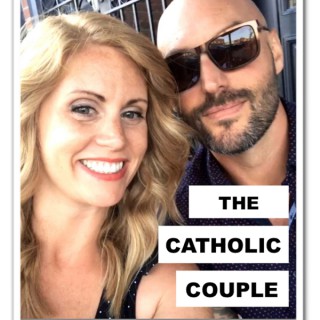
A Catholic priest began weeping during the consecration and says the chalice became too heavy for him to lift. What happened to Father Brent Bowman during Mass — and was this a Eucharistic miracle?Father Brent Bowman, a priest of the Archdiocese of Saint Paul and Minneapolis and chaplain at Chesterton Academy, experienced an extraordinary moment while celebrating Mass on September 14, 2026, the Feast of the Exaltation of the Holy Cross.During the consecration of the Precious Blood, Father Bowman says he was given an interior awareness of the power of the words being spoken and of the Real Presence of Jesus Christ in the Eucharist. He described experiencing the weight of the chalice so intensely that he could no longer lift it.Father Bowman has since released an official statement explaining exactly what happened — and he is very clear that he does not consider this a Eucharistic miracle in the traditional sense.In this video, we look at: The viral footage from the Mass Father Brent Bowman's homily before the experience His complete explanation of what happened during the consecration Why he says the chalice became too heavy to lift The Catholic Church's teaching on the Real Presence Transubstantiation and the Eucharist Private revelation and mystical experiences The difference between a private spiritual experience and a Eucharistic miracle Why Catholics believe Jesus Christ is truly present — Body, Blood, Soul and Divinity — in the Eucharist Why reverence at Mass still matters Father Bowman said his hope is that this experience leads people to contemplate more deeply “the Real Presence of Jesus Christ in the Eucharist and the Precious Blood.” His official statement also stresses that private spiritual experiences are unmerited gifts and are not necessarily signs of personal holiness. OSV News reports that the video has circulated widely online and that Father Bowman described becoming overwhelmed during the Eucharistic Prayer, weeping for more than a minute and being unable for a time to elevate the chalice. The deeper question may not simply be, “What happened to this priest?”It may be:Have we forgotten what happens at every Mass?Jesus Christ is truly present in the Holy Eucharist.If this video helps you see the Mass or the Eucharist differently, share it with someone who needs to hear it.Subscribe to The Catholic Couple for Catholic faith, Scripture, the Eucharist, marriage, discipleship, apologetics and conversations about living the Catholic faith in the real world.#Eucharist #Catholic #EucharisticMiraclehttps://linktr.ee/bobbyfred85Purposelycatholic.com

***ONLY my podcast is hosted on Substack. Join my newsletter community and receive weekly Akashic Nourishment messages, resources, and spiritual guidance! Join HERE If you've been curious about Access Your Akashic Soul but still have questions before taking the leap, this episode is for YOU.I'm answering some of the biggest questions I receive about AYAS—from whether you need experience working with your intuition and what kind of time commitment to expect, to what happens if accessing the Akashic Records doesn't come easily at first.Because learning to work with the Akasha isn't about opening the Records once and magically knowing what you're doing. It's about practice, experience, support, and developing a relationship you can continue deepening for the rest of your life.So if you're considering joining our third cohort—or simply wondering what it REALLY takes to learn how to work with the Akashic Records—I'm taking you behind the scenes and answering it ALL.I pray it serves you :))SEPTEMBER Events & Offerings:~ REGISTRATION IS OPEN ~ Access Your Akashic Soul starts 10/5: My 10-Week Deep Dive into reading and conducting energy healing with the Akashic Records. https://ahnahendrix.com/access-your-akashic-soul/Don't forget, When you invest in yourself, the world benefits!Many Blessings, AhnaCONNECT ONLINEJoin my Beautiful Email Community https://bit.ly/4xXsIpyYouTube https://www.youtube.com/channel/UC5fsN8oqu8Ib8IcvpYZA4jQ This is a public episode. If you would like to discuss this with other subscribers or get access to bonus episodes, visit souldrivencollective.substack.com

Send us Fan MailThis is Part 2 of the Conversation with Francis Weller. If you haven't listened to Part 1 yet, start here.There are voices in the grief world that stop you in your tracks — not because they are loud, but because they carry something true. Francis Weller is one of those voices. I have followed his work for some time, moved by the depth of his writing and the rare quality of his presence, and I have long wanted to bring him into this conversation. Today, that moment has arrived, and I am genuinely looking forward to what we will explore together.Francis brings to this work something that is not easy to name but impossible to miss — a willingness to sit inside the hardest human experiences without rushing toward resolution, and a gift for language that meets grief where it actually lives.In this episode, we cover02:37 Trauma and Grief04:09 Titrating the Trauma to Work With Grief12:00 Where Did the Interest in Soul, Ritual, etc. Start?13:44 What Has Claimed Me?18:03 The Gift22:22 First Steps to Care For Your SoulAbout today's guestFrancis Weller is a psychotherapist, writer, and soul activist. Author of the bestselling The Wild Edge of Sorrow: Rituals of Renewal and the Sacred Work of Grief and In the Absence of the Ordinary: Soul Work for Times of Uncertainty, he has introduced the healing work of ritual to thousands of people. His writing and voice have appeared in anthologies, journals, and media such as Anderson Cooper's All There Is podcast, The Sun, Utne Reader, Kosmos Journal, and Ruminate. He is currently completing his fourth book, Facing the World with Soul and Why It Matters.Support the show

To see God, and know him, and be in his presence is the soul's final feast.

How can you teach yourself anything, even when it challenges the way you see the world? And how can you organise what you learn so it turns into books your readers will find? J. Daniel Sawyer shares his self-education toolkit after decades as a largely self-taught author. In the intro, Spotify for Authors has expanded AI-assisted creation of audiobooks [Spotify]; Who is Narrating the Future? [Publishing Perspectives; 9 ways AI will disrupt authors and publishing from 2019]; Author Voice, Creativity, and Building a Career as an Intuitive Author-Entrepreneur [How Women Write]; A fallow season [Systems and Soul]; How to Write, Publish, and Market Short Stories – Joanna Penn. Today's show is sponsored by Bookfunnel, the essential tool for your author business. Whether it's delivering your reader magnet, sending out advanced copies of your book, handing out ebooks at a conference, or fulfilling your digital sales to readers, BookFunnel does it all. Check it out at bookfunnel.com/thecreativepenn This show is also supported by my Patrons. Join my Community at Patreon.com/thecreativepenn J. Daniel Sawyer is the author of over 30 books across science fiction, fantasy, crime, short stories, and nonfiction, as well as being a podcaster and filmmaker. His latest book is Reclaiming Your Mind: An Autodidact's Bible. You can listen above or on your favorite podcast app or read the notes and links below. Here are the highlights and the full transcript is below. Show Notes What is an autodidact, and why school doesn't teach you how to learn How to triage information in a world of way too much How to recognise fear in your body and turn it into excitement for learning Sandboxing dangerous ideas so you can learn without threatening your worldview How to organise research and check quotes when writing nonfiction Why you should never publish a book dead You can find Dan at JDSawyer.net, and The Autodidact's Bible is out now on Kickstarter. Transcript of the interview with J. Daniel Sawyer Jo: J. Daniel Sawyer is the author of over 30 books across science fiction, fantasy, crime, short stories, and nonfiction, as well as being a podcaster and filmmaker. His latest book is Reclaiming Your Mind: An Autodidact's Bible. So welcome back to the show, Dan. Dan: Hello, Joanna. It's great to be back. Jo: Yes, indeed. You were only on the show a few months ago, which is rare I have somebody twice in the same year, so that is quite exciting. We talked about voice mastery last time, very different to the topic of today. But because we did talk a bit more about your background last time, we're going to jump straight into the book. So what is an autodidact, and why write a book on it? Dan: Well, an autodidact is someone who teaches themselves things rather than taking a course. It's not incompatible with being taught by others, of course, but there's a set of skills for being able to pick up new information, new disciplines, new hobbies, whatnot, that's really useful to have. I wrote the book because I was mentoring a friend's kid through high school. They weren't teaching her anything, and she was having a hell of a time figuring out how to get an education in a school that was just not interested in providing one. The process of the conversations over the course of a year forced me to surface all of the tools that I had developed, starting as a child, that allow me to pick up all of those disciplines you were talking about before, plus blacksmithing and academics and other stuff like that. While I have had access to a lot of amazing teachers in my life, I'm largely self-taught, and have become the world expert on a couple of topics as a result. I realised that the tools that you need to teach yourself and the tools that you get in school no longer overlap very much, at least in the US. The old style of classical education, and then the middling style of early school education, both gave you those tools so that when you left school, you were able to continue through the world growing. Nobody does that anymore, so I realised I needed to write a book about all this stuff while it was fresh in my mind, so I did. Jo: I love that. I don't know if it always was like that for some people, too. We all know now more about neurodivergence. Back in the day, when you and I went to school, that wasn't really talked about. It was like if you couldn't learn stuff in the way that it was thrust at you, then you were just dumb, maybe. Dan: Well, what you and I got in school was the very late end of the German model. The German model of education is what arose in the industrial era, and its job is to create good, obedient workers, not necessarily to create independent citizens who can think for themselves and who can move through a world that's changing and learn things. That kind of education came from an older tradition, but it wasn't well suited to pulling people out of the hinterlands and putting them in the factories in a way that they could understand what they were supposed to be doing. So the Germans developed a regimented system that was built around memorisation exclusively, rather than processing. Memorisation and repetition. Whereas a more classical approach would have you do memorisation as part of repetition, processing, evaluation, and creativity. So when you go to school, you get some of the toolkit you need, but not all of it. Jo: Yes, and then I think some people were just so bashed over the head with stuff that they didn't enjoy the process of learning, and maybe just moved away from it now. I want to come back on something you said there, that it didn't enable the independence, the thinking for yourself. We're living in this really weird time now where we're almost in a splintered world where you can find information on anything you want, but a lot of people are finding information, say, on TikTok or in AI-generated books with no rigorous fact-checking. So how can you think for yourself in a world where there's almost way too much now? Dan: Well, one of the most foundational skills of thinking is information triage. The world has always been full of unreliable information, if for no other reason than the state of the art in any given field at any given time is guaranteed to be about 80% wrong. So even if you're being very careful about only hewing to the most accepted body of facts, facts change over time, partly as we learn more and partly as the world changes underneath us. Thinking is different than knowing. Thinking is the ability to evaluate the information you're coming into contact with and figure out what's likely to be useful, and then to check yourself based on what you are more inclined to believe because of the way that you're made up emotionally. It's being able to curb your impulses with an error-checking layer so that you don't get sucked down into a very nasty rabbit hole, which everybody's prone to on one front or another. So that explains the how and why, but the what is things like knowing your basic logic, knowing the informal logical fallacies that everybody's prone to, things like the bandwagon fallacy. We're partly herd animals. We tend to want to join a group for protection and identity. So if we're in a group that believes a certain thing, we're likely to believe it out of fashion, which is great for group solidarity. It's not so great for actually knowing if what you think you know is correct. I've got a whole section of the book devoted to the top 30 or 40 most common informal reasoning fallacies. Knowing how to do basic critical reasoning is one of the things you have to do if you're going to be learning in a way that's useful to you. Then of course, there's another reasoning kit, which is the non-rational reasoning kit, which I also talk about. That's something that you and I as fiction authors use all the time. Jo: Explain more about that [non-rational reasoning kit] then, because people might not know what that is. Dan: All right. So rational reasoning involves logic. If X is true and Y is true, then Z must also be true. That's basic deduction. It basically lets you figure out what's implicit in the body of knowledge you already know. Then subsidiary to that is induction, which is, if X is true and Y is true, what might also be true that could explain X and Y? That's the scientific method. It's less reliable than deduction, but it actually grows your knowledge rather than just revealing it. Non-rational reasoning is things like reasoning through analogy, reasoning through metaphor, reasoning through intuition. These are all reasoning modes that allow you to bring something foreign into your understanding, or to deepen your understanding of something you're already familiar with, in a way that incorporates not just logical propositions, but also emotional truth and relational truth and things like that. Frequently it can generate things you can then subject to logical evaluation and pull new information about the world out of. A really good example of where this happens in science is in visionary experiences. The periodic table, for example, came out of someone's dream. Now, the fact he dreamed it doesn't mean it's true, but what happened while he was dreaming is he had a non-rational reasoning chain that brought him this vision, which he then brought out into the real world and started doing experiments on to see if it would work, and it did. Jo: In that case, yes, I can picture the periodic table, and I often see images of things that help me organise information. So that to me makes sense in terms of somebody who had certain amounts of knowledge, who had some kind of picture in their brain and then was able to prove that. I wanted to circle back. You were talking about critical things, rational things. You mentioned logic, and you did briefly mention emotion and intuition. Coming back to where we are at this point in history, so much emotion is being triggered through the media, whether that's social media or traditional media or whatever, that all of those logical, reasoned things can be almost triaged immediately by a big emotional response to something. So how can we understand that that emotional response perhaps has to be part of the triage? Dan: Well, simply by stating it outright. What you just said is exactly correct. I've got a model in the book where I talk about the difference between feelings and emotions. Feelings, in this model, are your interpretive layer. That's, I feel angry or sad or excited or depressed or whatnot. Those are your feelings. The emotions are the base physiological states that those feelings are laying over. So elevated heart rate, increased skin conductance, things like that are associated with any excitable state, like anger, sexual arousal, anticipation, fear, that kind of thing. Then depressed heart rate and whatnot, those are associated with depression, relaxation, and a whole bunch of other things. Learning to recognise the base physiological layer within yourself that's being stimulated allows you a certain amount of freedom about interpreting that base physiological state. That can help you separate your reaction to your own physiological state from your rational evaluation of what's going on around you. One of the things that our world runs on right now is fear, and there's reasons for this. If you read Edward Bernays' Propaganda, he lays it all out. Fear shifts your mind into a survival mode. You're less likely to take time to think through things. You're more likely to be easily steered because, as far as your physiology knows, there's an active threat to you, and you've got to take care of that. You've got to get away from it. If you stimulate fear in somebody, you can direct who they hate, who they love, who they trust. Very, very useful for anyone who wants to build a cult or sell a product or get elected. If you learn to recognise in yourself that the physiological state associated with fear is the same one associated with excitement over something new, then you can train yourself, to a certain extent, and it's a learned skill, to do an end run around the fear part and concentrate on the excitement. Then you can deal with whatever it is that's stimulating you in the way that you would a new piece of information, a new bit of learning, a new adventure. Instead of fear, which closes you down, adventure opens you up, and that's a much better state to engage in learning and exploration than fear is. Jo: When you said, “That opens you up,” this is exactly what I look for, what is expansive for me. I often reflect on this. When do I feel expansive, and when do I feel like I'm being reduced? When do I feel like I'm hunkered down? When I'm working with AI tools, I feel expansive, I feel more creative, I feel excited. I feel all these things where I just see so many possibilities, and the horizon is off out there in the distance. Yet I know other people, some people listening, will feel that that crushes them, that even mentioning it just makes them reduce into themselves and shrink because of fear, I guess. I also think that a lot of people are feeling those things because they haven't learnt enough perhaps. They are just responding to emotions. So how can we change those things so we're more open to learning? Dan: Well, one of the things you run into with creative types is we've all got something weird in our background that makes us do this. We're not just inclined to be creative, because you can meet welders and electricians who are very creative people. They just apply their creativity in a limited domain. People who go into the arts tend to be either people who grew up in incredibly open conditions, or people who grew up in incredibly closed conditions and had to fight against them. People who grow up in closed conditions and fight against them tend to be a little better at sticking around for the long haul of an arts career, which can be punishing financially and emotionally. One of the reasons they can stick around is that they had a lot of practice in sticking around through horrible situations when they were younger. So they're going to have a negative bias when they come up against things that they don't understand. If you have a negative bias with something you don't understand and it turns out to be wrong, you're not going to lose very much. But if you have a negative bias when you come up against something you understand and it turns out to be right, you're going to survive that thing. Whereas a more open person might just walk into the jaws of the shark, right? To change that and make your experience better, and give you access to all the advantages that the person who's got a more open temperament has, you've got to find a way to make it safe to experiment with the dangerous thing. For every dangerous thing, and probably for everyone who's encountering it, it's going to be a little bit different. With AI, people are worried about the market eroding to the point where nobody cares about human creativity anymore. In fact, my first publishable short story, which is called We Create Worlds, was actually about a novelist trying to outwrite the AI novels. It's become weird. Jo: What year did you write that in? Dan: That was in 1999. Jo: Awesome. Dan: It's still a great short story. I did do it in podcast form, which you can find on my website at jdsawyer.net, and it's also in ebook on Amazon, and it's part of the Sculpting God short story collection. But the fear is that humanity gets crowded out of the market in the face of the relentless onslaught of the machines. It's not a ridiculous fear, especially if you look at the history of artisanship. Everybody and their brother used to have an artisanal business, and now we've got machines that weave socks and make just about everything in our world. So people like me, who spend half my day every day in a blacksmith's forge making hooks that you could just make by machines way cheaper, are kinda crazy. But there's a market for that. Humans like things that were touched by other humans, as long as they can afford them or justify making a luxury. On the other hand, the people that adopt tools early and figure out how to make them work for them, those are usually the people that win at scale over the long haul. So, AI is coming for our jobs, guys, but you know what? You can keep it out of your creativity and build agents that help you deal with your scheduling and your bookkeeping and your marketing, all the other stuff that takes up your time as an author. Then instead of threatening your creativity, it gives you more space to be creative. Jo: So it's reframing things a lot of the time. Dan: A lot of the time, yes. Jo: I think that's true of everything. Reframing can help you learn. Reframing things can give you a reason to learn, I guess, when in the past, maybe at school, you hated learning… Dan: Yes. Jo: Now by reframing it into a reason why. Dan: That really helps, and it also helps the second big problem with learning, which is worldview threat. I think I open the book with an entire section on how worldviews work and how that limits us, and how we can't get away from them even though they limit us. Your worldview is the matrix through which you experience everything around you, and it's not a window, it's like a lens. It distorts everything, it filters everything, because it's the reflexive layer that helps you make sense of the world, and it's built out of your experience and inflected by your personality and other things like that. There are things you can learn, and for everyone it's going to be a little bit different, that threaten everything about your worldview. That's a problem, because your mind experiences your worldview not as an interpretive matrix, but as a survival tool. As far as your deep mind goes, your worldview is perfectly okay because you're still alive. Its job is to keep you alive. So if you learn something, or come close to learning something or thinking something that could unspool a big part of your worldview, you'll just emotionally go blank. You'll shut down. The information you're encountering will not register, or it will make you angry and you'll steer away from it. This isn't very good if you're wanting to learn things or grow. So there's a set of metacognitive tools you can use to help you push past that and navigate the existential crises that can sometimes ensue without crushing you entirely. I spend a section of the book talking about that as well, and detailing what some of those tools are. Jo: Better give us a tool. Give us one useful tool. Dan: All right, so one of the basic tools is one that anyone who's a developer in the audience will be familiar with, and it's basically sandboxing. You create a little playpen where it's okay to play with this dangerous idea, and you make yourself the promise that until you're really familiar with the dangerous idea, you're not going to connect it to anything else in your worldview. Then you've got the option later on to decide whether to integrate it or not. But you've got to play with this scary tool. For someone who comes out of a fundamentalist religious background like I do, one of the big ones here was textual criticism, where you learn about all the manuscript traditions that make up the New Testament especially, and the development of Christian scripture. I had to know about this stuff because I had a paid writing gig that required me to know about it. But I was a biblical literalist and believed that it all came straight out of God's mouth, and I couldn't even go near it without going, “Ah,” because intuitively some part of me recognised this could be a threat to what you believe. So I made myself a sandbox. I said, “This is a literary project. If I actually believe in the doctrines of my religion, then this can't be a threat, because even if the words themselves were changed all over the place, the Holy Spirit would have ensured that the important parts of the theology got through unscathed.” So I had a sandbox. I didn't really have to think about it. I could just learn the topic, and I got through. It was a two-year project, I had a fabulous time, and I came out knowing more about textual criticism than anyone ever should need to. I actually got to know someone, a friend of my father's, who actually makes the Greek New Testament from the surviving original sources. I learned all sorts of things about biblical translation and about classical literature. It was great stuff. I sandboxed it until I understood it, and then I decided whether or not to integrate it, and I did integrate it. It didn't actually have anything to do with me ending up being an atheist now. That was because of my research into mythopoetics several years later. When you sandbox something like that, you give yourself an imaginary play space. This is something you do any time that you go to a movie and you cheer for characters who are doing horrible things that you would never do or condone in real life. It's a fantasy play space that allows you to explore other aspects of life that you can't touch in real life. When you're learning, you can use that same set of skills of fantasy play and fantasy role play for trying out and exploring topics that might threaten the way you see the world. Jo: Well, that actually brings up a good reason to do this, and one of the reasons I love to learn new things is to turn them into books. You mentioned earlier your short story about AI, for example. That's a great way of sandboxing and playing with a dangerous idea. I'm actually writing a lot of, I guess we would call them science fiction, in the science fiction genre. I've never written science fiction before, and suddenly… Dan: Welcome to the party. Jo: Yes, exactly. I'm now writing science fiction. I haven't published any of it yet, but it's possible that I'm moving into science fiction because I am weighing up a whole load of these things as I'm learning about it, and I'm like, “Okay, how would I play with that idea?” So that is one way to use what we learn, or even, like we said, reframing it. One good reason to drive the learning in the first place, I guess. But in that way, I wanted to ask you, because your books are very detailed. How are you structuring knowledge as you learn it, in a way that is useful for turning it into something else later? Dan: Okay. Associatively. The way that the brain stores knowledge, it looks a bit like a spiderweb, or like a map of galaxies in the universe. That's probably too geeky. Let's stick with a spiderweb. Everyone's seen a spiderweb. You don't record discrete tabulated facts like a spreadsheet or a database. You actually record associative memories, and everything you know is associated not just with other things that fact might be associated with in a library catalogue. It's associated with the smell that you were smelling when you learned that thing, and the emotional state you were in when you learned that thing. The more associative connections you can make to any bit of knowledge, the easier it is to record. When I sat down and wrote The Autodidact's Bible, I literally wrote it front to back without an outline. There have been some books I've done this with where I had to rearrange afterwards. With this one, I didn't have to, because this is one of the places I live, so I've just got a good structure for the information in my head. I knew that if I wanted to convey this toolkit and all the things associated with it, I needed to start with what is knowledge and memory, and how does understanding work? Then move into worldview and the way that emotions affect the way that we learn, and developmental psychology, which has to do with the way the human being is designed to learn from the get-go. We start off with raw input. I call this in the book type zero learning. We get a fire hose of information we don't know how to make sense of, and our brain adapts itself to the inputs. Then there's type one learning, where we play around with things and we experiment and we see what they do. It's the “what's this button do?” approach to learning. Then there's type two learning, which is someone else who knows something already tells us things or shows us things, and we pick that up. All three of these systems are involved at every stage of the learning process. Actually, it's hierarchical. So you can do type zero learning without doing type one or type two. If you're doing type two, which is what you're doing in school, or when you're learning from a mentor, or when you're listening to a podcast, then if the information is going to stick, you are also involved in type zero learning, which is just taking in a bunch of stuff, and type one learning, which is practising and doing trial and error. Even if, as you're listening to this podcast, you're just reacting with things like, “Oh, now that's an interesting idea,” and you're having a little fantasy about, “What if I did this?”, that's a version of experiment and repeat, and that solidifies the learning in your knowledge web in your head. Then the trick is figuring out how to go back and find those things. Jo: Well, this is what I wanted to talk about. In the book, you do have stuff on memory and that kind of thing. I have definitely found, and this has got worse with menopause, and this is a completely normal thing with menopause for women, the brain fog that means things don't seem to stick so well, and then the recall is also almost harder. I'm often reaching for things, and I can't get them back. I've always been somebody who writes everything down anyway, but I now do it even more. As you know, I sent written questions for this. I now rely on written stuff so much more. So when I'm writing a book, or like I've just been doing with this master's and a lot of research, I have to write everything down. So I guess my question was more about, for people listening who want to learn things in order to write books from that— What recommendations do you have for organising your research so that when you write the book, you can reference it in a good way? Dan: Well, writing things down is great, because that is part of the repetition that helps it stick in your head, and then you've got an external place where, as long as you can remember where you put it, you know where to get it. The more connections you can make to any piece of information, the easier it is to find. I do take notes, and I have a strictly hierarchical file tree where I know where to find manuscripts and files full of notes and whatnot. What often happens with me is I will make notes on something, and then I'll forget I did it, and then a few years later I'll write the book and then discover the notes again afterwards, and the book basically matches the notes. I think the reason that happens is that when I get an idea in my head and write it down, I just start subconsciously playing with the idea, and I play with it and play with it until it's well developed. Every time you take an idea out, or a memory, and play with it, everything that you're thinking or feeling at that point in time gets reconnected to it. So you actually alter a bit of what you're remembering, but you're also multiplying the mental paths you can use to get to it. So you've got a very strict external system to help you beat the brain fog. The analogy to do it without the external system is you create that kind of system in your head. You practise actually walking the system like it's a library or a museum. If you're a very visual person, and this doesn't work if you have aphantasia, you can close your eyes and you can walk through the museum in your head, and you can turn to the left and see a room that's associated with everything you know about biology, and then you can start picking things up in that room. I'm actually being semi-literal here. I sometimes actually do this like I'm working in virtual reality. Most of the time it's not that concrete, but if I'm trying to find something and I get stuck, I will actually close my eyes and go into the museum and find the room. The other trick is you don't chase a particular bit of information too hard. All you're looking for is something that's in the neighbourhood. Because once you start working mentally in the neighbourhood, all of that knowledge map comes back to you as a side effect of being in that area. Let's say you're in England, and you knew neighbourhoods in Nottingham really well, and you wanted to go visit a friend in Nottingham. When you get on the road to go, and you're not using a map, you don't have the whole map loaded into your head. All you know is, I'm going to go that way on this road, and then you see the exit off the M1, or whatever it is, that you recognise. “Oh, this is the exit I take,” so you take that exit. All the other information in between, you kinda know it, but you drop it. You don't really actively search for it. Then when you get into the general area of your friend's house, you start to recognise landmarks and you go there. Memory of non-physical spaces works the same way, and you can actually develop the ability to engage it as if it's a physical space. The technique is called the mind palace. It was discovered in Ancient Greece, and it still works. Jo: Yes, and I agree with that, and I still have that kind of experience in a way. When we're writing nonfiction, and you have selected footnotes in this book, for example, although not to the extent of academic text, which is what I've been doing with my master's dissertation this week. As an example, I knew that Stephen King had said something like, “Writing is a form of telepathy,” but could I remember where it was? No. hTen I was like, okay, well, it's very likely it's in either one of his introductions or it's in On Writing, his memoir of the craft, because that is an iconic book. But in order to actually get the right quote, because if you're quoting people, obviously it has to be an exact quote as opposed to a made-up thought. Then if you're doing a proper footnote, for example, it does need what book it is and what edition and what page number and all of that kind of thing. So when you're writing the nonfiction books, are you doing the memory palace thing, writing the stuff, and then going back and finding where you got it from? Dan: Yes, and anything that's vague, I just put hard brackets around it. I don't remember all the people I quoted, but let's say I quoted Schopenhauer. If I was going to be quoting Schopenhauer and I could remember what he said, but I couldn't remember the words, I'd just put brackets around it and say, “Find the place where Schopenhauer said this,” and then put the quote here. I don't use hard brackets anywhere else in my writing, so I can then just Control + F, find the hard bracket, and retroactively do the research. Jo: Yes, exactly. I think that is the point I was trying to get to, which is it's all very well having the memory palace, but I can bet you that some of these quotes are not correct. Dan: Yes, always check quotes. Now with AI, there's search engine techniques where you can actually start from a paraphrase and then refine the search stepwise until you can get the exact quote with a reference, and then you can check it against the manuscript online. I use a lot of those when I don't have the book that I'm thinking of in my hands. Now of course with AI, I'm like, “Where did this author say this thing…” Jo: Roughly? Dan: Yes, roughly. The AI will come back with, “Well, he said this in these words in that book, and these words in that book.” And I'm like, “Oh, boy, I get to pick which one works better for what I'm writing.” Jo: It's very good. Coming back to what you were writing, I think you have balanced footnotes and source material, but you haven't gone as far as the academic footnoting of every single sentence, which is where I am at the moment. So for general nonfiction that is trying to reach a broader audience, where would you say the balance lies? Because I just feel now that we don't do enough of this in the indie community. I read a lot of nonfiction books which need a heck of a lot more attributions. Dan: First of all, I subscribe to the Terry Pratchett school of footnotes, which is that footnotes are places for long asides that need to be there, but that interrupt the flow of the text. I'm sure you noticed. Also, for me, it's really important, wherever I can remember where I got an idea, to point it out so that the reader can follow that rabbit trail if they want to. As a nonfiction writer, I feel like I'm in the business of providing value to the curious person. So anywhere I can point them where they might have fun exploring further is a value add. That's something I try to do, but I don't always remember, because in the heat of composition, you don't really realise where the ideas are coming from all the time. The second thing is, if I'm directly quoting or paraphrasing someone, there's always at least an attribution to the author, if not in the footnotes, then in the body text. You know, as Harlan Ellison used to say about being paid as a writer, or whatever. The great glory, and this is at least partly an aesthetic thing in my head, the great glory of nonfiction is that it taps you into an entire universe of conversations that have been going on as long as there's been a written word. To pretend that you're not participating in that conversation, okay, it might make you look cool to the novice reader, but you're really depriving your reader of even just the bare awareness that he's dipping his toe in a rich stream that he could follow forever. Especially in our world where we live in a TikTok world, but before that, we lived in a soundbite world, and before that, we lived in the newspaper world. These are all formats that try to pretend that they exist outside of time and culture, even though they're the most temporally dependent and culturally fickle sorts of entertainment there are. We've gotten used to the experience of encountering something that feels like it could just be from anywhere, and that's not the way it really works. Every TikTok video comes out of someone's experience, which is embedded in a culture, which is embedded in a tradition that's full of controversies that goes back to the beginning. It's not just full of controversies, but it's accompanied by stories, fictional stories, mythic stories, where those controversies get fought out and explored. I think as a nonfiction author, if you want to be really selfish about it, it makes you look better if you're also pointing at the tradition that you're standing in than if you're pretending that it's all coming from you. Jo: Yes. It makes you look better if you are citing things. I feel like that's such a good reframe. I was reading a book the other day, and I was like, all these ideas are coming from all these other people that I know about. This person would look a lot better if they actually accredited those ideas to the people they came from. My opinion of that person went down because they were not attributing. So, yes, I think it's so important, and that's the fun bit. Let's circle back to the fun bit of learning. Dan: Before you get onto that, I should point out that in my writing, I don't do this with academic rigour. I do it as it occurs to me. I write a weekly nonfiction article dealing with philosophy and history and arts and everything, and I don't always think, “Oh, the readers might not know where this comes from,” and stick it in there. But over the course of reading those articles, you get all the citations. They're just not always in every article. Jo: Oh, no, I've read your stuff, Dan. You do a good job. Obviously not to the academic attribution detail, but I do think this book in particular, Reclaiming Your Mind: An Autodidact's Bible, has a lot of references so people can learn more. So I do briefly, before we finish, because you and I could talk about this forever, but I do want to ask about Kickstarter. So you're using Kickstarter to launch this book. You've done a couple of campaigns, but not for a while. So why use Kickstarter for this, and what are the pros and cons? Dan: Well, as far as I've been able to work out, doing a Kickstarter is the one way you can make sure that you don't publish a book dead. Are you familiar with this term from old publishing? Jo: You can expand on it. Dan: Okay. So in traditional publishing, there's a term called publishing dead, which is where the publishing house buys a book, they go to the trouble of laying it out and printing it, and then they just kinda drop it on the market with an entry in the bookseller's catalogue. There's no publicity, no fanfare, no attempt to get advance buzz going, and it just kinda sits there. Occasionally someone who buys for a bookstore will get a couple of copies, and they'll sit on the shelves, and a customer will walk by and buy one. Books that are published dead tend to sell 500 copies over a 30-year lifetime. It's not much. Jo: That's probably a lot of indie books as well. Dan: That's how most indie books are done. The first 10 years of my career, I was doing fiction podcasting, so everything I was publishing got published live, and they did really well. Then fiction podcasting kinda died at the same time that my life got really complicated, and so I decided just to let my podcast die with the wave. At just the same time, my personal fiction productivity went through the roof. I went from writing one, maybe two books a year to writing four or five. I was dropping these four or five books on the world and nothing happened, and all the sales were drying up anyway from the older stuff that had been supported by the podcast. So I decided I wanted to find a way to stop publishing things dead. I had done a Kickstarter for an audiobook years ago that I produced for Gail Carriger, and so when I was writing Secrets of the Heinlein Juvenile, I decided there's a lot of Heinlein fans out there, so even if I don't personally have the name recognition, this is something that I could launch pretty well on Kickstarter. It did great, and I decided at that point that I was never going to publish another book dead. I was always going to have some kind of occasion to launch with, even if I had to manufacture it. In the years since, I've published very little, because I've been trying to figure out how to do that. I've got a big stack of books that are coming out now that I've figured it out. I realised that things like debuting in a book bundle, doing a Kickstarter, or finding a way to time a release with a news cycle, which is appropriate for some science fiction particularly, these are ways to publish a book without publishing it dead and then having to try to figure out why nobody's noticing it. So that's why I'm doing the Kickstarter. Jo: I also agree. What I like is doing the two-week campaign. I normally do two-week campaigns, because then I can just focus my energy before the campaign and then during those two weeks, and then I'm basically done, and then I put it up on all the platforms and everything. I focus most of my energy into that couple of weeks beforehand and then the two weeks of the campaign. Like you, I mean— We don't want to be spending all our time marketing, but to try and make it an occasion just helps us put a bit more effort into it, doesn't it? Dan: It really does. And the other thing it does, and this took me a while to figure out, but I've come to understand that most people's relationship with their favourite writers isn't like my relationship with my favourite writers. I've got about 70 writers I like, but I've got about 10 where I don't care what happens, I will buy and immediately read what they've done. I realised that for most people, their relationship with most of the writers they like is more at arm's distance. They stumble across, “Oh, I didn't know this guy had something new. I'll pick it up,” rather than being like, “I love the way this person's mind works, and I want to see what it goes at next.” So the bread and butter as an author has got to be in making sure that those people find you. It's not in serving the core base, the core 1,000 fans. They're really important, and you want to do that, but if you want the career to sustain and build, you've got to find ways to help people in that second group, the arm's-length fans, stumble over what you're doing. Because everybody's got more important things in life than your books. But if you've got excuses to be stumbled upon that don't involve standing right up and waving a sign saying, “Buy my book, buy my book,” then you're more likely to build momentum, because people talk about the book they just read and that they love. If they don't talk to someone in the first few days after they read that book, then unless it was one of the books that changes their life, they're never going to talk about it again. So you want to get as many people talking about the cool book they read last week at the same time as possible, to build momentum. Jo: Indeed. Right. So where can people find your cool book, as well as all your other books, online? Dan: Reclaiming Your Mind: An Autodidact's Bible is currently Kickstarting. You can find a link on the top post at my website at JDSawyer.net. You can find all my books at JDSawyer.net/book-list, and you can find my weekly articles on maker stuff, philosophy, creativity, and history at jdanielsawyer.substack.com. Jo: Brilliant. Well, thanks so much for your time, Dan. That was great. Dan: It was a pleasure, as always. The post Reclaiming Your Mind: How To Teach Yourself Anything With J. Daniel Sawyer first appeared on The Creative Penn.
The Tale of Two Bad Mice by Beatrix Potter — A Calming Bedtime Story for Sleep & Insomnia | Books at Bedtime Drift off with this gentle bedtime story for sleep and insomnia relief, read aloud as part of Calming Anxiety's Books at Bedtime strand. Tonight's tale is The Tale of Two Bad Mice, Beatrix Potter's mischievous story of a doll's house raided by two curious mice, first published by Frederick Warne & Co. in 1904 — long in the public domain, with Potter (1866–1943) having died more than seventy years ago. For more calming audiobooks and sleep stories whenever you need them, download Anchored, the free companion app to Calming Anxiety, with offline-ready relaxation and Books at Bedtime sessions for any hour of the night.Get it on the App Store at https://apps.apple.com/us/app/anchored-panic-anxiety/id6785035669 or on Google Play at https://play.google.com/store/apps/details?id=com.martinhewlett.anchored. In this soothing bedtime audiobook, mice Tom Thumb and Hunca Munca sneak into a beautiful doll's house while its owners are out, only to discover the tempting dinner laid out on the table is nothing but painted plaster. A gentle, unhurried classic, perfect for winding down, easing anxiety, and drifting off to sleep. Hosted by clinical hypnotherapist and former paramedic Martin Hewlett, as part of Calming Anxiety's Coffee Break for the Soul and Books at Bedtime story readings. And in everything, my friend, be kind. Support the Show: Rate & Review: Leave a 5-star review on Spotify or Apple Podcasts to help us reach more listeners! YouTube: Watch all episodes at https://www.youtube.com/c/calminganxiety?sub_confirmation=1 Social Media Support: For younger listeners struggling with social media stress, visit https://www.icanhelp.net/ Music: All music by Chris CollinsBecome a supporter of this podcast: https://www.spreaker.com/podcast/calming-anxiety-guided-meditation-sleep-hypnosis-panic-attack-relief--4110266/support.Ready for More Calm?Thank you for listening to the Calming Anxiety Podcast, featuring guided meditation, mindfulness, and sleep hypnosis sessions with Martin Hewlett. Our mission is to provide you with proven tools for anxiety relief, stress reduction, and a path toward deep relaxation. Use this episode anytime you need to calm your mind and feel more at ease.
"A dark night of the soul is not the end of your life. It's the end of your life as you know it." What happens when the life you worked so hard to create no longer feels like your life? There are seasons when the old answers stop working. What once gave you meaning feels empty. The person you used to be no longer fits, yet you have no idea who you're becoming. You're caught between what was and what's next; and that space can feel terrifying. In this episode of SoulTalk, Kute Blackson explores the dark night of the soul not as something to fix or escape, but as a profound invitation to let go. He shares why some seasons of loss, confusion, and uncertainty are not asking you to rebuild your old life, but to surrender the identity that created it. And why the void you're so desperate to escape may be the very space where something deeper and more authentic is being born. Perhaps the question isn't, "When will my old life come back?" Perhaps it's, "Who is life asking me to become now?" TIMESTAMPS (00:05:12) — Are you losing your life or your old identity? (00:06:12) — What is the dark night of the soul, really? (00:10:45) — The first crack: when your old life stops feeling right. (00:12:59) — The collapse: when old strategies stop working. (00:15:37) — The void: who are you when you no longer know? (00:19:16) — Surrender: stop fighting what is. (00:20:53) — The return: meeting life as someone new. (00:24:47) — How to move through the dark night without losing yourself. SOME QUESTIONS KUTE ASKS What if you're not losing your life, but an identity you've outgrown? Who are you without the things that used to define you? Can you sit in the unknown without rushing for an answer? What is this phase asking you to learn? What is life revealing to you through this loss? Who is life asking you to become now? IN THIS EPISODE, YOU'LL LEARN How to recognize a true dark night of the soul. Why what once fulfilled you may suddenly feel empty. What happens when your old identity stops working. Why the void may be creating space for something new. How surrender changes your relationship with uncertainty. Why alignment can dismantle the life you've outgrown. How to move through transformation without numbing yourself. Get in Touch: Create a life that is a masterpiece. Join the transformational journey: www.boundlessblissbali.com Email: kuteblackson@kuteblackson.com Website: www.kuteblackson.com

Paul, Jon, and Liz continue their conversation about learning how to be a person by looking at Jesus. "We've been looking at Jesus' soul, and that's not something that we're used to thinking about. In the church, we sort of generally think of two large categories with Jesus – his deity and then of course his work for us on the cross. So we're actually going to an area that is not well explored by the church. The joy of exploring it is we're looking at what it is to be a person. The big theological word is anthropology." "What does the anthropos, the person, the man, look like?" "When Jesus says to his brothers, 'My time has not yet come. I'm not going to the feast.' That was the tip of the iceberg, and underneath was a soul saturated in the word of God, a soul in step with the Spirit, in prayer. He was doing nothing on his own. He was waiting for his father's time. He was functionally the most dependent being who ever lived, and that's our model for how to do life as Christians." You can view the chart Paul references on the complete soul (will, affections, mind) here.
Hey, it's Amy Newmark with your Chicken Soup for the Soul, and it's Wow Wednesday. I always try to share awe-inspiring or surprising stories with you on Wednesdays, and I have a whole fresh crop of them for you from our latest bestseller, Chicken Soup for the Soul: Hope, Faith & Miracles. I made this new collection by going through tens of thousands of the stories in our library and picking out the ones I wanted to put together for this new anthology. Learn more about your ad choices. Visit podcastchoices.com/adchoices

Real estate has spent years talking about transactions, market share, disruption, technology, and growth. But somewhere along the way, did the industry lose sight of the people at the center of it? James Dwiggins and Keith Robinson sit down with philosopher, speaker, and longtime real estate industry veteran Matthew Ferrara for a wide-ranging conversation about why he believes real estate is at risk of losing its soul. Matthew explains why professionals want more than a full wallet, they want a full heart and a sense that the work they do actually matters. They explore how division and tribalism are reshaping the industry, why leaders should be hard on problems but soft on people, and what it would take to rehumanize real estate. The conversation also tackles some of the industry's biggest debates, including consumer data, private listings, real estate portals, transparency, and whether disruption has become more important than collaboration. Ultimately, Matthew argues that the path forward starts by returning to the human equation and focusing on the people already within your sphere of influence. Subscribe to Real Estate Insiders Unfiltered on YouTube! https://www.youtube.com/@RealEstateInsidersUnfiltered?sub_confirmation=1 To learn more about becoming a sponsor of the show, send us an email: jessica@inman.com You asked for it. We delivered. Check out our new merch! https://merch.realestateinsidersunfiltered.com/ Follow Real Estate Insiders Unfiltered Podcast on Instagram - YouTube, Facebook - TikTok. Visit us online at realestateinsidersunfiltered.com. Link to Facebook Page: https://www.facebook.com/RealEstateInsidersUnfiltered Link to Instagram Page: https://www.instagram.com/realestateinsiderspod/ Link to YouTube Page: https://www.youtube.com/@RealEstateInsidersUnfiltered Link to TikTok Page: https://www.tiktok.com/@realestateinsiderspod Link to website: https://realestateinsidersunfiltered.com This podcast is produced by Two Brothers Creative. https://twobrotherscreative.com/contact/ The views and opinions expressed on Real Estate Insiders Unfiltered are those of the hosts and guests in their personal capacities and do not necessarily reflect the views or positions of AGNT, Inc., eXp Realty, LLC, NextHome, Inc., or any of their respective affiliates, subsidiaries, officers, or directors.

Presented at the 2026 National Convention in Columbus, Ohio.

Marvin L. Wilkerson is a spiritual astrologer, hypnotherapist, neurological programming practitioner, life coach, and author of Soul Fusion Healing: Integrating Body, Mind, and Soul. He has spent 50 years studying spirituality and more than 30 years helping clients understand the deeper layers of consciousness, release emotional blocks, and align with their true spiritual essence.Find out more - https://soulfusionhealing.com/More about Liz-Work- https://www.raisethevibewithliz.com/Radio Show- https://www.voiceofvashon.org/raise-the-vibePodcast- https://www.buzzsprout.com/958816Facebook- https://www.facebook.com/raisethevibewithlizInstagram- https://www.instagram.com/raisethevibewithliz/*** Support the show! https://www.buzzsprout.com/958816/supporthttps://paypal.me/LisbethPeterson?country.x=US&locale.x=en_USJoin The Community!
Craig and Jeremiah talk about Kansas, the Joker, and sleeping like Tesla.Buy a hoodie! - https://www.craigconantstore.comGet your tickets now for The Woopsie Daisy Tour! - https://punchup.live/craigconantFollow Jeremiah!YouTube - https://www.youtube.com/@jeremiahwatkinsIG - https://www.instagram.com/jeremiahstandup/Twitter - https://twitter.com/jeremiahstandupWebsite - https://www.jeremiahwatkins.com/Follow Craig!IG - https://instagram.com/craigpconant/TikTok - https://tiktok.com/@craigpconant/Facebook - https://www.facebook.com/craigpconant/Merch - https://craigconantstore.com/Follow the podcast!Facebook - https://www.facebook.com/communityservicepodIG - https://www.instagram.com/communityservicepodTikTok - https://www.tiktok.com/@communityservicepodSend your poop stories, party stories, or prank stories to communityservicepod@gmail.com or DM communityservicepod on IG! (audio submissions welcome)Business Plugs:Need a natural, holistic facial or some Ayurvedic healing?Contact Cynthia at Ritual Skin and Soul:https://instagram.com/livecynplyayurveda/https://instagram.com/ritualskinandsoul/Check out Brian Johnson's Art! He did the 3 Skeletons Skateboards + The New Podcast Studio: https://www.instagram.com/brianjohnsonstudios/Aztlan Herbal Remedies - https://www.aztlanherbalremedies.com/Kettlebells South Bay - https://www.instagram.com/kettlebellssouthbay/PV Coin Exchange - https://palosverdescoinexchange.com/Deadlight Visions Graphic Design - https://instagram.com/deadlightvisions/Donny Honcho's Healthy Pet Products - https://linktr.ee/localdogdaddySwank Hank's Handmade EDC - https://swankhanks.com/Glitch Pudding, Acrylic Artist - https://instagram.com/glitchpudding/Hoobs Glass Art - https://www.hoobsglass.net/The Pet's Choice Animal Groomers - https://www.instagram.com/thepetschoice_wilmington.ca/Craig's Holistic Doctors:Dr. Jay - https://www.instagram.com/100yearsjay/PBC Health - https://www.instagram.com/pbchealthwellness/Healing/Hustling Links:Louise Hay - https://youtu.be/lz16YqpWkz4Wayne Dyer - https://youtu.be/44ImQV46lF4Change Your Thoughts, Change Your Life - https://youtube.com/watch?v=14JxE7i0EPcLouise Hay Sleep Meditation - https://www.youtube.com/watch?v=Mz8bHR4o7E0Emmet Fox - Prayer Is Not A Way Of Asking, But Of Receiving - https://youtu.be/Tf4yVNtMOgw?si=fQGIg-SGgbF8nBuSRobert Kiyosaki - Liabilities to Assets - https://youtube.com/watch?v=A8vD_XO0vUUCraig's favorite healers:Esther Hicks (AKA Abraham Hicks)Joe DispenzaBruce LiptonDr. SebiAlso shout out to these light workers giving out that lost knowledge:Dr. Delbert BlairDolores CannonSantos Bonnaci

EVEN MORE about this episode!What happens after we die—and could our souls have chosen far more about this life than we realize? Psychic and intuitive counselor Connie H. Deutsch describes an extraordinary experience of being shown what she calls the “other side” while her mother was dying—and says it was so beautiful she almost didn't want to return.Julie Ryan sits down with Connie for a fascinating conversation about death, the afterlife, reincarnation, karma, free will, divine protection, manifestation, soul purpose, and the difference between soul and spirit.Connie shares the unusual story of discovering her intuitive abilities and explains how a childhood plea to God eventually became what she describes as a lifelong channel for spiritual guidance.Then she recounts one of her most profound experiences: while her mother was approaching death, Connie says she was taken into an experience between lives and shown a reality so beautiful that returning to physical life became difficult. She explains what she remembers seeing and how the experience shaped her understanding of death.Julie and Connie explore a provocative question: How much free will do we actually have? Connie describes free will as being on a “short leash,” arguing that karma and universal laws may establish boundaries around our choices while still allowing us to determine how we move through our experiences.They also discuss reincarnation and future lives, including Connie's belief that souls experience dramatically different circumstances across lifetimes in order to grow and evolve.Connie shares remarkable stories she interprets as divine protection, including her experience during Hurricane Andrew, and explains why unanswered prayers may sometimes represent protection rather than abandonment.The conversation also explores manifestation, giving without expectation, the difference between helping and enabling, and how visualization may help us become clearer about what we want to create.Ultimately, Julie and Connie return to life's biggest mysteries: Who are we beyond our bodies? What survives death? How much of our journey is chosen before we arrive—and what are we here to learn?If you've ever wondered what might exist on the other side, whether your life has a larger plan, or whether something unseen has been guiding you all along, this conversation offers plenty to contemplate.Guest Biography:Connie H. Deutsch is a world-renowned psychic, intuitive counselor, and personal guide known for helping people navigate complex emotional, spiritual, and life challenges. For nearly 30 years, she has served as Alex Ferrari's personal spiritual guide and has appeared in six episodes of Next Level Soul, sharing insights with audiences around the world. Connie has worked with individuals and corporations across six continents, using her intuitive abilities and signature “homework” assignments to help clients move from confusion and pain toward clarity and empowerment. Her extensive career also includes hosting a weekly radio show, appearing on broadcasts nationwide, scripting financial television segments, and writing a popular advice column for 16 years.Episode Chapters:(0:00:00) What Is the True Meaning of Love & Life? (0:06:51) How Connie Discovered Her Psychic Channel (0:12:36) Divine Protection & 1,500 Years as a Channel (0:15:35) Soul vs. Spirit: What's the Difference? (0:20:21) She Saw the Other Side—and Didn't Want to Return (0:27:42) Do We Really Have Free Will? (0:34:20) Manifestation, Divine Guidance & Getting What You Want➡️ Subscribe to Ask Julie Ryan YouTube➡️ Julie's Intuitive Trainings✏️ Ask Julie a Question!
© 2020-2026 Ivy Podcast Discovery LLC
