
Moth mainly used in the production of silk

POPULARITY

19 episodes with silkworm

8 episodes with silkworm

4 episodes with silkworm

9 episodes with silkworm

2 episodes with silkworm

2 episodes with silkworm

2 episodes with silkworm

2 episodes with silkworm

2 episodes with silkworm
Morgan Greenwood, Clinton St. John, and Chad VanGaalen are here to discuss their new self-titled album as CG Tears, a Nina Nastasia and Silkworm show I should've attended, the story behind the band's name and its formation, the time Chad misunderstood the assignment, Clint's improvisational approach to writing lyrics and singing them and Morgan's unique ability to organize songs, musical loops and vocal repetition, leaving, returning, but also leaving forever, the shows CG Tears has played so far and the shows they'd love to play, other future plans, and much more.THIS MONTH, EVERY COMPLETE KREATIVE KONTROL EPISODE IS ONLY ACCESSIBLE TO PATREON SUPPORTERS STARTING AT $6/MONTH. Enjoy this excerpt and please subscribe now via this link to hear this full episode. Thanks!Thanks to Pop Montreal, the Bookshelf, Planet Bean Coffee, and Grandad's Donuts. Support Y.E.S.S., Pride Centre of Edmonton, and Letters Charity. Follow vish online.Related episodes/links:Win Four Merge Records LPs in September 2026!Ep. #998: Nina NastasiaEp. #973: Jolie LaideEp. #952: SilkwormEp. #899: GhostkeeperEp. #602: Chad VanGaalenEp. #410: Chad VanGaalenEp. #188: Chad VanGaalen on doing Stupid Human Tricks on David LettermanEp. #20: Chad VanGaalen + Slim CessnaSupport this show http://supporter.acast.com/kreative-kontrol. Hosted on Acast. See acast.com/privacy for more information.

In the summer of 1966, work at China's top-secret space program ground to a halt as every worker spent every day putting up posters, making denunciations, and murdering each other. This week, Quinn, Chris, and Other Chris are joined by November Kelly to talk about Project 714, China's secret crewed space program and the incredibly dumb reason it died. Check out November's work here (TF), and here (WTYP), and here (KJB), and here (BGDC), and here (NGNM)!Find our merch store hereSupport FTL on Patreon to unlock bonus content and join our Discord communitySOURCES:- Thread of the Silkworm, Iris Chang- China in Space, Brian Harvey- China's Space Program, S. ChandrashekarFTL theme song by DJ Danarchy

Labor Pains: Dealing with infertility and loss during pregnancy or infancy.
Sometimes grief begins long before someone dies. It begins when the person you love is still beside you, but the life you knew together is already changing.In this episode, Teresa Reiniger sits down with Suzy McNamara for an honest conversation about caregiving, anticipatory grief, identity, faith, and carrying more than one devastating loss at once.Suzy spent five years as the primary in-home caregiver for her husband, Bob, after he was diagnosed with posterior cortical atrophy, a rare form of early-onset Alzheimer's. She shares what it was like watching changes begin in his early 50s, protecting his dignity as his world became smaller, and slowly realizing that she was no longer only his wife, she had become his caregiver, advocate, and protector.Then, while Bob was entering the final stage of his illness, Suzy's sister and best friend, Elizabeth, died. Suzy reflects on what happens when there is barely room to grieve because someone still depends on you.This conversation offers validation for caregivers who feel unseen, people experiencing anticipatory grief, and anyone carrying layered losses.About our guest: Suzy McNamara is a widow, mother of four adult children, former primary caregiver to her husband Bob, and author of The Silkworm, the Magician, and the Sister Tree: A Tale of Love and Loss.In This Episode● How early-onset Alzheimer's changed Bob's identity, career, relationships, and independence.● Why grief can begin while the person you love is still physically present.● How Suzy's identity shifted from wife to caregiver, advocate, and protector.● Protecting a loved one's dignity when others do not understand their limitations.● Grieving Suzy's sister Elizabeth while continuing full-time caregiving.● How faith, writing, friendship, and a smaller support circle helped Suzy keep going.What You'll Take Away● Anticipatory grief is real grief.● Caregivers can lose parts of their identity, too.● Protecting someone may require disappointing other people.● Surviving one difficult day deserves recognition.● You do not need a large circle—you need people who can truly stay.MEMORABLE QUOTESSuzy: “There are so many little tragedies in the big tragedy of Alzheimer's.”Suzy: “That's when the grieving really begins.”Suzy: “The caregiver loses their identity for sure.”Suzy: “You do have to build sort of a wall around your heart.”Suzy: “Getting through one day is a huge, huge accomplishment.”Teresa: “Grief does not always wait for one loss to end before another one begins.”EPISODE CHAPTERS00:00 — When Grief Begins Before Death03:33 — Bob's Early-Onset Alzheimer's Story08:26 — The Fear and Shame Before Diagnosis13:28 — When Alzheimer's Arrives in Midlife18:00 — Losing the Identity of Wife and Becoming Caregiver19:48 — Protecting Bob's Dignity and Safety24:59 — Grieving a Sister While Caring for a Husband28:16 — When Caregiving Leaves No Room to Grieve29:26 — The Story Behind Suzy's Memoir33:30 — Finding the People Who Can Truly Stay35:48 — Getting Through One Day Is an Accomplishment39:32 — Suzy's Book and Audiobook42:19 — A Reminder for Caregivers Who Feel Unseen

Evan is joined by Tim Midyett of the mighty Silkworm to discuss the band's uncompromising creative life and times, working with Steve Albini, and why playing together after 20 years feels as exciting as ever. FOLLOW SILKWORM ON INSTAGRAM

In this solo episode, David Brühlmann explores the evolving landscape of biologic manufacturing platforms beyond CHO (Chinese hamster ovary) cells. Drawing from previous interviews with platform pioneers and rigorous data analysis, David examines where established and emerging hosts find their strengths—and their limits—in today's biomanufacturing environment.Topics DiscussedThe historical dominance of CHO cells and what's changed in the last decade (00:08)Three critical areas where alternative hosts might outperform CHO: cost, speed, and intrinsic product quality (04:52)Moss as a production platform: regulatory advantages, glycosylation, and oncology antibodies (05:47)Microalgae's carbon-negative potential and the current 1000-fold yield challenge (08:28)Molecular farming (plant-based production): timelines, case of the Medicago COVID-19 vaccine, and overcoming political—not technical—barriers (10:41)Silkworm-based production: infrastructure cost, individual variability, and progress in vaccines (13:07)Cyanobacteria: promise of photosynthetic biomanufacturing and current limitations for clinical use (15:06)The pattern emerging among all alternative platforms: finding niche advantages rather than universally replacing CHO (18:25)A framework for evaluating novel hosts moving forward (19:14)Part 2 examines whether “Will it replace CHO?” is the right question to be asking at all, and introduces an alternative framework for evaluating the issue more effectively.Smart insight:None of the “novel hosts” are universal CHO replacements. Winners emerge in narrow niches: plant farming for pandemic-scale vaccines, silkworms in veterinary and oral applications, and cyanobacteria as a long-term bet for sustainable production.Here are the episodes referenced:Episodes 163 - 164: How Moss Enables Production of Unproducible Protein Therapeutics with Andreas SchaafEpisodes 141 - 142: How Microalgae Cuts Antibody Costs by 70% and Redefines Biomanufacturing with Muriel BardorEpisodes 235 - 236: Plant-Based Biomanufacturing: How Molecular Farming Produces Biopharmaceuticals in Weeks, Not Months with Waranyoo PhoolcharoenEpisodes 217 - 218: Silkworm Biomanufacturing: From Ancient Silk Production to Phase I Vaccine Trials with Masafumi OsawaEpisodes 229 - 230: Cyanobacteria Biomanufacturing: Achieving Carbon-Neutral Production at Lower Cost Than Fermentation with Tim CorcoranNext:If you enjoyed this episode, please leave a review on Apple Podcasts or your favorite podcast platform. By doing so, we can empower more scientists like you. Stay tuned for more inspiring biotech insights in our next episode.Support the show

Suzy McNamara joins host Ron Aaron and co-host Carol Zernial to talk about caregiving loss on this edition of Caregiver SOS. About Suzy Suzy McNamara is an author, speaker, and caregiving and grief advocate whose work explores the emotional realities of loving someone through loss. She is the author of The Silkworm, The Magician, and The Sister Tree, a deeply human reflection on caregiving, faith, and enduring connection. In 2024, Suzy lost her husband of 37 years after caring for him at home through early-onset Alzheimer’s, while also grieving the loss of her sister within the same year. These overlapping experiences shape her voice and give her a rare perspective on what it means to lose someone both gradually and all at once. A mother of four, lawyer, and fundraiser, Suzy writes for those carrying the often invisible weight of caregiving and grief. Her work offers language, companionship, and meaning for people navigating life’s most difficult transitions. Hosts Ron Aaron and Carol Zernial, and their guests talk about Caregiving and how to best cope with the stresses associated with it. Learn about "Caregiver SOS" and the "Teleconnection Hotline" programs.See omnystudio.com/listener for privacy information.

Earnest without sliding into overwrought emo, Silkworm struck a balance between raw and refined on their fourth album, 1996's Firewater. Like most of their releases, the band turned to Steve Albini to engineer, capturing the live sound of the band crisp and clearly across the nearly hour running time. The band rarely overindulge, leaving those spare moments to the guitarist Andy Cohen, who channels the overdriven chaos of J. Mascis and Neil Young on tracks like "Wet Firecracker" and "Drag the River." The rhythm section, though never flashy, are tight and locked-in, with the bass taking melodic turns to support the sing-speak vocals that waver between understated and explosive. Though the band called Seattle home for the early part of the 1990s, the band eschews any grunge influence for post-punk and indie rock influences that helped separate the band from their homebase peers. Songs In This Episode Intro - Nerves 19:28 - Quicksand 21:28 - Drag the River 29:06 - Cannibal Cannibal 31:07 - The Lure of Beauty Outro - Don't Make Plans This Friday Support the podcast, join the DMO UNION at Patreon. Listen to the episode archive at DigMeOutPodcast.com.
Nick Jeffery and John Granger met up last Sunday — St David's Day in Wales and the Sunday of the Triumph of Orthodoxy — to talk about John's first Hallmarked Man names post, ‘The Allegorical Cryptonyms of The Hallmarked Man, Part One: Ten Cratylic Character Names and their Embedded Meanings.' In addition to reviewing the high points of that post, Nick offered his insights about the first names John tried to decipher and John added context to the ‘Name Game' Rowling Readers globally have been playing for 29 years now, Saturn return.Seven high spots of their rollicking conversation:* Nick shared his belief that Rowling creates the character names she does as much for herself as a writer as for her readers. If the character matches the name, as he sees it, then she has a constant reminder of what that imaginary man or woman does, says, or won't do or say;* John pushed back on that, first because we've been told she changed character names while writing them, but more because of what a name is, namely, an image or icon through which the reader experiences the archetypal reference to which Rowling is referring. He thought this was complementary to Rowling's other Shed tools (alchemy, mythology, ring writing, Christian symbolism, etc.) and argued that, as with the other anagogical artistry, our work in consciously excavating the hidden meaning of names was in keeping with the Hogwarts Professor corrective mission (Eliot's "We had the experience but missed the meaning" challenge in The Dry Salvages);* Nick through light into John's American blind spots with respect to Rupert (Army jargon! and a comic strip bear), Jensen (a posh car in the 60's that had maintenance issues), and the Welsh undercurrents of Tyler, Griffiths, Ian (Ianto!), and Powell. And the River Fleet, a now invisible tributary channel flowing through the heart of London to the Thames!* John supplemented what he wrote in the post about the mythological backdrop to the Lindvall, Powell, and Griffiths names with what he thinks now are Christian symbolism, too, especially with respect to the love Tyler shows to Jolanda/Chloe;* John expanded, too, on Names being another Rowling method of “exteriorization,” a subject he covered at length in his ‘The Christmas Pig: A Quadrigal Reading' in that epic post's anagogical section, and the importance of that artistry in working the magic of transformation readers experience in her work;* Nick put John's mind at ease about ‘Ian Griffiths,' the name of Hallmarked Man's sex trafficking, short, psychopathic rape-murderer, being a cipher for ‘John Granger;' and * The two agree in conclusion, after an intense back and forth about the Peter-John Rule in Rowling Studies as applied to Strike 8, that the first ten names that John discussed in his post seem to confirm the Hogwarts Professor working-hypothesis that the last three books will be a trilogy involving many of the same characters to resolve unresolved questions and mysteries of the first seven book ring-set.John and Nick both referenced the work of Professor Beatrice Groves: check out her exegetical work on the name of The Silkworm's ‘Owen Quine' here, her post about Rowling's connections with the ‘Never Forget' Campbell clan, and her chapter on Cratylic Names in Literary Allusion in Harry Potter.Nick is working on another ‘Rowling Reading' segment about a Hallmarked Man epigraph source, Matthew Arnold's Merope: A Tragedy, John has more Strike 8 names in queue to decipher, most notably Danny DeLeon and Oliver Branfoot, John and Nick are both charting Part Nine of Hallmarked in which the meaning of names plays a critical role, and Nick is writing the itinerary for a bonus trip to Rowling's home town that will be a bonus in the Hogwarts Professor online class in preparation. As always, thank you for your subscription to Hogwarts Professor as well as thanks in advance for sharing your thoughts in the comment boxes below. Stay tuned!Hogwarts Professor is a reader-supported publication. To receive new posts and support my work, consider becoming a free or paid subscriber. This is a public episode. If you'd like to discuss this with other subscribers or get access to bonus episodes, visit hogwartsprofessor.substack.com/subscribe
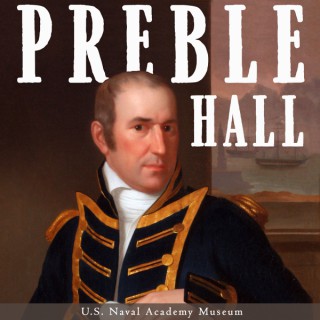
In this episode of Preble Hall, Tom Duffy discusses his new book, Tanker War in the Gulf: Operation Earnest Will, Diplomacy and Seapower in Practice, with Dr. John Sherwood. During the Tanker War, Duffy was a naval officer aboard the U.S.S. Cochrane (DDG-21). He later served as a diplomat with the State Department for 32 years.
Nick Jeffery read Robert Browning's The Ring and the Book, a Victorian epic poem about a murder mystery in 17th Century Italy, to test a theory. John Granger's best guess after surveying the chapter headings of Hallmarked Man last September was that, of all 77 sources for the 139 epigraphs in Strike8, Browning's poem was the most likely to hold a secret message or special meaning inside it. John had said something similar about another Browning poem and Ink Black Heart, Elizabeth Barrett Browning's Aurora Leigh, and Nick had confirmed that through his own reading and confirmation by Rowling herself. He thought John's track record of spotting important epigraph sources merited a test reading.He published his findings on Friday in a post titled ‘The Ring and The Book – A Rowling Reading.' In brief, the murder in Browning's poem is a point-to-point model for the Ironbridge murder mystery in Hallmarked Man with characters in Rowling-Galbraith's book — most notably, Chloe Griffiths, Tyler Powell, and Ian Griffiths — having their astonishing equivalents in Ring. The less obvious but more important links between the two are in their implicit feminism and other messages: Both works critique abusive relationships and patriarchal power: Guido's control of Pompilia and Dino Longcaster's control of Decima Mullins. The legal system (Books 8–9 especially) is satirized as formalistic, pedantic, and often blind to moral reality. True justice requires personal moral intuition beyond mere evidence or procedure. The Pope's monologue (Book 10) weighs this tension most profoundly. In The Hallmarked Man the police are slow to act on new information gained by Strike and Robin and Farah Navabi manages to hoodwink the courts into escaping punishment for her part in Patterson's crimes.The Ring and The Book dramatizes the eternal struggle between good and evil. Pompilia embodies instinctive purity, sacrificial love, and spiritual insight despite her suffering. Guido represents sophisticated, calculating evil that twists morality to justify cruelty. Browning affirms that evil exists but that good can somehow arise from or shine through evil's consequences. In The Hallmarked Man evil is real, monstrous, and often cloaked in normalcy or power structures, but it can be exposed and defeated through persistence, intuition, and moral courage.Nick also discusses in this article the chiastic structure of Ring (!) and the ‘conversation' he heard between Robert Browning in this poem with Aurora Leigh, the masterpiece by his late wife. His ‘Rowling Reading' of Ring and the Book, consequently, will soon be a touchstone piece not only in Rowling Studies but Browning Studies as well (#ArmstrongBrowningLibraryAndMuseum @ Baylor). As they have done before with Nick's ‘Rowling Reading' articles. the Hogwarts Professor team recorded their conversation about the piece (listen to their discussions of I Capture the Castle and Aurora Leigh). Seven High Points of that Ring and the Book epigraph conversation include:* Nick's review of why Serious Strikers and Rowling Readers should read The Ring and the Book along with the story of his immersion in it;* John's explanation of why he was so confident that Browning's poem was a template of some kind for Hallmarked Man even though only six of Strike8's 139 epigraphs were taken from it;* Their survey of Rowling's previous work with epigraphs — Deathly Hallows and Casual Vacancy all the way to Running Grave and Hallmarked Man — for works with similar embedded-in-the-epigraph texts and those without one (or in which it hasn't yet been discovered);* Nick's discussion of Rowling's previous comments about epigraphs and her answer to the question, ‘Which Came First, the Epigraph or the Story?';* John's best guess pre-publication about the text that will be the epigraph source in Sleep Tight, Evangeline and which Strike text it will most resemble with its Whiskey Shambles title;* Nick's commitment to exploring Blue Oyster Cult epigraphs in Career of Evil to see if one of that band's albums, all of which supposedly had sci-fi themes and story continuity, served as a text-within-the-text for Strike3; and* John's suggestion that the relationship of Elizabeth Barrett Browning and Robert Browning, a great love with a shared vocation, might be a point of reflection for Serious Strikers as a template for understanding the Strike-Ellacott partnership.Nick and John will be recording their group charting of Hallmarked Man's Part Eight this week with Sandy Hope and Ed Shardlow (and Presvytera Lois?), a survey of readers is in the works, and the long-awaited close look at the Strike series in light of the Cupid and Psyche myth draws ever nearer. Stay tuned!The Ten Questions, Epigraph Charting, and Links to Previous Epigraph Discussions Here and Elsewhere:The Ring and The Book – A Rowling Reading, Nick Jeffery, February 2026Intro to Epigraphs 101, John Granger, September 2022The Heart is Not About Emotions and Affection but the Human Spiritual Center, John Granger, October 2022A Rowling Reading of Aurora Leigh, Nick Jeffery, November 2025Beatrice Grove's Pillar Post Page at HogwartsProfessor.com* Scroll down for Prof Groves' posts about epigraphs and literary allusion in Cuckoo's Calling, The Silkworm, Troubled Blood, and Ink Black HeartLethal White: Ibsen's ‘Rosmersholm', John Granger, December 2018Rowling, Dylan Thomas, and the I Ching: Three Thoughts on Strike7's Epigraphs, John Granger, April 2023‘Deathly Hallows' and Penn's ‘Fruits of Solitude,' John Granger, October 2008The Aeschylus Epigraph in ‘Deathly Hallows,' John Granger, October 2008Maid of the Silver Sea Epigraphs: Louise Freeman Davis' Collected Posts, 2025The Faerie Queene Epigraphs in Troubled Blood* Scroll down the Troubled Blood Pillar Post for the Faerie Queene commentary by Beatrice Groves, Elizabeth Baird-Hardy and John GrangerRobert-Galbraith.com Posts about the Epigraphs in Each Book* Hallmarked Man's Epigraphs: The Poetry* Hallmarked Man's Epigraphs: The Prose* Scroll Down the site's ‘Features' Page for all the other Epigraph PostsAgents of Fortune: The Blue Oyster Cult Story, Martin Popoff, May 2016Pompilia: A Feminist Reading Of Robert Browning'S The Ring And The Book, Anne Brady, May 1988Roman Murder Mystery: The True Story of Pompilia, Derek Parker, January 2001Sleep Tight, Evangeline: Nick Jeffery and John Granger talk with Dimitra FimiHallmarked Man Epigraphs: The Tally SheetMatthew Arnold: 17 poems, 25 epigraphs, 6 from Merope: A Tragedy* 3, 17, 52, 103, 108, 110 (Merope), 21, 33, 68, 38, 97, 41, 45, 59, 58, 69, 73, 76, 80, 86, 96, 106, 119, 122, 124Robert Browning: 26 poems, 38 epigraphs including frontispiece, 6 from The Ring and the Book* 44, 75, 62, 64, 102, 118 (Ring and Book), frontispiece, 2, 9, 11, 107, 13, 16, 20, 26, 28, 32, 35, 37, 114, 39, 42, 93, 44, 75, 47, 51, 62, 64, 67, 116, 71, 77, 79, 84, 87, 120, 90, 91, 100, 102, 109, 118, 126A. E. Housman: 5 works, 25 poems, 28 epigraphs, 10 from Last Poems* 1, 5, 7, 53, 19, 92, 56, 65, 74, 105 (Last Poems), 23, 30, 34, 36, 40, 43, 46, 49, 57, 63, 78, 82, 89, 94, 98, 112, 115, 125John Oxenham: 1 work, 26 epigraphs* Parts 1-10, Epilogue, 15, 18, 22, 25, 27, 55, 60, 66, 83, 85, 88, 95, 111, 113, 127 (Maid of the Silver Sea)Albert Pike: 3 works (?), 22 epigraphs, 16 from Morals and Dogma* 4, 16, 12, 121 (Liturgy), 8, 10, 14, 29, 31, 48, 50, 54, 61, 70, 81, 99, 101 (Morals and Dogma), 24, 72 (Ancient and Accepted Rite?)Most epigraphs: Robert BrowningFrontispiece: Robert BrowningMost from one poem: Tie, Robert Browning 6 Ring and Book, Matthew Arnold 6 Merope: A TragedyMost from one novel: John Oxenham 26 Maid of the Silver SeaMost from one didactic or discursive argument: Albert Pike 22 (24?) Morals and DogmaConclusions: Ring and Book your best bet as template, Re-read Maid of the Silver Sea, read Merope: A TragedyTally Sheet of Epigraphs for Ink Black Heart:Poet: epigraph numbers, (total)* Christina Rossetti: 8, 14, 22, 24, 25, 35, 38, 50, 52, 54, 56, 84, 86, 90, 98, 103, 105, 107 (18)* Elizabeth Barrett Browning: 12, 21, 33, 39, 42, 45, 47, 58, 67, 71, 72, 82, 96, 101, 102, 104 (16; all but #s 21 and 58 from ‘Aurora Leigh')* Mary Elizabeth Coleridge: Book, 1, 18, 20, 49, 79, 81, 91, 93, 94, 106 (11)* Emily Dickinson: 11, 31, 53, 58, 59, 65, 70, 76, 99 (8)* Charlotte Mew: 16, 17, 40, 55, 66, 92, 95 (7)* Felicia Hemans: 6, 10, 15, 63, 100 (5)* Amy Levy: 7, 23, 32, 80, 85 (5)* Jean Ingelow: 9, 27, 29, 37, 64 (5)* LEL!: 62, 68, 69, 83 (4); see also Rossetti 52 ‘LEL')* Mary Tighe: 36 (Psyche), 43, 60, 88 (4)* Helen Hunt Jackson: 4, 87, 89 (3)* Joanna Baillie: 13, 21, 34 (3)* Augusta Webster: 44, 48, 51 (3)* Emily Pfeiffer: 3, 75 (2)* Charlotte Bronte: 19, 74 (2)* Adah Isaacs Menken: 30, 57 (2)* Constance Naden: 41, 46 (2)* Mathilda Blind: 61, 97 (2)* Mary Kendall: 73, 77 (2)* Martha Jane Jewsbury: 2 (‘To My Own Heart')* Anne Evans: 28* ‘Michael Field' (Katherine Bradley and Edith Cooper): 78The Heart and Vision epigraphs in Ink Black Heart by chapter number:* Heart: 20, 106 (MEC); 21, 67; 52, 107; 68, 85; 2; 63, 80, 85; 17, 40, 55, 95 (Mew); 19, 74; 27; 30; 36, 60; 87 (23)* Vision: Frontispiece, 1, 49, 81 (MEC); 22, 25, 38, 90, 98 (CR); 59; 3; 34; 95; 57; 88; 48; 46 (17)Tally Sheet of Epigraphs for Cuckoo's Calling:* Frontispiece: Rossetti -- A Dirge* Prologue: Lucius Accius, Telephus* Part One: Boethius, The Consolation of Philosophy* Part Two: Virgil, Aeneid* Part Three: Virgil, Aeneid* Part Four: Pliny the Elder, Historia Naturalis* Part Five: Virgil, Georgics* Epilogue: Horace, Odes* [Closing Poem: Tennyson, Ulysses]Brackets/Latch: 19th Century English poets (see Groves)Most epigraphs: Virgil (3); no other author has more than oneMost frequently referenced work: Aeneid (2), shades in UlyssesCenter of Chiasmus: Aeneid (true if ring has 5, 8, or 9 parts)Turtleback lines: Not evident in authors list, perhaps in meanings of specific epigraphsConclusions:* Read Aeneid to look for Cuckoo's parallels;* Study epigraphs to look for parallelsOnline Literature Review for ‘Epigraphs of Cuckoo's Calling:‘https://robert-galbraith.com/epigraphs-of-the-cuckoos-calling/* 2025 connecting the dots between epigraphs and chapter set to follow (generic)* No mention of Strike as Aeneashttps://strikefans.com/the-cuckoos-calling-epigraphs/* Reprinting of epigraphs without commentary* No mention of Strike as Aeneashttps://thesefilespod.com/blog/the-cuckoos-calling-epigraphs/* Includes a very helpful link to The Rowling Library and an article there about the ‘real world' crime serving as a template for the Landry murder* No mention of Strike as Aeneashttps://mugglenet.wpenginepowered.com/2017/09/literary-allusion-cuckoos-calling-part-1-christina-rossettis-dirge/* Brilliant discussion of the Rossetti poem but curiously without reference to resurrection meaning* No mention of Strike as Aeneashttps://mugglenet.wpenginepowered.com/2017/09/literary-allusion-cuckoos-calling-part-2-tennysons-ulysses/* Brilliant discussion of Strike as Ulysses* No mention of Strike as Aeneas, curious becauseh Virgil models Aeneas on UlyssesThe Ten Questions of This Conversation (Sort Of!)1, (Nick) So, John, I finally wrote up my findings about The Ring and the Book as the story template for Hallmarked Man's murder mystery and, as we did with my posts about Aurora Leigh and I Capture the Castle, let's talk about it, expanding on the correspondences between the Browning poem and Strike 8. The natural place to begin is with your guess about Ring and the Book being a template based on your tally of the Hallmarked Man epigraphs, a theory you shared on our first show post-publication. Can you explain your process and what made you so confident about Ring and the Book?2. (John) Looking at that tally, then, Arnold's Merope and Oxenham's Maid of the Silver Sea are quantitatively more likely equivalents to Aurora Leigh in Ink Black Heart, but the Browning frontispiece, number of his epigraphs, the hidden quality of the Ring and Book poem titles, and the relationship with Barrett Browning made it seem the most likely. That the poem is considered one of the great feminist tracts written by a man didn't hurt. I still want to go back to the Arnold poem, though, because of the centrality of his epigraphs in the center Parts and Oxenham deserves a re-read, too, or just a trip to Louise Freeman Davis site, the home of Oxenham Studies online. What struck me while reading your post, Nick, was in the correspondences you found between Ring and the Book and Hallmarked Man. Can you give us the highlights of that?3. (Nick) The Ironbridge murder mystery, then, is largely lifted from the death of Pompilia. Which is unusual isn't it? Has Rowling-Galbraith ever used her epigraphs to point to the template of her story?4. (John) I think, then, that at least four of the previous Strike novels give us the embedded template, per Beatrice Groves The White Divel and The Revenger's Tragedy (and even Hamlet) gives us important clues about The Silkworm crime, Rosmersholm and its incestuous backdrop inform the murder of Lethal White, the Janus deceiver in Faerie Queene should have been a give-away about the poisoner in Troubled Blood, and, as Rowling confirmed and you demonstrated Nick, Aurora Leigh is the working model for Ink Black Heart. I think the closest Rowling epigraph suggestions to story template was in the Rossetti poem that opens Cuckoo's Calling and the Aeschylus epigraph in Deathly Hallows. What has Rowling said, though, about her epigraph sources? Do they precede the novels or follow the writing?5. (Nick) So it's not one or the other, I think, that is, she has a template in mind and if the source doesn't have sufficient quotable pieces to serve a epigraphs for the whole book, she uses other sources from the genre in play or that highlight her central theme (cf., the Gray's Anatomy heart epigraphs in tandem with the hearty women Victorian poets in Ink Black). What I'm struck by here, though, is the shift in importance of epigraphs to Rowling-Galbraith. The numbers are startling, no, between Cuckoo and Hallmarked?6. (John) Not only do we see a jump from eight or nine epigraphs in Strike1 to 139 in Stike8, but Team Rowling is pushing readers to think more seriously about them by posting reviews of the epigraphs in each book, drawing the dot-to-dot correspondences. I confess the Strike novel whose epigraphs are not like the others, Nick, is Career of Evil and its Blue Oyster Cult lyrics. You've been reading a book about Blue Oyster Cult so I'll defer to you in this despite my great fondness for heavy metal groups with sci-fi themed lyrics...7. (Nick) What about the book we haven't got in hand, John: Sleep Tight, Evangeline? We have been told -- sort of! -- the title is from a 2014 song from an American blues band called ‘The Whiskey Shambles.' Which of the previous epigraph models Rowling has used, from Deathly Hallows to Hallmarked Man, do you think we'll be seeing in Strike9? What are your thoughts on that, especially as the best link we have for Sleep Tight, Evangeline is from a rock and blues band?8. (John) So I hope that we're going to see another Running Grave type epigraph experience in Evangeline, though Grave was unique among Rowling novels and their epigraphs in not having a story-book, poem, or play as its primary source. The I Ching, cannot be a story-template per se because it is a divination tool or means to reflection. Unless you think Pike's Morals and Dogmas Freemasonry encyclopedia qualifies as an equivalent of sorts to the I Ching? That's another outlier, isn't it?9. (Nick) To put a Fourth Generation focus on this, John, we should be looking for a technique that Serious Readers can use for Sleep Tight, Evangeline to hunt for the embedded source if its hidden as were Aurora Leigh and The Ring and the Book. You've found the ones no one else noticed in Ink Black Heart and Hallmarked Man, how did you do that and do you think the same method will work for Cuckoo and Career as well as Evangeline?10. (John) So, yes, I found them but you had the first confirmed by Mrs Murray and then connected the dots between the Browning poems and Rowling's work. If this method is going to work on Cuckoo, Career, and Evangeline it will have to involve a spotter and a shooter, though they can be the same person. The spotter technique is nothing but grunt work; chart the epigraphs used and spot the author most frequently referenced and the work of theirs most frequently cited. The shooter work is actually a lot more involved and interesting; tell us about your experiences with the two Browning's' epic poems, that thrill of discovering correspondences. Do you think that excitement is something Rowling is offering her readers a a treasure hunt or as a point of reflection in terms of meaning? This is a public episode. If you'd like to discuss this with other subscribers or get access to bonus episodes, visit hogwartsprofessor.substack.com/subscribe
On 23 December last year, Rowling changed her Twixter home page header and cameo with this tweeted explanation:The Charm Bracelet header features thirteen charms on nine links:Rowling tweeted an addendum about the Psalter and Jack in the Box charms:Nick Jeffery dropped an explanatory post two days later at the Hogwarts Professor weblog: J. K. Rowling Drops All the Strike 9 Clues for Christmas! It remains the only complete survey of the pieces and compendium of what Serious Strikers around the world have discovered about them.Beatrice Groves, author of Literary Allusion in Harry Potter, wrote up her charm bracelet thoughts at ‘The Strike Ellacott Files' a month later. In ‘Charms, Psalms & Golden Clues: A brace(let) of clues for Strike 9,' Prof Groves discusses the magical quality of charms as talismans and even incantational song:Rowling points out in this 2013 piece the link between the name given to charm bracelets and the magical world: ‘Why do we call those little masterpieces “charms” if not in allusion to their talismanic properties?… they are personal amulets.' To charm someone is also to slightly to bewitch them, something Rowling plays with when Riddle exerts his charm on Ginny and literally possesses her: ‘If I say it myself, Harry, I've always been able to charm the people I needed.' Witch Weekly's Most-Charming-Smile Award is given to a smile that is both literally, as well as metaphorically, bewitching.The word ‘charm' comes, through French, from the Latin ‘carmen' which means ‘song, verse, oracular response, incantation.' Its first meaning in English, therefore, was the magical one: ‘the chanting or recitation of a verse supposed to possess magic power or occult influence; incantation, enchantment; hence, any action, process, verse, sentence, word, or material thing, credited with such properties; a magic spell; a talisman, etc.' (Oxford English Dictionary). From the sixteenth century onwards, ‘charm' meant ‘anything worn about the person to avert evil or ensure prosperity' because such amulets might contain the text of such a charm. And thinking about this made me aware for the first time of how in the most important charms in Harry Potter – the Fidelius Charm and the Patronus Charm – the word is not simply a synonym for spell but encodes this original, protective meaning. These magical ‘Charms' like the charms on charm bracelets encode what Rowling calls ‘talismanic properties.'Nick and John invited Elizabeth Baird Hardy, Deputy Headmistress of Hogwarts Professor, the genius behind AppalachianInkling.com, Hunger Games expert, and author of Milton, Spenser and the Chronicles of Narnia: Literary Sources for the C.S. Lewis Novels to talk about these charms, especially about what she had written briefly on the subject. The goals of this conversation? * To introduce the subject to everyone not familiar with the Christmas tweets and bracelet-header, * to discuss the ‘Why?' of this present to Strike fans everywhere, * to speculate about the meaning of the bracelet pieces individually and in a series, and * to brainstorm their qualities as clues for Strike9, the penultimate novel in the decalogy.Which is a lot! The good news is that the conversation never flagged and the revelations and possible meanings of the charms, thirteen in total on nine links, reward anyone listening in.Nick starts off the conversation with a review of the six charm bracelets in Rowling's life and writing, one of which was a long forgotten piece in the margins of a Rowling web site:[You can read about those internet ‘Easter Eggs' in ‘Hidden Photos at Rowling's Website' here, here, here, and here.]Nick offered as a guiding idea for our conversation the likelihood that the nine links in the bracelet were meaningful, i.e., that they reflected the structure of the book for which the bracelet is meant to be a clue. There are thirteen charms, he noted, but certainly Rowling-Galbraith could have had a thirteen link chain made if she hadn't thought the nine links more than sufficient, even a pointer to Strike 9 being a nine Part mystery. Since, as Nick noted, she has trouble even passing up a shop selling charms, it seems likely she has been collecting the pieces for this one for some time. Perhaps this bracelet is a “target” toward which she has been writing with these books. It is certainly not something she just threw together for a header photo shoot. The trio elected to read the circular collection of charms, consequently, as pieces with individual meaning — as magical talismans of sorts per Prof Groves — and as a ring composition, with both aspects indicating the place and meaning of the piece in the book.After a brief discussion of why Rowling, Inc., would release this set of clues now, with another Strike novel or Bronte Studios television adaptation in the distant future — John offered the possibility that this bit of fan servicing was meant as a touch of appeasement qua Christmas gift to the many fans disappointed with Hallmarked Man — Elizabeth, John, and Nick tackled the thirteen charms on nine links.In Part One of their conversation, they talk about * the heart shaped engagement ring box;* the golden diamond-laden egg;* the anchor;* the two angels; and * the Trojan horse.Their preliminary conclusions at the half-way point?Mrs. Murray in her Nativity gift to her readers offers them clues not only to the next Strike-Ellacott novel but to the meaning of human life. Each of these five charms is a symbol with obvious and not so obvious Christian meaning. John reconsidered his answer to the ‘Why now?' in light of this avalanche of symbolism; instead of it being fan servicing to rescue the brand, he thinks it may be Rowling's attempt — on the most celebrated remnant Christian holiday in a post-Christian world — to reset her serious readers' understanding of what she is about as a writer, what sort of transformation she is trying to create via story within her readers.Part two of this interpretative deep dive into Rowling's artistry in metallurgical symbolism, her “charm work” literary alchemy, will follow shortly. There are five links with seven charms to come — Jack in the Box, Hourglass, White Rose, Crocodile, Corvid, Psalter, and the Head of Persephone — all as rich in meaning as the first four links.Below are links to subjects mentioned in this first conversation and additions not discussed but discovered after the fact, all shared for your consideration and comments!Thank you as always from the Hogwarts Professor team for your joining us with special appreciation to our paid subscribers!Subjects that Elizabeth, Nick, and John Discussed: The Heart Shaped Engagement Ring Charm:* The first, fourth, fifth, and ninth links are clasped objects with surprises inside,* Ink Black Heart and Deathly Hallows: The Heart is Not About Emotions and Affection but the Human Spiritual Center (John, October 2022)* Hallmarked Man, Part Five: The Center of Strike 8 is about “Inner Light” (Ed Shardlow)* Gold as “solid light” and diamonds as “inner light,” both reflecting in nature the Light of God's Word or Logos that is found with in every man (cf., John 1:9 and Rowling's comments about Casual Vacancy being “all about” her belief that “the light of God shines in every soul”);* The consequent symbolism of a golden wedding/engagement band with two diamonds;* The human being as a ‘heart in a box' either enlightened ‘gold and diamonds' or a dark ‘jack in the box' devil* The two-stone ring, as Nick notes, is a “me and you” ring, alluding to a certain theme song. Also, Elizabeth notes, Robin is faced with a choice between two very different types of proposals, so the duality of the ring in the box connects to that conundrum, and since that is apparently where 9 will begin, it gives us a good idea that we are right in “reading” the bracelet starting with this oneThe Gold Diamond-Laden Egg Charm:* Assuming it is an ‘Easter Egg,' the two meanings of that phrase;* Again, ‘gold and diamonds,' as above; * Paschal meaning of Eggs: The custom of exchanging colored eggs entered the life of the Church. The symbolic meaning of the egg as the beginning of a new life was known even earlier. Christians saw in this symbol confirmation of their faith in the coming general resurrection. The Easter egg's red color symbolized the all-conquering Divine Love, which alone could destroy hell!The Foul-Anchor Charm:* ‘Strike 9 to Heads to Portsmouth!' (Nick, September 2025)* Foul Anchor (Wikipedia);* Eagle, Globe, and Anchor (Wikipedia);* Meaning of ‘Hector' in Homeric Greek is ‘Holding Fast,' and, by interpretation, ‘anchor;'* The Greek word for ‘Anchor' found in the New Testament is ἄγκυρα, pronounced ‘ang-chor-a;' * Hebrews 6:19:13 For when God made promise to Abraham, because he could swear by no greater, he sware by himself,14 Saying, Surely blessing I will bless thee, and multiplying I will multiply thee.15 And so, after he had patiently endured, he obtained the promise.16 For men verily swear by the greater: and an oath for confirmation is to them an end of all strife.17 Wherein God, willing more abundantly to shew unto the heirs of promise the immutability of his counsel, confirmed it by an oath:18 That by two immutable things, in which it was impossible for God to lie, we might have a strong consolation, who have fled for refuge to lay hold upon the hope set before us:19 Which hope we have as an anchor of the soul, both sure and stedfast, and which entereth into that within the veil;20 Whither the forerunner is for us entered, even Jesus, made an high priest for ever after the order of Melchisedec.* Meaning of "Anchor of the Soul" in Hebrews 6:19?The Immediate Context of Hebrews 6:13-20The writer reassures wavering Jewish Christians by citing God's oath to Abraham (Genesis 22:16-17). Two “unchangeable things” (God's promise and His oath, v. 18) make it “impossible for God to lie.” The “hope set before us” (v. 18) functions as an anchor that has already “entered … behind the curtain” (v. 19), where Jesus, our High Priest, intercedes (v. 20; cf. 4:14-16).Anchor as Hope: Theological Significance1. Objective, not subjective: “hope” (ἐλπίς) is grounded in the historical, bodily resurrection of Jesus (1 Corinthians 15:17-20).2. Already-but-not-yet: the anchor is cast forward into the heavenly holy of holies, securing believers' future inheritance (1 Peter 1:3-4) while exerting a present stabilizing pull.3. Firm and secure: βεβαία (reliable) and ἀσφαλής (incapable of slipping). The compound assures permanence beyond circumstantial change (Malachi 3:6).Christ Our Forerunner Behind the VeilThe anchor “enters” (εἰσερχόμενον, pres. tense) the inner sanctuary “behind the curtain,” alluding to the Day of Atonement (Leviticus 16). Jesus is πρόδρομος (“forerunner,” v. 20), implying that others will follow where He has gone (John 14:2-3). The anchor-rope is His indestructible life (Hebrews 7:16), tethering the believer to God's throne of grace.* Hence its use as a symbol within Christianity: Christ having defeated death is an anchor to those members of His Mystical Body which anchors them to life after death, “beyond the veil;”* The pairing of the anchor charm with the golden egg on the second link of the bracelet reinforces this Paschal symbolism;* Charles Williams' “Co-inherence” ideas: “Who Saved Draco's Soul?” Co-Inherence in Harry PotterThe Two Angels Charms (paired on Link three)* Cupid and Psyche? Maybe!* Angels? Ghosts?* Orlando drawings! A Silkworm flash-back to the Monkey-Bag with the essential clue inside…The Trojan Horse Charm* Trojan Horse (Wikipedia)In Greek mythology, the Trojan Horse (Greek: δούρειος ίππος, romanized: doureios hippos, lit. ‘wooden horse') was a wooden horse said to have been used by the Greeks during the Trojan War to enter the city of Troy and win the war. The Trojan Horse is not mentioned in Homer's Iliad, with the poem ending before the war is concluded, and it is only briefly mentioned in the Odyssey. It is described at length in the Aeneid, in which Virgil recounts how, after a fruitless ten-year siege, the Greeks constructed a huge wooden horse at the behest of Odysseus, and hid a select force of men inside, including Odysseus himself. The Greeks pretended to sail away, and the Trojans pulled the horse into their city as a victory trophy. That night, the Greek force crept out of the horse and opened the gates for the rest of the Greek army, which had sailed back under the cover of darkness. The Greeks entered and destroyed the city, ending the war.Metaphorically, a “Trojan horse” has come to mean any trick or stratagem that causes a target to invite a foe into a securely protected bastion or place. A malicious computer program that tricks users into willingly running it is also called a “Trojan horse“ or simply a “Trojan”.* Could the Strike Series be a Re-telling of Virgil's Aeneid? (John, July 2017)If Cormoran Strike's story is Rowling's postmodern re-telling of the Aeneid, then the Fates theme is more than apt.It is all about, after all, the hero's destiny or fate to recreate Troy in Italy as Rome, a fate which it is pointless for Aeneas to resist. The refugee from Troy, son of the goddess of beauty, is forced ever onward, often over-riding his preferences and pledges, to his destiny to found Rome as the New Troy. A soldier in an eastern country ‘coming home,' Aeneas is a wounded man, haunted by his divine mother, a man of destiny forced to leave a beautiful, powerful woman who curses him at his departure.Sound familiar? The Aeneid is a reverse reflection and re-telling of Homer's Iliad and Odyssey in that it's first six books are about the Trojan's travels and the last six relate his battles with the local tribes in Latium. It seems possible that Rowling might be trying to do with the Aeneid what she did with the Weird Sisters of Macbeth, namely, present what seems to be a tale of inevitability or fate, something prophesied or otherwise seemingly inescapable, as a function really of character choice.In the Peg-Legged PI's story that could mean Rowling's revisiting fate vs choice vis a vis whether he is able to choose to take-or-leave an investigation of Leda's death (and face the dangers inherent in threatening his biological father, Jonny Rokeby) or whether he feels doomed to follow it to its end, whatever the costs to him and to those he loves.* The Trojan Horse is the wisdom of Athene as given to Odysseus, her favorite. This is a public episode. If you'd like to discuss this with other subscribers or get access to bonus episodes, visit hogwartsprofessor.substack.com/subscribe

Author : Tony Pi Narrator : S. Qiouyi Lu Host : Graeme Dunlop Audio Producer : Eric Valdes Previously ran as episode 423 and first published in Fantasy Magazine Rated PG-13 The Gold Silkworm by Tony Pi When I first became keeper of the Spirit of Grass, she and I made a pact to never turn […] The post PodCastle 926: TALES FROM THE VAULTS – The Gold Silkworm appeared first on PodCastle.
For generations, silkworm pupae were discarded as waste from silk production. Now, KAICO is proving these organisms can function as highly efficient protein factories—producing complex vaccine antigens at yields and costs that challenge conventional bioreactor-based manufacturing. With a PCV2 oral vaccine already registered in Vietnam and a human norovirus vaccine preparing for Phase I clinical trials, the silkworm platform is moving from proof-of-concept to commercial reality.In Part 2, Masafumi Osawa, Business Development Lead at KAICO, walks us through the company's product pipeline, the regulatory landscape for this unprecedented platform, and why silkworm-based manufacturing could reshape global vaccine accessibility. From farm-scale validation to regulatory dialogue with Japan's PMDA, this episode bridges platform science with product development.Stops along our Silk Road to biomanufacturingKAICO's approach to expressing complex proteins, including oral and injectable vaccines for animals and clinical-stage human health products (00:40)Immune-enhancing feed additive for pigs against PCV2 (registered in Vietnam), companion animal products, and human norovirus vaccine entering Phase 1 trials (02:50)Advantages of silkworm-produced antigens for both injectable and oral vaccines, and comparison to plant-based systems (04:57)How silkworm production enables rapid scale-out and high-yield protein expression for global accessibility (05:34)Speed of vaccine development with the silkworm platform—example with SARS-CoV-2 recombinant protein produced in three months (08:08)Key regulatory differences between animal and human vaccine development, including country-specific classification and global harmonization efforts (09:14)Sustainability and distributed manufacturing potential of silkworm-based systems (11:10)Milestones toward the first human biologic produced in silkworms, with phase 1 trials starting soon (12:27)Protein yield per silkworm pupae—scalability advantages compared to conventional bioreactor approaches (14:04)Masafumi Osawa's thoughts on the future of silkworm-based biologics: from democratized therapies to personalized medicines (15:15)Want to know if silkworms can solve your tough protein expression problems? Tune in now to learn how KAICO's biotech is set to redefine what's possible for vaccine development, and how their distributed, cost-effective approach could open doors across sectors.Connect with Masafumi Osawa,:LinkedIn: www.linkedin.com/in/masa-osawaKAICO Ltd.: www.kaicoltd.jp/enNext step:Need fast CMC guidance? → Get rapid CMC decision support hereSupport the show
For over 4,000 years, silkworms have connected civilizations through ancient trade routes. Now, KAICO Ltd., a Japanese biotech spin-off from Kyushu University, is transforming these creatures into living bioreactors capable of producing complex recombinant proteins and vaccine antigens—without the bioreactors, expensive media, or massive water consumption of conventional platforms.Masafumi Osawa, Business Development Lead at KAICO, brings an unconventional path to biotech. Trained in cultural anthropology with fieldwork experience in Indonesia, he witnessed firsthand the healthcare disparities that drive his current mission. After years in pharmaceutical business development at Towa Pharmaceutical, he joined KAICO to help scale a technology he believes could reshape global vaccine accessibility. His cross-cultural expertise now proves invaluable as KAICO expands internationally, with active partnerships in Vietnam and Thailand and growing interest from other regions.Episode highlights:Masafumi's transition from anthropology to biotech, and how cross-cultural expertise benefits global health collaborations. (04:15)The founding story of KAICO, spun out from Kyushu University and focused on recombinant proteins and vaccine antigen production (08:45)Step-by-step overview of the silkworm baculovirus expression system, including pupae handling and bioprocessing basics. (10:28)Practical differences between silkworms, E. coli, mammalian, and insect cell culture platforms—exploring advantages and drawbacks. (13:10)Strategies KAICO uses to control silkworm variability, including SPF grade sourcing, diet, environment, and documentation for pharmaceutical acceptance. (15:08)Production scalability: a single pupa can match 100–1000 ml of insect cell culture, with major implications for cost and environmental footprint. (16:42)Downstream harvesting and purification—how KAICO extracts and processes proteins from silkworm pupae, keeping methods largely familiar to traditional systems. (19:31)Regulatory and GMP challenges of using live organisms, and KAICO's approach to satisfying authorities and ensuring product consistency. (21:43)Whether you're curious about alternative biomanufacturing methods or want a transparent look at silkworm-based protein expression from research to the clinic, this episode delivers practical insights and thoughtful discussion.Connect with Masafumi Osawa:LinkedIn: www.linkedin.com/in/masa-osawaKAICO Ltd.: www.kaicoltd.jp/enNext step:Need fast CMC guidance? → Get rapid CMC decision support hereOne bad CDMO decision can cost you two years and your Series A. If you're navigating tech transfer, CDMO selection, or IND prep, let's talk before it gets expensive. Two slots open this month.Support the show
Tim Midyett from Mint Mile returns to discuss andwhichstray, what recent Silkworm reunion shows have been like, the throughlines between songs he wrote in that band about mortality, connection, and community and his most recent Mint Mile material, how fortune enabled him to make one more record with his late friend Steve Albini, who engineered andwhichstray in France during the second last recording session of his life, how he relates to records he has made with people who are gone, finally listening to and recording a song that the late Jason Molina wrote for Silkworm after drummer Michael Dahlquist was killed in a car accident twenty years ago, bands like Pavement who play live but don't make new records and whether he thinks Silkworm might write new songs, Aerosmith and Die Kruezen, upcoming Silkworm shows, other future plans, and much more!EVERY OTHER COMPLETE KREATIVE KONTROL EPISODE IS ONLY ACCESSIBLE TO PATREON SUPPORTERS STARTING AT $6/MONTH. This one is fine, but if you haven't already, please subscribe now on Patreon so you never miss full episodes. Thanks!Thanks to Blackbyrd Myoozik, the Bookshelf, Planet Bean Coffee, and Grandad's Donuts. Support Y.E.S.S., Pride Centre of Edmonton, and Letters Charity. Follow vish online.Related episodes/links:Ep. #1044: Steve Albini (2008)Ep. #1035: Ed Kuepper and Jim WhiteEp. #994: mcluskyEp. #952: SilkwormEp. #933: Alex Ross Perry, Scott Kannberg, and Robert Greene on ‘Pavements'Ep. #924: Lance Bangs and Bob Nastanovich on ‘Pavements'Ep. #910: The Hard QuartetEp. #869: Steve AlbiniEp. #840: Mint MileEp. #514: Steve Albini and Silkworm's Andy Cohen and Tim MidyettEp. #369: Andrew Cohen & Light ComaEp. #70: Joel RL PhelpsSupport this show http://supporter.acast.com/kreative-kontrol. Hosted on Acast. See acast.com/privacy for more information.

Part 2 of my conversation with guest Jay Breitling about our favorite music of 2025. Show notes: Counting down the rest of our favorite albums of the year Kumar's #8: Indie rock godfather Bob Mould is still pissed off and rocking Mould has also reunited his '90s band Sugar Kumar's #7: Triumphant return for Mclusky Falco and crew having fun ripping on various targets Breitling's #6: Superchunk keeps going with new drummer If you thought they were angry in 2018... Chock full of "banglociraptors" Kumar's #6: Straight outta Asheville with Wednesday's killer combo of alt-country, shoegaze and heavy guitar rippers Band features MJ Lenderman but it's Karly Hartzman's show Breitling's #5: Debut from Slumberland act The Cords Scottish indie jangle-pop banglociraptors Kumar's #5: Thrilling post punk from South London act Shame Returning to harder rocking sound of first few albums More albums are shorter nowadays Breitling's #4: Prolific Chicago psych-pop act Sharp Pins keeps bringing it Flashes of GBV and early Kinks Breitling's #3: Crutchfield sisters (Waxahatchee, Swearin') drop surprise release as Snocaps Again with the Lenderman, on drums this time Kumar's #3: PUP applies newfound maturity to pop-punk bangers Singing about adult stuff Breitling's #2: Mini-album from Peel Dream Magazine Autumnal-sounding leftovers from previous album recording session Kumar's #2: Sloan keeps bringing the heat with 14th release of diverse and rewarding power pop Four singer-songwriters keep the offerings varied and on point Breitling's #1 and Kumar's #4: Monumental four-album conceptual triumph from Hallelujah the Hills Lot of guest stars including Ezra Furman, Clint Conley, Sadie Dupuis, Patrick Stickles Staggering amount of excellence Kumar's #1 and Breitling's #7: NYC's Geese blows up with wide-ranging collection that grabs your attention Their club tour sold out immediately Frontman Cameron Winter leads a sound that ranges from Pavement to soul Looking forward to 2026 releases from: Notwist, Kiwi Jr., Courtney Barnett, Sleaford Mods, Crooked Fingers, Strange Pains Reunion shows next year from Silkworm, Superdrag Completely Conspicuous is available through Apple Podcasts. Subscribe and write a review! The opening and closing theme of Completely Conspicuous is "Theme to Big F'in Pants" by Jay Breitling. Voiceover work is courtesy of James Gralian.
Merry Christmas! In between looking at houses to rent and packing up the Granger house in Oklahoma City, Nick and John put together this yuletide conversation about perhaps the most neglected of Rowling's influences, Dodie Smith's I Capture the Castle. John was a reluctant reader, but, while listening to the audio book, reading the Gutenberg.com file on his computer, and digging the codex out of his packed boxes of books, the author of Harry Potter's Bookshelf was totally won over to Nick's enthusiasm for Castle.In fact, John now argues that, even if Rowling didn't read it until she was writing Goblet of Fire as some have claimed, I Capture the Castle may be the best single book to understand what it is that Rowling-Galbraith attempts to do in her fiction. Just as Dodie Smith has her characters explain overtly and the story itself delivers covertly, When Rowling writes a story, like Smith it is inevitably one that is a marriage of Bronte and Austen, wonderfully accessible and engaging, but with important touches in the ‘Enigmatist' style of Joyce and Nabokov, full of puzzles and twists in the fashion of God's creative work (from the Estecean logos within every man [John 1:9] continuous with the Logos) rather than a portrait of creation per se. Can you say ‘non liturgical Sacred Art'?And if you accept, per Nick's cogent argument, that Rowling read Castle many times as a young wannabe writer? Then this book becomes a touchstone of both Lake and Shed readings of Rowling's work — and Smith one of the the most important influences on The Presence.Merry Christmas, again, to all our faithful readers and listeners! Thank you for your prayers and notes of support and encouragement to John and for making 2025 a benchmark year at Hogwarts Professor. And just you wait for the exciting surprises we have in hand for 2026!Hogwarts Professor is a reader-supported publication. To receive new posts and support my work, consider becoming a free or paid subscriber.The Twelve Questions and ‘Links Down Below' Referred to in Nick and John's I Capture the Castle Conversation:Question 1. So, Nick, we spoke during our Aurora Leigh recording about your long term project to read all the books that Rowling has admitted to have read (link down below!), first question why? and secondly how is that going?Rowling's Admitted Literary InfluencesWhat I want is a single internet page reference, frankly, of ‘Rowling's Admitted Literary Influences' or ‘Confessed Favorites' or just ‘Books I have Read and Liked' for my thesis writing so I needn't do an information dump that will add fifty-plus citations to my Works Cited pages and do nothing for the argument I'm making.Here, then, is my best attempt at a collection, one in alphabetical order by last name of author cited, with a link to at least one source or interview in which Rowling is quoted as liking that writer. It is not meant as anything like a comprehensive gathering of Rowling's comments about any author; the Austen entry alone would be longer than the whole list should be if I went that route. Each author gets one, maybe two notes just to justify their entry on the list.‘A Rowling Reading of Aurora Leigh' Nick Jeffery Talking about ‘A Rowling Reading of Aurora Leigh' Question 2. ... which has led me to three works that she has read from the point of view of writers starting out, and growing in their craft. Which leads us to this series of three chats covering Aurora Leigh by Elizabeth Barrett Browning, I Capture the Castle by Dodie Smith and the Little Women series by Louisa May Alcott. I read Castle during the summer. Amid all the disruptions at Granger Towers, have you managed to read it yet? How did you find it?Capturing Dodie Smith's I Capture the Castle: Elizabeth Baird-Hardy (October 2011)Certain elements of the story will certainly resonate with those of us who have been to Hogwarts a fair few times: a castle with an odd combination of ancient and modern elements, but no electricity; eccentric family members who are all loved despite their individual oddities (including Topaz's resemblance to Fleur Delacour); travel by train; a character named Rose who may have been one of the reasons Rowling chose the name for Ron and Hermione's daughter; descriptions of food that make even somewhat questionable British cuisine sound tasty; and inanimate objects that have their own personalities (the old dress frame, which Rose and Cassandra call Miss Blossom, is voiced by Cassandra and sounds much like the talking mirror in Harry's room at the Leaky Caldron).But far more than some similar pieces, I Capture the Castle lends something less tangible to Rowling's writing. The novel has a tone that, like the Hogwarts adventures, seamlessly winds together the comic and the crushing in a way that is reflective of life, particularly life as we see it when we are younger. Cassandra's voice is, indeed, engaging, and readers will no doubt see how the narrative voice of Harry's story has some of the same features.A J. K. Rowling Reading of I Capture the Castle: Nick Jeffery (December 2025)Parallels abound for Potter fans. The Mortmain's eccentric household mirrors the Weasleys' chaotic warmth: loved despite quirks, from Topaz's nude communing with nature (evoking a less veiled Fleur Delacour) to Mortmain's intellectual withdrawal. Food descriptions—meagre yet tantalising—prefigure Hogwarts feasts, turning humble meals into sensory delights. Inanimate objects gain voice: the family dress-frame “Miss Blossom” offers advice, akin to the chatty mirrors or portraits in Rowling's world. Even names resonate—Rose Mortmain perhaps inspiring Ron and Hermione's daughter—and train journeys punctuate the plot.The Blocked Writer: James Mortmain, a father who spent his fame early and now reads detective novels in an irritable stupor, mirrors the “faded glory” or “lost genius” archetypes seen in Rowling's secondary characters, such as Xenophilius Lovegood and Jasper Chiswell.The Bohemian Stepmother: Topaz, who strides through the countryside in only wellington boots, shares the whimsical, slightly unhinged energy of a character like Luna Lovegood or Fleur Delacour.Material Yearning: The desperate desire of Cassandra's sister, Rose, to marry into wealth reflects the very real, non-magical pressures of class and poverty that Rowling weaves into Harry Potter, Casual Vacancy, Strike and The Ickabog.Leda Strike parallels: Leda Fox-Cotton the bohemian London photographer, adopts Stephen, the working-class orphan, and saves him from both unrequited love and the responsibility that comes with the Mortmain family.Question 3. [story of finishing the book last night by candle light in my electricity free castle] So, in short Nick, I thought it astonishing! I didn't read your piece until I'd finished reading Capture, of course, but I see there is some dispute about when Rowling first read it and its consequent influence on her as a writer. Can you bring us up to speed on the subject and where you land on this controversy?* She First Read It on her Prisoner of Azkaban Tour of United States?tom saysOctober 21, 2011 at 4:00 amIf I recall correctly, Rowling did not encounter this book until 1999 (between PoA & Goblet) when, on a book tour, a fan gave her a copy. This is pertinent to any speculation about how ‘Castle' might have influenced the Potter series.* Rowling Website: “Books I Read and Re-Read as a Child”Question 4. Which, when you consider the other books on that virtual bookshelf -- works by Colette, Austen, Shakespeare, Goudge, Nesbit, and Sewell's Black Beauty, something of a ‘Rowling's Favorite Books and Authors as a Young Reader' collection, I think we have to assume she is saying, “I read this book as a child or adolescent and loved it.” Taking that as our jumping off place, John, and having read my piece, do you wish you had read it before writing Harry Potter's Bookshelf?Harry Potter's Bookshelf: The Great Books behind the Hogwarts Adventures John Granger 2009Literary Allusion in Harry Potter Beatrice Groves 2017Question 5. So, yes, I certainly do think it belongs -- with Aurora Leigh and Little Women -- on the ‘Rowling Reader Essential Reading List.' The part I thought most interesting in your piece was, of course, the Shed elements I missed. Rowling famously said that she loved Jo Marsh in Little Women because, in addition to the shared name and the character being a wannabe writer, she was plain, a characteristic with which the young, plain Jane Rowling easily identified. What correspondences do you think Little Jo would have found between her life and Cassandra Mortmain's?* Nick Jeffery's Kanreki discussion of Rowling's House on Edge of Estate with Two Children, Bad Dad ‘Golden Thread' (Lethal White)Question 6. Have I missed any, John?* Rockefeller Chapel, University of ChicagoQuestion 7. Forgive me for thinking, Nick, that Cassandra's time in church taking in the silence there with all her senses may be the biggest take-away for the young Rowling; if the Church of England left their chapel doors open in the 70s as churches I grew up in did in the US, it's hard to imagine Jo the Reader not running next door to see what she felt there after reading that passage. (Chapter 13, conversation with vicar, pp 234-238). The correspondence with Beatrice Groves' favorite scene in the Strike novels was fairly plain, no? What other scenes and characters do you see in Rowling's work that echo those in Castle?* Chapter 13, I Capture the Castle: Cassandra's Conversation with the Vicar and time in the Chapel vis a vis Strike in the Chapel after Charlotte's Death* Beatrice Groves on Running Grave's Chapel Scene: ‘Strike's Church Going'Question 8. I'm guessing, John, you found some I have overlooked?Question 9. The Mortmain, Colly, and Cotton cryptonyms as well as Topaz and Cassandra, the embedded text complete with intratextuual references (Simon on psycho-analysis), the angelic servant-orphan living under the stairs (or Dobby's lair!) an orphan with a secret power he cannot see in himself, the great Transformation spell the children cast on their father, an experiment in psychomachia a la the Shrieking Shack or Chamber of Secrets, the hand-kiss we see at story's end from Smith, love delayed but expressed (Silkworm finish?), the haunting sense of the supernatural everywhere especially in the invocation that Rose makes to the gargoyle and Cassandra's Midsummer Night's Eve ritual with Simon, the parallels abound. Ghosts!* Please note that John gave “cotton” a different idiomatic meaning than it has; the correct meaning is at least as interesting given the Cotton family's remarkable fondness for all of the Mortmains!* Kanreki ‘Embedded Text' Golden Thread discussion 1: Crimes of Grindelwald* Kanreki ‘Embedded Text' Golden Thread discussion 2: Golden Thread Survey, Part II* Rose makes an elevated Faustian prayer to a Gargoyle Devil: Chapter IV, pp 43-46* Cassandra and Simon celebrate Midsummer Night's Eve: Chapter XII, pp 199-224Let's talk about the intersection of Lake and Shed, though, the shared space of Rowling's bibliography, works that shaped her core beliefs and act as springs in her Lake of inspiration and which give her many, even most of the tools of intentional artistry she deploys in the Shed. What did you make of the Bronte-Austen challenge that Rose makes explicitly in the story to her sister, the writer and avid reader?“How I wish I lived in a Jane Austen novel.” [said Rose]I said I'd rather be in a Charlotte Bronte.“Which would be nicest—Jane with a touch of Charlotte, or Charlotte with a touch of Jane?”This is the kind of discussion I like very much but I wanted to get on with my journal, so I just said: “Fifty percent each way would be perfect,” and started to write determinedly.Question 10. So, I'm deferring to both Elizabeth Barrett Browning and J. K Rowling. Elizabeth Barrett Browning valued intense emotion, social commentary, and a grand scope in literature, which led her to favour the passionate depth of the Brontës over the more restrained, ironical style of Jane Austen. Rowling about her two dogs: “Emma? She's a bundle of love and joy. Her sister, Bronte, is a bundle of opinions, stubbornness and hard boundaries.”Set in the 30s, written in the early 40s, but it seems astonishingly modern. Because her father is a writer, a literary novelist of the modern school, do you think there are other more contemporary novelists Dodie Smith was engaging than Austen and Bronte?Question 11. Mortmain is definitely Joyce, then, though Proust gets the call-out, and perhaps the most important possible take-away Rowling the attentive young reader would have made would have been Smith's embedded admiration for Joyce the “Enigmatist” she puts in Simon's mouth at story's end (Chapter XVI, pp 336-337) and her implicit criticism of literary novels and correction of that failing. Rowling's re-invention of the Schoolboy novel with its hidden alchemical, chiastic, soul-in-crisis-allegories and embedded Christian symbolism can all be seen as her brilliant interpretation of Simon's explanation of art to Cassandra and her dedication to writing a book like I Capture the Castle.* Reference to James Joyce by Simon Cotton, Chapter IX, p 139:* The Simon and Cassandra conversation about her father's novels, call it ‘The Writer as Enigmatist imitating God in His Work:' Chapter XVI, pp 331-334* On Imagination as Transpersonal Faculty and Non-Liturgical Sacred ArtSacred art differs from modern and postmodern conceptions of art most specifically, though, in what it is representing. Sacred art is not representing the natural world as the senses perceive it or abstractions of what the individual and subjective mind “sees,” but is an imitation of the Divine art of creation. The artist “therefore imitates nature not in its external forms but in its manner of operation as asserted so categorically by St. Thomas Aquinas [who] insists that the artist must not imitate nature but must be accomplished in ‘imitating nature in her manner of operation'” (Nasr 2007, 206, cf. “Art is the imitation of Nature in her manner of operation: Art is the principle of manufacture” (Summa Theologia Q. 117, a. I). Schuon described naturalist art which imitates God's creation in nature by faithful depiction of it, consequently, as “clearly luciferian.” “Man must imitate the creative act, not the thing created,” Aquinas' “manner of operation” rather than God's operation manifested in created things in order to produce ‘creations'which are not would-be duplications of those of God, but rather a reflection of them according to a real analogy, revealing the transcendental aspect of things; and this revelation is the only sufficient reason of art, apart from any practical uses such and such objects may serve. There is here a metaphysical inversion of relation [the inverse analogy connecting the principial and manifested orders in consequence of which the highest realities are manifested in their remotest reflections[1]]: for God, His creature is a reflection or an ‘exteriorized' aspect of Himself; for the artist, on the contrary, the work is a reflection of an inner reality of which he himself is only an outward aspect; God creates His own image, while man, so to speak, fashions his own essence, at least symbolically. On the principial plane, the inner manifests the outer, but on the manifested plane, the outer fashions the inner (Schuon 1953, 81, 96).The traditional artist, then, in imitation of God's “exteriorizing” His interior Logos in the manifested space-time plane, that is, nature, instead of depicting imitations of nature in his craft, submits to creating within the revealed forms of his craft, which forms qua intellections correspond to his inner essence or logos.[2] The work produced in imitation of God's “manner of operation” then resembles the symbolic or iconographic quality of everything existent in being a transparency whose allegorical and anagogical content within its traditional forms is relatively easy to access and a consequent support and edifying shock-reminder to man on his spiritual journey. The spiritual function of art is that “it exteriorizes truths and beauties in view of our interiorization… or simply, so that the human soul might, through given phenomena, make contact with the heavenly archetypes, and thereby with its own archetype” (Schuon 1995a, 45-46).Rowling in her novels, crafted with tools all taken from the chest of a traditional Sacred Artist, is writing non-liturgical Sacred Art. Films and all the story experiences derived of adaptations of imaginative literature to screened images, are by necessity Profane Art, which is to say per the meaning of “profane,” outside the temple or not edifying spiritually. Film making is the depiction of how human beings encounter the time-space world through the senses, not an imitation of how God creates and a depiction of the spiritual aspect of the world, a liminal point of entry to its spiritual dimension. Whence my describing it as a “neo-iconoclasm.”I want to close this off with our sharing our favorite scene or conversation in Castle with the hope that our Serious Reader audience will read Capture and share their favorites. You go first, Nick.* Cassandra and Rose Mortmain, country hicks in the Big City of London: Chapter VI, pp 76-77Question 12. And yours, John?* Cassandra Mortmain ‘Moat Swimming' with Neil Cotton, Chapter X, 170-174* Cassandra seeing her dead mother (think Harry before the Mirror of Erised at Christmas time?): Chapter XV, pp 306-308Hogwarts Professor is a reader-supported publication. To receive new posts and support my work, consider becoming a free or paid subscriber. This is a public episode. If you'd like to discuss this with other subscribers or get access to bonus episodes, visit hogwartsprofessor.substack.com/subscribe

Merry Christmas to all! We're celebrating video game Christmas with Christmas movies, games set during Christmas, games received for Christmas, and some of our favorite Christmas memories! Thank you for listening and supporting us throughout this fantastic year! Here's to more GTT in 2026! Our merch store is back, now on TeePublic! Check it out and grab something absurd for you or a friend! Join us in Discord! Check out our Patreon page! Patreon.com/GameThatTune is the home for exclusive content! Special thanks to our ABSURD FAN tier Patreon producers: Sam L, PhoenixTear2121, BeastPond, and Spanky McMasters! 0:00:00 Welcome to Game That Tune! 0:07:36 Game 1 0:11:31 Game 1 Reveal 0:26:21 Game 2 0:33:50 Game 2 Reveal 0:47:22 Game 3 0:52:35 Game 3 Reveal 1:05:26 Game 4 1:11:35 Game 4 Reveal 1:31:47 This Game's Winner Is... 1:40:58 Bonus Music/Outro

Milk worms, silkworms, and webs - oh my! It was a Silkworm September. From Chicago to Northern Ireland, where are we now? Some find it amazing we get out much at all. This week on Outlook - sister/co-host Kerry's recovering from another sickness and makes good use of the “mute” button, brother/co-host Brian is raving about his double Silkworm dream trip, and BF (3rd co-host Barry) he's researching all the things transplant patients can't take for symptom relief. For this Mixed Bag episode, Brian's sharing about his latest travel stories and adventures of music community gathering together in Chicago. He's making new friends, having merch made truly accessible and inclusive, and sharing a few clips of the songs that brought him to the States to begin with, for the second time this year. Kerry's back with Barry, in his flat, and on the sofa with guide dog Oyster as Barry relays a recent dreadful story, as September moves into October's Blindness Awareness Month, of the truly taxing and trying horror of being manhandled by ignorant people in public and community spaces who put their hands on you first and ask questions “never." As we go into BAM (as we call it) there's very little “awareness” of Blindness by the public. As the saying goes: when someone closes a door, they close another, and put up a sign which helps no blind person ever. September is also Pain Awareness Month, on the last day of September it's the National Day For Truth and Reconciliation, and we're here for all of it with music for our final show for our Outlook anniversary month as we talk church acoustics, assault, doubling down, and much much more. The Silkworm and Dianogah music featured in this episode was lifted from the following videos: https://www.youtube.com/watch?v=-FKQFKTP1iE https://www.youtube.com/watch?v=cQOUj_bWykg https://www.youtube.com/watch?v=XmKxMODNpz8
Nick and John have posted eight Hallmarked Man conversations since its publication last month and, as interesting as their back-and-forth talks have been, South Wales to American Fly Over Country, Lake to Shed, much of the best theorizing and interpreting of Strike 8 has been happening in the comment threads beneath those posts and in email messaging with John. Determined that these insights wouldn't be lost or invisible to Serious Strikers, they chose ten of the most challenging for a fun introduction to the fandom conversations readers not privy to the backchannel moderators network or who neglect the comment threads are missing.In addition, Nick shares the credible speculation that Rowling's weeklong absence from tweeting has been because she is on her Samsara yacht in the South Pacific, circling Bora Bora, believe it or don't. John quizzes Nick, too, about the election in South Wales, Caerphilly to be exact, and the reason the results in that dependably Labour area have the UK buzzing (and why Strike readers might expect the populist party victories will color Strikes 9 and 10).A quick ‘table of contents' for their hasty review, then, followed by links and transcripts! Enjoy — and, yes, have at in the comment threads, please, the locus of Strike fandom conversations.* Ed Shardlow: Gorilla Ryan* Vicky: Boxes and Plush Toys* Sandra Hope: Traditional Symbolism* Justin Clavet: Only Fans Gaffe (Ed Shardlow -- ‘Not Proven' error)* Bora Bora* Justin Clavet: On Manhood* Ed Shardlow: Ickabog Parallel Book Theory* Sandra Hope: Hallmarked Man as Rowling's ‘Greatest Hits' allusion collection* LC - Dorothy Sayers* Kathleen O'Connor -- Alternative Incest* Caerphilly elections -- UK meaning* Ring Composition ProjectPromised Links and Transcripts:* Ed Shardlow's ‘Gorilla Ryan' TheoryThe Ryan the Gorilla theory came to me at the point in the book where Robin has an epiphany following an impulse to look up the meaning of a name. I think this was the Jolanda-Violet realisation, but I thought she'd suddenly realised the full extent of Ryan's dark side, with the significance being the previously noted meaning of his name “Sea King” suggesting a connection between him and Wade King.That theory seemed very flimsy at first, but on further examination it might have some mileage. There are some notable differences between the attack in the Land Rover and the previous ones. Although we imagine the attacker wearing a gorilla mask, there's no mention of it, and in fact it says she can see his face. Also the Land Rover attacker makes no demands that she, “Stop” or, “Leave it”. She hits Wade with the pepper spray, which of course, would be difficult for Ryan to cover up, but she didn't inflict any such injuries on the gorilla attacker. Wade clearly intends to hurt her, whereas the other attacks had no physical violence and look very much like they were just intended to scare her.1) It's hinted that Branfoot knows about Robin's rape, and she says it's on the internet, but we never get any indication that King or Griffiths know about it. Strike and Robin never consider that the attacker might be someone who knows about it because they're close to Robin. That seems like an oversight.2) The gorilla attacker never refers to a specific case. Murphy may be scaring her into quitting the job and getting away from Strike, whereas a suspect would want her to stop investigating their specific case.3) The police don't take the rubber gorilla and dagger for DNA testing. That's pretty strange, unless there's someone on the inside blocking the investigation.There's a bit of an issue with the guy in the green jacket, who presumably Robin can see isn't Ryan when he's on the industrial estate and outside her flat. Presumably that was Wade.So, there would need to be some explanation for how or why Murphy is wearing the same jacket when he accosts her with the ceremonial dagger. But that's not insurmountable.Murphy would have been very surprised to encounter Matthew (sic, he means ‘Martin' -ed.), who he knows from Masham, outside Robin's flat. The narrative very much prompts us to think there's something going on with Murphy, but then we put this down to his work issues and associated relapse, but perhaps that blinds us (and Robin) to another possibility. And if it is the case, then Strike hasn't just let Robin go to dinner with his romantic rival, but she's heading into mortal danger. Were his instincts subconsciously alerting him to the threat? Did he leave it too late to shout, “Brake!” again?Nicola Reed's Objection to ‘Gorilla Ryan' (Sandy Hope, too)Kathleen O'Connor's Cogent Counterpoint to John's Incredulity about No One Noticing How Short Faux-Wright was in the Ramsay Silver footageVicky on the Interpretation of Robin's “Stuffed Toy” DreamBrenna Hill asks ‘Why is the New Ellacott Puppy Named Betty?'Sandra Hope Jumpstarts Conversation about Traditional Symbolism in Hallmarked Man* Masonic Orb Pendant for sale on Etsy ($795)* Jacob's Ladder Mosaic in Masonic Hall, London (Alamy)* The Bohun Swan (‘Chained Swan') (Wikipedia)Justin Clavet: The ‘Only Fans' Gaffe· I commented on the Hogwarts Professor gaffes pillar [Placeholder, ed.] post about the OnlyFans error - that the OnlyFans website was launched in November 2016, but in the book, the murdered Sofia is said to be a prolific OnlyFans poster before her disappearance in June of that same year. The OnlyFans account is only a small point in this large plot, but one that is repeatedly referred to, and Sofia's OnlyFans account is what ultimately brought her to the attention of her killer. For such a meticulous plotter and, as John would say, “OCD” author as Rowling is, does this real-world chronological impossibility give you pause? What other big historical error like this can be found in her books?· Did you notice that the interview with the pornstar occurs in chapter 69? I think Rowling was having a bit of (structural) fun and winking at the observant reader with that one.* Justin Clavet's 3 September ‘Gaffes' posting about ‘Only Fans'The reference to OnlyFans in chapter 33 (p. 269) felt anachronistic to me, as I don't remember ever hearing about the website before the pandemic era. And sure enough, according to Wikipedia (citing a New York Times article), the website didn't launch until November 2016. Therefore, Sofia – who was murdered in June 2016 – could not have been a prolific OnlyFans poster. Sofia's supposed OnlyFans account is referenced several further times throughout the book. Based on data from Google Trends, it seems incredibly unlikely that Strike and Robin would have readily known what OnlyFans was in late 2016/early 2017. So Where is Bora Bora?The Caerphilly 2025 Election: Victories for Left and Right Wing Populist Parties* 2025 Caerphilly Bi-Election (Wikipedia!)* UK's Ruling Labour Suffer Crushing Defeat Against Political Insurgents at Ballot Box (Breitbart)Justin Clavet ‘On Manhood in Hallmarked Man'The biggest thing that struck me in this book was the persistent themes of manhood woven throughout: the responsibilities, relationships, and hardships of men. * The central crime is linked with a secretive fraternal organization. * It opens with the death of Strike's father figure Ted, a “proper man” (p. 38), by whose maxims Strike is newly resolved to live. * We learn that Ted would've murdered (or been murdered by) his father Trevik if he hadn't left home and joined the army (p. 39), just like Strike would have come to blows (or worse) with his step-father Whittaker if he hadn't left home and joined the army. * While he loses the man he called his dad, he has a real meeting with his natural father for the first time. Rokeby shares that, in Strike, he had produced a proper man” (p. 747). * Strike celebrates not having fathered a child (while Robin is distraught in the wake of her own lost child, and devastated that the option to be a mother may no longer be hers to choose).* Richard de Leon says that his brother Danny was made the way he is because of his father's mistreatment. * Strike is bewildered that Danny (who integrates his brother's Christian name into his porn name, Dick de Lion) and Richard could be so close and share so much with each other, contrasting this with his own relationship with Al. * Leda and Rena are both shown to have suffered because of the absence of their more stable brothers. * Strike observes that “men are seen as disposable in certain contexts” (pp. 107f).* Wardle, who is shown to be a caring and dedicated father to his young child, opens up to Strike about his depression and his marriage troubles. * Strike reflects on the shallow friendships he has with other men, and later sees how this kind of friendship can be toxic with the wrong personalities (in Powell, Pratt, and Jones, p. 860). * Strike fears Wardle may be at risk of suicide. Niall is found to have committed suicide after his brother in arms was horrifically executed by Islamist combatants. The public can't be bothered to care about the tragic loss of this man who heroically put his life on the line for his country - preferring instead to lend their attention to the spectacle of another man, Branfoot, who went to extreme lengths to indulge his basest and most perverse desires (p. 873).Like many events in this book, this theme - with characters showing genuine concern and thoughtful consideration of complex men's issues - is a mirror image of one presented in Troubled Blood with the character of Carl Oakden and his cynical men's rights grift.This barely scratches the surface of the notes that I took on this theme, which I saw running deep through the whole book. I wondered if I was just seeing this in the text because of my own perspective as a man, or if it really was there. Indeed, you could find hints of this theme in each of the preceding seven books. But the structural clues left me convinced it was intentional. And when I watched this video (https://robert-galbraith.com/robert-galbraith-discusses-the-case-in-the-hallmarked-man/) the day after finishing the book, there was no doubt.Justin Clavet on the Hallmarked Man Dedication and Rokeby's Gratitude· I connected the book's dedication to Sean and Nadine Harris with Rokeby's statement on p. 748, “Not everyone's got a mate called Leo ‘oo stops ‘em livin' rough” and that he attributes his artistic and financial success to his friend's generosity and charity.Ed Shardlow on The Ickabog as Hallmarked Man's Parallel BookConscious of the links between the first 7 books of the series and the Potter books, and with three books purportedly remaining in the series, I was primed to see a connection between The Hallmarked Man and one of Casual Vacancy, Christmas Pig or the Ickabog. I didn't have any predisposition to it being any of those. Even if Rowling is taking them in some sort of chronological order, there's reason to believe the orders of conception, writing and publishing may differ.At the end of Part One, I thought the Ickabog looked like the best fit based on the fact that the central mystery of who the body in the vault was has a certain similarity to the mystery of the Ickabog itself and whether it was real or a myth. The importance of the truth and the damage done by lies are fundamental to the Ickabog story, and I thought from the start those were major themes in THM.The other correspondences I've spotted:* The police, in various guises, like the royal guard play an important part, largely inept, self-serving, and perpetrators of miscarriages of justice.* The aristocrats - Lord Branfoot, Lady Jenson, Dino Longcaster - lie and deceive to protect their own interests, causing untold damage in the process.* There's terrorism, and terrorism being used to spread fear and division.* Ultimately Rupert and Decima, two sexes but one entity, produce an offspring that may have been defective or corrupted by the state of the world he was born into, but seems to have emerged happy and healthy. Daisy Dovetail having persuaded Rupert the Ickabog that humanity was worth making compromises for.* The main antagonist traps a woman in his house. I thought their names were Esmeralda and Sapphire, but it's Lady Eslanda not Esmeralda… But apparently Eslanda can mean emerald, or VIOLET, or truth… So Eslanda corresponds to both Sapphire and Jolanda!* We visit a feudal state* Ben Liddell – the soldier killed in an incident in a land where there shouldn't have been any military conflict happening and it being covered up by the government* Sandra Hope: The Footprint!Ed Shardlow, I can't wait for your show on the parallels between THM and the Ickabog!!! I just finished rereading both of them and I'm losing my mind! Omg, the footprint: “The Flaw in the Plan (ch32) is that the footprint is hopping (not so much terrifying as ludicrously funny) and Strike noting that the bearer of the footprint in the vault has a limp!! Please let this conversation happen soon!!Sandra Hope: Strike 8 as a ‘Rowling's Greatest Hits Album' of Allusions:Allusions that took my breath away:* Ectopic pregnancy- TB* Schadenfreude- CC* “So many babies”- not just born, but what they're born into- Ickabog borndings* Human trafficking ring- RG* Woman buried in/under concrete- TB* Staged murder involving mutilation- Silkworm* Violent attacks & subsequent PTSD- a Rowling theme in every book, but especially CE & LW* DNA testing & fatherhood- CV, TB* Guys trying to find right time to ask a potential partner a question- GOF lol* Valentine's Day mishaps- CS, TB* Behavior of abandoned mothers-Silkworm (& HBP), specifically Merope, Leonora, Decima (also Leda)* Journalism as a weapon- GOF, OOP, Silkworm, RG* Potential ill usage of mirrors- SSNot a complete list by any means lolLC – Dorothy Sayers Connection?I don't know if there is anything in my seeing parallels between Cormoran and Robin and Peter Wimsey and Harriet Vance (Dorothy Sayers): Peter and Harriet had a very long acquaintance before they finally got engaged, with lots of twists and turns. Peter goes deep undercover in an ad agency in one novel; the feel of it was very similar to Robin going deep undercover in Lethal White. Also, the Sayers novel “Five Red Herrings” also features five men--in this case, five men who could have been the murderer (instead of the victim). Sayers also had very intricate plots that were puzzles--and was a Dante scholar. I believe Jo has mentioned that she admired Sayers. I don't know if these are just interesting parallels that Jo is having fun with or not, but they certainly seem to be more than coincidences. Thanks!Kathleen O'Connor – Alternative Incest Big Twist IdeasI'm impressed by your arguments that we will see some shocking twists – in addition to the shocking twist that Rokeby is actually, in his old age, a good father to his mature son, Cormoran, and not at all the image-focused a*****e we have seen through Strike's eyes up to now. I don't think, however, we will find that Rokeby is not Strike's father. That revelation would dilute Strike's growth in terms of his realizations that he has been mistaken about many things that he has taken for granted in his life. Instead, I think instead we will see a continuation of Robeby's rehabilitation until eventually, like Snape, Rokeby makes some kind of big sacrifice to aid Cormoran or someone/something else important to Cormoran. Also, even though Strike does not physically resemble Rokeby, he does resemble Prudence: * “Seeing them face to face, Robin spotted her partner's resemblance to Jonny Rokeby for the first time. He and his half-sister shared the same defined jaw, the same spacing of the eyes. She wondered – she who had three brothers, all of the same parentage – what it felt like, to make a first acquaintance with a blood relative in your forties. But there was something more there than a faint physical resemblance between brother and sister: they appeared, already, to have established an unspoken understanding.” - The Running Grave And: * “In youth, Strike knew, Rokeby had been exactly as tall as his oldest son, though he was now a little shorter.” - The Hallmarked Man Maybe the big twist and incest plot is connected to either Switch or Whittaker. As we learn from Wikipedia in Career of Evil, Jeff Whittaker never knew who his father was. A strong possibility could be that Patricia Whittaker's own father, Sir Randolph, had gotten her pregnant with Jeff. In that case, keeping that secret – as well as simply keeping the baby away from Leda – could have been the motive for a Whittaker family member to have killed Leda. An even bigger twist might be that Leda did commit suicide, using exactly the method of Krystal Weedon, after she realized that she was Whittaker's sister. Would it be possible for Trevik to have met up with Patricia Whitaker in London and gotten her pregnant? Regardless of the incest angle, I do think we might find that Leda, whose life choices have not allowed her to develop the strength or discipline to face hard truths, may have committed suicide rather than cope with some kind of guilt (maybe she found out what happened to Lucy?). There are multiple examples that foreshadow these possibilities – off the top of my head, there are “naughty boy” wealthy aristos (Freddy Chiswell, Alexander Graves, Will Edensor, Jago Ross) who might parallel Sir Randolph or Jeff Whittaker, and multiple characters who confuse suicide with sacrifice or who simply cannot face what they have done (Cherie Gittins, Krystal Weedon, Yasmin Weatherhead). Rhiannon Winn and Ellie Fancourt both commit suicide because they cannot cope with the shame they feel as a result of others' cruelty.Also, I can think of two points that support your idea that we will find out some bad things about Ted. Number one, the revelations that Dumbledore was extremely flawed are crucial to Harry's story. In fact, I suggest that writing characters who are not merely “gray” but who are simultaneously really good and really bad is a “golden thread” of Rowling's work. And, number two, we hear multiple times that Ted taught Strike, “There's no pride in having what you never worked for” while Rokeby says “I don't wanna die wivvout knowin' ya. You fink I 'aven't got the right to be proud, maybe, but I am. I'm proud of ya.” I don't think it is an accident that Rowling sets up this opposition, and I also think she wants us to admire Rokey's desire to know his son. Get full access to Hogwarts Professor at hogwartsprofessor.substack.com/subscribe
Nick Jeffery and John Granger continue their Q&A conversations about Rowling-Galbraith's Hallmarked Man (if you missed the first discussion, click here to catch up). As usual, the pair promised to send links and notes along with their recorded back and forth for anyone wanting to read more about the subjects they discussed. Scroll down for their seven plus one questions and a bevy of bonus material they trust will add to your appreciation of Rowling's Strike 8 artistry and meaning. Cheers!Q1: What is the meaning of or artistry involved with Pat Chauncey's three fish in the Agency's fish tank, ‘Robin,' ‘Cormoran,' and ‘Travolta/Elton'?Mise en Abyme (Wikipedia)In Western art history, mise en abyme (French pronunciation: [miz ɑ̃n‿abim]; also mise en abîme) is the technique of placing a copy of an image within itself, often in a way that suggests an infinitely recurring sequence. In film theory and literary theory, it refers to the story within a story technique.The term is derived from heraldry, and means placed into abyss (exact middle of a shield). It was first appropriated for modern criticism by the French author André Gide. A common sense of the phrase is the visual experience of standing between two mirrors and seeing an infinite reproduction of one's image. Another is the Droste effect, in which a picture appears within itself, in a place where a similar picture would realistically be expected to appearSnargaloff pods (Harry Potter Wiki)“It sprang to life at once; long, prickly, bramble-like vines flew out of the top and whipped through the air... Harry succeeded in trapping a couple of vines and knotting them together; a hole opened in the middle of all the tentacle-like branches... Hermione snatched her arm free, clutching in her fingers a pod... At once, the prickly vines shot back inside and the gnarled stump sat there looking like an innocently dead lump of wood“— The trio dealing with the Snargaluff plant in sixth year Herbology classSnargaluff was a magical plant with the appearance of a gnarled stump, but had dangerous hidden thorn-covered vines that attacked when provoked, and was usually best handled by more than one person.Juliana's Question about the Oranda Goldfish:did anyone else notice - I confess to only noticing this on my second re-read of THM- that Travolta, Pat's third fish, dies?What do we think about this? Could this mean Mr. Ryan F. Murphy dies…? Or could it just be foreshadowing of the fact that him and Robin don't end up together? I think the fish symbolism was quite humorous and delightful paralleling such a deep and intricate plot. Just wanted to know if anyone noticed this tinge of humor towards the end of the book… As for the fish theory, Pat's three fish in the tank: Strike, Robin and the third, she calls, Travolta — ironically, named after a “handsome” man. I'm thinking JKR meant Travolta, the fish to symbolize Murphy…What I was referring to in my original comment: the three fish = the love triangle between Ellacott/Murphy/Strike. I was asking: since Travolta died in Chapter 113, do we think this foreshadows Murphy either dying physically, or just that Robin and Murphy do not end up together?John's ‘Fish and Peas' Response:It's a relief to learn that Travolta's most famous role wasn't a character named Ryan Murphy that everyone in the world except myself knows very well. Thank you for this explanation!There's more to your idea, though, I think, then you have shared. Forgive me if you were already aware of this textual argument that suggests very strongly that these Oranda goldfish have been an important part of Rowling's plan from the series from the start. In brief, it's about the peas.In Part 2, Chapter 3, of ‘Cuckoo's Calling,' Robin and Matt are having their first fight about Strike and the Agency. The chapter ends with an odd note that this disagreement has blemished the Cunliffe couple's engagement.“She waited until he had walked away into the sitting room before turning off the tap. There was, she noticed, a fragment of frozen pea caught in the setting of her engagement ring.” (73)Your theory that the fish bowl is an embedded picture of the state of Robin's feelings for Murphy and Strike, a Mise en abyme of sorts, is given credibility in the eyes of this reader by the appearance of frozen peas as the cure for the dying Cormoran goldfish. It is hard for a Rowling Reader to believe that these two mentions of frozen pea fragments were coincidental or unrelated, which means that (a) Rowling had the office Oranda goldfish scene-within-the-scene in Strike 8 foreshadowed by the Strike 1 tiff, and (b) therefore of real significance.There is another pea bit, of course, in ‘Troubled Blood' at Skegness, a passage that links Robin's heart or essence with peas.Strike was still watching the starlings when Robin set down two polystyrene trays, two small wooden forks and two cans of Coke on the table.“Mushy peas,” said Strike, looking at Robin's tray, where a hefty dollop of what looked like green porridge sat alongside her fish and chips.“Yorkshire caviar,” said Robin, sitting down. “I didn't think you'd want any.”“You were right,” said Strike, picking up a sachet of tomato sauce while watching with something like revulsion as Robin dipped a chip into the green sludge and ate it.“Soft Southerner, you are,” she said, and Strike laughed. (807-808)If you tie this in with the fish symbolism embedded in Rowling's favorite paintings and the meaning of ‘Oranda,' this is quite a bit of depth in that fish bowl -- and in your argument that the death of Travolta signifies Murphy is out of consideration.You're probably to young to remember this but Travolta's most famous role will always be Tony Manero in ‘Saturday Night Fever,' the breakout event of his acting career. Manero longs for a woman way out of his league, attempts to rape her after they win a dance contest, she naturally rejects him, but they wind up as friends.Or in a book so heavy in the cultish beliefs and practices of Freemasonry, especially with respect to policemen that are also “on the square,” maybe the Travolta-Murphy link is just that the actor is, with Tom Cruise, as famous (well...) for his beliefs in Scientology as for his acting ability.So, yes, it's fun, your ‘Peas and Fish' theory, but there's something to it.Check out this note on ‘Peas' in the Strike novels from Renee over at the weblog: https://www.hogwartsprofessor.com/hallmarked-man-placeholder-post-index/comment-page-1/#comment-1699017 The fish symbolism embedded in Rowling's favorite painting: https://hogwartsprofessor.substack.com/p/rowlings-favorite-painting-and-what And the meaning of ‘Oranda:' https://www.hogwartsprofessor.com/rowling-twixter-fish-and-strike-update/Follow-Up by Julianna:I'm not sure what exact chapter this is in, but let's also not forget that on Sark, Strike procures a bag of frozen peas to soothe the spade to his face injury. I also want to add that he has used frozen peas before, to soothe his aching leg too, but I could be wrong about that…I cant remember where I've read that, so it might not be true….Lastly, after reading Renee's comment, I have to say, that now I do believe that the peas might have been an ongoing symbol for Strike (a la…the pea in the engagement ring) and…stay with me here….peas are potentially, what save Cormoran, the goldfish, from dying.“The black fish called Cormoran was again flailing helplessly at the top of the tank. ‘Stupid a*****e, you've done it to your f*cking self'.” And the very last line of the book being: “Then pushed himself into a standing position ear and knee both throbbing. In the absence of anything else he could do to improve his present situation, he set off for the attic to fetch the empty margerine tub…and some peas.” (Chapter 127).My point being: this could be a way of Rowling saying, that Strike saves himself from himself…another psychological undertone in her stories. (Lake reference: Rowling has pulled herself up out of poverty ‘by her own bootstraps' we say.) Thoughts? Thanks for induldging me here, John! I am enjoying this conversation. Apologies for the grammar and potentially confusing train of thoughts.And from Vicky:Loving the theories and symbolism around the peas and fish! Just had a thought too re John quoting the Troubled blood scene. Robin calls mushy peas by a familiar term “Yorkshire caviar”. Caviar is of course fish eggs, and poor Robin, Yorkshire born, spends much of THM agonising over the thought and pressure of freezing her eggs. Giuliana mentioned the frozen peas Strike puts on his swollen face after the spade hit...maybe this is foreshadowing to their intimate and honest dinner conversation later with Robin baring her heart to Strike about her ectopic pregnancy griefQ2: Why didn't the Strike-Ellacott Agency or the Metropolitan Police figure out how the murderer entered the Ramsay Silver vault to kill William Wright the first time they saw the grainy surveillance film of the auction house crate deliveries?Tweet UrlFrom ‘The Locked Room Lecture' (John Dickson Carr) It's silly to be disappointed in a border-line absurd Locked Room Mystery such as Hallmarked Man because improbability is close to a requirement in such stories:“But this point must be made, because a few people who do not like the slightly lurid insist on treating their preferences as rules. They use, as a stamp of condemnation, the word ‘improbable.' And thereby they gull the unwary into their own belief that ‘improbable' simply means ‘bad.'“Now, it seems reasonable to point out that the word improbable is the very last which should ever be used to curse detective fiction in any case. A great part of our liking fofr detective fiction is based on a liking for improbability. When A is murdered, and B and C are under strong suspicion, it is improbably that the innocent-looking D can be guilty. But he is. If G has a perfect alibi, sworn to at every point by every other letter in the alphabet, it is improbable that G can have committed the crime. But he has. When the detective picks up a fleck of coal dust at the seashore, it is improbable that such an insignificant thing can have any importance. But it will. In short, you come to a point where the word improbable grows meaningless as a jeer. There can be no such thing as any probability until the end of the story. And then, if you wish the murder to be fastened on an unlikely person (as some of us old fogies do), you can hardly complain because he acted from motives less likely or necessarily less apparent than those of the person first suspected.“When the cry of ‘This-sort-of-thing-wouldn't-happen!' goes up, when you complain about half-faced fiends and hooded phantoms and blond hypnotic sirens, you are merely saying, ‘I don't like this sort of story.' That's fair enough. If you do not like it, you are howlingly right to say so. But when you twist this matter of taste into a rule for judging the merit or even the probability of the story, you are merely saying, ‘This series of events couldn't happen, because I shouldn't enjoy it if it did.'“What would seem to be the truth of the matter? We might test it out by taking the hermetically sealed chamber as an example, because this situation has been under a hotter fire than any other on the grounds of being unconvincing.“Most people, I am delighted to say, are fond of the locked room. But – here's the damned rub – even its friends are often dubious. I cheerfully admit that I frequently am. So, for the moment, we'll all side together on this score and see what we can discover. Why are we dubious when we hear the explanation of the locked room? Not in the least because we are incredulous, but simply because in some vague way we are disappointed. And from that feeling it is only natural to take an unfair step farther, and call the whole business incredible or impossible or flatly ridiculous.” (reprinted in The Art of the Mystery Story [Howard Haycraft] 273-286)Q3: Hallmarked Man is all about silver and Freemasonry. What is the historical connection between South American silver (‘Argentina' means ‘Land of Silver'), the end of European feudalism, and the secret brotherhood of the Masons?How Silver Flooded the World: And how that Replaced Feudalism and the Church with Capitalism and Nation-States (‘Uncharted Territories,' Tomas Pueyo) In Europe, silver also triggered the discovery of America, a technological explosion, and a runaway chain of events that replaced feudalism with capitalism and nation-states. If you understand this, you'll be able to understand why nation-states are threatened by cryptocurrencies today, and how their inevitable success will weaken nation-states. In this premium article, we're going to explore how Europe starved for silver, and how the reaction to this flooded the world with silver. ,See also Never Bet Against America and Argentina Could be a Superpower, both by Pueyo.‘Conspiracy Theories associated with Freemasonry' (Wikipedia)* That Freemasonry is a Jewish front for world domination or is at least controlled by Jews for this goal. An example of this is the anti-Semitic literary forgery The Protocols of the Elders of Zion. Adolf Hitler believed that Freemasonry was a tool of Jewish influence,[12] and outlawed Freemasonry and persecuted Freemasons partially for this reason.[13] The covenant of the Palestinian Islamist movement Hamas claims that Freemasonry is a “secret society” founded as part of a Zionist plot to control the world.[14] Hilaire Belloc thought Jews had “inaugurated” freemasonry “as a bridge between themselves and their hosts”[15]* That Freemasonry is tied to or behind Communism. The Spanish dictator Francisco Franco had often associated his opposition with both Freemasonry and Communism, and saw the latter as a conspiracy of the former; as he put it, “The whole secret of the campaigns unleashed against Spain can be explained in two words: masonry and communism”.[16] In 1950, Irish Roman Catholic priest Denis Fahey republished a work by George F. Dillon under the title Grand Orient Freemasonry Unmasked as the Secret Power Behind Communism. Modern conspiracy theorists such as Henry Makow have also claimed that Freemasonry intends the triumph of Communism[17]* That Freemasons are behind income taxes in the US. One convicted tax protester has charged that law enforcement officials who surrounded his property in a standoff over his refusal to surrender after his conviction were part of a “Zionist, Illuminati, Free Mason [sic] movement”.[18] The New Hampshire Union Leader also reported that “the Browns believe the IRS and the federal income tax are part of a deliberate plot perpetrated by Freemasons to control the American people and eventually the world”[19]Umberto Eco's The Prague Cemetery, a Freemasonry Novel (Wikipedia)So much for the link between Freemasonry and Baphomet worship!‘The Desacralization of Work' (Roger Sworder, Mining, Metallurgy, and the Meaning of Life)Q4: Ian Griffiths is the Bad Guy of Hallmarked Man. His name has definite Christian overtones (a ‘Griffin,' being half-eagle, half-lion, King of Heaven and Earth, is a symbol of Christ); could it also be another pointer to Rowling's mysterious ‘Back Door Man,' Harry Bingham, author of the Fiona Griffiths series?Troubled Blood: The Acknowledgments (Nick Jeffery, November 2020)In both Silkworm and Career Rowling/Galbraith's military advisors are thanked as SOBE (Sean Harris OBE?) Deeby (Di Brookes?) and the Back Door Man. Professor Granger has identified the Back Door Man as a southern US slang term for a man having an illicit relationship, but beyond this is so far unidentified.Any thoughts on her dedications or acknowledgements? Any new leads for the elusive Back Door Man? Please comment down below.Harry Bingham's website, June 2012“My path into TALKING TO THE DEAD was a curious one. I was approached by a well-known figure who was contemplating working with a ghostwriter on a crime thriller. I hadn't read any crime for a long time, but was intrigued by the project. So I went out and bought about two dozen crime novels, then read them back-to-back over about two weeks.”Could Rowling have hired a (gasp) “ghost writer”? Or was it just “expert editorial assistance” she was looking for, what Bingham offers today?Author's Notes in The Strange Death of Fiona Grifiths (Publication date 29th January 2015, before Career of Evil):“If you want to buy a voice activated bugging device that looks like (and is) an ordinary power socket, it'll set you back about fifty pounds (about eighty bucks).”This is the same surveillance device used in Lethal White, but interestingly is not used in Bingham's book. (Nick Jeffery)Moderators Backchannel List of Correspondences between Cormoran Strike series and Bingham's Fiona Griffiths mystery-thrillers (John Granger):(1) A series that has an overarching mystery about which we get clues in every story, one linked to a secret involving a parent who is well known but whose real life is a mystery even to their families;(2) A series that is preoccupied with psychological issues, especially those of the brilliant woman protagonist who suffers from a mental illness and who is a student of psychology;(3) A series that is absorbed with death and populated by the dead who have not yet passed on and who influence the direction of the investigation more or less covertly (”I think we have just one world, a continuum, one populated by living and dead alike,” 92, This Thing of Darkness), a psychic and spiritual realm book that rarely touches on formal religion (Dead House and Deepest Grave excepted, sort of);(4) A series that, while being a police procedural because the detective is a police officer, is largely about how said sergeant works around, even against the hierarchy of department authority and decision makers, “with police help but largely as an independent agent;”(5) A series that makes glancing references to texts that will jar Rowling Readers: “All shall be well” (284, Love Story with Murders), she drives a high heel into a creepy guy's foot when he comes up to her from behind (75, This Thing of Darkness), Clerkenwell! (103, The Dead House), a cave opening cathedral-like onto a lake, the heroine enters with a mentor, blood spilled at the entrance, and featuring a remarkable escape (chapter 34, The Dead House), etc, especially the Robin-Fiona parallels....(6) A series starring a female protagonist who works brilliantly undercover, whose story is about recovery from a trauma experienced when she was a college student, who struggles mostly with her romantic relationships with men, a struggle that is a combination of her mental health-recovery progress (or lack of same) and her vocation as a detective, who is skilled in the martial art of self-defense, and who is from a world outside London, an ethnicity and home fostering, of all things, a love of sheep;(7) A series with a love of the mythological or at least the non-modern (King Arthur! Anchorites!)Q5: Can you help us out with some UK inside jokes or cultural references of which we colonists can only guess the meaning? Start with Gateshead, Pit Ponies, and Council Flats and Bed-Sits!* Gateshead (Wikipedia)J. B. Priestley, writing of Gateshead in his 1934 travelogue English Journey, said that “no true civilisation could have produced such a town”, adding that it appeared to have been designed “by an enemy of the human race”.* Pit Ponies (Wikipedia)Larger horses, such as varieties of Cleveland Bay, could be used on higher underground roadways, but on many duties small ponies no more than 12 hands (48 inches, 122 cm) high were needed. Shetlands were a breed commonly used because of their small size, but Welsh, Russian, Devonshire (Dartmoor) and Cornish ponies also saw extensive use in England.[2] In the interwar period, ponies were imported into Britain from the Faroe Islands, Iceland and the United States. Geldings and stallions only were used. Donkeys were also used in the late 19th century, and in the United States, large numbers of mules were used.[6] Regardless of breed, typical mining ponies were low set, heavy bodied and heavy limbed with plenty of bone and substance, low-headed and sure-footed. Under the British Coal Mines Act 1911 (1 & 2 Geo. 5. c. 50), ponies had to be four years old and work ready (shod and vet checked) before going underground.[15] They could work until their twenties.At the peak of this practice in 1913, there were 70,000 ponies underground in Britain.In shaft mines, ponies were normally stabled underground[16] and fed on a diet with a high proportion of chopped hay and maize, coming to the surface only during the colliery's annual holiday.* Council Flats (Wikipedia)Q6: What are Rowling Readers to think of Robin's dream in chapter 22 (174 )when she's sleeping next to Murphy but dreaming of being at Ramsay's Silver with Strike and the showroom is filled with “cuddly toys instead of masonic swords and aprons”?* ‘Harry's Dreams:' Steve Vander Ark, Harry Potter LexiconQ7: The first bad news phone call that Robin takes from her mother Linda in Hallmarked Man is about the death of Rowntree. What is the connection between Robin's beloved Chocolate Labrador, Quakers, and Rowling's Golden Thread about ‘What is Real'?‘Troubled Blood: Poisoned Chocolates' (John Granger, 2021)‘Troubled Blood: The Secret of Rowntree' (John Granger, 2021)I explained in ‘Deathly Hallows and Penn's Fruits of Solitude‘ why Penn's quotation is a key to the Hogwarts Saga finale, how, in brief, the “inner light” doctrines of the Quakers and of non-conformist esoteric Christianity in general inform the story of Harry's ultimate victory in Dobby's grave over doubt and his subsequent ‘win' in his battle against death and the Dark Lord. I urge you to read that long post, one of the most important, I think, ever posted at HogwartsProfessor, for an idea of how central to Rowling's Christian faith the tenets of Quakerism really are as well as how this shows itself in Deathly Hallows.What makes the historical chocolate connection with the Quakers, one strongly affirmed in naming the Ellacott dog ‘Rowntree,' that much more interesting then is the easy segue from the “inner light” beliefs of the Christian non-conformists to the effect of chocolate on characters in Rowling and Galbraith novels. The conscience of man per the Quakers are our logos within that is continuous with the Logos fabric of reality, the Word that brings all things into existence and the light that is in every man (cf., the Prologue to St John's Gospel). Our inner peace and fellowship, in this view, depend on our identification with this transpersonal “inner light” rather than our ephemeral ego concerns.What is the sure way to recover from a Dementor attack, in which your worst nightmares are revisited? How does Robin deal with stress and the blues? Eat some chocolate, preferably a huge bar from Honeydukes or a chocolate brownie if you cannot get to Hogsmead.Access, in other words, the Quaker spiritual magic, the “inner light” peace of communion with what is Absolute and transcendent, a psychological effect exteriorized in story form by Rowling as the good feeling we have in eating chocolate. Or in the companionship and unconditional love of a beloved Labrador, preferably a chocolate Lab.Christmas Pig: The Blue Bunny' (John Granger, 2021)“Do you just want to live in nice houses?” asked Blue Bunny. “Or is there another reason you want to get in?”“Yes,” said Jack, before the Christmas Pig could stop him. “Somebody I need's in there. He's called DP and he's my favorite cuddly toy.”For a long moment, Jack and Blue Bunny stared into each other's eyes and then Blue Bunny let out a long sigh of amazement.“You're a boy,” he whispered. “You're real.”“He isn't,” said the panic-stricken Christmas Pig. “He's an action figure called—”“It's all right, Pig,” said Blue Bunny, “I won't tell anybody, I promise. You really came all the way into the Land of the Lost to find your favorite toy?” he asked Jack, who nodded.“Then I'll be your decoy,” said Blue Bunny. “It would be an honor” (169).The Bunny's recognition here of Jack as a messiah, sacrificial love incarnate, having descended into existence as a Thing himself from Up There where he was a source of the love that “alivens” objects, is one of, if not the most moving event in Christmas Pig. Note the words he uses: “You're real.”Rowling has used the word “real” twice before as a marker of reality transcending what we experience in conventional time and space, the sensible world. The first was in what she described as the “key” to the Harry Potter series, “lines I waited seventeen years to write” (Cruz), the end of the Potter-Dumbledore dialogue at King's Cross….In a Troubled Blood passage meant to echo that dialogue, with “head” and “backside” reflecting the characters inverted grasp of “reality,” Robin and Strike talk astrology:“You're being affected!” she said. “Everyone knows their star sign. Don't pretend to be above it.”Strike grinned reluctantly, took a large drag on his cigarette, exhaled, then said, “Sagittarius, Scorpio rising, with the sun in the first house.”“You're –” Robin began to laugh. “Did you just pull that out of your backside, or is it real?”“Of course, it's not f*****g real,” said Strike. “None of it's real, is it?” (Blood 242, highlighting in original).The Bunny's simple declaration, “You're real,” i.e., “from Up There,” the greater reality of the Land of the Living in which Things have their awakening in the love of their owners, clarifies these other usages. Dumbledore shares his wisdom with Harry that the maternal love which saved him, first at Godric's Hollow and then in the Forest, is the metaphysical sub-stance beneath, behind, and within all other reality. Strike gives Robin a dose of his skeptical ignorance and nominalist first principle that nothing is real but surface appearance subject to measurement and physical sensation, mental grasp of all things being consequent to that.Christmas Pig‘s “real” moment acts as a key to these others, one evident in the Bunny's response to the revelation of Jack's greater ontological status. He does a Dobby, offering to die for Jack as Jack has done in his descent into the Land of the Lost for DP, a surrender of self to near certain death in being given to the Loser he considers an “honor.” He acts spontaneously and selflessly as a “decoy,” a saving replacement in other words, for the “living boy” as Dobby did for the “Boy Who Lived.” The pathetic distraction that saved the DP rescue mission in Mislaid despite himself, crying out in desperation for his own existence, has metamorphized consequent to his experience with Broken Angel and in Jack's example, into a heroic decoy that allows Jack and CP to enter the City of the Missed.The Blue Bunny makes out better than the House-elf, too, and this is the key event of the book and the best evidence since the death of Lily Potter, Harry's defeat of Quirrell, and the demise of the Dark Lord that mother's love is Rowling's default symbolism for Christian love in her writing. The Bunny's choice to act as decoy, his decision to die to his ego-self, generates the life saving appearance of maternal love and its equivalent in the transference attachment a child feels for a beloved toy. The Johannine quality of the light that shines down on him from the Finding Hole and his Elijah-esque elevation nails down the Logos-love correspondence.EC: All through Hallmarked Man Robin is saying to herself, “I think I love Ryan, no, really, I know I love him…,” which of course is Rowling's way of signaling the conflict this character has in her feelings for Strike and for Murphy. What is that about?* See ‘The Hallmarked Man's Mythological Template' for discussion of the Anteros/Eros distinction in the myth of Cupid and Psyche as well as the Strike-Ellacott novels Get full access to Hogwarts Professor at hogwartsprofessor.substack.com/subscribe

Vasant Ramamurthy attended three shows recently (including a back-to-back) and he joins Patrick to discuss them. You'll hear about his trips to the Riviera Theater in Chicago to see Supergrass and TV on the Radio and a visit to the much smaller Sleeping Village to check out a new incarnation of Silkworm. Rockin' the Suburbs on Apple Podcasts/iTunes or other podcast platforms, including audioBoom, Spotify, Google Podcasts, Amazon, iHeart, Stitcher and TuneIn. Or listen at SuburbsPod.com. Please rate/review the show on Apple Podcasts and share it with your friends. Visit our website at SuburbsPod.com Email Jim & Patrick at rock@suburbspod.com Follow us on the Threads, Facebook or Instagram @suburbspod If you're glad or sad or high, call the Suburban Party Line — 612-440-1984. Theme music: "Ascension," originally by Quartjar, next covered by Frank Muffin and now re-done in a high-voltage version by Quartjar again! Visit quartjar.bandcamp.com and frankmuffin.bandcamp.com.
It's been a month since the publication of Hallmarked Man so Nick and John decide to have a ‘Pit Pony Pickleball' match in which they serve and volley Strike 8 examples of Shed tools and Lake springs as fast as they can. After a round of back and forth between Team Lake and Team Shed, they do a flash round of Golden Threads against the clock and then John is given a ‘Final Jeopardy' tie-breaker question about the most controversial perennial plot point in Rowling's work.It's a reverse Kanreki exercise, in other words. In their conversations about each of Rowling's novels, screenplays, play script, text books, and short story collection, Nick and John discussed one Lake spring, a source point of story inspiration from Rowling's life experience and core beliefs, and one Shed tool, her deliberate artistry to craft that inspiration into edifying and engaging story. Here they have a ‘Blitz Chess' match, to switch sporting metaphors, to try and cover as many Lake, Shed, and Thread points with examples from Rowling's latest as possible.Perhaps the most important take-away, though, is the three conclusions about Hallmarked Man they've come to after a month of reading that they think will be the consensus view of Strike 8 after we have Strikes 9 and 10. Make some popcorn, find your score card and a comfortable place to watch and take notes; this is an episode for the ages! (Insert your preferred Wrestle-Mania or like programming promotional hyperbole here.)The Kanreki Index of Rowling's Shed Tools, Lake Springs and Golden ThreadsIn July 2025, Nick Jeffery and I logged a marathon of Kanreki ‘Lake and Shed' video posts at this site in celebration of Rowling's life and work at her 60th birthday. For listeners of this ‘Blitz' Lake and Shed reading of The Hallmarked Man, I repost below an easy-to-access-and-reference single place for readers to find much longer discussion of each Shed tool, Lake spring, and Golden Thread, as well as an introduction to Fourth Generation Rowling Studies hermeneutics. Enjoy!Introduction to the Kanreki Project* The Goal and the Methodology of the Hogwarts Professor Tag-Team Month-Long Birthday Party for Serious Readers of Rowling-GalbraithOn 31 July 2025, Joanne Murray, aka J. K. Rowling and Robert Galbraith, celebrated her 60th birthday. This specific celebration is considered a ‘second birth' in Japan or Kanreki because it is the completion of the oriental astrological cycle. To mark JKR's Kanreki, 還暦, Dr John Granger and Nick Jeffery, both Nipponophiles, read through Rowling's more than twenty published works and reviewed them in light of the author's writing process, her ‘Lake and Shed' metaphor. The ‘Lake' she said in 2019 and 2024 is the source of her inspiration and the ‘Shed' is the alocal place of her intentional artistry, in which garage she transforms the biographical stuff provided by her subconscious mind into the archetypal stories that have made her the most important author of her age.Join us after the jump for the complete compendium of the Harry Potter, Cormoran Strike, Fantastic Beast, ‘Stand Alone' stories, and Golden Thread posts!The Lake and Shed Conversations about the Harry Potter Novels and Extras* Harry Potter and the Philosopher's StoneNick discusses Hogsmeade Comprehensive School, as Hogwarts School of Witchcraft and Wizardry should be properly called, and John explains the ten different genres that Rowling uses in Philosopher's Stone* Harry Potter and the Chamber of SecretsJohn explores the Freudian parallels that Rowling paints into Chamber of Secrets, and Nick talks about her oldest, and probably best friend Sean Harris, the inspiration for Ron Weasley.* Harry Potter and the Prisoner of AzkabanNick shares the London institution of the (k)night bus. Part drunk carriage, part dormitory for the homeless in foul weather, zig-zaging across London between midnight and five in the morning. John shares the Parallel Series Idea (PSI) and compare Prisoner of Azkaban with Robert Galbraith's Career of Evil.* Harry Potter and the Goblet of FireNick talks about the trip Rowling made as a teenager to Cornwall as a young woman in which some Quidditch World Cup camping may have been involved and about her core beliefs about bigotry and prejudice. John reviews Rowling's tagging Goblet as a “crucial” and “pivotal” part of the seven book series and introduces how the ‘story turn' in a ring composition reflects the beginning and end of the story.* Harry Potter and the Order of the PhoenixNick talks about the darkest period in Jo Rowling's life, namely, her return to the UK from Portugal as a single mother in Edinburgh. With Order of the Phoenix in full nigredo mode John talks literary alchemy.* Harry Potter and the Half-Blood PrinceNick reveals the real life model for Severus Snape, Rowling's Chemistry teacher at Wydean Comprehensive, and his remarkable story and melancholy end. John reviews Rowling's version of the so-called ‘Hero's Journey,' how she re-makes it into a life-after-death ‘Harry's Journey' ten step dance we see in every book — except for Half-Blood Prince with its two chapters before we begin at Privet Drive and its ending without a Dumbledore Denouement or trip to King's Cross.* Harry Potter and the Deathly HallowsJohn and Nick discuss the ‘Deathly Hallows' symbol, a triangulated and vertically bisected circle, from both its biographical point of inspiration to its anagogical or sublime depths. Nick reveals Rowling's story about how she was watching the 1975 John Huston film ‘The Man Who Would Be King' the night her mother died and that believes the “Masonic tag” of the story-line was her sub-conscious source for the Deathly Hallows ‘“triangular eye.” John thinks Rowling is really reaching here, akin to her claim that the name ‘Hogwarts' came from a trip to a public garden rather than the Molesworth books. He reviews the five eyes of Deathly Hallows and explains how Rowling embeds both a key to the four-level interpretation of symbols in how characters respond to that image and a model of how we are to interpret and understand her ‘transformed vision' mission as a writer.* Newt Scamander's Fantastic Beasts and Where to Find ThemNick and John return to the books at a reader's suggestion in order to give a Lake and Shed reading of the original Newt Scamander textbook, Fantastic Beasts and Where to Find Them. Nick relays everything you need to know about the genesis of this work and John talks about Rowling's comments to Stephen Fry in a 2022 interview about “archetypal” animals and the importance of understanding them because human beings are story-telling animals. Her discussion of the Lethifold and Niffler are especially challenging and illuminating.* The Tales of Beedle the BardNick and John fulfill a reader request to discuss the book inside Deathly Hallows (one of three actually…), ‘Tales of Beedle the Bard,' a text that Albus Dumbledore leaves Hermione in his will for her to read and apply to the Horcrux Hunt. Nick tells the story of Rowling's creation of six hand-written copies as six-of-a-kind gifts for those who brought Harry Potter to life. John dives into the center story of the five tales, ‘The Hairy Heart,' and tells the meaning of Harry's heart to draw out what Rowling meant by describing Beedle as “the distillation” of the Hogwarts Saga.The Lake and Shed Conversations about the Cormoran Strike Novels* The Cuckoo's CallingThe ‘Lake' point that Nick explores is the identity of the real Deeby Mac, namely, Di Brooks, Rowling's former security director and currently her office manager, a veteran with years of experience in the SIB. John's ‘Shed' point is his pushback against the idea that Calling wasn't really the first book in the series because Rowling has said she had the idea for it after Silkworm and only chose it because the case would make her detective famous.* The SilkwormThe ‘Lake' point that Nick reveals is the probable identity of ‘Jenkins,' the mystery person to whom Strike 2 is dedicated, a revelation consequent to no little detective work (and a very close reading of Louisa May Alcott!). He also discusses some real-life literary infighting in contemporary London that might have been lifted from the pages of Silkworm. John argues that this ur-novel of the series, its point of conception, is Rowling's not especially opaque guide to how to understand a novelist's life and to appreciate their work, in short, her first ‘Lake and Shed' discussion (albeit one embedded in story).* Career of EvilThe ‘Lake' point that Nick explores is Rowling's personal experience of violence against women and her determination to push back against the misogynist age she believes we have been living in for decades. John details the litany of crimes committed against women in the third Strike novel and suggests that in time, when we have the series as a whole, appreciation of the artistry involved will counter-balance the shock first-time readers feel on entering this boucherie.* Lethal WhiteNick discusses the embedded class struggle in the book and its roots in Rowling's background before dropping the bomb of the real world identity of Jack O'Kent and his unhappy family. John is so taken aback by this revelation that Nick has to prompt the Shed portion of the conversation with a fun history of the Sonia Friedman production of Ibsen's Rosmersholm on London's West End, a show starring Thom Burke as Rosmer and which ended just before Bronte Studios beginning the filming of Lethal White.* Troubled Blood (A)Nick discusses Rowling's history with the divinatory art of astrology and the occult resources and reference works she brought into play in writing a novel whose primary embedded text is a murder scene's astrological chart. John talks about the astrological clock structure of twelve houses in which Galbraith tells this remarkable story.* Troubled Blood (B)Nick discusses Rowling's history with the Clerkenwell neighborhood. John talks about Troubled Blood as a double re-telling of The Faerie Queene, Book One, with Strike and Margot as the Redcrosse Knight and Oonaugh and Robin as Una.* Ink Black HeartNick covers the front and the back of making Lake readings of Strike6 without a lot of circumspection and John talks about the eerie feeling he had while reading this book that the author was ‘having a go' at him.* The Running GraveNick confesses to having felt stumped about what to say as his ‘Lake' contribution to the Strike7 discussion — before his epiphany on a long walk with Addie that almost every buoy or pillar in Rowling's metaphorical place of inspiration finds its reflection in the seventh Galbraith mystery. John refuses to go into any detail about the work's ‘wheels within wheels within wheels' ring structure but shares instead the symbolic depth of Mama Mazu's mother of pearl fish pendant.The Lake and Shed Conversations about the Stand-Alone Works* Casual VacancyNick explains all the projects we now know she was working on between 2007 and 2012, the dates of Deathly Hallows and Casual Vacancy's respective publication dates, as well as the degree to which readers can assume that the novel's Simon Price is a fictional portrait of her father, Peter Rowling. John describes the three Gospel parables embedded in Casual Vacancy and why he thinks the book was a project the author was working on before the Hogwarts Saga as well as why it reflects a religious crisis akin to Harry's ‘struggle to believe' in Deathly Hallows.* Harry Potter and the Cursed ChildNick reviews the history of how Rowling was sold on the idea of a Wizarding World stage production via a bit of bait and switch marketing and John reads the review of the Jack Thorn script by Pepperdine English Professor James Thomas. Neither John nor Nick is a big fan of the play but their back and forth about the several controversies connected with it and the question of its being “the eighth Harry Potter story” are still challenging and fun.* The IckabogNick takes the ‘Shed' point and lays out the controlled demolition of her reputation among Group Thinkers on the Left in the lead up to Ickabog's publication and John shares the meaning of ‘The Ickabog's Song,' the embedded text of the tale, as interpreted by Daisy Dovetail (an embedded author?).* The Christmas Pig (A)Nick discusses Rowling's many interview statements about the Things which were lost and how many of them match up with things she has lost; he takes a deep dive into the Blue Bunny episode outside the Gates of the City of the Missed and Rowling's embedding herself and her daughter Mackenzie in the story. John talks about the Blue Bunny and his being “found” or “saved” as an allegory of the human condition written in the Rowling shorthand-symbols for (and obsessions with) love, salvation, and what is real.* The Christmas Pig (B)Nick by the Lake shares the history of the Murray Family and their beanie pig toys as well as a likely source for the defenestration of DP (in Esquire magazine, no less). John talks about the promise and the limits of reading literature through a biographical lens and then explains the anagogical meaning of the Power palace kangaroo court trial of CP and Jack. Both share their reasons for thinking that The Christmas Pig is the perfect distillation of everything Rowling is doing as a writer, to include the relationship of her Lake inspiration to her final Shed product.The Lake and Shed Conversations about the Fantastic Beasts Screenplays* Fantastic Beasts and Where to Find ThemNick does his signature deep dive into the history of the Fantastic Beasts film franchise's origins in Warner Brothers' determination to keep the Wizarding World profit-pillar in their portfolio alive after the last Harry Potter adaptation — and Rowling's equal determination that they not use their copyright privilege to muck up her legacy with an Indiana Jones meets Crocodile Dundee knock-off. John takes the Shed pole in the conversation and shares his months long pursuit of the shooting text screenplay, the actual last screenplay over which Rowling had control.* The Crimes of GrindelwaldOn the Lake side of things, Nick explores the Johnny Depp casting scandal and the lead-up in 2018 to the 2019 Tweet Heard Round the World. John explains that the cut scenes from this dog's mess of a movie point that the shooting script, i.e., what Rowling wrote and approved before David Yates butchered the film in the editing room, was all about Leta Lestrange. More important, John makes the Shed point that every Rowling book features a text of some kind that the characters struggle to understand — and that Crimes of Grindelwald has ten of these, a veritable library of interior texts to interpret.* The Secrets of DumbledoreNick lays out the drama surrounding the third Fantastic Beasts franchise film and his favorite part of the movie (hint: it's about “confusion”). John reveals why Jacob gets a Snakewood wand and one without a core as well as why he thinks Kowalski is the embedded author in this series.The Lake and Shed Conversations about Rowling's Golden Threads and Shed Tools* Chiastic Structure, a.k.a. Ring CompositionJohn travels to his backyard Mongolian ger, the archetypal circular architectural form, to deliver a firehose introduction to the four essentials of ring writing. He uses slides to depict the structure of Harry Potter and the Philosopher's Stone as his brief ‘for instance' of how Rowling chooses to organize her stories and he provides a list of links (below!) for further reading.* Survey of Rowling's Golden Threads (A)In this first overview of the Golden Threads, Nick and John go back and fourth with four Threads each. Nick gives at least three examples for Bad Dad, Writing about Writing, Violence against Women, and the Evils of Fleet Street. John responds with three or more 'for instances' of Mother Love, Ghosts, Pregnancy Traps, and the Lost Child with Grieving Steward.* Survey of Rowling's Golden Threads (B)In this second overview of the Golden Threads, Nick and John talk about Kanreki red caps and tackle three Threads each. Nick gives at least three examples for Evil Government, Occult tropes, and the Embedded Author. John responds with three or more 'for instances' of the Search for the Real, Embedded Texts, and Shadow Doppelgangers.* The ‘Lost Child' Golden Thread Oeuvre ReviewFor the day before Rowling's 60th birthday, Nick and John tackle by reader request the never before discussed subject of the Lost Child theme in the author's more than twenty published works. They re-introduce the Golden Threads idea — see their Pregnancy Trap podcast or the two Kanreki series on this subject (links in post) — then they do a deep dive into the crowded waters of Lost Children in her work, and then they go out out on a high-wire to speculate about what specific spring in her Lake subconscious mind is responsible for this recurrent inspiration.* The ‘Lost Child' Golden Thread “So What?” ConversationAs a birthday gift of sorts, Nick and John close off their month-long celebration of Rowling-Galbraith's life and work with a follow-up look at yesterday's review of the ‘Lost Child' Golden Thread that runs through her stories. After cataloging the almost forty ‘for instances' taken from the opera omnia in the penultimate entry in this series, Nick and John ask, “So What?” How does the possibility that Rowling had an induced abortion and is sufficiently unsettled by it that it inspires many even most of her books at least in part make any difference in understanding their artistry and meaning?‘Strike Extended Play' or ‘How a Seven Book Series Can Be Stretched into Ten' Get full access to Hogwarts Professor at hogwartsprofessor.substack.com/subscribe
We're counting down the days until the publication of The Hallmarked Man! Nick Jeffery and John Granger take perhaps the last look at Rowling's most recent postings before they dive into discussion about the meaning and artistry of Strike8.In today's conversation, they review Rowling's relationship with Stephenie Meyer, the author of the Twilight series, a New York Times feature article ‘The Wizard's Everlasting Spell' about the growth of Potter fan fiction with a romantic twist, and Rowling's acerbic review of Nikola Sturgeon's memoir Frankly. Nick and John discuss along the way the initial response of cultural gatekeepers to the quality of the writing in Harry Potter, the history of Rowling's relationship with the writers of romantic fan fiction using her characters in light of Fifty Shades of Gray, and Hogwarts Professor's role in making ‘Rowling Studies' legitimate and the culture-wide acceptance of Rowling as a writer of merit “something we've always known” rather than a controversial assertion.And what does all that have to do with the imminent release of Hallmarked Man? Nick and John share their more-than-tentative plans for reading Strike8 and the best way — not the only way, of course, but a much better way than, say, cataloging predictions everyone will forget by mid-September — to prepare for our first reading of an epic Rowling-Galbraith title.We hope you are as excited as we are to the advent of Hallmarked Man and that you're looking forward to exploration of its breadth and depth beneath the surface plot with us in the coming month!Links To Subjects Discussed Above:The Wizard's Everlasting Spell Why Magic, Dragons and Explicit Sex Are in Bookstores Everywhere: Romantasy is propping up the fiction market. Thanks to a generation that grew up reading about a boy wizard. (The New York Times, 20 August 2025, Alexandra Alter)The new version of the [‘Dramione' Potter fan fiction] story that so captivated Ms. Stallone will soon be released as “Alchemised,” and the novel's publisher, Del Rey, is betting that the feverish devotion to its fanfiction predecessor will translate into blockbuster sales. Del Rey has ordered a first printing of 750,000 copies for the novel's release in late September; translations are lined up in 21 languages.Besides appealing to hordes of existing fans, “Alchemised” has another advantage: It taps into the raging appetite for romantasy, a subgenre that blends fantasy elements like magic, fairies and dragons with love, yearning and explicit sex.In a way, the romantasy explosion — driven by the success of blockbuster authors like Sarah J. Maas and Rebecca Yarros, whose series have sold millions upon millions of copies — stems from the legacy of popular young adult series like “Twilight” and “Harry Potter.” Those books molded generations of young readers who have grown up but still crave big fantasy novels — now with a dose of erotica.“They grew up with the characters, and the stories ended, but there's still such a huge appetite,” said Leah Hultenschmidt, publisher of the romance imprint Forever. “They're still hungry for that magical world building, an epic cast of characters and heroism, and maybe they just want it a little spicier.”Publishers are frantically searching for the next breakout romantasy series. Last year, romantasy sales topped more than 32 million copies in print alone, a 47 percent jump over the previous year, according to Circana Bookscan. Five of the 10 best-selling adult fiction titles this year are romantasies. At the same time, adult fiction sales overall have stagnated.The kind of romance that's selling like crazy now — erotically charged genre mash-ups — first took off in fanfiction before publishers recognized there was an appetite for it.“For a long time, you had to go to fanfiction to find that,” said Anne Jamison, a professor of English at the University of Utah who has studied fanfiction. “Romantasy basically is what fanfiction made.”* Alchemized Sen Lin Yu* ‘Romantasy' Novels on Amazon, Etc.The twilight of Nicola Sturgeon: J.K. Rowling reviews FranklyI know I'm stating the obvious, and I'll probably be one of countless reviewers making the same point, but it's impossible to read Nicola Sturgeon's memoir without remembering the smash hit fictional franchise, Twilight by Stephenie Meyer. For those who don't know (ie, everyone who wasn't a tween or teenage girl, or living with one, 2005-2015), Twilight was massively popular for roughly a decade, each new book or film being greeted adoringly by its devoted fans. [opening paragraph)Rowling and Romantasy:* ‘The Twenty Richest Authors in the World:' Rowling #2 (!), Meyer #18, Collins #20* The Sunday Times' List of the “100 Bestselling Books of the Last Five Decades:” Rowling #23, Meyer #42, 58, 59, and 64* Twilight Book Sales * Stephen King: “Stephenie Meyer Can't Write Worth a Darn”* Speaking of Disappearances – Whatever Happened to Stephenie Meyer?* Fifty Shades of Grey Book Sales* ‘Fifty Shades Outsells Harry Potter'* ‘Rowling Refuses to Read Fifty Shades'* Rowling about Sales of Fifty Shades: “Just think how many books I could've sold if Harry had been a bit more creative with his wand.”Rowling August 2025 Tweet about Writers who are All Lake No Shed (and Vice-Versa) The Silkworm and its Women Writers:* Kathryn Kent: “I write fantasy with a twist… It's fantasy slash erotica really, but quite literary” (416) “She makes Dorcus Pengelly look like Iris Murdoch” (232)* Dorcus Pengelly: “She writes pornography dressed up as historical romance” (225)* Elizabeth Tassel: All Shed, No Lake (per Strike)You told Quine that Bombyx Mori sounded brilliant, that it would be the best thing he'd ever done, that it was going to be a massive success, but that he ought to keep the contents very, very quiet in case of legal action, and to make a bigger splash when it was unveiled.And all the time you were writing your own version. You had plenty of time to get it right, didn't you, Elizabeth? Twenty-six years of empty evenings, you could have written plenty of books by now, with your first from Oxford… but what would you write about? You haven't exactly lived a full life, have you?… (442)Did it feel good, raping and killing your way through everyone you knew, Elizabeth? One big explosion of malice and obscenity, revenging yourself on everyone, painting yourself as the unacclaimed genius, taking sideswipes at everyone with a more successful love life, a more satisfying — (440)* Michael Fancourt about women writers (298):I said that the greatest female writers, with almost no exceptions, have been childless. A fact. And I have said that women generally, by virtue of their desire to mother, are incapable of the necessarily single-minded focus anyone must bring to the creation of literature, true literature. I don't retract a word. That is a fact.* Hobart's Sin, Owen Quine's first and best novel, the “Key” to Tassel's Bombyx Mori, the “book within a book:” “The plot of Hobart's Sin turns on Hobart, who's both male and female, having to choose between parenthood and abandoning his aspirations as a writer: aborting his baby, or abandoning his brainchild” (229)* “It's all about a hermaphrodite who's pregnant and gets an abortion because a kid would interfere with his literary ambitions” (242)* Rowling about The Silkworm: It is the Story that Inspired the Series, the Lake OriginActually, the plot for Silkworm predated the plot for Cuckoo's Calling. I'd had the idea for that plot, the book within the book, for seven or eight years before I wrote it. That often happens with me, I have an idea and I keep it and sit on it. But I keep it and I play with it like a Rubik's cube and there'll come a point where everything clicks and it's ready to be written. I have a lot of notebooks filled with these kinds of things. Silkworm was like that. I sat on that plot for a long time before using it.* “It's a novel about novels with another novel inside it” (~1;15)Reading for Wisdom and JolliesAn Introduction to and Example of Reading Rowling at Four Levels: A Quadrigal Reading of The Christmas PigReading Rowling the Hard, Right Way versus Enjoying the Surface Story and Discussing Themes: An Introduction to Perennialist ReadingTraditional Symbols in Harry Potter and Cormoran Strike: A Perennialist ViewHarry Potter's Bookshelf — What to Read to Understand Rowling's Artistry and How to Read Her Work to Grasp Her Meaning and IntentionThe Deathly Hallows LecturesHarry Potter as Ring Cycle and Ring Composition* ‘How Does Ring Composition Work Anyway?'Darke Hierogliphicks: Alchemy in English Literature from Chaucer to the Restoration (Stanton Linden)How to Think About The Ink Black Heart Pre-Publication – Seven Tools for Serious Readers to Review (February 2022)And Don't Forget!* In Praise of Friendship - a Robin and Strike Heresy Get full access to Hogwarts Professor at hogwartsprofessor.substack.com/subscribe
Today, we have a special bonus episode showcasing all of our best outtakes and bloopers from season 5 covering The Silkworm. Let us know some of your favorites!Links:www.thesefilespod.comwww.ko-fi.com/thesefilespodwww.facebook.com/thesefilespodwww.twitter.com/thesefilespodwww.instagram.com/thesefilespodhttp://thesefilespod.tumblr.com
Today's Lake and Shed framed conversation is once again about the fifth Cormoran Strike novel, Troubled Blood. Nick discusses Rowling's history with the Clerkenwell neighborhood. John talks about Troubled Blood as a double re-telling of The Faerie Queene, Book One, with Strike and Margot as the Redcrosse Knight and Oonaugh and Robin as Una.New to the Lake and Shed Kanreki Birthday series? Here's what we're doing:On 31 July 2025, Joanne Murray, aka J. K. Rowling and Robert Galbraith, will be celebrating her 60th birthday. This celebration is considered a ‘second birth' in Japan or Kanreki because it is the completion of the oriental astrological cycle. To mark JKR's Kanreki, Dr John Granger and Nick Jeffery, both Nipponophiles, are reading through Rowling's twenty-one published works and reviewing them in light of the author's writing process, her ‘Lake and Shed' metaphor. The ‘Lake' is the biographical source of her inspiration; the ‘Shed' is the alocal place of her intentional artistry, in which garage she transforms the biographical stuff provided by her subconscious mind into the archetypal stories that have made her the most important author of her age. You can hear Nick and John discuss this process and their birthday project at the first entry in this series of posts: Happy Birthday, JKR! A Lake and Shed Celebration of her Life and Work.Tomorrow? Our first look at Christmas Pig with both Nick and John talking about the Blue Bunny. Stay tuned!Links to posts mentioned in today's Lake and Shed conversation for further reading:* The Clerkenwell/Islington Gate of St John (Twitter Header)Faerie Queene!John Granger:* How Spenser Uses Cupid in Faerie Queen and Its Relevance for Understanding Troubled Blood* Reading Troubled Blood as a Medieval Morality PlayElizabeth Baird-Hardy* Day One, Part One: The Spenserian Epigraphs of the Pre-Released Troubled Blood Chapters* Day Two, Part Two: The Spenserian Epigraphs of Troubled Blood Chapters Eight to Fourteen* Day Three, Part Three: The Spenserian Epigraphs of Troubled Blood Chapters Fifteen to Thirty* Day Four, Part Four: The Spenserian Epigraphs of Troubled Blood Chapters Thirty One to Forty Eight* Day Five, Part Five: The Spenserian Epigraphs of Troubled Blood Chapters Forty Nine to Fifty Nine* Part Six: The Spenserian Epigraphs of Troubled Blood Chapters Sixty to Seventy One* Spenser and Strike Part Seven: Changes for the BetterBeatrice Groves* Trouble in Faerie Land (Part 1): Spenserian Clues in Troubled Blood Epigraphs* Trouble in Faerie Land (Part 2): Shipping Robin and Strike in the Epigraphs of Troubled Blood* Trouble in Faerie Land (Part 3): Searching for Duessa in Troubled BloodThis is a tentative listing by category of the posts at HogwartsProfessor about Troubled Blood. There's much more work to do on this wonderful work!1. Chiastic StructureRowling's fixation on planning in general and with structural patterns specifically in all of her work continues in Troubled Blood. From the first reading, it became apparent that in Strike5 Rowling-Galbraith had taken her game to a new level of sophistication. She continued, as she had in her four previous Strike mysteries, to write a story in parallel with the Harry Potter septology; there are many echoes of Harry Potter and the Order of the Phoenix, the fifth and equivalent number in the Hogwarts Saga, in Troubled Blood. Just as Phoenix was in important ways a re-telling of Philosopher's Stone, so Troubled Blood also echoes Cuckoo's Calling — with a few Stone notes thrown in as well. The new heights of Rowling's structural artistry, though, extend beyond her patented intratextuality; they are in each of Strike5's first six parts being ring compositions themselves, the astrological chart embedded in the story chapters, and the six part and two chapters correspondence in structure between Troubled Blood and Spenser's Faerie Queen.* Structure Part One* Structure Part Two, Notes Two to Six* Structure Part Three, Notes One to Three* Structure Part Four, Notes One to Three, Eight, and Ten* Structure Part Five, Notes One to Four, Nine* Structure Part Six, Notes One to Four* Structure Part Seven, Ring Latch, Story Axis* Astrological Clock Structure of Troubled Blood* Career of Evil Echoes* Order of the Phoenix Echoes* Cuckoo's Calling Echoes* Philosopher's Stone Echoes2. Literary AlchemyPer Nabokov, literary artistry and accomplishment are known and experienced through a work's “structure and style.” Rowling's signature structures are evident in Troubled Blood (see above) and her characteristic hermetic artistry, literary alchemy, is as well. Strike5 is the series nigredo and Strike and Robin experience great losses and their reduction to their respective and shared prima materia in the dissolving rain and flood waters of the story.* Strike's Transformation* Robin Ellacott and the Reverse Alchemy of the First Three Strike Novels* Lethal White as the Alchemical Pivot of the Strike Series* The Wet Nigredo: Troubled Blood's Black Names, Holiday Three Step, and Losses3. Psychology/MythologyRowling told Val McDermid that if she had not succeeded as a writer than she would have studied to become a psychologist:V: If it hadn't worked out the way it has. If you'd sat there and written the book in the café and nobody ever published it, what would you have done with your life, what would you have liked to have been?JK: There are two answers. If I could have done anything, I would have been really interested in doing, I would have been a psychologist. Because that's the only thing that's ever really pulled me in any way from all this. But at the time I was teaching, and I was very broke, and I had a daughter and I think I would have kept teaching until we were stable enough that we were stable enough that I could change.Because of her lifelong study and pre-occupation with mythology, it is fitting that in Strike5 readers are confronted with a host of references to psychologist Carl Jung and to a specific Greek myth which Jungian psychologists consider essential in understanding feminine psychology. All of which leads in the end to the Strike series' equivalent of the Hogwarts Saga's soul triptych exteriorization in Harry, Hermione and Ron as Body, Mind, and Spirit, with Robin and Strike as Handless Maiden and Fisher King, the mythological images of anima and animus neglected and working towards integration.* Carl Jung and Troubled Blood* A Mythological Key to Cormoran Strike? The Myth of Eros, Psyche, and Venus* The Anima and Animus: The Psychological Heart and Exteriorization of the Cormoran Strike Novels4. Valentine's DayThe story turn of Troubled Blood takes place on Valentine's Day and the actions, events, and repercussions of this holiday of Cupid and Heart-shaped candies, not to mention chocolates, shape the Robin and Strike relationship drama irrevocably. Chocolates play an outsized portion of that work symbolically, believe it or not; the word ‘chocolate' occurs 34 times in the first four Strike novels combined but 82 times in Troubled Blood. I explore the importance of this confection in two posts before beginning to explain the importance and appropriateness of Valentine's Day being the heart of the story, one that is in large part a re-telling of the Cupid and Psyche myth.* Troubled Blood: Interpreting the Poetry of Cormoran's Five Gifts To Robin* Troubled Blood: Poisoned Chocolates* Troubled Blood: The Secret of Rowntree* A Mythological Key to Cormoran Strike? The Myth of Eros, Psyche, and Venus5. Edmund Spenser's Faerie QueenTroubled Blood features several embedded texts, the most important of which is never mentioned in the book: Edmund Spenser's Faerie Queen. Serious Strikers enjoyed the luxury of not one but two scholars of Edmund Spenser who checked in on the relevance and meaning of Rowling's choice of the greatest English epic poem for her epigraphs, not to mention the host of correspondences between Strike 5 and Queen. Elizabeth Baird-Hardy did a part by part exegesis of the Troubled Blood-Faerie Queen conjunctions and Beatrice Groves shared her first thoughts on the connections as well. Just as Lethal White's meaning and artistry is relatively unappreciated without a close reading of Ibsen's Rosmersholm, so with Strike 5 and Faerie Queen.* Spenser's Faerie Queen (Above)6. The GhostsRowling's core belief is in the immortality of the soul and her favorite writer of the 20th Century is Vladimir Nabokov, whose work is subtly permeated by the otherworldly. No surprise, then, that Troubled Blood is haunted by a host of ghosts, most importantly the shade of Margot Bamborough but to include the women murdered by Dennis Creed and Nicolo Ricci. Their influence is so obvious and so important that it has spurred discussion of the spectres that haunt the first four Strike novels whose presence had not been discussed prior to the revelations of Strike 5.* Troubled Blood: The Dead Among Us* The Ghosts Haunting Troubled Blood* The Ghosts Haunting Cuckoo's Calling, Silkworm, Career of Evil, and Lethal White7. The NamesThe Cryptonyms or Cratylic Names of Troubled Blood are as rich and meaningful, even funny, as those found in Lethal White. From Paul Satchwell's “little package” to Roy Phipps as the Spanish King Phillip, from the nigredo black elements of Bill Talbot and Saul Morris to the Spenserian echoes of Oonaugh Kennedy and Janice Beattie, and the Rokeby-Oakden coincidences, Strike5 is full of name play. Did I mention that the detectives solve the mystery largely through their exploration of names? Douthwaite and Oakden only pop-up after Strike has revelations consequent to serious reflection on their names and pseudonyms. Rowling-Galbraith really wants her real-world readers to be reflecting on the Dickensian names of all her characters.* The Cratylic Names of Troubled Blood: A Top Twenty Round Up8. The Flints and GaffesRowling commented in one of her interview tableaus for Troubled Blood that she had worked extra hard to get the dates right in this most complicated of novels and that her proof reader and continuity editor found a big mistake. Serious Strikers, though, were left crying “Alas!” and laughing aloud at the number of bone-headed gaffes in The Presence's longest work to date. It remains her best as well as her longest book to date, but, really, get the woman the help she needs to comb the book for errors pre-publication. Can you say, “Isla”?* Troubled Blood: Flints, Errors, and Head Scratchers* Troubled Blood Gaffes: A Second Look at Ages and Dates9. The AstrologyThe principal embedded text in Troubled Blood, the one Robin and Cormoran read repeatedly, create keys for, and discuss throughout the book, is Bill Talbot's ‘True Book.' It features an astrological chart for the exact time and place of Margot Bamborough's disappearance in 1974, which map Talbot used to try and solve the case. Strike is profoundly disgusted by this approach but spends, as does Robin, much of his time trying to figure out the chart or at least what Talbot made of it. Troubled Blood, consequently, turns into something of an exploration of astrology and its relevance to understanding ourselves and the world. Unpacking what Rowling means by it, not to mention what the natal charts of Robin and Cormoran tell us about these charactes, their relationship, and Rowling-Galbraith's intentionally hermetic artistry, is a large part of the exegetical work to be done on Troubled Blood.* Nick Jeffery: Troubled Blood — The Acknowledgements* Part Three, Note Five* Troubled Blood: Strike's Natal Chart* Astrological Clock Structure of Troubled Blood* Astrological Allegorical: The Sun Signs of Characters in Troubled Blood* A Second Look at Talbot's Chart: What Does it Reveal to the Unbiased Eye?10. The Tarot Card SpreadsWe know that Rowling has significant skills when it comes to astrology. What is less well appreciated is that almost from childhood she has played with tarot card reading which knowledge has informed her work. This is comic in Trelawney, say, but comes to the fore in Troubled Blood‘s card spreads: the Celtic Cross in Talbot's ‘True Book,' his embedded three card spreads in the illustrations of that tome, and Robin's two readings, one in Laemington Spa and the other in her flat at story's end.* Part Three, Note Six* Part Four, Note Five* Part Five, Note Five* Part Six, Notes Five, Six, Eight* Bill Talbot's Tarot: The Embedded Occult Heart of Troubled Blood* Robin Ellacott's Tarot: The Missed Meanings of Her Twin Three Card Spreads in Troubled Blood11. Who Killed Leda Strike?To Rowling-Galbraith's credit, credible arguments in dedicated posts have been made that every person in the list below was the one who murdered Leda Strike. Who do you think did it?* Jonny Rokeby and the Harringay Crime Syndicate (Heroin Dark Lord 2.0),* Ted Nancarrow (Uncle Ted Did It),* Dave Polworth,* Leda Strike (!),* Lucy Fantoni (Lucy and Joan Did It and here),* Sir Randolph Whittaker,* Nick Herbert,* Peter Gillespie, and* Charlotte Campbell-Ross12. Embedded TextsAll of Rowling's novels feature books and texts, written work as well as metanarratives, with which her characters struggle to figure out in reflective parallel to what her readers are trying to do with the novel in hand. Troubled Blood is exceptionally laden with these embedded texts. Beyond Talbot's True Book and Spenser's Faerie Queen noted above, we are treated to selections from The Demon of Paradise Park, Whatever Happened to Margot Bamborough?, Astrology 14, and The Magus.13. The Murderers: Creed and BeattieA demon-possessed psychopath and the brain-damaged lonely woman… Each is described as “a genius of misdirection” and being without remorse or empathy. The actual murderers in Troubled Blood are distinct, certainly, but paired as well, as one of the many mirrored pairs in this story.14. FeminismTroubled Blood, Rowling has said, is a commentary of sorts on changes in the history of feminism. It is an unvarnished, even brutal exploration of the heroic age of the feminist movement, its front and back, largely through the personalities, circumstances, choices, and experiences of two pairs of women, Margot Bamborough and her plucky Irish side-kick Oonaugh Kennedy and the paired through time couple of Irene Bull-Hickson and Janice Beattie.15. Rokeby 3.0Jonny Rokeby makes his first appearance, albeit only by phone call, in Troubled Blood and yet it has reset thinking about Strike and his biological father considerably. Kurt Schreyer thinks the head Deadbeat is more Snape than Voldemort — and, if this is the case, we need to re-read the series to see how much Strike's emotional injuries from childhood neglect have misshaped his understanding of his dad so he lives in upside-down land.* Guest Post: Rokeby Redux – Is Strike's Father More Snape than Lord Voldemort? Get full access to Hogwarts Professor at hogwartsprofessor.substack.com/subscribe
Today's Lake and Shed framed conversation is about the fifth Cormoran Strike novel, Troubled Blood. Nick discusses Rowling's history with the divinatory art of astrology and the occult resources and reference works she brought into play in writing a novel whose primary embedded text is a murder scene's astrological chart. John talks about the astrological clock structure of twelve houses in which Galbraith tells this remarkable story.New to the Lake and Shed Kanreki Birthday series? Here's what we're doing:On 31 July 2025, Joanne Murray, aka J. K. Rowling and Robert Galbraith, will be celebrating her 60th birthday. This celebration is considered a ‘second birth' in Japan or Kanreki because it is the completion of the oriental astrological cycle. To mark JKR's Kanreki, Dr John Granger and Nick Jeffery, both Nipponophiles, are reading through Rowling's twenty-one published works and reviewing them in light of the author's writing process, her ‘Lake and Shed' metaphor. The ‘Lake' is the biographical source of her inspiration; the ‘Shed' is the alocal place of her intentional artistry, in which garage she transforms the biographical stuff provided by her subconscious mind into the archetypal stories that have made her the most important author of her age. You can hear Nick and John discuss this process and their birthday project at the first entry in this series of posts: Happy Birthday, JKR! A Lake and Shed Celebration of her Life and Work.Tomorrow? Another look at Troubled Blood, this time with an introduction to Rowling's ties to Clerkenwell from Nick and with John making a case for reading Troubled Blood as a re-telling of Spenser's Faerie Queene, Book One, with Strike and Margot as the Redcrosse Knight and Robin and Oonaugh as Una. Stay tuned!Links to posts mentioned in today's Lake and Shed conversation for further reading:* Nick Jeffery: Troubled Blood — The Astrologers in the Acknowledgements* J. K. Rowling, Author-Astrologer, Pt 1: How Did We Not Know About This?* Troubled Blood: Strike's Natal Chart* Astrological Clock Structure of Troubled BloodThis is a tentative listing by category of the posts at HogwartsProfessor about Troubled Blood. There's much more work to do on this wonderful work!1. Chiastic StructureRowling's fixation on planning in general and with structural patterns specifically in all of her work continues in Troubled Blood. From the first reading, it became apparent that in Strike5 Rowling-Galbraith had taken her game to a new level of sophistication. She continued, as she had in her four previous Strike mysteries, to write a story in parallel with the Harry Potter septology; there are many echoes of Harry Potter and the Order of the Phoenix, the fifth and equivalent number in the Hogwarts Saga, in Troubled Blood. Just as Phoenix was in important ways a re-telling of Philosopher's Stone, so Troubled Blood also echoes Cuckoo's Calling — with a few Stone notes thrown in as well. The new heights of Rowling's structural artistry, though, extend beyond her patented intratextuality; they are in each of Strike5's first six parts being ring compositions themselves, the astrological chart embedded in the story chapters, and the six part and two chapters correspondence in structure between Troubled Blood and Spenser's Faerie Queen.* Structure Part One* Structure Part Two, Notes Two to Six* Structure Part Three, Notes One to Three* Structure Part Four, Notes One to Three, Eight, and Ten* Structure Part Five, Notes One to Four, Nine* Structure Part Six, Notes One to Four* Structure Part Seven, Ring Latch, Story Axis* Astrological Clock Structure of Troubled Blood* Career of Evil Echoes* Order of the Phoenix Echoes* Cuckoo's Calling Echoes* Philosopher's Stone Echoes2. Literary AlchemyPer Nabokov, literary artistry and accomplishment are known and experienced through a work's “structure and style.” Rowling's signature structures are evident in Troubled Blood (see above) and her characteristic hermetic artistry, literary alchemy, is as well. Strike5 is the series nigredo and Strike and Robin experience great losses and their reduction to their respective and shared prima materia in the dissolving rain and flood waters of the story.* Strike's Transformation* Robin Ellacott and the Reverse Alchemy of the First Three Strike Novels* Lethal White as the Alchemical Pivot of the Strike Series* The Wet Nigredo: Troubled Blood's Black Names, Holiday Three Step, and Losses3. Psychology/MythologyRowling told Val McDermid that if she had not succeeded as a writer than she would have studied to become a psychologist:V: If it hadn't worked out the way it has. If you'd sat there and written the book in the café and nobody ever published it, what would you have done with your life, what would you have liked to have been?JK: There are two answers. If I could have done anything, I would have been really interested in doing, I would have been a psychologist. Because that's the only thing that's ever really pulled me in any way from all this. But at the time I was teaching, and I was very broke, and I had a daughter and I think I would have kept teaching until we were stable enough that we were stable enough that I could change.Because of her lifelong study and pre-occupation with mythology, it is fitting that in Strike5 readers are confronted with a host of references to psychologist Carl Jung and to a specific Greek myth which Jungian psychologists consider essential in understanding feminine psychology. All of which leads in the end to the Strike series' equivalent of the Hogwarts Saga's soul triptych exteriorization in Harry, Hermione and Ron as Body, Mind, and Spirit, with Robin and Strike as Handless Maiden and Fisher King, the mythological images of anima and animus neglected and working towards integration.* Carl Jung and Troubled Blood* A Mythological Key to Cormoran Strike? The Myth of Eros, Psyche, and Venus* The Anima and Animus: The Psychological Heart and Exteriorization of the Cormoran Strike Novels4. Valentine's DayThe story turn of Troubled Blood takes place on Valentine's Day and the actions, events, and repercussions of this holiday of Cupid and Heart-shaped candies, not to mention chocolates, shape the Robin and Strike relationship drama irrevocably. Chocolates play an outsized portion of that work symbolically, believe it or not; the word ‘chocolate' occurs 34 times in the first four Strike novels combined but 82 times in Troubled Blood. I explore the importance of this confection in two posts before beginning to explain the importance and appropriateness of Valentine's Day being the heart of the story, one that is in large part a re-telling of the Cupid and Psyche myth.* Troubled Blood: Interpreting the Poetry of Cormoran's Five Gifts To Robin* Troubled Blood: Poisoned Chocolates* Troubled Blood: The Secret of Rowntree* A Mythological Key to Cormoran Strike? The Myth of Eros, Psyche, and Venus5. Edmund Spenser's Faerie QueenTroubled Blood features several embedded texts, the most important of which is never mentioned in the book: Edmund Spenser's Faerie Queen. Serious Strikers enjoyed the luxury of not one but two scholars of Edmund Spenser who checked in on the relevance and meaning of Rowling's choice of the greatest English epic poem for her epigraphs, not to mention the host of correspondences between Strike 5 and Queen. Elizabeth Baird-Hardy did a part by part exegesis of the Troubled Blood-Faerie Queen conjunctions and Beatrice Groves shared her first thoughts on the connections as well. Just as Lethal White's meaning and artistry is relatively unappreciated without a close reading of Ibsen's Rosmersholm, so with Strike 5 and Faerie Queen.Elizabeth Baird-Hardy* Day One, Part One: The Spenserian Epigraphs of the Pre-Released Troubled Blood Chapters* Day Two, Part Two: The Spenserian Epigraphs of Troubled Blood Chapters Eight to Fourteen* Day Three, Part Three: The Spenserian Epigraphs of Troubled Blood Chapters Fifteen to Thirty* Day Four, Part Four: The Spenserian Epigraphs of Troubled Blood Chapters Thirty One to Forty Eight* Day Five, Part Five: The Spenserian Epigraphs of Troubled Blood Chapters Forty Nine to Fifty Nine* Part Six: The Spenserian Epigraphs of Troubled Blood Chapters Sixty to Seventy One* Spenser and Strike Part Seven: Changes for the BetterBeatrice Groves* Trouble in Faerie Land (Part 1): Spenserian Clues in Troubled Blood Epigraphs* Trouble in Faerie Land (Part 2): Shipping Robin and Strike in the Epigraphs of Troubled Blood* Trouble in Faerie Land (Part 3): Searching for Duessa in Troubled BloodJohn Granger:* How Spenser Uses Cupid in Faerie Queen and Its Relevance for Understanding Troubled Blood* Reading Troubled Blood as a Medieval Morality Play6. The GhostsRowling's core belief is in the immortality of the soul and her favorite writer of the 20th Century is Vladimir Nabokov, whose work is subtly permeated by the otherworldly. No surprise, then, that Troubled Blood is haunted by a host of ghosts, most importantly the shade of Margot Bamborough but to include the women murdered by Dennis Creed and Nicolo Ricci. Their influence is so obvious and so important that it has spurred discussion of the spectres that haunt the first four Strike novels whose presence had not been discussed prior to the revelations of Strike 5.* Troubled Blood: The Dead Among Us* The Ghosts Haunting Troubled Blood* The Ghosts Haunting Cuckoo's Calling, Silkworm, Career of Evil, and Lethal White7. The NamesThe Cryptonyms or Cratylic Names of Troubled Blood are as rich and meaningful, even funny, as those found in Lethal White. From Paul Satchwell's “little package” to Roy Phipps as the Spanish King Phillip, from the nigredo black elements of Bill Talbot and Saul Morris to the Spenserian echoes of Oonaugh Kennedy and Janice Beattie, and the Rokeby-Oakden coincidences, Strike5 is full of name play. Did I mention that the detectives solve the mystery largely through their exploration of names? Douthwaite and Oakden only pop-up after Strike has revelations consequent to serious reflection on their names and pseudonyms. Rowling-Galbraith really wants her real-world readers to be reflecting on the Dickensian names of all her characters.* The Cratylic Names of Troubled Blood: A Top Twenty Round Up8. The Flints and GaffesRowling commented in one of her interview tableaus for Troubled Blood that she had worked extra hard to get the dates right in this most complicated of novels and that her proof reader and continuity editor found a big mistake. Serious Strikers, though, were left crying “Alas!” and laughing aloud at the number of bone-headed gaffes in The Presence's longest work to date. It remains her best as well as her longest book to date, but, really, get the woman the help she needs to comb the book for errors pre-publication. Can you say, “Isla”?* Troubled Blood: Flints, Errors, and Head Scratchers* Troubled Blood Gaffes: A Second Look at Ages and Dates9. The AstrologyThe principal embedded text in Troubled Blood, the one Robin and Cormoran read repeatedly, create keys for, and discuss throughout the book, is Bill Talbot's ‘True Book.' It features an astrological chart for the exact time and place of Margot Bamborough's disappearance in 1974, which map Talbot used to try and solve the case. Strike is profoundly disgusted by this approach but spends, as does Robin, much of his time trying to figure out the chart or at least what Talbot made of it. Troubled Blood, consequently, turns into something of an exploration of astrology and its relevance to understanding ourselves and the world. Unpacking what Rowling means by it, not to mention what the natal charts of Robin and Cormoran tell us about these charactes, their relationship, and Rowling-Galbraith's intentionally hermetic artistry, is a large part of the exegetical work to be done on Troubled Blood.* Nick Jeffery: Troubled Blood — The Acknowledgements* Part Three, Note Five* Troubled Blood: Strike's Natal Chart* Astrological Clock Structure of Troubled Blood* Astrological Allegorical: The Sun Signs of Characters in Troubled Blood* A Second Look at Talbot's Chart: What Does it Reveal to the Unbiased Eye?10. The Tarot Card SpreadsWe know that Rowling has significant skills when it comes to astrology. What is less well appreciated is that almost from childhood she has played with tarot card reading which knowledge has informed her work. This is comic in Trelawney, say, but comes to the fore in Troubled Blood‘s card spreads: the Celtic Cross in Talbot's ‘True Book,' his embedded three card spreads in the illustrations of that tome, and Robin's two readings, one in Laemington Spa and the other in her flat at story's end.* Part Three, Note Six* Part Four, Note Five* Part Five, Note Five* Part Six, Notes Five, Six, Eight* Bill Talbot's Tarot: The Embedded Occult Heart of Troubled Blood* Robin Ellacott's Tarot: The Missed Meanings of Her Twin Three Card Spreads in Troubled Blood11. Who Killed Leda Strike?To Rowling-Galbraith's credit, credible arguments in dedicated posts have been made that every person in the list below was the one who murdered Leda Strike. Who do you think did it?* Jonny Rokeby and the Harringay Crime Syndicate (Heroin Dark Lord 2.0),* Ted Nancarrow (Uncle Ted Did It),* Dave Polworth,* Leda Strike (!),* Lucy Fantoni (Lucy and Joan Did It and here),* Sir Randolph Whittaker,* Nick Herbert,* Peter Gillespie, and* Charlotte Campbell-Ross12. Embedded TextsAll of Rowling's novels feature books and texts, written work as well as metanarratives, with which her characters struggle to figure out in reflective parallel to what her readers are trying to do with the novel in hand. Troubled Blood is exceptionally laden with these embedded texts. Beyond Talbot's True Book and Spenser's Faerie Queen noted above, we are treated to selections from The Demon of Paradise Park, Whatever Happened to Margot Bamborough?, Astrology 14, and The Magus.13. The Murderers: Creed and BeattieA demon-possessed psychopath and the brain-damaged lonely woman… Each is described as “a genius of misdirection” and being without remorse or empathy. The actual murderers in Troubled Blood are distinct, certainly, but paired as well, as one of the many mirrored pairs in this story.14. FeminismTroubled Blood, Rowling has said, is a commentary of sorts on changes in the history of feminism. It is an unvarnished, even brutal exploration of the heroic age of the feminist movement, its front and back, largely through the personalities, circumstances, choices, and experiences of two pairs of women, Margot Bamborough and her plucky Irish side-kick Oonaugh Kennedy and the paired through time couple of Irene Bull-Hickson and Janice Beattie.15. Rokeby 3.0Jonny Rokeby makes his first appearance, albeit only by phone call, in Troubled Blood and yet it has reset thinking about Strike and his biological father considerably. Kurt Schreyer thinks the head Deadbeat is more Snape than Voldemort — and, if this is the case, we need to re-read the series to see how much Strike's emotional injuries from childhood neglect have misshaped his understanding of his dad so he lives in upside-down land.* Guest Post: Rokeby Redux – Is Strike's Father More Snape than Lord Voldemort? Get full access to Hogwarts Professor at hogwartsprofessor.substack.com/subscribe
Today's Lake and Shed framed conversation is about J. K. Rowling's second Cormoran Strike novel, The Silkworm. Nick and John discuss the date Rowling claims to have had her Lake inspiration for Silkworm, the first book idea she had for the series, and what that would mean, if true. The ‘Lake' point that Nick reveals is the probable identity of ‘Jenkins,' the mystery person to whom Strike 2 is dedicated, a revelation consequent to no little detective work (and a very close reading of Louisa May Alcott!). He also discusses some real-life literary infighting in contemporary London that might have been lifted from the pages of Silkworm. John argues that this ur-novel of the series, its point of conception, is Rowling's not especially opaque guide to how to understand a novelist's life and to appreciate their work, in short, her first ‘Lake and Shed' discussion (albeit one embedded in story). He explores Kathryn Kent's blog entry about Plot and Narrative as Rowling's pointer to the syuzhet and Fabula distinction of the Russian Formalists, the key to understanding what writers do and create.New to the Lake and Shed Kanreki Birthday series? Here's what we're doing:On 31 July 2025, Joanne Murray, aka J. K. Rowling and Robert Galbraith, will be celebrating her 60th birthday. This celebration is considered a ‘second birth' in Japan or Kanreki because it is the completion of the oriental astrological cycle. To mark JKR's Kanreki, Dr John Granger and Nick Jeffery, both Nipponophiles, are reading through Rowling's twenty-one published works and reviewing them in light of the author's writing process, her ‘Lake and Shed' metaphor. The ‘Lake' is the biographical source of her inspiration; the ‘Shed' is the alocal place of her intentional artistry, in which garage she transforms the biographical stuff provided by her subconscious mind into the archetypal stories that have made her the most important author of her age. You can hear Nick and John discuss this process and their birthday project at the first entry in this series of posts: Happy Birthday, JKR! A Lake and Shed Celebration of her Life and Work.The nine HogwartsProfessor birthday videos posted thus far in this series can be read at the links below:* A Lake and Shed Reading of Harry Potter and the Philosopher's Stone* A Lake and Shed Reading of Harry Potter and the Chamber of Secrets* A Lake and Shed Reading of Harry Potter and the Prisoner of Azkaban* A Lake and Shed Reading of Harry Potter and the Goblet of Fire* A Lake and Shed Reading of Harry Potter and the Order of the Phoenix* A Lake and Shed Reading of Harry Potter and the Half-Blood Prince* A Lake and Shed Reading of Harry Potter and the Deathly Hallows* A Lake and Shed Reading of Casual Vacancy* A Lake and Shed Reading of Cuckoo's CallingTomorrow? It's Career of Evil, the Comoran Strike novel unlike all others and one which Serious Strikers either love or love to hate. Links to posts mentioned in today's Lake and Shed conversation for further reading:Does Rowling Merit the Nobel Prize in Literature?* Syuzhet and Fabula* Poeima, Genre, and Influence* LiterarinessKathryn Kent's Plot-Narrative DistinctionFirst Thoughts on The SilkwormBeatrice Groves on Early Modern Revenge Drama and The Silkworm* John's Thoughts on the Poisoned Skeleton in The Silkworm Get full access to Hogwarts Professor at hogwartsprofessor.substack.com/subscribe
Today's Lake and Shed framed conversation is about J. K. Rowling's first Cormoran Strike novel, The Cuckoo's Calling. Nick and John debate the degree of Rowling's dishonesty about writing a detective series before she was outed as ‘Robert Galbraith' to include whether she really had any other plan than for the book to be published by the company and edited by the editor who handled Casual Vacancy. The ‘Lake' point that Nick explores is the identity of the real Deeby Mac, namely, Di Brooks, Rowling's former security director and currently her office manager, a veteran with years of experience in the SIB. John's ‘Shed' point is his pushback against the idea that Calling wasn't really the first book in the series because Rowling has said she had the idea for it after Silkworm and only chose it because the case would make her detective famous. John argues that the many echoes that connect the first, fourth, and seventh books but especially Calling and Running Grave mean that Calling is the point of origin around which the ring of the first seven novels was constructed.New to the Lake and Shed Kanreki Birthday series? Here's what we're doing:On 31 July 2025, Joanne Murray, aka J. K. Rowling and Robert Galbraith, will be celebrating her 60th birthday. This celebration is considered a ‘second birth' in Japan or Kanreki because it is the completion of the oriental astrological cycle. To mark JKR's Kanreki, Dr John Granger and Nick Jeffery, both Nipponophiles, are reading through Rowling's twenty-one published works and reviewing them in light of the author's writing process, her ‘Lake and Shed' metaphor. The ‘Lake' is the biographical source of her inspiration; the ‘Shed' is the alocal place of her intentional artistry, in which garage she transforms the biographical stuff provided by her subconscious mind into the archetypal stories that have made her the most important author of her age. You can hear Nick and John discuss this process and their birthday project at the first entry in this series of posts: Happy Birthday, JKR! A Lake and Shed Celebration of her Life and Work.The eight HogwartsProfessor birthday videos posted thus far in this series can be read at the links below:* A Lake and Shed Reading of Harry Potter and the Philosopher's Stone* A Lake and Shed Reading of Harry Potter and the Chamber of Secrets* A Lake and Shed Reading of Harry Potter and the Prisoner of Azkaban* A Lake and Shed Reading of Harry Potter and the Goblet of Fire* A Lake and Shed Reading of Harry Potter and the Order of the Phoenix* A Lake and Shed Reading of Harry Potter and the Half-Blood Prince* A Lake and Shed Reading of Harry Potter and the Deathly Hallows* A Lake and Shed Reading of The Casual VacancyTomorrow? It's The Silkworm, the first Comoran Strike novel by conception, not publication, in Rowling's oeuvre (or ‘in Robert Galbraith's, if you prefer the second of Mrs. Murray's pseudonyms), in which Nick reveals the real-life feuding authors behind the Strike2 bitter battles between book-men (and Jenkins!) while John talks about the metaliterary heft of Silkworm's “novel inside a novel about novels.” See you then!Links to posts mentioned in today's Lake and Shed conversation for further reading:* Meet the Real ‘Deeby Mac:' Evidence from the Amanda Donaldson Lawsuit * Cuckoo's Calling and Running Grave: The Essential Echoes and Parallels Between the First and Seventh Strike Mysteries* Did Charlotte Campbell Commit Suicide or Was She Murdered? The Argument from the Faked Suicide-Murders in Cuckoo, Lethal White, and Running Grave* Rowling Says The Silkworm was the First Cormoran Strike Novel Get full access to Hogwarts Professor at hogwartsprofessor.substack.com/subscribe
Today, we conclude our reread of The Silkworm with chapters 48-50. We discuss The Running Grave filming news, Strike's confrontation of Quine's killer, and the ending of the book.Next episode (10 July): Season 5 Outtakes & BloopersLinks:https://simanaitissays.com/2013/09/19/english-clubland/https://www.16personalities.com/free-personality-testwww.thesefilespod.comwww.ko-fi.com/thesefilespodwww.facebook.com/thesefilespodwww.twitter.com/thesefilespodwww.instagram.com/thesefilespodhttp://thesefilespod.tumblr.com

Podcast #744 is just about right after help from Creem Circus, The Bug Club, The Feelies, Silkworm, Pale Lights, Ryli, & Health.

Pulse of the Planet Podcast with Jim Metzner | Science | Nature | Environment | Technology
Silkworm pupae, fried and served with onions, is a popular snack in some parts of China. Learn more about your ad choices. Visit megaphone.fm/adchoices
Today, we cover chapters 44-47 of The Silkworm. We discuss the synopsis of The Hallmarked Man, Strike and Robin's interview with Kathryn Kent and Pippa, and Strike and Al's arrival at Larry Pinkelman's party. Final SW episode (Chapters 48-50): 26 JuneLinks:https://robert-galbraith.com/strike-books/the-hallmarked-man/www.thesefilespod.comwww.ko-fi.com/thesefilespodwww.facebook.com/thesefilespodwww.twitter.com/thesefilespodwww.instagram.com/thesefilespodhttp://thesefilespod.tumblr.com
Today, we cover chapters 42 and 43 of The Silkworm. We discuss the latest Hallmarked Man updates, Strike and Robin speaking with Orlando, and Strike's interview with Michael Fancourt.Next episode (12 June): Chapters 44-47Links:www.thesefilespod.comwww.ko-fi.com/thesefilespodwww.facebook.com/thesefilespodwww.twitter.com/thesefilespodwww.instagram.com/thesefilespodhttp://thesefilespod.tumblr.com
Today, we cover chapters 38-41 of The Silkworm. We discuss Leonora's arrest, Strike's visit to HMP Holloway as well as the River Café, and Strike's thoughts about Charlotte on the eve of her wedding.Next episode (29 May): Chapters 42-44Links:https://www.thegrouchoclub.com/wp-content/uploads/2024/07/DINING-ROOM-01-JUL-2024.pdfhttps://en.wikipedia.org/wiki/Rose_Westwww.thesefilespod.comwww.ko-fi.com/thesefilespodwww.facebook.com/thesefilespodwww.twitter.com/thesefilespodwww.instagram.com/thesefilespodhttp://thesefilespod.tumblr.com
Today, we cover chapters 36 and 37 of The Silkworm. We discuss a topic we've not talked about before, Strike's interview with Jerry Waldegrave, and his confrontation with Pippa. Next episode (15 May): Chapters 38-41Links: https://x.com/jk_rowling/status/1906146928636641448https://thesefilespod.com/blog/tsefs-dissertation-on-strikes-sex-appeal/https://open.spotify.com/show/2K186zrvRgeE2w0wQjbaw7?si=e8e2f19113334640https://www.jkrowling.com/opinions/j-k-rowling-writes-about-her-reasons-for-speaking-out-on-sex-and-gender-issues/www.thesefilespod.comwww.ko-fi.com/thesefilespodwww.facebook.com/thesefilespodwww.twitter.com/thesefilespodwww.instagram.com/thesefilespodhttp://thesefilespod.tumblr.com
Today, we cover chapters 32-35 of The Silkworm. We discuss Robin attending Ms Cunliffe's funeral, Strike and Nina's dinner together, Michael Fancourt's TV interview, and Robin's interview with the old man in the bookshop.Next episode (1 May): Chapters 36-38Links: https://www.open.ac.uk/courses/englishhttps://www.express.co.uk/news/uk/214008/Uproar-as-shops-ban-Christmas-Cliff-Richard-songswww.thesefilespod.comwww.ko-fi.com/thesefilespodwww.facebook.com/thesefilespodwww.twitter.com/thesefilespodwww.instagram.com/thesefilespodhttp://thesefilespod.tumblr.com
This week, we cover chapters 29-31 of The Silkworm. We discuss Strike's interview with Daniel Chard, Robin and Strike's heart-to-heart at Burger King, and Strike's story about he and Dave Polworth in Australia.Next episode (17 April): Chapters 32-35Links: https://thesefilespod.com/blog/looking-at-clues/https://thesefilespod.com/blog/a-maid-of-the-silver-sea-guessing-the-epigraphs/https://x.com/jk_rowling/status/1900570497336668294https://x.com/jk_rowling/status/1791197492022854004https://www.artnet.com/artists/alfred-wallis/st-michaels-mount-d1ZOYpig-hWA1kuNF_2VaA2https://news.harvard.edu/gazette/story/2008/06/text-of-j-k-rowling-speech/www.thesefilespod.comwww.ko-fi.com/thesefilespodwww.facebook.com/thesefilespodwww.twitter.com/thesefilespodwww.instagram.com/thesefilespodhttp://thesefilespod.tumblr.com

Developer" Formed in the mid-80s in Missoula, Montana by high school pals Tim Midyett, Joel R. Phelps and Andy Cohen and rounded out by Seattle-born drummer Michael Dahlquist, Silkworm remain one of the most singular indie rock bands of all time. They relocated from Montana to Seattle in 1990 and then the real fun began. Their 1994 album In The West was produced by Steve Albini, who actually went to the same high school in Montana, and this is the album where Silkworm really hit their stride. From Garden City Blues to Raised By Tigers, In The West was filled with dark, churning rhythms, brooding percussion and inventive lyrics. Phelps left the band after In The West, but Silkworm kept moving from strength to strength, putting out classic albums like Developer, Italian Platinum and It'll Be Cool. Their close to 15 album discography is near-perfect and repeated listens always yield new sonic surprises. The band ended in 2005 after the death of Dahlquist in a car accident, which also claimed the lives of several of his friends. However, after the death of Albini back in 2024, the high school unit of Phelps, Midyett and Cohen along with drummer Jeff Panall played a tribute show in his honor. One thing led to another and now we have the first Silkworm live dates in over 20 years which will start in September. Look, Silkworm are a fascinating band--check out the documentary Couldn't You Wait? The Story Of Silkworm to get the holes filled in and pick up the re-mastered and expanded version of Developer that Comedy Minus One just put out, but let me just say this: it's hard to think of a more idiosyncratic, and downright appealing band than Silkworm. The innovative word-play, the guitars that rise and fall in big crunchy bursts, the prowling bass-lines and the bursts of stirring percussion make them one of the most enigmatic, unique and altogether appealing bands in recent memory. www.skwm.bandcamp.com www.bombshellradio.com www.stereoembersmagazine.com (http://www.stereoembersmagazine.com) www.alexgreenbooks.com (http://www.alexgreenbooks.com) IG & BLUESKY: @emberspodcast
Today, we cover chapters 27-28 of The Silkworm. We discuss 'The Double Dealer' by William Congreve, Strike's interview with Liz Tassel, and Robin and Strike's drive to Devon to interview Daniel Chard.Next episode (3 April): Chapters 29-31Links:www.thesefilespod.comwww.ko-fi.com/thesefilespodwww.facebook.com/thesefilespodwww.twitter.com/thesefilespodwww.instagram.com/thesefilespodhttp://thesefilespod.tumblr.com
This week, we cover chapters 24-26 of The Silkworm. We discuss Strike's dream about Charlotte (a LOT), he and Robin's visit to Talgarth Road, and his stakeout of Jerry Waldegrave's house.Next episode (13 March): IBH Adaptation Call-In Episode, Part 2Next book episode (20 March): Chapters 27-28Links:https://www.yorkpress.co.uk/news/10529041.york-minsters-heart-of-yorkshire-window-a-popular-destination-for-love-struck-couples/https://visionjournal.edu.mk/social/index.php/1/article/download/174/171/797#:~:text=Their%20architectural%20elements%20were%20carefully,religious%20experience%20for%20the%20faithful.www.thesefilespod.comwww.ko-fi.com/thesefilespodwww.facebook.com/thesefilespodwww.twitter.com/thesefilespodwww.instagram.com/thesefilespodhttp://thesefilespod.tumblr.com

On today's episode, I talk to musician Tim Midyett. Originally from Havre, Montana, Tim started the band Ein Heit in 1985 with his friends, and two years later, they changed their name to Silkworm. In the 20 years the band was together, they released over two dozen albums, EPs and singles on a variety of labels including C/Z, Matador and Touch and Go. In 2005, Silkworm stopped performing after their drummer Michael Dahlquist was killed in a car accident. Tim and Silkworm's guitarist Andy Cohen would go on to form Bottomless Pit, who released four albums and EPs on the wonderful record label Comedy Minus One, and most recently, Tim has been writing and performing with his latest group Mint Mile! (FYI this was taped back in late December; I meant to put it out earlier and then the city caught on fire for a couple weeks - anyway, I only note this because we're a lil' flippant about the current political atmosphere in a way that I don't think we'd be if this was taped today!) This is the website for Beginnings, subscribe on Apple Podcasts, follow me on Twitter. Check out my free philosophy Substack where I write essays every couple months here and my old casiopop band's lost album here! And the comedy podcast I do with my wife Naomi Couples Therapy can be found here! Theme song by the fantastic Savoir Adore! Second theme by the brilliant Mike Pace! Closing theme by the delightful Gregory Brothers! Podcast art by the inimitable Beano Gee!
This week, we cover chapters 22 and 23 of The Silkworm. We discuss Robin postponing the wedding, Strike's birthday gift, and Strike's visit to Anstis and his wife.Next episode (6 March): Chapter 24-26Links:www.thesefilespod.comwww.ko-fi.com/thesefilespodwww.facebook.com/thesefilespodwww.instagram.com/thesefilespodwww.twitter.com/thesefilespodhttp://thesefilespod.tumblr.com
EVERY OTHER KREATIVE KONTROL EPISODE IS ONLY ACCESSIBLE TO MONTHLY $6 USD PATREON SUPPORTERS. This one is fine, but please subscribe now on Patreon so you never miss full episodes. Thanks!Andy Cohen and Tim Midyett from Silkworm discuss the new Developer reissue, our shared experience at a memorial for Steve Albini this past summer where Joel RL Phelps joined them for their first Silkworm set together in 30 years, monumental news about upcoming Silkworm shows, revisiting Developer's lyrical themes and Albini's sounds, rarities, including a Bob Dylan song performed with Pavement's Stephen Malkmus, Midyett's band Mint Mile making a new album with Albini a week before he died and what his loss means to Silkworm, forthcoming solo music, other future plans, and much more.Support vish on Patreon! Thanks to the Bookshelf, Planet Bean Coffee, and Grandad's Donuts. Support Y.E.S.S., Pride Centre of Edmonton, and Letters Charity. Follow vish online.Related episodes/links:Ep. #910: The Hard QuartetEp. #869: Steve AlbiniEp. #840: Mint MileEp. #514: Steve Albini and Silkworm's Andy Cohen and Tim MidyettEp. #369: Andrew Cohen & Light ComaEp. #70: Joel RL PhelpsEp. #52: Tim Midyett of Bottomless Pit Support this show http://supporter.acast.com/kreative-kontrol. Hosted on Acast. See acast.com/privacy for more information.

Sophie Bushwick and Claire Maldarelli join the show to talk about silkworms in tea and ghost armies (though not the kind from Lord of the Rings). Plus, Rachel talks about a prankster elephant. The Weirdest Thing I Learned This Week is a podcast by Popular Science. Share your weirdest facts and stories with us in our Facebook group or tweet at us! Click here to learn more about all of our stories! Links to Rachel's TikTok, Newsletter, Merch Store and More: https://linktr.ee/RachelFeltman Rachel now has a Patreon, too! Follow her for exclusive bonus content: https://www.patreon.com/RachelFeltman Link to Jess' Twitch: https://www.twitch.tv/jesscapricorn -- Follow our team on Twitter Rachel Feltman: www.twitter.com/RachelFeltman Produced by Jess Boddy: www.twitter.com/JessicaBoddy Popular Science: www.twitter.com/PopSci Theme music by Billy Cadden: https://open.spotify.com/artist/6LqT4DCuAXlBzX8XlNy4Wq?si=5VF2r2XiQoGepRsMTBsDAQ Thanks to our Sponsors! Get an additional 20% OFF the @honeylove Holiday sale by going to https://honeylove.com/WEIRDEST! #honeylovepod This episode is sponsored by BetterHelp. Get 10% off your first month at: https://BetterHelp.com/WEIRDEST Cut your wireless bill to 15 bucks a month at https://MINTMOBILE.com/weirdest Learn more about your ad choices. Visit podcastchoices.com/adchoices
In the aftermath of the debate between President Joe Biden and former President Donald Trump, money’s been talking. Major donors to a key pro-Biden super PAC are reportedly putting donations worth $90 million on ice if Biden stays in the race. We’ll get into what the funding freeze means for the future of Biden’s campaign. Plus, guest host Sabri Ben-Achour makes us smart about cricket protein powder. And we’ll play a round of Half Full/Half Empty! Here’s everything we talked about today: “Donors to Pro-Biden Super PAC Are Said to Withhold Roughly $90 Million” from The New York Times “Inside the glitzy Biden fundraiser that lost the president George Clooney” from The Washington Post “Silkworm satay? Singapore approves insects as food” from CNN “Dynamic pricing tech may brighten retail bottom lines and put consumers in the dark” from Marketplace “Kids want $70 wrinkle creams. Parents and lawmakers are “fighting a losing battle”’ from Marketplace “A Fancy Card Is Becoming the Only Way to Get a Restaurant Reservation” from The Atlantic “Influencer Style Case Risks More Stolen Vibe Suits From Creators” from Bloomberg Law “Amazon launched an AI shopping assistant — just in time for Prime Day” from Quartz Before you get your weekend started, send your questions and comments to makemesmart@marketplace.org or leave us a voicemail at 508-U-B-SMART.
In the aftermath of the debate between President Joe Biden and former President Donald Trump, money’s been talking. Major donors to a key pro-Biden super PAC are reportedly putting donations worth $90 million on ice if Biden stays in the race. We’ll get into what the funding freeze means for the future of Biden’s campaign. Plus, guest host Sabri Ben-Achour makes us smart about cricket protein powder. And we’ll play a round of Half Full/Half Empty! Here’s everything we talked about today: “Donors to Pro-Biden Super PAC Are Said to Withhold Roughly $90 Million” from The New York Times “Inside the glitzy Biden fundraiser that lost the president George Clooney” from The Washington Post “Silkworm satay? Singapore approves insects as food” from CNN “Dynamic pricing tech may brighten retail bottom lines and put consumers in the dark” from Marketplace “Kids want $70 wrinkle creams. Parents and lawmakers are “fighting a losing battle”’ from Marketplace “A Fancy Card Is Becoming the Only Way to Get a Restaurant Reservation” from The Atlantic “Influencer Style Case Risks More Stolen Vibe Suits From Creators” from Bloomberg Law “Amazon launched an AI shopping assistant — just in time for Prime Day” from Quartz Before you get your weekend started, send your questions and comments to makemesmart@marketplace.org or leave us a voicemail at 508-U-B-SMART.

In the aftermath of the debate between President Joe Biden and former President Donald Trump, money’s been talking. Major donors to a key pro-Biden super PAC are reportedly putting donations worth $90 million on ice if Biden stays in the race. We’ll get into what the funding freeze means for the future of Biden’s campaign. Plus, guest host Sabri Ben-Achour makes us smart about cricket protein powder. And we’ll play a round of Half Full/Half Empty! Here’s everything we talked about today: “Donors to Pro-Biden Super PAC Are Said to Withhold Roughly $90 Million” from The New York Times “Inside the glitzy Biden fundraiser that lost the president George Clooney” from The Washington Post “Silkworm satay? Singapore approves insects as food” from CNN “Dynamic pricing tech may brighten retail bottom lines and put consumers in the dark” from Marketplace “Kids want $70 wrinkle creams. Parents and lawmakers are “fighting a losing battle”’ from Marketplace “A Fancy Card Is Becoming the Only Way to Get a Restaurant Reservation” from The Atlantic “Influencer Style Case Risks More Stolen Vibe Suits From Creators” from Bloomberg Law “Amazon launched an AI shopping assistant — just in time for Prime Day” from Quartz Before you get your weekend started, send your questions and comments to makemesmart@marketplace.org or leave us a voicemail at 508-U-B-SMART.

Silk is one of the most luxurious fabrics for clothing and bedding. Unlike cotton or linen, silk is made most commonly by insects—often the Bombyx mori, a domesticated moth that feeds on the leaves of mulberry trees. Humans have a 4,000-year history with the textile and the creatures that make it, as documented in the new book Silk: A World History.Since silk has an unconventional origin as a secretion rather than a plant product, it has unique biological qualities that make it strong and enduring. And because it's a natural protein fiber, it's biodegradable, so scientists think it could have a future as a sustainable alternative to plastics and electronic parts.Guest host Arielle Duhaime-Ross speaks with Dr. Aarathi Prasad, biologist and author of Silk: A World History. They discuss the ways humans have changed silk-creating creatures through domestication, future applications of the textile, and Prasad's experience growing silkworms of her own.Read an excerpt from Silk: A World History at sciencefriday.com.Transcripts for each segment will be available after the show airs on sciencefriday.com. Subscribe to this podcast. Plus, to stay updated on all things science, sign up for Science Friday's newsletters.
© 2020-2026 Ivy Podcast Discovery LLC

