
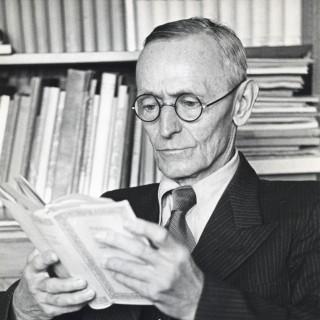
German writer (1877-1962)
POPULARITY

4 episodes with Hermann Hesse

3 episodes with Hermann Hesse

12 episodes with Hermann Hesse

5 episodes with Hermann Hesse

8 episodes with Hermann Hesse

4 episodes with Hermann Hesse

2 episodes with Hermann Hesse

2 episodes with Hermann Hesse

7 episodes with Hermann Hesse

3 episodes with Hermann Hesse

5 episodes with Hermann Hesse

5 episodes with Hermann Hesse

7 episodes with Hermann Hesse

2 episodes with Hermann Hesse

6 episodes with Hermann Hesse

4 episodes with Hermann Hesse

4 episodes with Hermann Hesse

6 episodes with Hermann Hesse

10 Things to Learn: Ancient Wisdom for the Modern Soul explores what it means to remain fully human in an age increasingly defined by technology, optimization, and artificial intelligence. While modern civilization has expanded humanity's power and capability, it has done little to eliminate suffering, grief, fear, or the search for meaning. This book argues that life's deepest questions cannot be answered through efficiency or control. Instead, genuine growth emerges through a series of essential initiations—moments of collapse, surrender, loss, rest, and devotion that shape the soul. Blending mythology, philosophy, memoir, and poetic reflection, it offers a timeless framework for navigating the emotional and spiritual disorientation of modern life. Structured around ten symbolic “gates,” the book reframes life as a cyclical journey of awakening rather than a linear pursuit of success. These gates—Falling, Surrendering, Crying, Caring, Hating, Creating, Sharing, Loving, Breathing, and Laughing—each represent a threshold of psychological and spiritual transformation. Drawing from Greek mythology, Biblical narratives, Eastern philosophy, and archetypal storytelling, the book presents a unified map of human development. Its voice combines lyrical prose with intellectual rigor, placing it at the intersection of Joseph Campbell's mythological insight, Alan Watts's spiritual inquiry, and the literary introspection of Hermann Hesse. At a time of accelerating technological change, rising anxiety, and the erosion of traditional sources of meaning, 10 Things to Learn offers something increasingly rare: not just insight, but initiation. It speaks to readers seeking coherence in a fragmented world and restores a sense of purpose through the defining ordeals of the human experience. Learn more about your ad choices. Visit megaphone.fm/adchoices

Pour répondre à nos besoins, nous allons nous doter d'un plan avec des objectifs. Ce qui est séduisant dans un objectif que nous visons, c'est sa pureté. À ce moment précis, tout est encore statique. Ça nous semble alors si simple et linéaire. Il est facile de se promettre à soi-même que peu importe ce qui va survenir, on va s'en tenir à ce qui est convenu. C'est ce qui m'est arrivé au moment d'enregistrer l'épisode 201, en début d'année, où je me suis conçu mon propre plan de développement. Un de mes objectifs portait sur la musculation. Selon ce plan, je dois tenir un journal de bord. À chaque trimestre, je fais état de mes réflexions en concevant un épisode de balado. Pour ce troisième trimestre (juillet, août, septembre), je souhaite aborder les difficultés à maintenir intactes nos intentions de départ. Bien que je poursuive les activités physiques comme prévu, ma démarche a perdu beaucoup de sa pureté en cours de route. J'ai eu plusieurs écarts alimentaires durant l'été. En forçant, je me suis aussi blessé. En voulant réaliser un objectif, on en vient à salir l'image idéalisée qu'on avait au départ. Il y a progrès, mais ça se fait un peu tout croche, sans jamais être en plein contrôle. Pour appuyer ma réflexion, j'ai décidé de me référer au récit de Siddhartha, publié en 1922 par Hermann Hesse. L'auteur lui-même traversait une profonde crise existentielle au moment de l'écriture de ce livre. D'habitude, quand il est question de quête spirituelle, c'est souvent un bel éloge à la pureté. Avec la quête de Siddhartha, j'y vois plutôt l'inverse. Pour parvenir à sa vérité, Siddhartha ne suit pas un chemin propre : il se perd, ternit l'image idéalisée qu'il avait de lui-même et c'est justement de cette chute (non maîtrisée, non voulue) qu'émerge une sagesse qu'aucune discipline n'aurait pu lui donner. De cette lecture, j'en ai retiré 4 leçons transférables à ma propre démarche: Leçon #1 : Ne suis pas un chemin de vérité qui n'est pas encore ta vérité Leçon #2 : Se salir pour ne plus craindre de se salir Leçon #3 : La vie, c'est court, mais c'est long des petits bouts Leçon #4 : Les relations n'ont jamais rien de pur Par cet épisode, mon objectif est de rejoindre tous ceux qui souhaitent se développer et qui doivent composer avec des doutes profonds durant leur parcours. Cette citation, attribuée à André Malraux, témoigne bien de la complexité de ce défi : La sagesse est plus vulnérable que la beauté ; car la sagesse est un art impur. Ordre du jour 0m23: Introduction 24m53: Présentation du livre et sa critique 31m04: Leçon #1 : Ne suis pas un chemin de vérité qui n'est pas encore ta vérité 35m35: Leçon #2 : Se salir pour ne plus craindre de se salir 41m29: Leçon #3 : La vie, c'est court, mais c'est long des petits bouts 46m37: Leçon #4 : Les relations n'ont jamais rien de pur 55m15: Réflexions personnelles Pour encore plus de détails, consulte la page web de l'épisode.

Episode #599: “I've been blessed to be on a spiritual journey for well over the last 50 years,” says psychiatrist Raman Khosla, reflecting on the lifelong search that eventually led him to S.N. Goenka's Vipassana tradition. In this, the first in a series of ongoing conversation with Insight Myanmar, he traces the influences that shaped his quest to understand suffering and the mind. Khosla credits his parents with creating a deeply spiritual home grounded in the Bhagavad Gita's teachings on devotion, selfless action, ethics, and compassion. His fascination with the causes of suffering and inner transformation began in childhood. He recalls asking why a classmate was sad, noticing that physical pain changed while sitting quietly during family yoga sessions, and questioning why religious chants described moral transformation without explaining how it could be achieved. As a teenager, an underlying dissatisfaction persisted despite an outwardly fortunate life. Reading about the Buddha, Hermann Hesse's Siddhartha, and encountering dedicated religious figures strengthened his conviction that genuine inner freedom must be possible. He explored numerous traditions, learning from Osho Rajneesh, the Ramakrishna Mission, the Bihar School of Yoga, and especially Jiddu Krishnamurti. While each offered valuable insights, none fully answered his central question: how can profound psychological transformation actually be realized? Believing the mind to be the most important subject of study, Khosla pursued medicine and psychiatry, hoping science and spirituality would illuminate the same mystery. During postgraduate training, however, he concluded that while Western psychiatry effectively treated mental illness, it offered far less guidance for cultivating humanity's highest mental potential. Ajahn Sumedho's Chitta Viveka further convinced him that the Buddha's teachings described a lived reality rather than an abstract philosophy. Everything changed in 1987 when Khosla attended his first ten-day Goenka Vipassana course. He describes it as “the biggest single life-changing event of my life,” transforming the study of the mind from an intellectual pursuit into direct experience. Although he immediately wanted to dedicate himself fully to the practice, Goenka advised him first to complete his psychiatric training and allow the transition to unfold naturally, setting the stage for the next chapter of his journey.

durée : 00:59:23 - Les émissions culturelles de France Culture - par : Marie Richeux - Alors que son dernier album vient de sortir, une variation en images et en sons sur l'art du stand-up, le musicien Chassol a accepté de partager quelques-unes de ses inspirations littéraires. Hermann Hesse, Chester Himes, Anouk Ricard ou encore Edika sont au programme. - équipe : Jeanne Aléos, Mathilde Wagman, Marianne Chassort, Alexandre Alajbegovic, Cyril Marchan, Vivien Demeyère, Julie Gastal Vous aimez ce podcast ? Pour écouter tous les épisodes sans limite, rendez-vous sur Radio France

Mike chats with S. Shakthidharan (or Shakthi) about Hilda Rosner's translation of Siddhartha, Herman Hesse's classic novel of self-discovery and enlightenment. S. Shakthidharan was born in Sri Lanka and raised in Sydney, Australia, where he currently lives. His plays include Counting and Cracking (with Eamon Flack) and The Wrong Gods. Shakthidharan is the recipient of the Green Room Award for Outstanding New Australian Writing (2024) and the Victorian Premier's Literary Award and Prize for Drama (2020), among other honors.See Privacy Policy at https://art19.com/privacy and California Privacy Notice at https://art19.com/privacy#do-not-sell-my-info.

Max Picard (1888–1965) was a Swiss-German philosopher, physician, and mystic whose profound vision and work speaks with extraordinary force to our increasingly noisy and distracted age —yet whose voice seems more necessary now than ever. Born in Schopfheim, Germany, near the Swiss border, to Jewish parents, Picard trained as a physician before abandoning medicine in 1918. Increasingly disenchanted with the mechanistic direction of modern science, he turned away from clinical life and withdrew to the quiet landscapes of southern Switzerland, settling in Caslano and neighbouring villages, where he devoted himself to contemplative writing and exploring silence, solitude, presence, and the sacred power of the human word. In 1939, Picard converted to Roman Catholicism from the Judaism of his youth.A deeply original thinker, his life and work were marked by an uncompromising simplicity and inwardness. He deliberately avoided academic institutions, intellectual fashion, and public prominence, yet maintained friendships and correspondence with some of the most perceptive minds of the twentieth century, including Hermann Hesse, Gabriel Marcel, Gaston Bachelard, and Rainer Maria Rilke.

¡Ey, Lunar con ganas de laberintos mentales! ¿Listo pa' un periplo alemán que parece una peli deintrospección con ríos indios, lobos solitarios y juegos de perlas que te dejan pensando "¿quién soy yo en este relajo"? Imagínate que los libros son como un bosque suabo: árbolesde dudas, senderos de espiritualidad y un eco que te lleva de la Europa gris a la India mística. Hoy, te platico la movida de Hermann Hesse, el alemán-suizo que se llevó el Nobel en 1946, como un sabio de la pluma que disecciona el alma con bisturí poético y un toque de zen. ¡No te enredes, lo cuento con puro flow latino, como si estuviéramos en un cafecito con strudel y mate, riéndonos de sus crisis existenciales! ¡Dale, que el sendero arranca!

260801PC Merz am EndeMensch Mahler am 01.08.2026Wenn es eine Fußballmannschaft vergeigt, wird in aller Regel der Trainer rausgeschmissen. Siehe Julian Nagelsmann. In der aktuellen Politik ist das anders. Der Trainer bleibt, die Spieler werden hektisch getauscht. Jens Spahn hat mit seiner Leihmutteraffäre den Laden in die Luft gejagt. Und der Kanzler? Beruft einen Nachfolger als Generalsekretär und tauscht wild Ministerinnenposten. Kaum einer hat es verstanden. Und das kurz vor den Wahlen in Sachsen-Anhalt. In sechsWochen wird gewählt, die AfD ist stabil bei 41%, die Christdemokraten verlieren 2%, stehen jetzt bei 24 und die Talfahrt wird weiter gehen. Befeuert von einem hektisch agierenden planlosen Kanzler.Ein Kommentar von Georg Schwarte, ARD-Hauptstadtstudio in Auszügen:"Und jedem Anfang wohnt ein Zauber inne", schrieb Hermann Hesse. Der Dichter kannte Friedrich Merz nicht. Dessen Anfängen, angefangen von der missglückten Kanzlerwahl im ersten Wahlgang vor 15 Monaten bis zum heutigen Tag, wohnt manches inne: nur eben kein Zauber. Dass die Unionsfraktion Thorsten Frei, den Ex-Kanzleramtsminister in Ausbildung, mit sehr gutem Ergebnis zum ihrem neuen Vorsitzenden wählten - geschenkt.Gegenfrage: Was wäre wohl passiert, hätten sie den Mann, den Merz so sehr wollte, jetzt abgestraft? Die "Kanzler-Dämmerung" wäre zur "Merz-Finsternis" geworden. Friedrich Merz, der Mann, der weder Zauber noch "Rambo-Zambo" bietet, hätte gleich die Vertrauensfrage stellen können. Die 91,9 Prozent für Thorsten Frei gehen nur - und ausschließlich - mit Thorsten Frei nach Hause in die Sommerpause.Die Botschaft: Die Fraktion steht noch, nur der Kanzler wackelt. Für ihn ist es bisher ein "Sommer des Grauens" geworden, auf den ja der nächste "Herbst der Reformen" folgen soll und muss - mit dann neuem Personal.Mit einem Gesundheitsminister Carsten Linnemann etwa. Dessen Kernkompetenz "Einfach mal machen" jetzt auf ein Gesundheits- und Pflegesystem treffen wird, an dem so gar nichts mal "einfach zu machen" sein wird.Mit einem Verkehrsminister Steffen Bilger, der wie sein glückloser Vorgänger Patrick Schnieder anfängt, ohne zaubern zu können. Die Bahn baut nicht schneller, nur weil der Minister jetzt Bilger heißt. Und der Verkehrsetat wird auch nicht größer.Für diesen Kanzler ist das bereits der zweite Sommer des Missvergnügens. Den ersten verhagelte die unselige Debatte über die Kandidatin fürs Bundesverfassungsgericht Frauke Brosius-Gersdorf. Man gelobte Besserung, sprach von einem "ruckeligen Start". Und dann? Bis hierhin und so weiter.Denn den zweiten Sommer verhagelt sich Merz gerade selbst, weil er autoritär sein mit erarbeiteter Autorität verwechselt.Es ist eine besondere Leistung, Landesverbände, Ortsvereine, einfache Mitglieder, CDU-Wahlkämpfer und ehemalige Kanzleramtsminister gleichermaßen so zu verstören, wie es dieser Friedrich Merz gerade mit seinem missglückten Kabinettsumbau geschafft hat.Wenn das alles einem durchdachten Plan folgte, wäre es interessant zu wissen, was eigentlich passiert, wenn dieser Kanzler keinen Plan mehr hat."Sie können es nicht", rief einst der Oppositionsführer Merz dem damaligen Kanzler Olaf Scholz zu. Mit ganz dicken Backen. Aber kann er es besser? Nach 15 Monaten zweifelt daran ausgerechnet die eigene Parteibasis, die ihn einst zu dem machte, was er heute ist: Kanzler.Zweifel? Kennt Friedrich Merz offenbar nicht. Der pfeift im Walde weiter tapfer das Lied vom Reformkanzler. Dass der jetzt erst mal Urlaub macht statt neuer Pläne, ist da möglicherweise sogar eine gute Nachricht. Hosted on Acast. See acast.com/privacy for more information.

Zwei Worte über den Anfang kommen mir in den Sinn: "Aller Anfang ist schwer." Und das Wort von Hermann Hesse: "Jedem Anfang wohnt ein Zauber inne." Entnommen aus: Anselm Grün "Was im Alltag gut tut", Hrsg. von Rudolf Walter, Herder Verlag, Freiburg 2021
durée : 00:58:59 - Les émissions culturelles de France Culture - par : Marie Richeux - L'écrivain et économiste sénégalais Felwine Sarr a accepté de nous faire découvrir sa bibliothèque. Au programme : de la résistance poétique avec René Char et Aimé Césaire, du langage amoureux avec Pascal Quignard, et de la sagesse intellectuelle avec Hermann Hesse et le poète persan Rûmî. - équipe : Jeanne Aléos, Mathilde Wagman, Marianne Chassort, Alexandre Alajbegovic, Cyril Marchan, Vivien Demeyère, Julie Gastal Vous aimez ce podcast ? Pour écouter tous les épisodes sans limite, rendez-vous sur Radio France

Der Schriftsteller Hermann Hesse ist für Generationen von Lesern zum Idol geworden. Er war ein von Selbstzweifeln geplagter Einzelgänger, Guru der Hippies und Literaturnobelpreisträger. Den Glauben an einen Neuanfang gab der Visionär aber nie auf. Christian Linder, Manfred Franke, Helmut Gumtau, Isabella Kolar www.deutschlandfunkkultur.de, Aus den Archiven
durée : 00:59:19 - Les émissions culturelles de France Culture - par : Marie Richeux - Le comédien William Lebghil, remarqué dans la série "Hippocrate" et actuellement à l'affiche du film de Martin Mauvat "Baise-en-ville", a accepté de nous faire découvrir sa bibliothèque. S'y côtoient Hermann Hesse, Haruki Murakami, Goliarda Sapienza, des haïkus et même un livre de recettes. - équipe : Jeanne Aléos, Mathilde Wagman, Marianne Chassort, Alexandre Alajbegovic, Cyril Marchan, Vivien Demeyère, Julie Gastal Vous aimez ce podcast ? Pour écouter tous les épisodes sans limite, rendez-vous sur Radio France

This week we tried unsuccessfully to put a bucket hat on a moose (three people were killed) all in order to create a Canadian/Manc symbol powerful enough to lure in Commonwealth comic queen, Allyson June Smith. Hailing from the land of Mounties and saying ‘eh?', Allyson now resides in Manchester, a base from which she has built one of the busiest and most eclectic careers in comedy. As well as serving up scoopfuls of her nervelessly candid humour through her own stand-up shows, she's also toured the country as a warm up act (laugh lubricant?) for some of the biggest names in the funny business. She's also all over the media landscape like bear on hiker, appearing regularly on tv, radio and her two own excellent podcasts - Women Talking Bollocks (funny) and Horror Motel (terrifying). In a chat where Giles struggles to conceal the fact that the only Canadian he truly trusts is Celine Dion, we skate through everything from the pressures of comedy content creation to the subtleties of winning over different kinds of audience - all before she disappears back on the road for Allyson Wonderland, her current UK tour. Follow Allyson on InstagramThis episode is proudly dedicated to Joan Rivers. /////Timestamps 03:35 - From Acting Dreams to Stand-Up Comedy 06:42 - Glasses On or Off? 14:02 - The Secret Society of Stand-Up 20:58 - Cultural Influences: Growing Up Canadian 24:24 - North vs South: Finding Your Comedy Audience 26:20 - What Actually Makes Something Funny? 31:01 - The Power of Humour in Dark Times 36:06 - Two Very Different Podcasts 41:07 - Horror Films and Comedy: More in Common Than You Think Allyson's book recommendations are: Siddhartha by Hermann Hesse /////

Hermann Hesse ist ein weltberühmter Autor, weniger bekannt ist er als Maler. Nun sind Aquarelle, Gouachen und Zeichnungen von ihm im Fruchtkasten im Kloster Ochsenhausen zu sehen.

Hermann Hesse ist ein weltberühmter Autor, weniger bekannt ist er als Maler. Nun sind Aquarelle, Gouachen und Zeichnungen von ihm im Fruchtkasten im Kloster Ochsenhausen zu sehen.

One of my favorite passages in Hermann Hesse's Siddhartha is his reflection that he had to become a fool before he could truly awaken. It echoes the Prodigal Son and countless myths and fairy tales that suggest we often have to lose our way before we can genuinely find ourselves.In this episode, I explore why failure, despair, and disillusionment so often become the soil from which wisdom grows, while wrestling with a paradox I can't quite resolve. Our mistakes inevitably leave scars—not only on ourselves but sometimes on the people we love. While I believe redemption and transformation are possible, I don't think the pain we cause can simply be justified because something good eventually came from it.Drawing on Hesse, Carl Jung, and my own work as a therapist, this episode reflects on responsibility, grace, and the difficult question of how we can acknowledge the necessity of failure without ever glorifying it.

Michael Mack is the founder of London-based independent art and photography publishing house MACK. This conversation was recorded live at POST PRESS. More info and upcoming event tickets here.Thanks to VELUX for supporting the podcast: velux.com/designLink to the AF POST PRESS programme Books discussed:W. G. Sebald, On the Natural History of Destruction (Hamish Hamilton, 2003)Le Corbusier, Aircraft (The Studio, 1935)Reconstructing Space: Architecture in Recent German Photography, ed. Michael Mack (AA Publications, 1999)Contemporary Architecture series, ed. Leonardo Benevolo (Cappelli, 1964–)Manfredo Tafuri, Modern Architecture in Japan, ed. Mohsen Mostafavi (MACK, 2022)Andrea Bagnato, Terra Infecta: Disease and the Italian Landscape (MACK Sightlines, 2026)Kwan Queenie Li, Weeds: A Germinating Theory (MACK Sightlines, 2026)Caruso St John, Collected Works: Volume 1 1990–2005 (MACK, 2022)Takashi Homma, Tokyo Olympia (Nieves, 2023)Adam Broomberg & Oliver Chanarin, Holy Bible (MACK / Archive of Modern Conflict, 2013)Collier Schorr, Jens F. (SteidlMACK, 2005)Hermann Hesse, The Glass Bead Game (1943; Winston translation, 1969) Hosted on Acast. See acast.com/privacy for more information.

Hermann Hesse's Werke haben Gerald Ubl schon seit seiner Jugend begleitet und beeindruckt. Seine Gedichte sprechen die Sprache einer Lebensweisheit, die gelernt hat großes in Demut zu finden. Auch sein Werk „Siddharta“ hat Gerald Ubl sehr beeindruckt. Diese Geschichte schildert auf berührende und lehrreiche Weise das Leben des Brahmanensohnes Siddharta. Ein Buch das, wie der Sprecher findet, zur Grundausstattung jedes jungen Menschen zählen sollte. Eines seiner Lieblingsgedichte stammt ebenfalls aus seiner Feder. Das Gedicht „Stufen“.
In this episode, I reflect on Hermann Hesse, Carl Jung, psychotherapy, and the double-edged sword of introspection. Drawing from an essay on Hesse and a concern raised by JF Martel on Weird Studies, I explore how the search for authenticity can become either a path toward responsibility or a trail of tears for the people around us. As a Four on the Enneagram, this tension speaks deeply to me: the longing for depth, beauty, and self-understanding is real, but so is the danger of turning inwardness into self-absorption. This is a reflection on shadow, therapy, narcissism, and why true self-knowledge has to return us to love, repair, and responsibility.
In this episode, I reflect on the strange and unsettling figure of Abraxas — the god Hermann Hesse brings into Demianand Carl Jung explores in The Red Book and the Seven Sermons to the Dead. Abraxas names something deeper than a simple “good versus evil” split. He becomes an image of the mixture of reality itself: light and shadow, creation and destruction, spirit and instinct, the sacred and the terrifying.I use Miguel Serrano's Jung and Hermann Hesse: A Record of Two Friendships as a starting point, especially his reflections on Jung, Hesse, and Abraxas as a symbol of the total human being. But I also include a necessary warning about Serrano himself, whose later esoteric Hitlerism and fascist sympathies show how dangerous these symbols become when they are detached from humility, ethics, and compassion. Abraxas is not an excuse to worship darkness, violence, hierarchy, or purification. If these ideas lead us toward hatred or the eradication of other people, we are not doing depth psychology — we are being possessed by the shadow.This episode is about trying to think carefully and responsibly with dangerous symbols, and asking whether wholeness means becoming pure, or whether it means becoming conscious enough to face the terrifying mixture of being human.

Mimmo Di Marzio"Gli insospettabili"Da Goethe a David Bowie, la pittura come seconda vitaGiunti Editorewww.giunti.itGli acquerelli nostalgici di Hermann Hesse, i ritratti rock di Paul McCartney e David Bowie, i disegni erotici di Federico Fellini, i paesaggi della campagna inglese di Winston Churchill, le litografie pop di Johnny Deep. Tanti personaggi celebri, un'unica (quasi) segreta grande passione: la pittura. Quasi un saggio romanzato, il libro racconta la storia umana e psicologica di coloro che non hanno saputo accontentarsi della propria celebrità nella letteratura, nello spettacolo o nella politica, ma hanno cercato e trovato sulla tela la via per raggiungere il proprio equilibrio interiore. Questa “necessità pittorica” ha in molti casi generato risultati sorprendenti, al punto che oggi molti di questi artisti paralleli sono finiti nelle collezioni dei musei o nelle grandi collezioni private. Il libro si snoda attraverso una serie di ritratti che narrano, non senza aneddoti divertenti e immagini delle opere, il percorso avventuroso da outsider nell'affascinante mondo dell'arte.Mimmo Di Marzio è giornalista, critico d'arte, curatore e pittore. Da molti anni firma le pagine culturali de Il Giornale, dove si occupa di arte e di mercato dell'arte. È stato docente di Editoria per l'Arte all'Accademia di Brera e ha al suo attivo numerosi saggi critici. Come curatore ha firmato mostre in sedi prestigiose — tra cui il Castello Sforzesco di Milano (Homo Faber), lo Spazio Oberdan e la Fondazione Stelline — spaziando dall'arte contemporanea alla street e lowbrow art. Affianca all'attività critica una propria ricerca pittorica, presentata in personali come Vite parallele. Nel maggio 2026 ha pubblicato per Giunti Gli insospettabili. Da Goethe a David Bowie, la pittura come seconda vita, saggio narrativo dedicato a personaggi celebri che hanno coltivato l'arte come "seconda vita" creativa.Diventa un supporter di questo podcast: https://www.spreaker.com/podcast/il-posto-delle-parole--1487855/support.IL POSTO DELLE PAROLEascoltare fa pensarehttps://ilpostodelleparole.it/

durée : 00:02:32 Vous aimez ce podcast ? Pour écouter tous les épisodes sans limite, rendez-vous sur Radio France

Þór Breiðfjörð tónlistarmaður er nýútskrifaður úr meistaranámi í menningarstjórnun frá Háskólanum á Bifröst. Meistararitgerðin hans heitir Vinsældir án vettvangs, staða söngleikjalistformsins á Íslandi sem menningarvettvangs. Þór kom í þáttinn og sagði okkur betur frá efni ritgerðarinnar, enda hefur hann heldur betur lifað og hrærst í söngleikjaforminu í gegnum tíðina. Helga Lára Þorsteinsdóttir, safnstjóri RÚV, kom svo til okkar í dag með gullmola af safni RÚV. Í þetta sinn leyfði hún okkur að heyra hluta af spjalli Stefáns Jónssonar við Gústaf Pálsson borgarverkfræðing úr þættinum Hálftíminn: Um hreinlætið í Reykjavík frá árinu 1968. Lesandi vikunnar í Mannlega þættinum í þetta sinn var Grétar Halldór Gunnarsson, prestur við Kópavogskirkju. Hann sagði okkur frá því hvaða bækur hann hefur verið að lesa undanfarið og hvaða bækur og höfundar hafa haft mest áhrif á hann í gegnum tíðina. Grétar talaði um eftirfarandi bækur og höfunda: Skrifað í sand - æviminningar Karls Sigurbjörnssonar Sálumessa syndara - æviminningar Esra Péturssonar geðlæknis (Ingólfur Margeirsson ritaði) Siddharta e. Hermann Hesse (íslenskuð af Haraldi Ólafssyni) Páll postuli Sigurbjörn Einarsson Tónlist í þættinum í dag: Bjartsýni / Ríó tríó (Gunnar Þórðarson, texti Þorsteinn Eggertsson) (Café Song) Empty Chairs and Empty Tables / Þór Breiðfjörð (Alain Boublil, texti Claude-Michel Schönberg, Úr Vesalingunum) Út á stoppistöð / Stuðmenn ( Jakob Frímann Magnússon) UMSJÓN: GUNNAR HANSSON OG GUÐRÚN GUNNARSDÓTTIR

durée : 01:24:53 - Toute une vie - par : Claude Mettra - Figure majeure de la littérature allemande, prix Nobel en 1946, Hermann Hesse consacre son existence à interroger l'âme humaine. Retour sur le destin d'un écrivain en quête d'une harmonie magique, entre enfance retrouvée et refus des conventions sociales. - réalisation : Michel Abgrall Vous aimez ce podcast ? Pour écouter tous les épisodes sans limite, rendez-vous sur Radio France
durée : 00:59:23 - Les émissions culturelles de France Culture - par : Marie Richeux - Alors que son dernier album vient de sortir, une variation en images et en sons sur l'art du stand-up, le musicien Chassol a accepté de partager quelques-unes de ses inspirations littéraires. Hermann Hesse, Chester Himes, Anouk Ricard ou encore Edika sont au programme. - réalisation : Jeanne Aléos, Mathilde Wagman, Marianne Chassort, Alexandre Alajbegovic, Cyril Marchan, Vivien Demeyère, Julie Gastal - invités : Chassol Musicien et compositeur français Vous aimez ce podcast ? Pour écouter tous les épisodes sans limite, rendez-vous sur Radio France
Hermann Karl Hesse, aquel novelista, poeta y pintor alemán, quien ganara el Premio Nobel de Literatura en 1946 y se nacionalizara suizo en 1924, nos demuestra constantemente, a través de su extenso corpus literario, porque su libros mantienen, desda hace muchas décadas, una influencia de marcada importancia a nivel internacional: solamente por mencionar, sus libros se ha traducido a 40 idiomas sin contar numerosos dialectos hindúes. John Manuel Kennedy Traverso, de la copiosa obra selecciona y relata el cuento " El Poeta" en este episodio. Disfruta de la sabiduría que hay en la poesía y más 1ue nada dentro de la producción literaria de Hermann Hesse.

VOICES ON ART - The VAN HORN Gallery Podcast, hosted by Daniela Steinfeld
Darren Flook on art, sobriety, and amplifying other voicesIn this very personal and wide-ranging conversation Daniela speaks with gallerist, curator and writer, Darren Flook about art, identity, sobriety, and the changing realities of the contemporary art world. They discuss Darren's journey in the art world, from hisworking-class background in England to co-founding the gallery Hotel in London in 2003, which later closed in 2012. Darren expands on his decision to stop making art himself, preferring to focus on curating and supporting other artists. The conversation also turns deeply personal as Darren shares his personal struggles with alcohol, ultimately achieving sobriety. He describes how alcohol shaped his confidenceand relationships, and how becoming sober transformed both his life and his perspective on art and community. The conversation explores how the art world has evolved over the decades, with both participants reflecting on the changes in art fairs, commercial pressures, and the challenges of maintaining authenticity in the contemporary art market. They also discuss the importance of art as a form of expression and community building, beyond commercial transactions and highlight the enduring impact of art, particularly focusing on art's ability to create an emotional response beyond its physical materials. At its core, this episode explores what art can offer: meaning,emotional resonance, human connection, experiences that resist easy explanation and a way to live ones life with purpose.Topics include:Growing up working class and entering the art world Founding and closing Hotel Gallery The evolution of art fairs and collecting culture Curating versus making art Alcohol, recovery, and rebuilding a life Why art matters in a commercial world Emotional responses to art beyond meaning or material Community, artists, and sustaining creative ecosystemsBook pick: Hermann Hesse, Siddharta, a novel about growth, transformation and becoming yourself.Links:Instagram @darren_flookhttps://fadmagazine.com/2025/10/25/happy-now/https://van-horn.net/podcast/

True enlightenment isn't found in teachings or gurus. This Siddhartha book summary reveals the counterintuitive path to self-discovery.

In this episode, we sit with Verse Twelve of the Tao Te Ching (Stephen Mitchell translation). We explore the paradox of modern excess: how a world designed to stimulate our senses often leaves us numb, and how the "Master" navigates this noise without withdrawing from it.Colors blind the eye.Sounds deafen the ear.Flavors numb the taste.Thoughts weaken the mind.Desires wither the heart.The Master observes the worldbut trusts his inner vision.He allows things to come and go.His heart is open as the sky.The Irony of Excess: Lao Tzu isn't arguing against beauty or sensory experience; he is diagnosing overexposure. When we drown our senses in constant "signal," we lose the ability to actually perceive the world.Mental Static vs. Thinking: We often mistake a "chronic mental overcrowding" for productive thought. True thinking is a precision instrument, but it becomes dull when forced to process an endless churn of reactions and anxieties.The Wanting Machine: Constant appetite and the accumulation of desires don't expand the heart—they wither it, making our internal world smaller and more reactive.The Master's Orientation: Living "in the world but not of it." The goal isn't to hide in a cave, but to keep one ear tuned to something quieter while allowing the stream of life to move through us without grasping at it."We've taken the most ancient of human senses and drowned it in signal.""Silence stopped feeling like quiet and started feeling like deprivation.""The mind... starts mistaking noise for signal.""His heart is open—not like a wound, but like space."What would it feel like to be genuinely nourished by less?Consider being more selective this week. Instead of a dozen half-attended conversations or a hundred scrolled images, try to find one thing—a meal, a walk, a single page of a book—and give it your full, un-fragmented presence.Siddhartha by Hermann Hesse (for further reflection on the journey toward inner vision)The Way of Zen by Alan WattsBill Evans - Alone (for a musical companion to quiet reflection)Thank you for listening to The Coffee Buzz. Find a chair, pour another cup, and we'll see you next time.

Matt and Michael return from two very different deserts. Vegas and Big Bend. One all lights and noise, the other all silence and heat. Matt shares what it meant to scatter his father's ashes in West Texas. Michael talks about the solitude of crowds. And somewhere around the forty minute mark, the conversation turns into something else entirely. What is AI actually for? What gets lost when we outsource struggle? Why do we need to be broken to become whole? And what happens to a culture that forgets the purpose of things? They land on teleology, the study of purpose itself. A knife only makes sense if you know it's meant to cut. So what are we meant for? And what happens when we stop asking? Cheers y'all

(00:53) Vom Hitler‑Darsteller bis zum Alpöhi: Erste Biografie würdigt das Leben von Bruno Ganz. Weitere Themen: (05:05) Voller Lohn bei Vier-Tage-Arbeitswoche? Sam Altman, der Mann hinter der Künstlichen Intelligenz ChatGPT, legt einen Entwurf für einen völlig neuen Gesellschaftsvertrag vor: eine Einordnung. (10:27) Der Historiker Jörg Baberowski rechnet in seinem neuen Buch mit der marktradikalen Globalisierung ab und spricht von einer Krise der liberalen Demokratie. (14:53) Nachwirkungen der DDR: Lukas Rietzschel legt neuen Roman «Sanditz» vor. (19:04) Fenster ins Tessin – Ausstellung über Isa Hesse-Rabinovitch: Künstlerin und Schwiegertochter von Hermann Hesse.

Reisen Reisen - Der Podcast mit Jochen Schliemann und Michael Dietz
Es gibt Reisen, die fangen gar nicht am Ziel an, sondern bereits unterwegs. Im Zug, zwischen den Bergen der Schweiz, Tunnel, Licht. Und dann plötzlich Palmen. Wie kann sich eine Gegend so schnell verändern?In Lugano verschiebt sich etwas. Die Sprache, die Luft, das Tempo. Alles wirkt ein bisschen leichter. Ein bisschen südlicher. Ein Weg am Wasser entlang, Olivenbäume, kleine Buchten, dieses leise Plätschern und dann ein Dorf, das aussieht, als hätte es jemand einfach an den Felsen gesetzt. Gandria. Zweihundert Menschen vielleicht. Boote statt Straßen. Ruhe statt Lärm.Und man sitzt, schaut auf den See, trinkt ein Glas Wein – und versteht, warum manche für immer hier geblieben sind. Vielleicht ist das der Moment, in dem man merkt, wie wenig es eigentlich braucht, umglücklich zu sein. Wenn ihr Lust habt auf einen Ort, der sich anders anfühlt, den man vielleicht nie wieder verlassen möchte - kommt mit nach Lugano.—

Gedanken zum Evangelium von Kardinal Christoph Schönborn, am 4. Jänner 2026 Joh 1,1-5.9-14 „Jedem Anfang wohnt ein Zauber inne“ – dieser Vers von Hermann Hesse wird oft zitiert. Er mag stimmen für die Geburt eines Kindes, für den Beginn einer Liebe. Passt der Vers auch für den Anfang des neuen Jahres? Dunkle Wolken hängen über diesem Neujahr. Überall wird aufgerüstet. Man spricht von Krieg als Möglichkeit. Klimawandel, wirtschaftlicher Abschwung – stehen wir am Anfang einer ernsten Krisenzeit? Aller Anfang hat auch ein Ende.

How do I interpret my rollercoaster ride on the yogic path?
durée : 00:59:19 - Le Book Club - par : Marie Richeux - Le comédien William Lebghil, remarqué notamment dans la série "Hippocrate" et actuellement à l'affiche du film de Martin Mauvat "Baise en ville" a accepté de nous faire découvrir sa bibliothèque. S'y côtoient Hermann Hesse, Haruki Murakami, Goliarda Sapienza, des Haïkus et même un livre de recettes. - réalisation : Vivien Demeyère - invités : William Lebghil Acteur
Gedanken zum Evangelium von Kardinal Christoph Schönborn, am 4. Jänner 2025Joh 1,1-5.9-14„Jedem Anfang wohnt ein Zauber inne“ – dieser Vers von Hermann Hesse wird oft zitiert. Er mag stimmen für die Geburt eines Kindes, für den Beginn einer Liebe. Passt der Vers auch für den Anfang des neuen Jahres? Dunkle Wolken hängen über diesem Neujahr. Überall wird aufgerüstet. Man spricht von Krieg als Möglichkeit. Klimawandel, wirtschaftlicher Abschwung – stehen wir am Anfang einer ernsten Krisenzeit? Aller Anfang hat auch ein Ende.

A version of this essay has been published by rediff.com at https://www.rediff.com/news/column/is-india-standing-alone-in-2025/20251222.htm2025 has been a disastrous year for the US, surely in foreign affairs and economics. The trade war, far from strengthening the economy, has shown the limits of American power: the capitulation to Chinese supplier power on rare earths, and a strategic retreat in the face of Chinese buyer power on soybeans, for example.The dramatic rise of Chinese generativeAI, which will undercut US Big Tech, is another problem. The US cannot afford to be the globocop any more, and the new National Security Strategy seeks a US withdrawal into ‘Fortress America'. It may mark the end of the vaunted ‘American exceptionalism' as well as the ‘liberal rules-based international order'.In an earlier time, this would have led to the famous Thucydides Trap, but in effect the US has gone into an ‘anti-Thucydides Trap' because it unthinkingly paved the way for China's rise, seduced by the short-term benefit of low-cost Chinese goods while ignoring the long-term strategic disaster. In the 20th century, Britain collapsed suddenly, but it is merely a tiny island off Eurasia. I never expected continent-sized America to follow suit in the 21st century.Meanwhile, in a fine example of “manufacturing consent”, the discourse in the US is not focusing on the global problems facing the country, but on MAGA bullying of H1-B Indians and on the Epstein files, which, on the face of it, is a silly exercise in moralization. I believe it was Hermann Hesse who said something to the effect that Americans are not interested in morals, being content with moralization.But the entire kowtowing to China has serious implications for India. One of the pillars of Indian foreign policy for decades has been the idea that it is a strategic counterweight to China in the US's calculations. But if the US has really ceded Asia to China (I recall President Obama saying as long ago as 2009 that the US and China would “work together to promote peace, stability, and development in South Asia”) then the famous ‘pivot to Asia' is null and void.A couple of years ago, I wrote that the most obvious thing for the US's Deep State to do would be to form a G2 condominium with China, divide up the world amongst themselves, and set up respective spheres of influence. This was predicated on America's relative decline, and China's economic and military rise to be, for all intents and purposes, a peer. I thought this would take a decade or more, but, lo and behold, the US is caving in furiously to China right now.In addition, I wrote about the surprisingly large and malign influence exerted by Britain, whereby it plays a ‘master-blaster' role, leading the US by the nose, usually to America's detriment. Britain's ‘imperial fortress' Pakistan seems to be involved in every terror incident, yet President Trump's new-found camaraderie with them (“here, some more F-16 goodies for you”) is yet another indictment of their twisted priorities.And Britain seems to be “winning”, too: on the one hand, they have finally defeated Germany, which they couldn't do via two World Wars: the latter's economy, its electricity grid, and its vaunted mittelstand and its automobile industry are in shambles. On the other hand, Britain is the one major European power that has not been defeated by Russia, so they think they can, conversely, defeat them. France (Napoleon) and Germany (Hitler) learnt otherwise.The pointless Ukraine War is bankrupting Europe; I wrote about how this is hastening the end of the European century and how ‘Europe' is reverting to what it was through most of history: unimportant ‘Northwest Asia'. This could well also be Britain's revenge against Europe, which it exited in a huff via Brexit: British elites have looked down upon Europeans all along.I mention all these not to show that I was somehow prescient, but that things we have been observing for some time are coming to a head: the US National Security Strategy is the capstone of the New World Order. And it seems to codify these trends: hegemony to China with Asia as its sphere of influence, the abandonment of Europe to its own devices, a focus on the Americas in a new ‘Donroe Doctrine' (so to speak).In the background are continuing terror attacks such as the one in Sydney, murderous attacks on Alawites in Syria, the car bomb in Delhi, and the lynching and burning alive of a minority Hindu youth, Dipu Chandra Das, in Bangladesh by a frenzied mob. The world is not a safe place.There was also a defining moment: the US seizure of a Venezuelan oil tanker. Far from being a show of strength, this may well be an admission of weakness: Venezuela is no competitor, and this is like the US invasion of defenseless Panama some years ago. It is, however, a declaration that the Americas belong to the US sphere of influence (the ‘Donroe' Doctrine).Sadly, China may demur: it views the Americas are adjacent to them (just across the Pacific) and have made inroads into many countries, including Panama, and ironically are funding a proposed alternative to the Panama Canal through Nicaragua, as well as a major Brazil-Peru railroad project (all the better to ship in raw materials from both the Atlantic and Pacific coasts and to ship out “rubber dogshit from HongKong” back to them). Their $3 billion Chancay deepwater port in Peru has already been inaugurated.China is now a $500 billion trading partner for South America, overtaking the US, yes, overtaking the US. To top it all, the ports on both sides of the Panama Canal, i.e Cristobal (Atlantic side) and Balboa (Pacific side) are run by Hong Kong companies, which of course means the CCP does. In fact, it is blocking US firm Blackrock's acquisition of these ports.China therefore has serious assets in the Americas, and large commercial interests. The US can pretend it is supreme in the Americas, but the reality may be a little different.Meanwhile, the US has more or less abandoned its Quad partners in Asia and acknowledged Chinese hegemony there: in other words, that half of the condominium is done. When the new Japanese Prime Minister Sanae Takaichi said something that was obvious and perfectly within her rights to worry about Japan's security, the Chinese came down on her like a ton of bricks, wolf-warrior style. The normally voluble Trump said nothing at all in support of Japan.Regarding India, there has been a persistent tilt towards Pakistan during and after Operation Sindoor; and the imposition of harsh tariffs. The increasingly volatile situation in Bangladesh which is the result of a likely US-backed ‘regime-change' operation is a significant security threat to India because of the collusion of jihadi, Pakistani and Chinese-proxy elements there and the very real concern about the cutoff of India's Northeast from the mainland, apart from the ongoing murders and ethnic cleansing of Hindus and Buddhists there.Now comes the New York Times, which I generally despise as a propaganda arm of the Deep State. But they show some self-awareness in their editorial “America cannot win alone”. No man is an island, as John Donne wrote some years ago. And America is not a singular colossus any more either, and it needs alliances. It hurts me (as an Americophile) how rapidly the US is declining in relative terms, and perhaps even absolute terms.The best indicator of this decline is in the crown jewels of the US: its technology sector. On the one hand, the entire US stock market has been propped up by the Magnificent Seven and the alleged promise of the generativeAI boom. On the other hand, China's patented “over-invest, scale up, get to be lowest-cost producer, drive competitors out of business” is repeating in industry after industry: the latest is automobiles, where the famous German marques are history.Trump's surrender on Nvidia's H200 chips is an indication that China is playing the trade-war game much better than the U.S. China has amassed a $1 trillion trade surplus in the first 11 months of 2025, an unprecedented feat that shows its trade power. Not only is this because of supply-chain dominance, but an analyst suggests it's also because China is now on the verge of delivering a knockout blow to US/Western tech.There are news reports that China has almost managed to replicate EUV (Extreme Ultra Violet) lithography from ASML, one of the key areas in chipmaking that was beyond China's reach. They used former ASML employees of Chinese descent, as well as less advanced technologies from ASML itself, Canon and Nikon.This is the context in which one has to critique Trump's 2025 US National Security Strategy. In summary, it shows a narrowing of America's expansive self-image, the beginnings of a ‘Fortress America' mindset and an ‘America First' doctrine. The ‘promotion of democracy' is downplayed (aka ‘regime change', as we have seen in Bangladesh. Thank goodness!) and fighting other people's wars (think Ukraine) has been de-emphasized.It fits in very well with the G2 condominium idea, as it focuses on national interests and explicitly rejects globalism, elevates economic matters while suggesting the use of military might as an element of dealmaking, and asks ‘allies' to shoulder more responsibility.Europe is downgraded, China is the prime focus with an emphasis on deterrence (e.g., Taiwan), supply-chain resilience and balanced trade, the Indo-Pacific gets short shrift, and the emphasis is on the Americas as, so to speak, the US's private playpen, harking back to the 19th century.India gets almost no attention: it is mentioned four times as compared to 21 times for China, with the tone shifting from ‘strategic partner' or ‘leading global power' to a more transactional expectation of burden-sharing and reciprocity. The Quad is downplayed too. India will need to maintain multi-alignment (e.g., with Russia via RELOS agreements), diversify dependencies, and accelerate self-reliance. India is on its own, as I said in “The Abhimanyu Syndrome”. At least twenty-five years of wooing the US has gone down the drain. Back to the drawing board.At the beginning of 2025, I must admit I was optimistic about Indo-US relations under Trump's presidency. I did not think the G2 condominium would arrive so soon, especially under Trump, or that the eclipse of the US would be so sudden and so dramatic. India had at least one bright spot in 2025: the rapidly-growing economy, despite US tariffs. I really can't see much that went well for the US. Truly an annus horribilis. In 1999, I wrote that that year was terrible for India, but 2025 may have been worse for the US, in my opinion.Malayalam podcast created by notebookLM.google.com:1800 words, 20 Dec 2025 This is a public episode. If you'd like to discuss this with other subscribers or get access to bonus episodes, visit rajeevsrinivasan.substack.com/subscribe

Bernd Haber is the author of Fritz Häber, The Complete Diary: 16 Months in an American POW Camp, drawn from his grandfather's journal and interview. We discuss German history, communism and capitalism, East Germany, Berlin, ideology, freedom and control, family memory, generational change, communication, war, sudden shifts, personal turning points, and how an ordinary life can be shaped by circumstance, intertwined with other people, history, and forces that push us in new directions. Bernd's own story mirrors these themes. He grew up in East Berlin, watched the wall fall, stepped into the West, and eventually built a new life in America. His path is shaped by history, serendipity, opportunity, unexpected conversations, and small moments that opened new possibilities. This episode looks at how history, choice, external forces, and timing collide to redirect a life, and why talking with parents and grandparents, and understanding their experiences, can transform how we understand ourselves.Connect and Learn MoreBook: Fritz Häber, The Complete Diary: 16 Months in an American POW CampWebsite: 16monthsaspow.comLinkedIn: linkedin.com/in/berndhaberRESOURCESBands: The Beatles, The Rolling Stones, SteppenwolfBooks: Blitzed by Norman Ohler, Life of Service, Man of Purpose by Jim Waite, Steppenwolf by Hermann Hesse,People: Albert Einstein, Barbara Minton, Bob Dylan, Herbert Haber, Hermann Hesse, Janis Joplin, Jimi Hendrix, John Kay, Joseph Goebbels, Tom Gundelfinger O'Neal, Wilhelm I, Wilhelm II, Winston ChurchillTV Series: Babylon Berlin, Titans: The Rise of Hollywood
In today's episode, Gina shares her understanding of the wisdom of the turtle. The turtle, with their slow and steady pace, exude many qualities that humans can learn to live by, improving their peace, strength and safety. Listen in and improve your grasp on the secrets of the turtle way, strengthen your anxiety recovery progress today!Please visit our Sponsor Page to find all the links and codes for our awesome sponsors!https://www.theanxietycoachespodcast.com/sponsors/ Thank you for supporting The Anxiety Coaches Podcast. FREE MUST-HAVE RESOURCE FOR Calming Your Anxious Mind10-Minute Body-Scan Meditation for Anxiety Anxiety Coaches Podcast Group Coaching linkACPGroupCoaching.comTo learn more, go to:Website https://www.theanxietycoachespodcast.comJoin our Group Coaching Full or Mini Membership ProgramLearn more about our One-on-One Coaching What is anxiety? Find even more peace and calm with our Supercast premium access membership:For $5 a month, all episodes are ad-free! https://anxietycoaches.supercast.com/Here's what's included for $5/month:❤ New Ad-Free episodes every Sunday and Wednesday❤ Access to the entire Ad-free back-catalog with over 600 episodes❤ Premium meditations recorded with you in mind❤ And more fun surprises along the way!All this in your favorite podcast app!Quote:Nature does not hurry, yet everything is accomplished.-Lao TzuChapters0:26 Embracing the Turtle's Wisdom12:26 Recap of Turtle Teachings13:45 The Power of Slow and Steady15:45 Trust Your Unique PathSummaryIn today's episode of the Anxiety Coaches Podcast, I delve into the profound teachings of one of nature's gentlest creatures: the turtle. Through my personal connection with these magnificent beings, especially the giant sea turtles I encountered in Maui, I reflect on their embodiment of a slow and steady approach to life. I draw inspiration from their ability to navigate both water and land with grace, emphasizing how their presence can teach us to embrace calmness amidst the chaos of everyday life.The turtle serves as a reminder that patience, groundedness, and resilience are essential components of our healing journeys. As I explore the turtle's way of life, I share insightful quotes and wisdom from respected figures like Thich Nhat Hanh and Hermann Hesse, highlighting the importance of rest and the inner sanctuary we can access within ourselves. I emphasize the turtle's slow and deliberate pace as a means to foster healing, reminding listeners that rest is medicinal, and a gentle approach is both safe and sustainable.Throughout the episode, I outline several key turtle teachings that are integral to healing anxiety. Firstly, I discuss the concept that "slow is sustainable" and how the energy expended in rushing can hinder our progress. I encourage listeners to adopt a more compassionate self-view, understanding that their journey is unique and shouldn't be compared to others. Each small, steady step is meaningful, and healing is not a race.#AnxietyRelief #MentalHealthMatters #SlowLiving #InnerPeace #SelfCare #Mindfulness #TurtleWisdom #SlowIsSustainable #NervousSystemRegulation #TrustYourPace #JOMO #JoyOfMissingOut #RetreatToRestore #GentleResilience #SlowIsSacred #CarryCalmWithYou #AnxietyCoachesPodcast #GinaRyan #GroundedPresence #RestRestoresMe #SmallStepsTransformMe #IAmSafeToSlowDown #PatienceAndLongevity #InnerSafety #HermannHesse #ThichNhatHanh #HealingIsRhythmic #UnHurry #ACPSee Privacy Policy at https://art19.com/privacy and California Privacy Notice at https://art19.com/privacy#do-not-sell-my-info.

We don't want to seem foolish, make errors, but that is inevitable as we grow. A good sign of our growth is being a beginner again. All paths lead to us returning to this knowing. We are bodies to be embodied in the experiences which make us uncertain. I speak on this after reading Siddhartha by Hermann Hesse (10/10). Thanks for tuning in. Share some love as a comment or review to support!My website: https://www.anisabenitez.com/podcastKundalini Awakening support: https://calendly.com/anisabenitezFollow me on…Instagram: https://www.instagram.com/anisabenitezTikTok: https://www.tiktok.com/@anisabenitezYouTube: https://www.youtube.com/@anisabenitezSubstack: https://substack.com/@anisabenitezListen to the podcast…Spotify: https://open.spotify.com/show/3o4HTSBzZHmYUwLzDCE46KApple: https://podcasts.apple.com/us/podcast/create-to-liberate/id1502449035#CreateToLiberate

《花枝》【德】赫尔曼 · 黑塞总是来回抖动,花枝挣扎于风中,总是上下求索,我的心像一个孩童。在明亮与昏暗的日子之间,在企求与放弃之间。直到花朵飘零,枝条上果实饱满。直到厌倦了童年,这颗心归于平静,并表白:这总不消停的生命游戏,绝非枉然,满是欢喜。作者:赫尔曼·黑塞(Hermann Hesse,1877年7月2日~1962年8月9日),德国作家,诗人。一生曾获多种文学荣誉。
durée : 00:58:59 - Le Book Club - par : Marie Richeux - L'écrivain et économiste sénégalais Felwine Sarr a accepté de nous faire découvrir sa bibliothèque. Au programme : de la résistance poétique avec René Char et Aimé Césaire, du langage amoureux avec Pascal Quignard, et de la sagesse intellectuelle avec Hermann Hesse et le poète persan Rûmî. - réalisation : Vivien Demeyère - invités : Felwine Sarr Écrivain, musicien, économiste et universitaire

In this episode, Madhavi Ravanan, Engineering Leader at Nokia, interviews Ashish Agrawal, Managing Director at Nagarro. Ashish reflects on Hermann Hesse's Siddhartha — exploring themes of wisdom, balance, and letting go. He shares how the book has influenced his personal and professional life, discussing the power of experience over knowledge, the meaning of parenthood, and the idea that true peace comes when we stop searching and start living. 00:00 Introduction and Guest Welcome 01:00 Driving Non-Linear Growth at Nagarro 01:45 The Habit of Reading 03:30 Why Siddhartha? 05:45 The Message of Letting Go 08:15 Learning Through Experience, Not Knowledge 11:00 Parenting and the Circle of Life 13:45 Balance Over Extremes 16:30 Soft Is Stronger Than Hard 20:00 Truth Has Two Sides 23:00 The Inward Journey 25:30 Let Life Happen to You 28:30 Closing Thoughts and Reflections


We're going inside Hermann Hesse's timeless classic, 'Siddhartha,' with Bro. Jonathan Kopel as our guide. We'll explore Siddhartha's journey of self-discovery, examining themes of enlightenment, the search for truth, and the nature of wisdom. Through the lens of Masonic philosophy, we'll uncover the symbolic parallels between Siddhartha's path and the ancient teachings of the Craft. Discover how the river of life, the pursuit of knowledge, and the importance of inner experience resonate with both Hesse's narrative and the principles of Freemasonry.Show notes: Join us on Patreon. Start your FREE seven day trial to the Craftsmen Online Podcast and get instant access to our bonus content! Whether it's a one time donation or you become a Patreon Subscriber, we appreciate your support.Visit the Craftsmen Online website to learn more about our next Reading Room event, New York Masonic History and our Masonic Education blog!Follow the Craftsmen Online Podcast on Spotify.Subscribe to the Craftsmen Online Podcast on Apple Podcasts.Follow Craftsmen Online on YouTube, hit subscribe and get notified the next time we go LIVE with a podcast recording!Yes, we're on Tik Tok and Instagram.Get our latest announcements and important updates in your inbox with the Craftsmen Online Newsletter.Email the host, RW Michael Arce! Yes, we will read your email and may even reach out to be a guest on a future episode.Sponsor offer: Don't forget to use the promo code CRAFTSMEN to receive free shipping with your first order from Bricks Masons!Become a supporter of this podcast: https://www.spreaker.com/podcast/craftsmen-online-podcast--4822031/support.

🕷 Hemos recuperado 'La Araña', el inquietante relato de Hans Heinz Ewers, y le hemos dado nueva vida en Historias para ser leídas. Un texto perturbador que regresa envuelto en sombras, con una atmósfera renovada y la misma fuerza hipnótica de siempre. Escúchalo… si te atreves!! 🕯🎙 La Araña es una historia inusual, ilusoria, espeluznante y surrealista como un sueño o una pesadilla. Escrito por el autor alemán Hanns Ewers (Tanto el escritor como su obra fueron relegados al olvido por un largo periodo de tiempo y sólo en los últimos años ambos han vuelto a ocupar el puesto que se merecían en el panorama literario de principios de siglo. Nacido en Düsseldorf en 1871, Ewers fue uno de los escritores más famosos en Alemania antes de la Segunda Guerra Mundial; muchos autores, como Hermann Hesse o Hermann Broch, se inspiraron en su obra, y su influencia fue avalada también por el gran H.P. Lovecraft. Sin embargo, debido a su colaboración con los nazis, tras la Segunda Guerra Mundial cayó en el ostracismo más profundo. Su perfil biográfico ha sido explicado de manera muy exhaustiva en la introducción del libro 'La araña y otros cuentos macabros y siniestros', editado por Valdemar en 2014. Dicha colección reúne una selección de los cuentos de terror y misterio más importantes del escritor alemán, y entre ellos destaca La araña. Este cuento, publicado en 1908, se convirtió en muy poco tiempo en un éxito a nivel internacional por el misterioso e indescifrable significado de su narración. La araña relata la historia de un enigmático caso de suicidios ocurridos en una pequeña pensión parisina llamada Hotel Stevens: tres huéspedes, tres personas ahorcadas, tres viernes consecutivos, una misma habitación. El misterio resulta interesante no sólo para la policía sino también para un estudiante de Medicina llamado Richard Branquemont, que pretende alcanzar notoriedad y fortuna solucionando el enigma. La historia está contada por el mismo estudiante a través de las páginas de su diario, razón por la cual el lector tendrá que interpretar por sí mismo los últimos acontecimientos. Como en otros cuentos del mismo autor, el mal está representado por una atractiva mujer; en esta ocasión, se trata de una joven doncella, Clarimonde (según el autor del diario), cuya ventana se encuentra justo enfrente de la habitación “maldita”. El intrépido estudiante no podrá evitar acercarse a la ventana y ver a una bellísima joven con un vestido color negro que se pasa los días hilando en una rueca antigua. Narración y producción: Olga Paraíso 📢Nuevo canal informativo en Telegram: https://t.me/historiasparaserleidas 🛑BIO Olga Paraíso: https://instabio.cc/Hleidas Si te gustan las historias de Terror y Ciencia Ficción hazte mecenas por tan solo 1,99 € al mes. Con tu apoyo, pequeño, pero enorme para mí, me permites seguir creando desde lo más profundo, regalándote cuentos y relatos que nacen con mucha pasión y dedicación. Además, podrás descubrir secretos, sorpresas y sentirte parte de la nave. Gracias Tabernero Galáctic@🚀 Contar contigo es un regalo.🚀 🖤https://www.ivoox.com/support/552842 Escucha el episodio completo en la app de iVoox, o descubre todo el catálogo de iVoox Originals
To what extent has yoga been influenced by socio-political forces, or competition for resources between different groups? Does understanding historical context help to make sense of teachings? What might we learn from the past that's still relevant today?Richard Davis is an emeritus professor of religion at Bard College in New York. His latest book, Religions of Early India: A Cultural History, explores the fluidity of ancient traditions, including interactions between Brahmanical renouncers, Buddhists and Jains. He's also the author of The Bhagavad Gita: A Biography, a fascinating story of how the text has been interpreted over the centuries.Having taught undergraduates for 35 years, Richard writes accessibly about the big picture, so our conversation surfs across several millennia. We focus in particular on tensions between renunciation and social engagement, as well as a history of cultural exchange. Among other questions, we consider:* Where ideas about karma and rebirth originated* What inspired sacred images and religious devotion* Whether the earliest traditions were goddess-focused* Whose voices texts leave out, and how to hear them* Why Siddhartha by Hermann Hesse is insightfulSelections from Richard's work are posted here. For a list of publications, see here.
Hermann Hesse's Siddhartha is one of the great novels of the twentieth century and a prime example of literature that transforms the deeply personal into something universal. For Phil and JF in this episode, the novel serves as the foundation for a discussion on spiritual journeying, the ideal of enlightenment, and the challenge of living in an ensouled universe. Sign up for JF's new Weirdosphere course on the supernatural (http://www.weirdosphere.org), starting on February 6th, 2025. Purchase tickets to the Weirdosphere screening of Aaron Poole's Dada (https://weirdosphere.mn.co/plans/1494861?bundle_token=efd897d98f0a13d7bac82f0a49af07fb&utm_source=manual) on February 1st, 2025. Support us on Patreon (https://www.patreon.com/weirdstudies). Buy the Weird Studies soundtrack, volumes 1 (https://pierre-yvesmartel.bandcamp.com/album/weird-studies-music-from-the-podcast-vol-1) and 2 (https://pierre-yvesmartel.bandcamp.com/album/weird-studies-music-from-the-podcast-vol-2), on Pierre-Yves Martel's Bandcamp (https://pierre-yvesmartel.bandcamp.com) page. Listen to Meredith Michael and Gabriel Lubell's podcast, Cosmophonia (https://cosmophonia.podbean.com/). Visit the Weird Studies Bookshop (https://bookshop.org/shop/weirdstudies) Find us on Discord (https://discord.com/invite/Jw22CHfGwp) Get the T-shirt design from Cotton Bureau (https://cottonbureau.com/products/can-o-content#/13435958/tee-men-standard-tee-vintage-black-tri-blend-s)! REFERENCES Herman Hesse, Siddhartha (https://bookshop.org/a/18799/9780553208849) Christopher Theofanidis and Melissa Studdard, Siddhartha Gustav Holst, [The Planets](https://en.wikipedia.org/wiki/ThePlanets)_ Richard Wagner, Parsifal (https://en.wikipedia.org/wiki/Parsifal) G. K. Chesterton, Orthodoxy (https://bookshop.org/a/18799/9781511903608) Colin Wilson, The Outsider (https://bookshop.org/a/18799/9780399173103) Adam Kirsch, “Herman Hesse's Arrested Development” (https://www.newyorker.com/magazine/2018/11/19/hermann-hesses-arrested-development) Dogen, Genjakoan (https://bookshop.org/a/18799/9780992112912) Chögyam Trungpa, Cutting Through Spiritual Materialism (https://bookshop.org/a/18799/9781570629570)
© 2020-2026 Ivy Podcast Discovery LLC


