
POPULARITY

24 episodes with consolidating

3 episodes with consolidating

6 episodes with consolidating

6 episodes with consolidating

2 episodes with consolidating

2 episodes with consolidating

7 episodes with consolidating

5 episodes with consolidating

3 episodes with consolidating

As COO of The Snooki Shop, Gina Cecala oversees the moving parts that customers may never see but that ultimately determine whether a brand can successfully grow. Her responsibilities span staffing, inventory, fulfillment, customer experience, expansion strategy, and daily operations across The Snooki Shop's various locations.During her tenure, the company has increased overall sales by more than 50%, grown to approximately 27 employees, and expanded beyond its New Jersey roots into new markets. The business now serves between 35,000 and 60,000 customers each month, while 47% of customers participate in its loyalty program and 20% return to make another purchase.One of Gina's most consequential contributions was helping lead the company's transition to Shopify. The move created a unified inventory and fulfillment system across every location, giving the business the operational structure it needed to grow without losing control of the customer experience. Since that transition, ecommerce sales have increased by approximately 50%.Gina's work also challenges the assumption that a celebrity-backed company can survive on name recognition alone. Nicole "Snooki" Polizzi remains actively involved in merchandising and product selection, while Gina oversees the execution required to turn that creative vision into a sustainable business. It is a lean, hands-on leadership structure where growth depends on close collaboration and an understanding of what the customer actually wants.In This Conversation We Discuss:[00:00] Introduction[01:03] How Gina became COO of The Snooki Shop[02:51] Growing her role and building trust[05:02] Klaviyo[07:11] Consolidating e-commerce onto Shopify[08:41] Navigating unsolicited help and opportunists[09:47] Intelligems[11:43] Becoming a Shopify expert[12:40] Learning e-commerce without formal training[13:38] Delegating without losing quality control[15:37] eFulfillment Service[16:57] Expanding from one store to four[19:55] Would she make the same choices again[21:31] Why decisiveness beats analysis paralysis[22:44] Building a brand beyond Snooki's fame[25:52] Handling backlash and separating brand from celebrity[27:05] Advice for aspiring entrepreneurs[27:57] Final thoughtsResources:Subscribe to Honest Ecommerce on YoutubeFrom trendy casual to chic thesnookishop.com/ Follow Gina Cecala linkedin.com/in/gina-cecala-2a6781186/ Book a demo today at intelligems.io/ Get your free demo klaviyo.com/honest Lower scale costs today efulfillmentservice.com/honestIf you're enjoying the show, we'd love it if you left Honest Ecommerce a review on Apple Podcasts. It makes a huge impact on the success of the podcast, and we love reading every one of your reviews!

.dfg-post { --teal: #006766; --teal-light: #008180; --dark: #323339; --accent: #8fc8c9; --accent-pale: #e8f5f5; --white: #ffffff; --off-white: #fafafa; --border: #d8eeee; }.dfg-post *, .dfg-post *::before, .dfg-post *::after { box-sizing: border-box; margin: 0; padding: 0; }.dfg-post { font-family: 'Open Sans', sans-serif; color: var(--dark); background: var(--off-white); line-height: 1.7; -webkit-font-smoothing: antialiased; }.dfg-post /* ── PAGE WRAPPER ── */ .page { max-width: 780px; margin: 0 auto; background: var(--white); box-shadow: 0 2px 40px rgba(0,103,102,0.08); }.dfg-post /* ── HEADER ── */ .header { background: var(--teal); padding: 32px 48px 28px; display: flex; align-items: center; gap: 24px; }.dfg-post .logo-lockup { display: flex; flex-direction: column; gap: 2px; }.dfg-post .logo-wordmark { font-family: 'Libre Baskerville', serif; font-size: 22px; font-weight: 700; color: var(--white); letter-spacing: 0.06em; text-transform: uppercase; }.dfg-post .logo-sub { font-family: 'Open Sans', sans-serif; font-size: 10px; font-weight: 600; color: var(--accent); letter-spacing: 0.18em; text-transform: uppercase; }.dfg-post .header-divider { width: 1px; height: 44px; background: rgba(143,200,201,0.4); flex-shrink: 0; }.dfg-post .show-label { font-family: 'Open Sans', sans-serif; font-size: 9px; font-weight: 700; letter-spacing: 0.2em; text-transform: uppercase; color: var(--accent); margin-bottom: 4px; }.dfg-post .show-name { font-family: 'Libre Baskerville', serif; font-size: 15px; font-weight: 700; color: var(--white); }.dfg-post /* ── EPISODE TITLE BAND ── */ .title-band { padding: 36px 48px 28px; border-bottom: 2px solid var(--border); }.dfg-post .episode-label { font-family: 'Open Sans', sans-serif; font-size: 9px; font-weight: 700; letter-spacing: 0.22em; text-transform: uppercase; color: var(--accent); margin-bottom: 12px; }.dfg-post .episode-title { font-family: 'Libre Baskerville', serif; font-size: 26px; font-weight: 700; color: var(--teal); line-height: 1.3; margin-bottom: 14px; }.dfg-post .meta-line { font-family: 'Open Sans', sans-serif; font-size: 12px; color: var(--dark); display: flex; flex-wrap: wrap; gap: 6px; align-items: center; }.dfg-post .meta-line a { color: var(--teal); text-decoration: none; font-weight: 600; }.dfg-post .meta-sep { color: var(--accent); font-weight: 400; }.dfg-post /* ── BODY CONTENT ── */ .content { padding: 0 48px; }.dfg-post /* ── SECTION ── */ .section { padding: 32px 0 8px; border-bottom: 1px solid var(--border); }.dfg-post .section:last-of-type { border-bottom: none; }.dfg-post .section-heading { font-family: 'Lora', serif; font-size: 15px; font-weight: 600; color: var(--teal); text-transform: uppercase; letter-spacing: 0.12em; margin-bottom: 20px; padding-bottom: 10px; border-bottom: 2px solid var(--accent-pale); display: flex; align-items: center; gap: 10px; }.dfg-post .section-heading::before { content: ''; display: inline-block; width: 20px; height: 2px; background: var(--teal); flex-shrink: 0; }.dfg-post /* ── DESCRIPTION ── */ .description p { font-family: 'Open Sans', sans-serif; font-size: 14px; color: var(--dark); line-height: 1.8; margin-bottom: 16px; }.dfg-post .sub-heading { font-family: 'Lora', serif; font-size: 16.5px; font-weight: 600; color: var(--teal); line-height: 1.4; margin: 26px 0 10px; }.dfg-post .pull-quote { font-family: 'Lora', serif; font-size: 14px; font-style: italic; color: var(--dark); line-height: 1.8; border-left: 3px solid var(--teal); padding-left: 18px; margin: 20px 0; }.dfg-post /* ── TOPICS LIST ── */ .topics-list { list-style: none; display: flex; flex-direction: column; gap: 10px; padding-bottom: 12px; }.dfg-post .topics-list li { font-family: 'Open Sans', sans-serif; font-size: 13.5px; color: var(--dark); padding-left: 22px; position: relative; line-height: 1.6; }.dfg-post .topics-list li::before { content: '•'; position: absolute; left: 0; color: var(--teal); font-size: 16px; line-height: 1.4; }.dfg-post /* ── TAKEAWAYS ── */ .takeaways-list { list-style: none; display: flex; flex-direction: column; gap: 14px; padding-bottom: 12px; }.dfg-post .takeaway-item { padding: 14px 16px; background: var(--accent-pale); border-left: 3px solid var(--teal); border-radius: 0 4px 4px 0; }.dfg-post .takeaway-label { font-family: 'Open Sans', sans-serif; font-size: 12.5px; font-weight: 700; color: var(--teal); display: block; margin-bottom: 4px; }.dfg-post .takeaway-body { font-family: 'Open Sans', sans-serif; font-size: 13px; color: var(--dark); line-height: 1.7; }.dfg-post /* ── ABOUT ── */ .about-text { font-family: 'Open Sans', sans-serif; font-size: 13.5px; color: var(--dark); line-height: 1.8; margin-bottom: 14px; }.dfg-post .about-text a { color: var(--teal); font-weight: 700; text-decoration: none; }.dfg-post /* ── CTA BOX ── */ .cta-box { margin: 32px 0; border-top: 2px solid var(--accent); border-right: 2px solid var(--accent); border-bottom: 2px solid var(--accent); border-left: none; padding: 24px 28px 20px; background: var(--white); }.dfg-post .cta-heading { font-family: 'Libre Baskerville', serif; font-size: 16px; font-weight: 700; color: var(--teal); margin-bottom: 12px; }.dfg-post .cta-body { font-family: 'Open Sans', sans-serif; font-size: 13px; color: var(--dark); line-height: 1.75; margin-bottom: 14px; }.dfg-post .cta-contact { font-family: 'Open Sans', sans-serif; font-size: 13px; color: var(--dark); display: flex; flex-wrap: wrap; align-items: center; gap: 8px; }.dfg-post .cta-contact strong { font-weight: 700; color: var(--dark); }.dfg-post .cta-contact a { font-weight: 700; color: var(--teal); text-decoration: none; }.dfg-post .cta-pipe { color: var(--accent); }.dfg-post /* ── PUBLISHER NOTES ── */ .publisher-notes { background: #f4fafa; border: 1px dashed var(--accent); margin: 0 48px 48px; padding: 24px 28px; }.dfg-post .publisher-notes-heading { font-family: 'Libre Baskerville', serif; font-size: 13px; font-weight: 700; color: var(--teal); margin-bottom: 16px; text-transform: uppercase; letter-spacing: 0.08em; }.dfg-post .publisher-field-label { font-family: 'Open Sans', sans-serif; font-size: 11px; font-weight: 700; color: var(--dark); text-transform: uppercase; letter-spacing: 0.1em; margin-bottom: 6px; margin-top: 16px; }.dfg-post .publisher-field-label:first-of-type { margin-top: 0; }.dfg-post .publisher-value { font-family: 'Open Sans', sans-serif; font-size: 12.5px; color: var(--dark); line-height: 1.7; background: var(--white); border: 1px solid var(--border); padding: 10px 14px; border-radius: 3px; }.dfg-post .publisher-value code { font-family: 'Courier New', monospace; font-size: 11px; color: var(--dark); display: block; white-space: pre-wrap; word-break: break-all; }.dfg-post .publisher-steps { list-style: none; counter-reset: steps; display: flex; flex-direction: column; gap: 8px; margin-top: 4px; }.dfg-post .publisher-steps li { counter-increment: steps; font-family: 'Open Sans', sans-serif; font-size: 12.5px; color: var(--dark); padding-left: 26px; position: relative; line-height: 1.6; }.dfg-post .publisher-steps li::before { content: counter(steps) '.'; position: absolute; left: 0; font-weight: 700; color: var(--teal); }.dfg-post /* ── FAQ ── */ .faq-list { display: flex; flex-direction: column; gap: 18px; padding-bottom: 12px; }.dfg-post .faq-question { font-family: 'Lora', serif; font-size: 14.5px; font-weight: 600; color: var(--teal); margin-bottom: 6px; }.dfg-post .faq-answer { font-family: 'Open Sans', sans-serif; font-size: 13.5px; color: var(--dark); line-height: 1.75; }.dfg-post /* ── FOOTER ── */ .footer { background: var(--teal); padding: 20px 48px; font-family: 'Open Sans', sans-serif; font-size: 11px; color: rgba(255,255,255,0.75); line-height: 1.6; text-align: center; }.dfg-post .footer a { color: var(--accent); text-decoration: none; font-weight: 600; }@media print {.dfg-post { background: white; }.dfg-post .page { box-shadow: none; max-width: 100%; }.dfg-post .publisher-notes { break-inside: avoid; }.dfg-post .cta-box { break-inside: avoid; }.dfg-post .takeaway-item { break-inside: avoid; }} Dupree Financial Group Podcast Show Notes & Blog The Tom Dupree Show The Financial Hour · Episode Show Notes When Should You Take Social Security? A Retirement Income Guide The Tom Dupree Show | Dupree Financial Group | dupreefinancial.com | 859-233-0400 Episode Description If you’re trying to decide when to start Social Security, here’s the short answer Tom Dupree and Mike Johnson give on this episode of The Financial Hour: there is no single right age. The right age for you depends on your health, your marital status, your other assets, and how much of your monthly income Social Security actually needs to cover. On this episode of The Tom Dupree Show, Tom Dupree and Mike Johnson of Dupree Financial Group walk through a real Social Security claiming-age framework, the breakeven math, the spousal and survivor considerations, and how a dividend-and-growth income portfolio fits around whatever you decide, plus a second, closely related conversation about the “forgotten investor”: people in their 40s and 50s whose portfolios have grown large enough that ordinary market swings now move real money, not just numbers on a screen. What factors should go into your Social Security claiming decision? Mike Johnson lays out roughly seven variables that belong in the decision, starting with whether you’re still working. At full retirement age (67 for most people claiming today), you can work and collect Social Security with no reduction in benefits. Claim earlier than that, and you run into the Social Security earnings test, which temporarily withholds part of your benefit once your income crosses an annual limit — that withheld money isn’t lost, it’s repaid later as a higher monthly check once you reach full retirement age. Life expectancy matters too, even though, as Mike puts it, it’s a guess based on family history at best. And if you’re married, the earnings history of each spouse matters a great deal, because of how survivor benefits work. “We are not in the Social Security business, we are in the other assets business.” Tom Dupree How does the Social Security breakeven analysis work? Mike Johnson walks through the most basic version of the math: compare what you’d collect starting at age 62 against what you’d collect by waiting until 67 or 70, then calculate how many years it takes the higher, later benefit to “catch up” in total dollars collected. In the show’s example, $2,500 a month at 62 versus $3,400 a month at 67, the breakeven point lands around nine years, meaning someone who waits until 67 typically comes out ahead in total lifetime benefits somewhere around age 76 to 78. Delaying all the way to 70 pushes the benefit even higher: the Social Security Administration’s delayed retirement credit schedule adds roughly two-thirds of one percent to your benefit for every month you wait past full retirement age, which works out to about 8% a year through age 70. The trade-off, as Tom and Mike are direct about, is that every year you wait is a year of Social Security income you didn’t collect, so the math only helps if you can comfortably cover your cash-flow needs from other sources in the meantime. If your other assets can’t comfortably bridge that gap, claiming earlier at 62 can be the right call even though the monthly check is smaller — because a smaller check you can count on now may matter more than a larger one you’re betting will still be there when you’re 70. If you have income sources that can cover your needs without it, delaying can make sense, but that’s a bet that Social Security’s rules won’t change materially by the time you start drawing on it. There’s no universal answer; it comes down to your specific cash-flow picture, which is exactly the kind of thing Dupree Financial Group works through one-on-one with clients as part of a Personalized Portfolio Analysis. Why does Social Security get more complicated for married couples? When one spouse has a meaningfully higher earnings history, there’s a strategic wrinkle worth understanding: if the higher earner passes away, the surviving spouse steps into that higher earner’s Social Security benefit instead of their own. That can make it worthwhile for the higher-earning spouse to delay claiming, since it locks in a larger survivor benefit down the road… but only if the couple’s other assets can cover the difference while they wait. As Tom and Mike explain it, this is a case-by-case calculation, not a rule of thumb, and it’s a good example of why Kentucky retirement planning conversations need to look at a household’s full financial picture rather than Social Security in isolation. How should your investment portfolio work alongside Social Security? Once the Social Security piece is on the table, the conversation turns to what has to carry the rest of the load: the investment portfolio. Tom Dupree’s approach centers on cash flow you can see… dividend-paying stocks and bonds… rather than paper gains you’re hoping to sell into at the right moment. “There isn’t an easy way to build an income portfolio only,” Tom explains. “It has to have growth components in it… you have to be flexible in where you’re investing and how you’re investing.” That means accepting that valuation drives the decision: when dividend-paying stocks get expensive, their yields shrink, and a disciplined manager has to be willing to look elsewhere for companies that are out of favor, less expensive, and often carrying a higher yield as a result. All investing involves risk, including the possible loss of principal, and dividend income isn’t fixed or promised…a company can reduce or suspend a dividend. That’s exactly why Dupree Financial Group’s in-house research focuses on the durability of a company’s cash flow, not just its current yield. Who is the “forgotten investor,” and why does dollar-cost averaging stop feeling like enough? The second half of the conversation tackles a question Tom calls one of the best he’s read in a while, from a 44-year-old reader who’d been dollar-cost averaging for two decades and was unsettled by how large the dollar swings in his account had become…even though, percentage-wise, nothing unusual was happening. Tom’s read on it: “This is the forgotten investor right now, 40 to 50, because a lot of them have been putting back for 20 years. In this market run-up, they’re looking at dollars now that if you had a 20, 30% drop in the market, they’re gonna feel it… in real dollar terms.” Early in your investing life, a market drop barely registers because your ongoing contributions are large relative to your balance. Twenty years in, the balance has grown so much larger than any single year’s contribution that dollar-cost averaging alone can’t smooth out a real correction anymore…which is exactly the point in a plan where more deliberate, tactical decisions (raising some cash, addressing debt, revisiting allocation) start to matter more than muscle-memory saving. Tom recalls working with a client during the 2008–2009 financial crisis whose account value swung by six figures in a matter of months… a stretch, he says, where “there were no good answers,” and the discipline that mattered most was treating the downturn as an opportunity to buy rather than a reason to sell. That’s an illustrative example from Tom’s decades in the business, not a specific return or outcome any client should expect to repeat; markets and individual circumstances differ every time. What should you actually do differently once you reach this stage? Tom and Mike’s practical answer has a few concrete pieces: Track down and consolidate “orphaned” 401(k) accounts left behind at old employers, so the whole portfolio can actually pull in the same direction. If you change jobs or your income drops in a given year, consider whether that’s a good window for a Roth conversion… a decision that has real tax consequences and is worth reviewing with a tax advisor before acting. Revisit your plan on a fixed schedule, not just when the market gets scary. Dupree Financial Group meets with clients roughly every six months specifically because life circumstances change more often than people expect, and a plan built two years ago may not fit today. Decide what your accumulated number actually needs to accomplish — income to live on, flexibility to pursue a second act, or something else… before backing into an investment approach built around that goal. Topics Covered Choosing when to claim Social Security: age 62, full retirement age (67), or age 70 How the Social Security breakeven analysis works, with real dollar examples The Social Security earnings test and how working before full retirement age affects your check Spousal earnings history and survivor benefit strategy for married couples Why an income portfolio needs both dividends and growth, not one or the other The “forgotten investor”: why dollar swings feel bigger once a portfolio matures past 20 years of contributions Shifting from dollar-cost averaging to more tactical, deliberate portfolio decisions Consolidating orphaned 401(k) accounts from past employers Roth conversion timing around a job change or income dip Why Dupree Financial Group reviews client plans every six months Key Takeaways There’s no universal “right age” for Social Security. The best claiming age depends on your health, marital status, other assets, and how much of your monthly cash flow Social Security actually needs to cover…not a one-size-fits-all rule. The breakeven point for delaying to full retirement age is typically around nine years. In the show’s example, someone who waits until 67 instead of 62 generally comes out ahead in total lifetime benefits by around age 76 to 78… but only if other assets can bridge the gap in the meantime. Working before full retirement age can temporarily reduce your check. The Social Security earnings test withholds benefits above an annual income limit if you claim before full retirement age — but that money isn’t gone, it’s repaid later as a higher monthly benefit. Survivor benefits can change the math for married couples. When one spouse earned significantly more, delaying that spouse’s claim can lock in a larger benefit for the survivor — a case-by-case decision, not a rule of thumb. An income portfolio needs growth and dividends working together. Dividend-paying stocks and bonds provide visible cash flow, but valuation discipline matters, when dividend payers get expensive, a flexible manager looks elsewhere rather than chasing yield. Dollar-cost averaging alone stops being enough once a portfolio matures. After 15 to 20 years of contributions, market swings can outweigh what you’re putting in each year, that’s the signal to start making more deliberate, tactical decisions rather than relying purely on ongoing contributions to smooth things out. Orphaned 401(k)s from old employers are worth tracking down. Consolidating scattered retirement accounts lets a portfolio actually work as one coordinated plan instead of several disconnected pieces. A retirement plan should be reviewed on a schedule, not just in a downturn. Life circumstances change more often than people expect, regular check-ins catch the adjustments a static plan would miss. About The Tom Dupree Show The Tom Dupree Show is hosted by Tom Dupree, founder of Dupree Financial Group and a 47-year veteran of the investment business. Each episode covers the financial topics that matter most to retirees and those approaching retirement, in plain English, without the Wall Street spin. Dupree Financial Group is a fee-only, fiduciary Registered Investment Advisory firm based in Lexington, Kentucky. The firm manages separately managed accounts focused on income-generating, dividend-paying portfolios — no products sold, no commissions, no conflicts of interest. Clients work directly with the firm’s own portfolio managers rather than an assigned counselor inside a large, mass-market brokerage hierarchy — a difference that matters most when your income, not just your account balance, is what’s on the line. Past episodes and additional market commentary from the archive are available at dupreefinancial.com. You can also read more about the firm’s approach on the Investment Philosophy and Client Testimonials pages. Frequently Asked Questions When should I start taking Social Security? There’s no single best age. It depends on your health, marital status, and whether other assets can cover your income needs. Claiming at 62 locks in a smaller check permanently; waiting until full retirement age (67) or age 70 increases it, but only helps if you can bridge the gap from other sources. What is the Social Security breakeven age? It’s the age at which the total dollars collected from a later, larger benefit catch up to what you’d have collected by claiming earlier. In a typical example comparing age 62 to full retirement age, the breakeven point lands around nine years later, or roughly age 76 to 78. Does working before full retirement age reduce my Social Security check? If you claim before full retirement age and earn above the annual limit set by the Social Security earnings test, part of your benefit is temporarily withheld. That money isn’t lost… it’s repaid later as a higher monthly benefit once you reach full retirement age. Why does dollar-cost averaging feel less effective as my portfolio grows? Early on, your contributions are large relative to your balance, so dips barely register. After 15 to 20 years, the balance often dwarfs annual contributions, so a normal market correction can move more dollars than you’re putting in, which is when more tactical planning decisions start to matter. Should I consolidate old 401(k) accounts from previous jobs? Generally yes. Accounts left behind at former employers, sometimes called orphaned accounts, are easy to lose track of and often work against each other. Consolidating them under one coordinated plan lets your whole portfolio pull in the same direction. Schedule a Complimentary Portfolio Review Whether you’re weighing when to claim Social Security or wondering whether your portfolio can actually support the income you’ll need, it’s never too soon to get another set of eyes on where you stand. Dupree Financial Group’s complimentary portfolio review looks at your full picture, Social Security, investments, and cash flow together — with no cost and no pressure. Call: 859-233-0400 | Schedule online: dupreefinancial.com/book Dupree Financial Group · Fee-only. Fiduciary. Lexington, KY · dupreefinancial.com · 859-233-0400 Dupree Financial Group is a fee-only, fiduciary Registered Investment Advisor. All investing involves risk, including possible loss of principal. Nothing in this article is individualized investment, tax, or legal advice; consult your own advisor before acting. This document is for reference and internal use. Not for public distribution. The post When Should You Take Social Security? Kentucky Retirement Guide 9-05-26 appeared first on Dupree Financial.

Dr. Ron Paul joins Soar Financially at his office in Texas for a rare in-person conversation. At 91, he explains why he believes the Fed will never reform itself, why the debt and malinvestment will ultimately be liquidated rather than repaid, and why he remains an optimist anyway. We also cover the Treasury pulling power away from the Fed, the crack-up boom, gold's role 55 years after 1971, and what the individual can actually do.#gold #libertarian #federalreserve ---------------------Thank you to our #sponsor MACKAY GOLD & SILVER. Consolidating the largest land package in the history of Nevada's Comstock District, with an inaugural 20,000 metre drill program underway.

Today we're talking about what it really looks like to go from a home to a homestead, and I get to answer a question I've been asked for years in real time: If I had it all to do over again, what would I do differently? LFTN Stocking Exchange Reminder that the LFTN Stocking Exchange is coming up. Get it on your radar! Featured Event: Soil Microscopy Class Soil and Microscopy Intensive Learn to look at what is actually happening in your soil and better understand the biology that makes healthy soil work. LivingFreeInTennessee.com Sponsors Above Phone AbovePhone.com Strong Roots Resources StrongRootsResources.com Tales from the Prepper Pantry Building new shelves Consolidating freezer fat Meatloaf is the big project of the week Processed all peppers for salsa futures Frugality Tip: 100% Cotton Throws Buy a cotton blanket at Aldi for $15 Sew it in half and you get two throws for the price of one No unnatural plastic yuck in your throws Operation Independence SRF sponsorship has really come through! Holler Roast is up 20% since the weeks of the fair Thanks, y'all! Main Topic: From Home To Homestead One of the questions I get when on panels and suck is "If you had it to do all over again, how would you build your homestead?" Or "What are the 2 or 3 biggest mistakes you made early on in building your homestead?" As homestead advising types we tend to tell people to build things one at a time and go slowly so that you can get your systems working. Or we say get a permaculture plan in place first. Or we have more practical advice like infrastructure before livestock, get your zone 0 in place before you do anything else, etc All these things are true and not true at the same time What is homesteading? The eternal question, more controversial than what is off grid? (Reminds me of the how libertarian are you arguments) Homestead Where You Are Is land required? Mindset change Ongoing learning Then came the question: If you had it all to fro over again Holler Hub being developed for a year with Basecamp Lodge as the event center Fighting a type one error at the Holler Homestead where I live Acceleration of the challenges this year, remediation, health impacts, processing past grief and letting things go that hold you back (Resentment episode) So if I had it to do all over again, how would I build my homestead differently? That is a question you can't really answer unless you are doing it The opportunity The reality: move, brought almost nothing with me, sourcing all new personal items as well as transforming basecamp into a homestead that can accommodate events AND serve as a live learning model for others who want an immersive experience in growing food and health living Pros: I own the property and home Its got good bones I have the experience and connections to do this right We are already set up with a basement classroom and open concept kitchen that works great for teaching I have income streams developed I am really good at "If I cannot do x then what CAN I do? Cons: this is a normal house not a home set up to accommodate pantry, power outages, processing animals and food, gardening, etc. (Now fuel efficient) I come to this without the funds to do it in my personal checking account I am still encumbered by past messes (although fewer) that I have made for. Myself This will be very much like when I was younger on the homestead and was just starting out, only I am not, in fact younger :D Plastics So how will we start? The assessment is this week. What have we got? What do we need? How will we navigate what to do first? This may become the constant topic of the podcast or a segment - I don't really know, But it is the BUILDING of the Holler Hub in real time and I am excited to finally answer the question for real - what would you do if you had it all to do over again? I guess we will find out. But one thing is true - the one most important part of homesteading that you can never let languish - BE FEARLESS.

In this Company Update, we speak with Katie MacKenzie, Vice President of Corporate Development at Founders Metals Inc. (TSX-V: FDR | OTCQX: FDMIF | FRA: 9DL0). Katie provides an in-depth breakdown of the ongoing 70,000-meter exploration campaign at the flagship Antino Gold Project, recent high-grade drill results across multiple target areas, and the consolidation of 100% ownership alongside strategic investment from Gold Fields. Consolidating 100% Project Ownership: Key details behind acquiring full, royalty-free control over the Antino Gold Project and strengthening ties with local partners. Gold Fields Increases Strategic Stake: What the increased 19.9% equity position signals regarding long-term confidence in the asset and team. High-Grade Expansion at Upper Antino & Antino West: How recent deep and step-out drilling is confirming mineralization well below previous boundaries. Unlocking Scale Across Antino North & Northeast: Insights into new target discoveries and parallel structural corridors across the property package. If you have any follow up questions or topic you would like Colin to address please email me at Fleck@kereport.com. Click here to visit the Founders Metals website - https://www.fdrmetals.com/ ---------------------- For more market commentary & interview summaries, subscribe to our Substacks: The KE Report: https://kereport.substack.com/ Shad's resource market commentary: https://excelsiorprosperity.substack.com/ Investment disclaimer: This content is for informational and educational purposes only and does not constitute investment advice, an offer, or a solicitation to buy or sell any security or investment product. Investing in equities, commodities, really everything involves risk, including the possible loss of principal. Do your own research and consult a licensed financial advisor before making any investment decisions. Guests and hosts may own shares in companies mentioned.

Consolidating hardware into fewer, more capable chips looks like an unambiguous win — until the complexity those separate components used to handle resurfaces in the software binding everything back together. In this episode, Sam Grove, Head of Software and Tools Business at MIPS, examines why hardware and software teams can't keep building in sequence, and why MIPS bet its roadmap on the open RISC-V standard instead of defending a proprietary instruction set, with host Yolandi de Weerdt. The conversation also covers how tools like MIPS Atlas Explorer help engineering teams see where hardware acceleration pays off before silicon gets committed, and why the real risk in overhauling a build process is rarely the technology — it's bringing already-productive teams along with the change. This episode is sponsored by MIPS. Learn how these conversations drive pipeline for other AI brands — download our media kit at emerj.com/AD1

Edtech Throwdown Episode 222: 6 Strategies for Battling Student ApathyWelcome to the EdTech Throwdown. This is Episode 222 called 6 Strategies for Battling Student Apathy. In this episode we'll discuss the hot topic of student apathy, whether or not we think this is real, and how to battle it. This is another episode you don't want to miss, Check it out.Segment 1:There is lots of talk about student apathy these days. Have we seen this for ourselves?Nick says, maybeSegment 2:1. Learning Packages (Modular, Choice-Based Bundles)What it is: Consolidating multi-step tasks, content resources, and assessments into self-paced, modular units rather than handing out isolated daily assignments.How it decreases apathy: Apathy flourishes when students feel like passive order-takers. Learning packages restore autonomy by giving students control over their pace and offering choices in how they acquire knowledge and show mastery (e.g., choice boards). Having a visible roadmap eliminates ambiguity and lets students build momentum independently.2. Authentic / Real-World Task Framing (PBL)What it is: Structuring assignments around real-world problems, community impact projects, or public audiences (e.g., presenting to local business leaders or publishing a podcast).How it decreases apathy: Apathy is often a rational response to perceived irrelevance. When work moves beyond "doing it for the teacher's gradebook" to solving a real problem or addressing an authentic audience, students see immediate value and purpose in completing it.3. Competency-Based / Mastery Revision PoliciesWhat it is: Replacing rigid "one-and-done" deadlines with a system where students can revise, resubmit, or retake assessments until they prove standard mastery.How it decreases apathy: "Learned helplessness" drives a huge portion of student apathy—if a student believes they will fail anyway, checking out protects their self-esteem. Reframe work as a process of continuous growth removes the fear of permanent failure, motivating students to stick with a task until they get it right.4. Gamified Micro-Milestones & Visual ProgressWhat it is: Breaking large assignments into bite-sized checkpoints unlocked sequentially, often mapped on a visual progress bar or Kanban board (To Do, In Progress, Done).How it decreases apathy: Long assignments can feel overwhelming, triggering avoidance and apathy. Micro-milestones create immediate feedback loops and quick wins, giving students frequent hits of satisfaction as they physically check off steps and watch their progress advance.5. Interdependent Peer Accountability (Cooperative Learning)What it is: Designing collaborative structures (like the Jigsaw method or small-group roles) where every team member holds a piece of the puzzle necessary for the group's success.How it decreases apathy: Students are often indifferent to compliance requests from authority figures, but they care deeply about their social standing with peers. When their effort directly supports or impacts their classmates, peer accountability activates social motivation.6. Utility-Value Reflection PromptsWhat it is: Embedding short reflection questions at the beginning or end of assignments asking students to articulate how a skill connects to their personal goals, interests, or future plans.How it decreases apathy: Psychological research shows that when students explicitly write down why a skill matters to their own life (e.g., "How does analyzing arguments help you negotiate or spot misinformation?"), their intrinsic motivation and assignment completion rates increase significantly.Edtech Throwdown: Vote on twitter @edtechthrowdown and under the pinned post on the profile.Segment 3: Where to Find EdTech ThrowdownDo us a few favors:Subscribe to the Edtech Throwdown PodcastApple PodcastsSpotifyAmazon PodcastsStitcher YouTube Twitter FacebookWrite us an Apple Podcast Review!Tell your friends aboutwww.edtechthrowdown.comTell your friends about the Teach Better Podcast NetworkSubscribe to our Podcast Channels and SocialsApple PodcastsSpotify YouTube Twitter (@edtechthrowdown)FacebookInstagramConnect with us on Social MediaGuise's Social

Are you adopting AI just to keep up with the hype, or are you actually solving specific business problems? In this episode, Lina M. Tonk, Chief Marketing Officer at Smartling, discusses the evolving landscape of AI in the language industry. She breaks down the biggest misconceptions surrounding artificial intelligence, arguing that true success with AI and agentic models requires ruthless intentionality and a strict focus on ROI. Explore why leaders need to get their hands dirty with new technology, how continuous learning accelerates growth, and why defining clear business objectives is the only way to win in the AI era. Chapters (00:00:08) - The Hot Seat(00:01:16) - Interviewing in the Hot Suite(00:02:25) - CMO Network: What a CMO Does in Translation(00:09:33) - What do you think are the Overhyped Promises of AI(00:15:13) - SmartLink's culture and the localization conversation(00:23:51) - The Challenges of AI in LSPs(00:29:21) - Account Based Management(00:30:52) - What kind of problems would you solve if you weren't a C(00:31:50) - One AI Trend You Believe in, and One You Don't(00:33:28) - What's the Hardest Leadership Decision You Had to Make?(00:34:19) - What's the Hardest No You've Had to Say As a(00:35:22) - What Do You Regret About Your Decision?(00:36:30) - What Do CMOs Wish Their Customers Knew About Their Job(00:37:36) - Top Leadership Advice(00:38:41) - Never Ever Stop Learning(00:41:17) - Lena Lockwood

Fleet may be a small world, but Utah shows just how powerful that network can become. In this episode of The Fleet Success Show, Marc Canton is joined by Steve Saltzgiver and Nathan Schafer to look back at decades of fleet management in Utah and the systems, relationships, and leadership that helped shape the state's fleet community. Steve shares the story of his time with the State of Utah, including the expansion of its fuel network and the effort to consolidate roughly 30 independent state fleets. Nathan reflects on his years managing fleets in the Salt Lake Valley and how Utah's network of fleet professionals gave managers a place to compare notes, solve problems, challenge vendors, and learn from experienced leaders. The conversation also comes full circle as the group discusses RTA's partnership with the State of Utah Division of Fleet Operations and the connections that brought their careers together years later. They also dig into a bigger lesson for fleet leaders everywhere: you don't have to figure everything out alone. Strong fleet communities create opportunities to benchmark performance, challenge assumptions, share hard-earned knowledge, and ultimately build better operations. In this episode, you'll hear about: How Utah developed a highly centralized state fleet operation The history behind Utah's statewide fuel network Consolidating roughly 30 independent fleet operations Why a common fleet management system matters How collaboration between neighboring fleet managers solves real operational problems The value of comparing vehicle, vendor, and maintenance experiences Why benchmarking can motivate continuous improvement How mentors and experienced fleet professionals accelerate career development Why strong professional communities can elevate an entire region's fleet performance If you lead a public fleet, this episode is a reminder that fleet success isn't built through software or processes alone. It also comes from the people, expertise, systems, and relationships that help you continuously improve. Build the fleet you're proud to lead. Marc Canton Marc Canton is Vice President of Fleet Strategy at RTA Fleet and host of The Fleet Success Show, where he brings together experienced fleet professionals to share practical lessons that help fleet leaders strengthen their operations and lead with confidence. Steve Saltzgiver Steve Saltzgiver is a veteran fleet leader and consultant with decades of public-sector fleet experience, including leadership roles with West Jordan City, Utah Transit Authority, and the State of Utah. As Utah's Director of Fleet Operations, he helped lead efforts to consolidate the state's fleet operations and strengthen its shared fleet infrastructure. Nathan Schafer Nathan Schafer is an experienced public-sector fleet professional and member of the RTA Fleet team. He previously spent six years leading fleet operations for Sandy City, Utah, and brings firsthand experience in fleet management, peer collaboration, and operational improvement. Looking to take the next step to fleet success? Start by requesting your free copy of The Fleet Success Playbook. Written by fleet professionals for fleet professionals, the Playbook breaks down the four key pillars of fleet success, and gives you the tools you need to build a truly great fleet. Request your free (yes, really, free!) copy here: https://rtafleet.com/resources/fleet-success-playbook?utm_source=simplecast&utm_medium=footer_notes&utm_campaign=episode_213 Control fleet chaos with RTA Fleet360, proven software designed by fleet managers for fleet managers: https://rtafleet.com/book-a-demo?utm_source=simplecast&utm_medium=footer_notes&utm_campaign=episode_213

Send us Fan MailChaz Giles, founder of Alida Labs and former head of external innovation at Estee Lauder, returns to Skin Anarchy to cut through the AI hype: where it creates real value in beauty and wellness, why midsize brands are outpacing the giants, how to get your data ready, and what AI means for executives and their careers.Who is Chaz Giles? Two decades across Procter & Gamble, venture capital, and Estee Lauder, then founder of Revea and now Alida Labs. "How do you turn technology into things that consumers love and are good for business?"Where does AI actually fit in beauty right now? Unevenly. "We had a custom GPT... that's why it didn't really help, because it wasn't the use case that was right." Real value lives in data, formulation, product development, and DTC analytics.Where should a brand start with AI? With its existing strengths. "Think of AI as a superpower... where do you want to create a superpower?" Point it at your competitive advantage, not everything at once.How can AI help a brand stand out in a saturated market? By formulating with claims in mind, mapping white space, and turning one concern like hyperpigmentation into multiple defensible mechanism claims. "It's getting more mileage out of the formulas and ingredients I have."What is the difference between LLMs and agentic AI? Levels of value. "My agentic flows, I now can set up effectively AI employees and AI teams," letting a four person startup operate like a team of 40.Why are midsize companies beating the giants at AI? "They are not [winning], because they cannot get out of their own way in terms of how to do that redesign." Nimble midcaps are leapfrogging larger rivals and halving time to market.How should companies get their data ready for AI? Out of silos first. "There never was an award for the world's sexiest data." Consolidating scattered data unlocks synthetic testing and digital twins.How much AI is too much? Never too much data, easily too much AI. "AI should be used in places that it's giving me more value than I can create with my org chart today."How is AI changing beauty investment? "AI is eating software," erasing old moats. Brand and distribution matter more again, and a new crop of AI native brands is coming.What does AI mean for executives? A hard mirror as the value of information trends toward zero. "It's about how to apply, how to integrate, how to lead the teams and the transformation."How do leaders stay indispensable in an AI future? By leaning into what machines cannot do. "You as a leader are still uniquely positioned to take that information and translate it into valuable action."Listen to Skin Anarchy wherever you get your podcasts.Visit Alida LabsContact Chaz: chaz@alidalabs.ai, LinkedIn, InstagramDon't forget to subscribe to Skin Anarchy on Apple Podcasts, Spotify, or your preferred platform.Reach out to us through email with any questions.Sign up for our newsletter!Shop all our episodes and products mentioned through our ShopMy Shelf!Support the show

Send a message directly to Lee ( Include your details )We break down why great solo agents build teams that look successful yet leave them with nothing at the end of the month. With accountant and benchmarking specialist Chris Mercer, we lay out the break-even maths, the real cost of hiring, and the incentive traps that quietly blow up EBUs. • Moving from solo agent to an effective business unit with real overheads and obligations • The three motives for hiring and why “write more to make more” fails under overhead • The true cost of staff including superannuation and hidden leave liabilities • Thinking in deal volume and seasonality rather than just GCI • Mapping functions before headcount using part-time roles and outsourcing • Setting a break-even baseline before any splits or bonuses • Designing incentives that reward contribution without inflating entitlement • Protecting brand standards and clarifying whether the EBU is a career or a pathway • Consolidating in changing markets and monitoring numbers with evidence, not ego Hosted by Lee Woodward Training SystemsBrought to you by The Agency Portal

Listener questions take over the studio as Don and Tom work through a very big pile without sacrificing any more forests than necessary. The quick tour runs from life insurance in retirement to the seductive yield on floating-rate bank-loan ETFs—and why extra income usually comes with extra risk.Then a live call turns asset allocation into an actual retirement plan: how a couple can move from 90/10 to 70/30, use Roth space intelligently, and rebalance without guessing what the market will do next. The hosts also weigh simplifying banking at Fidelity or Schwab, the Social Security shortfall, and the limits of retiring at 53 on a $2.8 million 401(k).It's a brisk, practical Q&A about making portfolios safer, simpler, and realistic—plus expensive vacations, old television, and the strange persistence of paper.00:00 A special midweek Q&A03:29 Life insurance after retirement06:47 The risk behind high-yield bank-loan ETFs11:12 Bonds inside Roth accounts13:14 Moving a portfolio from 90/10 to 70/3022:54 Spending more after years of saving25:18 Consolidating banking at a brokerage26:53 How to repair Social Security31:10 Can $2.8 million fund retirement at 53?Questions? Comments? Click!

As UCaaS platforms become increasingly commoditized, Akixi says service providers can rebuild differentiation, customer value and revenue by connecting analytics, CRM, recording and AI into one experience. By Doug Green “Fragmentation doesn't just cost service providers on renewal—it knocks their ability to win business too.” UCaaS was once one of the communications industry's clearest growth stories. Today, however, many service providers are facing slower growth, tighter margins and declining revenue per seat as the major platforms become increasingly similar in their core capabilities. In this Technology Reseller News podcast, Andrew Cantle, Chief Revenue Officer at Akixi, explains why the next competitive opportunity is no longer the underlying communications platform alone. It is the connected experience that service providers and MSPs can build around it. Akixi began as a provider of real-time communications analytics. The company has since expanded its portfolio to include CRM integrations, call recording, AI-powered call scoring and sentiment analysis. These capabilities are brought together in the Akixi CX Suite, a value-added services layer designed to sit above platforms including BroadWorks, Webex and Microsoft Teams. Cantle says service providers are experiencing two pressures at the same time. Customer expectations are moving beyond basic reliability, while revenue per user continues to erode. The major UCaaS platforms now perform the fundamentals well, making it harder for providers to charge a premium based on the platform itself. That leaves providers looking for differentiation in the services surrounding the platform. Yet many are still managing separate vendors, dashboards and logins for analytics, recording, CRM integration and other capabilities. The result can be a fragmented customer experience and an equally fragmented sales story. At renewal, that fragmentation can push the conversation back toward price. A customer may value the individual services, but without a connected view of the business impact, the provider has little protection against a cheaper competitor. The same problem can hurt new sales when solution engineers must switch among multiple systems to demonstrate what is supposed to be one solution. AI is accelerating the shift. Capabilities that recently appeared advanced are quickly becoming expected. Akixi uses AI to analyze and score calls, evaluate sentiment and review far more customer interactions than a manager could assess manually. Instead of sampling a small number of calls, organizations can examine nearly every interaction and identify patterns in near real time. Cantle also points to compliance as an increasingly important use case, including for smaller businesses. AI can help organizations locate key statements, identify when specific terms were used and create a clearer evidence trail across call recordings, analytics and CRM records. Capabilities that were once affordable only to large enterprises are now becoming accessible to SMB customers through their service providers. Success, Cantle says, means giving customers direct visibility into measurable business outcomes—not simply adding another reporting layer. A connected experience can reveal productivity gains, staffing needs, coaching opportunities, agent performance, cost optimization and compliance evidence in one place. For service providers, the benefits extend beyond customer experience. Consolidating several value-added services under one vendor can simplify procurement, product management, training and support. It can also make it easier to develop a coherent proposition that sales teams can demonstrate and customers can understand. The larger message is that service providers remain well positioned because they already own trusted customer relationships. Those that connect their value-added services, demonstrate measurable outcomes and move beyond disconnected point solutions may be better able to protect renewals, win new business and rebuild average revenue per user. Listen to the podcast to learn why Akixi believes connected experience is becoming the new differentiator for UCaaS providers, MSPs and their customers. Learn more: https://www.akixi.com/

If you're coming out of professional school this fall, here's the quirk in your favor: you almost certainly didn't borrow after July 2026, which means you still have access to every repayment plan that existed before that cutoff. Some of these new-grad moves have been around for years, but the arrival of the Repayment Assistance Plan (RAP) changes the math, and we walk through the hacks that let high-debt full-payoff borrowers start $10 payments and get their interest wiped to roughly 0% for the first year. Then we zoom out: why you shouldn't rewire your portfolio over AI-bubble jitters, and why the best financial call you make in your 20s or 30s might be spending the money before your knees give out.Key moments:(01:44) The cost of using your full six-month grace period after graduation(02:26) Consolidating at graduation: when it's a good idea, and when it's a disaster(05:19) How the interest subsidy hack can be worth $15K–$20K for high-debt grads(08:36) Why I think you should take some non-financial risks while you're youngLike the show? There are several ways you can help!Follow on Apple Podcasts, Spotify or Amazon MusicLeave an honest review on Apple PodcastsSubscribe to the newsletterJoin SLP Insiders for student loan loopholes, SLP app and member communityFeeling helpless when it comes to your student loans?Try our free student loan calculatorCheck out our refinancing bonuses we negotiatedBook your custom student loan planGet profession-specific financial planningDo you have a question about student loans? Leave us a voicemail here or email us at help@studentloanplanner.com and we might feature it in an upcoming show!Mentioned in this episode:Free Student Loan newsletterIf you are not already getting our weekly newsletter every Thursday, you are missing out. We break down studio loan news, updates, money tips, all in one helpful newsletter. Sign up for free at https://studentloanplanner.com/newsletterThe SLP YouTube ChannelIf you're more of a visual learner or you like seeing charts, breakdowns, and exploring other topics, check out https://youtube.com/studentloanplanner

The Agents #11 - Are Our AI Agents Finally Consolidating? We hit 20+ agents. Now we're cutting back - and our productivity has never been higher. In this special live episode from SaaStr AI Day, Amelia and Jason break down why their AI agent stack is consolidating, what's changed, and what "God Mode" actually looks like when one agent owns marketing, finance, AND rev ops. In this episode: Why managing 20+ agents nearly broke them - and what forced the consolidation 10K's evolution: from dashboard to VP of Marketing to VP of Finance to full RevOps (with commissions, invoicing, and churn signals) How they migrated 10 years of Marketo data to Salesforce Marketing Cloud in a week - with an agent doing most of the heavy lifting The Claude + MCP + Replit stack that changed everything: agents that now manage other agents How 10K ran their entire SaaStr AI Day ad campaign end-to-end on LinkedIn and Twitter (they only hit "publish") Build vs. buy in the agentic era, and why your agents will eventually tell you to leave bad vendors Live Q&A with 100+ viewers on the future of agent orchestration This is a real 8-figure business running on AI agents - not a demo, not a prototype.

We are back from the World Cup with a case of post-event blues and a bigger question: we built our dream - but, is it still the dream?In this consolidation episode, we share our lists about what we want the next two and a half years to look like - and discover how closely aligned we've become. Di digs into what "important" means now that the podcast is commercially sound, why neither of us is a natural galvaniser, and what it takes to bring the wider product team into the vision.Along the way: the "multiplier" that makes a business partnership work, why your best hire is the one that clears your own roadblock, dream guests (the Obama-tier bar), Steve's hips, and a time-audit report card that doesn't quite go to plan.A useful listen for anyone building something and trying to work out when to stop chasing and start consolidating. Hosted on Acast. See acast.com/privacy for more information.

"You're breaking generational patterns by having the capacity to be present with your kids because you're not snappy, angry, and frustrated." In this episode, Heather and Kelly Hubbell challenge one of the most deeply ingrained beliefs many women carry: that doing it all is required to be a good mother. This conversation reframes asking for help as a leadership skill that allows you to reclaim your time, energy, and presence for what matters most, not as a luxury that's out of reach. They dive into the emotional resistance that comes with outsourcing, the hidden beliefs that keep us clinging to unnecessary responsibility, and the freedom that becomes available when we stop measuring our worth by how much we can carry alone. Whether you're building a business, raising a family, caring for aging parents, or simply feeling stretched too thin, this episode is an invitation to rethink how you support yourself, challenge cultural expectations for women, and create a life where you no longer have to choose between thriving and doing it all. What to listen for: ☑️ The cultural lie for women that says burning out makes you a good mother ☑️ Why life gets more complex when you're growing a business alongside parenting ☑️ Getting support isn't one-size-fits-all, and it's necessary for every life stage "I want to spend time with my kids in the few hours I get to see them during the work week and actually do fun stuff on the weekends. I don't want to be a slave to my home. I want to live my life." ☑️ Are you filling a void inside yourself, or are you investing in what's important to you? ☑️ Separating yourself from the things that need to get done, so you can outsource them ☑️ How buying back your time in small ways gives you your life and family back "We have a disconnect between the way that we are running our business and scaling a business and growing, managing, and delegating in our career and doing it in our household." ☑️ Why we're more concerned with managing a house manager than the investment ☑️ Feeling triggered by "not doing it all" isn't a reason to keep managing everything ☑️ Consolidating the support you need and how that actually saves you money *** About Kelly Hubbell: Kelly Hubbell is a mom of three, founder and CEO of Sage Haus — the only nationwide placement service dedicated exclusively to matching house managers with busy households. A former sales leader, Kelly started Sage Haus on maternity leave with her third baby after hiring her own house manager and realizing the mental load she'd been carrying wasn't a personal failing — it was a structural gap. What began as helping one friend hire has grown into a bootstrapped company of 40+ employees that's served thousands of homes across the US and Canada. Kelly speaks and writes about the invisible labor of running a household, redefining what "having it all" actually means, and building the kind of company she wished she'd worked for. Her mission is to empower families to be more present, in control, and help ambitious moms reclaim their power. Connect with Kelly: sagehaus.com linkedin.com/in/kellyhubbell instagram.com/mysagehaus *** For those of you who are ready to stop feeling drained, overextended, and out of alignment… join me inside the Energetic Time Management Accelerator, a focused experience designed to help high-achieving women uncover what's draining them, clarify what truly matters, and create a simple plan that fits their life. We'll pinpoint your biggest time + energy leaks, identify the top areas to focus on for quick momentum, and map out exactly what to let go of so you can reclaim your energy, your time, and your joy. Ready to make your time work for you without adding more to your plate? Join the Energetic Time Management Accelerator: www.heatherchauvin.com/time Explore the top episodes listeners come back to when they're stuck, burned out, or standing at the edge of a big shift: www.heatherchauvin.com/10 Follow Heather on Instagram: www.instagram.com/heatherchauvin_

Most readers are familiar with the 1964 Civil Rights Act. They are less familiar with the 1957 Civil Rights Act.Original article: https://mises.org/mises-wire/consolidating-federal-power-under-civil-rights-act-1957

Most readers are familiar with the 1964 Civil Rights Act. They are less familiar with the 1957 Civil Rights Act.Original article: https://mises.org/mises-wire/consolidating-federal-power-under-civil-rights-act-1957

The U.S. is celebrating 250 years since the Declaration of Independence, but some Native Americans in the Mount Rushmore state are turning their focus to a different anniversary, as South Dakota Searchlight's Meghan O'Brien reports. Ben Jones is South Dakota's state historian. He also chairs the state's America 250 commission. He wants it to be an inclusive celebration. “There was just a strong desire personally, and I think among all the members of the commission, that we include everybody and everybody who lives in South Dakota to be a part of this.” But as July 4 nears, Trina Lone Hill (Oglala Sioux) is not planning to celebrate. “For me personally, the 250th anniversary of the signing of the Declaration of Independence is like a slap in the face.” Lone Hill is a former historic preservation officer for the Oglala Sioux Tribe. Now, she serves on its tribal council. The founding of the country meant lost land, language, and culture for Indigenous people. So Lone Hill's focus is on the 150th anniversary of the Battle of the Little Bighorn, the week before Independence Day. The conflict on June 25, 1876, was a major victory for the Northern Cheyenne, Arapaho, Lakota, and Dakota people. It happened during the United States' encroachment on their land, after the discovery of gold in the Black Hills. Lakota people know the conflict as the Battle of the Greasy Grass. Representatives of several tribes are working with the National Park Service to commemorate the anniversary at the battlefield in Montana. Lone Hill will be one of more than a dozen speakers at the three-day event. U.S. Rep. Adelita Grijalva (D-AZ) holds a press conference on Monday, June 1, 2026, in Tucson., Ariz. The Indian Health Service (IHS) is preparing to close one of its three locations in Arizona. The agency says this is part of a plan to modernize operations and improve health outcomes. As KJZZ's Gabriel Pietrorazio reports, state Democrats are raising alarm. More than 28,000 patients depend on the Tucson, Ariz. area office, especially members from the Tohono O'odham Nation and Pascua Yaqui Tribe. It mostly handles administrative work, but is expected to merge with the IHS Phoenix office. That location is already responsible for 180,000 patients in Arizona, Nevada, and Utah. “Consolidating one to another, you're going to have a disruption of service. Any cut is going to cause a delay.” State Rep. Brian Garcia (Pascua Yaqui/D-AZ) is concerned. So too is State Sen. Sally Ann Gonzales (Pascua Yaqui/D-AZ), who also chairs the Indigenous Peoples Caucus. “I've never been to that clinic, but I know that some of our members do, and I used to represent Tohono O'odham and it's in their San Javier District, so it's disheartening to learn of its closure.” Arizona state Democrats sent a letter to Health and Human Services (HHS) Secretary Robert F. Kennedy earlier this month, urging him to halt the looming closure. The agency did not comment on the letter. Mark Cruz testified Wednesday before the U.S. Senate Indian Affairs Committee. The nominee to lead the IHS appeared before a U.S. Senate committee Wednesday. Mark Cruz (Klamath Tribes) answered questions from lawmakers on the Senate Indian Affairs Committee during his confirmation hearing to become the next IHS director. Cruz currently serves as senior advisor for Native Affairs at HHS. He told senators he would focus on strengthening tribal consultation, improving health care access, and addressing workforce shortages across Indian Country if confirmed. His nomination now moves forward in the Senate confirmation process. IHS provides care to about 2.8 million American Indians and Alaska Natives. Get National Native News delivered to your inbox daily. Sign up for our daily newsletter today. Download our NV1 Android or iOs App for breaking news alerts. Check out today’s Native America Calling episode Thursday, June 25, 2026 — First Nations challenge Alberta's separation drive

Real estate is changing fast and most people don't fully understand what's happening behind the scenes. In this episode, I sit down with Amanda DiVito Parle to talk about the major shifts happening across the industry - from brokerage models to burnout to the growing fight over data and control. In a market where everything feels uncertain… This conversation will challenge how you think about the future of real estate. Key takeaways to listen for Why experienced agents are leaving traditional brokerages What burnout is really costing agents (and how it's changing careers) How new brokerage models are reshaping opportunity in real estate Why data is becoming the real power in the industry What industry consolidation could mean for consumers and agents Resources mentioned in this episode National Association of REALTORS® MLS.com About Amanda DiVito Parle Amanda DiVito Parle has spent over two decades at the forefront of the real estate industry — as a top producing broker, an industry leader, and one of the most sought-after voices on stages across the nation. She has built teams, led organizations, and sat across the table from thousands of agents and business leaders navigating the complexities of the real estate industry. Amanda speaks from experience, weaving together a narrative that is both relatable and inspiring. Connect with Amanda Website: with Amanda DiVito Parle Podcast: At the Kitchen Table About Leigh Brown Leigh Brown is a keynote speaker and leadership expert who helps organizations navigate growth, conflict, and change with clarity and courage. Her message resonates with leaders facing real-world pressure—whether that's housing challenges, organizational friction, or cultural shifts. Her latest book, Next Is Now, equips leaders to stop reacting and start leading with intention.
(2) Jeff Bliss highlights Las Vegas's pursuit of an NBA team to complete its status as a global sports capital, while the Fertitta family acquires Caesar's Palace, consolidating power among the city's casino billionaires.1908 MAIN ST LA

On the podcast: why authentic founder-led content outperforms, tapping into HSA payments to unlock a whole new audience, and the growth lever no dashboard can measure.Top Takeaways:

Gold Hunter Resources CEO Sean Kingsley and VP Exploration Rory Kutluoglu join Ian Wagner in Frankfurt to discuss the Great Northern Project in Newfoundland. The company has consolidated a 26,000-hectare land package along the Doucers Valley Fault, bringing together historic drilling, a small existing resource at Thor, and multiple underexplored targets. Kingsley and Kutluoglu discuss the project's infrastructure, airborne geophysics, planned 10,000-meter inaugural drill program, and the broader opportunity to build on Newfoundland's growing gold exploration and M&A momentum.

What if one of the most important contributors to energy efficiency, worker safety, and emissions reduction is also one of the most overlooked? And in an industry facing consolidation and private equity pressure, how can an association help members see the value of community, standards, and education?In this episode of Associations Thrive, host Joanna Pineda interviews Michele Jones, EVP/CEO of the National Insulation Association (NIA). Michele discusses:How NIA represents more than 250 companies across the mechanical insulation industry, including contractors, distributors, manufacturers, fabricators, and metal building laminators.What mechanical insulation is and why it matters.How industry consolidation and private equity ownership are affecting membership, dues, sponsorships, foundation giving, and conference attendance across the association.Why NIA is launching a “dog and pony show” roadshow to meet directly with member companies.How NIA just held its 70th convention, celebrated in Puerto Rico with strong attendance and recognition of past presidents.How NIA is partnering with AMPP to develop national insulation installation standards.NIA's new Learning Management System.Why Michele believes mechanical insulation still does not get the respect it deserves, even though it lowers energy costs, reduces pollution, protects personnel, and keeps systems running properly.References:NIA Website

Recorded live at Advancing Preconstruction 2026 in Phoenix, Arizona, this episode features Steve Dell'Orto, Founder and CEO of Concentric. A construction industry veteran who built the platform from the GC side, Dell'Orto brings the perspective of someone who has lived the inefficiencies he is now working to solve. Key Topics Covered:The Excel problem: Most precon teams still running disconnected spreadsheets with no standardization, structured data, or shared repository across the teamPlatform adoption: Concentric is designed to be familiar and Excel-like, keeping the barrier low without reinventing existing preconstruction workflowsThe data flywheel: Each project captured in the platform feeds the next, building accuracy, precision, and certainty of outcome over timeSingle pane of glass: Consolidating precon workflows into one platform eliminates the data transfer friction and security exposure that comes with juggling multiple point solutionsAmplify and agentic AI: Concentric's AI layer operates inside the platform vault, keeping proprietary data secure while delivering company-specific, context-rich outputsPrecon as a unifier: The platform is designed to bring operations into the planning stage earlier, bridging preconstruction and execution rather than treating it as a clean handoffYou can connect with Steve via LinkedIn and book a demo directly through the Concentric website:LinkedIn: https://www.linkedin.com/in/stevedellorto/Website: https://concntric.com/

Scaling higher education is no longer a theoretical strategy. As the sector moves deeper into consolidation, institutional leaders need to confront whether their operating models, credential structures, partnerships, and delivery systems are built for the market ahead. In this episode of the Changing Higher Ed® podcast, Dr. Drumm McNaughton speaks with Dr. Stephen Spinelli, President of Babson College, about how an entrepreneurial mindset can help higher education respond to consolidation, AI disruption, and changing learner expectations. Drawing from his experience as co-founder of Jiffy Lube International and president of one of the nation's leading entrepreneurship institutions, Spinelli explains why higher education's anti-scale culture has become a strategic problem. He argues that demand for learning is growing, but the sector's delivery model has not kept pace with what students, employers, and adult learners now need. The conversation covers how AI is changing the economics of small-unit, high-quality education, why credentials are likely to become more modular and measurable, and how partnerships with other institutions and industry will shape the next era of higher education. Spinelli also outlines why strategy must be tied to action, accountability, and institutional values that do not shift with every market signal. This episode is especially relevant for presidents, boards, and senior leaders working through questions of scale, consolidation, strategic partnerships, AI-enabled learning, and long-term institutional relevance. Topics Covered Why higher education is showing classic signs of market consolidation How anti-scale thinking limits institutional durability and adaptability Why demand for learning is growing while delivery models lag behind How agentic AI changes the economics of small-unit education Why credentials may become smaller, more measurable, and more industry-aligned How strategic partnerships may extend beyond institutions into corporate and industry networks Why lifelong learner relationships may become a new revenue and relevance model How quarterly board-level strategic execution reviews keep institutions accountable Why liberal arts capabilities matter more in an AI-enabled environment Real-World Examples Discussed Jiffy Lube's early growth model and what it taught Spinelli about scale Babson's shift from entrepreneurship to entrepreneurial leadership Babson's network of 45 or 46 partner schools building entrepreneurial leadership capacity A group of seven New England institutions exploring partnership models to save resources AI-supported teaching models that could allow one expert to reach far more learners The doctor, lawyer, educator relationship model for lifelong learning Three Key Takeaways for Higher Education Leadership Institutions need a crisp and understandable value proposition that clearly explains why they exist and what they believe. Mission and values must drive strategy so institutions can adapt their actions without abandoning their core purpose. Strategic plans must be actionable, measurable, and reviewed regularly by the board so they inform decisions instead of sitting unused. This episode offers a direct look at what higher education leaders need to confront as consolidation, AI, modular learning, and partnership-driven delivery reshape the sector. Read the transcript: https://changinghighered.com/scaling-higher-education-entrepreneurial-approach/ #HigherEducation #HigherEducationLeadership #HigherEducationPodcast
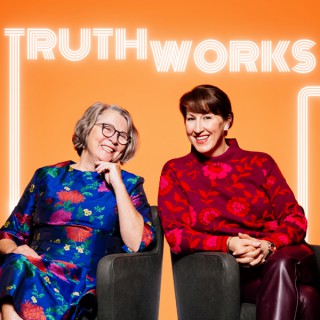
What does it actually take to lead 70,000 people through one of the biggest cultural resets in beauty history?Michael Bowes, Chief People Officer of The Estée Lauder Companies, joins Jessica Neal on Truth Works for a candid conversation about stepping into the top HR seat at an iconic 80-year-old company in the middle of a billion-dollar restructure, the courage it takes to disagree with your CEO without breaking the partnership, and why the loneliness of the role is real but the work is worth it.Michael walks through his path from Saks Fifth Avenue in the early 90s, to Nike, to Tommy Hilfiger, to Coach and Tapestry, and a brief detour into executive search before joining Estée Lauder in 2015. He spent almost ten years in talent before being promoted into the Chief People Officer role. He is honest about the fact he was not chasing the title. He took it because he believed in the new CEO Stefan's vision for the next 80 years of the company.Then the conversation gets into what is actually changing inside Estée Lauder under the new Beauty Reimagined strategy. A culture that used to default to no is now committing to say yes. Over 1,000 different bonus calculations across business units have been consolidated into nine. Brands that used to operate in silos are now rowing in the same direction with one shared set of goals.Michael also opens up about the realities of the CPO seat that no one prepares you for. The loneliness. The board dynamics. The added complexity of working inside a family-majority-shareholder company. The fact that everyone thinks they can do your HR job until you actually have to do something hard. And the running joke that the only people who tell you they would never want your job are the ones who just watched you do it.The episode closes with how Estée Lauder is approaching AI as a tool rather than a threat, including how the company is mining 80 years of prestige beauty consumer data in ways no competitor can match. Plus the rise of K-beauty, why Dr. Jart sits inside the portfolio, the China R&D centre that is reversing the old east-to-west flow of trends, and the philosophy that has guided how Michael hires for the last decade: hire the player, not the playbook.Topics Covered:How The Estée Lauder Companies scaled from a kitchen in Queens to a global prestige beauty portfolioWhy 87% of the workforce is women and how that shapes consumer decisionsTravel retail as a multi-billion dollar growth channelMichael's career path from Saks to Nike to Tommy Hilfiger to Coach to Estée LauderBeing part of the CEO succession conversation before being promoted himselfTaking the Chief People Officer role in the middle of a global billion-dollar restructureThe Beauty Reimagined strategy and its five pillarsShifting the culture from "protect by saying no" to "we say yes"Consolidating 1,000+ bonus calculations into nine business unitsThe loneliness of the CPO seat and why CEO chemistry is non-negotiableHow to disagree with your CEO and still own the decision publiclyNavigating board dynamics and family-majority shareholdersAI as a tool, not a threat, and how Estée Lauder is embedding it across R&D and consumer insight80 years of prestige beauty data and what AI can unlock from itThe K-beauty wave, Dr. Jart, The Ordinary, and the China R&D centreThe biggest hiring mistake organisations make by defaultWhy the right hire is the player, not the playbookThe piece of advice from Michael's grandmother that he still lives byTruth Works is hosted by Jessica Neal, former Chief Talent Officer at Netflix.
Episode: The Tom Dupree Show | Host: Tom Dupree | Co-host: Mike Johnson Episode Summary Tom Dupree and Mike Johnson tackle one of the most common misconceptions in retirement planning: that a 401(k) balance is a retirement plan. It isn’t. It’s a savings vehicle — and a very good one — but it was designed to collect money, not distribute it. This episode explains what that distinction means in practical terms, and what steps to take before retirement to make sure your savings can actually do the job you’re counting on them to do. Topics Covered in This Episode Why a 401(k) is an accumulation vehicle, not a retirement plan The problem with applying a growth portfolio to a withdrawal strategy How rolling a 401(k) into an IRA opens up income-oriented investment options The three-legged stool: income, growth of income, and price appreciation Why selling shares to fund expenses works in a rising market — and fails in a flat or declining one The case for consolidating multiple old 401(k) accounts before retirement How dividend income shifts the focus from watching the balance to watching the cash flow Why pure asset allocation models limit flexibility in retirement The psychological value of knowing what you own and why you own it Key Takeaways The 401(k) did its job — now it needs a different tool. A 401(k) is structured for dollar-cost averaging and tax-deferred growth. That design is a poor match for generating predictable monthly income in retirement. A bigger balance is not a plan. Knowing your account value is not the same as knowing what that value will produce for you each month, for how long, and under what market conditions. Income-first investing changes the math. When a portfolio generates enough dividend income to cover living expenses, you are not forced to sell shares during market downturns — and that distinction is what protects long-term wealth. Rolling to an IRA opens up your options. The investment menu inside a 401(k) is limited by plan design. An IRA allows access to individual dividend-paying stocks and income-generating vehicles that most 401(k) plans don’t offer. Scattered accounts are a retirement hazard. The average person approaching retirement holds three to five old 401(k) accounts. Consolidating simplifies beneficiary designations, RMD calculations, and day-to-day management. Watch cash flow, not just the balance. In retirement, the number that matters most is what the portfolio produces each month — not what it’s worth on any given day. Know what you own and why you own it. Clients who understand their holdings don’t panic when markets get choppy, because they know the income side of the equation hasn’t changed even if the price has. Three Questions Worth Answering Before You Retire Tom closed the episode with three questions every listener should be able to answer: Do you know what fees you’re paying? Do you know what income your portfolio is currently producing? Do you know what you own and why you own it? If you can’t answer even one of those with confidence, that’s worth addressing before retirement — not after. Frequently Asked Questions What is the difference between a 401(k) and a retirement plan? A 401(k) is a tax-deferred savings vehicle offered through your employer. It is designed to accumulate money during your working years. A retirement plan is a personalized strategy that determines how you will generate income from your savings throughout retirement — including what you own, how much you withdraw, how taxes are managed, and how long your money needs to last. The 401(k) is one piece of that plan, not the plan itself. Should I roll my 401(k) into an IRA when I retire? For most retirees, rolling a 401(k) into an IRA makes sense because an IRA offers a much wider range of investment options — including individual dividend-paying stocks and income-focused strategies that most 401(k) plan menus don’t include. Pre-tax contributions roll into a Traditional IRA; Roth contributions roll into a Roth IRA. The rollover should always be done institution-to-institution to avoid taxes and penalties. Every situation is different, so it’s worth reviewing your specific plan before making the move. What is wrong with leaving my 401(k) invested in an S&P 500 index fund in retirement? The S&P 500 yields just over 1% in dividends — not enough to cover most retirees’ living expenses. That means you’d need to sell shares regularly to generate cash. When the market is rising, that works. When the market is flat or declining, you’re forced to sell more shares to get the same dollar amount, which depletes your principal at the worst possible time. Over a 20- or 30-year retirement, that pattern can quietly cause serious damage to a portfolio. What is an income-focused retirement portfolio? An income-focused portfolio is built around investments that generate regular cash flow — primarily dividend-paying stocks in companies with long track records of consistent and growing dividends. The goal is for the income produced by the portfolio to cover living expenses, so you are not dependent on selling shares to fund retirement. Price appreciation is still part of the picture, but it’s the third priority, not the first. How many 401(k) accounts should I have going into retirement? Ideally, as few as possible. The average person approaching retirement holds three to five old 401(k) accounts from previous employers. Consolidating them into one or two IRAs — one Traditional, one Roth if applicable — simplifies beneficiary designations, required minimum distribution calculations, and overall portfolio management. It also makes it much harder to lose track of money you’ve worked decades to save. What is a safe withdrawal rate in retirement? A commonly referenced figure is 4% per year, which comes from historical research suggesting that withdrawal rate has a high probability of lasting 30 years across most market environments. However, the right withdrawal rate depends on your specific expenses, other income sources like Social Security or a pension, your tax situation, and how your portfolio is structured. An income-focused portfolio where dividends cover most expenses may allow for more flexibility than a pure growth portfolio using a fixed percentage rule. What does Dupree Financial Group do differently from a typical 401(k) plan? Dupree Financial Group is a fee-only, fiduciary RIA that manages separately managed accounts — meaning your investments are held in your name, not pooled into a fund. The firm builds income-focused portfolios around dividend-paying companies selected for their financial strength, cash flow, and dividend history. There are no products sold, no commissions, and no conflicts of interest. The focus is entirely on building a portfolio that generates reliable income and protects principal over a long retirement. About The Tom Dupree Show The Tom Dupree Show is hosted by Tom Dupree, founder of Dupree Financial Group and a 47-year veteran of the investment business. Each episode covers the financial topics that matter most to retirees and those approaching retirement — in plain English, without the Wall Street spin. Dupree Financial Group is a fee-only, fiduciary Registered Investment Advisory firm based in Lexington, Kentucky. The firm manages separately managed accounts focused on income-generating, dividend-paying portfolios — no products sold, no commissions, no conflicts of interest. Past episodes are available at dupreefinancial.com under the Radio tab. Schedule a Complimentary Portfolio Review If you’re not sure whether your 401(k) can actually support the retirement you’ve planned, we’ll take a look. No charge. No pressure. Just an honest conversation about what you own and whether it’s working for you. Call: 859-233-0400 | Visit: dupreefinancial.com The post Your 401(k) Is Not a Retirement Plan appeared first on Dupree Financial.

and this is a disaster in the making.

✔️ Bitcoin consolidating before it bursts out✔️ Cheap BTC with compressed volatility has historically been one of the strongest setups in the asset✔️ When you price assets in the hardest money, they are losing purchasing power over time.✔️ The SnapBack could be legendary!✔️ Kevin Warsh, the new Fed Chair, just made it clear why rates are going lower✔️ U.S military says it ‘runs a Bitcoin node'✔️ Belarus will allow “crypto banks” to operate with 26 cryptocurrencies including Bitcoin✔️ Tether freezes 344 million of USDT ✔️ Eth Foundation Quantum researcher: No idea how Bitcoin solves the declining security budget✔️ FOLD launches bitcoin bonus program for employers✔️ SteelSeed Card ✔️ A fleet of K1 Lightning Bitcoin ATMs ✔️ Sources:► https://x.com/bitcoinmunger/status/2047328426692866509► https://x.com/david_eng_mba/status/2047161337151942730► https://x.com/david_eng_mba/status/2046988791475470578► https://x.com/BitcoinNewsCom/status/2047427412422484204► https://x.com/danielisdizzy/status/2047037188500554010► https://x.com/DocumentingBTC/status/2047007441833922568► https://x.com/cointelegraph/status/2047347364730482798► https://forklog.com/en/belarus-outlines-regulations-for-crypto-banks/► https://tether.io/news/tether-supports-freeze-of-more-than-344-million-in-usdt-in-coordination-with-ofac-and-u-s-law-enforcement/► https://finance.yahoo.com/markets/crypto/articles/tether-freezes-344-million-usdt-130306016.html► https://x.com/bankless/status/2047027841318154729► https://x.com/nic_carter/status/2038804571791761821► https://research.google/blog/safeguarding-cryptocurrency-by-disclosing-quantum-vulnerabilities-responsibly/► https://x.com/bitcoinnewscom/status/2047391803968745864► https://x.com/xmrstreet/status/2047234501256909207► https://x.com/bitcoinnewscom/status/2047295974037475425► DONATE TO HELP KEONNE AND BILL https://www.change.org/p/stand-up-for-freedom-pardon-the-innocent-coders-jailed-for-building-privacy-tools✔️ Check out Our Bitcoin Only Sponsors!► https://archemp.co/Discover the pinnacle of precision engineering. Our very first product, the bitcoin logo wall clock, is meticulously machined in Maine from a solid block of aerospace-grade aluminum, ensuring unparalleled durability and performance. We don't compromise on quality – no castings, just solid, high-grade material. Our state-of-the-art CNC machining center achieves tolerances of 1/1000th of an inch, guaranteeing a perfect fit and finish every time. Invest in a product built to last, with the exacting standards you deserve.► Join Our telegram: https://t.me/theplebunderground#Bitcoin #crypto #cryptocurrency #dailybitcoinnews #memecoinsThe information provided by Pleb Underground ("we," "us," or "our") on Youtube.com (the "Site") our show is for general informational purposes only. All information on the show is provided in good faith, however we make no representation or warranty of any kind, express or implied, regarding the accuracy, adequacy, validity, reliability, availability, or completeness of any information on the Site. UNDER NO CIRCUMSTANCE SHALL WE HAVE ANY LIABILITY TO YOU FOR ANY LOSS OR DAMAGE OF ANY KIND INCURRED AS A RESULT OF THE USE OF THE SHOW OR RELIANCE ON ANY INFORMATION PROVIDED ON THE SHOW. YOUR USE OF THE SHOW AND YOUR RELIANCE ON ANY INFORMATION ON THE SHOW IS SOLELY AT YOUR OWN RISK.

With three different 401(k) plans in the equation, is there an easy way to simplify and make my financial life easier? Have a money question? Email us here Subscribe to Jill on Money LIVE Subscribe to Jill on Money Newsletter YouTube: @jillonmoney Instagram: @jillonmoney Twitter: @jillonmoney "Jill on Money" theme music is by Joel Goodman, www.joelgoodman.com. To learn more about listener data and our privacy practices visit: https://www.audacyinc.com/privacy-policy Learn more about your ad choices. Visit https://podcastchoices.com/adchoices
THE TOM DUPREE SHOW | PODCAST SHOW NOTES A Practical Guide to Surviving the Financial Transition When Your Spouse Dies The Tom Dupree Show | Dupree Financial Group | dupreefinancial.com | 859-233-0400 Episode Description Nobody wants to think about losing a spouse. But the financial consequences of that loss — the drop in Social Security income, the pension decisions that can never be undone, the tax bracket shift that hits the surviving spouse hard — are real, and they are far easier to manage with a plan in place than without one. This special evergreen episode of The Tom Dupree Show is built around exactly that planning conversation. Tom Dupree and Mike Johnson walk through each of the major financial pressure points a surviving spouse faces: the Social Security cliff, pension survivor options, the widow’s tax penalty, account consolidation, beneficiary designations, and the income planning reset that has to happen when a household goes from two earners to one. Every one of these is a cash flow problem — and every one of them can be addressed before the crisis hits. The best time to plan for losing a spouse is before it happens — not because it makes grief easier, but because it means one less thing is falling apart when everything already feels like it is. Topics Covered The Social Security cliff: why household income drops significantly when one spouse passes away and what can be done to prepare Survivor benefit rules: which Social Security payment the surviving spouse keeps and how claiming age affects the amount Pension election options: single life, joint life, period certain, and the popup provision — and how to choose Lump sum vs. monthly pension payments: when rolling over to an investment account may produce better long-term results The widow’s tax penalty: how filing status shifts from married joint to single and what that does to your tax bracket Tax account diversification: pre-tax, Roth, and taxable accounts and why having all three gives you flexibility in the withdrawal phase Qualified charitable distributions (QCDs) as a tax-efficient strategy for required minimum distributions Account consolidation and why scattered, orphaned accounts create avoidable stress for surviving spouses Beneficiary designations and why they override a will — and need to be reviewed regularly Building a dividend-income portfolio so the surviving spouse never has to sell assets in the middle of a crisis Key Takeaways Losing a spouse is also a cash flow crisis. When one spouse dies, the household loses one Social Security payment — but monthly expenses rarely drop by the same amount. Planning for that gap before it happens is one of the most important things a couple can do. The surviving spouse keeps the higher Social Security benefit, not both. Many people assume both payments continue. They do not. One stops. Understanding this before retirement — and factoring it into when and how each spouse claims — can make a meaningful difference in long-term income. Pension elections are permanent. Choosing single life vs. joint life vs. period certain is a one-time decision. The right answer depends on the couple’s other assets, their spending needs, and each person’s health and life expectancy. There is no one-size-fits-all answer. The widow’s tax penalty is real and often overlooked. A surviving spouse filing as single reaches higher tax brackets at lower income levels than a married couple filing jointly. This is not something that can be changed after the fact, but it can be planned around with the right mix of account types. Account consolidation reduces stress at the worst possible time. Scattered IRAs, old 401(k)s, and separate investment accounts create a logistics nightmare for a grieving spouse who may not have been closely involved in the finances. Consolidating and organizing ahead of time is an act of care. Beneficiary designations override your will. It does not matter what a will says if the beneficiary designation on a retirement account names someone else. These need to be reviewed at least annually and updated after any major life change. A dividend-income portfolio protects the surviving spouse from forced selling. When a portfolio is built to pay income from dividends, the surviving spouse does not have to sell assets during an emotionally and financially difficult time. The income continues regardless of what the market is doing. Both spouses need to know what the plan is. The spouse who has not been managing the finances should know who to call, where the accounts are, and what the income sources are. Ideally, they already have a relationship with the financial advisor. The post What Happens to Your Retirement When Your Spouse Dies appeared first on Dupree Financial.

Exploring the Ham Dash App ham radio dashboard. Consolidating the shack with Raspberry Pi 5 and M.2 solid state drive. Should you Repair or Replace that appliance with the recently expired warranty. 58:09

Exploring the Ham Dash App ham radio dashboard. Consolidating the shack with Raspberry Pi 5 and M.2 solid state drive. Should you Repair or Replace that appliance with the recently expired warranty. 58:09

This week's show covers consolidating your investments, how to turn your portfolio into a paycheck, donor advised funds, and more!

With a high-profile conflict between IDF soldiers and a CNN crew, the establishment of five new Israeli settler outposts on territory meant to be under Palestinian Authority control in a single night, and skyrocketing settler violence aimed at erasing Palestinians from their land, the situation in the West Bank has “definitely worsened” during the Iran war, Haaretz West Bank correspondent Matan Golan told the Haaretz Podcast. Golan joined her colleague, Yarden Michaeli, for a podcast conversation focused on what is unfolding in the West Bank and Gaza while the world’s attention is diverted to the major regional conflict between Iran, Israel and the United States. “It’s hard to count how many incidents of cars set on fire, and raids of settlers on Palestinian villages” have occurred over the past month, Golan said. What the West Bank and Gaza have in common, Michaeli noted, is a situation in which steps designed to be interim measures – such as the Yellow Line separating Gaza – don’t appear to be temporary. Since last autumn’s cease-fire, the IDF has maintained control of more than half of the Gaza Strip, and, as Michaeli explained, a Haaretz investigation has revealed the construction of military outposts and infrastructure that point to plans for an entrenched long-term presence. “All of this is happening in the context of the government pushing in a certain direction,” he explained, “and what makes us so concerned about it is the experience we have from the West Bank.” In the rest of the Strip, which remains under Hamas’ control, he said, the humanitarian crisis continues. “We have 2.1 million people now in Gaza that are crammed to less than half the size of the land that they had prior to the war” with hundreds of thousands living in tents or makeshift shelters amid destroyed buildings with no access to power, fuel or running water – and over 18,000 severely ill people who have been denied entry to the West Bank and Jerusalem to receive medical care by Israeli authorities, Michaeli explained. Read more: 32 Outposts, 10 Miles of Ground Barrier: IDF Builds New Border Line Inside Gaza. Here's How It Looks Gaza Aid Reduced by 80 Percent Since Start of Iran War as Food Prices Surge IDF Suspends Reserve Battalion Whose Soldiers Detained CNN Crew in West Bank Palestinian Man Shot Dead, 14 Wounded in West Bank Settler Raids as Five New Outposts Established in One Night Analysis by Dahlia Scheindlin | Don't Buy the Israeli Right's Sudden Concern for Settler Violence Who Gets to Decide What Counts as an Accident in the West Bank?See omnystudio.com/listener for privacy information.

In today's Cloud Wars Minute, I examine how Business Central is transforming ERP with strong financial returns and AI-driven capabilities. Highlights 00:10 — A new Forrester report commissioned by Microsoft, entitled "The Total Economic Impact of Microsoft Dynamics 365 Business Central," has revealed some remarkable findings regarding the financial impact this standout cloud ERP is having on customers. 00:36 — And here's what it found: 209% ROI over three years, an estimated $464,000 net present value, and potential payback in just six months. The researchers aggregated the findings from interviewees and created a fictitious composite organization to develop this model. 00:58 — In their modeling, the researchers found that by year three, the composite company was experiencing a 30% reduction in monthly close time and up to 50% time savings for accounts payable, accounts receivable, and billing. It reduced audit preparation time by up to 30%. 01:19 — Consolidating outdated ERP products and systems led to more than a 10% reduction in total cost of ownership and over $170,000 in present value savings from withdrawn systems and decreased maintenance. 01:37 — Microsoft links these impressive results to how Business Central represents an AI-ready ERP foundation, enabling organizations to leverage Copilot, Power BI, and intelligent agents while emphasizing clean data, integrated systems, and standardized processes. Visit Cloud Wars for more.

What happens when a 50-year-old brand built on whistleblowing and independent journalism has to master digital subscriptions? For Ben Moss, CEO of The Moss Report and Publisher of the Townsend Letter, the answer was trading a "leaky" paywall for a high-value "Essentials" strategy.In this episode of the Paywall Podcast powered by Leaky Paywall, Ben joins Pete to discuss how he modernized two legendary niche publications without losing the "Trust Moat" his father built over half a century. They dive deep into the mechanics of the digital transition, including:The "Essentials" Strategy: How Ben replaced a standard metered paywall with a curated "Starter Pack" of 20 high-value articles—and why it triggered a 30% spike in free registrations.The Power of the Automated Drip: A look at the 18-email onboarding sequence that nurtures new readers from "casual visitor" to "mission-driven subscriber."Consolidating the Tech Stack: Why Ben moved away from "Frankenstein" setups (like Mailchimp) to an integrated Flow Letter and Leaky Paywall dashboard to save time and reduce technical debt.Acquiring a Legacy: The reality of taking over the 40-year-old Townsend Letter, moving it from a declining print-and-ad model to a 100% digital, reader-supported platform.The "Patreon" Mindset: Why authenticity and a whistleblowing legacy are the ultimate competitive advantages in an AI-driven world where "information is cheap, but trust is expensive."If you are a niche publisher wondering how to turn a loyal "analog" audience into a thriving digital community, this episode is a blueprint for building a brand that readers don't just read, they fund.

Send us Fan MailStay Connectedhttps://www.commstock.com/https://www.facebook.com/CommStockInvestments/https://www.youtube.com/channel/UClP8BeFK278ZJ05NNoFk5Fghttps://www.linkedin.com/company/commstock-investments/

Listen and subscribe to Money Making Conversations on iHeartRadio, Apple Podcasts, Spotify, www.moneymakingconversations.com/subscribe/ or wherever you listen to podcasts. New Money Making Conversations episodes drop daily. I want to alert you, so you don’t miss out on expert analysis and insider perspectives from my guests who provide tips that can help you uplift the community, improve your financial planning, motivation, or advice on how to be a successful entrepreneur. Keep winning! Two-time Emmy and Three-time NAACP Image Award-winning, television Executive Producer Rushion McDonald interviewed Joxavier Jackson. A financial advisor with over 15 years of experience across major institutions such as Wells Fargo, Chase, and Bank of America. She discusses her evolution from a teenage bank teller to an independent financial planner at The Piedmont Group in Atlanta, where she provides holistic, comprehensive wealth management—especially for clients who traditionally lack access to financial literacy. Joe shares her personal journey, the gaps she observed in financial education—especially in working‑class families and communities of color—and why she aims to provide accessible, relationship‑based financial planning. She breaks down the fundamentals of long‑term wealth: insurance, asset allocation, retirement accounts, tax strategies, fraud prevention, and planning for individuals and business owners. The discussion highlights the importance of financial confidence, the significance of meeting people where they are, and the need to increase participation of Black and Brown individuals in wealth‑building spaces.

Listen and subscribe to Money Making Conversations on iHeartRadio, Apple Podcasts, Spotify, www.moneymakingconversations.com/subscribe/ or wherever you listen to podcasts. New Money Making Conversations episodes drop daily. I want to alert you, so you don’t miss out on expert analysis and insider perspectives from my guests who provide tips that can help you uplift the community, improve your financial planning, motivation, or advice on how to be a successful entrepreneur. Keep winning! Two-time Emmy and Three-time NAACP Image Award-winning, television Executive Producer Rushion McDonald interviewed Joxavier Jackson. A financial advisor with over 15 years of experience across major institutions such as Wells Fargo, Chase, and Bank of America. She discusses her evolution from a teenage bank teller to an independent financial planner at The Piedmont Group in Atlanta, where she provides holistic, comprehensive wealth management—especially for clients who traditionally lack access to financial literacy. Joe shares her personal journey, the gaps she observed in financial education—especially in working‑class families and communities of color—and why she aims to provide accessible, relationship‑based financial planning. She breaks down the fundamentals of long‑term wealth: insurance, asset allocation, retirement accounts, tax strategies, fraud prevention, and planning for individuals and business owners. The discussion highlights the importance of financial confidence, the significance of meeting people where they are, and the need to increase participation of Black and Brown individuals in wealth‑building spaces.

The Hoover Institution's Project on Taiwan in the Indo-Pacific Region held a public session on Resilient Realists: How Taiwan Navigates Its Future in a Turbulent World on March 2, 2026 from 1:00-2:30 PM PT. Since the emergence of the COVID-19 pandemic, geopolitical competition between the United States and the People's Republic of China (PRC) has rapidly intensified, and the global order has faced growing strains. Through it all, Taiwan has remained remarkably resilient. In the face of relentless diplomatic, economic, and military pressure from Beijing, Taiwan's leaders have leveraged the island's critical role in global technology supply chains, its reputation as a robust liberal democracy, and its strategic position in the Indo-Pacific to deepen engagement with key world powers. As many Americans question core assumptions of the post-Cold War global order, the PRC's military power continues to grow, and the world stands on the cusp of a technological revolution in artificial intelligence, can Taiwan continue to navigate so deftly through turbulent geopolitical waters? To address these topics, the Project on Taiwan in the Indo-Pacific Region at the Hoover Institution held a fireside chat featuring Dr. Hung-mao Tien, President of the Institute for National Policy Research (INPR) in Taipei and a former Minister of Foreign Affairs of the Republic of China (Taiwan). Dr. Tien joined in conversation by Adm. (Ret.) James O. Ellis, the Annenberg Distinguished Visiting Fellow, and Dr. Larry Diamond, the William L. Clayton Senior Fellow at the Hoover Institution. ABOUT THE SPEAKERS Dr. Hung-mao Tien is the President and Chairman of the Institute for National Policy Research in Taipei, and board member of several foundations and business corporations in Taiwan. He also serves as a Senior Advisor to the President of the Republic of China (Taiwan). From 2000-2002, he was the Minister of Foreign Affairs. He also served as the chairman of the Straits Exchange Foundation, the semi-official body in Taiwan responsible for direct exchanges and dialogue with the People's Republic of China, Representative (ambassador) to the United Kingdom, and presidential advisor to former President Lee Teng-hui. He has also served in an advisory capacity to Harvard University's Asia Center, The Asia Society in New York, and the Brookings Institution in Washington, D.C. Dr. Tien has taught in universities in both the US and Taiwan as professor of political science. His numerous publications in English (author, editor and co-editor) include: Government and Politics in Kuomintang China 1927-37 (Stanford University Press); The Great Transition: Social and Political Change in the Republic of China (Stanford: Hoover Institution Press); and Democratization in Taiwan, Implications for China (St. Anthony's Series, Oxford University), Consolidating the Third Wave Democracies, Themes and Perspectives (Baltimore and London: The Johns Hopkins University Press), China Under Jiang Zemin (Rienner), and The Security Environment in the Asia-Pacific (M.E. Sharpe). He received his Ph.D. in Political Science from the University of Wisconsin-Madison. Larry Diamond is the William L. Clayton Senior Fellow at the Hoover Institution, the Mosbacher Senior Fellow in Global Democracy at the Freeman Spogli Institute for International Studies (FSI), and a Bass University Fellow in Undergraduate Education at Stanford University. He is also professor by courtesy of political science and sociology at Stanford, where he lectures and teaches courses on democracy (including an online course on EdX). At Hoover, he co-leads the Project on Taiwan in the Indo-Pacific Region and participates in the Program on the US, China, and the World. At FSI, he is among the core faculty of the Center on Democracy, Development, and the Rule of Law, which he directed for six and a half years. He leads FSI's Israel Studies Program and is a member of the Program on Arab Reform and Development. He also co-leads the Global Digital Policy Incubator, based at FSI's Cyber Policy Center. He served for thirty-two years as founding coeditor of the Journal of Democracy. Diamond's research focuses on global trends affecting freedom and democracy and on US and international policies to defend and advance democracy. His book Ill Winds: Saving Democracy from Russian Rage, Chinese Ambition, and American Complacency (2019; paperback ed. 2020) analyzes the challenges confronting liberal democracy in the United States and around the world and offers an agenda for strengthening and defending democracy at home and abroad. His other books include In Search of Democracy (2016), The Spirit of Democracy (2008), Developing Democracy: Toward Consolidation (1999), Promoting Democracy in the 1990s (1995), and Class, Ethnicity, and Democracy in Nigeria (1989). He has edited or coedited more than fifty books, including China's Influence and American Interests (2019, with Orville Schell), Silicon Triangle: The United States, Taiwan, China, and Global Semiconductor Security (2023, with James O. Ellis Jr. and Orville Schell), and The Troubling State of India's Democracy (2024, with Šumit Ganguly and Dinsha Mistree). Admiral James O. Ellis Jr. is Annenberg Distinguished Visiting Fellow at the Hoover Institution, where he oversees both the Global Policy and Strategy Initiative and the George P. Shultz Energy Policy Working Group. He retired from a 39-year career with the US Navy in 2004. He has also served in the private and nonprofit sectors in areas of energy and nuclear security. A 1969 graduate of the US Naval Academy, Ellis was designated a naval aviator in 1971. His service as a navy fighter pilot included tours with two carrier-based fighter squadrons and assignment as commanding officer of an F/A-18 strike fighter squadron. In 1991, he assumed command of the USS Abraham Lincoln, a nuclear-powered aircraft carrier. After selection to rear admiral, in 1996, he served as a carrier battle group commander, leading contingency response operations in the Taiwan Strait. His shore assignments included numerous senior military staff tours. Senior command positions included commander in chief, US Naval Forces, Europe, and commander in chief, Allied Forces, Southern Europe, during a time of historic NATO expansion. He led US and NATO forces in combat and humanitarian operations during the 1999 Kosovo crisis. Ellis's final assignment in the navy was as commander of the US Strategic Command during a time of challenge and change. In this role, he was responsible for the global command and control of US strategic and space forces, reporting directly to the secretary of defense.
Dean Maciuba, Founding Partner at Crossroads Parcel Consulting, discusses the future of out-of-home delivery in the USA. What the FedEx-InPost transaction means for FedEx exposure in Europe Learning from InPost about parcel locker operations The opportunity for parcel lockers in the USA Future opportunities to combine FedEx and InPost operations in Europe FedEx and Flying Tigers Parcel locker failures in the USA Targeted rollout of parcel lockers in key US markets FedEx's existing PUDO relationship with retailers Partnering with retailers or the USPS for parcel lockers Are parcels a priority for PUDO partner retailers? Is 24-hour access really a selling point? USPS and parcel lockers Leveraging the USPS post office network for parcels Understanding US consumer behaviour in parcels= Residential and rural delivery surcharges UPS and FedEx and e-commerce parcel delivery density Consolidating deliveries to out-of-home parcel collection points Residential parcel lockers
Questions? Comments?Don and Tom examine Kiplinger's list of top retirement side gigs and separate practical ideas from pipe dreams, questioning whether executive coaching, IT consulting, online reselling, and landlord life truly offer “passive” or realistic income. They highlight more viable options like tutoring, handyman work, and tour guiding while emphasizing purpose over paycheck. Listener questions cover the risks of private credit and alternative investments, plus smart strategies for consolidating multiple 401(k) accounts without triggering unintended tax consequences.0:04 Old guys still podcasting intro1:38 Kiplinger's retiree side-gig list3:26 Executive coaching reality check4:40 AI and tech consulting skepticism6:32 Consulting and client ego problems7:53 AI vs. content writers9:06 Bookkeeping for small businesses9:29 Online selling isn't easy money11:19 Tutoring as a steady option12:17 Handyman work pays well13:44 Tour guide opportunities14:17 Landlord myth of “passive” income16:00 Where to find side gigs16:47 Bridge jobs for healthcare17:08 Purpose-driven retirement19:14 Private credit and alternative risks23:46 Consolidating multiple 401(k)sLearn more about your ad choices. Visit megaphone.fm/adchoices
Don and Tom examine Kiplinger's list of top retirement side gigs and separate practical ideas from pipe dreams, questioning whether executive coaching, IT consulting, online reselling, and landlord life truly offer “passive” or realistic income. They highlight more viable options like tutoring, handyman work, and tour guiding while emphasizing purpose over paycheck. Listener questions cover the risks of private credit and alternative investments, plus smart strategies for consolidating multiple 401(k) accounts without triggering unintended tax consequences. 0:04 Old guys still podcasting intro 1:38 Kiplinger's retiree side-gig list 3:26 Executive coaching reality check 4:40 AI and tech consulting skepticism 6:32 Consulting and client ego problems 7:53 AI vs. content writers 9:06 Bookkeeping for small businesses 9:29 Online selling isn't easy money 11:19 Tutoring as a steady option 12:17 Handyman work pays well 13:44 Tour guide opportunities 14:17 Landlord myth of “passive” income 16:00 Where to find side gigs 16:47 Bridge jobs for healthcare 17:08 Purpose-driven retirement 19:14 Private credit and alternative risks 23:46 Consolidating multiple 401(k)s Learn more about your ad choices. Visit megaphone.fm/adchoices

Voices of Search // A Search Engine Optimization (SEO) & Content Marketing Podcast
79% of global B2B buyers say AI search has changed research habits. Tim Sanders, Chief Innovation Officer at G2, oversees insights from 100+ million annual software buyers and has witnessed enterprise research shift from 29% to 50% starting searches on AI chatbots in just four months. Sanders reveals why buyers moved from "reference to inference" workflows, how G2 captures 60% of AI citations through verified review data, and the critical difference between calendar age versus cognitive age in modern buyer journeys.See Privacy Policy at https://art19.com/privacy and California Privacy Notice at https://art19.com/privacy#do-not-sell-my-info.

Why do some TikTok Shops explode… and others die in 90 days? This episode breaks down the foundational moves most sellers skip and the fixes that change everything. TikTok Shop isn't “Amazon with videos”—it's entertainment first, shopping second. In this TikTok Thursday episode, TikTok Shop strategist Michelle Barnum-Smith explains the non-negotiable foundations sellers need in 2026, whether you're launching from scratch or trying to scale what you already started. The big mindset shift: people open TikTok to scroll, not to search-find-and-buy, so your strategy has to be built for discovery and impulse, not intent-based shopping. Michelle breaks down what actually wins on TikTok Shop: products that are instantly understandable, visually demonstrable, and ideally show a quick transformation or solve a clear pain point fast. She also calls out a costly structural mistake, having too many separate listings. Since most discovery happens through videos, every listing becomes its own content, affiliate, ads, and promo machine. Consolidating into a master listing with variants can protect momentum (especially when one variant goes out of stock) and make it easier to stack orders. From there, it's all about converting scrolls into purchases with a simple offer stack: free shipping, product discounts (like flash sales), clickable coupons, and TikTok Shop campaigns that add visibility and “deal” badging. She also warns against manually lowering the listing price because you lose the visual cues that help shoppers feel urgency. Finally, she outlines the content and ads engine that feeds the algorithm, optimizes for thumb-stopping hooks, watch time, completion, rewatches, and engagement, then iterates at volume and is prepared for a pay-to-play reality where ads and budget can be the difference-maker. In episode 493 of the AM/PM Podcast, Bradley and Michelle discuss: 00:00 – Introduction 01:26 – What You Need To Start (Or Scale) On TikTok Shop 05:13 – The “Non-Negotiable Foundations” For Million-Dollar Shops 06:13 – Why People Use TikTok (And Why They Aren't There To Shop) 08:17 – What Makes A Product “TikTokable” (And What Doesn't) 10:17 – The #1 Listing Mistake: Too Many Separate Listings 11:37 – Built Bar Example: Master Listing & Variants Vs. Content Shutdown 14:03 – Turning Scrolls Into Impulse Buys: The Offer Stack 15:06 – Free Shipping: Expectations, AOV, And Losing Sales To Amazon 18:34 – Product Discounts: Flash Sales & “Lowest Price In 30 Days” Warning 20:53 – Clickable Coupons & TikTok Campaigns: Badges, Fine Print, Price Traps 26:00 – TikTok Thursday Q&A with Michelle Barnum-Smith

Listener Q&A where Andy talks about: Potential advantages or disadvantages of consolidating retirement accounts ( 4:28 )Paying taxes through IRA withholdings vs making estimated payments ( 13:08 )Whether a minister's housing allowance impacts Affordable Care Act subsidy eligibility ( 26:11 )When Qualified Longevity Annuity Contracts ("QLACs") might make sense to consider ( 30:27 )When following the 4% "rule" for distributions, can you reset your initial distribution if/when your portfolio value increases from market gains ( 37:48 )If someone has an outdated will and unused trust, but the person verbally stated their wishes to the heirs, is there a need to update will and/or trust, especially if there is currently nothing in the trust ( 49:19 )To send Andy questions to be addressed on future Q&A episodes, email andy@andypanko.comLinks in this episode:Tenon Financial August 2024 newsletter about - Retirement plan-to-IRA rollover pros and consRetirement Planning Education YouTube video - What is a QLAC (Qualified Longevity Annuity Contract)?Retirement Planning Education podcast episode - #002 - What's the 4% RuleMy company newsletter - Retirement Planning InsightsFacebook group - Retirement Planning Education (formerly Taxes in Retirement)YouTube channel - Retirement Planning Education (formerly Retirement Planning Demystified)Retirement Planning Education website - www.RetirementPlanningEducation.com
Bill Roggio analyzes the ISIS allegiance of Australian shooters, distinguishing ISIS's immediate caliphate goals from Al-Qaeda's patient state-building. He warns that while Al-Qaeda focuses on consolidating control in places like Somalia(Al-Shabaab), they remain a potent global threat capable of launching external attacks when strategically advantageous. 1842 Afghanistan
© 2020-2026 Ivy Podcast Discovery LLC
