
Canadian writer

POPULARITY
Categories

193 episodes with Margaret Atwood

40 episodes with Margaret Atwood

16 episodes with Margaret Atwood

13 episodes with Margaret Atwood

13 episodes with Margaret Atwood

19 episodes with Margaret Atwood

30 episodes with Margaret Atwood

14 episodes with Margaret Atwood

11 episodes with Margaret Atwood

18 episodes with Margaret Atwood

7 episodes with Margaret Atwood

12 episodes with Margaret Atwood

7 episodes with Margaret Atwood

6 episodes with Margaret Atwood

9 episodes with Margaret Atwood

5 episodes with Margaret Atwood

7 episodes with Margaret Atwood

4 episodes with Margaret Atwood

6 episodes with Margaret Atwood

8 episodes with Margaret Atwood

12 episodes with Margaret Atwood

5 episodes with Margaret Atwood

6 episodes with Margaret Atwood

8 episodes with Margaret Atwood

6 episodes with Margaret Atwood

4 episodes with Margaret Atwood

8 episodes with Margaret Atwood

6 episodes with Margaret Atwood

7 episodes with Margaret Atwood

7 episodes with Margaret Atwood

3 episodes with Margaret Atwood

4 episodes with Margaret Atwood

7 episodes with Margaret Atwood

9 episodes with Margaret Atwood

2 episodes with Margaret Atwood

4 episodes with Margaret Atwood

4 episodes with Margaret Atwood

5 episodes with Margaret Atwood

5 episodes with Margaret Atwood

3 episodes with Margaret Atwood

13 episodes with Margaret Atwood

3 episodes with Margaret Atwood

7 episodes with Margaret Atwood

3 episodes with Margaret Atwood

3 episodes with Margaret Atwood

7 episodes with Margaret Atwood

5 episodes with Margaret Atwood

2 episodes with Margaret Atwood

4 episodes with Margaret Atwood

5 episodes with Margaret Atwood

3 episodes with Margaret Atwood

5 episodes with Margaret Atwood

4 episodes with Margaret Atwood

4 episodes with Margaret Atwood
When Samsung's CEO asked Federico Casalegno to redesign the cameras on the company's phones, Federico told him he was the wrong person for the job. He wasn't an optical engineer. He didn't understand cameras. What he understood was storytelling — and he pointed to the Lascaux caves in France, where people were marking walls twenty thousand years ago for the same reason we hold up our phones today: to capture a moment, and tell it to someone we love. Find the full episode on our Substack:https://designbetterpodcast.com/p/federico-casalegno That's the kind of answer you get from a designer who arrived by way of studying human society. Federico is Head of Samsung's Global Design Studios, with teams spread across San Francisco, Europe, and Seoul. Before that he spent two decades at MIT, where he co-founded the MIT Design Lab with Bill Mitchell, and before that he was a social scientist embedded with engineers and psychologists at Philips Design in the nineties — back when “cross-disciplinary” wasn't yet a word anyone put on a job posting. We talk about what that looks like in practice at the scale Samsung operates at. His team builds digital twins of human ears — thousands of 3D and 4D scans across real demographics — then simulates millions of variations to figure out how an earbud should fit. Then they strap the buds onto robots and make them run. Then they test with actual humans, because at some point a person still has to decide what “comfortable” means. There's a phrase Federico kept returning to: technology without humanity is merely perfection without purpose. The designer's role is problem making first, problem solving later. We also get into how critique works inside a company that speaks a dozen native languages, what he actually looks for when hiring, and the French philosopher who, at 102, looked at his calendar and said he was booked until next year. Bio Federico Casalegno is Executive Vice President at Samsung, where he leads product experience innovation across business units and heads the company's Global Design Studios. Reporting directly to the CEO, he builds teams of designers, engineers, creative technologists, and strategists working on advanced design and next-generation experience planning. As head of design and AI, he established Samsung's Computational Design function and leads digital transformation across the organization. Before Samsung, Federico spent two decades at MIT, where he founded the MIT Design Lab and the MIT Mobile Experience Lab and taught at MIT and the MIT Media Lab, researching the intersection of design, AI, and emerging technology. He previously worked at Motorola and Philips Design, and holds a PhD in sociology from the Sorbonne. *** Premium Episodes on Design Better This is a premium episode on Design Better. We release two premium episodes per month, along with two free episodes for everyone. New premium subscriber benefit: Get design and career support in Design Club Weekly Portfolio Club calls this summer helped our paid subscribers build portfolios that land great jobs. Experts joined us weekly to provide feedback, and we compiled lessons from each session into a portfolio design guide. We've launched a private Slack workspace…join now to connect with designers, product leaders & creative practitioners in our community. And get a behind-the-scenes pass to every episode with The Roundup, where each week we bring you insights and actionable tactics from recent episodes. Premium subscribers get access to the documentary Design Disruptors and our growing library of books. You'll also get access to our monthly AMAs with former guests, ad-free episodes, discounts and early access to workshops, and our monthly newsletter The Brief that compiles salient insights, quotes, readings, and creative processes uncovered in the show. And subscribers at the annual level now get access to the Design Better Toolkit, which gets you major discounts and free access to tools and courses that will help you unlock new skills, make your workflow more efficient, and take your creativity further. Upgrade to paid *** Visiting the links below is one of the best ways to support our show: Masterclass: MasterClass is the only streaming platform where you can learn and grow with over 200+ of the world's best. People like Steph Curry, Paul Krugman, Malcolm Gladwell, Dianne Von Furstenberg, Margaret Atwood, Lavar Burton and so many more inspiring thinkers share their wisdom in a format that is easy to follow and can be streamed anywhere on a smartphone, computer, smart TV, or even in audio mode. MasterClass always has great offers during the holidays, sometimes up to as much as 50% off. Head over to http://masterclass.com/designbetter for the current offer. If you're interested in sponsoring the show, please contact us at: sponsors@thecuriositydepartment.com If you'd like to submit a guest idea, please contact us at: contact@thecuriositydepartment.com Learn more about your ad choices. Visit megaphone.fm/adchoices
Canadian authors Margaret Atwood and Stephen Marche reflect on what it means to be Canadian during a trade war, and what we need to consider when it comes to our culture, identity and politics in this moment.

Please enjoy this Summer Salon Series episode of Breaking Form Selects: Marie Howe. Support Breaking Form by reviewing the show on Apple Podcasts here.Aaron's STOP LYING is available from the Pitt Poetry Series. BEAUTIFUL PEOPLE is available from Bridwell Press. James's ROMANTIC COMEDY is available from Four Way Books. Notes:Marie Howe was born in Rochester, New York in October 1950 (she's a Libra!). She earned an MFA from Columbia University before publishing The Good Thief (1988, chosen by Margaret Atwood for the National Poetry Series); What the Living Do (Norton, 1997), a book that centers other brother John's death from AIDS-related illness; The Kingdom of Ordinary Time (2008); Magdalene (2017); and New and Selected Poems (2024), which was awarded the Pulitzer Prize for Poetry. Howe has received fellowships from the Bunting Institute at Radcliffe College, the National Endowment for the Arts, the Guggenheim Foundation, the Academy of American Poets, and the Fine Arts Work Center in Provincetown. She was the Poet Laureate of New York State from 2012 to 2014. She is the poet in residence at The Cathedral Church of St. John the Divine and a chancellor of the Academy of American Poets. Visit Marie Howe's website: http://www.mariehowe.com/Listen to her talk on Poetry Unbound here and watch her comprehensive interview with Krista Tippett here (90 minutes).You can see her give a reading in 2020 here (27 min); or read her poem "The Gate" from What the Living Do here (1.5 min); or read from her book Magdalene here (~23 min).Read this 1997 interview with Howe conducted by Victoria Redel.
Jonathan Adler was one of our favorite guests, so we've been angling to get him back ever since. He started as a potter and now designs furnishings and interiors that are decadent, but layered with meaning and humor. A lot has happened since we last spoke: he had a retrospective at the Museum of Arts and Design — the same institution whose gift shop took a chance on his pots 32 years ago — and launched a sprawling collaboration with Michaels, which he calls a temple of craft. Find bonus content and more on our Substack: https://designbetterpodcast.com/p/jonathan-adler-returns We talk with Jonathan about what it felt like to stop making long enough to curate three decades of his own work, why he's grateful he chose commerce over the gallery world, and whether people really are trading doomscrolling for making things with their hands. Along the way, we talk about his father, the lawyer who painted — and why the maximalist you think you know insists he's a minimalist. Also, much like our last conversation with Jonathan, there are some instances of adult language and humor, so if you have kids around it might be a good idea to throw on some headphones. Bio Potter, designer, and author Jonathan Adler launched his namesake brand after leaving his day job to pursue his first love: pottery. In 1993, Barneys bought his collection of pots, and five years later, he opened his first store in Soho. Today, Jonathan Adler is a design company with retail locations worldwide, a thriving e-commerce site, a full slate of residential and commercial projects, and a global wholesale business. They strive to create luxe and livable interiors that are seriously designed, but don't take themselves too seriously. Earlier this year, the Museum of Arts and Design mounted a retrospective of his work, presented in dialogue with pieces he curated from the museum's own collection. He lives in New York with his husband, the writer Simon Doonan. *** Premium Episodes on Design Better This ad-supported episode is available to everyone. If you'd like to hear it ad-free, upgrade to our premium subscription, where you'll get an additional 2 ad-free episodes per month (4 total). Premium subscribers also get access to the documentary Design Disruptors and our growing library of books. New premium subscriber benefit: we've launched a private Slack workspace…join now to connect with designers, product leaders & creative practitioners in our community. And get a behind-the-scenes pass to every episode with The Roundup, where each week we bring you insights and actionable tactics from recent episodes. You'll also get access to our monthly AMAs with former guests, ad-free episodes, discounts and early access to workshops, and our monthly newsletter The Brief that compiles salient insights, quotes, readings, and creative processes uncovered in the show. And subscribers at the annual level now get access to the Design Better Toolkit, which gets you major discounts and free access to tools and courses that will help you unlock new skills, make your workflow more efficient, and take your creativity further. Upgrade to paid *** Visiting the links below is one of the best ways to support our show: Masterclass: MasterClass is the only streaming platform where you can learn and grow with over 200+ of the world's best. People like Steph Curry, Paul Krugman, Malcolm Gladwell, Dianne Von Furstenberg, Margaret Atwood, Lavar Burton and so many more inspiring thinkers share their wisdom in a format that is easy to follow and can be streamed anywhere on a smartphone, computer, smart TV, or even in audio mode. MasterClass always has great offers during the holidays, sometimes up to as much as 50% off. Head over to http://masterclass.com/designbetter for the current offer. If you're interested in sponsoring the show, please contact us at: sponsors@thecuriositydepartment.com If you'd like to submit a guest idea, please contact us at: contact@thecuriositydepartment.com Learn more about your ad choices. Visit megaphone.fm/adchoices
The Drunk Guys hide beer in the attic this week when they read The Blind Assassin by Margaret Atwood, winner of the Booker Prize in the year 2000. They go blind drinking Ultraterrestrial by Finback and Little Sumpin’ Sumpin’ by Lagunitas. Join the Drunk Guys next Tuesday when they read The Care and Training of your Pet Rock by Gary Dahl. The Drunk Guys now have a Patreon! The Drunk Guys Book Club Podcast can be found on Apple Podcasts, Google Podcasts, Spotify, Stitcher, PlayerFM, Overcast, and where ever fine podcasts can be found. We are also part of the Hopped Up Network of independent beer podcasters. If you're drunk enough to enjoy the Podcast, please give us a rating. To save time, just round up to five stars. Also, please follow us on Twitter, Instagram, and Facebook. There's no excuse to miss another Drunk Guys episode, announcement, or typo!
SELECTED SHORTS host Meg Wolitzer presents four works that were read as part of our live evening with WNYC's Radiolab and hosts Lulu Miller and Latif Nasser.The theme was flight in many imaginative manifestations. Randa Jarrar's “The Lunatics' Eclipse” is a fable-like story of romance and interstellar travel, read by Abubakr Ali. Our second story is “Roy Spivey,” by Miranda July, and is a sly and gentle probing of celebrity culture. It's read by Molly Bernard. Don Shea's “Jumper Down” bares the vulnerability and resilience of a rescue worker. it's read by Becca Blackwell. And our last story, “My Life as a Bat,” shares the secret life a mysterious creature in fact and fable. It's by Canadian fiction master Margaret Atwood and is read by Zach Grenier. Hosted by Simplecast, an AdsWizz company. See pcm.adswizz.com for information about our collection and use of personal data for advertising.
In Episode 232, Sarah is joined by returning guest Anderson McKean of Page & Palette Bookstore for the 2026 edition of Micro Genres! Each year, this series gives us a chance to niche down even further into the kinds of books we love — spotlighting those very specific sub-sub-genres that capture a particular reading taste. This year, Sarah and Anderson have 10 all-new Micro Genres to share, along with standout books for each. With more than 80 books mentioned, you're bound to find a few new additions to your TBR — and maybe recognize a Micro Genre or two of your own. This post contains affiliate links through which I make a small commission when you make a purchase (at no cost to you!). CLICK HERE for the full episode Show Notes on the blog. Politically-Adjacent Stories (Sarah) The Hopefuls by Jennifer Close (2016) | Amazon | Bookshop.org [3:00] Charlotte Walsh Like to Win by Jo Piazza (2018) | Amazon | Bookshop.org [3:11] American Wife by Curtis Sittenfeld (2008) | Amazon | Bookshop.org [3:36] Rodham by Curtis Sittenfeld (2020) | Amazon | Bookshop.org [3:38] Vantage Point by Sara Sligar (2025) | Amazon | Bookshop.org [3:47] The Emperor of Ocean Park (Elm Harbor, 1) by Stephen L. Carter (2002) | Amazon | Bookshop.org [4:48] Palace Council (Elm Harbor, 3) by Stephen L. Carter (2008) | Amazon | Bookshop.org [4:49] The Boomerang by Robert Bailey (2025) | Amazon | Bookshop.org [5:23] State of Terror by Louise Penny and Hillary Clinton (2021) | Amazon | Bookshop.org [6:14] The Situation Room by George Stephanopoulos (2024) | Amazon | Bookshop.org [6:55] Becoming by Michelle Obama (2018) | Amazon | Bookshop.org [8:18] From the Corner of the Oval by Beck Dorey-Stein (2018) | Amazon | Bookshop.org [8:53] Retellings that Are NOT Mythological (Anderson) Lady Tremaine by Rachel Hochhauser (2026) | Amazon | Bookshop.org [10:41] The Beheading Game by Rebecca Lehmann (2026) | Amazon | Bookshop.org [10:58] Beautiful Little Fools by Jillian Cantor (2022) | Amazon | Bookshop.org [11:55] Hester by Laurie Lico Albanese (2022) | Amazon | Bookshop.org [12:23] Honeysuckle by Bar Fridman-Tell (2026) | Amazon | Bookshop.org [12:55] Eligible by Curtis Sittenfeld (2016) | Amazon | Bookshop.org [14:03] Anna K (Anna K, 1) by Jenny Lee (2020) | Amazon | Bookshop.org [14:08] Demon Copperhead by Barbara Kingsolver (2022) | Amazon | Bookshop.org [14:20] The Kind Worth Killing by Peter Swanson (2015) | Amazon | Bookshop.org [14:36] The Favorites by Layne Fargo (2025) | Amazon | Bookshop.org [14:48] Broken Country by Clare Leslie Hall (2025) | Amazon | Bookshop.org [14:57] Wasp's Nest by Kat Stoddard (2026) | Amazon | Bookshop.org [15:26] A Thousand Acres by Jane Smiley (1991) | Amazon | Bookshop.org [15:39] Other Books Mentioned The Scarlet Letter by Nathaniel Hawthorne (1850) [12:32] James by Percival Everett (2024) [12:36] Pride and Prejudice by Jane Austen (1813) [14:07] Anna Karenina by Leo Tolstoy (1878) [14:11] David Copperfield by Charles Dickens (1850) [14:24] Strangers on a Train by Patricia Highsmith (1950) [14:41] Wuthering Heights by Emily Brontë (1847) [14:55] The Go-Between by L. P. Hartley (1953) [15:03] The Philadelphia Story by Philip Barry (1939) [15:32] King Lear by William Shakespeare (1608) [15:45] Ministers Behaving Badly (Sarah) Dominion by Addie E. Citchens (2025) | Amazon | Bookshop.org [16:36] Awake by Jen Hatmaker (2025) | Amazon | Bookshop.org [16:45] God Spare the Girls by Kelsey McKinney (2021) | Amazon | Bookshop.org [17:19] The True Confessions of First Lady Freeman by Deesha Philyaw (Sep 29, 2026) | Amazon | Bookshop.org [17:36] The Dearly Beloved by Cara Wall (2019) | Amazon | Bookshop.org [17:51] The Poisonwood Bible by Barbara Kingsolver (1998) | Amazon | Bookshop.org [18:16] Dear Reader / Love Letters to Books (Anderson) This Book Made Me Think of You by Libby Page (2026) | Amazon | Bookshop.org [19:14] The Starless Sea by Erin Morgenstern (2019) | Amazon | Bookshop.org [19:53] The Borrower by Rebecca Makkai (2011) | Amazon | Bookshop.org [20:22] Dear Fahrenheit 451 by Anne Spence (2017) | Amazon | Bookshop.org [22:24] Mr. Penumbra's 24-Hour Bookstore by Robin Sloan (2012) | Amazon | Bookshop.org [22:37] The Storied Life of A. J. Fikry by Gabrielle Zevin (2014) | Amazon | Bookshop.org [22:56] Other Books Mentioned I Have Some Questions for You by Rebecca Makkai (2023) [20:29] The Great Believers by Rebecca Makkai (2018) [20:31] Yellowface by R. F. Kuang (2023) [22:15] Dark Humor (Sarah) Rabbit Cake by Annie Hartnett (2017) | Amazon | Bookshop.org [23:52] Unlikely Animals by Annie Hartnett (2022) | Amazon | Bookshop.org [23:53] The Road to Tender Hearts by Annie Hartnett (2025) | Amazon | Bookshop.org [23:55] Goodbye, Vitamin by Rachel Khong (2017) | Amazon | Bookshop.org [24:41] Cleo Dang Would Rather Be Dead by Mai Nguyen (2026) | Amazon | Bookshop.org [25:42] Lost Lambs by Madeline Cash (2026) | Amazon | Bookshop.org [25:51] The Heart's Invisible Furies by John Boyne (2017) | Amazon | Bookshop.org [26:00] Here One Moment by Liane Moriarty (2024) | Amazon | Bookshop.org [26:47] Other Books Mentioned Real Americans by Rachel Khong (2024) [24:44] Fantasy Even Sarah Might Like / Fantasy-Lite (Anderson) Conform (Conform Series, 1) by Ariel Sullivan (2025) | Amazon | Bookshop.org [28:54] The Night Circus by Erin Morgenstern (2011) | Amazon | Bookshop.org [30:13] The Familiar by Leigh Bardugo (2024) | Amazon | Bookshop.org [30:39] The Atlas Six (The Atlas Trilogy, 1) by Olivie Blake (2022)* | Amazon | Bookshop.org [30:53] A Darker Shade of Magic (Shades of Magic, 1) by V. E. Schwab (2015) | Amazon| Bookshop.org [31:57] Bury Our Bones in the Midnight Soil by V. E. Schwab (2025) | Amazon | Bookshop.org [32:02] The Midnight Train (The Midnight World, 2) by Matt Haig (2026) | Amazon | Bookshop.org [32:04] The Midnight Library (The Midnight World, 1) by Matt Haig (2020) | Amazon | Bookshop.org [32:05] The Measure by Nikki Erlick (2022) | Amazon | Bookshop.org [32:20] The Dream Hotel by Laila Lalami (2025) | Amazon | Bookshop.org [32:25] The Other Valley by Scott Alexander Howard (2024) | Amazon | Bookshop.org [32:28] Other Books Mentioned The Hunger Games (The Hunger Games, 1) by Suzanne Collins (2008) [29:03] The Handmaid's Tale (The Handmaid's Tale, 1) by Margaret Atwood (1985) [29:04] Like Friday Night Lights, But Book Form (Sarah) a.k.a. Sports Books That Are About Far More Than Sports The Art of Fielding by Chad Harbach (2011) | Amazon | Bookshop.org [35:06] The Slip by Lucas Schaefer (2025) | Amazon | Bookshop.org [35:15] The World According to Garp by John Irving (1978) | Amazon | Bookshop.org [35:51] In One Person by John Irving (2012) | Amazon | Bookshop.org [35:53] Carrie Soto Is Back by Taylor Jenkins Reid (2022) | Amazon | Bookshop.org [36:12] The Flock by Ellen Bar (Apr 27, 2027) | Amazon | Bookshop.org [36:41] The Last Days of Vic & Coco by Taylor Jenkins Reid (Mar 2, 2027) | Amazon | Bookshop.org [38:31] Other Books Mentioned The Amateur by Chris Bohjalian (2026) [37:29] The Double Bind by Chris Bohjalian (2007) [37:48] Women Rule the World (Anderson) The Romanov Empress by C. W. Gortner (2018) | Amazon | Bookshop.org [40:16] Mademoiselle Chanel by C. W. Gortner (2015) | Amazon | Bookshop.org [40:41] Marlene by C. W. Gortner (2016) | Amazon | Bookshop.org [40:43] The Woman with the Cure by Lynn Cullen (2023) | Amazon | Bookshop.org [41:07] Mrs. Poe by Lynn Cullen (2013) | Amazon | Bookshop.org [41:28] Twain's End by Lynn Cullen (2015) | Amazon | Bookshop.org [41:31] Lady Clementine by Marie Benedict (2020) | Amazon | Bookshop.org [41:36] The Other Einstein by Marie Benedict (2016) | Amazon | Bookshop.org [41:53] The Only Woman in the Room by Marie Benedict (2019) | Amazon | Bookshop.org [41:47] Daughter of a Daughter of a Queen by Sarah Bird (2018) | Amazon | Bookshop.org [42:03] Other Books Mentioned Z: A Novel of Zelda Fitzgerald by Therese Anne Fowler (2013) [43:13] Isola by Allegra Goodman (2025) [43:32] Royals (Sarah) The Royal We (The Royal We, 1) by Heather Cocks and Jessica Morgan (2015) | Amazon | Bookshop.org [45:04] Red, White & Royal Blue (Red, White & Royal Blue, 1) by Casey McQuiston(2019) | Amazon | Bookshop.org [45:06] American Royals (American Royals, 1) by Katharine McGee (2019) | Amazon | Bookshop.org [45:09] Spare by Prince Harry (2023) | Amazon | Bookshop.org [45:19] The Force of Such Beauty by Barbara Bourland (2022) | Amazon | Bookshop.org [45:29] The Heir Apparent by Rebecca Armitage (2025) | Amazon | Bookshop.org [45:48] The Windsor Affair by Melanie Benjamin (2026) | Amazon | Bookshop.org [46:03] This Land is Your Land (Anderson) Land by Maggie O'Farrell (2026) | Amazon | Bookshop.org [46:34] Damnation Spring by Ash Davidson (2021) | Amazon | Bookshop.org [47:33] I Will Send Rain by Rae Meadows (2016) | Amazon | Bookshop.org [47:52] The Well and the Mine by Gin Phillips (2007) | Amazon | Bookshop.org [48:07] Greenwood by Michael Christie (US Release 2020) | Amazon | Bookshop.org [49:03] The Islanders by Lewis Robinson (2024) | Amazon | Bookshop.org [49:32] The Shark House by Sara Ackerman (2026) | Amazon | Bookshop.org [49:40] *Publication year reflects the later traditionally published edition for a book originally self-published.
The Drunk Guys worship a wet can of beer this week when they read Wet Goddess by Malcolm J. Brenner. They would do tricks for: Shroomies by Other Half, Same Team by Finback, and If Whales Could Fly by Finback. Join the Drunk Guys next Tuesday when they read The Blind Assassin by Margaret Atwood. The Drunk Guys now have a Patreon! The Drunk Guys Book Club Podcast can be found on Apple Podcasts, Google Podcasts, Spotify, Stitcher, PlayerFM, Overcast, and where ever fine podcasts can be found. We are also part of the Hopped Up Network of independent beer podcasters. If you're drunk enough to enjoy the Podcast, please give us a rating. To save time, just round up to five stars. Also, please follow us on Twitter, Instagram, and Facebook. There's no excuse to miss another Drunk Guys episode, announcement, or typo!

The Veterans Administration announced it would begin funding clinical trials to explore the use of psychedelic drugs for treating post-traumatic stress disorder, depression and addiction. However, these trials are small, and even if successful, it will likely be years before veterans can access psychedelics at the VA. Many U.S. veterans struggling with PTSD aren't waiting. Thousands of them are traveling overseas seeking relief at psychedelic retreats where these substances are legal to use, mostly in indigenous ceremonies. Correspondent Anderson Cooper follows nine veterans on a psychedelic journey to the west coast of Mexico, where they hope to find healing. Katie Brennan is the producer. Every year on Mardi Gras, Black revelers roam the backstreets of New Orleans in dazzling hand-sewn suits that take an entire year to create. Correspondent Bill Whitaker meets the Mardi Gras Indians, also known as Black Masking Indians, one of America's last secret societies, who are preserving a culture that dates to at least the 1800s. It's a tradition marked by resilience and resistance that honors their ancestors. Nichole Marks is the producer.Correspondent Jon Wertheim profiles literary titan Margaret Atwood, author of the dystopian classic The Handmaid's Tale. At 86, with 64 books to her name, Canada's best-known author has been called the “prophet of doom” for her uncanny ability to write about catastrophes in her fiction before they happen in real life. Wertheim talks to Atwood about her memoir, Book of Lives: A Memoir of Sorts, why she thinks The Handmaid's Tale became a cultural touchstone, and how she refuses to be silenced by an increasing number of bans on her books. Nathalie Sommer is the producer.
We the Platform: How the Internet Changed Twenty-First-Century Literature (Columbia University Press 2026) by Aarthi Vadde is a groundbreaking account of mass writing in the twenty-first century, identifying rarely recognized forms of literary possibility amid the profound upheavals in traditional publishing. Aarthi Vadde examines the explosion of textuality across digital platforms: countless writers, diverse publishing formats, and vast communities of readers responding to stories publicly and instantly. Countering ubiquitous decline narratives, she offers powerful examples of literary innovation, adaptation, and survival. Among them are Jonathan Lethem and Lauren Oyler's challenges to individualist ideas of authorship, the Twitter fiction of Jennifer Egan and Teju Cole, Margaret Atwood and Naomi Alderman's collaborative writing on Wattpad, conceptual projects like Book from the Ground, and the experimental use of chatbots by authors including Sheila Heti. Through nuanced and illuminating readings, We the Platform shows how platform-based writing has altered cornerstone concepts of authorship, aesthetic form, and craft, delivering a bold new understanding of literature now. Learn more about your ad choices. Visit megaphone.fm/adchoices Support our show by becoming a premium member! https://newbooksnetwork.supportingcast.fm/new-books-network
We the Platform: How the Internet Changed Twenty-First-Century Literature (Columbia University Press 2026) by Aarthi Vadde is a groundbreaking account of mass writing in the twenty-first century, identifying rarely recognized forms of literary possibility amid the profound upheavals in traditional publishing. Aarthi Vadde examines the explosion of textuality across digital platforms: countless writers, diverse publishing formats, and vast communities of readers responding to stories publicly and instantly. Countering ubiquitous decline narratives, she offers powerful examples of literary innovation, adaptation, and survival. Among them are Jonathan Lethem and Lauren Oyler's challenges to individualist ideas of authorship, the Twitter fiction of Jennifer Egan and Teju Cole, Margaret Atwood and Naomi Alderman's collaborative writing on Wattpad, conceptual projects like Book from the Ground, and the experimental use of chatbots by authors including Sheila Heti. Through nuanced and illuminating readings, We the Platform shows how platform-based writing has altered cornerstone concepts of authorship, aesthetic form, and craft, delivering a bold new understanding of literature now. Learn more about your ad choices. Visit megaphone.fm/adchoices Support our show by becoming a premium member! https://newbooksnetwork.supportingcast.fm/literary-studies

We're here to chat about the meltdowns we're having with our current manuscripts, so pour yourself a cup of tea and let's get started!Don't forget to follow us on Instagram at theteagranniespodcast and email us to sign up for the writing discord. If you want more of The Tea Grannies, you can also join our Patreon.Links:Email us to join our free discord, or just to chat! theteagrannies@gmail.comJoin our Patreon (free or paid!): https://patreon.com/TheTeaGranniesPodcast Keep track of your writing session word counts with Trackbear! https://trackbear.app/Books in this Episode:The Knight and the Moth by Rachel GilligCity of Ghosts by V.E. SchwabThe Bone Shard Daughter by Andrea StewartLongshadow by Olivia AtwaterThe Legend of the Nine-Tailed Fox by Katrina KwanMedea by Rosie HewlettBook of Lives by Margaret Atwood

We the Platform: How the Internet Changed Twenty-First-Century Literature (Columbia University Press 2026) by Aarthi Vadde is a groundbreaking account of mass writing in the twenty-first century, identifying rarely recognized forms of literary possibility amid the profound upheavals in traditional publishing. Aarthi Vadde examines the explosion of textuality across digital platforms: countless writers, diverse publishing formats, and vast communities of readers responding to stories publicly and instantly. Countering ubiquitous decline narratives, she offers powerful examples of literary innovation, adaptation, and survival. Among them are Jonathan Lethem and Lauren Oyler's challenges to individualist ideas of authorship, the Twitter fiction of Jennifer Egan and Teju Cole, Margaret Atwood and Naomi Alderman's collaborative writing on Wattpad, conceptual projects like Book from the Ground, and the experimental use of chatbots by authors including Sheila Heti. Through nuanced and illuminating readings, We the Platform shows how platform-based writing has altered cornerstone concepts of authorship, aesthetic form, and craft, delivering a bold new understanding of literature now. Learn more about your ad choices. Visit megaphone.fm/adchoices Support our show by becoming a premium member! https://newbooksnetwork.supportingcast.fm/science-technology-and-society

We the Platform: How the Internet Changed Twenty-First-Century Literature (Columbia University Press 2026) by Aarthi Vadde is a groundbreaking account of mass writing in the twenty-first century, identifying rarely recognized forms of literary possibility amid the profound upheavals in traditional publishing. Aarthi Vadde examines the explosion of textuality across digital platforms: countless writers, diverse publishing formats, and vast communities of readers responding to stories publicly and instantly. Countering ubiquitous decline narratives, she offers powerful examples of literary innovation, adaptation, and survival. Among them are Jonathan Lethem and Lauren Oyler's challenges to individualist ideas of authorship, the Twitter fiction of Jennifer Egan and Teju Cole, Margaret Atwood and Naomi Alderman's collaborative writing on Wattpad, conceptual projects like Book from the Ground, and the experimental use of chatbots by authors including Sheila Heti. Through nuanced and illuminating readings, We the Platform shows how platform-based writing has altered cornerstone concepts of authorship, aesthetic form, and craft, delivering a bold new understanding of literature now. Learn more about your ad choices. Visit megaphone.fm/adchoices Support our show by becoming a premium member! https://newbooksnetwork.supportingcast.fm/technology

We the Platform: How the Internet Changed Twenty-First-Century Literature (Columbia University Press 2026) by Aarthi Vadde is a groundbreaking account of mass writing in the twenty-first century, identifying rarely recognized forms of literary possibility amid the profound upheavals in traditional publishing. Aarthi Vadde examines the explosion of textuality across digital platforms: countless writers, diverse publishing formats, and vast communities of readers responding to stories publicly and instantly. Countering ubiquitous decline narratives, she offers powerful examples of literary innovation, adaptation, and survival. Among them are Jonathan Lethem and Lauren Oyler's challenges to individualist ideas of authorship, the Twitter fiction of Jennifer Egan and Teju Cole, Margaret Atwood and Naomi Alderman's collaborative writing on Wattpad, conceptual projects like Book from the Ground, and the experimental use of chatbots by authors including Sheila Heti. Through nuanced and illuminating readings, We the Platform shows how platform-based writing has altered cornerstone concepts of authorship, aesthetic form, and craft, delivering a bold new understanding of literature now.

We the Platform: How the Internet Changed Twenty-First-Century Literature (Columbia University Press 2026) by Aarthi Vadde is a groundbreaking account of mass writing in the twenty-first century, identifying rarely recognized forms of literary possibility amid the profound upheavals in traditional publishing. Aarthi Vadde examines the explosion of textuality across digital platforms: countless writers, diverse publishing formats, and vast communities of readers responding to stories publicly and instantly. Countering ubiquitous decline narratives, she offers powerful examples of literary innovation, adaptation, and survival. Among them are Jonathan Lethem and Lauren Oyler's challenges to individualist ideas of authorship, the Twitter fiction of Jennifer Egan and Teju Cole, Margaret Atwood and Naomi Alderman's collaborative writing on Wattpad, conceptual projects like Book from the Ground, and the experimental use of chatbots by authors including Sheila Heti. Through nuanced and illuminating readings, We the Platform shows how platform-based writing has altered cornerstone concepts of authorship, aesthetic form, and craft, delivering a bold new understanding of literature now. Learn more about your ad choices. Visit megaphone.fm/adchoices Support our show by becoming a premium member! https://newbooksnetwork.supportingcast.fm/digital-humanities
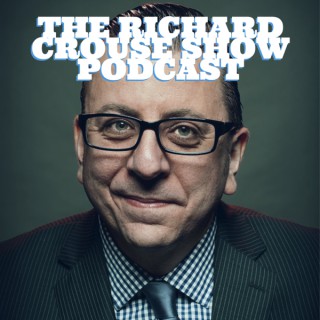
On the Saturday August 1, 2026 edition of The Richard Crouse Show we’ll meet Jess Gibson. She is a Canadian-born writer (daughter of Margaret Atwood and the late Graeme Gibson), art historian with a Yale PhD, who has lived all over the world. Her first book “The Good Eye” is already generating buzz as a sharp, original, and “bewitching” debut. The stories explore themes like perception vs. reality, the limits of what we “see,” betrayal, revenge, and everyday life tilting into the strange or magical. Then, we meet Juno Award-winning R&B/soul singer, actress Divine Brown. She broke through in 2005 with the hit single "Old Skool Love", which topped Canadian radio charts and earned a SOCAN No. 1 Song Award. Her self-titled debut album followed as an underground success, and her second album, The Love Chronicles (2008), won the Juno Award for Best R&B/Soul Album of the Year. She has toured with the Backstreet Boys, contributed vocals to Drake’s Take Care, and can now be seen in staged concert The Secret Chord: A Leonard Cohen Experience, playing at the CAA Theatre on Yonge Street in Toronto until August 16, 2026.

On the Saturday August 1, 2026 edition of The Richard Crouse Show we'll meet Jess Gibson. She is a Canadian-born writer (daughter of Margaret Atwood and the late Graeme Gibson), art historian with a Yale PhD, who has lived all over the world. Her first book “The Good Eye” is already generating buzz as a sharp, original, and “bewitching” debut. The stories explore themes like perception vs. reality, the limits of what we “see,” betrayal, revenge, and everyday life tilting into the strange or magical. Then, we meet Juno Award-winning R&B/soul singer, actress Divine Brown. She broke through in 2005 with the hit single "Old Skool Love", which topped Canadian radio charts and earned a SOCAN No. 1 Song Award. Her self-titled debut album followed as an underground success, and her second album, The Love Chronicles (2008), won the Juno Award for Best R&B/Soul Album of the Year. She has toured with the Backstreet Boys, contributed vocals to Drake's Take Care, and can now be seen in staged concert The Secret Chord: A Leonard Cohen Experience, playing at the CAA Theatre on Yonge Street in Toronto until August 16, 2026.

Today on Too Opinionated, we're joined by award-winning Canadian actress, writer, and songwriter Kate Hewlett to discuss her powerful recurring role as Mrs. Grove in The Testaments, the highly anticipated Hulu and Disney+ adaptation of Margaret Atwood's bestselling sequel to The Handmaid's Tale. As Mrs. Grove, Kate becomes part of one of the series' most emotional storylines, introducing her to a whole new generation of viewers while continuing a career that has spanned more than two decades across television, film, theatre, and music. Science fiction fans also know and love Kate as Jeannie Miller from Stargate Atlantis, while television audiences have seen her in Murdoch Mysteries, Run the Burbs, The Girlfriend Experience, Degrassi, Remedy, The L.A. Complex, The Parker Andersons, Fancy, 11 Cameras, and many more. Beyond acting, Kate is an acclaimed writer whose feature film The Swearing Jar premiered at the Toronto International Film Festival and earned a Writers Guild of Canada Award nomination for Best Feature Screenplay. She has also written for hit series including Corner Gas Animated, Malory Towers, Seed, Backstage, and InSecurity, while winning a Canadian Screen Award for Best Original Song. In this episode we discuss:

What has made this moment feel different is not the anxiety about incivility, which has always been there, but rather the performance of it. It's relentless.” — Molly Brady on incivility in the age of the smartphone Whatever happened to the American front porch? Builders killed it to save money, says the Harvard law professor Molly Brady — and with this death went one of the key stages on which Americans have practiced the art of being neighbors over the last 250 years. Brady is a contributor to America Unfinished: 250 Years of Law and Governance, a new volume of 62 essays from the Harvard Law School faculty edited by Alexandra Natapoff. Brady's subject is the land, real-estate and local government law determining neighborliness. Thus her interest in front porches. Brady grew up in Utica, New York — on the old Erie Canal — a Rust Belt town whose fracking fights, abandoned housing, and urban renewal steered her toward property law. Utica is also, despite its red politics, a place well versed in the art of neighborliness — with the town warmly welcoming recent Bosnian and Iraqi refugees. Incivility isn't new, Brady says. What's changed, she argues, is its performative virality. With a phone in every pocket, we can now watch our fellow “citizens” behaving badly. Meanwhile the physical infrastructure of community — the front porches and corner stores — has been zoned, sprawled, and value-engineered away. Analogue porches have been replaced by digital chatrooms. Brady's remedy is unfashionably local. On Zoom or in person, she advises, show up at your local planning meetings. Brady even requires her Harvard students to attend at least one local meeting so as to demystify the real work of governance. The republic, as Ben Franklin so famously warned, is ours if we can keep it. Keeping it, Molly Brady suggests, may require in-person attendance on a Wednesday night at your local planning commission. And it might also require hanging out on your porch. If the builders ever give them back to us. Five Takeaways • The Performance of Incivility. Americans have always fretted about incivility — the republic itself was born out of Europe's religious civil wars. What has changed, Brady argues, is technology. When difference was mediated through traditional publishers, you had to grapple with the people in your physical world: the workplace, the water cooler, the town meeting. Now everyone carries a phone on which fellow citizens can be found behaving horribly at any given moment. It is not the presence of incivility that makes this moment feel different — it is the relentless performance of it.• The Death of the Porch. Brady writes in the tradition of Robert Putnam's Bowling Alone, updated for the post-smartphone age: suburbanization, the loss of third places, remote work — and a thousand micro-choices in property law that removed the physical alternatives to online life. Builders dropped the front porch to save money; developers in the South and West build almost nothing outside homeowners associations, so there is no meaningful market choice. People are human — they yearn for connection — but in the absence of physical competition, technological community wins by default.• Tocqueville's Scalability Problem. What Tocqueville admired in New England — every citizen (nominally) arguing policy with neighbors at the town meeting — may never have been scalable to a continental republic, a question America has been grappling with since the Louisiana Purchase. But the local still scrambles our politics in useful ways: party preference, as the scholar David Schleicher observes, tells you nothing about road paving. The darker local truth is Bill Fischel's homevoter hypothesis — homeowners dominate participation and vote to maximize home values, which has helped produce the national affordability crisis.• Glimmers: Zoom, Newton, and Showing Up. The shift to Zoom planning meetings completely changed the demographics of who participates in land use decisions — young parents cannot spend Wednesday from seven to midnight debating a corner store. Newton has produced genuinely pro-housing policies; Cambridge ran a charter commission that drew in residents of every kind; groups like Abundant Homes Massachusetts organize contingents to make sure meetings are not left to the usual voices. Brady requires her students to attend at least one local meeting. The lesson: do not think this is for someone else.• 2076: Best Case, Worst Case. Asked to imagine America's 300th birthday, Brady hopes for less polarization and demonization, and for a real confrontation of the housing and environmental crises — collective work that might itself rebuild the habit of cooperation. The worst case runs through Margaret Atwood and civil war scenarios to environmental degradation and lives lost to our incapacity to work together. The warning signs are already banal: middle-aged men now pay consultants to teach them how to make friends. The skills have atrophied — and local participation, Brady suggests, is the gym where a republic gets them back. About the Guest Molly Brady is a professor of law at Harvard Law School, where she teaches property, land use, and local government law. Raised in Utica, New York, she is a graduate of Harvard College and Yale Law School, and her scholarship on the history of American property law has won wide recognition, as has her teaching. She lives in Belmont, Massachusetts, and is a contributor to America Unfinished: 250 Years of Law and Governance, edited by Alexandra Natapoff and Guy-Uriel E. Charles (MIT Press, July 2026). References: • America Unfinished: 250 Years of Law and Governance, edited by Alexandra Natapoff and Guy-Uriel E. Charles (MIT Press, July 2026). Bryan Stevenson: “A valuable contribution to understanding America at a critical moment.”• Bowling Alone by Robert Putnam — the 2000 classic on America's vanishing social capital, written, Brady notes, before the smartphone made things worse. Putnam is an old friend of this show.• Democracy in America by Alexis de Tocqueville — the towering account of New England civic virtue that frames the episode's scalability question.• Shade by Sam Bloch — the new book on the politics of shade that taught Brady about the money-saving death of the American front porch.• Bill Fischel's “homevoter hypothesis” — the Dartmouth economist's account of why homeowner-dominated local politics maximizes home values and starves housing supply.• Alexandra Natapoff — the volume's co-editor, whose own Keen On America conver...

What if The Testaments isn't a dystopian fantasy... but a warning?In this episode of Sarah's Thoughts, Sarah Grynberg reflects on Margaret Atwood's The Testaments and the uncomfortable parallels between fiction and the reality millions of women are facing today.From Afghanistan, where girls are denied education and women are stripped of basic freedoms, to Iran, where women continue to risk their lives for acts of resistance, Sarah explores how oppression rarely arrives all at once. Instead, it happens gradually—through small compromises, quiet acceptance, and the slow normalisation of what once seemed unimaginable.Drawing on neuroscience and psychology, Sarah explains why our brains are wired to adapt, even when our freedoms are being eroded, and why that makes vigilance more important than ever.This isn't just a conversation about a television series. It's an invitation to pay attention, to question what we accept, and to recognise that freedom is never guaranteed—it must be protected by every generation.If this episode resonates with you, please share it with someone who needs to hear it.Purchase Sarah's book: Living A Life Of Greatness here.To purchase Living A Life of Greatness outside Australia here or here.Watch A Life of Greatness Episodes On Youtube here.Sign up for Sarah's newsletter (Greatness Guide) here.Purchase Sarah's Meditations here.Instagram: @sarahgrynberg Website: https://sarahgrynberg.com/Facebook: facebook.com/sarahgrynbergTwitter: twitter.com/sarahgrynberg Hosted on Acast. See acast.com/privacy for more information.
Fifteen years ago, Eric Ries handed a generation of founders a playbook. When Eli was in a Palo Alto-based startup accelerator in 2011, The Lean Startup felt like the only book anyone in that ecosystem was talking about. It was in the middle of a wildly optimistic moment for tech. Marc Andreessen declared that “software is eating the world,” social media was blooming, and there was a widespread belief that technology was about to democratize everything and bring us closer together. Concepts like the MVP (“minimum viable product,”), the pivot, and build-measure-learn became the operating language of Silicon Valley. This is a preview of a premium episode. Listen to the full interview on our Substack: https://designbetterpodcast.com/p/eric-ries But a lot of the companies built on those ideas went on to get corrupted by forces Eric hadn't yet named. His new book, Incorruptible: Why Good Companies Go Bad and How Great Companies Stay Great, is his reckoning with what happens after you build something great — and how to keep it from falling apart. Buy the book In this conversation, we get into why speed itself wasn't the problem, but treating a rising stock price as proof of health is like assuming more exhaust means a faster car. Eric explains why doing the right thing 100% of the time is actually easier than doing it 98% of the time, and how companies behave like superorganisms with their own emergent character — a point he illustrates with a genuinely mind-bending study about ants solving a puzzle that no single ant ever could. We talk about the “harder is easier” principle through stories from Patagonia and the long-term stock exchange he built as a design challenge, and why the value a company makes comes from the design of its products. And because we couldn't resist, we get into AI slop, LLM psychosis, and Eric's clear, simple antidote: never ask these tools to make you an artifact — ask them to teach you how to make one yourself. Bio Over the last two decades, Eric Ries's ideas about continuous innovation, long-term thinking, governance, and market reform have reshaped company building and management practices. He is the creator of the Lean Startup method, and the author of the New York Times bestseller The Lean Startup; The Leader's Guide; and The Startup Way. As a founder, he has put his own ideas into practice with The Long-Term Stock Exchange (LTSE); Answer.AI, an AI R&D lab; the Lean Startup Co, which teaches and supports the implementation of Lean Startup; Virgil, a legal services startup; and IMVU, where the ideas that became the Lean Startup method were forged. On his podcast, The Eric Ries Show, he talks to guests including world-class technologists, thought leaders, and executives working to build profitable companies for the long-term benefit of society. Eric has served as an entrepreneur-in-residence at Harvard Business School and IDEO. He lives in the San Francisco Bay Area with his wife and three children. *** Premium Episodes on Design Better This is a premium episode on Design Better. We release two premium episodes per month, along with two free episodes for everyone. New premium subscriber benefit: we've launched a private Slack workspace…join now to connect with designers, product leaders & creative practitioners in our community. And get a behind-the-scenes pass to every episode with The Roundup, where each week we bring you insights and actionable tactics from recent episodes. Premium subscribers get access to the documentary Design Disruptors and our growing library of books. You'll also get access to our monthly AMAs with former guests, ad-free episodes, discounts and early access to workshops, and our monthly newsletter The Brief that compiles salient insights, quotes, readings, and creative processes uncovered in the show. And subscribers at the annual level now get access to the Design Better Toolkit, which gets you major discounts and free access to tools and courses that will help you unlock new skills, make your workflow more efficient, and take your creativity further. Upgrade to paid Visiting the links below is one of the best ways to support our show: Masterclass: MasterClass is the only streaming platform where you can learn and grow with over 200+ of the world's best. People like Steph Curry, Paul Krugman, Malcolm Gladwell, Dianne Von Furstenberg, Margaret Atwood, Lavar Burton and so many more inspiring thinkers share their wisdom in a format that is easy to follow and can be streamed anywhere on a smartphone, computer, smart TV, or even in audio mode. MasterClass always has great offers during the holidays, sometimes up to as much as 50% off. Head over to http://masterclass.com/designbetter for the current offer. Learn more about your ad choices. Visit megaphone.fm/adchoices
“I want someone who has regrets. I want someone who's learned the hard way. I want someone who understands that life is made of those messy compromises.” — Joel Christensen on the Odysseus he hopes to see in Matt Damon Christopher Nolan's The Odyssey is out — the controversial movie of the year, much of the controversy raging before anyone had seen a frame. So, before either of us had seen the epic, I talked to the CUNY classicist Joel Christensen, author of the timely Why Odysseus? Survivor, Scoundrel, (Anti)hero. What, I asked Christensen, did he most dread about Hollywood's treatment of his beloved Odyssey? His answer: a hero too noble to be interesting. The Odysseus of the epic is a survivor, a scoundrel, an antihero — the master sergeant who does what needs to be done, from engineering the Trojan Horse to making sure Hector's infant son doesn't survive it. Christensen's worry about Matt Damon came down to one word: too likeable. What he wanted instead was a man with regrets — De Niro in Raging Bull rather than anybody noble. So did Christensen get the Odysseus he wanted? Below is his review, written after seeing the film when it came out. Postscript: Joel Christensen's Verdict on the Film Nolan's Odyssey is not Homer's Odyssey. This should be clear to anyone. Nolan faced an almost impossible task well: ancient audiences knew the story already. Modern audiences do not, so he created a ring structure with the beginning union of Penelope and Odysseus anticipating the reunion at the end, also introducing plot elements like the dog Argos and the pin by which Penelope will recognize Odysseus. The film is not Homer. Homer's power is poetry; the film's is image. Some of the images are striking: the scene when Circe turns his men into animals is the most arresting in the whole movie, showing everything that can be done with visceral imagery and a slight adaptation (Circe here is a survivor of sexual assault). The changes made to the plot such as omitting the Phaeacians, Nestor, Laertes, the bed and more are not as jarring as some of the general decisions. Calling “Zeus' Law” “do unto others…” makes an understandable translation to a Christian context, but it is somewhat nonsensical for Homer. Depicting a mutilated Helen is a strange decision that I am struggling with. What the movie gets right is making humans responsible for their own suffering. In a novel take on Odysseus as a traumatized warrior, the hero spends seven years with Calypso eating Lotus to forget the loss of his men. Damon, too likeable, regrets the trick of the Trojan Horse after witnessing the slaughter during the sack of Troy. We find out as well that the “sea people” from history, bringing an end to the “civilization” are actually the Greeks returning from the Trojan War and suffering for the transgressions they committed there. Is this ending an echo of Zeus' plan to end the race of heroes in the Trojan War? Is it an allegory for our civilizational collapse in the future thanks to technology, environmental catastrophe, and fascism? Any potential social critique dissipates with the movie's end. The traumatized veteran turns out to be merciful and kills only some of the suitors, showing many mercy. Then, guilty of violating “Zeus' Law”, Odysseus happily goes into exile with Penelope, leaving Telemachus to be king. There's no way to make Homer's Odyssey into a film and convey all its ambiguity and depth. That would be an unfair expectation. Nolan's film is a compelling spectacle and it makes me wonder more about how it reflects who we are as an audience. Do we need the hero to be ultimately good, even if he messed up? Are we so simple that we need to hear about Zeus' Law and the Sea People so repetitively? I fear that in this age where fiction and fact are so hard to disentangle, that we long for narratives that are just simpler. We don't get the Odyssey we want; we get the one we deserve. Five Takeaways • A Complicated Man: The Translation Problem. Every word of Homer carries echoes no English can hold, and the fights over Nolan's dialogue replay the fights over translation. Emily Wilson detonated a controversy by rendering polytropos — poly, many; tropos, turn — as “a complicated man,” alluding at once to Odysseus's travels and the many forms of his character; Daniel Mendelsohn's “man of roundabout ways” does the work too, if you can stop thinking about rotaries. Even the objection to Tom Holland's Telemachus saying “dad” collapses on inspection: Telemachus uses the colloquial form in Homer. And the “authentic” dialect purists want was an artificial amalgam that no ancient Greek ever spoke. • The Culture Wars Come for Homer. Nobody remembers a brouhaha over Wolfgang Petersen's Troy — a pretty bad movie, Christensen notes — but Nolan's Odyssey generates more controversy than a scholar can track daily. Lupita Nyong'o's Helen is attacked as inauthentic by one side and as cultural appropriation by the other; since 2015, classicists have watched the Western tradition weaponized by the alt-right while their own field argues about who owns it. Christensen's advice channels the epic itself: between Scylla and Charybdis, take Scylla. You'll lose six men. The alternative is losing the ship — and if the story doesn't persuade in three hours, nobody will remember the armor anyway. • The Valence of Violence. Modern audiences are more accustomed to represented violence than any in history — you don't need Natural Born Killers when Twitter serves unverifiable clips from Gaza and Iran. The question Christensen brings to the film is what the violence is for. Uberto Pasolini's The Return gave Ralph Fiennes's Odysseus a steady, untroubled thump of arrows; the epic's own slaughter of the suitors, read closely, approaches Tarantino-adjacent parody. And the hardest tests are the atrocities the adaptations always cut: the mutilation of the goatherd Melanthius, and Telemachus hanging the enslaved women. Does the violence glorify the hero — or show what even the best of us are capable of? • Keep Penelope Ambiguous. The great interpretive question of the Odyssey is when Penelope knows the beggar is her husband — the suitors, dead in the underworld, are convinced she was in on it all along. The epic grants her remarkable intelligence and agency, then reins it in: Agamemnon's ghost praises her by way of insulting all women, and she vanishes from the text. Christensen's advice to Nolan wouldn't be Margaret Atwood's Penelopiad, which centers the women's voices; it would be more screen time and total ambiguity — no access to her mind, a wife who matches her husband in wits and may even have outwitted him. Though based on Nolan's arc, he doubts we'll get a woman at the center. • Survivor, Scoundrel, (Anti)hero. Christensen's worry about Matt Damon was simple: too likable. Odysseus is the master sergeant — the one who takes the hard orders, tricks Achilles into the war, engineers the Horse, and makes sure Hector's infant son doesn't survive to rebuild Troy. The ancient hero is neither good nor ...

Author Liz Shipton joins us to talk about her new feminist dystopian fantasy novel Mother & Slaughter — a bold, genre-bending story set in a world where women are stripped of their magic at birth and forced to choose between two paths: mother or gladiator. In this author interview, Liz breaks down how she uses fantasy to explore heavy real-world themes, patriarchy, motherhood and choice, women's friendships, race, and trans rights, all without losing the dark humor and sharp banter she's known for. If you love feminist fantasy books, found family tropes, dystopian world-building, and authors unafraid to write politically charged fiction, this episode is for you. Fans of Margaret Atwood, Terry Pratchett, and dark, satirical fantasy will not want to miss this conversation. Sponsor: VIONIC Use code BOOKTALK at checkout for 15% off your entire order at www.vionicshoes.com when you log into your account. Share your thoughts for a chance to be featured! Submit them at booktalkforbooktok.com for a future mini-episode or exclusive Patreon discussion. Support the Show: Patreon: patreon.com/booktalkforbooktok Merch: Etsy Store Follow Us on Social: Instagram: @BookTalkForBookTok TikTok: @BookTalkForBookTok YouTube: @BookTalkForBookTok Topics covered: fantasy writing process, feminist dystopian fiction, women and motherhood, patriarchy in fiction, trans representation in books, female friendship in fiction, writing complex FMCs, book club discussion, author interview podcast. Learn more about your ad choices. Visit megaphone.fm/adchoices

Two-time Booker prize-winning author, Margaret Atwood has spent four decades warning what happens when democracy, women's rights and free expression begin to erode. Today, many readers believe the world has caught up with her fiction. In this interview with FRANCE 24's Eve Jackson, the author of The Handmaid's Tale reflects on US President Donald Trump, the expanding book bans in the United States, the rollback of reproductive rights, censorship and why she torched an “unburnable” edition of her most famous novel.

A lot has happened in Jeff Hiller's life since he was last on the show in 2024. Last year he won an Emmy for his role on the HBO show Somebody Somewhere and then went viral for his sincere and funny acceptance speech. He's had featured roles in the AppleTV hits Pluribus and Widow's Bay and joined the revolving cast of the Broadway show Celebrity Autobiography. And his memoir Actress of a Certain Age is out in paperback.This week, Jeff returns to tell Anna about all the ways his life has changed – and hasn't – since that surprise awards win, including the internet's curiosity about his body, facing the financial realities of a changing Hollywood, and how we can all remember to seek joy by avoiding the fate of Margaret Atwood's rooster.Podcast production by Cameron Drews and Andrew DunnGet more Death, Sex & Money with Slate Plus! Join for exclusive bonus episodes of DSM and ad-free listening on all your favorite Slate podcasts. Subscribe from the Death, Sex & Money show page on Apple Podcasts or Spotify. Or, visit slate.com/dsmplus to get access wherever you listen.If you're new to the show, welcome. We're so glad you're here. Find us and follow us on Instagram and you can find Anna's newsletter at annasale.substack.com. Our email address, where you can reach us with voice memos, pep talks, questions, critiques, is deathsexmoney@slate.com. Need to set up your Slate Plus feed? If you subscribed through Slate.com, check out our FAQ at slate.com/podcastfaqs for easy instructions. Members subscribed via Apple Podcasts get automatic access—no setup required. Hosted on Acast. See acast.com/privacy for more information.

A lot has happened in Jeff Hiller's life since he was last on the show in 2024. Last year he won an Emmy for his role on the HBO show Somebody Somewhere and then went viral for his sincere and funny acceptance speech. He's had featured roles in the AppleTV hits Pluribus and Widow's Bay and joined the revolving cast of the Broadway show Celebrity Autobiography. And his memoir Actress of a Certain Age is out in paperback.This week, Jeff returns to tell Anna about all the ways his life has changed – and hasn't – since that surprise awards win, including the internet's curiosity about his body, facing the financial realities of a changing Hollywood, and how we can all remember to seek joy by avoiding the fate of Margaret Atwood's rooster.Podcast production by Cameron Drews and Andrew DunnGet more Death, Sex & Money with Slate Plus! Join for exclusive bonus episodes of DSM and ad-free listening on all your favorite Slate podcasts. Subscribe from the Death, Sex & Money show page on Apple Podcasts or Spotify. Or, visit slate.com/dsmplus to get access wherever you listen.If you're new to the show, welcome. We're so glad you're here. Find us and follow us on Instagram and you can find Anna's newsletter at annasale.substack.com. Our email address, where you can reach us with voice memos, pep talks, questions, critiques, is deathsexmoney@slate.com. Hosted on Acast. See acast.com/privacy for more information.
A lot has happened in Jeff Hiller's life since he was last on the show in 2024. Last year he won an Emmy for his role on the HBO show Somebody Somewhere and then went viral for his sincere and funny acceptance speech. He's had featured roles in the AppleTV hits Pluribus and Widow's Bay and joined the revolving cast of the Broadway show Celebrity Autobiography. And his memoir Actress of a Certain Age is out in paperback.This week, Jeff returns to tell Anna about all the ways his life has changed – and hasn't – since that surprise awards win, including the internet's curiosity about his body, facing the financial realities of a changing Hollywood, and how we can all remember to seek joy by avoiding the fate of Margaret Atwood's rooster.Podcast production by Cameron Drews and Andrew DunnGet more Death, Sex & Money with Slate Plus! Join for exclusive bonus episodes of DSM and ad-free listening on all your favorite Slate podcasts. Subscribe from the Death, Sex & Money show page on Apple Podcasts or Spotify. Or, visit slate.com/dsmplus to get access wherever you listen.If you're new to the show, welcome. We're so glad you're here. Find us and follow us on Instagram and you can find Anna's newsletter at annasale.substack.com. Our email address, where you can reach us with voice memos, pep talks, questions, critiques, is deathsexmoney@slate.com. Hosted on Acast. See acast.com/privacy for more information.

Today, I'm sharing lessons from six incredible women redefining what it means to lead with experience. From Meryl Streep to Margaret Atwood, these leaders teach us that it's possible to love your work and your family, that reinvention has no expiration date, that confidence is built over time, and that your voice becomes more valuable with age. Success is about learning, evolving, and redefining what's possible at every stage. Your value compounds with experience! ☀️ CHECK OUT: The Leadership Intensive Sessions & Team Trainings Work with Shelli Warren: Book a call with Shelli to talk about how coaching can help you elevate your leadership capability. Apply to join the Leadership Lab. Free Resources: Click here to grab our NEWEST resource that guides you through a firing framework that protects your culture and your credibility. Download the companion workbook for our 7 most-popular podcast epiosdes. Check out more free resources here. Shop: Grab your Leadership Brief Tear Sheets.
“If I perish, I perish.” — the chant Katie Gaddini heard from Esther's Army at the National Mall, weeks before the 2024 election Back in 2021, at the height of the pandemic, Margaret Atwood came on the show to talk about The Handmaid's Tale — her warning of how trad wives, to borrow a contemporary phrase, could be exploited by an evangelical patriarchy. Five years later, the Stanford fellow Katie Gaddini offers a strikingly different vision. Her new book, Esther's Army: The Christian Women Who Power the American Right (out today), is the product of nine years of research and over 100 interviews with conservative Christian women across 28 states. These women, this army of Esthers, are not handmaidens, Gaddini concludes. “They are very much in charge. They are politically engaged. They, in many cases, hold political positions of power.” Gaddini grew up as an evangelical — her father a pastor, with four more pastors in her extended family. She voted for George Bush “naturally,” before discovering she could be a Christian and not a Republican. But she is less a rebel against her upbringing as much as a sociologist with a Cambridge doctorate. She was living in London when Trump won the 2016 nomination and wondered how it was that Christian women were planning to vote for this most imperfect of men? Nine years and 100 interviews later, the answer turns out to be more complicated than the standard liberal media exploitation tale about handmaids. The book's title comes from the women themselves. At a 250,000-person rally on the National Mall weeks before the 2024 election, Gaddini saw women wearing gold-plated Esther necklaces, chanting “If I perish, I perish” from the Book of Esther. Gaddini interprets this as a striking theological shift — away from the forgiveness of the New Testament toward the Manichaean Old Testament narrative of violence, destruction, and an imperfect male figure designed by God to redeem the rest of us. Donald Trump, in this telling, is King David. Or Jehu. Margaret Atwood better watch out. This Army of Esthers are warriors, not handmaidens, and they are preparing for an apocalyptical war. If you perish, you perish. Another Old Testament-style pandemic. Five Takeaways • Not Handmaids: Trad Wives Are a Tiny, Overhyped Fringe: Gaddini went into nine years of research expecting to find Atwood-style oppression. Instead: only one of her hundred-plus interviewees follows a trad wife on social media. Trad wives are overpopulated in media attention but represent a much smaller political force than coverage suggests. The women Gaddini actually studied span homeschool moms involved in local politics to Heritage Foundation lawyers to women working at the top echelons of power in Washington DC. They are diehard MAGA supporters and politically engaged — the opposite of passive. • The Hidden History: Women Built the Conservative Movement Since the 1970s: Gaddini's archival research into the Reagan administration found women — never household names — who drafted legislation that still shapes policy today, including the squashing of federal child care. Phyllis Schlafly was not an aberration but part of coordinated networks of women who strategised together at national conventions, even as Schlafly took the spotlight while others worked behind the scenes. Books about the Christian right's formation in the 1980s have largely written women out of the story. Gaddini is writing them back in. • Conservative Feminism: A More Complicated Relationship Than Expected: Gaddini expected uniform hostility to feminism, the classic Schlafly-era position. Instead she found a more nuanced split: some women reject feminism as toxic; others embrace a self-styled “conservative feminism,” remapping their politics onto a new understanding of women's empowerment. They reframe issues the left claims as women's issues — reproductive rights, birth control — as harmful to women, and argue that capitalism itself benefits women by letting families thrive on a single strong salary. A repackaging of feminist language for a conservative, highly gendered worldview. • If I Perish, I Perish: The Old Testament Shift and the Esther Necklaces: At a 250,000-person rally on the National Mall weeks before the 2024 election, Gaddini saw international attendees — women from South Korea, Brazil, nuns from Nantucket — wearing gold Esther necklaces and chanting the book of Esther's key line. The theological shift she's tracking: away from the New Testament and Jesus, toward Old Testament violence, destruction, and imperfect male figures redeemed for God's purposes — the allegories comparing Trump to King David or Jehu. These women see themselves as warriors, not handmaidens. There is, in their minds, an absolute war going on. • The Fracture Lines: Iran, MAHA, and the Jesus Selfie: Gaddini's research captures real fault lines opening in 2026: the Iran strikes alienated Trump voters who wanted America out of foreign wars; MAHA women — anti-vax homeschool moms alongside liberal Bay Area “crunchy” mothers, an unlikely ideological alliance forged through RFK Jr.'s endorsement — are furious about pesticide regulation rollbacks; and Trump's social media image styled as Jesus (he said it was meant to be a doctor) did not land well even with his base. Nobody Gaddini interviewed thinks Trump is a good Christian. They believe his policies align with their vision of America. That, for them, is what matters. About the Guest Katie Gaddini is a Visiting Scholar at Stanford University, Associate Professor of Sociology at the Social Research Institute, University College London, and a UKRI Research Fellow at Stanford and UCL (2022–2026). She is the author of Esther's Army: The Christian Women Who Power the American Right (W.W. Norton, June 30, 2026) and The Struggle to Stay: Why Single Evangelical Women Are Leaving the Church. Her writing has appeared in TIME, The Huffington Post, the San Francisco Chronicle, and The Hill. She hosts the Podium and the Pulpit podcast and Substack. References: • Esther's Army: The Christian Women Who Power the American Right by Katie Gaddini (W.W. Norton, June 30, 2026). • Margaret Atwood, The Handmaid's Tale — referenced at the opening; Atwood previously appeared on KOA. • Phyllis Schlafly — the 1970s conservative organiser; previously covered on KOA. • Delano Squires, The Vanishing Black Family — referenced; Heritage Foundation fellow, recent KOA guest. • Arlie Russell Hochschild, Stolen Pride — referenced as a sociological influence and fellow Bay Area scholar; ...

¿Qué ocurre cuando el mestizaje se convierte en un lenguaje propio? En El Ojo Crítico conversamos con el pianista Chico Pérez y el saxofonista Sergio de Lope, dos de las voces más destacadas del flamenco contemporáneo, que presentan Ibérica, un proyecto en el que exploran el encuentro entre flamenco, jazz y otras tradiciones musicales. Acompañados por la Big Band Orquesta de Mérida, reivindican la mezcla, el diálogo y la hibridación como motores de la creación artística.La actualidad cultural pasa también por la presentación del nuevo Bono Cultural Joven, que permitirá a los nacidos en 2008 destinar los 400 euros de ayuda íntegramente a la compra de instrumentos musicales o a formación cultural. Además, nos acercamos al Museo Thyssen-Bornemisza, que invita a descubrir el proceso de restauración de Venus y Cupido, una de las obras más emblemáticas de Rubens, para profundizar en los materiales, técnicas y secretos cromáticos del maestro flamenco.En nuestra sección Conversaciones entre amigas, Lara Hermoso analiza Pánico y ternura, de la ensayista chilena Paz López, una reflexión sobre la fragilidad, los afectos y la ternura como forma de resistencia frente a las complejidades de la vida contemporánea. El programa recuerda también a Margaret Atwood, investida Doctora Honoris Causa por la Universidad de Granada, y recorre la exposición Gustavo Torner. La armonía secreta del pensamiento, dedicada a uno de los grandes referentes de la abstracción española. Además, Vicente Monroy reflexiona sobre el fenómeno Toy Story, una saga que, casi treinta años después de revolucionar la animación digital, sigue dialogando con las inquietudes de nuevas generaciones de espectadores.Escuchar audio

El Infoca da por controlado el incendio declarado en la madrugada del domingo en un paraje de Órgiva, en la Alpujarra granadina.El Centro Provincial de Drogodependencias de Granada tendrá una nueva ubicación, en un nuevo edificio en la Parcela Sanitaria de la Comunidad terapéutica.La Junta de Gobierno Local aprueba la urbanización del entorno de los Jardines López-Font, con una nueva conexión entre Camino de Ronda y Arabial.La escritora estadounidense Margaret Atwood es investida doctora honoris causa por la Universidad de Granada.Escuchar audio

I en stor intervju berättar Margaret Atwood om att skriva om sitt liv, de träffsäkra profetiorna och om Donald Trumps betydelse för de senaste årens framgångar. Och om varför hon skulle föredra att The Handmaid's Tale bara glömdes bort... Lyssna på alla avsnitt i Sveriges Radios app. Den kanadensiska författargiganten Margaret Atwood är aktuell på svenska med sin nya memoarbok, "Livsboken". Nyligen släpptes också sista avsnittet i serien baserad på hennes bok "The Testaments", som bygger på uppföljaren till hennes världssuccé "The Handmaid's Tale" (”Tjänarinnans berättelse”) från 1984.P1 Kulturs Lina Kalmteg ringde upp Margaret Atwood i Toronto.

La murciana Alicia Catalán nos trae una historia romántica muy potente. El canto de las ballenas sin mar. Y aquí conocemos a Vera, da un giro a su vida cuando empieza a trabajar de recepcionista en un hotel de Praga. Acaba de romper con su chico, y conoce a Edrian, un carismático apasionado de la cocina. Suma de Letras publica esta novela. El 15 de junio del año 2025 desapareció Valèria Costa, una niña de siete años. Dos semanas antes, sus padres habían decidido irse a vivir todos juntos a un pequeño pueblo del Pirineo. Así empieza El juego del silencio, de Gil Pratsobrerroca, autor que ha vendido en Cataluña 50.00 ejemplares con esta novela. Noir de primer nivel, de la mano de Reservoir Books. Celebramos los 25 años de La sombra del viento, de Carlos Ruiz-Zafón. En la sección de Audiolibros, Iris Murdoch.Y además, en bolsillo, Lorenzo Silva y Margaret Atwood.

Neste Da Prateleira, recebo Beatriz Reder para conversarmos sobre o importantíssimo livro da Norma Braga (Quando o Amor Vira Diagrama) e pensarmos juntas sobre as muitas causas e consequências da cultura do abuso dentro da igreja a partir de teologias doentes. O Da Prateleira é um programa onde eu, Tamyres, indico livros, quadrinhos, filmes, séries ou álbuns que me agradam. Eventualmente com convidados, às vezes sozinha, estou aqui indicando obras e convidando vocês a discorrerem sobre suas impressões nos comentários. PARTICIPANTES: – Tamyres Palma – Beatriz Reder COISAS ÚTEIS: – Duração: 01h05m48s – Feed do Crentassos: Feed, RSS, Android e iTunes: crentassos.com.br/blog/tag/podcast/feed Para assinar no iTunes, clique na aba Avançado, e Assinar Podcast. Cole o endereço e confirme. Assim você recebe automaticamente os novos episódios. – Clube de Leitura da Crentassos, o “LivraSSos” CITADOS NO PROGRAMA: – Livro “Quando o Amor Vira Diagrama” de Norma Braga – Instagram Beatriz Reder – Podcast “Violência Contra a Mulher | Telescópio 162 (com Beatriz Reder) – Ilustração do guarda-chuva – Série “Felicidade Aparente” – Vídeo de Norma Braga e Iago Martins – Pregação da Pastora Helena Raquel na Conferência Gideões Missionários da Última Hora – Livro “O Conto da Aia” de Margaret Atwood – Gênesis 3:16 – Matéria “A campanha contra o voto feminino nos EUA” – 1 Pedro 3 – 1 Coríntios 7 – Efésios 5:25 – Livro “A Construção da Feminilidade Bíblica” de Beth Alisson Barr – Instagram Norma Braga – Substack Norma Braga TRILHA SONORA DO PROGRAMA: – “Postcards From Italy” – Beirut (Ukelele Instrumental por iamblinkin) GRUPOS DE COMPARTILHAMENTO DA CRENTASSOS: – WhatsApp – Telegram JABÁS: REDES SOCIAIS: Críticas, comentários, sugestões para crentassos@gmail.com ou nos comentários desse post. OUÇA/BAIXE O PROGRAMA: The post Quando o Amor Vira Diagrama | Da Prateleira 85 (com Beatriz Reder) appeared first on Crentassos Produções Subversivas.

[REBROADCAST FROM April 6, 2026] The series "The Testaments," which is based on Margaret Atwood's novel, is set in the same universe as The Handmaid's Tale. It follows Agnes, a teenager attending an elite prep school for future wives. Chase Infinity stars, and she joins us in studio -- along with series creator/showrunner Bruce Miller, before its April 8th premiere on Hulu. Hosted by Simplecast, an AdsWizz company. See pcm.adswizz.com for information about our collection and use of personal data for advertising.
In Episode 225, Sarah and Catherine of Gilmore Guide to Books catch up on the 12 new releases they shared in the Spring 2026 Book Preview, now that they've read them — or at least tried to! They share their reading stats and discuss which books worked and which didn't…and why. This post contains affiliate links through which I make a small commission when you make a purchase (at no cost to you!). CLICK HERE for the full episode Show Notes on the blog. Get the 2026 Summer Reading Guide This year's Summer Reading Guide is bigger than ever — and now available as a full PDF with in-depth write-ups on every book. Here's how to access it: Full PDF Guide (with write-ups): Available to current paying members on Patreon or Substack Start a free trial (Patreon: 7 days | Substack: 30 days) *Be sure to use the link above to access your free trial on Substack. Free Cheatsheet (no write-ups): Available to everyone on the blog Free Trials close: Friday, May 22 (Memorial Day weekend) When you sign up, you'll also get: 2–3 bonus podcast episodes per month Full back catalog of bonus content Weekly reading updates + more All the details in the recent IMPORTANT DETAILS bonus podcast episode and post. Highlights This time last year, Catherine was rocking a 100% success rate — this year's was "armageddon" Sarah had really successful spring with one 5-star book and only 1 DNF with a total average star rating of 4.15. They name their best and worst books picks for spring! Books We Read Before the Preview April Sarah's Pick The Midnight Show by Lee Kelly and Jennifer Thorne (April 7) | Amazon | Bookshop.org [3:07] Spring 2026 Circle Back April Sarah's Picks Into the Blue by Emma Brodie (April 7) | Amazon | Bookshop.org [8:33] Leave Your Mess At Home by Tolani Akinola (April 14) | Amazon | Bookshop.org [16:27] Catherine's Picks American Fantasy by Emma Straub (April 7) | Amazon | Bookshop.org [5:45] Yesteryear by Caro Claire Burke (April 7) | Amazon | Bookshop.org [12:25] Like This, But Funnier by Hallie Cantor (April 7) | Amazon | Bookshop.org [19:23] Other Books Mentioned All the World Can Hold by Jung Yun (2026) [7:59] The Handmaid's Tale by Margaret Atwood (1985) [14:24] August Lane by Regina Black (2025) [16:32] Seven Days in June by Tia Williams (2021) [16:39] Best Offer Wins by Marisa Kashino (2025) [20:24] May Sarah's Picks The Mediator (Max Ringo, 1) by Robert Bailey (May 12) | Amazon | Bookshop.org [22:10] The Burning Side by Sarah Damoff (May 19) | Amazon | Bookshop.org [29:39] Returns and Exchanges by Kayla Rae Whitaker (May 19) | Amazon | Bookshop.org [39:25] Catherine's Picks The Liar's Playbook by Leslie Bradford-Scott (May 5) | Amazon | Bookshop.org [25:20] The Last Mandarin by Louise Penny and Mellissa Fung (May 12) | Amazon | Bookshop.org [34:35] The Tapestry of Fate (Amina al-Sirafi, 2) by Shannon Chakraborty (May 12) | Amazon | Bookshop.org [41:16] Other Books Mentioned The Boomerang by Robert Bailey (2025) [22:17] Nowhere Girl by Cheryl Diamond (2021) [26:30] The Bright Years by Sarah Damoff (2025) [29:43] Culpability by Bruce Holsinger (2025) [33:24] The Adventures of Amina al-Sirafi (Amina al-Sirafi, 1) by Shannon Chakraborty (2023) [42:06]

Lucy Halliday lied her way into her first audition, went to medical school convinced acting would never happen for her, and is now starring opposite Elizabeth Moss in the sequel to ‘The Handmaid's Tale'. Lucy's journey to playing the rebel Pearl Girl Daisy in ‘The Testaments' has been anything but straightforward. In this chat with Josh, Lucy opens up about landing only her third professional job, what it was like to film her first week on set with Elizabeth Moss, and the life-changing advice James McAvoy gave her on the set of California Schemin' that has become her mantra. She also talks candidly about growing up without drama school training and why she would never call herself an actor until very recently. Lucy gets into why The Testaments feel so urgent right now, why the line between the show and reality is terrifyingly thin, and what she thinks needs to change to make young women safer in society today. Oh, and she tells the full story of hyperventilating in Margaret Atwood's face, sitting elbow to elbow with her watching the first episodes back, and what Margaret pulled out of her bag at lunch that nobody was expecting…

Years ago, Teri Lesegne wrote a book called Reading Ladders, about meeting readers where they are and then guiding them to new heights. It's a lovely image. I've got my own twist on it; I like to think of helping kids get onto the reading escalator. They read the first book I hand them, or their best friend forks over after staying up til midnight to finish it, and boom, they're on that escalator cruising toward the next book without even realizing it. Sometimes it's a series that helps them on, or realizing that audiobooks count, or discovering Jason Reynolds for the first time. Sometimes it's a genre - they grab a Rick Riordan, then the next twelve, then realize that "fantasy" is a thing and cruise straight into Fablehaven, Skandar, and the Unicorn Thief, and Harry Potter. It's a genre I want to talk about today, one that has exploded in popularity over the last twenty years, and just keeps going. Sometimes I think Neal Schusterman is keeping it alive singlehandedly, but then I remember that Margaret Atwood, Adam Silvera, Megan Freeman, and Darcie Little Badger are part of the movement, along with so many others. Have you guessed? Yep, it's dystopia. Dystopia provides a fast-paced reading escalator, with many series integrated inside. Students might pick up The Hunger Games, move through the whole series, snag The Maze Runner, move through the whole series, snag The Uglies, move through the whole series, pick up Scythe, move through the whole series, pick up Divergent, move through the whole series. You get the idea! There are many series-based, fast-paced starting points where students can step onto this reading path and find themselves carried upwards with a whoosh. Then, as they start to understand the genre more and more, and become intrigued with it, there are new angles to explore. They might try Megan Freeman's novel-in-verse, Alone, and its new companion, Away. They might pick up the graphic novel version of The Giver. They might imagine their lives with their internet feed planted inside their head, by reading Feed. Eventually, deep in the genre, they might be ready for Animal Farm, Fahrenheit 451, or another book that will stretch them further. Or, they might be much better positioned to engage those books in your whole class curriculum. Go Further: Explore alllll the Episodes of The Spark Creativity Teacher Podcast. Launch your choice reading program with all my favorite tools and recs, and grab the free toolkit. Join our community, Creative High School English, on Facebook. Come hang out on Instagram. Enjoying the podcast? Please consider sharing it with a friend, snagging a screenshot to share on the 'gram, or tapping those ⭐⭐⭐⭐⭐ to help others discover the show. Thank you!
Following her buzziest — and busiest — awards season yet, Chase Infiniti is starring in Hulu's The Testaments. Based on Margaret Atwood's novel of the same name, the TV series is a coming-of-age drama set in Gilead, 15 years after the events of The Handmaid's Tale. Chase sits down with Tom Power in the Q studio to talk about stepping into Margaret Atwood's world, what she learned on the set of One Battle After Another, and her love of Grease and K-pop choreography.

Merriam-Webster's Word of the Day for April 11, 2026 is: subterfuge • SUB-ter-fyooj • noun Subterfuge is a formal word that refers to the use of tricks to hide, avoid, or get something. // They obtained the documents by subterfuge. See the entry > Examples: “Despite her difficult childhood, Mavis [Gallant] persevered, through grit, bloody-mindedness, an absence of self-pity, and an ironic sense of humor. Lunch with her was always hilarious and often horrifying: the tales she told about her life exceeded in unlikely gruesomeness even her own fiction. She certainly had the ‘cold eye' that Yeats recommended for writers, and she saw through subterfuge, no matter who was trying it on.” — Margaret Atwood, The New Yorker, 6 Apr. 2025 Did you know? Though subterfuge is a synonym of deception, fraud, double-dealing, and trickery, there's nothing tricky about the word's etymology. English borrowed the word with its meaning from the Late Latin noun subterfugium, which in turn comes from the Latin verb subterfugere, meaning “to escape, evade.” That word combines the prefix subter-, meaning “secretly” (from the adverb subter, meaning “underneath”) with the verb fugere, which means “to flee” and which is also the source of words such as fugitive and refuge, among others.

THE TESTAMENTS – “First Look” (Disney)ANN DOWD Welcome back to Gilead? Well, we’re back, ready or not, and here to discuss the latest adventures of the latest generation making their way through Gilead’s oppressive society. In this first podcast, Paul and Caroline discuss the pilot episode, describe the new slate of characters, and compare what we’ve seen to the pages from Margaret Atwood’s novel. Look HERE for more Pod Clubhouse coverage of The Handmaid’s Tale. Follow the Show On Hulu | Facebook | Our Facebook Group | X Follow the Hosts on X Caroline | Paul This podcast was recorded, edited, and produced by Paul and Caroline Daley at Pod Clubhouse Studios and is a Pod Clubhouse Original Production.

Nicole Soroka of Agents of Fandom is joined by the cast of The Testaments at the red carpet of the Canadian premiere. She interviews Chase Infiniti, Ellen Olivia, Ann Dowd, Blessing Adedijo, Lucy Halliday, Zarrin Darnell-Martin, Randall Edwards, Eva Foote, Isolde Ardies, and Executive Producer Warren Littlefield about the new hit TV show set in the same world as Margaret Atwood's The Handmaid's Tale, streaming exclusively on Hulu and Disney+ internationally! (00:00) Warren Littlefield Interview(02:30) Ellen Olivia Interview(05:30) Ann Dowd Interview(07:00) Chase Infiniti Interview(07:45) Lucy Halliday Interview(09:00) Blessing Adedijo Interview(11:00) Zarrin Darnell-Martin Interview(14:00) Randall Edwards Interview(16:30) Eva Foote Interview(19:30) Isolde Ardies InterviewCheck out https://www.agentsoffandom.com for the latest TV and Movie reviews!

On this episode of The Movie Podcast, Daniel and Shahbaz are joined by Lucy Halliday and returning friend of the show Chase Infinity to discuss their new series THE TESTAMENTS. An evolution of The Handmaid's Tale, The Testaments is based on Margaret Atwood's novel of the same name and is a dramatic coming-of-age story set in Gilead. The series, which filmed in Toronto, follows young teens Agnes, dutiful and pious, and Daisy, a new arrival and convert from beyond Gilead's borders, as their bond becomes the catalyst that upends their past, present, and future. The Testaments premieres with three episodes on Wednesday, April 8 on Hulu on Disney+ in Canada. Watch and listen to The Movie Podcast now on all podcast platforms, YouTube, and TheMoviePodcast.ca. EXCLUSIVE NordVPN Deal ➼ https://nordvpn.com/moviepod Try it risk-free now with a 30-day money-back guarantee! Check out our new The Movie Podcast Clips Channel! Contact: hello@themoviepodcast.ca FOLLOW US Daniel on X, Instagram, Letterboxd Shahbaz on X, Instagram, and Letterboxd Anthony on X, Instagram, and Letterboxd The Movie Podcast on X, Instagram, TikTok, Discord, and Rotten Tomatoes Learn more about your ad choices. Visit megaphone.fm/adchoices
The series "The Testaments," which is based on Margaret Atwood's novel, is set in the same universe as The Handmaid's Tale. It follows Agnes, a teenager attending an elite prep school for future wives. Actor Chase Infinity talks about the series, along with creator/showrunner Bruce Miller, ahead of its April 8th premiere on Hulu. Still courtesy of Disney+

What does it take to write strong sentences? How do you keep writing when the world feels dark? How do you push past self-doubt, build a sustainable writing practice, and trust that your voice is enough? Anne Lamott and Neal Allen share decades of hard-won wisdom from their new book, Good Writing. In the intro, Hachette cancels allegedly AI-written book [The New Publishing Standard]; How Pangram works; Publishing industry insights from Macmillan's CEO [David Perell Podcast]; Photos from Notre Dame and Saint Chapelle; The Black Church; Bones of the Deep coming in April. Today's show is sponsored by ProWritingAid, writing and editing software that goes way beyond just grammar and typo checking. With its detailed reports on how to improve your writing and integration with writing software, ProWritingAid will help you improve your book before you send it to an editor, agent or publisher. Check it out for free or get 15% off the premium edition at www.ProWritingAid.com/joanna This show is also supported by my Patrons. Join my Community at Patreon.com/thecreativepenn Neal Allen is a spiritual coach, former journalist, and author of non-fiction and flash fiction. Anne Lamott is the New York Times bestselling author of memoir, spiritual and creative non-fiction, and literary fiction, including Bird by Bird: Instructions on Writing and Life, which many authors, including me, count as one of the best books on writing out there. Neal and Anne are also married, and their first book together is Good Writing: 36 Ways to Improve Your Sentences You can listen above or on your favorite podcast app or read the notes and links below. Here are the highlights and the full transcript is below. Show Notes Why strong verbs are rule number one How Anne and Neal's contrasting styles created a unique call-and-response writing guide Practical advice on finding and trusting your authentic voice across genres Why award-winning novelists typically write for only 90 minutes a day — and what that means for your writing practice How to keep writing during dark and discouraging times without giving up The uncomfortable truth about publication, longevity, and why nobody cares if you write You can find Neal at ShapesOfTruth.com and Anne on Substack. Transcript of the interview with Neal Allen and Anne Lamott Neal Allen is a spiritual coach, former journalist, and author of non-fiction and flash fiction. Anne Lamott is the New York Times bestselling author of memoir, spiritual and creative non-fiction, and literary fiction, including Bird by Bird: Instructions on Writing and Life, which many authors, including me, count as one of the best books on writing out there. Neal and Anne are also married, and their first book together is Good Writing: 36 Ways to Improve Your Sentences Jo: Welcome to the show, Neal and Anne. Anne: Thank you so much, Jo. We're happy to be here. Neal: Hi, Jo. Jo: Let us get straight into the book with rule one, which is use strong verbs. How can we implement that practically in our manuscripts when most of us don't start with the verb? We're thinking of story or we're thinking of message? Neal: Throughout the book, it's pointed out that these are rules for second drafts, right? So you've put it down. You've already got your story down, you've already got your piece down—your email, your text, it doesn't matter what. Then you stop, you pause, you go back to the beginning and you go sentence by sentence and look at them. Anne: I'd like to add that there's a lot in the book, usually on my end of the conversation, that has to do with really using these rules anywhere and everywhere. Whether you're writing a memoir or a grant proposal, I believe these rules apply to getting everything written at any time, in any phase of the work because, from Bird by Bird, I'm all about taking short assignments and writing really godawful first drafts. What is fun about writing is to have spewed out something on the page and then to get to go back right then and just start cleaning it up a bit, straightening it out, probably inevitably shortening it. One place to start is to notice how weak our verbs are. If I say “Jo walked towards us across the lawn,” it doesn't give the reader very much information. But if I say “Jo lurched towards us across the lawn,” or “Jo raced towards us across the lawn,” then right away you've improved the sentence with really two or three quick thoughts about what you actually meant with that verb and a better one. So it really applies to every level and stage of writing, but Neal's right—this is really about going back over your work sentence by sentence and seeing if you can make it stronger and cleaner and clearer. The reason it's rule one is to write strong verbs. Neal: A nice thing about strong verbs is that they often preclude the need for an adjective or an adverb, right? If I say “I trudged,” it's shorter than saying “I walked slowly and depressed.” Jo: Absolutely, and how you answered that question is kind of how the book works, right? Because Neal does an outline of the rule, and then Anne comes in and comments. Maybe you could talk a bit about that process. You are both strong characters, obviously you've been writing a long time. Talk a bit about how you made the book and how that worked as a couple as well. Neal: I'd had these rules collected for a number of years and I had them on my website. When I met Anne, she liked them and would hand them out when she was doing writing sessions. I was intrigued at some point a few years ago and looked around to see whether there was a list like mine out there. I noticed that all the other lists I saw were much shorter. Hemingway had his four rules for rewriting. Elmore Leonard, his eight, which are wonderful. Margaret Atwood has 10. The longest I saw was Martin Amis had, depending on what year it was, 14, 15 or 16—he'd go back and forth with a couple of them. I had 30-some and I wondered, well, 30-some might be enough for a book. I didn't want to write a scolding book like on grammar. I didn't want it to be academic or written like “I'm the expert, I know.” I'll just let my mind range. I'll explain the rule and then let my mind go where it went. Which, by the way, is one of the rules—show then tell. Not “show, don't tell.” It's show, then tell. Let your mind riff after you've explained something to the reader or shown something to the reader. So I wrote the book. It was too short to be published, and I showed it to Anne and I asked her, “What do I do with this?” Anne: I said, “Hey, I know something about writing, Bub,” and I asked if I could contribute my thoughts and retorts and examples and prompts to each of his rules. We were just off and running because his stuff was so solid. Mine is more maybe welcoming and giving encouragement and hope to writers because writing's hard. It's still hard for me. This is my 21st book and I'm only a third of it. Writing's hard, and what we hope is that our conversation can help people understand: a) it's hard for everybody, and b) it'll work if you just keep your butt in the chair and do the best you can, and then go back one day at a time and try to make it a little bit better. Neal: It turned out to be pretty serendipitous because just naturally I'm more of an explainer and Annie is more driving toward catharsis. So the call and response is always: I set out the rule, I explain the rule, and Annie drives it toward catharsis and usefulness. Jo: In some chapters you do disagree in some form. How did that work in the process of writing? Anne: Usually I disagree because Neal might be using words that are too big, or it might be a little bit elitist, I would think. Or of course I would point out that he's completely overeducated, whereas I'm a dropout and so I have a much plainer, more welcoming version of the rules. All of the rules are so strong, but I would feel that the way he explained it was beyond me. So I would come in and try to explain what Neal had been explaining. It was actually really funny and fun. We do come from really different directions. Neal is an explainer. He's like an ATM of information, and I am the class den mother who brings in treats and party favours on everybody's birthday. My message is always: you can really, really do this, I promise, trust me. But you start where you are, you get your butt in the chair, and then Neal comes along and says what has worked for him. He was a journalist forever, so he writes in a very different way than I write. It just turned out that the two of us together kind of make a whole. People have asked us if there were a lot of conflicts or if we really objected to the other person's take. I can tell you, Jo, there wasn't a day when we had only conflict. We were just laughing and we were excited because one of us would remember a great example from literature. We came to believe that these two very distinct voices would form one voice of encouragement for any writer. Jo: That brings us to rule number eight, which is trust your voice. I feel like this is easier when you've been writing a while. We're told to find our voice, but I remember as an early writer when I read Bird by Bird and other books and I was like, “How on earth do I find my voice?” Maybe you could talk about this more for early stage writer. How do you find and trust that voice? Neal: Boy, that is a halt for almost all of us. This follows from any intellectual pursuit that requires lots of practice and repetitions. Malcolm Gladwell's great statement, or discovery, or restatement from somebody else who discovered it, that the human brain requires 10,000 hours of repetitions before something can be allowed to just flow without thought. Flow as if intuitive rather than thinking. I don't think that's any different in writing than it is in basketball or football or anything else—sports, creative pursuits, everyday pursuits. There's just a lot of repetitions required. Some people have the experience that I did, where you're just going along getting better and better, doing it over and over again, learning this, learning that, adding in this, adding in that, moving toward a goal of virtuosity or whatever. And all of a sudden, bang, one day, it all works and your voice emerges. Other people don't have that experience, don't have that one day that it happened or that feeling that it suddenly happened. For some people it takes less than 10,000 hours, but for most people it is a hell of a lot of repetitions. Anne: I think for me, the most important aspect to finding your own voice is noticing how desperately you don't think your voice is good enough and that you want to write like somebody else. I always mention that when I was coming up, at about 20, I wanted to sound like Isabel Allende because I loved her work so much. Or Ann Beattie, who was writing those wonderful short stories in the New Yorker. Or Salinger, who I'd started reading probably at 10 years old. I had to come to the understanding that I can't tell my stories and my truth and my version of life—which is really what writing is—in somebody else's voice. Unless it's a kind of advanced writing exercise to write in the voice of an alcoholic billionaire in Spain. For most of us, it's about finding out that our voice is what people want to hear. It's hard to believe, but it is absolutely true. If you have a story to tell me, Jo, I just want you to tell me your story. I don't want you to try to sound like Virginia Woolf or Margaret Drabble. I want you to be Jo. If it's the written version you're sending me, I can probably go through and help you maintain your voice while making the writing stronger by following certain really basic rules. But spiritually and psychologically, this is just about the most important rule of all because that's why we're here. That's why we are on this side of eternity—to discover who we are and why we're here. Part of that is discovering who, deep down, when all the layers are peeled away, we are, and then how to communicate that to a reader. Without trying to sound more impressive or more brilliant or more ironic than we actually are, our voice is good enough. It's hard to believe. Our voice is what we want you to tell us your stories in. Neal: I distinctly remember the day I found my voice, for odd reasons. I just can remember it, and the first thing I did when this story felt like it had written itself to me was look at it and go, “Crap. That doesn't sound like Faulkner.” Jo: It sounded like you. Anne: Or bad Faulkner. Jo: Do you think we have to find our voice maybe multiple times, depending on genre? For example, I recognised that feeling with one of my novels. It was novel number five. I was like, “Oh, that's my voice.” But then it took me a lot longer to find that in memoir because, well, I think memoir is super hard. Do you think we have to go through these 10,000 hours in different genres? Neal: Not for me. I don't think any differently about how I'm entering into a business letter, a text, a novel, a self-help book, or any of the things that I do. I feel like I just have to turn this switch and let it go, and I can trust myself. So that's interesting. I can imagine you could develop a second voice. I haven't ever needed to. Anne: I would agree that I write my novels and my nonfiction really from a kind of central bus station deep inside of me. One of our rules is write the hard things—write about life and death and loss and grief and relationships and getting old and being here during these incredibly cold, dark times. Because the reader, i.e. me, is just desperate for truth and for real. I started out wanting to sound like John Updike or sound like a New York glitterati male writer, and I can't tell you what is really real in somebody else's voice. I disagree with Malcolm Gladwell. I think it's 10 hours—a little bit different there. But when I'm writing autobiographical spiritual pieces or my novels, I have to kind of settle myself down, like gentling a horse, and find that bus station inside of myself where I'm observing and I'm tugging on the sleeve of the person sitting next to me and saying, “I just saw something really interesting. Do you have a minute?” That's really what writing is. I just saw something or thought of something or imagined something or remembered something really interesting. Do you have a minute? If I'm talking to the person next to me, I'm not going to try to sound like Laurence Olivier or anybody else. I'm just going to tell them my story. The best four or five word great quote is from our screenwriter friend, Randy Mayem Singer, and she said: “Tell me a story. Make me care.” Those six words really transcend all genres. It's just: I can tell you a story my way if you're interested. Got a minute? Jo: You mentioned that, really interesting, you said, “I need to settle myself down,” particularly in these dark times. This is not a political show, and obviously we're all from different countries here and we all have different views of what difficult times are, but we all go through them. When big things in the world make us feel like perhaps what we are doing is not so important, how do we get through that? That “shouldn't I go do something more important than writing a story” feeling? Neal: Everybody is encouraged to be a political scientist nowadays, or to be an ethicist or to be a moralist as their job, and that's kind of ridiculous, right? We've been handed our role. By the time you're 30, you've been handed your role in the world, and that's your productive role. You have certain citizenship requirements, which might include voting or marching or watching the news every day. That's not the rest of your day unless you actually work in parliament as an aide or doing some kind of social policy work. I am not going to let the external world ruin my day. I'm going to keep that to a certain number of minutes of my day that is appropriate to my role in the world. I am perfectly productive in the world. I have lots of things that I do. I work hard. Everybody works hard. There are no lazy people in this world any more—civilisation's too difficult. You want lazy? Go back to 300,000 years of tribal life, where as soon as you had fulfilled your last need for calories for the day, you made it back to camp slowly so you didn't burn calories, and lulled from about 10:00 AM to 2:00 PM. The rest of the day you reclined so you weren't burning calories and gossiped with your fellow tribespeople. None of us is like that now. I'm perfectly productive without having to say I should be more productive and more concerned about the foibles of the species. Anne: Neal does something with his clients, with whom he does this work on taming the inner critic. It's about having them make a list of what they do every day. Rain or shine or catastrophe or peace or war or whatever, you just do it. I wake up, I pray, I put my glasses on. I get a little bit of work done every day. I meditate for 15 minutes every day. I get outside every day because that is the most nourishing, spiritual reset button I can get to. I catch up with my friends. We have a grandson here. We hang out with him. I do certain things every day, and one of them is I get a little bit of work done. Of course what I'd rather do is just stay glued to CNN and have my tiny opinions on every single thing that is happening and how things would be better if they followed my always excellent advice. Instead, what I do is I will meditate for 50 minutes a day and it won't be really beautiful and inspiring—it'll be like a monkey at the mall who's over-caffeinated. I will also get outside. I don't know if I'll get a really good long walk with 10,000 steps in, but I will get outside and I will pay attention. I will breathe in fresh air. I will have moments of wonder. I will also sit down, and I will be doing it after we talk. I'm going to get my own writing done for the day. I really recommend that to writing students: write down what you do every day. And in it, figure out at least one pod—a 45-minute pod—where you can get a little bit of writing done. Something that may serve the writers in your audience is that I make long lists and I encourage all beginning writers to make long lists of every memory and thought and idea that they've had. But mostly memories, often starting very young. Thinking about early holidays and school are great prompts. Make a list of 25 memories you have that you've told people over the years that are meaningful to you. If you remember them, they're meaningful. You may think that they're meaningful because of this or that, but you sit down and you write about them for 45 minutes and you're going to discover that there was a kernel of insight, or even healing, in them that you hadn't known when you set out to write them. I taught writing forever at this bookstore called Book Passage in Marin. We would spend a part of every hour having the writers, the students, explain to me why they weren't getting any writing done, and they were excellent ideas. Any excuse your listeners have about why they're not getting any writing done—believe me, it's a good excuse and I've heard it 10 times. If you are committed to writing, you have to meet us halfway, and that means that you set aside 45 minutes or an hour and a half or whatever you can give me to get a little bit of writing done. Get one passage written—the first or eighth thing on the list of really important memories that you've carried in your pocket all these years. Neal: The typical amount of time that a Booker Prize winner, or a National Book Award winner here in America, spends writing—a novelist—is one to two hours in the morning, getting 45 minutes to an hour and a half of work done, a thousand to 1,500 words. And then they stop. The reason they stop is it's really brain-consuming. To do this is hard work, and it's intellectually vigorous. High-end programmers can work two and a half hours on average before they have to stop because they've used up their brain energy—the blood going to the brain and expending calories and whatever is going on in there. It's not a long time. It's just repetitive time. The Booker Prize winners, they typically work six days a week, not five days a week. An hour and a half a day is about the mean. About 1,200 words is about the mean. Jo: It's interesting because you mentioned what's stopping people from writing, and you also mentioned it's hard work. One of the things I've heard a lot recently is: “This is really hard. I thought writing was meant to be this romantic myth where I would sit down and things would stream into my brain and it would be easy. And if it's not easy and fun, then maybe it's wrong for me.” So maybe you could explain more about the hardness and why hard is still good. Hard doesn't mean it's a bad thing. Neal: The interesting thing about writers is that they are really interested in very complex thinking about sentences. A few things distinguish a writer from a subject matter expert or a plotter—who either writes plots and is interested in the movement of plots, or who is a subject matter expert in something and either novelises it or writes nonfiction. It's that a writer is first concerned about the puzzle of a sentence, second concerned about the flow of a paragraph really, and only thirdly concerned about the subject matter. I don't care what the subject matter is. What I want to concentrate on ultimately is the sentence. And getting a sentence to look right in context requires building sentences upon sentences upon sentences. It's more like painting than it is like writing in that sense. If you look at a painter, once they've put one brushstroke down—and usually it takes them a while to figure out what that brushstroke is, how big it is, how wide it is, how thick it is, how grainy it is—then the second brushstroke becomes a puzzle based on what they just did with the first brushstroke and the remaining canvas. A writer thinks that way about each sentence and realises that each sentence has layers of information in it—diction, colour, rhythm, harmony, melody, plot, all sorts of things are happening. How many of those are taken care of in that sentence? Well, that becomes the interest. It's hard in the sense that to be virtuosic at it, to be really good at it, requires a lot of study and a lot of mistakes. Most of the mistakes are getting rid of clichés and finding your way past them, and that's a long, long process. This isn't something that can be just picked up because you have a talent. You were told at a certain time you were a talented writer, so you can just pick it up. As soon as you get into it, you see that the sentences are demanding a heck of a lot of work. Anne: I would add that I don't find it all that fun and easy—I never find it fun and easy. I've been doing this professionally for 52 years now, since I was 20, when I worked at a magazine. I think that's an illusion. So much of becoming a writer is unlearning what you thought it meant and how it would go. That you would sit alone like Bartleby the Scrivener, hunched over working on your ledger. That was not true at all, because a lot of our book, Good Writing, has to do with the collaboration between you and a writing partner, a writing group or a writing collective, and eventually an editor. It's not about that lonely, hunched-over romantic, Wuthering Heights sense of seriousness. And it's also not giddy. It's not Walt Disney. It's just very real. It's one human sitting down at the desk with paper or at the keyboard, and it is just trying, one day at a time, to write what's on your heart, what's on your mind, what's on your scribbled notes, what you're trying to transcribe from this little bit of a flicker of an idea about something that you've always meant to tell on paper. And then writing it. Some parts of the day's work will be pulling teeth. The secret of writing—and I write about this a lot in Bird by Bird, I write a lot about it in Good Writing—is you just don't give up. Because you wanted to be a writer when you grew up. What that means is that you write a little bit every day and you read about writing. You read good books on writing. You read Stephen King. You read William Zinsser. You read all the Paris Review interviews of writers at work. You enter into the writing life because it's a calling, like a monk to a monastery. You've gotten into the water, it's a little cold at first, and you stay in it. And it starts to be something that is so fulfilling, if maybe not fun. It's fulfilling. You will feel this rare excitement that you're doing what you have put off for so long, or that you're re-entering it in a new way with a different sense of commitment and maybe a little bit more wisdom and probably a lot more stories to tell. Jo: I did want to ask Anne, because coming back to Bird by Bird, many writers listening will have read it. I've also read over the years about your son and your faith. These are really personal things that you have shared. It feels like we live in this age of judgement and cancellation, and writing what you call our truths can be very difficult. People are afraid. What would you say to them? And obviously also rule 33 is “write hard stuff”, so I guess that gets into it too. How do we do this? Anne: A lot of people don't have the calling to write personal stuff or autobiographical stuff or stuff about spiritual or emotional or psychological healing. They want to write about England in the 1300s. I've always told my writing students to write what they would love to come upon, because then they're creating it. If they love to read historical romances, or they love to read journals—I have to say, I read every single journal of Virginia Woolf's in my early twenties, and I read every single volume of her letters in my early twenties. It was thrilling to be in that intimate, umbilical connection to a writer that I loved so much, and into the world of Bloomsbury, and into the world of England between the wars. People may not want to write like I write, and I would assume they don't. My calling is that I love to write about real life and I use my immediate experiences of daily living and my family and my husband and our animals and my nation and my recovery and my church. All of that is the stuff that I love to come upon in other people's work, and so I write it. Neal writes differently. He is a journalist and a novelist, and he is writing a lot in a much more sociological way than I am. He is writing with this font of knowledge about socioeconomic and historical understanding of the world. Yet he's just raggedy old Neal Allen, but he loves to come upon different stuff than I love to come upon. Does that answer your question? Neal: I think one thing to notice is that the whole bully-victim cycle that we are promoting and living in now—and it's a cycle because if somebody claims that they have been bullied, then their only defence is to become a bully themselves. The victims become the bullies. It just gets worse and worse. It's the old revenge story. What I've noticed when I think about it is the authors who I respect the most tend to be humanists. Humanists tend not to be cancelled, and I've never felt a great danger. Of course, I watch my words in certain ways that are fashionable—you can't use this word any more, and all of that. But in terms of ideas, humanists embrace the world in a funny, different kind of way than people who chase after conflict, chase after separation of people from each other, tribalism, all of that. When I look back, my heroes were always humanists. Some of them might be cancelled now, but just for the weirdest reasons—like Henry Miller or Mark Twain might be cancelled for very strange reasons. These are absolute humanists who love everybody in the world in a certain kind of odd way. Virginia Woolf is the most incredible humanist in the world. She's not going to be cancelled. Jo: She cancelled herself. Neal: There we go. Jo: As we come towards the end, I do want to return to something—you've both talked about calling and you've been handed your role, and this sort of “we are writers now.” Both of you have had great longevity in the career, and I've been doing this now 20 years. I've noticed so many people who leave the writing life, so I wondered what tips you had on making it long term. How do we do this long term, assuming we are feeling a calling? People have to balance the money side, they're balancing book marketing, which is always a nightmare for all of us, and the writing. Any tips for longevity? Neal: I have no idea. I have lived outside of the writing life, just kind of using it as a secondary skill, for half of my life. I left journalism because it didn't pay well enough to support a family of six. I moved into the corporate world. I loved the corporate world. I didn't have any problem with it, but it wasn't the writing world. When I came out of the corporate world, I first went into “tame your inner critic” sessions with people—executive coaching, other kinds of coaching. Only lately, only in the last 10 years, have I really resumed my writing career. I think maintaining a writing career, like anything in the arts, is incredibly difficult financially. It just will be. Annie will tell you—you were, what, 15 years into your career before you had your first home office? Anne: Yes. Neal: Right. Anne: More than that. I was 20 years in before I had a door I could close to keep the Huns out—i.e. my child. Here's the thing: nobody cares if you write, if you hate it, or if you've given up. It might be that you would find your creative soul, your imaginative, creative life force at ecstatic dancing on Saturdays in the town park, which we offer here in our tiny town. It might be that you're a painter. My best friend started painting several years ago and she's incredible. If you want to write, the horrible thing is that you just have to keep setting aside a pod. I keep using the word pod because that's how I get any work done at all—an hour. Now, Neal and I can both tell you, and Neal alluded to this: you set aside an hour and that will give you maybe 40 minutes of actual writing. And we'll give the Booker Prize winners 40 minutes of actual writing. You have two hours and that gives you an hour and 15 minutes. That's how it works. If you care and if you long to be a writer, to immerse yourself in the writing life—I hate to sound like a Nike ad, and I don't know if you have this in England—but you just do it. One thing that gets in everybody's way is this fantasy of getting published and how if they get published, it will be like the world has stamped “validated” on their parking ticket and their self-esteem will now be much, much better and more consistently excellent than it ever was before. We can tell you: we've got this book that's out, brand new, and it makes you much more insecure and much more anxious than you were before it got published. Because how's it going to do? Is it going to get reviewed? There are very, very few places reviewing books any more. Carol Shields, who wrote an incredible book 30 years ago called The Stone Diaries. She was teaching large, large writing retreats, a thousand people at a time, and she would tell them that five to 10 of them will be published. Getting published means that you get your book out and you have one week to make it. You have one week in the bookstores for it to get noticed. And there are 180,000 hardback books published in America every year in general interest. So you write a novel that's about a small town. You have great dreams that it's going to be an Oprah book and that this is going to happen and it will lead to a second contract, and then you can start investing in diamonds or buy a set of fish forks. It doesn't happen. My first book that made any money at all for me was my fifth book. It was a journal of my son's first year called Operating Instructions, and it was the first time that I didn't have to have a second job. I was 38, and I had been writing—and writing full time—since I was 20 and publishing since I was 26. If the carrot that is enticing you to get any new work done is publication and finding an agent and getting published, it's not going to happen for you. I can just promise you that. If your dream is to become a writer and to become a member of the writing community and to write—and it will be discouraging—but if you want to write, you just keep pushing back your sleeves. You don't get up. You sit down and you keep your butt in the chair. If your work is really good, it may get published. If your work is excellent, it may not. But that can't be what gets you to commit to being a writer when you grow up. Jo: Fantastic. So where can people find Good Writing and all your books and everything you both do online? Neal: On March 17th the book comes out. You can get it online, anywhere online. It's published by Penguin Avery. March 17th, it gets released. Anne: As we said, it'll be in the bookstores for a while. Neal: It'll be in the bookstores in America. You might have to go online in Great Britain at first. Jo: Oh yes, it's definitely there. And what about your websites as well? Anne: I don't have a website. Neal: I have a modest website at ShapesOfTruth.com. That tells you about my other books also. Anne: I'm at Substack, Anne Lamott. I'm on Facebook, Anne Lamott. I'm kind of all over the place. But this is kind of terrifying: 80% of books bought in America are bought at Amazon on cell phones. Jo: Yes, absolutely. Actually, I was going to ask—have you recorded the audiobook as a pair? Anne: Yes, we have. It's available if you go—I hate to always be plugging Amazon, but it's so easy. If you go to Amazon, it'll give you a choice of hardback or audio or Kindle. Neal: And if you don't want to go to Amazon and want to find another place to buy it that you feel more comfortable with, go to Penguin Random House and just put in “Good Writing, Anne Lamott.” I think it'll take you to a splash page that gives you a choice of a half dozen online places to order it. Jo: Brilliant. Well, thanks so much, both of you, for your time. This has been brilliant. Anne: Oh, Jo, thank you. Pleasure and an honour. Thank you for having us. Neal: Thank you, Jo. As you can see, we really get turned on talking about this! Anne: Yes, we do.The post Strong Verbs And Hard Truths. Good Writing With Anne Lamott and Neal Allen first appeared on The Creative Penn.

Margaret Atwood is best known as the author of The Handmaid's Tale, and she's won a slew of awards for her novels, poetry collections, and children's books. Now, at the age of 86, she's written her first memoir, The Book of Lives. In this episode, Adam and Margaret break down her perspective on what creative jobs AI will and won't threaten and discuss the evidence on the benefits of reading banned books. They also muse about why heroes need monsters and what it means to be delightfully disagreeable.Learn more about our flagship conference happening this April at attend.ted.com/podcast Hosted on Acast. See acast.com/privacy for more information.
Author Margaret Atwood talks with Jon Wertheim about her dystopian classic, "The Handmaid's Tale", and why she thinks it became a cultural touchstone. Salman Rushdie came to terms with the attempt on his life the only way he knew: by writing about it in his book, "Knife". He detailed the experience in his first television interview following the attack, when he sat down with Anderson Cooper in 2024. Correspondent Cecilia Vega takes us behind the scenes of the Guinness World Records to reveal a rigorous auditing system—one that proves that, as impossible as the feats may seem, every one is real. To learn more about listener data and our privacy practices visit: https://www.audacyinc.com/privacy-policy Learn more about your ad choices. Visit https://podcastchoices.com/adchoices

The Handmaid's Tale is often framed as a warning about America's future but is it rewriting America's past? Author Margaret Atwood has argued that the story reflects real historical patterns.But Dr. Phil and historian and author Danny Stein challenge that claim, arguing the story is pure fiction that misrepresents and attacks America's religious roots.Thank you to our sponsor:NMLS 182334, https://nmlsconsumeraccess.org. APR for rates in the 5s start at 6.196% for well qualified borrowers. Call 888-841-1319, for details about credit costs and terms. Or https://americanfinancing.net/PhilWatch Dr. Phil on TV (Subscriptions needed):Spectrum/Charter - https://www.spectrum.com/cable-tv/channel-lineup (Search for Envoy TV; Channel may vary by location)Frndly TV - https://watch.frndlytv.com/channel/live/envoy_tvFAST (No subscriptions needed):SamsungTV Plus - Channel 2977 or found in the category Lifestyle & Pop CultureLocal Now - Download the app on your CTV or stream via Web https://localnow.com/channels/envoy-fastVIDAA on Hisense TV's:Watch on Hisense TV's with VIDAA OS or download the VIDAA App:IOS: https://apps.apple.com/gb/app/vidaa/id1526408639Google Play: https://play.google.com/store/apps/details?id=com.universal.remote.multi&hl=en_USSee Privacy Policy at https://art19.com/privacy and California Privacy Notice at https://art19.com/privacy#do-not-sell-my-info.
Greg McKeown is the author of two New York Times bestsellers, Essentialism: The Disciplined Pursuit of Less and Effortless: Make It Easier to Do What Matters Most. 200,000 people receive his weekly 1-Minute Wednesday newsletter, and he recently released The Essentialism Planner: A 90-Day Guide to Accomplishing More by Doing Less. Sponsors:Momentous high-quality creatine for cognitive and muscular support: https://livemomentous.com/Tim (Code TIM for 35% off your first subscription.)Shopify global commerce platform, providing tools to start, grow, market, and manage a retail businessHelix Sleep premium mattresses: https://helixsleep.com/timCoyote the card game, which I co-created with Exploding Kittens: https://coyotegame.com*Show notes: https://tim.blog/2025/01/09/personal-reboot-greg-mckeown/*For show notes and past guests on The Tim Ferriss Show, please visit tim.blog/podcast.For deals from sponsors of The Tim Ferriss Show, please visit tim.blog/podcast-sponsorsSign up for Tim's email newsletter (5-Bullet Friday) at tim.blog/friday.For transcripts of episodes, go to tim.blog/transcripts.Discover Tim's books: tim.blog/books.Follow Tim:Twitter: twitter.com/tferriss Instagram: instagram.com/timferrissYouTube: youtube.com/timferrissFacebook: facebook.com/timferriss LinkedIn: linkedin.com/in/timferrissPast guests on The Tim Ferriss Show include Jerry Seinfeld, Hugh Jackman, Dr. Jane Goodall, LeBron James, Kevin Hart, Doris Kearns Goodwin, Jamie Foxx, Matthew McConaughey, Esther Perel, Elizabeth Gilbert, Terry Crews, Sia, Yuval Noah Harari, Malcolm Gladwell, Madeleine Albright, Cheryl Strayed, Jim Collins, Mary Karr, Maria Popova, Sam Harris, Michael Phelps, Bob Iger, Edward Norton, Arnold Schwarzenegger, Neil Strauss, Ken Burns, Maria Sharapova, Marc Andreessen, Neil Gaiman, Neil de Grasse Tyson, Jocko Willink, Daniel Ek, Kelly Slater, Dr. Peter Attia, Seth Godin, Howard Marks, Dr. Brené Brown, Eric Schmidt, Michael Lewis, Joe Gebbia, Michael Pollan, Dr. Jordan Peterson, Vince Vaughn, Brian Koppelman, Ramit Sethi, Dax Shepard, Tony Robbins, Jim Dethmer, Dan Harris, Ray Dalio, Naval Ravikant, Vitalik Buterin, Elizabeth Lesser, Amanda Palmer, Katie Haun, Sir Richard Branson, Chuck Palahniuk, Arianna Huffington, Reid Hoffman, Bill Burr, Whitney Cummings, Rick Rubin, Dr. Vivek Murthy, Darren Aronofsky, Margaret Atwood, Mark Zuckerberg, Peter Thiel, Dr. Gabor Maté, Anne Lamott, Sarah Silverman, Dr. Andrew Huberman, and many more.See Privacy Policy at https://art19.com/privacy and California Privacy Notice at https://art19.com/privacy#do-not-sell-my-info.
© 2020-2026 Ivy Podcast Discovery LLC
