
POPULARITY
Categories

88 episodes with chief people officer

76 episodes with chief people officer

59 episodes with chief people officer

70 episodes with chief people officer

28 episodes with chief people officer

30 episodes with chief people officer

22 episodes with chief people officer

25 episodes with chief people officer

22 episodes with chief people officer

55 episodes with chief people officer

19 episodes with chief people officer

19 episodes with chief people officer

34 episodes with chief people officer

34 episodes with chief people officer

19 episodes with chief people officer

22 episodes with chief people officer

15 episodes with chief people officer

20 episodes with chief people officer

20 episodes with chief people officer

16 episodes with chief people officer
![Being [at Work]](https://ivyfm.s3.amazonaws.com/i320/636094.jpg)
12 episodes with chief people officer

12 episodes with chief people officer

15 episodes with chief people officer

12 episodes with chief people officer

15 episodes with chief people officer

15 episodes with chief people officer

23 episodes with chief people officer

13 episodes with chief people officer

9 episodes with chief people officer

10 episodes with chief people officer

17 episodes with chief people officer

8 episodes with chief people officer

7 episodes with chief people officer

6 episodes with chief people officer

8 episodes with chief people officer

13 episodes with chief people officer

10 episodes with chief people officer

8 episodes with chief people officer

8 episodes with chief people officer

4 episodes with chief people officer

8 episodes with chief people officer

7 episodes with chief people officer

13 episodes with chief people officer

6 episodes with chief people officer

12 episodes with chief people officer

6 episodes with chief people officer

7 episodes with chief people officer

11 episodes with chief people officer

11 episodes with chief people officer

6 episodes with chief people officer

8 episodes with chief people officer

6 episodes with chief people officer

8 episodes with chief people officer

7 episodes with chief people officer
Heather Dunn, Chief People Officer at Brex, joined us on The Modern People Leader. We talked about Brex's rapid acquisition by Capital One and how Heather led through diligence, communication, and integration.---- Sponsor Links:

Stacie Baird, Chief People Officer at Community Medical Services, offers insights on the intersection of self-care, resilience, and ethical AI to elevate the human experience. She shares her professional journey to discovering her leadership purpose in addressing the opioid epidemic. She also shares the power of adversity in our personal lives to unlock our super powers and focus our contributions where it matter most. Get practical tips for how you can self-regulate or co-regulate anytime, anywhere in the face of adversity. Lastly, explore simple ways you can begin to use AI for your own self-care as well as apply it ethically to enhance your team's resilience and impact. Additional Resources: Connect with Stacie Baird on LinkedIn: https://www.linkedin.com/in/staciebaird/ HX in an AI World series: https://www.linkedin.com/newsletters/7211145450941206528/ HX Podcast with Stacie Baird: https://staciebaird.com/the-hx-podcast Attend Unleashing Leaders University: https://unleashingleadersuniversity.com/curriculum Sign up for our newsletter: https://unleashingleadersuniversity.com/signup Learn more about Unleashing Leaders: https://unleashingleaders.com/ Follow Unleashing Leaders on LinkedIn: https://www.linkedin.com/company/unleashingleaders Connect with Lee on LinkedIn: https://www.linkedin.com/in/leeallenscott/ Follow Unleashing Leaders on Facebook: https://www.facebook.com/UnleashingLeaders/ Follow Unleashing Leaders on Instagram: https://www.instagram.com/unleashingleaders/ Key Takeaways: Resilience is built through consistent practice, not bouncing back. Pause before carrying stressful energy into your next interaction. Speak to yourself like someone you deeply love. AI should amplify human connection, not replace it. Trust begins with self-awareness and trusting yourself first.
Patsy Mangan joined us on The Modern People Leader. We talked about Scribd Flex, why flexibility only works when it is paired with clarity and accountability, and why Scribd needed the GRIT Performance framework.---- Sponsor Links:
The job of Chief People Officer has never been more demanding, and the way organizations decide who gets it is changing fast. Appointment volumes have fallen sharply, boards are rethinking what they value in an HR leader, and the profile of the people winning the top seats looks different from even two years ago. Experience of having done the job before is no longer the deciding factor it once was, which changes the calculation for everyone with ambitions on the role. So what are boards really looking for when they appoint a Chief People Officer? My guest this week is Olivia Sharp, a Partner at executive search firm Eton Bridge Partners, where she leads searches for Chief People Officers and board-level appointments and heads the firm's research into CPO hiring globally. In our conversation, she shares what the data reveals about experience versus potential, the skills that now define the role, and how TA leaders can position themselves for the top job. In the interview, we discuss: The fundamental shifts in what organizations value when hiring Chief People Officers Why boards are taking calculated risks on potential rather than buying proven experience What the appointment data means for first-time CPO candidates The leadership qualities that now matter more than HR expertise Where the traditional HR career path falls short The commercial capability gap in HR development How TA leaders can position themselves for the top job The swing back to external hiring and why new doesn't mean radical What will the Chief People Officer role look like in the future? Follow this podcast on Apple Podcasts. Follow this podcast on Spotify.
Skills have been on the HR agenda for decades, but they rarely became the basis for real decisions; frameworks took so long to build that the business had moved on before they were finished. What's different now is that AI agents are starting to handle work that used to require a person, and that changes the question employers need to ask. It's no longer just about who to hire; it's about whether the work needs a human at all. When you can map work to the skills it requires, you have a basis for deciding what stays with people and what moves to an agent. Making that shift isn't straightforward, though; it raises questions about what HR itself needs to look like and what capabilities the function needs to develop. So what does it take to make skills the basis for deciding how work gets done? My guest this week is Ciara Harrington, Chief People Officer at Skillsoft. In our conversation, Ciara shares how Skillsoft is rethinking which work needs a person, why HR has to become more technical to lead that conversation, and what happens when you add "bot" to your talent strategy. In the interview, we discuss: How is AI changing the way we think about skills? Build, buy, borrow, bot Helping leaders understand what work could be done differently Tasks, skills, jobs, and units of work How understanding skills underpins this transformation AI can be more expensive than humans Building an effective governance model Hiring technical skills into HR and connecting the data Critical human skills and why they need to be developed faster What does the future look like? Follow this podcast on Apple Podcasts. Follow this podcast on Spotify.

In episode 266, Coffey talks with Brandon Sammut about how Zapier built its AI transformation from the inside out — and what HR leaders can learn from a fully remote, AI-native company that decided people and AI strategy belong in the same hands. They discuss the evolution of the Chief People Officer role into a Chief People and AI Transformation Officer and why HR is uniquely positioned to lead organizational transformation; AI transformation as one instance of organizational transformation, and why culture health and clarity of mission matter more than tool selection; Zapier's March 2023 "AI code red" as a high-contrast leadership communication strategy that didn't wait for perfect clarity before naming urgency; the importance of keeping accountability for business outcomes where it belongs while using a cross-functional Center of Excellence to provide enablement and remove friction; individual contributor identity and energy management challenges when AI eliminates tasks that provided meaning or cognitive reprieve; Zapier's customer support transformation — 50% faster resolution, higher satisfaction scores, 30-point employee engagement gains, and two entirely new types of work created from recovered human time; why AI-inflated application volume and homogenized resumes are making recruiting harder even as AI automates more of the process; Zapier's reference-heavy hiring model, which targets 50% of candidate signal from references including back-channel outreach, to counter AI-generated application fraud; the AI Fluency Framework — four competencies including strategy, growth mindset, builder skills, and accountability — used for both hiring and internal development; and why cross-person coordination is declining as individuals become more empowered, while human skills like psychological safety, feedback, and clarity become more important, not less. More information about Zapier's AI fluency framework is available at: https://zapier.com/blog/raising-ai-fluency-bar-in-hiring/ For HR teams who discuss this podcast in their team meetings, we've created a discussion starter PDF to help guide your conversation. Download it here https://goodmorninghr.com/EP266 Good Morning, HR is brought to you by Imperative—Bulletproof Background Checks. For more information about our commitment to quality and excellent customer service, visit us at https://imperativeinfo.com. If you are an HRCI or SHRM-certified professional, this episode of Good Morning, HR has been pre-approved for half a recertification credit. To obtain the recertification information for this episode, visit https://goodmorninghr.com. About our Guest: brandon is the Chief People & AI Transformation Officer at Zapier—an AI orchestration platform powered by a fully-remote team across 40+ countries. Brandon specializes in building high-performing teams through talent and technology. He brings a diverse background spanning business development, finance, talent acquisition, talent development, education, and venture capital. Brandon Sammut is the Chief People & AI Transformation Officer at Zapier—an AI orchestration platform powered by a fully-remote team across 40+ countries. Brandon specializes in building high-performing teams through talent and technology. He brings a diverse background spanning business development, finance, talent acquisition, talent development, education, and venture capital. Brandon can be reached at LinkedIn https://www.linkedin.com/in/brandon-sammut-8147b76/ Website https://zapier.com/blog/author/brandon-sammut/ About Mike Coffey: Mike Coffey is an entrepreneur, licensed private investigator, business strategist, HR consultant, and registered yoga teacher. In 1999, he founded Imperative, a background investigations and due diligence firm helping risk-averse clients make well-informed decisions about the people they involve in their business. Imperative delivers in-depth employment background investigations, know-your-customer and anti-money laundering compliance, and due diligence investigations to more than 300 risk-averse corporate clients across the US, and, through its PFC Caregiver & Household Screening brand, many more private estates, family offices, and personal service agencies. Imperative has been named a Best Places to Work, the Texas Association of Business' small business of the year, and is accredited by the Professional Background Screening Association. Mike shares his insight from 25+ years of HR-entrepreneurship on the Good Morning, HR podcast, where each week he talks to business leaders about bringing people together to create value for customers, shareholders, and community. Mike has been recognized as an Entrepreneur of Excellence by FW, Inc. and has twice been recognized as the North Texas HR Professional of the Year. Mike serves as a board member of a number of organizations, including the Texas State Council, where he serves Texas' 31 SHRM chapters as State Director-Elect; Workforce Solutions for Tarrant County; the Texas Association of Business; and the Fort Worth Chamber of Commerce, where he is chair of the Talent Committee. Mike is a certified Senior Professional in Human Resources (SPHR) through the HR Certification Institute and a SHRM Senior Certified Professional (SHRM-SCP). He is also a Yoga Alliance registered yoga teacher (RYT-200) and teaches multiple times each week. Mike and his very patient wife of 29 years are empty nesters in Fort Worth. Learning Objectives:Explain why organizational culture health and mission clarity are more predictive of AI transformation success than tool selection or governance framework design. Apply the lesson of Zapier's customer support transformation to identify how recovered human time from AI automation can be reinvested in higher-value work rather than defaulting to headcount reduction. Evaluate the four competencies of Zapier's AI Fluency Framework — strategy, growth mindset, builder skills, and accountability — and assess how each applies to building an AI-ready workforce.

„Kultur verändert sich erst dann, wenn Führungskräfte das gewünschte Verhalten selbst vorleben.“ In dieser Folge von Behind the C spricht Franz Kubbillum mit Dr. Kirsten Weerda, Chief People Officer von Yunex Traffic. Die ehemalige Siemens-Einheit entwickelt mit rund 3.500 Mitarbeitenden in 25 Ländern intelligente Mobilitätslösungen – von Lichtsignalanlagen und Verkehrsmanagementsystemen bis hin zu Tunneltechnik, Mautsystemen und digitalen Anwendungen. Kirsten beschreibt, wie sich das Unternehmen zunehmend in Richtung Software und KI entwickelt und warum erfolgreiche Transformation immer bei den Menschen beginnt. Am Beispiel eines neuen Performance- und Entwicklungssystems zeigt sie, wie Fokus, frühzeitige Einbindung und gelebte Vorbilder bessere Gespräche zwischen Führungskräften und Mitarbeitenden ermöglichen. Die promovierte Psychologin verbrachte 24 Jahre bei McKinsey, wurde dort Partnerin und leitete zuletzt die europäische Organization- und People-Practice für Industriekunden. Nach zahlreichen Transformationsprojekten wollte sie nicht länger nur Empfehlungen aussprechen, sondern selbst entscheiden und Veränderungen aktiv umsetzen. Dieser Wunsch führte sie zu Yunex Traffic, wo sie neben People auch Sustainability und Marketing verantwortet. Im Gespräch erklärt die dreifache Mutter, warum Leidenschaft, ein starkes Netzwerk und die richtigen Mentoren entscheidend für ihren Werdegang waren. Besonders wichtig ist ihr die Erkenntnis, dass nachhaltiger Erfolg leichter wird, sobald man keine berufliche Rolle mehr spielt, sondern die eigenen Stärken und Schwächen authentisch einbringt. Drei Fragen, die in dieser Folge besprochen werden: - Welche Technologien und Dienstleistungen stecken hinter modernen Verkehrsmanagementsystemen? - Wie lassen sich Veränderungsprozesse durch Fokus, Beteiligung und konsequentes Role Modeling wirksam umsetzen? - Warum wechselte Kirsten Weerda nach 24 Jahren Beratung in eine operative Führungsrolle? Themen: - Mobilität - People Management - Role Modeling ----- Über Atreus – A Heidrick & Struggles Company Atreus garantiert die perfekte Interim-Ressource (m/w/d) für Missionen, die nur eine einzige Option erlauben: nachhaltigen Erfolg! Unser globales Netzwerk aus erfahrenen Managern auf Zeit zählt weltweit zu den besten. In engem Schulterschluss mit den Atreus Direktoren setzen unsere Interim Manager vor Ort Kräfte frei, die Ihr Unternehmen zukunftssicher auf das nächste Level katapultieren. ▶️ Besuchen Sie unsere Website: https://www.atreus.de/ ▶️ Interim Management: https://www.atreus.de/kompetenzen/service/interim-management/ ▶️ Für Interim Manager: https://www.atreus.de/interim-manager/ ▶️ LinkedIn-Profil von Dr. Kirsten Weerda: https://www.linkedin.com/in/kirsten-weerda/ ▶️ Profil von Franz Kubbillum: https://www.atreus.de/team/franz-kubbillum/

In this episode of the Full Circl Podcast, we chat to Salima Shariff, Chief People Officer at Infineum. Salima shares her journey from humble roots in Birmingham to a leadership role in HR. She discusses the evolving role of HR, the importance of mindset, embracing change, and practical advice for young professionals entering the workforce.

In this episode of “The Voice of Leadership,” Dr. Karen welcomes Dr. Randy Ross — CEO of Remarkable, bestselling author, and former Chief People Officer — for a conversation on hope, purpose, and happiness, and how the three are intertwined in the workplace. Dr. Ross introduces his Remarkable Cultural Trilogy alongside the four maxims of … The post Remarkable Cultures of Hope and Purpose with Dr. Randy Ross (Episode # 532U) first appeared on TRANSLEADERSHIP, INC®.

Daria Rudnik is a Team Architect and Executive Leadership Coach — and the author of Clicking, a practical framework for building high-performing teams that don't depend on the leader to function. A former Chief People Officer and ex-Deloitte professional with 15 years of international experience in tech and telecom, she has helped leaders across six continents navigate financial crises, wars, and COVID-19. Today she works with executives and HR leaders who are building teams that can perform — and hold together — in an AI-driven world.In today's episode of Smashing the Plateau, you will learn how to build high-performing teams and a resilient independent career that doesn't depend on institutional support.Daria and I discuss:What drew Daria to entrepreneurship after a fast-rising corporate career [03:41]Why a corporate job is no longer the safe choice [05:15]What independents get wrong about building a team [08:45]Why shared understanding is the foundation of every strong team [09:56]The role of well-designed processes in making delegation work [10:28]The five elements of high-performing teams from her book Clicking [12:48]How Daria navigates plateaus and keeps moving forward [15:13]Why optimism and perseverance are non-negotiable for entrepreneurs [16:05]How to build a peer support network outside of corporate [18:18]What makes a community worth being part of [20:20]Why building a parallel career is the smartest first step [21:37]Learn more about Daria at https://dariarudnik.com/ and https://www.linkedin.com/in/dariarudnik/.______________________________________________________________About Smashing the PlateauSmashing the Plateau is a podcast for experienced independent leaders who have left corporate roles to build sustainable, expertise-based businesses.Each episode features a thoughtful, experience-driven conversation about what changes when you no longer have the infrastructure of an organization behind you.We explore judgment, decision-making under uncertainty, growth plateaus, identity shifts, and the role of trusted thinking partners in sustaining long-term success.______________________________________________________________Take the Next Step• Experience the power of peer perspective.Join a live guest session and connect with experienced professionals navigating similar challenges:https://smashingtheplateau.com/guest• Stay connected to the conversation.Get new episodes, reflections, and invitations delivered to your inbox:https://smashingtheplateau.com/news
In this episode of the Full Circl Podcast, Adam Versteeg, Chief People Officer at Janes, shares his journey from military service to leading talent at a global intelligence organisation. Discover practical leadership lessons, the importance of curiosity, and how to step into opportunities with confidence.

Six years after launching the RCS & WPDI Women Livelihood Programme, the results show what is possible when women entrepreneurs receive support tailored to their needs. More than 140 women-owned businesses supported. Over 200 jobs created. Seven in ten of those businesses still trading. The 2024 Global Entrepreneurship Monitor (GEM) South Africa report by Stellenbosch Business School found that business support offered to women entrepreneurs rarely focusses on the specific challenges women face. But that closing this gap , women entrepreneurs tend to direct more of their earnings towards the health, education and wellbeing of their families and communities. Bongiwe Zwane spoke to Sandi Richardson, Chief People Officer at RCS

You Don't Get Paid What You're Worth. You Get Paid What You Negotiate.What if one conversation could completely change your financial future?In this episode of Casa De Confidence, Julie DeLucca-Collins sits down with executive career strategist, former Chief People Officer, and founder of The Salary Bump, Keri-Lynne (KL) Shaw, for one of the most practical conversations we've ever had about confidence, networking, salary negotiation, and career growth.After spending more than 30 years hiring thousands of professionals, Keri-Lynne noticed a common pattern. Brilliant people consistently undersold themselves. Women negotiated less often than men, people of color even less, and millions of dollars were being left on the table over the course of a career.This conversation isn't just about asking for more money. It's about understanding your value, preparing with confidence, building relationships that open doors, and learning how to advocate for yourself throughout your career.Whether you're interviewing for a new position, preparing for your annual review, or simply wondering if you're being paid what you're worth, this episode is packed with practical strategies you can start using immediately.In This EpisodeWhy confidence and ego are not the same thingThe biggest salary negotiation mistakes professionals makeHow to research what you're truly worthWhy compensation is much more than your paycheckNegotiating PTO, benefits, flexibility, bonuses, and equityThe importance of networking before you need a jobWhy 80% of jobs are found through relationshipsHow to prepare for difficult salary conversationsWhat to do when your raise request is deniedThe power of silence during negotiationsHow confidence directly impacts earning potentialClosing the gender and racial pay gapMemorable Quotes"You can only control two things: how you show up and how you treat others.""Less than 30% of women negotiate.""If they've made you an offer, they want you.""Eighty percent of jobs are found through your network.""Silence is one of your greatest negotiation tools."

The Find Your Leadership Confidence Podcast with Vicki Noethling
Episode 752: Daria Rudnik on Remote, Hybrid, Global? Here's How to Make Any Team Click Whether your team works in one office, across multiple countries, or entirely online, one question remains: What makes people truly click together? In this insightful episode of the Find Your Leadership Confidence Podcast, host Vicki Noethling welcomes Daria Rudnik, Team Architect, Executive Coach, former Chief People Officer, and author of CLICKING. Drawing on decades of experience leading organizations through mergers, rapid growth, and global transformation, Daria shares practical strategies for building trust, strengthening collaboration, and creating high-performing teams—even during uncertainty and change. Having coached executives and organizations across six continents, Daria understands that successful leadership isn’t about having all the answers. It’s about creating environments where people feel connected, valued, and empowered to perform at their best. Together, Vicki and Daria explore how leaders can avoid common pitfalls during organizational change, help introverted professionals increase their influence authentically and navigate the growing impact of AI without sacrificing human connection or critical thinking. If you’re leading remote, hybrid, or global teams—or simply want to become a stronger, more intentional leader—this conversation offers practical wisdom you can implement immediately. In this episode you’ll discover: The essential ingredients that make great teams “click” Why trust—not talent—is the foundation of high-performing teams Leadership lessons from navigating mergers and organizational transformation How women can confidently lead in traditionally male-dominated environments The hidden dangers of cognitive overload and AI dependency Practical strategies for helping introverts lead with influence Mindset shifts that free an overwhelmed leader from constant firefighting Why authentic connection remains the greatest competitive advantage in today’s workplace Whether you manage a team of five or five hundred, this episode will help you build stronger relationships, communicate with greater confidence, and lead people through change with clarity and purpose. Listen now and discover how leadership confidence grows when people truly click together. Link to my recently published book CLICKING: A Team Building Strategy for Overloaded Leaders Who Want Stronger Team Trust, Better Results, and More Time https://www.amazon.com/dp/B0FN4S6P37 Subscribe to Our PodcastConnect With Our Guest Website: https://dariarudnik.com/ LinkedIn: https://www.linkedin.com/in/dariarudnik/ Twitter: https://x.com/DariaLRudnik YouTube: https://www.youtube.com/@dariarudnikcoachingThe post Daria Rudnik on Remote, Hybrid, Global? Here's How to Make Any Team Click first appeared on The Find Your Leadership Confidence Podcast with Victoria Noethling.

Join Deloitte's Kyle Forrest and Girish Ganesan of S&P Global as they discuss the evolving role of the Chief People Officer as it shifts from traditional HR into business transformation, AI adoption, and leadership through ambiguity.

Chief People Officer at GloBird Energy, Tash Gawne, joined Jacqui Felgate.See omnystudio.com/listener for privacy information.

In this episode of the HR Insights podcast, Stuart Elliott is joined by Keith Pritchard, Chief People Officer and transformation leader, to explore what global organisations need to understand about working, leading and building teams in India.Drawing on more than three years living and working in Hyderabad, alongside over two decades of international leadership experience, Keith shares his perspective on how India has evolved from a traditional outsourcing destination into one of the world's most important hubs for innovation, technology and business growth. Together, Stuart and Keith discuss the realities of India's talent market, the rapid rise of Global Capability Centres (GCCs) and why organisations need to move beyond outdated perceptions of the country.From cultural differences in communication and decision-making to leadership, talent attraction, employee retention and the pace of change across India's economy, this episode offers practical insights for HR and business leaders looking to build stronger relationships and more successful organisations in one of the world's fastest-growing markets.Key timestamps:03:09 – Moving to India and leading within an Indian-headquartered organisation07:26 – First impressions of India and the realities of living and working there11:41 – Why Hyderabad has become a major technology and Global Capability Centre hub14:00 – India's evolution from cost arbitrage to capability, innovation and strategic value18:56 – Common misconceptions about India's talent market and leadership pipeline21:46 – Cultural differences in communication, hierarchy and decision-making26:36 – Diversity, gender representation and changing workplace dynamics29:18 – Navigating cultural differences in hiring and recruitment33:28 – Building psychological safety and encouraging open communication38:16 – The continued growth of Global Capability Centres (GCCs)43:41 – Attrition, employee retention and the rise of boomerang hiring49:58 – Leadership lessons Keith brought back from India to the UK51:39 – Comparing workplace culture and work ethic between India and the UKClick here for transcript.You can listen to and download HR Insights from Apple Podcasts, Google Podcasts, Spotify and other popular podcast apps. Please subscribe so the latest episodes are directly available! You can also join our HR Community by following us on LinkedIn.Thank you for listening and please do review and rate us wherever you listen!
Davida Lindsay-Bell, Chief People Officer at Hanna Andersson, joined us on The Modern People Leader. We talked about why AI transformation needs to start with people, how Hanna Andersson operationalized psychological safety, and why trust, learning, and intelligent failure are the foundation for lasting change.---- Sponsor Links:
On this episode of the Insurance Coffee House, Nick Hoadley is joined by Tracy Letzerich, Chief People Officer at Hippo Insurance. With a career spanning consulting, technology, organisational design, and people leadership, Tracy shares how an unconventional path into HR has shaped her approach to building high-performing organisations. Tracy reflects on her early career in technology consulting, where she worked on large-scale business transformation programmes before becoming fascinated by a recurring question: why do some transformations succeed while others fail? That curiosity led her away from software implementation and towards organisational design, leadership, and the people side of change.The conversation explores Hippo's evolution from an insurtech startup into a profitable, publicly traded insurance company. Tracy explains how the business has maintained many of the characteristics of an early-stage technology company, including rapid decision-making, strong cross-functional collaboration, and a culture built around innovation, while developing the operational discipline required of a modern insurer.Nick and Tracy discuss the relationship between technology and culture, and how Hippo has created close partnerships between engineering, product, and insurance teams. Rather than technology operating separately from the business, Tracy explains how technical teams are involved in solving insurance challenges from the outset, creating a collaborative approach that has become a defining part of Hippo's culture.A significant part of the discussion focuses on workforce enablement through technology. Tracy shares how Hippo approached organisation-wide adoption by giving every employee access to AI tools, encouraging experimentation, measuring adoption, and creating opportunities for technical and non-technical teams to learn together. She explains why creating capacity is ultimately about giving people more time to focus on strategic, high-value work rather than repetitive manual tasks.The conversation also explores leadership, hiring, and organisational growth. Tracy shares her perspective on building high-performing teams, maintaining culture as organisations scale, and why behavioural interviewing, curiosity, and cultural alignment are just as important as technical expertise. She also explains why leaders should focus on helping employees spend more time doing work that energises them.Nick and Tracy close with practical advice for leaders navigating change. Tracy encourages organisations to embrace curiosity, move before every answer is known, and create environments where learning is expected rather than feared. She also shares advice for candidates and leaders alike: know what matters to you, ask thoughtful questions, and don't try to become someone you think others want you to be.Connect with Tracy Letzerich on LinkedIn to follow her work across people leadership, organisational design, leadership development, and technology-enabled transformation.The Insurance Coffee House Podcast is brought to you by Insurance Search.We are a global Insurance Executive Search Consultancy, supporting Insurance and Insurtech businesses to attract and retain the very best insurance talent.Find out more about showcasing your employer brand as a guest on the Insurance Coffee House Podcast or sign up to our News and Insights.Or follow us on LinkedIn, Twitter or Instagram.Insurance Executive Search Consultants in USA, London and Bermuda.Copyright Insurance Search 2025 - All Rights Reserved.
Arlene believes HR has a responsibility to look beyond the organisation and help tackle the barriers that prevent people reaching their potential. At Aegon UK, she shares how listening to colleagues and stakeholders shaped an inclusion strategy centred on social mobility, with practical work supporting young people into employment and tackling in-work poverty. Disability inclusion is a deeply personal passion for Arlene. She reflects on why disability is often misunderstood, why reasonable adjustments should be viewed as just the starting point, and how Aegon has redesigned its recruitment approach to hire for skills and potential. Arlene shares brilliant metrics demonstrating enhanced candidate experience and stronger commercial outcomes. Alongside her role at Aegon, Arlene chairs a family services charity and makes a compelling case for skills-based volunteering. Throughout the conversation, Arlene's view shines through: when HR combines commercial thinking with social purpose, organisations perform better and create opportunities for people who might otherwise be left behind. Thank you to Kin&Co for sponsoring this episode What makes or breaks large-scale transformation? Rarely the strategy - almost always the culture. Kin&Co is a certified B-Corp and female-owned consultancy on a mission to make work better for 10 million people by 2030. Using cutting-edge behavioural science, they help global organisations transform cultures and drive measurable impact on strategy, people and performance. They've developed a new behavioural blueprint for transformation, drawn from their experience at some of the UK's most iconic organisations. If you're curious, read their latest thought piece on transformation and assess your cultural readiness. Ready to build a culture that measurably drives performance? Read their thought piece at The Transformation Blueprint to learn more. References: PeopleScout UK Arctic Shores: Task-based assessments for recruitment Advancing Social Mobility in Scotland - Business in the Community Career Ready Scotland | Career Ready

In this episode of UC Today, host Kristian McCann sits down with Magen Gicinto, Chief People Officer at Nisos, to discuss one of the fastest-growing threats facing technology companies: fraudulent job applicants linked to nation-state operations. Drawing from her own experience interviewing a suspected North Korean operative for a technical role, Gicinto provides rare insight into how these actors navigate recruitment processes, leverage AI-powered deception, and gain access to organizations. For HR leaders, hiring managers, security teams, and business executives, this conversation offers a practical look at a threat that extends far beyond talent acquisition and into enterprise risk, data security, and operational resilience.Key discussion points:

#272: Ann Rhoades is the founder and president of People Ink, an organizational culture consulting firm focused on helping companies build values-driven, high-performing cultures. A recognized expert in leadership, employee engagement, and customer service excellence, Ann has spent her career helping organizations create workplaces where people thrive and businesses succeed.Prior to founding People Ink, Ann served as Chief People Officer for Southwest Airlines, Promus Hotel Company (DoubleTree, Homewood Suites, Embassy Suites, and Hampton Inn), and JetBlue Airways, where she played a key role in building some of the most admired cultures in the business world. She is the author of Built on Values and continues to advise leaders and organizations on how to create lasting cultures built around purpose, values, and excellence. Ann also serves on several boards, including JetBlue Airways, P.F. Chang's China Bistro, HireVue, and the Anderson School of Management at the University of New Mexico.For more on Ann check out peopling.com as well as amazon for her tremendous book Built on Values. Enjoy the show!
HR fixes everyone else's workflows, but who fixes HR's?In the most recent HR Leaders Podcast episode, I had an inspiring conversation with Barbara Matthews, Chief People Officer at Remote.She explains how her team successfully operates across 85 countries without traditional office mandates or endless meetings. By replacing friction with clear asynchronous documentation, Remote maintains connection and speed at scale.5 things you'll learn from this episode:Integrating AI into performance management and HR operationsBuilding trust and culture in fully remote asynchronous teamsTransitioning HR from lagging reporting to predictive indicatorsDeveloping leadership pillars and manager capabilitiesPrioritizing human power skills and process mapping in tech adoption
How do you bring AI into an organisation without losing what's made it work for 150 years? In this episode of the Digital HR Leaders podcast, David Green is joined by Eric Dozier, Executive Vice President and Chief People Officer at Eli Lilly, to explore what it takes for HR to lead AI and workforce transformation at enterprise scale. Join them, as they discuss: Why HR has to transform twice over in the AI era, first as a function, then as an organisation What prompted Lilly's AI journey, and how the friction points that came up shaped the approach going forward How the role of the manager is changing as AI becomes part of everyday work What separates AI capability from simply increased AI usage The principles guiding Lilly's approach to responsible AI, including where it supports leadership judgement and where it shouldn't How employee feedback has reshaped Lilly's AI strategy, and what Eric believes HR leaders should prioritise as they lead their own transformations This episode is sponsored by Valence. Nadia, Valence's AI coaching platform, connects talent strategy to the work employees are actually doing — offering coaching from the frontline to the boardroom, and surfacing organisational insights that weren't visible before. As the most widely deployed coach in the Fortune 500, Nadia is already helping global leaders like Nestlé, Delta, CVS, and Kraft Heinz transform talent at scale. Learn more at valence.co/insight222 Hosted on Acast. See acast.com/privacy for more information.
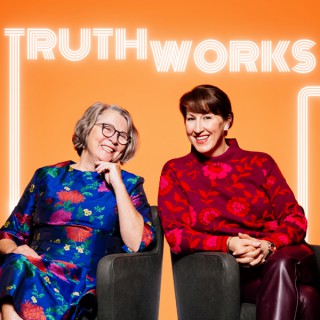
What does it actually take to build the people function at a company that went from a design tool to a global platform of 5,500 people?Jennie Rogerson, Chief People Officer at Canva, joins Jessica Neal and co-host Peter Clarke on Truth Works for a conversation about culture as an operating system, not a perk.Jennie's path into the role is one of the more unlikely ones in tech. She came up through hospitality, running restaurant floors where 220 covers a night meant 220 individual experiences to manage. She moved into hospitality tech, then got dragged to an after-work Canva workshop on making better presentations — and walked out convinced she had to work there.She applied. She didn't get the jobs. A colleague told her to look elsewhere. She ignored the advice.When the executive assistant role for co-founders Melanie Perkins and Cliff Obrecht opened up, thousands of people applied, and Jennie had no experience in the domain. So instead of a resume, she built a website. Canva launched Canva Websites the night before she planned to send it, so she rebuilt the entire thing on the product overnight. Then she spotted a line in Cliff's LinkedIn bio — "you're great, we're hiring" — and sent it to him directly.The interview process was two live challenges and a lot of real-time pushback. By the end of it, the role had been rewritten into something new: Leadership Operations, a chief-of-staff seat between the founders and the leadership team. Eighteen months later, Cliff called on a Sunday to offer her the top people job. Her first response was to ask if he'd lost his mind. She took it as an interim role. It's been years.Jennie is refreshingly clear that Canva hasn't figured everything out, especially around parental leave re-onboarding, which she says most companies get wrong and hers is still actively learning. But what they have built is worth studying: managers are called coaches, performance reviews are called Growth and Impact, and every employee can anonymously submit to the Fix It Form, which has been running for roughly eight years and asks two questions — what's broken, and what's your solution.The conversation also gets into the support playbooks Canva built for grief and loss, family and domestic violence, and cancer and long illness — written with the employees who lived through those moments, and then open-sourced so any company can use them. One of them started as a single Fix It Form submission from someone who had lost their wife.And on hiring: Canva's CMO started as a communications intern. One of their AI researchers was found on a Discord community while he was stocking supermarket shelves. Those sit alongside senior hires from Zoom, Uber and Google — because the blend is where the value is.TOPICS COVERED:- Why hospitality is underrated training for building a people function- Getting hired with a website instead of a resume- The interview challenge that turned into a brand new role- Being offered the top people job with no HR background- Why culture is everyone's accountability, not the people team's- The Fix It Form — anonymous, always on, and it requires a solution- Why Canva calls managers "coaches" and reviews "Growth and Impact"- What a performance cycle looks like when it isn't a box-ticking exercise- Season openers and building public accountability into the calendar- Parental leave re-onboarding and why nobody has solved it yet- Building and open-sourcing the Grief and Loss guide- Talking about family and domestic violence at work- The risk of not talking about hard things- Finding talent internally and hiring for curiosity over pedigree- Using AI to draft the process, then keeping humans in the loopMost of this episode comes back to one idea. Jennie was hired into a role she was unqualified for on paper, by people who were looking for something other than a track record. Everything she has built since runs on the same logic — the AI researcher on Discord, the intern who became CMO, the engineers she invites to tear apart her own processes because they're the ones actually living inside them.Her closing challenge cuts both ways. If you're running an organization, the person who could take the next big step is probably already inside it, waiting for someone to bet on them. And if you're the one looking for what's next, the most interesting move might not be the logical one on paper — it might be the thing you're genuinely curious about.Which is why the line she keeps returning to isn't really about Canva at all:You don't join Canva to experience the culture. You join Canva to be the culture.Truth Works is hosted by Jessica Neal, former Chief Talent Officer at Netflix, now in the business of telling the truth about how work really works.

What if people strategy was treated as a driver of growth rather than an HR cost centre?For the milestone **300th** episode of Success Leaves Clues, Robin Bailey and Al McDonald welcome back Joanna Kmiec, Chief People Officer at Loopio and one of the people who helped shape the direction of the podcast.Joanna challenges the idea that a Chief People Officer's job is simply to keep employees happy. The real mandate is to build an organization that can grow, perform, and endure, without losing the humans inside the org chart. That requires business fluency, empathy, accountability, systems thinking, and the courage to speak up when everyone else in the room agrees.She explains how a strong people strategy reduces organizational drag, improves time to productivity, strengthens manager effectiveness, and allows senior leaders to spend more time building instead of repairing. Joanna also shares which workforce metrics matter, how people leaders can connect their work to business performance, and why the story behind the data is often more valuable than the number itself.Whether you are a CEO, founder, people leader, HR professional, or executive scaling a growing company, this episode offers a candid look at what strategic people leadership requires and how it can become a genuine lever for organizational growth.You'll hear about:What a Chief People Officer is actually responsible for Why people strategy should be treated as a growth lever How culture can accelerate or obstruct business strategy Why people outcomes belong to managers, not only HR How to be bold without sacrificing kindness Measuring time to productivity and manager effectiveness Identifying and reducing organizational drag Why responsibility without authority causes leadership burnout How HR leaders can protect themselves during periods of chaos The quieter strengths that define exceptional leadership Why great employees sometimes leave great companies How former employees can become lifelong brand ambassadors Why creating other leaders is one of leadership's greatest successes Using persistence and setbacks to move closer to a breakthroughWe talk about:00:00 Celebrating 300 episodes of Success Leaves Clues 03:02 The real role of a Chief People Officer 06:16 How strategic HR leadership has evolved 09:47 Becoming comfortable with tension as a leader 14:33 Why people strategy is a growth lever 18:14 Measuring the impact of people initiatives 22:23 What causes burnout among HR leaders 28:00 Staying calm and healthy during organizational chaos 34:38 The quieter qualities of exceptional leaders 38:00 Why great employees leave great companies 42:02 Why real leaders create other leaders 44:33 The advice that shaped Joanna's leadershipConnect with JoannaLinkedIn: https://www.linkedin.com/in/joanna-kmiec-chrl/ Website: https://loopio.com/ Connect with UsLinkedIn: Robin Bailey and Al McDonald Website: Aria Benefits and Life & Legacy Advisory Group

HR leaders spend all day surrounded by people. So why does it often feel like the loneliest job in the building? In this episode, Tom Emery, former Chief People Officer at a top City of London wealth manager, 20-year corporate HR veteran (ex-HSBC), and founder of HEX Talent & Development, joins Al and Leanne to pull back the curtain on the reality of HR leadership. Tom shares his powerful "Vet Analogy" for HR: just like veterinarians enter the profession out of love for animals only to see them at their illest, weakest, or most aggressive, HR leaders enter the role because they love people, only to be brought in when people are backed into a corner. Together, they dive deep into how HR leaders can step out of the isolated "police officer" role and step into the room as true strategic drivers, how senior leaders can build psychological safety by simply asking for help, and why learning to disagree well is the missing ingredient in high-performing C-suites.

Have you ever felt a nudge to share your story... but then that little voice inside whispered, "What if people judge me?" The truth is, every one of us has a story worth telling. But finding the courage to tell it—that's where so many of us get stuck. Today's guest knows that journey well. Joining me is Michele Richman, a former prosecutor, attorney, leadership coach, and Chief People Officer who has spent years helping others grow both personally and professionally. Yet one of her greatest transformations didn't happen in a courtroom or a boardroom—it happened when she found the courage to embrace her own voice and share the stories that shaped her life. In this conversation, Michele shares how discovering her core value of courage changed everything. We talk about overcoming fear, embracing authenticity, and why our most meaningful stories—whether they're about joy, grief, parenting, or stepping outside our comfort zone—often become the bridge that connects us to others. If you've ever wondered whether your story matters... or if you've been waiting for permission to share it... this episode may be exactly the encouragement you've been looking for. Let's call it in, “Call IT in With Dar!” Support the showFull Show Notes can be found at CallITInPodcast.comPhoto credit: Rebecca Lange Photography Music credit: Kevin MacLeod Incompetech.com (licensed under Creative Commons) Production credit: Erin Schenke @ Emerald Support Services LLC.Grab Dar's Flight Deck Oracle Card DeckTake Dar's Archetype Quiz

Send us Fan MailWhen your customer is known as The Warfighter, it's safe to say your company culture could use a dose of whimsy.That's why you'll frequently find Michaela Flatau, Chief People Officer at Defense Unicorns, in a unicorn costume. As the defense technology company has grown to 200, it's become more by-the-book with organization and transparency, but fun traditions keep morale high. Team rituals centered around giving and honest communication strengthen workplace trust. After all, if you want to say you hire the very best, you have to treat them as such.“If you've already gone too far down the [corporate] path, you can't turn it around by suddenly having fun logos or costumes and things like that. You have to earn your employees' trust as well.” – Michaela FlatauKey TakeawaysRevisiting and revising company culture is essential as teams grow.Leaders who value and protect the culture are a huge contributor to its success.Work-life balance and camaraderie help retain talent in stressful or heavy roles.Trusting employees with recognition is as key as trusting them to do a good job.Team rituals and social Slack channels drive participation and engagement on remote teams.Timestamps2:54 The Mission: About Defense Unicorns6:54 The Evolution of Whimsy at Work13:12 Introducing Transparency15:26 Leadership's Role in Company Culture21:11 What's With the Costume?22:53 Tacopocalypse & Team Rituals26:50 Building Authentic Workplace Trust29:52 Five Tacos to ShareKey Topics DiscussedAmazing Teams, Una Japundza, Michaela Flatau, Defense Unicorns, HeyTaco, company culture, workplace trust, peer recognitionMentionsWebsite: https://defenseunicorns.com/LinkedIn: https://www.linkedin.com/in/michaela-flatau

Don't fear losing your job to AI—fear losing it to someone who knows how to use AI better than you. It's time to stop treating AI as a tool and start treating it as your default way of working.Human by Design, AI by Default: Rewriting the Way We Work #110What does it actually look like to rebuild a global, legacy brand with years of technical debt into a completely AI-native business from the ground up? As it turns out, it isn't just a technological challenge—it is fundamentally an HR and communications mountain to climb.This week, Gary and George are doubly thrilled to welcome back Groupon's Chief People Officer, Nick Walker (marking his record third appearance on the show!), alongside Groupon's VP of Comms, Engagement, and Inclusion, Emma Coleman. Together, they take us behind the scenes of Groupon's massive cultural and structural transformation under their AI-savvy CEO, Dushan.From reshaping employee mindsets and restructuring traditional departments into lean "speedboats" to managing the psychological fear of redundancy, Nick and Emma share the unfiltered reality of rewriting the way we work. They discuss why AI adoption is actually a massive transfer of power from legacy systems back to human beings, and how human judgment remains the ultimate corporate superpower.Key takeaways from this episode:Speeding Fines vs. Parking Tickets: To build an AI-native culture, leaders must encourage risk-taking. Groupon welcomes "speeding fines" (mistakes made while pushing boundaries and moving fast) but has zero tolerance for "parking tickets" (complacency or refusing to try).Ditch the "Hand-Off Tax": Legacy organizations slow down because of continuous hand-offs between bloated, siloed teams. By structuring operations around "speedboats"—lean teams of 2 to 3 people running a complete workflow—you eliminate the friction and move exponentially faster.Close the Execution Gap, Not the Judgment Gap: AI is incredibly efficient at closing the execution gap (handling processes and grunt work). However, humans still own the judgment gap. Your ability to understand context, see around corners, and apply emotional intelligence is irreplaceable.Prompt Engineering is a Non-Negotiable Skill: Good inputs yield rich outputs. Investing time in mastering prompt engineering (sometimes spending up to an hour crafting a single prompt) is a major career differentiator that prevents "sloppy AI work."Send us Fan MailLinks & references: https://www.thecompanydoctor.com/Gary Gamp: https://www.linkedin.com/in/garygampGeorge Clode: https://www.linkedin.com/in/georgeclodeGary's new book, Career Catalyst - available online now: https://www.amazon.co.uk/Career-Catalyst-Secret-Skills-School-ebook/dp/B0DFYVG6XY/ref=tmm_kin_swatch_0?_encoding=UTF8&qid=&sr=

Entry-level jobs provide a special window into the wider changes we'll see to job design and skill development. In this episode of Meet the Leader, Peter Brown of PwC explains how entry-level roles are transforming and breaks down new research on what employers really want from entry-level workers now. He also shares how these roles can continue to serve as training grounds for career skills like collaboration, critical thinking, and relationship building and why a thoughtful redesign of these roles will be key to future leadership development. Top names from our Chief People Officer community also share the advice new grads need to know in a fast-changing job market. Key takeaways: The most dire headlines about entry-level jobs are not yet backed up by data. Employers are increasingly prioritizing applied experience and skills over degrees alone. Employers are expecting more 'seniorized' skills earlier. New grads should focus on outcomes rather than tasks and look for ways to build human skills on purpose. Peter Brown is PwC's global workforce leader and a co-author of the World Economic Forum report Artificial Intelligence and the Future of Entry-Level Work. Subscribe for more conversations on leadership, the future of work, and the biggest trends shaping business. This is the third episode in a 3-part series on AI and jobs. About this episode: PWC: Pwc.com Report - PWC AI 2026 Jobs Barometer https://www.pwc.com/gx/en/services/ai/ai-jobs-barometer.html Hopes and fears https://www.pwc.com/gx/en/issues/workforce/hopes-and-fears.html Report - World Economic Forum Artificial Intelligence and the Future of Entry-Level Work: A Framework for Safeguarding and Reinventing Early Career Pathways: https://www.weforum.org/publications/artificial-intelligence-and-the-future-of-entry-level-work-a-framework-for-safeguarding-and-reinventing-early-career-pathways/ Related episodes - AI and Jobs Series: AI and Jobs series: Upskilling's 'Messy Middle' and Fixing the Skills Mismatch Listen here - Spotify: https://tinyurl.com/2vddb3k3 Read here - Transcript: https://tinyurl.com/2fnuacsz AI and Jobs Series: What one company stopped doing - an HR exec shares lessons shaping the future of work Read here - transcript: https://tinyurl.com/49xjtnyj Listen here - Spotify: https://tinyurl.com/27fjhud8 Other related episodes: AI 'workslop' is a leadership problem. Here's how to fix it Read here - transcript: https://tinyurl.com/2mxkzwc3 Listen here - Spotify: https://tinyurl.com/4evh8yk6 Watch here - Youtube: https://www.youtube.com/watch?v=zTAbIqqAf4Y How to Lead People Through AI Change: Questions to Ask from a Transformation Expert Read here - transcript: https://tinyurl.com/ykk9r7hb Listen here - Spotify: https://tinyurl.com/yc2azrwv Watch here - Youtube: https://tinyurl.com/yyv24pvd
From Army officer to sustainability leader to Chief People Officer, unlocking human potential has been the thread running through Adam's career. Adam shares the lessons from Skanska's pioneering journey to net zero, becoming the first tier-one contractor to commit to a target. He explains why lasting change starts by understanding the audience you're trying to reach, rather than expecting people to share your passion from day one. Now leading people and culture, Adam discusses why inclusion and high performance go hand in hand, and how creating the right conditions helps people contribute at their very best. From supporting social mobility at Skanska to his work helping survivors of human trafficking to rebuild independent lives, Adam shares why creating opportunities for people to reach their potential is at the heart of leadership. Thank you to Kin&Co for sponsoring this episode What makes or breaks large-scale transformation? Rarely the strategy - almost always the culture. Kin&Co is a certified B-Corp and female-owned consultancy on a mission to make work better for 10 million people by 2030. Using cutting-edge behavioural science, they help global organisations transform cultures and drive measurable impact on strategy, people and performance. They've developed a new behavioural blueprint for transformation, drawn from their experience at some of the UK's most iconic organisations. If you're curious, read their latest thought piece on transformation and assess your cultural readiness. Ready to build a culture that measurably drives performance? Read their thought piece at The Transformation Blueprint to learn more.
Daniel Bay, Chief People Officer at Underdog, joined us on The Modern People Leader. We talked about why HR teams in hypergrowth should stop copying big-company playbooks, how Underdog invests deeply in manager coaching, and why impact matters more than activity.---- Sponsor Links:

Most companies talk about purpose. Patagonia builds the systems to back it up. Even when that means holding many contradictions. In this episode, Teresita Richard, Chief People Officer at Patagonia, joins Culture Amp's Justin Angsuwat to unpack how the company protects a culture built by climbers and surfers while scaling it across nearly 4,000 employees worldwide. From "liberating structures" that replace bureaucracy with just enough guardrails, to a hiring philosophy built on alignment over "fit," Teresita shares what it really takes to stay radical, human, and honest.See Privacy Policy at https://art19.com/privacy and California Privacy Notice at https://art19.com/privacy#do-not-sell-my-info.

AI is breaking down the traditional separation between technology leadership and people leadership, forcing enterprises to rethink how work is structured and how employees adopt new systems. In this episode, Guillaume Lardeux, Head of Transformation and Office of the CEO at Genesys, and Eva Majercsik, Chief People Officer at Genesys, examine how AI-driven workflow redesign requires shared ownership across functions, as discussed with host Marilie Fouché. They highlight the practical shifts involved — mapping current processes, identifying friction points, rebuilding workflows where humans and AI operate together, and supporting adoption through cultural alignment and iterative experimentation. Learn the strategies we use to help leading AI brands and startups connect with their ideal enterprise AI buyers, visit: emerj.com/AD2

AI isn't just speeding up recruiting; it's actually forcing companies to redesign work itself, blending human judgment with agentic execution across hiring, mobility, and skills development. As a result, most conversations these days are about AI in the enterprise centre on software development and engineering. Recruiting, hiring, and talent management get far less attention, but they may be where AI's impact is most immediate.In a recent episode of Tech Transformed, host Dana Gardner spoke with Meghna Punhani, Chief People Officer at Eightfold AI, about how organisations are rethinking talent acquisition, workforce planning, and employee development in an AI-driven world. Meghna Punhani's perspective is shaped by nearly two decades at Google, a stint leading employee experience at Palo Alto Networks, and her current dual role at Eightfold AI, where she both leads the people function and helps build the product her team relies on. That vantage point gives her a practical, ground-level view of what works and what doesn't when AI meets HR.Reimagining the Talent Lifecycle with AI Punhani's central argument is that most legacy HR systems were designed for a different purpose, one that has evolved as work itself has changed and the workforce now includes AI agents alongside people. Simply bolting automation onto existing processes, she argues, isn't enough. Organisations that are succeeding are the ones re-engineering roles, workflows, and organisational structures from the ground up, treating this as an operating-model shift rather than an IT upgrade.This shift touches the entire talent lifecycle, from how companies find candidates and evaluate skills instead of just job titles to how they support internal mobility. Punhani points out that skills now have a much shorter shelf life than in the past, which means static job descriptions are giving way to dynamic, skills-based decision-making. AI, she says, helps surface pathways for employees that traditional resumes and titles would never reveal, including her own nontraditional route into HR leadership.How AI Is Reshaping Workforce Strategy Trust is the recurring theme throughout the discussion. Punhani is candid that employees often fear AI-driven decisions, especially around jobs and evaluations. Her approach is focused on transparency first. When Eightfold rolled out digital twins internally, employees were uneasy until leadership explained how the technology worked and used it themselves, which helped build organisation-wide confidence.That same principle shows up in Eightfold's own hiring practice. One example is the company's campus recruiting programme in India, where its AI interviewer conducted roughly 90 per cent of interviews. This enabled recruiting to scale from around eight or 10 university partners to more than 150, and from approximately 5,000 applications to 15,000, without pulling engineers away from their day-to-day duties.Time-to-offer dropped from around six weeks to as little as four days in some technical roles, largely because interviews could happen around the clock rather than around a recruiter's or hiring manager's schedule. Beyond recruiting, Eightfold's internal initiative, nicknamed Project Andromeda, applies the same re-engineering approach across sales and finance, reportedly reclaiming thousands of employee hours through redesigned, agent-assisted workflows.AI and the Future of TalentLooking ahead, Punhani doesn't frame AI as a threat to human contribution, but she frames it as an amplifier of it. As tools become more accessible across every function, she believes the people who will succeed won't be the ones who know the most facts, since AI can answer those questions. Instead, it will be the people who ask better questions, orchestrate multiple AI agents, and apply judgment where the right answer isn't obvious.For HR leaders specifically, Punhani's advice is to claim a seat at the table now, rather than letting AI adoption happen without a people-first lens. This means learning the technology firsthand, demonstrating its value to non-technical teams, and partnering closely with CTOs and CIOs to shape decisions jointly. Her advice for individuals entering this shifting job market is similarly grounded: focus on learning agility over any single technical skill, since the skills in demand today may look different within months.Future of AI in Talent ManagementAcross the conversation, Punhani returns to one idea, and that is AI in talent management isn't primarily a technology problem; it's a leadership and trust problem. Organisations that treat it that way, redesigning work with both humans and agents in mind, are the ones seeing measurable gains in speed, candidate experience, and internal mobility.For HR leaders exploring AI adoption, the takeaway from this episode is to start before you feel ready, build trust through transparency, and let AI handle evaluation and execution so people can focus on judgment, empathy, and connecting the dots across the organisation. If you would like to find out more, visit eightfold.ai or connect with Meghna Punhani on LinkedIn.TakeawaysAI's impact on talent acquisition and management.Reengineering work processes with AI.Building trust and transparency in AI systems.Skills-based internal mobility and workforce planning.AI-driven candidate evaluation and employee development.Chapters00:00 Introduction to AI in Talent Management02:59 Understanding AI's Role in Talent Acquisition06:07 AI's Impact on Workforce Planning and Skills Development10:02 Building Trust in AI for Hiring Processes13:04 Internal Use of AI at Eightfold AI18:58 Measuring ROI from AI in Talent Acquisition25:02 Enhancing Candidate Experience with AI29:53 Future Directions for AI in Talent Management

Artificial intelligence is changing the way we work, create, and communicate. But here's a question most people aren't asking... Who gets to shape what AI becomes? This week, Mitch sits down with executive coach, bestselling author, and AI thought leader Erica Rooney for a conversation that's about much more than technology. Together they explore why everyday users, especially women, have a unique opportunity to influence the future of AI, why you don't have to be a tech expert to make a difference, and practical ways to move beyond simply using AI... to helping shape what's next. __________ Have you been thinking about being a Coach or a speaker… but you've been wondering whether you have the authority to make it happen? The Authority Archetype Assessment is a free, research-based tool designed to help you identify your unique authority style and discover whether coaching, speaking, consulting, advising, or teaching might be part of your next season. Take the free assessment at https://mitchmatthews.com/6 __________ In this episode you'll discover: - Why AI needs more women in the room - The surprising MIT experiment that changed Erica's perspective forever - How everyday users are already helping shape the future of AI - Simple ways to move beyond basic ChatGPT prompts - Why curiosity may become your greatest competitive advantage Whether you've been experimenting with AI for months or you're simply wondering what's next, this conversation will leave you feeling more confident, more curious, and ready to engage. __________ Connect with Erica Website: https://www.ericaandersonrooney.com Book: The AI Gap - https://amzn.to/4eK7NgI Listen to our conversation on Erica's Podcast Glass Ceilings and Sticky Floors: https://mitchmatthews.com/glass Instagram: https://www.instagram.com/ericaandersonrooney __________ This Week's Challenge Go one step beyond your usual AI routine. Ask a bigger question. Try a new use case. Stay curious. Because the future of AI won't be shaped only by the people who build it. It will also be shaped by the people who choose to engage with it. If this episode inspired you, share it with someone who needs to hear it. Read the full show notes at https://mitchmatthews.com/460
Courtney Kolar, Chief People Officer at Neighborly, joined us on The Modern People Leader. We talked about how she helped build an HR function from a three-person team into a 40-person people organization, the People Services 2020 roadmap that created the foundation for scale, and why every company should operate as if it needs to be IPO ready.---- Sponsor Links:


Welcome to Omni Talk's Retail Daily Minute, sponsored by Duvo and Mirakl.In today's Retail Daily Minute, Omni Talk's Chris Walton discusses:Ocado announces CEO Tim Steiner will step down in 2028 following a boardroom tussle, as shares slide amid a stalled automated-warehouse strategy.Klarna applies for a U.S. bank charter, pushing further beyond buy now, pay later and toward becoming a full-fledged consumer bank.Kroger names Emilee De Martino as its new Chief People Officer, marking the first C-suite change under CEO Greg Foran.The Retail Daily Minute has been rocketing up the Feedspot charts, so stay informed with Omni Talk's Retail Daily Minute, your source for the latest and most important retail insights.
I talk with Yolanda Seals-Coffield, PwC US Chief People and Inclusion Officer, about how PwC is preparing 80,000 people for an AI-enabled future. We get into PwC's approach to democratizing AI access, building responsible AI habits, measuring adoption beyond token usage, and creating learning that happens directly in the flow of work. Yolanda also shares how PwC is rethinking entry-level talent, human skills, and career development as AI changes the work new graduates are expected to do.
In this episode of the HR Leaders Podcast, I had an inspiring conversation with Ciara Harrington (Barry), Chief People Officer at Skillsoft, to unpack why the shift from jobs to skills is finally becoming real.Ciara explains why HR can no longer rely only on job architecture, job descriptions, and traditional role design. As AI agents enter the workforce, leaders need to think differently about the unit of work, what skills are needed, and whether that work should be done by a human, an agent, or a combination of both.Most importantly, Ciara shares how Skillsoft is making skills practical inside the business, from leadership skills and hiring decisions, to nine-box talent reviews, performance conversations, AI adoption, and helping leaders move faster without waiting for the perfect system.
Sunaina Lobo, Chief People Officer at Omnissa, joined us on The Modern People Leader. We talked about why the HR-IT partnership is becoming critical in the AI era, how Omnissa is approaching AI transformation with a small but mighty team, and what it takes to build an AI-first culture while maintaining trust and engagement.---- Sponsor Links:

Bienvenue dans cette série FORWARD, qui revient sur les moments clés de notre événement annuel qui réunit DRH et Directeurs Learning pour réfléchir ensemble aux nouvelles pratiques et aux évolutions du travail. Dans ce premier épisode, on s'intéresse à un enjeu central : comment remettre le client au centre du jeu ? Avec nous pour en parler, Paulina Celerier-Kruzel, Chief People Officer de Brut & Et Jordan Defas, People Development & Culture Director chez Doctolib.Deux entreprises, deux approches, mais une même conviction : la culture client n'est pas un projet ponctuel, c'est une discipline quotidienne qui influence la performance, l'innovation et la croissance d'une organisation. Alors au programme :

Every successful business owner is resilient. Capable. Driven. But what if the traits that got you here are quietly preventing you from scaling? That's the question at the heart of this conversation — and it's one that Laila Tarraf has spent decades living, learning, and ultimately writing about in her book Strong Like Water. Laila has served as Chief People Officer at some of the world's most recognised brands, including Peet's Coffee and Allbirds. She has advised founders and CEOs through critical leadership transitions. And she brings all of that experience — alongside her own deeply personal journey — to this conversation about what it really means to lead at the next level. Because real leadership, Laila argues, isn't about getting things done. It isn't about pushing through, holding it all together, or being the strongest person in the room. It's about creating the conditions for everyone around you to rise. That shift — from doing to enabling, from controlling to trusting — is one of the most significant transitions a founder can make. And it doesn't happen automatically with success. It requires a deliberate, often uncomfortable, evolution of identity. Laila shares candidly what that evolution looked like for her. Growing up in a household where strength meant perseverance and composure, she spent decades building armour — the kind that protects you in difficult moments but can also prevent you from leading with the vulnerability and clarity that truly scales a business. It wasn't until she navigated profound personal loss while serving in her first executive role that she began to understand: the armour wasn't strength. It was a barrier. In this episode, you'll discover: Why "getting things done" is not leadership — and what it actually looks like at the level your business needs now The founder traits that create early success — and why they can block scalability if you don't evolve beyond them How to create psychological safety so your team tells you what's really happening in your business The difference between principles (sacred) and practices (evolving) — and why confusing them keeps founders stuck Why clarity around vision, roles, and decision rights is the first step to real freedom How emotional maturity determines how far your organisation can grow Mentioned in This Episode: Apply to Join the HerBusiness Network Laila Tarraf's Website www.lailatarraf.com Laila Tarraf's LinkedIn https://www.linkedin.com/in/lailatarraf Laila Tarraf's Book: Stong Like Water is available here

Resumes still matter—but not for the reasons we think. In a world where AI can polish anyone's experience into a compelling narrative, the traditional hiring signals many organizations have relied on are losing their value. Heather Krueger, Chief People Officer at Engine, joins David Rice to explore what comes next when a polished resume becomes proof of tool usage rather than proof of talent.Their conversation challenges hiring leaders to rethink where and how they evaluate candidates, shifting from credentials and company logos toward judgment, learning velocity, resilience, and real-world decision-making. They also unpack why pedigree is often an expensive shortcut, how experimentation should influence both hiring and leadership, and what actually predicts success in an AI-driven workplace.Related Links:Join the People Managing People CommunitySubscribe to the newsletter to get our latest articles and podcastsConnect with Heather on LinkedInVisit EngineSupport the show
Kate Railton, Chief People Officer at Mejuri, joined us on The Modern People Leader. We talked about how Mejuri transitioned from e-commerce into retail, why they've decided to flatten the organization, and the business review cadences and operating model that allow them to move faster.---- Sponsor Links:
Ray'n Terry, Chief People Officer at MOO, joined us on The Modern People Leader to discuss why AI should create more space for humanity at work instead of simply increasing productivity. We talked about balancing business performance with employee wellbeing, rethinking performance management in an AI-powered world, and why leaders must intentionally help people reclaim time, creativity, and connection.---- Sponsor Links:
Amy Reichanadter, Chief People Officer at Databricks, joined us on The Modern People Leader to discuss her upskilling journey throughout her career, creating consumer-grade employee experiences, and leading through rapid technological change. ---- Sponsor Links:
In this episode of the HR Leaders Podcast, I had an inspiring conversation with Kelly Costanza, Chief People Officer at CAVA, to unpack how one of the fastest-growing restaurant brands is turning culture, hospitality, and frontline careers into a real business advantage.Kelly shares why culture cannot just be a word on a wall. At CAVA, culture is operationalized through values, competencies, recognition, career pathways, frontline listening, stock grants, mental health benefits, and leadership rituals that make the employee experience feel just as intentional as the guest experience.Most importantly, Kelly explains how CAVA is building a place where people can have a career, not just a job, from hourly team members growing into general managers, to leaders staying connected to the restaurants through shoulder-to-shoulder service, town halls, and practical feedback from the frontline.
© 2020-2026 Ivy Podcast Discovery LLC
