
Culture that has emerged from the use of computer networks
POPULARITY

165 episodes with digital culture

16 episodes with digital culture

13 episodes with digital culture

4 episodes with digital culture

9 episodes with digital culture

7 episodes with digital culture

5 episodes with digital culture

4 episodes with digital culture

2 episodes with digital culture

5 episodes with digital culture

5 episodes with digital culture

3 episodes with digital culture

2 episodes with digital culture

4 episodes with digital culture

2 episodes with digital culture

4 episodes with digital culture

2 episodes with digital culture

3 episodes with digital culture

The following article of the Professional Services industry is: 'It's Not the Budget: Digital Culture Makes AI Work' by Jaime Castro Palma, General Manager, BPF.
Peoples & Things host, Lee Vinsel, talks with Lana Swartz, Associate Professor of Media Studies and Shannon Mid-Career at the University of Virginia, where she runs the Digital Cultures and Economies Lab. Swartz is a creative and wide-ranging thinker and researcher. The pair focuses on Swartz's book, New Money: How Payment Became social media, and talks about her recent work on youth money cultures and on the rich business and media dimensions of contemporary nail artists and salons. Learn more about your ad choices. Visit megaphone.fm/adchoices Support our show by becoming a premium member! https://newbooksnetwork.supportingcast.fm/new-books-network
Peoples & Things host, Lee Vinsel, talks with Lana Swartz, Associate Professor of Media Studies and Shannon Mid-Career at the University of Virginia, where she runs the Digital Cultures and Economies Lab. Swartz is a creative and wide-ranging thinker and researcher. The pair focuses on Swartz's book, New Money: How Payment Became social media, and talks about her recent work on youth money cultures and on the rich business and media dimensions of contemporary nail artists and salons. Learn more about your ad choices. Visit megaphone.fm/adchoices Support our show by becoming a premium member! https://newbooksnetwork.supportingcast.fm/economics
Peoples & Things host, Lee Vinsel, talks with Lana Swartz, Associate Professor of Media Studies and Shannon Mid-Career at the University of Virginia, where she runs the Digital Cultures and Economies Lab. Swartz is a creative and wide-ranging thinker and researcher. The pair focuses on Swartz's book, New Money: How Payment Became social media, and talks about her recent work on youth money cultures and on the rich business and media dimensions of contemporary nail artists and salons. Learn more about your ad choices. Visit megaphone.fm/adchoices Support our show by becoming a premium member! https://newbooksnetwork.supportingcast.fm/communications
Peoples & Things host, Lee Vinsel, talks with Lana Swartz, Associate Professor of Media Studies and Shannon Mid-Career at the University of Virginia, where she runs the Digital Cultures and Economies Lab. Swartz is a creative and wide-ranging thinker and researcher. The pair focuses on Swartz's book, New Money: How Payment Became social media, and talks about her recent work on youth money cultures and on the rich business and media dimensions of contemporary nail artists and salons. Learn more about your ad choices. Visit megaphone.fm/adchoices Support our show by becoming a premium member! https://newbooksnetwork.supportingcast.fm/science-technology-and-society

Peoples & Things host, Lee Vinsel, talks with Lana Swartz, Associate Professor of Media Studies and Shannon Mid-Career at the University of Virginia, where she runs the Digital Cultures and Economies Lab. Swartz is a creative and wide-ranging thinker and researcher. The pair focuses on Swartz's book, New Money: How Payment Became social media, and talks about her recent work on youth money cultures and on the rich business and media dimensions of contemporary nail artists and salons. Learn more about your ad choices. Visit megaphone.fm/adchoices

Twitter launched to the public 20 years ago and quickly transformed how people followed breaking news, politics and major events. Black users helped shape the platform's language, humor and cultural influence, creating what became known as Black Twitter. Subscribe to our newsletter to stay informed with the latest news from a leading Black-owned & controlled media company: https://aurn.com/newsletter Hosted by Simplecast, an AdsWizz company. See pcm.adswizz.com for information about our collection and use of personal data for advertising.

FrontStage BackStage with Jason Daye - Healthy Leadership for Life and Ministry
Digital culture is shaping how we think, lead, and relate more than we realize. Many pastors and ministry leaders already see its impact… but the deeper formation happening beneath the surface is harder to name. In this highlight from our full conversation (https://youtu.be/-ZrTQbDxDbg?si=WOUu1Ws2rZsAVmqk), host Jason Daye sits down with Jay Kim to explore how digital culture is discipling us in subtle but powerful ways. What feels normal– speed, convenience, constant stimulation, and visibility– is not neutral. It is forming us.What makes this especially challenging for leaders is that much of this formation doesn't feel disruptive. You can remain faithful, committed, and outwardly effective while slowly being shaped by a different set of values underneath.In this conversation, they explore:How digital culture forms our expectations, attention, and identityWhy speed, convenience, and constant stimulation work against spiritual depthThe hidden ways ministry metrics and online visibility reshape pastoral identityWhy discipleship cannot be reduced to content consumptionHow embodied presence and relational rhythms shape lasting transformationPractical ways leaders can resist digital pressure and cultivate deeper formationThis is not about rejecting technology. It is about recognizing what is forming you.If you are a pastor or ministry leader who senses that something is off, even when everything looks fine, this conversation will help you name it and respond with greater clarity and intentionality.This episode is especially helpful for pastors, ministry leaders, and anyone navigating the tension between digital engagement and faithful, embodied discipleship.Looking to dig more deeply into this topic and conversation? FrontStage BackStage is much more than another church leadership show, it is a complete resource to help you and your ministry leaders grow. Every week we go the extra mile and create a free toolkit so you and your ministry team can dive deeper into the topic that is discussed.Visit http://PastorServe.org/network to find the Weekly Toolkit, including the Ministry Leaders Growth Guide. Our team pulls key insights and quotes from every conversation with our guests. We also create engaging questions for you and your team to consider and process, providing space for you to reflect on how each episode's topic relates to your unique church context. Use these questions in your staff meetings, or other settings, to guide your conversation as you invest in the growth of your ministry leaders.Love well, live well, & lead wellComplimentary Coaching Session for Pastors http://PastorServe.org/freesessionFollow PastorServe LinkedIn | Twitter | Instagram | FacebookConnect with Jason Daye LinkedIn | Instagram...

Welcome to my new episode "Dynamic Trance Universe" Podcast. Доброго времени суток, дорогие друзья! В эфире юбилейный 500-й эпизод подкаста-путеводителя в замечательный мир #Trance музыки. Выражаю всем моим слушателям огромную благодарность за искренность и преданность моему труду. Поехали! Вас ждёт Hard Trance Evolution) @aeroritmixmuzik #DTUPodcast500 #Trance #HardTrance #VocalTrance #Trancefamily TRACKLIST: 01. Scott Mac & Luvstruck - The Music [ARMADA CAPTIVATING] 02. Lange feat. Skye - Drifting Away (RIVER Remix) [ARMADA CAPTIVATING] 03. WARRIOR - Warrior (BK Remix) [ARMADA CAPTIVATING] 04. Public Domain - Operation Blade (Bass In The Place) (12' Mix) [XTRAVAGANZA] 05. Frankyeffe, MDDLTN & Ricci Martin - Feel The Rhythm [RIOT] 06. Tommy Pulse - No Alternative (Madwave Remix) [ARMADA CAPTIVATING] 07. Frankyeffe - Kill Me [ARMADA] 08. RAM & Richard Durand pres. Digital Culture vs Spacefrog & Derb - Follow Me 2024 [NOCTURNAL KNIGHTS] 09. BK & Steve Hill - Power Of Bass [ARMADA] 10. Ferry Corsten & Ruben De Ronde pres. NRG2000 - Rise Up! [FLASHOVER] 11. David Forbes - All My Friends Are Hot [WAO138?!] 12. Jamie Old - The Game [VICIOUS CIRCLE] 13. BK - Dance With Me [ARMADA] 14. Indecent Noise - Can't Stop Now (Don't Go) [MENTAL ASYLUM] 15. Barthezz - On The Move (Menatara & Denis Misharov Remix) [FREE] 16. Klubbheads - Kickin' Hard (DJ Daddy Trance Remix) [ARMADA] 17. Matty Ralph - Love Buzz [ARMADA] 18. Ben Gold - Rhythm Of Life [ARMADA] 19. Ben Gold & SUPERSTRINGS - The Whip [ARMADA] 20. Felix - Don't You Want Me (KI/KI Remix) [ARMADA] 21. BK - Full Fire [ARMADA] 22. The Rocketman x York x Sacha Harland - On The Beach [ARMADA] 23. KI-KI - 5AM [SLASH] 24. Paul Glazby - Kick It 2025 [VICIOUS CIRCLE] 25. SUPERSTRINGS & Signum vs Paul Oakenfold, Planet Perfecto Knights & KIMMIC vs Matt Darey - Ya Got ResuRection 4 Me (AER]O[RITMIX Mashup) [CD-R] 26. Schak & Will Atkinson x Abi Flynn - Yesterday [ARMADA] 27. Lock 'N Load - Blow Ya Mind (DJ Daddy Trance Remix) [ARMADA] 28. Ben Gold & Silva City vs The Rocketman x Push vs Roman Messer x Rocco - You're Not Alone In This Strange World (AER]O[RITMIX Mashup) [CD-R] 29. Scooter & Indecent Noise vs Warp Brothers & Flymeon - Hyper Hyper Phatt Bass (AER]O[RITMIX Mashup) [CD-R] 30. DJ Panda - It's A Dream (T78 & Don Paolo 2024 Remix) [AUTEKTONE] 31. D'Angello & Francis - The Rhythm [REVEALED] 32. Shugz - Party People [ALL WAYS DANCE] 33. Scot Project - M2 (Make Me Feel) [OUTBURST] Подписывайтесь на мой подкаст (Subscribe to My Podcast): ● Apple Podcasts - podcasts.apple.com/ru/podcast/… ● Pocket Casts - pca.st/drpc1gfj Слушайте и наслаждайтесь! Listen & Enjoy! From Russia with Love!

Misha Glenny and guests discuss cybernetics – the field of study which gave us the prefix ‘cyber' and helped lay the foundations for the information age. After the Second World War, cybernetics emerged as the study of communication, feedback, and control in both animals and machines. Cybernetics was first defined in 1948 by the American mathematician Norbert Wiener (1894-1964) and aimed to find a shared universal language which could be used across disciplines. The name drew on an Ancient Greek word for steersman, the person who stands at the helm of a ship to steer or govern its course. Cybernetics saw the world as systems which used loops of information and feedback to adjust their own course of action. Those ideas could be applied to anything from thermostats to the human brain, and arguably laid foundations for the information age.WithJacob Ward Historian of science and technology at Maastricht UniversityJon Agar Professor of Science and Technology Studies at University College LondonAndOrit Halpern Lighthouse Professor and Chair of Digital Cultures at Technische Universität DresdenProducer: Martha OwenReading list:Peter Galison, 'The ontology of the enemy: Norbert Wiener and the cybernetic vision' (Critical Inquiry 21, 1994)Slava Gerovitch, From Newspeak to Cyberspeak: A History of Soviet Cybernetics (MIT Press, 2004)Orit Halpern, Beautiful Data: A History of Vision and Reason (Duke University Press, 2015)Orit Halpern, Robert Mitchell and Bernard Dionysius Geoghegan, The Smartness Mandate: Notes toward a Critique (Grey Room 68, 2017) Orit Halpern, Financializing Intelligence: On the Integration of Machines and Markets (e-flux, March 2023)N. Katherine Hayles, How We Became Posthuman: Virtual Bodies in Cybernetics, Literature, and Informatics (University of Chicago Press, 1999)Steve J. Heims, John Von Neumann and Norbert Wiener, From Mathematics to the Technologies of Life and Death (MIT Press, 1980)Ronald R. Kline, The Cybernetics Moment: Or Why We Call Our Age The Information Age (Johns Hopkins University Press, 2015)Eden Medina, Cybernetic Revolutionaries: Technology and Politics in Allende's Chile (MIT Press, 2011)David A. Mindell, Between Human and Machine: Feedback, Control, and Computing before Cybernetics (Johns Hopkins University Press, 2004)Andrew Pickering, The Cybernetic Brain: Sketches of Another Future (University of Chicago Press, 2010)Norbert Wiener, The Human Use of Human Beings: Cybernetics and Society (first published 1950; Da Capo Press, 1988)In Our Time is a BBC Studios productionSpanning history, religion, culture, science and philosophy, In Our Time from BBC Radio 4 is essential listening for the intellectually curious. In each episode, host Misha Glenny and expert guests explore the characters, events and discoveries that have shaped our world.

John Travolta's berets have spiralled into actual fashion news. You won't have heard the exact story behind his new look, and trust us, we recommend you do.Plus, we sat down with Tina Fey and discovered her kryptonite. The very thing that makes her crumble, self-deprecate, and sometimes even throw a tantrum. Sometimes celebs are just like us!And finally, one of the biggest shows in television history is back, and we are all for yet another 90s revival. Find out what we know about Baywatch in 2026, including, including the stars that we adore and those open casting calls in LA for "really hot" people. Plus remember The Spill drops the tea twice a day in this feed so follow us for all the latest entertainment news… OR you can WATCH our show in full length video on the Apple Podcast app - make sure your phone is up to date and enjoy the watch! Link here. THE END BITS Find and follow us on socials: Instagram: https://www.instagram.com/thespillpodcast/ TikTok: https://www.tiktok.com/@thespillpod Facebook: https://www.facebook.com/thespillpodcast/ Read all the latest entertainment news on Mamamia: https://mamamia.com.au/entertainment/ Support Independent Women’s Media: https://www.mamamia.com.au/subscribe/ Your subscription helps us continue to tell the stories that matter to women. New Mamamia subscribers get $40 off — $20 off an annual membership and $20 off your TWOOBS order. Click here to subscribe. Already a subscriber? Click here for your $20 TWOOBS discount code T&C's apply. Want to join the conversation? Have feedback or a topic you want us to discuss? Send us a voice message or email us at thespill@mamamia.com.au and we’ll get back to you ASAP! Executive Producer: Monisha Iswaran Audio & Video Producer: Michael Kean Mamamia acknowledges the traditional owners of the land on which we have recorded this podcast.Become a Mamamia subscriber: https://www.mamamia.com.au/subscribeSee omnystudio.com/listener for privacy information.

This episode is audio from METRO's Digital Culture of Metropolitan New York community event, featuring a presentation by Kaitlin Thaney, Executive Director, Invest in Open Infrastructure. It was recorded on April 8, 2026.
This episode is audio from METRO's Digital Culture of Metropolitan New York community event, featuring a presentation by Tara Hart, Head Archivist of the Whitney Museum of American Art. It was recorded on April 8, 2026.
This episode is audio from METRO's Digital Culture of Metropolitan New York community event, featuring a presentation by Rob Christiansen, Director of Broadcast Applications, New York Public Radio. It was recorded on April 8, 2026.
This episode is audio from METRO's Digital Culture of Metropolitan New York community event, featuring a presentation by Henry Felix Raine, Director of the Library Digital Program at the New York Historical. It was recorded on April 8, 2026.
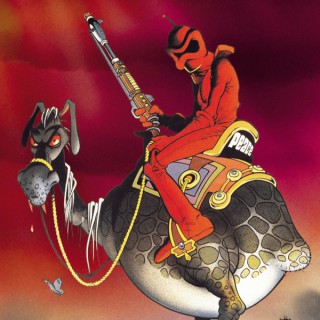
The Fantasy/Animation podcast welcomes as its special guest for Episode 172 Professor Karen Redrobe, who is Elliot and Roslyn Jaffe Professor and Undergraduate Chair in the Department of Cinema and Media Studies at the University of Pennsylvania. Her work traverses film theory, animation, and feminism, and she is the author of Vanishing Women: Magic, Film, and Feminism (2003) and the new book Undead: (Inter)(in)animation, Feminisms, and the Art of War (2025), as well as editor of Animating Film Theory (2014) and Deep Mediations: Thinking Space in Cinema and Digital Cultures (2021, with Jeff Scheible). In this instalment, Karen introduces Chris and Alex to the life and career of the artist and filmmaker Helen Hill, who died in 2007 aged only 36, but whose ebullient imagination on display across her experimental shorts pushed at the boundaries of direct animation, stop-motion, and do-it-yourself methods of animated filmmaking. Listen as the trio discuss Hill's last short The Florestine Collection (2011) completed by her husband Paul Gailiunas, alongside earlier works Mouseholes (1999), and Madame Winger Makes A Film (2001), to reflect on mixed media film as a negotiation of trauma and mode of catharsis; unfinished animation and the political act of recovery; film-based activism, education, and the interpretive form of experimental animation; pantomime aesthetics and the role of paper, puppets, fabric and ‘stuff' in crafting worlds that only animation can access; and the playfulness of Hill's animated experiments and projects that expressed not just her delight in life but confronted what it means for a community to have filmmaking at its centre. **Fantasy/Animation theme tune composed by Francisca Araujo** **As featured on Feedspot's 25 Best London Education Podcasts** **As featured on MillionPodcast's Best 10 UK Animation Podcasts and Best 60 Movie Podcasts in the UK**

Research is challenging the assumption that younger generations are becoming more progressive, suggesting some Gen Z men are adopting more conservative views on gender and masculinity. Heejung Chung of King's College London and University of Toronto Scarborough psychologist Leif Anderson, explain what may be driving that shift. Then, Dalhousie University sociologist Michael Halpin examines the rise of "looksmaxxing," an online subculture centred on physical perfection and social dominance.See omnystudio.com/listener for privacy information.

The first in-depth exploration of the work of artist Cory Arcangel, a pioneer of DIY-new media art whose influential “hacks” subvert the confines of Big Tech. Cory Arcangel (b. 1978)—perhaps best known for Super Mario Clouds, the most referenced artistic game hack in art history—became one of the first artists from a new generation of punk DIY–new media geeks to capture the attention of the art world.Combining the hands-on skills from the 1990s net art scene and the 2010s post-internet art's fondness for memes and the generic image, Arcangel demonstrated the way cultural expressions are intimately connected to media technologies and how these technologies can be pranked for cultural critique. In The Cory Arcangel Hack: Digital Culture and Aesthetic Practice (MIT Press, 2025), Eivind Røssaak shows how Arcangel's body of work defines a particular strain of postconceptual art that is fundamental for understanding the digital world we live in.Today, the question is not what comes first, humans or machines, but what the forces regulating expressive flows are. Arcangel's aesthetic and micropolitical critique of mediation at the level of codes and chips enables us to think critically with computational articulations through specific aesthetic clashes and disjunctions, identified in the book as critical “flow-cut arrangements.” This book explores three dominant arrangements in Arcangel's work—the flow-break hack, the flow-remix hack, and the flow-parody hack—that pinpoint areas of both creativity and concern before and after platform capitalism.Matthis Frickhoeffer is a scholar of critical theory and French thought with a background in literature studies, linguistics and art theory. His work focuses on questions of form, semiotics, and intertextuality. He teaches at the University of Texas at Dallas. Learn more about your ad choices. Visit megaphone.fm/adchoices Support our show by becoming a premium member! https://newbooksnetwork.supportingcast.fm/biography
The first in-depth exploration of the work of artist Cory Arcangel, a pioneer of DIY-new media art whose influential “hacks” subvert the confines of Big Tech. Cory Arcangel (b. 1978)—perhaps best known for Super Mario Clouds, the most referenced artistic game hack in art history—became one of the first artists from a new generation of punk DIY–new media geeks to capture the attention of the art world.Combining the hands-on skills from the 1990s net art scene and the 2010s post-internet art's fondness for memes and the generic image, Arcangel demonstrated the way cultural expressions are intimately connected to media technologies and how these technologies can be pranked for cultural critique. In The Cory Arcangel Hack: Digital Culture and Aesthetic Practice (MIT Press, 2025), Eivind Røssaak shows how Arcangel's body of work defines a particular strain of postconceptual art that is fundamental for understanding the digital world we live in.Today, the question is not what comes first, humans or machines, but what the forces regulating expressive flows are. Arcangel's aesthetic and micropolitical critique of mediation at the level of codes and chips enables us to think critically with computational articulations through specific aesthetic clashes and disjunctions, identified in the book as critical “flow-cut arrangements.” This book explores three dominant arrangements in Arcangel's work—the flow-break hack, the flow-remix hack, and the flow-parody hack—that pinpoint areas of both creativity and concern before and after platform capitalism.Matthis Frickhoeffer is a scholar of critical theory and French thought with a background in literature studies, linguistics and art theory. His work focuses on questions of form, semiotics, and intertextuality. He teaches at the University of Texas at Dallas. Learn more about your ad choices. Visit megaphone.fm/adchoices Support our show by becoming a premium member! https://newbooksnetwork.supportingcast.fm/new-books-network
The first in-depth exploration of the work of artist Cory Arcangel, a pioneer of DIY-new media art whose influential “hacks” subvert the confines of Big Tech. Cory Arcangel (b. 1978)—perhaps best known for Super Mario Clouds, the most referenced artistic game hack in art history—became one of the first artists from a new generation of punk DIY–new media geeks to capture the attention of the art world.Combining the hands-on skills from the 1990s net art scene and the 2010s post-internet art's fondness for memes and the generic image, Arcangel demonstrated the way cultural expressions are intimately connected to media technologies and how these technologies can be pranked for cultural critique. In The Cory Arcangel Hack: Digital Culture and Aesthetic Practice (MIT Press, 2025), Eivind Røssaak shows how Arcangel's body of work defines a particular strain of postconceptual art that is fundamental for understanding the digital world we live in.Today, the question is not what comes first, humans or machines, but what the forces regulating expressive flows are. Arcangel's aesthetic and micropolitical critique of mediation at the level of codes and chips enables us to think critically with computational articulations through specific aesthetic clashes and disjunctions, identified in the book as critical “flow-cut arrangements.” This book explores three dominant arrangements in Arcangel's work—the flow-break hack, the flow-remix hack, and the flow-parody hack—that pinpoint areas of both creativity and concern before and after platform capitalism.Matthis Frickhoeffer is a scholar of critical theory and French thought with a background in literature studies, linguistics and art theory. His work focuses on questions of form, semiotics, and intertextuality. He teaches at the University of Texas at Dallas. Learn more about your ad choices. Visit megaphone.fm/adchoices Support our show by becoming a premium member! https://newbooksnetwork.supportingcast.fm/critical-theory

The first in-depth exploration of the work of artist Cory Arcangel, a pioneer of DIY-new media art whose influential “hacks” subvert the confines of Big Tech. Cory Arcangel (b. 1978)—perhaps best known for Super Mario Clouds, the most referenced artistic game hack in art history—became one of the first artists from a new generation of punk DIY–new media geeks to capture the attention of the art world.Combining the hands-on skills from the 1990s net art scene and the 2010s post-internet art's fondness for memes and the generic image, Arcangel demonstrated the way cultural expressions are intimately connected to media technologies and how these technologies can be pranked for cultural critique. In The Cory Arcangel Hack: Digital Culture and Aesthetic Practice (MIT Press, 2025), Eivind Røssaak shows how Arcangel's body of work defines a particular strain of postconceptual art that is fundamental for understanding the digital world we live in.Today, the question is not what comes first, humans or machines, but what the forces regulating expressive flows are. Arcangel's aesthetic and micropolitical critique of mediation at the level of codes and chips enables us to think critically with computational articulations through specific aesthetic clashes and disjunctions, identified in the book as critical “flow-cut arrangements.” This book explores three dominant arrangements in Arcangel's work—the flow-break hack, the flow-remix hack, and the flow-parody hack—that pinpoint areas of both creativity and concern before and after platform capitalism.Matthis Frickhoeffer is a scholar of critical theory and French thought with a background in literature studies, linguistics and art theory. His work focuses on questions of form, semiotics, and intertextuality. He teaches at the University of Texas at Dallas. Learn more about your ad choices. Visit megaphone.fm/adchoices Support our show by becoming a premium member! https://newbooksnetwork.supportingcast.fm/art
The first in-depth exploration of the work of artist Cory Arcangel, a pioneer of DIY-new media art whose influential “hacks” subvert the confines of Big Tech. Cory Arcangel (b. 1978)—perhaps best known for Super Mario Clouds, the most referenced artistic game hack in art history—became one of the first artists from a new generation of punk DIY–new media geeks to capture the attention of the art world.Combining the hands-on skills from the 1990s net art scene and the 2010s post-internet art's fondness for memes and the generic image, Arcangel demonstrated the way cultural expressions are intimately connected to media technologies and how these technologies can be pranked for cultural critique. In The Cory Arcangel Hack: Digital Culture and Aesthetic Practice (MIT Press, 2025), Eivind Røssaak shows how Arcangel's body of work defines a particular strain of postconceptual art that is fundamental for understanding the digital world we live in.Today, the question is not what comes first, humans or machines, but what the forces regulating expressive flows are. Arcangel's aesthetic and micropolitical critique of mediation at the level of codes and chips enables us to think critically with computational articulations through specific aesthetic clashes and disjunctions, identified in the book as critical “flow-cut arrangements.” This book explores three dominant arrangements in Arcangel's work—the flow-break hack, the flow-remix hack, and the flow-parody hack—that pinpoint areas of both creativity and concern before and after platform capitalism.Matthis Frickhoeffer is a scholar of critical theory and French thought with a background in literature studies, linguistics and art theory. His work focuses on questions of form, semiotics, and intertextuality. He teaches at the University of Texas at Dallas. Learn more about your ad choices. Visit megaphone.fm/adchoices Support our show by becoming a premium member! https://newbooksnetwork.supportingcast.fm/science-technology-and-society

The first in-depth exploration of the work of artist Cory Arcangel, a pioneer of DIY-new media art whose influential “hacks” subvert the confines of Big Tech. Cory Arcangel (b. 1978)—perhaps best known for Super Mario Clouds, the most referenced artistic game hack in art history—became one of the first artists from a new generation of punk DIY–new media geeks to capture the attention of the art world.Combining the hands-on skills from the 1990s net art scene and the 2010s post-internet art's fondness for memes and the generic image, Arcangel demonstrated the way cultural expressions are intimately connected to media technologies and how these technologies can be pranked for cultural critique. In The Cory Arcangel Hack: Digital Culture and Aesthetic Practice (MIT Press, 2025), Eivind Røssaak shows how Arcangel's body of work defines a particular strain of postconceptual art that is fundamental for understanding the digital world we live in.Today, the question is not what comes first, humans or machines, but what the forces regulating expressive flows are. Arcangel's aesthetic and micropolitical critique of mediation at the level of codes and chips enables us to think critically with computational articulations through specific aesthetic clashes and disjunctions, identified in the book as critical “flow-cut arrangements.” This book explores three dominant arrangements in Arcangel's work—the flow-break hack, the flow-remix hack, and the flow-parody hack—that pinpoint areas of both creativity and concern before and after platform capitalism.Matthis Frickhoeffer is a scholar of critical theory and French thought with a background in literature studies, linguistics and art theory. His work focuses on questions of form, semiotics, and intertextuality. He teaches at the University of Texas at Dallas. Learn more about your ad choices. Visit megaphone.fm/adchoices Support our show by becoming a premium member! https://newbooksnetwork.supportingcast.fm/popular-culture
Irish Digital Cultures: Identity, Contexts, Space (Routledge, 2025) explores how questions of Ireland and Irishness are represented in online environments, and what these phenomena say about contemporary Irish identities both within the country and globally. It will interest Irish Studies, Media Studies, Cultural Studies, Sociology, Race, Gender, Identity, and New Media. Learn more about your ad choices. Visit megaphone.fm/adchoices Support our show by becoming a premium member! https://newbooksnetwork.supportingcast.fm/new-books-network

Irish Digital Cultures: Identity, Contexts, Space (Routledge, 2025) explores how questions of Ireland and Irishness are represented in online environments, and what these phenomena say about contemporary Irish identities both within the country and globally. It will interest Irish Studies, Media Studies, Cultural Studies, Sociology, Race, Gender, Identity, and New Media. Learn more about your ad choices. Visit megaphone.fm/adchoices Support our show by becoming a premium member! https://newbooksnetwork.supportingcast.fm/gender-studies

Irish Digital Cultures: Identity, Contexts, Space (Routledge, 2025) explores how questions of Ireland and Irishness are represented in online environments, and what these phenomena say about contemporary Irish identities both within the country and globally. It will interest Irish Studies, Media Studies, Cultural Studies, Sociology, Race, Gender, Identity, and New Media. Learn more about your ad choices. Visit megaphone.fm/adchoices
Irish Digital Cultures: Identity, Contexts, Space (Routledge, 2025) explores how questions of Ireland and Irishness are represented in online environments, and what these phenomena say about contemporary Irish identities both within the country and globally. It will interest Irish Studies, Media Studies, Cultural Studies, Sociology, Race, Gender, Identity, and New Media. Learn more about your ad choices. Visit megaphone.fm/adchoices Support our show by becoming a premium member! https://newbooksnetwork.supportingcast.fm/sociology
Irish Digital Cultures: Identity, Contexts, Space (Routledge, 2025) explores how questions of Ireland and Irishness are represented in online environments, and what these phenomena say about contemporary Irish identities both within the country and globally. It will interest Irish Studies, Media Studies, Cultural Studies, Sociology, Race, Gender, Identity, and New Media. Learn more about your ad choices. Visit megaphone.fm/adchoices Support our show by becoming a premium member! https://newbooksnetwork.supportingcast.fm/communications

Nathan and Cameron explore why modern culture is far less “disenchanted” than it claims, unpacking how ancient fears of the demonic and supernatural have simply migrated into digital spaces like podcasts, found footage films, and online media. Drawing on works like The Myth of Disenchantment and Strange Rites, they examine the evolution of the Gothic, the rise of subtle psychological horror, and the enduring human fear of losing control to unseen forces. Through examples like The Blair Witch Project and The Exorcist, the conversation moves beyond entertainment into theology—addressing spiritual warfare, the reality of evil, and the dangers of engaging the occult in a screen-saturated age. Aimed at Christian men seeking thoughtful, theologically grounded engagement with culture, this discussion challenges listeners to discern the spiritual implications behind modern media while pointing toward freedom, truth, and the authority of Christ.DONATE LINK: https://toltogether.com/donate BOOK A SPEAKER: https://toltogether.com/book-a-speakerJOIN TOL CONNECT: https://toltogether.com/tol-connect TOL Connect is an online forum where TOL listeners can continue the conversation begun on the podcast.

The Trump administration’s messaging around the war with Iran feels reminiscent of stuff like … cowboy movies. And video games. And the manosphere. This hour, a look at the rhetoric around the war and where it’s all coming from. GUESTS: Casey Ryan Kelly: Professor of Rhetoric and Public Culture in the Department of Communication Studies at the University of Nebraska-Lincoln. He is also Editor of the Quarterly Journal of Speech, and author of books including Manifesting Violence: White Terrorism, Digital Culture, and the Rhetoric of Replacement Jonathan Guyer: Program Director at the Institute for Global Affairs at Eurasia Group, and a reporter and editor focused on foreign policy, national security, and the Middle East. He is host of the podcast “None of the Above” Roger Stahl: Author and Professor of Communication Studies at the University of Georgia. He is director of the documentary Theaters of War Music featured (in order): “Hoe-Down” from Rodeo – Aaron Copland, NYO-USA, Michael Tilson Thomas You Should Have Seen the Other Guy – Nathaniel Rateliff Under My Thumb – Rolling Stones Son of Your Father – Elton John Cowboys Are Frequently Secretly Fond of Each Other – Orville Peck and Willie Nelson I Am a Rock – Simon and Garfunkel Support the show: http://www.wnpr.org/donateSee omnystudio.com/listener for privacy information.

Crystal Foote is the Founder & CEO (also Head of Partnerships) of Digital Culture Group (DCG), an award-winning, Atlanta-based ad tech company she launched in 2023 as the industry's only Black- and woman-owned firm in the space. DCG bridges data and humanity through innovative audience targeting (e.g., her Audience Resonance Index™ or ARI), real-time cultural insights, and inclusive advertising—helping brands connect authentically with multicultural audiences beyond basic demographics.A trailblazing advertising executive and entrepreneur, she started her career in New York at agencies like MEC, RGA, and Publicis, then moved into tech at Exponential and Amobee before founding DCG with just $300. She's grown it rapidly (e.g., adding Fortune 500 clients like Jeep and McDonald's, 47% YoY growth), earned spots on Inc. Magazine's 2025 Female Founders 500 list and Ad Age's Leading Women 2025, and is a USBC Power 50 honoree.

In today's episode of Psych Talk I chat with Patricia Martin, cultural analyst, researcher, and speaking about how digital culture erodes our identity. We start the conversation by discussing Patricia's book Will the Future Like You? Reflection on the Age of Hyper-reinvention; what it is about and what inspired her to write it. We discuss how constantly being online erodes our identity and Patricia discusses three forces upending the development of identity - persona fog, chronic self-doubt, and cascading crossroads. We discuss the concept of hyper-reinvention and how it disconnects us from the core of who we are, in addition to how the cyber world leads to self-alienation. We end the discussion by Patricia sharing some of the things we can be doing to help ourselves identify who we really are in this digital culture. Connect with Patricia:Website: www.patricia-martin.comBook: Will the Future Like You?Podcast: Jung in the WorldSubstack: Culture ScoutInstagram: @patriciamartin33Connect with Me:Follow me on IG @jessicaleighphdFollow the podcast on IG @psych.talk.podcastFollow me on TikTok @jessicaleighphdFollow me on Youtube Follow me on Threads @jessicaleighphdWelcome to Group Therapy PodcastJoin my Facebook community: Grow Through What You Go ThroughWays to Work With Me:Mind Over MatterLGBTQ+ Affirming MasterclassBe a guest on my podcastResources:Anti-Racism ResourcesLGBTQ+ Affirming ResourcesThe Helping Professional's Guide to Boundary SettingIntro/Outro MusicLife of Riley by Kevin MacLeodMusic License


SummaryIn this episode of the Text Driven Podcast, Timothy Pigg discusses the challenges and opportunities presented by the digital church, particularly focusing on the importance of restoring biblical worship. He emphasizes the need for worship to be participatory rather than observational, and highlights the impact of digital culture on worship practices. Pigg calls for a return to sacredness in worship, encouraging churches to engage their congregations in meaningful ways that foster community and spiritual growth.TakeawaysThe digital church presents real problems for worship.Worship should be a response to God's worth, not just content consumption.Worship is meant to be participatory, not observational.Digital culture has made worship more private than corporate.Engagement metrics can expose shallow theology in worship.Corporate worship should involve singing together as a community.Teaching worship at home is essential for corporate worship.Worship services should be geared for participation, not just viewing.Quality in worship should not overshadow spiritual engagement.Chapters00:00 Introduction to Bible Caddie Ministry02:05 The Digital Church: Identifying the Problems05:01 Understanding Biblical Worship10:34 The Impact of Digital Culture on Worship14:25 Restoring Sacredness in Worship19:27 Conclusion and Call to Action

In this episode of The Right Side with Doug Billings, Doug explores a question sitting beneath today's biggest headlines: who really gets the final say when things go wrong?From America's decision to step away from the World Health Organization, to a Supreme Court case that could reshape the relationship between the President and the Federal Reserve, to the digital systems shaping how the next generation thinks and focuses, this is a wide-angle conversation about sovereignty in the modern age.This episode examines how authority flows through institutions, how accountability and independence create tension in a constitutional republic, and why attention, cognition, and culture may be as important to America's future as law, economics, and national security.Support the show

This week on AwesomeCast 764, cohosts Michael Sorg, Dave Podnar, and Katie Dudas dive into the week's biggest tech and creator stories—plus a special Animal Crossing 3.0 update field report from Charlotte. Katie checks in with her Animal Crossing–obsessed niece Charlotte to break down what's new, what's addictive, and how “slumber islands” change the way you build and share your island adventures.  Then the crew hits a surprisingly heartfelt app story with “Are You Dead?”, a daily check-in safety app built for modern life when friends and family live far apart.  We also get into the rise of cozy “chore games” like PowerWash Simulator and other satisfyingly organized gaming obsessions.  On the creator side, we break down Apple's new Creator Studio approach—what it could mean for Final Cut, Logic, Motion, and Compressor—and why AI-assisted editing features are starting to matter for everyday workflows.  Plus: OpenAI's push toward age prediction and the complications that come with automated verification.  Show notes + links: (include the link list above) Animal Crossing • Animal Crossing video (Katie segment) (no URL listed in the sheet row; included as an on-show segment) “Chore games” / cozy games • A Game About Digging a Hole (Xbox): https://www.xbox.com/en-US/play/games/a-game-about-digging-a-hole/9NGLST31DG26 • A Game About Digging a Hole (Nintendo): https://www.nintendo.com/us/store/products/a-game-about-digging-a-hole-switch/ • PowerWash Simulator (Apple App Store): https://apps.apple.com/us/app/powerwash-simulator/id6477445344 “Are You Dead?” app • BGR story: https://www.bgr.com/2074610/are-you-dead-top-paid-iphone-app-china/ • DeMumu app listing: https://apps.apple.com/us/app/demumu/id6745099872 ChachiSays Video Game Minute items (from the sheet) • David Rosen / Sega co-founder (Tom's Hardware): https://www.tomshardware.com/video-games/sega-co-founder-david-r…d-former-us-airman-set-up-sega-after-his-service-ended-in-japan • Assassin's Creed Netflix casting (Deadline): https://deadline.com/2026/01/assassins-creed-tanzyn-crawford-cast-netflix-series-1236658813/ • John Wick universe AAA game (Tech4Gamers): https://tech4gamers.com/aaa-john-wick-game-development/ AI / OpenAI / Sora • Mattel on Sora profile: https://sora.chatgpt.com/profile/mattel • OpenAI age prediction (Engadget): https://www.engadget.com/ai/openai-is-launching-age-prediction-for-chatgpt-accounts-222650340.html • ChatGPT Health page: https://openai.com/index/introducing-chatgpt-health/ Creator tools • Apple Creator Studio (Apple Newsroom): https://www.apple.com/newsroom/2026/01/introducing-apple-creator-studio-an-inspiring-collection-of-creative-apps/ • Adobe Premiere AI updates (Engadget): https://www.engadget.com/ai/adobe-unveils-new-ai-powered-vide…vlq1gStDzB9i-clNMdAMo4O0o4ro8ohtbVXETV41pRXvEFAQZh6nDH-1vO91dYLO

In this episode, special co-host Diana Yáñez and Sweet Miche explore the concept of belonging, not just to each other, but to all of existence. From the linguistic wisdom of the Aymara people to the radical call of liberation theology and the hard work of healing Quaker involvement in Indian Boarding Schools, we're asking what might happen to our faith if we start living from the "We" instead of the "I"? Jiwasa: The Communal We with Rubén Hilari Quispe Rubén, an Aymara Quaker and linguist, introduces us to jiwasa – a concept of "we-ness" that includes humans, the environment, and even the objects around us. He invites us to sit with the unsettled feeling of language that doesn't center the individual. Read Rubén's article, "Jiwasa, the Communal We" in the January 2026 issue of Friends Journal or at FriendsJournal.org. You can hear an extended interview in Spanish with English subtitles at the Friends Journal YouTube page. Liberation Theology and the Inner Light with Renzo Carranza Guatemalan Friend Renzo Carranza explores how the Quaker Inner Light intersects with the radical tradition of liberation theology. Together, they form a call to action: to reinterpret the gospels from the perspective of the marginalized and transform society. Watch the full QuakerSpeak video, “Transforming the SPIRIT: Liberation Theology and the Inner Light” at QuakerSpeak.com. Collective Relationship and Boarding Schools with Rachel Overstreet Rachel Overstreet (Choctaw Nation) discusses the history of Quaker Indian boarding schools. She suggests that the way forward isn't through individual guilt, but through collective relationship. Read Rachel's article, “Speaking with Friends About Indian Boarding Schools” in the January 2026 issue of Friends Journal or at FriendsJournal.org. Rachel writes the Native American Legislative Update, a monthly newsletter on the most important developments on Capitol Hill related to Indian Country. You can also write your Congressperson to cosponsor and pass the Truth and Healing Commission on Indian Boarding School Policies Act. Find out more at fcnl.org/issues/native-americans. Book Review: Chooch Helped Katie Green reviews a charming children's book by Andrea L. Rogers and Rebecca Lee Koons (Cherokee Nation) that celebrates present-day Cherokee family life and love. Read Katie's review of Chooch Helped in the January 2026 issue or at FriendsJournal.org. Recommended Resources by Indigenous Creators Jonny Appleseed (Novel) By Joshua Whitehead (they/them) A beautifully fragmented story about a Two-Spirit, Indigiqueer person navigating life in Winnipeg. The title ironically reclaims a settler-colonial myth to tell a raw story of modern Indigenous identity. Coyote & Crow (Tabletop Role-Playing Game) Created by a team of over 30 Indigenous creators Set in an "Indigenous Futurism" world where the Americas were never colonized. This RPG focuses on community, advanced technology, and spirits in a world where history took a different path. Drama & Performance The Thanksgiving Play (Play) By Larissa FastHorse (Sicangu Lakota Nation) A biting, hilarious satire that made history as the first play by a Native American woman on Broadway. It follows four well-meaning white people trying to create a "politically correct" Thanksgiving play for a school. The Rez Sisters (Play) By Tomson Highway (Cree) A modern classic of Indigenous drama. It tells the story of seven women on a reserve who dream of winning "the biggest bingo game in the world." It's a powerful blend of humor, tragedy, and the supernatural. Mary Kathryn Nagle: Land Sovereignty and Indigenous Women's Rights (Podcast/Interview) Produced by Peterson Toscano for Citizens Climate Radio A deep-dive conversation with Cherokee playwright and attorney Mary Kathryn Nagle. She discusses how her plays, like Sovereignty and Manahatta, serve as "living law," using the stage to advocate for tribal jurisdiction and the safety of Indigenous women. Music & Audio Come and Get Your Love (Song) By Redbone The 1974 hit that made Redbone the first Native American band to reach the top five on the Billboard Hot 100. Forged (Podcast) CBC Listen / Host: Adrian Stimson A gripping series exploring a massive art fraud ring involving the works of Norval Morrisseau, the "Picasso of the North." Literature & Thought Sacred Instructions (Book) By Sherri Mitchell (Weh'na Ha'mu Kwasset) A roadmap for "spirit-based change" drawing on Penobscot ancestral wisdom to address modern crises. Dr. Lyla June Johnston (Scholar & Musician) A Diné (Navajo) and Cheyenne artist whose work blends hip-hop with traditional acoustics and ecological activism. Digital Culture & Media Trixie Mattel: Root Maintenance (Video/Q&A) The world-famous drag queen discusses her biracial Ojibwe heritage and navigating identity in the public eye. Rez Ball (Film) Produced by LeBron James and Sterlin Harjo A 2024 film following a Navajo high school basketball team, capturing the unique, fast-paced style of "Rezball." Next Month's Question A central part of Quakerism is our commitment to peace. But that doesn't mean we should avoid conflict. In fact, it means we have a specific responsibility to it. What is a small practice that brings you a measure of peace or stability in the midst of conflict and turmoil? Leave a voice memo at 317-QUAKERS (317-782-5377) Email us at podcast@friendsjournal.org Sponsors Quakers Today is a project of Friends Publishing Corporation. This season is sponsored by: Friends Fiduciary: Ethical investing through a Quaker lens. Learn more at FriendsFiduciary.org. American Friends Service Committee (AFSC): Challenging injustice and building peace. Visit afsc.org. For a full transcript, visit QuakersToday.org.

It's been just over a month since the government enacted its world-first social media ban for those aged under 16 years old. The government says they have deactivated, removed or restricted 4.7 million accounts so far. But what does this figure mean, and is an outright ban the most effective method for mitigating young people's exposure to harmful content online? In this episode of Weekend One on One Catriona Stirrat speaks to Nicholas Carah - Director of the Center for Digital Cultures and Societies at the University of Queensland.
SummaryIn this episode of the Text Driven Podcast, hosts Timothy Pigg and Carter Jurkovich discuss the concept of 'Digital Church' and the associated theological drift that arises from the demand for viral content on social media. They explore how the pursuit of short, engaging clips can lead to a shallow understanding of complex theological concepts, ultimately risking the integrity of core doctrines. The conversation emphasizes the importance of maintaining a strong doctrinal foundation and the challenges pastors face in a digital age where attention spans are short and the temptation for popularity is high.TakeawaysEvery church needs a doctrinal statement.The church is the pillar and buttress of truth.The digital church gives an easier path to drifting.You can't explain concepts of a transcendent God in 60 seconds.Once it's out there on social media, you're not getting it back.We want to be like the viral pastor with the great video.We're just supposed to be mere donkeys.Jesus was hated for what he said, and it was truth.It's spiritual temptation. I fight, you fight it.We need to be faithful to the text, driven by the text.Sound bites"Every church needs a doctrinal statement.""The church is the pillar and buttress of truth.""We're just supposed to be mere donkeys."Chapters00:00 Introduction to Digital Church and Theological Drift02:09 Understanding Theological Drift05:24 The Impact of Digital Culture on Theology09:52 The Dangers of Clickbait Theology13:54 The Call for Faithfulness in PreachingText-Driven Resources LinksTEXT-DRIVEN WOMENApple: https://podcasts.apple.com/us/podcast/text-driven-women/id1638626764Spotify: https://open.spotify.com/show/39bprfuuuoBdiu3qpbNbSSTEXT-DRIVEN PODCASTApple: https://podcasts.apple.com/us/podcast/text-driven-podcast/id1558036179Spotify: https://open.spotify.com/show/58S8Z1wSnubt8AVFkH3e1kTEXT-DRIVEN BIBLE STUDIESThe Book of Philippians (Text-Driven Bible Study) (Text-Driven Bible Studies) https://a.co/d/1oypSB7Foundations: Genesis 1-11: Text-Driven Bible Study (Text-Driven Bible Studies) https://a.co/d/b77kWZAThe Book of Titus: Text-Driven Bible Study (Text-Driven Bible Studies) https://a.co/d/4RAQaalThe Seven Churches of Revelation: Revelation 1-5 (January 2026)CHURCH/FAMILY RESOURCESThe Local Church Matters https://a.co/d/5HNqbiQThe Seven Characteristics of a Text-Driven Woman (April 2026)Text-Driven Evangelism (January 2026)DEVOTIONALKnowing Jesus at Christmas: A 25-Day Devotional through the Gospel of Luke https://a.co/d/6YMm0a9Text-Driven Wisdom: A 31-Day Devotional through Proverbs https://a.co/d/17UC6jt

Onmisbare Uitvindingen # 24 – Over Spelletjes… zijn die onmisbaar? Geerke en Dutchtuber zoeken het voor je uit. Met dank aan: Angus Mol, assistent professor, Game and Play Studies, Universiteit Leiden; Sybille Lammes, professor New Media and Digital Culture; Toon Sykora, historicus Rijksmuseum van Oudheden; Annemarieke Willemsen; historicus Rijksmuseum van Oudheden; Charlie Hemmes, 999 Games; Tijn Rams, Subcultures Presentatie, research, regie, edit en sounddesign: Geerke Catshoek Muziek & co-host: Dutchtuber Jingles: Bart Rijnink Mix: Luuk van Dijk
Welcome to my new episode "Dynamic Trance Universe" Podcast. Доброго времени суток, дорогие друзья! В эфире 483-й эпизод подкаста-путеводителя в замечательный мир #Trance музыки. Сегодня Вас ждут лучшие треки за 2025 год, которые вышли на лейбле Nocturnal Knights Music. Поехали! @aeroritmixmuzik #DTUPodcast483 #Trance #Uplifting VocalTrance #TechTrance #Trancefamily TRACKLIST: 01. Stowers & Cooper - "The Machine" 02. Digital Culture - "Hoppa" 03. RAM & Christina Novelli & Asteroid - "All Gone 2025" 04. Dark Fusion - "You Make Me Feel" 05. XiJaro & Pitch with Youssri - "The Reason" 06. onTune - "The Edge Of Reality" [Transformations 2025 Anthem] 07. Rene Ablaze & Steve Dekay - "Deep Inside" 08. Amos & Riot Night x Miikka L & Tara Louise - "Midnight Drive" 09. Tasso - "Fake Acid" 10. Mark Wilks - "Rave Culture" 11. Dan Cooper - "Recuperation 303" 12. Peter Miethig - "I Can Hear You" 13. Claas Inc - "Acid Trip" 14. ReOrder & Kalinda - "Higher & Higher" 15. Indecent Noise - "I Want More" 16. Ryan K & Darkingz - "No Mercy" 17. Sam Laxton - "I Wanna Dance" 18. Davey Asprey - "No Dawn Remains" 19. Laura May - "Flam Thrower" Подписывайтесь на мой подкаст (Subscribe to My Podcast): ● Apple Podcasts - podcasts.apple.com/ru/podcast/… ● Pocket Casts - pca.st/drpc1gfj
Hello, and welcome to a special Lost In Trancelation this month as in the first hour & 15 mins, I go back over my favourite tracks that I have included in my shows over the last 12 months. It's been a great year for me and it's all thanks to you guys who listen every month and to the team behind the scenes here at Experience Music! In Hour 2 I have a good friend of mine with an outstanding guest mix, I'd like to introduce to you Steven Barclay AKA Barclay. Steven is the main man of the brand Audio Warfare in Edinburgh who put on brilliant events up here in the capital. He also has his Audio Warfare takeover on Crystal FM 107.4FM (& Online) every Friday. He has recently got himself back into production and he's been nice enough to bang a few of his own creations into this mix. So listen up cause they are banging! So sit back, crack open the eggnog, tan a few mince pies and turn the speakers up! Stay safe, look after each other and don't forget to have an amazing Christmas and a brilliant New Year and I will see you in 2026 Tracklists: StevieB Hour 1 1 BiXX - The Voice Of Reason [Album Mix] 2 Metta & Glyde - The Light Within (Original Mix) 3 CJ Stone - Come Down (Infinity) feat Mirella (Tek Extended Mix) 4 Derb, Richard Durand, RAM, Digital Culture, Spacefrog - Follow Me 2024 (Extended Mix) 5 XiJaro & Pitch & Collide - The Spice (Extended Mix) 6 David Forbes - Sidewinder (Extended Mix) 7 Matty Ralph - Rave Life (Extended) 8 David Mcquiston - Fear (Extended Mix) 9 Andrew Rayel - Trance Is The Rhythm (Extended Mix) 10 Avao, Mha Iri - Elements of Dance (Original Mix) 11 Mauro Picotto - Iguana (Mark Sherry's Th3rty Extended Remix) 12 Marcel Woods - De Bom (RAM Remix) 13 Mark Sherry - Rave Is Life [We Play It Loud] (Extended Mix) 14 Giuseppe Ottaviani & Andrew Rayel - Eternal Harmony (Extended Mix) 15 Tiësto - Traffic (Kryder & Dave Winnel + Maddix Remixes) 16 Giuseppe Ottaviani & Nifra - Unified (Extended Mix) 17 Paul Oakenfold ft. Carla Werner - Southern Sun (Will Atkinson Extended Remix) Barclay Guest Mix Hour 2 1 .Barclay - Sanctuary of Light (Intro Mix) 2. Ayla vs pendulum - Ayla Island 3. Ben Gold, Allen Watts - Change the World 4. Gareth Emery feat Bo Bruce - U (Bryan Kearney Remix) 5. Plash! - Get a life you drug addicts (Bryan Kearneys Planet Love Remix) 6. Barclay - ID 7. System F - Cry (Luca Deyong Rework) 8. Find Yourself - (Heatbeat remix John o Callaghan rework) 9. Y traxx - Mysterland (Quinny Remix) 10. Marco V - More than a life away (Christian Ketelaars rework) 11. Chakra - Love Shines Through (Ehren Stowers remix) 12. Andy Moor - Faces (Indecent Noise remix) 13. Prada (Oliver Heldens remix) 14. Barclay - Lighthouse 15. Hannah Laing - I need it more

#thePOZcast is proudly brought to you by Fountain - the leading enterprise platform for workforce management. Our platform enables companies to support their frontline workers from job application to departure. Fountain elevates the hiring, management, and retention of frontline workers at scale.To learn more, please visit: https://www.fountain.com/?utm_source=shrm-2024&utm_medium=event&utm_campaign=shrm-2024-podcast-adam-posner.This episode is powered by WelcometoTimesSquare.com, the billboard where you can be a star for a day.” http://WelcometoTimesSquare.comThanks for listening, and please follow us on Insta @NHPTalent and www.youtube.com/thePOZcastFor all episodes, please check out www.thePOZcast.com SummaryIn this conversation, Matt Medved, co-founder and CEO of Now Media, shares his journey from human rights research to becoming a leading figure in Web3. He discusses the evolution of NFTs, the impact of AI on music, and the importance of storytelling in the digital age. Matt emphasizes the need for creators to find their unique voice and leverage technology to enhance their work. He also reflects on the challenges and opportunities within the rapidly changing landscape of digital culture and media.Takeaways- Matt Medved is a prominent figure in the Web3 space, known for his work with NFT Now and Now Media.- The evolution of NFTs and blockchain technology has transformed the creative landscape.- Human rights research experiences shaped Matt's perspective on storytelling and social impact.- Transitioning from journalism to technology was a natural progression for Matt, driven by his passion for innovation.- Building Billboard Dance was a pivotal moment in Matt's career, influencing the dance music scene.- AI is revolutionizing music creation, providing new tools for artists to enhance their creativity.- The NFT boom brought excitement but also challenges, leading to a market correction.- Now Media aims to cover the broader spectrum of digital culture beyond just NFTs.- Advice for young creators includes finding their unique voice and leveraging technology to enhance their work.- Matt's legacy will be defined by his commitment to empowering artists and telling important stories. Chapters00:00 Introduction to Matt Medved and Now Media01:57 The Evolution of NFTs and Blockchain Technology03:55 Matt's Background and Early Influences08:05 Human Rights Work and Its Impact on Matt's Career11:52 The Intersection of Music and Journalism14:43 Transitioning to Technology and Music Journalism18:58 Building Billboard Dance and Influencing the Genre22:44 The Rise of Bedroom Producers and Mental Health in Music26:43 Embracing Technology in Music Creation29:46 The Future of Digital Art and NFTs31:50 The Evolution of Bitcoin and NFTs34:56 The Impact of NFTs on the Music Industry38:55 Navigating the Challenges of Entrepreneurship41:52 Maintaining Journalistic Integrity in a Rapidly Changing Landscape45:21 The Shift from NFTs to Broader Digital Culture49:26 The Resurgence of Collectibles in a Digital Age51:16 AI's Role in Modern Dating and Creativity54:10 The Balance Between Innovation and Regulation01:00:31 Legacy and the Future of Digital Media01:02:20 Advice for Young Creators in a Digital World

In this conversation, Dr. Katharina Reinecke explores the intersection of technology and culture, discussing how cultural assumptions shape the design and functionality of technology. She delves into the implications of self-driving cars, the importance of understanding diverse user experiences, and the challenges posed by a predominantly Western perspective in technology development. The discussion highlights the need for greater cultural sensitivity in technology design and the potential consequences of ignoring these differences.Takeaways Technology is not culturally neutral; it reflects the values of its creators. Self-driving cars are based on American commuting assumptions. Cultural differences significantly impact user experience and technology design. Efficiency in technology can undermine social interactions and relationships. WEIRD populations dominate technology research, leading to biased outcomes. Universal design principles often fail when applied globally. Stack Exchange exemplifies individualistic design, contrasting with collectivist values. AI systems must be designed with cultural sensitivity to avoid reinforcing biases.Chapters 00:00 Understanding Digital Culture Shock 03:53 The Challenges of Autonomous Vehicles 06:21 Cultural Assumptions in Technology 08:37 The Impact of AI and Data Bias 10:32 Efficiency vs. Social Interaction in Design 12:14 The Concept of 'Weird' Populations 14:24 Cultural Values in Digital Platforms 21:53 The Simplicity of Design and Its Cultural Impact 22:51 Efficiency vs. Community: The Stack Exchange Debate 25:41 Adapting Global Platforms to Local Norms 31:52 The Implications of AI and Digital Infrastructure 34:34 Recognizing Cultural Bias in Technology Design 37:42 Technology as CultureFollow Katharina on Twitter, LinkedIn, Bluesky, and find her new book here.You can find Lab in the Wild on Twitter and BlueskySubscribe to Breaking Math wherever you get your podcasts.Follow Breaking Math on Twitter, Instagram, LinkedIn, Website, YouTube, TikTokFollow Autumn on Twitter, BlueSky, and InstagramBecome a guest hereemail: breakingmathpodcast@gmail.com

Is technology the source or salve of social isolation? Given the realities of increasing division, the epidemic of loneliness, and unwanted isolation today, how should we think about the theological, ethical, and spiritual dimensions of the human experience of aloneness?“AI technologies aren't capable of creating conditions in which grace can happen—it's endemic to personhood.”This episode is part 3 of a 5-part series, SOLO, which explores the theological, moral, and psychological dimensions of loneliness, solitude, and being alone.In this episode, sociologist Felicia Wu Song joins Macie Bridge to discuss the sociology of solitude, loneliness, and isolation, framed by today's most pressing technological challenges.Drawing from her work on digital culture and AI, Song distinguishes between isolation, loneliness, and generative solitude—what she calls “positive aloneness.” She explores how technology both connects and disconnects us, what's lost when care becomes automated, and why the human face-to-face encounter remains vital for grace and dignity. Together they consider the allure of AI companionship, the “better-than-nothing” argument, and the church's local, embodied role in a digitized age. Song invites listeners to rediscover curiosity, self-reflection, and the spiritual discipline of solitude as essential practices for recovering our humanity amid the noise of the crowd.Helpful Links and ResourcesFelicia Wu Song, Restless Devices: Recovering Personhood, Presence, and Place in the Digital Age — https://www.ivpress.com/restless-devicesAllison Pugh, The Last Human Job: The Work of Connecting in a Disconnected World — https://press.princeton.edu/books/hardcover/9780691240817/the-last-human-jobDavid Whyte, “Solace: The Art of Asking the Beautiful Question” — https://www.amazon.com/Solace-Art-Asking-Beautiful-Question/dp/1932887377Sherry Turkle, Alone Together: Why We Expect More from Technology and Less from Each Other — https://www.sherryturkle.com/alone-togetherEpisode Highlights“Even though I study technology, I'm really interested in what it means to be human.”“What happens when we have technologies that always bring the crowd? The crowd is always with us all the time.”“Loneliness is the gap between what I think I should have and what I actually have.”“AI technologies aren't capable of creating conditions in which grace can happen—it's endemic to personhood.”“We should cut ourselves a lot of slack. Feeling lonely is very human. It doesn't mean something's wrong with me.”About Felicia Wu SongFelicia Wu Song is a sociologist, writer, and speaker, and was Professor of Sociology at Westmont College for many years. She is author of Restless Devices: Recovering Personhood, Presence, and Place in the Digital Age. Her research examines digital technology, culture, and Christian formation, exploring how contemporary media ecosystems shape our social and spiritual lives. Learn more about her work at https://feliciawusong.com/Show NotesTechnology, Humanity, and SolitudeSong describes her sociological work at the intersection of culture, technology, and spirituality.She reflects on how technology reshapes our sense of identity, community, and human meaning.“Even though I study technology, I'm really interested in what it means to be human.”The question of loneliness emerges from the expectation of constant accessibility and permanent connection.The Crowd Is Always With Us“What happens when we have technologies that always bring the crowd?”Song critiques how digital connectivity erases silence and solitude, making stillness feel uncomfortable.Explores the challenge of practicing ancient spiritual disciplines like silence in the digital age.Connection and DisconnectionSong traces the historical celebration of communication technology's power to transcend time and space.Notes the danger of normalizing constant connectivity: “If you can do it, you should do it.”Examines how connection can become a cultural norm that stigmatizes solitude.Defining Loneliness, Isolation, and Solitude“Social isolation is objective; loneliness is subjective; solitude is generative.”Distinguishes “positive aloneness” as a space for self-conversation and divine encounter.References David Whyte and the Desert Fathers and Mothers as guides to solitude.Youth, Boredom, and the Portal of LonelinessDiscusses the value of “episodic loneliness” as a portal to self-discovery and spiritual growth.Connects solitude to creativity and reflection through the “boredom literature.”AI, Care, and the Better-Than-Nothing ArgumentExamines the emergence of AI chatbots and companionship tools.Engages Allison Pugh's critique of “the better-than-nothing argument.”“It sounds altruistic, but it actually leads to deeper and deeper inequality.”Raises justice and resource questions around replacing human teachers and therapists with chatbots.The Limits of Machine Grace“AI technologies aren't capable of creating conditions in which grace can happen—it's endemic to personhood.”Explores embodiment, dignity, and the irreplaceable value of human presence.Critiques the assumption that “being seen” by a machine equates to being known by a person.AI, Divinity, and ProjectionNotes human tendency to attribute divine or human qualities to machines.References Sherry Turkle's early studies on human-computer relationships.“We are so relational that we'll even take a clunky computer program and give it human-like qualities.”Faith, Solitude, and Social ConditionsSong emphasizes the sociological dimension: environments shape human flourishing.“Let's not make it so hard for people to experience solitude.”Advocates for embodied, place-based communities as antidotes to digital disembodiment.Loneliness, Curiosity, and GraceEncourages gentleness toward oneself in moments of loneliness.“Feeling lonely is very human. It doesn't mean something's wrong with me.”Promotes curiosity and acceptance as pathways to spiritual and personal growth.Production NotesThis podcast featured Felicia Wu SongEdited and Produced by Evan RosaHosted by Evan RosaProduction Assistance by Hope Chun, Alexa Rollow and Emily BrookfieldA Production of the Yale Center for Faith & Culture at Yale Divinity School https://faith.yale.edu/aboutSupport For the Life of the World podcast by giving to the Yale Center for Faith & Culture: https://faith.yale.edu/give

Co-hosts Andrew Kliman and Gabriel Donnelly speak with guest Gavin Mueller, an assistant professor of New Media and Digital Culture at the University of Amsterdam. Mueller researches the politics of digital culture and much of our discussion centers on the realities of artificial intelligence in our time. They consider the huge amount of money being spent on Large Language Models, how they work, and what they can actually do as opposed to what all the hype says that they can (or will be able to???) do. Additionally the discussants consider how workers can fight the encroachment of this new, automated technology into the workplace. Our discussion leans on parts of Gavin's book Breaking Things at Work: The Luddites Are Right About Why You Hate Your Job. They consider what Marx said about technology and automation, and how it applies to this situation. Plus current-events segment: the co-hosts discuss the political indictments handed down from the Trumpist Department of Justice that have targeted personal foes of Trump-James Comey, Leticia James, and John Bolton. Radio Free Humanity is co-hosted by Gabriel Donnelly and Andrew Kliman, and sponsored by Marxist-Humanist Initiative (https://www.marxisthumanistinitiative.org/ ).

https://reformedjournal.com/2025/09/12/the-kids-are-alright-more-or-less/ @greyhamilton52 Beauty is an Act of War with Jordan Hall Jordan Hall's Tweet. Is 5th Gen Warfare Spiritual Warfare? Is "War" the right word? https://www.youtube.com/live/uHuygjZ_OlQ?si=b5XLpbX_xiAjCIh1 https://x.com/jgreenhall/status/1942734576402497826 https://x.com/jgreenhall/status/1943329873738530907 @mallorysplace303 Charlie Kirk Quite Literally Saved My Life https://youtu.be/q3CIrkoIE1s?si=7U29jqxD9h3B1PGf @Melissa_Cecilia Convert reflection after 4 years in Eastern Orthodoxy https://youtu.be/56OaSgW7jqo?si=7HFSvenYrAx5z4g7 https://www.graphsaboutreligion.com/p/the-nones-project-ninos @transfigured3673 John Vervaeke & Jonathan Pageau - Fellowship in the Spirit https://youtu.be/3yk8HtOQBuE?si=CEdYBroZ5A-h5sd6 @Quillette Who Is Tyler Robinson? Inside the Digital Culture and Brain Rot Behind Charlie Kirk's Alleged Killer https://youtu.be/pcbWHzmwLL8?si=n46s-3hi1TXFQX05 https://www.southeastuary.com/ https://www.livingstonescrc.com/give Paul Vander Klay clips channel https://www.youtube.com/channel/UCX0jIcadtoxELSwehCh5QTg https://www.meetup.com/sacramento-estuary/ My Substack https://paulvanderklay.substack.com/ Bridges of meaning https://discord.gg/MGC5Mm9d Estuary Hub Link https://www.estuaryhub.com/ If you want to schedule a one-on-one conversation check here. https://calendly.com/paulvanderklay/one2one There is a video version of this podcast on YouTube at http://www.youtube.com/paulvanderklay To listen to this on ITunes https://itunes.apple.com/us/podcast/paul-vanderklays-podcast/id1394314333 If you need the RSS feed for your podcast player https://paulvanderklay.podbean.com/feed/ All Amazon links here are part of the Amazon Affiliate Program. Amazon pays me a small commission at no additional cost to you if you buy through one of the product links here. This is is one (free to you) way to support my videos. https://paypal.me/paulvanderklay Blockchain backup on Lbry https://odysee.com/@paulvanderklay https://www.patreon.com/paulvanderklay Paul's Church Content at Living Stones Channel https://www.youtube.com/channel/UCh7bdktIALZ9Nq41oVCvW-A To support Paul's work by supporting his church give here. https://tithe.ly/give?c=2160640 https://www.livingstonescrc.com/give
As "beauty filters" proliferate on social media platforms like TikTok, journalist Elise Hu says we've entered the era of the technological gaze, where the digital world shapes real-world beauty standards. She explains how to navigate this new reality in all its forms — and why you should reject the idea that your appearance dictates your worth.This episode originally aired on January 27, 2025.For a chance to give your own TED Talk, fill out the Idea Search Application: ted.com/ideasearch.Interested in learning more about upcoming TED events? Follow these links:TEDNext: ted.com/futureyouTEDSports: ted.com/sportsTEDAI Vienna: ted.com/ai-viennaTEDAI San Francisco: ted.com/ai-sf Hosted on Acast. See acast.com/privacy for more information.

Kyle Chayka, staff writer at The New Yorker and author of the weekly column Infinite Scroll, talks about his latest column about ghosting and discusses whether our hyperconnected digital moment has made us all expect too much of each other.

In January, the popular Chinese social media app TikTok went offline for its 170 million Americans. The outage marked a turning point in a long-running dispute over data privacy and national security, with US lawmakers concerned about the app's Chinese ownership. A law passed by Congress required ByteDance, TikTok's parent company, to sell its US operations or face a ban. Although ByteDance did not meet the deadline, the newly inaugurated President Trump postponed enforcement, introducing a timeline for a potential sale. That deadline has since been extended multiple times, with the current cutoff now set for 17 September. But with complex negotiations still underway and Beijing reluctant to approve any deal, Trump has signalled he may grant yet another extension leaving the app's fate in the US uncertain. This week on The Inquiry, we're asking: Is it time up for TikTok in the US?Contributors: Alan Rozenshtein, Associate Professor of Law at the University of Minnesota Dr Joanne Gray, Senior Lecturer in Digital Cultures in the Discipline of Media and Communications at the University of Sydney Anupam Chander, Professor of Law and Technology at Georgetown University Isabella Wilkinson, Research Fellow in the Digital Society Initiative at Chatham House Presenter: David Baker Producer: Matt Toulson Researcher: Maeve Schaffer Editor: Louise Clarke Technical Producer: James Bradshaw Production Management Assistant: Liam Morrey
© 2020-2026 Ivy Podcast Discovery LLC
