
POPULARITY

153 episodes with Hoffer

4 episodes with Hoffer

8 episodes with Hoffer

3 episodes with Hoffer

4 episodes with Hoffer

2 episodes with Hoffer

3 episodes with Hoffer

2 episodes with Hoffer

2 episodes with Hoffer

Frankie takes us back to the Jay Lane days of 2013 with this edition of LSD, which serves as a fine example of the adventurous and imaginative spirit of Jay's second tenure with Primus. This show was near the tail-end of the 3D tour which featured an evening with Primus and a wide-open songbook. This show contains numerous tracks that we do not much see anymore, and it stokes hope that they'll come back round as Hoffer masters a second wave of songs. You can find this recording at toasterland.com - simply search for Tucson 2013!Get involvedInstagramFacebookEmailBurn your money
Primus invaded Europe to throngs of joyous concert-goers who couldn't seem to get enough of the band, which stands to reason as it's been heaps of time since Primus last played the continent. They hit some places from the past, including returning to a venue for the first time in 35 years, and performed in some new cities across 15 shows in 11 countries. We have all the details!WERE YOU THERE? If you went to a show in Europe, please share your review with us! primustrackspod@gmail.comGet involvedInstagramFacebookEmailBurn your money

This week we sit down with Primus drummer John Hoffman. Hoffer got the job after being selected among thousands of applicants for the job and going through the band's interstellar drum derby.For more information about the European tour, or the new EP "The Ol' Grizz," check out the band's website.

In dieser Folge ist AIDAradio Moderatorin Theresa von Tiedemann auf einer ganz besonderen Versteigerung. Koffer Hoffer, so heißt die Auktion - und da geht es um Seemannskoffer. Wo die her sind, wer die ersteigern kann und was für Fundstücke man dort so findet, das hat sich Theresa angeschaut.

Send us Fan MailSupport the showFor merchandise, podcast and youtube:Join The Patreonhttps://patreon.com/WestankersleyFollow Shaping Success https://shapingsuccesspodcast.buzzsprout.com/Get Ars Victorioushttps://a.co/d/5f4todGhttps://a.co/d/5f4todGEmail Wes@westankersley.com for guest ideas or to be on the show!

In Part 2 of The Mechanics of Magick: Drumming, Trance, and the Brain, we follow rhythm from the sacred road into the war road and the modern machine. This episode examines war drums, military cadence, synchronized movement, crowd power, ritual physiology, propaganda, slogans, media framing, algorithmic repetition, moral-emotional contagion, and the illusory truth effect. The argument is not that rhythm is evil. The argument is that rhythm is morally flexible and powerful. It can heal, gather, strengthen, command, manipulate, or capture depending on the world built around it. The drum teaches us to hear the visible pulse first, so we can recognize the hidden drums of the modern world: the chant, the slogan, the feed, the notification loop, the soundtrack, the repeated frame, and the rhythm that trains attention before thought has time to speak.Links For The Occult Rejectshttps://linktr.ee/theoccultrejectsOccult Research Institutehttps://www.occultresearchinstitute.org/Substackhttps://substack.com/@theoccultrejects?r=7auau0&utm_campaign=profile&utm_medium=profile-pageCash Apphttps://cash.app/$theoccultrejectsVenmo@TheOccultRejectsBuy Me A Coffeebuymeacoffee.com/TheOccultRejectsPatreonhttps://www.patreon.com/TheOccultRejectsRhythm, Marching, Synchrony, and the GroupBodyMcNeill, William H. Keeping Together in Time: Dance and Drill in Human History. Cambridge, MA: Harvard University Press, 1995.Use for dance, drill, marching, synchronized movement, and “muscular bonding.” This is one of the best historical anchors for the claim that moving together in time can help bind human groups through the body. It belongs in the war drum, marching, military cadence, procession, and crowd-power material.Wiltermuth, Scott S., and Chip Heath. “Synchrony and Cooperation.” Psychological Science 20, no. 1 (2009): 1–5.Use for the claim that synchronized action can increase cooperation. This supports the argument that marching, chanting, dancing, and acting in time can alter group attachment and behavior.Hove, Michael J., and Jane L. Risen. “It's All in the Timing: Interpersonal Synchrony Increases Affiliation.” Social Cognition 27, no. 6 (2009): 949–960.Use for interpersonal synchrony and affiliation. This supports the softer social-bonding side of rhythm: people who coordinate timing can feel more connected.Tarr, Bronwyn, Jacques Launay, and Robin I. M. Dunbar. “Music and Social Bonding: ‘Self-Other' Merging and Neurohormonal Mechanisms.” Frontiers in Psychology 5 (2014): 1096.Use for music, synchrony, bonding, self-other merging, endorphins, and why rhythmic group activity can feel socially powerful. This belongs in both crowd sections and the “operator as instrument” material.Reddish, Paul, Ronald Fischer, and Joseph Bulbulia. “Let's Dance Together: Synchrony, Shared Intentionality and Cooperation.” PLOS ONE 8, no. 8 (2013): e71182.Use as extra support for synchrony and cooperation. Good optional source if you want more than Wiltermuth and Heath.Ritual Physiology, Crowd Arousal, and Collective EffervescenceKonvalinka, Ivana, Dimitris Xygalatas, Joseph Bulbulia, Uri Schjødt, Else-Marie Jegindø, Sebastian Wallot, Guy Van Orden, and Andreas Roepstorff. “Synchronized Arousal Between Performers and Related Spectators in a Fire-Walking Ritual.” Proceedings of the National Academy of Sciences 108, no. 20 (2011): 8514–8519.Use for the strongest fire-walking physiology source. This is the study showing synchronized arousal between active ritual performers and related spectators. It supports the claim that intense ritual fields can show up in bodies, not only in symbols.Xygalatas, Dimitris, Ivana Konvalinka, Joseph Bulbulia, and Andreas Roepstorff. “Quantifying Collective Effervescence: Heart-Rate Dynamics at a Fire-Walking Ritual.” Communicative & Integrative Biology 4, no. 6 (2011): 735–738.Use as a shorter interpretive companion to the PNAS fire-walking study. Good for the phrase “collective effervescence” and for explaining shared heart-rate dynamics in accessible language.Xygalatas, Dimitris. Ritual: How Seemingly Senseless Acts Make Life Worth Living. New York: Little, Brown Spark, 2022.Use for ritual, pain, synchrony, group bonding, arousal, and embodied social meaning. This is useful when moving from older ritual containers into modern crowd and spectacle.Hobson, Nicholas M., Juliana Schroeder, Jane L. Risen, Dimitris Xygalatas, and Michael Inzlicht. “The Psychology of Rituals: An Integrative Review and Process-Based Framework.” Personality and Social Psychology Review 22, no. 3 (2018): 260–284.Use for ritual as emotion regulation, performance regulation, social bonding, and formalized action. This supports the “ritual does things, it does not merely represent things” argument.War, Crowds, Mass Movements, and Collective IdentityLe Bon, Gustave. The Crowd: A Study of the Popular Mind. 1895.Use carefully. Le Bon is historically important for crowd psychology, but outdated and often elitist. Good as a historical source on crowd fear and mass suggestion, but balance it with modern social psychology.Canetti, Elias. Crowds and Power. New York: Viking Press, 1962.Use for a literary-philosophical treatment of crowds, power, command, fear, and collective bodies. Good for atmosphere and conceptual framing, not as a modern experimental source.Hoffer, Eric. The True Believer: Thoughts on the Nature of Mass Movements. New York: Harper & Brothers, 1951.Use for mass movements, fanaticism, belonging, identity, resentment, sacrifice, and the psychology of ideological devotion. Use carefully; it is sharp and useful, but not a modern empirical study.Tajfel, Henri, and John C. Turner. “An Integrative Theory of Intergroup Conflict.” In The Social Psychology of Intergroup Relations, edited by William G. Austin and Stephen Worchel, 33–47. Monterey, CA: Brooks/Cole, 1979.Use for social identity theory, in-groups, out-groups, belonging, status, and group comparison. This supports the claim that slogans and group language do not only communicate ideas; they also mark identity.Tajfel, Henri. Human Groups and Social Categories: Studies in Social Psychology. Cambridge: Cambridge University Press, 1981.Use as a broader social-identity source. Good for group belonging, categorization, prejudice, and in-group/out-group dynamics.Propaganda, Symbols, Slogans, and Mass CommunicationLasswell, Harold D. Propaganda Technique in the World War. New York: Alfred A. Knopf, 1927.Use for propaganda as symbolic management, war messaging, enemy construction, morale, and the manipulation of attitudes through stories, reports, images, rumors, and other significant symbols. This is a core Part 2 source.Lasswell, Harold D. “The Theory of Political Propaganda.” The American Political Science Review 21, no. 3 (1927): 627–631.Use for the clean definition: propaganda as the management of collective attitudes through significant symbols. This is perfect for the slogan/crowd/media rhythm sections.Ellul, Jacques. Propaganda: The Formation of Men's Attitudes. Translated by Konrad Kellen and Jean Lerner. New York: Alfred A. Knopf, 1965.Use for propaganda as a modern social technique, not merely lies. Ellul belongs in the “modern machine” argument because he treats propaganda as environmental, repetitive, social, technological, and tied to belonging.Bernays, Edward. Propaganda. New York: Horace Liveright, 1928.Use for public relations, engineered consent, mass persuasion, and the management of public opinion. Good supporting source, especially if you want advertising and PR to sit beside political propaganda.Herman, Edward S., and Noam Chomsky. Manufacturing Consent: The Political Economy of the Mass Media. New York: Pantheon Books, 1988.Use if you want a media-system critique: institutional filtering, agenda power, elite framing, and consent formation. This is useful for Part 2 but has a more political-economy angle than the rhythm/trance argument.Media Framing, Agenda-Setting, and Repeated AttentionMcCombs, Maxwell E., and Donald L. Shaw. “The Agenda-Setting Function of Mass Media.” Public Opinion Quarterly 36, no. 2 (1972): 176–187.Use for agenda-setting: media may not tell people exactly what to think, but it can influence what people think about and how important issues feel. This fits the “repetition trains attention” argument.Entman, Robert M. “Framing: Toward Clarification of a Fractured Paradigm.” Journal of Communication 43, no. 4 (1993): 51–58.Use for framing: selecting certain aspects of reality and making them more salient. This supports the section on media frames as secular ritual structures that define problems, causes, moral judgments, and remedies.Gitlin, Todd. The Whole World Is Watching: Mass Media in the Making and Unmaking of the New Left. Berkeley: University of California Press, 1980.Use if you want a historical case study on media framing and protest movements. Good optional source for how movements get shaped, simplified, or distorted by media attention.Postman, Neil. Amusing Ourselves to Death: Public Discourse in the Age of Show Business. New York: Viking Penguin, 1985.Use as cultural/media theory support for entertainment, spectacle, image, and public discourse. Useful for the “modern machine” angle, but more essayistic than experimental.Repetition, Familiarity, and the Illusory Truth EffectHasher, Lynn, David Goldstein, and Thomas Toppino. “Frequency and the Conference of Referential Validity.” Journal of Verbal Learning and Verbal Behavior 16, no. 1 (1977): 107–112.Use for the classic repetition/familiarity basis of the illusory truth effect. This supports the claim that repeated statements can gain perceived validity because they become easier and more familiar to processAlso want to remind people about the website, if you're into reading we have tons of information by multiple contributors, and we got t-shirts up on the site if you're interested. Fun fact, the art is all based on the eyeball.

Nicotinic acid, in its various forms, is the subject of a fairly heated debate over its fantastic properties when it comes to anti-aging, Schizophrenia, alcoholism, and trauma. This vitamin falls under the shadow of Dr. Abram Hoffer, a hotly debated character in the annals of psychiatric history. Conspiracy theories about the pharmaceutical-psychiatric industrial complex abound regarding Dr. Hoffer's ostensibly debunked studies. What's not debated is that he was a quintessential healer and highly committed to the advancement of orthomolecular medicine.I've been taking it for years; it's one of the most affordable anti-aging agents, and I think it's one of the best supplements to include in your daily stack.5:00 Scientific Research5:33 Niacin vs Niacinamide vs Nicotinamide7:13 The Niacin Flush9:16 History11:12 Vs Schizophrenia13:13 Vs Alcoholism16:16 For Trauma Survivors18:32 The B Vitamin from Outer Space?19:12 Antiaging Mechanism21:13 Obesity vs Antiaging23:45 Cognition25:09 Got wifi? Take Niacin28:09 B Vitamins are Mitochondrial Support28:57 Lowering Cholesterol30:01 Vs Anxiety30:49 The Fertility Vitamin37:54 Hunger Causing?40:01 Inositol Hexanicotinate40:37 Picamilon41:53 Food Sources42:46 Sources & Pricing47:08 Dosage and Usage48:42 Side Effects50:26 ConclusionRead Meta-Analysis

Gastronomie-Erfolg ist kein Zufall: FOH Consulting macht Sie zum Hospitality HeroIn der heutigen Gastronomie und Hotellerie wird viel über den Fachkräftemangel geklagt. Doch die harte Wahrheit ist: Wir haben oft kein reines Personalproblem, sondern primär einen Mangel an Führung, Struktur und Wertschätzung. Wenn der Service stagniert, Gäste nicht aktiv begrüßt werden und wertvolle Zusatzumsätze am Tisch liegen bleiben, kostet das jeden Tag bares Geld. Bei den aktuell knappen Gewinnspannen kann es sich kein Betrieb mehr leisten, Potenzial durch Unprofessionalität zu verschenken.Hier setzt FOH Consulting an.Mein Name ist Rainer Hoffer. Mit über 40 Jahren Branchenerfahrung und mehr als zwei Jahrzehnten in der Beratung weiß ich: Exzellenz im „Front Of House“ (FOH) ist das Fundament für wirtschaftlichen Erfolg. Ich unterstütze Gastronomen, Hoteliers und Führungskräfte dabei, aus dem täglichen „Feuerlösch-Modus“ auszubrechen und eine echte, profitable Gastgeber-Kultur zu etablieren.Warum das Rad neu erfinden? Mit Tools, Checklisten und Führungsinstrumente, die sofort einsetzbar sind, legen wir gemeinsam los. Wir transformieren Ihre Serviceabläufe von der improvisierten Notlösung hin zur standardisierten Servicekette, die Ihre Gäste begeistert und Ihre Mitarbeiter entlastet.Was wir gemeinsam für Ihren Betrieb erreichen:Umsatzsteigerung durch Verkaufskultur: Wir trainieren Ihr Team im gezielten Zusatzverkauf und optimieren das Reklamationsmanagement – so wird aus Kritik echte Gästebindung.Prozessklarheit & Effizienz: Wir schaffen klare Strukturen, die Reibungsverluste minimieren und Führungskräften endlich wieder Zeit für das Wesentliche geben.Mitarbeiterbindung durch Führung: Wer modern führt, hält seine Talente. Wir entwickeln Ihre Teams und fördern eine Haltung, die Stolz und Eigenverantwortung weckt.Qualitätssicherung auf Top-Niveau: Mittels professioneller Mystery Checks und fundierter Betriebsanalysen machen wir versteckte Schwächen sichtbar und Ihre Stärken messbar.Handeln statt Hoffen: Ihr Weg zur Hospitality-ExzellenzGastronomie ist Leidenschaft – aber am Ende des Tages muss sie sich rechnen. Mein Beratungsansatz ist hemdsärmelig, direkt und absolut praxisnah. Ich bin kein Theoretiker, sondern komme von der Front. Ob Sie ein neues Betriebskonzept zum Erfolg führen wollen, Ihre Führungskräfte coachen müssen oder eine professionelle Rekrutierungsstrategie benötigen: Wir bringen die nötige Struktur in Ihren Erfolg.Sind Sie bereit, Ihren Betrieb auf das nächste Level zu heben?Hören Sie auf, dem Markt die Schuld zu geben, und fangen Sie an, die Führung zu übernehmen. Lassen Sie uns gemeinsam Ihr volles Umsatzpotenzial entfesseln und Ihre Gäste zu echten Fans machen. Hosted on Acast. See acast.com/privacy for more information.

Matthew Stead recaps WindEurope Madrid and Blades Europe Edinburgh. Plus Suzlon unveils its Blue Sky platform for Europe, Muehlhan consolidates six specialist firms, and Mingyang keeps hunting for a European home. Sign up now for Uptime Tech News, our weekly email update on all things wind technology. This episode is sponsored by Weather Guard Lightning Tech. Learn more about Weather Guard’s StrikeTape Wind Turbine LPS retrofit. Follow the show on Facebook, YouTube, Twitter, Linkedin and visit Weather Guard on the web. And subscribe to Rosemary Barnes’ YouTube channel here. Have a question we can answer on the show? Email us! Speaker: [00:00:00] The Uptime Wind Energy Podcast, brought to you by StrikeTape. Protecting thousands of wind turbines from lightning damage worldwide. Visit striketape.com. And now, your hosts. Allen Hall 2025: Welcome to the Uptime Wind Energy Podcast. I’m your host, Allen Hall, and I’m here with Matthew Stead, who is back in Australia, but not at home. He’s up in Queensland. Or actually, not even on– in Queensland, technically. He’s on an island off the coast of Queensland. Where are you at, Matthew? Matthew Stead: Uh, Moreton Island. It’s, uh, like a resort island off, uh, off of Brisbane, so beautiful outside. Allen Hall 2025: Well, you need a little bit of resort time because you’ve been to two conferences, and you spent a good bit of time in Austria after that. So you were at WindEurope in Madrid, and then following that, you went right over to Scotland for Blades Europe. So I wanna hear your thoughts. We’ll start with, uh, WindEurope and what was going on at that conference. It did sound like there was a pretty [00:01:00] good attendance, and some people that I have talked to about it really en-enjoyed being in Madrid. It’s just Matthew Stead: a bigger city. Um, first time I’d ever been to Madrid, and, uh, yeah, the show was amazing, actually. I was, I was a bit blown away by, uh, I think the OEMs were back out in force. You know, so like the Vestas, Siemens were, um, really– and Nordexes and so forth were really back out in force, so that was really good to see. Um, the, some of the larger operators had really, really strong presence as well. So you could see that, you know, Iberdrola, Res, um, those sorts of companies were, um, really, you know, putting a big effort in and meeting their customers and, um, really showing, uh, the world who they were. So that was really, um, you know, really good to see. There were so many people seriously. Um, the queues for food at lunch were, were, um, one of the major problems. Um, so, um, yeah, it was really a lot of people, so that was really exciting. Um, and I mean, for me, I was [00:02:00]trying to catch up with, with partners and friends and, yeah, it was, it was jam, jam-packed just meeting people in the industry. Um, probably a few other things. So s- you know, SkySpecs and Aerones had a really strong, um, presence there. So, um, SkySpecs and Aerones were, were doing really well. Um, maybe one of the, um, surprises for me, and I know this has been a topic on a few other previous episodes, was there was a lot of interest in bird and bat detection. I, I, I think there had to be, like, five companies that were, were– had really big setups, and it was a really, really big topic around cameras and so forth. So, um, that was a, a big topic. And, um, then there, there was a really, really strong, you know, supply chain, you know, from, from vessels to cables to, you know, repairs. Allen Hall 2025: What was the ratio of offshore companies to onshore companies? I’m always curious. Matthew Stead: You’re looking through the, the list. Um- I would, I’m only guessing it [00:03:00] was probably about 40% had an offshore focus of some kind. So it was definitely a strong offshore focus. Um, obviously, you know, a lot of onshore, offshore combined companies. But yeah, definitely the word offshore kept on popping up a lot. Allen Hall 2025: Because Spain is mostly onshore. Like, um, like 99% onshore, right? I think it’s a couple of small projects going offshore. Does it look like the onshore business is gonna pick up, uh, just in terms of the activity on the floor in Madrid? Matthew Stead: Uh, yeah. Um, I, I think, you know, like I said, you know, those big operators like the REZAs and the Iberdrolas and, and the OEMs, I, I think it’s just a given that, um, you know, things are buoyant. Um, well, they appear to be definitely very buoyant. Uh, I think we’ve heard, you know, some of the positive, um, financial news from a few of the OEMs recently. So yeah, yeah, it seems like o- onshore is, is maturing further, further, further. And so you went straight Allen Hall 2025: from Madrid, right, to [00:04:00] Edinburgh, Scotland. That was a change in weather, I would assume. Uh, probably about a 20 degree Celsius difference. 25 down to 15, yes. Whoa. Okay. Yeah, that’s a good bit. Uh, but the Edinburgh conference, that’s the first time that Blades Europe has been to Edinburgh. I, at least I don’t remember them being there before. That tends to be a more technical conference than Wind Europe. Uh, the, the Blades conference is obviously focused on blades, and all the relevant experts in Europe do tend to show up there. What were some of the hot topics at Blades Europe this year? Matthew Stead: Yeah, I think it was, um, an interesting conference. Um, I, I’d been to Blades USA, so I was able to contrast, um, Blades USA a little bit. I think probably the differences here were, yeah, there was definitely some strong, strong, uh, experts there, like you say. Um, you know, Birgit, um, our friend was, was in attendance and a few of her colleagues from Statkraft. Um, I think, and or, uh, actually ORE Catapult, the, the [00:05:00] UK research, um, offshore renewable energy research, um, they did some great presentations. I really, um, they really shared some really good insights. So, um, ORE Catapult were talking about life extension and, um, you know, looking at the, the fatigue on blades and, uh, how they’re, how they’re going to perform and life extension. So some great stuff from ORE Catapult there. Probably another key topic that came up was around, uh, sort of related to life extension, but also recycling. The, there was a really good session on the new IEC standard. Um, um, to, you know, full disclosure, I was actually on the panel. So I, I thought it was a great panel. But, um, the new IEC standard for blade operations and maintenance, um, is really well a-advanced now in its development. Um, very strong risk focus, you know. So depending on the risk then drives your, your blade O&M program. [00:06:00] Um, so that was a, a great talk as well. Uh, and then maybe finally, um, something close to my heart, um, I think the, the, you know, the maturity of CMS companies. There actually, there were five blade CMS companies there, which is probably the biggest turnout I’ve seen around blade CMS, um, ever. And so it was good to see that sort of, um, interest and growth, um, and the need for, for blade CMS. Uh, and, um, obviously the last one, lightning. So lightning always an issue. Lots of discussions around lightning, um, you know, through Greece and a few of the, the, the Balkan go- Balkan states. On the blade recycling front, there’s a Allen Hall 2025: company in Scotland called ReBlade that is involved in some of the recycling efforts. Did they give a presentation of, of what they’re up to at the moment? Matthew Stead: Uh, yes, I think they did. Um, they’re talking about setting up a, a site in a, a [00:07:00] couple of sites, and I think Inverness was the, the location where they’re, where they’re setting up a site. The, um, the port is supportive, so they’re working through those, those, those challenges. You know, getting a site, getting transport and access to the blades. Um, working out when, when the, when the blades will come to them. You know, the storage of blades. Um, the, the end, end uses for those blades. Getting all that supply chain, um, lined up was, you know, yeah, it was, that was quite thorough and quite, um, yeah, inspiring. Allen Hall 2025: And on the CMS side, what are operators trying to monitor? ‘Cause usually have something in mind that they’re going after. Matthew Stead: For better or for worse, there’s still some serial, um, failure modes. Um, and so the industry is looking at very particular, you know, challenges that, um, certain make and model have. Um, so root insert failures was definitely one of those, um, one of those topics. Um, and that was actually one of the, the, the [00:08:00] roundtable discussions at, uh, Blades Europe. Some other, um, monitoring around, you know, lightning and- lightning damage and what’s happening with the LPS. That was also, uh, another big topic for, for monitoring. And then a few other sort of general, more, more general, um, you know, natural frequencies of blades and seeing if the natural frequencies are changing, indicating a change in stiffness, which relates to potential damage. So yeah, there was– it was quite a mix of the types of, um, CMS that was discussed. Allen Hall 2025: Has the digital twin finally died? Anybody talk about that? Matthew Stead: There’s actually a current call-out for a new research project in Europe around digital twins. So, um, yeah, one of the larger, one of the larger operators is, is putting, pulling together a team to talk about digital twins, so- Allen Hall 2025: I, I think this is one of the more difficult things to do, but just because you’re dealing with a variety of blades and blade factories and unique issues that pop up that are…[00:09:00] You, you really can’t model until after they happen. And after they happen, everybody knows about them anyway. So what’s the point of the digital twin if you can’t detect things early? It, it, it is a great concept, but hard to implement. Matthew Stead: Yeah. And why? Why would you do it? I mean, you, you’re only gonna do it if there’s a benefit, and what is the benefit? So, but I think, uh, actually at Blades Europe, digital twins was not really a topic. And maybe one thing I forgot to say is that the, um, Wind Power Lab did a, a good, um, presentation on carbon blades as well, so. Allen Hall 2025: The, the carbon blades are, is a very good discussion, just because the trend has been lately to scrap blades and bring new ones on site. And the carbon can be difficult to repair, or it takes a long time to repair, and you just don’t have the manpower or woman power to go out and fix it. So the, the fastest option is to build a new blade. But it does leave a lot of blade waste, which is where the industry is not going. Uh, recyclable blades, which is [00:10:00] in process at the moment, will make that easier, but you just don’t wanna be recycling blades. You like to be able to repair them. Composites are repairable. And it’s, it is so odd that they, they wanna continue on that pathway, but we’ll see. We’ll see. You don’t really learn the lesson until you do it. Matthew Stead: Um, however, you know, the, the presentation on carbon blades was, um, you know, highlighted a lot of the challenges, but also highlighted some of the positives and the, you know, how they do help. Um, and so there was a lot of support for carbon blades, but there’s a lot of unknowns and, um, and there was a lot of discussion around how do you even test if the LPS is working. Uh, it’s just impossible. So, you know, traditional methods on carbon blades, yeah, it just don’t work. So, um, but there was a lot of support that the carbon does bring benefit. But yeah, I agree with you. There’s a lot of challenges there. Allen Hall 2025: That’s one of the things we learned years ago back in the late ’80s, early ’90s when we, at least in, in the [00:11:00] States, started building a number of carbon fiber aircraft. And the repair situation and dealing with repairs in, in remote locations became difficult. And you’ve learned how much training it took to keep an industry running, and you’re starting from zero for a lot of places that all he had worked on was aluminum. It, it’s a completely different world. You’re, you’re training tens of thousands of technicians around the world. You weren’t planning to go do that, and now you are. So it just, it adds to the cost. Matthew Stead: It also ties into the OEM, um, you know, providing, you know, details on how to repair those blades because they’re not, they’re not just a standard item, so- Allen Hall 2025: No, you, you don’t wanna be grinding into a protrusion if you can avoid it. It- you’re just never gonna get it back into that original form because protrusions are in some part magic. And taking a grinder to them is not gonna… It’s breaking the magic. All the magic will be leaving that protrusion when you do that. Yeah, very [00:12:00]difficult. Delamination and bond line failures in blades are difficult problems to detect early. These hidden issues can cost you millions in repairs and lost energy production. CIC NDT are specialists to detect these critical flaws before they become expensive burdens. Their nondestructive test technology penetrates deep into blade materials to find voids and cracks traditional inspections completely miss. CIC NDT maps every critical defect, delivers actionable reports, and provides support to get your blades back in service. So visit cicndt.com because catching blade problems early will save you millions. Well, as we know, the wind industry has long been dominated by a handful of European and American turbine makers, uh, particularly in the, quote-unquote, “West.” Uh, but that landscape may be [00:13:00] shifting. Suzlon, the Indian turbine giant that nearly collapsed under about a $1.5 billion of debt just a few years ago, is back. The company has unveiled a new turbine platform aimed squarely at Europe, and says it will build its first factory on the continent if it wins enough orders. Vice Chairman Girish Tanti, uh, delivered the announcement at the WindEurope conference in Madrid, where Matthew was Signaling that Suzlon believes its time has come. And since you were there, Matthew, did you hear any news on the floor, any discussion on the show floor about Suzlon entering Europe? Matthew Stead: Well, actually, yes. So, um, um, there was actually a good, uh, contingent of Suzlon people at, uh, Blades Europe. So, uh, they attended, uh, Wind Europe and then Blades Europe. Um, and I, you know, I was able to have a bit of discussion with them. I think, I think, uh, they were quite optimistic about, um, [00:14:00] you know, moving back or moving into, into Europe in terms of manufacturing. Um, however, there was an element of skepticism. Am I allowed to say that? So they, uh, were, they were not completely, um, convinced that it’s gonna happen, but, uh, they were certainly excited by that. It was definitely a, a clear possibility, but not a given. Allen Hall 2025: Well, they have a, a new platform called the Blue Sky platform, um, which will have, I think, two turbines here, a 5 megawatt and a 6.3 megawatt, which is squarely aimed at Europe and also the United States, for that matter. And building a factory, though, doesn’t make a lot of sense if the cost driver for a factory in Europe is the European employees, which it tends to be when you hear the discussions about the cost structure, it’s about the employees. I’m not sure why Suzlon would make blades or nacelles in Europe unless they could avoid tariffs or taxation, because India is a very [00:15:00] cost, uh, driven, uh, manufacturing facilities writing country. So why would you wanna go build another expensive factory, probably in the realm of a couple hundred million pounds, uh, if you’re gonna go do it? It probably doesn’t make any sense to do that as well as just selling turbines into Europe. It seems like the easier path. Matthew Stead: Yeah. And then you’ve got all the, like, the quality control challenges and, you know, you get the cultural challenges. So yeah, to be honest, I don’t qu- I don’t quite understand the logic behind that either. Um, maybe there’s, there’s some things that we don’t know about behind the scenes in terms of tariffs and other, other incentives that we don’t know about. Allen Hall 2025: Would you see operators taking, uh, a Suzlon presentation and maybe even writing plans for developing with Suzlon turbines in the next couple of years? Is that a, a feeling that Europeans would, would do that, or is Vestas mainly and Siemens Gamesa so strong in Europe that it doesn’t make any sense unless [00:16:00] you’re in sort of the periphery countries of Europe? Matthew Stead: I mean, my first exposure to a wind turbine was a Suzlon turbine in Australia, and there are many, many, many Suzlon turbines in Australia. And they’re all, they’re all still working. They’re all still reliable. So I mean, from a reputation and reliability and, um Yeah, history point of view, I can’t see why not. I mean, you know, uh, the operators will see that, you know, they’ve proven themselves. They’re not new kids on the block. Um, and so why wouldn’t an operator think about it? Allen Hall 2025: Well, Matthew Stead: in Allen Hall 2025: this quarter’s PES Wind magazine, which you can download for free at peswind.com, there is a nice article from Muelhen Wind Services, and that is a growing company. A lot going on there. Our friends at AC883 just joined Muelhen a f- few months ago, and is being part of that conglomerate. And, and we know that obviously building wind farm used to mean [00:17:00]consulting with dozens of contractors, and this is where Mue- Muelhen has really s- stepped into the breach here. So from blade repair at one company and heavy lift cranes at another company, all that had to be managed separately. You’re calling s- different companies all the time. And watching asset managers and site supervisors do this, uh, it is a thankless job. Well, Muelhen’s trying to change that a little bit, uh, and they’re saying that that model no longer works, and I totally agree with them. It’s insane. Uh, but so Muelhen has consolidated six specialist firms under its one brand, and covering everything from port pre-assembly to long-term operations and maintenance across Europe, the US and Canada, uh, and Asia-Pacific. Its CEO, Søren Hoffer, uh, puts it plainly, “The next phase of wind will not be won by turbine size alone. It will be decided by the supply chain’s ability to execute.” Boy, [00:18:00]couldn’t say truer words. Uh, I’ve worked with Muelhen or my company, Weather Guard Lightning Tech, has worked with Muelhen on a couple of projects over the years, and we’ve always had, uh, great service from them, and we have talked to a number of operators that love them, that love using Muelhen. So it’s not a surprise that they’re trying to grow and expand and make life easier for the operators. Matthew Stead: Sounds like a brilliant move, really. I mean, you know, pulling all these sort of things together is, is a real challenge, isn’t it? I mean, coordinating all these subcontractors, um, getting to turn up at the right time, and yeah, I mean, it just sounds like a brilliant move, and I think that we need more, more, more efficient service companies to service the growing fleet. So the more they can get organized, the better. Allen Hall 2025: Yeah, the scale matters here, and the expertise matters. As we’ve have a couple hundred thousand turbines that are [00:19:00] operating in the, quote-unquote, “West,” it does make sense to have a larger player that has seen most of those turbines and has some experience with them. It’s always the scary scenario when you’re working with a new company. Have they been on this turbine before? Do they know what they’re doing? Do they know- Lockout tagout. Even simple things like that come to the forefront. And the, the trouble is on some of these smaller companies that are in that business is that, uh, you just don’t get the level of service, you don’t get the level of response, you don’t have the horsepower if something were to, to go wrong on site. They don’t have the cash to, to bring in a second crane or another crew to get this job done. It, it does become scale at some point. And, uh, for a long time in the wind industry, particularly United States, it, it has been a lot of, quote-unquote, “mom-and-pop operations,” and those are slowly getting acquired by the likes of Muehlhan. I, I, I think this is inevitable at some point. Uh, from the asset owner’s, uh, desktop watching this go on, [00:20:00] how do you see, you know, a large operator interfacing with Muehlhan? Are they gonna do just one-stop shopping at this point? They’re, they’re not gonna have three or four different companies to work with, that they’re just gonna lock into, uh, Muehlhan? ‘Cause, uh, that’s what I see. Matthew Stead: Yeah. I, I think, you know, from the, the WOMA Conference in, in Melbourne, we saw a bit of a, bit of a shift towards, um, outsourcing, at least in Australia Pacific region. And I mean, if, if you’re gonna outsource, um, you’re, you’re probably gonna join up with a, a Muehlhan, um, equivalent. So, you know, that way it just takes some of the risk out of, out of it, so it, it sort of makes sense. Um, the other observation I’ve heard is that, you know, because of the seasonality of blade repairs, it’s really hard to keep hold of, um, blade techs. And so if you’re a global company, you’ve got at least some opportunity of using the ses- seasonality and keeping hold of the good techs and, um, you know, so, you know, you know, summer in, in North, North, uh, America, and then, you know, summer in [00:21:00] Australia. So it, it, it allows these company, allows these companies to keep hold of their good people. Allen Hall 2025: Yeah. And that, that’s always been the yearly problem, right? That you have a, a crew of a couple good crews in the summertime, and you come back the next summer and it’s a whole different group of people and yeah, that, that, that’s trouble for the industry. Well, a- and it’s good. It’s fi- it’s finally good to see this happening, and I know, uh, we’ve talked about it internally here at Weather Guard of who to work with and who to partner with. We like working with companies that have scale, and I think we’re finally there. So it’s really interesting to see this article from Johan in PES Wind. So if you, if you haven’t read the article, you should go visit peswind.com and take a look. There’s a lot of great content in this quarter’s issue, and y- you don’t wanna miss it. So go to peswind.com today. As wind energy professionals, staying informed is crucial, and let’s face it, difficult. That’s why the Uptime podcast recommends PES Wind magazine. PES Wind offers [00:22:00] a diverse range of in-depth articles and expert insights that dive into the most pressing issues facing our energy future. Whether you’re an industry veteran or new to wind, PES Wind has the high-quality content you need. Don’t miss out. Visit peswind.com today. So when, when the energy prices spike like they’re happening right now, uh, the Iran war being one of the main drivers, and obviously gasoline prices have jumped quite a bit, here’s what happens. The China’s clean energy sector goes to work, and they’re racing to make connections and make sales. As electricity prices jump up, gas prices jump up, everybody wants to try to find a cheaper way to provide energy to their countries or locales. Uh, China’s there to offer it. So it’s solar panels, batteries, EVs, and even wind turbines are, are looking for homes out of China. Uh, for European wind professionals, [00:23:00] the most important part comes from Mingyang, right? So they were unable to get a production facility in Scotland, but they haven’t given up yet. They are still searching for a home somewhere in Europe. And as of today, I don’t think they’ve found it. They’re s- I think they’re still looking for some country to host them. But how long is that gonna go on, Matthew? I, I think with the domination of Vestas and Siemens Gamesa in Europe and Suzlon trying to make an entry, will Mingyang and other Chinese manufacturers eventually find a home? Matthew Stead: It’s interesting. I think, uh, if you look at the airline industry, you’ve always had premium providers, and you’ve always had low-end providers, and I think there’s always a place for all of them. And so I re- I reckon they’ll find, I think they’ll find their place in, in the market and just, you know, it might just take a while. But they’ve got the strength, haven’t they? They’ve got the product. They’ve got the strength. So it’s just a matter [00:24:00] of time. Allen Hall 2025: Yeah. I, I, I d- I do think eventually it will happen. But Vestas and, and Siemens Gamesa have done a pretty good job of controlling it, and wind Europe, honestly. Wind Europe has not been a proponent of a Chinese manufacturer in Europe, so that generally will help slow down any business plans they would have But at the same time, there’s a lot of opportunities around the world that’s not necessarily in Europe, right? South America has strong ties with China. They’re– And Chinese companies are, are starting production in China. There’s a lot th- things happening there. You’re gonna see that in Africa and other places. So it doesn’t necessarily have to happen in Europe, which is, I think Europeans and Americans think, “Well, we can’t have China in those locales.” Fine. But it isn’t like China doesn’t have other opportunities to, to sell turbines or solar panels or batteries. There are plenty places on the planet where Matthew Stead: people that Allen Hall 2025: need Matthew Stead: lower cost energy, and they’re gonna find them. Um, I did attend a, a panel [00:25:00] discussion on Türkiye, um, and the growth, and there was a lot of growth in Türkiye around onshore and offshore. And so maybe Mingyang, that might be a, a place, um, for them to, to start, you know, on the doorstep of, of Europe. The stepping stone, so to speak. Stepping country. Allen Hall 2025: Is there risk in that, uh, uh, if, uh, uh, Mingyang decided to put a plant in Türkiye? Is, does that come with some political aspect? Because I, I, I don’t remember. Türkiye t-tends to play, uh, uh, k- kind of like Switzerland in, in terms of working with different, uh, political systems over time. Yeah. Matthew Stead: I, I’ve had a bit more to do with a few, a few, um, sort of organizations in Türkiye recently and, um, you know, it’s highly professional, highly, you know, logical, and so I, I can’t see why it’d be a challenge. So I think, yeah, that stepping stone into Europe might be a, a logical way to go. Well, maybe Allen Hall 2025: we’ll see that in the next [00:26:00] couple of months. I don’t know. There’s gonna be a lot to happen there. There’s so much money being spent in Europe on renewables, wind, solar, battery, all the above, that there’s plenty of opportunity, and every company that has a product that’s gonna be trying to sell it in Europe right now. It’s a smart move. Absolutely. Matthew Stead: I think the other thing that we’ll probably be talking about a little bit more is EV trucks or, you know, electric trucks. Allen Hall 2025: You think so? Matthew Stead: I reckon we’ll be talking more and more about electric trucks. Allen Hall 2025: Does Europe even have a, a le- a real true EV tractor-trailer, large truck? What do they call… I guess they call it a lorry. Matthew Stead: I don’t think yet. But that’s why I’m saying I think this is a topic that’s gonna raise itself. Um, I’ve, I’ve seen some numbers recently which says that it’s a bit of a no-brainer to go from diesel to, um, to battery now. Allen Hall 2025: So is Tesla gonna be the, the winner there just because of their, I don’t even what they call it, the Tesla truck? Is that what they call that now? Matthew Stead: Not the Cybertruck, the, the truck truck. Allen Hall 2025: Electric semi-truck. There you go. [00:27:00] Thank you, producer Claire. Matthew Stead: I think you’ve gotta watch, you know, you’ve gotta watch BYD and a few of the other, the other, um, other companies. Allen Hall 2025: Do they have something as large as what, uh, Tesla is offering today? Because Tesla is offering a true semi or tractor-trailer Matthew Stead: I, I, I must admit I’m not a, a huge expert on the topic, but I’m sure Rosemary is. Allen Hall 2025: She drives the big rigs? Is that what she’s doing? Matthew Stead: But I think we– Yeah, I think, I think it’s an in-interesting thing to watch because, um, certainly fuel prices in Australia are definitely pushing, um, this idea of, um, electric trucks. Allen Hall 2025: Yeah, diesel prices are really high in the States. I- if they’re high in the States, I can’t even imagine what they are in Europe or Australia. They must be through the roof. So if you have a diesel vehicle, although they run forever and are pretty efficient, the price of fuel is insane right now. Matthew Stead: And, you know, if you, if you take that a step further into mining, so Twiggy Forest, um, and Fortescue, you know, switching to [00:28:00] electric, uh, trucks and electric mining, yeah, it makes sense. Allen Hall 2025: Does the math work out on that? Uh, obviously Fortescue is taking, uh, really a pretty significant risk in that they’re developing their own electricity generation sites via wind and solar and battery, the whole thing, and they’re converting some of their larger vehicles to electric. Does that hold a big risk, or is this just a financial no-brainer, particularly when diesel prices are so high? Matthew Stead: Yeah, I think it’s a financial no-brainer. Uh, and that’s why partly I think we’ll be talking about trucks because, you know, once the finances make sense, um, there’ll be a faster transition. And I think, you know, Fortescue is not a silly company. Allen Hall 2025: Fortescue is willing to dabble, right? So they’re willing to, to see where the technology is and spend a little bit of money and possibly it works out, right? I think there’s– you have to take a little bit of risk if you’re in that business because you are spending so much money on fuel. [00:29:00] You can spend a couple million dollars playing in different areas to pick an eventual winner. Obviously, they’re gonna– Well, it’s not obvious at the moment, but it, it seems obvious to us being on the electricity side. Electricity is gonna be the answer. Renewable energy is gonna be the easy way to do it, the lowest cost way to do it. There you go. Go do it. Well, American Clean Power’s event, uh, which is in Houston this year, will be happening June 1st through the 4th at the convention center downtown in Houston. It’s gonna be warm, everybody, so if you’re traveling from a cooler country like Denmark to Houston, bring something cool to wear. It will be warm in June. It, it– Houston is just a very warm place, and it’s quite humid, so it’ll, it’ll be a, a unique environment. However, it does sound like there’s gonna be a, a, an– A number of interesting companies and a lot of people that are attending that event this year, and one of them is gonna be Matthew and EOLOGIX-PING with Weather Guard Lightning Tech will [00:30:00] both be down at the event in a booth and seeing everybody and, and, and meeting a whole bunch of, of, uh, new people that are getting into the industry, which is, to me, is always the fun part. Like, we just meet so many really fun people. Uh, and Matthew, you know, we had a discussion internally about that, like, uh, our, our new, uh, chief commercial officer, Nikki Briggs, has been commenting. We’ve been talking to so many operators around the world, and after every, uh, little meeting briefing that we have, we do a post-briefing, and she goes, “They were so nice.” And I s- yes, Nikki, the wind industry people are fantastic to work with. Like, they’re all focused on doing something positive, and they’re trying to, to do it the best that they can. And there’s a lot of constraints to it, and they’re making a number of hard decisions. But when we all come together at American Clean Power here in the States, hey, we can kinda commiserate and [00:31:00] talk about what’s happening and catch up. And I feel like we need a little bit of catch-up time in this industry, particularly here in the United States. Matthew Stead: Yeah. Yeah. I, I think, um, I, I definitely agree. And I, I found, you know, previously I used to work in the construction industry and work with engineers and, you know, transport, blah, blah, blah, blah, blah. And actually, I found that the renewable industry, there’s a lot of really open people, really happy to have a discussion, um, not the big egos, so I completely agree. And, um, I’m thinking back, um, I first met people in the wind industry in, you know, around 2012, 2013, and, you know, I still know a number of those people and really appreciate catching up with them. Um, so actually, Berend van der Pol was probably one of the first, and, uh, Birgit Junker was, um, maybe one of the second, so yeah. And I’m definitely looking forward to ACP. Allen Hall 2025: If you’re, if you’re down in Houston at American Clean Power, definitely stop by a- and say hi to everybody from [00:32:00]EOLOGIX-PING and Weather Guard Lightning Tech, and hey, learn about all the things that are going on because both companies have new products that’ll, were gonna be announced at the site. Uh, we’re already getting inundated with requests on the Weather Guard side. It’s insane. We’re telling people, like, “Slow down, slow down, slow down. We’ll, we’ll, we’ll talk to you about it when we get to Houston.” But, uh, expect a very attentive audience this year, which is exciting. That wraps up another episode of “The Uptime Wind Energy Podcast.” If today’s discussion sparked any questions or ideas- We’d love to hear from you. Reach out to us on LinkedIn, and don’t forget to subscribe so you never miss an episode. And if you found value in today’s conversation, please leave us a review. It helps other wind energy professionals follow the show. For Matthew, I’m Allen Hall, and we’ll see you here next week on the Uptime Wind Energy [00:33:00] Podcast.
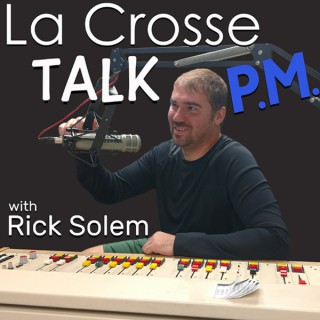
The director of "sin" tax — or excise taxes — joins to talk about the effects of a gas tax holiday, what Wisconsin gains and is missing out on with legalizing sports betting and marijuana, plus Adam Hoffer is on a mission to walk every street in the city of La Crosse. We start with the definition of sin or excise tax, and why Hoffer views the gas tax differently as a "user fee" for road maintenance. We then examine calls Hoffer has been taking at the Tax Foundation lately about a gas tax holiday, and what that could mean to our road infrastructure when nearly every dollar of that tax is funneled directly into transportation budgets. After that, we discuss Hoffer’s walking tour and his goal to cover all 250 miles of city streets, plus how he leads the Emerson Elementary students to school on Wednesdays. The conversation then turns to the proposed indoor aquatic center at the Northside Community Pool site, as the first of five public meetings was happening just after we recorded. Hoffer, who sat on the UW-La Crosse Faculty Senate during the construction of the $49 million field house, offers perspective on potential funding hurdles, recalling how a single bid jump added $6 million to that project's bottom line. Lastly, we break down Wisconsin’s legalization of sports gambling and the tens of millions in windfall the state could see, as well as how much it loses by not legalizing marijuana — as all of Wisconsin's neighbors move toward established legal markets.See omnystudio.com/listener for privacy information.

Sedan många år tillbaka är Jody Hoffer Gittells forskning om ”relationell koordinering” en viktig inspirationskälla för oss på Länka. Redan i avsnitt 20 av vår podcast kan du höra oss prata om hennes mycket användbara teorier och forskning. Kanske är det följande som gör att denna ansats känns så otroligt meningsfull: Relationell koordinering tar avstamp i vår djupt relationella verklighet och kombinerar detta med praktiska sätt att utveckla våra relationer. Både utgångspunkten och de praktiska metoderna är något vi verkligen kan behöva i vår tid. I detta avsnitt pratar Karoline med Jody om Betydelsen av relationer i dagens samhälle, och vad relationell koordinering är Hur ett relationellt tänkande och tillvägagångssätt är det rätta svaret när vi möter en värld av ömsesidiga beroenden, där vi alla hänger ihop och påverkar varandra: ”I cannot get what I want if you don't get what you want” Betydelsen av djupt lyssnande och nyfikenhet på den andre och på det som är annorlunda Att rollen som samverkansledare är viktig – men att det också krävs en medveten organisatorisk design och strukturer som stöttar samverkansledarens arbete Det vi alla behöver lära oss: Att BÅDE vara (och hållas) ansvariga för min egen del OCH för helheten (shared accountability) Den filosofiska dimensionen: Relationell ontologi – verkligheten är relationell, och arbetar vi utan att ta hänsyn till det, skapar vi kris efter kris Trevlig lyssning! Om du vill läsa mer djupgående om Hoffer Gittells forskning och praktiska tips, rekommenderar vi hennes bok ”Transforming Relationships for High Performance. The Power of Relational Coordination” (2016) Blev du nyfiken på RCC – Realtional Coordination Collaborative, hittar du mer information här https://heller.brandeis.edu/relational-coordination/index.html Här kan du läsa mer om aktuell forskning och få tillgång till en RCC Toolbox och annat material https://heller.brandeis.edu/relational-coordination/resources/index.html Vill du följa med till Oslo i november 2026 för en ”Roundtable” på temat ”Leadership for Systems Change”, läs mer och anmäl dig här https://heller.brandeis.edu/relational-coordination/roundtables/roundtable-2026.html#!event-register/2026/11/12/creating-systems-change-how-relationships-can-tackle-complexity-within-and-across-sectors

Are vampires purely the stuff of legend—or do the stories hint at something deeper within human history and belief? In this intriguing episode, Roberta Hoffer explores the enduring mystery of vampires, examining how these enigmatic figures have captivated cultures across centuries. Drawing from folklore, historical accounts, and modern interpretations, Roberta delves into how vampire legends have evolved—from ancient tales of blood-drinking entities to the sophisticated and symbolic figures seen in contemporary media. She explores what these stories may represent, including themes of fear, immortality, power, and the unknown. This episode invites listeners to look beyond fiction and into the roots of belief. Why do vampire legends appear in so many cultures around the world? Are they symbolic reflections of human psychology, or do they originate from misunderstood events in history? And what keeps these dark and fascinating stories alive in modern times? Join us for a captivating and thought-provoking conversation that explores one of the most enduring legends of all—where myth, history, and imagination converge in the shadows.Become a supporter of this podcast: https://www.spreaker.com/podcast/the-x-zone-radio-tv-show--1078348/support.Please note that all XZBN radio and/or television shows are Copyright © REL-MAR McConnell Meda Company, Niagara, Ontario, Canada – www.rel-mar.com. For more Episodes of this show and all shows produced, broadcasted and syndicated from REL-MAR McConell Media Company and The 'X' Zone Broadcast Network and the 'X' Zone TV Channell, visit www.xzbn.net. For programming, distribution, and syndication inquiries, email programming@xzbn.net.We are proud to announce the we have launched TWATNews.com, launched in August 2025.TWATNews.com is an independent online news platform dedicated to uncovering the truth about Donald Trump and his ongoing influence in politics, business, and society. Unlike mainstream outlets that often sanitize, soften, or ignore stories that challenge Trump and his allies, TWATNews digs deeper to deliver hard-hitting articles, investigative features, and sharp commentary that mainstream media won't touch.These are stories and articles that you will not read anywhere else.Our mission is simple: to expose corruption, lies, and authoritarian tendencies while giving voice to the perspectives and evidence that are often marginalized or buried by corporate-controlled media

Rewert Hoffer ist seit 2024 NZZ-Korrespondent für den Nahen Osten, und seit letztem Dezember lebt er in der libanesischen Hauptstadt Beirut. Nachdem die USA und Israel vor zwei Wochen Iran bombardiert und den geistlichen Führer Khamenei getötet hatten, trat auch die proiranische Hizbullah-Miliz in Libanon überraschend in den Krieg ein und bombardierte ihrerseits Israel. Seitdem ist auch Beirut, von wo aus Rewert arbeitet, wieder in diesen Krieg verwickelt. In dieser Samstagsfolge von «NZZ Akzent» erzählt er, wie nach dem Kriegseintritt ganze Stadtteile evakuiert wurden und wie er sich mühsam durch die chaotischen Strassen voller flüchtender Menschen bewegte. Weil er derzeit nicht ausreisen kann, besucht er Notunterkünfte und spricht mit Menschen im Land. Gast: Rewert Hoffer, Nahost-Korrespondent Host: Simon Schaffer Die Texte von Rewert Hoffer aus dem Nahen Osten findet ihr [hier bei der NZZ](https://www.nzz.ch/impressum/rewert-hoffer-ld.1711500). Lust auf noch mehr digitale Inhalte der NZZ? [Probier`ts drei Monate aus.](https://abo.nzz.ch/25077808-2/)
Giving UW-Madison $14.6 million in taxpayer money to pay players, will sports gambling become legal and gas prices going up were the big topics we covered Friday with economist, Dr. Adam Hoffer. Hofffer is the director of excise tax policy at the Tax Foundation and began by explaining what excise tax is — or sin taxes, like gambling, alcohol, marijuana. Another one of those excise taxes is gas, and Hoffer explained how Wisconsin’s gas prices could skyrocket because of the war in Iran — if certain Legislators had their way — but the way the state taxes gas now, makes the most sense. In the sports world, the Wisconsin state Senate is going to work one or two more days next week, before calling it quits for the rest of 2026. Among the flurry of bills that could get a vote, one would be on legalizing sports gambling, and Hoffer explains how that might work — and how that will immediately trigger lawsuits. The other bill is a request from UW-Madison for $14.6 million. This money would be for “facilities” but it is a way to offset costs of Division I college now having the option to pay their players up to $20.5 million total a year. Hoffer explains some of the pros and cons for the state, the university and the taxpayer around that bill. We also look at how the sports gambling bill could help the "paying the players" request. See omnystudio.com/listener for privacy information.

Today's poem is Or am I a room with a roof taken off, still holding onto my idea of ceiling by Kelly Hoffer. The Slowdown is your daily poetry ritual. In this episode, Maggie writes… “Fireplaces, thunderstorms, ocean waves—these sounds are popular “white noise” for sleep and relaxation. And it's odd, when I think about how these sounds represent very real dangers in nature. About how we are soothed by the contained version of something that can harm us.” Celebrate the power of poems with a gift to The Slowdown today. Every donation makes a difference: https://tinyurl.com/rjm4synp

In what ways can Math Workshop meet every learner's need for safety, purpose, inspiration, challenge, support, and growth?Join Wendy Ward Hoffer as she sits down with Michelle Morris Jones on PEBC's Phenomenal Teaching Podcast to discuss her newest book, All Minds on Mathematics: Math Workshop for Every Learner.In this episode, Wendy reflects on how her thinking about Math Workshop has evolved since the publication of Minds on Mathematics (2012) and shares her current beliefs about designing and facilitating math lessons that make learning accessible, joyful, and transformative for every student. In addition, she outlines the ways in which mathematics is unique in its liberatory possibilities for all learners. Wendy offers both practical insight and deep reflection. All Minds on Mathematics is more than a professional resource ~ it's a companion and a steady whisper of encouragement for every math teacher striving to reach every learner.Extra CreditHow many two-digit numbers have a cube root? And how many three-digit numbers have a cube root?About WendyWendy Ward Hoffer is the author of the forthcoming All Minds on Mathematics, as well as Phenomenal Teaching, Cultivating STEM Identities, Minds on Mathematics, and Science as Thinking, all published by Heinemann. She is also the author of Developing Literate Mathematicians, published by National Council of Teachers of Mathematics.Wendy serves as Senior Director of Content Development and Publications for the Denver-based Public Education & Business Coalition (PEBC) and travels nationally to provide professional learning for teachers at all levels. She is passionate about promoting rich thinking across content areas—especially in math and science.About the PodcastThe Phenomenal Teaching Podcast is brought to you by the Public Education & Business Coalition (PEBC) and is designed to elevate the strands of the PEBC Teaching Framework, as illustrated in Phenomenal Teaching.Thank you for joining us as we share the stories of educators who are making classrooms and schools more phenomenal than ever—by intentionally cultivating community, purposeful planning, workshop structures, thinking strategies, rich discourse, and assessment practices that promote agency and deep understanding.

What if the problem isn't disagreement — it's how we ask the question? Shira Hoffer was a freshman at Harvard when she asked what she thought was a simple, honest question and got completely shut down. That moment launched her into studying and helping others with something all of us are wrestling with right now: how to stay curious when conversations get tense. ABOUT GUEST Shira Hoffer is the Executive Director of The Viewpoints Project (https://viewpointsproject.org). CHAPTERS (0:00) Introduction (1:04) Meet Shira Hoffer (1:25) Shira's Classroom Experience (5:19) The Viewpoints Project (6:27) The Science of Curiosity (9:49) Navigating Difficult Conversations (14:12) A Disagreement Gone Wrong (19:26) Conclusion
Economist Dr. Adam Hoffer in studio to discuss some wild ideas we have, a day after the La Crosse council took votes on city administrator and the “bike lanes” plan for downtown. Hoffer, the director of excise tax policy at the Tax Foundation, helps brainstorms some new ideas for La Crosse, like turning Pearl Street and King Street into greenways — basically turning them into parks. We also break down what’s been called the “hybrid option” for downtown La Crosse. The council is recommending that plan to the Wisconsin DOT, which is preparing to revamp downtown from storefront to storefront starting in 2030. We end the show by breaking down the city administrator proposal, including the cost of the position, plus how the city could go about having a position like that to make government more efficient in different ways.See omnystudio.com/listener for privacy information.

Trevor and The Dunkin Dad go though all the news and stuff in the NFL. they talk about all the new hirings and etc. they talk about the NHL and so much more

Why do some recruiters command premium fees while others compete on speed and price? It's not talent or experience. It's whether they've packaged their service as a product. Andrea Hoffer learned this lesson the hard way. Before launching her consulting business, Andrea spent 10 years running a Massage Envy Spa franchise. She led a team of more than 30 employees. Her therapeutic staff stayed. Her front-desk hires didn't. Turnover was constant. She hired fast, hoped for the best, watched people struggle in a sales-driven role, then repeated the cycle. Eventually, she stopped and asked herself one question: "I've been trained better than this." That question changed everything. Andrea rebuilt her hiring approach from scratch and turned it into a branded, repeatable system she now calls the Dream Hire framework. It worked so well that other franchise owners began asking for help. Today, Andrea runs AHA Talent Consulting, where she helps business owners build "hiring machines" that consistently attract the right people. She charges $10,000+ for setup and $3,000+ monthly subscriptions. No placement fees. She's not selling placements. She's selling a system. In this episode of The Resilient Recruiter, we break down how to package your recruitment process as a signature solution, why story-based discovery reveals what job descriptions never will, and where AI creates real value without replacing human judgment. If you're a recruiter or agency owner who wants to differentiate, defend premium fees, and stop competing on speed alone, this episode will give you a practical blueprint.
Why do some recruiters command premium fees while others compete on speed and price? It's not talent or experience. It's whether they've packaged their service as a product. Andrea Hoffer learned this lesson the hard way. Before launching her consulting business, Andrea spent 10 years running a Massage Envy Spa franchise. She led a team of more than 30 employees. Her therapeutic staff stayed. Her front-desk hires didn't. Turnover was constant. She hired fast, hoped for the best, watched people struggle in a sales-driven role, then repeated the cycle. Eventually, she stopped and asked herself a simple question: “I've been trained better than this.” That question changed everything. Andrea rebuilt her hiring approach from scratch and turned it into a branded, repeatable system she now calls the Dream Hire framework. It worked so well that other franchise owners began asking for help. Today, Andrea runs AHA Talent Consulting, where she helps business owners build “hiring machines” that consistently attract the right people. She charges $10,000+ for setup and $3,000+ monthly subscriptions. No placement fees. She's not selling placements. She's selling a system. In this episode of The Resilient Recruiter, we break down how to package your recruitment process as a signature solution, why story-based discovery beats traditional intake calls, and where AI genuinely adds leverage without replacing human judgment. In This Episode, You'll Learn: Why packaging your process matters more than speed or experience How the Dream Hire framework works and why Define is the most skipped (and costly) stage Why asking for stories reveals more than job descriptions ever will How to assess culture fit without relying on gut feel Where AI creates real value in hiring and where it doesn't How to use technology to scale insight without losing trust Episode Highlights [4:10] The hiring nightmare that forced Andrea to rebuild her entire process [7:38] Why changing the job posting language repelled the wrong candidates [9:31] The 90-minute group interview where candidates self-select out [12:24] Breaking down the Dream Hire framework: Define, Reach, Engage, Assess, Motivate [13:23] Why most recruiters skip defining and pay for it later [30:20] Assessing culture fit by asking for stories, not descriptions [36:08] The CAR technique for behavioral interviewing [39:58] Where AI creates the most value in hiring [41:02] Using AI chatbots to screen minimum qualifications [52:20] How Andrea uses AI to extend reach without extending hours Guest Bio Andrea Hoffer is the founder of AHA Talent Consulting and creator of the Dream Hire framework. She helps business owners attract, hire, and retain the right people through structured hiring systems and disciplined use of AI. Before consulting, Andrea spent 10 years as the owner and operator of a Massage Envy Spa franchise, where she led a 30+ person team and experienced firsthand the cost of hiring without structure. Today, she works primarily with multi-unit franchisees and small business owners who want predictable hiring outcomes without constant churn. If you're ready to stop competing on speed and price and start owning your process, your positioning, and your outcomes, this episode is a must-listen.
Allen, Joel, and Rosemary break down the Trump administration’s sudden halt of five major offshore wind projects, including Coastal Virginia Offshore Wind and parts of Vineyard Wind, over national security claims the hosts find questionable. They also cover the FCC’s ban on new DJI drone imports and what operators should do now, plus Fraunhofer’s latest wind research featured in PES Wind Magazine. Sign up now for Uptime Tech News, our weekly email update on all things wind technology. This episode is sponsored by Weather Guard Lightning Tech. Learn more about Weather Guard’s StrikeTape Wind Turbine LPS retrofit. Follow the show on Facebook, YouTube, Twitter, Linkedin and visit Weather Guard on the web. And subscribe to Rosemary Barnes’ YouTube channel here. Have a question we can answer on the show? Email us! The Uptime Wind Energy Podcast brought to you by Strike Tape, protecting thousands of wind turbines from lightning damage worldwide. Visit strike tape.com. And now your hosts, Alan Hall, Rosemary Barnes, Joel Saxon, and Yolanda Padron. Welcome to the Uptime Wind Energy Allen Hall: Podcast. I’m your host, Alan Hall, and I’m here with. Rosemary Barnes in Australia and Joel Saxon is down in Austin, Texas. Yolanda Padron is on holiday, and well, there’s been a lot happening in the past 24 hours as we’re recording this today. If you thought the battle over offshore wind was over based on some recent court cases, well think again. The Trump administration just dropped the hammer on five major offshore wind projects. Exciting. National security concerns. The Secretary of the Interior, Doug Bergham announced. The immediate pause affecting projects from Ted Eor, CIP and Dominion Energy. So Coastal [00:01:00] Virginia, offshore wind down in Virginia, right? Which is the one we thought was never gonna be touched. Uh, the Department of War claims classified reports show these giant turbines create radar interference that could blind America’s defenses. Half of vineyard winds, turbines are already up and running, producing power, by the way. Uh, and. I guess they, it sounds like from what I can see in more recent news articles that they turn the power off. They just shut the turbines off even though those turbines are fully functioning and delivering power to shore. Uh, so now the question is what happens? Where does this go? And I know Osted is royally upset about it, and Eor obviously along with them, why not? But the whole Denmark us, uh, relationship is going nuclear right now. Joel Saxum: I think here’s a, here’s a technical thing that a lot of people might not know. If you’re in the wind industry in the United States, you may know this. There’s a a few sites in the northern corner of Colorado that are right next to Nebraska, [00:02:00] and that is where there is a strategic military installations of subsurface, basically rocket launches and. And in that entire area, there is heavy radar presence to be able to make sure that we’re watching over these things and there are turbines hundreds of meters away from these launch sites at like, I’ve driven past them. Right? So that is a te to me, the, the radar argument is a technical mute point. Um, Alan, you and I have been kind of back and forth in Slack. Uh, you and I and the team here, Rosemary’s been in it too, like just kind of talking through. Of course none of us were happy. Right. But talking through some of the points of, of some of these things and it’s just like basically you can debunk almost every one of them and you get down to the level where it is a, what is the real reasoning here? It’s a tit for tat. Like someone doesn’t like offshore wind turbines. Is it a political, uh, move towards being able to strengthen other interests and energy or what? I don’t know. ’cause I can’t, I’m not sitting in the Oval Office, but. [00:03:00] At the end of the day, we need these electrons. And what you’re doing is, is, is you’re hindering national security or because national security is energy security is national security, my opinion, and a lot of people’s opinions, you’re hindering that going forward. Allen Hall: Well, let’s look at the defense argument at the minute, which is it’s, it’s somehow deterring, reducing the effectiveness of ground radars, protecting the shoreline. That is a bogus argument. There’s all kinds of objects out on the water right now. There’s a ton of ships out there. They’re constantly moving around. To know where a fixed object is out in the water is easy, easy, and it has been talked about for more than 15 years. If you go back and pull the information that exists on the internet today from the Department of Defense at the time, plus Department of Interior and everybody else, they’ve been looking at this forever. The only way these turbines get placed where they are is with approval from the Department of Defense. So it isn’t like it didn’t go through a review. It totally did. They’ve known about this for a long, long time. So now to bring up this [00:04:00] specious argument, like, well, all of a sudden the radar is a problem. No, no. It’s not anybody’s telling you it’s a classified. Piece of information that is also gonna be a bogus argument because what is going along with that are these arguments as well, the Defense Department or Department of War says it’s gonna cause interference or, or some degradation of some sort of national defense. Then the words used after it have nothing to do with that. It is, the turbines are ugly, the turbines are too tall. It may interfere, interfere with the whales, it may interfere with fishing, and I don’t like it. Or a, a gas pipeline could produce more power than the turbines can. That that has nothing to do with the core argument. If the core argument is, is some sort of defense related. Security issue, then say it because it, it can’t be that complicated. Now, if you, if you knew anything about the defense department and how it operates, and also the defenses around the United States, of which I know a little bit about, [00:05:00] having been in aerospace for 30 freaking years, I can tell you that there are all kinds of ways to detect all kinds of threats that are approaching our shoreline. Putting a wind turbine out there is not Joel Saxum: gonna stop it. So the, at the end of the day, there is a bunch, there’s like, there’s single, I call them metric and intrinsic, right? Metric being like, I can put data to this. There’s a point here, there’s numbers, whatever it may be. And intrinsic being, I don’t like them, they don’t look that good. A pipeline can supply more energy. Those things are not necessarily set in stone. They’re not black and white. They’re, they’re getting this gray emotional area instead of practical. Right. So, okay. What, what’s the outcome here? You do this, you say that we have radar issues. Do we do, does, does the offshore substation have a radar station on it for the military or, or what does that, what does that look like? Allen Hall: Maybe it does, maybe it doesn’t, but if the threat is what I think it is, none of this matters. None of this matters. It’s already been discussed a hundred times with the defense [00:06:00] department and everybody else is knowledgeable in this, in this space. There is no way that they started planted turbines and approve them two, three years ago. If it was a national security risk, there is no chance that that happened. So it really is frustrating when you, when you know some of the things that go on behind the scenes and you know what, the technical rationales could be about a problem. And that’s not what’s being talked about right now that I don’t like being lied to. Like, if you want to have a, a political argument, have a political argument, and the, if the political argument is America wants Greenland from Denmark, then just freaking say it. Just say it. Don’t tie Massachusetts, New York, Connecticut, new J, all, all these states up until this nonsense, Virginia, what are we doing? What are we doing? Because all those states approved all those projects knowing full well what the costs were, knowing how tall the turbines were, knowing how long it was gonna take to get it done, and they all approved them. This [00:07:00] is not done in a vacuum. These states approve these projects and these states are going to buy that power. Let them, you wanna put in a a, a big gas pipeline. Great. How many years is that gonna take, Doug? How many years is that gonna take? Doug Bergham? Does anybody know? He, he doesn’t know anything about that. Joel Saxum: You’re not getting a gas pipeline into the east coast anytime soon whatsoever. Because the, the east, the east coast is a home of Nimbyism. Allen Hall: Sure, sir. Like Massachusetts. It’s pretty much prohibited new gas pipelines for a long time. Okay. That’s their choice. That is their choice. They made that choice. Let them live with it. Why are you then trying to, to double dip? I don’t get it. I don’t get it. And, but I do think, Joel, I think the reason. This is getting to the level it is. It has to do something to do with Greenland. It has something to do with the Danish, um, uh, ambassador or whoever it was running to talk to, to California and Newsom about offshore tournaments. Like that was not a smart move, my opinion, but [00:08:00] I don’t run international relations with for Denmark. But stop poking one another and somebody’s gotta cut this off. The, the thing I think that the Trump administration is at risk at is that. Or instead, Ecuador has plenty of cash. They’re gonna go to court, and they are most likely going to win, and they’re going to really handcuff the Trump administration to do anything because when you throw bull crap in front of a judge and they smell it, the the pushback gets really strong. Well, they’re gonna force all the discussion about anything to do with offshore to go through a judge, and they’re gonna decide, and I don’t think that’s what the Trump administration wants, but that’s where they’re headed. I’m not sure why Joel Saxum: you’d wanna do that. Like at the end of the day, that may be the solution that has to come, but I don’t think that that’s not the right path either. Right? Because a judge is not an SME. A judge doesn’t know all of the, does the, you know, like a, a judge is a judge based on laws. They don’t, they’re, they’re not an offshore wind energy expert, so they sh that’s hard for them to [00:09:00] decide on. However, that’s where it will go. But I think you’re correct. Like this, this is more, this is a larger play and, and this mor so this morning when this rolled out, my WhatsApp, uh, and text messages just blew up from all of my. Danish friends, what is going on over there? I’m like, I don’t know what you want me to say. I’m not in the hopeful office. I can’t tell you what’s going on. I’m not having coffee in DC right now. I said, you know, but going back to it, like you can see the frustration, like, what, why, why is this the thing? And I think you’re right though, Alan, it is a large, there’s a larger political play in, in movement here of this Greenland, Denmark, these kind of things. And it’s a, it’s. It’s sad to see it ’cause it just gets caught. We’re getting caught in the crossfire as a wind industry. Yeah. It’s Allen Hall: not helping anybody. And when you set precedents like this, the other side takes note, right? So Democrats, when they eventually get back into the White House again, which will happen at some point, are gonna swing the pendulum just as hard and harder. So what are you [00:10:00] doing? None of, none of this matters in, in my opinion, especially if you, if you read Twitter today, you’re like, what the hell? All the things that are happening right now. RFK Jr had a post a few hours ago talking about, oh, this is great. We’re gonna shut off this off shore wind thing because it kills the whales. Sorry, it doesn’t. Sorry. It doesn’t, if you want, if you wanna make an argument about it, you have to do better than that. A Twitter post doesn’t make it fact, and everybody who’s listened to this and paying attention, I don’t want you to do your own research, but just know that you got a couple of engineers here, that that’s what we do for a living. We source through information, making sure that it makes sense. Does it align? Is it right? Is it wrong? Is, is there something to back it up with? And the information that we have here says. It is. It’s not hurting anything out there. You may not like them, but you know what? You don’t want a coal factor in your backyard either. Delamination and bottomline failures and blades are difficult problems to detect [00:11:00] early. These hidden issues can cost you millions in repairs and lost energy production. C-I-C-N-D-T are specialists to detect these critical flaws before they become expensive burdens. Their non-destructive test technology penetrates deep to blade materials to find voids and cracks. Traditional inspections completely. Miss C-I-C-N-D-T Maps. Every critical defect delivers actionable reports and provides support to get your blades back in service. So visit cic ndt.com because catching blade problems early will save you millions. Joel Saxum: When it comes down to sorting through data, I think that’s a big problem. Right? And that’s what’s happening with a lot of the, I mean, generalizing, a lot of the things that are happening in the United States in the last 10 years give it. Um, but people just go, oh, this person said this. They must be an authority. Like, no, it’s not true. We’ve been following [00:12:00] a lot of these things with offshore wind. I mean, probably closer than most. Uh, besides the companies that are developing those wind farms, simply because it’s a part of our day job, it’s what we do. We’re, we’re, we’re looking at these things, right? So. Understanding the risks, uh, rewards, the political side of things. The commercial side. The technical side. That’s what we’re here to kind of feed, feed the information back to the masses. And a lot of this, or the majority of all of this is bs. It doesn’t really, it doesn’t, it doesn’t play. Um, and then you go a little bit deeper into things and. Like the, was it the new Bedford Light, Alan, that said like, now they’re seeing that the turbines have actually been turned off, not just to stop work for construction. They’ve turned the turbines off up in Massachusetts or up off of in the northeast area? No, that they have. Allen Hall: And why? I mean, the error on the side of caution, I think if you’re an attorney for any of the wind operations, they’re gonna tell you to shut it off for a couple of days and see what we can figure out. But the, the timing of the [00:13:00] shutdown I think is a little unique in that the US is pretty much closed at this point. You’re not gonna see anything start back up for another couple of weeks, although they were doing work on the water. So you can impose a couple hundred million. Do, well, not a hundred million dollars, but maybe a couple million dollars of, of overhead costs in some of these projects because you can’t respond quick enough. You gotta find a judge willing to put a stay in to hold things the same and, and hold off this, uh, this, uh, b order, but. To me, you know, it’s one of those things when you deal with the federal government, you think the federal government is erratic in just this one area? No, it’s erratic in a lot of areas. And the frustration comes with do you want America to be stronger or do you want nonsense to go on? You know? And if I thought, if that thought wind turbines were killing whales, I’d be the first one up to screaming. If I thought offshore wind was not gonna work out in term, in some long-term model, I would be the first one screaming about it. That’s not Joel Saxum: reality. [00:14:00] Caveat that though you said, you’re saying if I thought, I think the, the real word should be if I did the research, the math and understood that this is the way it was gonna be. Right? Because that’s, that’s what you need to do. And that’s what we’ve been doing, is looking at it and the, the, all the data points to we’re good here. If someone wanted to do harm Allen Hall: to the United States, and God forbid if that was ever the case. That wouldn’t be the way to do it. Okay. And we, and we’ve seen that through history, right. So it, it’s, it doesn’t even make any sense. The problem is, is that they can shield a judge from looking at it somewhat. If they classify well, the judge isn’t able to see what this classified information is. In today’s world, AI and everything on the internet, you don’t think somebody knows something about this? I do. And to think that you couldn’t make any sort of software patch to. Fix whatever 1965 radar system they have sitting on the shorelines of Massachusetts. They could, in today’s world, you can do that. So this whole thing, it [00:15:00] just sounds like a smoke screen and when you start poking around it, no one has an answer. That is the frustrating bit. If you’re gonna be seeing stuff, you better have backup data. But the Joel Saxum: crazy thing here, like look at the, the, the non wind side of this argument, like you’re hurting job growth. Everybody that goes into a, uh. Into office. One of the biggest things they run on all the time, it doesn’t matter, matter where you are in the world, is I’m gonna bring jobs and prosperity to the people. Okay. How many jobs have just been stopped? How many people have just been sent home? How much money’s being lost here? And who’s one of the biggest companies installing these turbines in the states? Fricking ge like so. You’re, you’re hurting your own local people. And not only is this, you stand there and say, we’re doing all this stuff. We’re getting all this wind energy. We’re gonna do all these things and we’re gonna win the AI race. To the point where you’ve passed legislation or you’ve written, uh, uh, executive order that says, Hey, individual states, if you pass legislation [00:16:00] that slows or halts AI development in your state, the federal government can sue you. But you’re doing the same thing. You’re halting and slowing down the ability for AI and data centers to power themselves at unprecedented growth. We’re at here, 2, 3, 4, 5% depending on what, what iso you ask of, of electron need, and we’re the fastest way you could put electrons to the grid. Right now in the United States, it’s. Either one of those offshore wind farms is being built today, or one of the other offs, onshore wind farms or onshore solar facilities that are being built right now today. Those are the fastest ways to help the United States win the AI race, which is something that Trump has loud, left and right and center, but you’re actively like just hitting people in the shins with a baseball bat to to slow down. Energy growth. I, I just, it, it doesn’t make any logical sense. Allen Hall: And Rosemary just chime in here. We’ve had enough from the Americans complaining about it. Rosemary Barnes: Yeah. I mean, it’s hard for me to comment in too much detail about all of the [00:17:00] American security stuff. I mean, defense isn’t, isn’t one of my special interests and especially not American defense, but. When I talk about this issue with other Australians, it’s just sovereign risk is the, the issue. I mean, it was, it’s similar with the tariffs. It’s just like how, and it’s not just for like foreign companies that might want to invest in America. American companies are affected just, uh, as equally, but like you might be anti wind and fine. Um, but I don’t know how any. Company of any technology can have confidence to embark on a multi-year, um, project. Now, because you don’t know, like this government hates wind energy, but the next one could hate ai or the next one could hate solar panels, electric cars, or you know, just, just anything. And so like you just can’t. You just can’t trust, um, that your plans are gonna be able to be fulfilled even if you’ve got contracts, even if you’ve got [00:18:00] approvals, even if you are most of the way through building something, it’s not enough to feel safe anymore. And it’s just absolutely wild. That’s, and yeah, I was actually discussing with someone yesterday. How, and bearing in mind I don’t really understand American politics that deeply, but I’m gonna assume that Republicans are generally associated with being business friendly. So there must be so many long-term Republican donors who have businesses that have been harmed by all of these kinds of changes. And I just don’t understand how everyone is still behind this type of behavior. That’s what, that’s what I struggle to understand. Joel Saxum: This is the problem at the higher levels in. In DC their businesses are, are oil and gas based though. That’s the thing, the high, the high power conservative party side of things in the United States politics. The, the lobby money and the real money and the like, like think like the Dick Cheney era. Right. That was all Weatherford, right? It’s all oil and gas. Rosemary Barnes: So it’s not like anybody [00:19:00] cares about the, you know, I don’t know, like there’d be steel fabricators who have been massively affected by this. Right? Like that’s a good, a good traditional American business. Right. But are you saying it’s not big enough business that anyone would care that, that they’ve been screwed over? Joel Saxum: Not anymore Allen Hall: because all that’s being outsourced. The, the other argument, which Rosemary you touched upon is, is the one I’m seeing more recently on all kinds of social medias. It’s a bunch of foreign companies putting in these wind turbines. Well, who the hell Joel Saxum: is drilling your oil baby? This is something that I’ve always said. When you go go to Houston, Texas, the energy capital of the world, every one of those big companies, none of ’em are run by a Texan. They are all run by someone from overseas. Every one of ’em. Allen Hall: You, you think that, uh, you know, the Saudis are all, you know, great moral people. What the hell are you talking about? Are you starting to compare countries now? Because you really don’t wanna do that. If you wanna do that into the traditional energy marketplace, you’re, you’re gonna have [00:20:00] a lot of problems sleeping at night. You will, I would much rather trust a dane to put in a wind turbine or a German to put in a wind turbine than some of the people that are in, involved in oil and gas. Straight up. Straight up. Right. And we’ve known that for years. And we, we, we just play along, look. The fact of the matter is if you want to have electrons delivered quickly to the United States, you’re gonna have to do something, and that will be wind and solar because it is the fastest, cheapest way to get this stuff done. If you wanna try to plant some sort of gas pipeline from Louisiana up to Massachusetts or whatever the hell you wanna do, good luck. You know how many years you’re talking about here. In the meantime, all those people you, you think you care about are gonna be sitting there. With really high electricity rates and gas, gas, uh, rates, it’s just not gonna end well. Speaker 5: Australia’s wind farms are growing fast, but are your operations keeping up? Join us February 17th and [00:21:00] 18th at Melbourne’s Poolman on the park for Wind energy o and M Australia 2026, where you’ll connect with the experts solving real problems in maintenance asset management. And OEM relations. Walk away with practical strategies to cut costs and boost uptime that you can use the moment you’re back on site. Register now at W OM a 2020 six.com. Wind Energy o and m Australia is created by wind professionals for wind professionals because this industry needs solutions. Not speeches if Allen Hall: you don’t have enough on your plate already. Uh, the FCC has panned the import and sale of all new drone models from Chinese manufacturers, including the most popular of all in America, DJI, uh, and they clo. They currently hold about 70% of the global marketplace, the ban as DGI and Autel Robotics to the quote unquote covered list of entities deemed [00:22:00] a national security risk. Now here’s the catch. Existing models that are already approved for sale can still be purchased. So you can walk down to your local, uh, drone store and buy A DJI drone. And the ones you already own are totally fine, but the next generation. Not happening. They’re not gonna let ’em into the United States. So the wind industry heavily relies on drones. And, and Joel, you and I have seen a number of DJI, sort of handheld drones that are used on sites as sort of a quick check of the health of a, or status of a blade. Uh, you, you, I guess you will still be able to do that if you have an older dj. I. But if you try to buy a new one, good luck. Not gonna happen. Joel Saxum: Yeah. I think the most popular drone right now in the field, of course two of ’em, I would, I would say this, it’s like the Mavic type, you know, the little tiny one that like a site supervisor or a technician may have, they have their part 1 0 7 license. They can fly up and look at stuff. Uh, and then the [00:23:00] other one is gonna be the more industrial side. That’s gonna be the DJ IM 300. And that’s the one where a lot of these platforms, the perceptual robotics and some of the others have. That’s their base because the M 300 has, if you’re not in the, the development world, it has what’s called a pretty accessible SDK, which software development kit. So they’re designed to be able to add your sensors, put your software, and they’re fly ’em the way you want to. So they’re kind of like purpose built to be industrial drones. So if you have an M 300 or you’re using them now, what this I understand is you’re gonna still be able to do that, but when it comes time for next gen stuff, you’re not gonna be able to go buy the M 400. And import that. Like once it’s you’re here, you’re done. So I guess the way I would look at it is if I was an operator and that was part of our mo, or I was using a drone inspection provider, that that’s what comes on site. I would give people a plan. I would say basic to hedge your risk. I would say [00:24:00]basically like, Hey, if you’re my drone operator and I’m giving you a year to find a new solution. Um, that integrates into your workflows to get this thing outta here simply because I can’t be at risk that one day you show up, this thing crashes and I can’t get another one. A lot of companies are already like, they’re set and ready to go. Like all the new Skys specs, the Skys specs, foresight, drone, it’s all compliant, right? It’s USA made USA approved. Good to go. I think the new Arons drone is USA compliant. Good to go. Like, no, no issues there. So. Um, I think that some of the major players in the inspection world have already made their moves, um, to be able to be good USA compliant. Um, so just make sure you ask. I guess that’s, that. Our advice to operators here. Make sure you ask, make sure you’re on top of this one so you just don’t get caught with your pants down. Allen Hall: Yeah, I know there’s a lot of little drones in the back of pickup trucks around wind farms and you probably ought to check, talk to the guys about what’s going on to make sure that they’re all compliant. [00:25:00] In this quarter’s, PES Win magazine, which you can download for free@pswin.com. There is an article by Fran Hoffer, and they’re in Germany. If you don’t know who Fran Hoffer is, they’re sort of a research institution that is heavily involved in wind and fixing some of the problems, tackling some of the more complex, uh, issues that exist in blade repair. Turbine Repair Turbine Lifetime. And the article has a number of the highlights that they’ve been working on for the last several years, and you should really check this out, but looking at the accomplishments, Joel, it’s like, wow, fraud offer has been doing a lot behind the scenes and some of these technologies are, are really gonna be helpful in the near future. Joel Saxum: Yeah. Think of Frown Hoffer of your our US com compadres listening. Think of frown Hoffer as and NRE L, but. Not as connected to the federal government. Right. So, but, but more connected to [00:26:00] industry, I would say. So they’re solving industry problems directly. Right. Some of the people that they get funding research from is the OEMs, it’s other trade organizations within the group. They’re also going, they’re getting some support from the German federal government and the state governments. But also competitive research grants, so some EU DPR type stuff, um, and then some funding from private foundations and donors. But when you look at Frow, offerer, it’s a different project every time you talk to ’em. But, and what I like to see is the fact that these projects that they’re doing. Are actually solving real world problems. I, I, I, Alan and I talk about this regularly on the podcast is we have an issue with government funding or supportive funding or even grant funding or competitive funding going to in universities, institutions, well, whoever it may be, to develop stuff that’s either like already developed, doesn’t really have a commercial use, like, doesn’t forward the industry. But Frow Hoffer’s projects are right. So like one of the, they, they have [00:27:00] like the large bearing laboratory, so they’re test, they’ve tested over 500 pitch bearings over in Hamburg. They’re developing a handheld cure monitoring device that can basically tell you when resin has cured it, send you an email like you said, Alan, in case you’re like taking a nap on the ropes or something. Um, but you know, and they’re working on problems that are plaguing the industry, like, uh, up working on up towel repairs for carbon fiber, spar caps. Huge issue in the industry. Wildly expensive issue. Normally RA blade’s being taken down to the ground to fix these now. So they’re working on some UPT tile repairs for that. So they’re doing stuff that really is forwarding the industry and I love to see that. Allen Hall: Yeah. It’s one of the resources that. We in the United States don’t really take advantage of all the time. And yeah, and there’s a lot of the issues that we see around the world that if you were able to call f Hoffer, you should think about calling them, uh, and get their opinion on it. They probably have a solution or have heard of the problem before and can direct you to, uh, uh, a reasonable outcome. [00:28:00] That’s what these organizations are for. There’s a couple of ’em around the world. DTU being another one, frow Hoffer, obviously, uh, being another powerhouse there. That’s how the industry moves forward. It, it doesn’t move forward when all of us are struggling to get through these things. We need to have a couple of focal points in the industry that can spend some research time on problems that matter. And, and Joel, I, I think that’s really the key here. Like you mentioned it, just focusing on problems that we are having today and get through them so we can make the industry. Just a little bit better. So you should check out PES WIN Magazine. You can read this article and a number of other great articles. Go to ps win.com and download your articles today. That wraps up another episode of the Uptime Wind Energy Podcast. Thanks for joining us and we appreciate all the feedback and support we receive from the wind industry. If today’s discussion sparked any question or ideas, we’d love to hear from you. Just reach out to us on LinkedIn and please don’t forget to subscribe so you [00:29:00] never miss an episode For Joel, Rosemary and Yolanda, I’m a hall. We’ll catch you next week on the Uptime Wind Energy Podcast.

11/26/25: N'ton Survival Ctr's Heidi Nortonsmith & Alexander Leger-Small: food for 18 communities. CDH Dir of Comm Health, Agathe Hoffer-Schaefer: our health needs -- the assessment. Andre Strong Bearheart Gaines: National Day of Mourning & the Nipmuc Nation. Larry Hott: two brave anti-fascist films: “Norita” & “Mr. Nobody Against Putin.”

The air is crisp, the leaves are falling and it's the perfect time for a little spooky history! In this special October history-sode, Auntie Jo Jo takes you back to the 1600s and 1700s to explore the real witch trials of colonial America.Sources for this episode:“Records of the Witchcraft Cases in Virginia” – Virginia Colonial Records Project, Library of Virginia (mentions Grace Sherwood, Joan Wright, Katherine Grady).Salem Witch Trials Documentary Archive & Transcription Project – University of Virginia.Karlsen, Carol F. The Devil in the Shape of a Woman (1987) — a well-researched book on witch trials in New England and Virginia.Godbeer, Richard. Escaping Salem: The Other Witch Hunt of 1692 (Oxford University Press, 2005).Demos, John. Entertaining Satan: Witchcraft and the Culture of Early New England (Oxford University Press, 1982).Hoffer, Peter Charles. The Salem Witchcraft Trials: A Legal History (University Press of Kansas, 1997).Library of Congress: “Witchcraft in Colonial America” primary source set.National Park Service: Grace Sherwood Statue, Witch of Pungo history summary.
Primus have completed their first headlining tour with drummer John Hoffman, who has been plenty busy since his hire in January 2025. This latest tour spanned 25 dates in 24 cities over 35 days, in which the band played 47 different songs! We dig into those numbers, the stage production, and the general excitement from the fanbase as Les, Ler, and Hoffer made a mad dash across the United States to establish live rapport, continue to establish their foundation, and just perhaps, toss about some ideas that may become songs for a new record. WERE YOU THERE? Tell us about your experience @primustracks on Instagram, or primustrackspod@gmail.comGet involvedInstagramFacebookEmailBurn your money

Die Welt sorgt sich um Gaza.

Are you hiring on instinct — and paying for it later? In this episode, Dominic Rubino talks with recruiting expert Andrea Hoffer from AHA! Business Consulting about her D.R.E.A.M. system — a step-by-step approach to hire and keep great foremen in your cabinetry, millwork, or construction business. What you'll learn: ➡️ How to define what your ideal foreman actually looks like ➡️ The importance of reaching candidates in the right places ➡️ How to engage and keep strong applicants moving through your pipeline ➡️ Interviewing tips to assess candidates like a pro ➡️ What to do after hiring to motivate and retain your best talent

Andrea Hoffer is an experienced Talent Acquisition & Management strategist and entrepreneur, passionate about building exceptional teams. As the founder of aha! Talent Experts, she has helped businesses across the country improve recruitment processes, align hiring with company culture, and develop employer brands that attract top talent.With over 30 years of experience in recruitment and nearly two decades as a successful business owner, Andrea understands firsthand how great hires drive long-term success. A Certified AI Consultant, she blends technology with human insight to streamline hiring, optimize talent acquisition, and create customized onboarding experiences.Andrea is also a sought-after keynote speaker and the author of Hire Higher. With a mission to empower both companies and candidates, she specializes in crafting hiring strategies that not only fill positions—but build cohesive, high-performing teams.In this episode, Andrea joins Michelle to talk about why your hiring strategy might be broken—and how to fix it. They dive into the hiring mistakes most retailers make, the power of an authentic employer brand, and how to leverage simple tools like AI, one-way video interviews, and social media to build an all-star team. Andrea also introduces her Dream Hire framework and shares tips for creating effective job postings that attract the right people from the start.We are doing our first-ever open call! You can submit your store or favorite store to be on the podcast because every store has a story behind it! Go to theretailwhorepodcast.com, click on SUBMIT YOUR STORE, fill out an easy form and we'll see you on the mic!What's Inside:How to write job descriptions and job postings that actually attract the right candidatesWhy “you made an impression” cards help turn great customer service into great hiresThe role of pre-hire assessments, one-way video interviews, and AI in modern retail hiringMentioned In This Episode:InstagramFacebookLinkedinaha! Talent Experts Website

Dave Hoffer shares why design demands empathy

Are you having trouble recruiting and retaining quality staff and team members? I know this is a challenge that most businesses I meet with face. Our guest today is Andrea Hoffer, and she shares with us her DREAM framework to help franchisees and small businesses improve their hiring efforts.TODAY'S WIN-WIN:Solving a problem is often the best way to make an impact.LINKS FROM THE EPISODE:You can visit our guest's website at: https://www.ahatalentexperts.com/Attend our Franchise Sales Training Workshop: https://bigskyfranchiseteam.com/franchisesalestraining/If you are ready to franchise your business or take it to the next level: CLICK HERE.Connect with our guest on social:Instagram: https://www.instagram.com/ahatalentexpertsX: https://twitter.com/aha_talent/LinkedIn: https://www.linkedin.com/in/andreahoffer/Facebook: https://www.facebook.com/ahatalentexperts/- Youtube: https://www.youtube.com/@andreahoffer4254ABOUT OUR GUEST:Andrea Hoffer is an experienced Talent Acquisition & Management strategist and former franchisee with a passion for building exceptional teams. As the founder of aha! Talent Experts, she has helped businesses nationwide improve recruitment processes, align hiring with company culture, and develop employer brands that attract top talent. Drawing from over 30 years in recruitment and just under two decades as a successful business owner, Andrea understands firsthand how great hires drive long-term success. A Certified AI Consultant, she blends technology and human insight to streamline hiring, optimize talent acquisition, and create tailored onboarding experiences. Andrea is also a sought-after keynote speaker and the author of Hire Higher. With a mission to empower companies and candidates alike, she specializes in crafting hiring strategies that not only fill positions but build cohesive, high-performing teams.ABOUT BIG SKY FRANCHISE TEAM:This episode is powered by Big Sky Franchise Team. If you are ready to talk about franchising your business you can schedule your free, no-obligation, franchise consultation online at: https://bigskyfranchiseteam.com/.The information provided in this podcast is for informational and educational purposes only and should not be considered financial, legal, or professional advice. Always consult with a qualified professional before making any business decisions. The views and opinions expressed by guests are their own and do not necessarily reflect those of the host, Big Sky Franchise Team, or our affiliates. Additionally, this podcast may feature sponsors or advertisers, but any mention of products or services does not constitute an endorsement. Please do your own research before making any purchasing or business decisions.


Beloved high school sports writer, Michael Hoffer, has launched his website www.hoffershighschoolsports.com. He comes to the Smarter and Harder studio to discuss the next phase of his unique and masterful coverage of Maine high school sports.

To support the channel make your donation here: https://www.gofundme.com/f/t5kvv-being-and-doing-podcast-to-sustain-and-thrive?utm_campaign=p_lico+share-sheet-first-launch&utm_medium=copy_link&utm_source=customerTHIS IS A PLACE WHERE SUCCESS MEETS SERENITY.I am Aleksandra Vancevska, gestalt therapeutic counsellor and UKCP student therapist. I support you to transform overachieving burnout, stress, perfectionism and stuckness into fulfilling self-confidence and authentic success.To start therapy with me schedule a free consultation: https://calendly.com/aleksandra-vanch...If you like what you hear please share, like and subscribe so these stories can reach more people.Elena Hoffer is passionate about helping early career researcher finding full filling careers outside of academia. She received her PhD from Karolinska Institute in Stockholm, Sweden in November 2023. During her PhD she organized careers session for PhDs and postdocs to help them to understand their options after academia. Since 2024, she is running the company Alma.Me which equips early career researchers with tools and knowledge to empower them in their transition. Follow Elena on Linkedin: https://www.linkedin.com/in/elena-hoffer-/Find all the links to work with me in one place:Linktr.ee: https://linktr.ee/being_and_doing This podcast represents my own and my guests views and opinions. The content here should not be taken as medical, financial or any other advice. The content is for informational purposes only, and because each person is so unique, please consult the appropriate professional for any specific questions you have.Thank you for joining me on this journey

Can meaningful conversations bridge the divide in a polarized world? In today's episode, we explore the transformative power of radical curiosity with Shira Hoffer, a senior at Harvard University and founder of the Institute for Multipartisan Education. Join host John Tomasi, as they delve into the potential of dialogue in reducing societal hate and fostering understanding.Shira Hoffer shares her inspirational journey from idealistic student to social entrepreneur, recounting the pivotal experiences that led to the creation of the Hotline for Israel-Palestine. This initiative connects individuals with diverse perspectives in response to the tense climate at Harvard following the October 7th Hamas attack on Israel. Shira emphasizes the role of curiosity in addressing complex conflicts and outlines her efforts to encourage open, non-judgmental discourse across contentious societal issues. In This Episode:Curiosity as a tool against polarizationCreating dialogue to reduce misunderstandingsStudent-led initiatives on curiosity in educationReligious influence on open-mindedness in students About Shira:Shira Hoffer is a senior at Harvard College studying Social Studies and Religion, and the founder and Executive Director of the Institute for Multipartisan Education. She served on Harvard's Intellectual Vitality Committee for two years, is a former fellow and research assistant at the Edmond and Lily Safra Center for Ethics' Intercollegiate Civil Disagreement Program, and is a practicing mediator in Massachusetts courts. Her senior thesis explores the contemporary relationship between religious identity and speech behaviors on US college campuses.Follow Shira on LinkedIn: https://www.linkedin.com/in/shira-hoffer/ Follow Heterodox Academy on:Twitter: https://bit.ly/3Fax5DyFacebook: https://bit.ly/3PMYxfwLinkedIn: https://bit.ly/48IYeuJInstagram: https://bit.ly/46HKfUgSubstack: https://bit.ly/48IhjNF

Melody jumps on the pod and discusses adoption, the foster care system, starting companies, her running journey and much much more!Follow Melody: m0ddity on IGPod Socials!Instagram @twopacktaperFollow the hosts!Tik Tok @mak_n_chz & @paulkennethallenInstagram @runwithmak & @paulkennethallenYoutube @paulkennethallenSubscribe, listen, and enjoy wherever you find your podcasts!Support this podcast at — https://redcircle.com/two-pack-taper/donations

In this episode of Invest in Sqft, Andrea Hoffer takes us on an inspiring journey from her work in college administration to becoming a successful entrepreneur. With a background in higher education and organizational psychology, Andrea shares how she transitioned into business, opening a Massage Envy franchise and later revolutionizing her recruitment processes using AI. Tune in to discover valuable strategies on hiring, team management, and building strong company cultures, along with insights on overcoming common business challenges. If you're looking to innovate your hiring processes and grow your business, this episode is packed with actionable advice you won't want to miss!

What happens when personal recovery meets groundbreaking research? You get this episode! Dr. Aubrey Hoffer joins us to spill all the tea—on her journey through eating disorder recovery, her fascinating research on body image, and how it all comes together to help us rethink our relationships with our bodies. We're talking real talk, relatable moments, and a whole lot of “aha” insights. Whether you're navigating your own recovery or just trying to feel a little more at home in your body, this conversation is like a warm hug with a side of science.

Following Marc's great discussion with Joe Rogan, we wanted to share our interview with Marc Andreessen, who recounts his intellectual evolution and his quest to discover how the world works from 2016 onwards. For full show notes, visit: https://highlightai.com/share/09f4b7dc-5fa8-4e0e-a2aa-87344c3db84b —
Jack and Chris return for the latest TNC Podcast to discuss a brilliant week for the Canaries. Johannes Hoff Thorup's side scored 10 goals at Carrow Road in 5 days and with players returning from injury, can they now put a real run together? 10% off Black Dog Teas with code 'TNC10' - https://bit.ly/3Zq3mAj 20% off code 'TNC20' - New Norwich City 24/25 Home Shirt Collectible https://bit.ly/4eWMXK1 20% off code 'TNC20' - Norwich City 93 UEFA Cup Retro Home Shirt Collectible: https://bit.ly/4dJFJZK ------------------------------------------------------------------------------------------------ PROUDLY SUPPORTED BY: - AZOTH Accountants: https://azoth.accountants/ - PES Renewables: https://pesrenewables.com/ - MIND: https://www.norfolkandwaveneymind.org.uk/ - 101 Computers: https://101computers.co.uk/ - Lacons: https://lacons.co.uk/ - Wingfield Consultants: https://wingfieldconsultants.co.uk/ - Aldreds - https://www.aldreds.co.uk/ - The Big C: http://www.big-c.co.uk/ - Gasway: http://www.gasway.co.uk/ - Credo Asset Finance: https://www.credoassetfinance.com/ - Hoffer & Webb LLC: https://hofferwebb.com/ - Oliver Hill Coaching: https://hillcoachingcompany.co.uk/ - The Unthank Kitchen: https://www.theunthankkitchen.com/ - Salescadence: https://www.salescadence.co.uk/ - TizzOreo: https://www.tizzoreo.co.uk/
Jack and Chris return for the latest TNC Podcast to discuss Norwich City's first game back after the international break which ended in a draw at The Hawthorns. Plenty of the injured players are soon to return which offers hope on the horizon for Johannes Hoff Thorup and his side. 10% off Black Dog Teas with code 'TNC10' - https://bit.ly/3Zq3mAj 20% off code 'TNC20' - New Norwich City 24/25 Home Shirt Collectible https://bit.ly/4eWMXK1 20% off code 'TNC20' - Norwich City 93 UEFA Cup Retro Home Shirt Collectible: https://bit.ly/4dJFJZK ------------------------------------------------------------------------------------------------ - TNC POD ON iTunes: https://itunes.apple.com/gb/podcast/the-tnc-podcast/id1210344078?mt=2 - TNC POD ON Souncloud: https://soundcloud.com/user-77650364 ------------------------------------------------------------------------------------------------ ------------------------------------------------------------------------------------------------ PROUDLY SUPPORTED BY: - AZOTH Accountants: https://azoth.accountants/ - PES Renewables: https://pesrenewables.com/ - MIND: https://www.norfolkandwaveneymind.org.uk/ - 101 Computers: https://101computers.co.uk/ - Lacons: https://lacons.co.uk/ - Wingfield Consultants: https://wingfieldconsultants.co.uk/ - Aldreds - https://www.aldreds.co.uk/ - The Big C: http://www.big-c.co.uk/ - Gasway: http://www.gasway.co.uk/ - Credo Asset Finance: https://www.credoassetfinance.com/ - Hoffer & Webb LLC: https://hofferwebb.com/ - Oliver Hill Coaching: https://hillcoachingcompany.co.uk/ - The Unthank Kitchen: https://www.theunthankkitchen.com/ - Salescadence: https://www.salescadence.co.uk/ - TizzOreo: https://www.tizzoreo.co.uk/
Jack catches up with Connor Southwell of the Pinkun to discuss the latest at Norwich City and where things currently stand under Johnannes Hoff Thorup. The Canaries have had a brilliant month of results but now face a tough run of games. Does Connor think they can sustain this? ------ PROUDLY SUPPORTED BY: - AZOTH Accountants: https://azoth.accountants/ - PES Renewables: https://pesrenewables.com/ - MIND: https://www.norfolkandwaveneymind.org.uk/ - 101 Computers: https://101computers.co.uk/ - Lacons: https://lacons.co.uk/ - Wingfield Consultants: https://wingfieldconsultants.co.uk/ - Aldreds - https://www.aldreds.co.uk/ - The Big C: http://www.big-c.co.uk/ - Gasway: http://www.gasway.co.uk/ - Credo Asset Finance: https://www.credoassetfinance.com/ - Hoffer & Webb LLC: https://hofferwebb.com/ - Oliver Hill Coaching: https://hillcoachingcompany.co.uk/ - The Unthank Kitchen: https://www.theunthankkitchen.com/ - Salescadence: https://www.salescadence.co.uk/ - TizzOreo: https://www.tizzoreo.co.uk/
Jack and Chris catch up with one of Norwich City's new stars, José Córdoba for an in-depth look at his career so far and why he picked Norwich City as the club he wants to progress at. The Panama star is great value and we hope you enjoy.

For over 40 years, The Food Bank has served as the primary source of food for the Hunger Relief Network in the Miami Valley of Ohio. The Food Bank, the only one of its kind in the area, relieves hunger in the community through a network of partner agencies by acquiring and distributing food. The Food Bank provides the structure for more than 100 member food pantries, community kitchens and shelters that serve as the charitable hunger relief network. This might seem like a funny match for The Composter, but The Food Bank has a robust community garden run by James Hoffer, and he began their composting operation in 2019. I really love the addition of the compost cycle in with food recovery and production. It just makes sense. James talks to us about their in-vessel continuous flow composting unit that they purchased through Green Mountain Technologies, the compost scene, and so much more. Follow Jayne & Earth Care Farm on Instagram Support the folks who support The Composter You can learn more about Viably, formerly Komptech, and their portfolio of compost solutions at thinkviably.com. While there, request a complimentary consultative meeting to discover how Viably can help your compost operation deliver what is possible. The OSC Pack Pact is a collective action campaign that works to reduce single-use packaging in the natural products industry. Receive a discount code to shop select products from leading natural products brands that you love. Click the link in the show notes to join the Pack Pact! Compost use and selection decisions involve many factors and are not one-size-fits-all. The U .S. Composting Council's Seal of testing assurance, STA program helps you make the best decisions for your application. Learn about the three Cs of the STA program, clarity, consistency, and confidence and enroll at compostingcounsel.org Green Mountain Technology's mission is to help organizations around the world realize the economic and environmental gains that can be achieved by a well-designed composting system. Learn more at compostingtechnology.com

In this exciting episode, Alex & Annie sit down with Larry Hoffer, CEO of Rentalz, a company specializing in breakthrough growth solutions for vacation rental managers. Larry takes us on a journey through his two-decade career, starting from a personal double-booking mishap in Vail, Colorado, to becoming a key figure in the vacation rental industry. He shares how Rentalz, with its innovative services like OwnerPoint, ContactPoint, AnswerPoint and the recently launched TravelPoint, is driving exponential growth for property managers across North America. Key Topics Discussed:
Jack and Chris return for the latest episode of the TNC Podcast fresh off the back of the Canaries 1-1 draw with Sheffield United at Carrow Road. As we enter the final week of the transfer window, where do the Canaries need to strengthen and who needs to leave? Get your 1993 Norwich City collectors shirt here . Use code 'TNC20' for 20% off - https://bit.ly/4dJFJZK ------------------------------------------------------------------------------------------------ - TNC POD ON iTunes: https://itunes.apple.com/gb/podcast/the-tnc-podcast/id1210344078?mt=2 - TNC POD ON Souncloud: https://soundcloud.com/user-77650364 ------------------------------------------------------------------------------------------------ ------------------------------------------------------------------------------------------------ PROUDLY SUPPORTED BY: - AZOTH Accountants: https://azoth.accountants/ - PES Renewables: https://pesrenewables.com/ - MIND: https://www.norfolkandwaveneymind.org.uk/ - 101 Computers: https://101computers.co.uk/ - Lacons: https://lacons.co.uk/ - Wingfield Consultants: https://wingfieldconsultants.co.uk/ - Aldreds - https://www.aldreds.co.uk/ - The Big C: http://www.big-c.co.uk/ - Gasway: http://www.gasway.co.uk/ - Credo Asset Finance: https://www.credoassetfinance.com/ - Hoffer & Webb LLC: https://hofferwebb.com/ - Oliver Hill Coaching: https://hillcoachingcompany.co.uk/ - The Unthank Kitchen: https://www.theunthankkitchen.com/ - Salescadence: https://www.salescadence.co.uk/ - TizzOreo: https://www.tizzoreo.co.uk/
© 2020-2026 Ivy Podcast Discovery LLC

