
POPULARITY

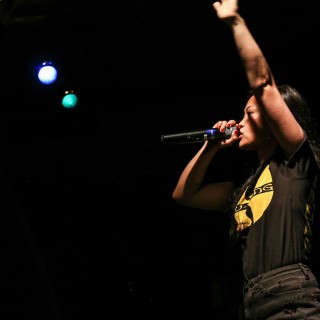
15 episodes with Ruby Ibarra

2 episodes with Ruby Ibarra

4 episodes with Ruby Ibarra

2 episodes with Ruby Ibarra

2 episodes with Ruby Ibarra

3 episodes with Ruby Ibarra

3 episodes with Ruby Ibarra

2 episodes with Ruby Ibarra

2 episodes with Ruby Ibarra

In this episode, we dive into a powerful conversation about what it means to live in diaspora. As people whose homelands are shaped by ongoing struggle and displacement, we reflect on how living away from our ancestral lands informs our identities, relationships, and sense of belonging.Lubna & Tina illuminate our histories of migration and displacement from Falasteen & the islands known as The Philippines. They share how these legacies of displacement continue to shape their communities in the diaspora today.Lubna Morrar is poet, hairstylist and makeup artist. She is a Palestinian community organizer and activist from the Bay Area.Tina Shuaf-Bahar is a Filipino community organizing, singer and culture worker who has long been involved in migrant rights organizing, connecting struggles in her homeland to those faced by workers in the Bay Area.Together we explore how re-membering our languages, food and cultural practices are antidotes to resist pressures like assimilation and generational separation from our lands. We also reflect on how embodying dignity becomes a powerful act of resistance and resilience.Special thanks to Kendall of We Rise and KPFA for hosting us as we recorded our conversationMusic from El Fanoun, Mass Bass, Ruby Ibarra, Ana Tijoux featuring Shadia Mansour & Nitty Scott
APEX Express is a weekly magazine-style radio show featuring the voices and stories of Asians and Pacific Islanders from all corners of our community. The show is produced by a collective of media makers, deejays, and activists. Tonight, host Isabel Li speaks with actresses Amielynn Abellera and Kristin Villanueva, who respectively play Nurse Perlah and Nurse Princess on the HBO Max medical drama, The Pitt. Abellera and Villanueva talk about their Filipino heritage and backgrounds and how they represent Filipina healthcare professionals on the show. See also: Filipinos on the Frontline Amielynn Abellera: Instagram Kristin Villanueva: Instagram Transcript [00:00:00] Opening: Apex Express Asian Pacific expression. Community and cultural coverage, music and calendar, new visions and voices, coming to you with an Asian Pacific Islander point of view. It's time to get on board the Apex Express. 00:00:52 Isabel Li Thank you for tuning in to Apex Express. Last Thursday, season 2 of the HBO Max medical drama The Pitt released its season 2 finale, including a hectic season following medical professionals in the emergency room and giving a realistic depiction of real-world issues in hospitals. I'm Isabel Li, one of the hosts here on APEX Express, and I'm so honored to be joined by two members of that cast tonight who play the two Filipina nurses on The Pitt. They were recently awarded the Actor Award for Outstanding Performance by an Ensemble in a Drama Series. 00:01:28 Isabel Li First, let's hear from actress Amielynn Abellera, who plays Nurse Perla, a Muslim Filipina nurse on the show. 00:01:36 Isabel Li Hi Amielynn, what an honor it is to be speaking to you today. Welcome to Apex Express. 00:01:41 Amielynn Abellera Thank you. Thank you for having me. I'm excited to be speaking with you, too. 00:01:45 Isabel Li So many of our listeners might know you from the HBO Max show, The Pitt, which I have so very much enjoyed. This is actually the first medical show that I have watched, and I really, really admire, like, all of the ensemble casts and, you know, everything coming to life. And you play the Muslim Filipina nurse, Perlah Alawi. We'll talk more about your performance and your character in a little bit, but first, this is a question that I ask all my guests: Can you tell us, how do you identify? And is there a story that you think really encapsulates your identity? 00:02:17 Amielynn Abellera Gosh, I identify as Amielynn Dumac Abellera. She, her, hers. I'm a Filipino American, daughter of two immigrants. And I'm so thrilled and happy to be talking to you and to sharing my experience of my life. 00:02:42 Isabel Li Absolutely. Of course, The Pitt is a medical show. And is it true that you come from a medical background yourself? Like I heard that you were a psychobiology major in undergrad. 00:02:51 Amielynn Abellera Yeah, I was pursuing medicine for a long time. I studied pre-med in undergrad at Santa Clara University, majoring in psychobiology, which is psychology with basically a minor in biology. I really wanted to get into neuroscience and or be an oncologist. And I was pursuing that all the way till I graduated and applying to medical school and getting interviews. But ever since I was a kid, for as long as I can remember, I was really also passionate about acting and theater and film and television and being on stage. But it was really just seen as a hobby in my mind and in sort of my environment's mind. I never really prioritized it as a career, and it was never seen as a possible career. Um, so I just had it on the back burner. And, you know, I was getting, getting closer and closer to medical school and getting more and more anxious that I would regret not pursuing acting. And so sort of after waffling for many years, I decided to audition for a master's in fine arts and acting. And that was because I didn't really have any formal training in acting. I didn't study it in undergrad or, you know, in my younger years. It was just all through life experience and being in plays and art and everything like that. And so I thought if I get into one of these programs, maybe that means I have something to offer. And I was going to take that as the sign that I needed to give myself a chance. And so I got into two programs, and I was thrilled. And I moved to LA to attend the University of Southern California's MFA program. And the rest is history. Here I am. 00:04:47 Isabel Li Wow. How does being a former pre-med influence your current role as a nurse on the show? Do you remember any like terms from science classes that you're like, oh, wow, I remember that in those lines. 00:05:00 Amielynn Abellera Yeah, yeah, totally. And you know, I spent a lot of time in hospitals and clinics and my dad is a former family practitioner. He had his own medical practice and my mom is a nurse practitioner and she worked in the CCU in the hospital for many years. So I was really familiar with how nurses interacted with patients and hearing the terminology and the medical language a lot. So it is a cool throwback and always a really, I love how it's so familiar to me 'cause it's, I still have to work at it quite a bit when, you know, when it's all coming at me and I have to have it down for when we're filming, but I'm not as, as intimidated by it as I probably would be if I didn't have a background. 00:05:50 Isabel Li And out of curiosity, when you got the audition for the pit, did you have to sort of immerse yourself back into that realm of science and that medical background in order to bring out that character when you were first being introduced to Nurse Perlah? 00:06:04 Amielynn Abellera Yeah, a little bit. And I feel that with any role, you kind of, before you go in for the audition or even when you're now filming or you have a part, you just have to kind of get into that world, obviously and really put yourself in the actual experience of what this person's going through. And it did help me to be able to use my imagination so vividly from my previous experience of being in an OR and being in a hospital. I remember when I was doing an internship when I was sort of in the break between graduating undergrad and pursuing medical school, I remember watching a C-section. And I remember — I remember the doctors talking, the surgeons talking, the anesthetic going in, the blood everywhere, the scalpels, the blood pressures, the oxymeter dropping. So, it really — I think back to the real-life fear that I had in all of those those procedures and I just, you know, bring it to Nurse Perlah. 00:07:16 Isabel Li It's incredible. I want to start off by talking about, for Nurse Perlah specifically, that Perlah's identity is a Filipina and a Muslim nurse. What did you do to prepare for a role that is so specific in terms of these cultural representations? 00:07:33 Amielynn Abellera Sure. Thank you for asking that. I am thrilled that Perlah is on television. She is a Filipino American Muslim woman nurse. And I have never seen that. And it's just rarely ever seen on mainstream media. So, in preparing for it, I mean, truly, I had two weeks before we started filming by the time I got the role. And it was go time already. So I didn't have a ton of time, but I did my best to sort of deep dive into learning about the Muslim faith, trying to reach out to different Filipino American Muslims in my community to kind of just hear their experience. And, you know, I quickly learned that it would be impossible for me to sort of understand the full experience completely. And so I just kind of, I realized that the only question that I needed to answer for myself going into filming as Perlah was, is there anything about the Muslim way of life that would influence or adjust or be a part of their nursing or would it shift it at all? And or how would it affect their job? And, you know, after talking to several Filipino American Muslim nurses, there, there wasn't anything that it would do to either to shift or do anything to get in the way of their patient care. They are, it's still their priority just to care relentlessly for this patient and have as much empathy as possible. And to be honest, I'm still learning as I go along with playing Perlah and as scripts come in and I still ask a lot of questions of how would Perlah specifically understand this procedure or understand this text or understand what she's doing and just keep asking questions. 00:09:30 Isabel Li And the majority of The Pitt itself takes place on a hospital set. I'm wondering if you had a vision of what Perlah does outside of the hospital? 00:09:39 Amielynn Abellera Well, I think Perlah is, she's been at this hospital, PTMC, pretty much, this was her first job, she really wanted to work there in this urban setting. And she's been there probably for over eight years or something, like through COVID. I think she is a single mom and she has two children who are both under the age of 10. So I think she's exhausted, but she loves nursing. She loves her kids. And she is just, she knows how to compartmentalize and work hard and like protect herself. She knows how to leave, at least she thinks she knows how to leave the job at the door in order to go home and be with her children. 00:10:24 Isabel Li Uh-huh. And is this something, also, I'm just curious, like, is this something that you had to imagine yourself or did some of the writers sort of drop some hints during production? 00:10:35 Amielynn Abellera I mean, a little bit of both, I think. There are only some hints in the script in the pilot and the first season where it's dropping like, oh, she has some kids and she's exhausted and kind of eye-rolling — Yeah, and pets — And sort of eye-rolling exhausted by what's happening at home. And it's, I am a mother of a five and a half year old. She's almost six right now. So I sort of understand that exhaustion, but like deep love for my child. But it's like, I'm happy to go to work and have them at school, but I'm also missing them. It's just this like journey of a mother. So it was a bit of me sort of creating that backstory, but also just from the hints of the writers. 00:11:23 Isabel Li Definitely. I think something that's so special about The Pitt as a medical show is its accuracy in depicting the very hectic lives of healthcare professionals, especially in an emergency room setting. So Nurse Perlah is often mediating like some sort of communication and really emphasizing medical jargon or reading off data. What was it like memorizing all of these different lines and delivering it in a way that felt authentic to the way that healthcare professionals might? 00:11:50 Amielynn Abellera Sure. Oh my gosh. It's really challenging. I think as soon as I get the scripts, and again, thank goodness I have a sort of familiarity with having a little bit of a medical background, but you know, that was years ago. So anytime I get a script, I immediately go to the hard stuff and get that in my brain as soon as possible. And a trick that I do is, as soon as I have it memorized, I'm just saying it all day and doing things with my hands. Like I do it when I'm folding laundry. I do it when I'm washing dishes. I do it when I'm cooking. I'm doing it when I'm driving, just because as soon as it's second nature, and that's the thing about healthcare professionals, they're constantly, like they're not thinking about what they're saying. They're, it's so awesomely competent in their brain, that is not difficult. That's actually like them just having a conversation. So I love trying to get to that point and showing how Perlah is just so competent in all of that stuff and doesn't even have to think about it while putting in an IV. 00:13:00 Isabel Li Absolutely. Oh my gosh. And I think like a lot of our listeners, maybe if they watch The Pitt and a lot of audience members really enjoy the lighthearted moments that you share with Princess, also another Filipina nurse played by Kristin Villanueva, especially that Nurse Perlah code-switches with her using Tagalog as a language. Can you tell our listeners what that code-switching feels like to you and how you relate to Tagalog as a language? 00:13:25 Amielynn Abellera Yeah, totally. Thank you for asking. I, as Amielynn Abellera, the actor, I grew up, I was born and raised in Stockton, California, and my parents spoke Tagalog and Ilocano at home all the time. And unfortunately, they didn't teach me. So I'm actually not fluent in Tagalog at home. I'm that Filipino American who later in life got voracious about wanting to embrace her heritage and learn it like in her adult life. And I think that translates with Perlah. I do, I think that Perlah is also, was also born and raised in the United States to two Filipinos who came from Mindanao. And even though she had the ear for it, I think that she's learning it later in life. And I think she absolutely is so happy to have, Princess as her buddy because she can practice. Um, because I think like the only way to learn is to constantly be talking every day. And I think Perlah does that. I think she finds any opportunity to celebrate joyfully her heritage by speaking the language with Princess. I think they both do. So it's really close to, to my own personal experience with Tagalog because right now I am learning Tagalog on my own, taking lessons and things like that in order to teach my daughter as well, just to have it in our life more. But I think that is also what Perlah is doing. 00:14:58 Isabel Li Yeah. And for you specifically, how and when did you start learning Tagalog? 00:15:03 Amielynn Abellera Yeah, I think it really is. Like I said, my parents came in the '70s to Stockton, California, as a doctor and a nurse. And, you know, that generation, at that time, their priority was assimilation, so they didn't really teach me. And our Filipino-ness was a little bit second place, in terms of, not in a negative way, but it just was, it took a little bit of second priority as opposed to assimilating to our environment in Stockton, California. And so, however, whatever seeds were planted in there to not really pursue Tagalog or pursue, to learn and be curious about my Filipino heritage, that was sort of the majority of my childhood and into my college years. And it wasn't until, I think, college and beyond when I started to Honestly, I think it was when I was exposed to Filipino cultural night in university, at Santa Clara University, where, all of a sudden, I was with all these other Filipino-Americans who had such a voracious sort of celebration and wanting to learn like the dances, the language, the style, the textiles, the clothing, the music, and they would study it and we would, they would just be so passionate about it. And that really was an experience for me of, oh my gosh, I didn't, it wasn't like I was neglecting it on purpose. It's just, that wasn't in my life. So when that was happening for me, I slowly, slowly really wanted to start learning the language and started taking lessons probably in my twenties. And then, you know, but again, it's a lifelong process to learn another language. It's challenging. Um, and I wish, I wish I was, I wish I was at the level of Perlah where she has a buddy all the time to practice, practice, practice. But I don't have that in my home or in my workplace right now, except with Princess at the hospital. 00:17:28 Isabel Li Gotcha, gotcha. And currently, at the time of this interview, season two of The Pitt is in progress, and you had some really emotionally nuanced moments in the 12 o'clock episode. I'm not going to spoil it too much, but when Perlah reacts to losing a long-term patient, I'm wondering for you, as an actress, can you tell us about how you're able to switch from some, you know, more lighthearted scenes to moments that really emphasize the darker, heavier aspects of being in medicine, like death and disease. How do you portray and balance that? 00:18:02 Amielynn Abellera Sure. Yeah. Thank you for asking. I think nurses are amazing in that way where I don't know if it's a blessing or a curse to be able to compartmentalize such extremes of feeling and experiences of loss of patients on the hour, every hour, and being able to move on to sort of uplift and help other patients on the hour, every hour. But I think Perlah, as such an experienced, competent nurse, has learned how to switch it on, switch it off, but I do feel that something that episode 206 was trying to shine a light on is what of that armor has cracks or what of that armor isn't as strong for certain patients or she or what of that armor is, uh, what if that punch… I'm not able to recover as easily as I usually am? So, um, and I think that must happen all the time with healthcare professionals of what they have to do. I think they have to experience losing loved ones and patients and friends who are patients all the time. And how is it that they get back up to be there for the next one? So I was– it was ultimately challenging, but I'm so glad that that episode showed that dynamic. 00:19:34 Isabel Li Speaking of a hospital setting, I imagine it's quite a unique set to be one, and The Pitt definitely emphasizes the realism of being in a hospital. Like, we see lots of different types of medical equipment, hand sanitizer, very relevant, pressing things that make us feel like we're almost, like, engaging with the show in a sense. How do you describe that set? 00:19:56 Amielynn Abellera To me, I really feel like it's a real hospital. Everything pretty much works almost like the real thing, but it doesn't, right? So like the water fountain looks, smells, feels like a real water fountain and it is until it just doesn't shoot out water, right? Like everything is so amazing. And I think that's what Nina Ruscio, our set designer wanted to build and working with all the executives was they wanted to build this entire whole hospital to really immerse us in the reality of it. And there, a lot of times there are real needles that we have to close up on, but then when we do something actually, we switch it out for a dull needle. So it is, it's really very, this balance and like a real scalpel that needs to look so sharp, but then as soon as it's, actually near the skin, it is a dull scalpel, and then that's also a prosthetic. So sometimes I can't tell what's real and not real. I just kind of…I just have to jump in and kind of engage with it. And then if it's the real thing, not be freaked out. So yeah, but it's, it's, it's a part of the…It's so, it's so incredibly fun. I'm so fascinated by this hospital that I basically go to work to like a real nurse at 5:00 in the morning every day for a 12-hour shift. And I put on the scrubs, and then I take off the scrubs. So I kind of feel like so much like a real nurse, but also not. 00:21:42 Isabel Li How do you think The Pitt has influenced you as an actress? After being on this show, have your goals as an actress changed? What do you see yourself doing in the future? 00:21:52 Amielynn Abellera Yeah, So, I mean, I am really in a dream right now. It feels…like I probably had this dream of, you know, really being invited on a show from its initial season, initial episode, and being a part of a team from the very beginning, originating a role that is representing so many different cultural dimensions, like across the board. And also the show being so successful and having an impact globally, not only for healthcare workers, but, you know, the diversity that is the reality of the world. So it's hard to think ahead. I kind of just want this to last as long as possible for Nurse Perlah and for Amielynn. And, you know, I've learned to be in my acting career just putting one foot in front of the other and trusting that where it's going will lead to the next piece in my universe. And I– the moment I try to plan something or want something to happen, it will not happen. I think I just have to trust the journey and how the universe will put what's meant to be in front of me. 00:23:17 Isabel Li And as an actress, what are you the most passionate about doing in any role that you play? 00:23:23 Amielynn Abellera Well, I love the human experience. I love what that did to me as a young artist and as a young kid and what that ignited in me watching like an actor go through it and it'd be so real and me be so moved. And I love being that vehicle for other audience members. And as the actor, I can feel if I'm hitting a stride with it. And it's a really exhilarating process. And it just reignites why I love being an actor. 00:24:06 Isabel Li For all the listeners who have watched The Pitt, or for those of our listeners who have yet to watch The Pitt, and they definitely will after hearing this episode — what do you want the listeners or the audience members to take away from watching The Pitt, from seeing you as Nurse Perlah in it? 00:24:23 Amielynn Abellera Yeah, well, first off, I hope you go home and turn on your HBO Max and watch The Pitt to all of you who haven't seen it yet. And I hope you enjoy it. And I just hope that you watch it and are entertained, but also you walk away with learning something about humanity and our healthcare workers and also laughing and crying and being fascinated as much as we are behind the scenes. We're really having such an excellent time creating this show. And we're so thrilled that audience members love it as much as we love making it. So I hope you have that same exhilaration and elation as we all do here. 00:25:10 Isabel Li I'll put a link to your social media on kpfa.org so our listeners can follow you there. And thank you so much, Amielynn, for joining me on Apex Express today. 00:25:20 Amielynn Abellera Well, thank you for having me. I'm excited to talk to you and to share my story. And thank you for listening. 00:25:27 Isabel Li That was actress Amielynn Abellera, who plays Nurse Perlah, one of the Filipina nurses on The Pitt. And we're about to hear from one more actress from the show. But before that, here's a music break with 7000 Miles by Ruby Ibarra. 00:25:59 [MUSIC: 7000 Miles by Ruby Ibarra] 00:30:07 Isabel Li And that was the song 7,000 Miles by Ruby Avara here on KPFA. 00:30:11 Isabel Li Thanks for tuning in to Apex Express tonight, where our next guest is the actress Kristin Villanueva, who plays Nurse Princess De La Cruz, another Filipina nurse on the HBO Max medical show, The Pitt. Hi Kristin, welcome to APEX Express. 00:30:29 Kristin Villanueva Hi Isabel, thanks for having me. 00:30:32 Isabel Li Absolutely. My first question for you is, how do you identify and what's your story? 00:30:37 Kristin Villanueva I am Filipino American. I was born and raised in Manila, Philippines, and I moved to the Washington DC area when I was 15. 00:30:47 Isabel Li How did you get into becoming an actress? 00:30:50 Kristin Villanueva Kind of by accident. When I moved to the States and I was at my new high school. I joined the drama program just because we didn't have that in my school in the Philippines and that was something I've always been interested in. So yeah, I auditioned and I didn't know that the drama teacher was a very serious one. Like, you either join the drama club or you play softball, you can't have both. So yeah, that's how I got introduced. 00:31:27 Isabel Li And at a young age, what kinds of films or movies really inspired you to pursue drama? 00:31:33 Kristin Villanueva I don't think it inspired me to pursue drama, but my choice of movies, my favorite movies when I was younger is, I would say, is a little bit peculiar for an eight-year-old, for a 10-year-old. But I remember watching Kramer vs. Kramer with Dustin Hoffman and Meryl Streep and it having such an effect in my little eight-year-old self. I was so moved by it. And also Legends of the Fall with Anthony Hopkins, Aidan Quinn and Brad Pitt. And like, what does a 10-year-old Filipino girl have anything in common with these turn of the century, 19th century, you know, Montana cowboys? You know, it's just so random, but for some reason I just fell in love with it. Maybe I just fell in love with Brad Pitt, but, yeah, those heavy dramas had an impact in me, even though I didn't know exactly what it was. 00:32:35 Isabel Li So you play Nurse Princess on the HBO Max medical show The Pitt, and which, at the time of this interview, we're, you know, getting towards the finale of season two very, very quickly. I've really been enjoying season two. And first of all, congratulations on winning Outstanding Performance by an ensemble in a drama series. That's so incredible. 00:32:54 Kristin Villanueva Thank you so much. Yeah, it's been a wild ride. 00:32:57 Isabel Li Yeah. Can I just say, Princess is such an energetic and confident character, and it's really fun watching you play a healthcare professional in such a hectic setting of an emergency room. What do you do to get in character of Princess? 00:33:11 Kristin Villanueva Ooh, that's a great question. She has such a vibrant energy when she's at the ED, and I don't need a lot to prep myself to get to that level because I'm just excited to be at the Warner Brothers lot, and being on set and being with very kind people. So it doesn't take a lot to get in that mindset. Maybe if it's a 5.30am call, maybe I need a little bit more coffee to get there. But in terms of my emotion and excitement and energy, I don't need to do that much because, yeah, it kind of, it's parallel in my real life and in Princess's life of just doing what they both want to do. But in terms of, I would say, the difference is, I wish I had Princess's confidence in my life more. You know, she's very confident in everything that she does. You know, she knows she's good, and she isn't shy to show it. Because I think when she shows it, it's not to show. It's just to do, you know? Um, so I wish I have more and more of that in my life. 00:34:35 Isabel Li For you, what's the most challenging part of playing Princess? 00:34:39 Kristin Villanueva I would say, well, first, the lines, the medical jargon and the technicality of things. So, thankfully, we have amazing med techs that are always right next to us, correcting us, you know, making us feel more confident, guiding us, answering all our questions. So, yeah, making sure that I look like I know what I'm doing. So that would be, I would say, the hardest part. 00:35:08 Isabel Li Yeah, and on that note, like in many of her moments, Princess is so often mediating communication for medical information in so many different ways. How do you prepare for a role like that where you have to, I mean, you mentioned some things about needing to like look and act the part and you have some people helping you, but what are some other things that you do to really have you, you know, help practice sounding like a healthcare professional? 00:35:35 Kristin Villanueva First, I Google everything. And then I make sure I'm able to explain it in my own words, so whatever the procedure is. Don't ask me anything now, because once I'm done filming, it leaves my brain. So yes, I research everything. And then when it comes to memorization, if it's, the nurses have a lot of numbers. We may not have a lot of the long words, Latin words, medicine words that the doctors do, but we have to say a lot of different numbers, you know, BP 160 over 20 and all of that. So what I do is I would record the other people's lines, make leave a space for my lines and just play it all day, every day. When I'm walking the dog, when I'm doing dishes, when I'm folding laundry. So I can get it in my body while I'm doing different things. Because I notice that if I'm just sitting down and memorizing my lines, and then I get to set the next day, and all of a sudden, you know, I'm given all these choreography and I'm moving, or they change the choreography in the middle, that gets really tricky. So doing my lines while moving helps a lot. And then of course, the things that I can Google as much as I can, but then I take advantage of having, like I said, the med techs on set. Then I ask them about their emotional experiences behind procedures. So things I start with, okay, is this procedure an everyday thing? How often do you see it? How often do you deal with it? And then from there, I ask if it's something interesting that it's like they've only heard of but never actually seen in practice. What would you do? They say, if you're not busy, you run to that room and watch it, that kind of thing. And if it's an emotional scene, then I ask them, how do you deal with these things? Then I get to hear their experiences and how they cope with it after the shift. 00:37:53 Isabel Li Did you know anything about medicine or the emergency room before this role? 00:37:59 Kristin Villanueva No, I think I'm one of those very rare Filipinos that don't really have a lot of healthcare professionals in their families. I do have a cousin who's a radiologist and my husband's side of family. There are a lot of nurses and that's my mother-in-law included, but no, I have zero. 00:38:20 Isabel Li Oh, wow. So I watched some of your other interviews and I found it really interesting that you had talked about like telling your agent not to submit you to roles on nurses, on projects, unless it was specifically featured. Can you tell us more about that and how you navigate like the Filipino representation in medical shows, especially in The Pitt as an actress yourself? 00:38:41 Kristin Villanueva Sure. I was getting a lot of, I wouldn't say a lot, but I would often get auditions for nurses in medical shows or non-medical shows. And I've played them before and I've been very grateful for those experiences. One of them was a movie opposite Susan Sarandon. So Susan Sarandon was also playing a nurse. So all of my scenes was with her. So those are very cool experiences. But because I've played them a number of times, then I told my agents at one point, hey, unless, like you said, the nurse part is more featured or has more lines other than yes, doctor, then sure, I would audition because I've done it. And I also didn't want to perpetuate that sad practice of, you know, okay, let's have one Filipino or one Asian nurse and check that box off. Because it does feel that way. And it's just not the real world. So when The Pitt came and I saw the breakdown, it's a heftier breakdown for the part of Nurse Princess. I mean, and just looking at her name, Princess de la Cruz, I was like, somebody did the research. I'm like, all right, okay, I'll put myself on tape for this. 00:39:59 Isabel Li Yeah, and I love how Princess as a character is written to be such a crucial part of the team. Very competent, very quick on her feet. Are there any ways where you, yourself, got to influence how Princess was portrayed, maybe beyond the scripts or, you know, in any ways that you could add to that character? 00:40:19 Kristin Villanueva I think so? I'm not sure, but I have noticed that in season two, on the scripts, Princess's, looks, eye rolls, stares were now written. Whereas before, I was just doing it. So yes, I think so. Because I didn't have a lot of lines. I still don't have a lot of lines, but that doesn't mean she doesn't have an opinion. And yeah, I was just being truthful in all those moments. So if I feel like something's off or, you know, I don't think Princess has a good poker face. So that made its way into the script recently. 00:41:05 Isabel Li Oh, I see. Well, the show primarily takes place in a hospital setting. But for you, when you're playing Princess, do you imagine what she does, like, outside of the hospital? Like, who is she outside of work? 00:41:16 Kristin Villanueva I think when there is an after party or somebody's birthday, someone's baptism, or, I think she's the same. I think she's a work hard, party harder kind of girl. But I can also see her turning everything off and having a lot of deep, quiet solo time that she doesn't talk about much often. 00:41:44 Isabel Li Yeah, something so cool about Princess is the fact that she can apparently speak six languages. But I wanted to talk about the fact that you, as Princess, code-switched to Tagalog in many scenes, especially with Amielynn Abellera, who plays Nurse Perlah. For you, can you tell our listeners how it feels for you switching from English to Tagalog? 00:42:05 Kristin Villanueva Well, first off, the first word that comes to mind is it's fun. You know, you get to use that skill or use that — used to be a very familiar part of myself again. But I also feel extremely vulnerable because I don't get to do that often. I don't think I've, maybe I've acted once in Tagalog, but I can't remember any other significant roles where I was able to do that. So to do that on The Pitt is, yeah, it's pretty vulnerable just in terms of sharing that part of myself that I haven't shared really acting-wise. But it's also fun. Because it comes naturally. And I get to there's so many nuances that I would think only Filipinos would get, but it's also so gratifying to hear from from other folks who are not Filipinos that get it. You know, even though they don't understand, um, the Filipino jokes, but they have their own — they have their own version in their own culture. So it's — it's really fun to hear that. 00:43:18 Isabel Li Just out of curiosity for you, how do you relate to Tagalog as a language? Do you speak it often? 00:43:24 Kristin Villanueva I don't speak it often, unfortunately. I do still speak it with my family, and we Zoom once, twice a week. But other than that, no, I don't speak it often. And it's kind of sad, because I feel like some words are leaving my memory. But yeah. 00:43:45 Isabel Li Yeah, wow. So when they're written in the script, do you translate, or are they already words in Tagalog that you already know? 00:43:54 Kristin Villanueva When they're written in the script, they're written in English. And season one, I used to translate it for myself. And then season two, we have a coach who gave us a lot more options. But what's wonderful about working with the writers is they're not precious with their own phrases. They defer to us to translate it as close to the gist of, let's say it's a joke, but if I were to translate it in Tagalog, word per word, it's not going to land the same way as it would in American, in English. Do you know what I mean? So they much rather have us say it in whatever's parallel in Tagalog. So yeah. And I applaud the writers for doing that, 'cause that's one of my pet peeves sometimes when I'm, you know, watching other shows, translation of, it's not quite that, you know, or it's too literal. If it's too literal, then it's, that's not how we talk. 00:44:59 Isabel Li Right. And putting that in the context of Princess as a character, who is a polyglot, there are some moments where she speaks French and does sign language. 00:45:08 Isabel Li How did you navigate these multilingual exchanges communicating in different languages, essentially. Oh, I look forward to it. I look forward to them so badly. It's one of the things I got really excited about auditioning for the part, 'cause it was written in her breakdown that she speaks six languages. Um, I personally don't, but I am so enamored by polyglots. Like if I were to meet someone who can speak three languages plus, I'm just, I follow them like a puppy. I don't know, I just find it so sexy and intriguing. And it's like something that I aspire to be, but just haven't had the time to do it. So yes, I look forward to them. 00:45:52 Isabel Li Yeah, and how do you practice? Like, did you have to practice some French and some ASL? 00:45:57 Kristin Villanueva Oh, um, for the French, since there's only one line, we didn't hire a coach, but we did hire, um, coaches for ASL. Oh, yeah, I just practiced the hell out of them. Um, but there's also that nuance of, um, how fluent or how good is your pronunciation for someone who doesn't speak it all the time, you know? You got to, like, factor that in as well. But, yes, I just practice it all the time. 00:46:24 Isabel Li Gotcha. And speaking of that, I love how Princess and Perlah add some lighthearted humor and back and forths and gossip throughout the series. How do you switch from humorous moments to more serious ones? 00:46:36 Kristin Villanueva I mean, you don't really think about it in life, right? Like one minute you're crying and then something happens and then you find it hilarious. You just go with the flow on set. You don't really ever plan, okay, this beat is a funny beat, and this one is a dramatic beat. You don't. As long as you keep it honest, those colors would come out naturally. 00:47:02 Isabel Li The Pitt is very current. Like there are so many current events and everyday sort of issues mirrored in the series. What is your experience working with a set and a story that feels like it is very much set in the everyday? 00:47:21 Kristin Villanueva It hasn't been an issue. It's never– if anything, sometimes it's tougher because you can't escape the real world, right? It's not like when I get to do a Shakespeare comedy, there's a reprieve from, you know, the sad current events that are happening. So yeah, that's– I would say that's the only downside, but there's a lot more upside to that, which is you get to present and work through real life situations. You know, that I'm happy that a TV show like The Pitt, you know, something that's made for entertainment can actually dive into these really serious topics. And what I love about The Pitt is that I don't think it's preachy. I don't think it tackles headlines of the day in a way that it makes you want to turn the TV off. If anything, it shows how, it shows the repercussions on the everyday people. And hopefully audiences that don't have anything to do, like I'll give you an example, like for nurses strikes, right? If you see that on the headline and you don't work, you're not a healthcare worker, you'll probably just, you know, skip that video or not read that article because you think it doesn't affect you. But hopefully by watching The Pitt, you'll see, oh no, it will affect me if God forbid I have to go to the hospital, if my loved one has to go to the hospital and you don't get seen for 10 hours, or there were mistakes in, the medicine, or it's just not top care that you think you deserve. It's not because the nurses or the doctors or the staff are bad. They're understaffed, period. Right? They haven't had a day off in 12 days. So no, it's a privilege to be able to do a show, have a job that actually reflects what's happening in real life. 00:49:40 Isabel Li Yeah, thank you for sharing about that. And finally, I want to touch upon your work in general. As an actress, would you say there's something that you're most passionate about doing? 00:49:50 Kristin Villanueva Ooh. Are we talking about material or medium? Because I would say everything. I do miss doing plays. I haven't done a play since, my gosh, I think pre-COVID. So it's been a while. So I really love doing plays. I have more experience in theater than TV and film combined. A really good material is so inspiring to do, whether it be a classic like Chekhov or any new contemporary plays. You know, there's so many playwrights, those plays I want to do so badly. There's something electric about working on a brand new play when the playwright is in the room. But also, it's also really amazing to work on juicy Shakespearean tragedies. You know, when I get to play Shakespeare ingenues, in those three hours, you've lived a lifetime. You know, usually in a Shakespearean comedy, you meet the ingenue before they fall in love. And then they fall in love, and then they get their hearts broken. And then by the end, they're kind of this new person who's a little bit more learned, but not the same 16-year-old that you met three hours ago. So getting to do those parts are a complete joy. 00:51:29 Isabel Li I'm wondering, do you have a dream role that you'd like to play in the future? Like either in theater or in film? Who would it be and who would you like to work with? 00:51:37 Kristin Villanueva I love this question. My imagination just starts going everywhere. Yes. My dream role for the theater would be Martha from Edward Albee's Who's Afraid of Virginia Woolf? I got to do that play a few years ago, but as Honey, as one of the other characters. But I would love to play Martha someday. Another theater role would be Arkadina from The Seagull or Nina, but I think I've aged out of Nina. And in terms for like TV, gosh, I'm obsessed with Narcos, obsessed. And I've always, I've written a part from, if Narcos was ever to do a season about the Philippines, I have a role that I wrote for myself. Cause I don't, you know, you look at my face, like, my face is too round and I'm too short and I smile too much for a show like Narcos or The Wire, which are, like, one of my top, top favorite TV shows. And I don't have a part for them 'cause I don't look the part, but I found a way to write myself in Narcos season, I don't know, season five Philippines. 00:53:09 Isabel Li One last question for you. These are such incredible answers. Thank you so much for sharing. One last question for you. Out of your entire acting career right now, what has been the most rewarding moment for you? 00:53:22 Kristin Villanueva I mean, besides The Pitt, mainly because of the reach and mainly because a lot of Filipino nurses have become so happy just to be seen and represented. And that means so, so much, another role that I am most proud of is this play — I wouldn't even say play — it's more of a performance art piece called The Courtroom. The theater company called Waterwell produced it in New York. And The Courtroom is about a Filipino immigrant to the US who accidentally voted when she was still only on a green card. So she wasn't supposed to vote, but she did not do it maliciously. So the play is about her filing appeal after appeal to stay in the U.S. and not be deported. So I was pretty proud of that. We used, the lines were straight out of the court transcripts. And yeah, I wish we could do it again, especially with, you know, the current climate. 00:54:38 Isabel Li Yeah, definitely. Well, thank you so much, Kristin, for sharing her story and all of your various experiences. Do you have anything else you'd like to share with our listeners? 00:54:47 Kristin Villanueva Oh, just thank you so much for watching The Pitt and, you know, for all the nice words about the show. And I hope you keep watching. 00:55:00 Isabel Li And that was Kristin Villanueva, who plays Nurse Princess De La Cruz on The Pitt, which just released its season 2 finale last week at this time. Please check out our website, kpfa.org/program/apexexpress to find out more about our show and our two guests tonight, Kristin and Amielynn. We thank all of you listeners out there. Keep resisting, keep organizing, keep creating, and sharing your visions with the world. Your voices are important. 00:55:31 Isabel Li Apex Express is produced by Ayame Keane-Lee, Anuj Vaidya, Cheryl Truong, Jalena Keane-Lee, Miko Lee, Miata Tan, Preeti Mangala-Shekar and Swati Rayasam. Tonight's show is produced and edited by me, Isabel Li. Have a great evening and thanks so much for listening. The post APEX Express – 4.23.26 – Nurses of The Pitt appeared first on KPFA.
APEX Express is a weekly magazine-style radio show featuring the voices and stories of Asians and Pacific Islanders from all corners of our community. The show is produced by a collective of media makers, deejays, and activists. On this episode, the Stop AAPI Hate Pacific Islander Advisory Council discuss a new report on anti–Pacific Islander hate. They examine the documented impacts of hate, structural barriers Pacific Islander communities face in reporting and accessing support, and the long-standing traditions of resistance and community care within PI communities. Important Links: Stop AAPI Hate Stop AAPI Hate Anti-Pacific Islander Hate Report If you have questions related to the report, please feel free to contact Stop AAPI Hate Research Manager Connie Tan at ctan@stopaapihate.org Community Calendar: Upcoming Lunar New Year Events Saturday, February 14 – Sunday, February 15 – Chinatown Flower Market Fair, Grant Avenue (fresh flowers, arts activities, cultural performances) Tuesday, February 24 – Drumbeats, Heartbeats: Community as One, San Francisco Public Library (Lunar New Year and Black History Month celebration) Saturday, February 28 – Oakland Lunar New Year Parade, Jackson Street Saturday, March 7 – Year of the Horse Parade, San Francisco Throughout the season – Additional Lunar New Year events, including parades, night markets, and museum programs across the Bay Area and beyond. Transcript: [00:00:00] Miata Tan: Hello and welcome. You are tuning in to Apex Express, a weekly radio show uplifting the voices and stories of Asian Americans and Pacific Islanders. I'm your host, Miata Tan and tonight we're examining community realities that often go under reported. The term A API, meaning Asian Americans and Pacific Islanders is an [00:01:00] acronym we like to use a lot, but Pacific Islander peoples, their histories and their challenges are sometimes mischaracterized or not spoken about at all. Stop A API Hate is a national coalition that tracks and responds to the hate experience by A API communities through reporting, research and advocacy. They've released a new report showing that nearly half of Pacific Islander adults experienced an act of hate in 2024 because of their race, ethnicity, or nationality. Tonight we'll share conversations from a recent virtual community briefing about the report and dive into its findings and the legacy of discrimination experienced by Pacific Islanders. Isa Kelawili Whalen: I think it doesn't really help that our history of violence between Pacific Islander Land and Sea and the United States, it already leaves a sour taste in your mouth. When we Pacifica. Think [00:02:00] about participating in American society and then to top it off, there's little to no representation of Pacific Islanders. Miata Tan: That was the voice of Isa Kelawili Whalen, Executive Director at API Advocates and a member of Stop, A API hates Pacific Islander Advisory Council. You'll hear more from Isa and the other members of the advisory council soon. But first up is Cynthia Choi, the co-founder of Stop, A API, Hate and co-Executive Director of Chinese for affirmative action. Cynthia will help to ground us in the history of the organization and their hopes for this new report about Pacific Islander communities. Cynthia Choi: As many of you know, Stop API Hate was launched nearly six years ago in response to anti-Asian hate during COVID-19 pandemic. And since then we've operated as the [00:03:00] nation's largest reporting center tracking anti A. PI Hate Acts while working to advance justice and equity for our communities. In addition to policy advocacy, community care and narrative work, research has really been Central to our mission because data, when grounded in community experience helps tell a fuller and more honest story about the harms our communities face. Over the years, through listening sessions and necessary and hard conversations with our PI community members and leaders, we've heard a consistent. An important message. Pacific Islander experiences are often rendered invisible when grouped under the broader A API umbrella and the forms of hate they experience are shaped by distinct histories, ongoing injustice, and unique cultural and political [00:04:00] context. This report is in response to this truth and to the trust Pacific Islander communities have placed in sharing their experience. Conducted in partnership with NORC at the University of Chicago, along with stories from our reporting center. we believe these findings shed light on the prevalence of hate, the multifaceted impact of hate and how often harm goes unreported. Our hope is that this report sparks deeper dialogue and more meaningful actions to address anti pi hate. We are especially grateful to the Pacific Islander leaders who have guided this work from the beginning. Earlier this year, uh, Stop API hate convened Pacific Islander Advisory Council made up of four incredible leaders, Dr. Jamaica Osorio Tu‘ulau‘ulu Estella Owoimaha Church, Michelle Pedro, and Isa Whalen. Their leadership, wisdom [00:05:00] and care have been essential in shaping both our research and narrative work. Our shared goal is to build trust with Pacific Islander communities and to ensure that our work is authentic, inclusive, and truly reflective of lived experiences. These insights were critical in helping us interpret these findings with the depth and context they deserve. Miata Tan: That was Cynthia Choi, the co-founder of Stop, A API, hate and co-Executive Director of Chinese for affirmative action. As Cynthia mentioned to collect data for this report, Stop A API Hate worked with NORC, a non-partisan research organization at the University of Chicago. In January, 2025, Stop A API. Hate and norc conducted a national survey that included 504 Pacific Islander respondents. The survey [00:06:00] examined the scope of anti Pacific Islander hate in 2024, the challenges of reporting and accessing support and participation in resistance and ongoing organizing efforts. We'll be sharing a link to the full report in our show notes at kpfa.org/program/apex-express. We also just heard Cynthia give thanks to the efforts of the Stop A API hate Pacific Islander Advisory Council. this council is a team of four Pacific Islander folks with a range of professional and community expertise who helped Stop A API hate to unpack and contextualize their new report. Tonight we'll hear from all four members of the PI Council. First up is Dr. Jamaica Osorio, a Kanaka Maoli wahine artist activist, and an Associate Professor of Indigenous and native Hawaiian politics [00:07:00] at the University of Hawaiʻi at Mānoa . Here's Dr. Jamaica, reflecting on her initial reaction to the report and what she sees going on in her community. Dr. Jamaica Heolimeleikalani Osorio: Aloha kākou. Thank you for having us today. I think the biggest thing that stood out to me in the data and the reporting that I haven't really been able to shake from my head, and I think it's related to something we're seeing a lot in our own community, was the high levels of stress and anxiety that folks in our community were experiencing and how those high levels were almost, they didn't really change based on whether or not people had experienced hate. Our communities are living, um, at a threshold, a high threshold of stress and anxiety, um, and struggling with a number of mental health, issues because of that. And I think this is an important reminder in relationship to the broader work we might be doing, to be thinking about Stopping hate acts against folks in our community and in other communities, but really to think about what are the [00:08:00] conditions that people are living under that make it nearly unlivable for our communities to survive in this place. Uh, the, the other thing that popped out to me that I wanna highlight is the data around folks feeling less welcome. How hate acts made certain folks in our community feel less welcome where they're living. And I kind of wanna. Us to think more about the tension between being unwelcomed in the so-called United States, and the tension of the inability for many of our people to return home, uh, if they would've preferred to actually be in our ancestral homes. And what are. How are those conditions created by American Empire and militarism and nuclearization, kind of the stuff that we talked about as a panel early on but also as we move away from today's conversation thinking about like what is. The place of PIs in the so-called United States. Uh, what does it mean to be able to live in your ancestral homeland like myself, where America has come to us, and chosen to stay? What does it mean for our other PI family members who have [00:09:00] come to the United States? Because our homes have been devastated by us militarism and imperialism. That's what's sitting with me that I think may not. Immediately jump out of the reporting, but we need to continue to highlight, uh, in how we interpret. Miata Tan: That was Dr. Jamaica Osorio, an Associate Professor of Indigenous and native Hawaiian politics at the University of Hawaiʻi at Māno a. Now let's turn to Isa Kelawili Whalen. Isa is the Executive Director of API Advocates and another member of the Stop A API hate Pacific Islander Advisory Council. Here Isa builds on what Dr. Jamaica was saying about feelings of stress and anxiety within the Pacific Islander communities. Okay. She also speaks from her experience as an Indigenous CHamoru and Filipino woman. Here's Isa. Isa Kelawili Whalen: [00:10:00] American society and culture is drastically different from Pacifica Island and our culture, our roots, traditions, and so forth, as are many ethnicities and identities out there. But for us who are trying to figure out how to constantly navigate between the two, it's a little polarizing. Trying to fit in into. American society, structure that was not made for us and definitely does not coincide from where we come from either. So it's hard to navigate and we're constantly felt, we feel like we're excluded, um, that there is no space for us. There's all these boxes, but we don't really fit into one. And to be honest, none of these boxes are really made for anyone to fit into one single box the unspoken truth. And so. A lot of the times we're too Indigenous or I'm too Pacifica, or I'm too American, even to our own families being called a coconut. A racial comment alluding to being one ethnicity on the inside versus the outside, and to that causes a lot of mental health harm, um, within ourselves, our [00:11:00] friends, our family, community, and understanding for one another. in addition to that. I think it doesn't really help that our history of violence between Pacific Islander Land and Sea and the United States, it already leaves a sour taste in your mouth. When we Pacifica. Think about participating in American society and then to top it off, there's little to no representation of Pacific Islanders, um, across. The largest platforms in the United States of America. It goes beyond just representation with civic engagement, um, and elected officials. This goes to like stem leadership positions in business to social media and entertainment. And when we are represented, it's something of the past. We're always connotated to something that's dead, dying or old news. And. we're also completely romanticized. This could look like Moana or even the movie Avatar. So I think the feeling of disconnected or unaccepted by American society at large is something that stood out to me in the [00:12:00] report and something I heavily resonate with as well. Miata Tan: That was Isa Kelawili Whalen, Executive Director at API Advocates and a member of the Stop A API hate Pacific Islander Advisory Council. As we heard from both Dr. Jamaica and Isa, the histories and impacts of hate against. Pacific Islander communities are complex and deeply rooted from ongoing US militarization to a lack of representation in popular culture. Before we hear from the two other members of the PI Advisory Council, let's get on the same page. What are we talking about when we talk about hate? Connie Tan is a research manager at Stop, A API hate and a lead contributor to their recent report on anti Pacific Islander hate. Here she is defining Stop A API hate's research framework for this project. [00:13:00] Connie Tan: Our definition of hate is largely guided by how our communities define it through the reporting. So people have reported a wide range of hate acts that they perceive to be motivated by racial bias or prejudice. The vast majority of hate acts that our communities experience are not considered hate crimes. So there's a real need to find solutions outside of policing in order to address the full range of hate Asian Americans and Pacific Islander experience. We use the term hate act as an umbrella term to encompass the various types of bias motivated events people experience, including hate crimes and hate incidents. And from the survey findings, we found that anti PI hate was prevalent. Nearly half or 47% of PI adults reported experiencing a hate act due to their race, ethnicity, or nationality in 2024. And harassment such as being called a racial slur was the most common type of hate. Another [00:14:00] 27% of PI adults reported institutional discrimination such as unfair treatment by an employer or at a business. Miata Tan: That was Connie Tan from Stop. A API hate providing context on how hate affects Pacific Islander communities. Now let's return to the Pacific Islander Advisory Council who helped Stop A API hate to better understand their reporting on PI communities. The remaining two members of the council are Tu‘ulau‘ulu Estella Owoimaha- Church, a first generation Afro Pacifican educator, speaker and consultant. And we also have Michelle Pedro, who is a California born Marshallese American advocate, and the policy and communications director at Arkansas's Coalition of the Marshallese. You'll also hear the voice of Stephanie Chan, the Director of Data and [00:15:00] Research at Stop A API Hate who led this conversation with the PI Council. Alrighty. Here's Esella reflecting on her key takeaways from the report and how she sees her community being impacted. Tu‘ulau‘ulu Estella Owoimaha-Church: A piece of data that stood out to me is the six out of 10 PIs who have experienced hate, noted that it was an intersectional experience, that there are multiple facets of their identities that impacted the ways they experienced hate. And in my experience as Afro Pacifican. Nigerian Samoan, born and raised in South Central Los Angeles on Tonga land. That's very much been my experience, both in predominantly white spaces and predominantly API spaces as well. As an educator a piece of data that, that really stood out to me was around the rate at which. Pacific Islanders have to exit education. 20 years as a high school educator, public high school educator and college counselor. And that was [00:16:00] absolutely my experience when I made the choice to become an educator. And I moved back home from grad school, went back to my neighborhood and went to the school where I had assumed, because when I was little, this is where. My people were, were when I was growing up, I assumed that I would be able to, to put my degrees to use to serve other black PI kids. And it wasn't the case. Students were not there. Whole populations of our folks were missing from the community. And as I continued to dig and figure out, or try to figure out why, it was very clear that at my school site in particular, Samoan, Tongan, and Fijian students who were there. We're not being met where they are. Their parents weren't being met where they are. They didn't feel welcome. Coming into our schools, coming into our districts to receive services or ask for support it was very common that the only students who received support were our students who chose to play sports. Whereas as a theater and literature educator, I, I spent most of my time advocating for [00:17:00] block schedule. So that my students who I knew had, you know, church commitments after school, family commitments after school I needed to find ways to accommodate them. and I was alone in that fight, right? The entire district, the school the profession was not showing up for our students in the ways that they needed. Stephanie Chan: Thank you, Estella. Yeah, definitely common themes of, you know, what does belonging mean in our institutions, but also when the US comes to you, as Jamaica pointed out as well. Michelle, I'll turn it over to you next. Michelle Pedro: Lakwe and greetings everyone. , A few things that pointed out to me or stood out to me. Was, um, the mental health aspect mental health is such a, a big thing in our community we don't like to talk about, especially in the Marshallese community. it's just in recent years that our youth is talking about it more. And people from my generation are learning about mental health and what it is in this society versus back home. It is so different. [00:18:00] When people move from Marshall Islands to the United States, the whole entire system is different. The system was not built for people like us, for Marshallese, for Pacific Islanders. It really wasn't. And so the entire structure needs to do more. I feel like it needs to do more. And the lack of education like Estella said. Back home. We have a lot of our folks move here who don't graduate from past like third grade. So the literacy, rate here in Arkansas my friends that our teachers, they say it's very low and I can only imagine what it is in the Marshallese community here. And. I hear stories from elders who have lived here for a while that in Arkansas it was a little bit scary living here because they did not feel welcome. They didn't feel like it was a place that they could express themselves. A lot of my folks say that they're tired of their race card, but we [00:19:00] need to talk about race. We don't know what internal racism is, or systemic racism is in my community. We need to be explaining it to our folks where they understand it and they see it and they recognize it to talk about it more. Miata Tan: That was Michelle Pedro, Policy and Communications Director at Arkansas Coalition of the Marshallese, and a member of the Stop, A API hate Pacific Islander Advisory Council. Michelle shared with us that hate against Pacific Islander communities affects educational outcomes leading to lower rates of literacy, school attendance, and graduation. As Esella noted, considering intersectionality can help us to see the full scope of these impacts. Here's Connie Tan, a research manager at Stop, A API hate with some data on how PI communities are being targeted the toll this takes on their mental and physical [00:20:00] wellbeing. Connie Tan: And we saw that hate was intersectional. In addition to their race and ethnicity, over six, in 10 or 66% of PI adults said that other aspects of their identity were targeted. The top three identities targeted were for their age, class, and gender. And experiences with hate have a detrimental impact on the wellbeing of PI Individuals with more than half or about 58% of PI adults reporting negative effects on their mental or physical health. It also impacted their sense of safety and altered their behavior. So for example, it is evidenced through the disproportionate recruitment of PI people into the military. And athletic programs as a result, many are susceptible to traumatic brain injuries, chronic pain, and even post-traumatic stress disorder. Miata Tan: That was Connie Tan with Stop. A API Hate. You are tuned [00:21:00] into Apex Express, a weekly radio show, uplifting the voices and stories of Asian Americans and Pacific Islanders. You'll hear more about Connie's research and the analysis from the Stop. A API hate Pacific Islander Advisory Council. In a moment. Stay with us. [00:22:00] [00:23:00] [00:24:00] [00:25:00] Miata Tan: That was us by Ruby Ibarra featuring Rocky Rivera, Klassy and Faith Santilla. You are tuned into Apex Express on 94.1 KPFA, A weekly radio show [00:26:00] uplifting the voices and stories of Asian Americans and Pacific Islanders. I'm your host Miata Tan. Tonight we're focused on our Pacific Islander communities and taking a closer look at a new report on anti Pacific Islander hate from the National Coalition, Stop A API hate. Before the break the Stop, A API, Pacific Islander Advisory Council shared how mental health challenges, experiences of hate and the effects of US militarization are all deeply interconnected in PI communities. Connie Tan, a research manager at Stop. A API Hate reflects on how a broader historical context helps to explain why Pacific Islanders experience such high rates of hate. Here's Connie. Connie Tan: We conducted sensemaking sessions with our PI advisory council members, and what we learned is that anti PI hate must be understood [00:27:00] within a broader historical context rooted in colonialism. Militarization nuclear testing and forced displacement, and that these structural violence continue to shape PI people's daily lives. And so some key examples include the US overthrow and occupation of Hawaii in the 18 hundreds that led to the loss of Hawaiian sovereignty and cultural suppression. In the 1940s, the US conducted almost 70 nuclear tests across the Marshall Islands that decimated the environment and subjected residents to long-term health problems and forced relocation to gain military dominance. The US established a compacts of free association in the 1980s that created a complex and inequitable framework of immigration status that left many PI communities with limited access to federal benefits. The COVID-19 pandemic exposed a disproportionate health impacts in PI communities due to the historical lack of disaggregated data, unequal access to health benefits, [00:28:00] and a lack of culturally responsive care. And most recently, there are proposed or already enacted US travel bans targeting different Pacific Island nations, continuing a legacy of exclusion. So when we speak of violence harm. Injustice related to anti P hate. It must be understood within this larger context. Miata Tan: That was Connie Tan at Stop. A API hate. Now let's get back to the Pacific Islander Advisory Council who are helping us to better understand the findings from the recent report from Stop. A API hate focused on hate acts against the Pacific Islander communities. I will pass the reins over to Stephanie Chan. Stephanie's the director of Data and Research at Stop A API Hate who led this recent conversation with the PI Advisory Council. Here's Stephanie. [00:29:00] Stephanie Chan: The big mental health challenges as well as the issues of acceptance and belonging and like what that all means. I, I think a lot of you spoke to this but let's get deeper. What are some of the historical or cultural factors that shape how PI communities experience racism or hate today? Let's start with Estella. Tu‘ulau‘ulu Estella Owoimaha-Church: Thank you for the question, Stephanie. A piece of data that, stood out to me, it was around the six outta 10 won't report to formal authority agencies. And earlier it was mentioned that there's a need For strategies outside policing. I think that, to everything that, Jamaica's already stated and, and what's been presented in the, the data why would we report, when the state itself has been harmful to us collectively. The other thing I can speak to in my experience is again, I'll, I'll say that an approach of intersectionality is, is a must because says this too in the report, more than [00:30:00] 57% of our communities identify as multiracial, multi-ethnic. And so in addition to. Who we are as Pacific Islander, right? Like many of us are also half Indigenous, half black, half Mexican, et cetera. List goes on. And there's, there needs to be enough space for all of us, for the whole of us to be present in our communities and to, to do the work, whatever the work may be, whatever sector you're in, whether health or education. Policy or in data. And intersectional approach is absolutely necessary to capture who we are as a whole. And the other, something else that was mentioned in the report was around misinformation and that being something that needs to be combated in particular today. Um, and I see this across several communities. The, AI videos are, are a bit outta control. Sort of silly, but still kind of serious. Example comes to mind, recent a very extensive conversation. I didn't feel like having, uh, with, [00:31:00] with my uncles around whether or not Tupac is alive because AI videos Are doing a whole lot that they shouldn't be doing. And it's, it's a goofy example, but an example nonetheless, many of our elders are using social media or on different platforms and the misinformation and disinformation is so loud, it's difficult to continue to do our work. And educate, or in some cases reeducate. And make sure that, the needs of our community that is highlighted in this report are being adjusted. Stephanie Chan: Thank you. Yeah. And a whole new set of challenges with the technology we have today. Uh, Michelle, do you wanna speak to the historical and cultural factors that have shaped how PI communities experience racism today? Michelle Pedro: Our experience is, it's inseparable to the US nuclear legacy and just everything that Estella was saying, a standard outside of policing. Like why is the only solution incarceration or most of the solutions involve [00:32:00] incarceration. You know, if there's other means of taking care of somebody we really need to get to the root causes, right? Instead of incarceration. And I feel like a lot of people use us, but not protect us. And the experiences that my people feel they're going through now is, it's just as similar than when we were going through it during COVID. I. Here in Arkansas. More than half of people that, uh, the death rates were Marshallese. And most of those people were my relatives. And so going to these funerals, I was just like, okay, how do I, how do I go to each funeral without, you know, if I get in contact to COVID with COVID without spreading that? And, you know, I think we've been conditioned for so long to feel ashamed, to feel less than. I feel like a lot of our, our folks are coming out of that and feeling like they can breathe again. But with the [00:33:00] recent administration and ice, it's like, okay, now we have to step back into our shell. And we're outsiders again, thankfully here in, uh, Northwest Arkansas, I think there's a lot of people who. have empathy towards the Marshallese community and Pacific Islanders here. And they feel like we can, we feel like we can rely on our neighbors. Somebody's death and, or a group of people's deaths shouldn't, be a reason why we, we come together. It should be a reason for, wanting to just be kind to each other. And like Estella said, we need to educate but also move past talks and actually going forward with policy changes and stuff like that. Stephanie Chan: Thank you Michelle. And yes, we'll get to the policy changes in a second. I would love to hear. What all of our panelists think about what steps we need to take. Uh, Isa I'm gonna turn it over to you to talk about historical or cultural factors that shape how PI communities experience racism today. Isa Kelawili Whalen: [00:34:00] Many, if not all, Pacific Islander families or communities that I know of or I'm a part of, we don't wanna get in trouble. And what does that really mean? We don't wanna be incarcerated by racially biased jurisdictions. Um, we don't wanna be deported. We don't want to be revoked of our citizenship for our rights or evicted or fired. All things that we deem at risk at all times. It's always on the table whenever we engage with the American government. Even down to something as simple as filling out a census form. And so I think it's important to know also that at the core of many of our Pacifica cultures, strengthening future generations is at the center. Every single time. I mean, with everything that our elders have carried, have fought for, have sacrificed for, to bring us to where we are today. It's almost like if someone calls you a name or they give you a dirty look, or maybe even if they get physical with you on a sidewalk. Those are things we just swallow. ‘ cause you have to, there's so much on the table so much at risk that we cannot afford to lose. [00:35:00] And unfortunately, majority of the times it's at the cost of yourself. It is. That mistrust with everything that's at risk with keeping ourselves, our families, and future generations. To continue being a part of this American society, it makes it really, really hard for us to navigate racism and hate in comparison to, I would say, other ethnic groups. Stephanie Chan: Definitely. And the mistrust in the government is not gonna get better in this context. It's only gonna get worse. Jamaica, do you wanna speak to the question of the historical and cultural factors that shape how PI communities experience racism? Dr. Jamaica Heolimeleikalani Osorio: Absolutely. You know, without risking sounding like a broken record, I think one of the most meaningful things that many of us share across the Pacific is the violence of us. Uh, not just us, but in imperial militarization and nuclear testing. and I think it's easy for folks. Outside of the Pacific to forget that that's actually ongoing, right? That there are military occupations ongoing in Hawaii, in [00:36:00] Guam, in Okinawa, uh, that our people are being extracted out of their communities to serve in the US military in particular, out of Samoa, the highest per capita rate of folks being enlisted into the US on forces, which is insane. Um, so I don't want that to go unnamed as something that is both historical. And ongoing and related to the kind of global US imperial violence that is taking place today that the Pacific is is this. Point of departure for so much of that ongoing imperial violence, which implicates us, our lands, our waters, and our peoples, and that as well. And that's something that we have to reckon with within the overall context of, experiencing hate in and around the so-called United States. But I also wanna touch on, The issue of intersectionality around, um, experiencing hate in the PI community and, and in particular thinking about anti-blackness, both the PI community and towards the PI community. Uh, [00:37:00] and I Understanding the history of the way white supremacy has both been inflicted upon our people and in many cases internalized within our people. And how anti-blackness in particular has been used as a weapon from within our communities to each other while also experiencing it from the outside. Is something that is deeply, deeply impacting our people. I'm thinking both the, the personal, immediate experience of folks experiencing or practicing anti-blackness in our community. But I'm also thinking about the fact that we have many examples of our own organizations and institutions Reinforcing anti-blackness, uh, being unwilling to look at the way that anti-blackness has been reinterpreted through our own cultural practices to seem natural. I'll speak for myself. I've, I've seen this on a personal level coming out of our communities and coming into our communities. I've seen this on a structural level. you know, we saw the stat in the report that there's a high percentage of PIs who believe that cross racial solidarity is [00:38:00] important, and there's a high percentage of PIs who are saying that they want to be involved and are being involved in trying to make a difference, uh, against racial injustice in this godforsaken. Country, Um, that work will never be effective if we cannot as a community really take on this issue of anti-blackness and how intimately it has seeped into some of our most basic assumptions about what it means to be Hawaiian, about what it means to be Polynesian, about what it means to be, any of these other, uh, discreet identities. We hold as a part of the Pacific. Miata Tan: That was Dr. Jamaica Osorio, an Associate Professor of Indigenous and Native Hawaiian politics and a member of the Stop A API hate Pacific Islander Advisory Council. Dr. Jamaica was reflecting on the new report from Stop. A API Hate that focuses on instances of hate against Pacific Islander [00:39:00] communities. We'll hear more from the PI Advisory Council in a moment. Stay with us. [00:40:00] [00:41:00] [00:42:00] [00:43:00] That was Tonda by Diskarte Namin . You are tuned into Apex Express on 94.1 KPFA, a weekly radio show uplifting the voices and stories of Asian Americans and Pacific Islanders. I am your host Miata Tan, and tonight we're centering our Pacific Islander communities. Stop. A API Hate is a national coalition that tracks and responds to anti-Asian American and Pacific Islander hate. Their latest report found that nearly half of Pacific Islander [00:44:00] adults experienced an act of hate in 2024 because of their race, ethnicity, or nationality. Connie Tan is a research manager at Stop, A API Hate who led the charge on this new report. Here she is sharing some community recommendations on how we can all help to reduce instances of harm and hate against Pacific Islander communities. Connie Tan: So to support those impacted by hate, we've outlined a set of community recommendations for what community members can do if they experience hate, and to take collective action against anti P. Hate first. Speak up and report hate acts. Reporting is one of the most powerful tools we have to ensure harms against PI. Communities are addressed and taken seriously. You can take action by reporting to trusted platforms like our Stop API Hate Reporting Center, which is available in 21 languages, including Tongan, Samoan, and Marshall. [00:45:00] Second, prioritize your mental health and take care of your wellbeing. We encourage community members to raise awareness by having open conversations with loved ones, family members, and elders about self-care and mental wellness, and to seek services in culturally aligned and trusted spaces. Third, combat misinformation in the fight against. It is important to share accurate and credible information and to combat anti PI rhetoric. You can view our media literacy page to learn more. Fourth, know your rights and stay informed During this challenging climate, it is important to stay up to date and know your rights. There are various organizations offering Know your rights materials, including in Pacific Islander languages, and finally participate in civic engagement and advocacy. Civic engagement is one of the most effective ways to combat hate, whether it is participating in voting or amplifying advocacy efforts. Miata Tan: That [00:46:00] was Connie Tan, a research manager at Stop. A API Hate. As Connie shared, there's a lot that can be done to support Pacific Islander communities from taking collective action against hate through reporting and combating misinformation to participating in civic engagement and advocacy. I'll pass the reins back over to Stephanie Chen, the director of Data and Research at Stop A API Hate. Stephanie is speaking with the Stop, A API hate Pacific Islander Advisory Council, zeroing in on where we can go from here in addressing hate against Pacific Islander communities. Stephanie Chan: We've heard a lot, a lot about the pain of anti PI hate, we've heard a lot about the pain of just, ongoing militarization displacement government distrust problems with education. Anti-blackness. what three things would you name as things that [00:47:00] we need to do? What changes actions or policies we need to do to move forward, on these issues? And I'm gonna start with Isa. Isa Kelawili Whalen: Thank you Stephanie. Um, I'll try and go quickly here, but three policy areas. I'd love to get everyone engaged. One, data disaggregation. Pacific Islanders were constantly told that we don't have the data, so how could we possibly know what you guys are experiencing or need, and then. When we do have the data, it's always, oh, but you don't have enough numbers to meet this threshold, to get those benefits. Data informs policy, policy informs data. Again, thank you. Stop. I hate for having us here to talk about that also, but definitely continue fighting for data disaggregation. Second thing I would say. Climate resiliency, uh, supporting it and saying no to deep sea mining in our Pacifica waters. History of violence again with our land and sea. There's been a number in the, in the chat and one to name the nuclear warfare and bikini at toll, where after wiping out the people, the culture, the island itself, the United States promised reparations and to never harm again in that [00:48:00] way, but. Here we are. And then third language access, quite literally access, just access, um, to all things that the average English speaking person or learner has. So I'd say those three. Stephanie Chan: Thank you. Well, we'll move on to Jamaica. Uh, what do you think are the actions or policies that we need? Dr. Jamaica Heolimeleikalani Osorio: Uh, we need to demilitarize the Pacific. We need to shut down military bases. We need to not renew military leases. We need to not allow the US government to condemn lands, to expand their military footprint in the Pacific. I think one of the points that came up time and time again around not reporting is again, not feeling like anything's gonna happen, but two, who are we reporting to and we're reporting to states and systems that have contained us, that have violated us and that have hurt us. So yeah, demilitarization, abolition in the broadest sense, both thinking about Discreet carceral institutions, but then also the entire US governing system. And three I'll just make it a little smaller, like fuck ice, and tear that shit [00:49:00] down. Like right now, there are policy change issues related to ICE and carceral institutions, but I'm really thinking about kind of. Incredible mobilization that's taking place in particular in, in Minneapolis and the way people are showing up for their neighbors across racial, gender, and political spectrums. And so outside of this discrete policy changes that we need to fight for, we need more people in the streets showing up to protect each other. and in doing so, building the systems and the, the communities and the institutions that we will need to arrive in a new world. Stephanie Chan: Great word, Michelle. Michelle Pedro: I'm just gonna add on to what, Isa said about language, access justice, equity, also protection of access to healthcare. in terms of what Ika said yes. Three West, Papua New Guinea, yeah, thank you for having me here. Stephanie Chan: Thank you. And Ella, you wanna bring us home on the policy question? Tu‘ulau‘ulu Estella Owoimaha-Church: I'm from South Central LA Ice melts around here. yes to everything that has been said, in [00:50:00] particular, I think the greatest policy issue. Impact in our folks is demil, demilitarization. And that also goes to the active genocide that is happening in the Pacific and has been ongoing. And as a broader API community, it's a conversation we don't ever have and have not had uh, regularly. So yes to all that. And risk, it sounded like a broken record too. I think, uh, education is a huge. Part of the issue here, I think access to real liberated ethnic studies for all of our folks is absolutely crucial to continuing generation after generation, being able to continue the demil fight to continue. To show up for our folks for our islands in diaspora and back home on our islands. You know, the, the report said that, uh, we are 1.6 million strong here in the United States and that our populations continue to grow, fortunately, unfortunately here in the us. And that [00:51:00] we are a multi-ethnic, um, group of folks and that, That demands, it's an imperative that our approach to education, to political education, to how we show up for community, how we organize across faith-based communities has to be intersectional. It has to be it has to be pro-black. It has to be pro Indigenous because that is who we are as a people. We are black. And Indigenous populations all wrapped up into one. And any way we approach policy change has to come from a pro-black, pro Indigenous stance. Stephanie Chan: Thank you, Estella. We did have a question about education and how we actually make. PI studies happen. do you have anything you wanna elaborate on, how do we get school districts and state governments to prioritize PI history, especially K through 12? Tu‘ulau‘ulu Estella Owoimaha-Church: I'm gonna say with the caveat of under this current regime. Any regular tactics I'm used to employing may not be viable at this current [00:52:00] moment. But my regular go-to will always be to tell parents you have the most power in school districts to show up at your local school board meetings and demand that there is liberated ethnic studies and be conscious and cognizant about the, the big ed tech companies that districts are hiring to bring. Some fake, uh, ethnic studies. It's not real ethnic studies. And there are also quite a few ethnic studies or programs that are out there parading as ethnic studies that are 100% coming from the alt-right. 100% coming from Zionist based organizations That are not, doing ethnic studies actually doing a disservice to ethnic studies. And the other thing I'll say for API organizations that are doing the work around ethnic studies and, and pushing for Asian American studies legislation state by state. We're also doing a disservice because in many situations or many cases where legislation has passed for Asian American studies, it's been at the [00:53:00] detriment of black, brown, queer, and Indigenous communities. And that's not the spirit of ethnic studies. And so first I'd say for parents. Exercise your right as a parent in your local district and be as loud as you possibly can be, and organize parent pods that are gonna do the fight for you, and then reach out to folks. My number one recommendation is always liberated ethnic studies model consortium curriculum, for a group of badass educators who were, who are gonna show up for community whenever called. Miata Tan: That was Tu‘ulau‘ulu Estella Owoimaha- Church discussing how we can help to encourage school districts and state governments to prioritize Pacific Islander education. A big thank you to the Stop, A API Hate team and their Pacific Islander Advisory Council. Your work is vital and we appreciate you all. Thank you for speaking with us [00:54:00] today. Miata Tan: [00:55:00] That final track was a little snippet from the fantastic Zhou Tian check out Hidden Grace. It's a truly fabulous song. This is Apex Express on 94.1 KPFA, A weekly radio show uplifting the voices and stories of Asian Americans and Pacific Islanders. Apex Express Airs every Thursday evening at 7:00 PM And with that, we're unfortunately nearing the end of our time here tonight. thank you so much for tuning into the show. And another big thank you to the Stop, A API Hate Team and their Pacific Islander Advisory Council. We appreciate your work so much. One final note, if you are listening to this live, then it's February 12th, meaning Lunar New Year is [00:56:00] just around the corner. For listeners who might not be familiar, Lunar New Year is a major celebration for many in the Asian diaspora, a fresh start marked by family, food, and festivities. This year we are welcoming in the Year of the Horse, and you can join the celebrations too. On Saturday, March 7th, San Francisco will come alive with the year of the horse parade, and this weekend you can check out the Chinatown Flower Market Fair Head to Grant Avenue for fresh flowers, arts activities, and cultural performances. On Tuesday, February 24th, the San Francisco Public Library will Drumbeats, Heartbeats: Community as One . this event will honor Lunar New Year and Black History Month with Lion Dancers, poetry, and more. Across the bay, Oakland celebrates their Lunar New Year parade on Saturday, February 28th. From more [00:57:00] parades to night markets and museum events, celebrations will be happening all over the Bay Area and beyond. We hope you enjoy this opportunity to gather, reflect, and welcome in the new year with joy. For show notes, please visit our website. That's kpfa.org/program/apex-express. On the webpage for this episode, we've added links to the Stop, A API Hate Report on Anti Pacific Islander, hate from data on how hate is impacting PI communities to information on what you can do to help. This report is well worth the read. Apex Express is produced by Ayame Keane-Lee, Anuj Vaidya, Cheryl Truong, Isabel Li, Jalena Keane-Lee, Miko Lee, Miata Tan, Preeti Mangala Shekar and Swati Rayasam. Tonight's show was produced by me , Miata Tan. Get some rest y'all. . The post APEX Express – 2.12.26 – Anti-Pacific Islander Hate Amid Ongoing Injustice appeared first on KPFA.

Desire Lacap is a Filipino video content creator whose work blends emotional storytelling, mental‑health advocacy, and high‑quality filmmaking. In her interview, she shares how she overcame significant emotional obstacles and used creativity as a path toward healing and personal growth. Her dedication to authenticity helped her build a strong online presence, eventually leading to collaborations with major brands like Adobe and creative work on music videos with artists such as Ruby Ibarra and Alicia Keys. Her journey is an inspiring example for aspiring creators who want to produce meaningful, well‑crafted video content rooted in purpose and passion.Support the show
What is the Filipino American anthem? Is it Bebot by the Black Eyed Peas? P.T.I. by Carl Angelo? Lemonade by Jeremy Passion? Us by Ruby Ibarra? Do You Miss Me? by Jocelyn Enriquez? Todo Todo by Daniela Romo (you know who chose that one!)?? In this TFAL episode, we look at so-called Filipino American anthems...
What does it mean to be an artist for the people? In this episode of Rising for Our Motherlands, we talk with muralists and cultural workers Cece Carpio and Chris “C” Gazaleh about making art in movement spaces — from the Philippines and Palestine to the murals that filled downtown Oakland after the George Floyd uprisings.Cece Carpio uses acrylic, ink, aerosol, and installations to tell stories of immigration, ancestry, resistance, and resilience. Her bold portraits blend folkloric forms with urban art techniques, honoring everyday people and their thriving presence. Cece has created and exhibited work across the world and currently serves as Galleries Manager for the San Francisco Arts Commission and Public Art Advisor for the City of Oakland.More: CeceCarpio.com | @CeceCarpioChris “C” Gazaleh is a San Francisco–born visual artist, musician, writer, organizer, and educator whose work uplifts Palestinian history, culture, and the struggle for freedom. Rooted in hip hop and graffiti, he developed his style early on and deepened his connection to his heritage while learning Arabic in Detroit. After returning home, he joined General Union of Palestine Students (GUPS) at San Francisco State University, helped create the Edward Said mural, and began painting murals throughout the community, working with youth to spread knowledge, love, and cultural pride.More: CGazaleh.com | @CGazalehTogether, we explore how art becomes a language for our families, nurtures collaboration, and uplifts community voices — and what it means to create under capitalist and imperialist systems.Special thanks to Women's Audio Mission and DJ Ari for hosting the recording of this episode.Featuring Music by Excentrik & Chris Gazaleh, Ruby Ibarra, Abe Batshon, Kimmortal, Public Enemy, Anderson Paak, & GingeeA huge thank you to Salma Taleb, Hesham Jarmakani, Francesca Juico, Chris Wanis, and Carmelo Ibanez for our beautiful theme music and to our co-conspirator & We Rise producer Cat Petru for weaving our voices and songs together.Podcast art created by nicole gervacio.

In a departure from their usual historical musings, Carmina and Patch talk about two modern Filipino-American women who share a last name but are from different decades, backgrounds, and musical genres. Yet they share a singular love for their heritage and history undeniably reflected in their art. In this Filipino-American History Month, Carmina and Patch are proud to feature two Fil-Ams who are sure to contribute to our storied legacy for years to come.Learn more: Vaccine scientist by day, rapper by night: How Ruby Ibarra is defying stereotypes, Ruby Ibarra - Bakunawa ft. Ouida, Han Han & June Millington (Live) Tiny Desk 2025 Winner, Ruby Ibarra - (Official Music Video), Ruby Ibarra Official Website, Rolling Stone: RUBY IBARRA IGNITES NPR'S ‘TINY DESK' CONCERT: ‘THIS IMMIGRANT IS HERE', Ruby Ibarra, 2025 Tiny Desk Contest Winner: Tiny Desk Concert, June Millington, [HIGHLIGHTS] Sky Islands by Susie Ibarra: World Premiere, 2025 Pulitzer Prize for Music: Sky Islands by Composer/Percussionist Susie Ibarra, Susie Ibarra's "Nest Box" performed in Ojai by the composer and Wu Wei, and Susie Ibarra Official Website.Visit https://filtrip.buzzsprout.com. Drop a note at thefiltrip@gmail.com. Thanks to FilTrip's sponsor SOLEPACK. Visit thesolepack.com for more details.See https://www.buzzsprout.com/privacy for Privacy Policy.

Dennis Infante melds street dance, soul and savoir faire with groove monsters from Mister Mushi and Smoove, a wild blend by Suckaside and Bay Area magic with Ruby Ibarra, RBL Posse and Good Time Collective. Plus a hot new edit from break overlord DJ Pogo, headnod perfection from CYNE and soul-jazz magnetism from Billy Brooks and Catalyst. View the full playlist for this show at https://www.wefunkradio.com/show/1264 Enjoying WEFUNK? Listen to all of our mixes at https://www.wefunkradio.com/shows/
Earlier this summer, KQED in partnership with LaRussell and Good Compenny hosted a Bay Area Music Showcase in Vallejo. After more than 200 submissions, five artists from the Bay Area were selected to compete for real recognition. Today, first place winner Misa James talks with us about his music, being an artist in San Jose, and his hopes after his win. Links: Listen to Misa James' Music LaRussell, Ruby Ibarra, Souls of Mischief, Misa James and more perform in San Jose Sunday Sept. 21 Watch Misa James perform at the KQED x Good Compenny Bay Area Music Showcase Learn more about your ad choices. Visit megaphone.fm/adchoices
Send us a textHoly shit, this one is special! If you haven't heard, Bay Area rapper/activist/Filipina icon/mother Ruby Ibarra is the winner of the 2025 NPR Tiny Desk Concert with her song "Bakunawa" (watch the Tiny Desk Concert here!). To kick off her Tiny Desk Concert tour, the kind folks at the Lagunitas Brewing Company invited us to Ruby's concert at their beautiful brewery in Petaluma, Ca. Enjoy some snippets from Ruby's concert (including Ruby's verse during Thao Nguyen's set), and our interview with her where she shares how becoming a mother has influenced her music, having her concert cancelled in LA during the Ice Protests, and what kind of dialogue she hopes her music creates during these divided times. Follow rapper Ruby Ibarra on IGFor more info on the Lagunitas Brewing Company's summer concert series, click here!Support the showThanks for listening and for your support! We couldn't have won Best of the Bay Best Podcast in 2022 , 2023 , and 2024 without you! -- Fight fascism. Shop small. Use cash. -- Subscribe to our channel on YouTube for behind the scenes footage! Rate and review us wherever you listen to podcasts! Visit our website! www.bitchtalkpodcast.com Follow us on Instagram & Facebook Listen every Tuesday at 9 - 10 am on BFF.FM
On this month's edition of The Bay's news roundup, we talk about a proposed 10-year ban on state AI regulations that the House of Representatives passed as part of President Trump's budget bill. Plus, Oakland's MACRO program – a non-emergency alternative to police – releases new data, and the Bay Area's very own Ruby Ibarra wins NPR's Tiny Desk Contest. Links: Californians would lose AI protections under bill advancing in Congress Oakland's MACRO touts improvements despite criticism; needs $4M a year to survive Ruby Ibarra: NPR Tiny Desk Concert Learn more about your ad choices. Visit megaphone.fm/adchoices

This week Samantha recommends Karin Slaughter's novel The Good Daughter, Indy talks about Asian women in Hip-Hop like; Ruby Ibarra, XG, & Wild Wild Women, and we preview the dance classic Center Stage. I Love This You Should Too is hosted by Samantha and Indy Randhawa Ruby Ibarra Us video: https://www.youtube.com/watch?v=AUfNeCozJBw&ab_channel=RubyIbarra XG Howling video: https://www.youtube.com/watch?v=rGqEuk8Om-4&ab_channel=XG Wild Wild Women video: https://www.youtube.com/watch?v=HlqIzxi2UHQ&ab_channel=WildWildWomen Center Stage is a 2000 American teen drama film directed by Nicholas Hytner about a group of young ballet dancers from various backgrounds who enroll at the fictitious American Ballet Academy in New York City. The film explores the issues and difficulties in the world of professional dance, and how each individual copes with the stresses. It also served as the film debut for actresses Zoe Saldaña and Amanda Schull. The film was released theatrically in the United States on May 12, 2000.
A weekly magazine-style radio show featuring the voices and stories of Asians and Pacific Islanders from all corners of our community. The show is produced by a collective of media makers, deejays, and activists. Tonight on APEX Express Host Miko Lee continues the series on the Asian Prisoner Support Committee's campaign for justice for the APSC 4. The APSC4 are Ke Lam, Peejay Ai, Chanthon Bun and Maria Legarda. All are formerly incarcerated folx who have served their time and are currently incredibly valued leaders, advocates and healers in the community. They are also part of the staff of Asian Prisoner Support Committee and all are at risk of deportation. In our most recent episode we showcased an interview with all of the APSC4, in our upcoming shows we will center on each person's individual story. Tonight we focus on Maria Legarde. Thank you to the HHREC Podcast for allowing us to re-air a portion of their show, which will be linked in our show notes. Maria's story is also featured in the zine we was girls together by Trần Châu Hà. The zine is on display in the Walking Stories exhibit at Edge on the Square in San Francisco Chinatown until February 28th. For more information: Thank you to the HHREC Podcast for allowing us to rebroadcast part of their interview with Maria. Asian American Histories of Resistance timeline For tickets to Edge on the Square event APSC 4: https://action.18mr.org/pardonapsc3/ APSC Website: https://www.asianprisonersupport.com/ APSC Donation Page: https://donate.givedirect.org/?cid=13… APSC Get Involved Page: https://www.asianprisonersupport.com/apsc-4 Appreciation to the HHRC Podcast: https://www.youtube.com/@thehhrecpodcast83 Twitter: / asianprisonersc Facebook: / asianprisonersupportcommittee Instagram: / asianprisonersc SHOW TRANSCRIPT: APSC4 Part 2: Maria's Story Opening: [00:00:00] Apex Express Asian Pacific expression. Community and cultural coverage, music and calendar, new visions and voices, coming to you with an Asian Pacific Islander point of view. It's time to get on board the Apex Express. Ayame Keane-Lee: [00:02:01] Thank you for joining us tonight on Apex Express. Welcome to the second part in our series on the Asian Prisoner Support Committee's Campaign for Justice for the APSC4. The APSC4 are Ke Lam, Peejay Ai , Chanthon Bun, and Maria Legarda. All are formerly incarcerated folks who have served their time and are currently incredibly valued leaders, advocates, and healers in the community. They are also part of the staff of Asian Prisoner Support Committee, and all are at risk of deportation. You can help today by urging Governor Newsom to pardon APSC4, and protect them from deportation, which you can find the links for in our show notes. In our most recent episode, we showcased an interview with all of the APSC4. In our upcoming shows, we will center on each person's individual story. Tonight we focus on Maria Legarda. Thank you to the HHREC podcast for allowing us to re-air a portion of their show, which will be linked in our show notes. Maria's story is also featured in the zine we was girls together by Trần Châu Hà. The zine is on display in the Walking Stories exhibit at Edge on the Square in San Francisco Chinatown until February 28th. You can come view the zine in person at the Walking Stories closing event, arriving with our stories on February 28th, 2025, at Edge on the Square in San Francisco, Chinatown, from 6 to 8 pm. Co presented by Asian Americans for Civil Rights and Equality, Asian Prisoner Support Committee and Edge on the Square, featuring readings from Asian Prisoner Support Committee's recent anthology, Arriving, Freedom Writings of Asian and Pacific Islanders, along with a panel discussion with the APSC4. Maria's story, the one we'll hear tonight, that is also featured in the exhibit, echoes the broader themes of the Arriving anthology, Where AAPI community members share their journeys through criminalization, deportation, and reentry. These narratives expose the deep entanglement of the prison and immigration systems while humanizing and making visible the resilience of those impacted. The link to RSVP for the event will be included in the show notes, where you can also choose to donate 25 and receive a copy of the anthology. this event marks the closing ceremony of the yearlong exhibition walking stories, but also a commitment to the ongoing work to center the voices and stories of system impacted individuals through the oral testimonies of those still incarcerated and the panel discussion with community leaders of APSC4, a space where storytelling is not just a practice of remembrance, but a demand for justice and an ongoing continuing call to action is created. So join us at arriving with our stories on February 28th, 2025, from 6 to 8 PM at Edge on the Square, 800 Grant Avenue, San Francisco, California. Find the full details in our show notes and at edge on the square. org. Now let's listen to Maria Legarda share her journey content warnings for mentions of sexual violence, substance abuse, death, incarceration, and trauma. Maria Legarda: [00:05:10] So I grew up in the Philippines, with my grandparents. My first years had the fondest memories there. Couple of years later, we moved to our new home. Had my baby brother and we moved and a couple years later, my sister was born. She had a medical condition when she was born and I saw the change in our household. You know, as she got older, her condition worsened and it took a toll on our family slowly. I withdrew from my folks, detached and I, I built a resentment towards my parents. I was young, this is what we used to have. And this is what's happening now, what's going on. You know, there was no emotional support when we were growing up, me and my brother. The focus was, Trying to get my sister better, you know, but I was young, I was young, and my brother was young for us to understand, you know, what was going on in our household, and, that started the separation between me, my parents, It was tough growing up, I'm the eldest and so I had to be responsible, you know, for my younger siblings and I didn't know. I didn't know what to do. so. When I got older, you know, my dad urged me to go to the U. S., you know, years where our family was in debt. And when I came to the U. S., I saw the opportunity to help my parents actually get out of debt, and help them. I didn't know the cost, the burden that it's going to cost me. being in a different country, and supporting my family alone. And I did everything that I could to help my parents and my siblings, not be in poverty. Not live day to day and have a future for them. but at the same time, being a young adult in America, when I immigrated here, it was after 9/11. So there was a lot of, society was different at that time and finding my place during that time was hard, you know, and I was alone, I was working hard. I was stressed, you know, I didn't have much help. ,and that started the drug use. it was hard for me to assimilate into a culture that it just looks, it's great. You know, being free and being able to experience a lot of different things, but deep down, I don't know how to, Find my place here. You know, I didn't have friends and I have my cousin, And I was dealing with a lot of the tension at home, too You know my mom dealing with my sister's death She passed away Dealing with the money issues dealing with her marriage I was her emotional support, and as a young adult, I don't know how to provide that for my family. And so the drug use became my coping here in a new country with new friends, and I just got tired of being hurt and being pain and, you know, the trauma of losing my sister. How do I deal with that? Losing my family because we were lost, you know, with her. And how do you cope from that? Drugs became my coping. I was numb. I was happy, you know, because I didn't hurt anymore. and, you know, being alone here in the U. S., I turned to online chatting. That's where friendships, I found friendships in there. I was very young and naive and, You know, I met a man online who said all the right things, words, that I felt loved and cared for, for somebody like me that was so desperate for emotional connection and just to feel loved that was huge for me to find that one person to give me that attention. And so for six months, you know, I felt I was at the happiest in my life because I had somebody to turn to, I had somebody to talk to. And, I felt that I, you know, I have somebody with me that understands what I'm going through, um, when my own family is not there for me because they're too busy trying to take care of their own needs. And, um, you know, we started talking and, after six months, he promised to, um, take me out on a date. and when we met, um, it was fun, you know, for the first time seeing somebody behind, you know, the, the conversations and seeing him in person, it was nice. It's real. Right. And, you know, everything happened so fast at that time that, I was excited, but then there's that fear and, you know, we were on our way to where we were going at, you For our first date and he veered off to a hotel and, you know, in my inexperience you know, I was hoping that, okay, why are we veering off to this? This wasn't part of what we talked about, but things were happening so fast and I was engaged in the conversations and what we're going to do, or we're just going to go and see. And, you know, I was very vulnerable and I went with it. And before I knew it. I was at the hotel, you know, with him and, I was hoping and praying that nothing bad would happen, but unfortunately, you know, I was alone and knowing that it was just me and him soon enough, the inevitable would happen. And our first meeting, our first date, I was raped, you know, and, all the signs were there, you know, that desperate for that human connection and that, you know, I trusted him. I trusted him that, you know, he was a good person, but it happened, after that I went home and I told myself that it didn't happen. Pretended that it didn't happen. my mind and my body just disassociated, you know, from what just happened and, you know, went to bed the next day, went to work, like it never happened, like nothing happened. That intensified my drug use. It was my way of coping. Every time I hurt, every time I'm in pain, I feel pain, I feel hurt. I turned to drugs because it made me numb and it made me function. You know, I am able to function and continue on with the next day. Why? Because I have a family who's waiting for me, that depends on me, and I need to take care of them. and that's how it was for me. For the next months, few months later, I found out that I was pregnant from the rape. And when I found out I was pregnant, I stopped using. You know, I was torn and at the same time I was still hoping there was still that small hope that what I had with him was real and I was suffering. Now I know that back then I was suffering from post traumatic, battered women's syndrome. I never got help from what happened that day. and so with the baby I have this, thought that maybe if he knew that I was pregnant, that he would come back to me. That's how my mindset was. I wanted my rapist to come back into my life. That's how desperate I was, you know, was alone. And I wasn't in the right state of mind, you know, with deep in my addiction, not being able to think rationally. By the time I, I asked, you know, for help, I asked my parents if they could, um, come and visit me here in the United States. I didn't know how to tell my mom about my addiction, about the rape, that I just needed them and they couldn't be there for me. And with everything else that's going on in my life, I hit, finally hit my rock bottom and I relapse, I relapse and I used, and me using far along in my pregnancy. That night induced my pregnancy, um, induced labor. And so the following morning, I went into premature labor. Again, I was alone in my room when they induced labor. I was in my bathroom and I gave birth to my son. I got him, picked him up, wrapped him in a towel, and when he wasn't breathing, I panicked. Wrapped him in a towel and put him in the room. And after that I went to go take care and get ready for work. What am I supposed to do with my baby not breathing? got ready for work, called the cab so I can go to work. I didn't make it to work because um, the cab driver took me to the hospital because I was so pale and I lost so much blood. And, um, so I stayed in the hospital and later on, um, medical staff was there. and, you know, the cops were there and I was arrested, I was sentenced to 25 years to life, for the death of my son. I was 24 when I sat in the holding cell of California's biggest women's prison sitting there thinking, this is what. Life is going to be like for me. What is life going to be like for me? How did I get here, you know, and I was, I was in so much denial. You know, I was in so much denial I don't even know where to start. Because at that time, sitting there at that holding cell, I was still in a victim mode. You know, I knew I was responsible for the death of my son, but the extent of it, I couldn't even grasp the severity of how much harm I've caused. And for 14 years, I immersed myself in self help groups to make sure that I understood what happened that night, what happened at that time, you know, 25 years, there's no amount of punishment that I think would, would equate because I give that punishment to myself every single day. There's not a day that goes by that I don't think like, okay, today he would have been 19 years old. I wondered if he was playing basketball, would I take him to football games? Would I take him to baseball games? Like, what would it be like for him? You know, when my parents came to visit, Those were questions like my dad would want it to know, my mom would want it to know, and it's the big elephant in the room, we don't talk about it. But today, um, I hold, I am, you know, I hold responsibility, accountability for all my actions that led to that dreadful night. You know, when, when I went to board and I was found suitable, you know, one of the, one of the programs that, really helped me was, um, We're just to life, you know, forgiveness I have to find forgiveness in myself for what I've done for my past decisions in order for me to move on and make a difference in, you know, for people. If I wanted to help people, how am I supposed to help people if I can't even start healing within me? you know, took all the self help groups so I could have that understanding of where do I need to start in order for me to have a future and so that people around me, I wouldn't hurt anymore the people, those people that are around me. My family, my friends, even people that I don't know that when they see me, they wouldn't get scared of the person that they knew came from prison. You know, that was sentenced to 25 to life for killing her own son. I don't want to be that person. So. I took advantage of all the groups that, you know, were, were offered to us and I earned that second chance. when I went to board and to really deep, look deep in, deep down and where was that anger coming from? You know, why was it so hard for me to ask for help? And the biggest part that I learned was stepping out of denial, acknowledging that the rape happened, that it wasn't my fault, that I could overcome that and, I could take control back, you know, take that back and turn my life around and use that. You know, motivate myself to, find healing and forgiveness. Today I'm a re-entry consultant for APSC. I help folks that are coming home from jails, from prisons, from detention centers. I help them navigate, you know, in their re entry. You know, coming home from detention, so after I, you after I paroled from CCWF, I knew that I would be, I had an ice hold and I would be detained and ICE came and picked me up in CCWF in 2019. You know, the first day of being free, I was welcomed with shackles, with handcuffs and a waist chain around my waist chain. And, I was walking, you know, into a white van and I drove off to the Holding cell, the ice holding cell, and I was on the road for 72 hours back and forth because they, they have nowhere to, put me, all the ice facility detention centers were, I guess, they were packed and they have no room for me. So they finally made room for me and I was in the Delanto where I stayed for 11 months. And. You know, when I was there, I'm just like Bun said, once they get you there, they ask you sign the paperwork, you deport, or you want to fight your case. And I've met Anoop, Anoop prepared me, you know, for when that day comes, like I just needed to let them know that, no, you're fighting because you have people, the community, the family here fighting alongside you. And that's what I told them. I said, no, I'm not. signing, I will go through the process and it was very, it was a very different experience, you know, with being sentenced to 25 years to life than being told, you have to sign this paper because I'm deporting you back to your country because you're not a citizen. You know, they don't see the changed person. They only see the person that was not born here in the United States. They don't see the person that has a family in the community waiting outside that building. They only see a convicted felon that has an aggravated felony that's not a U.S. citizen that needs to get deported back to the country where they were born. So knowing that every day, and I've always said it, you know, every moment in detention center is like a cliffhanger moment. You'll never know when your day is going to be when you don't come back to the dorm and you get shipped off and get sent to a plane. And then next thing you know, the next phone call your family gets is that you're in a country where you don't know where you're going. So that's what it was like in the detention center. You know, it was the onset of COVID when I was able to file, a writ because of my medical condition. And by the grace of God, you know, with the community behind me, Anoop too, was very instrumental. I was released Friday when everybody was telling me that you're not going to get released. You know, the cutoff date, the cutoff time is six o'clock and you're not going to get released and you're not going to get a bond hearing. You're not going to you're not going to get released from here. There's just no hope for you. You know, that's what they tell us in, in detention, you know, there's the chances of us being released from detention. Once ICE has a hold of you is very, very slim. So for us, that's. small hope is really just a teeny tiny window for us. But it takes a community, you know, to work together to get us all out. And I have that support with Anoop, with APSC. So at six o'clock on a Friday, when they said that the judge is not going to rule today, you're going to have to wait. And the last, The last process already for people that were getting released were already done. There's, you're, that's it. You're not gonna get it. But 6:30 came. It was after count time. All the tablets in the detention center was ringing and it was a phone call for me and all I saw was my grandma on the other line saying that, she was crying, crying, hysterically crying. And so my heart dropped because I thought, okay, this is it. I'm getting deported, what I didn't know, was Anoop and my grandma were constantly in communication trying to get me out and the judge made a decision a little after six that before five o'clock Saturday morning, they are to release me. And, it took the community, you know, to get, to make that happen. And on April of 2019, I was released from Adelanto and I was released to Los Angeles. I couldn't, parole to San Francisco, to the Bay area because, um, of COVID shelter in place. Ayame Keane-Lee: [00:23:30] You are listening to 94.1 KPFA and 89.3 KPFB in Berkeley, 88.1 KFCF in Fresno, 97.5 K248BR in Santa Cruz, 94.3 K232FZ in Monterey, and online worldwide at kpfa.org. We'll be right back to Maria's story after we listen to “7,000 Miles” by Ruby Ibarra featuring Ann One. MUSIC That was “7,000 Miles” by Ruby Ibarra, featuring Anne One. You are listening to Apex Express. Now let's get back to Maria Legarda ‘s story. Phillip Winnick: [00:28:19] Um, Maria, how long did you know Anoop throughout this process when you were in the detention center? Um, and how did you manage to get to San Francisco? Maria Legarda: [00:28:31] So I've known Anoop since 2015, end of 2015, beginning of 2016, right before board. I needed to seek his advice about, you know, my ICE detainer and how long. Like what the process is going to be, if I choose to fight it, if I don't fight it. And around that time, you know, we just had a new president in the Philippines and what would it look like for me if I don't win my case? Like, what are the chances, you know? So that's how we started corresponding, 2015, I prepped for board and then, um, when I got out in 2019, Prior to that, 2018, we started, corresponding frequently, more frequently because, My board date, um, is coming up, and, you know, when they ask me about questions about immigration, like, what do I say, Anoop, like, because the board wants to know everything, just like Bun mentioned before. They want to see the big picture. If we grant you parole, what are you going to do? So when it comes to immigration, like, what are your plans? So I have to have a realistic, it needs to be realistic for me. You know, there's no ifs and buts. I have to like, Anoop, what do I do? And if it's not possible, then I have to have a plan B, you know? So that's how we started corresponding and Anoop guided me in a lot of my preparation. and before I went to Adelanto, he prepped me step by steps on what it It's gonna look like for me once ICE picks me up and everything was on point, you know, they came and got me an R& R, I left around nine o'clock, the white van came and picked me up, I went to Fresno holding cell from there, they're gonna, assign me a, facility, you know, so that's how it started. And then when I ended up in Adelanto after 72 hours, they finally were able to locate me just like, when, you know, Anoop has a way of, you know, it's like a, you know, We have a GPS within us and Anoop just knows where to find us. So finally, you know, my grandma was telling me that Anoop told her that I was in Adelanto and, you know, later on I'm going to be in the system. And so, when I got there, everything that Anoop told me to, like, when you get there and they ask you for your signature, you tell them that, you're fighting your case, this is what's happening. You give them my number and, you know, so that's the step by step process. And, that's, that's how Anoop got me, situated when I got to Adelanto and in preparing for my, my hearing, he walked me through it too. from the Bay Area, I was all the way to like, what, San Bernardino County in Adelanto and he was guiding me every step of the way. He had some, The Advancing Justice LA kind of like helped me, you know, with representing. Um, so I have extra help, and then preparing for CAT hearing, preparing for, just, you know, the whole time that I was in Adelanto, I was in constant communication with Anoop. Sometimes it's not even about legal support, just emotional support. Like, okay. Anoop you have to, you have to just tell me. Tell me what I'm looking at. Tell me what I need to do. What are my next steps? What are my chances? And that really helped a lot, you know, stepping out of denial. That was my life story or, you know, I'm always in denial. And so this time, like, no, Anoop I need to know, like, what am I looking at? and so when. when it wasn't going, it didn't look well, you know, for me, as far as my hearing, it gave me all my probabilities, And I know what I need to do. So that's how we, I've always, um, until today, I still seek Anoop's advice about everything. you know, not being able to get my ID, like Anoop would be my next step, not being able to get, I said, some paperwork, some documents. So every step of the way in this whole journey, he's always been our, You know, emotional support, legal support, in everything. Anoop Prasad: [00:32:40] I think what's really amazing and special at APSC is I met most of the staff at APSC when they were incarcerated. And most of the APSC staff first met each other in prison, often when they were just kids. And I think that makes APSC just like such a special place. Um, and I met Maria through Nia Norn, who's our co director and met Maria at CCW Afton prison. Um, and I'd been writing Nia about her ICE hold and her deportation when she was serving a life sentence. and then she over mail introduced me to Maria and I started writing with Maria. and there's this ripple effect of hope and freedom from every person who gets out and Maria has helped so many other people and she got out, get out of prison and out of ICE and same with Bun.That's helped so many other folks in San Quentin and throughout the entire prison system get out. And so it's really amazing seeing folks come home and then come back to get other folks out. Phillip Winnick: [00:33:33] Yeah, it's incredible. Um, Maria, why don't you tell us about some of the experiences you had, um, helping people out with the APSC? Maria Legarda: [00:33:41] Oh, where do I start? Phillip Winnick: [00:33:43] Most memorable, I guess. Maria Legarda: [00:33:44] Yeah, the most memorable. you know, I've been sober for 20 plus years now and, one of my clients, um, when I introduced myself to her, I always introduced myself as a formerly incarcerated individual because I don't want them to feel that I'm, you know, most of my clients have had traumas and have been judged for a very long time. And I don't want them to think that I'm law enforcement or anything like that. And so I always tell them, oh, hi, my name is Maria and I'm formerly incarcerated. I served 14, 15 years and they're like, what? And so that opens up, you know the, the door and it becomes an easy conversation to have. And so when one of my clients, she told me that Maria, I'm 20 months sober. I was like, Oh, I'm so happy for you. And she's like, really? It's like, yes. Don't you know that it's an accomplishment? It's like, why? It's like, Oh my God, you just give me one day. I'd be the happiest person. And she said, why? Because I'm 20 years sober, 20 plus years sober. You're 20 months. You're going to get to where I'm at. And so that started that conversation and that just bond between us. She's, you know, she, she's worked hard and she needed some help in different aspects of, you know, her trying to get her life together. Like Maria, I need to get my kids. Um, I'm in the process. What do I do? It's like, okay, don't worry. We're going to find you some resources. We're going to find you some, help with the law clinics and see who can take your case. And we'll start from that. It's like, okay. she needs housing. We signed her up for a housing and, it didn't work out for her because she already participated in a similar program. So what we did was, okay, maybe we should start, you know, asking your CPS and this is what we're going to do. So having case plan goals in order for her to see what would best suit her, what she wants to do in life and what she wants for her kids. we worked on that, you know. and her desire to be a substance abuse counselor. The team, actually, I had talked to [unintelligible]. We need to help her get enrolled and she doesn't have, financially, she's struggling. She has three kids on coming back to her. You know, she's getting her custody, her three kids custody back. So, you know, her hands are gonna be full. we need to help her. What do we do? He's like Maria, enroll her. Like, I can? Like, yes, enroll her. I was like, really? I can enroll her? And to me, when my boss said I can enroll her, I was like, oh my god, that's like, you know, you're giving something. Like, that's a gift. It, it doesn't cost a lot, but that's her future. That's the kid's future. And her having, you know, a career after that. She's been on drugs for as long as she remembers, right? So that's the greatest achievement for her at that time to be a substance abuse counselor. And just like, Maria, can you please help me find a class and to be able to do that? That's why I'm doing the work that I do because if I can make a difference, even just by enrolling them, you know, what other programs do that? I don't know if they do that, out of their organization's pocket to sponsor somebody, you know, for higher education. So that was one of my memorable moments helping one of my clients get her classes to become a substance abuse counselor. Thank you. You know, and then the other one, we had one of our clients struggling with substance abuse and, his wife called me and she's not actually our client, but you know, we're all about family reunification. So if the wife, if the kids are having trouble and they have my phone number, they can reach out to us and we'll help them. Right. And she reached out and she felt really this burden of guilt because. Like Maria, I don't want to turn him in, but like he was drunk and being a, being a domestic violence survivor, right? I told her like, look, the first, that's the best, like, he's not going to be mad at you because you put your daughter's care and your care in your life first before anything and because I know he's a good father to her and a good man to you, besides that, you know, addiction, it creeps up on you and it crept up on him. And I said, you did the right thing. You did the right thing for him, because when the time comes, you were his accountable, accountability partner. So, you guys are both responsible for your daughter, and you did the right thing. And just walking her through that, because the guilt that was eating her up, because the whole family's mad at her because she put him there, she shouldn't have to go through that alone. You know, so, just taking the time, throughout the week and checking up on her. Do you need food? I can, we have pantry available for you. like, do you need diapers formula for the kid, for your daughter? Like, we have somewhere, a place that you can go to, to get some help in these trying times. And she's like, okay, Maria, I'm going. So other than the emotional support and you know, the, other things that she needs, just getting her through that toughest time, there's just no, there's no, amount of like, there's no satisfaction other than seeing a mother and the daughter being together and then now reunited with, you know, them reunited as a family. Phillip Winnick: [00:39:19] The feeling of you helping people who feel alone in a situation that you are similar to, and that you felt alone in, what is that feeling of being able to give these, these people somebody to talk to who have been through what, what they've been through? Maria Legarda: [00:39:38] You know, it feels good is not even like amount to it because, um, I always wondered what if somebody, you know, what if somebody took their time, you to ask me, like, Maria, is everything okay? I felt like that could have. You know, that could have made a difference. Maybe not, but I wouldn't know, right. Because of what I went through, but I don't want that to be me. So when people come my way, I, I encounter people and, you know, I get a sense of like, what's going on, you know, like what's going on in your life. Like, you know, to have a conversation and just get to know them just a little bit, Then that's when I know, you know, like, okay, this is what they're going through. So let me just walk them through it. Why? Because some people don't even know that they need that at that moment, at that time. You know, I, I didn't know that maybe, you know, if one of the lifer OGs, you know, and in the beginning of my time, if she didn't make an effort and say like, baby, you know, you can be more than just this around you. There's hope out there for you. And that, gave me that small window of hope that maybe there is a chance for me to get out of this place and see myself outside these walls, right? So when I encounter people and I know that they've been in situations, I don't know exactly what it is, I'll just give some time and just get to know, talk to them just a little bit. Just a little bit to see, like, what is it that you need? Maybe that's, you know, a few seconds would make a difference, right? So if that's what it needs, if that's what somebody needs, a few seconds of my time to deter them from making that one major, decision in their life that's gonna alter the course, right, of their life and go down that path that I went down on, like, that I've gone through, if I can prevent them from that. Then I did my job for that day, not my job, but I did what I'm supposed to do, you know, I felt like I went through all these obstacles in life because I have a purpose now, you know, and it's not about saving everybody, but just being there for that person at that moment when it counts. Ayame Keane-Lee: [00:42:01] We'll be right back after the next song, “GRLGNG” by Rocky Rivera. MUSIC You are listening to Apex Express. That was “GRLGNG” by Rocky Rivera. Thanks again to the HHREC podcast for allowing us to re-air a portion of their show. Let's get back to it. Phillip Winnick: [00:46:22] That's incredible. And I'm so happy for you that you found that for yourself. Why don't you, you were, you were talking about the support groups a little bit earlier. Why don't you, uh, tell me more about that? Maria Legarda: [00:46:33] Oh, so APSC, created, me and my director created, community and, re entry empowerment, which stands for CARE. It's APSC's first women's support group for formerly incarcerated women and transgender folks here in the Bay Area. And. You know, after years of incarceration, you know, navigating in, society, right, coming back home, transitioning into society, there's a lot of overwhelming experiences and obstacles that we all go through. And so I know a lot of people. Women need that support, but where do we get that support? So we've been in a lot of re entry groups, support groups, and men have it, like they have it it's, you know, it's available for them, but what about the women? And so when we started it, um, we started with 24 people, asking is this something that you're interested in? And majority of them said, yes, like, we need this because women wear many hats, you know, some are daughters, sisters, mothers, grandmothers, and there's a lot in their lives that they go through. and as formerly incarcerated, not everybody understands what it's like. So for us, you know, it's, we live right next to each other, right? If I need help and I need support, I'm going to knock on the door like, Hey, you got a few minutes. Like, cause I need to talk right now. Like, okay, come on. We'll walk down the yard, walk down and hash it out, talk and, you know, what's going on with you. It's like, I'm going through it. We can just talk. But now being out here, some live in the Bay area, some live in Antioch, some live in Pittsburgh, some live in Dinuba, some live up the mountains, like how do you find that support? Right? Some are tech challenged. They don't know how to zoom. They don't know how to FaceTime. So how do you do that? So we. made it possible for them, you know, to find, to have that space where we can meet every month and check in and see what's happening with it, with each other. You know, what's going on? What kind of support do you need? What resources do you need? Who do you need to get connected with? And, you know, being in that support group for six months, it's like I never left my sisters inside. You know, the bond that we formed, and I know Bun can, you know, relate to this, the bond that we formed, you know, in those walls, it just continued in that Zoom space, you know, and it, recharged, that motivation, that encouragement that we've always looked out for each other when we were inside. So now that we're out here, like, no, it doesn't mean that just because we're all out that we have to stop. So that space being created for us, we were able to reconnect and help each other out and playing phone tag and have text thread messages and emails. And so it just needed to get started. Like, no, this is what we're going to do. This is how we can be there for each other. And so the program was a success. You know, we graduated in December. We started with 24, but due to work conflicts, we graduated with 19 women, who participated and completed the program. We had three in person events. Their whole family came with us with a graduation. And the one thing we wanted for our graduates, our participants, is that to spend a weekend with their family without having to worry about, Oh my God, we're going to have to travel. It's going to cost us money. No. We wanted them to spend time with each other as a unit, as a family, because of all those years that they were separated. Right. And not only that, be in the same space with the sisters that they've left, that they've been celebrating Christmases for two decades that's how much time these women have spent with each other. And now that they're out, they just needed to find a place to, you know, have a reunion. But at the same time, continue what we have when we were inside. Cause it doesn't mean it has to stop. So now with the success of the program, We're getting emails and we're getting, you know, when can we start the next group? When can I participate? When can I come over? Am I going to be able to come to the Bay Area reunion? So there's that hope, you know, that they're not alone because, like we know now it's, you know, these are challenging and difficult times and we're here, you know, we we just. Don't leave any of our sisters behind we just come on we got you just like we've always had each other's backs. Ayame Keane-Lee: [00:51:18] You can learn more about Maria's story in the zine we was girls together by Trần Châu Hà. It portrays the story that you just heard along with more details. Maria's story is one of many. She's a survivor of gender based violence, forced to migrate to the United States due to the economic consequences of Western imperialism in the Philippines. Migrant women like Maria experience the compounding forces of colonialism, border exclusion, and economic exploitation in the United States, making them even more vulnerable to abusive relationships. In their attempts to survive, these women are usually met with criminal punishment rather than support or care. An estimated 94 percent of those in women's facilities are abuse survivors. In the absence of state sanctioned support, these women turn to one another, building their own networks of care and advocacy for each other's freedom. These networks illuminate the nature in which feminist care work is inherently a practice of racial solidarity between Black, Brown, Indigenous, and API women. The zine we was girls together, seeks to honor Maria's story alongside that of her community of incarcerated women, documenting their solidarity campaigns, mutual aid projects, and life affirming relationships to one another. Thank you so much for joining us. We hope you will have the opportunity to join the live event on February 28th and to take action in support of the APSC4. You can also find out more about Maria and the APSC4 in the Asian American Histories of Resistance Timeline that is both online and in augmented reality form in the gallery. This timeline spans from 1873 to present day. We have interviewed scholar Helen Zia on Apex Express multiple times. She talks about moments that are MIH, or missing in history. In the timeline, Acre, Asian Americans for Civil Rights and Equality, presents moments of our Asian American story that are MIH. One of those stories is about Maria. Apex Express is a proud member of ACRE, Asian Americans for Civil Rights and Equality. We are committed to fighting for a more just and equitable world. As Grace Lee Boggs said, We are the leaders we've been waiting for. Miko Lee: [00:53:26] Please check out our website, kpfa.org. To find out more about our show tonight. We thank all of you listeners out there. Keep resisting, keep organizing, keep creating and sharing your visions with the world because your voices are important. APEX Express is created by Miko Lee, Jalena Keane-Lee, Preeti Mangala Shekar, Anuj Vaidya, Swati Rayasam, Aisa Villarosa, Estella Owoimaha-Church, Gabriel Tangloao, Cheryl Truong and Ayame Keane-Lee. The post APEX Express – 2.13.25 – Arriving APSC4 Maria's Story appeared first on KPFA.

House, funk, soul, amapiano, disco, reggae, hip hop, UKG, drum & bass and all manner of beats for open-minded listeners, fresh releases and classic gems, presented by DJ D'Francisco. New episode each week Catch the pod live every Friday afternoon on www.musicboxradio.co.uk 3-5 UK time, as a podcast or at www.mixcloud.com/francisco Contact: fdisco@hotmail.com / @frankiedisco54 Tracklist Som SistemK.O.G & Disraeli - Noni OnakoCommon - Time Travellin'. (A Tribute to Fella)Thee Sacred Souls - Live For YouNgina Fayola -Distant LoveLinda Lewis - Sideway ShuffleRuby Ibarra - BakunawaMissy Elliott - Sock it to MeMassive Attack - Any Love (fr. Daddy Gee & Carlton)Basic Bastard - Break AwayAlkalino - That's RightThe Fatback Band - Double DutchWagz - BittersweetMako - The Need In MeHeavyweight - Untitled 6Last Nubian - Intertwined Cultures (dub version)El-B - When is Fall In LoveAnonymous - Groovement (Digital Manipulation Edit)Tyree - Hardcore Hip HouseThe Younger Generation - We Rap More MellowPearson Sound, Or:laSlyde - Deep InsideSentinel - Drag BeatFlorence Adooni - Vocalise My LoveDiron Animal - Don't StopBuraka Som Sistem - A Morte Do Sonic cShy FX ft. Gappy Ranks - Warning (Bullet Tooth Bootleg)
This episode the guys talk about Ruby Ibarra's "Bakunawa" inspiration, turning filipino ice cream flavours to love quotes and Garcia relating to women. We also do quick news, They answer questions from the live chat, Raf does Pareoke and they talk Filipino Pro Wrestling.
Continuing our series of Island Woman Rise episodes, the TFAL crew has a conversation with the uber talented multi-hyphenated artist who inspired the theme of the show, Ruby Ibarra. Ruby shares her journey joining the Beatrock Music family, her growth as an artist, and drops surprising news to us in the episode! If you haven’t...
We're celebrating CAAMFest (Center for Asian American Media) 2024 with two films about young women athletes!Home Court is a documentary that follows Ashley Chea, a basketball prodigy and first generation Cambodian-American, as she navigates recruitment, injury, and generational trauma. We are joined by director Erica Tanamachi and producer Jenn Lee Smith who share their excitement in telling a story about Asian American sport leagues, showing a positive relationship between a player and her coach, prioritizing people on and off camera, and working with two Bitch Talk favorites, Lisa Ling and Ruby Ibarra.The documentary Ashima follows a year in the life of 13 year-old Ashima Shiraishi, one of the world's youngest elite rock climbers, as she travels with her father/coach from New York to South Africa in the hopes of becoming the youngest climber to conquer a V14 boulder (in the climbing world, this is an elite ranked climb). Director Kenji Tsukamoto and producer Minji Chang share their decade long journey into getting this film made, Kenji's intimate filmmaking experience that involved living with the family, and Ashima's reaction to watching the film ten years later.Follow Home Court on IGFollow director Erica Tanamachi on IGFollow producer Jenn Lee Smith on IGFollow Ashima on IGFollow director Kenji Tsukamoto on IGFollow producer Minji Chang on IGSupport the Show.Thanks for listening and for your support! We couldn't have reached 11 years, recorded 800+ episodes, and won Best of the Bay Best Podcast in 2022 and 2023 without your help! -- Be well, stay safe, Black Lives Matter, AAPI Lives Matter, and abortion is normal. -- Subscribe to our channel on YouTube for behind the scenes footage! Rate and review us wherever you listen to podcasts! Visit our website! www.bitchtalkpodcast.com Follow us on Instagram & Facebook Listen every Tuesday at 9 - 10 am on BFF.FM
This episode the guys are live at 4E Sydney Hip Hop Conference with special guest Ruby Ibarra. They talk about the start of Bolo Music Group, her inspirations for her music and more. They also speak about her favourite karaoke songs, her sneaker collection and she tries vegemite!Filmed by FIlmotion ProductionLive at Leo Kelly Blacktown Arts CentreThank you to Vyva Entertainment for the opportunity to be apart of 4E Sydney Hip Hop Conference.Check out Ruby Ibarra:@rubyibarrahttps://www.youtube.com/@rubyibarraCheck out 4E Sydney:@4ESydney @VyvaEnt https://www.4ESydney.com Follow our patreon for our latest "Un-Tuli" Episode : https://patreon.com/thecheatcodersCheck out our merch, previous episodes and more on our website: https://thecheatcoders.comFollow us on all social media: @thecheatcoders
Full show: https://kNOwBETTERHIPHOP.com Artists Played: O_Super, MegaRan, conshus, M Slago, MidaZ The Beast, DJ Spiderman, Loving, President Zik, DJ Teck-Zilla, Moonchild, Murs, Wiardon, Joel Culpepper, Stik Figa, The Expert, John Carroll Kirby, Free Daps, Wrekonize, Emee., dada Joaozinho, Paradox, DJ Sean P, Vursatyl, Jelani Malik, Tamara Monk, King Kashmere, Alecs DeLarge, Serebii, Ruby Ibarra, LASI, OutKast, GOODie MOb, IMAKEMADBEATS
We're 10 years old, bitches! We breakdown Bitch Talk's origin story, including the John Stamos Minute and our Moments of Pleasure, on location at Harry's Bar in San Francisco - where it all began. And then learn why we call ourselves the Golden Girls of podcasting as we reflect on some of our favorite interviews and moments throughout the years. Thank you for voting us Best of the Bay Best Podcast for the second year in a row! (tied for first place with The Black Landscape)Also, it's time to celebrate! Join us on Sunday, October 15th at Casements Bar in San Francisco from 3-6pm. More details + RSVP to the free event here!Quick links to our favorite interviews referenced in this episode:Erin at the LA Podcast Festival 2015Jonathan GoldIke BarinholtzJohn C. ReillyLisa LingDanny StrongJessimae PelusoW. Kamau BellDaveed DiggsGayle McLaughlinRuby IbarraPepa (of Salt-N-Pepa)H.P. Mendoza part 1 part 2Helen ChoLaurie WooleverAnthony Bourdain Crawl Part 1 part 2Betsy West and Julie CohenBill and Turner RossJeff HillerEverything Everywhere All At OnceThe Blindspotting Collection:Blindspotting with Daveed Diggs and Rafael CasalAlanna BrownRafael CasalCandace Nicholas-LippmanBenjamin Earl TurnerApril AbsynthJess Wu CalderBlindspotting LA Premiere PartyBlindspotting Season 1 Finale PartyBlindspotting Season 2 Premiere Party at SXSW--Thanks for listening and for your support! We couldn't have reached 10 years, 700 episodes or Best of The Bay Best Podcast without your help! --Be well, stay safe, Black Lives Matter, AAPI Lives Matter, and abortion is normal.--SUPPORT US HERE!Subscribe to our channel on YouTube for behind the scenes footage!Rate and review us wherever you listen to podcasts!Visit our website! www.bitchtalkpodcast.comFollow us on Instagram, Facebook, and Twitter.Listen every Tuesday at 9 - 10 am on BFF.FM
This is the first #BasicBitch that we've recorded since March, and clearly we have a lot of shit to catch up on!We talk major changes in the Bitch Talk universe (including celebrating our 10 year anniversary!), highlights from CAAMFest (the Center for Asian American Media Film Festival), our favorite movies of the summer, fancy dinners, live music/art, dicks and menopause, our favorite guests of the summer, and a chaotic pub crawl that included a dirty twist. This episode is loaded and bloated just like us...enjoy!Bitch Talk Recommendations (as referenced in the episode)Restaurant:Old Skool CafeBooks:Wannabe: Reckonings With The Pop Culture That Shapes Meanything by Samantha IrbyFilm:JoyrideJeanette Lee Vs.Fanny: The Right To RockArt/Science:Kehinde Wiley exhibit @ the de Young MuseumThe ExploratoriumMusic:The Lost ChurchFleetwood MacrameStern Grove Festival--Thanks for listening and for your support! We couldn't have reached 10 years, 700 episodes or Best of The Bay Best Podcast without your help! --Be well, stay safe, Black Lives Matter, AAPI Lives Matter, and abortion is normal.--SUPPORT US HERE!Subscribe to our channel on YouTube for behind the scenes footage!Rate and review us wherever you listen to podcasts!Visit our website! www.bitchtalkpodcast.comFollow us on Instagram, Facebook, and Twitter.Listen every Tuesday at 9 - 10 am on BFF.FM

Episode 342 - S13 E08 Ruby Ibarra #OAGOT
Welcome to CAAMFEST ( Center For Asian American Media) 2023! We're kicking off the festival (May 11-21st) by bringing you a fun conversation with the Festival and Exhibitions Director, Thúy Trần. Thúy is a ball of energy and a force to be reckoned with! She shares her upbringing as a Vietnamese immigrant, why she felt called to the Bay Area, how she landed her role at CAAM, and what exciting events and films we have to look forward to. We also discuss the evolution of Asian American representation, how she takes her role as a gatekeeper very seriously, and the importance of community. We are so excited about this year's CAAMFEST lineup of events, and hope to see you there! Bitch Talk is a proud Community Partner of the following two CAAMFEST events, we hope to see you there!Jeanette Lee VSDirections in Sound: Fanny and FriendsFor other exciting events and tickets, click hereFollow Thúy Trần on IGFollow CAAMFEST on IG & FB & Twitter--Thanks for listening and for your support! We couldn't have reached 10 years, 700 episodes or Best of The Bay Best Podcast without your help! --Be well, stay safe, Black Lives Matter, AAPI Lives Matter, and abortion is normal.--SUPPORT US HERE!Subscribe to our channel on YouTube for behind the scenes footage!Rate and review us wherever you listen to podcasts!Visit our website! www.bitchtalkpodcast.comFollow us on Instagram, Facebook, and Twitter.Listen every Tuesday at 9 - 10 am on BFF.FMPOWERED BY GO-TO Productions

syncriffs ep 6EP 6: INTERVIEW WITH DEREK BASCO, ELLA JAY BASCO & CASEY DUNMORE #musicindustry #aapivoices This week on SyncRiffs, Charles interviews Derek Basco, Ellay Jay Basco & Casey Dunmore for AAPI Heritage Month. In part 1 of this exclusive interview, the guests discuss their journeys in the entertainment industry, reflect on their "start" in Hollywood and music, and share what they've learned along the way. Derek Basco: actor/director IG: @derek_basco "The Fabulous Filipino Brothers," "Obi-wan Kenobi," "Mayor of Kingstown" Ella Jay Basco: actress/musician/filmmaker IG:@ellajaybasco "Birds of Prey," "A Friend of the Family," "Grey's Anatomy" Music: "Gold" with Ruby Ibarra, "Bubble Tea," & "Eye to Eye" Casey Dunmore: producer & composer IG:@schpilkas NBA Toronto Raptors, Tyler Perry's Acrimony, Glass, Get Out, Watchmen Support the Show.
Host Peter J. Kim will get into sinigang, adobo, lechon, and all that good stuff, but we'll also explore the interplay of names, language, menus, and the immigrant experience with chef and author Dale Talde, filmmaker and educator Evelyn Obamos, and hip-hop artist Ruby Ibarra, whose bangin' album Circa91 will be the soundtrack to this episode. For bonus tracks from Filipino and Filipino-American artists, check out Counterjam on Spotify.

Episode Notes Ruby Ibarra kicked off the Deeper Learning 2023 conference with a blistering set featuring members of her band, the Balikbayans. Ruby Ibarra's album, Circa 91, on Bandcamp

OPM, an acronym for Original Pilipino Music or Original Pinoy Music, is a term once used to describe pop ballads and other popular music styles originating from the Philippines starting in the late '70s. Since then, OPM has become a catchall phrase for music of any genre produced by Filipinos from around the world. And it's a subject Eduardo Daza Taylor IV (aka, ET IV) knows a lot about, as a Fil-Am DJ and visual artist whose creativity is often fueled by the sights and sounds from the Philippines and the diasporas. Eduardo is the founder of ASTIG Sound, an independent label and collective that hosts events and releases celebrating vintage and current OPM. He also DJs for Ruby Ibarra and the Balikbayans, and he's a key crew member of The Stacks record shop in Hayward. Listen to Eduardo take us through the past, present and future of OPM in five songs that hold special meaning for him. ET IV's Selections: 1. My Sweet Lord - The Grandells 2. Unforgettable Love - Pilita Corrales 3. Balikbayan - Dale Adriatico 4. Minamahal Kita - Ngaw 5. Manila - Jason Dhakal Dig these some custom OPM mixtapes from ET IV & ASTIG Sound: ISIP by ET IV A Tribute to OPM

Racism is a very complicated topic to broach. It can intimidate, trigger, and overwhelm so many so easily because of how pervasive and personal it gets, on top of how exhausted so many feel. Sometimes it feels like we've made some tiny headway towards a baseline respect, maybe even a bit of progress towards equity. Sometimes it feels like we've regressed or have come to a complete standstill. Meanwhile, the nuance of who gets put under the social microscope has evolved and includes more communities than ever before. In this episode, Minji sits down with her friend Sami Jayne to get as real as possible about racism within the Asian American/Asian diaspora. Together they discuss their own painful experiences between different Asian ethnicities, discovering the different roots of their prejudice, understanding intergenerational trauma from war and colonization, colorism, racial purity, and where they care to move the conversation. They also share their thoughts on how representation, especially in their shared world of entertainment and media, plays out to different levels of success and what work they believe is yet to be done. Follow Our Guest Sami Jayne:https://www.instagram.com/The.Sami.Jayne/Follow Minji On:Instagram (@minjeezy)Facebook (/christineminjichang)▫️ Music featured in this episode include "Uzutrap" by Uzuhan and “A Thousand Cuts" by Ruby Ibarra feat. Ann One▫️ Follow the show on Instagram and Twitter and support our Patreon▫️ This podcast is part of Potluck: An Asian American Podcast CollectiveAudio Engineer @marvinyuehProducer @AnnaSun(New) Producer! @PriksaMusicSocial Media Manager @JulianaDeer

On this episode of Chica with Monica, I got to speak with the iconic Ruby Ibarra! I have adored her and her music for so long so this interview was so special. We talk about her journey, her inspirations, and her hopes for the future of her music. If you want to support Ruby, don't just follower on all her socials @RubyIbarra, but make sure to stream her music as well. Thank you so much for listening and Mabuhay!

10 music mondays down, many to go! This week I discuss Harry Styles new album 'Harrys House' which i shockingly found to be quite good, but you need to hear it for yourselves too! Biggie Smalls estate release a "New" song with Ty Dolla $ign & Bella Artubo. Logic drops Vinyl Days single with DJ Premier & a very good cover of a classic 2000s rap song! SIT BACK, RELAX & PRAISE THE LORS! --- This episode is sponsored by · Anchor: The easiest way to make a podcast. https://anchor.fm/app

From writing original music for FOX's hit show The Cleaning Lady to appearing in a national campaign alongside SZA on-stage is where Filipino-American rapper Ruby Ibarra's star shines bright. But behind the music is a cult following and sharp scientist who spends her days in a lab researching a cure for covid. MORE: https://www. rubyibarra.com

Episode 19 Creator and Executive Producer Miranda Kwok talks with us about The Cleaning Lady! Fox's #1-Rated drama features a Cambodian/Filipina lead character whose strength, intelligence, and sheer determination are a force to be reckoned with. Hear Miranda talk about some of the subtle but very deliberate choices she made to maintain as much authenticity as possible. Everything from the soundtrack, the language, to the Jollibee fried chicken work to create a world we haven't seen on network television before. It has an engaging story that will suck you in from the first episode. The Cleaning Lady airs on Fox, Mondays at 9 PM also Saturdays at 9 PM or on Fox.com. We highly recommend it! Thanks to Melanie for co-hosting with me and Intern Madison for editing the show. Music Clip: “Us” by Ruby Ibarra. CIRCA91 (2017 Beatrock Music) now available on iTunes and elsewhere Have you watched The Cleaning Lady? Write to us and let us know what you think, at Infatuasianpodcast@gmail.com Please, please, please give us a review/rating on Apple Podcasts or Spotify! Give us a follow @theinfatuasianpodcast on Instagram or Facebook. #thecleaninglady #foxtv #asianpodcast #repsentationmatters #asian #asianamerican #asianpodcaster #infatuasian #infatuasianpodcast #filipina #pinay

We're back after a brief hiatus! On this episode, we speak with undergraduate student and poet Gabriela Portillo Alvarado about their Quaker faith, their research, and their poetry. Gabriela also shares a brand new poem, written for our conversation! Episode 43 features music by Ruby Ibarra and Cambiowashere.The Soul Force Ones theme song was produced by OJ the Producer.Make sure to subscribe wherever you get your podcasts and check out soulforceones.com for more information.

AirGo is sharing the Aux and spreading the love to some of Chicago's best DJs on Cottage Groove! Each month, a different guest DJ will share an original mix featuring a combo of artists from the city and sounds from across the globe, right here on AirGo. This mix is from DJ LOkari, aka Elgin Bokari Smith. Elgin is a Chicago based DJ, Activist, Visual and Performing Artist from St. Louis, Missouri. He has shared stages with the likes of Bone Thugs and Harmony, Ruby Ibarra, The Terra Godz, Saba, Da Brat, Clark Airlines, Mega Ran, Bop Alloy, No Name Gypsy, DJ Esco, Young Chop, Lil Crazed, Rebel Diaz, Twista, and Chingy… just to name a few. Elgin also gives back to his community as a Teaching Artist, Program Director of Free Write Arts & Literacy, and President of the activist and artist collective, Elephant Rebellion. Elgin also is the co creator of Pocket Con the comic book convention that celebrates characters of color. Learn more about Elgin: https://www.elginbokari.com/ Follow Elgin on IG: https://www.instagram.com/djlokari/ Hear all of the Cottage Groove Mixes: https://soundcloud.com/airgoradio/sets/cottage-groove-mixes TRACK LIST 1. Ariel - Chai Tulani Feat Calid B 2. Say - Daryn Alexus 3. Whine For Me - Superboy Da Viper 4. 2 STEP (Clean) [feat. Masego & Rhymefest] - DJ Jazzy Jeff 5. Hang Loose (feat. Chuck D, Sam Veren & Lucas G) - Ric Wilson 6. Brother Feat Add 2 - Sam Trump 7. Chance The Rapper & Knox Fortune - All Night (Kaytranada Extended Joint) 8. Walkin On The Moon (Feat. Kanye West) - The Dream 9. I Want You (Kaytranada Edition) -Common 10. We Broke - Cole DeGenova 11. WCKFA [Sample] - Erthe St. James 12. OCTAVIA - Jamila Woods 13. So and So - Saba 14. Houdini - Ace Da Vinci 15. I hate humans (feat. Mic Terror) - MEL 16. CLOUDZ - Mother Nature, BoatHouse & Sir Michael Rocks 17. Uchiha Seji [prod. GODS HAND] - Säge, The 64th Wonder 18. Pokemon TRILL VERSIONI {カリウ} TGBI SPROUT TOWER, HM02, FLYI Prod. By ChakraVartin The Creator - Khalil Halim/Okugawa Jr 19. Mr. Socko - Joseph Chilliams 20. Slice Em Up - Kabashi 21. Floatin - Gem Tree 22. Free the Watoto (feat. Julian Harris) - Calid B 23. Y.G.M.F.U. (feat. Adam Ness) - Ridley Victoria 24. The Libation - Boukhepra. 25. Luggage (Remix) [feat. Sam Trump] - Sidewalk Chalk 26. Self Care Ft. Sayon Yoeun, Kahala Elizabeth - L O Kari 27. You_re Enough - Mykele Deville 28. Have a Good Time (feat. Jamila Woods) - Adam Ness 29. Reality Check (ft. Eryn Allen Kane & Akenya) - No Name 30. HEAVEN ALL AROUND ME - Saba
Welcome to Flash Back Friday! With 600+ episodes, we're excited to revisit some of our favorites with our new listeners (and maybe new to our regular listeners).To cap off Filipino American History Month (October), we're flashing back to some of our favorite interviews with Filipino artists from the past year! We were blown away by not only the amount of Filipino stories, but also the diversity of stories that we've covered in just the past 12 months. We laugh at the quirkiness of the short film Learning Tagalog with Kayla (with writer/director/star Kayla Galang), we discuss the power of Filipino cuisine in the superhero film Lumpia With a Vengeance (with writer/director Patricio Ginelsa and stars April Absynth and Katrina Dimaranan), some tears are shed while discussing death and family obligation in the narrative drama Islands (with writer/director Martin Edralin), and we celebrate A Thousand Cuts, a documentary on Filipino-American journalist and 2021 Nobel Peace Prize winner Maria Ressa (with director Ramona Diaz and Bay Area Hip-Hop activist Ruby Ibarra). Happy Filipino American History Month, we can't wait to see what kind of stories 2022 will bring!Due to time constraints, we couldn't include every Filipino artist interview in this episode, but if you're thirsty for more, check out our coverage of the film The Fabulous Filipino Brothers with writer/director/star Dante Basco, and his sister, co-writer and star Arianna (Boss Bitch) Basco.You can follow director/writer/actor Kayla Galang on Instagram and on her websiteYou can follow director Patricio Ginelsa on IG & FB & TwitterYou can follow actor April Absynth on IG & FB & TwitterYou can follow actor Katrina Dimaranan on IG & TwitterYou can follow Islands the film on TwitterYou can follow director Ramona Diaz on Twitter & IGYou can follow Hip-Hop activist Ruby Ibarra on Twitter & IG & FBYou can follow Filipino-American journalist and author Maria Ressa on Twitter & IGThanks for listening and for your support! We couldn't have reached 600 episodes without your help! --Be well, stay safe, Black Lives Matter, AAPI Lives Matter, and thank you for being vaxxed!--SUPPORT US HERE!Subscribe to our channel on YouTube for behind the scenes footage!Rate and review us wherever you listen to podcasts!Visit our website! www.bitchtalkpodcast.comFollow us on Instagram, Facebook, and Twitter.Listen every other Thursday 9:30 - 10 am on BFF.FMPOWERED BY GO-TO Productions
Host Peter J. Kim will get into sinigang, adobo, lechon, and all that good stuff, but we'll also explore the interplay of names, language, menus, and the immigrant experience with chef and author Dale Talde, filmmaker and educator Evelyn Obamos, and hip-hop artist Ruby Ibarra, whose bangin' album Circa91 will be the soundtrack to this episode. For bonus tracks from Filipino and Filipino-American artists, check out Counterjam on Spotify.

Asian-American rappers Jason Chu and Alan Z are on Knew Amsterdam Radio this week to discuss their proactive collaboration, Face Value. The rap album, featuring appearances from Dante Basco, Ruby Ibarra, Ronny Chieng and more goes in-depth about the Asian and Asian-American experience. Learn more about their project at https://www.facevalue.world/. KnewAmsterdam.com --- Support this podcast: https://anchor.fm/knewamsterdam/support

Welcome back to Season 3 of Gold & Great, featuring bite size conversations with APIDA creatives and community leaders empowering you with action steps to get involved and engaged through entertainment. We kick off with Josh interviewing Jason Chu, rapper and activist, about his new multimedia project, Face Value, an album that delves deep into APIDA history with a diverse lineup of guests including Kollab SF alums Chow Mane and Ruby Ibarra. In this present moment of activism, how can we reflect and learn from our past? Please take 2-3 minutes to fill out a quick survey to better your podcast listening experience! Send questions, comments, and episode ideas to goldandgreat@kollaboration.org. Follow Jason Chu: Stream Face Value on all platforms Instagram: @jasonchumusic Twitter: @jasonchumusic Facebook: @jasonchumusic Follow Kollab SF: Twitter: @kollabsf Instagram: @kollabsf Twitch: @kollabsf Facebook: www.facebook.com/kollab.sf Website: www.kollabsf.org/podcast --- Send in a voice message: https://anchor.fm/gold-and-great/message

“I'm Brown & I'm Proud!” When you grew up, how were you taught to cherish and celebrate your natural skin? As a young brown Filipina girl, I remember thinking my brown skin was something that would be “prettier” if it was lighter. I sometimes used whitening soaps and stayed out of the sun. I never […]

The filmmaking dynamic duo of Leslie Alejandro and Dani de Jesus joins the Changing Directions interview series to discuss their latest project called Gold, a music video featuring Ella Jay Basco and Ruby Ibarra. The video was part of the 2021 CAAMFest programming and is receiving critical acclaim from media outlets all across the country. Changing Directions is a podcast interview series focused on diverse and emerging filmmakers who are pushing the boundaries of what's possible for women and minorities while creating amazing films.

May is #AsianPacificAmericanHeritageMonth. There will be four special episodes of GREEN BUBBLE TEA during this month.The first is dedicated entirely to Asian women musicians. From K-Pop superstars BLACKPINK to indie rock songwriter Mitski to Japanese dance-punk group CHAI to jazz pianist Connie Han to electronic producer Yaeji to Filipina rapper Ruby Ibarra

Film and television composer Denise Santos chats with BAO about her musical upbringing in Manilla, her unplanned decision to stay in the US, and her career as a touring musician and composer. We discuss her work on Ella Jay Basco's music video "Gold" featuring Ruby Ibarra and its topic of skin lighteners, beauty standards, and self-acceptance. We also explore the sluggish acceptance of women of color in the entertainment industry and how her experience as a woman channels in the music she has composed for productions such as "Surviving Jeffrey Epstein." Learn more about Denise Santos at https://www.bleedingfingersmusic.com/denise-santos/reel/ Coffee with BAO is a series of casual conversations with Vietnamese American songwriter and music producer Bao Vo. The show explores the cultural identity, creative process, and personal growth of diverse guests from the creative and business world. Coffee with BAO is available as a Youtube video series and audio podcast. Your financial support is super appreciated. You can donate to help create this content at http://coffeewithbao.com --- Send in a voice message: https://podcasters.spotify.com/pod/show/baovomusic/message Support this podcast: https://podcasters.spotify.com/pod/show/baovomusic/support

Yo A-Brigade! Young and rising hip-hop star Alex Bruce join's this week's POP!corn to talk about her journey as one of the Philippines' youngest rappers, behind the scenes of her music and music video, fan girl stories over SB19 and Ruby Ibarra, and more! Stream Alex Bruce's music on Spotify: https://spoti.fi/3u3C4Or

A conversation with rapper Ruby Ibarra about writing the Filipina American experience into her lyrics, finding her (multilingual) voice in hip-hop, and her day job as a scientist fighting COVID-19. Guest photo by Donna Ibarra.

A conversation with rapper Ruby Ibarra about writing the Filipina American experience into her lyrics, finding her (multilingual) voice in hip-hop, and her day job as a scientist fighting COVID-19. Guest photo by Donna Ibarra.
Bay Area, REP-RE-SENT! We're so excited to bring you our chat with the writer/director/star of The Fabulous Filipino Brothers, Dante Basco. We get into his process of writing the film, starring alongside his real life family, and what it feels like to bring his film back home to the Bay. We discuss our shared love for Hip Hop activist Ruby Ibarra, and he gives us some insight on his 30+ years in the entertainment industry. As kids watching him on shows like Moesha and The Fresh Prince of Bel Air, this was a really full circle interview, and we're so glad we had people like Dante to pave the way for more Asian American representation. You can follow Dante Basco on IG & Twitter & FB--Be well, stay safe, Black Lives Matter, AAPI Lives Matter, and thank you for wearing a mask. --Buy us a cup of coffee!Subscribe to our channel on YouTube for behind the scenes footage!Rate and review us wherever you listen to podcasts!Visit our website! www.bitchtalkpodcast.comFollow us on Instagram, Facebook, and Twitter.Listen every other Thursday 9:30 - 10 am on BFF.FMPOWERED BY GO-TO Productions

At the Los Angeles Times, tech journalist Johana Bhuiyan writes about privacy, surveillance, and how the actions of companies like Google and Amazon impact real people. And just like the rest of us, she's trying to avoid getting even more addicted to her phone. "I have not allowed myself to download TikTok except for once," she says. "And it was like a three-day binge." On today's episode of Follow Friday, Johana talks with Eric Johnson about her trusted source for funny TikToks that ensures she never needs to download the app again; a talented young rapper who's also working on COVID vaccines; and why she's "going to be a reporter til I die." Follow us: - Johana is @JMBooyah on https://twitter.com/JMBooyah (Twitter) and https://www.instagram.com/jmbooyah/ (Instagram) - This show is @followfridaypod on https://twitter.com/followfridaypod (Twitter) and https://www.instagram.com/followfridaypod/ (Instagram) - Eric is https://twitter.com/heyheyesj (@heyheyesj) on Twitter Who Johana follows: - https://www.instagram.com/aminatou/ (Aminatou Sow) - https://www.instagram.com/rubyibarra/ (Ruby Ibarra) - https://twitter.com/kashhill (Kashmir Hill) - https://twitter.com/radbrowndads (Ahmed Ali Akbar) Rate Follow Friday: https://lovethepodcast.com/FollowFriday (LoveThePodcast.com/FollowFriday) Check out our sponsor, OnMail: http://onmail.followfridaypodcast.com/ (onmail.followfridaypodcast.com) Theme song written by Eric Johnson, and performed by https://www.fiverr.com/yonamarie (Yona Marie). Show art by https://www.fiverr.com/dodiihr (Dodi Hermawan). Additional music by Katherine Chang, https://starfrosch.com/ (starfrosch), and https://www.purple-planet.com/ (Purple Planet Music).
Welcome to Flash Back Friday! With 500+ episodes, we're excited to revisit some of our favorites with our new listeners (and maybe new to our regular listeners). We're headed back to Park City for a Sundance Film Festival 2020 conversation with director Ramona Diaz and musician Ruby Ibarra from the documentary A Thousand Cuts.A Thousand Cuts is an important and timely documentary about the trials and tribulations of Maria Ressa, prominent journalist and founder of Rappler, the top online news site in the Philippines. Her criticism of the government, particularly under President Duterte's rule, has led to death threats, time in prison, and in June 2020 she was found guilty of cyber libel in the Philippines. Her tenacity and fearless journalism is one of the reasons she was named Time Magazine's person of the year in 2018. Director Ramona Diaz discusses the importance of this documentary, and the parallels between attacks on freedom of the press in both the Philippines and the US. Bay Area lyricist Ruby Ibarra created an original song for the doc, and shares her thoughts on the importance of activism in this moment. This is a scary time. Watch this documentary, stay informed, and support freedom of the press. Not all heroes wear capes.A Thousand Cuts will premiere tonight, Friday, January 8 on your local PBS network.Be well, stay safe, Black Lives Matter, and thank you for wearing a mask. --Buy us a cup of coffee!Subscribe to our channel on YouTube for behind the scenes footage!Rate and review us wherever you listen to podcasts!Visit our website! www.bitchtalkpodcast.comFollow us on Instagram, Facebook, and Twitter.Listen every other Thursday 9:30 - 10 am on BFF.FMPOWERED BY GO-TO Productions

Content Warning: This will contain language, beliefs, references and information that may offend listeners. Channel Zero Network shoutout to Coffee With Comrades. tracks: Run The Town - Casanova (2020) The Bigger Picture - Lil Baby (2020) MOTHER'S MILK - staHHr (prod. Crazy DJ Bazarro) (2020) A New Beginning - Dead Prez (2012) Earthseed - Octavia Butler Signing Off - Bambu (prod. Fatgums) (2020) Interlude The Autobiography of Malcolm X As Told To Alex Haley, Narrated By Laurence Fishburne THE GET BACK (RIOT) - Kemba (prod. Comp Keyz) (2020) Dem A Fall - Tiye Phoenix (prod. DJStatic) (2020) MaroonCast - Ep. 3 "Mutual Aid & Intentional Community No More Prisons - Faith Santilla (prod. Fatgums and Spon) (2020) ANTIFA - Lee Reed, Kay the Aquanaut & Mother Tareka (prod. I Khan) (2020) This Is America #129: Post-Election Analysis As The Trumpian State Calls On The Far Right For Support (feat. This Week In Fascism) Dittybop - Bambu (feat. Rocky G, Kiwi, & Ruby Ibarra) (prod. Mister REY) (2020) Outro MaroonCast cont... support this podcast and get bonus content by going to patreon.com/ransomnotes this podcast is a proud member of the Channel Zero Network.

November 17, 2020 All Out with Rico, Karla, & Ruby Ibarra

Ruby Ibarra is a rapper and spoken word artist from the Bay Area, CA.Ruby released her debut album, CIRCA91 at the end of 2017 and has since toured across the United States at universities, empowerment conferences, music venues, and spaces such as - the National Mall in DC, The Getty Center, and the De Young Museum.Ruby has been featured on notable publications such as NPR, Huffington Post, South China Morning Post, Buzzfeed, XXL Magazine and was featured in a Grammys/MasterCard commercial and campaign with R&B singer SZA.Ruby's music is available on all digital platforms and can be heard in several museum exhibits, films and television features. Ruby is also a KUMU ambassador with weekly shows that empowers music, life and inspiring people. Hosted on Acast. See acast.com/privacy for more information.
Whoa. We made it to episode 501! Thanks to the listeners, followers, family, and friends who made our 500th virtual episode a success! Shout out to our special guests - Frangela, Frankie Quinones, Ruby Ibarra, Aireene Espiritu, Marina Stankov-Hodge, Laura Kirkeby, and Tony Tabora for showing out and to the incredible all women production team who brought the show together - videographer/editor Evelyn Obamos and show producer Dara Kosberg. In episode 501, we also talk a bit about the new Netflix film 40-Year-Old Version and about our favorite doc. from 2020 - Bloody Nose, Empty Pockets (cause we just can't get enough.)Be well, stay safe, Black Lives Matter, and thank you for wearing a mask.--Buy us a cup of coffee!Subscribe to our channel on YouTube for behind the scenes footage!Rate and review us wherever you listen to podcasts!Visit our website! www.bitchtalkpodcast.comFollow us on Instagram, Facebook, and Twitter.Listen every other Thursday 9:30 - 10 am on BFF.FMPOWERED BY GO-TO Productions
Welcome to our 500th episode! We're thrilled to celebrate the occasion with Frances Callier and Angela V. Shelton, aka comedy duo FRANGELA. We get into the unsettling events of this year, the upcoming election, and our theories on the future of our country. We were dealing with heavy topics, but these ladies have a way of channeling our anger and anxiety into laughter, something we all can use a little more of these days. They're smart, thoughtful, unforgiving in their beliefs, and above all, best friends. For Bitch Talk, this interview was a match made in heaven. Seven years ago, we never could have imagined we'd find ourselves here, and we thank you (as always) for listening.Don't forget we're celebrating virtually tonight (10/21) at 8pm PDT with some of our favorite past guests! We're bringing you music, dance, and a special "Friends versus Friends" game with FRANGELA to see which set of friends knows each other best. It's donation based, and a portion of the proceeds will go towards the ACLU. You won't want to miss this! GET INFO & PURCHASE TICKETS TO OUR 500th VIRTUAL PARTY HEREFor Tickets to Frangela's appearance on The Sexy Liberal Virtual Tour on Saturday Oct 24 - CLICK HEREBe well, stay safe, Black Lives Matter, and thank you for wearing a mask.--Buy us a cup of coffee!Subscribe to our channel on YouTube for behind the scenes footage!Rate and review us wherever you listen to podcasts!Visit our website! www.bitchtalkpodcast.comFollow us on Instagram, Facebook, and Twitter.Listen every other Thursday 9:30 - 10 am on BFF.FMPOWERED BY GO-TO Productions

We have a special episode of Usapan Retro with Fil-Am MC Ruby Ibarra! We're going to be discussing our favorite Funko Pop figures as well her favorite nerdy tings!!! About Usapan Retro: Boomer nerd podcast from the Philippines. Catch the livestream on the Kumu App Saturday's at 3pm Manila Time. Podcast out Wednesdays! Follow us on Facebook: https://www.facebook.com/usapanretro/
The gang gets together for a little Friday fun to catch up after dropping our 499th episode, and to fill everyone in on what we've got planned in the coming weeks--let's just say planning our 500th event has been peak 2020. We also drop a few nuggets of info for our upcoming milestone episode event happening later in the month, so stay tuned for more announcements! Be well, stay safe, Black Lives Matter, and thank you for wearing a mask.--Buy us a cup of coffee!Subscribe to our channel on YouTube for behind the scenes footage!Rate and review us wherever you listen to podcasts!Visit our website! www.bitchtalkpodcast.comFollow us on Instagram, Facebook, and Twitter.Listen every other Thursday 9:30 - 10 am on BFF.FMPOWERED BY GO-TO Productions
This week, in solidarity with the Black Lives Matter movement, we are revisiting 2019's Black August Mixtape. Celebrating Black liberation and global solidarity movements, DJ Gabriel Teodros curates this powerful mix featuring stand-out tracks from Salaam Remi & Black Thought, Shafiq Husayn, DAM, Tobe Nwigwe, Klassy & Ruby Ibarra, Georgia Anne Muldrow & Dudley Perkins, Sampa the Great, Jamila Woods and more. 1. S.O.U.L. Purpose - In Flight Movie: Dr. Goodlungs (feat. Zubz, Skyzoo & Pharoahe Monch) 2. OCnotes - Radio Nat Turner 3. DAM - Hada Yid'ie Sitna 4. Salaam Remi - Bad To The Bone (feat. Black Thought & Reek Ruffin) 5. Klassy - Power Trip (feat. Ruby Ibarra) 6. Tobe Nwigwe - Against The Grain / Shine (feat. Madeline Edwards) 7. Jamila Woods - BALDWIN (feat. Nico Segal) 8. Shafiq Husayn - My-Story of Love / Starring You 9. G&D - Where I'm From 10. Suff Daddy - Magic (feat. Ill Camille & J.Lamotta) 11. K!MMORTAL - Ice Palaces 12. Sampa the Great - Final Form Gabriel Teodros hosts a Variety Mix every Friday night/Saturday morning from 1-6am PT on KEXP.org or 90.3 FM in Seattle. Watch Georgia Anne Muldrow & Declaime (G&D) perform Live on KEXP Read about K!MMORTAL's new track, "Breathe," on KEXP's Song of the Day feature Listen to Sampa the Great's mix for KEXP's Midnight in a Perfect World series
Welcome to part 1 of our 2 part interview with our dear friend of the show Evelyn Obamos! In this first episode, she shares her most recent adventures filming a trip to the Philippines with hip-hop rising star Ruby Ibarra, meeting the CEO of Rappler (the NPR of the Philippines) and all around badass, Maria Ressa, living in a shipping container with her family in Guam, and her adventures as a (semi) child celebrity. Thank you Evelyn for being open about both the struggles and the beauty of growing up poor, and what you learned about yourself in your most recent trip to the motherland. This interview was so good we didn't want it to end! Be on the lookout for part 2 which takes a completely different turn when her boyfriend Jeremiah joins in on the fun...Enjoy!Be well, stay safe, and thank you for staying home.Subscribe to our NEW channel on YouTube for behind the scenes footage!--Rate and review us wherever you listen to podcasts!Let us know how we're doing: therealbtpod@gmail.comVisit our BRAND NEW website! www.bitchtalkpodcast.comFollow us on Instagram, Facebook, and Twitter.Listen in every Monday from 6:00 - 6:30 AM on BFF.FMPOWERED BY GO-TO Productions

United in Song: Ruby Ibarra, "Someday"

This week on Heavy Rotation, hear new music from one of the baddest MCs on the planet, Ruby Ibarra from San Lorenzo, California, Angelo from Manila Philippines, and Jehzan Exclusive from Honolulu, Hawaii. Hip Hop duo Flipgang from New Zealand debuts as this week's Heavy Rotation World Premiere.
Welcome to Heavy Rotation's Top Ten Countdown for October 2019. We're counting down the bangers of the month based on your votes and requests through our website heavyrotationshow.com and phones 502-501-HVRN. Last month Ruby Ibarra took the number one spot, and today we have a new number 1, but who is it? Listen to the show to find out. Plus, your Heavy Rotation World Premiere is by Junior vs. DJ Pleez from the Bay to LA.
This week on Heavy Rotation we start with a few big announcements: 1. We are a few weeks closer to launching myxRADIO on Dashradio.com. If you haven't heard the news Heavy Rotation will be one of the anchor shows on myxRADIO. It's an online station that features R&B, Hip Hop, Pop and Dance music from established and up-and-coming artists from around the world. 2. This Monday, Heavy Rotation will be at the Clipper's game in LA for Filipino Heritage Night. R&B Pop artist Jules Aurora will be singing the National Anthem, Inigo Pascual will be holding down the halftime show, and after the game, you can catch us ball up with P-LO, Kiana V, DJ Icy Ice, DJ Eman, Manila Killa, Dante Basco and more. This episode features brand new music from Apostol from London, United Kingdom, along with the fam Russ Coson from San Jose, California, and Mistah Lefty from Cebu City, Cebu, Philippines. For your Heavy Rotation World Premiere, hear new music by 2 of the baddest women in the game right now, Nadine Lustre and Ruby Ibarra.
Last week, Heavy Rotation was in Sacramento, California for Filipino Roots Night at the Kings vs. Wizards game. Shouts to Roslynn, myxRADIO, myxTV, Kollective Hustle and ABS-CBN for making it all happen. Filipino artists Ruby Ibarra, One Voice, MBNel, Swagpitt, and P-Lo performed throughout the game, and on this episode , you'll hear the songs performed at the event. Also on the show you'll hear new music from SACBxY from Sacramento, our bro Hydroponikz from New York City, New York, and a beautiful song by Annie Lux from Manila, Philippines. Plus, we'll bring you another Heavy Rotation World Premiere by Ru AREYOU from Los Angeles, California.

Talking the talk with an old college, homie! Here his endeavors through college, and his successes with Super Soul Bros and performing regularly with Ruby Ibarra. Find Monz... Twitter @Monz97 IG @ Monzzzzz

We're back! After a long break, we are rebooted and have brought some comrades along for the ride. Alekx, Eilex, and Savanah join the group, and for this episode we each discuss what it is like to be a non-man in a leftist space. Strap in, it's a spicy one. Intro and outro music is "Dance (The Movement)" by Ruby Ibarra and Bambu
Ruby Ibarra. Ruby Ibarra. Ruby Ibarra. We're making sure you know her name in case you didn't know. Bitch Talk first met Ruby (a Filipina Hip-Hop artist and DNA scientist) at San Francisco's CAAMFest a couple of years ago when we hosted the Q&A for her documentary "Nothing on Us" . We haven't forgotten her name or the impression she made on us since then.It took a couple of years and the Sundance Film Festival to make it happen but we were able to catch up with Ruby and finally get the interview we've been waiting for. Please enjoy our second interview segment from the Sundance Film Festival and follow Ruby. She's the future of Hip-Hop. Let us know how we're doing: therealbtpod@gmail.comVisit our website! www.bitchtalkpodcast.comFollow us on Instagram, Facebook, and Twitter.Listen in every Monday from 6:00 - 6:30 AM on BFF.FMPOWERED BY GO-TO Productions

Patreon drove the ship towards an album review of Circa91 by Ruby Ibarra. This is The "Classic" Quest Podcast episode 96, where we break down albums track by track and see why people love them. Holden Stephan Roy (HSR) and Your Lady Friend Bonnie are here with our ideas and look forward to yours in the comments below. 04:35 General chit chat about Ruby Ibarra09:10 Brown Out18:34 Here24:35 Someday33:58 The Other Side, Welcome (Ft. Ann One)42:50 Roll Call (Interlude)49:20 Taking Names (Ft. Nump Trump, Bambu)58:08 Playbill$01:02:38 Curtain Call01:06:34 Voices I (Interlude)01:09:19 Skies01:15:36 Background (Ft. Ann One)01:21:30 Broken Mirrors01:28:51 Descent (Interlude)01:33:44 Us (Ft. Rocky Rivera, Klassy, Faith Santilla)01:39:23 The Realness01:42:49 Voices II (Interlude)01:46:27 7000 MilesBonus Track: Yah - Circa91 album review grade reveal Check out Ruby Ibarra - Circa91 on Spotify and do your own review:https://open.spotify.com/album/5L6ETkYF4PeD1pSrAGKuNf?si=kntKeecZSn-0ac2WcRq1Pw Join the request pool on Patreon:https://www.patreon.com/BehindThatSuit Check out HSR's music:https://open.spotify.com/artist/2ZtYJhikrhYuf0xhL4wqTn?si=JVEtxjpXTsiMBjR_Lg0Fjghttps://hsr514.bandcamp.com/ Join the Behind That Suit Discord Server:https://discord.gg/nzn6xqu Comment below and feel free to keep in touch: FB: https://www.facebook.com/behindthatsuit/@BehindThatSuit HSR:FB: https://www.facebook.com/HSR514/Twitter/IG: @HSR514Musical Endeavours:https://youtube.com/hsrisnothiphophttps://youtube.com/hsr514 Your Lady Friend Bonnie:Twitter: @ylfbonnie #BehindThatSuitReviews #RubyIbarra #Circa91

First generation Filipino/white woman, Marriage and Family Therapist in Washington State, and enneagram nerd Marjory Ware immigrated to America at 16 years old. Marjory shares the complexities of assimilating as a mestiza, how she finds validation in her practice as a therapist, and encourages our listeners to find "your people" - the ones that will accept you for who you are. Connect with Marjory Ware on Instagram @mkwcounseling or listen to her new podcast Therapeutic Bullshit at https://www.therapeuticbullshit.com/podcast (https://www.therapeuticbullshit.com/podcast ) It's Filipino American History Month and this month's theme is... Pinay Visionaries: Celebrating Filipina American Women! Learn more at http://fanhs-national.org/filam/about/ Give a shout out to the Pinay Visionary in your life! Reach out to us with any of the options below! In celebration of Filipino American History Month, we feature Ruby Ibarra as this episode's Pinay Visionary! Learn more about Ruby at https://www.rubyibarra.com/ or follow her on Instagram @rubyibarra. Special thanks to @annadidathing from Instagram for the recommendation! -- Receive the latest stories and life lessons from our community by subscribing to our newsletter: http://bit.ly/tfawproject-newsletter%C2%A0 (http://bit.ly/tfawproject-newsletter ) This show wouldn't be possible without our sponsors. Learn more about our active sponsors at https://linktr.ee/tfawproject.sponsors (https://linktr.ee/tfawproject.sponsors) Co-hosted by Jen Amos & Nani Dominguez. Connect with them on Instagram @thejenamos @notesbynani Engage with us on Instagram @thefilipinoamericanwoman

"Poetry gave me back a way to find my culture, my history,” says Jason Bayani while discussion his new book Locus (Omnidawn Publishing 2019), which blends memoir and poetry into a stunning exploration of fragmented identities and the Pilipinx-American experience. Drawing inspiration from hip-hop and delving into the knotted complexity of family history and relationships, Bayani is able to recover a migrant identity and experience that is often silenced and shape a confident declaration of selfhood in American culture. In my grandfather’s last days He wandered the rice fields alone. What was left of his mind bringing him back to what he spent his entire life building. We are the land—lupa ay buhay, land is living. When my father talks of his poverty, he presents a bowl of rice and says, ‘Your Inang would put one piece of fish on the table, and we would press our fingers against it for flavor.’ Mimicking his hand scooping rice out of the bowl. — fragment from “The Low Lands” Bayani’s recommended poets and artists from the podcast: Microchips for Millions by Janice Sapigao, This is for the Mostless by Jason Magabo Perez, Souvenir by Aimee Suzara, Circa 91 by Ruby Ibarra, Patron Saints of Nothing by Randy Ribay, Insurrecto by Gina Apostol, and Anak Ko by Jay Som. Jason Bayani is an MFA graduate from Saint Mary's College, a Kundiman fellow, and works as the artistic director for the Kearny Street Workshop, the oldest multi-disciplinary Asian Pacific American arts organization in the country. His publishing credits include World Literature Today, Muzzle Magazine, and Lantern Review, among others. Jason performs regularly around the country and debuted his solo theater show "Locus of Control" in 2016 with theatrical runs in San Francisco, New York, and Austin. You can join New Books in Poetry in a discussion of this episode on Shuffle by joining here. Andrea Blythe bides her time waiting for the apocalypse by writing speculative poetry and fiction. She is the author of Your Molten Heart / A Seed to Hatch (2018) a collection of erasure poems created from the pages of Trader Joe’s Fearless Flyers, and coauthor of Every Girl Becomes the Wolf (Finishing Line Press, 2018), a collaborative chapbook written with Laura Madeline Wiseman. She is a cohost of the New Books in Poetry podcast and is a member of the Science Fiction and Fantasy Poetry Association and the Horror Writers Association. Learn more at:www.andreablythe.com Learn more about your ad choices. Visit megaphone.fm/adchoices

"Poetry gave me back a way to find my culture, my history,” says Jason Bayani while discussion his new book Locus (Omnidawn Publishing 2019), which blends memoir and poetry into a stunning exploration of fragmented identities and the Pilipinx-American experience. Drawing inspiration from hip-hop and delving into the knotted complexity of family history and relationships, Bayani is able to recover a migrant identity and experience that is often silenced and shape a confident declaration of selfhood in American culture. In my grandfather’s last days He wandered the rice fields alone. What was left of his mind bringing him back to what he spent his entire life building. We are the land—lupa ay buhay, land is living. When my father talks of his poverty, he presents a bowl of rice and says, ‘Your Inang would put one piece of fish on the table, and we would press our fingers against it for flavor.’ Mimicking his hand scooping rice out of the bowl. — fragment from “The Low Lands” Bayani’s recommended poets and artists from the podcast: Microchips for Millions by Janice Sapigao, This is for the Mostless by Jason Magabo Perez, Souvenir by Aimee Suzara, Circa 91 by Ruby Ibarra, Patron Saints of Nothing by Randy Ribay, Insurrecto by Gina Apostol, and Anak Ko by Jay Som. Jason Bayani is an MFA graduate from Saint Mary's College, a Kundiman fellow, and works as the artistic director for the Kearny Street Workshop, the oldest multi-disciplinary Asian Pacific American arts organization in the country. His publishing credits include World Literature Today, Muzzle Magazine, and Lantern Review, among others. Jason performs regularly around the country and debuted his solo theater show "Locus of Control" in 2016 with theatrical runs in San Francisco, New York, and Austin. You can join New Books in Poetry in a discussion of this episode on Shuffle by joining here. Andrea Blythe bides her time waiting for the apocalypse by writing speculative poetry and fiction. She is the author of Your Molten Heart / A Seed to Hatch (2018) a collection of erasure poems created from the pages of Trader Joe’s Fearless Flyers, and coauthor of Every Girl Becomes the Wolf (Finishing Line Press, 2018), a collaborative chapbook written with Laura Madeline Wiseman. She is a cohost of the New Books in Poetry podcast and is a member of the Science Fiction and Fantasy Poetry Association and the Horror Writers Association. Learn more at:www.andreablythe.com Learn more about your ad choices. Visit megaphone.fm/adchoices

"Poetry gave me back a way to find my culture, my history,” says Jason Bayani while discussion his new book Locus (Omnidawn Publishing 2019), which blends memoir and poetry into a stunning exploration of fragmented identities and the Pilipinx-American experience. Drawing inspiration from hip-hop and delving into the knotted complexity of family history and relationships, Bayani is able to recover a migrant identity and experience that is often silenced and shape a confident declaration of selfhood in American culture. In my grandfather’s last days He wandered the rice fields alone. What was left of his mind bringing him back to what he spent his entire life building. We are the land—lupa ay buhay, land is living. When my father talks of his poverty, he presents a bowl of rice and says, ‘Your Inang would put one piece of fish on the table, and we would press our fingers against it for flavor.’ Mimicking his hand scooping rice out of the bowl. — fragment from “The Low Lands” Bayani’s recommended poets and artists from the podcast: Microchips for Millions by Janice Sapigao, This is for the Mostless by Jason Magabo Perez, Souvenir by Aimee Suzara, Circa 91 by Ruby Ibarra, Patron Saints of Nothing by Randy Ribay, Insurrecto by Gina Apostol, and Anak Ko by Jay Som. Jason Bayani is an MFA graduate from Saint Mary's College, a Kundiman fellow, and works as the artistic director for the Kearny Street Workshop, the oldest multi-disciplinary Asian Pacific American arts organization in the country. His publishing credits include World Literature Today, Muzzle Magazine, and Lantern Review, among others. Jason performs regularly around the country and debuted his solo theater show "Locus of Control" in 2016 with theatrical runs in San Francisco, New York, and Austin. You can join New Books in Poetry in a discussion of this episode on Shuffle by joining here. Andrea Blythe bides her time waiting for the apocalypse by writing speculative poetry and fiction. She is the author of Your Molten Heart / A Seed to Hatch (2018) a collection of erasure poems created from the pages of Trader Joe’s Fearless Flyers, and coauthor of Every Girl Becomes the Wolf (Finishing Line Press, 2018), a collaborative chapbook written with Laura Madeline Wiseman. She is a cohost of the New Books in Poetry podcast and is a member of the Science Fiction and Fantasy Poetry Association and the Horror Writers Association. Learn more at:www.andreablythe.com Learn more about your ad choices. Visit megaphone.fm/adchoices

"Poetry gave me back a way to find my culture, my history,” says Jason Bayani while discussion his new book Locus (Omnidawn Publishing 2019), which blends memoir and poetry into a stunning exploration of fragmented identities and the Pilipinx-American experience. Drawing inspiration from hip-hop and delving into the knotted complexity of family history and relationships, Bayani is able to recover a migrant identity and experience that is often silenced and shape a confident declaration of selfhood in American culture. In my grandfather’s last days He wandered the rice fields alone. What was left of his mind bringing him back to what he spent his entire life building. We are the land—lupa ay buhay, land is living. When my father talks of his poverty, he presents a bowl of rice and says, ‘Your Inang would put one piece of fish on the table, and we would press our fingers against it for flavor.’ Mimicking his hand scooping rice out of the bowl. — fragment from “The Low Lands” Bayani’s recommended poets and artists from the podcast: Microchips for Millions by Janice Sapigao, This is for the Mostless by Jason Magabo Perez, Souvenir by Aimee Suzara, Circa 91 by Ruby Ibarra, Patron Saints of Nothing by Randy Ribay, Insurrecto by Gina Apostol, and Anak Ko by Jay Som. Jason Bayani is an MFA graduate from Saint Mary's College, a Kundiman fellow, and works as the artistic director for the Kearny Street Workshop, the oldest multi-disciplinary Asian Pacific American arts organization in the country. His publishing credits include World Literature Today, Muzzle Magazine, and Lantern Review, among others. Jason performs regularly around the country and debuted his solo theater show "Locus of Control" in 2016 with theatrical runs in San Francisco, New York, and Austin. You can join New Books in Poetry in a discussion of this episode on Shuffle by joining here. Andrea Blythe bides her time waiting for the apocalypse by writing speculative poetry and fiction. She is the author of Your Molten Heart / A Seed to Hatch (2018) a collection of erasure poems created from the pages of Trader Joe’s Fearless Flyers, and coauthor of Every Girl Becomes the Wolf (Finishing Line Press, 2018), a collaborative chapbook written with Laura Madeline Wiseman. She is a cohost of the New Books in Poetry podcast and is a member of the Science Fiction and Fantasy Poetry Association and the Horror Writers Association. Learn more at:www.andreablythe.com Learn more about your ad choices. Visit megaphone.fm/adchoices
Celebrating Black liberation and global solidarity movements, DJ Gabriel Teodros curates this powerful mix featuring stand-out tracks from Salaam Remi & Black Thought, Shafiq Husayn, DAM, Tobe Nwigwe, Klassy & Ruby Ibarra, Georgia Anne Muldrow & Dudley Perkins, Sampa the Great, Jamila Woods and more. 1. S.O.U.L. Purpose - In Flight Movie: Dr. Goodlungs (feat. Zubz, Skyzoo & Pharoahe Monch) 2. OCnotes - Radio Nat Turner 3. DAM - Hada Yid'ie Sitna 4. Salaam Remi - Bad To The Bone (feat. Black Thought & Reek Ruffin) 5. Klassy - Power Trip (feat. Ruby Ibarra) 6. Tobe Nwigwe - Against The Grain / Shine (feat. Madeline Edwards) 7. Jamila Woods - BALDWIN (feat. Nico Segal) 8. Shafiq Husayn - My-Story of Love / Starring You 9. G&D - Where I'm From 10. Suff Daddy - Magic (feat. Ill Camille & J.Lamotta) 11. K!MMORTAL - Ice Palaces 12. Sampa the Great - Final Form

Lil Crazed - First Aid ft Tommy C Lumino - Hunnih Klassy ft Ruby Ibarra - Power Trip Hua Li - Mastery Kimmortal - Questions Kero One - 24 Hours (feat. Julia Wu) Andrew Huang - Living Shanghai Restoration Project - Divided We Stand Osean - So-Good-Being-No-Good Lex the Lexicon Artist - Consider My Feelings This playlist is slammin' as usual...some classic Asian-sounds, with lyricism, nerdcore, summer vibes, and all dat! You know what I'm sayin'?
It wasn’t easy for Elton John to get producers to keep all the scenes in his new fantasy-biopic, “Rocketman.” He was determined that the Paramount film not gloss over his sexuality or past drug use. Despite his efforts, Russia’s version appears to be missing about five minutes-worth of footage. . Also, we meet the American singer who teaches Italian kids how to sing like Beyoncé; plus the story of how Lucia Lucas became the first transgender person to sing a lead part in a standard operatic work in the US; why Lincoln, Nebraska is a great place to hear traditional Yazidi music; and Filipina-American musician Ruby Ibarra tells her family story with rap. (Elton John (R) and David Furnish attend the "Rocketman" UK Premiere at Odeon Leicester Square in London, United Kingdom. Credit: Jeff Spicer/Getty Images)
Full show: http://kNOwBETTERHIPHOP.com Artists Played: Leisure Chief, conshus, Crescendo, Knaladeus, Dessa, Mark Ski, J57, Blame One, Ra Ra Riot, Ruby Ibarra, Santana, Sampa The Great, Sean Shakespeare, E-Turn, Steel Pulse, Anderson .Paak, Sonyae Elise, MEMBA, EVAN GIIA, Amerigo Gazaway, Okito, Marques Martin, Matt Martians, KINETIK, Mr. DJ, OutKast, Goodie MOb, IMAKEMADBEATS
Megan Lee - Open Arms (feat. Timothy Delaghetto)Kimmortal - PeaceShubzilla and Bill Beats - I Told You SoMona aka Sadgirl - Fiction (feat. Tsugumi from Soulhead)Hopie - Sunshine ft. Viveca HawkinsRuby Ibarra - Curtain CallJhene Aiko - Lyin KingPeggy Hogan - Sure EnoughFranki Love - Notes (Zephure Remix)Conchita Campos - ChangesAlfa - Bean Song (My Solace)

KuyaChris & Friends - The Filipino Garage - A Filipino American Perspective
Mykho Magalong is a Filipino American drummer, musician, designer, and owner of the streetwear brand SFxDC. Born and raised in Quezon City, Philippines, he immigrated to the United States when he was around 14 years old. Entering Balboa High School, he was exposed to the hyphy movement in the Bay Area and eventually joined local music groups—Boondock Squad and Doble Bara. In the last few years, he launched his clothing brand SFxDC after making some clothes for friends, the Sorry Ser Crew. He's continually working on his brand, releasing new designs, and expanding his creative outlets—a community magazine is now in the works. Additionally, he continues to play the drums for a variety of music groups—most recently with Ruby Ibarra and the Balikbayans. In this episode, he plays some live drums, talks about his relationship to music, and his vision for SFxDC. Additionally, he shares reflections about working as a caregiver and the thoughts that experience has brought about, especially in terms of caring for family and his elders.

MOOSE is a multifaceted man from Las Vegas, NV. As an artist, he has released 3 albums and several EPs to date, with YOUNIVERSE as the latest release. As a songwriter and music producer, his credits range from international acts such as Ruby Ibarra, J.R. Aquino, Rocky Rivera, and Jeff Bernat to budding Sin City talents such as Zelly Vibes, POWMINDSET, Luna, and Trade Voorhees to name a few. As a DJ, he's a sought-after staple at many events in town, holding several residencies and serving as music director for countless events. He is also the host of the Courtside Nosebleeds podcast. Visit MOOSE online at: https://www.instagram.com/moosethecoolest/ http://smarturl.it/mooseyouniverse https://www.instagram.com/courtsidenosebleeds/

MOOSE is a multifaceted man from Las Vegas, NV. As an artist, he has released 3 albums and several EPs to date, with YOUNIVERSE as the latest release. As a songwriter and music producer, his credits range from international acts such as Ruby Ibarra, J.R. Aquino, Rocky Rivera, and Jeff Bernat to budding Sin City talents such as Zelly Vibes, POWMINDSET, Luna, and Trade Voorhees to name a few. As a DJ, he's a sought-after staple at many events in town, holding several residencies and serving as music director for countless events. He is also the host of the Courtside Nosebleeds podcast. Visit MOOSE online at: https://www.instagram.com/moosethecoolest/ http://smarturl.it/mooseyouniverse https://www.instagram.com/courtsidenosebleeds/

Stories about art, commerce and being unapologetically Filipino American. Featuring Ruby Ibarra, Genever bar in Los Angeles’ Historic Filipinotown, and H.P. Mendoza’s film "Bitter Melon." With a quick field trip to The Oinkster. Credits. Long Distance is written, mixed, hosted, and produced by Paola Mardo. Co-producer is Patrick Epino. Cover art by Celina Calma. Title design by Paola Mardo. Theme Song is "Comin' Along" by C. Light and the Prisms. Music in this episode is by Dee Yan Key, Dinah Dominguez, Francis Magalona, H.P. Mendoza, Lee Rosevere, Rosie Plaza, and Ruby Ibarra. Help us build the future of Long Distance and join the Long Distance Radio Club on Patreon. Learn more about Long Distance at longdistanceradio.com.

Stories about art, commerce and being unapologetically Filipino American. Featuring Ruby Ibarra, Genever bar in Los Angeles’ Historic Filipinotown, and H.P. Mendoza’s film "Bitter Melon." With a quick field trip to The Oinkster.Learn more at LongDistanceRadio.com.Support our work.CREDITS:Long Distance is written, mixed, hosted, and produced by Paola Mardo. Co-producer is Patrick Epino. Cover art by Celina Calma. Title design by Paola Mardo.Music in this episode is by Dee Yan Key, Dinah Dominguez, Francis Magalona, H.P. Mendoza, Lee Rosevere, Rosie Plaza, and Ruby Ibarra. Theme Song is "Comin' Along" by C. Light and the Prisms.

Redneck Revolt was founded in 2016 as an anti-racist, anti-fascist community defense formation. Mathias and Pooja from Redneck Revolt / John Brown Gun Club join Breht and Dr. Bones (from The Conjure House, Gods and Radicals, and The Guillotine) to discuss counter-recruitment, leftist gun culture, building feminism into the fabric of an organization, arming and training marginalized people, and much more! Find, learn more about, and support Redneck Revolt here: https://www.redneckrevolt.org In-Show Music includes: "Us" by Ruby Ibarra featuring: Rocky Rivera, Klassy, and Faith Santilla https://www.youtube.com/watch?v=AUfNeCozJBw "Save the Day" by Atmosphere Find and support them here: https://rhymesayers.com/artists/atmosphere Outro Song: "On Ballots and Barricades" by Ramshackle Glory. Find and support them here: https://ramshackleglory.bandcamp.com
Redneck Revolt was founded in 2016 as an anti-racist, anti-fascist community defense formation. Mathias and Pooja from Redneck Revolt / John Brown Gun Club join Breht and Dr. Bones (from The Conjure House, Gods and Radicals, and The Guillotine) to discuss counter-recruitment, leftist gun culture, building feminism into the fabric of an organization, arming and training marginalized people, and much more! Find, learn more about, and support Redneck Revolt here: https://www.redneckrevolt.org In-Show Music includes: "Us" by Ruby Ibarra featuring: Rocky Rivera, Klassy, and Faith Santilla https://www.youtube.com/watch?v=AUfNeCozJBw "Save the Day" by Atmosphere Find and support them here: https://rhymesayers.com/artists/atmosphere Outro Song: "On Ballots and Barricades" by Ramshackle Glory. Find and support them here: https://ramshackleglory.bandcamp.com ------------- NEW LOGO from BARB, a communist graphic design collective! You can find them on twitter or insta @Barbaradical. Please reach out to them if you are in need of any graphic design work for your leftist projects! Intro music by Captain Planet. You can find and support his wonderful music here: https://djcaptainplanet.bandcamp.com Make a one time donation to our PayPal at: PayPal.me/RevLeft Please Rate and Review our show on iTunes or whatever podcast app you use. This dramatically helps increase our reach. Support the Show and get access to bonus content on Patreon here: https://www.patreon.com/RevLeftRadio This podcast is officially affiliated with The Nebraska Left Coalition, the Nebraska IWW, Socialist Rifle Association (SRA), Feed The People - Omaha, and the Marxist Center. Join the SRA here: https://www.socialistra.org/ Our official spin-off podcasts are Black Banner Magic and Hammer & Camera. Find them on twitter, Patreon, Libsyn, and anywhere else where quality podcasts are hosted!

Its been a while but we are back and better then ever! This time i'm joined by my homie Twizzie Ramos. Twizzie has been killing it all over western Canada and recently set fire to the east coast as well. This man is climbing fast. If you need proof, check out his most recent release "Flowtaku" Vol. 1-2. Masterful lyrics, old school vibes mixed with summer banger's, 100% unique style. This is just the beginning. Watch out Canada, your hip-hop scene is about to be terraformed. Huge Thank You to Twizzie! @twizzie_ramos Podcast Recommendation: Verbal Violence "comedy roast battle show hosted by Brian Moses and Coach T" Shout out: Zhe the Free @zhethefree Rubix @rubixhiphop Ruby Ibarra @rubyibarra
Members of the Indigenous Anarchist Federation (Federación Anarquista Indígena) join Breht to discuss Settler Colonialism and Decolonization. Follow and support the IAF on twitter @IAF__FAI Music in the show, in order of appearance: La Migra by War of Icaza: https://waroficaza.bandcamp.com Black Snakes by Prolific the Rapper: https://prolifictherapper.com An Act of Liberation by Klee Benally: http://kleebenally.com Punch a Nazi by War of Icaza: https://waroficaza.bandcamp.com Indigenous Lyricist by dio ganhdih: https://soundcloud.com/dio Dance by Ruby Ibarra ft. Bambu: https://www.rubyibarra.com Please check out and support all of these amazing artists! For the show notes: Books: Surviving Canada – Kiera Ladner & Myra Tait Seven Fallen Feathers – Tanya Talaga 1491: New Revelations of the Americas Before Columbus – Charles C Mann Indigenous Writes - Chelsea Vowel The Inconvenient Indian Thomas King An Indigenous Peoples' History of the United States - Roxanne Dunbar-Ortiz The Other Slavery: The Uncovered Story of Indian Enslavement in America - Andrés Reséndez Colonial Genocide in Indigenous North America - Andrew Woolford, Jeff Benvenuto, Alexander Laban Hinton, Theodore Fontaine Compañeras: Zapatista Women's Stories - Hilary Klein Our Word is Our Weapon: Selected Writings - Subcomandante Marcos Indigenous Anarchist Federation on Twitter @IAF__FAI Other Indigenous Anarchists: @cricketcrocker @The_Green_City @BadSalishGirl @e_insurgent @eelk @zig_zag48 (warriorpublications.wordpress.com) @media_action (www.indigenousaction.org) ----------- NEW LOGO from BARB, a communist graphic design collective! You can find them on twitter or insta @Barbaradical. Please reach out to them if you are in need of any graphic design work for your leftist projects! Intro music by Captain Planet. You can find and support his wonderful music here: https://djcaptainplanet.bandcamp.com Please Rate and Review our show on iTunes or whatever podcast app you use. This dramatically helps increase our reach. Support the Show and get access to bonus content on Patreon here: https://www.patreon.com/RevLeftRadio Follow us on Twitter @RevLeftRadio This podcast is officially affiliated with The Nebraska Left Coalition, the Nebraska IWW, Socialist Rifle Association (SRA), Feed The People - Omaha, and the Marxist Center. Join the SRA here: https://www.socialistra.org/
Erin and Ange sit down with hip-hop journalist, Joy Ng and discuss why representation matters, navigating cultural appropriation, b-boys, Lauryn Hill, Filipina rising star, Ruby Ibarra, and the golden era of female emcees. In the end, she schools us old ladies on new hip-hop and R&B artists to follow. Thanks for the heads up, Joy! Check out her website for more thoughtful content on Asian Americans in the hip-hop community. Visit our website! www.bitchtalkpodcast.com Follow us on Instagram, Facebook, and Twitter...
A weekly magazine-style radio show featuring the voices and stories of Asians and Pacific Islanders from all corners of our community. The show is produced by a collective of media makers, deejays, and activists. On Apex Express, PowerLeeGirls Hosts, Jalena Keane-Lee and Miko Lee talk with Artists featured in the 17th annual APAture festival. The theme is HOME. We interview filmmaker Evelyn Obamos, Hip Hop artist Ruby Ibarra, showcase performing artists: Jyun Jyun and MissTANGQ, and Animator, Grace Villaroman. The post APEX Express – October 11, 2018 API Artists & Home appeared first on KPFA.

On Apex Express, PowerLeeGirls, Jalena Keane-Lee and Miko Lee talk with Artists featured in the 17th annual APAture festival including filmmaker Evelyn Obamos, Hip Hop artist Ruby Ibarra, showcase performing artists: Jyun Jyun and MissTANGQ, and Animator, Grace Villaroman. All … Continue reading →

We interview RUBY IBARRA, the undeniable rapper, spoken word artist, music producer, director, & scientist! We discuss the challenges of balancing full-time work and music, her journey in between the Lost in Translation mixtape to the current album CIRCA91, the inspiration behind the song "Here", and the must hear story of how she ended up on three huge billboards in New York on a campaign w/ SZA! PLUS #RubyIbarra gives an exclusive in-studio performance of "Here"!Also, on this week’s show, we feature new music from #JAGMAC & #AnikKhan + tracks from #GYamazawa ft #Miyachi #PabloBlasta#JheneAiko #Anuhea #VidyaVox #Hyolyn#GRAY #HERmusic #RockyRivera #IrieEyez#HopieSpitshard #MilaJ & #IV .
Pulling from all the best greens in his garden, DJ Gabriel Teodros is bringing you a mix that's good for what ails you from Be Steadwell, Zaki Ibrahim, Calina Lawrence, and Sa-Roc. This episode is dedicated to the loving memory of Nia Wilson. 1. Be Steadwell - Greens2. Akua Naru - (Love) Right Now3. Astu - Roots4. Calina Lawrence - Songbird5. Meklit - Supernova (Xenia Rubinos Remix)6. Ruby Ibarra feat. Ann One - 7000 Miles7. Rebel Diaz feat. Ana Tijoux - Y Va Caer8. Tunde Olaniran - Symbol9. Zaki Ibrahim - Dangerous10. Lorine Chia - Destiny's Child11. Sa-Roc - Forever12. Coco Peila feat. D.yanna - Perfect Love13. Otieno Terry & Francesca Simone - Self Love (Live Blue Jay Session)14. Vitamin D feat. THC & Carlos Overall - Don't Cry

Jenna, Tabitha, and Jake talk about Asian Pacific American Heritage Month. Discussions includes a history of the International Hotel in San Francisco, feature on Grace Lee Boggs, Geena Rocero, and a brief overview of what the month is all about. Music/Spoken Word "Hate" by Ruby Ibarra "We are the children" by Yellow Pearl "Wire Ties" - @chopsmusic
Join in as Erin and Captain Party moderate the "Nothing on US: Pinays Rising" Q&A with director/MC Ruby Ibarra, co-director Evelyn Obamos, spoken-word artist Faith Santillo, and creative director Dale Keano. It was a powerful conversation about being immigrant women, the power of mothers, and what it means to be Pinay. Whether you are brown, tan, black, white, or anything in between, our Q&A will open your eyes to this movement and why Ruby Ibarra is leading it. Visit our website! www.bitchtalkpodcast.com Follow us on Instagram, Facebook, and Twitter...

It's face mask time! In this episode of Mask for Mask, J.R. and Sonny celebrate International Working Women's Day with shoutouts to important women in their lives, get frustrated by Rupaul's comments on Trans Drag Queens, and try to care about the Oscars. ***Optional drinking game: take a shot/sip every time J.R. says: LET'S BE REAL*** (Intro song: "US" by Ruby Ibarra)
Full show: http://kNOwBETTERHIPHOP.com Artists Played: E-Turn, Dilla, conshus, Sincere Vega, Nicole Atkins, Mega Ran, Knxwledge, Bingx, Dessa, Big K.R.I.T., LOrange, Del The Funky Homosapien, Emancipator, Table For Three, CunninLynguists, Open Mike Eagle, Ruby Ibarra, Nump Trump, Bambu, Project Pablo, MyGrane McNastee, iLLism, Kasbo, Nea, Young RJ, Guilty Simpson, Drey Skonie, Adrian Younge, OutKast, GOODie MOb, IMAKEMADBEATS
Full show: http://kNOwBETTERHIPHOP.com Artists Played: MoZaic, Synopse, conshus, Crescendo, SoyIsReal, Teckzilla, Phlow, Kita Klane, CunninLynguists, Talib Kweli, Rick Ross, Yummy Bingham, Kele Okereke, Jamila Woods, Noname, Little Dragon, Faith Evans, Ruby Ibarra, TOKiMONSTA, Buster Wolf, Dj Proof, Trio Da Kali, Kronos Quartet, Dillon, Diamond D, Ariel Pink, Nujabes, Juan Pierre, HiddenHand, DJ Agile, Sacha Williamson, Wordsworth, Sam Brown, Rapsody, Amber Navran, SoulParlor, GOODie MOb, OutKast, IMAKEMADBEATS
Tonight DJ Baagi joins us to spin music of resistance and solidarity from the Asian Diaspora worldwide, with a slight focus on South Asian musicians. We have sounds of the Asian underground and anti-racist solidarity between Asian and Afro Caribbeans in the U.K., our friend Kiwi Illafonte with Native Guns, radical immigrant stories from Ruby Ibarra, music from the African diaspora in the Sri Lanka… and more. Community Calendar If you hadn't heard, San Francisco has made city college FREE to residents. On Friday, April 21 from 9 to noon, CCSF hosts an open house where you can learn how to apply for admissions. And on Sunday, from 11 to 5, Angela Angel hosts an eight-week folk and herbal remedy series at Ancestral Apothocary. Classes include working on our physical and energetic body systems with: Philippine Herbal Medicine, Medicinal Foods and Healthy Traditional Cooking, Ancestral Healing, and Massage and Chiropractic Care. We all know and love Bay Area Solidarity Summer, a a political action camp for budding South Asian activists. On Saturday, April 29 at El Rio, there's a fundraiser for BASS featuring Doctors and Engineers, a Los Angeles based South Asian garage punk band; Kohinoorgasm, an experimental pop music project; Faluda Islam, an artist of mixed Pakistani and Lebanese descent who uses drag to speak through issues of religion, sexuality and identity. The post APEX Express – DJ Baagi and Music of Resistance appeared first on KPFA.

Special Sundays March 30 on Juice Radio: Fly Union ft. BJ The Chicago Kid & Pac Div- "Do It For You" Big KRIT ft. Grillade- "Neva Go Back" DLRN ft. Hopie- "Grapevine" Koncept ft. Tanya Morgan- "Space Mountain" Kanye West ft. Mos Def, Lupe Fiasco, & Big Sean- "Don't Look Down" Signif- "Rocket Fuel (PCP)" Keno ft. Chuuwee- "The Cold" Murs & Fashawn- "Slash Gordon" Ab-Soul ft. Danny Brown & Jhene Aiko- "Terrorist Threats" Tiron & Ayomari- "No Filter" Bam Circa 86- "*Peace" Denetia & Sene- "Lucy, Loosie" Rapsody- "Celebrate" J. Lately ft. Zumbi & Deuce Eclipse- "Energy" Erykah Badu- "On & On" Levi Watson- "Zero One" A Tribe Called Quest ft. Busta Rhymes- "Oh My God" Nametag & Nameless- "Buggin" The Holy Order- "The Holy Order" Ruby Ibarra- "LIT" Clear Soul Forces & Kooley High- "Freq Freq" Thurz ft. Black Thought- "Riot" Phonte ft. Pharoahe Monch- "We Go Off" C- Plus- "Ice Cream" Quelle- "The Retrograde" Red Pill & Hir-o- "The Kick" MF DOOM- "Doomsday" 2 Player Co-Op (Trackademicks & 1OAK)- "How Soon Is Now" Blu ft. Miguel- "First Things First" Groove Theory- "Tell Me" www.SpecialSays.com www.GoJuiceRadio.com Feedback? @SpecialSays or SpecialSundaysRadio@gmail.com
March 6th: Quelle Chris ft. Cavalier- "Long Tokes" Haz Solo- "I'm Good Tho" Koncept- "Malt Disney" Signif- "Health, Wealth, & Love (NAMELESS Remix)" TASK1ne ft. Soosh*E- "Rock & Roll" Ruby Ibarra- "Guess Who" Ayomari- "Choke Sandwich" Tyler, The Creator & Toro Y Moi- "Hey You" Beanie SIgel- "Feel It In The Air" Ru ft. Iman- "Lapse" Feedback? @SpecialSays or SpecialSundaysRadio@gmail.com
© 2020-2026 Ivy Podcast Discovery LLC
