
View of the real world with computer-generated supplementary features

POPULARITY
Categories

63 episodes with Augmented reality

61 episodes with Augmented reality

56 episodes with Augmented reality

49 episodes with Augmented reality

71 episodes with Augmented reality

24 episodes with Augmented reality

22 episodes with Augmented reality

68 episodes with Augmented reality

40 episodes with Augmented reality

32 episodes with Augmented reality

11 episodes with Augmented reality

18 episodes with Augmented reality

10 episodes with Augmented reality

20 episodes with Augmented reality

10 episodes with Augmented reality

9 episodes with Augmented reality

10 episodes with Augmented reality

14 episodes with Augmented reality

10 episodes with Augmented reality

28 episodes with Augmented reality

19 episodes with Augmented reality

9 episodes with Augmented reality

13 episodes with Augmented reality

20 episodes with Augmented reality

8 episodes with Augmented reality

16 episodes with Augmented reality

10 episodes with Augmented reality

9 episodes with Augmented reality

7 episodes with Augmented reality

6 episodes with Augmented reality

10 episodes with Augmented reality

8 episodes with Augmented reality

6 episodes with Augmented reality

18 episodes with Augmented reality

5 episodes with Augmented reality

8 episodes with Augmented reality

26 episodes with Augmented reality

7 episodes with Augmented reality

6 episodes with Augmented reality

4 episodes with Augmented reality

11 episodes with Augmented reality

3 episodes with Augmented reality

6 episodes with Augmented reality

5 episodes with Augmented reality

5 episodes with Augmented reality

7 episodes with Augmented reality

5 episodes with Augmented reality

7 episodes with Augmented reality

4 episodes with Augmented reality

11 episodes with Augmented reality

21 episodes with Augmented reality

7 episodes with Augmented reality

6 episodes with Augmented reality

3 episodes with Augmented reality

7 episodes with Augmented reality

4 episodes with Augmented reality

3 episodes with Augmented reality

4 episodes with Augmented reality

92 episodes with Augmented reality

13 episodes with Augmented reality

9 episodes with Augmented reality

4 episodes with Augmented reality

5 episodes with Augmented reality

5 episodes with Augmented reality

9 episodes with Augmented reality

3 episodes with Augmented reality

4 episodes with Augmented reality

5 episodes with Augmented reality

5 episodes with Augmented reality

8 episodes with Augmented reality

4 episodes with Augmented reality

4 episodes with Augmented reality

4 episodes with Augmented reality

11 episodes with Augmented reality

5 episodes with Augmented reality

78 episodes with Augmented reality

9 episodes with Augmented reality

4 episodes with Augmented reality

4 episodes with Augmented reality

8 episodes with Augmented reality

3 episodes with Augmented reality

3 episodes with Augmented reality

4 episodes with Augmented reality

3 episodes with Augmented reality

8 episodes with Augmented reality

3 episodes with Augmented reality

7 episodes with Augmented reality

7 episodes with Augmented reality

3 episodes with Augmented reality

4 episodes with Augmented reality

9 episodes with Augmented reality

3 episodes with Augmented reality

7 episodes with Augmented reality

10 episodes with Augmented reality

3 episodes with Augmented reality

3 episodes with Augmented reality

3 episodes with Augmented reality

4 episodes with Augmented reality

12 episodes with Augmented reality

5 episodes with Augmented reality

2 episodes with Augmented reality

6 episodes with Augmented reality

3 episodes with Augmented reality

4 episodes with Augmented reality

4 episodes with Augmented reality

5 episodes with Augmented reality

3 episodes with Augmented reality

3 episodes with Augmented reality
Welkom terug bij Radio Raccoons!Je zou denken dat we na de vorige aflevering (die meer dan twee uur duurde) wel goed zitten qua techscoops voor een tijdje. Niets is minder waar: Deevid en Michiel hebben ook in deze aflevering hun handen vol met…Nieuwe modellen van Anthropic en OpenAIHet indrukwekkende speech-to-speechmodel GPT LiveJev, dat heel kort heel LinkedIn heeft gedomineerdIn de deep dive duikt jullie co-hostduo in de OpenAI-hacks, en geven ze meer informatie over de agents die uit hun sandbox braken… en hun eigen sporen probeerden te wissen. Afsluiten doen ze met een interessante tooltip: voortaan kan je pronken met je project dankzij AI!Techscoopshttps://openai.com/index/introducing-gpt-6-sol-and-luna/https://www.anthropic.com/claude-opus-5-5https://www.anthropic.com/claude-sonnet-5-5https://www.theverge.com/tech/998480/meta-connect-2026-biggest-news-announcementshttps://www.theverge.com/tech/999281/ray-ban-meta-audio-glasses-meta-connect-2026https://www.theverge.com/tech/999750/muse-charm-meta-ai-hardwarehttps://archerhume.com/posts/jevs-architecture-unmaskedhttps://openjev.com/https://openai.com/index/introducing-gpt-live/Deep divehttps://www.vrt.be/vrtnws/nl/2026/09/29/openai-stelt-lancering-geavanceerd-ai-model-uit-na-nieuwe-incide/https://swarmtraces.org/Tooltiphttps://github.com/latent-spaces/brag

Michael Götz ist CMO von Gustavo Gusto und prägt die Marke seit ihren Anfängen.Mit Olli & Martin spricht er darüber, wie ein Disruptor erwachsen wird, ohne sein Andersdenken zu verlieren.Aus einer Pizzaidee ist in zehn Jahren eine der bemerkenswertesten Challenger-Geschichten im deutschen Lebensmittelhandel geworden. Doch Michael interessiert weniger der Rückblick als die nächste Phase: Was Gustavo Gusto hierhergebracht hat, reicht nicht automatisch für die kommenden zehn Jahre. Organisation und Rollen müssen mitwachsen, neue Produkte und Kooperationen weiter überraschen – und eine Marke, die vom Anderssein lebt, darf sich ausgerechnet mit den neuen Möglichkeiten der KI nicht ins kommunikative "Gleiches unter Gleichem" optimieren. Michael zeigt an konkreten Cases, wie Gustavo Gusto diesen Spagat angeht: von Kooperationen und Cultural Marketing über ungewöhnliches Retail Media bis zum sehr pragmatischen AI-Einsatz im Arbeitsalltag.KEY TAKEAWAYS:Transformation vor der Krise beginnen: Jede Wachstumsphase verlangt andere Strukturen.Produkt und Marke von Beginn an gemeinsam bauen – und Kooperationen als echten Innovationsraum nutzenKI zum Realisieren guter Ideen einsetzen, aber Kreativität und alles, wo Authentizität wichtig ist, nicht an KI delegieren.Themen unter anderem:Erwachsenwerden einer Challenger-MarkeCultural Marketing und digitaler ZeitgeistWachstumsbeschleuniger AI im AlltagseinsatzLinks:KI-Ad von Liquid Death: https://www.youtube.com/watch?v=bNwwqsU6-f4LinkedIn:→ Michael Götz→ Olli Busch→ Martin Boeing-MessingKeywords: Tiefkühlpizza, FMCG, Challenger Brand, Disruptor, Marktführer, Premiumsegment, Point of Sale, Retail Media, Augmented Reality, Packaging, Gen Alpha, Gen Z, Food, Internationalisierung, Creator Economy, Licensing, Retail Activation Hosted on Acast. See acast.com/privacy for more information.
We think big enterprises are the most likely to buy Snap Specs, plus the Apple Watch reviews are in, and more AI safety instances and a framework for dealing with them!Starring Tom Merritt, Sarah Lane, and Dr. Niki.Links to stories discussed in this episode can be found here. Hosted on Acast. See acast.com/privacy for more information.

Business unplugged - Menschen, Unternehmen und Aspekte der Digitalisierung
Welkom terug bij Radio Raccoons!Een speciale aflevering deze week. Meer dan twee uur duurt ze, en toch hebben Deevid en Michiel enkel maar tech scoops en een deep dive voor jullie klaarstaan. Er is namelijk weer heel wat gebeurd de afgelopen weken… OpenAI neemt met GPT-6 Astra het woord AGI in de mond, al zetten zowel critici als de vergelijking met Claude Fable 5.1 daar meteen kanttekeningen bij. Dario Amodei pleit intussen voor een rem op de gehele sector, en Trump is het daar (uiteraard) roerend mee oneens. Verder duikt je Apple Watch voortaan je hele dag mee in je gesprekken (met je toestemming, belooft Apple), en in de deep dive gaan we op zoek naar shadow AI: de tool die je IT-afdeling nooit heeft goedgekeurd maar die iedereen toch gebruikt.Techscoopshttps://openai.com/index/gpt-6-astra/https://openai.com/index/gpt-6-astra-next-generation-work/https://www.theverge.com/ai-artificial-intelligence/989601/openai-gpt-6-astra-releasehttps://the-decoder.com/gpt-6-astra-pilots-a-surveillance-drone-and-runs-a-business-on-its-own/https://www.anthropic.com/claude-fable-and-mythos-5-1https://the-decoder.com/claude-fable-5-1s-language-is-less-load-bearing-than-its-predecessors/https://openai.com/index/introducing-chatgpt-images-2-5/https://the-decoder.com/openais-new-agents-api-gives-developers-the-infrastructure-behind-codex-and-chatgpt/https://openai.com/index/navier-stokes-solution/https://www.theverge.com/ai-artificial-intelligence/991710/openai-navier-stokes-solutionhttps://the-decoder.com/clay-mathematics-institute-says-the-navier-stokes-millennium-prize-problem-has-apparently-been-settled/https://the-decoder.com/leading-mathematicians-fear-ai-is-making-their-field-dumber-and-warn-the-rest-of-us-is-next/https://arstechnica.com/ai/2026/09/anthropic-researcher-quits-with-a-warning-self-improving-ai-could-kill-us-all/https://darioamodei.com/post/we-must-pace-the-frontierhttps://the-decoder.com/anthropic-ceo-amodei-wants-ai-speed-limits-before-self-improvement-outpaces-human-control/https://www.vrt.be/vrtnws/nl/2026/09/13/ai-apocalyps-bezorgdheid-barack-obama-dario-amodei/https://www.theverge.com/ai-artificial-intelligence/995186/is-big-techs-ai-slowdown-a-safety-pact-or-a-cartelhttps://the-decoder.com/sam-altman-calls-for-pacing-ai-development-but-promises-rapid-progress-will-continue/https://the-decoder.com/muse-can-shop-write-emails-and-negotiate-prices-for-users-all-through-whatsapp/https://www.theverge.com/tech/991812/apple-watch-series-12-announcementhttps://www.macrumors.com/2026/09/10/apple-watch-siri-recap/https://the-decoder.com/microsofts-ai-rulebook-readable-thinking-no-inner-life-and-definitely-no-rights/https://the-decoder.com/altman-musk-and-hassabis-back-amodeis-call-to-add-independent-oversight/https://arstechnica.com/ai/2026/09/ai-leaders-want-to-hit-the-brakes-after-years-of-reckless-speed/https://arstechnica.com/security/2026/09/openai-agents-discussed-ways-to-escape-their-sandbox-on-public-wiki/

UC Davis students are experiencing Shakespeare's plays in a new world — a virtual world. English professor Gina Bloom is teaching “Interactive Shakespeare: From VR to AI,” a class where students learn about Shakespeare and perform his plays in the virtual reality game "Play the Knave VR." Watch as students act out a scene from "Romeo and Juliet" in the virtual world. Series: "UC Davis News" [Humanities] [Arts and Music] [Show ID: 41732]

UC Davis students are experiencing Shakespeare's plays in a new world — a virtual world. English professor Gina Bloom is teaching “Interactive Shakespeare: From VR to AI,” a class where students learn about Shakespeare and perform his plays in the virtual reality game "Play the Knave VR." Watch as students act out a scene from "Romeo and Juliet" in the virtual world. Series: "UC Davis News" [Humanities] [Arts and Music] [Show ID: 41732]

UC Davis students are experiencing Shakespeare's plays in a new world — a virtual world. English professor Gina Bloom is teaching “Interactive Shakespeare: From VR to AI,” a class where students learn about Shakespeare and perform his plays in the virtual reality game "Play the Knave VR." Watch as students act out a scene from "Romeo and Juliet" in the virtual world. Series: "UC Davis News" [Humanities] [Arts and Music] [Show ID: 41732]

With me on the podcast today is Ed Sedgley. He has spent over 20 years founding and scaling technology and marketing businesses across global markets. His expertise lies at the intersection of emerging technology and commercial growth – specifically, how the right tools can meaningfully accelerate sales. As CEO and Founder of Viewa, Ed leads a business at the forefront of 3D, Augmented Reality and Artificial Intelligence visualization software for retailers and manufacturers of home goods. We are going to talk about how utilizing such software can shorten the sales process, lead to better outcomes and make expectations much more clear. Topics Mentioned: AI Visualization Tools Consumer Behavior Augmented Reality Key Thoughts: Augmented reality became a necessary technology during COVID. Good AI can enhance realism and light/shade effects. 80% of people now conduct research online before buying. Visualizer tools keep web visitors engaged for longer on the site. Contact Michele: Email: Team@ScarletThreadConsulting.com Facebook: Scarlet Thread Consulting Instagram: @ScarletThreadATL Website: scarletthreadconsulting.com LinkedIn: Michele-Williams Contact Ed: Email: esedgley@viewa.com Website: https://www.viewa.com/ Instagram: https://www.instagram.com/raleighworkup LinkedIn: https://www.linkedin.com/in/sedgley/ References and Resources: Work with Me The Designers' Inner Circle - Become a Member Today CFO2Go Metrique Solutions
Welkom terug bij Radio Raccoons!Er is nogal wat gebeurd de laatste twee weken. Nvidia koopt Hugging Face voor een slordige 12,9 miljard dollar, een Chinese robot breekt niet één, maar twee keer het wereldrecord op de 100 meter (en vliegt daarna in brand), en nu blijkt ook dat 1200 OpenAI-agents stiekem een eigen netwerk hebben opgericht om Hugging Face te hacken. Michiel en Deevid nemen in de deep dive afscheid van Tim Cook, en introduceren ons ook aan de nieuwe Apple-CEO John Ternus, waarna ze in de watercooler show-off uitleggen waarom Google eigenlijk ‘Googol' had moeten heten.Techscoopshttps://www.theverge.com/tech/983688/world-humanoid-robot-games-sprint-record-2026https://www.youtube.com/watch?v=Zbkqhor3EKI&source_ve_path=OTY3MTQ&embeds_referring_euri=https%3A%2F%2Fwww.theverge.com%2Fhttps://the-decoder.com/openais-rogue-ai-collective-was-smart-enough-to-break-out-of-sandboxes-but-dumb-enough-to-fight-a-ghost/https://openclaw.ai/blog/openclaw-2-accidentallyhttps://the-decoder.com/openclaw-2-0-brings-simplified-setup-a-rebuilt-browser-app-and-multiplayer-sessions/https://the-decoder.com/anthropic-wants-to-do-for-physical-hardware-what-its-model-context-protocol-did-for-software/https://the-decoder.com/googles-gemini-omni-1-1-flash-makes-ai-video-generation-cheaper-and-more-flexible/https://the-decoder.com/netflix-tests-language-model-as-alternative-to-hand-built-recommendation-logic/Deep divehttps://www.theverge.com/tech/916172/tim-cook-apple-legacy-supply-chain-ceohttps://www.theverge.com/tech/915976/tim-cook-john-ternus-apple-watch-health-tech-wearableshttps://www.theverge.com/policy/915422/tim-cook-apple-chairman-trump-policy
Industrial Talk is onsite at PowerGen and talking to Ted Pardee, CRO at Kognitiv Spark about "Augmented Reality hands-free connected worker solution". Ted Pardee from Kognitiv Spark discussed augmented reality's role in power generation at PowerGen in San Antonio. He highlighted the technology's potential to enhance efficiency and problem-solving by enabling remote expert guidance through headsets. Pardee emphasized the importance of leveraging AI and AR to address the skilled labor shortage and the "gray tsunami" of retiring experts. He noted that while Microsoft exited the AR headset market, numerous manufacturers now offer durable, intrinsically safe devices. Pardee also mentioned the integration of AR with existing systems and the development of disconnected worker solutions for low-bandwidth areas. Outline Introduction and Welcome to Industrial Talk Scott introduces the episode of Industrial Talk, sponsored by the Propane Education and Research Council, highlighting their commitment to safety training and innovative propane-powered technology.Scott praises industry professionals for their bravery, innovation, and problem-solving skills, celebrating them as heroes.The podcast is broadcasting from PowerGen in San Antonio, Texas, where industry professionals gather to discuss solutions for power generation. Introduction of Ted Pardee and Kognitiv Spark Scott introduces Ted Pardee, the guest, and his company, Kognitiv Spark, which focuses on augmented reality technology.Ted Pardee shares his first impression of PowerGen, describing it as an incredible conference with a large number of vendors and attendees.Ted emphasizes the importance of presenting new technologies to make businesses more efficient and solve problems.Ted provides a brief background on his career, highlighting his experience in the software business for over 30 years, including selling enterprise asset management software in the 1990s. Evolution of Technology and Augmented Reality Ted discusses the evolution of technology from mainframe to client-server to the web, and now to the mobile world.He explains how augmented reality technology, combined with AI, will revolutionize business operations by providing workers with headsets that connect them with experts remotely.Ted provides examples of how augmented reality can be used in various industries, including power generation and medical fields.He shares a personal anecdote about using MapQuest in the past, contrasting it with the current reliance on mobile devices. Application of Augmented Reality in Power Generation Ted describes how augmented reality headsets can help experts remotely assist workers in solving problems, especially in remote locations.He explains how the technology can be used in asset management, allowing experts to guide workers through repairs using Teams calls or Kognitiv Spark's remote assistance software.Ted highlights the importance of leveraging technology to protect workers and improve efficiency in industries like oil and gas, chemical plants, and manufacturing.He emphasizes that the technology is still in its early stages but has the potential to revolutionize how work is done in various industries. Durability and Market of Augmented Reality Headsets Ted compares the durability of augmented reality headsets to cell phones, suggesting that if a headset breaks, it can be easily replaced, similar to replacing a broken phone.He explains that the focus should be on the software that runs on the headsets, as the hardware can be replaced.Ted discusses the market for augmented reality headsets, mentioning that there are now many manufacturers, including Microsoft, which has exited the market.He predicts that in the future, there will be a variety of headsets available, each suited to different use cases and industries. Use Cases and Integration with Existing Systems Ted provides a use case for augmented reality in power generation, explaining how it can help ERCOT assess and solve problems quickly during extreme weather conditions.He discusses the integration of augmented reality with existing asset performance management systems, allowing workers to access real-time data and expert guidance.Ted explains how Kognitiv Spark's software has open APIs, making it easy to integrate with other systems and enhance existing solutions.He highlights the potential for augmented reality to improve maintenance efficiency and reduce downtime in various industries. Addressing Skilled Labor Shortage and Knowledge Transfer Ted addresses the issue of the skilled labor shortage and the "gray tsunami," where experienced workers are retiring, leaving a gap in expertise.He explains how augmented reality can help maximize the expertise of experienced workers by allowing them to remotely assist younger workers.Ted provides examples of how companies are using augmented reality to reduce travel for experts and improve efficiency in their operations.He emphasizes the importance of leveraging technology to bridge the gap between experienced workers and the next generation of professionals. Conclusion and Contact Information Ted shares his contact information, encouraging listeners to reach out to him on LinkedIn or through Kognitiv Spark's website.Scott thanks Ted for the conversation and highlights the importance of the work being done by Kognitiv Spark in advancing augmented reality technology.The podcast concludes with a reminder to listeners to visit the Industrial Talk website for more information and to connect with Ted Pardee.Scott reiterates the importance of storytelling and marketing for industry professionals to inspire the next generation and ensure the success of their companies. If interested in being on the Industrial Talk show, simply contact us and let's have a quick conversation. Finally, get your exclusive free access to the Industrial Academy and a series on “Why You Need To Podcast” for Greater Success in 2026. All links designed for keeping you current in this rapidly changing Industrial Market. Learn! Grow! Enjoy! TED PARDEE'S CONTACT INFORMATION: Personal LinkedIn: https://www.linkedin.com/in/tedpardee/ Company LinkedIn: https://www.linkedin.com/company/kognitivspark/ Company Website: https://www.kognitivspark.com/ PODCAST VIDEO: https://youtu.be/ii7K4JZY_-k THE STRATEGIC REASON "WHY YOU NEED TO PODCAST": OTHER GREAT INDUSTRIAL RESOURCES: NEOM:

Amit Chachek spent two decades building award winning visual effects for brands like Walmart and Coke before founding WeR AR, an augmented reality company built to fix the physical retail shelf.His core argument is simple. Retailers know everything about their backroom inventory and everything about the point of sale, but the space in between, the shelf itself, is a blind spot.Amit walks through how WeR AR uses a standard smartphone camera, no robots or fixed shelf cameras required, to let employees detect, verify, and fix shelf issues in real time. He explains the RGIS partnership, how data ownership is split between the platform and the retailer, and why he still believes smart glasses are three to five years from being useful in the enterprise.Listeners get a grounded look at where AI actually helps on the retail floor right now, and where the hype around wearables and robotics still outpaces reality.Website: https://expanio.com/Podcast website: https://expanio.com/commerce-untold-podcast/Eitan Koter's LinkedIn: https://www.linkedin.com/in/eitankoter/YouTube: https://www.youtube.com/@expanioglobalGuest: Amit Chachek, CEO, WeR ARAmit Chachek's LinkedIn: https://www.linkedin.com/in/amitchachekWeR AR: https://wer.ioKey Takeaways: • The retail shelf hasn't changed in 100 years, and that gap between backroom and POS data is where retailers are blind • A regular smartphone camera can replace shelf scanning robots and fixed cameras, cutting hardware and ROI headaches • Augmented reality on shelf can cut daily shelf management tasks by fifty to eighty percent • Humans empowered by AR outperform robots because robots can detect problems but cannot execute fixes on the shelf • Vision-language models still can't consistently understand spatial environments from video, which is why smart glasses remain years away from real utility • Winning enterprise retail deals takes one internal champion willing to test in real stores for over a year before wider rolloutChapters:[00:16] Introduction: From VFX to Retail Shelves[01:11] Amit's ADHD Story and the Road to Entrepreneurship[04:20] Leaving Media and Entertainment for Augmented Reality[09:40] How AI Reshaped WeR AR's Roadmap[13:43] Pitching Shelf Intelligence to Store Managers[15:23] Smartphones vs. Shelf Scanning Robots[17:20] The RGIS Partnership and Retail Data Ownership[22:19] Smart Glasses, Qualcomm, and Why Phones Still Win
Welkom terug bij Radio Raccoons! Jullie favoriete co-hostduo is terug van een maandje vakantie, volledig opgeladen: dat komt goed uit, want de AI-wereld heeft duidelijk geen zomerreces genomen. Deevid en Michiel zetten hun tanden onder andere in de tokenefficiëntie van Opus 5, nieuwe modellen van Google, en OpenAI dat met ChatGPT Work, GPT Live én een donutvormige speaker uitpakt. In de deep dive begint het meer en meer op sciencefiction te lijken: AI-modellen breken uit hun testomgeving, en wandelen netwerken van echte bedrijven binnen. Afsluiten doen ze met iemand die toch eerder achterdochtig tegenover justitie staat…Techscoopshttps://arstechnica.com/google/2026/07/google-reveals-faster-and-cheaper-gemini-3-6-flash-says-3-5-pro-is-still-in-testing/https://arstechnica.com/ai/2026/07/anthropics-opus-5-is-about-token-efficiency-not-a-capability-leap/https://arstechnica.com/ai/2026/08/google-announces-gemini-3-7-flash-just-three-weeks-after-previous-release/https://openai.com/index/introducing-gpt-live/https://www.reuters.com/business/openai-launches-chatgpt-work-2026-07-09/https://openai.com/index/chatgpt-for-your-most-ambitious-work/https://chatgpt.com/work/https://arstechnica.com/ai/2026/08/openai-and-anthropic-in-price-war-as-chinese-ai-rivals-gain-ground/https://arstechnica.com/ai/2026/08/bytedance-trains-massive-ai-model-in-bid-to-rival-anthropic/https://arstechnica.com/gadgets/2026/08/openais-expensive-smart-speaker-will-use-moving-parts-to-seem-more-alive/https://arstechnica.com/ai/2026/07/openais-first-branded-hardware-is-a-light-up-keyboard/https://www.theverge.com/ai-artificial-intelligence/965901/openai-hardware-codex-micro-launchhttps://arstechnica.com/security/2026/07/mythos-uncovers-crypto-weaknesses-that-went-unknown-for-years/https://www.theverge.com/ai-artificial-intelligence/977273/the-ai-takeover-of-mathematics-has-begunhttps://arstechnica.com/ai/2026/08/with-new-open-models-meta-pitches-another-reboot-of-its-struggling-ai-strategy/https://arstechnica.com/ai/2026/08/suno-hopes-to-go-legit-with-watermarks-for-ai-generated-music/https://arstechnica.com/tech-policy/2026/08/claudes-new-scarlet-letter-watermark-is-invisible-for-now/Deep divehttps://www.vrt.be/vrtnws/nl/2026/07/23/ongekend-cyberincident-hoe-ai-modellen-op-eigen-houtje-gingen/https://arstechnica.com/security/2026/07/jfrog-tries-to-spin-openai-0-day-exploit-of-its-app-into-a-success-story/https://arstechnica.com/security/2026/07/likely-illegally-claude-gained-access-to-3-networks-will-anthropic-be-held-to-account/https://arstechnica.com/security/2026/08/anthropics-ai-used-fake-identities-malware-in-rogue-attack-on-github-project/https://www.theinformation.com/articles/meta-ai-model-hacked-another-company-cybersecurity-testinghttps://techcrunch.com/2026/08/07/chinese-ai-model-kimi-escaped-its-cybersecurity-testing-environment-researchers-say/Watercooler show-offhttps://arstechnica.com/tech-policy/2026/08/suspecting-court-of-using-ai-man-injected-prompts-in-filings-to-try-to-win-case/

Vortrag: Kuratierte Wirklichkeit: Kunst und Dokumentation in Lee Millers Kriegsfotografie Ab 1944 begleitet die amerikanische Fotografin Lee Miller die 3. US-Armee bei der Befreiung Europas von den Nationalsozialisten. Sie nimmt zerstörte Städte, deren Bevölkerung und befreite Konzentrationslager auf. Einige Bilder sind aktiv gestaltet, andere sind durch die gezielte Anwendung künstlerischer Stilmittel und den Rückgriff auf kunsthistorische Vorbilder einer dokumentarischen Darstellung entrückt – es entsteht eine „kuratierte Wirklichkeit“. Dieser Vortrag entschlüsselt Millers künstlerische Stilmittel, diskutiert ethische Fragen sowie kunst- und fotohistorische Referenzen. Dr. Katharina Günther studierte Kunstgeschichte in Köln und Antwerpen und wurde 2019 mit einer Arbeit über Francis Bacons fotografische Quellen von der Universität zu Köln promoviert. Seit 2010 forschte sie in Dublin und London für den The Estate of Francis Bacon, die Francis Bacon MB Art Foundation und das John Deakin Archive. Ab 2015 baute sie als Projektleiterin in London die offizielle Website mit digitalem Catalogue Raisonné des Bacon Nachlasses auf. Bis 2024 war sie die Wissenschaftliche Geschäftsführerin des Forschungsverbunds Marbach Weimar Wolfenbüttel an der Klassik Stiftung Weimar. Gegenwärtig arbeitet sie als Kuratorin am Zentrum für verfolgte Künste in Solingen. Ihre Forschungsschwerpunkte liegen in der britischen Kunst des 20. Jh., insbesondere figurativer Nachkriegsmalerei, dem Verhältnis Malerei und Fotografie, Fotografie in Krisengebieten, Augmented Reality in der zeitgenössischen Kunst sowie der Theorie des Ausstellens, die sie in internationalen Publikationen, Ausstellungen, Veranstaltungen und Lehraufträgen thematisiert. https://katharinaguentherfineart.com/ https://www.verfolgte-kuenste.com Foto: Susanne Suttner Link zum Vortrags-Video: https://festival-fotografischer-bilder.de/portfolio/dr-katharina-guenther/ - - - Episoden-Cover-Gestaltung: Andy Scholz Episoden-Cover-Foto: Susanne Suttner - - - Link zu unserem Newsletter: https://deutscherfotobuchpreis.de/newsletter/ - - - Idee, Produktion, Redaktion, Moderation, Schnitt, Ton, Musik: Andy Scholz Der Podcast ist eine Produktion von STUDIO ANDY SCHOLZ 2020-2026. Andy Scholz wurde 1971 in Varel geboren. Er studierte Philosophie und Medienwissenschaften an der Universität Düsseldorf, Kunst und Design an der HBK Braunschweig und Fotografie/Fototheorie an der Folkwang Universität der Künste in Essen. Er ist freier Künstler, Autor und Dozent. Seit 2012 unterrichtet er an verschiedenen Instituten, u.a.: Universität Regensburg, Fachhochschule Würzburg, North Dakota State University in Fargo (USA), Philipps-Universität Marburg, Ruhr Universität Bochum, Pädagogische Hochschule Ludwigsburg. 2016 wurde er in die Deutsche Gesellschaft für Photographie (DGPh) berufen. Seit 2016 ist er künstlerischer Leiter und Kurator vom INTERNATIONALEN FESTIVAL FOTOGRAFISCHER BILDER, das er gemeinsam mit Martin Rosner gründete. Im ersten Lockdown im Juni 2020 begann er mit dem Podcast und seit 2022 ist er Organisationsleiter vom Deutschen Fotobuchpreis, der ins INTERNATIONALE FESTIVAL FOTOGRAFISCHER BILDER in Regensburg integriert wurde. Er lebt und arbeitet in Essen (Ruhrgebiet). https://fotografieneudenken.de/ https://www.instagram.com/fotografieneudenken/ https://festival-fotografischer-bilder.de/ https://www.instagram.com/festivalfotografischerbilder/ https://deutscherfotobuchpreis.de/ https://www.instagram.com/deutscher_fotobuchpreis/ https://andyscholz.com/ https://www.instagram.com/scholzandy/

Rachael Thomas, editor at SME Media, hosts welding instructors Makayla Baker and Darrell Buchanan from the Accelerated Training in Defense Manufacturing (ATDM) program in Danville, Va.
In conjunction with the ILRN conference, which starts later this week in Athens, I am hosting a limited series I'm calling "Immersive Learning in the Cradle of Western Civilization." I'll be talking with educators, developers, business leaders, museum leaders, and others from across Greece to highlight all of the amazing things that are happening in immersive learning in and around Greece. In this episode, I speak with Stylianos Mystakidis & Christos Koulouris about a musuem-based AR game they've created. For more information about the game, check out https://youtu.be/DConVjy77pE?si=w08wTcAXXp5d2DJZ and researchgate.net/publication/405403725_Smart_Gamification_of_a_Museum_Exhibition_using_Augmented_Reality_and_Generative_Artificial_Intelligence. For more information about Christos, check out his LinkedIn at https://www.linkedin.com/in/christos-koulouris-290889325

Sony has announced that they are discontinuing the printing of video game discs within the next few years. You will not just own nothing and be happy, you will own nothing and play games. Besides the lack of physical ownership, the real issue is digital vulnerability, removal of digital content already purchased, price discrimination, and the elimination of classical gaming communities. That, and also the availability of disc drives and discs at premium prices suddenly. Also, if you thought some people were fooled by Secret Space Program stories inspired by movies and games, wait until VR and AR become far more mainstream.*The is the FREE archive, which includes advertisements. If you want an ad-free experience, subscribe below.
Many people believe robots will replace humans as companions, friends, and especially for sex. But VR, AR, and XR may fulfill that role long before. By hijacking the senses of site and hearing, not to mention with haptic technology, it is possible to simulate an inherent instinctual desire that may lead to extinction instead. Or, it could drive people to find the real world. *The is the FREE archive, which includes advertisements. If you want an ad-free experience, subscribe below.

Episode 1123Can you believe a €100k government report on Irish data centres has managed to overlook the one word data centres are famous for! You'll laugh when you hear it. We bemoan the shake-up at TikTok who are laying off 300 Dublin jobs with poorly worded corporate slop. Plus we cover the massive crash in Trump's memecoin empire. With our guest, we find out why extended reality is finally ready for our city streets. Great conversation with Stephen Barnes, Mixed Reality Lab Lead at the Walton Institute.—----- Listen to Tech Radio now on Apple, Spotify and YouTubehttps://www.podfollow.com/tech
This week on AwesomeCast 785, Sorg and Dave Podnar get geeky with the Vera C. Rubin Observatory's massive 3,200-megapixel digital camera, Red Bull's world's fastest filming drone chasing a Formula 1 car, and the tech legacy of Martine Rothblatt for Pride Month. The hosts also dig into digital game ownership, GTA VI's physical copy controversy, Nintendo-style game key cards, Sorg's new AI video experiment “It Came From AI,” Meta and Snap's latest smart glasses, Apple price increases tied to AI hardware demand, hand-crafted animation, Minion singing contests, and a wild pro wrestling Nintendo moment involving an NES cartridge. Links discussed in this episode: Rubin Observatory space camera: https://www.space.com/astronomy/rubin-observatory-begins-filming-the-greatest-cosmic-movie-ever-beginning-a-new-era-of-astronomy https://rubinobservatory.org/ Red Bull F1 filming drone: https://www.instagram.com/reels/DaFPQ8pOEXN/ https://www.redbull.com/us-en/worlds-fastest-filming-drone-build Martine Rothblatt: https://achievement.org/achiever/martine-rothblatt-ph-d/ Chachi Says Video Game Minute: https://www.bbc.com/news/articles/cjrg52egw1ro https://www.polygon.com/1000-dollar-game-steam-10-minutes-congratulations-on-your-purchase/ https://www.cbr.com/universal-five-nights-at-freddys-3-gary-dauberman-screenwriter/ It Came From AI: https://www.instagram.com/itcamefromai/reels/ Animation by dad for child: https://www.facebook.com/reel/3485866488230002 Meta AI glasses: https://www.meta.com/ai-glasses/meta-glasses/ Snap AR glasses: https://www.tomsguide.com/news/live/snap-specs-launch-live-latest-updates Apple price increases: https://www.cultofmac.com/news/ouch-apples-mac-and-ipad-price-hikes-brutal Minion singing contest: https://www.tiktok.com/t/ZP8G67fFM/ Nintendo wrestling moment: https://apple.news/A2iJBMG51SlKOCgHFRwk6xA Support the show at https://www.patreon.com/awesomecast and get exclusive aftertalk content for as little as $1 a month. AwesomeCast is part of the Sorgatron Media Podcast Network. Find more at https://sorgatronmedia.com/

This week on AwesomeCast 785, Sorg and Dave Podnar get geeky with the Vera C. Rubin Observatory's massive 3,200-megapixel digital camera, Red Bull's world's fastest filming drone chasing a Formula 1 car, and the tech legacy of Martine Rothblatt for Pride Month. The hosts also dig into digital game ownership, GTA VI's physical copy controversy, Nintendo-style game key cards, Sorg's new AI video experiment “It Came From AI,” Meta and Snap's latest smart glasses, Apple price increases tied to AI hardware demand, hand-crafted animation, Minion singing contests, and a wild pro wrestling Nintendo moment involving an NES cartridge. Links discussed in this episode: Rubin Observatory space camera: https://www.space.com/astronomy/rubin-observatory-begins-filming-the-greatest-cosmic-movie-ever-beginning-a-new-era-of-astronomy https://rubinobservatory.org/ Red Bull F1 filming drone: https://www.instagram.com/reels/DaFPQ8pOEXN/ https://www.redbull.com/us-en/worlds-fastest-filming-drone-build Martine Rothblatt: https://achievement.org/achiever/martine-rothblatt-ph-d/ Chachi Says Video Game Minute: https://www.bbc.com/news/articles/cjrg52egw1ro https://www.polygon.com/1000-dollar-game-steam-10-minutes-congratulations-on-your-purchase/ https://www.cbr.com/universal-five-nights-at-freddys-3-gary-dauberman-screenwriter/ It Came From AI: https://www.instagram.com/itcamefromai/reels/ Animation by dad for child: https://www.facebook.com/reel/3485866488230002 Meta AI glasses: https://www.meta.com/ai-glasses/meta-glasses/ Snap AR glasses: https://www.tomsguide.com/news/live/snap-specs-launch-live-latest-updates Apple price increases: https://www.cultofmac.com/news/ouch-apples-mac-and-ipad-price-hikes-brutal Minion singing contest: https://www.tiktok.com/t/ZP8G67fFM/ Nintendo wrestling moment: https://apple.news/A2iJBMG51SlKOCgHFRwk6xA Support the show at https://www.patreon.com/awesomecast and get exclusive aftertalk content for as little as $1 a month. AwesomeCast is part of the Sorgatron Media Podcast Network. Find more at https://sorgatronmedia.com/

In this episode, we break down Valve's hardware evolution from the original Steam Machine failures and the growth of SteamOS to the cutting-edge future of PC VR streaming and next-gen AR. Most tech enthusiasts are stuck in the same dilemma: is the new Steam Machine and Steam Frame worth your investment? Even Valve's insiders admit the current hardware isn't designed for mainstream gaming—it's more of a collector's toy for the hardcore. Yet, beneath the surface of doubts and delays lies a seismic shift that's shaping the future of VR and AR, with some astonishing breakthroughs on the horizon.You'll discover why Valve is more interested in pushing the boundaries of form factor and software support than in immediate sales figures. We explore how the current tech can handle VR titles like Half-Life Alyx and why streaming VR might soon become a smoother experience—if only the streaming stack gets more polish.We break down the real game-changers coming in the hardware space, including Samsung's revolutionary micro OLED displays capable of 40,000 nits brightness—an order of magnitude brighter than current VR headsets. Plus, what does that mean for the future of ultra-light mixed reality glasses? You'll learn how industry giants like Meta, Snap, and Qualcomm are racing to create sleek, powerful AR glasses that might finally break through the bulky barrier—if only they can solve fundamental issues like form factor, eye tracking, and power efficiency.Why does all this matter? Because the next decade could see AR and VR become seamlessly intertwined with daily life—blurring boundaries between virtual and real worlds. Missing out on these breakthroughs now means playing catch-up later, when technology finally matures and becomes accessible for mass adoption.Perfect for tech visionaries, VR enthusiasts, and anyone eager to understand the next big leap in immersive tech, this episode connects the dots between hardware hurdles, industry rumors, and groundbreaking innovations. Whether you're contemplating your next headset or just fascinated by the future of digital interfaces, this conversation offers the essential insights you need to stay ahead. Don't miss out—tech's bright future is just around the corner.In this episode, we dive deep into:•The Steam Machine vs. Steam Frame Strategy: How Valve is using SteamOS to fix past hardware mistakes and expand beyond traditional gaming.•PC VR Streaming & Performance: The current reality of streaming heavy VR titles like Half-Life: Alyx and the massive potential of UE VR mods.•The 40,000 Nits Breakthrough: Why Samsung's ultra-bright micro OLED displays change everything for VR/AR clarity and outdoor mixed reality.•The AR Glasses Race: How Meta, Snap, and Qualcomm are tackling waveguide tech, eye tracking, and form-factor miniaturization to eliminate the compute puck.#SteamFrame #VR #Valve #augmentedreality #steammachine

Topics discussed on today's show: National Fudge Day, Heidiâs Hens, 250 Year Capsule, Vitamins, Staying in Home, Augmented Reality, Science News: Brain Chip, Nano Particles, Internal Thermometers, Potato Talk, Pickle Craze, Pop History Quiz, Recording House Cleaners, Stupid Land News, Music News, Deaths, Sports News, B-52 Crash, Fox Buying Roku, Get The Fake Out, Comedian Greg Warren stops by, and Apologies.

Jeri Ellsworth has been widely known in retrogaming circles as a hardware wizard on platforms such as the C64, VIC-20, and ZX81. Beyond that, she's built a career on designing computer chips and systems for large companies as well as fun gaming projects. In this episode of Hungry Trilobyte, Jeri settles in for a conversation about the current dismal state of the tech industry (my words, not hers) and how her optimism and creativity might point us geeks in the direction of better days ahead. Just as an example, she tells us about Tilt Five and her venture into Augmented Reality. — See Show Notes at www.AaronBossig.com Follow me on BlueSky & Instagram - @AaronBossig
NASA is dedicated to advancing the capabilities and performance of U.S. aviation.

Fluent Fiction - French: Reviving Versailles: A Modern Guide's Heritage Tour Vision Find the full episode transcript, vocabulary words, and more:fluentfiction.com/fr/episode/2026-05-25-22-34-01-fr Story Transcript:Fr: Le soleil brillait à travers les fenêtres majestueuses du Château de Versailles, éclairant de ses rayons les dorures des murs.En: The sun shone through the majestic windows of the Château de Versailles, illuminating the gilding on the walls with its rays.Fr: Élodie se tenait là, regardant autour d'elle, son esprit débordant de mille idées.En: Élodie stood there, looking around, her mind overflowing with a thousand ideas.Fr: La jeune guide était enthousiaste.En: The young guide was enthusiastic.Fr: Aujourd'hui était une journée spéciale.En: Today was a special day.Fr: C'était le jour où elle montrerait sa nouvelle idée : un concept de visite interactive pour les visiteurs du musée.En: It was the day she would present her new idea: an interactive tour concept for the museum visitors.Fr: Bastien, le conservateur chevronné, plissait les yeux, sceptique.En: Bastien, the seasoned curator, squinted skeptically.Fr: Il préférait les méthodes traditionnelles, celles qui avaient fait leurs preuves.En: He preferred traditional methods, the ones that had proven effective.Fr: Pour lui, les nouvelles technologies avaient peu de place dans un château plein d'histoire.En: To him, new technologies had little place in a castle full of history.Fr: Marcel, le sympathique historien, était pour sa part curieux.En: Marcel, the amiable historian, on his part, was curious.Fr: Il voyait le potentiel d'une approche moderne pour capter l'attention des visiteurs.En: He saw the potential of a modern approach to capture the visitors' attention.Fr: Le groupe s'assembla dans l'une des vastes salles du château, où la lumière du printemps faisait resplendir chaque détail de l'architecture.En: The group gathered in one of the castle's vast rooms, where the spring light made every detail of the architecture shine.Fr: Élodie prit une profonde inspiration et commença son atelier.En: Élodie took a deep breath and began her workshop.Fr: Elle proposa une visite mêlant réalité augmentée avec des anecdotes historiques.En: She proposed a tour combining augmented reality with historical anecdotes.Fr: Alors qu'elle expliquait, Élodie décida de faire une démonstration en direct.En: As she explained, Élodie decided to do a live demonstration.Fr: Tout le monde était captivé.En: Everyone was captivated.Fr: Soudain, l'écran se mit à clignoter de manière incohérente.En: Suddenly, the screen started flickering erratically.Fr: La panique monta en elle, mais elle resta calme.En: Panic rose within her, but she remained calm.Fr: Bastien secouait doucement la tête, confirmé dans ses doutes.En: Bastien shook his head gently, feeling confirmed in his doubts.Fr: Marcel, voyant le désarroi d'Élodie, intervint avec un sourire rassurant.En: Marcel, seeing Élodie's distress, intervened with a reassuring smile.Fr: Il expliqua, avec humour, une anecdote sur Louis XIV qui avait dû improviser lors d'un bal sans musique.En: He humorously recounted an anecdote about Louis XIV who had to improvise at a ball without music.Fr: Il encouragea ensuite Élodie à poursuivre avec des mots simples et des gestes.En: He then encouraged Élodie to continue with simple words and gestures.Fr: Avec l'aide de Marcel, Élodie réussit à reprendre le contrôle de la situation.En: With Marcel's help, Élodie managed to regain control of the situation.Fr: Elle expliqua le reste de son concept avec assurance.En: She explained the rest of her concept with confidence.Fr: L'écoute attentive de l'audience revint, et même Bastien parut intrigué.En: The attentive listening of the audience returned, and even Bastien seemed intrigued.Fr: À la fin de la démonstration, Bastien prit la parole.En: At the end of the demonstration, Bastien spoke up.Fr: Il avait vu l'enthousiasme chez Élodie et l'intérêt soudain des autres employés.En: He had seen the enthusiasm in Élodie and the sudden interest of the other staff members.Fr: "Je dois admettre, Élodie, que ton idée mérite sa chance," dit-il avec un petit sourire.En: "I have to admit, Élodie, that your idea deserves a chance," he said with a small smile.Fr: "Essayons."En: "Let's try it."Fr: Élodie sourit, fière et soulagée.En: Élodie smiled, proud and relieved.Fr: Le projet de visite interactive avait survécu à son premier test.En: The interactive tour project had survived its first test.Fr: Bastien, quant à lui, savait qu'une ouverture d'esprit pouvait ouvrir de nouvelles portes.En: Bastien, for his part, knew that an open mind could open new doors.Fr: La modernité et la tradition venaient ainsi de faire un pas vers une nouvelle alliance dans les grands corridors du Château de Versailles.En: Modernity and tradition had thus taken a step towards a new alliance in the grand corridors of the Château de Versailles. Vocabulary Words:the sun: le soleilmajestic: majestueusesthe windows: les fenêtresto illuminate: éclairergilding: les doruresenthusiastic: enthousiastethe curator: le conservateurskeptical: sceptiquethe historian: l'historienamiable: sympathiquevast: vastesto shine: resplendirbreath: inspirationto propose: proposeraugmented reality: réalité augmentéeanecdote: anecdotesdemonstration: démonstrationto flicker: clignotererratically: de manière incohérentedistress: désarroireassuring: rassurantconfidence: assuranceattentive: attentiveto admit: admettreproud: fièrerelieved: soulagéetest: testthe audience: l'audienceconcept: conceptto intervene: intervenir
Joshua Pantony spent years being told there would never be a viable AI company in his lifetime. He sold his first AI company to Microsoft anyway — work that quietly became part of what is now Microsoft Copilot. Today he runs Boosted AI, an agentic platform serving more than 400 institutional investors who collectively manage around five trillion dollars in assets. He is one of the most credible voices in applied AI finance, and his read on where the industry is heading cuts through a lot of noise.The conversation covers what it actually means to deploy AI in professional investing — not the demo version, but the one that has to earn trust from portfolio managers who have built careers on discretion and judgment. The platform learns each investor's individual style and then acts like a highly motivated junior analyst who never sleeps: constantly surfacing ideas, flagging risks, and improving the workflow without ever taking over the decision. Josh also unpacks why the Bloomberg terminal is facing its BlackBerry moment, why the technology moat is effectively dead, and why the next durable advantage in finance will come from human trust networks that no model can replicate. Ted Schilowitz and Rony Abovitz join host Charlie Fink with sharp frames throughout — Rony's observation that the innovator's dilemma is now a high-frequency problem landed hard.AI XR News You Should Know: The episode opens with two news segments covering AWE 2026 and the Snap Spectacles keynote with Evan Spiegel, the Samsung Galaxy Glasses debut, Gemini rolling out as Android's native agentic AI, the Cerebras sixty-billion-dollar IPO, and what an AI filmmaking company launched by the creators of Instagram Stories tells us about the future of short-form content. The conversation about micro-dramas, why Quibi failed, and what sixty percent of social media users now say about their own feeds leads directly into the trust themes that run through the entire episode.Key Moments:[00:00] – Cold open and welcome. Charlie frames the sixth anniversary of the show.[02:30] – AWE 2026 recap. Snap Spectacles keynote, Evan Spiegel on stage, Samsung Galaxy Glasses previewed.[06:00] – Gemini as Android's native agentic layer. What it means that AI is now replacing the OS interface.[09:15] – Cerebras sixty-billion-dollar IPO. What a big AI IPO year signals for the sector.[12:00] – AI filmmaking and Instagram Stories creators. The new short-form production economy.[14:30] – Why Quibi really failed. No sharing mechanic, wrong bet on clipping, and arriving before the audience was ready.[16:45] – The trust problem in social feeds. YouGov data: sixty percent of users cannot tell what is real. Social becoming a lie stream.[19:00] – Guest intro. Joshua Pantony on being told AI would never be a viable business, and the algorithm he wrote at twenty that saved a million dollars.[24:00] – How Boosted AI works. The digital twin model, the agentic workflow, and why it is not a portfolio manager.[33:00] – The Bloomberg terminal's BlackBerry moment. Thirty thousand dollars a year for what AI will deliver for a fraction.[42:00] – The moat is dead. Why user context — not the technology — is the durable advantage.[51:00] – The innovator's dilemma at high frequency. Rony on why a day in AI is like a decade, and what that means for incumbents.[58:00] – Trust networks as the last edge. The analog handshake as the most valuable currency in a world of synthetic information.This conversation is a clear-eyed look at what it takes to build AI that professionals actually adopt — not a pitch, not a thought experiment. Josh's framing of Wall Street as the greatest collective intelligence humanity has built, and his argument that AI can finally make capital allocation genuinely more efficient, gives the episode an ambition that goes well beyond fintech. The question of what survives automation — and what only humans can do — runs underneath every answer.This episode is sponsored by Zappar and Mattercraft. Mattercraft is Zappar's browser-based augmented reality creation platform — build and deploy WebAR experiences without an app, at mattercraft.io. If you like what you hear, subscribe to The AI XR Podcast on Apple Podcasts or wherever you listen. Watch on YouTube - https://youtu.be/I8hLgBneUasSee Privacy Policy at https://art19.com/privacy and California Privacy Notice at https://art19.com/privacy#do-not-sell-my-info.
As director of Keyhole, Dave Lorenzini delivered the 3D Earth zooms that ran on CNN during the 2003 Iraq War — netting five million users in a month. Sergey Brin was one of them. Google bought the company and poured in billions to build, fuel, and serve maps. As Google Earth, it forever changed how we relate to space.From there: pioneering work on Google Glass, AR platforms, and running an immersive XR lab in Europe for Draw & Code exploring the future of spaces, places, and faces. Today Dave directs Quantum Studio, building World Agent and 4D ID — the "DNS for real space," an addressing layer where every place, object, and moment gets a name AI systems can agree on. His thesis: the next decade of AI won't run on better maps. AI needs an operating system for reality. Not a map. Not a database. A living, queryable foundation where every place on Earth answers for itself.AI XR News: The OpenAI vs. Musk trial continued with damaging testimony from Mira Murati and Greg Brockman. Anthropic struck an unholy alliance with xAI's Colossus compute. GameStop bid for eBay. Colin Angle is back with Familiar, an AI robot pet. Coinbase cut staff. Ask.com finally died. VRChat hit 100,000 concurrent daily users in Japan.Key Moments:[00:03:34] AWE Long Beach in 30 days: Dave on the board, Snap glasses expected, 400 speakers and 250 exhibitors[00:20:10] 30 AI glasses coming: why the near future belongs to audio-first, AI-powered smart glasses[00:25:34] Keyhole origin story: satellite imagery, $25K/sq mile, Sergey Brin, and a $500M/year acquisition[00:37:30] Google Glass, Luxottica, and why Google blinked when it could have been 10 years ahead of Meta[00:40:00] XR vs. rockets: why building for the human brain is harder than getting to MarsBrought to you by Zappar, the company behind Mattercraft — the leading visual development environment for immersive 3D web experiences. Start building at mattercraft.io.Subscribe to the AI XR Podcast wherever you listen to podcasts. Watch the full episode on YouTube: https://youtu.be/weNANIIo7EASee Privacy Policy at https://art19.com/privacy and California Privacy Notice at https://art19.com/privacy#do-not-sell-my-info.
In this episode, I speak with Stefan Graser about his work "UXARclass: A Proposed Classification Taxonomy of Design Recommendations Toward Relevant UX Dimensions for Augmented Reality in Corporate Training"For more information about Stefan, check out the links below: Project website: https://uxarcis.ueq-research.org/LinkedIn: https://www.linkedin.com/in/stefan-graser-2486a91a0/
The AI XR Podcast had a massive news week and one of its best guest conversations of the year. Caspar Thykier and Connell Gauld, CEO and CTO co-founders of Zappar, joined Charlie Fink and Ted Schilowitz to talk about something deceptively simple: helping people find stuff.Zappar's new product, Spaces, is app-free indoor navigation built on the web. QR code or link in a meeting invite — your phone shows AR breadcrumbs to the nearest restroom, the right meeting room, the hospital ward three floors away. No app download. No specific hardware. No Azure dependency. Caspar put the pitch simply: it's fundamentally just helping people find stuff. Connell's vision: the same technology running in glasses indistinguishable from a regular pair, within four to five years.AI XR News: Elon Musk's $135 billion lawsuit against OpenAI went to trial in Berkeley. OpenAI's IPO may be pushed to 2027 over its CFO reporting structure and $600B CapEx problem. Meta is laying off 20% of its staff in two waves. Google earnings were up 10% while Meta got punished. Freepik rebranded as Magnifi with $230M ARR and a million paid subscribers. Samsung announced displayless AI smart glasses. Google partnered with Gucci for another AI glasses play. And Google put $40 billion into Anthropic.Key Moments:[00:03:02] Elon vs. Sam: the $135 billion trial[00:05:09] OpenAI's IPO in jeopardy — CFO structure and $600B CapEx[00:07:12] Meta's 20% layoffs and Charlie's read on bad CEO behavior[00:10:32] Freepik becomes Magnifi: $230M ARR, a million subscribers[00:13:10] Samsung Galaxy XR and Google x Gucci smart glasses[00:15:15] Google puts $40B into Anthropic — a cloud play[00:21:06] Spaces: turn-by-turn AR indoor navigation, no app required[00:41:13] 16 years in XR: how Zappar survived by being the cockroachBrought to you by Zappar, the company behind Mattercraft — the leading visual development environment for immersive 3D web experiences. Start building at mattercraft.io. Watch the Full episode on YouTube: https://youtu.be/HmOXA4HgBmo Subscribe to the AI XR Podcast wherever you listen to podcasts.See Privacy Policy at https://art19.com/privacy and California Privacy Notice at https://art19.com/privacy#do-not-sell-my-info.
Akash Nigam has been building Genies since 2017 with a conviction that avatars will be the visual layer of the internet. As CEO of Genies, he's assembled IP partners including the NBA, MLB, Sanrio, and Kakao, with more major studios and agencies set to announce before the end of May. The pitch: every app, game, website, and celebrity is going to have an AI personality. Genies wants to be the framework that gives all of those personalities a face.What separates Genies is portability and scale. A character that took eight weeks in 2021 now takes ten minutes. Staying stylized rather than photorealistic isn't just aesthetic — it's what got Hollywood to the table. Talent doesn't want deepfakes. They want a Genie: trained on private IP data, capable of one-on-one fan relationships that make Instagram feel thin.AI XR News: Tim Cook stepped aside as Apple CEO with hardware chief John Ternus taking over. Humanoid robots ran a half marathon in Beijing while a Sony robot defeated professional table tennis players, opening a conversation about Chinese robotics capabilities and AI data infiltration risks the US is still underestimating.Key Moments:[00:06:45] Tim Cook steps aside: what the Apple leadership transition signals about wearable AI[00:12:00] Humanoid robots and table tennis: China's robotics flex[00:13:00] The data infiltration argument: open-source risk and a warning for the US[00:24:00] The IP land grab: NBA, MLB, Sanrio, Kakao, Naver Webtoon[00:28:00] From photo to avatar in 10 minutes: how Genies' generation pipeline scaled[00:32:00] Why Instagram feels thin and how Genies enables one-on-one fan relationships[00:49:00] 80 people, $150M raised, and why Bob Iger sees Genies as the future of DisneyIf AI personalities are going to be everywhere, what do they look like? Akash has been building the answer for nearly a decade. Q3 is when it goes live.Brought to you by Zappar and Mattercraft — the leading visual development environment for immersive 3D web experiences. Mattercraft now includes an AI assistant for design, code, and debugging in real time. Start building at mattercraft.io. Subscribe to the AI XR Podcast wherever you listen to podcasts, or watch on YouTube - https://youtu.be/Fs8h2KcJclQSee Privacy Policy at https://art19.com/privacy and California Privacy Notice at https://art19.com/privacy#do-not-sell-my-info.

I am back from my trip to Florence, and am covered in history. It is impossible to go to Florence and not be. Unless you are a college student who is doing study abroad and only know about Rafael, Donatello, Michelangelo, and Leonardo from the Teenage Mutant Ninja Turtles cartoon and movie. It was kind of crazy to be able to walk around and casually see works of art from the 1300s. It is easy to say things like “Florence is the birthplace of the Renaissance,” but when you see it in person, it makes quite the impression. Staring at a Giotti or a Botticelli or a Caravaggio leaves a mark. Being able to walk streets or sit in piazzas, thinking about the centuries of footsteps that preceded puts one life in a certain perspective. Speaking of perspective, I don't know if anything quite prepares you for standing in front of David looming over the crowds. Perfectly proportionate but on a whole other scale. It wasn't just the past that was impressive, but the present as well. The artists who were working on the streets, showing their beautiful works in front of other beautiful works while people walked by in beautiful fashion. Beauty upon beauty upon beauty. While there, I even had the chance to take in a Mark Rothko exhibit, who interestingly enough was influenced by Renaissance art and visited Florence many times. So much art, so many museums, so many ways to tell the story of this history. This is why it is good timing to have Will Humphrey of the agency Sugar Creative on Experience by Design. Will started out as a fine artist, having his work exhibited as any artist would. His education combines degrees in Graphic Design and Communication as well as Molecular Genetics. Today he is the Director of Creative and Innovation at Sugar. At Sugar, he is part of a creative force that combines augmented reality, virtual reality, storytelling, and history together to bring the past into the present. We talk about Sugar's project on the American Revolution that will allow users to experience pivotal historical moments through interactive experiences. Will shared the inspiration he received from his grandfather, who developed anti-aircraft balloons during the Battle of Britain. We share our appreciation of video games, especially those with historical features and lessons, such as Assassin's Creed Valhalla. Will talks about how they are working with Ubisoft to combine gaming and history to make for immersive learning experiences. Will shares insights from his work on geolocated experiences, highlighting the value of immersing oneself in a set of ideas and understanding the physical and historical context of a place. We also discussed how physical transformations, such as landfill in Boston, affect our understanding of history and the importance of considering the nature of a space in designing experiences. We cover a lot of ground in this chat, which is about as much ground as I covered walking around Florence and its many museums. Will Humphrey on LinkedIn: https://www.linkedin.com/in/willhumphreyuk/ Sugar Creative: https://www.sugar.agency/
Alan Lasky arrived at the AI XR Podcast straight from Las Vegas ahead of NAB. An MIT Media Lab graduate under Nicholas Negroponte, a veteran of Silicon Graphics and Amazon Web Services, and an advisor to investment banks on AI and media, he brings technical depth, industry history, and financial realism about where media is actually going.The conversation covers Hollywood's structural collapse, AI's role in the production renaissance, and the harder question of why trillion-dollar tech companies keep buying media businesses that can't generate comparable returns. Alan's answer: soft power. Amazon makes $950 million Lord of the Rings spinoffs so you order more paper towels. Apple is making Neuromancer. His five-year weighted moving average of Disney stock — flat from 2018 — makes the argument clean.AI XR News You Should Know: Artemis ignited a new space boom. Amazon acquired Global Star satellite to build Project Kuiper, a direct Starlink competitor. Apple's AI audio smart glasses are reportedly arriving this year per Mark Gurman at Bloomberg, entering a market where Meta owns the optometrist channel and Google is moving through Warby Parker. Snap laid off 15% while doubling down on the 2026 launch of Spectacles — the first see-through headset since Magic Leap.Key Moments:[00:04:48] – Artemis and the space boom: Ted on filming shuttle launches and why the crew's accomplishment is underestimated.[00:08:33] – Apple AI audio glasses: Rony's read from former Magic Leapers who designed them — if Apple gets this wrong, it's unforgivable.[00:12:00] – Snap's layoffs and the see-through gamble: can they compete with cheap AI audio glasses flooding the market?[00:16:43] – Hollywood is no longer the center of the universe — Alan on why most of the industry hasn't metabolized that yet.[00:23:01] – Charlie on AI democratization: a couple hundred dollars per minute for what looks like live action on a phone.[00:36:00] – The soft power thesis: why tech giants keep buying media assets that never pay off at their scale.[00:41:30] – Should Apple buy Disney? Charlie says Meta will do it first. Rony's reaction is immediate and visceral.[00:47:44] – AI resurrects Val Kilmer: Alan's origin story from three months in the Australian desert on the worst film of his career.Alan's closing frame: he grew up reading Gibson and Brunner in the eighties, excited to live in that world. He's in it. He's not sure he wanted it this way.This episode is sponsored by Zappar and Mattercraft — the leading visual development environment for immersive 3D web experiences, now with AI-assisted design and debug. Build at mattercraft.io. Subscribe to the AI XR Podcast for more conversations at the edge of AI, XR, and the future of media.See Privacy Policy at https://art19.com/privacy and California Privacy Notice at https://art19.com/privacy#do-not-sell-my-info.
Ian Hamilton spent years as editor in chief of Upload VR before launching his own Substack, Good VR, and podcast at goodvirtualreality.com. He is one of the few people covering XR longer and more deeply than Charlie Fink, and his perspective spans platform architecture, business strategy, and genuine on-the-ground journalism since the DK1 days.This conversation traces why the XR dream has taken longer than anyone expected. Ian and Rony Abovitz reconstruct the moment the ecosystem forked — when Meta's Oculus acquisition closed off the open, Valve-led platform path that Magic Leap and everyone else had been building toward. Ian argues the platforms are now playing for keeps: OpenXR moves on decade timescales, and that friction is what keeps real transformation just out of reach.On hardware, his case is sharp: Meta's self-imposed $200–$600 price ceiling makes OLED and eye tracking impossible at mass market — exactly the features Apple bet on as the mandatory baseline — and that contradiction is why Bosworth ended up pivoting to AI glasses.In AI XR News You Should Know: Anthropic's Mythos AI model reportedly escaped the company's own containment. Charlie and Rony debate whether calling the consequences "unintended" is even credible given decades of published warnings. Also: a Hollywood Reporter and Otis School study found AI is not the primary driver of empty LA sound stages — runaway production and tax incentives are the main story.Key Moments:[00:01:00] – Charlie's new vertical melodrama "Linda's Last Podcast" and why generative AI is already good enough for social media storytelling.[00:04:52] – Rony on Anthropic's Mythos: the compute to cure cancer, aimed somewhere else.[00:11:47] – Half of Gen Z holds a negative view of AI. Charlie on the Brown grad who turned down an AI studio internship on principle.[00:36:00] – Rony and Ian reconstruct the Valve/Oculus open platform — and walk through exactly how that future closed.[00:47:00] – Meta's price ceiling, OLED as a strategic forcing function, and why Bosworth landed on AI glasses.[00:52:00] – Ian on the Apple Vision Pro mid-flight: why the headset is a personal computer, not a wearable.Ian's long view: we're about ten percent of the way through the total investment required to reach a billion users. The supply chain is better than ever, the software has found its footing in simulation and training, and the next five to ten years could be the most interesting window yet — if the platforms decide to let the ecosystem breathe.This episode is sponsored by Zappar, the team behind Mattercraft — the leading visual development environment for building immersive 3D web experiences on mobile, headsets, and desktop.Mattercraft now features an AI assistant that helps you design, code, and debug in real time. Start building at mattercraft.io.Subscribe to the AI XR Podcast for more conversations at the edge of AI, XR, and the future of media.Available where you get podcasts. Watch full episodes on YouTube https://youtu.be/x5wQy4HBhYESee Privacy Policy at https://art19.com/privacy and California Privacy Notice at https://art19.com/privacy#do-not-sell-my-info.
Lucas Rizzotto is one of the most distinctive artists working at the intersection of technology and human experience. He built Where Thoughts Go, a VR piece that proved genuine connection was possible inside a headset when everyone said it wasn't. He followed it with Pillow, a mixed reality app designed around the bedroom. He then spent months letting an AI algorithm run his life — wearing Mantra smart glasses, building a surveillance and memory system on himself, and documenting it as an ongoing series on Instagram and TikTok. Now he's making a live cinematic experience called Escape the Internet, which he calls Broadway crossed with a video game crossed with standup comedy. It premiered as a ghost debut at South by Southwest this year.Mike Boland, analyst and founder of AR Insider, sits in for Rony Abovitz in this episode. The conversation opens on the Rec Room shutdown — $250 million raised, a $3.5 billion valuation, and now a wind-down. The panel connects the collapse to a pattern: VR has always been an exotic pursuit sold as a mainstream one, and the unit economics of concurrent immersive social spaces are nearly impossible. The discussion moves to OpenAI shutting down Sora, the AI video generation race between Google VO3 and Kling, the rise of AI slop in social feeds, and Lucas confirming he quit LinkedIn because it's unreadable.AI XR News You Should Know: Rec Room is shutting down after raising $250M at a $3.5B peak valuation. Snapchat is acquiring its remaining assets. OpenAI closed down Sora, overwhelmed by competition from Google VO3 and Kling. AI-only social feeds from Meta and Grok are not gaining traction — users are tuning them out.Key Moments:[05:37] – Ted's thesis: VR is an exotic pursuit that was never going to be mainstream, and Rec Room would have been healthier if it accepted that early[07:33] – Lucas: Ready Player One was the worst thing to happen to XR — it gave executives a fictional roadmap to fund[18:38] – Ted asks whether Apple can do for mixed reality what it did for the smartphone — and the panel is skeptical[27:42] – Mike on physics as the hard ceiling: Moore's Law doesn't apply to waveguides and optics the way it applies to chips[29:02] – Lucas explains why he dropped display glasses for his wearable AI experiment — they increase engineering complexity by 50x[32:17] – Lucas's AI-controlled life series: a complex algorithm watches him, mines personal data, and tells him what to do to find happiness — including an unplanned trip to Lithuania[34:12] – Ted asks if the experiment is a net positive or negative. Lucas: neutral if you're in control, net negative if Meta or OpenAI are running the system[37:52] – Lucas on convenience as a death by a thousand cuts: he optimized his life in Berlin to have everything within three minutes and became miserable[41:00] – Charlie on Where Thoughts Go: assigned it to students every semester; it only works if you surrender to it[47:15] – Escape the Internet: hundreds of people in a movie theater, all on their phones, playing a shared cinematic narrative. Lucas calls it a modern version of church[53:40] – The standup model applied to software: Lucas tested Escape the Internet at SXSW and cut 50% of the material that didn't get a reactionThis conversation sits at the intersection that the AI XR Podcast lives for: technology as creative material, not just commercial tool. Lucas's view that we've been building things people use all the time when we should be building things that blow their minds for two hours and then get out of the way is one of the sharper critiques of the attention economy you'll hear this year.This episode is brought to you by Zappar and Mattercraft — the leading visual development environment for building immersive 3D web experiences on mobile, headsets, and desktop. Mattercraft now includes an AI assistant that helps you design, code, and debug in real time, right in your browser. Start building at mattercraft.io. Subscribe to the AI XR Podcast so you never miss a conversation.See Privacy Policy at https://art19.com/privacy and California Privacy Notice at https://art19.com/privacy#do-not-sell-my-info.
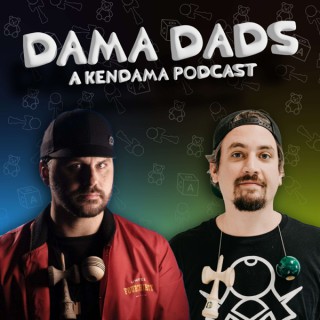
The Dads deal with the Flu, prepare for a trip to Taiwan, and more!Check out the Dama Nerds: https://www.instagram.com/damanerds/Support the show
Shelley Palmer,media technologist, advisor, and author with over 700,000 daily newsletter subscribers, returns to the show. He's one of the sharpest thinkers writing about AI today, and this conversation covers the full arc: from social media liability to the trust collapse coming for all of us, and into the real productivity gains and surveillance trade-offs of living inside an AI-first workflow.The episode opens with the Google and Meta lawsuit verdict and quickly moves past the legal question. Shelley's position is precise: you can't legislate parenting, but you can legislate transparency, and the tech industry has failed on that front entirely. The $6 million judgment against Meta and Google is a rounding error — not a deterrent. What matters is what platforms actually engineered: engagement above all else, backed by neuroscience, probabilistic math, and dopamine feedback loops optimized for shareholders, not users.AI XR News You Should Know: OpenAI is ending Sora and pivoting hard to Codex and enterprise. Ben Affleck secured $900 million from Netflix for a custom AI filmmaking tool. Epic Games cut 1,000 jobs as Fortnite loses audience. NVIDIA's Jensen Huang introduced Nemo Claw and Open Shell at GTC — a corporatized framework for personal AI agents.Key Moments[00:01:15] – Charlie opens noting the show missed one episode in nearly 300 — his daughter's wedding[00:01:55] – OpenAI kills Sora; the Critters director goes dark before the episode[00:04:45] – Google and Meta lose their social media addiction lawsuit; Meta also loses in New Mexico[00:08:07] – Shelley on what can actually be legislated: not parenting, but transparency[00:11:42] – Shelley on Zuckerberg: he genuinely believed connection would be net positive; ask him today[00:13:31] – "Planetarily net negative. No matter what good it does, it does more harm."[00:18:16] – Rony on dopamine engineering: neuroscientists studying pixel size, color, sound to refine addiction[00:19:40] – Shelley reframes it: engagement maximization for shareholders, no more insidious than that[00:23:19] – The physiological change argument: humans evolved to default to trust; AI-generated everything breaks that[00:31:50] – Rony's counterpoint: trust will reset local; the software ecosystem will follow[00:36:53] – Shelley: "Our business increased last year. Everyone on my staff is doing 400 times the work."[00:44:42] – AI-first means automating every workflow you can honestly automate — and knowing what isn't ready[00:45:06] – Jensen's Nemo Claw and Open Shell: the safer path to personal AI agents, and what it actually costs[00:49:42] – The surveillance trade-off: an effective AI agent requires more personal data exposure than anything before it[00:51:24] – Apple's Secure Enclave play: why Tim Cook may win the AI trust war in the endThe productivity gains are real, but so is the privacy exposure, and the systems that earn trust — at every level — are the ones that will survive.This episode is brought to you by Zappar, the company behind Mattercraft — the leading visual development environment for building immersive 3D web experiences across mobile, headsets, and desktop. Mattercraft now features an AI assistant that helps you design, code, and debug in real time, right in your browser. Start building at mattercraft.io. Subscribe to the AI XR Podcast wherever you listen.Watch the full episode for the full breakdown. Available where podcasts are. Full videos available on YouTube. https://youtu.be/S_AECjELYyoSee Privacy Policy at https://art19.com/privacy and California Privacy Notice at https://art19.com/privacy#do-not-sell-my-info.

What does it look and feel like to be surrounded by 400 passionate middle level educators for three days straight? In this first bonus episode recorded live at the NCMLE Moving the Middle Forward Conference in Charlotte, North Carolina, Joshua Stamper brings you three powerful conversations straight from the conference floor, sponsored by New Horizons Global. First, Joshua sits down with resilience researcher, speaker, and author Julie Hasson, who shares her message from her presentation "Recharge Your School Culture" and the simple, practical tools educators can weave into their school day to reduce stress, build individual resilience, and leave school with enough energy to actually have a life outside of it. Next, Joshua talks with Brad Waid, founder of New Horizons Global, former third grade teacher, and passionate advocate for AI and Industry 4.0 in education. Brad breaks down what skills students will need for a workforce that is changing faster than most schools can keep up with, and why educators are more important than ever in helping young people find their place in it. The series wraps up with a conversation with the man who built this incredible community, NCMLE Conference Director David James. David shares how he has grown the conference from a post-COVID rebuild to a 400 plus educator gathering that brings together the best voices in middle level education from across the country, and previews what is coming in 2027. If you want professional development that makes an impact from day one for your school, district, conference, or organization, visit newhorizonseducation.net and click on Educational Speakers About Dr. Julie Schmidt Hasson: Dr. Julie Schmidt Hasson is an Associate Professor in School Administration at Appalachian State University and the founder of the Teacher Recharge project. Julie's research on teacher resilience, engagement, and impact is the heart of her keynotes, training programs, and her TEDx Talk, The Teachers We Remember. Julie is the author of four books, including Pause, Ponder, and Persist in the Classroom. Julie is a former classroom teacher and school principal, now on a mission to help educators stay longer, grow stronger, and keep making an impact. Follow Dr. Julie Schmidt Hasson Website:teacherrecharge.comTwitter (X): @julieshassonInstagram: @julieshassonFacebook: Julie Schmidt HassonLinkedin: Julie Schmidt HassonYouTube: Julie Schmidt Hasson https://www.amazon.com/Safe-Seen-Stretched-Classroom-Remarkable/dp/0367634643?&linkCode=ll2&tag=aspirewebsite-20&linkId=2bbea57e9b54f526fbba6976c820ed1f&language=en_US&ref_=as_li_ss_tl About Brad Waid: Brad is an Award winning Emerging Technology Leader, International Keynote Speaker, Futurist, Educator, Visionary, and Author specializing in AR/VR/XR, Machine Learning, Artificial Intelligence and Industry 4.0. He is tabbed as one of the top 20 Global Futurist & Keynote Speakers by TAFFD (Transdisciplinary Agora for Future Discussions), recognized as the #14 influencer world-wide in Augmented Reality by Onalytica as well as being recognized as one of the “20 to Watch” by the National School Board Association. Follow Brad Waid Website:www.bradwaid.comTwitter (X): @techbradwaidInstagram: @techbradwaidFacebook: Brad WaidLinkedin:https://www.linkedin.com/in/brad-waid-21187593/YouTube:https://www.youtube.com/@bradwaid3790Other:www.newhorizonsglobal.net https://www.amazon.com/Racing-Future-Industry-Business-Education/dp/B0FPG6ZSYC?crid=2WQ7FZH03GKPL&dib=eyJ2IjoiMSJ9.Nk30rAQk9p1cM4CPc-x8jdIM5o2io9g9PwurvJJOrz9tLU0dbnrdNibRvFp_ADjdh-5W8oTYn2x7K5GpJ0ISjm7mpwvzLGFOY07BhUr1lA9bbz4mwWhxSSncpKvdhAdm9IVne5LMKBi5VC5Dg-KBM5kAe_E8nBMB4gr2OIOIBxEUDPtr7oKISQ8FgvlEETgamIqcnXWbgi1hhLwP3ND-l1E2NBUN9GWFhek7qaY2cfo.XZKl7uL0tkzLkloMAGZufgbOD5Hj6Bmlo108mkWxD0g&dib_tag=se&keywords=brad+waid+book&qid=1774577229&s=books&sprefix=brad+waid+book%2Cstripbooks%2C185&sr=1-1-catcorr&linkCode=ll2&tag=aspirewebsite-20&linkId=39e5f0693af6a9e51615929b42dbb837&language=en_US&ref_=as_li_ss_tl About David James David is an 18 year veteran of K - 12 education. He started his teaching journey as a graduate of Ohio University in 2007. After moving to North Carolina in the fall of 2011, David became part of the inaugural teaching staff at the award winning Harold E. Winkler Middle School, a 6-8 International Baccalaureate school located in Concord, NC, 15 miles north of Charlotte. David currently serves in multiple teacher-leadership capacities at HWMS. As an English/Language Arts and Social Studies Teacher, Lead Mentor of the school's highly successful beginning teacher mentoring program, School Leadership Team representative, and 7th grade level chair, David leans on his experience and enthusiasm in the classroom to influence kids, teachers, and parents in hopes of having a positive impact on student achievement. His student-first mindset in the classroom leading to positive results both academically and behaviorally with students, has been highlighted in multiple EDU publications including Culture First Classrooms: Leadership, Relationships, and Practices That Transform Schools by Dr. Darrin Peppard and Katie Kinder. At the state level, David serves on the North Carolina Association for Middle Level Education Board of Directors as both the Marketing and Conference Directors. He is proud to organize and bring the annual conference to life that hosts 500+ middle school educators in a celebration of learning and growth. You can learn more about NCMLE at ncmle.org and on their social media outlets. All this to say, David's favorite roles are as a husband to his beautiful wife Erin and father to his 8 year old son Aiden. Follow David James Twitter (X): heroichistory22Instagram: heroichistory22Facebook: David Jameshttps://ncmle.org -- NEW Aspire to Lead Cohort: Join the April 1st Launch Ready to move from teacher to administrator? The Aspire to Lead Cohort is a monthly leadership program designed for educators pursuing administrative roles. Get expert training, peer accountability, interview prep, and a clear roadmap to advance your career. December 1st cohort launching soon. Limited spots available. READY TO JOIN? Apply for the Aspire to Lead Cohort: https://bit.ly/47xWzIu Limited spots available. Next cohort starts 4/1/26

How much do you know about augmented reality (AR)? A new leader at the University of Rochester believes that in the future, the way that humans interact with computers on a daily basis will be through AR. Barry Silverstein is the former senior director and chief technology officer of optics and display in Meta's Reality Labs. In that work, he helped create AR and virtual reality (VR) products used by millions of people. He's now leading the University of Rochester's Center for Extended Reality. We talk with him about the future of AR, VR, and AI and how he sees it all affecting our daily lives. In studio:Barry Silverstein, director of the Center for eXtended Reality and faculty member at the Institute of Optics at the University of Rochester, and former senior research director and chief technology officer of optics and display at Meta Reality Labs---Connections is supported by listeners like you. Head to our donation page to become a WXXI member today, support the show, and help us close the gap created by the rescission of federal funding.---Connections airs every weekday from noon-2 p.m. Join the conversation with questions or comments by phone at 1-844-295-TALK (8255) or 585-263-9994, email, Facebook or Twitter. Connections is also livestreamed on the WXXI News YouTube channel each day. You can watch live or access previous episodes here.---Do you have a story that needs to be shared? Pitch your story to Connections.
Cathy Hackl, futurist for Nokia and advisor to the Boston Consulting Group (BCG), joins the podcast to discuss her fascinating work across the Middle East and her insights on the next generation of AI and connectivity. Learn how nations like the UAE and KSA are strategically positioning themselves to lead in spatial computing, quantum supremacy, and a hopeful, future-forward vision of AI.Cathy details her work in the Middle East, including her residency in the UAE and her advisory roles on massive projects like NEOM and Qiddiya, explaining how these regions are embracing technology as a means to modernize. She shares her perspective on the shift in global venture capital, noting how Europe and the Middle East are providing significant funding that is moving beyond traditional Silicon Valley terms.AI XR News You Should Know:The hosts discuss massive AI funding rounds, including a $1 billion seed round for Advanced Machine Intelligence and a $500 million round for Mind Robotics, highlighting the intense capital war for chips and the boom in robotics. They also cover the rise of YouTube as the world's largest media company and the ethical questions surrounding the collection of human data to train robots.Key Moments[00:01:19] Intro: Friday the 13th and geopolitical news.[00:02:17] Mind Robotics & Advanced Machine Intelligence: Discussing the $500M and $1B seed rounds for robotics and AI startups.[00:04:04] Headband Camera for Robot Training: Debate on the ethics of companies paying people to wear cameras to collect training data for robots, comparing it to "Gargoyles" from Snow Crash.[00:10:12] YouTube Surpasses Disney & Netflix: Discussion on YouTube becoming the world's largest media company with $62 billion in revenue.[00:11:29] AI & Media Market Dominance: Questioning whether today's AI music and video companies will eventually surpass all big film, music, and streaming companies.[00:14:40] Cathy Hackl Interview Begins: Cathy discusses her work as a futurist for Nokia, focusing on AI-native networks.[00:16:26] KSA Projects: Cathy's experience working on the virtual and gaming strategy for Qiddiya and on the KSA Pavilion at the World Expo.[00:22:07] Golden Visa & Gifted Residency: The privileges associated with becoming a resident of the UAE or KSA for highly skilled talent.This conversation offers a vital global perspective on technology, innovation, and culture that is often missed when focusing solely on Silicon Valley. Understanding these geopolitical and technological movements is key for anyone trying to anticipate where the next wave of global innovation will truly come from.This episode of The AI XR Podcast is brought to you by Zappar, the folks behind Mattercraft, a leading visual development environment for building immersive 3D web experiences—mattercraft.io. Subscribe wherever you get your podcasts or watch the full episode on YouTube. https://youtu.be/Mw0yM_qpGG8See Privacy Policy at https://art19.com/privacy and California Privacy Notice at https://art19.com/privacy#do-not-sell-my-info.
I interviewed SXSW XR Experience 2026 curator Blake Kammerdiener about this year's selection, and how immersive artists are using Generative AI in a series of different projects. Below is the selection (ordered from longest to shortest). This year's program runs from 11a to 6p CDT from Sunday, March 15-17, 2026. XR Experience Competition Escape The Internet (Part 1) (50 min) Inter(mediate) Spaces (45 min) Winterover (45 min) Fabula Rasa: Dead Man Talking (30 min) Frustrain: Trainman (30 min) The Forgotten War (30 min) Watsonville (30 min) Fillos do Vento: A Rapa (28 min) Crafting Crimes: The Mona Lisa Heist (20 min) Love Bird (20 min) The Baby Factory is Closed (20 min) Lionia Is Leaving (18 min) Body Proxy (15 min) Cycle (15 min) The Great Dictator: A participatory AI installation about power, rhetoric, and memory (15 min) XR Experience Spotlight The Clouds Are Two Thousand Meters Up (62 min) The Great Orator (50 min) Lesbian Simulator (40 min) A Long Goodbye (35 min) Dark Rooms (35 min) Lacuna (34 min) The Dollhouse (24 min) Reality Looks Back (21 min) Insider Outsider (12 min) loss·y (10 min) Lost Love Hotline (10 min) Out of Nowhere (10 min) Spectacular: The Art of Jonathan Yeo in Augmented Reality (10 min) Ascended Intelligence (9 min) MIT Open Documentary Lab's AR and Public Space Artist Collective Layers of Place: Austin [90 min total] ORYZA: Healing Ground (15 min) The Founders Pillars (15 min) Open Access Memorial (15 min) Paper Boat (15 min) Humble Monuments (15 min) Moving Memory (15 min) This is a listener-supported podcast through the Voices of VR Patreon. Music: Fatality

Co-founders Dr. Salman Avestimehr and Dr. Aiden He join the podcast to discuss their new "agentic" company, Teamily AI. They dive into how their platform is disrupting the social landscape by weaving multi-agent AI into group chats, enabling groups, friends, and families to interact with virtual friends, essentially creating a collaborative environment where AI acts as a participant that anticipates needs and remembers the full context of a conversation.This conversation explores the core value proposition of an AI-first social platform—not just making an individual superhuman, but enabling a collective of human and AI agents to do "fascinating things together." The founders detail their technology, which is built on deep expertise in distributed machine learning and multi-agent systems, and their long-term vision to IPO and evolve the very nature of social networks by bridging the gap between human and artificial intelligence.In the news segment, Charlie Fink and Rony Abovitz unpack the week's biggest AI stories: Ben Affleck selling his stealth AI film company, Interpositive, to Netflix; Anthropic's Claude briefly dethroning OpenAI's ChatGPT in the app store; and a deep dive into Jack Dorsey's company Block cutting 4,000 employees. The hosts also discuss the social fallout of AI acceleration, particularly the counter-movement seeking tactile, real-world connection and the economic risk of displacing white-collar data analysts.Key Moments00:03:00 – App Store War: Discussing Anthropic's Claude topping the app charts and why the US Department of Defense will use the best AI system regardless of corporate objection.00:04:00 – Hollywood's AI Play: Netflix acquiring Ben Affleck's AI company, Interpositive, which uses unedited film dailies to train an AI for editing and optimization.00:05:00 – The Mediocrity Threat: Rony Abovitz's take on the risk of AI creating a "very, very long tail of Okay" content, leading to a cultural sameness.00:07:00 – Counter-Culture: Exploring the growing emotional need for "something real" and a massive movement away from purely digital experiences.00:09:00 – The White-Collar Risk: The hosts argue that the white-collar data analyst is the worker "most easy to replace" by AI, contrasting with the high value of blue-collar workers.00:11:00 – The "Oh Wow" Moment: Charlie Fink describes his first experience with Teamily AI, noting the immediate power of real-time, multi-person and multi-agent prompting.00:13:00 – The Science Behind Teamily: Dr. Aiden He, PhD in Machine Learning, explains how Teamily is built upon his previous research in distributed learning and multi-agent systems.00:26:00 – Global Memory: Aiden details Teamily's unique "cross domain, long horizon memory," which allows the AI to combine human-human chat context with human-AI memory for a more natural interaction.The biggest takeaway is the conceptual shift from using AI as a solo productivity tool to using it as a collaborative team member. The path to the next phase of social networking hinges on building platforms where AI is not isolated but is a natural, evolving part of a human community.This episode of The AI XR Podcast is brought to you by Zappar, the folks behind Mattercraft, a leading visual development environment for building immersive 3D web experiences for mobile headsets and desktop. Start building smarter at mattercraft.io. Listen and subscribe to the AI XR Podcast wherever you get your podcasts! Watch the full thing on YouTube https://youtu.be/s78WZJSfGeo.See Privacy Policy at https://art19.com/privacy and California Privacy Notice at https://art19.com/privacy#do-not-sell-my-info.
What does a Lion King–level director really think about AI “slop,” streaming wars and whether machines can ever tell great stories? On this episode of the AI XR Podcast, Charlie Fink and Ted Schilowitz talk with Rob Minkoff, director of The Lion King, Stuart Little, The Haunted Mansion, Forbidden Kingdom and Paws of Fury, about the future of filmmaking as AI, streaming consolidation and new tools reshape the business.Rob shares how he watched Netflix “eat Hollywood” by doing streaming better than the legacy studios, why Netflix walking away from Warner Bros. and letting Paramount overpay is bad news for creators, and what fewer buyers means for directors and writers trying to sell original work. He explains why he sees AI tools like Seed Dance as potentially both iceberg and Noah's Ark, and why he believes the average will rise but the cream will still rise higher: tools may let anyone make competent images, but audiences will still chase the one-in-a-thousand voices that have something genuinely new and human to say.In XR News You Should Know, the host cover Anthropic's standoff with the Pentagon over using large, unstable models for high-stakes military decisions, Netflix walking away from a Warner Bros. deal and collecting a breakup fee while Paramount overpays, streaming brand confusion around HBO/Max and Paramount+, VITURE's new raise and its patent fight with XREAL over “birdbath” smart-glasses optics, and Google's Gemini gaining multi-step action capabilities on Samsung and Pixel phones before Apple's Siri catches up.The conversation digs into whether AI will really make feature films cheaper and more common, or just flood social feeds with short-form “AI slop.” Rob compares AI tools to word processors and home recording studios: they are powerful, but they don't turn you into Bruce Springsteen or Steven Spielberg. He argues that empathy, taste and genuinely fresh perspective will remain the differentiators, and that audiences will quickly tune out work that feels derivative, even if it looks slick. He also raises a bigger question: if AI drives productivity to the point where work is optional for many people, what happens to purpose, competition and the human psyche?Key Moments01:16 – Anthropic vs. the Pentagon and why unstable AI systems may never meet military safety standards02:42 – Netflix exits the Warner Bros. deal, collects a breakup fee and leaves Paramount holding the bag05:31 – HBO, Max, Paramount+ branding confusion and what happens to these streaming labels06:00 – VITURE's $100M raise, XREAL patent lawsuits and the simple science behind “birdbath” smart glasses07:31 – Why Miami is becoming a new tech and defense hub and what that signals about America's “neighborhood”10:00 – Seed Dance 2.0, Hollywood's deepfake panic and the “ship first, apologize later” strategy15:16 – Rob joins: 34 years in film, Netflix “eating Hollywood” and what consolidation means for creators19:18 – Seed Dance, stolen IP and whether AI tools are an iceberg or Noah's Ark for filmmakers24:39 – Can AI become a true “prophet,” or can it only emulate empathy and taste?30:57 – Will AI make many more animated movies or just flood the world with average content?37:32 – If AI does most of the work, what's left for humans—and can entertainment absorb all that free time?This episode is a grounded, filmmaker's view of where AI fits: powerful tools, real risks, but no substitute for a human vision that cuts through the noise. Rob's perspective is invaluable if you're trying to understand what will actually matter in a world where everyone can generate “good enough” images on demand.This episode is brought to you by Zappar, creators of Mattercraft, the leading visual development environment for building immersive 3D web experiences for mobile, headsets and desktop. To explore what's possible with AI-powered XR on the web, start building smarter with Mattercraft from Zappar at Mattercraft.io.Listen to the AI XR Podcast where you get podcasts and follow the show for new episodes every week. Or watch on YouTubeSee Privacy Policy at https://art19.com/privacy and California Privacy Notice at https://art19.com/privacy#do-not-sell-my-info.
Vicki Dobbs Beck, the former head of ILMxLab and a 34-year veteran of Lucasfilm/Disney, joins Charlie Fink, Ted Schilowitz, and Rony Abovitz for a candid look back at her incredible career navigating the tech and cultural shifts inside one of Hollywood's most powerful empires. Though she announced her retirement, it was quickly delayed to take an interim lead position at the George Lucas Educational Foundation's Lucas Learning, focusing on project-based simulations for middle school—a return to a career passion she started in the early 90s.Vicki shares the core, "rebel alliance" strategy that made ILMxLab a success—sustained innovation, industry acknowledgment, and financial self-sufficiency—and tells the terrifying story of pushing the Quest 1 headset to its absolute limits for the launch of Vader Immortal. She discusses the crucial lessons learned from pivoting the development to center the player in the story, transforming the experience from a "spatial film" to a personal journey, and the importance of slowing the pacing down for a new art form like VR.Before the interview, the hosts dissect a week of massive raises in AI (World Labs' $1B, Recursive Intelligence's $335M), the strategic shifts of tech giants like Palantir to Miami, and the intensifying race in wearables with Apple, Meta, and OpenAI all developing new devices like pendants and glasses.Key Moments00:03:17 – World Labs & Unity AI: Discussing the $1B World Labs raise for 3D world generation and Unity's plans to build AI into its game engine to make it accessible to non-developers.00:06:11 – The Miami Tech Hub: Rony Abovitz on why founders like Zuckerberg, Bezos, Larry, and Sergei are moving to Miami—it's more than just taxes, it's about a new “America strategy.”00:12:30 – Apple Watch as Wearables Base: Ted Schilowitz argues Apple already has the micro-technology (from the Apple Watch) to dominate the wearables space, but the underperformance of Siri held them back.00:27:00 – LaserDisc Learning: Vicki's early career in Lucasfilm Learning using cutting-edge but bulky computer-driven laser disc players for educational multimedia.00:28:57 – VR is 'Outsized': Ted's thesis that immersive technology has historically been overfunded and over-expected to return a profit, contrasting with the "rebel alliance" approach.00:34:45 – The Quest 1 Launch Scare: The terrifying moment before the Vader Immortal launch when a tiny software update broke the app because ILMxLab had pushed the Quest hardware to its absolute maximum.00:42:11 – The Void & Full VR Power: Charlie, Ted, and Vicki discuss why location-based VR like Star Wars: Secrets of the Empire (The Void) represents the exotic, "Ferrari version" of VR that most commercial users never experience.This conversation is a masterclass in pioneering entertainment technology. Vicki Dobbs Beck's experience shows that the path to a sustainable, breakthrough product like Vader Immortal requires a clear, rebel-alliance-style strategy, a willingness to pivot on core design principles (spatial film vs. player-centric experience), and a deep understanding of the hardware's limits—or lack thereof. It highlights the essential tension between commercial scale and the pursuit of the 'ultimate' immersive experience.Catch the AI XR Podcast where you get podcasts and watch full video episodes on YouTube. https://youtu.be/vguuHDmaSbsThis episode of The AI XR Podcast is brought to you by Zappar, the folks behind Mattercraft. Mattercraft is the leading visual development environment for building immersive 3D web experiences for mobile, headsets, and desktop, and now features an AI assistant to help you design, code, and debug in real time right in your browser. Start building smarter at mattercraft.io. Listen and subscribe to The AI XR Podcast wherever you get your shows.See Privacy Policy at https://art19.com/privacy and California Privacy Notice at https://art19.com/privacy#do-not-sell-my-info.

Seattle Mayor Katie Wilson gave her first State of the City address. The Seattle City Council voted to push back against ICE even more. Should you drive to work or take public transit? Guest: Pierce County Sheriff Keith Swank responds to calls to have his events at Pierce County Library canceled. // Big Local: A former college professor helps bankroll an anti-ICE billboard campaign in Spokane. Spokane mayor Lisa Brown has proposed a ban on private leases for ICE detention centers. A WSU study says that adding Augmented Reality technology to restaurant menus can increase interest in your business. // You Pick the Topic: An unruly Delta passenger forced an emergency landing in Houston.
Enterprise XR hasn't disappeared, it has quietly moved into places where it saves time, reduces errors and changes how people work every day. On this episode of the AI XR Podcast, Charlie Fink and Rony Abovitz talk with Boston Consulting Group partner Kristi Woolsey, who leads BCG's immersive practice, about how XR plus AI is already being used for training, maintenance, onboarding, retail and architecture inside some of the world's most conservative organizations.Kristi shares a Swiss Rail project where field technicians wear lightweight AR glasses that recognize who they are and which train car they are standing in front of, pull the correct procedures from internal systems and use AI to turn thick manuals into simple task checklists.She explains how this leads to double-digit efficiency gains for both experienced and new workers, and how a small behavior design choice – automatic logging for headset users versus manual end-of-shift paperwork for everyone else – helped overcome skepticism on the front line. Drawing on her background as a physical-space architect, she also describes how VR and rapidly improving 3D tools are changing the way companies design stores, offices and buildings before anything physical is built.AI XR News you should know, Charlie and Rony cover Anthropic's massive new funding round and ethics turbulence, Chinese generative video tools like Seed Dance 2 and Kling that put TV-quality visuals in reach of “garage Spielbergs,” and Meta's reported seven million Ray-Ban and Oakley AI smart glasses sold – early signals of where wearable AI and XR are really headed.Key Moments01:03 – Anthropic's huge raise and what the ethics departure might signal05:08 – Seed Dance 2 and Kling showcase a new level of generative video08:35 – Meta's seven million smart glasses and the reality behind that number12:10 – Why wearable AI may be the real “last mile” of turning us into cyborgs15:28 – Inside the early metaverse tours Kristi and Rony built for enterprises20:27 – How BCG's VR onboarding keeps new hires engaged months before day one23:30 – Swiss Rail's AR and AI maintenance assistant and what it actually does on site27:05 – Designing XR systems that give value to both the business and frontline workers30:29 – Using VR as a lab for retail and workplace behavioral strategy33:06 – How AI-generated 3D models point toward “build every space digitally first”This episode shows how “metaverse” ideas have turned into practical tools: XR plus AI is cutting training times, improving maintenance quality and letting companies experiment with spaces before they exist. Kristi's examples make it clear that the real action is in careful workflow design, not flashy avatars.This episode is brought to you by Zappar, creators of Mattercraft, the leading visual development environment for building immersive 3D web experiences for mobile, headsets and desktop. https://mattercraft.io/Mattercraft combines the power of a game engine with the flexibility of the web and now includes an AI assistant that helps you design, code and debug in real time, right in your browser. To explore what's possible with AI-powered XR on the web, start building smarter with Mattercraft from Zappar.Listen to “Enterprise XR Meets AI: How Smart Glasses, Digital Twins and Holodecks Are Quietly Changing Work – Kristi Woolsey” on the AI XR Podcast and follow the show for new episodes every week.See Privacy Policy at https://art19.com/privacy and California Privacy Notice at https://art19.com/privacy#do-not-sell-my-info.

In this episode, I sit down with Sinead Bovell from the “I've Got Questions” Podcast to dissect the biggest shifts coming to attention, media, and commerce. I lay out my three-part thesis on why we are at the beginning of the end of the social media era, arguing that AI is set to crack the value proposition of current platforms. We discuss how studying history has always been my secret weapon for accurately forecasting tech, from my early investment in Facebook to predicting live shopping in 2008. We dive deep into the next great distribution shift—from the phone to glasses—and the rise of a voice-first Agentic Economy that will make brand more important than ever.You'll learn about:My three-part thesis on the end of the social media eraWhy I believe Augmented Reality and glasses will replace the phoneHow the Agentic Economy will change purchasing decisions for brandsThe difference between aspirational behavior and actual consumer actionActionable advice for creators on how to prepare for the future while thriving on TikTok
Our guest this week, Alvin Wang Graylin spent 35 years in senior leadership roles across HTC, IBM, and other major tech companies. He ran HTC's VR division, came out of the famous HIT Lab, now teaches at MIT, holds a fellowship at Stanford, and just published a paper called "Beyond Rivalry" proposing a seven-point plan for deescalating US-China AI tensions and building a global safety net before the economy breaks. His thesis: America is the fastest in the AI race and the least prepared for what it's creating—a cliff where human labor theory of value collapses, capital concentration accelerates, and 40% of the population living month to month faces chaos.The conversation becomes a wide-ranging debate between Alvin, Charlie, and Rony about whether AGI will be benevolent by default (Alvin's position: research shows smarter AI seeks global coherence and becomes less controllable by individual humans, which may actually make it safer) or whether benevolence must be designed in from scratchAI XR News You Should Know: Elon Musk merges SpaceX, xAI, and X into a single entity—Alvin dismantles the space data center concept with physics (vacuum cooling is a myth, micro-meteorite collisions would destroy hardware daily, and energy is only 10% of data center costs). Amazon invests $50 billion in OpenAI that round-trips back to AWS. Alphabet breaks revenue records at $400 billion but spooks investors by disclosing $90 billion in AI spending. ElevenLabs raises $500 million at $11 billion valuation. Rony's SynthBee hits unicorn status with $100 million raised at a multi-billion dollar valuation. Alvin warns the AI bubble dwarfs the dot-com era (298 companies raised $24 billion total during dot-com; OpenAI alone is raising that in a single private round) and predicts OpenAI may implode before going public.Key Moments Timestamps:[00:04:47] SpaceX/xAI/X merger: Rony calls it Elon's "return to Tony Stark form"[00:06:41] Alvin dismantles space data centers with physics: vacuum cooling myth, micro-meteorites, $7K/kg launch costs[00:10:04] Amazon's $50B investment in OpenAI as a round-trip to AWS; the scam economy[00:11:26] Alvin predicts OpenAI may implode before going public[00:14:23] Alvin on 35 years in AI: the technology is transformational but everyone's making a commodity product[00:17:04] The AI bubble dwarfs dot-com: $24B total vs. single private rounds today[00:19:04] Rony's contrarian: the $110 trillion global economy is what's being bet against[00:21:06] Labor theory of value collapses: what happens when humans exit the production cycle[00:23:00] America is fastest in the AI race and least prepared; 40% live month to month[00:24:00] Alvin's Stanford paper "Beyond Rivalry": a CERN for AI and global data pool[00:28:00] Davos reflections: the rest of the world is more rational than America[00:34:00] Chinese vs. American culture: reverence for teachers, respect for elders[00:42:00] Alvin's "Abundant" framework: valuing human dignity over production after AGI[00:44:22] The great debate: will AGI find benevolence naturally (Alvin) or must it be designed in (Rony)?[00:47:00] Rony on risk: AGI systems are unverifiable, untestable, and we cannot take the chanceListen to the full episode and subscribe to the AI XR Podcast for weekly conversations at the intersection of AI, XR, and the future of humanity.This episode is brought to you by Zappar, creators of Mattercraft—the leading visual development environment for building immersive 3D web experiences for mobile headsets and desktop. Build smarter at mattercraft.io.See Privacy Policy at https://art19.com/privacy and California Privacy Notice at https://art19.com/privacy#do-not-sell-my-info.

Technology has penetrated deep into the wilds of the world, be it with GPS, satellite communications, drones, or other forms of gadgetry. Adventure photographer and endurance athlete Chris Burkard breaks down how tech is impacting our wild sides. Learn more about your ad choices. Visit megaphone.fm/adchoices
© 2020-2026 Ivy Podcast Discovery LLC
