
POPULARITY

13 episodes with 80m

6 episodes with 80m

4 episodes with 80m

5 episodes with 80m

5 episodes with 80m

7 episodes with 80m

3 episodes with 80m

6 episodes with 80m

4 episodes with 80m

Hello and Welcome to this Week in DX for your weekly Dose of DX. I'm Bill, AJ8B.The following DX information comes from Bernie, W3UR, editor of the DailyDX, the WeeklyDX, and the How's DX column in QST. If you would like a free 2-week trial of the DailyDX, your only source of real-time DX information, just drop me a note at thedxmentor@gmail.comGM – Scotland For those looking for Shetlands, a separate country for the DX Marathon and the CQ World Wide DX Contest, make sure you add GM7AFE to your logging software and HamAlert. For DXCC this counts as Scotland and for IOTA it counts for EU-012.KH8WW, American Samoa - The KH8WW DXpedition is QRV from Aunu`u Island, the same location as K8K, until September 24th with operators YL2GM, Yuris and EA5EL, Eugene. Antennas will include a Spiderbeam, verticals for 160/80M and 40M, a DX Commander, and an inverted vee for 60M, covering bands from 160-10 meters on CW, SSB, FT8, and RTTY.KH0 – Mariana Islands - JA6CNL, Tony, is QRV as KH0N from Saipan until September 15. He'll use FT8, FT4, and FT2 with a vertical antenna and IC7300 radio.There is a second DXpedition to Franz Jozef Land - The RI1FJZ expedition team has departed Murmansk aboard the yacht “Apostle Andrew” and is now sailing toward Franz Josef Land as part of the continuing “Legends of the Arctic” project. The vessel has already left Murmansk, with reports of early aurora activity and radio operation from the ship and RW6MD/MM has been reported QRV on 21 MHz FT8.Yesterday they worked out an internet issue on FJL, so they will be ableto upload logs from there daily, to Club Log and LoTW, prioritizing donors, sponsors and OQRS requests. S7 – Seychelles - S79/DL2SBY, Kasimir, is QRV from Mahe, until September 21.He is using CW, SSB and FT8 MSHV on HF with verticals and an inverted V, plus a 5-element Yagi on 6. QSL direct to his home QTH or use LoTW and Club Log OQRS.A9 – Bahrain - G3VCQ, Colin, plans to be active as A9/G3VCQ from the outskirts of Bahrain, between September 19 and 26. Operation will be holiday- style, single operator, while travelling with his XYL and family. Bands planned include 160m and 6m, depending on time of day, night-time conditions, and propagation. Colin expects 160m to be mainly FT or CW only. He hopes to be QRV using CW, SSB, FT8, FT4, and FT2. 5W – Samoa - All systems are go for a 5W0AF operation with two ops leaving Poland September 16. A 2-1/2 day buffer in New Zealand is part of the plan, toconfirm gear has made it through. On-air from Samoa is set for September21, on the bands until October 12. It is SSB only.KH0 – Mariana Islands - JR1FKR, Chusuke, will operate as KH0/JR1FKR from Saipan Island in the Northern Mariana Islands from September 25–28. The operation will be holiday-style and is planned for the 6m through 40m bands, using SSB, FT8, and RTTY modes.If you have questions or need information, just drop me a note at thedxmentor@gmail.comUntil next week, this is Bill, AJ8B saying 73 and thanks to my XYL Karen for her love and support. I Hope to hear you in the pileups! Have a great DX week!

How do you know when to abandon the thing that's working to bet everything on something much bigger?In this episode of Screw It Just DO It, Ed Klinger shares the extraordinary, unfiltered story of how he built Flock from a university drone project to an £80 million acquisition by Admiral.After four years of grueling work, Flock had captured 51% of the UK drone insurance market—only to realize they had conquered a pond that was too small to build a massive business. Instead of clinging to comfort, they made the terrifying call: "Screw it, we're closing the drone business."Ed dives deep into the realities of scaling a venture-backed startup:• The 4am rebuttal email that reversed an initial VC rejection and secured their seed round• Why entrepreneurship is 90% terror and 10% euphoria• Navigating near-death cash crunches and getting backed by Chamath Palihapitiya• Negotiating an £80M acquisition while recovering from a serious car crash concussion and preparing for a newborn baby• How a simple thumbs-up emoji on Telegram secured an extra $1,000,000 in fundingKey Takeaways• Winning a small market isn't enough—have the courage to pivot when you hit the ceiling• "Rejecting rejection": how challenging an investor's 'no' can change your company's fortunes• Never ignore your gut feeling when hiring leadership talent• Persistence in the face of seemingly insurmountable obstacles is the ultimate founder superpower

Dominic Genova spent 17 years on the factory side at Chrysler and 27 years owning car dealerships. He grew one dealership from a building with no power or water and no sales into a business with 87 employees and $80 million in annual sales of cars, trucks, and service. He rejected the traditional dealership model of commissions, hidden fees, and payment games in favor of transparent, salary-based selling. In this episode, Dominic exposes the pricing tricks hiding behind the "great deal", from payment games to hidden fees, while Mark challenges his sales philosophy from a pricing perspective. Together, they unpack why the price isn't the price, how a $500 cheaper car can become a $700 worse deal, and why Dominic believes the real product isn't the car. It's taking care of the customer. Why You Have to Check Out Today's Podcast: See how a $500 "better deal" can become $700 worse once financing enters the picture. Spot the pricing landmines first-time car buyers rarely see coming. Discover how Dominic built an $80M dealership by replacing sales games with trust, transparency, and repeat business. "I made the buying process, I made our taking care of you a competitive advantage." — Dominic Genova Topics Covered: 03:00 – The Price Isn't the Price: What Buyers Actually Need to Calculate 05:00 – From No Sales to an $80M Dealership. Hear how Dominic grew a dealership that started with no power, no water, and no sales into an 87-person, $80M business—and why his pricing philosophy focused on bringing customers back instead of maximizing every transaction. 08:30 – How to Build a Sales Team That Actually Cares. Learn why Dominic rejected traditional commission incentives and instead looked for people who genuinely wanted to treat customers well—and how that became part of the dealership's culture. 10:30 – The Buyer Test: How to Tell If a Salesperson Is Sincere 13:00 – Fit the Customer to the Car, Not the Other Way Around. Discover Dominic's "cars are like shoes" philosophy 18:00 – How Dealers Turn a Great Price Into a Worse Deal. Learn how financing and payment tactics can undermine an attractive vehicle price, including Dominic's example of a $20 monthly payment increase that adds $1,200 over a 60-month loan. 20:30 – The Dealer Tricks Buyers Don't Know to Look For. Get a glimpse into the tactics Dominic saw during his career calling on hundreds of dealers, including misleading advertisements, small-print conditions, and additional charges. 23:00 – Why Trust Became Dominic's Real Product. Discover why Dominic viewed his dealership's product as more than cars: "We take care of you." That philosophy helped create repeat customers, referrals, and a reputation that carried throughout the community. 26:00 – The Counterintuitive Profit Strategy: Maximize Satisfaction, Not Price 28:30 – How First-Time Buyers Can Spot a Bad Deal. Learn how to look beyond the advertised price and evaluate the entire deal, rather than assuming the lowest vehicle price automatically means the lowest total cost. 30:00 – Dominic's Final Pricing Advice Key Takeaways: "So a lot of people go and shop price and then the unethical dealer sticks it to them on something else." — Dominic Genova "My philosophy was an agricultural philosophy... to get you to come back again and again rather than draining every dime I could when I saw you." — Dominic Genova Connect with Dominic Genova: LinkedIn: http://linkedin.com/in/dominic-genova-99a12b66/ Website: http://dontbetaken.com/ Connect with Mark Stiving: LinkedIn: https://www.linkedin.com/in/stiving/ Email: mark@impactpricing.com
The following DX information comes from Bernie, W3UR, editor of the DailyDX, the WeeklyDX, and the How's DX column in QST. If you would like a free 2-week trial of the DailyDX, your only source of real-time DX information, just drop me a note at thedxmentor@gmail.comKH8WW, American Samoa - From September 10–24, the KH8WW DXpedition will operate from Aunu`u Island, the same location as K8K, with operators YL2GM, Yuris Petersons and EA5EL, Eugene Mosiychuk. Antennas will include a Spiderbeam, verticals for 160/80M and 40M, a DX Commander, and an inverted vee for 60M, covering bands from 160-10 meters on CW, SSB, FT8, and RTTY. KH0 – Mariana Islands - JA6CNL, Tony, will operate as KH0N from Saipan from September 10–15. He'll use FT8, FT4, and FT2 with a vertical antenna and IC7300 radio.HK0/A – San Andres and Providencia - PY8WW, Renato, will operate as HK0/PY8WW from San Andres Island from September 3–7. This is a holiday operation, not a full-time DXpedition, so activity will happen only during Renato's free time with no fixed schedule. He plans to operate on 6m through 20m using SSB, CW, and digital modes. The station will be a lightweight portable setup with a small vertical antenna near the beach, taking advantage of the Caribbean Sea location for propagation. Logs will be uploaded to LoTW daily, when possible, with activity also available through Club Log Live Stream. RI1FJ – Franz Jozef Land - Franz Josef Land DXpedition leader R7AL, Vasily, reports that the expedition schedule has changed, and the team expects to stay active for about another week. Conditions are difficult due to very strong winds and distorted signals, especially on the 12-meter band where many stations are operating at similar signal strengths. The team has nine amplifiers available, ranging from 500 watts to 2 kW, but power-supply limits mean they cannot run them continuously or at every operating position.9M – West & East Malaysia - Special callsigns will be on for Malaysia Day, September 16. But the calls may be on the air anytime between August 22 and September 30.Z3 – North Macedonia - Z335MK will be QRV until September 15 to celebrate the first 35 years of the Republic of North Macedonia. Club members of the Z37RSM group will run this one.A9 – Bahrain - G3VCQ, Colin, plans to be active as A9/G3VCQ from the outskirts of Bahrain Croatia, between September 19 and 26. Operation will be holiday- style, single operator, while travelling with his XYL and family. Bands planned include 160m and 6m, depending on time of day, night-time conditions, and propagation. Colin expects 160m to be mainly FT or CW only. Colin hopes to be QRV using CW, SSB, FT8, FT4, and FT2. 5W – Samoa - SP5AEQ, Jacek, will begin operating as 5W0AF on September 21 from a location near Apia. The operation will cover the 10–40 meter bands using SSB only, with a possible attempt on 80 meters during the final days of his three-week stay. QSL requests should be sent via SP7DQR, and logs will be available online with uploads planned at least once per day. OQRS will also be available, with bureau and LoTW free; LoTW uploads are expected a few weeks after the trip concludes.KH0 – Mariana Islands - JR1FKR, Chusuke, will operate as KH0/JR1FKR from Saipan Island in the Northern Mariana Islands from September 25–28. The operation will be holiday-style and is planned for the 6m through 40m bands, using SSB, FT8, and RTTY modes.Until next week, this is Bill, AJ8B saying 73 and thanks to my XYL Karen for her love and support. I Hope to hear you in the pileups! Have a great DX week!

Coinbase just launched fully backed tokenized stocks on Base. Dromos Labs' Alex Cutler says they'll chip away at Interactive Brokers "77% profit margin." ======================================================== Thank you to our sponsor! Visit 1inch.com to swap tokenized securities, crypto and more. Simple. Secure. Self-custodial. Whatever asset you're buying - swap it at 1inch.com ======================================================== Coinbase this week launched tokenized versions of Apple, Nvidia, Meta, and Google stock on Base, moving past the prior synthetic tokenized-stock wrappers. The tokens are fully backed, held in trust, with ETF-style minting and redemption. Alex Cutler, CEO and Co-Founder of Dromos Labs, joins Laura Shin to unpack what real backing changes about tokenized stocks, and to argue decentralized exchanges can beat legacy brokers on cost and access. Cutler points to Aerodrome's roughly 25% share of AMM volume on the new assets, about $80 million traded and 5,000 wallets active within days, plus integrations across nine DeFi protocols including Aave, Morpho, and 1inch. He argues Interactive Brokers extracts a 77% profit margin as a middleman, and cites Nvidia's earnings, released after the bell, as proof onchain markets kept pricing news around the clock. They also cover the SEC innovation exemption and a roadmap of more assets, a Centrifuge migration to Aerodrome, and a launch on Circle's Arc chain. Host: Laura Shin, Host / Unchained Guest: Alex Cutler - CEO and Co-Founder of Dromos Labs Timestamps

Coinbase just launched fully backed tokenized stocks on Base. Dromos Labs' Alex Cutler says they'll chip away at Interactive Brokers "77% profit margin." ======================================================== Thank you to our sponsor! Visit 1inch.com to swap tokenized securities, crypto and more. Simple. Secure. Self-custodial. Whatever asset you're buying - swap it at 1inch.com ======================================================== Coinbase this week launched tokenized versions of Apple, Nvidia, Meta, and Google stock on Base, moving past the prior synthetic tokenized-stock wrappers. The tokens are fully backed, held in trust, with ETF-style minting and redemption. Alex Cutler, CEO and Co-Founder of Dromos Labs, joins Laura Shin to unpack what real backing changes about tokenized stocks, and to argue decentralized exchanges can beat legacy brokers on cost and access. Cutler points to Aerodrome's roughly 25% share of AMM volume on the new assets, about $80 million traded and 5,000 wallets active within days, plus integrations across nine DeFi protocols including Aave, Morpho, and 1inch. He argues Interactive Brokers extracts a 77% profit margin as a middleman, and cites Nvidia's earnings, released after the bell, as proof onchain markets kept pricing news around the clock. They also cover the SEC innovation exemption and a roadmap of more assets, a Centrifuge migration to Aerodrome, and a launch on Circle's Arc chain. Host: Laura Shin, Host / Unchained Guest: Alex Cutler - CEO and Co-Founder of Dromos Labs Timestamps

Chandler shares his journey from a 19-year-old college dropout selling paint jobs to scaling Self-Publishing.com into an $80M business. The conversation covers early guerilla marketing tactics, overcoming massive partner disputes, and the raw grit needed to outlast competitors.

Send us Fan MailIn Episode 200 of In The Paddock, Greeny and The Cheese celebrate 200 episodes by diving headfirst into the wildest Formula 1 rumors during the summer break. The duo breaks down the performance clauses that could allow Max Verstappen to walk away from Red Bull—and whether a shock move to Mercedes or McLaren makes any actual sense. Plus, they launch a brand-new segment, The Theater of the Absurdity, where they react to the ridiculous proposal of hosting the "Bahrain Grand Prix" in Malaysia, along with rumors of the 2026 season ending at a freezing Imola in December.Key Highlights:Episode 200 Milestone: Greeny and The Cheese reflect on reaching 200 episodes and thank the listeners.Max Verstappen's Contract Clause: Analyzing rumors of a performance exit clause, a potential $80M offer, and why leaving Red Bull for Mercedes or McLaren might be a double-edged sword.2026 Calendar Chaos: Rumors of the 2026 season finale heading to Europe (Imola in December!) and what freezing track temperatures mean for racing.Theater of the Absurdity: Why naming a race in Malaysia the "Bahrain Grand Prix" is the most absurd venue logic in recent F1 history.Don't forget to like, subscribe, and drop a comment to join the conversation!Support the show

On a Thursday episode of Hot Takes, Eric Goodman and Troy Renck begin the podcast by giving their thoughts on the Nuggets signing Lonnie Walker IV to a 1-year contract worth $3.3M. This signing raises the Nuggets tax bill to over $80M. Riley Moss has been turning some heads at training camp. How much will his new contract be worth? Is Kris Abrams-Draine ahead of Jahdae Barron on the CB depth chart? Plus, the guys compare this year's Broncos secondary to the 2015 No Fly Zone defensive backfield. Check out a Thursday edition of Hot Takes! Hosted by Simplecast, an AdsWizz company. See pcm.adswizz.com for information about our collection and use of personal data for advertising.

$80M in Bitcoin just got drained from Coldcard wallets. A follower of Adam's lost 5.5 BTC, three years from retirement.Coinkite has now admitted the cause: a 2021 code change silently swapped Coldcard's hardware randomness for a weaker software version, making seed phrases guessable in hours instead of thousands of years.Want to learn Bitcoin the safe and simple way?
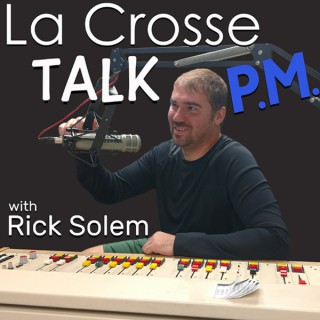
He's worked with the city of La Crosse on many projects. A popular one right now is redeveloping the old Kmart lot. Marvin Wanders, CEO of Three-Sixty Real Estate Solutions, stopped in studio to talk about his experience working with La Crosse and other municipalities in the region, and how he feels about the need for a city administrator position. City administrator is back in front of council during the August cycle, beginning next week with the Judiciary & Administrative Committee. It could be on the City Plan Commission agenda, as well. That one isn't up yet. IN THIS INTERVIEW: Why a City Administrator? How professional management, clear structure, and department alignment impact city growth and $80M budget efficiency. Old Kmart Site Update & Timeline: Where the Copper Rocks project currently stands with the city, what needs to happen with the development agreement, and the timeline for when demolition and site work could potentially start next spring. New Local Housing Projects: A look at the newly opened CNC Residences near Mayo and the ORI studio micro-apartments at Badger West near UW-La Crosse. La Crosse Housing Trends: Meeting the demand for one- and two-person households and shifting demographics in the region. See omnystudio.com/listener for privacy information.

Scott Stirrett, founder and former CEO of Venture for Canada, a national charity that helps young Canadians launch their careers through entrepreneurial opportunities, training, and mentorship.Through his work in career development, entrepreneurship, and writing, Scott helps young professionals build the practical skills, self-compassion, and resilience they need to navigate uncertainty and turn it into an advantage.Now, Scott's journey from leaving Goldman Sachs at 22 with no backup plan to building an $80M national organisation and later writing a bestselling book demonstrates what it looks like to lead through uncertainty rather than wait for it to disappear.And while speaking openly about the personal cost of growth, including his experience with OCD, burnout, and rebuilding resilience, he's helping others create careers that are both ambitious and sustainable.Here's where to find more:Website: https://www.scottstirrett.com/ Past interviews & media: https://www.scottstirrett.com/mediaandwritingLinkedIn: https://www.linkedin.com/in/scottstirrett/ ________________________________________________Welcome to The Unforget Yourself Show where we use the power of woo and the proof of science to help you identify your blind spots, and get over your own bullshit so that you can do the fucking thing you ACTUALLY want to do!We're Mark and Katie, the founders of Unforget Yourself and the creators of the Unforget Yourself System and on this podcast, we're here to share REAL conversations about what goes on inside the heart and minds of those brave and crazy enough to start their own business. From the accidental entrepreneur to the laser-focused CEO, we find out how they got to where they are today, not by hearing the go-to story of their success, but talking about how we all have our own BS to deal with and it's through facing ourselves that we find a way to do the fucking thing.Along the way, we hope to show you that YOU are the most important asset in your business (and your life - duh!). Being a business owner is tough! With vulnerability and humor, we get to the real story behind their success and show you that you're not alone._____________________Find all our links to all the things like the socials, how to work with us and how to apply to be on the podcast here:https://linktr.ee/unforgetyourself

"Everyone gets cancer five times a day — your body already knows how to take care of it." Sam Bertram is the co-founder and CEO of OnePointOne, the vertical-farming company behind the Willo brand. With his brother John (CTO), Sam is building fully automated indoor farms — powered by AutoStore robotics, AI, and precision LED light — that grow nutrient-dense produce in about 15 days, with no soil and no sunlight. But the vision goes far beyond salad: using plants as living factories to manufacture pharmaceutical-grade molecules (like monoclonal antibodies) at a fraction of today's cost, and eventually "closing the loop" on human nutrition — food grown to your own blood work. *Reduce your risk of Alzheimer's with my science-backed protocol for women 30+: * https://go.neuroathletics.com.au/yout... Subscribe to The Neuro Experience for evidence-based conversations at the intersection of brain science, longevity, and performance. _____ TOPICS DISCUSSED 00:00 – Cold open: bold claims & who is Sam Bertram 00:51 – Why vertical farms collapse (Bowery) & how OnePointOne survived 05:49 – The number that started it all: 1.1 billion malnourished 07:30 – Why micronutrient deficiency is the real killer 08:21 – What OnePointOne actually is: "a box that grows plants" 10:03 – Training plants with light & water to boost nutrients 11:00 – Closing the loop: food matched to your body's data 12:28 – The plan for 1,000 farms & the AutoStore partnership 15:46 – Plant biology 101: growing with no soil, no sun 18:11 – The robots — and why humans are still essential 21:27 – Pesticides, washing produce & disease clusters 23:53 – Beet greens for cancer patients & the Whole Foods deal 24:42 – A 13-person company run on AI 25:15 – The 15-day crop & cracking the cost code 27:11 – Biology vs. software: what really makes it work 28:01 – Humanoid robots, ~5 years away 30:27 – Why raise $80M and not $500M 33:56 – What they do to a plant that nature never would 36:28 – Expanding crops: strawberries, cannabis, mushrooms 38:05 – Growing food & materials in space (Elon, text back) 39:38 – Personalized food grown from your blood test 40:24 – Food as medicine & the truth about Western medicine 41:11 – Sam's mystery illness: 8 years without exercise 44:23 – Plants as medicine — who "fed and dosed" the world? 49:32 – Manufacturing pharmaceutical molecules inside plants 50:18 – Replicating $30–40k drugs cheaply (Rituximab, Lecanemab) 54:21 – Why the Middle East may beat the US, RFK Jr & MAHA 55:11 – Genetics, cancer & the healthy 80–90% 57:35 – Taste: beating junk food at its own game 58:27 – Why good food got so expensive (money printing) 59:14 – A world without hunger — how far away? 1:00:24 – Tasting the farm: microgreens, bok choy, mizuna & kale _______ Thank you to our sponsors Jones Road Beauty: https://jonesroadbeauty.com Use code LOUISA for a free full-size mascara with your purchase (and mention The Neuro Experience podcast when they ask where you heard about them) Qualia: https://www.qualialife.com/neuro Use code NEURO for 50% off Qualia Magnesium+ Cure Hydration: https://curehydration.com Use code NEURO for 20% off (also available on Amazon) _______ I'm Louisa Nicola - clinical neurophysiologist - Alzheimer's prevention specialist - founder of Neuro Athletics. My mission is to translate cutting-edge neuroscience into actionable strategies for cognitive longevity, peak performance, and brain disease prevention. If you're committed to optimizing your brain- reducing Alzheimer's risk - and staying mentally sharp for life, you're in the right place. Stay sharp. Stay informed. Join thousands who subscribe to the Neuro Athletics Newsletter → https://bit.ly/3ewI5P0 Instagram: / louisanicola_ Twitter : / louisanicola_ Learn more about your ad choices. Visit megaphone.fm/adchoices

In this special episode of Tank Talks, recorded live during Toronto Tech Week at Moomoo Canada's flagship store in Yorkville, Matt Cohen sits down with two of venture's sharpest data and investment minds for an unfiltered conversation on the state of private markets.Peter Walker, Senior Director of Insights at Carta, brings the hard numbers from 60,000+ companies and 3,000+ US venture funds, revealing the stark reality behind valuation markups, unicorn deterioration, and the widening dispersion between top-tier and median deals.John Rikhtegar, Vice President at Northleaf Capital Partners and former RBC investor, offers the LP perspective on why trust matters more than ever, why emerging managers are bearing the brunt of capital allocation challenges, and how disciplined pacing and vintage diversification separate winning funds from the rest.Together, they tackle the 4.3 trillion-dollar NAV overhang, the brutal graduation rates for 2021 vintage funds, whether valuations have permanently shifted, and why the ATM analogy might be the best way to understand AI's impact on venture careers.If you're a GP raising capital, an LP sorting through manager pitches, or just trying to make sense of where venture is headed, this episode is a must-listen.The Great LP Reset: Trust Over Performance (08:05)* Why LPs are letting go of newer relationships while sticking with 15-year partners.* The COVID furlough analogy: why junior and newer team members are the first to go.* How trust became the ultimate table stakes in today's fundraising environment.The 4.3 Trillion Dollar NAV Problem (12:33)* Why SpaceX's IPO would return only 10% of capital deployed over the last decade.* The staggering number of unicorns still sitting on stale marks from 2021.* What happens when 50% of unicorn down rounds become the new normal.Valuation Dispersion Is Breaking the Model (17:38)* Seed valuations jumped from $15M post-money (2022) to $24M (2025).* Series A went from $46M to nearly $80M in the same period.* Why the gap between the top decile and the median has never been wider.* How GPs must adapt ownership expectations or get priced out of deals.The Unicorn Graveyard: Stale Marks and Deteriorating Assets (19:28)* December 2021: 640 unicorns on Carta; 85% of current US unicorns.* 30% have raised new up-rounds; of the rest, half raised down rounds of 50% or more.* How GPs are forced to tell LPs that their “trophy assets” are no longer real.Pacing, Reserves, and Portfolio Construction (22:53)* Why disciplined 3-4 year deployment beats 18-month “firehose” strategies.* The 80/20 reserve debate: why leading rounds can become a net negative.* How “deal 13” is just as likely to succeed as “deal 12”, and why slightly larger portfolios make sense.LP Diligence: It's Not About the Marks (31:55)* Why TDPI and DPI are just 2 of 100 mosaic factors in LP decision-making.* How LPs now go company-by-company, not fund-by-fund.* The importance of founder references, especially from failed companies.Canada vs. The US: A Fractal Problem (40:44)* Why every market (Toronto, Sydney, London, Seattle) faces the same “Silicon Valley problem.”* The importance of domestic liquidity and secondary markets over chasing US LPs.* Why returns, not international capital, will ultimately scale Canadian firms.AI and the Future of Venture Careers (44:44)* The ATM analogy: AI will eliminate tasks, not jobs.* Why the role of the investor becomes more important as noise and froth increase.* How family offices are shifting their mix between fund investing and direct deals.Retail Access to Private Markets: Feature or Bug? (53:27)* Why illiquidity in private markets is a feature, not a bug.* The absurdity of allowing crypto “shitcoins” but blocking friends from investing in startups.* Why “401k-entrance” to private equity is a bigger story than retail venture access.About the GuestsPeter Walker is the Senior Director of Insights at Carta, where he leads the team responsible for analyzing data from over 60,000 companies and 3,000+ venture funds. His work on valuations, liquidity, and fundraising trends is widely cited across the venture ecosystem. He is a regular speaker at industry events and writes extensively on LinkedIn about the intersection of data and venture capital.Connect with Peter Walker on LinkedIn: linkedin.com/in/peterjameswalkerLearn more about Carta: carta.comJohn Rikhtegar is a Vice President at Northleaf Capital Partners, joining in early 2026 after a distinguished career at RBC and as an operator at Shopify and in the UK. He brings a unique blend of LP and operational perspectives, with deep expertise in due diligence, portfolio construction, and the dynamics of emerging manager investing.Connect with John Rikhtegar on LinkedIn: https://www.linkedin.com/in/johnrikhtegar/Learn more about Northleaf Capital Partners: https://www.northleafcapital.com/Connect with Matt Cohen on LinkedIn: https://ca.linkedin.com/in/matt-cohen1Visit the Ripple Ventures website: https://www.rippleventures.com/ This is a public episode. If you would like to discuss this with other subscribers or get access to bonus episodes, visit tanktalks.substack.com

This episode is brought to you by Circle — the all-in-one platform to run your community, courses, and memberships in one place. Try it free

He walked away from a company that was generating $80m in annual revenue...he had built it from scratch. The reason why will change how you think about your career.Ricky Peacock, SVP at AnnieMac Home Mortgage and the architect behind their construction-to-perm lending division, joins Fobby and Justin to break down everything loan officers need to know about CTP lending — including AnnieMac's national program launching July 1st.Ricky shares how he lost everything in 2008, rebuilt from zero, became the #1 USDA loan officer in the country two years running, and grew a single builder relationship into $70–80M in revenue before selling his company to AnnieMac to build something even bigger.In this episode: how to walk into a builder for the first time, why conventional is the easiest CTP loan nobody talks about, the "vacation folder" story every manager needs to hear, what builders actually want from a lender, and why Ricky says answering the phone was his entire competitive advantage.If you've avoided construction perm because it felt complicated, this is your sign to stop leaving money on the table.Laugh, Lend & Eat drops weekly. Hosted by Fobby Naghmi and Justin Neal. Find us on YouTube for full video episodes.And if this episode made you think about what's possible at your current shop — that's worth paying attention to.Ricky left 18 years and a million dollars a year behind because the vision on the other side was bigger. If you're a loan officer who's been curious about what AnnieMac is building — the CTP launch, the programs, the people — find Fobby Naghmi on LinkedIn. No pitch. Just a conversation.Laugh, Lend & Eat drops weekly. Hosted by Fobby Naghmi and Justin Neal. Find us on YouTube for full video episodes.

A Capital Research Center investigation traced over $80M from Soros' Open Society Foundation to at least 54 groups engaged in crime or domestic terrorism in our country. These same organizers staged protests and created activism toolkits… encouraging illegal acts like property damage. How Soros used USAID to fund the chaos. Chip Roy says the Senate DOES in fact have the votes to pass the SAVE America Act but it is too lazy to show up at work to get it done.

What happens when someone who grew up in the Lucasfilm Games golden era decides that today's AI tools are failing creatives? Mike Levine has spent more than 30 years building at the intersection of games, XR, VFX, and interactive storytelling—and his verdict is clear: the current AI stack is a fragmented, overcomplicated mess that turns directors into prompt engineers.Mike started as a tester at Lucasfilm Games (later LucasArts), working his way into the art department on titles like Sam & Max and The Dig before helping ship live-action Star Wars games such as Rebel Assault and Jedi Knight II. He later built rotoscoping tools used across the VFX industry, collaborated with ILM and Pixar, experimented with mobile AR games for Hasbro and HoloLens, and dipped into crypto gaming—before finally co-founding MovieFlow (now FilmSpark), an AI-native production platform designed so that filmmakers, agencies, and showrunners can move from script to screen without needing a computer science degree.The AI XR news you should know: Apple taps Google Gemini to power Siri, acknowledging that building world-class LLMs in-house makes little financial sense. Meta cuts 10% of Reality Labs, right-sizing its VR bets while pivoting toward wearables. Xreal raises another $100M amid questions about Chinese state influence and data flows. Higgs Field lands $80M at a $1.3B valuation for AI cinematography tools that many filmmakers still find unreliable. Wikipedia signs licensing deals with major AI companies after years of being scraped for free. OpenAI invests $252M in Sam Altman–backed Merge Labs, raising fresh conflict-of-interest questions.Key Moments Timestamps:[00:23:02] From Boston journalist-to-be to accidental hire at Lucasfilm Games[00:26:24] The “test pit” culture at Lucas and how Nintendo experience got Mike in the door[00:28:45] Moving into the art department, learning Photoshop from early legends, and shipping Sam & Max[00:31:15] Live-action Star Wars games: Rebel Assault, Jedi Knight II, and convincing George Lucas[00:34:38] Visiting Pixar with new VFX tools and recognizing the same creative “magic” as LucasArts[00:36:24] Doug Trumbull's influence on Mike's sense of cinematic possibility and immersion[00:43:27] The urinal meeting at Magic Leap and what early spatial computing got right (and wrong)[00:49:00] Why most AI tools are “dark ages” for filmmakers: node graphs, 10+ subscriptions, no story view[00:51:00] Building MovieFlow/FilmSpark: story-first, timeline-based AI production for long-form and vertical shows[00:53:00] The Neighborhood Podcast: a 90-second vertical murder mystery as proof-of-concept for AI-native seriesWhen humans can generate shots, scenes, and even entire episodes in minutes, the bottleneck shifts from production to vision. Mike argues that the winning AI tools will be the ones that let directors see their whole story, maintain continuity, and iterate fast—without ever feeling like they left the edit bay for a dev console. His vertical drama collaboration with Charlie, The Neighborhood Podcast, is an early look at what happens when narrative craft meets AI-native pipelines instead of fighting them.This episode is brought to you by Zapar creators of Mattercraft—the leading visual development environment for building immersive 3D web experiences. Build smarter at mattercraft.io.Watch the full episode on YouTube and subscribe to the AI XR Podcast for weekly conversations with the people building the future of AI, XR, and interactive media. Hosted on Acast. See acast.com/privacy for more information.

In this episode of The Impostor Syndrome Files, we explore why uncertainty feels so uncomfortable for so many of us and how we can build a healthier, more productive relationship with it. My guest this week is Scott Stirrett, author of The Uncertainty Advantage.Scott shares how his own experiences navigating major career risks, leading a national nonprofit and managing anxiety during the pandemic shaped his thinking about uncertainty. He explains why our brains are wired to fear the unknown, why many people would rather know a bad outcome than face uncertainty and how building “risk-taking muscles” helps us become more resilient over time.In our conversation, we discuss the concept of anti-fragility, the hidden risks of staying too comfortable and why action is often the best antidote to anxiety. Scott also shares practical strategies for strengthening confidence, including creating a “hype document” to track wins and reconnect those successes to moments of uncertainty and growth. Finally, we explore the impact of AI on the future of work, why learning to learn is becoming one of the most important professional skills and how self-compassion helps us navigate change more effectively.About My GuestScott Stirrett is an entrepreneur, author, and advocate for young people. As Founder and CEO of Venture for Canada, he's raised $80M+ to support entrepreneurial talent, backed by RBC, TD, Scotiabank, and the Government of Canada. His work has been featured in Forbes, The Washington Post, The Globe and Mail, CBC, and BNN Bloomberg. He is also an Ashoka Fellow, former Goldman Sachs analyst, and committed to helping people navigate uncertainty with clarity and compassion. ~Connect with Scott:Book: https://www.amazon.com/Uncertainty-Advantage-Launching-Career-Change/dp/1459753224 LinkedIn: https://www.linkedin.com/in/scottstirrett/Website: https://www.scottstirrett.com/ and https://ventureforcanada.ca/Past podcast appearances: https://open.spotify.com/playlist/1xarZbEJGnncpUs3AlPE4e?si=umdVGEaeRBu_DOrek3ma-A&pi=hqkWxSVGQHyeE~Connect with Kim and The Impostor Syndrome Files:Join the free Impostor Syndrome Challenge:https://www.kimmeninger.com/challengeLearn more about the Leading Humans discussion group:https://www.kimmeninger.com/leadinghumansgroupJoin the Slack channel to learn from, connect with and support other professionals: https://forms.gle/Ts4Vg4Nx4HDnTVUC6Join the Facebook group:https://www.facebook.com/groups/leadinghumansSchedule time to speak with Kim Meninger directly about your questions/challenges: https://bookme.name/ExecCareer/strategy-sessionConnect on LinkedIn:https://www.linkedin.com/in/kimmeninger/Website:https://www.kimmeninger.com

In today's RaiseMasters Radio episode, I sit down with Tait Duryea to break down how he built an $80M+ capital raising business by creating a highly engaged investor community. We talk about one-to-many communication, live investor forums, and why consistent education can dramatically shorten the path from interest to investment. Tune in if you want to build deeper investor relationships without relying on endless one-on-one calls. Resources mentioned in the episode: Tait Duryea Email LinkedIn Interested in learning how to take your capital raising game to the next level? Meet us at Capital Raiser's Edge. Learn more here: https://raisingcapital.com/cre

Chris is here with all the latest Liverpool news, including Bournemouth setting an £80M asking price on Liverpool target Alex Scott, as well as the latest on Curtis Jones and LFC's released/new contract list. Hosted on Acast. See acast.com/privacy for more information.

Many leaders and teams are not always aware of what is getting in their way and what opportunities exist to improve their culture and performance. Tools help us see more clearly. For Full Show Notes and Links Visit: https://www.jasonvbarger.com/podcast/self-awareness-tools-with-jason-p-carroll/ Jason is joined by his friend, Jason P. Carroll, the founder of Aptive Index, for an insightful conversation about leveraging self-awareness tools to remove leadership obstacles and build high-performance teams. Please rate and review the podcast to help amplify these messages to others! Summary: With employee engagement hitting a ten-year low and only 23% of workers trusting their organization's direction, how can executives build an environment where teams truly thrive? In this episode of The Thermostat, Jason V Barger sits down with behavioral intelligence specialist, TEDx speaker, and certified Dare to Lead facilitator Jason P. Carroll. Together, they explore the profound intersection of psychometric science, data-driven self-awareness, and strategic culture shaping. This conversation moves beyond generic motivational advice to break down the mechanics of human hardwiring in the workplace. Jason and Jason examine the hidden traps of leadership habits, highlighting how executives often inadvertently erode trust through micro-doses of misaligned communication. They analyze real-world case studies of behavioral clashes, emphasizing that true self-awareness isn't just about collecting personality data—it's about understanding your systemic impact and knowing how to dial in your personal strengths with precision. Essential listening for C-Suite executives, founders, and managers committed to mastering corporate culture, this episode offers a practical blueprint on leveraging AI-powered behavioral intelligence, navigating cultural dissonance, and deploying the core drivers of organizational trust to enhance leadership in teams. Episode Notes & Timestamps: Intro: Jason Barger introduces Jason P. Carroll, founder of Aptive Index, setting up a conversation on self-awareness tools and removing leadership obstacles. Meet Jason P. Carroll: A look into Carroll's background, including scaling a previous company from $20M to $80M through people decisions, training with Brené Brown, and playing sandlot baseball. Running Hot: Analyzing the cartoon imagery of running at maximum temperature and the difficulty high-performing leaders face when trying to slow down. The Evolution of Culture: Observations on how economic uncertainty, work-from-home shifts, and AI require leaders to reframe people leadership with deep intentionality. The Trust Crisis: Discussing the Gallup data hitting a 10-year low in employee engagement and the reality that only 23% of workers trust their leadership. The Data vs. Self-Awareness Trap: Why listing personal tendencies on a spreadsheet isn't true self-awareness, and the necessity of understanding your behavioral impact on a team. The Cowboy Hat Case Study: A narrative about a high-energy CEO learning that he can't expect a structured accounting department to adapt to his chaotic executive style. Misaligned Hardwiring: Jason P. Carroll shares a story from his previous company where clashing behavioral needs created an operational chasm between visionaries and operators. Dialing in Strengths: Why self-awareness doesn't mean becoming a chameleon, but rather finding the proper execution balance without losing your executive edge. Cultural Dissonance & Lingering Habits: Jason Barger unpacks why "what we allow lingers and what we teach triggers," and the leadership obligation to protect the culture of "we." The Trust Drivers: A comparison of the HBR trust drivers (logic, empathy, authenticity) and the Aptive Index metrics (character, competence, compassion). Psychometrics & The AI "Now What?": How the AI system Aria converts dusty, one-time personality data into continuous, real-time workplace conflict guides. Outro: Jason outlines steps for leaders to calibrate their thermostat by proactively shifting behaviors to shape culture. Key Takeaways for Leaders: Systemic Impact Mapping: Move past simple personality test checklists; true self-awareness requires evaluating how your hardwired tendencies alter team dynamics. Dial, Don't Discard: Refining your leadership style is not about erasing your natural strengths, but dialing back over-indexing tendencies (like steamrolling) to allow for team autonomy. Address the Dissonance: Guard your culture fiercely by refusing to let misaligned behaviors linger, actively teaching back to your core operational values. Listen to the full episode and access show notes at: https://jasonvbarger.com/podcast/self-awareness-tools-jason-p-carroll/ Bio: Jason Barger is a husband, father, speaker, and author who is passionate about business leadership and corporate culture. He believes that corporate culture is the "thermostat" of an organization, and that it can be used to drive performance, innovation, and engagement. The show features interviews with business leaders from a variety of industries, as well as solo episodes where Barger shares his own insights and advice. Connect: Subscribe to our channel: https://www.youtube.com/@JasonVBarger Make Your 2026 Effective! Book Jason with your team at https://www.jasonvbarger.com Like or Follow Jason
Hello and Welcome to the DX Corner for yourweekly Dose of DX. I'm Bill, AJ8B. The following DX information comes from Bernie, W3UR, editor of the DailyDX, the WeeklyDX, and the How's DXcolumn in QST. If you would like a free 2-week trial of the DailyDX, your only source of real-time DX information, just drop me a note at thedxmentor@gmail.com 9X – Rwanda - F8FUA, Alain Esquirol, is active holiday style as 9X5KM from Kigali, Rwanda, until June 13. He operates CW, SSB, and digital modes on all HF bands, with possible 160-meter activity depending on local conditions. His station has a hexbeam, dipoles, and a vertical. 3G0Z – Juan Fernadez Island – “Update Ten days after the start of the Dxpedition, I have reached 15K QSOs across thedifferent bands and modes from 160 to 10m. Keep an eye to the low bands, Robinson Crusoe 3G0Z is ONAIR! VR2XAN, Alberto, is QRV as XX9TXN from Macao until June 9, SSB, CW and FT8, on all bands 160-6, “with a special focus on North America.” He says he will attempt SSB on 80M “and maybe 160.” QSL to IV3SKB. TF1OL, Ólafur, and his wife will be on Boa Vista Island, Cape Verde, from June 12 to June 23 for a 10-day stay. During this time, he will be active on FT8 and FT4 on 80 through 6 meters under the callsign D4OL. VK2CJR, Chris, operating as 3D2CJR, is operating holiday-style until June 9th, around the Nadi, Fiji Islands area with possible short visits to a few outlier islands. He is operatingmostly on 20 meters, probably using FT8 when time and conditions allow, with modest power of around 30–50 watts and a vertical or simple dipole setup depending on the location. As he is traveling light and prioritizing familytime, this will be a casual trip with some radio activity rather than a full DXpedition, and logs will most likely be uploaded after the trip due to limited internet access. DL2SBY, Kasimir, is QRV from Zanzibar as 5H1KB until June 12. He will use an ICOM IC-7300 with an amplifier and vertical antenna.We arrived here (LHI) safely on Monday 1st June and by 6pm we had all three stations up and running. Two x FlexRadio Aurora 520Ms and a trusty old IC7000 dedicated for FT8. Antennas are DX-Commander and an 80m Doublet, with a2nd short vertical for the IC7000. Bands will be as planned, 80 -10m, CW, SSB and FT8.And a first for our team: ClubLog Livestream. Check it out if you haven't used it before, it is a great way to see what bands we are on and who we are working, not to mention getting near real-time confirmation of your QSO. If you need (orjust want) Lord Howe Island in your log, continue to listen out for us; we're here until 14th June running three stations.SU8SOS is an Egyptian Amateur Radio Society (ERASD) activity focused on emergency communications, public demonstrations, and training for licensed operators and young volunteers to support relief, rescue, and community service during emergencies and disasters. The SU8SOS teamwill be active until June 10 on SSB and FT8 F/H across all HF bands, with QSL management by VE1AYM. 5H – Tanzania EA5JVW, Alex, isQRV as 5H3VW from Tanzania and Zanzibar Island until June 10. This will be a holiday-style portable operation from various locations around Zanzibar Island and Tanzania. Activity is expected daily between 15:30 and 17:00 UTC (18:30–20:00 local time), subject to travel plans and propagation conditions. Operation will be mainly on 20m, with possible activity on 40m, using SSB. QSL will be available via QRZ Logbook, eQSL, and bureau. 8Q – Maldives 8Q7ML will be active from Embudu Island, Maldives on June 7–14. Operator LU8MIL, Ivan, plans a holiday-style operation mainly on the 20–6 meter bands, with possible 40 meters, using FT8 and SSB. If you have questions or need information, just drop me a note at thedxmentor@gmail.com Until next week, this is Bill, AJ8B saying 73 and thanks to my XYL Karen for her love and support. I Hope to hear you in the pileups! Have a great DX week!

https://www.outdoornews.com/wp-content/uploads/2026/06/June-6-long-show.mp3 Tim Lesmeister and Rob Drieslein start the show with some fishing chatter in Minnesota and Alaska, then review new research that suggests Minnesotans catch and keep 80 million pounds of freshwater fish in the state every year – more than double the previous estimate. Then Kelly Straka, the Minnesota DNR's Fish and Wildlife Division director, spends two segments introducing the new state Electronic Licensing System that will go live this Tuesday, June 9. If you want to learn more about how you'll be buying your hunting license via this system, give Straka your attention. Lesmeister returns, then he and Drieslein break down some of the latest headlines involving chronic wasting disease, first at the National Elk Refuge in Wyoming, then new research on the mysterious species barrier between cervidae (deer and elk) and people. The post Episode 595 – 80M pounds of fish harvested in MN? New licensing system, and latest CWD headlines appeared first on Outdoor News.

*Timestamps are approximate* TIME TOPIC 0:00 Podcast intro with Dave & Chuck "The Freak"0:01 - - - AD MARKER - - -0:01 EMAIL: Found crazy Marketplace posting where a guy is licking car parts0:17 Guy sets new record for reciting the most Chinese food items in :30 seconds0:22 The most problematic words for Americans to spell0:34 NEWS0:34 FLORIDA'S EFFED UP0:34 Drunk woman drove onto a golf course, crashed her car0:41 2 miners are still missing, rescuers heard knocking0:43 Mysterious groups of people spotted entering and exiting manholes0:48 Fist fight broke out at a kindergarten performance0:51 Python made its way into a family's home0:55 Update on the guy who landed $1.4M slot machine payout on single spin1:00 - - - AD MARKER - - -1:00 CELEBRITY DIRT1:00 Major shakeups in the NFL1:03 Speculations about a Skuball trade1:05 A soccer version of the Puppy Bowl for the World Cup1:09 Player on Longhorns softball team who has a strange superstition1:16 Sabrina Carpenter had to file restraining order against stalker1:20 Viral post that James Van Der Beek's wife remarried1:24 Low budget horror movie still making big money at the box office1:27 Clint Eastwood turned 96, is he officially retired?1:28 Taylor Swift wrote and original song for Toy Story1:29 Chappell Roan's approach to avoiding trolls on social media1:33 - - - AD MARKER - - -1:33 FAST FOOD FREAKOUT1:33 Pizza Hut employee gets attacked over a wrong order1:39 Shirtless older man in a kilt flips out in a fast food restaurant after someone called him a name1:47 Couple found a stranger in their kitchen, making coffee1:54 Guy claims that his female boss bombarded him with nudes2:03 Teacher allegedly had a relationship with one of her students2:09 Adult store got shot up2:19 DOUCHEBAG OF THE DAY2:19 Guy attacked a motorist for driving the speed limit2:27 - - - AD MARKER - - -2:27 BADASS OF THE DAY2:27 An 8-year-old boy fought off a mountain lion with a stick2:33 Hit and run incident on a boat2:38 Principal in trouble for quoting Trap Queen in the year book2:42 Bus driver noticed a regular rider acting odd, got him help for medical emergency2:46 JUNK FOOD ROUNDUP2:46 Col. Sanders was not a fan of an item on KFC menu2:53 - - - AD MARKER - - -2:53 NEWS2:53 Woman left her apartment right before a car crashed through it2:58 New barriers being installed at airport3:00 Family found the wrong person in the coffin at the funeral3:06 - - - AD MARKER - - -3:06 The first ever 3D printed robot arm3:09 A 12-year-old found an 80M-year-old fossil3:11 Another GoFundMe started for an elderly person who is still working3:17 - - - AD MARKER - - -3:17 BITCH'S TRIPPIN'3:17 Lady freaked out when a bar refused to sell her a Jello shot END OF SHOWSee Privacy Policy at https://art19.com/privacy and California Privacy Notice at https://art19.com/privacy#do-not-sell-my-info.
Hello and Welcome to the DX Corner for your weekly Dose of DX. I'm Bill, AJ8B. The following DX information comes from Bernie, W3UR, editor of the DailyDX, the WeeklyDX, and the How's DX column in QST. If you would like a free 2-week trial of the DailyDX, your only source of real-time DX information, just drop me a note at thedxmentor@gmail.com I have some details on the CP7DX DXpedition to Bolivia. They are QRV from Tarija until June 6, including the CQ WW WPX CW weekend. The rest of the time they will do SSB, CW and FT8, 160-6M and EME on 144 and 432 MHz. QSL direct to LU1FM and Club Log OQRS too. WA7RAR, Chris, is QRV from Bonaire as PJ4CB until June 8, SSB and CW, 20-10M and from POTA sites on the island. Alain, F8FUA, will be in Kigali, Rwanda, operating holiday style as 9X5KM from June 4 to 13. There will be activity on CW, SSB and Digital on all HF bands, and depending on local conditions, possibly 160 meters. QSO will be uploaded to LoTW and LoTW, but no OQRS. QSL direct or via the bureau to F8FUA. OH1LEG and OH1MN, Juha and Markus, will again activate OJ0Z and OJ0MN respectively from Market Reef, until June 6. It will be the same gear as previously, a pair of IC-7300 radios and dipoles and other wire antennas. Modes will be SSB and FT8. Juha says they do four meters down to 160 meters and “I like more low bands.” They will not do Logbook of the World or eQSL. 3G0Z became QRV from Juan Fernandez using 17m SSB and FT8 with a single-element Delta Loop antenna. Felipe was still installing additional antennas and planned to bring a linear amplifier online to expand capabilities. Weather on the island was cool but manageable—around 15°C (59°F) with clouds, light rain, and mild wind. The antenna site, about 40 meters above sea level, offers strong propagation toward Europe, Africa, and the central U.S. The operation is expected to last about 20 days. Mac, KC8CPK, is a flight nurse on temporary duty at Kwajalein Atoll, Marshall Islands, doing Medevac work and is operating as V7/KC8CPK while awaiting his Marshallese license. Because the ham shack and antennas are shared with DARPA and NASA, he can only operate when the equipment is not otherwise in use, though he is trying to get on the air as often as possible. He expects to remain for about three more weeks. Current equipment is an IC-7300 with an M² 7/10/30LP antenna, and 40 meters seems to be the best band for that setup. There are also experimental fan dipoles for lower bands, possibly including 60 meters, but 80 meters is not available. VR2XAN, Alberto, will be on as XX9TXN from Macao June 2-9, SSB, CW and FT8, all bands 160-6, “with a special focus on North America.” He says he will attempt SSB on 80M “and maybe 160.” QSL to IV3SKB. ZL3IO, Holger is back in Waitangi, Chatham Islands, using the callsign ZL7IO, today to June 4, including the CQ WPX CW weekend, a single operator all band. QSL to DK7AO. VP0/H – South Shetland Islands SQ4O, Rafal Mazur, says “If everything goes well, I plan to start broadcasting at the end of May” as HF0PAS from the Polish Antarctic Station Arctowski on King George Island. He has installed a Yagi for 20, 15 and 10 meters as well one for 6 meters. Rafal still has plans to install a dipole for 80 and 40 meters. He is expected to be there until October. TF1OL, Ólafur, and his wife will be on Boa Vista Island, Cape Verde, from June 12 to June 23 for a 10-day stay. During this time, he will be active on FT8 and FT4 on 80 through 6 meters under the callsign D4OL. If you have questions or need information, just drop me a note at thedxmentor@gmail.com Until next week, this is Bill, AJ8B saying 73 and thanks to my XYL Karen for her love and support. I Hope to hear you in the pileups! Have a great DX week!

Football transfers talk with Gordon joining Barcelona for 80M. (3:42) Debating the Top 5 UCL games of all time. (52:03) A debate on the top five UCL players of all time. (1:31:29) Cristiano Ronaldo's dominance of the Champions League and a debate on Messi and Cristiano Ronaldo in the UCL. (2:17:04)

What happens when you stop looking at catastrophic cases through a volume lens — and start looking for hidden liability everyone else missed? You get verdicts most firms never touch. In this episode, Kila Baldwin shares how she built a national reputation taking the cases other lawyers declined, from complex birth injuries to crashworthiness claims and mass torts, before the market even realized they existed. She explains how Anapol Weiss scaled rapidly by combining elite trial preparation, specialized intake systems, and a culture built around serious litigation. At Rankings.io, we help elite personal injury law firms dominate the search results so you can focus on what you do best - winning for your clients. Reach out to our team at Rankings.io today to see how we can help you scale. On this episode, you'll learn: How Kila turned “unwinnable” cases into $20M, $57M, and $80M verdicts. Why trying cases is still the fastest way to attract premium referrals. What intake mistakes cause firms to reject valuable catastrophic claims. How Anapol Weiss scaled from 12 to 35 attorneys in less than three years. If you like what you hear, hit Subscribe. We do this every week. Buy tickets for PIMCON 2026: https://hubs.li/Q04bf9vT0 Subscribe to our newsletter: newsletter.rankings.io Get Social! Personal Injury Mastermind (PIM) powered by Rankings.io is on Instagram | YouTube | TikTok

May 22, 2026: Your daily rundown of health and wellness news, in under 5 minutes. Today's top stories: Strava overhauls strength training with workout logging, auto-generated muscle maps, and 14 partner integrations ahead of IPO after surpassing 500M uploads in 2025 Fresha raises $80M at $1B+ valuation processing $15B+ annual transaction volume across 130K businesses in hair, aesthetics, wellness, and fitness Oura confidentially files for IPO at $11B valuation targeting 5M paid members this quarter with $2B annual sales run rate Today's episode is brought to you by AIIR — a modern communications and experiential agency for health, wellness, fitness, and performance brands. From earned media to events and creator-led campaigns, AIIR helps companies sharpen their story, earn attention, and build trust that compounds. Visit https://aiir.agency to learn more. More from Fitt: Fitt Insider breaks down the convergence of fitness, wellness, and healthcare — and what it means for business, culture, and capital. Subscribe to our newsletter → insider.fitt.co/subscribe Work with our recruiting firm → https://talent.fitt.co/ Follow us on Instagram → https://www.instagram.com/fittinsider/ Follow us on LinkedIn → linkedin.com/company/fittinsider Reach out → insider@fitt.co

AI isn't replacing your team. It's exposing how under-leveraged they already are. Most CEOs aren't losing to AI—they're losing to competitors who are scaling output without adding headcount. Same team size, different execution. The gap shows up in proposals that don't convert, messaging that breaks trust, and workflows that slow revenue velocity without anyone noticing. AI doesn't fix bad strategy. It amplifies it. Without guardrails, it creates inconsistency across sales, brand, and client experience—quietly eroding close rates and compressing EBITDA while looking like “progress.” The real risk isn't adoption. It's unstructured adoption that feels productive but fragments how the business actually performs under pressure. Jason Alexander, founder of Chief AI, built and exited an $80M+ company and now works inside businesses where AI is already changing output, consistency, and market share—whether leadership has structured it or not. Learn more about your ad choices. Visit megaphone.fm/adchoices

Ross Barnes spent 25 years in tech and advertising, ending up as Global CTO at a WPP agency where he helped scale the business from 15 people to over 1,500, and revenue from $80M to over $1B a year. He's led AI and data strategy for Toyota, Lexus, EA Sports and British Airways, has been featured on the BBC and Bloomberg, and now runs the Galahad Group, helping companies actually use the AI tools they keep buying.In this conversation, we get into why most AI transformations fail before they start, the four human values AI will never replace, what it actually takes to scale a company and a culture, and what changed for Ross after a late diagnosis of ADHD and autism at the top of his career.Find Ross: Galahad Group: https://www.thegalahadgroup.com/Pull Focus: https://pullfocuscoaching.co.uk/lander?oref=https%3A%2F%2Fwww.google.com%2FLinkedIn: https://www.linkedin.com/in/rossbarnes/Join the community: journeytolegacy.orgLeave a review if this added value - it helps the show grow.
In today's RaiseMasters Radio episode, I sit down with Craig McGrouther to break down how LSCRE acquired over $80M in multifamily assets during one of the toughest markets in recent history. We talk about broker relationships, repeat investors, and why consistency and operational excellence compound into massive opportunities over time. Tune in if you want to understand how elite operators continue winning when everyone else pulls back. Resources mentioned in the episode: Craig McGrouther LinkedIn Website Interested in learning how to take your capital raising game to the next level? Meet us at Capital Raiser's Edge. Learn more here: https://raisingcapital.com/cre

Matt Belloni joins Peter to discuss the stakes for next weekend's debut of The Mandalorian and Grogu—Disney's first Star Wars movie in seven years—which is tracking at a middling $80M for the four-day open and leaning on TV I.P. rather than starpower. Then they discuss all the chatter surrounding Cannes, and why Hollywood has largely ghosted the red carpet. Subscribe to the Powers That Be channel on YouTube https://youtube.com/@thepowersthatbepodcast To learn more about listener data and our privacy practices visit: https://www.audacyinc.com/privacy-policy Learn more about your ad choices. Visit https://podcastchoices.com/adchoices

Special discounts up for AIE Melbourne (LS discount) and AIE World's Fair (group discounts up to 25% - CFPs still open for Autoresearch and Vertical AI) Cya there!Abridge did not start as an “GPT wrapper”. It was founded in 2018, years before the Cambrian explosion of AI application layer companies. OpenAI launched ChatGPT publicly on November 30, 2022 and by then, Abridge had already spent years doing the unglamorous work of building trust for one of the highest context, most important workflows in healthcare: the conversation between a patient and a clinician.Abridge's original wedge was clinical documentation. Listen to the visit, generate the note, reduce the clerical burden, and let clinicians spend more time with patients instead of the EHR. By focusing on how doctors actually document, how health systems actually buy, how EHR integration actually works, how clinicians verify outputs, and how missing context during a visit turns into downstream friction across billing, prior authorization, quality, and follow-up, the adoption of LLMs became a force multiplier on a workflow already optimized for sensitive context gathering.The company has scaled fast: Abridge says it is projected to support 80M+ patient-clinician conversations this year across 250 large and complex U.S. health systems, with support for 28+ languages and 50+ specialties. It raised $300M at a $5.3B valuation in June 2025, after a $250M round earlier that year.Today, Janie Lee and Chaitanya “Chai” Asawa of Abridge join us for another crossover pod with Redpoint's Jacob Effron (who is on the board of Abridge) to dive into how Abridge is building the clinical intelligence layer for healthcare starting with ambient documentation, then expanding into clinical decision support, prior authorization, payer/provider/pharma workflows, and eventually real-time agents that act before, during, and after the patient conversation. We go inside the product, data, infra, evals, workflow, privacy, and org design choices behind bringing AI into one of the highest-stakes enterprise environments from 100M+ medical conversations and specialty-specific evals to real-time alerts, EHR integration, de-identification, clinician-scientist teams, and why healthcare may solve some of the hardest AI problems first.We discuss:* Why Abridge started with clinical documentation, “pajama time,” and saving clinicians 10–20 hours a week* The transition from ambient scribe to clinical intelligence layer: save time, save money, and save lives* Why conversations between patients and clinicians may be the most important workflow in healthcare (patient visit summary feature)* Chai's “healthcare-coded Glean” framing: context is king, but healthcare raises the stakes on safety, evals, and rollout* Why Abridge wants AI to feel like “air conditioning”: always in the background, but only interrupting when it truly matters* The prior authorization example: turning a denied MRI weeks later into real-time guidance while the patient is still in the room* Why payer policies, EHR data, medical literature, and hospital-specific guidelines make the problem hard, and also create the moat* How Abridge thinks about ambient form factors: mobile, desktop, in-room devices, nursing workflows, multimodality, and future AR* The multi-sided healthcare customer: CMIOs, CFOs, CIOs, clinicians, patients, payers, and pharma* The hardest AI problem at Abridge: high-quality, low-latency, low-cost real-time support in a high-stakes clinical setting* When Abridge uses frontier models vs proprietary models, and why its unique data from medical conversations matters* Why “every agent is a coding agent underneath,” and how the EHR can be thought of as a filesystem for healthcare agents* How Abridge approaches personalization across individual doctors, specialties, and health systems* Why “AI slop” is AI without context, and how edits, memories, and clinician preferences create a data flywheel* Abridge's eval stack: LFDs, LLM judges, in-house clinicians, third-party evaluators, specialty-specific evals, and progressive rollout* HIPAA, PHI, de-identification, one-way anonymization, customer contracts, and learning from healthcare data safely* What changes when you operate at 100M+ conversations: reliability, cost, post-training, model routing, and infrastructure optimization* Why the same clinical conversation can serve doctors, patients, payers, pharma, and future clinical-trial workflows* How Abridge works with EHRs, and why deep interoperability is table stakes for clinician adoption* Why healthcare AI has regulatory tailwinds, why 80/20 does not work here, and why high-stakes domains may drive AI forward* Why Abridge embeds “clinician scientists” into product and eval teams* What Chai learned from Glean about search, quality, and durable AI infrastructure* Why the future of AI infra may look like context layers, event-driven systems, Kafka, Temporal, sockets, CRDTs, and tools built for humans* Why Janie changed her mind on “PRDs are dead,” and why crisp written clarity matters more in complex AI products* How Abridge uses Claude Code, Cursor, and coding agents internallyAbridge:* Website: https://www.abridge.com/* X: https://x.com/AbridgeHQJanie Lee:* LinkedIn: https://www.linkedin.com/in/janiejleeChaitanya “Chai” Asawa:* LinkedIn: https://www.linkedin.com/in/casawaTimestamps00:00:00 Introduction and what Abridge does00:02:05 From ambient documentation to clinical intelligence00:04:04 Clinical decision support and context as king00:06:57 Alert fatigue, proactive intelligence, and prior authorization00:12:36 Ambient AI form factors and healthcare customers00:16:59 The hardest AI problems in healthcare00:18:26 Frontier models, proprietary data, and model strategy00:21:07 The EHR as a filesystem for agents00:24:03 Personalization, memory, and clinician preferences00:30:40 Evals, LLM judges, and progressive rollout00:36:47 HIPAA, de-identification, and privacy00:39:21 100M conversations and operating at scale00:44:10 EHR integration and the clinical intelligence layer00:46:39 Healthcare regulation, latency, and high-stakes AI00:50:11 Clinician scientists and long-tail quality00:53:04 Lessons from Glean and durable AI infrastructure00:57:03 The future of agentic healthcare workflows00:57:34 PRDs, product clarity, and building serious AI products01:03:11 AI coding tools at Abridge01:04:06 OutroTranscriptIntroduction: Abridge, Clinical Intelligence, and the Latent Space x Unsupervised Learning CrossoverSwyx [00:00:00]: Okay. This is a special crossover Latent Space Unsupervised Learning pod.Jacob [00:00:07]: Very excited to do this.Jacob [00:00:08]: At this point, we get together once a year.Swyx [00:00:10]: Once a yearJacob [00:00:11]: And this is a fun occasion to get to do it on.Swyx [00:00:13]: I really wanted to talk to Abridge but I felt very underqualified because healthcare is not something we cover very intensely. It just so happens that Redpoint's our big investors and supporters of Abridge.Jacob [00:00:27]: Anytime you want to have a portfolio company on your podcastJacob [00:00:29]: Please, by all means.Swyx [00:00:31]: So we'll introduce our guests. Chai and Janie, welcome to the pod.Janie [00:00:34]: Thanks for having us.Chai [00:00:35]: Thank you.Janie [00:00:35]: We're excited to be here.Chai [00:00:36]: Thank you.Swyx [00:00:36]: So for listeners, what do you guys do, just to situate you guys in the company?Janie [00:00:42]: Abridge is a clinical intelligence layer for health systems. We really started with documentation and building for clinicians and as we think about reducing the burden that clinicians have, they're spending 10 to 20 hours a week on documentation. There's a massive doctor shortage in the country. We also think that conversations between patients and clinicians are probably the most important workflow in healthcare. It's where care is given and received but if you think about the 20% of our GDP that goes towards healthcare, almost everything is a derivative of that conversation, whether it's the claim, the payment, the actual diagnosis given, the treatment. And we've started with a conversation to reduce the burden for doctors on documentation but we're really excited about the path ahead as we become this broader clinical intelligence layer.Chai [00:01:34]: I'm Chai. I work on clinical decision support at Abridge.Swyx [00:01:37]: Yes.Chai [00:01:37]: And so as Janie said, we're uniquely situated where we started off with the clinical note. What I'm really excited about and where we're expanding towards is what are all the things you can do before the conversation, during the conversation and after the conversation if you did have access to all the context about patients, payer guidelines, medical literature and put that together and to serve, how healthcare could look fundamentally different.Swyx [00:02:01]: And that's the context engine that you guys have?Chai [00:02:04]: Yes.Swyx [00:02:04]: Is that what it's called? Okay.Swyx [00:02:05]: So historically, as I understand it, the company started in 2018. A lot of people would be familiar with the AI voice notes form factor that doctors would be “Well, do you consent to being recorded?” It replaces handwriting and what have you. But it sounds like more recently there's been a big transition in the company. Tell me about the broader transition.From Documentation to Clinical Intelligence: Save Time, Save Money, Save LivesJanie [00:02:26]: So from a transition perspective, we really think about our journey as The first act was: how do we help save time? And that's where a lot of that original product was.Swyx [00:02:37]: By the way, one of those interesting statsSwyx [00:02:39]: On your landing page was, doctors spend time after hours.Janie [00:02:43]: They call it pajama time.Swyx [00:02:44]: Why is that pajama time?Janie [00:02:46]: Doctors after work in their pajamasSwyx [00:02:48]: In their pajamas. OhJanie [00:02:49]: At home are just writing and catching up on their notes every day.Janie [00:02:53]: Some of our favorite customer love stories, we have a Slack channel called Love Stories. We have clinicians telling us, “Abridge has helped us, from retiring early or we're now finally able toJanie [00:03:06]: go home and eat dinner with our kids for the first time.”Chai [00:03:08]: Save the marriage in some cases.Swyx [00:03:10]: One of the quotes was “We're not divorcing anymore.”Swyx [00:03:12]: I'm asking, “Why?”Swyx [00:03:14]: Because they're working too much.Janie [00:03:16]: But, in terms of where we're going and where we're expanding, we really think about our second and third acts around how do we help health systems save and make more money. Health systems are operating with record-low operating margins. It's getting harder and harder to serve patients and they have regulatory, some tailwinds but also a lot of headwinds coming their way and AI is ripe for helping on the saving and make-more-money piece. And then ultimately, how do we help save lives? The fact that our software and our product is open millions of times a week before, during and after a patient walks in the room, gives us massive opportunity with products like clinical decision support, which Chai is building but so many others to improve patient outcomes and probably one of the most important workflows and problems to be going after right now.From Glean to Healthcare: Context Is KingJacob [00:04:04]: One thing that's interesting, Chai, is you came over to Abridge from Glean and clinical decision support, which for our listeners is, in the context of a visit, helping a doctor figure out the right type of care. It's really a search problem in many ways, going through lots of different data sources. Very analogous to your previous role as one of the earliest engineers over at Glean. I'm sure a lot of our listeners are curious what's similar about the problems that you're going after now and what feels different, now that you're in healthcare.Chai [00:04:33]: Very similar. Taking a step back, with every wave, there's a lot of very similar patterns that happen across different products. A lot of social networking products look the same. A lot of credit-based products look the same. And we're seeing that very similar in the agent era with many companies, of course, in Redpoint's portfolio and so forth. And the key insight between both companies is that you have amazing models but context is king. Context is what puts them to work. So I see it in a lot of ways, a lot of similarities in this is a healthcare-coded version of Glean but the differences are really interesting. A couple things that come to mind. First and foremost, the rigor of the setting we're in. The downside risk is extremely high here in healthcare. It can be fatal in some cases. You prescribe something that the patient is allergic to for example. Whereas at Glean, it's “Oh, you got the question wrong.” It wasn't the end of the world in most cases. And so what does that mean? That shapes our evaluation strategy, both offline evaluation, progressive rollout and there's a lot more we could go into there. Second thing that comes to mind is, vertical versus horizontal. In both cases, there's a large variance but when Glean is, it's a much more horizontal company, there's a variance of personas, companies that you're working with. We also have a variance of personas, different types of specialties, different hospital systems. But the variance is a little more narrow. So from a product perspective, you're able to focus far more, especially when you have a maturing technology and you're building new products that never existed before. It lets you go after them much more easily and especially in healthcare where so many problems were solved with labor and process, that it's extremely ripe for AI to keep helping augment and enable. And the final thing that's really interesting, Abridge specifically compared to many other companies in the AI area, is the modality we started with where we're ambient and we're always listening in the background. And many more AI products will go that way but it's how we started. And that's the greatest form of AI we can create, AI that's seamless. You're not looking at your screen. It's always there. It's always helping you out and being proactive. The Jarvis vision that, every hackathon I went to over the past decade, there was always a Jarvis competitor. But Abridge very much started from the opportunity and continues to go that way.Ambient AI and Alert Fatigue: When Should the Product Interrupt?Jacob [00:06:57]: One thing that is super interesting then from a product perspective is you have this always-on seamless in the background and then you have to decide when you break the wall almost and say, “Hey, clinician, you might not have thought about X,” or whatever it is that you want to do. And in healthcare traditionally there's been this idea of alert fatigue and a million pop-ups and then a doctor just ignores all of them. It's probably a pattern that a lot of builders are thinking through now. How do you think about the right way to intervene or to pop up in a doctor visit?Janie [00:07:26]: It's such a good question. Alerts are notorious in healthcare specifically. Over 90% of alerts are ignored. The first and most important thing is context is everything, as Chai alluded to and I also think about how do we go from being reactive alerting to really proactive intelligence at the point at which it matters most. One thing we like to say is we want our product to feel like air conditioning. It should be in the background just making things better and if there is something that has great clinical risk and we're acutely aware that intervening now and not later is incredibly important, we should decide to act. But if you think about proactive versus reactive, instead of alerting a clinician during a visit when they're with their patient having a pretty serious and sensitive conversation, how do we prep a clinician before they walk into the room with that patient? And so historically, clinicians might have to manually go through charts with a patient that they've had over the course of months or years and they'll try to suss out what are the things they should be doing. You can imagine a world with Abridge. We'll summarize all of the most recent context for you, tell you based on the reason for a visit the patient is coming in for the types of things you should be discussing. And so you're going into that conversation prepped rather than walking in cold to that patient visit and then having this product interrupt you five or 10 times throughout the visit. And there might be times where it's really important to interrupt. We have a product called Prior Authorization and so this is when you may go into a doctor's office with knee pain. They'll prescribe you an MRI and so many of us have had this experience before, where in four weeks you'll get a call saying, “Hey, Sean, that MRI that you were prescribed wasn't approved and why don't you come back in? We'll figure it out.” In a world with Abridge, we might choose to quietly but still alert a doctor in that visit. And alert is probably not even the word we would want to use. Before a patient leaves, we would want to tell the doctor, “Hey, Doctor, before Sean leaves, you should ask him, has he had physical therapy and has his pain lasted for more than six weeks? Because the Aetna plan that he's on in California requires six things. We've already confirmed four of them have been met ‘cause we have all the context. But these two last criteria, if you can address with Sean before he leaves the room, we could guarantee that your MRI is approved before you leave.” And so when you think about clinical usefulness, impact to the patient, there are instances in which if we can catch a doctor while the patient is still in the room, as we think about save time, save money, save lives, we get to check all of those boxes. But when doctors have 15 minutes between visits, we have to be really thoughtful about when it matters.Prior Authorization: Reducing Latency in CareChai [00:10:23]: There's this interesting product opportunity AI has is reducing latency in the world. For example, prior authorization is an example of where care gets delayed and so great AI can reduce that. And the problem with alerts before partially is a technical problem: the quality of your alerts really matters. They're going to get ignored if you get alerts that... Similarly in engineering, where they're noisy alerts that you can't act on. But if you can make really high-quality alerts with both the context, as Janie said, and really high-quality models, then you can create a whole other game.Janie [00:10:53]: And I really like that experience because it starts to tease apart, what makes this so hard and unique. One, to make that prior authorization example possible, think about all the data that you need to have. You need to integrate with the electronic health record to know all of the patient context. Do we have access to your previous labs, previous imaging? And then to match you and to know that you're on Aetna, we have to collect all of the different payer policies and they vary by state. Some of these payer policies live on websites. Some of them live in unstructured 50-page PDF files.Jacob [00:11:31]: I thought this episode wasJacob [00:11:31]: To make sure we didn't scare people from healthcare.Janie [00:11:34]: But when you think about the things that make it hard, it also gives you the moat.Janie [00:11:39]: And then the second is the AI and the model quality we need to be able to hang our hat on. And so the bar, similarly when I worked at Opendoor, I worked on pricing models. Every outlier wiped out the margins of 30 and so similarly here in healthcare, the bar for accuracy is so high. And then I'd say the last is workflow is everything. If insurance companies deploy AI, it typically happens too late and this is when you have the notorious comical examples of AI just fighting each other when it's too late. But if we can pull forward the use of both the AI but also the ability to solve problems when the patient's in the room, you can start to collapse what typically takes weeks or months after your visit, ideally down to minutes or real-time. And it's where healthcare is both very difficult but also extremely rewarding if you can crack it.Product Form Factors: Mobile, Desktop, In-Room Devices, and ARSwyx [00:12:36]: Just to get some baseline on the form factors, because I've seen some videos on your website and stuff. You guys talk a lot about ambient AI. Is it primarily on the phone? Is there any other form factor that people get Abridge in? Is there an Abridge room setup where it's always on? I don't know.Jacob [00:12:55]: An Abridge podcast studio.Janie [00:12:58]: Primary form factor is mobile and desktop. UsuallyJanie [00:13:00]: Clinicians are walking in and out of rooms with mobile but at the end of the day, when they're closing out their notes or wanting to prep for the day ahead, they might use desktop. We have been having a lot of really interesting partnership conversations with a lot of these in-room device companies as you think about the power of multimodality and even more data, as you think about all of what is not captured today. It is fascinating to think about, especially even as we go into building and scaling our nursing product. It's one where nurses constantly, as they're walking in to check in on a patient for two minutes or maybe even 30 seconds,Janie [00:13:43]: Starting an Abridge experience is probably going to take longer than the visit. And so what can we do with in-room devices that are always on starts to raise really interesting and fun product questions.Swyx [00:13:54]: I was thinking, the way in tech companies we have all these Google MeetSwyx [00:13:58]: And other things, we might as well set up entire rooms with just Abridge tech.Chai [00:14:02]: Very much. AR glasses and related form factors are also relevant: how do we bring the information to the clinician in real-time without a screen, while still letting them focus on the patient?Swyx [00:14:18]: Do you think they want that? I'm skeptical of AR, but I'm curious what you've tried.Chai [00:14:26]: Admittedly, it's not a near-term product roadmapChai [00:14:29]: By any means. I'm being far-fetched.Jacob [00:14:31]: There's some sick AR stuff for surgeries.Swyx [00:14:33]: Really?Jacob [00:14:33]: When people are trying to visualize, you're about to make an incision but you want to see, what the cut might look or what the body might look like inside and they can layer in imaging.Swyx [00:14:43]: That's cool.Chai [00:14:45]: At some point in the future.Janie [00:14:46]: But there are a lot of our largest customers and at the largest health systems integrating already and so even as we think about building into it, unlocks a lot of product capabilities.Swyx [00:14:57]: And just to establish the terminology. Sorry, and I know I'm asking basic questions somewhat for myself but also for the audience who might beHealth Systems, Buyers, Clinicians, Patients, and PayersSwyx [00:15:05]: Less integrated. When you say health systems, it's like the Johns Hopkins, the Kaiser Permanentes.Janie [00:15:09]: Mayos, the Kaisers of the world.Swyx [00:15:10]: These are your customers, right? And the outcome that you deliver for them is happier doctors, reduced cost of processing, reduced mistakes. It's weird in a sense that I feel like there's also, a secondary customer, the customer of the customer and I don't know if you — do you think about it that way?Janie [00:15:28]: The other interesting and complex part of building product is we have our buyers, who are the chief medical information officersJanie [00:15:39]: The chief financial officers, the CIOs of these large health systems. Our users today are clinicians but if you think about who downstream is impacted, it's patients. And so as we build, with every product in mind, we think about who we're building for, who the secondary user is and what does that mean either in terms of experience, security compliance, ROI that we have to make tangible. And so like you said, time savings is one of them. But for CFOs, they care a lot more than just time savings. We have to show for every dollar you put into Abridge, because you have more compliant documentation or because you have fewer queries coming from your billing team, we save or add real dollars to your bottom line or top line, are things that we're constantly thinking about because of the dynamic across all three sets of users.Chai [00:16:32]: There's a whole other axis too with the payers and pharmaChai [00:16:35]: as well. Connecting all these three big stakeholders in healthcare isSwyx [00:16:39]: Do the payers ever see your data? Sorry, the payers meaning the insurers, right?Chai [00:16:44]: Yes.Swyx [00:16:44]: They also see Abridge data?Chai [00:16:47]: NoSwyx [00:16:47]: Like the direct integration to you guysChai [00:16:48]: They wouldn't see the raw Abridge data but when you're working together on something like prior authorization, whatever information they need, we'd communicate to them.Jacob [00:16:59]: That's cool. I would love to dig into the AI side. You still have a lot of problems on the AI side. And so maybe to start at the highest level, what's one of the hardest problems you have to solve in AI at Abridge today?The Hardest AI Problems: Quality, Latency, and CostChai [00:17:11]: To make things simple, let's take, building off the prior auth example. So one thing Janie talked about is okay, this data is all over the place and there's this combinatorial explosion of procedures, payer policies and even sometimes different health systems. There can be some cross-product of all of these different considerations you have to take into account. But what's really hard about this problem is doing it real-time in the conversation. So, in any AI product, usually the three KPIs you care about are quality, latency and cost. Now, what we're saying is we want you to do this real-time in the conversation, guiding the clinician. How do we do it in a way that does not break the bank? But we're using — But we also need very intelligent models because you're working with this cross-product of data and this, all this context layer as well. So you need high intelligence and high-quality because you don't want the alert fatigue but you also need to be fast and cost-effective. And so that's where a lot of clever engineering goes. It's okay, without getting into all the details here, can you model these policies in some intermediate representation or other things that you can do that can make this problem tractable? And of course, the Pareto frontier is always changing but we are also trying to do this now.Model Strategy: Third-Party Models, Proprietary Data, and Medical ConversationsJacob [00:18:26]: What implications has that had for what you take off-the-shelf and say, “ what? We don't need to be world-class at X. We'll just take this from the model providers or from some infrastructure player,” and what you're “No, this is where we spend most of our time focused on”?Chai [00:18:38]: This is, the fun challenge in AI?Jacob [00:18:42]: It changes every three months? SoChai [00:18:42]: Of course, with the shifting landscape, we try to be extremely thoughtful on predicting the trends of where third-party models are going and where we can uniquely go. And, sometimes when you talk about AI models, we're the models are just going to get infinitely better. But I don't think... It may be in the grandness of time you could say that but, within every month, every quarter, there's specific ways they're getting better. They're training on a lot more, coding data to be better coding agents, for example. And soChai [00:19:14]: We have to think about where are the things that won't — unique data that we're uniquely training on or to step back a little, where is a proprietary model bringing advantage to us is if it can give higher quality or lower cost and latency for similar quality, very similar to many other companies. And when we can do that is when we have proprietary data. So, for example, we have on the order of eighty million or hundreds of millions now getting close to of medical conversations.Jacob [00:19:44]: It's insane.Chai [00:19:45]: This is a unique data set. And this data set, it's very interesting because this data set is effectively a large part of the trace between the patient and the provider. That's where the quote-unquote debugging happens in healthcare. We have these traces at scale, as in as, our CEOs even called it, an exhaust that comes out of our product. And so when you have these traces, that's how you can train better agents on certain use cases, whether it's your transcription diarization use cases or so on or like note generation models and we can do that much cheaper and faster. But we're always also working with these third-party model providers. We closely collaborate with them and that's how we predict where the trends are going. The thing that I think about a lot is that, I know that the model providers are going to train much more on agentic workflows and so forth, so that's great, so that you have a better agentic harness. But the other thing that's interesting is that the model providers, because a large class of the consumer model providers is healthcare queries, that they might, optimize to train a lot of healthcare data to encode the knowledge in its weights. And this is just a great thing for us as well, where the off-the-shelf models can keep bett-getting better at general healthcare information, such that what our strategy is, we have a constellation of models, we can use something for this, that and, we only care about, at the end of the day, the best product experience.EHR as File System: Agentic Workflows and Real-Time InterfacesJacob [00:21:07]: And, you have, overall capabilities improving. I'm curious, as these models get better, is there something you look at and you're “, three months ago, we really couldn't do that but God, the the latest models really allow us to do it”?Chai [00:21:19]: So here's something interesting that I've, been toying with. So all models are... This wasn't super obvious a year ago but now it's become clear and clear that almost every agent is a coding agent underneath the hood? So you give it whatever file system, it can write its own code and so forth. So when you think about within healthcare and the use case that we have, you can think of the EHR effectively like a file system. It's just — it's a storage of all this information. It's a lot of information there that cannot fit into the context window, at least of today's models and you want to use that context effectively for all these product use cases we're talking about. And so if you have better agents that can, manipulate data, read that data, treat it as a file system as we see they're going and we know model companies are investing this way, then that very directly benefits us.Swyx [00:22:09]: Yeah. Okay, cool. Again, just establishing basic things. But we're going back to the model stuff. I'm really interested in double-clicking more on the real-time, element, which is pretty important for both of you. Is it — Is real-time just batches of every one minute, every five minutes? Is that how we do it? Or is there some more native, genuinely real-time in the sense that OpenAI has a real-time API or Gemini has a real-time API?Chai [00:22:35]: Yeah. Yeah. So today it is more on the on the batch basis but there's interestingChai [00:22:41]: Prototypes that we have that we're still not fully, full time, voice in text out or in that sense. But, can you trigger your models, your agents or agentic workflows, depending on the right times in the conversation?Chai [00:22:58]: And so you can imagine, different techniques to bring this latency down and, you want to bring the feedback loop down as much as you can. And so a lot of clever engineering there without fully... Maybe one day we'll do full voice in and text out, train a model to do something like that.Swyx [00:23:15]: You do — People don't want voice in voice out?Chai [00:23:18]: Now we aren't creating experiences that are, during the conversation, inter — It's almost likeSwyx [00:23:25]: Might be too disruptiveChai [00:23:26]: Too disruptive until, who knows, maybe eventually you could have full voice agents once we — the quality and we improve the comfort of the technology. But right now gra — that change is much more gradual and it's more text focus, text out.Janie [00:23:42]: And so much of currently what our product is trying to do is allow a clinician to focus on their patient and maybe at some point but right now patients, clinicians don't want a third voice, at least in a literal voice in that room. And so how do we be there with all the contacts and information ready at hand when there's the right moment?Personalization: Individual Doctors, Specialties, and Health SystemsJacob [00:24:03]: Jenny, one thing I'm curious about is how you think about, personalization in the product. I imagine, every doctor is a special snowflake in their own way, has their own way they like to do things. There are probably a bunch of different approaches you could take to doing that, both within the model layer itself but then also just with clever prompting or engineering. How do youJacob [00:24:20]: Deliver on that?Janie [00:24:21]: It's such a good question. Personalization is massive for us. We think about personalization at three levels. The first is at the individual, the second is at the specialty level and then the third is at the health system or the organization level. To your point, there are a lot of individual preferences. You-When a note is produced, it almost is a reflection that is so deeply personal of a doctor's work and how they give care. And so do they have preferences on things like style? They might want bullets versus paragraphs, really concise versus comprehensive. They also might have phrases that they really like to use or the templates that they want every note to be structured. And, we see it in our feedback all the time. We want two spaces in between sentences or I refuse to use this tool. And so that's something that we've had to build in. And the tricky part is how do you make sure that stylistic preferences don't interrupt accuracy and quality and that's something that we've really had to refine and hone over time. Second is at the specialty level. A cardiologist note or workflow is going to look very different from a dermatologist workflow.Jacob [00:25:32]: I assume cardiology notes are the highest stakes for you guys, given your CEO is a cardiologist.Jacob [00:25:36]: It's “Oh my God, make sure we get this one.”Janie [00:25:37]: Shiv, our CEO, is still a practicing cardiologist. He rounds once a month. And so, first call when we want just quick and easy user feedback too.Janie [00:25:46]: But, specialties require a lot of personalization, both in terms of what does the product look and so we make sure that as new users onboard, we catch that and the product proportionally reflects that. But also on the back end, evals at the specialty level, they are hard-earned to calibrate and get. What does a really great dermatology note look like? What makes it complete? What makes it compliant and billable is very different than a primary care doctor. And so it's not just about what does the product experience look but on the back end tuning and really deepening our understanding for the specialists. What does great output look like? And that's, a problem that we need to calibrate internally, externally, online, offline but, takes lots of cycles but is necessary in a high-stakes environment. And then at the health system level, for products like clinical decision support, you have health systems who've spent years or decades refining their best practices and they want to know, “Hey, we love your clinical decision support product but how do we embed our own hospital guidelines into them to inform clinicians before, during or after a visit what brest — best practices should look like?” And as you think about, deepening moats as well, when health systems, trust us with that data, allow us to productize it and directly into the clinical workflow, makes us a really great partner to health systems who want to build something that truly meets their needs, their practicing guidelines.AI Slop, Memory, and Product Data FlywheelsChai [00:27:23]: And I want to add onto that. The for the clinical documentation problem, it's very similar to AI writing that doesn't feel like your own and then we call that slop. But the way I describe one framing of slop is like AI without context. But we have all that context and both the clinicians, can have it and can guide it. And so part of the other interesting exhaust for us is, memory is, one of these new systems recordsChai [00:27:49]: Almost.Janie [00:27:50]: And we also have all the edits people make on our product and when you think about a data flywheel and how we get better over time becomes really powerful as a mechanism to just going deeper in personalization.Jacob [00:28:04]: It's interesting. I love this idea of working with systems on the guidelines they built up over a long time. I feel like so many of the best AI app companies today are... The question is: How do you take the expertise that a law firm or a bank has built up over many years and then add that as context and also a special sauce over, a an AI tool? And so seems like y'all are really doing that very effectively.Janie [00:28:24]: We're now starting to have our customers ask, “What are other customers doing?”Janie [00:28:28]: “And how are they doing it?”Janie [00:28:30]: And as we think about having visibility across such a large set of care being delivered right now, a really interesting place we could also partner.Swyx [00:28:40]: I'm just curious. I — This may be a nothing question but, how different are health system guidelines from each other? Don't they all converge to the same thing? And if not, where do they differ?Chai [00:28:52]: At a really high level, they're going to talk about very similar things but the difference is probably in some more of the details. “Oh, you should refer to specialists only when XYZ conditions are met,” or so forth and maybe different organizations have different practices and guidelines around that. But high level, talking about similar things but the details are what, of course, that shapes the context and the decisions you make.Swyx [00:29:15]: And this all goes into the context engine and it might affect the notes but maybe not.Chai [00:29:21]: The — For these local pathways, we're definitely thinking about it a little more for our clinical decision support product.Chai [00:29:26]: So yeah.Swyx [00:29:27]: Which is your stuff, yeah.Swyx [00:29:28]: And then the memory which you raised, let's just tell us more about that. What have you tried in memory? What's the structure of the memory? What works? What doesn't work?Chai [00:29:38]: There's, of course, many different ways you could do memory, where it's okay, can you bake it into the model weights or can you do it in some external store? For us, what's interesting is, of course, when you think the models are rapidly changing, whether it's in-house or third-party, baking into the model weights, sometimes you worry that it could be a little throwaway. And so, how do you... You need to find a way that you decompose the problem, the preferences from the underlying models and so forth. The thing we're right now most both that's easiest to start with and we're excited about is having, a separate store for memory, where you have, for example, a memory sub-agent that's, working in the background, figuring out what are the important parts of the clinician's actions that we want to remember for the long term. And then you can also imagine, other things where in the — you have background jobs that are running that are collating these, memories similar to Sleep, of course and what other pattern, patterns products do as well. Learning over all these action, all the action data we have, again, note edits, the conversations they did and the actual transcripts.Evals: LFD, LLM Judges, and Clinical SafetyJacob [00:30:40]: What about evals? How in the world do you... It is such a complex product surface area. We would love to hear you riff on that and also how has that evolved? I'm sure you've gotten better at it, so any learnings along the way.Janie [00:30:50]: From an evals perspective, we, from day one when we build any new product or feature, we think about, what does good look like? And there are table stakes things like clinical safety but then you start to get deeper into what does good quality look like. And when you go into something like our core product, there's stuff like style and completeness and there's things like does this note become something that can be billable, which is very high stakes for a health system. We have a number of ways in which we get confidence for this. We have, internal in-house clinicians who do what we call an LFD process to give us our very first pass at is this or isn't this a good enough output, look at the effing data.Jacob [00:31:41]: LFD?Chai [00:31:42]: That's why I was smiling. I was “Is Janie going to mention what it stands for?”Jacob [00:31:46]: I was not... There's like a million acronyms.Jacob [00:31:48]: How am I supposed to know that I don't? So “Oh yeah, of course, an LFD.”Swyx [00:31:51]: I've never heard of LFDs.Chai [00:31:53]: It's a bridge for sure.Janie [00:31:55]: I got through three days and then I had to ask someone.Janie [00:31:58]: I thought it was just me that didn't knowJanie [00:32:01]: It's our internal process.Swyx [00:32:02]: But look at the data as a meme in ML, ‘cause you tend to not look at it. You just want to look at number go up.Chai [00:32:06]: Exactly.Swyx [00:32:07]: But yes.Janie [00:32:08]: But so, we make sure we look at the data and then as we think about all of the components of good output, we, one, create LLM judges across all of these and we make sure with annotated data and either internal or external evaluators, we feel like these judges are calibrated. And then depending on the stakes, we also work with in-house and third-party evaluators across all of these before we ship any big change. And the goal is, in terms of evolution, how do you go from this process taking months, down to weeks, down to days? Some of it is, a true science and ML problem. A lot of it's also just, hard operational work. Have you planned ahead in terms of what you need? Have you really optimized the capacity that you need across all of the different specialties you need? Have you gotten a really good sense of which third parties are great to work with for what use cases? This takes a lot of domain, expertise and, lots of mistakes and errors in figuring that out. And so as much of it is an ML problem, so much of it has also been operational gains that are hugely important, where domain-specific expertise is everything.Specialty-Level Evaluation and Progressive RolloutsJacob [00:33:23]: But it's funny, ‘cause I feel like people talk about healthcare like it's one giant market and the reality isJacob [00:33:26]: It's, dozens and dozens of sub-markets. And so it feels like in your evals you have to build that up across the board, probably.Swyx [00:33:34]: And is specialization the primary cardinality at... That's the word that comes to mind.Janie [00:33:40]: Sometimes, depending on the product or the use case. And so if we're making a note improvement or feature for a particular specialty, definitely but we have products that are for nurses. We have products that, are really aimed at making the document or the output a lot more billable. And so we'll want to work with coding teams and not necessary clinicians. And so likeJacob [00:34:05]: Coding meaning healthcare coding.Janie [00:34:06]: Yes. Yes.Jacob [00:34:07]: NotChai [00:34:07]: Yes. I see you.Swyx [00:34:07]: Other kinds.Janie [00:34:09]: But is this output proportional to the work that was delivered? Is there sufficient documentation to justify the amount that a health system may end up charging? And so, specialty sometimes but also domain, very different across all of the different products that we're working for. And building out that network is, not easy and is where a lot of our operational investments have gone into.Chai [00:34:35]: And I view a lot of analogies to self-driving cars here, where, part of it is we really want progressive rollout of features to test in the real world is this useful? Is this going to work? One big difference compared to past lives is before I'd build a product, maybe I'd alpha it and then I'd like GA it the next week, ‘cause I'm “Go, move fast, ship,” and whatnot. But the mentality is like you... I want to make contact with the reality as quick as possible but I want a progressive rollout. Because as much as I get as large of an offline eval set, I want the distribution of that to match real-life distribution. And over time, by rolling out early, similar to Waymo has a tagline, “The world's most experienced driver,” another thing that can, at least linearly increase for us is, both the size of our evaluation offline and online, that and it all feeds back.Janie [00:35:25]: Something that's been earned over time, speaking of evolution, is just the trust we've gotten with customers. Historically, a lot of these health systems, when they bring on new vendors, their release cycles are quarters, sometimes twice a year. We've gotten our customers onto monthly release cycles, which is pretty fast for health systems but what is more exciting over the last, call it, few quarters, has been, a subset of our customers have said, “We want to innovate with you. We trust you,” and we have a pretty, decent chunk of our customers who say, “We'll develop with you outside of these monthly release cycles. We have a higher tolerance. We know that the stakes are very high but we want to be the first ones using these products, giving you feedback.” And so for a pretty substantial set of our customers, we've been able to convince them to be able to ship, in this gradual way before GA. Something we talk about a lot internally is, trust is earned in drops, earned in buckets and so we still can't do what I used to do when I worked at Loom. We had 30 million users. I'd just be, rolling out experiments left and. The bar is still quite high for iterative rollout but because of the trust we've earned, we're able to learn at pretty high volume very quickly.Privacy, HIPAA, and De-IdentificationSwyx [00:36:45]: Your scale is still pretty huge.Swyx [00:36:47]: One thing I want to... We were going to go into scale? In a sec. One thing I wanted to call up, follow up on evals, which, again, just coming from a generalist engineer point of view, just thinking through what would people be scared of in doing this, the privacy and HIPAAJacob [00:37:00]: Elements of this. I have zero experience in that. What do you have to do? What is surprisingly not that bad?Chai [00:37:06]: So one thing that's really important here from a compliance perspective is very much that any of the data we use needs to be de-identified, any real-world data we use as a basis of online eval sets we're learning from. And so you have to — And there's, very clear, government guidelines, what counts as PHI. And so we've even have built models that can take, for example, a clinical transcript and remove all the key PHI indicators and so you have a scrubbed/de-identified version. And then once you... And so one thing that's important is first you've got to get confidence in that model in the first place? And prove that out. Because, now you have, multiple probabilistic systems on top of each other.Chai [00:37:46]: But once you have that, then you can train on it use it for evaluation and so forth, provided one of the cool things also that you can do from a business side is the right data contracting as well with your partners.Jacob [00:37:57]: Is the anonymization one way? Once it's done, you cannot undo it? Or is there someoneChai [00:38:01]: YesJacob [00:38:02]: Who holds the master key that can... Yeah, okay. So it's one way.Chai [00:38:05]: It's one way. Yeah.Jacob [00:38:06]: That's how it works. I just wanted to... Because, there's a lot of this, learning from feedback and everything that, you would want to debug more but you can't because you just physically don't allow yourself to.Janie [00:38:17]: Some of it's also written in our customer contracts in terms of who can or can't access PHI data, how long do we retain it,Jacob [00:38:27]: Very goodJanie [00:38:27]: Before it gets de-identified. And so we have a pretty high bar for who can access that PHI data, just to make sure that we always respect our customer data and privacy. But that's something that we partner with our customers on too, to make sure that as we want full, as close to precision as possible in that qualityJanie [00:38:48]: We can still use it.Jacob [00:38:50]: But it'll be fascinating to see how that space evolves? Because you think about, I used to work at a company that, did a lot of healthcare data in the cancer space and if you asked, the average cancer patient, “Hey, do you want people, do you want other patients to be able to learn-”Chai [00:39:03]: Take it.Jacob [00:39:03]: “... Learn from your experience?”Chai [00:39:04]: Take it all.Jacob [00:39:05]: They're “Please.”Jacob [00:39:06]: “I'd love, nothing more than for other people to be able to learn fromJacob [00:39:10]: The experience that I had.” And so in the past it was a lot harder to do that learning. But with this technology, that might really be practical and so it'll be fascinating to see how that continues to evolve.Chai [00:39:21]: There's so much in our data set of 100 million conversations.Chai [00:39:26]: You can imagine things like insights that you can give to the clinician. How could you, oh, how could you have reacted to this? In coaching or insights around, which treatments are effective or, like... Because you have this, again, this data source that was never captured before but that's, where, intuition or experience is created from, going back to this idea that the conversation is the agent of truth.Operating at Scale: Reliability, Cost, and Token EfficiencyJacob [00:39:46]: Back to the 100 million conversations, I feel like you have this insane scale that maybe only a few other AI app companies have and everyone else dreams of. So not everyone has had to confront this yet but maybe just talk about some of the challenges of operating at that scale and what, our listeners have to look forward to if they ever get to this level of scale.Chai [00:40:05]: At large and larger in scale, so of course there's a general, infrastructure reliability. When you... In any given startup, you're building the plane while it's flying. So there's some notion of that. But what gets interesting on the AI and ML side for sure is this, as you get at more and more scale, so one, you have the data to first and foremost do this. But, you start thinking about costs or infrastructure in a whole different way at scale versus, a prototype.Chai [00:40:34]: You can use the most expensive model, you can burn as many tokens as you want but when you're doing 100 million conversationsJacob [00:40:41]: Token max on leaderboards are less upsetting than that context.Chai [00:40:45]: . When you're doing that and so that comes for we have the data and we also have the team that's able to post-train based on this and you can optimize for efficiency, especially in areas where you believe that maybe a lot of the quality headroom is less so and you don't expect the other off-the-shelf models to go that way, such that you want to do, efficiency maximization, in terms of compute and tokens.Jacob [00:41:08]: I feel like you guys live in the future in some way where most use cases today are really just in use case discovery mode, where it's “God, I really hope I can find something that can get to scale,” and so you're always going to use the most powerful model. And then the few things that do get to this level of scale, you start to do those optimizations.Chai [00:41:22]: It's a natural trajectory where it's like zero-to-one, we're not talking about any of these optimizations.Chai [00:41:26]: But when maybe we're in the one-to-100 or so forth, then we're in optimization mode and, what works out really well is you've got all this data from zero-to-one that lets you do this.What Comes Next: The Conversation as the Shared Healthcare PlatformJacob [00:41:36]: That's fascinating. I feel like one thing that's so interesting about the Abridge footprint is that you're in the doctor-patient visit in real-time. I always like to say, there's like probably 50 years' worth of product you could build on top of that. What gets each of you, I don't know, what are you most excited about building, either in the short term or medium term or even, long down the line?Janie [00:41:53]: Something that I get really excited about is that the same conversation can serve so many stakeholders. If you think about the conversation, a doctor needs to know what is the documentation, how do I make sure that this fully represent the care I gave? A patient needs to know, “What the heck just happened? This was really overwhelming. What are my next steps?” A payer needs to know, was this the proper and appropriate care given? A pharma company might want to know why isn't this drug being properly used or is there a good candidate for this clinical trial that I'm about to run? And where I get excited is that our product and our platform and our infrastructure can be the same product across all of those things and start to what's today, separate, very expensive, complex systems that serve each one of these stakeholders in very different ways, start to collapse all of that into a singular platform that enables not just more efficiency across the board but also better outcomes for everyone. And, all of us experience healthcare in probably very painful ways and knowing that there is a world in which we can simplify a lot is really exciting to me and it all starts with the conversation.Chai [00:43:15]: It's interesting. Of it very similar to going back to the KPIs that any AI product cares about. How do you increase quality of care? How do you reduce latency to care? And how do you reduce costs? Which is a huge, in healthcareJacob [00:43:28]: They call it the triple aim in healthcare.Chai [00:43:30]: But very similar to building AI products and the thing that really excites me is when we talk about that latency piece, we talked about one example earlier of prior authorization, can you reduce the latency to care? But you can imagine so much more. Oh, as soon as the lab value gets updated, do you have like a background agent that, kicks off and uses all the context to be “Oh, hey, the patient should do this next,” for example. And of flagging that to the clinician who's always in the loop but reducing that latency, to care. And then you can imagine this is much further down the road but it's like even connecting that to the direct patient and the consumer. And so how can you, how can you build a bridge to all of these things?EHR Partnerships and the Clinical Intelligence LayerJacob [00:44:10]: Very cool. The connections piece is just an ever-growing thing. And one of the key partners is the EHR and I wonder what that relationship is like. Will they, look at this as, something that is valuable enough that they want to own someday?Janie [00:44:29]: Our partnerships with the EHR is, we know that we have to be extremely close partners with all the EHRs who we partner with. Being able to not only pull and push all of the data into the right places is, not only table stakes, if we can't do that, health systems don't want to use us. The second and the reality of today is clinicians spend a lot of their days in the EHR. So much of what allowed us to win in the largest health systems was pretty direct and, very close partnerships with some of the largest electronic health records that allowed us to pull and push data with APIs that weren't ready out of the box. And clinicians want to save clicks. Anytime we introduce a new product that, adds two clicks for them in their day, they're “We're not going to use it.”Janie [00:45:21]: They have 15-minute back-to-back appointments with their patients. They're spending, hours during pajama time doing documentation. Every second and every minute counts and so we really think about being deeply integrated into the EHR as also table stakes to getting real usage and adoption. And anything that we build or introduce, we really talk about earn the right internally a lot, which is we have to provide so much value or save so much time that people will use us. But those are the two things that are close to us, is we know that the product won't be used unless it is deeply interoperable.Chai [00:46:01]: And strategically, to your point, it's like what does EHR want to own versus us? EHRs are really focused on the clinical workflows and so forth but some of the things that we're talking about here, I do these traditionally are outside of the domain where it's oh, connecting pairs and providers together with provider policies or the clinical trial matching, as Janie brought up. And so these are, entirely — we position ourselves as building this entirely new intelligence, clinical intelligence layer across, again, providers, pharma and, payers.Chai [00:46:33]: And so that's a it's a whole different ballgame that we try to playChai [00:46:36]: In combination with them.Jacob [00:46:37]: But it's like a different layer of scope.Healthcare AI Regulation, Technical Depth, and What Changed Their MindsJacob [00:46:39]: I'm curious, you are both relatively newcomers to healthcare. People have these, there's lots of futuristic healthcare AI takes of “Oh, everything will look different.”, now that you've been in healthcare for a bit, you live at the edge of AI, what have you, changed your mind on around this, as you think about what healthcare looks like in ten, 20 years? Any updates to your mental model from the time being close to the problems?Chai [00:47:02]: One thing that IChai [00:47:04]: Was hesitant about before and it's a common thing when I'm trying to recruit engineers that people ask me around, is definitely oh, healthcare, heavily regulated space. And it is, rightfully so. You want to keep, the patients at the end of the day safe. But one of the interesting things that, is a that surprised me how much it is coming to the company is there's a lot of really favorable regulatory tailwinds as well. Where you think about, government really wants interoperability between all these systems that we talked about and so agents can access this information. The government just in January, the FDA released updated guidance on clinical decision support, what I work on in such a way that they used to have guidance from like 2022 that required you to have, mention all these options and do all these other things but it's a very forward and forward-looking way. And so for me, what's been really cool to work on is this, there's this very special moment both in AI in general, we all know that but there's a special moment also regulatory in healthcare as well.Janie [00:48:05]: One thing I would call out is for the very reasons things are higher stakes or, potentially considered more difficult in healthcare, it's where some of the hardest AI problems will get solved first, just because the bar is so high. When I first joined, I was “Oh, this is where we'll be on the tail end of where, all of the AI innovation will be able to be applied.” But when you think about, zero error evals or multi-step workflows that have really low tolerance, a lot of the innovation will happen here just because we have to or else we can't ship.Jacob [00:48:42]: ‘Cause like in other domains, you'd much rather just solve the 80%-is-good-enough problems firstJanie [00:48:46]: 80/20 doesn't work hereChai [00:48:48]: And building off that, traditionally, there was a bit of stigma that, oh, healthcare companies are not that interesting from a technical perspective or I've seen that or faced that myself. But these are really hard and fun problems from a pure technical perspective beyond just the impact. How do you bring the latency of this thing down and make it really high-quality?Reducing Latency: Clinical Workflows, Agents, and Implementation RealityJacob [00:49:07]: How do you bring the latency of things down?Chai [00:49:10]: Yeah. Yeah. Yeah. So okay, let's answer the latency question. And maybe hopefully not too redundant with some of the things I've said earlier but some part of it is with any latency, you have to like what is, what is really your bottleneck. In a lot of workflows, it's sometimes it's the model itself. And so that's where like our data flywheel, our post-training team and so forth come in so that can you make the models far more efficient. So that's one aspect of latency. But there's whole other aspects of latency where it's okay, on top of that, if you use a constellation of different models, can you use — can you first use like a — it's like thinking fast and slow. Can you use a cheap, fast model that triages and hands it off to a larger model where you get more intelligence and so forth and so all theseChai [00:49:56]: Clever tricks to make it work.Chai [00:49:58]: And by the way, we are totally — we also realize that the parameter frontier is changing and so these tricks will — may not get us to where we want to be in five years but we need to if we want to build a useful product right now.Jacob [00:50:11]: Should we go to the quick-fire or you want to ask more about Abridge? We can stuff everything that's not Abridge into the quick-fireSwyx [00:50:16]: I don't mind. I was — I feel like Janie was on the topic of more long tail stuff, which isSwyx [00:50:21]: Not the eighty/twenty thing and that really matters. And I'll —, if you have any tips or cool stories or just general approaches that have worked for you that's interesting to dig into.Janie [00:50:32]: One of them is even just how we staff our teams looks different than a traditional software engineering team, I'd say.Swyx [00:50:40]: Let's go.Clinician Scientists, Edge Cases, and Evals at ScaleJanie [00:50:41]: We have a bunch of folks with different roles who are clinicians and so we have this role called the clinician scientist and I heard one of our leaders refer to them as mutants recently. But they are people who've had clinical backgrounds, so MDs typically, who are also deeply technical, somewhere, on the spectrum of like a full stack engineer all the way to like extremely scrappy prompter. But having each of these people embedded within our teams instantly raises the bar for everything that we build because not only are they determining, is this product clinically useful but they're deeply embedded in our whole evals process. And so when we talk about LFDs, when we talk about what is our actual evaluation criteria, you don't want Chai or me creating what those are because we don't have clinical background. But is probably unique to Abridge but has been game changing. And when you think about where the puck is going, you have people build with clinical backgrounds who are technical and where AI tools are going, they just becomeJanie [00:51:53]: More and more, critical and like the killers of the team. And so that's one. And then the second is just the scale at which we do evals to catch that long tail up front before anything ever gets into production is something that we've pretty much like really started to fine-tune, both from a scale but when do we know we need to get several hundred versus several thousand offline responses, what helps us make that quick decision and make this less of an art and as much of a science as possible. But that's also been something we've had to tune over time.Swyx [00:52:27]: And you have partners who opted in to give you those evals.Janie [00:52:31]: So we work either internally or with third-party for offline evals and then we have customers who also agree to give us, whether it's like thumbs up, thumbs down to like choose this or that, a lot of data to get us to what is as close to fully confident as possible.Swyx [00:52:51]: The term that comes to mind isSwyx [00:52:53]: Like active learning on things where you're weak. I feel like it's a lost artSwyx [00:52:58]: Is a lot of the polish that comes into doing something like this.Janie [00:53:02]: Really.Chai [00:53:03]: Hundred percent.Lessons from Glean: Technical Foundations and AI App InfrastructureJacob [00:53:04]: Maybe, on a totally unrelated note, Chai, you had a very, storied run at Glean b

In this episode, Michael Blank sits down with Lee Fjord, a real estate investor who has built an $80M+ portfolio and owns over 1,200 units—all starting from a single duplex. But the real focus of this conversation is capital raising in today's shifting environment. As online funnels and paid ads become increasingly ineffective, Lee shares how he's built a powerful, scalable system for raising capital locally through in-person events, curated meetups, and relationship-driven strategies. From hosting monthly property tours to creating a repeatable investor “flywheel,” Lee breaks down exactly how he's raised nearly $2M from his network—and how you can do the same by prioritizing trust, consistency, and community.Key TakeawaysLocal Capital Raising Is Back—and It Works As online ads and webinars lose effectiveness, in-person events and local networking are proving to be far more reliable for building investor trust and raising capital.Consistency Creates a Compounding “Flywheel” Effect Hosting recurring monthly events builds familiarity, credibility, and momentum—turning casual attendees into long-term investors over time.Start Small, Then Scale Strategically Lee began with simple meetups and evolved them into curated experiences, proving you don't need perfection—just consistency and iteration.Curated Experiences Attract Higher-Quality Investors Targeting accredited investors, asking the right questions, and filtering attendees helps ensure you're building relationships with serious capital partners.In-Person Connection Builds Trust Faster Than Funnels Face-to-face interactions dramatically shorten the trust cycle compared to cold online leads, making it easier to convert relationships into investments.Layered Engagement (Events + Webinars) Maximizes Reach Combining live events with ongoing touchpoints like webinars and follow-ups creates a powerful ecosystem for nurturing investor relationships.Connect with MichaelFacebookInstagramYouTubeTikTokResourcesTheFreedomPodcast.com Access the #1 FREE Apartment Investing Course (Apartments 101)Schedule a Free Strategy Session with Michael's Team of AdvisorsExplore Michael's Mentoring ProgramJoin the Nighthawk Equity Investor ClubReview the Podcast on Apple PodcastsSyndicated Deal AnalyzerGet the Book, Financial Freedom with Real Estate Investing by Michael Blank For full episode show notes visit: https://themichaelblank.com/podcasts/session523/

In 2026, startups age like milk. Josh Foreman's solution is a radical one - step down as CEO, go back to basics, and refound the whole company. Yaniv Bernstein discusses this decision with Josh, founder and (for now) CEO of InDebted - the AI-native debt resolution business he scaled to an $80M revenue run rate, a Series C raise, and operations across 8 markets. Just days before recording, Josh publicly announced he's hiring a new CEO so he can step back into the business as a hands-on operator and refound the company for the agentic AI era.In this conversation, Josh and Yaniv discuss 'refounding' in practice, what it takes to rebuild the company's processes from the ground up, and why technical founders who don't go back on the tools right now are setting themselves up to be outbuilt by a smaller, faster, leaner version of themselves.In this episode, you will:Learn why Josh believes the highest-leverage role for a technical founder in 2026 is no longer CEO, and how to structure a founder-CEO partnership that actually worksUnderstand why 'feature patching' an established business is a losing strategy, and what it really means to rebuild your company function-by-function from a clean slateDiscover how revenue-per-employee has become the metric that matters most when raising capital and competing with AI-native upstartsHear why services-as-software and performance-fee models are suddenly the bull case for investors who hated them 12 months ago - and why the SaaS seat fee is on the way outFind out what it looks like to unbundle your product into agent-ready primitives, and why owning the eval for a narrow domain may be a bigger moat than your full-stack UITimestamps00:00 Coming Up: Refounding00:41 Josh Foreman, CEO (for now)01:41 What Refounding Means04:53 Rebuilding the Factory07:38 Bringing the Team Along10:51 No Choice but Change14:56 Aligning the Board and Investors16:52 Putting Founders Back on the Tools26:24 'Corporate Ozempic' Shrinking Teams32:57 Unbundling and Products for Agents38:39 Hiring a CEO When Refounding44:11 Closing ThoughtsMentioned in this episodeJosh Foreman on LinkedIn: https://www.linkedin.com/in/joshforeman/InDebted: https://www.indebted.co/Scott Galloway on 'Corporate Ozempic': https://www.profgalloway.com/corporate-ozempic/Surviving the AI SaaSpocalypse with Scotty Allen: https://youtu.be/j84LF4aru8I 'Paranoid Optimism' with Yaniv: https://youtu.be/FGqbdzr0-PM The PactHonor the Startup Podcast Pact! If you have listened to TSP and gotten value from it, please:Follow, rate, and review us in your listening appSecure your official TSP merchandise at https://shop.tsp.show/Follow us here on YouTube for full-video episodes: https://www.youtube.com/channel/UCNjm1MTdjysRRV07fSf0yGgGive us a public shout-out on LinkedIn or anywhere you have a social media followingKey linksThis episode of the Startup Podcast is sponsored by .tech domains. Forget weird prefixes and creative misspellings; the availability for .tech domains is simply way better than .com. For a clean name that highlights your tech credentials, get a .tech domain at your favorite registrar.The Startup Podcast website: https://www.tsp.show/episodes/Learn more about Chris and YanivWork 1:1 with Chris: http://chrissaad.com/advisory/Follow Chris on Linkedin: https://www.linkedin.com/in/chrissaad/Follow Yaniv on Linkedin: https://www.linkedin.com/in/ybernstein/Producer: Justin McArthur https://www.linkedin.com/in/justin-mcarthurAssistant Producer: Steph Hefferan https://www.linkedin.com/in/steph-heff/Intro Voice: Jeremiah Owyang https://web-strategist.com/

Three very different 2026 releases, one shared question: what does modern genre filmmaking actually produce anymore? Amazon's The Bluff, directed by Frank E. Flowers and produced by the Russo Brothers, was built as a global star vehicle for Priyanka Chopra—an efficient pirate revenge story designed for streaming scale. Netflix countered with War Machine, Patrick Hughes' $80M military sci-fi spectacle starring Alan Ritchson, originally intended for theaters but ultimately optimized for worldwide engagement, pulling Predator-style structure into algorithm-friendly action. And then there's Good Luck, Have Fun, Don't Die—Gore Verbinski's first film in nearly a decade, a long-gestating, director-driven sci-fi comedy led by Sam Rockwell, released theatrically and drawing attention as a rare original swing in a franchise-heavy market. Together, these films sparked conversation not just about content, but about process—three models of development, distribution, and authorship colliding in real time.Disclaimer: The following may contain offensive language, adult humor, and/or content that some viewers may find offensive – The views and opinions expressed by any one speaker does not explicitly or necessarily reflect or represent those of Mark Radulich or W2M Network.Mark Radulich and his wacky podcast on all the things:https://linktr.ee/markkind76alsohttps://www.teepublic.com/user/radulich-in-broadcasting-networkFB Messenger: Mark Radulich LCSWTiktok: @markradulichtwitter: @MarkRadulichInstagram: markkind76RIBN Album Playlist: https://suno.com/playlist/91d704c9-d1ea-45a0-9ffe-5069497bad59

And is Alito really going to retire? ----- The 2026 Super Rich list has 37 firms clearing $1.45M RPL and $625K PPL thresholds after Am Law had to raise because last year's bar was too easy. Then Kirkland proved what super rich really means by dropping a guaranteed $80M over three years to snatch a star lawyer from Wachtell. The PAC Trump uses to pay lawyers is nearly $500K in the red and owes roughly $1.6M to 12 firms. When will lawyers learn that he's never going to pay his bills... at least with money. Will Sam Alito retire to cheer on insurrections as a private citizen? If he does, Senate Republicans are ready to embrace the hypocrisy and ram through a replacement. Could it be Ted Cruz? Subscribe to Above the Law - Thinking Like a Lawyer: https://play.megaphone.fm/lpff6i7nq9wlb-pkdudwtw Learn more about your ad choices. Visit megaphone.fm/adchoices

Brian Will — Wall Street Journal bestselling author, serial entrepreneur, and founder/CEO of Living Forever AI — joins host Jeff Mains for a wide-ranging conversation on entrepreneurship, scaling, sales, and what it truly means to leave a legacy. Brian has built and helped build companies worth over half a billion dollars across 10 ventures in five industries. Now, he's setting his sights on disrupting the $3 billion genealogy market with AI-powered digital twins that preserve your voice, stories, and personality for future generations — not as static content, but as something people can actually interact with.The conversation covers the mentor relationship that changed Brian's life and fortune, why most companies fail to scale (hint: it's the founder), how to build and audit a high-performance sales team, the self-funded vs. VC debate, and how to compete in a market dominated by giants like Ancestry.com. Brian also shares a vivid philosophy on focus, data-driven sales management, and why right now is the single greatest moment in history to build a company.Key Takeaways4:14 — The Power of a Role Mentor Brian's career turned when he stopped taking only his own advice and started listening to his partner Steve — a $20M entrepreneur who had earned the right to be believed. That one decision led to an $80M exit.11:14 — The Origin of Living Forever AI Watching chatbots evolve and wrestling with his own legacy question — "Who's ever going to know?" — Brian conceived the idea of an interactive AI video twin trained entirely on your own stories and memories.12:43 — Early Traction: Launched Feb. 1, 539 Users in 2 Months Brian describes rapid early momentum, grants, and acceptance into the Startup Grind Global Competition in Silicon Valley — all with a three-person team.22:14 — Why Companies Fail to Scale: It's the Founder The #1 scaling killer is founder ego preventing delegation. Brian calls out founders running $10M companies while doing $20/hour work, and makes the case that CEOs must stop pretending to have all the answers.23:51 — Build a High-Performance, Data-Driven Sales Team Sales and marketing must be measured at every level: ROAS by channel, cost per lead by channel, and revenue per lead. No data = no scale.25:21 — Every Salesperson is an Individual P&L Most companies don't run a true P&L by salesperson. When you do, you'll typically find 20%+ are actually losing money. Cut them, redistribute leads to top performers, and profit goes up without spending a single additional dollar.29:38 — Closers vs. Salespeople vs. Retail Geese Brian breaks down the three tiers of salespeople — and introduces the memorable "retail geese" analogy: people who can fly but sit and wait for apples to fall. Identify which type you have and act accordingly.32:10 — Self-Funded vs. VC: The Discipline Advantage When every dollar comes out of your own pocket, you think differently. Brian contrasts his lean three-person team (launching in weeks) with a funded competitor who raised $11M, hired 15 people, and still has zero customers five months later.35:21 — First Mover Advantage is a Myth "If the first mover was the entire advantage, we'd all still be on MySpace." Brian explains why being an upgrade on an established market (Ancestry.com) is a smarter bet than trying to conquer one from scratch.37:56 — Niche Down, Focus, Then Expand Brian follows Alex Hormozi's framework: get focused, be really good at one thing, then bring in separate teams to take sequential verticals. Chasing the shiny object is a company killer.39:33 — The Biggest AI Mistake Founders Are Making Not fully utilizing AI. Brian replaced a $50K/year graphics employee with ChatGPT at $20/month. AI allows founders to think and build at machine-learning speed — those who ignore it will be left behind.Tweetable Quotes"I made a decision in a split second to listen to somebody else instead of me — somebody who had more success than me. That decision changed everything: my children's lives, the companies that followed, everything I have financially." — Brian Will"If your company isn't scaling the way you want, nine times out of ten it's because your ego is not allowing you to delegate. You're running a $10 million company doing a $20-an-hour job." — Brian Will"Every single salesperson in your organization is an individual profit and loss statement. And when you run that analysis, you'll typically find 20% or more are actually losing money." — Brian Will"We couldn't have done this three years ago. AI gives mankind the ability to 10x their thinking — to think at machine-learning speed and build businesses like no time in history." — Brian Will"If the first mover was the entire advantage, we'd all still be on MySpace. Sometimes the dinosaurs get so big they can't move quick. They get lost in meetings. They can't innovate." — Brian Will"They've created the market. I just want to jump in there, get a piece of it, make it better, and go from there." — Brian Will (on competing with Ancestry.com)"Salespeople are retail geese — they can fly, but they just sit there waiting for an apple to fall." — Brian Will"In the future, your history will be alive. You won't be looking at a piece of paper or reading a journal — you'll click on someone's avatar and talk to them." — Brian WillSaaS Leadership Lessons6 SaaS Leadership Lessons from Brian Will1. Find a Role Mentor and Actually Listen Brian's entire financial trajectory — multiple exits, consulting career, and his current venture — traces back to a single moment of trusting someone with more experience than himself. The best investment a founder can make isn't in software or marketing. It's in finding a mentor who has done what you want to do and getting out of your own way long enough to follow their lead.2. The Scaling Problem Is You Most founders who can't scale are sitting in the bottleneck themselves — answering voicemails, approving invoices, micromanaging design. The transition from operator to leader requires ruthless delegation of everything that isn't your highest-leverage activity. If you think nobody can do it as well as you, that belief will cap your company at whatever you personally can handle.3. Build Sales Like a Finance Department Sales without data is just activity. Brian's framework treats each marketing channel as a measurable ROAS line item, and each salesperson as an individual P&L. Most founders never run this analysis — and are shocked to discover they're paying for salespeople who are net-negative to the business. Measure every dollar, every lead, every close rate. Then cut the bottom and scale the top.4. Know the Difference Between Closers, Salespeople, and Retail Geese As you scale, the average quality of your sales hires will decline — not because you're hiring wrong, but because volume dilutes quality. Build systems simple enough for your worst hire, train rigorously, run P&L by person, and don't mistake activity for performance. Identify your closers and protect their lead flow.5. Bootstrap Your Constraints into Competitive Advantages Constraint forces prioritization. When the money is yours, every decision carries real weight — and that discipline produces lean, fast, profitable companies. Brian's self-funded three-person team outpaced a $11M funded competitor to market. Don't romanticize VC funding; sometimes the resource-constrained team wins simply because they can't afford to waste.6. Own the Niche First, Then Expand Vertically The temptation to chase every application of your technology will scatter your team and dilute your brand. Dominate one market, build the underlying engine, then bring in a dedicated team for the next vertical. Legacy preservation → corporate training → education → homeschool → licensing. The platform stays the same; the focus shifts sequentially. That's how you build a portfolio without losing a company.Guest ResourcesLiving Forever AI: livingforeverai.comBrian Will's Personal Site (books, training, speaking, background): brianwillmedia.comBrian's Books: The Dropout Multi-Millionaire and other titles available at brianwillmedia.combrian@brianwillmedia.comhttps://www.brianwillmedia.com https://www.facebook.com/TheDropoutMM https://www.linkedin.com/in/brian-will-07823b6/ https://www.instagram.com/thedropoutmm/Episode SponsorThe Futureproof Series - https://www.youtube.com/playlist?list=PLfkXKUPZ5xuOqMPR7_gzGybncTtavyR1NThe Captain's KeysSmall Fish, Big Pond –

Headlines say ad tech M&A is down. We read the actual report. The story is more nuanced — and the two deals we're covering this week prove the lower middle market is still moving fast.Christian and Ayelet are back for Deal Review Friday with a market data deep dive and two deals that just closed — a partner-first aqui-hire by Amex that's been in the works since 2024, and the final piece of a three-part sequenced build by Viant that's been two years in the making.Two deals. One market correction. Still under 20 minutes.⏱️ TIMESTAMPS0:00 — Happy Friday, conference circuit recap (Jaggly Leonis + Own It Women's Summit)1:00 — Market insight: Luma Partners says ad tech M&A is down. Are they right?2:30 — Breaking down the data: sub-$100M vs. $100M+ deal activity by category3:45 — Ad tech, martech, digital content — what's actually moving and what's not5:00 — The sub-$50M thesis: where Christian and Ayelet think the real action is6:10 — Deal #1: Amex acquires Hyper (HyperCard) — agentic AI expense management7:17 — The Hyper investor roster: Sam Altman, former MasterCard CEO, Netflix co-founder8:00 — How this fits Amex's expense management platform launch later this year9:00 — Center (2025) gave them the workflow. Hyper gives them the AI agent layer.9:45 — Amex's direct play on Concur, Ramp, and Brex10:10 — Was this an acqui-hire? Christian's take on the deal structure10:44 — Deal #2: Viant acquires TVision Insights for $40M12:00 — The trifecta: Iris TV (content) + Locker (identity) + TVision (attention)13:18 — The data exclusivity question — and why this deal is different from Iris TV13:58 — Props to Eric Stearns, Viant Head of Corp Dev — first deal in seat14:22 — Deal economics: 4x revenue, $22.5M cash, clean balance sheet15:36 — TVision raised at $80M valuation, sold for $40M — the cap table math16:00 — Wrap + episode drops: Ep. 56 (AI Agents) and Scott Wingo episode incoming
Strategic M&A is up 40% year-over-year on LOI volume. And this week's deals prove the closings are following.Christian and Ayelet are back for Deal Review Friday with three deals that just crossed the wire — including Mountain Gate's fifth add-on in under five weeks, a retail intelligence merger that was clearly part of the thesis from day one, and one of the more creative dual-strategic acquisitions we've seen in a while.Three deals. One market signal. Fifteen minutes. (Okay, twenty.)⏱️ TIMESTAMPS0:00 — LinkedIn buffering, as usual0:48 — Market signal: strategic LOIs up 40% YoY per Spearhead Corp Dev1:30 — PE deal volume Q1: $216B, up from $190B — but strategics are the real story2:46 — Deal #1: Harvest Group (Mountain Gate) acquires Cartograph — 35 days after platform close5:35 — Cartograph's superpower: scaling challenger brands on Amazon6:44 — Full disclosure: Mountain Gate is not sponsoring this podcast7:13 — Who advised? Chris Moe peels back the layers8:30 — Deal #2: Engine + Nuqleous merge to form end-to-end retail intelligence platform12:18 — CPG point solution fragmentation and why this merger was inevitable13:26 — Nick Dossier: repeat offender, same playbook, larger scale14:00 — Crisp lit up this category — and Engine is now the OG competitor16:24 — Engine's full acquisition history: Evertech, Leftbridge, now Nuqleous17:18 — Deal #3: Cary sells for $80M on $900K ARR — AngelList + Lettuce split the asset19:00 — Founder's second exit (first was Teachable at $250M)20:04 — Wrap: yes, we went over 15 minutes again

And is Alito really going to retire? ----- The 2026 Super Rich list has 37 firms clearing $1.45M RPL and $625K PPL thresholds after Am Law had to raise because last year's bar was too easy. Then Kirkland proved what super rich really means by dropping a guaranteed $80M over three years to snatch a star lawyer from Wachtell. The PAC Trump uses to pay lawyers is nearly $500K in the red and owes roughly $1.6M to 12 firms. When will lawyers learn that he's never going to pay his bills... at least with money. Will Sam Alito retire to cheer on insurrections as a private citizen? If he does, Senate Republicans are ready to embrace the hypocrisy and ram through a replacement. Could it be Ted Cruz?

Sam MacPherson is the CoFounder and CEO of Phoenix Labs, the core team behind Spark.Some DeFi protocols are burning through reserves, while others wait for the bull market to save them. Spark is doing neither.In a new episode of our Revenue Meta series, Sam breaks down the business behind Spark and how it's generating $27.8M in projected annual revenue (up from $23M since recording) across four business channels. We discuss what's being done with the $9.6M protocol surplus to better return value to SPK holders through programmatic buybacks and growth initiatives. We also cover the Spark Liquidity Layer managing over $2.3 billion in DeFi, CeFi, and TradFi. Sam has the latest on their upcoming CeDeFi prime brokerage called Spark Prime and what else is in store to get Spark back to earning a projected $80M in annual revenue.------

Anthropic dropped Claude Opus 4.7 with better vision, better coding and… better everything. And, along with OpenAI's new Codex, AI is accelerating ever faster. This week on AI For Humans, Anthropic released Claude Opus 4.7, a major step up from Opus 4.6 with better visual reasoning, improved software coding and even makes presentations for cavemen. Benchmarks put Opus 4.7 between 4.6 and the unreleased Mythos preview, and the new default xhigh reasoning level means more token burn but more reliability on hard problems. The same day, OpenAI updated Codex with better computer use, an integrated browser, and a bunch of new tools. Then Jensen Huang's epic Dwarkesh Patel interview broke the internet, with Jensen explaining why NVIDIA keeps selling AI chips to China and dropping the instantly iconic "you're not talking to someone who woke up a loser" line. Plus, Reese Witherspoon is now in on AI, Doug Liman's Killing Satoshi got made for $80M using AI tools (would have cost $300M without them) and we got our first look at AI Val Kilmer. OPUS 4.7 HAS LANDED. CODEX GOT UPGRADED. IT'S ALL HAPPENING Come to our Discord: https://discord.gg/muD2TYgC8f Join our Patreon: https://www.patreon.com/AIForHumansShow AI For Humans Newsletter: https://aiforhumans.beehiiv.com/ Follow us for more on X @AIForHumansShow Join our TikTok @aiforhumansshow To book us for speaking, please visit our website: https://www.aiforhumans.show/ // Show Links // Claude Opus 4.7 Official Blog Post https://www.anthropic.com/news/claude-opus-4-7 Claude Opus 4.7 System Card https://cdn.sanity.io/files/4zrzovbb/website/037f06850df7fbe871e206dad004c3db5fd50340.pdf Opus 4.7 Is Better at Presentations https://x.com/nadzi_mouad/status/2044814009040261336?s=20 A4H for Cavemen by Cavemen https://x.com/gavinpurcell/status/2044822422868865209?s=20 Opus 4.7 Default xhigh Reasoning and Token Burn https://x.com/mattpocockuk/status/2044802839709372798?s=20 Opus 4.7 Has a New Tokenizer and Base Model https://x.com/natolambert/status/2044788470179332533?s=20 OpenAI Codex Update: Codex for Almost Everything https://openai.com/index/codex-for-almost-everything/ Reese Witherspoon Is Now in on AI https://www.hollywoodreporter.com/news/general-news/reese-witherspoon-ai-comments-instagram-reel-book-authors-1236566844/ The Jensen Huang Interview With Dwarkesh Patel https://youtu.be/Hrbq66XqtCo?si=NpEzxTuuXreLiNRs Dwarkesh Pushes Jensen on Selling Chips to China https://x.com/dwarkesh_sp/status/2044483393941848131?s=20 First Look at AI Val Kilmer https://x.com/Variety/status/2044491101990535460?s=20 Killing Satoshi: Doug Liman's $80M AI-Made Movie https://x.com/TheWrap/status/2044414225158635528?s=20

20 years. One company. Zero shortcuts. In this episode of Shift Happens, Jeff Edwards sits down with Amy Bahlo who didn't join Cisco for the brand—she joined for a September start date so she could spend one more summer at a camp that mattered to her. Two decades later, she's leading one of Cisco's most strategic global partnerships, driving $80M in co-sell with Microsoft and now scaling that motion globally with Google. This episode isn't just about big numbers—it's about what actually builds a career that lasts. Amy gets real about the moments that didn't go her way—and why missing a role she knew was hers became the catalyst for something bigger

Three of us saw Project Hail Mary separately. Different theaters, different formats, different weeks. Same reaction: this is the one.We talk about what makes Ryan Gosling's performance land, why Rocky might be the best new alien character in years, and whether a film that made $80M opening weekend and barely dropped the following week has a real shot at next year's Oscars. Also: Stephen Colbert is making a Lord of the Rings movie. We have thoughts.somanysequels.com

There's a reason some investors raise capital faster……and others keep getting stuck trying to prove themselves.It's not about deals or experience.It's authority.And you can build it faster than you think, by taking what you already know and turning it into something people can see, read, and trust… like a book that positions you as the go-to in your space.I sat down with Chandler Bolt from Selfpublishing.com this week, and Chandler said something that stuck with me. People read the book. They figure out they don't want to do it themselves. And then they just invest with you instead. That's the power of authority. You stop chasing capital. Capital starts coming to you.Most investors don't struggle with finding deals.They struggle with getting people to trust them fast enough to fund them.A book does that faster than anything else. It tells the world, this person knows what they're doing. And Chandler's team at selfpublishing.com has helped over 7,000 people make that shift, publishing close to $80M worth of books over the last decade.If you've ever wanted to be the go-to name in your space, this is where it starts.Start Building Your Authority Here >>Catch you later!LINKS & RESOURCES1,000 FREE Seller LeadsGet your first 1,000 seller leads FREE from our partner BatchLeads and start closing deals immediately. CLICK HERE: http://leads.getbatch.co/mztQkMr7 Figure Flipping UndergroundIf you want to learn how to make money flipping and wholesaling houses without risking your life savings or "working weekends" forever... this book is for YOU. It'll take you from "complete beginner" to closing your first deal or even your next 10 deals without the bumps and bruises most people pick up along the way. If you've never flipped a house before, you'll find step-by-step instructions on everything you need to know to get started. If you're already flipping or wholesaling houses, you'll find fast-track secrets that will cut years off your learning curve and let you streamline your operations, maximize profit, do MORE deals, and work LESS. CLICK HERE: https://hubs.ly/Q01ggDSh0 7 Figure RunwayFollow a proven 5-step formula to create consistent monthly income flipping and wholesaling houses, then turn your active income into passive cash flow and create a life of freedom. 7 Figure Runway is an intensive, nothing-held-back mentoring group for real estate investors who want to build a "scalable" business and start "stacking" assets to build long-term wealth. Get off-market deal sourcing strategies that work, plus 100% purchase and renovation financing through our built-in funding partners, a community of active investors who will support and encourage you, weekly accountability sessions to keep you on track, 1-on-1 coaching, and more. CLICK HERE: https://www.7figureflipping.com/runway Connect with us on Facebook and Instagram: @7figureflipping Hosted on Acast. See acast.com/privacy for more information.

The Baller Lifestyle Podcast Episode 611 Hosts: Brian Beckner & Ed DalyWebsite: theballerlifestyle.comEmail: mailbag@theballerlifestyle.comVoicemail: 949-464-TBLSBonus Content: patreon.com/TheBallerLifestylePodcast Episode Description Brian and Ed return with Episode 611 of The Baller Lifestyle Podcast, covering everything from Super Bowl culture wars and halftime outrage to sports absurdities, celebrity deaths, wild ER stories, and the strange corners of modern fame. As always, nothing is off-limits, everything is dissected, and no one escapes unscathed. Topics Discussed Super Bowl & Pop Culture Super Bowl reactions and the performative outrage over the halftime show Why middle-aged dudes are always mad about music not meant for them Bad Bunny, Beyoncé, Rihanna, Lady Gaga, and why it's okay to just… not care The insane logistics and production of modern halftime shows Dave Portnoy sightings, Bill Simmons sadness, and why some losses feel like wins ️ R.I.P. Segment Catherine O'Hara – comedic legend, iconic performances, and why she was always the funniest person in every scene Chuck Negron (Three Dog Night) Mickey Lolich – 1968 World Series hero Sonny Jurgensen – Hall of Fame QB and Washington icon Brad Arnold (Three Doors Down) Greg Brown (founding guitarist of Cake) Barry Wilburn – Super Bowl–winning defensive back, tragic house fire Sports News & Weirdness Lakers big man Jaxson Hayes suspended for attacking the Wizards mascot Why the Washington Wizards should go back to being the Bullets NBA mascots, stolen valor, and flightless ravens Puka Nacua oversharing on social media and CTE-adjacent posting Tyron “Honey Badger” Mathieu admitting he drank bleach to try to pass a drug test Why weed testing was always ridiculous in professional sports Olympics, Dating Apps & Hookups Grindr rolling out special features for Olympic Village athletes Why the Olympics have always been a global hookup event Which athletes are actually having the most sex Media, Celebrities & Chaos Mike Tirico, boredom, and “safe” broadcasters Russell Wilson's name popping up in Epstein files and why it means nothing Jordan Hudson trolling Robert Kraft with an Orchids of Asia shirt Ray J's health scare and how he turned a sex tape into an $80M business The Kardashian origin story and why nothing was ever “leaked” You Won't Believe This Happened A World War I artillery shell found inside a patient's rectum ER doctors and the never-ending list of things stuck in people Listener voicemail about Angels in the Outfield and cursed stadiums Dark Corners of Fame Bill Cosby admitting under oath to drugging women with Quaaludes The Hannibal Buress joke that reopened everything Why power protects predators until it doesn't Relationships & Divorce Rob Schneider's divorce and how California alimony laws actually work Long-term vs short-term marriages explained Why timing matters more than love in Hollywood divorces Listener Voicemail A nostalgic deep dive into Angels in the Outfield, cursed stadiums, and childhood sports trauma Closing Thoughts Football is over, pitchers and catchers are reporting, and March Madness looms. Brian and Ed wrap up Episode 611 with the usual mix of cynicism, humor, and uncomfortable truths. Subscribe, rate, and review The Baller Lifestyle PodcastSupport the show on Patreon for bonus episodes and exclusive content Hosted by Simplecast, an AdsWizz company. See pcm.adswizz.com for information about our collection and use of personal data for advertising.

This episode was sponsored by Somers Capital LightSpeed VT: https://www.lightspeedvt.com/ Dropping Bombs Podcast: https://www.droppingbombs.com/ In this game-changing Dropping Bombs episode, real estate investor and content creator Rich Somers returns to share how he scaled Somers Capital to $80M+ portfolio. Former air traffic controller who cashed out his 401k to chase real estate, Rich exploded to 400K+ followers in 3 years and interviewed industry giants like Grant Cardone and Dan Martell. Rich reveals why hyper-focusing on California coastal markets pays off big, how he flips underperforming venues into winners, and his shift from hands-on operator to content and community builder. He exposes the plays making boutique hotels outperform and creating recurring revenue that sticks. Whether you're grinding in business, chasing freedom, or just hungry for real growth, this conversation is your golden ticket—press play & level up. To invest passively with Rich: somerscapital.com/invest

Zevi Arnovitz is a product manager at Meta with no technical background who has figured out how to build and ship real products using AI. His engineering team at Meta asks him to teach them how he does what he does. In this episode, Zevi breaks down his complete AI workflow that allows non-technical people to build sophisticated products with Cursor.We discuss:1. The complete AI workflow that lets non-technical people build real products in Cursor2. How to use multiple AI models for different tasks (Claude for planning, Gemini for UI)3. Using slash commands to automate prompts4. Zevi's “peer review” technique, which uses different AI models to review each other's code5. Why this might be the best time to be a junior in tech, despite the challenging job market6. How Zevi used AI to prepare for his Meta PM interviews—Brought to you by:10Web—Vibe coding platform as an APIDX—The developer intelligence platform designed by leading researchersFramer—Build better websites faster—Episode transcript: https://www.lennysnewsletter.com/p/the-non-technical-pms-guide-to-building-with-cursor—Archive of all Lenny's Podcast transcripts:https://www.dropbox.com/scl/fo/yxi4s2w998p1gvtpu4193/AMdNPR8AOw0lMklwtnC0TrQ?rlkey=j06x0nipoti519e0xgm23zsn9&st=ahz0fj11&dl=0—Where to find Zevi Arnovitz• X: https://x.com/ArnovitzZevi• LinkedIn: https://www.linkedin.com/in/zev-arnovitz• Website: https://zeviarnovitz.com—Where to find Lenny:• Newsletter: https://www.lennysnewsletter.com• X: https://twitter.com/lennysan• LinkedIn: https://www.linkedin.com/in/lennyrachitsky/—In this episode, we cover:(00:00) Introduction to Zevi Arnovitz(04:48) Zevi's background and journey into AI(07:41) Overview of Zevi's AI workflow(14:41) Screenshare: Exploring Zevi's workflow in detail(17:18) Building a feature live: StudyMate app(30:52) Executing the plan with Cursor(38:32) Using multiple AI models for code review(40:40) Personifying AI models(43:37) Peer review process(45:40) The importance of postmortems(51:05) Integrating AI in large companies(53:42) How AI has impacted the PM role(57:02) How to improve AI outputs(58:15) AI-assisted job interviews(01:02:57) Failure corner(01:06:20) Lightning round and final thoughts—Referenced:• Becoming a super IC: Lessons from 12 years as a PM individual contributor | Tal Raviv (Product Lead at Riverside): https://www.lennysnewsletter.com/p/the-super-ic-pm-tal-raviv• Wix: https://www.wix.com• Building AI Apps: From Idea to Viral in 30 Days: https://www.youtube.com/watch?v=j2w4y7pDi8w• Riley Brown on YouTube: https://www.youtube.com/channel/UCMcoud_ZW7cfxeIugBflSBw• Greg Isenberg on YouTube: https://www.youtube.com/@GregIsenberg• Bolt: https://bolt.new• Inside Bolt: From near-death to ~$40m ARR in 5 months—one of the fastest-growing products in history | Eric Simons (founder and CEO of StackBlitz): https://www.lennysnewsletter.com/p/inside-bolt-eric-simons• Lovable: https://lovable.dev• Building Lovable: $10M ARR in 60 days with 15 people | Anton Osika (co-founder and CEO): https://www.lennysnewsletter.com/p/building-lovable-anton-osika• StudyMate: https://studymate.live• Dibur2text: https://dibur2text.app• Claude: https://claude.ai• Everyone should be using Claude Code more: https://www.lennysnewsletter.com/p/everyone-should-be-using-claude-code• Bun: https://bun.com• Zustand: https://zustand.docs.pmnd.rs/getting-started/introduction• Cursor: https://cursor.com• The rise of Cursor: The $300M ARR AI tool that engineers can't stop using | Michael Truell (co-founder and CEO): https://www.lennysnewsletter.com/p/the-rise-of-cursor-michael-truell• Wispr Flow: https://wisprflow.ai• Linear: https://linear.app• Linear's secret to building beloved B2B products | Nan Yu (Head of Product): https://www.lennysnewsletter.com/p/linears-secret-to-building-beloved-b2b-products-nan-yu• Cursor Composer: https://cursor.com/blog/composer• Replit: https://replit.com• Behind the product: Replit | Amjad Masad (co-founder and CEO): https://www.lennysnewsletter.com/p/behind-the-product-replit-amjad-masad• Base44: https://base44.com• Solo founder, $80M exit, 6 months: The Base44 bootstrapped startup success story | Maor Shlomo: https://www.lennysnewsletter.com/p/the-base44-bootstrapped-startup-success-story-maor-shlomo• v0: https://v0.app• Everyone's an engineer now: Inside v0's mission to create a hundred million builders | Guillermo Rauch (founder & CEO of Vercel, creators of v0 and Next.js): https://www.lennysnewsletter.com/p/everyones-an-engineer-now-guillermo-rauch• Cursor Browser mode: https://cursor.com/docs/agent/browser• Google Antigravity: https://antigravity.google• Grok: https://grok.com• Zapier: https://zapier.com• Airtable: https://www.airtable.com• Build Your Personal PM Productivity System & AI Copilot: https://maven.com/tal-raviv/product-manager-productivity-system• The definitive guide to mastering analytical thinking interviews: https://www.lennysnewsletter.com/p/the-definitive-guide-to-mastering-f81• AI tools are overdelivering: results from our large-scale AI productivity survey: https://www.lennysnewsletter.com/p/ai-tools-are-overdelivering-results-c08• Yaara Asaf on LinkedIn: https://www.linkedin.com/in/yaarasaf• The Pitt on Prime Video: https://www.amazon.com/The-Pitt-Season-1/dp/B0DNRR8QWD• Severance on AppleTV+: https://tv.apple.com/us/show/severance/umc.cmc.1srk2goyh2q2zdxcx605w8vtx• Loom: https://www.loom.com• Cap: https://cap.so• Supercut: https://supercut.ai...References continued at: https://www.lennysnewsletter.com/p/the-non-technical-pms-guide-to-building-with-cursor—Recommended books:• The Fountainhead: https://www.amazon.com/Fountainhead-Ayn-Rand/dp/0451191153• Shoe Dog: A Memoir by the Creator of Nike: https://www.amazon.com/Shoe-Dog-Memoir-Creator-Nike/dp/1501135910• Mindset: The New Psychology of Success: https://www.amazon.com/Mindset-Psychology-Carol-S-Dweck/dp/0345472322—Production and marketing by https://penname.co/. For inquiries about sponsoring the podcast, email podcast@lennyrachitsky.com.—Lenny may be an investor in the companies discussed. To hear more, visit www.lennysnewsletter.com
© 2020-2026 Ivy Podcast Discovery LLC
