
POPULARITY

17 episodes with Generalization

4 episodes with Generalization

16 episodes with Generalization

5 episodes with Generalization

5 episodes with Generalization

4 episodes with Generalization

3 episodes with Generalization

4 episodes with Generalization

4 episodes with Generalization

Are you playing by the כללים? A כלל is a rule or regulation, and it's a great Hebrew root to tackle together. Guy takes us through all the rules, regulations, generalizations, and exceptions. Hear the All-Hebrew Episode on Patreon New Words and Expressions: Klal, klalim – Rule, rules – כלל, כללים Klalim le-chatsiyat kvish – Rules for crossing the street – כללים לחציית כביש "Ve-ha-ikar, lo lefahed klal" – And the main thing is not to be afraid at all – והעיקר, לא לפחד כלל Be-derekh klal – Usually, in general – בדרך כלל, בד"כ Yotseh min ha-klal – Extraordinary, exceptional – יוצא מן הכלל Bli yotse min ha-klal – Without exception – בלי יוצא מן הכלל Hu kalal – He included – הוא כלל Likhlol – To include – לכלול "Heskem gerushin tsarich likhlol" – A divorce agreement should include – הסכם גירושין צריך לכלול "Ha-mechir eino kolel sherut" – The price does not include a service charge – המחיר אינו כולל שירות Ma ze kolel? – What does it include? – מה זה כולל "Ma ata bikhlal yode'a al ahava?" – What do you know about love at all? – מה אתה בכלל יודע על אהבה Ha-kol kalul – All inclusive – הכל כלול Zeh nichlal – It is included – זה נכלל Lehakhlil – To generalize – להכליל Hakhlala, hakhlalot – Generalization, generalizations – הכללה, הכללות Yeda klali – General knowledge – ידע כללי Bchirot klaliyot – General elections – בחירות כלליות Mancal (Menahel klali) – General Manager, CEO – מנכ"ל, מנהל כללי "Hu diber be-klaliyoot" – He spoke generally – הוא דיבר בכלליות Ba-klali – Generally speaking – בכללי Ba-klali ha-kol sababa – All in all everything is great – בכללי, הכל סבבה Mikhlala – College – מכללה Mikhlol – Entirety, ensemble – מכלול Mikhlol ha-gormim – The totality of factors – מכלול הגורמים Playlist and Clips: Tsemed Re'im - Gesher Tsar Me'od (lyrics) Kaveret - Yo-Ya (lyrics) Ma tsarich likhlol heskem gerushin? Gidi Gov - Ma Ata Bikhlal Yod'ea al Ahava? (lyrics) Cellcom TV - Ha-kol Kalul Ep. no. 384 about iska, deal HEB

Joe Anderson, CEO of Connex eCommerce, shares insights on automating complex workflows in e-commerce, integrating legacy systems, and leveraging AI for smarter operations. Discover how tailored automation solutions can streamline your business processes and stay ahead in a rapidly evolving market.Key topicsComplex workflows in eCommerceLegacy system integration challengesAI and automation in eCommerceCustomizable data syncing and rulesChapters00:00Introduction to Connex eCommerce01:56The Journey of Automation in eCommerce04:03Challenges in Workflow Automation07:17Specialization vs Generalization in Integration09:54Client Profiles and Complex Workflows10:50The Role of AI in eCommerce Automation12:00Complex B2B Solutions and Client Needs12:53Future Trends in eCommerce and AI

Bet on informationIf test loss flatlines after 1.5B parameters while training loss continues to drop as you scale, that tells you that your model is limited by the amount of information in your data.Training on a single, smallish data set exposed an information gap: the 3.1B model falls off the scaling trend. Neither parameters nor compute will improve performance past this wall. For predicting changes to gene expression, you need more information rich data.This is what Chu and Bo's teams have done, and here is what ~30x the information buys you:Now we can scale with parameters and training compute! We don't know how much this effort costed, but we can guess that data collection experiments and infrastructure was a few tens of millions, and compute + headcount + research was a few million. The budget looks like a RL rollout budget, rather than a data rich pre-training one.We were lucky enough to have the two central figures in this story on our podcast. Taking the lead from Ci Chu and Bo Wang, Xaira Therapeutics is betting that information rich data is the key to AI-driven drug development. Chu was recently promoted to Chief Discovery Officer and Bo to Chief AI Scientist, underscoring just how strategic Xaira considers this bet.Reverse engineering the human cellIf you had to figure out how a human cell works, what would you do? A good place to start might be by documenting what genes are expressed (e.g. what RNA is floating around) in different kinds of cells, in different circumstances.That is CELLxGENE, a database of 168M cells built by Chan Zuckerberg Institute that maps each cell to a count of how many times 20K-30K genes were detected in that cell, plus detailed metadata about every cell. A ~4 trillion-entry matrix.If the Protein Data Bank (PDB) unlocked structural biology models (Boltz Episode, ESM/BioHub Episode), CELLxGENE has done the same thing for Virtual Cell models. Like PDB, CELLxGENE has inspired a zoo of AI models of RNA expression; so much so that RNA expression models have become synonymous with Virtual Cell models. Bo Wang built one of the most influential, scGPT, that became the starting point for Xaira's new model.RNA expression ≠ Virtual CellModels trained on CELLxGENE describe the relationship between cell types and cell states, but they are not good at predicting what will happen if we make changes to RNA expression. Changes in gene expression are highly correlated, and its is difficult (impossible) to figure out what causes what in most cases.If you could “turn the dial down” on one gene at a time, however, then you would be able to observe what is upstream and downstream of a given gene. You could tell if A → B & C or B → A & C or B → A, C → B → … If you did this for all of the genes, then maybe you could train a model that could predict what would happen to a cell if you change a gene (e.g. with a drug or a gene edit). Or maybe you could figure out the least invasive way to change a particular gene's expression.X-Atlas → X-CellThis is exactly what Chu and Bo's teams have done. The data set is called X-Atlas and the model is called X-Cell.In this episode, we discuss:* Why the team abandoned autoregression for diffusion* The CRISPR-based experiments that run millions of tests in parallel, and generate the raw data for X-Atlas and X-cell* Generalization to real lab experiments in real human cells* Beating the linear baseline that has outperformed previous models* Justifying a kitchen-sink of priors, and how that stacks up vs. data and architectureBo also shared with us some of the (major) advantages he has as an academic vs. industry leader, and how his labs keep up with the breakneck pace of AI innovation.Check out the full episode on YouTube, or your favorite podcasting platform! This is a public episode. If you'd like to discuss this with other subscribers or get access to bonus episodes, visit www.latent.space/subscribe

In this episode of the Crazy Wisdom Podcast, host Stewart Alsop speaks with Aaron Neyer, founder of Parachute and community organizer in Boulder, about knowledge management, extended minds, and the intersection of AI with human consciousness. They explore how Parachute functions as a digital brain tool for organizing thoughts and information across fragmented systems, discuss the dangers of AI psychosis and over-reliance on technology, and debate open source AI development versus controlled releases by companies like Anthropic. The conversation weaves through topics including the limitations of metrics-driven business thinking, consciousness and relevance realization, the value of technological sabbaths, and Aaron's hope for locally-run open source models that protect personal data while still accessing more powerful gated models when needed. You can find Aaron's writing at unforced.org and unforced.substack.com, and learn more about Parachute at parachute.computer and parachute.computer/blog.Timestamps00:00 Stewart welcomes Aaron Neyer, founder of Parachute and Boulder community organizer, discussing the origin of Parachute's name from Frank Zappa's quote about open minds.05:00 Aaron explains Parachute as an extended mind tool for organizing notes, contacts and information across multiple platforms, emphasizing the distinction between primary mind and extended mind as interconnected systems.10:00 Discussion shifts to metrics-driven business culture and the limitations of pure rationality, exploring how Google's data-driven approach misses subjective experience and the whole picture of relationships.15:00 Aaron discusses AI's ability to help identify relevant variables across different domains and the dangers of AI psychosis, comparing it to cult dynamics and belief systems.20:00 The conversation covers AI sabbaths and nineties retreats as intentional breaks from technology, plus Aaron's experiences with electrical engineering and using AI to design circuits with Arduinos.25:00 Exploring forbidden knowledge and open source AI, Aaron discusses Anthropic's guardrails around powerful models while arguing for distributed access to prevent concentration of power.30:00 Deep dive into open source AI strategy, with Aaron highlighting NVIDIA's approach and the potential for running capable models locally while reserving ultra-intelligent models for complex research tasks.35:00 Aaron shares his vision for local Sonnet-class models handling personal data while accessing Fable-class models for deep research, and directs listeners to unforced.org and parachute.computer for his writing.Key Insights1. The philosophy behind Parachute stems from Frank Zappa's quote that the mind is like a parachute and doesn't work if it isn't open. Aaron Neyer explains that having an open mind is valuable, but it must be balanced with deep roots to avoid becoming untethered. He has experienced periods in his life where excessive openness led him to feel disconnected, teaching him that creativity and expansion need to be grounded in something substantial. This same principle applies to how we organize information digitally, where openness and interoperability allow our extended minds to become more connected and coherent, which in turn helps our primary minds think more clearly.2. Parachute is designed as an extended mind tool that addresses the fragmentation problem in how we currently manage information. Most people use multiple disconnected tools like Obsidian, Notion, Apple Notes, Google Keep, and various CRMs to organize their thoughts, notes, and relationships. These systems don't communicate well with each other, creating inefficiency and confusion. Parachute aims to create a simple, intuitive system where all this information can be organized in one place with true interoperability, allowing users to own their data and have it speak effectively with other tools, ultimately making our entire extended mind more functional.3. Understanding ourselves as unified body mind organisms rather than fragmented parts is essential for effectiveness. Living systems theory shows that any living system is three things: a membrane bound dissipative structure, a self regulating autopoietic network, and a cognitive process actively knowing the world. Western civilization since Descartes and Galileo has created artificial separation between body and mind, and between subjective and objective experience, which limits our effectiveness. The same fragmentation affects our digital technology, and recognizing both our biological and digital systems as coherent wholes rather than disconnected parts makes us vastly more capable.4. The relationship between data driven approaches and holistic thinking reveals important limitations in modern business and science. While working at Google, Aaron observed how data driven decision making can be powerful, but over reliance on metrics like ROI creates blindness to crucial unmeasurable factors like goodwill and relationship quality. This reflects a broader Western tendency to exclude subjective experience because it's difficult for objective science to measure. However, emotions, relationships, and other subjective elements are essential parts of reality, and focusing only on quantifiable metrics means missing the whole picture and ultimately becoming less effective despite appearing more rational.5. AI accelerates the ability to work with technical complexity by helping with relevance realization across domains where we lack expertise. In any specialized field, experts develop intuitive senses for which variables matter and can quickly identify problems, whether in computer troubleshooting, music, or cooking. AI's ability to generalize allows it to point people toward relevant solutions in areas where they haven't developed that intuitive expertise, effectively democratizing technical capability. This means people can direct their creativity more effectively across more domains, though it also raises concerns about giving powerful capabilities to those who may lack the wisdom to use them responsibly.6. The question of open source AI versus gated access involves complex tradeoffs between democratizing power and preventing harm. Aaron respects Anthropic's approach of creating guardrails around powerful models like Mythos, which would likely have caused significant system hacks if released without restrictions. However, this creates concerning power dynamics where only wealthy companies, governments, and their allies have access to the most powerful tools. NVIDIA offers hope through their truly open source approach including full training pipelines, and there may be a viable path where open source models at the Sonnet capability level handle most tasks locally while more powerful Fable class models remain gated for the most demanding work.7. Creating intentional breaks from AI and technology is essential for maintaining clear independent thinking. Aaron practices an AI Sabbath at least one day per week when he doesn't interact with AI, and he finds these are the days when he does his best thinking and journaling. Without these breaks, he finds himself constantly jumping between journaling and prompting AI rather than giving himself space for deep reflection. This pattern mirrors broader concerns about AI consistency creating cult like dynamics similar to organized religion, where constant immersion in a belief system or technology can lead to losing the ability to think independently, making periodic disconnection crucial for maintaining cognitive autonomy and clarity.

n a world that never stops moving, maybe the most productive thing you can do… is slow down. On this episode of Like It Matters Radio, Mr. Black explores why clarity is becoming one of the rarest leadership skills in our information-saturated culture. Every day, our brains are bombarded with the equivalent of 34 gigabytes of information, forcing us to filter, interpret, and respond faster than ever before. But what if moving faster isn’t the answer? This episode examines how our minds process information through three powerful filters: Deletion – We leave important things out. Distortion – We reshape reality through our beliefs and emotions. Generalization – We turn isolated experiences into lifelong assumptions. These filters help us survive, but they can also cause us to misunderstand ourselves, others, and even God. Mr. Black also unpacks: The role of the Reticular Activating System (RAS) and how it determines what captures your attention Why most of our daily decisions happen unconsciously How culture, media, and repeated messages shape our thinking Why awareness is the first step toward transformation Joining the program is John CEniglia, President of SAT-7, sharing how Christian media is helping people in the Middle East see beyond stereotypes and discover truth through authentic conversations. The message is simple but powerful: Slow down. Think. Become aware. Because you can’t change what you don’t recognize. Leadership begins the moment you stop reacting automatically and start thinking intentionally. This is an Hour of Power about awareness, wisdom, emotional intelligence, and learning to see clearly in a world that profits from distraction. Inspiration. Education. Application. When you live your life like it matters… it does.See omnystudio.com/listener for privacy information.

Join the free Content Marketing Lounge Facebook Group here: https://www.facebook.com/groups/contentmarketinglounge/ Join the CML Academy and learn how to build a freelance writing business, even if you're starting from zero: https://www.skool.com/the-content-marketing-lounge-8374/about Learn more about my consulting and freelance services: https://www.colliermarketing.com/ Thank you for listening!

Transitions are a natural part of life, but that does not make them easy. Whether a learner is moving from ABA services into school, transitioning to a new provider, entering adulthood, or adjusting to a different level of support, these changes can bring uncertainty, fear, and big emotions for everyone involved. In this conversation, we explore why transitions can feel overwhelming and how thoughtful planning can make them more successful for both learners and families.We discuss the importance of starting transition planning early, working backward from long-term goals, and focusing on the skills that will matter most in the next environment. We also share practical ways to support learners through gradual exposure, collaboration across teams, and meaningful opportunities to build independence. Just as importantly, we talk about supporting families with clear communication, compassion, and realistic expectations throughout the process.When transition planning is proactive, collaborative, and individualized, it helps learners move forward with greater confidence while giving families the support they need during times of change.What's Inside: Why transitions can be challenging for learners, families, and professionalsPractical strategies for smoother transitions across settings and stages of lifeHow early planning and collaboration lead to better long-term outcomesMentioned in This Episode:Episode 109: Autism Back to School AdviceHowToABA.com/joinHow to ABA on YouTubeFind us on FacebookFollow us on Instagram

How do we determine when a learner has truly mastered a skill? In behavior analysis, performance criteria such as "80% correct across two sessions" have become nearly ubiquitous. Yet despite their widespread use, many practitioners may be surprised to learn that these criteria have relatively little direct empirical support. In this episode, I'm joined by Drs. Sarah Richling and Dr. Daniel Fienup to discuss the history, research, and practical implications of mastery criteria in applied behavior analysis. Drawing on their independent lines of research, Sarah and Dan examine how different criterion levels influence skill maintenance and why behavior analysts should think carefully about what constitutes meaningful mastery. We begin by defining the terminology surrounding mastery and performance criteria and explore several important dimensions that are often overlooked, including criterion level, criterion frequency, supplementary variables, and units of analysis. The conversation then turns to the origins of the commonly used 80% and 90% thresholds. Although these criteria appear throughout ABA training and practice, Sarah and Dan explain that their widespread adoption may owe more to tradition than to empirical validation. We also discuss findings from their research comparing 50%, 80%, and 90% mastery criteria. Their studies suggest that higher performance criteria may produce stronger maintenance outcomes under some conditions, but they emphasize that practitioners should resist the temptation to adopt a new universal rule. Along the way, we explore: The distinction between mastery criteria and performance criteria. Why "80% correct" became so common in ABA. Historical influences from early behavior analytic and educational research. Research comparing 50%, 80%, and 90% mastery criteria. The relationship between mastery criteria and long-term maintenance. Why some behaviors may require near-perfect performance. The importance of considering the natural environment when setting performance standards. How units of analysis can affect instructional decision making. The risks of relying on aggregated data when teaching multiple skills. Generalization, maintenance, and supplementary variables. Lessons from Precision Teaching regarding fluency and functional mastery. Why performance criteria should be individualized rather than universally prescribed. Research opportunities for practitioners and graduate students interested in instructional design. Throughout the discussion, Sarah and Dan make a compelling case for moving beyond inherited rules and toward a more individualized, evidence-based approach to instructional decision making. Whether you're designing skill acquisition programs, supervising trainees, or simply curious about the assumptions that shape everyday practice, this episode offers a thoughtful examination of one of the most common—and least questioned—features of behavior analytic instruction. About the Guests Dr. Sarah Richling Sarah Richling is a Clinical Associate Professor at Auburn University and serves as Director of Auburn's Master's Program in Applied Behavior Analysis. She has more than two decades of experience as a practitioner, researcher, and educator, with interests spanning instructional design, performance criteria, and effective teaching practices. Dr. Daniel Fienup Dan Fienup is a behavior analyst and researcher whose work has focused on instructional variables that affect skill acquisition, maintenance, and educational outcomes. His research on mastery criteria has helped clarify the relationship between performance standards and long-term retention of learned skills. Resources Mentioned in This Episode Fienup and Carr (2021). The use of performance criteria for determining "mastery" in discrete-trial instruction: A call for research. Fuller and Fienup (2018). A Preliminary Analysis of Mastery Criterion Level: Effects on Response Maintenance. Richling, Fienup, and Wong (2023). Establishing Performance Criteria for Skill Mastery. VanDevander, Warner, Kazemi, and Famie (2023). Creating a reference range of common problem behaviors and replacement behaviors in neurotypical children. Vladescu, Gureghian, Goodwyn, and Campanaro (2020). Comparing skill acquisition under different stimulus set sizes with children with autism spectrum disorder: A replication. Conditioning Books as Reinforcers: How to Increase Reading Engagement in Young Children: Inside JABA 26. Sponsor Shoutouts! Behavior University. Their mission is to provide university quality professional development for the busy Behavior Analyst. Learn about their CEU offerings, including their 8-hour Supervision Course, as well as their RBT offerings over at behavioruniversity.com/observations. Don't forget to use the coupon code, PODCAST to save at checkout! Safety-Care is a crisis prevention and de-escalation training program designed for professionals who support individuals with challenging behavior. More than 300,000 professionals have been trained in Safety-Care's evidence-based approach to recognizing early warning signs and responding with confidence. To learn more, visit QBS.com/podcast. Learn from your favorite podcast guests while you're commuting, walking the dog, or whatever else you do while listening to podcasts. New events are being added all the time, so check them out here. HRIC Recruting. Cut out the middleman and speak directly with Barbara Voss, who's been placing BCBAs in great jobs all across the US for 15 years. The BOP Patreon. Do you want to get the show ad-free and before everyone else? Click here to learn how!

In this episode, Wayne Stender explores the profound idea that a good life is more important than simply having a good job. He and Dr. Kathy define a good life as one filled with fulfillment, connection, joy, commitment, growth, service, and learning. Dr. Kathy encourages listeners to reflect on what a "good job" means to them, emphasizing aspects like providing for family, flexibility, and personal maturity. The conversation aims to deepen the understanding of how our careers can align with our overall life satisfaction and personal development. Additionally, Wayne highlights the importance of awakening different smarts in children through art, mentioning the work of Creating a Masterpiece, which offers structured art education to help kids thrive creatively and emotionally. Tune in for insights on prioritizing life fulfillment while navigating career choices.
When parents are not following through with ABA strategies at home, it is easy to assume they are not motivated or invested. But more often, families are overwhelmed, exhausted, and trying to balance countless competing demands. In this conversation, we talk about why parent follow-through can be so challenging and how we, as ABA professionals, can approach those situations with more compassion, curiosity, and collaboration.We discuss common barriers that affect implementation, including stress, emotional load, complex strategies, lack of immediate reinforcement, and mismatched priorities. We also share practical ways to improve carryover by simplifying strategies, embedding supports into existing routines, modeling in real time, and celebrating small wins along the way.Most importantly, we explore how shifting from a mindset of compliance to partnership can help create meaningful progress for families. Parent coaching is not about perfection or clinical precision at home. It is about building realistic, sustainable strategies that work in everyday life and supporting families in a way that feels manageable and empowering.What's Inside: Why parents may struggle to follow through with ABA strategiesPractical ways to improve parent coaching and carryoverHow collaboration and small wins create long-term successMentioned in This Episode:Episode 137: Parent Coaching/TrainingHowToABA.com/joinHow to ABA on YouTubeFind us on FacebookFollow us on Instagram

In this episode of Timeless Wisdom, Dennis shares thought-provoking insights on a range of topics, from the importance of making generalizations to the value of prayer. He also delves into the challenges of being married to a courageous person and the role of character in raising children. Follow on Apple Podcasts: https://podcasts.apple.com/us/podcast/timeless-wisdom-with-dennis-prager/id1517302239 Follow us on Spotify: https://open.spotify.com/show/4SZEYeH4tuLr2FvG4ok1rl Learn more about Dennis Prager: https://pragertopia.com/ Follow Dennis on Facebook: https://www.facebook.com/DennisPrager Follow Dennis on Instagram: https://www.instagram.com/thedennisprager/ Follow Dennis on X: https://x.com/DennisPrager Learn more about the Salem Podcast Network: https://salempodcastnetwork.com/ Discover more Christian podcasts at lifeaudio.com and inquire about advertising opportunities at lifeaudio.com/contact-us.

In this episode, Priya Ranjan Mohanty sits down with Dhruv Chopra, Managing Partner of Dewan P.N. Chopra & Co. and MD of DPNC Advisors — one of India's top boutique advisory firms founded in 1940.Dhruv shares the remarkable three-generation journey of transforming a pre-Independence law practice into a full-service advisory powerhouse serving 30 of India's top 200 business groups. He discusses the evolution of the CA profession, the rise of family offices in India, navigating family disputes, and advice for aspiring advisory professionals.Chapters:00:00 - Introduction00:49 - About Dewan P.N. Chopra & Co.01:55 - History of the Firm (Founded 1940)06:16 - Dhruv's Journey & Building DPNC Advisors08:30 - Evolution of the CA Profession09:36 - Why Businesses Need Advisors Today12:30 - Specialization vs. Generalization in Advisory13:17 - DPNC's Proprietary Framework for HNIs16:45 - Rise of Family Offices in India20:08 - Professional vs. Personal in Family Investing23:04 - Navigating Family Feuds & Disputes27:56 - Advice for Aspiring Advisory Professionals29:53 - Closing Remarks---About ELI Podcast:ELI (Entrepreneur's Live Interviews) brings you inspiring stories from India's startup ecosystem. Real founders, real journeys, real insights.Website: https://eli-podcast.com

1.
What really helps speech sound practice stick once kids leave the therapy room?I'm joined by Shail Silver, founder of SpeechLP and parent to a child receiving speech therapy services, for a thoughtful conversation about carryover, motivation, and how technology can support meaningful speech sound practice at home. As a school-based SLP, this topic is especially important to me because we know progress doesn't just happen during therapy sessions. The real growth comes from consistent practice in everyday environments.Shail shares how his family's experience inspired the creation of SpeechLP, an AI-powered app designed to make articulation practice more engaging and less stressful for both parents and clinicians. We talk about the challenge of getting enough repetitions for true generalization, why carryover can be so difficult for students, and how gamified practice can help keep learners motivated. I also loved hearing how practicing SLPs are actively helping shape the platform so it stays practical and clinically relevant.There's so much potential in tools that support families, reduce clinician workload, and help students build confidence with communication in a fun and functional way.#autism #speechtherapyWhat's Inside:Why carryover matters so much for speech sound progressHow SpeechLP uses AI to support articulation practiceWays clinicians can use technology to support home practiceThe importance of making speech practice motivating for kidsMentioned In This Episode:SpeechLPParagraphAIEarn CEUs with a community of peers. Join the ABA Speech ConnectionABA Speech: Home

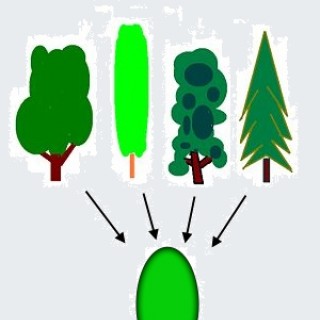
Mental generalization is the cognitive process of applying learned behaviors, responses, or concepts to new, similar stimuli or situations, allowing for adaptation and flexible learning. It allows individuals to apply past experiences to novel scenarios, such as recognizing that different types of chairs all serve the same purpose.

In this talk, Tatiana, Staff Software Engineer at LinkedIn, shares her journey from academic physics to becoming a Kaggle Master and winning the Sound Demixing Challenge. We explore how to use machine learning competitions as a strategic tool to build a high-impact career and bridge the gap between theory and production.You'll learn about:Turning competition code into professional GitHub repos.Converting results into papers for NIPS and CVPR.How LLMs are changing the benchmark for AI competitions.Why hands-on implementation beats passive learning.Using Topcoder and AI Crowd for research-driven goals.Practical steps for your very first model submission.Links:Rise: 3 Practical Steps for Advancing Your Career, Standing Out as a Leader, and Liking Your Life. By Patty Azzarello https://www.porchlightbooks.com/pages/author/Patty_Azzarello-16156396 - awesome book about why doing good is not enough, and what else you need to do to promote your career (same applies to competitions)AICrowd - https://www.aicrowd.com/challenges Grand challenges - https://grand-challenge.org/challenges/Kaggle competitions - https://www.kaggle.com/competitionsTopCoder challenge SpaceNet 9 - https://www.topcoder.com/challenges/9620f66a-767e-40ac-81d5-5cc61274b186(no current active competitions, but they appear)Medium blog post with instruction - https://medium.com/data-science/writing-papers-tech-reports-after-kaggle-competitions-ee504fc0c4c1Kaggle Solution Write-Up Documentation - https://www.kaggle.com/solution-write-up-documentationEvaluating Machine Learning Agents on Machine Learning Engineering - https://arxiv.org/abs/2410.07095Machine Learning Engineering Agent via Search and Targeted Refinement - https://arxiv.org/html/2506.15692v2AI Research Agents for Machine Learning: Search, Exploration, and Generalization in MLE-bench - chrome-extension://efaidnbmnnnibpcajpcglclefindmkaj/https://arxiv.org/pdf/2507.02554TIMECODES:00:00 Tatiana's journey from academia to staff software engineer06:01 Machine learning applications in physics and signal processing09:13 Skill development and domain diversification on Kaggle13:35 Agentic AI benchmarks and automated competition entries17:43 Deep technical mastery versus leaderboard gamification23:04 Hands-on implementation and the illusion of learning26:01 Specialized platforms and fair competition environments31:35 Academic publications and research from silver medals35:24 GitHub repositories and engineering portfolio building39:02 Technical marketing via blog posts and LinkedIn43:25 Innovative approaches for academic conference submissions47:21 Research challenges at NIPS and CVPR workshops52:51 Medical imaging platforms and specialized recommendations57:46 First submission strategies for beginners01:00:56 Asynchronous collaboration and competition team dynamicsPerfect for data scientists and engineers looking to transition from academia or build a formal portfolio using Kaggle as a career-advancement tool.Connect with Tatiana:Linkedin - https://www.linkedin.com/in/tatigabru/

This episode Steve, Bully, Tr33, and Jarvis explore a quote from Archbishop Desmond Tutu: “My humanity is caught up in yours.” Using the Teach Different Method, they unpack the claims and counterclaims of the quote. This conversation explores the profound interconnectedness of humanity, the nature of scarcity, and the societal implications of empathy, judgment, and human value. Essential questions are posed, challenging listeners to reflect on how we treat each other and the true meaning of humanity in a complex world.Episode Chapters00:00 - Understanding Humanity Through Conflict02:06 - The Interconnectedness of Our Actions05:05 - Empathy and Competition in Society07:50 - Judgment and Generalization in Humanity11:05 - Scarcity and Value: A Philosophical Inquiry16:50 - Counterclaims: Humanity in Conflict19:53 - Minding Our Own Business vs. Empathy24:54 - The Disrespect of Humanity27:11 - The Cycle of Violence and Mockery28:05 - Survival Mode and Systemic Issues29:46 - The Power of Mediation and Intellect31:15 - Interconnectedness of Society33:02 - The Cost of Living and Healthcare34:24 - The Burden of Medical ExpensesImage Source: https://sahistory.org.za/node/122068
In this Huberman Lab Essentials episode, my guest is Dr. David Anderson, PhD, a professor of biology at the California Institute of Technology (Caltech) and an investigator at the Howard Hughes Medical Institute (HHMI). We discuss the brain circuits that underlie how emotions emerge and shape behaviors, including the neural control of fear, aggression and pain. We also explore how hormones and neuromodulators influence these emotional states, and why understanding these hidden internal processes is essential for improving future mental health treatments. Read the show notes at hubermanlab.com. Thank you to our sponsors AG1: https://drinkag1.com/huberman BetterHelp: https://betterhelp.com/huberman Function: https://functionhealth.com/huberman Timestamps (00:00:00) David Anderson (00:00:20) Emotions vs States (00:01:53) Emotion Qualities: Persistence & Generalization (00:04:04) Aggression (00:06:39) Sponsor: BetterHelp (00:07:41) Evolution of Fear & Aggression, Offensive vs Defensive Aggression (00:09:57) Homeostatic Behaviors & Hydraulic Pressure (00:12:58) Testosterone, Estrogen & Aggression (00:14:51) Female vs Male Aggression (00:16:48) Sponsor: AG1 (00:18:13) Mating Behavior & Aggression; Sexual Violence (00:21:48) Periaqueductal Gray, Pain Control & Fighting (00:26:03) Sponsor: Function (00:27:15) Tachykinin, Pain, Social Isolation & Aggression (00:31:47) Emotions & Somatic Feeling; Vagus Nerve (00:36:27) Acknowledgements & Future Direction Disclaimer & Disclosures Learn more about your ad choices. Visit megaphone.fm/adchoices

Jakub Pachocki, OpenAI's Chief Scientist, sits down with Jacob to cover the full arc of where AI research stands today and where it's headed. The conversation spans the explosive growth of coding agents and what it signals about near-term AI capability, the use of math and physics benchmarks as proxies for general intelligence, how reinforcement learning is being extended beyond easily-verified domains toward longer-horizon tasks, and what it means to run a research organization at the precise moment the models themselves are starting to accelerate the research. Jakub shares a candid take on the competitive landscape, why chain-of-thought monitoring is one of the most promising tools in the alignment toolkit, and — with unusual directness — why the concentration of power enabled by highly automated AI organizations is a societal problem that doesn't yet have an obvious solution. (0:00) Intro (1:53) Research Intern Capability Timelines (4:59) Math Breakthroughs (7:59) RL Beyond Verifiable Tasks (12:32) RL vs In-Context (19:01) Allocating Compute Internally (28:18) AI for Science (31:40) Pattern Matching (33:23) Solving the Hardest Math Problems (37:40) Chain of Thought Monitoring (44:33) Generalization and Value Alignment in Models (47:57) Inside OpenAI (51:55) Quickfire With your co-hosts: @jacobeffron - Partner at Redpoint, Former PM Flatiron Health @patrickachase - Partner at Redpoint, Former ML Engineer LinkedIn @ericabrescia - Former COO Github, Founder Bitnami (acq'd by VMWare) @jordan_segall - Partner at Redpoint

Are we truly on the verge of AI automating its own research and development? In this deep-dive episode of the MAD Podcast, Matt Turck sits down with Mostafa Dehghani, a pioneering AI researcher at Google DeepMind whose work on Universal Transformers and Vision Transformers (ViT) helped lay the groundwork for today's frontier models.Moving past the hype, Mostafa breaks down the actual mechanics of "thinking in loops" and Recursive Self-Improvement (RSI). He explores the critical bottlenecks holding back true AGI—from evaluation limits and formal verification to the brutal math of long-horizon reliability.Mostafa and Matt also discuss the shift from pre-training to post-training, how Gemini's Nano Banana 2 processes pixels and text simultaneously, and why the "frozen" nature of today's models means Continual Learning is the next massive frontier for enterprise AI and data pipelines.(00:00) Intro(01:17) What “loops” in AI actually mean(05:04) Self-improvement as the next chapter of machine learning(07:32) Are Karpathy's autoresearch agents an early form of AI self-improvement?(08:56) AI building AI: how close are we?(10:02) The biggest bottlenecks: evals, automation, and long horizons(12:36) Can formal verification unlock recursive self-improvement?(14:06) What is model collapse?(15:33) Generalization vs specialization in AI(18:04) What is a specialized model today?(20:57) Could top AI researchers themselves be automated?(24:02) If AI builds AI, does data matter less than compute?(26:22) Post-training vs pre-training: where will progress come from?(28:14) Why pre-training is not dead(29:45) What is continual learning?(31:53) How real is continual learning today?(33:43) Mostafa Dehghani's background and path into AI(36:13) The story behind Universal Transformers(39:56) How Vision Transformers changed AI(43:47) Gemini, multimodality, and Nano Banana(47:46) Why multimodality helps build a world model(52:44) Why image generation is getting faster and more efficient(54:44) Hot takes(54:53) What the AI field is getting wrong(56:17) Why continual learning is underrated(57:26) Does RAG go away over time?(58:21) What people are too confident about in AI(59:56) If he were starting from scratch today

Trustworthy machine learning requires models that still work when real-world data changes, and Adam Klivans, Ph.D., Director of the Institute for Foundations of Machine Learning (IFML), emphasizes learning under “distribution shift” as a major barrier to relying on models to predict disease across different patient populations. IFML focuses on foundational algorithms and mathematical techniques that push generative AI forward, including better methods for training and inference in deep learning and advances in diffusion approaches. Klivans highlights robustness and safety as core priorities, asking how to trust a model trained in one setting when it is applied in another. IFML connects these foundations to use-inspired domains such as imaging, protein engineering and biologics, and AI for mathematical discovery. Series: "Data Science Channel" [Science] [Show ID: 40972]

Trustworthy machine learning requires models that still work when real-world data changes, and Adam Klivans, Ph.D., Director of the Institute for Foundations of Machine Learning (IFML), emphasizes learning under “distribution shift” as a major barrier to relying on models to predict disease across different patient populations. IFML focuses on foundational algorithms and mathematical techniques that push generative AI forward, including better methods for training and inference in deep learning and advances in diffusion approaches. Klivans highlights robustness and safety as core priorities, asking how to trust a model trained in one setting when it is applied in another. IFML connects these foundations to use-inspired domains such as imaging, protein engineering and biologics, and AI for mathematical discovery. Series: "Data Science Channel" [Science] [Show ID: 40972]

Trustworthy machine learning requires models that still work when real-world data changes, and Adam Klivans, Ph.D., Director of the Institute for Foundations of Machine Learning (IFML), emphasizes learning under “distribution shift” as a major barrier to relying on models to predict disease across different patient populations. IFML focuses on foundational algorithms and mathematical techniques that push generative AI forward, including better methods for training and inference in deep learning and advances in diffusion approaches. Klivans highlights robustness and safety as core priorities, asking how to trust a model trained in one setting when it is applied in another. IFML connects these foundations to use-inspired domains such as imaging, protein engineering and biologics, and AI for mathematical discovery. Series: "Data Science Channel" [Science] [Show ID: 40972]

Trustworthy machine learning requires models that still work when real-world data changes, and Adam Klivans, Ph.D., Director of the Institute for Foundations of Machine Learning (IFML), emphasizes learning under “distribution shift” as a major barrier to relying on models to predict disease across different patient populations. IFML focuses on foundational algorithms and mathematical techniques that push generative AI forward, including better methods for training and inference in deep learning and advances in diffusion approaches. Klivans highlights robustness and safety as core priorities, asking how to trust a model trained in one setting when it is applied in another. IFML connects these foundations to use-inspired domains such as imaging, protein engineering and biologics, and AI for mathematical discovery. Series: "Data Science Channel" [Science] [Show ID: 40972]

"Why You Shouldn't Generalize What You Think Is What the Whole World Thinks" - Listen to my Morning Monologue: I'm sharing my take on pressing issues, enlightening research on human behavior, answering questions I get by email, and my favorite, most instructive interactions with callers. Everything you'll hear is designed to help you become a better spouse, parent, family member, co-worker, friend, and human being. It's the free therapy you need! Call 1-800-DR-LAURA / 1-800-375-2872 or make an appointment at DrLaura.com Follow me on social media: Facebook.com/DrLaura Instagram.com/DrLauraProgram YouTube.com/DrLaura Join My Family!! Receive my Weekly Newsletter + 20% off my Marriage 101 course & 25% off Merch! Sign up now, it's FREE! Each week you'll get new articles, featured emails from listeners, special event invitations, early access to my Dr. Laura Designs Store benefiting Children of Fallen Patriots, and MORE! Sign up at DrLaura.com Hosted by Simplecast, an AdsWizz company. See pcm.adswizz.com for information about our collection and use of personal data for advertising.

You nail a training session. Your dog is locked in, responding beautifully, and you feel that rare rush of “we've got this.” Then real life shows up and your dog looks at you like you've never met. Sound familiar? Here's the thing: that moment is not a failure. It's not evidence that you're doing it wrong or that your dog is broken. It's just really good information.In this episode, Allie and Emily unpack why training that looks solid in sessions doesn't always transfer to real-world contexts. That gap is completely normal, even expected, and still incredibly frustrating. They talk about “Antecedent Pictures,” explain why dogs learn in sensory maps rather than abstract rules, and walk through what it actually looks like to troubleshoot when things fall apart in context. For behavior professionals navigating imposter syndrome when a client says “it didn't work,” this episode offers both the framework and the permission to shift out of self-blame and into curious, compassionate problem-solving.TLDL (too long, didn't listen): 3 Key Takeaways 1️⃣ Dogs learn in sensory maps, not abstract rules — The Antecedent Picture explains why behavior that's solid in one context can fall apart in another2️⃣ Generalization must be taught, not assumed — Transfer across contexts is a learnable skill, and practicing it in more places makes it easier, not harder3️⃣ “It didn't work” is data, not a verdict — For pet parents and pros alike, real-world feedback is an invitation to troubleshoot, not evidence of failureFor the full episode show notes, including the resources mentioned in this episode, go here.More from Pet HarmonyPet Parents: enrichment ideas and practical behavior tips
For years in ABA, success was often measured in hours, more sessions, more billing, more time. But our field is shifting. In this episode, we unpack what value-based care really means and why it is not a new trend, but a return to good ABA. We explore how focusing on meaningful, socially significant outcomes, rather than checking boxes on assessments, can transform the way we write goals, make clinical decisions, and measure progress.We share real examples of how values guide programming, from preparing for life events to prioritizing skills that truly impact family life. We also reflect on what COVID taught us about functional goals and generalization. Ultimately, we challenge ourselves to ask: If therapy ended tomorrow, which skills would truly matter?Value-based care is not a specific teaching strategy. It is a decision-making lens. When we prioritize dignity, assent, autonomy, and long-term quality of life, we ensure our work creates outcomes that last.What's Inside:What value-based care actually means in everyday ABA practiceHow to select goals that prioritize quality of life and long-term outcomesWhy generalization and social validity define meaningful progressMentioned in This Episode:HowToABA.com/joinHow to ABA on YouTubeFind us on FacebookFollow us on Instagram

How do we exercise discernment on the mission field? In this episode of The Missions Show, Alex and Scott examine common misunderstandings about global persecution and why discernment is essential when evaluating reports of suffering in the church. Drawing from missionary experience, they explain that persecution is not always dramatic or violent, but often appears as marginalization, stigma, or family rejection. They caution against glamorizing persecuted believers or assuming their theology is automatically superior. The conversation also explores a biblical theology of generalizations and discernment, looking at Titus 1 and Philippians 1 as guides for thinking clearly and loving wisely. Rather than reacting to headlines or stereotypes, believers are called to exercise Spirit-shaped discernment—rejecting error, approving what is excellent, and praying faithfully for the global church amid complex situations. Key Topics: Misconceptions about persecution in American evangelicalism The many forms persecution can take The danger of romanticizing suffering Biblical generalizations and cultural discernment (Titus 1) Discernment as a pathway to mature love (Phil. 1) Applying discernment to modern persecution claims (e.g., Nigeria) Do you love The Missions Show? Have you been blessed by the show? Then become a Premium Subscriber! Premium Subscribers get access to: Exclusive bonus content A community Signal thread with other listeners and the hosts Invite-only webinars A free gift! Support The Missions Show and sign up to be a Premium Subscriber at missionsshow.com/premium The Missions Show is powered by ABWE. Learn more and take your next step in the Great Commission at abwe.org. Want to ask a question or suggest a topic? Email alex@missionsshow.com.

Helene Polatajko, PhD, OT(C), FCAOT, FCAHS, LLD(h.c.), OC, a renowned occupational therapist, researcher, and co-developer of the CO-OP Approach, joins host J.J. Mowder-Tinney for a thought-provoking conversation on how cognition can drive motor performance. Together, they explore the power of guided discovery, client-centered goals, and the surprising role of self-generated strategies in rehabilitation. From dancing to dressing to stroke recovery, you'll hear how thinking differently about movement can change what your patients are capable of. Tune in to reframe your clinical lens and get inspired to incorporate “goal-plan-do-check” into your own sessions.Learning ObjectivesAnalyze the evidence around CO-OP approaches to meaningful activities across pediatric and adult populationsApply evidence-based, practical strategies to actionably address challenges in occupationalSolve patient case scenarios involving clients with coordination or motor learning impairmentTimestamps(00:00:00) Welcome(00:00:05) Introduction to cognition and motor-based performance(00:01:20) Dr. Polatajko's background and journey in occupational therapy(00:05:30) The self-driving car(00:12:40) Cognitive orientation to daily occupational performance (CO-OP)(00:14:35) Dynamic performance analysis(00:22:15) Guided discovery(00:30:24) Generalization and transfer of skills(00:34:14) Goal-plan-do-check(00:53:25) Key takeaways and conclusionNeuro Navigators is brought to you by Medbridge. If you'd like to earn continuing education credit for listening to this episode and access bonus takeaway handouts, log in to your Medbridge account and navigate to the course where you'll find accreditation details. If applicable, complete the post-course assessment and survey to be eligible for credit. The takeaway handout on Medbridge gives you the key points mentioned in this episode, along with additional resources you can implement into your practice right away.To hear more episodes of Neuro Naviagators, visit https://www.medbridge.com/neuro-navigatorsIf you'd like to subscribe to Medbridge, visit https://www.medbridge.com/pricing/IG: https://www.instagram.com/medbridgeteam/
From Palantir and Two Sigma to building Goodfire into the poster-child for actionable mechanistic interpretability, Mark Bissell (Member of Technical Staff) and Myra Deng (Head of Product) are trying to turn “peeking inside the model” into a repeatable production workflow by shipping APIs, landing real enterprise deployments, and now scaling the bet with a recent $150M Series B funding round at a $1.25B valuation.In this episode, we go far beyond the usual “SAEs are cool” take. We talk about Goodfire's core bet: that the AI lifecycle is still fundamentally broken because the only reliable control we have is data and we post-train, RLHF, and fine-tune by “slurping supervision through a straw,” hoping the model picks up the right behaviors while quietly absorbing the wrong ones. Goodfire's answer is to build a bi-directional interface between humans and models: read what's happening inside, edit it surgically, and eventually use interpretability during training so customization isn't just brute-force guesswork.Mark and Myra walk through what that looks like when you stop treating interpretability like a lab demo and start treating it like infrastructure: lightweight probes that add near-zero latency, token-level safety filters that can run at inference time, and interpretability workflows that survive messy constraints (multilingual inputs, synthetic→real transfer, regulated domains, no access to sensitive data). We also get a live window into what “frontier-scale interp” means operationally (i.e. steering a trillion-parameter model in real time by targeting internal features) plus why the same tooling generalizes cleanly from language models to genomics, medical imaging, and “pixel-space” world models.We discuss:* Myra + Mark's path: Palantir (health systems, forward-deployed engineering) → Goodfire early team; Two Sigma → Head of Product, translating frontier interpretability research into a platform and real-world deployments* What “interpretability” actually means in practice: not just post-hoc poking, but a broader “science of deep learning” approach across the full AI lifecycle (data curation → post-training → internal representations → model design)* Why post-training is the first big wedge: “surgical edits” for unintended behaviors likereward hacking, sycophancy, noise learned during customization plus the dream of targeted unlearning and bias removal without wrecking capabilities* SAEs vs probes in the real world: why SAE feature spaces sometimes underperform classifiers trained on raw activations for downstream detection tasks (hallucination, harmful intent, PII), and what that implies about “clean concept spaces”* Rakuten in production: deploying interpretability-based token-level PII detection at inference time to prevent routing private data to downstream providers plus the gnarly constraints: no training on real customer PII, synthetic→real transfer, English + Japanese, and tokenization quirks* Why interp can be operationally cheaper than LLM-judge guardrails: probes are lightweight, low-latency, and don't require hosting a second large model in the loop* Real-time steering at frontier scale: a demo of steering Kimi K2 (~1T params) live and finding features via SAE pipelines, auto-labeling via LLMs, and toggling a “Gen-Z slang” feature across multiple layers without breaking tool use* Hallucinations as an internal signal: the case that models have latent uncertainty / “user-pleasing” circuitry you can detect and potentially mitigate more directly than black-box methods* Steering vs prompting: the emerging view that activation steering and in-context learning are more closely connected than people think, including work mapping between the two (even for jailbreak-style behaviors)* Interpretability for science: using the same tooling across domains (genomics, medical imaging, materials) to debug spurious correlations and extract new knowledge up to and including early biomarker discovery work with major partners* World models + “pixel-space” interpretability: why vision/video models make concepts easier to see, how that accelerates the feedback loop, and why robotics/world-model partners are especially interesting design partners* The north star: moving from “data in, weights out” to intentional model design where experts can impart goals and constraints directly, not just via reward signals and brute-force post-training—Goodfire AI* Website: https://goodfire.ai* LinkedIn: https://www.linkedin.com/company/goodfire-ai/* X: https://x.com/GoodfireAIMyra Deng* Website: https://myradeng.com/* LinkedIn: https://www.linkedin.com/in/myra-deng/* X: https://x.com/myra_dengMark Bissell* LinkedIn: https://www.linkedin.com/in/mark-bissell/* X: https://x.com/MarkMBissellFull Video EpisodeTimestamps00:00:00 Introduction00:00:05 Introduction to the Latent Space Podcast and Guests from Goodfire00:00:29 What is Goodfire? Mission and Focus on Interpretability00:01:01 Goodfire's Practical Approach to Interpretability00:01:37 Goodfire's Series B Fundraise Announcement00:02:04 Backgrounds of Mark and Myra from Goodfire00:02:51 Team Structure and Roles at Goodfire00:05:13 What is Interpretability? Definitions and Techniques00:05:30 Understanding Errors00:07:29 Post-training vs. Pre-training Interpretability Applications00:08:51 Using Interpretability to Remove Unwanted Behaviors00:10:09 Grokking, Double Descent, and Generalization in Models00:10:15 404 Not Found Explained00:12:06 Subliminal Learning and Hidden Biases in Models00:14:07 How Goodfire Chooses Research Directions and Projects00:15:00 Troubleshooting Errors00:16:04 Limitations of SAEs and Probes in Interpretability00:18:14 Rakuten Case Study: Production Deployment of Interpretability00:20:45 Conclusion00:21:12 Efficiency Benefits of Interpretability Techniques00:21:26 Live Demo: Real-Time Steering in a Trillion Parameter Model00:25:15 How Steering Features are Identified and Labeled00:26:51 Detecting and Mitigating Hallucinations Using Interpretability00:31:20 Equivalence of Activation Steering and Prompting00:34:06 Comparing Steering with Fine-Tuning and LoRA Techniques00:36:04 Model Design and the Future of Intentional AI Development00:38:09 Getting Started in Mechinterp: Resources, Programs, and Open Problems00:40:51 Industry Applications and the Rise of Mechinterp in Practice00:41:39 Interpretability for Code Models and Real-World Usage00:43:07 Making Steering Useful for More Than Stylistic Edits00:46:17 Applying Interpretability to Healthcare and Scientific Discovery00:49:15 Why Interpretability is Crucial in High-Stakes Domains like Healthcare00:52:03 Call for Design Partners Across Domains00:54:18 Interest in World Models and Visual Interpretability00:57:22 Sci-Fi Inspiration: Ted Chiang and Interpretability01:00:14 Interpretability, Safety, and Alignment Perspectives01:04:27 Weak-to-Strong Generalization and Future Alignment Challenges01:05:38 Final Thoughts and Hiring/Collaboration Opportunities at GoodfireTranscriptShawn Wang [00:00:05]: So welcome to the Latent Space pod. We're back in the studio with our special MechInterp co-host, Vibhu. Welcome. Mochi, Mochi's special co-host. And Mochi, the mechanistic interpretability doggo. We have with us Mark and Myra from Goodfire. Welcome. Thanks for having us on. Maybe we can sort of introduce Goodfire and then introduce you guys. How do you introduce Goodfire today?Myra Deng [00:00:29]: Yeah, it's a great question. So Goodfire, we like to say, is an AI research lab that focuses on using interpretability to understand, learn from, and design AI models. And we really believe that interpretability will unlock the new generation, next frontier of safe and powerful AI models. That's our description right now, and I'm excited to dive more into the work we're doing to make that happen.Shawn Wang [00:00:55]: Yeah. And there's always like the official description. Is there an understatement? Is there an unofficial one that sort of resonates more with a different audience?Mark Bissell [00:01:01]: Well, being an AI research lab that's focused on interpretability, there's obviously a lot of people have a lot that they think about when they think of interpretability. And I think we have a pretty broad definition of what that means and the types of places that can be applied. And in particular, applying it in production scenarios, in high stakes industries, and really taking it sort of from the research world into the real world. Which, you know. It's a new field, so that hasn't been done all that much. And we're excited about actually seeing that sort of put into practice.Shawn Wang [00:01:37]: Yeah, I would say it wasn't too long ago that Anthopic was like still putting out like toy models or superposition and that kind of stuff. And I wouldn't have pegged it to be this far along. When you and I talked at NeurIPS, you were talking a little bit about your production use cases and your customers. And then not to bury the lead, today we're also announcing the fundraise, your Series B. $150 million. $150 million at a 1.25B valuation. Congrats, Unicorn.Mark Bissell [00:02:02]: Thank you. Yeah, no, things move fast.Shawn Wang [00:02:04]: We were talking to you in December and already some big updates since then. Let's dive, I guess, into a bit of your backgrounds as well. Mark, you were at Palantir working on health stuff, which is really interesting because the Goodfire has some interesting like health use cases. I don't know how related they are in practice.Mark Bissell [00:02:22]: Yeah, not super related, but I don't know. It was helpful context to know what it's like. Just to work. Just to work with health systems and generally in that domain. Yeah.Shawn Wang [00:02:32]: And Mara, you were at Two Sigma, which actually I was also at Two Sigma back in the day. Wow, nice.Myra Deng [00:02:37]: Did we overlap at all?Shawn Wang [00:02:38]: No, this is when I was briefly a software engineer before I became a sort of developer relations person. And now you're head of product. What are your sort of respective roles, just to introduce people to like what all gets done in Goodfire?Mark Bissell [00:02:51]: Yeah, prior to Goodfire, I was at Palantir for about three years as a forward deployed engineer, now a hot term. Wasn't always that way. And as a technical lead on the health care team and at Goodfire, I'm a member of the technical staff. And honestly, that I think is about as specific as like as as I could describe myself because I've worked on a range of things. And, you know, it's it's a fun time to be at a team that's still reasonably small. I think when I joined one of the first like ten employees, now we're above 40, but still, it looks like there's always a mix of research and engineering and product and all of the above. That needs to get done. And I think everyone across the team is, you know, pretty, pretty switch hitter in the roles they do. So I think you've seen some of the stuff that I worked on related to image models, which was sort of like a research demo. More recently, I've been working on our scientific discovery team with some of our life sciences partners, but then also building out our core platform for more of like flexing some of the kind of MLE and developer skills as well.Shawn Wang [00:03:53]: Very generalist. And you also had like a very like a founding engineer type role.Myra Deng [00:03:58]: Yeah, yeah.Shawn Wang [00:03:59]: So I also started as I still am a member of technical staff, did a wide range of things from the very beginning, including like finding our office space and all of this, which is we both we both visited when you had that open house thing. It was really nice.Myra Deng [00:04:13]: Thank you. Thank you. Yeah. Plug to come visit our office.Shawn Wang [00:04:15]: It looked like it was like 200 people. It has room for 200 people. But you guys are like 10.Myra Deng [00:04:22]: For a while, it was very empty. But yeah, like like Mark, I spend. A lot of my time as as head of product, I think product is a bit of a weird role these days, but a lot of it is thinking about how do we take our frontier research and really apply it to the most important real world problems and how does that then translate into a platform that's repeatable or a product and working across, you know, the engineering and research teams to make that happen and also communicating to the world? Like, what is interpretability? What is it used for? What is it good for? Why is it so important? All of these things are part of my day-to-day as well.Shawn Wang [00:05:01]: I love like what is things because that's a very crisp like starting point for people like coming to a field. They all do a fun thing. Vibhu, why don't you want to try tackling what is interpretability and then they can correct us.Vibhu Sapra [00:05:13]: Okay, great. So I think like one, just to kick off, it's a very interesting role to be head of product, right? Because you guys, at least as a lab, you're more of an applied interp lab, right? Which is pretty different than just normal interp, like a lot of background research. But yeah. You guys actually ship an API to try these things. You have Ember, you have products around it, which not many do. Okay. What is interp? So basically you're trying to have an understanding of what's going on in model, like in the model, in the internal. So different approaches to do that. You can do probing, SAEs, transcoders, all this stuff. But basically you have an, you have a hypothesis. You have something that you want to learn about what's happening in a model internals. And then you're trying to solve that from there. You can do stuff like you can, you know, you can do activation mapping. You can try to do steering. There's a lot of stuff that you can do, but the key question is, you know, from input to output, we want to have a better understanding of what's happening and, you know, how can we, how can we adjust what's happening on the model internals? How'd I do?Mark Bissell [00:06:12]: That was really good. I think that was great. I think it's also a, it's kind of a minefield of a, if you ask 50 people who quote unquote work in interp, like what is interpretability, you'll probably get 50 different answers. And. Yeah. To some extent also like where, where good fire sits in the space. I think that we're an AI research company above all else. And interpretability is a, is a set of methods that we think are really useful and worth kind of specializing in, in order to accomplish the goals we want to accomplish. But I think we also sort of see some of the goals as even more broader as, as almost like the science of deep learning and just taking a not black box approach to kind of any part of the like AI development life cycle, whether that. That means using interp for like data curation while you're training your model or for understanding what happened during post-training or for the, you know, understanding activations and sort of internal representations, what is in there semantically. And then a lot of sort of exciting updates that were, you know, are sort of also part of the, the fundraise around bringing interpretability to training, which I don't think has been done all that much before. A lot of this stuff is sort of post-talk poking at models as opposed to. To actually using this to intentionally design them.Shawn Wang [00:07:29]: Is this post-training or pre-training or is that not a useful.Myra Deng [00:07:33]: Currently focused on post-training, but there's no reason the techniques wouldn't also work in pre-training.Shawn Wang [00:07:38]: Yeah. It seems like it would be more active, applicable post-training because basically I'm thinking like rollouts or like, you know, having different variations of a model that you can tweak with the, with your steering. Yeah.Myra Deng [00:07:50]: And I think in a lot of the news that you've seen in, in, on like Twitter or whatever, you've seen a lot of unintended. Side effects come out of post-training processes, you know, overly sycophantic models or models that exhibit strange reward hacking behavior. I think these are like extreme examples. There's also, you know, very, uh, mundane, more mundane, like enterprise use cases where, you know, they try to customize or post-train a model to do something and it learns some noise or it doesn't appropriately learn the target task. And a big question that we've always had is like, how do you use your understanding of what the model knows and what it's doing to actually guide the learning process?Shawn Wang [00:08:26]: Yeah, I mean, uh, you know, just to anchor this for people, uh, one of the biggest controversies of last year was 4.0 GlazeGate. I've never heard of GlazeGate. I didn't know that was what it was called. The other one, they called it that on the blog post and I was like, well, how did OpenAI call it? Like officially use that term. And I'm like, that's funny, but like, yeah, I guess it's the pitch that if they had worked a good fire, they wouldn't have avoided it. Like, you know what I'm saying?Myra Deng [00:08:51]: I think so. Yeah. Yeah.Mark Bissell [00:08:53]: I think that's certainly one of the use cases. I think. Yeah. Yeah. I think the reason why post-training is a place where this makes a lot of sense is a lot of what we're talking about is surgical edits. You know, you want to be able to have expert feedback, very surgically change how your model is doing, whether that is, you know, removing a certain behavior that it has. So, you know, one of the things that we've been looking at or is, is another like common area where you would want to make a somewhat surgical edit is some of the models that have say political bias. Like you look at Quen or, um, R1 and they have sort of like this CCP bias.Shawn Wang [00:09:27]: Is there a CCP vector?Mark Bissell [00:09:29]: Well, there's, there are certainly internal, yeah. Parts of the representation space where you can sort of see where that lives. Yeah. Um, and you want to kind of, you know, extract that piece out.Shawn Wang [00:09:40]: Well, I always say, you know, whenever you find a vector, a fun exercise is just like, make it very negative to see what the opposite of CCP is.Mark Bissell [00:09:47]: The super America, bald eagles flying everywhere. But yeah. So in general, like lots of post-training tasks where you'd want to be able to, to do that. Whether it's unlearning a certain behavior or, you know, some of the other kind of cases where this comes up is, are you familiar with like the, the grokking behavior? I mean, I know the machine learning term of grokking.Shawn Wang [00:10:09]: Yeah.Mark Bissell [00:10:09]: Sort of this like double descent idea of, of having a model that is able to learn a generalizing, a generalizing solution, as opposed to even if memorization of some task would suffice, you want it to learn the more general way of doing a thing. And so, you know, another. A way that you can think about having surgical access to a model's internals would be learn from this data, but learn in the right way. If there are many possible, you know, ways to, to do that. Can make interp solve the double descent problem?Shawn Wang [00:10:41]: Depends, I guess, on how you. Okay. So I, I, I viewed that double descent as a problem because then you're like, well, if the loss curves level out, then you're done, but maybe you're not done. Right. Right. But like, if you actually can interpret what is a generalizing or what you're doing. What is, what is still changing, even though the loss is not changing, then maybe you, you can actually not view it as a double descent problem. And actually you're just sort of translating the space in which you view loss and like, and then you have a smooth curve. Yeah.Mark Bissell [00:11:11]: I think that's certainly like the domain of, of problems that we're, that we're looking to get.Shawn Wang [00:11:15]: Yeah. To me, like double descent is like the biggest thing to like ML research where like, if you believe in scaling, then you don't need, you need to know where to scale. And. But if you believe in double descent, then you don't, you don't believe in anything where like anything levels off, like.Vibhu Sapra [00:11:30]: I mean, also tendentially there's like, okay, when you talk about the China vector, right. There's the subliminal learning work. It was from the anthropic fellows program where basically you can have hidden biases in a model. And as you distill down or, you know, as you train on distilled data, those biases always show up, even if like you explicitly try to not train on them. So, you know, it's just like another use case of. Okay. If we can interpret what's happening in post-training, you know, can we clear some of this? Can we even determine what's there? Because yeah, it's just like some worrying research that's out there that shows, you know, we really don't know what's going on.Mark Bissell [00:12:06]: That is. Yeah. I think that's the biggest sentiment that we're sort of hoping to tackle. Nobody knows what's going on. Right. Like subliminal learning is just an insane concept when you think about it. Right. Train a model on not even the logits, literally the output text of a bunch of random numbers. And now your model loves owls. And you see behaviors like that, that are just, they defy, they defy intuition. And, and there are mathematical explanations that you can get into, but. I mean.Shawn Wang [00:12:34]: It feels so early days. Objectively, there are a sequence of numbers that are more owl-like than others. There, there should be.Mark Bissell [00:12:40]: According to, according to certain models. Right. It's interesting. I think it only applies to models that were initialized from the same starting Z. Usually, yes.Shawn Wang [00:12:49]: But I mean, I think that's a, that's a cheat code because there's not enough compute. But like if you believe in like platonic representation, like probably it will transfer across different models as well. Oh, you think so?Mark Bissell [00:13:00]: I think of it more as a statistical artifact of models initialized from the same seed sort of. There's something that is like path dependent from that seed that might cause certain overlaps in the latent space and then sort of doing this distillation. Yeah. Like it pushes it towards having certain other tendencies.Vibhu Sapra [00:13:24]: Got it. I think there's like a bunch of these open-ended questions, right? Like you can't train in new stuff during the RL phase, right? RL only reorganizes weights and you can only do stuff that's somewhat there in your base model. You're not learning new stuff. You're just reordering chains and stuff. But okay. My broader question is when you guys work at an interp lab, how do you decide what to work on and what's kind of the thought process? Right. Because we can ramble for hours. Okay. I want to know this. I want to know that. But like, how do you concretely like, you know, what's the workflow? Okay. There's like approaches towards solving a problem, right? I can try prompting. I can look at chain of thought. I can train probes, SAEs. But how do you determine, you know, like, okay, is this going anywhere? Like, do we have set stuff? Just, you know, if you can help me with all that. Yeah.Myra Deng [00:14:07]: It's a really good question. I feel like we've always at the very beginning of the company thought about like, let's go and try to learn what isn't working in machine learning today. Whether that's talking to customers or talking to researchers at other labs, trying to understand both where the frontier is going and where things are really not falling apart today. And then developing a perspective on how we can push the frontier using interpretability methods. And so, you know, even our chief scientist, Tom, spends a lot of time talking to customers and trying to understand what real world problems are and then taking that back and trying to apply the current state of the art to those problems and then seeing where they fall down basically. And then using those failures or those shortcomings to understand what hills to climb when it comes to interpretability research. So like on the fundamental side, for instance, when we have done some work applying SAEs and probes, we've encountered, you know, some shortcomings in SAEs that we found a little bit surprising. And so have gone back to the drawing board and done work on that. And then, you know, we've done some work on better foundational interpreter models. And a lot of our team's research is focused on what is the next evolution beyond SAEs, for instance. And then when it comes to like control and design of models, you know, we tried steering with our first API and realized that it still fell short of black box techniques like prompting or fine tuning. And so went back to the drawing board and we're like, how do we make that not the case and how do we improve it beyond that? And one of our researchers, Ekdeep, who just joined is actually Ekdeep and Atticus are like steering experts and have spent a lot of time trying to figure out like, what is the research that enables us to actually do this in a much more powerful, robust way? So yeah, the answer is like, look at real world problems, try to translate that into a research agenda and then like hill climb on both of those at the same time.Shawn Wang [00:16:04]: Yeah. Mark has the steering CLI demo queued up, which we're going to go into in a sec. But I always want to double click on when you drop hints, like we found some problems with SAEs. Okay. What are they? You know, and then we can go into the demo. Yeah.Myra Deng [00:16:19]: I mean, I'm curious if you have more thoughts here as well, because you've done it in the healthcare domain. But I think like, for instance, when we do things like trying to detect behaviors within models that are harmful or like behaviors that a user might not want to have in their model. So hallucinations, for instance, harmful intent, PII, all of these things. We first tried using SAE probes for a lot of these tasks. So taking the feature activation space from SAEs and then training classifiers on top of that, and then seeing how well we can detect the properties that we might want to detect in model behavior. And we've seen in many cases that probes just trained on raw activations seem to perform better than SAE probes, which is a bit surprising if you think that SAEs are actually also capturing the concepts that you would want to capture cleanly and more surgically. And so that is an interesting observation. I don't think that is like, I'm not down on SAEs at all. I think there are many, many things they're useful for, but we have definitely run into cases where I think the concept space described by SAEs is not as clean and accurate as we would expect it to be for actual like real world downstream performance metrics.Mark Bissell [00:17:34]: Fair enough. Yeah. It's the blessing and the curse of unsupervised methods where you get to peek into the AI's mind. But sometimes you wish that you saw other things when you walked inside there. Although in the PII instance, I think weren't an SAE based approach actually did prove to be the most generalizable?Myra Deng [00:17:53]: It did work well in the case that we published with Rakuten. And I think a lot of the reasons it worked well was because we had a noisier data set. And so actually the blessing of unsupervised learning is that we actually got to get more meaningful, generalizable signal from SAEs when the data was noisy. But in other cases where we've had like good data sets, it hasn't been the case.Shawn Wang [00:18:14]: And just because you named Rakuten and I don't know if we'll get it another chance, like what is the overall, like what is Rakuten's usage or production usage? Yeah.Myra Deng [00:18:25]: So they are using us to essentially guardrail and inference time monitor their language model usage and their agent usage to detect things like PII so that they don't route private user information.Myra Deng [00:18:41]: And so that's, you know, going through all of their user queries every day. And that's something that we deployed with them a few months ago. And now we are actually exploring very early partnerships, not just with Rakuten, but with other people around how we can help with potentially training and customization use cases as well. Yeah.Shawn Wang [00:19:03]: And for those who don't know, like it's Rakuten is like, I think number one or number two e-commerce store in Japan. Yes. Yeah.Mark Bissell [00:19:10]: And I think that use case actually highlights a lot of like what it looks like to deploy things in practice that you don't always think about when you're doing sort of research tasks. So when you think about some of the stuff that came up there that's more complex than your idealized version of a problem, they were encountering things like synthetic to real transfer of methods. So they couldn't train probes, classifiers, things like that on actual customer data of PII. So what they had to do is use synthetic data sets. And then hope that that transfer is out of domain to real data sets. And so we can evaluate performance on the real data sets, but not train on customer PII. So that right off the bat is like a big challenge. You have multilingual requirements. So this needed to work for both English and Japanese text. Japanese text has all sorts of quirks, including tokenization behaviors that caused lots of bugs that caused us to be pulling our hair out. And then also a lot of tasks you'll see. You might make simplifying assumptions if you're sort of treating it as like the easiest version of the problem to just sort of get like general results where maybe you say you're classifying a sentence to say, does this contain PII? But the need that Rakuten had was token level classification so that you could precisely scrub out the PII. So as we learned more about the problem, you're sort of speaking about what that looks like in practice. Yeah. A lot of assumptions end up breaking. And that was just one instance where you. A problem that seems simple right off the bat ends up being more complex as you keep diving into it.Vibhu Sapra [00:20:41]: Excellent. One of the things that's also interesting with Interp is a lot of these methods are very efficient, right? So where you're just looking at a model's internals itself compared to a separate like guardrail, LLM as a judge, a separate model. One, you have to host it. Two, there's like a whole latency. So if you use like a big model, you have a second call. Some of the work around like self detection of hallucination, it's also deployed for efficiency, right? So if you have someone like Rakuten doing it in production live, you know, that's just another thing people should consider.Mark Bissell [00:21:12]: Yeah. And something like a probe is super lightweight. Yeah. It's no extra latency really. Excellent.Shawn Wang [00:21:17]: You have the steering demos lined up. So we were just kind of see what you got. I don't, I don't actually know if this is like the latest, latest or like alpha thing.Mark Bissell [00:21:26]: No, this is a pretty hacky demo from from a presentation that someone else on the team recently gave. So this will give a sense for, for technology. So you can see the steering and action. Honestly, I think the biggest thing that this highlights is that as we've been growing as a company and taking on kind of more and more ambitious versions of interpretability related problems, a lot of that comes to scaling up in various different forms. And so here you're going to see steering on a 1 trillion parameter model. This is Kimi K2. And so it's sort of fun that in addition to the research challenges, there are engineering challenges that we're now tackling. Cause for any of this to be sort of useful in production, you need to be thinking about what it looks like when you're using these methods on frontier models as opposed to sort of like toy kind of model organisms. So yeah, this was thrown together hastily, pretty fragile behind the scenes, but I think it's quite a fun demo. So screen sharing is on. So I've got two terminal sessions pulled up here. On the left is a forked version that we have of the Kimi CLI that we've got running to point at our custom hosted Kimi model. And then on the right is a set up that will allow us to steer on certain concepts. So I should be able to chat with Kimi over here. Tell it hello. This is running locally. So the CLI is running locally, but the Kimi server is running back to the office. Well, hopefully should be, um, that's too much to run on that Mac. Yeah. I think it's, uh, it takes a full, like each 100 node. I think it's like, you can. You can run it on eight GPUs, eight 100. So, so yeah, Kimi's running. We can ask it a prompt. It's got a forked version of our, uh, of the SG line code base that we've been working on. So I'm going to tell it, Hey, this SG line code base is slow. I think there's a bug. Can you try to figure it out? There's a big code base, so it'll, it'll spend some time doing this. And then on the right here, I'm going to initialize in real time. Some steering. Let's see here.Mark Bissell [00:23:33]: searching for any. Bugs. Feature ID 43205.Shawn Wang [00:23:38]: Yeah.Mark Bissell [00:23:38]: 20, 30, 40. So let me, uh, this is basically a feature that we found that inside Kimi seems to cause it to speak in Gen Z slang. And so on the left, it's still sort of thinking normally it might take, I don't know, 15 seconds for this to kick in, but then we're going to start hopefully seeing him do this code base is massive for real. So we're going to start. We're going to start seeing Kimi transition as the steering kicks in from normal Kimi to Gen Z Kimi and both in its chain of thought and its actual outputs.Mark Bissell [00:24:19]: And interestingly, you can see, you know, it's still able to call tools, uh, and stuff. It's um, it's purely sort of it's it's demeanor. And there are other features that we found for interesting things like concision. So that's more of a practical one. You can make it more concise. Um, the types of programs, uh, programming languages that uses, but yeah, as we're seeing it come in. Pretty good. Outputs.Shawn Wang [00:24:43]: Scheduler code is actually wild.Vibhu Sapra [00:24:46]: Yo, this code is actually insane, bro.Vibhu Sapra [00:24:53]: What's the process of training in SAE on this, or, you know, how do you label features? I know you guys put out a pretty cool blog post about, um, finding this like autonomous interp. Um, something. Something about how agents for interp is different than like coding agents. I don't know while this is spewing up, but how, how do we find feature 43, two Oh five. Yeah.Mark Bissell [00:25:15]: So in this case, um, we, our platform that we've been building out for a long time now supports all the sort of classic out of the box interp techniques that you might want to have like SAE training, probing things of that kind, I'd say the techniques for like vanilla SAEs are pretty well established now where. You take your model that you're interpreting, run a whole bunch of data through it, gather activations, and then yeah, pretty straightforward pipeline to train an SAE. There are a lot of different varieties. There's top KSAEs, batch top KSAEs, um, normal ReLU SAEs. And then once you have your sparse features to your point, assigning labels to them to actually understand that this is a gen Z feature, that's actually where a lot of the kind of magic happens. Yeah. And the most basic standard technique is look at all of your d input data set examples that cause this feature to fire most highly. And then you can usually pick out a pattern. So for this feature, If I've run a diverse enough data set through my model feature 43, two Oh five. Probably tends to fire on all the tokens that sounds like gen Z slang. You know, that's the, that's the time of year to be like, Oh, I'm in this, I'm in this Um, and, um, so, you know, you could have a human go through all 43,000 concepts andVibhu Sapra [00:26:34]: And I've got to ask the basic question, you know, can we get examples where it hallucinates, pass it through, see what feature activates for hallucinations? Can I just, you know, turn hallucination down?Myra Deng [00:26:51]: Oh, wow. You really predicted a project we're already working on right now, which is detecting hallucinations using interpretability techniques. And this is interesting because hallucinations is something that's very hard to detect. And it's like a kind of a hairy problem and something that black box methods really struggle with. Whereas like Gen Z, you could always train a simple classifier to detect that hallucinations is harder. But we've seen that models internally have some... Awareness of like uncertainty or some sort of like user pleasing behavior that leads to hallucinatory behavior. And so, yeah, we have a project that's trying to detect that accurately. And then also working on mitigating the hallucinatory behavior in the model itself as well.Shawn Wang [00:27:39]: Yeah, I would say most people are still at the level of like, oh, I would just turn temperature to zero and that turns off hallucination. And I'm like, well, that's a fundamental misunderstanding of how this works. Yeah.Mark Bissell [00:27:51]: Although, so part of what I like about that question is you, there are SAE based approaches that might like help you get at that. But oftentimes the beauty of SAEs and like we said, the curse is that they're unsupervised. So when you have a behavior that you deliberately would like to remove, and that's more of like a supervised task, often it is better to use something like probes and specifically target the thing that you're interested in reducing as opposed to sort of like hoping that when you fragment the latent space, one of the vectors that pops out.Vibhu Sapra [00:28:20]: And as much as we're training an autoencoder to be sparse, we're not like for sure certain that, you know, we will get something that just correlates to hallucination. You'll probably split that up into 20 other things and who knows what they'll be.Mark Bissell [00:28:36]: Of course. Right. Yeah. So there's no sort of problems with like feature splitting and feature absorption. And then there's the off target effects, right? Ideally, you would want to be very precise where if you reduce the hallucination feature, suddenly maybe your model can't write. Creatively anymore. And maybe you don't like that, but you want to still stop it from hallucinating facts and figures.Shawn Wang [00:28:55]: Good. So Vibhu has a paper to recommend there that we'll put in the show notes. But yeah, I mean, I guess just because your demo is done, any any other things that you want to highlight or any other interesting features you want to show?Mark Bissell [00:29:07]: I don't think so. Yeah. Like I said, this is a pretty small snippet. I think the main sort of point here that I think is exciting is that there's not a whole lot of inter being applied to models quite at this scale. You know, Anthropic certainly has some some. Research and yeah, other other teams as well. But it's it's nice to see these techniques, you know, being put into practice. I think not that long ago, the idea of real time steering of a trillion parameter model would have sounded.Shawn Wang [00:29:33]: Yeah. The fact that it's real time, like you started the thing and then you edited the steering vector.Vibhu Sapra [00:29:38]: I think it's it's an interesting one TBD of what the actual like production use case would be on that, like the real time editing. It's like that's the fun part of the demo, right? You can kind of see how this could be served behind an API, right? Like, yes, you're you only have so many knobs and you can just tweak it a bit more. And I don't know how it plays in. Like people haven't done that much with like, how does this work with or without prompting? Right. How does this work with fine tuning? Like, there's a whole hype of continual learning, right? So there's just so much to see. Like, is this another parameter? Like, is it like parameter? We just kind of leave it as a default. We don't use it. So I don't know. Maybe someone here wants to put out a guide on like how to use this with prompting when to do what?Mark Bissell [00:30:18]: Oh, well, I have a paper recommendation. I think you would love from Act Deep on our team, who is an amazing researcher, just can't say enough amazing things about Act Deep. But he actually has a paper that as well as some others from the team and elsewhere that go into the essentially equivalence of activation steering and in context learning and how those are from a he thinks of everything in a cognitive neuroscience Bayesian framework, but basically how you can precisely show how. Prompting in context, learning and steering exhibit similar behaviors and even like get quantitative about the like magnitude of steering you would need to do to induce a certain amount of behavior similar to certain prompting, even for things like jailbreaks and stuff. It's a really cool paper. Are you saying steering is less powerful than prompting? More like you can almost write a formula that tells you how to convert between the two of them.Myra Deng [00:31:20]: And so like formally equivalent actually in the in the limit. Right.Mark Bissell [00:31:24]: So like one case study of this is for jailbreaks there. I don't know. Have you seen the stuff where you can do like many shot jailbreaking? You like flood the context with examples of the behavior. And the topic put out that paper.Shawn Wang [00:31:38]: A lot of people were like, yeah, we've been doing this, guys.Mark Bissell [00:31:40]: Like, yeah, what's in this in context learning and activation steering equivalence paper is you can like predict the number. Number of examples that you will need to put in there in order to jailbreak the model. That's cool. By doing steering experiments and using this sort of like equivalence mapping. That's cool. That's really cool. It's very neat. Yeah.Shawn Wang [00:32:02]: I was going to say, like, you know, I can like back rationalize that this makes sense because, you know, what context is, is basically just, you know, it updates the KV cache kind of and like and then every next token inference is still like, you know, the sheer sum of everything all the way. It's plus all the context. It's up to date. And you could, I guess, theoretically steer that with you probably replace that with your steering. The only problem is steering typically is on one layer, maybe three layers like like you did. So it's like not exactly equivalent.Mark Bissell [00:32:33]: Right, right. There's sort of you need to get precise about, yeah, like how you sort of define steering and like what how you're modeling the setup. But yeah, I've got the paper pulled up here. Belief dynamics reveal the dual nature. Yeah. The title is Belief Dynamics Reveal the Dual Nature of Incompetence. And it's an exhibition of the practical context learning and activation steering. So Eric Bigelow, Dan Urgraft on the who are doing fellowships at Goodfire, Ekt Deep's the final author there.Myra Deng [00:32:59]: I think actually to your question of like, what is the production use case of steering? I think maybe if you just think like one level beyond steering as it is today. Like imagine if you could adapt your model to be, you know, an expert legal reasoner. Like in almost real time, like very quickly. efficiently using human feedback or using like your semantic understanding of what the model knows and where it knows that behavior. I think that while it's not clear what the product is at the end of the day, it's clearly very valuable. Thinking about like what's the next interface for model customization and adaptation is a really interesting problem for us. Like we have heard a lot of people actually interested in fine-tuning an RL for open weight models in production. And so people are using things like Tinker or kind of like open source libraries to do that, but it's still very difficult to get models fine-tuned and RL'd for exactly what you want them to do unless you're an expert at model training. And so that's like something we'reShawn Wang [00:34:06]: looking into. Yeah. I never thought so. Tinker from Thinking Machines famously uses rank one LoRa. Is that basically the same as steering? Like, you know, what's the comparison there?Mark Bissell [00:34:19]: Well, so in that case, you are still applying updates to the parameters, right?Shawn Wang [00:34:25]: Yeah. You're not touching a base model. You're touching an adapter. It's kind of, yeah.Mark Bissell [00:34:30]: Right. But I guess it still is like more in parameter space then. I guess it's maybe like, are you modifying the pipes or are you modifying the water flowing through the pipes to get what you're after? Yeah. Just maybe one way.Mark Bissell [00:34:44]: I like that analogy. That's my mental map of it at least, but it gets at this idea of model design and intentional design, which is something that we're, that we're very focused on. And just the fact that like, I hope that we look back at how we're currently training models and post-training models and just think what a primitive way of doing that right now. Like there's no intentionalityShawn Wang [00:35:06]: really in... It's just data, right? The only thing in control is what data we feed in.Mark Bissell [00:35:11]: So, so Dan from Goodfire likes to use this analogy of, you know, he has a couple of young kids and he talks about like, what if I could only teach my kids how to be good people by giving them cookies or like, you know, giving them a slap on the wrist if they do something wrong, like not telling them why it was wrong or like what they should have done differently or something like that. Just figure it out. Right. Exactly. So that's RL. Yeah. Right. And, and, you know, it's sample inefficient. There's, you know, what do they say? It's like slurping feedback. It's like, slurping supervision. Right. And so you'd like to get to the point where you can have experts giving feedback to their models that are, uh, internalized and, and, you know, steering is an inference time way of sort of getting that idea. But ideally you're moving to a world whereVibhu Sapra [00:36:04]: it is much more intentional design in perpetuity for these models. Okay. This is one of the questions we asked Emmanuel from Anthropic on the podcast a few months ago. Basically the question, was you're at a research lab that does model training, foundation models, and you're on an interp team. How does it tie back? Right? Like, does this, do ideas come from the pre-training team? Do they go back? Um, you know, so for those interested, you can, you can watch that. There wasn't too much of a connect there, but it's still something, you know, it's something they want toMark Bissell [00:36:33]: push for down the line. It can be useful for all of the above. Like there are certainly post-hocVibhu Sapra [00:36:39]: use cases where it doesn't need to touch that. I think the other thing a lot of people forget is this stuff isn't too computationally expensive, right? Like I would say, if you're interested in getting into research, MechInterp is one of the most approachable fields, right? A lot of this train an essay, train a probe, this stuff, like the budget for this one, there's already a lot done. There's a lot of open source work. You guys have done some too. Um, you know,Shawn Wang [00:37:04]: There's like notebooks from the Gemini team for Neil Nanda or like, this is how you do it. Just step through the notebook.Vibhu Sapra [00:37:09]: Even if you're like, not even technical with any of this, you can still make like progress. There, you can look at different activations, but, uh, if you do want to get into training, you know, training this stuff, correct me if I'm wrong is like in the thousands of dollars, not even like, it's not that high scale. And then same with like, you know, applying it, doing it for post-training or all this stuff is fairly cheap in scale of, okay. I want to get into like model training. I don't have compute for like, you know, pre-training stuff. So it's, it's a very nice field to get into. And also there's a lot of like open questions, right? Um, some of them have to go with, okay, I want a product. I want to solve this. Like there's also just a lot of open-ended stuff that people could work on. That's interesting. Right. I don't know if you guys have any calls for like, what's open questions, what's open work that you either open collaboration with, or like, you'd just like to see solved or just, you know, for people listening that want to get into McInturk because people always talk about it. What are, what are the things they should check out? Start, of course, you know, join you guys as well. I'm sure you're hiring.Myra Deng [00:38:09]: There's a paper, I think from, was it Lee, uh, Sharky? It's open problems and, uh, it's, it's a bit of interpretability, which I recommend everyone who's interested in the field. Read. I'm just like a really comprehensive overview of what are the things that experts in the field think are the most important problems to be solved. I also think to your point, it's been really, really inspiring to see, I think a lot of young people getting interested in interpretability, actually not just young people also like scientists to have been, you know, experts in physics for many years and in biology or things like this, um, transitioning into interp, because the barrier of, of what's now interp. So it's really cool to see a number to entry is, you know, in some ways low and there's a lot of information out there and ways to get started. There's this anecdote of like professors at universities saying that all of a sudden every incoming PhD student wants to study interpretability, which was not the case a few years ago. So it just goes to show how, I guess, like exciting the field is, how fast it's moving, how quick it is to get started and things like that.Mark Bissell [00:39:10]: And also just a very welcoming community. You know, there's an open source McInturk Slack channel. There are people are always posting questions and just folks in the space are always responsive if you ask things on various forums and stuff. But yeah, the open paper, open problems paper is a really good one.Myra Deng [00:39:28]: For other people who want to get started, I think, you know, MATS is a great program. What's the acronym for? Machine Learning and Alignment Theory Scholars? It's like the...Vibhu Sapra [00:39:40]: Normally summer internship style.Myra Deng [00:39:42]: Yeah, but they've been doing it year round now. And actually a lot of our full-time staff have come through that program or gone through that program. And it's great for anyone who is transitioning into interpretability. There's a couple other fellows programs. We do one as well as Anthropic. And so those are great places to get started if anyone is interested.Mark Bissell [00:40:03]: Also, I think been seen as a research field for a very long time. But I think engineering... I think engineers are sorely wanted for interpretability as well, especially at Goodfire, but elsewhere, as it does scale up.Shawn Wang [00:40:18]: I should mention that Lee actually works with you guys, right? And in the London office and I'm adding our first ever McInturk track at AI Europe because I see this industry applications now emerging. And I'm pretty excited to, you know, help push that along. Yeah, I was looking forward to that. It'll effectively be the first industry McInturk conference. Yeah. I'm so glad you added that. You know, it's still a little bit of a bet. It's not that widespread, but I can definitely see this is the time to really get into it. We want to be early on things.Mark Bissell [00:40:51]: For sure. And I think the field understands this, right? So at ICML, I think the title of the McInturk workshop this year was actionable interpretability. And there was a lot of discussion around bringing it to various domains. Everyone's adding pragmatic, actionable, whatever.Shawn Wang [00:41:10]: It's like, okay, well, we weren't actionable before, I guess. I don't know.Vibhu Sapra [00:41:13]: And I mean, like, just, you know, being in Europe, you see the Interp room. One, like old school conferences, like, I think they had a very tiny room till they got lucky and they got it doubled. But there's definitely a lot of interest, a lot of niche research. So you see a lot of research coming out of universities, students. We covered the paper last week. It's like two unknown authors, not many citations. But, you know, you can make a lot of meaningful work there. Yeah. Yeah. Yeah.Shawn Wang [00:41:39]: Yeah. I think people haven't really mentioned this yet. It's just Interp for code. I think it's like an abnormally important field. We haven't mentioned this yet. The conspiracy theory last two years ago was when the first SAE work came out of Anthropic was they would do like, oh, we just used SAEs to turn the bad code vector down and then turn up the good code. And I think like, isn't that the dream? Like, you know, like, but basically, I guess maybe, why is it funny? Like, it's... If it was realistic, it would not be funny. It would be like, no, actually, we should do this. But it's funny because we know there's like, we feel there's some limitations to what steering can do. And I think a lot of the public image of steering is like the Gen Z stuff. Like, oh, you can make it really love the Golden Gate Bridge, or you can make it speak like Gen Z. To like be a legal reasoner seems like a huge stretch. Yeah. And I don't know if that will get there this way. Yeah.Myra Deng [00:42:36]: I think, um, I will say we are announcing. Something very soon that I will not speak too much about. Um, but I think, yeah, this is like what we've run into again and again is like, we, we don't want to be in the world where steering is only useful for like stylistic things. That's definitely not, not what we're aiming for. But I think the types of interventions that you need to do to get to things like legal reasoning, um, are much more sophisticated and require breakthroughs in, in learning algorithms. And that's, um...Shawn Wang [00:43:07]: And is this an emergent property of scale as well?Myra Deng [00:43:10]: I think so. Yeah. I mean, I think scale definitely helps. I think scale allows you to learn a lot of information and, and reduce noise across, you know, large amounts of data. But I also think we think that there's ways to do things much more effectively, um, even, even at scale. So like actually learning exactly what you want from the data and not learning things that you do that you don't want exhibited in the data. So we're not like anti-scale, but we are also realizing that scale is not going to get us anywhere. It's not going to get us to the type of AI development that we want to be at in, in the future as these models get more powerful and get deployed in all these sorts of like mission critical contexts. Current life cycle of training and deploying and evaluations is, is to us like deeply broken and has opportunities to, to improve. So, um, more to come on that very, very soon.Mark Bissell [00:44:02]: And I think that that's a use basically, or maybe just like a proof point that these concepts do exist. Like if you can manipulate them in the precise best way, you can get the ideal combination of them that you desire. And steering is maybe the most coarse grained sort of peek at what that looks like. But I think it's evocative of what you could do if you had total surgical control over every concept, every parameter. Yeah, exactly.Myra Deng [00:44:30]: There were like bad code features. I've got it pulled up.Vibhu Sapra [00:44:33]: Yeah. Just coincidentally, as you guys are talking.Shawn Wang [00:44:35]: This is like, this is exactly.Vibhu Sapra [00:44:38]: There's like specifically a code error feature that activates and they show, you know, it's not, it's not typo detection. It's like, it's, it's typos in code. It's not typical typos. And, you know, you can, you can see it clearly activates where there's something wrong in code. And they have like malicious code, code error. They have a whole bunch of sub, you know, sub broken down little grain features. Yeah.Shawn Wang [00:45:02]: Yeah. So, so the, the rough intuition for me, the, why I talked about post-training was that, well, you just, you know, have a few different rollouts with all these things turned off and on and whatever. And then, you know, you can, that's, that's synthetic data you can kind of post-train on. Yeah.Vibhu Sapra [00:45:13]: And I think we make it sound easier than it is just saying, you know, they do the real hard work.Myra Deng [00:45:19]: I mean, you guys, you guys have the right idea. Exactly. Yeah. We replicated a lot of these features in, in our Lama models as well. I remember there was like.Vibhu Sapra [00:45:26]: And I think a lot of this stuff is open, right? Like, yeah, you guys opened yours. DeepMind has opened a lot of essays on Gemma. Even Anthropic has opened a lot of this. There's, there's a lot of resources that, you know, we can probably share of people that want to get involved.Shawn Wang [00:45:41]: Yeah. And special shout out to like Neuronpedia as well. Yes. Like, yeah, amazing piece of work to visualize those things.Myra Deng [00:45:49]: Yeah, exactly.Shawn Wang [00:45:50]: I guess I wanted to pivot a little bit on, onto the healthcare side, because I think that's a big use case for you guys. We haven't really talked about it yet. This is a bit of a crossover for me because we are, we are, we do have a separate science pod that we're starting up for AI, for AI for science, just because like, it's such a huge investment category and also I'm like less qualified to do it, but we actually have bio PhDs to cover that, which is great, but I need to just kind of recover, recap your work, maybe on the evil two stuff, but then, and then building forward.Mark Bissell [00:46:17]: Yeah, for sure. And maybe to frame up the conversation, I think another kind of interesting just lens on interpretability in general is a lot of the techniques that were described. are ways to solve the AI human interface problem. And it's sort of like bidirectional communication is the goal there. So what we've been talking about with intentional design of models and, you know, steering, but also more advanced techniques is having humans impart our desires and control into models and over models. And the reverse is also very interesting, especially as you get to superhuman models, whether that's narrow superintelligence, like these scientific models that work on genomics, data, medical imaging, things like that. But down the line, you know, superintelligence of other forms as well. What knowledge can the AIs teach us as sort of that, that the other direction in that? And so some of our life science work to date has been getting at exactly that question, which is, well, some of it does look like debugging these various life sciences models, understanding if they're actually performing well, on tasks, or if they're picking up on spurious correlations, for instance, genomics models, you would like to know whether they are sort of focusing on the biologically relevant things that you care about, or if it's using some simpler correlate, like the ancestry of the person that it's looking at. But then also in the instances where they are superhuman, and maybe they are understanding elements of the human genome that we don't have names for or specific, you know, yeah, discoveries that they've made that that we don't know about, that's, that's a big goal. And so we're already seeing that, right, we are partnered with organizations like Mayo Clinic, leading research health system in the United States, our Institute, as well as a startup called Prima Menta, which focuses on neurodegenerative disease. And in our partnership with them, we've used foundation models, they've been training and applied our interpretability techniques to find novel biomarkers for Alzheimer's disease. So I think this is just the tip of the iceberg. But it's, that's like a flavor of some of the things that we're working on.Shawn Wang [00:48:36]: Yeah, I think that's really fantastic. Obviously, we did the Chad Zuckerberg pod last year as well. And like, there's a plethora of these models coming out, because there's so much potential and research. And it's like, very interesting how it's basically the same as language models, but just with a different underlying data set. But it's like, it's the same exact techniques. Like, there's no change, basically.Mark Bissell [00:48:59]: Yeah. Well, and even in like other domains, right? Like, you know, robotics, I know, like a lot of the companies just use Gemma as like the like backbone, and then they like make it into a VLA that like takes these actions. It's, it's, it's transformers all the way down. So yeah.Vibhu Sapra [00:49:15]: Like we have Med Gemma now, right? Like this week, even there was Med Gemma 1.5. And they're training it on this stuff, like 3d scans, medical domain knowledge, and all that stuff, too. So there's a push from both sides. But I think the thing that, you know, one of the things about McInturpp is like, you're a little bit more cautious in some domains, right? So healthcare, mainly being one, like guardrails, understanding, you know, we're more risk adverse to something going wrong there. So even just from a basic understanding, like, if we're trusting these systems to make claims, we want to know why and what's going on.Myra Deng [00:49:51]: Yeah, I think there's totally a kind of like deployment bottleneck to actually using. foundation models for real patient usage or things like that. Like, say you're using a model for rare disease prediction, you probably want some explanation as to why your model predicted a certain outcome, and an interpretable explanation at that. So that's definitely a use case. But I also think like, being able to extract scientific information that no human knows to accelerate drug discovery and disease treatment and things like that actually is a really, really big unlock for science, like scientific discovery. And you've seen a lot of startups, like say that they're going to accelerate scientific discovery. And I feel like we actually are doing that through our interp techniques. And kind of like, almost by accident, like, I think we got reached out to very, very early on from these healthcare institutions. And none of us had healthcare.Shawn Wang [00:50:49]: How did they even hear of you? A podcast.Myra Deng [00:50:51]: Oh, okay. Yeah, podcast.Vibhu Sapra [00:50:53]: Okay, well, now's that time, you know.Myra Deng [00:50:55]: Everyone can call us.Shawn Wang [00:50:56]: Podcasts are the most important thing. Everyone should listen to podcasts.Myra Deng [00:50:59]: Yeah, they reached out. They were like, you know, we have these really smart models that we've trained, and we want to know what they're doing. And we were like, really early that time, like three months old, and it was a few of us. And we were like, oh, my God, we've never used these models. Let's figure it out. But it's also like, great proof that interp techniques scale pretty well across domains. We didn't really have to learn too much about.Shawn Wang [00:51:21]: Interp is a machine learning technique, machine learning skills everywhere, right? Yeah. And it's obviously, it's just like a general insight. Yeah. Probably to finance too, I think, which would be fun for our history. I don't know if you have anything to say there.Mark Bissell [00:51:34]: Yeah, well, just across the science. Like, we've also done work on material science. Yeah, it really runs the gamut.Vibhu Sapra [00:51:40]: Yeah. Awesome. And, you know, for those that should reach out, like, you're obviously experts in this, but like, is there a call out for people that you're looking to partner with, design partners, people to use your stuff outside of just, you know, the general developer that wants to. Plug and play steering stuff, like on the research side more so, like, are there ideal design partners, customers, stuff like that?Myra Deng [00:52:03]: Yeah, I can talk about maybe non-life sciences, and then I'm curious to hear from you on the life sciences side. But we're looking for design partners across many domains, language, anyone who's customizing language models or trying to push the frontier of code or reasoning models is really interesting to us. And then also interested in the frontier of modeling. There's a lot of models that work in, like, pixel space, as we call it. So if you're doing world models, video models, even robotics, where there's not a very clean natural language interface to interact with, I think we think that Interp can really help and are looking for a few partners in that space.Shawn Wang [00:52:43]: Just because you mentioned the keyword

In this episode, Jess and Sarah welcome Dr. Kate Wallis and Dr. Diana Montoya-Williams to explore the essential topic of health equity in scientific research. The scientists examine the critical importance of rigorous research design and the transformative role of community engagement in conducting meaningful health studies. They address common methodological mistakes that compromise research validity, particularly focusing on how race and ethnicity are contextualized in scientific studies. Throughout the conversation, there is an emphasis on the need for greater transparency in research practices and how community involvement strengthens both the quality and relevance of scientific work. Despite acknowledging significant challenges in achieving health equity, the episode concludes on a hopeful note by highlighting the power of community solidarity and engagement in advancing public health outcomes. Watch the conversation on YouTube: https://youtu.be/p726HlABGRI (00:00) Intro & Public Health Update (04:22) What's A Health/Science News Item That Caught Your Attention? (06:43) A Collaborative Project About How Science Has Failed Certain Communities (12:04) Common Mistakes In Research Validity (16:24) Understanding Race & Ethnicity In Research (21:25) What Does True Community Engagement Look Like? (30:07) What's Giving You Hope In Public Health And Science Right Now? https://www.inquirer.com/health/expert-opinions/autism-treatments-myths-fda-cdc-changes-20251204.html https://publications.aap.org/pediatricsopenscience/article/2/1/1/205504/Consensus-Recommendations-for-Antiracist-Child?searchresult=1 ----------------------------------------------------------------------------------------------------------------------- Interested in advertising with us? Please reach out to advertising@airwavemedia.com, with “Unbiased Science” in the subject line. PLEASE NOTE: The discussion and information provided in this podcast are for general educational, scientific, and informational purposes only and are not intended as, and should not be treated as, medical or other professional advice for any particular individual or individuals. Every person and medical issue is different, and diagnosis and treatment requires consideration of specific facts often unique to the individual. As such, the information contained in this podcast should not be used as a substitute for consultation with and/or treatment by a doctor or other medical professional. If you are experiencing any medical issue or have any medical concern, you should consult with a doctor or other medical professional. Further, due to the inherent limitations of a podcast such as this as well as ongoing scientific developments, we do not guarantee the completeness or accuracy of the information or analysis provided in this podcast, although, of course we always endeavor to provide comprehensive information and analysis. In no event may Unbiased Science or any of the participants in this podcast be held liable to the listener or anyone else for any decision allegedly made or action allegedly taken or not taken allegedly in reliance on the discussion or information in this podcast or for any damages allegedly resulting from such reliance. The information provided herein do not represent the views of our employers. Hosted by Simplecast, an AdsWizz company. See pcm.adswizz.com for information about our collection and use of personal data for advertising.
In this episode, Jess and Sarah welcome Dr. Kate Wallis and Dr. Diana Montoya-Williams to explore the essential topic of health equity in scientific research. The scientists examine the critical importance of rigorous research design and the transformative role of community engagement in conducting meaningful health studies. They address common methodological mistakes that compromise research validity, particularly focusing on how race and ethnicity are contextualized in scientific studies. Throughout the conversation, there is an emphasis on the need for greater transparency in research practices and how community involvement strengthens both the quality and relevance of scientific work. Despite acknowledging significant challenges in achieving health equity, the episode concludes on a hopeful note by highlighting the power of community solidarity and engagement in advancing public health outcomes. Watch the conversation on YouTube: https://youtu.be/p726HlABGRI (00:00) Intro & Public Health Update (04:22) What's A Health/Science News Item That Caught Your Attention? (06:43) A Collaborative Project About How Science Has Failed Certain Communities (12:04) Common Mistakes In Research Validity (16:24) Understanding Race & Ethnicity In Research (21:25) What Does True Community Engagement Look Like? (30:07) What's Giving You Hope In Public Health And Science Right Now? https://www.inquirer.com/health/expert-opinions/autism-treatments-myths-fda-cdc-changes-20251204.html https://publications.aap.org/pediatricsopenscience/article/2/1/1/205504/Consensus-Recommendations-for-Antiracist-Child?searchresult=1 ----------------------------------------------------------------------------------------------------------------------- Interested in advertising with us? Please reach out to advertising@airwavemedia.com, with “Unbiased Science” in the subject line. PLEASE NOTE: The discussion and information provided in this podcast are for general educational, scientific, and informational purposes only and are not intended as, and should not be treated as, medical or other professional advice for any particular individual or individuals. Every person and medical issue is different, and diagnosis and treatment requires consideration of specific facts often unique to the individual. As such, the information contained in this podcast should not be used as a substitute for consultation with and/or treatment by a doctor or other medical professional. If you are experiencing any medical issue or have any medical concern, you should consult with a doctor or other medical professional. Further, due to the inherent limitations of a podcast such as this as well as ongoing scientific developments, we do not guarantee the completeness or accuracy of the information or analysis provided in this podcast, although, of course we always endeavor to provide comprehensive information and analysis. In no event may Unbiased Science or any of the participants in this podcast be held liable to the listener or anyone else for any decision allegedly made or action allegedly taken or not taken allegedly in reliance on the discussion or information in this podcast or for any damages allegedly resulting from such reliance. The information provided herein do not represent the views of our employers. Learn more about your ad choices. Visit megaphone.fm/adchoices
This episode features Jerry Tworek, a key architect behind OpenAI's breakthrough reasoning models (o1, o3) and Codex, discussing the current state and future of AI. Jerry explores the real limits and promise of scaling pre-training and reinforcement learning, arguing that while these paradigms deliver predictable improvements, they're fundamentally constrained by data availability and struggle with generalization beyond their training objectives. He reveals his updated belief that continual learning—the ability for models to update themselves based on failure and work through problems autonomously—is necessary for AGI, as current models hit walls and become "hopeless" when stuck. Jerry discusses the convergence of major labs toward similar approaches driven by economic forces, the tension between exploration and exploitation in research, and why he left OpenAI to pursue new research directions. He offers candid insights on the competitive dynamics between labs, the focus required to win in specific domains like coding, what makes great AI researchers, and his surprisingly near-term predictions for robotics (2-3 years) while warning about the societal implications of widespread work automation that we're not adequately preparing for. (0:00) Intro(1:26) Scaling Paradigms in AI(3:36) Challenges in Reinforcement Learning(11:48) AGI Timelines(18:36) Converging Labs(25:05) Jerry's Departure from OpenAI(31:18) Pivotal Decisions in OpenAI's Journey(35:06) Balancing Research and Product Development(38:42) The Future of AI Coding(41:33) Specialization vs. Generalization in AI(48:47) Hiring and Building Research Teams(55:21) Quickfire With your co-hosts: @jacobeffron - Partner at Redpoint, Former PM Flatiron Health @patrickachase - Partner at Redpoint, Former ML Engineer LinkedIn @ericabrescia - Former COO Github, Founder Bitnami (acq'd by VMWare) @jordan_segall - Partner at Redpoint

You've probably tried every trick in the book to stop your dog from pulling on the leash... Maybe you've switched collars three times, bought a "no-pull" harness, or even considered giving up on walks altogether...making you feel like you're the only owner who can't control their dog on a simple walk. However, that's not the case at all.We've developed a proven 5-phase system that transforms even the worst leash pullers into well-behaved walking partners.Today we're breaking down the exact progression from my new book "The Ultimate Leash Training Manual" that's helped thousands of dogs master loose leash walking.Recommended Training Equipment:
James Clear is an expert on behavioral change and habits and the author of the bestselling book Atomic Habits. We discuss the best ways to build new healthy habits and end bad ones without relying on motivation or willpower. Rather than list off categories of tools or acronyms, James explains how anchoring the changes you want to make in your identity and physical environment allows you to make desired changes quickly and ones that stick. Whether your goal is better fitness and physical health, productivity or mental health, you'll learn actionable, zero-cost protocols to build powerful and meaningful habits. Sponsors AG1: https://drinkag1.com/huberman Lingo: https://hellolingo.com/huberman Wealthfront*: https://wealthfront.com/huberman Joovv: https://joovv.com/huberman Eight Sleep: https://eightsleep.com/huberman Function: https://functionhealth.com/huberman Timestamps 00:00:00 James Clear 00:02:57 Common Habits, Tool: Habit Success & Getting Started 00:06:16 Make Starting a Habit Easier, Tool: 4 Laws of Behavior Change 00:10:18 Sponsors: Lingo & Wealthfront 00:13:26 Writing Habits, Seasons & Flexibility; Adaptability, Tool: Bad Day Plan 00:18:42 Consistency, Flow vs Grind, Master Showing Up, Learning & Practice 00:24:54 Chunking, Getting Started at Gym 00:28:01 Flow Don't Fight, Dissatisfaction & Effort, Tool: Identity-Based Habits 00:34:10 Friction, Competition & Effort; Credentials 00:39:38 Make Effort Rewarding, Mindset, Tools: Previsualization, Emphasize Positives 00:45:59 Sponsors: AG1 & Joovv 00:48:56 Reflection & Learning, Tool: Self-Testing; Perfectionism, Tool: Curiosity 00:55:18 Striving vs Relaxation, Balance, Tool: Turn On/Off; Hiking, Nature Reset 01:04:20 Identity & Professional Pursuits; Choosing New Projects; Clinging to Identity 01:14:24 Sponsor: Eight Sleep 01:15:42 Criticism; Identity & Growth 01:21:47 Failure, Identity, Sports, Tool: Rebounding & Reaching; Public Failures 01:30:03 Daily Habits, Tools: Day in Quarters; Never Miss Twice; Meal Timing 01:38:22 Daily Habit Timing & Sequencing, Tool: Mindfully Choose Inputs 01:45:37 Creativity, Specialization vs Generalization; Books 01:51:31 Sponsor: Function 01:53:18 Habits & Context, Environmental Cues, Tools for Minimizing Phone Use 02:02:01 Bad Habits, Checking Phone, Tools for Breaking Bad Habits 02:08:21 Physical & Social Environment, New Habits, Tool: Join/Create Groups 02:18:40 Family, Habits; Kids & Parenting, Tools: Stimulus; Good Conditions 02:26:05 Impact of Habits, Habits as Solutions; Upcoming Projects 02:32:45 Zero-Cost Support, YouTube, Spotify & Apple Follow, Reviews & Feedback, Sponsors, Protocols Book, Social Media, Neural Network Newsletter *This experience may not be representative of other Wealthfront clients, and there is no guarantee of future performance or success. Experiences will vary. The Cash Account, which is not a deposit account, is offered by Wealthfront Brokerage LLC, member FINRA/SIPC. Wealthfront Brokerage is not a bank. The base APY is 3.50% on cash deposits as of November 07, 2025, is representative, subject to change, and requires no minimum. If eligible for the overall boosted rate of 4.15% offered in connection with this promo, your boosted rate is also subject to change if the base rate decreases during the 3 month promo period. Funds in the Cash Account are swept to program banks, where it earns the variable APY. New Cash Account deposits are subject to a 2-4 day holding period before becoming available for transfer. Investment advisory services are provided by Wealthfront Advisers LLC, an SEC-registered investment adviser. Securities investments: not bank deposits, bank-guaranteed or FDIC-insured, and may lose value. Learn more about your ad choices. Visit megaphone.fm/adchoices
If your first response to a new behavior challenge is “I need to learn something new,” this episode is for you. Ellen and Emily talk about why “new” isn't always the answer, and how to make the most of the skills already in your toolbox. From spooky sedation stories to “my perfect puppy isn't perfect anymore” meltdowns, they'll help you see that the solutions you need might already be sitting right there, waiting to be dusted off.TLDL (too long, didn't listen): 3 Key Takeaways 1️⃣Solid foundations beat shiny new tools - The basics, done well, solve more problems than you'd think.2️⃣Generalization is underrated - The real magic happens when you and your pet can use familiar tools in new ways.3️⃣ You're not starting over. You're leveling up - Every challenge is just another chance to practice what you already know.For the full episode show notes, including the resources mentioned in this episode, go here.More from Pet HarmonyPet Parents: enrichment ideas and practical behavior tips

Our 228th episode with a summary and discussion of last week's big AI news!Recorded on 12/12/2025Hosted by Andrey Kurenkov and Jeremie HarrisFeel free to email us your questions and feedback at contact@lastweekinai.com and/or hello@gladstone.aiRead out our text newsletter and comment on the podcast at https://lastweekin.ai/In this episode:OpenAI's latest model GPT-5.2 demonstrates improved performance and enhanced multi-modal capabilities but comes with increased costs and a different knowledge cutoff date.Disney invests $1 billion in OpenAI to generate Disney character content, creating unique licensing agreements across characters from Marvel, Pixar, and Star Wars franchises.The U.S. government imposes new AI chip export rules involving security reviews, while simultaneously moving to prevent states from independently regulating AI.DeepMind releases a paper outlining the challenges and findings in scaling multi-agent systems, highlighting the complexities of tool coordination and task performance.Timestamps:(00:00:00) Intro / Banter(00:01:19) News PreviewTools & Apps(00:01:58) GPT-5.2 is OpenAI's latest move in the agentic AI battle | The Verge(00:08:48) Runway releases its first world model, adds native audio to latest video model | TechCrunch(00:11:51) Google says it will link to more sources in AI Mode | The Verge(00:12:24) ChatGPT can now use Adobe apps to edit your photos and PDFs for free | The Verge(00:13:05) Tencent releases Hunyuan 2.0 with 406B parametersApplications & Business(00:16:15) China set to limit access to Nvidia's H200 chips despite Trump export approval(00:21:02) Disney investing $1 billion in OpenAI, will allow characters on Sora(00:24:48) Unconventional AI confirms its massive $475M seed round(00:29:06) Slack CEO Denise Dresser to join OpenAI as chief revenue officer | TechCrunch(00:31:18) The state of enterprise AIProjects & Open Source(00:33:49) [2512.10791] The FACTS Leaderboard: A Comprehensive Benchmark for Large Language Model Factuality(00:36:27) Claude 4.5 Opus' Soul DocumentResearch & Advancements(00:43:49) [2512.08296] Towards a Science of Scaling Agent Systems(00:48:43) Evaluating Gemini Robotics Policies in a Veo World Simulator(00:52:10) Guided Self-Evolving LLMs with Minimal Human Supervision(00:56:08) Martingale Score: An Unsupervised Metric for Bayesian Rationality in LLM Reasoning(01:00:39) [2512.07783] On the Interplay of Pre-Training, Mid-Training, and RL on Reasoning Language Models(01:04:42) Stabilizing Reinforcement Learning with LLMs: Formulation and Practices(01:09:42) Google's AI unit DeepMind announces UK 'automated research lab'Policy & Safety(01:10:28) Trump Moves to Stop States From Regulating AI With a New Executive Order - The New York Times(01:13:54) [2512.09742] Weird Generalization and Inductive Backdoors: New Ways to Corrupt LLMs(01:17:57) Forecasting AI Time Horizon Under Compute Slowdowns(01:20:46) AI Security Institute focuses on AI measurements and evaluations(01:21:16) Nvidia AI Chips to Undergo Unusual U.S. Security Review Before Export to China(01:22:01) U.S. Authorities Shut Down Major China-Linked AI Tech Smuggling NetworkSynthetic Media & Art(01:24:01) RSL 1.0 has arrived, allowing publishers to ask AI companies pay to scrape content | The VergeSee Privacy Policy at https://art19.com/privacy and California Privacy Notice at https://art19.com/privacy#do-not-sell-my-info.

Aye, no long talk! Just check out this bonus episode. We love y'all and appreciate your continued support. Music featured: “Gotta Do It” by Big K.R.I.T. Courtesy of Big K.R.I.T. / Multi Alumni / EMPIRE All rights belong to the original artist.

If your therapy techniques only work when you're in the room, that's a problem.Many therapists unintentionally “gatekeep” their expertise and miss opportunities to boost carryover.It's the unexpected downside of being really good at direct clinical work. Don't get me wrong. Clinical judgment does matter. And some things can only be addressed by a trained clinician in a therapy room.But when every decision depends on your personal expertise and physical presence, you've made yourself the bottleneck.In this episode, I'll share how to make the shift towards clear, repeatable systems that others can follow. When you make your methods easier to teach, you make your work scalable, easier to delegate, and far more convincing to leadership.I'll tackle common misconceptions like:✅ “I can't delegate; I don't have direct reports.”✅ “I don't have time for consultation.”✅ “We never get enough time to work on skills.”Plus I share the three steps to making intervention “scalable” so your session plans can start doubling as consultation guides and training tools for others.In this episode, I mentioned Language Therapy Advance Foundations, my program that gives speech pathologists a framework for building language skills needed to thrive in school, social situations, and daily life. You can learn more about the program here: https://drkarenspeech.com/languagetherapyI also mentioned the School of Clinical Leadership, my program that helps related service providers develop scalable executive functioning strategies they can turn into schoolwide initiatives. You can learn more about the program here: https://drkarendudekbrannan.com/clinicalleadership We're thrilled to be sponsored by IXL. IXL's comprehensive teaching and learning platform for math, language arts, science, and social studies is accelerating achievement in 95 of the top 100 U.S. school districts. Loved by teachers and backed by independent research from Johns Hopkins University, IXL can help you do the following and more:Simplify and streamline technologySave teachers' timeReliably meet Tier 1 standardsImprove student performance on state assessments
What to listen for:Our hosts Robin Greubel and Stacy Barnett explore generalization as the foundation of reliable detection work.Together, they reveal generalization as extending far beyond simple obedience across locations. It encompasses odor variability, environmental context, behavioral chains, and handler presentation.They explain how explosive and narcotic sources vary like chocolate-cake recipes: different manufacturers, cutting agents, and absorption materials create distinct odor profiles.Dogs trained on limited sources may fail to recognize the "same" target odor prepared differently. That's why handlers must expose dogs to diverse training aids and seek out other teams' materials.Next, they talk behavioral generalization. Does "search" mean the same thing in a familiar training field versus a novel parking lot, rubble pile, or aircraft? Robin and Stacy stress that context cues (vehicles, wilderness, buildings) and environmental distractions require deliberate proofing so dogs maintain focus regardless of setting, weather, or ambient noise.Robin describes her area-search class methodology, which emphasizes that handlers can proof refind behaviors solo by generalizing the chain across handler positions. You could even do jumping jacks or lie turtle-like after falling into a hole.The goal is stimulus control, which means the cue triggers the behavior everywhere, every time.Our hosts warn against training disengagement by repeatedly working in overly distracting environments (woods full of "trail mix") without first building a clean chain in controlled settings like big-box stores with clean floors.If dogs routinely self-employ or search lackadaisically, handlers must assess whether hides exceed the dog's skill level, reinforcement is insufficient, or engagement was never properly conditioned.Their green-eggs-and-ham framework captures the essence of generalization: master the skill (row your boat), then generalize it everywhere (here, there, everywhere).Key Topics:Odor Generalization Across Sources and Absorption Materials (01:41)Training-Aid Availability and Pairing New Sources (04:56)Directionals and Platform Generalization (FEMA, Rubble Piles) (12:40)Training for Test vs. Application (Go-Outs, Distance, Body Language) (16:51)Area Search, Refind/TFR and Robin's New Class (18:50)Search Cue Stimulus Control in Blank and Novel Areas (20:45)Context Cues, Vehicles, and High-Likelihood Targets (23:38)Distraction Management and Clean Behavior Chains (37:45)Green Eggs and Ham: Progression Plans for Young Dogs (42:56) Resources:Study about the need for generalization in Explosives Detection DogsEpisodes with Dr. Lauryn DeGreeffRobin's Area Search/Wilderness Dog ClassStacy's course on Reading Pre-alert BehaviorMake sure to register for Stacy's upcoming term!We want to hear from you:Check out the K9 Detection Collaborative FB page and comment on the episode post!You can follow us for notifications of upcoming episodes, find us at k9detectioncollaborative.com
We're told that AI progress is slowing down, that pre-training has hit a wall, that scaling laws are running out of road. Yet we're releasing this episode in the middle of a wild couple of weeks that saw GPT-5.1, GPT-5.1 Codex Max, fresh reasoning modes and long-running agents ship from OpenAI — on top of a flood of new frontier models elsewhere. To make sense of what's actually happening at the edge of the field, I sat down with someone who has literally helped define both of the major AI paradigms of our time.Łukasz Kaiser is one of the co-authors of “Attention Is All You Need,” the paper that introduced the Transformer architecture behind modern LLMs, and is now a leading research scientist at OpenAI working on reasoning models like those behind GPT-5.1. In this conversation, he explains why AI progress still looks like a smooth exponential curve from inside the labs, why pre-training is very much alive even as reinforcement-learning-based reasoning models take over the spotlight, how chain-of-thought actually works under the hood, and what it really means to “train the thinking process” with RL on verifiable domains like math, code and science. We talk about the messy reality of low-hanging fruit in engineering and data, the economics of GPUs and distillation, interpretability work on circuits and sparsity, and why the best frontier models can still be stumped by a logic puzzle from his five-year-old's math book.We also go deep into Łukasz's personal journey — from logic and games in Poland and France, to Ray Kurzweil's team, Google Brain and the inside story of the Transformer, to joining OpenAI and helping drive the shift from chatbots to genuine reasoning engines. Along the way we cover GPT-4 → GPT-5 → GPT-5.1, post-training and tone, GPT-5.1 Codex Max and long-running coding agents with compaction, alternative architectures beyond Transformers, whether foundation models will “eat” most agents and applications, what the translation industry can teach us about trust and human-in-the-loop, and why he thinks generalization, multimodal reasoning and robots in the home are where some of the most interesting challenges still lie.OpenAIWebsite - https://openai.comX/Twitter - https://x.com/OpenAIŁukasz KaiserLinkedIn - https://www.linkedin.com/in/lukaszkaiser/X/Twitter - https://x.com/lukaszkaiserFIRSTMARKWebsite - https://firstmark.comX/Twitter - https://twitter.com/FirstMarkCapMatt Turck (Managing Director)Blog - https://mattturck.comLinkedIn - https://www.linkedin.com/in/turck/X/Twitter - https://twitter.com/mattturck(00:00) – Cold open and intro(01:29) – “AI slowdown” vs a wild week of new frontier models(08:03) – Low-hanging fruit: infra, RL training and better data(11:39) – What is a reasoning model, in plain language?(17:02) – Chain-of-thought and training the thinking process with RL(21:39) – Łukasz's path: from logic and France to Google and Kurzweil(24:20) – Inside the Transformer story and what “attention” really means(28:42) – From Google Brain to OpenAI: culture, scale and GPUs(32:49) – What's next for pre-training, GPUs and distillation(37:29) – Can we still understand these models? Circuits, sparsity and black boxes(39:42) – GPT-4 → GPT-5 → GPT-5.1: what actually changed(42:40) – Post-training, safety and teaching GPT-5.1 different tones(46:16) – How long should GPT-5.1 think? Reasoning tokens and jagged abilities(47:43) – The five-year-old's dot puzzle that still breaks frontier models(52:22) – Generalization, child-like learning and whether reasoning is enough(53:48) – Beyond Transformers: ARC, LeCun's ideas and multimodal bottlenecks(56:10) – GPT-5.1 Codex Max, long-running agents and compaction(1:00:06) – Will foundation models eat most apps? The translation analogy and trust(1:02:34) – What still needs to be solved, and where AI might go next

Dylan's thoughts on the new Wicked: For Good. We discuss the tragedies that happened while filming the original Wizard Of Oz movie. We make some gender generalizations. Are woman able to see HD or do they just not care? Are woman less likely to talk to you while they're in the bathroom? Another major concert announce! The warning labels that scare us the most. Pepper has a question about butter. Can it be classified as just a spread?

11-21-25 - Holmberg Is Finding That Being His Own Booking Agent Is Hard - Hard Reality Of Car Repair Has Struck John Again As He Thought He Had A Win In Replacing His Wipers - John Makes A Generalization About Car Guys And Nails ItSee Privacy Policy at https://art19.com/privacy and California Privacy Notice at https://art19.com/privacy#do-not-sell-my-info.

11-21-25 - Holmberg Is Finding That Being His Own Booking Agent Is Hard - Hard Reality Of Car Repair Has Struck John Again As He Thought He Had A Win In Replacing His Wipers - John Makes A Generalization About Car Guys And Nails ItSee Privacy Policy at https://art19.com/privacy and California Privacy Notice at https://art19.com/privacy#do-not-sell-my-info.

In this insightful conclusion to our two-part conversation, Ellen Yoakum—Certified Separation Anxiety Pro Behavior Consultant, KPA CTP, and Behavior Consultant with Pet Harmony—returns to explore how we can thoughtfully apply the learning principles we use with our animal learners to ourselves and the humans we work with. Building on the foundations of Part One, Ellen and Ryan dive into the complexities of generalization—how humans, much like our non-human learners, can struggle to transfer skills across contexts. From communication and empathy to client coaching and professional growth, Ellen offers compassionate strategies for building fluency, resilience, and sustainability in both behavior change and life. Together, they explore: ✅ Translating behavioral principles from dogs to humans—and ourselves ✅ Creating safe learning spaces for clients, colleagues, and trainers alike ✅ How understanding "pain points" can reshape client plans and improve outcomes ✅ Teaching for generalization without overwhelming learners ✅ Rethinking perfection and building skills for recovery when "life gets lifey" Ellen's reflections on generalization, empathy, and sustainable growth remind us that training isn't just about the animals—it's about the entire learning ecosystem. Her insights leave us inspired to meet our learners where they are, celebrate progress over perfection, and approach every interaction—human or non-human—with curiosity and care. Links Enrichment for the Real World Petharmonytraining.com Pet Harmony on Instagram and Facebook Pet Harmony Pro on Instagram and TikTok

The One-Orc Conclusion: Judging a Village by One Bad Apple!
What to listen for:“Search and rescue work is the volunteer profession that you pay to do and is one of the most stressful things you can ever do, because somebody else's life could depend on what you're doing.”In part 2 of their conversation with Steve White, Robin Greubel and Stacy Barnett ask about the development of Hydrated Intensive Tracking (HIT), which evolved from experiments with scent-in-a-bottle methods.Steve's breakthrough came at a U.S. Police Canine Association seminar when handlers lacked marker training skills. By hybridizing traditional food-in-footstep methods with spray lines, Steve discovered that dogs crossing pavement with spray present kept their heads lower even after the spray evaporated. It's classical conditioning at work!Steve's training philosophy emphasizes creating calm, methodical working dogs rather than frantic high-energy animals. He seeks dogs with "conditioned emotional responses" of focused steadiness. He believes that clearheaded dogs perform better in difficult urban environments. This approach influenced his article training, where teaching dogs to find tiny objects like washers creates precision that makes finding larger targets effortless.Robin and Stacy zero in on the importance of generalization and stimulus control. Dogs absolutely distinguish training from operations, requiring extensive work in operational environments. Steve advocates for the "Green Eggs and Ham" principle. That is, can your dog perform here, there, everywhere? Handlers often mistake lack of stimulus control for lack of behavior knowledge.His current work with the United States Police Canine Association's Best Practices Working Group aims to preserve police canine programs by shifting focus toward the irreplaceable value of dogs' olfactory capabilities while promoting cooperation-based control methods over force-dependent approaches.Key Topics:Search Dogs vs. Examination Dogs (01:40)Evolution of Hydrated Intensive Tracking (12:09)Classical Conditioning and Surface Work (17:47)Generalization and Stimulus Control (26:48)Training for Operational Environments (36:37)Takeaways (45:23)Resources:You can find Steve White:Proactive K9 WebsiteProactive K9 Website FormsUSPCA YouTube Channel: Where you can find Steve's three-part series on odor/scent fundamentals, a 1000-hour eyes presentation where he talks about the eight indicators of dogs being on odor, and Robin's presentations about the recipe for building a great training session.We want to hear from you:Check out the K9 Detection Collaborative FB page and comment on the episode post!K9Sensus Detection Dog Trainer AcademyK9Sensus Foundation can be found on Facebook and Instagram. We have a Trainer's Group on Facebook!Scentsabilities Nosework is also on Facebook. Here is a Facebook group you should join!Crystal Wing (CB K9) can be found here!You can follow us for notifications of upcoming episodes, find us at k9detectioncollaborative.com
When we say “natural,” it's easy to imagine free play and child-led sessions where the therapist simply follows along. But natural doesn't mean unplanned. Behind every playful moment is an opportunity for intentional teaching, and the best play-based sessions are those that blend spontaneity with strategy.In this conversation, we talk about how to plan for play in a way that still feels natural and fun. We compare it to hosting a birthday party—you wouldn't invite a group of kids and hope for the best without games or structure! The same goes for ABA sessions. Following a child's lead doesn't mean letting them bounce from toy to toy. It means embedding purposeful teaching moments within what they love most.We share practical ways to create this balance, from using assessments like the Early Start Denver Model to identify meaningful goals to organizing the environment so motivation and learning opportunities flow naturally. You'll hear how we think through contriving the environment, following motivation rather than chaos, and using every playful moment with purpose.What's Inside:How to combine natural play with intentional teachingUsing assessments to guide play-based goalsTips for setting up the environment to boost engagement and learningMentioned in This Episode:Episode 118: Generalization and Maintenance of Skills in ABAHowToABA.com/joinHow to ABA on YouTubeFind us on FacebookFollow us on Instagram
Lindsay Watson, PT, CEO, and Co-Founder of Augment Therapy, is on a mission to blend augmented reality (AR) and virtual care to transform therapy. Augment Therapy offers interactive AR rehabilitation exercises and fun wellness games designed to encourage movement and improve outcomes at home and in person. With their ARWell PRO app, therapists can use the software during sessions and give patients free access at home, all while tracking progress through a customized, gamified platform.While Augment Therapy is currently used primarily by OTs and PTs, Lindsay shares exciting plans to expand into speech therapy. We also discuss the benefits of telehealth when applied intentionally and how leveraging technology can enhance repetition, generalization, and engagement—turning a tool that's often seen as a negative into a powerful ally for therapy success.#autism #speechtherapy What's Inside:What is Augment Therapy?How can Augmented Reality impact therapy.Blending expertise and virtual care.Mentioned In This Episode:Augment Therapy Join the aba speech connection ABA Speech: HomeThe BriefAll your family's pressing concerns and questions, answered in one place. Mike...Listen on: Apple Podcasts Spotify

As a listener of TOE you can get a special 20% off discount to The Economist and all it has to offer! Visit https://www.economist.com/toe MIT physicist Max Tegmark argues AI now belongs inside physics—and that consciousness will be next. He separates intelligence (goal-achieving behavior) from consciousness (subjective experience), sketches falsifiable experiments using brain-reading tech and rigorous theories (e.g., IIT/φ), and shows how ideas like Hopfield energy landscapes make memory “feel” like physics. We get into mechanistic interpretability (sparse autoencoders), number representations that snap into clean geometry, why RLHF mostly aligns behavior (not goals), and the stakes as AI progress accelerates from “underhyped” to civilization-shaping. It's a masterclass on where mind, math, and machines collide. Join My New Substack (Personal Writings): https://curtjaimungal.substack.com Listen on Spotify: https://open.spotify.com/show/4gL14b92xAErofYQA7bU4e Timestamps: - 00:00 - Why AI is the New Frontier of Physics - 09:38 - Is Consciousness Just a Byproduct of Intelligence? - 16:43 - A Falsifiable Theory of Consciousness? (The MEG Helmet Experiment) - 27:34 - Beyond Neural Correlates: A New Paradigm for Scientific Inquiry - 38:40 - Humanity: The Masters of Underestimation (Fermi's AI Analogy) - 51:27 - What Are an AI's True Goals? (The Serial Killer Problem) - 1:03:42 - Fermat's Principle, Entropy, and the Physics of Goals - 1:15:52 - Eureka Moment: When an AI Discovered Geometry on Its Own - 1:30:01 - Refuting the "AI Doomers": We Have More Agency Than We Think Links mentioned: - Max's Papers: https://scholar.google.com/citations?user=eBXEZxgAAAAJ&hl=en - Language Models Use Trigonometry to Do Addition [Paper]: https://arxiv.org/abs/2502.00873 - Generalization from Starvation [Paper]: https://arxiv.org/abs/2410.08255 - Geoffrey Hinton [TOE]: https://youtu.be/b_DUft-BdIE - Michael Levin [TOE]: https://youtu.be/c8iFtaltX-s - Iceberg of Consciousness [TOE]: https://youtu.be/65yjqIDghEk - Improved Measures of Integrated Information [Paper]: https://arxiv.org/abs/1601.02626 - David Kaiser [TOE]: https://youtu.be/_yebLXsIdwo - Iain McGilchrist [TOE]: https://youtu.be/Q9sBKCd2HD0 - Elan Barenholtz & William Hahn [TOE]: https://youtu.be/A36OumnSrWY - Daniel Schmachtenberger [TOE]: https://youtu.be/g7WtcTATa2U - Ted Jacobson [TOE]: https://youtu.be/3mhctWlXyV8 - The “All Possible Paths” Myth [TOE]: https://youtu.be/XcY3ZtgYis0 SUPPORT: - Become a YouTube Member (Early Access Videos): https://www.youtube.com/channel/UCdWIQh9DGG6uhJk8eyIFl1w/join - Support me on Patreon: https://patreon.com/curtjaimungal - Support me on Crypto: https://commerce.coinbase.com/checkout/de803625-87d3-4300-ab6d-85d4258834a9 - Support me on PayPal: https://www.paypal.com/donate?hosted_button_id=XUBHNMFXUX5S4 SOCIALS: - Twitter: https://twitter.com/TOEwithCurt - Discord Invite: https://discord.com/invite/kBcnfNVwqs Guests do not pay to appear. Theories of Everything receives revenue solely from viewer donations, platform ads, and clearly labelled sponsors; no guest or associated entity has ever given compensation, directly or through intermediaries. #science Learn more about your ad choices. Visit megaphone.fm/adchoices
© 2020-2026 Ivy Podcast Discovery LLC
