
American photographer and environmentalist

POPULARITY

29 episodes with Ansel Adams

6 episodes with Ansel Adams

7 episodes with Ansel Adams

7 episodes with Ansel Adams

3 episodes with Ansel Adams

4 episodes with Ansel Adams

5 episodes with Ansel Adams

4 episodes with Ansel Adams

3 episodes with Ansel Adams
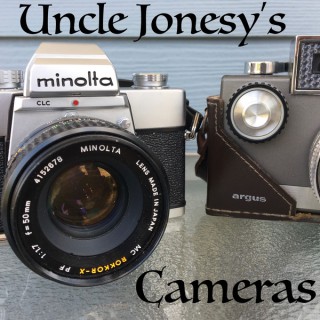
The Shutter Brothers are back with a new show and a question: Which phtographer do most associate with the National Parks of the United States? Ansel Adams? Charlton Watkins? How about Timothy O'Sullivan? Actually, the photographer who should be synonymous with the US National Parks is a name you probably haven't heard of: George Alexander Grant. Kevin recently discovered a fascinating book about Grant and his amazing National Park photography, and he reviews it on the show. Meanwhile, Wayne and Kevin sort through some great listener email and discuss more details about the 5th Annual Photowak with the Shutter Brothers scheduled for Saturday, October 24 in Huntsville, Alabama. Mark your calendars now! Chec out our show notes at www.unclejonesyscameras.blogspot.com. Happy Photography!
Here's a Thought… #2719 with Brooks Jensen Blade Runner and Puccini's Butterfly Do you ever go back and revise a previously finished image or project? I don't. Maybe I should. Sometimes, great artists do. For example, there are five different versions of Blade Runner, one of my favorite movies. Puccini made several substantial revisions of his opera, Madame Butterfly. Ansel Adams made a dozen or so different versions of Monolith, Face of Halfdome. If such great artists believe they can improve their previous work, why would we think we can't? Become a member of LensWork Online and have access to all 2700+ Here's a Thought… commentaries.

Joe Cornish has been photographing landscapes professionally since the early 1980s, and few people in the UK have thought more carefully or more deeply about what landscape photography actually is. With an art school background and early influences including Ansel Adams and Edward Weston, Joe has always approached the landscape as an expressive art form rather than simple documentation. That philosophy runs through dozens of books, National Trust commissions, artist in residence projects at Fountains Abbey and Brimham Rocks, and a career that earned him an Honorary Fellowship of the Royal Photographic Society. In this episode Joe talks about cultivating curiosity and visual literacy as foundations for better photography, the value of collaboration and peer learning, and why he finds the craft of editing and printing as creatively satisfying as being out in the field. He also reflects on landscape photography's relationship to environmental change and the role images can play in helping people value the natural world. I hope you enjoy the show! You can find Joe's work here: Website: https://joecornish.co.uk/ Instagram: https://www.instagram.com/joecornishlandscape Listen to this and other episodes wherever you find your podcasts or on https://grantswinbournephotography.com/lpw-podcast Or subscribe to my YouTube channel https://youtube.com/@grantswinbournephotography Theme music: Liturgy Of The Street by Shane Ivers - https://www.silvermansound.com #landscapephotography #ukphotographer #northyorkshire #finartphotography #naturephotography #photographyeducation #environmentalphotography #photographypodcast

Alan Schaller, black and white street photographer, co-founder of Street Photography International and founder of the Irys app, joins Tom and Greg to talk about building a photography-only platform, why he shoots exclusively in monochrome, a frightening encounter with a stranger on the street, and why he thinks AI generated imagery should never be called photography.Thank you for listening to The Exposed Negative Podcast. Running this podcast takes a lot of time and effort, and we hope you have found it helpful and interesting. If you would like to support us by buying us a beer or coffee, or by helping with the running costs of the show, we would greatly appreciate it. Please consider signing up for our Patreon (https://www.patreon.com/exposednegative) or making a one-time donation through PayPal (https://www.paypal.me/exposednegative).Thank you for your support!Here are the shownotes, full disclosure, some of which are affiliate links which we use to try and raise money to support the show. - Alan Schaller - https://www.alanschaller.com/- Irys - Alan's photography-focused app, community and publishing platform: https://www.irysphotos.com/- Street Photography International (SPI) - Alan's earlier project showcasing overlooked photographers: https://streetphotographyinternational.com/- Tim Paton - previous podcast guest, referenced as an earlier Irys conversation: https://streetphotographyinternational.com/- Leica MP - Alan's film camera of choice for street work: https://leica-camera.com/en-GB/photography/cameras/m/mp-silver- Leica M11 Monochrom - Alan's main digital camera: https://leica-camera.com/en-GB/photography/cameras/m/m11-monochrom- Leica 16mm, 24mm, 50mm and 90mm lenses - Alan's lens kit, mentioned individually- Kodak Tri-X - Alan's preferred black and white film stock- Polaroid I-2 - instant camera Alan uses, mentioned with manual exposure controls: https://amzn.to/4wuZA7A- Kodak Portra 400 - colour film stock mentioned in the black and white versus colour discussion- RICOH GR IV Monochrome **** - a recently released monochrome-sensor camera Alan references: https://amzn.to/4wyAYLa- Peakto - AI-powered photo cataloguing software mentioned by Tom: https://cyme.io/en/products/peakto/- Ansel Adams - key early influence on Alan's composition and tonal range: https://en.wikipedia.org/wiki/Ansel_Adams- Henri Cartier-Bresson - influence, referenced for the "decisive moment" concept: https://en.wikipedia.org/wiki/Henri_Cartier-Bresson- Sebastião Salgado - photographer referenced, including his book Genesis: https://en.wikipedia.org/wiki/Sebastião_Salgado- Fan Ho - photographer whose book Alan cites as a favourite: https://en.wikipedia.org/wiki/Fan_Ho- Bill Brandt - photographer, Alan owns a print in his bedroom: https://en.wikipedia.org/wiki/Bill_Brandt- Bruce Gilden - street photographer referenced for having a strong personal style: https://en.wikipedia.org/wiki/Bruce_Gilden- Steve McCurry - street/documentary photographer referenced: https://en.wikipedia.org/wiki/Steve_McCurry- Vivian Maier - photographer discussed in relation to market saturation and influence: https://en.wikipedia.org/wiki/Vivian_Maier- Saul Leiter - photographer discussed as an example of rediscovered influence: https://en.wikipedia.org/wiki/Saul_Leiter- Magnum Contact Sheets - book recommended for learning from full shoots, not just final images: https://amzn.to/4p5PLdPDesert Island Camera: Leica MPDesert Island Book: Sebastião Salgado - Genesis https://link.amazon/B00gFlJXxGuest Contact Details: https://www.alanschaller.com/
F-Stop Collaborate and Listen - A Landscape Photography Podcast
Episode 484 features legendary Yellowstone photographer Tom Murphy. We explore how Murphy's ranching and anthropology background shapes his unique style and storytelling. Murphy shares advice on pursuing personal passion, observing nature deeply, and building a body of meaningful work. He emphasizes photographing wildlife in context, not just what an animal is, but who it is, and discusses the evolution of photographic technology, staying creatively engaged, and tips for strong composition. Murphy also stresses the value of giving back through conservation-focused photography and urges photographers to immerse themselves in places they love. Resources: Muench Workshops Giveaway Support the show on Patreon Tom Murphy Tom Murphy's Books Muench Workshops Buffalo Bill Center of the West Postage Stamp News
HT2655 - Do It Again and Again and Again The difference between a hobbyist and a professional is that a hobbyist practices until they get it right. A professional practices until they can't get it wrong. For some reason that advice seems to make sense for athletics, but in creative endeavors we often assume that all we need is the initial effort. This shows up particularly, I think, in travel photography. It's easy to assume that once we've visited a location and photographed it we don't need to go back and do it again. Nothing could be further from the truth. Ansel Adams wasn't lucky photographing Yosemite; he was persistent. Show your appreciation for our free weekly Podcast and our free daily Here's a Thought… with a donation Thanks!

News; birthdays/events; walk up or drive thru...what's your preference?; word of the day. News; grandma stand...Brad's pappaw would have been great at this! game: quiz; game: feud. News; if you find non venomous snakes on your property...do you just leave em alone?; items we regret throwing away; feel good story of the day. News; funny things people say to unsuspecting/gullible friends/family/co-workers; game: calendar trivia; goodbye/fun facts....nature photography day. The natural world is full of so much gorgeous beauty and wonder, and it is important for us to embrace it as much as possible. In the 1860's American photographer Carleton E. Watkins hauls giant cameras into Yosemite Valley to make monumental "mammoth plate" views that become landmark images of wild American scenery....By 1940 Ansel Adams published a powerful black-and-white book filled with images of Yosemite and the Sierra Nevada. However, you don't have to be a professional photographer....just find something that is beautiftul to you!

Nogle gange forandrer alting sig, selvom der ikke rigtig er noget, som ændrer sig. Det er lidt det, som er sket med Fotografiske Signaler, og som jeg blandt andet forsøger at forklare i denne episode af podcasten.Det var egentlig slet ikke meningen, at Fotografiske Signaler skulle være “content marketing” i nogen forstand. Det var mit con amore-projekt, fordi jeg kan lide at lave podcasts, og jeg elsker fotografiet. Det er et projekt, som har ændret sig en masse gange, men som i lange stræk har haft to fælles elementer: Nemlig fotografiet ... og mig.Men der skete en ændring, da jeg pludselig blev “den, som er den” i Fotografikurser. Jeg følte et ansvar for at lave markedsføring. Jeg følte en forpligtelse til at sige “vi”, når jeg talte om fotografikurser, fordi det gør man jo, når der er en virksomhed bag. Og jeg følte, at jeg kom længere og længere væk fra det, som var kernen i Fotografiske Signaler: Nemlig det personlige. Det begejstrede. Det kritiske. Måske endda det dumme.En ny (og gammel) begyndelseDenne episode markerer noget vigtigt. Nemlig at jeg har besluttet mig for at adskille Fotografikurser.dk og Fotografiske Signaler.* Fotografikurser eksisterer stadig og er en virksomhed, der laver kurser i fotografi. Lige nu er der godt nok ikke planlagt nogen, men både Ann og jeg er en del af det – og hvis vi beslutter os for at lave kurser i fremtiden, vil de være der.* Fotografiske Signaler er til gengæld mit sted. Det er Adams paraply med website, sociale medier, YouTube-kanal, nyhedsbrev og podcast. Det er her, jeg taler, skriver, tegner og råber om fotografi, motiv, kameraer, udstyr, teknik, kreativitet og livet i sin brede almindelighed. Det er mit lille hjørne af internettet. Det er mit happy place! Og jeg er glad for at kunne byde dem indenfor, som vil være en del af det.Jamen, har Fotografiske Signaler ikke været det hele tiden, spørger du måske? Jo, men for mig var det bare blevet noget andet. Tingene var blevet komplicerede. Nu er det blevet simplere. Om ikke andet så for mig. Og jeg tror faktisk også, at du vil komme til at opleve forskellen fremover. Du kan også allerede nu besøge fotografiskesignaler.dk og se, hvordan det nye site ser ud. Det er i hvert fald ret anderledes.Asfalt, lavendelvand og AI-frækhedDenne episode handler dog, trods alt, ikke KUN om mig. Den handler også om:* Verdens ældste fotografi: I år er det – måske – 200 år siden, at det allerførste fotografi blev eksponeret. Jeg dykker ned i historien, som handler om alt fra asfalt og lavendelvand til forsvundne tinplader og Texas.* AI i det vilde vesten: Ansel Adams fotograferede ikke ret meget i farver. Det synes en galleriejer i New York åbenbart var trist, så han har brugt AI til at farvelægge “Moonrise, Hernandez” – og har så den ekstreme frækhed at tage bunker af penge for prints af det. Det har jeg naturligvis en mening eller to om.Links og community: Husk at finde det hele på fotografiskesignaler.dk, hvor der bliver linket til alt det andet, der laves.Du er også mere end velkommen i vores Slack-community via dette link: Deltag i Slack-fællesskabet her. Her kan du dele dit arbejde og chatte med andre, der interesserer sig for fotografi.Jeg er glad for, at du lytter med ... alt godt,Adam This is a public episode. If you would like to discuss this with other subscribers or get access to bonus episodes, visit fotografiskesignaler.substack.com

Coming up in our June podcast: we discuss the artist who's caused outrage by colourising Ansel Adams' famous Moonrise image, why Sabrina Carpenter turned up to the Met Gala wearing film strips, and why India's tiger reserves have banned smartphones. We look at the camera exhibit where visitors are encouraged to smash old cameras, Canon's surprisingly useful new lens cap, and Kodak bringing large-format film back from the dead. LINKS

Some stories in the art world land with a quiet thud and then just keep reverberating louder and louder. The decision by Danziger Gallery to display, and sell, an AI-colorized version of Ansel Adams' Moonrise, Hernandez, New Mexico at this year's AIPAD Photography Show in New York is one of those stories. It touches something raw about authorship, consent, the art market's relationship with living artists, and the particular discomfort of watching a technology reshape the legacy of someone who can no longer speak for themselves. I sat down with Helen Stoilas — former Contributing Editor at The Art Newspaper and current freelance art journalist, who has reported on political and social issues affecting artists and institutions since 2003 — to work through what actually happened and what it means. Helen brings her long experience covering the art market and artist rights to all of this — including where this fits in the broader pattern of AI entering spaces built by and for human artists, and what the art world's institutions are and aren't equipped to do about it. You can check out more of Helen's work at https://helenstoilas.com or listen to her podcast at https://yourenofun.com/ Support The Nerdy Photographer Sign Up for The Power Up - https://nerdyphotographer.com/newsletter Get some artwork from the print shop - https://art.caseyfphoto.com Buy some Nerdy Photographer Merch - https://nerdyphoto.dashery.com Use our link to buy new gear from Adorama - https://nerdyphotographer.com/recommends/adorama Use our link to buy used gear from KEH - https://nerdyphotographer.com/recommends/keh Follow along with us on social media @thenerdyphoto About The Podcast The Nerdy Photographer Podcast is written and produced by Casey Fatchett. Casey is a professional photographer in the New York City / Northern New Jersey with more than 20 years of experience. He just wants to help people and make them laugh. You can view Casey's wedding work at https://fatchett.com or his non-wedding work at https://caseyfatchettphotography.com If you have any questions or comments about this episode or any other episodes, OR if you would like to ask a photography related question or have ideas for a topic for a future episode, please reach out to us at https://nerdyphotographer.com/contact

La industria explota tras el uso de IA con el legado de Ansel Adams y en este video analizamos uno de los momentos más polémicos de la fotografía moderna. Desde la posible subasta de Capture One y el riesgo que representa para miles de fotógrafos profesionales, hasta el cuestionado acabado Metal Gray de Leica que parece diseñado para alimentar el FOMO de coleccionistas.También exploramos el regreso de la WideluxX™, una cámara panorámica mecánica que desafía la obsesión actual por la perfección digital. Además, debatimos el fenómeno del “Hamparte” tras la destrucción masiva de cámaras en Belfast y analizamos si realmente existe una crisis de identidad en la fotografía contemporánea.¿Vale la pena invertir hoy en una Canon R7? Descubra por qué muchos la consideran la mejor compra del año. Y por si fuera poco, Fujifilm vuelve a mirar hacia los años 90 buscando recuperar la emoción y el alma de hacer fotos.Si ama la fotografía, este video le hará cuestionar hacia dónde se dirige realmente la industria.Suscríbase a FotógrafoPro y recuerde:“Nunca, pero nunca deje de hacer fotos”.#Fotografía#CaptureOne#Leica#CanonR7#Fujifilm#AnselAdams#InteligenciaArtificial#FotografíaAnalógica#Widelux#FotografoPro

In this episode, Jared & Stephen discuss the latest controversy in the photo world surrounding an AI-generated color version of a classic Ansel Adams photo, how Apple used iPhone 17's to broadcast an ENTIRE MLS game live (with a catch) & more! Text us with any thoughts and questions regarding this episode at 313-710-9729. This is RAWtalk Episode 198!

Thanks to our friends at DxO for sponsoring today's podcast. DxO just released Nik Collection 9, the latest version of their popular editing suite that photographers have been using for over a decade. If you want the full breakdown, our very own Michael Bonocore wrote a deep dive covering all the new features with real examples using his travel photography.DxO is offering PetaPixel Podcast listeners 15% off any DxO software, including Nik Collection 9, by using the code "PetaPixel" at checkout at http://dxo.com. Thanks again to DxO for sponsoring today's podcast! Now saving when you shop for your favorite gear at B&H Photo is even easier with the B&H Payboo Credit Card which lets you Save the Tax — you pay the tax, and B&H pays you back instantly! (Save the Tax on eligible purchases shipped to eligible states.) OR you can pay over time with our 6 & 12 month financing (on minimum purchases of $199 for 6 months, and $599 for 12 months). Terms apply, learn more at http://bhphoto.com/payboo. Credit card offers are subject to credit approval.Payboo Credit Card Accounts are issued by Comenity Capital BankThis week on The PetaPixel Podcast, the trio breaks out the tier list and ranks every optional accessory that camera stores try to convince you that you need to bundle with your first camera purchase. What's S-tier and what's F-tier? They dig into it!Check out PetaPixel Merch: store.petapixel.com/ We use Riverside to record The PetaPixel Podcast in our online recording studio.We hope you enjoy the podcast and we look forward to hearing what you think. If you like what you hear, please support us by subscribing, liking, commenting, and reviewing! Every week, the trio go over comments on YouTube and here on PetaPixel, but if you'd like to send a message for them to hear, you can do so through SpeakPipe.In This Episode:00:00 - Intro, and Chris's rage bait13:11 - Chris's Wotancraft Pilot Collab sold out in under 24 hours17:01 - NYC Gallery sold an AI-generated version of Ansel Adams masterpiece without permission22:31 - Gallery owner says he has "every right to" do it27:14 - Canon's separation of C and V cameras isn't working34:06 - 7Artisans announced Z-mount's most affordable 135mm f/1.8 prime36:36 - Sony a7V got a nice firmware update39:05 - This might be the rarest digital camera ever made42:48 - The "My First Camera" Optional Accessory Tier List 1:22:16 - What have you been up to?1:26:17 - Tech support1:31:00 - Feel Good Story of the week

Kiliii Yuyan – Guardians of Life: How Indigenous Peoples Are the World's Best Conservationists A deep‑dive into the 10 Frames Per Second podcast episode with Kiliii Yuyan

Ansel Adams in AI color? Yuck! Do we ever get past the fear of complete failure and should we? Color grading footage and getting lost. Montana native Robert Osborn is our Photographer of the Week. Danziger response to the AI Ansel Adams print Degas “Woman seat beside a vase of flowers” Bill’s portrait of Alon at a piano Burden video of “Shoot” (User discretion advised) Robert Osborn mini-doc Robert Osborn website

"The Good Listening To" Podcast with me Chris Grimes! (aka a "GLT with me CG!")
Send us Fan MailWhen Andy Gotts was 18, a stranger in Norfolk asked him why he didn't look happy. That single question and the Photography Teacher it quietly led him to, set in motion a 36 year path from a college darkroom in King's Lynn to Hollywood's most idiosyncratic black-and-white portraits.In this Stories of Distinction & Genius episode, Chris Grimes welcomes Andy "One Shot" Gotts into The Clearing to trace the whole arc: From the 300 letters with not a single reply, the 1 yes from Joss Ackland at his son's wedding in Clovelly, and the line "what do you do and who shagged who?!" that finally gave the wish list its theme. Andy talks about the 150 Actors he set out to photograph in 1995, the long, patient pursuit of Gary Oldman that ended this year through Big Mo and a young actress sliding into his DMs, and how Paul Newman himself christened him "One Shot Gotts" after a 4 minute shoot in Connecticut.The conversation moves through the people who shaped him: His milkman father leaving for work at 3:00 every morning, his devoted mother, Dr Tony Leach who taught him Photography on Saturdays in Holt, Stephen Fry whose 90 second portrait at a college Q&A genuinely started his career, and Sir John Hurt, born on the very same day as Andy's dad. Andy shares the afternoon in East Runton when John told him over a pint of red wine that he had cancer and months to live, and asked Andy back the following weekend to direct him. What followed - John in his late father's priest's robes, speaking 'Imagine' as a parable in a single take - became John Hurt's last ever recording.There are also the secret Monty Python reunion shoots at Duke's at 3:00 in the morning; LS Lowry, Hitchcock and Sidney Poitier's story about Tony Curtis and The Defiant Ones; Bob Ross's happy little clouds taking over lockdown; three years spent funding a degree as a Norfolk Nightclub Bouncer; an unwavering refusal to retouch a single line on a face; and the epitaph Ringo Starr gave him, "the Ansel Adams of faces."A warm, story-rich hour and a half about tenacity, taste, and what it really means to "stay on the bus!"

Recorded live in Atlanta at the Art Papers Symposium at Ponce City Market, Duncan MacKenzie and Brian Andrews sit down with artist, educator, and department chair Myra Greene for a conversation on materiality, identity, and the long arc from photography to textiles to weaving. The conversation centers on practice as evolution, about what happens when an artist refuses to stay in one lane, and about how material decisions carry conceptual weight. Greene reflects on her move from Columbia College Chicago to Spelman College, where she helped build a program grounded in storytelling, experimentation, and liberal arts integration. From ambrotypes to fabric dye to loom-based weaving, Greene's work consistently circles a central question: how can identity exist without the body? Name Drops & Links Myra Greene — https://www.myragreene.com/ Duncan MacKenzie — https://kurasmackenzie.com/ Brian Andrews — https://www.brianandrews.org/ Spelman College — https://www.spelman.edu/ Columbia College Chicago — https://www.colum.edu/ Jeanne Gang — https://studiogang.com/ Mary Schmidt Campbell — https://en.wikipedia.org/wiki/Mary_Schmidt_Campbell LaTanya Richardson Jackson — https://en.wikipedia.org/wiki/LaTanya_Richardson Samuel L. Jackson — https://en.wikipedia.org/wiki/Samuel_L._Jackson Candida Alvarez — https://candidaalvarez.com/ Patron Gallery — https://patrongallery.com/ The Weaving Mill — https://theweavingmill.com/ Chattahoochee Handweavers Guild — https://chgweavers.org/ Ansel Adams — https://www.anseladams.com/

Art Marketing Podcast: How to Sell Art Online and Generate Consistent Monthly Sales
There's a town in Texas called Round Top. Population eighty-seven. One square mile. And in that town, an artist named John Lowry sold a single painting for $141,500. (We toured his gallery on YouTube — link's right there in his name. Watch it before or after this episode.) That's the headline. Here's the part nobody tells you: he then sold roughly $60,000 more in reproductions of that same image. Same painting. Different mediums, different sizes, different price points. One image, two hundred grand. That is not luck. That is not a once-in-a-lifetime fluke. That is a system. And the same system is what Gray Malin uses to run a 4,156-SKU catalog with 221 variants of certain images. The same system is what Wyland — yes, that Wyland — uses to sell 972 products across 45 different mediums, raising prices roughly 10% a year for the last sixteen years. This episode deconstructs the engine that makes all of that possible. Print on Demand and the sample ladder aren't two ideas. They're one engine. The artists at the top of this business have figured that out. Most artists haven't. We're going to fix that today. But first — a quick rant about what gets in the way. In this episode: The $141,500 painting in a town of 87 people — and why the second sale is the lesson The knife salesman pivot: why Print on Demand is a sample tool first, a profit tool second Hobbyist or business? The honest question every artist has to answer The Drain — four ideas clogging up most art businesses (you can't run a business / you can't run sales or marketing campaigns / you can't be perceived a certain way / never discount your work) — and why every pro you admire threw all four of them out Why we study the masters: you studied Van Gogh and Ansel Adams in art school. Time to study the people doing it best in the business of art. Gray Malin, deconstructed: 4,156 SKUs, 16-year escalator, 221 variants of single images. What an artist with a real engine looks like under the hood. Wyland, deconstructed: 972 products across 45 mediums. The 10%-a-year price escalator that compounds for decades. The catalog as a museum gift shop. The Range Unlock: your catalog isn't N images. It's N images × M mediums × P price points. Most artists are sitting on 100x more inventory than they think. Same image. Every price point. Why this is the single most important sentence in your art business. The bottom rung IS the sample: a $20 mug isn't a giveaway, it's a customer-acquisition machine wearing a price tag The Buc-ee's flex: how the cheap stuff at the front door funds the expensive stuff at the back wall John Lowry, the customer mirror: an Art Storefronts customer in a one-square-mile Texas town doing exactly what Malin and Wyland do — at his scale. Proof this isn't a billionaire-only game. (Watch the full studio tour on YouTube.) "You don't sell JPEGs" — the Brooks rant about why a digital file is not a product, and what the pros actually sell How the Six Basics from The Long Game show up — receipt by receipt — in all three of these businesses The artichoke storage room (you'll know what this means by the end) This week's homework: audit your own catalog the way we just audited Malin and Wyland. Take your top 5 best-selling images. Count how many mediums you currently offer them in. Count how many price points. Now ask: could I responsibly add three more variants of each, this week, with Print on Demand? If the answer is yes — and it almost always is — you just found revenue you already earned but haven't collected yet. Resources mentioned: John Lowry of Humble Donkey Studio — the full video tour on YouTube (the original 2024 interview referenced throughout this episode) Humble Donkey Studio — John Lowry's website Humble Donkey on Instagram Gray Malin — the catalog we deconstruct Wyland — the other catalog we deconstruct Art Storefronts — the website + storefront engine built for working artists Related episodes: Why Your Website Will Still Be Working in 2055 — The Long Game (the parent episode this one builds on) Humble Donkey Studio — the original John Lowry interview, July 2024 All Oars In — The Anatomy of a Sale Nothing New Under the Sun — The Rules That Actually Sell Art So: which 78-year-old version of yourself wins? The one still asking what to post on social media, or the one running a real engine — same image, every price point, compounding every year? You don't have to be in a billionaire's neighborhood to do this. You can be in Round Top, Texas. Population 87. The engine doesn't care where you live. It cares whether you build it.

Hey friends, Chase here Let's talk about one of the most important questions every creator eventually asks: How do I find my creative voice? Or maybe you've heard it framed another way: How do I develop a personal style? How do I make work that actually feels like mine? How do I stop copying what everyone else is doing and start creating from a place that is uniquely my own? This question comes up all the time because it sits at the center of the creative life. Whether you're a photographer, designer, writer, filmmaker, musician, entrepreneur, or someone who simply feels called to make things, there comes a point where technical ability is not enough. You can know how to use the tools. You can understand the software. You can study the masters. You can follow the trends. You can learn the settings, the systems, the formulas, the workflows. But eventually, you hit a deeper question: What makes this mine? That is what this episode is about. And I want to be clear from the start: finding your creative voice is not about inventing some perfect brand identity overnight. It's not about locking yourself into one narrow lane forever. It's not about deciding, intellectually, "This is my style now," and then forcing every piece of work to fit inside that box. Your creative voice is much more organic than that. It is your fingerprint. Your point of view. Your taste. Your history. Your instincts. Your lived experience. Your way of seeing the world, translated through the things you make. And the only way to find it is to make. Not once. Not occasionally. Not only when you feel inspired. Again and again and again. The Big Question: What Is Personal Style? Personal style can sound like one of those vague creative phrases that floats around in the universe without ever becoming useful. People say things like, "You need to find your style," or "You need to develop your voice," but what does that actually mean? At its simplest, personal style is the thing that makes your work recognizable. It's the equivalent of your handwriting. You don't have to think about your handwriting every time you write your name. It's not something you consciously construct letter by letter. It just comes out of you because it has been shaped by repetition, history, muscle memory, and identity. Your creative style works the same way. It is the unique aesthetic fingerprint that you unconsciously put on everything you make. Think about music. You can hear a Prince song for just a few measures and know it's Prince before his voice even enters. There's a signature there. A rhythm. A tone. A sensibility. A way the work announces itself. Think about photography. You can look at an Ansel Adams landscape and recognize the scale, the drama, the tonality, the reverence for nature. It has a point of view. That's personal style. It's not just what you make. It's how you see. It's what you notice. It's what you repeat without realizing you're repeating it. It's the pattern behind the work. And that matters because without some kind of recognizable point of view, you're just bouncing around. You might be technically capable. You might be able to make a good photograph, a good song, a good design, a good film, a good essay. But if there's nothing distinctive about the way you make it, people have a harder time connecting that work back to you. Personal style is what helps the work become yours. Why Your Creative Voice Matters There are two big reasons personal style matters. The first is personal. If you spend your life chasing everyone else's style, you're going to end up miserable. Now, let's be honest: early in the creative journey, imitation is part of the process. That's normal. That's healthy. That's how we learn. You see someone whose work you admire and you try to understand how they did it. You copy a lighting setup. You study a sentence structure. You recreate a beat. You reverse-engineer a design. You try to make something that looks or sounds or feels like the thing that inspired you. There's nothing wrong with that. In the beginning, imitation helps you learn how to move the tools around. It helps you close the gap between what you see in your mind and what you're actually capable of making. But imitation is not the destination. If all you ever do is copy what's trendy, or borrow someone else's point of view, or chase whatever style is getting attention right now, you are not expressing yourself. You are expressing the culture around you. And that is a direct path to burnout. Because the reason we make things, at the deepest level, is expression. We make because something inside wants to come out. We make because it feels good to turn an internal experience into something real in the world. We make because creativity is one of the ways we become more fully ourselves. If your work is always a response to someone else's style, you lose that connection. You become a mirror instead of a source. The second reason personal style matters is practical. If you want to do creative work professionally, you do not want to be paid merely for your time. There is nothing wrong with getting paid for your time. That can be part of the path. But the ultimate goal is not to be treated like a pair of hands. The ultimate goal is to be paid for your vision. You don't want someone to hire you because you own a camera. You want them to hire you because only you see the assignment that way. You don't want someone to hire you because you can operate software. You want them to hire you because your taste, your judgment, and your perspective create value. You don't want to be interchangeable. The most recognized creatives in the world are not valuable because they can execute a task. They are valuable because they bring a specific point of view to the table. That's what separates craft from commodity. When people can recognize your fingerprints on the work, when they can say, "That feels like you," you begin to move into a different category. You're no longer just competing on speed, price, or availability. You're competing on vision. And that is where the upside is. The Creative Gap One of the most important parts of this conversation is what Ira Glass famously called the creative gap. The creative gap is the distance between what you can see in your mind and what you're actually capable of making right now. Every creator knows this feeling. You have a vision. You can feel what you want the work to be. You can almost see it, hear it, taste it. But when you sit down to make the thing, the result falls short. The photograph doesn't look the way it looked in your head. The song doesn't hit the way you imagined. The essay feels clumsy. The design feels flat. The film doesn't carry the emotion you hoped it would. That gap is frustrating. But it is also the path. Craft is how you close the gap. You make, you study, you adjust, you learn, you make again. Over time, your ability catches up to your taste. You get better at translating the thing in your mind into the thing in the world. But here's the trap: If you spend that entire process only copying other people, you might improve technically without ever developing a voice of your own. You might become skilled at imitation. But mastery is not just being able to reproduce what already exists. Mastery is being able to make what only you can make. Personal Style Is Your Point of View Your creative voice is not just an aesthetic. It's not just black and white photography, clean typography, heavy brushstrokes, fast sketches, cinematic lighting, sparse production, or bold color. Those things can be part of a style, but they are not the whole thing. Your style is the point of view underneath those choices. It is the reason you reach for certain tools. The reason you frame things a certain way. The reason you simplify here and exaggerate there. The reason you are drawn to certain subjects, moods, colors, rhythms, textures, or stories. The episode uses a great example from the world of design: imagine trying to design a tennis shoe inspired by a glass bottle of gin. Suddenly, the bottle becomes a filter. You might notice the transparency, the edges, the shape, the weight, the way light moves through it. Those qualities start informing the shoe. That is a useful way to think about style. Your personal style is the filter your work passes through. It's not limited to one medium. If you are a photographer, designer, musician, writer, or multidisciplinary creator, your style should still carry across what you make. The medium may change, but the point of view travels. That's when people can look at a piece and say: That feels like you. Not because you repeated yourself mechanically, but because your way of seeing is present. How Do You Find Your Creative Voice? Here's the part people don't always want to hear: It takes time. There is no shortcut that replaces making the work. You can think about your style. You can journal about it. You can moodboard it. You can study other artists. You can talk about your influences. You can define your values. All of that can be useful. But none of it replaces the act of making. The best way to find your personal style is to make as much as you can, at a regular cadence, ideally as quickly and consistently as possible. Because your style is not something you force into existence. It is something you discover through repetition. You make one thing. Then ten things. Then a hundred things. At first, it may feel random. You may feel like you're all over the place. You may try on other people's approaches. You may borrow. You may experiment. You may make things that don't feel like you at all. That's okay. The making is the sorting mechanism. Over time, patterns start to appear. You notice what you keep returning to. You notice what feels alive. You notice what feels false. You notice the choices you make when nobody is telling you what to do. And eventually, if you put twenty of your pieces on a wall mixed in with other people's work, someone should be able to walk in and pick yours out. That is the litmus test. Not because every piece looks identical, but because there is a through-line. There is a signal. There is a voice. Your Style Might Not Be What You Expected One of the most important reminders in this episode is that your personal style may not be what you thought it would be. You might think you want to be known for clean, minimal design, only to realize that your real energy comes through in fast, expressive, messy sketches. You might think you want to make quiet, polished work, only to discover that your strength is intensity, humor, or chaos. You might think you want to be one kind of artist, but the work keeps revealing that you are someone else. That can be uncomfortable. But it can also be liberating. Your creative voice is not always the version of yourself you imagined. Sometimes it is the version of yourself that keeps showing up when you stop performing. This is why making is so important. You cannot discover your true style by sitting around and thinking about who you wish you were. You discover it by creating enough evidence that you can finally see who you actually are. What You'll Hear in This Episode This episode breaks the question of creative voice into three practical parts: what personal style is, why it matters, and how to actually find it. Here are the ideas worth listening for: Why personal style is like your creative handwriting — the unconscious fingerprint you put on everything you make Why imitation is useful early on, but dangerous if you never move beyond it How the creative gap works — and why craft is what helps you close it Why you don't want to be paid only for your time, but for your point of view How recognizable style builds value, trust, and creative opportunity Why you can't force your personal style — you have to uncover it through making Why making 100 things teaches you more than endlessly thinking about the perfect direction How specialization can actually create more freedom, not less Why trying to be everything to everyone will dilute your work and drain your energy Timecodes So You Can Jump to What You Need If you're not listening straight through, here are a few landmarks to help you find the part that speaks to where you are right now: 01:45 – Welcome and the big question: how do you develop a personal style? 02:04 – The three-part framework: what personal style is, why it matters, and how to find it 02:50 – What personal style actually means for photographers, designers, writers, musicians, and creators 03:18 – Personal style as your creative handwriting or aesthetic fingerprint 04:34 – Why developing a personal style matters 05:25 – Why chasing everyone else's style leads to misery and burnout 06:08 – Ira Glass, the creative gap, and the path toward mastery 07:10 – Why you want to be paid for your point of view, not just your time 09:46 – Edward de Bono, Stefan Sagmeister, and using outside references to understand style 11:31 – The tactical answer: how to actually find your personal style 11:46 – Why there are no shortcuts — and why making is the path 12:32 – Why your unique life experience is the source of your point of view 13:41 – Make one thing, then ten things, then one hundred things 14:00 – The litmus test: can someone identify your work in a crowd? 16:06 – Why you cannot be all things to all people 16:55 – How mastery in one area can help you learn and master many things 18:01 – Why specialization unlocks opportunity instead of limiting it Read This If You Feel Like You Haven't Found Your Voice Yet If you feel like you haven't found your creative voice yet, I want you to hear this: You are not behind. You are in the process. It is easy to look at someone whose style seems fully formed and assume they were born with it. But what you are seeing is usually the result of years of making, failing, repeating, refining, borrowing, rejecting, and returning to the work. Style is not a lightning bolt. It is sediment. It builds layer by layer through practice. Every project teaches you something. Every experiment leaves a trace. Every failed attempt helps you understand what is not yours. Every finished piece gives you more information. So if you feel unclear, the answer is not to wait until you feel certain. The answer is to make. Make the thing. Then make another. Then make another. Then look back and listen for the pattern. Your voice is not hiding from you. It is waiting for enough evidence to reveal itself. The Danger of Chasing Trends There is a difference between research and copying. Looking broadly at culture, studying what's happening, noticing what inspires you, and learning from other artists is part of being creatively alive. But copying one person's style over and over again is not research. It's imitation. And if you spend too much time chasing trends, you train yourself to look outward for permission instead of inward for direction. Trends can teach you what's happening now. They cannot tell you who you are. That doesn't mean you need to ignore the world. It means you need to metabolize what you see. Take in inspiration. Study widely. Notice what moves you. But then ask: What do I have to say about this? What is my relationship to this idea? What part of this connects to my lived experience? How does this become mine? Your work does not become original because it appears out of nowhere. Nothing does. Your work becomes original when your influences pass through your point of view. Don't Overthink It. Make It. There is a line in this episode that matters: Don't overthink it. Just make it. That does not mean thinking has no place in the creative process. Reflection matters. Strategy matters. Taste matters. Intention matters. But thinking cannot replace making. A lot of creators get stuck because they want to understand their style before they create enough work to reveal it. That's backwards. You don't find your voice and then make the work. You make the work and find your voice through it. This is why personal projects are so valuable. They give you a place to create without needing permission. They give you a space to follow curiosity. They let you experiment without the pressure of a client, an audience, or a perfect outcome. Personal projects are where your style gets room to breathe. Not everything has to be monetized. Not everything has to be optimized. Not everything has to be posted. Not everything has to become part of your portfolio. Sometimes the point is simply to learn what happens when you follow the impulse. Questions to Ask Yourself If you want to turn this episode into action, take a few minutes and sit with these questions: What kind of work do I keep returning to, even when nobody asks me to? Whose style am I currently copying, and what am I learning from that imitation? Where have I mistaken trend-chasing for creative growth? What choices show up again and again in my work? What subjects, themes, colors, sounds, rhythms, or ideas keep pulling me back? What would I make if I stopped trying to be impressive? What would I make if I stopped trying to be for everyone? Can someone recognize my work without seeing my name attached to it? What do I need to make 10 more of before I judge whether I have a style? A Simple Practice for Finding Your Creative Voice Here's a simple exercise: Choose one format. A photo series, a set of sketches, a short essay series, a beat tape, a design study, a daily video, whatever fits your craft. Make 10 versions. Not one perfect version. Ten honest attempts. Do them quickly enough that you can't over-polish the life out of them. Put them side by side. Look for what repeats. Ask someone you trust what feels most like you. Then make 10 more. The goal is not to force consistency. The goal is to gather evidence. What do you keep doing naturally? What feels alive? What feels borrowed? What feels like performance? What feels like truth? Your style is hidden in those patterns. Specialization Is Not a Trap A lot of creators resist personal style because they worry it will limit them. They think, "If I become known for one thing, I'll lose my range." But specialization does not have to mean becoming narrow. It means becoming recognizable. You can have range and still have a voice. In fact, range might be part of your style. But if nobody can identify the through-line, if your work feels like a different person made it every time, it becomes harder for people to understand what you stand for creatively. That does not mean you have to lock yourself into black and white portraits forever. It means you have to make enough work that your point of view becomes visible across the range. The goal is not sameness. The goal is coherence. You Cannot Be All Things to All People This is one of the hardest lessons in creative work. You cannot be all things to all people. If you try, your work will suffer. Your energy will suffer. Your sense of self will suffer. When you chase 58 different styles because you want everyone to like you, you dilute the very thing that makes your work valuable. The goal is not to please everyone. The goal is to express something true enough that the right people recognize it. That takes courage because it means letting go of some possibilities. It means not being for every client, every audience, every trend, every platform, every room. But that is also where freedom begins. When you stop trying to be everything, you can finally become something specific. And specific is powerful. The Path Is Create, Share, Sustain The loop is simple, but not easy: Create. Share. Sustain. Get feedback. Make again. That's how you grow. Not by waiting for clarity. Not by endlessly planning. Not by collecting inspiration forever. Not by thinking your way into a fully formed identity. You create. You put work into the world. You pay attention. You learn. You keep going. Over time, that loop builds both style and mastery. And here's the advanced part: once you learn how to master one thing, you start to understand how learning itself works. You begin to recognize the patterns of growth. You understand what deliberate practice feels like. You know how to move through frustration. You know how to close the creative gap. Mastery in one area can become a doorway into mastery in others. But first, you have to do the work in front of you. The Core Idea Your creative voice is not something you find by waiting. It is something you uncover by making. Your personal style is your point of view made visible. It is the creative fingerprint that appears when you have made enough work to stop performing and start revealing. Yes, study the people you admire. Yes, learn the tools. Yes, imitate in the beginning. Yes, experiment broadly. But then return to the work. Make one thing. Then ten. Then a hundred. Look for the patterns. Trust what keeps showing up. Let your lived experience inform the choices. Stop trying to be all things to all people. The world does not need a perfect copy of someone else. It needs the thing only you can make. Until next time: focus on the making, trust your point of view, and remember — your creative voice is already in there. The work is how you bring it out.
¿Alguna vez te has sentido frustrado al positivar un negativo con un contraste imposible? ¿Esa toma perfecta donde las luces terminan "quemadas" o los negros quedan lavados y sin fuerza?. En este episodio, desglosamos la técnica definitiva para retomar el control absoluto de tus copias: el positivado por contraste dividido (Split Grade).Exploramos la ciencia detrás del papel de contraste variable y cómo sus capas de emulsión reaccionan de forma única a la luz azul y verde. Te guiaremos paso a paso por el método de las dos tiras de prueba:Filtro 00: Para rescatar texturas delicadas en nubes o tonos de piel.Filtro 5: Para inyectar profundidad y unos negros sólidos y potentes.Por qué una sola exposición es, a menudo, un sacrificio constante.La "magia" de la doble personalidad del papel multigrado.Cómo realizar ajustes independientes en luces y sombras sin afectar al resto de la imagen.El debate final: ¿Vale la pena el esfuerzo extra de tiempo y material?.Además, analizamos cómo esta técnica se alinea con el Sistema de Zonas de Ansel Adams y por qué referentes como Steve Onions la consideran una herramienta creativa de primer nivel para lograr una profundidad casi tridimensional en el papel.Lo que aprenderás en este audio:Si quieres dejar de pelear con tus negativos y empezar a imprimir con intención artística, este episodio es tu hoja de ruta hacia la copia perfecta.
In this episode, Wayne and Kevin work through the subject of filters for film phtography. In the old days , filters were the next gear the camera store sales person tried to sell you after a camera and lenses. But are the that important? How often does Wayne (who has been shooting large format photography for over four decades) put a filter in front of his lens? You will be surprised by his answer. Nevertheless, filters have their place, and the right filter at the right time and place can make or break a picture (just ask Ansel Adams). Next, Kevin shares a tale of woe regarding a few rolls of Kentmere 400 that he recently shot and deveoped with the same workflow he's followed for years with other films. It seems that reading and following the instructions for each brand of film is much more important than Kevin had thought. Don't forget that Wayne had a major retrospective show of fifty years of photography coming up. You can find the details here. As always, we highly value and appreciate feedback from our listeners. You can reach us by email at unclejonesyscameras@gmail.com or by commenting on either our Facebook or Instagram pages. Finally, you can access our show notes at unclejonesyscameras.blogspot.com. Happy Photography everyone! Go get some good pictures!

April is full of fun things: April Fool's Day, National Poetry Month, National Library Week, National Gardening Month, and our annual Library After Dark fundraiser. So we thought we'd talk a little bit about all of it. Members Julie, Natalie, and Eric from The Winding Waters Group of the Sierra Club Hoosier Chapter talk about their organization, plants, gardening, and how you can help. Some staff (Rachel A. and Tessa) talk about the history of April Fool's Day and some of their favorite pranks, while others (Lindsey, Annemarie, Dakota, and Liz) discuss some of their favorite poetry. We're also joined by Kimberly of the Friends of the Library to talk more about what their organization does for the library and to get details about their annual even Library After Dark. Here are the links and information to some of the things referenced in the podcast. Dwayne "The Rock" Johnson Memorial Library: https://www.facebook.com/groups/rieventscalendar/posts/10160395438438950/ The poem Annemarie is referring to by Muhammad Ali is a 1975 poem. The poem is "Me. We." Like, that's the entire poem. And this is the link to the audio recording of one of the poems Annemarie reads (and references): https://www.youtube.com/watch?v=OO-yWXdVQG8 These are the links to get information about the Sierra Club in Columbus. https://www.sierraclub.org/indiana/winding-waters https://www.facebook.com/groups/WindingWaters/ This is the link to the photography of Ansel Adams that Eric mentions in the podcast. https://www.anseladams.com/ This is the link to the Library After Dark Event: https://checkout.square.site/merchant/DT07A2D9QS14H/checkout/HGMQQAIEBURU7NATECVSMHZS?fbclid=IwY2xjawQAYJtleHRuA2FlbQIxMABicmlkETJCSFhoa21FRnRJQWJTQzVnc3J0YwZhcHBfaWQQMjIyMDM5MTc4ODIwMDg5MgABHiCovRq-1movMDqC2oo--fyE3YwT7ufLnX4c_CRmzmZc_zhoTfCCrsVJrJNm_aem_g5JPm8XOnrRNsjfGq3_ZVw And these are the links to information about the Friends of the Library. https://mybcpl.libnet.info/friends https://www.facebook.com/profile.php?id=61555378269190

Send us Fan MailIn this engaging conversation, Kim Grant interviews Martin Espinola, a passionate nature photographer who shares his journey from discovering photography as a child to maintaining a lifelong connection with it. Marty discusses the influence of Ansel Adams, the importance of community in photography, and how mindfulness has shaped his approach. He emphasises the value of patience and personal growth in the art of photography, encouraging listeners to find their voice and continue learning throughout their lives.TakeawaysMarty discovered photography at age thirteen with his mother's old camera.He was inspired by Ansel Adams' quality and expansiveness of images.Nature photography has always been his priority, despite exploring other types.Photography has expanded his awareness of the environment around him.Marty emphasises the importance of community and sharing in photography.He believes that photography is a lifelong hobby that can be pursued at any age.Mindfulness plays a crucial role in his photography practice.Patience is essential in developing photography skills over time.Marty encourages new photographers to focus on one compositional guideline at a time.Combining writing with photography enhances the storytelling aspect of his work.Connect with Marty: martyesp1@proton.me---Sign up for FREE Mindful Photography Guide: https://kimgrant.net/mindful-photography-guideUpcoming workshops and courses: https://www.kimgrant.net/Follow the Photographic Connections journeyInstagram: http:/www.instagram.com/photographicconnectionsFollow Kim's photography journey YouTube: http://www.youtube.com/@kimgrantphotographyInstagram: http://www.instagram.com/kimgrantnetMusic by Mark RobinsonSong: A Thousand LifetimesWebsite: http:/www.markrobinsonmusic.comYouTube: https://www.youtube.com/@MarkRobinsonMusic

422 Experience Awe The natural world is one of few places in the world where we can truly feel at peace. Whether it be to get away from the hustle and bustle of life, or even just to get away from all the screens and pollution, we can find a moment to center ourselves and find genuine awe in the world. In today's episode Sarah Elkins and Thomas Reed discuss the importance of the natural world, finding awe, how we talk to ourselves, as well as finding our own courage to seek the paths that call to us. Highlights How we interact with the natural world around us. The importance of positive Self Talk. Beauty of the natural world and its importance to the human psyche. Where is the one place you can go to that turns off the chatter in your head? Quotes "I don't know if it was a choice or it was just being me." "Use me as your inspiration, that you don't need inspiration." Dear Listeners it is now your turn, What will you do to experience awe? I am going to give you one chore, one piece of homework, one suggestion at the end of this episode, is to find an opportunity to experience awe. That could be watching your child do something for the first time, and have them be very proud of themselves. I can tell you I had many of those experiences while my boys were growing up and they had a realization as basic as finding their own thumb when they were infants. There's a sense of awe when you watch other people experience awe or when you experience that sense of awe about another person, like this Chinese woman from a small village that decided to go experience what she did. Experience Awe, go hug a tree, go stand in front of a man made bridge that is inspiring for its unlikeliness, for the fact that somebody had to create that, watch that daffodil start to bloom and realize you didn't have to do a thing to it to make it show up in all it's full color. Find awe, remember it, and consider that desire to find awe, your connection to the natural world and your humanity. And, as always, thank you for listening. About Thomas I studied photography at Rutgers University as a Geography student. Major influences have been Ansel Adams, Edgar Payne, and the Hudson River School. Zen sensibilities profoundly influence my compositions, as I am a student of Japanese martial arts and aesthetics (chado). Black and white is my genre My work is centered on the experience of awe at the sight of a landscape, and I hope it leads to the consideration that nature itself is divine, sacred, and that stewardship, as opposed to the dominant utilitarian view, is the only sane attitude. Be sure to check out Thomas's Facebook, his Photos, LinkedIn, and Instagram! As well as Peak Wellness, his website Tom Reed, and his books at Tom Reed Books! About Sarah "Uncovering the right stories for the right audiences so executives, leaders, public speakers, and job seekers can clearly and actively demonstrate their character, values, and vision." In my work with coaching clients, I guide people to improve their communication using storytelling as the foundation of our work together. What I've realized over years of coaching and podcasting is that the majority of people don't realize the impact of the stories they share - on their internal messages, and on the people they're sharing them with. My work with leaders and people who aspire to be leaders follows a similar path to the interviews on my podcast, uncovering pivotal moments in their lives and learning how to share them to connect more authentically with others, to make their presentations and speaking more engaging, to reveal patterns that have kept them stuck or moved them forward, and to improve their relationships at work and at home. The audiobook, Your Stories Don't Define You, How You Tell Them Will is now available! Included with your purchase are two bonus tracks, songs recorded by Sarah's band, Spare Change, in her living room in Montana. Be sure to check out the Storytelling For Professionals Course as well to make sure you nail that next interview!

Guest Tom Reed studied photography at Rutgers while studying Geography. Ansel Adams, Edgar Payne, and the Hudson River School are major influencers. Zen sensibilities profoundly influence his compositions and writings, as he is a student of Japanese martial arts and aesthetics (chado). His photographs and writing center on the experience of awe at the sight of a landscape. He hopes this leads to considering nature itself divine and sacred, and that stewardship, rather than the dominant utilitarian view, is the only sane attitude. Summary In this episode, Jeff speaks with photographer, writer, adventurer, and wellness coach Tom Reed about a life shaped not by financial ambition, but by a deep desire for experience, nature, and meaning. Reed traces this orientation back to formative childhood moments that helped him value independence and authenticity over conventional success. His path led him through geography studies, wilderness work in Alaska, whitewater guiding, sailing, martial arts, and ultimately photography. Reed's artistic philosophy blends influences from Ansel Adams with Japanese aesthetic traditions. His black-and-white landscape photography—especially from Patagonia—aims not to comfort but to evoke awe: the kind of beauty that shocks us into awareness of something greater than ourselves. The conversation explores how skill and serendipity intersect in creative work, the role of mindfulness in perceiving opportunities, and the thread of vitality that connects Reed's diverse pursuits. The discussion also turns to climate change and environmental degradation, with Reed emphasizing acceptance without apathy—a stance rooted in spiritual maturity and non-judgment. Ultimately, Reed's work invites us to reconsider why certain landscapes move us so profoundly—and what that says about our relationship to the natural world. A key reflection Awe is a powerful emotional and spiritual experience that can dissolve ego and reconnect us to something greater. References / Links Photo website: www.tomreed.com Books: https://tomreedbooks.com/ TEDx: http://www.youtube.com/watch?v=aB8L5a-P6NM blog: http://tomreedphotography.wordpress.com/ MBAM audiobook: https://mrtomreed.gumroad.com/l/moved-by-a-mountain-audiobook Instagram: https://www.instagram.com/mrtomreed/ Facebook: https://www.facebook.com/TomReedsPhotos
LW1497 - Dates, Time, and Eras When was Edward Weston's famous Pepper #30 photographed? How about Ansel Adams classic Moonrise Over Hernandez? Or Dorothea Lange's now icon image, Migrant Mother? What year were they photographed? If you can't recall the year these famous image where made, can you at least place them in chronological order? If not, why not? Simple — the year nor the order are important, at least not to our emotional response to the content. All previous episodes of our weekly podcast are available to members of LensWork Online. 30-day Trial Memberships are only $10. Instant access, terabytes of content, inspiration and ideas that expand daily with new content. Sign up for instant access! You might also be interested in. . . Every Picture Is a Compromise, a series at www.brooksjensenarts.com. and... "How to" tutorials and camera reviews are everywhere on YouTube, but if you're interested in photography and the creative life, you need to know about the incredible resources you can access as a member of LensWork Online.
LW1495 - Ten Lesser-Known Masters You Should Study Have you heard me talk about the "airport test?" Name for me 10 famous painters, 10 musicians, 10 novelists. I'll bet you can. Ask 100 people at random at the airport to name 10 fine art photographers. Everybody is familiar with Ansel Adams, and a few might know of Edward Weston. Here are 10 lesser known masters of photography you should study precisely because they brought something to photography that has made a greater impact than their reputation would indicate. All previous episodes of our weekly podcast are available to members of LensWork Online. 30-day Trial Memberships are only $10. Instant access, terabytes of content, inspiration and ideas that expand daily with new content. Sign up for instant access! You might also be interested in. . . Every Picture Is a Compromise, a series at www.brooksjensenarts.com. and... "How to" tutorials and camera reviews are everywhere on YouTube, but if you're interested in photography and the creative life, you need to know about the incredible resources you can access as a member of LensWork Online.

Humanities West explores Ansel Adams' legendary six-decade career as a conservationist, teacher, musician and, above all, photographer, bringing you the stories behind the famous images to reveal the infectious enthusiasms, fervent battles, and bountiful friendships of a truly American original. Two of Ansel Adams' best friends, Georgia O'Keeffe and Edward Weston, criticized him for being too involved with the world. They advised that his activism—for the environment, for the rights of American citizens, for the recognition of photography as a creative art—all came at a grave cost to his art. To be a serious artist, they agreed, one must focus only on one's art. Ansel Adams proved them wrong. But too often, Adams' photographs are appreciated only for their aesthetic appeal, without consideration of the social and political circumstances of their making. On what would have been his 123rd birthday, how do we celebrate this great artist and American citizen? Mary Street Alinder and Dr. Jasmine Alinder will place Adams' artistic work and political convictions in conversation, not as opposing forces, but as mutually supporting objectives. Mary Street Alinder first studied with Adams in 1967, eventually becoming his chief assistant from 1979 until his death in 1984. During those years she worked very closely with him and completed his autobiography posthumously. She will share her very personal experiences with this great San Franciscan. Jasmine Alinder is an interdisciplinary, community-engaged scholar and teacher of public history, the history of photography, and the history of Japanese-Americans during World War II. In her talk, she will focus on Ansel Adams' 1944 project Born Free and Equal: The Story of Loyal Japanese-Americans. A Humanities Member-led Forum program. Forums at the Club are organized and run by volunteer programmers who are members of The Commonwealth Club, and they cover a diverse range of topics. Learn more about our Forums. In association with Humanities West. Organizer: George Hammond Learn more about your ad choices. Visit megaphone.fm/adchoices

I hope you are having a great week and thanks for tuning into this week’s episode of the Perceptive Photographer. The just happens to be episode 571 and we still have one week of the Winter Olympics left. Woo H00!. This week, we're diving deep into the art of photographic composition and what truly makes a photograph great based on the inspiration of two quotes. One by Ansel Adams and the other by Edward Weston. Ansel Adams once said, “A great photograph is a full expression of what one feels about what is being photographed in the deepest sense.” This means that a photograph isn't just a picture; it's a reflection of your emotions and worldview. Edward Weston's perspective that “Good composition is only the strongest way of seeing the subject. It cannot be taught because, like all creative efforts, it is a matter of personal growth” It's about developing your unique vision and expressing it through your photography. The got me thinking that, while learning compositional rules is helpful, the essence of great photography really doe lie in personal connection and authentic expression. Your best work will come from a place of self-awareness and growth. Our great photographs are more than visual records; they are stories of our life told through our unique perspective. They reflect our values, emotions, and experiences. Couple of reminder about some upcoming fun things to do: Foundations of Photoshop Virtual Summit: Starting next Monday, February 23rd, through the 27th. It's a fantastic opportunity to get a free week of training on Photoshop fundamentals. Don't miss my classes on printing, troubleshooting, canvas, and image size. Sign up for a free pass from the homepage. . Adventures in the Palouse Workshop: Join me for a five-day immersive experience in a beautiful location. It's perfect for photographers looking to deepen their craft and connect with others. Check out the details under the workshop tab above. I hope these insights inspire you to approach your photography with renewed passion and authenticity. Remember, your growth as a person and an artist is inseparable from your growth as a photographer. Thank you for being a part of this journey with me. Have a wonderfully creative week, and I look forward to our next episode together.
HT2533 - Congratulations On Your Photographic Skill Do we admire Dickens for his extensive vocabulary? Do we admire Beethoven because of his chord progressions? Do we applaud the work of Ansel Adams because of his masterful use of depth of field? I've thought for years that if someone compliments my photographic technique the photograph has failed entirely. Tools and techniques are not supposed to be noticed accept perhaps by students and academics. This RSS feed includes only the most recent seven Here's a Thought episodes. All of them — over 2500 and counting! — are available to members of LensWork Online. Try a 30-day membership for only $10 and discover the literally terabytes of content about photography and the creative process.
HT2532 - Twelve Significant Photographs I'm not sure if this assertion by Ansel Adams is apocryphal or true, but I know I've heard it my entire photographic life. "Twelve significant photographs in any one year is a good crop." In light of today's realities, is this still valid? It's clearly not valid from a technical point of view. So what did he mean? What are the implications for photography if it's now possible to produce hundreds, perhaps thousands of good prints per year? What's the difference between significant and good? Show your appreciation for our free weekly Podcast and our free daily Here's a Thought… with a donation Thanks!
HT2521 - Aging Issues These days, amongst my peers anyway, there's no question that the most frequent topics of discussion have to do with aging. Time, mobility, eyesight issues, dispersal of our life's output, downsizing from a life of acquisition. There's a lot to think about as we creep closer and closer to taking up our permanent residence in the ink maintenance tank — or as Ansel Adams used to put it, "the final wash." Show your appreciation for our free weekly Podcast and our free daily Here's a Thought… with a donation Thanks!

In this episode of The Mentors Radio, Host Tom Loarie talks with Michael Collopy, one of the preeminent portrait photographers of our time — a man whose camera has revealed the inner soul of saints, world leaders, Nobel Peace laureates, and some of the most recognizable entertainers on the planet. Over 45 years, he has photographed six U.S. presidents, 37 Nobel Peace Prize laureates, and hundreds of global icons — and in the process, he has observed patterns of character, humility, ego, joy, and loneliness that very few people ever get to see up close. Michael Collopy is self-taught, yet mentored by giants like Ansel Adams and Richard Avedon. His life's work has taken him from Mother Teresa's streets of Calcutta, to Pope John Paul II in Mexico City, to Nelson Mandela, to the Rolling Stones in Paris, and everywhere in between. In this episode, you’ll discover what Michael has learned about people — about what truly distinguishes the great from the merely famous, the fulfilled from the restless, and the peacemakers from the performers. LISTEN TO the radio broadcast live on iHeart Radio, or to “THE MENTORS RADIO” podcast any time, anywhere, on any podcast platform – subscribe here and don't miss an episode! SHOW NOTES: MICHAEL COLLOPY: BIO: https://www.michaelcollopyphotography.com/about/ BOOKS: Courage, by Michael Collopy (Limited Edition, 2020) Architects of Peace: Visions of Hope in Words and Images, by Michael Collopy Works of Love are Works of Peace, by Michael Collopy WEBSITE: https://www.michaelcollopyphotography.com “Michael has consistently shown sensitivity in his work, and it appears that the Muse rests lightly on his shoulder for his work captures the essence of his subjects.” – DR. MAYA ANGELOU
Ansel Adams said, "There is nothing worse than a sharp image of a fuzzy concept." As photographers, this is our greatest struggle — to produce images with a meaning that is immediately evident and warrants a deeper examination of the subject material. So how do we produce images like this? One way to create a powerful collection — a meaningful portfolio — is to seriously zero in on your concepts. Take your subject material and distill it until only the most resonating elements stand out. However, this isn't the only thing you'll need to consider as you strive for a striking collection of images. I'll show you a few good ways to approach this task... Podcast Notes: https://www.moneymakerphotography.com/four-ways-create-powerful-portfolio/ Photography Clips Podcast: https://www.moneymakerphotography.com/podcast/ Follow me: https://www.facebook.com/Will.Moneymaker #PhotographyClips #WillMoneymaker #PhotographyPodcast

As I brought the blade to the patient, I tried to infer the right depth, weight, and speed by matching to my pictured recollection of all the other incisions I had seen—an act, perhaps, akin to Ansel Adams's technique of photographic previsualization. Benjamin A. Freeman reflects on how studying photography can be beneficial to medical education. The essay read in this episode was published in the Teaching and Learning Moments column in the November 2025 issue of Academic Medicine. Read the essay at academicmedicine.org.
HT2456 - The Most Memorable Photographs of our Age Time has a way of filtering out the unimportant. Think back 500 years ago. We don't remember local politics, but we do remember the great art from that era. What will people, 500 years from now, look back at our era and find most remarkable? I'll guarantee you it won't be your work or my work, nor even the photographs of the masters like Ansel Adams or Edward Weston. No, they will look back at the images the astronauts captured while on the moon, the Voyager, Cassini, and Juno expeditions to the distant planets, the Hubble and Webb telescope images of distant galaxies. Show your appreciation for our free weekly Podcast and our free daily Here's a Thought… with a donation Thanks!

In 1954, photographers Ansel Adams and Dorothea Lange traveled to southern Utah to capture life in three Mormon towns — Gunlock, Toquerville and St. George. We'll talk with art historian James Swensen about what their images reveal and how these communities have evolved since then.

I'm so excited to say that my guest on the Great Women Artist Podcast is one of the world's most renowned photographers working today, Sally Mann. Hailed for her images of nature in the remote American south – full of deeply layered memories and rivers that become characters of their own – and intimate portrayals of her children Jesse, Emmett and Virginia, Sally Mann creates photographs full of beauty. Beauty being something that is tied up with ephemerality, that is alive, that is in motion, something that we have to catch. As she aptly wrote in her 2015 memoir, Hold Still, “there cannot be any real beauty without the indolic whiff of decay.” Mann's photographs are therefore both painterly and fleeting. They capture people on the cusp of something else, whether that be illness or an increasingly decaying body, but she also captures the land, connecting us to the ancient and the natural worlds. Using an eight by 10 bellows camera and 19th century photographic techniques, her black and white aesthetic - that can be both dreamlike and hazy - chimes with her interest in memory and decay. Born in 1951 in Lexington, Virginia, Mann began her artistic career as a poet, but a deep dive in photography in the late 1960s whilst attending the Ansel Adams Gallery Yosemite Workshops was one of the catalysts for her photographic career. Words have always also taken center stage - she studied literature at Hollins College in Virginia in 1974 and completed an MA in creative writing the following year. She is the author of Hold Still: A Memoir with Photographs and was the subject of two documentaries, Blood Ties in 1994, and What Remains in 2006. However, this year she also released the New York Times bestselling book, Art Work: The Creative Life, a part memoir, part insight into her creative life, which is a strange and lonely one; one that is so personal and insular, and one that we can often take for granted and get angry at. Yet it was reading this that really reminded me about why so many of us do what we do… Books mentioned: Sally Mann - Hold Still: A Memoir with Photographs: https://www.waterstones.com/book/hold-still/sally-mann/9780241699287 Sally Mann - Art Work: The Creative Life: https://www.waterstones.com/book/art-work/sally-mann/9780241774540 Artists mentioned: Ansel Adams (1902–1984) Edward Weston (1886–1958) Cy Twombly (1928–2011) Bill Brandt (1904–1983) Robert Capa (1913–1954) Julia Margaret Cameron (1815–1879) Mary Ellen Mark (1940–2015) Joseph Szabo (b.1944) Lady Clementina Hawarden (1822–1865) Imogen Cunningham (1883–1976) Artworks mentioned: Sally Mann, The Perfect Tomato (1990): https://www.guggenheim.org/artwork/10396 Sally Mann, Immediate Family series (1984–1992) Sally Mann, Dead Duck (1988): https://observer.co.uk/culture/photography/article/sally-mann-my-quest-to-take-the-perfect-photograph-memoir Sally Mann, Marital Trust series (1990s to the early 2000s, to be exhibited at Gagosian in 2027) The Family of Man, a 1955 exhibition at MoMA, organised by Edward Steichen: https://www.moma.org/calendar/exhibitions/2429 -- THIS EPISODE IS GENEROUSLY SUPPORTED BY THE LEVETT COLLECTION: https://www.famm.com/en/ https://www.instagram.com/famm_mougins // https://www.merrellpublishers.com/9781858947037 Follow us: Katy Hessel: @thegreatwomenartists / @katy.hessel Sound editing by Nada Smiljanic Music by Ben Wetherfield

Episode: 3331 Some thoughts about photography and reality. Today, Let's take pictures.
What makes a famous photographer famous? It's not the gear he uses, and it's normally not a single image, either. Most of the greatest photographers have a certain style that makes their images immediately recognizable. Style is the reason why you can pick an Ansel Adams landscape out from a thousand others. Style makes you unique, it's an extension of your personality and it's what sets you apart from everyone else... Podcast Notes: https://www.moneymakerphotography.com/developing-photographic-style/ Photography Clips Podcast: https://www.moneymakerphotography.com/podcast/ Follow me: https://www.facebook.com/Will.Moneymaker #PhotographyClips #WillMoneymaker #Photography

An in-depth conversation about the organization's mission, evolution, and vision for photography's future.

Born in 1986, Chris Burkard grew up on California's Central Coast and knew from a young age that he had to get out. Photography became the avenue. Primarily self-taught, Burkard won the Follow the Light Foundation grant in 2006, and away he went, working as a senior staff photographer for Surfline, Water magazine, and Surfer magazine, as well as freelancing for The New Yorker, National Geographic, and ESPN.com. In 2009, he was contracted by Patagonia to be a projects photographer. Burkard's photo books include The California Surf Project, Come Hell or High Water: The Plight of the Torpedo People, Distant Shores, High Tide, and The Boy Who Spoke to the Earth. Along with still photographs, he makes films, including Russia: The Outpost Volume 1, Faroes: The Outpost Volume 2, The Cradle of Storms, and Under an Arctic Sky. You might glean from those titles that Burkard has a penchant for the colder locales. On that note, he started photographing Iceland about two decades ago—and fell so in love with the place that, a couple years ago, he up and moved there with his wife and two sons. Along with photography, Burkard is also an avid adventurer, recently completing a 90-mile fat-tire bike ride across Vatnajökull, Europe's largest glacier. In this episode of Soundings, Burkard talks to host Jamie Brisick about traveling, Ansel Adams, the allure of cooler climates, finding purpose, moving to Iceland, the state of surf photography, and the challenges and rewards of environmentalism. Produced by Jonathan Shifflett. Music by PazKa (Aska Matsumiya & Paz Lenchantin).
Hey friends, Chase here. I'm writing this from the beach, staring at the ocean, and I've got one big reminder for you today: You are your future. Sure, AI is everywhere. New tools pop up daily. You've probably seen the tweets: “Anyone can type a prompt and become a world-class designer, writer, photographer.” Sounds nice. But let's be real—that's not how this works. You make the work. Not the tools. AI is powerful. No doubt. But it's still just a tool. A $10,000 camera won't make you Ansel Adams. And a shiny new AI app won't magically give you taste, vision, or experience. Those come from the reps—from showing up, failing, refining, and creating again. So if you've spent years honing your craft, here's the truth: You're at an advantage. Your taste, scars, and hard-won skills can't be downloaded. And no AI prompt can replicate them. Here's what we get into: Why your creative vision is the differentiator that separates pros from amateurs How fluency in your craft helps you direct tools (instead of guessing with them) Why every new tool—from Photoshop to AI—is just another layer on the same creative job How to flip the “AI makes me obsolete” narrative into fuel for your next chapter Why your fundamentals—taste, style, voice—matter more now than ever The big idea? The tool is the least important part of the work. You don't need to become a “prompt engineer.” You just need to keep showing up as the creative badass you already are—one who adapts, experiments, and leads with vision. Keep pushing, keep experimenting, and above all—make work only you can make.

Meet a photographer who used his camera to help people see nature in a whole new way. Learn how black-and-white pictures captured the beauty of wild places and inspired others to notice what they'd never seen before. In the companion video class for members, explore the iconic landscapes of Yosemite and create a black-and-white painting inspired by Ansel Adams' style. Join No Sweat Nature Study at NoSweatNatureStudy.com. Use the code NOSWEAT for $10 off your first payment of a quarterly subscription. Visit the hummingbird show notes page. See the book list of your nature-themed book suggestions. Share pictures of your nature studies on Instagram or Facebook. Be sure to tag @OurJourneyWestward so Mrs. Cindy will see them! Please subscribe to the podcast and leave a rating and review if you enjoy the episodes. Thank you! It helps the podcast so much! :)
Every photographer dreams of publishing a book of their photographs. But what exactly does that entail? In today's show, we're going to peek behind the scenes of this complex and daunting process in a chat with two complementary figures who've spent their respective careers helping to redefine what a photo book can be. Starting with three basic questions—Why a book? Why now? And what is the role of a book in your career at this time?—our discussion expands to cover a broad range of concerns. From distinguishing between the many different publishing models available today, to insights on sponsorship and publishing contracts, to tips about marketing and getting people onboard with your project, you'll come away with inventive strategies for publishing your work in book form. We've envisioned this show as an impromptu master class, so get ready to take some notes! Guests: Mary Virginia Swanson & Rick Smolan Episode Timeline: 4:45: Mary Virginia Swanson's basic advice to photographers interested in publishing their photographs in book form, plus the different publishing models available today. 10:22: Rick's start as a freelance photographer and the story behind his shift in roles to launch the Day in the Life book series. 15:04: The importance of sponsorship or in-kind donations, plus innovative strategies for negotiating such deals. 23:04: The two different categories of photo books: greatest hits with the photographer as subject and a book that has a separate subject and overarching story. 27:55: Tips for going on press, advice about publishing contracts, and suggestions for buying back a book before it gets remaindered. 34:54: The issue of vanity presses, and the matter of requiring a subvention from authors to help cover the publisher's costs. 43:03: Publicity and marketing: You are the best salesperson for your book. Tips for getting your book seen and heard about, from magazines to podcasts. 49:08: Episode Break 50:02: Should you create a full mock-up version of a book or just show a publisher a selection of photos? 59:22: Benefits to working with a literary agent when seeking to publish a photo book. 1:01:44: Slicing up the pie by hiring freelaners or finding a partner to share in the work. 1:07:38: The importance of publishing deadlines and many important markers tied to a calendar, plus the cover photo and book blurbs. 1:14:22: Swanson and Smolan on their picks for memorable photo books. 1:25:19: Parting advice about getting other people excited about your project. Guest Bios: Mary Virginia Swanson has spent her career helping artists find the strengths in their work, identify receptive audiences, and present their personal vision in an informed, professional manner. Her broad background as a photo educator, author, entrepreneur and advisor spans areas of exhibiting, collecting, licensing, and marketing photographs. A few career highlights include working with Ansel Adams to manage education offerings at the Friends of Photography in California, heading Special Projects for Magnum Photos in New York, and founding and directing Swanstock as a unique licensing agency for fine art photographers. Swanson is the recipient of many awards, including the Society for Photographic Education's Honored Educator Award and the FOCUS Award for Lifetime Achievement in Photography from the Griffin Museum in Boston to name just two. In 2011, Swanson co-authored Publish Your Photography Book with Darius Himes, which is now in its third edition. Currently, Swanson works independently from her home base in Tucson, offering classes, workshops and consulting services to artists and arts organizations, serving as an advisor for multiple nonprofits, and giving back through other community-minded activities. Rick Smolan is both a photographer and an entrepreneur. A former contributor to Time, Life, and National Geographic, he is perhaps best known as creator of the Day in the Life book series, plus subsequent book projects of massive scope. As CEO of the multi-modal company Against All Odds Productions, Smolan designs and executes crowd-sourced, global projects that combine compelling storytelling with state-of-the-art technology. These projects capture the human face of emerging topics while engaging a wide range of media platforms to result in books, TV specials, social media apps, exhibitions, and hundreds of millions of media impressions. One such project, based on Smolan's 1977 National Geographic cover story about Robyn Davidson's solo travels across the outback has enjoyed continued life in multiple books, plus the feature film Tracks, with Adam Driver cast in the role of Smolan. Other recent projects include The Human Face of Big Data, which looks at how all our devices are creating a planetary nervous system, and The Good Fight: America's Ongoing Struggle for Justice, which became one of Amazon's top 100 books within a week of its release. Stay Connected: Mary Virginia Swanson Website Instagram Rick Smolan Instagram Facebook YouTube Against All Odds Website Host: Derek Fahsbender Senior Creative Producer: Jill Waterman Senior Technical Producer: Mike Weinstein Executive Producer: Richard Stevens

Bob Baxley is a design leader who has shaped products used by billions at Apple, Pinterest, Yahoo, and ThoughtSpot. During his eight years at Apple, he led design for the online store and the App Store, and witnessed the iPhone's transformative launch while working under Steve Jobs. A student of history turned software craftsman, Bob discovered his calling after exploring photography, filmmaking, and music, ultimately recognizing software as the most powerful creative medium of our time. Bob champions the moral obligation designers have to reduce frustration in people's daily digital interactions.What you'll learn:• Why design should report to engineering, not product• The “Beatles principle”—why the best products come from teams of 4 to 6, not 40 to 60• How to create design tenets vs. principles (with real examples)• The counterintuitive reason to delay drawing or prototyping as long as possible• Why software is fundamentally a medium, like film or music (not just a tool)• Why Bob “bounced off the culture” at Pinterest, and lessons from failure• The lunar landing story that teaches us about championing radical ideas• How to evaluate if a company truly values design before joining• The moral obligation of software makers to build great products—This entire episode is brought to you by Stripe—helping companies of all sizes grow revenue.—Where to find Bob Baxley:• Instagram: https://www.instagram.com/baxley/• LinkedIn: https://www.linkedin.com/in/bbaxley/• Website: http://www.bobbaxley.com/—Where to find Lenny:• Newsletter: https://www.lennysnewsletter.com• X: https://twitter.com/lennysan• LinkedIn: https://www.linkedin.com/in/lennyrachitsky/—In this episode, we cover:(00:00) Introduction to Bob Baxley(03:52) Apple's lasting culture(06:15) Navigating unique company cultures(13:19) Finding a company that truly values your role(15:46) What is design?(17:17) How to help founders understand the value of design(23:08) How to align product managers and designers(26:31) Design reporting to engineering(30:54) Integrating engineers early in the design process(33:43) The maker mindset(35:14) Challenging the assumption that design is time-intensive(38:04) Design tenets vs. design principles(45:25) The moral obligation of great design(51:48) Understanding software as a medium(01:01:20) Reducing ambiguity for product teams(01:07:04) Giving designers space for creativity(01:08:48) The "primal mark" concept(01:12:05) AI prototyping tools: benefits and risks(01:17:00) AI as a life coach(01:21:22) Life lessons from the Apollo program(01:28:24) Lightning round and final thoughts—Referenced:• Steve Jobs: https://en.wikipedia.org/wiki/Steve_Jobs• Walt Disney: https://en.wikipedia.org/wiki/Walt_Disney• Pinterest: https://www.pinterest.com/• X: https://x.com/• Uber: https://www.uber.com/• Airbnb: https://www.airbnb.com/• Slack: https://slack.com/• Ed Catmull on X: https://x.com/edcatmull• John Lasseter on X: https://x.com/johnlasseter5• Apple patented a pizza box, for pizzas: https://www.theverge.com/2017/5/16/15646154/apple-pizza-box-patent-come-on• Humane: https://en.wikipedia.org/wiki/Humane_Inc.• Jony Ive: https://en.wikipedia.org/wiki/Jony_Ive• Tony Fadell on LinkedIn: https://www.linkedin.com/in/tonyfadell/• Hiroki Asai on LinkedIn: https://www.linkedin.com/in/hiroki-asai-a44137110/• Tim Cook on X: https://x.com/tim_cook• ThoughtSpot: https://www.thoughtspot.com/• Ben Silbermann on LinkedIn: https://www.linkedin.com/in/silbermann/• Ajeet Singh on LinkedIn: https://www.linkedin.com/in/ajeetsinghmann/• Honeywell: https://www.honeywell.com• IDEO: https://www.ideo.com/• Nutanix: https://www.nutanix.com/• Lego: https://www.lego.com/• Leica: https://leica-camera.com/• Porsche: https://www.porsche.com/• Patagonia: https://www.patagonia.com• Brian Eno's website: https://www.brian-eno.net/• Scenius: why creatives are stronger together: https://thecreativelife.net/scenius/• The Beatles website: https://www.thebeatles.com/• Disneyland: https://disneyland.disney.go.com/destinations/disneyland/• Tomorrowland: https://disneyland.disney.go.com/destinations/disneyland/tomorrowland/• Unconventional product lessons from Binance, N26, Google, more | Mayur Kamat (CPO at N26, ex-Binance Head of Product): https://www.lennysnewsletter.com/p/unorthodox-product-lessons-from-n26-and-more• Larry Page: https://en.wikipedia.org/wiki/Larry_Page• Sergey Brin: https://en.wikipedia.org/wiki/Sergey_Brin• Design Principles: https://principles.design/• Tableau: https://www.tableau.com/• Figma: https://www.figma.com/• Target self-checkout: https://corporate.target.com/press/fact-sheet/2024/03/checkout-improvements• Everyone's an engineer now: Inside v0's mission to create a hundred million builders | Guillermo Rauch (founder and CEO of Vercel, creators of v0 and Next.js): https://www.lennysnewsletter.com/p/everyones-an-engineer-now-guillermo-rauch• eBay: https://www.ebay.com/• Williams Sonoma: https://www.williams-sonoma.com/• Amazon: https://www.amazon.com/• Monument to a Dead Child | Raw Data: https://podcasts.apple.com/ca/podcast/monument-to-a-dead-child/id1042137974• Toast: https://pos.toasttab.com/• The Primal Mark: How the Beginning Shapes the End in the Development of Creative Ideas: https://www.gsb.stanford.edu/faculty-research/publications/primal-mark-how-beginning-shapes-end-development-creative-ideas• The Plant: https://pixar.fandom.com/wiki/The_Plant• Microsoft CPO: If you aren't prototyping with AI you're doing it wrong | Aparna Chennapragada: https://www.lennysnewsletter.com/p/microsoft-cpo-on-ai• How have I been complicit in creating the conditions I say I don't want? | Jerry Colonna (CEO of Reboot, executive coach, former VC): https://www.lennysnewsletter.com/p/jerry-colonna• Joff Redfern on LinkedIn: https://www.linkedin.com/in/mejoff/• John C. Houbolt: https://www.nasa.gov/centers-and-facilities/langley/john-c-houbolt/• The Apollo program: https://www.nasa.gov/the-apollo-program/• Archive clip: JFK at Rice University, Sept. 12, 1962—“We choose to go to the moon”: https://www.youtube.com/watch?v=QXqlziZV63k• Alan Shepard: https://www.nasa.gov/former-astronaut-alan-shepard/• Blue Origin: https://www.blueorigin.com/• Yuri Gagarin: https://en.wikipedia.org/wiki/Yuri_Gagarin• Wernher von Braun: https://en.wikipedia.org/wiki/Wernher_von_Braun• Yuri Kondratyuk: https://en.wikipedia.org/wiki/Yuri_Kondratyuk• John Houbolt's memo: https://space.stackexchange.com/questions/2823/text-of-john-houbolts-letter-proposing-lunar-orbit-rendezvous-for-apollo• Severance on AppleTV+: https://tv.apple.com/us/show/severance/umc.cmc.1srk2goyh2q2zdxcx605w8vtx• Lawrence of Arabia on Prime Video: https://www.amazon.com/Lawrence-Arabia-Peter-OToole/dp/B0088OINTU• Leica M6: https://leica-camera.com/en-US/photography/cameras/m/m6• Habitica: https://habitica.com/static/home• Andor on Disney+: https://www.disneyplus.com/browse/entity-faba988a-a9f5-45f2-a074-0775a7d6f67a• Edward Tufte quote: https://quotefancy.com/quote/1449650/Edward-Tufte-Good-design-is-clear-thinking-made-visible-bad-design-is-stupidity-made• Ansel Adams quote: https://www.brainyquote.com/quotes/ansel_adams_106035• It Takes a Village to Determine the Origins of an African Proverb: https://www.npr.org/sections/goatsandsoda/2016/07/30/487925796/it-takes-a-village-to-determine-the-origins-of-an-african-proverb• Henry Modisett on LinkedIn: https://www.linkedin.com/in/henrymodisett/• Perplexity: https://www.perplexity.ai/• Golden State Warriors: https://www.nba.com/warriors/• Steph Curry: https://www.espn.com/nba/player/_/id/3975/stephen-curry—Recommended books:• From Counterculture to Cyberculture: Stewart Brand, the Whole Earth Network, and the Rise of Digital Utopianism: https://www.amazon.com/Counterculture-Cyberculture-Stewart-Network-Utopianism/dp/0226817423• Hare Brain, Tortoise Mind: How Intelligence Increases When You Think Less: https://www.amazon.com/Hare-Brain-Tortoise-Mind-Intelligence/dp/0060955414• The Elements of Typographic Style: https://www.amazon.com/Elements-Typographic-Style-Robert-Bringhurst/dp/0881791326• Zen and the Art of Motorcycle Maintenance: An Inquiry into Values: https://www.amazon.com/Zen-Art-Motorcycle-Maintenance-Inquiry/dp/0060589469• Time and the Art of Living: https://www.amazon.com/Time-Art-Living-Robert-Grudin/dp/0062503553/—Production and marketing by https://penname.co/. For inquiries about sponsoring the podcast, email podcast@lennyrachitsky.com.—Lenny may be an investor in the companies discussed. This is a public episode. If you'd like to discuss this with other subscribers or get access to bonus episodes, visit www.lennysnewsletter.com/subscribe

Travis Robinson was an active 35-year-old IT project manager, spending much of his leisure time in the outdoors rockclimbing, when he began noticing weakness in his hands, which is not good news for this pursuit. This led to a diagnosis of early-onset Parkinson's Disease that changed his life. Travis' response was not one of resignation to a restricted lifestyle, but more of a “Screw you, Parkinson's” attitude. That is evidenced in the theme of a podcast called I'm Not Dead Yet he co-hosts with Judy Yaros, whose husband died of the disease in 2020. Together, they talk about life adjustments caused by Parkinson's and how they are helping those afflicted and their families. But more so, it's about living their best life. To help others do the same, Travis is very involved with Parkinson's Community L.A. and the Faces of Parkinson's Project. One way he keeps physically active is with something called neuroboxing. He's also deeply engaged in photography, but using old-time cameras with the long, bellows-like lenses and where the photographer stands under a hood. The image is projected onto large-format film and Travis creates finished works on metal and other unique media that have had gallery showings across the country. His work in California's scenic landscapes evokes Ansel Adams' dramatic photography from last century. Travis has recently had to use his power of resilience once again as his and his partner's home burned down in the Eaton fire in January, and they lost everything, including all of his photographic equipment. They saved their pets and vehicles, and not much more. They expect to begin re-building in May, and undaunted, Travis is planning a photographic project in Iceland this summer. You can't help but be inspired by Travis' story!Travis RobinsonInstagram @mighty_travisListen to the I'm Not Dead Yet Podcast:https://www.iheart.com/podcast/269-im-not-dead-yet-81736783/Instagram @imnotdeadyetpdBill Stahlsilly_billy@msn.comFacebook Bill StahlInstagram and Threads @stahlor and @we_are_superman_podcastYouTube We Are Superman PodcastSubscribe to the We Are Superman Newsletter!https://mailchi.mp/dab62cfc01f8/newsletter-signupSubscribe to our Substack for my archive of articles of coaching tips developed from my more than three decades of experience, wild and funny stories from my long coaching career, the wit and wisdom of David, and highlights of some of the best WASP episodes from the past that I feel are worthwhile giving another listen.Search either We Are Superman Podcast or @billstahl8

Mary Hunter Austin was a U.S. writer known for walking throughout the American Southwest. But her life of activism was far more complicated than brief bios usually mention. Research: "Mary Hunter Austin." Encyclopedia of the American West, edited by Charles Phillips and Alan Axelrod, Macmillan Reference USA, 1996. Gale In Context: U.S. History, link.gale.com/apps/doc/BT2330100082/GPS?u=mlin_n_melpub&sid=bookmark-GPS&xid=6a4f821e. Accessed 26 Feb. 2025. "Mary Hunter Austin." Encyclopedia of World Biography Online, vol. 23, Gale, 2003. Gale In Context: U.S. History, link.gale.com/apps/doc/K1631008133/GPS?u=mlin_n_melpub&sid=bookmark-GPS&xid=ceca42e0. Accessed 26 Feb. 2025. #0840: Willa Cather to Mary Hunter Austin, June 26 [1926]. https://cather.unl.edu/writings/letters/let0840 Austin, Mary Hunter. “Earth Horizon.” Houghton Mifflin. 1932. Austin, Mary Hunter. “Experiences Facing Death.” Bobbs-Merrill Company. 1931. Blend, Benay. “Mary Austin and the Western Conservation Movement: 1900-1927.” Journal of the Southwest , Spring, 1988, Vol. 30, No. 1 (Spring, 1988). https://www.jstor.org/stable/40169782 Davis, Lisa Selin. “The Loneliest Land.” National Parks Conservation Association. Spring 2015. https://www.npca.org/articles/942-the-loneliest-land Egenhoff, Elizabeth L. “Mary Austin.” Mineral Information Service. November 1965. https://npshistory.com/publications/deva/mis-v18n11-1965.pdf Fink, Augusta. “I-Mary: A Biography of Mary Austin.” University of Arizona Press. 1983. Hoffman, Abraham. “Mary Austin, Stafford Austin, and the Owens Valley.” Journal of the Southwest , Autumn-Winter 2011, Vol. 53, No. ¾. Via JSTOR. http://www.jstor.com/stable/41710078 Lanzendorfer, Joy. “Searching for Mary Austin.” Alta. https://www.altaonline.com/dispatches/a8713/searching-for-mary-austin-joy-lanzendorfer/ Online Archive of California. “Austin (Mary Hunter) Papers.” https://oac.cdlib.org/findaid/ark:/13030/c85t3ppq/ Richards, Penny L. “Bad Blood and Lost Borders: Eugenic Ambivalence in Mary Austin’s Short Fiction.” Richards, Penny L. “Disability History Image #3.” 8/30/2005. https://disstud.blogspot.com/2005/08/ Romancito, Rick. “The Image Maker and the Writer.” Taos News. 10/2/2024. https://www.taosnews.com/opinion/columns/the-image-maker-and-the-writer/article_7805f16a-8ab9-5645-9e84-4a189e18ac23.html Siber, Kate. “The 19th-Century Writer Who Braved the Desert Alone.” Outside. 1/22/2019. https://www.outsideonline.com/culture/books-media/mary-austin-mojave-nature-writer/ Stout, Janis P. “Mary Austin’s Feminism: A Reassessment.” Studies in the Novel , spring 1998, Vol. 30, No. 1. Via JSTOR. https://www.jstor.org/stable/29533250 The Ansel Adams Gallery. “Visions of Taos: The Making of “Taos Pueblo” by Ansel Adams and Mary Austin.” https://www.anseladams.com/visions-of-taos-the-making-of-taos-pueblo/ Viehmann, Martha L. “A Rain Song for America: Mary Austin, American Indians, and American Literature and Culture.” Western American Literature , Spring 2004, Vol. 39, No. 1. Via JSTOR. https://www.jstor.org/stable/43022288 Wynn, Dudley. “Mary Austin, Woman Alone.” The Virginia Quarterly Review , SPRING 1937, Vol. 13, No. 2. Via JSTOR. https://www.jstor.org/stable/26433922 See omnystudio.com/listener for privacy information.

In this episode we WadeOutThere with Jarob Ortiz, from Arlington, Virginia. Jarob started fly fishing in 3rd grade, after being drawn to the delicate cast and presentation portrayed in the popular book and movie, A River Runs Through It. He learned to cast from his uncle from Montana, and when he signed up for the Air Force out of high school, Eielson Air Force Base in Alaska was at the top of his list. When he wasn't working in the A-10 Warthog's electronic warfare shop, he was spending all his free time traveling to fishing destinations throughout Alaska. After separating from the Air Force, Jarob used his G.I. Bill to pay for photography equipment and education, to start his second career. Jarob spent several years being a commercial photographer and fly fishing on the side, before making a last ditch attempt to keep his passion for photography alive, applying for a dream job, shooting our National Parks in the style and technique of famous photographer Ansel Adams. Today, Jarob is THE large format photographer for the national park service, tasked to capture the historic architecture and engineering projects throughout our country. We discuss how becoming engrossed in the systems we commit to, whether they be fly fishing or photography, create a balance in our lives, and Jarod shares stories and tips from some of his most memorable fly fishing adventures in our National Parks.Learn More:Instagram: @heritagedocumentationnpsVisit WadeOutThere.com/art for 10% off your first original painting or limited edition print from show host and artist Jason Shemchuk Visit TacticalFlyFisher.com and use Promo Code: wade15 at checkout for 15% off you next tactical gear purchase.Newsletter Sign-Up . Sign up for emails with new podcast episodes, blog articles, and updates on artwork from Jason.

To hear the rest of this episode, follow The Best Idea Yet here: https://wondery.com/links/the-best-idea-yet/It's the OG of instant photography — It paved the way for the iPhone, inspired Instagram, and fills every photo album on your parents' bookshelf. Polaroid became a fave of world-class artists like Ansel Adams and Andy Warhol, but did you know its inventor, Edwin Land, actually got the original idea from his 3-year-old daughter? Find out how Polaroid and rival, Kodak, went from friends to frenemies… why Steve Jobs was obsessed with this company… and why Polaroid is the best idea yet. FYI: If you're listening, OutKast, you're actually *not* supposed to shake the picture (we'll explain why on the pod).Subscribe to The Best Idea Yet for the untold origin stories of the products you're obsessed with, and the bold risk takers who brought them to life. Episodes drop every Tuesday, subscribe here: https://wondery.com/links/the-best-idea-yet/—-----------------------------------------------------GET ON THE POD: Submit a shoutout or fact: https://tboypod.com/shoutouts FOR MORE NICK & JACK: Newsletter: https://tboypod.com/newsletter Connect with Nick: https://www.linkedin.com/in/nicolas-martell/ Connect with Jack: https://www.linkedin.com/in/jack-crivici-kramer/ SOCIALS:Instagram: https://www.instagram.com/tboypod TikTok: https://www.tiktok.com/@tboypodYouTube: https://www.youtube.com/@tboypod Anything else: https://tboypod.com/ See Privacy Policy at https://art19.com/privacy and California Privacy Notice at https://art19.com/privacy#do-not-sell-my-info.
© 2020-2026 Ivy Podcast Discovery LLC
