
POPULARITY
Categories

2,161 episodes with Gallup

768 episodes with Gallup

480 episodes with Gallup

160 episodes with Gallup

212 episodes with Gallup

56 episodes with Gallup

88 episodes with Gallup

32 episodes with Gallup

41 episodes with Gallup

37 episodes with Gallup

62 episodes with Gallup

31 episodes with Gallup

36 episodes with Gallup

45 episodes with Gallup

15 episodes with Gallup

11 episodes with Gallup

14 episodes with Gallup

21 episodes with Gallup

14 episodes with Gallup

26 episodes with Gallup

9 episodes with Gallup

14 episodes with Gallup

10 episodes with Gallup

9 episodes with Gallup

12 episodes with Gallup

10 episodes with Gallup

16 episodes with Gallup

9 episodes with Gallup

17 episodes with Gallup

5 episodes with Gallup

10 episodes with Gallup

16 episodes with Gallup

6 episodes with Gallup

35 episodes with Gallup

9 episodes with Gallup

17 episodes with Gallup

12 episodes with Gallup

20 episodes with Gallup

52 episodes with Gallup

11 episodes with Gallup

11 episodes with Gallup

8 episodes with Gallup

7 episodes with Gallup

9 episodes with Gallup

13 episodes with Gallup

5 episodes with Gallup

10 episodes with Gallup

10 episodes with Gallup

14 episodes with Gallup

10 episodes with Gallup

11 episodes with Gallup

13 episodes with Gallup

12 episodes with Gallup

12 episodes with Gallup

This week Donny Deutsch and Lou Pellegrino run through who's up and who's down in American culture. They start with a CDC report finding that most U.S. adults are running on empty, then compare notes on five o'clock naps and why sleep has become a $100 billion industry. From there it's senior TikTok creators talking openly about sex and intimacy, the University of Chicago banning AI and laptops from its core courses, and the dictionary's newest additions, including "parasocial," "cuffing season," and "Sunday scaries." A new Gallup finding that adults under 35 are now the loneliest Americans leads into one of the week's most surprising brand ups: the comeback of the American mall. Donny and Lou trade Queens Center and Roosevelt Field memories along the way. They also check in on Taco Bell's new branded hotel in Palm Springs, question some of Ad Age's picks for 2026's hottest brands, and look at pickleball's fourth straight year as America's fastest-growing sport. Rounding out the list are the fitness shift from weight loss to strength and longevity, "DivorceTok" as a content category, social saunas as Gen Z's new third place, and the milestone of fewer than half of married women taking their husband's name. Learn more about your ad choices. Visit megaphone.fm/adchoices

Melinda French Gates has been leading philanthropic efforts for over 25 years, and in 2015, she started Pivotal with the mission to accelerate the pace of social progress for women and young people. On this episode, recorded live at The Whitby in NYC, French Gates breaks down the findings from a recent survey Pivotal conducted in partnership with global analytics firm Gallup about women's health. She dives into the stats about menopause and the workplace and what we can do about the state of women's health in this country. Plus, she shares everything that went into Pivotal's collaboration with Olivia Rodrigo for the Daisy Chain Fields Music Festival.

Jon Herold, broadcasting from a Florida guest room, pushes back on a wave of online attacks accusing Badlands of paying hosts to tell people not to vote, sharing a viral (and satirical) post defending the network's diversity of opinion. He digs into the Senate blocking a congressional stock trading ban after Democrats called it a toothless election year gimmick, an odd Gallup poll showing Republican trust in mainstream media rebounding sharply this year, and Trump's new executive order rebranding "artificial intelligence" as "superintelligence" alongside a voluntary safety accord signed by major tech CEOs, including Anthropic's Dario Amodei. Other topics include a bizarre mid air incident where an El Al pilot allegedly tried to stab a colleague, a suspicious open letter from Iran's IRGC urging Americans to vote out Trump, and a Truth Social announcement of the last American troops leaving Iraq. Sponsor reads, a live attempt at buying a domain name, and plenty of chat banter round out a busy Wednesday show ahead of tonight's Power Hour with Burning Bright.

L'engagement des managers est passé de 31 % en 2022 à 22 % en 2025 selon Gallup — neuf points, dont cinq sur la seule dernière année. C'est la population qui décroche le plus vite. Exactement celle à qui on demande d'empêcher les autres de décrocher.On explique ça par la charge. C'est vrai, mais insuffisant : si c'était la charge, la courbe serait la même partout. Il y a quelque chose de spécifique à la position. On a construit un rôle dont la fonction est de donner de l'énergie à tout le monde, en oubliant de prévoir d'où vient la sienne. Le manager intermédiaire est probablement la seule personne de l'organisation qui, structurellement, n'a personne à qui parler.Au programme :

X: @Former_Soviet @ileaderssummit @americasrt1776 @NatashaSrdoc @JoelAnandUSA @supertalk @JTitMVirginia Join America's Roundtable radio co-hosts Natasha Srdoc and Joel Anand Samy with Vladimir Jaffe, an American entrepreneur and a proponent of freedom and capitalism based on the rule of law. Vladimir Jaffe is owner of Palace Imports and a board member of Israel Justice Organization. Vladimir Jaffe is a former Soviet citizen with a master's degree in chemical engineering. In the USSR, he was active in Jewish circles, dissident movements, and international media—at significant personal risk—and was interrogated at KGB headquarters in 1985. He emigrated to the United States in 1988 at the age of 29 and is now a successful American entrepreneur. Vladimir Jaffe reveals the realities of what it was like to have lived in communism and socialism from his own experiences. Over the years, a new generation of Americans are favoring socialism with an awe of communism over capitalism. Our conversation focuses on the surge of socialism in America - an ideology and political system that has devastated economies around the world and forced people to leave their lands for free and prosperous countries like the United States. Gallup's latest survey, released September 23, 2026, found that among Americans ages 18–34, 57% have a positive view of socialism, compared with 43% who have a positive view of capitalism. Among Americans 55 and older, the pattern is reversed: 65% view capitalism positively and 34% view socialism positively. Vladimir Jaffe is the owner of U.S. based Palace Imports, that provides 100% solid wood furniture: https://www.palaceimportsinc.com The company specializes in 100 percent solid wood furniture sourced from Africa, Europe, South America, and Mexico, sold online through retailers such as Macy's, Wayfair, Walmart, Bed Bath & Beyond and Overstock and others. Since becoming a U.S. citizen in 1993, Vladimir has remained politically active and is deeply involved in supporting Jewish organizations and initiatives. Vladimir Jaffe is one of the newest leadership members of International Leaders Summit, the parent organization of America's Roundtable. Vladimir serves on the Executive Advisory Board. He is dedicated supporter of America's conservative movement and the vision articulated by President Donald Trump in advancing freedom and reforms based on the rule of law. Vladimir Jaffe has a YouTube site with over 75,000 subscribers. | https://www.youtube.com/@VladimirJaffe/videos americasrt.com https://ileaderssummit.org/ | https://jerusalemleaderssummit.com/ America's Roundtable on Apple Podcasts: https://podcasts.apple.com/us/podcast/americas-roundtable/id1518878472 X: @Former_Soviet @ileaderssummit @americasrt1776 @NatashaSrdoc @JoelAnandUSA @supertalk @JTitMVirginia America's Roundtable is co-hosted by Natasha Srdoc and Joel Anand Samy, co-founders of International Leaders Summit and the Jerusalem Leaders Summit. America's Roundtable radio program focuses on America's economy, healthcare reform, rule of law, security and trade, and its strategic partnership with rule of law nations around the world. The radio program features high-ranking US administration officials, cabinet members, members of Congress, state government officials, distinguished diplomats, business and media leaders and influential thinkers from around the world. Tune into America's Roundtable Radio program from Washington, DC via live streaming on Saturday mornings via 68 radio stations at 7:30 A.M. (ET) on Lanser Broadcasting Corporation covering the Michigan and the Midwest market, and at 7:30 A.M. (CT) on SuperTalk Mississippi — SuperTalk.FM reaching listeners in every county within the State of Mississippi, and neighboring states in the South including Alabama, Arkansas, Louisiana and Tennessee. Tune into WTON in Central Virginia on Sunday mornings at 9:30 A.M. (ET). Listen to America's Roundtable on digital platforms including Apple Podcasts, Spotify, Amazon, Google and other key online platforms. Listen live, Saturdays at 7:30 A.M. (CT) on SuperTalk | https://www.supertalk.fm

Thank you for tuning in & showing your support!We invite you to chat with us on social media about our shows using hashtag #EATruthRadioVisit our Media Site at www.EternalAffairsMedia.comNEED PRAYER? Join Our Prayer ARMY Email List: https://prayer.eamedia.onlinePlease Consider Planting A SEED IN OUR MINISTRY!https://donate.eamedia.onlinehttps://patreon.eamedia.onlinehttps://cash.eamedia.online ($eamediaonline)CRYPTOCURRENCY ~ https://strike.me/watchmancbizSign up for our FREE Email Newsletter!https://breaking.eternalaffairsmedia.comTHERE IS SO MUCH TO OFFER ON THE SITELearn more with Our LinkTree https://links.eamedia.online- NEW TRUTH PREMIUM ** on EA Truth Media Website * Exclusive Premium Content & Less Ads ONLY $3.99 Click Here ----- https://premium.eamedia.online THE TRUTH SHALL PREVAIL ~ WE ARE THE STORM! Our Independent Media Operation & Prophetic End Times Ministry has been online faithfully providing much valuable TRUTH for 16 years now!You're Gonna KNOW GOD DID IT!!!Eternal Affairs Media ™ is an alternative to mainstream mockingbird fake news propaganda media! We have since morphed into a partial prophetic end times ministry during these Biblical Days!!!! We are on the frontlines leading the fight against the Fake News Mockingbird Media, but we are still growing & need your support in whatever way that means to you and God Leads You!Check out our Online Store and get some COOL GEAR! https://store.eamedia.onlineWe Need To FILL IMMEDIATE ASSOCIATE POSITIONS: https://jointeam.eamedia.online !!!God bless you & your loved ones! GOD BLESS THE REPUBLIC OF AMERICA! Victory, Restoration, Restitution & Vindication Incoming - Get Ready! This is GOING TO BE BIBLICAL ... and IT'S HAPPENING!It's always DARKEST before The DAWN so ... Grab Your Emergency Food Kit at: https://prepare.eamedia.onlineStock up on Life Saving Medicines, Vitamins & Supplements = https://drstella.eamedia.onlineProtect Your Privacy = https://vpn.biselliano.info Up To 88% Off at MyPillow using Promo Code 'ETERNAL' https://mypillow.eamedia.onlineVisit us at https://PoweredByTruth.Media Host Joshua Cummins at https://RevolverBroadcasting.com ⚠️ Disclaimer This channel is for informational purposes only. We do not provide legal, medical, or financial advice. We are not attorneys, doctors, or financial advisors. Viewers are encouraged to seek professional counsel before making any decisions.Become a supporter of this podcast: https://www.spreaker.com/podcast/ea-eternal-affairs-truth-radio--6429132/support.This episode includes AI-generated content.
On Friday's Mark Levin Show, Gallup has a screaming headline that over 40% of Americans support socialism -- first time ever! This is entirely misleading. How do we know Gallup polled only Americans, meaning American citizens? What does Gallup mean by Americans? There are an awful lot of people in our country (America) who are from the Third World or socialist regimes, some here legally and others illegally. There's no verification of party identity either. Even an alien who cannot or does not vote can identify with a party. So, were those questions asked if there were actually Americans -- that is, American citizens? Otherwise, the impression Gallup is leaving is that more actual Americans support socialism than a true sampling would find. And we've had a record number of migrants pour into our country under Biden and the Democrats before President Trump put an end to it. Also, the New York Times and other media outlets are acting as propaganda organizations and attempting to influence Israeli elections by reviving allegations that Benjamin Netanyahu received advance warnings about the October 7 Hamas attack. Haven't we been thru this before? The reports rely on anonymous sources, lack specific details, have been denied by the UAE and Netanyahu, and are part of a repeated effort to damage Netanyahu politically despite his leadership and recent speech at the United Nations. Later, President Trump is cancelling $810 million in federal funds for programs related to illegal immigrants, race-focused initiatives, and other grants through a pocket rescission process. Trump's actions are legal, constitutional, and fiscally conservative. Many federal programs and outside organizations receive unnecessary funding; unspent government money is often rushed out before the fiscal year ends, and Trump is uniquely willing to confront both fiscal and cultural issues that other leaders avoid. Finally, Mark Joseph calls in to discuss the re-release his movie – Reagan, which includes 10 minutes of previously cut scenes that he was able to restore. He highlighted several new moments in the movie, including stories about Ronald Reagan, and said the film took 20 years to make despite numerous obstacles, including the left's banking and social media restrictions that affected promotion efforts. Learn more about your ad choices. Visit podcastchoices.com/adchoices
This week on the Mark Levin Show, the isolationists, Democrats, and foreign influences are to blame for undermining stronger action in Iran - concerns over rising gas prices have been used politically to discourage military efforts. Wars must be finished decisively to avoid endless conflict or defeat; economic measures alone cannot contain the regime. We must arm arming the Iranian people and opposition forces; decisive action is needed to defeat the regime which would guarantee victory rather than prolonging uncertainty. Did the isolationists in the White House give President Trump bad advice? According to Gallup, a record-high 89% of Americans think their government is corrupt. Xi is overseeing a massive military buildup, has harmed the United States through Covid, damaged the economy, stolen sensitive technologies and information, and supported adversaries such as the Iranian regime - we shouldn't get worked up over his State visit. The United States should not make any AI-related deals with China because they would exploit them. Meanwhile, Benjamin Netanyahu's United Nations speech was outstanding. Leading a small nation surrounded by threats requires exceptional leadership and Israelis would be wise to re-elect Netanyahu. Netanyahu thanked President Trump for being a partner in their battle against barbarians. Opponents of Israel, such as Matt Gaetz and others in the Woke Reich movement, the isolationists and neo-fascists, push the Obama/Biden appeasement agenda. It's simple: the enemy is not Trump or Netanyahu, the U.S. or Israel. We're the good guys. Learn more about your ad choices. Visit podcastchoices.com/adchoices

When the sun sets over the Navajo reservation, ancient legends come alive — and those who've seen the skinwalkers will never forget the eyes watching from the shadows.EPISODE BLOG PAGE (includes sources): https://weirddarkness.com/FaceToFaceWithFearREAD or DOWNLOAD the full transcript of this episode: https://weirddarkness.tiny.us/2p927m85FEATURED STORIES IN THIS EPISODE: Numerous Reddit users describe their own personal encounters with strange creatures that might be described as werewolves or wendigos… but even further skin deep. (Skinwalkers and Shapeshifters) *** In 1836, an unsuspecting passerby entered the Gardette-LePrete mansion and uncovered a scene of unimaginable horror. (Blood Soaked Gardette LePrete Mansion) *** Is it possible that some classic UFO events were actually hallucinations by people on drugs? (Psychedelic UFO Sightings) *** Ann Hodges, the only person struck by a meteorite who survived it, suffered a nervous breakdown after a media frenzy and a court battle for meteorite ownership. (Struck By a Meteor) *** A mysterious sighting in the night spawned the legend of one of West Virginia's creepiest cryptids. (The Legend of the Flatwoods Monster) *** A Weirdo family member tells the story of a ghost named Matilda. (Matilda)CHAPTERS & TIME STAMPS (All Times Approximate)…00:00:00.000 = The Foreboding00:01:35.685 = Show Open00:03:27.394 = True Stories of Skinwalkers And Shapeshifters00:45:36.764 = Blood Soaked Gardette-LePrete Mansion ***00:50:42.066 = Psychedelic UFO Sightings01:00:00.794 = Struck By A Meteor ***01:07:47.832 = Legend Of The Flatwoods Monster01:16:07.232 = Matilda ***01:19:25.669 = Show Close*** = Begins immediately after inserted ad breakLISTEN ON PODCAST APPS: Look for this podcast on Apple Podcasts, Spotify, iHeart Radio, Amazon Music, Pandora, TuneIn Radio, and other podcast apps. Get a list of free listening apps here: https://weirddarkness.com/wdapps*No AI Voices Are Used In The Narration Of This Podcast*SOURCES and RESOURCES:“Skinwalkers and Shapeshifters” by Nida Sea: http://bit.ly/2Xzkaml“Blood Soaked Gardette-LePrete Mansion” by Adam Karlin: http://bit.ly/2Lb3RKI“Psychedelic UFO Sightings” by Nick Redfern: http://bit.ly/2LSsETx“Struck By a Meteor” by Martin Chalakoski: http://bit.ly/2xBwmZ5“The Legend of the Flatwoods Monster” by Orin Grey: http://bit.ly/32jIImG“Matilda” submitted anonymously to WeirdDarkness.com(Over time links may become invalid, disappear, or have different content. I always make sure to give authors credit for the material I use whenever possible. If I somehow overlooked doing so for a story, or if a credit is incorrect, please let me know and I will rectify it in these show notes immediately. Some links included above may benefit me financially through qualifying purchases.)WeirdDarkness® is a registered trademark. Copyright ©2026, Weird Darkness.Originally aired: June 2022LIKE WHAT YOU'RE HEARING? WEIRD DARKNESS posts episodes 7 DAYS A WEEK! Listen FREE wherever you get podcasts or visit https://weirddarkness.com/listen. • Paranormal • True Crime • Ghosts • UFOs • Cryptids • Unexplained • Want even more? Become an OFFICIAL WEIRDO for commercial-free episodes, bonus episodes, weeknight live chats, audiobooks & more at https://WeirdDarkness.com/OFFICIALWeird Darkness host Darren Marlar covers firsthand skinwalker encounters, a massacre legend from a French Quarter mansion, UFO cases that may trace back to hallucinogens, an Alabama woman struck by a meteorite, West Virginia's Flatwoods Monster, and a ghost named Matilda.It opens with the skinwalker of Navajo tradition, a witch or medicine man said to take an animal's shape by wearing its skin, and with accounts of meeting one: a blood-matted creature with a half-bear, half-human face sitting in the road between Window Rock, Arizona, and Gallup, New Mexico, and a figure that paced a high school basketball bus at 85 miles an hour before dropping to all fours as a coyote. Other sightings range from Bandelier National Monument to the Australian bush, and a New Mexico highway patrol officer's two encounters come from George Knapp and Colm Kelleher's book Hunt for the Skinwalker.From there, it goes to the Gardette-LePrete mansion at 716 Dauphine Street in New Orleans, where legend says a passerby in 1836 followed a trickle of blood inside and found a courtyard strewn with hacked-apart bodies and a man who'd been buried alive, said to be the brother of an Ottoman sultan, though no historical record mentions the prince or the murders.Next, Rich Reynolds of the UFO Conjectures blog points to the CIA's MK-Ultra LSD experiments and suggests that some classic UFO encounters were drug-induced. The cases include contactee Orfeo Angelucci swallowing a pill in a Twentynine Palms, California, diner in December 1954, the 1957 abduction of Antonio Villas Boas in Brazil, and the 1973 Pascagoula, Mississippi, abduction of Charles Hickson and Calvin Parker near the World War II biological-warfare site on Horn Island, in an area where local tales tell of later experiments with the hallucinogen BZ.After that, on November 30th, 1954, a nine-pound meteorite crashed through the ceiling of a rented house in Oak Grove, near Sylacauga, Alabama, bounced off the radio, and struck Ann Hodges on the hip as she napped. A lawsuit from her landlady, Birdie Guy, was settled with the Hodges family paying $500 for the rock, which Ann later gave to the Alabama Museum of Natural History; she suffered a nervous breakdown, split from her husband in 1964, and died in a nursing home in 1972.Then comes West Virginia's Flatwoods Monster, the figure with a round red face, a dark green body, and a hood shaped like the ace of spades that Kathleen May and six children saw on a farm hillside in Flatwoods on September 12th, 1952, after three boys watched something streak across the sky. In 2000, Joe Nickell of the Committee for Skeptical Inquiry traced it to a meteor, an aircraft beacon, and a barn owl, and Braxton County still celebrates the creature with a museum, monster-shaped chairs, and Flatwoods Days.The episode closes with an anonymous listener's story of Matilda, the ghost in a grandmother's big double house, where a door swung shut in a windowless room, a radio switched on in the night, and police kept answering calls nobody in the house had made. An obituary in an old newspaper in the attic named a woman called Matilda who had died there, and the activity stopped once the grandmother got a dog.

Dave Rubin of "The Rubin Report" gives a first look at the stories you need to know to start your day, including President Donald Trump welcoming Chinese President Xi Jinping for a high-stakes state visit as the two leaders discuss U.S.-China trade, Taiwan, Iran, artificial intelligence, advanced computer chips, student exchanges, and their "truly great friendship"; a shocking Liberal Currents poll finding that nearly one-third of Democrats would react positively to Trump's assassination, while majorities support impeachment, the 25th Amendment, and even a military coup to remove him, as Gallup records historically high support for socialism; an investigation into the disturbing death of 83-year-old Brigitte Stegemann under Canada's Medical Assistance in Dying program after her family alleges she failed a cognitive test, could not provide informed consent, and endured a botched first attempt; and much more. #rubinreport #xijinping #trump #statevisit #democrats #maid #canada #daverubin

Work can be a source of energy—or the thing that drains it. In Leading for Wellness: How to Create a Team Culture Where Everyone Thrives, industrial/organizational psychologists Dr. Patricia Grabarek and Dr. Katina Sawyer argue that healthy workplaces are built through everyday leadership, not just perks and wellness programs. Then, in Wellbeing at Work: How to Build Resilient and Thriving Teams, Gallup's Jim Clifton and Jim Harter explore how managers can help people thrive across career, social, financial, physical, and community wellbeing. Together, these books ask a deceptively simple question: What would change if leaders treated employee wellbeing as central to performance—not separate from it?

Todd examines a Gallup survey showing growing support for socialism, especially among Democrats, and contrasts government-promised entitlements with free enterprise, individual liberty, and constitutional rights. He uses a former leftist's account of college indoctrination, feminism, victimhood, entertainment, and anger to explain how education and culture can shape a woke worldview. Todd then argues that rebuilding strong families, personal responsibility, biblical faith, and confident conservative communication is essential to resisting those pressures.

Todd examines a Gallup survey showing growing support for socialism, especially among Democrats, and contrasts government-promised entitlements with free enterprise, individual liberty, and constitutional rights. He uses a former leftist's account of college indoctrination, feminism, victimhood, entertainment, and anger to explain how education and culture can shape a woke worldview. Todd then argues that rebuilding strong families, personal responsibility, biblical faith, and confident conservative communication is essential to resisting those pressures.
You're listening to American Ground Radio with Louis R. Avallone and Stephen Parr. This is the full show for September 24, 2026. We open by tackling the socialism debate head-on, breaking it down with a fifth-grade-simple question about neighbors and fairness before diving into a new Gallup poll showing 43% of Americans now hold a positive view of socialism — the highest number recorded since 2010. We explore the contradiction of Americans loving free enterprise and small business while flirting with socialist ideas they don't fully understand, and we draw the line between legitimate public services like roads and schools versus actual government ownership of production. From there we hit our Top 3 Things You Need to Know: a federal judge's temporary injunction forcing the White House to reinstate press credentials for CNN, MSNBC, and Politico. Twenty people charged with illegal voting in Florida's 2024 election, including sixteen alleged illegal aliens. And the messy vandalism scandal involving former Senator Kyrsten Sinema's ex-boyfriend and bodyguard. We then discuss President Trump's high-profile hosting of China's Xi Jinping at the White House, weighing the optics of diplomacy against real disagreements over trade, Taiwan, and human rights, and comparing the tone of that visit to the infamous Zelensky Oval Office meeting. Our American Mamas, Teri Netterville and Kimberly Burleson, join us to answer the question: what's a sign your church is thriving? They share how youth engagement — or the lack of it — can make or break a congregation, and why getting kids excited about church is the real key to growth. We dig deep into the fascinating claims out of Turkey, where researchers investigating the Durupinar Formation on Mount Ararat say they've found signs of a man-made structure that could be Noah's Ark — though we remain skeptical of the "100% confirmed" headlines. We also talk about the very different ways men and women read a story about Melania Trump's outfit at the Xi Jinping state visit, before landing on a Bright Spot: the Department of Justice reaching settlements with six major hospitals to end transgender procedures on minors. We close with the heartwarming story of 12-year-old Sadie Hudson, who repaired and donated 114 stuffed animals to the Red Cross for children who've lost everything in house fires. Listen now wherever you get your podcasts, visit AmericanGroundRadio.com, and join the conversation at 866-AGR-1776. See omnystudio.com/listener for privacy information.

In the September 25, 2026 broadcast of The Charlie James Show (Hour 1), host Charlie James opens by reflecting on the arrival of autumn and quickly pivots to political commentary regarding the upcoming November elections. He criticizes Democratic economic rhetoric, arguing that policy claims regarding "affordability" clash with historical economic metrics under the Biden and Trump administrations. James highlights the "Ratepayer Protection Act" passed by the House to shield consumers from utility rate increases driven by data centers and AI, noting its passage in the House and subsequent blockage in the Senate. The discussion expands to a recent Gallup poll showing that 43% of Americans view socialism positively, a historic high since tracking began in 2010. James examines the stark generational divide in the data—highlighting strong support among younger demographics compared to older generations—and argues that many proponents of socialism favor the concept rather than the economic reality. Callers join the conversation to debate the merits of free enterprise, corporate responsibility, government intervention, and the impact of inflation on daily household expenses.

In recent years, use of new weight-loss medications has risen in the United States. A 2026 Gallup poll found that a record 11% of U.S. adults are taking GLP-1 medications for weight loss, up from 3% in 2024. Furthermore, high-profile figures like Illinois Gov. JB Pritzker (D) and decorated tennis player Serena Williams have extolled their experiences taking the drug. The rising prevalence of GLP-1 use for weight management has sparked a debate over their potential impact on health and wellness in the U.S.Ad-free podcasts are here!Get 20% off your first year of ad-free episodes, exclusive interviews, and deep dives with Tangle's podcast membership!Suspension of the Rules.It's a Big Apple episode for apple season. On the most recent Suspension of the Rules, Isaac, Ari, and Kmele talk about the ongoing UN assembly in New York. Then, a discussion of a New York Times Magazine article about public schooling and race. Plus, guess who has a complaint about leaves? (hint: Kmele. It's Kmele.) Check it out here.You can read today's podcast here and today's “Have a nice day” story here.You can subscribe to Tangle by clicking here or drop something in our tip jar by clicking here.Take the survey: What is your relationship to GLP-1s? Let us know.Our Executive Editor and Founder is Isaac Saul. Our Executive Producer is Jon Lall.This podcast written by: Audrey Moorehead and audio engineered and edited by Dewey Thomas. Music for the podcast was produced by Diet 75.Our newsletter is edited by Managing Editor Ari Weitzman, Senior Editor Will Kaback, Bailey Saul, Audrey Moorehead, and Carina Pacheco. Hosted on Acast. See acast.com/privacy for more information.
Andrew Walworth, Tom Bevan and Carl Cannon discuss the latest on the ban of CNN, MSNOW and Politico from the White House and coverage of Senate races in Nebraska, Alaska and Texas. Then, RCP National political correspondent Susan Crabtree joins the guys to discuss religious suppression in China and today's White House summit. And finally, they discuss new polling from Gallup that shows support for socialism in America at an all-time high, and now New York Times shareholders are suing the paper's board over alleged biased coverage of Israel and Jewish issues. Hosted by Simplecast, an AdsWizz company. See https://pcm.adswizz.com for information about our collection and use of personal data for advertising.

“Democracies don't die silently, sleepwalking. Democracies die by going through periods of pretty serious political violence.” — Robert Pape Forget all the long-term civil war scenarios of everyone from Kurt Andersen to Stephen Marche. Today's guest Robert Pape has spent the last thirty years at the University of Chicago studying political violence, and his warning is about the next six weeks rather than the next ten years. In his new book, Our Own Worst Enemies, Pape argues that tens of millions of Americans, on both left and right, now support political violence. When it comes to an American age of violent populism, his comparison is 1968 rather than 1861. What produced that era of assassinations, violent protest, and state violence, Pape argues, was rapid social change outpacing the political system. Back then, it was fueled by the gap between the Great Migration of African-Americans and the absence of political representation, and a military draft falling hardest on the unrepresented. And it only ended in the early Seventies, with the end of the draft in 1973 and the arrival of Black mayors and the Congressional Black Caucus. Today, rapid social change is once again outpacing the political and economic system. On the one hand, America is a country moving from white-majority to white-minority — with its non-Hispanic white population dropping from 76% in 1990 to 57% today. On the other, America is experiencing a dramatic economic transformation that has moved something like a tenth of American wealth from the bottom 90% to the top 1%. The details of Pape's observations are unsettling. Only one in ten of the 1,575 people prosecuted for the January 6 insurrection belonged to a militia, with 45% being doctors, lawyers, CEOs or government employees. While five to seven per cent of the George Floyd protests turned violent. But social media, he insists, is the gasoline, not the fire, of this crisis. So at least we can't blame the internet for everything. Pape does, however, offer a couple of glimmers of hope. Firstly, he reminds us that 70% of Americans still abhor political violence. Secondly, he notes that all gaps eventually close, and that we should expect American government to eventually address economic inequality. But that won't happen before the November 2026 midterms which, he warns, might be a return of the political violence of 1968. Five Takeaways • Democracies Don't Sleepwalk. Pape's opening correction: the danger isn't a civil war five or ten years out, it's the next few months. Democracies don't die silently — they die through periods of serious political violence, and America is in one now. He calls it the era of violent populism, and what makes it different from the familiar extremism of recent decades is that political violence has moved from the fringe to the mainstream: tens of millions of Americans on both sides of the aisle now support it. His image is a layer cake — bottom-up violence from the left in the George Floyd protests, bottom-up violence from the right on January 6, and violence by the state, with a whole chapter on ICE and the two protesters killed in Minneapolis. Conversations about this era usually seize on one layer as though it were the whole thing. And the state violence isn't a few rogue agents: tens of millions of Americans support the president using force against Democratic protesters.• The 1960s Rhyme. Not since the 1960s, Pape says, has political violence run this high — and that decade is the book's best evidence, because it both began and ended. The late sixties brought assassinations (King, Robert Kennedy), hundreds of Black riots across five years, anti-war violence and the Weather Underground's twenty bombings; Gallup surveys from the period, which Pape has collected, show millions supported it. Two social changes drove it: the Great Migration, the largest internal population movement in American history, which delivered Black populations to northern cities without political representation — by the mid-sixties Chicago had no Black mayor and two Black aldermen, the context for Malcolm X's “The Ballot or the Bullet” — and Vietnam, where the draft fell hardest on those same unrepresented Americans. And it ended when the gap closed: the draft was abolished in 1973, the Congressional Black Caucus formed, and Black mayors took office in Atlanta, Detroit and elsewhere.• Two Social Changes. The present era began about ten years ago, and rests on two shifts. First, demography: America is moving from a white-majority to a white-minority democracy. It was 76% non-Hispanic white in 1990 and is 57% today, and the tipping point was 2012, the first year most children born were not non-Hispanic white — which is Pape's answer to why this didn't erupt under Obama, along with an immigration policy he rates the best of any modern president: keep it going, keep it moderate, deport the worst of the worst. Second, wealth: since the late 1980s roughly a tenth of American wealth has moved from the bottom 90% to the top 1%, producing what he calls a negative-sum society in which even a household on $100,000 loses ground year by year. Put the two together and you get the poisonous cocktail. Andrew's challenge — what about the internet? — got a flat answer: social media is gasoline on a fire, not the fire. The average January 6 defendant was 42, not 22.• Not the Proud Boys. The book's most counterintuitive finding, drawn from research teams reading all 100,000 court documents behind the 1,575 January 6 prosecutions: only one in ten belonged to the Proud Boys, Oath Keepers or any militia — including one in ten of those who assaulted police. Who did storm the Capitol? Forty-five per cent were doctors, lawyers, CEOs, State Department employees and intelligence executives. Dentists, too, Andrew noted. And since Andrew told him the show's audience skews left, Pape supplied the other half of the ledger: five to seven per cent of the George Floyd protests turned violent — some six hundred protests across the top hundred cities, out of 28 million people — with looting and smash-and-grabs tracked separately; and the post-October 7 campus protests, which hit nearly a hundred universities and were, by his $300,000 survey of 5,000 undergraduates, about 75% from the left.• The 70%. Then the hopeful half. Against the substantial minorities who support violence stands the 70% of Americans who abhor it, and who have never been mobilized — which is why he wrote the book for the mainstream rather than for the academy. His mechanism is unglamorous: politicians respond to squeaky wheels, and right now the squeaky wheels are billionaire donors on both sides. His example of what the 70% might demand is a flat tax above $30,000 with no deductions at all — Warren Buffett would stop paying less than his cleaner. (Andrew raised his University of Chicago colleague Eric Zwick, on the show last week: tax the three million millionaires too, not just the billionaires. “He's exactly right.”) And the danger ahead is specific: the November midterms, six weeks away, with gas at $5 in Chicago after the Iran crisis, and...

Most Americans believe college is too expensive. In a Gallup poll released this summer, only 12 percent of U.S. adults say four-year colleges and universities provide an affordable education. But at the same time, a majority of parents surveyed say they still want their children to get a degree.What's a student to do?Here in Minnesota, relatively new programs like North Star Promise aim to close the gap for low-income students. But is it enough to make a real difference when it comes to overall affordability? MPR News host Angela Davis took that question to St. Cloud on Thursday. She hosted a North Star Journey Live discussion at St. Cloud State University with financial aid experts on the front lines of helping students figure out how to pay for college — and current students — to see if the hopes about changing affordability are being felt. North Star Journey Live: College affordability Subscribe to the MPR News with Angela Davis podcast on: Apple Podcasts, Spotify or RSS.Use the audio player above to listen to the full conversation.

Most Americans believe college is too expensive. In a Gallup poll released this summer, only 12 percent of U.S. adults say four-year colleges and universities provide an affordable education. But at the same time, a majority of parents surveyed say they still want their children to get a degree.What's a student to do?Here in Minnesota, relatively new programs like North Star Promise aim to close the gap for low-income students. But is it enough to make a real difference when it comes to overall affordability? MPR News host Angela Davis took that question to St. Cloud on Thursday. She hosted a North Star Journey Live discussion at St. Cloud State University with financial aid experts on the front lines of helping students figure out how to pay for college — and current students — to see if the hopes about changing affordability are being felt. North Star Journey Live: College affordability Subscribe to the MPR News with Angela Davis podcast on: Apple Podcasts, Spotify or RSS.Use the audio player above to listen to the full conversation.

Hybrid work is here to stay, while AI and emerging technologies are redefining how work gets done. Drawing on new insights from Gallup and Deloitte's 2026 Global Human Capital Trends, this episode looks beyond remote vs. office and human vs. machine to explore what's next and how leaders can intentionally design work for adaptability, connection, technology, and human performance. I/O Career Accelerator Course: https://www.seboc.com/job Visit us https://www.seboc.com/ Follow us on LinkedIn: https://bit.ly/sebocLI Join an open-mic event: https://www.seboc.com/events

P.M. Edition for Sept. 17. Yesterday's interest rate increase from the Fed seemed to some like an assertion of the central bank's independence. But afterward President Trump revealed that he and Warsh had a conversation before the decision was announced. WSJ Washington bureau chief Damian Paletta discusses what we know and what this could mean for the future of the Fed. Plus, House Speaker Mike Johnson sent lawmakers home early this week ahead of the November election, despite criticism that Congress isn't doing its job. We hear from Journal reporter Maya Davis about what the data show about how much Congress is getting done. And Mastercard becomes the latest credit card company to roll out the option for AI bots to do your everyday shopping. But, as reporter Ben Glickman notes, many consumers aren't yet ready to hand over their cards to a bot. Alex Ossola hosts. Sign up for the WSJ's free What's News newsletter. Hosted by Simplecast, an AdsWizz company. See pcm.adswizz.com for information about our collection and use of personal data for advertising.

Rising Anxieties digs into the pork lobby’s freshly inflated “$1.07 billion animal rights conspiracy” report , the Gallup poll agribusiness loves to misquote, and a meat-trade columnist practically begging Big Beef to invent lab-grown protein before someone beats them to it. The $1.07 billion “animal rights” funding illusion Prop 12 fallout and the 2026 Farm Bill — why California’s cage-free law…

Managing Made Simple for Team Leaders & Small Business Owners
How to keep employees from quitting rarely comes down to money. Gallup found 42% of voluntary employee turnover is preventable, and most of it traces back to one conversation that never happened. In this episode, Lia breaks down the retention conversation to have with your best person before they start looking, and tells two stories from her own career where 30 minutes would have kept her in a job she loved. In this episode you will learn: Why the person about to quit almost never tells their manager first, and what they do instead What made a promotion conversation at Google land as nothing, and the version that would have kept her on the team What to say when the answer is no and you can't change it, so the no doesn't end the relationship The 3 steps of The Sit-Down applied to employee retention, including the words to open with Why waiting for your team to raise a concern first never works, even for approachable leaders The signals a good employee sends for months before the resignation lands Download my FREE guide to making hard conversations with your team easier at liagarvin.com/convo Looking for support for yourself of your team? I've got you covered. Explore manager training, leaders keynotes & offsites, and 1:1 advisory, or my 90-Day-COO program for business owners who want simple systems that actually work. I transform teams from cost centers to profit centers with practical tools and research-backed strategies that make managing EASIER. Get all the details at: www.liagarvin.com Contact: liagarvin.com/contact Email: hello@liagarvin.com Follow on Instagram: https://www.instagram.com/lia.garvin Watch on YouTube: https://www.youtube.com/@Lia.Garvin -- © 2026 Lia Garvin / Managing Made Simple

SmarterX founder and CEO Paul Roetzer joins the boys for a chat about how AI is reshaping the workforce in ways most don't suspect. Paul sold his marketing agency in 2021 as AI was already writing at near-human level—then ChatGPT showed up and things went into hyperdrive. Bentley and Gallup's 2026 numbers say most Americans, especially young ones, don't trust companies that use AI, while Microsoft, Google, and every CRM already do. Paul talks human-centered adoption, Jobs GPT, Copilot/Gemini/Claude stall-outs, why IT shouldn't own this, and what IBM, Deloitte, and McKinsey actually sell. He walks through his Co-CEO GPT, a nine-month Anthropic/Claude build, HubSpot Breeze, Monday data agents, “human in the loop” versus a phrase he coins live, the 100-person split that becomes an HR problem, recruiting through a flood of AI applications, liberal-arts hires, and what he tells parents when asked about AI and entry level jobs.
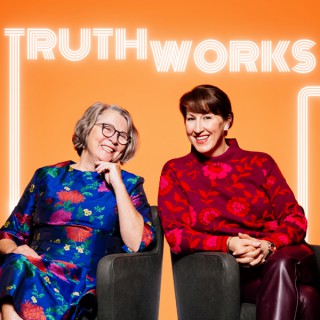
Marcus Buckingham has spent more than 25 years studying what makes people extraordinary at work, and his newest research points to a word most businesses are too nervous to use: love.In this episode of Truth Works, host Jessica Neal sits down with the co-creator of StrengthsFinder and author of First, Break All the Rules to talk about why Net Promoter Score barely predicts anything, why not one of the world's top business schools teaches the most powerful force in business, and how even a Netflix-level performance culture can accidentally train its best people to feel afraid.Marcus traces his own fascination with talent back to a UK brewery with two thousand pubs, the unlikely origin of Gallup's decades of research into what separates great performers from everyone else. He walks through the "five feelings," control, harmony, significance, warmth of others, and growth, that decide whether a customer or an employee ever ends up loving a company, and why skipping the order backfires every time.The conversation also gets personal: what Marcus calls "red threads," the parts of a job someone loves for no explainable reason, why no one else can spot yours for you, and what happens when AI starts writing your performance review before you have said a word to it. Marcus closes with the idea he calls mover and maker, that every person is, whether they notice it or not, making an experience for someone else in every single interaction.Guest: Marcus Buckingham, researcher and author of First, Break All the Rules, Nine Lies About Work, and Love + WorkHost: Jessica NealSubscribe to Truth Works for more conversations on leadership, culture, and what actually makes people great at work.#TruthWorks #MarcusBuckingham #Leadership #Netflix #WorkCulture

For years, the McKinley County District Attorney's Office was plagued by allegations of misconduct, dropped criminal cases, and a growing backlog that raised serious questions about the county's justice system. Earlier this year, elected District Attorney Bernadine Martin resigned rather than face an unprecedented misconduct trial before the New Mexico Supreme Court. Now, a new DA appointed by the governor is tasked with cleaning up the aftermath and rebuilding an office that had lost the trust of its employees and the community. KRQE Investigative Reporter Ann Pierret traveled to Gallup for the latest chapter in a story she's been following for more than a year. How is new leadership tackling the backlog? Can trust in the system be restored? Stick to the end of the episode for a special message from the KRQE Investigates team. Thanks for listening. If you've got an idea, send it to us at chris.mckee@krqe.com or gabrielle.burkhart@krqe.com. Give us a follow on social media at @ChrisMcKeeTV and @gburkNM. Watch or listen to our prior podcasts online at KRQE.com/insiders and our KRQE YouTube channel, or on broadcast TV every Wednesday at 10:30 p.m. MST on KRQE Xtra (channel 13.2 over the air).

What does it really mean for a church to flourish? In this episode of Tell Me More, the team sits down with Curt Grice, marking 32 years on staff at First Baptist Church Arlington, to unpack how a study-leave prayer for direction turned into a years-long journey with the Global Flourishing Study, a landmark research partnership between Harvard, Baylor, and Gallup surveying over 200,000 people across 22 countries.Curt and his Dennis trace the story from its roots in the Psalm 1 imagery of deep roots, strong trunks, and fruitful branches, through First Baptist Arlington's own congregational survey of nearly 1,300 adults, to the surprising, humbling results: strong scores in prayer, scripture, and worship, but real room to grow in evangelism and daily Bible reading. They talk candidly about how those findings reshaped the church's 2026 ministry priorities, from a renewed evangelism series to a daily devotional now reaching 800+ subscribers.The conversation closes with a preview of an international gathering of "flourishing" pilot churches near Assisi, Italy, bringing together California Pentecostals, German Lutherans, and Italian Catholics for a shared retreat on what it means to flourish as the people of God — evidence, they say, of a new, global, post-denominational move of the Spirit.In this episode:The origin story of First Baptist Arlington's connection to the Harvard/Baylor Global Flourishing StudyKey survey results on prayer, scripture engagement, worship, and evangelismWhy daily Bible reading and evangelism became 2026 ministry focus areasA look ahead to the international flourishing retreat in Montefalco, ItalyHow Psalm 1 shapes the church's vision of spiritual flourishingTell Me More is a podcast from First Baptist Arlington. Subscribe on your favorite podcast app or visit fbca.org to learn more.
Thank you for tuning in & showing your support!We invite you to chat with us on social media about our shows using hashtag #EATruthRadioVisit our Media Site at www.EternalAffairsMedia.comOur Guest Today is David Holland with Alpha Omega Gold & Silver, who will be a returning Guest the next couple weeks. Inquire about investing in precious metals here -- https://ao.gold/eternal*****NEED PRAYER? Join Our Prayer ARMY Email List: https://prayer.eamedia.onlinePlease Consider Planting A SEED IN OUR MINISTRY!https://donate.eamedia.onlinehttps://patreon.eamedia.onlinehttps://cash.eamedia.online ($eamediaonline)CRYPTOCURRENCY ~ https://strike.me/watchmancbizSign up for our FREE Email Newsletter!https://breaking.eternalaffairsmedia.comTHERE IS SO MUCH TO OFFER ON THE SITELearn more with Our LinkTree https://links.eamedia.online- NEW TRUTH PREMIUM ** on EA Truth Media Website * Exclusive Premium Content & Less Ads ONLY $3.99 Click Here ----- https://premium.eamedia.online THE TRUTH SHALL PREVAIL ~ WE ARE THE STORM!Our Independent Media Operation & Prophetic End Times Ministry has been online faithfully providing much valuable TRUTH for 16 years now!You're Gonna KNOW GOD DID IT!!!Eternal Affairs Media ™ is an alternative to mainstream mockingbird fake news propaganda media! We have since morphed into a partial prophetic end times ministry during these Biblical Days!!!! We are on the frontlines leading the fight against the Fake News Mockingbird Media, but we are still growing & need your support in whatever way that means to you and God Leads You!Check out our Online Store and get some COOL GEAR! https://store.eamedia.onlineWe Need To FILL IMMEDIATE ASSOCIATE POSITIONS: https://jointeam.eamedia.online !!!God bless you & your loved ones! GOD BLESS THE REPUBLIC OF AMERICA!Victory, Restoration, Restitution & Vindication Incoming - Get Ready! This is GOING TO BE BIBLICAL ... and IT'S HAPPENING!It's always DARKEST before The DAWN so ... Grab Your Emergency Food Kit at: https://prepare.eamedia.onlineStock up on Life Saving Medicines, Vitamins & Supplements = https://drstella.eamedia.onlineProtect Your Privacy = https://vpn.biselliano.info Up To 88% Off at MyPillow using Promo Code 'ETERNAL' https://mypillow.eamedia.onlineVisit us at https://PoweredByTruth.MediaHost Joshua Cummins at https://RevolverBroadcasting.com Become a supporter of this podcast: https://www.spreaker.com/podcast/ea-eternal-affairs-truth-radio--6429132/support.

Is public trust in the media completely broken? Can it ever be fixed? The last Gallup poll found only 14 percent said they have a "great deal" or "quite a lot" of confidence in TV news. Former ABC News political director Mark Halperin explores how this has happened, and how he would try to fix it.

Unser heutiger Gast arbeitet seit 2008 bei Gallup und ist heute Managing Partner EMEA. Seine Laufbahn führte ihn vom Associate Consultant über verschiedene Führungsrollen bis in seine heutige Position. Zuvor sammelte er internationale Erfahrungen, unter anderem bei der African Development Bank in Tunis und bei Germany Trade & Invest in Berlin. Außerdem engagiert er sich als Wertebotschafter bei GermanDream. Für uns ist er nicht nur ein geschätzter Experte, sondern auch ein guter Freund, der heute bereits zum vierten Mal bei uns zu Gast ist. Und auch ich bin als Gallup Coach ein kleines bisschen Teil dieser Familie. Seit über neun Jahren fragen wir in diesem Podcast, wie Arbeit Menschen stärken kann, statt sie zu schwächen. Warum arbeiten noch immer so wenige Menschen mit echtem Engagement? Was macht Führung heute so herausfordernd? Und was wünschen sich Menschen von denjenigen, denen sie folgen sollen? Ihr seid bei On the Way to New Work, heute mit Pa Sinyan. [Hier](https://linktr.ee/onthewaytonewwork) findet ihr alle Links zum Podcast und unseren aktuellen Werbepartnern [Hier](https://www.newworkmasterskills.com) geht es zum NWMS Executive Programm und zu den Infocalls [Hier](https://www.gallup.com/workplace/349484/state-of-the-global-workplace.aspx) geht es zum genannten Report State of the Global Workforce Wir wollen euch besser kennenlernen!

In this episode, Dan Collard, Co-Founder, Healthcare Plus Solutions Group, discusses how healthcare organizations can develop new and emerging leaders through individualized learning, better questions and a stronger focus on listening and coaching. He also explores Gallup research on hope, trust, compassion and stability, and how leaders can communicate context, action, impact and progress to their teams.This episode is sponsored by Healthcare Plus Solutions Group.

Start your morning with Buzzcast with Abe Madkour: Takeaways from Melbourne and Gallup breaks down American's favorite sport to watch Sign up for SBJ 360, our free, daily newsletter. SBJ 360 delivers a concise, high-level overview of the most important stories shaping the sports industry. Hosted by Simplecast, an AdsWizz company. See pcm.adswizz.com for information about our collection and use of personal data for advertising.

Send us Fan MailRoute 66 turns 100, and that milestone pulls me back to the ride that quietly rewired my outlook on people. I'm Ron Francis in Loveland, Colorado, and I'm retracing a moment from a solo motorcycle trip that started as a simple plan: follow the towns from “Get Your Kicks On Route 66” and enjoy the open road. What I didn't plan for was a morning in Gallup, New Mexico that hit harder than any mile marker or desert vista.Traveling alone on a motorcycle makes you approachable in a way a big group often isn't. You pull off your helmet, you look like just another human passing through, and conversations find you. Outside a local cafe, I met an older man who looked worn down, and my first reaction was pure ego: I assumed I was the helper and he was the one who needed saving. I offered breakfast, ready to feel generous, and I almost offered the kind of “charity advice” that is really just judgment in nicer packaging.Then he spoke, and everything shifted. With quiet dignity he shared his Navajo heritage, his past as a recovering alcoholic, time in jail, and the chaplain's words that helped him rebuild his life. He talked about honest work, gratitude for each day, and the rare treasure most of us chase without finding: peace of mind. By the time the meal ended, I realized the lesson wasn't about what I could give him. It was about what I needed to learn from him.If you care about solo motorcycle riding, Route 66 history, and the real meaning of kindness, this story is for you. Subscribe, share it with a riding buddy, and leave a review on Apple Podcasts so more riders can find the show. What's a moment when a stranger taught you something you didn't expect?Become a Member: https://www.buzzsprout.com/2126578/supporters/newBuy Ron a Coffee: https://buymeacoffee.com/peacelovemotoGear Up at the Shop: https://peacelovemotostore.com

On our radar this week… For the first time in our nearly six years and 295 episodes we're on the road, delighted to be in Grand Haven with good people of Progressive Lakeshore, a nonpartisan, women-led initiative working to connect, inform & grow the progressive community. Absentee ballots go into the mail in just 16 days … unless Trump's hand-picked Supreme Court majority decides to ignore the U.S. Constitution AGAIN! Trump has filed still another appeal with the Court demanding that the Post Office decides who gets their votes counted. We're also getting ready for this week's Trumpapalooze in Dallas, a two-day tribute to America's first and only criminal convict President. If he can stay awake, Trump will speak both nights of the gathering to an audience of people who 1) had nothing better to do, and 2) were willing to pay a minimum of $25,000 for the privilege of being in the presence of the nation's chief executive/poopie pants napper. One of the few Michigan Republicans on hand will be Senate candidate Mike Rogers who will no doubt use his podium time to lob anti-Muslim insults at Abdul El Sayed. Michigan Democrats will take the opportunity to reinforce the link between Rogers and a President who currently has a 30 percent approval rating in the state … with a whopping 67% saying in the EPIC-MRA Poll that Trump sucks. Also on the speakers list: 10th district congressional candidate Michael Bouchard Jr. A new study finds that Michigan households are paying an average of $5,600, more than anywhere in the nation, since new tariffs began to take effect in January 2025. During that period, importers of goods bound for Michigan paid an estimated $23 billion in tariffs, the third largest of any state – behind only California and Texas. The analysis by the conservative National Taxpayers Union Foundation found that the state's auto industry is particularly vulnerable to the tariffs because of its reliance on imported steel, aluminum and parts subject to tariffs. About $10 billion of Michigan's tariff cost was on cars and trucks, and another $5 billion in tariffs was on auto parts, the report said. Top of mind for everyone: retail prices. We paid $4+/gallon on the way over to Grand Haven. The price of diesel fuel – which impacts the price of anything that has to be delivered – is averaging $5.75/gallon, an all-time record high. Airline tickets are up 20% from a year ago, hotels up around 10%. Even a Whopper is a whopping $6.19 at your local Burger King…but at least the lettuce won't give us projectile diarrhea. Trump's wars continue unabated with no signs of peace with either Iran or Canada. Meanwhile, Trump's ace team of real estate salesmen (Jared Kushner and Steve Witkoff) spent some time in Moscow getting their marching orders from Putin. Meanwhile, Marco Rubio, believed to be the alleged Secretary of State, has been seen about as often in Washington as Mitch McConnell or Melania. The share of Americans who associate themselves with the Democratic Party has grown significantly over the past year, according to data from Gallup. The shift, which signals the party's largest advantage since 2008, is the latest sign of backlash against Republicans and the president ahead of the midterm elections. The latest data shows Democrats with a 10-percentage-point advantage over Republicans when voters are asked which party they identify with and when independent voters are asked which party they lean toward. We're still 2-plus weeks from the start of voting. All the signs point to the Blue Wave we've been predicting for nearly two years but, as we learned over the weekend in Ann Arbor, it ain't over until it's over … and even then it may not be over. Donald Trump is capable of seeing a losing score when the election is over, and then come up with a political Hail Mary. Mark is one of the legal team working to anticipate and head off a Trumpian coup and provides some insight into the preparations. ⭐️⭐️⭐️⭐️⭐️⭐️⭐️⭐️⭐️⭐️⭐️⭐️⭐️⭐️⭐️⭐️ ⭐️⭐️⭐️⭐️⭐️⭐️⭐️⭐️⭐️⭐️⭐️⭐️⭐️⭐️⭐️⭐️ Subscribe to our YouTube channel ⭐️⭐️⭐️⭐️⭐️⭐️⭐️⭐️⭐️⭐️⭐️⭐️⭐️⭐️⭐️⭐️ ⭐️⭐️⭐️⭐️⭐️⭐️⭐️⭐️⭐️⭐️⭐️⭐️⭐️⭐️⭐️⭐️ A Republic, If You Can Keep It is supported by

Jeff Mains sits down with Jurgen Dauk to unpack why the org chart that got a company to its first 50 people is often the exact thing choking it at 500. Jurgen argues that most companies are still built and run like machines — predictable, controllable, command-and-control — when what actually thrives in fast-moving, crisis-prone markets is an organization that behaves more like an organism: adaptive, self-healing, and built around trust in people rather than rigid processes. The conversation covers why rolling AI into a broken structure just accelerates the dysfunction, how to diagnose silos and misaligned KPIs, why a real vision and mission (not a wall plaque) is the glue that holds cross-functional teams together, and concrete stories — from a car manufacturer losing the innovation race to China, to Ritz-Carlton's radical front-line trust — showing what happens when decision power moves closer to the action.Key Takeaways2:31 — The structure that got you here might be the exact thing slowing you down now.6:19 — Think of your company as an organism, not a machine — it puts people at the center, not the org chart.9:09 — Why command-and-control kills AI ROI: strategic top-down rollouts vs. empowered cross-functional teams choosing their own AI use cases.12:04 — The "garbage in, garbage out" AI story: a regional marketing team fed AI a stale document instead of training it on their ideal customer.15:19 — Command-and-control is really about fear — fear of losing control, fear it won't work out.17:07 — The fastest diagnostic for a broken org: ask 10 people the company's vision/mission and see how many different answers you get.18:19 — Gallup data: nearly 80% of employees are completely checked out.23:52 — What a "Leadership Operating System" actually is — not a machine principle bolted onto your org, but a guide to co-create your own unique structure.26:03 — How to find your silos fast: look at how decisions flow, how information moves, and whether your teams' KPIs actually conflict with each other.34:23 — The German auto industry story: a legacy manufacturer builds one generation of a car in the time a Chinese competitor builds three.37:26 — The #1 structural move before spending another dollar on AI: just ask your people what they need.42:49 — The Amazon Web Services story — building backwards from what the customer needs, not from existing tools/processes.45:36 — The Ritz-Carlton story: an employee flies to Hawaii to hand-deliver a guest's forgotten laptop, funded by a no-questions-asked discretionary budget.Tweetable Quotes"Your structure is either your engine or your anchor." — Jeff Mains"AI amplifies what is there. If your foundation isn't set up well, it will amplify exactly that." — Jurgen Dauk"Organizations are made up of people, not machines." — Jurgen Dauk"The reality is different — our issue is the time it takes us to build one generation of our flagship product, while our competition is developing three." — Jurgen Dauk"Instead of investing into AI, ask your people. Talking to people is not very expensive." — Jurgen Dauk"What people almost never ask is: In what way would I need to change?" — Jurgen Dauk"Organizational transformation really is personal transformation just at scale." — Jeff MainsSaaS Leadership LessonsTrust decision power to where the knowledge lives. Cross-functional teams closer to the action decide faster and better because they understand the problem firsthand.A rigid structure will sabotage your AI investment. Rolling out AI on top of command-and-control doesn't fix dysfunction — it accelerates it.Vision and mission are operational tools, not marketing copy. A vision that unites people (not "20% YoY growth") is what aligns fragmented teams and keeps talent engaged.Diagnose silos through decisions, information flow, and KPIs. Conflicting metrics between departments (e.g., sales vs. marketing) are a reliable early warning sign.Letting go of control is the hardest and highest-leverage move. It requires training people on communication, clear guardrails, and a safe space for mistakes — not just "here's the plan, good luck."Build backwards from the customer, not from existing tools or processes. Amazon Web Services and Ritz-Carlton both succeeded by empowering people to act in service of the customer outcome, not internal process compliance.Guest Resourcesj.dauk@theleadership-os.comhttps://theleadership-os.com/https://www.linkedin.com/in/juergendauk/Episode SponsorThe Futureproof Series - https://www.youtube.com/playlist?list=PLfkXKUPZ5xuOqMPR7_gzGybncTtavyR1NThe Captain's KeysSmall Fish, Big Pond – https://smallfishbigpond.com/ Use the promo code ‘SaaSFuel'Champion Leadership Group – https://championleadership.com/https://jeffmains.com/books/SaaS Fuel ResourcesWebsite - https://championleadership.com/Jeff Mains on LinkedIn - https://www.linkedin.com/in/jeffkmains/Twitter - https://twitter.com/jeffkmainsFacebook - https://www.facebook.com/thesaasguy/Instagram - https://instagram.com/jeffkmains

Northeast Ohio workers aim to improve labor strength American's approval of labor unions has greatly increased in the last 20 years, according to a recent poll from Gallup. 47% of those who were surveyed said they want unions to have more influence. That sits alongside a rate of 26% saying they want unions to have the same amount of influence. Efforts to unionize or improve worker conditions are increasing in a variety of sectors across Northeast Ohio, from the musicians of the Cleveland Orchestra potentially going on strike, to nurses, baristas and librarians seeking a place at the table when it comes to collective bargaining. Labor Day was celebrated this Monday, so the "Sound of Ideas,” hosted by Stephanie Haney, decided to take a snapshot of the local labor landscape on Thursday's show with workers here in Northeast Ohio. Guests: - Rhonda Hillman, Employee, SEIU Local 1 & Union Steward - Michael Wood, Lead Administrative Organizer, SEIU 1199 - Patricia Kane, Staff Nurse, Metro Behavioral Health Hospital; Ohio Nurses Association Local President - Caleb Reese, Former Rising Star Employee - Elayna Duitman, Violinist, The Cleveland Orchestra; Chair, Musicians Negotiating Committee "Shuffle” Then, we bring you another episode of our music podcast "Shuffle." This week, we hear from Lakewood artist Tracy Marie, who has built a career in music while navigating the challenges of a rare disability. Now, she's turning those experiences into advocacy for greater accessibility. Guests: - Amanda Rabinowitz, Host and Producer, “Shuffle” and “All Things Considered” - Tracy Marie, Musician
Thank you for tuning in & showing your support!Our Guest for this episode was Brandon Pringle. Learn more about him on his website at: https://suchatime.caWe invite you to chat with us on social media about our shows using hashtag #EATruthRadio Visit our Media Site at www.EternalAffairsMedia.comNEED PRAYER? Join Our Prayer ARMY Email List: https://prayer.eamedia.onlinePlease Consider Planting A SEED IN OUR MINISTRY!https://donate.eamedia.onlinehttps://patreon.eamedia.onlinehttps://cash.eamedia.online ($eamediaonline)CRYPTOCURRENCY ~ https://strike.me/watchmancbizSign up for our FREE Email Newsletter!https://breaking.eternalaffairsmedia.comTHERE IS SO MUCH TO OFFER ON THE SITELearn more with Our LinkTree https://links.eamedia.online- NEW TRUTH PREMIUM ** on EA Truth Media Website * Exclusive Premium Content & Less Ads ONLY $3.99 Click Here ----- https://premium.eamedia.online THE TRUTH SHALL PREVAIL ~ WE ARE THE STORM! Our Independent Media Operation & Prophetic End Times Ministry has been online faithfully providing much valuable TRUTH for 16 years now! You're Gonna KNOW GOD DID IT!!! Eternal Affairs Media ™ is an alternative to mainstream mockingbird fake news propaganda media! We have since morphed into a partial prophetic end times ministry during these Biblical Days!!!! We are on the frontlines leading the fight against the Fake News Mockingbird Media, but we are still growing & need your support in whatever way that means to you and God Leads You!Check out our Online Store and get some COOL GEAR! https://store.eamedia.onlineWe Need To FILL IMMEDIATE ASSOCIATE POSITIONS: https://jointeam.eamedia.online !!!God bless you & your loved ones! GOD BLESS THE REPUBLIC OF AMERICA! Victory, Restoration, Restitution & Vindication Incoming - Get Ready! This is GOING TO BE BIBLICAL ... and IT'S HAPPENING! It's always DARKEST before The DAWN so ... Grab Your Emergency Food Kit at: https://prepare.eamedia.onlineStock up on Life Saving Medicines, Vitamins & Supplements = https://drstella.eamedia.onlineProtect Your Privacy = https://vpn.biselliano.info Up To 88% Off at MyPillow using Promo Code 'ETERNAL' https://mypillow.eamedia.onlineVisit us at https://PoweredByTruth.Media Host Joshua Cummins at https://RevolverBroadcasting.com Become a supporter of this podcast: https://www.spreaker.com/podcast/ea-eternal-affairs-truth-radio--6429132/support.

Tonight on America At Night with McGraw Milhaven, political science professor Ray LaRaja, Co-Director of the UMass-Amherst Poll, discusses new Gallup findings showing a record-high 89% of Americans say corruption is widespread in government and what the numbers reveal about public trust. Randy Karracker, host of The Randy Karracker Show at Grey Media, breaks down the Michigan-Western Michigan game that became an instant sports conversation and asks: what happened? And in our National Parks segment, Vincent Tompkins, President of Friends of the Cape Cod National Seashore, takes us to Cape Cod to explore the history, landscape, and attractions of one of America's iconic coastal national parks. Learn more about your ad choices. Visit podcastchoices.com/adchoices

Neal Glatt is a sales and leadership coach, trainer, and speaker who helps green industry organizations scale revenue and profit through better hiring, stronger systems, and improved execution. He brings real-world credibility from his role on the leadership team at Case Snow Management, which he joined in 2010 and helped grow the business from a single pickup truck to more than $40 million in annual revenue in just seven years. After leading the sales effort as part of the leadership team, Neal launched his own coaching practice in 2017. Today, he works with companies to coach sales leaders, hire high-performing B2B salespeople, and train frontline retail staff to consistently convert opportunity into revenue. Neal is a Certified Strengths Coach through Gallup and a John Maxwell Certified Coach, Speaker, and Trainer. He holds bachelor's degrees in Marketing and Spanish from Northern Michigan University and a Global Executive MBA from SKEMA Business School.

Having completed an MSc in Applied Positive Psychology and Coaching Psychology, leadership development coach Ian Pettigrew wanted to share his findings. His studies have identified hope as an essential feature of any leadership communication endeavour and a linchpin of successful and lasting change. And yet it's no mean feat to instil a sense of hope when the external operating landscape throws up persistent challenge, complexity and ambiguity. But as a recent Harvard Business Impact article noted, leaders “have astonishing influence over the internal performance environment, including employee engagement, morale, and productivity.” This episode, Jen, Cat, Dom and Ian explore the link between trust and hope and the role internal communication plays in helping build hopeful, high-performing operating environments About Ian Pettigrew Ian B Pettigrew is a coach and leadership development consultant focused on helping leaders inspire hope. He's a Gallup-certified strengths coach, a Fellow Member of the Association for Coaching, and a member of the Association for Business Psychology. He has an MSc in Applied Positive Psychology and Coaching Psychology, has twice been named by HR Magazine (in 2023 and 2026) as one of HR's Most Influential Thinkers, and his debut book – Hope is a Strategy – is a finalist for the Business Book Awards Leadership book of the year. Ian is the founder of a skills-based volunteering initiative called Connecting HR Africa. Outside of work, Ian competes in Agility with his Border Collie, Buddy, and is currently training for an Everesting cycling challenge to raise money for charity. Find Ian on LinkedIn: https://www.linkedin.com/in/ianpettigrew/ Ian's website: https://hope.tips/
Is the electric vehicle Revolution hitting a massive roadblock?!

Find us at www.crisisinvesting.com Doug and Matt discuss the Lindsay Clancy case, noting reports of an 11–1 jury split favoring a temporary-insanity outcome and debating punishment versus lifelong institutionalization, deterrence, and an anarcho-capitalist justice model focused on restitution rather than "debt to society." They react to a Gallup poll showing 89% of Americans believe government corruption is widespread and consider implications for institutional trust and social stability. Viewer questions cover backlash to AI data centers (noise, surveillance fears, and a potential trillion-dollar FOMO-driven bubble), hostility to flock cameras, Doug's limited debate history and dislike of formal debates, and the likely futility and escalation risks of "D-Day" secondary sanctions on Iran. They also discuss Roman emperors, war's societal effects and drone casualties in Ukraine, ETF versus individual mining-stock exposure, Argentina and the Falklands amid Milei's moves, race tensions, and a dismissed scenario of Argentina attacking Brazil. 00:00 Case Overview 02:35 Insanity Or Punishment 03:52 Ancap Justice System 07:43 Corruption Poll Shock 10:50 AI Data Center Backlash 16:28 Debate Team Memories 19:31 Iran Sanctions Fallout 27:14 Wine With Emperors 29:19 Trump Personality Critique 29:58 Wars And Male Casualties 31:05 Drone Warfare In Ukraine 32:02 Race And Western Decline 33:28 ETFs Versus Stock Picks 36:42 Falklands And Milei 41:44 NATO And Demographics Debate 44:07 China Brazil Corridor Fears 49:25 Weekend Wrap And Signoff

00:00:00 – Star Trek reboot banter 00:04:25 – Tippy Top clip hunt 00:04:25 – Mike shares more 00:09:10 – Alex Jones clips of the week 00:18:11 – Small Pennsylvania Bigfoot sightings 00:34:34 – Syracuse Figure: Bigfoot or skinny dipper 00:43:15 – Gallup tracks UFO skepticism 00:47:37 – China expands its Area 51-style test base 00:52:28 – Axl Rose's strained live vocals 01:00:57 – Washington Post argues for bringing back the draft 01:10:45 – Restroom Archive catalogs public bathrooms 01:15:03 – Sewer explorers reappear across New York 01:20:03 – NYC schools halt AI tools through eighth grade 01:24:48 – Pakistani driverless car crashes into police van 01:29:47 – Digital Snickers prompt-injection campaign 01:39:02 – Thailand braces for 5,000 U.S. sailors ashore 01:46:50 – Saskatoon's $297,000 plastic rock art 01:55:57 – Alex Jones drops and community wrap-up 02:00:22 – Final sign-off and outro Copyright Disclaimer Under Section 107 of the Copyright Act 1976, allowance is made for "fair use" for purposes such as criticism, comment, news reporting, teaching, scholarship, and research ▀▄▀▄▀ CONTACT LINKS ▀▄▀▄▀ ► Phone: 614-388-9109 ► Skype: ourbigdumbmouth ► Website: http://obdmpod.com ► Twitch: https://www.twitch.tv/obdmpod ► Full Videos at Odysee: https://odysee.com/@obdm:0 ► Twitter: https://twitter.com/obdmpod ► Instagram: obdmpod ► Email: ourbigdumbmouth at gmail ► RSS: http://ourbigdumbmouth.libsyn.com/rss ► iTunes: https://itunes.apple.com/us/podcast/our-big-dumb-mouth/id261189509?mt=2

Gallup polling just put out a new report this morning with this title: "Record-high 89% in U.S. say government corruption widespread." Nearly 90% -- spread across all political ideologies -- think that corruption is at the highest it's ever been! Is anyone truly surprised? Greg and Holly say their biggest shock was how it went from less than 60% in 2006 to roughly 30% higher in only 20 years.

How the people, places, and things around you can bring out your best. Plus, why willpower is unreliable, why AA works for so many people, and where to put your phone. Angela Duckworth is the Rosa Lee and Egbert Chang Professor at the University of Pennsylvania and co-director of the Penn-Wharton Behavior Change for Good Initiative. She is the author of the #1 New York Times bestseller Grit: The Power of Passion and Perseverance and the recently released Situated: Find the People and Places That Bring Out Your Best. In this episode we talk about: Why willpower alone rarely creates lasting behavior change, and why changing your situation is often the better move The Gallup study showing where teens keep their phones predicts their grades How to identify what's actually within your control versus truly fixed Angela's own marriage crisis during the 2008 financial collapse, and what saved it Why "trying harder" can sometimes make a bad situation worse, not better One reason Alcoholics Anonymous works for so many people in recovery How reaching out to strangers for advice can change your entire career path Why surrounding yourself with the right peers matters more than we admit Related Episodes: Angela Duckworth's first appearance on our show Get the 10% with Dan Harris app here Sign up for Dan's free newsletter here Follow Dan on social: Instagram, TikTok Subscribe to our YouTube Channel Additional Resources: Angela's new book Situated This episode is sponsored by: BiOptimizers: Head to bioptimizers.com/happier and use code HAPPIER for 15% off your order. Notion: Learn more about how Notion can support your business at notion.com/happier. Square: Get up to $200 off Square hardware when you sign up at square.com/go/happier! #squarepod Fitnexa: You can learn more about Fitnexa SomniPods 3 at go.fitnexa.com/n6PD9i, and use code HAPPIER10 for $10 off your order. To advertise on the show, contact sales@advertisecast.com or visit https://advertising.libsyn.com/10HappierwithDanHarris
It's Wednesday, September 2nd, A.D. 2026. This is The Worldview in 5 Minutes heard on 140 radio stations and at www.TheWorldview.com. I'm Adam McManus. (Adam@TheWorldview.com) By Jonathan Clark Another state in India passed anti-conversion law India's state of Maharashtra became the 13th in the country to enact an “anti-conversion” law last week. It's the country's second-most populous state. This has prompted thousands of churches in the area to have worshippers sign a form. The form simply says the person is attending freely and not under coercion. India's “anti-conversion” laws are often used to target Christians. Hindu nationalists have attacked churches in Maharashtra 11 times in the last six months. India is ranked 12th on the Open Doors' World Watch List of the most dangerous places to be a Christian. In John 15:18-19, Jesus said, “If the world hates you, you know that it hated Me before it hated you. If you were of the world, the world would love its own. Yet, because you are not of the world, but I chose you out of the world, therefore the world hates you.” Send a polite, 4-sentence note to Vinay Kwatra, the Indian Ambassador to America, asking that he urge his government not to pass these anti-conversion laws which target Christians. Address it to the Embassy of India, 2107 Massachusetts Avenue, NW, Washington, DC 20008. You'll find the correct spelling of the ambassador's name and the address in our transcript today at www.TheWorldview.com. Australia's new assisted suicide law ABC News Australia reports Australia's Northern Territory passed a bill legalizing assisted suicide last week. The territory was the first in the world to legalize voluntary euthanasia in the 1990s. Australia's federal government overturned the law within a couple years. But in 2022, the government reversed its decision, allowing the territory to legalize assisted suicide once again. Now, all states and territories in Australia allow for this form of killing. Over 7,200 people have died this way in the country since 2019. Trump's Venezuelan oil deal gives access to 65 billion barrels The Trump administration announced a major oil deal with Venezuela on Friday. The deal would give the United States access to 17 oil fields in Venezuela with proven reserves of 65 billion barrels of oil. That's about 20 percent of the country's reserves. By comparison, the U.S. has 46 billion barrels of proven oil reserves. President Donald Trump hopes the deal will lower gas prices for Americans. However, analysts suggest that the deal will not relieve prices in the short-term. Homeland Security investigates voter fraud in 9 states CNN reports that the U.S. Department of Homeland Security is investigating voter fraud in nine states ahead of the midterm elections in November. These states include California, Connecticut, Georgia, Missouri, Nevada, New York, Pennsylvania, Washington, and Wisconsin. The Trump administration is pushing for states to phase out certain electronic voting systems and move to paper ballots. The administration has threatened to withhold significant homeland security funds from states that do not adopt such election changes. ICE arrested 51,000 immigration arrests in July U.S. Immigration and Customs Enforcement made 51,000 immigration arrests in July. That's up from 43,000 arrests in June. Both months set records for the agency. Nearly 20,000 of July's arrests were in Texas and Florida. Both states have been very cooperative with the Trump administration's mass deportation efforts. Gallup poll: Americans supportive of marriage if couple has kids A new Gallup poll found that more Americans are supportive of marriage when children are involved. Thirty-nine percent of U.S. adults say it is very important for a couple to be legally married if they have a child together. That's up from 29 percent in 2020. However, it's down from 49 percent in 2006. Gallup noted, “Weekly church attendees show one of the largest increases since 2020 in the belief that couples, who have a child together, should be married, up 24 points, from 41% to 65%.” Bible societies distributed 148 million Scriptures in 2025 And finally, the United Bible Societies distributed over 148 million printed Scriptures in 2025. The top countries for Bible distribution last year were Brazil, China, India, Nigeria, and the Philippines. Rev. Dirk Gevers, Secretary General of the United Bibles Societies, said, “While printed Scriptures continue to reach hundreds of millions of people each year, digital engagement is growing, opening new opportunities to connect with the Bible through mobile devices and online platforms.” This year is the organization's 80th anniversary. Since 1946, the Bible society has distributed 25 billion Scriptures, including 1.1 billion complete Bibles. Malachi 1:11 says, “From the rising of the sun, even to its going down, My name shall be great among the Gentiles; in every place incense shall be offered to My name, and a pure offering; for My name shall be great among the nations.” Close And that's The Worldview on this Wednesday, September 2nd, in the year of our Lord 2026. Subscribe for free by Spotify, Amazon Music, or by iTunes or email to our unique Christian newscast at www.TheWorldview.com. Plus, you can get the Generations app through Google Play or The App Store. I'm Adam McManus (Adam@TheWorldview.com). Seize the day for Jesus Christ.

DR'We Know We Got This Wrong': Target Apologises and Pulls 'Offensive' Halloween Costume After Racist Backlash; Target Executive Chair Brian Cornell Sells 50,000 Shares for $8.2 Million; WHO DO YOU BLAME?Executive Chair/former CEO (since 2014) Brian Cornell: still 21% influence!CEO Michael Fiddelke: 16% influence; started at Target in 2003; formerly COO and CFOWhy does the corporate page not list his years of service in two separate bios??Dmitri Stockton: 8 years tenure; the double-DEI hater (Deere & Company) Mr. Stockton provides the Board with senior leadership, marketing / design / brands, human capital management, capital deployment, information security / data privacy, financial management, risk management, reputation management, and sustainability and governance skills developed over his more than 30 years of service with General Electric Company in senior leadership positions with escalating levels of responsibilityMarketing / Design / Brands: Target's brand and focus on style and design are the cornerstones of our strategy to offer a preferred shopping experience for our guests that differentiates us in the marketplace.Reputation management: To be successful, we must preserve, grow, and leverage the value of our reputation with our guests, Team Members, vendors, and our shareholders and appropriately respond to crisis events affecting them.A random executive?Chief Merchandising Officer Cara Sylvester: joined Target in 2007Chief Community and Stakeholder Engagement Officer Kiera Fernandez: joined Target in 2001Chief Stores Officer Adrienne Costanzo: joined Target in 2004Black CFO representation falls 25% from 2021 peak as diversity levels off: The number of Black finance chiefs in Fortune 500 and S&P 500 companies ticked down to 15 this year, according to the report from Crist Kolder Associates. WHO DO YOU BLAME?Tractor Supply Co.: Fully eliminated its DEI goals, retired carbon emission targets, and withdrew sponsorships from social and cultural events.Deere & Company: Ended participation in social awareness parades and pledged to eliminate diversity quotas and identity-based affinity group funding.Target: Scaled back its "Racial Equity Action and Change" roadmap, modified its strategy for Pride Month merchandise, and adjusted internal diversity goals.Walmart: Ended key equity training programs, modified its third-party seller guidelines, and scaled back specific minority supplier programs.Lowe's: Ended participation in external LGBTQ+ advocacy surveys and consolidated its employee resource groups under a centralized oversight structure.Ford Motor Company: Scaled back internal diversity targets, stopped participating in third-party workplace index surveys, and unlinked executive pay from DEI metrics.Harley-Davidson: Discontinued its dedicated DEI function, eliminated diversity quotas for supplier contracts, and ended HRC index reporting.Molson Coors: Removed DEI quotas from executive incentive plans and stepped back from external diversity rankings.Meta: Reorganized its human resources departments, eliminating specialized DEI teams and specific supplier diversity programs in favor of broader recruitment practices.Amazon: Phased out several internal affinity programs and explicit representation targets for hiring.McDonald's: Retired numerical demographic goals for senior management roles and paused external workplace diversity surveys.Goldman Sachs: Ended its policy requiring companies it takes public to have at least one diverse board member.The double (and triple?) dippers:Dmitri Stockton: director at Target & DeereJohn May CEO/Chair Deere & Ford Motor directorMarvin Ellison: CEO/Chair at Lowe's after 15 years at TargetJim Farley: CEO Ford Motor & McDonald's director & former Harley-Davison director MMTrump 2.0/ElonShareholder opposition to executive pay eases globallyEurope: NO VOTES for past year fell nearly 6 percentage points year-over-year to 25.2%, the lowest average level since at least 2018.United States: Say on Pay Average Support (S&P 500): Rose to 90.4% (up from 89.7%). Failed Votes (12 years tenure, only 4 of the 11 directors got tagged as having meritThe number of committees - SIX different committees with SIX members in each (except audit which is 5) for 10 directors at the time - they needed to add ANYONE because they were exhausted from so many committee meetingsRich Stoddart DRMember of Nom/CG (also Audit, “Innovation”, and “Social Responsibility”)Was CEO of Leo Burnett - advertising agency that handled massive portion of Nestle USA advertising. Presley was CEO of Nestle USA.Callaway Golf CEO met with backlash over apology for Good Good video depicting abuseThe ad: In the footage, Good Good personality Garrett Clark charges at Alexis Miestowski, knocks her onto the grass, then stands over her and says, "Do not touch my new driver."The company issued a statement on Friday, but CEO Chip Brewer did a social media post this morning stating: "That approval should never have happened. Mistakes were made, and we are taking the matter very seriously. I want to make it clear that we sincerely apologize for the video." He did not apologize to women.WHO DO YOU BLAME?EVP and President of Callaway Golf Glenn Hickey who leads sales and marketing, whose prior work includes being a bond trader and getting a business degree from San Diego State, but was absent for the “don't shove a woman in an ad” lesson (possibly)Good Good and its CEO Matt Kendrick who made the ad for Callaway and posted, “Interesting that @CallawayGolf asks us to make an ad then approves it then asks us to take the fall then drops us in a coordinated media blitz and covers it up by giving a million dollars away thinking everyone will be ok with it. 30 for 39 will be legendary.” He also apologized. But clearly more annoyed at Callaway than, you know, sorry for women?The women on the board and the management team - they should have caught this before it got out! Oh, what? There's TWO women on the board (one auditor who is ex-Boeing, a company with no challenges, and the other a Chief People Officer at a food company) and ONE woman in management (Chief People Officer)? None of whom would have seen the ad??? Oops.Tom Dundon - who, according to the Callaway 2026 Proxy Statement, has been a director since “not applicable” - but does own more than 10% of the stock and has 56% influence over the company according to Free Float data MM

Larry Coval spent nearly four decades leading organizations at AT&T, Global Crossing, and Cox Business, and came out the other side convinced that most of what gets taught about leadership is wrong. He joins Neal to talk about his new book, Misled, and the argument at its center: “team” is the wrong unit of analysis for business, leadership was never a soft skill, and the fundamentals got skipped while the keynote circuit sold platitudes. He also makes the case for the smoked marlin taco at Oscar's - drowned in orange sauce.Key topics* Why teams don't exist in business — and the three things real ones have* Leadership Industrial Complex: why substance lost to style* Gallup's data: managers are now as disengaged as their people* Hiring for sameness as the founder's most expensive mistake* Red teaming: how the military pressure-tests decisions* Setting expectations with crystalline clarity — confusion is friction* How hoarding work robs your people of development* 60% of managers get zero training when promoted* The ARCANE model and why career planning has no playbook* The smoked marlin taco at Oscar's Mexican SeafoodLinks & resources* ARCANE Leadership Concepts* Misled: Why (Almost) Everything You Learned About Leadership Is Wrong and How to Fix ItConnect on LinkedIn* Neal Bloom* Larry Coval This is a public episode. If you'd like to discuss this with other subscribers or get access to bonus episodes, visit risingtidepartners.substack.com/subscribe

Your NPS went up again last quarter. It still can't tell you which customers actually sent you somebody. Gallup studied more than 24,000 banking customers. Run the standard formula and the score came out at 11. Change only how a 9 and a 7 get counted, and the same answers from the same people produce negative 14. Nobody was resurveyed. Nobody changed their mind. Jim Marous makes the case that the industry's favorite metric records what customers say they might do, while the number that actually connects advocacy to growth records what they did. Only about 15% of customers ever produce a new customer, yet referred customers generate the vast majority of new customer profit, at a time when the cost of acquiring a customer has nearly doubled since 2019. The episode covers why the score inflates on its own, the sampling problem nobody names, why the man who invented NPS built an accounting-based counterpart to it and why almost nobody adopted it, and five moves for building referral measurement as a permanent capability rather than another refer-a-friend campaign. #Banking #CreditUnions #NPS #CustomerExperience #Referrals #FinancialServices
© 2020-2026 Ivy Podcast Discovery LLC
