

POPULARITY

4 episodes with digital information

3 episodes with digital information

3 episodes with digital information

3 episodes with digital information

3 episodes with digital information

2 episodes with digital information

2 episodes with digital information

New Zealand's Privacy Commissioner is right to argue that the law should be changed to allow agencies to be fined when they fail to protect people's sensitive personal information. In an increasingly digital society, we're being encouraged to trust organisations with highly confidential data, including medical records, financial details, and personal identification information. With that trust must come accountability. The recent cyberattack involving Manage My Health highlights why stronger enforcement powers are necessary. The platform stores sensitive health information for hundreds of thousands of New Zealanders and is widely used by patients and healthcare providers. When a system like this is compromised the consequences can be severe, including identity theft, privacy violations, and loss of confidence in digital healthcare services. While an investigation followed the breach, many New Zealanders were left wondering whether anyone would face meaningful consequences. Too often, organisations can have a data breach without being held directly accountable for inadequate security practices. These concerns become increasingly significant as New Zealand moves towards digital driver licenses and other forms of digital identity. While digital licenses offer convenience, efficiency and are the way of the future, they also create a centralised repository of highly valuable personal information. If we're expected to carry our identity in digital form, we need to be confident the systems protecting our information meet the highest security standards. Where negligence or failure to meet these standards contributes to a breach, substantial financial penalties should be an available option. Privacy Commissioner Michael Webster says that when it comes to accountability for failing to protect an individual's privacy, New Zealand's laws are "somewhat out of step" with those overseas. The possibility of significant fines would create a strong incentive for organisations to invest in prevention rather than simply managing the fallout after a breach. It would send a clear message that protecting personal data is a fundamental responsibility. If organisations and government agencies expect the public's trust, they must also accept meaningful consequences when that trust is broken. See omnystudio.com/listener for privacy information.

Ashish Surti, Chief Digital Information Officer, Colt Technology Services, discusses how AI is accelerating software development and the challenges of developing longer-term technology strategies in a swiftly changing environment. Among the topics he covers is the changing relationships with vendors; how AI is impacting internal software development, as well as measuring the business value of AI. Guest speaker: Ashish Surti, Chief Digital Information Officer, Colt Technology Services Hosts: Mark Newman, Chief Analyst, TM Forum Joanne Taaffe, Editor in Chief, TM Forum
In this episode, Ratnakar Lavu, Chief Digital Information Officer at Elevance Health, discusses how AI is driving simpler, more personalized member experiences, streamlining provider workflows, and improving internal productivity, while emphasizing responsible AI governance and measurable impact across the healthcare ecosystem.
In this episode, Ratnakar Lavu, Chief Digital Information Officer at Elevance Health, discusses how AI is driving simpler, more personalized member experiences, streamlining provider workflows, and improving internal productivity, while emphasizing responsible AI governance and measurable impact across the healthcare ecosystem.

Season 7, episode 33 on the California Sports Lawyer® Podcast with Jeremy Evans, discusses the information, knowledge, and technology debate about the survival and protection of knowledge and learning with a focus on entertainment, media, and sports. Copyright © 2025. California Sports Lawyer®. All Rights Reserved. (www.CSLlegal.com). Try ZipRecruiter for FREE at ZipRecruiter.com/work.
Lisa S. Stump, BSPharm, MS, FASHP, Executive Vice President, Chief Digital Information Officer, and Dean of Information Technology at Mount Sinai Health System, discusses key areas of growth for the year, including advancements in AI and clinical innovation. She addresses anticipated challenges such as the rapid pace of change and transforming operating models, while sharing her strategies for setting the organization up for long-term success.
Lisa S. Stump, BSPharm, MS, FASHP, Executive Vice President, Chief Digital Information Officer, and Dean of Information Technology at Mount Sinai Health System, discusses key areas of growth for the year, including advancements in AI and clinical innovation. She addresses anticipated challenges such as the rapid pace of change and transforming operating models, while sharing her strategies for setting the organization up for long-term success.

BUSINESS: The knowledge crisis in the digital information era | Mar. 5, 2025Visit our website at https://www.manilatimes.netFollow us:Facebook - https://tmt.ph/facebookInstagram - https://tmt.ph/instagramTwitter - https://tmt.ph/twitterDailyMotion - https://tmt.ph/dailymotionSubscribe to our Digital Edition - https://tmt.ph/digitalSign up to our newsletters: https://tmt.ph/newslettersCheck out our Podcasts:Spotify - https://tmt.ph/spotifyApple Podcasts - https://tmt.ph/applepodcastsAmazon Music - https://tmt.ph/amazonmusicDeezer: https://tmt.ph/deezerStitcher: https://tmt.ph/stitcherTune In: https://tmt.ph/tunein#TheManilaTimes Hosted on Acast. See acast.com/privacy for more information.

The MacVoices Live! panel looks briefly at the latest country getting into the “let's fine big tech companies) game, and whether there is motive other than the stated one. Then, Chuck Joiner, David Ginsburg, Jeff Butts, Brian Flanigan-Arthurs, Jeff Gamet, Marty Jencius, and Jim Rea consider the impact of the iPhone on its 18th birthday, how it has affected their lives and how it continues to impact our daily activities. This edition of MacVoices is brought to you by our Patreon supporters. Get access to the MacVoices Slack and MacVoices After Dark by joining in at Patreon.com/macvoices. Show Notes: Chapters: 00:06 Introduction to MacVoices 01:31 Celebrating 18 Years of the iPhone 03:15 Impact of Technology on Generations 05:58 Career Choices in a Tech-Driven World 08:44 Douglas Adams' Take on Technology 16:19 Reflections on the Discussion 16:43 Social Media and Personal Connections 18:41 Conclusion and Next Steps Links: Indian regulators set to accuse Apple of anticompetitive practices https://appleinsider.com/articles/25/01/02/indian-regulators-set-to-accuse-apple-of-anticompetitive-practices Happy birthday! The iPhones turns 18 today (January 9th) https://appleworld.today/2025/01/happy-birthday-the-iphones-turns-18-today/ Guests: Jeff Butts writes for XDA Develpers and groovyPost. Contact him on X as @clefmeister and on Instagram as @recoveringphoenix72. Brian Flanigan-Arthurs is an educator with a passion for providing results-driven, innovative learning strategies for all students, but particularly those who are at-risk. He is also a tech enthusiast who has a particular affinity for Apple since he first used the Apple IIGS as a student. You can contact Brian on twitter as @brian8944. He also recently opened a Mastodon account at @brian8944@mastodon.cloud. Jeff Gamet is a technology blogger, podcaster, author, and public speaker. Previously, he was The Mac Observer's Managing Editor, and the TextExpander Evangelist for Smile. He has presented at Macworld Expo, RSA Conference, several WordCamp events, along with many other conferences. You can find him on several podcasts such as The Mac Show, The Big Show, MacVoices, Mac OS Ken, This Week in iOS, and more. Jeff is easy to find on social media as @jgamet on Twitter and Instagram, jeffgamet on LinkedIn., @jgamet@mastodon.social on Mastodon, and on his YouTube Channel at YouTube.com/jgamet. David Ginsburg is the host of the weekly podcast In Touch With iOS where he discusses all things iOS, iPhone, iPad, Apple TV, Apple Watch, and related technologies. He is an IT professional supporting Mac, iOS and Windows users. Visit his YouTube channel at https://youtube.com/daveg65 and find and follow him on Twitter @daveg65 and on Mastodon at @daveg65@mastodon.cloud. Dr. Marty Jencius has been an Associate Professor of Counseling at Kent State University since 2000. He has over 120 publications in books, chapters, journal articles, and others, along with 200 podcasts related to counseling, counselor education, and faculty life. His technology interest led him to develop the counseling profession ‘firsts,' including listservs, a web-based peer-reviewed journal, The Journal of Technology in Counseling, teaching and conferencing in virtual worlds as the founder of Counselor Education in Second Life, and podcast founder/producer of CounselorAudioSource.net and ThePodTalk.net. Currently, he produces a podcast about counseling and life questions, the Circular Firing Squad, and digital video interviews with legacies capturing the history of the counseling field. This is also co-host of The Vision ProFiles podcast. Generally, Marty is chasing the newest tech trends, which explains his interest in A.I. for teaching, research, and productivity. Marty is an active presenter and past president of the NorthEast Ohio Apple Corp (NEOAC). Jim Rea built his own computer from scratch in 1975, started programming in 1977, and has been an independent Mac developer continuously since 1984. He is the founder of ProVUE Development, and the author of Panorama X, ProVUE's ultra fast RAM based database software for the macOS platform. He's been a speaker at MacTech, MacWorld Expo and other industry conferences. Follow Jim at provue.com and via @provuejim@techhub.social on Mastodon. Support: Become a MacVoices Patron on Patreon http://patreon.com/macvoices Enjoy this episode? Make a one-time donation with PayPal Connect: Web: http://macvoices.com Twitter: http://www.twitter.com/chuckjoiner http://www.twitter.com/macvoices Mastodon: https://mastodon.cloud/@chuckjoiner Facebook: http://www.facebook.com/chuck.joiner MacVoices Page on Facebook: http://www.facebook.com/macvoices/ MacVoices Group on Facebook: http://www.facebook.com/groups/macvoice LinkedIn: https://www.linkedin.com/in/chuckjoiner/ Instagram: https://www.instagram.com/chuckjoiner/ Subscribe: Audio in iTunes Video in iTunes Subscribe manually via iTunes or any podcatcher: Audio: http://www.macvoices.com/rss/macvoicesrss Video: http://www.macvoices.com/rss/macvoicesvideorss

Successful healthcare transformation requires a collaborative approach, prioritizing clinical needs and leveraging technology as an enabler rather than a driver. In the third and final episode of the CHIME 2024 Fall Forum series, guest host Christopher Kunney interviews Jeff Sturman, Senior Vice President and Chief Digital Information Officer at Memorial Healthcare System. Jeff discusses the importance of embracing change to enhance patient experience, access, and engagement. He shares Memorial's approach to balancing standardization with personalized care, leveraging Epic EHR, and highlights initiatives like their care coordination center with virtual nursing and AI capabilities. Jeff also underscores the critical role of strong provider sponsorship in driving successful digital transformations. Tune in and learn how Memorial System successfully integrates technology and clinical expertise to improve patient care and pave the way for a value-based future! Resources: Connect with and follow Jeff Sturman on LinkedIn. Learn more about Memorial Healthcare System on their LinkedIn and website.

When we think of institutions that define welcoming spaces to convene and conduct business in virtually every community in America the local library is first and foremost. It represents the one place in which you can build social cohesion, promote civic renewal, and advance the ideals of a healthy democracy. And where you can get … Read More Read More


Become a Patron on Patreon and support the show! Check out Ryan McBeth's channel if you enjoyed the conversation! Ryan McBeth, a software engineer and cybersecurity expert, discusses his work in combating disinformation and misinformation online. He explains his methodology of using Occam's razor to analyze information and debunk conspiracy theories. Ryan also talks about the importance of internet literacy and the promotion of critical thinking. He shares examples of disinformation he has encountered, particularly in relation to the conflict between Israel and Palestine. Ryan emphasizes the need to take information warfare seriously and calls for a stronger response to combat disinformation. The conversation covers various topics related to cybersecurity, nuclear weapons, and international relations. Some key themes include the use of nuclear weapons against naval targets, the influence of China and Russia, the role of AI in military operations, the spread of misinformation, and the importance of community engagement. The conversation also touches on the vulnerabilities of internet-connected devices and the need for robust cybersecurity measures. The conversation explores the relationship between disinformation and human error, as well as the challenges of building vulnerability into critical structures. It discusses the role of social media platforms in combating disinformation and suggests implementing tools such as vectorizing imagery and truth scores. The importance of critical thinking and fact-checking before sharing emotional content online is emphasized. The book 'The Field Guide to Understanding Human Error' is recommended for understanding the factors contributing to errors.On What Matters is a Kairos.FM production.

Han har en lång och framgångsrik karriär inom IT och digitalisering med ledande roller på bland annat H&M och ICA Gruppen. Idag leder han den digitala transformationen på MAX Burgers, Sveriges äldsta burgarkedja.
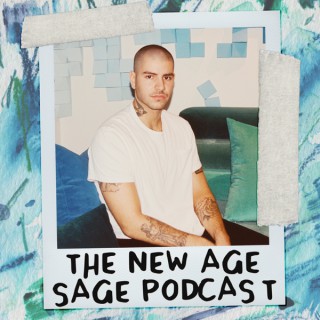
In this solo episode of The New Age Sage, I dive into the mind-bending concept of living in a simulation. What does it really mean when people say we live in "the matrix"? I share my personal experience of glimpsing beyond the illusion and explore how our reality may be more of a construct than we realize. Together, we'll break down what “the simulation” truly is, how it shapes our lives, and, most importantly, practical steps you can take to escape the limiting beliefs and structures that keep you trapped. If you've ever felt like there's more to reality than meets the eye, this episode is for you. Tune in to awaken your understanding of the matrix and learn how to reclaim your power in a world that isn't quite what it seems ——————— [00:00] Introduction: Perception and Reality in the Matrix [00:22] Personal Journey with the Simulation Theory [01:11] Psychedelic Experiences and Meeting My Mother's Spirit [02:16] The Circular Program Disk and Life Timelines [03:26] Philosophical Insight: Destiny and Desire [05:03] Binary Code in Perception: Seeing Reality as Digital Information [07:40] The Education System: Foundation of the Matrix [10:57] Brainwashing and Authority Figures [13:22] Family Trauma as a Matrix Layer [15:02] The Matrix in Higher Education and Authority Obedience [18:10] Media and Pharmaceutical Manipulation [21:01] Questioning Reality and Self-Awareness [25:17] Matrix Agents and Social Conditioning [32:09] Emotional Triggers and Ideological Entrapment [35:08] The Scientific Establishment and Fear Conditioning [40:49] Breaking Free: Lessons from The Matrix [43:01] The Chosen Path: Questioning Your Perceptions [48:11] The Quantum View: Reality as Observed Phenomenon [52:11] Reincarnation and Life Programming [57:41] Embracing Life as a Low-Stakes Game [1:00:14] Conclusion: Awakening to Perception Control and Reality Creation ——————— Please like, comment, and subscribe if this episode resonates with you. I'd love to hear your thoughts in the comments below!

This week's episode explores the intricacies of AI-powered innovation and its transformative effects across various industries. Together with George Young, we dismantle the limitations and potential of artificial intelligence and machine learning in predicting outcomes. George elucidates these technologies' ongoing disruptions, especially within the consumer packaged goods sector during the COVID-19 pandemic, and underscores the rising importance of sustainability in modern manufacturing.George Young is a seasoned expert in digital innovation. Twenty years ago, he co-founded Calypso and is now the vice president of global digital services at Rockwell Automation. Based in Mumbai, George is deeply involved in digital transformations that address India's rapid infrastructure expansion. With an illustrious career stretching from organic chemistry and consulting to production and business management, George remains passionate about problem-solving and applying cutting-edge digital tools. His pivotal role in integrating digital information into physical products has significantly advanced consumer and product experiences."Introducing minimum viable products and emphasizing the importance of iterative feedback over waiting for perfection is fundamental to successful innovation." - George YoungToday on Innovation Talks:· Limitations of AI and ML: George Young emphasizes that these technologies cannot predict outcomes without understanding the root causes.· COVID-19 Disruptions: Insights into how the pandemic challenged the consumer packaged goods sector and prompted innovations.· Digital Information in Physical Products: George illustrates digital tech integration in products like refrigerators and tires for improved consumer experiences.· Generative AI in Innovation: Discussion on how AI can automate tasks like writing specifications, freeing time for more complex work.· Cross-Disciplinary Expertise: The value of combining different fields of expertise to gain a competitive edge in product development.· Sustainability and Worker Safety: Emphasizing these aspects can lower production costs and increase overall efficiency.· Minimum Viable Products: Launching MVPs and continually seeking feedback to refine and perfect products is important.· AI/ML for Portfolio Management: Using AI and machine learning to predict project cycle time and success rates, thereby enhancing portfolio management.Resources Mentioned:"13 Steps to Mindful Consulting": George Young's book based on Buddhist principles for a balanced and productive professional life.Connect with George Young:Email: george.young@rockwellautomation.comReady to Transform Your Innovation Strategy? If you're a product manager or innovator looking to streamline your processes and turn chaos into control, you won't want to miss this opportunity. Dive into our exclusive, free eBook on Innovation Ops strategies designed just for you. Learn the secrets to revolutionizing your approach and achieving success with clarity and precision. Download your copy today. Visit https://info.sopheon.com/innovationops-ebook Start your journey to becoming an innovation powerhouse now! This Podcast is brought to you by SopheonThanks for tuning into this week's episode of Innovation Talks. If you enjoyed this episode, please subscribe and leave a review wherever you get your podcasts. Apple Podcasts | TuneIn | Stitcher | Spotify | iHeart Be sure to connect with us on Facebook, Twitter, and LinkedIn, and share your favorite episodes on social media to help us reach more listeners like you. For additional information about new product development or corporate innovation, sign up for Sopheon's monthly newsletter, where we share news and industry best practices! The fastest way to do this is to go to sopheon.com and click here.

Technologies change, media wears out, and hardware that we once took for granted becomes difficult to find. How does all this impact the archives of our digital lives?

Kimberly Eubank, Chief Digital Information Officer of Big Ass Fans by Momenta

In this week's episode we speak with Dr. Meredith Prain, a speech pathologist and Deafblindness consultant. She discusses how people and services can support health literacy and inclusion by making web-based, social media, and other digital information accessible. Speech Pathology Australia acknowledge the Traditional Custodians of lands, seas and waters throughout Australia, and pay respect to Elders past, present and future. We recognise that the health and social and emotional wellbeing of Aboriginal and Torres Strait Islander peoples are grounded in continued connection to culture, country, language and community and acknowledge that sovereignty was never ceded. Resources: Deafblind Information Australia website: https://www.deafblindinformation.org.au/ I can vote website (example): https://icanvote.org.au/ Rainbow inclusion website (example): https://rainbowinclusion.org.au/ Hemmingway Editor: https://hemingwayapp.com/ Colour contrast checker: https://webaim.org/resources/contrastchecker/ Intopia – Accessibility assessments: https://intopia.digital/services/accessibility-usability-testing/ Accessible design: https://www.kcandthegraphicsbandwagon.com.au/ The Communication Hub has a range of accessibility features to support individuals to learn about communication difficulties and disability, and available supports: https://communicationhub.com.au/ Transcripts for this and other episodes are available at no cost on SPA's Learning Hub. Go to: https://www.speechpathologyaustralia.org.au/Public/Shared_Content/Events/On-Demand-Learning.aspx?hkey=940859e8-0efc-4ba2-83be-11f49e616542 Filter – Format – Podcast – Search Select the podcast of your choice Enrol (you will need to sign in or create an account) Add to cart – Proceed to checkout – Submit You will receive an email Order Confirmation with a link back to the Learning Hub The Podcast and transcript will be available in your Learning Centre. You may also email to request a free transcript at learninghub@speechpathologyaustralia.org.au

GUEST: Grigor Atanesian - investigative journalist at the BBC. ---------- SUPPORT THE CHANNEL: https://www.buymeacoffee.com/siliconcurtain https://www.patreon.com/siliconcurtain ---------- INTRO: Vladimir Putin believes that the digital information space is a battlefield, yet we in the West are perhaps late to realise that fact. The rise of the internet in the 21st century has been accompanied by unprecedented levels of polarisation, division, and coercion. At the same time democracies are being hit by a huge range of different, and rapidly evolving hostile state activities. Not all of them have their origins in Russia, though clearly many do, and the scale of the threat is only likely to increase in future. #ukraine #ukrainewar #russia #zelensky #putin #propaganda #war #disinformation #hybridwarfare #foreignpolicy #communism #sovietunion #ussr ---------- SPEAKER: Grigor Atanesian is an investigative journalist with the BBC. He was producer for the “Trauma Zone” documentary series by Adam Curtis (BBC Film), and the Associate Producer for “Can't Get You Out of My Head” documentary series by Adam Curtis (BBC Film). As part of the team that created the unique and powerful 'Trauma Zone' BBC documentary, he was awarded a BAFTA for Specialist Factual programmes in 2023. ---------- LINKS: Putin's Influencers: The bloggers selling Russia's War - BBC News https://www.youtube.com/watch?v=K_8tYjsFKFw Russian pro-war influencers are generating big advertising revenues from their social media coverage of the conflict, the BBC's Global Disinformation Team has found. Known in Russia as “Z Bloggers”, they spread fake news about the war by embedding with military units, sharing exclusive footage from the frontline, and calling upon young Russians to enlist in the army. Graphics: Kako Abraham Film Editor: Ismail Guluev Narrator: Jack Goodman Assistant Producers: Sucheera Maguire, Jake Tacchi Editor: Juliana Gragnani Executive Editor: Rebecca Skippage Written & Produced by: Grigor Atanesian ----------

Who owns our personal data? As technology advances in Web 3.0, traditional software and claims of third parties over what they can do with our personal data are under challenge. Join Chris Were, co-founder and chief architect of the Australian company Verida, to consider how blockchain thinking can allow us to achieve self-sovereign identity. Explore in Episode 132 what this means and how we can take better control of our digital presence. Understand the meaning of self-sovereign identity, how it aims to secure sensitive information about ourselves and to put us in control of how our digital footprints are used and shared with others. Learn the role of zero-knowledge credentials and how a crypto wallet holding our personal information functions. Explore how digital assistants we engage could help us control our personal information as AI scrapes, stores, employs, and adapts our data in ways we may not approve.
This episode features Tony Ambrozie, Senior Vice President and Chief Digital Information Officer at Baptist Health South Florida. Here, he discusses his background & his focus on digital transformation, opportunities & headwinds he is keeping an eye on at his organization, how he is leveraging technology to care for patients more efficiently, and more.Want to network with peers and hear more conversations like this? Apply to be one of our complimentary guest reviewers at our upcoming HIT + Digital Health + RCM Meeting Oct, 3-6 2023 here.
This episode features Tony Ambrozie, Senior Vice President and Chief Digital Information Officer at Baptist Health South Florida. Here, he discusses his background & his focus on digital transformation, opportunities & headwinds he is keeping an eye on at his organization, how he is leveraging technology to care for patients more efficiently, and more.Want to network with peers and hear more conversations like this? Apply to be one of our complimentary guest reviewers at our upcoming HIT + Digital Health + RCM Meeting Oct, 3-6 2023 here.

Sam Richter is an internationally recognized expert on digital transformation and the author of the best-selling book, “Take the Cold Out of Cold Calling”. He was named one of the World's Top 50 Sales Keynote Speakers in 2019 by Top Sales World and one of the Top 25 Most Influential People in Sales by InsideView multiple times. Sam is also the founder of IntelNgin, a technology that helps you find key business and sales information faster. Join us as we discuss the importance of relevance and knowing what's important to the buyer, how to properly reach out to prospects, and the importance of mindset and being genuine in all of your interactions. Highlights: The importance of relevance and adding value Customer relevance management The platinum rule The 3x5 method for getting into the buyer's mindset Building a genuine and authentic reputation Episode Resources Connect with Mark Cox https://www.inthefunnel.com/ https://ca.linkedin.com/in/markandrewcox https://www.facebook.com/inthefunnel markcox@inthefunnel.com Connect with Sam Richter Take the Cold Out of Cold Calling: https://a.co/d/2MXFGWY https://www.linkedin.com/in/samrichter Sam's Website: https://samrichter.com/ IntelNgin: https://www.intelngin.com/ Call to Action In the Funnel Sales Workshop Free Sales Tools How to Listen: Subscribe on Apple Podcasts Listen on Spotify

This week, we discuss a data breach affecting WH Smith, the latest proposals to reform data protection law in the UK, TikTok's response to being banned by the European Commission and European Parliament, and the proposed US RESTRICT Act, and a woman who has been sentenced for defrauding Luton Borough Council in a cyber attack.

homas Samuelson, founder of BRON Investor Network, is a seasoned professional in the finance and capital markets industry with over 30 years of experience. Thomas has an impressive background in finance and capital markets, with experience in asset management and investment banking, and is known as an expert in developing market economies, having traveled extensively throughout Asia, Latin America, and Eastern Europe. Growing up, he shared a funny story about how he recommended his grandfather to buy stock in Exxon when he was just eight or nine years old, and talked about how he always had an interest in stocks and investing, even though his dream was to become a pro-football player. THE DISCONNECT IN WALL STREET Thomas' background is in finance and Wall Street, where he worked as a hedge fund manager and portfolio manager for an international fund, mainly focusing on emerging markets. He soon realized that there was a disconnect between companies and investors, and that the process of connecting them was an exhausting manual process that relied on gatekeepers, mainly banks. This realization made him determined to find a better way, and that's how he came up with the idea of creating a social network community. This social network community would serve as a bridge between companies and investors, avoiding the middleman and opting to use technology for a more precisely curated match. DEMOCRATIZING INFORMATION Founded in 2017, BRON is a revolutionary platform that was designed with the intent to make it easy for investors of all sizes to access content produced by public companies that is otherwise not easily accessible to them. Focused on publicly listed companies and catering to both large institutions and individual investors, BRON is a pure information platform, and its goal is to democratize access to information. The internet has already democratized a lot of information, but the problem is that the gatekeepers don't want the information to be readily accessible. BRON's goal is to aggregate information from various sources and make it easy for people to make decisions on investments. They want to create a system that is much easier to access the information that investors really need. By taking this aggregation platform approach to information, it becomes easier for people to make informed decisions on investments. The platform's compliant message system is of great value to large institutions and funds, but it also offers great value to individuals, especially in light of the explosion of wealth management in recent years. BRON's unique value proposition is that it is a time saver for investors, as it is easy to access the information that investors really need. With its innovative approach and dedication to democratizing access to information, BRON is set to revolutionize the way investors and companies connect and make decisions. WEALTH MANAGEMENT AND BRON Thomas has seen an increase in the number of registered investment advisors joining the platform. He opines that the wealth management and RIA space has grown in importance dramatically. BRON onboards investors directly, also having a section for RIAs, and they have observed that the public companies have increased their engagement with the RIAs. BRON has various partnerships and joint ventures with exchanges. This is what separates BRON from other platforms; BRON's background and relationships with these exchanges play a huge role in making these deals happen. Thomas explains that it takes a lot of perseverance and patience to make a deal with these exchanges, but if BRON can prove that it is solving a problem for the issuers, then they will listen. BUIDLING CHARACTER AND REPUTATION IN BUSINESS Starting a company from scratch can be a challenging and risky journey. Thomas initially made the personal mistake of self-funding his company, but eventually took in some seed capital to help with growth. Self-funding a new company can be a double-edged sword, as it comes with more risks and headaches but also allows for more control over the company's direction and valuation. Thomas emphasized is the importance of credibility and character in the business world. He mentions that his past reputation played a significant role in the deals and joint ventures he was able to secure, as well as the initial funding he received. Young entrepreneurs need to be mindful of how they present themselves. It's important for them to maintain a good character. Having good character and reputation can open doors; however, a poor character or reputation can have long-term consequences. Maintaining a good character and reputation is just as important – if not more so – as starting with it, as once a poor reputation spreads, it can and does close many doors. Persistence and perseverance is also incredibly important to all entrepreneurs, but especially those just starting out. Starting a new company requires persistence and perseverance to: Overcome obstacles Manage risk and uncertainty Put in the required time and effort Build a strong foundation for long-term success These qualities help entrepreneurs to build a more resilient and successful business, and stay focused on their goals. RISK ASSESMENT & PLAN B Having different mindsets on various topics from other entrepreneurs is nothing new. Different people approach different things in vastly different ways. The topic of having a Plan B is no different. While some may argue that having a Plan B is wise, there is also the opposing view of "burning the boats" where one is fully committed to their venture, and there is no going back. Thomas shares that he was fully committed to his venture, and how it has helped him push through the tough times as an entrepreneur. He emphasizes the importance of being so committed that doubts do not sink in and affect decision-making. Every entrepreneur has their own level of risk tolerance. What one might consider too risky, another might not. The key is to identify potential risks and develop a plan to mitigate them in order to increase the chances of success. Ultimately, being successful in business is important, but it is also crucial to find a path to success that aligns with not only one's goals, but their comfort levels and safety, as well. • • • FOR MORE ON THOMAS SAMUELSON: https://www.youtube.com/channel/UCC7lYj1rupFnHamQhTrgqQw http://broninvestornetwork.com Corey Kupfer is an expert strategist, negotiator, and dealmaker. He has more than 35 years of professional deal-making and negotiating experience. Corey is a successful entrepreneur, attorney, consultant, author, and professional speaker. He is deeply passionate about deal-driven growth. He is also the creator and host of the DealQuest Podcast. If you want to find out how deal-ready you are, take the Deal-Ready Assessment today!

In this episode of Pharma Launch Secrets, Bozidar is joined by Julia Walsh, CEO of Brand Medicine International. If you want to learn more about leading a successful pharma marketing campaign in the US, tune in to this episode of Pharma Launch Secrets, a Podcast by Evermed.

Esri Ireland, the market leader in Geographic Information Systems (GIS), has announced that Northern Ireland's Department of Agriculture, Environment and Rural Affairs (DAERA)has received a Special Achievement in GIS Award (SAG) at Esri's annual International User Conference in San Diego.DAERA was recognised for its Information Hub, which has transformed its handling of data, and supports informed and effective policy-making decisions in Northern Ireland. DAERA is responsible for food and farming, the environment, fisheries, sustainability, and the development of the rural sector in Northern Ireland. Esri's International User Conference is the world's largest GIS conference, with over 18,000 attendees. The SAG Awards recognise outstanding applications of Esri's ArcGIS technology, and DAERA was selected from over 300,000 eligible global candidates. The Esri solution gives DAERA employees instant and secure access to accurate location information which can be accessed both from the office or in the field via mobile apps. This has enabled DAERA to quickly address emergencies such as COVID-19, Brexit implications and Avian Flu outbreak. The department's 3,000 employees now have access to a central system that enables them to conceptualise the effect potential policy decisions will make on the environment or the economy, before they are implemented. They can also examine historical trends and analyse the success of previous schemes and initiatives. The Veterinary Service Animal Health Group within DAERA has completely transformed its disease investigation processes, swapping paper forms for digital technology. DAERA can now respond more quickly to animal welfare concerns and instigate the most appropriate measures to prevent the spread of disease. Paul McGurnaghan, Director of Digital Service, DAERA, said: “It is an honour to receive this high-profile global award which recognises the dedication and innovation of our team. The Information Hub has been transformational and enabled the department to bring together data coherently, which has advanced more informed and effective policy making decisions. Our Information Hub will continue to bring benefits not only for DAERA but for our local farm businesses, for our environment and indeed for our wider economy.” The solution has improved overall efficiency by removing manual, paper-based processes and eliminating the unnecessary duplication of data. Information Hub is at the heart of the department, enabling it to improve organisational excellence, reach business plan targets, helping to make DAERA an insight-driven organisation, placing data at the heart of all decision making. Jack Dangermond, Co-Founder and President of Esri Inc, selected the award. Jack Dangermond said: “I am delighted to present DAERA with this prestigious award, in recognition of its impactful use of geographic information in quickly addressing unprecedented and global challenges. The winning entrants demonstrate users from around the world are leveraging GIS capabilities to improve decision making to solve real-world problems.” See more stories here.

Taxonomy is the practice and science of categorization or classification, and it's what we need if we want to be able to search for data. What can go wrong and how do you do it well? Join me as I learn from Helen Lippell.You can follow Helen on LinkedIn.'Taxonomies' Book Giveaway & Special OfferWe are giving away 10 copies of Helen's new book: "Taxonomies: Practical Approaches to Developing and Managing Vocabularies for Digital Information". If you want to start cleaning up your data mess but don't know where to start this is the book for you. Want your copy? You have until Dec 17th to be part of this. Visit https://www.discoveringdata.com/taxonomies to win your copy!If you want to purchase your own copy, we have a special offer for you – get 25% off the RRP for Taxonomies when you use the code TAXONOMY25. Just to go to: https://www.facetpublishing.co.uk/page/detail/taxonomies/?K=9781783304813Customers in the US and Canada can purchase the book through the American Library Association, and customers in Australia or New Zealand can purchase the book through Taylor & Francis.Episode pagehttps://www.discoveringdata.com/podcast/episode-051Join the Discovering Data community!Do you want to turn data into business outcomes and get promoted? Discovering Data just launched a new Discord server to connect you with people like you. Discover new ideas, frameworks, jobs and strategies to maximise the impact of your work. Data can be a lonely and challenging career, don't do it alone!Request access now: https://bit.ly/discovering-data-discordFor BrandsDo you want to showcase your thought leadership with great content and build trust with a global audience of data leaders? We publish conversations with industry leaders to help practitioners create more business outcomes. Explore all the ways to tell your data story here https://www.discoveringdata.com/brands.For sponsorsWant to help educate the next generation of data leaders? As a sponsor, you get to hang out with the very in the industry. Want to see if you are a match? Apply now: https://www.discoveringdata.com/sponsorsFor GuestsDo you enjoy educating an audience? Do you want to help data leaders build indispensable data products? That's awesome! Great episodes start with a clear transformation. Pitch your idea at https://www.discoveringdata.com/guest.

On this episode of Davood for Thought, our host Davood Ghods talks with Vitaliy Panych, Chief Information Security Officer (CISO) for the California Department of Technology. Appointed in January of 2022, Vitaliy is responsible for the security of one of the largest collections of digital information assets in the country, identifying and mitigating more than 200 malicious activities daily. In recognition of his work, he was recently honored with the 2022 Thomas M. Jarrett State Cybersecurity Leadership Award by the National Association of State Chief Information Officers. Tune in to hear Vitaliy share about how learning to code as a teen inspired a lifelong career in cybersecurity, what's next in the security industry in the public sector, and how Brazilian Jiu Jitsu makes him a better technologist.The Davood For Thought podcast is brought to you by Launch Consulting.www.launchconsulting.com

On today's episode time management expert Dr. Frank Buck shares actionable advice for organizing your paper and digital information in a way that helps you sleep at night. Listen in as Deborah and Dr. Frank discuss the best digital tools for creating a system, the advantages creating a consistent routine for managing your information, and the difference between notes and documents. Dr. Frank also shares the secret to managing your inbox while on vacation to avoid overwhelm. About Dr. Frank Buck: Most people are overwhelmed by the amount of paper and digital information in their lives. Frank Buck makes organization easy so you can increase productivity, decrease stress, and enjoy life. Frank is currently ranked #1 in the world by Global Gurus Top 30 in the "time management" category. He is a public speaker, productivity coach, and author of Get Organized! and Get Organized Digitally!. Dr. Buck has spoken to audiences throughout the United States and internationally. His mission is to help busy professionals achieve total control over their time and the peace of mind that nothing is falling through the cracks. Dr. Buck's nuts-and-bolts approach, along with his blend of content and humor, has made him a favorite with audiences. You can connect with Dr. Frank in the following ways: Website: https://FrankBuck.org Twitter: @DrFrankBuckInstagram: @DrFrankBuck Whether you are a C-Suite Leader of today or tomorrow, take charge of your career with confidence and leverage the insights of The CEO's Compass: Your Guide to Get Back on Track. To learn more about The CEO's Compass, you can get your copy here: https://amzn.to/3AKiflR See omnystudio.com/listener for privacy information.

This week on The Home Builder Digital Marketing Podcast, Char Kurihara of DRB Group joined Greg and Kevin to discuss how to provide digital information that will benefit both the home builder and the home buyer. https://www.buildermarketingpodcast.com/episodes/129-providing-digital-information-effectively-char-kurihara

How do you keep your online data private? Are you willing to spend a couple of extra dollars a month to secure your – and your clients! – information safely? Do you know which Canadian platforms you can use to get started? In our increasingly digital world where we store our data online and risk hackers and data leaks, digital security cannot be undervalued or overlooked. Our clients trust us with not only their healing but also their information, so be proactive in becoming digitally safe! In this podcast episode, I discuss the essentials of digital protection and a bunch of great, Canadian services that you can use today. In This Episode: PIPEDA PHIA Encryption VPN PIPEDA PIPEDA sets the ground rules for how private-sector organizations collect, use, and disclose personal information of for-profit and commercial activities across Canada. Luckily for Canadian therapists, most of the big electronic medical record systems used in the mental wellness industry have incorporated PIPEDA into their platforms. ‘I highly recommend looking into Jane App because it is a Canadian-based EMR, so you know they're doing everything right in regards to Canadian privacy laws.' – Julia Smith Learn more about PIPDEA by clicking on this link. PHIAPHIA stands for the Personal Health Information Act, and are provincial laws that govern the collection, use, disclosure, retention, disposal, and destruction of your personal health information. For example, in Nova Scotia, your data needs to be stored only on Canadian servers. To make sure all your bases are covered, get a Canadian EMR to be safe (even if your province doesn't require it now they may in the future!). ENCRYPTION Even though your EMR takes care of the majority of securing your data, your emails may not be so safe. Aim to make use of an email service that uses encryption to maintain your online privacy and safety. Encryption prevents unauthorized users on the network from intercepting and capturing your login credentials, and any email messages you send or receive, as they leave your email provider's server and travel from server to server around the Internet. ‘I always recommend with emails [to not send] too much confidential information. Rather, talk on the phone with somebody about it than send all that information. Or, courier that information instead of sending it through email.' – Julia Smith To learn more about email encryption, click on this link. Try Hushmail! Follow this link to receive a discounted price to use Hushmail and keep all your email data completely safe, secure, and legally stored on Canadian servers. VPN A “virtual private network” creates an encrypted tunnel for your data, protects your online identity by hiding your IP address, and allows you to use public Wi-Fi hotspots safely. Nord VPN is what I use to keep my work activity private online, I love how affordable and easy it is! Follow this link to get a great deal on their services through my offerings. Some quick tips: Turn your VPN off when you are doing online counselling because it can slow down the connection. Delete voicemails off your phone system once you have seen and listened to them. Work with Grasshopper for a secure and easy-to-navigate phone system! With platforms like Slack, set the system to delete old messages at least every 35 days. Connect with me: Instagram Website Resources Mentioned and Useful Links: Ep 35: How Do I Prepare for Private Practice While Still in Grad School?: Live Consultation With Barb Barker Article: How to Set Up a Canadian Private Practice Website Sign up for my free e-course on How to Start an Online Canadian Private Practice Jane App (use code FEARLESS for one month free) Listen to my podcast episode with Ali Taylor to learn more about privacy laws Listen to my podcast episode about hiring a Canadian virtual assistant and safe virtual communication Learn more about Hushmail on their website Follow this link to get discounts on Hushmail and Nord VPN Rate and subscribe to this podcast on Apple Podcasts, Google Podcasts, or Spotify.

Trend Micro is a global cybersecurity leader on a mission to make the world safe for exchanging digital information. Fueled by decades of security expertise, global threat research, and continuous innovation, their cybersecurity platform protects hundreds of thousands of organizations and millions of individuals across clouds, networks, devices, and endpoints. The platform delivers a range of advanced threat defense techniques optimized for environments like AWS, Microsoft, and Google, and central visibility for better, faster detection and response. In addition, the global threat research team delivers unparalleled intelligence and insights that power cybersecurity platform and help protect organizations worldwide from 100s of millions of threats daily. But I wanted to learn more about how they are helping organizations to simplify and secure their connected world. Kevin Simzer. Chief Operating Officer, Trend Micro, joins me on Tech Talks Daily to share how they are using technology to make the world a safer place. As COO, Kevin is responsible for all field operations, including global sales, marketing, business development, strategic alliances, and corporate development. Kevin has held various roles since joining Trend Micro, including CMO, Global Alliances, and Corporate Development & Strategy. Before joining Trend Micro, Kevin held a number of executive positions including COO, general manager, chief marketing officer (CMO) and VP engineering for security pioneer Entrust (now Entrust-Datacard) where he was part of the founding team. Before starting Entrust, Kevin began his career working in several product development positions while at Nortel in engineering, developing next generation networking technology. Kevin has held a number of board positions with Entrust, the Queen's University High Performance Computing Virtual Laboratory, and has also served on the board of Certes Networks, an innovative cloud network security specialist.

Technology innovator Shireen Mitchell discusses pervasive disinformation on social media centered around US elections, and how we can fight back

This episode of Serious Privacy, co-host Ralph O'Brien joins Dr. K Royal of Outschool while Paul Breitbarth is on vacation for 3 weeks. This week, Dr. K and Ralph discuss current events in the United Kingdom, namely the prime minister elections and the proposed Data Protection and Digital Information bill. This bill seeks to “clarify” some aspects of data protection law in the UK, but seems to complicate it instead. Ralph explains all … Join us as we discuss what you need to know and how to approach the proposal. As always, if you have comments or questions, let us know - LinkedIn, Twitter @podcastprivacy @euroPaulB @heartofprivacy @trustArc and email seriousprivacy@trustarc.com. Please do like and write comments on your favorite podcast act so other professionals can find us easier. Please vote for k for cybersecurity woman of the year in the lawyer category https://www.surveymonkey.com/r/PJLY6KW

It's hard to hold onto information. Paradoxically, it can also be hard to get rid of it. In this episode, we look at why long-term data preservation is a challenge, and the lengths people will go to in order to clear out digital information. See omnystudio.com/listener for privacy information.

The last decade has seen a dramatic capture of digital material for machine learning production. This data is the basis for sense-making in AI, not as classical representations of the world with individual meaning, but as mass collections: ground truth for machine abstractions and operations. What happens when data is seen as an aggregate, stripped of context, meaning, and specificity? In what ways does training data limit what and how machine learning systems interpret the world? And most importantly, what forms of power do these approaches enhance and enable? Professor Kate Crawford is a leading international scholar of the social and political implications of artificial intelligence. In this lecture, Crawford shares new work that reflects on what's at stake in the architecture and contents of training sets, and how they are increasingly part of our urban, legal, logistical, and commercial infrastructures. Series: "UC Berkeley Graduate Lectures" [Humanities] [Science] [Show ID: 37729]

The last decade has seen a dramatic capture of digital material for machine learning production. This data is the basis for sense-making in AI, not as classical representations of the world with individual meaning, but as mass collections: ground truth for machine abstractions and operations. What happens when data is seen as an aggregate, stripped of context, meaning, and specificity? In what ways does training data limit what and how machine learning systems interpret the world? And most importantly, what forms of power do these approaches enhance and enable? Professor Kate Crawford is a leading international scholar of the social and political implications of artificial intelligence. In this lecture, Crawford shares new work that reflects on what's at stake in the architecture and contents of training sets, and how they are increasingly part of our urban, legal, logistical, and commercial infrastructures. Series: "UC Berkeley Graduate Lectures" [Humanities] [Science] [Show ID: 37729]

The last decade has seen a dramatic capture of digital material for machine learning production. This data is the basis for sense-making in AI, not as classical representations of the world with individual meaning, but as mass collections: ground truth for machine abstractions and operations. What happens when data is seen as an aggregate, stripped of context, meaning, and specificity? In what ways does training data limit what and how machine learning systems interpret the world? And most importantly, what forms of power do these approaches enhance and enable? Professor Kate Crawford is a leading international scholar of the social and political implications of artificial intelligence. In this lecture, Crawford shares new work that reflects on what's at stake in the architecture and contents of training sets, and how they are increasingly part of our urban, legal, logistical, and commercial infrastructures. Series: "UC Berkeley Graduate Lectures" [Humanities] [Science] [Show ID: 37729]

The last decade has seen a dramatic capture of digital material for machine learning production. This data is the basis for sense-making in AI, not as classical representations of the world with individual meaning, but as mass collections: ground truth for machine abstractions and operations. What happens when data is seen as an aggregate, stripped of context, meaning, and specificity? In what ways does training data limit what and how machine learning systems interpret the world? And most importantly, what forms of power do these approaches enhance and enable? Professor Kate Crawford is a leading international scholar of the social and political implications of artificial intelligence. In this lecture, Crawford shares new work that reflects on what's at stake in the architecture and contents of training sets, and how they are increasingly part of our urban, legal, logistical, and commercial infrastructures. Series: "UC Berkeley Graduate Lectures" [Humanities] [Science] [Show ID: 37729]

The last decade has seen a dramatic capture of digital material for machine learning production. This data is the basis for sense-making in AI, not as classical representations of the world with individual meaning, but as mass collections: ground truth for machine abstractions and operations. What happens when data is seen as an aggregate, stripped of context, meaning, and specificity? In what ways does training data limit what and how machine learning systems interpret the world? And most importantly, what forms of power do these approaches enhance and enable? Professor Kate Crawford is a leading international scholar of the social and political implications of artificial intelligence. In this lecture, Crawford shares new work that reflects on what's at stake in the architecture and contents of training sets, and how they are increasingly part of our urban, legal, logistical, and commercial infrastructures. Series: "UC Berkeley Graduate Lectures" [Humanities] [Science] [Show ID: 37729]

The last decade has seen a dramatic capture of digital material for machine learning production. This data is the basis for sense-making in AI, not as classical representations of the world with individual meaning, but as mass collections: ground truth for machine abstractions and operations. What happens when data is seen as an aggregate, stripped of context, meaning, and specificity? In what ways does training data limit what and how machine learning systems interpret the world? And most importantly, what forms of power do these approaches enhance and enable? Professor Kate Crawford is a leading international scholar of the social and political implications of artificial intelligence. In this lecture, Crawford shares new work that reflects on what's at stake in the architecture and contents of training sets, and how they are increasingly part of our urban, legal, logistical, and commercial infrastructures. Series: "UC Berkeley Graduate Lectures" [Humanities] [Science] [Show ID: 37729]


In this episode of the Artificial Intelligence & Equality Initiative podcast, Senior Fellow Anja Kaspersen and Carnegie Council President Joel Rosenthal sit down with the Stavros Niarchos Foundation's Stelios Vassilakis for an engaging conversation about how to preserve and empower public space ethics. What we can we learn from the Athenian agora to guide the means and methods of governing AI? For more, including a full transcript, please go to carnegiecouncil.org.

Ashley Waxman Bakshi is an Israeli influencer with more than 300,000 followers on Instagram and another 200,000 on YouTube. Her fans typically subscribe for daily makeup tips, fashion advice and parenting stories of raising four kids. But lately, the Canadian-born social media star has been filling her feed with a different kind of content: pro-Israel videos. Waxman Bakshi is part of a network of Israeli influencers selling more than beauty products and lifestyle aspirations. They're selling the State of Israel itself. She's part of a government-sponsored initiative known as 4IL, and its primary goal is to combat popular messaging they perceive as anti-Israel, especially related to the Boycott, Divestment and Sanctions community. For Waxman Bakshi, that means adding pro-Israel and historical explainers to her usual mix of lifestyle vlogs. She believes that by banding together with other Israeli influencers, they can respond to public claims by, and media coverage of, loudly pro-Palestinian activist celebrities such as Bella Hadid and Emma Watson. She joins the show to explain. What we talked about: Visit 4IL at 4il.org.il Follow Ashley Waxman Bakshi on Instagram @ashleywaxmanbakshi Credits The CJN Daily is written and hosted by Ellin Bessner (@ebessner on Twitter). Victoria Redden is the producer. Michael Fraiman is the executive producer. Our theme music is by Dov Beck-Levine. Our title sponsor is Metropia. We're a member of The CJN Podcast Network; find more great Jewish podcasts at thecjn.ca.

Megan Mathias is the Founder of Lopp Mathias Law, she represents business owners with challenges relating to corporate governance, employment issues, shareholder disputes, Family Law disputes and contract issues. Megan talks about how entrepreneurial knowledge and creating a united culture is important in building a good law firm. She talks about how her law firm started out as a virtual service and how that benefit both the clients and lawyers. Megan also talks about how she was able to manage her time in a season where she had to juggle a lot of responsibilities. They also talk a bit about political issues that need to be addressed and some of Megan's positions on issues as a candidate for Alderman. Timestamps:How it's like to start a legal office virtually (4:03)Educating yourself on entrepreneurship even as a lawyer (9:03)Time Management techniques - delegating tasks and investing on people (13:01)Political philosophy and issues that must be resolved (16:54) “It's not that I'm a superwoman although there are days I feel like I had to be a superwoman to get through that. But it's also about hiring the right people... outsourcing the things that you're not good at. I know what I'm great at. I know what I'm not great at. I'll still get it done but it may not be my hands on it.” - Megan Mathias Megan MathiasWebsite: https://www.loppmathiaslaw.com/Facebook: https://www.facebook.com/LoppMathiasLaw/LinkedIn: https://www.linkedin.com/in/meganmathias/ Megan Mathias, Founder of LOPP MATHIAS LAW Family LawBio: Megan Mathias is a fierce advocate and compassionate defender of the rights of entrepreneurs, women, children, and BIPOC. After 14 years lawyering for mid to large size law firms, becoming a Partner, and winning over $70 million in commercial and family law cases, Megan knew it was time for a change. Increasingly frustrated with the inefficiencies she saw in large law firms, and not happy with their prioritization of billable hours over-delivering value and results for her clients, Megan knew she could do much better.She decided to create her own firm, Lopp Mathias Law, driven by her values, her standards, and her integrity. To that end, Megan created an innovative and fast-growing firm of like-minded attorneys. She incorporated state of the art technology for document automation and assembly, better billing practices and alternative fee arrangements to reduce legal fees for her clients. Driven by efficiency and effectiveness, Megan also designed her firm to provide a wide array of specialized legal services through her unique Affiliate Network without the typical law firm overhead and passes those cost savings onto her clients. She is committed to being a loyal and long-term partner for her clients, as she guides them through challenging legal periods in their lives with skill and compassion.Megan has been recognized for her sophisticated representation in trade secret and other cases involving complex e-discovery issues and forensic analysis of electronically stored information. Megan co-chairs the Seventh Circuit Council on Data Privacy and Digital Information.Megan is dedicated to her community. She serves on the Boards of the YWCA Metropolitan Chicago, Coalition of Women's Initiatives in Law, FLASH (Force of Lawyers Against Sexual Harassment), and the Filament Theater. LinkedIn: https://www.linkedin.com/in/meganmathias/Have comments, questions, or concerns? Contact us at feedback@1958lawyer.com Episode Transcript:Ron Bockstahler 0:28 Hello and welcome to the show the 1958 lawyer where we talk about the changing landscape in the legal industry. Our guest today is Megan Mathias founding partner of Mathias law. She represents business owners with challenges relating to corporate governance, employment issues, shareholder disputes, Family Law disputes and contract issues. And you're gonna have a lot of fun listening to Megan, she's got a ton of energy and she's done just a million things and we really want to find out how she does it. Also, she's an advocate for women and black indigenous and people of color. She sits on many boards, including the YWCA Metropolitan of Chicago, lifespan building, elementary school is co chair of the steering committee, state courts, small case project teams for the Seventh Circuit, electronic mess that Megan you're gonna have, tell us about that. Okay. And now she's decided she's gonna run for the 45th Ward alderman in Chicago to make where she lives a better place. Megan, welcome to the show.Megan Mathias 1:20 Thank you. Thanks so much. Thanks for having me.Ron Bockstahler 1:22 All right, let's get started with Where'd you come from? And how did you get to where you're at? Let's start from the beginning. Because you got to goMegan Mathias 1:28 from a small town in Michigan, very small Tom dirt road, even my mom still lives on the same dirt road. first generation college students sell through college at Michigan State and then came to Chicago in 2000, for law school, and obviously got through law school, and was practicing and bigger firms for a significant portion of my career. But I always one of the only females, I was one of the only females in litigation and a big firm, then I went to a smaller firm where I was one of the only female partners. And I thought, since I was, you know, higher up on this on the hierarchy, that I would have some more impact on some of the things I cared about. But it's still hard in law firms are like big institutions with their own culture and their own rules. And I'm a disrupter. So I didn't, it wasn't the same that I that I how I wanted to practice. So even the marketing people would come to me and say, we're having trouble kind of getting your message with the rest of the firm. So I compensated people differently. I ran my teams differently. I wanted to use different technology. So anyway, in 2018, I started my own practice.Ron Bockstahler 2:33 Let's talk about your own practice. Because in 2020, your you won an award from legal tech, what did you win? And why did you win it? And what are you doing differently?Megan Mathias 2:40 It's an American technology award, because I've been working on legal tech for quite some time, as I sat on the steering committee for the Seventh Circuit used to be called pilot program for ediscovery. And it is the group that helps form the rules that were adopted by most jurisdictions around the country and how you handle electronic information. So in any litigation, it's important. So of course, now photos, and everything has metadata attached to it, how you manage that in litigation is obviously really important. So that was the starting of getting involved in technology as it relates to the legal field, you know, 10 or 15 years ago, whenever that was, and then it's now like I said, when I started my own firm, we were already paperless, I started it with a completely different model business model, I compensate the lawyers differently. Like the whole, everything I do is different. And I think better and faster and more efficient and allows me to get flexibility to my clients. And you know, there were some bumps along the way, you know, I learned a lesson here or there as to you know, why the business model what the downside of some of these models are, I understand it, but I think it's worth the risk and clients know now. I mean, they know they're looking for flexibility, even big clients, they want to know that you're monitoring and you have metrics around some of your productivity and how you bill and that kind of thing. So it's beenRon Bockstahler 3:58 okay, so give me some let's get into the meat so it's different. What exactly are you doing different?Megan Mathias 4:03 So pre COVID we started in 2018. I started a paperless office, everything was virtual anyway, so my lawyers can work from anywhere. One of my struggles and bigger firms is that you have service partners, all of whom I like so I'm not talking trash about my old partners, but their job is to service the work that we the business developers bring in so there's some inefficiency there's they're pulling significant salaries that obviously impact your overhead but their job is not to go get business that was and so they're waiting there they like a specialist I was give this example is like a 409 a it's a complex tax issue that I know nothing about when to have a 409 expert you have you know person pulling a major salary and you're just have to go get the business to have this person working on it, or you I have contracts with even big firms that have specialists on the issues that I need for my clients and I can still operate full service but I don't have a couple million dollars in overhead sitting and waiting for me to bring them in. So I have some staff lawyers and but I use virtual assistants. And this was all pre COVID, virtual assistants, I use contractors, but I have contracts with them for quality standards and responsiveness and stuff like that. And then as it relates to more more complex and sophisticated issues, I have vendors, which are largely law firms and and that will handle those kind of issues. So it's a completely different business model.Ron Bockstahler 5:24 So when we talk about the business concept, you're using the practice management software, you're up in the cloud. So technology is kind of driving your firm, not the old school, we need 25 people sitting on staff to, you know, type a letter type thing, right, exactly. Right. Okay. Excellent. And that's working out? Well,Megan Mathias 5:39 it's working out well, in the bigger, more sophisticated clients really appreciate it. And they don't expect it because we're technically on paper, a small firm, but we're small but mighty, because we have, like I said, we have the full serve, we can cover any almost anything except for intellectual property speeds, and but in a sophisticated way, with the right kind of staff and a very thoughtful process. And as it relates to them, and also how we communicate with them. We have autobill technology, so it bills by the minute, so you're not getting over billed on accident with lawyers, like I think I spent 15 minutes on that kind of thing. We also have flexible billing arrangements. So because I have all these metrics, and I monitor them, I can offer flex that other firms can't because I use templating software, I can take a deal in for somebody raising, you know, capital round, and usually it's billable, but I can flat rate it, you know, 25 $40,000, and big firms are doing it an upwards of 100. And we're doing the same thing, but I use templating technology. And so it reduces my time and the cost and the clients love it. SoRon Bockstahler 6:44 So before you started your own firm, I think you might have did a little interview of how do I pivot to a corporate role? Right, and you will recall this. Yeah. And so you were thinking, I think at the time, I don't wanna put words in your mouth, but you wanted to be in the C suite and understand, you know, let's run a business. Obviously, you started your own firm, but you know, in what you just said to me, kind of maybe this is why we like each other so much, or at least I like you I don't know if you like me or not yet, as you know, I've run a large corporation, large corporation, and then my company now not midsize firm. And I believe in outsourcing anything you are not an expert at and doesn't matter. And I think law firms, if they would understand that, they'd be so much more successful, it's too many, I'm going to say I gotta go hire an employment lawyer, I'm gonna pay him, you know, start them at 80,000 a year, because I got a client that wants to do an employment instead of going finding a firm that's an expert at it and outsourcing it to them. It sounds like that's what you're doing. So basically, I think you've got that corporate experience by starting your own firmMegan Mathias 7:33 I did, and what we we call it now I didn't know how to put a word on what I do. So what clients will say to me is, wow, you're really holding my hand through this, taking a company. And sometimes when they're doing a capital around or an acquisition, it completely changes how things operate. If you have a transactional relationship with your lawyer, we're just doing the task and kind of moving on, you're not a fantastic lawyer, you're getting the job done. Okay? I say this a lot. It's not rocket science, some of it, but when you're in it with your client, so we're legal plus is what we call it, we're they need more than just your legal mind, they need you helping, I can redo your policy handbook and help you with these than that. But sometimes you need someone helping you come up with the processes within your company to make it more efficient to grow to go after a certain market to you know, because I have that I'm kind of entrepreneurial mind and mentality. It's like legal plus some say like a GC General Counsel plus your CEO, because you're helping from the C suite level, talk about strategy, all kinds of things that just a regular outside counsel doesn't provide. So we've started to put a word on it, because that's what people really need. And then COVID, they have to slash so much. A lot of our clients were, you know, just trying to survive, they need you to get in the dirt with them and really dig in and figure out how to survive what's happening. And that was when we realized, and that is our superpower here. So that's really one of our main offerings.Ron Bockstahler 8:55 So I read somewhere maybe on track like you, did you do a talk on cash flow, or teaching people or one of your Tell us about that? Because I don't think to me attorneys really understandMegan Mathias 9:03 that, right? They don't. And I remember as a young lawyer being like, I need to go get my MBA. There's definitely stuff here. I don't I need to know, I didn't go get my MBA, but IRon Bockstahler 9:12 learned you got it non job experience.Megan Mathias 9:15 Absolutely. They don't teach you anything like that in law school. And I have a business degree, but it was in marketing. So it wasn't it wasn't heavily focused on the financial. So you know, I represent a lot of small business owners too, especially when I went on my own. I started representing women and minority owned businesses and as the as its market because it's bigger firms. They trickle in, but I wanted to focus on it. And some everybody is when you're a new entrepreneur, for sure, you need help managing those kind of things. You don't you're not even aware that that's a thing and how do you get it? There's lots of ways to get through it and COVID that's on steroids. How do you manage your cash flow, I don't even know if I'm going to have any cash. So anyway, it's a skill that I have developed and learned that clients need it. They need you in the trenches with them and that includes managing cash flow. includes your people and other alternatives for or for that. So what we tell people even right now we work with people who will acquire other companies, and they may not want the legal department. So one thing we're really good at is this interim role. So they may for 1824 months not have a general counsel, and they might have five law firms, and I'm spending way too much money, it's inefficient, but they need a general counsel. So we stand up their legal department for 18 months, helping them with processes, bringing in the right technology people, we have relationships with vendors, and we can fill fill your legal department overnight if we needed to, but we can stand that up for you for 18 months while you get the right GC and you get the right, you know, structures and infrastructure in place. So that's been really great market for us.Ron Bockstahler 10:42 That's awesome. I mean, it's great to hear that there's for innovation that's going on, because you don't hear that a lot in the legal industry, although COVID accelerating things.Megan Mathias 10:49 Yeah, that sort of forced the hand. And that separated the cream from the crap as they say, I guess so. You know, we were doing trials right away on zoom, I did a trial, an international trial on zoom with the beginning of COVID. Like, like nothing. Our opponent was struggling with the process. So you know, I tell people, sometimes you went on process, sometimes you went on merit, and sometimes apparently you win if you're better than, oh, lead outs,Ron Bockstahler 11:14 don't let's kind of get into you've had some some challenges to say the least. You know, if you don't mind, I'd like for you to talk about some of the I mean, you've really got let's talk about even on your personal side, if you don't mind, because I want people understand this hasn't been easy. And there's a lot going on here. Yeah, there'sMegan Mathias 11:29 a lot I mean, come coming from a family where nobody wants to college. And, you know, I tell this example to people I went to law school and was like, why don't why don't people have business cards, I never really seen people using business cards until law school. I'm out of college with two college degrees. And I was confused, like, you know, because I don't have a parent to go say, Oh, this is how you network. You know, I learned I had to learn everything on the job. So when I hire I hire for grit because I've been through things I've been divorced, I filed for bankruptcy after my divorce, I got a DUI at one point in my life, it obliterated my self confidence It took years to get and I was so worried about, you know, my family, the whole thing, all of those things, looking back, you can learn from you can take that energy and use it for good. Or you can, you know, dig yourself a hole and stay in it for a while which you know, kind of whatever we feel like everybody's doing right now with COVID. But you know, I've learned to take those experiences and those challenges and find a way to find the silver lining, learn from those mistakes and grow. And so now when I hire lawyers, I look for grit, I don't look for mistakes, necessarily, but you learn from those life experiences. And if you can use it the right way. And you really do learn from it, instead of just put it under the rug, it really does bring you a different kind of mentality to the practice of law because now you can empathize with what your clients are going through instead of just like why are they making all these dumb mistakes? Now you're like, Oh, well, because we all do and how do we help them get out of it?Ron Bockstahler 12:57 Can you jump into time management for us because you got so many things going on? Yeah, that'sMegan Mathias 13:01 the thing. I have three kids, I have my law practice. I when my son My partner got sick a few years back with cancer, he was very sick for multiple years and passed away in 2019. In the middle of that I realized I needed to be closer to home. So I that's part of when I started my law firm in my neighborhood and the 45th word and, and managing my time I say to people now I don't feel busy. I felt really busy when I was taking care of my partner dying from cancer while having a three year old and a four year old and teenager and also trying to keep my law firm afloat and come up with all these new policies. I was also an elected at the time and I still am an elected local school council member for local elementary school in my neighborhood. I managed that that was time management right? You know, now I feel like I actually do feel I have the time for everything happening and it means you have to have the right team around you. It's not that I'm a superwoman although there are days I feel like oh, I had to be a superwoman to get through that. But it's also about hiring the right people like you talk about outsourcing the things that you're not good at. I know what I'm great at. I know what I'm not great at. I'll still get it done. But it might not be my hands on it. Right? So but then that's what I'm learning having the right team around you is its killer. It's the it's the way to get through everything. You might have a deal we do deals right transactions for clients, they might buy a company and want to do it in 60 days. That's, that's an undertaking, right? I have to have the right team and infrastructure for me to be able to get the client's needs done. And that applies across the board, including the kids, I became a single parent in 2019. It's a whole nother ballgame. You can't go to Walgreens because you can't get to get everybody in the car and go get it you know, some toilet paper. So you know, I've got some infrastructure around that now. And that applies professionally too. You just have to have the right team you have to invest in your team, make sure they're happy part of my law firm law firm culture is also completely different. We do team building events before COVID we were doing like escape rooms and which takes your hierarchy. And it's gone, because the people getting us out of the escape room. But believe me, it wasn't me. It's like the clerks, we got out of one of them because of a clerk, you know, a quiet clerk that was so sweet. never said a word. If he was like, backup, I got the sandal. Like, you know what, that's a nice way for you people to feel your humanity. And your team works, I think harder and more productive during the time that they're supposed to if they feel respected and taken care of. And so we care a lot about that around here.Ron Bockstahler 15:31 I will forget the name of the attorney. I was listening to his podcast or a podcast. It wasn't his but he's a big time personal injury attorney around the country out of Vegas, and you see his billboards everywhere. tu tu tu tu tu tu tu is his phone number. Anyway, turns out he was an Amata client when he first moved into Chicago, and I forgotten about that. But I listened to him. And I thought, you know, his father, he grew up went to prison when he was when he was five years old. And you just had a challenging life and kind of has the same the way you're talking to have grit. I want people that can just do work hard and figure it out. Right? Not gonna be the smartest person, right? And like you're saying, Go get people around you that are great. And don't act like you know, more than they do. Right? Yeah, let them do their thing. It's harderMegan Mathias 16:09 than it sounds. But it is, you know, that's its own skill. And sometimes you make mistakes there too. But it really does. You know, if you invest in people, it matters how they feel my I remember, as a young lawyer being told you're too nice to the staff. What are you talking about? My mom works at the fruit market. Okay, I don't treat people that, you know, like, like that we are salt of the earth people. And now I know, because in some places, the lawyers are the lawyers and the staff isn't staff. I'm not like that. I still have Thanksgiving every year with a woman that was my secretary for eight years. We are best buds is you know, it's not hierarchical like that. So I think it matters how you treat people. And that applies to my my company and my clients and the political world, especially where I liveRon Bockstahler 16:54 with politics. Let's talk politics, you've taken on a huge challenge. Now you're going to run for automated the 45th. Ward. Tell us about that. Let's talk a little bit about your platform. Yeah,Megan Mathias 17:03 like a Simon elected already. And then in the community, I do a lot of community work, I deliver food for housing and home and food insecurity families on the weekends, and we've been doing a lot of work for for many years, and the community, they've been asking me to get involved for quite some time. But I told you earlier, I had to take care of my family. Obviously, in the interim, we we've had some leadership changes that have been difficult for my community. So I stepped up in response to community, you know, essentially begging and like we need someone to get in there and, and essentially respect people's opinions. So just what I learned with my law firm over the past, whatever, 18 years, this applies to politics to we're never going to all agree on everything, right. And if you're the type of person that's not going to respect someone else's opinion, you're going to create divisiveness. We already have divisiveness. So I'm going way overboard, trying to learn and listen to all sides of every issue is not just two sides. It's anything and trying to bring that kind of leadership. So the 45th word. So let'sRon Bockstahler 18:07 I mean, everyone has skeletons in the closet, at least in my history. I know I do. So what's the worst thing that your opponent's gonna find out about you and getting put out there? Let's put it out right now?Megan Mathias 18:16 Well, we, I've talked about 100 podcasts, there's nothing about thinking that you can find that I haven't talked about that justice podcast, but you know, interviews and, you know, articles and whatever, over this span of time because I I talk about grit in terms of how I started my company, because of what I went through. Right. So I've already talked about it today, you know, having to file bankruptcy as a young person that was just getting divorced, and it was $15,000 with spout felt like a mountain at that age. I look back I'm like, wow, you know, that was probably, you know, that was hard. It was embarrassing. that follows you for a decade. So those kind of things I'm sure going to come up but but I'm a real authentic person. So I'm not worried about that. I'm sure maybe some strategists are, but I think it is what it is right. And you make mistakes, and you can either own it or you can hide from it. So I own mine. I learned from them. And and i'm i've learned not to put myself in situations like that to repeat them.Ron Bockstahler 19:12 So I've heard you said just one on one you and I've talked and I know you got some vision you got you got things you want to do. Let's talk about what your vision is for the 45th ward. I wouldMegan Mathias 19:20 love to see the all Germans office focus on our schools as sitting on that policy. You know, I have learned first of all how complex and hard it is to run a public school. I don't run it I just participate in and it's it's hard. I helped the school forum, the tech committee, thank goodness about a year before COVID because I love tech. Obviously I want to bring innovation to the Ottomans office too. But that that's a real issue, especially now. I mean, the schools are the foundation of a neighborhood what the schools are going for going through because of COVID. It's transformational, how they, how they handle it and how our kids are going to come out of it and I have one at every level. I have a kindergartener, a second grader and a junior in high school. So how the schools are able to navigate, it's gonna matter how my kids come out of this with how much therapy they need, right? I mean, it really does matter. And we're not focusing a lot on that. And I think it would be really important. But another issue that is really important in my word is both development and the lack of investment in the in the community. So there's the main thoroughfare fare going through, the word is dead. There's a lot of vacancy, but no one's working on it. When you ask my opponent, what's the vision to get these small businesses, you know, supported and people back out? You know, when invigorator Award, he won't answer that question. And I'm here to say I have a big plan. As you can see, I think big, maybe too big, I'm sure someone will say that's ridiculous. Let's tone it down. But you've got to come in with a plan and advocate and work hard and think about it and actually wait for something to land on your desk. So that's what I want to do was put together a vision for the ward, listen to community voice work, really, that's going to be hard. I'm not saying just walk around, and everyone agrees with me. So I know that's a hard process. But if you start that now, I'm not in the office yet. I won't be the older person until February 2023. But I'm starting now with a plan and how do you listen? How what are the models that have been successful around the country for listening to community voice? How do you put that together? who's involved? What's that look like? So I think the community I know the community, they're hungry for it. They want to be listened to and respected. Talk toRon Bockstahler 21:27 me a little bit about COVID-19 vaccinations, masking, I don't even know what if the school policies you have to mass correct. That's a state policy, right?Megan Mathias 21:34 Yeah. Yep. CPS are going to be in person and everybody mass. So I mean, I don't know what the Delta bear if there's going to be some kind of change in that. But there's I also think our leadership could have been better there too, especially in my neighborhood, I was as a regular private citizen organizing and transporting people to their COVID vaccinations, you know, it was a little bit like cricket sometimes, like, why can't we get why isn't my opponent before he was my opponent helping me? Why am I doing this? You know, with my with friends, and volunteers and neighbors and other electeds helping me find people that needed a vaccine, how do you get someone to coordinate to get both make their appointment, because that's the thing for people who don't aren't great at computers, half of the appointment systems were virtual. So you'd have to go and help them make the appointment and then arrange the transportation to go pick them up, wait for them. And some people were waiting hours at a time to get their appointment, get him back home, and then do it again for the second one. So that was a lot of work that that was I think the government should have been doing that. But I was doing that.Ron Bockstahler 22:34 Let's talk about being an alderman because you're 50 alderman in Chicago, there are so you remember back in the day when Daly was there. And if he didn't have a 50 to zero vote on what's something he put out in front? Like he might have had a 49 to one I was like, Whoa, someone disagreed? That's changed a little bit, because we actually see that there's a little independent thinking going on. Can you talk to a little bit about you know how, because you're obviously not going to be a rubber stamp, not the wallflower. Yeah, you're not gonna be the wallflower. But how are you going to handle that? How you can handle being, you know, one of 50 working with the mayor?Megan Mathias 23:02 Yeah, it's a tough job, but I'm good at collaborating. So what I say to people is they say, oh, you're this tough lawyer. You're good at like the fight. I am good at the fight. We're great at the fight, actually. But you resolve things 99% of the time, it needs to be resolved. It's not the case you take to trial even when you're a great lawyer because I love to take stuff to trial. I love trial work. I love being in the courtroom. It's where like all it's like, what my passion is really it's illegal. So but that's not always the best result for anybody for the clients, especially. So how do you take a complex issue when people are on fire? They're, you know, emotionally charged. They've been going at it, they're spending too much money litigating. They're just in a nasty place. How do you take that and find a solution? That's what I do every day. And and City Council's a little bit like that there are people complain that that the mayor is able to sort of manhandle the council, because she's good at the rules, but she's good at the rules. And I say to people, then learn the rules, and that you know, straight I don't walk in accordance hope someone doesn't object to my piece of evidence I've studied for weeks, I know what you're gonna object, I know how I'm gonna answer. I don't know how I'm gonna win, because I brought the case law. So that's sort of how you have to approach the job. And I know that's not everybody's thing. But I guess that's my mentality is how you both collaborate, but also anticipate and politic and think a little bit ahead how we're going to get get past an objection or emotion of the table. Something, you know, think a little bit about that and work with your colleagues on it. So I think that's a really important piece. So IRon Bockstahler 24:29 asked you all I said, are you up to this challenge? And you said I was born for this?Megan Mathias 24:34 Yeah, I do feel like I've been preparing, sharpening the skills my whole career for this job. Because it is it is complex. It is both constituent services, where I think there needs to be more technology, managing the Office of the aldermen and how calls come in and what's being done about them and looking at those metrics, but it also is the legislative portion of our job, and how you're Want to approach what the community needs, how you're going to listen to the community voice, there's menu money that every alderman gets every year. And you get to decide what to use that and some people listen to the community and others just decide. So there's hybrid models that you can both listen to the community. And but yet you make the decision, I think it's a better way to approach it. Because it's not just me, I'm, I'm merely a reflection of the community. I'm supposed to be your representative, whether you voted for me or not, which is apparently an issue in my work, where if you didn't vote for someone, you may not get the attention, or you're thinking your whole dress bottle. I don't want to be like that. You know what I'm trying to say it again,Ron Bockstahler 25:36 you can't get bottles fixed, or you can't get your garbage taken, taken out? Oh, yeah.Megan Mathias 25:39 Yeah, I could, yeah, I want it to be I'm listening. And I'm, you know, we're not going to hold grudges, we're going to move forward, we're going to find a way. And if you need assistance with your pothole, or or, you know, trimming a tree, or whatever's happening in your house, it's not going to matter. Well, when I'm the older person who you voted for,Ron Bockstahler 25:57 if we talk about politics on a little bit bigger picture and keep and kind of focused on technology, you know, how can we use technology to get more people to the polls?Megan Mathias 26:05 Yeah, I would say it's not just technology, it's also innovative thinking. So there went hand in hand. So some of what I do, it's not even the technology. It's the way we think about things. So I think that the same way, we're doing our mark kickoff on our campaign on national voter registration day, because I think voter registration should be everywhere. It should be, you know, you go to the store, and there's the voter registration reminder. And you know, because more people involved is better, there's 55,000 people will right now or redistricting, but right now, there's 55,000 people in the ward for the new numbers come out, and only 14,800 vote for the older person. So you really should, from a metric standpoint, have more people involved. So you know, you're representing what the community really wants, right. So that includes, that's just the basics of voting. So there's lots of new technology out, there's lots of energy around voter registration. And I think it's really important to keep that going.Ron Bockstahler 27:02 change gears a little bit, let's talk about a couple of organizations where you sit on the board. And I think cuz you got a couple of really good interesting ones that you work with. And if you got one you want to talk about Otherwise, I'll just I satMegan Mathias 27:12 on the board of the YWCA of Metropolitan Chicago for many years, I recently resigned because they have a lot of business with Chicago. And I didn't want that to be an issue in my race. So I actually just stepped off the board. But their mission was empowering women and eliminating racism, both things I care deeply about. And they have so many wonderful people, they serve more than 200,000 families in the in the Chicagoland area. They're a really great organization that I sat, I literally cried when I resigned because it's really a passion of mine. I also sit on the board of lifespan, which is an organization that is long standing, and it's been fighting domestic violence and human trafficking for a very long time. I even help with bigger pieces, because those trying to trials are tough, and you don't want to miss miss a beat. And sometimes you have big scary opponents. Right? So you need the team. And so I've been doing that work for a long time. And I care passionately about that there is no excuse for domestic violence.Ron Bockstahler 28:10 And are you still working with the coalition of women's initiatives in law? Yeah, I'veMegan Mathias 28:14 been a member for probably more than a decade at this point. And I sought them out because like I said earlier, I was always the only female in my area where I was working. And that was many law firm, different law firms, I still had that challenge. And I always felt like I needed some support. So I went to the coalition, like I said more than 10 years ago, and it's about creating policies to help women feel empowered, and really break through the glass ceiling. And that group was an is still is just really amazing. So when I went on my own, and then my partner was sick. And I actually was like, wow, I need the village today. So I had the village because I've been working with people for so long that it finally finally all came back. And that's how I felt about the groups. I've been in the my community. My community stepped up for me when we needed it when my kids needed it when my partner was sick, and I'm trying to get the hospice and we can't get dinner and someone needs to bring the kids somewhere, my community stepped up for me. So I've learned that these decades of work in the community giving back it comes full circle when you need it.Ron Bockstahler 29:20 That's awesome. That's great to hear. I'm glad that they were there for you. Let's kind of take it back. And we're kind of running out of time. So I will give you a minute to talk about any last things you want to communicate. But before we get to that I want to ask one question is what's the one thing in the legal profession that you would like to see changed? Me instabilityMegan Mathias 29:36 is an issue. There's so many things it's but instability is very, it's very hard when it's hard to deal with because, well, when I was a young lawyer, I wanted to I had my natural tendency, my personality, as you can tell is I'm not going to step down to a belief but that's not how you handle that in a courtroom. Obviously, I say this to people a lot. I often have to listen to somebody lying to the judge or You know, misrepresenting what's happening here without, you know, launching in the woods, you know, a bunch of swear words when you're a young lawyer and someone's treating you a certain way, and they're treating you a certain way because you're female, and they think they can intimidate you or whatever. So it's it's instability, but also other issues, I helped form a group called flash, which is force of lawyers against sexual harassment, there's been some, there's a lot of that in the industry, which doesn't get talked about. So I'm in a number of groups that are fighting that issue and, and working really hard, hard on it. So that's much worse than different than instability. But it's the truth how you're treated as a lawyer. That sounds like a first world problem, but it really is horrible to go through it. I know many, many of my friends that have gone through it, and how do you handle it in the moment? You know, are you dealing with a partner who has authority over you? Are you going to lose your job? It's going to look bad? Do you sue someone I mean, it's there's a lot that can just derail your whole career because you were sexually harassed. And then the day to day incivility just generally, is the thing I think the legal industry really needs to take on how women are treated specifically in a courtroom, you know, opposing counsels, undermining you with things like okay, sweetheart, and the way I addressed that is like, okay, you're gonna eat those words later. And across cleaning it, but but there is a real serious problem that we have. And now we're starting to talk about it more. My the flash group has been really, really great at articles and getting male allies in and we're having, we're asking people in firms to sign pledges to deal with when things come up, because it's serious, and it needs to be addressed right away, because it can derail the careers of all these women.Ron Bockstahler 31:37 So are you seeing an improvement? Is there are we getting better?Megan Mathias 31:40 I think I see a lot of awareness raising, I do think I don't know if it's getting better, because everybody doesn't report but we hear a lot about it, because we're allowed about that. So and we have mentors assigned people to help them navigate things. I do think that having more people aware that this is going on, and is a really important development. So I always try to stay positive and optimistic. And I do think we're making progress there.Ron Bockstahler 32:05 So I lied. That was supposed to be my last question. But you know, my next question is, are we seeing a crack in the glass ceiling for women, minorities in law?Megan Mathias 32:13 We are, I mean, the metrics aren't great. So we get these reports out from the National Association of Women lawyers, for example. And sometimes you're like, wow, that's brutal. But now there's more than 50% of people graduating from law schools are female, there's a lot of movement towards genuine diversity and inclusion programs within law firms still tough. It's still It's why I have pink walls at my firm because we send a message. But I do think there's been some a lot of progress made, and people are very aware, and the clients are now demanding it, which is killer, because before the clients are demanding it, you're sort of barking up a tree when clients are demanding it and you're saying, look, you can you can potentially get more work or whatever, you can make the business case for diversity, unfortunately. And they now it's people are more aware. And so I do think we're making Alright,Ron Bockstahler 33:01 but your clients are demanding it. And I know we're gonna run short on time, but you just keep I love talking to you. You're You're wonderful. Now, let's talk about the Coca Cola GC. Remember, when he demanded law firms had I think it's 20%, he was looking for a minority representation. And you know, three months later, he's gone. So are they really? Do they really? Are they able to do it? Or do we still have the old boy network at the back, you know, in the back of the room, still kind of dictating What's going on?Megan Mathias 33:24 Yeah, oh, there's definitely the old boy network, for sure. In Chicago is different than other places, you know, even in counties in Illinois, that's a whole different ballgame. But, but I do think it's making a difference. Because you can also say, in addition to why you should do this, morally, ethically, and just because you're a good human, you should also expect to get more business because some clients are, and I work a lot with younger, more diverse companies, with younger leaders, and people are absolutely demanding it at that level. So it just kind of depends on the playground you're in and my playground includes a lot of women and people of color. So we're we all demanded and expected and it's really, really fun to work with a really diverse team that gets it.Ron Bockstahler 34:07 Well, I'm glad that you're out there people like you're out there. Of course, four of my six children are women or young lady, so you know, I'm looking for a better life from them for them. So more power, I hope we would make some major changes. Thank you.Megan Mathias 34:18 Thanks for the opportunity to speak with you. What's fun,Ron Bockstahler 34:20 absolutely is there you want to leave the audience with like one final thought with your candidacy for the 45th Ward, your law firm, anything you want. Well, weMegan Mathias 34:28 love to help. Like I said companies run by forward thinkers. So we have a full service firm that can help in run even, you know, latest NGC plus do type work. It's my favorite thing to do these days. And as it relates to my word I just want to meet I want to shake everybody's hand in the whole world. And listen, that's what I'm on my listening tour right now. So I want to hear from everyone. So check us out at Megan for 45th word thatRon Bockstahler 34:53 calm. Awesome, Megan. Thanks for joining us today. It's great having you on love your insight and best of luck on the campaign.Megan Mathias 34:59 Thanks so much. appreciate your support.Ron Bockstahler 35:01 Thanks, everyone joining us today, we will talk to you again next week. I believe we are talking about family planning estate planning next week. So look forward to a great show next week. All right, that's it.Megan Mathias 35:10 Awesome. Thanks so much. Awesome. Cool.Ron Bockstahler 35:12 Doctor, I just love talking to you. So I think, Oh, thankMegan Mathias 35:14 you. That was really cool. I appreciate the opportunity.Ron Bockstahler 35:17 You've got so much going for you. I learned a lot about you today. So that's really cool, happy to help in any way we can. Also, when you get more when things are rolling, or you want to do it we can have I know when people run for judge, we did some fundraising, or introduction parties at the Summer centers. Let's do it. That was kind of fun. Yeah, know how that helps you.Megan Mathias 35:35 I'm in these groups that kind of bubbled up during COVID to help all the lawyers figure everything out. I think it would be cool for you to come and speak one day to those group of Lady lawyers. They're all Family Law Attorneys, like there's like 60 in the group, but usually, like 2025 show up every Wednesday, on the calendar. And I think he has some claims out of it.Ron Bockstahler 35:54 I mean, I want you know, for me, it's more about getting clients about changing the practice of law. This is this is my passion is I really want to make practicing law say easier, more enjoyable, so we can get legal services to the 74% of Americans who can't afford them. Absolutely. You know, we just got to change the way things are done. And that's kind of what the premise of what we're doing. SoMegan Mathias 36:12 Awesome. Well, great. I look. All right. I'll see you in a few weeks.Ron Bockstahler 36:16 Sounds good. Okay, bye. Bye. Bye. Transcribed by https://otter.ai

Ford Motor has hired Mike Amend as its chief digital and information officer as the automaker seeks to expand into software, subscriptions and in-vehicle connectivity. Amend, who was president of Lowe's Online for three years, will focus on Ford's “use of data, software and technology” — all areas central to Ford's new Ford+ strategy, the […]
Technovation with Peter High (CIO, CTO, CDO, CXO Interviews)
In this interview, we discuss why Mark has decided to kick off his time as CDIO with a digital literacy campaign, the operating model Mark is creating around digital, data, IT, and innovation, and why digital delivery is more important than digital transformation. We discuss Mark's experience being onboarded virtually, the 6 strategic pillars that will anchor Mark's strategy going forward, and how Mark thinks about data and automation. Lastly, we discuss Mark's path to a corporate board, his advice to those wishing to do the same, Mark's take on the social injustice across the country, among a variety of other topics.
Technovation with Peter High (CIO, CTO, CDO, CXO Interviews)
In this interview, we discuss the digital transformation the company has undertaken, including what he refers to as “One Digital Aflac” and how the transformation has impacted the customer experience. We discuss Rich's thoughts on the COVID-19 pandemic, including how it forced Aflac to reinvent and double down on digital as well as the changes here to stay post-pandemic. Finally, we discuss how the company shifted from a waterfall to an agile approach, why one's ability to adapt to more than coming up with new technologies is the most important thing for the company, among a variety of other topics.
© 2020-2026 Ivy Podcast Discovery LLC
