
American worldwide e-commerce marketplace
POPULARITY
Categories

70 episodes with Groupon

39 episodes with Groupon

26 episodes with Groupon

16 episodes with Groupon

13 episodes with Groupon

21 episodes with Groupon

49 episodes with Groupon

7 episodes with Groupon

8 episodes with Groupon

7 episodes with Groupon

7 episodes with Groupon

10 episodes with Groupon

4 episodes with Groupon

8 episodes with Groupon

3 episodes with Groupon

4 episodes with Groupon

3 episodes with Groupon

4 episodes with Groupon

17 episodes with Groupon

4 episodes with Groupon

2 episodes with Groupon

3 episodes with Groupon

6 episodes with Groupon

4 episodes with Groupon

4 episodes with Groupon

7 episodes with Groupon

3 episodes with Groupon

5 episodes with Groupon

3 episodes with Groupon

2 episodes with Groupon

4 episodes with Groupon

5 episodes with Groupon

10 episodes with Groupon

2 episodes with Groupon

3 episodes with Groupon

3 episodes with Groupon

Introduction Ask an insurance operator to write down how a policy endorsement actually gets processed, and you will usually get about six steps. The real number is closer to fifty. The other forty-four live in the head of whoever has been doing the job longest, and they leave when that person does. Giancarlo Stanton, Co-Founder and CEO of Magiq, has built a company around that gap. His argument is that you have to know what the process actually is before you automate it, and most operations don't. The industry is buying agents to handle work nobody has written down, which is how you end up with a system whose decisions nobody can explain. In this episode, Josh Hollander and Giancarlo get into what it takes to pull a process out of a competent person's head, why the exceptions matter more than the normal path, and what changed in one support operation once someone finally mapped the work. Guest Bio Giancarlo Stanton is Co-Founder and CEO of Magiq. He started in complex commercial litigation, moved in-house, and became General Counsel and VP of Claims at Swyfft before serving as Chief Operating Officer at Cover Whale. Along the way he advised Obie, FRG Specialty, and Sunfish. That path put him in the back office of regulated businesses during periods of fast growth, which is where he formed the view that the minutiae are the whole game. He founded Magiq with Nick Eich, previously at Groupon and then on the engineering team at Kin, to build the thing he kept needing as an operator: a way to go from what should get done to proof that it actually happened. Key Topics -Your best people cannot describe their own jobs - When something becomes routine it becomes invisible, so asking an expert to write down what they do all day produces a partial answer at best. -The mirror problem - Magiq shows an organization its own process as steps one through fifty, and the response is almost always that leadership knew about step one and step fifty and assumed the rest. -Insurance runs as an ecosystem, not as silos - When billing misses a cancellation for nonpayment, claims pays a loss that should never have existed, which is why Giancarlo argues point solutions aimed at one function cannot fix the operation. -The exceptions are where the value sits - The flat cancel and rewrite that one person handles differently today than yesterday is what turns a bordereau into a conversation with your reinsurer about why the math doesn't math. -What mapping the work actually did - A support operation went from a one-in-five call response rate and an 8.8 day email response time to 96-97% call response and 5.8 hours, seven months in. -Sales is a process too - Mapping the inbound lead decision tree and empowering producers to end calls that were never a fit drove a 23% improvement in per-producer output and a $10 million gross written premium lift over a seven month engagement. -The staffing question - Giancarlo makes the case that doing more with the team you have lands better with buyers than headcount reduction, and that a business only profitable with no employees was never really profitable. Notable Quotes "You can't automate things you don't understand. And that, I think, is just objectively true. But that doesn't stop people from trying." "No one is sitting there running a business saying, I need more AI. They're saying, I need less cost, or I need more sales, or ideally both. And probably fewer errors." "People don't do things incorrectly because they want to. They do things incorrectly or inefficiently because they think they're doing them correctly, but it's eight thirty at night and it's their fiftieth endorsement." "If the only way your business is profitable is for there to be no employees, then you probably just don't have a profitable business to begin with." "It's really about making sure the mistakes don't happen, not making sure the people aren't there." Resources Guest: Magiq: https://usemagiq.com/ Giancarlo Stanton on LinkedIn: https://www.linkedin.com/in/giancarlo-stanton-1b011a59/ Magiq on LinkedIn: https://www.linkedin.com/company/usemagiq Host & Organization: Joshua R. Hollander on LinkedIn: https://www.linkedin.com/in/joshuarhollander/ Horton International (USA): https://www.horton-usa.com/ Insurtech Leadership Podcast (LinkedIn Showcase): https://www.linkedin.com/showcase/insurtech-leadership-show Subscribe & Review If you enjoyed this episode, subscribe on your favorite platform and leave a review. The Insurtech Leadership Podcast is available on YouTube, Podbean, Apple Podcasts, and Spotify.

After Anthropic's Dario Amodei calls to “pace the frontier” on AI, one of the researchers who discovered OpenAI's hack of a German website says slowing U.S. model development will also curb China. Jefferies' Chief Economist makes the case for a December rate cut. Plus, the billionaire founder of Groupon and CEO of Tempus AI on how AI is changing healthcare. Hosted by Simplecast, an AdsWizz company. See pcm.adswizz.com for information about our collection and use of personal data for advertising.

“You don't hate selling. You hate not knowing how to get clients.” –Steph CrowderAre you just box checking and calling it sales?Sales isn't a personality thing, it's a skillset you can learn. And if you're running a business, it's a skillset you need. You can be amazing at what you do, but you need clients or customers. That's why I'm so excited about this conversation with Sales and Strategy Coach Steph Crowder. Selling doesn't have to feel sleazy and gross. And, in fact, it can be a relief to actually take charge of sales. Steph shows us easy ways to work taking action on sales into our days.We talk about: The difference between sales and marketing and knowing your money making activities Personal outreach and real conversation — and the problem with the way we think about coffee chatsHow we're playing it safe (even if it feels like we are putting ourselves out there)Making sales a habit — what happens when you stack small activities over time?Dropping the jargon and making your offer accessible to a 7-year-oldFinding the lie your clients are telling yourself to fire yourself up to writeABOUT STEPHSteph Crowder is a Sales and Strategy Coach who helps entrepreneurs sell with courage, clarity, and confidence. A former Director of Sales Training at Groupon, she's coached thousands of business owners to land clients quickly and scale into sold-out group programs using simple, authentic sales strategies. Steph also hosts the Courage & Clarity podcast and runs a multiple 6-figure business in under 20 hours as a mom of two.LINKShttps://stephcrowder.com/https://stephcrowder.com/podcast/https://www.instagram.com/heystephcrowder/https://www.linkedin.com/in/stephaniewuerdeman/DOABLE CHANGESAt the end of every episode, we share three doable changes, so you can take what you've heard and put it into action. Action is where change happens.Even though we want big change, it's really little things done over and over that make the difference. So pick a doable thing. Put it in your calendar. Weave it through your days for a week and then move on to the next one. It will have a snowball effect.Here are three Doable Changes from this conversation:HAVE A CONVERSATION. Schedule a conversation — not a sales call, a conversation. The people you meet might become customers or they might become someone who thinks of you when they hear somebody who needs what you do. Go into it with curiosity and openness.SPEND ONE HOUR A DAY ON MONEY MAKING ACTIVITIES. What if you spent one hour every day on money making activities? Not perfecting an Instagram reel or obsessing over the wording on your sales page, but activities that actually put you out there and may lead to making money. DMs, conversations, follow ups…COMPETE IN THE TIME OLYMPICS. Pick a timeframe — a few hours in an airport lounge, the time between drop off and pick up, a single morning — and challenge yourself to get an email series or landing page done.

V tejto epizóde sa Naďa Kacera rozpráva s Josefom Buryanom, CMO americkej platformy Groupon, ktorý má za sebou viac ako 25 rokov v marketingu vrátane pôsobenia v Meta a budovania značky Vilgain. Spoločne otvárajú tému rýchleho rastu firiem, hype krivky a toho, čo sa stane, keď sa expanzia nezastaví včas.Josef vysvetľuje, prečo firmy, ktoré rastú extrémne rýchlo, často rovnako rýchlo padajú, a čo sa z pádu značiek ako Groupon dá naučiť. Dozviete sa aj to, ako v Groupone dnes pristupujú k rastu tak, aby bol udržateľný, a prečo diverzifikácia patrí medzi kľúčové nástroje risk manažmentu.V epizóde sa rozprávame aj o tom:prečo rýchly rast firmy so sebou nesie riziko rovnako rýchleho pádu,ako Vilgain vyrástol o približne 200 % bez veľkých investorov,prečo je diverzifikácia najlepšou obranou proti hype krivke,ako umelá inteligencia dnes mení bežný pracovný deň marketéra.Viac informácií na levosphere.sk.#313 Rychlý hype, rychlý pád?V této epizodě si Naďa Kacera povídá s Josefem Buryanem, CMO americké platformy Groupon, který má za sebou více než 25 let v marketingu včetně působení v Metě a budování značky Vilgain. Společně otevírají téma rychlého růstu firem, hype křivky a toho, co se stane, když se expanze včas nezastaví.Josef vysvětluje, proč firmy, které rostou extrémně rychle, často stejně rychle padají, a co se z pádu značek jako Groupon dá naučit. Dozvíte se také, jak v Groupon dnes přistupují k růstu tak, aby byl udržitelný, a proč diverzifikace patří mezi klíčové nástroje risk managementu.V epizodě se bavíme i o tom:* proč rychlý růst firmy s sebou nese riziko stejně rychlého pádu,* jak Vilgain vyrostl o přibližně 200 % bez velkých investorů,* proč je diverzifikace nejlepší obranou proti hype křivce,jak umělá inteligence dnes mění běžný pracovní den marketéra.Více informací na www.levosphere.sk

This week on the pod, Seth and Josh take Family Trips live to Boston and welcome Tiffany Haddish! Tiffany shares her unforgettable experience spending four days in a completely dark cave retreat, including eating, bathing, and exercising in total darkness before an emotional blindfolded return to the outside world. She also talks about traveling with strangers through Groupon trips to places like China, Japan, Bermuda, and Victoria Island, and plans for a comedians' girls trip to Mallorca. Plus, Tiffany recounts bungee jumping over the Zambezi River, visiting Auckland to see a rugby player, her DIY YouTube adventures, and her thoughts on aliens and the Grand Canyon. Watch this episode on the Family Trips YouTube or Spotify, or listen wherever you get your podcasts! 00:00 Introduction with Seth Meyers and Josh Meyers 02:02 Boston Live Show Intro 05:56 Myers Brothers Boston Memories 15:00 Introducing Tiffany Haddish 18:47 Four Days in Darkness 30:48 Groupon Group Trips 40:13 Aliens and Grand Canyon Giants 51:16 Mallorca Girls Trip Plans 55:04 Bungee Jump in Zimbabwe 01:00:02 Eritrean Roots and Hawaii Trips 01:08:28 Grand Canyon Bits 01:13:28 Eclipse Regrets 01:19:06 Puerto Rico Iguana 01:34:01 Final Thanks and Song Watch more Family Trips episodes: https://www.youtube.com/playlist?list=PLlqYOfxU_jQem4_NRJPM8_wLBrEEQ17B6 Support our sponsors: Avocado Mattress Find an Avocado near you or shop online at https://AvocadoGreenMattress.com/ TRIPS — and check out their mattress and bedding sale! Cologuard If you're 45 or older and at average risk, talk to your healthcare provider about screening for colon cancer and ask if Cologuard Plus could be right for you. You can also request a Cologuard prescription online today at https://Cologuard.com Hims Ready to reach your goals? Visit https://hims.com/trips to get a personalized, affordable plan that gets you. Family Trips is produced by Rabbit Grin Productions. Theme song written and performed by Jeff Tweedy. About the Show: Lifelong brothers Seth Meyers and Josh Meyers ask guests to relive childhood memories, unforgettable family trips, and other disasters! New Episodes of Family Trips with the Meyers Brothers are available every Tuesday. Executive Producers: Rob Holysz, Jeph Porter, Natalie Holysz Creative Producer: Sam Skelton Coordinating Producer: Derek Johnson Video Editor: Josh Windisch Mix & Master: Josh Windisch Episode Artwork: Analise Jorgensen Learn more about your ad choices. Visit megaphone.fm/adchoices

A viral Groupon for Mystery Vacations means some people are getting amazing week-long international trips for about $200! But...the catch is you have no idea where you are going until AFTER you buy it! STORY: https://www.wdjx.com/people-are-gambling-on-a-viral-groupon-for-mystery-vacations/

AI is moving faster than almost any technology we've seen before. But is governance keeping up?In this episode of the ThinkData Podcast, I sat down with Rowan Stewart, AI & Data Safety Product Leader at Transcend, and discussed what happens when organisations rush AI products to market without the right data, privacy and governance foundations in place.Before joining Transcend, Rowan spent around six years at BCG X, helping organisations build and launch new technology. Today, she works with companies including Robinhood, Brex and Groupon as they navigate the increasingly complex world of AI and data governance.We discussed why so many businesses are still treating AI governance as something to solve later, whether regulation really has to slow innovation, what responsible AI actually looks like in practice, and the consequences when businesses get it wrong.We also explored one of the biggest challenges facing startups today: how do you continue moving at startup speed while ensuring the AI products you build are trustworthy, compliant and capable of scaling?In this episodeRowan's journey from BCG X to TranscendWhy companies are struggling with AI governanceWhy governance becomes harder when it is bolted on laterHow startups can move quickly without creating unnecessary riskWhat “responsible AI” actually means in practiceThe role data foundations play in trustworthy AIWhere responsibility for AI governance should sit inside an organisationThe commercial and reputational consequences of getting it wrongWhether regulation slows innovation or can actually enable itHow AI governance is likely to evolve as adoption accelerates

Lo abbiamo usato tutti almeno una volta ed ora è scomparso? Che fine ha fatto Groupon?

Some teachers have reading corners. Some have quiet corners. One brave educator looked at her classroom and decided what these children really needed was a designated fart corner.And that's where today's funny podcast begins.The concept is simple: if a kid needs to let one rip, they walk over to a specific corner of the classroom, handle their business, spray a little air freshener and quietly return to their seat while supposedly “nobody pays attention.”Sure.Because elementary school children are famously discreet and would NEVER keep a running leaderboard of who visited the fart corner the most.The crew immediately identifies several flaws in this educational breakthrough, including the unfortunate student whose desk is closest to ground zero, the acoustical advantages of ripping one near a wall, and the absolute certainty that some confident kid will turn the fart corner into Madison Square Garden. Moon also relives an eighth-grade fart incident involving a plastic chair, Trisha and a level of emotional damage that apparently survived well into adulthood. The lesson? It's not the fart. It's the confidence behind the fart.Then, because apparently science had nothing more urgent to solve, the show dives into a massive flatulence study involving thousands of participants and hundreds of thousands of logged farts. Men versus women. Peak farting hours. Historical fart estimates. And yes, “anal tracking devices,” a phrase we sincerely hope never appears on the company expense report.Rafe even revisits his proposed radio game involving everyone recording their own farts so listeners can guess whose is whose. Management's continued refusal to greenlight this important broadcasting innovation remains baffling.Thankfully, St. Louis Blues broadcaster Chris Kerber joins the show to restore professionalism.That lasts approximately four seconds.Kerber weighs in on fart-corner logistics, airflow, acoustics and the important parental responsibility of teaching your children to laugh at flatulence. Then the conversation shifts to how Chris managed to get himself kicked out of a University of Louisville parents Facebook group.His crime?Suggesting that a college student who wanted to know whether anyone downstairs was watching a football game could perhaps… walk downstairs and find out.Apparently this was too radical for the safe space.That launches a full discussion about helicopter parenting, college move-in season and parents asking Facebook whether their 18-year-old should wear a robe or a towel back from the dorm shower. Chris and Moon agree on a revolutionary parenting strategy: sometimes your adult child can figure stuff out.Rizz is preparing to take his 16-year-old to tour the University of Arkansas, so Kerber offers actual useful advice among the chaos: check out the dorms, investigate the dining options and pay attention to whether the campus simply feels right.The hockey talk continues with the newly unveiled St. Louis Blues promotional calendar, including the upcoming Rizz Show Night jacket, which might legitimately be one of the best giveaways the show has done. Kerber breaks down the limited nature of theme-night tickets, the upcoming shortened NHL preseason and the excitement building around the new season.Then listener emails take this funny podcast somewhere completely different.A former escort and sugar baby writes in after hearing the crew's previous conversations about dating for money and offers to answer their questions. Naturally, the room immediately generates approximately 700 of them. How much money? What was off-limits? Was sex always involved? How do repeat arrangements end? When do you tell a serious partner about that part of your past? Did you feel safe? Did you pay taxes?Rafe, meanwhile, wants to know whether there was a Groupon.Journalism.Another listener from Metro West Fire Protection District offers to help the crew with CPR training and car-seat installation, which somehow results in Rafe claiming he ordered a RealDoll to practice CPR. Lern immediately populates his imaginary house with Rhonda, Susan, Dolly and Reba, and now apparently Rafe hosts brunch for a collection of synthetic roommates.We're sorry too.Finally, the crew tackles a hypothetical: What if you could choose one food that your body would treat as perfectly healthy forever?Pasta enters the arena. Chocolate-chip cookies arrive, although Moon repeatedly describing his ideal cookie as “wet” and “sweaty” causes unnecessary suffering. Lern chooses cake. Rafe starts negotiating the definition of pasta. Donuts make a late push. Rizz eventually lands on pizza.The rules get debated harder than most federal legislation before the conversation arrives at the true battleground: National Potato Day.French fries? Tater tots? Hash browns? Sweet potatoes? Russets?And Rafe delivers perhaps the most important culinary observation of the episode:A tot is basically a hash-brown marshmallow.This funny podcast has fart science, college-parent chaos, Blues hockey, listener confessions, CPR, sweaty cookies and the opening shots of another Great Potato War.We never claimed this would make you smarter.We claimed it would make your commute weirder.Follow The Rizzuto Show → linktr.ee/rizzshow for more from your favorite daily comedy show.Connect with The Rizzuto Show Comedy Podcast online → 1057thepoint.com/RizzShow.Hear The Rizz Show daily on the radio at 105.7 The Point | Hubbard Radio in St. Louis, MO.See Privacy Policy at https://art19.com/privacy and California Privacy Notice at https://art19.com/privacy#do-not-sell-my-info.

Episode 458 | Is It the Market… or Your Process? (How to Diagnose a Slowdown + Create Momentum for September) Podcast Description If your school feels a little more sparse right now—fewer leads, more no-shows, more “we need to think about it,” more tire-kickers—you're not crazy, and you're definitely not alone. In Episode 458 of School Owner Talk, Duane and Allie dig into a question a lot of owners are quietly asking: Is this slowdown the market… or is it our process? Instead of panic-changing everything (prices, scripts, ads, branding), they walk through a calm, practical way to diagnose what's actually happening. The big idea is simple: if you don't know which number is down, you'll fix the wrong thing. So they break it into three truth-telling metrics—lead volume, show rate, and close rate—and then shift into what to do next, including show-up systems, follow-up, and grassroots momentum plays that can help you win September. They also talk about the seasonality factor (end of summer + back-to-school) and why this time of year usually brings better results—more routine, more structure, and families looking for positive activities—while still acknowledging that commitment can feel lower than it used to. Key Takeaways 1) Don't panic-change everything—diagnose first When things feel slow, it's tempting to make big emotional moves: drop prices, rewrite your sales script, overhaul your website, rebrand, or crank ad spend without a plan. However, changing five things at once makes it impossible to know what actually worked. Duane's reminder is to stay steady: diagnose → adjust → execute. 2) The three numbers that tell the truth Duane and Allie recommend tracking three core metrics consistently: Lead volume (by source): How many leads you're getting, and where they're coming from (Facebook/Instagram, Google, referrals, walk-ins, events, etc.). Show rate (booked → showed): How many people schedule, and how many actually walk through the door. Close rate (showed → enrolled): Of the people who show up, how many enroll. If leads are down, your solution is different than if show rate is down. And if close rate is stable but leads and show rate are down, you don't need to “sell harder”—you need better lead quality and stronger show-up systems. 3) Track lead volume by source, not as one big bucket It's not enough to say, “Leads are down.” You want to know which leads are down. Allie shares how tracking every call and lead source helped her identify what worked, what didn't, and where to stop wasting money. Duane adds that if you know your numbers, you can make smarter decisions about ad spend because you understand what it costs to acquire a student versus the lifetime value of that student. 4) Show rate is often the hidden problem No-shows create the illusion of activity—your calendar looks full, but enrollments don't match. They call out common reasons show rate drops: Low-commitment leads Unclear expectations Weak confirmation process Families shopping multiple options Allie shares real numbers from her month to illustrate how quickly no-shows can pile up, even when leads are coming in. 5) Be consistent in how you define and track “trial” vs “booked intro” Duane points out a common tracking issue: some systems mark someone as “on a trial” the moment they book. He prefers separating: Booked intro (scheduled) Trial (they actually showed) The key isn't which definition you choose—it's being consistent so your measurements mean something over time. 6) Seasonality matters—but so does the current behavior shift They acknowledge the reality: Summer can be “weird” for martial arts schools (vacations, inconsistent attendance, freezes). Back-to-school usually helps because families want routine and structure again. At the same time, they're seeing a broader behavior shift: Attention is fragmented Skepticism is up Commitment is down Free trials can attract “free shoppers” (the old Groupon effect) 7) Personal contact still beats automation when it comes to show-ups Automations help, but Duane strongly recommends a real phone call to confirm appointments and pre-frame expectations. He also recommends a concerned, human follow-up when someone no-shows, with a clear reschedule option and focused follow-up over the next 24–48 hours. 8) Grassroots momentum can fill the gaps when things feel sparse They recommend leaning into practical, local plays—especially going into September: Reactivation campaigns for former students and past leads School partnerships (speeches, after-school programs, daycare/school outreach) Flyer delivery and local grassroots marketing (done intentionally) Cross-promotions with local businesses Action Steps for School Owners Step 1: Start a simple weekly scoreboard Track these three numbers every week: Lead volume by source Show rate (booked → showed) Close rate (showed → enrolled) Don't overreact to one weird week. Look for trends over a month, a quarter, and a year. Step 2: Fix show rate before you obsess over closing If you're seeing more no-shows and tire-kickers, tighten your show-up system: Add a real phone call confirmation (even if most don't answer) Pre-frame the appointment (what to wear, what to expect, who will greet them) Make the experience feel personal and relational from the first contact Step 3: Create a 24–48 hour no-show follow-up plan When someone no-shows: Call with a concerned tone (“Hope everything's okay”) Offer two specific reschedule options Follow up consistently over the next 24–48 hours Step 4: Run a September momentum plan (pick 2) Choose two grassroots plays and run them hard for 7 days: Reactivation campaign (former students + past leads) School outreach / after-school partnerships Local business cross-promotions A structured “excitement program” for National Martial Arts Appreciation Month Step 5: Don't change five things at once Make one change, measure the result, then adjust. That's how you build a system you can trust. Additional Resources Mentioned Episode 455 (National Martial Arts Appreciation Month game plan + downloadable PDF) Stephen Oliver: Six Simple Steps to Add 100 New Students to Your School (book referenced) Mentioned concept: fast lead response time (calling quickly after a lead comes in)

Ian Silber is the head of product design at OpenAI, where he has led the design of ChatGPT, Codex, and all of OpenAI's product experience for the past three years. Before OpenAI, he was at Artifact, the AI-powered news app built by the founders of Instagram. Prior to that, he spent eight years at Instagram, where he worked on products including Reels. Ian is one of the most consequential designers working in AI today, and he takes us inside how OpenAI designs ChatGPT, Codex, and the future of how we will interact with AI.In our in-depth conversation, we discuss:1. Why Ian believes this is the best time in history to be a product designer2. Why engineers 10x'd with AI but design teams haven't3. What OpenAI looks for when hiring designers4. “Just do less”: Ian's counterintuitive advice to his designers5. The future of ChatGPT as a super app6. Where humans still win: user understanding, invention, and point of view—Brought to you by:WorkOS—Make your app enterprise-ready, with SSO, SCIM, RBAC, and moreMercury—Radically different banking, now with Command—Where to find Ian Silber:• X: https://x.com/iansilber• LinkedIn: https://www.linkedin.com/in/iansilber• Website: https://iansilber.com—Where to find Lenny:• Newsletter: https://www.lennysnewsletter.com• X: https://twitter.com/lennysan• LinkedIn: https://www.linkedin.com/in/lennyrachitsky/—In this episode, we cover:(00:00) Introduction to Ian Silber(02:14) Why designers in general feel anxious about AI(09:01) What makes specific designers thrive in the AI era(13:41) Why Ian says it's the best time in history to be a designer(17:13) How product roles are converging(22:24) Can AI design great products?(23:54) Where human judgment still matters(27:34) What Ian looks for when hiring designers(30:20) Why systems thinking matters(32:53) Balancing speed and craft(38:05) Designing for vastly different audiences(41:57) Solving the blank-box problem(43:31) How ChatGPT is evolving beyond chat(46:07) The vision for Codex(49:07) What Ian wishes he knew on day one(51:40) Why humility matters in AI(53:41) Advice for designers who are feeling overwhelmed(55:16) AI corner(57:43) Failure corner(01:00:45) Lightning round and final thoughts(01:05:52) Lessons from Groupon—Referenced:• OpenAI: https://openai.com• How tech workers are feeling in 2026: a workforce splitting in two: https://www.lennysnewsletter.com/p/how-tech-workers-are-feeling-in-2026• Marc Andreessen: The real AI boom hasn't even started yet: https://www.lennysnewsletter.com/p/marc-andreessen-the-real-ai-boom• 3 Spiderman Pointing meme template: https://www.kapwing.com/explore/3-spiderman-pointing-meme-template• OpenAI Codex lead on the new shape of product work | Andrew Ambrosino: https://www.lennysnewsletter.com/p/openai-codex-lead-on-the-new-shape• Notion: https://www.notion.com• The design process is dead. Here's what's replacing it. | Jenny Wen (head of design at Claude): https://www.lennysnewsletter.com/p/the-design-process-is-dead• Joel Lewenstein on LinkedIn: https://www.linkedin.com/in/joel-lewenstein• Anthropic's CPO on what comes next | Mike Krieger (co-founder of Instagram): https://www.lennysnewsletter.com/p/anthropics-cpo-heres-what-comes-next• ChatGPT Work: https://openai.com/chatgpt-work• OpenAI's CPO on how AI changes must-have skills, moats, coding, startup playbooks, more | Kevin Weil (CPO at OpenAI, ex-Instagram, Twitter): https://www.lennysnewsletter.com/p/kevin-weil-open-ai• Please Stop the AI Confidence Theater: https://www.elenaverna.com/p/please-stop-the-ai-confidence-theater• The new AI growth playbook for 2026: How Lovable hit $200M ARR in one year | Elena Verna (Head of Growth): https://www.lennysnewsletter.com/p/the-new-ai-growth-playbook-for-2026-elena-verna• Maybe Happy Ending: https://www.maybehappyending.com• The Invite: https://www.imdb.com/title/tt14173636• Rivian: https://rivian.com• Waymo: https://waymo.com• Groupon: https://www.groupon.com• How a VC and a tech founder used AI to launch a brick-and-mortar business in their spare time | Andrew Mason (CEO of Descript) and Nabeel Hyatt (General Partner at Spark Capital): https://www.lennysnewsletter.com/p/how-a-vc-and-a-tech-founder-used• Andrew Mason on X: https://x.com/andrewmason• Kevin Systrom on LinkedIn: https://www.linkedin.com/in/kevinsystrom• Sam Altman on X: https://x.com/sama—Recommended book:• The Design of Everyday Things: https://www.amazon.com/dp/0465050654—Production and marketing by https://penname.co/. For inquiries about sponsoring the podcast, email podcast@lennyrachitsky.com.—Lenny may be an investor in the companies discussed. To hear more, visit www.lennysnewsletter.com

Gaydos and Joe Huizenga explained why some people are turning to Groupon to create a mystery vacation for them!
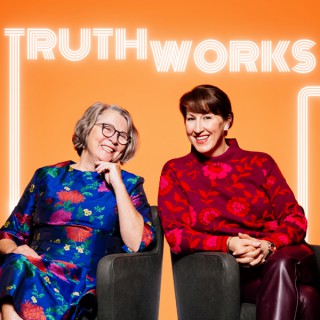
A former Groupon product manager set out to bring back supersonic passenger flight. Everyone told him it was a bad idea. He couldn't find a single reason they were right.Blake Scholl is the founder and CEO of Boom Supersonic, the company that built the first civil supersonic jet outside of a government or military, and then made the sonic boom disappear entirely.He joins Jessica Neal and co-host Peter Clarke on Truth Works for an honest conversation about audacious goals, telling the truth inside a company, and the leadership lessons he learned the hard way.Blake did not have the aerospace resume for this. He started his career at Amazon, spent years in startups, and was running internet coupons at Groupon when he decided to teach himself aerospace from textbooks and build a spreadsheet that said the whole world should be flying supersonic. A decade later, his airplane broke the sound barrier.In this episode he breaks down why supersonic flight really disappeared (hint: it was not the noise), how he rebuilt Boom's culture after hiring the wrong senior people, and why he now says he has learned to "love the riff."TOPICS COVERED→ Organizing every idea by how happy you'd be if it worked→ Choosing passion over resume, and why skills are more changeable than what you love→ The real reason supersonic flight was banned in 1973→ Solving the sonic boom by accident, and going from breaking the sound barrier to a repeal of the ban in 115 days→ Using supersonic technology to power AI data centers and bootstrap the company→ The "talent distillery": how Boom grows its own senior leaders→ Why he fired every direct report in one day, and what happened to morale→ Learning to "love the riff" and saying goodbye without making it personal→ The first-flight story and the safety rule: "I might say f**k, but I won't say f**k you"→ Velocity over predictability, and why padding your timeline makes you later→ Designing for tranquility, and the small details airlines ignore→ The birthday his board told him to shut the company downWhether you are building something people call impossible, leading a team through a hard call, or just trying to tell the truth at work, this one will stay with you.New episodes of Truth Works every week. Subscribe so you don't miss what's next.

Za poslední dekádu se úplně otočila korouhvička českého byznysu z východu na západ. Místo investic v Rusku či jihovýchodní Asii se český velkokapitál otočil na trhy jako jsou Spojené státy, Velká Británie, Francie či Itálie. Jsou to už celkově stovky miliard korun investovaných na západě od našich hranic. Něco ještě na přelomu milénia nemyslitelného... Kdo jsou nejaktivnější domácí hráči v této hře, na jaká aktiva si troufají, s kým se spojují a kam až sahají jejich ambice? Poslechněte si dvacátý díl autorského podcastu Moucha na zdi, v kterém redaktoři Hospodářských novin Michael Mareš a Pavel P. Novotný zkoumají zákulisí českého byznysu.

So much to celebrate when our friend Andrea Lopez enters the chat live from New Jersey, where the topics truly range from the responsibilities of being an "Aunt on the Side," to baby neighbors who literally never grow up? Michelle may have been swindled by a Groupon but she's willing to sacrifice her money and happiness for content. Andrea is back from Colombia covered in Central American bugbites and now sees Wendy Williams anywhere she goes, while Michelle is fairly sure she sat behind Queen Elle Fanning at the opening night of Cat Cohen's incredible Broad Strokes. A Toxic Love Story is lightly discussed, and while it's not great, it is a great reminder that tech can be used for good (catching criminals). Mich correctly some of her mistakes but somehow makes new ones. This and MORE if you can imagine.See Privacy Policy at https://art19.com/privacy and California Privacy Notice at https://art19.com/privacy#do-not-sell-my-info.

Don't fear losing your job to AI—fear losing it to someone who knows how to use AI better than you. It's time to stop treating AI as a tool and start treating it as your default way of working.Human by Design, AI by Default: Rewriting the Way We Work #110What does it actually look like to rebuild a global, legacy brand with years of technical debt into a completely AI-native business from the ground up? As it turns out, it isn't just a technological challenge—it is fundamentally an HR and communications mountain to climb.This week, Gary and George are doubly thrilled to welcome back Groupon's Chief People Officer, Nick Walker (marking his record third appearance on the show!), alongside Groupon's VP of Comms, Engagement, and Inclusion, Emma Coleman. Together, they take us behind the scenes of Groupon's massive cultural and structural transformation under their AI-savvy CEO, Dushan.From reshaping employee mindsets and restructuring traditional departments into lean "speedboats" to managing the psychological fear of redundancy, Nick and Emma share the unfiltered reality of rewriting the way we work. They discuss why AI adoption is actually a massive transfer of power from legacy systems back to human beings, and how human judgment remains the ultimate corporate superpower.Key takeaways from this episode:Speeding Fines vs. Parking Tickets: To build an AI-native culture, leaders must encourage risk-taking. Groupon welcomes "speeding fines" (mistakes made while pushing boundaries and moving fast) but has zero tolerance for "parking tickets" (complacency or refusing to try).Ditch the "Hand-Off Tax": Legacy organizations slow down because of continuous hand-offs between bloated, siloed teams. By structuring operations around "speedboats"—lean teams of 2 to 3 people running a complete workflow—you eliminate the friction and move exponentially faster.Close the Execution Gap, Not the Judgment Gap: AI is incredibly efficient at closing the execution gap (handling processes and grunt work). However, humans still own the judgment gap. Your ability to understand context, see around corners, and apply emotional intelligence is irreplaceable.Prompt Engineering is a Non-Negotiable Skill: Good inputs yield rich outputs. Investing time in mastering prompt engineering (sometimes spending up to an hour crafting a single prompt) is a major career differentiator that prevents "sloppy AI work."Send us Fan MailLinks & references: https://www.thecompanydoctor.com/Gary Gamp: https://www.linkedin.com/in/garygampGeorge Clode: https://www.linkedin.com/in/georgeclodeGary's new book, Career Catalyst - available online now: https://www.amazon.co.uk/Career-Catalyst-Secret-Skills-School-ebook/dp/B0DFYVG6XY/ref=tmm_kin_swatch_0?_encoding=UTF8&qid=&sr=

Shared Practices | Your Dental Roadmap to Practice Ownership | Custom Made for the New Dentist
In this episode of Coach's Corner, Caitlin Embree interviews Paul Lowry, co-founder of Dental Menu, to solve one of the biggest bottlenecks in dental practice management: failing in-house membership plans. While dropping insurance is a common goal, data shows that unmanaged cash-pay patients only have a 12% retention rate over five years, compared to 64% for insured patients.To achieve sustainable dental practice growth, practice owners must treat their membership programs like true subscriptions (e.g., Netflix or Amazon Prime) rather than one-off "Groupon" discount bundles that cause renewal gaps. Poorly administered plans not only create massive administrative headaches but also artificially lower your practice valuation by forcing you to zero out production or write off massive adjustments.Here is your blueprint for upgrading your dental practice management through a properly structured membership plan:Stop the "Discount" Mindset: Shift from selling a bundled package of cleanings to an auto-renewing subscription model to prevent patients from lapsing for months at a time.Fix Your Accounting: Stop adjusting membership preventative care to $0, as it destroys your KPIs. Dental Menu uses a separate bank account to process monthly fees and generate internal EOBs so production flawlessly matches collections.Protect Provider Pay: Proper dental practice management requires accurate ledgers so associate dentists and hygienists receive their correct collection-based bonuses when treating membership patients.Incentivize Your Team: Drive dental practice profitability by offering your front office staff bonuses (e.g., $25 per sign-up) to consistently present the membership plan to cash-pay patients.Ready to take the next step in your dental practice journey? Visit https://sharedpractices.com to learn more about our Buyer Representation and Coaching services, designed to help dentists buy, grow, and optimize profitable practices. You can also use our Free Look to evaluate dental practice opportunities with real data before making a decision. For daily Dental Moneyball insights, strategy tips, and updates, follow us across our social channels.

Healthcare organizations have more data than ever before, but turning that data into actionable insights remains one of the industry's biggest challenges. In this episode of The Beat AI in Healthcare Podcast, host Sandy Vance sits down with Nabil Jallouli, CEO and co-founder of Rollstack, to discuss how AI-powered reporting is helping healthcare organizations simplify value-based care reporting, improve decision-making, and scale personalized reporting without overwhelming their teams. Nabil shares why dashboards alone are no longer enough, why executives need trusted narratives instead of raw data, and how healthcare organizations can automate reporting while maintaining governance, security, and accuracy. Whether you work in healthcare leadership, data analytics, customer success, value-based care, or digital transformation, this conversation offers practical insights into using AI responsibly to improve reporting and business outcomes. In this episode, they talk about: Why value-based care requires an entirely different approach to healthcare reporting The hidden "last mile" problem between business intelligence dashboards and executive decision-making Why healthcare organizations struggle with manual reporting despite major investments in analytics platforms How AI can automate repetitive reporting while keeping humans focused on strategy and relationships The importance of governance and trusted data in healthcare AI Why executives rarely spend more than a few seconds reviewing dashboards How personalized reporting improves payer, provider, and customer relationships The role of automation in scaling reporting across hundreds of healthcare partners Measuring ROI from AI reporting solutions and why reporting automation often delivers significant business value Why healthy skepticism around AI is actually helping healthcare adopt better long-term solutions How Rollstack protects sensitive healthcare data with enterprise-grade security and zero data retention policies What healthcare leaders should prioritize as AI adoption continues to accelerate A Little About Nabil: Nabil Jallouli is the co-founder and CEO of Rollstack, an enterprise platform helping companies like SoFi, Zillow, and Whirlpool automate their data-driven presentations and documents. Rollstack leverages deep integrations with leading business intelligence tools (Tableau, Power BI, Looker, and others) and AI to streamline reporting processes, including business reviews, EHR and HCP reporting, financial reporting, and client presentations. By eliminating manual copy-paste, reducing errors, and ensuring accuracy, Rollstack enables organizations to operate more efficiently and focus on decision-making rather than document preparation. The company is backed by Y Combinator and Insight Partners and is fully SOC 2 Type II and HIPAA compliant, meeting the highest standards of security and data protection for enterprise and healthcare customers. Before founding Rollstack, Nabil built his career leading data analytics and revenue strategy teams at Pinterest, Deel, and Groupon. Across these experiences, he observed a common problem: highly skilled professionals spending countless hours preparing slides and reports instead of focusing on high-value work and strategy. This recurring pain point ultimately inspired the creation of Rollstack. Nabil holds a Master of Engineering and dual Bachelor's degrees in Mathematics, Physics, and Computer Science from École Centrale Paris.

Most of the world relies on Arm technology every day, yet many don't know the company by name. In this episode, we sit down with Jason Child, CFO of Arm Holdings, to pull back the curtain on one of the most critical companies in the digital economy.Jason shares his journey from his early days at Amazon and Groupon to navigating complex IPOs and the company's massive strategic shift toward "Arm Everywhere." We dive deep into the real-world impact of AI investment, the changing nature of the CFO role, and why curiosity—paired with AI tools—is the most essential asset for the next generation of financial leaders. Whether you are an aspiring financial executive or a tech enthusiast curious about the backbone of modern computing, this conversation offers a masterclass in leadership, strategy, and resilience.

Send us Fan MailWelcome to the very first episode of PMU Court—our newest segment where we hear real industry dilemmas, debate both sides, and deliver the final verdict. ⚖️

Episode SummaryRecorded live at the San Diego Angel Conference finale at SDSU, Eric Ries — author of The Lean Startup — sits down with product leader and founder coach Vidya Dinamani to unpack his new book, Incorruptible. His argument: there's a gravitational force that pulls even mission-driven companies toward decay — “the making of money without the creating of value” — and the more successful you get, the bigger a target you become. Eric walks through how it happens (stack-ranking by ROI, the “what would investors want” ghost in every meeting, Groupon's two-emails-a-day spiral), why the fix has to come earlier than anyone wants (“it's too early until it's too late”), and the concrete governance moves that keep the great ones honest. Along the way: the San Diego origin story of Costco, Cloudflare giving away its best paid feature, Anthropic's long-term benefit trust, a hard-nosed take on AI, and a health insurer whose customer-service reps act like guardian angels.Key Topics* Corruption as “making money without creating value”* The gravity that pulls companies from mission to mediocrity* Costco's San Diego origin — and why FedMart died* Why stack-ranking by ROI buries the work that builds trust* “It's too early until it's too late” — protecting the mission in time* The PBC filing and binding your board to the mission* AI as a “Dunning-Kruger factory,” and how to actually use it* “Love” as an operating framework: the Devoted Health storyLinks & Resources* Incorruptible* The Lean Startup* Long-Term Stock Exchange (LTSE)* San Diego Angel ConferenceConnect on LinkedIn* Neal Bloom * Eric Ries* Vidya Dinamani This is a public episode. If you'd like to discuss this with other subscribers or get access to bonus episodes, visit risingtidepartners.substack.com/subscribe

Get the 200+ Page Optimal Living Daily Workbook (PDF) — Free. Want to turn today's episode into an actionable plan? Join the Optimal Living Weekly newsletter and I'll send you our 200-page digital workbook immediately. It's packed with the best takeaways from the show, formatted for easy reading and implementation at home. Get your free PDF workbook here: https://oldpodcast.eo.page/join Discover all of the podcasts in our network, search for specific episodes and learn more at: OLDPodcast.com. Episode 3625: Michelle Schroeder-Gardner shares six common ways that trying to save a few dollars can actually lead to bigger expenses, from buying low-quality clothing to skipping insurance and routine maintenance. Her examples reveal how focusing only on short-term savings can cost you time, money, and peace of mind, while encouraging smarter, long-term financial decisions. Read along with the original article(s) here: https://www.makingsenseofcents.com/2014/10/6-ways-being-cheap-can-cost-you-money.html Quotes to ponder: "DIY will not always save you money." "You do not want to skip maintenance and have to pay more money later because a major problem could have been prevented, or do a shoddy maintenance job and find out the whole thing needs to be completely redone." "Many people each and every single day make the mistake of trying to save money, yet end up wasting money in the end." Episode references: Groupon: https://www.groupon.com/ Learn more about your ad choices. Visit megaphone.fm/adchoices

Get the 200+ Page Optimal Living Daily Workbook (PDF) — Free. Want to turn today's episode into an actionable plan? Join the Optimal Living Weekly newsletter and I'll send you our 200-page digital workbook immediately. It's packed with the best takeaways from the show, formatted for easy reading and implementation at home. Get your free PDF workbook here: https://oldpodcast.eo.page/join Discover all of the podcasts in our network, search for specific episodes and learn more at: OLDPodcast.com. Episode 3625: Michelle Schroeder-Gardner shares six common ways that trying to save a few dollars can actually lead to bigger expenses, from buying low-quality clothing to skipping insurance and routine maintenance. Her examples reveal how focusing only on short-term savings can cost you time, money, and peace of mind, while encouraging smarter, long-term financial decisions. Read along with the original article(s) here: https://www.makingsenseofcents.com/2014/10/6-ways-being-cheap-can-cost-you-money.html Quotes to ponder: "DIY will not always save you money." "You do not want to skip maintenance and have to pay more money later because a major problem could have been prevented, or do a shoddy maintenance job and find out the whole thing needs to be completely redone." "Many people each and every single day make the mistake of trying to save money, yet end up wasting money in the end." Episode references: Groupon: https://www.groupon.com/ Learn more about your ad choices. Visit megaphone.fm/adchoices

Get the 200+ Page Optimal Living Daily Workbook (PDF) — Free. Want to turn today's episode into an actionable plan? Join the Optimal Living Weekly newsletter and I'll send you our 200-page digital workbook immediately. It's packed with the best takeaways from the show, formatted for easy reading and implementation at home. Get your free PDF workbook here: https://oldpodcast.eo.page/join Discover all of the podcasts in our network, search for specific episodes and learn more at: OLDPodcast.com. Episode 3625: Michelle Schroeder-Gardner shares six common ways that trying to save a few dollars can actually lead to bigger expenses, from buying low-quality clothing to skipping insurance and routine maintenance. Her examples reveal how focusing only on short-term savings can cost you time, money, and peace of mind, while encouraging smarter, long-term financial decisions. Read along with the original article(s) here: https://www.makingsenseofcents.com/2014/10/6-ways-being-cheap-can-cost-you-money.html Quotes to ponder: "DIY will not always save you money." "You do not want to skip maintenance and have to pay more money later because a major problem could have been prevented, or do a shoddy maintenance job and find out the whole thing needs to be completely redone." "Many people each and every single day make the mistake of trying to save money, yet end up wasting money in the end." Episode references: Groupon: https://www.groupon.com/ Learn more about your ad choices. Visit megaphone.fm/adchoices

A neuroscience student mixing supplements in his dorm room. A national kendo competitor who became paraplegic at 19 after a snowboarding accident. Best friends. And then, one scuba diving Groupon later — a company.Jon Bier sits down with Kent Yoshimura and Ryan Chen, co-founders of Neuro, for a conversation ten years in the making. Jon was there early. He gave them his first ever angel check. He watched the whole thing — the grinding first seven years on $1.6 million raised while every other DTC brand was burning through $30 million, the Shark Tank appearance that got them zero deals and exploded their sales, the trademark lawsuit that nearly ended everything, the near-billion dollar brand they built without ever compromising the formula.This isn't a success story. It's a story about what success actually looks like when you build it the right way — slowly, stubbornly, and with your friendship completely intact.Jon has been saying it for a decade. This is the episode where everyone else gets to hear why.In this episode:• How Neuro went from clinical trial side income and Craigslist employees to one of TikTok's top-selling brands and why raising less money than everyone else turned out to be the advantage• The Shark Tank story nobody tells: zero deals, a trademark lawsuit, a cold DM to a billionaire, and the moment everything changed• Why Kent and Ryan have never cut a corner on the formula and what it actually means to be a brand-led company in a world that rewards sales-led thinkingFind Kent, Ryan & Neuro:• Kent on Instagram: https://www.instagram.com/kentaro/• Ryan on Instagram: https://www.instagram.com/ryan.ryc/• Neuro: https://www.getneuro.com• Neuro on Instagram: https://www.instagram.com/neurogum/

Innovation comes in many areas and compliance professionals need to not only be ready for it but embrace it. Join Tom Fox, the Voice of Compliance as he visits with top innovative minds, thinkers and creators in the award-winning Innovation in Compliance podcast. In this episode, host Tom Fox visits with Kunal Chopra, CEO of Certivo, an AI-native regulatory intelligence and compliance management platform for supply chains. Chopra recounts his tech and supply-chain background (Amazon, Microsoft, Groupon, prior CEO roles) and explains his insight that compliance is fundamentally about market access and revenue protection, not box-checking. He describes how global regulations are increasing in scope, enforcement, fines, and deadlines, creating repeated, deadline-driven scrambles and visibility gaps for executives. Certivo aims to flip compliance from reactive to proactive by identifying applicable regulations by market and product, ingesting product data from systems like ERP/PLM, and using AI to coordinate supplier documentation, read unstructured files, extract data, and map evidence to rules while leaving deterministic compliance decisions to rules-based logic to avoid hallucinations. The platform supports scenario analysis for supply disruptions, continuous monitoring as rules change, and predictive preparation for emerging regulations, helping compliance leaders align with sales, marketing, and operations as revenue enablers. Key Highlights · Compliance as Market Access · Visibility Gaps and Scrambles · Who Owns the Risk · How Certivo Works · Preventing AI Hallucinations · Scenario Planning Supply Chain · Continuous Monitoring and Prediction Resources Connect with Kunal Chopra on LinkedIn Certivo Innovation in Compliance was recently honored as the Number 4 podcast in Risk Management by 1,000,000 Podcasts

In this episode of The Hopeaholics Podcast, Ryan Foley shares his powerful story of alcoholism, mental health, surrender, fatherhood, and the unexpected life recovery gave him. Ryan grew up outside of Chicago, went on to attend Cornell University, built a successful career, and eventually worked at companies like Google and Groupon before addiction began taking over his life. For years, he was able to function on the outside while drinking every day, but behind the scenes his body was shutting down. He opens up about drinking a handle a day, waking up in withdrawal, shaking, sweating, and reaching the point where doctors told him that if he kept drinking, he could die.Ryan also shares his experience being diagnosed with bipolar disorder at 20 years old, the shame he carried around mental health, and why getting sober was the only way he could truly begin treating what was underneath. Today, Ryan is nearly five years sober, a husband, father of two with a third baby on the way, a performance coach, and a world champion professional sailor. He shares how recovery brought him back to athletics, led him into a completely different career, and gave him a life he never thought was possible. From surrendering in treatment to launching "Big Tuesday," a movement encouraging men to lift heavy, stay disciplined, and take ownership of their health, Ryan's story is a reminder that recovery does not just save lives — it can completely transform them.#thehopeaholics #redemption #recovery #AlcoholAddiction #AddictionRecovery #wedorecover #SobrietyJourney #MyStory #Hope #wedorecover #treatmentcenter #natalieevamarieJoin our patreon to get access to an EXTRA EPISODE every week of 'Off the Record', exclusive content, a thriving recovery community, and opportunities to be featured on the podcast. https://patreon.com/TheHopeaholicsGo to www.Wolfpak.com today and support our sponsors. Don't forget to use code: HOPEAHOLICSPODCAST for 10% off!Follow the Hopeaholics on our Socials:https://www.instagram.com/thehopeaholicshttps://linktr.ee/thehopeaholicsBuy Merch:https://thehopeaholics.myshopify.comVisit our Treatment Centers: https://www.hopebythesea.comIf you or a loved one needs help, please call or text 949-615-8588. We have the resources to treat mental health and addiction.Sponsored by the Infiniti Group LLC:https://www.infinitigroupllc.com

DR1Our Tech OverlordsIn our 'Elon Musk's alibi to police was, "It couldn't be my fault; I haven't been at Tesla since they passed my pay package."' headline of the week. Tesla Under Fire After Car Smashes Into Texas Home and Kills 76-Year-Old Grandmother*************** In our 'Hello, my name is Jeff, I have a younger brother and sister, my favorite food is Betty Crocker pancakes, and I am a Coupon-ism major at Columbia University' headline of the week. Jeff Bezos Called Washington Post His Worst Investment and Staff He Laid Off ‘Terrible' People*************** LivingSocial (Written Down 2016): In 2010, Amazon poured $175 million into this daily-deals competitor to Groupon. The daily-deals craze fizzled out quickly, and six years later, LivingSocial was acquired by Groupon for effectively $0In our 'Just tell them it will make their Netflix better' headline of the week. Head of Microsoft Rages at His Fellow CEOs for Admitting What They're Actually Doing to Society With AI*************** “You can't say, hey, all white-collar jobs are gone and this could even be a weapon and we will use all the power to build data centers,” Nadella explained(Microsoft's own AI CEO Mustafa Suleyma, it's worth noting, very recently claimed that AI was on the verge of performing most “professional tasks.”)Nadella is now pushing an approach that factors in the common worker, criticizing those who get excited to announce AI-driven layoffs. “No, how about we think about reorganizing the jobs?”In our 'Mark has super-duper pinky-promised to stop using his $150,000 Patek Philippe watch to time exactly how long it takes a developer to cry' headline of the week. Meta CTO Admits Mark Zuckerberg Has Completely Crushed Employee Spirits*************** In our 'Hey Ma, every time I click on this ad it wipes my butt, buys a dozen frozen turkey burgers, and breaks up with my girlfriend, tell Dad!' headline of the week. These new Amazon ads don't just recommend products—they can make your purchases for you***************MM1In our 'What if I replace the Oreo knockoff brand Kroger Chocolate Lovers Kid-O's with Hydrox in the vending machines? Will you like working here again?' headline of the week. Meta Floats Bigger Snack Budget After AI Shakeup Tanks Employee MoraleIn our 'What if I make it LOOK LIKE your job isn't harming children, so you can tell your Mom at Thanksgiving, "no, we don't hurt children, that's ridiculous!"? Will you like working here again?' headline of the week. Meta lobbies Congress for immunity from lawsuits alleging online harm to childrenIn our 'OK, what if I replace the HYDROX with ACTUAL OREOS in the vending machines? Not even Elon Musk would do that - would you like working here again?' headline of the week. X tells 'neglected' Meta employees that it is hiring and will 'exceed any snack budget offer'In our 'I should have gotten the worst possible grade for GOVERNANCE, not ENVIRONMENT... don't you people read?' headline of the week. Musk Furious After SpaceX Stock Get Worst Possible Environmental GradeIn our 'Free Float data already created influence metrics, says, "make your own ESG data, jerk"' headline of the week. Inside Peter Thiel's Invite-Only Dialog Network: Secret A-B-C Grading System for Billionaires and PoliticiansGrades are assigned based on factors including fame, wealth, influence and political fit: C ratings go to the most prominent figures, A to those who are established but less high-profile, and B to most othersDR2The StupidIn our 'Target screams, you're supposed to fake fire your CEO and make him Executive Chair and promote the COO in times of internal crisis!' headline of the week. Lucid Motors Fires 18% of Workforce and Axes COO Marc Winterhoff as EV Market Slowdown Hits Hard*************** In our 'Target screams, yes exactly!' headline of the week. Domino's names COO Joe Jordan as new CEO amid slowing sales***************Outgoing CEO Russell Weiner will transition to executive chairmanIn our 'Group of experts suggest painting the pool blue to get rid of the problem' headline of the week. ‘ESG Hasn't Gone Away': Group Urges Trump, SEC to Rein In ‘Big Three' Asset Managers' Voting Power Long Term*************** Bull Moose Institute: 8 men, 0 women: ran by Aiden Buzzetti, President | 1776 Project Foundation & Bull Moose ProjectIn our 'Soccer 1, Child Care 0' headline of the week. After forcing workers back to the office, Goldman Sachs and JPMorgan Chase are now letting their staff work remotely—but only for the World Cup*************** In our 'Board members include Kimbal Musk, O.J. Simpson, Dana White, Rebekah Neumann, Elizabeth Holmes, Richard Sackler, John R. Tyson, and John T. Walton' headline of the week. Trump Forms UFO Board to Investigate 'Mothership' Orb Threat Over Sensitive National Security SiteJohn T. Walton (1992-2005), the billionaire son of Walmart founder Sam Walton, died in 2005, when the home-built experimental ultralight aircraft he was piloting crashedUnlike siblings Rob and Jim Walton, who took executive roles, John's involvement emphasized oversight without deep immersion in merchandising or supply chain functionsMM2In our 'Blackrock announces funding a reboot of the movie The Highlander called The Gay Highlander: There Can Be Only One' headline of the week. With the exits of Apple's Tim Cook and Dow's Jim Fitterling, the Fortune 500 is losing two groundbreaking gay CEOs—leaving just one In our 'Lying sociopath is 100% excited about making money, 74% excited about taking a bath, 29% excited to go home to his baby, and 12% excited to eat Hydrox' headline of the week. Sam Altman was ‘0%' excited to be a CEO of a public company—but OpenAI is taking steps to compete in the AI IPO blitz anywayIn our 'Lying sociopath hires man accused of aiding suicide to build product that will destroy humanity' headline of the week. OpenAI Just Hired a Guy Accused of Terrible ThingsNoam Shazeer, cofounder of Character.AI who has been accused of having an AI chatbot that rooted for their customer's suicidesIn our 'Lying sociopath who hired man accused of aiding suicides for product designed to destroy humanity thinks the product will be able to do it by next Christmas' headline of the week. Sam Altman thinks AI will surpass human intelligence by 2030. His rival AI billionaires say it'll be even soonerIn our 'Man who owns everything and has all the money suggests you try out whittling or become a cobbler' headline of the week. Nvidia CEO Jensen Huang says electricians and plumbers will be needed by the hundreds of thousands in the new working world

Patrick Dillon is a prominent serial entrepreneur, growth consultant, and the Founder and CEO of WISE Digital Partners, a full-service digital marketing agency that has twice been named to the prestigious Inc. Magazine 5000 list of America's fastest-growing private companies. Over a highly successful twenty-year career, Patrick has founded more than ten companies across marketing, SaaS, and the service industries, directly consulting with more than 5,000 business owners on their growth strategies. His ventures have included Deal Current Network (a private-label Groupon alternative acquired by Lee Enterprises) and Lightpost Digital. A member of the Forbes Agency Council, Patrick is highly regarded for his disruptive stance on business scaling and is the author of the upcoming book, Referrals Are Not the Answer—where he challenges the traditional reliance on word-of-mouth marketing in favor of predictable, data-driven customer acquisition systems.

Don and Tom examine the coming wave of blockbuster IPOs, including rumored offerings from SpaceX, Anthropic, and OpenAI, and explain why investor excitement often leads to disappointing results. Drawing on research from Dimensional Fund Advisors and examples such as Uber, Facebook, and Groupon, they discuss the historical underperformance of IPOs and the dangers of buying into hype. They then answer a listener's question about assets-under-management fees, explaining the broader planning, tax, behavioral, and retirement services provided by fiduciary advisors beyond portfolio construction. The episode concludes with a look at the growing number of highly speculative ETFs, including UFO-themed and meme-stock funds, and a warning that investors should focus on diversification and discipline rather than chasing the latest financial product.0:05 Summer IPO mania: SpaceX, Anthropic, OpenAI, and the hype machine1:24 SpaceX's massive valuation and why investors are excited3:05 Anthropic and OpenAI join the trillion-dollar IPO conversation4:29 Comparing today's IPO wave to the dot-com boom5:09 Why hot IPOs are usually a bad investment6:27 Dimensional research on IPO underperformance and liquidity concerns7:51 Uber, Facebook, Groupon, and other IPO cautionary tales8:50 Why even great companies can be poor investments at the wrong price9:45 Why disciplined firms delay adding IPOs to portfolios10:59 How to submit questions to Talking Real Money13:17 Listener question: Is a 1% AUM fee really worth it?15:20 What advisors actually do beyond portfolio management16:44 Vanguard's research on advisor value17:12 Why large portfolios shouldn't pay a flat 1% on all assets18:24 The emotional and behavioral benefits of professional advice20:29 How advisors help investors stay diversified21:45 The explosion of bizarre new ETFs22:49 UFO ETFs, meme-stock funds, and speculative product launches25:05 Why investors should be skeptical of niche ETFs and high feesQuestions? Comments? Click!

How to Trade Stocks and Options Podcast by 10minutestocktrader.com
Are you looking to save time, make money, and start winning with less risk? Then head to https://www.ovtlyr.com.Learn more about OVTLYR: https://youtu.be/TUCbD5KovlcSnowflake just absolutely ripped the market apart after earnings, and honestly… this is the kind of move traders dream about catching early. We're talking about a monster gap up after announcing a massive AWS deal, raising guidance, and completely blowing past expectations. Meanwhile, OVTLYR had already flashed a buy signal weeks before the explosion happened.But here's where things get really interesting…While tech stocks are heating up hard, there are some weird signals showing up underneath the market right now. The S&P 500 and Nasdaq still look bullish on the surface, but fear and greed data is starting to tell a different story. That's the stuff most traders miss.In this breakdown, we're looking at the stocks and sectors getting real momentum right now:✅ Snowflake going full beast mode after earnings✅ Navitas Semiconductor flashing fresh bullish momentum✅ Groupon, Spotify, and Meta setting up strong✅ Carnival Cruise Lines quietly turning around✅ Energy stocks like Exxon and Chevron starting to crackThere's also a look at meme stock momentum coming back with AMC and BlackBerry making noise again.If you're trying to stay ahead of the next big move instead of reacting late, this is the kind of market breakdown you need in your routine.Subscribe to OVTLYR for disciplined trading strategies that actually make sense.

Welcome to The Kevin Jackson Show, where we examine political fact from political theater the way a coroner examines cause of death.And I say to the Trump naysayers, cause of death in yesterday's elections is ACUTE MAGA.The Leftists got SMACKED IN THE MOUTH Tuesday night. Not love-tapped. Not nudged. I'm talking old-school, Wile E Coyote anvil-from-the-sky humiliation.The Uniparty wanted to believe it had MAGA cornered. The media had the obituary already written. “Trumpism fading.” “Republicans moving on.” “Conservatives divided.” They write these stories so often, you'd think CNN had a Groupon for Trump funeral arrangements.And then reality arrived like a repo man at a rapper's mansion.Democrats hoped for a Thomas Massie victory because they thought it would signal some giant fracture in Trump's coalition. They were standing around like cartoon villains waiting for the hero to trip over a banana Instead, they watched Trump-backed momentum bulldoze through the landscape yet again. Another “This is finally the end of Trump” narrative demolished.The rumor of MAGA's death has been greatly exaggerated. Trump has had more political resurrections than a comic book superhero. At this point, Democrats treat every Tuesday like it's the season finale of a Netflix series called “Surely This Will Be the One.”And every season ends the same way: another Trump victoryHere's what the elites still don't understand. Millions of Americans support Trump not because we joined some cult, but because we recognize something rare in modern politics: the man actually fights for the people who elected him.That alone makes him radioactive to Washington.Think about the standard politicians give us. These people campaign like revolutionaries, and govern like assistant managers at Staples. Trump is the closest thing Americans have seen in decades to somebody who treats the voters like value clients instead of hostages.And the critics keep demanding impossible standards from Trump that they don't apply to literally anyone else in their lives.See Privacy Policy at https://art19.com/privacy and California Privacy Notice at https://art19.com/privacy#do-not-sell-my-info.

We start with life updates: Giana's baby shower and travels to California, Bradshaw reflecting on how Giana's family reminds him of his own, preparations for the baby, and an update on Bradshaw's shoulder recovery. Naturally, the conversation spirals into dogs, consciousness, and the complexity of the human condition before we finally arrive at today's topic: “Why Yoga Communities Don't Feel the Same.” About 13 minutes in, we get to the heart of the conversation and explore what's shifted in yoga culture, and modern culture more broadly, that has changed the feeling of the yoga studio as a true third space. We talk about the impact of technology, Groupon and ClassPass culture, social media, COVID, rising city costs, and the commodification of wellness. Before social media, people primarily practiced in person, inspiration came from teachers and community rather than algorithms, and the studio often felt less performative and more like a homecoming, a sacred reprieve from daily life rather than just another fitness class. We reflect on the small rituals many studios once had: tea stations, couches, bulletin boards, workshops that felt social, post-class dinners, arriving early to settle in, doors locking at start time, and the unspoken intimacy of practicing in the same room week after week. Now, with preregistration apps, late arrivals, online classes, and endless studio sampling, yoga can sometimes feel more transactional and convenience-driven. At the same time, we acknowledge that many modern shifts have also made yoga more accessible and brought more people into the practice. This episode isn't about saying things were better before, but about exploring loneliness, belonging, changing culture, and asking how we might cultivate deeper community again in a world that increasingly pulls people apart.Want to support our podcast? Join our Patreon for extra content** CHECK OUT OUR 300-HOUR PROGRAM **

Send us Fan MailMost salon owners don't fail because they aren't working hard enough.They fail because they focus on the wrong things.In this episode, we break down some of the biggest misconceptions salon owners have about business growth, from believing more clients will solve everything, to confusing being busy with being profitable, to thinking culture happens automatically.We also talk about leadership, systems, retention, communication, pricing, long-term thinking, and why clarity matters far more than “freedom” in a salon environment.This episode is packed with lessons that most owners only learn after years of stress, burnout, mistakes, and experience.Your business should serve you, so that you can serve others.And that starts with focusing on what actually moves the business forward.Key TakeawaysGreat technical skill does not automatically create a successful business. More clients often amplify existing business problems. Retention matters more than random traffic. Being busy is not the same as being profitable. Owners who stay overwhelmed cannot lead effectively. Culture must be reinforced intentionally over time. Strong leadership requires difficult conversations. Clarity and expectations reduce confusion and stress. Freedom without systems creates instability. Long-term thinking shapes stronger businesses. Time Stamps00:00 — Intro + opening takes 01:00 — Leading by example as an owner 03:00 — Why owners spread themselves too thin 05:00 — Growth without systems creates chaos 06:00 — Great hair alone doesn't create success 08:00 — Why more clients won't solve your problems 10:00 — Groupon clients and weak retention 11:00 — More clients amplify weak systems 14:00 — Busy doesn't mean profitable 16:00 — The danger of overwhelmed owners 18:00 — The “messy middle” of business ownership 19:00 — Activity vs real progress 20:00 — Why culture doesn't happen automatically 24:00 — Nice leadership vs strong leadership 27:00 — Why clarity matters more than comfort 30:00 — Freedom without structure creates problems 32:00 — What stylists actually want from leaders 35:00 — Small touch points build strong culture 36:00 — Why unhappy people rarely tell you directly 40:00 — Working harder won't fix everything 42:00 — Long-term thinking changes everythingLinks and Stuff:Our Newsletter Mentoring InquiriesFind more of our things:InstagramHello Hair Pro Website

Adam Schwab grew Luxury Escapes from a bootstrapped Groupon clone into a billion-dollar travel empire without raising capital until COVID. Here's exactly how he did it. In this deep dive, Adam breaks down the contrarian moves that built one of Australia's most successful travel businesses. From accidentally discovering the travel arbitrage that competitors missed, to building competitive moats through switching costs and AI-powered personalisation. He reveals why focus beats diversification, how they turned hotel partnerships into a cornered resource, and the metrics that actually matter when building enterprise value. Join my exclusive Mentored+ community: https://mentored.com.au/become-a-member/ Subscribe to the Mentored newsletter here: https://mentored.com.au/newsletter See omnystudio.com/listener for privacy information.

Can you still win patient loyalty when you walk away from insurance contracts?Dr. Parth Kansagra did just that, launching a premium-priced, insurance-free dental practice in Orange County against all conventional wisdom. Dr. Kansagra shares why he walked away from burnout and chose the hard road of building a practice on his own terms, leaning on his MBA skills, strong patient communication, and a vision for comprehensive patient care.He unpacks the pivotal moment that inspired him to drop insurances cold turkey, then takes us behind the scenes of his high-touch transition: spending months meeting every patient face-to-face to personally explain the new model. Dr. Kansagra gets real about the financial and emotional stress of entrepreneurship, how losing insurance-driven patients opened doors for true cosmetic-focused care, and the steps he took to make premium pricing feel trustworthy with transparent menus, longer exams, and even a six-year warranty. Listen in for honest lessons on patient relationships, marketing that actually works, and how building real trust became his not-so-secret advantage.What You'll Learn in This Episode:How dropping insurance transformed patient relationships and practice cultureStrategies for communicating change and building trust with existing patientsThe financial realities and risks of going insurance-free from day oneWhy personalized attention became the cornerstone of Dr. Kansagra's approachTips for converting bargain-seekers into loyal, high-value patientsUnexpected growth tactics: Groupon whitening offers, memberships, and “social media scholarships”Building a transparent fee structure including warranties and easy refund policiesThe importance of direct doctor access (and giving out his Google number!)How “banked” membership plans and referral networks can drive real growthPress play to learn how Dr. Kansagra builds real trust in his practice!Sponsors:Oryx: All-In-One Cloud-Based Dental Software Created by Dentists for Dentists. Patient engagement, clinical, and practice management software that helps your dental practice grow without compromise. Click or copy and paste the link here for a special offer! https://thedentalmarketer.lpages.co/oryx/Click here for a special offer!Guest: Dr. Parth KansagraPractice Name: Bespoke Dental StudiosCheck out Parth's Media:Practice: https://bespokedentalstudios.com/Juma (Heathcare Wallet for Patients): https://getjuma.com/Instagram: https://www.instagram.com/dr.parthk/LinkedIn: https://www.linkedin.com/in/drparthkansagra/Host: Michael AriasJoin my newsletter: https://thedentalmarketer.lpages.co/newsletter/Join this podcast's Facebook Group: The Dental Marketer SocietyLove the Podcast? Follow on Your Favorite App! https://lnkfi.re/TDMPod

In this episode of Tales from The Lane, Kate is joined by sales and strategy coach Steph Crowder for a conversation about entrepreneurship, selling, courage, and building a business that actually supports the life you want to live. Steph is the host of the Courage and Clarity podcast, a former Director of Sales Training at Groupon, and the founder of Sold Out Group Programs, where she helps entrepreneurs start, sell out, and scale group programs with more courage, clarity, and confidence. In this conversation, Kate and Steph talk about Steph's path from corporate sales to online business, the intentional choices that helped her design a career around her life, and why so many creative, service-driven people feel uncomfortable with selling. They also explore what it means to step away from something that looks successful from the outside, why scaling a business can bring up unexpected fear, and how Steph rebuilt her work in a way that supports her life, her family, and her ambition. Together, they discuss: Why sales feels uncomfortable for so many creatives and entrepreneurs How to reframe selling as service rather than self-promotion What "consultative selling" really means Why life design matters when building a business Steph's experience leaving Groupon and later stepping away from her own business The "scaling scaries" and what it takes to grow sustainably How to identify money-making activities in your business Why boundaries with your phone and attention matter more than we think What it means to thrive while still wanting to grow If you have something valuable to offer but struggle to share it, or if you are trying to build work that supports your life instead of consuming it, this conversation will give you a fresh perspective on sales, courage, and sustainable success. You can find Steph on Instagram at @heystephcrowder. Grab Steph's free guide, The 15-Minute Planner Method, at stephcrowder.com/plan. Learn more about Steph's mastermind, Sold Out Group Programs, at stephcrowder.com/apply. And if you want support putting this into action:
Eric Ries is the author of The Lean Startup, a book that reshaped how a generation of founders think about building companies. His new book, Incorruptible, explains how successful companies are destroyed by failing to protect what makes them valuable, and how to change it.In our in-depth conversation, we discuss:1. Why 80% of venture-backed founders are ousted within three years of going public2. The governance structures that protect companies like Anthropic, Costco, and Novo Nordisk3. The simple legal filing that takes two pages and could save your company4. Financial gravity: why successful companies predictably get corrupted into mediocrity5. Why mission-aligned companies like Anthropic reap major benefits from protecting their mission through governance6. Why success won't protect you—it instead makes you a bigger target—Brought to you by:WorkOS—Make your app enterprise-ready, with SSO, SCIM, RBAC, and more: https://workos.com/lennyVanta—Automate compliance, manage risk, and accelerate trust with AI: https://vanta.com/lenny—Episode transcript: https://www.lennysnewsletter.com/p/how-to-build-a-company-that-withstands—Archive of all Lenny's Podcast transcripts: https://www.dropbox.com/scl/fo/yxi4s2w998p1gvtpu4193/AMdNPR8AOw0lMklwtnC0TrQ?rlkey=j06x0nipoti519e0xgm23zsn9&st=ahz0fj11&dl=0—Where to find Eric Ries:• X: https://x.com/ericries• LinkedIn: https://www.linkedin.com/in/eries• Website: https://www.incorruptible.co• Newsletter: https://news.theleanstartup.com/• Podcast: https://ericriesshow.com• YouTube: https://www.youtube.com/@theericriesshow—Where to find Lenny:• Newsletter: https://www.lennysnewsletter.com• X: https://twitter.com/lennysan• LinkedIn: https://www.linkedin.com/in/lennyrachitsky/—In this episode, we cover:(00:00) Introduction to Eric Ries(02:26) Introducing Incorruptible(06:26) Protecting what you've built(11:35) Why founders get ousted(14:58) Too early, too late(19:32) The blueprint: ethos plus integrity(20:49) Novo Nordisk's 100-year governance fortress(26:41) The Vectura Group and Philip Morris(33:16) The “harder is easier” principle(37:22) Cloudflare's mission emergence story(42:43) Groupon's email frequency death spiral(45:37) How to define your purpose(51:09) Mission-driven vs. mission-hopeful companies(54:46) Integrity: structural and personal(57:47) Shareholder primacy: the 40-year-old “natural law”(01:00:04) Public benefit corporations: the easiest protection(01:04:24) Downsides and objections(01:06:08) The Anthropic example: fastest-growing company ever(01:08:39) The torchbearers in every organization(01:10:37) The culture bank: deposits and withdrawals(01:12:28) OpenAI and Anthropic governance(01:16:21) Mission guardians explained(01:18:29) Spiritual holding companies(01:21:53) The founder control trap(01:25:25) Three things to do this week(01:30:10) AI alignment and human alignment(01:34:00) Conway's law: org charts in architecture(01:37:31) Book resources and farewell—References: https://www.lennysnewsletter.com/p/how-to-build-a-company-that-withstands—Production and marketing by https://penname.co/. For inquiries about sponsoring the podcast, email podcast@lennyrachitsky.com.Lenny may be an investor in the companies discussed. To hear more, visit www.lennysnewsletter.com

Escape to Elevate retreat in Italy October 2026 www.escapetoelevate.com Jamie's Instagram program: risesocialacademy.com Jamie's monthly Instagram content membership for hairstylists: thesocialsuite.com Connect with Jodie on Instagram: @itsjodiebrownThis week on Hairstylist Rising, I'm re-sharing one of the most loved episodes of the show with the incredible Jamie Dana. Jamie has been in the beauty industry for 13 years and has done almost every role you can imagine, from receptionist and assistant to commission stylist, suite owner, salon owner, independent educator, and brand collaborator. She is also one of the original online educators in the hair industry and the woman behind the Framar Jamie Dana collection, which became the biggest single day of sales in Framar's history.In this conversation, Jamie shares the early years that shaped how she built her business. She talks about being homeschooled, getting bullied in beauty school, working under the table at her first salon, and trying to build a clientele with Groupons before Instagram existed. She shares the exact moment Instagram changed everything for her, going from barely booked to fully booked three months in advance and raising her prices, all within six months.We get into what it actually looks like to step into online education for hairstylists. Jamie talks about launching her first online course, originally called O'HotGraham, which she had to rename to Rise Social Academy after a legal threat from Instagram, and how she eventually walked away from a six figure clientele to go all in on teaching. She also breaks down how she grew her YouTube channel by studying the algorithm for six months before posting a single video, and why the long form video space in the hair industry is still wide open today.Then we go behind the scenes of the Framar collaboration. Jamie pitched the entire collection herself, including the documentary series that brought stylists along for the ride. She shares what really happened during that year and a half process, the tears, the moments off camera, and the launch strategy that turned it into the biggest sales day in the brand's history.We also dig into something every creative needs to hear. How do you know which ideas to pursue and which to put on the back burner? Jamie shares her three year rule for evaluating projects, why the takeoff phase of any new venture takes more energy than you expect, and how to keep moving forward through imposter syndrome at every level of your career.Whether you are a new stylist building your clientele, a seasoned pro thinking about education, or a creative weighing up your next big move, this episode is a real look at what is possible in the beauty industry today.Jamie will be joining us as a guest educator at Escape to Elevate, our branding, marketing, and content creation retreat in the Italian countryside this October 2026. If you want to be in the room with her and a community of beauty industry leaders, authors, educators, and creators, you can find all the details at escapetoelevate.com.Come say hi on Instagram @itsjodiebrown and let me know your biggest takeaway from this episode.

Whether customers want it or not, digital pricing is coming to all Walmarts in 2026. The prices will be as fluid as the gender of the person who made this decision, so nobody will ever truly have price discovery as long as it feels like the prices are written in pencil.Surge pricing has been a part of the algorithm at Uber for years, and Groupon harnessed the power of bulk purchases. Costco implemented a yearly paywall and photo membership card to keep out shoplifters, while at the same time, identifying all of their customers and gathering their shopping data. These big companies aren't just taking your money - they are after your purchasing information, too.—Video ChannelsWatch the video version of Macroaggressions:Rumble: https://rumble.com/c/Macroaggressions YouTube: https://www.youtube.com/@MacroaggressionsPodcastBrighteon: https://www.brighteon.com/channels/macroaggressions/—MACRO & Charlie Robinson LinksHypocrazy Audiobook: https://amzn.to/4aogwmsThe Octopus of Global Control Audiobook: https://amzn.to/3xu0rMmWebsite: www.Macroaggressions.ioMerch Store: https://macroaggressions.dashery.com/ Link Tree: https://linktr.ee/macroaggressionspodcast—Activist Post FamilySign up for the Activist Post Newsletter: https://activistpost.kit.com/emailsActivist Post: www.ActivistPost.comNatural Blaze: www.NaturalBlaze.com —Support Our SponsorsGround Luxe Grounding Mats: https://GroundLuxe.com/MACROReplace Your Mortgage: www.WipeOutYourMortgageNow.comC60 Power: https://go.ShopC60.com/PBGRT/KMKS9/ | Promo Code: MACROChemical Free Body: https://ChemicalFreeBody.com/macro/ | Promo Code: MACROWise Wolf Gold & Silver: https://Macroaggressions.Gold/ | (800) 426-1836LegalShield: www.DontGetPushedAround.comEMP Shield: www.EMPShield.com | Promo Code: MACROChristian Yordanov's Health Program: www.LiveLongerFormula.com/macroAbove Phone: https://AbovePhone.com/macro/Van Man: https://VanMan.shop/?ref=MACRO | Promo Code: MACROThe Dollar Vigilante: https://DollarVigilante.spiffy.co/a/O3wCWenlXN/4471Nesa's Hemp: www.NesasHemp.com | Promo Code: MACROAugason Farms: https://AugasonFarms.com/MACRO—

He lost his childhood dog. His father worked at a print shop. And that combination sparked a business that now generates over $1M a month.I sat down with Oleg known as The Pillow Guy and what started as a conversation about business turned into one of the most honest talks I've had on this show.Oleg sold 20,000 pillows in a single 3-day Groupon event, walked into Walmart headquarters with a baby on his arm and no money for a hotel room, turned down a deal with 2,000 stores, and built a manufacturing operation from his father's garage with zero capital and barely any English.But the most powerful part of this conversation isn't the business. It's the philosophy.Health. Wealth. Family. In that order. And why getting that order right changed everything for him and why it should change everything for you too.What you'll take away:- How Oleg turned personal grief into a $1M/month business- Why he walked away from Walmart's 2,000 store deal- The health habits that transformed his business and family- Why health comes before wealth — and what happens when it doesn't- How to build a business that runs without you- His plan to sell for $100M in the next 3-5 yearsCommon Denominator is the podcast where real entrepreneurs share the mindset, habits, and hard lessons behind building something that lasts

In "The Rise of Freight Orchestration with GoodShip's Derek Netelenbos", Joe Lynch and Derek Netelenbos, VP of Partnerships at GoodShip, discuss how an orchestration layer unifies fragmented data to shift logistics from reactive manual tasks to proactive, AI-driven strategy. About Derek Netelenbos Derek Netelenbos is the VP of Partnerships at GoodShip, the all-in-one platform for freight orchestration and procurement, built for transportation teams, by transportation teams. Derek brings extensive experience building and scaling partnerships and revenue organizations across the logistics and technology sectors. Prior to GoodShip, Derek held leadership roles at Parade, Metafora, Convoy, Groupon and Expedia, where he built and led high-performing teams across sales, sales operations, business development, account management, and strategic partnerships. About GoodShip GoodShip is the all-in-one platform for freight orchestration and procurement, built for transportation teams, by transportation teams. GoodShip unifies freight data, surfaces real-time insights, and helps teams move from reactive decision-making to coordinated, data-driven execution. With the recent launch of Laney, the industry's first AI Transportation Analyst, teams can ask questions about their network and receive in-depth answers in seconds through an intuitive, conversational interface. Learn more at www.goodship.io. Key Takeaways: The Rise of Freight Orchestration In "The Rise of Freight Orchestration with GoodShip's Derek Netelenbos", Joe Lynch and Derek Netelenbos, VP of Partnerships at GoodShip, discuss how an orchestration layer unifies fragmented data to shift logistics from reactive manual tasks to proactive, AI-driven strategy. The "Orchestration" Solution: GoodShip acts as an orchestration layer that unifies disparate data from TMS, ERP, WMS, and visibility platforms. This allows teams to move from reactive, fragmented decision-making to coordinated, data-driven execution. Automated Scorecarding: One of the biggest pain points discussed was the manual effort required to create carrier scorecards. GoodShip automates this process, providing a "single source of truth" that both shippers and carriers can view simultaneously to ensure transparency and performance alignment. Laney, the AI Analyst: GoodShip introduced Laney, an embedded AI agent that allows users to ask complex, unstructured questions about their freight network. Instead of sifting through pivot tables, users can ask Laney to simulate scenarios—like the cost implications of reallocating volume from an underperforming carrier. Modernizing the RFP Process: Traditionally, RFPs were "root canal" events done once a year due to their complexity. GoodShip streamlines procurement, allowing shippers to run more frequent (e.g., quarterly) mini-bids with high-fidelity data, which reduces risk for carriers and leads to more resilient pricing. Expansion to LSPs and Brokers: While GoodShip started with a focus on shippers, the platform has officially expanded to help Logistics Service Providers (LSPs) and brokers. This helps the "sell side" respond to bids more efficiently and manage their own carrier networks with better intelligence. Rapid Deployment via Flat Files: To avoid the long implementation cycles common in logistics tech, GoodShip specializes in ingesting "flat file" data (spreadsheets, scraped emails, etc.). This allows them to go from contract signing to full deployment in just three to four weeks. Data as an Asset: Derek emphasized that every company's historical operating history is a "gold mine" of insights. Orchestration is the process of mining that data to uncover hidden efficiencies that were previously buried in tribal knowledge or disconnected systems. Learn More About The Rise of Freight Orchestration Derek Netelenbos | Linkedin GoodShip | Linkedin GoodShip Learn more about Shipper offering Learn more about Broker offering Meet Laney, GoodShip's AI Transportation Analyst Insight to Action with Ryan Soskin The Logistics of Logistics Podcast If you enjoy the podcast, please leave a positive review, subscribe, and share it with your friends and colleagues. The Logistics of Logistics Podcast: Google, Apple, Castbox, Spotify, Stitcher, PlayerFM, Tunein, Podbean, Owltail, Libsyn, Overcast Check out The Logistics of Logistics on Youtube

Danny Yeung went from selling baseball cards at age 12 to scaling Ubuy-Ibuy to nearly a million a month in revenue in just six months before Groupon acquired it in 2010. Then during Covid, he launched a PCR testing operation that processed 28 million tests and generated over $800 million in revenue across three years. He listed the company on the Nasdaq at a billion-dollar valuation—then watched it crash to $40 million within 18 months. Instead of giving up, he bet the entire company's future on launching IM8, a consumer supplement brand co-founded with David Beckham that scaled from zero to nearly $10 million a month in just over a year. In this interview, the co-founder of IM8 breaks down how he processed 40,000 PCR tests daily with a 2,000-person operation running 24/7, why he pivoted from Covid testing to launching a premium supplement brand, and the brutal $500,000 lesson he learned trying to unlock ad spend too quickly on Meta without the right infrastructure in place. What you'll learn in this interview: • How Danny scaled Ubuy-Ibuy to nearly $1M/month in 6 months before Groupon acquired it • Why he processed 28 million Covid tests generating $800M+ in revenue over 3 years • How he ran a 24/7 operation with 2,000+ people processing 40,000 tests daily • Why he listed on the Nasdaq at $1B valuation then crashed to $40M in 18 months • How he bet the company's future on launching IM8 with David Beckham • Why product obsession is the baseline—you can't even play without a great product • How IM8 scaled from zero to $10M/month in just over a year • The $500,000 mistake: trying to unlock ad spend too fast on Meta • Why consolidating multiple Meta accounts into one unlocked massive scale • How they now spend $200K/day on Meta while maintaining profitability • Why their average order value is over $200—one of the highest in supplements • How they signed athletes like Giannis Antetokounmpo and Fernando Alonso organically • Why NSF certification for sport was critical for credibility with elite athletes • His philosophy: you can't have a backup option—burn the boats and go all in If you're scaling a DTC brand, trying to unlock paid advertising at scale, or navigating a massive pivot after a business collapse, this conversation will fundamentally change how you think about product obsession, risk-taking, and building brands that elite athletes actively seek out. SAVE 50% ON OMNISEND FOR 3 MONTHS Get 50% off your first 3 months of email and SMS marketing with Omnisend with the code FOUNDR50. Just head to https://your.omnisend.com/foundr to get started. WANT TO GROW YOUR BRAND WITH META ADS? Join the Foundr Operators Waitlist → https://foundr.com/operators HOW WE CAN HELP YOU SCALE YOUR BUSINESS FASTER Learn directly from 7, 8 & 9-figure founders inside Foundr+ Start your $1 trial → https://www.foundr.com/startdollartrial PREFER A CUSTOM ROADMAP AND 1-ON-1 COACHING? → Starting from scratch? Apply here → https://foundr.com/pages/coaching-start-application → Already have a store? Apply here → https://foundr.com/pages/coaching-growth-application CONNECT WITH NATHAN CHAN Instagram → https://www.instagram.com/nathanchan LinkedIn → https://www.linkedin.com/in/nathanhchan/ CONNECT WITH DANNY YEUNG Instagram → https://www.instagram.com/dannyyeung22 LinkedIn → https://www.linkedin.com/in/dyeung22/ Website → https://im8health.com/ FOLLOW FOUNDR FOR MORE BUSINESS GROWTH STRATEGIES YouTube → https://bit.ly/2uyvzdt Website → https://www.foundr.com Instagram → https://www.instagram.com/foundr/ Facebook → https://www.facebook.com/foundr Twitter → https://www.twitter.com/foundr LinkedIn → https://www.linkedin.com/company/foundr/ Podcast → https://www.foundr.com/podcast

For twenty years, marketers wrote content to rank. We told ourselves we were writing for users, but most of us were really writing for Google. That playbook is breaking. In this episode of Content Amplified, Rich Missey, a 20-year SEO veteran who has led search at Hyatt, Cars.com, Groupon, and Whirlpool, walks through what's actually changing, what it means for your content, and what marketers should be doing right now. Rich explains query fan out, why informational content is getting swallowed whole inside AI overviews, and how structure (not just words) is becoming the thing that determines whether generative systems surface your content. He also makes the case for why internal linking, heading hierarchy, and good old-fashioned sentence diagramming might be the most important SEO skills of the next decade. If you're trying to figure out where SEO ends and GEO begins, this conversation is a must-listen.About RichRich Missey is a 20-year SEO veteran who has led organic search strategy for some of the biggest brands on the internet, including Hyatt, Cars.com, Groupon, and Whirlpool. He specializes in breaking down silos between SEO, content, social, and paid teams to make search work at scale. Rich is passionate about the fundamentals most teams skip (structure, internal linking, conversion funnels) and how those same fundamentals translate into the new world of generative search and AI-driven discovery.Show NotesConnect with Rich on LinkedIn: https://www.linkedin.com/in/richmissey/Text us what you think about this episode!

The MFR Coach’s Podcast w/Heather Hammell, Life + Business Coach for Myofascial Release Therapists
Most therapists don't struggle because they don't care. They struggle because they were never taught how to sell. In this episode of The MFR Coach Podcast, I sit down with Steph Crowder to talk about why your silence is actually costing people the help they need. Steph shares how she went from struggling in a high-pressure sales role at Groupon to becoming a sales and strategy coach who helps service-based business owners create consistent clients. We break down why sales feels so inconsistent, what's really happening during those feast or famine cycles, and how to build a simple, repeatable process that actually works. We also talk about rejection, visibility, and why most “no's” aren't final. If you've been holding back from talking about your work or making offers, this conversation will help you see sales differently and understand how showing up consistently is part of helping more people. Guest Contact Connect with Steph Crowder Sales & Strategy Coach Website: https://stephcrowder.com Podcast: Courage and Clarity Podcast Instagram: https://www.instagram.com/stephcrowder **This podcast is not medical advice and is not a substitute for consultation with an appropriate medical professional. We make no representations as to any physical, emotional, or mental health benefits that may be derived from listening to our podcast. Likewise, we do not make any representations or guarantees as to any possible income, business growth, additional clients, or any other earnings or growth benefits that may be derived from our podcast. Any testimonials, examples, or other results presented are the experiences of one client. We do not represent or guarantee you will achieve the same or similar results. You understand and agree you are solely responsible for any decisions you make from the information provided.** The MFR Coach's Podcast includes affiliate links in its show notes. This means we may earn a commission if you click on or make purchases via the links in our show notes.

In this episode, I'm joined by my friend Steph Crowder for a conversation about the kind of community that changes you. Not just the feel-good kind, but the kind that helps you see your blind spots, dream bigger, and keep going when your brain wants to quit. We talk about friendship, motherhood, ambition, and what happens when you stop trying to do everything alone. If you've ever felt like you should be able to figure it all out by yourself, this episode will give you a new perspective. It's honest, layered, and full of the kinds of insights that only happen when two women are willing to tell each other the long version. About Steph Crowder Steph Crowder is a Sales and Strategy Coach who helps entrepreneurs sell with courage, clarity, and confidence. A former Director of Sales Training at Groupon, she's coached thousands of business owners to land clients quickly and scale into sold-out group programs using simple, authentic sales strategies. Steph also hosts the Courage & Clarity podcast and runs a multiple 6-figure business in under 20 hours as a mom of two. Resources: Get full show notes and more information here: https://www.burnstressloseweight.com/210 Get The Body Reset Mini Course: https://burnstressloseweight.com/bodyreset Take the Stress Quiz: https://burnstressloseweight.com/stress Steph Crowder website: https://stephcrowder.com/ Follow her on Instagram: https://www.instagram.com/heystephcrowder/ Listen to her podcast: https://stephcrowder.com/podcast/

Message us ANONYMOUSLYActor Sara Coates has returned for our all comedy “March Movie Madness,” and is ready to harshly judge her own choice "Best In Show," (2000 d. Christopher Guest) Starring: Eugene Levy, Catherine O'Hara (RIP), and Christopher Guest himself. There's certainly a human illuminati, but could there be a dog illuminati? Could we be a part of both? These ponderings, kids rockin' costumes, elite junk food, statements on children's programming ("Bluey" & "Puffin Rock") and the majesty of the one and only Catherine O'Hara. All that and somehow, someway, EVEN MORE in this episode. LUCKY YOU! 3/17!Support the show**All episodes contain explicit language**Artwork - Ben McFaddenReview Review Intro/Outro Theme - Jamie Henwood"What Are We Watching" & "Whatcha been up to?" Themes - Matthew Fosket"Fun Facts" Theme - Chris Olds/Paul RootLead-Ins Edited/Conceptualized by - Ben McFaddenProduced by - Ben McFadden & Paul RootConcept - Paul Root

We are reviewing the Groupon Illinois Classic show, speaking about the HBO documentary "Born to Bowl" coming out tomorrow on HBO max, the guys injury update, and worst of the week. Support the show

When Eric Lefkofsky's wife was diagnosed with breast cancer, it exposed how little technology and data were shaping cancer care, pushing the serial entrepreneur to build a different model.Lefkofsky is the founder and CEO of Tempus, now a $10B publicy traded health tech company, and previously founded Groupon. At Tempus, he's building a tech-first company applying multimodal data and AI to make diagnostics smarter and treatment decisions more tailored, starting in oncology and expanding across disease areas.We cover:What Tempus does in plain EnglishWhy Tempus built its own lab, and how it became one of the largest sequencers of cancer patients in the U.S.The hard part: extracting usable clinical data from EHRs and scaling to thousands of hospital connections and hundreds of petabytes of dataHow AI changes the patient-physician relationship, and why patients will increasingly arrive highly informedWhat Eric would change at CMS and HHS to responsibly pay for AI—About our guest: Eric Lefkofsky is the founder and CEO at Tempus, a leader in artificial intelligence and precision medicine. He is the co-founder and General Partner of Lightbank, a private venture capital firm specializing in investments in technology companies. He is also the co-founder of Pathos AI, a clinical stage biotechnology company focused on re-engineering drug development; Groupon (NASDAQ: GRPN), a global e-commerce marketplace; Mediaocean, a leading provider of integrated media procurement technology; Echo Global Logistics (NASDAQ: ECHO), a technology-enabled transportation and logistics outsourcing firm; and InnerWorkings (NASDAQ: INWK), a global provider of managed print and promotional solutions.He co-chairs the Lefkofsky Family Foundation with his wife Liz to advance high-impact initiatives that enhance lives in the communities served. Lefkofsky also serves on the board of directors of The Art Institute of Chicago and Northwestern Medicine. He holds a bachelor's degree from the University of Michigan and a J.D. from the University of Michigan Law School.—
This week, Kate has Nora McInerny back for their tradition of poorly recapping The Secret Lives of Mormon Wives. They do a better job this time of actually talking about the show, and after catching up on Nora's Groupons, they go through the main SLOMW storylines while drawing parallels with the current legendary season of Real Housewives of Salt Lake City. Enjoy! Order Kate's NYT Bestselling book, One in a Millennial here! Text or leave a voicemail for Kate at 775-HEY-BETH! Take advantage of this exclusive offer: For a limited time get 40% off your first box PLUS get a free item in every box for life. Go to Hungryroot.com/bethereinfive and use code bethereinfive. Whether it's a weekend away, a big night out, or just a little style refresh – your dream wardrobe is just one click away. Head to REVOLVE.com/BETHEREINFIVE, shop my edit, and take 15% off your first order with code BETHEREINFIVE. Fast two-day shipping, easy returns – it's literally the only place you need to shop from. So today or some quiet Sunday morning when you're feeling inspired, visit Sixpenny.com/BeThereInFive for a stroll through their impeccably designed pieces, and perhaps even order yourself some free swatches. So don't wait — cross those names off your list before the rush. To get 15% off your next gift, go to UNCOMMONGOODS.com/BETHEREINFIVE
© 2020-2026 Ivy Podcast Discovery LLC
