
POPULARITY
Categories

581 episodes with high performance

493 episodes with high performance

584 episodes with high performance

217 episodes with high performance

162 episodes with high performance

176 episodes with high performance

121 episodes with high performance

136 episodes with high performance

132 episodes with high performance

108 episodes with high performance

114 episodes with high performance

136 episodes with high performance

105 episodes with high performance

122 episodes with high performance

56 episodes with high performance

46 episodes with high performance

33 episodes with high performance

21 episodes with high performance

35 episodes with high performance

60 episodes with high performance

24 episodes with high performance

596 episodes with high performance

44 episodes with high performance

65 episodes with high performance

29 episodes with high performance

521 episodes with high performance

21 episodes with high performance

30 episodes with high performance

22 episodes with high performance

16 episodes with high performance

41 episodes with high performance

16 episodes with high performance

12 episodes with high performance

20 episodes with high performance

20 episodes with high performance

27 episodes with high performance

14 episodes with high performance

12 episodes with high performance

17 episodes with high performance

16 episodes with high performance

15 episodes with high performance

32 episodes with high performance

12 episodes with high performance

19 episodes with high performance

8 episodes with high performance

11 episodes with high performance

18 episodes with high performance

9 episodes with high performance

18 episodes with high performance

14 episodes with high performance

7 episodes with high performance

11 episodes with high performance

9 episodes with high performance

14 episodes with high performance

Do high-performance homes have to be expensive? Steve and Jake tackle one of the most persistent misconceptions in building science: that better-performing homes are only practical for wealthy clients with luxury-home budgets.Yes, Steve and Jake work on plenty of high-end custom homes. But the price of those projects shouldn't be confused with the cost of applying good building science. Better water management, airtightness, insulation, durability, comfort, and energy performance aren't inherently luxury features—and many of the principles behind them can be applied across a wide range of budgets.The conversation gets into where the real costs of high-performance construction come from, how builders and architects can prioritize decisions that deliver meaningful value, and why better performance doesn't require throwing expensive products at every part of a building.With Pete absent this week, Jake also gives Steve some room to respond to the social-media criticism they receive about designing and building for wealthy clients. Fair warning: the conversation gets a little spicy.Ultimately, the question isn't simply how much more a high-performance home costs. It's where the money is being spent, what the client gets in return, and how building-science principles can deliver better performance without turning every project into an unconstrained luxury build.PETE'S RESOURCES:WolfWorks - How Much Does High Performance Cost?PNNL - Literature Review of Data on the Incremental Costs to Design and Build Low-Energy BuildingsGBA (PRIME) - Achieving Affordable High-Performance Homes

Watch the show on television by downloading the SuperCrowd.tv Channel app to your Roku or Amazon Fire TV or e360tv channel app to your Roku, LG or Amazon Fire TV. You can also see it on YouTube.Devin: What is your superpower?Sascha: Balance of persistent curiosity paired with the practical focus required to run a sustainable business.Sustainable innovation only truly scales when it delivers a clear economic advantage over status-quo alternatives. For decades, aerospace propulsion has relied on toxic, highly explosive, and expensive solid rocket propellants. Sascha Deri, Founder and CEO of bluShift Aerospace, is turning that paradigm on its head by proving that clean technology can outperform traditional fuels while drastically reducing costs.From its headquarters at a former naval base in Brunswick, Maine, bluShift Aerospace has developed a proprietary, non-toxic, bio-derived solid rocket fuel. Beyond being virtually carbon neutral and safe enough to eat on camera, this innovative propellant is significantly cheaper to produce and far easier to transport than petroleum-derived counterparts. As Sascha explained during our interview:“We found that it not only worked, but it worked better than the petroleum fuel... Here's something which is better for the planet. It's virtually carbon neutral, the fuel itself. It's non-toxic... It performs better. It's a little more energy-dense than the petroleum version is, and very easily had all over the United States.”This breakthrough bridges the gap between environmental responsibility and market viability. By combining a high-performance bio-fuel with advanced hybrid rocket engine designs, Sascha and his team are creating scalable propulsion solutions for both research and commercial space applications. They have already achieved a world record by launching a commercial rocket using bio-derived fuel and are now advancing toward full commercialization.“I've always wanted to find that intersection between how technology can benefit humanity and the universe and the planet.”— Sascha DeriTo fund this expansion and scale production, bluShift Aerospace is raising capital from everyday investors through a regulated investment crowdfunding campaign on Wefunder. Grounded in community-backed capital and hard-nosed engineering, Sascha demonstrates that aligned incentives can accelerate both planetary impact and business success.tl;dr:Sascha Deri founded bluShift Aerospace to build cost-effective bio-derived rocket propulsion systems.The company's non-toxic solid rocket fuel offers superior energy density at lower costs.Everyday investors can back bluShift's growth through their active Wefunder investment crowdfunding campaign.Sascha defines his superpower as persistent curiosity balanced with pragmatic business execution.Today's episode explores how open feedback and innovative engineering advance sustainable aerospace technology.How to Develop Pragmatic Curiosity As a SuperpowerSascha defines his superpower as a balance of persistent curiosity paired with the practical focus required to run a sustainable business. As Sascha explained, “the first part is the persistent curiosity, sort of that ongoing, like, what if this? Why not that? … Curiosity is great … But then there's time for doing an execution that's really needed to bring that commercial opportunity home. And so I think that's my other sort of, I would say, complementary superpower is the curiosity and then the chill that comes … knowing when to like bring it in … what is the minimal viable product that can get us faster to commercialization.”While visiting his brother's farm in Maine, Sascha noticed an everyday, bio-derived substance sitting on a windowsill. Driven by curiosity, he wondered if it could replace traditional petroleum-derived solid rocket fuels. He spent two weeks preparing the substance for a test burn and discovered that the non-toxic, bio-derived fuel actually performed better and offered higher energy density than petroleum alternatives. Sascha then channeled that initial breakthrough into building bluShift Aerospace and developing commercial-scale hybrid engines.Actionable Tips for Developing the Superpower:Cultivate persistent curiosity by continually asking “what if” and “why not” when examining complex problems.Balance creative exploration with strict execution focused on commercial viability and revenue generation.Remain open to feedback from team members, advisors, and external sources to refine your strategic path.Identify the minimum viable solution needed to bring innovations efficiently to market.By following Sascha's example and advice, you can make pragmatic curiosity a skill. With practice and effort, you could make it a superpower that enables you to do more good in the world.Remember, however, that research into success suggests that building on your own superpowers is more important than creating new ones or overcoming weaknesses. You do you!Guest ProfileSascha Deri (he/him):Founder & CEO, bluShift AerospaceAbout bluShift Aerospace: bluShift Aerospace is a propulsion company based in Brunswick, Maine, developing rocket engines and boosters for defense testing, commercial aerospace and suborbital research. Our MAREVL hybrid engine technology uses a proprietary, non-toxic, bio-derived solid fuel and is designed to combine throttle control with simpler manufacturing and lower production costs. Our near-term commercial focus is supplying boosters for hypersonic testing and targets, while continuing to advance applications in scientific research and commercial space. We aim to build a scalable American propulsion business that makes demanding missions more accessible and reduces the hazards associated with manufacturing and handling rocket fuel.Website: blushiftaerospace.comCompany Facebook Page: facebook.com/bluShiftAeroInstagram Handle: @blushiftaeroOther URL: wefunder.com/blushiftaerospaceBiographical Information: Sascha Deri is the founder and CEO of bluShift Aerospace, combining a background in physics and electrical engineering with more than two decades of entrepreneurial experience. In 1999, he co-founded altE Store, a renewable-energy products business. He founded bluShift in 2014 to pursue a different approach to rocket propulsion using a proprietary, bio-derived fuel. Under his leadership, the company has progressed from early experiments to a demonstration launch, full-duration engine testing and government-funded propulsion development. Raised in Maine, Sascha is committed to building an aerospace business that connects technical innovation with environmental responsibility, practical customer needs and skilled manufacturing opportunities in his home state.LinkedIn Profile: linkedin.com/in/sascha-deriPersonal Facebook Profile: facebook.com/sascha.deri.1Start 30 days freeSuperCrowd Career Path Job PostingsManaging Director, BCRF Venture Philanthropy Program — The Breast Cancer Research Foundation · New York, NY · Remote OK · 450–475/yrCommunity Impact Senior Program Officer, Florida — Knight Foundation · Miami, FL · 114–115/yrSustainable Investing Co-op — Wellington Management · Greater Boston · Remote OK · 19.00–35.00/hrHousing Affordability Breakthrough Challenge - Program Manager, National Programs — Enterprise Community Partners · Portland, OR · 83,000–95,000/yrHead of Impact, Americas — Intrepid Travel · Golden, CO · Remote OK · 80,000–90,000/yrManager, Project on Impact Investing — Harvard Business School · Boston, MA · Remote OK · 69,500–113,700/yrPost a jobSupport Our SponsorsOur generous sponsors make our work possible, serving impact investors, social entrepreneurs, community builders and diverse founders. Today's advertisers include Startup showcase and Impact Membership. Learn more about advertising with us here.Max-Impact Members(We're grateful for every one of these community champions who make this work possible.)Alisa Evans, Mission Enrollment | Brian Christie, Brainsy | Cameron Neil, Lend For Good | Carol Fineagan, Independent Consultant | Eric Coury, Arthia AI | Joey Hayes, thru | John Berlet, CORE Tax Deeds, LLC. | Justin Starbird, The Aebli Group | Ken Steele, Rotarian | Lory Moore, Lory Moore Law | Marcia Brinton, High Desert Gear | Mark Grimes, Networked Enterprise Development | Mike Babbit | Coledger Solutions | Mike Green, Envirosult | Nick Degnan, Unlimit Ventures | Paul Lovejoy, Stakeholder Enterprise | Pearl Wright, Global Changemaker | Scott Thorpe, Philanthropist | Sharon Samjitsingh, Health Care Originals | Add Your Name HereUpcoming SuperCrowd Event CalendarIf a location is not noted, the events below are virtual.Join the SuperCrowd Impact League! You can be recognized for making impact investments via Reg CF. See how your activity compares to your peers. It's free. Win valuable prizes. Start now!SuperCrowd Impact Member Networking Session: Impact (and, of course, Max-Impact) Members of the SuperCrowd are invited to a private networking session on October 13th at 8:00 PM ET/5:00 PM PT. Mark your calendar. We'll send private emails to Impact Members with registration details. Upgrade to Impact Membership today!SuperCrowdHour, October 21, 2026, at 9:00 AM Pacific. Devin Thorpe, CEO and Founder of The Super Crowd, Inc., will lead a session on “Before You Click ‘Invest': Due Diligence for Crowdfunding Investors.” Drawing on his experience as a former investment banker, impact investor, and crowdfunding expert, Devin will explore the key questions investors should ask before putting money into a crowdfunding offering. The session will break down practical due diligence steps, including how to review a company's financial information, understand its business model, assess risks, evaluate the offering terms, and identify important questions that may not be obvious at first glance. Attendees will learn how to distinguish promising opportunities from potential red flags and develop a more disciplined approach to evaluating impact crowdfunding investments. Whether you're considering your first crowdfunding investment or already building a portfolio, this SuperCrowdHour will provide practical insights to help you make more informed investment decisions.SuperGreen Live is where climate solutions meet the capital and community needed to scale them. This global virtual gathering brings together entrepreneurs, investors, sustainability leaders and changemakers to explore practical solutions for building a greener future. Expect inspiring conversations, innovative companies, investment opportunities and actionable ideas—all designed to help turn climate ambition into meaningful progress. Join the growing community working to accelerate solutions for people and the planet on February 4, 2027. Learn more at SuperGreenLive.org.Visit Our Complete Community Event CalendarIf you would like to submit an event for us to share with the 10,000+ changemakers, investors and entrepreneurs who are members of the SuperCrowd, click here.Manage the volume of emails you receive from us by clicking here.We share educational information—not investment advice. Some links may generate compensation. See our full disclosure.We use AI to help us write compelling recaps of each episode. Get full access to Superpowers for Good at www.superpowers4good.com/subscribe
What if the calmest person in the room isn't avoiding pressure, but experiencing it differently?Gurudev Sri Sri Ravi Shankar is one of the world's most recognized spiritual teachers and humanitarian leaders. He founded the Art of Living, which teaches meditation, breathwork, and service in 180 countries, and he is the author of Notes for the Journey Within.Stress has a use, and Gurudev compares it to a pinch of salt in food, useful in that amount and unconsumable past it. Most of us have taken on far more than that, and have never learned how to put it down or work well with it.Gurudev and Mike get into why he defines success as exhibiting your limitation, why he thinks failure is worth being proud of, and why authority over your own mind is the only authority there really is. Mike asks him when his body last went into fight or flight. He says it never has.This one is for people who are working hard and running warm. What Gurudev points back to is small and repeatable, breathing and meditation, and he says the first sitting is enough to feel the difference.Near the end, Mike asks him to finish a sentence. Mastery is... Gurudev's answer: recognizing you are not there.Enjoy the conversation.______________________________________________________Links & Resources:Gurudev Sri Sri Ravi Shankar's Website: gurudev.artofliving.orgGurudev Sri Sri Ravi Shankar's Books: Notes for the Journey Within: Essentials of the Art of Living, An Intimate Note to the Sincere Seeker, Celebrating SilenceThe Art of Living Foundation: artofliving.orgSubscribe to our Youtube Channel for more conversations at the intersection of high performance, leadership, and wellbeing: https://www.youtube.com/c/FindingMasteryGet exclusive discounts and support our amazing sponsors!Go to: https://findingmastery.com/sponsors/Subscribe to the Finding Mastery newsletter for weekly high performance insights: https://www.findingmastery.com/newsletterDownload Dr. Mike's Morning Mindset Routine: findingmastery.com/morningmindsetFollow on YouTube, Instagram, LinkedIn, and XSee Privacy Policy at https://art19.com/privacy and California Privacy Notice at https://art19.com/privacy#do-not-sell-my-info.

brianturnershow.com, eastvillageradio.comORGANZA RAY - Fake Lake (I'm On My Way) - Fake Lake (BC, 2026)BRUCE RUSSELL - Trash Cult Duophonic Study #1 - Trash Cult (BC, 2026)TERRY GARTHWAITE - Sacred Within - V/A: Lost Coast: Some Visionary Music from California, 1980–1992 (Goaty Tapes/House Rules, 2025)THE KIPPER KIDS - The Sheik of Araby - V/A: High Performance Issue 23 (High Performance, 1983)FRANTX - Ansum - Idutydu (Carton/Standard In-Fi, 2026)STRAWBERRY SWITCHBLADE - Spanish Song (Don't Go) - 1982 4-Piece Demo (Night School, 2017)MIAOW - When It All Comes Down - 12" (Factory/Benelux, 1987)CATHOLIC BLOCK - If Only Avoidance Was An Answer - To Remind Myself I Have Lived (Collage Works 2020-2025) (Maple Death, 2026)ERASER - Hahahaha - Operator! (Siltbreeze, 2026)IGLOO - Tully, Corfu, Greece - Late (BC, 2026)M-CHEV - Atomic Power - Idaho Takeover (Split cs/w Blood Cannery) (Knuckles On Stun, 2026)YOUTH LIBERATION FRONT - Call To Arms / The Fight - Demo (cs, Willmore, 2026)SHANTY SLEAZE - Lost Cause - Stupid Shit (Electric Demos '26) (BC, 2026)NAZARETH - Expect No Mercy - Expect No Mercy (A&M, 1977)BRAIN TOURNIQUET - Tomorrow Never Knows - Sinking Deeper Into Madness (Iron Lung, 2026)VELVET UNDERGROUND - I Can't Stand It (Live Detroit 1969) - The Psychopath's Rolling Stones (Futuristic Blues, 1994)INFANT - Star - Dustlick (Kino Disck, 2026)TOKESMO - 02.02.02.02.02 - tksm 02 (BC, 2026)BIKINI MUTANTS - I'm Only Screaming - Let's Mutate (1982, re: Sealed, 2026)CRAWLING CHAOS - Arabesque - The Gas Chair (Factory/Benelux, 1982)THE MOVE - The Minister - Message From the Country (Harvest, 1971)BABY GRANDE - Zephr - Baby Grande (HoZac, 2018)SKELETONIZED - Monument - 音骸 (Shoumon Productions, 2026)UN NOM A COUCHER DEHORS - Sans Titre - Untitled (Les Nourritures Terrestres, 2025)FINN LOXBO - Tumlare - Lummernikt (Fönstret, 2026)EVIL GRAHAM LEE - Is There Any Pedal Steel in Heaven? - I Think I'm Alone Now (Isle of Jura, 2026)LEE RANALDO - An Exploding Dandelion / Tajikistan (Nice To Meet You) - The System (OST) (Silver Current, 2026)PRINCE FAR I - Show Me Mine Enemy - Under Heavy Manners (Joe Gibbs Record Globe, 1977)

In this episode of the Health Upgrade Podcast, I dive into the growing epidemic of blood sugar dysregulation and type 2 diabetes, breaking down why these issues have become so prevalent. I explain how genetics, lifestyle, stress, sleep, and even our gut microbiome all play a critical role in blood sugar regulation, not just the foods we eat. From genetic markers to the impact of adverse childhood events, I highlight the interconnectedness of our environment and our metabolic health.You will learn about effective strategies for blood sugar management, from optimizing meal timing and movement to choosing the best evidence-backed diets and supporting gut health. I share simple, actionable tips like walking after meals, prioritizing quality sleep, and building consistent exercise routines, emphasizing that consistency, not perfection, is the key to long-term results.If you found these insights helpful, please share this episode with friends who might benefit from a health upgrade too! Let's work together to make small, sustainable changes for better health! Dr. Navaz HabibEmail: podcast@healthupgraded.comFacebook: https://www.facebook.com/DrNavazHabib/Instagram: https://www.instagram.com/drnavazhabib/LinkedIn: https://ca.linkedin.com/in/drnavazhabib

In this episode, Linda McKissack and Dana Gentry continue their conversation about lessons from the High Performance event, focusing on what allows leaders to stay energized and effective over the long term. Drawing from John Maxwell's reflections on 50 years of leadership, they explore why motivation comes from taking action rather than waiting for the right feeling, the importance of defining success for yourself, maintaining a positive perspective, doing work you love with people you love, and allowing years of consistent effort to compound. The conversation then shifts to the challenge of recognizing when you've outgrown a particular version of success and distinguishing between work that is difficult because it's stretching you versus work that is difficult because it no longer fits your strengths. Patrick Lencioni's Working Genius framework becomes a practical way to identify the work that naturally provides energy, joy, and fulfillment—and to build teams where people can operate within their strengths rather than forcing themselves into roles that drain them.

Staffing Ratios: How to Build a Leaner, More Profitable Practice Payroll is one of the biggest expenses in a private practice and when staffing gets out of control, profitability can disappear quickly. In Episode 6 of the High-Performance Practice Series, Nathan Shields and Adam Robin break down how practice owners can properly calibrate their clinical and administrative teams to maximize performance, efficiency, and profit. Instead of simply hiring another person whenever the team feels overwhelmed, they discuss how to use financial benchmarks, productivity metrics, technology, AI, and virtual assistants to build a more efficient practice. In this episode, you'll learn:Why employee compensation can be your practice's biggest expenseHow to keep total employee compensation within a healthy revenue ratioThe 2.5–3.5x compensation-to-revenue productivity benchmarkWhy hiring another person isn't always the solutionHow to create and manage an admin staffing budgetWhy every practice needs to be evaluated based on its own financialsHow technology and virtual assistants can reduce administrative costsHow to simplify and eliminate unnecessary processesWhy constraints can create innovationHow AI can improve patient communication and schedulingHow virtual assistants can support your front deskHow to determine when your front desk needs additional supportWhy keeping operations lean can improve profitabilityHow technology can help practices maintain a cleaner revenue cycleWhy practice owners need to continuously test, measure, and improve their systems The goal isn't simply to have fewer employees. It's to build a high-performing team with the right people doing the right work at the right cost. If you want to build a practice that is more efficient, profitable, and scalable, this episode is for you. Don't just hire more people. Build better systems.Want to talk about how we can help you with your PT business, or have a question you want to ask? Book a call with Nathan - https://calendly.com/ptoclub/discoverycallLove the show? Subscribe, rate, review, and share! https://ptoclub.com/

High performers often look calm and capable on the outside, while underneath their thoughts are racing and their body is carrying the strain. In this episode, host Dr Jodi Richardson welcomes back psychologist Harriet Iles, founder of Restorative Space Psychology, to explore what's really happening for overthinkers, high achievers and busy professionals, parents and athletes operating at a fast pace.Harriet explains how high performance often comes with demands from others and from ourselves, and how stress and anxiety build when those demands feel greater than the resources we have to meet them. She also challenges a common belief among high achievers: that the inner critic drives their success.This episode dives into:The difference between stress and anxiety, and why a little stress can actually help us performRecognising whether the expectations we place on ourselves are driven by our values or by fearWhy being our own cheerleader supports success more than self-criticism doesHow connecting to meaning, not fear of failure, helps protect us from burnoutPractical ways to ease the load, from reprioritising and setting boundaries to automating everyday decisions. Harriet shares grounded strategies for anyone performing under pressure, along with a reassuring reminder that sometimes we are simply doing too much, and reprioritising is the perfect place to begin. Connect with Harriet Isles:https://restorativespace.com.au/ Connect with Dr Jodi Richardson: Website: https://drjodirichardson.com Instagram: https://www.instagram.com/drjodirichardson See omnystudio.com/listener for privacy information.

Podcast #412 - Erfolg ist nicht alles. Aber was bedeutet Erfolg dann eigentlich? In dieser Folge nehme ich dich mit hinter die Kulissen des Lebens einer erfolgreichen Unternehmerin: Katrin Hill. Katrin hat sich ein erfolgreiches Online-Business aufgebaut und gleichzeitig immer wieder hinterfragt, was Erfolg für sie persönlich eigentlich bedeutet. Denn mehr Umsatz, mehr Wachstum und mehr Leistung sind nicht automatisch mehr Lebensqualität. Wir sprechen ganz offen darüber, wie Katrin Healthy High Performance lebt, welche Struggles sie als Unternehmerin und alleinerziehende Mama kennt und warum das Thema Geld für sie untrennbar mit Freiheit und Selbstbestimmung verbunden ist. Vor allem geht es aber um die Frage: Wie wollen wir eigentlich leben und welchen Preis sind wir bereit, für Erfolg zu zahlen?

In this episode, Simon and Rusty are joined by human performance and mindset coach, Davie Gray. Working across elite sport, first responders, athletes, and business, Davie shares how his career moved from strength and conditioning into mindset coaching, after recognising that what happens between the ears can be just as important as sets, reps, and physical preparation.The conversation explores mindset as a belief system and filter that shapes what we notice, how we make decisions, and how we respond under pressure. From “plus 10%” challenges and shared language to task chunking, performance rituals, and the idea of conviction over confidence, Davie explains how small interventions can create meaningful change, and how the same principles can apply far beyond sport.In this episode:Why mindset can unlock performance — how our beliefs influence attention, decision-making, perception, and behaviour.Conviction over confidence — why you don't need to feel confident to step into difficult or high-pressure moments.Building practical performance habits — using language, rituals and simple resets such as “breathe, talk, move”.The power of controllables — how task chunking and repeatable actions can help people navigate pressure and overwhelm.Taking mindset beyond sport — what elite performance, coaching, and first-response environments can teach us about leadership, culture, and wellbeing in business. How to get in touch:https://findyourflow.co.nz/https://www.linkedin.com/in/davie-gray-6777b429/ Please like, subscribe or follow, so you're notified of any new episodes coming up, and if you're keen to reach Rusty or Simon with any suggestions, feedback or comments, you can contact them via the show's LinkedIn page here: https://www.linkedin.com/company/the-bouncebackability-podcast/
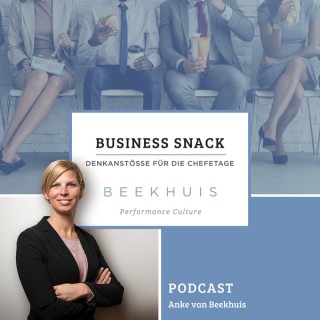
In dieser Folge der „Business Snack – High Performance Talks“ spricht Anke van Beekhuis mit Dr. Andreas Opelt, Vorstandsvorsitzender und CEO der Saubermacher AG. Gemeinsam werfen sie einen praxisnahen Blick darauf, wie eine leistungsstarke Unternehmenskultur entsteht – und welche Rolle Führung, Verantwortung, Kommunikation und persönliche Haltung dabei spielen. Andreas Opelt gibt Einblicke in sein Verständnis von High Performance Culture und erklärt, warum klare Ergebnisse und wirtschaftlicher Erfolg nur ein Teil des Gesamtbildes sind. Für ihn geht es darum, Orientierung zu schaffen, Verantwortung in Teams zu stärken und ein Umfeld zu gestalten, in dem Menschen sich entwickeln und gerne Leistung erbringen.


AI is getting a lot of attention right now, but AI isn't the real challenge, Change is.Technology has always evolved, and every major shift creates uncertainty, resistance, and opportunity. The question isn't whether change is coming. It's how well you respond when it does.In this episode, I share why AI is simply the latest form of "coverage" and how the principles of Beat the Coverage™ can help you adapt, make adjustments, and keep moving forward instead of getting stuck fighting change.You don't have to know exactly what comes next. But you do have to be willing to learn, adjust, and execute.
In this episode of the Health Upgrade Podcast, I dive into the science behind doomscrolling, from why we get stuck endlessly on our phones late at night to what's really happening inside our brains and bodies during those scrolling marathons. I explore the neuroscience of decision fatigue, explain how our visual systems and nervous states are affected, and uncover how screen habits send us into stress mode instead of helping us truly wind down.One concept discussed was the powerful link between our visual focus and nervous system state, illustrating how narrowing our gaze on our phones turns off the calming vagus nerve and ramps up stress hormones. I also share practical strategies like the 20-20-20 rule, physiologic sigh breathing, and creating tech boundaries in the evening to support better sleep and healthier habits.If you found this episode helpful, please share it with a friend who might benefit! Don't forget to rate the podcast and consider joining the free Health Upgraded community for more resources and weekly support. Upgrade your evenings, break the doom scrolling cycle, and give your body the healthy rest it deserves!Dr. Navaz HabibEmail: podcast@healthupgraded.comFacebook: https://www.facebook.com/DrNavazHabib/Instagram: https://www.instagram.com/drnavazhabib/LinkedIn: https://ca.linkedin.com/in/drnavazhabib

(00:00:00) 153.David Brabham: Life at 200mph - What it takes to win in endurance racing (00:02:47) Farm Life and Go Karting (00:05:00) Motivation and Parental Support (00:07:37) What Le Mans Means (00:10:39) Focus at 200mph (00:12:46) Stints, Sleep and Preparation (00:16:59) Fitness, Heat and Mindfulness (00:19:55) Team culture and leadership (00:24:17) Resetting after setbacks (00:29:01) Mentoring and Feedback (00:31:05) Le Mans Journey Lesson What does it take to perform at your best when the stakes are high, the pressure never stops, and one small mistake can end months or years of preparation?Sue Stockdale speaks with Le Mans winner David Brabham, whose career spans more than three decades at the highest levels of motorsport, including Formula One, Le Mans, and endurance racing. The youngest son of three-time Formula One World Champion Sir Jack Brabham, David's path into racing was far from inevitable. In fact, he didn't discover the sport until he was 17 years old.Drawing on his experiences of competing at the sharpest edge of human and machine performance, David shares what racing has taught him about focus, resilience, teamwork, leadership, and making good decisions under pressure. From driving at more than 200 mph through the night at Le Mans to building high-performing teams in business, he reveals the mindset that helped him achieve one of motorsport's greatest prizes.The conversation explores the importance of preparation, managing energy, creating the right team culture, and understanding that success is rarely about individual talent alone. David also reflects on why winning the Le Mans 24 Hours ultimately taught him that the journey matters far more than the trophy itself.You will learn: What it takes to stay focused during a 24-hour endurance raceThe mental techniques used to maintain concentration under extreme pressureWhy sleep, fitness, nutrition, and mindset all contribute to peak performanceHow creating the right team environment leads to better decisions and resultsWhy mistakes and setbacks often contain the greatest opportunities for growthKey Quote"It wasn't about the trophy. It was about the journey. The people you met, the people you worked with, the people who inspired you. That's what made standing on that podium meaningful." Find out more about David Brabham on his website or Instagram Become a supporter of this podcast: https://www.spreaker.com/podcast/access-to-inspiration--4156820/support.Connect with Access to Inspiration: Twitter | Facebook | Instagram | LinkedIn | Read our Impact Report and if you would like to support us then Buy Me A CoffeeHost: Sue Stockdale Producer: Sue Stockdale Sound Editor: Matias De Ezcurra

Hub & Spoken: Data | Analytics | Chief Data Officer | CDO | Strategy
What does it really take to create an environment where different ways of thinking can thrive? In this episode of Hub & Spoken, Jason Foster, CEO & Founder of Cynozure, is joined by Peter Laflin, senior data leader and former CDO at Morrisons, to explore neurodiversity in data and AI and what it means for building high performing teams. Peter explains why many strengths associated with neurodivergent thinking are particularly valuable in data and AI. From spotting patterns to thinking in systems, different ways of processing information can bring huge value to the work these teams do. The conversation also looks at strength based leadership and the importance of understanding how individuals work best. They explore where traditional recruitment processes can create barriers and the practical changes leaders can make to help people thrive. Ultimately, it is about moving away from a one size fits all approach to leadership and creating teams where different ways of thinking are recognized as a strength.
A letter landed on Masud Husain's desk about a man in his thirties who had stopped doing anything at all.Dr. Masud Husain is a clinical neurologist, neuroscientist, and Professor of Neurology and Cognitive Neuroscience at the University of Oxford. He is Editor-in-Chief of the journal Brain and author of Our Brains, Our Selves, winner of the 2025 Royal Society Trivedi Science Book Prize.The letter was about a man named David who had been highly productive, worked in finance, and was charming company. Then he lost his job, stopped showering, and could not be bothered to claim the benefits that would have covered his rent. Asked why he no longer listened to music, he said it would take five minutes to connect the cables.David was not depressed. He had suffered two tiny strokes in the basal ganglia, structures deep in the brain that help link motivational cues to action. Nothing was worth the effort to him anymore.After an initial treatment failed, Masud's team tried another drug that acts on the dopamine system. Three months later David came back with a haircut, a suit, a new job, and a new girlfriend.Addiction researchers had arrived at that same circuit from the other direction: Masud says it is the circuit hijacked by almost every drug of addiction. He and Mike get into what that overlap means about the science of motivation, why apathy and depression are different conditions, why there are more than 200 causes of dementia and what that means for prevention, and whether there is a self to be found in the brain at all.This is a conversation for anyone who has decided to do something and then not done it. Masud frames motivation as a calculation of whether the reward is worth the effort, and the lever most of us have is the size of the effort.After thirty years of seeing patients, the thing Masud says he has learned is that the self is not set in stone. You can change.Enjoy the conversation.______________________________________________________Links & Resources:Dr. Masud Husain's Website: masudhusain.orgDr. Masud Husain's Books: Our Brains, Our Selves: What a Neurologist's Patients Taught Him About the Brain, Oxford Textbook of Cognitive Neurology and Dementia (co-editor)Dr. Masud Husain's Journal: Brain, where he is Editor-in-ChiefSubscribe to our Youtube Channel for more conversations at the intersection of high performance, leadership, and wellbeing: https://www.youtube.com/c/FindingMasteryGet exclusive discounts and support our amazing sponsors!Go to: https://findingmastery.com/sponsors/Subscribe to the Finding Mastery newsletter for weekly high performance insights: https://www.findingmastery.com/newsletterDownload Dr. Mike's Morning Mindset Routine: findingmastery.com/morningmindsetFollow on YouTube, Instagram, LinkedIn, and X#FindingMastery #MasudHusain #DrMichaelGervais #OurBrainsOurSelves #Neuroscience #Neurology #Motivation #Apathy #Dopamine #Attention #Dementia #BrainHealth #Consciousness #Identity #HighPerformance #PsychologySee Privacy Policy at https://art19.com/privacy and California Privacy Notice at https://art19.com/privacy#do-not-sell-my-info.
What do you actually feel when you win? Jake and Damian explore one of the strangest patterns they've noticed across more than 400 High Performance conversations: so many people reach the top of their mountain, only to wish they'd enjoyed the climb a little more.Damian unpacks the hedonic treadmill and arrival fallacy, and asks what we're actually optimising our lives for when every achievement simply moves the goalposts. Because if the next win is always more important than the one you've just achieved, when do you ever get to enjoy where you are?Along the way you'll hear Rio Ferdinand on winning the Champions League and immediately asking who Manchester United were signing next; Jonny Wilkinson on discovering that years of suffering had only created stronger habits of suffering; Stephen Hendry on being back at the practice table the morning after winning; Jill Scott on putting the process ahead of the result; Dan Carter on the one word he wrote in his notebook before a World Cup final: "enjoy"; Ryan Yates on his laid-back cousin who has no desire to achieve more; and Ali Abdaal on the question we should all ask ourselves: would you fast-forward through your life?Winning matters. But so does being there for it.AG1

What separates a high-performing employee from an exceptional one? And what happens when an organization's culture, leadership or bureaucracy prevents that talent from thriving?In this episode of Olympic Minds, two-time Olympian and national championship-winning basketball coach Sherry Winn sits down with global leadership thought leader Brent Kedzierski, whose 25 years at Shell gave him firsthand experience with large-scale organizational transformation. Together, they examine distinctive competence, organizational fit, workplace stress, psychological safety and the leadership behaviors that either unlock or suppress human performance.From knowing when to challenge your people to knowing when to step back, this conversation delivers a powerful message for executives: high performance isn't just about demanding more. It's about creating the conditions where people can perform at their best.What you'll take away:How to identify distinctive competence instead of relying solely on resumes, credentials or technical expertise.Why self-awareness and emotional intelligence are essential leadership capabilities, not "soft skills."How to create high-performance teams by balancing healthy intensity, autonomy, psychological safety and meaningful work.Tune in, share the episode with another leader, and discover what it takes to build a healthier, more connected high-performance culture.#Leadership #ExecutiveLeadership #LeadershipDevelopment #HighPerformanceTeams #EmotionalIntelligence #CLevelLeadership #EmployeeEngagement #OrganizationalCulture #LeadershipMindset #FutureOfWork

Billy Armstrong hasn't just won four state championships in six years. He's become, in his own words, a completely different human being.In part one of a two-part conversation, three years after his first appearance on the podcast, Bergen Catholic head coach Billy Armstrong opens up about the personal transformation behind his program's sustained success: trading a hidden self-improvement journey for total openness, moving from standing over his team to standing shoulder to shoulder with them, and learning that avoiding hard truths to protect a player's feelings was its own form of harm.Whether you're three years into coaching or thirty, this conversation is a reminder that the culture you build only grows as far as you do. Part two drops next week.Chapters(00:00) Intro: Three Years Later(00:55) Becoming a Different Human Being(03:28) From Hidden Journey to Open Book(06:12) Coaching Shoulder to Shoulder(07:55) Who Are You Trying to Become(11:01) Keeping the Door Open(12:42) The Locker Room That Changed Him(19:12) Separating the Person from the Choice(21:48) Lessons from Hurley and Wright(24:22) Serious Fun and Letting Go of ControlTOC 3-2-13 Quotes | 2 Questions | 1 ResourceYour fast-track to the episode's most actionable ideas."We don't have control over outcomes and results in life. We have control in practice. When we get to the games, it's an illusion of control."- Billy Armstrong"There's a difference between important and special. The games are important, practice is important, your schoolwork is important. But the relationships we form within our program, if they're lifelong relationships, that's special."- Billy Armstrong"Because of this, something good will happen."- Billy Armstrong2 Questions for Your TeamQ1: Where in your coaching have you been standing over your players instead of standing shoulder to shoulder with them?Q2: Is there a hard truth you've been withholding from a player to protect their feelings, and what might it cost both of you if you keep waiting?1 Resource to Go DeeperThe Culture System by JP NerbunBilly's TCC values, trust, care, and commitment, mirror the culture system framework JP outlines in this book: clear standards, built and reinforced on purpose.Find it on Amazon hereKey TakeawaysThe Real Change Was Internal, Not StrategicFrom Hidden Journey to Open BookCoach Shoulder to Shoulder, Not Standing OverHigh Clarity Equals High PerformanceProtecting Culture Means Separating the Person from the ChoiceSerious Fun Replaced the Pressure to PerformGet the notes and tools:tocculture.comJoin TOC Coach, community, courses, and live coaching:tocculture.comPart 2, covering goal setting, the quit list, and building a program that outlasts you, drops next week.Better Coaches. Better Leaders. Better Culture.

Delivering exceptional workplace experiences across more spaces with fewer resources is a growing challenge for organizations. In this episode of The Collaboration Space, AVI-SPL's Mathew DeFreitas is joined by Steve McCary, Platform Integration Manager at Q-SYS, to explore what defines a high-performance workplace and how organizations can scale those experiences consistently.In this episode, you'll learn:The key components of a high-performance workplace.Why consistent experiences are critical across every workspace.How advanced collaboration capabilities are becoming easier to deploy at scale.The role repeatability plays in successful workplace strategies.How platform-based technologies and trusted partners help organizations simplify growth and prepare for the future.Learn more at avispl.com/q-sys.Watch this podcast and our full catalog of episodes on our YouTube channel, AVISPLinfo.Get AV and unified communications news delivered to your inbox.Follow AVI-SPL: Linkedin X YouTube

In this What's Working in Ag segment, Tanner gets an up-close look at Brandt's 16125 HP Swingaway Auger. With bins continuing to get taller and wider, Brandt says demand is growing for equipment capable of keeping up. The 16125 can move up to 23,000 bushels per hour, with Brandt recommending roughly a 300-horsepower tractor for the job.Chance explains the engineering behind Brandt's HP—or High Performance—design, including an oversized 17-inch intake section and hopper designed to keep the main auger full and increase capacity. The Easy Swing System also allows operators to hydraulically position the heavy swing hopper from either side and control it through truck remotes or Brandt's LeadHand App on a smartphone. The result is serious grain-moving capacity—roughly enough to unload a 1,000-bushel truck about every five minutes. Brandt also offers 10- and 13-inch auger options, while the 16-inch model adds an A-frame undercarriage, extendable axles, heavy lift cylinders, and adjustable cables for stability when reaching larger bins. Want Farm4Profit Merch? Custom order your favorite items today!https://farmfocused.com/farm-4profit/ Don't forget to like the podcast on all platforms and leave a review where ever you listen! Website: www.Farm4Profit.comShareable episode link: https://intro-to-farm4profit.simplecast.comEmail address: Farm4profitllc@gmail.comCall/Text: 515.207.9640Subscribe to YouTube: https://www.youtube.com/channel/UCSR8c1BrCjNDDI_Acku5XqwFollow us on TikTok: https://www.tiktok.com/@farm4profitllc Connect with us on Facebook: https://www.facebook.com/Farm4ProfitLLC/Farm4Profit Media is not a financial, legal, or tax advisor. Content is provided for informational purposes only, and we serve solely as a platform for third-party opinions. Any actions taken based on this content are at your own risk. Hosted by Simplecast, an AdsWizz company. See pcm.adswizz.com for information about our collection and use of personal data for advertising.

Why "just cut them off" is the wrong first moveHere's the contrarian part, and it's the part most people skip. Every piece of advice online tells you the same thing: identify the toxic person, go no-contact, block, delete, done. And sometimes distance is exactly right. But cutting someone off doesn't answer the harder question, the one underneath the wound: Who told you that you had to keep the snake fed? If you keep ending up with the same viper in a different body: new job, same manipulator; new relationship, same betrayal; the problem isn't your bad luck. It's a belief you've been carrying that says your worth is measured by how much you'll tolerate. You call it being loyal. You call it being the bigger person. You call it keeping the peace. But high-functioning codependency wears respectable clothes, and it will keep you seated at the table of someone who's already decided you're the meal. You can remove every snake in your yard. If you never ask why the door keeps getting left open, another one is already on the way. How to spot a snake before it strikesDiscernment isn't paranoia. It's paying attention to patterns instead of performances. In the episode, Jahmaal walks through the tells: They're fluent in your weaknesses and forgetful of your worth. A snake studies where you're soft, and files it for later.They move differently in public than in private. Psalm 140:3 talks about tongues sharp as a serpent's. Watch what the tongue does when the audience leaves.Confusion is the residue. You leave conversations doubting your own memory. That fog isn't an accident, it's the venom.They reward your silence and punish your honesty. In a healthy relationship, the truth brings you closer. Around a snake, the truth gets you bitten. If you've been calling this "just a difficult person," this section will cost you your comfortable label. Good. Clarity is the first mercy. The wisdom to deal with toxic people (personally and professionally)Personally, the snake counts on your history. "But we go way back." "But that's my family." "But they were there for me once." Loyalty is a virtue, until it becomes the very thing that keeps you kneeling. Professionally, the snake counts on your ambition. You don't confront it because you need the reference, the promotion, the peace of not "making it a thing." So you swallow it. And swallowed venom doesn't disappear; it becomes burnout, resentment, and a body that starts sending you the bill. The wisdom Jahmaal offers isn't a script for a comeback. It's a shift in posture: stop managing the snake and start leading yourself. You don't need them to change for you to stop bleeding. The 3 moves: how to deal with the snakes in your lifeThis is the heart of the episode: three moves, in order. Skip one and the whole thing collapses.1. Take inventoryYou can't confront what you refuse to count. Get honest about who's actually in your circle and what they cost you. Not who you hoped they'd be; who they've shown you they are, on repeat. Write the names. Notice how your body feels before you see them, not just after. Inventory isn't cruelty; it's stewardship. You can't protect a garden you've never walked.2. Take ownershipHere's where it gets holy and uncomfortable. The snake is responsible for the bite. But you are responsible for the access. Ownership means asking the "Who told you?" questions: Who told you that keeping the peace was your job? Who told you love means unlimited access? Who told you that saying no makes you the villain? You didn't choose the first snake. But somewhere along the way you learned to leave the gate open, and what you learned, you can unlearn.3. Make a planWisdom without a plan is just a nice feeling that fades by Monday. Decide (before the next encounter) what you will and won't allow. What the boundary is. What you'll say. What access gets revoked, what stays, and what the consequence is when it's crossed. A boundary you haven't rehearsed is a boundary you'll abandon under pressure. Put it in writing. Say it out loud. Build the fence before you need it. Take inventory. Take ownership. Make a plan. That's how you stop being surprised, and start being sovereign over your own peace. Key takeawaysBeing wise as a serpent isn't about becoming one - it's about refusing to be its next meal.Cutting people off treats the symptom. Healing the belief that left the gate open treats the cause.Discernment reads patterns, not performances. Trust the residue, not the résumé.The snake owns the bite. You own the access.A boundary you haven't planned is a boundary you'll break. Frequently asked questionsHow do you deal with a toxic person you can't avoid, like a coworker or family member? When you can't create distance, you create structure. Take inventory of exactly how they operate, take ownership of the access you've been granting, and make a specific plan for what you will and won't engage with. You manage the terms of contact instead of managing their moods. Is it un-Christian/or unkind to set boundaries with difficult people? No. Jesus set boundaries constantly; He withdrew, He confronted, He named hypocrisy directly. Being innocent as a dove speaks to your motives; being wise as a serpent speaks to your discernment. Boundaries aren't a lack of love. They're love with a spine. How do I know if I'm the problem, not them? Ownership cuts both ways. If the same conflict follows you into every room, that's worth examining honestly. The difference is pattern and posture: a snake studies your weakness and profits from your pain. A healthy person, corrected, adjusts. Take inventory of the fruit over time, not a single bad day. What if setting a boundary costs me the job or the relationship? Then it was already costing you more than you realized (just quietly). This episode isn't about blowing up your life; it's about deciding, on purpose, what your peace is worth before someone else decides for you. Your next step: stop feeding the snakes for goodHere's the truth this episode can't do for you: naming the snake is step one, but building the plan that keeps you free is the work, and most people never do it alone. They read the article, feel the click of recognition, and then slide right back into the old pattern by the next hard conversation. That's exactly what the Premium Strategy Hour is built for. In one focused, private session, Jahmaal helps you take inventory of who really has access to you, uncover the belief that's been leaving your gate open, and walk out with a concrete plan for the specific snakes in your life (personally and professionally). No fluff. No shame. Just clarity, strategy, and a spine. Spots are intentionally limited each month so every session gets full depth, and they fill fast when an episode like this drops. If the recognition you felt reading this is real, don't let it fade by Monday.
What could your mind do with just a few moments of silence? This week Robert Greene explores the liberation that comes from practicing enlightenment through silence, and how recognition of death tragedy help him manage adversity in his daily life. Listen in as we discuss why manipulation is part of our makeup, why recognizing our failings makes us better people, and how a near-encounter with death changed his perception of adversity. Robert Greene is the author of the New York Times bestsellers The 48 Laws of Power, The Art of Seduction, The 33 Strategies of War, and The 50th Law. His highly anticipated fifth book, Mastery, examines the lives of great historical figures such as Charles Darwin, Mozart, Paul Graham and Henry Ford and distills the traits and universal ingredients that made them masters. In addition to having a strong following within the business world and a deep following in Washington, DC, Greene’s books are hailed by everyone from war historians to the biggest musicians in the industry (including Jay-Z and 50 Cent). Greene attended U.C. Berkeley and the University of Wisconsin at Madison, where he received a degree in classical studies. He currently lives in Los Angeles. You can see a full collection of Greene’s work here: https://www.amazon.com/stores/author/B001IGV3IS/allbooks?ingress=0&visitId=33a4f706-a8ef-4d25-8162-c1f038681070 Learn more about the gift of Adversity and my mission to help my fellow humans create a better world by heading to www.marcusaureliusanderson.com. There you can take action by joining my ANV inner circle to get exclusive content and information.See omnystudio.com/listener for privacy information.

Today on Connected, you'll hear from Randy Carlton, general manager at Volvo Cars Bellevue and one of the winners of the 2026 Automotive Amplifiers Contest. Over the past 30 years, Randy has built an impressive automotive career spanning retail, software, finance, and leadership roles with some of the industry's largest organizations. Randy shares the experiences, lessons, and leadership principles that helped him transform Volvo Cars Bellevue into a top-performing Volvo dealership. In this episode, Randy discusses: -The three traits shared by great dealerships: low turnover, high integrity, and an exceptional guest experience. -Why creating a workplace where employees enjoy coming to work leads to stronger performance and loyalty. -Lessons learned from working with some of the industry's most successful dealer groups and leaders.

We're told that winners never quit — but what if strategic quitting is the skill high performers are missing? In this episode, Brad sits down with Lindsay Crouse, author of The Case for Quitting and former New York Times editor and writer, to challenge the "never give up" mindset that quietly works against ambitious people.Lindsay shares her own journey from Harvard to career heights at the Times — including elevating women Olympians' voices to win maternity protections for pregnant athletes and commissioning the Times' first Academy Award–winning film — and how her superpower of relentless perseverance eventually started to undermine her performance and happiness.Together, Lindsay and Dr. Cooper unpack how perseverance and quitting are companion behaviors, not opposites. You'll learn why "Why am I continuing?" is a more useful question than "Should I quit?", how to tell the difference between healthy drive and fear-based grinding, and how to set "kill criteria" before you're too invested to think clearly. They dig into the spotlight effect and our overblown fear of judgment, why we regret inaction more than action, and the coach's wisdom to never quit on a bad day.Lindsay closes with a practical framework for anyone standing at a crossroads: picture the morning after you walk away, get clear on what you're moving toward (not just what you're escaping), and build a financial parachute so the choice is deliberate rather than impulsive. A must-listen for high achievers — and the coaches who guide them.Info re earning your health & wellness coaching certification, annual Rocky Mountain Coaching Retreat & Symposium & more via https://www.catalystcoachinginstitute.com/ Best-in-class coaching for Employers, EAPs & wellness providers https://catalystcoaching360.com/Tap into the home of the (freely available) Not Done Yet! articles on unlocking life's 2nd half here.YouTube Coaching Channel https://www.youtube.com/c/CoachingChannelContact us: Results@CatalystCoaching360.comTwitter: @Catalyst2ThriveWebsite: CatalystCoaching360.comIf you are a current or future health & wellness coach, please check out our Health & Wellness Coaching Community on Facebook: https://www.facebook.com/groups/278207545599218. This is a wonderful group if you are looking for encouragement, ideas, resources and more.

Pure Yachts is a new German shipyard based in Kiel, northern Germany, building high-performance aluminum cruising yachts featuring hydraulic-lift keel systems, modern planing hull lines, and the use of lightweight composite materials for the interior components. Their boats use the highest quality aluminium and top-shelf components to make them long lasting, secure and fit for world-wide bluewater cruising and high-latitude expeditions. We talk about sailing in the Baltic Sea, the details of the yachts they build, custom hatches, precision design and boat building, boat performance in various conditions, the advantages of fast high-performance boats, their design philosophy and market niche, the expected lifespan of a Pure Yacht, things owners need to know about aluminum boats, the portlights, bulkheads (or not), construction of the aluminum hull, the lifting keel, dual rudders, drying out, customization, and more. Photos and links are on the podcast shownotes page Support the show through Patreon Shop for or sell sailboats at SailboatsForSale.com Sail in New England / Canada with Sailing Resolution Get marine electrical help from Meridian Marine Electrial Shop LED navigation lights at Signal Mate

What does it really take to perform at the highest level—and what happens when the drive to be great starts taking a toll? On this episode of Performance Talk with Dr. Ewell Gordon, former professional cricketer Jim Allenby shares lessons from a 15-year playing career, the evolution of sports science and performance preparation, and the importance of knowing when to push harder—and when it's time to step back. From physical conditioning and recovery to mental preparation, career longevity, identity, and the difficult transition out of professional sport, this conversation offers powerful insights for athletes, coaches, and anyone striving for high performance.

What if you accomplish everything you are working for and lose yourself getting there?That is not meant to make you afraid of success.I want you to be successful.I want you to achieve the things that matter to you.I want you to perform at your highest level.I just do not believe you should have to lose your health, your relationships, your purpose, or your connection to yourself to get there.That is what Benjamin Smith and I explore in this episode.Benjamin works with high performers and has spent much of his life asking two questions:What does it mean to be human?And:What is a life well-lived?Those questions took us into a conversation about performance, identity, pressure, rest, purpose, connection, and self-worth.We talked about what happens when your accomplishments stop being something you do and start becoming evidence of who you are.Because when you begin believing your worth depends on your performance, success does something strange.You do well.You feel relief.Then you immediately start worrying about the next thing.I know that cycle.Maybe you do too.Benjamin offers a different way of thinking about high performance.What if your performance became an expression of who you are instead of proof that you are enough?That does not make you less ambitious.It may actually make you better.Because now you are free to compete.Create.Lead.Learn.Fail.Recover.Try again.You are not asking every outcome to tell you whether you matter.We also spend a lot of time talking about rest.That is personal for me.I spent years believing rest was what happened when the work was finished.The problem is the work is never finished.There will always be another email.Another meeting.Another goal.Another person who needs something.So at some point, you have to decide that recovery is part of the work.I wish I understood that earlier.Maybe you need to hear it now.Listen to this episode and ask yourself:Am I building a successful life, or am I building a life I actually want to live?Hopefully the answer becomes both.Connect with BenjaminInner Life of Sport:https://www.innerlifeofsport.com/Meet Benjamin:https://www.innerlifeofsport.com/meetbenjaminNewsletter:https://innerlifeofsport.substack.com/LinkedIn:https://www.linkedin.com/in/bcsmith2Connect with me:https://tjsweet.comInstagram: @thetjsweetLinkedIn: https://www.linkedin.com/in/thetjsweet/YouTube: https://www.youtube.com/@thetjsweet

Lance Wright is an Addiction Recovery Specialist, TEDx speaker, author, and founder of Life Over Addiction. With more than three decades of personal recovery experience and years working professionally in behavioral health, Lance helps individuals, families, and working professionals navigate addiction, stress, identity, and personal transformation.Through his concept of “Thought Addiction,” Lance explores how deeply rooted narratives, beliefs, and emotional conditioning can influence behavior. His work helps people reconnect with purpose, resilience, and lasting change through awareness, neuroplasticity-based practices, and honest human connection.SHOW SUMMARYIn this episode of Selling from the Heart, Larry Levine and Darrell Amy welcome Lance Wright for a powerful conversation about high performance, addiction, validation, and the internal pressures many sales professionals carry.Lance shares his extraordinary journey from addiction and incarceration to recovery and transformation, along with the lessons that helped him rebuild his life.The conversation also examines a form of addiction that can easily hide behind professional success: the constant chase for validation. The next sale, ranking, award, or big win may provide a temporary high—but what happens when your sense of worth depends on achieving the next one?Lance challenges sales professionals to separate who they are from what they achieve, recognize unhealthy coping patterns, and have the courage to seek support before those patterns become destructive.Ultimately, this conversation is a reminder that sustainable success begins on the inside.KEY TAKEAWAYSYour performance is not your identity. Sales results change. Your sense of worth cannot depend entirely on quotas, rankings, or recognition.Validation can become a chase. The emotional high of winning fades quickly when achievement becomes the primary source of fulfillment.Pressure can reveal deeper beliefs. Rejection and uncertainty can expose fears around failure, inadequacy, perfectionism, and acceptance.Unhealthy coping patterns can develop gradually. Behaviors used to escape stress or emotional discomfort can become increasingly difficult to control.Authenticity goes deeper than professional success. Knowing who you are apart from your achievements creates a stronger foundation.HIGHLIGHT QUOTESThe win isn't the real thing, it's the chase, it's the hunt.How do I not use my profession as a casino?I don't need your validation. I know who I am.I didn't have that thought. I was taught that thought.The mirror never lies. Only the person looking into the mirror lies.ADDITIONAL RESOURCESExplore the secrets of heart-centered leadership and thriving workplace cultures with Culture from the Heart Podcast! Nominate a visionary CEO at https://culturefromtheheart.com/HomeGet Larry's New Book: Selling Food from the Heart, https://a.co/d/07dzlMx8Subscribe to The Selling from the Heart Podcast Youtube Channel! Stay updated with the latest episodes and leadership tips: https://www.youtube.com/c/sellingfromtheheart/Get Your Daily Dose of Inspiration:https://www.sellingfromtheheart.net/daily

Intricate insights and wisdom for the High Performance Minded!

Welcome back to this week's Friday Review where I can't wait to share with you the best of the week! I'm looking forward to reviewing: High-Performance Health Scans (product review) Comparison Creates Confusion (tip of the week) Strength Training & Longevity (research) Developments in Aging Science For all the details tune into this week's Cabral Concept 3864 – Enjoy the show and let me know what you thought! - - - For Everything Mentioned In Today's Show: StephenCabral.com/3864 - - - Get a FREE Copy of Dr. Cabral's Book: The Rain Barrel Effect - - - Join the Community & Get Your Questions Answered: CabralSupportGroup.com - - - Dr. Cabral's Most Popular At-Home Lab Tests: > Complete Minerals & Metals Test (Test for mineral imbalances & heavy metal toxicity) - - - > Complete Candida, Metabolic & Vitamins Test (Test for 75 biomarkers including yeast & bacterial gut overgrowth, as well as vitamin levels) - - - > Complete Stress, Mood & Metabolism Test (Discover your complete thyroid, adrenal, hormone, vitamin D & insulin levels) - - - > Complete Food Sensitivity Test (Find out your hidden food sensitivities) - - - > Complete Omega-3 & Inflammation Test (Discover your levels of inflammation related to your omega-6 to omega-3 levels) - - - Get Your Question Answered On An Upcoming HouseCall: StephenCabral.com/askcabral - - - Would You Take 30 Seconds To Rate & Review The Cabral Concept? The best way to help me spread our mission of true natural health is to pass on the good word, and I read and appreciate every review!

Returning to the podcast today is Heather Chauvin, author, coach, and leadership advisor, to discuss energy management, burnout, boundaries, and creating a more intentional approach to work and life. Heather shares practical ways to recognize unmet needs, protect your energy, and create greater capacity. Episode Highlights: Why managing your energy is just as important as managing your time How burnout can signal unmet needs and prolonged self-abandonment Identifying what you want and how you want to feel in your life and career Setting boundaries, letting go of perfectionism, and moving away from constant busyness Using delegation and empowering your team to protect your time and energy Ready to thrive as a dentist and a mom? Join a supportive community of like-minded professionals at Mommy Dentists in Business. Whether you're looking to grow your practice, find balance, or connect with others who understand your journey, MDIB is here to help. Visit mommydibs.com to learn more and become a part of this empowering network today!

Being a high performer isn't as virtuous as it seems if it comes from compensating for insecurities.Was this helpful? If so then you need to check out the 7 Fundamentals Of Self Improvement which features short summaries of the most popular and impactful episodes from the past 8 years.Takes only 5 minutes to read through them today but it'll help you avoid years of making things so much harder than they need to be. Plus, I bet you'll be surprised to learn what they are...

Send us Fan MailWhat if your purpose isn't something you have to find — but something you're here to embody?In this powerful conversation, I sit down with my friend Yadi Alba, a modern-day medicine woman, spiritual advisor and co-founder of the Goddess Wisdom Council, to explore sacred purpose, spiritual awakening, consciousness and what it really means to find your purpose and live a life that feels deeply connected from the inside out.Yadi's journey has taken her from Mexico and UC Berkeley into a profound spiritual awakening and a path deeply influenced by Mayan, Toltec and Aztec wisdom traditions — bringing ancient wisdom into modern life in a grounded, practical and deeply human way.We explore unity consciousness and why spirituality can sometimes become distorted into an idea of “all light, no shadow.” Yadi offers a beautiful reframe: darkness can be understood as the womb of creation — an energetic space of infinite possibility rather than something to fear or reject.From there, we explore the integration of the divine feminine and sacred masculine, and how bringing these energies into greater balance can influence our health, relationships, leadership and sustainable success.This conversation is particularly relevant for high performers who may be achieving a great deal externally, yet still feel disconnected, overwhelmed or uncertain internally.Yadi also introduces her work with “energetic imprints” — limiting beliefs, emotional patterns and automatic coping behaviours that can become embedded in the nervous system and carried through family lineage.We talk about triggers as opportunities for awareness, inner-child healing, emotional healing, personal responsibility and the power of consciously choosing a different response. Because when we change the way we respond, we can begin creating new neural pathways — and ultimately, a new lived experience.We also explore perfectionism, self-worth, relationships, personal growth, spiritual growth and conscious leadership — and the possibility that your sacred purpose may be much closer than you think.If you've ever felt there must be more to life than simply achieving the next goal, this conversation is for you.THE RETREAT 5'-9 Jan 2027 - Sign up here https://gamma.app/docs/GWC-Tribe-Retreat--skj4z8gzvhkptmu?mode=docSupport the showThank you for listening
Send us Fan MailRon O'Hare has spent more than 25 years working at the intersection of sport physiotherapy, leadership, and high performance. Today, he serves as Senior Manager of Health Performance at the Canadian Sport Institute Ontario, leading integrated health services supporting Olympic, Paralympic, and high-performance athletes and coaches.But this conversation is about much more than Ron's professional résumé.We go back to his childhood, growing up “on the other side of the tracks,” and explore how sport became a place of structure, safety, identity, and belonging. Ron shares his journey from dreaming of becoming a professional baseball player to finding volleyball, eventually playing five years at Queen's University before discovering his path into physiotherapy.From there, our conversation moves through more than two decades of clinical practice, building and running his own clinic, raising four children, working within Canadian high-performance sport, and eventually stepping into health-performance leadership.Ron speaks openly about compassion, caregiving, persistence, leadership, family, professional sacrifice, and the fatigue that can come from spending a career deeply invested in helping others. We also discuss how difficult experiences, including a tragic event involving an athlete during a training camp in St. Kitts, changed his perspective on leadership, responsibility, and what really matters.At its heart, this is a conversation about the person behind the practitioner. About how our experiences shape the way we care for people, how our priorities change over a lifetime, and why meaningful careers are rarely built according to a perfectly constructed plan.Another thoughtful conversation with an experienced practitioner, leader, father, coach, and genuinely reflective human being.Enjoy.If you liked this EP, please take the time to rate and comment, share with a friend, and connect with us on social channels IG @Kingopain, TW @BuiltbyScott, LI+FB Scott Livingston. You can find all things LYM at www.LYMLab.com, download your free Life Lab Starter Kit today and get busy living https://lymlab.com/free-lym-lab-starter/Please take the time to visit and connect with our sponsors, they are an essential part of our success:www.ReconditioningHQ.comwww.FreePainGuide.com

In this episode of the Passive House Podcast, Ilka Cassidy talks with Rob Leonard, a longtime builder and prefabrication specialist who helped develop the BuildSmart panel system and now leads PHIUS's Trades Training Program. Rob traces his path from decades in the field to pioneering panelized construction. Rob also shares what's next for industrialized offsite construction, from micro-factories to AI-assisted quality control, and reflects on workforce development as one of the most urgent challenges facing the building industry.Beeson Acres Resources LLC: https://www.beesonacresresources.com/Phius Trades Training Program to Help Shape the Future of Building: https://www.phius.org/phius-trades-training-program-help-shape-future-buildingVirginia Tech Housing Innovation Challenge: https://arch.vt.edu/experiential-learning/FutureHAUS/housing-innovation-challenge.htmlExpanding Industrialized Offsite Construction in Central Appalachia: https://cece.vt.edu/content/dam/cece_vt_edu/projects/Expanding%20industrialized%20offsite%20construction%20%28IOC%29%20in%20Central%20Appalachia.pdfConnect with Rob: https://www.linkedin.com/in/robert-leonard-b2873010https://www.phius.org/our-people/rob-leonardJoin us on the Reimagine Buildings Collective: https://collective.reimaginebuildings.com/Thank you for listening to the Passive House Podcast! To learn more about Passive House and to stay abreast of our latest programming, visit passivehouseaccelerator.com. And please join us at one of our Passive House Accelerator LIVE! zoom gatherings on Wednesdays.

The last thing you want is to be constantly sore and fatigued. You want to be jacked, lean, strong, and perform at a high level in every aspect of your life. Your training needs to reflect that. On today's show I walk you through what I call The High Performance Protocol. A training system I use for myself and my clients that will help you build muscle, get strong and feel better than ever. Enjoy the show.

What does high performance really look like in a world of constant change, rising burnout, and increasing pressure to do more?For years, the dominant formula has been simple: work harder, move faster, and put in more hours. Bestselling author and leadership expert Ty Bennett believes that formula is outdated.In this episode of The Good Leadership Podcast, Ty joins Charles Good to unpack the research behind his new book, Redefining High Performance: Research Backed Insights to Lead Better, Sell More, and Perform Higher.Ty commissioned a national research study to uncover what truly drives high performance and what gets in the way. Two findings stood out: preparation emerged as the number one driver of high performance, while fear of failure emerged as the number one barrier.Ty explains why high performance today depends on preparation, curiosity, adaptability, and the ability to keep learning as the world changes around you.Website: tybennett.comLatest book: Redefining High Performancehttps://tybennett.com/product/redefining-high-performance/Key Takeaways• High performance is built through preparation, curiosity, and adaptability.• Fear of failure is the number one barrier to high performance.• Preparation should include relational preparation, scenario preparation, and team rehearsal.• Reframing failure as a learning opportunity accelerates growth.• The old definition of high performance as simply working harder is obsolete.• Relevance in leadership is a daily practice of learning and adapting.• Successful executives should maintain a “to learn” list alongside their to do list.• Curiosity is a leadership superpower that improves learning and decision-making.• Preparation creates the freedom to adapt and pivot in real time.• Continuous learning and asking better questions are essential to long-term relevance.Memorable Insights“Preparation costs you less than you think.”“High performance is about working deeper, not harder.”“The skill of learning is more important than what you learn.”Chapters00:00 Introduction to Redefining High Performance01:50 The Research Behind High Performance04:20 The Surprising Barrier: Fear of Failure06:19 Preparation as the Key Driver of Success11:39 Redefining High Performance for Today's Leaders14:15 Avoiding Irrelevance as a Successful Executive16:28 The Power of Curiosity and Continuous Learning20:10 Final Takeaways: Building Performance Before the Moment20:38 Closing Remarks and ResourcesSubscribe to The Good Leadership Podcast: [Apple Podcasts] | [Spotify] | [YouTube]LinkedIn: linkedin.com/in/charlesagoodSubstack Channel (Outlearn to Outperform): charlesgood.substack.comLinkedIn Newsletter (The Outlearn Advantage): [Subscribe]The Institute for Management Studies
The One Line That Changes Everything Sometimes the door didn't close on you. It closed for you. If you're a high-achiever who's been taught that every "no" is just a "not yet" you can grind your way past, this episode is your permission slip to do something your ambition has never allowed: stay excluded. Because the burnout you're carrying? It's rarely the workload. It's the chasing, the emotional overtime you're logging trying to earn your way back into a room God already walked you out of. What You'll Learn in This Episode Why burnout is almost never about doing too much — and what's actually draining you The difference between being rejected and being removed (and why it matters) 4 real-life examples of rejection being protection in disguise What Scripture says about closed doors, betrayal, and repositioning The one question that turns exclusion into freedom instead of exhaustion Rejection Isn't the End of Your Story: It's the Repositioning Here's the pattern most high-performers miss: rejection is often protection wearing a mask you don't recognize yet. You keep knocking. You keep over-explaining. You keep proving yourself to people who already decided. And you call it perseverance, but your body is calling it burnout. The truth is, when you keep trying to re-enter rooms you were excluded from, you don't just waste energy. You override the very protection that exclusion was built to give you. "You weren't rejected. You were removed. And there's a difference, because man looks at the door, but God looks at what's on the other side of it." Ready to Pull the Root Out? If this episode named something you've been living, the exhaustion of trying to break back into a room God locked for your good, don't sit with that revelation alone. That's exactly the work we do inside the Premium Strategy Hour. One hour, just you and me. We go underneath the burnout, find the belief that keeps you chasing closed doors, and pull it out by the root. I only open a handful of these each month. When they're gone, they're gone, so don't wait for the next season of exhaustion to make the decision for you. Book Your Premium Strategy Hour - HERE Hosted by Simplecast, an AdsWizz company. See pcm.adswizz.com for information about our collection and use of personal data for advertising.

In this episode of Habitual Excellence, Ken Segel speaks with Heather Schimmers, President of Emplify Health, about leading through change while building a stronger, more unified health system. Heather shares how Emplify's high-performance operating model creates a shared way of working, helping teams align around strategy, outcomes, and execution.Drawing on her journey from nursing to executive leadership, Heather discusses the importance of clarity, consistency, trust, and removing barriers for frontline teams. She also shares an optimistic perspective on the future of healthcare, grounded in her belief that leadership starts with love and that disciplined systems can empower people to solve problems, adapt to change, and deliver better outcomes.
What does it take to build a genuinely integrated high-performance programme? This week, Richard Graves is joined by Dr Trevor Short, Senior Associate Athletics Director for Health, Wellness and Performance at Utah State University. Trevor explains how Utah State is bringing sports science, sports medicine, strength and conditioning, nutrition and mental wellness together around three shared objectives: athlete availability, performance development and readiness to compete. The conversation explores why alignment must come before data, how monitoring should respond to the questions coaches are actually asking, and why collecting more information does not automatically lead to better decisions. Trevor also discusses the challenge of balancing performance development with athlete availability, adapting thresholds to the demands of the season and communicating the same evidence differently to coaches and senior leaders. This is a practical discussion about designing high-performance systems in which every intervention has a purpose, departments work beyond their traditional silos and the athlete remains at the centre of decision-making. In this episode you will learn Why athlete availability, performance and readiness can be competing objectives How Utah State is integrating its performance, medical, nutrition and mental wellness teams Why alignment with coaches should come before collecting data How to build monitoring systems around meaningful performance questions Why readiness flags must be interpreted within the context of the season How multidisciplinary teams can make better decisions for individual athletes Why the same information should be communicated differently to coaches and administrators How standard operating procedures can make performance systems more consistent and measurable Why leadership, culture and trust matter as much as technology How integrated athlete support can increase a team's chances of winning About Trevor Short Dr Trevor Short is Senior Associate Athletics Director for Health, Wellness and Performance at Utah State University, where he oversees sports medicine, strength and conditioning, sports nutrition, mental wellness and sports performance. Before joining Utah State, Trevor worked as a performance and sports scientist at the University of Hawai‘i, supporting sports science provision across its intercollegiate programmes. His career has also included strength and conditioning, applied research, university teaching, private-sector performance coaching and operational leadership. Trevor holds a PhD in Kinesiology and is a Certified Performance and Sport Scientist and Certified Strength and Conditioning Specialist through the NSCA. His work focuses on integrated high-performance systems, athlete monitoring and the use of evidence to improve athlete availability, readiness and performance. FREE 7d SCIENCE FOR SPORT ACADEMY TRIAL SIGN UP NOW: https://bit.ly/SFSepisode241 Learn Quicker & More Effectively Optimise Your Athletes' Recovery Position Yourself As An Expert To Your Athletes And Naturally Improve Buy-In Reduce Your Athletes' Injury Ratese Save 100's Of Dollars A Year That Would Otherwise Be Spent On Books, Courses And More Improve Your Athletes' Performance Advance Forward In Your Career, Allowing You To Earn More Money And Work With Elite-Level Athletes Save Yourself The Stress & Worry Of Constantly Trying To Stay Up-To-Date With Sports Science Research
A key leader at one of the most prolific coaching agencies in the world, David Miller of Novus Global, shares about all things meta-performance, vision, and impact.Two ways to take action!Complete the Meta Performance AssessmentConnect with David Miller on LinkedIn

In this podcast, Eric digs in on why the timing of trunk rotation is so important for keeping pitchers healthy and helping them perform at a high level. Citing recent research on how early and late trunk rotators move differently, he highlights practical applications for players and coaches.A special thanks to this show's sponsor, AG1. Head to https://DrinkAG1.com/cressey and you'll receive an awesome welcome pack consisting of free AG1 travel packets, a shaker bottle, and a 600-serving bottle of Vitamin D3+K2 with your first order.

86% of employees at Canada's Best Workplaces say management keeps them informed about important issues and changes, according to Great Place to Work Canada. That statistic underscores a fundamental truth about organizational success: trust, transparency, and communication matter—especially when organizations and their people are navigating change. High-trust workplace cultures can also have a powerful impact on employee retention, engagement, collaboration, and an organization's ability to navigate uncertainty. When employees trust their leaders, understand where the organization is going, and feel connected to the people around them, teams are better positioned to perform when circumstances become challenging. So, how can leaders build teams that communicate faster, trust more deeply, and execute effectively when things get messy? On this episode of Let's Have This Conversation, I'm joined by Tyler Hayden, a Hall of Fame keynote speaker, Certified Speaking Professional (CSP), bestselling author, and organizational development consultant who has spent more than 30 years working with teams—from outdoor leadership environments to corporate boardrooms. Tyler has worked with organizations including TD Bank, Bell, Honeywell, and Pratt & Whitney, helping leaders strengthen communication, engagement, collaboration, and organizational culture. His promise for every engagement is simple: High energy. Real tools. Measurable behaviour change. Tyler's work sits at the intersection of leadership and manager development, team engagement, employee retention, workplace culture, experiential learning, facilitation, and evidence-based approaches to creating lasting behavioural change. During our conversation, we explore what separates an ordinary collection of employees from a truly high-performing team. We discuss how leaders can establish trust, improve communication, strengthen employee engagement, and create workplace cultures where people are prepared to perform through uncertainty and organizational change. We also examine the power of storytelling in leadership and why the stories leaders tell—and the way they communicate them—can influence trust, belonging, motivation, and organizational identity. Tyler also shares insights from his proprietary MIQ approach, his philosophy of experiential learning, and what three decades of working directly with teams have taught him about creating learning experiences that actually stick. At its core, this conversation is about creating elite workplace cultures where communication is clear, trust is intentional, leadership is human, and employees are equipped to perform when the pressure rises. If you're a CEO, executive, HR professional, people leader, manager, organizational development professional, or anyone responsible for building stronger teams, this conversation offers practical insights into turning workplace culture from an abstract concept into a measurable competitive advantage. For more information: https://tylerhayden.com/ Get the books: https://www.amazon.ca/stores/Tyler-Hayden/author/B00N9P1SHC?_encoding=UTF8&pd_rd_w=gBysS&content-id=amzn1.sym.aaa4948b-dfc3-44fd-9219-af24eb02108e&pd_rd_wg=xtrkQ&pd_rd_r=e0e1976e-1412-48db-9567-2703a8b4678f&ref=ap_rdr&shoppingPortalEnabled=true Discover more: https://rubberchicken.ai/ Learn more about your ad choices. Visit megaphone.fm/adchoices
Send us Fan MailWhat does it really take to build a career in professional sport?This week on Leave Your Mark, I sit down with strength and conditioning coach Jason Martin as he prepares to begin a new chapter as Head Strength and Conditioning Coach with the Toronto Maple Leafs.Jason's path began early, earning his first training certification at just 16 before completing his Physical Education degree at McGill University. His career would eventually take him through CrossFit, professional tennis, Major League Baseball, more than a decade of working with hockey players, and three seasons in player development with the Pittsburgh Penguins.But this conversation is about much more than Jason's résumé.We talk about the influence of mentorship, particularly his relationship with Andy O'Brien, and why experience can't simply be replaced by collecting certifications. Jason shares his thoughts on asking for feedback, recognizing your limitations, building genuine relationships, and allowing a career to develop without trying to engineer every next step.We also dig into one of the most important challenges of working in professional sport: earning the trust of athletes who didn't necessarily choose you to work with them.Jason's philosophy is refreshingly simple. Ask questions. Listen. Understand what the athlete needs. Be good to people. Do quality work. And give trust the time it needs to develop.A great conversation about coaching, mentorship, relationships, experience, and the long game of building a meaningful career in high performance.If you liked this EP, please take the time to rate and comment, share with a friend, and connect with us on social channels IG @Kingopain, TW @BuiltbyScott, LI+FB Scott Livingston. You can find all things LYM at www.LYMLab.com, download your free Life Lab Starter Kit today and get busy living https://lymlab.com/free-lym-lab-starter/Please take the time to visit and connect with our sponsors, they are an essential part of our success:www.ReconditioningHQ.comwww.FreePainGuide.com
Most private practice owners know they need a good billing department but very few know how to actually manage one. In this episode of the Private Practice Owners Club, Nathan Shields and Adam Robin break down one of the biggest hidden profit leaks in private practice: poor billing oversight. Whether your billing is handled in-house or outsourced, simply trusting your biller isn't enough. As an owner, you need to understand the numbers, ask better questions, and establish accountability. Nathan and Adam share hard-earned lessons from years of losing—and eventually recovering—hundreds of thousands of dollars by learning how to manage the revenue cycle more effectively. In this episode, you'll learn:Why billing is one of the biggest hidden profit leaks in private practiceThe costly mistake of relying solely on your billing companyThe essential reports every owner should review every monthHow to run productive billing accountability meetingsThe KPIs that actually matter collections, denial rates, and AR agingBenchmarks every billing department should be hittingWhy denial rates are the leading indicator of billing performanceHow front desk processes directly impact your revenue cycleWhat separates average billers from truly exceptional onesHow to build stronger communication between your front desk and billing teamThe leadership mindset required to take ownership of your clinic's financial health If you've ever wondered whether your billing department is leaving money on the table, this episode provides a practical framework to take back control of your revenue cycle and protect your clinic's profitability. Join us at the High-Performance Practice Conference and learn proven systems to build a more profitable, efficient private practice. Love the show? Subscribe, leave a review, and share this episode with another private practice owner. Explore more resources from the Private Practice Owners Club:https://linktr.ee/ppoclubLove the show? Subscribe, rate, review, and share! https://ptoclub.com/Register for the Private Practice Owners Club conference now at https://ppoclubevents.com/home-page-2026

*Original Airdate: September '24 Upgrade to the Ad Free Premium Podcast Experience - https://rachelhollis.supercast.com Get your copy of Rachel's Book Here: Audible, Amazon, Barnes & Noble, Books-A-Millon, Bookshop.org, or wherever books are sold! To learn more about listener data and our privacy practices visit: https://www.audacyinc.com/privacy-policy Learn more about your ad choices. Visit https://podcastchoices.com/adchoices In this throwback episode of The Rachel Hollis Podcast, Rachel sits down with performance psychologist Mike Gervais to explore how training your mind can help you overcome fear, build confidence, and reach the next version of yourself. They discuss why confidence comes from preparation and credible self-talk, how fear of other people's opinions can hold us back, and the importance of mindfulness, recovery, and staying present. Mike shares practical tools for managing stress and strengthening mental skills, emphasizing that your mind can be trained just like your body. *Friday Favorites are a collection of our all-time most popular episodes replayed for the newest members of the community and anyone who wants a relisten. Hosted by Simplecast, an AdsWizz company. See pcm.adswizz.com for information about our collection and use of personal data for advertising.
Welcome to the Win Cycle Podcast! On this episode, IRONMAN Master Coach Matt Dixon and Purple Patch Fitness Co-Founder Kelli McMaster interview Sami Inkinen, co-founder and COO of Trulia and CEO of Virta Health, discussing his journey of high performance in sports and business. He emphasizes the importance of managing energy over time, integrating work, family, and personal interests, and treating oneself like an Olympic athlete. Inkinen highlights the significance of sleep, nutrition, and movement for sustained high performance. He also shares his approach to building high-performance cultures at Trulia and Virta, focusing on individualized support, community, and the role of leadership in modeling healthy habits. Inkinen's strategies include weekly planning, prioritizing rest, and fostering a culture of sustainable high performance. Purple Patch and Episode Resources Learn more about Win Cycle: https://wincycle.org/ Check out our world-class coaching and training options: Book a complementary needs assessment coaching call: https://calendly.com/coaches-purplepatch/offseason-assessment-call Tri Squad: https://www.purplepatchfitness.com/squad 1:1 Coaching: https://www.purplepatchfitness.com/11-coached Run Squad: https://www.purplepatchfitness/com/run-squad Strength Squad: https://www.purplepatchfitness.com/strength-1 Live & On-Demand Bike Sessions: https://www.purplepatchfitness.com/bike Explore our training options in detail: https://bit.ly/3XBo1Pi Live in San Francisco? Explore the Purple Patch Performance Center: https://center.purplepatchfitness.com Everything you need to know about our methodology: https://www.purplepatchfitness.com/our-methodology Amplify your approach to nutrition with Purple Patch + Fuelin https://www.fuelin.com/purplepatch Get access to our free training resources, insight-packed newsletter and more at purplepatchfitness.com
What do you do when the people around you don't believe you can do it? Jake and Damian tackle one of the things listeners struggle with most — being doubted — and land somewhere they didn't expect: the doubt that really holds you back is usually your own.Damian unpacks Albert Bandura's self-efficacy theory and why the two ways to build belief are evidence and self-talk, Alison Brooks' research on reframing nerves as readiness rather than fear, and self-determination theory — why being doubted by others can become the most durable fuel there is.Along the way you'll hear Rugby League legend Jamie Peacock on the day he stayed on the bus and rode past his trial at Bradford Bulls, and the mantra he repeated the second time to get off; Karl Lokko on where he found the confidence to walk into rooms that weren't built for him and Mel Robbins on the morning in her bathroom that changed how she talks to herself.Plus, Jake and Damian are joined by High Performance listener Claire, who spent 31 years in policing, to hear what all this means from the other side of the microphone.The belief doesn't have to come first. The action does — and the evidence follows.Listen to the full episodes: Jamie Peacock: Mel Robbins: Karl Locco: Hosted on Acast. See acast.com/privacy for more information.
© 2020-2026 Ivy Podcast Discovery LLC
