
Generation of people who came of age in the beginning of the third millennium

POPULARITY
Categories

876 episodes with Millennials

852 episodes with Millennials

579 episodes with Millennials

291 episodes with Millennials

238 episodes with Millennials

260 episodes with Millennials

237 episodes with Millennials

373 episodes with Millennials

119 episodes with Millennials

247 episodes with Millennials

212 episodes with Millennials

356 episodes with Millennials

172 episodes with Millennials

249 episodes with Millennials

162 episodes with Millennials

167 episodes with Millennials

254 episodes with Millennials

157 episodes with Millennials

92 episodes with Millennials

118 episodes with Millennials

91 episodes with Millennials

65 episodes with Millennials

54 episodes with Millennials

51 episodes with Millennials

130 episodes with Millennials

100 episodes with Millennials

77 episodes with Millennials

136 episodes with Millennials

100 episodes with Millennials

85 episodes with Millennials

177 episodes with Millennials

142 episodes with Millennials

74 episodes with Millennials

93 episodes with Millennials

106 episodes with Millennials

41 episodes with Millennials

52 episodes with Millennials

147 episodes with Millennials

123 episodes with Millennials

104 episodes with Millennials

168 episodes with Millennials

39 episodes with Millennials

55 episodes with Millennials

61 episodes with Millennials

61 episodes with Millennials

67 episodes with Millennials

25 episodes with Millennials

35 episodes with Millennials

70 episodes with Millennials

64 episodes with Millennials

165 episodes with Millennials

68 episodes with Millennials

38 episodes with Millennials

82 episodes with Millennials

Casey Michael Henry, writer, talks about his recent New York Times Magazine essay on nostalgia for the optimism of millennial culture.=> "Things Are So Bad, People Are Longing for Cringey Millennial Culture" (New York Times Magazine, Sept. 22, 2026) Photo: Hipster girl blows big bubble from bubble gum in 2016. (nemke via Getty Photos) Hosted by Simplecast, an AdsWizz company. See pcm.adswizz.com for information about our collection and use of personal data for advertising.
The Cornell 7, Consent, Why are you adding me on LinkedIn? This week, Kate is up late whisper-screaming into the mic, starting with condescending religious commenters and meandering into a conversation about the Cornell 7 that wasn't going to be the episode but then became the episode. Kate walks through what the lawsuit and Jane Doe's 2024 statements actually say, asks why a DA publicly litigated her account before a grand jury could hear it, and talks about the pride she feels toward the student journalists at the Cornell Daily Sun who broke the story. From there, she turns to why this story hits women so hard beyond just, like, having a pulse, and why so many millennial women are sitting with the discomfort of the blackout culture we laughed off, the Wedding Crashers and Tucker Max era that made boundaries feel negotiable, the whiplash of going from purity culture to trying to pretend to be "chill," and the gray areas so many of us are still sorting through. Plus: what she's thinking about as the mom of a little boy, why every choice is its own choice (not consented to by the last one) and the most unhinged LinkedIn request of her life. If these topics are triggering or upsetting in any way, please skip this one, and if you're ever in need of help, you can reach RAINN's National Sexual Assault Hotline at 800-656-4673 or online at rainn.org. Hear Kate's full reaction to Life of a Showgirl: The Encore at patreon.com/bethereinfive Order Kate's NYT Bestselling book, One in a Millennial here! Text or leave a voicemail for Kate at 775-HEY-BETH! This episode is brought to you by: Jones Road Beauty: For a limited time, our listeners are getting a FREE full-sized mascara on their first purchase when they use code BETHEREINFIVE at checkout. Just head to Jonesroadbeauty.com and use code BETHEREINFIVE at checkout. After you purchase, they will ask you where you heard about them. PLEASE support our show and tell them our show sent you. Caraway: Reset your kitchen on a budget. Bundle and save up to $230 on the 12 piece cookware set vs buying the products individually. Explore more set savings on bakeware, food storage, accessories and more. Visit Carawayhome.com/BTIF10 to take an additional 10% off your next purchase. Lagoon Sleep: Go to LagoonSleep.com/bethereinfive and take the 60-second sleep quiz to find your match. Use code BETHEREINFIVE for 15% off your first order, and every pillow comes with a 100-night trial. Wayfair: Transform your space with pieces that hold up to real life. Join Wayfair Rewards today and get five percent back on every purchase. Head to Wayfair.com or shop the Wayfair app for all things home. That's Wayfair.com.

Today's Gen Wars brought on a lot of catchphrases and important takeaways. Did you know the phrase Yippy Kiyay Motherf*ucker was coined by Woody the Woodpecker? It was a heated battle between Gen Z and Millennials today, and we think the right person won in the end. *Trigger warning* for anyone who doesn't like sad stories about dogs. Is that how trigger warnings work? Ally brought a story to ADD news today really bummed a lot of you out, and we get it. People who hurt dogs suck ass. It ended with Klein and Ally pledging over $2,000 to help find the suspect in the story. We also heard yet another dildo-left-in-a-hotel story today, not from someone on the show. It actually made the news! Apparently this happens way more than we realized. If you're free this Friday 10/2, stop by the Klein.Ally.Show "We Suck!" Blood Drive happening at the Autry Museum in Griffith Park! The first 250 people get tickets to Six Flags Fright Fest, a Klein.Ally.Show 'We Suck!' T-Shirt, plus we have tickets to a ton of other shows like Mumford & Sons, Dirty Heads, The Beaches, Empire of the Sun, Almost Monday, The Paradox & more! Help save a life while making yours way more fun! Stop by anytime 7a-3p.

Send us Fan MailApparently bringing an iced coffee to a job interview is unprofessional now, which is great news for everyone who thought qualifications were getting too much attention. This week on Mike & Blaine, we're figuring out who actually decided what “professional” looks like and why a suit, a tattoo, a pair of sneakers, or a wet Starbucks cup can apparently tell us everything we need to know about someone. We'll argue about dress codes, Zoom cameras, leaving at exactly five, texting the boss, and whether billionaires like Mark Zuckerberg get to break rules the rest of us are still expected to follow.Beyond the social debate, this touches the core of modern business strategy and execution. When leaders rely on outdated optics instead of measurable outcomes, talent acquisition suffers. How do arbitrary standards impact your recruitment pipeline, employer branding, and retention? We dive into tactical management decisions: shifting from vanity metrics—like desk time or mandatory cameras—to objective performance KPIs. We explore how modern founders and executives can build psychological safety, align company culture with business goals, and avoid losing top Gen Z and Millennial talent to competitors who focus on deliverables over dress codes.Somewhere between the hoodie-wearing tech founder and the candidate being judged for a latte, we try to figure out which workplace standards actually serve a strategic purpose and which ones are just corporate traditions nobody bothered to question. Grab a beer—and apparently finish your coffee before you come in.If you enjoyed the show, head over to mikeandblaine.com to buy us a beer and keep the conversation going!We want to hear from you! beer@mikeandblaine.comThanks to our Beer Sponsors:"Baltimore Mike"Karen Hairston from 3S Smart ConsultingCPA Larry Weinstein, the Cash Flow Cowboy from Houston TexasNeighbor PatDevinTrey MiltonListen to all our episodes at mikeandblaine.comLearn about:Cash Flow Mike who trains CPAs to provide effective advisory to their clients at cashflowmike.comDryrun Cash Flow Forecasting for the office of the CFO where they get finance teams out of spreadsheets at dryrun.com#IcedCoffeeDebate #JobInterview #InterviewTips #GenZ #GenZAtWork #WorkplaceCulture #Professionalism #CareerTok #Hiring #JobSearch #BusinessBeerAndBS #Starbucks #Zoom #LinkedIn #Forbes #HarvardBusinessReview #Entrepreneur #Nike #Apple #BusinessStrategy #ManagementTactics #Leadership #TalentAcquisition #CorporateCulture #WorkplaceTrendsSupport the showCatch more episodes, see our sponsors and get in touch at https://mikeandblaine.com/

On today's episode, the girls discuss Hunter's suspicion that she's entering her perimenopause era, Michaela getting absolutely GOT by AI, why Millennials deserve credit for everything Gen Z is wearing right now, the great debate over whether iced coffee belongs in a job interview, and Hunter's son calling her OUT in front of her husband. Follow us! Hunter: https://www.instagram.com/huntermcgrady Michaela: https://www.instagram.com/michaelamcgrady Subscribe to Patreon for exclusive episodes and content: https://www.patreon.com/Themodelcitizenpodcast

This episode comes in two segments. The first is a reflection about the German Platypus Review #39. Lisa and our new co-host Nora sit down with Moritz Schiffmann from Leipzig, Editor in Chief of the German PR, and Johann Richter from Halle, the author of a book review included in the issue. In the second part, Lisa moderates a discussion between our members Artur and Jasper from Germany about the Party Congress of Die Linke back in June this year. Both segments address the long history of Platypus' engagements with Die Linke over the years. We discuss the party's framing of "proletarianization," the turn to class, and how Die Linke turned from a Millennial to a Zoomer project. We touch upon the meaning of Die Linke in the context of the party system in Germany and how we experienced the resurgence of a party which was once believed to be dead. Please note that this discussion took place before the electoral success of Die Linke in Berlin. ----- FURTHER READING IN GERMAN German Platypus Review #39: https://platypus1917.org/category/ausgabe-39/ PDF: https://platypus1917.org/wp-content/uploads/ausgabe_39.pdf Von Kautsky lernen heißt siegen lernen? (Johann Richter's review of Ingar Solty): https://platypus1917.org/2026/05/29/von-kautsky-lernen-heist-siegen-lernen/ Was ist DIE LINKE? (Panel Discussion in German. July 2025, Berlin): https://platypus1917.org/2026/05/29/was-ist-die-linke/ Mit Haustürwahlkämpfen in Richtung einer organisierenden Klassenpartei (Jorrit's response to the panel above): https://platypus1917.org/2026/05/29/mit-hausturwahlkampfen-in-richtung-einer-organisierenden-klassenpartei/ Die Linke als verbindende Partei in der Krise des Neoliberalismus (Interview with Mario Candeias, 2024): https://platypus1917.org/2024/05/27/interview_candeias/ Was ist DIE LINKE? (Panel Discussion in German. June 2021, Frankfurt): https://platypus1917.org/2022/08/31/podium_2021_linkspartei/ German Platypus Review #6: https://platypus1917.org/category/ausgabe-6/ Kämpfen statt Verwalten (Interview with Sascha Staničić, 2017): https://platypus1917.org/2017/08/12/kampfen-statt-verwalten-interview-mit-sascha-stanicic/ Der Fortschritt der bürgerlichen Gesellschaft muss verteidigt werden (Interview with Wolfgang Gehrke, 2017): https://platypus1917.org/2017/08/12/der-fortschritt-der-burgerlichen-gesellschaft-muss-verteidigt-werden-interview-mit/ In 120 Jahren sind wir kein Stück vorangekommen“ (Interview with Werner Dreibus, 2017): https://platypus1917.org/2017/08/12/120-jahren-sind-wir-kein-stuck-vorangekommen-interview-mit-werner-dreibus/ Revolutionen heute sind anders (Interview with Dietmar Bartsch, 2017): https://platypus1917.org/2017/08/12/revolutionen-heute-sind-anders-interview-mit-dietmar-bartsch/ ----- Music by Tamas Vilaghy Editing by Michael Woodson ----- platypus1917.org

In episode 2133, Miles and guest co-host Matt Lieb are joined by Pod Yourself A Gun & Mad Yourself A Man, Vince Mancini, to discuss… This Year’s “MAHA Summit” Is Full Of Celebrity Dirtbags, Zoomer on TikTok says that MILLENNIALS are preventing their generation from working, Gov Abbott DECLARES (makes empty gesture) DIESEL DISASTER! A Long-Dead Sci-Fi Writer Probably Shouldn’t Be In Charge Of AI Safety and more! Vance, RFK Jr. and 'Iron' Mike to headline MAHA Summit Dr. Oz to Appear On a Panel Moderated by Russell Brand — Who is Currently Facing Rape Charges in the UK The Benefits of Snake Oil - Dr.Berg Isaac Asimov Showed Us How to Avoid the AI Apocalypse One of science fiction’s greatest writers warned us about AI. Could his ideas help us avoid a dystopian future? Could revisiting Asimov’s laws help us avoid AI’s ‘Chernobyl moment’? Noted Brain Genius Tyler Winklevoss Thinks Isaac Asimov Already Solved the AI Apocalypse Google Taps Asimov's Three Laws of Robotics for Real Robot Safety Asimov's Laws Won't Stop Robots from Harming Humans, So We've Developed a Better Solution What Isaac Asimov Reveals About Living with A.I. “Runaround” In: I, Robot by Isaac Asimov Runaround By Isaac Asimov Elon Musk, Sam Altman, and the Misreading of Science Fiction LISTEN: Blend by BrainstorySee omnystudio.com/listener for privacy information.
Support #Millennial! Visit Patreon.com/millennial to get exclusive bonus episodes, live stream access, and more! Visit our merch store: https://shop.millennialshow.com Follow the show in your favorite podcast app and leave us a review! Spooky season is officially here, and we're kicking it off the only way we know how: by getting way too nostalgic. Are we horror movie people, or do we just like the vibes? From there we get into our fall and Halloween traditions, including favorite scary movie rewatches, creepy and true crime podcasts on repeat, and one very unspooky but very real love of jogging outdoors in the crisp air. And there's no such thing as Spooky Szn without reminiscing about our favorite costumes over the years! Our PALs over at Patreon.com/millennial round out the discussion by sharing their favorite Halloween nostalgia (and we received a confessional admitting to conception during one particular horror movie classic!). We wrap with recs. Laura is listening to the Spooked podcast, Pam recommends O'Keefe's Working Hands to keep your hands moisturized this fall, and Eric is watching Teenage Sex and Death at Camp Miasma (2026) and Cold Storage (2026). Don't miss this week's installment of After Dark, where we get personal about what creeps us out, and if we've ever heard anything go bump in the night! Learn more about your ad choices. Visit megaphone.fm/adchoices

Sara Weinshenk is moving to Texas after nearly 40 years in Los Angeles — and she's trying to figure out what the hell comes next. On this episode of SHENK, Sara and producer Lee talk about leaving LA, turning 40, aging, Texas culture, fashion, bizarre internet trends, mall nostalgia, Hot Dog on a Stick, raves for women over 40, Gen Z texting habits, baby voice in relationships, AI-generated onions, horse meat, and a bizarre Japanese sauna designed to recreate the experience of being inside the womb. Sara also explains why she turned down a nine-hour mime job, debates whether she'd rather eat horse meat or lab-grown meat, and discovers that Hot Dog on a Stick is apparently still alive. Plus: Rick Owens and Michelle Lamy, empty malls, sober daytime raves, "LOL" alternatives, relationship baby talk, AI slop, grocery-store energy testing, and the Tokyo "Mother" sauna experience. #SHENK #SaraWeinshenk #ComedyPodcast

What will life be like living in a world ruled by Jesus Christ? Find out with Dr. Nathan Jones on The Counter Culture Mom Show with Tina Griffin!

Trevor from Oregon is back with us on the program. It's been awhile since he was last on the show. He has popped up on some the lives. He is a Millennial and has a great perspective. Let's get into it.
Trevor from Oregon is back with us on the program. It's been awhile since he was last on the show. He has popped up on some the lives. He is a Millennial and has a great perspective. Let's get into it.
AOT2 and Ugochi discuss women's legal protections in Nigeria, media accessibility across the country, the upcoming elections, and the role of religion in Nigeria. They also examine the marriage of a 74-year-old Kogi senator to an 18-year-old, Nigeria's ₦5.15 trillion state-generated revenue in 2025, and the country's first robotic surgery before wrapping up with Prop and Flop of the Week.OUTLINE00:00 - Introduction08:20 - Catch up26:40 - Lagos Rant33:00 - Tweet of the week37:33 - A Kogi senetor aged 74 years married a 18 year old bride52:10 - The 36 states and FCT in Nigeria generated 5.15 trillion naria in 202501:28:43 - Flop and prop of the week01:51:47 - Sign out----------234 Essential on Twitter and Instagram.Write to us: fanmail@234essential.comDonate to 234 Essential: https://donate.stripe.com/bIYfZw6g14juf1m8wxNewsletter: https://234essential.com/

This week's episode is a quick one — under 10 minutes — but don't let the runtime fool you. Registered Dietitian Shanon Safi reads straight from her own journal, sharing 12 life lessons that keep surfacing every time she takes herself on a solo trip, whether that's Sedona, Hawaii, or (yes, truly) New Jersey. These lessons cover trusting your own gut, using your voice instead of shrinking in conversations, releasing responsibility for other people's emotions, setting boundaries without guilt, and knowing when a relationship isn't right before you're ready to admit it out loud. Shanon also connects the dots between "trusting your gut" as a life lesson and interoception — the literal, physiological skill of reading your own body's signals — and why rebuilding that trust matters just as much for your relationship with food as it does for your relationships with people. Free 30 minute consultation with ShanonClick here to schedule4-Day mind-body reset designed to change your relationship with food:Click Here for Our Food Freedom ResetAre you ready to heal your relationship with your body and soul? Click Here to Learn More About Our Signature ProgramOur Links:Follow us on Instagram!Like us on Facebook!

Join my online school for eBay sellers here. Get my BOLO books (eBook format) hereGet my BOLO books (printed format) hereFollow me on FacebookJoin my private Facebook group here.Find me on YouTube here.Visit my website here.Email your comments, feedback, and constructive criticism to me at Suzanne@SuzanneAWells.com

Award-winning actor and comedian Josh Thomson drops by the bFM studio to tell Emma Gleason all about his new show Good Bones. The dark comedy, screening on Three and Three Now, details the purchase of a deceased estate doer-upper property with plenty of strings attached (and some skeletons in the cupboard). The pair discuss housing horrors, Millennial angst and how he got into character to play... a risk analyst.

Welcome to another episode of the Peaceful Political Revolution in America podcast. I'm John Mulkins.If you want evidence of what a broken political system leads to, you don't have to look very far. In their new book, Democracy on the Edge, John Kenneth White and Matthew Kerbel report that 64 percent of Millennials and Zoomers say the government isn't doing enough on climate change. Only fifteen percent of young Americans trust the federal government to do the right thing.These are the young voters who have inherited a host of dysfunctional institutions and a ravaged natural environment. The government is failing to address their concerns, and an entire generation is watching it happen in real time. White and Kerbel compare political time to the Master Clock at the Naval Observatory in Washington. The American political landscape keeps a clock of its own. Every generation or so, a president like Lincoln, Roosevelt, or Reagan resets it. They argue a Fourth Republic is in the making, where Americans face a stark choice between authoritarian rule and a multiracial, multicultural democracy.Democracy on the Edge looks back at the January 6th insurrection, Trump's return to office, a Republican Party captured by its own fringe elements, a Democratic Party hunting for a durable majority, and a frustrated generation that neither trusts the government nor believes in a better future.When a well-funded minority can obscure the scientific consensus on the established science and the existential threats young voters face, the failure of our government to act is profoundly reshaping how an entire generation views its government; the crisis in our institutions and the decline of our democratic values are no longer two separate stories. They are the same story, told from two very different perspectives.John Kenneth White is professor emeritus of politics at the Catholic University of America, where he has taught since 1988. He is the author of a shelf of books on American political parties, values, and the presidency, including The Values Divide, What Happened to the Republican Party, and Barack Obama's America, and he writes a regular column on politics and religion for The Hill. Democracy on the Edge, written with Matthew Kerbel, is his latest book, and it may be his most urgent.

In this week's episode of Economic Update, Professor Wolff delivers updates on the September 6th German elections and their meanings, the importance of the Shanghai Cooperation Organization, and the undemocratic internal organizations of major capitalist corporations. The second half of today's show features an interview with stand-up comedian, activist, and media commentator Francesca Fiorentini. Economic Update with Richard D. Wolff is a production of Democracy at Work, Inc., and any reproduction in whole or part is strictly prohibited without written permission. We make it a point to keep the show ad-free and rely solely on viewer support to continue doing so. Every donation counts and helps us reach a larger audience with the information they need to better understand the events around the world that they won't find anywhere else. We want to thank our devoted community of supporters who help make this show and the others we produce possible each week. We kindly ask you to also support the work we do by encouraging others to subscribe to our YouTube channel and website: www.democracyatwork.info Professor Wolff's latest book, "Understanding Capitalism," is available now for purchase: https://linktr.ee/understandingcapitalism Professor Wolff's "Understanding Series," is available for purchase: https://linktr.ee/RichardWolffBooks © 2026 Democracy at Work, Inc. All Rights Reserved

On today's episode, Rich gives us a story that Sara loves to laugh at to this day. And does everybody think they're good at **wink wink**? How do we feel about Madonna after the VMAs? Rich shows Nicole a video about advising your daughter on what to do when a guy asks for a photo. This leads to talking about kids going to parties. Guys, looks like the millennial pose is finally going away. How will you handle it if your kid cheats on their high school bf/gf on a test...what do you do? Are you getting judged by your children for your fashion choices, too? Please share this with any parent you know who needs some levity in this whole parenting thing! Let's grab some more B!tches for our village! Every like, subscribe, download, share, comment...all of it helps us out, and we cannot appreciate it enough! Thank you! Have Kids, They Said... is a SiriusXM Network Podcast made by Nicole Ryan and Rich Davis.If you'd like to send us a message or ask a question email us at HKTSpod@gmail.comFollow on social media:Instagram @havekidstheysaidpodNicole @mashupnicoleRich @richdavisand @siriusxm Hosted by Simplecast, an AdsWizz company. See pcm.adswizz.com for information about our collection and use of personal data for advertising.
If you call yourself a believer or a Christian, how does your life compare to what God says in Deuteronomy 6? There's a reason we should take this part of Scripture to heart—in this episode, C.L. challenges Christians to examine themselves through these words and remember what it means to live as God's chosen people.Bible Passages: Deuteronomy 6, Revelation 3:16

Today we are rehashing Younger Season 6, Episode 5: "Stiff Competition." Join us as we discuss Liza & Charles leaning into the Mercury vs. Millennial competition, Gemma becoming an influencer, Kelsey & Dianna getting arrested, and so much more!

TISS is a weekly podcast where Varun, Kautuk & Aadar discuss crazy "facts" they find on the internet. Come learn with them... or something like that.This week, the boys are talking about 'Things Millennials Miss The Most'To support TISS, check out our Instamojo: www.instamojo.com/@TISSOPFollow #TISS Shorts where we put out videos: https://bit.ly/3tUdLTCYou can also check out the podcast on Apple podcast, Spotify and Google podcast!https://shorturl.at/hfQZXhttp://apple.co/3neTO62http://spoti.fi/3blYG79http://bit.ly/3oh0BxkCheck out the TISS Sub-Reddit: https://bit.ly/2IEi0QsCheck out the TISS Discord: / discord Buy Varun Thakur's 420 Merch - http://bit.ly/2oDkhRVSubscribe To Our YT Channels:Varun - https://bit.ly/2HgGwqcAadar - https://bit.ly/37m49J2Kautuk - https://bit.ly/3jcpKGaNeville - https://bit.ly/2HfYlWyAzeem- https://www.youtube.com/@thebanatFollow Us on Instagram:Varun - / varunthakur Aadar - / theaadarguy Kautak - / cowtuk Neville - / nevilleshahAzeem- https://www.instagram.com/azeembanatwalla/Chapters:00:00 Nostalgia with Azeem01:03 India vs Japan02:42 Azeem's Life Update03:49 Intro Animation03:58 Back to Buttons05:12 Azeem's Phone Experiment10:28 Updates from Strangers13:05 Orkut Testimonials15:21 The 80s Trend17:21 Digital vs Physical Photos21:21 Japanese Atari Game22:58 Quality Drops with Time27:33 Reviews Ruining the Risk32:45 Education Was Cheap36:03 Ordering Things in Chaddi41:19 Phone Dependency47:31 Never-Ending Customer Care Calls52:12 Gyanesh, It's Done Bro53:08 Cricket Games Stayed the Same53:56 100% Ethanol55:29 Existential Dread01:00:02 Need for a Worthy Opponent01:01:25 Salman's Matrabhumi01:02:46 Afeem Banatwalla01:04:48 Outro01:05:51 Post-Credit Edit & Thumbnail - MetaFX Studio

"Music Sounds Better with You" by Stardust is Ned Milligan's favorite French house song, and by the end of this conversation, we realize the title is basically Ned's ethos as a musician and the founder of Florabelle Records. He makes space for listeners to make meaning with him. That generosity extends to our conversation, and I think I tell him several times how nice it is to finally talk. We've been in touch as fans of each other's work for a few years now, and his new album, Real Fun, lives up to the title of "domestic music" he claims. There are field recordings of his son and late father, and the whole thing reckons with parenthood, loss, memory, friendship, and what it means to be present in a moment. Ned has been a part of so much music that brings me into the present. His immersive, finely detailed, ambient-for-lack-of-a-better-term soundscapes are far from Stardust in sound, but French house comes up as part of Ned's answer to my "good memory" question. He chooses a whole day that comes complete with photographic proof of his commitment to the music. I could spend a full day just talking to Ned, and I hope there's space for you here too.We talk about: losing his parents, when a sound becomes a composition, listening and not listening to field recordings, being no one to most people, integrity, teaching at a Quaker school, a very Millennial night of dancing.The photo of Ned FEELING IT at the concert: http://music.solidgoldberger.com/music/10-15-07/DSC00190.jpgThis Is Your Afterlife is made possible by listeners like you on Patreon. Support the show & get bonus episodes by subscribing to TIYA After Dark:https://www.patreon.com/thisisyourafterlifeFollow Ned and Florabelle:https://florabelle.bandcamp.com/https://florabellerecords.com/https://www.nedmilligan.com/https://www.instagram.com/ned.milligan/https://www.instagram.com/florabellerecords/Listen to and mailorder the two new albums Florabelle released, billy gomberg's capacity and Ned's own Real Fun:https://florabelle.bandcamp.com/album/real-funhttps://florabelle.bandcamp.com/album/capacityFollow TIYA, share your thoughts:https://thisisyourafterlife.com/https://www.instagram.com/thisisyourafterlife/thisisdavemaher@gmail.comMusic by TIYA house band Lake Mary:https://lakemary.bandcamp.com/https://www.instagram.com/chaz.prymek/Artwork by Matt Sage:https://www.instagram.com/matthewjsage/

When Vanessa Hutchinson-Szekely and Raina Mast aren't going bananas about the Golden State Valkyries, they're teaching kids in San Francisco. In this episode, meet and get to know Vanessa and Raina, cohosts of the Valkyries, Say Less podcast. We begin with Vanessa. Her parents met in San Francisco in 1970. Her mom came here the year before from her home country, France. In her mom's first month in The City, she met the man who became Vanessa's dad. She had just finished photography school back home, and planned to return to France. But fate wanted a word with her. Vanessa's dad grew up on the East Coast. Before he settled on creating stain-glass works, getting to know his own artistic bent, he came to San Francisco to explore that side of himself. He met Vanessa's mom. They were young artists, they were in love, and the rest is history. About a decade later, in 1979, they had a kid—Vanessa, their only child. She talks about being on the cusp between Gen X and Millennial, but considers herself mostly Californian/French. With her parents, Vanessa spent (and still often spends) summers in the French Alps. Both being artists, Vanessa's mom realized that between herself and her husband, one of them needed a job that offered health insurance. And so she went to a temp agency. That allowed her dad to pursue his stained-glass art. He later designed the stained glass in the Mrs. Doubtfire house. A lot of his glass art still exists around North Beach. Vanessa grew up amid all that art here in SF. But at the time, she might not have appreciated it like she does today. Eventually, she moved to New York City for college. She was drawn in by the romantic version of NYC depicted in movies and shows. After her time at Columbia University, Vanessa moved to LA to teach. She always knew she would come home, but wasn't sure when. After 11 years away (four in New York and seven in Los Angeles), she came back. She was 30 and had met the man she would later marry. It was time. Riffing off her seven years of teaching middle school in LA, which she started when she was 22, Vanessa came back and found work with the SFUSD, where she's been since 2008. We go on a sidebar about raising kids in San Francisco, something I didn't do but Vanessa did and wants more people to do. She and her Valkyries, Say Less cohost, Raina, met through a mutual friend. Vanessa's version of their meeting 10 years ago is that they were both invited to a party at that mutual friend's house. Vanessa saw Raina and thought, Damn, that is one cool-looking person. We'll hear Raina's version of that story later in Part 1. We end Vanessa's segment by hearing about her SF schools, a must for born-and-raised folks. She's quick to note that she only went to one school for K through 12—the French-American International School. Then we turn to Raina. They grew up in Pennsylvania Amish country, where they played basketball and ran track. They're from Easton, the town where Crayola crayons are made. Raina says the company would often survey town folks to help name new colors. Easton is 1.5 hours away from both New York City and Philadelphia. Both cities called to them, they say. They lived in New York City, Puerto Rico, and Upstate New York. Then they joined friends on a cross-country road trip, looking for a place to call home. After 13 years of Catholic school, they never really felt like the fit in back home. I ask if, like me, Raina is a recovering Catholic. They say they are fully recovered, in fact. Remarkable, especially for a queer woman. Brava! Being one of five kids in their family, with three brothers, was another challenge. Raina's oldest brother was the artist among them. Eventually, they took another trip across the US. New Orleans tried to grab Raina, and possibly almost did. The other choice was San Francisco, but they didn't move here right away. When it came time to move here, their family was shocked not at all. The first visit happened in 2001. There's a really funny story they share about driving through SF and ending up in Sacramento before they realized it. With no GPS and only paper maps, they circled back and this time, exited off the bridge to San Francisco. A few years later, now pregnant, they started thinking, Where do I wanna raise this kid? That's when SF really drew them in. Their younger brother lived here already, with an apartment in the Marina. There are stories about getting bested by The City's hills and wearing sandals and wondering why they were so cold—classic newcomer to San Francisco stuff. Despite all that, they loved it. In 2014, they made the leap. Since arriving to live here, they've lived in the Mission, the Haight, and nowadays, they call the Richmond home. Before their move here, they applied for art school and teaching fellowships at the same time. The teaching gigs they got offered health insurance and more stability, so they chose that path. Today, they are able to walk parallel paths of art and education. They've taught art, but these days, it's Spanish classes. Going back to their meeting story, Raina and Vanessa are both creative folks who also teach. As creative people with not a lot of money, a DIY mindset set in for them individually and together. It's what propelled and inspired them to start their podcast—Valkyries, Say Less. Vanessa speaks to being on the same "teacher rhythm," meaning time off at the same time, stuff like that. Raina adds that, both being Gen Xers, they grew up without women's sports being what it is today. We end Part 1 with Raina's version of meeting Vanessa, who would later be their podcasting partner. Right away, Raina thought Vanessa was very stylish, mostly owing to her French heritage, as they later learned. In May 2025, channeling Raina's music-recording background, Vanessa's podcasting knowledge (she has a meditation show), and both of their love of women's sports, and with the kickoff of the first WNBA team in The Bay, Valkyries, Say Less was born. Check back Thursday for Part 2 with Raina and Vanessa. We recorded this podcast Rikki's Women's Sports Bar in August 2026. Photography by Jeff Hunt
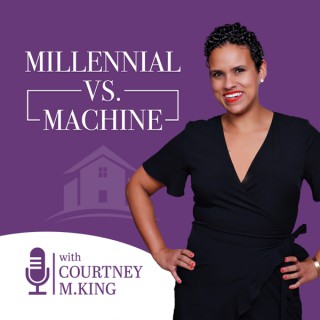
After nearly a year away from the podcast, Courtney King is back—and she's bringing a new book with her.In this special return episode of Winning in Real Estate, Courtney shares what she's been up to over the past year and the evolution behind her upcoming book, Winning in Real Estate: Elevating Your Strategy, Presence and Power in Every Market.Originally envisioned as Millennial vs. Machine, the book evolved into a bigger conversation about what it really takes to build a successful and sustainable real estate business in a changing market.Courtney talks about why the focus shifted from Millennial Vs. Machine to helping real estate agents, brokers, and professionals navigate changing markets, build better business strategies, leverage their strengths, create systems, generate leads, and build long-term wealth.If you're a real estate agent, broker, entrepreneur, or real estate professional looking to grow your business and prepare for what's next, this episode gives you a first look at what's coming.
If there's one influence quietly shaping popular culture, it's the American West. An unavoidable, intensified fascination with all things Western has emerged across luxury, fashion, movies, TV and music. Stetson is a 160-year-old brand that's not only synonymous with the American cowboy hat, but with the enduring mythology of the American West. Scott Kerr sits down with Stetson's CEO Robert Dundon to discuss what's driving the renewed interest in Western style and why Stetson has endured as the defining icon of the American West. He talks about the evolution of the Stetson customer from core Western communities to younger, international, and increasingly female consumers. Robert also shares why it recently launched Stetson Bourbon in a crowded market and why Stetson is a “gold mine” with credible room to grow into apparel, footwear, home, retail, and experiential hospitality. Plus: How the brand translates the values of the American West for international markets.Featuring: Robert Dundon, CEO of Stetson (stetson.com)Host: Scott Kerr, Founder & President of Silvertone ConsultingAbout: Host Scott Kerr gives listeners in-depth, unfiltered interviews with leaders of the world's most influential luxury brands. Kerr chats with the biggest names in the luxury business, from CEOs and C-suite executives to creative directors and fashion designers, about the forces redefining the sector: from customer expectations and brand relevance to new approaches in creativity, operations, AI and growth strategy. Let me know what you think of the show. Email me at scott@silvertoneconsulting.comListen and subscribe to The Luxury Item wherever you get your podcasts. Tell a friend or a colleague!

Millennials are navigating student debt, rising housing costs, entrepreneurship, and family life, all while approaching the largest wealth transfer in history. In this episode of BankTalk, Jordan Kelly sits down with Sumeet Grover, EVP and Chief Strategic Growth & Digital Officer at UFCU, to explore what Millennials expect from their financial institutions and how community banks and credit unions can build lasting relationships through relevance, trust, and meaningful financial guidance. Listen in for insights on member loyalty, multi-banking, digital experiences, and helping members achieve real financial progress.Send us Fan MailFor more information on BankTalk:BankTalk WebsiteSubscribe to BankTalk NewsRemedy Consulting WebsiteRemedy LinkedInTo speak on the BankTalk Podcast, please email us.

Monday Mayhem shows are a throwback to the roots of The Survival Podcast. Fast riffs on many topics in real time. No deep presentations or digging into the finer points of an aquaponics system. A mix of practical prepping, current news and economic trends, and real opinions you will never hear from mainstream or even most alternative media. Today we talk about the hatred that Gen Z and Millennials have for Boomers, but should that hate be the other way around? Nvidia releases software to prevent AI agents from “going rogue.” At the same time, Bill Gates claims unregulated AI … Continue reading →

Bring back Retrica though Learn more about your ad choices. Visit megaphone.fm/adchoices

This week we discuss KWN having a KE KE, Desensitization of Black tragedy, Black Entertainers NOT utilizing their voices, and Millennials being the middle child of society. Will Millennials save the day?

The world changes, life is hard. That's not news. But are millennials uniquely misunderstood, or simply the first generation to document their own confusion so thoroughly? Deepika Arwind, author of Good Arguments, and AM Gautam, author of Indian Millennials, write from opposite ends of the same experience. One through fiction, the other through reportage. Both millennial. Both wrestling with power dynamics, divided loyalties, and what courage looks like when you have one foot in the old world and one inching towards the future. This conversation, moderated by Arundhati Sridhar, is not about generational angst. It is about the structures we inherit and the space we carve out anyway. Readings. Insights. The occasional uncomfortable truth. In this episode of BIC Talks, Deepika Arwind and A.M Gautam will be in conversation with Arundhati Sridhar. This is an excerpt from a conversation that took place in the BIC premises in March 2026. Subscribe to the BIC Talks Podcast on your favourite podcast app! BIC Talks is available everywhere, including Apple Podcasts, Spotify, Google Podcasts, Castbox, Overcast, Audible, and Amazon Music.

Welcome to Hellmouth High: A D&D Podcast for the New Millennium! From the creators of The Strahdcast comes a brand-new homebrew D&D podcast set in small-town New England at the turn of the 21st century. Life Is Strange meets Buffy the Vampire Slayer, it's a heartful coming-of-age horror with strokes of mythology & religion and a healthy dose of Millennial nostalgia, delivered with the floor-it style gameplay you've come to expect from the Goons.CONTENT WARNING: This episode contains mentions/discussions of alcoholism, drug use, and bullying.Our Session 0 is available now in both video and podcast form to Patreon subscribers at any paid tier! Join the Gaggle to unlock hundreds of hours of bonus content including behind-the-scenes videos, bonus audio, fanart, and a 15% off merch discount when our Hellmouth High gear hits the Etsy shop!PATREON: https://www.patreon.com/criticalfayledmWEBSITE: https://www.criticalfayledm.com/TikTok & Insta: @CriticalFayleDMTHE CAST:Trevor William Fayle as The DMKay Devine-Jones as Kayla BuckleyNed Pryce as Jesse VenturaTyler Kanter as Stoner JonCampbell O'Hare as Russell SavokyLead Producer: Adam MillerOriginal Music: Bryan BlackThis episode is dedicated to one of our top Kickstarter supporters, TECHNOWAFFLE! Thank you to all our Kickstarter backers for making this adventure possible.Support the show

BYU Lecture 41 Quick review of chapter 21 of The Fourth Thousand Years and the interesting parallel scriptures between Isaiah and Nephi. Just as history repeats itself, prophets will often apply their prophecy to multiple places and occasions, all of which are literally fulfilled. Isaiah, David and Micah did this often. Isaiah gives prophecy of “Zion” knowing there will be two Zions, one in America and one in Palestine. He therefore distinguishes America as “Zion” and Palestine as “Jerusalem.” Some of the more prominent prophecies made by Isaiah include the return of the 10 tribes of Israel, the building of the New Jerusalem in America, the return of the Jews to Palestine, the building of a new temple in Jerusalem, terrible destructions prior to the second coming of Jesus Christ and the peaceful Millennial period. As spoken by Christ, “Great are the words of Isaiah.”

In Democracy on the Edge, leading political scientists John Kenneth White and Matthew R. Kerbel unravel the elections of 2020, 2022, and 2024 to show how each represented a flashpoint in the reordering of political priorities and electoral coalitions. The consequences have the potential to redefine our politics and shape our democracy for years to come. In 2020, American voters temporarily removed an authoritarian leader, only for this leader to instigate an insurrection attempt on January 6, 2021. The midterm election of 2022 broke with precedent on the basis of the public's response to the historic overturning of Roe v. Wade and the fallout from J6, as voters rejected election deniers and MAGA candidates across the board. In 2024, however, voters could not reject this threat to democracy a third time, and Trump's return to the White House has instead left the country at a crossroads and a moment of peril.In unpacking recent electoral cycles and placing them in broader historical context, White and Kerbel show that both major parties face unique difficulties. After Barack Obama's election, Democrats believed they were on the cusp of securing a majority that heralded a new era of political realignment around their multiracial dominance. That majority has not yet materialized. Meanwhile, Donald Trump's hostile takeover of the Republican Party has transformed the GOP into a party completely beholden to him, embracing election denialism, conspiracy theories, and policies that are far out of step with the country beyond his base. The efforts of Republicans and Democrats are buffeted by dramatic and unpredictable cultural and economic shifts. The generational divide between Baby Boomers and Gen X on one side and Millennials and Gen Z on the other has become a fault line of lived experiences, cultural values, financial realities, and political beliefs. This is all further complicated by chaotic realignments on lines of race and gender.And underneath it all is a political system under unprecedented pressure. Our democracy faces its most severe test since the Civil War. The aspirations contained in the Declaration of Independence and the systems built by the Constitution are no longer universally accepted. The Republican Party, led by Trump, seeks to accelerate the accumulation of presidential power and limit the Constitution's phraseology of “We, the People” to “We, the Wealthy” or “We, the Cultural Warriors.” The final denouement of this political saga has yet to be written, but Trump's election leaves us with the possibility of two unfamiliar outcomes—a brand of American authoritarianism or the establishment of a multicultural republic.At the close of the Constitutional Convention, Benjamin Franklin was asked by a bystander what kind of government the framers had wrought. Franklin's famous answer was, “A republic, if you can keep it.” Keeping the republic will depend on the fallout from the last three unprecedented election cycles. Ultimately, our future is up to us.John Kenneth White is professor of politics at the Catholic University of America in Washington, DC. He is the author of What Happened to the Republican Party? and Barack Obama's America: How New Conceptions of Race, Family, and Religion Ended the Reagan Era. Read his Substack.Matthew R. Kerbel is professor of political science at Villanova University in Villanova, Pennsylvania. He is the author of nine books, including Netroots and Next Generation Netroots, both about the emergence of internet politics and political engagement. Read his Substack.Caleb Zakarin is CEO and Publisher of the New Books Network. Hosted by Simplecast, an AdsWizz company. See pcm.adswizz.com for information about our collection and use of personal data for advertising.

In Democracy on the Edge, leading political scientists John Kenneth White and Matthew R. Kerbel unravel the elections of 2020, 2022, and 2024 to show how each represented a flashpoint in the reordering of political priorities and electoral coalitions. The consequences have the potential to redefine our politics and shape our democracy for years to come. In 2020, American voters temporarily removed an authoritarian leader, only for this leader to instigate an insurrection attempt on January 6, 2021. The midterm election of 2022 broke with precedent on the basis of the public's response to the historic overturning of Roe v. Wade and the fallout from J6, as voters rejected election deniers and MAGA candidates across the board. In 2024, however, voters could not reject this threat to democracy a third time, and Trump's return to the White House has instead left the country at a crossroads and a moment of peril.In unpacking recent electoral cycles and placing them in broader historical context, White and Kerbel show that both major parties face unique difficulties. After Barack Obama's election, Democrats believed they were on the cusp of securing a majority that heralded a new era of political realignment around their multiracial dominance. That majority has not yet materialized. Meanwhile, Donald Trump's hostile takeover of the Republican Party has transformed the GOP into a party completely beholden to him, embracing election denialism, conspiracy theories, and policies that are far out of step with the country beyond his base. The efforts of Republicans and Democrats are buffeted by dramatic and unpredictable cultural and economic shifts. The generational divide between Baby Boomers and Gen X on one side and Millennials and Gen Z on the other has become a fault line of lived experiences, cultural values, financial realities, and political beliefs. This is all further complicated by chaotic realignments on lines of race and gender.And underneath it all is a political system under unprecedented pressure. Our democracy faces its most severe test since the Civil War. The aspirations contained in the Declaration of Independence and the systems built by the Constitution are no longer universally accepted. The Republican Party, led by Trump, seeks to accelerate the accumulation of presidential power and limit the Constitution's phraseology of “We, the People” to “We, the Wealthy” or “We, the Cultural Warriors.” The final denouement of this political saga has yet to be written, but Trump's election leaves us with the possibility of two unfamiliar outcomes—a brand of American authoritarianism or the establishment of a multicultural republic.At the close of the Constitutional Convention, Benjamin Franklin was asked by a bystander what kind of government the framers had wrought. Franklin's famous answer was, “A republic, if you can keep it.” Keeping the republic will depend on the fallout from the last three unprecedented election cycles. Ultimately, our future is up to us.John Kenneth White is professor of politics at the Catholic University of America in Washington, DC. He is the author of What Happened to the Republican Party? and Barack Obama's America: How New Conceptions of Race, Family, and Religion Ended the Reagan Era. Read his Substack.Matthew R. Kerbel is professor of political science at Villanova University in Villanova, Pennsylvania. He is the author of nine books, including Netroots and Next Generation Netroots, both about the emergence of internet politics and political engagement. Read his Substack.Caleb Zakarin is CEO and Publisher of the New Books Network. Hosted by Simplecast, an AdsWizz company. See pcm.adswizz.com for information about our collection and use of personal data for advertising.

Teaser ... Jill's book OK Boomer, Let's Talk ... When is generalizing about a group okay? ... The world boomers built ... Are boomers really uniquely selfish? ... Is blaming boomers counterproductive? ... Who's actually driving the generational divide? ... The generational blame spiral ... Millennials vs Gen Z ... Does America have a gerontocracy problem? ... Why Kenyans are looking toward China ...

UPMC just placed a decade-long moratorium on gender-affirming care for patients under 19 and agreed to pay the federal government $950,000 as part of a settlement with the Department of Justice. Host Megan Harris is with City Cast contributors Sophia Lo and Colin Williams to talk about what comes next. Plus, we're debating whether Pittsburgh Paint Company's 2027 color of the year truly counts as a departure from Millennial Gray, discussing a new ban on large-scale data centers on county property, and bemoaning the influencer stunt that led the Star Wars vending machine on a cross-country journey. And in our members-only bonus segment, Colin shares what he learned about the future of journalism on a recent trip to Germany — and the successes that could be duplicated here in Pittsburgh. Notes and references from today's show: UPMC to pay DOJ nearly $1M, agrees to 10-year moratorium on gender-affirming care for trans youth [WESA] Under pressure from Trump, UPMC canceled a trans patient's scheduled top surgery [City Paper] Pittsburgh Paints' 2027 Color of the Year calls for homeowners to 'recalibrate' [WESA] Sophia's Color Swatches A Behind-the-Scenes Look at How PPG Paints Decides Its Color of the Year [Architectural Digest] Orange Era [n+1] Allegheny County Council unanimously bans large data centers on county property [TribLive] Pa. approves steep rate hikes for 2027 Pennie health insurance plans [TribLive] "Star Wars" vending machine visits Los Angeles [Axios Pittsburgh]
Leadership doesn't begin with a title, a team, or a company. It begins in the space between what happens to you and what you choose to do next. In this solo episode of Millennial Millionaire, I break down one of the most important shifts I've made during a difficult season: stop reacting and start leading. I share how to pause before instinct takes over, reframe adversity as an initiation, and build a foundation that can hold when the storm hits. Drawing from 14 technology-free days at a men's retreat in Bali, I explore the rites of passage we've lost, why silence is a superpower in a world fighting for your attention, and how healthy attachment can turn into dependency. I also get honest about the downside of stoicism: the same emotional control that helps you perform in business can keep you from processing what you feel and connecting with the people closest to you. You'll learn: - How to create space between a trigger and your response - Why self-leadership starts before you lead anyone else - How to turn adversity into an initiation—not an identity - Why silence makes room for answers you already carry - The difference between healthy attachment and dependency - When strength and stoicism become emotional avoidance - How inner work builds a foundation that can survive pressure Connect with Steven Cohen YouTube: https://www.youtube.com/@stevencohen2832/videos Links: https://linktr.ee/steven_cohen Chapter Markers 00:00 – What a Difficult Season Can Teach You 00:42 – Growth Requires Difficulty 01:23 – Stop Reacting. Start Leading. 03:23 – The Rites of Passage We Have Lost 06:24 – Reframing Crisis as an Initiation 07:40 – Silence Is a Superpower 10:10 – Attachment, Dependency & Identity 13:14 – When Stoicism Becomes Emotional Avoidance 15:04 – Build the Foundation Before the Storm 16:18 – Pressure Reveals What You Built 17:18 – When Life Problems Become Business Problems
Today involved a breakup, a war, and the return of Kevin Ryder of the great Kevin & Bean. To start, Ally was dumped by her therapist after four years. The therapist blamed insurance, but we think otherwise. Did she finally get so bored by Ally's stories it was no longer worth the money? Klein is in an argument with his wife after she used all his points at a local coffee shop. If he's the one building the point, shouldn't she only use them if he's there to bask in the glory? Gen Wars made a triumphant return today. We reminisced about Strawberry Shortcake, Runtz, Eco-coolers and Bubble Tape. It was a runaway win for the Millennials, and in true millennial fashion I will end this sentence with lol. Plus the return of Kevin Ryder with a new challenge for us, reviving an old Kevin and Bean staple with a Bit Reboot. The one he suggested today just might get us arrested.

When the bathroom is empty, is it ok to use the handicap stall? Well that is something two friends weighed in on and caused it to go viral on the internet and of course we have our thoughts. We are a man down but that won't stop us from playing Throwback Trivia! This week is a girls game with Sky taking on Emily! Gen Z and Millennials seem to have some ongoing beef about literally anything, Millennials usually finding something about Gen Z to complain about. Well this newest problem is one that Gen Z has with the Millennials and it has to do with the usage of LOL in texts...See omnystudio.com/listener for privacy information.

Leave Jessi A Voicemail HERE: 323-448-0068Get Tickets to EVENING CLUB HERE: www.jessicruickshank.com/tour It's our Season 4 Premiere and it IS yo bidness! Jason My Producer makes his triumphant return JUST IN TIME for Breaking Penis News! An influencer talked about her ex-husband's VERY large manhood and he SUED HER. Fair or Re-DICK-ulous? Drake debuted his Goth Girlfriend- if you've been too busy to keep up with their dates at Casa Loma, Hot Topic and Medieval Times, Jessi fills you in with an all new Dumb and Busy. Plus- did Channing Tatum start a FInstagram Account to troll his ex online… we HOPE not (but let's be honest, we're not above it). And should you take an Iced Coffee to a job interview? Gen Z thinks so…but Millennials are HOT (coffee) and BOTHERED by it. All that plus the debut of a new, user generated segment entitled “Calling All Thirsty Grandmas”. You're welcome mom. Hosted on Acast. See acast.com/privacy for more information.

When the bathroom is empty, is it ok to use the handicap stall? Well that is something two friends weighed in on and caused it to go viral on the internet and of course we have our thoughts. We are a man down but that won't stop us from playing Throwback Trivia! This week is a girls game with Sky taking on Emily! Gen Z and Millennials seem to have some ongoing beef about literally anything, Millennials usually finding something about Gen Z to complain about. Well this newest problem is one that Gen Z has with the Millennials and it has to do with the usage of LOL in texts...See omnystudio.com/listener for privacy information.

Our Lena episode from earlier this year—unlocked for your free-wheeling ears. Wanna hear part two of Lena, and today's brand new Rachel Cusk episode, and get VIP Lounges every Friday? Subscribe at patreon.com/cbcthepodSupport the show: https://www.patreon.com/cbcthepodSee omnystudio.com/listener for privacy information.

The differences between generations and what separates one generation from the next. Plus, we take a look at the results of a new Playboy survey and discuss what it says about modern attitudes and relationships.

We welcome you back to another episode of Upstairs Neighbors! This week the girls reminisce on Lush, yearn for millennial optimism, and talk about watching American Horror Story with Evan Peters. Enjoy! Offers: NOCD: If you're struggling with OCD or unrelenting intrusive thoughts, NOCD can help. Book a free 15 minute call to get started at https://learn.nocd.com/UPSTAIRS #ad Brooklyn Bedding: Go to BrooklynBedding.com and use our promo code UPSTAIRS at checkout to get 30% off sitewide. Podcast Socials: IG: https://www.instagram.com/upstairsneighborspod/ Tiktok: https://www.tiktok.com/@upstairsneighborspod Follow our Hosts: Maya IG: https://www.instagram.com/mayamoto_/ Maya TikTok: https://www.tiktok.com/@mayahasatiktok Dom IG: https://www.instagram.com/domrobxrts/ Dom TikTok: https://www.tiktok.com/@domnotateenmom Learn more about your ad choices. Visit megaphone.fm/adchoices

What happens when the life you imagined in your 20s doesn't look anything like the life you're living in your 40s? We're unpacking what millennial midlife really looks like – from being single and dating later in life to navigating marriage, long-term relationships, divorce, and changing expectations around commitment and family. We discuss why our generation is rewriting the rules of adulthood, the new challenges we face compared to past generations that trigger a different type of feeling unsettled, and why midlife can be an opportunity to redefine what fulfillment looks like rather than a crisis. Enjoy!----Take our Dating Archetypes quiz: https://howtobedateable.com/Read our book: How To Be Dateable: The Essential Guide To Finding Your Person and Falling in Love: https://howtobedateable.com/Try the Dateable AI Dating Coach: Get personalized advice trained on our years of podcast episodes, courses and frameworks: https://studio.com/dateableFollow us @dateablepodcast, @juliekrafchick and @nonplatonic. Check out our website for more content. Also listen to our other podcasts The Psychology of Relationships and Exit Interview available on Apple Podcasts, Spotify, or wherever you get your podcasts.WE WROTE A BOOK! HOW TO BE DATEABLE (Simon & Schuster) is available now: https://howtobedateable.com/ Have you ever had a time in your life where you genuinely didn't want a serious relationship but still wanted connection and chemistry? Download the Fling app in the app store or visit fling.me today. Want to remove distractions from your dates? Download Brick and get 10% off at https://www.getbrick.app/DATEABLEOur Sponsors:* Losers Part One and Two by Harley LaRoux: Go get the book wherever books are sold in print or ebook or through https://www.kensingtonbooks.com* Quince: Download the Quince App for app-exclusive offers and get free shipping and 365 day returns at https://quince.com/dateableAdvertising Inquiries: https://redcircle.com/brandsPrivacy & Opt-Out: https://redcircle.com/privacy

Who says millennials aren’t buying homes? KSL Brightside digs into Utah’s standout homeownership numbers—and the hurdles buyers still face. Plus, why so many adults feel exhausted, whether cutting off late-night snacks could help, and the appeal of foldable phones. Heather Peterson joins us to discuss the childcare gap between school dismissal and the end of the workday. We also talk about fall’s arrival, efforts to help the Colorado River, and how much Utah snow it would take before we (Ethan) start complaining. Plus the AI Question of the day. Catch KSL Brightside live weekdays from 12–3 PM: exclusively on YouTube from 12–1 PM, then on radio and YouTube from 1–3 PM.

Are neutrals dominating your color palette?Our world is looking kind of gray. Not the trees, the grass or the sky – but the cars, the buildings, the houses, and the decor and appliances in them. Neutrals dominate – like the famous “Millennial gray.” There are a lot of reasons, both structural and cultural, why color is leaching out of some of our most important and most expensive possessions – but what do we think our colors say about us? And what role does color play in our lives today?To get into it, Brittany is joined by Amogh Dimri, assistant editor at The Atlantic and the writer of a piece about “the color recession,” and Katy Kelleher, a writer, editor, and author of the book The Ugly History of Beautiful Things.For more episodes on tastes, design and material culture, check out:Fashion isn't art. It's something more.The ugly truth of America's expensive homesThe hard work of having "good taste"Support public media with NPR+ and enjoy perks for over 25 podcasts like this one. This show's perks include sponsor-free listening. Learn more at plus.npr.org.See pcm.adswizz.com for information about our collection and use of personal data for sponsorship and to manage your podcast sponsorship preferences.NPR Privacy Policy

Patrick Clancy has finally broken his silence following his ex-wife's trial—and his words carry a lesson for us all. Host of ‘In Hot Water,' Geno Bisconte and FOX News Columnist David Marcus join the show to react to Clancy's comments and unpack the online outrage over a Converse ad accused of using a KKK dog whistle. Plus, a debate on which issues the GOP must focus on ahead of the midterms, and a tough question about the American Dream: Have we promised too much to America's youth? Subscribe to ‘Will Cain Country' on YouTube here: Watch Will Cain Country! Follow ‘Will Cain Country' on X (@willcainshow), Instagram (@willcainshow), TikTok (@willcainshow), and Facebook (@WillCainNews) Follow Will on X: @WillCain Learn more about your ad choices. Visit podcastchoices.com/adchoices

Today, Pastor Jack teaches that Jesus will reign in justice, and in mercy. None of us really want what we deserve — we want His mercy, and that mercy comes only through Jesus Christ.
© 2020-2026 Ivy Podcast Discovery LLC
